Vitamin D Supplementation Outcomes: Divergent Effects and Mechanisms in Older versus Younger Adults
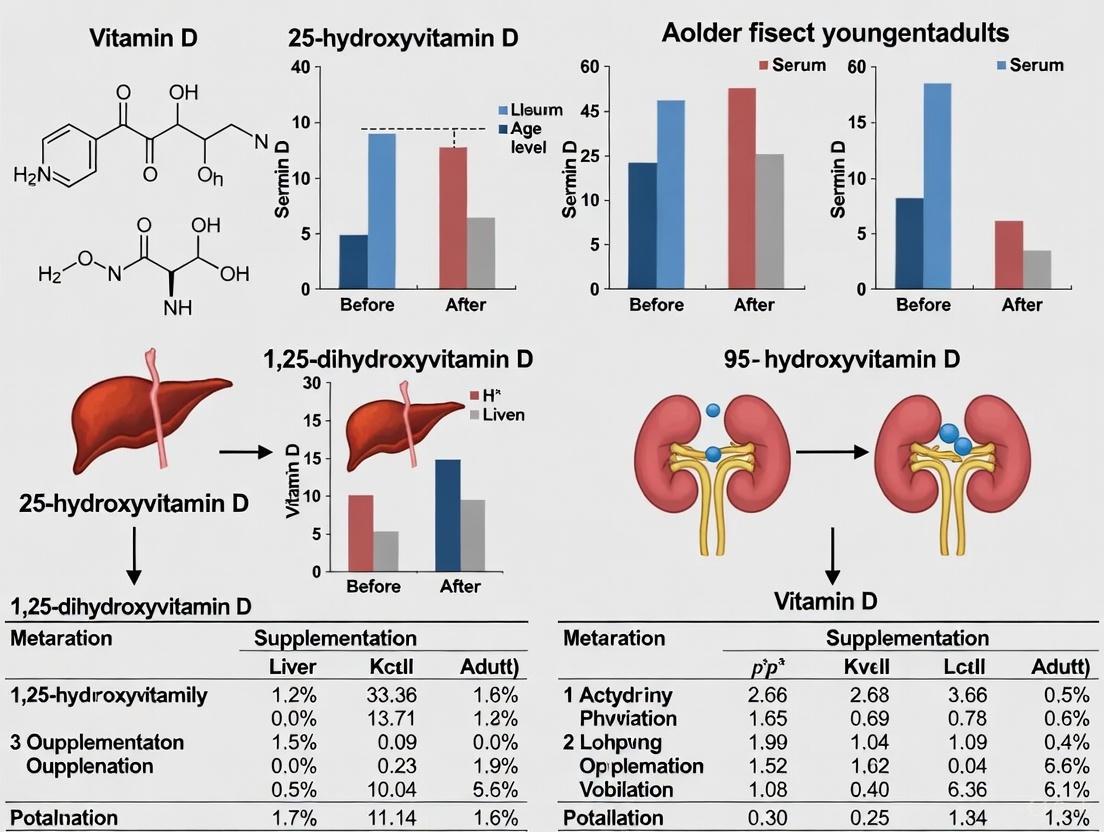
This article synthesizes current evidence on the age-dependent outcomes of vitamin D supplementation, a critical area for research and drug development.
Vitamin D Supplementation Outcomes: Divergent Effects and Mechanisms in Older versus Younger Adults
Abstract
This article synthesizes current evidence on the age-dependent outcomes of vitamin D supplementation, a critical area for research and drug development. It explores the foundational biology of vitamin D, including its role in telomere biology and immunomodulation, and contrasts the mechanisms of action between older and younger adults. The review details methodological approaches for clinical trials and biomarker assessment, addresses challenges in dosing and patient stratification, and provides a comparative analysis of efficacy across age groups for outcomes such as mortality, cognitive decline, and chronic disease prevention. The conclusion highlights knowledge gaps and future directions for targeted therapeutic strategies.
The Biology of Aging and Vitamin D: From Molecular Mechanisms to Population-Level Prevalence
Vitamin D Synthesis, Metabolism, and the Impact of Aging on Homeostasis
Vitamin D, a secosteroid hormone, is essential for calcium homeostasis and bone health, but also exerts diverse non-skeletal physiological effects [1]. The homeostasis of this hormone is maintained through a delicate balance of cutaneous synthesis, dietary intake, and metabolic activation that is significantly influenced by age [2] [3]. While it has been historically assumed that aging profoundly diminishes the skin's capacity to produce vitamin D, emerging research challenges this paradigm and offers new insights into the complex relationship between aging and vitamin D status [4]. This comparison guide objectively examines the experimental evidence regarding vitamin D synthesis and metabolism in younger versus older adults, with particular relevance to research on supplementation outcomes.
The classical vitamin D metabolic pathway begins with cutaneous synthesis of vitamin D3 (cholecalciferol) from 7-dehydrocholesterol (7-DHC) under ultraviolet B (UVB) radiation, or through dietary intake of vitamin D2 (ergocalciferol) or D3 [3] [1]. Vitamin D is subsequently hydroxylated in the liver to 25-hydroxyvitamin D (25(OH)D), the major circulating metabolite used to determine vitamin D status, and then in the kidney to 1,25-dihydroxyvitamin D (1,25(OH)2D), the biologically active hormonal form that binds to the vitamin D receptor (VDR) to regulate gene expression [3] [5] [6]. Understanding how this pathway is affected by aging is crucial for developing effective supplementation strategies for different age groups.
Vitamin D Synthesis and Metabolism: Fundamental Processes
The initial step in vitamin D synthesis occurs in the skin, where 7-dehydrocholesterol (7-DHC) is converted to pre-vitamin D3 after exposure to ultraviolet B (UVB) radiation with wavelengths of 290-315 nm [3] [1]. This conversion is a non-enzymatic, photochemical process that depends on the availability of 7-DHC in the epidermis and the intensity and duration of UVB exposure [3]. Pre-vitamin D3 then undergoes a thermally-induced isomerization to form vitamin D3 (cholecalciferol), which enters the circulation bound to vitamin D-binding protein (DBP) [1] [6]. Alternatively, vitamin D can be obtained from dietary sources, with vitamin D2 (ergocalciferol) derived from plant sterols and vitamin D3 from animal sources, particularly fatty fish, fortified foods, and supplements [3] [1].
Table 1: Vitamin D Sources and Initial Metabolic Steps
| Source Type | Precursor Molecule | Resulting Vitamin D Form | Key Influencing Factors |
|---|---|---|---|
| Cutaneous Synthesis | 7-dehydrocholesterol (7-DHC) | Vitamin D3 (cholecalciferol) | UVB intensity, skin pigmentation, skin area exposed, 7-DHC concentration [3] |
| Dietary Plant Sources | Ergosterol | Vitamin D2 (ergocalciferol) | Fortified foods, mushrooms exposed to UVB [3] [1] |
| Dietary Animal Sources | Pre-formed vitamin D3 | Vitamin D3 (cholecalciferol) | Fatty fish (salmon, mackerel), cod liver oil, fortified dairy products [1] |
Metabolic Activation Pathways
Vitamin D, regardless of source, requires two enzymatic hydroxylation steps to become biologically active. The first hydroxylation occurs primarily in the liver, catalyzed by cytochrome P450 enzymes (mainly CYP2R1), converting vitamin D to 25-hydroxyvitamin D (25(OH)D) [3] [5]. This metabolite represents the major circulating form of vitamin D and is the standard clinical measure of vitamin D status due to its relatively long half-life of 2-3 weeks [1] [6]. The second hydroxylation occurs mainly in the kidneys, where CYP27B1 converts 25(OH)D to 1,25-dihydroxyvitamin D (1,25(OH)2D), the biologically active hormonal form [3] [6]. This final step is tightly regulated by parathyroid hormone (PTH), calcium, and phosphate levels [6].
A recently identified alternative metabolic pathway involves CYP11A1, traditionally known for its role in steroidogenesis [5]. This enzyme can hydroxylate vitamin D at different carbon positions (primarily C-20 and C-22), producing various metabolites such as 20(OH)D and 22(OH)D, which may have unique biological activities distinct from the classical pathway [5]. This non-canonical pathway appears to operate in peripheral tissues including skin and the gastrointestinal tract, suggesting potential local regulation of vitamin D activity.
The activity of 1,25(OH)2D is limited by CYP24A1, which initiates the catabolism of both 25(OH)D and 1,25(OH)2D through 24-hydroxylation, leading to the formation of water-soluble, inactive forms that are excreted in the bile [3] [5]. This catabolic pathway represents a critical regulatory mechanism to prevent vitamin D toxicity.
Diagram 1: Classical and alternative vitamin D metabolic pathways. The classical pathway (center) converts vitamin D to its active form through hepatic and renal hydroxylation. The alternative pathway (bottom) involves CYP11A1-mediated metabolism. Regulatory enzymes are shown in blue text.
Molecular Mechanism of Action
The biological effects of 1,25(OH)2D are primarily mediated through the vitamin D receptor (VDR), a nuclear transcription factor that belongs to the steroid hormone receptor superfamily [3] [5]. The genomic pathway involves 1,25(OH)2D binding to cytoplasmic VDR, which then heterodimerizes with the retinoid X receptor (RXR) and translocates to the nucleus [5]. This complex binds to vitamin D response elements (VDREs) in the promoter regions of target genes, recruiting coactivators or corepressors to regulate gene transcription [3] [5]. Hundreds of genes are regulated by VDR, affecting diverse biological processes including calcium homeostasis, cell proliferation and differentiation, and immune function [3] [5].
Rapid, non-genomic actions of vitamin D have also been described, mediated by membrane-associated receptors such as the proposed 1,25D-membrane-associated, rapid response steroid-binding protein (1,25D-MARRS) [5]. These non-genomic effects can activate various signaling pathways including protein kinase C, MAP kinases, and calcium channels, contributing to vitamin D's pleiotropic effects [5].
Impact of Aging on Vitamin D Homeostasis: Comparative Analysis
Cutaneous Synthesis Capacity in Aging Skin
The conventional understanding has been that aging significantly reduces the skin's capacity to synthesize vitamin D due to decreased concentrations of 7-dehydrocholesterol (7-DHC) in the epidermis. A frequently cited study from the 1980s reported that 7-DHC concentrations decline by more than 50% from ages 20 to 80, with aged skin producing approximately 40% less vitamin D than younger skin [2]. This reduction has been attributed to both a decrease in 7-DHC substrate concentration and age-related structural changes in skin [2].
However, a groundbreaking 2024 study utilizing modern analytical techniques challenges this long-standing assumption [4]. This prospective, standardized investigation compared baseline skin 7-DHC concentrations and vitamin D3 response to UVR in healthy ambulant older adults (65-89 years) versus younger adults (18-40 years). The results demonstrated no significant difference in baseline skin 7-DHC concentration between age groups (0.22 ± 0.07 μg/mg in younger vs. 0.25 ± 0.08 μg/mg in older adults) [4]. Furthermore, both age groups showed similar significant increases in serum vitamin D3 concentrations following UVR exposure, with no significant differences between groups at 24 hours or 7 days post-exposure [4]. This suggests that skin 7-DHC concentration is not a limiting factor for vitamin D3 production in healthy older adults relative to younger adults.
Table 2: Comparative Analysis of Cutaneous Vitamin D Synthesis in Younger vs. Older Adults
| Parameter | Younger Adults (18-40 years) | Older Adults (≥65 years) | Comparative Significance |
|---|---|---|---|
| Baseline Skin 7-DHC Concentration | 0.22 ± 0.07 μg/mg [4] | 0.25 ± 0.08 μg/mg [4] | No significant difference (p > 0.05) [4] |
| Serum Vitamin D3 Response to UVR | Significant increase post-UVR [4] | Significant increase post-UVR [4] | No significant difference between age groups [4] |
| Historical 7-DHC Estimates | Reference value | ~40% reduction compared to young [2] | Based on earlier studies with methodological limitations [4] |
| Practical Implications | Ample reserve capacity for vitamin D production | Ample reserve capacity for vitamin D production given adequate UVR exposure [2] [4] | Chronological age alone may not determine synthesis capacity [4] |
Age-Related Changes in Vitamin D Metabolism
While cutaneous synthesis capacity may be preserved in healthy older adults, other aspects of vitamin D homeostasis are unequivocally affected by aging. The aging kidney demonstrates a reduced capacity to convert 25(OH)D to the active 1,25(OH)2D form due to diminished CYP27B1 activity, which may not be fully compensated by increased parathyroid hormone stimulation [2]. This is particularly pronounced in individuals with chronic kidney disease, which becomes more prevalent with advancing age [1].
Additionally, age-related alterations in intestinal responsiveness to 1,25(OH)2D may contribute to reduced calcium absorption efficiency, potentially creating a functional vitamin D resistance state [2]. This resistance, combined with the reduced renal production of 1,25(OH)2D, creates a scenario where higher circulating levels of 25(OH)D may be required to maintain adequate tissue levels of active vitamin D in older individuals.
Other factors that frequently accompany aging further complicate vitamin D homeostasis. Increased adiposity sequesters vitamin D in fat tissues, thereby lowering bioavailable serum concentrations [2] [1]. Reduced outdoor activity and sun exposure among the elderly, particularly in institutionalized settings, significantly limit cutaneous vitamin D synthesis [2]. Polypharmacy, common in older populations, may include medications that interfere with vitamin D metabolism, such as anticonvulsants, glucocorticoids, and antifungals [1]. Age-associated conditions like malabsorption syndromes and liver dysfunction can also impair vitamin D absorption and metabolism [1].
Experimental Models and Methodologies in Vitamin D Research
In Vivo Human Studies
Human studies on vitamin D and aging have employed various methodological approaches to elucidate the complex relationship between age and vitamin D status. The 2024 comparative study by Stapelberg et al. provides an excellent example of a standardized protocol for investigating cutaneous vitamin D synthesis [4]. This research employed a prospective design with carefully characterized cohorts of younger (18-40 years) and older (65-89 years) healthy, ambulant adults of phototypes I-III (white Caucasian). Participants received a single, sub-erythemal dose of solar simulated UVR (95% UVA, 5% UVB, 1.3 SED) to approximately 35% of the body surface area during January-March in the UK (53.5°N) when ambient UVB is insufficient for vitamin D synthesis [4].
The experimental workflow included biopsies from unexposed skin, skin immediately post-UVR, and skin 24 hours post-UVR for 7-DHC quantification using HPLC-MS/MS methodology [4]. Blood sampling occurred at baseline, 24 hours, and 7 days post-UVR for vitamin D3 assay, also using HPLC-MS/MS [4]. This comprehensive sampling strategy allowed for direct comparison of both precursor concentration and metabolic response between age groups under controlled conditions.
Diagram 2: Experimental workflow for comparative vitamin D synthesis studies. The standardized protocol includes careful participant selection, controlled UVR exposure, and multiple sampling time points for both skin (7-DHC) and blood (vitamin D3) analysis.
Large-scale randomized controlled trials have provided crucial insights into the clinical effects of vitamin D supplementation in older adults. The VITAL (VITamin D and OmegA-3 TriaL) study, which included over 25,000 participants, investigated the effects of vitamin D3 supplementation (2,000 IU/day) over five years [7]. A recent sub-study of VITAL examining telomere length demonstrated that vitamin D supplementation significantly reduced telomere shortening over four years compared to placebo, potentially slowing a key biological aging process [7]. This protective effect was equivalent to nearly three years of reduced aging and was associated with previously reported benefits of vitamin D in reducing inflammation and lowering risks of advanced cancer and autoimmune diseases [7].
In Vitro and Model Organ Studies
C. elegans has emerged as a valuable model organism for studying vitamin D mechanisms in aging. Research using this nematode has demonstrated that vitamin D3 extends lifespan through stress response pathway genes including SKN-1 (the Nrf2 homolog), IRE-1, and XBP-1 [8]. Vitamin D3 treatment in C. elegans suppressed age-related protein insolubility and prevented toxicity caused by human β-amyloid, highlighting a role for vitamin D in maintaining protein homeostasis during aging [8]. These findings in model organisms provide mechanistic insights that complement human observational and intervention studies.
Cell culture studies have elucidated molecular mechanisms of vitamin D action, including genomic regulation through VDR-mediated transcription and non-genomic signaling through membrane-associated receptors [5]. Research using human cell-based VDR activity assays has confirmed the biological activity of vitamin D metabolites, while LC-MS/MS methodologies have enabled precise quantification of various vitamin D metabolites in tissues and serum [8] [4].
The Scientist's Toolkit: Essential Research Reagents and Methodologies
Table 3: Key Research Reagents and Methodologies for Vitamin D and Aging Studies
| Research Tool | Category | Specific Application | Research Utility |
|---|---|---|---|
| HPLC-MS/MS | Analytical Methodology | Quantification of 7-DHC in skin biopsies and vitamin D metabolites in serum [4] | High sensitivity and specificity for multiple analytes; gold standard for vitamin D metabolite analysis [4] |
| Solar Simulated Radiation (SSR) | Exposure System | Controlled UVR exposure with specific spectral output (95% UVA, 5% UVB) [4] | Reproducible simulation of natural sunlight under laboratory conditions [4] |
| Vitamin D Receptor (VDR) Activity Assays | Cell-Based Bioassay | Measurement of VDR transcriptional activation in response to vitamin D metabolites [8] | Determination of biological activity of vitamin D metabolites; mechanistic studies [8] |
| C. elegans Model | Model Organism | Investigation of vitamin D effects on longevity and protein homeostasis [8] | Genetic manipulation to identify conserved pathways in aging; high-throughput screening [8] |
| Telomere Length Assays | Molecular Biology Technique | Measurement of telomere length in white blood cells [7] | Assessment of biological aging; evaluation of vitamin D's effects on cellular aging [7] |
Implications for Vitamin D Supplementation Strategies
The evidence regarding aging and vitamin D homeostasis has direct implications for supplementation strategies in different age groups. While the preserved cutaneous synthesis capacity in healthy older adults suggests that sensible sun exposure remains a viable option for maintaining vitamin D status [2] [4], practical considerations often make supplementation a more reliable approach, particularly for institutionalized elderly or those in northern latitudes [2].
Consensus statements recommend vitamin D supplementation for older adults, with a goal of reaching serum 25(OH)D levels >50 nmol/L [2]. Combined supplementation with calcium has been shown to reduce fracture risk in the older population, particularly in those with documented deficiency [2]. The VITAL trial demonstrated that daily low-dose vitamin D regimens (2,000 IU/day) are effective and safe, with some evidence suggesting that infrequent, large bolus doses may actually increase fall risk in the elderly [2] [7].
Research indicates that optimal serum concentrations of 25(OH)D for multiple health outcomes begin at 75 nmol/L, with the most advantageous levels between 90-100 nmol/L [9]. To achieve these levels in at least 50% of the population, an intake of ≥1000 IU (40 μg) vitamin D per day is necessary [9]. These recommendations are particularly relevant for older adults who may require higher intakes due to age-related changes in metabolism and potential functional resistance to vitamin D action.
Emerging evidence also suggests potential benefits of vitamin D supplementation beyond skeletal health. Vitamin D has been shown to reduce the risk of progression from prediabetes to type 2 diabetes among those who are deficient [2]. The observed effects on telomere maintenance [7], protein homeostasis [8], and cellular senescence regulation [10] suggest that vitamin D may influence fundamental aging processes, highlighting its potential as a candidate for senotherapeutic interventions.
The relationship between aging and vitamin D homeostasis is complex and multifaceted. While earlier assumptions about dramatically reduced cutaneous synthesis capacity in older adults have been challenged by recent rigorous studies [4], other aspects of vitamin D metabolism are indeed affected by aging, including reduced renal activation of vitamin D and potential end-organ resistance [2]. The preserved 7-DHC concentrations and vitamin D synthetic capacity in healthy older adults' skin suggests that chronological age alone may not determine vitamin D status, and that overall health, mobility, and sun exposure behaviors may be more important determinants.
For researchers and clinicians, these findings highlight the importance of considering individual factors beyond chronological age when assessing vitamin D status and making supplementation recommendations. The experimental methodologies outlined in this review, particularly the standardized approaches for comparing vitamin D synthesis across age groups [4], provide valuable frameworks for future research. As our understanding of vitamin D's non-skeletal effects continues to evolve, particularly its potential impacts on fundamental aging processes [8] [10] [7], targeted supplementation strategies based on comprehensive assessment of individual needs and metabolic capacity will likely yield the greatest benefits for healthy aging across the lifespan.
The role of vitamin D extends far beyond its classical function in bone health, emerging as a significant regulator of fundamental aging processes. A compelling hypothesis suggests that vitamin D may control the rate of aging by modulating key cellular mechanisms, with deficiency potentially accelerating age-related decline [11]. This regulatory function becomes particularly crucial when comparing older and younger adults, as aging brings profound changes in vitamin D metabolism, including reduced skin synthesis, decreased dietary absorption, and impaired renal activation [12]. Within this context, this review examines the experimental evidence for vitamin D's influence on three interconnected hallmarks of aging: telomere dynamics, autophagy, and mitochondrial function, with specific attention to implications for older adult populations.
Telomere Dynamics: Vitamin D's Role in Chromosomal Protection
Telomere Biology and Aging
Telomeres are repetitive nucleotide sequences that cap chromosome ends, protecting genomic DNA from degradation and fusion [13]. These protective structures naturally shorten with each cell division, a process influenced by oxidative stress and inflammation, making telomere length a key biomarker of biological aging [14]. Shortened telomeres are associated with an increased risk of various age-related diseases, and the rate of shortening has been used as a marker of biological aging in research studies [14] [13].
Clinical Evidence from the VITAL Trial
The 2025 findings from the VITAL (VITamin D and OmegA-3 TriaL) sub-study represent a breakthrough in understanding vitamin D's anti-aging potential. This randomized, double-blind, placebo-controlled trial—the first large-scale and long-term study of its kind—investigated the effects of vitamin D3 supplementation (2,000 IU/day) on telomere length in white blood cells (leukocytes) of 1,054 participants over four years [7] [14] [15].
Table 1: Key Findings from the VITAL Telomere Sub-Study
| Parameter | Placebo Group | Vitamin D3 Group | Significance |
|---|---|---|---|
| Telomere shortening over 4 years | Expected age-related shortening | 140 fewer base pairs lost compared to placebo | P < 0.05 |
| Equivalent biological aging | Normal progression | ~3 years less aging prevented | - |
| Omega-3 effect | - | No significant impact on telomere length | NS |
The trial demonstrated that participants receiving vitamin D3 supplements experienced significantly reduced telomere shortening compared to the placebo group, preserving approximately 140 fewer base pairs over four years—equivalent to preventing nearly three years of biological aging [7] [14]. This protective effect was not observed with omega-3 fatty acid supplementation, highlighting the specific role of vitamin D in telomere maintenance [15].
Molecular Mechanisms
The molecular mechanisms underlying vitamin D's telomere-protective effects involve the vitamin D receptor (VDR), which plays a central role in mediating vitamin D's effects on the body [13]. The VDR regulates aging-related processes in multiple tissues and works in conjunction with other molecules, such as the retinoid X receptor, to influence cellular pathways involved in aging [13]. Vitamin D also supports essential cellular functions, including differentiation, proliferation, and apoptosis, which collectively contribute to genomic stability [13].
Autophagy: Cellular Housekeeping and Vitamin D Regulation
Autophagy in Aging and Health
Autophagy is an essential cellular process that maintains health by removing damaged proteins and malfunctioning organelles, particularly mitochondria [11]. This "cellular housekeeping" function becomes increasingly important with age, as accumulated cellular damage contributes to age-related functional decline [11]. In families with extended longevity, the process of autophagy is better maintained, highlighting its importance in healthy aging [11].
Vitamin D's Influence on Autophagic Processes
Vitamin D plays a significant role in regulating autophagy through multiple mechanisms, primarily by influencing calcium signaling and reactive oxygen species (ROS) pathways [11]. The action of calcium is particularly important, as it exerts a dual action on autophagy—both increases and decreases in cellular calcium levels can modulate autophagic activity depending on the cellular context [11].
Table 2: Vitamin D's Mechanisms in Regulating Autophagy
| Mechanism | Biological Effect | Impact on Aging |
|---|---|---|
| Calcium signaling regulation | Modulates activity of inositol trisphosphate receptors (InsP3Rs) | Prevents excessive calcium-induced autophagy inhibition |
| ROS signaling modulation | Reduces reactive oxygen species production | Decreases oxidative stress-induced autophagy dysregulation |
| Mitochondrial quality control | Enhances removal of damaged mitochondria via mitophagy | Reduces source of inflammatory signals and ROS |
| Inflammation reduction | Decreases expression of inflammatory cytokines (e.g., TNF-α) | Lowers inflammation-driven autophagy disruption |
Vitamin D promotes autophagy by regulating calcium levels through its ability to promote the expression of calcium pumps and buffers [11]. By maintaining proper autophagic function, vitamin D helps ensure that damaged mitochondria are efficiently removed, preventing them from generating excessive amounts of ROS that accelerate aging [11].
Interconnection with Mitochondrial Function
The relationship between autophagy and mitochondrial function is particularly relevant to aging. As mitochondria age, their ability to generate ATP declines while ROS production increases [11]. Vitamin D supports the autophagic removal of these dysfunctional mitochondria, thereby reducing a significant source of oxidative stress and inflammation—two key drivers of aging [11].
Mitochondrial Function: Energy Metabolism and Quality Control
Mitochondrial Dysfunction in Aging
Mitochondrial dysfunction is a major hallmark of aging, playing a central role in the loss of muscle mass and strength observed in frailty and sarcopenia [16]. With advancing age, mitochondrial quality control processes—including biogenesis, mitophagy, and dynamics—become dysregulated, impairing energy metabolism and cellular homeostasis [16] [17]. These dysfunctional mitochondria not only produce insufficient ATP but also generate increased amounts of ROS, creating a cycle of oxidative damage that enhances aging processes [11].
Vitamin D and Mitochondrial Stress Signaling
Vitamin D influences mitochondrial function through several pathways, including its ability to control the expression of Nrf2—a major regulator of antioxidant defenses—and the anti-aging protein Klotho [11]. The vitamin D-Klotho-Nrf2 signaling network appears to be a key regulator of the rate of aging, with normal vitamin D levels supporting healthy aging that occurs at a slow rate [11]. When vitamin D is deficient, mitochondrial dysfunction is enhanced, accelerating aging processes [11].
Therapeutic Targeting of Mitochondrial Dysfunction
Recent research has explored interventions specifically targeting mitochondrial dysfunction in aging. Urolithin A (UA), a mitophagy inducer, has demonstrated promise in countering age-related immune decline by expanding naive-like T cells and improving mitochondrial function in CD8+ cells [18]. This approach represents a targeted strategy for addressing mitochondrial aspects of aging, distinct from but complementary to vitamin D's broader regulatory role.
Experimental Protocols and Methodologies
VITAL Trial Protocol Design
The VITAL trial represents the gold standard for clinical research on vitamin D and aging, employing a rigorous methodology:
- Design: Randomized, double-blind, placebo-controlled trial [7] [14]
- Participants: 1,054 U.S. females aged ≥55 years and males aged ≥50 years [7] [15]
- Intervention: 2,000 IU/day of vitamin D3 (cholecalciferol) or placebo for 5 years [7] [14]
- Telomere Measurement: Assessed in white blood cells at baseline, Year 2, and Year 4 [7] [15]
- Outcome Measures: Primary outcome was telomere length change; secondary outcomes included inflammation markers and chronic disease incidence [7]
Laboratory Techniques for Telomere Assessment
Multiple laboratory techniques enable precise measurement of telomere length, a crucial capability in aging research:
- Quantitative Polymerase Chain Reaction (qPCR): Measures relative telomere length by comparing telomere repeat copy number to single-copy gene copy number [13]
- Southern Blotting: Determines absolute telomere length distribution and detects very short telomeres [13]
- Fluorescence In Situ Hybridization (FISH): Allows visualization of telomeres in individual chromosomes and cells [13]
Mitochondrial Function Assessment
Research on mitochondrial aging employs sophisticated methodologies to evaluate mitochondrial health:
- Metabolic Flux Analysis: Measures mitochondrial respiration and ATP production in real-time [16]
- Flow Cytometry with Mitochondrial Dyes: Assesses mitochondrial membrane potential and mass in immune cells [18]
- Single-Cell RNA Sequencing: Identifies transcriptional shifts in immune populations related to mitochondrial function [18]
The Scientist's Toolkit: Research Reagent Solutions
Table 3: Essential Research Reagents for Vitamin D and Aging Studies
| Reagent/Category | Specific Examples | Research Application |
|---|---|---|
| Vitamin D Formulations | Cholecalciferol (Vitamin D3), Ergocalciferol (Vitamin D2) | Clinical supplementation studies; in vitro investigations of vitamin D signaling [7] [13] |
| Telomere Length Assays | qPCR kits, Southern Blot reagents, Flow-FISH kits | Quantification of telomere length as biomarker of cellular aging [14] [13] |
| Mitophagy Inducers | Urolithin A (UA) | Positive control for mitophagy studies; comparator for vitamin D effects on mitochondrial quality control [18] |
| Mitochondrial Dyes | TMRE, MitoTracker dyes, JC-1 | Assessment of mitochondrial membrane potential, mass, and function in immune and other cells [18] |
| Cell Culture Models | Senescent cell lines, Primary fibroblasts from donors of different ages | In vitro studies of vitamin D effects on cellular aging pathways [11] |
| Oxidative Stress Assays | ROS-sensitive fluorescent dyes (DCFDA, MitoSOX) | Measurement of reactive oxygen species production in vitamin D-treated cells [11] |
The accumulating evidence positions vitamin D as a significant regulator of multiple hallmarks of aging, with particular relevance for older adults who face age-related declines in vitamin D synthesis and metabolism. The protective effects of vitamin D supplementation on telomere length, demonstrated in the rigorous VITAL trial, provide a mechanistic explanation for epidemiological observations linking adequate vitamin D status with reduced age-related disease risk and mortality.
For the aging population, ensuring vitamin D sufficiency may represent a accessible strategy to support cellular maintenance pathways and slow biological aging processes. Future research should focus on personalized dosing strategies tailored to the distinct physiological needs of older adults and explore potential synergistic relationships between vitamin D and other geroprotectors, such as mitophagy inducers like urolithin A. The integration of vitamin D supplementation with lifestyle factors known to support healthy aging—including physical activity and dietary patterns like the Mediterranean diet—may offer a comprehensive approach to promoting longevity and reducing the burden of age-related disease.
Vitamin D deficiency is recognized as a critical global public health challenge, with extensive research linking insufficient levels to a spectrum of skeletal and extraskeletal diseases [19]. Despite its presence in select foods and endogenous synthesis through skin exposure to ultraviolet B (UVB) radiation, vitamin D deficiency remains remarkably prevalent across all age groups and geographic regions [20]. This article examines the global prevalence and disease burden of vitamin D deficiency, analyzes risk factors across different life stages, and compares supplementation outcomes between younger and older adult populations. The synthesis of current evidence aims to inform researchers, clinicians, and public health policymakers in developing targeted strategies to address this pervasive nutritional deficiency.
Global Prevalence and Demographic Distribution
Vitamin D deficiency demonstrates substantial variation across geographic, demographic, and socioeconomic dimensions. A comprehensive pooled analysis of 308 studies with 7.9 million participants from 81 countries revealed that globally, 15.7% (95% CrI 13.7–17.8) of the population had serum 25-hydroxyvitamin D [25(OH)D] levels <30 nmol/L, while 47.9% (95% CrI 44.9–50.9) had levels <50 nmol/L [20]. The analysis further identified significant disparities based on geographic and economic factors, with the Eastern Mediterranean region and lower-middle-income countries bearing the highest burden of deficiency.
Table 1: Global Prevalence of Vitamin D Deficiency by Region and Economic Status
| Category | Subcategory | Prevalence 25(OH)D <30 nmol/L | Prevalence 25(OH)D <50 nmol/L |
|---|---|---|---|
| WHO Region | African Region | Not specified | Not specified |
| Region of the Americas | Not specified | Not specified | |
| South-East Asia Region | Not specified | Not specified | |
| European Region | Not specified | Not specified | |
| Eastern Mediterranean Region | Higher prevalence | Higher prevalence | |
| Western Pacific Region | Not specified | Not specified | |
| World Bank Income Group | High-income countries | Not specified | Not specified |
| Upper-middle-income countries | Not specified | Not specified | |
| Lower-middle-income countries | Higher prevalence | Higher prevalence | |
| Low-income countries | Not specified | Not specified | |
| Seasonal Variation | Winter-Spring | 1.7 times higher than summer-autumn | |
| Summer-Autumn | Reference |
Seasonal variations significantly impact vitamin D status, with prevalence in winter-spring being 1.7 (95% CrI 1.4–2.0) times higher than in summer-autumn [20]. Additionally, the analysis identified gender disparities, with females being particularly vulnerable to deficiency across multiple populations.
Risk Factors Across the Lifespan
Pediatric Populations
Vitamin D deficiency in pediatric populations presents substantial concerns for bone development and long-term health outcomes. A retrospective study analyzing 35,620 healthy Turkish children aged 0–18 years found that 54.7% had serum 25(OH)D levels ≤20 ng/mL (50 nmol/L), with 22.7% classified as deficient (<12 ng/mL) and 32.0% as insufficient (12–20 ng/mL) [21]. Unlike adult populations, this study found no statistically significant association between vitamin D status and season, age group, gender, or year of testing, suggesting consistent deficiency patterns across pediatric demographic categories.
The high prevalence in children underscores the importance of the Endocrine Society's recommendation for empirical vitamin D supplementation from ages 0–18 years to prevent nutritional rickets and reduce respiratory infection risk [21]. Modern lifestyle factors, including prolonged indoor time, sunscreen use, and air pollution, contribute significantly to the high deficiency rates observed in pediatric populations globally.
Adolescent and Young Adult Populations
American Indian adolescents demonstrate particularly high rates of vitamin D deficiency, with the Strong Heart Family Study reporting a prevalence of 50.8% (defined as 25(OH)D ≤20 ng/mL) at baseline [22]. This deficiency showed significant associations with cardiovascular disease risk factors, including obesity, low HDL-C, and metabolic syndrome. Longitudinal follow-up revealed that adolescents with baseline vitamin D deficiency developed diabetes at nearly twice the rate of those with sufficient levels (1.32 vs. 0.68 per 100 person-years) [22].
These findings highlight vitamin D deficiency in adolescence as a potential modifiable risk factor for future cardiometabolic disease, with particular relevance for high-risk populations.
Adult and Older Adult Populations
Vitamin D deficiency in adults correlates with increased mortality risk according to a nationally representative cohort study of US adults. Compared to adults with sufficient 25(OH)D (≥75.0 nmol/L), the multi-adjusted hazard ratio for premature mortality was 1.60 (1.42 to 1.79) for those with moderate deficiency (25.0–49.9 nmol/L) and 2.29 (1.92 to 2.72) for those with severe deficiency (<25.0 nmol/L) [23]. The association was more pronounced in women and White adults.
Life expectancy analysis demonstrated that 50-year-old adults with insufficient, moderately deficient, and severely deficient vitamin D levels lived 0.7, 2.1, and 4.4 fewer years, respectively, compared to those with sufficient levels [23]. This dose-response relationship between vitamin D status and mortality risk underscores the public health significance of maintaining adequate levels throughout adulthood.
Comparative Analysis of Supplementation Outcomes: Younger vs. Older Adults
Vitamin D supplementation demonstrates varying effects across different age groups and health outcomes. The following table summarizes key findings from recent intervention studies:
Table 2: Vitamin D Supplementation Outcomes Across Age Groups and Health Domains
| Health Domain | Study/Population | Intervention | Key Findings | Age Group |
|---|---|---|---|---|
| Cardiometabolic Risk | American Indian Adolescents [22] | Observation of natural levels | Vitamin D deficiency associated with obesity, low HDL-C, metabolic syndrome; Higher diabetes incidence over 13 years | Adolescents |
| Cardiovascular Health | TARGET-D Trial [24] | Targeted D3 to ~40 ng/mL | 3.8% vs 7.9% repeat heart attack rate (treatment vs control) | Mostly older adults (mean age 63) |
| Mortality | NHANES Cohort [23] | Observation of natural levels | Dose-response: severe deficiency HR=2.29 for premature mortality vs sufficient | Adults ≥18 years |
| Biological Aging | DO-HEALTH Trial [25] | 2,000 IU/d D3 for 3 years | No significant effect on DNA methylation clocks | Older adults (≥70 years) |
| Biological Aging | VITAL Trial [26] | 2,000 IU/d D3 for 5 years | 140 bp telomere preservation (~3 years slower aging) | Older adults |
| Symptom Improvement | Saudi Adults with Deficiency [27] | 50,000 IU/week D3 for 8 weeks | Significant improvement in symptoms for those achieving >50 nmol/L | Adults |
The diagram below illustrates the mechanistic pathways through which vitamin D deficiency impacts health across the lifespan and how supplementation may exert protective effects:
The differential effects of vitamin D supplementation observed across age groups likely reflect distinct pathophysiological mechanisms and timing of exposure. In younger populations, vitamin D appears to significantly influence developmental trajectories and cardiometabolic programming, while in older adults, the benefits may relate more to mitigating age-related inflammatory processes and cellular decline.
Experimental Protocols and Research Methodologies
Large-Scale Randomized Controlled Trials
The VITamin D and OmegA-3 TriaL (VITAL) employed a rigorous design to investigate vitamin D supplementation effects in older adults [26]. This large-scale, randomized, double-blind, placebo-controlled trial included older American adults who received either 2,000 IU/d vitamin D3, marine n-3 fatty acids (1 g/d), both, or placebo for five years. Leukocyte telomere length (LTL) was measured as a biomarker of biological aging at baseline and during follow-up, demonstrating that vitamin D3 supplementation preserved telomere length equivalent to approximately 3 years of slowed aging.
The DO-HEALTH trial implemented a 2 × 2 × 2 factorial design to test individual and combined effects of vitamin D (2,000 IU per day), omega-3 (1 g per day), and a simple home exercise program in adults aged ≥70 years over three years [25]. Biological aging was assessed using DNA methylation (DNAm) algorithms including PhenoAge, GrimAge, GrimAge2, and DunedinPACE. The study found that omega-3 supplementation alone slowed biological aging across several clocks, while vitamin D supplementation alone showed limited effects on epigenetic aging measures in this generally healthy older adult population.
Observational Cohort Studies
The Strong Heart Family Study utilized a longitudinal observational design to examine vitamin D deficiency among American Indian adolescents [22]. Researchers measured serum 25(OH)D from baseline samples (2001-2003) in 307 adolescents (≤20 years) and defined deficiency as 25(OH)D ≤20 ng/mL. Outcomes included obesity parameters, diabetes, cholesterol, and metabolic syndrome. Follow-up examinations occurred at median 5.8 and 13.3 years post-baseline, with incidence rates calculated per 100 person-years and shared frailty Cox proportional hazards models used to assess relationships while controlling for covariates.
A retrospective study design analyzed 35,620 vitamin D levels from healthy children aged 0–18 years applying to a pediatric outpatient clinic in Turkey [21]. Vitamin D levels were measured using chemiluminescence method and categorized as deficiency (<12 ng/mL), insufficiency (12–20 ng/mL), or normal (>20 ng/mL). Statistical analyses employed Mann-Whitney U tests, Kruskal-Wallis tests, and chi-square tests to examine associations with age, gender, season, and year.
The Scientist's Toolkit: Essential Research Materials
Table 3: Essential Research Reagents and Materials for Vitamin D Studies
| Research Tool | Specification/Function | Representative Use |
|---|---|---|
| Serum 25(OH)D Measurement | Liquid chromatography-tandem mass spectrometry (LC-MS/MS); most accurate method for total 25(OH)D quantification | Gold standard measurement in VITAL [26] and NHANES [23] studies |
| Alternative 25(OH)D Assay | Chemiluminescence immunoassay (CLIA); automated clinical testing | High-throughput analysis in clinical settings [21] |
| DNA Methylation Analysis | Microarray platforms (e.g., Illumina EPIC array) for genome-wide methylation profiling | Epigenetic clock assessment in DO-HEALTH trial [25] |
| Telomere Length Measurement | Quantitative PCR or Southern blot for leukocyte telomere length assessment | Biological aging metric in VITAL trial [26] |
| Vitamin D3 Supplementation | Cholecalciferol; more effective than ergocalciferol (D2) for maintaining 25(OH)D levels | 2,000 IU/day in VITAL [26]; 50,000 IU/week in Saudi trial [27] |
| Ancillary Biomarkers | HbA1c, lipids, inflammatory markers (CRP, cytokines) for cardiometabolic assessment | Cardiometabolic risk factor evaluation in Strong Heart Study [22] |
Vitamin D deficiency remains a pressing global health concern with demonstrated prevalence across all life stages and geographic regions. The substantial burden of deficiency observed in pediatric populations underscores the importance of early-life interventions, while the association with premature mortality in adults highlights the lifelong consequences of insufficient vitamin D status. Current evidence suggests that vitamin D supplementation provides benefits across age groups, though the specific outcomes may differ—influencing developmental programming and cardiometabolic trajectories in younger populations, while potentially modulating aging processes and cardiovascular risk in older adults. Future research should prioritize personalized supplementation strategies that account for genetic, lifestyle, and environmental factors to optimize vitamin D status across the lifespan.
The Vitamin D-Endocrine System in Immunosenescence and Inflammaging
Immunosenescence, the progressive deterioration of the immune system with age, and inflammaging, a state of chronic low-grade inflammation, are hallmark features of immunological aging that significantly contribute to morbidity and mortality in older adults [28] [29] [30]. These interconnected processes create a vulnerable physiological state characterized by diminished protective immunity alongside elevated pro-inflammatory signaling, increasing susceptibility to infections, impairing vaccine responses, and accelerating age-related functional decline across multiple organ systems. The vitamin D-endocrine system, traditionally recognized for its fundamental role in calcium and bone homeostasis, has emerged as a critical modulator of immune function, with its activity profoundly affected by the aging process [31] [32] [33].
Vitamin D deficiency represents a global health concern that disproportionately affects older populations due to age-related reductions in cutaneous synthesis, decreased dietary intake, impaired renal hydroxylation, and increased indoor confinement [33]. Beyond its classical skeletal actions, vitamin D exerts extensive pleiotropic effects through the vitamin D receptor (VDR), a nuclear transcription factor expressed in most immune cells including T lymphocytes, B lymphocytes, neutrophils, and antigen-presenting cells [31] [32]. The biologically active hormone 1,25-dihydroxyvitamin D₃ [1,25(OH)₂D₃] regulates the transcription of hundreds of genes involved in immune cell proliferation, differentiation, and function, positioning the vitamin D-endocrine system as a crucial interface between nutrition and immunity in aging [32] [34] [33].
This review synthesizes current experimental evidence investigating vitamin D supplementation as a potential intervention to counteract immunosenescence and inflammaging, with particular emphasis on comparative outcomes between older and younger adult populations. We systematically evaluate clinical data, molecular mechanisms, and methodological approaches to provide researchers and drug development professionals with a comprehensive analysis of vitamin D's immunomodulatory potential across the lifespan.
Molecular Mechanisms: Vitamin D Signaling in Immune Cell Function
The Vitamin D Metabolic Pathway and Immune Regulation
The vitamin D endocrine system encompasses a complex metabolic pathway that transforms vitamin D precursors into biologically active hormones with potent immunomodulatory properties. Vitamin D₃ (cholecalciferol) is primarily synthesized in the skin from 7-dehydrocholesterol upon exposure to ultraviolet B radiation (290-315 nm) or obtained from dietary sources and supplements [31] [34]. The initial hydroxylation in the liver produces 25-hydroxyvitamin D₃ [25(OH)D₃], the major circulating metabolite that serves as the standard clinical indicator of vitamin D status [31] [35]. The final enzymatic activation occurs primarily in the kidneys, where 25(OH)D₃ undergoes 1α-hydroxylation by cytochrome P450 27B1 (CYP27B1) to form the biologically active hormone 1,25-dihydroxyvitamin D₃ [1,25(OH)₂D₃] [31] [32].
Beyond renal production, extrarenal 1α-hydroxylation occurs in various tissues, particularly in immune cells such as macrophages and dendritic cells, where locally produced 1,25(OH)₂D₃ exerts autocrine and paracrine immunoregulatory effects [32] [33]. This extrarenal activation is critically regulated by immune stimuli rather than calcium-homeostatic factors; toll-like receptor (TLR) activation by pathogens triggers increased CYP27B1 expression and VDR signaling within immune cells, establishing a crucial link between innate immune activation and vitamin D metabolism [33]. The catabolic enzyme CYP24A1, which degrades both 25(OH)D₃ and 1,25(OH)₂D₃ into inactive metabolites, provides an essential regulatory checkpoint to prevent excessive vitamin D signaling [31] [35].
Diagram 1: Vitamin D Metabolic and Immune Signaling Pathway. This diagram illustrates the transformation of vitamin D from cutaneous synthesis or dietary intake into its biologically active form, 1,25(OH)₂D₃ (calcitriol), and its subsequent genomic actions through the vitamin D receptor (VDR) to regulate immune responses. Note the distinct renal endocrine pathway (solid lines) and extrarenal immune cell pathway (dashed lines) of activation, with key regulatory points including CYP27B1 induction by PTH (calcium homeostasis) and TLR signaling (immune activation).
Genomic and Non-genomic Actions in Immune Cells
The biological effects of 1,25(OH)₂D₃ are predominantly mediated through the VDR, a ligand-activated transcription factor belonging to the nuclear hormone receptor superfamily [31] [32]. Upon binding 1,25(OH)₂D₃, the VDR undergoes a conformational change, heterodimerizes with the retinoid X receptor (RXR), and recruits various coactivator complexes to vitamin D response elements (VDREs) located in the regulatory regions of target genes [31]. This genomic signaling regulates the transcription of hundreds of genes involved in immune cell trafficking, cytokine production, and functional differentiation.
In innate immunity, 1,25(OH)₂D₃ enhances antimicrobial defense through induction of cathelicidin (LL-37), a peptide that disrupts microbial membranes and promotes chemotaxis of neutrophils and monocytes [33]. Additionally, VDR signaling promotes autophagy and phagosomal maturation in macrophages while inhibiting dendritic cell maturation, thereby potentially limiting excessive T cell activation [33]. For adaptive immunity, 1,25(OH)₂D₃ exerts predominantly inhibitory effects, suppressing T helper 1 (Th1) and Th17 cell differentiation while promoting Th2 and regulatory T (Treg) cell development [33]. This immunomodulatory shift from pro-inflammatory to tolerogenic immune phenotypes represents a crucial mechanism through which vitamin D may counteract inflammaging.
Beyond these well-characterized genomic actions, rapid non-genomic effects of vitamin D have been described in various cell types, including immune cells [31]. These membrane-initiated signaling events occur within minutes and involve activation of second messenger systems such as protein kinase C, phospholipase C, and calcium fluxes, though the precise molecular mechanisms and physiological relevance of these non-genomic actions in immunosenescence remain incompletely characterized [31].
Comparative Clinical Evidence: Vitamin D Supplementation Across Age Groups
Quantitative Analysis of Vitamin D Intervention Outcomes
Table 1: Comparative Effects of Vitamin D Supplementation on Immune Senescence Markers in Older vs. Younger Adults
| Study Population & Design | Intervention Details | Key Senescence Biomarkers | Outcomes in Older Adults | Outcomes in Younger Adults | Reference |
|---|---|---|---|---|---|
| Older adults with Vit-D deficiency (RCT, n=~88 per group) | 1000 IU/d vs. 5000 IU/d Vit-D ± 600 mg/d NAC for 8 weeks | SA-β-gal activity, p16, IL-6, TNF-α expression | Loading dose (5000 IU) significantly ↓ SA-β-gal, p16, IL-6, TNF-α; NAC co-administration enhanced effects | Not studied in parallel younger cohort | [28] |
| Generally healthy older adults (≥70 years) from DO-HEALTH trial | 2000 IU/d Vit-D, 1g/d omega-3, and/or home exercise for 3 years | DNA methylation clocks (PhenoAge, GrimAge, DunedinPACE) | Vitamin D alone showed limited effects on epigenetic aging; combination with omega-3 and exercise provided additive benefits for PhenoAge | Not studied in parallel younger cohort | [25] |
| Older adults from VITAL sub-study (n=1,106) | 2000 IU/d Vit-D₃ for 4 years | Leukocyte telomere length | ~140 base pairs preservation of telomere length vs. placebo, equivalent to ~3 years reduced cellular aging | Not studied in parallel younger cohort | [36] |
| Mathematical modeling of age-related changes | N/A simulated interventions | Intestinal barrier integrity, systemic inflammation, VDR complex | Model predicted Vit-D supplementation upregulates VDR, restores epithelial barrier, reduces inflammation, with greatest benefit in older adults | Younger adults showed less pronounced responses to supplementation | [29] |
| In vitro and observational studies | N/A | Skin barrier function, oxidative stress, inflammaging markers | Topical and systemic Vit-D improved barrier function, reduced oxidative stress, and suppressed SASP in aged skin | Younger skin showed less dramatic responsiveness to Vit-D interventions | [34] |
Age-Specific Responses to Vitamin D Supplementation
The efficacy of vitamin D supplementation for modulating immune aging exhibits significant age-dependent variation, with generally more pronounced benefits observed in older adults, particularly those with baseline deficiency [28] [29]. Clinical trials specifically designed to compare vitamin D responses across different age groups are limited; however, the available evidence suggests that aging tissues may display altered responsiveness to vitamin D interventions due to age-related changes in VDR expression, vitamin D metabolism, and the underlying inflammatory milieu.
In older adults with vitamin D deficiency, higher dose supplementation (5000 IU/day) demonstrated superior efficacy for reducing cellular senescence markers in peripheral blood mononuclear cells (PBMCs) compared to standard dose (1000 IU/day) [28]. This loading dose significantly downregulated p16 expression, decreased senescence-associated β-galactosidase (SA-β-gal) activity, and reduced pro-inflammatory cytokines IL-6 and TNF-α, suggesting a direct anti-senescence effect [28]. Notably, co-administration of N-acetylcysteine (NAC) with vitamin D further enhanced these benefits, indicating potential synergistic effects between antioxidant and vitamin D endocrine pathways in counteracting immunosenescence [28].
Mathematical modeling of vitamin D interactions with the aging immune system predicts more substantial benefits in older individuals, particularly regarding restoration of intestinal barrier integrity and reduction of systemic inflammation [29]. This age-dependent response pattern aligns with clinical observations of greater clinical impact of vitamin D supplementation in deficient older populations compared to vitamin D-replete younger adults [29] [33]. The DO-HEALTH trial further demonstrated that vitamin D's effects on epigenetic aging markers are enhanced when combined with other interventions (omega-3 fatty acids and exercise), suggesting that combinatorial approaches may be particularly beneficial for addressing the multifactorial nature of immunosenescence [25].
Experimental Models and Methodologies
Key Research Protocols for Investigating Vitamin D and Immunosenescence
Table 2: Essential Methodologies for Assessing Vitamin D Effects on Immune Aging
| Method Category | Specific Technique | Key Applications in Vitamin D-Immunosenescence Research | Technical Considerations |
|---|---|---|---|
| Cellular Senescence Assessment | SA-β-gal staining (pH 6.0) | Detection of senescent immune cells in PBMCs or tissue-resident immune populations | Requires fresh cells or cryopreservation with maintained enzyme activity; semi-quantitative |
| p16INK4a and p21 quantification (qPCR, Western blot) | Measurement of cyclin-dependent kinase inhibitors as central senescence effectors | p16 more specific for senescence; p21 also induced by transient stress responses | |
| Senescence-Associated Secretory Phenotype (SASP) | Multiplex cytokine arrays (IL-6, TNF-α, IL-1β) | Quantification of pro-inflammatory SASP factors in serum or culture supernatants | High-sensitivity assays required for detecting age-related chronic low-grade elevations |
| RNA sequencing of SASP-related genes | Comprehensive profiling of senescence-associated transcriptional programs | Bioinformatics focus on inflammaging-related pathways (NF-κB, JAK-STAT) | |
| Epigenetic Aging Clocks | DNA methylation arrays (Illumina EPIC) | Second-generation clocks (PhenoAge, GrimAge) and pace of aging (DunedinPACE) | Requires specific computational pipelines for clock calculation; cell-type composition effects |
| Immune Cell Phenotyping | Flow cytometry (T cell subsets, senescence-associated markers) | Identification of senescent T cells (CD28⁻, CD57⁺, KLRG1⁺), exhausted and regulatory populations | Multi-parameter panels required to capture immune aging complexity |
| VDR expression and localization (IF, IHC) | Assessment of VDR levels and nuclear translocation in immune cell subsets | Antibody validation critical; cell-type specific patterns in aging | |
| Functional Immune Assays | T cell proliferation (CFSE dilution) | Measurement of mitogen or antigen-responsive T cell expansion capacity | Age-related baseline proliferation differences require careful controls |
| Phagocytosis and bacterial killing assays | Evaluation of monocyte/macrophage antimicrobial function | Relevant pathogens for aging populations (S. pneumoniae, E. coli) | |
| Vitamin D Metabolite Quantification | LC-MS/MS for 25(OH)D and 1,25(OH)₂D | Gold standard measurement of vitamin D status and active hormone levels | Standardization to reference materials critical for cross-study comparisons |
| CYP27B1 and CYP24A1 activity assays | Assessment of vitamin D activation and catabolism in immune cells | Cell-type specific expression patterns significantly alter local vitamin D metabolism |
Research Reagent Solutions for Vitamin D-Immunosenescence Studies
Table 3: Essential Research Tools for Investigating Vitamin D in Immune Aging
| Reagent Category | Specific Examples | Research Applications | Technical Notes |
|---|---|---|---|
| Vitamin D Metabolites & Analogs | 1,25(OH)₂D₃ (calcitriol) | Gold standard VDR ligand for in vitro studies | Rapid non-genomic effects at high concentrations; genomic effects at lower concentrations |
| 25(OH)D₃ (calcifediol) | Prohormone for studying extrarenal activation in immune cells | Requires functional CYP27B1 for conversion to active form | |
| Vitamin D₃ (cholecalciferol) | Dietary and supplementation form studies | Requires hepatic 25-hydroxylation for activation | |
| Senescence Detection Reagents | SA-β-gal staining kits (e.g., Cell Signaling #9860) | Histochemical detection of senescent cells | Optimal at pH 6.0; specific lysosomal β-galactosidase isoform |
| p16 and p21 antibodies for Western blot/IHC | Protein-level quantification of key senescence mediators | Multiple validated clones available; phosphorylation state important for p21 | |
| Cytokine Analysis Tools | High-sensitivity IL-6, TNF-α, IL-1β ELISA | Quantification of core SASP factors in biological fluids | Distinguish chronic low-grade inflammaging from acute inflammation |
| Multiplex bead arrays (Luminex) | Simultaneous measurement of multiple inflammatory mediators | More cost-effective for large panels; requires specialized instrumentation | |
| Epigenetic Clock Reagents | DNA methylation array kits (Illumina Infinium MethylationEPIC) | Genome-wide methylation analysis for epigenetic age calculation | ~850,000 CpG sites; covers clocks-relevant CpGs |
| Bisulfite conversion kits | DNA pretreatment for methylation analysis | Complete conversion critical for accuracy; optimized for blood/tissue types | |
| Immune Cell Isolation Kits | PBMC isolation (Ficoll density gradient) | Separation of peripheral blood mononuclear cells | Maintain cell viability for functional assays; consider granulocyte contamination |
| CD4⁺/CD8⁺ T cell magnetic bead isolation | Purification of T cell subsets for cell-type specific analyses | Purity vs. yield trade-offs; activation state preservation | |
| VDR Pathway Tools | VDR antibodies (ChIP-grade) | Chromatin immunoprecipitation of VDR binding sites | Multiple validated antibodies available; epitope accessibility considerations |
| VDRE reporter constructs | Assessment of VDR transcriptional activity | Context-specific co-regulator requirements | |
| qPCR Assays | Senescence-related genes (p16, p21, p53) | mRNA expression quantification of senescence pathway components | Normalization to multiple reference genes critical for aging studies |
| Vitamin D metabolism genes (CYP27B1, CYP24A1, VDR) | Expression of vitamin D pathway components | Cell-type specific expression patterns; inflammatory regulation |
Experimental Workflow for Clinical Trials
Diagram 2: Experimental Workflow for Clinical Trials on Vitamin D and Immunosenescence. This diagram outlines the key methodological steps for conducting clinical investigations on vitamin D supplementation in age-related immune dysfunction, from participant recruitment through endpoint analysis. The comprehensive baseline assessment establishes critical stratification variables, while serial follow-ups capture dynamic responses to intervention. Typical trial durations range from several months to multiple years depending on primary endpoints.
The accumulating evidence demonstrates that the vitamin D-endocrine system serves as a crucial regulatory interface between nutritional status and immune function in aging, with particular relevance to the intertwined processes of immunosenescence and inflammaging. Current clinical data indicate that vitamin D supplementation, particularly at higher doses in deficient older adults, can modulate key hallmarks of immune aging including cellular senescence markers, epigenetic aging clocks, and pro-inflammatory mediators [28] [36] [25]. However, the efficacy of vitamin D interventions appears highly dependent on baseline status, dosage regimens, combinatorial approaches with other interventions, and individual characteristics such as age, genetic background, and comorbidities.
Future research should prioritize several key areas: first, well-powered randomized controlled trials specifically designed to compare vitamin D responses between older and younger adult populations using standardized methodologies and validated biomarkers of immune aging; second, mechanistic studies elucidating how aging alters VDR signaling and vitamin D metabolism in different immune cell subsets; third, investigation of optimal combinatorial approaches that leverage potential synergies between vitamin D and other immunomodulatory interventions such as omega-3 fatty acids, exercise, or senolytics [25]. Additionally, the development of more sophisticated assessment tools, including cell-type specific epigenetic clocks and dynamic measures of immune resilience, will enhance our ability to quantify vitamin D's effects on immunological health across the lifespan.
For drug development professionals, these findings highlight the potential of targeting the vitamin D endocrine system as a strategy to promote healthy immune aging, particularly through the development of tissue-selective vitamin D analogs that maximize immunomodulatory benefits while minimizing hypercalcemia risks. The consistent observation that vitamin D's effects are most pronounced in deficient individuals underscores the importance of adequate vitamin D status as a foundational element of immune health in aging populations, with potential implications for reducing infection risk, enhancing vaccine responses, and mitigating chronic inflammation-associated pathologies.
The global population is aging, and the prevalence of age-related cognitive decline and neurodegenerative diseases is projected to rise dramatically, creating an urgent need for preventive strategies. Among the modifiable risk factors under investigation, vitamin D has emerged as a critical nutrient with potential neuroprotective properties. This review synthesizes current evidence from clinical trials, cohort studies, and meta-analyses to explore the relationship between vitamin D status and cognitive health in older adults. We examine the efficacy of supplementation regimens, analyze underlying biological mechanisms, and assess the implications for delaying cognitive aging and reducing dementia risk.
Table 1: Key Clinical and Observational Studies on Vitamin D and Cognitive Outcomes
| Study (Year) | Design | Population | Intervention / Exposure | Key Cognitive Findings |
|---|---|---|---|---|
| Dhahbi et al. (2025) [37] | Retrospective Cohort | 153 older adults with hypertension & MCI | ≥5,000 IU/day vitamin D₂ vs. no supplementation | Improved recognition memory (+3.1 vs. +1.2 points; p=0.01) and global cognition (MoCA). |
| Chen et al. (2025) [38] | Cross-Sectional (NHANES) | 1,344 elderly Americans | Dietary vitamin D intake (Tertile 3: ≥4.9 mcg/day) | Higher intake linked to reduced odds of low performance on CERAD (OR: 0.77) and Animal Fluency tests (OR: 0.63). |
| Ma et al. (2025) [39] | Meta-Analysis | 53,122 participants (22 studies) | Serum 25(OH)D levels | Lowest vs. highest vitamin D category associated with 49% higher dementia risk (RR=1.49). Each 10 nmol/L increase linked to 1.2% lower risk. |
| Leal et al. (2025) [40] | Longitudinal Cohort (UK Biobank) | 411,966 participants | Serum 25(OH)D levels and sleep duration | Synergistic effect: Low vitamin D combined with short/long sleep duration had the highest dementia risk. |
Table 2: Vitamin D Supplementation and Non-Cognitive Aging Biomarkers
| Study (Year) | Design | Population | Intervention | Key Non-Cognitive Findings |
|---|---|---|---|---|
| DO-HEALTH Bio-Age (2025) [25] | RCT | 777 older adults | Vitamin D (2,000 IU/day), Omega-3, and/or Exercise | Omega-3, but not vitamin D alone, slowed biological aging clocks (PhenoAge, GrimAge2). Additive benefit with all three treatments on PhenoAge. |
| VITAL Sub-Study (2025) [36] | RCT | 1,106 older adults | 2,000 IU/day vitamin D₃ vs. placebo | Vitamin D₃ supplementation slowed leukocyte telomere shortening, preserving ~140 base pairs over 4 years. |
| Dhahbi et al. (2025) [37] | Retrospective Cohort | 153 older adults with hypertension & MCI | ≥5,000 IU/day vitamin D₂ | Significant reduction in systolic blood pressure (-12.8 vs. -7.1 mmHg; p=0.03). |
Detailed Experimental Protocols
To critically evaluate the evidence, it is essential to understand the methodologies of key studies.
High-Dose Supplementation in At-Risk Elderly
A 2025 retrospective cohort study by Dhahbi et al. investigated the effect of high-dose vitamin D in older adults with hypertension and mild cognitive deficits [37].
- Participant Selection: The study included individuals aged ≥65 years with documented hypertension, baseline serum 25(OH)D levels < 30 ng/mL, and mild cognitive impairment (MoCA score < 26) or subjective cognitive complaints. Key exclusion criteria were major neurological or psychiatric disorders, severe renal/hepatic dysfunction, and conditions affecting vitamin D metabolism.
- Intervention Protocol: The supplemented group received 5,000 IU/day of ergocalciferol (vitamin D₂) for a minimum of 6 consecutive months, as confirmed by medication records. The comparison group received no or minimal supplementation (<800 IU/day).
- Outcome Measures:
- Cognitive Function: Assessed using the Montreal Cognitive Assessment (MoCA) for global cognition and specific tests for recognition memory.
- Blood Pressure: Systolic and diastolic BP measurements were tracked.
- Biochemical Monitoring: Serum 25(OH)D levels and calcium were measured to monitor efficacy and safety (e.g., hypercalcemia).
- Statistical Analysis: The primary analysis compared changes in outcomes between groups using multivariable regression and propensity-score-matched models to control for confounding variables.
Large-Scale Observational Analysis (UK Biobank)
A 2025 longitudinal analysis of the UK Biobank cohort explored the interaction between vitamin D, sleep, and dementia risk [40].
- Cohort Description: The study included over 411,000 participants aged 40-69 at baseline, with a mean follow-up of 8.85 years, during which 1,744 incident dementia cases were recorded.
- Exposure Assessment:
- Vitamin D Status: Serum 25(OH)D concentration was measured at baseline and categorized into three groups: <25 nmol/L (deficient), ≥25 to <50 nmol/L (insufficient), and ≥50 nmol/L (sufficient).
- Sleep Duration: Self-reported and categorized as short (<6 hours), normal (6-9 hours), or long (≥9 hours).
- Outcome and Covariates: The primary outcome was incident all-cause dementia, Alzheimer's disease, or vascular dementia. Analyses were rigorously adjusted for demographic, lifestyle, and medical confounders.
- Statistical Approach: Cox proportional hazards models were used to examine independent and joint effects. The interaction between vitamin D levels and sleep duration was a key focus.
Proposed Neuroprotective Mechanisms of Vitamin D
Vitamin D is believed to support brain health through multiple interconnected pathways. The following diagram summarizes the primary neuroprotective mechanisms proposed.
First, vitamin D exerts potent anti-inflammatory effects by suppressing the production of pro-inflammatory cytokines in the brain, which reduces chronic neuroinflammation—a key driver of neurodegenerative pathologies like Alzheimer's disease [37]. Second, it contributes to the reduction of oxidative stress by enhancing antioxidant defense mechanisms, thereby decreasing reactive oxygen species-induced damage to neurons [37].
Furthermore, vitamin D is crucial for the regulation of neuronal calcium homeostasis, protecting against excitotoxicity and supporting synaptic plasticity, which is fundamental for learning and memory [40]. Finally, it promotes the synthesis of neurotrophic factors, such as nerve growth factor (NGF) and brain-derived neurotrophic factor (BDNF), which support neuronal survival, differentiation, and repair [37] [38]. These combined actions create a neuroprotective environment that may slow cognitive decline.
The Scientist's Toolkit: Research Reagent Solutions
Table 3: Essential Reagents and Assays for Investigating Vitamin D and Cognitive Aging
| Reagent / Assay | Function & Application | Key Characteristics |
|---|---|---|
| Serum 25-Hydroxyvitamin D [25(OH)D] Assay | Gold-standard biomarker for assessing vitamin D status in study populations. | Techniques include LC-MS/MS (high accuracy) and immunoassays (high-throughput) [40] [39]. |
| Cognitive Assessment Batteries | Quantifying cognitive domains like memory, executive function, and processing speed. | Includes CERAD, DSST, and Animal Fluency Test (used in NHANES) [41] [38] and the MoCA for global screening [37]. |
| DNA Methylation (DNAm) Clocks | Measuring biological aging as an outcome in intervention trials. | Second-generation clocks (PhenoAge, GrimAge) and third-generation (DunedinPACE) predict morbidity/mortality [25]. |
| Telomere Length Measurement | Assessing cellular aging; shorter telomeres indicate accelerated aging. | Often measured in leukocytes via qPCR; used in the VITAL sub-study [36]. |
Evidence from recent clinical studies, large-scale observational analyses, and meta-analyses consistently points to an association between sufficient vitamin D status and reduced risk of cognitive decline and dementia in older adults. While the effect size at the individual level may be modest, the potential public health impact is significant given the high prevalence of vitamin D insufficiency and the substantial burden of neurodegenerative diseases. The neuroprotective mechanisms of vitamin D appear to be multi-faceted, involving anti-inflammatory, antioxidant, and neurotrophic pathways.
However, critical gaps remain. The DO-HEALTH trial suggests that vitamin D's effect on epigenetic aging clocks may be less pronounced than that of omega-3, though combination approaches show promise [25]. Future research should prioritize large-scale, long-term randomized controlled trials with standardized cognitive outcomes, targeted recruitment of deficient populations, and exploration of synergistic effects with other nutrients and lifestyle interventions. For researchers and clinicians, maintaining adequate vitamin D levels in older adults represents a promising, safe, and cost-effective strategy within a broader framework of healthy brain aging.
Research Design and Clinical Application: Dosing, Assessment, and Age-Specific Protocols
The landscape of vitamin D supplementation guidelines is characterized by significant divergence, particularly between the Institute of Medicine (IOM) and the Endocrine Society. This discrepancy creates substantial confusion for researchers and clinicians seeking to implement evidence-based protocols. The core of this divergence lies in their fundamentally different approaches to age stratification and risk assessment. While the IOM establishes population-wide recommendations based primarily on bone health outcomes, the Endocrine Society advocates for a more targeted approach that identifies specific at-risk populations who may benefit from higher supplementation doses. This analysis systematically compares these competing frameworks through the lens of recent clinical evidence, with particular focus on their implications for researching differential outcomes in older versus younger adults.
Guideline Comparison: IOM versus Endocrine Society
Table 1: Comparative Analysis of IOM and Endocrine Society Vitamin D Recommendations
| Aspect | Institute of Medicine (IOM) | Endocrine Society (2024) |
|---|---|---|
| Overall Philosophy | Population-based prevention of vitamin D deficiency for bone health | Targeted prevention of disease in at-risk populations |
| Testing Approach | Not routinely recommended for healthy populations | Suggests against routine 25-hydroxyvitamin D testing in all populations, including those with obesity or dark complexion [42] |
| Younger Adults (<75 years) | Recommended Dietary Allowance: 600 IU/day (15 µg/day) [42] | Suggests against supplementation beyond IOM reference dietary intakes in healthy adults under 75 [42] |
| Older Adults (≥75 years) | Recommended Dietary Allowance: 800 IU/day (20 µg/day) for ages >70 | Recommends higher-than-IOM dosing due to potential mortality risk reduction [42] |
| Children & Adolescents | RDA: 600 IU/day (15 µg/day) | Recommends higher-than-IOM dosing to prevent rickets and reduce respiratory infections [42] |
| Pregnant Individuals | RDA: 600 IU/day (15 µg/day) | Recommends higher-than-IOM dosing to reduce risk of pre-eclampsia, mortality, and preterm birth [42] |
| Prediabetes | No specific recommendation | Recommends higher-than-IOM dosing to reduce progression to diabetes [42] |
| Dosing Strategy | Daily maintenance dosing | For adults ≥50 years requiring supplementation, suggests daily lower-dose over non-daily higher-dose regimens [42] |
Evidence Base: Clinical Trials and Evolving Insights
Major Trial Findings and Age-Stratified Outcomes
Recent large-scale randomized controlled trials (RCTs) have fundamentally shaped current guideline formulations, particularly revealing differential effects across age groups and baseline health status.
The VITAL study (VITamin D and OmegA-3 TriaL), which enrolled over 25,000 generally vitamin D-replete adults, found that supplementation with 2,000 IU/day did not prevent cancer or cardiovascular disease in the intention-to-treat population [43]. However, post-hoc analyses revealed potential benefits in specific subgroups. Notably, a telomere sub-study demonstrated that participants receiving vitamin D₃ experienced significantly less telomere shortening—approximately 140 base pairs preserved over four years—equivalent to nearly three years of reduced cellular aging [26] [36]. This finding suggests vitamin D may influence fundamental aging processes, particularly relevant for older adult populations.
The D2d study on individuals with prediabetes found vitamin D supplementation (4,000 IU/day) resulted in a non-significant trend toward reduced diabetes progression (hazard ratio 0.88). However, post-hoc analysis showed significant effects in participants with severe vitamin D deficiency at baseline, higher adherence rates, or who achieved and maintained serum 25(OH)D levels >100 nmol/L [43]. A meta-analysis combining D2d with other trials indicated vitamin D supplementation reduced diabetes risk from 23% to 13% in people with prediabetes [43].
Evidence for Older Adult-Specific Benefits
Research specifically investigating older populations provides biological plausibility for age-stratified recommendations:
- Blood Pressure Effects: A 2024 RCT in older adults with obesity found vitamin D supplementation decreased blood pressure, with those having low baseline vitamin D levels benefiting most. Importantly, higher doses (3,750 IU/day) provided no additional benefit over 600 IU/day [44].
- Insulin Resistance: A 2025 study investigating vitamin D supplementation at 600 IU/day versus 3,750 IU/day in overweight elderly participants found no significant improvement in insulin resistance markers (TyG and METS-IR indices), suggesting vitamin D's effect on glucose metabolism may be limited to specific high-risk subgroups like prediabetes [45].
- Infection and Immunity: A 2025 cross-sectional study in older adults found vitamin D deficiency was independently associated with higher sepsis incidence and correlated with inflammatory markers like procalcitonin and IL-6 [46], highlighting potential immunomodulatory benefits in this age group.
Research Methodologies: Experimental Protocols
Representative Clinical Trial Designs
Table 2: Key Methodological Approaches in Vitamin D Research
| Methodological Component | Protocol Specifications | Research Applications |
|---|---|---|
| Study Population Selection | • Strict inclusion/exclusion criteria• Stratification by baseline 25(OH)D levels• Age-specific enrollment targets | Targeting deficient/insufficient individuals (e.g., <30 nmol/L or 30-50 nmol/L); recruiting specific age cohorts (e.g., ≥75 years) |
| Intervention Protocol | • Vitamin D₃ (cholecalciferol) preferred over D₂• Daily (e.g., 2,000 IU) or weekly (50,000 IU) dosing• Direct comparison of low vs. high dose arms | Dose-response assessment (e.g., 600 IU vs. 3,750 IU daily [45]); determining optimal dosing frequency (daily preferred over non-daily [42]) |
| Laboratory Assessment | • Liquid chromatography-mass spectrometry (LC-MS/MS) for 25(OH)D• Standardized sampling procedures• Batch analysis to minimize variability | Gold-standard vitamin D status assessment; monitoring intervention efficacy; ensuring assay precision and accuracy [45] |
| Outcome Measures | • Primary: Disease incidence (cancer, diabetes)• Secondary: Biomarkers (telomere length, IR indices, inflammatory markers)• Safety: Calcium levels, adverse events | Evaluating clinical endpoints vs. surrogate markers; assessing multidimensional health impacts; establishing safety profiles [26] [43] [45] |
Vitamin D Status Assessment Methodology
Sample Collection and Processing: Venous blood samples (typically 4-10 mL) are collected in plain tubes without anticoagulants. After clotting (30 minutes at room temperature), samples are centrifuged (500 × g for 10 minutes), with serum aliquoted and stored at -80°C until analysis [46].
25-Hydroxyvitamin D Measurement via LC-MS/MS: Current gold standard methodology employs liquid chromatography-tandem mass spectrometry:
- Sample Preparation: Commercial vitamin D assay kits with internal standard (typically vitamin D₂) are used for protein precipitation and extraction [46].
- Chromatographic Separation: Reverse-phase HPLC with C18 column provides separation of 25(OH)D₂ and 25(OH)D₃ from interfering metabolites [47].
- Mass Spectrometric Detection: Multiple reaction monitoring (MRM) in positive ion mode with electrospray ionization provides high specificity and sensitivity [46].
- Method Validation: Rigorous validation for linearity (r > 0.990), precision (CV ≤ 15%), accuracy (85-115% recovery), and limit of quantification is essential [46].
Quality Assurance: Implementation of internal quality control samples at multiple concentrations and participation in external proficiency testing programs (e.g., DEQAS) ensures ongoing analytical accuracy [47].
Molecular Mechanisms and Research Reagents
Vitamin D Metabolic Pathway and Signaling
Figure 1: Vitamin D Metabolic Pathway and Research Assessment. The diagram illustrates the metabolic activation of vitamin D and key research assessment points, including the measurement of serum 25(OH)D as the status biomarker and investigation of VDR-mediated signaling.
The Scientist's Toolkit: Essential Research Reagents
Table 3: Essential Research Reagents for Vitamin D Investigation
| Reagent/Category | Specific Examples | Research Application |
|---|---|---|
| Vitamin D Compounds | Cholecalciferol (D3), Calcifediol (25(OH)D), Calcitriol (1,25(OH)2D) | Intervention studies; receptor binding assays; dose-response investigations |
| Analytical Standards | Certified 25(OH)D2 and 25(OH)D3 standards; deuterated internal standards | LC-MS/MS quantification; method validation and calibration [46] [47] |
| Immunoassays | ELISA kits for 25(OH)D; VDR antibodies; inflammatory cytokine panels | High-throughput screening; protein expression analysis; mechanistic studies [46] |
| Molecular Biology Tools | VDR polymorphism genotyping assays; siRNA for gene silencing; reporter constructs | Genetic association studies; functional genomics; pathway analysis [45] |
| Cell Culture Models | Primary human cells (osteoblasts, immune cells); cell lines (Caco-2, HEK293) | In vitro mechanistic studies; transcription regulation; absorption/metabolism |
The divergent recommendations between IOM and Endocrine Society guidelines reflect underlying tensions in nutritional research between population-wide and precision medicine approaches. For researchers, this analysis highlights several critical considerations:
First, age stratification is not merely a demographic variable but a biological determinant of vitamin D metabolism and response. The stronger evidence base for older adults (particularly regarding mortality, immune function, and potential telomere preservation) supports differentiated recommendations for this population.
Second, baseline nutrient status profoundly modifies intervention effects, with deficient individuals demonstrating the most consistent benefits. This underscores the importance of rigorous screening and stratification in trial design.
Third, the dosing paradox—where higher doses don't necessarily yield greater benefits—suggests complex nutrient-response relationships requiring further investigation into optimal dosing thresholds across different populations.
Future research should prioritize randomized trials specifically in understudied age groups, particularly the >75 population; explore mechanistic connections between vitamin D status and hallmarks of aging; and develop personalized dosing algorithms that integrate age, genetics, and clinical phenotypes. As evidence evolves, so too will guidelines, continuing the dynamic interplay between scientific discovery and clinical practice that defines this field.
The design of clinical trials for vitamin D supplementation has evolved significantly to address a critical question: do outcomes differ meaningfully between older and younger adults? While observational data often suggest widespread benefits, large-scale, randomized controlled trials (RCTs) provide the definitive evidence needed to inform clinical practice. The challenge for researchers lies in designing trials that can adequately capture age-specific effects, which may be influenced by variations in baseline nutrient status, underlying disease risk, absorption, metabolism, and physiological reserves between age groups. The VITamin D and OmegA-3 TriaL (VITAL), Vitamin D Assessment (ViDA), and Vitamin D and Type 2 Diabetes (D2d) studies represent three pioneering approaches to addressing this complexity. This guide systematically compares their designs, methodologies, and findings, with a specific focus on the insights they offer for designing trials capable of detecting age-specific outcomes. Understanding these designs is crucial for drug development professionals aiming to create targeted, effective nutritional interventions for diverse demographic groups.
Comparative Analysis of Major Vitamin D Trials
The table below summarizes the core design characteristics of the VITAL, ViDA, and D2d trials, highlighting their distinct approaches to population selection, dosing regimens, and primary outcome measurement.
Table 1: Design Comparison of Major Vitamin D Clinical Trials
| Trial Feature | VITAL Trial [48] [49] | ViDA Trial [50] | D2d Trial [51] |
|---|---|---|---|
| Primary Focus | Primary prevention of cancer and cardiovascular disease (CVD) | Falls and non-vertebral fractures (secondary outcomes) | Prevention of type 2 diabetes |
| Population | 25,871 U.S. adults (men ≥50, women ≥55) | 5,110 New Zealand adults aged 50-84 | Adults ≥30 at high risk for diabetes (prediabetes) |
| Age Consideration | Enrolled older adults specifically; oversampled African Americans | Included a broad age range of adults (50-84); mean age ~66 | No upper age limit; focused on metabolic risk |
| Intervention | Vitamin D₃ (2000 IU/day) | Vitamin D₃ (Initial 200,000 IU, then 100,000 IU/month) | Vitamin D₃ (4000 IU/day) |
| Control | Placebo | Placebo | Placebo |
| Design | Randomized, double-blind, placebo-controlled, 2x2 factorial (with omega-3) | Randomized, double-blind, placebo-controlled | Randomized, double-blind, placebo-controlled |
| Median Follow-up | 5.3 years | 3.4 years | Planned 3 years |
Detailed Experimental Protocols and Methodologies
VITAL Trial Protocol
The VITAL trial was designed as a nationwide, randomized, double-blind, placebo-controlled trial with a 2x2 factorial design. Its primary aim was to investigate the benefits and risks of supplemental vitamin D3 (2000 IU/day) and marine omega-3 fatty acids (1 g/day) in the primary prevention of cancer and cardiovascular disease [48]. Eligible participants were U.S. men aged 50 and older and women aged 55 and older without a history of cancer (except non-melanoma skin cancer), myocardial infarction, stroke, transient ischemic attack, or coronary revascularization [48]. A key design feature was the deliberate oversampling of African Americans, who comprise 20% of the 25,871-participant cohort, to enable race-specific subgroup analyses [48]. Participants were required to limit supplemental vitamin D intake to ≤800 IU/day and calcium to ≤1200 mg/day from all supplemental sources. The primary endpoints were total invasive cancer incidence and major CVD events (a composite of myocardial infarction, stroke, and cardiovascular mortality). Endpoints were confirmed through blinded review of medical records by study physicians [48].
ViDA Trial Protocol
The ViDA study was a single-center, randomized, double-blind, placebo-controlled trial conducted in Auckland, New Zealand. It recruited 5,110 healthy volunteers aged 50-84 years [50]. The prespecified primary outcome was cardiovascular disease, with fractures as a secondary outcome and falls as a post-hoc outcome. The intervention regimen was distinctive, using a high-dose, intermittent bolus administration: an initial oral dose of 200,000 IU colecalciferol followed by monthly doses of 100,000 IU for the entire study duration (mean treatment duration 3.4 years) [50]. This design directly tested the effect of a high-dose supplementation strategy, which differs markedly from the daily dosing used in VITAL and D2d. Falls were ascertained through participant self-report on follow-up questionnaires, and fractures were analyzed by intention-to-treat [50].
D2d Trial Protocol
The D2d study was a multicenter, randomized, double-blind, placebo-controlled, parallel-group trial specifically designed to test the causal relationship between vitamin D supplementation and diabetes development. It enrolled adults at high risk for type 2 diabetes, defined as meeting at least two of three American Diabetes Association glycemic criteria for prediabetes [51]. Participants were randomized to receive either 4000 IU of vitamin D3 or a placebo daily and were to be followed for incident diabetes for an average of 3 years. The primary endpoint was time to incident diabetes, assessed either by laboratory criteria during the study's annual oral glucose tolerance tests or by adjudication if diabetes was diagnosed outside of the study [51]. This trial was specifically powered to detect a difference in diabetes incidence, a key distinction from earlier trials where glycemic outcomes were often secondary or post-hoc analyses.
Conceptual Framework for Age-Specific Trial Design
The following diagram illustrates the key decision points and methodological considerations for designing clinical trials to assess age-specific outcomes of vitamin D supplementation, as derived from the approaches of VITAL, ViDA, and D2d.
Figure 1: Decision framework for designing age-specific vitamin D trials. This workflow outlines key methodological choices derived from an analysis of the VITAL, ViDA, and D2d trials, highlighting how population selection, dosing, outcome measurement, and analysis planning intersect to enable robust detection of age-related outcomes.
Key Findings and Implications for Age-Specific Outcomes
The major trials yielded distinct results that underscore the importance of trial design in interpreting outcomes, particularly for different age groups.
Table 2: Key Outcomes Relevant to Age-Specific Analysis
| Trial | Primary Outcome Result | Notable Age-Related or Subgroup Findings |
|---|---|---|
| VITAL [48] [49] | No significant reduction in total invasive cancer incidence (HR=0.96) or major CVD events (HR=0.97). | Cancer Mortality: Significant 25% reduction in cancer mortality after excluding first 2 years (latency analysis) [48].Race: Suggestive 23% reduction in cancer incidence among African Americans [49]. |
| ViDA [50] | High-dose monthly vitamin D did not prevent falls (adj. HR=0.99) or non-vertebral fractures (adj. HR=1.19). | Healthy Elderly: No benefit for falls/fractures in a generally healthy, ambulatory older adult population. Suggests limited utility for primary prevention in this group via bolus dosing. |
| D2d [51] | (Results published after trial completion) Designed to test diabetes prevention in high-risk prediabetes group. | High-Risk Focus: Targeted pathophysiological progression (prediabetes to diabetes), which may be more relevant than chronological age alone. |
A critical biological insight relevant to trial design comes from a 2024 comparative study, which found that healthy older adults (65-89 years) had skin concentrations of the vitamin D precursor 7-dehydrocholesterol (7DHC) that were not significantly different from those of younger adults (18-40 years) [52] [53]. Furthermore, the serum vitamin D3 response to a standardized dose of UVR was similar between the age groups [53]. This suggests that for healthy, ambulant older adults, the capacity for cutaneous vitamin D synthesis remains intact, and age-related deficiencies in community-dwelling older adults may be more closely tied to reduced sun exposure, dietary intake, or other factors rather than an inherent, age-related decline in skin production capacity [53]. This finding is crucial for designing trials, as it indicates that supplementation may not need to be adjusted solely based on age in otherwise healthy older populations, and that the primary focus might be better placed on overall health status, baseline levels, and specific risk factors.
The Scientist's Toolkit: Essential Reagents and Materials
The following table details key reagents and materials used across the featured trials, which are essential for conducting high-quality clinical research in the field of vitamin D and nutritional supplementation.
Table 3: Key Research Reagent Solutions for Vitamin D Clinical Trials
| Reagent / Material | Function in Research | Example from Featured Trials |
|---|---|---|
| Cholecalciferol (Vitamin D₃) | The active intervention agent; must be pharmaceutical-grade for consistency and safety. | VITAL: 2000 IU softgel [48].D2d: 4000 IU capsule [51].ViDA: 100,000 IU monthly capsule [50]. |
| Placebo | A matched, inert substance to serve as a control, critical for blinding. | All three trials used placebos matched to the active vitamin D capsules in appearance [48] [50] [51]. |
| Chemiluminescence Immunoassay (CLIA) Kit | To measure serum 25-hydroxyvitamin D (25(OH)D) levels, the primary biomarker of vitamin D status. | Used in the D2d trial for central laboratory analysis of glycemic and vitamin D biomarkers [51]. |
| High-Performance Liquid Chromatography with Tandem Mass Spectrometry (HPLC-MS/MS) | The gold-standard method for precise quantification of vitamin D metabolites and precursors in skin and blood. | Used in the 2024 skin study to measure 7-dehydrocholesterol (7DHC) and vitamin D3 with high specificity [53]. |
| Standardized Sunlight/UVR Simulator | To provide controlled, reproducible UVR exposure for studying cutaneous vitamin D synthesis. | Used in the 2024 skin study (Philips HB588 with Arimed B lamps) to deliver a precise dose of solar-simulated radiation [53]. |
The VITAL, ViDA, and D2d trials collectively demonstrate that the clinical benefits of vitamin D supplementation are highly dependent on context, including the health outcome being studied, the population's baseline risk, and the supplementation regimen. For researchers and drug development professionals, the key lessons are clear: First, trial design must be tailored to the specific research question, whether it involves primary prevention in a general population of older adults (VITAL), high-dose intermittent dosing for outcomes like fractures (ViDA), or targeted prevention in a high-risk group (D2d). Second, accounting for latency is critical for outcomes like cancer, as treatment effects may only emerge after several years [48]. Third, subgroup analyses by age, race, and baseline nutrient status are essential for identifying populations that may derive the greatest benefit, as evidenced by the promising signals in African Americans and those with low fish intake in VITAL [49]. Future trial design should continue to move beyond a one-size-fits-all approach, incorporating more nuanced eligibility criteria based on both age and physiological risk profiles, and should consider the emerging biology of vitamin D metabolism across the lifespan to better personalize supplementation strategies.
Evaluating the efficacy of vitamin D supplementation extends beyond monitoring a single blood level. A comprehensive assessment requires a multi-faceted approach, centering on three core classes of biomarkers: status, functional, and clinical. The serum concentration of 25-hydroxyvitamin D (25(OH)D) serves as the primary status biomarker, directly reflecting the body's vitamin D stores from both dietary intake and cutaneous synthesis [54]. Beyond this, research explores functional biomarkers like telomere length, a potential indicator of cellular aging, and various inflammatory markers, which represent a key proposed pathway for vitamin D's extra-skeletal actions [55] [56]. This guide objectively compares these biomarkers by synthesizing current experimental data, with a specific focus on interpreting outcomes across different age groups, particularly older versus younger adults. The methodologies and reagents detailed herein are intended to provide a standardized toolkit for researchers and drug development professionals designing and critiquing intervention studies in this field.
Biomarker Comparison and Experimental Data
The following sections provide a detailed comparison of the key biomarkers, including their clinical relevance, associated experimental findings, and standardized measurement protocols.
25-Hydroxyvitamin D (25(OH)D): The Status Biomarker
Table 1: 25-Hydroxyvitamin D (25(OH)D) as a Biomarker of Vitamin D Status
| Aspect | Details and Consensus Values |
|---|---|
| Definition & Role | Major circulating form of vitamin D; robust and reliable marker of total vitamin D status (diet + sunlight) [54]. |
| Standardized Thresholds | - Deficiency: < 30 nmol/L (<12 ng/mL) [54] [2] [43]- Inadequacy: 30-50 nmol/L (12-20 ng/mL) [54] [57]- Target for Bone Health: >50 nmol/L (>20 ng/mL) [54] [2] [43] |
| Measurement Gold Standard | Vitamin D Standardization Program (VDSP) protocols for consistent and comparable results across studies [54]. |
| Key Experimental Findings | - Correction of deficiency (<30 nmol/L) is crucial for bone health and reduces fracture risk in older adults [2] [43].- Supplementation (e.g., 50,000 IU/week for 8 weeks) effectively raises 25(OH)D levels and improves clinical symptoms like fatigue and muscle pain in deficient individuals [57].- Large trials (e.g., VITAL, ViDA) show supplementing already-replete adults (25(OH)D >50 nmol/L) does not prevent cancer, CVD, or falls [43]. |
Experimental Protocol for 25(OH)D Assessment
Method: Quantitative immunoassay (e.g., Radioimmunoassay (RIA) or Chemiluminescence Immunoassay (CLIA)) [56] [57]. Workflow:
- Sample Collection: Draw fasting venous blood serum or plasma [58].
- Sample Analysis: Use a standardized, commercially available kit (e.g., DiaSorin RIA) [56].
- Data Standardization: Apply VDSP protocols to calibrate results to reference standards, enabling cross-study comparison [54].
- Interpretation: Classify status based on consensus thresholds (see Table 1). For older adults, the goal is to achieve levels >50 nmol/L to support musculoskeletal health [2].
Telomere Length: A Biomarker of Cellular Aging
Table 2: Telomere Length as a Functional Biomarker in Vitamin D Research
| Aspect | Details and Findings |
|---|---|
| Definition & Role | Telomeres are protective "caps" at chromosome ends that shorten with each cell division; shorter length is a marker of cellular aging and genomic instability [56]. |
| Measurement Method | Quantitative Polymerase Chain Reaction (qPCR) to determine the Telomere-to-Single copy gene (T/S) ratio, representing relative telomere length [56] [59]. |
| Key Experimental Findings | - Observational Studies: Modest positive associations between serum 25(OH)D and longer telomeres reported in some cross-sectional studies (e.g., NHANES), particularly in middle-aged adults (40-59 years) [60].- Interventional Trials: A large, randomized controlled trial (D-Health Trial) in older adults (60-84 years) found that monthly vitamin D supplementation for up to 5 years had no effect on telomere length compared to placebo [59].- Context: The evidence suggests that while associations may exist, routine supplementation in vitamin D-replete older adults is unlikely to impact telomere length [59]. |
Experimental Protocol for Telomere Length Measurement
Method: Quantitative PCR (qPCR) for relative telomere length measurement [56] [59]. Workflow:
- DNA Isolation: Purify genomic DNA from leukocytes in whole blood using a commercial kit (e.g., Puregene kit) [56].
- qPCR Assay: Perform separate amplification reactions for the telomere sequence and a single-copy reference gene (e.g., 36B4).
- Calculation: Determine the T/S ratio, which is proportional to the average telomere length.
- Quality Control: Run each sample in multiple replicates; include control DNA in all runs to normalize inter-assay variability. Exclude outliers as defined by pre-established criteria (e.g., values >2.5 standard deviations from the mean) [56].
Inflammatory Markers
The search results provide limited specific data on inflammatory markers like C-reactive protein (CRP) as direct biomarkers of vitamin D efficacy. While one study mentions the anti-inflammatory properties of vitamin D as a hypothesized mechanism affecting telomere length and frailty, it does not present quantitative supplementation data [56] [58]. This remains a key area for ongoing research, and measurement of inflammatory cytokines (e.g., IL-6, TNF-α) and CRP is often included in comprehensive trial protocols.
Age-Specific Considerations: Older vs. Younger Adults
The relationship between vitamin D supplementation and biomarker response is significantly influenced by age, due to physiological changes in vitamin D metabolism and baseline status.
Table 3: Efficacy of Vitamin D Supplementation: Older Adults vs. General/Younger Adults
| Factor | Older Adults (Aged >65 years) | General/Younger Adults |
|---|---|---|
| 25(OH)D Baseline & Production | Higher risk of deficiency due to reduced skin synthesis (∼50% less at age 70 vs. 20), lower sun exposure, and age-related decline in renal conversion [2]. | Generally more efficient cutaneous production and higher baseline levels [2]. |
| Skeletal Response to Supplementation | Clear benefit in reducing fractures and falls when correcting deficiency, especially when co-administered with calcium [2] [43]. Benefit is minimal or absent in those who are already replete [43]. | Prevention of nutritional rickets is a key benefit in infants/children; evidence for skeletal benefits in replete adults is limited [43]. |
| Telomere Length Response | No significant effect from supplementation, as demonstrated in the D-Health Trial with participants aged 60-84 [59]. | Evidence is mixed and primarily observational; causal effect from supplementation is not established [55] [60] [59]. |
| Recommended Strategy | Supplementation is the most effective and practical strategy to achieve 25(OH)D >50 nmol/L, with daily low-dose regimens preferred over large boluses to reduce fall risk [2]. | A combination of sensible sun exposure, food fortification, and supplementation if needed, to maintain levels >50 nmol/L [54]. |
Visualizing the Biomarker Network and Experimental Workflow
The following diagrams illustrate the logical relationships between vitamin D status and the discussed biomarkers, as well as a generalized workflow for their assessment.
Biomarker Network in Vitamin D Research
Biomarker Assessment Workflow
The Scientist's Toolkit: Key Research Reagents and Materials
Table 4: Essential Research Reagents for Vitamin D Biomarker Studies
| Reagent/Material | Function/Application | Exemplar Product/Note |
|---|---|---|
| 25(OH)D Immunoassay Kit | Quantifies total serum 25-hydroxyvitamin D concentration. | DiaSorin Radioimmunoassay (RIA) Kit or equivalent Chemiluminescence Immunoassay (CLIA) [56] [57]. |
| DNA Extraction Kit | Iserts high-quality genomic DNA from whole blood leukocytes for telomere length analysis. | Puregene DNA Extraction Kit (Gentra Systems) or equivalent [56]. |
| qPCR Reagents & Primers | Amplifies telomere sequences and single-copy reference genes for relative telomere length calculation. | Must include specific primers for Telomere and Reference Gene (e.g., 36B4) [56] [59]. |
| Control DNA | Serves as an internal standard for normalization across qPCR runs, critical for assay reproducibility. | Commercially available human reference DNA [56]. |
| Vitamin D Supplement | The active intervention material in clinical trials; formulation and dose should be precisely defined. | Cholecalciferol (Vitamin D3) is commonly used over Ergocalciferol (D2) due to better efficacy in maintaining 25(OH)D levels [57]. |
The efficacy of vitamin D supplementation is most accurately assessed through a biomarker triad. The measurement of 25-hydroxyvitamin D is non-negotiable for establishing baseline status and verifying response to intervention, with a clear consensus that correcting deficiency (<30 nmol/L) is essential for skeletal health, particularly in older adults [54] [2] [43]. In contrast, the utility of telomere length as a responsive biomarker of vitamin D action appears limited, especially in vitamin D-replete older populations, as large randomized controlled trials have failed to show a positive effect [59]. The role of specific inflammatory markers remains an active area of investigation, with current evidence being less definitive. Critically, the age and baseline vitamin D status of the study population are paramount effect modifiers that must be accounted for in the design and interpretation of all future research and drug development efforts.
Vitamin D supplementation is a cornerstone of public health strategy for addressing deficiency, a condition linked to a spectrum of chronic diseases from osteoporosis to cardiovascular disorders [61]. However, the efficacy of supplementation is not solely dependent on the dose administered; it is profoundly influenced by factors of bioavailability—how well a supplement is absorbed, utilized, and retained by the body. For researchers and clinicians, understanding the variables that modulate bioavailability is essential for designing effective intervention strategies and interpreting clinical trial data. This guide provides a comparative analysis of three critical, modifiable factors: the chemical form of vitamin D (D2 vs. D3), the schedule of administration, and the context of coadministration with food. Within the broader context of research on vitamin D outcomes across age groups, optimizing these parameters ensures that studies are capable of detecting true physiological effects, particularly in older adults who may have altered absorption and metabolism.
Comparative Analysis: Vitamin D2 vs. Vitamin D3
The two primary forms of vitamin D used in supplements and fortified foods are ergocalciferol (vitamin D2) and cholecalciferol (vitamin D3). While historically considered equivalent, a body of evidence demonstrates significant differences in their pharmacokinetics and efficacy in raising serum total 25-hydroxyvitamin D (25(OH)D), the primary marker of vitamin D status.
Meta-Analysis of Efficacy
A systematic review and meta-analysis of 20 comparative studies concluded that vitamin D3 is superior to vitamin D2 in raising total 25(OH)D concentrations [62]. The analysis of 12 daily-dosed studies that used liquid chromatography-tandem mass spectrometry (LC-MS/MS) for measurement found a weighted mean difference (WMD) in the change of total 25(OH)D that was 10.39 nmol/L (40%) lower for the vitamin D2 groups compared to the vitamin D3 groups (95% CI: −14.62, −6.16; P < 0.00001) [62]. This superior efficacy of D3 is attributed to several physiological mechanisms, illustrated in the pathway below.
Figure 1: Differential Metabolic Pathways of Vitamin D2 and D3. Vitamin D3's superior efficacy is driven by faster enzymatic conversion and more stable protein binding, leading to a longer serum half-life [63].
Clinical and Retrospective Study Data
The findings from controlled meta-analyses are supported by real-world clinical studies. A large retrospective cohort study in a primary care setting directly compared the effectiveness of a vitamin D2 injection (600,000 IU) with a vitamin D3 injection (300,000 IU) [64]. Despite the D2 dose having double the molar units, the results were stark: the D2 injection alone was associated with a mean increase in serum 25(OH)D of only 3.2 ng/mL, whereas the D3 injection alone led to an increase of 6.1 ng/mL [64]. This demonstrates that even at a fraction of the dose, vitamin D3 can produce a more robust response.
Table 1: Quantitative Comparison of Vitamin D2 vs. D3 Efficacy from Key Studies
| Study Type | Population | Dosing Regimen | Key Efficacy Metric | Vitamin D2 Result | Vitamin D3 Result | Reference |
|---|---|---|---|---|---|---|
| Meta-Analysis | 12 daily-dose study arms | Daily Supplementation | Weighted Mean Difference in 25(OH)D Change | --- | +10.39 nmol/L greater increase | [62] |
| Retrospective Cohort | Adults in primary care | Single Injection (D2: 600k IU, D3: 300k IU) | Mean Serum 25(OH)D Increase | +3.2 ng/mL | +6.1 ng/mL | [64] |
| Relative Potency Study | Healthy Adults | Single Oral Dose | Area Under the Curve (AUC) at 28 days | Reference | 9.5 times more potent | [63] |
Dosing Schedules: Daily vs. Intermittent Bolus
The frequency of vitamin D administration can significantly impact the stability of serum 25(OH)D levels and may influence non-skeletal physiological outcomes.
Evidence from Clinical Guidelines and Trials
The 2024 Endocrine Society Clinical Practice Guideline suggests that for adults aged 50 years and older who require supplementation, daily, lower-dose vitamin D is preferred over non-daily, higher-dose (bolus) regimens [42]. This recommendation is grounded in the goal of maintaining stable serum concentrations, which mirrors the natural, continuous supply of the vitamin from sun exposure.
Recent research into the pleiotropic effects of vitamin D provides further support for daily dosing. A notable review highlighted that intermittent bolus administration should be avoided as it may cause harmful health effects, whereas daily administration is associated with a reduced risk of several chronic diseases [61]. The DO-HEALTH trial, a large multicenter study in generally healthy older adults, utilized a daily dose of 2,000 IU of vitamin D3 to investigate effects on biological aging and health outcomes, demonstrating the feasibility and utility of this approach in major clinical research [25].
Experimental Workflow for Dosing Studies
Researchers designing trials to compare dosing schedules can adapt the following methodology, which integrates elements from the cited studies.
Figure 2: Generalized Workflow for a Dosing Schedule Clinical Trial. This model is based on designs used in major trials like DO-HEALTH [25] and meta-analyses [62], highlighting key assessment points and the critical role of specific biomarker analysis.
Coadministration with Food
As a fat-soluble vitamin, the absorption of vitamin D is enhanced when consumed with dietary lipids. The timing of supplement intake relative to meals is a simple yet crucial factor influencing bioavailability.
Clinical Evidence on Food Effects
A small clinical study demonstrated that taking a vitamin D supplement (either D2 or D3) with the largest meal of the day led to a significant 50.2% (± 13.4%) increase in the average serum 25(OH)D level compared to taking it on an empty stomach or with a light meal [63].
A systematic review of randomized controlled trials further refined this advice, concluding that mean serum 25(OH)D concentrations were higher when a vitamin D supplement was taken with a meal containing at least 15 grams of fat compared to a fat-free meal [63]. This evidence provides a practical, data-driven guideline for both clinical practice and the design of intervention studies to maximize absorption and standardize protocols.
The Scientist's Toolkit: Key Reagents and Methodologies
For researchers conducting studies on vitamin D bioavailability, selection of appropriate reagents and methods is paramount. The following table details essential components referenced in the key studies.
Table 2: Essential Research Reagents and Methodologies for Vitamin D Bioavailability Studies
| Item / Solution | Function / Role in Research | Examples from Literature |
|---|---|---|
| Cholecalciferol (Vitamin D3) | The gold-standard intervention for efficacy trials due to superior bioavailability and longer half-life compared to D2. | DO-HEALTH trial used 2,000 IU/day [25]; widely used in meta-analysis studies [62]. |
| Ergocalciferol (Vitamin D2) | The comparative intervention for establishing relative bioavailability and efficacy; often used in clinical settings. | Studied in injectable form (600,000 IU) [64] and as high-dose oral therapy [63]. |
| Liquid Chromatography-Tandem Mass Spectrometry (LC-MS/MS) | The high-specificity analytical method for precisely quantifying serum 25(OH)D2 and 25(OH)D3 fractions separately. | Used as the reference method in high-quality meta-analyses to ensure accurate comparison [62]. |
| Vitamin D Binding Protein (DBP) | A key plasma protein; its differential affinity for D2 and D3 metabolites is a major mechanism for their disparate half-lives. | Mechanistic studies note D2 metabolites have lower affinity for DBP, leading to faster clearance [63]. |
| Standardized High-Fat Meal | A coadministration protocol to ensure optimal and consistent absorption of the fat-soluble vitamin D during interventions. | Defined in studies as a meal containing ≥15 g of fat to significantly increase serum 25(OH)D response [63]. |
The collective evidence strongly indicates that the formulation, dosing schedule, and administration context are not minor details but are critical determinants of vitamin D supplementation outcomes. For researchers, particularly those investigating outcomes in older adults who may have compounding factors like obesity or malabsorption, controlling for these variables is essential.
To optimize bioavailability in clinical trials and practice, the evidence supports: 1) defaulting to vitamin D3 (cholecalciferol) over D2 for a more robust and sustained increase in serum 25(OH)D; 2) employing daily dosing regimens where possible to maintain stable physiological levels; and 3) standardizing administration by instructing participants to take supplements with a meal containing dietary fat to enhance absorption. Integrating these protocols will reduce variability, enhance the detection of treatment effects, and ensure that study results accurately reflect the true biological potential of vitamin D supplementation.
Vitamin D supplementation is a cornerstone of nutritional intervention, yet its efficacy is not uniform across all patient groups. The physiological and pharmacological challenges presented by obesity, malabsorption syndromes, and polypharmacy significantly alter vitamin D metabolism, bioavailability, and clinical outcomes. Research consistently demonstrates that standard supplementation protocols often fail to achieve therapeutic serum 25-hydroxyvitamin D (25(OH)D) targets in these special populations, necessitating tailored approaches [65] [66]. This guide systematically compares the evidence-based protocol modifications required for these distinct clinical scenarios, providing researchers and clinicians with a structured framework for optimizing trial design and therapeutic regimens. The context is particularly critical when comparing older adults, who frequently present with multimorbidity and polypharmacy, to younger adults who may face obesity or malabsorptive conditions, as the underlying mechanisms of treatment failure differ substantially.
Population-Specific Challenges and Protocol Adaptations
Comparative Analysis of Key Challenges
The pathophysiological mechanisms that undermine standard vitamin D supplementation vary significantly across special populations. The table below synthesizes the core challenges and supporting evidence for each group.
Table 1: Core Challenges to Vitamin D Supplementation in Special Populations
| Population | Primary Challenge | Underlying Mechanism | Key Supporting Evidence |
|---|---|---|---|
| Obesity | Sequestration in Adipose Tissue | Volumetric dilution of lipid-soluble vitamin D in large fat mass; possible increased metabolic clearance. | Serum 25(OH)D level increase is blunted post-supplementation in obese individuals; requires 2-3x higher doses to achieve same levels as lean individuals [65] [67]. |
| Malabsorption | Impaired Intestinal Uptake | Defective absorption of fat and fat-soluble vitamins due to GI pathology (e.g., Crohn's, celiac) or surgical resection. | Poor response to oral supplementation; often necessitates use of alternative formulations or routes (e.g., sublingual, intramuscular) [68]. |
| Polypharmacy | Drug-Nutrient Interactions | Induction of cytochrome P450 enzymes (e.g., by anticonvulsants) leading to accelerated catabolism of vitamin D. | Documented association between number of medications and inappropriate vitamin D use (both underuse and overuse) in multimorbid older adults [66]. |
Evidence-Based Dosing and Formulation Strategies
Clinical trials must incorporate stratified dosing and consider formulation specifics to account for these divergent challenges. The following table summarizes protocol adjustments based on current evidence.
Table 2: Evidence-Based Protocol Adjustments for Special Populations
| Population | Recommended Dosing Strategy | Preferred Formulation | Experimental Evidence & Clinical Outcomes |
|---|---|---|---|
| Obesity | Higher Dosing (2-3x standard); Daily dose of 2000-4000 IU to achieve serum 25(OH)D > 75 nmol/L [65]. | Vitamin D3 (cholecalciferol) with a meal containing fat to enhance absorption. | A 2025 review concluded that daily 2000 IU is effective for the general population, but obese individuals require higher doses, with serum 25(OH)D response being ~50% lower than in non-obese counterparts [65]. |
| Malabsorption | High-Dose Oral or Parenteral; 50,000 IU weekly or bi-weekly; intramuscular injections as a rescue therapy. | Micro-emulsified or sublingual formulations that bypass the standard intestinal absorption pathway. | A pre-post intervention showed 50,000 IU of D3 weekly for 8 weeks significantly improved symptoms and levels in deficient adults [27]. Patients with malabsorption may need extended or more intensive regimens. |
| Polypharmacy (Older Adults) | Standard to High Dosing with careful review of concomitant medications. | Any well-tolerated form, with emphasis on adherence aids (e.g., blister packs). | A 2025 cross-sectional study of multimorbid older adults found ~34% experienced potential underuse (lack of supplementation despite high-risk conditions), while ~10% had potential overuse (supplementation without indication) [66]. |
Experimental Protocols for Investigating Vitamin D Status and Supplementation
Protocol 1: Assessing Efficacy of High-Dose Supplementation in Obesity
This protocol is designed to quantify the altered pharmacokinetics of vitamin D in obesity.
- Objective: To determine the dose-response relationship of oral vitamin D3 supplementation in obese versus non-obese adults.
- Study Design: Randomized, parallel-group, double-blind trial.
- Participants: Adults with BMI ≥30 kg/m² (obese group) and BMI 18.5-24.9 kg/m² (control group), matched for age, sex, and baseline 25(OH)D.
- Intervention:
- Arm 1: Daily oral dose of 2000 IU vitamin D3.
- Arm 2: Daily oral dose of 4000 IU vitamin D3.
- Duration: 12-16 weeks.
- Key Methodologies:
- Serum 25(OH)D Measurement: Fasting blood samples at baseline, 4 weeks, 8 weeks, and 16 weeks. Analysis via chemiluminescence immunoassay (CLIA) or liquid chromatography-tandem mass spectrometry (LC-MS/MS) [27].
- Body Composition Analysis: Dual-energy X-ray absorptiometry (DXA) at baseline to precisely quantify fat mass and lean mass.
- Adherence Monitoring: Pill counts and/or use of electronic medication caps.
- Outcome Measures:
- Primary: Change in serum 25(OH)D concentration from baseline to study end.
- Secondary: Proportion of participants achieving sufficiency (25(OH)D > 50 nmol/L or > 75 nmol/L); relationship between fat mass and 25(OH)D response.
Protocol 2: Evaluating Formulation Bioavailability in Malabsorption
This protocol tests the hypothesis that alternative formulations can overcome malabsorption.
- Objective: To compare the bioavailability of standard oil-based softgels versus micro-emulsified liquid formulations in patients with confirmed fat malabsorption (e.g., Crohn's disease, cystic fibrosis).
- Study Design: Randomized, two-period crossover study.
- Participants: Adults with a clinical diagnosis of a malabsorptive disorder and baseline 25(OH)D < 50 nmol/L.
- Intervention:
- Period 1: Single oral dose of 50,000 IU vitamin D3 as a standard softgel.
- Period 2: Single oral dose of 50,000 IU vitamin D3 as a micro-emulsified liquid.
- Washout Period: ≥8 weeks between doses.
- Key Methodologies:
- Pharmacokinetic Blood Sampling: Frequent serial measurements of serum 25(OH)D at 0, 4, 8, 12, 24, 48, 72 hours, and at 1, 2, 4, and 8 weeks post-dose.
- Area Under the Curve (AUC) Analysis: Calculate the AUC for the serum 25(OH)D response curve for each formulation to assess total bioavailability.
- Peak Concentration (Cmax) and Time to Peak (Tmax): Determine the rate of absorption.
- Outcome Measures:
- Primary: Difference in AUC(0-8weeks) for serum 25(OH)D between the two formulations.
- Secondary: Comparison of Cmax and Tmax between formulations.
The workflow for these experimental designs and the underlying metabolic pathways can be complex. The following diagram summarizes the key investigative pathways and decision points for studying vitamin D in special populations.
Metabolic Pathways and Research Reagents
The Scientist's Toolkit: Essential Research Reagents
The following table details key reagents and materials required for conducting rigorous research in vitamin D supplementation, particularly in complex populations.
Table 3: Research Reagent Solutions for Vitamin D Supplementation Studies
| Item | Function/Application | Specific Examples & Considerations |
|---|---|---|
| Vitamin D3 Standards | For accurate quantification and calibration of assays. | Certified reference materials (e.g., NIST SRM 972a) for LC-MS/MS calibration to ensure precise 25(OH)D2 and 25(OH)D3 measurement [27]. |
| CLIA or ELISA Kits | High-throughput measurement of serum 25(OH)D. | Automated immunoassay systems for large clinical trials; requires cross-validation with LC-MS/MS due to potential variability [27] [69]. |
| LC-MS/MS System | Gold-standard method for specific and accurate quantification of vitamin D metabolites. | Essential for research requiring distinction between 25(OH)D2 and 25(OH)D3 and for detecting other metabolites in pharmacokinetic studies [70]. |
| Stable Isotopes | For tracing vitamin D metabolism and turnover. | Deuterated 25(OH)D3 for use in mass spectrometry as an internal standard, critical for achieving high analytical precision. |
| Formulation Vehicles | For testing bioavailability of different delivery systems. | Oil-based softgels, micro-emulsified liquids, powdered formulations, and materials for parenteral administration for comparative bioavailability studies [68]. |
Vitamin D Metabolism and Disruption Pathways
The metabolic pathway of vitamin D is a multi-step process that is disrupted at specific points in special populations. The following diagram illustrates this pathway and the key sites of intervention.
The evidence clearly dictates a departure from a one-size-fits-all approach to vitamin D supplementation. Research and clinical practice must account for the distinct pathophysiological landscapes of obesity, malabsorption, and polypharmacy. For obesity, protocols must prioritize significantly higher dosing (2-3 times standard) to counteract volumetric dilution. For malabsorption, the focus should shift to optimizing formulation bioavailability through micro-emulsification or alternative routes of administration. In polypharmacy, particularly in older adults, the imperative is systematic medication review and screening for inappropriate use—both underuse in high-risk patients and overuse in those without indication [66]. Future research should aim to refine these population-specific dosing matrices and develop point-of-care tools to guide individualized supplementation, ultimately improving skeletal, muscular, and overall health outcomes across diverse patient groups.
Addressing Heterogeneity and Challenges in Age-Stratified Supplementation
Vitamin D supplementation presents a significant paradox in nutritional science and clinical research: while numerous observational studies link vitamin D deficiency to a wide range of health disorders, interventional trials yield strikingly inconsistent results. This contradiction poses a substantial challenge for researchers, clinicians, and drug development professionals seeking to establish evidence-based supplementation protocols. The resolution to this paradox lies not in the vitamin's fundamental efficacy, but rather in critical methodological variables that modify treatment response. Analysis of recent clinical evidence reveals that three key factors—baseline vitamin D status, body mass index (BMI), and patient adherence—explain a substantial portion of the heterogeneity in trial outcomes. Understanding and controlling for these variables is essential for designing future studies that can accurately quantify vitamin D's therapeutic potential across different populations and clinical contexts, particularly when comparing responses between older and younger adults.
Key Factors Explaining Inconsistent Trial Results
Baseline Vitamin D Status: The Determinant of Clinical Responsiveness
The baseline vitamin D status of study participants emerges as the most powerful predictor of supplementation outcomes. Research consistently demonstrates that individuals with deficiency or insufficiency show significantly greater clinical improvement following supplementation compared to those with already-sufficient levels.
A two-month intervention administering 50,000 IU vitamin D3 weekly to adults with insufficient or deficient baseline levels demonstrated significant improvement in symptoms and clinical outcomes specifically for participants who achieved vitamin D levels >50 nmol/L (p=0.000) [27]. This suggests that achieving a critical threshold is necessary for clinical efficacy. The study further identified that baseline vitamin D level itself was a significant determinant of symptom improvement post-supplementation [27].
Contrasting these positive findings, the Finnish Vitamin D Trial investigated vitamin D3 supplementation (1,600 IU/d or 3,200 IU/d) on dementia incidence among older adults largely sufficient at baseline (mean baseline: 74.8 nmol/L) and found no significant effect on dementia incidence after five years of supplementation [71]. Similarly, a 10-week intervention in the United Arab Emirates on vitamin D-deficient university students found that supplementation with 5,000 IU vitamin D3 daily combined with exercise significantly improved cognitive performance in working memory, verbal memory, and cognitive flexibility, while exercise alone did not produce these cognitive benefits [72].
Table 1: Clinical Trial Outcomes by Baseline Vitamin D Status
| Study Population | Baseline Status | Intervention | Clinical Outcome |
|---|---|---|---|
| Adults with deficiency/insufficiency [27] | <50 nmol/L | 50,000 IU/week for 8 weeks | Significant symptom improvement (p=0.000) |
| Older Finnish Adults [71] | Sufficient (74.8 nmol/L) | 1,600-3,200 IU/day for 5 years | No effect on dementia incidence |
| UAE University Students [72] | Deficient/Insufficient | 5,000 IU/day + exercise for 10 weeks | Significant cognitive improvement |
Body Mass Index: The Metabolic Modifier
Body Mass Index significantly modifies the response to vitamin D supplementation through multiple physiological mechanisms. Adipose tissue sequesters the fat-soluble vitamin D, reducing its bioavailability in individuals with higher BMI, which may necessitate modified dosing protocols.
A systematic review and meta-analysis comparing vitamin D2 and D3 supplementation revealed that BMI was the strongest response modifier, reducing heterogeneity to 0% in subgroup analyses [62]. Most notably, the significant difference in efficacy between vitamin D2 and D3 disappeared in subjects with BMI >25 kg/m² (p=0.99), indicating that obesity blunts the differential response to various vitamin D forms [62].
This finding has profound implications for trial design and interpretation, as populations with varying BMI distributions may show substantially different responses to identical supplementation protocols. The sequestering of vitamin D in adipose tissue may explain why obese individuals often require higher doses to achieve sufficient serum levels.
Adherence and Dosing Regimens: Practical Challenges in Real-World Settings
Patient adherence to supplementation protocols presents a significant challenge in both clinical practice and research settings, potentially accounting for a substantial portion of the variability in trial outcomes.
A real-world analysis of vitamin D optimization found that among patients receiving only maintenance doses, 59% exhibited an inadequate response, with 36.3% of cases remaining unexplained even after analyzing known risk factors [73]. This suggests non-adherence may be a prevalent issue. The study documented one patient who showed no increase in vitamin D levels three months after a controlled depot dose of 100,000 units, indicating either malabsorption or exceptional resistance [73].
These findings highlight the critical importance of supervised dosing and direct monitoring in clinical trials, as self-reported adherence may not accurately reflect actual supplement consumption. The authors recommended starting with supervised "depots" of vitamin D and improved patient education for maintenance doses to address adherence problems [73].
Experimental Protocols and Methodologies
Detailed Methodologies from Key Studies
Jazan University Hospital Protocol (PMC12123802) [27]: This pre-post intervention study enrolled 204 participants with documented insufficient or deficient baseline vitamin D levels (<50 nmol/L). Participants received 50,000 IU cholecalciferol (vitamin D3) orally once weekly for eight weeks. Serum 25-hydroxyvitamin D [25(OH)D] levels were measured before and after intervention using chemiluminescence immunoassay (CLIA). Symptoms were assessed at baseline and post-supplementation using a structured, physician-assessed questionnaire derived from standardized instruments, evaluating fatigue, muscle soreness, lower back pain, fractures, and depressive symptoms.
Finnish Vitamin D Trial (PubMed 40243375) [71]: This randomized controlled trial included 2,492 participants free of diagnosed dementia at baseline, with a mean age of 68.2 years. Participants were randomized to placebo, 1,600 IU/day, or 3,200 IU/day of vitamin D3 for up to five years. Incident dementia diagnoses were obtained from national care registries. In a subgroup of 550 participants, serum 25-hydroxyvitamin D concentrations were measured, showing mean baseline levels of 74.8 nmol/L, increasing to 99.7 and 120.4 nmol/L in the 1,600 IU/d and 3,200 IU/d arms, respectively, after 12 months.
UAE University Student Study (PubMed 40944257) [72]: This 10-week intervention studied vitamin D-deficient/insufficient university students. Following initial assessment of vitamin D status, cardiorespiratory fitness, body composition, and blood profiles, participants were divided into two intervention groups: Group A participated in physical activity only, while Group B received 5,000 IU vitamin D3 daily plus exercise. Cognitive function was assessed using tests for working memory, verbal memory, and cognitive flexibility.
Vitamin D Assessment Methodologies
Accurate assessment of vitamin D status is methodologically challenging yet crucial for trial validity. Most contemporary studies now use liquid chromatography-tandem mass spectrometry (LC-MS/MS) as the reference method for measuring 25(OH)D concentrations [62]. The Finnish trial utilized this methodology [71], while the Jazan study employed chemiluminescence immunoassay (CLIA) standardized against internal standards traceable to ID LC-MS/MS [27]. This methodological variation highlights the importance of standardization across trials.
Conceptual Framework for Explaining Variable Trial Outcomes
Diagram 1: Conceptual Framework of Key Factors Creating Inconsistent Vitamin D Trial Results. This diagram illustrates how three primary factors—baseline status, BMI, and adherence—interact to produce the variability observed across vitamin D supplementation studies.
The Researcher's Toolkit: Essential Reagents and Methodologies
Table 2: Essential Research Reagents and Methodologies for Vitamin D Trials
| Reagent/Methodology | Function/Purpose | Key Considerations |
|---|---|---|
| Cholecalciferol (Vitamin D3) | Gold-standard supplementation form; more effective than D2 at raising total 25(OH)D [62] | Preferred over ergocalciferol due to longer half-life and superior efficacy [27] |
| Ergocalciferol (Vitamin D2) | Comparison supplementation form; plant-derived | Produces similar increases in 25(OH)D2 as D3 does for 25(OH)D3, but less effective for total 25(OH)D [62] |
| LC-MS/MS | Reference method for 25(OH)D quantification; gold standard | Highest accuracy and ability to distinguish D2 from D3 metabolites [62] |
| Chemiluminescence Immunoassay (CLIA) | High-throughput 25(OH)D measurement | Should be standardized against reference LC-MS/MS methods [27] |
| Standardized Symptom Questionnaires | Assessment of clinical outcomes beyond biochemical levels | Critical for establishing clinical relevance; should be physician-administered when possible [27] |
| Depot Dosing (100,000-300,000 IU) | Rapid correction of deficiency; addresses adherence concerns | Supervised administration ensures ingestion; useful for initial repletion [73] |
Implications for Future Research and Drug Development
For researchers and pharmaceutical developers working on vitamin D supplementation, particularly in the context of comparing older versus younger adults, several critical implications emerge:
First, trial design must stratify participants by baseline vitamin D status rather than enrolling unselected populations. The consistent pattern of significant benefits in deficient populations but minimal effects in sufficient populations suggests that future trials should specifically target deficient individuals or ensure stratified randomization and analysis [27] [71] [72].
Second, dosing protocols must account for BMI as a key metabolic modifier. The evidence that BMI eliminates differential efficacy between D2 and D3 forms suggests that obese populations may require substantially different dosing strategies [62]. Weight-based dosing regimens warrant investigation in future trials.
Third, adherence monitoring must extend beyond self-report to include direct measures such as pill counts, blister pack monitoring, or supervised administration, particularly in longer-term trials [73]. The high rate of unexplained non-response in real-world settings highlights the risk of adherence-related type II errors.
Finally, standardized outcome measures encompassing both biochemical and clinical endpoints are essential. The field would benefit from consensus on core outcome sets that include symptom assessments, functional measures, and quality of life indicators alongside serum 25(OH)D concentrations.
Resolving the longstanding inconsistencies in vitamin D trial data requires meticulous attention to three modifying factors: baseline nutrient status, BMI, and adherence. The evidence reviewed demonstrates that vitamin D supplementation produces significant clinical benefits in deficient populations, but these effects are obscured when studies include predominantly sufficient individuals or fail to account for metabolic and behavioral modifiers. For researchers comparing responses across age groups, careful consideration of these factors is essential, as older and younger populations differ systematically in baseline status, body composition, and adherence patterns. Future trials that strategically address these variables will not only provide clearer evidence regarding vitamin D's therapeutic efficacy but will also advance methodological standards for nutritional intervention research more broadly.
Overcoming Absorption and Compliance Barriers in Older Adult Populations
Vitamin D deficiency is a pervasive and critical public health issue in older adult populations, with prevalence rates ranging from 40% to 80% across European and global studies [74]. Despite over a decade of official recommendations for vitamin D supplementation in institutionalized care settings, implementation remains profoundly suboptimal, with one study finding only 8% of nursing homes achieving high adherence (>80% of residents receiving supplements) [75]. The physiological challenges of aging, combined with systemic implementation barriers, create a complex clinical landscape that demands innovative solutions and formulations. This review synthesizes current evidence on the absorption and compliance challenges specific to older adults and compares the efficacy of available intervention strategies, providing researchers and drug development professionals with evidence-based insights for future product development.
The aging process significantly alters vitamin D metabolism through multiple mechanisms. Cutaneous synthesis of vitamin D3 declines by approximately 13% per decade, resulting in production at age 70 that is roughly half that at age 20 [2]. Age-related reductions in 7-dehydrocholesterol in the epidermis, decreased sun exposure, impaired intestinal absorption, and reduced renal conversion of 25-hydroxyvitamin D to the active 1,25-dihydroxyvitamin D form collectively exacerbate deficiency risk [2] [76]. These physiological changes create fundamental absorption challenges that must be addressed through targeted formulation strategies.
Physiological Barriers to Vitamin D Absorption in Aging
Age-Related Changes in Vitamin D Metabolism
The table below summarizes the key physiological changes that impact vitamin D status in older adults and their implications for supplementation strategies.
Table 1: Age-Related Physiological Barriers to Vitamin D Absorption and Status
| Physiological Parameter | Change with Aging | Impact on Vitamin D Status | Evidence Source |
|---|---|---|---|
| Cutaneous 7-dehydrocholesterol levels | Decreases >50% from age 20 to 80 | Reduced precursor for vitamin D3 synthesis | [2] |
| Cutaneous vitamin D production | 13% reduction per decade | 50% less production at age 70 vs. age 20 | [2] |
| Renal 1α-hydroxylase activity | Declines with reduced renal function | Impaired conversion to active 1,25(OH)2D | [2] |
| Intestinal VDR density | May decrease with age | Reduced calcium absorption efficiency | [2] |
| Body fat percentage | Typically increases | Sequestration of vitamin D in adipose tissue | [74] |
| Sun exposure behavior | Often decreases | Reduced endogenous synthesis | [2] [75] |
These physiological barriers create a foundation for understanding why standard supplementation approaches developed for younger populations may prove inadequate for older adults. The convergence of multiple deficiency pathways necessitates either higher dosing or enhanced bioavailability formulations to achieve therapeutic serum 25-hydroxyvitamin D levels.
Impact of Comorbidities and Polypharmacy
Older adults frequently present with comorbidities that further complicate vitamin D absorption and metabolism. Obesity presents a particular challenge, as evidenced by a study of geriatric ward patients which found that obese patients had over two times higher odds of vitamin D inadequacy (OR = 2.21, p = 0.0074) [74]. This is likely due to the sequestering of vitamin D in adipose tissue, reducing its bioavailability. Other conditions common in older populations, including malabsorption syndromes, hepatic impairment, and chronic kidney disease, can disrupt various steps in the vitamin D metabolic pathway, from initial absorption to final activation.
Polypharmacy, prevalent in older adults, introduces potential drug-nutrient interactions that may compromise vitamin D status. Medications such as anticonvulsants, glucocorticoids, and certain lipid-lowering agents can enhance the catabolism of vitamin D or interfere with its absorption [37]. These factors must be considered when designing supplementation protocols for geriatric populations, as they may necessitate higher doses or different administration strategies compared to healthier younger adults.
Formulation Challenges and Quality Control
Variability in Commercial Supplement Formulations
A critical and often overlooked barrier to effective vitamin D supplementation in older adults is the significant quality variability in commercial products. A 2025 audit of vitamin D supplements used in UK care homes revealed alarming inconsistencies in formulation quality across nine products analyzed [47]. The study found greater than 50% variability in vitamin D content, with products containing anywhere from 75% to 137% of the labeled claim [47]. Notably, one food-grade tablet contained 167% of the declared vitamin D content, while one medicinal-grade product contained only 70% [47]. This inconsistency presents a substantial challenge for clinicians and researchers seeking to achieve predictable and reproducible vitamin D status outcomes in older populations.
The same study documented that only 44% of supplements used in care homes were of medicinal grade, with the majority being food-grade products [47]. This is particularly concerning given that medicinal products are subject to more rigorous regulatory standards and quality control processes. The researchers employed reverse-phase high-performance liquid chromatography (RP-HPLC) with validation according to ICH guidelines to quantify these disparities, providing methodological rigor to their findings [47].
Formulation Considerations for Older Adults
The physical form of vitamin D supplements presents unique challenges for older adults with age-related difficulties in swallowing or chewing. The audit of UK care homes identified ten different preparation types in use: liquid formulations, soft gelatine capsules, and various tablets [47]. Liquid formulations were the most frequently supplied, used by 17 of 61 residents audited, followed by chewable tablets used by nine residents [47]. This diversity reflects the need for multiple administration options to accommodate individual physical capabilities.
Table 2: Vitamin D Formulation Types and Their Applications in Older Adults
| Formulation Type | Examples from Care Home Audit | Advantages for Older Adults | Disadvantages for Older Adults |
|---|---|---|---|
| Liquid formulations | Vitamin D drops | Ease of administration, adjustable dosing | Potential dosing inaccuracies, taste issues |
| Chewable tablets | Various commercial products | No swallowing required, often flavored | May contain sugars or artificial sweeteners |
| Soft gelatine capsules | Supplement brands | Precise dosing, easy to swallow | Swallowing challenges for some |
| Traditional tablets | POM, P, and GSL products | Cost-effective, stable | Swallowing difficulties common in elderly |
| Prescription-only medicines (POM) | Medical-grade supplements | Quality assurance, prescribed dosing | Access barriers, cost |
The regulatory classification of vitamin D products further complicates the landscape, with supplements falling into three categories: prescription-only medicines (POM), pharmacy-only medicines (P), and general sales list (GSL) items [47]. Each category has different quality standards, accessibility, and monitoring requirements, creating a fragmented system that challenges consistent implementation in care settings.
Compliance Barriers in Clinical and Care Settings
Systemic and Organizational Challenges
The implementation of vitamin D supplementation protocols in environments caring for older adults faces significant systemic barriers that extend beyond individual patient factors. A Danish cross-sectional study of nursing homes identified that only 8% had high adherence to vitamin D and calcium recommendation (>80% of residents receiving both supplements), while 35% demonstrated low adherence (≤40% of residents) [75]. This implementation failure persists despite 88% of staff reporting knowledge of the official recommendations [75].
The primary barriers identified include confusion about responsibility for initiating and maintaining supplementation, difficulties obtaining prescriptions from general practitioners, absence of national or local implementation strategies, and financial constraints [47] [75]. Specifically, 60% of nursing home respondents cited lack of prescription by general practitioners in the central electronic database as a barrier, while 43% noted resident refusal to take tablets, 40% identified chewing-swallowing difficulties, and 34% highlighted the high number of tablets residents already consumed daily [75]. This "pill burden" represents a significant compliance barrier for older adults who may already be managing multiple medications for chronic conditions.
Documentation and Responsibility Ambiguity
A critical systems-level barrier identified in multiple studies is the ambiguity regarding responsibility for vitamin D supplementation. Care providers often "medicalize" vitamin D provision, considering it the responsibility of physicians, while clinicians may assume it falls under nutritional care and thus the domain of care staff [47] [75]. This responsibility shifting creates a gap in which supplementation is inconsistently implemented.
Documentation practices further reflect this ambiguity. In Denmark, despite official recommendations that vitamin D be documented in care records rather than medication systems, the majority of nursing homes continued to rely on general practitioner prescriptions in the Common Medicine Card [75]. This inappropriate use of medication systems for a nutritional supplement creates unnecessary barriers, as each prescription requires individual physician authorization rather than being part of standardized care protocols.
Comparative Efficacy of Intervention Strategies
Supplementation Protocols and Dosing Regimens
The dosing strategy for vitamin D supplementation in older adults requires careful consideration of both efficacy and safety. The 2022 International Conference "Controversies in Vitamin D" consensus statement recommended a serum 25-hydroxyvitamin D target of >50 nmol/L for older adults, emphasizing that daily low-dose vitamin D regimens appear more effective for reducing fall risk compared with infrequent, large bolus doses, which may actually increase fall risk [2]. This finding has significant implications for formulation development, suggesting that sustained-release or daily dosing formulations may be preferable to monthly or quarterly high-dose regimens in geriatric populations.
Research indicates that vitamin D supplementation in older adults should be combined with calcium to reduce fracture risk, with the pivotal trial of Chapuy et al. demonstrating that daily supplementation with 800 IU vitamin D and 1200 mg calcium reduced hip fractures by 43% and other non-vertebral fractures by 32% over 18 months in older French nursing home residents [2]. The consensus recommends supplementation as the most effective and practical strategy for establishing vitamin D sufficiency in the aging population, superior to either sunshine exposure or food fortification alone [2].
Synergistic Interventions and Novel Approaches
Emerging research suggests that combining vitamin D supplementation with other interventions may produce additive benefits beyond skeletal health. A 2025 analysis from the DO-HEALTH trial investigated the effects of vitamin D (2000 IU/day), omega-3 (1g/day), and a simple home exercise program on DNA methylation measures of biological aging [25]. While omega-3 supplementation alone slowed several epigenetic clocks, the combination of all three interventions demonstrated additive benefits on the PhenoAge epigenetic clock [25]. This suggests that vitamin D works within a network of protective factors rather than as an isolated intervention.
A 2025 retrospective study of older adults with hypertension and mild cognitive deficits found that supplementation with 5000 IU/day of vitamin D2 for ≥6 months was associated with significant improvements in recognition memory (+3.1 ± 2.4 vs. +1.2 ± 2.0 points; p = 0.01) and reductions in systolic blood pressure (-12.8 ± 7.2 vs. -7.1 ± 6.8 mmHg; p = 0.03) compared to non-supplemented controls [37]. These benefits were more pronounced in participants with lower baseline cognitive scores and more severe vitamin D deficiency, suggesting a targeted approach may be most effective.
Experimental Methodologies and Analytical Approaches
Quality Assessment Protocols
The methodological approach to analyzing vitamin D content in supplements requires sophisticated analytical techniques. The 2025 care home audit employed a rigorous protocol in which vitamin D3 was extracted from products either by pouring liquid directly, using unit dose apparatus, releasing liquid from soft gelatine capsules, or crushing tablets [47]. For liquid formulations, 1 mL of an internal standard vitamin D2 (50 μg/mL) was added, and contents were quantified by RP-HPLC using a calibration curve [47]. For solid formulations, the internal standard was added with hexane (100 mL), water (50 mL), and methanol (50 mL) to perform liquid-liquid extraction [47]. The hexane layer was removed using rotary evaporation at 40°C, and the final residue was dissolved in methanol before quantification by RP-HPLC using peak height [47]. This method was validated according to ICH guidelines, ensuring reliability and reproducibility [47].
Vitamin D Status Assessment in Research
The gold standard for assessing vitamin D status in clinical research is measurement of serum 25-hydroxyvitamin D concentration, reflecting both cutaneous synthesis and dietary intake. The 2025 study on older adults with cognitive deficits employed standardized assessment protocols, measuring 25-hydroxyvitamin D levels at baseline and follow-up, with deficiency defined as <30 ng/mL according to established guidelines [37]. Cognitive function was assessed using the Montreal Cognitive Assessment (MoCA) and recognition memory tests, while blood pressure was measured using standardized clinical protocols [37]. These methodological details are crucial for researchers seeking to replicate study findings or develop new clinical trials.
Vitamin D Metabolism and Age-Related Changes
Research Reagent Solutions and Methodological Toolkit
Table 3: Essential Research Reagents and Methodologies for Vitamin D Studies in Aging
| Reagent/Method | Application in Vitamin D Research | Technical Specifications | Evidence Source |
|---|---|---|---|
| RP-HPLC with UV detection | Quantification of vitamin D3 content in supplements | Validation per ICH guidelines; internal standard (vitamin D2) | [47] |
| Liquid chromatography-tandem mass spectrometry (LC-MS/MS) | Measurement of serum 25(OH)D3, 25(OH)D2 | Waters LC-MS/MS system; electrospray ionization positive mode | [46] |
| Vitamin D2/D3 internal standards | Quality control in analytical methods | Vitamin D2 (50 μg/mL) for extraction control | [47] |
| DNA methylation clocks | Assessment of biological aging | PhenoAge, GrimAge, GrimAge2, DunedinPACE algorithms | [25] |
| Cognitive assessment tools | Evaluation of cognitive outcomes | Montreal Cognitive Assessment (MoCA); recognition memory tests | [37] |
The challenges of vitamin D supplementation in older adults extend beyond simple dose determination to encompass complex absorption limitations, formulation issues, and systemic implementation barriers. The evidence suggests that successful strategies must address multiple simultaneous barriers: physiological (through appropriate dosing and formulation), clinical (through standardized protocols and staff education), and systemic (through clear responsibility assignment and documentation systems). Future research should focus on developing optimized formulations specifically designed for the unique physiological challenges of older adults, including enhanced bioavailability preparations and combination products that address multiple nutrient deficiencies simultaneously. Additionally, implementation science approaches are needed to translate efficacy demonstrated in clinical trials into real-world effectiveness in diverse care settings. The substantial variability in supplement quality uncovered by recent audits highlights the need for more stringent quality control standards and verification processes, particularly for products targeting this vulnerable population.
Vitamin D Research Experimental Workflow
The paradigm for vitamin D supplementation is undergoing a fundamental shift, moving away from uniform recommendations toward precision-based strategies. While general population guidelines typically recommend 600-800 IU daily for adults, a growing body of evidence reveals that individual requirements vary significantly based on age, baseline status, comorbidities, and genetic factors [77] [43]. This evolution in understanding recognizes that a one-size-fits-all approach fails to optimize clinical outcomes, particularly when comparing younger versus older adult populations.
Research indicates that older adults demonstrate diminished cutaneous synthesis capacity and altered vitamin D metabolism, necessitating higher supplementation doses to achieve serum 25-hydroxyvitamin D [25(OH)D] concentrations comparable to those in younger individuals [78] [2]. This review systematically compares dosing strategies across age groups, analyzes the experimental evidence supporting personalized protocols, and provides methodological frameworks for implementing precision nutrition in research and clinical practice.
Quantitative Comparison of Vitamin D Dosing Across Age Groups
Established General Guidelines versus Personalized Dosing in Research
Table 1: Comparison of Standard and Age-Specific Vitamin D Dosing Recommendations
| Population | General Guidelines (IU/day) | Personalized/Research Dosing (IU/day) | Target Serum 25(OH)D | Key Rationale |
|---|---|---|---|---|
| Adults ≤70 years | 600-800 [79] | 2,000-4,000 [78] [43] | >50 nmol/L (>20 ng/mL) [43] | Maintenance of bone health and normal physiological function |
| Older Adults >70 years | 800 [79] | 2,000-5,000+ [78] [80] | >50 nmol/L (>20 ng/mL) [2], with some studies suggesting >100 nmol/L (>40 ng/mL) [80] | Compromised cutaneous synthesis, age-related metabolic changes, and increased fracture risk |
| Vitamin D-Deficient Older Adults | Not specified | 5,000 [78] | >75 nmol/L (>30 ng/mL) [78] | Repletion needs for established deficiency |
| Cardiovascular Patients (with monitoring) | Not specified | Often >5,000 [80] | 100-200 nmol/L (40-80 ng/mL) [80] | Addressing deficiency linked to cardiovascular outcomes |
Efficacy Outcomes of Standard versus Personalized Dosing
Table 2: Comparative Efficacy of Different Dosing Strategies on Health Outcomes
| Health Outcome | Standard Dosing Results | Personalized Dosing Results | Evidence Level |
|---|---|---|---|
| Fracture Risk | Combined with calcium, reduces fractures in deficient elderly [2] | Not specifically reported for personalized dosing | Consensus statements [2] |
| Heart Attack Risk | Limited effect in vitamin D-replete adults [43] | 52% risk reduction in CVD patients with tailored dosing [80] | Randomized clinical trial [80] |
| Diabetes Progression | No significant effect in replete adults [43] | 10% reduction in progression from prediabetes to T2DM, especially in deficient individuals [43] | Post-hoc analysis of RCTs [43] |
| All-Cause Mortality | Modest decrease in cancer mortality [43] | Associated with decreased risk [81] | Meta-analyses of RCTs [81] |
Experimental Evidence Supporting Personalized Dosing
Key Studies Demonstrating the Efficacy of Age-Tailored Approaches
Age-Related Dosing Requirements
A critical examination of vitamin D repletion strategies revealed that most conventional dosing regimens failed to achieve sufficient serum 25(OH)D levels (>75 nmol/L) in most subjects, regardless of age [78]. However, elderly subjects consistently demonstrated a need for higher vitamin D3 supplementation compared to younger adults to achieve similar serum concentrations. The analysis concluded that to ensure vitamin D repletion, a daily dose exceeding 2,000 IU (50 μg) is required in younger adults, while older adults may require up to 5,000 IU (125 μg) [78]. This age-dependent requirement stems from several physiological factors: aging skin experiences a reduction in 7-dehydrocholesterol concentration (over 50% from ages 20 to 80), diminished capacity to produce vitamin D (approximately 40% less in aged skin), and reduced sunlight exposure among institutionalized older adults [2].
The TARGET-D Trial: A Model for Personalized Dosing
The TARGET-D randomized clinical trial (2017-2023) implemented a novel personalized protocol for vitamin D supplementation in adults with heart disease, demonstrating the efficacy of this approach [80]. Unlike previous trials that administered uniform doses, this study adjusted vitamin D supplementation based on serial blood tests to achieve and maintain target serum 25(OH)D levels of 40-80 ng/mL (100-200 nmol/L). Notably, 85% of participants began the study with vitamin D levels below 40 ng/mL, and 52% of the treatment group required more than 5,000 IU daily—over six times the FDA-recommended daily intake of 800 IU—to reach target blood levels [80]. This tailored approach resulted in a 52% lower risk of heart attack compared to participants whose vitamin D levels were not managed, highlighting the potential cardiovascular benefits of personalized dosing strategies [80].
Methodological Framework for Personalized Dosing Studies
Experimental Protocol for Dose Titration Studies
Objective: To determine and maintain individual vitamin D requirements to achieve target serum 25(OH)D levels.
Population: The TARGET-D trial enrolled 630 adults with cardiovascular disease, average age 63 years, with 48% having a previous heart attack [80].
Intervention Protocol:
- Baseline Assessment: Measure serum 25(OH)D and calcium levels
- Initial Dosing: Participants with levels below 40 ng/mL started with 5,000 IU daily as their initial dose [80]
- Monitoring Schedule: Serum levels checked every three months with dose adjustments to reach target range of 40-80 ng/mL [80]
- Maintenance Phase: Once target levels achieved, annual monitoring with dose adjustments as needed
- Safety Monitoring: Regular assessment of calcium levels to prevent hypercalcemia, with dose reduction or discontinuation if vitamin D levels exceeded 80 ng/mL [80]
Endpoints: Primary outcomes included heart attack, heart failure hospitalization, stroke, or death; secondary outcomes included individual cardiovascular events.
Vitamin D Metabolism and Age-Related Changes
The following diagram illustrates the vitamin D metabolic pathway and highlights points where aging affects the process, providing a physiological basis for personalized dosing:
Diagram Title: Vitamin D Metabolism and Age-Related Changes
Research Reagent Solutions for Vitamin D Studies
Table 3: Essential Research Materials for Vitamin D Dosing Studies
| Reagent/Resource | Function/Application | Specification Considerations |
|---|---|---|
| Vitamin D3 Supplements | Intervention material | Various formulations (tablets, softgels, liquids); stability testing; bioavailability assessment |
| 25-Hydroxyvitamin D Assays | Status assessment | LC-MS/MS preferred for accuracy; standardized against reference materials [2] |
| Vitamin D Receptor Antibodies | Mechanistic studies | Specificity for immunohistochemistry, Western blot; validation in relevant tissues |
| CYP2R1/CYP27B1 Enzymes | Metabolic studies | Recombinant forms for activity assays; inhibition studies |
| Vitamin D Binding Protein | Transport studies | Purified human VDBP for binding assays |
| Cell Culture Models | In vitro mechanisms | Human cell lines expressing VDR (e.g., Caco-2, HEK293) |
| Animal Models | In vivo studies | Aged rodent models; VDR knockout mice for mechanistic insights |
The evidence comprehensively demonstrates that personalized dosing strategies for vitamin D supplementation yield superior outcomes compared to one-size-fits-all approaches, particularly for older adults and those with specific clinical conditions. The fundamental age-related physiological changes in vitamin D synthesis and metabolism, coupled with individual variations in baseline status and comorbidities, necessitate a paradigm shift toward precision nutrition.
Future research should focus on refining dose-response relationships across different populations, identifying genetic factors influencing vitamin D metabolism, and developing cost-effective monitoring strategies to facilitate widespread implementation of personalized protocols. For researchers and clinicians, the current evidence supports measuring baseline 25(OH)D levels, implementing age-adjusted dosing strategies with regular monitoring, and targeting serum levels appropriate to specific clinical contexts. This approach promises to maximize the skeletal and potential extra-skeletal benefits of vitamin D while minimizing the risk of under-treatment or excessive supplementation.
The risk-benefit profile of vitamin D supplementation is fundamentally shaped by the age of the patient. For researchers and drug development professionals, understanding the distinct physiological landscapes of older versus younger adults is critical for designing safe and effective supplementation strategies. In the older population (typically defined as >65 years), age-related physiological decline coexists with a high prevalence of polypharmacy, creating a narrow therapeutic window where both deficiency and excess carry significant risks [2] [82]. Conversely, in younger adults, the focus is often on preventing deficiency with generally higher tolerance for dosing variations, though acute toxicity remains a concern, particularly in pediatric populations due to accidental ingestion [83] [84]. This guide objectively compares the experimental data on vitamin D safety and tolerability between these two groups, providing a structured analysis of dosing, toxicity thresholds, and clinical outcomes to inform clinical development and practice.
Physiological and Pharmacokinetic Divergence with Age
The Aging Body's Handling of Vitamin D
The efficacy and safety of vitamin D are directly influenced by age-dependent changes in pharmacokinetics. Key differences are synthesized in the table below.
Table 1: Age-Related Physiological Changes Impacting Vitamin D Pharmacology
| Physiological Parameter | Impact in Older Adults (≥65 years) | Impact in Younger Adults (18-65 years) | Clinical Implication for Vitamin D |
|---|---|---|---|
| Cutaneous Synthesis | ↓↓ Markedly reduced (approx. 50% by age 70) due to lower skin concentration of 7-dehydrocholesterol [2]. | ↓ Minimal decline; efficient synthesis with adequate UVB exposure [85]. | Older adults are more reliant on dietary and supplemental sources [2]. |
| Intestinal Absorption | ↓ Impaired absorption of both dietary and supplemental vitamin D and calcium [82] [86]. | → Generally efficient absorption. | Older adults may require higher doses or different forms (e.g., calcifediol) to achieve target serum levels [87]. |
| Renal Function | ↓↓ Age-related decline in glomerular filtration rate and reduced renal 1α-hydroxylase activity, impairing conversion to active calcitriol [2] [82]. | → Preserved function in healthy individuals. | Contributes to insufficiency and necessitates monitoring in older adults; calcitriol may be used in renal failure [86]. |
| Body Composition | ↑ Increased body fat percentage, creating a larger storage volume for this fat-soluble vitamin [2]. | → Relatively stable in healthy weight individuals. | May lead to lower circulating 25(OH)D in obese older adults and altered drug release [2]. |
| Bone Resorption | ↑ Increased sensitivity to high-dose bolus vitamin D, potentially leading to elevated fracture risk [88]. | → Balanced bone turnover. | Infrequent, high bolus doses are contraindicated in the elderly; daily low-dose regimens are preferred [2] [88]. |
These physiological shifts underpin the heightened vulnerability of older adults to vitamin D deficiency and their altered response to supplementation, narrowing the margin between efficacy and toxicity.
Vitamin D Metabolism and Signaling Pathway
The following diagram summarizes the core metabolic pathway of vitamin D, highlighting the key sites affected by aging.
Comparative Safety and Tolerability Data
Dosing Regimens and Efficacy Outcomes
Clinical trials have established that dosing strategy and efficacy are critically dependent on age and baseline status. The following table compares key experimental findings.
Table 2: Comparative Analysis of Vitamin D Dosing and Outcomes from Clinical Studies
| Study Focus / Intervention | Population & Design | Key Efficacy & Safety Findings | Implication |
|---|---|---|---|
| Fracture Risk Reduction | Older Adults: Meta-analysis of 12 RCTs (N=42,279) [89]. | Received dose >482 IU/day reduced hip fracture risk by 18%. Doses below this threshold were ineffective. Calcium co-supplementation was critical for efficacy [2] [89]. | Fracture prevention in aging requires adequate daily dosing (≥800 IU) combined with calcium. |
| Fall Prevention | Older Adults: Meta-analysis of 8 RCTs (N=2,426) [89]. | Doses of 700–1000 IU/day reduced odds of falling (OR=0.66). Lower doses (≤400 IU) showed no benefit (OR=1.14) [89]. High bolus doses (e.g., 500,000 IU yearly) increased fracture and fall risk [2] [88]. | Daily low-dose regimens are safe and effective for fall prevention; intermittent bolus dosing is harmful. |
| Bone Mineral Density (BMD) | Older & Younger Adults: RCT in healthy, vitamin D-replete adults (mean age 62) [88]. | Doses of 4000 and 10,000 IU/day for 3 years led to significant, dose-dependent loss of radial BMD compared to 400 IU/day. Serum 25(OH)D >125 nmol/L was associated with accelerated bone loss [88]. | High-dose supplementation can have adverse skeletal effects, even in non-deficient individuals. |
| Toxicity & Hypercalcemia | Adults: RCT comparing 400, 4000, and 10,000 IU/day for 3 years [88]. | Hypercalcemia incidence: 0% (400 IU), 3% (4000 IU), 9% (10,000 IU). Hypercalciuria incidence was 17%, 22%, and 31%, respectively. | Risk of adverse events is dose-dependent, establishing a clear safety ceiling. |
| Pediatric Acute Toxicity | Children: Cross-sectional study of accidental ingestion (N=15, mean age ~4 years) [84]. | Mean ingested dose: ~406,700 IU. 53% had 25(OH)D >100 ng/mL, yet only one was transiently hypercalcemic. Majority were asymptomatic [84]. | Suggests a higher acute tolerance in children, potentially due to underlying deficiency or physiological differences. |
Defining the Therapeutic and Toxic Windows
The target serum 25-hydroxyvitamin D (25(OH)D) concentration and the thresholds for toxicity are central to risk navigation.
- Target Status for Older Adults: A consensus statement recommends maintaining serum 25(OH)D levels >50 nmol/L (>20 ng/mL) to avoid deficiency-related outcomes, with a goal of >75 nmol/L (>30 ng/mL) for frail elderly at high risk of falls and fractures [2] [89]. The IOM recommends an RDA of 800 IU/day for adults over 70 [89].
- Upper Safety Limits: The consistently accepted upper safety limit is 4000 IU/day for adults [88] [86]. However, evidence suggests the therapeutic window may be narrower, with some studies showing increased risks of hypercalciuria and bone loss at doses at or above 4000 IU/day with long-term use [88].
- Toxicity Definition: Vitamin D toxicity (VDT) is defined by serum 25(OH)D levels >250 nmol/L (>100 ng/mL) and is characterized clinically by hypercalcemia and hypercalciuria, which can lead to nephrolithiasis, renal dysfunction, and vascular calcification [88] [83]. The risk is higher with impaired renal function or conditions like sarcoidosis.
Experimental Protocols and Research Toolkit
Core Methodologies for Vitamin D Safety Research
For researchers designing studies on vitamin D safety, several key methodologies are foundational.
Serum 25-Hydroxyvitamin D (25(OH)D) Quantification:
- Protocol: Measurement of serum 25(OH)D is the gold standard for assessing vitamin D status. High-performance liquid chromatography coupled with tandem mass spectrometry (LC-MS/MS) is considered the most accurate method, capable of distinguishing between 25(OH)D₂ and 25(OH)D₃. Standardized immunoassays are also widely used, though cross-reactivity and calibration differences require careful interpretation [89].
- Application: This assay is used to establish baseline status, monitor response to intervention, and define safety endpoints (e.g., proportion of subjects with 25(OH)D >100 ng/mL).
Calcium Homeostasis Assessment:
- Protocol: Safety monitoring requires measurement of serum total calcium, phosphate, creatinine, and parathyroid hormone (PTH). The calcium-creatinine ratio in a 24-hour urine collection or second morning void is critical for detecting hypercalciuria, often an early sign of vitamin D excess [88] [83].
- Application: These parameters are primary safety outcomes in clinical trials. Hypercalcemia (serum calcium >2.55 mmol/L) and significant hypercalciuria are definitive markers of toxicity.
Bone Health Evaluation:
- Protocol:
- Areal Bone Mineral Density (aBMD): Measured by Dual-Energy X-ray Absorptiometry (DXA) at the spine and hip [88].
- Volumetric BMD (vBMD) and Bone Microarchitecture: Assessed using High-Resolution peripheral Quantitative Computed Tomography (HR-pQCT) at the distal radius and tibia. This provides superior detail on bone structure and strength beyond DXA [88].
- Application: These are key efficacy and safety endpoints. Studies have used HR-pQCT to demonstrate dose-dependent bone loss at high vitamin D doses, even when aBMD at the hip was unchanged [88].
- Protocol:
The Scientist's Toolkit: Essential Research Reagents and Materials
Table 3: Key Reagents and Materials for Vitamin D Pharmacology Research
| Item | Function/Application in Research |
|---|---|
| Cholecalciferol (Vitamin D₃) / Ergocalciferol (Vitamin D₂) | The primary investigational products for supplementation studies. Available in various formulations (oil, powder, tablet) for preclinical and clinical dosing [2] [88]. |
| Calcidiol (25-hydroxyvitamin D) | Used in research to study an alternative supplementation strategy that bypasses hepatic hydroxylation, particularly relevant for liver disease or malabsorption [88] [86]. |
| LC-MS/MS Kits for 25(OH)D | Essential for the precise and accurate quantification of vitamin D metabolites in serum/plasma, considered the reference method [89]. |
| Automated Immunoassay Systems | Platforms (e.g., DiaSorin Liaison, Roche Elecsys) used for high-throughput clinical measurement of serum 25(OH)D, though require awareness of standardization issues [89]. |
| HR-pQCT Scanner | Advanced imaging equipment for non-invasive, in-vivo 3D assessment of bone microarchitecture as a sensitive endpoint for vitamin D's impact on bone quality [88]. |
| Vitamin D Receptor (VDR) Antibodies | Critical reagents for Western Blot, Immunohistochemistry, and other assays to study VDR expression and distribution in tissue samples from animal models or biopsies. |
The experimental workflow for a comprehensive vitamin D safety study integrates these elements, as shown below.
Navigating the risks of vitamin D supplementation requires a precise, age-aware approach. For older adults, the evidence strongly supports daily low-dose supplementation (800-1000 IU) combined with calcium to reduce fractures and falls, while clearly demonstrating that infrequent, high bolus doses increase harm. The therapeutic window is narrow, with a safety ceiling of 4000 IU/day, but optimal bone and muscle health may be achieved well below this limit. For younger adults, the focus is on maintaining sufficiency (600-800 IU/day), with a higher acute tolerance but similar long-term risks from sustained very high doses. Future research must prioritize direct comparative studies and explore the pharmacodynamics of newer analogs like calcifediol. For drug developers, these findings underscore that vitamin D is not a one-size-fits-all therapeutic agent; its safety and tolerability are inextricably linked to the physiological context of the target population.
The role of 25-hydroxyvitamin D (25(OH)D) screening in clinical practice represents a significant paradox in modern medicine. While laboratory testing for vitamin D status has increased dramatically—with Medicare reimbursement volumes soaring more than 80-fold from 2000 to 2010—robust clinical evidence supporting widespread screening remains elusive [90]. This screening dilemma is particularly pronounced when considering the divergent needs of older versus younger adult populations, where vitamin D metabolism, clinical outcomes, and supplementation benefits may differ substantially. The fundamental question persists: does routine measurement of 25(OH)D levels lead to meaningful health improvements, or does it primarily contribute to escalating healthcare costs without demonstrated benefits? This review synthesizes current evidence from major clinical guidelines, randomized controlled trials, and cost-effectiveness analyses to objectively evaluate the case for and against routine 25-hydroxyvitamin D screening within the context of varying supplementation outcomes across different adult age groups.
Current Clinical Practice Guidelines on Vitamin D Screening
Professional societies have converged on remarkably consistent recommendations regarding routine vitamin D testing, largely advocating against population-based screening in asymptomatic individuals.
Table 1: Clinical Practice Guidelines on Vitamin D Screening
| Organization | Year | Key Recommendation | Target Population |
|---|---|---|---|
| Endocrine Society | 2024 | Against routine testing for most populations | Healthy adults without established indications [91] [42] |
| U.S. Preventive Services Task Force (USPSTF) | 2024 | Insufficient evidence to assess balance of benefits and harms | Asymptomatic community-dwelling adults [90] |
| American Academy of Family Physicians | 2018 | Insufficient evidence to recommend screening | Asymptomatic adults [92] |
| American Society for Clinical Pathology | - | Against population-based screening | General population [92] |
The 2024 Endocrine Society Clinical Practice Guideline represents the most recent comprehensive evaluation, suggesting against routine 25(OH)D measurement in any population, including those with dark complexion or obesity [42]. This marks a significant evolution from their 2011 position and reflects an extensive review of available evidence. The guideline emphasizes that outcome-specific benefits based on 25(OH)D levels have not been identified, even for groups that may benefit from higher-dose supplementation (children, adults >75, pregnant people, and those with prediabetes) [42].
Similarly, the U.S. Preventive Services Task Force (USPSTF) maintains an "I statement" for vitamin D screening, concluding that "the overall evidence on the benefits of screening for vitamin D deficiency is lacking" and that "the balance of benefits and harms... cannot be determined" [90]. This position is notable given the task force's rigorous evidence-based methodology.
Evidence Against Routine Vitamin D Screening
Lack of Clinical Benefit in Asymptomatic Individuals
Multiple systematic reviews and meta-analyses of randomized controlled trials have failed to demonstrate consistent health benefits from vitamin D supplementation in asymptomatic individuals with low vitamin D levels, undermining the rationale for widespread screening:
- A USPSTF-commissioned systematic review of 26 RCTs and one nested case-control study found no significant difference in all-cause mortality, fracture incidence, or diabetes progression among community-dwelling adults with low vitamin D levels who received treatment compared to controls [90].
- The VITamin D and OmegA-3 TriaL (VITAL), one of the largest randomized trials, demonstrated no benefit for most nonskeletal outcomes in the general population, though post-hoc analyses suggested potential benefits in specific subgroups [26].
- An umbrella review of 87 meta-analises concluded that vitamin D supplementation showed no beneficial effect on mortality, falls, or fractures in community-dwelling adults [92].
Analytical Challenges and Definitional Problems
Fundamental methodological issues complicate the interpretation of 25(OH)D levels and consequently challenge the validity of routine screening:
- Assay Variability: Different immunoassays can lead to significant underestimation or overestimation of total 25(OH)D levels. Liquid chromatography-tandem mass spectrometry (LC-MS/MS) is considered the reference method but remains subject to variation and error [90]. This variability means a test result of 30 ng/mL could reflect a true value between 24-36 ng/mL in 95% of cases [92].
- Lack of Standardized Cutpoints: No consensus exists regarding precise serum levels representing optimal health. The National Academy of Medicine considers 12-20 ng/mL adequate for bone health in most individuals, while other organizations propose higher thresholds [90].
Figure 1: Analytical and Clinical Challenges in Vitamin D Screening. The process from test ordering to clinical decision-making faces multiple challenges at each step that can lead to patient misclassification.
Economic Considerations and Stewardship
Unnecessary vitamin D testing creates substantial financial burden without demonstrated clinical benefit:
- Vitamin D testing represents significant healthcare expenditure, estimated at $30 million annually in Canada, £17 million in the UK, and $293 million in the United States [93].
- Studies suggest that up to 75% of vitamin D testing may be unnecessary [93], creating opportunity costs where resources could be redirected to evidence-based interventions.
- Testing cascades following abnormal results can lead to additional unnecessary investigations, patient anxiety, and potential for harm without proven benefit [93].
Evidence Supporting Targeted Vitamin D Assessment
High-Risk Populations and Differential Benefits by Age
Despite recommendations against population screening, evidence supports vitamin D supplementation—and by extension, potential assessment—in specific high-risk populations, with notable differences between older and younger adults:
Table 2: Evidence for Vitamin D Supplementation in Specific Populations
| Population | Recommended Intake | Evidence Level | Potential Benefits |
|---|---|---|---|
| Adults >75 years | Above RDA (800 IU/day) [42] | Randomized trials | Reduced mortality risk [42] |
| Adults with prediabetes | Above RDA (600-800 IU/day) [42] | Randomized trials | Reduced progression to diabetes [42] |
| Pregnant people | Above RDA (600 IU/day) [42] | Randomized trials | Reduced risk of pre-eclampsia, preterm birth, neonatal mortality [42] |
| Children & adolescents (<18) | Above RDA (600 IU/day) [42] | Randomized trials | Prevention of rickets, reduced respiratory infections [42] |
The age-dependent benefits of vitamin D are particularly noteworthy. While healthy adults under 75 show limited benefit from supplementation beyond recommended dietary allowances, adults over 75 demonstrate reduced mortality risk with higher-dose supplementation [42]. This differential effect may reflect age-related changes in vitamin D metabolism, including reduced skin synthesis and intestinal absorption in older adults.
Biological Plausibility and Emerging Biomarker Evidence
Recent research provides mechanistic support for vitamin D's role in aging-related processes:
- The VITAL Telomere study found that vitamin D3 supplementation (2,000 IU/day) preserved leukocyte telomere length (LTL) over four years, equivalent to approximately 3 years decreased biological aging [26]. This effect was observed in older adults (mean age 65.4±6.9 years), suggesting potential anti-aging benefits.
- Potential mechanisms include telomerase activation (a 19.4% increase in activity after 16 weeks of supplementation), anti-inflammatory effects, and protection against DNA damage [26].
- In older adults, vitamin D deficiency has been associated with frailty phenotype. A cross-sectional study of Dutch older adults (≥65 years) found those with 25(OH)D <50 nmol/L were twice as likely to be frail, with significant associations with gait speed and Timed Up and Go test performance [94].
Cost-Effectiveness in Selected Populations
Economic analyses suggest screening may be cost-effective in specific contexts:
- A Markov decision model found that both population screening and universal supplementation for vitamin D insufficiency were cost-effective strategies for fall prevention among community-dwelling older adults [95].
- The cost-effectiveness varied by age and gender, with screening particularly favorable for adults age 80 years compared to universal supplementation (incremental net monetary benefit: $563 vs. $428 in women; $703 vs. $571 in men) [95].
- These findings suggest that while blanket screening approaches are not justified, targeted assessment in high-risk older adults may represent efficient resource allocation.
Methodological Approaches in Key Vitamin D Studies
Understanding the experimental designs of major vitamin D trials is essential for interpreting the conflicting evidence and guiding future research.
Protocols from Major Randomized Trials
Table 3: Methodological Approaches in Key Vitamin D Studies
| Study | Design | Population | Intervention | Primary Outcomes |
|---|---|---|---|---|
| VITAL Trial [26] | Randomized, double-blind, placebo-controlled | Older adults (n=1,054, mean age 65.4±6.9) | 2,000 IU/day vitamin D3 for 5 years | Leukocyte telomere length |
| Jazan University Hospital Study [27] | Pre-post intervention | Adults with documented deficiency/insufficiency (n=204) | 50,000 IU vitamin D3 weekly for 8 weeks | Symptom and clinical outcome improvement |
| Dutch Older Adults Study [94] | Cross-sectional | Community-dwelling adults ≥65 years (n=756) | N/A (observational) | Association between 25(OH)D and frailty |
The VITAL Telomere study employed a rigorous design with in-person assessments at the Harvard Clinical and Translational Science Center and standardized LTL measurements at baseline, 2, and 4 years [26]. This longitudinal approach with repeated biomarker measurements strengthens causal inference regarding vitamin D's effect on biological aging.
The Jazan University intervention utilized a pre-post design with standardized symptom assessment and 25(OH)D measurement via chemiluminescence immunoassay (CLIA) before and after the 8-week intervention [27]. While lacking a control group, this design provides practical insights into real-world supplementation efficacy in deficient populations.
Laboratory Methodologies for 25(OH)D Assessment
Accurate 25(OH)D measurement presents significant technical challenges:
- Liquid Chromatography-Tandem Mass Spectrometry (LC-MS/MS) is considered the reference method but requires sophisticated instrumentation and expertise [94] [90].
- Immunoassays show substantial variability between platforms and laboratories, with precision variances up to 10%, potentially leading to clinical misclassification [92].
- The Vitamin D Standardization Program (VDSP) aims to improve assay comparability through standardized protocols and reference materials, but implementation remains inconsistent [90].
The Scientist's Toolkit: Essential Research Reagents and Methodologies
Table 4: Essential Research Tools for Vitamin D Investigations
| Tool/Reagent | Function | Application Notes |
|---|---|---|
| LC-MS/MS Systems | Gold-standard quantification of 25(OH)D2 and 25(OH)D3 | High specificity but technically demanding; requires DEQAS certification for clinical studies [94] |
| Chemiluminescence Immunoassay (CLIA) | High-throughput 25(OH)D measurement | Suitable for large epidemiologic studies; requires standardization to reference materials [27] |
| Vitamin D Standardization Program (VDSP) Protocols | Method harmonization across laboratories | Critical for multi-center trials and pooled analyses [90] |
| Leukocyte Telomere Length Assay | Measurement of biological aging biomarker | Used in VITAL sub-study to assess vitamin D's anti-aging effects [26] |
| Functional Performance Measures | Assessment of physical performance outcomes | Includes grip strength, gait speed, Timed Up and Go test for frailty phenotype [94] |
The evidence regarding routine 25-hydroxyvitamin D screening reveals a complex landscape where one-size-fits-all approaches are inadequate. For younger and middle-aged adults (<75 years), current evidence strongly argues against routine screening, as detection and treatment of low 25(OH)D levels have not demonstrated meaningful health benefits in this population. For adults over 75, particularly those with additional risk factors such as prediabetes or high fall risk, targeted assessment may be justified based on potential mortality benefits and established skeletal effects.
Future research should focus on randomized controlled trials in populations with confirmed vitamin D deficiency, using standardized 25(OH)D assays and clinically meaningful endpoints. Studies examining genetic polymorphisms in vitamin D metabolism and response may help identify subgroups most likely to benefit from screening and intervention. As evidence evolves, a precision medicine approach—considering age, comorbidities, genetic factors, and specific clinical contexts—will optimize the use of 25-hydroxyvitamin D testing while avoiding the pitfalls of indiscriminate screening.
Comparative Efficacy and Validation of Outcomes Across the Adult Lifespan
Vitamin D, a fat-soluble secosteroid, plays an essential role in calcium homeostasis, bone metabolism, and numerous other physiological processes. Beyond its classical functions, vitamin D has been recognized for its involvement in immune function, cardiovascular health, and cell differentiation, with vitamin D receptors present in most human cells and tissues [96] [97]. While observational studies have consistently suggested an association between vitamin D status and mortality risk, the relationship appears complex, modified by factors such as age, dosage form, and baseline nutrient status. This meta-analysis synthesizes current evidence from major studies to examine the association between vitamin D status and all-cause and cause-specific mortality across different age groups, with particular focus on the differential effects between younger and older adults.
The circulating level of 25-hydroxyvitamin D (25(OH)D), with its half-life of 2-3 weeks, represents the most reliable indicator of vitamin D status [97]. Major guidelines recommend maintaining 25(OH)D levels above 25-30 nmol/L across all age groups, though optimal levels for extra-skeletal health remain controversial [97]. This analysis integrates findings from large-scale observational studies and randomized controlled trials to provide clarity on age-specific relationships and inform targeted intervention strategies.
Comparative Analysis of Key Studies
Study Characteristics and Methodologies
Table 1: Key Characteristics of Included Studies
| Study | Design | Population | Sample Size | Follow-up Duration | Primary Outcomes |
|---|---|---|---|---|---|
| Wang et al. (2025) [98] [96] [99] | Retrospective Cohort | US adults aged 18-85 from NHANES | 47,478 | Median 104 months (max 229 months) | All-cause and cause-specific mortality by vitamin D status and age |
| Song et al. (2024) [97] | Prospective Cohort | Korean adults ≥40 years in rural areas | 18,797 | Median 14.3 years | All-cause, cancer, and CVD mortality by serum 25(OH)D levels |
| Cochrane Review (2014) [100] | Systematic Review & Meta-analysis | Adults from 56 RCTs | 95,286 | Weighted mean 4.4 years | All-cause mortality by vitamin D type |
| Women's Health Initiative (2024) [101] [102] | RCT Follow-up | Postmenopausal women without cancer history | 36,282 | Mean 22.3 years | Cancer, CVD, and all-cause mortality with CaD supplementation |
The included studies employed diverse methodological approaches. The NHANES analysis by Wang et al. utilized a retrospective cohort design with data from nine consecutive cycles (2001-2018), linking participant records to National Death Index mortality data [98] [96]. The Korean cohort study by Song et al. followed participants from baseline (2005-2012) until December 2021, employing Cox proportional hazards regression to estimate mortality risk by baseline vitamin D levels [97]. The Cochrane review synthesized evidence from 56 randomized trials, with most conducted in high-income countries and participants' ages ranging from 18 to 107 years [100]. The Women's Health Initiative CaD trial provided exceptionally long-term follow-up data over 22.3 years, offering unique insights into prolonged supplementation effects [101] [102].
Quantitative Mortality Associations by Age Group
Table 2: Age-Specific Associations Between Vitamin D Status and All-Cause Mortality
| Age Group | Reference Group | Comparison Group | Hazard Ratio (95% CI) | Study |
|---|---|---|---|---|
| 18-39 years | Vitamin D deficiency | Vitamin D sufficiency | Non-significant | Wang et al. (2025) |
| 40-59 years | Vitamin D deficiency | Vitamin D sufficiency | 0.74 (0.65-0.85) | Wang et al. (2025) |
| ≥60 years | Vitamin D deficiency | Vitamin D sufficiency | 0.86 (0.82-0.90) | Wang et al. (2025) |
| Overall (≥40 years) | 25(OH)D <30 nmol/L | 25(OH)D ≥75 nmol/L | 0.69 (0.57-0.84) | Song et al. (2024) |
| Postmenopausal women | Placebo | Calcium + Vitamin D3 | 1.00 (non-significant) | WHI (2024) |
The relationship between vitamin D status and mortality risk demonstrates significant age-dependent variation. Among adults aged 18-39, no significant association was observed between vitamin D status and all-cause mortality [98] [96] [99]. In contrast, adults aged 40-59 showed the strongest inverse association, with a 26% reduced mortality risk in the vitamin D sufficient group compared to the deficient group [96] [99]. The protective association remained significant but attenuated in adults aged 60 and older, with a 14% risk reduction [96] [99]. The Korean cohort study confirmed this inverse relationship in middle-aged and older adults (≥40 years), with a 31% lower mortality risk at 25(OH)D levels ≥75 nmol/L compared to <30 nmol/L [97].
Cause-Specific Mortality Associations
Table 3: Vitamin D and Cause-Specific Mortality Risk
| Cause of Death | Comparison | Hazard Ratio/Risk Ratio (95% CI) | Study |
|---|---|---|---|
| Cancer mortality | 25(OH)D ≥75 vs. <30 nmol/L | 0.55 (0.39-0.77) | Song et al. (2024) |
| Cancer mortality | Vitamin D3 vs. placebo | 0.88 (0.78-0.98) | Cochrane Review |
| CVD mortality (men) | Low vitamin D vs. sufficient | Significantly increased | Song et al. (2024) |
| CVD mortality (postmenopausal women) | CaD vs. placebo | 1.06 (increased) | WHI (2024) |
| Heart disease mortality | Vitamin D deficiency vs. sufficiency | Significantly increased | Wang et al. (2025) |
Cause-specific mortality analyses revealed distinct patterns. Both the Korean cohort and Cochrane review demonstrated significant reductions in cancer mortality with higher vitamin D status, with risk reductions of 45% and 12% respectively [100] [97]. For cardiovascular mortality, findings were more complex. The Korean study found increased CVD mortality with low vitamin D levels in men [97], while the Women's Health Initiative reported a 6% increased heart disease mortality risk with combined calcium and vitamin D supplementation in postmenopausal women [101] [102]. The NHANES analysis also identified significant associations between vitamin D deficiency and increased mortality from heart diseases and malignant neoplasms [98].
Dose-Response Relationships and Optimal Levels
Nonlinear dose-response analyses provide crucial insights for establishing optimal vitamin D levels. The Korean cohort study identified a nonlinear relationship between serum 25(OH)D levels and all-cause mortality, with risk plateauing between 50-60 nmol/L (p for nonlinearity = 0.009) [97]. The NHANES analysis using restricted cubic splines revealed a more complex pattern, with significant mortality risk reduction observed between 59.25-261.45 nmol/L for the overall population [96] [99]. The optimal 25(OH)D levels (representing the lowest mortality risk) varied across subgroups: 96.81 nmol/L for the overall population, 102.9 nmol/L for females, 67 nmol/L for ages 40-59, and 104.23 nmol/L for ages ≥60 years [96] [99].
These findings suggest a U-shaped relationship at very high levels, though the threshold for potential harm appears substantially above typically recommended ranges. The Endocrine Society Task Group recommends a 25(OH)D threshold of 75 nmol/L to maximize effects on bone and muscle health [97], while U.S. dietary guidelines aim for at least 50 nmol/L [97]. The observed variability in optimal levels across populations highlights the need for personalized approaches to vitamin D supplementation.
Differential Effects by Vitamin D Type and Formulation
The Cochrane review provided critical insights into how vitamin D type modifies mortality outcomes. Vitamin D3 (cholecalciferol) significantly reduced all-cause mortality (RR 0.94, 95% CI: 0.91-0.98; P = 0.002) based on 38 trials including 75,927 participants [100]. In contrast, vitamin D2 (ergocalciferol), alfacalcidol, and calcitriol showed no significant mortality benefits [100]. This distinction is physiologically plausible since vitamin D3 is the form naturally synthesized in human skin upon UVB exposure [103], and may have superior bioavailability or metabolic effects compared to other forms.
Formulation with calcium also appears to modify effects and risks. The Cochrane review identified increased nephrolithiasis risk when vitamin D3 was co-administered with calcium (RR 1.17, 95% CI: 1.02-1.34) [100]. The Women's Health Initiative similarly found increased kidney stone risk with combined calcium and vitamin D supplementation [101] [102]. Activated vitamin D compounds (alfacalcidol and calcitriol) significantly increased hypercalcemia risk (RR 3.18, 95% CI: 1.17-8.68) [100], highlighting important safety considerations for different vitamin D formulations.
Experimental Protocols and Methodologies
Cohort Study Designs
The primary studies employed rigorous epidemiological methods. The NHANES analysis measured serum 25(OH)D concentrations at baseline using standardized laboratory methods [98] [96]. Mortality ascertainment occurred through linkage to the National Death Index records, with causes of death classified according to ICD-10 codes [98] [96]. Statistical analyses utilized Cox proportional hazards regression with comprehensive adjustment for demographic parameters (sex, age, race), socioeconomic indicators (household income, education), anthropometric measurements (BMI), lifestyle factors (physical activity, smoking, alcohol consumption), and clinical variables (diabetes, hypertension, renal function, cholesterol levels) [98] [96]. To delineate potential nonlinear associations, restricted cubic splines with 5-knot configurations were integrated into the Cox regression framework [98] [96].
The Korean cohort study similarly employed measured serum 25(OH)D at baseline, with mortality follow-up through national death certificate data [97]. Cox proportional hazards models adjusted for age, sex, year of enrollment, residential area, education, occupational category, tobacco smoking, alcohol intake, physical activity, BMI, and menopausal status [97]. Both studies handled missing data through multiple imputation or complete-case analysis and conducted extensive sensitivity analyses to verify result robustness.
Randomized Trial Protocols
The Women's Health Initiative CaD trial randomized postmenopausal women to either daily supplementation (1000 mg calcium as carbonate + 400 IU vitamin D3) or placebo [101] [102]. The original trial duration was approximately 7 years, with extended follow-up for mortality outcomes over 22.3 years [101] [102]. The Cochrane review included 56 randomized trials with varying supplementation protocols, though most used vitamin D3 at daily doses typically ranging from 400-800 IU [100]. The trials included in the meta-analysis generally had low risk of bias, though attrition bias was noted in some studies due to participant dropout [100].
Diagram 1: Vitamin D Metabolic Activation Pathway - This diagram illustrates the sequential activation of vitamin D from both cutaneous synthesis and dietary sources, culminating in the biologically active form that regulates gene expression through vitamin D receptors (VDR) in target tissues.
Signaling Pathways and Molecular Mechanisms
The molecular basis for vitamin D's pleiotropic effects lies in the vitamin D receptor (VDR), a nuclear receptor present in nearly all human cells [103]. The metabolically active form of vitamin D, 1,25-dihydroxyvitamin D (calcitriol), functions as a ligand for VDR, which heterodimerizes with retinoid X receptor (RXR) to recognize vitamin D response elements (VDREs) in target genes [103]. This genomic signaling regulates the transcription of hundreds of genes involved in cell proliferation, differentiation, apoptosis, and immune function [103].
Vitamin D3 (cholecalciferol) undergoes sequential hydroxylation: first in the liver by cytochrome P450 enzymes (CYP2R1 or CYP27A1) to form 25-hydroxyvitamin D (calcifediol), and subsequently primarily in the kidneys by CYP27B1 to form the active 1,25-dihydroxyvitamin D (calcitriol) [103]. These metabolites circulate bound to vitamin D-binding protein, with only free fractions being biologically active [103].
The association between vitamin D status and cancer mortality may involve multiple mechanisms, including vitamin D's role in reducing tumor angiogenesis, regulating P21 tumor suppressor gene expression, and enhancing immune system capacity to combat cancer [101] [102]. For cardiovascular effects, vitamin D may influence renin-angiotensin-aldosterone system regulation, vascular calcification processes, and endothelial function, though these relationships appear complex and potentially U-shaped, as evidenced by increased CVD mortality with supplementation in certain populations [101] [102].
Diagram 2: Research Methodology Workflow - This diagram compares the fundamental approaches of observational cohort studies and randomized controlled trials in investigating the relationship between vitamin D status and mortality outcomes.
The Scientist's Toolkit: Essential Research Reagents
Table 4: Key Research Reagents and Materials for Vitamin D Mortality Studies
| Reagent/Equipment | Function/Application | Specific Examples |
|---|---|---|
| 25(OH)D Assays | Quantification of circulating vitamin D status | Liquid chromatography-tandem mass spectrometry (LC-MS/MS) |
| Vitamin D Receptor Antibodies | Detection of VDR expression in tissues | Immunohistochemistry, Western blotting |
| CYP Enzymes | Study of vitamin D metabolism | CYP2R1, CYP27A1, CYP27B1, CYP24A1 |
| Standardized Vitamin D Formulations | Intervention studies | Cholecalciferol (D3), Ergocalciferol (D2) |
| Mortality Databases | Outcome ascertainment | National Death Index, death certificate data |
| Genetic Profiling Tools | Mendelian randomization studies | VDR genotyping, vitamin D pathway SNPs |
High-quality reagents and standardized methodologies are crucial for advancing research on vitamin D and mortality. Liquid chromatography-tandem mass spectrometry (LC-MS/MS) represents the gold standard for 25(OH)D quantification due to its high specificity and ability to distinguish between vitamin D2 and D3 metabolites [97]. For genetic studies, validated antibodies for vitamin D receptor detection and standardized genotyping approaches for vitamin D pathway polymorphisms enable investigation of effect modification by genetic factors.
The National Death Index provides comprehensive mortality follow-up data for U.S. cohort studies, with cause-of-death classification according to ICD-10 codes ensuring standardized endpoint ascertainment [98] [96]. Pharmaceutical-grade vitamin D formulations with verified stability and bioavailability are essential for randomized trials to ensure accurate dosing throughout intervention periods [100] [101].
This meta-analysis demonstrates significant age-modified associations between vitamin D status and mortality risk. Vitamin D3 supplementation demonstrates the most consistent mortality benefits, particularly for older adults and those with baseline deficiency. The complex, nonlinear relationship between 25(OH)D levels and mortality risk, coupled with differential effects by vitamin D type and formulation, underscores the need for personalized supplementation strategies. Future research should prioritize randomized trials targeting specific age groups and vitamin D-deficient populations to clarify causal relationships and refine clinical and public health recommendations for vitamin D supplementation across the lifespan.
Vitamin D has long been recognized as a crucial regulator of calcium homeostasis and bone metabolism, with its skeletal benefits well-established in physiological literature [104]. The identification of vitamin D receptors (VDR) in numerous extra-skeletal tissues has stimulated substantial research into its potential benefits beyond bone health, including impacts on fall prevention, cancer risk, cardiovascular disease, and immune function [104] [105]. This comparative review synthesizes current evidence from major randomized controlled trials (RCTs) and meta-analyses to evaluate the efficacy of vitamin D supplementation for both skeletal outcomes (fractures and falls) and extraskeletal outcomes (particularly cancer prevention) within the context of aging populations. The nuanced relationship between dosage, administration frequency, baseline vitamin D status, and patient characteristics reveals a complex therapeutic profile that differs markedly between skeletal and extraskeletal outcomes, informing targeted clinical and research applications for different demographic groups.
Vitamin D Metabolism and Physiological Mechanisms
Metabolic Activation and Signaling Pathways
Vitamin D, whether obtained from cutaneous synthesis or dietary intake, undergoes a two-step activation process. The initial hydroxylation occurs in the liver, converting vitamin D to 25-hydroxyvitamin D [25(OH)D], the major circulating form and primary indicator of vitamin D status [104]. The second hydroxylation step primarily occurs in the kidneys, where the enzyme 25-hydroxyvitamin D-1α-hydroxylase (CYP27B1) converts 25(OH)D to the biologically active form, 1,25-dihydroxyvitamin D [1,25(OH)2D] [104]. This renal synthesis is tightly regulated by factors including serum phosphorus, calcium, parathyroid hormone (PTH), and fibroblast growth factor 23 (FGF-23) [104].
Notably, CYP27B1 is also expressed extra-renally in numerous tissues, including bone, placenta, prostate, keratinocytes, macrophages, T-lymphocytes, dendritic cells, and several cancer cell types [104]. This enables local production of 1,25(OH)2D, which then exerts autocrine or paracrine effects within these tissues [104]. The active form of vitamin D mediates its biological effects by binding to the vitamin D receptor (VDR), a transcription factor that regulates the expression of an estimated 2,000 genes [104]. The VDR forms a heterodimer with the retinoid X receptor (RXR) and interacts with vitamin D response elements (VDRE) in target gene promoters [104].
Pathway Diagrams
The following diagram illustrates the metabolic activation of vitamin D and its primary mechanisms of action on skeletal and extraskeletal tissues:
Figure 1: Vitamin D Metabolic Pathway and Mechanisms of Action
Skeletal Benefits: Fracture and Fall Prevention
Efficacy Data from Meta-Analyses
Recent meta-analyses of randomized controlled trials provide nuanced insights into the relationship between vitamin D supplementation and skeletal outcomes, with dosing regimens emerging as a critical factor:
Table 1: Vitamin D Supplementation and Skeletal Outcomes in Older Adults
| Outcome | Effective Dose Range | Risk Ratio (95% CI) | Ineffective Doses | Key Factors |
|---|---|---|---|---|
| Falls [106] [107] [108] | 700-1000 IU/day | RR: 0.87 (0.79-0.96) [106] RR: 0.91 (0.85-0.98) [107] RR: 0.85 (0.74-0.95) [108] | <700 IU/day [106] >1000 IU/day [108] | Daily administration superior to intermittent [107] [108]; Enhanced benefit with calcium supplementation [106] |
| Fractures [107] | 800-1000 IU/day | RR: 0.87 (0.78-0.97) | <800 IU/day >1000 IU/day | Benefit primarily in vitamin D deficient individuals [107] |
| High-Dose Risk [108] [109] | >1000 IU/day Annual bolus | Increased fall risk [108] Increased fracture risk [109] | N/A | Annual high-dose associated with harm [109] |
Key Methodologies in Fall and Fracture Prevention Trials
The evidence summarized in Table 1 derives from rigorous RCTs with specific methodological approaches:
Participant Characteristics: Most trials enrolled adults aged 60 years and older, with some specifically focusing on high-risk populations (e.g., institutionalized elderly, those with prior falls or osteoporosis) [106] [107]. Sample sizes varied considerably, ranging from several hundred to over 25,000 participants in mega-trials [105].
Intervention Protocols: Supplementation regimens included daily, weekly, monthly, and even annual dosing schedules [106] [107]. Many trials compared vitamin D alone versus vitamin D combined with calcium (typically 500-1200 mg/day) [106] [108]. Vitamin D3 (cholecalciferol) was more commonly used than D2 (ergocalciferol) in recent trials [109].
Outcome Assessment: Fall outcomes were typically measured using prospective fall diaries with monthly follow-up, while fractures were confirmed through radiographic reports [106] [107]. Most trials used time-to-first-fall or fall rates as primary outcomes, with some specifically assessing injurious falls [106].
Quality Assessment: Recent meta-analyses employed Cochrane risk of bias tools and included sensitivity analyses based on methodological quality [106] [107]. Most included trials were rated as having low or moderate risk of bias.
The following diagram illustrates the typical experimental workflow for vitamin D trials focusing on skeletal outcomes:
Figure 2: Experimental Workflow for Vitamin D Skeletal Outcome Trials
Extraskeletal Benefits: Cancer Prevention and Other Outcomes
Cancer Prevention Evidence
The investigation into vitamin D's potential role in cancer prevention has yielded mixed results, with notable disparities between observational studies and randomized controlled trials:
Observational Data: Ecological studies have demonstrated inverse associations between latitude/UVB exposure and incidence/mortality rates for various cancers, including colorectal, breast, and prostate cancers [104] [105]. Prospective cohort studies similarly reported that lower 25(OH)D levels were associated with increased cancer risk and mortality, with apparent threshold effects around 30-40 ng/mL [105].
Intervention Trial Data: Recent large-scale RCTs have generally failed to confirm significant cancer prevention benefits from vitamin D supplementation:
- The VITAL trial (n=25,871) found no significant reduction in invasive cancer incidence with 2000 IU/day vitamin D3 over 5.3 years (HR 0.96, 95% CI 0.88-1.06) [105].
- A prespecified secondary analysis of VITAL suggested a potential reduction in cancer mortality (HR 0.83, 95% CI 0.67-1.02) [105].
- The ViDA trial (n=5,108) using monthly high-dose vitamin D (100,000 IU) found no effect on cancer incidence [105].
- The DO-HEALTH trial (n=2,157) found no individual effect of 2000 IU/day vitamin D3 on invasive cancer risk, but reported a significant 61% reduction when combined with omega-3 and exercise [25].
Possible Explanations for Discrepancies: The divergence between observational and trial findings may relate to several factors: the better vitamin D status of contemporary populations compared to historical cohorts; the long latency period for cancer development; and the possibility that vitamin D primarily impacts cancer progression rather than initiation [105].
Other Extraskeletal Outcomes
Research on other extraskeletal outcomes reveals a similarly complex picture:
Cardiovascular Disease: Major trials including VITAL, ViDA, and FIND found no significant cardiovascular risk reduction with vitamin D supplementation [105].
Cognitive Function: While observational data suggest associations between low 25(OH)D and cognitive decline, intervention trials have not demonstrated consistent benefits [105] [110].
Respiratory Infections: Some meta-analyses of smaller trials suggested modest risk reduction, particularly in deficient individuals, but larger trials have not consistently confirmed this benefit [105].
Autoimmune Diseases: Secondary analyses from VITAL suggested a potential reduction in incident autoimmune diseases with vitamin D supplementation [105].
Biological Aging: A recent analysis from the DO-HEALTH trial found that omega-3 supplementation, but not vitamin D, slowed biological aging according to several DNA methylation clocks [25].
Comparative Efficacy Table
Table 2: Comparative Efficacy of Vitamin D Supplementation for Skeletal vs. Extraskeletal Outcomes
| Outcome Category | Evidence Strength | Effective Dose | Population Most Likely to Benefit | Magnitude of Benefit |
|---|---|---|---|---|
| Fracture Prevention [107] [109] | Strong for skeletal outcomes | 800-1000 IU/day | Older adults with deficiency, particularly with calcium supplementation | 13-15% risk reduction |
| Fall Prevention [106] [107] [108] | Strong for skeletal outcomes | 700-1000 IU/day | Older adults, institutionalized elderly, with daily dosing | 9-15% risk reduction |
| Cancer Prevention [105] | Weak for extraskeletal outcomes | Not established | Possibly deficient individuals, combined with other interventions | Inconsistent effects, possible mortality reduction |
| Cardiovascular Disease [105] | Weak for extraskeletal outcomes | Not established | None identified | No significant effect |
| Infection Prevention [105] | Moderate for extraskeletal outcomes | Not established | Possibly deficient individuals | Modest reduction in some studies |
| Mortality Reduction [105] | Moderate for extraskeletal outcomes | Not established | Older adults, possibly deficient individuals | Modest reduction in meta-analyses |
Research Reagents and Methodological Tools
Table 3: Key Research Reagents and Methodological Approaches in Vitamin D Studies
| Reagent/Tool | Function/Application | Technical Notes |
|---|---|---|
| 25(OH)D Assays [104] [109] | Assessment of vitamin D status | LC-MS/MS considered gold standard; standardization challenges between assays |
| Vitamin D3 (Cholecalciferol) [104] [109] | Most common supplemental form | Superior to D2 for sustained 25(OH)D elevation; better for fall reduction |
| Vitamin D2 (Ergocalciferol) [104] | Alternative supplemental form | Shorter half-life than D3; used in prescription formulations |
| Calcitriol (1,25(OH)2D) [104] | Active form for specialized research | Not typically used for supplementation due to hypercalcemia risk |
| Calcium Supplements [106] [108] | Frequently co-administered with vitamin D | Typically 500-1200 mg/day; enhances fracture protection |
| VDR Antibodies [104] | Detection of VDR expression in tissues | Demonstrates widespread VDR distribution in extraskeletal tissues |
| DNA Methylation Clocks [25] | Assessment of biological aging | PhenoAge, GrimAge, DunedinPACE used in DO-HEALTH trial |
Discussion and Research Implications
Differential Efficacy Patterns
The evidence reviewed demonstrates a clear efficacy gradient for vitamin D supplementation, with robust data supporting skeletal benefits in specific populations and dosing regimens, while extraskeletal benefits remain largely unconfirmed in rigorous trials. This differential effectiveness pattern has important implications for both clinical practice and research directions.
For skeletal outcomes, a U-shaped dose-response relationship appears to exist, with doses of 800-1000 IU/day demonstrating optimal efficacy, while both lower and higher doses show diminished or even adverse effects [107] [108]. The importance of dosing frequency is equally striking, with daily administration consistently outperforming intermittent bolus dosing despite equivalent cumulative amounts [107] [108]. This suggests that maintained serum 25(OH)D levels within an optimal range may be more important than transient high concentrations for musculoskeletal benefits.
The baseline vitamin D status of participants emerges as a critical effect modifier across outcomes. In both skeletal and extraskeletal domains, benefits appear concentrated in individuals with baseline deficiency [25(OH)D <50 nmol/L], while replete individuals rarely demonstrate additional benefit [107] [105]. This threshold effect may explain the discrepancy between earlier observational studies (conducted in more deficient populations) and contemporary RCTs (often including participants with sufficient baseline status).
Implications for Future Research
Future research should prioritize several key areas:
Precision Supplementation Strategies: Identification of demographic, genetic, and clinical factors that predict response to supplementation would enable more targeted interventions [105]. This includes exploring whether distinct VDR polymorphisms influence skeletal versus extraskeletal responses.
Combination Interventions: The promising results from the DO-HEALTH trial suggesting synergistic effects when vitamin D is combined with omega-3 and exercise warrant further investigation [25]. Similar combination approaches may unlock benefits not apparent with vitamin D monotherapy.
Intermediate Endpoint Validation: Given the challenges of studying hard clinical endpoints like cancer and fractures, validated intermediate endpoints (e.g., epigenetic clocks, immune markers, precancerous lesions) could accelerate research [25] [105].
Life-Course Studies: The potential for early-life vitamin D status to influence later-life disease risk remains largely unexplored in intervention trials but could have significant public health implications [104].
In conclusion, while vitamin D supplementation demonstrates clear, dose-dependent benefits for fracture and fall prevention in older adults, its extraskeletal benefits remain largely unproven in randomized trial settings. The evolving evidence supports a targeted rather than universal supplementation approach, with emphasis on achieving and maintaining sufficiency rather than pharmacological dosing in already-replete individuals.
Vitamin D supplementation has been widely studied for its potential benefits beyond bone health, particularly concerning cardiovascular and metabolic diseases. Current evidence reveals a notable contrast: vitamin D shows significant promise in reducing heart attack recurrence in patients with established heart disease but demonstrates limited efficacy in preventing the progression to type 2 diabetes in the general older adult population. This guide objectively compares the experimental data and underlying methodologies of key studies investigating these divergent outcomes, providing a structured analysis for research and development professionals.
The table below summarizes the key quantitative findings from recent major clinical trials and meta-analyses investigating vitamin D supplementation for cardiovascular and metabolic outcomes.
Table 1: Summary of Key Clinical Trial Outcomes for Vitamin D Supplementation
| Outcome / Trial Name | Population | Intervention | Key Result | Effect Size (Hazard Ratio or Other) | Evidence Level |
|---|---|---|---|---|---|
| Heart Attack Recurrence (TARGET-D) [80] [111] | 630 adults with heart disease, prior heart attack | Vitamin D dose tailored to achieve blood levels >40 ng/mL | Reduced risk of repeat heart attack | 48% lower risk (HR 0.48) | RCT (Preliminary) |
| Diabetes Incidence (VITAL-T2D) [112] | 22,220 older US adults without diabetes | 2,000 IU/day Vitamin D3 | No significant reduction in diabetes risk | HR 0.91 (95% CI: 0.76, 1.09) | RCT (Ancillary) |
| Glycemic Control (Umbrella Meta-Analysis) [113] | 3,856 prediabetic patients (14 meta-analyses) | Various Vitamin D regimens | Significant improvement in FBS, HbA1c, triglycerides | WMD: -0.38 mg/dL, -0.48%, -0.39 mg/dL, respectively | Meta-analysis of RCTs |
| Biological Aging (VITAL Telomere) [26] | 1,054 older adults | 2,000 IU/day Vitamin D3 for 5 years | Less telomere attrition | 140 base pair preservation (~3 years slower aging) | RCT Sub-study |
Detailed Analysis of Cardiovascular Outcomes
Heart Attack Recurrence: The TARGET-D Trial
The TARGET-D trial (NCT not provided in sources) represents a significant shift in the design of vitamin D supplementation studies, moving from a fixed-dose to a personalized, target-based approach [80] [111].
- Study Population: The trial enrolled 630 adults with a diagnosis of acute coronary syndrome, all of whom had experienced a heart attack within one month prior to enrollment. The average age was 63 years, and 78% were men [80].
- Intervention Protocol: Participants were randomized into two groups. The treatment group received "target-to-treat" vitamin D3 supplementation, where the dose was personalized and adjusted every three months with the goal of achieving a serum 25-hydroxyvitamin D level above 40 ng/mL. The control group received standard care without vitamin D level management [80] [111].
- Key Findings: Over an average follow-up period of 4.2 years, the study found that participants in the tailored supplementation group had a 52% lower risk of a subsequent heart attack compared to the standard care group. It is crucial to note that this benefit was specific to heart attack recurrence; no significant reduction was observed for the composite primary outcome of major adverse cardiovascular events (MACE), which included heart failure hospitalization, stroke, or death [80] [111].
- Dosing Insights: A critical finding was that over 85% of participants had vitamin D levels below 40 ng/mL at baseline. To reach the target level, nearly 52% of the treatment group required a daily dose of more than 5,000 IU, which is substantially higher than the standard recommended daily intake of 600-800 IU [80].
Proposed Cardiovascular Mechanisms of Action
Preclinical and mechanistic studies suggest several pathways through which vitamin D may confer cardiovascular benefits, particularly when optimal serum levels are achieved and maintained.
Diagram: Proposed cardiovascular protective pathways of vitamin D.
The diagram illustrates key mechanisms identified in the literature [114]:
- Anti-Inflammatory Effects: Vitamin D suppresses pro-inflammatory cytokines (e.g., IL-6, TNF-α) and promotes anti-inflammatory mediators.
- Improved Endothelial Function: It upregulates endothelial nitric oxide synthase (eNOS), enhancing nitric oxide production and vascular tone.
- Renin-Angiotensin System Inhibition: Vitamin D acts as a negative endocrine regulator of renin expression, potentially reducing blood pressure and vascular remodeling.
- Anti-Fibrotic & Anti-Remodeling Effects: In cardiac cells, vitamin D inhibits profibrotic pathways and metalloproteinases, preventing adverse myocardial remodeling.
- Plaque Stabilization: By reducing macrophage infiltration and cholesterol uptake in atherosclerotic plaques, vitamin D may decrease the risk of plaque rupture.
Detailed Analysis of Metabolic Outcomes
Diabetes Prevention: The VITAL-T2D Trial
The VITAL-T2D study was an ancillary analysis of the larger VITAL trial, specifically designed to investigate the effect of vitamin D supplementation on the risk of developing type 2 diabetes in a general population of older adults [112].
- Study Population: This study included 22,220 older US adults (mean age 67.2 years) without diabetes at baseline. Participants were generally healthy and active, with a mean BMI of 27.5 kg/m² [112].
- Intervention Protocol: In this randomized, double-blind, placebo-controlled trial, participants received either 2,000 IU/day of vitamin D3 (cholecalciferol) or a matching placebo. The median follow-up duration was 5.3 years [112].
- Key Findings: The study found no significant effect of vitamin D supplementation on the incidence of new-onset type 2 diabetes. The hazard ratio was 0.91 (95% CI: 0.76 to 1.09), indicating no statistically significant risk reduction. Furthermore, in a sub-cohort (n=911) that underwent detailed metabolic testing, vitamin D supplementation did not significantly improve key glycemic traits such as HbA1c, fasting insulin, or measures of insulin resistance (HOMA-IR) after two years [112].
Contrasting Findings in Prediabetic Populations
While the VITAL-T2D results in a general population were null, an umbrella meta-analysis tells a more nuanced story for high-risk individuals.
- Meta-Analysis Findings: A comprehensive 2025 meta-analysis that included 14 earlier meta-analyses (representing 31 RCTs and 3,856 prediabetic patients) found that vitamin D supplementation did lead to statistically significant, though clinically modest, improvements in several glycemic parameters [113].
- Specific Outcomes: The analysis reported significant reductions in fasting blood sugar (WMD = -0.38 mg/dL), hemoglobin A1c (WMD = -0.48%), and serum triglycerides (WMD = -0.39 mg/dL). However, the effects on insulin resistance (HOMA-IR) and the actual risk of progressing to diabetes were not significant [113].
- Interpretation: This suggests that vitamin D may have a mild glucose-lowering effect in individuals who already have impaired glucose metabolism (prediabetes), but this effect is insufficient to robustly prevent the progression to overt diabetes.
Experimental Protocols & Methodologies
Target-to-Treat Protocol (TARGET-D)
The TARGET-D trial implemented a rigorous "target-to-treat" protocol, which was fundamental to its positive findings for heart attack recurrence [80] [111].
Table 2: TARGET-D Trial "Target-to-Treat" Protocol
| Protocol Stage | Procedures & Measurements | Frequency | Dose Adjustment Criteria |
|---|---|---|---|
| Baseline Assessment | Serum 25(OH)D measurement, calcium levels | At enrollment | Initial dose based on baseline 25(OH)D |
| Dose Titration Phase | Serum 25(OH)D and calcium monitoring | Every 3 months | Dose adjusted to achieve 25(OH)D >40 ng/mL |
| Maintenance Phase | Serum 25(OH)D and calcium monitoring | Annually | Dose adjusted if 25(OH)D fell below 40 ng/mL |
| Safety Monitoring | Check for hypercalcemia, vitamin D levels >80 ng/mL | As needed | Dose reduced/stopped if 25(OH)D >80 ng/mL |
Fixed-Dose Supplementation Protocol (VITAL-T2D)
In contrast, the VITAL-T2D study employed a fixed-dose supplementation design, which is more typical of large-scale prevention trials [112].
- Dosing Regimen: A fixed daily dose of 2,000 IU of vitamin D3 (cholecalciferol) or a matching placebo was administered to all participants in the active treatment group, regardless of their baseline vitamin D status.
- Outcome Ascertainment: Incident type 2 diabetes was confirmed through annual follow-up questionnaires and subsequent detailed review of medical records by an Endpoints Committee blinded to the treatment assignment.
- Glycemic Trait Sub-study: A subset of participants (n=911) underwent a more intensive assessment, including fasting blood draws and 2-hour oral glucose tolerance tests (OGTT) at baseline and the 2-year follow-up mark to measure changes in precise glycemic indices.
The Scientist's Toolkit: Research Reagent Solutions
The following table details key reagents, assays, and materials essential for conducting research and clinical trials in this field, as derived from the cited studies.
Table 3: Essential Research Reagents and Materials
| Item | Function/Application | Example from Cited Studies |
|---|---|---|
| Cholecalciferol (Vitamin D3) | Active pharmaceutical ingredient for supplementation. | Used in TARGET-D [111], VITAL [26] [112], and DO-HEALTH [25] trials. |
| Serum 25-Hydroxyvitamin D [25(OH)D] Assay | Gold-standard biomarker for assessing vitamin D status. | Measured regularly for dose adjustment in TARGET-D [80]; baseline levels assessed in VITAL sub-cohort [112]. |
| Leukocyte Telomere Length (LTL) Measurement | Molecular biomarker for biological aging. | Primary outcome in VITAL Telomere sub-study; measured via qPCR [26]. |
| DNA Methylation (DNAm) Clock Assays | Epigenetic biomarkers of biological aging (e.g., PhenoAge, GrimAge, DunedinPACE). | Measured in DO-HEALTH Bio-Age trial using bisulfite-converted DNA and arrays [25]. |
| Oral Glucose Tolerance Test (OGTT) | Assesses glucose tolerance and insulin secretion capacity. | Performed in the VITAL-CTSC sub-cohort at baseline and year 2 [112]. |
| Chemiluminescence Immunoassay (CLIA) | Method for high-throughput measurement of serum 25(OH)D and other analytes. | Used to measure vitamin D levels in clinical interventions [27]. |
The contrasting evidence for vitamin D supplementation in cardiovascular versus metabolic outcomes highlights the critical importance of target population, dosing strategy, and outcome selection in clinical trial design. The promising 52% reduction in heart attack recurrence seen in the TARGET-D trial suggests that a personalized "target-to-treat" approach, which achieves and maintains sufficient serum levels (>40 ng/mL), may be necessary to unlock vitamin D's cardioprotective potential in high-risk individuals. Conversely, the general population approach of fixed-dose supplementation appears ineffective for the primary prevention of type 2 diabetes, though modest benefits on glycemic parameters may be seen in prediabetic subgroups. Future research should prioritize personalized dosing regimens, focus on high-risk populations, and further elucidate the distinct biological pathways mediating these divergent clinical effects.
The escalating global prevalence of cognitive decline and dementia underscores an urgent need to identify modifiable risk factors and therapeutic interventions [115]. Vitamin D, a secosteroid hormone with neuroprotective properties, has emerged as a promising candidate due to the widespread presence of vitamin D receptors (VDR) in brain regions critical for cognition and memory [115] [116]. While substantial observational evidence links vitamin D insufficiency to poorer cognitive performance and increased dementia risk, findings from interventional studies remain conflicting, particularly when comparing different age groups and baseline nutritional status [115] [117] [38]. This review systematically compares the effects of vitamin D supplementation on cognitive trajectories across younger and older adult populations, examining the efficacy of various dosing regimens and exploring the underlying molecular mechanisms, with a specific focus on brain-derived neurotrophic factor (BDNF) pathways.
Comparative Efficacy of Vitamin D Supplementation Across Age Groups
Intervention Outcomes in Older Adult Populations
Table 1: Vitamin D Supplementation Trials in Older Adults
| Study Population | Mean Age (Years) | Baseline 25(OH)D | Intervention | Duration | Cognitive Outcomes | Reference |
|---|---|---|---|---|---|---|
| Finnish General Population (FIND) | 68.2 | 74.8 nmol/L | 1,600 IU/d vs. 3,200 IU/d vs. placebo | 5 years | No significant reduction in dementia incidence (HR=0.72-0.77) | [115] [71] |
| U.S. Elderly with Hypertension & MCI | ≥65 | <30 ng/mL | 5,000 IU/d vs. no supplementation | 6 months | Significant improvement in recognition memory (+3.1 points) and MoCA scores | [118] |
| U.S. Urban Adults (HANDLS) | 30-64 | Varied | Observational | ~4.6 years | Slower decline in verbal fluency and visual memory | [117] |
| Norwegian Memory Clinic (NorCog) | ≥65 | <50 nmol/L (30% deficient) | Cross-sectional | N/A | Higher 25(OH)D associated with better attention/executive function | [119] |
Research findings in older adults present a complex picture, significantly influenced by baseline health status and vitamin D levels. The Finnish Vitamin D Trial (FIND), a large randomized controlled trial (RCT) in largely vitamin D-sufficient older adults (mean baseline 25(OH)D: 74.8 nmol/L), found that neither medium-dose (1,600 IU/day) nor high-dose (3,200 IU/day) vitamin D3 supplementation over five years significantly reduced dementia incidence compared to placebo [115] [71]. Similarly, hazard ratios for diagnosed dementia were 0.77 and 0.72 for the 1,600 IU/d and 3,200 IU/d groups, respectively, with confidence intervals crossing unity (95% CI: 0.38-1.55 and 0.35-1.48) [115] [71].
In contrast, a retrospective study of older adults with hypertension, vitamin D deficiency (baseline 25(OH)D <30 ng/mL), and mild cognitive impairment demonstrated that high-dose supplementation (5,000 IU/day for six months) significantly improved recognition memory (+3.1 ± 2.4 points versus +1.2 ± 2.0 in controls) and global cognition on the Montreal Cognitive Assessment (MoCA) [118]. Stratified analyses revealed particularly strong responses in participants with more severe deficiency (baseline 25(OH)D <20 ng/mL) and those with lower baseline MoCA scores (<22) [118]. This suggests that vitamin D supplementation may be most beneficial for cognitively impaired older adults with concomitant deficiencies.
Observational data from the NorCog register support these interventional findings, demonstrating that higher serum 25(OH)D levels were independently associated with better performance on tests of attention (Trail Making Test A), executive function (Trail Making Test B), and immediate recall, even after adjusting for relevant covariates [119].
Intervention Outcomes in Younger Adult Populations
Table 2: Vitamin D Supplementation Trials in Younger Adults
| Study Population | Mean Age (Years) | Baseline 25(OH)D | Intervention | Duration | Cognitive Outcomes | Reference |
|---|---|---|---|---|---|---|
| UAE University Students | ~21 | Deficient/Insufficient | 5,000 IU/d + exercise vs. exercise only | 10 weeks | Significant improvements in working memory, verbal memory, and cognitive flexibility (Group B only) | [72] |
| U.S. Urban Adults (HANDLS) | 30-64 | Varied | Observational | ~4.6 years | Domain-specific protective effects, particularly for verbal fluency and visual memory | [117] |
Evidence from younger cohorts suggests a more consistent beneficial effect of vitamin D supplementation on cognitive performance, particularly in deficient populations. A 10-week intervention study in vitamin D-deficient university students in the United Arab Emirates revealed that those receiving both high-dose vitamin D3 supplementation (5,000 IU/day) and physical exercise showed significant improvements in working memory, verbal memory, and cognitive flexibility compared to the exercise-only group [72]. This highlights vitamin D's potential to enhance specific cognitive domains in young, deficient adults over relatively short intervention periods.
The HANDLS study, examining a diverse urban population aged 30-64, found that vitamin D status and supplemental intake were associated with slower decline in verbal fluency among older women and Black adults, while higher dietary vitamin D intake was linked to better preservation of visual memory and visuoconstructive abilities in White adults [117]. These findings suggest that protective effects may be domain-specific and modulated by demographic factors even in middle-aged populations.
Methodological Approaches in Key Experimental Studies
Study Designs and Participant Selection
The Finnish Vitamin D Trial (FIND) employed a double-blind, placebo-controlled design with 2,492 participants randomized into three groups: placebo, 1,600 IU/day vitamin D3, or 3,200 IU/day vitamin D3 [115] [71]. Participants were aged ≥60 years (men) or ≥65 years (women) without diagnosed dementia, cardiovascular disease, or cancer at baseline. Dementia outcomes were ascertained through national care registries using International Classification of Diseases codes, providing robust endpoint assessment [115] [71].
The UAE university study implemented a parallel-group design where vitamin D-deficient/insufficient students were allocated to either physical activity alone (Group A) or physical activity plus 5,000 IU/day vitamin D3 supplementation (Group B) [72]. Cognitive function was assessed using domain-specific tests for working memory, verbal memory, and cognitive flexibility, allowing detection of specific cognitive domain improvements [72].
The retrospective study in older hypertensive adults with mild cognitive deficits utilized propensity-score matching and multivariable regression to control for confounding variables, including age, sex, BMI, hypertension duration, and baseline 25(OH)D levels [118]. This methodological approach strengthened causal inference despite the non-randomized design.
Assessment Methods and Outcome Measures
Cognitive assessment protocols varied across studies but typically included standardized, validated instruments:
- Global Cognition: Mini-Mental State Examination (MMSE) and Montreal Cognitive Assessment (MoCA) [119] [118]
- Memory: Consortium to Establish a Registry for Alzheimer's Disease (CERAD) Word Learning Test (immediate and delayed recall) and 10-word memory tests [38] [119]
- Executive Function/Attention: Trail Making Tests A and B, Digit Symbol Substitution Test (DSST) [38] [119]
- Verbal Fluency: Controlled Oral Word Association Test (COWAT-FAS) and Animal Fluency Test [38] [119]
Vitamin D status was consistently assessed via serum 25-hydroxyvitamin D [25(OH)D] concentrations, typically measured using enzyme-linked immunosorbent assay (ELISA), high-performance liquid chromatography (HPLC), or chemiluminescent immunoassay (CLIA) [115] [116] [118]. These methodological consistencies enhance comparability across studies.
Molecular Mechanisms: Vitamin D and BDNF Pathways
Vitamin D appears to influence cognitive function through multiple molecular pathways, with BDNF emerging as a key mediator. The graphical abstract below illustrates the primary mechanisms through which vitamin D modulates BDNF to support neuronal health and cognitive function.
Vitamin D, upon conversion to its active form (calcitriol), binds to vitamin D receptors (VDR) in the brain, particularly in regions critical for learning and memory such as the hippocampus and prefrontal cortex [116]. This VDR activation triggers genomic and non-genomic pathways that ultimately influence cognitive outcomes:
BDNF Upregulation: VDR activation promotes cyclic adenosine monophosphate (cAMP) response element-binding protein (CREB) phosphorylation, which enhances BDNF gene transcription and protein synthesis [116]. BDNF is the principal neurotrophin supporting neuronal survival, differentiation, and synaptic plasticity—processes fundamental to learning and memory.
Anti-inflammatory Effects: Vitamin D reduces neuroinflammation by suppressing nuclear factor kappa B (NF-κB) signaling and pro-inflammatory cytokine production [116]. Chronic inflammation suppresses BDNF expression, establishing a detrimental cascade of inflammation → reduced BDNF → cognitive decline.
Antioxidant Activity: Vitamin D attenuates oxidative stress by enhancing antioxidant defenses (e.g., glutathione upregulation) and reducing reactive oxygen species production [116]. Oxidative stress contributes significantly to neuronal damage and cognitive impairment.
Clinical evidence supports this mechanistic framework. A structured narrative review of 13 studies found that vitamin D supplementation at doses ≥2,000 IU/day for ≥12 weeks increased serum BDNF levels by approximately 7% and reduced depressive symptoms on the Beck Depression Inventory (BDI) by 1.7-7.6 points [116]. Each 10 ng/mL increase in serum 25(OH)D was associated with a 0.6-point improvement in MMSE scores and a 15% increase in serum BDNF concentrations [116].
Research Reagent Solutions for Experimental Investigations
Table 3: Essential Research Reagents for Vitamin D and Cognitive Function Studies
| Reagent/Category | Specific Examples | Research Application | Key Function |
|---|---|---|---|
| Vitamin D Assessment | ELISA, HPLC, CLIA (LIAISON system) | Quantifying serum 25(OH)D concentrations | Standardized status assessment |
| Cognitive Assessments | CERAD, DSST, Animal Fluency, MoCA, Trail Making Tests | Evaluating domain-specific cognitive performance | Objective cognitive outcome measures |
| Molecular Assays | BDNF ELISA, CREB phosphorylation assays, cytokine panels | Mechanistic pathway analysis | Quantifying neurotrophic and inflammatory mediators |
| Vitamin D Formulations | Vitamin D3 (cholecalciferol), Vitamin D2 (ergocalciferol) | Intervention studies | Controlled supplementation |
| Specialized Animal Models | UCMS, MCAO, scopolamine, LPS-induced AD models | Preclinical mechanistic studies | Modeling human cognitive conditions |
These research tools enable comprehensive investigation of vitamin D's effects on cognitive trajectories, from basic mechanistic studies to clinical trials. The selection of appropriate assessment tools is critical for generating comparable data across studies, particularly when examining specific cognitive domains that may be differentially sensitive to vitamin D supplementation [38] [119] [116].
The current evidence reveals a complex relationship between vitamin D supplementation and cognitive outcomes, significantly modulated by age, baseline vitamin D status, and coexisting health conditions. Younger, vitamin D-deficient adults demonstrate more consistent cognitive benefits from supplementation, particularly in domains of memory and executive function. Older adults with sufficient baseline levels derive limited protection against dementia incidence, whereas deficient older individuals with cognitive complaints show significant improvements, especially in recognition memory and global cognition.
The mechanistic role of BDNF provides a biological foundation for these clinical observations, with vitamin D acting through multiple pathways to support neuronal health and synaptic plasticity. Future research should prioritize RCTs in specifically deficient populations across different age groups, utilizing standardized cognitive assessments and exploring combination therapies that simultaneously target multiple pathways in cognitive decline.
The pursuit of understanding causal relationships in age-related outcomes has been significantly advanced by the application of Mendelian randomization (MR) alongside long-term randomized controlled trials. MR is a genetic epidemiological method that uses genetic variants as instrumental variables to assess causal relationships between modifiable exposures and health outcomes, free from reverse causation and confounding biases that often plague observational studies. This approach has proven particularly valuable in aging research, where long-term clinical trials are costly and time-consuming, and observational studies are vulnerable to life-course confounding.
Within the specific context of vitamin D supplementation outcomes, MR studies and clinical trials provide complementary evidence for researchers and drug development professionals. MR can suggest lifelong effects of vitamin D status on aging phenotypes, while randomized trials provide critical evidence about the effects of actual supplementation in specific populations. The convergence of evidence from these methodological approaches offers the most robust foundation for understanding the complex role of vitamin D in aging processes and for developing effective interventions targeting healthy longevity.
Mendelian Randomization: Methodology and Workflow
Core Principles and Assumptions
Mendelian randomization operates on three fundamental assumptions that must be satisfied for valid causal inference. First, the genetic variants used as instruments must be robustly associated with the exposure of interest (e.g., vitamin D levels). Second, these variants should not be associated with any confounders of the exposure-outcome relationship. Third, the genetic variants must influence the outcome only through the exposure, not via alternative pathways (no horizontal pleiotropy). The strength of MR lies in its utilization of the random assortment of genes during meiosis, which mimics a randomized controlled trial design at conception, thus providing a natural experiment free from lifestyle and environmental confounding.
Standard MR Workflow and Analysis Techniques
The typical MR analysis follows a systematic workflow from instrument selection to causal estimation. Below is a visualization of the core MR analytical process:
Figure 1: Standard Mendelian Randomization Analytical Workflow
After instrument selection from genome-wide association studies (GWAS) for the exposure (typically at genome-wide significance p < 5×10⁻⁸ with linkage disequilibrium clumping), genetic associations are obtained for the outcome from independent GWAS. Following harmonization of effect alleles across datasets, MR analyses are conducted using multiple methods. The inverse-variance weighted (IVW) method serves as the primary analysis, providing the most precise estimate under valid instruments. MR-Egger regression allows for detection and correction of directional pleiotropy, while weighted median estimation provides consistent estimates when up to 50% of genetic variants are invalid instruments. Sensitivity analyses including Cochran's Q test for heterogeneity, MR-Egger intercept test for pleiotropy, and MR-PRESSO for outlier detection are essential for validating assumptions [120] [121] [122].
Comparative Analysis of Aging Biomarkers in MR Studies
Established Biomarkers for Aging Research
MR studies investigating age-related outcomes utilize a range of molecular, physiological, and clinical biomarkers that capture different aspects of the aging process. These biomarkers serve as endpoints for evaluating causal relationships between exposures like vitamin D and aging trajectories.
Table 1: Established Aging Biomarkers in Mendelian Randomization Studies
| Biomarker Category | Specific Measures | Biological Interpretation | Key Studies |
|---|---|---|---|
| Epigenetic Clocks | GrimAge, PhenoAge, DunedinPACE, HannumAge, IEAA | DNA methylation-based estimators of biological age and pace of aging | [120] [123] [25] |
| Cellular Aging | Telomere length | Cumulative history of cellular replication and oxidative stress | [120] [124] |
| Physical Function | Frailty index, Grip strength, Walking pace | Integrated measure of health deficits accumulation and physical capacity | [120] [123] [125] |
| Morbidity & Mortality | Parental lifespan, Healthspan, Age-related diseases | Composite endpoints reflecting survival and disease-free longevity | [123] [122] [125] |
Causal Findings on Vitamin D and Aging from MR Studies
MR studies have investigated the causal relationship between vitamin D status and various aging biomarkers, providing insights that complement evidence from randomized trials.
A comprehensive MR analysis of childhood maltreatment on aging biomarkers demonstrated significant causal effects on multiple aging measures, providing a model for how early-life exposures can accelerate biological aging. The study found that childhood maltreatment was significantly associated with shorter telomere length (IVW: β = -0.1, 95% CI -0.18 to -0.02, pFDR = 0.032) and increased epigenetic age acceleration measured by HannumAge (IVW: β = 1.33, 95% CI 0.36 to 2.3, pFDR = 0.028) and GrimAge (IVW: β = 1.19, 95% CI 0.19 to 2.2, pFDR = 0.040) [120]. These findings establish a methodological framework for investigating nutritional exposures like vitamin D.
Specific to vitamin D, MR investigations have explored its relationship with telomere biology. Evidence suggests that higher vitamin D concentrations are associated with longer leukocyte telomere length (LTL), potentially reducing telomere shortening through anti-inflammatory and anti-cell proliferation mechanisms [124]. Vitamin D may influence telomerase activity, with studies noting that patients who remained vitamin D deficient tended to have shorter telomeres than those with repleted 25-hydroxyvitamin D levels.
Vitamin D Supplementation: Age-Specific Responses and Outcomes
Physiological Differences in Vitamin D Metabolism Across Age Groups
The relationship between vitamin D status and aging is complicated by age-related physiological changes. A common assumption has been that older adults produce less vitamin D from sun exposure due to reduced skin concentration of the precursor 7-dehydrocholesterol (7DHC). However, a comparative study of healthy older (65-89 years) and younger adults (18-40 years) challenged this assumption, finding no significant difference in baseline skin 7DHC concentration between age groups (0.25 ± 0.08 vs. 0.22 ± 0.07 µg/mg, p > 0.05) [4]. Both groups showed significant and similar increases in serum vitamin D3 post-UV radiation exposure, suggesting that skin 7DHC concentration is not a limiting factor for vitamin D3 production in healthy older adults.
Despite preserved capacity for cutaneous vitamin D synthesis, older adults remain at risk for deficiency due to other age-related factors. Production and metabolism of vitamin D change with aging due to reduced sun exposure, diminished capacity of the skin to produce vitamin D (estimated at approximately 40% less in aged skin), age-related renal function reduction, and decreased gastrointestinal responsiveness to vitamin D [2]. Additional factors including higher body fat percentage, decreased physical activity, and smoking further compromise vitamin D status in older populations.
Clinical Trial Evidence on Vitamin D Supplementation in Older Adults
Long-term randomized controlled trials provide critical evidence about the effects of vitamin D supplementation on age-related outcomes. The DO-HEALTH trial, a multicenter randomized controlled trial involving generally healthy adults aged ≥70 years, tested the effects of vitamin D (2000 IU/day), omega-3 (1g/day), and a simple home exercise program over three years [25].
Table 2: DO-HEALTH Trial Outcomes for Vitamin D Supplementation in Older Adults
| Outcome Measure | Vitamin D Effect | Combination Effects | Clinical Significance |
|---|---|---|---|
| Epigenetic Aging (PhenoAge) | No significant effect alone | Additive benefit with omega-3 and exercise (d = -0.24 to -0.32) | ~2.9-3.8 months of slowing |
| Epigenetic Aging (GrimAge) | No significant effect | No significant combination effects | Not a primary target |
| Pace of Aging (DunedinPACE) | No significant effect | No significant combination effects | Not a primary target |
| Infections | Not primary effect | Omega-3 reduced rate by 13% | Modest protective effect |
| Falls | Not primary effect | Omega-3 reduced rate by 10% | Modest protective effect |
| Frailty | Not primary effect | All three interventions reduced prefrailty by 39% | Substantial additive benefit |
| Invasive Cancer | Not primary effect | All three interventions reduced incidence by 61% | Substantial additive benefit |
The DO-HEALTH Bio-Age sub-study focused specifically on DNA methylation measures of biological aging. While vitamin D supplementation alone did not significantly affect epigenetic clocks, it showed additive benefits with omega-3 and exercise for PhenoAge acceleration [25]. This suggests that vitamin D may contribute to healthy aging as part of a multidimensional intervention approach rather than as a standalone supplement.
Consensus recommendations indicate that vitamin D supplementation should be combined with calcium to reduce fracture risk in older populations, with a goal of reaching serum 25(OH)D levels >50 nmol/L [2]. Daily low-dose vitamin D regimens appear more effective than large bolus doses for fall prevention, with bolus dosing potentially increasing fall risk in the elderly.
The Scientist's Toolkit: Essential Research Reagents and Methodologies
Key Reagents for MR and Aging Research
Table 3: Essential Research Reagents for Investigating Vitamin D and Aging
| Research Reagent | Application | Specific Function | Examples from Literature |
|---|---|---|---|
| GWAS Summary Statistics | Instrument derivation | Provide genetic association data for exposure and outcome traits | UK Biobank, COVID-19 Host Genetics Initiative [121] [123] |
| DNA Methylation Array Kits | Epigenetic clock assessment | Genome-wide methylation profiling for biological age estimation | Illumina EPIC arrays, Illumina 450K arrays [25] |
| Vitamin D Metabolite Assays | Exposure quantification | Precise measurement of 25(OH)D and 1,25(OH)2D serum levels | HPLC-MS/MS, immunoassays [2] [4] |
| Telomere Length Assays | Cellular aging marker | Quantitative measurement of telomere length in leukocytes or tissues | qPCR-based methods, Southern blot [120] [124] |
| Genetic Variant Panels | MR instrumental variables | Robust genetic instruments for vitamin D and aging phenotypes | SNP arrays, whole-genome sequencing [123] [122] |
Methodological Protocols for Key Experiments
For researchers investigating vitamin D and aging outcomes, several methodological approaches are essential:
MR Analysis Protocol: The standard workflow begins with quality-controlled GWAS summary statistics for both exposure (vitamin D levels) and outcome (aging biomarkers). Genetic instruments are selected based on genome-wide significance (p < 5×10⁻⁸) and clumped for independence (r² < 0.001 within 10,000 kb windows). After harmonizing effect alleles across exposure and outcome datasets, primary MR analysis is conducted using IVW random effects. Sensitivity analyses include MR-Egger regression (testing intercept for pleiotropy), weighted median estimator (robust to invalid instruments), MR-PRESSO (outlier correction), and Cochran's Q statistic (heterogeneity assessment) [120] [121] [122].
Epigenetic Clock Measurement: DNA is extracted from blood samples using standard kits, followed by bisulfite conversion. Genome-wide methylation profiling is performed using array-based technologies (e.g., Illumina EPIC arrays). Raw data undergoes quality control and normalization before application of epigenetic clock algorithms (PhenoAge, GrimAge, DunedinPACE). Biological age acceleration is calculated as residuals from regressing epigenetic age on chronological age, standardized for analysis [25].
Vitamin D Status Assessment: Serum 25-hydroxyvitamin D is quantified using high-performance liquid chromatography-tandem mass spectrometry (HPLC-MS/MS), considered the gold standard method. Sampling should account for seasonal variation, with consistent timing across study participants. For skin vitamin D production studies, 7-dehydrocholesterol can be measured in skin biopsies using HPLC-MS/MS methodology following sample preparation and lipid extraction [4].
Integration of Evidence: Pathways and Biological Mechanisms
The relationship between vitamin D and aging involves multiple biological pathways that may explain the differential effects observed across age groups and the modest benefits seen in clinical trials. The following diagram integrates key mechanistic pathways through which vitamin D may influence aging processes:
Figure 2: Potential Biological Pathways Linking Vitamin D to Aging Processes
Vitamin D may influence aging through telomere biology by reducing inflammation and oxidative stress that accelerate telomere shortening [124]. Additionally, vitamin D receptors function as transcription factors that regulate numerous genes involved in cell proliferation, differentiation, and apoptosis—processes fundamental to aging. The demonstrated association between vitamin D and epigenetic clocks suggests potential influences on DNA methylation patterns, though trial evidence indicates this relationship may be modified by other factors like omega-3 supplementation and exercise [25].
The integration of MR and clinical trial evidence suggests that vitamin D's effects on aging are likely moderate and context-dependent. While MR studies indicate potential causal benefits of lifelong vitamin D sufficiency, clinical trials in older adults generally show modest effects that are most pronounced in deficient individuals and when combined with other interventions. This pattern supports the concept that vitamin D is necessary but not sufficient for healthy aging, functioning as one component within a complex network of nutritional, lifestyle, and genetic factors that collectively influence aging trajectories.
Mendelian randomization and long-term clinical studies provide complementary approaches for evaluating causal relationships in age-related outcomes. For vitamin D supplementation, the evidence suggests that benefits for healthy aging are more pronounced in deficient individuals and when combined with other interventions like omega-3 supplementation and physical activity. Future research should focus on personalized approaches that identify which older adults are most likely to benefit from vitamin D supplementation and optimal combination therapies that maximize healthy aging outcomes.
Conclusion
The evidence clearly demonstrates that vitamin D supplementation outcomes are not uniform across adulthood. Age is a critical effect modifier, with older adults (particularly those over 75) showing more consistent benefits for mortality, fall prevention, and potentially cognitive health, while younger, generally replete populations see limited extra-skeletal effects. Future research must prioritize targeted trials in deficient older subgroups, explore the mechanistic links between vitamin D and hallmarks of aging like telomere attrition, and develop personalized dosing algorithms that account for age, BMI, and comorbidities. For drug development, this implies a shift from broad preventive supplements to targeted therapies for specific age-related conditions, validating biomarkers like telomere length as surrogate endpoints in clinical trials.
References
- 1. Vitamin D [https://en.wikipedia.org/wiki/Vitamin_D]
- 2. Vitamin D in the older population: a consensus statement - PMC [https://pmc.ncbi.nlm.nih.gov/articles/PMC9607753/]
- 3. Vitamin D Metabolism, Mechanism of Action, and Clinical ... [https://pmc.ncbi.nlm.nih.gov/articles/PMC3968073/]
- 4. Comparative Study of Healthy Older and Younger Adults ... [https://www.mdpi.com/2072-6643/16/8/1147]
- 5. Exploring vitamin D metabolism and function in cancer [https://www.nature.com/articles/s12276-018-0038-9]
- 6. Overview of general physiologic features and functions ... [https://www.sciencedirect.com/science/article/pii/S0002916522037686]
- 7. Vitamin D supplements may slow biological aging [https://news.harvard.edu/gazette/story/2025/05/vitamin-d-supplements-may-slow-biological-aging/]
- 8. Vitamin D Promotes Protein Homeostasis and Longevity via ... [https://pmc.ncbi.nlm.nih.gov/articles/PMC5689451/]
- 9. Estimation of optimal serum concentrations of 25 ... [https://www.sciencedirect.com/science/article/pii/S0002916523277722]
- 10. The role of vitamin D on redox regulation and cellular ... [https://www.sciencedirect.com/science/article/abs/pii/S0891584922006335]
- 11. Vitamin D deficiency accelerates ageing and age‐related ... [https://pmc.ncbi.nlm.nih.gov/articles/PMC5685827/]
- 12. 9 reasons seniors need more vitamin D than younger adults [https://rollingout.com/2025/05/05/seniors-need-vitamin-d-younger-adults/]
- 13. The Role of Vitamin D in Health and Aging [https://www.uspharmacist.com/article/the-role-of-vitamin-d-in-health-and-aging]
- 14. Vitamin D May Slow Aging by Protecting Telomeres [https://www.lifeextension.com/magazine/2025/12/vitamin-d-telomere-aging?srsltid=AfmBOoqVMb0VhNgdfOz2jCz6Hp58t0CbgyLwAjwnOzB695CuJA0aLH47]
- 15. Vitamin D Supplements Shows Promise for Slowing Aging ... [https://www.uspharmacist.com/article/vitamin-d-supplements-shows-promise-for-slowing-aging-process]
- 16. Leveraging mitochondrial stress to improve healthy aging [https://www.sciencedirect.com/science/article/pii/S2666337625001106]
- 17. Mitochondrial dysfunction in the regulation of aging and aging ... [https://biosignaling.biomedcentral.com/articles/10.1186/s12964-025-02308-7]
- 18. Effect of the mitophagy inducer urolithin A on age-related ... [https://www.nature.com/articles/s43587-025-00996-x]
- 19. Global prevalence and disease burden of vitamin D deficiency [https://pmc.ncbi.nlm.nih.gov/articles/PMC7309365/]
- 20. Global and regional prevalence of vitamin D deficiency in ... [https://www.frontiersin.org/journals/nutrition/articles/10.3389/fnut.2023.1070808/full]
- 21. Vitamin D Deficiency and Associated Factors [https://link.springer.com/article/10.1007/s44411-025-00248-9]
- 22. Association between vitamin D deficiency ... [https://www.cdc.gov/pcd/issues/2025/24_0354.htm]
- 23. Vitamin D, premature mortality, and life expectancy among US ... [https://archpublichealth.biomedcentral.com/articles/10.1186/s13690-025-01785-z]
- 24. 3 ways vitamin D may boost longevity, according to research [https://www.medicalnewstoday.com/articles/3-ways-vitamin-d-may-boost-longevity-according-to-research-edited]
- 25. Individual and additive effects of vitamin D, omega-3 and ... [https://www.nature.com/articles/s43587-024-00793-y]
- 26. Vitamin D3 supplementation linked to younger biological age [https://www.nutraingredients.com/Article/2025/05/30/vitamin-d3-supplementation-linked-to-younger-biological-age/]
- 27. Effects of vitamin D supplementation on symptoms and clinical ... [https://pmc.ncbi.nlm.nih.gov/articles/PMC12123802/]
- 28. Co-administration of vitamin D and N-acetylcysteine to ... [https://pmc.ncbi.nlm.nih.gov/articles/PMC12104082/]
- 29. Modelling the influence of vitamin D and probiotics on ... [https://www.nature.com/articles/s41598-025-26132-8]
- 30. Nutrition, Immunosenescence, and Infectious Disease [https://www.sciencedirect.com/science/article/pii/S2161831323000613]
- 31. Vitamin D: Production, Metabolism, and Mechanism of Action [https://www.ncbi.nlm.nih.gov/books/NBK278935/]
- 32. fundamentals of the vitamin D endocrine system essential ... [https://www.sciencedirect.com/science/article/pii/S0002916523241039]
- 33. Relationship between Vitamin D and Immunity in Older ... [https://www.mdpi.com/1660-4601/20/8/5432]
- 34. Vitamin D and the aging skin: insights into oxidative stress ... [https://immunityageing.biomedcentral.com/articles/10.1186/s12979-025-00536-6]
- 35. The Role of Vitamin D in the Endocrinology Controlling ... [https://pmc.ncbi.nlm.nih.gov/articles/PMC5529228/]
- 36. Daily Vitamin D Supplementation Slows Cellular Aging [https://www.nmn.com/news/daily-vitamin-d-supplementation-slows-cellular-aging-new-trial-finds]
- 37. Impact of vitamin D supplementation on cognitive impairment ... [https://pmc.ncbi.nlm.nih.gov/articles/PMC12234330/]
- 38. Higher dietary vitamin D intake influences brain and mental ... [https://www.frontiersin.org/journals/nutrition/articles/10.3389/fnut.2025.1564568/full]
- 39. Association of vitamin D with risk of dementia - PubMed Central [https://pmc.ncbi.nlm.nih.gov/articles/PMC12457182/]
- 40. Insights from the UK Biobank [https://www.sciencedirect.com/science/article/abs/pii/S0165178125004044]
- 41. Association of serum 25(OH)D3 and cognitive levels with ... [https://pmc.ncbi.nlm.nih.gov/articles/PMC12104659/]
- 42. Endocrine Society Guideline recommends healthy adults ... [https://www.endocrine.org/news-and-advocacy/news-room/2024/endocrine-society-recommends-healthy-adults-take-the-recommended-daily-allowance-of-vitamin-d]
- 43. The health effects of vitamin D supplementation: evidence ... [https://www.nature.com/articles/s41574-021-00593-z]
- 44. Vitamin D supplements may lower blood pressure in older ... [https://www.endocrine.org/news-and-advocacy/news-room/2024/vitamin-d-supplements-may-lower-blood-pressure-in-older-people-with-obesity]
- 45. Vitamin D supplementation at low (600 IU/day) or higher dose ... [https://pmc.ncbi.nlm.nih.gov/articles/PMC11984570/]
- 46. Association of vitamin A and D deficiency and the presence ... [https://www.frontiersin.org/journals/nutrition/articles/10.3389/fnut.2025.1676174/full]
- 47. Understanding the impact of vitamin D supplement formulation ... [https://pmc.ncbi.nlm.nih.gov/articles/PMC12090889/]
- 48. Principal Results of the VITamin D and OmegA-3 TriaL ... [https://pmc.ncbi.nlm.nih.gov/articles/PMC7089819/]
- 49. Findings about the Vital Study [https://www.vitalstudy.org/findings.html]
- 50. Effect of monthly high-dose vitamin D supplementation on ... [https://pubmed.ncbi.nlm.nih.gov/28461159/]
- 51. Rationale and Design of the Vitamin D and Type 2 Diabetes ... [https://pmc.ncbi.nlm.nih.gov/articles/PMC4237973/]
- 52. Comparative Study of Healthy Older and Younger Adults ... [https://pubmed.ncbi.nlm.nih.gov/38674838/]
- 53. Comparative Study of Healthy Older and Younger Adults ... [https://pmc.ncbi.nlm.nih.gov/articles/PMC11053405/]
- 54. 25-Hydroxyvitamin D as a Biomarker of Vitamin D Status and ... [https://pmc.ncbi.nlm.nih.gov/articles/PMC5682995/]
- 55. Will vitamin D supplements keep me younger? [https://www.health.harvard.edu/staying-healthy/will-vitamin-d-supplements-keep-me-younger]
- 56. The association of telomere length and serum 25 ... [https://pmc.ncbi.nlm.nih.gov/articles/PMC5206371/]
- 57. Effects of vitamin D supplementation on symptoms and clinical ... [https://jhpn.biomedcentral.com/articles/10.1186/s41043-025-00881-8]
- 58. Plasma 25-hydroxyvitamin D level and the risk of frailty among ... [https://bmcgeriatr.biomedcentral.com/articles/10.1186/s12877-020-01523-w]
- 59. Effects of Vitamin D Supplementation on Telomere Length [https://www.sciencedirect.com/science/article/pii/S1279770723002312]
- 60. Serum 25-Hydroxyvitamin D Has a Modest Positive ... [https://www.sciencedirect.com/science/article/pii/S0022316622107145]
- 61. Exploring Vitamin D Synthesis and Function in ... [https://www.mdpi.com/2076-3417/14/11/4339]
- 62. Comparison of the Effect of Daily Vitamin D2 and ... [https://www.sciencedirect.com/science/article/pii/S2161831323013947]
- 63. Vitamin D supplementation: Pearls for practicing clinicians [https://www.ccjm.org/content/89/3/154]
- 64. Effectiveness of vitamin D2 compared with vitamin D3 ... [https://pmc.ncbi.nlm.nih.gov/articles/PMC9372493/]
- 65. 维生素D 补充剂:关于成人普遍群体每日摄入2000 国际单位 ... [https://news.sciencenet.cn/htmlpaper/2025/10/2025102217934264141265.shtm]
- 66. Inappropriate vitamin D supplementation among ... [https://pmc.ncbi.nlm.nih.gov/articles/PMC12275266/]
- 67. 肥胖- 营养性疾病- MSD诊疗手册专业版 [https://www.msdmanuals.cn/professional/nutritional-disorders/obesity-and-the-metabolic-syndrome/obesity]
- 68. 2025中老年骨骼健康新选择,八款维生素D3通过专项检测认证 [https://www.163.com/dy/article/KE0J81ER0550ACDL.html]
- 69. 社区老年人维生素D水平调查及其与健康相关生命质量的 ... [https://www.chinagp.net/CN/10.12114/j.issn.1007-9572.2022.0445]
- 70. 维生素D:基于证据的健康益处及针对人群的指导建议 [https://paper.sciencenet.cn/htmlpaper/2025/11/202511515110295142097.shtm]
- 71. The Effect of Vitamin D3 Supplementation on the Incidence ... [https://pubmed.ncbi.nlm.nih.gov/40243375/]
- 72. Vitamin D Supplementation Enhances Cognitive Outcomes ... [https://pubmed.ncbi.nlm.nih.gov/40944257/]
- 73. Optimizing Vitamin D Levels: A Real-World Analysis of ... [https://schw-aerztej.healthbooktimes.org/article/133945-optimizing-vitamin-d-levels-a-real-world-analysis-of-supplementation-efficacy-and-patient-outcomes]
- 74. Vitamin D Status among Patients Admitted to a Geriatric ... [https://www.mdpi.com/2072-6643/16/2/193]
- 75. Adherence and barriers to the vitamin D and calcium ... [https://bmcgeriatr.biomedcentral.com/articles/10.1186/s12877-021-02719-4]
- 76. Vitamin D: Beyond Traditional Roles—Insights into Its ... [https://www.mdpi.com/2072-6643/17/5/803]
- 77. The Power of Vitamin D: Is the Future in Precision Nutrition ... [https://pmc.ncbi.nlm.nih.gov/articles/PMC11054101/]
- 78. Correcting poor vitamin D status: do older adults need higher repletion doses of vitamin D3 than younger adults? - PubMed [https://pubmed.ncbi.nlm.nih.gov/20440693/]
- 79. What to Know About Vitamin D Dosage for Older Adults [https://www.webmd.com/healthy-aging/what-to-know-about-vitamin-d-dosage-for-older-adults]
- 80. Heart attack risk halved in adults with heart disease taking ... [https://newsroom.heart.org/news/heart-attack-risk-halved-in-adults-with-heart-disease-taking-tailored-vitamin-d-doses]
- 81. Vitamin D and Multiple Health Outcomes: An Umbrella ... [https://www.sciencedirect.com/science/article/pii/S2161831322000072]
- 82. Age-related changes in pharmacokinetics and ... [https://pmc.ncbi.nlm.nih.gov/articles/PMC1884408/]
- 83. Clinical Toxicology of Vitamin D in Pediatrics: A Review and ... [https://pmc.ncbi.nlm.nih.gov/articles/PMC10385357/]
- 84. Vitamin D toxicity in a pediatric toxicological referral center [https://bmcpediatr.biomedcentral.com/articles/10.1186/s12887-020-02240-4]
- 85. Older Adults Who Spend More Time Outdoors in Summer and Have Higher Dietary Vitamin D Than Younger Adults Can Present at Least as High Vitamin D Status: A Pilot Study - PMC [https://pmc.ncbi.nlm.nih.gov/articles/PMC8037349/]
- 86. Understanding the Endocrine Impact of Vitamin D, Calcium ... [https://consultqd.clevelandclinic.org/understanding-the-endocrine-impact-of-vitamin-d-calcium-deficiency-in-the-elderly]
- 87. The Problems of Vitamin D Insufficiency in Older People - PMC [https://pmc.ncbi.nlm.nih.gov/articles/PMC3501367/]
- 88. Vitamin D supplementation: upper limit for safety revisited? [https://pmc.ncbi.nlm.nih.gov/articles/PMC7897606/]
- 89. Effects of vitamin D in the elderly population: current status and perspectives | Archives of Public Health | Full Text [https://archpublichealth.biomedcentral.com/articles/10.1186/2049-3258-72-32]
- 90. Recommendation: Vitamin D Deficiency in Adults: Screening [https://www.uspreventiveservicestaskforce.org/uspstf/recommendation/vitamin-d-deficiency-screening]
- 91. Vitamin D for the Prevention of Disease Guideline Resources [https://www.endocrine.org/clinical-practice-guidelines/vitamin-d-for-prevention-of-disease]
- 92. Vitamin D Screening and Supplementation in ... [https://www.aafp.org/pubs/afp/issues/2018/0215/p254.html]
- 93. Reduce unnecessary routine vitamin D testing - PMC [https://pmc.ncbi.nlm.nih.gov/articles/PMC10498906/]
- 94. The association between 25-hydroxyvitamin D ... [https://pmc.ncbi.nlm.nih.gov/articles/PMC6499878/]
- 95. Cost-Effectiveness of Vitamin D Screening Compared to ... [https://pmc.ncbi.nlm.nih.gov/articles/PMC3656128/]
- 96. Age-specific benefits of Vitamin D and its association with ... [https://pmc.ncbi.nlm.nih.gov/articles/PMC12396682/]
- 97. Serum 25-hydroxyvitamin D levels and risk of all-cause ... [https://www.sciencedirect.com/science/article/abs/pii/S0261561424002784]
- 98. Age-specific benefits of Vitamin D and its association with ... [https://journals.plos.org/plosone/article?id=10.1371/journal.pone.0330959]
- 99. Age-specific benefits of Vitamin D and its association with ... [https://pubmed.ncbi.nlm.nih.gov/40880413/]
- 100. 以維生素D 的補充來預防成人死亡率 [https://www.cochrane.org/zh-hant/evidence/CD007470_vitamin-d-supplementation-prevention-mortality-adults]
- 101. 研究发现:绝经后女性补充钙和维生素D,增加心脏病死亡风险 [https://news.qq.com/rain/a/20241228A07CYK00]
- 102. 维D和钙别乱补!这个年龄或增加心脏病死亡风险 [https://www.aboluowang.com/2025/0101/2153626.html]
- 103. 胆钙化醇- 维基百科,自由的百科全书 [https://zh.wikipedia.org/zh-hans/%E8%83%86%E9%92%99%E5%8C%96%E9%86%87]
- 104. Vitamin D—Effects on Skeletal and Extraskeletal Health ... [https://pmc.ncbi.nlm.nih.gov/articles/PMC3571641/]
- 105. Is There Proof of Extraskeletal Benefits From Vitamin D ... [https://pmc.ncbi.nlm.nih.gov/articles/PMC7839821/]
- 106. Association Between Vitamin D Supplementation and Fall ... [https://pmc.ncbi.nlm.nih.gov/articles/PMC9399608/]
- 107. Effect of Vitamin D Supplementation on Risk of Fractures and ... [https://pmc.ncbi.nlm.nih.gov/articles/PMC9081312/]
- 108. Effect of vitamin D, calcium, or combined supplementation on ... [https://bmcgeriatr.biomedcentral.com/articles/10.1186/s12877-024-05009-x]
- 109. Vitamin D [https://www.osteoporosis.foundation/health-professionals/prevention/nutrition/vitamin-d]
- 110. Vitamin D [https://www.mayoclinic.org/drugs-supplements-vitamin-d/art-20363792]
- 111. Tailored vitamin D3 supplementation lowers risk of heart ... [https://www.news-medical.net/news/20251110/Tailored-vitamin-D3-supplementation-lowers-risk-of-heart-attack-recurrence.aspx]
- 112. Vitamin D supplementation vs. placebo and incident type 2 ... [https://www.nature.com/articles/s41467-025-58721-6]
- 113. Effects of vitamin D supplementation on metabolic ... [https://pmc.ncbi.nlm.nih.gov/articles/PMC12351829/]
- 114. Vitamin D and Cardiovascular Disease: The “Good ... [https://pmc.ncbi.nlm.nih.gov/articles/PMC12593739/]
- 115. The Effect of Vitamin D3 Supplementation on the Incidence of ... [https://pmc.ncbi.nlm.nih.gov/articles/PMC12149738/]
- 116. Impact of Vitamin D Status and Supplementation on Brain- ... [https://www.mdpi.com/2072-6643/17/16/2655]
- 117. Vitamin D Status and Intakes and Their Association With ... [https://pubmed.ncbi.nlm.nih.gov/29409006/]
- 118. Impact of vitamin D supplementation on cognitive ... [https://www.frontiersin.org/journals/neurology/articles/10.3389/fneur.2025.1571078/full]
- 119. Article Higher Vitamin D Levels are Associated with Better ... [https://www.sciencedirect.com/science/article/pii/S1279770723011740]
- 120. Impact of childhood maltreatment on aging [https://pubmed.ncbi.nlm.nih.gov/39103963/]
- 121. A lifecourse Mendelian randomization study uncovers age ... [https://pmc.ncbi.nlm.nih.gov/articles/PMC10690543/]
- 122. Mendelian randomization analyses reveal causal ... [https://www.nature.com/articles/s41598-023-31115-8]
- 123. Mendelian randomization of genetically independent aging ... [https://www.nature.com/articles/s43587-021-00159-8]
- 124. The Relationship Between Vitamin D and Telomere ... [https://www.sciencedirect.com/science/article/pii/S226013412400224X]
- 125. Early menarche and childbirth accelerate aging-related ... [https://elifesciences.org/articles/102447]