Timing Matters: A Comprehensive Analysis of Long-Term Neurocognitive Outcomes Following Early vs. Late Menopausal Hormone Therapy Initiation
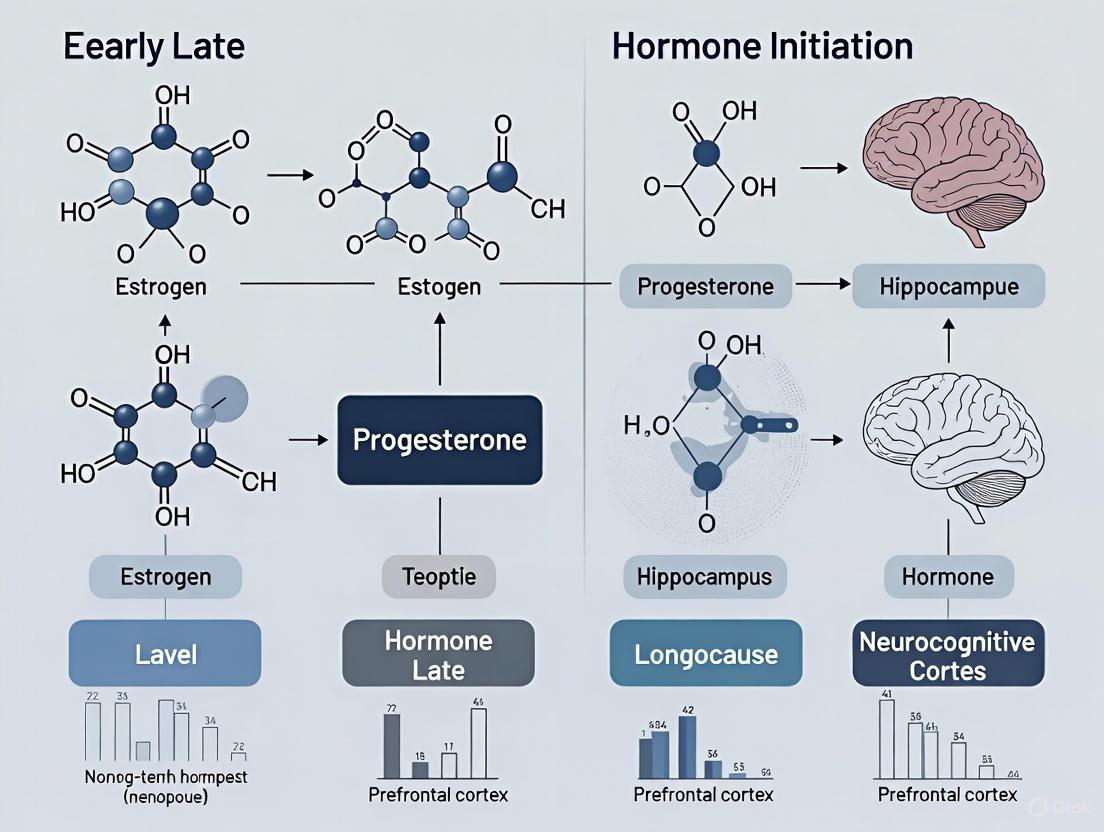
This article synthesizes current evidence on the long-term neurocognitive impact of menopausal hormone therapy (mHT) timing.
Timing Matters: A Comprehensive Analysis of Long-Term Neurocognitive Outcomes Following Early vs. Late Menopausal Hormone Therapy Initiation
Abstract
This article synthesizes current evidence on the long-term neurocognitive impact of menopausal hormone therapy (mHT) timing. For researchers and drug development professionals, we explore the foundational 'timing hypothesis,' methodological approaches in major trials, and conflicting findings on cognitive outcomes. Evidence indicates that initiating mHT during the perimenopausal window or early postmenopause may offer verbal memory benefits and poses no long-term cognitive harm, while late-life initiation, particularly with estrogen-progestogen formulations, shows no benefit or potential decline in specific cognitive domains. The analysis underscores that formulation, treatment duration, and patient characteristics critically modulate these effects, highlighting key considerations for future clinical trial design and therapeutic development.
The Neuroprotective Hypothesis and the Critical Window for Estrogen Therapy
The Timing Hypothesis, also known as the Critical Window Hypothesis, represents a foundational concept in menopausal hormone therapy (MHT) research that posits the cognitive and cardiovascular effects of treatment depend critically on when therapy is initiated relative to menopause onset. This framework emerged from the need to reconcile contradictory findings between observational studies and randomized clinical trials, particularly the Women's Health Initiative (WHI), which showed increased dementia risk with late-life hormone initiation. This review traces the evolution of the Timing Hypothesis from its origins in animal models to human epidemiological studies and randomized trials, systematically comparing neurocognitive outcomes based on initiation timing. We synthesize methodological approaches, key signaling pathways, and quantitative evidence to provide researchers and drug development professionals with a comprehensive analysis of how temporal factors influence MHT outcomes.
The Timing Hypothesis originated from critical observations in both basic science and clinical epidemiology. Initial animal studies demonstrated that estrogen exerted neuroprotective effects when administered during specific critical periods corresponding to early menopause in humans, but not when administered later. These findings provided a biological plausibility framework for reconciling contradictory human data. Concurrently, human observational studies consistently suggested that MHT reduced Alzheimer's disease (AD) risk, while randomized controlled trials (RCTs) like the Women's Health Initiative Memory Study (WHIMS) showed increased dementia risk with hormone therapy initiation in women aged 65 years or older [1].
The conceptual foundation solidified in the early 2000s, with Resnick and Henderson formally proposing that "a critical period during the climacteric years, which are characterized by relatively rapid estrogen depletion" might explain these discrepant findings [1]. This hypothesis was further bolstered by the 2002 Cache County Study, which found that former HT users showed reduced AD risk, but current users did not—implying that early initiation around menopause might be protective, while later initiation in the preclinical disease stage was ineffective [1].
Experimental Models and Methodological Approaches
Animal Models and Translational Foundations
Animal research provided the initial mechanistic foundation for the Timing Hypothesis through carefully controlled interventional studies in rodent and primate models. These experimental systems allowed researchers to isolate timing as a critical variable while controlling for confounding factors impossible to address in human studies.
Key Methodological Approaches in Animal Research:
- Standardized Stress Protocols: Rodent models subjected to controlled early-life adversity to study biological embedding of stress responses [2]
- Surgical Menopause Models: Ovariectomized rodents receiving timed estrogen replacement to simulate postmenopausal hormone interventions
- Cognitive Behavioral Testing: Maze navigation, object recognition, and other cognitive assessments correlating hormonal timing with cognitive performance
- Molecular Pathway Analysis: Examination of epigenetic changes, neuroinflammatory markers, and synaptic plasticity proteins in brain tissue samples
Biologists working in environmental epigenetics demonstrated "epistemic modesty" regarding the translational potential of these models, acknowledging the significant challenges in directly applying rodent data to human populations [2]. Nevertheless, these controlled experiments established the fundamental principle that estrogen's neuroprotective effects were contingent on administration during a specific critical window while neural systems remained responsive.
Human Epidemiological Studies
Human observational studies employed distinct methodological approaches to investigate timing effects:
Cache County Study Methodology [1]:
- Design: Population-based longitudinal study of aging and dementia
- Participants: 428 women aged older than 60 years randomly selected from household listings
- HT Assessment: Detailed history of hormone therapy use, including timing, duration, and formulation
- Cognitive Assessment: Comprehensive battery including MMSE, Trail Making Tests, CERAD word list, verbal fluency, and Boston Naming Test
- Timing Definition: Early initiation defined as commencement before age 56 years or within 5 years of hysterectomy with bilateral oophorectomy
- Analysis: Adjusted for age, education, mood, BMI, smoking, alcohol intake, and cerebrovascular history
Randomized Controlled Trials
Large-scale RCTs implemented rigorous protocols to test the Timing Hypothesis:
WHIMS Methodology [1]:
- Design: Randomized, placebo-controlled, double-blind trial
- Participants: Women aged 65-79 years without dementia at baseline
- Interventions: Conjugated equine estrogen (CEE) alone for hysterectomized women or CEE plus medroxyprogesterone acetate (MPA) for women with uterus
- Primary Outcome: All-cause dementia diagnosis
- Follow-up: Average 4-5 years
KEEPS Methodology [3]:
- Design: Randomized, placebo-controlled trial
- Participants: Recently postmenopausal women within 3 years of final menstrual period
- Interventions: Oral CEE (0.45 mg/d), transdermal estradiol (50 μg/d) both with micronized progesterone, or placebo for 48 months
- Cognitive Assessment: Multiple cognitive factor scores and global cognitive score
- Follow-up: KEEPS Continuation observational study approximately 10 years post-trial
Comparative Analysis of Key Studies and Outcomes
Neurocognitive Outcomes by Timing of Initiation
Table 1: Cognitive Outcomes in Major Timing Hypothesis Studies
| Study | Design | Participants | Timing of Initiation | Key Cognitive Findings |
|---|---|---|---|---|
| WHIMS [1] | RCT | 7,479 women aged 65-79 | Late initiation (>10 years postmenopause) | Increased risk of all-cause dementia with CEE/MPA (HR=2.05); No significant effect with CEE alone |
| Cache County [1] | Observational | 428 women >60 years | Early vs. late initiation defined by age 56 | Early initiators performed better on MMSE (p=0.04) and Trail Making A (p=0.02) |
| REMEMBER Pilot [4] | Observational | 428 women >60 years | Early (<56 years) vs. late (>56 years) | Early initiation beneficial for some domains; Late initiation detrimental on MMSE (p=0.09) and verbal fluency |
| KEEPS-Cog [3] | RCT | 727 women within 3 years of menopause | Early initiation (<3 years postmenopause) | No significant cognitive benefits or harms after 48 months of treatment |
| KEEPS Continuation [3] | Observational follow-up | 299 women from KEEPS | Early initiation with 10-year follow-up | No long-term cognitive benefits or harms of early MHT initiation |
Cardiovascular Outcomes by Timing of Initiation
Table 2: Cardiovascular Outcomes in Timing Hypothesis Studies
| Study | Design | Participants | Timing of Initiation | Key Cardiovascular Findings |
|---|---|---|---|---|
| WHI Reanalysis [5] | RCT | 27,347 postmenopausal women | Stratified by age and time since menopause | Women in 50s: 24% lower CHD risk; Women in 70s: 26% higher CHD risk |
| ELITE [5] | RCT | 643 healthy postmenopausal women | Early (<6 years) vs. late (>10 years) postmenopause | Early initiation slowed carotid IMT progression; No benefit with late initiation |
| KEEPS [5] | RCT | 727 recently postmenopausal women | Early initiation (<3 years postmenopause) | No significant effect on carotid artery thickness or cardiac events |
| Meta-analysis [6] | Systematic review | 40,521 from 31 RCTs | Younger (<60) vs. older (>60) initiators | Significant heterogeneity: younger women had reduced all-cause mortality and cardiac mortality |
Signaling Pathways and Biological Mechanisms
The biological plausibility of the Timing Hypothesis rests on several interconnected pathways through which estrogen exerts neuroprotective effects, with the responsiveness of these pathways declining with advancing age and prolonged estrogen deprivation.
Diagram 1: Critical Window in Estrogen Signaling Pathways. Early initiation promotes neuroprotective mechanisms, while late initiation with existing vascular pathology may exacerbate disease processes.
The molecular mechanisms underlying these pathway differences involve epigenetic modifications that influence gene-environment interactions over time. Research in social epigenetics has demonstrated that early-life adversity can produce stable epigenetic marks that alter stress responsiveness and neural function [2]. Similarly, the prolonged estrogen deprivation associated with aging may establish epigenetic patterns that reduce neural responsiveness to subsequent estrogen exposure.
Research Reagent Solutions and Essential Materials
Table 3: Key Research Reagents and Experimental Materials
| Reagent/Material | Function in Timing Hypothesis Research | Examples in Literature |
|---|---|---|
| Conjugated Equine Estrogens (CEE) | Most studied oral estrogen formulation; reference compound for WHI and WHIMS | Premarin (0.45-0.625 mg/d) [1] [3] |
| 17β-Estradiol (Transdermal) | Body-identical estrogen; bypasses first-pass metabolism | Climara (50-100 μg/d) [3] [5] |
| Medroxyprogesterone Acetate (MPA) | Synthetic progestin used in WHI; potentially negates estrogen benefits | Provera (2.5 mg/d) [1] [5] |
| Micronized Progesterone | Body-identical progesterone; potentially neutral or beneficial vascular effects | Prometrium (200 mg/d for 12 days/month) [3] [5] |
| Standardized Cognitive Batteries | Quantify cognitive outcomes across domains | MMSE, CERAD word list, Trail Making Tests [4] |
| Neuroimaging Biomarkers | Assess structural and functional brain changes | Carotid IMT, MRI, PET [3] [5] |
| Epigenetic Analysis Tools | Examine DNA methylation changes in stress/estrogen pathways | Bisulfite sequencing, methylation arrays [2] |
Integrated Workflow for Timing Hypothesis Research
Diagram 2: Research Workflow in Timing Hypothesis Investigation. The sequential yet iterative process of building evidence from animal models to human studies and clinical applications.
The Timing Hypothesis has fundamentally reshaped our understanding of menopausal hormone therapy by introducing temporal factors as critical determinants of cognitive and cardiovascular outcomes. Evidence from animal models, observational studies, and randomized trials consistently indicates that early initiation of MHT (within 10 years of menopause or before age 60) is associated with neutral or potentially beneficial neurocognitive effects, while late initiation (after age 65 or more than 10 years postmenopause) may increase dementia risk.
Subgroup analyses from WHI showing a 24% lower coronary heart disease risk in women in their 50s versus 26% higher risk in women in their 70s further support the critical importance of timing [5]. Similarly, the Kronos Early Estrogen Prevention Study (KEEPS) and Early versus Late Intervention Trial (ELITE) demonstrated that early initiation of oral estradiol slowed the progression of subclinical atherosclerosis [5], providing a potential vascular mechanism for the cognitive timing effects.
However, important limitations and research gaps remain. The KEEPS Continuation Study found no long-term cognitive benefits or harms of short-term MHT initiated early in menopause, suggesting that early initiation may be safe but not necessarily protective against cognitive decline [3]. Additionally, fundamental questions persist regarding optimal formulations, with evidence suggesting transdermal estradiol and micronized progesterone may have superior risk profiles compared to the conjugated equine estrogens and medroxyprogesterone acetate used in most major trials [5].
Future research directions should prioritize:
- Long-term studies of modern MHT formulations on neurocognitive outcomes
- Personalized medicine approaches incorporating genetic, epigenetic, and vascular biomarkers
- Integration of animal and human models to elucidate critical window mechanisms
- RCTs specifically designed to test timing effects across cognitive and cardiovascular domains
For drug development professionals and researchers, these findings highlight the importance of considering temporal factors in designing hormone-based interventions for neuroprotection and underscore that timing of initiation may be as critical as the therapeutic agent itself.
The menopausal transition, encompassing perimenopause and early postmenopause, represents a critical period of neuroendocrine restructuring with profound implications for long-term women's health. The concept of a "critical window" proposes that the timing of hormonal interventions relative to this transition significantly influences their efficacy and safety profile, particularly concerning neurocognitive outcomes [1]. This physiological window is characterized by dynamic hormonal fluctuations that precede the stable estrogen deficiency of established menopause, creating a unique therapeutic opportunity [7]. Understanding the precise physiological changes during this transition is paramount for developing targeted hormonal therapies that maximize benefit-risk ratios. This guide systematically compares the neurocognitive outcomes associated with hormone therapy initiation during versus after this critical window, providing researchers with synthesized experimental data and methodological frameworks to advance therapeutic development.
Physiological Staging of the Menopausal Transition
Defining the Transition Phases
The menopausal transition is systematically staged using the Stages of Reproductive Aging Workshop (STRAW) criteria, which classify the progression from reproductive to post-reproductive life. The transition begins with the late reproductive stage (-3), characterized by rising follicle-stimulating hormone (FSH) and declining ovarian reserve markers like anti-Müllerian hormone (AMH) [7]. The early menopausal transition (-2) is marked by increased menstrual cycle variability (>7 days difference in cycle length), while the late transition (-1) features prolonged amenorrhea (60+ days) [7]. The final menstrual period (FMP) defines menopause onset, with the subsequent year comprising early postmenopause (+1a), a key phase within the proposed critical window for intervention [7].
During this transition, the hypothalamic-pituitary-ovarian axis undergoes profound reorganization. The monotropic rise in FSH occurs due to declining inhibin B secretion from a diminishing ovarian follicle pool [7]. Ovarian hormones exhibit erratic secretion patterns rather than simple decline, with an increased prevalence of luteal out-of-phase (LOOP) cycles featuring abbreviated follicular phases and inadequate progesterone production [7]. This hormonal instability contributes to the symptomatology of the perimenopausal period and may influence neural adaptation to estrogen deprivation.
Hormonal Biomarkers and Tissue Changes
Table 1: Key Hormonal Biomarkers Across the Menopausal Transition
| Biomarker | Premenopausal Status | Perimenopausal Status | Postmenopausal Status | Tissue Correlation |
|---|---|---|---|---|
| FSH | Consistent, lower levels | Fluctuating, rising | Consistently elevated | Blood and pituitary gland strongly correlate [8] |
| AMH | High | Declining | Low/non-detectable | Blood levels reflect ovarian reserve [8] |
| Estradiol | Cyclic, robust levels | Erratic, extreme fluctuations | Consistently low | Blood and hypothalamus correlate moderately (r=0.44) [8] |
| Estrone | Consistent levels | Declining | Low | Blood and hypothalamus correlate strongly (r=0.95) [8] |
| Progesterone | Cyclic, robust levels | Often inadequate luteal production | Consistently low | Blood and hypothalamus correlate moderately (r=0.44) [8] |
| Hypothalamic CYP19A1 (Aromatase) | Robust expression | Variable | Significantly decreased | Correlates with hypothalamic estradiol [8] |
Postmortem tissue analysis reveals that hypothalamic steroid levels show moderate to strong correlation with peripheral blood measurements, enabling biomarker assessment in neuroendocrine studies [8]. The pituitary gland demonstrates significant increases in FSH protein and gene expression in postmenopausal women, reflecting loss of negative feedback [8]. These multi-tissue biomarker profiles enable precise staging of the menopausal transition for research applications.
Figure 1: Neuroendocrine Remodeling During Menopausal Transition. The hypothalamic-pituitary-ovarian axis undergoes progressive changes from premenopause through postmenopause, characterized by declining ovarian reserve, erratic hormone feedback, and eventual follicle depletion. LOOP cycles = Luteal Out-of-Phase cycles.
The Critical Window Hypothesis: Experimental Evidence
Theoretical Foundation and Neurobiological Basis
The critical window hypothesis (also termed timing hypothesis) posits that the effects of menopausal hormone therapy (mHT) on neurocognitive outcomes depend substantially on the timing of initiation relative to the menopausal transition [1]. This theory suggests that initiating mHT during perimenopause or early postmenopause (within 10 years of menopause or before age 60) provides neuroprotective benefits, while initiation later in life may confer no benefit or potentially increase cognitive risk [1] [9].
The neurobiological rationale centers on estrogen's pleiotropic effects on neural systems. Proposed mechanisms include: enhanced cerebral blood flow, stimulation of dendritic spine formation and synaptogenesis, protection against oxidative stress, modulation of key neurotransmitters (including acetylcholine, serotonin, and dopamine), and reduction in cerebral amyloid deposition [1] [9]. The hypothesis suggests that the aging brain, particularly one with established neurodegenerative pathology or significant cerebrovascular disease, may respond differently to estrogen exposure than a brain recently deprived of ovarian hormones but still possessing greater plasticity [1] [10].
Comparative Analysis of Key Studies
Table 2: Neurocognitive Outcomes of Hormone Therapy by Timing of Initiation
| Study (Design) | Participant Profile | Intervention Details | Timing Relative to Menopause | Neurocognitive Outcomes |
|---|---|---|---|---|
| WHIMS (RCT) [1] [11] | Women aged 65-79 years | CEE alone or CEE+MPA | >10 years postmenopause (late initiation) | Increased risk of all-cause dementia; Detrimental effects on global cognition |
| KEEPS-Cog (RCT) [11] [12] | Recently postmenopausal women (mean age 52.7) | oCEE 0.45mg/d or tE2 50μg/d + micronized progesterone | Within 3 years of FMP (early initiation) | No significant cognitive benefit or harm after 48 months of treatment |
| KEEPS Continuation (Observational Follow-up) [11] [12] | KEEPS participants ~10 years post-trial | Prior exposure to oCEE, tE2, or placebo | Early initiation (within 3 years of FMP) | No long-term cognitive benefits or harms from early mHT exposure |
| Cache County (Observational) [1] | Community-dwelling women | Various HT formulations | Stratified by timing | Reduced AD risk in former users; No protection in current users starting late |
| Mayo Clinic Cohort (Observational) [10] | Women with bilateral oophorectomy | Estrogen therapy post-surgery | Before age 50 (premature menopause) | Increased dementia risk mitigated by ET use until at least age 50 |
The Women's Health Initiative Memory Study (WHIMS), a randomized controlled trial of women initiating hormone therapy at age 65+, demonstrated that conjugated equine estrogens (CEE) with medroxyprogesterone acetate (MPA) approximately doubled the risk for all-cause dementia, while CEE alone showed no significant effect compared to placebo [1]. In stark contrast, the Kronos Early Estrogen Prevention Study (KEEPS) and its cognitive ancillary (KEEPS-Cog) found that initiation of either oral CEE or transdermal estradiol within three years of the final menstrual period in healthy, recently postmenopausal women resulted in no significant cognitive benefits or harms after four years of treatment [11]. The KEEPS Continuation study, which followed participants approximately ten years after trial completion, confirmed no long-term cognitive benefits or harms from early mHT exposure [11] [12].
Observational data further support the timing hypothesis. The Cache County Study demonstrated that former HT users had reduced Alzheimer's disease risk, while current users showed no protection unless they had used HT for ten or more years, implying that early initiation and duration may be important [1]. Similarly, studies of women undergoing bilateral oophorectomy before menopause onset show increased dementia risk that is attenuated by estrogen therapy until at least the natural age of menopause [10].
Experimental Models and Methodologies
Clinical Trial Protocols
The KEEPS-Cog trial implemented a rigorous methodology to test the critical window hypothesis. The study enrolled 727 healthy, recently postmenopausal women (within 6-36 months of last menses) aged 42-58 years [11]. Participants were randomized to one of three treatment arms for 48 months: (1) oral conjugated equine estrogens (oCEE) 0.45mg/day; (2) transdermal 17β-estradiol (tE2) 50μg/day; or (3) placebo pills and patches [11]. All active treatment participants also received cyclic micronized progesterone (200mg/day for 12 days/month) to provide endometrial protection [11].
The cognitive assessment battery measured multiple domains: verbal learning and memory (Rey Auditory Verbal Learning Test), auditory attention and working memory (Digit Span, Letter-Number Sequencing), visual attention and executive function (Stroop Test, Symbol-Digit Modalities), and speeded language and mental flexibility (Category Fluency, Controlled Oral Word Association) [11]. The primary analysis used latent growth models to assess cognitive trajectories, with adjustment for relevant covariates including baseline cognitive performance, age, and education [11].
The MODEL research initiative employs innovative approaches including a "physiome-on-a-chip" system that recreates multi-organ interactions to study how ovarian aging affects neurological, skeletal, cardiovascular, and digestive systems simultaneously [13]. This platform enables researchers to observe how ovaries communicate with the brain, bones, heart, and gut, and to document system-wide changes when estrogen and other metabolites are progressively removed [13].
Biomarker Assessment Methodologies
Postmortem tissue analysis has identified validated biomarkers for determining menopausal status in research contexts. A comprehensive assessment of 40 candidate biomarkers across blood, hypothalamus, and pituitary tissues identified 14 significant and 7 strongest menopausal biomarkers [8]. The established composite measures enable postmortem determination of menopausal status across different age ranges, including the challenging perimenopausal group (45-55 years) [8].
Steroid hormone quantification utilizes liquid chromatography-tandem mass spectrometry (LC-MS/MS) for precise measurement of multiple analytes in small tissue samples [8]. For gene expression analysis, RNA extraction followed by quantitative RT-PCR is employed for hypothalamic genes (CYP19A1, ESR1, ESR2, GPER1, PGR, KISS1) and pituitary genes (FSH, ESR1, GNRHR) [8]. Protein levels of FSH are measurable in both blood (via immunoassay) and pituitary tissue (via Western blot or immunoassay) [8].
Figure 2: Experimental Framework for Critical Window Research. Comprehensive methodology for investigating the critical window hypothesis, integrating study design considerations, methodological approaches, and multidimensional outcome measures.
Research Reagents and Technical Solutions
Table 3: Essential Research Reagents for Menopausal Transition Studies
| Reagent/Category | Specific Examples | Research Application | Technical Notes |
|---|---|---|---|
| Hormone Formulations | Conjugated equine estrogens (CEE); 17β-estradiol (transdermal); Micronized progesterone; Medroxyprogesterone acetate (MPA) | Intervention studies; Dose-response analyses; Formulation comparisons | Route of administration influences metabolic effects; Progestogen type modifies risk profile [11] |
| Immunoassays | FSH immunoassay kits; Estradiol ELISA; AMH detection kits | Hormone level quantification; Ovarian reserve assessment | Postmortem blood validation required; Standardized cutoff values lacking for menopause diagnosis [8] |
| Molecular Biology Reagents | qRT-PCR kits for CYP19A1, ESR1, ESR2, GPER1, PGR, KISS1; RNA extraction kits | Gene expression analysis; Receptor quantification | Hypothalamic and pituitary tissue require specialized processing; RNA integrity critical [8] |
| Steroid Analysis Kits | LC-MS/MS steroid panels; Estrone, estradiol, progesterone detection | Comprehensive steroid profiling; Tissue hormone measurement | Blood-hypothalamus correlation varies by steroid; Technical limitations for some androgens [8] |
| Cognitive Assessment Tools | Rey Auditory Verbal Learning Test; Digit Span; Stroop Test; Category Fluency | Cognitive domain-specific testing; Longitudinal trajectory mapping | Multidomain batteries essential; Practice effects necessitate alternative forms [11] |
| Neuroimaging Biomarkers | MRI for prefrontal cortex volume; PET for amyloid deposition | Brain structure and pathology quantification; Treatment response monitoring | tE2 associated with prefrontal cortex preservation; Amyloid deposition correlates [11] |
The selection of appropriate progestogens represents a critical methodological consideration. In the KEEPS trial, micronized progesterone (200mg/day for 12 days/month) was used for endometrial protection, in contrast to the WHIMS trial which used medroxyprogesterone acetate [11]. This distinction may contribute to differential risk profiles, as MPA has been associated with more adverse effects on cardiovascular and cognitive outcomes [1]. For neuroimaging studies, volumetric MRI assessment of prefrontal cortex and amyloid PET imaging provide objective biomarkers of brain structure and pathology that complement cognitive testing [11].
Advanced computational approaches are increasingly important for integrating multidimensional data. The MODEL initiative employs artificial intelligence and machine learning (AI/ML) models to identify novel biomarker patterns associated with menopausal transition, facilitating development of predictive algorithms for chronic disease risk assessment [13].
The physiological transition through perimenopause and early postmenopause establishes a critical window during which the neuroendocrine system demonstrates particular sensitivity to hormonal interventions. Current evidence suggests that while early initiation of menopausal hormone therapy within this window does not appear to confer long-term cognitive benefits, it presents a favorable safety profile regarding neurocognitive outcomes [11] [12]. The contrasting findings between early initiation studies (KEEPS) and late initiation studies (WHIMS) strongly support the timing hypothesis and highlight the importance of considering reproductive age and time since menopause in therapeutic development [1] [11].
Future research directions should include: longer-term follow-up of early initiators; investigation of novel hormone formulations and delivery systems; examination of individual risk factors that modify treatment response; and application of multi-omics approaches to identify biomarkers predictive of optimal timing and formulation for individual women [13]. The development of integrated multi-organ research platforms represents a promising approach to understanding the systemic effects of ovarian aging and generating comprehensive therapeutic strategies [13].
Estrogen, a cholesterol-derived sex hormone, functions as a critical neuroprotective signal that regulates multiple tissues and functions in the central nervous system [14]. The three main endogenous forms—estrone (E1), estradiol (E2), and estriol (E3)—mediate their effects through classical estrogen receptors (ERα and ERβ) and the non-classical G protein-coupled estrogen receptor 1 (GPER-1) [15]. These receptors are ubiquitously distributed throughout the brain, including expression in neural stem/progenitor cells (NSPCs), oligodendrocyte progenitor cells, and mature neurons, allowing estrogen to modulate cell proliferation, differentiation, and survival processes [15]. The neuroprotective potential of estrogen has gained significant attention in menopausal hormone therapy (MHT) research, particularly regarding whether initiating treatment during an early "critical window" following menopause yields superior long-term neurocognitive outcomes compared to late initiation [16]. This review synthesizes current evidence on estrogen's neuroprotective mechanisms and examines clinical data comparing early versus late MHT initiation on brain health.
Molecular Mechanisms of Estrogen-Mediated Neuroprotection
Genomic and Non-Genomic Signaling Pathways
Estrogen exerts neuroprotection through multiple complementary signaling mechanisms. Genomic pathways involve estrogen receptors acting as transcription factors to regulate genes involved in neuronal survival, synaptic plasticity, and antioxidant defense [14] [15]. These genomic effects typically require longer pretreatment periods (e.g., 24 hours) to manifest and are mediated by both ERα and ERβ receptors [14]. Non-genomic pathways, frequently mediated by membrane-associated GPER-1 and other receptors, initiate rapid signaling cascades that enhance neuronal survival within minutes to hours [15]. These include activation of MAPK/ERK, PI3K/Akt, and CREB pathways, which collectively inhibit apoptotic machinery and promote synaptic strengthening [14] [15]. Additionally, estrogen possesses antioxidant properties that reduce reactive oxygen species and support mitochondrial function, particularly important in neurodegenerative conditions like Alzheimer's and Parkinson's disease where oxidative stress is prominent [15].
Table 1: Estrogen Receptor Types and Their Neuroprotective Mechanisms
| Receptor Type | Localization | Primary Signaling Pathways | Neuroprotective Functions |
|---|---|---|---|
| ERα | Nuclear, cytoplasmic | Genomic regulation, MAPK/ERK | Reduces ischemic infarct volume, promotes synaptic plasticity, mediates neuroprotection in cerebral ischemia |
| ERβ | Nuclear, cytoplasmic | Genomic regulation, PI3K/Akt | Modulates neuroinflammation, supports dendritic spine formation, contributes to cognitive performance |
| GPER-1 | Plasma membrane | cAMP/PKA, calcium signaling | Rapid neuroprotection, enhances neuronal excitability, promotes synaptic transmission |
Neurotrophic and Synaptic Plasticity Effects
Estrogen demonstrates significant neurotrophic capabilities, enhancing the expression of various growth factors including brain-derived neurotrophic factor (BDNF) and anti-apoptotic molecules such as Bcl-2 [15]. These effects promote neuronal survival and reduce neurodegenerative processes. Furthermore, estrogen positively modulates dendritic spine and axonal growth, synaptic transmission, and plasticity—processes essential for maintaining cognitive and memory performance [15]. Research indicates that estrogen treatment can increase hippocampal spine density and strengthen synaptic connections, particularly in regions vulnerable to age-related degeneration such as the hippocampus and cerebral cortex [14]. The hormone also influences neurogenic processes by maintaining the balance between proliferation and differentiation of neural stem/progenitor cells in both embryonic and adult brains [15].
The Critical Window Hypothesis: Timing of Estrogen Therapy Initiation
Preclinical Evidence for a Critical Period
The "critical window" or "timing" hypothesis proposes that estrogen therapy must be initiated shortly after menopause to confer neuroprotective benefits while avoiding potential harms associated with later initiation [16]. Preclinical studies using animal models provide mechanistic insights into this temporal sensitivity. Research demonstrates that the depletion of E2 receptors, a switch to ketogenic metabolism in neuronal mitochondria, and decreased acetylcholine availability represent known mechanisms governing the duration of the critical period following estrogen deficiency [16]. In ovariectomized rodent models, early estrogen replacement effectively reduces ischemic infarct volume and improves cognitive outcomes, while delayed administration fails to provide protection and may exacerbate neuronal damage [14] [16]. The neuroprotective efficacy of early intervention is further supported by studies showing that estrogen pretreatment for 24 hours significantly reduces neuronal loss following global cerebral ischemia, with corresponding improvements in recognition, working memory, and spatial memory [14].
Clinical Evidence from Major Trials
Recent clinical trials have directly tested the critical window hypothesis by comparing cognitive outcomes when menopausal hormone therapy is initiated early versus late after menopause. The key findings from major randomized controlled trials are summarized in Table 2.
Table 2: Clinical Trial Evidence on Timing of MHT Initiation and Cognitive Outcomes
| Trial Name | Design | Participants | Intervention | Cognitive Outcomes |
|---|---|---|---|---|
| ELITE [17] [18] | Randomized, double-blind, placebo-controlled | 567 healthy women (41-84 years); early group (<6 years menopause) vs late group (≥10 years menopause) | Oral 17β-estradiol 1 mg/d or placebo; progesterone vaginal gel for women with uterus | No significant difference in verbal memory, executive functions, or global cognition between early and late initiators after mean 57 months treatment |
| KEEPS [11] [19] | Randomized, placebo-controlled | 727 recently postmenopausal women (within 3 years) with low CVD risk | oCEE (0.45 mg/d), tE2 (50 μg/d), or placebo; all with micronized progesterone if needed for 48 months | No cognitive benefit or harm after 48 months of either MHT formulation |
| KEEPS Continuation [11] [3] [19] | Observational follow-up | 299 original KEEPS participants re-evaluated ~10 years post-trial | Previous exposure to oCEE, tE2, or placebo during KEEPS | No long-term cognitive benefits or harms from early MHT exposure; baseline cognition strongest predictor of later performance |
| WHIMS [20] [16] | Randomized, placebo-controlled | Women ≥65 years (≥10 years postmenopause) | CEE (0.625 mg/d) with or without MPA | Increased risk of dementia and cognitive impairment with MHT initiation in older postmenopausal women |
The collective evidence from these trials suggests that while early MHT initiation appears safe from a cognitive perspective, it does not provide the neuroprotective benefits or cognitive enhancement previously hypothesized. The KEEPS Continuation Study, which provided 14-year follow-up data, particularly emphasized that MHT initiated early in menopause posed no long-term cognitive harm but equally provided no cognitive benefit or protection against decline [11] [3] [19]. Similarly, the ELITE trial found that estradiol neither benefited nor harmed cognitive abilities regardless of time since menopause [17] [18].
Experimental Models and Methodologies in Estrogen Neuroprotection Research
In Vivo Models of Cerebral Ischemia and Neurodegeneration
Research on estrogen's neuroprotective effects employs various well-established experimental models. For cerebral ischemia studies, the middle cerebral artery occlusion (MCAO) model in rodents represents the gold standard for evaluating infarct volume and neurological deficits [14]. This model has demonstrated significant sex differences, with young adult female rats and mice exhibiting smaller infarct volumes compared to males—a protective effect eliminated by ovariectomy and restored with exogenous estrogen administration [14]. Global cerebral ischemia models, which primarily affect the CA1 hippocampal region, are utilized to assess estrogen's effects on cognitive outcomes, with studies showing that estradiol treatment significantly improves recognition, working memory, and spatial memory following ischemic insult [14]. Neurodegenerative disease models include β-amyloid injection models, transgenic Alzheimer's disease mice, and neurotoxin-induced Parkinson's disease models, all of which have been used to evaluate estrogen's potential to mitigate pathology and behavioral deficits [15] [16].
In Vitro Mechanistic Studies
Cell culture systems provide essential platforms for elucidating molecular mechanisms underlying estrogen's neuroprotective actions. Primary neuronal cultures from cortical, hippocampal, or striatal regions are commonly subjected to oxidative stress, excitotoxicity, or nutrient deprivation to model neurodegenerative conditions [15]. These systems allow precise investigation of estrogen receptor-specific actions through pharmacological approaches using selective agonists and antagonists. Neural stem/progenitor cell (NSPC) cultures help elucidate estrogen's role in regulating neurogenesis, including effects on proliferation, differentiation, and maturation [15]. Additionally, organotypic brain slice cultures maintain tissue architecture while enabling controlled manipulation of estrogen signaling pathways and assessment of neuroprotective outcomes [14].
Experimental Workflow for Estrogen Neuroprotection Studies
Research Reagent Solutions for Estrogen Neuroprotection Studies
Table 3: Essential Research Reagents for Estrogen Neuroprotection Studies
| Reagent/Category | Specific Examples | Research Applications | Key Functions |
|---|---|---|---|
| Estrogen Receptor Agonists | 17β-estradiol, Diarylpropionitrile (DPN; ERβ-selective), Propylpyrazoletriol (PPT; ERα-selective) | Receptor-specific mechanism studies | Selective activation of ER subtypes to delineate their individual contributions to neuroprotection |
| Estrogen Receptor Antagonists | ICI 182,780 (fulvestrant), Tamoxifen, Raloxifene | Blocking studies to confirm receptor-mediated effects | Inhibition of estrogen receptors to establish necessity of receptor signaling in observed neuroprotective effects |
| Selective Estrogen Receptor Modulators (SERMs) | Raloxifene, LY353381.HCl, Tamoxifen | Therapeutic alternative development | Tissue-specific estrogenic/anti-estrogenic effects; neuroprotection without peripheral reproductive effects |
| Aromatase Inhibitors | Letrozole, Exemestane, Anastrozole | Endogenous estrogen depletion models | Inhibition of estrogen biosynthesis to create estrogen-deficient conditions for intervention studies |
| Animal Models | Ovariectomized rodents, Aromatase knockout mice, ERα and ERβ knockout mice | In vivo pathophysiology and intervention studies | Modeling postmenopausal estrogen deficiency and specific receptor contributions to neuroprotection |
| Molecular Biology Tools | ERα/ERβ/GPER-1 antibodies, siRNA/shRNA constructs, ER-responsive reporter constructs | Mechanism elucidation studies | Detection, localization, and functional assessment of estrogen receptors and signaling pathways |
The investigation of estrogen's neuroprotective mechanisms reveals a complex interplay between genomic and non-genomic signaling pathways that promote neuronal survival, synaptic plasticity, and cognitive function. Preclinical evidence strongly supports estrogen's potential to mitigate damage in cerebral ischemia, Alzheimer's disease, and Parkinson's disease through multiple complementary mechanisms. However, clinical translation has proven challenging, with recent trials indicating that while early initiation of menopausal hormone therapy within the proposed critical window appears safe from a cognitive perspective, it does not deliver the neuroprotective benefits or cognitive enhancement once anticipated. The discrepancy between promising mechanistic studies and neutral clinical outcomes highlights the complexity of translating estrogen neuroprotection to clinical practice and underscores the need for further research into optimal formulations, timing, and patient selection criteria to potentially realize estrogen's neuroprotective potential in human populations.
The long-term neurocognitive outcomes of menopausal hormone therapy (MHT) have been the subject of extensive research and considerable scientific debate. Central to this discourse is the "critical window hypothesis," which proposes that the timing of MHT initiation relative to menopause onset is a crucial determinant of cognitive outcomes. This guide provides a comparative analysis of pivotal studies that have shaped our understanding, reconciling their seemingly disparate findings through the lens of initiation timing and methodological approaches.
Historical Context and Key Studies
The relationship between MHT and cognitive health has evolved significantly through several major research initiatives, each contributing essential insights to the current understanding.
Table 1: Overview of Key Studies on Menopausal Hormone Therapy and Cognitive Outcomes
| Study Name | Design | Participant Profile | MHT Intervention | Primary Cognitive Findings |
|---|---|---|---|---|
| Women's Health Initiative Memory Study (WHIMS) [21] | Randomized Controlled Trial | Women aged ≥65 years (more than a decade post-menopause) | Oral Conjugated Equine Estrogens (oCEE) with/without Medroxyprogesterone Acetate | Associated with increased risk of cognitive decline and dementia [11]. |
| Kronos Early Estrogen Prevention Study (KEEPS) & KEEPS-Cog [11] [3] | Randomized Controlled Trial | Recently postmenopausal women (within 36 months) with low cardiovascular risk | oCEE (0.45 mg/d) or transdermal Estradiol (tE2; 50 μg/d), both with progesterone | Short-term (48 months): No cognitive benefit or harm [11].Long-term (KEEPS Continuation, ~10 years): No long-term cognitive benefit or harm [11] [3]. |
| Mass General Brigham / WRAP Study [22] | Observational / Neuroimaging | Cognitively unimpaired adults, including women with premature menopause | Various HT regimens, timing recorded | Late initiation of HT (≥5 years after menopause) associated with higher tau deposition, a protein linked to Alzheimer's disease [22]. |
Reconciling the Disparate Findings
The apparent contradictions between these major findings can be largely reconciled by considering the timing of therapy initiation and the cardiovascular health of the study populations.
- The Critical Window of Opportunity: The divergent results of WHIMS and KEEPS strongly support the critical window hypothesis. WHIMS, which initiated therapy in women over 65 (long after menopause), found detrimental effects [21]. In contrast, KEEPS, which initiated therapy in recently postmenopausal women, found no such harm, suggesting that initiating MHT long after menopause may miss this protective window [11] [3].
- Cardiovascular Health as a Moderator: The KEEPS trial specifically enrolled women at low risk for cardiovascular disease [11]. The WHI findings of increased health risks may not be fully generalizable to healthier populations, highlighting that the baseline health of the cohort is a critical factor in risk-benefit assessment.
- Neurobiological Evidence: The Mass General Brigham study provides a potential biological mechanism, finding that late initiation of HT was associated with increased tau pathology in the brain [22]. This offers a plausible pathway explaining why timing is so critical, bridging the gap between observational and clinical trial data.
Diagram 1: The Critical Window Hypothesis in MHT and Cognitive Outcomes
Detailed Experimental Protocols and Data
A deeper understanding of these studies requires an examination of their specific methodologies and the quantitative data produced.
The KEEPS Continuation Study Protocol
The KEEPS Continuation study provides one of the most robust longitudinal datasets on the long-term cognitive effects of MHT initiated early in menopause.
- Original KEEPS-Cog Trial (2005-2008): This was a multi-site, randomized, double-blind, placebo-controlled trial. A total of 727 healthy, recently postmenopausal women (within 36 months of their final menstrual period) were randomized into one of three treatment arms for 48 months [11] [3].
- KEEPS Continuation Observational Follow-Up (2017-2022): Approximately a decade after the original trial completion, participants from seven of the nine clinical sites were re-contacted. Of the 622 women invited, 299 enrolled in the follow-up study. Cognitive data from both the original and continuation studies were available for 275 participants. These participants repeated the original cognitive test battery, which was analyzed using four cognitive factor scores and a global cognitive score [11].
- Statistical Analysis: The primary analysis used Latent Growth Models (LGMs) to assess whether baseline cognition and cognitive changes during the original KEEPS predicted performance at follow-up, and whether the original MHT randomization modified these relationships, while adjusting for covariates [11].
Table 2: KEEPS Continuation Study - Quantitative Cognitive Outcomes
| Cognitive Measure | Oral CEE (n=89) | Transdermal Estradiol (n=99) | Placebo (n=87) | P-Value |
|---|---|---|---|---|
| Global Cognitive Score | -0.03 ± 0.09 | 0.07 ± 0.08 | 0.01 ± 0.09 | > 0.05 (NS) |
| Verbal Learning & Memory | 0.01 ± 0.09 | 0.08 ± 0.08 | -0.02 ± 0.09 | > 0.05 (NS) |
| Visual Attention & Executive Function | -0.06 ± 0.09 | 0.08 ± 0.08 | 0.04 ± 0.09 | > 0.05 (NS) |
| Speeded Language & Mental Flexibility | -0.05 ± 0.09 | 0.06 ± 0.08 | -0.01 ± 0.09 | > 0.05 (NS) |
| Auditory Attention & Working Memory | -0.02 ± 0.09 | 0.06 ± 0.08 | 0.02 ± 0.09 | > 0.05 (NS) |
| Data presented as estimated marginal means ± standard error. NS = Not Significant. Adapted from KEEPS Continuation data [11]. |
Neuroimaging Study on Prefrontal Activity
A 2017 randomized, crossover, placebo-controlled study investigated the neural effects of MHT using fMRI, providing insights into its impact on brain function even in the absence of behavioral changes.
- Participants: Early postmenopausal women, naive to previous MHT.
- Intervention: Sequential 17β-estradiol (2 mg/day) plus oral progesterone (100 mg/day) versus placebo. Each treatment was administered for 8 weeks in a counterbalanced order [23].
- fMRI Task: Participants underwent fMRI while performing a task-switching paradigm, which engages cognitive control and the dorsolateral prefrontal cortex (DLPFC). This was performed once under HT and once under placebo [23].
- Key Finding: While there was no significant difference in behavioral performance (reaction times, error rates) between HT and placebo conditions, the fMRI data revealed significantly increased activity in the right DLPFC and a broader bilateral frontal network during task-switching under HT [23]. This suggests that MHT initiated early in menopause may enhance neural efficiency in brain regions critical for cognitive control, a benefit detectable at the neurophysiological level before it manifests in overt behavior.
Diagram 2: Crossover fMRI Study Workflow
The Scientist's Toolkit: Key Research Reagents and Materials
Table 3: Essential Reagents and Materials for MHT Neurocognitive Research
| Reagent / Material | Function / Role in Research | Example Product / Assay |
|---|---|---|
| Hormone Formulations | The active interventions tested for neurocognitive effects. | Oral Conjugated Equine Estrogens (Premarin), Transdermal 17β-Estradiol (Climara), Micronized Progesterone (Prometrium) [11] [23]. |
| Cognitive Test Batteries | Standardized tools to assess specific cognitive domains (memory, executive function, etc.). | KEEPS-Cog Battery [11], Task-Switching Paradigms [23]. |
| Neuroimaging Agents | Radioligands for Positron Emission Tomography (PET) to quantify Alzheimer's disease pathologies. | β-amyloid PET (e.g., 11C-PiB), Tau PET (e.g., 18F-flortaucipir) [22]. |
| Immunoassay Kits | To measure serum concentrations of hormones (e.g., estradiol) for compliance and level monitoring. | Plasma Estradiol Level Kits [23]. |
| Statistical Modeling Software | For complex longitudinal data analysis, including the effects of time and treatment. | Software for Latent Growth Models (LGMs), Seemingly Unrelated Regression (SUR) [11] [24]. |
The reconciliation of historical and contemporary studies on MHT and neurocognition points unequivocally to the primacy of timing. The collective evidence indicates that short-term MHT use initiated in early menopause poses no long-term cognitive harm to healthy women, offering reassurance for its use in managing menopausal symptoms [11] [3]. Conversely, the same body of evidence clearly demonstrates that MHT should not be prescribed for the purpose of preventing cognitive decline or dementia, as it provides no long-term cognitive benefit [11] [21]. The critical window hypothesis, supported by neuroimaging and biomarker studies, provides a coherent framework that resolves previous scientific disputes and should guide future research and clinical discussion.
Deciphering Trial Designs: From WHI and KEEPS to Modern Meta-Analyses
The long-term neurocognitive outcomes of menopausal hormone therapy (MHT) have been the subject of extensive research and debate, largely informed by two landmark randomized controlled trials (RCTs): the Women's Health Initiative (WHI) and the Kronos Early Estrogen Prevention Study Cognitive and Affective sub-study (KEEPS-Cog). These trials arrived at seemingly different conclusions, creating a paradigm shift in understanding how timing of hormone initiation relative to menopause influences cognitive outcomes. The contrasting results highlight a critical "window of opportunity" hypothesis, suggesting that the cognitive benefits or risks of MHT may depend heavily on when therapy is initiated during the menopausal transition. This guide provides a comprehensive comparison of the WHI and KEEPS-Cog trials, examining their distinct designs, study populations, methodologies, and findings to elucidate their contributions to the understanding of MHT and neurocognitive health.
The Women's Health Initiative (WHI) was launched in the 1990s as one of the largest preventive health studies ever conducted in the United States. Its hormone therapy trials aimed to examine the long-term benefits and risks of MHT for preventing chronic diseases in postmenopausal women. The cognitive component, the WHI Memory Study (WHIMS), specifically investigated the effects of MHT on dementia and cognitive function in women aged 65 years and older. The initial findings, published in the early 2000s, demonstrated an increased risk of dementia and cognitive decline associated with MHT use, leading to a dramatic shift in clinical practice away from hormone therapy [11] [22].
The Kronos Early Estrogen Prevention Study (KEEPS) was designed in response to WHI to test the "timing hypothesis," which posits that MHT initiated early in menopause provides benefits without the risks observed when initiated later. KEEPS-Cog, as an ancillary cognitive study, examined the effects of 48 months of MHT on cognitive function in recently menopausal women. Its initial findings showed no cognitive harm or benefit, and the subsequent KEEPS Continuation observational study followed participants approximately 10 years post-trial to assess long-term neurocognitive outcomes [11] [3].
Table: Key Trial Characteristics at a Glance
| Trial Feature | WHI/WHIMS | KEEPS-Cog |
|---|---|---|
| Primary Time Period | 1990s-2000s | 2005-2008 (KEEPS-Cog), 2017-2022 (Continuation) |
| Primary Research Question | Does MHT prevent chronic disease in older postmenopausal women? | Does early initiation of MHT within 3 years of menopause affect cognitive outcomes? |
| Key Cognitive Findings | Increased risk of dementia and cognitive decline | No significant long-term cognitive harm or benefit |
| Theoretical Framework | Disease prevention in established postmenopause | "Critical window" or "timing" hypothesis |
Experimental Designs and Methodologies
WHI/WHIMS Design
The WHI employed a randomized, double-blind, placebo-controlled trial design—considered the gold standard for clinical evidence. The study included two parallel hormone therapy arms: one evaluating conjugated equine estrogens (CEE) plus medroxyprogesterone acetate (MPA) in women with a uterus, and another evaluating CEE-alone in women without a uterus. Participants were postmenopausal women aged 50-79 at enrollment, with a significant proportion being more than 10 years past menopause onset. The cognitive component, WHIMS, focused specifically on women aged 65 and older to assess dementia incidence and cognitive function [11] [22].
WHIMS utilized standardized cognitive screening instruments including the Modified Mini-Mental State Examination (3MSE) for global cognitive function and extensive neuropsychological test batteries. For participants showing cognitive decline, comprehensive clinical evaluations were conducted to diagnose probable dementia according to established criteria. The study was designed to continue for an average of 8.5 years, though the estrogen-plus-progestin trial was stopped early after 5.6 years due to increased risks of breast cancer and cardiovascular events [11].
KEEPS-Cog Design
KEEPS-Cog implemented a randomized, double-blind, placebo-controlled design with three parallel groups. Participants were recently menopausal women (within 36 months of their last menstrual period) aged 42-58 years. The interventions included: (1) oral conjugated equine estrogens (oCEE; 0.45 mg/day); (2) transdermal estradiol (tE2; 50 μg/day); both active treatment groups also received cyclical micronized progesterone (Prometrium; 200 mg/day for 12 days/month); and (3) placebo pills and patches. The treatment period lasted 48 months, with comprehensive cognitive assessments conducted at baseline and throughout the intervention period [11] [3].
The KEEPS Continuation Study, conducted approximately 10 years after the original trial completion, employed an observational, longitudinal cohort design to evaluate long-term outcomes. Participants repeated the original KEEPS-Cog test battery, which was analyzed using four cognitive factor scores (verbal learning and memory, auditory attention and working memory, visual attention and executive function, and speeded language and mental flexibility) and a global cognitive score. Statistical analyses included latent growth models to assess whether baseline cognition and cognitive changes during KEEPS predicted cognitive performance at follow-up, and whether MHT randomization modified these relationships [11] [3].
Study Populations and Participant Profiles
The fundamental differences in study populations between WHI and KEEPS-Cog represent a critical factor in interpreting their divergent findings. These differences were deliberately designed to test distinct hypotheses about MHT timing and cognitive outcomes.
WHI/WHIMS Population enrolled older postmenopausal women with a mean age of approximately 65 years, who were typically more than 10 years past menopause onset. This population was characterized by an older age profile and prolonged estrogen deficiency before MHT initiation. The study included 16,608 women in the estrogen-plus-progestin arm and 10,739 in the estrogen-alone arm, making it one of the largest RCTs of MHT ever conducted. The participants were generally healthy at baseline, though advanced age placed them at higher inherent risk for age-related cognitive decline and cardiovascular events [11] [22].
KEEPS-Cog Population specifically targeted younger, recently menopausal women within 3 years of their final menstrual period, with an age range of 42-58 years. All participants were at low cardiovascular risk, distinguishing them from the broader population sampled in WHI. The original KEEPS trial enrolled 727 women, with 299 participating in the KEEPS Continuation observational follow-up approximately 10 years post-randomization. This design specifically tested the "critical window" hypothesis by examining MHT initiation during early menopause rather than later in life [11] [3].
Table: Detailed Population Characteristics Comparison
| Demographic & Clinical Features | WHI/WHIMS | KEEPS-Cog |
|---|---|---|
| Age Range at Enrollment | 65-79 years | 42-58 years |
| Time Since Menopause | >10 years (on average) | <3 years |
| Cardiovascular Risk Status | General population risk | Low cardiovascular risk |
| Sample Size (Cognitive Component) | ~16,608 (estrogen+progestin) ~10,739 (estrogen-alone) | 727 (original) 275 (with complete cognitive data) |
| Participant Health Status | Generally healthy but older | Healthy, recently menopausal |
| Therapeutic Window | Initiation late postmenopause | Initiation early postmenopause |
Key Cognitive Findings and Outcomes
WHI/WHIMS Cognitive Results
The WHI Memory Study delivered landmark findings that significantly altered clinical practice regarding MHT. WHIMS demonstrated that postmenopausal hormone therapy with conjugated equine estrogens plus medroxyprogesterone acetate was associated with a nearly two-fold higher incidence of dementia compared to placebo among women aged 65 years and older. Specifically, the risk of probable dementia increased from 0.9% in the placebo group to 2.2% in the CEE+MPA group over a mean follow-up of 4 years. Similarly, the estrogen-alone arm also showed increased dementia risk compared to placebo [11] [22].
Beyond dementia incidence, WHIMS found that both MHT formulations had adverse effects on global cognitive function. Participants receiving active hormone therapy showed greater declines in cognitive scores compared to those receiving placebo. These findings were particularly striking because they contradicted the prevailing hypothesis at the time that MHT would protect against cognitive decline in older women. The results suggested that initiating MHT many years after menopause onset, particularly in older women, might actually increase rather than decrease dementia risk [11].
KEEPS-Cog Cognitive Results
In contrast to WHIMS, the initial KEEPS-Cog trial found no significant cognitive benefit or harm after 48 months of MHT initiated within 3 years of the final menstrual period. Neither oral conjugated equine estrogens nor transdermal estradiol showed differential effects on cognitive performance compared to placebo during the active treatment phase. The subsequent KEEPS Continuation Study confirmed these neutral findings approximately 10 years after randomization, demonstrating that short-term MHT exposure in recently postmenopausal women had no long-term cognitive effects—either beneficial or detrimental [11] [3].
The KEEPS Continuation Study employed latent growth models that revealed strong associations between baseline cognition and cognitive changes during the original KEEPS trial with cognitive performance at follow-up. However, MHT allocation did not modify these relationships. Cross-sectional comparisons confirmed that participants originally assigned to MHT performed similarly on cognitive measures to those randomized to placebo approximately 10 years after completing the randomized treatments. These findings provided reassurance about the long-term neurocognitive safety of MHT for symptom management in healthy, recently postmenopausal women, while also indicating that MHT does not improve or preserve cognitive function in this population [11] [25].
Methodological Limitations and Strengths
RCT Limitations in Menopause Research
Both WHI and KEEPS-Cog exemplify both the strengths and limitations of RCTs in evaluating complex health interventions. RCTs are traditionally considered the gold standard for medical evidence due to their ability to minimize selection bias through randomization and ensure high internal validity. However, they bear important limitations when applied to menopause research and the study of long-term neurocognitive outcomes [26] [27].
RCTs may be underpowered to detect differences in uncommon harms or longer-term outcomes, particularly when studying rare diseases or conditions that require very long follow-up periods. The relatively short duration of most RCTs (typically 4-5 years in MHT trials) makes them poorly suited to detect cognitive changes that may manifest decades later. Additionally, RCTs often focus on surrogate or interim outcomes rather than clinically important patient-oriented outcomes, and their results may lack broad applicability due to narrow eligibility criteria and tightly controlled implementation of interventions [26].
For neurocognitive outcomes specifically, RCTs face challenges in maintaining blinding over extended periods, dealing with non-adherence and crossover, and addressing the evolving standard of cognitive assessment tools. The high resource intensity of long-term RCTs with comprehensive cognitive testing also limits their feasibility, particularly for studying diverse populations and real-world implementation of interventions [26] [27].
WHI-Specific Limitations
The WHI trial faced several methodological challenges that have been extensively debated. The most significant limitation was the enrollment of older women (mean age 65+) who were distant from menopause onset, which limited the ability to test the "timing hypothesis." The advanced age of participants placed them at higher baseline risk for cardiovascular events and cognitive decline, potentially confounding the results. The study medications, particularly medroxyprogesterone acetate, have been criticized as potentially suboptimal for neuroprotection compared to other progestins or progesterone formulations [11] [22].
Other limitations included the fixed-dose design that did not allow for individualization of therapy, high dropout rates, and crossover between treatment groups. The focus on disease prevention rather than symptom management also limited the generalizability to younger women seeking MHT for menopausal symptoms. Despite these limitations, WHI's large sample size, randomized design, and comprehensive outcome assessment represented significant methodological strengths that produced highly influential findings [11].
KEEPS-Cog-Specific Limitations
KEEPS-Cog addressed several of WHI's limitations by specifically enrolling younger, recently menopausal women and comparing different MHT formulations. However, it faced its own methodological constraints. The relatively short 4-year treatment period may have been insufficient to detect cognitive changes that require longer exposure or follow-up. The sample size, though adequate for detecting moderate effects, was substantially smaller than WHI, limiting power to detect small but potentially important differences [11] [3].
The KEEPS Continuation Study, as an observational follow-up of an original RCT, introduced potential selection bias, as not all original participants returned for follow-up. Those who did participate in the continuation study may have had different health characteristics compared to nonparticipants, potentially limiting generalizability. Additionally, the study exclusively examined MHT effects in healthy women with low cardiovascular risk, making the findings less applicable to women with other health conditions or those initiating MHT later in life [11] [3].
The Researcher's Toolkit: Key Methodological Elements
Table: Essential Research Reagents and Methodological Components
| Research Component | Function in MHT Neurocognitive Research | Examples from Featured Trials |
|---|---|---|
| Cognitive Assessment Batteries | Measure specific cognitive domains sensitive to hormonal changes | WHI: Modified Mini-Mental State Examination (3MSE) KEEPS: Factor scores for verbal memory, attention, executive function |
| Hormone Formulations | Test specific biological hypotheses about estrogen and progestin types | WHI: Oral CEE + MPA KEEPS: Oral CEE vs. transdermal estradiol + micronized progesterone |
| Neuroimaging Biomarkers | Provide objective measures of brain structure and function | KEEPS Continuation: MRI and PET measurements of brain proteins WHIMS: Neuroimaging substudies |
| Statistical Modeling Approaches | Account for complex longitudinal data and potential confounders | KEEPS: Latent growth models (LGMs) to assess cognitive trajectories WHI: Time-to-event analyses for dementia incidence |
| Participant Recruitment Strategies | Target specific populations to test timing hypotheses | WHI: Older postmenopausal women (>65 years) KEEPS: Recently menopausal women (<3 years postmenopause) |
Signaling Pathways and Neurobiological Mechanisms
The divergent findings from WHI and KEEPS-Cog have stimulated research into the neurobiological mechanisms that might explain the critical period for MHT effects. Estrogen exerts its effects on the brain through multiple pathways, including genomic and non-genomic mechanisms mediated by estrogen receptors (ERα and ERβ) and membrane-associated G protein-coupled estrogen receptors (GPER1) [21] [23].
Emerging evidence suggests that the timing of MHT initiation relative to menopause significantly influences these pathways. Early initiation appears to enhance dorsolateral prefrontal cortex recruitment during cognitive tasks, potentially preserving cognitive control mechanisms. Neuroimaging studies have shown that MHT initiated early in menopause increases prefrontal activity during task switching, suggesting a protective effect on cognitive control systems vulnerable to aging [23].
Later initiation of MHT, after a prolonged period of estrogen deficiency, may trigger different signaling cascades that exacerbate underlying neuropathology. Recent research has associated late HT initiation with increased tau protein deposition, a key pathological feature of Alzheimer's disease. This suggests that the critical window for MHT benefits may coincide with a period before significant Alzheimer's pathology has accumulated [22].
The comparative analysis of WHI and KEEPS-Cog reveals fundamental insights for future research and therapeutic development in menopausal neurocognitive health. First, the timing of MHT initiation emerges as a critical determinant of cognitive outcomes, supporting the "window of opportunity" hypothesis. Second, the specific formulation of hormone therapy (oral versus transdermal, different progestins) may influence its neurobiological effects, though KEEPS-Cog found no significant differences between oral and transdermal formulations on cognitive outcomes.
For researchers and drug development professionals, these trials highlight the importance of carefully defining target populations based on menopausal age rather than chronological age alone. Future clinical trials should incorporate biomarker strategies to identify women most likely to benefit from MHT and employ adaptive designs that can efficiently test multiple formulations and timing strategies. The integration of neuroimaging and fluid biomarkers in both RCTs and long-term observational follow-ups will be essential to unravel the complex relationship between menopausal hormone changes and cognitive aging.
While WHI and KEEPS-Cog employed rigorous RCT methodologies, their divergent findings underscore that no single study design can answer all research questions. Rather, a triangulation of evidence from both experimental and observational approaches is needed to advance our understanding of MHT and neurocognitive outcomes. Future research should focus on personalizing MHT approaches based on individual risk profiles, developing novel selective estrogen receptor modulators with improved neurocognitive safety profiles, and elucidating the molecular mechanisms underlying the critical period for MHT effects on the brain.
Understanding the long-term neurocognitive outcomes of menopausal hormone therapy (mHT) necessitates robust study designs that can delineate complex cause-and-effect relationships over extended periods. The "timing hypothesis," which posits that the benefits and risks of mHT may depend on when therapy is initiated relative to menopause, has emerged as a critical framework in this research domain [28]. This hypothesis suggests that initiating mHT during the perimenopausal period or early postmenopause may yield neutral or beneficial effects on various health outcomes, including cognitive function, while initiation later in life might be associated with increased risks. Investigating this hypothesis requires methodological approaches capable of capturing temporal dynamics and distinguishing the effects of treatment from those of natural aging.
Observational and longitudinal studies provide the essential methodological toolkit for exploring these long-term relationships, each offering distinct advantages and facing specific limitations. Longitudinal studies, which collect data from the same subjects repeatedly over an extended period, are uniquely suited for tracking intra-individual change and establishing temporal sequences—a prerequisite for inferring causality [29] [30]. Conversely, cross-sectional studies provide a snapshot of a population at a single point in time, offering efficient means for identifying associations and generating hypotheses, though they cannot establish causality due to their inherent temporal ambiguity [29]. The integration of these methodological approaches, particularly through the follow-up of randomized controlled trial (RCT) cohorts in observational extensions, has significantly advanced our understanding of mHT's complex long-term effects. This article examines how these study designs have been implemented in major menopausal research initiatives, with particular focus on insights derived from the KEEPS Continuation study and other large-scale cohorts, to elucidate the neurocognitive implications of early versus late hormone initiation.
Comparative Analysis of Major Studies and Their Methodologies
Study Designs and Populations
Table 1: Key Characteristics of Major Studies on Menopause and Cognitive Health
| Study Characteristic | KEEPS Continuation Study | Human Connectome Project Analysis | Large-Scale Retrospective Analysis (The Menopause Society) |
|---|---|---|---|
| Primary Study Design | Observational longitudinal follow-up of an RCT [3] [31] | Prospective longitudinal cohort [32] | Retrospective cohort analysis [28] |
| Original Participant Timeline | KEEPS-Cog: 2005-2008 (48 months); KEEPS Continuation: 2017-2022 (~10-year follow-up) [3] | Multiple assessment timepoints within the Human Connectome Project in Aging [32] | Analysis of electronic health records from >120 million patient records [28] |
| Participant Population | 299 enrolled (of 622 invited); cognitive data available for 275; recently postmenopausal, low cardiovascular risk [3] | 242 women aged 40-60; no hormone therapy users; all cognitively normal [32] | Comparison of perimenopausal initiators vs. postmenopausal initiators vs. non-users [28] |
| Primary Cognitive/Brain Measures | 4 cognitive factor scores + global cognitive score; neuroimaging [3] | Cortical and hippocampal volumes via neuroimaging [32] | Associated rates of breast cancer, heart attack, and stroke (not cognitive outcomes) [28] |
| Key Findings Related to mHT | No long-term cognitive benefits or harms from short-term mHT initiated early after menopause [3] [31] | Brain volume decline driven by age, not menopause stage; no acceleration due to menopausal transition [32] | Perimenopausal initiators had no significantly higher associated rates of breast cancer, heart attack, or stroke compared to other groups [28] |
Insights on Early vs. Late Initiation
The comparative analysis of these studies yields crucial insights into the timing hypothesis. The KEEPS Continuation Study specifically investigated women who initiated mHT within three years of their final menstrual period, representing an "early initiation" cohort [3] [31]. Its findings of no long-term cognitive harm or benefit offer reassurance for short-term use in early postmenopause for symptom management. Complementing this, the research presented by The Menopause Society in 2025 suggests a potential risk reduction when estrogen therapy begins even earlier, during perimenopause, for outcomes like breast cancer and cardiovascular events [28]. This implies that the optimal timing for initiating therapy may be during the perimenopausal transition, a hypothesis that requires further investigation through dedicated longitudinal studies.
Conversely, the Human Connectome Project analysis provides critical context by disentangling the effects of menopausal transition from normal aging. Its conclusion that age, not menopause stage, drives brain volume decline in midlife women fundamentally challenges the assumption that menopause itself accelerates brain structural changes [32]. This finding is methodologically significant as it highlights the necessity of longitudinal designs with appropriate age-matching to avoid conflating age-related changes with menopause-specific effects. Collectively, these studies underscore that study design—particularly the temporal framework of data collection and the ability to track changes within individuals over time—profoundly influences the conclusions drawn about mHT's effects and the validity of the timing hypothesis.
Experimental Protocols and Methodological Workflows
The KEEPS Continuation Study Protocol
The KEEPS Continuation Study serves as a paradigm for translating a randomized controlled trial into a longitudinal observational study. The original KEEPS-Cog trial (2005-2008) was an ancillary study to the parent KEEPS trial (NCT00154180), where participants were randomized into three groups for a 48-month intervention: oral conjugated equine estrogens (oCEE, Premarin, 0.45 mg/d), transdermal estradiol (tE2, Climara, 50 μg/d)—both with micronized progesterone (Prometrium, 200 mg/d for 12 days/month)—or placebo pills and patches [3] [31]. This initial randomization established a firm foundation for comparing the effects of different mHT formulations.
The KEEPS Continuation (2017-2022) was an observational, longitudinal cohort study that involved recontacting original KEEPS participants approximately a decade after the completion of the 4-year clinical trial. Out of the original 727 participants, 622 were invited from seven participating sites, with 299 women enrolling in the follow-up study [3]. The methodology involved in-person research visits where participants repeated the original KEEPS-Cog test battery. Cognitive performance was analyzed using four cognitive factor scores (e.g., verbal learning and memory, speeded language and mental flexibility) and a global cognitive score [3]. For the 275 participants with complete cognitive data from both time points, researchers employed latent growth models (LGMs)—a sophisticated statistical approach for longitudinal data. These models assessed whether baseline cognition and cognitive changes during the initial KEEPS trial predicted cognitive performance at follow-up, and whether the original mHT randomization modified these relationships, while adjusting for relevant covariates [3].
Workflow of Integrated Trial and Observational Follow-up
The following diagram illustrates the sequential integration of the randomized trial and observational follow-up that characterizes the KEEPS Continuation study design:
Large-Scale Retrospective Cohort Methodology
The large-scale analysis presented at The Menopause Society 2025 Annual Meeting employed a different methodological approach, utilizing a retrospective cohort design based on electronic health records from over 120 million patient records [28]. This methodology enabled researchers to compare the impact of menopausal estrogen therapy when started during perimenopause versus after menopause versus not at all. The study specifically examined associated rates of breast cancer, heart attack, and stroke across these groups. The enormous sample size available in this design provides substantial statistical power to detect even small differences between groups, though the retrospective nature introduces potential confounding factors that must be carefully considered in the analysis [28].
Conceptual Framework of the Timing Hypothesis in Neurocognitive Research
The following diagram maps the conceptual pathway through which the timing of hormone therapy initiation is hypothesized to influence long-term neurocognitive outcomes, and how different study designs investigate these relationships:
Essential Research Reagent Solutions for Menopause and Neurocognitive Studies
Table 2: Key Research Reagents and Methodological Tools for Investigating mHT and Cognitive Outcomes
| Research Tool Category | Specific Examples | Research Function and Application |
|---|---|---|
| Hormone Formulations | Oral conjugated equine estrogens (oCEE; Premarin, 0.45 mg/d) [3] | Investigate differential effects of oral estrogen formulation on cognitive outcomes. |
| Transdermal estradiol (tE2; Climara, 50 μg/d) [3] | Assess non-oral estrogen delivery and its association with cognitive endpoints. | |
| Progestogen Components | Micronized progesterone (Prometrium, 200 mg/d for 12 days/month) [3] | Evaluate endometrial protection in combination with estrogens and cognitive effects. |
| Cognitive Assessment Batteries | KEEPS-Cog test battery (multiple cognitive domains) [3] | Measure specific cognitive domains (verbal memory, executive function) sensitive to hormonal changes. |
| Neuroimaging Biomarkers | Structural MRI (cortical and hippocampal volumes) [32] | Quantify brain structural changes associated with menopausal transition and mHT. |
| Statistical Methodologies | Latent growth models (LGM) [3] | Model individual cognitive trajectories over time and test mHT effects on these trajectories. |
| Menopause Staging Criteria | STRAW+10 criteria [32] | Standardize menopause staging across studies for valid comparisons between populations. |
| Pathway Analysis Tools | KEGG pathway database, ShinyGO [33] [34] | Identify biological pathways linking hormonal mechanisms to neurocognitive outcomes in omics studies. |
The integration of observational and longitudinal study designs has fundamentally advanced our understanding of the long-term neurocognitive outcomes associated with menopausal hormone therapy. The KEEPS Continuation Study exemplifies how observational follow-up of RCT cohorts can extend our knowledge horizon beyond original trial timeframes, providing crucial evidence that short-term mHT initiation in early postmenopause poses no long-term cognitive harm or benefit for healthy women [3] [31]. Concurrently, large-scale cohort studies have contributed complementary insights—suggesting that brain volume changes in midlife are primarily age-related rather than driven by menopausal transition [32], and that initiation timing may differentially influence various health outcomes beyond cognition [28].
These methodological approaches, each with distinct strengths and limitations, collectively reinforce the principle that study design profoundly shapes evidence generation in menopause research. Longitudinal designs remain indispensable for establishing temporal sequences and tracking intra-individual change, while cross-sectional approaches provide efficient hypothesis-generating capacity. For researchers and drug development professionals, these insights underscore the necessity of (1) carefully considering initiation timing in therapeutic study designs, (2) implementing appropriate statistical methods like latent growth models to analyze developmental trajectories, and (3) utilizing standardized menopause staging criteria to ensure valid comparisons across studies. Future research should continue to leverage integrated designs that combine methodological strengths, particularly as emerging large-scale datasets and advanced analytical techniques offer new opportunities to elucidate the complex interplay between hormonal timing, brain aging, and cognitive outcomes across the female lifespan.
Meta-analysis has become a cornerstone of evidence-based medicine, providing a systematic and quantitative approach to synthesizing data from multiple independent studies. By statistically combining results from various investigations, meta-analysis enhances statistical power, improves the precision of effect estimates, and offers a more reliable resolution to conflicting research findings than any single study can provide [35] [36]. This methodology is particularly valuable when investigating complex clinical questions where individual randomized controlled trials (RCTs) may be underpowered, such as in the study of long-term neurocognitive outcomes of menopausal hormone therapy (MHT) initiated at different reproductive stages [37] [35]. The ability to explore consistency of effects across diverse populations and interventions makes meta-analysis an indispensable tool for researchers, scientists, and drug development professionals seeking to inform clinical practice and guide future research directions.
Within the specific context of menopause research, meta-analyses face the particular challenge of addressing the "critical window" hypothesis, which suggests that the timing of MHT initiation relative to menopause onset may significantly influence its long-term neurocognitive effects [11]. This hypothesis emerged partly in response to the conflicting findings between the Women's Health Initiative Memory Study (WHIMS), which demonstrated adverse cognitive effects in older women initiating therapy long after menopause, and subsequent trials like the Kronos Early Estrogen Prevention Study (KEEPS), which found no significant cognitive harm or benefit when MHT was initiated in early postmenopause [11]. Reconciling such conflicting evidence requires sophisticated meta-analytical approaches that can account for substantial heterogeneity in study populations, intervention timing, formulation, and methodological quality.
Fundamental Methodological Approaches in Meta-Analysis
Statistical Foundations and Model Selection
The statistical foundation of meta-analysis rests on a two-stage process. First, a summary statistic describing the observed intervention effect is calculated for each study in a consistent manner. Second, a combined intervention effect estimate is derived as a weighted average of the individual study effects, where the weights reflect the precision of each study's estimate [38]. The choice of statistical model for this pooling procedure represents a fundamental methodological decision with significant implications for interpretation.
Fixed-Effect Model: This approach assumes that all studies are estimating the same underlying intervention effect, with observed variations attributable solely to sampling error (chance). The model calculates a weighted average where each study's weight is inversely proportional to the variance of its effect estimate [38]. This method is most appropriate when studies have similar designs and populations, and when heterogeneity is minimal.
Random-Effects Model: When studies differ in their populations, interventions, or methodologies, the random-effects model accommodates this diversity by assuming that the true intervention effects follow a distribution across studies. This approach incorporates both within-study sampling error and between-study variation into the uncertainty (confidence interval) of the pooled estimate [39] [38]. The DerSimonian and Laird method is commonly used for random-effects meta-analysis, though other versions with better statistical properties are available [38].
The choice between these models significantly affects the handling and interpretation of heterogeneity. While fixed-effect models provide more narrow confidence intervals when heterogeneity is negligible, random-effects models typically produce more conservative estimates (wider confidence intervals) that better account for the variability between studies [39].
Data Types and Effect Measures
The appropriate choice of effect measure in meta-analysis depends on the type of data being synthesized, with different measures required for dichotomous, continuous, and time-to-event outcomes.
Table 1: Common Effect Measures in Meta-Analysis Based on Data Type
| Data Type | Effect Measure | Common Application | Interpretation |
|---|---|---|---|
| Dichotomous | Risk Ratio (RR), Odds Ratio (OR) | Binary outcomes (e.g., dementia diagnosis) | RR/OR < 1 favors intervention; > 1 favors control |
| Continuous | Mean Difference (MD), Standardized Mean Difference (SMD) | Scale-based outcomes (e.g., cognitive test scores) | MD/SMD < 0 favors intervention; > 0 favors control |
| Time-to-Event | Hazard Ratio (HR) | Time-to-event outcomes (e.g., time to cognitive impairment) | HR < 1 favors intervention; > 1 favors control |
For neurocognitive outcomes in menopause research, continuous measures are frequently employed. When studies use different instruments to measure the same construct (e.g., different cognitive test batteries), the standardized mean difference is particularly useful as it expresses the intervention effect in standardized units, making results comparable across different measurement scales [39].
Heterogeneity: Challenges and Management Strategies
Conceptual Framework and Measurement
Heterogeneity represents one of the most significant challenges in meta-analysis, referring to the variability in study outcomes beyond what would be expected by chance alone [39]. These variations arise from differences in study populations, interventions, methodologies, and measurement tools, all of which can influence key meta-analytical outputs including pooled effect sizes, confidence intervals, and overall conclusions [39]. In the context of menopause research, heterogeneity may manifest through variations in MHT formulations (oral conjugated equine estrogens vs. transdermal 17β-estradiol), progestogen components, treatment duration, participant characteristics (age, time since menopause, cardiovascular risk status), and methodological features of the included studies.
Several statistical tools are available to quantify heterogeneity:
Cochran's Q Test: This chi-squared statistic tests the null hypothesis that all studies share a common effect size. A statistically significant Q statistic (typically p < 0.10) indicates that heterogeneity is present beyond what would be expected by chance alone [39].
I² Statistic: This measure describes the percentage of total variation across studies that is due to heterogeneity rather than chance. I² values of 25%, 50%, and 75% are typically interpreted as representing low, moderate, and high heterogeneity, respectively [39].
τ² (Tau-squared): This absolute measure estimates the between-study variance in a random-effects meta-analysis. The related τ (tau) represents the standard deviation of underlying effects across studies, using the same units as the effect measure, which facilitates intuitive understanding of the heterogeneity magnitude [39].
Table 2: Heterogeneity Assessment Metrics and Their Interpretation
| Metric | Calculation | Interpretation | Limitations |
|---|---|---|---|
| Cochran's Q | Weighted sum of squared differences between individual study effects and pooled effect | Significant p-value (<0.10) suggests presence of heterogeneity | Low power with few studies; high power with many studies |
| I² Statistic | (Q - df)/Q × 100%, where df = degrees of freedom (number of studies - 1) | Percentage of variability due to heterogeneity: 0-40% low; 30-60% moderate; 50-90% substantial; 75-100% considerable | Uncertainty when number of studies is small |
| τ² (Tau-squared) | Various estimators available (DerSimonian-Laird, REML, etc.) | Absolute measure of between-study variance | Dependent on effect measure scale; difficult to interpret clinically |
Analytical Approaches to Address Heterogeneity
When substantial heterogeneity is detected, several analytical strategies can help manage its impact and explore its sources:
Subgroup Analysis: This method partitions studies into groups based on specific characteristics (e.g., study quality, participant age, intervention type) and calculates pooled estimates for each subgroup. Formal statistical tests can then determine whether effect sizes differ significantly between subgroups [40]. In menopause research, subgroup analyses might compare effects based on timing of MHT initiation (early vs. late postmenopause) or formulation type.
Meta-Regression: This technique extends subgroup analysis by allowing the investigation of continuous relationships between study characteristics and effect sizes. Meta-regression can examine whether factors like mean participant age or time since menopause predict the magnitude of treatment effects [37]. However, it requires caution as aggregate-level relationships may not reflect individual-level associations (ecological fallacy) [37].
Individual Participant Data (IPD) Meta-Analysis: Unlike standard meta-analyses that use aggregate data from publications, IPD meta-analysis collects raw data for each participant from all eligible studies. This "gold standard" approach allows more sophisticated analyses, including proper investigation of participant-level effect modifiers and reduced risk of ecological bias [37]. A simulation study demonstrated that IPD models allowing for between-trial variation in interaction effects had less bias, better coverage, and more accurate standard errors than aggregate data models [37].
Sensitivity Analysis: These analyses test the robustness of findings by examining how results change under different methodological assumptions or inclusion criteria, such as excluding studies with high risk of bias or using different statistical models [40].
Figure 1: Analytical Decision Pathway for Addressing Heterogeneity in Meta-Analysis
Application to Menopause Research: Methodological Considerations
Case Study: The KEEPS Continuation Study and Meta-Analytical Implications
The Kronos Early Estrogen Prevention Study (KEEPS) and its subsequent follow-up, the KEEPS Continuation Study, provide an instructive case study for examining methodological considerations in meta-analyses of menopausal hormone therapy and cognitive outcomes. KEEPS was a multicenter, randomized, placebo-controlled trial that investigated the effects of 48 months of MHT (oral conjugated equine estrogens or transdermal 17β-estradiol, both with micronized progesterone) initiated within 3 years of menopause in women with low cardiovascular risk [11]. The original trial found no significant cognitive benefits or harms after 48 months of treatment [3].
The KEEPS Continuation Study followed participants approximately 10 years after trial completion, using latent growth models to assess whether baseline cognition and cognitive changes during KEEPS predicted cognitive performance at follow-up, and whether MHT randomization modified these relationships [11]. The study found no long-term cognitive effects of prior MHT exposure, with neither formulation showing significant benefit or harm compared to placebo approximately 10 years after treatment completion [3]. These findings highlight the importance of timing of initiation and cardiovascular risk status as potential sources of heterogeneity when synthesizing evidence across different MHT studies.
When designing meta-analyses in this field, researchers must carefully consider how to handle studies with differing follow-up durations, MHT formulations, and participant characteristics. The KEEPS Continuation findings suggest that short-term MHT exposure in recently postmenopausal women with low cardiovascular risk has no long-term impact on cognition, providing reassurance about neurocognitive safety for this specific population [3]. However, these results may not be generalizable to women with other health conditions or those who begin MHT later in life, highlighting the importance of contextualizing meta-analytical findings within specific population characteristics.
Prediction Intervals vs. Confidence Intervals
A crucial distinction in interpreting meta-analyses, particularly those with substantial heterogeneity, lies in understanding the difference between confidence intervals and prediction intervals. While confidence intervals represent the precision of the pooled effect estimate (focusing on the average effect), prediction intervals estimate the range within which the effects of future studies are likely to fall, given the current evidence [39]. The formula for a 95% prediction interval in a meta-analysis is:
(pooled mean - zα/2 × τ, pooled mean + zα/2 × τ)
where α is the probability of a type 1 error and τ is the standard deviation of the variability between the studies [39]. In contexts with substantial heterogeneity, such as MHT research where studies may vary in formulations, populations, and methodologies, prediction intervals provide more clinically useful information by demonstrating the potential range of effects that might be observed in different settings.
Quality Assessment and Reporting Standards
Methodological Rigor in Meta-Analysis
The validity of a meta-analysis depends fundamentally on the methodological rigor of its execution. Several tools and guidelines have been developed to standardize and improve quality:
PRISMA Statement: The Preferred Reporting Items for Systematic Reviews and Meta-Analyses (PRISMA) statement consists of a 27-item checklist and a four-phase flow diagram aimed at ensuring comprehensive reporting of meta-analyses [36]. An extension (PRISMA-S) provides specific guidelines for reporting literature searches [36].
AMSTAR-2: This 16-item assessment tool evaluates the methodological quality of systematic reviews and meta-analyses, addressing critical domains such as protocol registration, comprehensive literature search, study selection and data extraction procedures, risk of bias assessment, and appropriate statistical methods [36].
Cochrane Risk-of-Bias Tool (RoB-2): This structured tool assesses the risk of bias in randomized trials across five domains: randomization process, deviations from intended interventions, missing outcome data, outcome measurement, and selection of reported results [36].
Table 3: Essential Methodological Components of High-Quality Meta-Analyses
| Component | Description | Tools/Guidelines |
|---|---|---|
| Protocol Registration | Prospective registration of study methods to reduce selective reporting | PROSPERO database |
| Comprehensive Search | Systematic search across multiple databases without language restrictions | PRISMA-S guidelines |
| Study Selection | Transparent, duplicate process for identifying eligible studies | PRISMA flow diagram |
| Data Extraction | Standardized, duplicate data extraction process | Customized data extraction forms |
| Risk of Bias Assessment | Critical appraisal of methodological quality of included studies | RoB-2 for RCTs; ROBINS-I for non-randomized studies |
| Appropriate Synthesis | Correct statistical methods based on nature and heterogeneity of data | Fixed-effect or random-effects models; subgroup analyses |
| Assessment of Certainty | Evaluation of confidence in the body of evidence | GRADE (Grading of Recommendations, Assessment, Development and Evaluations) |
Common Software Tools for Meta-Analysis
Several software packages are available to conduct meta-analyses, each with distinct strengths and limitations. The choice of software can influence analytical capabilities and visualization options.
Table 4: Comparison of Commonly Used Meta-Analysis Software
| Software | Strengths | Weaknesses | Best Suited For |
|---|---|---|---|
| Review Manager (RevMan) | User-friendly interface; risk of bias assessment tool; Cochrane standard | Limited statistical functions and graphic customization capabilities | Cochrane systematic reviews; introductory users |
| R (metafor, meta packages) | Free; outstanding features for customizing graphics and statistics; comprehensive analytical options | Demands programming knowledge; steeper learning curve | Advanced users; complex analyses; customized visualizations |
| Stata | User-friendly interface; good data visualization; comprehensive statistical capabilities | Paid software; struggles with small-study effects | Academic researchers; integrated data management and analysis |
| Comprehensive Meta-Analysis | Allows entry of effect sizes in different formats; comprehensive numerical options and output | Direct import of text or other data files not plausible; paid software | Researchers needing flexibility in effect size input |
Figure 2: Comprehensive Meta-Analysis Workflow with Quality Assurance Components
Research Reagent Solutions for Meta-Analysis
Conducting a rigorous meta-analysis requires both methodological expertise and appropriate analytical tools. The following table details essential "research reagents" - key methodological components and resources necessary for producing valid and reliable meta-analytical findings in the field of menopausal hormone therapy and neurocognitive outcomes.
Table 5: Essential Methodological Resources for Meta-Analysis in Menopause Research
| Resource Category | Specific Tool/Component | Function/Purpose | Application in Menopause Research |
|---|---|---|---|
| Protocol Development | PROSPERO Registration | Prospective registration of review methods to reduce bias | Prevents selective reporting in MHT analyses |
| Search Methodology | PubMed/MEDLINE, EMBASE, Cochrane Central | Comprehensive literature identification | Identifies both published and unpublished MHT trials |
| Quality Assessment | RoB-2 (Randomized Trials) | Assesses methodological quality of primary studies | Evaluates risk of bias in MHT RCTs |
| Quality Assessment | ROBINS-I (Non-randomized Studies) | Assesses risk of bias in observational studies | Critical for including observational MHT studies |
| Statistical Synthesis | R metafor package |
Advanced meta-analysis and meta-regression | Models complex relationships in MHT effects |
| Statistical Synthesis | Stata metan command |
User-friendly meta-analysis implementation | Accessible analysis for MHT effect pooling |
| Heterogeneity Quantification | I² statistic, τ² | Measures between-study variability | Quantifies inconsistency across MHT studies |
| Reporting Guidelines | PRISMA Checklist | Ensures comprehensive reporting | Standardizes MHT meta-analysis reports |
| Evidence Grading | GRADE Framework | Evaluates confidence in effect estimates | Rates quality of evidence for MHT cognitive effects |
| Data Visualization | Forest plots, Funnel plots | Graphical representation of results | Illustrates MHT effect sizes and publication bias |
Meta-analysis serves as a powerful synthesis tool that enhances statistical power and reconciles conflicting evidence in menopause research, but its validity depends on appropriate methodological approaches to handling heterogeneity. The distinction between fixed-effect and random-effects models, proper quantification of heterogeneity using I² and τ² statistics, and application of advanced methods like subgroup analysis and meta-regression are all essential for producing reliable conclusions. The case of menopausal hormone therapy research illustrates how these methodological considerations apply in practice, with timing of initiation, formulation type, and participant characteristics representing key sources of clinical and methodological diversity that must be addressed through careful study design and analytical approach. As meta-analytical methods continue to evolve, particularly with increased availability of individual participant data and more sophisticated modeling techniques, researchers must maintain rigorous standards through protocol registration, comprehensive searching, appropriate statistical synthesis, and transparent reporting to ensure the continued utility of meta-analysis as a robust tool for evidence-based decision-making in women's health and beyond.
In menopause research, particularly studies investigating the long-term neurocognitive outcomes of early versus late hormone therapy initiation, the selection of sensitive and reliable cognitive outcome measures is paramount. The conflicting results from major clinical trials often stem not only from timing and formulation of hormone therapy but also from heterogeneity in cognitive assessment tools. This guide objectively compares the performance of key neuropsychological tests used to assess global cognition, verbal memory, and executive function, providing researchers with evidence-based recommendations for constructing optimal test batteries in hormonal therapy trials.
Recommended Neuropsychological Tests by Cognitive Domain
The following tests represent the most frequently used and empirically validated measures across three critical cognitive domains, based on systematic reviews of randomized controlled trials and clinical studies.
Table 1: Recommended Tests for Assessing Global Cognition, Verbal Memory, and Executive Function
| Cognitive Domain | Recommended Test | Primary Measured Construct | Typical Administration Time | Key Strengths |
|---|---|---|---|---|
| Global Cognition | Mini-Mental State Examination (MMSE) | Global cognitive status | 10-15 minutes | Brief, widely recognized, extensive normative data [41] |
| Alzheimer's Disease Assessment Scale - Cognitive Subscale (ADAS-Cog) | Global cognitive function in dementia | 30-45 minutes | Sensitive to change, comprehensive for clinical trials [41] | |
| Severe Impairment Battery (SIB) | Cognitive function in moderate-severe dementia | 30-40 minutes | Validated for advanced impairment [41] | |
| Verbal Memory | Selective Reminding Test (SRT) | Verbal learning and recall | 15-20 minutes | Differentiates storage/retrieval, sensitive to menopausal changes [42] |
| Face-Name Associative Memory Exam (FNAME) | Associative memory | 10-15 minutes | Sensitive to preclinical AD, shows menopausal effects [42] | |
| Rey Auditory Verbal Learning Test (RAVLT) | Verbal learning and memory | 15-20 minutes | Comprehensive multi-trial format | |
| Executive Function | Trail Making Test (TMT) Form B | Mental flexibility, processing speed | 5-10 minutes | High frequency of use, strong sensitivity to change [41] [43] |
| Verbal Fluency Test (VFT) - Category & Letters | Verbal fluency, semantic access | 5-7 minutes | Assesses strategic search, frequently used in RCTs [41] [43] | |
| Clock Drawing Test (CDT) | Planning, visuoconstructional abilities | 2-5 minutes | Quick, sensitive to executive dysfunction [43] | |
| Digit Span Backward (WAIS subtest) | Working memory | 5 minutes | Pure working memory assessment, widely validated [41] [43] | |
| Stroop Test | Inhibitory control | 5-10 minutes | Measures response inhibition, sensitive to prefrontal function [43] [44] |
Table 2: Frequency of Test Use in Clinical Research Based on Systematic Reviews
| Neuropsychological Test | Frequency of Use in RCTs (%) | Cognitive Domain | Supporting Evidence |
|---|---|---|---|
| Mini-Mental State Examination (MMSE) | 60.7% (54 of 89 RCTs) | Global Cognition | [41] |
| Trail Making Test (TMT) Form B | 36% (9 of 25 studies) | Executive Function | [43] |
| Verbal Fluency Test (VFT) - Letters | 28% (7 of 25 studies) | Executive Function | [43] |
| Verbal Fluency Test (VFT) - Animals | 24% (6 of 25 studies) | Executive Function | [43] |
| Clock Drawing Test (CDT) | 24% (6 of 25 studies) | Executive Function | [43] |
| Digit Span Forward/Backward | 24% (6 of 25 studies) | Executive Function/Attention | [43] |
| Stroop Test | >20% (exact frequency not specified) | Executive Function | [43] |
Experimental Protocols for Key Cognitive Tests
Trail Making Test (TMT) Parts A and B
Purpose: Assess visual attention, task switching, and mental flexibility. Materials: TMT forms A and B, stopwatch, pen. Procedure:
- Part A: Participants connect numbered circles (1-25) in ascending order as quickly as possible.
- Part B: Participants connect circles alternating between numbers and letters (1-A-2-B-3-C, etc.) as quickly as possible. Scoring: Time to complete each part in seconds; errors corrected immediately and reflected in completion time. Interpretation: TMT-B primarily measures executive function; TMT-(B-A) difference score minimizes motor speed component [41] [43].
Verbal Fluency Tests (VFT)
Purpose: Assess verbal production, semantic memory, and cognitive flexibility. Materials: Recording device, stopwatch. Procedure:
- Phonemic Fluency: Participant generates words beginning with specific letters (F, A, S) in three separate 60-second trials.
- Semantic Fluency: Participant generates exemplars from a specific category (animals) in 60 seconds. Scoring: Total correct words per letter/category; perseverations and rule breaks recorded but not counted. Interpretation: Semantic fluency more sensitive to early cognitive decline; phonemic fluency more sensitive to frontal lobe function [41] [43].
Selective Reminding Test (SRT)
Purpose: Assess verbal learning and memory strategies. Materials: Word list of 12 unrelated items, recording device. Procedure:
- Participant hears word list and immediately recalls as many words as possible.
- In subsequent trials, examiner only reads words not recalled in previous trial.
- Process repeated across 6-8 learning trials.
- Delayed recall assessed after 15-30 minutes. Scoring: Total recall across trials; consistent long-term retrieval; delayed recall score. Interpretation: Differentiates encoding from retrieval deficits; sensitive to menopausal cognitive changes [42].
Visualizing Cognitive Domain Relationships and Assessment Strategies
Diagram 1: Cognitive domain relationships and assessment strategies
The Scientist's Toolkit: Essential Research Reagents and Materials
Table 3: Essential Materials for Neurocognitive Assessment in Clinical Trials
| Research Material | Specific Function | Example Uses | Key Considerations |
|---|---|---|---|
| Standardized Test Kits | Provides validated instruments with standardized administration protocols | MMSE, ADAS-Cog kits ensure consistency across multi-site trials | Must ensure language/cultural validation for target population |
| Digital Recording Equipment | Audio recording of verbal responses for later scoring and reliability checks | Recording verbal fluency tests for accurate word count and error identification | Requires participant consent and secure storage procedures |
| Neuropsychological Testing Software | Computerized administration and automated scoring of cognitive tests | CANTAB, CNS Vital Signs for standardized computerized testing | Requires validation against traditional pencil-and-paper tests |
| Response Time Measurement Tools | Precise measurement of reaction times in milliseconds | Stroop test, Trail Making Test timing | Electronic capture more precise than manual stopwatch |
| Test Forms and Scoring Sheets | Standardized response capture and scoring | TMT response forms, clock drawing scoring templates | Must use original published versions to maintain psychometric properties |
| Data Collection Platforms | Electronic data capture for multi-site trials | REDCap, Medidata for centralized data management | Must comply with FDA 21 CFR Part 11 for clinical trials |
Application in Menopause Research Context
The Kronos Early Estrogen Prevention Study (KEEPS) and its continuation study provide a relevant framework for understanding the application of these measures in hormone therapy research. KEEPS utilized a comprehensive cognitive battery to assess the long-term effects of menopausal hormone therapy (mHT) initiated within 3 years of final menstrual period. The study found no significant cognitive benefits or harms approximately 10 years post-randomization for either oral conjugated equine estrogens or transdermal 17β-estradiol compared to placebo [3] [12].
Notably, the cognitive measures employed in KEEPS were sensitive enough to detect that baseline cognition and changes during the initial trial period were the strongest predictors of later cognitive performance, highlighting the importance of sensitive baseline assessment [3]. This underscores the critical role of appropriate test selection in detecting subtle cognitive changes that may be influenced by hormonal interventions.
Research has demonstrated that women frequently report cognitive complaints during menopausal transition, with objective testing confirming declines in verbal memory, working memory, and executive function that often correlate with hormonal fluctuations [21]. The tests recommended in this guide are particularly relevant for detecting these menopausal cognitive changes, as they target domains most sensitive to hormonal influences.
Selecting appropriate neurocognitive outcome measures is essential for generating valid, comparable data in menopause research. The tests recommended here represent the current consensus based on frequency of use, psychometric properties, and sensitivity to change in clinical populations. For researchers investigating the long-term neurocognitive outcomes of hormone therapy timing, a test battery encompassing global cognition (MMSE, ADAS-Cog), verbal memory (SRT, FNAME), and executive function (TMT, VFT, Stroop) provides comprehensive assessment of domains most relevant to menopausal cognitive changes and Alzheimer's disease risk. The KEEPS Continuation Study demonstrates that with appropriate measures, researchers can provide crucial evidence regarding the cognitive safety of mHT, offering reassurance that short-term use for symptom management in recently postmenopausal women has no detectable long-term cognitive impact [3] [12].
Resolving Contradictions and Optimizing Therapeutic Parameters
The formulation of menopausal hormone therapy (MHT), specifically the distinction between estrogen-only (ET) and estrogen-progestogen (EPT) regimens, represents a critical variable influencing neurocognitive outcomes. This dichotomy centers on a fundamental therapeutic balance: ET is reserved for women without a uterus, while EPT is essential for those with a uterus to prevent estrogen-induced endometrial hyperplasia [45]. However, the addition of a progestin introduces a complex layer of biological consequences due to the diverse chemical structures and receptor binding affinities of different progestins, which can significantly modulate estrogen's neuroprotective potential [45] [46]. The central thesis in menopause research posits that long-term neurocognitive outcomes are not only dependent on this formulation variable but are also critically determined by the timing of therapy initiation relative to menopause onset and the age of the user [47] [48]. This review synthesizes evidence from clinical trials, meta-analyses, and preclinical studies to objectively compare the neurocognitive impact of ET versus EPT, providing a detailed analysis of supporting experimental data.
Methodological Approaches in Formulation Comparison
Experimental Models and Study Designs
Research into the neurocognitive effects of MHT formulations employs a range of experimental models, each with distinct methodologies and endpoints. Preclinical rodent studies provide controlled insights into the specific effects of progestins. A standard protocol involves using ovariectomized (Ovx) middle-aged rats to model the postmenopausal state [45]. In this design, rats are randomly assigned to receive vehicle, estrogen alone, or estrogen combined with a specific progestin (e.g., medroxyprogesterone acetate [MPA], norethindrone acetate [NETA], or levonorgestrel [LEVO]) administered via subcutaneously implanted osmotic pumps for durations typically ranging from four to six weeks [45]. Cognitive assessment is performed using behavioral mazes such as the water radial-arm maze (WRAM) for assessing working and reference memory, and the Morris water maze (MM) for evaluating spatial learning and memory [45]. Key endpoints include the number of errors in the WRAM and escape latency in the MM.
In human populations, randomized controlled trials (RCTs) and observational studies constitute the primary sources of evidence. The Kronos Early Estrogen Prevention Study (KEEPS) and its cognitive ancillary (KEEPS-Cog) exemplify a rigorous RCT design [11] [3]. KEEPS-Cog recruited recently postmenopausal women (within 36 months of last menses) with low cardiovascular risk and randomized them to receive either oral conjugated equine estrogens (oCEE, 0.45 mg/day), transdermal 17β-estradiol (tE2, 50 μg/day)—both combined with cyclical micronized progesterone (200 mg/day for 12 days/month)—or a placebo for 48 months [11] [3] [12]. The follow-up KEEPS Continuation study observationally tracked participants approximately a decade after the original trial to assess long-term outcomes [11] [3]. Cognitive function is typically measured using a comprehensive battery of neuropsychological tests, which are often consolidated into composite scores for domains like verbal learning and memory (VLM), auditory attention and working memory (AAWM), and executive function [11] [3].
Meta-analyses employ systematic literature searches following PRISMA guidelines across databases like PubMed/MEDLINE and Web of Science [47] [48]. They pool data from multiple RCTs and observational studies, using random-effects models to calculate pooled standardized mean differences (SMD) for cognitive outcomes or relative risks (RR) for dementia incidence, along with 95% confidence intervals (C.I.) [47] [48]. Multi-level meta-regression is used to explore heterogeneity based on formulation, timing of initiation, and treatment duration.
Key Reagents and Research Tools
The following table details essential reagents and materials commonly used in this field of research.
Table 1: Key Research Reagents and Experimental Tools
| Reagent/Tool | Function in Research | Example Specific Agents |
|---|---|---|
| Estrogen Formulations | To assess the neurocognitive effects of estrogen alone; control for EPT studies. | Oral CEE (e.g., Premarin), Transdermal 17β-estradiol (e.g., Climara) [11] [3]. |
| Progestogen Formulations | To evaluate the modulating effect on estrogen; essential for endometrial protection in EPT. | Medroxyprogesterone Acetate (MPA), Micronized Progesterone (e.g., Prometrium), Norethindrone Acetate (NETA), Levonorgestrel (LEVO) [45] [11] [46]. |
| Animal Disease Models | To study MHT effects in a controlled, hypoestrogenic system mimicking menopause. | Ovariectomized (Ovx) middle-aged female rats (e.g., Fisher-344 strain) [45]. |
| Behavioral Assays (Rodent) | To quantitatively assess learning, memory, and cognitive function. | Water Radial-Arm Maze (WRAM), Morris Water Maze (MM) [45]. |
| Cognitive Test Batteries (Human) | To measure specific cognitive domains in clinical trials. | Tests for Verbal Memory, Auditory Attention, Working Memory, Executive Function, Global Cognition (e.g., MMSE) [11] [47] [3]. |
Comparative Neurocognitive Outcomes: ET vs. EPT
Findings from Clinical Trials and Meta-Analyses
Clinical data consistently reveal that the cognitive impact of MHT is not uniform but is significantly modified by the formulation (ET vs. EPT) and the timing of treatment initiation. A large-scale meta-analysis of 34 RCTs found that overall MHT had no significant effects on broad cognitive domains, but specific patterns emerged when formulations were analyzed separately [47]. Crucially, ET initiated in midlife or close to menopause onset was associated with improved verbal memory (SMD=0.394, 95% CI 0.014, 0.774; P=0.046), whereas late-life initiation had no such effect [47]. In contrast, overall EPT for spontaneous menopause was associated with a decline in Mini Mental State Exam (MMSE) scores compared to placebo (SMD=-1.853, 95% CI -2.974, -0.733; P = 0.030), with most of these studies administering treatment in late life [47].
This differential risk is starkly evident in long-term dementia outcomes. Meta-analysis of RCTs conducted in postmenopausal women aged 65 and older—a late-life initiation cohort—shows an increased risk of dementia with EPT use compared to placebo (RR = 1.64, 95% C.I. 1.20–2.25, p = 0.002), while ET did not show a significant effect (RR = 1.19, 95% C.I. 0.92–1.54, p = 0.18) [48]. Conversely, observational studies, which more commonly include women initiating therapy in midlife, indicate a reduced risk of all-cause dementia with ET (RR = 0.86, 95% C.I. 0.77–0.95, p = 0.002) but not with EPT (RR = 0.910, 95% C.I. 0.775–1.069, p = 0.251) [48]. This suggests that the addition of a progestin may mitigate the potential protective effect of estrogen when initiated early.
The KEEPS Continuation study, which followed recently postmenopausal women for over a decade, found no long-term cognitive benefit or harm from short-term use of either oCEE or tE2, both combined with micronized progesterone, compared to placebo [11] [3] [12]. This indicates that for healthy, recently postmenopausal women, EPT with micronized progesterone poses no long-term cognitive harm, but also does not provide cognitive improvement or protection against decline [11] [3].
Preclinical Evidence on Progestin-Specific Effects
Animal studies provide compelling evidence that the type of progestin used in EPT is a critical determinant of cognitive outcomes, likely due to differing chemical structures and receptor binding affinities. In middle-aged Ovx rats, the most commonly prescribed progestin, MPA, impaired working memory at high loads, delayed retention, and reference memory [45]. NETA, a testosterone-resembling progestin, showed a similar impairing profile, disrupting learning, delayed retention, and reference memory [45]. In stark contrast, LEVO, another testosterone-derived progestin but from a different structural class, did not impair cognition and instead enhanced learning on the WRAM [45]. This demonstrates that not all progestins are equivalent in their neurocognitive effects, and LEVO may represent a more favorable progestin for brain health.
Table 2: Comparative Effects of Select Progestins on Cognition in Preclinical Models
| Progestin | Chemical Class | Receptor Binding Affinity | Observed Cognitive Effects (in OVX Rats) |
|---|---|---|---|
| Medroxyprogesterone Acetate (MPA) | Progesterone-resembling | PR: High (LEVO>MPA>NETA) AR: Low (LEVO>NETA>MPA) [45] | Impairs working memory, delayed retention, and reference memory [45]. |
| Norethindrone Acetate (NETA) | Testosterone-resembling (Estrane) | PR: Low (LEVO>MPA>NETA) AR: Medium (LEVO>NETA>MPA) [45] | Impairs learning, delayed retention, and reference memory [45]. |
| Levonorgestrel (LEVO) | Testosterone-resembling (Gonane) | PR: Highest (LEVO>MPA>NETA) AR: Highest (LEVO>NETA>MPA) [45] | Enhances learning; shows no impairing effects on memory [45]. |
| Micronized Progesterone | Natural Progesterone | Binds to PR; metabolized to neuroactive steroids [11] | Used in KEEPS; associated with no long-term cognitive harm or benefit in humans [11] [3]. |
Mechanistic Pathways and Conceptual Framework
The differential effects of ET and EPT, and the critical importance of timing, can be conceptualized through a unifying pathway that integrates clinical and preclinical findings. The following diagram illustrates the proposed biological and temporal mechanisms.
Figure 1: Mechanism Map of MHT Formulation and Timing on Neurocognition.
The pathway highlights two primary mechanistic axes: the formulation (ET vs. EPT) and the timing of initiation. The model explains that EPT effects are further modulated by the specific type of progestin, with molecules like MPA and NETA exhibiting more impairing profiles, potentially through binding to androgen receptors, whereas others like LEVO or micronized progesterone may have more neutral effects [45] [46]. The "critical window" or "healthy cell bias" theory is central to this pathway, proposing that estrogen's neuroprotective effects are most robust when administered during the perimenopausal or early postmenopausal period to a relatively healthy brain, but may be ineffective or detrimental when initiated later, on a potentially compromised neural substrate [47] [48]. The addition of a progestin appears to further constrain this window of benefit.
The evidence unequivocally establishes formulation as a critical variable in determining the neurocognitive outcomes of MHT. Estrogen-only therapy initiated during the midlife "critical window" is associated with the most favorable profile, showing potential for verbal memory enhancement and reduced long-term dementia risk in observational data. In contrast, estrogen-progestogen therapy, particularly with specific synthetic progestins like MPA, is linked to an increased risk of cognitive decline and dementia, especially when initiated in late life. Preclinical research further clarifies that the neurocognitive impact of EPT is not monolithic but is profoundly influenced by the specific progestin used, with levonorgestrel demonstrating a more favorable profile compared to MPA or NETA. These findings underscore the necessity of a precision medicine approach in MHT prescription for neurocognitive health, one that carefully considers the necessity of endometrial protection, the specific progestin formulation, and, most critically, the timing of initiation relative to menopause. Future research should prioritize direct comparisons of different progestins in long-term human trials and further elucidate the molecular mechanisms underlying their divergent effects on the brain.
The investigation into menopausal hormone therapy (mHT) and its long-term neurocognitive outcomes represents a critical area of women's health research. For decades, a central hypothesis, often termed the "timing hypothesis," has posited that the initiation of mHT relative to menopause onset could fundamentally alter its effects on cognitive trajectories [49]. This hypothesis suggests that initiating treatment during a "critical window" early in the menopausal transition might confer protective benefits for the brain, while initiation later in life could be neutral or even harmful [50]. Concurrently, the duration of therapy—whether short-term use for symptom management or longer-term administration—may interact with this timing to produce distinct cognitive outcomes. This review systematically compares clinical trial evidence to objectively evaluate how the interplay between timing of initiation and treatment duration modifies cognitive outcomes, providing researchers and drug development professionals with a clear analysis of existing data.
Comparative Analysis of Major Clinical Trials
The following table summarizes the design and primary cognitive findings of two pivotal studies that directly investigated the timing and duration of mHT.
Table 1: Comparison of Key mHT Trials Investigating Timing and Duration
| Trial Feature | KEEPS & KEEPS Continuation Study | ELITE (ELITE-Cog Ancillary) |
|---|---|---|
| Thesis Context | Long-term cognitive effects of short-term, early-initiated mHT | Direct comparison of early vs. late initiation on cognitive outcomes |
| Study Design | Original: 4-year RCT; Continuation: Observational follow-up ~10 years post-trial | 5-year RCT comparing early and late initiation groups |
| Participants | Recently postmenopausal women (within 36 months) with low CVD risk [3] | Healthy postmenopausal women; "Early" (<6 years) vs. "Late" (≥10 years) [51] |
| Interventions | oCEE (0.45 mg/d) + progesterone or tE2 (50 μg/d) + progesterone vs. placebo [3] | Oral estradiol + progesterone (if uterus present) vs. placebo [51] |
| Primary Cognitive Findings | No long-term cognitive benefits or harms from short-term, early-initiated mHT [3] | No significant cognitive benefit or harm from mHT, regardless of timing of initiation [51] |
| Key Conclusion | mHT should not be recommended as an intervention to preserve cognitive function [3] | Healthy women at all stages after menopause should not take estrogen to improve memory [51] |
Detailed Experimental Protocols and Methodologies
The KEEPS-Cog and Continuation Study Protocol
The Kronos Early Estrogen Prevention Study (KEEPS) was a multicenter, randomized, double-blinded, placebo-controlled trial designed to assess the effects of short-term mHT initiated early in menopause [3]. The methodology was structured as follows:
- Participant Recruitment: Enrolled 727 women aged 42-56 who were within 36 months of their final menstrual period and had low cardiovascular risk [3].
- Randomization and Blinding: Participants were randomly assigned to one of three groups: (1) oral conjugated equine estrogen (oCEE, Premarin, 0.45 mg/day); (2) transdermal 17β-estradiol (tE2, Climara, 50 μg/day); or (3) placebo pills and patch. To protect the endometrium, both active mHT groups received micronized progesterone (Prometrium, 200 mg/day) for 12 days each month, while the placebo group received a progesterone placebo [49] [3].
- Treatment Duration and Follow-up: The active intervention phase lasted for 4 years. The KEEPS Continuation observational study re-evaluated participants approximately 10 years after the completion of the randomized trial, creating a total follow-up period of about 14 years from baseline [3].
- Cognitive Assessment: Cognitive function was assessed using a battery of tests that were analyzed to generate four cognitive factor scores and a global cognitive score. Assessments occurred at baseline, during the trial, and at the Continuation follow-up [3].
- Statistical Analysis: Latent growth models (LGMs) were employed to analyze whether baseline cognition and cognitive changes during KEEPS predicted cognitive performance at the follow-up, and whether mHT randomization modified these relationships, while adjusting for covariates [3].
The ELITE-Cog Trial Protocol
The Early versus Late Intervention Trial with Estradiol (ELITE) included a cognitive ancillary study (ELITE-Cog) specifically designed to compare the cognitive effects of hormone therapy based on the timing of initiation after menopause [51].
- Participant Recruitment and Grouping: Enrolled 567 healthy postmenopausal women aged 41-84. Participants were stratified into two groups based on time since menopause: an "early" group (last menstrual period ≤6 years prior) and a "late" group (last menstrual period ≥10 years prior) [51].
- Randomization and Intervention: Within each timing group, women were randomly assigned to receive either daily oral estradiol or a matching placebo. Women with a uterus in the estradiol group also received progesterone, while those in the placebo group received a progesterone placebo [51].
- Treatment Duration: The intervention and follow-up period lasted for 5 years [51].
- Cognitive Assessment Domains: Cognitive function was assessed at baseline, 2.5 years, and 5 years using standardized tests focusing on verbal memory, executive functions (e.g., judgment, planning, reasoning, and attention), and global neuropsychological status [51].
Logical Workflow of mHT Cognitive Outcome Research
The diagram below illustrates the conceptual framework and logical relationships explored in the research on timing, duration, and cognitive outcomes of mHT.
The Scientist's Toolkit: Essential Research Reagents and Materials
The following table catalogues key reagents and materials used in the featured experiments, providing a reference for researchers seeking to replicate or build upon this work.
Table 2: Key Research Reagents and Materials from Featured mHT Studies
| Reagent / Material | Function in Experimental Protocol | Example from Studies |
|---|---|---|
| Hormone Formulations | Active pharmaceutical intervention to test hypotheses regarding estrogen replacement. | Oral Conjugated Equine Estrogen (oCEE; Premarin, 0.45 mg/d) [3]. Transdermal 17β-Estradiol (tE2; Climara, 50 μg/d) [49] [3]. |
| Progestogen | Protects the endometrium from unopposed estrogen-induced hyperplasia in women with a uterus. | Oral Micronized Progesterone (Prometrium, 200 mg/d for 12 days/month) [49] [3]. |
| Placebo Controls | Critical for blinding and isolating the specific effect of the active hormone intervention from placebo effects. | Matching placebo pills and patches [3] [51]. |
| Cognitive Test Batteries | Standardized tools to quantitatively assess specific cognitive domains over time. | Batteries generating factor scores for verbal memory, executive function, and global cognition [3] [51]. |
| Neuroimaging Biomarkers | Provide objective, quantitative measures of brain structure and potential pathological changes. | MRI for volumetric analysis (e.g., ventricular volume, WMH) [49]. PiB-PET for amyloid-β plaque load [49]. |
Integrated Analysis of Timing, Duration, and Cognitive Outcomes
The consistent null findings across rigorous, long-term trials indicate that neither the timing of mHT initiation nor the duration of treatment reviewed in these studies significantly alters the trajectory of cognitive performance in healthy postmenopausal women. The KEEPS Continuation study demonstrated that even when mHT is initiated within the proposed "critical window" (within 3 years of menopause) and continued for 4 years, it confers no long-term cognitive advantage or detriment a decade after treatment cessation [3]. Similarly, the ELITE-Cog trial directly tested the timing hypothesis and found no appreciable difference in cognitive performance between women receiving estradiol and those given a placebo, regardless of whether treatment was started early (<6 years) or late (≥10 years) after menopause [51].
This body of evidence suggests that the biological mechanisms linking mHT to cognitive outcomes are more complex than the simple "critical window" model proposes. While some neuroimaging data from KEEPS indicated that different estrogen formulations might have distinct effects on brain structure—such as transdermal estradiol showing relative preservation of dorsolateral prefrontal cortical volume—these structural changes did not translate into measurable differences in cognitive performance [49]. For researchers and drug developers, this underscores the critical importance of using robust cognitive endpoints in clinical trials and the limitation of relying solely on neuroimaging biomarkers. The evidence strongly indicates that mHT should not be developed or prescribed for the purpose of preventing cognitive decline or improving memory in postmenopausal women.
Within menopause research and the specific study of hormone therapy's long-term neurocognitive outcomes, effective patient stratification is paramount. The timing of hormone initiation—often conceptualized as the "critical window" or timing hypothesis—is a central tenet of this framework, suggesting that interventions soon after menopause may yield beneficial effects on the brain and cognition, while later interventions could be neutral or even harmful [10] [52]. A critical, yet sometimes underappreciated, factor in testing this hypothesis is the fundamental distinction between surgical menopause (resulting from bilateral oophorectomy) and spontaneous (natural) menopause. This guide provides a structured comparison of these two menopause types, focusing on their distinct impacts on baseline health and their implications for stratifying participants in clinical research, particularly trials investigating neurocognitive outcomes.
Comparative Analysis of Menopause Types
Surgical and spontaneous menopause differ profoundly in their etiology, hormonal dynamics, and consequent health impacts. Understanding these differences is essential for rational patient stratification in clinical studies.
Definitions and Key Characteristics
Spontaneous Menopause is a natural biological transition, defined retrospectively after 12 consecutive months of amenorrhea, marking the end of ovarian follicular activity [53]. It is a gradual process, often preceded by a peri-menopausal transition lasting several years characterized by fluctuating hormone levels [54] [55]. The average age at spontaneous menopause is 51 years [53] [55].
Surgical Menopause is induced by the removal of both ovaries (bilateral oophorectomy) before the natural age of menopause [53] [55]. This causes an abrupt and precipitous decline not only in estrogen but also in progesterone and testosterone, resulting in an immediate cessation of ovarian hormone production [10] [55]. The timing is iatrogenic and can occur at any age before natural menopause.
Table 1: Fundamental Characteristics of Spontaneous vs. Surgical Menopause
| Characteristic | Spontaneous Menopause | Surgical Menopause |
|---|---|---|
| Definition | Cessation of menses for ≥12 months [53] | Bilateral oophorectomy before natural menopause [53] |
| Hormonal Change | Gradual decline over years [54] | Abrupt, immediate loss [10] [55] |
| Average Age at Onset | ~49-51 years [53] [55] | Variable, depends on indication for surgery |
| Premature/Early Menopause Frequency | ~12% have early menopause (40-45 yrs); ~4% have premature ovarian insufficiency (<40 yrs) [55] | A leading cause of premature/early menopause [56] |
Impact on Biological Aging and Baseline Health
The mode of menopause significantly influences the rate of biological aging and the risk profile for age-related diseases, thereby creating distinct baseline health phenotypes in research populations.
Acceleration of Biological Aging
Recent large-scale studies demonstrate that the menopausal transition itself is associated with an acceleration of biological aging. Using the Klemera-Doubal method (KDM) to calculate biological age (BA) from clinical biomarkers, research shows that women undergoing the menopausal transition exhibit a significantly greater increase in comprehensive biological age compared to those who remain pre-menopausal [54]. This acceleration is also observed in organ-specific aging, with the liver, metabolic, and kidney systems being most affected [54]. While both types of menopause accelerate aging, the more abrupt hormonal crash in surgical menopause may intensify this process.
Neurocognitive and Psychiatric Risks
The brain is highly sensitive to the protective effects of estrogen, and the timing and manner of estrogen loss have profound implications for neurological health.
- Dementia Risk: A pooled analysis of over 230,000 women found that earlier age at menopause (<40 years) is associated with a significantly higher risk of dementia (adjusted Hazard Ratio: 1.47), a risk level comparable to current smoking or stroke [57]. Crucially, after adjusting for age at menopause, the type of menopause (surgical vs. spontaneous) was not independently associated with dementia risk [57]. This suggests that the timing of estrogen loss, rather than the cause, is the primary driver of increased risk.
- Cognitive Impairment: Surgical menopause before the natural age of menopause is associated with a nearly two-fold increase in the risk of cognitive impairment or dementia, with a trend of increasing risk with younger age at oophorectomy [10].
- Mood Disorders: Bilateral oophorectomy before natural menopause is linked to an increased risk of de novo depression and anxiety, with the risk being greater for women who are younger at the time of surgery [10].
Table 2: Comparative Health Risks Associated with Surgical and Spontaneous Menopause
| Health Domain | Spontaneous Menopause | Surgical Menopause | Key Supporting Data |
|---|---|---|---|
| Cardiovascular Disease | Increased risk with earlier menopause [58] | Elevated risk, especially before age 60 [10] [58] | HR for CVD event with menopause <40y: 1.55; 40-44y: 1.30 [58] |
| Dementia & Cognition | Increased risk with earlier menopause [57] | Significantly increased risk with pre-natural age surgery [10] [57] | aHR for dementia with menopause <40y: 1.47 (all types) [57] |
| Bone Health | Accelerated bone loss peaks in early post-menopause [10] | More rapid and severe bone loss post-surgery [10] | Bone loss post-BSO >2x higher vs. natural menopause [10] |
| Mood Disorders | Can occur during transition | Increased risk of depression and anxiety [10] | Poorer emotional health outcomes after BSO [10] |
The data underscore that early age at menopause, regardless of type, is a major risk factor for several chronic conditions. However, surgical menopause often presents a more acute and severe version of this risk profile due to the sudden hormone withdrawal.
Experimental Protocols for Investigating Menopause and Neurocognition
To investigate the long-term neurocognitive outcomes of early versus late hormone initiation, robust experimental designs are required. These protocols must explicitly account for patient stratification factors, particularly menopause type and baseline health.
The "Timing Hypothesis" Clinical Trial Protocol
The Early versus Late Intervention Trial with Estradiol (ELITE) is the only completed randomized controlled trial specifically designed to test the timing hypothesis in relation to atherosclerosis and cognition [52]. Its methodology serves as a gold standard.
- Primary Objective: To test the hypothesis that postmenopausal hormone therapy (HT) with oral estradiol reduces the progression of subclinical atherosclerosis and cognitive decline when initiated <6 years after menopause ("early postmenopause") but not when initiated ≥10 years after menopause ("late postmenopause") [52].
- Patient Stratification & Recruitment:
- Key Stratification Factor: Time-since-menopause, categorized as <6 years (early) or ≥10 years (late). This cleanly separates the proposed "critical window."
- Participants: 643 healthy postmenopausal women without clinical cardiovascular disease.
- Menopause Definition: For natural menopause, ≥6 months of amenorrhea with serum estradiol <25 pg/mL. Surgical menopause was included, with time-since-menopause defined as time since oophorectomy [52].
- Intervention:
- Women with a uterus: Oral micronized 17β-estradiol (1 mg/day) + vaginal progesterone gel (4%, 45 mg/day for 10 days/month) or double-matched placebos.
- Women without a uterus: Oral micronized 17β-estradiol (1 mg/day) or placebo [52].
- Primary Endpoint: The rate of change in carotid artery intima-media thickness (CIMT), a measure of subclinical atherosclerosis, measured via high-resolution B-mode ultrasound every 6 months [52].
- Secondary Endpoints: Cognitive change, assessed with a neuropsychological test battery, and coronary artery atherosclerosis, measured by cardiac CT [52].
Large-Scale Observational Cohort Analysis Protocol
Pooled individual-level data from international cohorts (e.g., the InterLACE consortium) allow for the examination of long-term dementia risk in relation to menopause factors [57].
- Objective: To examine the association of age at menopause and type of menopause (natural, surgical, premenopausal hysterectomy) with incident dementia risk.
- Data Harmonization: Individual-level data from multiple cohorts are pooled and harmonized for key variables: menopause type, age at menopause, dementia diagnosis, and critical confounders [57].
- Patient Stratification:
- Exposure Variables: Women are stratified into three groups:
- Natural menopause: Spontaneous cessation of menses for 12+ months.
- Surgical menopause: Bilateral oophorectomy before natural menopause.
- Premenopausal hysterectomy: Hysterectomy without oophorectomy before natural menopause [57].
- Age at menopause is categorized for analysis (e.g., <40, 40-44, 45-49, 50-52, ≥53 years).
- Exposure Variables: Women are stratified into three groups:
- Outcome Ascertainment: Dementia cases are identified via self-reported doctor diagnosis, hospital data, and death registries using ICD codes [57].
- Statistical Analysis: Cox proportional hazards models are used to estimate hazard ratios (HR) for dementia, adjusting for confounders like birth year, education, race/ethnicity, smoking, BMI, and comorbidities (e.g., stroke, diabetes) [57].
Diagram 1: Patient stratification workflow for menopause studies, covering both clinical trial and observational designs.
This table details key materials and methodological tools used in the featured experiments and this field of research.
Table 3: Essential Research Reagents and Methodological Tools for Menopause Studies
| Item / Method | Function / Rationale | Example Application |
|---|---|---|
| Oral Micronized 17β-Estradiol | Bio-identical estrogen replacement; the active intervention in HT trials. | ELITE trial: 1 mg/day as active treatment vs. placebo [52]. |
| Vaginal Progesterone Gel | Protects the endometrium from unopposed estrogen-induced hyperplasia in women with a uterus. | ELITE trial: 4% gel (45 mg) for 10 days/month in women with a uterus [52]. |
| Klemera-Doubal Method (KDM) | Algorithm to calculate biological age (BA) from clinical biomarkers; predicts morbidity/mortality. | Used in cohort studies to show accelerated biological aging during menopausal transition [54]. |
| Carotid IMT (CIMT) Ultrasound | Non-invasive, serial measurement of subclinical atherosclerosis as a surrogate cardiovascular endpoint. | Primary endpoint in ELITE to measure atherosclerosis progression rate [52]. |
| Cardiac CT / CCTA | Computed tomography to quantify coronary artery calcium and stenosis. | Secondary endpoint in ELITE to assess coronary atherosclerosis [52]. |
| Harmonized Cohort Data (InterLACE) | Pooling individual-level data from international studies to achieve large sample sizes and robust conclusions. | Enabled analysis of dementia risk across 233,802 women from five cohorts [57]. |
The stratification of patients by menopause type (surgical vs. spontaneous) and baseline health status, particularly the time-since-menopause, is not merely a methodological detail but a fundamental necessity in menopause research. The evidence clearly demonstrates that surgical menopause often represents a more severe phenotype with an abrupt onset, while the principle that earlier menopause of any type elevates the risk for neurocognitive decline, cardiovascular disease, and accelerated systemic aging is well-established. The timing hypothesis provides a critical framework for interpreting intervention outcomes, suggesting that the brain and vasculature may remain responsive to hormone therapy only within a specific window of opportunity following estrogen loss. Future research and drug development must continue to refine these stratification factors, potentially incorporating measures of biological aging and genetic susceptibility, to personalize therapeutic strategies and improve long-term health outcomes for all women.
Interpreting the long-term neurocognitive outcomes of early versus late hormone initiation in menopause research presents a significant challenge for scientists. Observational studies frequently report surprising benefits, but these are often contradicted by subsequent randomized controlled trials (RCTs). A primary explanation for these discrepancies lies in three interconnected methodological challenges: healthy user bias, medication adherence, and the assessment of non-cognitive symptoms. These factors can profoundly confound the apparent relationship between hormone therapy and neurocognitive outcomes. When patients who initiate therapy early are systematically different from those who initiate later—often being more health-conscious and adherent to medications—the true effect of timing can be obscured. This guide provides a comparative analysis of methods to identify and adjust for these biases, equipping researchers with tools for more valid causal inference in observational studies of neurocognitive outcomes.
Understanding Key Biases and Their Impact
Conceptual Framework of Common Biases
Several systematic biases can distort the observed relationship between hormone initiation timing and neurocognitive outcomes.
- Healthy User Bias: This is a selection bias where patients who receive one preventive therapy (like early hormone initiation) are more likely to engage in other health-seeking behaviors. They may exercise more, maintain a healthier diet, and avoid smoking. In menopause research, women who opt for early hormone therapy may be fundamentally healthier and at lower baseline risk for neurocognitive decline than those who do not. An observational study that fails to account for these unmeasured healthy behaviors will likely overstate the beneficial neurocognitive effects of early initiation [59].
- Healthy Adherer Effect: A related phenomenon, this bias arises when patients who adhere to their prescribed medication also tend to engage in other healthy behaviors. This effect is powerfully illustrated by the observation that patients adherent to placebo in RCTs had lower mortality than non-adherent patients. In the context of long-term neurocognitive outcomes, if women who are highly adherent to their hormone therapy are also more likely to engage in cognitively stimulating activities, the apparent protective effect of the therapy may be exaggerated [59].
- Confounding by Indication: This is a special case of confounding where the clinical indication for the treatment itself is associated with the outcome. In our context, the underlying reasons for choosing early versus late hormone initiation (e.g., severity of menopausal symptoms, family history of dementia, or baseline cognitive status) may be independent drivers of long-term neurocognitive health. If these factors are unevenly distributed between the early and late initiation groups, they confound the observed association [60].
The following diagram illustrates the structure of these biases and their impact on causal inference in this research area.
The Critical Role of Medication Adherence Measurement
Accurately measuring adherence to hormone therapy is critical, as it is both an outcome of interest and a potential source of confounding. Non-adherence can lead to an underestimation of the true treatment effect, while the healthy adherer effect can create a spurious association. The table below compares the common methods used to measure adherence in pharmacoepidemiologic studies.
Table 1: Comparison of Common Indirect Methods for Measuring Medication Adherence
| Method | Description | Advantages | Disadvantages | Suitability for Neurocognitive Studies |
|---|---|---|---|---|
| Proportion of Days Covered (PDC) [61] [62] | Calculates the number of days "covered" by medication from the first prescription to the end of the observation period. | Prevents overestimation by accounting for overlapping days' supply; preferred by Pharmacy Quality Alliance and CMS [62]. | Requires complete fill records; does not prove ingestion [63]. | High - The preferred method for claims-based studies of chronic therapy. |
| Medication Possession Ratio (MPR) [62] | The sum of days' supply for all fills divided by the number of days in the period. | Simple to calculate. | Can overestimate adherence if patients refill early [62]. | Medium - Less conservative than PDC; can inflate adherence estimates. |
| Daily Polypharmacy Possession Ratio (DPPR) [61] | For multidrug regimens, calculates the ratio of drugs available each day to the number prescribed, averaged over the period. | Specifically designed for multidrug therapy; a day is only "covered" if all medications are available. | Complex calculation; less commonly used. | Medium-High - Relevant if hormone therapy involves multiple agents. |
| Self-Report / Questionnaires [63] | Patients report their medication-taking behavior via structured questionnaires. | Inexpensive, easy to use, can provide data on barriers to adherence. | Subjective; often overestimates adherence due to recall and social desirability bias [63]. | Low-Medium - Useful as a supplement but unreliable as a primary measure in research. |
| Electronic Monitoring [63] | Uses smart packaging (e.g., caps with microchips) to record the date and time of opening. | Provides detailed data on dosing patterns; one of the most accurate methods. | Expensive; patient is aware of being monitored; does not prove ingestion [63]. | High (for substudies) - Excellent for detailed adherence pattern analysis in nested cohorts. |
Methodological Approaches for Confounder Adjustment
Strategies for Mitigating Bias in Study Design and Analysis
A range of design and analytical strategies can help mitigate the biases discussed above. The choice of strategy depends on the research question, data availability, and the specific biases at play.
Table 2: Methodological Approaches to Reduce Healthy User and Adherence-Related Bias
| Type of Confounding | Source of Confounding | Design Approaches to Reduce Confounding | Analytical Methods for Adjustment |
|---|---|---|---|
| Healthy User Effect [59] | Patients who use preventive therapies are more likely to pursue other health-seeking behaviors. | - Use an active comparator group (e.g., initiators of a different preventive therapy) instead of non-users.- Restrict inclusion to patients with similar health-seeking profiles (e.g., all received cancer screenings). | - Adjust for use of other preventive services.- Use high-dimensional propensity scores to capture proxies for health-seeking tendency.- Instrumental variable analysis. |
| Healthy Adherer Effect [59] | Patients who adhere to therapy are more likely to pursue other healthy behaviors. | - Use a new-user design and analyze results on an intention-to-treat basis. | - Adjust for adherence to medications unrelated to the neurocognitive outcome (e.g., statins). |
| Confounding by Indication/Functional Status [59] [60] | Frail patients or those with cognitive impairment are less likely to be prescribed therapy and have worse outcomes. | - Ensure treatment groups include patients with the same range of condition severity. | - Adjust for direct measures of functional status, frailty, and cognitive impairment in statistical models. |
Analytical Techniques for Confounder Adjustment
When designing an analysis plan for observational data, the approach to confounder adjustment must be carefully considered, especially in studies investigating multiple risk factors. A 2025 methodological study found that over 70% of published studies in top journals used inappropriate mutual adjustment, which can lead to bias [64].
The diagram above contrasts two analytical approaches. The recommended method involves fitting separate statistical models for each risk factor (e.g., early hormone initiation, diet, exercise), adjusting only for confounders specific to that relationship [64]. In contrast, the commonly used but often problematic "mutual adjustment" forces all risk factors into a single model, which can inadvertently adjust for mediators (e.g., later-life blood pressure or cholesterol that might be on the causal pathway), converting the total effect of an exposure into a direct effect and providing a potentially misleading estimate [64].
Assessing Non-Cognitive Symptoms in Neurocognitive Trials
Measurement Tools for Behavioral and Psychological Symptoms
In trials of neurocognitive outcomes, it is crucial to distinguish between core cognitive decline and the emergence of non-cognitive neuropsychiatric symptoms (NPS), such as depression, anxiety, apathy, and agitation. These symptoms are highly prevalent, affecting up to 90% of people with dementia, and can significantly impact quality of life and caregiver burden [65]. Accurate measurement is essential, as relief of these symptoms can be misinterpreted as a cognitive benefit or can confound cognitive assessment. The table below summarizes key tools for assessing these symptoms.
Table 3: Common Instruments for Assessing Non-Cognitive Symptoms in Dementia and Cognitive Decline
| Instrument Name | Format & Informant | Domains Assessed | Brevity & Primary Care Utility | Key Features |
|---|---|---|---|---|
| Neuropsychiatric Inventory (NPI) [66] | Clinician-administered to caregiver. | 12 domains: delusions, hallucinations, agitation, depression, anxiety, apathy, etc. | Longer; ~15-20 minutes. Less suitable for quick visits. | Gold standard for clinical trials. Assesses frequency and severity, and caregiver distress. |
| Neuropsychiatric Inventory-Questionnaire (NPI-Q) [66] | Self-administered by caregiver. | Same 12 domains as NPI. | Very brief; ~5 minutes. Most appropriate for primary care and rapid assessment. | Severity-only rating, highly correlated with full NPI. Ideal for tracking treatment response over time. |
| Behavioral Pathology in Alzheimer's Disease Rating Scale (BEHAVE-AD) [66] | Caregiver-rated. | 25 symptoms in 7 clusters (e.g., paranoia, hallucinations, aggression). | Moderate length. | Designed to be sensitive to change in pharmacologic trials. Includes global caregiver distress rating. |
| Cohen-Mansfield Agitation Inventory (CMAI) [66] | Rated by nursing staff/caregivers. | 29 agitated behaviors categorized as aggressive or non-aggressive. | ~10-15 minutes. | Primarily for nursing home use. Assesses frequency of specific observable behaviors. |
The Scientist's Toolkit: Essential Reagents for Robust Observational Research
To conduct methodologically sound research on hormone therapy and neurocognitive outcomes, specific "research reagents" or tools are required. This toolkit goes beyond laboratory chemicals to encompass data, instruments, and analytical techniques.
Table 4: Essential Reagents for the Observational Researcher in Neurocognitive Studies
| Tool/Reagent | Function | Application Example | Critical Considerations |
|---|---|---|---|
| High-Quality Longitudinal Database | Provides prescription claims, diagnostic codes, and demographic data over time. | Calculating PDC for hormone therapy adherence; identifying neurocognitive outcomes. | Must have complete capture of prescriptions and clinical events (e.g., NHIS-NSC [61]). |
| Validated Neuropsychiatric Inventory | Quantifies the severity and frequency of non-cognitive symptoms like depression and agitation. | Differentiating true cognitive benefits from improvements in mood or behavior that affect test performance. | The NPI-Q offers a rapid, caregiver-friendly format for clinical studies [66]. |
| Propensity Score Algorithms | Statistical method to create balanced comparison groups by accounting for the probability of receiving treatment. | Balancing early and late hormone initiators on covariates like age, comorbidity, and health-seeking behavior. | Can adjust for observed confounding but not unmeasured confounders like genetic risk [59] [60]. |
| Active Comparator Design | Uses patients initiating a different, but similar, preventive therapy as the control group. | Comparing early hormone initiators to initiators of another chronic medication (e.g., bone therapy). | Helps mitigate healthy user bias by ensuring both groups have similar tendencies to seek preventive care [59]. |
| Instrumental Variable | Uses a third variable that influences treatment choice but is unrelated to the outcome except through treatment. | Using regional variation in prescribing practices as an instrument for hormone therapy initiation. | A powerful method to address unmeasured confounding, but finding a valid instrument is challenging [59]. |
Accurately interpreting the long-term neurocognitive outcomes of early versus late hormone initiation demands rigorous methodological scrutiny. The biases introduced by the healthy user effect, medication adherence, and confounding by indication have historically led to overstated benefits in observational studies. By employing the methodologies compared in this guide—such as active comparator designs, appropriate PDC measurements for adherence, separate adjustment for confounders, and validated tools like the NPI-Q for non-cognitive symptoms—researchers can better isolate the true causal effect of hormone timing. The integration of these sophisticated design and analytical tools is paramount for generating reliable evidence that can inform clinical practice and drug development in women's cognitive health.
Comparative Efficacy and Safety: Validating Cognitive Outcomes Against Other Endpoints
The debate surrounding menopausal hormone therapy (MHT) and its long-term neurocognitive outcomes represents one of the most contentious areas in women's health neuroscience. Central to this debate is the critical window hypothesis, which proposes that the timing of MHT initiation relative to menopause significantly influences its impact on brain health [67] [68]. This hypothesis suggests that MHT initiated during early postmenopause may confer neutral or potentially beneficial effects, while initiation later in life may increase cognitive risks. Understanding this temporal relationship is paramount for researchers and drug development professionals designing future therapeutic strategies.
Disentangling the conflicting evidence requires careful examination of methodological variables across studies, including hormone formulations, administration routes, participant characteristics, and diagnostic criteria for cognitive outcomes. The recent availability of long-term follow-up data from randomized controlled trials now provides unprecedented insight into the neurocognitive trajectory of women who received MHT during the critical window. This analysis synthesizes the current evidence through the lens of precision medicine, examining how individual factors such as APOE genotype, vascular comorbidity, and specific cognitive domains might interact with MHT to influence long-term brain health [67] [69].
Estrogen's Neuroprotective Mechanisms: Biological Plausibility
The theoretical foundation for MHT's potential cognitive benefits lies in estrogen's multifaceted role in brain function. Estrogen receptors (ERα and ERβ) are widely distributed throughout brain regions critical for cognition, including the hippocampus, prefrontal cortex, amygdala, and basal forebrain [67] [68]. Through genomic and non-genomic signaling pathways, estrogen exerts pleiotropic effects on neuronal health and resilience against neurodegenerative processes.
Key Neuroprotective Pathways
Estrogen supports cognitive function through several established biological mechanisms:
Synaptic Plasticity and Neurogenesis: Estrogen enhances long-term potentiation (LTP), increases dendritic spine density, and upregulates synaptic proteins crucial for learning and memory [67] [68]. It also stimulates adult neurogenesis in the hippocampal dentate gyrus, a process that declines with both age and estrogen deprivation. These effects are particularly pronounced in brain regions governing working memory, spatial navigation, and executive function.
Neurotransmitter Modulation: Estrogen extensively influences multiple neurotransmitter systems:
- Cholinergic system: Upregulates choline acetyltransferase and enhances muscarinic receptor density, supporting attention and memory processes [67] [68].
- Monoaminergic systems: Modulates serotonin, dopamine, and norepinephrine pathways critical for mood, executive function, and behavioral flexibility [67] [68].
Cerebrovascular and Metabolic Support: Estrogen maintains cerebrovascular integrity through effects on cerebral blood flow and blood-brain barrier function [67]. It also supports mitochondrial function and reduces oxidative stress, providing resilience against metabolic challenges associated with brain aging.
The following diagram illustrates estrogen's key neuroprotective signaling pathways and their functional impacts on brain health:
Clinical Trial Landscape: Comparative Analysis of Key Studies
The clinical evidence regarding MHT's cognitive effects comes from multiple study designs, including observational cohorts, randomized controlled trials, and their long-term extensions. The table below summarizes the design and primary cognitive findings from major clinical investigations:
| Study Name | Design & Duration | Participant Profile | Interventions | Primary Cognitive Findings |
|---|---|---|---|---|
| KEEPS & KEEPS Continuation [70] [3] [19] | RCT: 4 years;Observational follow-up: ~10 years | N=727;Recently postmenopausal (within 3 years);Mean age: 52.6;Low cardiovascular risk | 1. Oral CEE (0.45 mg/d)2. Transdermal 17β-estradiol (50 μg/d)3. Placebo;All with micronized progesterone (12 days/month) | No significant cognitive benefits or harms for either formulation versus placebo at 4-year or 14-year follow-up |
| Women's Health Initiative Memory Study (WHIMS) [50] [19] | RCT: 5.6 years (CEE+MPA);7.2 years (CEE-alone) | N=4,532 (CEE+MPA);N=2,947 (CEE-alone);Older postmenopausal (age 65+) | 1. Oral CEE (0.625 mg/d) + MPA2. Oral CEE (0.625 mg/d) alone3. Placebo | Increased risk of dementia and global cognitive decline in hormone therapy groups |
| ELITE [70] | RCT: 5 years | N=643;Two groups: <6 years & >10 years postmenopause | Oral 17β-estradiol (1 mg/d) + progesterone (100 mg/d for 10 days/month) | Atherosclerosis progression slowed in early menopause group;Limited cognitive outcomes reported |
| Canadian Longitudinal Study on Aging [69] | Cross-sectional observational | N=7,251 postmenopausal women;Mean age: 60.5 | Natural experiment of existing MHT use | Earlier menopause age associated with lower cognitive scores;Route-specific cognitive effects: transdermal E2 → episodic memory; oral E2 → prospective memory |
Methodological Comparison of Trial Designs
The conflicting results between studies largely reflect critical differences in their methodological approaches:
Timing of Initiation: The most salient differentiator between trials is the participant age and time since menopause. WHIMS enrolled women aged 65+ (average 10+ years postmenopause), while KEEPS specifically targeted women within 3 years of menopause [70] [3] [19]. This supports the critical window hypothesis wherein earlier initiation appears neutral while later initiation carries risk.
Hormone Formulations: Trials utilized different estrogen types and administration routes. WHIMS used oral conjugated equine estrogens (CEE), while KEEPS compared oral CEE with transdermal 17β-estradiol [70] [3]. The Canadian Longitudinal Study found route-specific cognitive effects, with transdermal administration associated with better episodic memory [69].
Progestogen Components: The progestogen component differs across studies, with medroxyprogesterone acetate (MPA) used in WHIMS versus micronized progesterone in KEEPS [3] [19]. Basic science suggests MPA may antagonize estrogen's neuroprotective effects, potentially explaining differential outcomes.
The KEEPS Continuation Study: A Paradigm for Long-Term Assessment
The Kronos Early Estrogen Prevention Study (KEEPS) Continuation represents the most comprehensive longitudinal assessment of MHT initiated during the critical window. The original KEEPS was a multicenter, double-blind, placebo-controlled trial that randomized 727 recently postmenopausal women to either oral conjugated equine estrogens (oCEE), transdermal 17β-estradiol (tE2), or placebo for 48 months [70] [3]. The KEEPS Continuation re-evaluated 299 of these participants approximately 10 years after the trial completion (approximately 14 years post-randomization), providing unique insight into long-term neurocognitive outcomes.
Experimental Protocol and Methodological Framework
Understanding the KEEPS methodology is essential for interpreting its findings and contextualizing them within the broader literature:
Participant Selection: Participants were women aged 42-58, within 6-36 months of their final menstrual period, with low cardiovascular risk (nonsmokers, body mass index <35 kg/m², blood pressure <150/95 mm Hg, fasting glucose <126 mg/dL) [70] [3]. This healthy participant profile limits generalizability but controls for important confounding factors.
Intervention Protocol: The active treatment arms included: (1) oral conjugated equine estrogens (0.45 mg/d, Premarin); (2) transdermal 17β-estradiol (50 μg/d, Climara patch); with both groups receiving micronized progesterone (200 mg/d for 12 days/month, Prometrium) [70] [3]. The placebo group received matching placebo pills and patches.
Cognitive Assessment Battery: The cognitive test battery measured multiple domains [3]:
- Verbal Learning and Memory (VLM): Rey Auditory Verbal Learning Test
- Auditory Attention and Working Memory (AAWM): Digit Span, Stroop
- Visual Attention and Executive Function (VAEF): Trails A and B, Symbol Digit
- Speeded Language and Mental Flexibility (SLMF): Category Fluency, Phonemic Fluency
- Global Cognition: Mini-Mental State Examination (MMSE)
Statistical Analysis: Linear latent growth models assessed whether baseline cognition and cognitive changes during KEEPS predicted performance at follow-up, and whether MHT randomization modified these relationships, adjusting for covariates [3].
The following workflow diagram illustrates the KEEPS study design from randomization through long-term follow-up:
Key Findings and Interpretation
The KEEPS Continuation study yielded several critical findings regarding long-term neurocognitive safety:
Primary Cognitive Outcomes: No significant differences emerged between either MHT group (oral CEE or transdermal estradiol) and placebo on any cognitive domain or global cognition at the 14-year follow-up [3] [12]. This indicates that MHT initiated during the critical window neither improves nor harms long-term cognitive function.
Baseline Cognition as Strong Predictor: The strongest predictor of cognitive performance at follow-up was baseline cognitive performance and cognitive trajectory during the original KEEPS trial, regardless of treatment assignment [3]. This underscores the importance of pre-existing individual differences in cognitive aging trajectories.
Neuroimaging Correlates: Complementary neuroimaging studies from KEEPS Continuation found no significant long-term effects of MHT on white matter integrity, white matter hyperintensity volume, or cerebral infarcts compared to placebo [70]. This structural data aligns with the neutral cognitive outcomes.
Precision Medicine Framework: Moderators of MHT Response
Beyond the overall neutral findings in KEEPS, emerging evidence suggests that specific patient characteristics may moderate individual responses to MHT. A precision medicine approach that accounts for these factors may better identify women who could derive cognitive benefit from MHT.
Key Moderating Variables
APOE Genotype: The ε4 allele of APOE represents the strongest genetic risk factor for late-onset Alzheimer's disease. Research indicates that earlier age at menopause is associated with lower cognitive performance, with greater effect sizes among APOE ε4 carriers [69]. This suggests that genetic vulnerability may interact with hormonal status to influence cognitive outcomes.
Route of Administration: The Canadian Longitudinal Study on Aging found differential cognitive effects based on administration route: transdermal estradiol was associated with higher episodic memory scores, while oral estradiol was associated with higher prospective memory scores [69]. This may reflect differential metabolism, with oral administration undergoing first-pass hepatic conversion to estrone.
Type of Menopause and Reproductive History: The number of children (parity) moderates the relationship between menopause age and executive function, with earlier menopause age associated with lower performance only in women with four or more children [69]. This suggests complex interactions between reproductive history and hormonal status.
Vascular Comorbidity: The frequent co-occurrence of vascular pathology in Alzheimer's disease suggests that MHT's effects on cerebrovascular health may indirectly influence cognitive outcomes [67]. Women with significant vascular risk factors may respond differently to MHT than the healthy participants in KEEPS.
Research Toolkit: Essential Methodological Components
For researchers investigating MHT and cognitive outcomes, the following table outlines critical methodological considerations and their functional significance:
| Methodological Component | Functional Application | Examples from Literature |
|---|---|---|
| Comprehensive Cognitive Battery | Assesses multiple domains sensitive to hormonal changes and aging | KEEPS: 11 tests across 4 domains (verbal memory, working memory, executive function, processing speed) [3] |
| Biomarker Validation | Provides objective measures of brain structure and pathology | KEEPS Continuation: MRI (white matter integrity, WMH), PET (amyloid), dMRI (microstructure) [70] |
| Genetic Stratification | Identifies subgroups with differential response to intervention | APOE ε4 carrier status as effect modifier [69] |
| Standardized Hormone Formulations | Controls for formulation-specific effects | KEEPS: Comparison of oral CEE vs. transdermal 17β-estradiol [3] |
| Longitudinal Follow-up | Captures delayed benefits or emerging risks | KEEPS Continuation: ~10 years post-intervention assessment [3] |
| Covariate Measurement and Adjustment | Controls for confounding variables | Cardiovascular risk factors, education, baseline cognition [3] |
The aggregate evidence regarding MHT and long-term neurocognitive outcomes suggests a complex risk-benefit profile that is highly dependent on timing, formulation, and individual patient characteristics. The critical window hypothesis receives support from the divergent outcomes between KEEPS (initiation within 3 years of menopause) and WHIMS (initiation at age 65+), with early initiation demonstrating neutral long-term cognitive effects and later initiation showing potential harm.
For researchers and drug development professionals, several key implications emerge:
Clinical Trial Design: Future trials should incorporate precision medicine approaches that stratify participants based on APOE genotype, vascular risk status, and reproductive history to identify potential responder subgroups.
Formulation Development: The differential effects of oral versus transdermal administration routes [69] suggest that optimizing delivery systems and hormone compositions may maximize potential benefits while minimizing risks.
Biomarker Integration: Combining cognitive assessments with neuroimaging biomarkers and genetic profiling will provide more sensitive outcome measures and earlier detection of intervention effects.
Clinical Translation: For healthy women initiating MHT during early menopause for vasomotor symptom management, the KEEPS Continuation data provide reassurance regarding long-term neurocognitive safety [3] [19] [12]. However, MHT should not be prescribed solely for cognitive enhancement or Alzheimer's prevention.
The evolving landscape of MHT research continues to refine our understanding of how reproductive aging intersects with brain aging. While current evidence does not support MHT as a cognitive preservation strategy, the pursuit of hormonally-based interventions that safely leverage estrogen's neuroprotective mechanisms remains a promising avenue for future therapeutic development.
The management of menopausal symptoms with hormone therapy (HT) remains one of the most complex clinical decision-making challenges in women's health, requiring careful balancing of potential neurocognitive benefits against risks for breast cancer, cardiovascular disease (CVD), and all-cause mortality. The central thesis in contemporary menopause research—the "critical window hypothesis"—posits that the timing of HT initiation relative to menopause onset critically determines its risk-benefit profile [71] [72]. This comprehensive analysis synthesizes current evidence from randomized controlled trials (RCTs), observational studies, and meta-analyses to compare long-term outcomes of early versus late HT initiation, with particular focus on implications for research and drug development.
Neurocognitive Outcomes: The Timing Paradox
Differential Effects by Timing of Initiation
The relationship between HT and cognitive health demonstrates a striking paradox: neuroprotective effects when initiated early during the menopausal transition versus increased dementia risk when started in late postmenopause. Meta-analyses of RCTs conducted predominantly in women aged 65+ years show significantly increased dementia risk with HT use (RR = 1.38, 95% C.I. 1.16-1.64), driven primarily by estrogen-progestin therapy (EPT) (RR = 1.64, 95% C.I. 1.20-2.25) [71]. Conversely, observational studies that often include midlife initiators demonstrate reduced Alzheimer's disease incidence (RR = 0.78, 95% C.I. 0.64-0.95) [71]. This timing effect is further refined by the "critical window" hypothesis, which suggests that initiation within 5 years of menopause confers up to 32% reduced dementia risk (RR = 0.685, 95% C.I. 0.513-0.915), while late-life initiation shows non-significant risk increases [71] [72].
Table 1: Cognitive Outcomes by Timing of Hormone Therapy Initiation
| Timing of Initiation | Study Type | Dementia/Alzheimer's Risk | Global Cognition | Key Cognitive Domains |
|---|---|---|---|---|
| Early (Within 5 years of menopause) | Observational Studies | RR = 0.78 for AD [71] | Minimal long-term effect [3] | Potential benefits in attention, verbal learning [4] |
| RCTs (KEEPS) | Not assessed | No significant benefit or harm [3] | Neutral effects across domains [3] | |
| Late (≥10 years postmenopause or age 65+) | RCTs (WHIMS) | RR = 1.38 for dementia [71] | Increased decline [73] | Detrimental effects, especially with EPT [71] |
The Kronos Early Estrogen Prevention Study (KEEPS) Continuation Study, which evaluated cognitive effects approximately 10 years after short-term (4-year) randomized HT assignment, found no long-term cognitive benefits or harms from either oral conjugated equine estrogens (oCEE) or transdermal 17β-estradiol (tE2) initiated within 3 years of menopause [3]. This suggests that while early initiation may avoid the detrimental effects observed in older women, it does not provide long-term cognitive enhancement in healthy, recently postmenopausal women.
Formulation-Specific Neurocognitive Effects
HT formulation significantly modulates neurocognitive outcomes. Estrogen-only therapy (ET) demonstrates a more favorable risk profile than combined estrogen-progestin therapy (EPT), particularly for late initiation where EPT shows significantly greater dementia risk (RR = 1.64) compared to ET (RR = 1.19, non-significant) [71]. The KEEPS trial found no significant differences between oral and transdermal formulations on cognitive outcomes, suggesting that route of administration may be less critical than timing for neurocognitive effects [3].
Breast Cancer Risk: Differential Effects by HT Type
Risk Stratification by Formulation and Duration
Breast cancer risk associated with HT demonstrates substantial variation based on formulation type, treatment duration, and gynecological surgery status. Recent data from the NIH involving over 459,000 women under age 55 revealed that estrogen-only therapy (E-HT) was associated with a 14% reduction in breast cancer incidence compared to non-users, with enhanced protective effects observed with earlier initiation and longer duration [74]. Conversely, estrogen-plus-progestin therapy (EP-HT) was associated with a 10% higher breast cancer incidence overall, increasing to 18% with use beyond two years [74]. These differential effects translate to cumulative breast cancer risks before age 55 of approximately 3.6% for E-HT users, 4.1% for never-users, and 4.5% for EP-HT users [74].
Table 2: Breast Cancer Risk Profile by Hormone Therapy Type
| HT Type | Risk Comparison | Impact of Duration | Impact of Timing | Special Considerations |
|---|---|---|---|---|
| Estrogen-Only Therapy (ET) | 14% reduction vs. non-users [74] | Longer use: enhanced protective effect [74] | Younger initiation: greater protection [74] | Recommended only for women without uterus due to endometrial cancer risk [75] |
| Estrogen-Progestin Therapy (EPT) | 10% increased risk vs. non-users [74] | >2 years: 18% increased risk [74] | Initiation >10 years postmenopause: higher risk [75] | Associated with increased breast density, potentially masking detection [75] |
Considerations for Breast Cancer Survivors
For women with a personal history of breast cancer, HT decisions require careful individualization. A 2021 analysis of four studies found that survivors of hormone receptor-positive breast cancer who used systemic HT had an 80% higher recurrence risk [75]. However, recent clinical perspectives suggest that for some women with severe menopausal symptoms, particularly those with triple-negative breast cancer who have undergone double mastectomy, the quality-of-life benefits may outweigh potential risks, especially when initiated several years post-diagnosis without evidence of recurrence [75].
Cardiovascular Risk Profiles
Menopause-Related Cardiovascular Changes
Menopause accelerates atherosclerotic risk through multiple mechanisms, including adverse lipid profile changes (10-14% increase in total cholesterol, 10-20 mg/dL increase in LDL), blood pressure elevations (4-7 mm Hg systolic, 3-5 mm Hg diastolic), increased insulin resistance, and central adiposity redistribution [76]. These changes create a vascular environment that may influence both neurocognitive and overall health outcomes.
HT Formulation and Cardiovascular Effects
Contemporary evidence indicates that cardiovascular risks associated with HT are substantially modulated by formulation, route, and timing. Early trials of oral synthetic HT (conjugated equine estrogen with medroxyprogesterone acetate) demonstrated increased coronary heart disease and stroke risk, particularly in older postmenopausal women [76]. However, contemporary formulations featuring low-dose transdermal estrogen and micronized progesterone demonstrate improved safety profiles, with transdermal estrogen associated with diastolic blood pressure reductions up to 5 mm Hg and more favorable metabolic effects [76].
Table 3: Cardiovascular Risk Parameters by HT Formulation and Timing
| Cardiovascular Parameter | Effect of Menopause | Oral HT Effects | Transdermal HT Effects | Timing Considerations |
|---|---|---|---|---|
| Blood Pressure | SBP ↑ 4-7 mm Hg; DBP ↑ 3-5 mm Hg [76] | SBP ↓ 1-6 mm Hg (estrogen-only); Combined therapy ↑ SBP [76] | DBP ↓ up to 5 mm Hg [76] | Age-related BP acceleration during menopause [76] |
| Lipid Profile | Total cholesterol ↑ 10-14%; LDL ↑ 10-20 mg/dL [76] | LDL ↓ 9-18 mg/dL; HDL ↑ [76] | More favorable triglyceride effects (less elevation) [76] | Early initiation may slow carotid intima-media thickness [76] |
| Insulin Resistance | HbA1c ↑ ~5%; OR 1.40-1.59 [76] | HbA1c ↓ up to 0.6%; fasting glucose ↓ ~20 mg/dL [76] | Similar metabolic benefits [76] | Early initiation in menopause improves insulin sensitivity [76] |
| Clinical Events | Accelerated atherosclerosis [76] | CEE + MPA: MI risk HR 1.29; stroke risk ↑ ~40% [76] | Transdermal <50 mcg safer for stroke [76] | Late initiation associated with increased thrombotic risk [76] |
Experimental Methodologies and Research Approaches
Key Study Designs and Protocols
Cerebrovascular Function Assessment: The study by [77] employed transcranial Doppler ultrasound to measure cerebrovascular responsiveness (CVR) to both physiological (hypercapnia; 5% carbon dioxide) and psychological stimuli. This methodology objectively quantified reduced CVR in breast cancer survivors (21.5 ± 12.8% vs. 66.0 ± 20.9% for hypercapnia, p < 0.001) compared to cancer-free controls, demonstrating a potential mechanism for cancer treatment-related cognitive decline [77].
Cognitive Assessment Batteries: The KEEPS-Cog trial utilized a comprehensive cognitive test battery analyzed using four cognitive factor scores (auditory attention and working memory, visual attention and executive function, speeded language and mental flexibility, verbal learning and memory) and a global cognitive score [3]. This multidomain approach enabled detection of subtle cognitive changes across different functional areas.
Meta-Analytic Protocols: The systematic review and meta-analysis by [71] employed rigorous methodology, incorporating 6 RCT reports (21,065 treated and 20,997 placebo participants) and 45 observational reports (768,866 patient cases and 5.5 million controls). Fixed and random effects models were used to derive pooled relative risks and 95% confidence intervals, with stratified analyses based on timing and formulation type [71].
Signaling Pathways and Conceptual Framework
The relationship between hormone therapy timing and multi-system outcomes can be visualized through the following conceptual framework:
Diagram 1: Conceptual Framework of Hormone Therapy Timing and Outcomes This diagram illustrates the critical relationship between timing of hormone therapy initiation relative to menopause and differential effects on neurocognitive, breast cancer, and cardiovascular outcomes. The model highlights how early initiation may preserve neuroprotective benefits while minimizing risks, whereas late initiation associates with increased adverse outcomes across domains.
Research Reagent Solutions and Methodological Toolkit
Table 4: Essential Research Materials and Methodological Approaches
| Research Tool | Application/Function | Representative Use |
|---|---|---|
| Transcranial Doppler Ultrasound | Measures cerebrovascular responsiveness to physiological and cognitive stimuli | Quantified reduced CVR in breast cancer survivors vs. controls [77] |
| Cognitive Test Batteries | Multidomain assessment of auditory/visual attention, executive function, verbal memory | KEEPS-Cog factor scores; CERAD word list; Trail Making Tests [4] [3] |
| Latent Growth Models (LGM) | Statistical modeling of longitudinal cognitive trajectories | Analyzed cognitive changes from KEEPS to KEEPS Continuation [3] |
| Meta-Analytic Protocols | Pooled analysis of RCT and observational data with stratification | Derived timing-specific risk estimates for dementia [71] |
| APOE4 Genotyping | Assessment of genetic moderation of HT effects | Evaluated interaction between genotype and HT response [73] |
The evidence synthesized in this analysis underscores that the risk-benefit profile of menopausal hormone therapy is fundamentally governed by the timing of initiation relative to menopause, with distinct effect patterns across neurocognitive, breast cancer, and cardiovascular domains. The "critical window" hypothesis receives substantial support, with early initiation (within 5 years of menopause) demonstrating neutral to potentially beneficial effects on cognition and cardiovascular parameters, contrasted with consistently unfavorable outcomes with late initiation (≥10 years postmenopause). Formulation selection further modulates this profile, with estrogen-only therapy demonstrating a more favorable breast cancer risk profile than combined estrogen-progestin therapy. These findings highlight the necessity of personalized, timing-based approaches in both clinical management and drug development strategies for menopausal hormone therapy.
The long-term neurocognitive outcomes of menopausal hormone therapy (mHT) remain a pivotal subject in women's health research, framed by the compelling "critical window" or "timing" hypothesis. This thesis posits that the initiation of mHT proximate to menopause onset exerts fundamentally different effects on the brain compared to initiation later in life [11]. The divergent findings from major clinical trials primarily stem from this temporal relationship. The Women's Health Initiative Memory Study (WHIMS), which enrolled women aged 65 and older, found that treatment with oral conjugated equine estrogens (oCEE), with or without medroxyprogesterone acetate, was associated with an elevated risk for cognitive impairment and dementia [11]. In contrast, trials like the Kronos Early Estrogen Prevention Study (KEEPS), which initiated mHT within three years of menopause in younger, healthier women, found no such harm [11] [19]. This guide provides a detailed, data-driven comparison between the follow-up KEEPS Continuation study and relevant WHI subgroups, contextualized within the broader thesis of timing and its impact on long-term neurocognitive health.
Experimental Protocols and Methodologies
The KEEPS Continuation Study Design
The KEEPS Continuation study was an observational, longitudinal follow-up of the original KEEPS-Cog ancillary study [11] [3] [78]. Its primary aim was to evaluate the long-term cognitive effects of short-term mHT exposure initiated during early menopause.
- Original KEEPS-Cog Trial (2005-2008): A randomized, placebo-controlled, double-blind clinical trial.
- Participants: 727 healthy, recently postmenopausal women (within 36 months of final menstrual period) with low cardiovascular risk. Average age at enrollment was 52.6 years [19].
- Interventions: Participants were randomized to one of three groups for 48 months:
- Oral conjugated equine estrogens (oCEE): 0.45 mg/day (Premarin) plus cyclic micronized progesterone (Prometrium, 200 mg/day for 12 days/month).
- Transdermal 17β-estradiol (tE2): 50 μg/day (Climara patch) plus cyclic micronized progesterone.
- Placebo: Matching placebo pills and patches.
- KEEPS Continuation (2017-2022): Re-evaluated original participants approximately 10 years (range 8-14 years) after the completion of the randomized treatment [11] [78].
- Primary Cognitive Outcomes: A battery of 11 cognitive tests was administered at both original and follow-up visits, analyzed as four cognitive factor scores (Verbal Learning and Memory, Auditory Attention and Working Memory, Visual Attention and Executive Function, Speeded Language and Mental Flexibility) and a global cognitive score [11] [3].
- Statistical Analysis: Linear latent growth models (LGMs) assessed whether baseline cognition and cognitive changes during KEEPS predicted performance at follow-up, and whether original mHT allocation modified these relationships, adjusting for covariates like education and APOE ε4 status [11].
WHI/WHIMS and Younger Subgroups
The Women's Health Initiative (WHI) and its ancillary cognitive study, WHIMS, represent a contrasting methodological approach that critically informs the timing hypothesis.
- Original WHIMS Design: A randomized, placebo-controlled trial.
- Participants: Women aged 65 and older (mean age ~73 years), more than a decade past menopause onset [11] [19]. Many participants had elevated cardiovascular risk factors; over 30% had a body mass index consistent with morbid obesity [79].
- Interventions:
- oCEE (0.625 mg/day) plus medroxyprogesterone acetate (MPA, 2.5 mg/day) for women with a uterus.
- oCEE (0.625 mg/day) alone for women without a uterus.
- Primary Cognitive Outcomes: Assessed for incident mild cognitive impairment (MCI) and probable dementia [11].
- WHIMS of Younger Women (WHIMS-Y): A subsequent analysis focused on younger WHI participants aged 50-54 at enrollment. This subgroup analysis aimed to determine if the negative cognitive findings from the main WHIMS trial applied to women initiating therapy closer to menopause [79].
The following workflow diagram illustrates the parallel but temporally distinct designs of these key trials.
Comparative Data Analysis: KEEPS Continuation vs. WHI Evidence
The table below synthesizes the core design elements and findings from KEEPS Continuation and the relevant WHI studies, highlighting the critical variables that may explain their divergent outcomes.
Table 1: Cross-Trial Comparison of Key Design and Outcome Parameters
| Parameter | KEEPS & KEEPS Continuation | WHI/WHIMS (Main Trial) | WHIMS of Younger Women (WHIMS-Y) |
|---|---|---|---|
| Timing of Initiation | Within 3 years of menopause (early) [11] | ≥10 years post-menopause (late) [11] | Within 3 years of menopause (early) [79] |
| Mean Age at Start | 52.6 years [19] | ~73 years [11] [19] | 50-54 years [79] |
| Participant Health | Healthy, low cardiovascular risk [11] | Higher CV risk; ~30% morbidly obese [79] | Not Specified |
| Key Interventions | oCEE (0.45 mg) + P4; tE2 (50 μg) + P4 [11] | oCEE (0.625 mg) ± MPA [11] | oCEE (0.625 mg) ± MPA [79] |
| Progestogen Type | Micronized Progesterone (Prometrium) [11] | Medroxyprogesterone Acetate (MPA) [11] | Medroxyprogesterone Acetate (MPA) [79] |
| Cognitive Findings (Short-Term) | No cognitive benefit or harm after 4 years [11] | Increased risk of MCI and dementia [11] | No increased risk of cognitive impairment [79] |
| Cognitive Findings (Long-Term) | No cognitive benefit or harm ~10 years post-trial [11] [3] | Not Applicable | Not Applicable |
The data reveal a complex interaction between timing, patient health, and formulation. A crucial observation from WHIMS-Y is that when the WHI-type formulation (oCEE ± MPA) was initiated early, it was not associated with increased cognitive impairment, directly contrasting with the main WHIMS findings and aligning with the KEEPS results [79]. This strongly supports the timing hypothesis. Furthermore, KEEPS investigated micronized progesterone, which is biologically identical to the human hormone and thought to have a superior safety profile compared to the synthetic MPA used in WHI [11].
Integration with Meta-Analysis Findings
A large meta-analysis encompassing over 30 randomized controlled trials provides a broader context for these trial-specific results. This analysis concluded that menopausal hormone therapy had no overall effects on cognitive scores, with a notable exception: some cognitive improvement was observed in women who had undergone surgical menopause [19]. This finding further nuances the timing hypothesis, suggesting that the abrupt hormonal withdrawal following ovary removal may define an especially critical window for potential benefit.
When the results from KEEPS Continuation and WHIMS-Y are viewed through the lens of this meta-analysis, a coherent narrative emerges. The collective evidence indicates that initiating mHT in early menopause, regardless of formulation (tE2, oCEE with progesterone, or oCEE with MPA), is not associated with long-term cognitive harm in otherwise healthy women [11] [19] [79]. This stands in stark contrast to the significant risks identified when the same therapy is initiated in older, postmenopausal women with existing health comorbidities.
The Scientist's Toolkit: Key Research Reagents and Materials
The following table details essential materials and methodologies used in the featured trials, which are critical for understanding the experimental outcomes and for designing future research in this field.
Table 2: Essential Research Reagents and Methodological Tools
| Reagent / Material | Function in Research | Examples from Cited Trials |
|---|---|---|
| Estrogen Formulations | Primary intervention to test hormonal effects on neurocognitive outcomes. | oCEE (Premarin): Synthetic mixture from pregnant horses' urine. tE2 (Climara): Bioidentical 17β-estradiol delivered via patch [11]. |
| Progestogens | Added to estrogen in women with a uterus to prevent endometrial hyperplasia. | MPA (Provera): Synthetic progestin used in WHI. Micronized P4 (Prometrium): Bioidentical progesterone used in KEEPS [11]. |
| Cognitive Batteries | Multi-test assessments to measure function across specific cognitive domains. | KEEPS-Cog used 11 tests forming 4 factor scores (e.g., Verbal Learning, Executive Function) [11]. WHIMS used assessments to diagnose MCI/dementia [11]. |
| Latent Growth Models (LGM) | Advanced statistical modeling to track individual change trajectories over time. | Used in KEEPS Continuation to model baseline cognition and its change over a decade [11] [3]. |
| Latent Class Analysis (LCA) | Person-centered statistical approach to identify unobserved subgroups in a population. | Used in other menopausal health studies to identify subgroups with distinct lifestyle [80] or hormonal profiles [81]. |
| Neuroimaging Biomarkers | Objective measures of brain structure and pathology. | An ancillary KEEPS study found tE2 was associated with better prefrontal cortex preservation 7 years post-randomization [11]. |
The cross-trial comparison between KEEPS Continuation and WHI subgroup analyses provides powerful, converging evidence for the critical window hypothesis. The key conclusion for researchers and drug development professionals is that the timing of mHT initiation relative to menopause is a primary determinant of long-term neurocognitive outcomes, potentially outweighing the influence of specific estrogen or progestogen formulations in determining cognitive safety.
The KEEPS Continuation study offers crucial reassurance by demonstrating a lack of long-term cognitive harm—or benefit—from short-term, early-initiated mHT [11] [3]. This suggests that mHT is not a viable intervention for preventing age-related cognitive decline in the general population. However, the associated neuroimaging data hint at more subtle, region-specific biological effects [11], underscoring the need for further research into whether these effects translate to clinical benefits in specific, higher-risk subpopulations.
Future research must move beyond the simple question of cognitive harm or benefit and focus on personalized medicine approaches. This includes investigating the interactions between mHT timing, formulation, APOE genotype, and vascular comorbidity [67] to identify which women, if any, might derive cognitive benefits from hormonally-based interventions during the menopausal transition.
The management of menopausal symptoms, particularly the use of hormone therapy, represents a critical juncture in women's healthcare where timing significantly influences long-term neurocognitive outcomes. Emerging research underscores that the age at menopause and the initiation timing of menopausal hormone therapy (mHT) are not merely clinical variables but pivotal factors modulating Alzheimer's disease pathology and cognitive trajectories. This assessment synthesizes evidence from key studies to evaluate the net benefit of mHT across different age groups, with specific focus on biomarker correlates of Alzheimer's disease. The central thesis examines the critical window hypothesis—that intervention timing relative to menopause onset fundamentally alters long-term neurocognitive outcomes, creating a divergent risk-benefit profile across age cohorts.
Comparative Net Benefit Assessment Across Age Groups
The net benefit of menopausal hormone therapy varies substantially based on age at initiation relative to menopause onset and chronological age. The assessment below synthesizes evidence from clinical, epidemiological, and neuroimaging studies.
Table 1: Net Benefit Assessment of Menopausal Hormone Therapy by Age and Timing Factors
| Age/Timing Factor | Neurocognitive Outcomes | Biomarker Evidence | Net Benefit Assessment |
|---|---|---|---|
| Early Menopause (<40-45 years) | Increased AD risk [22] | Elevated tau deposition, especially with β-amyloid co-pathology [22] | Negative (Untreated) |
| mHT Initiation Near Menopause | No long-term cognitive harm or benefit [11] [3] | No increased tau; neutral biomarker profile [22] | Neutral to Positive (for symptom control) |
| Late mHT Initiation (≥5 years post-menopause) | Associated with cognitive impairment risk [22] | Significantly higher tau deposition [22] | Negative |
| Older Age (≥65 years) Initiation | Increased dementia risk [22] | Not reported in search results | Strongly Negative |
Methodological Frameworks for Key Studies
Kronos Early Estrogen Prevention Study (KEEPS) and KEEPS-Cog
Study Design: Randomized, placebo-controlled, double-blind trial investigating two forms of mHT initiated within 3 years of final menstrual period [11] [3].
Participants: 727 recently postmenopausal women aged 42-58 years at low cardiovascular risk [11] [3].
Intervention Groups:
- Oral conjugated equine estrogens (oCEE; Premarin, 0.45 mg/d)
- Transdermal estradiol (tE2; Climara, 50 μg/d)
- Both mHT groups received cyclical micronized progesterone (Prometrium, 200 mg/d for 12 days/month)
- Placebo pills and patch [11] [3]
Treatment Duration: 48 months of active intervention [11] [3].
Primary Cognitive Outcomes: Comprehensive neuropsychological test battery analyzed through cognitive factor scores and global cognitive score [3].
Long-Term Follow-up: KEEPS Continuation observational study re-evaluated participants approximately 10 years post-trial completion, repeating the original cognitive test battery [11] [3].
Mass General Brigham Neuroimaging Study
Study Design: Observational cohort study utilizing positron emission tomography (PET) neuroimaging [22].
Data Source: Wisconsin Registry for Alzheimer's Prevention (WRAP), a longitudinal study containing detailed menopause and mHT history [22].
Participants: 292 cognitively unimpaired adults [22].
Primary Biomarkers: Quantified β-amyloid and tau protein deposition in seven brain regions via PET imaging [22].
Key Exposure Variables: Age at menopause onset, timing of mHT initiation relative to menopause, and duration of therapy [22].
Analytical Approach: Association analyses between menopause timing variables and Alzheimer's disease biomarkers, adjusted for covariates including smoking, oophorectomy, and genetic risk factors [22].
Visualizing the Neurobiological Pathway of Timing Effects
The diagram below illustrates the mechanistic pathway through which timing of mHT initiation influences Alzheimer's disease pathology, based on current neurobiological evidence.
Diagram 1: Neurobiological Pathway of mHT Timing Effects on AD Pathology illustrates how mHT initiation timing differentially regulates tau pathology, with early initiation potentially preventing accumulation and late initiation accelerating it.
Research Reagent Solutions for Menopause Neurocognitive Studies
Table 2: Essential Research Materials and Methodologies for Investigating mHT and Cognitive Outcomes
| Research Tool | Specific Application | Experimental Function |
|---|---|---|
| PET Neuroimaging | Tau (⁸⁶F-flortaucipir) and β-amyloid (¹¹C-PiB) tracers [22] | Quantifies Alzheimer's disease protein pathology in specific brain regions |
| Cognitive Batteries | KEEPS-Cog factor scores (verbal learning, working memory, etc.) [3] | Standardized assessment of multiple cognitive domains over time |
| Hormone Formulations | oCEE (Premarin), tE2 (Climara), micronized progesterone (Prometrium) [11] [3] | Controlled intervention testing different delivery systems and compounds |
| Biostatistical Models | Latent growth models (LGM) [3] | Models longitudinal cognitive trajectories and treatment effects |
| Cohort Registries | WRAP database with detailed menopause histories [22] | Provides longitudinal data linking menopause factors to biomarkers |
Discussion: Integrating Evidence Across Methodologies
The convergent findings from randomized trials and neuroimaging studies provide a compelling framework for age-specific net benefit assessment. The KEEPS-Cog trial established that mHT initiated early in menopause poses no long-term cognitive harm or benefit [11] [3]. This neutral cognitive profile, combined with established efficacy for vasomotor symptom relief, suggests a favorable benefit-risk ratio for recently menopausal women seeking treatment for debilitating symptoms.
The critical window hypothesis gains robust support from the Mass General Brigham neuroimaging study, which provides a biological basis for the timing-dependent effects observed in clinical studies [22]. The association between late mHT initiation and elevated tau deposition represents a mechanistic link explaining why the Women's Health Initiative Memory Study found increased dementia risk with mHT initiation in older women [22]. This suggests that the neuroprotective potential of estrogen is highly dependent on initiation during a critical period before significant AD pathology accumulates.
The differential net benefit across age groups underscores the importance of individualized decision-making. For women experiencing early menopause, timely initiation of mHT may reduce long-term AD risk while managing symptoms [22]. For women beyond the critical window, alternative non-hormonal treatments should be prioritized for managing menopausal symptoms to avoid potential neurological harm.
The clinical bottom line indicates a divergent net benefit profile for menopausal hormone therapy across age groups. Early initiation proximate to menopause onset provides symptomatic benefit without long-term cognitive harm, while delayed initiation years after menopause is associated with increased Alzheimer's disease biomarker burden and potential cognitive risk. These findings support clinical guidelines recommending that mHT be initiated close to menopause onset when indicated for symptom management, rather than years later.
Future research should focus on refining the critical window through advanced neuroimaging, investigating optimal formulations and durations of therapy, and exploring individual risk factors that modify treatment response. Additionally, studies examining combination approaches with lifestyle interventions may identify synergistic strategies for optimizing long-term neurocognitive health in menopausal women. The evolving evidence reinforces that in menopausal hormone therapy, timing is indeed everything.
Conclusion
The collective evidence firmly establishes that the timing of menopausal hormone therapy initiation is a paramount factor influencing long-term neurocognitive outcomes. Initiating therapy during the perimenopausal transition or early postmenopause appears safe from a cognitive standpoint and may confer selective, time-limited benefits for verbal memory. Conversely, initiation in late postmenopause offers no cognitive protection and may be associated with risk in certain domains. Future research must prioritize prospective, well-powered trials that systematically investigate specific formulations, routes of administration, and durations of therapy initiated within the critical window. For drug development, these findings highlight an urgent need for novel therapeutic strategies that maximize neuroprotective benefits while minimizing associated risks, moving beyond a one-size-fits-all approach to a precision medicine model for brain health during menopause.
References
- 1. The Critical Window Hypothesis of Hormone Therapy and ... [https://pmc.ncbi.nlm.nih.gov/articles/PMC3780981/]
- 2. ’ ambivalence towards the epigenetics of social... Epidemiologists [https://link.springer.com/article/10.1057/s41292-021-00248-2]
- 3. Long-term cognitive effects of menopausal hormone therapy [https://journals.plos.org/plosmedicine/article?id=10.1371/journal.pmed.1004435]
- 4. Hormone therapy, timing of initiation, and cognition in ... [https://pubmed.ncbi.nlm.nih.gov/16607096/]
- 5. Menopause and the Timing Hypothesis [https://www.peninsuladoctor.com/blog/menopause-and-the-timing-hypothesis-links-to-cardiovascular-and-brain-health/]
- 6. A systematic review and meta-regression analysis to ... [https://www.sciencedirect.com/science/article/pii/S2352906718301957]
- 7. Perimenopause: From Research to Practice - PMC [https://pmc.ncbi.nlm.nih.gov/articles/PMC4834516/]
- 8. Postmortem tissue biomarkers of menopausal transition [https://www.nature.com/articles/s41380-025-03177-9]
- 9. Understanding the Critical Window Theory of Hormone ... [https://www.kaysvilleclinic.com/blog-posts/understanding-the-critical-window-theory-of-hormone-therapy]
- 10. Long-term health consequences of premature or early ... [https://pmc.ncbi.nlm.nih.gov/articles/PMC4581591/]
- 11. Long-term cognitive effects of menopausal hormone therapy [https://pmc.ncbi.nlm.nih.gov/articles/PMC11581397/]
- 12. Short-Term Hormone Therapy for Menopause Has No ... [https://www.thecardiologyadvisor.com/news/short-term-hormone-therapy-for-menopause-cognitive-impact/]
- 13. New Research Initiative Seeks to Map Hidden Connections ... [https://news.rpi.edu/2025/09/22/new-research-initiative-seeks-map-hidden-connections-between-menopause-and-chronic]
- 14. Neurotrophic and Neuroprotective Actions of Estrogen [https://pmc.ncbi.nlm.nih.gov/articles/PMC2048656/]
- 15. The Impact of Estrogen and Estrogen-Like Molecules in ... [https://www.frontiersin.org/journals/cellular-neuroscience/articles/10.3389/fncel.2021.636176/full]
- 16. The Critical Period for Neuroprotection by Estrogen ... [https://pmc.ncbi.nlm.nih.gov/articles/PMC7457406/]
- 17. Cognitive effects of estradiol after menopause [https://pmc.ncbi.nlm.nih.gov/articles/PMC4999165/]
- 18. Given Early or Late, Estradiol Doesn't Affect ... [https://www.uspharmacist.com/article/given-early-or-late-estradiol-doesnt-effect-postmenopausal-cognition]
- 19. Does menopausal hormone therapy affect long-term ... [https://www.alzdiscovery.org/cognitive-vitality/blog/does-menopausal-hormone-therapy-affect-long-term-cognitive-function]
- 20. A consideration of the potential benefits and harms of ... [https://journals.plos.org/plosmedicine/article?id=10.1371/journal.pmed.1004567]
- 21. Menopause and cognitive impairment: A narrative review of ... [https://pmc.ncbi.nlm.nih.gov/articles/PMC8394691/]
- 22. Early Menopause, Delayed Hormone Therapy Increase ... [https://www.massgeneralbrigham.org/en/about/newsroom/press-releases/menopause-hormone-therapy-alzheimers-disease-risk]
- 23. Hormone therapy at early post-menopause increases ... [https://www.nature.com/articles/srep44917]
- 24. Reconciling disagreement over climate–conflict results in Africa [https://pmc.ncbi.nlm.nih.gov/articles/PMC3926018/]
- 25. Short-Term Hormone Therapy for Menopause Has No ... [https://www.neurologyadvisor.com/news/short-term-hormone-therapy-for-menopause-cognitive-impact/]
- 26. Strengths and Limitations of RCTs - NCBI - NIH [https://www.ncbi.nlm.nih.gov/books/NBK584466/]
- 27. Limitations of the randomized controlled trial in evaluating ... [https://pubmed.ncbi.nlm.nih.gov/17673104/]
- 28. When Women Initiate Estrogen Therapy Matters [https://menopause.org/press-releases/when-women-initiate-estrogen-therapy-matters]
- 29. Longitudinal vs. Cross-Sectional Observational Studies [https://propharmaresearch.com/en/resources/diffusion/longitudinal-vs-cross-sectional-observational-studies-choosing-right-approach]
- 30. Longitudinal vs Cross-Sectional Studies: Key Differences [https://blog.researchpal.co/academic-research/longitudinal-vs-cross-sectional-studies/]
- 31. Long-term cognitive effects of menopausal hormone therapy [https://pubmed.ncbi.nlm.nih.gov/39570992/]
- 32. New Large-Scale Study Challenges Previous Research on ... [https://www.patientcareonline.com/view/new-large-scale-study-challenges-previous-research-on-menopause-and-brain-structure]
- 33. Beginner for KEGG Pathway Analysis: The Complete Guide [https://www.metwarebio.com/kegg-pathway-analysis-complete-guide/]
- 34. ShinyGO 0.85 [https://bioinformatics.sdstate.edu/go/]
- 35. When a meta-analysis can be really useful? [https://www.sciencedirect.com/science/article/abs/pii/S0167527325004668]
- 36. Meta-analysis. What have we learned? [https://www.sciencedirect.com/science/article/abs/pii/S0020138322004235]
- 37. A comparison of the statistical performance of different ... [https://pmc.ncbi.nlm.nih.gov/articles/PMC6815379/]
- 38. Chapter 10: Analysing data and undertaking meta-analyses [https://www.cochrane.org/authors/handbooks-and-manuals/handbook/current/chapter-10]
- 39. Heterogeneity in meta-analyses: an unavoidable challenge ... [https://pmc.ncbi.nlm.nih.gov/articles/PMC12326561/]
- 40. Challenges and Concerns in the Utilization of Meta ... [https://pmc.ncbi.nlm.nih.gov/articles/PMC10906933/]
- 41. Recommended Measures for the Assessment of Cognitive ... [https://pmc.ncbi.nlm.nih.gov/articles/PMC3551396/]
- 42. Women Outperform Men on Tests of Cognitive Functioning [https://womensmentalhealth.org/posts/women-outperform-men-tests-cognitive-functioning-menopause/]
- 43. The most frequently used tests for assessing executive ... [https://pmc.ncbi.nlm.nih.gov/articles/PMC5619353/]
- 44. Executive function abilities in cognitively healthy young ... [https://www.frontiersin.org/journals/aging-neuroscience/articles/10.3389/fnagi.2023.976915/full]
- 45. A comparison of progestins within three classes [https://pmc.ncbi.nlm.nih.gov/articles/PMC5195920/]
- 46. A comparison of the central effects of different progestins ... [https://www.sciencedirect.com/science/article/abs/pii/S0378512203003852]
- 47. Systematic review and meta-analysis of the effects ... [https://pmc.ncbi.nlm.nih.gov/articles/PMC10944893/]
- 48. Systematic review and meta-analysis of the effects ... [https://www.frontiersin.org/journals/aging-neuroscience/articles/10.3389/fnagi.2023.1260427/full]
- 49. Brain structure and cognition 3 years after the end of an ... [https://pmc.ncbi.nlm.nih.gov/articles/PMC5902783/]
- 50. After Decades of Misunderstanding, Menopause is Finally ... [https://medicine.yale.edu/news-article/after-decades-of-misunderstanding-menopause-is-finally-having-its-moment/]
- 51. Hormone therapy for brain performance: No effect, whether ... [https://neuroscience.stanford.edu/news/hormone-therapy-brain-performance-no-effect-whether-started-early-or-late]
- 52. METHODS AND BASELINE CARDIOVASCULAR DATA ... [https://pmc.ncbi.nlm.nih.gov/articles/PMC4376597/]
- 53. Iatrogenic Menopause vs Spontaneous ... [https://www.sciencedirect.com/science/article/abs/pii/S1743609516302776]
- 54. Menopausal status, transition, and age at ... [https://pmc.ncbi.nlm.nih.gov/articles/PMC12330081/]
- 55. Some women start menopause after surgery or medical ... [https://theconversation.com/some-women-start-menopause-after-surgery-or-medical-treatment-heres-how-its-different-257627]
- 56. Obstetrics and Gynecology [https://www.mayoclinic.org/medical-professionals/obstetrics-gynecology/news/mayo-clinic-investigators-discover-a-surprisingly-high-number-of-women-have-experienced-premature-or-early-menopause/mac-20570514]
- 57. Menopause age and type and dementia risk [https://pmc.ncbi.nlm.nih.gov/articles/PMC11576136/]
- 58. Articles Age at natural menopause and risk of incident ... [https://www.sciencedirect.com/science/article/pii/S2468266719301550]
- 59. Healthy User and Related Biases in Observational Studies of Preventive Interventions: A Primer for Physicians - PMC [https://pmc.ncbi.nlm.nih.gov/articles/PMC3077477/]
- 60. Assessing bias: the importance of considering confounding [https://pmc.ncbi.nlm.nih.gov/articles/PMC3503514/]
- 61. a retrospective cohort study using the Korean nationwide ... [https://www.e-epih.org/journal/view.php?number=1412]
- 62. Do You Know the Difference Between These Adherence ... [https://www.pharmacytimes.com/view/do-you-know-the-difference-between-these-adherence-measures]
- 63. An overview of the common methods used to measure ... [https://pmc.ncbi.nlm.nih.gov/articles/PMC6510353/]
- 64. Confounder adjustment in observational studies investigating ... [https://bmcmedicine.biomedcentral.com/articles/10.1186/s12916-025-03957-8]
- 65. Managing non-cognitive symptoms - Dementia - NCBI Bookshelf [https://www.ncbi.nlm.nih.gov/books/NBK536509/]
- 66. Measures to Assess the Noncognitive Symptoms of ... [https://pmc.ncbi.nlm.nih.gov/articles/PMC419385/]
- 67. Estrogen, menopause, and Alzheimer's disease [https://pmc.ncbi.nlm.nih.gov/articles/PMC12256231/]
- 68. Estrogen, menopause, and Alzheimer's disease [https://www.frontiersin.org/journals/molecular-biosciences/articles/10.3389/fmolb.2025.1634302/full]
- 69. Association Between Menopause Age and Estradiol-Based ... [https://pmc.ncbi.nlm.nih.gov/articles/PMC12380479/]
- 70. Long-term effects of 4 years of menopausal hormone therapy ... [https://pmc.ncbi.nlm.nih.gov/articles/PMC12382724/]
- 71. Systematic review and meta-analysis of the effects of ... [https://pmc.ncbi.nlm.nih.gov/articles/PMC10625913/]
- 72. Age at Start of Estrogen Therapy May Affect Alzheimer ... [https://www.neurologyadvisor.com/news/age-at-start-of-estrogen-therapy-may-affect-alzheimer-disease-risk/]
- 73. Hormone replacement therapy, menopausal age and ... [https://pmc.ncbi.nlm.nih.gov/articles/PMC11782126/]
- 74. Breast cancer risk in younger women may be influenced by ... [https://www.niehs.nih.gov/news/factor/2025/7/feature/2-feature-hormone-therapy-breast-cancer-risk]
- 75. Hormone Replacement Therapy (HRT) and Breast Cancer ... [https://www.breastcancer.org/risk/risk-factors/using-hormone-replacement-therapy]
- 76. Cardiovascular Risk Associated with Menopause and ... [https://pmc.ncbi.nlm.nih.gov/articles/PMC12511246/]
- 77. Differences in total cognition and cerebrovascular function in ... [https://pmc.ncbi.nlm.nih.gov/articles/PMC10122006/]
- 78. Long-term cognitive effects of menopausal hormone therapy [https://www.medrxiv.org/content/10.1101/2024.06.28.24309652v1]
- 79. Review of multiple studies shows early hormone use not ... [https://www.med.wisc.edu/news/early-hormone-use-not-linked-to-cognitive-harm/]
- 80. Differential patterns of lifestyle behaviors among low- and high ... [https://bmcwomenshealth.biomedcentral.com/articles/10.1186/s12905-023-02767-5]
- 81. Estradiol and progesterone from pregnancy to postpartum [https://pmc.ncbi.nlm.nih.gov/articles/PMC11496150/]