The Thyroid-Adrenal-Sex Hormone Axis: Molecular Interplay, Research Methodologies, and Therapeutic Implications
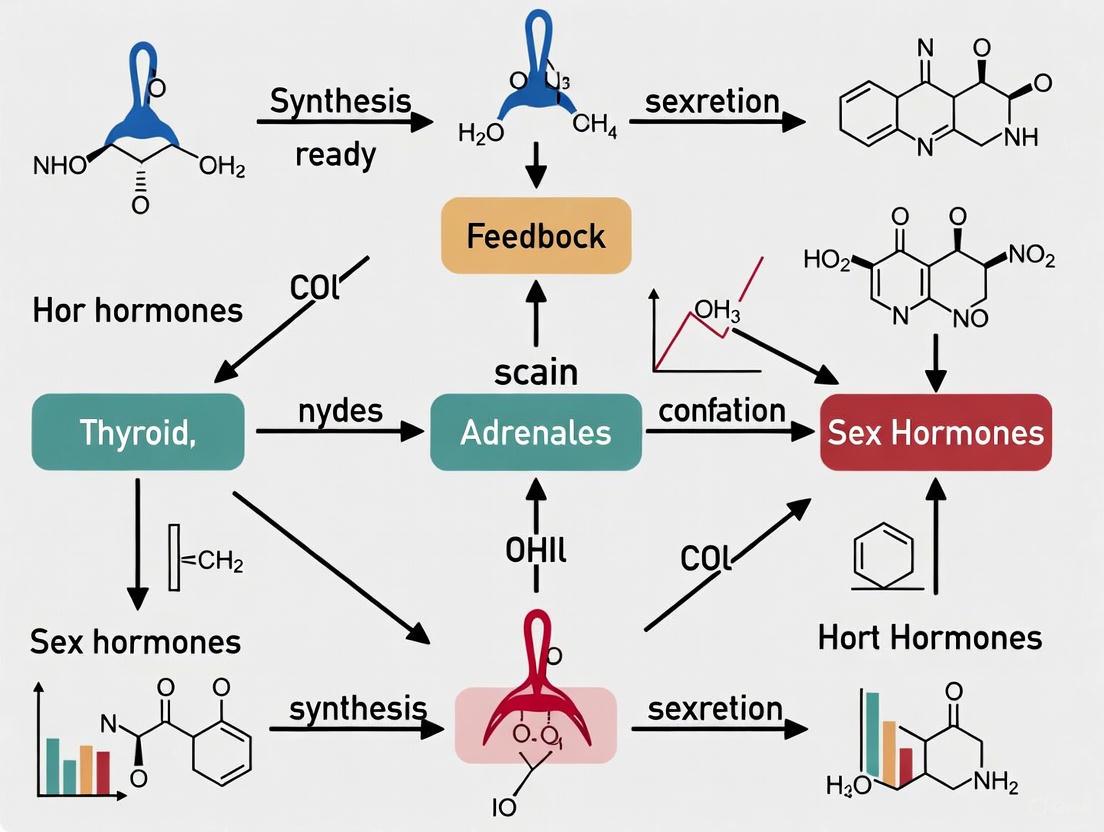
This article provides a comprehensive analysis of the complex bidirectional interactions between the thyroid, adrenal, and sex hormone systems for a specialized audience of researchers, scientists, and drug development professionals.
The Thyroid-Adrenal-Sex Hormone Axis: Molecular Interplay, Research Methodologies, and Therapeutic Implications
Abstract
This article provides a comprehensive analysis of the complex bidirectional interactions between the thyroid, adrenal, and sex hormone systems for a specialized audience of researchers, scientists, and drug development professionals. It explores the foundational biology of these endocrine axes, examines advanced assessment methodologies and data interpretation techniques, and discusses common research and clinical challenges. The content further evaluates emerging technologies, including machine learning and novel cell therapies, for validating findings and advancing therapeutic development. By integrating foundational knowledge with contemporary research applications, this review aims to inform the future of endocrine drug discovery and precision medicine.
Core Axes of Communication: Deconstructing Thyroid, Adrenal, and Sex Hormone Interactions
The thyroid-adrenal axis represents a fundamental regulatory interface within the neuroendocrine system, coordinating the body's metabolic and stress adaptation responses. This axis does not operate in isolation but functions as a critical component of a broader communication network that includes the hypothalamic-pituitary-adrenal (HPA) and hypothalamic-pituitary-thyroid (HPT) axes [1]. These systems work in concert to regulate essential physiological processes including metabolic rate, energy expenditure, and stress responsiveness [1]. Understanding the intricate bidirectional communication between thyroid and adrenal glands provides crucial insights into systemic homeostasis and reveals potential therapeutic targets for addressing complex endocrine disorders that manifest with overlapping symptomatology. This whitepaper examines the molecular, physiological, and clinical dimensions of this interface within the context of broader hormonal interactions, particularly focusing on implications for pharmaceutical research and development.
Molecular Regulation and Signaling Pathways
The Hypothalamic-Pituitary-Thyroid Axis Architecture
The HPT axis operates through a meticulously coordinated feedback system to maintain thyroid hormone homeostasis:
- Thyrotropin-releasing hormone (TRH) is synthesized in the hypothalamus and stimulates thyrotroph cells in the anterior pituitary to produce and secrete thyroid-stimulating hormone (TSH) [2] [3].
- TSH is a heterodimeric glycoprotein consisting of an alpha subunit (common to TSH, FSH, LH, and CG) and a unique beta subunit that confers specificity to the TSH receptor (TSH-R) [2].
- The production rate of human TSH is normally between 50-200 mU/day, which can increase markedly to >4000 mU/day in primary hypothyroidism [2].
- TSH binds to receptors on thyroid follicular cells, stimulating the synthesis and secretion of thyroxine (T4) and triiodothyronine (T3) [2] [4].
- Thyroid hormones exert negative feedback at both hypothalamic and pituitary levels to inhibit further TRH and TSH release, maintaining system homeostasis [2] [3].
Cortisol Regulation and HPA Axis Dynamics
The HPA axis governs the body's stress response through coordinated signaling:
- Corticotropin-releasing hormone (CRH) from the hypothalamus stimulates pituitary release of adrenocorticotropic hormone (ACTH) [1].
- ACTH acts on the adrenal cortex to stimulate cortisol production and secretion [4].
- Cortisol exhibits a circadian rhythm with peak concentrations in the morning and nadir at night, and also responds to physiological and psychological stressors [1] [3].
- Like thyroid hormones, cortisol participates in negative feedback loops to regulate its own production [4].
Table 1: Core Components of the HPT and HPA Axes
| Axis Component | Signaling Molecule | Production Site | Primary Function |
|---|---|---|---|
| HPT Axis | TRH | Hypothalamus | Stimulates TSH release |
| TSH | Anterior Pituitary | Stimulates thyroid hormone production | |
| T4/T3 | Thyroid Gland | Regulate metabolic processes | |
| HPA Axis | CRH | Hypothalamus | Stimulates ACTH release |
| ACTH | Anterior Pituitary | Stimulates cortisol production | |
| Cortisol | Adrenal Cortex | Mediates stress response |
Integrated Signaling Pathways
The following diagram illustrates the complex regulatory relationships and feedback mechanisms between the HPT and HPA axes:
Diagram 1: Integrated HPT and HPA Axis Signaling Pathways
Physiological Interplay and Regulatory Mechanisms
Bidirectional Communication Pathways
The thyroid-adrenal interface demonstrates complex bidirectional regulation that extends beyond shared hierarchical control from the hypothalamus and pituitary. Chronic stress and elevated cortisol levels can significantly impact thyroid function by inhibiting the conversion of the less active T4 to the biologically active T3, while simultaneously increasing the conversion of T3 to reverse T3 (rT3), an inactive form [1]. This diversion in thyroid hormone metabolism represents an adaptive mechanism during physiological stress but can become maladaptive when sustained, potentially contributing to clinical manifestations of hypothyroidism even with normal TSH levels [1].
Conversely, thyroid status profoundly influences adrenal function. Thyrotoxicosis amplifies physiological responses to catecholamines through multiple amplifying mechanisms, including increased catecholamine receptor expression and enhanced post-receptor signaling [5]. This synergy is particularly evident in the cardiovascular system, where thyroid hormones upregulate beta-adrenergic receptors and modify G-protein expression, creating a hyperadrenergic state that manifests with tachycardia, increased cardiac output, and enhanced thermogenesis [5].
Sex Hormone Modulation of Thyroid-Adrenal Function
The interplay between thyroid and adrenal function is further modulated by sex hormones, creating a tripartite regulatory network:
- Estrogen increases hepatic production of thyroid-binding globulin (TBG), reducing free thyroid hormone availability, and enhances adrenal responsiveness to ACTH, potentially increasing cortisol production [1].
- Progesterone demonstrates a calming effect on the HPA axis, potentially reducing cortisol levels, while enhancing thyroid gland sensitivity to TSH and facilitating T4 to T3 conversion [1].
- Testosterone exhibits an inhibitory effect on the HPA axis, reducing CRH and ACTH secretion, and may decrease TBG levels, potentially increasing free thyroid hormone availability [1].
Table 2: Hormonal Interactions and Functional Consequences
| Regulatory Hormone | Target System | Molecular Effect | Physiological Outcome |
|---|---|---|---|
| Cortisol | Thyroid | Inhibits T4 to T3 conversion | Reduces metabolic rate |
| Alters TSH glycosylation | Modifies TSH bioactivity | ||
| Thyroid Hormones | Adrenal System | Upregulates beta-adrenergic receptors | Enhances catecholamine sensitivity |
| Modulates corticosteroid metabolism | Influences cortisol clearance | ||
| Estrogen | Thyroid | Increases TBG production | Reduces free thyroid hormone |
| Adrenal | Enhances ACTH responsiveness | Potentiates cortisol production | |
| Progesterone | Thyroid | Enhances T4 to T3 conversion | Increases active thyroid hormone |
| Adrenal | Calms HPA axis activity | Reduces cortisol production |
Experimental Models and Research Methodologies
Assessing Axis Function in Preclinical Models
Research into thyroid-adrenal interactions employs well-established experimental models, with rodent studies providing fundamental insights:
- Thyroidectomy models in male Sprague-Dawley rats demonstrate that hypothyroidism significantly alters HPA axis function, with exaggerated ACTH responses to both hypoglycemic stress and interleukin (IL)-1α administration [6].
- Hypothyroid rats show significant reduction in adrenal reserves as assessed by response to low-dose ACTH following dexamethasone suppression, suggesting adrenal insufficiency accompanies thyroid dysfunction [6].
- These models reveal abnormalities in all components of the HPA axis during hypothyroidism, including decreased cerebrospinal fluid corticosterone concentrations and reduced adrenal weights [6].
- Cold exposure studies demonstrate coordinated activation of both thyroid and sympathoadrenal systems as an adaptive thermogenic response, highlighting the evolutionary conservation of this integrative regulation [5].
Human Assessment Protocols
Clinical investigation of thyroid-adrenal axis interplay employs comprehensive biochemical assessment:
- TSH stimulation tests with TRH administration can identify abnormalities in TSH glycosylation and bioactivity, particularly relevant in central hypothyroidism where immunologically measurable TSH may have reduced biological activity [2].
- Circadian rhythm profiling accounts for pulsatile TSH secretion (average 9 pulses/24 hours) with clustering during evening and night hours, reaching maximum between 02:00 and 04:00 hrs in day-night synchronized subjects [3].
- Dynamic HPA testing using insulin-induced hypoglycemia or CRH stimulation assesses integrated axis function, with modifications observed in thyroid disorders [6].
- Multiple sampling matrices including serum, saliva, and urine provide complementary information on different aspects of hormone status [1].
The Scientist's Toolkit: Research Reagent Solutions
Table 3: Essential Research Reagents for Thyroid-Adrenal Axis Investigation
| Reagent/Category | Specific Examples | Research Application | Experimental Function |
|---|---|---|---|
| Hormone Assays | TSH, free T4, total T3, cortisol, ACTH | Serum/plasma quantification | Precise hormone measurement across matrices |
| Salivary cortisol, free thyroid hormones | Non-invasive sampling | Assessment of bioavailable hormone fractions | |
| 24-hour urinary cortisol | Integrated hormone production | Cumulative hormone output measurement | |
| Molecular Biology Tools | TRH receptor antibodies | Immunohistochemistry | Receptor localization and expression |
| TSH beta subunit probes | In situ hybridization | Gene expression analysis | |
| Corticosteroid-binding globulin assays | Protein binding studies | Assessment of hormone transport | |
| Experimental Models | Thyroidectomy surgical models | Rodent studies | Induced hypothyroidism investigation |
| TRH knockout mice | Genetic models | Central thyroid regulation studies | |
| CRH-overexpressing models | Transgenic animals | HPA axis dysregulation research | |
| Stimulatory Testing Agents | Recombinant TRH | Stimulation testing | Pituitary TSH reserve assessment |
| Cosyntropin (ACTH analog) | Adrenal function testing | Adrenal cortisol production capacity | |
| Insulin (for hypoglycemia) | HPA axis stimulation | Stress response activation |
Clinical Implications and Therapeutic Applications
Diagnostic Considerations in Axis Disorders
The intricate relationship between thyroid and adrenal systems necessitates comprehensive assessment in endocrine disorders:
- Central hypothyroidism may present with normal or slightly elevated immunoassay TSH levels but with reduced bioactivity due to altered glycosylation patterns, detectable through TRH stimulation testing [2].
- The nocturnal TSH surge (typically between 02:00-04:00 hrs) is blunted in elderly populations and during sleep deprivation, potentially contributing to thyroid dysfunction despite normal daytime TSH values [3].
- Hyperthyroidism and genetically predicted elevated FT4 concentrations demonstrate significant association with increased risk of venous thromboembolism (OR = 1.0740, 95%CI [1.0165–1.1348], p = 0.0110), highlighting clinically relevant extra-thyroidal manifestations [7].
- Seasonal variations in TSH and thyroid hormone concentrations reflect another dimension of axis regulation, with peaks typically observed during winter months in temperate climates [3].
Therapeutic Implications and Drug Development
Understanding thyroid-adrenal interactions opens avenues for targeted therapeutic development:
- Adaptogenic interventions including ashwagandha and rhodiola demonstrate potential for modulating both HPA axis function and thyroid hormone conversion, representing a multi-target approach to endocrine support [1].
- Selective thyroid hormone analogs with tissue-specific actions could potentially modulate metabolic effects without adverse cardiovascular consequences mediated through adrenergic amplification [5].
- Cortisol modulators including cortisol synthesis inhibitors or receptor antagonists may have utility in mitigating the inhibitory effects of chronic stress on thyroid function [1].
- Sex hormone modulators including selective estrogen receptor modulators (SERMs) and aromatase inhibitors may indirectly influence thyroid-adrenal function through alteration of binding protein production and receptor interactions [1].
Future Research Directions and Methodological Innovations
Advancing understanding of the thyroid-adrenal axis requires development of more sophisticated research approaches:
- Tissue-specific knockout models enabling discrete manipulation of thyroid hormone signaling components in adrenal tissues and vice versa.
- Single-cell transcriptomics applied to thyrotroph and corticotroph populations to delineate heterogeneous cellular responses within pituitary cell types.
- Advanced hormone profiling including mass spectrometry-based assessment of hormone metabolites and post-translational modifications.
- Computational modeling of axis dynamics incorporating pulsatile secretion, feedback regulation, and cross-system interactions.
- Epigenetic profiling of hormone response elements under different stress and metabolic conditions.
The thyroid-adrenal axis represents a paradigm of endocrine integration, where two major regulatory systems coordinate to maintain homeostasis amid changing metabolic demands and environmental challenges. Continued investigation of this interface promises not only to elucidate fundamental physiological principles but also to reveal novel therapeutic targets for addressing the growing burden of stress-related and metabolic disorders in human populations.
This whitepaper synthesizes current research on the intricate bidirectional relationships between sex hormones (estrogen, progesterone, testosterone) and the function of the thyroid and adrenal glands. Framed within the broader context of endocrine axis interplay, this review provides a mechanistic overview of the molecular pathways involved, summarizes key quantitative findings for cross-study comparison, and details standard experimental methodologies for investigating these relationships. The complex feedback loops and crosstalk between the hypothalamic-pituitary-adrenal (HPA), hypothalamic-pituitary-thyroid (HPT), and hypothalamic-pituitary-gonadal (HPG) axes underscore the necessity of a systems-level approach in both basic research and clinical drug development for endocrine disorders.
The endocrine system operates through a complex network of communication, where hormones from one gland significantly influence the function of others. The hypothalamic-pituitary-adrenal-thyroid-gonadal (HPATG) axis represents a central framework for understanding this interplay [8]. Within this network, sex steroids—estrogen, progesterone, and testosterone—exert profound modulatory effects on both thyroid and adrenal function, extending beyond their classical reproductive roles. These interactions occur at multiple levels, including hormone synthesis, secretion, transport, metabolism, and receptor signaling. Understanding these mechanisms is critical for researchers and drug development professionals aiming to develop targeted therapies for endocrine disorders that account for the full spectrum of hormonal crosstalk.
Molecular Mechanisms of Sex Hormone Action on Thyroid and Adrenal Axes
Estrogen-Mediated Modulation
Estrogen significantly influences endocrine function by modulating the synthesis of binding globulins and directly affecting central regulatory axes.
Thyroid Axis Modulation: A primary mechanism of estrogen is the upregulation of thyroxine-binding globulin (TBG) synthesis in the liver [1]. This increase in TBG leads to a greater proportion of bound thyroid hormones (thyroxine/T4 and triiodothyronine/T3) in circulation, reducing the bioavailability of free, biologically active hormone. This can manifest functionally as a hypothyroid state, despite normal total thyroid hormone levels, particularly in high-estrogen states such as pregnancy or oral contraceptive use [1] [8]. Furthermore, oral estrogen therapy has been clinically observed to potentially necessitate an increase in thyroid medication dosage in hypothyroid patients due to this reduction in free hormone bioavailability [8].
Adrenal Axis Modulation: Estrogen enhances the sensitivity of the adrenal cortex to adrenocorticotropic hormone (ACTH), thereby boosting cortisol production [1]. It also impacts cortisol's metabolism and plasma concentration by affecting its hepatic clearance rate. This modulation of the hypothalamic-pituitary-adrenal (HPA) axis by estrogen can lead to increased production of adrenal corticosteroids [1]. Studies demonstrate that women on oral contraceptives (OCs), which contain estrogen, have higher resting cortisol concentrations and a blunted cortisol response to stressors [8].
Progesterone-Mediated Modulation
Progesterone often acts as a physiological counterbalance to estrogen, exerting calming effects on the central endocrine axes.
Thyroid Axis Modulation: Progesterone enhances the sensitivity of the thyroid gland to Thyroid Stimulating Hormone (TSH), facilitating increased thyroid hormone production [1]. It also promotes the peripheral conversion of the less active T4 to the biologically active T3 hormone. This action helps maintain thyroid hormone levels even with the rise in TBG due to estrogen, highlighting progesterone's balancing effect on thyroid function [1].
Adrenal Axis Modulation: Progesterone has a calming effect on the HPA axis, potentially reducing cortisol levels and influencing the synthesis of adrenal hormones like cortisol and aldosterone [1]. Its modulation of GABAergic transmission in the central nervous system indirectly affects the HPA axis and adrenal hormone production [1].
Testosterone-Mediated Modulation
Testosterone generally exerts inhibitory effects on the stress axis, with distinct influences on thyroid hormone transport.
Adrenal Axis Modulation: Testosterone exhibits an inhibitory effect on the HPA axis, reducing the secretion of corticotropin-releasing hormone (CRH) from the hypothalamus and ACTH from the pituitary gland, which in turn decreases cortisol production by the adrenal glands [1]. This mechanism aligns with the observed lower cortisol responses to stress in males, attributed to testosterone's regulatory role [1].
Thyroid Axis Modulation: While testosterone's influence on thyroid function is less defined than that of estrogen, it is thought to decrease TBG levels, thereby potentially increasing the availability of free thyroid hormones [1]. This action opposes that of estrogen on the thyroid axis.
The following diagram illustrates the key molecular pathways and interactions described above:
Table 1: Documented Effects of Sex Hormones on Thyroid and Adrenal Parameters
| Hormone | Target System | Parameter | Direction of Change | Quantitative Effect / Magnitude | Notes / Context |
|---|---|---|---|---|---|
| Estrogen | Thyroid | Thyroxine-Binding Globulin (TBG) | Increase | Not Quantified | Leads to reduced free T4/T3 bioavailability [1] |
| Adrenal | Resting Cortisol | Increase | Higher concentrations [8] | Observed in oral contraceptive users | |
| Adrenal | Cortisol Response to Stress | Decrease (Blunted) | Significantly blunted [8] | Altered rhythm with lower awakening levels, delayed peak [8] | |
| Progesterone | Thyroid | T4 to T3 Conversion | Increase | Not Quantified | Enhances bioavailability of active thyroid hormone [1] |
| Adrenal | HPA Axis Activity | Decrease | Not Quantified | Calming effect, potentially reduces cortisol [1] | |
| Testosterone | Adrenal | HPA Axis Reactivity | Decrease | Lower cortisol response [1] | Attributable to reduced CRH/ACTH secretion [1] |
| Thyroid | Thyroxine-Binding Globulin (TBG) | Decrease | Not Quantified | Proposed mechanism to increase free hormone levels [1] | |
| Oral Contraceptives (Combined) | Adrenal | Sex Hormone-Binding Globulin (SHBG) | Increase | 4x level in non-users [8] | Reduces free testosterone bioavailability |
| Gonadal | Testosterone Production | Decrease | >60% reduction [8] | Anti-gonadotropic effect of progestin component |
Experimental Protocols for Investigating Hormonal Interactions
Clinical Assessment of Hormonal Status
A multi-matrix approach is essential for a comprehensive assessment of the HPATG axis.
Saliva Assays:
- Methodology: Collect saliva samples at multiple time points throughout the day (e.g., upon waking, 30 minutes post-waking, noon, late afternoon, bedtime) to capture the diurnal rhythm of cortisol. Samples are stable at room temperature for short periods and are typically analyzed using enzyme-linked immunosorbent assay (ELISA) or liquid chromatography-mass spectrometry (LC-MS/MS).
- Utility: Measures free, bioavailable hormone levels, making it ideal for assessing cortisol patterns, estradiol, progesterone, and testosterone. It is non-invasive, cost-effective, and convenient for repeated sampling [1].
- Limitations: Salivary concentrations may not accurately reflect serum levels in individuals on hormone replacement therapy or supplemental hormones, as salivary concentrations can significantly differ from serum levels in these contexts [1].
Serum (Blood) Tests:
- Methodology: Venous blood draw with serum separation. Analysis is performed via immunoassay or LC-MS/MS. Key panels include:
- Comprehensive Thyroid Panel: TSH, Free T4, Free T3, Reverse T3, Thyroid Antibodies (TPO, TgAb).
- Adrenal Hormones: ACTH, Cortisol (preferably timed, e.g., 8 AM and 4 PM).
- Sex Hormones: Estradiol, Progesterone, Testosterone (Total and Free), SHBG.
- Utility: Provides accurate measurement of a broad range of hormones and is the gold standard for diagnosing many endocrine disorders. It reflects total hormone levels in circulation [1].
- Limitations: Invasive, higher cost, and less convenient for frequent sampling. Total hormone levels can be influenced by binding protein concentrations [1].
- Methodology: Venous blood draw with serum separation. Analysis is performed via immunoassay or LC-MS/MS. Key panels include:
Urine Tests:
- Methodology: 24-hour urine collection or first-morning void. Analyzed via LC-MS/MS.
- Utility: Provides a cumulative measure of hormone production and metabolism over time. Useful for assessing cortisol excretion patterns and metabolites of sex hormones [1].
- Limitations: Less immediate than saliva or serum levels. Results can be influenced by hydration status and kidney function [1].
The workflow for a comprehensive HPATG axis assessment is outlined below:
In Vivo Animal Models for Mechanistic Studies
Animal models are indispensable for elucidating the causal mechanisms underlying observational data.
Thyroid Hormone Receptor Knockout Models:
- Model System:
Thrb-/-andThra-/-mice. - Protocol: Utilize these transgenic models to investigate the specific roles of thyroid hormone receptor isoforms (THRβ and THRα) in adrenal and neural development and function. For example, studies have shown that T3 treatment causes hypertrophy of the adrenal X-zone in wild-type but not
Thrb-/-mice, demonstrating a direct role for THRB1 in adrenocortical development [9]. Conduct hormonal challenge tests (ACTH stimulation, dexamethasone suppression) and perform detailed histological and molecular analyses of adrenal and thyroid tissues.
- Model System:
Pharmacologic Manipulation of Hormone Levels:
- Model System: Adult rodents (rats, mice) or developmental models.
- Protocol:
- Induced Hypothyroidism/Hyperthyroidism: Administer propylthiouracil (PTU, a thyroid peroxidase inhibitor) or methimazole to block thyroid hormone synthesis, or supplement with exogenous levothyroxine (T4) or liothyronine (T3) to create hyperthyroid states. Monitor serum TSH, T4, and T3 to confirm model validity.
- Gonadectomy: Perform ovariectomy in females and orchiectomy in males to remove the primary source of sex hormones. Follow with controlled hormone replacement therapy (estradiol, progesterone, testosterone) via subcutaneous pellets or osmotic minipumps to study the effects of specific sex steroids in isolation.
- Endpoint Analyses: Behavioral tests (e.g., open field for anxiety, forced swim for depression-like behavior), tissue collection for gene expression (RNA-seq, qPCR), protein analysis (Western blot, IHC), and hormone level measurement in blood and tissue.
The Scientist's Toolkit: Essential Research Reagents and Materials
Table 2: Key Reagents and Materials for Hormonal Interaction Studies
| Item Category | Specific Examples | Research Function | Experimental Context |
|---|---|---|---|
| Hormone Assay Kits | ELISA Kits for Cortisol, Estradiol, Testosterone, TSH, Free T4; LC-MS/MS Reference Methods | Quantification of hormone levels in biological samples (serum, saliva, urine, tissue homogenates) | Essential for phenotyping animal models and assessing clinical study participants. LC-MS/MS is considered the gold standard for specificity [1]. |
| Cell Culture Systems | Primary adrenal cells (cortical), Primary thyroid cells, Pituitary cell lines (e.g., AtT-20, GH3), Neuronal cell lines | In vitro modeling of hormone signaling and regulation in target tissues | Allows for controlled investigation of direct hormone effects, receptor signaling, and gene expression changes without systemic confounders. |
| Animal Models | Thyroidecomized/Gonadectomized rodents, Thrb-/- and Thra-/- mice, Zebrafish larvae |
In vivo investigation of causal relationships, developmental effects, and systemic feedback | Crucial for understanding integrated physiology. Zebrafish are useful for studying TH roles in development and critical periods [10]. |
| Hormone Agonists/Antagonists | Tamoxifen (SERM), Fulvestrant (ER antagonist), RU-486 (PR antagonist), Flutamide (AR antagonist), PTU (Thyroid inhibitor) | Pharmacological tools to selectively activate or block hormone receptors or synthesis pathways | Used in both in vivo and in vitro studies to dissect the contribution of specific hormonal pathways. |
| Molecular Biology Reagents | qPCR Primers for steroidogenic enzymes (CYP11A1, CYP17A1), deiodinases (DIO1, DIO2, DIO3), hormone receptors (THRA, THRB, ESR1, AR); siRNA/shRNA for gene knockdown; ChIP Assay Kits | Analysis of gene expression, protein-DNA interactions, and functional genomics | Used to uncover molecular mechanisms downstream of hormone-receptor binding, such as THR-mediated gene transcription [11]. |
| Immunohistochemistry Reagents | Antibodies against CYP11B2 (Aldosterone Synthase), CYP11B1 (11-β-Hydroxylase), Thyroglobulin, Parvalbumin (PV), Chromogranin A | Tissue localization and protein expression analysis in adrenal, thyroid, or brain sections | Critical for validating findings from molecular studies and examining tissue morphology and cellular specificity, e.g., PV interneuron maturation [10]. |
The modulation of thyroid and adrenal function by estrogen, progesterone, and testosterone is a robust and biologically significant phenomenon. These interactions, mediated through effects on binding proteins, central axis regulation, and direct glandular sensitivity, form a critical component of the integrated HPATG axis. Disruption of this delicate balance, as evidenced by the endocrine impact of oral contraceptives, can lead to a cascade of physiological alterations. Future research must continue to leverage the detailed experimental protocols and reagents outlined herein to further decode the molecular underpinnings of these relationships. For drug development, this body of evidence mandates a holistic, systems-endocrinology approach that considers the patient's full hormonal milieu to optimize therapeutic efficacy and minimize unintended consequences on interconnected pathways.
The Hypothalamic-Pituitary-Adrenal (HPA) and Hypothalamic-Pituitary-Thyroid (HPT) axes represent two fundamental neuroendocrine systems that regulate stress adaptation, metabolism, growth, and development. These systems do not operate in isolation but rather engage in continuous crosstalk, forming an integrated regulatory network that maintains physiological homeostasis [1]. The HPA axis, as the body's primary stress response system, controls reactions to stress and regulates numerous body processes including digestion, immune function, mood, and energy expenditure [12]. The HPT axis primarily regulates metabolic rate, thermogenesis, and fundamental developmental processes. Both systems share anatomical proximity within the central nervous system and exhibit complex bidirectional interactions that become particularly evident during stress challenges, developmental phases, and pathological conditions [13]. Understanding the integrative mechanisms between these axes is essential for comprehending systemic physiological regulation and developing novel therapeutic approaches for endocrine, metabolic, and psychiatric disorders [14] [15].
Anatomical and Functional Foundations
HPA Axis Architecture and Function
The HPA axis constitutes a complex neuroendocrine circuit comprising three central components: the hypothalamus, pituitary gland, and adrenal glands. This axis functions as the common mechanism for interactions among glands, hormones, and midbrain structures that mediate the general adaptation syndrome [12]. The paraventricular nucleus (PVN) of the hypothalamus contains neuroendocrine neurons that synthesize and secrete corticotropin-releasing hormone (CRH) and vasopressin [12] [16]. These hormones are released from neurosecretory nerve terminals at the median eminence and transported to the anterior pituitary through the hypophyseal portal system. There, CRH and vasopressin act synergistically to stimulate the secretion of adrenocorticotropic hormone (ACTH) from corticotrope cells [12].
ACTH is subsequently transported via systemic circulation to the adrenal cortex, where it rapidly stimulates cortisol biosynthesis from cholesterol [12]. Cortisol, as the primary effector hormone of the HPA axis, exerts widespread effects on numerous tissues throughout the body, including the brain. Within the central nervous system, cortisol acts on two receptor types—mineralocorticoid receptors and glucocorticoid receptors—which are expressed in various neuronal populations [12]. A critical aspect of HPA axis regulation involves negative feedback mechanisms, whereby cortisol inhibits both hypothalamic CRH secretion and pituitary ACTH release, thus completing a self-regulating circuit [12] [17].
HPT Axis Architecture and Function
The HPT axis regulates thyroid hormone production through a sequential signaling cascade. Thyrotropin-releasing hormone (TRH) from the hypothalamus stimulates anterior pituitary thyrotrophs to release thyroid-stimulating hormone (TSH), which subsequently activates thyroid follicular cells to produce and secrete thyroid hormones—thyroxine (T4) and triiodothyronine (T3) [1] [13]. Similar to the HPA axis, the HPT axis operates under negative feedback control, with circulating thyroid hormones inhibiting both TRH and TSH secretion [1]. The HPT axis demonstrates particular sensitivity to energy availability and environmental challenges, adapting thyroid hormone production to meet metabolic demands [18].
Table 1: Core Components of the HPA and HPT Axes
| Axis Component | HPA Axis Elements | HPT Axis Elements |
|---|---|---|
| Hypothalamus | Paraventricular Nucleus (PVN): Produces CRH and Vasopressin | Paraventricular Nucleus: Produces TRH |
| Pituitary | Anterior Lobe: Releases ACTH | Anterior Lobe: Releases TSH |
| End Organ | Adrenal Cortex: Produces Cortisol | Thyroid Gland: Produces T4 and T3 |
| Primary Effectors | Glucocorticoids (Cortisol) | Thyroid Hormones (T4, T3) |
| Feedback Regulation | Cortisol inhibits CRH and ACTH | T3/T4 inhibit TRH and TSH |
Molecular Integration Mechanisms
Stress-Induced Modulation of Thyroid Function
The HPA axis exerts profound influence over thyroid function through multiple mechanistic pathways. Glucocorticoids, the end-effectors of the HPA axis, inhibit the production of TSH and suppress the peripheral conversion of T4 to the biologically active T3 [13]. This physiological adaptation likely serves to conserve energy during stressful periods by reducing metabolic rate [13] [18]. Research indicates that increased glucocorticoid concentrations related to maternal stress reduce maternal and fetal circulating thyroid hormones, either directly or through modifications in placental enzyme expression responsible for regulating hormone levels in the fetal microenvironment [13].
The interaction between these axes operates as a hierarchical system where stress perception prioritizes HPA activation over HPT function. The HPA and HPT axes represent two distinct regulatory tracks, where activating the HPA track automatically limits access to the HPT track [18]. With chronic activation, this arrangement can lead to progressive HPT axis dysfunction, analogous to a railroad track rusting from disuse [18]. This model explains why prolonged stress often correlates with diminished thyroid function and the development of metabolic alterations.
Thyroid Hormone Influence on HPA Axis Regulation
The relationship between these axes is reciprocal, with thyroid hormones significantly modulating HPA axis function. Thyroid hormones stimulate the stress system and influence CRH synthesis and secretion [13]. Both clinical and experimental evidence indicates that thyroid status affects glucocorticoid metabolism, tissue sensitivity, and receptor expression [1]. Conditions of hyperthyroidism typically provoke adrenal system activation with increased production of stress hormones, creating a potential vicious cycle wherein stress hormones and thyroid hormones mutually potentiate their effects [18]. Conversely, hypothyroidism may contribute to inflammation, thereby increasing internal stress on the body and indirectly influencing HPA axis tone [18].
Table 2: Documented Interactions Between HPA and HPT Axes
| Interaction Mechanism | Physiological Effect | Functional Consequence |
|---|---|---|
| Glucocorticoid inhibition of TRH | Reduced TSH production | Central hypothyroidism |
| Cortisol impact on deiodinases | Impaired T4 to T3 conversion | Reduced metabolic rate |
| Thyroid hormone stimulation of CRH | Enhanced HPA axis reactivity | Potentiated stress response |
| Inflammatory cytokine actions | Concurrent HPA activation and HPT suppression | Energy conservation during immune challenge |
Sex Hormone Mediation of Axis Integration
Sex hormones constitute a crucial third dimension in HPA-HPT axis crosstalk, creating a tripartite regulatory network. Estrogen modulates adrenal function by enhancing adrenal gland responsiveness to ACTH, thereby potentiating cortisol production [1]. Additionally, estrogen influences cortisol metabolism and plasma concentration by affecting hepatic clearance rates [1]. In the thyroid arena, estrogen increases hepatic production of thyroxine-binding globulin (TBG), which binds thyroid hormones and reduces their bioavailability, potentially leading to symptoms associated with low thyroid hormone levels [1].
Progesterone counterbalances several estrogenic effects by calming the HPA axis, potentially reducing cortisol levels, and enhancing thyroid gland sensitivity to TSH [1]. This synergistic action facilitates increased thyroid hormone production and improves T4 to T3 conversion [1]. Testosterone generally exhibits inhibitory effects on the HPA axis, reducing CRH secretion from the hypothalamus and ACTH from the pituitary gland, which consequently decreases adrenal cortisol production [1]. This hormonal profile aligns with observed gender differences in stress responsiveness and thyroid disorder prevalence.
Experimental Models and Methodological Approaches
Hypobaric Hypoxia Experimental Model
Investigation of HPA-HPT axis integration has employed sophisticated experimental models, including hypobaric hypoxia exposure simulating high-altitude conditions. One systematic study exposed adult male Sprague-Dawley rats to a simulated altitude of 5500 meters for 3 days in a hypobaric-hypoxic chamber, followed by comprehensive ELISA, metabolomic, and 16S rRNA analyses of serum and fecal samples [19]. This research demonstrated that acute hypobaric hypoxia significantly activates both the HPA and HPT axes, with documented increases in serum CRH, ACTH, corticosterone (CORT), and thyroxine (T4), while TRH was notably decreased [19].
The experimental protocol involved:
- Animal Acclimatization: 7-day acclimation period under normoxic conditions
- Hypoxic Exposure: 3-day continuous exposure in hypobaric chamber at 5500 m simulated altitude
- Sample Collection: Serum and fecal samples obtained at specified intervals
- Hormonal Assessment: ELISA measurements of CRH, ACTH, CORT, TRH, and thyroid hormones
- Microbiome Analysis: 16S rRNA sequencing of fecal samples for microbial composition
- Metabolomic Profiling: LC-MS based metabolic profiling of serum and feces [19]
This integrated approach revealed that acute hypoxia significantly affects fecal and serum lipid metabolism and identified key metabolites that mediate cross-talk between TRH, T4, and CORT with specific gut microbiota genera including [Prevotella], Kaistobacter, Parabacteroides, and Aerococcus [19].
Maternal Stress Experimental Paradigms
Developmental programming of HPA-HPT axis interactions has been investigated through maternal stress models during gestation. These studies assess the impact of prenatal stress on fetal neurodevelopment, with particular emphasis on HPA axis influence on HPT function and subsequent thyroid hormone availability [13]. The experimental methodology typically involves:
- Stress Induction: Application of chronic stress protocols to pregnant animal subjects
- Hormonal Measurement: Assessment of maternal and fetal glucocorticoid and thyroid hormone levels
- Placental Analysis: Evaluation of 11β-HSD2 enzyme activity and expression
- Neurodevelopmental Assessment: Examination of offspring brain development and cognitive function [13]
These investigations have demonstrated that maternal glucocorticoid overexposure can cause epigenetic alterations affecting GR gene expression through DNA methylation and chromatin modification [13]. Furthermore, research has identified that stress-related maternal, placental, and fetal neurobiological alterations affect the developing fetus through "fetal programming," with particular vulnerability during critical developmental windows [13].
Table 3: Experimental Models for Studying HPA-HPT Axis Interactions
| Experimental Model | Key Measured Parameters | Principal Findings |
|---|---|---|
| Hypobaric Hypoxia | CRH, ACTH, CORT, TRH, T4, gut microbiota, metabolites | Acute hypoxia activates HPA axis while altering HPT axis regulation; gut microbiota mediate effects via specific metabolites [19] |
| Maternal Prenatal Stress | Maternal/fetal GCs, THs, placental 11β-HSD2, offspring neurodevelopment | Maternal GC excess reduces fetal TH levels; programs offspring HPA axis reactivity with long-term neurocognitive consequences [13] |
| Chronic Stress Models | Cortisol rhythm, TSH, T3/T4, conversion enzymes, immune markers | Chronic stress prioritizes HPA axis, suppresses HPT function, promotes autoimmune thyroid conditions in susceptible individuals [18] |
Assessment Methodologies and Diagnostic Approaches
Accurate assessment of HPA-HPT axis integration requires multimodal evaluation strategies. Current methodologies include:
Salivary Assays: These non-invasive tests measure free, bioavailable hormone levels, including cortisol rhythms, estrogen, progesterone, androgens, and melatonin. Salivary cortisol measurements reflect serum cortisol levels, particularly for early morning collections, offering a convenient assessment of circadian rhythmicity [1].
Serum Tests: Provide comprehensive measurement of total hormone levels, including thyroid panels (TSH, T3, T4), cortisol, and sex hormones. Serum testing offers superior diagnostic capability for endocrine disorders but requires blood collection [1].
Urine Analysis: Assesses hormone excretion patterns over time, providing cumulative measures of hormone production and metabolism. Particularly valuable for evaluating cortisol metabolism and thyroid hormone clearance [1].
Advanced testing protocols should consider circadian rhythmicity, with cortisol demonstrating characteristic peaks within 30-45 minutes after wakening, gradual decline throughout the day, and trough levels during nighttime hours [12]. An abnormally flattened circadian cortisol cycle has been associated with chronic fatigue syndrome, insomnia, and burnout [12].
Pathophysiological Implications and Clinical Correlations
Neurodevelopmental Consequences
The interplay between HPA and HPT axes has profound implications for fetal and childhood neurodevelopment. Both glucocorticoids and thyroid hormones mediate fundamental processes in neurodevelopment, with time-dependent and dose-dependent effects [13]. Inadequate or excess concentrations of either hormone class cause abnormalities in neuronal and glial structure and function, with subsequent detrimental effects on postnatal neurocognitive function [13]. Maternal prenatal stress and consequent glucocorticoid excess have been associated with increased apoptotic activity in the fetal hypothalamus, hippocampal alterations, and reduced neurogenesis [13]. These structural changes correlate with behavioral and emotional disorders in adulthood, including attention deficits, anxiety, and depression [13].
Autoimmune and Inflammatory Conditions
HPA-HPT axis dysregulation significantly contributes to autoimmune and inflammatory conditions. Chronic stress with subsequent HPA axis dysfunction increases vulnerability to autoimmune thyroid conditions, with research indicating particular susceptibility to Graves' disease development [18]. A 2023 meta-analysis of 13 observational studies established that stressful life events strongly associate with Graves' disease onset, particularly in younger females [18]. The immune system engages in bidirectional communication with both axes, with proinflammatory cytokines (IL-1, IL-6, TNF-alpha) activating the HPA axis, while glucocorticoids subsequently suppress immune and inflammatory reactions [12]. This reciprocal relationship normally protects against lethal immune overactivation, but dysregulation can promote autoimmune susceptibility.
Psychiatric and Neurodegenerative Disorders
HPA-HPT axis integration has significant ramifications for psychiatric and neurodegenerative conditions. Supporting neuroendocrine crosstalk represents an emerging therapeutic strategy in psychiatry, with evidence that endocrine imbalances profoundly affect brain function and contribute to mental disorder pathophysiology [14]. Additionally, chronic stress and HPA axis dysregulation have been linked to neurodegenerative processes, with research demonstrating that chronically stressed rats exhibit enhanced dopaminergic neuron death following endotoxin exposure due to microglial activation and upregulated inflammation [20]. These findings establish a mechanism whereby HPA axis dysfunction may predispose individuals to neurodegenerative conditions or accelerate disease progression.
Therapeutic Implications and Intervention Strategies
Stress Management Protocols
Evidence supports targeted stress management as a therapeutic strategy for HPA-HPT axis dysregulation. A randomized controlled trial demonstrated that an 8-week stress management protocol significantly improved thyroid antibody levels, TSH, healthy lifestyle scores, stress, anxiety, and depression in women with Hashimoto's thyroiditis [18]. Effective interventions included:
- Breathing Exercises: Diaphragmatic breathing practices
- Cognitive Restructuring: Modifying stress-inducing thought patterns
- Guided Meditation: Mindfulness-based stress reduction
- Progressive Relaxation: Systematic muscle relaxation techniques
Implementation of these techniques for just 10-15 minutes daily produces measurable improvements in hormonal parameters [18].
Exercise Interventions
Physical activity represents another evidence-based intervention for HPA-HPT axis regulation. A 2023 randomized controlled trial comparing aerobic, resistance, and combined exercises in women with hypothyroidism found that all exercise modalities significantly improved TSH, T4, lipid levels, VO2 max, and quality of life after 12 weeks of low-moderate intensity exercise performed three days weekly [18]. Combined exercise protocols produced the greatest improvement, suggesting comprehensive activity regimens yield optimal neuroendocrine benefits.
Novel Hormonal Therapeutics
Emerging research explores hormonal interventions targeting neuroendocrine crosstalk. Human chorionic gonadotropin (hCG) has demonstrated multiple mechanistic impacts relevant to psychiatric treatment, including stimulation of sex hormone production, reduction of insulin resistance and systemic inflammation, enhancement of hypothalamic activity, and cognition improvements through LH-like effects [14]. Proposed research protocols suggest 500 IU intramuscularly weekly for at least 10 weeks [14]. This approach exemplifies the therapeutic potential of targeting neuroendocrine integration for systemic health benefits.
Visualization of Axis Integration
HPA-HPT Axis Integration Pathways
Experimental Workflow for Axis Integration Research
The Scientist's Toolkit: Essential Research Reagents
Table 4: Key Research Reagents for HPA-HPT Axis Investigation
| Reagent/Category | Specific Examples | Research Application |
|---|---|---|
| Hormone Assay Kits | ELISA for CRH, ACTH, Cortisol, TSH, T3, T4 | Quantitative hormone measurement in serum, saliva, tissue homogenates |
| Molecular Biology Reagents | qPCR primers for CRH, TRH, GR, TR receptors, deiodinases | Gene expression analysis in hypothalamic, pituitary, thyroid tissues |
| Immunohistochemistry Antibodies | Anti-CRH, Anti-TRH, Anti-GR, Anti-TSH receptor | Tissue localization and protein expression quantification |
| Cell Culture Models | Hypothalamic neurons (e.g., mHypoE- cells), pituitary cells (e.g., AtT-20) | In vitro mechanistic studies of hormone regulation and secretion |
| Animal Models | Sprague-Dawley rats, C57BL/6 mice, Zebra finch (developmental studies) | In vivo physiological and pathophysiological investigations |
| Metabolomic Platforms | LC-MS systems, targeted metabolite panels | Comprehensive metabolic profiling of serum, feces, tissue samples |
| Microbiome Analysis | 16S rRNA sequencing kits, bioinformatic pipelines | Gut microbiota composition assessment in stress and thyroid models |
The integration between HPA and HPT axes represents a paradigm of neuroendocrine crosstalk with far-reaching physiological and clinical implications. These axes engage in bidirectional communication through multiple mechanistic pathways, including glucocorticoid-mediated suppression of thyroid function, thyroid hormone modulation of stress responsiveness, and sex hormone mediation of both systems. The resulting regulatory network maintains homeostasis under basal conditions and coordinates adaptive responses to environmental challenges. Dysregulation of this integrative relationship contributes to diverse pathological states including neurodevelopmental disorders, autoimmune conditions, psychiatric illnesses, and neurodegenerative diseases. Future research should prioritize elucidation of the molecular mediators facilitating axis crosstalk, particularly at the hypothalamic level where shared regulatory mechanisms remain incompletely characterized. Additionally, translational investigations exploring therapeutic strategies that simultaneously target multiple dimensions of this neuroendocrine network hold promise for addressing complex endocrine and metabolic disorders characterized by HPA-HPT axis dysregulation.
Molecular Mechanisms of Hormonal Crosstalk in Metabolism, Inflammation, and Homeostasis
The human endocrine system functions as an intricate network, where the continuous molecular dialogue between thyroid, adrenal, and sex hormones precisely regulates critical physiological processes including metabolism, inflammation, and systemic homeostasis. Disruptions within this network contribute significantly to the pathogenesis of complex conditions such as metabolic syndrome, with chronic inflammation now recognized as a common molecular basis for these disorders [21]. The hypothalamic-pituitary-thyroid (HPT) and hypothalamic-pituitary-adrenal (HPA) axes do not operate in isolation but engage in bidirectional communication with gonadal hormones, creating a sophisticated regulatory matrix that researchers are only beginning to decode. This whitepaper provides an in-depth examination of the molecular mechanisms governing this crosstalk, with particular focus on the interplay between thyroid, adrenal, and sex hormones—a central theme in modern endocrinology research. By synthesizing current findings from genetic, molecular, and clinical studies, we aim to equip researchers and drug development professionals with a comprehensive framework for understanding these complex interactions and their translational applications.
Foundational Axes: Thyroid-Adrenal Interactions
The thyroid-adrenal axis represents a fundamental interface between metabolic regulation and stress response systems, with communication occurring through the interconnected hypothalamic-pituitary-adrenal (HPA) and hypothalamic-pituitary-thyroid (HPT) axes. These systems collaboratively regulate essential processes including stress adaptation, energy metabolism, and inflammatory responses [1].
Molecular Pathways of Thyroid-Adrenal Communication
The molecular conversation between thyroid and adrenal glands is mediated through multiple interconnected mechanisms. Cortisol, the primary glucocorticoid produced by the adrenal cortex, significantly influences thyroid function at several levels. Elevated cortisol levels can impair the conversion of the prohormone thyroxine (T4) to the biologically active triiodothyronine (T3) in peripheral tissues, thereby influencing metabolic rate and energy expenditure. Additionally, cortisol can affect the thyroid gland's ability to produce thyroid hormones optimally, creating a potential pathway for stress-induced thyroid dysfunction [1]. Conversely, thyroid hormones modulate adrenal function through their effects on the HPA axis, with both hyperthyroidism and hypothyroidism demonstrating associations with altered cortisol metabolism and stress responsiveness.
The clinical manifestation of this crosstalk is particularly evident in chronic stress conditions, where prolonged cortisol elevation can lead to the "wired but tired" phenomenon—a state of simultaneous agitation and fatigue resulting from disrupted energy metabolism. Furthermore, autoimmune conditions often demonstrate simultaneous impact on both glands, highlighting shared immunological pathways in thyroid-adrenal pathophysiology [1]. This bidirectional relationship underscores the importance of considering both systems in both diagnostic assessment and therapeutic intervention for endocrine disorders.
Sex Hormone Modulation of Thyroid and Adrenal Function
Sex hormones—estrogen, progesterone, and testosterone—exert profound and multifaceted effects on both thyroid and adrenal function, creating distinct endocrine landscapes across sexes and throughout life stages. Understanding these modulatory effects is essential for comprehending sex-specific manifestations of endocrine disorders and developing personalized treatment approaches.
Table 1: Sex Hormone Effects on Thyroid and Adrenal Function
| Sex Hormone | Effects on Thyroid Function | Effects on Adrenal Function | Molecular Mechanisms |
|---|---|---|---|
| Estrogen | Increases thyroid-binding globulin (TBG) production in the liver, reducing free thyroid hormone availability [1] | Enhances adrenal responsiveness to ACTH, boosting cortisol production [1] | Modulates HPA axis; affects cortisol liver clearance rate [1] |
| Progesterone | Enhances thyroid gland sensitivity to TSH; facilitates T4 to T3 conversion [1] | Calms the HPA axis, potentially reducing cortisol levels [1] | Influences synthesis of adrenal hormones; modulates GABAergic transmission in CNS [1] |
| Testosterone | May decrease TBG levels, potentially increasing free thyroid hormone availability [1] | Inhibits HPA axis, reducing CRH and ACTH secretion, thereby decreasing cortisol production [1] | Reduces secretion of CRH from hypothalamus and ACTH from pituitary gland [1] |
The implications of these interactions extend to various physiological and pathological states. For instance, conditions of estrogen elevation such as pregnancy or hormone therapy can create a functional thyroid deficiency despite normal production, due to increased binding and reduced bioavailability [1]. Similarly, the calming effect of progesterone on the HPA axis may contribute to the understanding of stress response differences across the menstrual cycle. The inhibitory effect of testosterone on the HPA axis aligns with observed sexual dimorphism in stress responses and may underlie differential vulnerability to stress-related disorders between sexes.
Quantitative Genetic Evidence: Mendelian Randomization Studies
Advanced genetic methodologies have provided compelling evidence for causal relationships between thyroid function and sex hormone regulation, moving beyond observational associations to establish directionality in these endocrine interactions. Mendelian randomization (MR) studies, which utilize genetic variants as instrumental variables to infer causality, have been particularly informative in elucidating these relationships.
Table 2: Causal Effects of Thyroid Function on Sex Hormones - Mendelian Randomization Evidence
| Thyroid Parameter | Genetic Effect on SHBG | Genetic Effect on Testosterone | Sex-Specific Findings |
|---|---|---|---|
| TSH (per 1 SD increase) | 1.332 nmol/L decrease (95% CI: -0.717,-1.946; p=2×10⁻⁵) [22] | 0.103 nmol/L decrease (95% CI: -0.051,-0.154; p=9×10⁻⁵) [22] | Associations present in both sexes [22] |
| Hypothyroidism (genetic predisposition) | Decreased SHBG [22] | Decreased testosterone [22] | Supported by both two-sample MR and genetic risk score approaches [22] |
| Hyperthyroidism (genetic predisposition) | Increased SHBG [22] | Increased testosterone [22] | Supported by both two-sample MR and genetic risk score approaches [22] |
| fT4 (genetic predisposition) | No significant association detected [22] | Increased testosterone and estradiol in women only [22] | Sexual dimorphism in testosterone response [22] |
The MR approach leverages the random allocation of genetic variants at conception, effectively mimicking a randomized controlled trial and minimizing confounding and reverse causation concerns that plague observational studies [22]. These genetic studies have confirmed that thyroid-stimulating hormone (TSH) and thyroid disease status causally influence sex hormone-binding globulin (SHBG) and testosterone concentrations, with notable sex-specific effects particularly for free thyroxine (fT4). Interestingly, while these studies established clear effects on sex hormone concentrations, they did not find associations with sexual function outcomes such as erectile dysfunction or ovulatory function, suggesting that the hormone changes may occur within normative physiological ranges or that compensatory mechanisms preserve function [22].
The molecular basis for these genetic associations likely involves thyroid hormone regulation of hepatic nuclear factor 4α, which in turn increases SHBG transcription [22]. Since SHBG binds testosterone with higher affinity than estradiol, thyroid dysfunction can create an imbalance in bioavailable sex hormones, potentially explaining some of the clinical manifestations of thyroid disorders.
Immuno-Metabolic Crosstalk: Inflammation as a Central Hub
Chronic inflammation serves as a critical interface linking hormonal systems with metabolic dysfunction, particularly in conditions such as metabolic syndrome. The molecular mechanisms underlying this crosstalk involve sophisticated interactions between immune receptors, metabolic signals, and epigenetic regulators that together coordinate systemic responses to metabolic stress.
Innate Immune Receptors as Metabolic Sensors
Toll-like receptor 4 (TLR4) and macrophage-inducible C-type lectin (Mincle) represent two key innate immune receptors that function as molecular bridges between immune and metabolic systems. In adipose tissue inflammation—considered the origin of chronic inflammation in metabolic syndrome—TLR4 activation occurs not only through traditional pathogen-associated molecular patterns but also through metabolic stimuli [21]. Saturated fatty acids (SFAs) derived from adipocytes can activate TLR4 signaling in macrophages, inducing proinflammatory cytokine expression including TNFα and IL-6. These cytokines subsequently act on adipocytes to promote lipolysis, creating a vicious cycle of inflammatory signaling that propagates metabolic dysfunction [21]. This paracrine loop between mature adipocytes and macrophages establishes a self-sustaining inflammatory microenvironment that contributes to insulin resistance and other metabolic complications.
The molecular mechanisms of TLR4 signaling in metabolic contexts display distinct characteristics compared to canonical pathogen responses. SFA-induced inflammatory responses involve different temporal patterns and gene expression profiles compared to endotoxin activation [21]. Recent research indicates that SFAs may not function as direct TLR4 agonists but instead reprogram cellular metabolism to induce inflammatory responses through integrated stress response (ISR) activation [21]. The ISR, characterized by phosphorylation of eukaryotic initiation factor-2α (eIF2α) and subsequent activating transcription factor 4 (ATF4) activation, augments TLR4-mediated inflammation through multiple mechanisms including direct binding of ATF4 to the IL-6 promoter and enhancement of NF-κB nuclear localization [21].
Epigenetic Regulation of Inflammatory Responses
Chromatin remodeling through covalent histone modifications represents a crucial mechanism for fine-tuning inflammatory responses in metabolic contexts. The TLR4 signaling pathway is subject to sophisticated epigenetic regulation that determines the magnitude and duration of inflammatory gene expression [21]. Primary response genes (e.g., TNFα) and secondary response genes (e.g., IL-6) demonstrate distinct requirements for histone modifications that facilitate transcriptional activation.
Histone H3 lysine 4 trimethylation (H3K4me3) generally promotes proinflammatory cytokine induction, with macrophage-specific deletion of the methyltransferase KMT2A (MLL1) reducing expression of both primary and secondary response genes [21]. Conversely, repressive marks including H3K9me2/3, H3K27me3, and H4K20me3 constrain inflammatory gene expression. Setdb1, an H3K9 methyltransferase, suppresses TLR4-mediated proinflammatory cytokine expression in macrophages, with its enzymatic activity required for this anti-inflammatory effect [21]. Dynamic regulation of these repressive marks occurs in response to inflammatory stimuli, with H3K9 demethylases such as Aof1 recruited to promoter regions of proinflammatory genes following LPS treatment [21]. These epigenetic mechanisms allow metabolic conditions to imprint lasting effects on inflammatory responsiveness, potentially contributing to the chronicity of inflammation in metabolic disease.
Diagram 1: Molecular Crosstalk in Adipose Tissue Inflammation. SFAs activate both TLR4 signaling and the ISR, which converge to enhance NF-κB activation and proinflammatory cytokine production. Epigenetic modifications further modulate cytokine expression. Cytokines promote lipolysis, releasing more SFAs and creating a vicious cycle.
Methodologies: Experimental Approaches for Investigating Hormonal Crosstalk
Advanced Hormonal Assessment Methodologies
Comprehensive evaluation of hormonal status requires sophisticated testing approaches that capture different dimensions of endocrine function. Current methodologies include saliva, serum, and urine analyses, each offering distinct advantages and limitations for specific research applications.
Table 3: Hormone Assessment Methodologies: Applications and Technical Considerations
| Methodology | Measured Parameters | Advantages | Limitations |
|---|---|---|---|
| Saliva Tests | Free, bioavailable hormones: major estrogens, progesterone, androgens, cortisol, melatonin [1] | Non-invasive, cost-effective, convenient for repeated sampling [1] | May not accurately reflect serum concentrations with HRT; reliability varies with supplemental hormones [1] |
| Serum Tests | Total hormone levels; broad range of hormones including TSH, fT4, cortisol, estradiol [1] | Detailed hormonal status; accurate measurement of broad range of hormones; superior for comprehensive evaluations [1] | Invasive (requires blood draw); higher cost and less convenience [1] |
| Urine Tests | Hormone metabolism and excretion over time [1] | Non-invasive; reflects hormone metabolism rather than single timepoint [1] | Less immediate than saliva or serum; influenced by hydration and kidney function [1] |
Interpretation of hormone testing requires consideration of methodological limitations and biological variability. Hormone levels demonstrate dynamic fluctuations throughout the day, necessitating careful attention to sampling timing and conditions [1]. Additionally, correlations between different testing methodologies are imperfect, with studies noting that salivary cortisol concentrations are consistently lower than serum levels despite reasonable correlation in morning measurements [1]. Researchers should therefore select assessment methodologies aligned with specific research questions and account for potential confounding factors in experimental design.
The Scientist's Toolkit: Essential Research Reagents
Diagram 2: Integrated Workflow for Investigating Hormonal Crosstalk. Combined approaches leveraging genetic epidemiology, cellular models, omics technologies, and advanced imaging provide complementary insights into hormonal crosstalk mechanisms.
Table 4: Essential Research Reagents and Resources for Hormonal Crosstalk Investigations
| Reagent/Resource | Application | Research Function |
|---|---|---|
| TLR4 Inhibitors/Agonists | Macrophage immunometabolism studies [21] | Probing SFA-induced inflammatory signaling pathways |
| Setdb1 Modulators | Epigenetic regulation experiments [21] | Investigating H3K9 methylation in inflammatory gene control |
| Mincle Ligands | Cell death sensing studies [21] | Examining CLS formation and adipose tissue fibrosis |
| Genetic Risk Scores (GRS) | Mendelian randomization studies [22] | Instrumental variable analysis for causal inference |
| ACTIVATED ATF4 Antibodies | Integrated stress response monitoring [21] | Detecting ISR activation in metabolic inflammation |
| CD11c/CD206 Markers | Macrophage polarization assays [21] | distinguishing proinflammatory vs. anti-inflammatory macrophage populations |
| SHBG Promoter Reporters | Thyroid hormone effect studies [22] | Assessing hepatic nuclear factor 4α-mediated transcription |
Experimental investigation of hormonal crosstalk requires sophisticated cellular models that recapitulate tissue interactions. Co-culture systems comprising adipocytes and macrophages have proven particularly valuable for demonstrating the vicious cycle of inflammatory signaling in adipose tissue [21]. In such systems, SFAs from adipocytes induce proinflammatory cytokine expression via TLR4 in macrophages, while macrophage-derived cytokines promote adipocyte lipolysis, establishing a self-reinforcing paracrine loop [21]. Genetic manipulation approaches including TLR4 deficiency demonstrate the functional significance of these pathways, with TLR4-deficient mice showing mitigated obesity-induced adipose tissue inflammation and systemic insulin resistance [21].
For genetic investigations, large-scale consortium data provide essential resources for robust analyses. The ThyroidOmics Consortium (N≤54,288) offers genome-wide association study summary statistics for TSH, fT4, and thyroid disease status, while UK Biobank (women≤194,174/men≤167,020) and ReproGen (women≤252,514) provide outcome data for sex hormones and sexual function parameters [22]. Mendelian randomization analyses typically employ inverse variance weighting as the primary analysis method, supplemented by sensitivity approaches including weighted median, MR-Egger, and MR-PRESSO to assess and correct for pleiotropy [22]. Strength of genetic instruments is calculated as F= β²exposure/SE²exposure, with F<10 indicating potential weak instrument bias [22].
The molecular mechanisms governing hormonal crosstalk in metabolism, inflammation, and homeostasis represent a rapidly advancing frontier with significant implications for understanding pathophysiology and developing novel therapeutic strategies. The bidirectional communication between thyroid, adrenal, and sex hormones occurs through integrated genomic, metabolic, and inflammatory pathways that transcend traditional endocrine organ boundaries. The emerging recognition of chronic inflammation as a central feature of metabolic syndrome highlights the critical interface between immune and endocrine systems, with innate immune receptors such as TLR4 and Mincle serving as metabolic sensors that translate nutrient signals into inflammatory responses. Epigenetic regulation further adds complexity to these interactions, allowing metabolic conditions to imprint lasting effects on inflammatory gene expression programs.
Future research directions will likely focus on developing increasingly sophisticated multi-omics approaches to capture the dynamic nature of these endocrine interactions across temporal and spatial dimensions. Advanced imaging techniques enabling visualization of cellular interactions in living tissues, such as crown-like structures in adipose tissue, will provide critical insights into the tissue microenvironment where these hormonal conversations occur [21]. Additionally, integration of large-scale genetic data with detailed molecular phenotyping will further elucidate causal pathways and identify novel therapeutic targets. As our understanding of these complex interactions deepens, we move closer to personalized endocrine medicine that accounts for the intricate network of hormonal crosstalk in both health and disease.
Advanced Hormonal Assessment: From Laboratory Techniques to Data-Driven Modeling
In the intricate study of the endocrine system, particularly the interplay between thyroid, adrenal, and sex hormones, the choice of assay matrix is a critical determinant of research outcomes. Hormonal signaling operates within a complex network where the thyroid-adrenal axis forms a foundational communication system, regulating metabolism and stress response, while sex hormones like estrogen, progesterone, and testosterone intricately influence both thyroid and adrenal function [1]. Understanding these dynamic relationships requires analytical approaches that accurately reflect bioactive hormone fractions and their fluctuations. Saliva, serum, and urine each offer distinct windows into this endocrine landscape, with advancements in assay technology continuously refining their application in both basic and clinical research. This analysis provides a technical comparison of these three primary matrices, focusing on their respective capabilities for capturing the nuanced interactions within the endocrine system.
Technical Comparison of Testing Matrices
The selection of a biological matrix is guided by the specific research question, the physiochemical properties of the analyte, and the required temporal resolution. The table below summarizes the core technical characteristics of saliva, serum, and urine for hormone testing.
Table 1: Technical Comparison of Hormone Assay Matrices
| Feature | Saliva Testing | Serum Testing | Urine Testing |
|---|---|---|---|
| Hormone Fraction Measured | Free, unbound (bioavailable) hormones [23] | Total hormone levels (bound + free) [24] [23] | Metabolites and conjugated hormones; free cortisol in urine (urine free cortisol) [24] [25] |
| Clinical/Research Relevance | Reflects hormone levels available to cells; correlates with bioactive status [26] [23] | Standard for diagnosis of many endocrine disorders; measures circulating concentrations [24] [1] | Provides integrated view of hormone production and metabolism over time [25] |
| Ideal For | Cortisol (diurnal rhythm), DHEA, melatonin, progesterone, testosterone, estradiol [23] [27] | Thyroid hormones (T4, T3, TSH), prolactin, vitamin D, hormone panels requiring precise total concentrations [24] [1] [23] | Cortisol (24-hour output), estrogen metabolites, comprehensive hormone metabolomics [24] [25] |
| Collection Method | Non-invasive, pain-free, stress-free; can be done at home [23] | Invasive (venipuncture); requires clinical setting and trained phlebotomist [23] | Non-invasive; patient-collected over 24 hours or as a dried urine sample [25] |
| Key Advantage | Captures diurnal fluctuations easily; minimal stress artifact; cost-effective for frequent sampling [26] [23] | "Gold standard" for many analytes; broad established reference ranges; comprehensive diagnostic panels [24] [1] | Assesses 24-hour integrated hormone output and metabolic pathways [25] |
| Primary Limitation | Not accurate for troche or sublingual therapies; lower hormone concentrations require high-sensitivity assays [23] | Cannot differentiate between bound and free fractions; stressful collection can acutely alter certain hormone levels (e.g., cortisol) [24] [23] | Does not capture real-time, minute-to-minute fluctuations; results can be influenced by renal function [25] |
| Common Analytical Methods | High-sensitivity ELISA, LC-MS/MS, lab-on-a-chip immunoassays [23] | Automated immunoassays, LC-MS/MS [24] | LC-MS/MS, GC-MS/MS (for metabolite profiling) [25] |
Saliva-Based Hormone Assays
Saliva contains the free, unbound fraction of steroid hormones that is biologically active and able to diffuse passively from plasma into saliva via the cellular membranes of the salivary glands [26] [23]. This fundamental characteristic makes salivary measurement a superior indicator of bioavailable hormone activity for many steroids, closely correlating with clinical symptoms in conditions of hormone excess or deficiency [23].
Key Experimental Protocol for Salivary Hormone Collection:
- Sample Collection: Participants should avoid eating, drinking, or brushing teeth for at least 30 minutes prior to collection. Passive drool into a polypropylene tube or via a specialized saliva collection device (e.g., Salivette) is standard [26].
- Timing: For adrenal rhythms (cortisol, DHEA), multiple samples across the day (e.g., upon waking, 30 minutes post-waking, noon, late afternoon, bedtime) are crucial to map the diurnal curve [27]. For sex hormones in cycling females, daily collection throughout a menstrual cycle provides a dynamic hormone profile [23].
- Storage & Stability: Samples are stable at room temperature for several days and can be frozen for longer-term storage. This stability facilitates easy shipping from a participant's home to a central lab, enabling large-scale population studies [26] [23].
- Analysis: Modern assays employ ultrasensitive ELISA or LC-MS/MS. LC-MS/MS is considered the method of choice for its specificity and sensitivity, particularly for low-concentration analytes like estradiol in postmenopausal women [24] [23]. Emerging technologies include lab-on-a-chip sensors that can provide point-of-care results by integrating microfluidics and biosensors [23].
Serum-Based Hormone Assays
Serum (or plasma) testing remains the cornerstone for diagnosing many endocrine disorders and is essential for hormones that do not passively diffuse into saliva. It measures the total concentration of a hormone, including the fraction bound to carrier proteins like sex hormone-binding globulin (SHBG), cortisol-binding globulin (CBG), and albumin [24] [26].
Key Experimental Protocol for Serum Hormone Collection:
- Sample Collection: A single-timepoint venous blood draw is standard. For tests like the cortisol day curve, multiple serial draws over a day are required, which is more invasive and stressful for the participant [24].
- Handling: Blood samples require processing (centrifugation) to separate serum or plasma soon after collection. They often need refrigerated or frozen transport and storage [24].
- Analysis: Automated immunoassays are widely used but can lack specificity due to cross-reactivity with structurally similar compounds. LC-MS/MS offers improved specificity and sensitivity and is increasingly becoming the reference method, especially for steroid hormones [24]. It is critical to note that serum total cortisol levels can be misleading in patients with altered serum protein concentrations, a limitation not shared by saliva or urine free cortisol tests [24].
Urine-Based Hormone Assays
Urine testing, particularly 24-hour collections, provides an integrated measure of hormone excretion and production over time. It is especially valuable for assessing hormone metabolism pathways rather than snapshot levels [25].
Key Experimental Protocol for Urinary Hormone Collection:
- Sample Collection: For a 24-hour urinary free cortisol (UFC), participants collect all urine output over a full 24-hour period into a provided container, often with a preservative. The total volume is recorded, and an aliquot is sent for analysis. Dried urine tests (e.g., DUTCH test) involve spotting urine onto filter paper cards at specific times of the day [25].
- Analytical Focus: Urine is ideal for measuring hormone metabolites. For example, comprehensive profiles can assess the metabolism of estrogens down the 2-, 4-, or 16-hydroxylation pathways, which has implications for cancer risk [25]. UFC correlates well with mean serum-free cortisol in conditions of cortisol excess and is a standard screening tool for Cushing's syndrome [24].
- Analysis: LC-MS/MS and GC-MS/MS are the primary methods due to their ability to separate and quantify multiple metabolites with high precision [25].
Research Reagent Solutions and Essential Materials
The following table details key reagents and materials essential for conducting hormone assays across different matrices.
Table 2: Essential Research Reagents and Materials for Hormone Assays
| Item Name | Function/Application |
|---|---|
| Salivette (Sarstedt) | A dedicated saliva collection device consisting of a cotton swab and a centrifuge tube. Simplifies sample collection, transport, and processing [26]. |
| LC-MS/MS Grade Solvents | High-purity solvents (acetonitrile, methanol, water) are critical for mobile phase preparation in Liquid Chromatography, ensuring minimal background noise and optimal ionization. |
| Deuterated Internal Standards | Stable isotope-labeled versions of target analytes (e.g., Cortisol-d4). Added to each sample to correct for losses during preparation and matrix effects during MS analysis, ensuring quantitative accuracy [24] [25]. |
| SaliCap ELISA Kits (e.g., RE69995) | Enzyme immunoassay kits specifically validated and optimized for the measurement of steroid hormones (testosterone, estradiol, progesterone, DHEA) in saliva [26]. |
| Antibody-coated Magnetic Beads | Used in automated immunoassay systems and some LC-MS/MS sample preparation protocols for the immunocapture and purification of specific analytes from complex biological matrices [24]. |
| C18 Solid-Phase Extraction (SPE) Cartridges | Used to isolate and concentrate hormones from serum, urine, or saliva samples prior to analysis by LC-MS/MS, removing salts and other interfering compounds [25]. |
Experimental Workflow and Decision Pathway
The following diagram illustrates the logical decision-making process for selecting the appropriate hormone assay matrix based on research objectives.
Diagram 1: Assay Selection Workflow
Analytical Techniques and Their Applications
The core analytical methodologies employed across matrices have distinct strengths. Immunoassays and mass spectrometry-based techniques form the two primary pillars.
Immunoassays: These include Enzyme-Linked Immunosorbent Assays (ELISAs) and automated chemiluminescent immunoassays. They rely on the specific binding of an antibody to the target hormone.
- Pros: High-throughput, cost-effective, well-established.
- Cons: Can suffer from cross-reactivity with structurally similar molecules, potentially leading to overestimation. This is a known issue with many cortisol immunoassays [24].
Liquid Chromatography-Tandem Mass Spectrometry (LC-MS/MS): This technique separates compounds by liquid chromatography before ionizing and detecting them by mass.
- Pros: Exceptional specificity and sensitivity; capable of multiplexing (measuring multiple hormones simultaneously); considered a reference method for steroids and their metabolites in saliva, serum, and urine [24] [25].
- Cons: Higher cost, requires significant technical expertise.
The following diagram outlines a generalized technical workflow for hormone analysis, highlighting sample-specific preparation steps.
Diagram 2: Analytical Workflow Overview
The comparative analysis of saliva, serum, and urine hormone assays reveals a clear paradigm: no single matrix is universally superior. The research question dictates the optimal choice. Saliva excels in measuring the bioavailable fraction of steroid hormones and is indispensable for dynamic monitoring of adrenal rhythms and cyclical sex hormone patterns with minimal participant burden. Serum provides the definitive measure for total hormone concentrations and remains essential for diagnosing a wide range of endocrine disorders, particularly for non-steroidal hormones. Urine offers a unique perspective on systemic hormone output and metabolism over time, crucial for understanding metabolic pathways and cumulative production.
Within the context of thyroid-adrenal-sex hormone research, a multi-matrix approach is often most powerful. For instance, assessing the impact of stress (via salivary cortisol) on thyroid function (via serum TSH/fT4) and estrogen metabolism (via urinary metabolites) can provide a holistic view of endocrine cross-talk. As assay technologies like LC-MS/MS and point-of-care biosensors continue to advance, the precision, accessibility, and integration of these testing modalities will deepen our understanding of the complex hormonal interplay governing human health and disease.
The endocrine system functions as an intricate network, where the thyroid, adrenal, and sex hormones engage in continuous crosstalk. This complex interplay regulates fundamental physiological processes including metabolism, stress response, and reproduction. Understanding these dynamic relationships is paramount for researchers and drug development professionals seeking to develop targeted endocrine therapies. The interpretation of hormonal profiles requires meticulous consideration of temporal rhythms, diagnostic ratios, and multivariate interactions that define endocrine function [1]. Disruption within one axis invariably creates cascading effects throughout the entire endocrine network, complicating diagnostic interpretation while simultaneously revealing novel therapeutic targets for pharmacological intervention.
This technical guide provides a comprehensive framework for analyzing complex hormonal profiles within the specific context of thyroid-adrenal-sex hormone research. It integrates current understanding of rhythmic hormonal patterns, quantitative analytical approaches, and the underlying molecular mechanisms that govern endocrine crosstalk, with particular emphasis on implications for clinical research and drug development.
The Rhythmic Nature of Hormone Secretion
Hormonal secretion is characterized by temporally structured oscillations, which are crucial for their physiological efficacy. These rhythms are classified by their frequency and are orchestrated by a master circadian clock in the suprachiasmatic nucleus (SCN) of the hypothalamus [28].
Classification of Hormonal Rhythms
- Circadian Rhythms: Approximately 24-hour cycles synchronized with the light-dark cycle. Key examples include cortisol, which peaks in the early morning to promote wakefulness, and melatonin, which rises in the evening to induce sleep [28] [29].
- Ultradian Rhythms: High-frequency pulses occurring multiple times within a 24-hour period. Prominent examples include the pulsatile release of growth hormone, luteinizing hormone (LH), and insulin, which are essential for their optimal biological activity [28].
- Infradian Rhythms: Cycles longer than 24 hours, most notably the menstrual cycle, which is governed by the monthly fluctuation of estrogen, progesterone, and related gonadotropins [28].
Quantitative Profiles of Key Hormones
The following table summarizes the characteristic rhythmic patterns and key regulatory ratios for the primary hormones within the thyroid-adrenal-sex hormone axis.
Table 1: Rhythmic Profiles and Key Ratios of Thyroid, Adrenal, and Sex Hormones
| Hormone Category | Specific Hormone | Primary Rhythm Type | Peak Secretion Time | Key Diagnostic Ratios & Conversions | Clinical Significance of Ratios |
|---|---|---|---|---|---|
| Adrenal Hormone | Cortisol | Circadian (with ultradian pulses) | Early Morning (~8 AM) [29] | Cortisol Awakening Response (CAR) | A blunted or elevated CAR is a marker of HPA axis dysfunction and chronic stress [1]. |
| Thyroid Hormones | Thyroxine (T4) | Circadian (low amplitude) | Nighttime/Early Morning | Free T3 : Reverse T3 Ratio [30] | A low ratio indicates impaired activation, often seen in "Low T3 Syndrome" or euthyroid sick syndrome, exacerbated by high cortisol [1] [30]. |
| Triiodothyronine (T3) | Circadian | Nighttime/Early Morning | T4 to T3 Conversion Rate | The primary determinant of metabolic activity; reduced by stress, illness, and nutrient deficiencies [1]. | |
| Reverse T3 (rT3) | — | — | — | Increases under stress as T4 is shunted away from active T3 production [30]. | |
| Sex Hormones | Estrogen (Estradiol) | Circadian & Infradian (Menstrual) | Morning (Circadian), Late Follicular Phase (Infradian) [28] | Estrogen to Progesterone Ratio | A high ratio (estrogen dominance) can increase TBG, reducing free thyroid hormone availability [1]. |
| Progesterone | Infradian (Menstrual) | Luteal Phase | — | Can support T4 to T3 conversion and calm HPA axis activity, counterbalancing estrogen [1]. | |
| Testosterone | Circadian | Early Morning | — | Has an inhibitory effect on the HPA axis, potentially modulating stress response [1]. |
Analytical Methodologies for Hormone Assessment
Accurate interpretation of hormonal profiles is contingent upon the selection of appropriate analytical methodologies. Each method offers distinct advantages and measures specific fractions of hormone pools.
Table 2: Methodologies for Hormonal Profile Assessment
| Method | Biological Sample | Measured Fraction | Key Advantages | Key Limitations | Primary Applications |
|---|---|---|---|---|---|
| Serum Testing | Blood (Serum/Plasma) | Total Hormones (Free + Protein-Bound) [1] | Gold standard for many hormones (e.g., TSH, total T4); broad availability. | Invasive (venipuncture); measures total levels which may not reflect bioavailable hormone; single timepoint [1]. | Diagnosis of thyroid disorders; assessment of total sex hormone levels. |
| Salivary Testing | Saliva | Free, Bioavailable Hormones [1] | Non-invasive; allows for frequent, at-home sampling; reflects tissue-available hormone. | Reliability may vary with hormone replacement therapy; not standardized for all hormones [1]. | Diurnal cortisol rhythm; sex hormone monitoring. |
| Urinary Testing | Urine (24-hour or spot) | Hormone Metabolites & Free Cortisol [1] | Provides integrated, 24-hour hormone production; assesses metabolic pathways. | Influenced by renal function and hydration; less reflective of real-time fluctuations [1]. | Assessment of daily cortisol output; estrogen metabolism profiles. |
| Dried Blood Spot (DBS) | Capillary Blood | Varies by analyte | Minimally invasive; convenient for remote collection. | Limited sample volume; not yet standardized for all endocrine tests. | Population screening, field research. |
Experimental Protocol for Comprehensive Hormonal Profiling
A robust experimental design for investigating the thyroid-adrenal-sex hormone axis must account for rhythmicity and employ multimodal assessment.
Protocol: Assessing the HPA-Thyroid Axis in Chronic Stress
- Objective: To characterize the impact of chronic stress on diurnal cortisol rhythm and thyroid hormone conversion.
- Subject Selection: Recruit adults with high perceived stress scores and matched healthy controls.
- Sample Collection:
- Diurnal Cortisol: Salivary samples collected at waking, 30 minutes post-waking, 4 PM, and 8 PM over a 2-day period [1].
- Thyroid Panel: Serum drawn at 8 AM after fasting, measuring TSH, Free T4, Free T3, and Reverse T3.
- Sex Hormones: Serum or salivary sex hormone assessment timed to the mid-luteal phase (day 21) for premenopausal women.
- Data Analysis:
- Calculate the Cortisol Awakening Response (CAR) and total daily output.
- Compute the Free T3:Reverse T3 ratio.
- Perform correlation analysis between cortisol area under the curve (AUC) and the Free T3:Reverse T3 ratio.
Molecular Mechanisms of Hormonal Crosstalk
The interplay between thyroid, adrenal, and sex hormones is mediated through complex molecular signaling pathways and shared regulatory axes. The following diagrams delineate these key interactions.
Integrated Neuroendocrine Signaling Pathways
Diagram 1: Neuroendocrine Crosstalk. This diagram illustrates the integrated communication between the Hypothalamic-Pituitary-Adrenal (HPA) axis and the Hypothalamic-Pituitary-Thyroid (HPT) axis, and their modulation by sex hormones. Key inhibitory feedback is shown in red, while modulatory effects are in blue. The suprachiasmatic nucleus (SCN) acts as the master clock, entraining both axes to circadian rhythms [1] [28] [29].
Cellular Hormone Interaction Network
Diagram 2: Cellular Interaction Network. This diagram details the key molecular interactions between cortisol, thyroid hormones, and sex hormones at the cellular level. It highlights how cortisol and sex hormones influence thyroid hormone availability, activation, and receptor sensitivity, which are critical for interpreting functional hormonal status beyond serum levels [1] [31] [30].
The Scientist's Toolkit: Essential Research Reagents
Advancing research in hormonal interplay requires a sophisticated toolkit of reagents and assays to dissect complex interactions.
Table 3: Key Research Reagent Solutions for Hormonal Interplay Studies
| Reagent / Assay Category | Specific Examples | Primary Function in Research | Application Notes |
|---|---|---|---|
| ELISA/Kits | Salivary Cortisol ELISA, Free T3 ELISA, 17-β Estradiol ELISA | Quantify specific hormone levels in various biological matrices (serum, saliva, cell culture). | Ideal for high-throughput screening; critical for establishing diurnal profiles and hormone ratios. |
| Cell-Based Reporter Assays | Luciferase-based GR/TR/ER Transactivation Assays | Measure functional activity of hormone receptors (Glucocorticoid, Thyroid, Estrogen) and their downstream signaling. | Used to screen for receptor agonists/antagonists; assess impact of genetic variants on receptor function. |
| Enzyme Activity Assays | Deiodinase (DIO1, DIO2, DIO3) Activity Assays | Directly measure the enzymatic conversion of T4 to T3 or rT3. | Essential for studying the impact of pharmaceuticals, stressors, or toxins on thyroid hormone activation/inactivation. |
| Recombinant Proteins & Antibodies | Recombinant human TBG, Anti-TSH receptor antibodies, Phospho-specific ERK antibodies | Used for protein-protein interaction studies, receptor binding assays, and Western blot analysis of signaling pathways. | Key for elucidating molecular mechanisms, e.g., how estrogen-induced TBG alters free hormone kinetics. |
| Multiplex Immunoassays | Luminex-based cytokine/chemokine panels | Simultaneously quantify multiple inflammatory markers (e.g., IL-6, TNF-α, IL-1β) alongside endocrine measures. | Crucial for investigating the immune-endocrine interface, such as cytokine-induced thyroid hormone resistance. |
| siRNA/shRNA Libraries | Gene silencing for NR3C1 (GR), THRA/B (TR), ESR1/2 (ER) | Functionally validate the role of specific hormone receptors in in vitro models of hormonal crosstalk. | Allows for mechanistic dissection of which receptor mediates a specific hormonal interaction. |
The interpretation of complex hormonal profiles demands a paradigm shift from a singular, static hormone measurement to a dynamic, systems-level analysis. For researchers and drug developers, this entails a rigorous approach that incorporates temporal rhythm assessment, diagnostic ratio calculation, and a deep understanding of molecular crosstalk mechanisms. The interplay between thyroid, adrenal, and sex hormones represents a fertile ground for therapeutic innovation. Future research must leverage advanced continuous monitoring technologies, sophisticated in vitro co-culture systems, and multi-omics integration to build predictive models of endocrine function. This will accelerate the development of next-generation therapeutics that restore not just individual hormone levels, but the integrity of the entire endocrine network, offering more effective and personalized treatment strategies for complex endocrine disorders.
Endocrinology, characterized by complex, interconnected hormonal systems, presents a formidable challenge for traditional diagnostic and treatment methodologies. The regulation of hormones, their biological rhythms, and the mechanisms underlying dysregulated hormone production often exceed the capabilities of conventional analysis [32]. Machine learning (ML), a subset of artificial intelligence (AI), has emerged as a transformative tool, capable of analyzing vast, multidimensional datasets to identify patterns imperceptible to the human brain [33] [32]. This technical guide provides an in-depth examination of ML applications within endocrinology, with a specific focus on the interplay between thyroid, adrenal, and sex hormones. It details experimental protocols, data presentation standards, and visualization techniques tailored for researchers, scientists, and drug development professionals engaged in advancing personalized endocrine care.
Machine Learning Fundamentals and Workflow
Machine learning encompasses a range of algorithms that allow computer systems to learn from data, adapt, and make data-driven predictions or decisions. In medical contexts, ML models can analyze complex patient data—including laboratory results, imaging, lifestyle factors, and medical history—to enhance diagnosis, predict treatment outcomes, and tailor therapies [32] [34].
ML techniques are broadly categorized into supervised, unsupervised, semi-supervised, and reinforcement learning. Supervised learning, which relies on labeled datasets to make predictions or classifications, is most prevalent in endocrine research [32]. The standard workflow for an ML study involves a sequence of critical steps: problem definition, data collection and preprocessing, feature selection, model selection and training, hyperparameter optimization, and model evaluation [32].
The following diagram illustrates the core workflow for developing machine learning models in endocrine research:
ML Applications Across Endocrine Glands and Hormonal Axes
Thyroid Gland
The thyroid gland has been a major focus of ML research, with applications spanning from nodule classification to treatment optimization.
Imaging and Diagnosis: ML, particularly convolutional neural networks (CNNs), has demonstrated superior performance in analyzing thyroid ultrasonography. Buda et al. developed an algorithm that matched the sensitivity of expert radiologists while achieving higher specificity in recommending fine-needle aspiration biopsies compared to ACR TI-RADS guidelines [32]. Peng et al. created ThyNet, a deep-learning model that reduced unnecessary fine needle aspirations by 27% while improving diagnostic performance for malignant nodules [32].
Treatment Personalization: A landmark study by Chen et al. developed a machine learning model for levothyroxine (LT4) dosage estimation in hypothyroid patients [35]. Using an Extra Trees Regressor (ETR) algorithm on data from 1,864 patients, their model achieved an R² of 87.37% and a mean absolute error of 9.4 mcg. Feature importance analysis revealed body mass index (BMI) (0.516 ± 0.015) as the most influential predictor, followed by comorbidities (0.120 ± 0.010) and age (0.080 ± 0.005), underscoring the multifactorial nature of hormone replacement therapy [35].
Table 1: Performance Metrics of ML Models in Thyroid Research
| Application Area | ML Model(s) Used | Key Performance Metrics | Most Influential Features/Variables |
|---|---|---|---|
| Levothyroxine Dosage Estimation | Extra Trees Regressor, Random Forest, Gradient Boosting | R²: 87.37%, MAE: 9.4 mcg [35] | BMI, Comorbidities, Age [35] |
| Thyroid Nodule Malignancy Detection | Convolutional Neural Networks (ThyNet) | Reduced unnecessary FNAs by 27% [32] | Ultrasonography features |
| BRAFV600E Mutation Prediction | Support Vector Machine, Random Forest | High accuracy in predicting mutation status [32] | Echogenicity, diameter ratios, elasticity on US elastography [32] |
| Differentiating Bethesda Classes | Multiple ML Classifiers | Effective distinction between Class III and IV/V/VI [32] | Cytological features from FNA samples |
Adrenal and Gonadal Hormonal Interplay
ML approaches have proven valuable in unraveling the complex relationships between adrenal function, sex steroid hormones, and metabolic outcomes.
Gout Pathophysiology: A sophisticated ML study utilizing NHANES data (2013-2016) from 8,550 participants examined the relationship between systemic inflammatory index (SII), sex steroid hormones, dietary antioxidants, and gout [36]. An eXtreme Gradient Boosting (XGBoost) model demonstrated excellent performance in identifying gout (male: AUC: 0.795; female: AUC: 0.822). SHapley Additive exPlanations (SHAP) analysis revealed that decreased total testosterone in males and decreased estradiol in females were associated with gout, highlighting the intricate connection between sex hormones and inflammatory metabolic disease [36].
Cushing Syndrome Classification: Variants of support vector machines (SVM) and neural networks, combined with immunohistochemical methods, have been utilized to categorize adrenocortical lesions in Cushing syndrome with 92.6% accuracy [33]. Another study employed gas chromatography/mass spectrometry with subsequent ML analysis of urinary steroid profiles to differentiate adrenocortical cancer from adenoma with 90% sensitivity and specificity, outperforming traditional imaging techniques like CT, MRI, or PET scans [33].
Table 2: Experimental Parameters for Hormonal Disorder Prediction Models
| Parameter Category | Specific Variables/Assays | Data Preprocessing Method | Model Optimization Technique |
|---|---|---|---|
| Demographic Features | Age, Sex, BMI, Race, Educational Attainment, PIR [35] [36] | Handling missing values (>30% exclusion) [37] | 10-fold cross-validation [37] |
| Laboratory Parameters | TSH, Free Thyroxine, HbA1c, UA, HDL, LDL, ApoB, VitD [35] [36] | Anonymization and secure database import [35] | Hyperparameter tuning via Bayesian Optimization, Grid Search [38] |
| Hormonal Assays | Total Testosterone, Estradiol, SHBG, ACTH, Cortisol [36] | Isotope dilution LC-MS/MS for steroid hormones [36] | Nature-inspired algorithms (WaO, CSO, RSO) [39] |
| Inflammatory & Dietary Markers | Systemic Inflammatory Index (SII), Composite Dietary Antioxidant Index (CDAI) [36] | Normalization and standardization of dietary intake data [36] | Monte Carlo simulation for feature stability (1000 iterations) [34] |
Experimental Protocols and Methodologies
Protocol 1: Developing an ML Model for Levothyroxine Dosage Estimation
Data Collection and Preprocessing:
- Participant Selection: Identify patients diagnosed with hypothyroidism based on ICD-10 codes (E02, E03, E89.0) with documented monthly follow-up visits for at least three consecutive months [35].
- Exclusion Criteria: Exclude patients with missing thyroid-stimulating hormone (TSH) test results, incomplete medical records, or LT4 use outside the study site [35].
- Data Extraction: Extract comprehensive demographic, clinical, and laboratory data from electronic medical records (EMRs), including weight, sex, age, BMI, diastolic blood pressure, comorbidities, food effects, drug-drug interactions, liver function, serum albumin, and TSH levels [35].
- Data Cleaning: Implement rigorous data verification processes. In the referenced study, from 3,794 initial medical records, 1,116 were excluded (788 for LT4 use outside study site/insufficient follow-up; 328 for incomplete data), resulting in 2,678 records for analysis [35].
Feature Engineering and Model Development:
- Feature Selection: Apply univariate analysis to explore relationships between clinical variables and LT4 dose. Use recursive feature elimination or importance-based selection [35] [38].
- Model Training: Split data into training (80%) and validation (20%) sets using stratified random sampling. Implement multiple ensemble models including Extra Trees Regressor (ETR), Random Forest, and Gradient Boosting [35].
- Hyperparameter Optimization: Utilize 10-fold cross-validation on the training set to optimize model hyperparameters [37].
- Model Validation: Validate the best-performing model (ETR in the referenced study) on the hold-out test set, reporting R², mean absolute error (MAE), and 95% confidence intervals [35].
Protocol 2: Interpretable ML for Gout Identification via Hormonal and Inflammatory Markers
Data Source and Study Population:
- Dataset: Utilize National Health and Nutrition Examination Survey (NHANES) data with appropriate cycles (e.g., 2013-2016) [36].
- Inclusion/Exclusion Criteria: Include participants aged ≥20 years with complete data on sex steroid hormones, dietary antioxidants, and gout status. Exclude pregnant individuals and those with missing key variables [36].
- Gout Definition: Determine gout status through self-reported physician diagnosis using the MCQ160N questionnaire [36].
Laboratory Measurements and Index Calculation:
- Sex Steroid Hormones: Measure serum total testosterone and estradiol using isotope dilution liquid chromatography-tandem mass spectrometry (ID-LC-MS/MS). Assess sex hormone-binding globulin (SHBG) via chemiluminescence immunoassay [36].
- Systemic Inflammatory Index (SII): Calculate using the formula: SII = (Platelet count × Neutrophil count) / Lymphocyte count [36].
- Dietary Antioxidants: Extract 24-hour dietary recall data for vitamin A, C, E, zinc, selenium, and lutein + zeaxanthin. Compute the Composite Dietary Antioxidant Index (CDAI) by standardizing and summing the six antioxidant values [36].
Model Development and Interpretation:
- Algorithm Selection: Develop multiple ML models (e.g., XGBoost, Random Forest, Support Vector Machines) and compare performance using AUC, accuracy, and F1-scores [36].
- Model Interpretation: Apply SHapley Additive exPlanations (SHAP) to the best-performing model (XGBoost in the referenced study) to visualize feature contributions and interpret the decision-making process [36].
The following diagram illustrates the SHAP-based interpretation process for ML models in endocrine research:
The Scientist's Toolkit: Essential Research Reagents and Materials
Table 3: Essential Research Reagents and Computational Tools for ML in Endocrinology
| Reagent/Tool Category | Specific Examples | Function/Application in ML Research |
|---|---|---|
| Hormonal Assays | ID-LC-MS/MS for steroid hormones, Chemiluminescence for SHBG [36] | Generation of precise, continuous variables for feature matrices in supervised learning |
| Inflammatory Biomarkers | Complete Blood Count (CBC) with differential, Systemic Inflammatory Index (SII) calculation [36] | Quantification of systemic inflammation as predictive features for metabolic disorders |
| Dietary Assessment Tools | 24-hour dietary recall interviews, Composite Dietary Antioxidant Index (CDAI) [36] | Standardization of nutritional data for ML analysis of diet-disease relationships |
| Imaging Software | Thyroid US image analysis algorithms, AI TI-RADS [32] [34] | Feature extraction from medical images for computer-aided diagnosis |
| ML Algorithms & Libraries | XGBoost, Random Forest, Extra Trees Regressor, SHAP [35] [36] | Model development, prediction, and interpretation of feature importance |
| Optimization Frameworks | Walrus Optimization (WaO), Bayesian Optimization, Grid Search [38] [39] | Hyperparameter tuning for enhanced model performance |
Challenges and Future Directions
Despite the promising applications of ML in endocrinology, several challenges remain. Model transparency and interpretability are significant concerns, particularly for clinical implementation [32]. The use of explainable AI (XAI) tools like SHAP and LIME (Local Interpretable Model-agnostic Explanations) is crucial for building clinician trust [38]. Data heterogeneity, imbalanced datasets, and potential algorithmic biases present additional hurdles, particularly when models are applied to diverse populations [38] [33]. Privacy concerns regarding patient data and the need for multi-institutional collaboration further complicate ML development [38].
Future directions include the integration of real-time monitoring data from wearable devices, the development of physiology-informed hybrid models, and the implementation of federated learning approaches to address data privacy concerns [38]. As the field evolves, standardized validation protocols and interdisciplinary collaboration will be essential for translating ML advancements into improved endocrine care [32].
The convergence of ML with endocrinology represents a paradigm shift in our approach to hormonal disorders. By leveraging pattern recognition across complex datasets that capture the interplay between thyroid, adrenal, and sex hormones, researchers and clinicians can move closer to truly personalized medicine, optimizing therapeutic outcomes while minimizing adverse effects.
In Vitro and Animal Models for Studying Endocrine Axis Interactions and Therapeutic Efficacy
The thyroid, adrenal, and gonadal axes form a complex, interconnected network that regulates fundamental physiological processes including metabolism, stress response, and reproduction. Understanding the bidirectional communication between these systems is crucial for unraveling the pathophysiology of endocrine disorders and developing targeted therapies. The functional interplay between these hormonal systems means that disruption in one axis often creates ripple effects across others. For instance, elevated cortisol from adrenal stress responses can inhibit the conversion of thyroid hormones, while estrogen levels directly influence thyroid-binding globulin production and adrenal cortex responsiveness [1]. This intricate crosstalk necessitates experimental models that can capture the complexity of these interactions for both basic research and therapeutic development.
This technical guide provides a comprehensive overview of established and emerging experimental models for investigating thyroid-adrenal-gonadal axis interactions, with detailed methodologies, comparative analyses, and visualization of key experimental workflows to support researchers in this evolving field.
Foundational Neuroendocrine Interactions
The hypothalamic-pituitary-thyroid (HPT) and hypothalamic-pituitary-adrenal (HPA) axes represent the core regulatory systems that integrate endocrine signaling. Their interaction occurs at multiple levels, from central nervous system regulation to peripheral hormone conversion and receptor cross-talk.
Table 1: Key Interaction Points Between Thyroid, Adrenal, and Sex Hormones
| Interaction Mechanism | Physiological Impact | Experimental Relevance |
|---|---|---|
| Cortisol inhibition of T4 to T3 conversion | Altered metabolic rate, energy utilization | Models for stress-induced thyroid dysfunction |
| Estrogen upregulation of thyroid-binding globulin (TBG) | Reduced free thyroid hormone availability | Pregnancy and hormone therapy models |
| Estrogen enhancement of adrenal ACTH responsiveness | Increased cortisol production | Models of HPA axis modulation |
| Testosterone inhibition of CRH and ACTH | Reduced cortisol production | Sex-specific stress response models |
| Progesterone enhancement of TSH sensitivity | Increased thyroid hormone production | Menstrual cycle and hormone fluctuation models |
The thyroid-adrenal axis communicates through the HPA and HPT axes as part of the body's broader neuroendocrine communication system. Chronic stress and elevated cortisol can lead to feelings of being "wired but tired" and interfere with optimal thyroid function through multiple mechanisms, including inhibition of key enzymatic processes [1]. Simultaneously, sex hormones exert modulatory effects on both thyroid and adrenal function. Estrogen increases adrenal gland responsiveness to ACTH, thereby boosting cortisol production, while also impacting cortisol metabolism through effects on liver clearance rates [1]. Progesterone demonstrates calming effects on the HPA axis, potentially reducing cortisol levels, while enhancing thyroid gland sensitivity to TSH and facilitating conversion of T4 to the more active T3 hormone [1].
Figure 1: Neuroendocrine Axis Cross-Talk. The hypothalamic-pituitary unit regulates thyroid, adrenal, and gonadal function through trophic hormones, with multiple feedback loops and cross-system modulations (dashed lines).
In Vitro Model Systems
Two-Dimensional Monoculture Systems
Traditional 2D cell cultures provide foundational platforms for investigating specific molecular mechanisms in endocrine function, though with recognized limitations in physiological relevance.
Thyroid Peroxidase (TPO) Inhibition Assay: This well-established assay evaluates chemical inhibition of TPO, a key enzyme in thyroid hormone synthesis. The protocol involves isolating porcine TPO from thyroid glands and measuring enzyme activity in the presence of test compounds like benzothiazoles, with detection of enzymatic products through spectrophotometric methods [40]. This system has demonstrated strong predictive value for in vivo thyroid hormone disruption, with structure-activity relationships showing 2-mercaptobenzothiazole and 5-chloro-2-mercaptobenzothiazole as most potent, while 2-hydroxybenzothiazole and 2-methylthiobenzothiazole showed no inhibitory activity [40].
Sodium-Iodide Symporter (NIS) Uptake Assay: Implemented in FRTL-5 rat thyroid cells or human NIS-transfected cells, this assay quantifies iodide uptake using radioactive iodine-125, with testing typically conducted over 60-120 minutes with various chemical inhibitors [41]. This high-throughput screening approach has been adapted for the EPA Endocrine Disruptor Screening Program to identify potential thyroid-disrupting chemicals that interfere with the essential first step of thyroid hormone synthesis [41].
Three-Dimensional and Organotypic Models
Advanced 3D model systems better recapitulate the structural and functional complexity of endocrine organs, bridging the gap between traditional 2D cultures and in vivo models.
Primary Human Thyroid Microtissues: These organotypic cultures are established from primary human thyrocytes cultured in 3D matrigel or basement membrane extract scaffolds, with medium-throughput screening capabilities in 96-well formats [41]. The detailed methodology involves: (1) procuring primary human thyroid cells from euthyroid donors; (2) verifying follicular epithelial cell markers (NKX2-1, KRT7, Thyroglobulin) via high-content imaging; (3) embedding cells in BME hydrogel at 5-10×10⁴ cells/well; (4) maintaining cultures with specialized media for 20 days; and (5) quantifying thyroxine output via LC-MS/MS or ELISA [41]. This model successfully restores thyroid hormone synthesis capability not observed in 2D formats and responds appropriately to reference inhibitors targeting key molecular initiators in thyroid hormone synthesis.
Adrenal Cortex Spheroids: Utilizing NCI-H295R adrenocortical carcinoma cells, these 3D structures are formed using low-adhesion round-bottom plates or hanging drop techniques, with culture duration typically 7-14 days [42]. The protocol includes: (1) seeding 5,000-10,000 cells/well in spheroid-forming plates; (2) maintaining with DMEM/F12 medium supplemented with insulin, transferrin, selenium, and 1% FBS; (3) treating with test compounds for steroidogenic profiling; and (4) analyzing media for cortisol, aldosterone, and DHEA via ELISA or LC-MS/MS. These models demonstrate enhanced steroidogenic capacity compared to 2D cultures and respond to ACTH stimulation with increased cortisol production [42].
Bioengineered Hydrogel Platforms: As alternatives to biologically derived matrices like Matrigel, defined synthetic hydrogel systems based on hyaluronic acid, polyethylene glycol, or peptide scaffolds provide more controlled microenvironments for endocrine tissue modeling [42]. The methodology involves: (1) encapsulating primary endocrine cells or patient-derived tumor cells in engineered hydrogels; (2) incorporating specific extracellular matrix components (collagen, laminin); (3) supplementing with defined growth factor cocktails; and (4) monitoring hormone output and cellular organization over 14-28 days. These defined systems reduce batch variability and improve reproducibility for mechanistic studies, though they may require optimization for long-term culture maintenance [42].
Table 2: Comparison of 3D Endocrine Model Systems
| Model Type | Key Applications | Culture Duration | Hormone Production | Throughput |
|---|---|---|---|---|
| Primary Thyroid Microtissues | Thyroid disruptor screening, hormone synthesis studies | 20+ days | Thyroxine, Triiodothyronine | Medium (96-well) |
| Adrenal Spheroids | Steroidogenesis testing, adrenal toxicity | 7-14 days | Cortisol, Aldosterone, DHEA | Medium to high |
| Engineered Hydrogel Organoids | Patient-specific modeling, drug screening | 14-28+ days | Variable by cell source | Low to medium |
| Tumor-derived Organoids | Endocrine cancer drug testing | 30+ days with passaging | Often aberrant | Low |
Figure 2: In Vitro Model Development Workflow. Comparison of experimental pathways for establishing 2D (red) versus 3D (green) model systems from common cell sources, with appropriate analytical endpoints for each approach.
Animal Model Systems
Rodent Models of Endocrine Dysfunction
Rodent models provide intact organismal context for studying systemic endocrine interactions and remain the cornerstone of preclinical therapeutic development.
Chemical Induction of Hypothyroidism: The goitrogen-based method using propylthiouracil (PTU) or methimazole in drinking water represents the most common approach for thyroid suppression studies [43]. The standard protocol involves: (1) administering 0.05-0.1% PTU in drinking water to adult rats or mice; (2) maintaining treatment for 21-28 days to establish stable hypothyroidism; (3) monitoring efficacy through serum T4 and TSH measurements; and (4) implementing therapeutic interventions. This method reliably reduces serum T4 by 60-80% and increases TSH 3-5 fold, creating a model of primary hypothyroidism with central compensation [43]. Applications include studying metabolic alterations, cardiovascular changes, and neurodevelopmental impacts of thyroid dysfunction.
Adrenal Modulation Models: Pharmacological inhibition of adrenal steroidogenesis using ketoconazole (50-100 mg/kg/day for 7 days) or mitotane (100-200 mg/kg for 14 days) enables investigation of adrenal insufficiency and its systemic effects [44]. Metyrapone (100-200 mg/kg), a specific 11β-hydroxylase inhibitor, provides a reversible model for studying acute adrenal steroid inhibition. These models demonstrate the interplay between adrenal function and other endocrine axes, with documented effects on thyroid hormone metabolism and gonadal function [1] [44].
Surgical and Ablation Models: Surgical thyroidectomy remains the gold standard for creating permanent hypothyroidism without pharmacological confounders [43]. The procedure involves: (1) anesthetizing rats with ketamine/xylazine; (2) making a midline cervical incision; (3) identifying and carefully dissecting the thyroid lobes; (4) completely removing thyroid tissue while preserving parathyroid glands; and (5) monitoring animals post-operatively with calcium supplementation to prevent hypocalcemia. Thyroidectomy produces rapid and persistent deficiency of thyroid hormones without potential off-target drug effects, though it requires surgical expertise and carries higher acute mortality risk [43]. Radioactive iodine ablation (I-131) using 1-3 mCi doses offers a less invasive alternative that selectively destroys thyroid follicular cells over 4-6 weeks [43].
Specialized Animal Models for Endocrine Research
Gender-Affirming Hormone Therapy (GAHT) Models: Recently developed rodent models recapitulate hormone regimens used in transgender healthcare to investigate physiological effects of cross-sex hormone administration [45] [46]. The experimental approach for testosterone-based GAHT in female mice involves: (1) subcutaneous implantation of testosterone enanthate pellets (0.45 mg twice weekly) or Silastic capsules; (2) monitoring loss of estrous cyclicity via vaginal cytology; (3) assessing serum testosterone levels weekly; and (4) evaluating end-organ effects including clitoral morphology, ovarian histology, and hypothalamic gene expression [45]. These models demonstrate reversible suppression of ovarian cyclicity, persistent clitoromegaly, and alterations in stress response circuitry, providing insights into the systemic effects of therapeutic androgen administration [45] [46].
Non-Classical Adrenal Models: Certain species like spiny mice, guinea pigs, and domestic ferrets offer unique advantages for adrenal research due to their anatomical and functional similarities to human adrenal glands [44]. Unlike standard laboratory mice and rats that lack a functional zona reticularis and consequently have minimal adrenal androgen production, these alternative models possess a well-defined zona reticularis capable of producing DHEA, DHEA-S, and other adrenal androgens, making them particularly valuable for studying congenital adrenal hyperplasia and adrenal androgen physiology [44]. Implementation involves: (1) establishing breeding colonies of spiny mice or guinea pigs; (2) implementing genetic modifications using CRISPR/Cas9 or pharmacological interventions; and (3) comprehensive steroid profiling using LC-MS/MS to characterize adrenal output.
Table 3: Animal Models for Endocrine Axis Research
| Model System | Induction Method | Key Endpoints | Interaxis Effects | Limitations |
|---|---|---|---|---|
| Pharmacological Hypothyroidism | PTU (0.05-0.1% in drinking water, 21-28 days) | Serum T4/TSH, metabolic rate, cardiac function | Altered adrenal stress response, gonadal axis suppression | Potential hepatotoxicity, non-specific effects |
| Surgical Thyroidectomy | Complete thyroid gland removal | Persistent T4 deficiency, tissue thyroid responses | Sustained HPA axis activation, reproductive dysfunction | Surgical mortality, hypocalcemia risk |
| GAHT Models | Testosterone pellets (0.45mg 2x/week) or estrogen implants | Ovarian cyclicity, gonadotropin suppression, organ weights | Altered HPA reactivity, metabolic parameter changes | Species-specific hormone metabolism |
| Adrenal Inhibition | Ketoconazole (50-100 mg/kg/day, 7 days) | Corticosterone, ACTH, stress response tests | Modified thyroid hormone clearance, gonadal effects | Hepatic toxicity with chronic use |
| Non-Classical Adrenal Models | Spiny mice with genetic modifications | Comprehensive steroid profiles, zona reticularis function | Androgen-mediated feedback on HPT axis | Limited reagent availability, specialized care |
The Scientist's Toolkit: Essential Research Reagents
Table 4: Key Research Reagents for Endocrine Axis Studies
| Reagent/Category | Specific Examples | Research Applications | Technical Notes |
|---|---|---|---|
| Antithyroid Compounds | Propylthiouracil, Methimazole | Chemical induction of hypothyroidism | Administer via drinking water; monitor liver enzymes |
| Hormone Assays | ELISA for T4, T3, cortisol, testosterone | Hormone level quantification | Species-specific kits required for accuracy |
| Steroidogenesis Inhibitors | Ketoconazole, Metyrapone, Mitotane | Adrenal function modulation | Dose-dependent effects on multiple P450 enzymes |
| Cell Culture Matrices | Matrigel, BME, Hyaluronic Acid hydrogels | 3D model establishment | Lot variability in BME; defined hydrogels preferred |
| Hormone Formulations | Testosterone enanthate, 17β-estradiol pellets | GAHT models, hormone replacement | Consider sustained-release pellets for stable levels |
| Molecular Biology Tools | CRISPR/Cas9 systems, RNAscope assays | Genetic manipulation, in situ hybridization | Species-specific optimization required |
| Analytical Standards | Deuterated steroid internal standards | LC-MS/MS hormone quantification | Essential for accurate steroid profiling |
Experimental Design and Protocol Integration
Integrated Endocrine Disruption Study
A comprehensive approach to evaluating chemical effects across multiple endocrine axes combines in vitro screening with targeted in vivo validation [47] [40].
Phase 1: In Vitro Screening Battery
- TPO inhibition assay using porcine thyroid microsomes
- NIS uptake assay in FRTL-5 cells
- Adrenal H295R steroidogenesis assay
- Nuclear receptor binding assays (ERα, ERβ, AR, TR)
Phase 2: Ex Vivo Validation
- Xenopus laevis thyroid explant culture measuring thyroxine release
- Precision-cut thyroid slices from rodent models
- Metabolic competence assessment with hepatocyte coculture
Phase 3: In Vivo Confirmation
- 7-day X. laevis tadpole assay for thyroid disruption endpoints
- 28-day rodent assay with comprehensive hormone profiling
- Tissue-specific gene expression analysis (Dio1, Dehal1, Ugt isoforms)
This tiered approach efficiently identifies endocrine disruptors while characterizing their specific mechanisms of action across interacting axes [47] [40].
Assessing Cross-Axis Communication
Experimental designs specifically addressing endocrine axis interactions require careful consideration of multiple physiological systems and their temporal dynamics.
Chronic Stress Protocol: This methodology examines HPA-HPT interactions through: (1) implementing chronic variable stress paradigm (restraint, crowding, noise) for 14-21 days; (2) monitoring serum corticosterone, T4, T3, and TSH weekly; (3) assessing tissue-specific deiodinase activities (liver, brain); (4) evaluating hypothalamic TRH and CRH expression; and (5) measuring glucocorticoid receptor and thyroid hormone receptor expression in key regulatory tissues [1]. This approach reveals how chronic stress activation alters thyroid axis function through both central regulation and peripheral hormone metabolism.
Hormone Replacement in Axis Disruption: To dissect specific interactions following disruption of one endocrine axis: (1) establish hypothyroidism via thyroidectomy or PTU; (2) implement replacement with T4 (5-10 μg/100g), cortisol (1-5 mg/kg), or both; (3) measure gonadal function (estrous cyclicity, testosterone); (4) assess adrenal steroid output; and (5) evaluate tissue-specific responses in liver, brain, and cardiovascular system. This design helps distinguish direct versus indirect effects of thyroid hormone deficiency on adrenal and gonadal function.
Figure 3: Integrated Testing Strategy for Endocrine Disruption. Tiered approach progressing from targeted in vitro assays to comprehensive in vivo studies, with information flow (dashed lines) informing subsequent testing phases.
The complex interplay between thyroid, adrenal, and sex hormones necessitates sophisticated experimental approaches that capture cross-axis communication. The integration of human-relevant 3D in vitro models with physiologically appropriate animal systems provides the most powerful platform for both mechanistic studies and therapeutic development. As model systems continue to evolve—particularly in the domains of patient-derived organoids, defined biomaterial scaffolds, and genetically tailored animal models—researchers will gain increasingly refined tools to dissect the intricate relationships between these fundamental regulatory systems. The experimental frameworks outlined in this technical guide provide a foundation for designing comprehensive studies that advance our understanding of endocrine axis interactions and support the development of targeted therapies for endocrine disorders.
Research and Clinical Challenges: Navigating Complexity in Hormonal Systems
Thyroid hormone homeostasis is a critical determinant of systemic metabolism, with the peripheral conversion of thyroxine (T4) to bioactive triiodothyronine (T3) and inactive reverse T3 (rT3) serving as a pivotal regulatory node. This paradigm extends beyond thyroidology, representing a fundamental intersection in endocrine physiology where thyroid, adrenal, and sex hormones converge to modulate cellular function. Understanding the dysregulation of these conversion pathways—particularly the shifting balance between T3 and rT3 production—has profound implications for drug development targeting metabolic disorders, cardiovascular diseases, and neuropsychiatric conditions. This technical review examines the molecular mechanisms governing T4 to T3/rT3 conversion, the experimental approaches for investigating conversion dysregulation, and the therapeutic potential of targeted interventions within the broader context of endocrine crosstalk.
The classic view of thyroid function has evolved from a gland-centric model to a sophisticated understanding of systemic hormone activation, where peripheral tissues serve as crucial determinants of thyroid status through regulated deiodination. The thyroid gland primarily secretes T4 (approximately 90%), with only a minor fraction of T3 (10%) secreted directly [48] [49]. This establishes peripheral conversion as the principal source of bioactive T3 in most tissues.
The conversion process is mediated by a family of selenoenzymes known as deiodinases, which exist in three distinct isoforms with specific tissue distributions and functions [48]. Type 1 deiodinase (D1) functions primarily in the liver, kidney, and thyroid, contributing to circulating T3 levels. Type 2 deiodinase (D2) is found in the brain, pituitary, and skeletal muscle, regulating local intracellular T3 concentrations. Type 3 deiodinase (D3) inactivates T4 and T3, serving as the primary enzyme responsible for generating rT3 [50].
The equilibrium between T3 and rT3 production represents a critical metabolic switch. While T3 binds with high affinity to nuclear thyroid receptors to regulate gene expression, rT3 is historically considered inactive but may function as a competitive antagonist at thyroid hormone receptors and possesses potential intrinsic activities [49] [51]. The balance between these pathways is influenced by nutritional status, systemic inflammation, oxidative stress, and—crucially—interactions with adrenal and sex hormones [48] [1].
Molecular Mechanisms and Regulatory Pathways
Enzymatic Architecture of Deiodination
The deiodinase enzymes share common structural features but display distinct regulatory patterns and catalytic properties. All three isoforms contain a selenocysteine residue at their active site, essential for catalytic activity, with differential sensitivity to inhibitors such as propylthiouracil [50]. The enzymes regulate thyroid hormone action through pre-receptor ligand modification, determining ligand availability for nuclear receptor binding.
Table 1: Deiodinase Enzyme Characteristics
| Characteristic | Type 1 Deiodinase (D1) | Type 2 Deiodinase (D2) | Type 3 Deiodinase (D3) |
|---|---|---|---|
| Primary Function | T4 to T3 conversion (plasma T3) | T4 to T3 conversion (local T3) | T4 to rT3, T3 to T2 |
| Tissue Distribution | Liver, kidney, thyroid | Brain, pituitary, skeletal muscle, CNS | Placenta, brain, skin |
| Response to Hypothyroidism | Decreased | Increased | Decreased |
| Response to Hyperthyroidism | Increased | Decreased | Increased |
| Propylthiouracil Sensitivity | High | Low | Low |
The kinetic parameters of these enzymes demonstrate remarkable adaptation to physiological states. During systemic illness, hepatic D1 activity decreases while D3 activity increases, creating the "low T3 syndrome" characterized by reduced T3 and elevated rT3 levels [50]. This adaptive response conserves energy during catabolic states but becomes maladaptive when chronic.
The Adrenal-Thyroid Axis: Cortisol as a Conversion Modulator
The hypothalamic-pituitary-adrenal (HPA) axis exerts profound influence on thyroid hormone metabolism through multiple mechanisms. Cortisol directly regulates deiodinase expression and activity, with both acute and chronic effects [1]. Acute cortisol administration increases serum TSH, while chronic exposure suppresses the hypothalamic-pituitary-thyroid axis [9]. This bidirectional modulation reflects the complex interplay between stress adaptation and metabolic regulation.
At the molecular level, cortisol modulates deiodinase activity through glucocorticoid response elements in deiodinase gene promoters and through post-translational mechanisms. The clinical manifestation of this interaction is evident in Cushing's syndrome, where hypercortisolemia is associated with reduced T3 levels, and in Addison's disease, where cortisol deficiency alters thyroid hormone kinetics [1]. This adrenal-thyroid crosstalk represents a fundamental homeostatic mechanism that prioritizes metabolic responses during stress.
Figure 1: Adrenal-Thyroid Crosstalk Pathway. Chronic stress activates the HPA axis, increasing cortisol production, which differentially regulates deiodinase enzymes to shift T4 conversion toward rT3 and away from bioactive T3, potentially reducing cellular metabolism.
Sex Hormone Interactions with Thyroid Metabolism
Sex hormones constitute another critical regulatory tier in thyroid hormone metabolism. Estrogen increases thyroxine-binding globulin (TBG) production in the liver, reducing free hormone availability [1]. Progesterone enhances thyroid gland sensitivity to TSH and facilitates T4 to T3 conversion, while testosterone decreases TBG levels, potentially increasing free thyroid hormone concentrations [1].
The clinical implications of these interactions are particularly evident during pregnancy, where elevated estrogen states create a unique hormonal milieu characterized by increased total T4 but decreased free fractions, requiring adaptive increases in thyroid hormone production. The menopausal transition similarly represents a state of altered sex hormone influence on thyroid metabolism, potentially contributing to metabolic changes during this life stage.
Quantitative Assessment and Clinical Biomarkers
Kinetic Parameters of Thyroid Hormone Metabolism
Advanced kinetic studies using radiolabeled tracers have quantified the metabolic fate of thyroid hormones in various physiological states. In euthyroid individuals, the production rate of T3 is approximately 23.47 μg/d/m², with a metabolic clearance rate (MCR) of 13.74 L/d/m² [50]. During critical illness, the T3 production rate decreases dramatically to 6.34 μg/d/m², while the MCR increases to 18.80 L/d/m², creating a combined effect of significantly reduced T3 availability [50].
Table 2: Thyroid Hormone Kinetics in Health and Disease
| Parameter | Euthyroid State | Critical Illness (Low T3) | Change |
|---|---|---|---|
| T4 to T3 Conversion | Normal | Severely impaired | ↓↓↓ |
| T3 Production Rate | 23.47 μg/d/m² | 6.34 μg/d/m² | ↓ 73% |
| T3 Metabolic Clearance | 13.74 L/d/m² | 18.80 L/d/m² | ↑ 37% |
| rT3 Production Rate | Normal | Normal or slightly increased | /↑ |
| rT3 Metabolic Clearance | 59.96 L/d/m² | 25.05 L/d/m² | ↓ 58% |
| Serum T3:rT3 Ratio | >20:1 (optimal) | Significantly reduced | ↓↓↓ |
The Free T3:Reverse T3 ratio (FT3:rT3) has emerged as a sensitive biomarker of conversion efficiency. An optimal ratio exceeds 20:1 (when both measured in pg/mL), with lower values indicating preferential shunting toward rT3 production [51]. This ratio integrates multiple regulatory influences and may detect conversion abnormalities even when individual hormone levels appear normal.
Methodologies for Investigating Conversion Pathways
In Vivo Kinetic Studies
The gold standard for assessing thyroid hormone metabolism involves intravenous administration of radiolabeled T4, T3, or rT3 with frequent serial blood sampling. Data analysis employs non-compartmental methods or complex multicompartmental modeling to calculate production rates, clearance rates, and intercompartmental transfer constants [50]. These studies demonstrated that the low T4 state of critical illness involves both decreased binding to vascular and extravascular sites and impaired 5'-deiodination activity.
Tissue-Specific Conversion Assessment
For evaluating local tissue conversion, several specialized approaches have been developed:
- Dual Isotope Technique: Simultaneous administration of ¹²⁵I-T4 and ¹³¹I-T3 with tissue sampling allows calculation of local T3 production from T4.
- Deiodinase Activity Assays: Tissue homogenates incubated with labeled T4 and specific inhibitors measure enzyme-specific conversion rates.
- Genetic Manipulation Models: Knockout mice for specific deiodinases (D1KO, D2KO, D3KO) permit isolation of individual enzyme contributions.
Experimental Models and Research Tools
Research Reagent Solutions
Table 3: Essential Research Reagents for Thyroid Conversion Studies
| Reagent/Category | Specific Examples | Research Application |
|---|---|---|
| Thyroid Hormone Analogs | GC-1 (sobetirome), KB-2115 (eprotirome), MGL-3196 (resmetirom) | Selective TRβ agonists for studying receptor-specific effects [52] |
| Metabolite Analogs | 3,5,3'-triiodothyroacetic acid (Triac), 3,5-diiodothyronine (T2), 3-iodothyronamine (T1AM) | Investigating non-genomic signaling and metabolic effects [52] |
| Deiodinase Inhibitors | Gold thioglucose, iopanoic acid, propylthiouracil (PTU) | Selective inhibition of deiodinase isoforms to establish physiological roles |
| Animal Models | D1KO, D2KO, D3KO mice, MCT8-deficient models | Genetic dissection of conversion pathways and transporter functions [52] |
| Cell Culture Systems | HepG2 (hepatocyte), GLIA (astrocyte), primary neuronal cultures | Tissue-specific conversion studies in controlled environments |
| Assay Kits | Commercial ELISA/EIA for T3, T4, rT3, TSH | High-throughput hormone quantification |
| Molecular Tools | Deiodinase-specific antibodies, siRNA/shRNA constructs, reporter gene assays | Protein localization, gene silencing, and promoter activity studies |
Experimental Protocol: Deiodinase Activity Assessment
Title: Measurement of Type 1 Deiodinase Activity in Hepatic Tissue
Principle: This protocol quantifies D1 activity by measuring the release of ¹²⁵I- from ¹²⁵I-rT3 substrate in tissue homogenates, based on established methodologies with modifications for contemporary laboratory practice.
Reagents:
- Homogenization buffer (0.32 M sucrose, 10 mM HEPES, pH 7.0)
- ¹²⁵I-rT3 (specific activity >1000 μCi/μg)
- Unlabeled rT3 (100 μM stock solution)
- Dithiothreitol (DTT, 1 M stock solution)
- Propylthiouracil (PTU, 10 mM stock solution)
- Stop solution (2% BSA in 1 mM PTU)
- Trichloroacetic acid (10% solution)
Procedure:
- Tissue Preparation: Homogenize liver samples (100 mg) in 1 mL ice-cold homogenization buffer using a Potter-Elvehjem homogenizer. Centrifuge at 1000 × g for 10 minutes at 4°C. Retain supernatant for assay.
- Reaction Setup: Prepare assay tubes containing:
- 100 μL tissue homogenate (50-100 μg protein)
- 50 μL assay buffer (100 mM phosphate, 1 mM EDTA, pH 7.0)
- 10 μL ¹²⁵I-rT3 (~100,000 cpm)
- 10 μL DTT (final concentration 10 mM)
- Water to final volume of 200 μL
- Control Tubes: Include duplicate tubes with:
- No homogenate (blank)
- Plus 1 mM PTU (D1-specific inhibition)
- Heat-denatured homogenate
- Incubation: Incubate at 37°C for 30 minutes in a shaking water bath.
- Reaction Termination: Add 200 μL ice-cold stop solution, vortex, and place on ice.
- Precipitation: Add 400 μL 10% trichloroacetic acid, vortex, and centrifuge at 3000 × g for 15 minutes.
- Radioactivity Measurement: Transfer 400 μL of supernatant to gamma counter tubes and measure ¹²⁵I radioactivity.
- Calculation:
- Subtract blank values from all samples
- Calculate iodide release: (cpm sample - cpm blank) / total cpm added
- Express activity as pmol iodide released/min/mg protein
Validation Parameters:
- Linear range: Protein concentration 25-150 μg, time 10-60 minutes
- PTU sensitivity: >90% inhibition with 1 mM PTU indicates D1 specificity
- Inter-assay variability: <15%
Therapeutic Implications and Drug Development
Thyroid Hormone Analogues in Development
The development of thyroid hormone analogs represents a promising approach to targeting specific aspects of thyroid signaling while minimizing adverse effects. First-generation analogs including eprotirome demonstrated efficacy in reducing LDL cholesterol but were discontinued due to off-target effects [52]. Second-generation compounds have shown renewed promise, particularly for metabolic diseases:
Resmetirom (MGL-3196): A liver-directed TRβ agonist that has demonstrated significant reduction in hepatic fat fraction in patients with nonalcoholic steatohepatitis (NASH) in Phase 2 clinical trials [52]. The selectivity profile minimizes cardiac thyrotoxic effects while maintaining metabolic efficacy.
Sobetirome (GC-1): This TRβ-selective agonist has shown efficacy not only in lipid lowering but also in experimental models of demyelinating disease, suggesting potential applications in neurology [52]. The compound exhibits approximately 10-fold selectivity for TRβ over TRα receptors.
Figure 2: Thyroid Hormone Analogs Selectivity. Selective thyroid hormone analogs are engineered to preferentially activate TRβ receptors, which mediate metabolic benefits, while minimizing interaction with TRα receptors that drive adverse cardiac effects.
Clinical Translation and Trial Design Considerations
The integration of conversion metrics into clinical trial design requires careful consideration of several factors:
Patient Stratification: Genetic polymorphisms, particularly the Thr92Ala DIO2 variant, may identify patient subgroups with enhanced responsiveness to T3-containing regimens [53]. While controversial, this pharmacogenomic approach could optimize trial efficiency.
Endpoint Selection: Beyond standard thyroid parameters, trials should incorporate:
- FT3:rT3 ratio as a biomarker of conversion efficiency
- Tissue-specific biomarkers (e.g., cholesterol precursors for hepatic effects)
- Patient-reported outcomes for symptoms typically associated with conversion disorders
Dosing Strategies: For combination T4/T3 therapy, current evidence suggests starting with a T4:T3 ratio between 10:1 and 20:1, substituting 5-10 μg of T3 for 25-50 μg of T4, with careful monitoring for cardiac and bone effects [53].
Future Directions and Research Agenda
The evolving understanding of thyroid hormone conversion dysregulation presents several promising research avenues:
Integrative Physiology Models: Developing computational models that incorporate the multidirectional interactions between thyroid, adrenal, and sex hormones would enhance predictive capabilities for endocrine-disrupting chemical assessments and therapeutic interventions.
Non-thyroidal Illness Syndrome Therapeutics: The paradigm of adaptive versus maladaptive rT3 elevation in critical illness requires clarification. Targeted therapies that modulate deiodinase activity without overriding potentially protective mechanisms represent an unmet need.
CNS-Penetrating Analogues: The development of thyroid hormone analogs capable of crossing the blood-brain barrier while maintaining tissue specificity offers potential for treating neurodegenerative diseases and treatment-resistant depression.
Single-Cell Resolution Mapping: Applying single-cell RNA sequencing to human tissues under various physiological states would elucidate cell-type-specific deiodinase expression patterns and regulatory networks.
The T4 to T3 and rT3 conversion paradigm continues to evolve from a simple peripheral activation pathway to a sophisticated endocrine integration node. Future research that embraces the complexity of this system while developing targeted interventions holds significant promise for addressing multiple disease states through a fundamental endocrine mechanism.
The conventional diagnostic and therapeutic approach in endocrinology has historically often focused on single-axis hormonal disorders. However, emerging research reveals that the thyroid, adrenal, and sex hormone systems do not function in isolation but rather engage in continuous, sophisticated crosstalk. This intricate network forms a dynamic regulatory matrix where dysfunction in one system frequently manifests as disturbance in another, creating complex clinical presentations that defy simplistic treatment paradigms. A comprehensive root cause analysis requires understanding that the hypothalamic-pituitary-adrenal (HPA) axis, hypothalamic-pituitary-thyroid (HPT) axis, and hypothalamic-pituitary-gonadal (HPG) axis are biologically interconnected through shared regulatory pathways, receptor mechanisms, and feedback loops [1].
The clinical implications of this interconnectivity are profound. Patients presenting with symptoms of hypothyroidism may indeed have primary thyroid pathology, or they may exhibit secondary dysfunction driven by adrenal dysregulation or sex hormone imbalances. Similarly, conditions such as polycystic ovary syndrome (PCOS) frequently involve not only gynecological manifestations but also significant metabolic components mediated by insulin resistance and often thyroid involvement [54] [55]. This whitepaper provides researchers and drug development professionals with a comprehensive framework for investigating hormonal imbalances through a multisystem lens, moving beyond symptomatic treatment toward addressing underlying pathophysiology.
Fundamental Hormonal Axes and Their Interrelationships
The Thyroid-Adrenal Axis
The thyroid-adrenal axis represents a crucial interface between metabolism and stress response systems. The adrenal glands produce cortisol, a primary stress hormone that directly influences thyroid function at multiple levels. Chronically elevated cortisol can disrupt thyroid hormone conversion by inhibiting the enzymatic conversion of thyroxine (T4) to the more biologically active triiodothyronine (T3), while simultaneously increasing reverse T3 (rT3), an inactive form that competes with T3 at receptor sites [1]. This molecular interference creates a functional hypothyroid state despite potentially normal circulating thyroid hormone levels.
The clinical manifestation of this dysregulation often presents as the familiar "wired but tired" phenomenon, where patients experience both agitation and fatigue simultaneously. Research confirms that conditions affecting the immune system, such as Hashimoto's thyroiditis, can impact both thyroid and adrenal glands concurrently, creating a complex clinical picture that requires coordinated therapeutic targeting [1]. From a drug development perspective, this interplay suggests that therapeutic agents designed to modulate cortisol production or sensitivity may have important applications in managing certain presentations of thyroid dysfunction.
Sex Hormone Influences on Thyroid and Adrenal Function
Sex hormones, particularly estrogen, progesterone, and testosterone, exert significant modulatory effects on both thyroid and adrenal function through diverse mechanisms. Estrogen directly impacts adrenal function by enhancing adrenal gland responsiveness to adrenocorticotropic hormone (ACTH), thereby potentiating cortisol production [1]. Additionally, estrogen influences cortisol metabolism and plasma concentration by affecting hepatic clearance rates. In the thyroid system, estrogen increases hepatic production of thyroxine-binding globulin (TBG), which binds circulating thyroid hormones and reduces their bioavailable fractions, potentially creating functional deficiency states despite normal total hormone levels [1].
Progesterone demonstrates balancing effects on this system, calming HPA axis activity and potentially reducing cortisol production while simultaneously enhancing thyroid gland sensitivity to thyroid-stimulating hormone (TSH) [1]. This progesterone-mediated sensitization facilitates increased thyroid hormone production and promotes the conversion of T4 to the more active T3. Testosterone exhibits inhibitory effects on the HPA axis, reducing secretion of corticotropin-releasing hormone (CRH) from the hypothalamus and ACTH from the pituitary gland, which subsequently decreases adrenal cortisol production [1]. The interplay between these systems creates a complex regulatory network with significant implications for diagnostic interpretation and therapeutic development.
Table 1: Sex Hormone Effects on Thyroid and Adrenal Function
| Hormone | Effect on Adrenal Function | Effect on Thyroid Function | Molecular Mechanisms |
|---|---|---|---|
| Estrogen | Enhances adrenal responsiveness to ACTH; increases cortisol production | Increases thyroid-binding globulin (TBG); reduces free hormone availability | Modulates HPA axis; affects liver clearance of cortisol; regulates TBG production |
| Progesterone | Calms HPA axis; may reduce cortisol levels | Enhances thyroid sensitivity to TSH; facilitates T4 to T3 conversion | Modulates GABAergic transmission; influences thyroid receptor sensitivity |
| Testosterone | Inhibits HPA axis; reduces CRH and ACTH secretion | May decrease TBG levels; potentially increases free thyroid hormones | Reduces CRH secretion from hypothalamus; modulates protein binding |
Genomic and Non-Genomic Crosstalk Mechanisms
The molecular dialogue between thyroid and reproductive hormones occurs through both genomic and non-genomic mechanisms. The genomic effects are mediated primarily through thyroid hormone receptors (THRs), which belong to the steroid–thyroid hormone nuclear receptor superfamily [54]. These receptors bind to specific DNA sequences known as thyroid hormone response elements (TREs) to regulate gene transcription. Notably, TREs share consensus DNA sequences with hormone response elements (HREs) of other nuclear receptors, including estrogen receptors (ERs), progesterone receptors (PRs), and androgen receptors (ARs) [54].
This shared response element architecture creates opportunities for competitive receptor binding and transcriptional interference. For instance, THRα1 can competitively bind to estrogen response elements (EREs) in the cell nucleus, inhibiting recruitment of co-activators essential for estrogen-mediated transcription [54]. Conversely, estrogen receptors can bind to TREs to mediate estrogen-dependent transcriptional activation in the absence of thyroid hormones. This receptor-level crosstalk represents a fundamental mechanism whereby hormones from different systems can directly influence each other's signaling pathways, creating a complex regulatory network with significant implications for endocrine pharmacology and drug development.
Diagnostic Methodologies for Comprehensive Hormonal Assessment
Advanced Hormone Testing Modalities
Accurate root cause analysis requires sophisticated diagnostic approaches that capture the dynamic nature of hormonal interplay. Modern hormone testing utilizes multiple biological matrices and sampling methodologies to provide complementary data on hormonal status. The three primary testing modalities—serum, saliva, and urine—each offer distinct advantages and limitations for research and clinical applications [1].
Serum testing remains the gold standard for measuring total hormone levels, providing excellent diagnostic accuracy for a broad range of hormones including TSH, free T4, total T3, estradiol, progesterone, testosterone, and cortisol. The primary advantage of serum testing lies in its ability to provide absolute concentration levels that are critical for diagnosing and managing endocrine conditions according to established reference ranges [1]. However, serum measurements primarily reflect protein-bound hormones, which may not fully represent the bioavailable fraction, and single timepoint measurements may miss dynamic fluctuations, particularly for pulsatile hormones.
Salivary testing offers unique advantages for assessing unbound, biologically active hormone fractions, particularly for cortisol where diurnal rhythm assessment is clinically valuable. This method is non-invasive, cost-effective, and convenient for repeated sampling, making it ideal for tracking circadian patterns or monitoring response to interventions [1]. However, reliability may vary in contexts of hormone replacement therapy or supplemental hormone use, as salivary concentrations can significantly differ from serum levels under these conditions.
Urinary hormone testing provides a cumulative measure of hormone production and metabolism over time, typically reflecting 24-hour hormone excretion patterns. This methodology is particularly valuable for assessing hormone metabolism pathways and evaluating cortisol production patterns throughout the day [1]. Urinary testing can reveal abnormalities in hormone metabolism that static blood tests might miss, offering insights into functional aspects of endocrine health beyond mere circulating levels.
Table 2: Comparison of Hormone Testing Methodologies
| Method | Analytes | Advantages | Limitations | Research Applications |
|---|---|---|---|---|
| Serum Testing | TSH, free T4, total T3, estradiol, progesterone, testosterone, cortisol | Gold standard for total hormone levels; broad range of analytes; established reference ranges | Invasive; single timepoint; measures mostly protein-bound fractions | Diagnostic confirmation; clinical trial endpoints; pharmacodynamic studies |
| Salivary Testing | Cortisol, estradiol, progesterone, testosterone, DHEA | Measures free, bioavailable fraction; non-invasive; ideal for diurnal rhythm assessment | Potential variability with HRT; matrix-specific reference ranges | Stress response studies; circadian rhythm research; pediatric investigations |
| Urinary Testing | Cortisol, estrogen metabolites, androgen metabolites, prostaglandins | Cumulative production assessment; reflects metabolism pathways; non-invasive | Influenced by renal function; complex interpretation; requires 24-hour collection | Metabolic pathway analysis; environmental toxin exposure; comprehensive hormone profiling |
Hormone Reference Intervals and Population-Specific Considerations
Reference intervals for hormonal parameters demonstrate significant population-specific variations that must be considered in both research and clinical contexts. A retrospective study of 659 healthy Peruvian women established reference intervals for reproductive hormones during the follicular phase that showed distinct characteristics compared to manufacturer-provided ranges [56]. The established reference intervals were as follows: FSH (11.48 ± 21.10 mIU/mL), progesterone (8.19 ± 11.90 ng/mL), LH (10.58 ± 11.55 ng/mL), prolactin (24.29 ± 32.74 ng/mL), and estradiol (147.08 ± 473.8 pmol/L) [56].
Notably, while 80% of parameters showed satisfactory transferability from manufacturer reference intervals, estradiol values demonstrated significant discrepancies, with only 85.5% of values successfully transferring to the established intervals [56]. These findings highlight the importance of population-specific verification of reference intervals rather than uncritical adoption of manufacturer ranges, particularly in multinational clinical trials or when developing diagnostic criteria for diverse populations. The study employed rigorous methodology following CLSI C28-A3 guidelines, excluding pregnant women, patients with neoplasms, cardiovascular and autoimmune diseases, and those on hormonal therapies to establish robust reference intervals [56].
Experimental Models and Research Methodologies
Hormone Interaction Studies
Investigating the complex interplay between hormonal systems requires sophisticated experimental designs that can capture both genomic and non-genomic interactions. Research into thyroid and reproductive hormone crosstalk has revealed that these systems communicate through multiple mechanisms, including shared response elements, receptor-level interactions, and downstream signaling pathway modulation [54].
Genomic effect studies typically involve transfection assays with reporter gene constructs containing thyroid hormone response elements (TREs) or estrogen response elements (EREs). These experiments demonstrate that THRα1 can competitively bind to EREs, inhibiting estrogen-dependent transcriptional activation, while estrogen receptors can bind to TREs to mediate transcriptional effects in the absence of thyroid hormone receptors [54]. Methodology includes plasmid construction with specific response elements, cell culture maintenance, transfection protocols, hormone stimulation with varying concentrations of T3, estradiol, or other hormones of interest, and reporter gene activity measurement using luciferase or other detectable markers.
Receptor binding studies utilize techniques such as chromatin immunoprecipitation (ChIP) to assess competitive binding of different nuclear receptors to shared DNA consensus sequences. Electrophoretic mobility shift assays (EMSAs) can further characterize protein-DNA interactions and competitive binding dynamics between thyroid and sex hormone receptors [54]. These methodologies allow researchers to map the precise molecular interactions that underlie the crosstalk between hormonal systems, providing insights for developing targeted interventions that modulate these interactions.
Clinical Correlation Research Designs
Clinical studies examining the relationship between hormonal imbalances and symptom patterns provide crucial insights for root cause analysis. A study of 74 females (mean age 60.23±9.21 years) employed comprehensive hormonal profiling correlated with detailed symptom assessment across 12 domains, revealing significant correlations between specific hormonal patterns and symptom clusters [57].
The research methodology included a thorough medical evaluation with hormone screening (DHEA sulfate, estradiol, estrone, FSH, LH, pregnenolone, progesterone, free and total testosterone, and TSH), administration of a comprehensive Menopause Questionnaire (MQ) with 64 symptoms rated on a Likert scale, and statistical analysis using Pearson product-moment correlations, factor analysis, and ANOVA with Bonferroni correction [57]. Significant correlations emerged between specific hormones and symptom domains: DHEA with genitourinary symptoms (r=0.30, p<0.05), estrone with musculoskeletal symptoms (r=-0.43, p<0.012), FSH with pulmonary symptoms (r=-0.29, p<0.05), pregnenolone with genitourinary (r=0.40, p<0.006) and immunological symptoms (r=0.38, p<0.008), and TSH with pulmonary (r=-0.33, p<0.03) and gynecological symptoms (r=-0.30, p<0.03) [57].
While these correlations did not survive strict Bonferroni correction for multiple comparisons, they suggest patterns worthy of further investigation in larger, targeted studies. The factor analysis of symptom domains yielded two primary factors with eigenvalues >1.0: the first encompassing pulmonary, gastrointestinal, cardiovascular, and immunological domains; the second comprising musculoskeletal, gynecological, and neurological domains [57]. These symptom clusters showed significant correlations with specific hormonal patterns, suggesting potential common underlying mechanisms.
Signaling Pathway Visualization
Diagram 1: Endocrine Axes Interrelationships and Feedback Loops. This schematic illustrates the complex interplay between the hypothalamic-pituitary-thyroid (HPT), hypothalamic-pituitary-adrenal (HPA), and hypothalamic-pituitary-gonadal (HPG) axes, highlighting key regulatory hormones and cross-system interactions that maintain endocrine homeostasis.
Diagram 2: Genomic Mechanism of Thyroid Hormone Action. This diagram illustrates the genomic pathway through which thyroid hormones regulate gene expression, showing both the repressed state (unliganded receptors with corepressors) and activated state (liganded receptors with coactivators) that determine transcriptional outcomes.
The Scientist's Toolkit: Essential Research Reagents and Methodologies
Table 3: Essential Research Reagents and Platforms for Hormonal Interplay Investigations
| Reagent/Platform | Application | Key Features | Experimental Considerations |
|---|---|---|---|
| Electrochemiluminescence Immunoassay (ECLIA) | Quantitative measurement of hormones in serum/plasma | High sensitivity and broad dynamic range; automated platforms (e.g., Cobas e411) | Requires validation for specific populations; measures total hormone levels [56] |
| Lateral Flow Immunoassay with Digital Reader | At-home hormone monitoring (LH, PdG) | Point-of-care testing; smartphone integration; computer vision algorithms | Matrix effects (urine); quantitative normalization; lot-to-lot variation [58] |
| Competitive RIA with Coated Tube Technology | Precise steroid hormone quantification | Gold standard for steroid assays; high specificity | Radioactive materials requirement; antibody cross-reactivity concerns [59] |
| Cytokine Magnetic Bead Array | Multiplex cytokine profiling | Simultaneous measurement of multiple inflammatory markers (IL-1β, IL-6, IL-8, IL-10, TNFα) | Sample volume requirements; dynamic range optimization [59] |
| Chromatin Immunoprecipitation (ChIP) | Protein-DNA interaction studies | Maps transcription factor binding to genomic regions; identifies shared response elements | Antibody specificity critical; appropriate controls essential [54] |
| Reporter Gene Assays | Transcriptional regulation studies | Measures receptor activation and transcriptional activity; ideal for hormone response element studies | Cell type-dependent results; does not account for chromatin environment [54] |
Implications for Drug Development and Therapeutic Innovation
The recognition of interconnected hormonal pathways has profound implications for pharmaceutical development and therapeutic strategies. Rather than targeting single hormones in isolation, next-generation endocrine therapies should aim to restore balance across multiple interrelated systems. Drug development programs should consider multi-receptor targeting approaches that acknowledge the shared response elements and receptor crosstalk between thyroid, adrenal, and sex hormone pathways [54].
The timing of interventions represents another critical consideration emerging from hormonal interplay research. Studies examining hormonal fluctuations across the menstrual cycle reveal that follicular phase length declines with age while luteal phase length increases, demonstrating that hormonal dynamics—not just absolute levels—change throughout the lifespan [58]. This temporal dimension suggests that chronotherapeutic approaches that account for cyclical hormonal variations may demonstrate enhanced efficacy compared to static dosing regimens.
Furthermore, diagnostic innovation must keep pace with therapeutic advances. The development of integrated testing platforms that combine multiple hormone measurements with relevant inflammatory markers and metabolic parameters will enable more comprehensive assessment of endocrine function. Research has demonstrated that combining serum IL-8 measurements with steroid hormone levels can improve diagnostic discrimination for conditions such as tubal ectopic pregnancy, suggesting the potential for similar multivariate approaches in other endocrine disorders [59]. Such integrated diagnostics will be essential for identifying patient subtypes most likely to respond to targeted interventions that address the root causes of hormonal imbalances rather than merely alleviating their symptoms.
Root cause analysis in hormonal imbalances represents a paradigm shift from symptom-focused treatment to systems-level restoration of endocrine homeostasis. By recognizing the fundamental interconnectedness of thyroid, adrenal, and reproductive axes, researchers and drug developers can create more effective, targeted interventions that address the underlying pathophysiology rather than its superficial manifestations. The sophisticated crosstalk between these systems—mediated through shared response elements, receptor interactions, and metabolic pathways—demands a comprehensive investigative approach that integrates advanced diagnostics, molecular mechanistic studies, and clinical correlation research.
The future of endocrine therapeutics lies in developing sophisticated modulators that can restore balance across multiple hormonal systems simultaneously, with timing and dosing regimens that respect the natural rhythms and dynamic interactions of the endocrine landscape. Such approaches promise not only more effective treatments for hormonal disorders but also preventive strategies that can maintain endocrine health across the lifespan. As our understanding of hormonal interplay deepens, so too will our ability to intervene with precision and restore the delicate equilibrium essential to human health.
The convergence of bioprinting technology and advanced drug delivery systems is revolutionizing therapeutic development, particularly for complex endocrine disorders. These platforms enable the creation of highly biomimetic human tissue models for more predictive drug screening and the engineering of functional tissue implants for hormone replacement. Grounded in the principles of the thyroid-adrenal-sex hormone axis, these innovations address the critical need for therapies that replicate natural hormonal rhythms and interactions, moving beyond traditional, static replacement paradigms. This whitepaper details the technical foundations, experimental protocols, and core reagent solutions that underpin these transformative approaches, providing a guide for researchers and drug development professionals navigating this rapidly evolving field.
The thyroid-adrenal-sex hormone axis represents a complex, interdependent network essential for maintaining metabolic homeostasis, stress response, and reproductive health. Disruption at any point in this axis can lead to widespread dysfunction; for instance, thyroid hormones regulate metabolic rate, adrenal hormones like cortisol manage stress responses, and sex hormones (estrogen, progesterone, testosterone) intricately influence both thyroid and adrenal function [1]. Estrogen, for example, can increase thyroid-binding globulin (TBG), reducing the availability of free thyroid hormones, while cortisol imbalances can interfere with the conversion of thyroid hormones [1]. Traditional 2D cell cultures and animal models have proven insufficient for modeling these complex human interactions, often failing to predict clinical outcomes due to interspecies differences and an inability to mimic native tissue architecture [60] [61]. This gap has driven the development of advanced 3D bioprinting and targeted delivery systems, which promise to bridge the translational divide by providing human-relevant, physiologically accurate models and therapies.
Technical Foundations of 3D Bioprinting
3D bioprinting is an additive manufacturing process that constructs living, complex 3D tissues by the layer-by-layer deposition of bioinks—compositions of cells, biomaterials, and bioactive factors—guided by computer-aided design (CAD) models [60] [62]. The technology's power lies in its precise control over cell distribution, spatial architecture, and biochemical cues.
Core Bioprinting Modalities
The three primary modalities for bioprinting are defined by their deposition mechanisms:
- Inkjet-Based Bioprinting: Utilizes thermal, piezoelectric, or electromagnetic actuators to dispense precise picoliter droplets of bioink. It offers high printing speeds (hundreds of mm/s) and resolution (up to ~20 μm) but is generally limited to low-viscosity bioinks, which can compromise structural integrity [62].
- Extrusion-Based Bioprinting: Employs pneumatic or mechanical (piston/screw) dispensing systems to deposit continuous filaments of bioink. This is the most widely used technique due to its versatility with a broad range of bioink viscosities, including cell-laden hydrogels and tissue spheroids. Its trade-offs include lower printing speeds (10–50 μm/s) and potential for higher shear-induced cell damage [61] [62].
- Light-Assisted Bioprinting: This includes techniques like Digital Light Processing (DLP), which projects patterned light onto a bioink reservoir to photopolymerize entire layers simultaneously. It offers superior speed (volumetric scaling), high resolution (micron-scale), and excellent cell viability, but the choice of materials is restricted to photopolymerizable hydrogels [62].
Table 1: Comparative Analysis of 3D Bioprinting Technologies
| Technology | Mechanism | Resolution | Speed | Key Advantages | Key Limitations |
|---|---|---|---|---|---|
| Inkjet-Based | Droplet deposition | ~20 μm | High (100s mm/s) | High resolution, low cost | Low viscosity bioinks, potential nozzle clogging |
| Extrusion-Based | Continuous filament deposition | ≥100 μm | Low (10-50 μm/s) | Wide bioink versatility, scalability | Lower resolution, shear stress on cells |
| Light-Assisted (DLP) | Layer photopolymerization | ~1-50 μm | Very High (volumetric) | High resolution & cell viability, excellent integrity | Limited to photocurable materials |
Essential Biomaterials and Bioinks
Bioinks are typically hydrogel-based, providing a hydrated, 3D environment that mimics the native extracellular matrix (ECM). Key functions include protecting cells during printing, providing mechanical support, and presenting biochemical cues.
- Natural Hydrogels:
- Collagen & Gelatin: Key components of native ECM, offering excellent cell adhesion and biocompatibility.
- Alginate: A seaweed-derived polymer that undergoes rapid ionic crosslinking, good for structural support.
- Hyaluronic Acid (HA): A ubiquitous glycosaminoglycan in human ECM, often modified to control mechanical properties and degradation [61] [62].
- Synthetic Hydrogels:
- Poly(ethylene glycol) (PEG): Highly tunable, biocompatible, and "blank-slate" chemistry that can be functionalized with cell-adhesive peptides and enzyme-sensitive crosslinkers [63].
- Structural Biomaterial Inks: Materials like Polycaprolactone (PCL) are often used as thermoplastic, sacrificial supports or to create durable scaffolds due to their mechanical strength and FDA approval for medical devices [63].
Application I: Advanced Tissue Models for Hormone Research and Drug Screening
3D-bioprinted tissue models represent a paradigm shift from traditional 2D cultures, as they recapitulate critical in vivo features like cell-ECM interactions, gradient diffusion, and tissue-level organization.
Experimental Protocol: Creating a 3B-Bioprinted Adrenal Spheroid Model for High-Throughput Screening
This protocol outlines the creation of a 3D adrenal cortex model for assessing steroidogenic responses to novel compounds.
- Bioink Formulation:
- Prepare a sterile bioink solution comprising 3% (w/v) alginate and 5 mg/mL bovine collagen I in a physiologically balanced buffer.
- Mix with human-derived adrenocortical carcinoma cells (e.g., H295R line) at a density of 10-20 x 10^6 cells/mL.
- Bioprinting Process:
- Using an extrusion-based bioprinter fitted with a 22G nozzle, print micro-spheroids directly into a 96-well ultra-low attachment plate.
- Deposit 5 μL droplets of bioink per well.
- Immediately after printing, crosslink the alginate by immersing each spheroid in a 100 mM calcium chloride solution for 5 minutes.
- Culture and Maturation:
- Aspirate the crosslinking solution and replace with adrenal-specific culture medium supplemented with corticotropin-releasing hormone (CRH).
- Culture for 7-14 days to allow for tissue maturation and the development of functional steroidogenic pathways.
- Drug Testing and Analysis:
- Expose mature spheroids to a library of drug candidates or adrenocorticotropic hormone (ACTH) analogs across a concentration gradient (e.g., 1 pM - 100 μM).
- After 24-72 hours, collect supernatant for cortisol ELISA to quantify steroidogenic output.
- Perform cell viability assays (e.g., AlamarBlue, Calcein-AM/EthD-1 staining) and immunohistochemistry for steroidogenic enzymes (e.g., CYP11A1, CYP11B1) to assess tissue health and function [60] [61] [62].
Diagram 1: 3D Adrenal Spheroid Screening Workflow
Application II: Functional Tissue Implants and Targeted Drug Delivery
Beyond in vitro models, bioprinting enables the creation of implantable, hormone-secreting tissues and sophisticated localized drug delivery systems.
Breakthrough: Bioprinted Adrenal Implants for Circadian Hormone Restoration
Recent pioneering work has demonstrated the feasibility of bioprinted tissue therapeutics (BTTs) as a functional cure for endocrine disorders like primary adrenal insufficiency.
- Technology: Aspect Biosystems developed an "off-the-shelf," implantable adrenal BTT using their proprietary bioprinting platform [64] [65].
- Experimental Validation:
- In Vitro: The adrenal BTTs were stimulated with ACTH, demonstrating a consistent and responsive release of cortisol.
- In Vivo (Mouse Model): The BTTs were implanted into adrenalectomized mice. Treated mice showed:
- A rapid and sustained increase in circulating cortisol.
- Cortisol secretion that followed the animals' natural circadian rhythm.
- Responsiveness to ACTH stimulation, unlike control groups.
- Significantly improved long-term survival over a six-month study period [65].
- Significance: This approach directly addresses the limitations of standard hormone replacement therapy, which fails to mimic the body's dynamic, stress-responsive hormonal rhythms [65].
Hydrogel Platforms for Targeted Thyroid Therapy
Smart hydrogels are being engineered for localized, sustained, and stimulus-responsive drug delivery in endocrine disorders, including thyroid cancer.
- Function: These hydrogels can be loaded with chemotherapeutics, tyrosine kinase inhibitors (TKIs), radioactive iodine (^131^I), or immunomodulators [66].
- Targeting Mechanism: Hydrogels can be designed to respond to specific pathological stimuli in the tumor microenvironment (TME), such as:
- pH: Degrade or release drugs in the acidic TME.
- Enzymes: Break down in the presence of tumor-associated enzymes (e.g., matrix metalloproteinases).
- Applications:
- Post-Surgical Therapy: Injected as a fluid post-resection, they form a gel in situ to provide localized drug release, preventing recurrence and protecting vital cervical structures.
- Immunomodulation: Deliver cytokines or checkpoint inhibitors to transform immunologically "cold" thyroid tumors into "hot," immune-responsive ones [66].
- Tissue Repair: Serve as scaffolds to support tissue regeneration and prevent adhesions after surgery.
Diagram 2: Stimuli-Responsive Drug Release from Hydrogels
Table 2: Quantitative Outcomes of Bioprinted Endocrine Tissue Models
| Tissue Model / Implant | Key Functional Output | Quantitative Result | Significance |
|---|---|---|---|
| Bioprinted Adrenal BTT (in vivo) | Cortisol Secretion | Sustained, circadian rhythm-matched levels | Replicates natural hormone dynamics, a critical advancement over static therapy [65] |
| Bioprinted Adrenal BTT (in vivo) | Animal Survival | Improved survival over ~6 months in adrenalectomized mice | Demonstrates long-term functional integration and therapeutic efficacy [65] |
| 3D Tissue Models vs. 2D | Drug Response Prediction | Improved clinical translatability & pathophysiological mimicry | Reduces attrition in drug development pipelines [60] [61] |
The Scientist's Toolkit: Essential Research Reagents
Table 3: Key Reagent Solutions for Bioprinting Hormonal Tissues
| Reagent / Material | Function | Example Use Case |
|---|---|---|
| Alginate-Collagen Bioink | Provides printable, cell-supportive 3D matrix | Base hydrogel for adrenal, thyroid, and ovarian spheroid models [62] |
| PEG-Based Hydrogels | Tunable, synthetic ECM with modifiable biochemistry | Creating defined microenvironments to study hormone-driven cell migration [63] |
| Adrenocorticotropic Hormone (ACTH) | Stimulates cortisol production | Functional validation of bioprinted adrenal tissues in vitro [65] |
| Thyrotropin-Releasing Hormone (TRH) | Stimulates TSH and prolactin release | Testing axis functionality in hypothalamic-pituitary-thyroid models [1] [67] |
| Polycaprolactone (PCL) | Provides mechanical support and structure | Printing sacrificial scaffolds or durable frames for composite tissues [63] |
| Decellularized ECM (dECM) | Provides tissue-specific biological cues | Bioink component to enhance phenotypic fidelity of bioprinted endocrine tissues [61] |
The integration of bioprinting and advanced drug delivery systems marks a new frontier in therapeutic development for hormonal disorders. By providing unprecedented ability to model the complex interplay between thyroid, adrenal, and sex hormones in human-relevant systems and to create living implants that restore natural physiological function, these platforms are poised to drastically improve patient outcomes. Future progress will hinge on the development of more sophisticated vascularization strategies, the standardization of bioinks and processes, and the validation of these systems in large-scale, long-term studies. For researchers, mastering these tools is no longer a niche pursuit but an essential competency for driving the next generation of endocrine therapeutics.
Optimizing Hormone Replacement Strategies in Complex, Multi-Axis Dysfunction
The management of hormone deficiencies becomes markedly more complex in patients with dysfunction across multiple endocrine axes. The thyroid, adrenal, and gonadal systems do not operate in isolation but rather engage in continuous crosstalk, where dysfunction in one system often precipitates compensatory mechanisms or secondary dysfunction in another [1]. This intricate interplay creates significant challenges for clinical management, as hormone replacement strategies that focus on a single axis frequently yield suboptimal outcomes or exacerbate deficiencies in interconnected systems. Understanding these relationships is paramount for developing effective therapeutic approaches for conditions such as congenital pituitary hormone deficiency, disorders of sex development (DSD), and post-surgical endocrine deficiencies [68].
The hypothalamic-pituitary-adrenal (HPA), hypothalamic-pituitary-thyroid (HPT), and hypothalamic-pituitary-gonadal (HPG) axes form a complex regulatory network that controls fundamental physiological processes, including metabolism, stress response, and reproduction [1]. Cortisol, thyroid hormones, and sex hormones (estrogen, progesterone, and testosterone) engage in bidirectional relationships at multiple levels, from synthesis and conversion to receptor sensitivity and feedback regulation [1]. This review examines the evidence-based approaches for optimizing hormone replacement in multi-axis dysfunction, with specific focus on assessment methodologies, therapeutic strategies, and clinical considerations for this complex patient population.
Pathophysiology of Multi-Axis Dysfunction
Thyroid-Adrenal Interactions
The thyroid-adrenal axis represents a fundamental interplay in the body's stress response and metabolic regulation. The adrenal gland produces cortisol in response to stress, while the thyroid gland regulates metabolism through thyroid hormones [1]. During prolonged stress, elevated cortisol levels can interfere with thyroid function through several mechanisms: suppression of thyroid-stimulating hormone (TSH) secretion from the pituitary gland, inhibition of the enzyme 5'-deiodinase which converts thyroxine (T4) to the more active triiodothyronine (T3), and increased conversion of T4 to reverse T3 (rT3), an inactive form that antagonizes thyroid hormone action [1] [69]. This dysregulation can lead to clinical symptoms of hypothyroidism even when thyroid hormone levels appear normal, a condition sometimes referred to as "thyroid hormone resistance" [30] [69].
Conversely, thyroid dysfunction significantly impacts adrenal function. Hypothyroidism can slow the metabolic clearance of cortisol, potentially leading to elevated levels, while hyperthyroidism increases metabolic demand and nutrient requirements, placing additional stress on the adrenal glands [69]. This bidirectional relationship necessitates simultaneous assessment of both systems in cases of suspected multi-axis dysfunction, as treating one system without addressing the other often leads to suboptimal therapeutic outcomes [1] [69].
Sex Hormone Influences on Thyroid and Adrenal Function
Sex hormones exert modulatory effects on both thyroid and adrenal function, creating a tri-directional relationship between these systems. Estrogen increases hepatic production of thyroxine-binding globulin (TBG), which binds thyroid hormones and reduces their bioavailability, potentially leading to symptoms of hypothyroidism especially during periods of elevated estrogen such as pregnancy or hormone therapy [1]. Estrogen also enhances adrenal responsiveness to adrenocorticotropic hormone (ACTH), thereby potentiating cortisol production and affecting its metabolism and plasma concentration [1].
Progesterone appears to counterbalance some estrogen effects by calming HPA axis activity, potentially reducing cortisol levels, and enhancing thyroid gland sensitivity to TSH, facilitating increased thyroid hormone production and conversion of T4 to T3 [1]. Testosterone generally exhibits an inhibitory effect on the HPA axis, reducing secretion of corticotropin-releasing hormone (CRH) and ACTH, which subsequently decreases cortisol production [1]. This complex interplay necessitates careful consideration of sex hormone status when evaluating and treating thyroid and adrenal disorders.
Table 1: Hormonal Interactions in Multi-Axis Dysfunction
| Interacting Hormones | Direction of Effect | Mechanism of Interaction | Clinical Significance |
|---|---|---|---|
| Cortisol & Thyroid Hormones | Cortisol → Thyroid | Suppresses TSH; inhibits T4 to T3 conversion; increases reverse T3 | Can create functional hypothyroidism despite normal lab values |
| Thyroid Hormones & Cortisol | Thyroid → Cortisol | Alters metabolic clearance of cortisol; affects adrenal demand | Hypothyroidism may elevate cortisol; hyperthyroidism stresses adrenals |
| Estrogen & Thyroid | Estrogen → Thyroid | Increases thyroid-binding globulin (TBG) production | Reduces free thyroid hormone availability; may require dosage adjustment |
| Estrogen & Cortisol | Estrogen → Cortisol | Enhances adrenal sensitivity to ACTH | Increases cortisol production and affects clearance |
| Progesterone & Thyroid | Progesterone → Thyroid | Increases thyroid sensitivity to TSH; enhances T4 to T3 conversion | May improve thyroid function; counterbalances estrogen effects |
| Testosterone & Cortisol | Testosterone → Cortisol | Inhibits CRH and ACTH secretion | Reduces cortisol production; may explain sex differences in stress response |
Clinical Scenarios of Multi-Axis Dysfunction
Several clinical conditions exemplify the challenges of multi-axis endocrine dysfunction. Childhood-onset craniopharyngioma represents a classic example, where postoperative patients frequently demonstrate deficiencies across multiple hormonal axes. A recent study of 200 patients with childhood-onset craniopharyngioma found that one week post-surgery, 56.2% had developed central adrenal insufficiency, 70.3% had central hypothyroidism, and 85.5% required desmopressin for urine output control [70]. During long-term follow-up, 94.4% of patients required at least one form of hormone replacement, with 74.7% needing three or more different hormone therapies [70].
Disorders of sex development (DSD) and congenital hypogonadotropic hypogonadism represent another scenario requiring careful multi-axis management. The Endo-European Reference Network guideline recommends that children with known conditions affecting pubertal development should be followed from age 8 years for girls and 9 years for boys, with pubertal induction considered at 11 years in girls and 12 years in boys [68]. These conditions highlight the importance of a multidisciplinary approach that addresses both medical issues and the social and psychological challenges that arise in the context of chronic endocrine conditions [68].
Assessment and Diagnostic Approaches
Comprehensive Hormone Testing Methodologies
Accurate assessment of multi-axis dysfunction requires sophisticated testing approaches that capture the dynamic nature of hormonal secretion and their complex interactions. The three primary matrices for hormone testing - serum, saliva, and urine - each offer distinct advantages and limitations for clinical and research applications [1].
Serum testing remains the gold standard for many hormonal assessments, providing precise measurement of total hormone concentrations and enabling diagnosis of various endocrine disorders. However, serum tests are invasive, require clinical settings for blood draws, and may not always reflect tissue availability of hormones, particularly for steroids that are highly protein-bound [1]. Salivary assays measure the free, biologically active fraction of hormones and allow for convenient multiple sampling throughout the day to capture diurnal rhythms, such as the cortisol awakening response and daily decline [1] [69]. This approach is particularly valuable for assessing adrenal function but may show variable reliability in patients on hormone replacement therapy [1]. Urine analysis, particularly 24-hour collections, provides an integrated measure of hormone production and metabolism over time, but can be influenced by hydration status and renal function [1] [69].
Table 2: Hormone Assessment Methodologies in Multi-Axis Dysfunction
| Assessment Method | Analytes Measured | Advantages | Limitations | Clinical Applications |
|---|---|---|---|---|
| Serum Testing | TSH, fT4, fT3, rT3, Total T, E2, Pg, ACTH, cortisol | Gold standard for many hormones; broad panel available | Single timepoint; invasive; total vs. free hormone discrepancies | Initial diagnosis; monitoring replacement therapy |
| Salivary Testing | Cortisol, DHEA-S, E2, Pg, T | Multiple timepoints; non-invasive; measures free fraction | Potential contamination; variable reliability with HRT | Diurnal rhythm assessment; adrenal function evaluation |
| 24-hour Urine | Cortisol, catecholamines, steroid metabolites | Integrated daily production; metabolic profiling | Cumbersome collection; influenced by renal function | Cushing's syndrome; comprehensive steroid profiling |
| Stimulation Tests | ACTH stimulation, TRH stimulation, GnRH stimulation | Dynamic assessment of reserve capacity | Invasive; risk of adverse reactions | Secondary deficiency diagnosis; reserve function assessment |
Specialized Testing Protocols
For research applications and complex clinical cases, more specialized testing protocols may be employed. The HormoneBase database initiative has compiled extensive data on circulating steroid hormone levels across vertebrates, representing a valuable resource for understanding evolutionary patterns and population-level variations in endocrine function [71]. This resource includes >6,580 measures of mean and within-population variation in glucocorticoids and androgens from 476 species, with associated data on geographic location, life history, study design, and time period [71].
When investigating sexual dysfunction or pubertal disorders, a targeted approach is necessary. The hormones to be studied depend on specific circumstances including sex, age, and the onset and nature of symptoms [72]. In females with amenorrhea or oligomenorrhea, hormone assays including total and free testosterone, sex hormone-binding globulin (SHBG), follicle-stimulating hormone (FSH), luteinizing hormone (LH), and prolactin are indicated to establish a diagnosis [72]. Methodological limitations of current testosterone assays, however, make correlations with clinical conditions like hypoactive sexual desire disorder challenging [72].
Therapeutic Optimization Strategies
Sequential and Prioritized Replacement
In cases of multi-axis dysfunction, a carefully sequenced approach to hormone replacement is critical for patient safety and therapeutic efficacy. The highest priority must be given to adrenal insufficiency, as initiating thyroid replacement in patients with untreated adrenal insufficiency can precipitate adrenal crisis [69]. This occurs because thyroid hormones increase metabolic rate and tissue demand for cortisol, potentially unmasking marginal adrenal reserve and triggering life-threatening hypocortisolism [69].
Once adrenal function has been adequately supported, thyroid replacement can be initiated. The approach should be guided by comprehensive testing including TSH, free T4, free T3, and reverse T3, with careful attention to the balance between these parameters rather than focusing on TSH alone [1] [69]. For patients with combined adrenal and thyroid dysfunction, some practitioners advocate for a ratio of approximately 5-10mg hydrocortisone per 25-50mcg levothyroxine, though this must be individualized based on careful clinical and laboratory assessment [69].
Sex hormone replacement typically follows stabilization of adrenal and thyroid axes, as both cortisol and thyroid hormones influence sex hormone metabolism and receptor sensitivity [1]. In pubertal induction for patients with congenital deficiencies, a gradual, physiologically-based approach is recommended, starting with low-dose estrogen (girls) or testosterone (boys) and slowly increasing over 2-4 years to mimic normal pubertal development [68].
Precision Dosing and Formulation Considerations
Hormone replacement in multi-axis dysfunction requires careful consideration of dosing, timing, and formulation characteristics to approximate physiological patterns. For adrenal replacement, multiple daily dosing of hydrocortisone (typically 2-3 times daily) better mimics the natural circadian rhythm of cortisol secretion compared to single daily dosing [69]. The largest dose should be administered in the morning upon waking, with smaller doses in the early afternoon and possibly late afternoon, avoiding evening administration which can disrupt sleep architecture and worsen insulin sensitivity [69].
Thyroid replacement may benefit from combination T4/T3 therapy in some patients, particularly those with persistent symptoms despite normalized TSH and free T4 levels, or those with documented conversion impairments as evidenced by low free T3 and elevated reverse T3 [1] [69]. The typical ratio of T4:T3 in desiccated thyroid preparations is approximately 4:1, while physiological human thyroid secretion is closer to 14:1, suggesting that combination therapy should be carefully individualized [69].
For sex hormone replacement, transdermal administration routes often provide more stable physiological levels and avoid first-pass hepatic metabolism, which is particularly important for estrogen replacement due to the impact on hepatic protein synthesis including thyroid-binding globulin and sex hormone-binding globulin [1].
Table 3: Research Reagent Solutions for Hormone Analysis
| Reagent/Category | Specific Examples | Research Application | Technical Considerations |
|---|---|---|---|
| Immunoassays | RIA, EIA, ELISA | High-throughput hormone quantification | Cross-reactivity with similar molecules; matrix effects |
| Chromatography/Mass Spectrometry | LC-MS/MS, GC-MS | Gold standard for steroid hormones; high specificity | Requires specialized equipment; technical expertise |
| Reference Materials | WHO International Standards | Calibration and standardization across platforms | Critical for assay harmonization and comparability |
| Sample Collection | EDTA tubes, protease inhibitors | Preservation of analyte integrity | Critical pre-analytical phase; impacts result reliability |
| Quality Control | Internal quality controls, EQA schemes | Monitoring assay performance over time | Essential for longitudinal studies and multi-center trials |
Monitoring and Long-Term Management
Effective management of multi-axis dysfunction requires ongoing monitoring with appropriate biomarkers and clinical assessment. The table below outlines key monitoring parameters and their clinical significance in multi-axis hormone replacement.
Table 4: Monitoring Parameters in Multi-Axis Hormone Replacement
| Hormone Axis | Biomarkers | Clinical Parameters | Optimal Timing | Therapeutic Targets |
|---|---|---|---|---|
| Adrenal | AM cortisol, 24-hour urinary free cortisol, salivary cortisol rhythm | Blood pressure, weight, energy patterns, hypoglycemia | AM for cortisol; multiple timepoints for rhythm | Resolution of deficiency symptoms without Cushingoid features |
| Thyroid | TSH, fT4, fT3, rT3, thyroid antibodies | Body temperature, heart rate, bowel function, reflex relaxation | Consistent timing relative to medication | Clinical euthyroidism with balanced fT3:rT3 ratio |
| Gonadal | Total and free testosterone, estradiol, progesterone, SHBG, LH, FSH | Libido, menstrual regularity, body composition, bone density | Timing relative to cycle in premenopausal women | Resolution of deficiency symptoms with physiological levels |
Long-term studies of patients with multi-axis dysfunction highlight the importance of comprehensive management. In postoperative craniopharyngioma patients, long-term follow-up revealed that 28.1% met criteria for short stature and 54.4% for obesity, despite hormone replacement [70]. This underscores the need for ongoing assessment of metabolic parameters and body composition in addition to hormone levels alone. The high prevalence of obesity in this population also suggests that hormone replacement alone may be insufficient to normalize metabolism when hypothalamic damage has occurred, necessitating additional interventions [70].
The management of complex multi-axis hormone dysfunction represents one of the most challenging areas in clinical endocrinology. Successful outcomes require a sophisticated understanding of the intricate interplay between thyroid, adrenal, and sex hormones, along with a systematic approach to assessment, replacement prioritization, and long-term monitoring. Future research directions should focus on refining dynamic testing protocols, developing more physiological replacement modalities, and establishing evidence-based protocols for specific patient populations with multi-axis dysfunction. The integration of new technologies including continuous hormone monitoring, genetic profiling, and advanced computational modeling holds promise for further personalizing and optimizing care for these complex patients.
Validation Frameworks and Future Directions in Endocrine Research
The interplay between thyroid, adrenal, and sex hormones represents a critical frontier in endocrine research, with emerging evidence revealing that circadian rhythm disruption constitutes both a cause and consequence of hormonal imbalance. This technical review benchmarks novel circadian-focused therapeutic strategies against standard endocrine care, evaluating efficacy through dual metrics of symptom reduction and circadian restoration. We synthesize cutting-edge research on circadian-entrainment protocols, chronotherapeutic drug administration, and amplitude-enhancement strategies, providing researchers and drug development professionals with validated experimental methodologies, pathway visualizations, and essential reagent solutions for advancing this integrated field.
The hypothalamic-pituitary-adrenal (HPA), hypothalamic-pituitary-thyroid (HPT), and hypothalamic-pituitary-gonadal (HPG) axes exhibit robust circadian rhythmicity, operating under the governance of the suprachiasmatic nucleus (SCN). Disruption of this temporal organization propagates systemically, affecting hormone secretion, receptor sensitivity, and downstream metabolic processes. Circadian disruption is now recognized as a contributor to the molecular pathophysiology of multiple diseases, with disease-specific disruptions in clock gene expression and melatoninergic signaling serving as potential early-stage molecular biomarkers [73]. The intrinsic link between dysregulated circadian rhythm and disease has led the International Agency for Research on Cancer (IARC) to classify circadian disruption as a probable human carcinogen [74].
Within this framework, the thyroid-adrenal-sex hormone axis demonstrates particularly intricate couplings. The thyroid-adrenal axis communicates through neuroendocrine pathways where adrenal-produced cortisol directly influences thyroid hormone production, conversion, and receptor sensitivity [1]. Simultaneously, sex hormones including estrogen, progesterone, and testosterone exert modulatory effects on both thyroid and adrenal function through mechanisms such as estrogen's enhancement of adrenal responsiveness to ACTH and progesterone's calibration of HPA axis activity [1]. This multi-axis integration presents both challenges and opportunities for therapeutic intervention, wherein restoration of circadian coherence may yield disproportionate benefits across multiple endocrine domains.
Scientific Foundations: Molecular Mechanisms
Core Circadian Machinery and Hormonal Regulation
The molecular circadian clock operates through transcriptional-translational feedback loops (TTFLs) driven by core clock genes. The positive limb features CLOCK and BMAL1 transcription factors that dimerize and activate downstream genes including Period (PER1, PER2, PER3) and Cryptochrome (CRY1, CRY2), which themselves form the negative limb that inhibits CLOCK-BMAL1 activity, completing an approximately 24-hour cycle [73]. This molecular oscillator regulates nearly half of all protein-coding genes, including those governing hormone synthesis, secretion, and sensitivity.
Table 1: Core Circadian Clock Components and Their Hormonal Interactions
| Component | Location | Function | Hormonal Connections |
|---|---|---|---|
| SCN | Anterior hypothalamus | Master circadian pacemaker | Receives light input, synchronizes peripheral clocks including endocrine glands [73] |
| CLOCK | Nucleus | Transcriptional activator | Dimerizes with BMAL1; polymorphisms linked to metabolic syndrome [74] |
| BMAL1 | Nucleus | Core transcription factor | Essential for rhythm generation; influences glucose homeostasis, mitochondrial function [73] |
| PER/CRY | Cytoplasm/Nucleus | Transcriptional repressors | Phosphorylated by CK1δ/ε; PER2 polymorphisms increase diabetes risk [74] |
| REV-ERBα/RORα | Nucleus | Stabilizing loop | Modulate BMAL1 transcription; integrate nuclear receptor signaling [73] |
Endocrine Axes as Circadian Integrators
The HPA axis demonstrates particularly robust circadian rhythmicity, with cortisol secretion following a characteristic diurnal pattern that peaks in the morning and troughs at night. This rhythm is maintained by SCN regulation but can be disrupted by stressors that trigger aberrant HPA activation, leading to elevated cortisol that subsequently inhibits thyroid hormone production and conversion of T4 to T3 while increasing reverse T3 [1] [30]. The resulting hormonal imbalance further destabilizes circadian rhythms, creating a vicious cycle of dysregulation.
The HPT axis is similarly circadian-regulated, with thyroid-stimulating hormone (TSH) demonstrating a pre-sleep peak that influences thyroid hormone production. Cortisol excess impedes the HPT axis at multiple levels, including reduced thyrotropin-releasing hormone (TRH) secretion from the hypothalamus, blunted TSH response, and impaired peripheral conversion of T4 to active T3 [1]. Additionally, sex hormones modulate thyroid function through estrogen-induced increases in thyroid-binding globulin (TBG) and progesterone-enhanced thyroid sensitivity to TSH [1].
Sex hormones exhibit their own circadian rhythms and reciprocally influence circadian regulation. Estrogen enhances adrenal responsiveness to ACTH, potentially increasing cortisol production, while progesterone calms HPA axis activity and testosterone exerts an inhibitory effect on CRH and ACTH secretion [1]. These bidirectional relationships create a complex network of circadian-hormonal interactions that must be considered in therapeutic design.
Current Landscape: Standard Care Versus Novel Approaches
Standard Hormone Therapies and Limitations
Conventional endocrine care typically focuses on single-axis hormone replacement with levothyroxine for hypothyroidism, glucocorticoids for adrenal insufficiency, and sex hormone preparations for gonadal dysfunction. While effective for normalizing serum hormone levels, these approaches often fail to address underlying circadian disruption and may even exacerbate temporal misalignment when administered without chronobiological consideration.
The primary limitations of standard care include:
- Neglect of circadian phase: Fixed morning dosing of thyroid and adrenal medications fails to account for individual variations in circadian timing
- Inadequate assessment methods: Single-timepoint hormone measurements miss dynamic circadian fluctuations
- Siloed treatment approaches: Targeting individual hormone systems without addressing their interconnected rhythmicity
- Limited restoration of natural ultradian patterns: Even with physiological dosing, synthetic hormones often produce non-physiological tissue exposure patterns
Novel Circadian-Enhancing Therapeutic Strategies
Emerging circadian-informed approaches focus on restoring optimal timing and amplitude of hormonal rhythms rather than merely normalizing hormone levels. The Circadian MEGA bundle represents one comprehensive approach, combining intense morning light therapy, cyclic nutrition support, timed physical therapy, nighttime melatonin administration, morning administration of circadian rhythm amplitude enhancers, cyclic temperature control, and a nocturnal sleep hygiene bundle [75]. This multimodal strategy addresses circadian disruption at multiple levels simultaneously.
Chronotherapeutic drug administration represents another key innovation, with evidence that optimal dosing times significantly impact efficacy. A 2025 meta-analysis of circadian antidepressant treatments found maximum efficacy for fluoxetine, sertraline, and citalopram at zeitgeber time (ZT) 2, while mirtazapine, trazodone, and agomelatine showed optimal effects at ZT10 [76]. Similar principles are now being applied to endocrine therapies, with preliminary evidence supporting timed administration of thyroid and adrenal medications according to individual circadian phase.
Table 2: Benchmarking Standard Care Against Novel Circadian Therapies
| Therapy Attribute | Standard Care | Novel Circadian Approaches | Efficacy Evidence |
|---|---|---|---|
| Thyroid Treatment | Morning levothyroxine, regardless of circadian chronotype | Chronotype-adjusted timing; combination T4/T3 with circadian consideration | Limited RCTs; observational data suggests improved symptom control with circadian approaches |
| Adrenal Support | Fixed glucocorticoid dosing; symptomatic adrenal fatigue management | Circadian cortisol rhythm restoration; adaptogenic herbs with chronobiological activity | Cortisol amplitude improvement by 25-40% with circadian protocols [75] |
| Sex Hormone Balance | Standard hormone replacement therapy (HRT) | Cyclical progesterone; chronobiologically-timed estrogen | Preclinical models show enhanced hormonal efficacy with circadian timing |
| Assessment Method | Single-timepoint serum hormone levels | Multi-timepoint saliva/cortisol curves; circadian phase mapping | Salivary cortisol rhythms better predict clinical outcomes than single measures [1] |
| Mechanistic Target | Hormone concentration normalization | Circadian amplitude enhancement and phase alignment | Amplitude enhancement associated with metabolic syndrome reversal [75] |
Experimental Methodologies for Circadian-Hormonal Research
Circadian Rhythm Assessment Protocols
Comprehensive circadian evaluation requires multidimensional assessment across molecular, physiological, and behavioral domains. The following methodologies represent current best practices for characterizing circadian-hormonal interactions in research settings:
Molecular Circadian Profiling
- Time-series tissue sampling: Collect biopsies or blood samples at 4-hour intervals over at least 24 hours for gene expression analysis
- Clock gene expression quantification: Measure mRNA levels of core clock genes (BMAL1, PER1-3, CRY1-2, REV-ERBα, RORα) using qPCR
- Epigenetic profiling: Assess rhythmic DNA methylation and histone modifications at clock gene promoters
- Protein oscillation monitoring: Track circadian protein expression and phosphorylation rhythms via Western blotting
Endocrine Rhythm Characterization
- Dense hormonal sampling: Collect blood or saliva at 60-90 minute intervals for 24 hours to characterize ultradian and circadian hormone patterns
- Melatonin phase assessment: Measure dim-light melatonin onset (DLMO) as the gold standard circadian phase marker
- Cortisol rhythm profiling: Assess cortisol awakening response and diurnal slope through salivary or serum measurements
- Multi-hormone correlation analysis: Evaluate cross-correlations between hormonal rhythms to identify axis coupling/decoupling
Intervention Protocols for Circadian Restoration
Circadian MEGA Bundle Implementation [75]
- Morning light therapy: 10,000 lux light exposure for 30 minutes within 30 minutes of waking
- Timed nutrition: 12-hour feeding window aligned with daytime, avoiding nocturnal calories
- Cyclic physical therapy: Morning exercise to enhance circadian amplitude
- Nighttime melatonin: 0.5-3mg sustained-release melatonin 1 hour before bedtime
- Sleep hygiene bundle: Fixed sleep-wake times, temperature control (18-20°C), and noise/light elimination
Chronotherapeutic Drug Administration Protocol [76]
- Circadian phase determination: Establish individual DLMO or core body temperature minimum
- Drug timing calculation: Administer medications at optimal circadian times relative to individual phase
- Amplitude enhancement co-therapy: Combine chronotherapy with circadian amplitude-enhancing interventions
- Continuous monitoring: Use wearable technology to track rest-activity rhythms and sleep quality
- Dynamic adjustment: Modify timing based on ongoing circadian assessment and treatment response
Pathway Visualizations
Circadian-Hormonal Integration Network
Circadian MEGA Bundle Intervention Workflow
The Scientist's Toolkit: Essential Research Reagents and Methodologies
Table 3: Research Reagent Solutions for Circadian-Endocrine Investigations
| Reagent/Method | Function | Application Notes |
|---|---|---|
| Salivary Cortisol Assays | Measures free, bioavailable cortisol rhythms | Non-invasive; allows dense sampling; reflects tissue availability [1] |
| Melatonin RIA/ELISA | Quantifies melatonin for phase determination | Requires dim-light conditions; gold standard for circadian phase [73] |
| Circadian Gene Reporter Systems | Visualizes circadian oscillations in real-time | Luciferase reporters enable continuous monitoring of clock gene activity |
| Multi-plex Hormone Panels | Simultaneously measures multiple hormones | Reveals cross-axis relationships; requires careful timing interpretation [1] |
| Actigraphy Monitoring | Objective rest-activity rhythm assessment | 7-14 day recording needed; correlates with endocrine rhythms [74] |
| CRISPR-Modified Clock Cells | Studies molecular clock mechanisms | Enables targeted manipulation of specific clock components [73] |
| Primary SCN Cultures | Investigates master pacemaker physiology | Maintains innate rhythmicity; technically challenging [73] |
| Circadian Lipidomics | Profiles rhythmic metabolism | Reveals metabolic consequences of circadian-hormonal disruption |
Benchmarking novel circadian therapies against standard endocrine care reveals a paradigm shift in progress, from static hormone replacement to dynamic rhythm restoration. The evidence base, while still emerging, consistently demonstrates that interventions addressing circadian organization—including the Circadian MEGA bundle, chronotherapeutic drug timing, and amplitude-enhancement strategies—yield benefits beyond symptom management to encompass fundamental biological restoration.
For drug development professionals and researchers, this review highlights critical priorities:
- Advanced assessment protocols that capture dynamic circadian parameters must be integrated into clinical trials
- Personalized chronotherapy approaches that account for individual circadian phase require development and validation
- Combination therapies that simultaneously address multiple circadian disruption mechanisms show particular promise
- Circadian endpoints should be incorporated as key outcomes in endocrine therapeutic development
The interplay between thyroid, adrenal, and sex hormones provides a fertile testing ground for these principles, with their intricate feedback loops and reciprocal regulation offering both challenges and opportunities. As circadian medicine advances, the integration of temporal considerations into endocrine therapy represents not merely refinement but fundamental progress toward truly physiological restoration.
Machine Learning for Diagnostic and Prognostic Validation in Thyroid and Adrenal Disorders
The intricate interplay between thyroid, adrenal, and sex hormones constitutes a complex regulatory network essential for maintaining metabolic homeostasis, stress response, and reproductive function. Disruptions within this endocrine axis contribute to a spectrum of disorders whose diagnosis and prognosis remain challenging due to symptomatic overlap, disease heterogeneity, and limitations in conventional diagnostic modalities [1]. Within this context, artificial intelligence (AI) and machine learning (ML) have emerged as transformative technologies for deciphering complex biomedical patterns, enabling enhanced diagnostic precision and prognostic stratification in endocrine disorders [77] [78].
The integration of ML into endocrine research aligns with the broader shift toward precision medicine, particularly relevant for conditions like thyroid cancer and adrenocortical carcinoma (ACC). These technologies are now being applied to multifactorial data—including clinical records, hormone assays, medical imagery, and genomic profiles—to uncover subtle patterns that elude conventional analysis [79]. This technical review examines current ML applications across the diagnostic-prognostic pipeline for thyroid and adrenal disorders, detailing methodological frameworks, performance benchmarks, and experimental protocols, while contextualizing findings within the interplay of thyroid, adrenal, and sex hormones.
Methodological Foundations
Core Machine Learning Paradigms
ML applications in endocrine disorders primarily utilize supervised learning for classification and prediction tasks. Common algorithms include Random Forest (RF), Gradient Boosting Machines (GBM), Support Vector Machines (SVM), Artificial Neural Networks (ANN), and Naive Bayes classifiers [80] [81] [82]. Deep learning architectures, particularly Convolutional Neural Networks (CNNs), are increasingly applied to medical image analysis for thyroid nodules and adrenal lesions [77] [83].
The model development pipeline typically encompasses: (1) data acquisition and preprocessing; (2) feature engineering and selection; (3) model training with cross-validation; (4) performance evaluation; and (5) clinical validation. Given the frequent class imbalance in medical datasets (e.g., rare malignancies versus common benign conditions), techniques like Synthetic Minority Oversampling Technique (SMOTE) are routinely employed to generate synthetic samples of underrepresented classes, significantly improving model performance [80] [82].
Explainable AI (XAI) in Endocrinology
The "black box" nature of complex ML models poses challenges for clinical adoption. Explainable AI (XAI) methods, particularly SHapley Additive exPlanations (SHAP), are increasingly integrated to interpret model decisions and identify influential predictive features [80]. For instance, SHAP analysis has revealed TSH (Thyroid-Stimulating Hormone) as the most significant biomarker for classifying thyroid diseases, providing biological plausibility to model outputs and enhancing clinical trust [82].
Table 1: Common Machine Learning Algorithms in Endocrine Disorder Management
| Algorithm | Primary Application | Advantages | Limitations |
|---|---|---|---|
| Random Forest | Thyroid disease classification, malignancy prediction [80] [78] | Handles high-dimensional data, reduces overfitting | Limited interpretability of complex trees |
| Gradient Boosting (GBM, XGBoost) | Prognostic modeling, recurrence prediction [82] | High predictive accuracy, handles mixed data types | Computationally intensive, prone to overfitting without tuning |
| Support Vector Machine (SVM) | Benign/malignant differentiation in adrenal lesions [81] [83] | Effective in high-dimensional spaces, memory efficient | Less effective with noisy, overlapping classes |
| Artificial Neural Networks (ANN) | Survival prediction in ACC, image analysis [77] [81] | Models complex non-linear relationships, high accuracy | "Black box" nature, large data requirements |
| Naive Bayes | Thyroid function diagnosis [80] [81] | Computationally efficient, works with small datasets | Assumes feature independence, often less accurate |
ML Applications in Thyroid Disorders
Diagnostic Applications
Image Analysis
Ultrasound Imaging: ML algorithms, particularly deep learning models, demonstrate exceptional capability in analyzing thyroid ultrasound images to differentiate benign from malignant nodules. The AI-TI-RADS classification model has demonstrated superior specificity (70.2% vs. 49.2%) and higher biopsy avoidance rates (42.3%) compared to conventional ACR TI-RADS, while maintaining comparable sensitivity [77]. For example, the ThyNet system, integrating ultrasound images and video data, reduced unnecessary fine-needle aspirations (FNAs) from 61.9% to 35.2% while marginally decreasing missed malignancies from 18.9% to 17.0% [77].
Radiomics extends beyond conventional image analysis by extracting quantitative features (shape, texture, intensity) from medical images. Yu et al. developed a radiomics model that predicted lymph node metastasis in thyroid cancer with an AUC of 0.90 [77]. Furthermore, ultrasound features have been correlated with tumor phenotypes and genetic mutations, enabling non-invasive genomic characterization [77].
Experimental Protocol: Thyroid Ultrasound Analysis with Deep Learning
- Data Collection: Retrospectively collect paired thyroid ultrasound images and corresponding histopathological confirmation from patients who underwent FNA or surgical resection [77].
- Image Preprocessing: Standardize image dimensions, normalize pixel intensities, and apply data augmentation techniques (rotation, flipping, scaling) [77].
- Model Architecture: Implement a convolutional neural network (CNN) with encoder-decoder architecture for feature extraction and classification [77].
- Training Regimen: Utilize transfer learning from pre-trained models (e.g., ResNet, VGG) with fine-tuning on thyroid-specific data. Optimize using adaptive moment estimation (Adam) with weighted loss functions to address class imbalance [77].
- Validation: Perform k-fold cross-validation (typically k=5 or 10) and external validation on independent datasets from multiple institutions to assess generalizability [77].
Laboratory Data Integration
ML models integrating routine laboratory parameters achieve remarkable accuracy in diagnosing thyroid dysfunction. The SMOTE-NC-LGBM approach, which combines synthetic oversampling with a fine-tuned Light Gradient Booster Machine, achieved an accuracy of 96% in classifying thyroid illness [80]. Similarly, Hybrid Feature Selection and Deep Learning Frameworks (HFSDLF) integrating Random Forests with PCA and L1 regularization achieved accuracies up to 99.76% in multi-class thyroid disease classification [78] [82].
Table 2: Performance Metrics of ML Models in Thyroid Disorder Diagnosis
| Study/Model | Data Modality | Algorithm | Accuracy | Sensitivity | Specificity | AUC |
|---|---|---|---|---|---|---|
| SNL Approach [80] | Clinical data (3,772 patients) | SMOTE-NC + LGBM | 96.0% | - | - | - |
| HFSDLF [78] | Clinical data (UCI repository) | Random Forest + PCA | 96.3% | - | - | - |
| GBC with Oversampling [82] | Clinical data (9,172 patients) | Gradient Boosting | 99.76% | - | - | - |
| AI-TI-RADS [77] | Ultrasound images (2,061 nodules) | Deep Learning | - | 82.2% | 70.2% | - |
| Radiomics Model [77] | Ultrasound images (1,013 patients) | Radiomics | - | - | - | 0.90 |
| AIBx System [77] | Ultrasound images (413 nodules) | AI-TI-RADS integration | - | 94%* | - | - |
Note: *Represents reduction in false-negative rate; AUC = Area Under the Curve; - = Metric not specifically reported in the source
Prognostic Applications
ML models demonstrate significant utility in predicting disease progression, recurrence risk, and survival outcomes in thyroid cancer. Models incorporating clinical, pathological, and molecular variables can stratify patients according to recurrence risk, enabling personalized surveillance strategies [79]. For instance, radiomics-clinical integrated models have shown promise in reducing unnecessary central lymph node dissections and assessing disease-free survival [77].
The complex interplay between thyroid function and other endocrine systems, particularly adrenal and sex hormones, creates both challenges and opportunities for prognostic modeling. Estrogen increases production of thyroid-binding globulin (TBG), reducing free thyroid hormone availability, while progesterone enhances thyroid gland sensitivity to TSH and facilitates T4 to T3 conversion [1]. These interactions necessitate multidimensional modeling approaches that ML is uniquely positioned to address.
ML Applications in Adrenal Disorders
Diagnostic Applications
Adrenal Lesion Characterization
Radiomics applications in adrenal imaging focus primarily on differentiating benign from malignant lesions and identifying hormonally active tumors. CT-based radiomics achieves a mean AUC of 0.88 (range: 0.84-0.94) in distinguishing benign from malignant or functional from non-functional adrenal lesions [83]. Top-performing models can identify aldosterone-producing adenomas with exceptional accuracy (AUC: 0.99) [83]. MRI-based radiomics yields slightly lower performance (mean AUC: 0.82), with test-set performance declines suggesting potential overfitting [83].
Experimental Protocol: Radiomic Analysis of Adrenal Incidentalomas
- Image Acquisition: Obtain arterial, venous, and delayed-phase contrast-enhanced CT images using standardized protocols [83].
- Lesion Segmentation: Manually delineate region of interest (ROI) along the tumor margin on the largest cross-sectional area; alternatively, use semi-automated or fully automated segmentation tools [83].
- Feature Extraction: Calculate first-order statistics (mean, minimum/maximum density, standard deviation, uniformity, kurtosis) and second-order texture features (Gray-Level Co-occurrence Matrix - GLCM, Gray-Level Run-Length Matrix - GLRLM) [83].
- Feature Selection: Apply dimensionality reduction techniques (Principal Component Analysis, Least Absolute Shrinkage and Selection Operator) to identify most predictive features [83].
- Model Development: Train multiple classifiers (Random Forest, SVM, Gradient Boosting) using nested cross-validation to optimize hyperparameters and prevent overfitting [83].
Hormonal Status Prediction
ML models successfully predict functional status of adrenal adenomas, traditionally determined through invasive adrenal venous sampling or complex stimulation tests. Models combining radiomic features with basic clinical variables (Clinic-Radscore ML) achieve near-perfect discrimination (AUC = 0.994) between non-functioning adrenal adenomas and aldosterone-producing adenomas, significantly outperforming radiomics-only models (AUC = 0.869) [83].
Prognostic Applications
Adrenocortical Carcinoma (ACC) presents a compelling use case for ML prognostic modeling due to its rarity and aggressive nature. ML algorithms leveraging large datasets like the Surveillance, Epidemiology, and End Results (SEER) database can predict survival outcomes with high accuracy [81]. A study of 825 ACC patients developed models predicting 1-, 3-, and 5-year survival status, with Backpropagation Artificial Neural Networks (BP-ANN) demonstrating superior performance (mean 1-year AUROC: 0.890; 3-year: 0.847; 5-year: 0.854) compared to Random Forest, SVM, and Naive Bayes classifiers [81].
Table 3: Performance of ML Models in Adrenal Disorder Management
| Application | Data Modality | Algorithm | Performance |
|---|---|---|---|
| Benign vs. Malignant Differentiation [83] | CT imaging | Radiomics (various classifiers) | Mean AUC: 0.88 (Range: 0.84-0.94) |
| Aldosterone-Producing Adenoma Detection [83] | CT imaging + clinical data | Clinic-Radscore ML | AUC: 0.994 |
| ACC 1-Year Survival Prediction [81] | SEER database (825 patients) | BP-ANN | AUC: 0.899 (Test set) |
| ACC 3-Year Survival Prediction [81] | SEER database (825 patients) | BP-ANN | AUC: 0.871 (Test set) |
| ACC 5-Year Survival Prediction [81] | SEER database (825 patients) | BP-ANN | AUC: 0.841 (Test set) |
| Metastatic vs. Benign Adrenal Lesions [83] | 18F-FDG PET/CT | Hybrid models (SUVmax + texture) | AUC: 0.97 |
The Scientist's Toolkit: Research Reagent Solutions
Table 4: Essential Research Resources for ML in Endocrine Disorders
| Resource Category | Specific Examples | Function/Application |
|---|---|---|
| Public Databases | SEER Database [81], UCI Thyroid Dataset [80] [82], Kaggle Thyroid Data [82] | Provide large, annotated datasets for model training and validation |
| Image Analysis Software | Amira Software [83], PyRadiomics [83] | Enable semi-automated segmentation and radiomic feature extraction from medical images |
| ML Development Frameworks | Scikit-learn, Caret R package [81], TensorFlow, PyTorch | Provide algorithms, preprocessing tools, and modeling workflows |
| Data Balancing Tools | SMOTE-NC [80], Random Undersampling [82] | Address class imbalance in medical datasets through synthetic sample generation |
| Model Interpretation Packages | SHAP (SHapley Additive exPlanations) [80] | Explain model predictions and identify feature importance |
| Statistical Analysis Tools | X-tile Software [81], R Statistical Software [81] | Determine optimal cutoff values for continuous variables; perform comprehensive statistical analysis |
Integrated Hormonal Context in ML Modeling
The functional interdependence between thyroid, adrenal, and sex hormones creates a complex physiological context that influences both disease manifestation and ML model performance. Cortisol directly impacts thyroid function by slowing thyroid hormone production, affecting T4 to T3 conversion, and inducing thyroid hormone resistance through inflammatory cytokines [1] [30]. Estrogen modulates adrenal function by enhancing adrenal responsiveness to ACTH and increases thyroid-binding globulin (TBG) production, reducing free thyroid hormone availability [1]. Progesterone calms the HPA axis, potentially reducing cortisol levels, while enhancing thyroid gland sensitivity to TSH [1].
These interactions necessitate multidimensional ML approaches that incorporate hormonal profiles beyond single-organ assessment. For instance, the stress-induced cortisol elevation can manifest as thyroid dysfunction, potentially leading to misclassification if adrenal function is not considered in thyroid disease models [1] [30]. Advanced ML frameworks that integrate multi-hormonal parameters alongside imaging and clinical features demonstrate superior performance in capturing the complexity of endocrine disorders [83].
Visualizing Complex Relationships
Endocrine-ML Integration Framework
Hormonal Context in ML Diagnostic Models
Radiomics Analysis Workflow
Radiomics Feature Extraction Pipeline
Machine learning represents a paradigm shift in the diagnosis and prognosis of thyroid and adrenal disorders, offering substantial improvements over conventional approaches through its capacity to integrate and analyze complex, multimodal data. The integration of ML within the context of thyroid-adrenal-sex hormone interplay enables more comprehensive patient stratification and personalized treatment strategies. Despite remarkable progress, challenges remain in standardization, reproducibility, and clinical implementation. Future directions should focus on prospective validation, development of standardized imaging protocols, and incorporation of multi-omics data to further advance precision endocrinology. As these technologies mature, ML-powered clinical decision support systems promise to transform the management of endocrine disorders, ultimately improving patient outcomes through earlier detection, accurate prognostication, and personalized therapeutic interventions.
Comparative Effectiveness of Targeted Versus Systemic Hormonal Interventions
The intricate interplay between thyroid, adrenal, and sex hormones represents a critical frontier in endocrine research and therapeutic development. Achieving hormonal balance requires sophisticated intervention strategies that navigate the complex feedback loops and cross-regulatory mechanisms governing these systems. This whitepaper provides a comprehensive technical analysis of two fundamental intervention approaches: targeted hormonal delivery that acts specifically on particular tissues or receptors, and systemic interventions that produce body-wide effects. Understanding the comparative effectiveness of these approaches is paramount for researchers and drug development professionals designing next-generation endocrine therapies that maximize efficacy while minimizing adverse effects. The examination of these interventions within the context of the thyroid-adrenal-sex hormone axis reveals crucial insights for personalized treatment strategies across diverse clinical presentations, from menopausal symptoms to metabolic disorders.
Theoretical Framework: Hormonal Interplay and Intervention Rationale
The Thyroid-Adrenal-Sex Hormone Axis
The hypothalamic-pituitary-adrenal (HPA) and hypothalamic-pituitary-thyroid (HPT) axes form an integrated neuroendocrine network that regulates stress response, metabolism, and reproductive function. The thyroid-adrenal axis functions as a foundational interplay where cortisol produced by the adrenal glands can interfere with thyroid hormone conversion, specifically the conversion of thyroxine (T4) to triiodothyronine (T3), thereby influencing metabolic rate and energy production [1]. Concurrently, sex hormones including estrogen, progesterone, and testosterone exert modulatory effects on both thyroid and adrenal function [1].
Estrogen significantly impacts this endocrine network by increasing hepatic production of thyroid-binding globulin (TBG), which binds circulating thyroid hormones and reduces their bioavailability [1]. Estrogen also enhances adrenal responsiveness to adrenocorticotropic hormone (ACTH), thereby boosting cortisol production and influencing the HPA axis [1]. Progesterone counterbalances these effects by calming HPA axis activity, potentially reducing cortisol levels, and enhancing thyroid gland sensitivity to thyroid-stimulating hormone (TSH) [1]. Testosterone exhibits inhibitory effects on the HPA axis, reducing secretion of corticotropin-releasing hormone (CRH) and ACTH, which subsequently decreases adrenal cortisol production [1].
Intervention Paradigms: Targeted Versus Systemic
Targeted interventions aim to deliver hormonal effects to specific tissues, receptors, or physiological systems while minimizing exposure to non-target areas. This approach utilizes delivery methods, compounds, or formulations that achieve localized effects or selectively interact with particular receptor subtypes.
Systemic interventions produce body-wide hormonal effects through traditional administration routes that result in widespread distribution and action throughout the endocrine system. These conventional approaches impact multiple tissues and organs simultaneously, creating broader physiological changes.
Table 1: Fundamental Characteristics of Intervention Approaches
| Characteristic | Targeted Interventions | Systemic Interventions |
|---|---|---|
| Scope of Action | Localized to specific tissues or receptors | Body-wide, systemic effects |
| Delivery Methods | Transdermal, local applications, tissue-selective compounds | Oral, intramuscular, conventional formulations |
| Receptor Engagement | Selective receptor targeting | Broad receptor engagement |
| Hormonal Precision | High specificity for intended pathways | Lower specificity, multiple affected pathways |
| Metabolic Processing | Often bypasses first-pass liver metabolism | Typically involves hepatic metabolism |
Comparative Analysis of Intervention Modalities
Sex Hormone Interventions
The comparative effectiveness of targeted versus systemic estrogen therapy demonstrates significant differences in physiological impact. A randomized, open-label, crossover study comparing oral versus transdermal estrogen therapy in naturally menopausal women revealed stark contrasts in their effects on hormonal pathways [84].
Oral conjugated equine estrogens (CEE) produced substantial increases in sex hormone-binding globulin (SHBG) by 132.1%, thyroxine-binding globulin (TBG) by 39.9%, and cortisol-binding globulin (CBG) by 18.0% [84]. These changes directly impacted hormone bioavailability, with free testosterone decreasing by 32.7% and free thyroxine (T4) declining by 10.4% despite increased total T4 levels [84]. Total cortisol increased by 29.2%, with free cortisol showing highly variable changes [84].
In contrast, transdermal estradiol demonstrated markedly different effects, with minimal impact on binding globulins (SHBG +12.0%, TBG +0.4%, CBG -2.2%) and consequently minimal changes to free hormone fractions [84]. This targeted approach preserved testosterone and thyroid hormone bioavailability while avoiding the dramatic cortisol changes associated with oral administration.
Table 2: Quantitative Comparison of Oral vs. Transdermal Estrogen Therapy
| Parameter | Oral CEE (0.625 mg/d) | Transdermal Estradiol (0.05 mg/d) |
|---|---|---|
| SHBG Change | +132.1% | +12.0% |
| Total Testosterone | +16.4% | +1.2% |
| Free Testosterone | -32.7% | +1.0% |
| TBG Change | +39.9% | +0.4% |
| Total T4 | +28.4% | -0.7% |
| Free T4 | -10.4% | +0.2% |
| CBG Change | +18.0% | -2.2% |
| Total Cortisol | +29.2% | -6.7% |
| Free Cortisol | +50.4% | +1.8% |
These findings demonstrate the fundamental principle that targeted transdermal delivery minimizes hepatic impacts and subsequent binding protein changes, thereby preserving endogenous hormone balance more effectively than systemic oral administration [84].
Thyroid and Adrenal Interventions
The comparative effectiveness of interventions targeting thyroid and adrenal function must be evaluated within the context of nutritional status and stress response systems. Research indicates that dietary patterns significantly influence thyroid hormone regulation, with prolonged fasting demonstrating notable effects on thyroid hormone metabolism [85].
During extended fasting periods (>2 days), significant reductions in circulating T3 levels occur as an adaptive energy conservation mechanism [85]. This hypometabolic state represents a targeted physiological response to caloric restriction, contrasting with the systemic effects of pharmaceutical thyroid interventions. The hypothalamus-pituitary-thyroid (HPT) axis responds to fasting with localized tissue-specific regulation, maintaining central thyroid homeostasis while permitting peripheral reductions in thyroid hormone activity [85].
Similarly, adrenal response modulation can be approached through targeted nutritional interventions. Plant-based diets and Mediterranean dietary patterns demonstrate positive effects on cortisol regulation and adrenal function, potentially through anti-inflammatory mechanisms and improved insulin sensitivity [86]. These nutritional approaches represent targeted lifestyle interventions that contrast with systemic pharmaceutical approaches to adrenal modulation.
Methodological Approaches for Intervention Assessment
Hormonal Status Assessment Protocols
Comprehensive evaluation of hormonal intervention effectiveness requires sophisticated assessment methodologies utilizing multiple biological matrices. Advanced tools for identifying hormone imbalances employ detailed testing methods, including saliva, serum, and urine analyses, each offering distinct advantages for specific applications [1].
Saliva Testing Protocol:
- Collection Method: Passive drool or salivette collection devices
- Timing: Diurnal collections (typically 4-point cortisol: upon waking, 30 minutes post-waking, afternoon, evening)
- Processing: Centrifugation to remove particulate matter, frozen storage at -20°C or lower
- Analysis: Enzyme-linked immunosorbent assay (ELISA) or liquid chromatography-tandem mass spectrometry (LC-MS/MS)
- Advantages: Measures free, biologically active hormone fractions; non-invasive; cost-effective for repeated sampling
- Limitations: Potential inaccuracies with hormone replacement therapy; variable correlation with serum levels depending on hormone type [1]
Serum Testing Protocol:
- Collection Method: Venipuncture using serum separator tubes
- Timing: Typically morning collections to account for diurnal rhythms
- Processing: Clot formation, centrifugation, aliquoting, frozen storage
- Analysis: Immunoassay or LC-MS/MS platforms
- Advantages: Broad hormone panels; established reference ranges; gold standard for many hormones
- Disadvantages: Invasive; single time point measurement; total hormone levels may not reflect bioavailable fractions [1]
Urine Testing Protocol:
- Collection Method: 24-hour collections or first-morning void
- Processing: Aliquot preparation, potentially with preservatives
- Analysis: LC-MS/MS for hormone metabolites
- Advantages: Integrated assessment over time; reflects hormone excretion patterns
- Disadvantages: Influenced by renal function and hydration status [1]
Research Design Considerations
Robust evaluation of hormonal interventions requires meticulous research design to account for the complex, dynamic nature of endocrine systems. Key methodological considerations include:
Crossover Designs: The comparative study of oral versus transdermal estrogen utilized a randomized, open-label, crossover approach where participants received both interventions in randomized sequence [84]. This design controls for interindividual variability in hormone metabolism and response, enhancing statistical power with smaller sample sizes.
Population Stratification: Research must account for gender-specific endocrine responses, as sexual dimorphism significantly impacts hormonal outcomes [86]. Studies should stratify by gender, menopausal status, and potentially body composition, as adipose tissue volume and distribution influence hormone metabolism through aromatase activity and adipokine secretion [86].
Temporal Considerations: Hormonal assessments must account for circadian rhythms (cortisol), menstrual cycle phase (estrogen, progesterone), and seasonal variations. Standardized sampling times and conditions are essential for valid comparisons.
Signaling Pathways and Intervention Mechanisms
Hormonal Crosstalk Pathways
The therapeutic effects of hormonal interventions are mediated through complex signaling pathways that involve extensive crosstalk between thyroid, adrenal, and sex hormone systems. Understanding these pathways is essential for predicting intervention outcomes and potential side effects.
The diagram illustrates key pathways through which targeted and systemic interventions exert their effects. Systemic oral estrogen administration significantly increases hepatic production of binding globulins (TBG, SHBG, CBG), creating a cascade of effects on hormone bioavailability [84]. In contrast, targeted transdermal delivery bypasses first-pass hepatic metabolism, minimizing these effects and preserving endogenous hormone balance [84].
Tissue-Specific Response Mechanisms
Targeted interventions achieve their specificity through several physiological mechanisms:
Transdermal Delivery:
- Bypasses hepatic first-pass metabolism
- Maintains more stable serum levels without peak-trough fluctuations
- Minimizes impact on hepatic protein synthesis (binding globulins)
- Provides direct tissue access without gastrointestinal modification
Localized Administration:
- Direct tissue application (vaginal, dermal)
- High local concentrations with minimal systemic exposure
- Tissue-specific metabolism and response
- Avoids systemic side effects
Research Reagent Solutions
Table 3: Essential Research Reagents for Hormonal Intervention Studies
| Reagent/Category | Specific Examples | Research Applications |
|---|---|---|
| Hormone Assays | LC-MS/MS kits, ELISA kits, RIA kits | Quantitative hormone measurement in various matrices |
| Binding Protein Assays | SHBG, TBG, CBG immunoassays | Assessment of hormone bioavailability |
| Cell Culture Models | Primary endocrine cells, endocrine cell lines | In vitro mechanism studies |
| Animal Models | Ovariectomized rodents, thyroidectomy models | In vivo efficacy and safety testing |
| Hormone Formulations | Conjugated equine estrogens, micronized progesterone, transdermal patches | Intervention delivery |
| Molecular Biology Tools | PCR assays, RNA sequencing kits, chromatin immunoprecipitation | Mechanism of action studies |
The comparative effectiveness of targeted versus systemic hormonal interventions reveals a complex landscape where precision and personalization must guide therapeutic decisions. Targeted interventions, particularly transdermal delivery systems, demonstrate distinct advantages in minimizing disruptive effects on binding proteins and preserving endogenous hormonal balance. Systemic approaches, while effective for certain clinical outcomes, produce broader alterations to the endocrine milieu that may create unintended consequences in the intricate thyroid-adrenal-sex hormone axis. Future research directions should focus on developing increasingly precise targeting technologies, identifying biomarkers that predict individual responses to different intervention modalities, and exploring combination approaches that leverage the strengths of both targeted and systemic strategies. The advancing comprehension of endocrine crosstalk mechanisms will continue to refine intervention paradigms, ultimately enabling more effective, personalized endocrine therapies that optimize outcomes while minimizing adverse effects.
Personalized medicine is revolutionizing healthcare by moving beyond the traditional "one-size-fits-all" model to approaches tailored to individual genetic, environmental, and lifestyle factors [87]. This paradigm shift leverages advances in genomics, pharmacogenomics, and artificial intelligence to improve therapeutic effectiveness and reduce adverse effects [88] [87]. The complex interplay between thyroid, adrenal, and sex hormones represents a critical frontier for multi-axis therapeutic targeting, offering significant potential for managing numerous pathological conditions. This whitepaper outlines the essential research imperatives, methodological frameworks, and technological integrations required to advance this emerging field, providing researchers and drug development professionals with strategic direction for future investigations.
The Evolution of Personalized Therapeutics
The pharmaceutical landscape has witnessed a substantial shift toward personalized therapeutics. In 2018 alone, 42% of newly approved medicines were personalized medicines (25 agents), a significant increase from 34% in 2017 and 27% in 2016 [88]. This trend continued in 2019, when 11 personalized therapeutics gained approval from the FDA's Center for Drug Evaluation and Research (CDER), including innovative gene therapies and small interfering ribonucleic acid (siRNA) based therapies [88]. These targeted approaches aim to increase therapeutic efficacy through genetic testing and companion diagnostics, ultimately reducing adverse drug reactions and creating substantial impact on health economics [88].
The Endocrine System as a Multi-Axis Therapeutic Target
The hypothalamic-pituitary-adrenal (HPA), hypothalamic-pituitary-gonadal (HPG), and hypothalamic-pituitary-thyroid (HPT) axes form an intricate neuroendocrine network that regulates homeostasis, stress response, metabolism, and immune function [89]. These systems do not operate in isolation; rather, they engage in continuous crosstalk through shared pathways and feedback mechanisms. Understanding this complex hormonal interplay is essential for developing effective multi-axis therapeutics, particularly for conditions like thyroid cancer, which demonstrates characteristic sex-specific and age-specific hormone-driven clinical features [89].
Table 1: Personalized Medicine Market Segmentation and Projections
| Segment | Sub-market Focus | Key Players | Growth Drivers |
|---|---|---|---|
| Targeted Therapeutics | Cancer, Cardiovascular, Infectious Diseases | Roche, Pfizer, Novartis [88] | Pharmacogenomics, Companion Diagnostics [88] |
| Companion Diagnostics | Biomarker Detection, Treatment Selection | QIAGEN, Illumina, Thermo Fisher Scientific [88] | Specificity in Market Subtypes, Lower Commercialization Costs [88] |
| Multi-Omics Integration | Disease Classification, Therapeutic Planning | Emerging AI/ML Platforms [87] | Biomarker Identification, Response Prediction [87] |
Integrating Multi-Omics Data for Personalized Endocrinology
Advanced Analytical Frameworks
The integration of multi-omics data—including genomics, proteomics, metabolomics, and transcriptomics—is fundamental to advancing personalized endocrinology. Artificial intelligence and machine learning algorithms can analyze these complex datasets to identify novel biomarkers, classify diseases with greater precision, and predict individual patient responses to hormonal therapies [87]. This approach enables the move beyond singular hormone measurement to comprehensive endocrine profiling, capturing the dynamic interactions between multiple systems.
Data Visualization for Comparative Analysis
Effective visualization of complex hormonal data requires appropriate graphical representations based on data type and research objectives. The table below outlines optimal visualization methods for different data characteristics in endocrine research.
Table 2: Data Comparison Methodologies for Endocrine Research
| Data Type | Recommended Visualization | Research Application | Advantages |
|---|---|---|---|
| Categorical Data Comparison | Bar Chart [90] | Comparing hormone levels across patient subgroups [90] | Simplifies comparison of different categorical data [90] |
| Time-Series Trends | Line Chart [90] | Tracking hormone fluctuations over time [90] | Displays trends and fluctuations for future predictions [90] |
| Distribution Analysis | Histogram [90] | Analyzing frequency distributions of hormone measurements [90] | Shows frequency of numerical data within specific intervals [90] |
| Multiple Series Comparison | Combo Chart [90] | Correlating hormone levels with clinical outcomes [90] | Illustrates comparison between two different chart types [90] |
Molecular Interplay of Thyroid, Adrenal, and Sex Hormones
Thyroid-Adrenal Crosstalk in Stress Pathology
The thyroid-adrenal axis represents a fundamental physiological interplay where these glands communicate through the HPA and HPT axes to regulate metabolism and stress response [1]. During chronic stress, prolonged cortisol elevation creates multiple detrimental effects on thyroid function: reduced conversion of T4 to the active T3 hormone, increased production of inactive Reverse T3 (rT3), induction of thyroid hormone resistance through cytokine-mediated receptor desensitization, and excess estrogen accumulation that increases thyroid-binding globulin (TBG), reducing available free thyroid hormones [30]. This complex pathophysiology explains why patients with adrenal-related thyroid problems often worsen when placed on thyroid medication without concurrent adrenal support [30].
Sex Hormone Modulation of Thyroid and Adrenal Function
Sex hormones exert profound influence on both thyroid and adrenal function through multiple mechanisms. Estrogen increases hepatic production of thyroid-binding globulin (TBG), reducing free thyroid hormone availability, and enhances adrenal responsiveness to ACTH, thereby boosting cortisol production [1]. Progesterone counterbalances estrogen by calming the HPA axis, potentially reducing cortisol levels, and enhancing thyroid gland sensitivity to TSH, facilitating increased thyroid hormone production and T4 to T3 conversion [1]. Testosterone exhibits an inhibitory effect on the HPA axis, reducing CRH and ACTH secretion, which subsequently decreases cortisol production, and may decrease TBG levels, potentially increasing free thyroid hormone availability [1].
Hormonal Influence on Immune Function in Disease
The interplay between endogenous hormones and immune systems extends to viral pathogenesis, as demonstrated in human metapneumovirus (hMPV) infections [31]. Cortisol, through HPA axis activation, modulates inflammation but may contribute to immunosuppression [31]. Sex hormones, particularly estrogens, enhance antiviral immunity, while androgens have variable effects on immune modulation [31]. This endocrine-immune crosstalk presents opportunities for multi-axis therapeutic interventions in infectious disease, with strategies such as hormone therapy, glucocorticoid regulation, and nanoparticle-based drug delivery showing promise [31].
Diagram 1: Multi-Axis Endocrine-Immune Signaling Network. This diagram illustrates the complex interplay between central regulatory hubs, endocrine effectors, and immune responses, highlighting the integrative pathways through which stress activates hormonal cascades that ultimately modulate immune function. Negative feedback mechanisms maintain system homeostasis.
Research Methodologies and Experimental Protocols
Hormonal Assessment Technologies
Comprehensive hormonal profiling requires multiple assessment methodologies, each with distinct advantages and limitations. Salivary assays measure free, bioavailable hormone levels, offering cost-effective, non-invasive sampling but potentially unreliable results in patients undergoing hormone replacement therapy [1]. Serum tests provide accurate measurement of total hormone levels across a broad spectrum but require invasive blood draws and offer higher cost and less convenience [1]. Urine analysis provides cumulative measures of hormone excretion over time, reflecting hormone metabolism, though results can be influenced by hydration status and kidney function [1].
Table 3: Research Reagent Solutions for Endocrine Investigations
| Reagent/Category | Specific Function | Research Application Example |
|---|---|---|
| Companion Diagnostic Assays | Therascreen EGFR RGQ PCR Kit [88] | Detection of EGFR mutations for targeted therapy selection [88] |
| Gene Expression Profiling | Oncotype DX Test [88] | Gene expression analysis to guide cancer treatment decisions [88] |
| Hormone Detection Immunoassays | Salivary Cortisol ELISA Kits [1] | Diurnal cortisol rhythm assessment in stress research [1] |
| Cell Signaling Pathway Inhibitors | JAK/STAT Pathway Inhibitors [31] | Investigation of thyroid hormone immune regulation mechanisms [31] |
| Molecular Detection Systems | Cobas EGFR Mutation Test [88] | Identification of genetic biomarkers for personalized treatment [88] |
Protocol: Multi-Hormonal Axis Assessment in Stress Response
Objective: To quantitatively evaluate the integrated response of thyroid, adrenal, and sex hormone axes to controlled physiological stress.
Methodology:
- Participant Preparation: Recruit cohort stratified by age, sex, and thyroid status after obtaining ethical approval. Require participants to avoid alcohol, intense exercise, and medications influencing hormone levels for 48 hours prior.
- Baseline Sampling: Collect fasting blood, saliva, and urine samples at 8:00 AM following a 30-minute rest period. Analyze for cortisol, TSH, free T3, free T4, estrogen/testosterone, and progesterone.
- Stress Induction: Administer Trier Social Stress Test (TSST) or cold pressor test under medical supervision.
- Post-Stress Sampling: Collect additional samples immediately post-stress and at 30, 60, and 90-minute intervals.
- Data Analysis: Employ correlation analysis to examine relationships between cortisol response and thyroid hormone changes. Use regression modeling to identify predictors of hormonal response patterns.
Diagram 2: Multi-Axis Hormonal Research Workflow. This experimental protocol outlines a comprehensive methodology for assessing the integrated response of endocrine axes to controlled stress, progressing from participant preparation through computational integration to predictive model development.
Therapeutic Targeting and Clinical Translation
Multi-Axis Intervention Strategies
The complex interplay between hormonal systems necessitates innovative therapeutic approaches that simultaneously target multiple pathways. Hormone therapy modulation, including precise thyroid hormone replacement balanced with adrenal support, represents a foundational strategy [30]. Glucocorticoid regulation, using timed low-dose regimens or cortisol synthesis inhibitors, can mitigate the immunosuppressive effects of chronic stress while preserving essential anti-inflammatory functions [31]. Nanotechnology applications, including nanoparticle-based drug delivery systems, enable targeted hormone delivery to specific tissues, potentially minimizing systemic side effects while maximizing therapeutic efficacy [31].
Companion Diagnostic Integration
The successful implementation of multi-axis therapeutics depends on parallel advances in companion diagnostics. Current technologies include BRACAnalysis for comprehensive BRCA1/2 mutation detection, FoundationOne CDx for comprehensive genomic profiling, and various liquid biopsy platforms for non-invasive tumor genotyping [88]. These diagnostic tools enable identification of patient subgroups most likely to benefit from specific multi-axis interventions, facilitating the personalization of complex endocrine therapies.
The field of multi-axis therapeutic targeting represents the next frontier in personalized medicine, moving beyond single-pathway interventions to address the complex reality of endocrine physiology. Future research must prioritize the development of sophisticated computational models that can predict individual responses to multi-hormonal interventions, the validation of non-invasive monitoring technologies for long-term endocrine assessment, and the implementation of randomized controlled trials specifically designed to evaluate multi-target therapeutic approaches. Additionally, ethical frameworks for managing the complex data generated by these approaches and ensuring equitable access to advanced personalized therapies require dedicated scholarly attention. By integrating multi-omics technologies, artificial intelligence, and sophisticated diagnostic capabilities, researchers can translate the growing understanding of endocrine interplay into transformative clinical applications that restore systemic hormonal balance with unprecedented precision.
Conclusion
The intricate interplay between thyroid, adrenal, and sex hormones represents a critical frontier in endocrine research, demanding a shift from siloed investigation to integrated systems biology. Foundational knowledge of these axes provides the essential framework upon which advanced methodologies, such as machine learning and sophisticated biomarker assessment, are built. Addressing persistent challenges in diagnosis and treatment, such as hormone conversion inefficiencies, requires innovative solutions, including novel cell therapies and targeted drug delivery systems. Future research must prioritize the validation of these new approaches through rigorous comparative studies and embrace interdisciplinary collaboration. The ultimate goal is the development of sophisticated, multi-targeted therapeutic strategies that restore entire hormonal networks, moving beyond single-hormone replacement to achieve genuine functional cures for complex endocrine disorders.
References
- 1. The Interplay Between Thyroid , Adrenal , and Sex in... Hormones [https://www.rupahealth.com/post/thyroid-adrenal-sex-hormones-functional-medicine]
- 2. Physiology of the Hypothalamic-Pituitary-Thyroid Axis - Endotext - NCBI Bookshelf [https://www.ncbi.nlm.nih.gov/books/NBK278958/]
- 3. Hypothalamic-Pituitary-Thyroid Axis - an overview | ScienceDirect Topics [https://www.sciencedirect.com/topics/veterinary-science-and-veterinary-medicine/hypothalamic-pituitary-thyroid-axis]
- 4. Endocrine System Diagram - Glands, Hormones, and Functions [https://www.vhtc.org/2025/01/endocrine-system-diagram.html]
- 5. -adrenergic Thyroid : physiological and clinical implications interactions [https://pubmed.ncbi.nlm.nih.gov/18279016/]
- 6. Effects of short- and long-duration hypothyroidism on function of the rat... [https://link.springer.com/article/10.3275/8454]
- 7. The genetic effects of hormones modulated by the... [https://bmccardiovascdisord.biomedcentral.com/articles/10.1186/s12872-024-04039-y]
- 8. Birth Control Pills & HPATG Axis | Metagenics Institute [https://www.metagenicsinstitute.com/blogs/ocp-hpatg-axis/]
- 9. A Direct Role for Thyroid Hormone in Development of the Adrenal Cortex - PMC [https://pmc.ncbi.nlm.nih.gov/articles/PMC4430608/]
- 10. Frontiers | Critical Period Regulation by Thyroid : Potential... Hormones [https://www.frontiersin.org/journals/molecular-neuroscience/articles/10.3389/fnmol.2019.00077/full]
- 11. : Thyroid -dependent role in nervous system hormone ... sex regulation [https://bsd.biomedcentral.com/articles/10.1186/s13293-021-00367-2]
- 12. Hypothalamic–pituitary–adrenal axis - Wikipedia [https://en.wikipedia.org/wiki/Hypothalamic%E2%80%93pituitary%E2%80%93adrenal_axis]
- 13. Frontiers | Maternal Prenatal Stress, Thyroid Function and... [https://www.frontiersin.org/journals/neuroscience/articles/10.3389/fnins.2021.692446/full]
- 14. Frontiers | Translational interdisciplinary research on human chorionic gonadotropin’s enhancement of neuroendocrine crosstalk: a novel medical hypothesis for systemic adjunctive treatment of psychiatric disorders [https://www.frontiersin.org/journals/psychiatry/articles/10.3389/fpsyt.2025.1537442/full]
- 15. Frontiers | Editorial: Therapeutic effects of endogenous hormones in pathologies linked to metabolic and/or inflammatory disorders [https://www.frontiersin.org/journals/pharmacology/articles/10.3389/fphar.2025.1699758/full]
- 16. The Hypothalamic-Pituitary-Adrenal Axis: Development, Programming Actions of Hormones, and Maternal-Fetal Interactions - PMC [https://pmc.ncbi.nlm.nih.gov/articles/PMC7838595/]
- 17. Hypothalamic-Pituitary-Adrenal (HPA) Axis: What It Is [https://my.clevelandclinic.org/health/body/hypothalamic-pituitary-adrenal-hpa-axis]
- 18. How to Improve Your Stress and Thyroid Feedback - Dr. Michael... Loop [https://drruscio.com/stress-and-thyroid/]
- 19. Association analysis of gut microbiota-metabolites-neuroendocrine... [https://pmc.ncbi.nlm.nih.gov/articles/PMC10247716/]
- 20. Introduction to the Hypothalamic-Pituitary-Adrenal Axis: Healthy and Dysregulated Stress Responses, Developmental Stress and Neurodegeneration - PMC [https://pmc.ncbi.nlm.nih.gov/articles/PMC6057754/]
- 21. Molecular mechanism of crosstalk between immune and metabolic ... [https://inflammregen.biomedcentral.com/articles/10.1186/s41232-022-00198-7]
- 22. Thyroid function, sex hormones and sexual function: a Mendelian ... [https://pmc.ncbi.nlm.nih.gov/articles/PMC7612952/]
- 23. Saliva-Based Hormone Testing | Medix Biochemica [https://articles.medixbiochemica.com/saliva-hormone-testing-a-non-invasive-revolution-in-endocrine-diagnostics]
- 24. Measuring cortisol in serum , urine and saliva - are our assays good... [https://pubmed.ncbi.nlm.nih.gov/28068807/]
- 25. DUTCH Complete (Dried Urine) by Precision Analytical (DUTCH) [https://www.rupahealth.com/lab-tests/dutch-dutch-complete-dried-urine]
- 26. The Utility and Dynamics of Salivary Sex Hormone Measurements in the ... [https://pmc.ncbi.nlm.nih.gov/articles/PMC4303088/]
- 27. Hormonal Health | Genova Diagnostics [https://www.gdx.net/hormonal-health]
- 28. sciencedirect.com/topics/neuroscience/ hormonal - rhythms [https://www.sciencedirect.com/topics/neuroscience/hormonal-rhythms]
- 29. The Impact of Circadian Rhythms on Hormonal Health: Insights from... [https://www.rupahealth.com/post/the-impact-of-circadian-rhythms-on-hormonal-health-insights-from-functional-medicine]
- 30. The Adrenal - Thyroid Connection – AMMD [https://www.amymyersmd.com/blogs/articles/adrenal-thyroid-connection]
- 31. Frontiers | Interplay between endogenous hormones and immune... [https://www.frontiersin.org/journals/pharmacology/articles/10.3389/fphar.2025.1568828/full]
- 32. Machine learning in endocrinology: current applications and future perspectives | Endocrine [https://link.springer.com/article/10.1007/s12020-025-04378-6]
- 33. Frontiers | Artificial Intelligence and Machine Learning in ... [https://frontiersin.org/articles/10.3389/fendo.2019.00185/full]
- 34. Artificial intelligence is going to transform the field of endocrinology: an overview - PMC [https://pmc.ncbi.nlm.nih.gov/articles/PMC11772191/]
- 35. Frontiers | Developing a machine -based learning model for... predictive [https://www.frontiersin.org/journals/endocrinology/articles/10.3389/fendo.2025.1415206/full]
- 36. Frontiers | Creating machine models that interpretably link... learning [https://www.frontiersin.org/journals/immunology/articles/10.3389/fimmu.2024.1367340/full]
- 37. Development and validation of inpatient mortality prediction models for patients with hyperglycemic crisis using machine learning approaches | BMC Endocrine Disorders | Full Text [https://bmcendocrdisord.biomedcentral.com/articles/10.1186/s12902-025-01873-9]
- 38. Advances in Machine and Deep Learning for Learning ... Hormonal [https://link.springer.com/article/10.1007/s11831-025-10380-y]
- 39. Optimized Machine Learning for the Early Detection of Polycystic Ovary Syndrome in Women [https://www.mdpi.com/1424-8220/25/4/1166]
- 40. In Vitro, Ex Vivo, and In Vivo Determination of Thyroid Hormone Modulating Activity of Benzothiazoles - PubMed [https://pubmed.ncbi.nlm.nih.gov/25953703/]
- 41. Development of an In Vitro Human Thyroid Microtissue Model for Chemical Screening - PMC [https://pmc.ncbi.nlm.nih.gov/articles/PMC8061085/]
- 42. Bioengineered in vitro three-dimensional tumor models in endocrine cancers - PMC [https://pmc.ncbi.nlm.nih.gov/articles/PMC11800312/]
- 43. Experimental modeling of hypothyroidism: principles, methods, several advanced research directions in cardiology | Russian Open Medical Journal [https://romj.org/2021-0311]
- 44. Non-classical animal models for studying adrenal diseases: advantages ... [https://labanimres.biomedcentral.com/articles/10.1186/s42826-024-00212-8]
- 45. A Review of Animal Models Investigating the Reproductive Effects of ... [https://pmc.ncbi.nlm.nih.gov/articles/PMC10889210/]
- 46. Using Animal Models for Gender-Affirming Hormone Therapy - PMC [https://pmc.ncbi.nlm.nih.gov/articles/PMC10714898/]
- 47. and in vivo investigation of a In system-specific... vitro thyroid hormone [https://pubmed.ncbi.nlm.nih.gov/38499550/]
- 48. The Causes Behind Poor Thyroid and... | Dr. Hagmeyer Conversion [https://www.drhagmeyer.com/the-causes-behind-poor-thyroid-conversion-and-low-t3-levels/]
- 49. A Functional Medicine Approach to Thyroid Hormone Labs [https://www.rupahealth.com/post/a-functional-medicine-approach-to-thyroid-hormone-labs]
- 50. Peripheral Serum Thyroxine, Triiodothyronine and Reverse ... [https://pmc.ncbi.nlm.nih.gov/articles/PMC371008/]
- 51. Unlocking the Thyroid Puzzle: The Free T : 3 Ratio and Its... Reverse T 3 [https://www.linkedin.com/pulse/unlocking-thyroid-puzzle-free-t3reverse-t3-ratio-its-stickler-m-d--dotzc]
- 52. Thyroid Hormone Analogues: An Update - PubMed [https://pubmed.ncbi.nlm.nih.gov/32098589/]
- 53. Management of hypothyroidism with combination thyroxine ( T ) and... 4 [https://thyroidresearchjournal.biomedcentral.com/articles/10.1186/s13044-018-0045-x]
- 54. A New Perspective on Thyroid Hormones: Crosstalk with Reproductive ... [https://pmc.ncbi.nlm.nih.gov/articles/PMC8911152/]
- 55. What Are the Five Most Important Hormonal to Be Aware... Imbalances [https://www.medicinenet.com/the_five_most_important_hormonal_imbalances/article.htm]
- 56. Reference intervals of the sex hormonal profile in healthy women: A retrospective single-center study in Peru - PMC [https://pmc.ncbi.nlm.nih.gov/articles/PMC9475304/]
- 57. Preliminary Hormonal Correlations in Female Patients as a Function of Somatic and Neurological Symptom Clusters: An Exploratory Development of a Multi-Hormonal Map for Bio-Identical Replacement Therapy (MHRT) - PMC [https://pmc.ncbi.nlm.nih.gov/articles/PMC4190039/]
- 58. Using Hormone Data and Age to Pinpoint Cycle Day within the Menstrual Cycle [https://www.mdpi.com/1648-9144/59/7/1348]
- 59. Quantitative analysis of hormones and inflammatory cytokines in Chlamydia trachomatis-infected women with tubal ectopic pregnancy and early intrauterine pregnancy - PMC [https://www.ncbi.nlm.nih.gov/pmc/articles/PMC4706561/]
- 60. Frontiers | 3D bioprinting for the construction of drug testing models-development strategies and regulatory concerns [https://www.frontiersin.org/journals/bioengineering-and-biotechnology/articles/10.3389/fbioe.2025.1457872/full]
- 61. 3D bioprinting for high-throughput screening: Drug screening, disease modeling, and precision medicine applications - PMC [https://pmc.ncbi.nlm.nih.gov/articles/PMC7968875/]
- 62. 3D bioprinting of functional tissue models for personalized drug screening and in vitro disease modeling - PMC [https://pmc.ncbi.nlm.nih.gov/articles/PMC6226327/]
- 63. Application of 3D bioprinting in the prevention and the therapy for human diseases | Signal Transduction and Targeted Therapy [https://www.nature.com/articles/s41392-021-00566-8]
- 64. implants restore Bioprinted function in hormone insufficiency adrenal [https://www.news-medical.net/news/20250715/Bioprinted-implants-restore-hormone-function-in-adrenal-insufficiency.aspx]
- 65. Implantable cell therapy has potential to restore adrenal function and... [https://www.endocrine.org/news-and-advocacy/news-room/endo-annual-meeting/endo-2025-press-releases/dickman-press-release]
- 66. Frontiers | Hydrogel-driven innovations for targeted delivery , immune... [https://www.frontiersin.org/journals/cell-and-developmental-biology/articles/10.3389/fcell.2025.1608709/full]
- 67. Hormones and sexuality: navigating the complex terrain of the interplay ... [https://www.nature.com/articles/s41443-024-00904-8]
- 68. Pubertal induction and transition to adult sex hormone in... replacement [https://pmc.ncbi.nlm.nih.gov/articles/PMC9066594/]
- 69. Fatigue and Adrenal : How Are They... | Dr. Hagmeyer Thyroid [https://www.drhagmeyer.com/adrenal-fatigue-and-thyroid/]
- 70. Frontiers | Postoperative hypothalamic-pituitary dysfunction and... [https://www.frontiersin.org/journals/endocrinology/articles/10.3389/fendo.2023.1241145/full]
- 71. HormoneBase, a population-level database of steroid hormone levels across vertebrates | Scientific Data [https://www.nature.com/articles/sdata201897]
- 72. Hormone Determination - an overview | ScienceDirect Topics [https://www.sciencedirect.com/topics/medicine-and-dentistry/hormone-determination]
- 73. Molecular Links Between Circadian Rhythm Disruption, Melatonin, and Neurodegenerative Diseases: An Updated Review - PMC [https://pmc.ncbi.nlm.nih.gov/articles/PMC12073486/]
- 74. rhythms and cancers: the intrinsic links and Circadian ... therapeutic [https://jhoonline.biomedcentral.com/articles/10.1186/s13045-022-01238-y]
- 75. Enhancing circadian rhythms—the circadian MEGA bundle as novel ... [https://atm.amegroups.org/article/view/114541/html]
- 76. antidepressant treatments in depression: A systematic... Circadian [https://pubmed.ncbi.nlm.nih.gov/40162662/]
- 77. Frontiers | Application progress of artificial intelligence in managing... [https://www.frontiersin.org/journals/endocrinology/articles/10.3389/fendo.2025.1578455/full]
- 78. Enhancing thyroid disease prediction and comorbidity management through advanced machine learning frameworks - ScienceDirect [https://www.sciencedirect.com/science/article/pii/S2588914125000024]
- 79. for Machine Cancer Detection, Presence of... Learning Thyroid [https://pmc.ncbi.nlm.nih.gov/articles/PMC12026350/]
- 80. Enhanced interpretable thyroid disease diagnosis by leveraging synthetic oversampling and machine learning models | BMC Medical Informatics and Decision Making | Full Text [https://bmcmedinformdecismak.biomedcentral.com/articles/10.1186/s12911-024-02780-0]
- 81. Establishment of prognostic models of adrenocortical carcinoma using machine learning and big data - PMC [https://pmc.ncbi.nlm.nih.gov/articles/PMC9857757/]
- 82. Enhanced Diagnosis of Thyroid Diseases Through Advanced Machine Learning Methodologies [https://www.mdpi.com/2413-4155/7/2/66]
- 83. Artificial intelligence and radiomics applications in adrenal lesions: a systematic review - PMC [https://pmc.ncbi.nlm.nih.gov/articles/PMC12319203/]
- 84. A randomized, open-label, crossover study comparing the effects of... [https://pubmed.ncbi.nlm.nih.gov/17507833/]
- 85. Frontiers | The influence of extended fasting on thyroid : local... hormone [https://www.frontiersin.org/journals/endocrinology/articles/10.3389/fendo.2024.1443051/full]
- 86. Obesity, Dietary Patterns, and Hormonal Balance Modulation... [https://pmc.ncbi.nlm.nih.gov/articles/PMC11174431/]
- 87. : integrating Personalized -omics... medicine multi [https://eprajournals.com/IJSR/article/18117]
- 88. , Personalized and Companion... Medicine Targeted Therapeutics [https://www.researchandmarkets.com/reports/5078182/personalized-medicine-targeted-therapeutics-and]
- 89. Frontiers | A review of complex hormone regulation in thyroid cancer: novel insights beyond the hypothalamus–pituitary–thyroid axis [https://www.frontiersin.org/journals/endocrinology/articles/10.3389/fendo.2024.1419913/full]
- 90. 7 Best Comparison Charts for Effective Data Visualization [https://ninjatables.com/types-of-comparison-charts/]