Strategies for Minimizing Analytical Variability in Hormone Immunoassays: From Foundational Principles to Advanced Validation
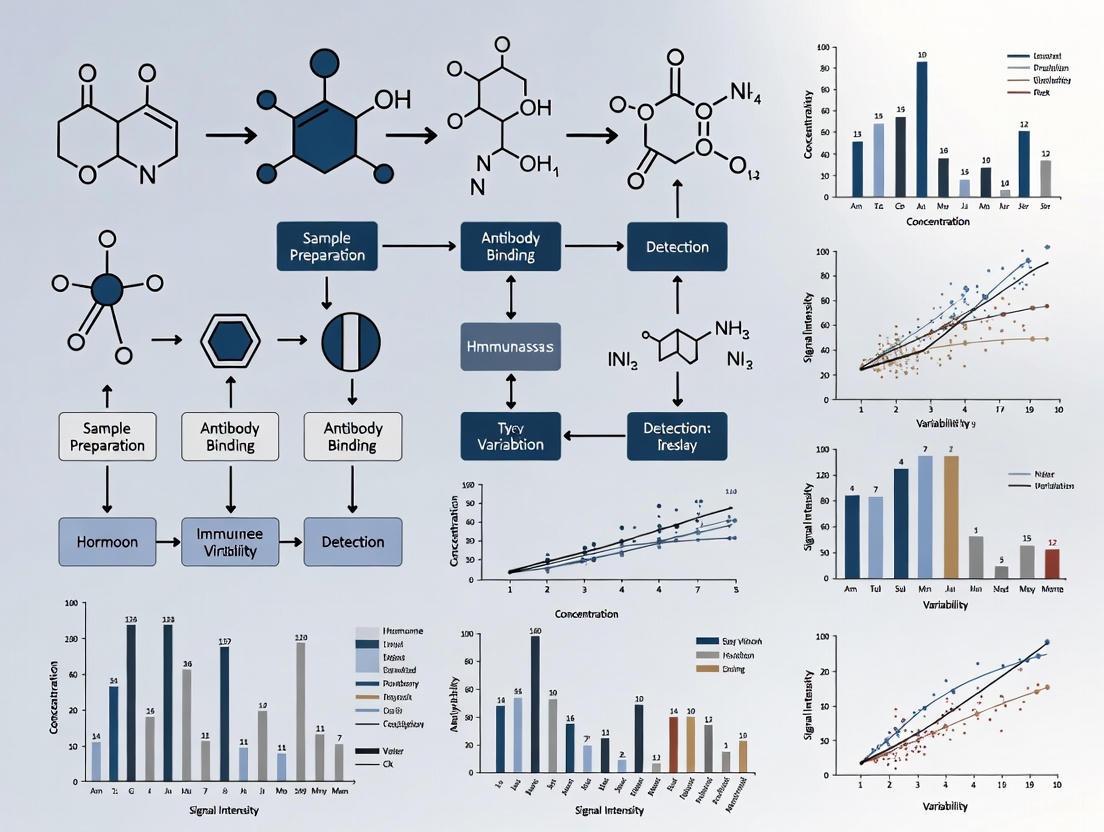
This article provides a comprehensive analysis of the sources and solutions for analytical variability in hormone immunoassays, a critical challenge for researchers and drug development professionals.
Strategies for Minimizing Analytical Variability in Hormone Immunoassays: From Foundational Principles to Advanced Validation
Abstract
This article provides a comprehensive analysis of the sources and solutions for analytical variability in hormone immunoassays, a critical challenge for researchers and drug development professionals. It explores the fundamental causes of inaccuracy, including cross-reactivity, heterophilic antibody interference, and reagent variability. The content evaluates methodological advancements in immunoassay technology and the growing role of mass spectrometry as a reference standard. A dedicated troubleshooting section offers practical protocols for identifying and mitigating common interference issues. Finally, the article presents a rigorous framework for method validation and comparison, emphasizing the need for standardized practices to ensure data reliability in both research and clinical decision-making.
Understanding the Sources and Impact of Hormone Immunoassay Variability
Core Concepts and Definitions
Analytical variability in hormone immunoassays refers to the variation in measurement results introduced by the analytical method itself, rather than by true biological differences. Controlling this variability is paramount in research and drug development to ensure data reliability and reproducibility. This guide focuses on its three fundamental components: precision, accuracy, and specificity [1] [2].
Precision describes the closeness of agreement between independent test results obtained under stipulated conditions. It is the inverse of imprecision and is typically broken down into:
- Repeatability: Variability when all factors (e.g., analyst, instrument, day) are held constant. Also called within-run precision [1] [2].
- Intermediate Precision: Variability observed within a single laboratory when factors like different days, different analysts, or different equipment are introduced [1] [2].
Accuracy is the closeness of agreement between a measured value and the true value of the analyte. It is often reported as a percent bias from the nominal concentration. A claim of accuracy is only meaningful when accompanied by acceptable precision [1].
Specificity is the ability of the immunoassay to detect the target hormone unequivocally in the presence of interfering substances that may be expected to be present in the sample. Common interferents include cross-reacting molecules, heterophile antibodies, and biotin [1] [3].
The relationship between these concepts and the broader scope of method validation is outlined in the diagram below.
Troubleshooting Guides & FAQs
This section addresses common challenges researchers face when working with hormone immunoassays.
Frequently Asked Questions
Q1: My assay shows high imprecision (High %CV) between duplicate wells. What are the primary causes? High within-run imprecision is often related to technical execution or sample handling.
- Cause: Inconsistent pipetting technique or poorly calibrated pipettes.
- Solution: Calibrate pipettes regularly and use the reverse pipetting technique for viscous liquids like serum. Ensure the pipette is held at the same angle each time [4].
- Cause: Inadequate mixing of reagents or samples.
- Solution: Always vortex all reagents and thawed samples thoroughly before use. Use an orbital shaker designed for microplates to ensure consistent mixing during incubations (approximately 500-800 rpm without splashing) [4].
- Cause: Particulate matter in samples.
- Solution: Centrifuge thawed, turbid, or viscous samples (e.g., plasma, tissue lysates) at a minimum of 10,000 × g for 5-10 minutes to remove debris and lipids [4].
Q2: I suspect my assay is inaccurate. How can I distinguish a bias (accuracy) problem from a precision problem?
- Assessment: Analyze the precision first by calculating the %CV of replicates. High %CV indicates an imprecision problem that must be resolved before assessing accuracy.
- Assessment: To assess accuracy (bias), run a set of samples with known concentrations (e.g., spiked quality controls or a certified reference material). A consistent, directional deviation from the known values indicates a bias issue [1] [5].
- Common Source of Bias: Non-commutability between the calibrators (standards) and patient samples. The matrix of the calibrator can cause a different assay response than the complex biological matrix of the sample, leading to inaccurate results [6] [5].
Q3: What are the most common interferents affecting the specificity of hormone immunoassays? Immunoassays are susceptible to various interferences due to the complexity of the antigen-antibody interaction in a biological matrix [3].
- Heterophile Antibodies: Human antibodies that can bind to animal-derived assay antibodies, causing false-positive or false-negative results [3].
- Biotin: High circulating levels of biotin (from high-dose supplements) can interfere with assays using a biotin-streptavidin detection system. This typically causes a negative interference in sandwich assays and a positive interference in competitive assays [3].
- Cross-reactivity: Structurally similar molecules (e.g., hormone precursors, metabolites, or certain drugs) can be unintentionally recognized by the assay antibodies. For example, fulvestrant (a breast cancer drug) and certain synthetic steroids can cross-react in estradiol and growth hormone assays, respectively [3].
Q4: My sample result seems clinically implausible. What steps should I take to investigate potential interference?
- Step 1: Re-run the sample. Check if the result is reproducible (precision).
- Step 2: Perform a serial dilution. If the sample result is not proportional to the dilution (non-linear), it suggests interference or a matrix effect [2].
- Step 3: Re-analyze using a different method. If possible, test the sample with an alternative immunoassay platform or a more specific method like LC-MS/MS. A discrepancy between methods is a strong indicator of interference [3] [5].
- Step 4: Use a blocking agent. Re-test the sample after adding a heterophile antibody blocking reagent. A change in the measured concentration suggests heterophile antibody interference [3].
Performance Criteria and Acceptance Limits
To minimize analytical variability, set and adhere to predefined performance criteria. The table below summarizes typical acceptance targets for key validation parameters.
Table 1: Typical Performance Acceptance Criteria for Hormone Immunoassays
| Parameter | Description | Recommended Acceptance Target | Key Experimental Design |
|---|---|---|---|
| Precision | Closeness of agreement between independent results [2]. | ||
| Repeatability | Within-run imprecision. | %CV < 10% (Often stricter for low-concentration analytes). | Minimum of 3 replicates at 3 concentrations over 5 days [1] [2]. |
| Intermediate Precision | Between-run imprecision (different days, analysts). | %CV < 15% (Often stricter for low-concentration analytes). | Minimum of 2 analysts, 2 days, 3 concentrations [1]. |
| Accuracy | Closeness to the true value [1]. | ||
| Percent Recovery | (Measured Concentration / Spiked Concentration) × 100. | 85-115% recovery [1]. | Test a minimum of 3 replicates at 3-5 concentrations across the assay range [1]. |
| Specificity | Ability to measure analyte in presence of interferents [1] [3]. | ||
| Cross-reactivity | Signal from interferent vs. signal from analyte. | Typically < 1-5%, depending on clinical need [3]. | Spike known interferents (metabolites, common drugs) and measure apparent analyte concentration [3]. |
Experimental Protocols for Minimizing Variability
This section provides detailed methodologies for key experiments to characterize and control analytical variability.
Protocol 1: Precision Profile Experiment
Objective: To determine the repeatability and intermediate precision of the hormone immunoassay across its measuring range.
Materials:
- Quality Control (QC) materials at low, medium, and high concentrations within the assay range.
- Assay reagents, buffers, and instruments as per standard protocol.
- Prepare aliquots of the three QC pools.
- Over the course of a minimum of 5 days, one analyst runs two separate analytical runs per day.
- In each run, analyze each QC level in a minimum of 3 replicates.
- If assessing intermediate precision, involve a second analyst who repeats the above procedure on a different set of days, using a different reagent lot if possible.
Data Analysis:
- Calculate the mean, standard deviation (SD), and percent coefficient of variation (%CV) for each QC level within each run (repeatability).
- Pool all data for each QC level across all runs and analysts and calculate the overall mean, SD, and %CV (intermediate precision).
Protocol 2: Accuracy (Recovery) Experiment
Objective: To determine the bias of the assay by measuring the recovery of a known quantity of hormone added to a sample.
Materials:
- A pool of native sample matrix (e.g., hormone-stripped serum or a patient sample with a low, known baseline concentration).
- A standard of known high concentration of the target hormone.
- Pre-spike the native sample pool with the hormone standard to create at least 3 different concentrations spanning the assay's range.
- Also analyze the unspiked native sample pool to determine the baseline concentration.
- Analyze each spiked sample and the unspiked pool in a minimum of 3 replicates.
Data Analysis:
- Calculate the recovery for each spiked sample using the formula: Recovery (%) = [(Measured Concentration of Spiked Sample - Measured Concentration of Unspiked Sample) / Theoretical Spike Concentration] × 100
- The mean recovery across all levels should meet the pre-defined acceptance criteria (e.g., 85-115%).
Protocol 3: Specificity and Interference Investigation
Objective: To demonstrate the assay's ability to measure the hormone specifically in the presence of potential interferents.
Materials:
- Patient sample with a known concentration of the hormone.
- Potential interfering substances (e.g., cross-reactants from [3], biotin, heterophile antibody blocking reagent).
Procedure [3]:
- Split the patient sample into several aliquots.
- Spike one aliquot with a relevant concentration of the potential interferent.
- Spike another aliquot with an equal volume of the interferent's solvent (as a control).
- If investigating heterophile antibodies, treat one aliquot with a blocking reagent.
- Analyze all aliquots in duplicate in the same run.
Data Analysis:
- Compare the measured concentration of the interferent-spiked sample to the solvent-control sample.
- A significant change (e.g., > ±10-15%) indicates potential interference. The effect of a blocking agent can confirm heterophile interference.
The workflow for conducting these core validation experiments is summarized in the following diagram.
The Scientist's Toolkit: Essential Reagents and Materials
Proper execution of immunoassays relies on high-quality reagents and consistent materials. The table below lists key solutions used in the featured experiments and troubleshooting.
Table 2: Key Research Reagent Solutions for Hormone Immunoassays
| Item | Function / Purpose | Critical Notes for Use |
|---|---|---|
| Calibrators / Standards | Define the analytical curve and assign concentration values to unknown samples. | Must be prepared in a matrix as close as possible to the sample matrix (commutability) to minimize bias [5]. |
| Quality Control (QC) Pools | Monitor assay precision and accuracy over time. | Use at least two levels (low and high); prepare from a source independent of the calibrators [1]. |
| Assay Buffer | Serves as the diluent for reagents and samples; maintains optimal pH and ionic strength. | Do not substitute with wash buffer, as it may lack necessary proteins, leading to low recovery [4]. |
| Wash Buffer | Removes unbound reagents, reducing background signal. Typically contains a detergent like Tween 20. | Prevents bead clumping. Incomplete washing is a major source of high background and variability [4]. |
| Blocking Agent | (e.g., BSA, animal sera) Coats unused binding sites on the solid phase to prevent non-specific binding. | Essential for minimizing background noise and improving assay specificity [7]. |
| Heterophile Blocking Reagent | Contains irrelevant animal antibodies to neutralize human heterophile antibodies in samples. | A crucial tool for investigating and resolving erroneous results due to this common interference [3]. |
| Magnetic Bead Separator | Facilitates the separation of bead-bound complexes in wash steps. | For handheld magnets, ensure the plate is firmly attached and decant gently to avoid losing beads [4]. |
Frequently Asked Questions (FAQs)
Cross-Reactivity
1. What is cross-reactivity in hormone immunoassays? Cross-reactivity occurs when substances in a sample, other than the target hormone, are recognized by the assay's antibodies due to structural similarity. This can lead to falsely elevated results. These interfering molecules can be structurally related endogenous compounds (like hormone precursors or metabolites) or drugs (such as synthetic glucocorticoids or anabolic steroids) [8] [3].
2. In which clinical or research scenarios is cross-reactivity a significant concern? Cross-reactivity is particularly problematic in specific contexts:
- Certain Disease States: In 21-hydroxylase deficiency, 21-deoxycortisol can cross-react in cortisol assays. In 11β-hydroxylase deficiency or after a metyrapone challenge, 11-deoxycortisol can cause similar interference [8].
- Drug Administration: Prednisolone and 6-methylprednisolone show high cross-reactivity in some cortisol immunoassays. Several anabolic steroids, like methyltestosterone, can cause false positives in testosterone assays [8].
- Therapy Impact: Norethindrone therapy can interfere with testosterone measurement in women [8].
3. How can I identify and mitigate cross-reactivity in my experiments?
- Consult Manufacturer Data: Always review the package insert for the specific immunoassay, which typically lists known cross-reacting substances and their degree of interference [8].
- Use Alternative Methods: If cross-reactivity is suspected, confirm results using a more specific method like liquid chromatography-tandem mass spectrometry (LC-MS/MS) [8] [3].
- Computational Prediction: Emerging techniques use two-dimensional molecular similarity calculations to predict potential cross-reactants, helping to triage compounds for testing [8].
Heterophilic Antibodies
4. What are heterophilic antibodies and how do they interfere? Heterophilic antibodies are human antibodies that can bind to immunoglobulins from other species (e.g., mouse, goat). In sandwich immunoassays, they can bridge the capture and detection antibodies even when the target analyte is absent, producing a falsely high signal. They can also block antibody binding, leading to falsely low results [9] [10] [11].
5. Which types of immunoassays are most susceptible? Sandwich (or immunometric) immunoassays are the most prone to interference from heterophilic antibodies because their design involves two antibodies, creating a potential bridge for the heterophilic antibody to connect [10] [11].
6. What strategies can be used to detect and prevent heterophilic antibody interference?
- Serial Dilution: A true analyte concentration will typically change linearly with serial dilution. A non-linear response can suggest interference, though this method is not fool-proof [11].
- Use Blocking Reagents: Commercially available blocking tubes or reagents containing animal serum can be used to pre-treat samples. These reagents bind to heterophilic antibodies, neutralizing them [10].
- Use Alternative Assays: Repeating the test with a different immunoassay platform that uses antibodies from a different species or antibody fragments (Fab) can often resolve the issue [10].
- Sample Pre-treatment: Methods like polyethylene glycol (PEG) precipitation can be used to remove interfering immunoglobulins from the sample [11].
Hook Effect
7. What is the high-dose "hook effect"? The hook effect is a phenomenon in one-step sandwich immunoassays where an extremely high concentration of the analyte saturates both the capture and detection antibodies. This prevents the formation of the necessary "sandwich" complex, leading to a falsely low or normal reported result [12] [13] [14].
8. For which analytes is the hook effect a known risk? The hook effect has been reported for several analytes that can reach very high concentrations, including:
- Prolactin (PRL): Particularly in patients with large prolactin-secreting pituitary macroadenomas [13].
- Human Chorionic Gonadotropin (hCG): In conditions like molar pregnancy [13] [14].
- Other Analytes: Growth hormone, TSH, various tumor markers (e.g., PSA, CA 125, calcitonin) [14].
9. How can I detect and correct for the hook effect in the laboratory?
- Serial Dilution: The primary method for detection and correction is to analyze the sample both undiluted and at a significant dilution (e.g., 1:100). If the measured concentration from the diluted sample is substantially higher than the undiluted result, the hook effect is confirmed [13] [14].
- Assay Design: Modern automated analyzers often incorporate features to minimize this effect, but it remains a consideration, especially with point-of-care tests [14].
Experimental Protocols for Error Investigation
Protocol 1: Detecting and Correcting the Hook Effect via Serial Dilution
Purpose: To confirm suspected hook effect interference and obtain an accurate analyte concentration.
Materials:
- Patient sample (e.g., serum or plasma)
- Appropriate assay diluent (as specified by the immunoassay manufacturer)
- Pipettes and sterile tips
- Dilution tubes
- Access to the immunoassay analyzer
Method:
- Analyze the patient sample following the standard, undiluted protocol.
- In parallel, prepare a 1:100 dilution of the sample by adding 10 µL of sample to 990 µL of the recommended assay diluent. Mix thoroughly.
- Analyze the diluted sample using the same immunoassay.
- Multiply the result from the diluted sample by the dilution factor (100) to obtain the corrected concentration.
Interpretation: A corrected concentration that is significantly higher (e.g., >2-3 times) than the undiluted result is indicative of the hook effect. The corrected value should be reported [13] [14].
Protocol 2: Investigating Heterophilic Antibody Interference
Purpose: To determine if heterophilic antibodies are causing interference in an immunoassay result.
Materials:
- Patient sample
- Heterophilic antibody blocking tubes or reagent (commercially available)
- Control sample (if available)
- Pipettes and tips
Method:
- Divide the patient sample into two aliquots.
- Treat one aliquot according to the instructions provided with the heterophilic blocking reagent (e.g., incubate with the reagent).
- Leave the second aliquot untreated.
- Analyze both the treated and untreated aliquots on the immunoassay platform.
- Compare the results.
Interpretation: A significant difference (>30% or as determined by laboratory validation) between the treated and untreated sample results suggests the presence of heterophilic antibody interference. The result from the blocked sample is more reliable [10] [11].
Research Reagent Solutions
The following table details key reagents used to troubleshoot common immunoassay errors.
Table 1: Key Research Reagents for Troubleshooting Immunoassay Interference
| Reagent | Function | Specific Application |
|---|---|---|
| Heterophilic Blocking Reagents | Contains excess animal immunoglobulins that bind to and neutralize heterophilic antibodies in patient samples. | Added to samples prior to analysis to prevent false positive/negative results in sandwich immunoassays [10] [11]. |
| Polyethylene Glycol (PEG) | Precipitates large molecules, including macrocomplexes and immunoglobulins. | Used to pre-treat samples suspected of containing macroprolactin or heterophilic antibodies. The supernatant is then analyzed [13]. |
| Species-Specific Sera | Serum from the same species as the assay antibodies (e.g., mouse serum). | Can be used as an alternative or supplement to commercial blocking reagents to mitigate heterophilic interference [10]. |
| Assay Diluent/Buffer | A defined matrix used to dilute samples while maintaining analyte stability. | Essential for performing serial dilutions to investigate the hook effect or to bring high-concentration samples within the assay's analytical range [13] [14]. |
Workflow Diagrams
Diagram 1: Hook Effect Mechanism and Detection
Diagram 2: Heterophilic Antibody Interference and Resolution
Table 2: Clinically Significant Cross-Reactivity Examples [8] [3]
| Target Assay | Cross-Reacting Compound | Clinical/Research Context |
|---|---|---|
| Cortisol | Prednisolone, 6-Methylprednisolone | Patients on corticosteroid therapy |
| Cortisol | 21-Deoxycortisol | 21-Hydroxylase deficiency |
| Cortisol | 11-Deoxycortisol | 11β-Hydroxylase deficiency, post-metyrapone |
| Testosterone | Methyltestosterone, other anabolic steroids | Anabolic steroid use |
| Testosterone | Norethindrone | Hormone therapy in women |
| Estradiol | Fulvestrant, Exemestane metabolites | Breast cancer therapy |
Table 3: Troubleshooting Guide for Major Immunoassay Errors
| Error Type | Primary Effect on Result | Key Detection Methods | Common Resolution Strategies |
|---|---|---|---|
| Cross-Reactivity | Falsely Elevated | Review package insert; Use LC-MS/MS for confirmation; Computational similarity prediction [8] [3]. | Use a more specific assay (e.g., LC-MS/MS); Switch to a different immunoassay with lower cross-reactivity. |
| Heterophilic Antibodies | Falsely Elevated or Falsely Low | Serial dilution (non-linearity); Re-test with blocking reagent; Use alternative assay platform [10] [11]. | Pre-treat sample with heterophilic blocking reagent; Use species-specific sera; Use Fab antibody fragments. |
| Hook Effect | Falsely Low | Serial dilution of sample (1:100) [13] [14]. | Re-analyze with significant sample dilution; Use a two-step assay design. |
Impact of Sample Matrix and Pre-analytical Variables on Assay Performance
Pre-analytical and sample matrix variables are significant contributors to variability in hormone immunoassay results, profoundly impacting the reliability and interpretation of scientific data. In laboratory medicine, the pre-analytical phase encompasses all steps from test ordering and patient preparation to sample collection, processing, and storage. Evidence suggests that pre-analytical errors account for approximately 60-70% of all laboratory errors, with some estimates reaching as high as 93% of total errors encountered within diagnostic processes [15] [16]. For researchers conducting hormone immunoassays, understanding and controlling these variables is paramount for generating meaningful, reproducible results, particularly in metabolic and endocrine research using rodent models [15]. This guide addresses the most common troubleshooting challenges and provides practical methodologies to minimize pre-analytical variability in your experiments.
Troubleshooting Guides
FAQ: Addressing Common Pre-analytical Challenges
1. How does blood collection site affect hormone measurements in rodent studies? The blood collection site can significantly influence measured hormone concentrations. Studies demonstrate that sampling from different sites in mice produces markedly different results for metabolic hormones like insulin. For instance, plasma insulin concentrations are clearly lower when blood is collected from the retrobulbar sinus compared to the tail vein [15]. This variability arises from differences in local tissue metabolism, blood flow rates, and potential stress responses. To minimize this bias, consistently use the same sampling site across all experimental groups and precisely document the procedure for later interpretation [15].
2. What is the impact of anesthesia on hormone measurements? Inhalation anesthetics such as isoflurane significantly affect metabolic parameters. Research shows that plasma insulin concentrations are significantly lower when blood is collected under isoflurane anesthesia compared to conscious sampling [15]. Anesthetics influence intestinal motility, gastric emptying, and glucose metabolism, thereby introducing unwanted biological variability [15]. For reliable results, maintain consistent anesthesia protocols throughout an experiment and avoid comparing samples collected with different anesthesia methods.
3. Why do hemolyzed samples produce unreliable hormone results? Hemolysis, the in-vitro breakdown of red blood cells, is a primary source of poor blood sample quality, accounting for 40-70% of pre-analytical errors [16]. Hemolysis causes spurious release of intracellular analytes and can interfere with spectral absorbance measurements used in various immunoassays [16]. Additionally, for specific hormones like insulin, hemolysis can directly interfere with the immunoassay measurement itself [3]. Always visually inspect samples for pink/red discoloration and implement proper phlebotomy and sample handling techniques to prevent mechanical hemolysis.
4. How do heterophile antibodies interfere with immunoassays? Heterophile antibodies are endogenous human antibodies that can bind to animal-derived antibodies used in immunoassay reagents. This binding can create false bridges between capture and detection antibodies in sandwich immunoassays, leading to falsely elevated results, or block antibody-antigen binding in competitive assays, causing falsely low results [3]. These interferences are not detectable by standard quality control procedures and can produce seemingly coherent but erroneous hormonal profiles [3]. Suspect heterophile interference when clinical findings contradict laboratory results, and use blocking reagents or alternative methodologies for confirmation.
5. What is the "hook effect" and how can I detect it? The high-dose hook effect occurs in sandwich immunoassays when exceedingly high analyte concentrations saturate both capture and detection antibodies, preventing the formation of the antibody-hormone-antibody "sandwich" [17]. This results in falsely low or normal results despite very high actual hormone levels. The hook effect is particularly problematic with large pituitary tumors (e.g., macroprolactinomas), malignant tumors, and measurements of hCG, thyroglobulin, or PSA [17]. Detection involves performing sample dilutions (e.g., 1:100 or more); if measured concentrations increase proportionally with dilution, the hook effect is likely present.
6. How does sample matrix differ between serum and plasma? The choice between serum and plasma involves important matrix considerations. Serum is generally the preferred matrix for many analytes as additives in plasma tubes can interfere with assays [3]. For instance, EDTA can chelate metallic ions used as labels (e.g., europium) or cofactors required for enzyme activity, while azide preservatives can destroy peroxidase labels [3]. Heparin can also interfere in certain assays. Always validate your immunoassay for the specific matrix used and maintain consistency throughout your study.
Experimental Protocols for Validating Pre-analytical Conditions
Protocol 1: Establishing Sample Stability Under Different Storage Conditions
- Purpose: To determine the stability of your target analyte under various storage temperatures and durations.
- Materials: Pooled plasma/serum sample aliquots, microcentrifuge tubes, freezer boxes, -80°C freezer, -20°C freezer, 4°C refrigerator.
- Procedure:
- Prepare a large volume of pooled sample from your experimental model (e.g., rodent plasma) and aliquot into multiple tubes.
- Baseline Measurement: Immediately analyze one set of aliquots (n=5) to establish baseline concentration.
- Storage Conditions: Store aliquots under different conditions:
- Room temperature (e.g., 22°C) for 2, 4, 8, and 24 hours
- Refrigerated (4°C) for 1, 3, 7, and 14 days
- Frozen (-20°C and -80°C) for 1, 3, 6, and 12 months
- Analysis: After each time point, thaw frozen samples completely, mix gently, and analyze all samples in the same assay run to minimize inter-assay variability.
- Data Interpretation: Compare stored sample results to baseline. A change of less than 10-15% is generally considered acceptable stability, though this may vary by analyte.
Protocol 2: Evaluating Matrix Effects and Spike Recovery
- Purpose: To assess whether sample matrix components interfere with the accurate quantification of your analyte.
- Materials: Test samples, analyte standard, appropriate matrix (e.g., hormone-stripped serum), pipettes, microcentrifuge tubes.
- Procedure:
- Prepare Spiked Samples:
- Low Spike: Add a known low amount of analyte standard to a sample with low endogenous levels.
- High Spike: Add a known high amount of analyte standard to a different aliquot of the same sample.
- Prepare Baseline: Analyze the unspiked sample to determine endogenous analyte level.
- Calculation of Expected Values:
- Expected = (Endogenous concentration) + (Spiked concentration)
- Measurement: Analyze all samples (unspiked, low spike, high spike) in duplicate.
- Recovery Calculation:
- % Recovery = (Measured concentration - Endogenous concentration) / (Spiked concentration) × 100
- Prepare Spiked Samples:
- Interpretation: Recovery between 85-115% generally indicates minimal matrix interference. Consistent recovery outside this range suggests matrix effects that may require sample dilution or alternative sample preparation [18].
Protocol 3: Assessing Linearity and Hook Effect
- Purpose: To determine the assay's linear range and potential for high-dose hook effect.
- Materials: Sample with known high analyte concentration, assay calibrators, appropriate diluent.
- Procedure:
- Prepare a series of dilutions (e.g., undiluted, 1:2, 1:10, 1:50, 1:100) of the high-concentration sample using the recommended assay diluent.
- Analyze all dilutions in the same assay run.
- Multiply the measured concentration of each dilution by its dilution factor to obtain the calculated original concentration.
- Interpretation: If the calculated concentrations are relatively constant across dilutions, the assay is performing linearly. If calculated concentrations significantly increase with higher dilutions (creating a "hook" pattern when graphed), a high-dose hook effect is present, and results from undiluted samples are unreliable [17].
Essential Research Reagent Solutions
Table: Key Materials for Controlling Pre-analytical Variables
| Reagent/Material | Function | Key Considerations |
|---|---|---|
| Stabilized Blood Collection Tubes | Preserve sample integrity from collection to processing [19]. | Allows room-temperature storage, batch processing, and reduces variability from immediate processing requirements. |
| Low-Binding Microcentrifuge Tubes | Minimize adsorptive losses of proteins and peptides [20]. | Surface treatments reduce analyte binding to tube walls, improving recovery for low-abundance biomarkers. |
| Protein-Stabilized Reference Materials | Provide reliable calibrators for immunoassays. | Matrix-matched stabilizers maintain analyte integrity and improve accuracy of calibration curves. |
| Heterophile Antibody Blocking Reagents | Mitigate interference from human anti-animal antibodies [3]. | Added to assay buffer to prevent false binding that causes erroneous results. |
| Matrix-Matched Quality Controls | Monitor assay performance in appropriate biological fluid. | Controls prepared in the same matrix as samples (e.g., rodent serum) better detect matrix-related issues. |
Visual Guide to Pre-analytical Workflow
The following diagram illustrates the critical control points in the pre-analytical workflow where variability can be introduced and must be managed:
Pre-analytical Control Points
Table: Impact of Common Pre-analytical Variables on Assay Performance
| Pre-analytical Variable | Effect on Assay | Magnitude of Effect | Recommended Control Measure |
|---|---|---|---|
| Blood Collection Site (Retrobulbar vs. Tail vein) | Lower measured insulin concentrations [15] | Significant difference (p<0.05) in all mice tested [15] | Consistent sampling site within experiment; precise documentation |
| Inhalation Anesthesia (Isoflurane) | Suppresses insulin secretion [15] | Significant reduction (p<0.05) vs. conscious sampling [15] | Consistent anesthesia protocol; avoid mixing anesthetized/conscious samples |
| Hemolysis | Interferes with spectrophotometric detection; releases intracellular analytes [16] | Accounts for 40-70% of pre-analytical errors [16] | Proper phlebotomy technique; visual inspection; reject hemolyzed samples |
| Inappropriate Sample Volume | Incorrect anticoagulant-to-blood ratio; clot formation [16] | Accounts for 10-20% of pre-analytical errors [16] | Follow tube manufacturer fill volumes; implement training |
| Wrong Collection Container | Additive interference; improper preservation [16] | Accounts for 5-15% of pre-analytical errors [16] | Validate tube type for each analyte; use laboratory-defined protocols |
| Clotted Sample | Analyte entrapment; inaccurate pipetting [16] | Accounts for 5-10% of pre-analytical errors [16] | Proper mixing immediately after collection; check for clots before analysis |
Vigilant management of sample matrix and pre-analytical variables is not merely a preparatory step but a fundamental component of robust experimental design in hormone immunoassay research. By implementing standardized operating procedures, systematically validating pre-analytical conditions, and maintaining meticulous documentation, researchers can significantly reduce unwanted variability, enhance data reliability, and draw more meaningful biological conclusions from their immunoassay measurements.
Structural Heterogeneity of Analytes and its Effect on Immunoassay Consistency
Welcome to the Technical Support Center. This resource is dedicated to helping researchers, scientists, and drug development professionals troubleshoot one of the most persistent challenges in hormone immunoassay research: analytical variability introduced by the structural heterogeneity of analytes.
Structural heterogeneity refers to the natural variations in protein structure, including differences in post-translational modifications (e.g., glycosylation patterns, deamidation, oxidation), the presence of protein fragments, and the formation of aggregates [21] [22]. For monoclonal antibodies (mAbs) and other protein therapeutics, this heterogeneity is a critical quality attribute that must be monitored [21]. In the context of immunoassays, this heterogeneity can significantly impact the accuracy, precision, and reproducibility of your results because different structural variants may be recognized and bound by assay antibodies with varying efficiency [3] [23].
The following guides and FAQs are designed within the broader thesis of minimizing analytical variability. Consistent and reliable immunoassay data are foundational for robust drug development and credible research outcomes.
Troubleshooting Guides
Guide 1: Diagnosing Inconsistent Results Between Assay Lots
Problem: Your experimental results show significant shifts in measured analyte concentration or a high rate of outlier samples when a new lot of an immunoassay kit is introduced.
Explanation: This is often a symptom of Lot-to-Lot Variance (LTLV), a common issue where different production batches of an immunoassay kit yield different results for the same sample [24]. A primary cause is fluctuations in the quality of critical raw materials, particularly antibodies and antigens, which can be sensitive to minor changes in production or storage [24]. The structural heterogeneity of your analyte may interact differently with these slightly varied reagents.
Investigation and Resolution Workflow:
Detailed Steps:
- Run Quality Control (QC) Materials: Use the kit's QC materials and, if available, leftover calibrators from the previous lot. Also, include a panel of well-characterized internal samples that cover the assay's dynamic range.
- Check Assay Performance: Calculate the precision (CV%) and percent recovery for the QC and internal samples. Compare the calibration curves of the old and new lots for significant shifts in slope or background signal.
- Interpret Findings:
- If the kit's QC and calibrators are out of specification, the issue likely lies with the new lot. Proceed to Step 5.
- If the kit QC passes but your internal samples show poor recovery, the problem may be sample-specific. The new lot's antibodies may be differentially affected by the structural variants (e.g., glycosylation, aggregates) present in your real samples [21] [24]. Proceed to Step 4.
- Investigate Sample Interferences: Subject problematic samples to forced degradation studies (e.g., freeze-thaw cycles, brief incubation at room temperature) and re-analyze. A significant change in measured concentration suggests the presence of unstable or heterogeneous analyte forms [21].
- Contact the Manufacturer: Provide them with your detailed comparative data. Inquire about any changes in the sourcing or formulation of critical reagents, especially the capture and detection antibodies.
- Implement a Bridging Study: If you must switch lots, perform a formal method comparison using 20-40 of your study samples. Establish new baseline values and, if necessary, apply a correction factor for longitudinal studies [23].
Guide 2: Addressing Discrepancies Between Different Immunoassay Platforms
Problem: You are collaborating with another lab or have switched clinical testing platforms, and the numeric values for the same hormone (e.g., Thyroglobulin, IGF-1) are not comparable, leading to potential misclassification of patient results.
Explanation: Different immunoassay platforms use different pairs of antibodies (with distinct epitope specificities), different detection methods, and different calibrators. The structural heterogeneity of an analyte means that various assays may detect a different "mix" of the analyte's structural variants [25] [23]. For example, an assay's antibodies might have reduced affinity for a deamidated or oxidized form of the protein, leading to underestimation [21].
Investigation and Resolution Workflow:
Detailed Steps:
- Perform a Concordance Study: If results from two platforms must be compared, run a set of 40-100 patient samples on both assays. Use statistical methods like Passing-Bablok regression and Bland-Altman plots to quantify the correlation and systematic bias [23].
- Stratify by Clinical Decision Levels: Analyze the agreement at clinically critical ranges (e.g., Thyroglobulin < 0.2 ng/mL for "excellent response" in thyroid cancer) [23]. Disagreements are most common at these extremes.
- Evaluate Clinical Significance: Determine if the measured bias would change clinical decision-making (e.g., initiating or stopping a treatment).
- Do Not Mix Platforms: For longitudinal patient monitoring, use the same analytical platform and method throughout the entire follow-up period [23].
- Re-Baseline if Switching is Unavoidable: If a platform change is mandatory, a formal bridging study is essential to re-baseline all patient values and establish new clinical decision limits for the new assay [23].
- Harmonize Reporting: Always report results alongside the name of the assay used and its specific reference intervals or clinical decision limits.
Frequently Asked Questions (FAQs)
Q1: What are the most common structural modifications in protein therapeutics that can affect immunoassay performance?
A: The table below summarizes key modifications and their potential impacts [21]:
| Structural Modification | Description | Potential Impact on Immunoassay |
|---|---|---|
| Deamidation | Conversion of asparagine (Asn) to aspartic acid, often in NG motifs. Increases acidic charge variants. | Can reduce antibody binding affinity, leading to underestimation of potency and concentration [21]. |
| Oxidation | Modification of methionine (Met) or tryptophan (Trp) residues by reactive oxygen species. | Can cause conformational changes, reducing binding affinity and leading to inaccurate quantification [21]. |
| Glycosylation Heterogeneity | Variations in glycan structures attached to asparagine (N-linked) or serine/threonine (O-linked) residues. | Different glycoforms may be recognized differently by assay antibodies, affecting measured concentration and functional assessment [21] [22]. |
| C-terminal Lysine Clipping | Variability in the presence of C-terminal lysine on antibody heavy chains. | Contributes to charge heterogeneity; typically does not impact safety/efficacy but can cause variability in charge-based analytical methods [21]. |
| Aggregation | Formation of high molecular weight (HMW) species. | Aggregates may cause non-specific binding or hook effects, leading to both over- and under-estimation [21] [24]. |
| Fragmentation | Cleavage of the protein backbone, generating low molecular weight (LMW) species. | Fragments may be detected incompletely or not at all, leading to inaccurate quantification of the intact molecule [22]. |
Q2: How can I assess the "developability" of a monoclonal antibody (mAb) to minimize risks from structural heterogeneity?
A: A proactive, three-step developability assessment workflow is recommended for early-stage candidate screening [21]:
- Step 1: In Silico Evaluation. Analyze the amino acid sequence to identify degradation hot spots (e.g., unstable motifs like NG for deamidation), unpaired cysteines, and aggregation-prone regions [21].
- Step 2: Extended Characterization. Use a panel of analytical methods to assess key biophysical and biochemical properties with limited material consumption. This includes measuring:
- Charge Variants: via imaged capillary isoelectric focusing (icIEF) or cation-exchange chromatography (CEX).
- Size Variants: via size-exclusion chromatography (SEC) for aggregates and fragments.
- Hydrophobicity: via hydrophobic interaction chromatography (HIC).
- Detailed Characterization: Advanced techniques like capillary electrophoresis-mass spectrometry (CE-MS) can efficiently resolve and assign isomeric variants and glycoforms at the intact and middle-up level [22].
- Step 3: Forced Degradation Studies. Stress the candidate mAbs under controlled conditions (e.g., elevated temperature, light exposure, oxidative stress) to rapidly reveal candidate-specific degradation pathways and confirm the hot spots identified in Steps 1 and 2 [21].
Q3: Our lab is validating an in-house immunoassay. What are the critical validation parameters to ensure it is robust against analyte heterogeneity?
A: A thorough method validation is crucial. The table below outlines the essential parameters based on international guidelines [26]:
| Validation Parameter | Objective | Recommended Experiment |
|---|---|---|
| Precision | Measure closeness of agreement between repeated measurements. | Run within-run and between-run experiments using controls at low, mid, and high concentrations. Calculate CV% [26]. |
| Accuracy / Recovery | Determine the closeness of the measured value to the true value. | Spike a known amount of pure analyte into a relevant biological matrix and measure the recovery percentage [27] [26]. |
| Linearity / Dilutional Integrity | Verify that samples with high analyte concentrations can be reliably diluted into the assay's measuring range. | Serially dilute a high-concentration sample in the appropriate matrix. The measured concentration should be proportional to the dilution factor [26]. |
| Selectivity / Specificity | Ensure the assay accurately measures the target analyte in the presence of other components (e.g., metabolites, related proteins, interfering antibodies). | Test cross-reactivity with structurally similar compounds. Assess interference from hemolyzed, lipemic, or icteric samples [3] [26]. |
| Calibrator Stability | Confirm that calibrators and critical reagents are stable under defined storage conditions and over the claimed lifetime. | Periodically test old calibrator sets against a new set to detect signal drift [24]. |
| Robustness | Evaluate the method's resilience to small, deliberate variations in procedural parameters (e.g., incubation time, temperature). | Systematically vary key protocol parameters one at a time and assess the impact on the final result [26]. |
Q4: What are the primary causes of lot-to-lot variance in immunoassay reagents, and how can they be controlled?
A: The main causes and mitigation strategies are [24]:
- Causes:
- Antibody Quality: Variations in antibody affinity, specificity, purity, and aggregation between production batches. Aggregates can cause high background or signal leap [24].
- Antigen/Calibrator Quality: Inconsistent purity, stability, or exact composition of the antigen used for calibration and standardization [24].
- Enzyme Conjugates: Fluctuations in enzymatic activity or labeling efficiency of antibody-enzyme conjugates.
- Buffer Formulations: Minor, uncontrolled changes in pH, ionic strength, or stabilizing components.
- Control Strategies:
- Rigorous QC on Raw Materials: Implement strict specifications for antibodies and antigens, using methods like SDS-PAGE, SEC-HPLC, and CE-SDS to monitor purity and aggregation [24].
- Use of Master Calibrators: Maintain a large, well-characterized master lot of calibrator to standardize all new production batches against.
- Comprehensive Lot-to-Lot Testing: Before release, new reagent lots must be tested against the previous lot and the master calibrator using a predefined panel of quality control samples.
The Scientist's Toolkit: Research Reagent Solutions
| Item | Function in Managing Heterogeneity |
|---|---|
| High-Quality Monoclonal Antibodies | Affinity-purified antibodies with well-defined specificity and low aggregation are critical for consistent assay performance. Recombinant antibodies can offer superior lot-to-lot consistency [24]. |
| Stable Reference Standards | Well-characterized, stable calibrators that are standardized against international reference materials (e.g., CRM-457 for thyroglobulin) are essential for harmonizing results across labs and platforms [23]. |
| Heterophilic Blocking Reagents (HBR) | A mixture of irrelevant antibodies and inert proteins that blocks interference from human anti-animal antibodies (HAAA) and other heterophilic antibodies in patient samples [27]. |
| Stabilized Buffer Systems | Consistent buffer formulations with appropriate stabilizers (e.g., BSA, sucrose) are vital for maintaining reagent and analyte stability, thereby reducing variability [24]. |
| Matrix-Matched Controls & Calibrators | Using the same biological matrix (e.g., serum, plasma) for controls and calibrators as for the unknown samples helps account for matrix effects that can differentially affect heterogeneous analyte forms [27] [26]. |
The Clinical and Research Consequences of Unreliable Hormone Data
Troubleshooting Guides and FAQs
FAQ: Recognizing Unreliable Data
Q: My hormone immunoassay results are clinically implausible. What are the most common causes? A: Clinically implausible results often stem from specific, identifiable issues. The most frequent causes include interference from heterophile antibodies or human anti-animal antibodies in the sample, cross-reactivity with structurally similar molecules or medications, the high-dose "hook effect," and high biotin levels from supplement intake [3] [28]. Spurious results can also arise from pre-analytical conditions like improper sample handling or the use of incorrect sample types (e.g., serum vs. plasma) [29].
Q: How can I distinguish true hypoprolactinemia from an artifact caused by the high-dose hook effect? A: The high-dose hook effect occurs in sandwich immunoassays when extremely elevated analyte levels saturate both the capture and detection antibodies, leading to a falsely low reported concentration [28]. This is a known issue with prolactin in patients with macroadenomas. To detect it, request that the laboratory perform the assay on a series of dilutions of the original sample. If the measured concentration increases with dilution, the hook effect is confirmed, and the result from a diluted sample is the accurate one [28].
Q: Why do my results differ from another lab using a different immunoassay kit? A: Different immunoassays for the same hormone may use antibodies that recognize different epitopes or hormone isoforms, have varying susceptibilities to cross-reactants and interferents, and may be calibrated differently [3] [29]. This is a well-documented source of variability. For example, different growth hormone assays may specifically measure the 22K isoform or also detect 20K and other non-22K isoforms, leading to different results [28]. Standardizing with a single method and batch for a study is crucial [29].
Troubleshooting Guide: Common Interferences
Heterophile Antibody Interference
- Problem: Falsely elevated or depressed hormone levels.
- Recognition: Results are inconsistent with the clinical picture or other biochemical data. Interference is often erratic and not reproducible across different assay platforms [3] [28].
- Solution:
- Use a proprietary heterophile blocking tube (HBT) to pre-treat the sample.
- Re-measure the sample on a different immunoassay platform.
- Re-test a new sample collected at a later date [28].
Biotin Interference
- Problem: High concentrations of biotin (vitamin B7) from supplements can cause significant interference, particularly in assays using biotin-streptavidin chemistry [3].
- Recognition: In sandwich immunoassays, biotin typically causes falsely low results, while in competitive assays, it can cause falsely high results [3].
- Solution: The patient should discontinue biotin supplements for at least 48-72 hours before a new sample is collected [3].
Sample Matrix Effects
- Problem: Differences between serum and plasma matrices can lead to different results for the same analyte [29].
- Recognition: Known issue; reference ranges often differ for serum and plasma.
- Solution: Consistent use of the same sample type (serum or plasma) throughout a study is critical. Note that serum has a lower protein content than plasma, which can affect analyte stability and measurement [29].
Experimental Protocols for Identifying Interference
Protocol 1: Serial Dilution to Detect Hook Effect or Interference
Purpose: To determine if a clinically suspicious result is due to the high-dose hook effect or a non-linear interference [28].
- Prepare Dilutions: Create a series of dilutions (e.g., 1:2, 1:10, 1:100) of the patient's sample using the appropriate assay diluent.
- Re-assay: Measure the analyte concentration in each dilution.
- Interpretation:
- No Hook Effect/Interference: The measured concentration will decrease proportionally with the dilution factor (e.g., a 1:10 dilution yields a result ~10% of the original).
- Hook Effect Present: The measured concentration will increase with dilution until the prozone region is escaped, after which results will become linear.
- Interference Present: Non-linearity in recovery upon dilution suggests the presence of an interfering substance [28].
Protocol 2: Pre-Treatment with Heterophile Blocking Reagents
Purpose: To confirm if heterophile antibodies are causing interference [28].
- Split Sample: Divide the patient sample into two aliquots.
- Treat: Add a heterophile blocking reagent to one aliquot. The other aliquot serves as an untreated control.
- Re-assay: Measure the analyte concentration in both aliquots using the same immunoassay.
- Interpretation: A significant difference (>30-50%) in the results between the treated and untreated samples indicates the presence of heterophile antibody interference.
Data Presentation
Table 1: Common Immunoassay Interferences and Their Effects
| Interference Type | Mechanism | Typical Effect on Result | Common Examples |
|---|---|---|---|
| Heterophile Antibodies [3] [28] | Antibodies that bind assay reagents (e.g., animal antibodies) | Falsely high or low (both possible) | Human anti-mouse antibodies (HAMA) |
| Biotin [3] | Interferes with biotin-streptavidin separation | Falsely low (sandwich); Falsely high (competitive) | High-dose supplement use |
| Cross-reactivity [3] [28] | Antibody binds to structurally similar molecules | Falsely high | DHEA-S in testosterone assays; steroid precursors in cortisol assays |
| High-Dose Hook Effect [28] | Analyte excess prevents sandwich formation | Falsely low | Prolactin, hCG, Calcitonin in tumor patients |
| Sample Hemolysis [28] | Release of proteolytic enzymes or cellular contents | Falsely high or low | Insulin, other peptide hormones |
| Macrocomplexes [28] | Analyte bound to autoantibody (e.g., macroprolactin) | Falsely high (but biologically inactive) | Macroprolactin |
Table 2: Key Research Reagent Solutions for Method Standardization
| Reagent / Material | Function in Hormone Immunoassay | Key Consideration |
|---|---|---|
| Low-Binding Tubes/Vials [30] | Minimizes adsorptive losses of the analyte, improving recovery and reproducibility. | Essential for proteins and peptides at low concentrations. |
| Heterophile Blocking Reagents [28] | Added to patient samples to neutralize heterophile antibody interference. | A critical tool for confirming and resolving a common source of error. |
| Standardized Calibrators [29] | Used to create the calibration curve, defining the relationship between signal and concentration. | Using calibrators from the same batch is vital for inter-assay consistency. |
| Matrix-Matched Controls [29] | Quality control samples (e.g., pooled serum) used to monitor assay performance over time. | Should cover the concentration range of interest (low, medium, high). |
| Appropriate Filters [30] | Remove particulates from samples before analysis. | Can cause adsorptive losses; discarding the first mL of filtrate is recommended. |
Workflow and Relationship Visualizations
Diagram 1: Hormone Immunoassay Interference Troubleshooting
Diagram 2: Pre-analytical Variability Factors
Advanced Methodologies and Evolving Immunoassay Technologies
The evolution of immunoassay platforms from traditional Enzyme-Linked Immunosorbent Assays (ELISA) to automated chemiluminescent systems has revolutionized clinical diagnostics. Among these, Chemiluminescence Immunoassay (CLIA), Electrochemiluminescence Immunoassay (ECLIA), and Chemiluminescent Microparticle Immunoassay (CMIA) represent significant technological advancements. However, their widespread adoption in hormone research introduces critical challenges in analytical variability that can compromise data integrity and reproducibility.
For researchers and drug development professionals, understanding and controlling this variability is paramount. Differences in antibody affinity, reagent composition, signal detection mechanisms, and platform-specific methodologies create substantial inter-assay discrepancies, even when measuring identical biomarkers. Recent studies demonstrate that these variations persist despite strong correlation coefficients between platforms, highlighting the necessity for rigorous standardization protocols and systematic troubleshooting approaches in research settings.
Comparative Performance Characteristics of Modern Immunoassay Platforms
Diagnostic Accuracy Across Platforms
Table 1: Comparison of Diagnostic Performance for COVID-19 Serological Assays [31]
| Assay Platform | Manufacturer | Target | Method | Pooled DOR | Relative Performance |
|---|---|---|---|---|---|
| Elecsys Anti-SARS-CoV-2 total | Roche | Total Ab | ECLIA | 1701.56 | Highest accuracy |
| Elecsys Anti-SARS-CoV-2 N | Roche | Anti-N | ECLIA | 1022.34 | Superior performance |
| Abbott SARS-CoV-2 IgG | Abbott | IgG | CMIA | 542.81 | High accuracy |
| LIAISON SARS-CoV-2 S1/S2 IgG | DiaSorin | IgG | CLIA | 178.73 | Moderate accuracy |
| Euroimmun Anti-SARS-CoV-2 S1-IgG | Euroimmun | IgG | ELISA | 190.45 | Moderate accuracy |
| Euroimmun Anti-SARS-CoV-2 N-IgG | Euroimmun | IgG | ELISA | 82.63 | Lower accuracy |
| Euroimmun Anti-SARS-CoV-2 IgA | Euroimmun | IgA | ELISA | 45.91 | Lowest accuracy |
The diagnostic odds ratio (DOR) represents the odds of a positive test result in diseased individuals relative to the odds of a positive result in non-diseased individuals, making it a key metric for overall test accuracy. This meta-analysis of 57 studies revealed that ECLIA and CMIA methods demonstrated superior diagnostic performance compared with conventional CLIA and ELISA, with no significant difference between ECLIA and CMIA platforms [31]. Total antibody assays showed the highest accuracy, followed by IgG-specific assays.
Inter-Assay Variability in Hormone Measurement
Table 2: Inter-Assay Variability in Thyroid Hormone and Related Testing [32] [33] [34]
| Analyte | Platforms Compared | Correlation Coefficient (ρ) | Key Variability Findings |
|---|---|---|---|
| Thyroglobulin | Beckman (Tg-B) vs. Diasorin (Tg-L) | 0.89 (overall) | Significant negative bias for Tg-L vs. Tg-B; moderate correlation (ρ=0.42) at Tg<2 ng/mL [32] |
| Thyroglobulin | Beckman (Tg-B) vs. Siemens (Tg-A) | 0.92 (overall) | No significant bias; agreement declined at concentrations >50 ng/mL [32] |
| Thyroid Stimulating Hormone | Multiple EQA participants | N/A | Achieved desirable harmonization [33] |
| Free Thyroxine (FT4) | Multiple EQA participants | N/A | Failed to reach minimum harmonization (HI: 1.1-1.9) [33] |
| Vitamin D | Six major platforms | R²: 0.9756-0.9994 | Significant numerical discrepancies despite high correlations [34] |
Harmonization Index (HI) values >1 indicate unsatisfactory harmonization. The finding that FT4 failed to reach minimum harmonization levels across platforms highlights the significant challenge in obtaining comparable results for thyroid function tests [33].
Research Reagent Solutions and Essential Materials
Table 3: Key Research Reagents and Materials for Immunoassay Experiments
| Reagent/Material | Function | Application Example | Critical Considerations |
|---|---|---|---|
| CRM-457 international reference material | Standardization for thyroglobulin assays | Calibrating Tg measurements across platforms [32] | Essential for minimizing inter-assay variability |
| Bio-Rad quality control materials | Quality assurance and precision monitoring | Intra-assay variability assessment [32] [35] | Must cover clinically relevant concentration ranges |
| Manufacturer-specific calibrators | Platform-specific calibration | Routine calibration of Abbott, Roche, Siemens systems [34] | Not interchangeable between platforms |
| Luminol-based substrates | Signal generation in CLIA systems | Chemiluminescent detection in GM and BDG assays [36] | Batch-to-batch consistency affects signal stability |
| Monoclonal antibodies with defined epitope specificity | Antigen capture and detection | SARS-CoV-2 N protein vs. S protein antibody detection [31] | Epitope selection significantly impacts sensitivity |
| Serum/plasma matrix materials | Sample dilution and recovery studies | Linearity evaluation in islet autoantibody assays [35] | Must match patient sample matrix |
Experimental Protocols for Method Comparison and Validation
Protocol for Cross-Platform Method Comparison Studies
Objective: To evaluate the concordance between different immunoassay platforms for measuring specific hormones or biomarkers.
Materials:
- Residual serum samples (minimum n=100 recommended)
- Multiple immunoassay platforms (e.g., Abbott ARCHITECT, Roche Cobas, Siemens Atellica)
- Manufacturer-specific reagents and calibrators
- Quality control materials spanning assay measurement ranges
Procedure:
- Sample Selection and Preparation: Collect residual serum samples covering the clinically relevant range of the analyte. Exclude samples with hemolysis, icterus, or lipemia. Store aliquots at -80°C to maintain stability [32].
- Instrument Calibration: Calibrate all platforms according to manufacturer specifications using proprietary calibrators. Do not interchange calibrators between systems.
- Sample Analysis: Measure all samples in duplicate on each platform within a narrow time window to minimize pre-analytical variation.
- Quality Control: Run quality control materials at three concentrations (low, medium, high) at the beginning and end of each batch.
- Data Analysis:
- Perform correlation analysis using Spearman's coefficient (ρ)
- Assess agreement with Bland-Altman plots
- Calculate concordance rates for clinically relevant thresholds
- Evaluate bias using Passing-Bablok regression [35]
Troubleshooting Tip: When comparing methods, include samples with concentrations near clinical decision points, as agreement is often poorest at these critical levels [32].
Protocol for Assessing Assay Precision and Linearity
Objective: To determine intra-assay precision and linearity of automated immunoassay platforms.
Materials:
- High-titer serum samples
- Assay diluent specified by manufacturer
- Automated immunoassay analyzer with precision software
Procedure:
- Precision Evaluation:
- Prepare two serum pools with analyte concentrations below and above the clinical cut-off
- Perform ten replicate measurements of each pool in a single run
- Calculate coefficients of variation (CVs) and compare with manufacturer claims [35]
- Linearity Assessment:
- Prepare serial dilutions (ranging from 1:10 to 10:1) of high-titer serum samples
- Analyze diluted samples in duplicate
- Compare measured values with expected values based on dilution factors
- Determine the assay's linear range and any observed hook effect [35]
Troubleshooting Tip: If precision falls outside acceptable limits (typically <15% CV), check reagent stability, pipette calibration, and environmental conditions.
Troubleshooting Guides for Common Experimental Challenges
FAQ 1: How should we manage platform switching during longitudinal studies?
Challenge: Changing immunoassay platforms in ongoing research studies introduces variability that compromises data comparability.
Solution:
- Conduct a method comparison study with at least 40 patient samples spanning the measurable range prior to platform transition [32]
- Establish individual patient baselines on both old and new platforms using split-sample testing
- Implement a crossover period where samples are run on both platforms simultaneously
- Apply mathematical recalibration using Passing-Bablok regression equations when direct comparison is necessary [35]
Preventive Measure: When designing longitudinal studies, secure commitments for consistent platform availability or budget for method comparison studies if platform transition becomes unavoidable.
FAQ 2: Why do we observe strong correlations but poor agreement between platforms?
Challenge: High correlation coefficients (R² > 0.95) with significant numerical differences in biomarker measurements.
Root Cause: Correlation measures the strength of relationship between methods, not agreement. Constant or proportional biases cause numerical discrepancies despite strong correlations [34].
Diagnostic Steps:
- Perform Bland-Altman analysis to quantify average bias and limits of agreement
- Check for concentration-dependent bias using difference plots
- Verify calibration traceability to international reference materials
- Assess differences in antibody epitope specificity and assay design [32]
Solution: Establish platform-specific reference ranges and clinical decision limits. Do not interchangeably use results from different platforms without establishing comparability.
FAQ 3: How can we minimize variability in low-concentration hormone measurements?
Challenge: Highest relative variability typically occurs at low analyte concentrations near the functional sensitivity of assays.
Optimization Strategies:
- Concentrate samples when possible (e.g., using centrifugal filters)
- Use assays with superior functional sensitivity (e.g., <0.1 ng/mL for thyroglobulin) [32]
- Increase replicate measurements for low-concentration samples
- Implement longer signal incubation times if platform protocols allow
- Verify that dilutional linearity extends to low concentrations
Quality Control: Include low-concentration quality control materials near clinical decision points in each run, with tighter acceptance criteria than manufacturer recommendations.
Advanced Harmonization Assessment Protocol
Objective: To quantitatively assess harmonization status across multiple testing systems using external quality assessment (EQA) data.
Materials:
- EQA data from at least 3 consecutive cycles
- Biological variation-based quality specifications
- Statistical software (R, SPSS, or MedCalc)
Procedure:
- Data Collection: Gather EQA data for the analyte of interest across multiple cycles [33]
- Calculate Total Allowable Error (TEa): Compute TEa for your laboratory (TEa-Lab) and peer groups (TEa-peer) using bias and coefficient of variation data
- Determine Bias: Calculate average bias from the reference method or peer group mean
- Compute Harmonization Index (HI): Compare TEa values against biological variation thresholds (minimum, desirable, optimal) using the formula: HI = TEa-lab / TEa-desirable [33]
- Interpretation: HI values ≤1 indicate satisfactory harmonization, while HI>1 requires corrective action
Corrective Actions for HI>1:
- Review calibration traceability
- Implement additional quality control measures
- Optimize reagent lot validation procedures
- Participate in additional EQA programs with commutable materials
The evolution from CLIA to ECLIA and CMIA platforms has delivered substantial improvements in automation, throughput, and analytical sensitivity. However, as demonstrated by comparative studies across multiple biomarkers, significant inter-platform variability persists despite technological advancements. This variability presents substantial challenges for multi-center research studies and longitudinal monitoring of hormonal biomarkers.
A strategic approach to minimizing analytical variability must include rigorous method validation before platform implementation, continuous monitoring through EQA programs, and systematic troubleshooting when harmonization issues arise. Researchers should prioritize platform consistency throughout study durations and establish protocol-based approaches for managing necessary platform transitions. Furthermore, the reporting of research findings should explicitly state the analytical platforms and reagent lots used, enabling proper interpretation of results and facilitating future meta-analyses.
By implementing the troubleshooting guides, experimental protocols, and harmonization strategies outlined in this technical support document, researchers can significantly enhance the reliability and comparability of hormone immunoassay data, thereby strengthening the scientific validity of their research outcomes.
The Role of High-Specificity Antibodies and Improved Calibrators
Understanding and Troubleshooting Common Immunoassay Issues
This section addresses frequent challenges encountered during hormone immunoassay experiments and provides evidence-based solutions to minimize analytical variability.
FAQ: My immunoassay shows inconsistent absorbances across the plate. What could be the cause?
Inconsistent absorbances often stem from technical or physical procedural errors rather than reagent failure. The table below summarizes common causes and solutions. [37]
Table: Troubleshooting Inconsistent Absorbance in Immunoassays
| Issue | Impact on Results | Corrective Action |
|---|---|---|
| Plate stacking during incubation | Uneven temperature distribution across wells | Avoid stacking plates; ensure plates are incubated singly on a flat surface |
| Inconsistent pipetting | Variable liquid volumes between wells/replicates | Calibrate pipettes regularly; ensure proper tip sealing; avoid reusing tips |
| Inadequate reagent mixing | Non-uniform antibody/analyte concentration | Mix all reagents and samples thoroughly; equilibrate to room temperature before use |
| Wells drying out | Disruption of the solid-phase antibody matrix | Do not leave plates unattended for prolonged periods after washing |
| Insufficient washing | Variable amounts of unbound antibody remain | Follow washing protocol meticulously; ensure washer nozzles are not clogged |
FAQ: I observe very weak or no color development. What steps should I take?
Weak color development indicates a failure in the signal-generation phase of the assay. A systematic check of reagents and conditions is required. [37] [38]
Table: Troubleshooting Weak or No Color Development
| Category | Possible Cause | Solution |
|---|---|---|
| Reagent Conditions | Reagents not at room temperature | Allow all reagents to warm to ~25°C before starting the assay |
| Incorrect storage of components | Store all kit components as directed (often 2-8°C); check expiration dates | |
| Incompatible buffer (e.g., contains sodium azide) | Avoid azide, which inhibits Horseradish Peroxidase (HRP) activity | |
| Assay Execution | Incorrect incubation time/temperature | Adhere strictly to protocol-specified incubation times and temperatures |
| Contaminated or inactivated TMB substrate | Dispense TMB into a clean, disposable trough; discard if it appears blue prematurely | |
| Plate read at incorrect wavelength | Read TMB substrate at 450 nm | |
| Sample & Matrix | Analyte measurement in a non-optimized matrix (e.g., plasma vs. serum) | Use only the sample matrices validated for the assay |
Immunoassay interference remains a significant source of analytical variability. Major interferents can be exogenous or endogenous, leading to both false-positive and false-negative results. [3]
Diagram: A logical workflow for investigating suspected immunoassay interference.
Table: Common Immunoassay Interferents and Mitigation Strategies
| Interferent | Mechanism | Primarily Affects | Detection/Mitigation Strategies |
|---|---|---|---|
| Cross-reactivity | Structurally similar molecules (metabolites, drugs) are recognized by the antibody. [3] | Competitive immunoassays (e.g., for steroids, T3, T4). [3] | Use a more specific assay (e.g., LC-MS/MS); check for known cross-reactants in patient history. [39] [40] |
| Heterophile Antibodies | Endogenous human antibodies that bind assay antibodies, causing false signals. [3] | Both competitive and sandwich assays. | Use blocking reagent tubes; re-analyze with a different platform/assay design; sample pre-treatment. [3] |
| Biotin | High circulating biotin interferes with biotin-streptavidin separation. [3] | Assays using biotin-streptavidin technology. | Check patient biotin intake; re-test after sufficient biotin washout period. |
| Rheumatoid Factor (RF) | An IgM antibody that can bridge capture and detection antibodies. [3] | Sandwich immunoassays. | Similar mitigation strategies as for heterophile antibodies. |
| High-Dose Hook Effect | Extremely high analyte levels saturate antibodies, leading to falsely low results. [3] | Sandwich immunoassays (e.g., for prolactin, TSH). | Re-test the sample at multiple dilutions; modern assays often have a high Hook threshold. |
Experimental Protocols for Validation and Harmonization
Protocol: Harmonization Assessment Using External Quality Assessment (EQA) Data
Objective: To quantitatively evaluate the harmonization level of a thyroid hormone testing system against peer groups and biological variation-based quality standards. [33]
Methodology: [33]
- Data Collection: Gather EQA data for target hormones (e.g., T3, T4, FT3, FT4, TSH) over a defined period.
- Calculate Total Allowable Error (TEa): For your lab (TEa-Lab) and peer groups (TEa-peer), calculate TEa using the formula based on bias and coefficient of variation (CV) data.
- Determine Allowable Limits: Define three performance limits based on biological variation: optimal, desirable, and minimum.
- Calculate Harmonization Index (HI): Derive the HI by comparing the TEa values against the biological variation thresholds:
HI = TEa / Allowable Limit. - Interpretation: An HI value ≤ 1 indicates satisfactory harmonization. Values > 1 signify a failure to meet the respective quality level.
Application: This protocol allows labs to identify specific assays requiring improvement. For example, one study found TSH achieved desirable harmonization, while T3, T4, FT3, and FT4 failed to reach the minimum level (HI = 1.1-1.9). [33]
Protocol: Validating Immunoassay Results Using Mass Spectrometry
Objective: To confirm the accuracy of immunoassay results, especially for low-concentration analytes or when interference is suspected.
- Sample Selection: Identify samples with immunoassay results that are clinically discordant or suspicious.
- Sample Preparation: Perform liquid-liquid or solid-phase extraction to isolate steroids from the serum matrix. Derivatization may be applied to enhance sensitivity.
- Liquid Chromatography (LC): Separate the extracted steroids using a high-performance LC system with a C18 column. This resolves structurally similar steroids that immunoassays cannot distinguish.
- Tandem Mass Spectrometry (MS/MS):
- Ionization: The eluted steroids are ionized, typically using Electrospray Ionization (ESI).
- First Mass Filter (Q1): Selects the precursor ion (parent mass) of the target steroid.
- Collision Cell (Q2): Fragments the precursor ion into specific product ions using an inert gas.
- Second Mass Filter (Q3): Selects a specific product ion unique to the target steroid.
- Quantification: The intensity of the specific product ion signal is measured against a calibration curve made from certified reference materials, providing a highly specific and accurate concentration.
Application: This protocol is critical for measuring low-level estradiol in postmenopausal women, diagnosing pediatric endocrine disorders, and accurately quantifying testosterone for PCOS diagnosis, where immunoassay precision is often insufficient. [39] [40]
The Scientist's Toolkit: Key Reagent Solutions
The reliability of hormone immunoassays is fundamentally dependent on the quality and specificity of core reagents.
Table: Essential Research Reagents for High-Quality Hormone Immunoassays
| Reagent / Material | Critical Function | Impact on Assay Performance & Variability |
|---|---|---|
| High-Specificity Monoclonal Antibodies (mAbs) | Engineered to bind a single, unique epitope on the target hormone with high affinity. [41] | Reduces cross-reactivity with metabolites and structurally similar hormones, directly improving assay specificity and accuracy. [3] |
| Matrix-Matched Calibrators | Calibrators prepared in a synthetic matrix that closely mimics the patient sample (e.g., serum). | Minimizes matrix effects, ensuring the antibody-binding kinetics in calibrators and patient samples are equivalent, leading to more accurate quantification. |
| Reference Standards | Highly purified hormones with concentrations traceable to international reference materials (e.g., from NIST or CDC). [39] | Enables assay standardization and harmonization across different laboratories and platforms, allowing for comparable results. [33] |
| Stable Isotope-Labeled Internal Standards (for LC-MS/MS) | A known quantity of the target hormone with some atoms replaced by heavy isotopes (e.g., ^13^C, ^2^H). | Compensates for sample-specific losses and ion suppression during sample preparation and MS analysis, vastly improving precision and accuracy in mass spectrometry. [40] |
| Blocking Reagents | A mixture of non-specific antibodies (e.g., animal serums) or proprietary proteins. | Neutralizes heterophile antibodies and other interfering substances in patient samples, reducing a major source of false results. [3] |
Harmonization of Thyroid Hormone Testing Systems
Data derived from EQA programs provides a quantitative measure of how well different laboratories and methods agree.
Table: Harmonization Assessment of Thyroid Hormone Assays Based on EQA Data [33]
| Analyte | Harmonization Index (HI) | Harmonization Level Achieved | Interpretation |
|---|---|---|---|
| TSH | ≤ 1.0 | Desirable | Satisfactory harmonization; results are comparable across labs. |
| T3 | 1.1 - 1.9 | Below Minimum | Significant variability; results are not harmonized. |
| T4 | 1.1 - 1.9 | Below Minimum | Significant variability; results are not harmonized. |
| FT3 | 1.1 - 1.9 | Below Minimum | Significant variability; results are not harmonized. |
| FT4 | 1.1 - 1.9 | Below Minimum | Significant variability; results are not harmonized. |
Comparison of Immunoassay vs. Mass Spectrometry for Hormone Quantification
The choice of analytical platform has a profound impact on the reliability of hormone measurement, especially at low concentrations.
Table: Method Comparison for Hormone Assays in Challenging Scenarios
| Clinical Scenario | Immunoassay Performance | LC-MS/MS Performance | Primary Advantage of MS |
|---|---|---|---|
| Estradiol in Postmenopausal Women | Prone to inaccuracy due to low levels and cross-reactivity. [39] | Higher accuracy and sensitivity at low concentrations. [39] [40] | Prevents misclassification of patient status and enables correct clinical decisions. |
| Testosterone in Women/Children | Overestimation due to cross-reactivity with other steroids. [40] | High specificity for testosterone, even at very low levels. [40] | Essential for accurate diagnosis of hyperandrogenism in PCOS and pediatric disorders. |
| 17OH-Progesterone for CAH Screening | High false-positive rates due to cross-reacting steroids. [40] | Can simultaneously measure 17OHP and related steroids with high specificity. [40] | Reduces false positives and improves diagnostic accuracy for congenital adrenal hyperplasia. |
| Vitamin D Metabolite Measurement | Cross-reactivity with inactive metabolites leads to overestimation. [40] | Precise quantification of 25(OH)D and other metabolites without cross-reactivity. [40] | Provides a true measure of vitamin D status, critical for bone health management. |
In the pursuit of efficient hormone analytics, the desire to eliminate time-consuming sample extraction steps is understandable. However, this simplification must be carefully balanced against the critical need for assay accuracy and specificity. Immunoassays are powerful tools for hormone quantification, but they are susceptible to various interferences from the complex biological matrix of unextracted samples [3] [42]. This guide addresses key challenges and provides strategies for validating simplified workflows within the critical context of minimizing analytical variability in hormone research.
Frequently Asked Questions (FAQs)
Q1: Under what circumstances can I consider eliminating an extraction step for a steroid hormone immunoassay?
Eliminating extraction is most risky for steroid hormones like testosterone, estradiol, and cortisol measured in competitive immunoassays. These small molecules have structurally similar metabolites and circulating binding proteins that can cause significant cross-reactivity and overestimation in unextracted samples [42]. Extraction is often necessary to disrupt steroid-binding proteins and separate the hormone from its metabolites, ensuring the antibody detects only the intended analyte [43]. This is particularly crucial for samples from women and prepubertal children, where hormone concentrations are naturally lower and cross-reactivity has a proportionally greater impact on accuracy [42].
Q2: What are the primary sources of interference in unextracted samples?
Interferences in immunoassays can be exogenous or endogenous. Key culprits include:
- Cross-reactivity: Structurally similar molecules, such as hormone precursors or metabolites, are recognized by the assay antibody [3] [42].
- Heterophile Antibodies: Endogenous human antibodies that can bind assay reagents, causing false-positive or false-negative signals [3].
- Biotin: High circulating concentrations of biotin (vitamin B7) can interfere with assays using a biotin-streptavidin capture system [3].
- Macromolecular Binding: Many hormones (e.g., cortisol, sex hormones) bind to specific carrier proteins in circulation. The equilibrium between free and bound hormone can shift during assay processing, affecting the measured concentration [43].
Q3: How can I quickly assess if my simplified workflow is introducing error?
Perform a dilutional linearity recovery experiment. Serially dilute a patient sample with the assay buffer and run each dilution in the assay. If the simplified workflow is valid, the measured concentrations should decrease linearly and proportionally with the dilution factor. Non-linear recovery suggests the presence of matrix interference [43]. Additionally, always compare results from a subset of samples using your simplified method against a well-validated method that includes extraction.
Q4: Can the choice of immunoassay format help avoid extraction?
Yes. For large molecules (e.g., polypeptide hormones like GH, PTH, IGF-1), sandwich immunoassays are typically more robust and less prone to certain interferences than competitive formats. Their design uses two antibodies recognizing different epitopes, which greatly increases analytic specificity [3] [42]. However, for small molecules like steroids, competitive assays are mandatory, making careful sample preparation and extraction more critical [3].
Troubleshooting Guides
Problem 1: Inaccurate Low-End Measurements
- Symptoms: Results for low-concentration samples (e.g., female testosterone, pediatric estradiol) are consistently and implausibly high. Poor discrimination between patient groups.
- Potential Cause: Cross-reactivity with homologous hormones or metabolites in the unextracted matrix, a common issue with direct immunoassays for steroids [42].
- Solutions:
- Re-introduce Extraction: Implement a simple liquid-liquid extraction (LLE) with an organic solvent like ethyl acetate to purify the analyte [43].
- Use a More Specific Platform: Switch to a method with higher specificity, such as liquid chromatography-mass spectrometry (LC-MS), if available [42].
- Validate with Standards: Spike analyte-free matrix with known quantities of the hormone and measure recovery to quantify the degree of cross-reactivity.
Problem 2: High Background Signal or Non-Linear Dilution
- Symptoms: High background signal leads to poor assay sensitivity. Sample concentrations do not decrease linearly upon dilution.
- Potential Cause: Matrix effects from lipids, bilirubin, or other sample components are interfering with the antigen-antibody interaction [3] [43].
- Solutions:
- Optimize Sample Dilution: Test different dilution factors in the assay buffer to find a range where linearity is achieved [43].
- Solid-Phase Extraction (SPE): Use a miniaturized SPE column to concentrate the analyte and remove interfering substances simultaneously. This is a more direct and reproducible process than traditional LLE [43].
- Change Sample Type: If possible, switch from plasma to serum, as anticoagulants like EDTA can interfere with some signal detection systems [3].
Problem 3: Inconsistent Results Between Kit Lots
- Symptoms: A validated, simplified workflow suddenly gives different results when a new lot of the commercial immunoassay kit is used.
- Potential Cause: Lot-to-lot variance (LTLV). Fluctuations in the quality of raw materials (e.g., antibodies, antigens, enzymes) used to manufacture the kits can alter assay performance, and these changes can disproportionately affect direct assays on unextracted samples [24].
- Solutions:
- Bridging Experiment: When receiving a new kit lot, run a panel of well-characterized patient samples or quality controls covering the assay's measuring range across both the old and new lots.
- Track QC Trends: Monitor long-term quality control data to detect subtle shifts in performance.
- Communicate with Vendor: Report the issue to the manufacturer, as they can provide data on lot-specific performance [24].
Workflow Comparison: Traditional vs. Simplified
The following table summarizes the key differences between the two approaches.
| Aspect | Workflow with Extraction | Simplified, Direct Workflow |
|---|---|---|
| Time Investment | High (additional processing steps) | Low (minimal sample prep) |
| Cost per Sample | Higher (solvents, columns, labor) | Lower |
| Analytical Specificity | High (removes interfering substances) | Variable, often lower |
| Risk of Cross-reactivity | Low | High for structurally similar analytes |
| Suitability for Low-Level Analytes | Excellent (allows sample concentration) | Poor (matrix interference dominates) |
| Impact of Lot-to-Lot Variance | Buffered by sample purification | More pronounced |
| Ideal Use Case | Reference methods, steroid hormones, low-concentration samples | High-abundance, unique analytes, sandwich immunoassays |
Key Experimental Protocols for Validation
Protocol 1: Dilutional Linearity Recovery
Purpose: To detect matrix interference and confirm the assay's validity across a range of sample concentrations.
Methodology:
- Select a high-value patient sample.
- Prepare a series of dilutions (e.g., 1:2, 1:4, 1:8) using the appropriate assay buffer (e.g., zero calibrator or kit diluent).
- Run the neat (undiluted) and all diluted samples in the same assay.
- Plot the measured concentration against the dilution factor. The curve's linearity and its intercept near the origin indicate the absence of significant matrix effects [43].
Protocol 2: Analytical Recovery
Purpose: To assess accuracy by measuring the recovery of a known quantity of analyte spiked into the sample.
Methodology:
- Split a patient sample into two aliquots.
- Spike a known concentration of the pure analyte standard into one aliquot.
- Add an equivalent volume of buffer to the other aliquot (the unspiked control).
- Measure the concentration in both samples.
- Calculate percent recovery:
( [Spiked] - [Unspiked] ) / Theoretical Spike Concentration * 100%. Recovery should typically be between 85-115% [44] [43].
The Scientist's Toolkit: Essential Reagents & Materials
| Item | Function | Key Considerations |
|---|---|---|
| Assay Buffer/Diluent | Matrix for diluting samples and preparing standards. | Must be compatible with the immunoassay; used to test for matrix interference [43]. |
| Organic Solvents (e.g., Ethyl Acetate) | For liquid-liquid extraction (LLE) to isolate hormones from serum/plasma. | Purity is critical; efficiency depends on the partition coefficient of the target analyte [43]. |
| Solid-Phase Extraction (SPE) Columns | For purifying and concentrating analytes from complex samples. | More reproducible than LLE. C18 columns are common for peptides and steroids [43]. |
| Quality Control (QC) Pools | Characterized patient sample pools used to monitor assay precision and accuracy over time. | Essential for detecting lot-to-lot variance and long-term drift [24]. |
| Cross-Reactive Analytes | Pure standards of known metabolites or homologous hormones. | Used to experimentally verify assay specificity and quantify cross-reactivity percentages [3]. |
Workflow Decision-Making Diagram
The following diagram outlines a logical process for deciding whether to eliminate an extraction step.
Liquid Chromatography-Tandem Mass Spectrometry (LC-MS/MS) as a Reference Method
FAQ: LC-MS/MS in Hormone Analysis
Why is LC-MS/MS considered a reference method for minimizing analytical variability in hormone research? LC-MS/MS is regarded as a reference method because it directly addresses the core limitations of immunoassays. Immunoassays are susceptible to analytical variability from factors such as cross-reacting substances, heterophile antibodies, and the high-dose hook effect, which can lead to spurious results [3] [28]. LC-MS/MS mitigates these issues through its superior specificity and precision. The technique separates analytes by liquid chromatography before detection based on their mass-to-charge ratio in the mass spectrometer, effectively distinguishing the target hormone from interfering substances [45] [46]. This results in more accurate, reliable, and reproducible data, which is crucial for definitive hormone quantification in research and drug development.
What are the key advantages of LC-MS/MS over immunoassays for hormone measurement? The primary advantages of LC-MS/MS stem from its fundamental analytical principles, which offer greater control over analytical variability.
- Enhanced Specificity: The combination of chromatographic separation and mass-based detection minimizes interference from structurally similar molecules, metabolites, or endogenous antibodies [45] [28].
- High Sensitivity: LC-MS/MS can reliably detect and quantify hormones at very low concentrations (e.g., pg/mL), which is essential for measuring hormones like steroids and their metabolites [46].
- Multiplexing Capability: A single LC-MS/MS run can be configured to measure multiple analytes simultaneously from a small sample volume [47].
- Reduced Reagent Variability: As LC-MS/MS does not rely on antibodies for detection, it is unaffected by the lot-to-lot variance (LTLV) common to immunoassay kits, a significant source of analytical variability [48].
When should a researcher consider using LC-MS/MS instead of an immunoassay? You should consider transitioning to LC-MS/MS in the following scenarios:
- When immunoassay results are clinically or biologically discordant.
- When measuring small molecules like steroid hormones (e.g., testosterone, cortisol) or vitamin D, where immunoassay cross-reactivity is a known issue [45].
- When analyzing samples from populations or study designs where heterophile antibodies or autoantibodies may be present [3] [28].
- When high precision and accuracy are non-negotiable for your research conclusions or regulatory submissions.
- When developing a novel biomarker assay where well-characterized immunoassays are not yet available.
How can I validate an LC-MS/MS method to ensure it meets regulatory standards for my research? A robust LC-MS/MS method must be validated against a set of defined performance characteristics. The table below summarizes the eight essential parameters to evaluate [46].
Table 1: Essential Validation Parameters for LC-MS/MS Methods
| Validation Parameter | Description | Importance in Reducing Variability |
|---|---|---|
| Accuracy | The closeness of the measured value to the true value. | Ensures results are correct and not biased, fundamental for reliable data. |
| Precision | The agreement between repeated measurements of the same sample. | Quantifies random error; ensures reproducible results within and across runs. |
| Specificity | The ability to measure the analyte accurately in the presence of other components. | Confirms the method is not affected by matrix interference, a key advantage over immunoassays. |
| Quantification Limit | The lowest concentration that can be reliably measured. | Defines the assay's sensitivity and the lower limit of the reportable range. |
| Linearity | The ability to produce results proportional to the analyte concentration across a defined range. | Ensures accurate quantification across different concentration levels. |
| Recovery | The efficiency of extracting the analyte from the sample matrix. | Assesses the sample preparation process; low recovery can affect accuracy and precision. |
| Matrix Effect | The impact of the sample matrix on the ionization and detection of the analyte. | Identifies and helps mitigate suppression or enhancement of the signal, a common challenge in MS. |
| Stability | The integrity of the analyte in the sample matrix under specific storage and handling conditions. | Ensures results are not compromised by analyte degradation from collection to analysis. |
Troubleshooting Guide: Common LC-MS/MS Issues
This guide addresses frequent problems encountered during LC-MS/MS operation, focusing on their impact on data reliability.
Table 2: Common LC-MS/MS Problems and Solutions
| Problem & Symptoms | Potential Causes | Troubleshooting Steps & Solutions |
|---|---|---|
| Low Signal/ Sensitivity | - Contaminated ion source or MS interface- Mobile phase or reagent issues- Incorrect MS/MS parameters | 1. Perform system suitability test (SST) with neat standards to isolate the issue [49].2. Check and clean or replace the MS interface components [49].3. Prepare fresh mobile phases and check reagents for contamination. |
| Poor Peak Shape (Tailing or Fronting) | - Column degradation or contamination- Inappropriate mobile phase pH or composition- Sample matrix overload | 1. Replace the LC column if degraded [49].2. Revise mobile phase recipe and ensure pH is optimal for your analyte.3. Optimize sample preparation to clean the sample more effectively [47]. |
| Retention Time Shifts | - LC pump issues (leaks, pressure fluctuations)- Column temperature instability- Mobile phase composition or pH drift | 1. Check for leaks in the LC system and ensure pump is functioning correctly [49].2. Verify column oven temperature is stable.3. Prepare fresh mobile phases consistently and use buffer solutions within their stability period. |
| High Background Noise | - Contaminated mobile phases, solvents, or containers- Contaminated autosampler needle or injection port- Source contamination | 1. Use high-purity solvents and clean containers. Avoid plasticizers like parafilm [49].2. Perform SST and compare baseline to historical data [49].3. Clean the autosampler and ion source. |
| Irreproducible Results (Precision Failure) | - Inconsistent sample preparation- Instrument drift- Matrix effects from different sample lots | 1. Re-validate recovery and matrix effects using individual matrix lots [46].2. Ensure sample preparation protocol is followed meticulously [47].3. Use a stable, well-characterized internal standard to correct for variations. |
The following workflow diagram illustrates a logical approach to diagnosing common LC-MS/MS issues.
Experimental Protocols
Protocol: Basic Validation of an LC-MS/MS Method for a Novel Hormone Analyte
This protocol outlines the key experiments needed to establish a reliable LC-MS/MS method, directly supporting the reduction of analytical variability.
1. Objective To develop and validate a precise, accurate, and robust LC-MS/MS method for the quantification of [Hormone/Analyte Name] in [Matrix, e.g., Human Plasma].
2. Materials
- LC-MS/MS System: Triple quadrupole mass spectrometer with electrospray ionization (ESI) source.
- Chromatography Column: C18 column (e.g., 100 x 2.1 mm, 3 µm).
- Calibrators and Quality Controls (QCs): Pure analyte standard. Prepare calibrators (e.g., 8 points) and QCs at low, medium, and high concentrations in the target matrix.
- Internal Standard (IS): Stable isotope-labeled version of the analyte is ideal.
- Sample Preparation Materials: Depending on the chosen method (e.g., liquid-liquid extraction with ethyl acetate [47] or solid-phase extraction).
3. Procedure Step 1: Sample Preparation
- Aliquot a defined volume of sample, calibrator, or QC (e.g., 100 µL).
- Add internal standard solution.
- Perform protein precipitation, liquid-liquid extraction, or solid-phase extraction.
- Evaporate the extract under a gentle stream of nitrogen or using a speed vacuum evaporator.
- Reconstitute the dried extract in mobile phase for injection [47].
Step 2: LC-MS/MS Analysis
- Chromatography: Use an isocratic or gradient elution. A typical mobile phase could be a mixture of 10 mM ammonium acetate and methanol/acetonitrile [47]. Set a flow rate (e.g., 0.5 mL/min) and column temperature (e.g., 30°C).
- Mass Spectrometry: Operate in Multiple Reaction Monitoring (MRM) mode. Optimize the ion source parameters (e.g., ion spray voltage, temperature) and MRM transitions (precursor ion > product ion) for the analyte and IS.
Step 3: Validation Experiments
- Linearity: Analyze the calibration standards in triplicate. The coefficient of determination (r²) should be >0.99.
- Accuracy and Precision: Analyze replicates (n=5) of QC samples at low, medium, and high concentrations within a single day (intra-day) and over five separate days (inter-day). Accuracy (relative error) should be <15%, and precision (coefficient of variation) should be <15% [47].
- Recovery: Compare the analyte response from extracted QC samples to the response from post-extraction spiked samples at equivalent concentrations.
- Matrix Effect: Evaluate by spiking the analyte into extracts from at least 6 different lots of the blank matrix. The precision of the measured concentrations should be within 15% [46].
The Scientist's Toolkit: Key Research Reagent Solutions
Table 3: Essential Materials for LC-MS/MS Hormone Analysis
| Item | Function | Critical Considerations |
|---|---|---|
| Stable Isotope-Labeled Internal Standard | Corrects for losses during sample preparation and variability in instrument response. | The ideal IS is an analyte analog with several deuterium (²H) or Carbon-13 (¹³C) atoms; it behaves identically to the analyte but is distinguished by MS. |
| High-Purity Solvents & Reagents | Used for mobile phases and sample preparation to minimize background noise and contamination. | Use LC-MS grade solvents and high-purity water. Contaminants can cause significant ion suppression and elevated baselines [49]. |
| U/HPLC-Grade Chromatography Column | Separates the target analyte from other components in the sample matrix before it enters the MS. | Select a column chemistry (e.g., C18, phenyl) suitable for your analyte's polarity. Monitor column pressure and peak shape as indicators of performance [49]. |
| Quality Control (QC) Materials | Monitors the stability and performance of the assay over time. | Use pooled matrix QCs at low, medium, and high concentrations. Plot results on control charts to track method performance and detect drift. |
| System Suitability Test (SST) Solution | Verifies that the entire LC-MS/MS system is performing adequately before sample analysis. | A neat standard solution that is injected to check retention time, peak shape, signal intensity, and mass accuracy [49]. |
Establishing Method-Specific Cut-off Values for Clinical Decision Making
In hormone immunoassay research, the establishment of robust, method-specific cut-off values is fundamental for ensuring analytical accuracy and clinical utility. These thresholds serve as critical decision points for distinguishing between normal and pathological states, monitoring treatment efficacy, and stratifying patient risk. The process is particularly challenging due to the inherent analytical variability of immunoassay systems, which can be influenced by numerous factors including reagent lots, instrumentation, and operator technique. Without proper standardization, this variability can compromise result interpretation and lead to incorrect clinical decisions.
This technical support center provides comprehensive guidance for researchers and scientists seeking to establish, validate, and troubleshoot method-specific cut-off values within their immunoassay workflows. By addressing both theoretical frameworks and practical implementation challenges, we aim to empower professionals in drug development and clinical research to minimize analytical variability and enhance the reliability of their hormone measurement data.
Fundamental Principles and Methodologies
Statistical Approaches for Cut-off Determination
Several statistical methods are available for establishing optimal cut-off values, each with distinct advantages depending on the clinical context and data characteristics.
ROC Curve Analysis: The most prevalent method for cut-off determination involves Receiver Operating Characteristic (ROC) curve analysis, which plots the relationship between sensitivity and specificity across a range of possible threshold values. The optimal cut-off is typically selected at the point that maximizes both parameters, often defined as the value yielding the highest Youden's index (sensitivity + specificity - 1). For example, in a study of neonatal septic shock, researchers determined that a cardiac index (CI) cut-off value of 2.6 L/(min·m²) provided 79% sensitivity and 83% specificity for predicting shock-related death, while a cut-off of 2.9 L/(min·m²) predicted 28-day all-cause mortality with 69% sensitivity and specificity [50].
Survival Analysis Methods: For time-to-event outcomes, survival analysis techniques offer robust approaches for cut-off optimization. The survminer package in R provides the surv_cutpoint function, which uses maximally selected rank statistics to determine the optimal cut-off value for continuous variables in survival models. This method systematically evaluates all possible cutpoints to identify the threshold that yields the most significant separation between patient groups based on the outcome of interest [51].
Regression-Based Techniques: Alternative approaches include utilizing regression models to identify cut-off values that minimize p-values in association analyses. The R package cutoff provides functions including cox (for Cox regression), linear (for linear regression), logit (for logistic regression), and logrank (for logrank tests) to determine cutpoints that optimize statistical significance [51].
Key Performance Metrics for Cut-off Validation
Once a potential cut-off value is identified, rigorous validation against established performance metrics is essential before clinical implementation.
Table 1: Essential Performance Metrics for Cut-off Value Validation
| Metric | Target Threshold | Clinical Significance |
|---|---|---|
| Sensitivity | ≥97% for VTE exclusion [52] | Ability to correctly identify true positive cases |
| Negative Predictive Value (NPV) | ≥98% for VTE exclusion [52] | Probability that a negative result is truly negative |
| Coefficient of Variation (CV) | ≤15% (normal samples), ≤10% (abnormal samples) [52] | Measure of analytical precision and reproducibility |
| Day-to-day Precision at Cut-off | CV ≤7.5% [52] | Ensures consistent performance over time |
For diagnostics where exclusion is the primary goal, such as venous thromboembolism (VTE) using D-dimer testing, exceptionally high sensitivity (≥97%) and negative predictive value (≥98%) are mandatory to safely rule out disease [52]. The precision of measurement at the cut-off value is equally critical, with recommended day-to-day coefficient of variation ≤7.5% to ensure consistent classification of samples near the decision threshold.
Experimental Protocols for Cut-off Establishment
Step-by-Step Protocol: ROC-Based Cut-off Determination
This protocol outlines a standardized approach for establishing method-specific cut-off values using ROC curve analysis, with specific application to hormone immunoassays.
Materials and Reagents:
- Well-characterized clinical samples (minimum 50-100 samples total)
- Reference standard materials with known concentrations
- Appropriate immunoassay reagents and buffers
- Validated calibration curve materials
- Quality control materials at clinically relevant concentrations
Procedure:
- Sample Selection and Characterization: Assemble a cohort of samples that adequately represents the target population, including both healthy controls and individuals with the condition of interest. Ensure samples span the anticipated analytical measurement range.
Assay Validation: Prior to cut-off determination, fully validate the immunoassay method according to established guidelines, including assessment of precision, accuracy, linearity, and limit of detection.
Sample Analysis: Run all samples in duplicate or triplicate using the validated immunoassay method. The coefficient of variation between replicates should be ≤20% to ensure reliable results [53].
Reference Standard Assignment: For each sample, establish the true disease status using a reference method (gold standard) or well-defined clinical criteria.
Data Analysis: Plot the ROC curve by calculating sensitivity and specificity at multiple potential cut-off values. Identify the optimal cut-off using statistical criteria (e.g., Youden's index, closest-to-(0,1) criteria).
Validation: Verify the selected cut-off value in an independent sample set to assess generalizability and prevent overfitting.
Protocol: Survival-Based Cut-off Determination Using R
For cut-off values predicting time-to-event outcomes, the following protocol utilizes survival analysis methods.
Software Requirements:
- R statistical environment
survminerandsurvivalpackagescutoffpackage for additional functionality
Procedure:
- Data Preparation: Load your dataset containing the continuous biomarker variable, survival time, and event status.
Determine Optimal Cut-point:
Categorize Based on Cut-point:
Visualize Survival Differences:
Alternative Approach with cutoff Package:
Group Creation and Validation:
This survival-based approach identified DEPDC1 with an optimal cutpoint of 279.8, successfully stratifying patients into significantly different prognostic groups (HR=2.77, p=2.5e-05) [51].
Troubleshooting Guides
Common Technical Issues and Solutions
Table 2: Troubleshooting Guide for Cut-off Value Establishment
| Problem | Potential Causes | Solutions |
|---|---|---|
| Poor precision at cut-off | High analytical variability, reagent instability, insufficient sample quality | Implement stricter QC measures, ensure proper sample handling, optimize reagent formulation [52] |
| Inconsistent clinical classification | Inappropriate reference population, spectrum bias, inadequate sample size | Re-evaluate cohort composition, ensure adequate disease spectrum representation, increase sample size |
| Discordance with established methods | Differences in antibody epitope recognition, calibration traceability, sample matrix effects | Conduct method comparison studies, implement harmonization protocols, clearly communicate method-specific performance [52] |
| Unstable cut-off over time | reagent lot variations, instrument drift, operator technique | Establish lot-to-lot qualification procedures, implement rigorous maintenance schedules, enhance operator training |
| Insufficient sensitivity/specificity | Suboptimal biomarker performance, inappropriate clinical endpoint, pre-analytical errors | Re-evaluate biomarker selection, refine clinical criteria, standardize pre-analytical processes |
Method-Specific Considerations for Hormone Immunoassays
Hormone immunoassays present unique challenges for cut-off establishment that require special consideration:
Matrix Effects: Different sample matrices (serum, plasma, urine) can significantly impact immunoassay performance. Always establish matrix-specific cut-off values and avoid transposing thresholds between matrices without proper validation.
Hook Effect: For sandwich immunoassays, extremely high analyte concentrations can paradoxically cause low signals. Implement procedures to detect and mitigate hook effects, which could otherwise lead to erroneous classification near clinical decision points.
Heterophile Antibodies: Interference from heterophile antibodies can cause false elevations or suppressions in hormone measurements. Incorporate interference detection methods and consider establishing confirmatory testing protocols for results near cut-off values.
Standardization and Calibration: The lack of harmonization between different hormone immunoassay platforms necessitates strict method-specific cut-off values. As highlighted in the D-dimer expert consensus, "different detection systems间的D-二聚体检测结果缺乏可比性" (D-dimer results from different detection systems lack comparability) [52]. This principle applies equally to hormone immunoassays.
Frequently Asked Questions (FAQs)
Q1: What is the minimum sample size required for establishing a reliable cut-off value? The required sample size depends on the variability of both the biomarker and the reference population. For diagnostic studies, statistical power calculations should be performed during the planning phase. One neonatal study achieved reliable cut-off determination with 72 subjects [50], while survival analysis in myeloma research utilized 186 cases [51]. As a general guideline, include at least 50-100 well-characterized samples spanning the clinical spectrum of interest.
Q2: How should we handle samples with results very close to the established cut-off value? Results near the cut-off value require special consideration. We recommend establishing an "indeterminate" or "borderline" zone around the cut-off (typically ± analytical imprecision at that concentration). Samples falling within this zone should be repeated, and clinical correlation is strongly advised. For critical applications, consider using two different methods for confirmation.
Q3: What is the recommended approach for verifying cut-off values when changing reagent lots? Conduct a parallel testing of approximately 20-40 clinical samples spanning the cut-off value using both current and new reagent lots. Ensure that the classification concordance exceeds 90% (or a pre-defined quality goal). If significant drift is observed, re-establish the cut-off value with the new lot using the standard protocol.
Q4: How frequently should cut-off values be re-validated? Perform at least annual re-validation of cut-off values using contemporary samples. More frequent verification (quarterly or with each major reagent lot change) is recommended for assays with known instability or when monitoring evolving clinical populations.
Q5: Can we use the same cut-off value for different patient populations (e.g., age, sex, ethnicity)? Cut-off values frequently vary across patient demographics. Always investigate potential covariates during initial cut-off establishment. For hormones with known demographic variation (e.g., reproductive hormones), establish stratified reference intervals and corresponding cut-off values. The principle of "同一医疗机构应采用同一种D-二聚体检测方法" (the same medical institution should use the same D-dimer detection method) [52] highlights the importance of methodological consistency, which extends to population-specific cut-offs.
Q6: What are the consequences of using an improperly validated cut-off value? Inappropriately established cut-off values can lead to misclassification errors with significant clinical consequences. False negatives may delay diagnosis and treatment, while false positives can lead to unnecessary interventions, patient anxiety, and increased healthcare costs. Proper validation against clinical endpoints is therefore essential.
Visualization of Workflows
Cut-off Establishment and Validation Workflow
Data Analysis Pathway for Cut-off Determination
The Scientist's Toolkit: Essential Research Reagents and Materials
Table 3: Essential Research Reagents and Materials for Cut-off Establishment Studies
| Item | Specification | Application in Cut-off Studies |
|---|---|---|
| Reference Standard Materials | Certified reference materials with metrological traceability | Calibration curve establishment and assay standardization |
| Quality Control Materials | Three levels (low, medium, high) spanning clinical range | Monitoring assay performance and reproducibility near cut-off values |
| Clinical Samples | Well-characterized with reference method results | Method comparison and cut-off validation against gold standard |
| Antibodies/Primary Reagents | Method-specific with documented lot consistency | Ensuring reproducible immunoassay performance |
| Signal Detection Reagents | Consistent formulation with minimal lot-to-lot variation | Generating stable analytical signals for reliable classification |
| Statistical Software | R (with survival, pROC, cutoff packages) or equivalent | Performing ROC analysis, survival modeling, and cut-point optimization |
| Calibrators | Matrix-matched with documented stability | Establishing the analytical measurement scale and traceability |
Practical Protocols for Identifying and Mitigating Interference
Troubleshooting Guides
Q1: How can I tell if my immunoassay results are falsely elevated due to heterophilic antibody interference?
A: Suspect heterophilic antibody interference when you observe a persistent discordance between laboratory results and the clinical picture. Key indicators include [54] [55] [56]:
- Unexplained Elevations: Analytes are consistently and persistently elevated without corresponding clinical symptoms or other diagnostic evidence.
- Lack of Dynamic Change: For markers like cardiac troponin, a rise and/or fall is expected in acute events. Stable, non-varying high results over long periods (years) suggest interference [56].
- Platform-Dependent Results: The suspected analyte shows markedly different concentrations when measured on immunoassay platforms from different manufacturers [54] [57] [58].
Investigation Workflow: When interference is suspected, a systematic, step-by-step laboratory investigation is recommended. The following workflow outlines the key procedures for detecting heterophilic antibody interference.
Q2: What are the definitive laboratory techniques to confirm heterophilic interference?
A: No single method is foolproof; a combination of techniques is used for confirmation. The table below summarizes the purpose and a key interpretation of common techniques [54] [56] [59].
Table 1: Key Laboratory Techniques for Confirming Heterophilic Antibody Interference
| Technique | Principle | Methodology | Interpretation of Positive Interference |
|---|---|---|---|
| Serial Dilution | Tests for non-linearity caused by interferents. | Prepare dilutions (e.g., 1:2, 1:5, 1:10) of the patient sample with the assay diluent and re-analyze. | Non-linear recovery: Observed results do not match expected, calculated concentrations. A positive bias (>50%) is indicative of interference [56]. |
| Heterophilic Blocking Tube (HBT) | Uses blocking agents to neutralize heterophilic antibodies. | Pre-incubate the patient sample with a commercial blocking reagent (HBT) before running the assay. Compare results with and without pretreatment. | Significant reduction: A post-treatment result that is significantly lower (e.g., >50% reduction) than the original result confirms interference [54] [59]. |
| Polyethylene Glycol (PEG) Precipitation | Precipitates macromolecules like immunoglobulins. | Mix the patient sample with a PEG solution, centrifuge, and measure the analyte concentration in the supernatant. | Effective correction: A result in the supernatant that falls within the reference range or is drastically lower indicates the original value was falsely elevated by an interferent [54] [56]. |
| Alternative Platform | Uses a different immunoassay with unique antibody sequences/formulation. | Re-analyze the same patient sample on an immunoassay system from a different manufacturer. | Discordant result: A normal result on an alternative platform, in contrast to a high result on the initial platform, strongly suggests interference [54] [57]. |
Detailed Protocol: Heterophilic Blocking Tube (HBT) Assay [59]
- Sample Requirement: 0.5 - 1.0 mL of serum or plasma (SST, lithium heparin, or EDTA).
- Procedure:
- Split the patient sample into two aliquots.
- Pre-treat one aliquot with the Heterophilic Blocking Reagent according to the manufacturer's instructions. This often involves incubation.
- Run both the pre-treated and native samples in the same sandwich immunoassay.
- Interpretation:
- No Interference: The result from the pre-treated sample is the same as the original result.
- Interference Detected: The result from the pre-treated sample is significantly lower than the original result. The pre-treated value should be reported.
Detailed Protocol: Polyethylene Glycol (PEG) Precipitation [54] [56]
- Reagent Preparation: Prepare a 25% (w/v) solution of PEG (e.g., PEG 6000) in the assay buffer or distilled water.
- Procedure:
- Mix 200 µL of patient serum with 200 µL of the 25% PEG solution.
- Vortex thoroughly and incubate for 10 minutes at room temperature.
- Centrifuge at a high speed (e.g., 10,000 × g) for 10 minutes.
- Carefully collect the supernatant and measure the analyte concentration.
- Interpretation: A post-PEG analyte concentration that is effectively corrected to a normal level indicates the original value was likely false-positive [54].
Researcher's Toolkit: Key Reagent Solutions
Table 2: Essential Reagents for Investigating Heterophilic Interference
| Reagent / Material | Function | Application Notes |
|---|---|---|
| Heterophilic Blocking Tubes (HBT) | Contains a proprietary mixture of animal immunoglobulins and inert proteins to bind and neutralize heterophilic antibodies in a sample. | The most specific commercial solution for identifying heterophile interference. Effective for most, but not all, types of heterophilic antibodies [59]. |
| Polyethylene Glycol (PEG) 6000 | Precipitates high-molecular-weight proteins, including immunoglobulins (heterophilic antibodies), leaving the true analyte in the supernatant. | A highly operational and effective method for clinical labs. Confirms the interferent is a macromolecule [54]. |
| Species-Specific Non-immune Sera | Acts as a blocking agent. Can be used as an alternative to commercial HBTs in lab-developed protocols. | For example, using mouse serum to block human anti-mouse antibodies (HAMA). Requires validation for the specific assay [60]. |
| Alternative Immunoassay Platforms | Different manufacturers use unique animal antibodies (different species, clones, or epitopes) and blocking recipes in their reagents. | A heterophile antibody may not interfere with all platforms. A result that normalizes on an alternative system is strong evidence of interference [54] [57]. |
| Assay-Specific Diluent | The matrix provided by the assay manufacturer for performing serial dilutions. | Using the correct diluent is critical to maintain matrix integrity and ensure valid results in dilution tests [56]. |
Frequently Asked Questions (FAQs)
Q3: What is the clinical impact of undetected heterophilic antibody interference?
A: The consequences can be severe, leading to misdiagnosis, unnecessary and invasive diagnostic procedures, and inappropriate treatments. For example:
- Cardiology: A patient with falsely elevated troponin I underwent multiple extensive cardiac evaluations (MRI, angiography) over four years for a non-existent cardiac condition [56].
- Oncology: A patient with a spurious PSA elevation (108.7 ng/mL) underwent three separate negative prostate biopsies and imaging scans before the interference was identified [57].
- Endocrinology: A patient was misdiagnosed with hyperthyroidism based on a critically high free T4 result that was inconsistent with their clinical presentation [58].
Q4: How common is this type of interference?
A: Heterophilic antibodies are common, found in a significant portion of the general population. It is estimated that over 10% of patients may have these antibodies, and up to 40% may have antibodies with affinity to animal immunoglobulins [60]. However, thanks to blocking agents added by manufacturers, the prevalence of clinically significant interference is much lower, though it remains an unpredictable problem [61] [57].
Q5: Our lab's immunoassays already contain blocking agents. Can interference still occur?
A: Yes. While modern immunoassays include blocking agents in their reagent formulations that have significantly reduced the incidence of interference (from 2%-5% in unblocked assays), they cannot eliminate the problem completely. This is due to the immense diversity and polyclonality of heterophilic antibodies; no single blocking reagent can neutralize all possible variants [57] [60].
Q6: What is the first step a clinician should take if they suspect interference?
A: The most critical action is communication with the laboratory. Clinicians should provide the clinical context and express their suspicion of discordance. This communication is the primary trigger for the laboratory to initiate a specialized interference investigation, as outlined in the troubleshooting guide above [55] [56] [60].
Utilizing Heterophilic Blocking Tubes (HBT) and Other Interference Mitigants
Troubleshooting Guides
Guide 1: Addressing Suspected Heterophile Antibody Interference in Immunoassays
Problem: You suspect heterophile antibodies are causing false-positive or unexplicable results in your sandwich immunoassay.
Solution: Systematically evaluate the sample using Heterophilic Blocking Tubes (HBT) and alternative methods to confirm and resolve interference [62] [59].
Step 1: Initial Assessment
- Confirm Clinical Discordance: Compare the analyte result with the patient's clinical picture and other diagnostic data. Unexplained elevations, particularly of hormones like hCG, are a key indicator of potential interference [63].
- Check Sample Integrity: Ensure the sample is not grossly hemolyzed, as this can be a cause for rejection in interference testing [63].
Step 2: Perform HBT Pretreatment
- Principle: HBTs contain a proprietary blend of blocking reagents (specific binders) that bind to and neutralize heterophile antibodies, preventing them from bridging capture and detection antibodies in sandwich immunoassays [59] [63].
- Protocol:
- Incubate a defined volume of the patient's serum or plasma in the Heterophile Blocking Tube according to the manufacturer's instructions [59].
- Re-analyze the pretreated sample using the original immunoassay platform.
- Compare the pre- and post-treatment results. A significant decrease (e.g., >20%) in the measured analyte concentration after HBT pretreatment strongly suggests heterophile antibody interference [63].
Step 3: Confirm with Alternative Methods
- Alternative Platform Testing: Analyze the sample on an immunoassay platform from a different manufacturer that uses antibodies derived from a different animal species [63]. A significant discrepancy between the original and alternative platform results indicates interference.
- Serial Dilution Test: Perform a serial dilution of the sample and analyze. Non-linearity in the results (non-parallelism) is a classic sign of interference from substances like heterophile antibodies [63].
- Urine Test (for hCG): For hCG, if the serum concentration is significantly elevated (>15-20 IU/L), the hormone should also be detectable in urine. The absence of hCG in urine supports the suspicion of a false-positive serum test [63].
Guide 2: Troubleshooting Other Common Immunoassay Interferences
Problem: Your immunoassay shows unexpected results, but heterophile antibodies are not the confirmed cause.
Solution: Investigate other common sources of interference and apply targeted mitigants.
Endogenous Biotin Interference:
- Cause: High concentrations of endogenous biotin in patient samples, or high-dose biotin supplements, can interfere with assays using streptavidin-biotin chemistry [64] [63].
- Mitigation:
- Patient Preparation: Instruct patients to avoid biotin-containing supplements for at least 12 hours before sample collection [63].
- Blocking Reagents: Use commercial avidin/biotin blocking solutions to saturate binding sites before adding assay reagents [64].
- Alternative Detection: Switch to a detection system that does not rely on biotin-streptavidin interaction [65].
Soluble Target Interference (in Anti-Drug Antibody Assays):
- Cause: In bridging immunoassays for Anti-Drug Antibodies (ADA), soluble multimeric targets can cross-link the capture and detection reagents, causing false-positive signals [66].
- Mitigation:
- Acid Dissociation: Treat the sample with a panel of acids (e.g., HCl) at optimized concentrations to disrupt target complexes, followed by a neutralization step before running the assay [66].
- Immunodepletion: Use specific antibodies or receptors to deplete the soluble target from the sample, though this can be more complex and costly [66].
Rheumatoid Factor (RF) Interference:
- Cause: RF, an autoantibody that binds to the Fc region of IgG, can interfere in immunoassays [62].
- Mitigation: Many commercial HBT formulations also contain reagents to block RF. Ensure your chosen blocking tube is effective against this interferent.
Frequently Asked Questions (FAQs)
Q1: What exactly are heterophile antibodies, and why do they interfere with immunoassays?
A1: Heterophile antibodies are a diverse group of human antibodies that can bind nonspecifically to animal-derived immunoglobulins (e.g., mouse, rabbit) used as capture and detection antibodies in immunoassays [62]. In sandwich immunoassays, they can form a bridge between the capture and detection antibodies even when the target analyte is absent, leading to a false-positive result [62] [59].
Q2: In which types of immunoassays is HBT pretreatment most effective?
A2: HBT pretreatment is primarily effective in sandwich immunoassays (also known as immunometric assays), which are commonly used to measure large molecules like protein hormones (e.g., TSH, hCG), tumor markers (e.g., CEA, CA-125), and viral IgM antibodies [62] [59]. It is less applicable to competitive assay formats.
Q3: My HBT pretreatment significantly reduced the signal. Can I report the post-blocking result as the true value?
A3: Proceed with caution. While a significant reduction confirms interference, the post-blocking result should not be automatically reported as the definitive value. Best practice is to use this result in conjunction with other data, such as results from an alternative method or clinical context. The blocking tube may not neutralize all heterophile antibodies, especially in cases of extremely strong interference [59] [63]. The finding should be noted, and clinical correlation is essential.
Q4: Are there any limitations to using Heterophile Blocking Tubes?
A4: Yes, limitations include:
- Incomplete Blocking: They may not completely block all heterophile antibodies, particularly at very high titers [59].
- Not Universal: They are designed for sandwich immunoassays and are not a solution for all types of interference (e.g., endogenous biotin at extreme levels).
- Validation Required: Their effectiveness should be validated for each specific assay and analyte [63].
Q5: How common is heterophile antibody interference?
A5: Studies have shown it is a prevalent issue. One recent investigation found a high prevalence of heterophile antibody interference in routine IgM testing for common viruses, where pretreatment notably altered the clinical interpretation for a significant number of patients [62]. While assay manufacturers incorporate blocking agents, no platform is completely immune [62] [63].
Quantitative Data on HBT Effectiveness
The following table summarizes quantitative data from a study evaluating HBT pretreatment on viral IgM serology testing, demonstrating its significant impact on reducing false positivity [62].
Table 1: Effectiveness of HBT Pretreatment in Reducing False Positivity in Viral IgM Assays
| Target | Parameter | Untreated Sample | HBT-Treated Sample | Reduction |
|---|---|---|---|---|
| EBV VCA IgM | Mean Reactivity (U/mL) | 32.2 ± 35.8 | 12.8 ± 15.6 | 60.2% |
| Positivity Rate | 38/185 (20.5%) | 5/185 (2.7%) | 86.8% | |
| HSV IgM | Mean Reactivity (Index) | 1.4 ± 1.0 | 0.6 ± 0.4 | 57.1% |
| Positivity Rate | 92/185 (49.7%) | 5/185 (2.7%) | 94.5% |
Experimental Protocol: HBT Pretreatment for Suspect Samples
This is a generalized protocol. Always refer to the specific instructions provided with your HBT kit.
Objective: To confirm or rule out heterophile antibody interference in a serum or plasma sample suspected of yielding a false-positive result in a sandwich immunoassay.
Materials:
- Patient serum or plasma sample
- Commercial Heterophile Blocking Tubes (HBT)
- Standard collection tubes (for untreated control)
- Micropipettes and tips
- Immunoassay analyzer and reagents for the target analyte
Procedure:
- Aliquot Sample: Split the patient sample into two portions.
- HBT Pretreatment:
- Pipette the recommended volume of patient serum (e.g., 100-250 µL) into a heterophile blocking tube [59].
- Vortex or mix thoroughly.
- Incubate at room temperature for the specified time (typically 15-60 minutes).
- Control Sample: Keep the second portion of the sample untreated in a standard tube.
- Analysis: Analyze both the HBT-pretreated sample and the untreated control sample using the standard immunoassay protocol for your target analyte.
- Interpretation:
- Compare the results. A decrease in the measured analyte concentration of >20% after HBT pretreatment is indicative of heterophile antibody interference [63].
- The result from the untreated sample should be considered unreliable and not used for clinical decision-making.
Signaling Pathway and Workflow Diagram
Diagram: HBT Intervention in Heterophile Interference Pathway.
The Scientist's Toolkit: Key Research Reagent Solutions
Table 2: Essential Reagents for Mitigating Interference in Immunoassays
| Reagent / Tool | Primary Function | Example Application |
|---|---|---|
| Heterophile Blocking Tubes (HBT) | Inactivates heterophile antibodies via specific binders prior to assay analysis [62] [59]. | Troubleshooting false-positive results in sandwich immunoassays for hormones, tumor markers, and viral serology. |
| Alternative Platform Assay | Provides a methodologically distinct test to verify suspect results, as heterophile antibodies are often assay-specific [63]. | Confirming hCG results on a platform from a different manufacturer when interference is suspected. |
| Avidin/Biotin Blocking Solution | Blocks endogenous biotin and avidin-binding sites to prevent interference in assays using streptavidin-biotin detection [64]. | Staining kidney or liver tissues (high endogenous biotin) in IHC; testing samples from patients on high-dose biotin. |
| Polymer-Based Detection System | A highly sensitive detection method that avoids the use of biotin, eliminating a common source of interference [65]. | Replacing avidin-biotin complex (ABC) detection in IHC or immunoassays to reduce background and avoid biotin interference. |
| Acid Dissociation Buffers | Disrupts non-covalent interactions between soluble targets and reagents to resolve target interference [66]. | Mitigating false positives in anti-drug antibody (ADA) bridging assays caused by soluble dimeric targets. |
Strategies for Sample Dilution and Re-testing to Confirm Results
This guide provides strategies to minimize analytical variability in hormone immunoassay research through proper sample dilution and re-testing protocols.
Why is sample dilution critical in hormone immunoassays?
Sample dilution is a fundamental step to ensure the accuracy and reliability of hormone immunoassay results. It is primarily used to overcome two key issues: matrix effects and analyte concentration extremes [67] [68].
- Matrix Effects: Biological samples like serum, plasma, and urine contain endogenous substances that can interfere with the antibody-antigen interaction crucial for immunoassays. This interference, known as matrix effect, can cause inaccurate readings. Diluting the sample reduces the concentration of these interferents, mitigating their impact [68].
- Analyte Concentration: If the concentration of the target hormone is too high, it can lead to a phenomenon called the "hook effect," where the signal decreases, resulting in a falsely low measurement. Conversely, very low concentrations may fall outside the assay's linear range. Dilution brings the analyte concentration within the optimal detection range of the assay [67] [68].
Core Dilution Concepts and Calculations
Maximum Valid Dilution (MVD)
The MVD is the highest allowable dilution at which accurate results can still be obtained. It is calculated using the formula [67]: MVD = (c × L) / λ
- c = Sample concentration (mg/mL or U/mL)
- L = Endotoxin limit for the sample (EU/mg or EU/U)
- λ = Labeled sensitivity of the test kit (EU/mL)
Example: For a monoclonal antibody at 100 mg/mL with an endotoxin limit of 0.1 EU/mg and a kit sensitivity of 0.005 EU/mL, the MVD is (100 × 0.1) / 0.005 = 2000-fold [67].
Dilution Factor (DF) and Practical Calculations
The dilution factor is calculated as the final volume divided by the volume of the stock solute [69]. The standard formula for preparing dilutions is C1V1 = C2V2 [69] [70].
- C1 = Concentration of stock solution
- V1 = Volume of stock solution needed
- C2 = Final concentration of new solution
- V2 = Final volume of new solution
Example: To make 5 mL of a 0.25 M solution from a 1 M stock: (1 M) * (V1) = (0.25 M) * (5 mL). V1 = [(0.25 M) * (5 mL)] / (1 M) = 1.25 mL of stock plus 3.75 mL of diluent [69].
For serial dilutions, the total dilution factor is the product of each step's dilution factor (Final DF = DF1 × DF2 × DF3...) [69].
Key Experimental Protocols for Validation
Spike-and-Recovery Experiment
This test determines if the sample matrix affects the accurate detection of the analyte [68].
- Objective: To confirm that a known amount of analyte (the "spike") added to the sample can be accurately measured ("recovered"), indicating minimal matrix interference [68].
- Procedure:
- Prepare the sample matrix (e.g., pooled plasma).
- Add a known concentration of the pure recombinant protein standard (the spike) to the sample matrix.
- Measure the concentration of the spiked sample using your immunoassay.
- Calculate the percent recovery:
(Observed concentration in spiked sample / Expected concentration) × 100.
- Interpretation: A recovery of 80–120% is generally considered acceptable. Significant deviation suggests matrix interference, and the dilution factor or diluent may need optimization [68].
Linearity-of-Dilution Experiment
This experiment verifies that a sample can be diluted and still produce an accurate, proportional result [68].
- Objective: To demonstrate that a sample with a high analyte concentration can be diluted to fall within the assay's working range and yield a linear, proportional response [68].
- Procedure:
- Start with a sample containing a high concentration of the analyte.
- Perform a series of dilutions (e.g., 1:2, 1:4, 1:8, 1:16) using an appropriate, validated diluent.
- Measure the analyte concentration at each dilution.
- Multiply each measured concentration by its respective dilution factor to obtain the "calculated original concentration."
- Interpretation: The results demonstrate acceptable dilutional linearity if the calculated original concentrations are consistent across the dilution series (typically within 80–120% of each other). Non-linearity indicates potential interference or a "hook effect" [68].
Troubleshooting Common Dilution Issues
| Problem | Possible Cause | Solution |
|---|---|---|
| Poor Spike Recovery | Matrix interference, incompatible diluent [68]. | Optimize dilution factor; use kit-specific or validated diluent; consider changing diluent composition [71] [68]. |
| Non-Linear Dilutions | "Hook effect" (analyte excess), matrix interference [68]. | Increase dilution factor further; test for hook effect by diluting until concentration plateaus or drops [68]. |
| High Background/Noise | Contaminated reagents or labware [71]. | Use dedicated, clean pipettes; work in a clean area; do not breathe/talk over uncovered plates [71]. |
| Inconsistent Replicates | Improper pipetting technique, particulate matter in samples [71]. | Ensure precise pipetting; centrifuge samples to remove debris; check for pipette calibration [71]. |
The Scientist's Toolkit: Essential Reagent Solutions
| Item | Function | Key Considerations |
|---|---|---|
| Assay-Specific Diluent | Matrix for diluting samples and standards [71]. | Matches the standard curve matrix to minimize dilutional artifacts; often contains carrier protein (e.g., BSA) to prevent analyte adsorption [71]. |
| Kit Calibrators | Reference points for generating the standard curve [48]. | Traceable to a reference material; used to define the assay's analytical range for accurate quantification [48]. |
| Kit Controls | Monitors assay performance and lot-to-lot consistency [48]. | Should be run with each assay to verify precision and identify drift [48]. |
| Blocking Buffer | Reduces non-specific binding (NSB) [71]. | Contains inert proteins (e.g., BSA, gelatin) to block sites on the solid phase not occupied by capture antibody [71]. |
| Wash Buffer | Removes unbound reagents after incubation steps [71]. | Critical for reducing background; use the provided formulation without adding detergents unless validated [71]. |
Advanced Strategies: Addressing Lot-to-Lot Variance
Reagent lot-to-lot variance (LTLV) is a significant source of analytical variability in immunoassays [48].
- Primary Causes: Fluctuations in the quality of raw materials like antibodies, antigens, and enzymes, which are biological entities. Variations in conjugation efficiency and antibody aggregation can also lead to high background and inaccurate results [48].
- Mitigation Strategies:
- In-House Validation: When a new kit lot is received, perform a parallel comparison with the previous lot using a set of stored patient or sample pools to check for significant shifts in measured values [48].
- Cross-Referencing: For critical studies, consider using a master calibrator or a common control sample to bridge results between different reagent lots [48].
Frequently Asked Questions (FAQs)
What is the difference between a dilution factor and a dilution ratio?
A dilution factor (DF) is expressed as a ratio to the total parts (e.g., 1:10 means 1 part solute + 9 parts diluent). A dilution ratio typically refers to the ratio of solute to solvent (e.g., 1:9). The DF equals the parts of solvent plus 1 part [69].
My sample is too small for the required dilution. What should I do?
Perform a stepwise dilution. For example, to make 300 µL of a 1:1000 dilution with a minimum pipette volume of 2 µL, first do a 1:10 dilution (2 µL into 18 µL diluent), then dilute 3 µL of that 1:10 solution into 297 µL diluent to achieve the final 1:1000 dilution (10 × 100 = 1000) [69].
How can I be sure my dilution protocol is not introducing error?
- Use calibrated instruments: Ensure pipettes are regularly serviced and calibrated [67].
- Follow SOPs: Adhere strictly to standardized operating procedures for dilution [67].
- Validate technique: Perform a basic spike-and-recovery test with your chosen diluent and protocol to confirm accuracy [68].
What is the "hook effect" and how is it resolved?
The hook effect occurs in sandwich immunoassays when the analyte concentration is so high that it saturates both the capture and detection antibodies, preventing the formation of the "sandwich" complex and leading to a falsely low signal. It is resolved by significantly diluting the sample and re-testing, which should cause the reported concentration to increase linearly until the true concentration is revealed [68] [3].
In endocrine research and drug development, immunoassays are a cornerstone for quantifying circulating hormones. However, a significant challenge arises when laboratory results contradict the clinical or expected phenotypic picture. These discordant results can stem from multiple sources of variability introduced during pre-analytical, analytical, and post-analytical phases. Understanding these sources is crucial for minimizing analytical variability and ensuring research validity. This guide provides troubleshooting frameworks and solutions for researchers facing such discrepancies.
Troubleshooting Guides
Systematic Framework for Investigating Discordance
When faced with a discordant result, a systematic investigative approach is essential. The following workflow provides a logical pathway for identifying the source of error. The process begins with the observation of a discordant result and involves sequential checks of pre-analytical, analytical, and post-analytical factors, culminating in the implementation of a corrective solution.
Guide 1: Resolving Pre-analytical Variability
Pre-analytical variability encompasses all factors from sample collection to processing and storage. It has been estimated that up to 93% of total errors in laboratory diagnostics can originate in the pre-analytical phase [15]. For rodent studies, which are less standardized than human diagnostics, this variability can be even more pronounced.
Experimental Protocol: Assessing Sampling Site Effects
- Objective: To determine the impact of blood sampling site on measured hormone concentrations in rodent models.
- Materials: Adult C57BL/6J mice, isoflurane anesthesia equipment, pre-chilled EDTA collection tubes, validated insulin immunoassay.
- Methodology:
- Divide mice into two groups (N=5-10 per group).
- For all mice, maintain isoflurane narcosis throughout the sampling process.
- Group 1: Collect blood via puncture of the tail vein into pre-filled EDTA tubes on ice.
- Group 2: Within 3 minutes of the first sample, collect a second blood sample from the retrobulbar sinus using a different set of pre-filled EDTA tubes on ice.
- Process all plasma samples identically (centrifugation conditions, storage temperature).
- Measure insulin concentrations in all samples in the same assay run to minimize intra-assay variability.
- Expected Outcome: Significant differences in measured insulin concentrations between sampling sites are commonly observed, underscoring the critical need for consistency [15].
Guide 2: Identifying and Overcoming Analytical Interference
Analytical interference refers to factors that directly affect the antigen-antibody interaction in the immunoassay, leading to inaccurate results. Interferences can be endogenous (e.g., heterophile antibodies) or exogenous (e.g., cross-reactants, biotin).
Experimental Protocol: Detecting Heterophile Antibody Interference
- Objective: To confirm suspected heterophile antibody interference in an immunoassay result.
- Materials: Patient/animal sample with discordant result, heterophilic blocking tubes (HBT, e.g., from Scantibodies), access to two different immunoassay platforms (e.g., CLIA and CMIA), access to LC-MS/MS for confirmation.
- Methodology:
- Re-assay the original sample on the same platform. If the result is reproducible, proceed.
- Re-assay the sample on a different immunoassay platform (different manufacturer and antibody epitopes).
- Treat an aliquot of the sample with a heterophilic blocking reagent (HBT) following the manufacturer's protocol, then re-assay on the original platform.
- Perform serial dilutions of the sample. A non-linear dilution profile suggests interference.
- Confirm the true analyte concentration using a reference method such as LC-MS/MS [72].
- Expected Outcome: A significant change in the measured concentration after HBT treatment or a non-linear dilution curve indicates interference from heterophile antibodies. The LC-MS/MS result provides the definitive concentration [28] [72].
Frequently Asked Questions (FAQs)
FAQ 1: Our research group consistently uses the same commercial immunoassay kit, but our results have shifted significantly with a new lot number. What could be the cause and how can we address this?
Lot-to-lot variance (LTLV) is a common challenge. It arises from fluctuations in the quality of critical raw materials like antibodies, enzymes, and antigens, as well as minor deviations in manufacturing processes [48]. Antibody aggregation, variations in conjugation efficiency (e.g., with enzymes or biotin), and differences in calibrator peptide content are frequent culprits.
- Solution: When starting a new kit lot, always run a set of previous samples and controls in parallel with the old and new lots to characterize the variance. If the shift is consistent and predictable, you may apply a correction factor, but this must be validated. For critical long-term studies, purchasing a sufficient quantity of a single lot is the best practice.
FAQ 2: We have a rodent sample showing extremely high levels of a hormone, but the clinical picture is normal. What are the potential causes?
This classic discordance can stem from several issues:
- Heterophile Antibodies: Endogenous human anti-animal antibodies can bridge the capture and detection antibodies in a sandwich immunoassay without the analyte present, causing a false positive [3] [72].
- Cross-reactivity: A structurally similar molecule (e.g., a metabolite, precursor, or drug) may be recognized by the assay antibody [3] [28].
- Hook Effect: In sandwich immunoassays, extremely high analyte levels can saturate both antibodies, preventing the "sandwich" formation and leading to a falsely low signal. However, if the result is already flagged by the instrument as above the measuring range and the reported value is still high, this might not be the cause. It should still be ruled out [28].
- Solution: Follow the diagnostic protocol outlined in Section 2.3, including serial dilution and method comparison.
FAQ 3: We need to compare hormone data across multiple study sites using different immunoassay platforms. How can we ensure the data are comparable?
Assay and platform harmonization remains a significant hurdle in endocrine research. Different immunoassays can use different antibody pairs (with different epitopes and affinities), different calibrators, and different signal detection systems, leading to different reference intervals and results [25].
- Solution:
- Standardization: Ideally, all sites should use the same validated protocol and platform. If this is impossible, a "bridging" study should be conducted.
- Bridging Study: Run a common set of samples (covering the low, medium, and high end of the expected range) on all platforms being used. Establish correlation equations between platforms.
- Reference Materials: Use internationally recognized reference materials if available.
- Report Clearly: Always report the specific assay and platform used, and when comparing literature values, ensure the same methodology was employed.
Data Presentation
Table 1: Summary of common interference types, their mechanisms, and first-line investigative actions.
| Interference Type | Mechanism | Common Examples | Recommended Action |
|---|---|---|---|
| Heterophile Antibodies [3] [72] | Endogenous antibodies cross-link assay antibodies | Human anti-mouse antibodies (HAMA) | Re-assay with HBT treatment; use alternative platform; confirm with LC-MS/MS |
| Cross-reactivity [3] [28] | Structurally similar molecules bind assay antibody | Steroid precursors/metabolites; therapeutic drugs (e.g., fulvestrant in estradiol assays) | Check assay insert for cross-reactivity data; use a more specific assay or LC-MS/MS |
| High-Dose Hook Effect [28] | Analyte excess prevents sandwich formation | Prolactin in macroadenomas; hCG in choriocarcinoma | Perform serial dilutions; result increases with higher dilution |
| Biotin Interference [3] | High biotin levels interfere with streptavidin-biotin separation | Patients/research subjects on high-dose biotin supplements | Check subject biotin intake; re-assay after biotin clearance or use non-biotin assay |
| Lot-to-Lot Variance [48] | Changes in reagent quality between production batches | Antibody affinity; enzyme activity; calibrator potency | Parallel testing of old vs. new lot; use internal QC samples to track performance |
The Scientist's Toolkit: Essential Research Reagent Solutions
Table 2: Key reagents and materials for troubleshooting discordant immunoassay results.
| Item | Function in Troubleshooting | Example/Brand |
|---|---|---|
| Heterophilic Blocking Tubes (HBT) | Contains blocking agents to neutralize interfering heterophile antibodies in patient samples. | HBT Scantibodies [72] |
| Alternative Immunoassay Platform | A second assay using different antibody epitopes and/or separation chemistry to identify interference. | Abbott ARCHITECT vs. Beckman DxI [72] |
| LC-MS/MS Service/Access | Reference method to confirm analyte concentration, largely free from immunological interferences. | Gold standard for steroid hormones [72] |
| Master Calibrator & QC Panel | Well-characterized, stable internal controls used to monitor assay performance and LTLV across experiments. | In-house or commercially prepared pools [48] |
| Stable Reference Serum Pools | Aliquots of pooled serum from relevant species/strain used for long-term performance tracking. | Prepared in-house from study animals [15] |
Visualization of Key Concepts
Immunoassay Interference Mechanisms
The following diagram illustrates the core principles of competitive and sandwich immunoassays, and how common interferents disrupt the measurement to produce discordant results.
Best Practices for Reagent Handling, Calibration, and Quality Control
Troubleshooting Guides
Common Immunoassay Errors and Solutions
| Problem Category | Specific Symptom | Potential Cause | Recommended Solution |
|---|---|---|---|
| Reagent Handling | Weak color development; high background signal. | Reagents not equilibrated to room temperature; improper mixing; expired or contaminated reagents [73] [37]. | Warm all reagents to room temperature (20-25°C) before use. Vortex thoroughly and centrifuge if turbid. Adhere to storage conditions and expiration dates [73] [74]. |
| Inconsistent results across the plate. | Pipetting inconsistency; wells drying out; inadequate washing [37]. | Calibrate pipettes; use proper pipetting technique. Perform wash steps immediately after incubation; ensure complete aspiration and dispensing of wash buffer [73] [37]. | |
| Sample Integrity | Low bead counts (Luminex); spurious results. | Particulates, lipids, or debris in samples; viscous samples [73]. | Thaw samples completely, vortex, and centrifuge at >10,000 x g for 5-10 minutes to clarify supernatant [73]. |
| Erroneous hormone concentration. | Pre-analytical variability from blood sampling site or anesthesia in rodent studies [15]. | Standardize and document blood collection methods (site, anesthesia) consistently across an experiment [15]. | |
| Instrument & QC | QC failures; shifting baselines. | Improper calibration; instrument drift; failure of equipment maintenance [75] [76]. | Implement and document a routine calibration and preventive maintenance schedule. Establish QC parameters with at least 20 data points over 20 days [75] [76]. |
| Analytical interference (false positive/negative). | Cross-reacting metabolites, heterophile antibodies, or biotin [3]. | Dilute the sample and check for linearity. Use alternative, more specific assays (e.g., mass spectrometry) for confirmation [3]. |
Quantitative Data on Pre-Analytical Variability
Table: Impact of Pre-Analytical Conditions on Plasma Insulin in Mice [15]
| Pre-Analytical Factor | Comparison | Observed Effect on Measured Insulin |
|---|---|---|
| Blood Sampling Site | Tail Vein vs. Retrobulbar Sinus | Significantly lower concentrations in retrobulbar samples. |
| Anesthesia | Conscious vs. Isoflurane Narcosis | Significantly lower concentrations under isoflurane anesthesia. |
Frequently Asked Questions (FAQs)
Q1: What is the recommended frequency for running quality control (QC) materials? For non-waived tests, regulations mandate, at a minimum, analysis of at least two levels of control materials once every 24 hours. However, the optimal frequency and analytical run length should be defined by the laboratory based on the stability of the analytical system, clinical impact of undetected errors, and patient test volume [76].
Q2: How should we establish target values and ranges for new QC materials? The best practice is to perform a minimum of 20 measurements of the QC material over 20 separate days to capture multiple sources of routine variability (e.g., different operators, reagent lots). This data is used to calculate a reliable mean and standard deviation. If this is not feasible, a viable alternative is running four measurements per day for five consecutive days to establish preliminary values [76].
Q3: Our immunoassay results are inconsistent across the plate. What are the most common causes? This is often traced to pipetting inconsistencies, uneven temperature distribution across the plate (e.g., from stacking plates during incubation), or inadequate washing. Ensure pipettes are calibrated, avoid stacking plates, and confirm that wash buffers are dispensed and aspirated uniformly across all wells [37].
Q4: How can I prevent low bead counts in my multiplex immunoassays (e.g., Luminex)? Low bead counts are frequently caused by sample particulates or bead aggregation. Always thaw, vortex, and centrifuge samples to remove debris. If samples are "sticky," you can resuspend the final bead pellet in 1X Wash Buffer (which contains detergent) instead of Sheath Fluid, but the plate must be read within four hours [73].
Q5: What are the major types of interference in hormone immunoassays? The primary interferences are:
- Cross-reactivity: Structurally similar molecules (e.g., metabolites, precursor hormones, drugs) are detected by the assay antibody [3].
- Heterophile Antibodies: Endogenous human antibodies that can bridge the capture and detection antibodies in a sandwich assay, causing a false positive signal [3].
- Biotin: High circulating concentrations of biotin (from supplements) can interfere with assays using a biotin-streptavidin detection system [3].
Experimental Protocols & Methodologies
Basic Immunoassay Validation for Rodent Hormones
Before using a new immunoassay for rodent samples, conduct a basic validation to ensure reliability and minimize analytical variability [15].
- Linearity and Parallelism: Serially dilute a pooled rodent sample with high analyte concentration. The measured concentrations should be proportional to the dilutions and parallel to the standard curve, confirming the sample matrix does not interfere with analyte detection [15].
- Spike Recovery: Spike a known amount of the pure standard analyte into a rodent sample with a known baseline concentration. The recovery of the added analyte should be between 85-115%, indicating accuracy in the sample matrix [15].
- Assessment of Lower Limit of Quantification (LLOQ): Determine the lowest concentration of the analyte that can be measured with acceptable precision (typically <20% coefficient of variation) and accuracy. This is crucial for detecting low hormone levels in rodent models [15].
This protocol provides a generalized workflow for a multiplex bead-based sandwich immunoassay.
Detailed Steps:
- Sample Preparation: Collect serum, plasma, or other biofluids. Thaw samples completely, vortex thoroughly, and centrifuge at a minimum of 10,000 x g for 5-10 minutes to remove any debris or lipids [73].
- Plate Preparation: Prepare standards according to the kit protocol. Pre-wet the plate with 200 µL of assay buffer. Precisely add standards, quality controls (QCs), and prepared samples to the plate in duplicate.
- First Incubation: Add the conjugated bead mixture to the plate. Cover with a sealer and incubate on an orbital shaker (500-800 rpm) for the specified time and temperature. Do not stack plates.
- Wash: After incubation, wash the beads multiple times using a magnetic separator or plate washer to remove unbound substances.
- Detection Antibody Incubation: Add the biotinylated detection antibody cocktail. Cover, incubate with shaking, and wash again.
- Signal Development: Add Streptavidin-PE (SAPE). Cover, incubate with shaking, and perform a final wash step.
- Reading: Resuspend the beads in the appropriate buffer (Sheath Fluid or Drive Fluid). Read the plate on the calibrated Luminex instrument immediately (within 4 hours).
The Scientist's Toolkit: Research Reagent Solutions
Table: Essential Materials for Hormone Immunoassay Research
| Item | Function & Importance |
|---|---|
| Third-Party QC Materials | Independent control materials that closely mimic patient samples, providing an unbiased assessment of assay performance compared to manufacturer's controls [75]. |
| Liquid Handling Equipment (Calibrated Pipettes) | Precisely calibrated pipettes are non-negotiable for accurate reagent and sample transfer. Regular calibration prevents volumetric errors that directly impact data accuracy [74]. |
| Orbital Plate Shaker | Ensures consistent mixing during incubation steps, which is critical for efficient and uniform antigen-antibody binding. Must achieve speeds of 500-800 rpm without splashing [73]. |
| Magnetic Separator (for bead-based assays) | Essential for separating beads from liquid during wash steps in magnetic bead-based immunoassays (e.g., MILLIPLEX, ELISA). Incomplete separation leads to high background [73]. |
| Assay-Specific Wash Buffer | Removes unbound antibodies and reagents while preserving the specific immune complex. Using the correct, kit-provided buffer is vital to prevent bead clumping or loss of signal [73] [37]. |
Validation Frameworks and Comparative Performance of Analytical Platforms
Frequently Asked Questions
1. What is the primary purpose of the Passing-Bablok and Bland-Altman analyses in method comparison? These two methods serve complementary purposes. Passing-Bablok regression is used to identify and quantify constant and proportional differences (systematic biases) between two measurement methods [77] [78]. Bland-Altman analysis, on the other hand, is used to assess the agreement between two methods by analyzing the mean difference (bias) and the limits within which most differences between the methods will lie (random differences) [79]. Using both together provides a complete picture of both systematic and random sources of disagreement.
2. My new immunoassay shows excellent correlation (r > 0.99) with my reference method. Does this mean the methods agree? Not necessarily. A high correlation coefficient only indicates a strong linear relationship, not agreement [79] [77]. It is possible to have a perfect correlation while one method consistently gives values that are, for example, 20% higher than the other. Correlation studies the relationship between variables, not the differences between them. You must perform a Bland-Altman analysis to quantify the bias and agreement limits [79].
3. When should I avoid using the standard Bland-Altman method? The standard Bland-Altman method relies on the assumption that the measurement errors of the two methods are comparable [80]. It should not be used when one of the methods can be considered a reference with negligible measurement error compared to the other [80]. In such cases, simple linear regression of the differences on the reference method values, or the method proposed by Taffé, may be more appropriate [80].
4. How do I interpret the results of a Passing-Bablok regression? You examine the 95% confidence intervals (95% CI) for the intercept and the slope [77] [78]:
- If the 95% CI for the intercept contains the value 0, there is no significant constant bias.
- If the 95% CI for the slope contains the value 1, there is no significant proportional bias. If both conditions are met, there is no evidence of systematic differences between the two methods [78].
5. What is an acceptable sample size for a method comparison study? While larger sample sizes are always better, a common recommendation is to use at least 40 samples covering a broad concentration range [77]. Some sources advise a sample size of at least 50 [78]. Studies with small sample sizes (e.g., below 30) have wide confidence intervals and are biased toward concluding agreement when there may be none [78].
Troubleshooting Common Experimental Issues
| Problem | Potential Cause | Solution |
|---|---|---|
| Widening limits of agreement in Bland-Altman plot | The spread of differences increases with concentration (non-constant variance) [79]. | Plot the percentage differences against the average instead of absolute differences [79]. |
| Passing-Bablok Cusum test indicates significant non-linearity (P < 0.05) | The relationship between the two methods is not linear [77] [78]. | Do not use the Passing-Bablok method. Visually inspect the scatter plot and consider analyzing within a restricted concentration range where the relationship is linear. |
| High correlation but poor agreement in Bland-Altman plot | The two methods are strongly related but have a large systematic bias (e.g., one method consistently reads higher) [79]. | Do not rely on correlation alone. Use the mean bias from the Bland-Altman plot to quantify the systematic difference [79]. |
| Outliers in the residuals plot of Passing-Bablok regression | Possible analytical errors or sample-specific interferences [78]. | Do not automatically reject outliers. Re-analyze the suspect samples with both methods if possible. Only exclude a result if an analytical error is identified [78]. |
| Conflicting conclusions between regression and Bland-Altman | The two methods evaluate different aspects of comparability (systematic vs. total disagreement). | Interpret both results together: Passing-Bablok identifies the type of bias, while Bland-Altman shows the expected spread of differences for clinical decision-making [81] [77]. |
Experimental Protocols for Hormone Immunoassay Comparison
Protocol 1: Sample Preparation and Measurement
- Sample Collection & Selection: Obtain a minimum of 40 residual patient serum samples. Ensure the samples cover the entire clinically relevant reportable range of the hormone assay (e.g., from low pathological to high values) [77].
- Sample Integrity: Exclude samples with visible hemolysis, icterus, or lipemia. For assays like thyroglobulin, also exclude samples with positive interfering autoantibodies [23].
- Storage: If not analyzed immediately, aliquot and store samples at -80°C to maintain analyte stability [23].
- Measurement: Analyze each sample in a single run with both the candidate and comparative methods. The order of analysis should be randomized to avoid systematic drift effects.
Protocol 2: Data Analysis Workflow
Passing-Bablok Regression for Systematic Bias
- Procedure: Perform the analysis using statistical software. The procedure involves calculating a regression line that is robust to outliers and does not assume a normal distribution of errors [77] [78].
- Outputs to Record:
- Regression equation: y = a + bx
- 95% Confidence Intervals (CI) for the intercept (a) and slope (b)
- Cusum test for linearity P-value
- Interpretation: If the 95% CI for 'a' includes 0, there is no constant bias. If the 95% CI for 'b' includes 1, there is no proportional bias. A P-value < 0.05 for the Cusum test indicates significant deviation from linearity [78].
Bland-Altman Analysis for Agreement
- Procedure: For each sample, calculate the difference between the two methods (e.g., Candidate - Comparative) and the average of the two methods ((Candidate + Comparative)/2) [79].
- Outputs to Record:
- Mean difference (the bias)
- Standard deviation (SD) of the differences
- Limits of Agreement (LoA): Mean difference ± 1.96 * SD
- Interpretation: The bias estimates the average difference between methods. The LoA define the interval within which 95% of the differences between the two methods are expected to lie. The clinical acceptability of these limits must be defined a priori based on biological or clinical goals [79].
Analytical Workflow and Decision Pathway
The following diagram illustrates the logical sequence for conducting and interpreting a method comparison study.
Research Reagent Solutions for Hormone Immunoassay Comparison
The table below details key materials and their functions in a robust method comparison study.
| Item | Function & Rationale |
|---|---|
| Patient Serum Panel | A panel of 40-100+ individual patient samples is the preferred matrix. It reflects the true biological variation and potential interferences encountered in clinical practice, providing a realistic assessment of method performance [77] [23]. |
| Commutable Reference Materials | Processed materials (e.g., CRM-457 for thyroglobulin) that behave like fresh human serum in different analytical methods. They are essential for assessing whether standardization/harmonization efforts are successful across different platforms [23]. |
| Stable Quality Control Pools | QC materials (e.g., from Bio-Rad) are used to monitor the precision and stability of each measurement method throughout the comparison study, ensuring that observed differences are due to method bias and not analytical instability [23]. |
| Automated Immunoassay Analyzers | Platforms such as Liaison (Diasorin), Atellica (Siemens), or Access (Beckman Coulter). The comparison is typically between a new/candidate platform and an established/in-use comparative method [23]. |
| Statistical Software | Software capable of performing robust regression analyses (Passing-Bablok, Deming) and agreement analysis (Bland-Altman), such as MedCalc, R, or other specialized statistical packages [78] [82]. |
Data Presentation and Harmonization Context
Quantifying Harmonization in Hormone Immunoassays Within a thesis focused on minimizing analytical variability, the ultimate goal of method comparison is often harmonization—ensuring different methods provide equivalent results for patient care. A recent study on harmonizing 19 different measurands demonstrated that a Bland-Altman based harmonization algorithm (BA-BHA) could successfully adjust both the mean and distribution of percent differences, achieving superior harmonization effects compared to other methods like weighted Deming regression [81]. The success of harmonization is evaluated by whether the differences between methods fall within predefined, clinically acceptable limits.
Example: Structured Data from a Thyroglobulin Immunoassay Comparison The following table summarizes hypothetical quantitative data, as might be presented in a thesis, from a comparison of three thyroglobulin immunoassays (Tg-B, Tg-L, Tg-A) across different concentration ranges, based on a real study [23].
Table: Comparison of Thyroglobulin Immunoassays Using Spearman's Correlation Coefficient (ρ)
| Comparison | Overall (n=103) | Concentration Range: <2 ng/mL | Concentration Range: 2-50 ng/mL | Concentration Range: >50 ng/mL |
|---|---|---|---|---|
| Tg-B vs. Tg-L | 0.89 | 0.42 | 0.97 | 0.90 |
| Tg-B vs. Tg-A | 0.92 | 0.53 | 0.96 | 0.74 |
| Tg-L vs. Tg-A | 0.92 | 0.60 | 0.96 | 0.85 |
Interpretation: While overall correlation is high for all comparisons, the agreement at clinically critical low concentrations (<2 ng/mL) is only moderate, and a significant discrepancy appears between Tg-B and Tg-A at high concentrations. This highlights that high overall correlation can mask important disagreements at specific clinical decision points [23].
Comparative Analysis of Modern Immunoassay Platforms (Roche, Abbott, Siemens, Beckman)
Immunoassays are fundamental tools in endocrine and biomedical research, yet they are susceptible to significant analytical variability that can compromise study validity. This technical support center is designed to help researchers, scientists, and drug development professionals identify, troubleshoot, and minimize these variability sources across four major immunoassay platforms: Roche, Abbott, Siemens, and Beckman Coulter. Thinking carefully about the quality of hormone measurements is of major importance, as this attention to methods may prevent false conclusions and inappropriate follow-up studies [83].
Despite manufacturers' claims of simplicity, merely purchasing assay kits and following manuals does not guarantee high-quality measurements. Every technique has its advantages and disadvantages, and not every technique is suitable for measuring the hormone of interest in the specific bodily fluid or medium collected during a study [83]. This guide provides targeted troubleshooting approaches and validation methodologies to enhance data reliability within the context of hormone immunoassay research.
Technical Support & Troubleshooting Center
Frequently Asked Questions (FAQs)
Q1: What are the most common sources of interference in immunoassays, and how can I identify them?
A: The most prevalent interference sources include:
- Biotin supplementation: High circulating biotin levels can significantly interfere across multiple platforms, as highlighted in an FDA safety alert [84]. This is particularly problematic with high-dose supplement users.
- Cross-reactivity: Antibodies may bind to structurally similar molecules, especially problematic in steroid hormone assays [83]. For example, DHEAS cross-reacts with several testosterone immunoassays, leading to falsely high results in women's samples [83].
- Matrix effects: Differences in binding protein concentrations (e.g., SHBG, TBG) across patient populations affect hormone recovery [83]. Pregnant women or those using oral contraceptives with high SHBG levels are particularly susceptible.
- Heterophilic antibodies: Human anti-mouse antibodies (HAMA) can cause false elevations or suppressions [84].
- Sample quality: Issues like hemolysis, icterus, or lipemia can interfere with assay accuracy [84].
Q2: How does biotin interference manifest differently across platforms?
A: Biotin interference mechanisms are universal, but threshold levels and susceptibility vary. All immunoassays, regardless of manufacturer, can be affected by biotin interference [84]. The FDA has issued specific warnings about this issue. Researchers should:
- Screen all participants for biotin supplementation use (including multivitamins)
- Consider platform-specific susceptibility when designing studies
- Implement biotin-blocking protocols or alternative measurement techniques for high-risk cohorts
Q3: What verification procedures are essential when implementing a new immunoassay?
A: Comprehensive verification is crucial before implementing any immunoassay for research:
- Perform on-site verification regardless of manufacturer's claims [83]
- Verify precision across the entire assay range, not just at high concentrations [83]
- Assay selectivity/specificity: Test for cross-reactivity with known structurally similar compounds [2]
- Parallelism experiments: Demonstrate linearity and recovery in your specific biological matrix [2]
- Stability studies: Establish sample stability under your storage conditions [2]
Q4: When should I consider switching from immunoassay to mass spectrometry?
A: Consider mass spectrometry when:
- Measuring steroid hormones in women or children where concentrations are low [83] [85]
- Studying patient populations with abnormal binding protein concentrations [83]
- Required specificity cannot be achieved with available immunoassays [85]
- Research demands standardized measurements across multiple sites or longitudinal studies [85]
Q5: How can I troubleshoot inconsistent results between duplicate measurements?
A: Inconsistent duplicates suggest precision problems:
- Check sample homogeneity (especially with viscous samples)
- Verify pipette calibration and technique
- Examine reagent dispensing systems for air bubbles or clogging
- Review environmental conditions (temperature, humidity fluctuations)
- Assess instrument performance using manufacturer-recommended protocols
Platform-Specific Troubleshooting Guides
Beckman Coulter DxI Series Troubleshooting
Beckman Coulter's SimpleSolve Onboard Guide provides integrated troubleshooting workflows that can enhance resolution efficiency [86].
Table: Beckman Coulter Common Issues and Resolution
| Problem | Potential Causes | Resolution Steps |
|---|---|---|
| Barcode read failures | Damaged/worn barcodes; Scanner alignment issues | Use SimpleSolve's image comparison feature to assess barcode quality [86] |
| Unexplained calibration failures | Reagent lot variability; Contamination; Instrument drift | Perform maintenance verification; Check reagent storage conditions; Utilize electronic maintenance logs [86] |
| Increased imprecision | Probe misalignment; Contaminated wash solutions; Temperature fluctuations | Run system performance checks; Verify maintenance schedule compliance [86] |
Specific Protocol: Resolving Barcode Read Failures
- Access the SimpleSolve Onboard Guide from the main interface [86]
- Select "Barcode Read Failure" from the troubleshooting menu
- Follow the branched workflow, answering system prompts:
- Compare the captured barcode image with examples of "good" and "bad" barcodes [86]
- Determine if failure resides with consumable or analyzer hardware
- If consumable issue: Replace affected reagent/consumable
- If analyzer issue: Follow guided cleaning or calibration procedures
- Document resolution in electronic maintenance log [86]
Abbott ARCHITECT and Alinity Systems
Table: Abbott Platform-Specific Challenges
| Problem | Potential Causes | Resolution Steps |
|---|---|---|
| Biotin interference | High biotin levels in sample | Utilize Abbott's biotin-interference free assays where available [87] |
| Reagent mixing errors | Cassette positioning issues; Probe alignment | Verify cassette seating; Run probe alignment diagnostics |
| Inconsistent tumor marker results | Hook effect; Antigen heterogeneity | Evaluate for high-dose hook effect; Reassay with dilution [87] |
General Immunoassay Troubleshooting Framework
For issues not platform-specific, implement this systematic approach:
Experimental Protocols for Minimizing Variability
Comprehensive Method Validation Protocol
Before implementing any immunoassay for research purposes, rigorous validation is essential. The parameters below should be verified for in-house developed assays, while a partial validation suffices for commercial assays [2].
Table: Essential Method Validation Parameters
| Validation Parameter | Experimental Procedure | Acceptance Criteria | Reference |
|---|---|---|---|
| Precision | Analyze ≥3 levels of QC samples over ≥5 days; Calculate within-run and between-run CV | CV ≤20% (≤15% for LB); Signal drift <5% | [2] |
| Accuracy/Recovery | Spike known analyte concentrations into sample matrix; Calculate % recovery | 85-115% recovery; Parallelism ±20% of expected | [2] |
| Selectivity | Test cross-reactivity with structurally related compounds; Assess matrix effects | <5% cross-reactivity with analogs | [83] [2] |
| Limits of Quantification | Measure serial dilutions of low-concentration samples; Determine where CV exceeds 20% | Consistent measurement at stated LLOQ | [2] |
| Sample Stability | Aliquot and store samples under various conditions; Measure at predetermined intervals | <15% deviation from baseline | [2] |
Protocol: Cross-Reactivity Assessment
Purpose: To evaluate assay specificity by testing interference from structurally similar compounds [83].
Materials:
- Pure analyte and potential cross-reactants
- Sample matrix (stripped if necessary)
- Immunoassay reagents and instruments
Procedure:
- Prepare separate solutions of the primary analyte and potential cross-reactants at physiologically relevant concentrations
- Spike the sample matrix with each solution individually
- Measure apparent concentration using the immunoassay platform
- Calculate cross-reactivity percentage using the formula: % Cross-reactivity = (Apparent concentration of cross-reactant / Actual concentration of cross-reactant) × 100
Interpretation: Cross-reactivity >5% indicates potential interference issues in studies where the cross-reactant may be present [83].
Protocol: Binding Protein Interference Evaluation
Purpose: To assess whether variations in binding protein concentrations affect hormone recovery [83].
Materials:
- Serum samples from special populations (pregnancy, oral contraceptive use, liver disease)
- Reference method (LC-MS/MS preferred)
- Test immunoassay platform
Procedure:
- Collect paired samples from populations with known binding protein abnormalities and healthy controls
- Measure hormone concentrations using both immunoassay and reference method
- Compare results across groups using Bland-Altman analysis or Deming regression
- Calculate percentage difference between methods for each group
Interpretation: Consistent bias in specific patient groups indicates susceptibility to binding protein interference [83]. For example, testosterone assays often show artificially low values in women with high SHBG using direct immunoassays [83].
Research Reagent Solutions
Table: Essential Materials for Reliable Immunoassay Research
| Reagent/Material | Function | Selection Criteria | Quality Control Measures |
|---|---|---|---|
| Reference Standards | Calibration and accuracy assessment | Traceability to international standards; Purity certification | Verify purity and concentration; Document lot-to-lot variability |
| Quality Control Materials | Monitoring assay performance | Commutable with patient samples; Multiple concentration levels | Establish laboratory-specific ranges; Monitor for shifts |
| Matrix Stripping Reagents | Preparing analyte-free matrix | Complete removal of endogenous analyte; Preservation of matrix properties | Confirm complete stripping; Verify absence of interference |
| Blocking Reagents | Reducing heterophilic antibody interference | Species specificity; Comprehensive blocking | Test effectiveness with known interfering samples |
| Stabilizers | Preserving analyte integrity | Analyte-specific; No assay interference | Conduct stability studies under storage conditions |
Method Comparison and Platform Selection
Immunoassay vs. Mass Spectrometry Decision Framework
Platform-Specific Strengths and Limitations
Table: Comparative Analysis of Major Immunoassay Platforms
| Platform | Technical Strengths | Known Limitations | Best Applications |
|---|---|---|---|
| Abbott | Biotin-resistant assays available [87]; Harmonized systems [87]; Extensive oncology menu [87] | Potential interference in specific patient matrices | Longitudinal studies requiring stability; Multi-site trials |
| Siemens | Comprehensive interference monitoring [84]; Broad infectious disease menu | Biotin interference concerns noted [84] | Routine clinical measurements with known interference profiles |
| Beckman Coulter | Integrated troubleshooting (SimpleSolve) [86]; Automated maintenance logging [86] | Limited published comparison data | High-throughput environments; Labs with technical staff variability |
| Roche | Extensive assay menu; High automation level | Literature reports of method-specific limitations | Integrated laboratory systems |
Advanced Technical Notes
Understanding Methodological Limitations
Immunoassays face inherent challenges that researchers must acknowledge:
Steroid Hormone Measurements: Immunoassays are particularly problematic for steroid hormones due to antibody cross-reactivity with structurally similar compounds [83]. For example, many testosterone immunoassays show significant cross-reactivity with DHEAS, leading to falsely elevated results in women and children [83]. This has led to leading journals preferring mass spectrometry for steroid analysis [85].
Peptide Hormone Variants: Common protein variants (e.g., IGF1 A70T variant) may be detected differentially across platforms, with some immunoassays detecting variants that mass spectrometry methods miss [83]. Researchers must determine whether variant detection is desirable based on their research question.
Matrix Effects: Immunoassays validated in healthy control serum may perform differently in specialized populations. Pregnant women, oral contraceptive users, and critically ill patients often have altered binding protein concentrations that affect hormone recovery [83]. One study demonstrated that testosterone appeared to decrease with oral contraceptive use when measured by radioimmunoassay, but showed no change when measured by LC-MS/MS [83].
Emerging Technologies and Future Directions
The field of hormone measurement continues to evolve with several important trends:
Mass Spectrometry Adoption: Once confined to specialized reference laboratories, LC-MS/MS is increasingly accessible and is becoming the method of choice for steroid hormone analysis due to superior specificity [85]. However, it requires significant expertise and is not yet practical for all research settings [83].
Automated Troubleshooting Systems: Platforms like Beckman Coulter's SimpleSolve represent a trend toward integrated troubleshooting that reduces dependency on individual technical expertise [86]. These systems use instrument sensors to identify analyzer status and provide guided resolution workflows [86].
Digital Integration: Abbott's AlinIQ Digital Health Solutions exemplify the move toward connected systems that provide intelligent insights throughout the diagnostic cycle [87]. Such systems can potentially identify performance trends before they affect research outcomes.
By understanding these platform-specific characteristics, implementing rigorous validation protocols, and utilizing appropriate troubleshooting approaches, researchers can significantly reduce analytical variability and enhance the reliability of their hormone immunoassay data.
Within hormone immunoassay research, ensuring that a new measurement method agrees with a standard or reference method is paramount. Analytical variability, if not properly characterized and minimized, can compromise research validity and drug development outcomes. This technical support guide provides researchers with practical tools to statistically assess concordance between methods and troubleshoot common immunoassay issues, directly supporting the broader thesis of enhancing data reliability in the field.
Statistical Methods for Assessing Concordance
Understanding the Concordance Correlation Coefficient (CCC)
The Concordance Correlation Coefficient (CCC), introduced by Lawrence Lin, is a preferred statistic for evaluating the agreement between two measurement methods, such as a new immunoassay and an established gold standard [88] [89] [90].
Definition: The CCC assesses how well pairs of observations fall on the 45-degree line through the origin (the line of perfect concordance) [88]. It is calculated as: ( \rhoc = \frac{2 \rho \sigmax \sigmay}{\sigmax^2 + \sigmay^2 + (\mux - \mu_y)^2} ) where ρ is the Pearson correlation coefficient, σₓ and σᵧ are the standard deviations of the two methods, and μₓ and μᵧ are their means [88] [89].
Interpretation: The CCC ranges from -1 to 1. A value of 1 indicates perfect positive agreement, -1 indicates perfect negative agreement, and 0 indicates no agreement [90]. It incorporates both precision (the Pearson correlation) and accuracy (the bias from the 45-degree line) [89].
Advantages over Pearson's r: While Pearson's correlation coefficient only measures the strength of a linear relationship, the CCC also accounts for systematic differences in location and scale between the two methods. A high Pearson's r can mask significant bias between methods, whereas the CCC will reflect this discrepancy [89] [91].
Bland-Altman Analysis for Method Comparison
The Bland-Altman diagram is a crucial visual tool for assessing agreement between two quantitative measuring techniques [91].
- Construction: For each pair of measurements, the x-axis represents the average of the two measurements ( \frac{(Method A + Method B)}{2} ), and the y-axis represents the difference between them ( (Method A - Method B) ) [91].
- Interpretation: The plot includes a horizontal line for the mean of all differences (indicating the average bias). The "limits of agreement" are plotted as dotted lines at the mean difference ± 1.96 times the standard deviation of the differences. These limits define the range within which 95% of the differences between the two methods are expected to fall [91].
Four-Quadrant Plot and Concordance Rate for Trending Ability
When evaluating the ability of a new method to track changes over time (trending), the four-quadrant plot and its associated concordance rate are used [92].
- Method: The plot displays the differences between consecutive measurements (ΔGold Standard on the x-axis vs. ΔExperimental Method on the y-axis). Points in the upper-right and lower-left quadrants indicate agreement in the direction of change (concordance), while points in the upper-left and lower-right indicate disagreement [92].
- Concordance Rate: This is calculated as the percentage of data points indicating agreement out of the total number of points analyzed, often excluding a central "exclusion zone" that represents clinically insignificant changes [92].
Comparison of Key Agreement Statistics
The table below summarizes the primary metrics used in concordance analysis.
| Statistic/Method | Primary Function | Key Interpretation | Data Requirements |
|---|---|---|---|
| Concordance Correlation Coefficient (CCC) | Quantifies agreement with a gold standard [88] [90]. | Value of 1 = perfect agreement. Accounts for precision and accuracy [89]. | Paired measurements from two methods. |
| Bland-Altman Analysis | Visualizes agreement and estimates bias [91]. | Mean difference indicates bias. Limits of agreement show expected variation [91]. | Paired measurements from two methods. |
| Four-Quadrant Concordance Rate | Assesses agreement in the direction of change (trending) [92]. | Percentage of pairs where delta changes match. | Serial, time-matched paired measurements. |
Common Immunoassay Interferences & Troubleshooting Guide
Immunoassays are susceptible to various interferences that can cause discordant or erroneous results. Recognizing and mitigating these is key to minimizing analytical variability [3].
- Cross-reactivity: Occurs when antibodies bind to molecules structurally similar to the target analyte (e.g., precursors, metabolites, or drugs). This is a common issue in competitive immunoassays for small molecules like steroids and thyroid hormones [3].
- Heterophile Antibodies: Endogenous human antibodies that can bind to assay immunoglobulins (e.g., rodent-specific antibodies), leading to false-positive or false-negative signals [3].
- Biotin Interference: High circulating concentrations of biotin (vitamin B7), a common supplement, can interfere with assays using the biotin-streptavidin capture system [3].
- Hook Effect: In sandwich immunoassays, an extremely high analyte concentration can saturate both capture and detection antibodies, preventing the formation of the "sandwich" and leading to an falsely low signal [3].
- Lot-to-Lot Variance (LTLV): Variability between different batches of reagent kits due to fluctuations in raw material quality (e.g., antibodies, antigens, enzymes) and manufacturing processes [48].
Troubleshooting FAQs
Q1: My immunoassay results are inconsistent across duplicate wells. What could be the cause?
- A: Inconsistent pipetting is a common culprit. Ensure pipettes are properly calibrated and that tips are firmly attached to create a good seal [37].
- A: Inadequate mixing of reagents or samples can lead to concentration gradients. Vortex all reagents thoroughly before use and ensure samples are fully thawed and mixed [93].
- A: Incomplete or uneven plate washing can leave varying amounts of unbound reagent in wells. Ensure the plate washer is functioning correctly and that all wells are aspirated completely [93] [37].
Q2: I suspect a hook effect in my sandwich immunoassay. How can I confirm and resolve this?
- A: To confirm, dilute the sample and re-run the assay. A significantly higher measured concentration in the diluted sample is indicative of the hook effect [3].
- A: The solution is to incorporate sample dilution into your standard protocol for samples suspected of having very high analyte concentrations. Consult the kit insert for the manufacturer's recommended linear range [3].
Q3: My standard curve shows weak color development, leading to poor sensitivity. What should I check?
- A: Verify that all reagents, particularly the substrate solutions, were prepared correctly and are within their expiration dates. Ensure stock solutions have been stored properly [37].
- A: Confirm that the plate incubation was performed at the correct temperature. Incubating on a cold lab bench or under a draft can slow the enzyme-substrate reaction [37].
- A: Check for contamination of solutions by agents like sodium azide, which can inhibit peroxidase activity [37].
Q4: How can I minimize the impact of lot-to-lot variance (LTLV) in my long-term study?
- A: Plan Ahead: If possible, purchase a sufficient quantity of reagent kits from a single lot to cover the entire study [48].
- A: Cross-Calibration: When a new lot must be introduced, run a set of reference samples (e.g., stored study samples, external controls) across both the old and new lots to characterize any systematic shift [48].
- A: Scrutinize Quality Control (QC) Data: Closely monitor the performance of your QC pools. A shift coinciding with a new lot may indicate LTLV [48].
Essential Research Reagent Solutions
The quality and consistency of key reagents form the foundation of a robust immunoassay. The table below details critical materials and their functions.
| Reagent / Material | Function in Immunoassay | Key Quality Considerations |
|---|---|---|
| Monoclonal Antibodies | Provide specificity by binding to a single, unique epitope on the target analyte [3]. | Activity, affinity, specificity, and purity. Avoid aggregates which cause high background [48]. |
| Antigens & Calibrators | Used to generate the standard curve for quantitative analysis [48]. | Purity, stability, and batch-to-batch consistency. Impurities can reduce labeling efficiency [48]. |
| Enzyme Conjugates | Enzymes like HRP or ALP are linked to antibodies or antigens to generate a detectable signal [48]. | Conjugation efficiency and enzymatic activity. Unlabeled antibodies in the mixture can reduce assay performance [48]. |
| Assay Buffers | Provide the optimal chemical environment for antigen-antibody binding and minimize non-specific interactions [93]. | pH, ionic strength, and protein content (e.g., BSA) as stabilizers. Formulation is critical for consistency [48]. |
| Solid Phase (e.g., Magnetic Beads) | Provides a surface for immobilizing the capture antibody, enabling separation of bound and free analyte [93]. | Bead count, uniformity, and binding capacity. Clumping can lead to inconsistent results [93]. |
Experimental Protocol: Conducting a Concordance Study
This protocol outlines the key steps for comparing a new experimental hormone immunoassay against a gold standard method.
Step 1: Study Design and Sample Collection
- Select a panel of patient samples that covers the entire physiological and pathological range of the hormone of interest.
- Ensure samples are collected, processed, and stored under identical, pre-defined conditions (tube type, temperature, freeze-thaw cycles) to minimize pre-analytical variability [3] [93].
Step 2: Parallel Measurement
- Assay all selected samples using both the new experimental method and the established gold standard method in a blinded fashion.
- Follow the manufacturer's instructions precisely for each kit. Adhere to recommended incubation times and temperatures [93].
- Include appropriate quality controls and calibrators in each run.
Step 3: Data Analysis
- Calculate the Concordance Correlation Coefficient (CCC) to quantify the overall agreement [88] [90].
- Generate a Bland-Altman plot to visualize the bias and the limits of agreement between the two methods [91].
- If assessing the ability to track changes, construct a four-quadrant plot and calculate the concordance rate [92].
Step 4: Interpretation and Reporting
- Interpret the CCC value in the context of your research field. There are no universal cut-offs, but higher values (e.g., >0.90 or >0.95) generally indicate stronger agreement.
- Judge the clinical or research relevance of the bias and limits of agreement observed in the Bland-Altman plot. Is the observed variation acceptable for the intended use of the assay? [91]
Validation of LC-MS/MS Methods for Steroid Hormone Panels
The quantification of steroid hormones is essential for diagnosing and monitoring a wide range of conditions, from pediatric endocrine disorders to polycystic ovary syndrome. For decades, immunoassays were the standard method for this analysis. However, a growing body of evidence reveals significant analytical biases in these assays, with mean relative biases ranging from -31% to +137% for various steroids when compared to more specific methods [94]. This inaccuracy stems primarily from cross-reactivity with structurally similar molecules and metabolites, leading to a high potential for false estimations, particularly at the low concentrations critical for diagnosing conditions like congenital adrenal hyperplasia [94] [40]. This variability complicates research and clinical decision-making.
Liquid chromatography-tandem mass spectrometry (LC-MS/MS) has emerged as a powerful alternative, offering superior specificity, sensitivity, and the ability to multiplex analytes. However, transitioning to this technique requires rigorous method validation to ensure reliability. This technical support center provides a structured framework for the development, validation, and troubleshooting of LC-MS/MS methods for steroid hormone panels, with the explicit goal of minimizing the analytical variability inherent in immunoassay-based research.
Frequently Asked Questions (FAQs) on Method Validation
What is the most robust calibration strategy for quantifying endogenous steroids?
The primary challenge in quantifying endogenous steroids is the absence of a true analyte-free biological matrix for creating calibration curves [95]. While strategies like background subtraction exist, they are prone to inaccuracies. The most robust approach is surrogate calibration using stable-isotope-labeled (SIL) analogues.
- How it works: SIL analogues are spiked into the authentic patient sample matrix to create the calibration curve. After a initial "response factor" adjustment and verification of parallelism, the concentration of the endogenous, unlabeled analyte is determined using the regression equation derived from the SIL calibration curve [95].
- Key Advantage: This method is the most robust for controlling matrix effects and is the only approach that allows for reliable determination of limits of detection (LOD), limits of quantification (LOQ), and linear ranges directly in the true matrix [95].
What are the critical validation parameters for an LC-MS/MS steroid panel?
A structured validation framework, aligned with regulatory principles, should be established. The following table summarizes the core parameters and their considerations [95] [96] [97].
Table 1: Essential Validation Parameters for LC-MS/MS Steroid Hormone Panels
| Validation Parameter | Description & Purpose | Key Considerations |
|---|---|---|
| Calibration Model | Verifies the relationship between analyte concentration and instrument response across the analytical measurement range (AMR) [96]. | Use at least 5 non-zero, matrix-matched calibrators. Predefined criteria for slope, intercept, R², and back-calculated accuracy (e.g., ±15%, ±20% at LLOQ) must be met [96]. |
| Sensitivity (LLOQ) | Defines the lowest concentration that can be quantified with acceptable precision and accuracy [95]. | Predefined pass criteria for signal-to-noise and peak area at the LLOQ should be established. The LLOQ must be verified in each series [96]. |
| Precision and Accuracy | Measures the method's repeatability (intra-day) and reproducibility (inter-day), and its closeness to the true value [97]. | Assess using quality control (QC) samples at multiple concentrations. Accuracy should be within ±15% of the target value [97]. |
| Specificity & Selectivity | Confirms that the method accurately measures the analyte in the presence of other components (e.g., metabolites, matrix) [97]. | Verify by analyzing blank matrix from multiple sources and ensure no interference co-elutes with the analyte at its retention time. |
| Matrix Effect | Evaluates the suppression or enhancement of ionization by the sample matrix [95] [97]. | Use stable isotope-labeled internal standards to compensate. Quantify by comparing analyte response in post-extraction spiked matrix versus neat solution [97]. |
| Parallelism | Critical for surrogate calibration; verifies that the SIL calibrant and the native analyte behave identically in the matrix [95]. | Systematically verified in plasma across multiple calibration levels by spiking known amounts of native analyte into the matrix [95]. |
How can I improve sensitivity for low-abundance steroids like estrogens?
For steroids present at very low concentrations (e.g., estrogens in individuals administering hormonal contraceptives), precolumn derivatization is a widely used technique.
- Mechanism: Derivatization reagents add functional groups to the steroid molecule, enhancing its ionization efficiency in the mass spectrometer.
- Example Reagent: 1,2-dimethylimidazole-5-sulfonyl chloride (DMIS) has been shown to provide improved sensitivity and specificity for estrogens due to its estrogen-specific fragmentation pattern [95].
- Integrated Workflow: This derivatization step can be combined with the analysis of nonderivatized steroids in a single analytical run, enabling comprehensive hormonal profiling [95].
Troubleshooting Guide: Common LC-MS/MS Issues and Solutions
Even a well-validated method can encounter performance issues. A systematic troubleshooting approach is vital for maintaining data quality. The following workflow provides a high-level strategy for problem-solving.
Diagram 1: High-Level Troubleshooting Workflow. SST helps isolate the problem source.
Low or Erratic Signal Intensity
Observed Symptom: Consistently low peak heights for calibrators, QCs, and samples, or a sudden drop in signal.
Table 2: Troubleshooting Low Signal Intensity
| Possible Cause | Diagnostic Steps | Corrective Action |
|---|---|---|
| MS/MS Source Contamination | Review maintenance history. Check for increased baseline noise in SST. Perform a post-column infusion to assess signal [49]. | Clean the ion source and MS interface according to the laboratory's standard operating procedure. Replace consumables like the capillary [49]. |
| LC Flow Path Issues | Check for leaks (visual inspection, pressure trace instability). Confirm pump is delivering correct flow rate and mobile phase proportions [49]. | Tighten all fittings. Replace faulty seals or check valves. Prime pumps to remove air bubbles. |
| Mobile Phase Degradation | Compare current SST to archived data. Prepare fresh mobile phases and repeat SST [49]. | Always use fresh, high-quality solvents and additives. Implement a mobile phase expiration policy. |
| Sample Preparation Error | Confirm a normal SST. Re-inject a previously acceptable extracted sample. Check logs for reagent lot changes [49]. | Verify all preparation steps were followed (e.g., pipetting, evaporation, reconstitution). Use new reagent lots. |
Shifting Retention Times or Poor Peak Shape
Observed Symptom: Analytes do not elute at the expected time, or peaks are broad, tailing, or split.
Table 3: Troubleshooting Chromatographic Issues
| Possible Cause | Diagnostic Steps | Corrective Action |
|---|---|---|
| LC Column Degradation | Compare peak shape and retention time in current SST to when the column was new. Check system pressure against historical data [49]. | Replace the analytical column if degradation is confirmed. Ensure the column is stored in a compatible solvent. |
| Mobile Phase pH or Buffer Issues | Verify pH of aqueous buffer. Confirm buffer concentration is correct and not precipitated. | Prepare new mobile phases with accurate pH and composition. Do not use stored mobile phase buffers for more than a defined period (e.g., 1-2 days). |
| Column Temperature Fluctuations | Ensure the column oven is set to the correct temperature and is maintaining it. | Service the column oven if temperature is unstable. |
| Sample Matrix Effects | Look for a gradual degradation of peak shape over a batch, as matrix components build up on the column [49]. | Optimize sample clean-up (e.g., solid-phase extraction, protein precipitation). Implement a rigorous column washing protocol at the end of each batch. |
Failed Calibration or QC
Observed Symptom: Calibrators or QC samples fall outside predefined acceptance criteria.
- First Step: Re-inject the failed samples to rule out an injection error.
- Check Reagents: Verify the integrity and lot numbers of all calibrators, QCs, and internal standards. A change in lot can cause a shift [96].
- Review SST: If the SST also failed, the issue is likely instrumental (see above). If the SST passed, the problem may be isolated to the preparation of that specific calibration or QC vial.
- Recovery Actions: The laboratory should have a conclusive policy for recovery actions, which may include referring the run for secondary review, repeating the calibration, or repeating the entire series [96].
Detailed Experimental Protocol: A Surrogate Calibration Approach
This protocol outlines a comprehensive method for the simultaneous quantification of endogenous and exogenous steroids in human plasma, incorporating surrogate calibration, derivatization, and sophisticated sample clean-up [95].
Materials and Reagents
Table 4: Research Reagent Solutions for Steroid Hormone Panel Analysis
| Item | Function / Role | Example / Specification |
|---|---|---|
| Stable Isotope-Labeled (SIL) Analytes | Surrogate calibrants and internal standards for accurate, matrix-matched quantification [95]. | Deuterated (d) or 13C-labeled steroids (e.g., E1-13C6, cortisone-d8, P-d9). |
| DMIS Derivatization Reagent | Enhances ionization efficiency and sensitivity for low-level estrogens [95]. | 1,2-dimethylimidazole-5-sulfonyl chloride (DMIS), prepared at 1 mg/mL in acetone. |
| Solid-Phase Extraction (SPE) Plate | Purifies and concentrates analytes from biological matrix, reducing ion suppression [95]. | Oasis PRiME HLB 96-well plate (1 cc/30 mg). |
| Narrow-Bore UHPLC Column | Increases analyte concentration at detection and improves ionization efficiency for higher sensitivity [95]. | C18 or similar, with 1.0 mm internal diameter and sub-2 μm particles. |
| Protein Precipitation Solvent | Initial deproteination of plasma samples. | Methanol / ZnSO4 in H2O (80/20, v/v) mixture [95]. |
Sample Preparation Workflow
The multi-step sample preparation process is critical for achieving the required sensitivity and specificity.
Diagram 2: Sample Preparation and Analysis Workflow. SPE and derivatization are key for sensitivity.
Detailed Steps:
- Protein Precipitation: To 500 μL of thawed plasma, add 1 mL of ice-cold MeOH/ZnSO4 solution containing the SIL internal standards. Vortex for 15 seconds, equilibrate on ice for 15 minutes, and centrifuge at 15,000 × g for 10 minutes at 4°C [95].
- Solid-Phase Extraction (SPE):
- Load the supernatant onto a pre-conditioned Oasis PRiME HLB 96-well plate.
- Wash with 1 mL of ice-cold 50% MeOH in H2O.
- Dry the plate under positive pressure (N₂) for 5 minutes.
- Elute analytes with 2 × 300 μL of methanol into a 96-well collection plate [95].
- Evaporation and Reconstitution: Evaporate the eluates to dryness under a gentle stream of nitrogen for approximately 8 hours (or until dry) [95].
- Derivatization (for Estrogens): Reconstitute the dry residue by adding 35 μL of sodium carbonate-bicarbonate buffer (50 mM, pH 10.5) and 15 μL of DMIS reagent (1 mg/mL in acetone). Immediately seal the plate and incubate in a thermoshaker at 25°C and 1400 rpm for 15 minutes. Centrifuge the plate before LC-MS/MS analysis [95].
Instrumental Analysis
- Chromatography: Utilize a narrow-bore (e.g., 1.0 mm ID) UHPLC column with sub-2 μm particles for high-resolution separation. A binary solvent gradient with water and acetonitrile (both with 0.1% formic acid) is typical. The gradient should be optimized to resolve all steroids and their isomers within a run time of 10-15 minutes [95].
- Mass Spectrometry: Operate a triple-quadrupole mass spectrometer in scheduled Multiple Reaction Monitoring (sMRM) mode for optimal sensitivity and specificity. Use electrospray ionization (ESI) in positive or negative mode, as required for the specific analytes. For each steroid, monitor at least two precursor-to-product ion transitions to ensure confident identification [95] [94].
The transition from immunoassays to LC-MS/MS for steroid hormone analysis represents a significant advancement in achieving the precision and accuracy required for modern clinical research and diagnostics. By implementing a rigorous validation framework that emphasizes surrogate calibration, employing robust sample preparation techniques, and adhering to a systematic troubleshooting protocol, researchers can effectively minimize analytical variability. This approach ensures the generation of reliable data, which is the cornerstone of valid scientific conclusions and informed clinical decision-making.
The Critical Need for Re-baselining When Switching Immunoassay Methods
Why is re-baselining mandatory when switching to a new immunoassay method?
Re-baselining is mandatory because significant inter-assay variability persists across different immunoassay platforms, even when they are standardized against the same international reference material [32] [98]. This variability stems from fundamental differences in assay design, including the specific characteristics of the antibodies used and the calibrator variability [32] [48].
When monitoring biomarkers like Thyroglobulin (Tg) for long-term patient follow-up, this method-dependent bias is not just a statistical error; it directly impacts clinical interpretation and patient classification according to established guidelines [32] [98]. Consistency in patient results is paramount, and longitudinal monitoring must be performed using the same analytical method. Switching methods without establishing new baseline values introduces substantial uncertainty and risk [32].
What is the experimental evidence demonstrating this need?
A 2025 comparative study of three thyroglobulin immunoassays provides quantitative evidence. The study compared the Access (Beckman Coulter, Tg-B), Atellica (Siemens, Tg-A), and Liaison (Diasorin, Tg-L) platforms using 103 serum samples [32] [98].
Table 1: Correlation and Concordance Between Tg Immunoassays (Tg-B as Reference)
| Comparison | Overall Correlation (Spearman's ρ) | Correlation at Tg < 2 ng/mL | Concordance for Undetectable Tg (<0.2 ng/mL) | Bias (Bland-Altman) |
|---|---|---|---|---|
| Tg-B vs. Tg-L | 0.89 | 0.42 (Moderate) | 96% (47/49 samples) | Significant negative bias |
| Tg-B vs. Tg-A | 0.92 | 0.53 (Moderate) | 98% (48/49 samples) | No significant difference |
| Tg-L vs. Tg-A | - | - | - | Significant discrepancy |
Table 2: Analytical Characteristics of the Compared Immunoassays
| Analyzer | Kit | Measuring Range | Functional Sensitivity | Normal Range |
|---|---|---|---|---|
| Beckman Coulter | Access Thyroglobulin | 0.1 – 500 ng/mL | 0.1 ng/mL | 1.4 – 78 ng/mL |
| Siemens | Atellica IM Thyroglobulin | 0.050 – 150 ng/mL | 0.05 ng/mL | 0.2 – 55 ng/mL |
| Diasorin | LIAISON Tg II Gen | 0.1 – 500 ng/mL | 0.1 ng/mL | 0 – 55 ng/mL |
The data shows that while overall correlations are strong, agreement is only moderate at the critically low Tg concentrations (<2 ng/mL) used for key clinical decisions. The significant biases observed mean that a patient's Tg value could appear to change solely due to a switch in the testing platform, misleading clinicians [32] [98].
What is the step-by-step protocol for a proper method comparison and re-baselining study?
A robust method comparison should follow a structured workflow to ensure reliable re-baselining.
Step-by-Step Protocol:
Sample Selection and Preparation:
- Cohort: Select a sufficient number of residual patient samples (e.g., 100+). The population should reflect the intended clinical use, such as post-thyroidectomy patients for Tg testing [32] [98].
- Concentration Range: Ensure samples cover the entire analytical measurement range, with deliberate oversampling in clinically critical ranges (e.g., low concentrations) [32].
- Exclusion Criteria: Screen and exclude samples with known interferents, such as hemolysis, icterus, lipemia, or the presence of autoantibodies like anti-thyroglobulin (TgAb), which can cause falsely low Tg results [32] [3] [98].
- Storage: Store samples at -80°C to ensure analyte stability until analysis [32] [98].
Parallel Testing:
- Analyze all selected samples using both the old (established) method and the new method. Testing should be performed according to the manufacturers' instructions [32] [98].
- Include appropriate quality controls from vendors like Bio-Rad to ensure both assays are performing within specified parameters during the comparison [32] [98].
Data Analysis:
- Correlation: Calculate the Spearman's rank correlation coefficient (ρ) to assess the overall strength of the relationship between the two methods [32] [98].
- Bias Assessment: Use Bland-Altman plots to quantify the average bias (mean difference) between the methods and to see if this bias is consistent across the concentration range [32] [98].
- Concordance: Calculate concordance rates, especially at critical clinical decision points. For Tg, this is often the rate of agreement for classifying a sample as having "undetectable" Tg (e.g., < 0.2 ng/mL) [32] [98].
Establishing the New Baseline:
- Based on the comparison data, create a patient-specific report that documents results from both the old and new methods.
- The first result obtained with the new method for a patient now becomes their new baseline for all future longitudinal monitoring. This result should not be directly compared to results from the old method without considering the established bias and variability [32].
Immunoassays are susceptible to various interferences that can further complicate method switching [3].
Table 3: Common Sources of Immunoassay Interference
| Interference Type | Mechanism | Primarily Affects |
|---|---|---|
| Endogenous Antibodies (Heterophile antibodies, Anti-animal antibodies) | Bind to assay antibodies, causing false signals | Sandwich and Competitive formats [3] |
| Cross-reactivity | Structurally similar molecules (metabolites, drugs) are recognized by the antibody | Competitive formats [3] |
| Biotin (high dose from supplements) | Interferes with streptavidin-biotin separation systems | Both formats [3] |
| Hook Effect | Extremely high analyte levels saturate antibodies, leading to falsely low results | Sandwich format [3] |
| Lot-to-Lot Variance (LTLV) | Fluctuations in raw material quality (antibodies, enzymes, antigens) and manufacturing processes | All immunoassays [48] |
Essential Research Reagent Solutions for Robust Immunoassays
Table 4: Key Research Reagents and Their Functions
| Reagent / Material | Function in Immunoassay | Key Considerations |
|---|---|---|
| Matched Antibody Pairs | Capture and detect the target analyte in sandwich assays. | Specificity, affinity, and recognition of different epitopes are critical for sensitivity and to avoid interference [27] [48]. |
| International Reference Standard (e.g., CRM-457 for Tg) | Provides a common calibrator to standardize results across different methods and laboratories. | Reduces, but does not eliminate, inter-assay variability [32] [98]. |
| Heterophilic Blocking Reagents (HBR) | Blocks interfering human antibodies (e.g., heterophile antibodies) to reduce false positive/negative results. | Essential for improving assay robustness, particularly in clinical samples [3] [27]. |
| Stable Calibrators & Controls | Used to generate the standard curve and monitor assay performance over time. | High batch-to-batch consistency is vital to minimize lot-to-lot variance [27] [48]. |
| Assay Buffers & Diluents | Maintain optimal pH, ionic strength, and protein environment for antigen-antibody binding. | Proprietary formulations often include blockers and stabilizers to maximize signal-to-noise [99] [27]. |
| Signal Generation System (e.g., HRP/ALP enzymes with substrates) | Generates a measurable signal (colorimetric, chemiluminescent, fluorescent) proportional to the analyte. | Enzyme purity and activity must be consistent between lots to ensure stable signal output [27] [48]. |
Conclusion
Minimizing analytical variability in hormone immunoassays demands a multifaceted approach that integrates foundational knowledge, advanced methodologies, rigorous troubleshooting, and continuous validation. While newer immunoassays demonstrate improved performance and strong correlation with gold-standard LC-MS/MS methods, significant challenges from interferences and platform-specific biases persist. The future of reliable hormone measurement lies in the widespread adoption of harmonized protocols, the strategic use of LC-MS/MS for confirmation and novel biomarker discovery, and increased clinician awareness of potential pitfalls. For researchers and drug developers, embracing these strategies is paramount for generating robust, reproducible data that accelerates discovery and ensures patient safety. Future efforts must focus on developing commutable reference materials, standardizing validation protocols across laboratories, and integrating artificial intelligence to further enhance assay precision and diagnostic accuracy.
References
- 1. Analytical Methods: A Statistical Perspective on the ICH Q2A and Q2B Guidelines for Validation of Analytical Methods | BioPharm International [https://www.biopharminternational.com/view/analytical-methods-statistical-perspective-ich-q2a-and-q2b-guidelines-validation-analytical-methods]
- 2. A Practical Guide to Immunoassay Method Validation - PMC [https://pmc.ncbi.nlm.nih.gov/articles/PMC4541289/]
- 3. Hormone Immunoassay Interference: A 2021 Update - PMC [https://pmc.ncbi.nlm.nih.gov/articles/PMC8368230/]
- 4. Tips & Tricks | Immunoassay Protocols & Troubleshooting [https://www.sigmaaldrich.com/US/en/technical-documents/product-supporting/milliplex/tips-tricks-immunoassay-protocol-troubleshooting-advice?srsltid=AfmBOop24XgiWcIJZOmhPljl9NcCBjQHbmf4bg1cjkMpKJKejPEWhxUQ]
- 5. Accuracy-based proficiency testing for testosterone measurements with immunoassays and liquid chromatography-mass spectrometry - PMC [https://pmc.ncbi.nlm.nih.gov/articles/PMC5695555/]
- 6. Control of (pre)-analytical aspects in immunoassay measurements of metabolic hormones in rodents [https://www.ncbi.nlm.nih.gov/pmc/articles/PMC5881432/]
- 7. THE ULTIMATE GUIDE TO IMMUNOASSAY TECHNIQUES [https://www.myschoolexams.com.ng/2025/09/10/the-ultimate-guide-to-immunoassay-techniques-principles-and-real-world-applications/]
- 8. Cross-reactivity of steroid hormone immunoassays: clinical ... [https://pubmed.ncbi.nlm.nih.gov/25071417/]
- 9. Heterophilic antibodies: a problem for all immunoassays [https://pubmed.ncbi.nlm.nih.gov/3338181/]
- 10. Heterophile Antibody - an overview [https://www.sciencedirect.com/topics/neuroscience/heterophile-antibody]
- 11. Heterophile antibody [https://en.wikipedia.org/wiki/Heterophile_antibody]
- 12. Mitigating the hook effect in lateral flow sandwich ... [https://pmc.ncbi.nlm.nih.gov/articles/PMC5839149/]
- 13. Hook Effect - an overview [https://www.sciencedirect.com/topics/immunology-and-microbiology/hook-effect]
- 14. The Hook Effect [https://myadlm.org/science-and-research/clinical-chemistry/clinical-chemistry-trainee-council/pearls-of-laboratory-medicine-in-english/2014/the-hook-effect]
- 15. Control of (pre)-analytical aspects in immunoassay ... [https://pmc.ncbi.nlm.nih.gov/articles/PMC5881432/]
- 16. Preanalytical Errors in Clinical Laboratory Testing at a ... [https://pmc.ncbi.nlm.nih.gov/articles/PMC10981510/]
- 17. Interpretation of common endocrine laboratory tests [https://pmc.ncbi.nlm.nih.gov/articles/PMC6657094/]
- 18. Understanding The Matrix Effect in Bioprocessing [https://bataviabiosciences.com/matrix-effect/]
- 19. Five common pre-analytical variables - Streck [https://www.streck.com/blog/five-common-pre-analytical-variables/]
- 20. Controlling Method Variability: Key Sample Handling ... [https://www.waters.com/blog/controlling-analytical-method-variability-with-key-approaches-to-sample-handling-and-preparation/?srsltid=AfmBOopgrHlr62cuI8nVD3A2Y5LEEsr8T22S6MJpGBt9ASTnfwpig7Wm]
- 21. Structure, heterogeneity and developability assessment of ... [https://pmc.ncbi.nlm.nih.gov/articles/PMC6380400/]
- 22. Heterogeneity assessment of antibody-derived ... [https://www.sciencedirect.com/science/article/pii/S0003267018309784]
- 23. Comparative analysis of three thyroglobulin immunoassays [https://thyroidresearchjournal.biomedcentral.com/articles/10.1186/s13044-025-00261-8]
- 24. Lot-to-Lot Variance in Immunoassays—Causes, ... [https://pmc.ncbi.nlm.nih.gov/articles/PMC10252387/]
- 25. Impact of Variation between Assays and Reference ... [https://www.mdpi.com/2075-4418/13/22/3453]
- 26. A Practical Guide to Immunoassay Method Validation [https://www.frontiersin.org/journals/neurology/articles/10.3389/fneur.2015.00179/full]
- 27. Immunoassay Methods - Assay Guidance Manual - NCBI - NIH [https://www.ncbi.nlm.nih.gov/books/NBK92434/]
- 28. Spurious Serum Hormone Immunoassay Results [https://touchendocrinology.com/general-endocrinology/journal-articles/spurious-serum-hormone-immunoassay-results-causes-recognition-management/]
- 29. A guide for measurement of circulating metabolic hormones in rodents... [https://pmc.ncbi.nlm.nih.gov/articles/PMC3757653/]
- 30. Controlling Method Variability: Key Sample Handling ... [https://www.waters.com/blog/controlling-analytical-method-variability-with-key-approaches-to-sample-handling-and-preparation/?srsltid=AfmBOorYArMA4PaT0J1u9TG7B095OaP_x5op-nHe1wOKJMAtkqxKspGN]
- 31. An Indirect Comparison of Diagnostic Accuracy for Seven ... [https://pmc.ncbi.nlm.nih.gov/articles/PMC12418076/]
- 32. Comparative analysis of three thyroglobulin immunoassays [https://pmc.ncbi.nlm.nih.gov/articles/PMC12418655/]
- 33. Evaluation of harmonization among thyroid hormone ... [https://www.sciencedirect.com/science/article/pii/S2352551725000447]
- 34. Evaluating the Impact of Diagnostic Platform Variability on ... [https://www.jablm.acclmp.com/abstractArticleContentBrowse/JABLM/40680/JPJ/fullText]
- 35. A Comparative Evaluation of the Chemiluminescence ... [https://www.mdpi.com/2075-4418/15/13/1695]
- 36. Comparative Analysis of Chemiluminescence Immunoassay ... [https://pmc.ncbi.nlm.nih.gov/articles/PMC12023017/]
- 37. Troubleshooting Immunoassays [https://www.anshlabs.com/resources/immunoassay-troubleshooting/]
- 38. Human Growth Hormone ELISA Kit - FAQs [https://www.thermofisher.com/order/catalog/product/EHGH1/faqs]
- 39. Challenges in developing accurate assays for the ... [https://pubmed.ncbi.nlm.nih.gov/40729212/]
- 40. Leveraging mass spectrometry for pediatric endocrine ... [https://diagnostics.roche.com/global/en/article-listing/lab-leaders/article/pediatric-endocrine-disorders-mass-spectrometry.html]
- 41. A Comprehensive Review of Monoclonal Antibodies in ... [https://pmc.ncbi.nlm.nih.gov/articles/PMC11231668/]
- 42. Immunoassay - an overview | ScienceDirect Topics [https://www.sciencedirect.com/topics/medicine-and-dentistry/immunoassay]
- 43. Are Sample Extraction Methods Necessary For ELISA? [https://www.enzo.com/note/are-sample-extraction-methods-necessary-for-elisa/]
- 44. Minimizing between-kit variability in immunoassay for ... [https://pubmed.ncbi.nlm.nih.gov/3757215/]
- 45. Immunoassay Method - an overview [https://www.sciencedirect.com/topics/medicine-and-dentistry/immunoassay-method]
- 46. 8 Essential Characteristics of LC-MS/MS Method Validation [https://www.resolian.com/bioanalytics/8-essential-characteristics-of-lc-ms-ms-method-validation/]
- 47. Development and validation of an LC-MS/MS method ... [https://pmc.ncbi.nlm.nih.gov/articles/PMC3659617/]
- 48. Lot-to-Lot Variance in Immunoassays—Causes, ... [https://www.mdpi.com/2075-4418/13/11/1835]
- 49. Troubleshooting Liquid Chromatography-Tandem Mass ... [https://myadlm.org/cln/articles/2015/august/troubleshooting-liquid-chromatography-tandem-mass-spectrometry-in-the-clinical-laboratory]
- 50. Value of functional echocardiographic parameters in ... [https://pmc.ncbi.nlm.nih.gov/articles/PMC9678061/]
- 51. 临床研究最佳截断值cutoff值确定,非常方便方法,一网搞定线性 [https://blog.csdn.net/weixin_44693403/article/details/133897307]
- 52. 最新发布丨D-二聚体实验室检测与临床应用中国专家共识 [https://www.kanhuxi.com/documents/%E5%AD%A6%E6%9C%AF/7306/]
- 53. How to Read and Analyze ELISA Data [https://www.rndsystems.com/cn/resources/how-to-analyze-elisa-data]
- 54. A case study of suspected heterophilic interference in ... [https://www.sciencedirect.com/science/article/pii/S294991862400007X]
- 55. Heterophilic antibody interference in immunometric assays [https://pubmed.ncbi.nlm.nih.gov/24094636/]
- 56. Interfering heterophile antibodies as the cause of ... [https://pmc.ncbi.nlm.nih.gov/articles/PMC12161512/]
- 57. A possible interference by heterophilic antibodies [https://icurology.org/DOIx.php?id=10.4111/kju.2015.56.11.785]
- 58. Heterophile antibody interference affecting multiple Roche ... [https://pubmed.ncbi.nlm.nih.gov/31325446/]
- 59. Heterophile Antibody Interferent Screen [https://mlabs.umich.edu/tests/heterophile-antibody-interferent-screen]
- 60. Heterophile Antibodies [https://myadlm.org/science-and-research/clinical-chemistry/clinical-chemistry-trainee-council/pearls-of-laboratory-medicine-in-english/2017/heterophile-antibodies]
- 61. Interferences in Immunoassay - PMC - PubMed Central - NIH [https://pmc.ncbi.nlm.nih.gov/articles/PMC1904417/]
- 62. Resolving Heterophile Antibody Interference in Viral ... [https://pmc.ncbi.nlm.nih.gov/articles/PMC12558593/]
- 63. Interference Evaluation Heterophile, Beta-Human ... [https://pediatric.testcatalog.org/show/IEHCG]
- 64. IHC Troubleshooting Guide [https://www.thermofisher.com/us/en/home/life-science/protein-biology/protein-biology-learning-center/protein-biology-resource-library/pierce-protein-methods/ihc-troubleshooting-guide.html]
- 65. Immunohistochemistry (IHC) Troubleshooting Guide & the ... [https://www.cellsignal.com/learn-and-support/troubleshooting/ihc-troubleshooting-guide?srsltid=AfmBOorv_xZ7jvMTgfBob9xna45CdgQu-PK4DaGQDs-q9xcXyJov8J2j]
- 66. Overcoming target interference in bridging anti-drug ... [https://pmc.ncbi.nlm.nih.gov/articles/PMC12413034/]
- 67. A Comprehensive Guide to Sample Dilution Calculations ... [https://www.acrobiosystems.com/A2844-A-Comprehensive-Guide-to-Sample-Dilution-Calculations-for-Recombinant-Factor-C-Endotoxin-Testing.html?srsltid=AfmBOop8oJtSFaHw57ssKcBhhrpxtx3RNRkDhxW3e8Vvqrj4QTM_ezht]
- 68. How to Validate Sample Dilutions and Achieve Linearity in ... [https://www.enzo.com/note/how-to-validate-sample-dilutions-and-achieve-linearity-in-new-sample-types/]
- 69. Dilutions: Explanations and Examples of Common Methods [https://www.quansysbio.com/support/dilutions-explanations-and-examples/]
- 70. Dilution Problems #1-10 [https://www.chemteam.info/Solutions/Dilution-probs1-to-10.html]
- 71. Troubleshooting & FAQs [https://www.cygnustechnologies.com/resources/guidelines?srsltid=AfmBOoqXeIgHHmeLIE9acSfiSa7bUGrImZH9AjjHG4WlqAn1_XVcDw4Y]
- 72. Intricate diagnosis due to falsely elevated testosterone ... [https://pmc.ncbi.nlm.nih.gov/articles/PMC12143982/]
- 73. Tips & Tricks | Immunoassay Protocols & Troubleshooting [https://www.sigmaaldrich.com/US/en/technical-documents/product-supporting/milliplex/tips-tricks-immunoassay-protocol-troubleshooting-advice?srsltid=AfmBOopDiMDANDB8m0Ga6Yv6pLDw35plpCwFYmoEJESF8bz4tZgtUGZi]
- 74. An Essential Guide to Best Practices in Liquid Lab Handling [https://www.ibisscientific.com/blog/an-essential-guide-to-best-practices-in-liquid-lab-handling/]
- 75. Quality Control Best Practices in Laboratories: A Step-by- ... [https://www.360medical.ca/blogs/news/quality-control-best-practices-in-laboratories-a-step-by-step-guide?srsltid=AfmBOoqfTIlz4ULliwWlELq279z3VixIj9rHnpYjPxhKKceJQwBCR3rX]
- 76. Best Practices in Establishing Quality Control Parameters [https://myadlm.org/cln/articles/2015/august/quality-control-parameters]
- 77. Comparison of methods: Passing and Bablok regression [https://www.biochemia-medica.com/en/journal/21/1/10.11613/BM.2011.010/fullArticle]
- 78. Passing-Bablok regression - method comparison [https://www.medcalc.org/en/manual/passing-bablok-regression.php]
- 79. Understanding Bland Altman analysis - PMC [https://pmc.ncbi.nlm.nih.gov/articles/PMC4470095/]
- 80. The Bland-Altman method should not be used when one of ... [https://journals.plos.org/plosone/article?id=10.1371/journal.pone.0278915]
- 81. The use of the Bland-Altman based harmonization algorithm [https://www.sciencedirect.com/science/article/pii/S0009898125001263]
- 82. Why your laboratory should never use ordinary linear ... [https://finbiosoft.com/linear-regression-olr-wls-deming-passing-bablok/]
- 83. Improving Science by Overcoming Laboratory Pitfalls With ... [https://pmc.ncbi.nlm.nih.gov/articles/PMC7993596/]
- 84. Get the Facts About Biotin Interference in Immunoassays [https://www.siemens-healthineers.com/en-us/clinical-specialities/biotin-faq]
- 85. HOW ARE HORMONES MEASURED? A JOURNEY IN ... [https://www.endocrinology.org/endocrinologist/140-summer-2021/features/how-are-hormones-measured-a-journey-in-endocrinology/]
- 86. SimpleSolve Instrument-guided Troubleshooting [https://www.beckmancoulter.com/clinical-studies-and-trends/clinical-studies/simple-solve-instrument-guided-troubleshooting]
- 87. Immunoassay | Core Laboratory at Abbott [https://www.corelaboratory.abbott/us/en/offerings/immunoassay.html]
- 88. Concordance correlation coefficient [https://en.wikipedia.org/wiki/Concordance_correlation_coefficient]
- 89. The Concordance Correlation Coefficient [https://nirpyresearch.com/concordance-correlation-coefficient/]
- 90. Concordance correlation coefficient calculation in R [https://medium.com/@amorimfranchi/concordance-correlation-coefficient-calculation-in-r-98d74ae5f0fc]
- 91. Concordance Analysis: Part 16 of a Series on Evaluation ... [https://pmc.ncbi.nlm.nih.gov/articles/PMC3165924/]
- 92. Concordance rate of a four-quadrant plot for repeated ... [https://bmcmedresmethodol.biomedcentral.com/articles/10.1186/s12874-021-01461-0]
- 93. Tips & Tricks | Immunoassay Protocols & Troubleshooting [https://www.sigmaaldrich.com/US/en/technical-documents/product-supporting/milliplex/tips-tricks-immunoassay-protocol-troubleshooting-advice?srsltid=AfmBOoqoj2BBmdbbOdmLaPpNGywAGYMj3Uy7ZRqspNNwHwKjbJ3oAkng]
- 94. Analytical bias of automated immunoassays for six serum ... [https://pmc.ncbi.nlm.nih.gov/articles/PMC7394251/]
- 95. Quantification of Endogenous Steroids and Hormonal ... [https://pmc.ncbi.nlm.nih.gov/articles/PMC12224168/]
- 96. A suggested standard for validation of LC-MS/MS based ... [https://pmc.ncbi.nlm.nih.gov/articles/PMC8600988/]
- 97. Development and validation of a reliable LC–MS/MS method ... [https://bmcresnotes.biomedcentral.com/articles/10.1186/s13104-019-4580-x]
- 98. Comparative analysis of three thyroglobulin immunoassays [https://www.springermedizin.de/comparative-analysis-of-three-thyroglobulin-immunoassays-analyti/51433568]
- 99. Tips & Tricks | Immunoassay Protocols & Troubleshooting [https://www.sigmaaldrich.com/US/en/technical-documents/product-supporting/milliplex/tips-tricks-immunoassay-protocol-troubleshooting-advice?srsltid=AfmBOopMc-AfsR7caD-OKj8Fghic3JpG713HwOeY7uY-I6R4GuZf1v_e]