Serum vs. Saliva Hormone Testing: A Scientific Guide for Phase Verification in Clinical Research
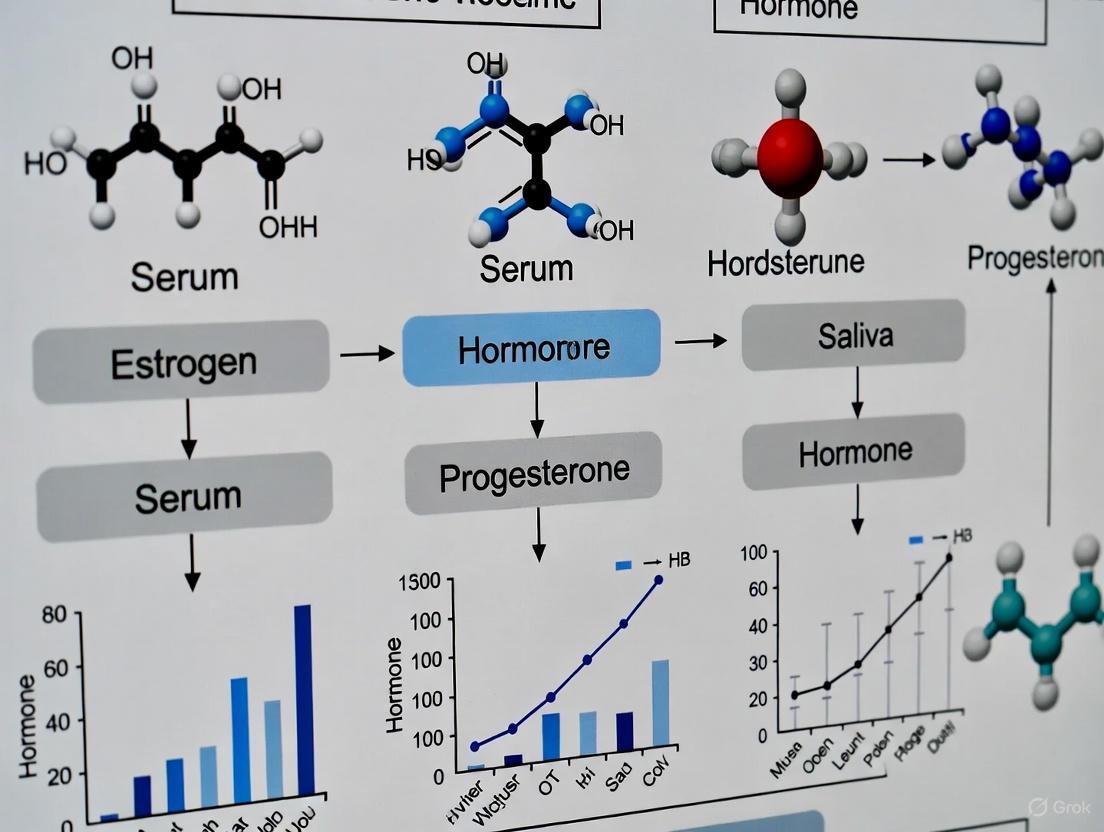
This article provides a comprehensive, evidence-based analysis of serum and saliva hormone testing methodologies for researchers and drug development professionals engaged in clinical phase verification.
Serum vs. Saliva Hormone Testing: A Scientific Guide for Phase Verification in Clinical Research
Abstract
This article provides a comprehensive, evidence-based analysis of serum and saliva hormone testing methodologies for researchers and drug development professionals engaged in clinical phase verification. It explores the foundational science behind each medium, detailing the measurement of total versus bioavailable hormones and the implications for data interpretation. The content covers practical methodological applications, critical troubleshooting for pre-analytical variables, and a comparative validation of performance metrics using advanced techniques like LC-MS/MS. Aimed at optimizing protocol design, this review synthesizes key decision-making criteria to enhance the accuracy and reliability of endocrine assessments in clinical trials.
The Biochemical Basis: Understanding Serum and Saliva as Diagnostic Matrices
The choice between serum and saliva as a sample matrix for hormone analysis represents a fundamental decision that directly influences the biological interpretation of research data. Serum hormone measurements have long been the conventional standard in clinical and research settings, providing data on total hormone concentrations circulating in the bloodstream. In contrast, salivary hormone analysis has emerged as a robust methodological alternative that specifically quantifies the bioavailable hormone fraction that is biologically active and capable of entering tissues [1]. This distinction is critical for researchers investigating hormone-action relationships, as these two approaches measure fundamentally different physiological pools with varying clinical relevances.
The physiological basis for this difference lies in the transport mechanisms of steroid hormones in circulation. Approximately 95-99% of steroid hormones in serum are bound to carrier proteins such as sex hormone-binding globulin (SHBG) and albumin [2] [1]. The tightly bound fraction (primarily to SHBG) is considered biologically inactive, while the weakly bound (to albumin) and completely unbound fractions constitute the bioavailable pool that can freely diffuse across capillary walls and cellular membranes, including those of the salivary glands [1]. Saliva collection therefore provides a non-invasive method to sample the hormone fraction that is physiologically active at the tissue level, offering distinct advantages for specific research applications.
Quantitative Data Comparison
Data from comparative studies reveal consistent relationships between serum and salivary hormone measurements across different populations and hormones. The following tables summarize key quantitative findings from recent research.
Table 1: Comparative Analytical Performance of Serum vs. Saliva Testing
| Parameter | Serum Testing | Saliva Testing | Research Implications |
|---|---|---|---|
| Hormone Fraction Measured | Total hormones (free + protein-bound) [1] | Free, bioavailable hormones only [2] [1] | Saliva reflects biologically active concentration |
| Typical Correlation Between Matrices | Reference standard | Variable: r=0.435-0.479 for testosterone in CKD [3] | Matrix selection depends on research question |
| Diagnostic Performance (Testosterone Deficiency) | Reference standard | 73.9% sensitivity, 77.8% specificity (SalFT ≤60.6 pg/mL) [3] | Saliva offers acceptable screening performance |
| Sample Collection Stress | High (venipuncture) [1] | Minimal (non-invasive) [1] | Saliva preferable for stress-sensitive hormones |
Table 2: Reference Ranges for Testosterone in Different Matrices (Young Men, Mediterranean Population) [4]
| Testosterone Fraction | Mean ± SD (nmol/L) | Reference Range (nmol/L) | Conversion to pg/mL |
|---|---|---|---|
| Serum Total Testosterone (TT) | 19 ± 5.5 | 9.7 - 33.3 | 2796 - 9599 pg/mL |
| Calculated Free Testosterone (CFT) | 0.38 | 0.22 - 0.79 | 63.4 - 227.5 pg/mL |
| Salivary Testosterone (ST) | 0.35 | 0.19 - 0.68 | 54.7 - 195.8 pg/mL |
Experimental Protocols for Method Comparison
Protocol 1: Simultaneous Serum and Saliva Collection for Testosterone Assessment
Objective: To validate the correlation between serum-calculated free testosterone and salivary free testosterone measurements in a clinical population [3] [5].
Materials:
- Serum separator tubes
- Saliva collection tubes (glass recommended)
- Centrifuge capable of 3000× g
- Freezer (-20°C for saliva, -70°C for serum)
- ELISA kit for salivary testosterone (e.g., DRG, Marburg, Germany)
- Immunoassay platform for serum total testosterone, SHBG, and albumin
Procedure:
- Participant Preparation: Instruct participants to avoid eating, drinking, chewing gum, or brushing teeth for 30 minutes before sample collection [3].
- Sample Timing: Collect all samples in the morning (7:00-11:00 a.m.) to account for diurnal variation [3].
- Simultaneous Collection:
- Draw venous blood into serum separator tubes
- Collect at least 0.5 mL saliva by direct spitting into glass collection tubes [3]
- Sample Processing:
- Centrifuge blood samples at 3000× g for 10 minutes
- Aliquot serum and freeze at -70°C until analysis
- Freeze saliva samples at -20°C until analysis [3]
- Hormone Analysis:
- Analyze salivary free testosterone using validated ELISA
- Analyze serum for total testosterone, SHBG, and albumin
- Calculate free testosterone using the ISSAM calculator (Vermeulen equation) [3]
Data Analysis:
- Perform correlation analysis (Pearson or Spearman) between salivary testosterone and calculated free testosterone
- Establish receiver operating characteristic (ROC) curves to determine diagnostic cut-off points for salivary testosterone
Protocol 2: Menstrual Cycle Mapping with Salivary Progesterone
Objective: To track the bioavailable progesterone dynamics across the menstrual cycle and compare with serum total progesterone [6].
Materials:
- Saliva collection devices (e.g., Salivette)
- Venous blood collection equipment
- Progesterone enzyme immunoassay kits validated for saliva
- Serum progesterone immunoassay
- Liquid chromatography-tandem mass spectrometry (LC-MS/MS) for validation (optional)
Procedure:
- Cycle Phase Determination: Determine menstrual cycle phase through participant tracking and luteinizing hormone surge detection.
- Stratified Sampling: Collect paired serum and saliva samples during:
- Mid-follicular phase (days 5-8)
- Mid-luteal phase (days 19-22) [6]
- Sample Collection:
- Collect saliva samples upon waking before any activity
- Draw concurrent venous blood samples
- Hormone Analysis:
- Analyze salivary progesterone using enzyme immunoassay
- Analyze serum total progesterone using standard clinical immunoassay
- Calculation: Compute apparent uptake fraction (UF) = PFree-SAL/PTotal-VEN [6]
Data Interpretation:
- Expected follicular phase UF: ~8.1%
- Expected luteal phase UF: ~2.3% [6]
- High correlation between salivary free progesterone and serum total progesterone expected (Spearman's rho >0.85) [6]
Signaling Pathways and Physiological Relationships
Figure 1: Physiological Relationship Between Serum and Salivary Hormone Fractions. The diagram illustrates how only the free, bioavailable fraction of serum hormones passively diffuses into saliva, making salivary measurement a direct indicator of biologically active hormones.
Research Reagent Solutions
Table 3: Essential Research Materials for Serum vs. Saliva Hormone Studies
| Reagent/Material | Function/Application | Specification Considerations |
|---|---|---|
| Saliva Collection Devices | Non-invasive sample collection | Glass tubes recommended; avoid interferents [3] |
| ELISA Kits for Salivary Hormones | Quantification of hormones in saliva | Must be validated for saliva matrix [3] |
| Serum Separator Tubes | Blood collection and serum separation | Standard clinical quality |
| Immunoassay Platforms | Serum total hormone measurement | Automated platforms (e.g., Roche Elecsys) [3] |
| LC-MS/MS Systems | Reference method validation | Gold standard for hormone quantification [1] |
| SHBG & Albumin Assays | Free testosterone calculation | Required for Vermeulen equation [3] |
Technical Considerations and Methodological Challenges
Pre-Analytical Variables
Significant differences exist in sample handling requirements between matrices. Saliva samples demonstrate greater stability than serum, with the ability to be frozen at -20°C without significant hormone degradation [1]. This facilitates easier transport and storage for multi-center trials or remote data collection. Serum, however, requires more stringent processing with rapid centrifugation and freezing at -70°C for optimal preservation [3].
The stress of venipuncture itself represents a notable confounding variable for stress-responsive hormones like cortisol [1]. Saliva collection eliminates this iatrogenic stress effect, providing more physiologically representative measurements for studies investigating stress axis function.
Population-Specific Considerations
Research findings indicate that correlations between serum and salivary measurements may vary by population. A 2025 study of men with chronic kidney disease demonstrated moderate correlations (r=0.435-0.479) between salivary and calculated free testosterone [3]. However, a 2009 study in postmenopausal women showed poor correlation (r=0.170-0.261) between salivary testosterone and serum testosterone subtypes [7], highlighting the importance of population-specific validation.
For menstrual cycle research, the apparent uptake fraction of progesterone from serum to saliva differs significantly between follicular and luteal phases (8.1% vs. 2.3%) [6], requiring phase-adjusted interpretation of salivary data.
The fundamental difference between total serum hormones and bioavailable saliva fractions dictates distinct research applications for each matrix. Serum testing remains essential when clinical decision thresholds are based on total hormone concentrations or when assessing protein-bound hormone pools. Saliva testing offers superior utility for research investigating tissue hormone availability, frequent sampling protocols, and stress hormone dynamics without collection artifact.
Future methodological development should focus on establishing population and disorder-specific reference ranges for salivary hormones, standardizing collection protocols across research sites, and further validating salivary measurements against clinical endpoints across diverse populations.
The validity of hormonal phase verification in clinical and research settings hinges on a fundamental understanding of how hormones traverse from the bloodstream into saliva. This passive diffusion process is not merely a filter but a selective biological mechanism that determines which hormone fractions become measurable in salivary diagnostics. Comprehending this pathway is essential for researchers and drug development professionals to accurately interpret salivary hormone data, particularly for menstrual cycle tracking, stress response evaluation, and endocrine disorder assessment [1]. Unlike serum testing which measures total hormone concentrations (both bound and unbound), saliva testing exclusively captures the bioavailable, unbound fraction of hormones that are biologically active and available to tissues [8] [1]. This crucial distinction positions salivary testing as a potentially more relevant method for assessing physiologically active hormone levels, though it necessitates thorough understanding of the underlying mechanisms.
Fundamental Mechanisms of Hormone Diffusion
Passive Diffusion of Lipophilic Steroid Hormones
The primary pathway for steroid hormone entry into saliva relies on passive diffusion driven by concentration gradients. Steroid hormones, derived from cholesterol, are inherently lipophilic (fat-soluble) and hydrophobic (water-repelling) [9]. This chemical property enables them to traverse the lipid-rich cell membranes of salivary gland acinar cells.
The process follows these physiological principles:
- Lipid Solubility: The non-polar nature of steroid hormones allows dissolution through the phospholipid bilayers of cells forming the blood-saliva barrier [1].
- Concentration Gradient: Hormones move from areas of higher concentration (bloodstream) to areas of lower concentration (salivary ducts) without energy expenditure [8].
- Selective Permeability: Only unbound hormones can diffuse freely, as protein-bound hormones are too large and hydrophilic to cross cellular membranes [8] [1].
This diffusion mechanism explains why saliva contains only the biologically active fraction of hormones that are free to interact with cellular receptors throughout the body [1].
Enzymatic Conversion in Salivary Glands
For certain hormones, particularly cortisol, an additional enzymatic process further modifies the diffusion mechanism. The salivary glands contain the enzyme 11-β-hydroxysteroid dehydrogenase type 2 (11-β-HSD2), which converts cortisol to cortisone during passage into saliva [10].
This conversion has significant implications for testing:
- Cortisone as a Proxy: Salivary cortisone measurements more accurately reflect serum free cortisol levels because cortisone demonstrates a more linear correlation with serum concentrations [10].
- Reduced Interference: Salivary cortisone measurement is less affected by confounding factors such as topical cortisol preparations or blood contamination [10].
- Stability: Cortisone may offer analytical advantages in certain assay platforms due to its molecular stability [10].
The following diagram illustrates the complete pathway of hormone transfer from blood to saliva:
Figure 1: Complete Pathway of Hormone Transfer from Blood to Saliva
Quantitative Relationships Between Blood and Saliva Hormone Concentrations
The diffusion process results in predictable mathematical relationships between serum and salivary hormone concentrations. Understanding these ratios is essential for researchers interpreting salivary hormone levels and extrapolating them to systemic concentrations.
Table 1: Blood-to-Saliva Hormone Concentration Ratios and Characteristics
| Hormone | Approximate Serum:Saliva Ratio | Free Fraction in Serum | Key Diagnostic Applications |
|---|---|---|---|
| Cortisol | ~1:1 (after conversion to cortisone) [10] | 5-10% [11] | HPA axis assessment, Cushing's syndrome, adrenal fatigue [8] [10] |
| Testosterone | Varies by assay | ~2% (men) [1] | Androgen status, PCOS, hypogonadism [8] |
| Estradiol | 50:1 to 100:1 [12] | 1-2% [12] | Menstrual cycle tracking, fertility monitoring [13] [12] |
| Progesterone | 20:1 to 50:1 [14] | 2-5% [14] | Luteal phase assessment, ovulation confirmation [13] |
| DHEA | Varies by assay | ~4% [1] | Adrenal function, aging studies [8] |
Salivary hormone concentrations are typically 1-2% of serum levels for most steroid hormones, reflecting the free fraction circulating in blood [12]. This relationship varies by specific hormone due to differences in protein-binding affinity and metabolic clearance rates. The notably different ratio for cortisol stems from the enzymatic conversion to cortisone during salivary transfer [10].
Experimental Protocols for Studying Hormone Transfer Mechanisms
Parallel Serum and Saliva Sampling Protocol
Objective: To establish correlation coefficients between serum and salivary hormone levels across physiological states.
Materials:
- Serum separation tubes
- Approved saliva collection devices (e.g., Salivette with polyester/polypropylene inserts)
- Timer
- Cold storage facilities (-20°C or -80°C)
- LC-MS/MS system for hormone analysis [15]
Procedure:
- Participant Preparation: Instruct participants to avoid food, caffeine, and tooth brushing for at least 1 hour prior to sampling to prevent blood contamination and interference [13].
- Parallel Sampling: Collect matched serum and saliva samples simultaneously at predetermined intervals (e.g., every 30-60 minutes for cortisol rhythm studies) [11].
- Saliva Collection: Use the passive drool method or validated collection devices. Avoid cotton-based materials for steroid hormones other than cortisol due to plant sterol interference [13].
- Sample Processing: Centrifuge saliva samples at 1500-3000 × g for 15 minutes. Aliquot supernatant to avoid repeated freeze-thaw cycles [13].
- Storage: Freeze samples at -20°C or -80°C within 24 hours of collection. For long-term storage (>1 month), maintain at -80°C [13].
- Analysis: Utilize LC-MS/MS for highest accuracy, particularly for low-concentration hormones like estradiol [15].
Data Analysis: Calculate correlation coefficients (Pearson's r) between matched serum-free and salivary hormone concentrations. Perform linear regression to establish conversion factors.
Enzymatic Conversion Assessment Protocol
Objective: To quantify the conversion rate of cortisol to cortisone during salivary transfer.
Materials:
- Stable isotope-labeled cortisol standards
- Specific 11-β-HSD2 inhibitors
- LC-MS/MS with electrospray positive ionization [10]
- Salivary gland cell culture model
Procedure:
- Tracer Administration: Introduce stable isotope-labeled cortisol intravenously to human subjects or in vitro salivary gland models.
- Serial Sampling: Collect simultaneous blood and saliva samples at frequent intervals (5-15 minutes) post-administration.
- Inhibition Studies: Apply specific 11-β-HSD2 inhibitors to salivary gland models to quantify conversion blockade.
- LC-MS/MS Analysis: Measure both cortisol and cortisone concentrations in all samples using validated mass spectrometry methods [10].
- Kinetic Modeling: Calculate conversion rates using compartmental modeling approaches.
Data Analysis: Determine cortisol-to-cortisone conversion ratios and establish clearance kinetics for the salivary gland enzyme system.
The following experimental workflow diagram outlines the key steps in validating saliva-based hormone testing:
Figure 2: Experimental Workflow for Validating Saliva-Based Hormone Testing
Research Reagent Solutions and Essential Materials
Table 2: Essential Research Materials for Hormone Transfer Studies
| Category | Specific Products/Methods | Research Application | Key Considerations |
|---|---|---|---|
| Saliva Collection Devices | Salivette (polyester/polypropylene), Passive drool kits | Sample acquisition | Avoid cotton for non-cortisol steroids; polypropylene tubes minimize hormone adsorption [13] |
| Analytical Platforms | LC-MS/MS, ELISA, Immunoassays | Hormone quantification | LC-MS/MS shows superior specificity for low-concentration hormones like estradiol [15] [12] |
| Sample Storage | Polypropylene cryovials, -80°C freezers | Sample preservation | Samples stable at -20°C for ≥1 year; avoid repeated freeze-thaw cycles [13] |
| Enzyme Assays | 11-β-HSD2 activity kits, Stable isotope labels | Enzymatic conversion studies | Enable precise tracking of cortisol metabolism in salivary glands [10] |
| Reference Materials | Certified reference standards, Quality control pools | Assay validation | Essential for establishing method accuracy and inter-laboratory comparability [15] |
Implications for Phase Verification Research
The diffusion mechanisms governing hormone transfer from blood to saliva have profound implications for phase verification studies, particularly in menstrual cycle research and circadian rhythm assessment. The non-invasive nature of saliva collection enables frequent sampling that can capture dynamic hormone fluctuations without the stress response associated with venipuncture, which is particularly crucial for cortisol research [8] [1].
However, methodological considerations are paramount:
- Assay Selection: Immunoassays for salivary estradiol demonstrate subpar validity for predicting menstrual cycle phase compared to serum measures or salivary LC-MS/MS, with significantly lower sensitivity to cyclical fluctuations [12].
- Temporal Resolution: The time lag between serum fluctuations and salivary appearance varies by hormone and must be characterized for each research application [11].
- Individual Variability: Factors such as salivary flow rate, medication use, and oral health can influence hormone transfer efficiency and must be controlled in study design [13].
For cortisol research, salivary cortisone measurement has demonstrated 94.1% agreement with serum cortisol in dexamethasone suppression tests, with 100% sensitivity for detecting potential Cushing's syndrome, highlighting its clinical utility [10]. This positions salivary testing as a viable alternative to serum measurements for specific diagnostic applications when methodologies are appropriately validated.
Understanding the precise mechanisms of hormone diffusion from blood to saliva provides the foundational knowledge required to design valid phase verification studies and accurately interpret salivary hormone data in both research and clinical contexts.
The accurate verification of endocrine phases—such as the menstrual cycle, circadian rhythm, and pathological endocrine statuses—is fundamental to biomedical research and drug development. While serum testing has historically been the analytical standard, saliva is emerging as a robust alternative matrix that offers distinct advantages for specific research applications. Saliva measures the bioavailable, free fraction of hormones that diffuse passively from blood capillaries into salivary glands, providing a more accurate reflection of hormonally active compounds available to tissues than total serum hormone levels [1]. This document presents application notes and experimental protocols for using salivary cortisol, progesterone, testosterone, and estradiol in phase verification research, with specific consideration of the methodological rigor required for generating reliable data.
Hormone-Specific Analytical Considerations
Comparative Analysis of Serum vs. Salivary Hormone Measurement
Table 1: Key Characteristics of Hormones in Serum versus Saliva Testing
| Hormone | Serum Measurement | Salivary Measurement | Serum-Saliva Correlation | Primary Research Applications |
|---|---|---|---|---|
| Cortisol | Total cortisol (free + protein-bound) | Free, bioavailable fraction | High (r ~0.90) [16] | Circadian rhythm analysis, stress response, HPA axis function |
| Progesterone | Total progesterone (PTotal‐VEN) | Free progesterone (PFree‐SAL) | High in luteal phase (rho=0.858) [6] | Menstrual cycle staging, luteal phase confirmation |
| Testosterone | Total testosterone (free + SHBG-bound) | Free, bioavailable fraction | High in males (r=0.96); Modest in females [17] | Hypogonadism detection, hyperandrogenic states, CKD monitoring [3] |
| Estradiol (E2) | Total estradiol (free + protein-bound) | Free fraction | Variable; requires high-sensitivity methods [18] | Menstrual cycle tracking, fertility window detection |
Methodological Performance Across Assay Platforms
Table 2: Analytical Method Comparison for Hormone Quantification
| Analytical Method | Sensitivity Requirements | Key Advantages | Key Limitations | Optimal Application |
|---|---|---|---|---|
| Immunoassay (ELISA) | Moderate (pg/mL range) | Cost-effective, high-throughput, established protocols [13] | Cross-reactivity issues, poor low-end sensitivity for E2 [15] | High-volume screening where ultimate sensitivity not required |
| Liquid Chromatography-Tandem Mass Spectrometry (LC-MS/MS) | High (sub-pg/mL for E2) [18] | High specificity and sensitivity, gold standard for low-concentration analytes [15] | Higher cost, technical expertise required, longer processing time | Low-concentration analytes (salivary E2), reference method validation |
| Lab-on-a-Chip Sensors | Moderate | Rapid results, point-of-care potential, smartphone integration [1] | Emerging technology, limited multi-analyte capacity | Field studies, real-time monitoring |
Recent comparative studies demonstrate that LC-MS/MS shows expected differences in estradiol and testosterone in women, whereas ELISA performed poorly for measuring salivary estradiol and progesterone, with much lower validity than testosterone [15]. Machine-learning classification models revealed better results with LC-MS/MS, underscoring its promise for improving the validity of sex steroid profiling in healthy adults [15].
Experimental Protocols
Sample Collection and Handling Protocol
A. Pre-collection Considerations:
- Timing: Align collection with hormonal rhythms (e.g., cortisol awakening response, menstrual cycle phase) [13]
- Participant Preparation: Avoid food, drink, chewing gum, or tooth brushing for at least 30 minutes before sampling [3]
- Medication/Interference Documentation: Record use of hormone therapies, particularly troche or sublingual formulations that can cause false elevations in salivary levels [1]
B. Collection Materials:
- Use polypropylene collection tubes; avoid polyethylene tubes which may adsorb steroids [13]
- For passive drool, use validated collection devices compatible with target analytes
- Avoid cotton-based salivettes for steroid hormones other than cortisol due to plant sterol contamination [13]
C. Collection Procedure:
- Participants should rinse mouth with water 10 minutes before sample collection
- Collect at least 0.5-1.0 mL saliva via passive drool into appropriate collection device [3] [18]
- For cortisol diurnal rhythm assessment, collect multiple samples throughout day (e.g., upon awakening, 30 minutes post-awakening, noon, 4 PM, bedtime) [1]
- For menstrual cycle tracking, collect daily samples throughout complete cycle
D. Sample Processing and Storage:
- Centrifuge samples at 3500g for 10-15 minutes to separate aqueous phase from mucins and debris
- Aliquot supernatant into polypropylene cryovials
- Store at -20°C for short-term (up to 1 year) or -80°C for long-term storage [13]
- Avoid repeated freeze-thaw cycles (limit to ≤3 cycles) [13]
Analytical Protocol: LC-MS/MS for Salivary Estradiol
A. Principle: Quantification of salivary estradiol using liquid chromatography-tandem mass spectrometry with chemical derivatization to enhance sensitivity [18]
B. Sample Preparation:
- Pipette 1 mL of saliva into polypropylene tube
- Add internal standard (E2-d3)
- Perform solid-phase extraction using appropriate sorbent (e.g., Strata-X)
- Derivatize with 1,2-dimethylimidazole-5-sulfonyl-chloride (5-DMIS-Cl) to enhance sensitivity
- Reconstitute in mobile phase for injection
C. LC-MS/MS Conditions:
- Chromatography: Reverse-phase C18 column (100 × 2.1 mm, 1.8 μm)
- Mobile Phase: Water and methanol, both with 0.1% formic acid
- Gradient: 5% to 95% methanol over 10 minutes
- Flow Rate: 0.3 mL/min
- Ionization: Positive electrospray ionization (ESI+)
- MRM Transitions: m/z 504→367 for E2-5-DMIS [18]
D. Validation Parameters:
- Linearity: 0.5-50 pg/mL (r²>0.99)
- LOD: 0.1 pg/mL
- LOQ: 0.5 pg/mL
- Precision: CV <15% [18]
Analytical Protocol: ELISA for Salivary Testosterone
A. Principle: Competitive immunoassay where testosterone in samples competes with testosterone-enzyme conjugate for antibody binding sites on microtiter plate [17]
B. Procedure:
- Pipette 25 μL of standards, controls, and samples into appropriate wells
- Add testosterone-enzyme conjugate to all wells
- Incubate for 60 minutes at room temperature with shaking
- Wash plate 4 times to remove unbound components
- Add substrate (tetramethylbenzidine) and incubate for 30 minutes
- Stop reaction with acidic solution
- Read optical density at 450 nm within 30 minutes
C. Calculation:
- Generate standard curve using log transformation of standard concentrations versus B/B0%
- Calculate sample concentrations from standard curve
- Apply dilution factors as necessary
D. Performance Characteristics:
- Assay Range: 6.1-600 pg/mL
- Sensitivity: 1.0 pg/mL
- Intra-assay CV: <10%
- Inter-assay CV: <15% [17]
Signaling Pathways and Hormone Dynamics
Figure 1: Hormone Regulation and Measurement Pathways
Research Reagent Solutions
Table 3: Essential Research Materials for Salivary Hormone Analysis
| Reagent/Material | Function/Application | Technical Considerations | Example Specifications |
|---|---|---|---|
| Polypropylene Collection Tubes | Sample collection and storage | Prevents steroid adsorption; preferred over polyethylene [13] | 2-5 mL capacity, DNA/RNA-free |
| Solid-Phase Extraction Cartridges | Sample clean-up and concentration prior to LC-MS/MS | Strata-X, HLB, or C18 chemistries appropriate for steroids [16] | 30-60 mg sorbent bed mass |
| Derivatization Reagents | Enhancing detection sensitivity for LC-MS/MS | 5-DMIS-Cl provides superior sensitivity for estradiol vs. dansyl chloride [18] | 5-DMIS-Cl for phenolic steroids |
| ELISA Kits (Saliva-Validated) | Immunoassay quantification | Must be validated specifically for saliva matrix [17] | Sensitivity: 1 pg/mL for testosterone [17] |
| Isotope-Labeled Internal Standards | Quantification accuracy in LC-MS/MS | Corrects for matrix effects and recovery variability | E2-d3 for estradiol quantification [18] |
| Quality Control Materials | Assay performance monitoring | Pooled saliva samples at low, medium, high concentrations | Store at -80°C in single-use aliquots |
Application-Specific Implementation
Menstrual Cycle Phase Verification
For menstrual cycle phase verification, recent research indicates that a single salivary hormone assessment does not significantly improve prediction of menstrual cycle phases when adequate counting methods or urinary ovulation kits are available [19]. However, salivary hormone assessment does significantly improve prediction accuracy when more than one time-point is assessed, and values can be referenced against each other [19]. The optimal strategy involves:
- Multiple Sampling Points: Collect samples on days near transitions between cycle phases when counting methods do not allow definitive classification [19]
- Combined Hormone Analysis: Both estradiol and progesterone provide complementary information for phase verification [19]
- Expected Patterns: Salivary progesterone shows significantly higher concentrations in the luteal phase (median UF=2.3%) compared to the follicular phase (median UF=8.1%) [6]
Circadian Rhythm Assessment (Cortisol)
Salivary cortisol assessment enables non-invasive tracking of the diurnal cortisol pattern, which would be impractical with serial blood draws [1]. Key protocols include:
- Sampling Schedule: Collect upon awakening, 30 minutes post-awakening, noon, 4 PM, and bedtime
- Stability Considerations: Samples stable at -20°C for up to one year [13]
- Analytical Sensitivity: Required detection in the 1-30 ng/mL range for adults [16]
Clinical Population Monitoring
Salivary hormone testing offers particular advantages in clinical populations where repeated blood draws are challenging:
- Chronic Kidney Disease: Salivary testosterone (SalFT) shows positive correlation with calculated free testosterone (cFT) in CKD patients (r=0.435 in CKD, r=0.479 in hemodialysis), with a cut-off value of SalFT ≤60.6 pg/mL showing 73.9% sensitivity and 77.8% specificity for testosterone deficiency recognition [3]
- Stress Disorders: Salivary cortisol enables assessment of HPA axis dysfunction without the confounding effect of venipuncture stress [16]
Salivary hormone testing represents a methodologically sound approach for phase verification in research settings when appropriate analytical methods and collection protocols are implemented. The selection between serum and saliva testing matrices should be guided by the specific research question, with salivary measures providing superior assessment of bioavailable hormone fractions and enabling sampling frequencies impractical with serum. Methodological rigor remains paramount, with LC-MS/MS emerging as the preferred platform for low-concentration analytes like estradiol, while validated ELISA methods remain appropriate for higher-concentration hormones like testosterone and cortisol. When implemented with attention to the detailed protocols outlined in this document, salivary hormone assessment provides a valuable tool for researchers investigating endocrine dynamics across diverse physiological and clinical contexts.
Hormone assessment is fundamental to phase verification research in endocrinology, yet a critical methodological choice exists between capturing momentary fluctuations and establishing long-term averages. Serum and saliva sampling offer distinct temporal windows into the endocrine system. Serum measurements, often considered the gold standard in clinical settings, provide a systemic snapshot at a single point in time [14]. In contrast, saliva reflects the bioavailable, unbound fraction of hormones, which are biologically active and freely available to target tissues [1]. This application note details the experimental protocols and analytical considerations for leveraging these two matrices to understand hormonal temporal dynamics, enabling researchers to select the optimal approach for their specific phase verification objectives.
Table 1: Key characteristics of serum and saliva for hormone assessment.
| Feature | Saliva Testing | Blood (Serum) Testing |
|---|---|---|
| Hormone Measurement | Free, unbound (bioavailable) hormones [1] | Total hormone levels (bound + free) [1] |
| Temporal Resolution | High (ideal for capturing diurnal and cyclical fluctuations) [1] | Low (single-point snapshot, impractical for frequent sampling) [1] |
| Representation of Long-Term Levels | Moderate; requires averaging multiple samples [20] | Not applicable for long-term assessment with single samples |
| Collection Method | Non-invasive, stress-free, suitable for home collection [1] | Invasive venipuncture, requires a clinical setting [1] [21] |
| Ideal For | Tracking circadian rhythms, menstrual cycle dynamics, stress response curves [1] | Confirming single-point clinical values, measuring hormones not reliably detected in saliva [1] |
| Stability & Logistics | Samples are stable; can be frozen and transported [13] | Requires careful handling and rapid processing [22] |
Table 2: Hormone stability and correlation between matrices (Representative Data).
| Hormone | Stability in Saliva (across cycles) | Stability in Hair (across cycles) | Saliva-Hair Correlation | Notes |
|---|---|---|---|---|
| Progesterone | Moderate [20] | High (more stable than saliva) [20] | Moderate correlation [20] | Levels fluctuate strongly across the ovulatory cycle [20]. |
| Testosterone | Moderately stable [20] | Moderately stable [20] | Moderate correlation [20] | Fluctuates across the ovulatory cycle [20]. |
| Cortisol | Moderately stable [20] | Moderately stable [20] | Weak correlation [20] | Saliva reflects moment-to-minute fluctuations; hair reflects long-term average [20]. |
Experimental Protocols
Protocol 1: Dense Salivary Sampling for Momentary Fluctuation Analysis
This protocol is designed to capture the dynamic, short-term fluctuations of hormones such as cortisol (diurnal rhythm) or estradiol and progesterone across a menstrual cycle.
1. Materials and Reagents
- Research Reagent Solutions & Essential Materials:
- Passive Drool Collection Kit: Includes polypropylene straws and cryogenic vials. Cotton-based swabs must be avoided for steroid hormones due to interference [13].
- Polypropylene Collection Tubes: Recommended to minimize analyte adsorption; polyethylene should be avoided [13].
- Validated Salivary Immunoassay Kits: Ultrasensitive ELISA kits, cross-validated against LC-MS/MS where possible, for hormones like estradiol, progesterone, testosterone, and cortisol [15] [13].
- Liquid Chromatography-Tandem Mass Spectrometry (LC-MS/MS): The gold-standard method for salivary sex hormone quantification, offering superior validity compared to immunoassays [15].
- Freezer (-20°C or -70°C): For long-term storage of samples.
2. Procedure 1. Participant Preparation: Instruct participants to avoid eating, drinking, or smoking for at least one hour prior to sample collection. Vigorous tooth-brushing should be avoided for at least 30 minutes to prevent blood contamination [13]. 2. Sample Collection (Passive Drool): - Participants should be seated quietly. - Allow saliva to pool in the mouth and then expectorate through a straw directly into a pre-chilled polypropylene tube. - A collection time of 30-90 seconds is typical [22]. - For menstrual cycle tracking, daily collection at a consistent time (e.g., morning) is recommended [13]. 3. Sample Storage: Centrifuge samples to precipitate mucins and other particulates if required by the assay. Aliquot the clear supernatant and store at -20°C or -70°C until analysis. 4. Hormone Analysis: - Perform analysis using validated ultrasensitive ELISA or, preferably, LC-MS/MS [15]. - Adhere to quality control measures: intra-assay coefficient of variation (CV) should be <10%, and inter-assay CV <15% [14] [13].
The following workflow diagram illustrates the dense salivary sampling protocol:
Protocol 2: Integrated Serum and Hair Sampling for a Comprehensive View
This protocol combines the high temporal resolution of serum with the long-term integrated measure provided by hair analysis, offering a multi-scale perspective on an individual's hormonal milieu.
1. Materials and Reagents
- Research Reagent Solutions & Essential Materials:
- Venipuncture Kit: Including tourniquet, vacutainer tubes (e.g., serum-separating tubes), and needles.
- Hair Sampling Kit: Surgical scissors and aluminum foil.
- LC-MS/MS System: Essential for the precise quantification of steroid hormones in both hair and saliva; considered the gold standard [20] [15].
- Solvents for Extraction: High-performance liquid chromatography (HPLC)-grade methanol for hormone extraction from hair.
2. Procedure 1. Serum Collection: - Collect blood via venipuncture by a trained phlebotomist. - Allow blood to clot and then centrifuge to separate serum. - Aliquot and freeze serum at -70°C until analysis. 2. Hair Collection: - Cut a pencil-width strand of hair from the posterior vertex of the scalp, as close to the scalp as possible. - Wrap the proximal (scalp-end) segment in aluminum foil and store at room temperature. - Section the hair based on growth rate (approximately 1 cm per month) to correspond to the timeframe of interest [20]. 3. Hormone Extraction and Analysis: - Hair Wash: Wash hair segments with HPLC-grade methanol to remove surface contaminants. - Hormone Extraction: Pulverize the hair and incubate in methanol to extract steroid hormones. - Analysis: Analyze both serum and hair extracts using LC-MS/MS for the highest level of accuracy and comparability [20].
The following workflow diagram illustrates the integrated serum and hair sampling protocol:
Methodological Decision Pathway
Choosing the correct sampling matrix and strategy is paramount for research validity. The following decision pathway provides a logical framework for researchers:
The choice between serum and saliva for hormone assessment is not a matter of superiority, but of temporal alignment with the research question. Saliva is unparalleled for capturing momentary fluctuations and short-term dynamics, such as diurnal cortisol patterns or precise peri-ovulatory hormone surges, due to its non-invasive nature and reflection of bioavailable hormone fractions [1]. However, researchers must be aware of methodological pitfalls, such as the poor performance of some immunoassays for salivary estradiol and progesterone compared to LC-MS/MS [15].
For establishing long-term averages or baseline phenotypes, hair sampling emerges as a robust complementary technique, showing higher stability for hormones like progesterone compared to averaged saliva samples [20]. Serum retains its critical role for validating single-point measures and for assessing hormones that are not reliably quantified in saliva.
In conclusion, phase verification research stands to gain significant depth from a multi-matrix approach. By strategically combining dense salivary sampling, selective serum validation, and long-term hair analysis, researchers can fully characterize the temporal dynamics of the endocrine system, from momentary fluctuations to long-term averages.
Protocol Design: Implementing Serum and Saliva Testing in Research Settings
Optimal Sample Collection Protocols for Serum and Saliva
In the field of biopharmaceutical research and diagnostic development, the choice of biological matrix is critical for data integrity. While serum has been the traditional gold standard for hormone testing, saliva is emerging as a robust alternative that provides unique advantages for specific research applications [1]. Serum provides total hormone concentration measurements, reflecting both protein-bound and free fractions circulating in the bloodstream. In contrast, saliva contains primarily the free, biologically active fraction of hormones, which more accurately reflects tissue availability and physiological activity [1] [23]. This fundamental difference makes saliva particularly valuable for phase verification research where understanding bioavailable hormone concentrations is essential for correlating biomarker levels with clinical endpoints.
The non-invasive nature of saliva collection facilitates more frequent sampling, enabling researchers to capture dynamic hormonal fluctuations without the stress-induced artifacts that can accompany blood collection [1]. This document establishes standardized protocols for both serum and saliva collection to ensure methodological rigor in comparative studies.
Comparative Analysis of Serum vs. Saliva
Table 1: Characteristics of Serum and Saliva as Diagnostic Matrices
| Characteristic | Serum | Saliva |
|---|---|---|
| Hormone Measurement | Total hormone levels (bound + free) | Free, bioavailable hormones only |
| Clinical Relevance | May show normal total levels while bioavailable hormone deficiencies exist | Correlates more closely with symptoms and tissue hormone activity |
| Ideal For | Thyroid hormones, prolactin, vitamin D | Cortisol, DHEA, melatonin, progesterone, testosterone, estradiol |
| Collection Method | Invasive (venipuncture) in clinical settings | Non-invasive, pain-free, suitable for home collection |
| Stress Impact | Needle stick can induce stress response, skewing cortisol results | Minimal stress, enabling accurate diurnal rhythm assessment |
| Cost & Accessibility | Typically more expensive, requires clinical visit | Generally cheaper, more accessible for frequent sampling |
| Sample Stability | Requires careful handling and rapid processing | Generally stable; can be frozen with minimal degradation |
Serum Collection Protocol
Materials and Equipment
- Blood collection tubes (serum separator tubes)
- Venipuncture kit (tourniquet, needle, holder)
- Centrifuge capable of 1600×g
- Aliquot tubes (polypropylene recommended)
- Freezer (-80°C) for long-term storage
- Transport cooler with ice packs
Step-by-Step Procedure
Participant Preparation: Confirm participant fasting status if required. Document any medications or supplements that might interfere with analyte measurements.
Sample Collection: Perform venipuncture using standard phlebotomy procedures. Collect blood into serum separator tubes according to established clinical protocols.
Clot Formation: Allow samples to stand vertically at room temperature for 30-60 minutes to complete clot formation.
Centrifugation: Centrifuge samples at 1600×g for 10 minutes at 4°C to separate serum from cellular components [24].
Aliquot Preparation: Transfer the supernatant serum to polypropylene aliquot tubes using sterile pipettes. Avoid disturbing the buffy coat during transfer.
Storage: Freeze aliquots at -80°C until analysis. Avoid repeated freeze-thaw cycles to maintain analyte integrity.
Saliva Collection Protocol
Pre-Collection Considerations
Participant Screening: Screen participants for oral health problems, recent dental work, or injuries, as blood contamination can significantly alter analyte levels [25]. Participants should not brush teeth, eat, or drink within 45 minutes prior to sample collection [25].
Timing Considerations: For hormones with diurnal variation (e.g., cortisol), collection timing is critical. Sample collection for cortisol should occur between 7:30 AM to 9:00 AM to capture peak levels, while other analytes may have different optimal collection windows [26].
Collection Methods Selection
Table 2: Saliva Collection Methods Comparison
| Method | Procedure | Advantages | Limitations | Optimal Use Cases |
|---|---|---|---|---|
| Passive Drooling | Allow saliva to pool in mouth floor and drain into tube | Considered gold standard; minimal stimulation; large volume | Requires participant cooperation | Hormone testing; proteomic studies |
| Salivette (Synthetic Swab) | Place swab in mouth for 1-2 minutes, then transfer to centrifuge tube | Convenient; standardized volume | Possible analyte retention with some swab materials | Cortisol collection; field studies |
| Spitting Method | Periodically spit accumulated saliva into collection tube | Simple; no specialized devices | Potential stimulation from spitting action | General biomarker analysis |
Step-by-Step Collection Procedure
Participant Preparation: Provide detailed instructions to participants. Ensure they have refrained from eating, drinking, smoking, or oral hygiene activities for at least 45 minutes prior to collection [25].
Collection Technique Selection: For hormone testing, passive drooling is recommended. Provide participants with a wide-mouth polypropylene collection tube and straw.
Sample Collection: Instruct participants to:
- Allow saliva to pool in the floor of the mouth
- Gently propel saliva through the straw into the collection tube
- Continue until required volume is collected (typically 2-5 mL)
- Record collection start and end times to calculate flow rate
Storage Temperature Considerations: If analysis cannot be performed immediately:
Centrifugation and Aliquoting: Centrifuge samples at 1000-1500×g for 10-15 minutes to separate debris. Transfer supernatant to polypropylene cryovials and store at -80°C for long-term preservation [25].
Specialized Processing Considerations
RNA Analysis from Saliva
For transcriptomic applications, RNA stability requires additional precautions:
- Add RNA stabilizers (e.g., RNAlater) immediately after collection to preserve RNA integrity [28]
- Use of QIAzol method can enable high-yield RNA isolation without additional stabilizers [27]
- Store samples at -80°C for long-term preservation of RNA [28]
Hormone-Specific Considerations
- For cortisol dynamics, collect multiple samples throughout the day to capture diurnal rhythm
- For sex hormone monitoring, consider menstrual cycle phase in premenopausal women
- For topical hormone therapy assessment, saliva more accurately reflects tissue delivery than serum [1]
Experimental Workflow for Method Comparison
The Researcher's Toolkit: Essential Materials
Table 3: Essential Research Reagents and Materials
| Item | Specification | Application | Rationale |
|---|---|---|---|
| Collection Tubes | Polypropylene | Saliva sample collection | Prevents analyte adsorption; compatible with multiple analytes |
| Serum Separator Tubes | Clot activator/gel barrier | Serum collection | Facilitates clean serum separation |
| RNAlater | RNA stabilization solution | Saliva for transcriptomics | Preserves RNA integrity during storage |
| Salivette Devices | Synthetic swab | Standardized saliva collection | Reduces variability; validated for cortisol |
| Cryogenic Vials | Polypropylene, sterile | Sample aliquoting | Maintains sample integrity at low temperatures |
Analytical Considerations
Method Validation
When implementing these protocols, researchers should:
- Conduct pilot studies to validate collection methods for specific analytes
- Establish intra-assay and inter-assay coefficients of variation
- Determine sample stability under various storage conditions
- Verify correlations between serum and saliva measurements for target analytes
Data Interpretation
Account for factors influencing analyte measurements:
- Flow rate correction: For hydrophilic analytes (DHEA-S, SIgA), express results as secretion rate (output per unit time) [25]
- Blood contamination: Visibly blood-contaminated saliva samples should be discarded [25]
- Demographic factors: Age and gender significantly impact salivary flow rate and composition [27]
Standardized collection protocols for serum and saliva are fundamental to generating reliable, reproducible data in phase verification research. While serum provides information about total hormone concentrations, saliva offers unique insights into biologically active fractions with the advantage of non-invasive collection. The protocols outlined herein provide researchers with comprehensive methodologies for optimizing sample integrity for both matrices, enabling robust comparisons in clinical research settings.
Accurate assessment of hormonal fluctuations is fundamental to phase verification research in endocrinology. The choice between serum and saliva as a testing medium dictates the required strategy for timing and frequency of sample collection. This application note provides a detailed protocol for researchers designing studies that require precise capture of both diurnal (daily) and cyclic (menstrual) hormone patterns, with a specific focus on the comparative advantages of salivary biospecimens.
Serum testing, measuring total hormone levels, has been the traditional gold standard [1]. However, for phase verification research aimed at understanding biologically active hormone activity at the tissue level, salivary testing offers a distinct advantage as it measures the free, unbound fraction of hormones that are bioavailable to target cells [1] [23] [29]. This non-invasive method facilitates the frequent sampling necessary to map dynamic hormone rhythms without inducing stress-related artifacts, which is particularly crucial for cortisol research [1].
Diurnal Hormone Assessment
The circadian rhythm of hormones like cortisol is a critical biomarker for adrenal function and overall HPA axis health. A single measurement can be misleading, as levels follow a predictable pattern throughout the day.
Key Hormones and Sampling Timepoints
Table 1: Diurnal Cortisol Assessment Protocol
| Timepoint | Target Hormone | Physiological Rationale | Sample Medium |
|---|---|---|---|
| Upon Waking (30 min post) | Cortisol | Captures the Cortisol Awakening Response (CAR), a distinct spike in levels. | Saliva [1] |
| Around Noon | Cortisol | Assesses the mid-day decline from the morning peak. | Saliva [1] |
| Late Afternoon (4-5 PM) | Cortisol | Measures the continued diurnal decline. | Saliva [1] |
| Before Bed | Cortisol | Establishes the nadir, critical for assessing rhythm amplitude. | Saliva [1] |
Experimental Protocol for Diurnal Profiling
- Participant Preparation: Instruct participants to avoid eating, drinking (except water), brushing teeth, or smoking for at least 30 minutes prior to each sample collection to prevent contamination [1].
- Sample Collection: Provide participants with pre-labeled salivettes or sterile cryovials. For saliva, passive drool or salivette collection is standard. If using serum, coordinate with a clinical phlebotomy team for timed draws, noting the significant increase in participant burden and potential stress-confounding [1].
- Sample Handling and Storage: Saliva samples can be stored in a standard refrigerator (2-8°C) for short periods (e.g., one week) or frozen (-20°C or lower) for long-term stability, as steroid hormones in saliva are generally stable [1]. Serum samples require centrifugation and typically need to be frozen if not analyzed immediately.
- Data Analysis: Plot hormone concentrations against time to visualize the diurnal curve. Calculate the area under the curve (AUC) and assess the slope of decline from peak to nadir. A flattened rhythm is a key indicator of HPA axis dysfunction.
Diagram 1: Diurnal hormone assessment workflow.
Cyclic (Menstrual) Hormone Assessment
The female menstrual cycle is characterized by complex, non-static hormone fluctuations [30]. Verifying phases (follicular, ovulatory, luteal) requires strategic timing to capture key hormonal events.
Key Hormones and Sampling Timepoints
Table 2: Menstrual Cycle Phase Verification Protocol
| Cycle Phase | Target Hormones | Rationale & Timing | Optimal Medium |
|---|---|---|---|
| Early Follicular | FSH, LH, Estradiol (E2) | Establishes a baseline. Sample on cycle days 3-5 [31]. | Serum, Saliva [31] |
| Late Follicular / Pre-Ovulatory | Estradiol (E2), LH | Captures E2 peak and the onset of the LH surge. Sample around days 11-13 of a 28-day cycle. | Serum, Saliva [30] |
| Mid-Luteal | Progesterone, Estradiol (E2) | Confirms ovulation and corpus luteum function. Sample ~7 days post-ovulation (e.g., day 21) [31]. | Saliva (superior for topical HRT monitoring) [1] [29] |
Experimental Protocol for Cyclic Profiling
- Cycle Day Determination: Day 1 of the menstrual cycle is defined as the first day of full menstrual bleeding.
- Participant Cohort: Recruit naturally cycling, premenopausal women. Document cycle length history and use of hormonal medications. A scoping review highlights that inconsistencies in phase definitions and a scarcity of reported hormone values make study comparisons challenging, underscoring the need for strict, pre-defined criteria [14].
- High-Frequency Mapping: For detailed cycle mapping (e.g., fertility or perimenopause research), daily saliva sampling is feasible and provides superior resolution of hormone fluctuations compared to the logistical impossibility of daily serum draws [1] [23].
- Ovulation Confirmation: Use the LH surge detected in urine or serum as a reference point for normalizing the timing of the luteal phase sample [14]. Urine tests for LH are a feasible method for at-home tracking in field settings [14].
- Data Interpretation: Plot hormone levels to visualize the estradiol peak, LH surge, and secondary rise in progesterone. The mid-luteal progesterone level is a key indicator of ovulatory function.
Diagram 2: Menstrual cycle phase assessment points.
Comparative Analysis: Serum vs. Saliva
The research question should guide the choice of biospecimen. The table below summarizes key methodological considerations for phase verification research.
Table 3: Serum vs. Saliva for Hormone Assessment
| Characteristic | Serum/Plasma | Saliva |
|---|---|---|
| Hormone Fraction Measured | Total (free + protein-bound) [1] | Free, bioavailable fraction [1] [23] |
| Clinical Correlation | Standard for diagnosing classical endocrine disorders [29] | Correlates with tissue uptake and bioactivity; may better reflect symptoms [1] |
| Ideal For | Thyroid hormones, prolactin, vitamin D [1] | Steroid hormones (cortisol, DHEA, E2, progesterone, testosterone), melatonin [1] |
| Diurnal Rhythm Assessment | Logistically difficult, stress of venipuncture may skew cortisol [1] | Ideal: Non-invasive, enables at-home collection for stress-free, high-frequency sampling [1] |
| Cyclic Rhythm Assessment | Snapshot-in-time; multiple clinic visits needed for mapping [30] | Ideal: Enables daily at-home collection for high-resolution cycle mapping [1] [23] |
| HRT Monitoring | Can underestimate tissue delivery from topical therapies [1] | Superior for assessing topical, transdermal, and vaginal hormone delivery [1] [29] |
The Scientist's Toolkit
Table 4: Essential Research Reagent Solutions
| Item | Function/Application |
|---|---|
| Ultrasensitive Saliva ELISA Kits | Quantifying low picogram-range concentrations of steroid hormones (e.g., cortisol, estradiol) in saliva with high sensitivity and specificity [1]. |
| Salivettes / Cryovials | Standardized collection devices for passive drool or saliva absorption via a cotton swab; some include preservatives for sample stability [1]. |
| LC-MS/MS Systems | Gold-standard for hormone assay validation; provides high-precision, multiplexed quantification of steroid hormone panels [1]. |
| Lab-on-a-Chip / PoC Biosensors | Emerging technology for rapid, point-of-care hormone detection (e.g., cortisol/DHEA); integrates microfluidics and smartphone connectivity [1]. |
| Urinary LH Dip-Sticks | A feasible and non-invasive method for participants to self-detect the LH surge at home, used to pinpoint ovulation for cycle phase verification [14]. |
Performance Comparison Across Hormones and Matrices
Liquid chromatography-tandem mass spectrometry (LC-MS/MS) has established a permanent place in clinical diagnostic laboratories, often demonstrating superior performance compared to immunoassays (IAs) for hormone quantification [32]. The following tables summarize key comparative data across different biological matrices.
Table 1: Method Comparison for Serum Hormone Analysis
| Analyte | LC-MS/MS vs. Immunoassay Findings | Clinical Implications |
|---|---|---|
| Testosterone [33] | Immunoassays overestimate concentrations <100 ng/dL (female/pediatric range) and underestimate >100 ng/dL. Cross-reactivity with other steroids is a major issue. | Critical for accurate assessment in females, pediatric populations, and prostate cancer patients on androgen deprivation therapy. |
| Aldosterone [34] | Chemiluminescence IAs (DiaSorin, iSYS, Auto Lumo) showed significantly higher results (p<0.0001) with biases from -69.3% to -49.2% vs. LC-MS/MS. | Different measures are not interchangeable; impacts diagnosis of primary aldosteronism. |
| 25-Hydroxyvitamin D [35] | LC-MS/MS showed smallest mean difference (+0.9%) to Standard Reference Materials. Mean bias of LIAISON and ADVIA immunoassays were +2.4 and +7.9 ng/mL, respectively. | LC-MS/MS provides more accurate assessment of vitamin D status, traceable to reference standards. |
Table 2: Method Comparison for Salivary and Urinary Hormone Analysis
| Analyte & Matrix | LC-MS/MS vs. Immunoassay Findings | Clinical Implications |
|---|---|---|
| Salivary Sex Hormones (Estradiol, Progesterone, Testosterone) [15] | Poor IA performance for estradiol and progesterone; testosterone showed a strong between-methods relationship. Machine-learning models revealed better results with LC-MS/MS. | LC-MS/MS improves validity of sex steroid profiling in healthy adults for brain-behavior-health research. |
| Salivary Cortisol [36] [37] | IAs consistently measure concentrations about 2.39-fold higher than LC-MS/MS. Correlation is robust, but IA has restricted accuracy <5 nmol/L, partly due to cross-reactivity with cortisone. | Both suitable for assessing dynamic HPA axis activity, but systematic bias precludes direct interchangeability of results. |
| Urinary Free Cortisol (UFC) [38] | Four new direct IAs showed strong correlation with LC-MS/MS (Spearman r=0.950-0.998) but with a proportional positive bias. All methods showed high diagnostic accuracy (AUC >0.95) for Cushing's syndrome. | Modern, extraction-free IAs offer a simpler, clinically accurate alternative for UFC, though method-specific cut-offs are needed. |
Detailed Experimental Protocols
Protocol 1: Salivary Sex Hormone Profiling by LC-MS/MS
This protocol is adapted from a comparative study of ELISA and LC-MS/MS for measuring estradiol, progesterone, and testosterone in saliva [15].
Sample Preparation:
- Collection: Collect saliva using passive drool into appropriate collection vials. Clarify samples by centrifugation immediately after collection.
- Storage: Store clarified supernatant at -80°C until analysis to preserve hormone integrity.
- Pre-processing: Thaw samples and subject to solid-phase extraction (SPE) to isolate and concentrate steroid hormones while removing salivary mucins and other interferents.
LC-MS/MS Analysis:
- Chromatography:
- Column: Use a reversed-phase C18 column.
- Mobile Phase: Employ a binary gradient system, typically water and methanol or acetonitrile, often with modifiers like 0.1% formic acid.
- Gradient: Optimize the gradient for clear separation of estradiol, progesterone, and testosterone within a run time of approximately 5-10 minutes.
- Mass Spectrometry:
- Ionization: Utilize electrospray ionization (ESI) in positive mode.
- Detection: Operate in multiple reaction monitoring (MRM) mode. Monitor specific precursor-to-product ion transitions for each hormone and their deuterated internal standards.
- Quantification: Use calibration curves generated from analyte standards in a surrogate matrix, with internal standardization for precise quantification.
Protocol 2: Urinary Free Cortisol by Direct Immunoassay vs. LC-MS/MS
This protocol is based on a study comparing four new direct immunoassays with LC-MS/MS for diagnosing Cushing's syndrome [38].
Sample Collection:
- Collect a 24-hour urine sample in a container without preservatives. Keep the collection jug cold during the process.
- Record the total 24-hour urine volume. Aliquot a representative sample and store frozen at -20°C or below until analysis.
Immunoassay Analysis (e.g., Roche Elecsys Cortisol III):
- Principle: Competitive electrochemiluminescence immunoassay.
- Procedure:
- Thaw and centrifuge urine samples.
- The assay is performed on an automated platform (e.g., Cobas e801) according to manufacturer's instructions. It uses a ruthenium-complex-labeled cortisol competitor and biotinylated cortisol-specific antibodies.
- The complex is captured onto streptavidin-coated microparticles and measured via chemiluminescence.
- Key Note: This is a direct assay, requiring no organic solvent extraction prior to analysis, simplifying the workflow.
LC-MS/MS Analysis (Reference Method):
- Sample Preparation:
- Dilute urine specimens 20-fold with pure water.
- To an aliquot of diluted sample, add an internal standard solution (e.g., cortisol-d4).
- Centrifuge to pellet any insoluble material.
- LC-MS/MS Conditions:
- Chromatography: Use a reversed-phase UPLC column (e.g., ACQUITY UPLC BEH C8). Employ a binary mobile phase (water and methanol) for gradient elution.
- Mass Spectrometry: Operate with positive electrospray ionization (ESI+) in MRM mode. Monitor specific transitions for cortisol (e.g., 363.2 → 121.0) and the internal standard (e.g., 367.2 → 121.0).
Workflow Visualization
The Scientist's Toolkit: Research Reagent Solutions
Table 3: Essential Materials for Hormone Analysis by LC-MS/MS and Immunoassay
| Item | Function/Description | Example Use Cases |
|---|---|---|
| Deuterated Internal Standards (e.g., Cortisol-d4, Testosterone-d3) | Corrects for variability in sample preparation and ionization efficiency in MS. | Quantification of cortisol, testosterone, and other steroids by LC-MS/MS [38] [37]. |
| Solid-Phase Extraction (SPE) Columns | Purifies and concentrates analytes from complex biological matrices (saliva, urine). | Sample preparation for salivary sex hormone profiling prior to LC-MS/MS [15]. |
| Certified Reference Materials & Calibrators | Provides traceable calibration to ensure analytical accuracy and standardization. | Standardization of testosterone LC-MS/MS assays via CDC HoSt program [33]. |
| Charcoal-Stripped Serum (e.g., DDC Mass Spec Gold) | Used as an analyte-free matrix for preparing calibration standards in MS. | Preparation of calibration curves for thyroid hormone analysis by LC-MS/MS [39]. |
| Specific Immunoassay Kits (e.g., Cortisol Saliva ELISA, Roche Elecsys) | Ready-to-use reagent kits for automated or manual immunoassay analysis. | Direct measurement of salivary cortisol [37] or urinary free cortisol [38] on designated platforms. |
| Liquid-Liquid Extraction Solvents (e.g., Ethyl Acetate, Hexane) | Extracts hormones from aqueous samples into an organic phase for cleanup. | Sample preparation for salivary cortisol and cortisone analysis by LC-MS/MS [37]. |
The accurate measurement of hormone levels is fundamental to research on menstrual cycle phase verification, yet the choice between serum and saliva as a testing medium presents a significant methodological challenge. While serum has long been considered the gold standard for hormone assessment, salivary hormone testing is gaining traction in research settings due to its non-invasive nature and unique ability to measure the bioavailable fraction of hormones [1] [40]. This article provides a structured framework for researchers and drug development professionals to determine context-specific use cases for serum, salivary, or combined hormone testing approaches, supported by comparative data, experimental protocols, and practical implementation tools.
The critical distinction between these mediums lies in what they measure. Serum testing quantifies total hormone concentration (both protein-bound and free fractions), whereas saliva testing captures only the unbound, biologically active fraction that is freely available for tissue uptake and physiological activity [1] [40]. This fundamental difference directly impacts data interpretation and should guide methodological selection based on specific research objectives.
Comparative Analysis of Testing Modalities
Technical and Practical Considerations
Table 1: Fundamental characteristics of serum versus saliva hormone testing.
| Parameter | Saliva Testing | Serum Testing |
|---|---|---|
| Hormone Fraction Measured | Free, unbound (bioavailable) hormones [1] [40] | Total hormones (bound + free) [1] |
| Clinical/Research Relevance | Reflects hormonally active fraction available to cells; may better correlate with certain symptoms [1] | Standard reference method; may not reflect bioactive concentration if binding proteins are abnormal [1] |
| Collection Method | Non-invasive, stress-free, patient-self-collection [1] | Invasive (venipuncture), requires clinical setting/phlebotomist [1] [21] |
| Ideal for Dynamic Monitoring | Excellent for frequent, timed, or daily sampling (e.g., cortisol rhythm, menstrual cycle tracking) [1] [13] | Impractical for frequent sampling due to invasiveness and stress response [1] |
| Sample Stability & Logistics | Stable at room temperature; cost-effective storage and shipping [41] [13] | Requires rapid processing and specific storage conditions [1] |
| Relative Cost | Collection is ~48% less expensive than blood collection [13] | Higher cost due to clinic fees and specialized personnel [1] |
Analytical Performance and Correlation Data
Table 2: Analytical performance and correlation data for salivary hormone assays.
| Hormone | Correlation with Serum (r values) | Key Context | Sources |
|---|---|---|---|
| Estradiol (E2) | 0.87 - 0.91 (IVF monitoring) [41] | Strong correlation in dynamic treatment monitoring; lower correlations reported at very low concentrations (e.g., postmenopause) [41] [21] | Multi-centre ART study [41] |
| Progesterone (P4) | Reproducible measurements established in natural and conception cycles [41] | Salivary profiles effectively track luteal phase rise [13] | Previous RIA and newer immunoassay studies [41] |
| Cortisol | Salivary levels linked to metabolic biomarkers (HbA1c, lipids) where serum levels were not [40] | Superior reflection of physiological activity for certain stress-metabolism research questions. | Independent validation studies [40] |
Decision Framework for Researchers
The following decision pathway provides a logical method for researchers to select the appropriate hormone testing medium based on their specific study design and objectives.
Experimental Protocols for Salivary Hormone Assessment
Sample Collection and Handling Protocol
Objective: To ensure reliable and accurate pre-analytical processing of salivary samples for hormone measurement [13].
Materials:
- Validated Collection Device: Use passive drool kits or swabs validated for your specific analyte. Avoid cotton Salivettes for steroid hormones other than cortisol, as plant sterols can interfere with immunoassays [13].
- Polypropylene Tubes: Use tubes made of polypropylene. Avoid polyethylene, which can adsorb steroid hormones [13].
- Freezer (-20°C): For sample storage.
Procedure:
- Timing: Instruct participants to collect samples at standardized times due to diurnal rhythms (e.g., cortisol). For menstrual cycle tracking, daily collection upon waking is typical.
- Pre-collection Restrictions: Participants should avoid vigorous tooth brushing, eating, or drinking (except water) for at least 30-60 minutes before sample collection to prevent blood contamination [13].
- Sample Collection: Provide detailed, standardized instructions for providing a passive drool sample or using the specific validated swab.
- Storage & Transport: Following collection, participants should immediately refrigerate or freeze their samples. Samples can be shipped with cold packs or via regular mail due to stability at room temperature for up to a week [41] [13]. Upon receipt, store samples at -20°C or below until analysis.
Analytical Protocol: Salivary Estradiol/Progesterone via ELISA
Objective: To quantitatively measure concentrations of estradiol (E2) and progesterone (P4) in human saliva using a commercial ELISA kit.
Materials:
- Microplate Reader: Compatible with the ELISA's detection method (e.g., absorbance).
- Commercial ELISA Kit: Select a kit specifically validated for saliva matrices. Cross-validation against mass spectrometry is advantageous [13].
- Calibrators and Controls: Use only those provided with the kit.
- Multichannel pipettes.
Procedure:
- Preparation: Thaw saliva samples completely and centrifuge at high speed (e.g., 10,000-15,000 x g) for 10-15 minutes to precipitate mucins and debris. Use the clear supernatant for the assay.
- Assay Setup: Follow the manufacturer's instructions precisely. Typically, this involves:
- Adding samples, calibrators, and controls to the antibody-coated wells.
- Incubating, then washing to remove unbound substances.
- Adding a enzyme-conjugated detection antibody.
- Incubating, then washing again.
- Adding a substrate solution to develop color.
- Stopping the reaction and reading the absorbance.
- Quality Control: Acceptable intra-assay coefficient of variation (CV) should be <10%, and inter-assay CV should be <15% [13]. Include control samples in every run to monitor assay performance.
Protocol for Method Validation in a Research Cohort
Objective: To establish the validity and precision of salivary hormone assays for a specific research population (e.g., peri-menopausal women, adolescents) [14].
Materials:
- Participants from the target population.
- Equipment and kits for paired serum and saliva sampling.
Procedure:
- Paired Sampling: Collect matched saliva and serum samples from each participant during a single visit. Record precise timing for both samples.
- Analysis: Analyze all paired samples. Serum with the laboratory's standard clinical method, and saliva with the proposed research ELISA.
- Data Analysis:
- Correlation: Calculate the correlation coefficient (e.g., Pearson's r) between salivary and serum values for the cohort.
- Precision: Determine the intra- and inter-assay CV for the salivary assay.
- Phase Detection Concordance: For cycle phase verification, compare the phase assignment (e.g., follicular, luteal) derived from salivary hormone patterns with the assignment derived from serum hormones or ultrasound.
The Scientist's Toolkit: Essential Research Reagents & Materials
Table 3: Key materials and reagents for salivary hormone research.
| Item | Function/Application | Key Considerations |
|---|---|---|
| Passive Drool Collection Kit | Non-invasive sample collection for a wide range of steroid hormones. | Preferable to swabs; ensures no analyte loss/interference from collection material [13]. |
| Salivary ELISA Kits (E2, P4) | Quantification of hormone levels in saliva. | Must be specifically validated for saliva; check sensitivity (low pg/mL range) and correlation with MS [13]. |
| Polypropylene Microtubes | Storage of saliva samples post-collection and post-centrifugation. | Prevents adsorption of steroid hormones to tube walls [13]. |
| High-Speed Micro-Centrifuge | Clarification of saliva samples before analysis. | Critical for removing mucins and debris to prevent assay interference. |
| Microplate Reader | Detection and quantification of ELISA results. | Standard equipment for colorimetric or chemiluminescent immunoassays. |
| Lab-On-A-Chip / Biosensor | Emerging technology for rapid, point-of-care salivary progesterone/cortisol detection. | Enables real-time results and high-frequency field-based sampling [1] [42]. |
The choice between serum and saliva for hormone testing is not a matter of identifying a superior medium, but of selecting the most appropriate tool for a specific research context [9]. Saliva testing offers distinct advantages for studies requiring frequent sampling, assessment of bioavailable hormone fractions, and reduced participant burden, making it highly suitable for longitudinal menstrual cycle research and stress studies. However, researchers must acknowledge its current limitations, including potential reliability issues at very low concentrations and the need for rigorous methodological validation.
For robust phase verification research, a combined approach is often optimal. We recommend that researchers initially validate their salivary assays against serum benchmarks within their specific study population [14]. Furthermore, the research community would benefit from standardized protocols for salivary hormone collection and analysis, as well as the development of population-specific reference ranges to fully realize the potential of salivary diagnostics in advancing our understanding of hormonal dynamics.
Mitigating Error: Critical Pre-Analytical Variables and Data Integrity
The utilization of saliva as a diagnostic biofluid for hormone analysis represents a paradigm shift in biometrical research, offering a non-invasive alternative to serum testing. Particularly for phase verification research—determining menstrual cycle phases, stress physiology studies, or endocrine profiling—salivary hormone measurement provides critical insights into the bioavailable, free fraction of hormones that are biologically active [1]. However, the pre-analytical phase of saliva testing presents unique challenges that, if unaddressed, can compromise data integrity and lead to erroneous conclusions in drug development research. This Application Note delineates common pre-analytical pitfalls and contamination sources, providing evidence-based protocols to ensure analytical reliability within the context of serum versus saliva testing methodologies.
Pre-Analytical Pitfalls in Saliva Specimen Integrity
The pre-analytical phase, encompassing all steps from specimen collection to processing, is where the majority of laboratory errors occur [43]. For saliva hormone testing, specific variables significantly impact result accuracy.
Endogenous and Exogenous Contamination
Saliva specimens are highly susceptible to contamination from both endogenous and exogenous sources, which can directly interfere with immunoassay accuracy.
- Cross-Reactivity with Steroid Analogues: A primary concern is the cross-reactivity of assay antibodies with structurally similar steroid molecules introduced from external sources. For instance, over-the-counter hydrocortisone creams can contaminate samples via finger contact with collection tubes, leading to grossly elevated cortisol readings (>20 ng/mL) that do not represent endogenous production [44]. Such contamination can mimic Cushing's syndrome profiles if not properly identified.
- Hormone Introduction from Therapies: Sublingual or troche hormone therapies can deliver high local concentrations to the salivary glands, creating false-elevated readings in saliva that do not reflect systemic hormone bioavailability [1].
- Blood Contamination: Visible blood from oral lesions, gingivitis, or recent dental work can alter hormone concentrations and interfere with assay performance [44].
- Food and Beverage Residues: Particles, pigments, or compounds from food, coffee, tea, or tobacco can introduce assay interferents if participants collect samples without proper oral cleansing [45].
Temporal and Handling Variables
Hormone concentrations in saliva are influenced by collection timing, handling conditions, and participant status.
- Diurnal Rhythm Variations: Hormones such as cortisol exhibit pronounced diurnal rhythms, with peak levels typically occurring 30-40 minutes after waking and declining throughout the day [1]. Single, untimed collections can therefore misrepresent overall hormonal status.
- Menstrual Cycle Phase Dynamics: The ratio of salivary free progesterone (PFree-SAL) to serum total progesterone (PTotal-VEN), known as the apparent uptake fraction (UF), varies significantly across the menstrual cycle. Evidence indicates UF is higher and more variable in the follicular phase (median ~8.1%) compared to the luteal phase (median ~2.3%) [6]. Research designs must account for this non-linear relationship when using PFree-SAL to verify luteal phase status.
- Time, Temperature, and Freeze-Thaw Cycles: Nucleic acid targets and protein structures have variable stability under different temperature conditions [43]. Repeated freeze-thaw cycles during transport or storage can degrade labile analytes.
- Medication and Health Status Interference: Certain medications, including systemic corticosteroids, can suppress adrenal function, flattening the diurnal cortisol curve and creating a profile resembling adrenal insufficiency [44]. Recent intraarticular steroid injections or daily prednisone therapy can similarly cause transient adrenal suppression.
Table 1: Impact of Common Pre-Analytical Variables on Salivary Hormone Measurement
| Variable | Effect on Measurement | Recommended Mitigation |
|---|---|---|
| Hydrocortisone Cream Use | Falsely elevated cortisol (>20 ng/mL) due to assay cross-reactivity [44] | Inquire about topical steroid use; instruct patients to wear gloves during collection |
| Blood Contamination | Alters hormone concentration; potential assay interference [44] | Visual inspection; postpone collection after oral trauma/dental procedures |
| Improper Timing | Misrepresentation of diurnal rhythm or pulsatile secretion [1] | Collect timed samples (e.g., upon waking, before lunch, before dinner, before bed) |
| Menstrual Cycle Phase | Non-linear relationship between salivary and serum progesterone [6] | Record cycle day; use consistent phase definitions; consider UF variability |
| Recent Steroid Therapy | Adrenal suppression; artificially low cortisol levels [44] | Delay testing for 4-6 weeks after discontinuation of therapy |
Experimental Protocols for Mitigating Pre-Analytical Errors
Standardized Saliva Collection Protocol
The following protocol is designed for collecting saliva for steroid hormone (e.g., cortisol, progesterone, estradiol) analysis in research settings.
Materials:
- Saliva Collection Aid: SalivaCollection System (Greiner Bio-One) or similar sterile conical tube [46]
- Cold Storage: Insulated container with cool packs or freezer set at ≤ -20°C
- Documentation: Participant questionnaire and sample log sheet
Procedure:
- Participant Preparation:
- Fasting: Collect sample upon waking, before eating, drinking, brushing teeth, or using mouthwash [47].
- Abstinence: Avoid exercise, alcohol, and caffeine for at least 12 hours prior to collection.
- Oral Rinse: Have participant rinse mouth thoroughly with water 10 minutes before collection to remove food residue [46].
Sample Collection:
- Unstimulated Collection: Allow saliva to pool in the mouth, then passively drool through a straw into a pre-chilled collection tube [1]. Do not use citric acid or other stimulants.
- Volume: Collect 1-3 mL of pure, clear saliva. Bubbly, viscous, or discolored samples should be discarded [46].
- Labeling: Immediately label tube with participant ID, date, and exact time of collection.
Initial Handling:
- Transport: Place tube in sealed bag within an insulated container with cool packs (4°C) if processing within 24 hours.
- Storage: For longer storage, freeze at ≤ -20°C within 2 hours of collection. Avoid repeated freeze-thaw cycles [43].
Protocol for Validating Phase-Dependent Hormone Ratios
This methodology is adapted from research validating salivary progesterone for menstrual cycle phase verification [6].
Materials:
- Serum Collection: Venous blood collection kit (serum separator tubes)
- Saliva Collection: As per section 3.1
- Assay: Validated enzyme immunoassay (EIA) or mass spectrometry
Procedure:
- Participant Group:
- Recruit healthy, naturally cycling premenopausal women.
- Record age, menstrual cycle history, and medication use.
Paired Sampling:
- Collect concurrent venous blood and saliva samples during:
- Mid-follicular phase: Approximately cycle days 5-8.
- Mid-luteal phase: Approximately 5-7 days post-ovulation confirmation.
- Record exact cycle day and time for all samples.
- Collect concurrent venous blood and saliva samples during:
Sample Analysis:
- Process serum samples to obtain PTotal-VEN.
- Process saliva samples to obtain PFree-SAL.
- Analyze all samples from a single participant in the same assay batch to minimize inter-assay variation.
Data Analysis:
- Calculate the apparent Uptake Fraction (UF) for each paired sample: UF = (PFree-SAL / PTotal-VEN) × 100.
- Statistically compare median UF between follicular and luteal phases using non-parametric tests (e.g., Wilcoxon signed-rank test).
- Assess correlation between PFree-SAL and PTotal-VEN using Spearman's rank correlation coefficient.
The Scientist's Toolkit: Research Reagent Solutions
Table 2: Essential Materials for Saliva-Based Hormone Research
| Item | Function/Application | Example Product/Catalog |
|---|---|---|
| Sterile Saliva Collection Tubes | Hygienic collection of unstimulated saliva; some include volume indicators [46] | SalivaCollection System (Greiner Bio-One) |
| Enzyme Immunoassay (EIA) Kits | Quantification of specific steroid hormones (cortisol, progesterone, estradiol) in saliva [6] | Commercial Salivary Cortisol/Progesterone EIA |
| Cold Chain Transport Kits | Maintain sample integrity at recommended temperatures (4°C or -20°C) during transport [43] | Insulated shippers with pre-frozen gel packs |
| Participant Questionnaires | Document confounding variables (medication, health status, collection time, cycle day) [44] | Custom-designed case report forms (CRFs) |
| Laboratory Information Management System (LIMS) | Track sample lifecycle, from collection to analysis and storage, ensuring chain of custody [43] | Various commercial LIMS platforms |
Workflow Visualization
Sample Collection and Processing Workflow
The diagram below outlines the critical path for proper saliva sample collection and processing, highlighting key decision points to maintain pre-analytical integrity.
This diagram categorizes major contamination sources in saliva testing and their potential effects on hormonal assay results.
Saliva testing offers researchers a powerful, non-invasive tool for endocrine profiling and phase verification studies. However, its validity is critically dependent on rigorous control of the pre-analytical phase. Key considerations include recognizing the non-linear relationship between salivary and serum progesterone across the menstrual cycle, implementing strict protocols to prevent exogenous contamination from topical steroids, and standardizing collection timing to account for biological rhythms. By adhering to the detailed protocols and mitigation strategies outlined in this document, researchers can enhance the reliability of salivary hormone data, thereby strengthening the scientific rigor of comparative studies on serum versus saliva testing methodologies.
Impact of Topical Hormones and Personal Care Products on Saliva Results
The validity of salivary hormone measurements is paramount in research settings, particularly for endocrine phase verification studies. A significant confounding factor is the unintended introduction of hormones into saliva samples via topical applications. Topically applied bioidentical hormones can lead to supraphysiologic concentrations in saliva, often exceeding serum levels by up to 100-fold, without a corresponding significant increase in serum levels [48]. Furthermore, many personal care products (PCPs) contain undisclosed hormones or endocrine-disrupting chemicals (EDCs) that can contaminate samples and skew research data [48] [49]. This document outlines the sources of contamination, their impact on data integrity, and provides standardized protocols for mitigation.
Mechanisms of Contamination and Impact on Research Data
Pathways of Sample Contamination
The integrity of a saliva sample can be compromised through two primary routes: direct contamination and systemic absorption via percutaneous exposure.
- Direct Contamination: This occurs when hormone residues are transferred directly into the saliva sample. This can happen if a participant applies a hormone cream or uses a contaminated PCP and then collects a saliva sample without proper handwashing. Residual cream on fingers can contaminate the sample vial, cap, or the mouth itself [48] [50].
- Percutaneous Exposure and Systemic Distribution: Topically applied hormones are absorbed through the skin and can enter the systemic circulation. Research confirms that these hormones are distributed to hormone-sensitive tissues, likely via lymphatic transport [48]. From the bloodstream, the free, bioavailable fraction of the hormone diffuses into the salivary glands and is secreted into saliva. This pathway leads to genuinely elevated salivary hormone levels that reflect tissue exposure, even when serum levels remain low [48] [1].
The diagram below illustrates these contamination pathways and their impact on research data.
Quantitative Impact: Saliva vs. Serum Hormone Levels
The following table summarizes the documented effects of topical hormone exposure on different testing matrices, highlighting why saliva is uniquely sensitive to this form of contamination.
Table 1: Comparative Impact of Topical Hormone Exposure on Serum vs. Saliva Assays
| Testing Matrix | Impact of Topical Hormone Exposure | Key Research Findings |
|---|---|---|
| Saliva Hormone Levels | Dramatic Increase | Levels can exceed 100,000 pg/mL and be up to 100-fold higher than serum levels post-application [48]. |
| Serum Hormone Levels | Minimal to No Increase | Pharmacokinetic studies show serum and urine metabolite levels increase only minimally after topical administration [48]. |
| Tissue Exposure Levels | Significant Impact | Clinical trials demonstrate topical progesterone has a significant therapeutic effect on endometrium despite low serum levels [48]. |
This disparity confirms that saliva testing is the only clinically indicated method to uncover percutaneous exposure to bioidentical hormones, as serum testing will typically fail to detect it [48].
Experimental Protocols for Contamination Mitigation
To ensure the collection of valid and reliable salivary hormone data, researchers must implement rigorous pre-collection and collection protocols.
Pre-Collection Participant Screening and Preparation
The following checklist should be completed for each participant prior to saliva sample collection.
Table 2: Participant Pre-Collection Screening Checklist
| Protocol Step | Details & Rationale | Timeline Before Collection |
|---|---|---|
| Discontinue Topical Hormones | Cease all BHRT creams/gels. Note: Progesterone can persist in saliva for months due to lipophilic deposition [50]. | 1-2 days (per [48]), but consider longer washout for progesterone. |
| Inventory PCPs | Screen all cosmetics, lotions, lip balms, serums, and hair products for hidden hormones/EDCs using resources like [51]. | 1 week prior. |
| Discontinue High-Risk PCPs | Halt use of all non-essential PCPs, especially "anti-aging," "youth-enhancing," or strongly fragranced products [48] [51]. | 1-2 days prior [48]. |
| Environmental Decontamination | Instruct participants to wipe down sinks, counters, doorknobs, and launder linens/hand towels [48]. | 1-2 days prior. |
| Verify Fasting State | Confirm participant has fasted (water allowed) and abstained from brushing teeth, smoking, and drinking coffee or alcohol. | At least 1 hour prior. |
Sample Collection Standard Operating Procedure (SOP)
Title: Saliva Sample Collection for Hormone Analysis with Contamination Control Purpose: To standardize the collection of uncontaminated saliva samples for accurate hormone analysis. Materials:
- Saliva collection kit (vials, straws)
- Disposable nitrile gloves
- Clean, flat surface
- Permanent marker
- Pre-printed labels with participant ID
- Cooler with ice packs or freezer for immediate sample storage
Procedure:
- Hand Hygiene: Participant washes hands thoroughly with soap and water.
- Glove Usage: Researcher and/or participant dons disposable nitrile gloves to prevent cross-contamination.
- Sample Collection: Participant gently drools through a straw into the collection vial, or uses the kit's intended method, avoiding excessive bubbling.
- Labeling: Vial is immediately labeled with participant ID, date, and precise collection time.
- Storage: Sample is placed immediately on ice packs or into a freezer at ≤ -20°C to stabilize hormones [41].
- Documentation: Researcher documents collection time, date, and any protocol deviations.
The Researcher's Toolkit
Table 3: Essential Research Reagent Solutions & Materials
| Item | Function in Research | Critical Notes |
|---|---|---|
| LC-MS/MS (Liquid Chromatography-Tandem Mass Spectrometry) | Gold standard for hormone analysis; provides high specificity and sensitivity, minimizing cross-reactivity issues common in immunoassays [20]. | Preferred method for research-grade data, especially for low-concentration hormones like estradiol [20]. |
| Validated Saliva Collection Kit | Standardized devices for sample collection; typically include neutral pH tubes that preserve hormone integrity. | Ensures consistency and minimizes pre-analytical variability. Kits often include volume indicators. |
| Nitrile Gloves | To prevent contamination of sample vials and cross-contamination between participants. | Critical: Powdered or latex gloves should be avoided as they may interfere with some assays. |
| Ultra-Low Temperature Freezer (≤ -20°C) | For long-term storage of saliva samples to maintain hormone stability prior to batch analysis [41]. | Sample stability is a key advantage of saliva for logistical ease in multi-site studies [41]. |
| Electronic Sample Tracking System | To meticulously log participant ID, collection time/date, and freeze-thaw cycles. | Essential for maintaining chain of custody and data integrity in large-scale studies. |
Data Interpretation and Analytical Considerations
When anomalous results are obtained, a systematic troubleshooting workflow is essential. The following diagram outlines the key decision points.
The confounding effect of topical hormones and PCPs on salivary hormone measurements is a critical methodological challenge. To ensure data validity in phase verification research, the following is recommended:
- Mandatory Pre-Screening: Implement stringent participant screening and environmental control protocols as standard practice.
- Methodological Gold Standard: Utilize LC-MS/MS for hormone analysis to improve accuracy and reproducibility [20].
- Matrix Triangulation: In cases of suspected contamination, correlate salivary findings with serum total hormone levels to distinguish endogenous production from exogenous exposure [48].
- Robust Reporting: Transparently document all pre-analytical procedures, including participant preparation steps, in research publications.
By adopting these standardized protocols, researchers can significantly mitigate contamination risks, thereby enhancing the reliability and interpretability of salivary hormone data in clinical and research settings.
The choice between serum and saliva as a biofluid for hormone testing presents researchers with a critical trade-off between established practice and novel opportunity. Serum testing, the long-standing gold standard, offers a comprehensive view of total hormone levels but requires invasive collection and complex handling. In contrast, saliva testing provides a non-invasive method to measure the bioavailable, biologically active fraction of hormones that is often more physiologically relevant to clinical symptoms [1]. For phase verification research, particularly in studies of the menstrual cycle where frequent sampling is essential, the convenience of saliva collection enables detailed tracking of dynamic hormonal fluctuations that would be impractical with repeated blood draws [14] [1]. However, the full potential of either matrix can only be realized through meticulous attention to sample stability during transportation and storage. This document provides detailed protocols to ensure sample integrity from collection to analysis.
Quantitative Stability Data Comparison
The following table summarizes key stability parameters for serum and saliva based on current research and commercial assay guidelines.
Table 1: Stability and Handling Parameters for Serum vs. Saliva in Hormone Testing
| Parameter | Serum | Saliva |
|---|---|---|
| Hormone Fraction Measured | Total hormones (free + protein-bound) [1] | Free, bioavailable hormones [1] |
| Common Stability at Room Temperature | 4-8 hours for many hormones [1] | Up to 7 days for steroid hormones at room temperature with specific preservatives [1] |
| Recommended Short-Term Storage | 2-8°C if processed within 48 hours [1] | Can often be shipped without cold packs [1] |
| Recommended Long-Term Storage | -20°C to -80°C [52] [53] [54] | -20°C to -80°C [26] [52] [53] |
| Freeze-Thaw Cycles | Limited (typically 1-3); requires validation [1] | Generally stable for multiple cycles (e.g., 5 for steroids); validation recommended [1] [53] |
| Key Stability Advantage | Extensive historical data and established protocols. | Superior stability for steroid hormones, enabling simpler logistics and lower costs for multi-sample studies [1]. |
| Key Stability Risk | Rapid degradation if not processed and frozen promptly; sensitive to hemolysis. | Potential contamination from blood or food; viscosity can complicate pipetting; requires centrifugation to remove debris [26] [52]. |
Detailed Experimental Protocols for Sample Handling
Saliva Sample Collection and Processing Protocol
The following workflow details the standard operating procedure for saliva sample handling, from collection to analysis, based on methodologies used in recent studies [52] [53] [6].
Title: Saliva Sample Processing Workflow
Participant Preparation: Instruct participants to refrain from eating, drinking (except water), smoking, or performing oral hygiene for at least 30-90 minutes prior to collection. For circadian rhythm studies like cortisol, standardize collection times (e.g., 7:30 AM to 9:00 AM) [26] [52].
Collection: Collect approximately 1-5 mL of unstimulated saliva using the passive drool method into a sterile polypropylene tube or a commercial device like the Salivette [26] [53]. Using paraffin wax or citric acid for stimulation is possible but may interfere with some assays and is not recommended for hormone testing without validation.
Immediate Handling: Record collection time and date. Samples can typically be transported at room temperature or on cool packs (4°C), depending on the specific stability data for the target analyte [1].
Processing: Upon receipt in the laboratory, centrifuge samples to remove mucins and cellular debris. A common protocol is 10,000 × g for 10 minutes at 4°C [53]. Transfer the clear supernatant into fresh, pre-labeled cryovials for storage.
Storage: For long-term preservation, flash-freeze aliquots at -80°C. Avoid repeated freeze-thaw cycles; while salivary steroids are relatively stable, best practice is to aliquot sufficiently to thaw each sample only 1-2 times [1] [53].
Serum Sample Collection and Processing Protocol
Serum handling requires more stringent and rapid processing to preserve hormone integrity.
Title: Serum Sample Processing Workflow
Collection: Draw venous blood into serum separator tubes (e.g., clot activator tubes). Gently invert the tube 5-10 times to ensure mixing with the clot activator.
Clot Formation: Allow the blood to clot at room temperature for 30-60 minutes. Do not exceed 60 minutes as prolonged exposure can degrade labile hormones.
Separation: Centrifuge at 2000-3000 × g for 10-15 minutes at 4°C to separate serum from the clot.
Secondary "Clean-up" Spin: To ensure complete removal of cells and fibrin, transfer the supernatant (serum) to a clean polypropylene tube and perform a second centrifugation at 3000 × g for 10 minutes at 4°C [54]. This step is critical for avoiding assay interference.
Storage: Aliquot the clarified serum into cryovials and flash-freeze at -80°C for long-term storage. Serum is generally less stable than saliva and requires strict adherence to cold chain protocols. Avoid any freeze-thaw cycles [1].
The Scientist's Toolkit: Essential Research Reagent Solutions
Table 2: Essential Materials for Serum and Saliva Hormone Research
| Item | Function/Application |
|---|---|
| Salivette Collection Device (Sarstedt) | A standardized system for saliva collection using a cotton swab placed between the cheek and gum. Minimizes contamination and simplifies processing [26]. |
| Cryogenic Vials (e.g., Nunc, Corning) | For safe long-term storage of serum and saliva aliquots at ultra-low temperatures. |
| Protease Inhibitor Cocktails | Added to saliva or serum samples to prevent proteolytic degradation of protein and peptide hormones during storage. |
| Total Exosome Isolation Kits (e.g., Thermo Fisher) | For isolating exosomes from serum or saliva for the analysis of novel biomarkers like exosomal mRNA, which shows promise for disease diagnostics [54]. |
| Inductively Coupled Plasma Optical Emission Spectrometry (ICP-OES) | A highly sensitive analytical technique for quantifying trace elements (e.g., Copper, Zinc) in both saliva and serum, relevant for studies on OSCC and other conditions [52]. |
| Ultrasensitive ELISA Kits (Saliva-Optimized) | Validated immunoassays for the quantification of low-abundance hormones in saliva. Critical for ensuring accurate results [1] [6]. |
The integrity of hormone phase verification research is fundamentally dependent on pre-analytical rigor. Saliva offers a compelling alternative to serum, particularly for steroid hormone profiling in large-scale or longitudinal studies due to its non-invasive nature and superior stability for many analytes. By adhering to the detailed protocols for transportation and storage outlined in this document, researchers can ensure that their data accurately reflects the underlying physiology, thereby strengthening the validity of their conclusions in the critical comparison of serum versus saliva methodologies.
In the field of hormone testing for phase verification research, the debate between using serum or saliva as a biofluid is ongoing. While serum testing has long been the gold standard in clinical settings, salivary hormone testing offers a non-invasive means to measure the biologically active, free fraction of hormones that are available to target tissues [1] [55]. However, the adoption of saliva testing in rigorous research and drug development has been hampered by concerns about its reliability. This application note details practical strategies, namely averaging samples and standardizing protocols, to enhance the reliability of salivary hormone data, thereby strengthening its validity in research contexts.
The Case for Salivary Hormone Testing in Research
Saliva offers distinct advantages for hormone assessment, particularly for monitoring dynamic physiological processes.
- Measurement of Bioavailable Hormones: Approximately 95-99% of steroid hormones in the bloodstream are bound to carrier proteins and are metabolically inactive. Saliva contains the unbound, free fraction of hormones, which provides a more accurate reflection of the hormonally active molecules that can enter cells and exert biological effects [1] [40] [55]. This can sometimes correlate more closely with clinical symptoms than total serum levels [1].
- Practical and Methodological Advantages: Saliva collection is non-invasive, stress-free, and cost-effective (approximately 48% less costly than blood collection) [13] [1]. This facilitates frequent sampling at home or in clinical settings, enabling researchers to capture diurnal rhythms, cyclical patterns, and dynamic responses to interventions with minimal participant burden [1]. This is especially valuable for tracking cortisol rhythms or hormonal fluctuations throughout the menstrual cycle [56] [29] [1].
Quantitative Comparison: Saliva vs. Serum Performance
The reliability of salivary hormone testing is not uniform across all hormones or conditions. The following table summarizes key performance data from clinical studies, highlighting the context-dependent nature of its correlation with serum.
Table 1: Correlation and Diagnostic Performance of Salivary vs. Serum Cortisol
| Test Type | Condition / Population | Correlation with Serum (r) | Key Performance Metrics | Reference |
|---|---|---|---|---|
| High-Dose ACTH Test | Children (n=24); Adrenal Sufficient | 0.80 (t0), 0.48 (t30), 0.75 (t60) | Not applicable (All patients were adrenal sufficient) | [57] |
| Low-Dose ACTH Test | Children (n=56); Adrenal Insufficient & Sufficient | 0.33 (at peak) | Sensitivity: 73.9%, Specificity: 69.6% (for salivary cut-off <15 nmol/L) | [57] |
| Baseline Measurement | Association with Metabolic Biomarkers (HbA1c) | Significant association reported for saliva, but not for serum | Salivary cortisol was linked to triglyceride and HDL levels; serum cortisol was not. | [40] |
Table 2: Correlation of Salivary vs. Serum Sex Hormones
| Hormone | Population | Correlation with Serum | Notes | Reference |
|---|---|---|---|---|
| Testosterone | Postmenopausal Women | 0.170 - 0.261 (raw); 0.438 (after log transformation) | Modest correlation only after statistical transformation; not recommended for routine use. | [7] |
| Estradiol, Progesterone, DHEA | Older Adults (Population-based study) | Demonstrated expected gender and age trends | Supports validity for population-level research when protocols are standardized. | [55] |
Core Strategy 1: Averaging Multiple Samples
Hormone secretion is pulsatile and follows circadian and, in women, infradian rhythms. A single snapshot measurement, whether in serum or saliva, can be misleading. Averaging multiple samples is a critical strategy to obtain a representative baseline and capture true physiological patterns.
Application in Experimental Protocols
1. Diurnal Cortisol Curve Assessment:
- Objective: To accurately assess the circadian rhythm of cortisol and its integrated output.
- Protocol: Collect salivary samples at multiple fixed time points across the day (e.g., immediately upon waking, 30 minutes post-waking, before lunch, late afternoon, and before bedtime) [29] [1]. This should be repeated over 2-3 consecutive days to account for day-to-day variability.
- Data Analysis: The area under the curve (AUC) with respect to ground can be calculated from the averaged time points to provide a single, robust measure of total daily cortisol exposure.
2. Female Reproductive Hormone Profiling:
- Objective: To map the dynamic changes of estradiol and progesterone across the menstrual cycle for phase verification.
- Protocol: For fertility or perimenopause research, collect daily saliva samples throughout one complete menstrual cycle [13] [1]. In a research context, averaging hormone levels across a specific phase (e.g., the mid-follicular phase or the luteal phase) provides a more stable and reliable measure than a single-day value.
Diagram 1: Workflow for averaging multiple samples.
Core Strategy 2: Standardizing Collection and Analytical Protocols
A significant source of variability in salivary hormone testing stems from pre-analytical and analytical factors. Implementing a rigorously standardized protocol is non-negotiable for generating reliable and reproducible data.
Detailed Pre-Analytical Protocol
The following protocol must be provided to all study participants with clear instructions.
A. Sample Collection Guidelines:
- Timing: Collect samples at the same specified time(s) each day to control for circadian rhythm. Samples should be collected before brushing teeth, eating, drinking, or using tobacco (at least 30 minutes prior) [57] [13].
- Contamination Control: Vigorous tooth brushing that causes gum bleeding must be avoided, as blood contamination can skew results [13]. Participants should also rinse their mouth with water 10 minutes before collection if they have eaten.
- Collection Device: Use a validated collection device. Passive drool into a polypropylene tube is highly reliable [55]. If using swabs, they must be specifically validated for the target analyte. Cotton-based swabs can interfere with the immunoassay of hormones like estradiol, progesterone, and testosterone due to plant sterols, leading to erroneous results [13].
- Sample Volume: Ensure an adequate volume is collected (e.g., 300 µL without foam, as used in the Salivette system [57]).
B. Sample Handling and Storage:
- Stability: After collection, samples should be frozen immediately at –20 °C. Studies show samples can be stable for a year or longer at this temperature [13].
- Transport: Ship samples to the laboratory on dry ice to maintain freezer conditions and prevent analyte degradation.
Detailed Analytical Protocol
A. Laboratory Assay Selection and Validation:
- Technology: Use highly sensitive and specific assays. Ultra-performance liquid chromatography coupled with tandem mass spectrometry (UPLC-MS/MS) is considered a reference method and was used in the reliable HDT study [57]. Highly sensitive ELISA or luminescence immunoassays are also viable if properly validated [1] [40].
- Validation: The chosen assay must be cross-validated against a reference method like MS for the specific hormone in saliva [13]. Key performance metrics must be monitored:
- Inter-assay Coefficient of Variation (CV): < 15%
- Intra-assay CV: < 10%
- Quality Control: Laboratories should participate in inter-laboratory consistency testing to ensure quality and standardization across studies [13].
Diagram 2: Standardized workflow from collection to analysis.
The Researcher's Toolkit: Essential Materials for Reliable Salivary Hormone Testing
Table 3: Key Research Reagent Solutions and Materials
| Item | Function & Importance | Technical Considerations |
|---|---|---|
| Polypropylene Collection Tubes | Receptacle for passive drool sample. | Polypropylene minimizes adsorption of steroid hormones. Avoid polyethylene tubes, which can adsorb steroids and lower measured concentrations [13]. |
| Validated Saliva Swabs (if used) | For simplified sample collection. | Must be validated for the specific target analyte. Cotton swabs contain plant sterols that cross-react in steroid immunoassays, making them unsuitable for estradiol, progesterone, testosterone, and DHEA [13]. |
| Salivette (Sarstedt) | A commercial collection system using a cotton roll or polyester swab inside a centrifuge tube. | Use with caution: Validated for cortisol measurement, but the cotton version is not recommended for other steroid hormones due to interference [13]. |
| UPLC-MS/MS System | The gold-standard analytical method for quantifying salivary hormones. | Provides high sensitivity, specificity, and accuracy for detecting low-concentration hormones in saliva [57] [1]. |
| High-Sensitivity Salivary ELISA Kits | Immunoassay-based quantification of specific hormones. | Must demonstrate the required sensitivity (picogram range) and have CVs within acceptable limits (<15% inter-assay). Should be cross-validated against MS [13] [1]. |
| Enzymatic or Immunoassay Reagents | Core chemicals for detecting the hormone-antibody complex in ELISA. | Includes antibodies, conjugates, and substrates. Consistency in reagent batches is critical for longitudinal studies. Automation can reduce human error [13] [40]. |
The transition of salivary hormone testing from a research novelty to a reliable tool for phase verification and drug development hinges on the meticulous application of two core strategies: averaging multiple samples to account for physiological pulsatility, and standardizing collection and analytical protocols to minimize technical variability. While challenges remain—evidenced by the variable performance in different diagnostic tests [57] [7]—the implementation of these rigorous methodologies allows researchers to leverage the unique advantages of saliva. This approach enables the acquisition of high-quality data on bioavailable hormone levels, thereby providing deeper insights into endocrine function in health and disease.
Evidence and Efficacy: Correlating Methodological Choice with Research Outcomes
The choice of biological matrix is a fundamental consideration in endocrine research and clinical diagnostics, particularly for phase verification studies where accurate hormone measurement is critical. For decades, serum testing has been the unchallenged gold standard for hormone analysis. However, the emergence of saliva as a valid alternative biological matrix presents researchers with important methodological considerations. This application note examines the correlation strength between serum and saliva matrices for hormone detection, synthesizing evidence from recent validation studies to guide researchers and drug development professionals in selecting appropriate methodologies for their specific investigative contexts.
The fundamental distinction between these matrices lies in what they measure: serum typically measures total hormone concentration (including protein-bound fractions), while saliva captures the bioavailable, free fraction of hormones that is biologically active and able to cross cellular barriers [1]. This physiological difference necessitates careful consideration of correlation strength between matrices, as perfect concordance is neither expected nor desirable when investigating different biological pools of the same analyte.
Quantitative Correlation Data Across Hormone Classes
Substantial research has investigated the correlation between serum and saliva measurements across various hormone classes. The correlation strength varies significantly by hormone type, assay methodology, and physiological context.
Table 1: Correlation Strength Between Serum and Saliva Matrices by Hormone Class
| Hormone Class | Specific Hormones | Correlation Strength | Key Findings from Validation Studies |
|---|---|---|---|
| Steroid Hormones | Cortisol, Estradiol, Progesterone, Testosterone, DHEA | Moderate to Strong (r values ranging 0.70-0.95 in optimized assays) | Saliva reflects bioavailable fraction; Strong correlation for cortisol (r=0.85-0.95) with diurnal patterns; LC-MS/MS shows improved correlation over immunoassays [1] [58] |
| Gonadotropins | Luteinizing Hormone (LH), Follicle Stimulating Hormone (FSH) | Weak to Moderate (r values approximately 0.40-0.70) | Lower molecular weight proteins detectable in saliva; Correlation sufficient for ovulation tracking but with lower precision than steroids [1] [14] |
| Metabolic Hormones | Insulin | Variable | Emerging research with methodological challenges; Requires highly sensitive detection methods [1] |
Methodological factors significantly influence correlation strength. A 2016 study comparing salivary testosterone measurement using immunoassays versus tandem mass spectrometry found that enzyme immunoassays (EIAs) from Salimetrics and DRG International showed moderate correspondence with LC-MS/MS values, though immunoassays consistently overestimated concentrations compared to the reference method [58]. This highlights how assay choice affects the observed correlation between matrices.
Table 2: Impact of Analytical Methodology on Correlation Between Matrices
| Analytical Method | Precision | Sensitivity | Advantages for Salivary Analysis | Correlation with Serum |
|---|---|---|---|---|
| Enzyme Immunoassays (EIA) | Moderate (CV 10-15%) | Moderate | Cost-effective, convenient, high throughput | Variable; prone to cross-reactivity and overestimation [58] |
| LC-MS/MS | High (CV <10%) | High | High specificity, gold standard for steroids, avoids immunoassay cross-reactivity | Strong for steroid hormones when properly validated [58] |
| Raman Spectroscopy | Emerging technology | Emerging technology | Label-free, molecular fingerprinting, simultaneous multi-analyte potential | Differentiates PCOS and periodontal conditions in saliva but not serum [59] |
Experimental Protocols for Method Comparison Studies
Protocol for Simultaneous Serum-Saliva Correlation Studies
Objective: To validate the correlation between serum and saliva matrices for specific hormone measurements in a phase verification context.
Materials:
- Serum collection tubes (SST)
- Saliva collection devices (Salivette or similar)
- Centrifuge capable of 1500 × g
- Freezer (-20°C or -80°C) for sample storage
- LC-MS/MS system or validated immunoassay platform
- Laboratory information management system (LIMS) for sample tracking
Procedure:
- Participant Preparation: Instruct participants to avoid eating, drinking, or brushing teeth for at least 60 minutes prior to sample collection. Document any medications, sleep patterns, and stress factors that may influence hormone levels.
- Simultaneous Sample Collection: Collect paired serum and saliva samples at specified timepoints relevant to the research phase (e.g., daily across menstrual cycle, diurnal cortisol rhythm).
- Serum Collection: Perform venipuncture using standard phlebotomy procedures. Allow blood to clot for 30 minutes at room temperature, then centrifuge at 1500 × g for 15 minutes. Aliquot serum and store at -80°C until analysis.
- Saliva Collection: Have participants passively drool into appropriate collection devices (approximately 2-5 mL required). Centrifuge saliva samples at 1500 × g for 15 minutes to remove mucins and cellular debris. Aliquot supernatant and store at -80°C until analysis.
- Sample Analysis: Analyze paired samples in the same batch to minimize inter-assay variability. Include quality control samples at low, medium, and high concentrations throughout the run.
- Statistical Analysis: Perform Pearson or Spearman correlation analysis depending on data distribution. Calculate concordance correlation coefficients and generate Bland-Altman plots to assess agreement between matrices.
Protocol for Validation of Salivary Hormone Assays
Objective: To establish assay performance characteristics for salivary hormone measurements.
Materials:
- Saliva matrix for standard and control preparation
- Hormone-free saliva (for standard curve dilution)
- Validated assay kits (ELISA, EIA, or LC-MS/MS reagents)
- Microplate readers or LC-MS/MS instrumentation
- Statistical software for data analysis
Procedure:
- Assay Precision: Determine intra-assay precision by analyzing replicates of at least three different pooled saliva samples (low, medium, high concentrations) within the same assay run. Calculate coefficient of variation (CV), aiming for <10% [58].
- Inter-assay Precision: Analyze the same pooled samples across multiple independent assay runs (minimum 10 runs) to determine inter-assay CV.
- Accuracy and Recovery: Perform spike-and-recovery experiments by adding known quantities of purified hormone standards to saliva samples. Calculate percentage recovery (target: 85-115%).
- Parallelism: Perform serial dilutions of high-concentration saliva samples to demonstrate parallel displacement to the standard curve, confirming antibody specificity.
- Lower Limit of Quantification (LLOQ): Determine the lowest concentration that can be reliably measured with acceptable precision (CV <20%) and accuracy (80-120% recovery).
- Method Comparison: Compare salivary results with established serum methods or reference LC-MS/MS methods using Passing-Bablok regression and Bland-Altman analysis [58].
Visual Experimental Workflows
Serum-Saliva Correlation Study Design
Hormone Detection Technology Comparison
Research Reagent Solutions for Salivary Hormone Analysis
Table 3: Essential Research Reagents and Materials for Salivary Hormone Analysis
| Category | Specific Product/Technology | Research Application | Key Considerations |
|---|---|---|---|
| Collection Devices | Salivette, Passive Drool Kits | Standardized sample collection | Minimize interference with subsequent analysis; Validated for hormone stability [1] |
| Immunoassay Kits | Salimetrics EIA, DRG International EIA, IBL International EIA | High-throughput steroid analysis | Variable performance across manufacturers; DRG shows closest agreement with LC-MS/MS for testosterone [58] |
| Mass Spectrometry | LC-MS/MS Systems with Validated Methods | Reference method development | Higher specificity for steroid hormones; Lower cross-reactivity compared to immunoassays [58] |
| Reference Materials | Charcoal-Stripped Saliva, Isotope-Labeled Internal Standards | Standard curve preparation, Sample preparation | Matrix-matched calibration for accurate quantification [58] |
| Emerging Technologies | Lab-on-a-Chip Sensors, Raman Spectroscopy | Point-of-care testing, Novel biomarker discovery | Potential for multi-analyte detection and real-time monitoring [1] [59] |
The correlation strength between serum and saliva matrices varies substantially by hormone class, analytical methodology, and research context. For steroid hormones, saliva demonstrates moderate to strong correlation with serum measurements, particularly when using advanced detection methods like LC-MS/MS. Saliva offers distinct advantages for phase verification research through its non-invasive collection, reflection of bioavailable hormone fractions, and feasibility for high-frequency sampling designs. Researchers should select biological matrices based on their specific research questions rather than assuming universal superiority of either matrix, with careful consideration of the physiological significance of measuring bioavailable versus total hormone concentrations.
Accurate hormonal phase verification is a cornerstone of research involving menstrual cycle dynamics, drug development related to endocrine function, and clinical trials with female participants. The gold standards for confirming cycle phases and ovulation are transvaginal ultrasound and serum hormone testing [14]. However, the feasibility of serial sampling in field settings or for long-term monitoring has driven interest in less invasive methods, particularly saliva-based hormone detection [14] [1].
This application note provides a critical comparison of serum and saliva matrices, focusing on the intra-assay precision and inter-cycle reliability of hormone measurements essential for phase verification. We summarize key performance data, provide detailed protocols for reliable sample handling, and outline a strategic framework for selecting the appropriate matrix based on research objectives.
Performance Data Comparison
The following tables summarize key performance characteristics of serum and saliva for measuring hormones critical to menstrual cycle phase verification.
Table 1: Analytical Performance of Serum vs. Saliva Hormone Testing
| Performance Metric | Serum Testing | Saliva Testing |
|---|---|---|
| Hormone Fraction Measured | Total hormone (bound + free) [1] [40] | Free, bioavailable hormone (unbound) [1] [55] [40] |
| Typical Intra-Assay CV | Well-established, typically <10% with automated platforms | Can be <10-15% with optimized, sensitive assays [14] [13] |
| Key Challenge for Inter-Cycle Reliability | High inter-individual variability in total hormone levels; "snapshot" timing issues [56] | Inconsistencies in menstrual phase definitions and reported hormone values; impact of sample collection method [14] [13] |
| Sensitivity Requirements | Standard | High to ultra-high sensitivity required for picogram-range concentrations [1] [13] |
Table 2: Methodological and Logistical Considerations
| Consideration | Serum Testing | Saliva Testing |
|---|---|---|
| Sample Collection | Invasive (venipuncture); requires clinical setting and trained phlebotomist [1] [40] | Non-invasive; can be self-collected at home, enabling high-frequency sampling [1] [13] [40] |
| Ideal for Dynamic Tracking | Impractical for daily or diurnal sampling | Excellent for daily cycle mapping and diurnal rhythms (e.g., cortisol) [1] [8] |
| Cost & Accessibility | Higher cost per sample; requires clinical visit [1] | Collection is ~48% less expensive than blood; accessible for remote studies [13] |
| Sample Stability | Requires careful handling and rapid processing [1] | Stable with freezing (-20°C); can withstand repeated freeze-thaw cycles for some analytes [13] |
Experimental Protocols for Saliva-Based Hormone Detection
Saliva Sample Collection and Pre-Processing
Proper collection is critical for reliable salivary hormone data.
- Materials:
- Polypropylene Tubes: Use tubes made of polypropylene. Avoid polyethylene, which can adsorb steroids, and cotton swabs that contain plant sterols causing immunoassay interference [13].
- Passive Drool Kits: Validated for a broad spectrum of steroid hormones (estradiol, progesterone, testosterone, cortisol, DHEA) [13].
- Participant Instructions:
- Collect samples at a consistent time, preferably immediately upon waking.
- Avoid activities that can contaminate the sample for at least 30 minutes prior: eating, drinking, brushing teeth, using mouthwash, or smoking [13].
- Rinse mouth with water 10 minutes before collection if necessary.
- For pre-menopausal women, record the day of the menstrual cycle.
- Sample Handling:
- Centrifuge samples to separate the aqueous component from mucins and debris if necessary.
- Store samples at ≤ -20°C. Samples are typically stable for at least one year frozen [13].
Analytical Protocol: High-Sensitivity Salivary ELISA
This protocol is adapted for quantifying low-concentration steroid hormones in saliva.
- Principle: A competitive ELISA (Enzyme-Linked Immunosorbent Assay) with enzymatic signal amplification is used to achieve the required sensitivity for picogram-range hormone detection [1] [40].
- Procedure:
- Coating: Coat a 96-well plate with a hormone-specific capture antibody.
- Incubation: Simultaneously incubate saliva samples and a hormone-enzyme conjugate (horseradish peroxidase, HRP) in the wells. Native hormone in the sample competes with the conjugate for binding sites.
- Washing: Wash the plate to remove unbound materials.
- Detection: Add a chromogenic substrate (e.g., TMB). The HRP conjugate catalyzes a color change reaction.
- Stop and Read: Stop the reaction with an acid and measure the absorbance. The signal intensity is inversely proportional to the hormone concentration in the sample.
- Quality Control:
The Scientist's Toolkit: Research Reagent Solutions
Table 3: Essential Materials for Salivary Hormone Research
| Item | Function & Importance | Key Selection Criteria |
|---|---|---|
| Polypropylene Collection Tubes | To collect and store saliva samples without analyte loss. | Must be validated for steroid hormones to prevent adsorption. Avoid polyethylene and cotton swabs with plant sterols [13]. |
| High-Sensitivity ELISA Kits | To quantify low picogram-range concentrations of hormones in saliva. | Look for kits validated for saliva with intra-assay CV <10% and cross-validated against mass spectrometry [1] [13]. |
| Automated Liquid Handler | To improve assay precision and throughput for large-scale studies. | Essential for achieving low inter-assay CV (<15%) and reducing human error in high-volume analysis [13] [40]. |
| Enzymatic Signal Amplification System | To enhance detection signal for low-abundance hormones. | A component of advanced ELISA kits (e.g., luminescence-based) that provides the exquisite sensitivity needed for salivary diagnostics [40]. |
Strategic Application in Research
- Choosing Serum Testing: Opt for serum when the research objective requires measuring peptide hormones like Follicle-Stimulating Hormone (FSH) and Luteinizing Hormone (LH), establishing a clinical diagnosis (e.g., of menopause), or utilizing widely accepted reference ranges [56] [60]. It remains the gold standard for single time-point assessments.
- Choosing Saliva Testing: Select saliva for studies requiring frequent, at-home sampling to map daily or cyclical hormone patterns (e.g., estradiol and progesterone across the menstrual cycle) [13]. It is superior for assessing the bioavailable fraction of steroid hormones, which may correlate more closely with physiological effects and symptoms [1] [55] [40].
- Integrated Approach: For the most comprehensive picture, particularly in complex cases, combining serum measurements of FSH/LH with saliva-based tracking of estradiol and progesterone can provide both regulatory context and tissue-level activity.
Saliva-based hormone testing presents a valid and highly feasible alternative to serum for phase verification research, particularly when assessing the dynamic patterns of bioavailable steroid hormones. Its strengths in intra-assay precision and capacity for high-frequency sampling are clear. However, the research community must address the challenges in standardizing phase definitions and hormone value reporting to fully realize its potential for inter-cycle reliability studies. The choice between serum and saliva should be a strategic decision, guided by the specific hormones of interest, the required sampling frequency, and the overarching goal of the research.
Accurate verification of menstrual cycle phases is a fundamental requirement in female health, neuroendocrinology, and drug development research. The dynamic fluctuations of progesterone (P4) represent a critical biomarker for confirming ovulation and delineating the luteal phase. While serum testing is the conventional standard, its invasiveness and logistical burden limit its feasibility for intensive longitudinal studies. This has spurred interest in non-invasive alternatives, primarily saliva and hair sampling. This application note presents a structured comparison of salivary and hair progesterone methodologies, evaluating their stability and validity for phase verification research across multiple ovulatory cycles.
Comparative Stability and Validity Metrics
Table 1: Stability and Validity of Hair vs. Saliva Progesterone
| Parameter | Hair Progesterone | Saliva Progesterone |
|---|---|---|
| Temporal Resolution | Long-term (1-3 months cumulative) [61] | Short-term (moment-to-moment) [62] |
| Stability Across Cycles | High stability; hair progesterone showed higher stability than saliva [62] | Moderate stability [62] |
| Correlation with Serum | Not directly provided for progesterone in the search results. (Hair and saliva testosterone and progesterone were moderately correlated [62]) | High correlation in eumenorrheic cycles (r=0.80, p<0.001) [63] |
| Key Advantage | Minimizes daily and cycle-phase fluctuations; provides a stable basal index [61] | Captures dynamic, cyclical hormone fluctuations; reflects bioavailable hormone fraction [1] [6] |
| Primary Limitation | Cannot detect phase-specific hormonal surges [61] | Influenced by momentary states, food intake, and stress [62] |
Saliva Progesterone Performance for Ovulation Detection
Table 2: Saliva Progesterone Criteria for Ovulation Confirmation
| Criterion | Threshold Value | Sensitivity/Specificity |
|---|---|---|
| Absolute Luteal Concentration | >50 pg/mL [63] | Good sensitivity, specificity, and accuracy [63] |
| Luteal-to-Follicular Ratio | >1.5x baseline [63] | Good sensitivity, specificity, and accuracy [63] |
Experimental Protocols
Protocol for Hair Progesterone Assessment
This protocol is adapted from validated procedures for hair androgens [61].
Step 1: Sample Collection
- Site: Posterior vertex of the scalp.
- Method: Cut hair as close to the scalp as possible using fine scissors.
- Quantity: A lock of hair with a diameter of approximately 3-5 mm.
- Handling: Secure the hair sample with aluminum foil at the proximal (scalp) end and store in a dark, dry environment at room temperature.
Step 2: Segmentation and Preparation
- Segment the proximal 3 cm of hair to represent the most recent three months of hormone exposure [61].
- Wash the hair segment sequentially with methanol (2x) and isopropanol (1x) to remove external contaminants.
- Allow the hair to dry completely overnight in a fume hood.
Step 3: Steroid Extraction
- Pulverize the dried hair sample to a fine powder using a ball mill.
- Weigh out 10 mg of pulverized hair into a glass vial.
- Add 1.5 mL of methanol and incubate for 24 hours at room temperature on a shaking platform.
- After incubation, transfer the supernatant to a new glass tube and evaporate it to dryness under a constant stream of nitrogen gas.
Step 4: Reconstitution and Assay
- Reconstitute the dried extract in 250 µL of the assay buffer provided with the commercial Enzyme Immunoassay (EIA) kit.
- Analyze the extract in duplicate using a commercially available progesterone EIA kit, following the manufacturer's instructions.
- Validation: Include tests for linearity of dilution and recovery of spiked samples to confirm assay validity for hair matrices [61].
Protocol for Saliva Progesterone Assessment
This protocol synthesizes methodologies from recent validation studies [62] [63].
Step 1: Sample Collection
- Timing: Collect samples in the morning, following an overnight fast. For dynamic tracking, collect samples at the same time each day.
- Method: Use the passive drool method. Participants should drool directly into a sterile polypropylene tube or through a straw into a tube.
- Pre-collection Restrictions: Participants must refrain from eating, drinking (except water), brushing teeth, or smoking for at least 30 minutes prior to collection [63].
- Inspection: Visually inspect samples for blood contamination and discard if present.
Step 2: Sample Processing and Storage
- Centrifuge samples at 2,000–3,000 g for 10-15 minutes at room temperature to separate aqueous saliva from mucins and debris.
- Aliquot the clear supernatant into cryovials for storage.
- Freeze samples immediately at -20°C or -80°C until batch analysis.
Step 3: Hormone Assay
- Use a commercially available, validated salivary progesterone Enzyme Immunoassay (EIA) kit.
- Thaw all samples completely, vortex gently, and centrifuge before analysis.
- Analyze all samples in duplicate according to the kit manufacturer's protocol.
- Acceptance Criteria: The intra-assay coefficient of variation (CV) for duplicates should be <10% [63].
Workflow Visualization
The Scientist's Toolkit
Table 3: Essential Research Reagent Solutions
| Item | Function/Description | Example Use Case |
|---|---|---|
| Polypropylene Saliva Collection Tubes | Inert tubes for passive drool collection; prevent hormone adhesion to tube walls. | Used in daily saliva sampling across the menstrual cycle [63]. |
| Commercial Salivary Progesterone EIA Kit | Validated immunoassay kits optimized for the saliva matrix. | Quantifying free, bioavailable progesterone in saliva samples [63]. |
| Steroid Extraction Solvents (HPLC-grade Methanol) | High-purity solvent for extracting steroid hormones from the hair matrix. | Used in the 24-hour incubation step for hair steroid extraction [61]. |
| Ball Mill/Pulverizer | Mechanical device for homogenizing hair into a fine powder. | Essential for increasing surface area prior to steroid extraction from hair [61]. |
| Corticosteroid-Binding Globulin (CBG) Assay | Assay to measure CBG levels, a potential confounder in saliva-serum progesterone ratios. | Investigating phase-associated variation in the saliva/serum progesterone ratio [6]. |
The verification of menstrual cycle phases is a critical component of research involving premenopausal women, with hormone concentration serving as the primary biomarker. The choice between serum and saliva as the testing matrix presents a significant methodological challenge, as results derived from these mediums can be discrepant, leading to differing clinical and research interpretations [14] [40]. These discrepancies arise from fundamental physiological differences: serum assays typically measure total hormone levels (both protein-bound and free), whereas saliva reflects the free, bioavailable fraction that is able to diffuse through capillary walls and into the salivary glands [40] [1]. This document outlines a standardized protocol for interpreting discrepant serum and saliva hormone results within the context of female reproductive endocrine research, ensuring accurate menstrual cycle phase verification.
Fundamental Differences Between Serum and Saliva Hormone Measurement
Understanding the source of discrepant results begins with a clear comprehension of what each matrix measures. The following table summarizes the core technical differences.
Table 1: Core Characteristics of Serum versus Saliva Hormone Testing
| Characteristic | Serum Testing | Saliva Testing |
|---|---|---|
| Hormone Fraction Measured | Total hormone (both free and protein-bound) [40] [1] | Free, bioavailable (unbound) hormone only [40] [1] |
| Clinical Relevance | Gold standard for diagnosing many endocrine disorders; reflects overall hormone pool [14] [64] | Reflects hormonally active fraction available to target tissues; may correlate better with symptoms [40] [1] |
| Ideal For | Peptide hormones (e.g., FSH, LH), thyroid hormones, prolactin [56] [1] | Steroid hormones (e.g., Cortisol, Estradiol, Progesterone, Testosterone, DHEA) [56] [29] [1] |
| Collection Method | Invasive phlebotomy, requiring a clinical visit [40] [1] | Non-invasive, stress-free, and feasible for at-home collection [40] [1] |
| Key Limitation | Single-point snapshot; stress of draw may acutely affect some hormones (e.g., cortisol); may not reflect tissue uptake from topical therapies [57] [29] | Not accurate for troche or sublingual therapies (causes false highs); requires highly sensitive assays; potential for external contamination [56] [29] |
The relationship between serum and salivary hormone levels is governed by passive diffusion. The following diagram illustrates the physiological pathway and the fundamental difference in what each test measures.
Protocol for Investigating Discrepant Results
When serum and saliva results for a steroid hormone (e.g., estradiol, progesterone, cortisol) are discrepant, a systematic investigation is required. The following workflow provides a logical sequence for resolving the discrepancy.
Phase 1: Verify Pre-Analytical Conditions
Proper sample collection is the first and most critical step in resolving discrepancies [64].
- Sample Timing: For menstrual cycle phase verification, the day of the cycle relative to the luteinizing hormone (LH) surge is crucial. Document the cycle day and, if possible, confirm with urinary LH kits [14]. For cortisol, strict adherence to diurnal collection times (e.g., 8 AM, 12 PM, 4 PM, 8 PM) is mandatory [57] [1].
- Serum-Specific Factors: The stress of phlebotomy can acutely elevate cortisol and other stress-sensitive hormones. A serum cortisol drawn after a stressful venipuncture may be elevated compared to a stress-free saliva sample collected at home [57] [40].
- Saliva-Specific Factors: Instruct participants to avoid contaminating the sample. They must not eat, drink, smoke, or brush their teeth for at least 30 minutes prior to collection [57]. Blood contamination from gum disease must be avoided as it can falsely elevate steroid hormone levels [57].
- Sample Handling: Ensure both sample types were stored and transported according to laboratory specifications. Saliva samples often require immediate freezing after collection [1].
Phase 2: Reconcile Physiological and Clinical Context
If pre-analytical conditions are confirmed to be optimal, the discrepancy may reflect a real physiological difference.
- Scenario A: Serum Total Hormone is High; Saliva Free Hormone is Normal. This pattern suggests an increase in protein-bound hormone. Investigate conditions that elevate binding proteins, such as high estrogen states (increasing SHBG) or genetic variations in binding protein concentrations [64] [1]. The bioavailable hormone level, as reflected in saliva, may indeed be normal.
- Scenario B: Serum Total Hormone is Normal; Saliva Free Hormone is Low. This pattern can indicate a relative deficiency in the bioactive hormone fraction. This is critical for symptoms related to sex steroids or cortisol. It may also occur with conditions that lower binding proteins (e.g., hypothyroidism, nephrotic syndrome) or during topical hormone therapy, where serum levels may not rise significantly but tissue and saliva levels do [29] [1].
Phase 3: Audit Analytical Methodologies
Assay-related issues are a common source of discrepancy [64].
- Assay Specificity and Cross-Reactivity: Immunoassays are susceptible to cross-reactivity with structurally similar hormones or metabolites [64]. For example, a progesterone immunoassay may cross-react with its metabolites to varying degrees in serum versus saliva. Mass spectrometry (LC-MS/MS) is less susceptible to this and can be used for confirmation [57] [64].
- Assay Validation for Matrix: An assay validated for serum is not automatically valid for saliva. Saliva requires highly sensitive assays due to lower hormone concentrations (picogram range) and may have unique matrix interferences [14] [1]. Confirm that the saliva assay has been properly validated.
- Hook Effect: In rare cases with extremely high hormone levels (e.g., very large prolactinomas), the "hook effect" in a sandwich immunoassay can cause a falsely low serum result, creating a discrepancy with clinical presentation [64]. This is typically resolved by sample dilution.
Experimental Protocol for Menstrual Cycle Phase Verification
This protocol provides a detailed methodology for using paired serum and saliva samples to verify the early follicular and mid-luteal phases in research participants.
Objective: To accurately identify the early follicular and mid-luteal phases in naturally cycling premenopausal women using concurrent serum and salivary hormone assessment. Primary Biomarkers: Serum and Salivary Progesterone (P4), Estradiol (E2), and Luteinizing Hormone (LH).
Materials and Reagents
Table 2: Research Reagent Solutions for Paired Serum-Saliva Hormone Analysis
| Item | Function/Benefit | Specification Notes |
|---|---|---|
| Serum Separator Tubes | Collection of whole blood and separation of serum via clot activation and gel barrier. | Standard 5-10 mL gold-top tubes. |
| Saliva Collection Device (Salivette) | Facilitates hygienic and standardized saliva collection. Contains a cotton swab and a sealed centrifuge tube. | Use devices without citric acid or other stimulants, which can interfere with assays. |
| Urinary LH Ovulation Test Kits | At-home monitoring to predict the LH surge and pinpoint the peri-ovulatory period. | Qualitative, lateral flow immunochromatographic assays. |
| Steroid Hormone Immunoassay Kits | Quantification of E2 and P4. | Must be specifically validated for saliva matrix. Ultrasensitive kits are often required. |
| LH/FSH Immunoassay Kits | Quantification of peptide hormones. | Typically validated for serum/plasma only. |
| Liquid Chromatography-Tandem Mass Spectrometry (LC-MS/MS) | Gold-standard confirmatory method for steroid hormones; high specificity and sensitivity. | Used to resolve discrepancies or for high-precision research [57]. |
Step-by-Step Procedure
Participant Screening & Enrollment:
- Recruit healthy, premenopausal women with self-reported regular menstrual cycles (25-35 days).
- Obtain informed consent. Document age, medical history, and medication use (especially oral contraceptives or hormone therapy).
Cycle Tracking & LH Surge Detection:
- Day 1 of the cycle is defined as the first day of full menstrual bleeding.
- Beginning on cycle day 10, participants use a urinary LH test kit daily to detect the LH surge. The day of the initial sustained rise is designated Day 0 (LH Surge).
Early Follicular Phase Sample Collection (Scheduled):
- Timing: Cycle day 2, 3, or 4.
- Procedure: Schedule a morning clinic visit.
- Serum: Collect a single venous blood sample via standard phlebotomy into a serum separator tube. Process per lab protocol (clot, centrifuge, aliquot, freeze at -80°C).
- Saliva: Prior to phlebotomy, have the participant provide a saliva sample following a 30-minute fast (no food, drink, or toothpaste). Collect using the Salivette device. Centrifuge, aliquot, and freeze saliva at -80°C or lower.
Mid-Luteal Phase Sample Collection (Confirmed):
- Timing: 7 days post-LH surge (LH+7).
- Procedure: Repeat the paired serum and saliva collection as described in Step 3.
Hormone Analysis:
- Analyze all serum and saliva samples from a single participant in the same assay batch to minimize inter-assay variability.
- Analyze serum for E2, P4, and LH using validated clinical immunoassays.
- Analyze saliva for E2 and P4 using ultrasensitive, saliva-validated immunoassays or LC-MS/MS.
- Record all values with appropriate units (e.g., pg/mL for E2, ng/mL for P4, mIU/mL for LH).
Expected Results and Interpretation
Table 3: Expected Hormone Ranges for Menstrual Cycle Phase Verification
| Cycle Phase | Serum Progesterone | Saliva Progesterone | Serum Estradiol | Saliva Estradiol | Interpretation of Phase |
|---|---|---|---|---|---|
| Early Follicular | Low (< 1 ng/mL) [14] | Low (assay-specific) | Low (20-50 pg/mL) | Low (assay-specific) | Phase confirmed by low P4 in both matrices. |
| Mid-Luteal | Elevated (> 3-5 ng/mL) [14] | Elevated (assay-specific) | Moderately high (~100-300 pg/mL) | Elevated (assay-specific) | Phase confirmed by elevated P4 in both matrices. |
| Discrepant Result (e.g., Serum P4 high, Saliva P4 low) | High | Low | Variable | Variable | Investigate further. Possible issues with saliva collection, assay validity, or a physiological state with altered binding proteins. Luteal phase cannot be confirmed by saliva. |
Discrepant results between serum and saliva hormone tests are not merely analytical noise but often reflect meaningful biological and methodological differences. Serum provides a measure of the total hormonal pool and remains the gold standard for many clinical diagnoses. In contrast, saliva offers a unique window into the bioavailable, physiologically active hormone fraction and is superior for tracking dynamic fluctuations and the efficacy of certain hormone therapies. A systematic protocol that rigorously examines pre-analytical factors, reconciles physiological context, and audits analytical methodologies is essential for accurate interpretation. For phase verification research, employing paired samples during key cycle stages provides the most robust data, allowing researchers to leverage the strengths of both matrices and confidently classify cycle phases for scientific inquiry.
Conclusion
Serum and saliva hormone testing are not interchangeable but complementary tools for phase verification in clinical research. The choice of matrix must be driven by the specific research question: serum is indicated for measuring total hormone levels and is influenced by fewer contaminants, while saliva uniquely reflects the biologically active, free hormone fraction and is superior for capturing rhythmic fluctuations and monitoring topical hormone exposure. Future directions should focus on the widespread adoption of standardized, high-validity methods like LC-MS/MS to improve cross-study comparability. Furthermore, developing integrated testing models that strategically combine both matrices could provide a more holistic view of endocrine status, ultimately enhancing the precision and predictive power of clinical trials in endocrinology and drug development.
References
- 1. Saliva-Based Hormone Testing [https://articles.medixbiochemica.com/saliva-hormone-testing-a-non-invasive-revolution-in-endocrine-diagnostics]
- 2. The case for saliva testing in the diagnostics and ... [https://www.tecan.com/blog/diagnostics-saliva-female-hormone-imbalance-testing]
- 3. The Usefulness of Testosterone in Saliva Tests to Detect ... [https://pmc.ncbi.nlm.nih.gov/articles/PMC12027738/]
- 4. Reference ranges for serum and salivary testosterone in ... [https://www.elsevier.es/es-revista-endocrinologia-nutricion-12-articulo-reference-ranges-for-serum-salivary-S1575092214002289]
- 5. The Usefulness of Testosterone in Saliva Tests to Detect ... [https://www.mdpi.com/2077-0383/14/8/2818]
- 6. Salivary/Serum Progesterone Ratio Differs Between Menstrual ... [https://pmc.ncbi.nlm.nih.gov/articles/PMC12239057/]
- 7. Comparison of salivary versus serum testosterone levels in ... [https://pubmed.ncbi.nlm.nih.gov/19325500/]
- 8. : Cortisol and Saliva Result Interpretation Guide Testing Hormone Test [https://www.rupahealth.com/post/saliva-testing-cortisol-and-hormone-test-result-interpretation-guide]
- 9. Comparing Saliva , Urine, and Serum : Choosing the... Hormone Testing [https://www.drkarafitzgerald.com/2021/07/12/comparing-saliva-urine-and-serum-hormone-testing-choosing-the-best-test-for-each-patient/]
- 10. Morning Salivary Cortisone Versus Cortisol in the Overnight... Serum [https://pmc.ncbi.nlm.nih.gov/articles/PMC12134430/]
- 11. Optimization of Serum and Salivary Cortisol Interpolation ... [https://pmc.ncbi.nlm.nih.gov/articles/PMC12030809/]
- 12. Salivary immunoassays of estradiol have subpar validity for ... [https://www.sciencedirect.com/science/article/abs/pii/S0306453022003353]
- 13. Five key points to ensure reliable and accurate saliva testing [https://www.news-medical.net/whitepaper/20240506/5-key-points-to-ensure-reliable-and-accurate-saliva-testing-for-female-hormones.aspx]
- 14. Complexities in salivary and urinary methodology for ovulation and... [https://gremjournal.com/journal/01-2025/complexities-in-salivary-and-urinary-methodology-for-ovulation-and-menstrual-cycle-hormone-detection-a-scoping-review/]
- 15. Comparing immunoassay and mass spectrometry ... [https://www.sciencedirect.com/science/article/pii/S0306453025001027]
- 16. Determination of Cortisol Levels in a Small Volume of Saliva ... [https://pmc.ncbi.nlm.nih.gov/articles/PMC11940299/]
- 17. Salivary Testosterone [https://salimetrics.com/analyte/salivary-testosterone/]
- 18. Towards the non-invasive determination of estradiol levels [https://www.sciencedirect.com/science/article/abs/pii/S0003267024011140]
- 19. Evaluating the added value of salivary hormones in ... [https://www.sciencedirect.com/science/article/pii/S0306453025002185]
- 20. Stability and validity of steroid hormones in hair and saliva ... [https://pmc.ncbi.nlm.nih.gov/articles/PMC9216405/]
- 21. Saliva versus serum estradiol: Implications for research ... [https://www.sciencedirect.com/science/article/abs/pii/S0278584605001570]
- 22. Comparison of Biomarkers in Blood and Saliva in Healthy ... [https://pmc.ncbi.nlm.nih.gov/articles/PMC3350846/]
- 23. Saliva testing for hormonal diagnosis: The facts and basics [https://www.news-medical.net/whitepaper/20240506/Saliva-testing-for-hormonal-diagnosis-The-facts-and-basics.aspx]
- 24. An integrated analysis and comparison of serum, saliva ... [https://www.nature.com/articles/s41598-022-16123-4]
- 25. Saliva Collection and Handling Recommendations [https://salimetrics.com/saliva-collection-handbook/]
- 26. Extensive comparison of salivary collection, transportation ... [https://bmcoralhealth.biomedcentral.com/articles/10.1186/s12903-024-03902-w]
- 27. Compliance with Saliva Collection Protocol in Healthy ... [https://pmc.ncbi.nlm.nih.gov/articles/PMC6036086/]
- 28. An optimised saliva collection method to produce high-yield ... [https://journals.plos.org/plosone/article?id=10.1371/journal.pone.0229791]
- 29. Understanding Hormone Testing: Serum, Saliva, or Urine [https://www.espritwellness.com/understanding-hormone-testing-serum-saliva-or-urine-whats-best-for-your-health/]
- 30. Cycling Female Hormone Panel: Complete Guide to ... [https://revolutionhealth.org/blogs/news/cycling-female-hormone-panel]
- 31. The 2025 Levels Guide to female hormone tests [https://www.levels.com/blog/guide-to-female-hormone-tests]
- 32. LC-MS/MS in clinical chemistry: Did it live up to its promise? [https://www.sciencedirect.com/science/article/abs/pii/S0009898123001936]
- 33. Clinical utility of laboratory developed mass spectrometry ... [https://pmc.ncbi.nlm.nih.gov/articles/PMC9900367/]
- 34. Comparison of three different chemiluminescence assays ... [https://pubmed.ncbi.nlm.nih.gov/31655792/]
- 35. Comparison with Two Automated Immunoassays [https://www.annclinlabsci.org/content/46/6/645.full]
- 36. Immunoassay or LC-MS/MS for the measurement of ... [https://pubmed.ncbi.nlm.nih.gov/26562033/]
- 37. Comparative analysis of salivary cortisol measurements ... [https://pmc.ncbi.nlm.nih.gov/articles/PMC11026831/]
- 38. Comparative evaluation of four new immunoassays and LC ... [https://pmc.ncbi.nlm.nih.gov/articles/PMC12205834/]
- 39. Correlation between Serum Levels of 3,3ʹ,5ʹ ... [https://journals.plos.org/plosone/article?id=10.1371/journal.pone.0138864]
- 40. saliva vs. blood diagnostics for hormone testing - The Blog [https://www.tecan.com/blog/saliva-hormone-testing-versus-blood-diagnostics]
- 41. A multi-centre international study of salivary hormone ... [https://www.sciencedirect.com/science/article/abs/pii/S1472648320305770]
- 42. A noninvasive salivary progesterone monitoring platform ... [https://pubmed.ncbi.nlm.nih.gov/41175693/]
- 43. Taking a step back from testing: Preanalytical considerations ... [https://pmc.ncbi.nlm.nih.gov/articles/PMC9729171/]
- 44. Avoiding 3 Common Interpretation Pitfalls for Salivary ... [https://www.zrtlab.com/blog/archive/salivary-cortisol-test-interpretation-pitfalls/]
- 45. Salivary Biomarkers Identification: Advances in Standard ... [https://www.mdpi.com/2673-6373/5/2/26]
- 46. Performance of Self-Collected Saliva Testing Compared with ... [https://pmc.ncbi.nlm.nih.gov/articles/PMC8150338/]
- 47. Use of saliva as an alternative diagnostic method for ... [https://pmc.ncbi.nlm.nih.gov/articles/PMC10157387/]
- 48. Saliva Hormone Testing & Unintentional Exposure to ... [https://www.diagnostechs.com/2025/10/05/saliva-hormone-testing-unintentional-exposure-to-bioidentical-hormones/]
- 49. Role of personal care products as endocrine disruptors ... [https://pmc.ncbi.nlm.nih.gov/articles/PMC12289576/]
- 50. One Day Hormone Check [https://www.gdx.net/products/one-day-hormone-check]
- 51. Beauty products and cancer: Are you at risk? [https://www.mdanderson.org/cancerwise/beauty-products-and-cancer-are-you-at-risk.h00-159778812.html]
- 52. Quantitative correlation of serum and salivary trace ... [https://pmc.ncbi.nlm.nih.gov/articles/PMC11633927/]
- 53. Analysis of Biomarker Levels in Nasopharyngeal Swabs ... [https://www.mdpi.com/2075-1729/15/2/324]
- 54. Evaluation of salivary and serum Exosomal mRNAs as ... [https://www.nature.com/articles/s41598-025-22246-1]
- 55. The Utility and Dynamics of Salivary Sex Hormone ... [https://pmc.ncbi.nlm.nih.gov/articles/PMC4303088/]
- 56. Hormone Testing: When to Use Serum, Saliva, and Urine [https://www.meridianvalleylab.com/hormone-testing-when-to-use-serum-saliva-and-urine/]
- 57. The Reliability of Salivary Cortisol Compared to Serum ... [https://pmc.ncbi.nlm.nih.gov/articles/PMC10527706/]
- 58. A comparison of salivary testosterone measurement using ... [https://www.sciencedirect.com/science/article/abs/pii/S0306453016301536]
- 59. Comparative analysis of serum and saliva samples using ... [https://pmc.ncbi.nlm.nih.gov/articles/PMC10552415/]
- 60. Serum vs Saliva vs DUTCH Hormone Testing - i-screen [https://www.i-screen.com.au/blog/hormone-testing-vs-saliva-hormone-testing]
- 61. Assay validation of hair androgens across the menstrual ... [https://www.sciencedirect.com/science/article/abs/pii/S0306453018306401]
- 62. Stability and validity of steroid hormones in hair and saliva ... [https://pubmed.ncbi.nlm.nih.gov/35755924/]
- 63. The use of saliva and blood progesterone to profile ... [https://pmc.ncbi.nlm.nih.gov/articles/PMC11373522/]
- 64. Interpretation of common endocrine laboratory tests [https://pmc.ncbi.nlm.nih.gov/articles/PMC6657094/]