Rethinking the Rules: How Aging Reshapes Thyroid Function Diagnostic Thresholds
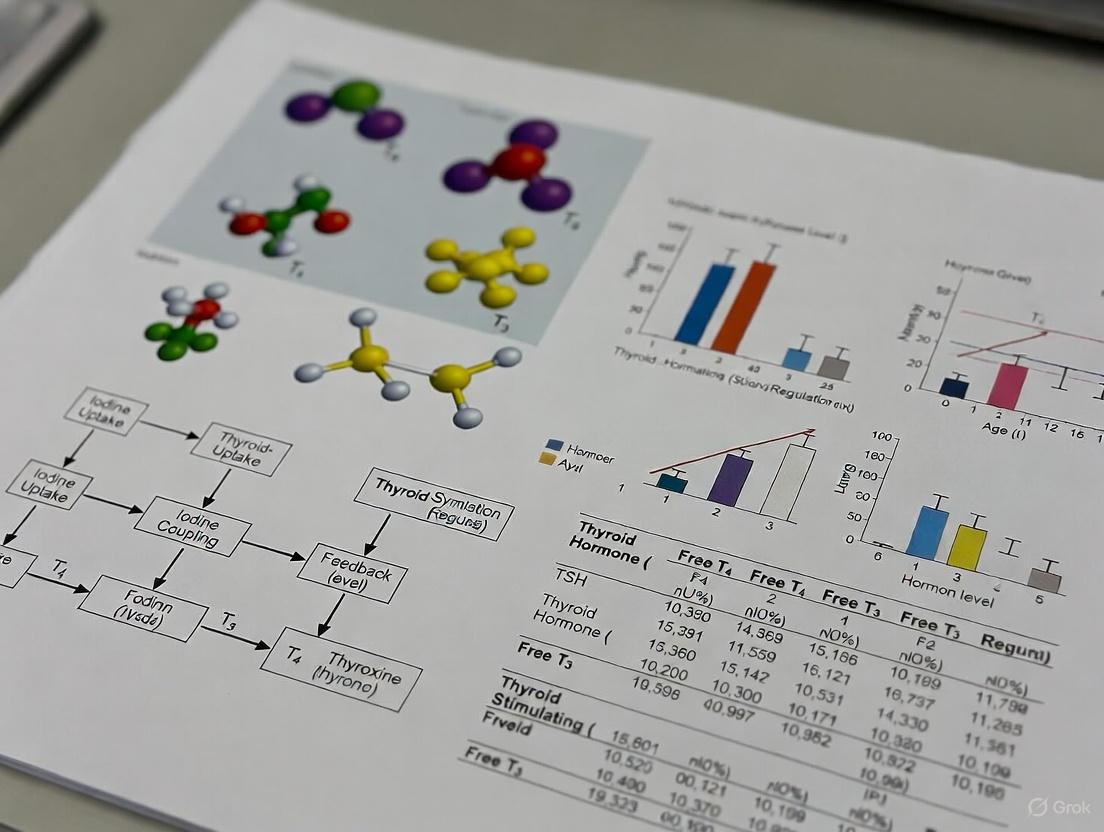
This article synthesizes current evidence on age-related changes in thyroid physiology and their critical implications for diagnostic thresholds.
Rethinking the Rules: How Aging Reshapes Thyroid Function Diagnostic Thresholds
Abstract
This article synthesizes current evidence on age-related changes in thyroid physiology and their critical implications for diagnostic thresholds. It examines the established patterns of thyroid-stimulating hormone (TSH) elevation and free thyroxine (FT4) stability in older adults, critiques the limitations of universal reference intervals, and explores methodological approaches for developing age-stratified ranges. The analysis highlights significant risks of overdiagnosis and overtreatment in the elderly, supported by validation studies showing a lack of treatment benefit for mild subclinical hypothyroidism in this population. For researchers and drug developers, this review underscores the necessity of incorporating age-specific parameters into both clinical trial design and the development of future diagnostic and therapeutic strategies to improve patient outcomes and reduce unnecessary interventions.
The Physiology of Aging: How Thyroid Function Naturally Evolves Over a Lifetime
Longitudinal Evidence of TSH's U-Shaped Trajectory Across the Lifespan
Thyroid-stimulating hormone (TSH) demonstrates a dynamic, non-linear trajectory across the human lifespan, characterized by a U-shaped pattern with higher concentrations at the extremes of life. This application note synthesizes longitudinal and cross-sectional evidence establishing age-specific TSH variations, with particular emphasis on implications for diagnostic threshold refinement in aging research and drug development. We present quantitative evidence that the upper normal limit of TSH increases by up to 50% in nonagenarians compared to middle-aged adults, challenging the validity of uniform reference intervals. Accompanying protocols provide methodologies for establishing age-specific reference ranges and analyzing longitudinal thyroid function trajectories, enabling researchers to account for physiological aging processes in both observational studies and clinical trials.
Circulating concentrations of thyrotropin (TSH) and thyroxine (T4) are tightly regulated by a hypothalamic-pituitary-thyroid (HPT) axis feedback system, with each individual possessing genetically determined setpoints subject to environmental and epigenetic influences [1]. The conventional diagnostic approach applies uniform reference intervals for thyroid function tests across all adult age groups, despite accumulating evidence that thyroid physiology evolves throughout life.
Recent longitudinal studies have revealed that TSH follows a U-shaped trajectory across the lifespan, with higher concentrations observed in childhood and advanced age compared to middle adulthood [2] [3]. This pattern represents a fundamental physiological adaptation rather than pathological change, necessitating a paradigm shift in how thyroid function is interpreted across different age groups. For drug development professionals and researchers, these findings have profound implications for clinical trial design, participant stratification, and diagnostic test development.
Quantitative Evidence: TSH Reference Intervals Across Age Groups
Comprehensive data from large-scale studies provide compelling evidence for age-specific variation in TSH levels. The following tables synthesize key findings from population studies across different geographic regions.
Table 1: Age-Specific TSH Reference Intervals from Population Studies
| Age Group | TSH Reference Interval (mIU/L) | Population | Study/Reference |
|---|---|---|---|
| Children (7-15 years) | 0.12 mIU/L increase from 7 to 15 years | UK (ALSPAC) | Taylor et al. [2] |
| Adults (50 years) | Upper limit: 4.0 (women) | Netherlands | Jansen et al. [3] |
| 65-70 years | 0.65-5.51 | Chinese | Sun et al. [4] |
| 71-80 years | 0.85-5.89 | Chinese | Sun et al. [4] |
| >80 years | 0.78-6.70 | Chinese | Sun et al. [4] |
| 90+ years | Upper limit: 6.0 (women) | Netherlands | Jansen et al. [3] |
Table 2: Impact of Age-Specific vs. Standard TSH Reference Ranges on Subclinical Hypothyroidism Diagnosis
| Age Group | Diagnosis with Standard Range | Diagnosis with Age-Specific Range | Relative Reduction |
|---|---|---|---|
| Women 50-60 | 13.1% | 8.6% | 34% |
| Women 90-100 | 22.7% | 8.1% | 64% |
| Men 60-70 | 10.9% | 7.7% | 29% |
| Men 90-100 | 27.4% | 9.6% | 65% |
The data demonstrate that the upper normal limit of TSH increases progressively with advancing age, with the most pronounced elevation observed in nonagenarians [4] [3]. Implementing age-specific reference intervals significantly reduces the diagnosis of subclinical hypothyroidism in older adults, potentially preventing unnecessary lifelong thyroid hormone replacement therapy [3].
Longitudinal Trajectory Patterns: Insights from Cohort Studies
Longitudinal studies provide critical insights into the dynamic nature of thyroid function across the lifespan, revealing complex trajectory patterns that cannot be captured in cross-sectional analyses.
TSH Trajectories in LT4-Treated Individuals
A recent study utilizing growth mixture modeling (GMM) on data from the Brazilian Longitudinal Study of Adult Health (ELSA-Brasil) identified four distinct TSH trajectory classes among levothyroxine (LT4)-treated individuals [5]:
- High–high normal TSH (average baseline LT4 dose: 77.7 µg)
- Normal TSH
- Normal to low TSH
- Low to normal TSH
Notably, cardiovascular health markers showed significant changes within trajectory classes, with the low to normal TSH class demonstrating increases in total cholesterol, HDL cholesterol, triglycerides, and HbA1c [5]. This highlights the clinical relevance of TSH trajectory analysis beyond single-point measurements.
Longitudinal Changes in the Oldest Old
The Cardiovascular Health Study All Stars analyzed thyroid function changes over a 13-year period in older adults (mean age 85 years) [6]. Key findings included:
- 13% increase in TSH over the study period
- 1.7% increase in FT4
- 13% decrease in total T3
Despite these changes, no association was found between subclinical hypothyroidism and mortality, whereas higher FT4 levels were associated with increased mortality risk [6]. These findings raise important questions about the appropriateness of treating mild TSH elevations in advanced age.
Experimental Protocols
Protocol: Establishing Age-Specific TSH Reference Intervals
Background: The National Academy of Clinical Biochemistry (NACB) recommends establishing reference intervals from the 95% confidence limits of log-transformed values of at least 120 thyroid peroxidase antibody (TPOAb)-negative, ambulatory, euthyroid subjects without goiter or family history of thyroid dysfunction [7].
Materials:
- Roche Diagnostics electrochemiluminescence immunoassay system
- BIO RAD Lyphochek Immunoassay Plus Control materials
- Inductively coupled plasma mass spectrometry (ICP-MS) for urinary iodine
Procedure:
- Participant Selection: Recruit reference population through stratified sampling
- Exclusion Criteria: Apply comprehensive exclusion criteria:
Blood Collection: Standardize collection procedures:
- Fasting morning samples (7:30-10:30 AM)
- Process within 2 hours of collection
- Centrifuge at 3000 rpm for 10 minutes
Laboratory Analysis:
- Perform TSH measurements using third-generation immunoenzymatic assay
- Conduct regular calibration with manufacturer-matched reagents
- Implement internal quality control daily
- Participate in external quality assessment programs
Statistical Analysis:
Protocol: Longitudinal TSH Trajectory Analysis Using Growth Mixture Modeling
Background: Growth mixture modeling (GMM) classifies patterns of biomarker trajectories in chronic diseases to estimate clinical risk, accounting for heterogeneity in longitudinal responses [5].
Materials:
- Longitudinal cohort data with ≥3 timepoints
- R statistical software with "lcmm" package (Version 4.2.3)
- Roche Diagnostics electrochemiluminescence immunoassay
Procedure:
- Data Preparation:
- Compile serial TSH measurements over study period
- Log-transform TSH values to normalize distribution
- Create spaghetti plots to visualize individual trajectories
Model Selection:
- Test three modeling approaches:
- Latent class growth analysis (LCGA): fixed intercept and slope per class
- GMM-1: random intercept and fixed slope per class
- GMM-2: both random intercepts and slopes
- Iterate from 1-class to 6-class models
- Assess model fit using Akaike information criterion, Bayesian information criterion, log-likelihood
- Require entropy values close to 1, classes containing >1% of population, and mean posterior probabilities ≥70% [5]
- Test three modeling approaches:
Trajectory Class Characterization:
- Describe demographic and clinical features of each trajectory class
- Analyze between-class differences in baseline LT4 dose
- Examine within-class changes in cardiovascular markers (blood pressure, lipids, HbA1c)
- Assess medication utilization patterns (antihypertensive, antihyperlipidemic, antidiabetes)
Validation:
- Conduct sensitivity analyses excluding thyroid cancer history
- Validate class assignment stability using bootstrapping methods
- Test associations with clinical outcomes where available
Visualization: TSH Trajectory Across Lifespan
Analytical Workflow: TSH Trajectory Classification
The Scientist's Toolkit: Essential Research Reagents and Materials
Table 3: Essential Research Reagents for Thyroid Function Studies
| Reagent/Instrument | Manufacturer | Application | Key Specifications |
|---|---|---|---|
| Elecsys 2010 Analyzer | Roche Diagnostics | TSH, FT4, FT3, TPOAb measurement | Functional sensitivity: TSH 0.005 mIU/L, FT4 0.23 ng/dL |
| ADVIA Centaur XP System | Siemens Healthcare | Thyroid hormone immunoassays | Internal quality control with BIO RAD materials |
| E-TSH Kit | Roche Diagnostics | TSH immunodetection | Intraassay CV 2.1%, Interassay CV 3.1% |
| E-Free T4 Kit | Roche Diagnostics | Free T4 measurement | Intraassay CV 1.7%, Interassay CV 3.3% |
| ICP-MS Device | Perkin Elmer | Urinary iodine quantification | Participation in EQUIP quality assurance program |
| BIO RAD Lyphochek Control | Bio-Rad Laboratories | Internal quality control | Daily precision verification |
Implications for Research and Drug Development
The recognition of TSH's U-shaped trajectory across lifespan necessitates fundamental changes in research and drug development approaches:
Diagnostic Threshold Refinement: Implementation of age-specific TSH reference intervals could reduce overdiagnosis of subclinical hypothyroidism in older adults by up to 65% [3], preventing unnecessary lifelong thyroid hormone therapy and associated risks including atrial fibrillation and fractures [8].
Clinical Trial Design: Pharmaceutical trials investigating thyroid-related interventions should implement age-stratified randomization and analysis plans. Failure to account for physiological age-related TSH variations may confound treatment effect assessment.
Drug Development: The established safety concerns regarding thyroid hormone supplementation in euthyroid older adults [9] highlight the need for careful patient selection in clinical trials of thyroid-related therapies.
Longitudinal Assessment: Single-point TSH measurements provide limited insight compared to trajectory analysis [5]. Advanced statistical approaches like GMM offer robust methodology for classifying treatment response patterns and identifying subpopulations with distinct clinical outcomes.
Substantial longitudinal evidence confirms that TSH follows a U-shaped trajectory across the human lifespan, with higher concentrations in childhood and advanced age representing physiological adaptations rather than pathological states. This paradigm shift necessitates development of age-specific diagnostic thresholds and research methodologies. The protocols and analytical frameworks presented herein provide researchers and drug development professionals with standardized approaches for investigating thyroid function across lifespan stages, ultimately enabling more precise diagnosis and targeted therapeutic interventions that account for fundamental biological aging processes. Future research should focus on genetic and environmental determinants of HPT axis setpoints across ages and the clinical utility of trajectory-based monitoring in chronic disease management.
Age-Specific Dynamics of Free Thyroid Hormones (FT4 and FT3)
Thyroid hormones are critical regulators of metabolism, growth, and development throughout life. The age-specific dynamics of Free Thyroxine (FT4) and Free Triiodothyronine (FT3) present significant challenges for accurate diagnosis and research in thyroid physiology. Current evidence demonstrates that thyroid function tests display complex, dynamic patterns across the lifespan that are sexually dimorphic and influenced by genetic, environmental, and epigenetic factors [1]. Establishing appropriate age-specific reference intervals is essential for clinical practice and research, as using standard adult ranges across all age groups can lead to substantial misdiagnosis and inappropriate treatment [2] [10] [3]. This application note provides a comprehensive framework for investigating age-related changes in thyroid hormones, with specific protocols for establishing reliable reference intervals and analyzing thyroid function across different life stages.
Quantitative Data on Age-Specific Thyroid Hormone Dynamics
Pediatric and Adolescent Reference Intervals
Table 1: Age-Specific Pediatric Reference Ranges for Thyroid Hormones (ECLusys Kits) [11]
| Age Group | n (M/F) | FT3 (pg/mL) | FT4 (ng/dL) | TSH (μU/mL) |
|---|---|---|---|---|
| 4-6 years | 45 | 2.91-4.70 | 1.12-1.67 | 0.62-4.90 |
| 7-8 years | 40 | 3.10-5.10 | 1.07-1.61 | 0.53-5.16 |
| 9-10 years | 53 | 3.10-4.87 | 0.96-1.60 | 0.67-4.52 |
| 11-12 years | 65 | 2.78-4.90 | 1.02-1.52 | 0.62-3.36 |
| 13-14 years | 83 | 2.77-4.59 | 0.96-1.52 | 0.54-2.78 |
| 15 years | 56 | 2.50-4.64 | 0.95-1.53 | 0.32-3.00 |
Longitudinal studies reveal dynamic patterns during development. Research from the Avon Longitudinal Study of Parents and Children (ALSPAC) showed FT3 decreases by 0.48 pmol/L from ages 7 to 15 years, with a more pronounced decline in girls than boys [2]. The Brisbane Longitudinal Twin Study further demonstrated sex-specific trajectories: between ages 14-16 years, FT3 decreases by 0.62 pmol/L in boys and 0.53 pmol/L in girls, while FT4 shows a contrasting increase of 0.64 pmol/L in boys and 0.42 pmol/L in girls during the same period [2].
Adult and Geriatric Reference Intervals
Table 2: Age-Specific Adult Reference Ranges for Thyroid Hormones [12] [10] [3]
| Age Group | Sex | FT3 (pg/mL) | FT4 (ng/dL) | TSH (mIU/L) |
|---|---|---|---|---|
| Adults (60-85) | M/F | 3.35 | 1.32 | 1.39 |
| Older Adults (85+) | M/F | 2.55 | 1.25 | 1.54 |
| Women (30s) | F | - | 1.2 | 1.5 (0.5-4.6) |
| Women (60s) | F | - | 1.2 | 1.9 (0.7-7.8) |
| Men (30s) | M | - | 1.3 | - |
| Men (60s) | M | - | 1.2 | - |
Large-scale studies demonstrate that TSH levels increase significantly with age, particularly after 50 years in women and 60 years in men [3]. The upper normal limit for TSH in 50-year-old women is approximately 4.0 mIU/L, but increases by 50% to 6.0 mIU/L by age 90 [3]. Implementation of age-specific reference ranges significantly reduces subclinical hypothyroidism diagnoses: from 22.7% to 8.1% in women aged 90-100 years, and from 27.4% to 9.6% in men aged 90-100 years [3].
Cross-sectional analysis of Italian cohorts reveals a negative association between FT3, FT4, and age, with centenarians' relatives exhibiting lower thyroid hormone levels, suggesting a potential link between subtle thyroid hypofunction and longevity [12].
Physiological Framework and Signaling Pathways
Figure 1: Thyroid Hormone Regulation and Age-Related Modifications. The hypothalamic-pituitary-thyroid axis governs thyroid hormone production through a classic negative feedback loop. Age-related changes occur at multiple levels, including genetic setpoint determination, epigenetic modifications across the lifespan, and environmental influences [1].
The physiological framework illustrates how circulating concentrations of TSH and thyroid hormones are tightly regulated through negative feedback mechanisms. Each individual maintains genetically determined setpoints for TSH and FT4, established in utero and subject to environmental and epigenetic influences throughout life [1]. Hertiability estimates reach 60-70% for TSH, FT4, and FT3, with recent genome-wide association studies identifying 42 independent genetic loci associated with TSH and 21% with FT4 [1].
Experimental Protocols
Protocol 1: Establishing Age-Specific Reference Intervals
Objective: To establish age- and sex-specific reference intervals for FT3, FT4, and TSH in a pediatric population.
Materials and Methods: [11]
Participant Selection:
- Recruit 342 children (111 males, 231 females) aged 4-15 years
- Divide into 6 age groups: 4-6, 7-8, 9-10, 11-12, 13-14, and 15 years
- Exclusion criteria: Positive for antithyroid antibodies (TgAb, TPOAb), abnormalities on thyroid ultrasonography
Sample Collection:
- Collect blood samples in the morning (8:00-9:00 AM) after overnight fasting
- Process samples within 2 hours of collection
- Centrifuge at 3000 rpm for 20 minutes at room temperature
- Store plasma at -80°C until analysis
Laboratory Analysis:
- Analyze FT3, FT4, and TSH using electrochemiluminescence immunoassay (ECLIA)
- Utilize ECLusys FT3, FT4, and TSH kits on Elecsys 2010 analyzer
- Quality control: Include three levels of commercial controls in each run
Statistical Analysis:
- Calculate 2.5th and 97.5th percentiles for each age group
- Determine non-parametric 95% reference intervals
- Compare ranges across age groups and by sex
Figure 2: Experimental Workflow for Establishing Pediatric Reference Intervals. This protocol outlines the standardized process for recruiting, screening, and analyzing samples to establish age-specific reference ranges for thyroid hormones [11].
Protocol 2: Longitudinal Analysis of Thyroid Hormone Dynamics
Objective: To analyze longitudinal changes in thyroid function across adolescence using data from the Brisbane Longitudinal Twin Study. [2]
Materials and Methods:
Study Population:
- Recruit 1,499 participants from the Brisbane Longitudinal Twin Study
- Conduct assessments at ages 12, 14, and 16 years
- Collect data on puberty stage, body mass index, and body composition
Sample Collection and Analysis:
- Collect non-fasting blood samples
- Measure TSH, FT4, and FT3 using Abbott ARCHITECT assays
- Follow manufacturer's protocols for all measurements
Statistical Analysis:
- Employ linear mixed models adjusted for age, puberty, and BMI
- Analyze sex-specific trajectories using interaction terms
- Calculate intra-individual variation over time
- Estimate misclassification rates using adult versus age-specific references
The Scientist's Toolkit: Research Reagent Solutions
Table 3: Essential Research Reagents for Thyroid Function Studies
| Reagent/Assay | Manufacturer | Function | Application Context |
|---|---|---|---|
| ECLusys FT3/FT4/TSH | Roche Diagnostics | Electrochemiluminescence immunoassay for quantitative determination | Pediatric reference interval studies [11] |
| Architect TSH/FT4/FT3 CLIA | Abbott Laboratories | Chemiluminescent magnetic immunoassay for thyroid function testing | Large-scale population studies [10] |
| AIA-PACK FT3/FT4/TSH CLEIA | Tosoh Corporation | Chemiluminescence enzyme immunoassay for thyroid hormone measurement | Specialized thyroid clinic populations [10] |
| Elecsys 2010 Analyzer | Hitachi | Automated immunoassay analyzer platform | Geriatric thyroid function assessment [12] |
| Thyroid Antibody Assays (TgAb, TPOAb) | Multiple | Detection of autoimmune thyroid disease | Participant screening for reference populations [11] |
Implications for Research and Clinical Practice
The establishment of age-specific reference intervals for thyroid hormones has profound implications for both research and clinical practice. Implementation of age-appropriate ranges significantly reduces overdiagnosis of subclinical hypothyroidism, particularly in older adults [10] [3] [13]. Research indicates that using age-specific references would reclassify approximately 60% of women over 60 currently diagnosed with subclinical hypothyroidism as euthyroid [10].
Furthermore, evidence suggests that the relationship between thyroid function and health outcomes varies across the lifespan. While younger and middle-aged individuals with low-normal thyroid function may experience increased cardiovascular and metabolic risks, older individuals with similar profiles may actually have survival advantages [2] [12]. This underscores the importance of age-stratified approaches in both clinical management and research design.
Future research directions should focus on validating age-appropriate reference intervals across diverse populations, understanding the molecular mechanisms behind age-related setpoint changes, and investigating the impact of thyroid hormone variations in younger individuals on long-term health outcomes [2] [1].
Distinct Health Impacts of Thyroid Hormone Variation in Young vs. Elderly Populations
Thyroid hormones are crucial regulators of metabolism, development, and homeostasis throughout life. Current diagnostic paradigms primarily rely on population-based reference intervals for thyroid-stimulating hormone (TSH) and free thyroxine (FT4) that apply uniformly to all adults. However, emerging research demonstrates that thyroid function exhibits significant age-dependent variation, with distinct health implications across the lifespan. Phenotypic age, a composite measure of biological aging derived from clinical biomarkers, has emerged as a superior predictor of aging-related thyroid changes compared to chronological age alone [14]. This application note synthesizes current evidence on age-specific thyroid physiology and provides detailed protocols for implementing stratified approaches in both clinical research and drug development.
Quantitative Data on Age-Specific Thyroid Hormone Variation
Age-Dependent Trends in Thyroid Function Parameters
Table 1: Age-Specific Trends in Thyroid Function Parameters Based on Large-Scale Population Studies
| Parameter | Childhood/Adolescence | Young & Middle-Aged Adults | Elderly Adults (≥60-65 years) |
|---|---|---|---|
| TSH | Higher in young children, gradual decline toward adulthood [15] | Stable within standard reference range | Progressive increase with advancing age [3] [15] |
| FT4 | Higher in childhood, declines during puberty [15] | Stable within standard reference range | Relatively stable or slight decrease [3] [15] |
| FT3 | Highest in childhood, sharp decline during adolescence [15] | Stable within standard reference range | Gradual decline with age [14] [15] |
| Upper TSH Reference Limit | Varies significantly with age [15] | ~4.0 mIU/L (standard limit) | Increases up to 6.0 mIU/L [3] |
Clinical Impact of Age-Stratified Reference Intervals
Table 2: Impact of Applying Age-Specific vs. Standard Reference Ranges on Hypothyroidism Diagnosis Rates
| Population Group | Diagnosis with Standard Range | Diagnosis with Age-Specific Range | Relative Reduction |
|---|---|---|---|
| Women (50-60 years) | 13.1% (SCH)3.0% (OH) | 8.6% (SCH)2.2% (OH) | 34% (SCH)27% (OH) |
| Women (90-100 years) | 22.7% (SCH) | 8.1% (SCH) | 64% (SCH) |
| Men (60-70 years) | 10.9% (SCH)1.7% (OH) | 7.7% (SCH)1.4% (OH) | 29% (SCH)18% (OH) |
| Men (90-100 years) | 27.4% (SCH) | 9.6% (SCH) | 65% (SCH) |
SCH: Subclinical Hypothyroidism; OH: Overt Hypothyroidism [3]
Experimental Protocols for Investigating Thyroid Aging
Protocol 1: Establishing Age-Specific Thyroid Reference Intervals
Objective: To determine age-stratified reference intervals for TSH, FT4, and FT3 in a population without thyroid disease.
Materials:
- Large, representative population database (e.g., laboratory data from multiple institutions)
- Statistical software (e.g., R, SAS)
- Thyroid function test results (TSH, FT4, FT3)
- Demographic data (age, sex)
- Exclusion criteria: known thyroid disease, thyroid antibodies, medications affecting thyroid function
Methodology:
- Data Collection: Collect thyroid function test data from at least 7.6 million TSH and 2.2 million FT4 measurements across multiple institutions [3].
- Population Selection: Apply rigorous exclusion criteria to create a disease-free population, removing individuals with known thyroid disease, positive thyroid antibodies, or use of thyroid-affecting medications.
- Age Stratification: Divide the population into age decades (20-29, 30-39, etc.) with particular attention to groups ≥50 years for women and ≥60 years for men.
- Statistical Analysis:
- Use advanced statistical methods (e.g., quantile regression) to calculate the 2.5th and 97.5th percentiles for each age group.
- Account for potential confounders including sex, body mass index, and iodine status.
- Validate intervals through bootstrap methods or split-sample validation.
Output: Age- and sex-specific reference intervals for thyroid parameters that more accurately reflect normal physiology across the lifespan.
Protocol 2: Assessing Phenotypic Age in Thyroid Function Research
Objective: To investigate the relationship between phenotypic age (a biological age measure) and thyroid function parameters.
Materials:
- NHANES dataset or similar population-based cohort with comprehensive biomarker data
- Laboratory facilities for measuring the nine clinical biomarkers for phenotypic age calculation
- Thyroid function tests (TSH, FT4, FT3, TPOAb, TGAb)
- Statistical software (R, Python, or SAS)
Methodology:
- Phenotypic Age Calculation: Calculate phenotypic age using the established algorithm incorporating nine clinical biomarkers plus chronological age [14]:
- Albumin (ALB, g/L)
- Creatinine (CR, μmol/L)
- Glucose (GLU, mmol/L)
- C-reactive protein (CRP, mg/dL)
- Lymphocyte percentage (L%, %)
- Mean cell volume (MCV, fL)
- Red cell distribution width (RDW, %)
- Alkaline phosphatase (ALP, U/L)
- White blood cell count (WBC, 10^9/L)
- Age Gap Calculation: Compute the age gap as phenotypic age minus chronological age.
- Thyroid Function Assessment: Measure TSH, FT4, FT3, TPOAb, and TGAb using standardized immunoassays.
- Statistical Analysis:
- Use weighted multinomial logistic regression to assess associations between aging metrics and thyroid disorders.
- Apply restricted cubic splines (RCSs) to explore potential nonlinear relationships.
- Perform mediation analysis to identify which components of phenotypic age mediate relationships with thyroid dysfunction.
Output: Quantification of whether phenotypic age provides superior correlation with thyroid dysfunction compared to chronological age alone, identifying specific biomarkers that mediate this relationship.
Protocol 3: In Vitro Assessment of Chemical Effects on Thyroid Hormone System
Objective: To screen compounds for potential disruption of thyroid hormone system function using a targeted in vitro assay battery.
Materials:
- Test compounds (e.g., chemicals of concern such as triazole fungicides)
- In vitro assay systems covering key molecular initiating events:
- Sodium-iodide symporter (NIS) inhibition assay
- Thyroid peroxidase (TPO) inhibition assay
- Iodothyronine deiodinases (DIO1-DIO3) activity assays
- Iodotyrosine deiodinase (DEHAL1) activity assay
- Monocarboxylate transporter 8 (MCT8) transport assay
- Cell culture facilities and reagents
- Species-specific tissues (rat liver and kidney) for ex vivo analysis
Methodology:
- Compound Preparation: Prepare test compounds at relevant concentrations based on preliminary toxicity data.
- Assay Implementation:
- Conduct NIS assay to assess thyroidal iodine uptake inhibition.
- Perform TPO assay to evaluate thyroid hormone synthesis disruption.
- Run deiodinase assays (DIO1-DIO3) to assess thyroid hormone metabolism alteration.
- Execute MCT8 transport assay to determine cellular thyroid hormone uptake disruption.
- Ex Vivo Validation: Measure Dio1 and Dehal1 activities in liver and kidney tissues from animal studies.
- Data Analysis: Compare results across assays to identify specific molecular targets and potential compensatory mechanisms.
Output: Comprehensive profile of chemical effects on specific molecular targets within the thyroid hormone system, informing risk assessment and prioritization for further testing [16].
Visualization of Thyroid Aging Concepts and Methods
The Hypothalamic-Pituitary-Thyroid (HPT) Axis and Aging
HPT Axis and Aging Interactions - This diagram illustrates the classic hypothalamic-pituitary-thyroid feedback loop and highlights how aging modifies multiple components of this system, leading to altered thyroid hormone setpoints and regulation [17] [15].
Phenotypic Age Calculation Workflow
Phenotypic Age Calculation Workflow - This workflow outlines the process of calculating phenotypic age from clinical biomarkers and chronological age, and how the resulting "age gap" correlates with thyroid function parameters, providing a biological aging measure more relevant to thyroid health than chronological age alone [14].
The Scientist's Toolkit: Research Reagent Solutions
Table 3: Essential Research Reagents for Thyroid Aging Investigations
| Category | Specific Items | Research Application |
|---|---|---|
| Immunoassays | TSH third-generation immunoenzymatic assayFT4/FT3 competitive binding immunoassaysTPOAb/TGAb immunoassays (Beckman Access2) | Standardized measurement of thyroid function and autoimmunity status across study populations [14] |
| Clinical Biomarkers | Albumin, Creatinine, Glucose assaysHigh-sensitivity CRP testComplete blood count (L%, MCV, RDW, WBC)ALP measurement | Calculation of phenotypic age as a composite biological aging measure [14] |
| In Vitro Systems | NIS inhibition assayTPO activity assayDeiodinase (DIO1-3) activity assaysMCT8 transport assay | Screening chemical compounds for specific disruptive effects on thyroid hormone system components [16] |
| Analytical Platforms | Statistical software (R, SAS)Population database accessLaboratory information management systems | Management and analysis of large-scale thyroid function datasets with age stratification capabilities [3] |
The evidence for distinct age-related variation in thyroid function necessitates a paradigm shift in both research approaches and clinical application. Implementation of age-stratified reference intervals and incorporation of biological age measures like phenotypic age can significantly reduce overdiagnosis in elderly populations while potentially identifying at-risk individuals in younger cohorts. These approaches enable more precise investigation of thyroid-related health risks across the lifespan and support development of age-appropriate therapeutic interventions. Future research should focus on validating these approaches in diverse populations and establishing their utility in guiding treatment decisions for thyroid disorders.
Genetic and Environmental Determinants of the Thyroid Aging Phenotype
The aging process exerts profound and complex effects on thyroid physiology, with significant implications for diagnosis and treatment in an aging global population. Traditional assessment based solely on chronological age and standard thyroid function reference intervals often fails to capture the intricate interplay between genetic predisposition, environmental exposures, and physiological decline that characterizes the thyroid aging phenotype. Emerging research demonstrates that biological age metrics, particularly phenotypic age, provide superior characterization of aging-related thyroid changes compared to chronological age alone [18] [14]. This application note synthesizes current evidence on genetic and environmental determinants of thyroid aging and provides detailed protocols for implementing these advances in research settings, with particular attention to their implications for refining diagnostic thresholds in aging populations.
Quantitative Data Synthesis
Age-Related Changes in Thyroid Function Parameters
Table 1: Thyroid function changes across the lifespan and their clinical implications
| Parameter | Change with Aging | Population Evidence | Clinical/Research Implications |
|---|---|---|---|
| TSH | U-shaped trajectory [18] [2] [14] | Higher at life extremes; longitudinal rise in elderly [2] [15] | Age-specific reference ranges needed to avoid overdiagnosis in elderly |
| FT3 | Negative linear correlation with phenotypic age; nonlinear with chronological age [18] [14] | Decline most pronounced around puberty; strong relationship with fat mass [2] [15] | Potential marker for metabolic aging; role in pubertal development |
| FT4 | U-shaped relationship with both age types [18] [14] | Relatively stable with age; slight increase in childhood/elderly [2] | Less age-dependent variability than other parameters |
| Thyroid Antibodies | TPOAb: nonlinear with age; TGAb: positive linear with chronological age [18] [14] | TPOAb present in ~11% population; linked to progression to overt hypothyroidism [14] | Important for autoimmune thyroiditis risk stratification |
| Phenotypic Age Gap | Positive association with TSH; nonlinear with FT4 [18] [14] | Phenotypic age minus chronological age predicts thyroid dysfunction risk [18] | Superior to chronological age for assessing biological thyroid aging |
Environmental and Behavioral Risk Factors
Table 2: Modifiable risk factors for thyroid nodules in older adults (≥60 years)
| Risk Factor | Definition/Measurement | Adjusted Odds Ratio (95% CI) | Mediation Effects |
|---|---|---|---|
| Poor Sleep | Duration ≤6 hours and/or disturbed sleep symptoms [19] [20] | 3.24 (2.70-3.90) [19] [20] | Jointly accounts for 15-20% of noise exposure effect [19] |
| Low Physical Activity | <3 MET-hours/week [19] [20] | 2.51 (2.08-3.02) [19] [20] | Behavioral mediator of environmental effects |
| High Residential Noise | GIS-based models of traffic/industrial noise [19] [20] | 4.46 (3.70-5.39) [19] [20] | Primary environmental stressor disrupting homeostasis |
| PM2.5 Exposure | Annual average based on residential address [20] | Progressive increase across quintiles [20] | Contributes to inflammatory burden |
Thyroid Function and Frailty in Older Adults
Table 3: J-shaped relationship between TSH and frailty risk in older adults
| TSH Range (mIU/L) | Frailty Risk (OR, 95% CI) | Clinical Interpretation |
|---|---|---|
| 0.3 (reference) | 1.0 | Baseline risk |
| 0.6-1.5 | 0.85 (0.72-1.02) | Lower risk, not statistically significant |
| 2.7 | 1.30 (1.06-1.59) | Significantly increased risk |
| 4.8 | 2.06 (1.18-3.57) | Substantially increased risk |
Note: Based on systematic review and dose-response meta-analysis (n=6,388) using frailty phenotype definition [21].
Experimental Protocols
Protocol 1: Phenotypic Age Calculation and Thyroid Function Assessment
Background: Phenotypic age, derived from nine clinical biomarkers and chronological age, better captures aging-related thyroid function changes than chronological age alone [18] [22] [14].
Materials: See Section 4.1 for required reagents and equipment.
Procedure:
- Biomarker Assessment:
- Collect venous blood samples after 8-12 hour fast
- Analyze the following nine biomarkers using standardized clinical chemistry platforms:
- Albumin (ALB, g/L)
- Creatinine (CR, μmol/L)
- Glucose (GLU, mmol/L)
- C-reactive protein (CRP, mg/dL)
- Lymphocyte percentage (L%, %)
- Mean cell volume (MCV, fL)
- Red cell distribution width (RDW, %)
- Alkaline phosphatase (ALP, U/L)
- White blood cell count (WBC, 10^9/L)
- Record chronological age in years
Phenotypic Age Calculation:
- Input biomarkers and chronological age into the previously validated Cox proportional hazards Gompertz model [22] [14]
- Compute mortality risk using the formula:
- Mortality Risk = exp(-1.51714 × exp(Σ(βi × Xi)))
- Where βi are the coefficients for each biomarker and Xi are the measured values
- Convert mortality risk to phenotypic age using established reference tables
Age Gap Determination:
- Calculate phenotypic age gap: Phenotypic Age - Chronological Age
- Categorize participants based on age gap quartiles
Thyroid Function Assessment:
- Measure TSH, FT4, FT3, TPOAb, and TGAb using standardized immunoassays
- Apply diagnostic criteria for thyroid disorders:
- Overt hypothyroidism: TSH > 5.6 mIU/L and FT4 < 7.74 pmol/L
- Subclinical hypothyroidism: TSH > 5.6 mIU/L with normal FT4
- Overt hyperthyroidism: TSH < 0.34 mIU/L and FT4 > 20.6 pmol/L
- Subclinical hyperthyroidism: TSH < 0.34 mIU/L with normal FT4
Statistical Analysis:
- Use weighted multinomial logistic regression to assess associations
- Apply restricted cubic splines (RCS) to explore nonlinear relationships
- Perform mediation analysis to identify biomarker effects on thyroid dysfunction
Troubleshooting:
- Incomplete biomarker data: Implement multiple imputation techniques
- Assay variability: Standardize across batches using reference samples
- Nonlinear relationships: Ensure adequate sample size for RCS analysis
Protocol 2: Environmental Exposure Assessment and Thyroid Nodule Risk
Background: Environmental stressors, particularly residential noise, influence thyroid nodule formation through disruption of sleep and physical activity [19] [20].
Materials: See Section 4.2 for required reagents and equipment.
Procedure:
- Environmental Exposure Assessment:
- Geospatial Analysis:
- Collect residential addresses of participants
- Use GIS mapping to determine proximity to major roads, industrial facilities
- Apply standardized noise distribution models to classify high/low exposure
- Air Pollution Monitoring:
- Link addresses to local air quality monitoring stations
- Calculate annual average PM2.5 exposure
- Categorize into population-based quintiles
- Geospatial Analysis:
Behavioral Mediator Assessment:
- Sleep Evaluation:
- Administer validated sleep questionnaires
- Record self-reported sleep duration and quality
- Define poor sleep as ≤6 hours duration and/or disturbed sleep symptoms
- Physical Activity Measurement:
- Use Global Physical Activity Questionnaire (GPAQ)
- Calculate MET-hours/week from frequency and duration
- Categorize as low (<3 MET-hours/week) or adequate (≥3 MET-hours/week)
- Sleep Evaluation:
Thyroid Nodule Ascertainment:
- Perform high-resolution B-mode ultrasonography
- Use standardized morphological criteria: hypoechogenicity, irregular margins, calcifications
- Define nodule presence as ≥5mm diameter
- Implement centralized quality control with expert panel review
Statistical Analysis:
- Employ multivariable logistic regression adjusting for age, sex, BMI, education, income, smoking, alcohol, depression, social engagement
- Conduct mediation analysis using product-of-coefficients approach
- Use bootstrapping with 5,000 replications for indirect effect confidence intervals
Troubleshooting:
- Exposure misclassification: Validate GIS models with direct noise measurements
- Self-report bias: Consider accelerometry for objective activity measurement
- Confounding: Carefully adjust for socioeconomic status and neighborhood factors
The Scientist's Toolkit
Research Reagent Solutions for Phenotypic Age and Thyroid Assessment
Table 4: Essential research reagents and materials for thyroid aging studies
| Item | Function/Application | Specifications/Alternatives |
|---|---|---|
| Clinical Chemistry Analyzer | Quantification of phenotypic age biomarkers | Platforms: Beckman Coulter AU系列, Roche Cobas系列, Siemens ADVIA系列 |
| TSH Immunoassay | Third-generation two-site immunoenzymatic assay | Sensitivity: ≤0.004 mIU/L; Analytical range: 0.01-100 mIU/L |
| Free Thyroid Hormone Assays | FT4 (two-step enzyme immunoassay), FT3 (competitive binding) | FT4 range: 7.74-20.6 pmol/L; FT3 range: 2.5-3.9 pg/mL |
| Thyroid Antibody Tests | TPOAb/TGAb detection (Beckman Access2) | TPOAb positive: >34 IU/mL; TGAb positive: >4.0 IU/mL |
| Ultrasonography System | Thyroid nodule detection and characterization | High-resolution B-mode with ≥7.5 MHz linear transducer |
| DNA Extraction Kit | Genetic analysis from blood samples | High-yield, PCR-compatible extraction methods |
| Global Physical Activity Questionnaire | Standardized physical activity assessment | Validated translations for target population |
| Sleep Assessment Tools | Pittsburgh Sleep Quality Index or equivalent | Captures duration, latency, disturbances, medication use |
Pathway Diagrams and Conceptual Frameworks
Phenotypic Age Calculation and Thyroid Aging Assessment Workflow
Environmental-Thyroid Nodule Pathway with Behavioral Mediation
Implications for Diagnostic Thresholds in Aging Research
The evidence synthesized in this application note has profound implications for establishing age-appropriate diagnostic thresholds in thyroid function testing. Current reference intervals, derived from broadly defined healthy populations, fail to account for the physiological changes that occur with aging [2] [15]. The finding that phenotypic age outperforms chronological age in predicting thyroid dysfunction suggests that biological aging metrics should be incorporated into diagnostic algorithms [18] [14].
The J-shaped relationship between TSH and frailty risk indicates that the clinical significance of TSH levels varies across the age spectrum [21]. In older adults, slightly elevated TSH may represent an adaptive mechanism rather than pathological hypothyroidism, potentially explaining the lack of therapeutic benefit observed in older individuals with subclinical hypothyroidism [2] [21]. Conversely, in younger and middle-aged populations, low-normal thyroid function is associated with adverse cardiometabolic outcomes, suggesting that more aggressive diagnostic approaches may be warranted in these groups [2] [15].
Environmental and behavioral factors further complicate diagnostic interpretation. The substantial increased risk of thyroid nodules associated with poor sleep, physical inactivity, and noise exposure underscores the importance of considering lifestyle context when evaluating thyroid health in aging populations [19] [20]. Future research should focus on validating age-specific reference intervals that incorporate both biological aging metrics and environmental determinants to optimize diagnosis and treatment across the lifespan.
Building Better Benchmarks: Methodologies for Establishing Age-Stratified Reference Intervals
Large-scale multicenter studies and big data analytics are revolutionizing endocrine research, particularly in refining our understanding of thyroid function across the lifespan. The National Health and Nutrition Examination Survey (NHANES) exemplifies this approach, providing comprehensive, nationally representative data that enables researchers to investigate complex relationships between thyroid hormones, aging, and various physiological parameters. These datasets have revealed critical limitations of the traditional "one-size-fits-all" approach to thyroid reference intervals, especially when applied to aging populations [2] [1]. Big data approaches allow for the identification of subtle, non-linear relationships and threshold effects that would be undetectable in smaller cohort studies, ultimately paving the way for more personalized diagnostic thresholds and treatment approaches in thyroidology [23] [2].
Key Findings from Large-Scale Datasets
Large-scale analyses have yielded fundamental insights into how thyroid function changes with age and how body composition interacts with thyroid physiology, challenging long-held clinical assumptions.
Age-Related Variation in Thyroid Function
Evidence from large populations consistently demonstrates that thyroid function is not static across the lifespan. Thyroid Stimulating Hormone (TSH) concentrations follow a U-shaped trajectory in iodine-sufficient populations, with higher levels at the extremes of life [2]. In healthy older adults, TSH increases with age without a corresponding decline in free thyroxine (FT4), suggesting an alteration in the hypothalamic-pituitary-thyroid (HPT) axis setpoint [1]. Conversely, free triiodothyronine (FT3) levels typically decline with age and appear to play a role in pubertal development, during which they show a strong relationship with fat mass [2]. These findings have profound implications for diagnosing thyroid dysfunction in older adults, as using standard reference intervals may lead to overdiagnosis of subclinical hypothyroidism in this population [2] [1].
Body Composition and Thyroid Hormone Relationships
The relationship between adiposity and thyroid function is more complex than previously recognized. The Body Roundness Index (BRI), a geometric metric that quantifies visceral adipose tissue, demonstrates non-linear relationships and threshold effects with thyroid hormones [23]. Analysis of 10,086 NHANES participants revealed that when BRI was below 7.21, free triiodothyronine (FT3) and total triiodothyronine (TT3) increased with rising BRI, but this effect weakened or reversed beyond this threshold [23]. Furthermore, body composition biomarkers like Body Mass Index (BMI) and waist circumference significantly moderate the relationship between thyroid function and cognitive performance in euthyroid older adults, highlighting the importance of considering body composition in thyroid-related health outcomes [24].
Table 1: Key Thyroid Hormone Changes Across the Lifespan from Large-Scale Studies
| Life Stage | TSH Pattern | FT4 Pattern | FT3 Pattern | Clinical Significance |
|---|---|---|---|---|
| Childhood/Adolescence | Gradual decline as adult age is approached [2] | Not specified in results | Higher than in adults; strong relationship with fat mass in puberty [2] | Adult reference intervals may misclassify 3-6% of adolescents [2] |
| Adulthood | Stable within individual set-point [1] | Stable within individual set-point [1] | Stable within individual set-point [1] | Individual set-points are tighter than population reference ranges [1] |
| Older Adults (≥65 years) | Increases with age [2] [1] | Remains stable despite TSH rise [1] | Declines with age [2] | Age-specific reference ranges may prevent overdiagnosis of subclinical hypothyroidism [2] [1] |
Table 2: Body Composition Metrics and Their Relationship with Thyroid Function
| Metric | Calculation | Primary Association | Threshold/Non-linear Effects |
|---|---|---|---|
| Body Roundness Index (BRI) | 364.2 - 365.5 × √[1 - (waist circumference/(2π))²/(0.5 × height)²] [23] | Positive correlation with TT3 and TT4; Negative correlation with FT4 [23] | Threshold at BRI=7.21: FT3 and TT3 increase with BRI below this point, but effect weakens/reverses above it [23] |
| Body Mass Index (BMI) | weight (kg)/height (m²) [24] | Moderates relationship between thyroid function and memory performance in older adults [24] | No specific threshold identified; linear moderating effect observed [24] |
| Weight-adjusted Waist Index (WWI) | waist circumference (cm)/√weight (kg) [24] | Moderates relationship between thyroid function and short-term memory [24] | No specific threshold identified; linear moderating effect observed [24] |
Experimental Protocols
Protocol 1: Establishing Age-Specific Reference Intervals Using Data Mining Algorithms
Principle: Traditional reference intervals for thyroid hormones, typically derived from relatively small, supposedly healthy populations, fail to account for age-related physiological changes. This protocol outlines a method for establishing age-specific reference intervals for thyroid hormones in older adults using data mining algorithms applied to large clinical laboratory datasets [25].
Materials:
- Data Source: Large-scale laboratory data from physical examinations or outpatient records
- Algorithms: Transformed Hoffmann, transformed Bhattacahrya, kosmic, refineR, and Expectation-Maximization (EM) with Box-Cox transformation
- Statistical Software: R or Python with appropriate packages for quantile regression and data mining
- Validation Cohort: Healthy older adults recruited through strict inclusion/exclusion criteria
Procedure:
- Data Collection: Assemble a minimum of 5,000 laboratory records for adults aged ≥65 years, including TSH, FT4, FT3, TT4, and TT3 measurements.
- Data Preprocessing:
- Exclude records with missing demographic or laboratory data
- Remove obvious outliers using Tukey's fences method (values beyond 1.5 × IQR)
- Apply appropriate data transformations for skewed distributions
- Algorithm Application:
- Apply all five data mining algorithms to the preprocessed dataset
- For physical examination data, prioritize transformed Hoffmann, transformed Bhattacahrya, kosmic, and refineR algorithms
- For outpatient data, use EM algorithm with Box-Cox transformation for skewed distributions
- Reference Interval Calculation:
- Calculate the 2.5th and 97.5th percentiles for each thyroid parameter using each algorithm
- Use bias ratio (BR) matrix to compare limits established by different algorithms
- Validation:
- Compare algorithm-derived reference intervals with those from a rigorously screened healthy cohort (n≥300)
- Validate using Cohen's kappa coefficient for classification agreement
Protocol 2: Investigating Threshold Effects in Body Composition-Thyroid Function Relationships
Principle: The relationship between body composition and thyroid function is often non-linear, with threshold effects that traditional linear models may miss. This protocol describes methods for identifying and characterizing such threshold effects using large-scale survey data like NHANES [23].
Materials:
- Data Source: NHANES datasets (publicly available at https://www.cdc.gov/nchs/nhanes/)
- Software: R Statistical Software with "survey," "segmented," and "mgcv" packages
- Variables: Thyroid hormones (FT3, FT4, TT3, TT4, TSH), anthropometric measures (waist circumference, height), covariates (age, sex, race, education, poverty-income ratio)
Procedure:
- Data Preparation:
- Download and merge NHANES demographic, examination, and laboratory files
- Calculate Body Roundness Index: BRI = 364.2 - 365.5 × √[1 - (waist circumference/(2π))²/(0.5 × height)²] [23]
- Apply NHANES sampling weights to maintain national representativeness
- Statistical Modeling:
- Perform multiple linear regression with progressive adjustment for covariates:
- Model 1: Unadjusted
- Model 2: Adjusted for age and sex
- Model 3: Fully adjusted for age, sex, race, education, PIR, hypertension, diabetes, dietary factors
- Use segmented regression or penalized splines in generalized additive models to identify potential threshold points
- Perform multiple linear regression with progressive adjustment for covariates:
- Threshold Analysis:
- Conduct piecewise regression to test for significant breakpoints in the relationship
- Calculate confidence intervals for identified thresholds using bootstrap methods (≥1000 iterations)
- Test for interaction effects between identified thresholds and demographic factors
- Sensitivity Analysis:
- Examine threshold consistency across demographic subgroups (age, sex, racial/ethnic groups)
- Validate findings using multiple imputation for missing data (if <15% missing)
Table 3: Key Reagents and Resources for Big Data Thyroid Research
| Resource | Type | Function/Application | Example Sources |
|---|---|---|---|
| NHANES Dataset | Public Database | Provides nationally representative data on demographics, examination findings, laboratory results (including thyroid hormones), and environmental exposures for cross-sectional analyses [23] [26] [24] | CDC/NCHS (https://www.cdc.gov/nchs/nhanes/) |
| Thyroid Hormone Assays | Laboratory Reagents | Standardized measurement of FT3, FT4, TT3, TT4, and TSH using immunoassay methods; essential for consistent phenotyping across study sites [23] | Roche Cobas e601, Abbott ARCHITECT [2] |
| GWAS Summary Statistics | Genetic Data | Enable Mendelian Randomization analyses to investigate causal relationships between thyroid function and health outcomes [27] | GWAS Catalog, IEUA OpenGWAS project |
| Data Mining Algorithms | Computational Tools | Establish reference intervals from real-world clinical data; identify patterns and relationships in large datasets [25] | Transformed Hoffmann, Bhattacahrya, Kosmic, RefineR, EM with Box-Cox |
| Anti-Thyroid Antibody Assays | Laboratory Reagents | Measure TPOAb and TgAb to exclude autoimmune thyroiditis from reference populations [28] | Various immunoassay platforms |
Big data approaches from large-scale multicenter studies like NHANES have fundamentally advanced our understanding of thyroid physiology across the lifespan and in relation to body composition. The key lessons from these studies highlight the necessity of moving beyond fixed diagnostic thresholds to develop age-specific reference intervals that account for physiological set-point shifts in older adults [2] [1] [25]. Furthermore, the recognition of non-linear relationships and threshold effects between adiposity metrics and thyroid function underscores the complexity of these interactions [23] [24]. The protocols and methodologies outlined here provide researchers with practical tools to leverage these powerful datasets, promising more personalized and accurate approaches to thyroid diagnosis and management in both research and clinical settings.
Standardized Protocols for Defining Reference Populations per NACB Guidelines
The establishment of robust reference intervals (RIs) for thyroid function tests is fundamental to accurate diagnosis, clinical research, and drug development. The National Academy of Clinical Biochemistry (NACB) guidelines provide a critical framework for defining reference populations to ensure these intervals are not statistically derived but clinically meaningful. Within aging research, the "one-size-fits-all" model for thyroid function interpretation is particularly problematic. Substantial evidence confirms that thyroid status exhibits significant age-related variation, with Thyroid Stimulating Hormone (TSH) levels increasing in healthy older adults without a corresponding decline in Free Thyroxine (FT4) [2] [1]. This physiological shift means that using general population RIs in elderly cohorts leads to substantial overdiagnosis of subclinical hypothyroidism (SCH) and potentially unnecessary treatment [8] [3]. Consequently, applying NACB principles to define rigorous, age-specific reference populations is not merely a methodological refinement but a necessity for precise epidemiological understanding and the development of safe, effective thyroid-related therapeutics for older adults.
NACB Guidelines: Core Principles for Reference Population Selection
The NACB guidelines emphasize that the key to valid reference intervals lies in the careful selection and characterization of the reference population. The following principles are paramount.
Key Exclusion Criteria for a Robust Reference Population
The goal is to exclude individuals with conditions that may subtly influence thyroid function, thereby isolating a "healthy" aging cohort. The following criteria should be applied stringently.
- Pre-existing Thyroid Disease: Exclude individuals with known hypothyroidism, hyperthyroidism, or a history of thyroid surgery or radioiodine therapy [8].
- Thyroid Autoimmunity: Exclude individuals with positive thyroid autoantibodies (anti-thyroid peroxidase antibody and anti-thyrogobulin antibody) as this indicates underlying autoimmune thyroiditis, even if thyroid function is currently normal [8].
- Non-Thyroidal Illness: Exclude individuals with acute or chronic systemic illnesses that can alter thyroid function tests (e.g., severe heart failure, renal failure, recent major surgery) [4].
- Medications: Exclude individuals taking medications known to affect thyroid function or the assay interpretation (e.g., levothyroxine, antithyroid drugs, lithium, amiodarone, glucocorticoids, dopamine) [1].
- Pregnancy: Exclude pregnant individuals, as pregnancy requires its own trimester-specific reference intervals [8].
- Iodine Status: Document and consider the iodine status of the population. Regions with iodine excess or deficiency have been shown to shift the population distribution of TSH, and ideally, the reference population should be drawn from an area with sufficient iodine nutrition [4] [1].
Pre-Analytical and Laboratory Standardization
The NACB guidelines stress the importance of standardizing conditions for sample collection and analysis to minimize bias.
- Timing of Sampling: Thyroid function exhibits circadian and seasonal rhythm. Blood samples should be collected in the morning after an overnight fast to control for diurnal variation [8].
- Sample Handling: Protocols for sample collection, transportation, and centrifugation must be strictly defined and followed based on standard operating procedures [8].
- Assay Quality: The laboratory must employ a well-calibrated immunoassay system and participate in external quality assessment programs. Internal quality control using quality control materials should be performed daily [8].
Application in Aging Research: A Protocol for Establishing Age-Stratified Thyroid RIs
The following protocol provides a detailed, step-by-step methodology for establishing NACB-compliant, age-specific reference intervals for thyroid hormones in an elderly population.
Participant Recruitment and Initial Screening
- Step 1: Define Age Strata. Given that thyroid function changes progressively with age, it is scientifically rigorous to stratify the elderly population. A proposed stratification is: 65–70 years, 71–80 years, and >80 years [4]. Each group will form a distinct reference population.
- Step 2: Enroll a Large Community-Based Cohort. Recruit participants via cluster sampling from communities to avoid the selection bias inherent in hospital-based studies. A target of several thousand participants is recommended to ensure adequate power after exclusions [4].
- Step 3: Administer Questionnaires and Physical Exams. Collect data on medical history, current medications, and thyroid-related symptoms. Perform a physical exam and thyroid ultrasound to rule out structural thyroid disease [4].
Laboratory Measurements and Reference Population Refinement
- Step 4: Perform Initial Thyroid Function and Antibody Testing. Collect fasting blood samples for TSH, FT4, FT3, and anti-TPO/anti-Tg antibody testing.
- Step 5: Apply Exclusion Criteria. Refine the cohort by excluding individuals based on the criteria in Section 2.1. This will yield the final "reference population" for each age stratum.
- Step 6: Ensure Assay Quality. All measurements should be performed on a calibrated platform (e.g., Siemens ADVIA Centaur XP, Abbott ARCHITECT) with rigorous internal and external quality control procedures in place [8].
Statistical Analysis and RI Establishment
- Step 7: Remove Outliers. Use a statistical method, such as the Tukey method, to identify and remove outliers from the reference population data for each age group. The Tukey method defines outliers as data points below Q1–1.5*IQR or above Q3+1.5*IQR (where IQR is the interquartile range) [8].
- Step 8: Calculate Reference Intervals. For each age stratum, the reference interval is defined as the central 95% of the distribution of thyroid hormone values in the refined reference population. This is typically calculated as the range from the 2.5th percentile to the 97.5th percentile [8] [4]. The non-parametric method is recommended as thyroid hormone data is often not normally distributed.
The workflow below summarizes the entire experimental protocol.
Data Synthesis: Age-Specific Thyroid Reference Intervals
The implementation of the protocol above yields distinct reference intervals that illustrate the profound impact of aging on thyroid physiology. The following tables synthesize quantitative findings from recent studies that have applied NACB-guided principles.
Table 1: Age-Specific Reference Intervals for Thyroid-Stimulating Hormone (TSH) [4]
| Age Group (Years) | TSH Reference Interval (mIU/L) |
|---|---|
| 65 - 70 | 0.65 - 5.51 |
| 71 - 80 | 0.85 - 5.89 |
| > 80 | 0.78 - 6.70 |
Table 2: Comprehensive Age-Specific Thyroid Hormone Reference Intervals [8]
| Hormone | Age Group | Reference Interval |
|---|---|---|
| TSH | ≥ 65 years | 0.55 - 5.14 mIU/L |
| ≥ 65 Men | 0.56 - 5.07 mIU/L | |
| ≥ 65 Women | 0.51 - 5.25 mIU/L | |
| FT4 | ≥ 65 years | 12.00 - 19.87 pmol/L |
| FT3 | ≥ 65 years | 3.68 - 5.47 pmol/L |
Impact on Subclinical Hypothyroidism Diagnosis and Clinical Relevance
The adoption of NACB-derived, age-specific RIs has a dramatic and clinically meaningful impact on the prevalence of subclinical hypothyroidism (SCH), effectively addressing the problem of overdiagnosis.
Table 3: Impact of Age-Specific vs. Laboratory RIs on SCH Prevalence [4]
| Age Group (Years) | SCH Prevalence (Laboratory RI) | SCH Prevalence (Age-Specific RI) |
|---|---|---|
| 65 - 70 | 8.76% | 3.62% |
| 71 - 80 | 11.17% | 3.85% |
| > 80 | 13.79% | 3.83% |
This recalibration of diagnostic thresholds is supported by the concept of age-related thyroid hormone resistance [29]. This physiological adaptation suggests that the aging body becomes less sensitive to thyroid hormones, manifested as fewer symptoms of hyperthyroidism in older adults and the presence of hypothyroid-like symptoms in those with normal lab values. Consequently, the mild elevation of TSH in a healthy older individual may be a protective, adaptive mechanism rather than a disease state. Implementing age-specific RIs helps align laboratory diagnostics with this underlying physiology, preventing unnecessary levothyroxine treatments that offer no proven benefit and may carry risks for older patients [3] [1].
The Scientist's Toolkit: Essential Reagents and Assays
The following table details the key reagents, assays, and platforms essential for executing the protocols described in this document and ensuring the generation of high-quality, reproducible data.
Table 4: Essential Research Reagent Solutions for Thyroid Function Studies
| Item / Assay | Function & Application in Protocol | Key Considerations |
|---|---|---|
| Immunoassay System (e.g., Siemens ADVIA Centaur XP, Abbott ARCHITECT, Roche Cobas e601) | Quantitative measurement of serum TSH, FT4, FT3, TT3, TT4. The core analytical platform. | Platform-specific reference intervals are not interchangeable. The same platform must be used for all samples in a given study [8] [2]. |
| Anti-TPO & Anti-Tg Antibody Assays | Identification of thyroid autoimmunity for exclusion from the reference population. | Critical for defining a true disease-free population as per NACB guidelines [8]. |
| Quality Control Materials(e.g., BIO RAD Lyphochek Immunoassay Plus Control) | Monitoring precision and stability of assay performance over time (Internal Quality Control). | Should be run at multiple levels daily before processing participant samples [8]. |
| External Quality Assessment (EQA) Scheme(e.g., National Center for Clinical Laboratories) | Independent verification of analytical accuracy and inter-laboratory consistency. | Participation is mandatory to ensure results are comparable across different research sites [8]. |
| Blood Collection Tubes(e.g., Greiner Bio-One Vacuette) | Standardized sample collection to prevent pre-analytical variability. | Tube type and clotting/centrifugation protocols can affect results and must be consistent [8]. |
Visualizing the Physiological Shift: The Aging Thyroid Axis
The relationship between TSH and thyroid hormones changes fundamentally with healthy aging. The following diagram illustrates this conceptual shift from a younger to an older adult set-point, which forms the physiological basis for requiring age-specific reference intervals.
The Role of Iodine Status, Ethnicity, and Sex in Refining Reference Ranges
Thyroid hormones are critical regulators of human growth, brain development, and metabolic processes, with serum thyroid-stimulating hormone (TSH) representing the most sensitive biomarker for assessing thyroid function [10]. The accurate diagnosis of subclinical thyroid dysfunction depends entirely on established normal reference ranges for thyroid function tests (TFTs). However, current clinical practice predominantly utilizes "one-size-fits-all" reference intervals provided by equipment manufacturers, which fail to account for physiological variations based on iodine status, ethnicity, sex, and age [10] [30]. This simplification contributes significantly to both overdiagnosis and underdiagnosis of subclinical thyroid conditions, potentially leading to inappropriate therapies, particularly in vulnerable populations such as older adults and women [10]. This application note provides detailed methodologies and evidence-based protocols for developing personalized thyroid function reference intervals that incorporate these critical biological variables, with specific relevance to aging research and drug development.
Data Synthesis: Key Population Variations in Thyroid Function
Impact of Sex and Age on Thyroid Hormone Levels
Table 1: Age- and Sex-Specific Variations in Thyroid Function Tests (Siemens Assay)
| Demographic | TSH, median (2.5th–97.5th), mIU/L | fT4, median (2.5th–97.5th), ng/dL | fT3, median (2.5th–97.5th), pg/mL |
|---|---|---|---|
| Women, 30s | 1.5 (0.5–4.6) | 1.2 (0.9–1.5) | Not reported |
| Women, 60s | 1.9 (0.7–7.8) | 1.2 (0.9–1.5) | Not reported |
| Men, 30s | Lower than women; small age-associated increase | 1.3 (1.0–1.7) | Significantly higher than women |
| Men, 60s | Lower than women; small age-associated increase | 1.2 (1.0–1.6) | Gradual decrease with age |
Substantial evidence confirms that sex and age significantly influence thyroid hormone levels. Women consistently demonstrate higher median TSH levels compared to men, with a more pronounced age-associated increase [10]. Research involving 14,860 participants using Siemens testing kits revealed that women in their 30s had a median TSH of 1.5 mIU/L, which increased to 1.9 mIU/L in their 60s. Conversely, men showed lower corresponding TSH levels with minimal age-related changes [10]. Free thyroxine (fT4) levels are generally higher in men and demonstrate a gradual but significant decrease with aging, while this pattern is not consistently observed in women [10]. Free triiodothyronine (fT3) levels are consistently higher in men than women and decrease gradually with age in both sexes [10]. These variations necessitate sex- and age-stratified reference intervals for accurate thyroid status assessment.
Iodine Status as a Critical Determinant
Table 2: WHO Iodine Status Classification by Urinary Iodine Concentration (UIC)
| Population Group | Severe Deficiency | Moderate Deficiency | Mild Deficiency | Adequate | Above Requirements | Excessive |
|---|---|---|---|---|---|---|
| School-age children (≥6 years) & Adults (μg/L) | <20 | 20–49 | 50–99 | 100–199 | 200–299 | ≥300 |
| Pregnant Women (μg/L) | <150 | Not defined | Not defined | 150–249 | 250–499 | ≥500 |
| Lactating Women & Children <2 years (μg/L) | <100 | Not defined | Not defined | ≥100 | Not defined | Not defined |
Iodine status profoundly influences thyroid function reference ranges, with both deficiency and excess triggering distinct pathophysiological adaptations. The World Health Organization recognizes urinary iodine concentration (UIC) as the primary population-level biomarker for iodine status assessment [31]. Iodine deficiency disorders encompass a spectrum from goiter and hypothyroidism to severe congenital abnormalities and irreversible mental retardation [31]. Recent research from Latvia indicates that lactating women may exhibit insufficient iodine provision to exclusively breastfed infants, with a median human milk iodine concentration of 86.00 μg/L, falling below the optimal threshold of 150 μg/L required for infant developmental needs [32]. Conversely, iodine excess has been associated with autoimmune thyroid diseases, including Graves' disease and Hashimoto's thyroiditis, through mechanisms involving macrophage polarization imbalance, suppression of autophagy in thyroid follicular cells, and alterations in gut microbiota composition [33]. The Wolff-Chaikoff effect represents a protective physiological mechanism against iodine excess, wherein elevated intrathyroidal iodine concentrations transiently inhibit thyroid peroxidase activity and subsequent hormone synthesis, typically lasting 1-2 days [33].
Ethnic and Geographic Variations
Multi-ethnic studies demonstrate significant variations in thyroid hormone levels across racial groups, even after accounting for iodine status. A comprehensive cross-sectional analysis of U.S. and Chinese populations revealed that individuals categorized as White had higher TSH levels compared to Black or Hispanic populations [30]. Research conducted in Lanzhou, China, established region-specific reference intervals that differed significantly from manufacturer-provided values, with serum levels of TSH, total triiodothyronine (TT3), antithyroglobulin antibody (ATG), and antithyroid peroxidase antibody (ATPO) all demonstrating significant correlations with sex [34]. These findings highlight the necessity of establishing population-specific reference intervals that account for ethnic, geographic, and sex-based biological differences rather than relying on universal manufacturer-provided ranges.
Experimental Protocols
Protocol 1: Establishing Population-Specific Thyroid Reference Intervals
Objective: To establish age-, sex-, and ethnicity-specific reference intervals for thyroid function tests in a defined population.
Materials and Reagents:
- Serum collection tubes
- Architect i2000 immunochemistry analyzer (Abbott) or equivalent platform
- TSH, fT4, fT3, TT3, TT4, ATPO, and ATG assay kits
- Quality control materials
- Urine collection containers for UIC assessment
- Inductively coupled plasma mass spectrometer for iodine analysis
Procedure:
- Participant Selection: Recruit apparently healthy participants through a physical examination center. Exclude individuals with: (1) abnormal ATPO or ATG antibody levels; (2) history of thyroid dysfunction; (3) family history of thyroid disease; (4) abnormal thyroid ultrasonography results; (5) type 2 diabetes mellitus; (6) uncontrolled hypertension; (7) pregnancy; (8) recent smoking before blood collection; and (9) hepatitis or other chronic diseases [34].
- Sample Collection: Collect blood samples morning (6:00-9:00 AM) following an 8-hour fast. Draw samples from the cubital vein and process within 6 hours of collection [34].
- Laboratory Analysis: Determine thyroid hormone parameters using standardized immunoassay methods (e.g., chemiluminescent microparticle immunoassay on Architect i2000). Perform quality control testing before each run using reference standards [34].
- Statistical Analysis: Assess data distribution using Kolmogorov-Smirnov test. Calculate the 95% reference interval using the 2.5th percentile as the lower reference limit and the 97.5th percentile as the upper reference limit. Compare subgroups using Student's t-test or nonparametric alternatives as appropriate [34].
Protocol 2: Comprehensive Iodine Status Assessment
Objective: To evaluate population iodine status using urinary iodine concentration and human milk iodine concentration where applicable.
Materials and Reagents:
- Polypropylene urine collection containers
- Human milk collection containers (for lactating women studies)
- Inductively coupled plasma mass spectrometer (ICP-MS)
- Tetramethylammonium hydroxide
- Tellurium standard solution (10 mg L−1)
- Nitric acid (1% solution)
- Internal standard solutions (Rhodium and Indium, 10 ng/mL each)
Procedure:
- Sample Collection: For spot urine samples, collect random urine specimens. For human milk assessment, collect pooled 24-hour samples using graduated polypropylene containers, storing samples at 4°C during collection then freezing at -18°C until analysis [32] [35].
- Sample Preparation: Dilute 200 μL spot urine samples with 1.8 mL of 1% HNO3 solution containing internal standards (10 ng/mL Rhodium and 10 ng/mL Indium) [35]. For human milk, thaw frozen samples in hot water (~55°C), homogenize using orbital shaker, add 0.5 mL tetramethylammonium hydroxide, and heat for 3 hours at 85°C to extract iodine compounds [32].
- ICP-MS Analysis: Introduce prepared samples to ICP-MS system following manufacturer specifications. Set integration time for isotope 127I to 1 second and rinse time to 40 seconds. Calibrate equipment with standard solutions for quantitative determination [32] [35].
- Data Interpretation: Classify iodine status according to WHO criteria: severe deficiency (UIC <20 μg/L), moderate deficiency (20-49 μg/L), mild deficiency (50-99 μg/L), and adequate status (100-199 μg/L) for school-age children and adults [31]. For lactating women, human milk iodine concentration <100 μg/L indicates insufficient iodine supply to breastfed infants [32].
The Scientist's Toolkit: Essential Research Reagents
Table 3: Essential Research Reagents for Thyroid Function and Iodine Status Studies
| Reagent/Equipment | Function | Example Application |
|---|---|---|
| Architect i2000 Immunochemistry Analyzer | Automated measurement of thyroid hormones | Quantifying TSH, fT4, fT3, TT3, TT4, ATPO, and ATG levels [34] |
| ICP-MS System | Precise quantification of iodine concentration | Measuring urinary iodine concentration and human milk iodine concentration [32] [35] |
| Chemiluminescence Immunoassay Kits | Specific detection of thyroid parameters | Establishing reference intervals with platform-specific values [10] [34] |
| Thyroglobulin & Peroxidase Antibody Assays | Detection of autoimmune thyroid disease markers | Identifying subclinical autoimmune thyroiditis in reference populations [34] |
| Urinary Creatinine Assay Kits | Normalization of spot urine measurements | Correcting urinary iodine concentration for urinary dilution [35] |
| Quality Control Materials | Ensuring assay precision and accuracy | Verifying test performance across multiple study sites [34] |
Implications for Diagnostic Thresholds in Aging Research
The implementation of personalized reference intervals based on iodine status, ethnicity, and sex has profound implications for thyroid research, particularly in aging populations. Recent large-scale studies demonstrate that applying age-, sex-, and race-specific reference intervals reclassified 48.5% of individuals initially diagnosed with subclinical hypothyroidism and 31.2% with subclinical hyperthyroidism to normal thyroid status [30]. This reclassification was particularly significant in older adults, women, and White individuals, highlighting the critical importance of personalized reference intervals for accurate epidemiological research and clinical trial design [30].
The established patterns of thyroid hormone changes with aging—increasing TSH, declining T3, and relatively stable T4 levels—must inform both diagnostic criteria and therapeutic development for age-related thyroid dysfunction [30]. Furthermore, the association between iodine status and extra-thyroidal effects, including cardiovascular risk, neurotoxicity, and potential renal dysfunction, underscores the importance of considering iodine status as a critical covariate in aging research and drug development programs [33].
The evidence comprehensively demonstrates that fixed reference intervals for thyroid function tests inadequately serve diverse patient populations and contribute to significant misclassification of thyroid status. The integration of iodine status, ethnicity, sex, and age into personalized reference interval development represents a fundamental advancement toward precision medicine in thyroidology. For researchers and drug development professionals, these refined diagnostic parameters offer the potential for more accurate patient stratification in clinical trials, better identification of appropriate therapeutic candidates, and enhanced monitoring of treatment efficacy across diverse demographic groups. The protocols and methodologies outlined in this application note provide a rigorous framework for implementing these personalized approaches in both research and clinical practice.
Chronological age (ChronoAge), the simple count of years since birth, serves as a fundamental parameter in clinical practice and research. However, it fails to capture the considerable heterogeneity in the rate of physiological decline among individuals of the same age. This limitation is particularly relevant in endocrinology, where the relationship between aging and thyroid function exhibits complex, non-linear patterns that ChronoAge alone cannot adequately describe [14]. The concept of biological age, representing the true functional state of an organism's systems, has therefore emerged as a critical tool for understanding age-related diseases.
Phenotypic age (PhenoAge) has recently been developed as an accessible and robust measure of biological aging. Derived from a combination of ChronoAge and nine routinely available clinical chemistry biomarkers, PhenoAge synthesizes information from multiple physiological systems into a single metric that reflects an individual's mortality and morbidity risk [14] [36]. This composite measure offers a more nuanced understanding of the aging process than ChronoAge alone, making it particularly valuable for investigating complex endocrine relationships.
Within thyroid research, the association between thyroid function and aging remains incompletely characterized. While thyroid-stimulating hormone (TSH) levels generally increase with age, studies have reported conflicting patterns for free thyroxine (FT4) and free triiodothyronine (FT3), with some showing decreases, no change, or even U-shaped distributions across the lifespan [14]. Phenotypic age provides a novel framework for clarifying these relationships by assessing how thyroid parameters correlate with biological aging processes rather than merely temporal progression.
Understanding Phenotypic Age: Calculation and Physiological Basis
Component Biomarkers and Calculation Methodology
PhenoAge is calculated using a validated algorithm that incorporates ChronoAge alongside nine clinical biomarkers representing diverse physiological systems [14] [36]. The calculation is based on the Gompertz proportional hazards model, which was initially developed using data from the National Health and Nutrition Examination Survey (NHANES) to predict all-cause mortality [14].
The following table details the nine biochemical parameters required for PhenoAge calculation and their physiological significance:
Table 1: Core Biomarkers for Phenotypic Age Calculation
| Biomarker | Physiological System | Reflects |
|---|---|---|
| Albumin | Hepatic function & nutritional status | Synthetic liver function, nutrient availability |
| Creatinine | Renal function | Glomerular filtration rate, muscle mass |
| Glucose | Metabolic regulation | Glucose homeostasis, insulin sensitivity |
| C-reactive Protein | Inflammation | Systemic inflammatory burden |
| Lymphocyte Percentage | Immune function | Immunosenescence, immune competence |
| Mean Cell Volume | Hematopoietic system | Erythropoiesis, nutritional status (B12/folate) |
| Red Cell Distribution Width | Hematopoietic system | Erythrocyte size variation, inflammation |
| Alkaline Phosphatase | Hepatic & bone turnover | Liver function, bone metabolic activity |
| White Blood Cell Count | Immune function | Innate immune activation, inflammation |
The mathematical derivation of PhenoAge involves regressing mortality risk on ChronoAge and these biomarkers to create a composite measure that correlates more strongly with health outcomes than ChronoAge alone [14] [36]. Phenotypic Age Acceleration (PhenoAgeAccel) is then calculated as the residual from regressing PhenoAge on ChronoAge, with positive values indicating faster biological aging [37] [36].
Conceptual Framework of Phenotypic Aging
The physiological basis of PhenoAge rests on its ability to capture multisystem integrity. Unlike single-system assessments, PhenoAge integrates information from inflammatory, metabolic, hepatic, renal, and immune pathways—all recognized as hallmarks of biological aging [38]. This integrative approach aligns with conceptual models that view aging as a multidimensional process affecting interrelated functional domains including body composition, energy regulation, homeostatic mechanisms, and neuroplasticity [38].
Research from the Baltimore Longitudinal Study of Aging (BLSA) supports this domain-based approach, demonstrating that longitudinal trajectories across these physiological systems provide a more comprehensive understanding of aging than cross-sectional assessments of individual biomarkers [38]. The biomarkers comprising PhenoAge were selected not merely for their statistical association with mortality, but because they represent core domains of physiological function that progressively deteriorate with aging.
Diagram 1: Phenotypic age integrates multi-system biomarkers to estimate biological age.
Phenotypic Age in Thyroid Research: Key Findings and Applications
Association Patterns Between Thyroid Function and Biological Aging
Recent research utilizing NHANES data has revealed complex relationships between thyroid parameters and phenotypic aging. A cross-sectional study of 6,681 adults demonstrated that TSH and FT4 exhibit U-shaped relationships with both ChronoAge and PhenoAge, while FT3 shows a nonlinear association with ChronoAge but a negative linear correlation with PhenoAge [14]. This suggests that biological age may capture aspects of thyroid aging that are not apparent when considering only chronological time.
The age gap (phenotypic age minus chronological age) shows a positive association with TSH and a nonlinear association with FT4, indicating that accelerated biological aging correlates with subtle shifts in thyroid physiology [14]. Furthermore, PhenoAge demonstrates stronger linear associations with thyroid peroxidase antibody (TPOAb) positivity, thyroglobulin antibody (TGAb) positivity, overt hyperthyroidism, and subclinical hypothyroidism than ChronoAge, highlighting its potential as a sensitive marker for thyroid dysfunction [14].
Age-Dependent Relationship Between FT3 and Biological Aging
A particularly significant finding comes from a 2025 analysis of 7,564 NHANES participants that revealed an age-dependent association between FT3 and PhenoAgeAccel [37]. This research demonstrated that the relationship between FT3 levels and biological aging reverses direction depending on age group:
Table 2: Age-Dependent Association Between FT3 and Phenotypic Age Acceleration
| Age Group | FT3 Association with PhenoAgeAccel | Odds Ratio | 95% CI | p-value |
|---|---|---|---|---|
| <60 years | Higher FT3 → Increased aging risk | 1.316 | (1.010, 1.715) | 0.042 |
| ≥60 years | Higher FT3 → Decreased aging risk | 0.485 | (0.309, 0.761) | 0.002 |
This bidirectional relationship was more pronounced in males than females and remained significant after adjustment for multiple covariates including BMI, smoking status, and metabolic parameters [37]. The restricted cubic spline curves confirmed a nearly linear relationship between FT3 levels and PhenoAgeAccel in both age subgroups [37].
These findings suggest that the physiological implications of thyroid function differ across the lifespan. In younger populations, higher FT3 may indicate premature metabolic stress contributing to accelerated aging, while in older adults, higher FT3 may reflect preserved homeostatic capacity associated with slower biological aging [37]. This has important implications for clinical interpretation of thyroid function tests and suggests that age-specific reference ranges for thyroid hormones may be warranted.
Predictive Value for Thyroid Dysfunction and Autoimmunity
PhenoAge shows enhanced predictive capability for specific thyroid conditions compared to ChronoAge. Mediation analyses reveal that specific components of the PhenoAge algorithm contribute differentially to thyroid dysfunction pathways. Mean cell volume mediates 10% of the association between PhenoAge and overt hypothyroidism, while lymphocyte percentage exhibits a negative mediation effect (-26%) in the association between PhenoAge and subclinical hypothyroidism [14].
These findings suggest that biological aging processes captured by PhenoAge interact with thyroid pathophysiology through specific hematological and immunological mechanisms. The stronger association of PhenoAge with TPOAb and TGAb positivity indicates that biological aging may create a permissive environment for thyroid autoimmunity to develop or become clinically detectable [14].
Experimental Protocols for Implementing Phenotypic Age in Thyroid Studies
Laboratory Methods for Biomarker Quantification
Implementing PhenoAge in thyroid research requires standardized protocols for biomarker assessment. The following methodology outlines the core laboratory procedures:
Table 3: Research Reagent Solutions for Phenotypic Age Assessment
| Biomarker Category | Essential Reagents/Methods | Function in Assessment |
|---|---|---|
| Thyroid Panel | Chemiluminescent immunoassays (TSH, FT4, FT3) | Quantifies thyroid hormone levels with high sensitivity |
| Thyroid Antibodies | Immunoassays (TPOAb, TGAb) | Detects autoimmune thyroid processes |
| Inflammation Marker | High-sensitivity CRP immunoassay | Measures systemic inflammatory burden |
| Metabolic Panel | Enzymatic assays (glucose, albumin, ALP) | Assesses metabolic and hepatic function |
| Renal Function | Jaffe method or enzymatic assay (creatinine) | Evaluates kidney filtration capacity |
| Hematological Parameters | Automated hematology analyzer (WBC, lymphocyte %, MCV, RDW) | Profiles immune and hematopoietic systems |
Sample Collection and Processing:
- Collect blood samples after an overnight fast (≥8 hours)
- Process serum and plasma within 2 hours of collection
- Store aliquots at -80°C for batch analysis to minimize inter-assay variability
- For thyroid antibodies, use consistent assay platforms across study participants to ensure comparable results
Quality Control:
- Implement internal quality control samples at three concentrations (low, medium, high) in each assay batch
- Participate in external proficiency testing programs for all biomarkers
- Document lot numbers for all reagents and calibrators
Statistical Analysis Protocol for Phenotypic Age Calculation
The statistical workflow for deriving PhenoAge and analyzing its association with thyroid parameters involves several sequential steps:
Step 1: Data Preprocessing
- Examine distributions of all biomarkers for outliers and extreme values
- Apply appropriate transformations (log, square root) to normalize skewed distributions
- Multiple imputation for missing data if <10% missing completely at random
Step 2: PhenoAge Calculation Using the published algorithm based on NHANES III data, calculate PhenoAge as follows:
- Compute a mortality score using the Gompertz proportional hazards model with the following predictors: albumin, creatinine, glucose, CRP, lymphocyte percent, mean cell volume, red cell distribution width, alkaline phosphatase, white blood cell count, and chronological age
- Convert the mortality score to PhenoAge units using the established transformation [14] [36]
Step 3: PhenoAgeAccel Derivation
- Regress PhenoAge on ChronoAge using linear regression: PhenoAge = β₀ + β₁ × ChronoAge + ε
- Extract the residuals (ε) as PhenoAgeAccel
- Dichotomize PhenoAgeAccel at zero to create binary accelerated aging variable (positive values = accelerated aging)
Step 4: Association Analysis with Thyroid Parameters
- Use weighted multivariable logistic regression to assess associations between thyroid parameters and PhenoAgeAccel, adjusting for relevant covariates (sex, BMI, smoking, comorbidities)
- Employ restricted cubic splines with 3-5 knots to test for nonlinear relationships
- Conduct subgroup analyses by age groups (<60 vs. ≥60 years) based on the established age-dependent relationships [37]
- Perform mediation analysis to identify potential pathways linking PhenoAge to thyroid dysfunction
Diagram 2: Experimental workflow for phenotypic age assessment in thyroid studies.
Clinical and Research Implications in Thyroidology
Utility in Risk Stratification and Prognostication
The integration of PhenoAge into thyroid research offers several advantages for risk stratification. PhenoAgeAccel has demonstrated predictive value for all-cause and cause-specific mortality in diverse populations, including cancer survivors [39]. In the context of thyroid disorders, this metric may help identify patients with similar ChronoAge but differing biological vulnerability to complications of thyroid dysfunction.
For cardiovascular risk assessment in thyroid patients, PhenoAge provides enhanced prediction compared to ChronoAge alone. Research from the UK Biobank shows that positive PhenoAgeAccel is associated with higher 10-year cardiovascular disease risk, with survival patterns similar to high-risk groups identified by the Framingham Risk Score [36]. This is particularly relevant for thyroid patients, as both overt hypothyroidism and hyperthyroidism are established cardiovascular risk factors.
Applications in Clinical Trial Design and Drug Development
For pharmaceutical researchers and clinical trialists, PhenoAge offers several strategic applications:
- Patient Stratification: Including PhenoAge as a stratification variable in clinical trials for thyroid medications may reduce outcome heterogeneity and enhance detection of treatment effects
- Target Identification: The components of PhenoAge that mediate its relationship with thyroid dysfunction (e.g., mean cell volume, lymphocyte percentage) may represent novel therapeutic targets [14]
- Outcome Assessment: PhenoAgeAccel can serve as a surrogate endpoint in trials of thyroid interventions, potentially reducing follow-up time needed to demonstrate effects on biological aging processes
The age-dependent relationship between FT3 and PhenoAgeAccel suggests that clinical trials of thyroid interventions should pre-specify age subgroup analyses and consider differential treatment targets for younger versus older populations [37].
Limitations and Future Directions
While PhenoAge represents a significant advance in biological age assessment, several limitations warrant consideration. The algorithm was developed primarily in population cohorts and requires further validation in clinical populations with specific thyroid disorders. Additionally, the bidirectional relationship between FT3 and PhenoAgeAccel across age groups necessitates careful interpretation in individual patients.
Future research should focus on:
- Validating PhenoAge in diverse ethnic populations with thyroid disorders
- Developing thyroid-specific biological age algorithms that incorporate tissue-specific markers
- Investigating the dynamics of PhenoAge change in response to treatment of thyroid dysfunction
- Exploring the molecular mechanisms linking thyroid function to the multisystem physiological decline captured by PhenoAge
In conclusion, PhenoAge represents a validated, accessible metric that enhances our ability to investigate the complex relationships between thyroid function and biological aging. Its implementation in thyroid research can advance our understanding of how thyroid physiology contributes to systemic aging processes and provide novel approaches to risk stratification and therapeutic development.
Solving the Clinical Conundrum: Addressing Overdiagnosis and Optimizing Treatment in the Elderly
The application of age-specific reference ranges for thyroid-stimulating hormone (TSH) represents a significant advancement in preventing the overdiagnosis and overtreatment of subclinical thyroid dysfunction, particularly in older adult populations. This protocol details the methodologies for establishing these reference intervals and quantifying their impact on diagnostic reclassification. Data synthesized from large-scale multicenter studies demonstrate that implementing age-stratified thresholds can reduce diagnoses of subclinical hypothyroidism by over 50% in elderly patients, thereby minimizing unnecessary levothyroxine prescriptions and potential treatment-related harms. This application note provides researchers and drug development professionals with standardized procedures for validating and applying age-specific thyroid reference ranges across diverse populations and laboratory platforms.
Thyroid dysfunction prevalence increases with age, with subclinical hypothyroidism affecting approximately 10% of patients aged 80 years or older [40]. Current clinical practice typically utilizes universal reference intervals for thyroid-stimulating hormone (TSH) established without considering age-based physiological differences. However, substantial evidence now indicates that TSH levels naturally increase with advancing age, suggesting that applying standard reference ranges to older populations may lead to significant overdiagnosis [2] [41]. This misclassification carries important clinical implications, including unnecessary lifelong thyroid hormone replacement therapy, associated healthcare costs, and potential treatment-related adverse effects, particularly in older adults where the benefits of treating mild thyroid-stimulating hormone elevations remain questionable [42] [40].
The establishment of age-specific reference ranges for thyroid function tests represents a critical advancement in precision medicine for thyroid care. This application note synthesizes current evidence and methodologies for quantifying overdiagnosis through diagnostic reclassification when applying age-specific thresholds. Framed within the broader context of diagnostic thresholds in thyroid function and aging research, this protocol provides researchers and drug development professionals with standardized approaches for implementing and validating age-stratified reference intervals across different populations and laboratory platforms, ultimately supporting more accurate epidemiological studies and clinical trial designs.
Background and Significance
Physiological Basis for Age-Specific Thyroid Reference Ranges
Thyroid hormone regulation undergoes significant changes throughout the lifespan. Multiple population-based studies have consistently demonstrated a U-shaped pattern of TSH concentrations across age groups, with higher levels observed at both extremes of life [2]. In iodine-sufficient Caucasian populations, this trajectory shows a gradual increase in TSH levels with advancing age, a physiological adaptation rather than a pathological process [2]. The intricate relationship between the hypothalamic-pituitary-thyroid axis and the aging process results in a resetting of the TSH set point, leading to these observed variations.
The molecular mechanisms underlying these age-related changes involve complex alterations in thyroid hormone metabolism, transport, and receptor sensitivity. With aging, there is a notable decrease in the conversion of free thyroxine (FT4) to triiodothyronine (T3), the most biologically active thyroid hormone, which may trigger compensatory increases in TSH secretion [2]. Additionally, genetic factors play a substantial role in determining individual thyroid function set points, with studies showing that thyroid hormone levels are largely genetically determined with similar genetic effects observed in both children and adults [2]. These physiological insights provide the foundational rationale for implementing age-specific reference ranges rather than applying a "one-size-fits-all" approach to thyroid function interpretation.
Current Evidence on Age-Stratified Thyroid Parameters
Recent large-scale studies have provided comprehensive data on age-specific variations in thyroid parameters. Table 1 summarizes the key findings from major studies investigating age-related changes in TSH reference limits. A monumental study analyzing 7.6 million TSH measurements from the Netherlands demonstrated that TSH upper reference limits begin to increase statistically significantly around age 60, with variations observed earlier in women (approximately age 50) than in men (approximately age 60) [40]. These findings were consistent across multiple immunoassay platforms, though with method-specific variations in absolute values.
Table 1: Age-Specific TSH Reference Ranges from Recent Studies
| Age Group | TSH Reference Range (mIU/L) | Population | Study |
|---|---|---|---|
| 65-70 years | 0.65 - 5.51 | Chinese elderly | [41] |
| 71-80 years | 0.85 - 5.89 | Chinese elderly | [41] |
| >80 years | 0.78 - 6.70 | Chinese elderly | [41] |
| Women in 30s | 0.5 - 4.6 | Japanese population | [42] |
| Women in 60s | 0.7 - 7.8 | Japanese population | [42] |
| 90-100 years | Significantly higher than young adults | Dutch population | [40] |
Beyond TSH variations, age-related changes also affect other thyroid parameters. Free T3 levels consistently decrease with age and appear to play a role in pubertal development, during which it shows a strong relationship with fat mass [2]. Free T4 levels demonstrate more complex patterns, with studies showing slight decreases in men but relative consistency in women across age groups [42]. These comprehensive data highlight the necessity of age-stratified reference intervals for accurate thyroid function assessment across the lifespan.
Quantitative Data Synthesis
Impact of Age-Specific Ranges on Diagnostic Reclassification
The implementation of age-specific reference ranges for TSH significantly reduces the diagnosis of subclinical hypothyroidism across all elderly age groups. Table 2 presents comprehensive reclassification data from multiple large-scale studies, demonstrating the substantial impact of applying age-stratified thresholds compared to uniform reference ranges. A Japanese multicenter study found that approximately 60% (216/358) of women initially diagnosed with subclinical hypothyroidism using manufacturer-recommended reference ranges were reclassified as normal when age-specific ranges were applied [42]. This reclassification was particularly pronounced in those aged ≥60 years, highlighting the potential for overdiagnosis when using standard ranges in older populations.
Table 2: Reclassification of Subclinical Hypothyroidism with Age-Specific TSH Ranges
| Population | Standard Range Prevalence | Age-Specific Range Prevalence | Relative Reduction | Study |
|---|---|---|---|---|
| Women 50-60 years | 13.1% | 8.6% | 34.4% | [40] |
| Women 90-100 years | 22.7% | 8.1% | 64.3% | [40] |
| Men 60-70 years | 10.9% | 7.7% | 29.4% | [40] |
| Men 90-100 years | 27.4% | 9.6% | 65.0% | [40] |
| Overall ≥65 years | 10.28% | 3.74% | 63.6% | [41] |
The reclassification effect demonstrates a clear age-dependent pattern, with the most substantial reductions observed in the oldest age groups. This gradient effect strongly supports the physiological nature of TSH increases with aging rather than a pathological process requiring intervention. The data further suggest that slightly increased TSH levels in older adults may potentially be advantageous, with studies indicating that older individuals with declining thyroid function appear to have survival advantages compared to those with normal or high-normal thyroid function [2].
Implications for Treatment and Clinical Outcomes
The reclassification of thyroid status through age-specific ranges has direct implications for treatment patterns, particularly levothyroxine prescribing. Research indicates that based on the application of age-specific reference intervals, "levothyroxine can be discontinued in almost a third of its users without consequences for TSH and FT4 results, which was predominantly the case in patients who were diagnosed with subclinical hypothyroidism" [40]. This finding is particularly significant given that large randomized clinical trials have shown no significant benefit of levothyroxine treatment for subclinical hypothyroidism in patients older than 65 years [40].
The relationship between thyroid function and clinical outcomes also varies by age, supporting the use of age-specific approaches to diagnosis and management. While younger and middle-aged individuals with low-normal thyroid function suffer an increased risk of adverse cardiovascular and metabolic outcomes, older individuals with declining thyroid function appear to have survival advantages [2]. This differential impact of thyroid status on health outcomes across the lifespan further validates the importance of age-appropriate reference intervals and treatment thresholds.
Experimental Protocols
Establishing Age-Specific Reference Ranges
Participant Selection and Eligibility Criteria
The establishment of reliable age-specific reference ranges requires careful participant selection following internationally recognized guidelines. The National Academy of Clinical Biochemistry (NACB) guidelines recommend selecting reference populations based on the following criteria [41]:
- Health Status Verification: Potential participants should undergo comprehensive health screening, including medical history questionnaires, physical examinations, and laboratory tests to exclude individuals with conditions that may affect thyroid function.
- Thyroid Disease Exclusion: Utilize thyroid ultrasound examinations and measurements of thyroid peroxidase antibodies (anti-TPO) to exclude individuals with structural thyroid abnormalities or autoimmune thyroid disease.
- Medication Review: Exclude individuals taking medications known to influence thyroid function test results, including levothyroxine, antithyroid drugs, lithium, amiodarone, and glucocorticoids.
- Iodine Status Assessment: Measure urinary iodine concentration (UIC) to account for regional variations in iodine nutritional status, which significantly impacts TSH reference limits.
- Sample Size Considerations: Ensure sufficient participants in each age stratum (minimum 120 individuals per decade as recommended by NACB) to establish reliable 2.5th-97.5th percentile reference intervals.
For studies focusing on older adults, additional considerations include comprehensive assessment of comorbidities and functional status, as non-thyroidal illness can significantly alter thyroid function tests. Stratification by narrow age bands (e.g., 65-70, 71-80, >80 years) is essential to capture the continuous nature of TSH changes with aging [41].
Laboratory Methodologies and Standardization
Accurate thyroid hormone measurement using consistent laboratory methodologies is fundamental to establishing reliable reference intervals:
- Immunoassay Platforms: Specify the manufacturer and generation of immunoassay platforms used (e.g., Roche Cobas, Abbott ARCHITECT, Siemens), as reference intervals are method-dependent and not interchangeable [40].
- Quality Control Procedures: Implement rigorous internal quality control and participate in external quality assurance programs to ensure measurement accuracy and precision across batches.
- Sample Handling Protocols: Standardize sample collection, processing, and storage conditions (time of day, fasting status, tube type, centrifugation parameters, storage temperature) to minimize pre-analytical variability.
- Standardization Challenges: Acknowledge and document the lack of harmonization between different assay methods, necessitating method-specific reference intervals. Report the specific assay characteristics, including limits of detection, functional sensitivity, and inter-assay coefficients of variation.
The detailed methodology should enable replication across different laboratory settings while accounting for regional variations in population characteristics and iodine status.
Quantifying Overdiagnosis Using the "Fair Umpire" Framework
The "Fair Umpire" methodological framework provides a structured approach for detecting and quantifying overdiagnosis in non-cancer conditions such as thyroid dysfunction [43]. This approach evaluates two key elements: (1) whether additional diagnoses identified through one diagnostic strategy but not another provide meaningful prognostic information, and (2) whether these additional diagnoses result in clinical utility through improved outcomes with treatment.
Study Design and Comparison Groups
- Diagnostic Strategy Comparison: Compare the standard diagnostic approach (using uniform reference ranges) with the new approach (using age-specific reference ranges) in the same population.
- Population Selection: Include representative samples across adult age groups, with particular attention to older populations (≥65 years) where overdiagnosis is most prevalent.
- Outcome Measures: Define primary outcomes including reclassification rates, potential adverse consequences of diagnosis (labeling, anxiety), and treatment patterns (levothyroxine initiation and discontinuation).
Statistical Analysis Plan
- Reclassification Calculations: Quantify the proportion of individuals reclassified from diseased to non-diseased status when applying age-specific versus standard reference ranges.
- Confounding Adjustment: Use multivariable regression models to adjust for potential confounders including sex, body mass index, smoking status, and comorbidities.
- Stratified Analyses: Perform subgroup analyses by age decade, sex, and assay method to identify populations most affected by reclassification.
- Longitudinal Follow-up: Where possible, incorporate follow-up data to assess clinical outcomes in reclassified individuals to validate the safety of using age-specific ranges.
Diagram: Diagnostic Reclassification Workflow for Quantifying Overdiagnosis
The Scientist's Toolkit
Research Reagent Solutions
Table 3: Essential Research Materials and Assays for Thyroid Function Studies
| Reagent/Assay | Manufacturer Examples | Application in Research | Key Considerations |
|---|---|---|---|
| TSH Immunoassay | Roche Cobas, Abbott ARCHITECT, Siemens, Beckman Coulter | Primary thyroid function assessment | Method-specific reference intervals required; not interchangeable |
| Free T4 Immunoassay | Roche Cobas, Abbott ARCHITECT, Siemens, Beckman Coulter | Assessment of thyroid hormone production | Analog vs equilibrium dialysis methods yield different results |
| Free T3 Immunoassay | Roche Cobas, Abbott ARCHITECT, Siemens, Beckman Coulter | Evaluation of active thyroid hormone | Levels decrease with age independent of TSH changes |
| Anti-TPO Antibody Assay | Various manufacturers | Autoimmune thyroid disease detection | Essential for reference population selection |
| Thyroid Ultrasound Systems | General Electric, Siemens, Philips | Structural thyroid assessment | Exclusion of nodular disease in reference populations |
| Urine Iodine Concentration Kits | Thermo Fisher, Roche Diagnostics | Assessment of iodine nutritional status | Critical for interpreting regional TSH variations |
Data Analysis and Computational Tools
Modern thyroid epidemiology research requires specialized statistical approaches and software tools:
- Statistical Software: R Statistical Environment with specialized packages for reference interval calculation (e.g., 'referenceIntervals' package) and complex survey data analysis.
- Quantile Regression Methods: For establishing age-specific percentiles across continuous age ranges without arbitrary age categorization.
- Laboratory Information Management Systems (LIMS): For handling large volumes of laboratory test results (millions of measurements) with associated demographic and clinical data.
- Data Visualization Tools: ggplot2 (R) or Matplotlib (Python) for creating age-stratified thyroid function distribution plots and reclassification graphics.
Diagram: Experimental Workflow for Establishing Age-Specific Reference Ranges
The implementation of age-specific reference ranges for thyroid function tests represents a paradigm shift in the diagnosis and management of thyroid dysfunction, particularly in older adults. The protocols and data synthesized in this application note demonstrate that using age-stratified TSH thresholds significantly reduces overdiagnosis of subclinical hypothyroidism, with reclassification rates exceeding 50% in the oldest age groups. This approach aligns with the physiological understanding that TSH levels naturally increase with healthy aging and that these elevations may potentially confer survival advantages in older populations.
Future research directions should focus on developing internationally harmonized age-specific reference intervals that account for methodological differences between assays, regional variations in iodine status, and potential ethnic differences in thyroid physiology. Additionally, longitudinal studies are needed to validate the safety of diagnostic reclassification by demonstrating that reclassified individuals do not experience excess morbidity or mortality. For drug development professionals, these findings highlight the importance of considering age-specific diagnostic thresholds when designing clinical trials for thyroid therapeutics, particularly those targeting older adult populations. The integration of age-appropriate reference ranges into clinical practice and research protocols will advance precision medicine in thyroidology, minimizing unnecessary treatment while ensuring appropriate identification and management of clinically significant thyroid dysfunction.
Evidence-Based Guidance for Managing Subclinical Hypothyroidism in Patients ≥65 Years
Subclinical hypothyroidism (SCH) is defined by an elevated serum thyroid-stimulating hormone (TSH) level with a normal free thyroxine (FT4) level [44]. Its management in patients aged ≥65 years remains a significant clinical challenge, requiring careful consideration of age-related physiological changes. Emerging evidence suggests that the diagnostic thresholds and treatment paradigms used for the general adult population are often inappropriate for older adults, potentially leading to overdiagnosis and overtreatment [44] [45] [46]. This application note synthesizes current evidence and provides structured protocols for the appropriate management of SCH in geriatric populations within the context of evolving research on thyroid function and aging.
The prevalence of SCH increases substantially with age, affecting approximately 15% of individuals aged 65 and older [44]. However, contemporary research indicates that elevated TSH levels in older adults may represent a normal physiological adaptation to aging rather than a pathological state requiring intervention [44] [45] [46]. This paradigm shift necessitates age-specific diagnostic approaches and treatment thresholds to avoid unnecessary medicalization of age-appropriate thyroid function.
Table 1: Age-Specific Prevalence and Natural History of SCH
| Age Group | Prevalence with Standard TSH Range | Prevalence with Age-Specific TSH Range | Natural Course (Recovery without treatment) | Progression to Overt Hypothyroidism |
|---|---|---|---|---|
| 60-69 years | 16.13% [47] | Not specified | 76.7% over 1 year [47] | 17.8% over 1 year [47] |
| ≥70 years | 19.09% [47] | Not specified | 37.4% over 6 years [47] [45] | 26.8% over 6 years [47] [45] |
| ≥65 years | 15% [44] | 3.3% [45] | 49.7% over 3 years [45] | 3.4% over 3 years [45] |
Diagnostic Considerations: Age-Specific Thresholds and Pathophysiology
Rethinking TSH Reference Ranges for Older Adults
The standard TSH reference range (approximately 0.4-4.5 mIU/L) is derived from population-based data that may include individuals with underlying thyroid pathology [44]. For older adults, there is compelling evidence that TSH levels naturally increase with age, necessitating age-adjusted reference intervals [44] [45] [46].
The French Endocrine Society has proposed using the patient's age divided by 10 as the upper limit of normal for TSH when screening and monitoring elderly patients [44]. Research from the Whickham cohort demonstrated that when age-specific TSH reference ranges (0.54-6.28 mU/L) were applied to patients with an average age of 77 years, the prevalence of SCH decreased dramatically from 9.0% to 2.0% compared to using standard ranges [46]. This highlights the critical importance of applying appropriate age-adjusted thresholds to avoid misdiagnosis.
Pathophysiological Underpinnings of Age-Related TSH Changes
The mechanisms underlying elevated TSH in older adults involve complex alterations in the hypothalamic-pituitary-thyroid (HPT) axis. Aging is associated with a weakening of the circadian rhythm of TSH and reduced pituitary responsiveness [45]. Additionally, the increase in TSH with age may reflect a compensatory mechanism to maintain euthyroidism in the setting of reduced thyroid hormone sensitivity or altered hormone metabolism [44] [45].
Autoimmunity also plays a role, with Hashimoto's thyroiditis being the most common condition associated with SCH in the elderly [44]. However, thyroid antibody levels (TPOAb and TGAb) tend to decrease with aging, suggesting that the autoimmune process may attenuate in later life [46]. The combination of these factors creates a distinct thyroid phenotype in older adults that differs fundamentally from thyroid dysfunction in younger populations.
Diagram 1: Pathophysiology of age-related TSH changes and clinical implications.
Risk Stratification and Clinical Outcomes
Cardiovascular Outcomes in Elderly SCH Patients
The relationship between SCH and cardiovascular disease in older adults is complex and age-dependent. Current evidence suggests that cardiovascular risk associated with SCH varies significantly across different age groups:
Table 2: Age-Specific Cardiovascular Risks Associated with SCH
| Age Group | TSH Level | Cardiovascular Risk | Supporting Evidence |
|---|---|---|---|
| <70 years | 4.5-10 mIU/L | Increased risk [47] | Association with heart failure events [47] |
| 70-85 years | 4.5-10 mIU/L | Neutral [47] | No significant association with cardiovascular events [47] |
| >85 years | 4.5-10 mIU/L | Potentially protective [47] | Inverse association with cardiovascular mortality [47] |
| All elderly | >10 mIU/L | Increased risk [47] | Higher rates of ischemic heart disease and heart failure [47] |
Neurocognitive and Psychiatric Outcomes
The association between SCH and cognitive impairment in older adults remains uncertain. A 2015 meta-analysis found cognitive changes only in patients aged <75 years with higher TSH levels, but not in older individuals [47]. Similarly, a 2021 analysis concluded that SCH was not associated with cognitive decline or dementia, suggesting that routine screening for SCH in elderly patients with cognitive impairment is unwarranted [47].
The relationship with depression is more complex. While some studies indicate a positive correlation between SCH and depression in adults over 50-60 years, results are inconsistent across studies with different age classifications and population health backgrounds [47]. The limited and conflicting evidence highlights the need for more targeted prospective studies focusing on depression in elderly SCH patients.
Evidence-Based Treatment Recommendations
Comparative International Guidelines
Current international guidelines reflect the ongoing evolution in understanding SCH management in older adults, with significant variations in recommended approaches:
Table 3: International Guideline Recommendations for SCH in Elderly Patients
| Organization (Year) | TSH 4.5-10 mIU/L | TSH ≥10 mIU/L |
|---|---|---|
| American Thyroid Association (2012) [45] | Consider treatment for symptoms, TPOAb(+), atherosclerosis, CVD, heart failure, or risk factors | Consider treatment |
| European Thyroid Association (2013) [45] | Age<70: treat if symptoms; observe if asymptomaticAge>70: observe | Age<70: treatAge>70: consider treatment for symptoms or cardiovascular risk factors |
| National Institute for Health and Care Excellence (2018) [45] | Age<65: consider trialAge≥65: watch and wait | Age<70: treatAge≥70: watch and wait |
| Chinese Geriatrics Society (2021) [45] | 60-70 years: treat if TPOAb(+), symptoms, or cardiovascular risk factors; otherwise observe71-80 years: observe>80 years: observe | 60-70 years: treat71-80 years: treat if symptoms or cardiovascular risk factors; otherwise observe>80 years: observe |
Treatment Efficacy and Risks
Multiple randomized clinical trials have demonstrated that levothyroxine (L-T4) therapy provides no significant benefit for most elderly patients with mild SCH (TSH 4.5-10 mIU/L) in terms of quality of life, hypothyroid symptom relief, or hard clinical endpoints [44]. Moreover, emerging evidence suggests potential harms from overtreatment:
- L-T4 therapy was associated with increased mortality risk in patients >65 years [47]
- Overtreatment increases risks of fractures, cardiovascular disease, and dysrhythmias [44]
- No improvement in fatigue, depression, skeletal health, or cardiac function with L-T4 treatment [47]
These findings support a conservative approach to L-T4 initiation in older adults, particularly for those with TSH levels <10 mIU/L and no compelling indications for treatment.
Diagram 2: Evidence-based clinical decision pathway for managing SCH in elderly patients.
Research Protocols and Methodologies
Prospective Observational Study Design
A recently proposed multicenter prospective study design offers a methodological framework for investigating SCH in elderly populations [45]. This protocol exemplifies contemporary approaches to generating high-quality evidence for SCH management in older adults:
Study Population: Patients ≥60 years diagnosed with SCH (TSH 4.5-10 mIU/L with normal FT4) using both standard and age-specific reference ranges.
Baseline Assessments:
- Comprehensive thyroid profiling (TSH, FT4, FT3, TPOAb, TGAb)
- Cognitive assessment (Montreal Cognitive Assessment-Basic)
- Depression screening (Hamilton Depression Scale)
- Symptom quantification (Hypothyroidism Symptom Questionnaire)
- Frailty assessment (FRAIL scale)
- Fatigue scale and quality of life (EQ-5D)
- Cardiovascular risk assessment (lipid profile, carotid ultrasound)
Endpoint Definition:
- Patients >80 years: decline in FT4 as endpoint
- Patients 60-80 years: TSH ≥10 mIU/L or decline in FT4 as endpoint
Follow-up Protocol: Regular monitoring until December 2025, with systematic tracking of thyroid function, symptom evolution, and clinical outcomes [45].
This study design incorporates critical elements for advancing understanding of SCH in aging, including the use of age-stratified analyses, comprehensive functional assessments, and clinically relevant endpoints.
Phenotypic Age Assessment in Thyroid Research
Emerging research suggests that phenotypic age, a composite measure derived from nine clinical biomarkers and chronological age, may better capture aging-related changes in thyroid function than chronological age alone [14] [18]. The calculation incorporates:
- Albumin (liver function)
- Creatinine (kidney function)
- Glucose (metabolic status)
- C-reactive protein (inflammation)
- Lymphocyte percentage (immune function)
- Mean cell volume (erythrocyte indices)
- Red cell distribution width
- Alkaline phosphatase
- White blood cell count
- Chronological age
Studies have demonstrated stronger associations between phenotypic age and thyroid dysfunction (including SCH, overt hypothyroidism, and thyroid autoimmunity) compared to chronological age [14]. This approach represents a methodological advancement in quantifying the biological aging process relevant to thyroid function assessment.
The Scientist's Toolkit: Essential Research Reagents and Materials
Table 4: Key Research Reagent Solutions for SCH and Aging Studies
| Reagent/Assay | Function/Application | Technical Notes |
|---|---|---|
| Third-generation TSH immunoassay | Quantitative TSH measurement | Essential for diagnostic classification; superior sensitivity for detecting TSH elevations |
| Free T4 (FT4) assay | Measurement of unbound, biologically active thyroxine | Preferred over total T4 due to independence from binding protein concentrations |
| TPOAb and TGAb assays | Detection of thyroid autoimmunity | Important for risk stratification; positive TPOAb increases progression risk |
| Montreal Cognitive Assessment-Basic (MoCA-B) | Cognitive function assessment | Validated tool for detecting mild cognitive impairment in elderly populations |
| Hamilton Depression Scale (HAMD) | Quantification of depressive symptoms | Standardized assessment for evaluating psychological impact of SCH |
| Hypothyroidism Symptom Questionnaire (SRQ) | Symptom burden assessment | Captures patient-reported outcomes relevant to quality of life |
| FRAIL scale | Frailty phenotype assessment | Important geriatric assessment for comprehensive patient characterization |
| EQ-5D questionnaire | Health-related quality of life measurement | Generic preference-based measure for cost-effectiveness analyses |
The management of subclinical hypothyroidism in patients ≥65 years requires a fundamental shift from disease-centered to patient-centered approaches. Evidence consistently demonstrates that most elderly patients with mild SCH (TSH <10 mIU/L) derive no clinical benefit from levothyroxine therapy and may be harmed by overtreatment. Future research should prioritize the validation of age-specific TSH reference ranges, development of personalized treatment thresholds based on phenotypic aging measures, and long-term evaluation of clinical outcomes with conservative management strategies.
The Pitfalls of Universal Levothyroxine Prescribing and Strategies for Deprescribing
Levothyroxine (LT4) is one of the most prescribed medications worldwide, currently ranking as the 4th most prescribed medication in the United States [48]. In Germany alone, nearly 5 million people were treated with LT4 in 2022, corresponding to more than 1458 million daily doses, indicating massive overtreatment [49]. This widespread prescribing occurs despite compelling evidence that LT4 provides no beneficial effects on mortality, morbidity, or quality of life for patients with subclinical hypothyroidism (SCH) [49]. The diagnostic approach to SCH fails to account for age-specific physiological changes in thyroid function, leading to overdiagnosis and unnecessary long-term therapy that contributes to polypharmacy, particularly in elderly populations [49] [46].
Diagnostic Challenges and Age-Appropriate Thresholds
The Problem of Age-Inappropriate Reference Ranges
The diagnosis of subclinical hypothyroidism relies on thyroid-stimulating hormone (TSH) levels elevated above the standard reference range (typically 0.4-4.0 mIU/L) with normal free thyroxine (FT4) levels. However, substantial evidence demonstrates that TSH levels naturally increase with aging, making standard reference ranges inappropriate for older populations [47] [46].
Table 1: Age-Specific TSH Reference Ranges for SCH Diagnosis
| Age Group | Standard TSH Reference Range (mIU/L) | Age-Specific TSH Upper Limit (mIU/L) | Implications for SCH Diagnosis |
|---|---|---|---|
| Adults <65 | 0.4-4.0 | 4.0 | Appropriate for younger populations |
| 65-69 years | 0.4-4.0 | 5.51 [50] | 37.8% higher threshold needed |
| 70-79 years | 0.4-4.0 | 5.89 [50] | 47.3% higher threshold needed |
| ≥80 years | 0.4-4.0 | 6.70 [50] | 67.5% higher threshold needed |
When age-specific reference ranges are applied, the prevalence of SCH decreases dramatically. Longitudinal analysis of the Whickham cohort demonstrated that when standard reference ranges (0.3-4.5 mU/L) were used, SCH prevalence increased from 3.5% to 9.0% over 7.8 years of follow-up. However, when age-specific reference ranges (0.54-6.28 mU/L) were applied, SCH prevalence decreased to only 2% [46].
Natural History of Subclinical Hypothyroidism
Multiple prospective studies have revealed that SCH follows a relatively benign course in older adults, with most patients not progressing to overt hypothyroidism:
- A 1991 UK study of 73 older SCH patients found that only 17.8% progressed to overt hypothyroidism after one year, while 76.7% spontaneously normalized their TSH levels [47]
- A 2004 Spanish study following 107 SCH patients over 55 for six years found progression to overt hypothyroidism in only 26.8% of cases [47]
- A 2012 US study of 459 older SCH patients found 56% remained in the subclinical state after four years [47]
Progression to overt disease is associated with specific risk factors, including the presence of thyroid peroxidase antibodies (TPOAb), higher baseline TSH levels, and lower T4 levels [47].
Pitfalls of Universal Levothyroxine Prescribing
Lack of Clinical Benefit in SCH
Current clinical guidelines from Germany and internationally recommend against routine LT4 treatment for SCH patients with TSH levels between 4.0 and 10.0 mIU/L, particularly in the absence of clinical symptoms [49]. Multiple randomized controlled trials and meta-analyses have demonstrated that LT4 provides no meaningful benefit for key health outcomes in SCH:
- Cardiovascular outcomes: No improvement in mortality, cardiovascular events, or heart failure risk [50] [47]
- Quality of life: No significant improvement in fatigue, depression, or overall quality of life measures [47]
- Cognitive function: No prevention of cognitive decline or dementia [47]
- Bone health: No improvement in osteoporosis or fracture risk [47]
Risks and Harms of Overtreatment
LT4 therapy carries significant risks, particularly when doses are not carefully monitored:
- Cardiac arrhythmias, especially in elderly patients [49]
- Increased risk of osteoporosis and fractures from iatrogenic hyperthyroidism [49]
- Other symptoms of hyperthyroidism including anxiety, insomnia, and palpitations [49] [51]
- Polypharmacy burden, particularly concerning in older adults with multiple comorbidities [49]
Economic Impact of Overtreatment
Table 2: Global Levothyroxine Market and Prescribing Trends
| Metric | Value | Source/Implication |
|---|---|---|
| 2024 Market Value | USD 9965.9 Million [52] | Significant healthcare expenditure |
| Projected 2033 Market Value | USD 27836.8 Million [52] | Continued growth without intervention |
| Projected CAGR (2024-2033) | 12.09% [52] | Faster growth than many therapeutic areas |
| Daily Doses in Germany (2022) | 1458 million [49] | Massive scale of potential overtreatment |
Deprescribing Framework and Implementation Strategies
Patient Perspectives on Deprescribing
Qualitative research involving focus group discussions with patients taking LT4 revealed critical insights into deprescribing barriers and enablers [49] [53]:
Key Barriers:
- Patients frequently feel misinformed about their condition and the original rationale for LT4 prescription
- Medication changes raise doubts and uncertainties about disease management
- Fear of symptom recurrence or clinical deterioration
- Lack of awareness about the potential benefits of deprescribing
Key Enablers:
- Strong confidence in general practitioners' recommendations
- Desire for targeted medical information to reduce doubts
- Preference for gradual, supervised deprescribing processes
- Recognition of potential benefits: improved quality of life, reduced side effects, time and cost savings [49] [53]
Physician-Reported Barriers and Facilitators
A 2024 study interviewing 19 physicians (primary care, geriatrics, and endocrinology) identified several factors influencing deprescribing decisions [48]:
Barriers:
- Patient resistance due to perceived need for medication or fear of symptom return
- Short visit durations insufficient for detailed deprescribing discussions
- Lack of clear guidelines or protocols for LT4 deprescribing
- Challenges with electronic medical record management of dose changes
- Concerns about damaging patient trust or therapeutic relationships
Facilitators:
- Recent initiation of LT4 therapy (easier to discontinue)
- Presence of comorbidities increasing medication risks
- Low current dosage of LT4
- Strong physician-patient communication and trust
- Availability of supportive resources and clear protocols [48]
Proposed Deprescribing Protocol for SCH
Based on current evidence and stakeholder perspectives, the following deprescribing protocol is recommended:
Special Considerations for Older Adults
Deprescribing decisions should consider age-specific factors:
- Ages 65-70: Potential modest benefit from LT4 therapy, deprescribing decisions should be individualized [47]
- Ages 70-85: Minimal demonstrated benefit, strong candidates for deprescribing [47]
- Ages 85+: Possible protective effect of higher TSH levels, deprescribing generally recommended [47]
For patients with TSH >10 mIU/L, decisions should be individualized based on symptoms, comorbidities, and patient preferences, as evidence suggests increased cardiovascular risk at these levels [47].
Experimental Protocols and Research Methodologies
Randomized Controlled Trial Protocol for Deprescribing
The following methodology is adapted from current deprescribing research and can be implemented to study LT4 deprescribing outcomes:
Study Design:
- Multicenter, open-label, randomized controlled trial
- 1:1 randomization to continued treatment vs. deprescribing arm
- Minimum 48-week follow-up period
- Primary outcome: Successful deprescribing (proportion maintaining euthyroid without LT4)
- Secondary outcomes: Quality of life measures, symptom scores, cardiovascular endpoints [50]
Participant Selection: Inclusion Criteria:
- Age ≥65 years with SCH diagnosis
- TSH levels within age-specific reference ranges
- Stable LT4 dose for ≥3 months
- Willingness to participate in deprescribing protocol
Exclusion Criteria:
- History of thyroid cancer, thyroid surgery, or radioactive iodine therapy
- Overt hypothyroidism (low FT4)
- Pregnancy or planning pregnancy
- Severe cardiac disease (NYHA Class IV)
- Life expectancy <1 year [50]
Intervention Protocol:
- Initial dose reduction: 25μg decrease from current dose
- Follow-up TSH testing at 4, 8, and 12 weeks
- Further 25μg reductions every 8 weeks if TSH remains <5.0 mIU/L
- Discontinuation when dose reaches 25μg with normal TSH
- Restart LT4 if TSH >10.0 mIU/L with symptoms, or TSH >20.0 mIU/L without symptoms [50]
Cardiovascular Outcome Assessment Protocol
For research assessing cardiovascular outcomes in SCH deprescribing, the following vascular ultrasound methodology provides objective measures:
Primary Outcome Measures:
- Mean change in carotid intima-media thickness (CIMT) from baseline to 48 weeks
- Maximum mean change in plaque burden
- Changes in lipid profiles
- Incidence of fatal and nonfatal cardiovascular events [50]
Vascular Ultrasound Methodology:
- Equipment: High-resolution linear array probe (4-18 MHz)
- Measurement: Distal wall of bilateral common carotid arteries
- Location: 0-10 mm proximal to carotid plaque
- Timing: End-diastole confirmed by 3-lead electrocardiogram
- Analysis: Automated ultrasound edge-tracking software (EPIQ 7 Ultrasound system)
- Precision: Measurements to two decimal places (mm)
- Quality control: Two experienced investigators performing all measurements jointly [50]
Table 3: Research Reagent Solutions for Thyroid Function Studies
| Reagent/Equipment | Function/Application | Specification Notes |
|---|---|---|
| TSH Immunoassay | Quantitative TSH measurement | Third-generation assay with sensitivity ≤0.01 mIU/L |
| FT4 Immunoassay | Free thyroxine quantification | Equilibrium dialysis method preferred |
| TPOAb Assay | Autoimmune thyroiditis detection | ELISA or chemiluminescent methods |
| Carotid Ultrasound System | CIMT and plaque measurement | Linear array probe (4-18 MHz), automated edge-tracking |
| Levothyroxine Formulations | Drug intervention studies | Merck Euthyrox 25/50/100 mcg tablets |
| Electronic Data Capture System | Randomized trial management | Block randomization by center, age, gender |
The current paradigm of universal levothyroxine prescribing for subclinical hypothyroidism, particularly in older adults, requires fundamental reassessment. Evidence consistently demonstrates that age-appropriate diagnostic thresholds are essential to avoid overdiagnosis, and that deprescribing initiatives can safely reduce unnecessary medication burden. Successful implementation requires patient-centered approaches that address informational needs and clinical concerns while leveraging the therapeutic relationship between patients and their providers. Future research should focus on validating standardized deprescribing protocols and examining long-term outcomes of therapy discontinuation across different age groups and patient populations.
Practical Algorithms for Monitoring and a 'Wait-and-See' Approach in Geriatric Endocrinology
Thyroid hormones are key determinants of health and well-being throughout the lifespan, yet their production, regulation, and impact exhibit significant age-related variation [2]. The established clinical approach defines euthyroidism using a standard 95% confidence interval of thyroid function tests from a disease-free population, creating a "one size fits all" reference range that fails to account for physiological changes in aging adults [2]. Compelling evidence now indicates that the normal thyroid status changes substantially with age, necessitating specialized diagnostic thresholds and management strategies in geriatric populations [2]. Older individuals with declining thyroid function appear to have survival advantages compared to those with normal or high-normal thyroid function, contrasting sharply with younger populations where low-normal function increases cardiovascular and metabolic risks [2]. This fundamental difference in clinical implications underscores the critical need for age-appropriate reference intervals and tailored monitoring protocols in geriatric endocrinology.
Age-Related Variation in Thyroid Function
Physiological Changes in Thyroid Axis with Aging
The aging process exerts distinct effects on the hypothalamic-pituitary-thyroid axis, altering both baseline function and the relationship between thyroid parameters. Thyroid stimulating hormone (TSH) concentrations demonstrate a U-shaped longitudinal trajectory across the lifespan, with higher levels at both extremes of life in iodine-sufficient Caucasian populations [2]. The normal TSH distribution curve shifts rightward in the elderly, indicating that marginally elevated TSH levels may represent a normal physiological adaptation rather than pathology [54]. Simultaneously, free triiodothyronine (FT3) levels progressively decline with age, while free thyroxine (FT4) typically remains stable [2]. This altered hormonal landscape reflects complex changes in thyroid hormone metabolism, binding proteins, and tissue sensitivity that naturally occur with advancing age.
Implications of Current Reference Intervals
The application of standard adult reference intervals to geriatric populations creates significant clinical challenges. Older individuals with mild TSH elevations (typically 5-10 mU/L) are frequently diagnosed with subclinical hypothyroidism and started on levothyroxine replacement, despite evidence suggesting this may not confer benefit and could potentially cause harm [2]. Population data indicates that annual levothyroxine initiation rates in the elderly have progressively increased, ranging between 30-50 per 100,000 in individuals aged over 60 years [2]. This trend toward treating marginal abnormalities contributes substantially to the 50% increase in hypothyroidism prevalence observed in the UK between 2005 and 2014 [2]. The diagnostic imperative must therefore be radically different for geriatric populations compared to younger or middle-aged adults.
Table 1: Age-Specific Patterns in Thyroid Function Tests
| Age Group | TSH Pattern | FT4 Pattern | FT3 Pattern | Clinical Implications |
|---|---|---|---|---|
| Young Adults (20-40 years) | Stable within lower reference range | Stable | Stable | Low-normal function associated with adverse cardiovascular risk profiles |
| Middle-Aged (40-65 years) | Gradual increase | Stable | Gradual decline | High-normal function associated with osteoporosis and fracture risk |
| Geriatric (>65 years) | U-shaped curve with elevation | Stable | Progressive decline | Higher TSH may be protective; overdiagnosis common with standard references |
Diagnostic Challenges in Geriatric Endocrinology
Overdiagnosis and Overtreatment in Aging Populations
The expanded definition of thyroid disorders and lowered diagnostic thresholds have created a significant problem of overdiagnosis in geriatric populations. Overdiagnosis occurs when true biochemical abnormalities are detected, but their identification and treatment does not benefit the patient [55]. This phenomenon is particularly prevalent with thyroid conditions, where studies suggest approximately 73% of thyroid cancers in males may be overdiagnosed [55]. The problem extends beyond cancer to subclinical thyroid dysfunction, where mild laboratory abnormalities lead to permanent medical labels and lifelong treatments that fail to benefit many elderly patients [55]. The natural history of subclinical hypothyroidism in older adults differs substantially from younger populations, with lower progression rates to overt hypothyroidism and potentially protective effects of modest TSH elevation.
Limitations of Standard Testing Approaches
The "TSH-first" strategy for thyroid function testing, while cost-effective in general populations, has important limitations in geriatric practice [56]. Several conditions common in elderly patients can distort standard test interpretation, including non-thyroidal illness, polypharmacy, and altered thyroid hormone metabolism [56]. Hospitalized elderly patients frequently exhibit abnormal thyroid function tests that reflect acute illness rather than intrinsic thyroid disease, creating diagnostic confusion [57]. Additionally, numerous medications commonly prescribed to older adults significantly impact thyroid function test interpretation, including amiodarone, lithium, glucocorticoids, and dopaminergic agents [56]. These factors necessitate a more nuanced approach to thyroid testing in geriatric populations, with careful consideration of clinical context rather than reflexive reliance on biochemical parameters.
Table 2: Common Medication Effects on Thyroid Function Tests in Geriatric Patients
| Medication Category | Specific Drugs | Effect on Thyroid Function | Clinical Considerations |
|---|---|---|---|
| Antiarrhythmics | Amiodarone | Inhibits T4 to T3 conversion; may cause thyroiditis | Monitor for both hypothyroidism and hyperthyroidism |
| Psychotropics | Lithium | Inhibits thyroid hormone production | High risk of goiter and hypothyroidism with long-term use |
| Endocrine Agents | Glucocorticoids | Suppresses TSH secretion | May mask underlying thyroid dysfunction |
| Dopaminergics | L-Dopa, Bromocriptine | Suppresses TSH secretion | Can cause central hypothyroidism pattern |
| Anticonvulsants | Phenytoin, Carbamazepine | Alters extra-thyroidal metabolism | Increases thyroid hormone clearance |
Practical Monitoring Algorithms for Geriatric Patients
Initial Assessment and Risk Stratification
The evaluation of thyroid status in older adults should begin with comprehensive clinical assessment rather than routine biochemical screening. Routine thyroid function testing is not recommended in asymptomatic elderly patients, as the harms of overdiagnosis outweigh potential benefits [57]. Testing should be reserved for patients with specific symptoms or signs suggestive of thyroid dysfunction, particularly those with established risk factors including personal or family history of thyroid disease, other autoimmune conditions, past neck irradiation, or use of high-risk medications such as lithium and amiodarone [57]. The presentation of thyroid disease in geriatric populations often differs from younger patients, with more subtle, non-specific manifestations that may be mistaken for normal aging. A key principle is that testing should not be performed during acute illness unless thyroid dysfunction is strongly suspected as the cause of clinical deterioration.
Laboratory Testing Algorithm with Age-Adjusted Interpretation
When clinical assessment indicates need for biochemical evaluation, TSH measurement serves as the principal initial test for thyroid function evaluation in geriatric patients [57]. A TSH value within the age-adjusted reference interval reliably excludes most cases of primary thyroid dysfunction. For patients with abnormal TSH results, reflexive testing should follow a structured algorithm that incorporates age-specific considerations. The following Dot language diagram illustrates a comprehensive monitoring algorithm for geriatric patients:
The algorithm emphasizes age-adjusted interpretation, where TSH levels up to 4.5-6.0 mU/L may represent normal physiological variation in healthy older adults rather than pathology [2]. This approach significantly reduces unnecessary treatment of biochemical abnormalities that would be considered significant in younger populations.
'Wait-and-See' Approach: Protocols and Implementation
Candidate Selection for Conservative Management
The 'wait-and-see' approach represents a paradigm shift in geriatric thyroidology, prioritizing functional outcomes and quality of life over biochemical perfection. Ideal candidates for conservative management include older adults (particularly >80 years) with mild subclinical hypothyroidism (TSH 4.5-10 mU/L), absence of significant symptoms attributable to hypothyroidism, negative thyroid antibodies, and no compelling indications for treatment such as heart failure or significant dyslipidemia [2]. The presence of comorbidities, frailty, and polypharmacy should favor a conservative approach, as the marginal benefits of normalization TSH must be balanced against the risks of overtreatment and medication burden. For patients with subclinical hyperthyroidism (low TSH with normal fT4 and fT3), conservative management may also be appropriate when no significant cardiac or bone consequences are evident.
Structured Monitoring Protocol
Patients managed with a 'wait-and-see' approach require structured follow-up to identify those who may eventually benefit from intervention. The monitoring protocol includes clinical assessment every 6-12 months, with biochemical evaluation (TSH and fT4) at 6-month intervals initially, extending to annual testing once stability is established. Clinical monitoring should focus on symptoms that specifically impact quality of life or functional status, rather than non-specific complaints common in aging populations. Key elements to assess include weight changes, cognitive function, mobility, cardiovascular symptoms, and bowel habits. The following Dot language diagram illustrates the decision pathway for implementing and maintaining the 'wait-and-see' approach:
Intervention Triggers and Treatment Initiation
The 'wait-and-see' approach does not mean neglect; rather, it represents active surveillance with clear thresholds for intervention. Definite indications to initiate treatment include persistent TSH elevation >10 mU/L, progression to overt hypothyroidism (elevated TSH with low fT4), development of significant symptoms clearly attributable to hypothyroidism, worsening of conditions known to be exacerbated by hypothyroidism (such as heart failure or hyperlipidemia), or patient preference after thorough discussion of risks and benefits [57]. When treatment is initiated in geriatric patients, a "start low and go slow" approach is essential, with initial levothyroxine doses typically 25-50 mcg daily and incremental adjustments made no more frequently than every 6-8 weeks based on TSH monitoring.
Experimental Protocols for Research Applications
Protocol for Longitudinal Studies of Thyroid Function in Aging
Objective: To characterize the natural progression of thyroid function across the adult lifespan and establish age-specific reference intervals for thyroid parameters.
Methodology:
- Study Population: Recruit community-dwelling adults across age strata (20-39, 40-59, 60-79, 80+ years) with rigorous exclusion criteria: no personal or family history of thyroid disease, negative TPO antibodies, no medications affecting thyroid function, normal nutritional status, and absence of acute or chronic inflammatory conditions [2].
- Baseline Assessment: Comprehensive evaluation including thyroid function tests (TSH, fT4, fT3, TPO antibodies), anthropometric measurements, comprehensive medication review, and assessment of comorbidities [2].
- Longitudinal Follow-up: Repeat thyroid function testing at predetermined intervals (6, 12, 24 months) with careful documentation of interim health events and medication changes [2].
- Statistical Analysis: Establish age- and sex-specific reference intervals using non-parametric methods; analyze trajectory of thyroid parameters using mixed-effects models; assess determinants of thyroid function change using multivariate regression [2].
Key Variables and Assays:
- Primary outcomes: TSH, fT4, fT3 concentrations
- Secondary outcomes: Thyroid antibody status, metabolic parameters, functional status measures
- Assay specification: Consistent use of standardized platforms with longitudinal quality control
Protocol for Clinical Trials of 'Wait-and-See' Versus Active Treatment
Objective: To compare functional outcomes, quality of life, and clinical events between conservative monitoring and active treatment approaches in older adults with subclinical hypothyroidism.
Methodology:
- Study Design: Randomized controlled trial with two-arm parallel design
- Participants: Adults ≥65 years with persistent subclinical hypothyroidism (TSH 4.5-10 mU/L on two measurements 3 months apart)
- Interventions:
- Active Treatment: Levothyroxine starting at 25 mcg daily with dose titration to achieve TSH 0.5-4.0 mU/L
- Conservative Management: Placebo with identical appearance to active medication, with sham dose adjustments based on blinded TSH results
- Outcome Measures:
- Primary: Change in functional status (assessed by Short Physical Performance Battery) at 24 months
- Secondary: Quality of life measures, cognitive function, cardiovascular events, fracture incidence, mortality
- Monitoring Protocol: Blinded assessment every 6 months with safety monitoring for thyroid function extremes
Sample Size Considerations: Estimated requirement of 750 participants per arm to detect clinically significant difference in functional decline (90% power, α=0.05)
The Scientist's Toolkit: Research Reagent Solutions
Table 3: Essential Research Reagents and Materials for Thyroid Aging Studies
| Research Tool | Specification | Application | Technical Considerations |
|---|---|---|---|
| TSH Immunoassay | Third-generation automated platform (e.g., Roche Cobas e601, Abbott ARCHITECT) | Quantification of serum TSH with high sensitivity | Functional sensitivity <0.01 mU/L required for accurate subclinical disease classification [2] |
| Free Thyroid Hormone Assays | Automated equilibrium dialysis or analog methods | Measurement of fT4 and fT3 concentrations | Method-specific reference intervals essential; significant inter-method variability necessitates consistency in longitudinal studies [56] |
| Thyroid Autoantibody Tests | TPO and thyroglobulin antibody immunoassays | Identification of autoimmune thyroiditis | Standardized against international reference preparations; qualitative and quantitative applications [57] |
| Biobanking Materials | Standardized collection tubes, storage at -80°C | Preservation of samples for batch analysis | Minimize freeze-thaw cycles; maintain consistent pre-analytical conditions across study sites |
| Genetic Analysis Tools | SNP arrays for thyroid-related genes (TSHR, DIO1, DIO2) | Investigation of genetic determinants of thyroid set-point | Large sample sizes required due to polygenic nature of thyroid function regulation [2] |
The implementation of practical monitoring algorithms and 'wait-and-see' approaches in geriatric endocrinology represents an evolution toward precision medicine that acknowledges fundamental age-related physiological changes. The evidence clearly demonstrates that thyroid function varies significantly across the lifespan, and diagnostic thresholds must be adapted accordingly to avoid overdiagnosis and overtreatment in older adults [2]. Future research should focus on validating age-appropriate reference intervals prospectively and developing more sophisticated biomarkers that distinguish physiological aging from true thyroid pathology. The integration of these approaches into clinical practice promises to improve care quality while reducing the burdens of unnecessary treatment in vulnerable geriatric populations.
Validating the Shift: Outcomes Research and Comparative Analyses of Diagnostic Strategies
The management of hypothyroidism in older adults represents a significant paradigm shift from standard endocrine practice, driven by emerging clinical trial evidence. Age-related alterations in the hypothalamic-pituitary-thyroid axis fundamentally challenge the application of uniform thyroid-stimulating hormone (TSH) reference ranges across all adult age groups [58] [59]. Compelling data indicate that TSH distribution progressively increases with age, with the 97.5th centile rising from approximately 4.03 mU/L in individuals aged 50-59 years to 7.49 mU/L in those aged 80+ years [60] [61]. This physiological reset suggests that many older adults diagnosed with subclinical hypothyroidism using standard reference ranges may actually be euthyroid for their age group [59].
The clinical implications of this physiological understanding are profound. Observational studies have consistently demonstrated that slightly elevated TSH in older adults is not associated with adverse outcomes and may even confer protective benefits [61] [59]. The Leiden 85-Plus Study found that mortality was negatively associated with TSH levels and increased with higher free thyroxine levels [61]. This foundational evidence has prompted rigorous randomized controlled trials to evaluate the necessity and optimal intensity of levothyroxine therapy in the elderly population, forming the evidentiary basis for modern geriatric thyroidology.
Key Clinical Trials and Quantitative Evidence
Recent high-quality randomized controlled trials have systematically investigated whether levothyroxine therapy provides meaningful clinical benefits for older adults with subclinical hypothyroidism. The consistent findings across these studies demonstrate a striking lack of efficacy for this intervention in the geriatric population.
Table 1: Key Clinical Trials Evaluating Levothyroxine in Older Adults
| Trial Name | Participant Profile | Intervention | Primary Outcomes | Key Results |
|---|---|---|---|---|
| TRUST [62] [59] | 737 adults ≥65 years with TSH 4.6-19.99 mIU/L | LT4 vs. placebo for 1 year | Hypothyroid Symptoms & Tiredness scores; Thyroid-Related Quality-of-Life | No significant improvement in symptom scores or quality of life measures |
| SORTED 1 [60] [61] | 48 patients ≥80 years with well-controlled hypothyroidism | Standard LT4 (TSH 0.4-4.0) vs. reduced LT4 (TSH 4.1-8.0) | Feasibility, patient acceptability, cardiovascular risk factors | No adverse effects from higher TSH target; demonstrated feasibility of new approach |
| Meta-analysis [62] | 13 studies, ~5000 participants ≥60 years with SCH | LT4 vs. no treatment/placebo | Lipid profile, bone density, cognitive function, quality of life | No significant benefits for most outcomes; modest lipid improvement (TC, TG, LDL-C) |
Detailed Quantitative Outcomes
The quantitative data from these trials provide compelling evidence against routine levothyroxine replacement in older adults with mild thyroid stimulating hormone elevations.
Table 2: Quantitative Outcomes from Levothyroxine Trials in Older Adults
| Outcome Measure | TRUST Trial Results | SORTED 1 Results | Meta-analysis Findings [62] |
|---|---|---|---|
| Thyroid Symptoms | No significant improvement [59] | Not reported | No significant effect (p > 0.05) |
| Tiredness | No significant improvement [59] | Not reported | No significant effect (p > 0.05) |
| Quality of Life | No significant improvement [59] | Acceptable with higher TSH [61] | No significant effect (p > 0.05) |
| Cognitive Function | Not primary outcome | Not reported | No significant effect (p > 0.05) |
| Cardiovascular Parameters | No effect on cardiac function [59] | No adverse change in cardiovascular risk factors [61] | No significant effect on blood pressure (p > 0.05) |
| Lipid Profile | Not primary outcome | Measured as secondary outcome [61] | Significant reduction: TC (p < 0.00001), TG (p < 0.00001), LDL-C (p = 0.03) |
| Bone Health | No effect on bone metabolism [59] | Not reported | No significant effect on BMD (p > 0.05) |
| Mortality | Not primary outcome | Not powered for mortality | No significant effect on adverse events (p > 0.05) |
Experimental Protocols and Methodologies
SORTED Trial Protocol Design
The Study of Optimal Replacement of Thyroxine in the ElDerly (SORTED) employed a sophisticated mixed-methods approach to evaluate the feasibility of a new treatment paradigm for hypothyroidism in the oldest old [60] [61].
SORTED A: Randomized Controlled Feasibility Study
- Design: Dual-center, single-blinded randomized controlled trial
- Participants: 50 elderly hypothyroid patients (≥80 years) currently treated with levothyroxine, identified from primary and secondary care settings
- Intervention: Reduced dose of levothyroxine to achieve elevated serum TSH (target range 4.1-8.0 mU/L) versus standard levothyroxine replacement (target range 0.4-4.0 mU/L)
- Randomization: Using random permuted blocks in 1:1 ratio, carried out by Newcastle Clinical Trials Unit
- Outcomes Assessment:
- Primary: Study feasibility (recruitment/retention rates, medication compliance)
- Secondary: Acceptability of trial design, mobility/falls risk (Timed Up and Go test, FRAT questionnaire), cardiovascular risk factors (lipid profile, blood pressure), bone resorption markers
- Follow-up Protocol: Assessments at 12 weeks (with dose adjustment), 24 weeks, and final follow-up phone call at 25 weeks
SORTED B: Qualitative Component
- In-depth interviews to understand patients' willingness to participate in RCT and experiences with the intervention [60]
SORTED C: Retrospective Cohort Study
- 400 treated hypothyroid patients aged ≥80 years registered in 2008 in primary care practices
- 4-year cardiovascular outcomes to power SORTED II [60]
SORTED Trial Mixed-Methods Design: This diagram illustrates the three-component structure of the SORTED feasibility study, integrating quantitative RCT data with qualitative patient experiences and retrospective cohort analysis to inform the design of a definitive trial.
TRUST Trial Methodology
The Thyroid Hormone Replacement for Untreated Older Adults with Subclinical Hypothyroidism Trial (TRUST) established the benchmark methodology for evaluating levothyroxine efficacy in older adults [59].
Core Protocol Design:
- Design: Double-blind, placebo-controlled randomized trial
- Participants: 737 adults aged ≥65 years with persistent subclinical hypothyroidism (TSH 4.6-19.99 mIU/L and normal free thyroxine)
- Intervention: Levothyroxine versus placebo for 12 months
- Primary Endpoints: Change from baseline in Hypothyroid Symptoms score and Tiredness score from the Thyroid-Related Quality-of-Life Patient-Reported Outcome (ThyPRO) questionnaire
- Dose Titration: Starting dose 50μg daily or 25μg for body weight <50kg or coronary heart disease, with adjustment at 6-week intervals based on TSH levels
- Key Exclusion Criteria: History of thyroid surgery, amiodarone/lithium use, life expectancy <2 years, dementia
Nested Substudies:
- Cardiovascular Substudy: 185 participants evaluated for carotid intima-media thickness as surrogate for atherosclerosis burden [59]
- Bone Health Assessment: Evaluation of bone metabolism markers and fracture risk
- Cognitive Function: Assessment of memory and executive function
Age-Specific TSH Thresholds: Diagnostic Reappraisal
The foundation for reevaluating levothyroxine efficacy in older adults rests upon understanding the dynamic nature of thyroid physiology throughout the lifespan. Evidence from multiple populations demonstrates consistent age-dependent shifts in TSH distributions that challenge diagnostic paradigms based on uniform reference ranges.
Age-Related TSH Reference Evolution: This diagram illustrates the progressive increase in TSH reference ranges with advancing age and the clinical implications for diagnosis and treatment of hypothyroidism in older adults.
Population-Specific Evidence:
- NHANES III Data: 97.5th percentile TSH increases from 4.1 mU/L in total population to 5.9 mU/L at 70-79 years and 7.5 mU/L at ≥80 years [58]
- Chinese Population: Age-specific upper reference limits rise from 5.51 mU/L (65-69 years) to 6.70 mU/L (≥80 years) [50]
- Clinical Impact: Application of age-adjusted references reclassifies approximately 70% of individuals ≥80 years from subclinical hypothyroidism to euthyroid status [58]
The Scientist's Toolkit: Essential Research Reagents and Materials
Table 3: Essential Research Materials for Geriatric Thyroidology Investigations
| Reagent/Material | Specifications | Research Application | Exemplar Use in Trials |
|---|---|---|---|
| TSH Immunoassay Kits | Third-generation (functional sensitivity ≤0.01 mIU/L) | Precise quantification of serum TSH levels | TRUST, SORTED: Diagnostic confirmation and treatment monitoring |
| Free T4/T3 Kits | Automated platforms with age-adjusted reference ranges | Assessment of thyroid hormone status | All major trials: Exclusion of overt hypothyroidism |
| Levothyroxine | Pharmaceutical grade (e.g., Merck Euthyrox) | Intervention administration | TRUST: 50μg starting dose; SORTED: Dose reduction protocol |
| Carotid Ultrasound | High-resolution linear array transducers (≥7MHz) | Vascular morphology assessment | Cardiovascular substudies: CIMT measurement |
| Quality of Life Instruments | ThyPRO, Hypothyroid Symptoms, Tiredness scales | Patient-reported outcome measurement | TRUST: Primary endpoint assessment |
| Bone Turnover Markers | CTX, P1NP, bone-specific alkaline phosphatase | Bone metabolism evaluation | TRUST bone substudy: Fracture risk assessment |
| Cognitive Assessment Tools | Trail Making, Digit Symbol, MMSE | Cognitive function evaluation | TRUST: Secondary cognitive outcomes |
Dosing Considerations and Clinical Implications
Age-Appropriate Levothyroxine Dosing
The Baltimore Longitudinal Study of Aging provides critical evidence for weight-based dosing recommendations specific to older adults [63]. Analysis of 185 participants aged ≥65 years across 645 eligible visits established that:
- Euthyroid Dose: 1.09 μg/kg actual body weight or 1.35 μg/kg ideal body weight
- Dose Threshold: 84% of euthyroid individuals maintained on <1.6 μg/kg
- Comparison to Young: Approximately one-third lower than the 1.6 μg/kg recommendation for younger populations
- Obesity Consideration: Ideal body weight calculations provide more consistent dosing guidance for obese elderly patients
Clinical Implementation Framework
The collective evidence from SORTED, TRUST, and supporting meta-analyses suggests a structured approach to managing subclinical hypothyroidism in older adults:
Candidate Identification:
- Age ≥65 years with TSH persistently elevated but <10 mU/L
- Normal free thyroxine levels
- Absence of compelling symptoms unequivocally attributable to hypothyroidism
Risk-Benefit Assessment:
- Potential Benefits: Modest lipid improvements (total cholesterol, LDL-C), no demonstrated benefits for symptoms, quality of life, cognitive function, or cardiovascular outcomes
- Established Risks: Overtreatment consequences including atrial fibrillation, osteoporosis, increased falls risk, and potential mortality concerns
Individualized Decision Framework:
- Consider Treatment: TSH persistently >10 mU/L, compelling symptoms, or young-old (65-70 years) with minimal comorbidities
- Consider Monitoring Without Treatment: TSH 4.5-10 mU/L, advanced age (>80 years), multiple comorbidities, polypharmacy concerns
- Therapeutic Targets: TSH 4.1-8.0 mU/L for octogenarians, avoiding intensive suppression to lower reference range
The conclusive evidence from randomized controlled trials demonstrates that levothyroxine therapy provides no clinically meaningful benefit for older adults with subclinical hypothyroidism diagnosed using standard adult TSH reference ranges. The SORTED trial establishes the feasibility of a new treatment paradigm utilizing age-appropriate TSH targets that acknowledge the physiological reset of the hypothalamic-pituitary-thyroid axis in advanced age.
Future research should prioritize the validation of age-specific diagnostic thresholds across diverse populations, evaluation of long-term outcomes with conservative management strategies, and development of personalized treatment algorithms that incorporate genetic, clinical, and biochemical parameters. The integration of this evidence into clinical practice promises to reduce unnecessary treatment, minimize iatrogenic harm, and optimize thyroid care for our rapidly aging global population.
Thyroid-stimulating hormone (TSH) serves as the primary biomarker for assessing thyroid status and diagnosing thyroid dysfunction, including subclinical hypothyroidism (SCH) [10]. In clinical practice, a "one-size-fits-all" approach typically defines euthyroidism using standard 95% confidence intervals derived from disease-free populations, without accounting for demographic variables [2] [64]. This statistical approach to establishing reference ranges fails to consider physiological variations across the lifespan. Compelling evidence now indicates that thyroid status naturally changes with age, suggesting that universal reference intervals may be inappropriate across all age groups [2]. This analysis examines the impact of implementing age-specific thyroid reference ranges on epidemiological measures of thyroid disease prevalence, highlighting implications for clinical research and drug development.
Age-Specific Variation in Thyroid Hormone Levels
Quantitative Evidence of Age-Related Changes
Table 1: Age-Specific TSH Reference Ranges from Population Studies
| Age Group | TSH Reference Range (mIU/L) | Population | Study |
|---|---|---|---|
| Children (7-15 years) | Increase of 0.12 mIU/L longitudinally | UK (ALSPAC) | Taylor et al. [2] |
| Adults (20-29 years) | Standard range applied | U.S. (NHANES) | Li et al. [64] |
| 65-70 years | 0.65 - 5.51 | Chinese population | Nature Scientific Reports [4] |
| 71-80 years | 0.85 - 5.89 | Chinese population | Nature Scientific Reports [4] |
| >80 years | 0.78 - 6.70 | Chinese population | Nature Scientific Reports [4] |
| Women (50 years) | Upper limit: 4.0 | Netherlands | Jansen et al. [3] |
| Women (90 years) | Upper limit: 6.0 | Netherlands | Jansen et al. [3] |
| Men (60 years) | Standard range applied | Netherlands | Jansen et al. [3] |
| Men (90 years) | Upper limit: 6.0 | Netherlands | Jansen et al. [3] |
Substantial evidence demonstrates that normal thyroid status changes systematically throughout life. TSH concentrations exhibit a U-shaped longitudinal trend in iodine-sufficient Caucasian populations, with higher levels at both extremes of life [2]. The aging process exerts differential effects on thyroid parameters: while Free Thyroxine (FT4) levels remain relatively stable throughout adulthood, TSH shows a progressive increase starting around age 50 in women and age 60 in men [3]. Free Triiodothyronine (FT3) levels gradually decline with age and demonstrate significant sex-based differences [2] [10].
A large Dutch study analyzing over 7.6 million TSH measurements revealed that the upper normal limit for TSH in 50-year-old women was 4.0 mIU/L, but increased by 50% to 6.0 mIU/L by age 90 [3]. Similarly, a Chinese study established progressively higher TSH upper limits across advancing age groups: 5.51 mIU/L for ages 65-70, 5.89 mIU/L for ages 71-80, and 6.70 mIU/L for those over 80 [4].
Differential Health Impacts Across Age Groups
The health consequences of thyroid hormone variations differ substantially across the lifespan. Older individuals with mildly elevated TSH appear to have survival advantages compared to those with normal or high-normal thyroid function [2]. In contrast, younger and middle-aged individuals with low-normal thyroid function face increased risks of adverse cardiovascular and metabolic outcomes, while those with high-normal function experience more bone-related complications including osteoporosis and fractures [2]. This differential risk profile underscores the clinical importance of age-appropriate reference intervals.
Epidemiological Impact of Reference Range Selection
Prevalence Reclassification in Subclinical Hypothyroidism
Table 2: Impact of Age-Specific Reference Ranges on SCH Diagnosis
| Population | SCH Prevalence with Universal Ranges | SCH Prevalence with Age-Specific Ranges | Relative Reduction | Study |
|---|---|---|---|---|
| Chinese >65 years | 10.28% | 3.74% | 63.7% | Nature Scientific Reports [4] |
| Women (50-60 years) | 13.1% | 8.6% | 34.4% | Jansen et al. [3] |
| Women (90-100 years) | 22.7% | 8.1% | 64.3% | Jansen et al. [3] |
| Men (60-70 years) | 10.9% | 7.7% | 29.4% | Jansen et al. [3] |
| Men (90-100 years) | 27.4% | 9.6% | 65.0% | Jansen et al. [3] |
| Japanese Women (≥60 years) | Manufacturer-based diagnosis | 60% reclassified as normal | 60.0% | Hidaka Hospital Study [10] |
The implementation of age-specific reference ranges significantly alters the epidemiological landscape of thyroid disorders. A cross-sectional analysis of U.S. NHANES data demonstrated that using age-, sex-, and race-specific reference intervals reclassified 48.5% of persons with subclinical hypothyroidism as normal, with particularly pronounced effects among women and White participants [64]. Similarly, 31.2% of persons with subclinical hyperthyroidism were reclassified as normal, especially among women, Black participants, and Hispanic participants [64].
A Chinese study of elderly subjects revealed that SCH prevalence decreased from 10.28% using laboratory reference ranges to 3.74% when age-specific ranges were applied - a 63.7% relative reduction [4]. The Dutch study reported even more dramatic reductions in the oldest age groups, with SCH prevalence in women aged 90-100 years declining from 22.7% to 8.1%, and in men of the same age group from 27.4% to 9.6% [3].
Implications for Clinical Trials and Drug Development
The selection of reference ranges directly impacts patient recruitment for clinical trials and epidemiological studies. Using universal ranges potentially enrolls older individuals who are physiologically euthyroid for their age into trials targeting SCH, potentially diluting treatment effect estimates. Conversely, middle-aged individuals with potentially risk-significant thyroid status might be excluded from studies if their values fall within age-inappropriate "normal" ranges [2].
Japanese research using three different assay kits (Siemens, Abbott, and Tosoh) consistently demonstrated that applying age- and sex-specific reference ranges prevented substantial overdiagnosis of subclinical thyroid dysfunction, particularly in individuals aged ≥60 years [10]. Interestingly, the same study revealed that some middle-aged individuals with normal thyroid function by manufacturer ranges were reclassified as having subclinical hyperthyroidism when using appropriate demographic-specific ranges, highlighting the bidirectional nature of reclassification [10].
Experimental Protocols for Establishing Reference Ranges
Protocol 1: Population-Based Reference Interval Establishment
Objective: To establish age- and sex-specific reference intervals for thyroid hormones in a specific population.
Materials and Reagents:
- Architect i2000 immunochemistry analyzer (Abbott) [65]
- Chemiluminescent microparticle immunoassay kits for TSH, FT4, FT3, TT3, TT4 [65]
- Thyroid autoantibody kits (anti-TPO and anti-Tg) [65]
- Quality control materials at two concentration levels [65]
Procedure:
- Recruit a minimum of 3,000 individuals perceived as healthy from the target population [65]
- Apply exclusion criteria per NACB guidelines: history of thyroid disease, abnormal thyroid antibodies, abnormal thyroid ultrasonography, family history of thyroid disease, medications affecting thyroid function, pregnancy, smoking before blood collection, and chronic diseases [4] [65]
- Collect blood samples in morning hours (6:00-9:00 AM) after ≥8-hour fast [65]
- Process samples within 6 hours using standardized immunoassay methods [65]
- Perform quality control testing before each batch analysis [65]
- Determine reference intervals using non-parametric methods with 2.5th and 97.5th percentiles as lower and upper limits [4]
- Stratify results by age decades and sex for interval calculation
Validation:
- Compare established intervals with manufacturer-provided values [65]
- Assess geographical and ethnic transferability through multi-center studies [64]
Protocol 2: Longitudinal Assessment of Thyroid Function Across Lifespan
Objective: To characterize longitudinal changes in thyroid function across the lifespan within the same population.
Materials:
- Abbott ARCHITECT or Cobas e601 (Roche) analyzers [2]
- Standardized thyroid hormone assay kits
- Longitudinal population cohort data (e.g., ALSPAC, Brisbane Longitudinal Twin Study) [2]
Procedure:
- Identify established population cohorts with biobanked samples
- Measure TSH, FT4, and FT3 at multiple time points across age ranges (e.g., 7-15 years, 12-16 years, middle age, elderly) [2]
- Apply linear mixed models adjusted for age, sex, puberty status, and body mass index [2]
- Analyze trajectory of each thyroid parameter using statistical models accounting for within-individual correlation
- Determine age-specific thresholds based on longitudinal trajectories rather than cross-sectional percentiles
Analysis:
- Calculate intra-individual versus inter-individual variation [2]
- Model U-shaped trajectory of TSH across lifespan [2]
- Assess genetic determinants of thyroid function set-point [2]
Signaling Pathways and Methodological Framework
Diagram 1: Impact of reference range selection on diagnosis and research.
Diagram 2: Reference interval establishment workflow.
The Scientist's Toolkit: Essential Research Reagents and Materials
Table 3: Essential Research Reagents for Thyroid Epidemiology Studies
| Reagent/Instrument | Function | Application Notes |
|---|---|---|
| Architect i2000 Immunoanalyzer (Abbott) | Quantitative measurement of thyroid hormones | Platform-specific reference intervals required [65] |
| Chemiluminescent Microparticle Immunoassay Kits | Detection of TSH, FT4, FT3, TT3, TT4 | Method-specific values vary; consistency critical [10] |
| Anti-TPO and Anti-Tg Antibody Kits | Identification of autoimmune thyroid disease | Essential for excluding autoimmune thyroiditis [65] |
| Thyroid Ultrasonography Equipment | Structural assessment of thyroid gland | Exclusion of nodular disease and structural abnormalities [4] |
| Quality Control Materials (Two Levels) | Assay performance verification | Required for each batch analysis [65] |
| Population Biobank Samples | Longitudinal assessment | Enables lifespan trajectory analysis [2] |
The evidence comprehensively demonstrates that universal reference ranges for thyroid function tests significantly distort epidemiological understanding of thyroid disorders across populations. Age-specific reference intervals dramatically reduce SCH prevalence estimates, particularly in elderly populations where physiological TSH elevation occurs. This reclassification has profound implications for clinical trial recruitment, drug development strategies, and public health planning. Future research should prioritize validating age-appropriate reference intervals across diverse populations and understanding the impact of thyroid hormone variations in younger individuals. The implementation of stratified reference ranges represents a paradigm shift toward precision medicine in thyroidology, potentially reducing unnecessary treatment in older adults while identifying at-risk individuals in younger populations who might benefit from early intervention.
Association Between TSH and Cardiovascular/Metabolic Risk Factors Across Age Strata
Application Notes
Thyroid-stimulating hormone (TSH) serves as the primary biochemical marker for assessing thyroid function, yet its interpretation requires careful consideration of age-specific factors. Substantial evidence indicates that the relationship between TSH and cardiometabolic risk factors is not uniform across the lifespan but demonstrates significant age-dependent variations. Understanding these dynamics is crucial for developing accurate diagnostic thresholds and targeted therapeutic interventions. The physiological elevation of TSH with advancing age, without concomitant thyroid pathology, represents a critical consideration for researchers and clinicians alike, as it directly impacts the diagnosis of subclinical hypothyroidism (SCH) and subsequent treatment decisions [8] [3]. This application note synthesizes current evidence on age-stratified associations between TSH and cardiovascular/metabolic parameters, providing structured experimental protocols for investigating these relationships across different age cohorts.
Age-Specific TSH Reference Intervals
Establishing appropriate TSH reference intervals for different age strata is fundamental to accurate research and clinical diagnosis. Multiple studies have demonstrated that TSH levels naturally increase with age, suggesting that uniform reference ranges may lead to overdiagnosis of SCH in older populations.
Table 1: Age-Specific TSH Reference Ranges (mIU/L) from Population Studies
| Age Group | 2.5th Percentile | 97.5th Percentile | Population | Source |
|---|---|---|---|---|
| 18-29 years | - | - | General adult | Laboratory standard (0.4-4.0) |
| 50-year women | - | 4.0 | Dutch | [3] |
| 65-70 years | 0.65 | 5.51 | Chinese | [4] |
| 71-80 years | 0.85 | 5.89 | Chinese | [4] |
| >80 years | 0.78 | 6.70 | Chinese | [4] |
| ≥65 years (Men) | 0.56 | 5.07 | Chinese | [8] |
| ≥65 years (Women) | 0.51 | 5.25 | Chinese | [8] |
| 90-year women | - | 6.0 | Dutch | [3] |
The implementation of age-specific reference intervals significantly impacts the perceived prevalence of SCH. When applying age-specific thresholds compared to uniform laboratory ranges, the diagnosed prevalence of SCH decreases substantially—from 22.7% to 8.1% in women aged 90-100 years, and from 27.4% to 9.6% in men aged 90-100 years [3]. Similarly, in a Chinese elderly population, the prevalence of SCH decreased from 10.28% to 3.74% when using age-specific reference ranges [4]. These findings have profound implications for research study design, particularly in participant selection and endpoint definition for thyroid-related interventions.
Age-Stratified Associations Between TSH and Cardiometabolic Parameters
The relationship between TSH levels and cardiometabolic risk factors demonstrates significant variation across different age groups, suggesting age-dependent physiological interactions.
Table 2: Age-Stratified Associations Between TSH and Cardiometabolic Parameters
| Cardiometabolic Parameter | Children/Adolescents | Adults (<65 years) | Elderly (65-80 years) | Very Elderly (>80 years) |
|---|---|---|---|---|
| Total Cholesterol | Limited data | Positive association [66] | Strong positive association [4] | Weak/no association [4] |
| LDL-C | Limited data | Positive association [66] | Strong positive association [4] | Weak/no association [4] |
| Triglycerides | Positive association [67] | Positive association [66] | Strong positive association [4] | Weak/no association [4] |
| Blood Pressure | Not significant | Moderate association [66] | Variable association | Weak/no association |
| Fasting Glucose | Positive association [67] | Positive association [66] | Moderate association | Weak/no association |
| HOMA-IR | Positive association [67] | Positive association [66] | Moderate association | Weak/no association |
In pediatric and adolescent populations, even within the euthyroid range, TSH shows positive correlations with glucose, hemoglobin A1c, insulin, HOMA-IR, and triglycerides [67]. This suggests that thyroid function at the upper end of normal may already influence cardiometabolic risk factors early in life. In adults, these associations persist, with hypothyroidism contributing to hypertension, dyslipidemia, and impaired glucose metabolism through multiple mechanisms including increased systemic vascular resistance, decreased LDL receptor expression, and reduced cholesterol clearance [66] [68].
The most nuanced relationships appear in the elderly population, where the association between TSH and lipid parameters demonstrates a clear attenuation with advancing age. In the 65-70 age group, TSH maintains a significant positive relationship with total cholesterol and LDL-C, but this relationship weakens in those over 80 years [4]. This pattern suggests that aging may modulate the impact of thyroid function on lipid metabolism, potentially through alterations in hormone sensitivity, metabolic rate, or body composition.
Molecular Mechanisms Underlying TSH and Cardiometabolic Risk
The mechanistic relationship between thyroid function and cardiometabolic parameters operates through both genomic and non-genomic pathways, with T3 (triiodothyronine) representing the biologically active hormone [69].
Diagram 1: Molecular mechanisms of thyroid hormone action on cardiovascular system
The genomic effects primarily mediate cardiac contractility and function through regulation of key cardiac proteins, while non-genomic effects influence vascular resistance and electrophysiology. In hypothyroidism, reduced T3 availability leads to decreased expression of SERCA2 and increased expression of phospholamban, impairing calcium handling and cardiac relaxation [69] [68]. Additionally, thyroid hormones regulate hepatic LDL receptor expression and cholesterol-7α-monooxygenase activity, explaining the dyslipidemia observed in hypothyroid states [68].
Experimental Protocols
Protocol for Establishing Age-Specific TSH Reference Intervals
Study Population and Recruitment
- Sample Size Calculation: Determine minimum sample size using power analysis (typically ≥1,200 participants per age stratum)
- Age Stratification: Recruit participants across predetermined age strata (18-29, 30-39, 40-49, 50-59, 60-69, 70-79, ≥80 years)
- Exclusion Criteria:
- Known thyroid disease or thyroid medication use
- Positive thyroid autoantibodies (anti-TPO Ab >60,000 IU/L)
- Pregnancy or lactation
- Acute illness or hospitalization
- Medications affecting thyroid function (amiodarone, lithium, etc.)
- Non-thyroidal illness affecting TSH levels
- Ethical Considerations: Obtain institutional review board approval and written informed consent
Laboratory Procedures
- Sample Collection:
- Fasting blood samples (8-12 hour fast)
- Collection between 7:30 AM and 10:30 AM to minimize diurnal variation
- Use standardized vacutainer tubes (e.g., red-capped vacuette blood collection tubes)
- Centrifuge at 3000 rpm for 10 minutes within 2 hours of collection
- TSH Measurement:
- Platform: Electrochemiluminescence immunoassay (e.g., Siemens ADVIA Centaur XP, Roche E-602)
- Quality Control: Internal quality control materials (e.g., BIO RAD lyphochek Immunoassay Plus Control) before sample analysis
- External Validation: Participation in external quality assessment programs (e.g., National Center for Clinical Laboratories)
- Calibration: Regular calibration using manufacturer-matched reagents
- Additional Measurements:
- Free T4, Free T3, Total T4, Total T3
- Anti-TPO Ab, Anti-Tg Ab
- Urine iodine concentration (UIC) to account for iodine status
Statistical Analysis
- Data Cleaning:
- Remove outliers using Tukey method (values below Q1-1.5×IQR or above Q3+1.5×IQR)
- Assess distribution normality using Kolmogorov-Smirnov test
- Reference Interval Calculation:
- Non-parametric method: Determine 2.5th and 97.5th percentiles with 90% confidence intervals
- Parametric method: Use data transformation if normally distributed
- Stratified Analysis:
- Calculate reference intervals for each age stratum
- Perform sex-specific analyses within age strata
- Assess trends across age groups using regression models
Protocol for Assessing TSH-Cardiometabolic Relationships Across Age Strata
Study Design and Participant Selection
- Design: Cross-sectional or prospective cohort study
- Population: Community-dwelling adults with stratified sampling across age groups
- Sample Size: Minimum 200 participants per age stratum to detect moderate correlations
- Thyroid Status Categories:
- Euthyroid (TSH within age-specific reference range)
- Subclinical hypothyroidism (TSH above age-specific upper limit with normal FT4)
- Overt hypothyroidism (TSH elevated with low FT4)
Cardiometabolic Parameter Assessment
- Anthropometric Measurements:
- Height and weight (calibrated electronic scale)
- Body mass index (kg/m²)
- Waist circumference (measured at midpoint between lower rib and iliac crest)
- Blood Pressure Assessment:
- Instrument: Standard mercury sphygmomanometer or validated oscillometric device
- Protocol: Three measurements at 2-minute intervals after 5-minute rest
- Analysis: Use mean of second and third measurements
- Laboratory Analyses:
- Lipid Profile: Total cholesterol, LDL-C, HDL-C, triglycerides (enzymatic colorimetric method)
- Glucose Metabolism: Fasting glucose, hemoglobin A1c, fasting insulin
- Insulin Resistance: HOMA-IR = [fasting insulin (μU/mL) × fasting glucose (mmol/L)] / 22.5
- Inflammatory Markers: High-sensitivity C-reactive protein
- Additional Parameters: Homocysteine, apolipoprotein B
Statistical Analysis Plan
- Primary Analysis:
- Correlation between TSH and cardiometabolic parameters within each age stratum
- Multiple linear regression models adjusting for age, sex, BMI, smoking, and other covariates
- Secondary Analysis:
- Comparison of cardiometabolic parameters across thyroid status categories
- Test for interaction between age and TSH on cardiometabolic outcomes
- Trend analysis across TSH quartiles within age strata
- Software: SPSS, R, or SAS for statistical analyses
- Significance Level: p < 0.05 (two-tailed)
Diagram 2: Experimental workflow for assessing TSH-cardiometabolic relationships
The Scientist's Toolkit: Research Reagent Solutions
Table 3: Essential Research Reagents and Materials for TSH-Cardiometabolic Studies
| Category | Item | Specification/Example | Application/Function |
|---|---|---|---|
| Sample Collection | Blood collection tubes | Red-capped vacuette (Greiner Bio-One) | Serum separation for thyroid and metabolic assays |
| Urine collection containers | Sterile polypropylene containers | Urine iodine concentration measurement | |
| Thyroid Function Assays | TSH immunoassay | Siemens ADVIA Centaur XP, Roche Elecsys | Quantitative TSH measurement |
| Free T4/T3 immunoassay | Electrochemiluminescence platforms | Free thyroid hormone quantification | |
| Thyroid autoantibody assays | Anti-TPO Ab, Anti-Tg Ab assays | Detection of autoimmune thyroiditis | |
| Cardiometabolic Assays | Lipid profile reagents | Enzymatic colorimetric methods (Hitachi 7600) | Total-C, LDL-C, HDL-C, TG quantification |
| Glucose metabolism assays | Hexokinase method (glucose), HPLC (HbA1c) | Glucose homeostasis assessment | |
| Insulin assays | Immunoradiometric assay (Perkin-Elmer) | Insulin resistance calculation | |
| Inflammatory markers | High-sensitivity CRP reagents | Cardiovascular risk assessment | |
| Quality Control | Internal quality control | BIO RAD lyphochek Immunoassay Plus Control | Daily assay performance verification |
| External quality assessment | National Center for Clinical Laboratories | Inter-laboratory standardization | |
| Data Analysis | Statistical software | SPSS, R, SAS | Statistical analysis and modeling |
| Laboratory Information System | Customized LIS (e.g., Xuanwu Hospital) | Data management and integration |
Protocol Implementation Notes
Pre-analytical Considerations
- Standardization of Sampling Time: Implement strict morning sampling (7:30-10:30 AM) to control for diurnal TSH variation
- Fasting Requirements: Ensure 8-12 hour fasting for accurate lipid and glucose measurements
- Sample Processing: Adhere to consistent centrifugation protocols (3000 rpm for 10 minutes within 2 hours of collection)
- Storage Conditions: Establish standardized aliquoting and freezing protocols (-80°C) for biobanking
Analytical Quality Assurance
- Batch Analysis: Process samples from different age groups within the same analytical batch to minimize inter-assay variability
- Blinded Measurement: Perform laboratory analyses blinded to participant characteristics and group assignments
- Duplicate Testing: Implement duplicate measurements for outlier values (>10% difference triggers repeat testing)
- Calibration Verification: Perform regular calibration using manufacturer-provided materials and protocols
Age-Stratified Analysis Considerations
- Power Calculations: Ensure sufficient sample size in each age stratum, particularly in extreme age groups (e.g., >80 years)
- Covariate Adjustment: Include age (continuous), sex, BMI, smoking status, and medication use in multivariate models
- Interaction Testing: Formally test for age × TSH interaction terms in regression models
- Multiple Comparison Adjustment: Apply appropriate corrections (e.g., Bonferroni) when testing multiple cardiometabolic outcomes
These application notes and protocols provide a comprehensive framework for investigating the complex relationship between TSH and cardiometabolic risk factors across different age strata. The integration of age-specific reference intervals, detailed laboratory protocols, and standardized cardiometabolic assessments will enhance the validity and comparability of research findings in this important area of thyroid-cardiovascular research.
Health Economic Implications of Implementing Age-Appropriate Diagnostic Criteria
Thyroid hormones are key determinants of metabolic health and well-being throughout the lifespan [2]. Currently, thyroid function is assessed using reference intervals derived from the 95% confidence interval of thyroid-stimulating hormone (TSH) and free thyroxine (FT4) levels in disease-free populations, applying a "one size fits all" approach regardless of age [2]. However, substantial evidence demonstrates that normal thyroid status changes significantly with age, suggesting that current reference intervals may be clinically inappropriate across different age groups [2] [3]. The implementation of age-specific diagnostic criteria for thyroid function represents a critical advancement in personalized medicine with profound health economic implications for healthcare systems facing aging populations [70].
This application note examines the health economic impact of adopting age-appropriate thyroid reference intervals, focusing on evidence-based strategies for optimizing diagnostic protocols, reducing unnecessary treatment, and improving resource allocation in thyroid disease management. With hypothyroidism prevalence increasing by 50% in the UK between 2005 and 2014 [2] and aging populations exerting upward pressure on healthcare expenditures globally [70], refining diagnostic approaches to avoid misclassification represents an urgent priority for health systems seeking to maintain quality of care while controlling costs.
Age-Related Variation in Thyroid Function
Patterns of Thyroid Hormone Changes Across the Lifespan
Thyroid function demonstrates predictable variation across different life stages, necessitating age-stratified interpretation of thyroid function tests. Current evidence reveals several key patterns:
TSH levels follow a U-shaped trajectory: Concentrations are higher at the extremes of life, with a gradual decline from childhood to adulthood followed by a progressive increase in older adulthood [2] [14]. Longitudinal studies show TSH increases from age 7 to 15 years [2], with a subsequent rise beginning at age 50 in women and 60 in men [3].
Free triiodothyronine (FT3) declines with age: FT3 levels progressively fall throughout adulthood and appear to play a role in pubertal development, during which it shows a strong relationship with fat mass [2]. Recent research demonstrates FT3 has a negative linear correlation with phenotypic age (a biological aging measure) [14].
Free thyroxine (FT4) remains relatively stable: Unlike TSH and FT3, FT4 levels show minimal change throughout adulthood [3], though some studies suggest complex nonlinear relationships with both chronological and phenotypic age [14].
Clinical Consequences of Age-Stratified Thyroid Function
The functional impact of thyroid hormone variation differs significantly across age groups, with important implications for clinical outcomes:
Survival advantage in older individuals: Older individuals with declining thyroid function appear to have survival advantages compared to those with normal or high-normal thyroid function [2].
Cardiometabolic risks in younger populations: Younger or middle-aged individuals with low-normal thyroid function suffer an increased risk of adverse cardiovascular and metabolic outcomes [2].
Skeletal health concerns: Those with high-normal thyroid function have adverse bone outcomes including osteoporosis and fractures [2].
Frailty associations: Recent cross-sectional studies demonstrate significant associations between thyroid hormones and frailty, with frail individuals having higher TSH, FT4, and total thyroxine (TT4), but lower FT3 and total triiodothyronine (TT3) levels [71].
Table 1: Age-Specific Patterns in Thyroid Function Parameters
| Age Group | TSH Pattern | FT3 Pattern | FT4 Pattern | Clinical Significance |
|---|---|---|---|---|
| Children ( < 18 years) | Higher than adults, especially in younger children [2] | Key role in pubertal development; relationship with fat mass [2] | Varies widely; narrows with increasing age [2] | Growth and cognitive development; adult reference ranges misclassify 3-6% of children [2] |
| Young Adults (18-49 years) | Stable at lower levels | Stable | Stable | Metabolic and cardiovascular risk associated with variations [2] |
| Older Adults (50+ years) | Progressive increase with age [3] | Gradual decline [2] | Relatively stable [3] | Survival advantage with lower function; current ranges may lead to overtreatment [2] |
Health Economic Analysis
Economic Burden of Current Diagnostic Approaches
The application of uniform reference intervals across all age groups creates significant economic inefficiencies through misdiagnosis and unnecessary treatment:
Overdiagnosis of subclinical hypothyroidism: Using standard reference ranges in elderly populations pathologizes normal age-related TSH elevations, leading to unnecessary levothyroxine initiation [2]. Annual initiation rates range between 30-50 per 100,000 in individuals aged over 60 years in the UK [2].
Escalating medication costs: The prevalence of hypothyroidism in the UK increased 50% from 2.3% to 3.5% between 2005 and 2014 [2], representing substantial pharmaceutical expenditure for potentially unnecessary treatment.
Missed prevention opportunities: In younger populations, failure to recognize potentially significant thyroid function variations within the standard reference range may miss opportunities for risk factor modification for cardiovascular, metabolic, and bone health [2].
Cost-Benefit Analysis of Age-Specific Reference Intervals
Implementation of age-stratified thyroid reference intervals demonstrates compelling economic advantages:
Table 2: Economic Impact of Age-Specific Thyroid Reference Intervals
| Parameter | Current Approach | With Age-Specific Intervals | Economic Impact |
|---|---|---|---|
| Subclinical Hypothyroidism Diagnosis in Women (50-60y) | 13.1% [3] | 8.6% [3] | 34% reduction in potential treatment costs |
| Subclinical Hypothyroidism Diagnosis in Women (90-100y) | 22.7% [3] | 8.1% [3] | 64% reduction in potential treatment costs |
| Subclinical Hypothyroidism Diagnosis in Men (60-70y) | 10.9% [3] | 7.7% [3] | 29% reduction in potential treatment costs |
| Subclinical Hypothyroidism Diagnosis in Men (90-100y) | 27.4% [3] | 9.6% [3] | 65% reduction in potential treatment costs |
| Overt Hypothyroidism Diagnosis in Women (50-60y) | 3.0% [3] | 2.2% [3] | 27% reduction in treatment costs |
| Diagnostic Influence on Clinical Decision Making | Influences >60% of decisions [72] | More accurate targeting | Improved resource allocation and reduced unnecessary testing |
The economic value of diagnostic tests is particularly evident when examining their impact on tertiary care, where appropriate triage of patients to the appropriate level of care can generate substantial cost savings [72]. Additional economic benefits include reduced numbers needed to treat, lower drug costs from identifying non-responders, avoided costs from predictable side effects, and improved health outcomes [72].
Methodological Framework for Health Economic Evaluation
Comprehensive economic assessment of diagnostic technologies requires sophisticated modeling approaches:
Cost-effectiveness analysis (CEA): Relationships between costs and outcomes should be expressed in cost per quality-adjusted life-year (QALY) gained or cost per disability-adjusted life-year (DALY) averted [73].
Time horizon selection: The used time horizon should reflect the time horizon used to model the treatment after the diagnostic pathway [73].
Budget impact analysis: Beyond cost-effectiveness, affordability and budget impact should be considered within specific healthcare systems [73].
Comparative approaches: Diagnostic algorithms rather than individual tests should be compared, as diagnostics cannot be regarded in isolation from clinical decision pathways [73].
Economic Pathways of Thyroid Diagnostic Approaches This diagram contrasts economic consequences of standard versus age-appropriate thyroid reference intervals.
Experimental Protocols and Methodologies
Protocol for Establishing Age-Specific Reference Intervals
Objective: To establish age-stratified reference intervals for thyroid function tests (TSH, FT4, FT3) in a representative population.
Materials and Equipment:
- Automated immunoassay systems (e.g., Cobas e601 Roche, Abbott ARCHITECT)
- Laboratory information systems for data extraction
- Statistical analysis software (R, SPSS, or SAS)
- Population health datasets (e.g., NHANES, institutional laboratory databases)
Procedure:
- Data Collection: Extract laboratory test results for TSH, FT4, and FT3 from institutional databases or population studies over a defined period (e.g., 2008-2022) [3].
- Population Selection: Apply exclusion criteria to establish reference population:
- Age Stratification: Categorize remaining data into age groups (e.g., 20-29, 30-39, ..., 80+ years) [3].
- Statistical Analysis:
- Calculate 2.5th and 97.5th percentiles for each parameter within age strata
- Apply advanced statistical methods (e.g., generalized additive models for location, scale, and shape) to account for nonlinear age relationships [3]
- Validate intervals through bootstrapping techniques
- Clinical Validation: Compare diagnostic reclassification rates before and after implementation of age-specific intervals [3].
Protocol for Health Economic Evaluation of Diagnostic Strategies
Objective: To conduct a cost-effectiveness analysis comparing standard versus age-specific thyroid reference intervals.
Methodology:
- Model Structure: Develop a state-transition (Markov) model simulating thyroid disease progression, treatment pathways, and clinical outcomes [73].
- Population Definition: Clearly specify the target population by symptoms, clinical setting, and relevant determinants that influence diagnostic decisions [73].
- Strategy Comparison:
- Comparator 1: Standard reference intervals for all adults
- Comparator 2: Age-stratified reference intervals
- Outcome Measures:
- Quality-adjusted life-years (QALYs) [73]
- Direct medical costs (testing, medications, monitoring)
- Indirect costs (productivity losses)
- Time Horizon: Use lifetime horizon to capture long-term outcomes of thyroid treatment decisions [73].
- Sensitivity Analysis: Perform probabilistic sensitivity analysis to account for parameter uncertainty.
Research Reagent Solutions and Essential Materials
Table 3: Essential Research Materials for Thyroid Function and Aging Studies
| Item | Function/Application | Specifications |
|---|---|---|
| Immunoassay Systems | Quantitative measurement of thyroid parameters | Platforms: Cobas e601 (Roche), ARCHITECT (Abbott) [2] |
| TSH Assay | Third-generation two-site immunoenzymatic assay [14] [22] | Sensitivity: ≤0.004 mIU/L [14] |
| FT4 Assay | Two-step enzyme immunoassay [14] [22] | Reference range: 7.74-20.6 pmol/L [14] |
| FT3/TT3 Assay | Competitive binding immunoenzymatic assays [14] [22] | FT3 reference: 2.5-3.9 pg/mL [14] |
| TPOAb/TGAb Assay | Beckman Access2 immunoassay system [14] [22] | TPOAb positive: >34 IU/mL [14] |
| Phenotypic Age Calculators | Assessment of biological aging | Biomarkers: Albumin, creatinine, glucose, CRP, lymphocyte %, MCV, RDW, ALP, WBC [14] |
| Statistical Software | Advanced statistical analysis of reference intervals | R with mboost or GAMLSS packages for quantile regression |
Visualizing Diagnostic Decision Pathways
Age-Stratified Thyroid Diagnostic Pathway This workflow contrasts standard versus age-appropriate approaches to elevated TSH interpretation.
The implementation of age-appropriate diagnostic criteria for thyroid function represents a significant opportunity to enhance diagnostic precision while generating substantial healthcare efficiencies. Evidence demonstrates that age-specific reference intervals could reduce diagnoses of subclinical hypothyroidism by up to 65% in older populations without compromising clinical outcomes [3], thereby avoiding unnecessary long-term medication costs and monitoring expenses.
Successful implementation requires:
- Laboratory protocol updates: Adoption of age-stratified reference intervals in clinical laboratory reporting systems [3].
- Clinical decision support: Integration of age-specific interpretation guidance into electronic health records.
- Provider education: Education for clinicians on appropriate interpretation of thyroid function tests across different age groups [2].
- Health economic monitoring: Ongoing evaluation of the economic impact of these changes on medication utilization, monitoring costs, and clinical outcomes.
Future research should focus on validating the clinical utility and cost-effectiveness of age-appropriate thyroid reference intervals across diverse populations and healthcare systems, with particular attention to long-term outcomes and potential unintended consequences of changing diagnostic thresholds.
Conclusion
The collective evidence firmly establishes that a 'one-size-fits-all' approach to thyroid function diagnostics is obsolete. Thyroid physiology undergoes predictable changes with aging, most notably a natural rise in TSH, which current universal reference intervals pathologize, leading to widespread overdiagnosis and overtreatment in the elderly. The implementation of age-specific reference ranges, validated by large-scale studies and clinical trials, is a necessary evolution in clinical practice. For researchers and drug developers, these findings highlight a critical need to redefine disease phenotypes in clinical trials, develop diagnostics that account for biological age, and investigate therapeutics for patient subgroups most likely to benefit. Future research must focus on longitudinal studies to define optimal, personalized thresholds and explore the molecular mechanisms driving age-related changes in the hypothalamic-pituitary-thyroid axis to pave the way for next-generation diagnostics and targeted interventions.
References
- 1. Thyroid Function across the Lifespan: Do Age-Related ... [https://www.e-enm.org/journal/view.php?doi=10.3803/EnM.2022.1463]
- 2. Age-related variation in thyroid function [https://pmc.ncbi.nlm.nih.gov/articles/PMC10069079/]
- 3. Thyroid hormone levels change with age [https://www.thyroid.org/patient-thyroid-information/ct-for-patients/february-2025/vol-18-issue-2-p-7-8/]
- 4. Age-specific serum thyrotropin reference range for the ... [https://www.nature.com/articles/s41598-022-24182-w]
- 5. TSH Trajectories During Levothyroxine Treatment in the ... [https://pmc.ncbi.nlm.nih.gov/articles/PMC11570358/]
- 6. Longitudinal Changes in Thyroid Function in the Oldest Old ... [https://pmc.ncbi.nlm.nih.gov/articles/PMC3485600/]
- 7. Age- and gender-specific reference intervals of TSH and free ... [https://journals.plos.org/plosone/article?id=10.1371/journal.pone.0190738]
- 8. Reference intervals for thyroid hormones for the elderly ... [https://pmc.ncbi.nlm.nih.gov/articles/PMC10040197/]
- 9. Thyroid Hormone Supplementation and All-Cause Mortality in ... [https://pubmed.ncbi.nlm.nih.gov/33418603/]
- 10. The Impact of Age- and Sex-Specific Reference Ranges for Serum Thyrotropin and Free Thyroxine on the Diagnosis of Subclinical Thyroid Dysfunction: A Multicenter Study from Japan - PMC [https://pmc.ncbi.nlm.nih.gov/articles/PMC10620437/]
- 11. Determination of pediatric reference levels of FT3, FT4 and TSH measured with ECLusys kits - PubMed [https://pubmed.ncbi.nlm.nih.gov/23563672/]
- 12. A cross-section analysis of FT3 age-related changes in ... [https://pmc.ncbi.nlm.nih.gov/articles/PMC2956534/]
- 13. 避免误诊,中国万人研究建议老年人TSH 正常范围要改 [https://www.linkolder.com/article/9349659]
- 14. Assessing thyroid health: phenotypic age compared to ... [https://www.frontiersin.org/journals/endocrinology/articles/10.3389/fendo.2025.1594139/full]
- 15. Age-related variation in thyroid function – a narrative review ... [https://thyroidresearchjournal.biomedcentral.com/articles/10.1186/s13044-023-00149-5]
- 16. In vitro and in vivo investigation of a thyroid hormone ... [https://www.nature.com/articles/s41598-024-55019-3]
- 17. Recent Advances in Thyroid Hormone Regulation [https://pmc.ncbi.nlm.nih.gov/articles/PMC5763098/]
- 18. Assessing thyroid health: phenotypic age compared to ... [https://pubmed.ncbi.nlm.nih.gov/40687584/]
- 19. Environmental exposures, sleep, physical activity, and risk ... [https://pubmed.ncbi.nlm.nih.gov/40964161/?utm_source=SimplePie&utm_medium=rss&utm_campaign=pubmed-2&utm_content=1pq-4TZ0w1pIimA2HHLJZYTkSjaU335U-aRSFRxJ31Blahz9sN&fc=20220524061305&ff=20250918115341&v=2.18.0.post9+e462414]
- 20. Environmental exposures, sleep, physical activity, and risk ... [https://www.frontiersin.org/journals/endocrinology/articles/10.3389/fendo.2025.1629050/full]
- 21. Thyroid hormones and frailty in older adults: systematic review ... [https://bmcgeriatr.biomedcentral.com/articles/10.1186/s12877-025-05748-5]
- 22. Assessing thyroid health: phenotypic age compared to ... [https://pmc.ncbi.nlm.nih.gov/articles/PMC12270862/]
- 23. Body roundness index, thyroid hormones, and threshold ... [https://pmc.ncbi.nlm.nih.gov/articles/PMC12267043/]
- 24. Moderating effects of body composition biomarkers on the ... [https://www.frontiersin.org/journals/endocrinology/articles/10.3389/fendo.2024.1487614/full]
- 25. Validation and comparison of five data mining algorithms ... [https://www.sciencedirect.com/science/article/pii/S0009912022001370]
- 26. Exposome-wide association study of thyroid function using ... [https://www.sciencedirect.com/science/article/abs/pii/S0013935125001355]
- 27. insights from NHANES, Mendelian randomization, genetic ... [https://link.springer.com/article/10.1007/s12672-025-02672-3]
- 28. An Approach for Development of Age-, Gender-, and ... [https://pmc.ncbi.nlm.nih.gov/articles/PMC3012447/]
- 29. Age-related thyroid hormone resistance: A friend or foe [https://www.sciencedirect.com/science/article/pii/S2666396123000092]
- 30. Should there be personalized reference intervals for ... [https://www.thyroid.org/patient-thyroid-information/ct-for-patients/september-2025/vol-18-issue-9-p-10-11/]
- 31. Iodine deficiency [https://www.who.int/data/nutrition/nlis/info/iodine-deficiency]
- 32. Enhancing human milk iodine concentration: a data-driven ... [https://pmc.ncbi.nlm.nih.gov/articles/PMC12504860/]
- 33. Beyond thyroid dysfunction: the systemic impact of iodine ... [https://pmc.ncbi.nlm.nih.gov/articles/PMC11999837/]
- 34. Thyroid Hormone Reference Intervals among Healthy ... [https://e-enm.org/journal/view.php?number=2399]
- 35. Cross sectional study on the prevalence and associated ... [https://www.nature.com/articles/s41598-025-24318-8]
- 36. Evaluating the potential of phenotypic age to enhance ... [https://www.nature.com/articles/s41598-025-12495-5]
- 37. -specific relationships between free triiodothyronine and biological... Age [https://link.springer.com/article/10.1007/s42000-025-00670-2]
- 38. A roadmap to build a phenotypic metric of ageing [https://pmc.ncbi.nlm.nih.gov/articles/PMC7670826/]
- 39. Association of phenotypic age acceleration with all-cause and ... [https://bmccancer.biomedcentral.com/articles/10.1186/s12885-025-13760-6]
- 40. Adjusting Thyroid Ranges for Age Cuts Hypothyroidism Rates [https://www.medscape.com/viewarticle/adjusting-thyroid-ranges-age-cuts-hypothyroidism-rates-2024a1000kzi]
- 41. - Age serum thyrotropin reference range for the diagnosis of... specific [https://www.nature.com/articles/s41598-022-24182-w?error=cookies_not_supported]
- 42. The Impact of Age - and Sex- Specific Reference Ranges for Serum... [https://pubmed.ncbi.nlm.nih.gov/36772798/]
- 43. A novel methodological framework was described for ... [https://www.sciencedirect.com/science/article/abs/pii/S0895435622001111]
- 44. Most elderly patients with subclinical hypothyroidism do not ... [https://www.ccjm.org/content/92/4/221]
- 45. The different outcomes in the elderly with subclinical ... [https://pmc.ncbi.nlm.nih.gov/articles/PMC10701677/]
- 46. What is the effect of age on the frequency of subclinical ... [https://www.thyroid.org/patient-thyroid-information/ct-for-patients/may-2025/vol-18-issue-5-p-7-8/]
- 47. 甲地·前沿| 老年人的亚临床甲状腺功能减退症的临床研究进展 [https://www.medtrib.cn/post/detail/e1537a32-fd34-458a-b68b-03e425cb9dc4]
- 48. Why do we keep thyroid hormone going when it might be ... [https://www.thyroid.org/patient-thyroid-information/ct-for-patients/may-2025/vol-18-issue-5-p-10/]
- 49. On the way to deprescribing levothyroxine in subclinical ... [https://pmc.ncbi.nlm.nih.gov/articles/PMC12570243/]
- 50. Efficacy and safety of levothyroxine monotherapy in ... [https://pmc.ncbi.nlm.nih.gov/articles/PMC12083150/]
- 51. Levothyroxine: new prescribing advice for patients who ... [https://www.gov.uk/drug-safety-update/levothyroxine-new-prescribing-advice-for-patients-who-experience-symptoms-on-switching-between-different-levothyroxine-products]
- 52. 2025-2033 年左旋甲状腺素市场规模、趋势与分析 [https://www.globalgrowthinsights.com/zh/market-reports/levothyroxine-market-104106]
- 53. On the way to deprescribing levothyroxine in subclinical ... [https://pubmed.ncbi.nlm.nih.gov/41143623/]
- 54. Implementation of thyroid function tests algorithms by ... [https://www.sciencedirect.com/science/article/abs/pii/S0953620518301286]
- 55. Overdiagnosis and overtreatment; how to deal with too ... [https://pmc.ncbi.nlm.nih.gov/articles/PMC7586591/]
- 56. Clinical Strategies in the Testing of Thyroid Function - NCBI [https://www.ncbi.nlm.nih.gov/books/NBK285558/]
- 57. Thyroid Function Testing in the Diagnosis and Monitoring ... [https://www2.gov.bc.ca/gov/content/health/practitioner-professional-resources/bc-guidelines/thyroid-testing]
- 58. Levothyroxine Therapy in Elderly Patients With ... [https://www.frontiersin.org/journals/endocrinology/articles/10.3389/fendo.2021.641560/full]
- 59. Levothyroxine in the Older Patient - NCBI - NIH [https://www.ncbi.nlm.nih.gov/books/NBK585643/]
- 60. Study of Optimal Replacement of Thyroxine in the ElDerly ... [https://pubmed.ncbi.nlm.nih.gov/23522096/]
- 61. Study of Optimal Replacement of Thyroxine in the ElDerly ... [https://trialsjournal.biomedcentral.com/articles/10.1186/1745-6215-14-83]
- 62. Effect of Levothyroxine on Older Patients With Subclinical ... [https://pmc.ncbi.nlm.nih.gov/articles/PMC9329610/]
- 63. Levothyroxine Dosing in Older Adults: Recommendations ... [https://www.sciencedirect.com/science/article/abs/pii/S1530891X23004044]
- 64. Thyroid Function Reference Intervals by Age, Sex, and Race [https://pubmed.ncbi.nlm.nih.gov/40324200]
- 65. Thyroid Hormone Reference Intervals among Healthy ... [https://www.e-enm.org/journal/view.php?doi=10.3803/EnM.2023.1638]
- 66. Hypothyroidism: playing the cardiometabolic risk concerto - PMC [https://pmc.ncbi.nlm.nih.gov/articles/PMC12090691/]
- 67. Association of Thyroid-Stimulating Hormone and ... [https://www.nature.com/articles/s41598-019-51963-7]
- 68. Hypothyroidism and the Heart [https://journal.houstonmethodist.org/articles/10.14797/mdcj-13-2-55]
- 69. Thyroid Hormone Plays an Important Role in Cardiac ... [https://pmc.ncbi.nlm.nih.gov/articles/PMC8558494/]
- 70. Aging populations and expenditures on health [https://www.sciencedirect.com/science/article/pii/S2212828X24000185]
- 71. Associations between thyroid function, thyroid hormone ... [https://www.sciencedirect.com/science/article/pii/S0531556525001512]
- 72. The Clinical and Health Economic Value of ... - PubMed Central [https://pmc.ncbi.nlm.nih.gov/articles/PMC4975223/]
- 73. Health-Economic Analyses of Diagnostics: Guidance on ... [https://link.springer.com/article/10.1007/s40273-021-01104-8]