PER, CRY, BMAL, and CLOCK: Decoding the Molecular Clockwork for Therapeutic Innovation
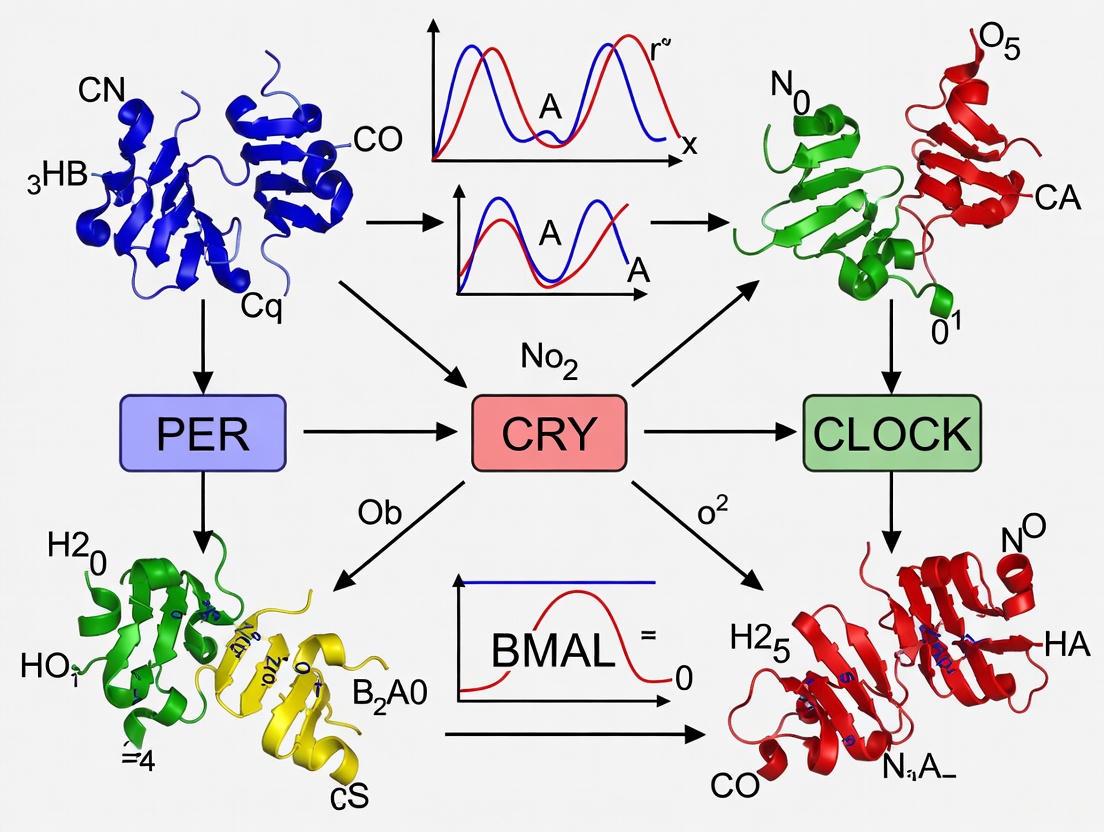
This article synthesizes current knowledge on the core mammalian circadian clock genes—PER, CRY, BMAL, and CLOCK.
PER, CRY, BMAL, and CLOCK: Decoding the Molecular Clockwork for Therapeutic Innovation
Abstract
This article synthesizes current knowledge on the core mammalian circadian clock genes—PER, CRY, BMAL, and CLOCK. It explores the foundational transcriptional-translational feedback loops that generate 24-hour rhythms and examines the intricate protein-protein interactions and post-translational modifications that ensure precision. The scope extends to methodological advances for monitoring and manipulating clock function, the pathological consequences and troubleshooting of circadian disruption, and the validation of clock components as drug targets. Finally, it discusses the translational application of this knowledge in developing chronotherapies and small-molecule modulators for diseases like insomnia, cancer, and inflammatory disorders, providing a comprehensive resource for researchers and drug development professionals.
The Core Clockwork: Unraveling the Transcriptional Feedback Loops and Protein Complexes
Architecture of the Core Transcriptional-Translational Feedback Loop (TTFL)
Molecular Mechanism of the Core TTFL
The mammalian circadian clock is an endogenous timekeeping system that generates ~24-hour rhythms in physiological processes and behavior. This rhythm is produced at a cellular level by a core Transcriptional-Translational Feedback Loop (TTFL) composed of a set of core clock genes and their protein products [1] [2] [3].
The core TTFL operates through a precisely timed cycle of gene transcription, protein translation, and negative feedback. The key components are:
- Activators: CLOCK (or its paralog NPAS2) and BMAL1 form the heterodimeric transcriptional activator complex [1] [3].
- Repressors: PERIOD (PER1, PER2, PER3) and CRYPTOCHROME (CRY1, CRY2) proteins constitute the repressor arm of the loop [1] [2].
- Post-translational Regulators: Casein kinases CK1δ/ε and the FBXL3/FBXL21 ubiquitin ligase complexes regulate protein stability [2] [3].
The CLOCK-BMAL1 heterodimer binds to E-box enhancer elements (CACGTG) in the promoter regions of target genes, including Per and Cry genes. This binding initiates the transcription of these repressor genes. After translation in the cytoplasm, PER and CRY proteins form multimetric complexes that translocate back into the nucleus to directly inhibit CLOCK-BMAL1 transcriptional activity. This constitutes the critical negative feedback that closes the loop [1] [2] [3].
The stability and nuclear translocation of the repressor complex are regulated by phosphorylation events. CK1δ/ε phosphorylate PER proteins, while AMPK phosphorylates CRY proteins. These phosphorylation events trigger polyubiquitination by SCF E3 ubiquitin ligase complexes (β-TrCP for PER; FBXL3 for CRY), targeting them for proteasomal degradation. As PER and CRY proteins are degraded, the repression of CLOCK-BMAL1 is relieved, allowing a new cycle of transcription to begin [2] [3].
Auxiliary Feedback Loops and System Architecture
The core TTFL is stabilized and reinforced by auxiliary feedback loops that provide additional layers of regulation [2] [3].
The REV-ERB/ROR Loop
The CLOCK-BMAL1 complex also activates the transcription of nuclear receptor genes Rev-erbα/β. The REV-ERB proteins compete with ROR proteins (RORα, RORβ, RORγ) for binding to ROR-responsive elements (RREs) in the Bmal1 promoter. REV-ERBs act as transcriptional repressors, while RORs act as activators. This creates a stabilizing feedback loop that generates antiphase oscillations in Bmal1 transcription [2] [3] [4].
The D-Box Loop
A third regulatory loop involves D-box enhancer elements, which are bound by the transcriptional activator DBP (D-site albumin-binding protein) and the repressor NFIL3 (E4BP4). Both Dbp and Nfil3 expression are regulated by the core clock machinery, creating another interlocked oscillator that contributes to the overall robustness of the circadian system [2].
The hierarchical organization of the mammalian circadian system features a master pacemaker in the suprachiasmatic nucleus (SCN) of the hypothalamus, which synchronizes peripheral clocks in virtually all tissues and organs throughout the body. The SCN receives light input directly from the retina via the retinohypothalamic tract, allowing it to entrain to the external light-dark cycle. It then coordinates peripheral oscillators through neural, endocrine, and behavioral signals [1] [2] [3].
Quantitative Analysis of Circadian Complexes
Advanced biochemical studies have characterized the precise composition and physical properties of the core circadian complexes, providing insights into the molecular architecture of the TTFL.
Table 1: Physical Properties of Core Circadian Complexes [5]
| Complex Name | Molecular Weight | Sedimentation Coefficient (S) | Stokes Radius (nm) | Core Components |
|---|---|---|---|---|
| CLOCK-BMAL1 Activator | 255 kDa | 7.9S | 7.7 nm | CLOCK, BMAL1 |
| PER-CRY-CK1δ Repressor | 707 kDa | 15.6S | 10.79 nm | PER1/2/3, CRY1/2, CK1δ |
Table 2: Regulatory Roles of Core Clock Components
| Component | Role in TTFL | Regulation | Mutant Phenotype |
|---|---|---|---|
| CLOCK | Transcriptional activator; heterodimerizes with BMAL1 | Phosphorylation modulates activity [6] | Reduces amplitude but maintains rhythm [7] |
| BMAL1 | Essential transcriptional activator partner | Transcriptional (RRE), post-translational degradation [4] | Complete arrhythmia [8] [7] |
| PER1/2 | Core repressors; facilitate CRY nuclear translocation | CK1δ/ε phosphorylation, FBXL3 ubiquitination [2] [3] | Arrhythmia or period shortening in double mutants [7] |
| CRY1/2 | Direct transcriptional repressors; block CLOCK-BMAL1 transactivation | AMPK phosphorylation, FBXL3 ubiquitination [2] [3] | Short period and eventual arrhythmia in double mutants [7] |
Research using glycerol gradient centrifugation and gel filtration chromatography of mouse liver extracts has confirmed that the circadian system operates through discrete protein complexes rather than a single large "clockosome." The CLOCK-BMAL1 activator complex and the PER-CRY-CK1δ repressor complex exist as separate entities that interact during the repression phase of the cycle [5].
Two distinct biochemical mechanisms for transcriptional repression have been identified:
- Blocking-type repression: CRY alone binds to the CLOCK-BMAL1 activation complex and directly represses its transcriptional activity.
- Dissociation-type repression: The PER-CK1δ complex, in a CRY-dependent manner, promotes the removal of CLOCK-BMAL1 from E-box elements [5].
Interestingly, PER and CRY proteins exhibit a complex relationship in regulating CLOCK phosphorylation. While CRY impairs BMAL1-dependent CLOCK phosphorylation, PER1 and PER2 (but not PER3) protect this phosphorylation against CRY-mediated effects. This functional difference may explain the phenotypic variations observed in mice lacking different Per genes [6].
Advanced Research Methodologies
Biochemical Characterization of Circadian Complexes
The quantitative data on circadian complexes presented in Table 1 was obtained through sophisticated biochemical approaches [5]:
Glycerol Gradient Centrifugation Protocol:
- Prepare nuclear extracts from mouse livers harvested at precise circadian time points (e.g., ZT0, ZT6, ZT12, ZT16, ZT19)
- Mix extracts with protein molecular weight markers
- Subject to glycerol gradient centrifugation (typically 10-40% gradients)
- Fractionate gradients and analyze fractions by Western blotting for specific circadian proteins
- Determine sedimentation coefficients by comparison with standards
Gel Filtration Chromatography Protocol:
- Prepare nuclear extracts from circadian-time-matched samples
- Pre-calibrate sizing column with standard proteins of known Stokes radii
- Apply samples to column and collect fractions
- Analyze fractions by Western blotting for circadian proteins
- Calculate molecular weights using both sedimentation coefficients and Stokes radii
Immunoprecipitation-Mass Spectrometry Analysis:
- Perform immunoprecipitation using antibodies against core clock proteins (e.g., anti-PER2, anti-CRY1)
- Wash complexes thoroughly to remove non-specific interactions
- Digest bound proteins with trypsin
- Analyze peptides by liquid chromatography-tandem mass spectrometry (LC-MS/MS)
- Identify specific complex components and potential novel interactors
Genetic and Molecular Biology Approaches
Circadian Reporter Assays:
- PER2::LUCIFERASE knock-in mice: Generate mice with luciferase cDNA knocked into the Per2 locus, enabling real-time monitoring of circadian rhythms in explanted tissues using photomultiplier tubes [6].
- Real-time monitoring in cells: Transfert NIH3T3 cells with circadian reporter constructs (e.g., Bmal1-dLuc) and monitor bioluminescence rhythms in living cells using luminometry [4].
CRISPR-Cas9 Gene Editing:
- Generate mutant cell lines and mice with specific disruptions in regulatory elements (e.g., ΔRRE mutants with deleted RRE elements in the Bmal1 promoter) [4].
- Create targeted mutations in core clock genes to study structure-function relationships [7].
Research Reagent Solutions Toolkit
Table 3: Essential Research Reagents for Circadian Biology Studies
| Reagent Category | Specific Examples | Research Application | Key Features/Functions |
|---|---|---|---|
| Cell Lines | NIH3T3 fibroblasts [6] [4] | In vitro circadian rhythm studies | Contain functional cell-autonomous circadian clock; responsive to serum shock synchronization |
| Animal Models | PER2::LUC knock-in mice [6] [4] | Ex vivo tissue rhythm monitoring | Real-time bioluminescence recording from explanted tissues (SCN, liver, etc.) |
| Bmal1-ΔRRE mutant mice [4] | Study of auxiliary feedback loops | Disrupted RRE-mediated Bmal1 transcription while maintaining core clock function | |
| Molecular Tools | Bmal1-dLuc reporter [4] | Circadian transcriptional activity | Monitor Bmal1 promoter activity in real-time; assesses RRE function |
| pcDNA3-clock protein expression vectors [6] | Overexpression studies | Epitope-tagged (c-Myc, HA) clock proteins for transfection experiments | |
| Biochemical Reagents | Anti-PER2 antibodies [5] [6] | Immunoprecipitation, Western blot | Specific detection of PER2 protein in complex analyses |
| Anti-CRY1 antibodies [5] | Complex characterization | Immunoprecipitation of CRY1-containing complexes for proteomics | |
| Proteasome inhibitors (MG132) [3] | Protein degradation studies | Block ubiquitin-proteasome pathway to study clock protein stability | |
| Kinase Modulators | Casein kinase inhibitors (PF-670462) [6] | Post-translational regulation studies | Selective CKIε/δ inhibitor; alters PER phosphorylation and stability |
| Erbstatin analog [6] | CLOCK phosphorylation studies | Tyrosine kinase inhibitor that attenuates BMAL1-dependent CLOCK phosphorylation |
Implications for Therapeutic Development
The intricate architecture of the core TTFL presents numerous potential targets for pharmacological intervention in circadian-related disorders. Recent advances include:
BMAL1-Targeted Therapeutics: The development of CCM (Core Circadian Modulator), a small molecule that binds to the PAS-B domain of BMAL1, represents a breakthrough in directly targeting core clock components. CCM binding induces conformational changes in BMAL1, altering its function as a transcription factor and modulating circadian and immune pathways [8].
Chronotherapeutic Applications: Understanding the circadian regulation of DNA repair pathways has significant implications for cancer chronotherapy. Studies using clock gene mutant mice (Cry1/2, Per1/2, and Bmal1 mutants) have revealed that the circadian clock differentially regulates nucleotide excision repair on the transcribed and non-transcribed strands of cycling genes. These findings provide a mechanistic basis for optimizing timing of platinum-based chemotherapy to maximize efficacy and minimize toxicity [7].
The architectural robustness of the circadian TTFL, with its interlocked feedback loops and multiple regulatory layers, ensures precise 24-hour timekeeping while maintaining flexibility to adapt to changing environmental conditions. This sophisticated molecular framework continues to reveal new insights into the fundamental mechanisms of circadian biology and their applications in human health and disease.
The mammalian circadian clock is driven by an autoregulatory transcriptional feedback loop that operates with approximately 24-hour periodicity. At the core of this molecular oscillator is the CLOCK:BMAL1 heterodimeric complex, a transcription factor that initiates the circadian transcriptional cascade by binding to specific DNA sequences known as E-box elements [9] [3]. This heterodimer belongs to the basic helix-loop-helix PER-ARNT-SIM (bHLH-PAS) family of transcription factors and serves as the primary positive regulator within the circadian clock mechanism [9]. The structural basis of CLOCK:BMAL1 heterodimerization and its transcriptional activation function represents a fundamental aspect of circadian biology with broad implications for physiology, disease, and therapeutic development. This technical guide examines the atomic-level details of CLOCK:BMAL1 structure, its DNA binding mechanisms, and the experimental approaches used to characterize this essential transcriptional activator complex.
Structural Architecture of the CLOCK:BMAL1 Heterodimer
The crystal structure of the mouse CLOCK:BMAL1 bHLH-PAS domains (PDB ID: 4F3L) was determined at 2.3 Å resolution, revealing an unusual asymmetric heterodimer with extensive domain intertwining [9] [10] [11]. Each subunit contains three distinct domains: an N-terminal bHLH domain followed by two tandem PAS domains (PAS-A and PAS-B). These domains are tightly intertwined and participate in dimerization interactions, resulting in three distinct protein interfaces between the corresponding domains of CLOCK and BMAL1 [9].
The spatial arrangement of these domains differs strikingly between the two subunits. In BMAL1, the second helix of the bHLH domain (α2) is nearly continuous with the N-terminal flanking helix (A′α) of the PAS-A domain, despite a ~15 residue flexible loop (L1) insertion. In contrast, CLOCK exhibits a substantial ~23Å displacement between the end of α2 and the beginning of the PAS-A A′α helix, bringing the CLOCK PAS-A domain into direct contact with the α2 helix of its own bHLH domain [9].
Structural Asymmetry and Electrostatic Properties
The CLOCK:BMAL1 heterodimer displays significant structural and electrostatic asymmetry. The BMAL1 subunit has an overall positive electrostatic potential with a theoretical pI of 9.01, while the CLOCK subunit exhibits a negative electrostatic potential with a pI of 5.86 [9]. This charge distribution creates a dichotomy in potential interaction surfaces, with exposed CLOCK PAS domains displaying largely negative electrostatic potential, while exposed BMAL1 PAS domains are mostly positively charged or neutral. This electrostatic asymmetry likely contributes to differential interactions with regulatory proteins such as PER1, PER2, CRY1, and CRY2 [9].
Table 1: Key Structural Features of CLOCK:BMAL1 Domains
| Domain | Structural Features | Interface Characteristics | Conserved Elements |
|---|---|---|---|
| bHLH | Basic region mediates DNA contact; helix-loop-helix mediates dimerization | Direct interaction between CLOCK and BMAL1 bHLH domains | Conserved DNA-binding residues in basic region |
| PAS-A | Typical PAS fold with five-stranded antiparallel β-sheet and flanking α-helices | Domain-swapped helical interface with A'α helix | Hydrophobic residues (Phe104, Leu105, Leu113 in CLOCK) |
| PAS-B | Canonical PAS domain structure connected to PAS-A by flexible linker | Primarily mediated by ~26Å translation | Less conserved than PAS-A interfaces |
| Linkers | L1 (bHLH-PAS-A): ~15 residues in BMAL1; L2 (PAS-A-PAS-B): ~15 residues | Varies between subunits; CLOCK L2 buried at interface | Differential flexibility between subunits |
PAS Domain Interfaces
PAS-A Dimerization Interface
The PAS-A domains of CLOCK and BMAL1 adopt typical PAS folds but mediate heterodimerization through a domain-swapped helical interface [9]. Both PAS-A domains contain an N-terminal flanking helix (A′α) external to the canonical PAS-domain fold. These A′α helices pack between the β-sheet faces of the opposing subunits: the CLOCK PAS-A A′α helix contacts the β-sheet face of BMAL1 PAS-A, while the BMAL1 PAS-A A′α helix interacts with the β-sheet face of CLOCK PAS-A [9].
This interface is largely mediated by conserved hydrophobic interactions. In CLOCK, Phe104, Leu105, and Leu113 on the A′α helix contact a hydrophobic region on BMAL1 PAS-A comprising Leu159 (strand Aβ), Thr285 and Tyr287 (Hβ), and Val315 and Ile317 (strand Iβ) [9]. A similar interface exists between the BMAL1 A′α helix and CLOCK PAS-A domain. The two PAS-A domains form a parallel dimer with an extensive buried surface area of approximately 1950 Ų, featuring topologically complex interfaces between subunits.
PAS-B Arrangement and Linker Flexibility
The PAS-B domains are connected to their respective PAS-A domains by ~15 residue linkers (L2), though the conformation and flexibility of these linkers differ between subunits [9]. In CLOCK, a substantial portion of L2 is buried at the subunit interface and is well-ordered. In contrast, the BMAL1 L2 linker is solvent-exposed and highly flexible, as indicated by high atomic displacement parameters (B-factors) [9]. The PAS-B domains of CLOCK and BMAL1 are related primarily by a ~26Å translation, further contributing to the overall asymmetry of the heterodimer.
Figure 1: Domain Organization and Interaction Interfaces in the CLOCK:BMAL1 Heterodimer. The complex shows extensive domain intertwining with three major interaction interfaces between corresponding domains. Both subunits contain bHLH, PAS-A, and PAS-B domains connected by flexible linkers (L1 and L2).
Transcriptional Activation via E-Box Elements
DNA Binding Mechanism
The CLOCK:BMAL1 heterodimer activates transcription by binding to canonical E-box sequences (CACGTG) present in the promoters of target genes [9] [12]. The bHLH domains of both subunits mediate DNA binding, with the basic regions making direct contacts with the E-box sequence. Experimental assays demonstrate that CLOCK:BMAL1 binds to E-box elements from the mPer1 and mPer2 promoters with high affinity, exhibiting dissociation constants (Kd) of approximately 10 nM [9].
CLOCK:BMAL1 binding to E-box elements exhibits circadian rhythmicity in vivo, with peak binding occurring during the daytime in mammals [12]. This rhythmic DNA binding drives daily oscillations in the transcription of core clock genes (Per1, Per2, Cry1, Cry2) and clock-controlled output genes such as Dbp [12] [13]. At the Dbp locus, CLOCK:BMAL1 binding is highly circadian and strictly dependent on the heterodimerization of both subunits [13].
Chromatin Remodeling and Transcriptional Regulation
Upon binding to E-box elements, CLOCK:BMAL1 recruits chromatin-modifying enzymes and components of the transcriptional machinery to activate gene expression [3] [14]. This recruitment promotes a series of epigenetic modifications that create a transcriptionally permissive environment:
- Histone acetylation: CLOCK:BMAL1 recruits histone acetyltransferases p300 and CBP, mediating acetylation of H3K9 and H3K27 [14]
- Histone methylation: Recruitment of histone methyltransferases MLL1 and MLL3 promotes tri-methylation of H3K4 [14]
- Nucleosome remodeling: CLOCK:BMAL1 binding promotes rhythmic nucleosome removal, generating a chromatin landscape favorable for transcription factor binding [14]
These chromatin transitions are particularly well-characterized at the Dbp locus, where CLOCK:BMAL1 binding coincides with rhythmic acetylation of Lys9 on histone H3, trimethylation of Lys4 on histone H3, and reduced histone density during the activation phase [12]. During repression, these permissive marks are replaced by dimethylation of Lys9 on histone H3, binding of heterochromatin protein 1α, and increased histone density [12].
Dynamic Binding and Proteasome-Dependent Regulation
CLOCK:BMAL1 associations with chromatin are highly dynamic and display proteasome-dependent fluctuations [13]. Real-time imaging of BMAL1 binding to tandem arrays of Dbp repeats reveals that BMAL1-CLOCK interactions with E-boxes are extremely unstable, with rapid binding and dissociation events even at peak transcriptional times [13].
Proteasome inhibition prolongs the residence time of BMAL1-CLOCK on chromatin but paradoxically attenuates transcription of target genes like Dbp [13]. This suggests that rapid turnover of the activator complex is required for continuous transcription, leading to the "Kamikaze activator" model where CLOCK:BMAL1 undergoes rapid degradation once bound to chromatin to enable multiple rounds of initiation [13].
Table 2: CLOCK:BMAL1 Target Genes and Regulatory Functions
| Target Gene | E-box Location | Function | Regulatory Impact |
|---|---|---|---|
| Per1, Per2 | Promoter regions | Core clock components | Negative feedback regulators |
| Cry1, Cry2 | Promoter regions | Core clock components | Negative feedback regulators |
| Dbp | Multiple intragenic and extragenic sites | Output regulator | Circadian transcription regulation |
| Rev-erbα/β | Promoter regions | Nuclear receptors | Stabilization of circadian oscillation |
| Avp | Promoter E-box | Neuropeptide signaling | SCN output signal |
Experimental Methodologies and Research Tools
Structural Biology Approaches
Protein Expression and Purification
For structural studies, researchers expressed N-terminal His-tagged mouse CLOCK (residues 26-384) and native mouse BMAL1 (residues 62-447) constructs in Sf9 insect cells using baculovirus-mediated co-expression systems [9]. The complex was co-purified using affinity and size-exclusion chromatography to obtain stable heterodimeric protein suitable for crystallographic analysis [9].
Crystallization and Structure Determination
Crystals of CLOCK:BMAL1 were obtained that diffracted to 2.3Å resolution at synchrotron sources [9] [11]. The phase problem was solved using the single wavelength anomalous dispersion (SAD) method with selenomethionine-labeled CLOCK:BMAL1 crystals [9]. Data collection and refinement statistics are available in the original publication (PDB ID: 4F3L) [11].
DNA Binding Assays
Electrophoretic mobility shift assays (EMSAs) were used to characterize CLOCK:BMAL1 binding to E-box sequences [9]. These assays confirmed high-affinity binding (Kd ~10 nM) to oligonucleotides containing the canonical E-box sequence (CACGTG) from mPer1 and mPer2 promoters [9].
Live-Cell Imaging of Chromatin Binding
To investigate the kinetics of BMAL1 binding to target genes in real time, researchers generated cell lines harboring tandem arrays of Dbp repeats and monitored binding of fluorescent BMAL1 fusion proteins using time-lapse microscopy [13]. This approach revealed the highly dynamic, proteasome-dependent nature of CLOCK:BMAL1 chromatin interactions.
Figure 2: Experimental Workflow for CLOCK:BMAL1 Functional and Structural Characterization. A multi-step approach combining biochemical, structural, and cell biological methods is essential for comprehensive analysis of CLOCK:BMAL1 function.
Research Reagent Solutions
Table 3: Essential Research Reagents for CLOCK:BMAL1 Studies
| Reagent/Tool | Specifications | Experimental Application | Key Features |
|---|---|---|---|
| CLOCK:BMAL1 Protein Constructs | Mouse residues 26-384 (CLOCK) and 62-447 (BMAL1) | Structural studies and in vitro assays | bHLH-PAS-A-PAS-B domains with N-terminal His tag on CLOCK |
| E-box Oligonucleotides | Canonical sequence: CACGTG from mPer1/mPer2 promoters | DNA binding assays (EMSA) | High-affinity binding (Kd ~10 nM) |
| Sf9 Insect Cell System | Baculovirus-mediated co-expression | Protein production for structural studies | Proper folding and heterodimer formation |
| DBP Reporter Cell Line | Tandem arrays of Dbp repeats with luciferase | Real-time binding and transcription imaging | Monitoring dynamic binding and transcriptional activity |
| CRISPR-Cas9 System | RRE element deletion in Bmal1 promoter | Functional studies of transcriptional regulation | Disruption of RRE-mediated feedback loop |
Functional Significance in Circadian Regulation
Role in Core Circadian Feedback Loops
The CLOCK:BMAL1 heterodimer initiates the core negative feedback loop of the mammalian circadian clock [9] [3]. By activating transcription of Per and Cry genes, it sets in motion a sequence of events that leads to its own inhibition: PER and CRY proteins accumulate, form complexes, translocate to the nucleus, and directly interact with CLOCK:BMAL1 to repress transcription [9]. As PER and CRY complexes are degraded by specific E3 ubiquitin ligases, repression is relieved, allowing CLOCK:BMAL1 to initiate a new cycle of transcription [9].
This core loop is interlocked with a secondary feedback loop involving ROR and REV-ERB proteins that regulate Bmal1 transcription through ROR response elements (RREs) in its promoter [4] [3]. While this RRE-mediated loop is not essential for rhythm generation, it provides stability and robustness to the circadian system, making it more resistant to perturbations [4].
Integration with Physiological Processes
The CLOCK:BMAL1 heterodimer serves as a key interface between the core circadian clock and diverse physiological processes. Recent research has revealed non-canonical functions of BMAL1, including formation of a transcriptionally active heterodimer with HIF2A that modulates circadian variations in myocardial injury [15]. This BMAL1-HIF2A complex regulates the rhythmic expression of amphiregulin (AREG), contributing to diurnal patterns in infarct size following myocardial infarction [15].
The heterodimer also participates in regulating numerous other processes, including cell proliferation, DNA damage repair, angiogenesis, metabolic homeostasis, and immune responses [3]. This broad regulatory scope reflects the extensive reach of the circadian system in temporal organization of physiology.
The CLOCK:BMAL1 heterodimer represents the cornerstone of the mammalian circadian transcriptional machinery. Its unusual asymmetric structure, with extensively intertwined bHLH-PAS domains, facilitates high-affinity binding to E-box elements and recruitment of transcriptional co-activators. The dynamic nature of CLOCK:BMAL1 chromatin interactions, coupled with proteasome-dependent turnover, enables precise temporal control of target gene expression. Continuing research on this essential transcriptional complex promises to yield deeper insights into circadian timekeeping mechanisms and their implications for human health and disease, particularly in developing chronotherapeutic approaches that align treatments with endogenous circadian rhythms for enhanced efficacy and reduced side effects.
The PER:CRY complex constitutes the core repressor arm of the mammalian circadian clock, executing critical negative feedback within the transcription-translation feedback loop (TTFL). This in-depth technical guide synthesizes current mechanistic understanding of PER:CRY heterocomplex formation, its regulated nuclear translocation, and its multifaceted role in repressing CLOCK:BMAL1-driven transcription. We detail the molecular mechanisms of action, from initial cytoplasmic dimerization to active nuclear import and subsequent displacement of activators from DNA. The document provides a comprehensive quantitative analysis of protein dynamics and abundances, standardized experimental methodologies for investigating these processes, and an overview of essential research tools. This resource is intended to equip researchers and drug development professionals with the foundational knowledge and technical frameworks necessary to advance investigations into circadian biology and its therapeutic applications.
The mammalian circadian clock is a cell-autonomous oscillator that coordinates physiological processes with the 24-hour solar cycle. At its core is the transcription-translation feedback loop (TTFL), where the PER:CRY complex functions as the primary negative regulator [2] [3]. The heterodimeric transcription factor CLOCK:BMAL1 activates the expression of numerous clock-controlled genes, including the Period (Per1, Per2, Per3) and Cryptochrome (Cry1, Cry2) genes [3]. Following translation, PER and CRY proteins form heterocomplexes in the cytoplasm. Their subsequent regulated nuclear translocation is a critical, rate-limiting step for the negative feedback process. Within the nucleus, the PER:CRY complex suppresses its own transcription by inhibiting the transcriptional activity of CLOCK:BMAL1, thereby completing the feedback loop with a period of approximately 24 hours [16] [2]. This review dissects the molecular machinery governing the formation, transport, and repressive function of the PER:CRY complex, providing a technical foundation for research and therapeutic development.
Molecular Mechanism of PER:CRY Complex Formation and Nuclear Translocation
Cytoplasmic Complex Assembly and Phosphorylation Primitives
Following their translation, PER and CRY proteins dimerize in the cytoplasm. This interaction is facilitated by specific protein domains and is a prerequisite for the efficient nuclear entry of the complex. While both proteins can contain nuclear localization signals (NLS), the primary interaction with the nuclear import machinery is mediated by PER proteins [17]. Casein kinases, particularly CK1δ/ε, play a pivotal role in priming the complex for nuclear translocation and subsequent activity by phosphorylating PER proteins. This phosphorylation occurs on specific residues and can influence the stability, interaction capability, and subcellular localization of the complex [16].
KPNB1-Mediated Nuclear Import
The regulated nuclear entry of the PER:CRY complex is primarily mediated by KPNB1 (Importin β), a key nuclear import receptor [17]. RNAi depletion of KPNB1 results in the cytoplasmic trapping of PER proteins and PER:CRY complexes, effectively blocking their nuclear entry and abolishing circadian rhythmicity in human cells [17]. KPNB1 interacts more strongly with PER proteins than with CRY proteins, indicating that PER serves as the primary cargo for nuclear import [17]. This nuclear transport occurs in a circadian fashion, with the interaction peaking when the repressor complex is required in the nucleus. Notably, KPNB1 directs this nuclear transport independently of its classical partner, importin α, revealing a specific and dedicated pathway for the core clock repressors [17]. The conservation of this mechanism is highlighted by the fact that inducible inhibition of the Drosophila importin β homolog in lateral neurons abolishes circadian behavior in flies [17].
Table: Key Proteins in PER:CRY Nuclear Translocation
| Protein | Role in Translocation | Key Findings |
|---|---|---|
| KPNB1 (Importin β) | Primary nuclear import receptor | Binds directly to PER; essential for nuclear entry of PER:CRY complex; functions independently of importin α [17]. |
| PER1/PER2 | Primary cargo for import machinery | Contains functional NLS; direct interaction with KPNB1 is crucial for complex translocation [17]. |
| CRY1/CRY2 | Cooperative partner in complex | Enhances complex formation; its presence can influence the efficiency of PER nuclear localization [17]. |
| CK1δ/ε | Kinase priming the complex | Phosphorylates PER, which can influence complex stability and its readiness for nuclear import and function [16]. |
Dynamic Nuclear Localization and Protein Mobility
Once in the nucleus, the dynamics of PER:CRY complexes are more intricate than previously thought. Quantitative live-cell imaging of endogenously tagged proteins in mouse suprachiasmatic nucleus (SCN) slices reveals a spectrum of spatio-temporal behaviors [18]. Contrary to the simple model where PER and CRY are always complexed in the same place and time, they are often segregated in circadian time and cellular space [18]. Measurements of nuclear-to-cytoplasmic (Nuc:Cyto) ratios show that PER2 is the least nuclear of the core repressors (~27% cytoplasmic), followed by CRY1 (~9% cytoplasmic) [18]. Furthermore, Fluorescence Recovery After Photobleaching (FRAP) analyses demonstrate that these proteins exist in multiple mobility pools within the nucleus. PER2 has the smallest immobile fraction (~35%), indicating it is the most dynamic, while CRY1 has a larger immobile fraction (~50%), consistent with its role in stable binding to transcriptional complexes [18]. This suggests a model where PER2 and CRY1 may interact transiently at specific sites and times to execute repressive functions, rather than existing as a stable, monolithic complex throughout the night.
Mechanisms of Transcriptional Repression
The PER:CRY complex employs two distinct but complementary mechanisms to repress CLOCK:BMAL1-mediated transcription: a blocking mechanism and a displacement mechanism.
Blocking Repression by CRY
The CRY-mediated "blocking" repression occurs when CRY (primarily CRY1) directly binds to the CLOCK:BMAL1 heterodimer while it is still associated with E-box DNA [16]. This interaction, which involves the PAS domain core of CLOCK:BMAL1 and the BMAL1 transactivation domain, leaves the DNA binding intact but sterically hinders the recruitment of essential transcriptional co-activators [19]. This mechanism effectively shuts down transcription without evicting the activator complex from the chromatin.
Displacement Repression by the PER:CRY Complex
The PER:CRY-mediated "displacement" repression is a more active process that results in the physical removal of the CLOCK:BMAL1 complex from E-box elements [16]. This process is critically dependent on the kinase CK1δ [16]. The current model posits that the PER:CRY complex recruits CK1δ to CLOCK:BMAL1-bound promoters. PER2 contains specific casein kinase binding domains (CKBDs), and mutations in these domains abolish displacement repression [16]. Once localized, CK1δ phosphorylates CLOCK at multiple sites, which acts as a signal for the dissociation of the entire CLOCK:BMAL1 complex, along with CRY, from the DNA [16]. This phosphorylation-dependent displacement is a crucial step for the robust cycling of the molecular clock.
Table: Modes of Transcriptional Repression by the PER:CRY Complex
| Repression Mode | Key Effector | Molecular Action | Outcome |
|---|---|---|---|
| Blocking | CRY1 | Binds CLOCK:BMAL1 on DNA; prevents co-activator recruitment [16] [19]. | Transcriptional inhibition without complex displacement. |
| Displacement | PER:CRY with CK1δ | Recruits CK1δ to promoters; phosphorylates CLOCK; dissociates complex from DNA [16]. | Physical removal of CLOCK:BMAL1 from E-box. |
Diagram: Mechanism of PER:CRY Nuclear Translocation and Transcriptional Repression. The diagram illustrates the key steps from complex formation in the cytoplasm to the two distinct modes of repression (blocking and displacement) in the nucleus.
Quantitative Dynamics of Core Clock Proteins
A comprehensive understanding of the circadian clock requires quantitative data on the abundance, localization, and interactions of its core components.
Protein Abundance and Stoichiometry
Recent studies using knock-in fluorescent reporter mice have quantified the absolute abundances of core clock proteins in native tissues. In SCN neurons, CRY1 and BMAL1 are present at levels that match or exceed those of PER2, positioning PER2 as a potential limiting factor for repressive complex formation [18]. The maximum amplitude of PER2 cycling is approximately 12,000 copies per cell in fibroblasts [19]. The stoichiometric balance between activators and repressors is critical for proper clock function, and even small perturbations can alter the circadian period.
Binding Kinetics and Residence Times
The interaction dynamics between clock proteins and DNA are fundamental to the clock's timing mechanism. Fluorescence Correlation Spectroscopy (FCS) and FRAP experiments have quantified that the CLOCK:BMAL1 heterodimer has a DNA residence time of approximately 4.13 seconds [19]. This residence time is dependent on functional DNA-binding domains, as demonstrated by the significantly reduced residence time (2.83 s) of a BMAL1 DNA-binding mutant (L95E) [19]. The repressive PER:CRY complex functions, in part, by altering these binding kinetics. Increasing concentrations of PER2:CRY1 promote the removal of BMAL1:CLOCK from DNA, thereby enhancing the complex's ability to move to new target sites and redistributing the finite pool of activators [19].
Table: Quantitative Dynamics of Core Circadian Proteins in the Nucleus
| Protein / Complex | Quantitative Measure | Value / Finding | Technical Method |
|---|---|---|---|
| PER2 | Nuclear:Cytoplasmic Ratio (Mean) | ~4 (Least nuclear) [18] | Quantitative Live-Cell Imaging |
| CRY1 | Nuclear:Cytoplasmic Ratio (Mean) | ~11 (Intermediate) [18] | Quantitative Live-Cell Imaging |
| BMAL1 | Nuclear:Cytoplasmic Ratio (Mean) | ~18 (Most nuclear) [18] | Quantitative Live-Cell Imaging |
| CLOCK:BMAL1 | DNA Residence Time | 4.13 seconds (95% CI, 0.57) [19] | Fluorescence Recovery After Photobleaching (FRAP) |
| CLOCK:BMAL1 (L95E Mutant) | DNA Residence Time | 2.83 seconds (95% CI, 0.54) [19] | Fluorescence Recovery After Photobleaching (FRAP) |
| PER2 | Maximum Abundance (Fibroblasts) | ~12,000 copies per cell [19] | Quantitative Imaging / FCS |
| CRY1, BMAL1 vs. PER2 | Relative Molecular Abundance | CRY1 and BMAL1 levels match or exceed PER2 [18] | Quantitative Live-Cell Imaging |
Essential Research Tools and Methodologies
The Scientist's Toolkit: Key Research Reagents
Table: Essential Reagents for Investigating the PER:CRY Complex
| Research Reagent / Tool | Function and Application | Key Example / Note |
|---|---|---|
| Knock-in Fluorescent Reporter Mice | Enables live imaging of endogenous protein localization, abundance, and dynamics in native tissues (e.g., SCN slices). | PER2::Venus; CRY1::mRuby3; Venus::BMAL1 mouse lines [18] [19]. |
| CK1δ/ε Inhibitors | Pharmacological tool to dissect the role of kinase activity in PER phosphorylation and complex displacement. | PF670462 (CK1δ/ε inhibitor) blocks PER-mediated displacement of CLOCK:BMAL1 from DNA [16]. |
| CRISPR/Cas9 Gene Knockout | Generation of cell lines lacking specific clock components to study their necessity in the TTFL. | Per1/2-/-; Ck1δ-/- cells show abolished PER-mediated displacement [16]. |
| Inducible Nuclear Transport System | Controlled, acute delivery of clock proteins to the nucleus to study direct, downstream effects. | PER2–Estrogen Receptor fusion protein (PER2-ER*) activated by 4-hydroxytamoxifen (4-OHT) [16]. |
| Dominant-Negative Mutants | To study the function of specific protein domains or interactions without full gene knockout. | BMAL1 L95E (DNA-binding mutant) reduces DNA residence time and transcriptional output [19]. |
Standardized Experimental Protocols
Chromatin Immunoprecipitation (ChIP) for E-box Binding Dynamics
Purpose: To quantify the temporal binding of core clock components (CLOCK, BMAL1, CRY) to specific E-box promoter elements (e.g., on the Nr1d1 gene) in response to PER:CRY nuclear entry [16].
Detailed Workflow:
- Cell System: Use a genetically modified cell line (e.g., Per1/2-/- MEFs) stably expressing an inducible nuclear protein like PER2-ER*.
- Treatment & Crosslinking: At desired circadian times or after induction of nuclear entry (e.g., with 4-OHT), treat cells with formaldehyde to crosslink proteins to DNA.
- Cell Lysis and Chromatin Shearing: Lyse cells and sonicate chromatin to shear DNA into fragments of 200-1000 bp.
- Immunoprecipitation: Incubate chromatin with validated antibodies specific to the protein of interest (e.g., anti-BMAL1, anti-CLOCK, anti-CRY1) or control IgG. Capture antibody-chromatin complexes.
- Washing, Elution, and Reverse Crosslinking: Wash beads stringently, elute the complexes, and reverse the crosslinks by heating.
- DNA Purification and Analysis: Purify the DNA and analyze the enrichment of the target E-box sequence using quantitative PCR (qPCR). Compare to input DNA and IgG controls.
Key Application: This protocol can be used with kinase inhibitors (e.g., PF670462) to demonstrate the requirement of CK1δ activity for the PER-mediated displacement of CLOCK:BMAL1 from DNA [16].
Live-Cell Protein Dynamics via Fluorescence Recovery After Photobleaching (FRAP)
Purpose: To measure the mobility and binding kinetics (e.g., DNA residence time) of fluorescently tagged clock proteins in living cells [19].
Detailed Workflow:
- Cell Preparation: Use cells (e.g., NIH/3T3 fibroblasts) expressing fluorescent fusion proteins (e.g., BMAL1::EGFP) via lentiviral transduction or derived from knock-in models.
- Image Acquisition: Place cells on a confocal microscope with an environmental chamber (37°C, 5% CO₂). Select a nucleus for analysis.
- Photobleaching: Define a region of interest (ROI) within the nucleus and subject it to a high-intensity laser pulse to bleach the fluorescence in that area.
- Recovery Monitoring: Immediately after bleaching, capture images of the entire nucleus at low laser power at regular short intervals (e.g., every 0.5-1 s) to track the fluorescence recovery as unbleached molecules diffuse into the bleached area.
- Data Analysis: Normalize fluorescence intensities in the bleached ROI relative to the whole nucleus and a background region. Fit the recovery curve to an appropriate reaction-diffusion model to calculate the half-time of recovery (t₁/₂) and the immobile fraction. The dissociation rate ((k_{OFF})) derived from the fit is the reciprocal of the residence time.
Key Application: This method revealed that co-expression of CLOCK increases BMAL1's DNA residence time and that this requires BMAL1's DNA-binding domain [19].
Diagram: Experimental Workflow for ChIP. This flowchart outlines the key steps in a Chromatin Immunoprecipitation (ChIP) assay to study clock protein binding to DNA.
Implications for Therapeutic Development
The molecular clock's pervasive control over physiology makes the PER:CRY complex and its regulators a compelling target for therapeutic intervention. Disruption of circadian rhythms is implicated in a wide range of human pathologies, including cancer, metabolic disorders, and inflammatory diseases [3]. The kinases that regulate the repressor complex, particularly CK1δ/ε, have been identified as potential drug targets. For instance, modulating CK1δ activity could theoretically reset the phase of the circadian clock in shift-work disorders or certain sleep phase syndromes. Furthermore, the nuclear translocation step mediated by KPNB1 represents another node for potential pharmacological manipulation [17]. A deep, quantitative understanding of the protein-protein interactions, stoichiometries, and kinetics described in this guide is a prerequisite for the rational design of small molecules or other therapeutic agents that can precisely tune the clock's timing and output without completely disrupting its oscillation.
In mammalian circadian biology, the core feedback loop formed by the CLOCK/BMAL1 heterodimer and its repression by PER/CRY proteins represents a fundamental oscillator. However, the robustness of the 24-hour timekeeping system is critically dependent on an interlocking auxiliary loop that provides stability and resilience. This review focuses on the pivotal role of two families of orphan nuclear receptors—REV-ERBs (α and β) and RORs (α, β, and γ)—in constituting this auxiliary loop through their competitive regulation of Bmal1 transcription. Within the context of broader molecular clock research on PER, CRY, BMAL1, and CLOCK proteins, understanding this RORE-mediated regulatory mechanism provides crucial insights into circadian function and its therapeutic applications.
The molecular clock operates as a network of interconnected feedback loops rather than a simple cyclic pathway. While the core E-box-mediated loop, wherein CLOCK and BMAL1 activate Per and Cry transcription with subsequent repression by PER and CRY proteins, generates basic oscillations, the auxiliary RORE-mediated loop stabilizes these rhythms and confers resistance to perturbation [20] [4]. This review synthesizes current understanding of how REV-ERB and ROR proteins compete for regulatory control of Bmal1, examines experimental evidence establishing this loop's stabilizing function, and explores the translational implications for circadian-related therapeutics.
Molecular Mechanism of the RORE-Mediated Feedback Loop
The Core Regulatory Competition at ROREs
The fundamental mechanism governing the auxiliary circadian loop involves competitive binding at specific DNA sequences known as ROR response elements (ROREs) within the Bmal1 promoter region. These ROREs, highly conserved across mammalian species, serve as the molecular battleground for opposing transcriptional regulators [4].
Transcriptional Repression by REV-ERBs: REV-ERBα and REV-ERBβ function as constitutive transcriptional repressors due to their unique structural deficiency—they lack the C-terminal activation function 2 (AF-2) domain typically responsible for coactivator recruitment [20] [21]. Instead, REV-ERBs recruit corepressor complexes, including NCoR (nuclear receptor corepressor), to ROREs, leading to histone deacetylation, chromatin condensation, and transcriptional silencing of Bmal1 [20] [21]. REV-ERBs can bind to ROREs as monomers recognizing a single AGGTCA half-site with a 5' AT-rich extension, or as homodimers binding to direct repeat elements [20].
Transcriptional Activation by RORs: In contrast, RORα, RORβ, and RORγ function as constitutive transcriptional activators that bind to the same RORE sequences as REV-ERBs [20]. RORs possess an intact AF-2 domain and recruit coactivators to the Bmal1 promoter, driving its transcription independently of external ligands [20] [21]. The different ROR isoforms exhibit distinct tissue expression patterns, suggesting potential tissue-specific fine-tuning of this regulatory mechanism [20].
The dynamic balance between REV-ERB and ROR activity creates a rhythmic pattern of Bmal1 transcription that is phase-opposed to the expression of Per, Cry, and Rev-erb genes themselves [22] [20]. This antiphase relationship is fundamental to the circadian oscillator, creating complementary transcriptional waves that reinforce the approximately 24-hour cycle.
Integration with the Core Circadian Clock
The RORE-mediated auxiliary loop does not operate in isolation but is intricately interconnected with the core E-box-mediated feedback loop:
Upstream Regulation: The expression of both Rev-erb and Ror genes is itself regulated by the CLOCK/BMAL1 heterodimer through E-box elements in their promoters [20] [23]. This creates an interlocking architecture where the core loop regulates components of the auxiliary loop, which in turn regulates a essential component (BMAL1) of the core loop.
Tissue-Specific Expression Patterns: REV-ERBα and REV-ERBβ have overlapping expression patterns in metabolic tissues such as liver, adipose, skeletal muscle, and brain [20]. ROR isoforms display more distinct expression profiles, with RORα being widely expressed, RORβ restricted primarily to the central nervous system, and RORγ highly expressed in immune cells and certain metabolic tissues [20]. This variation suggests tissue-specific customization of the auxiliary loop function.
Table 1: Characteristics of REV-ERB and ROR Nuclear Receptors
| Receptor | Function | Expression Pattern | DNA Binding | Coregulator Recruitment |
|---|---|---|---|---|
| REV-ERBα | Transcriptional repressor | Ubiquitous; liver, adipose, muscle, brain | Monomer/homodimer to RORE | Binds corepressors (NCoR) |
| REV-ERBβ | Transcriptional repressor | Pineal gland, pituitary, thyroid; overlapping with REV-ERBα | Monomer/homodimer to RORE | Binds corepressors (NCoR) |
| RORα | Transcriptional activator | Liver, skeletal muscle, skin, lung, adipose, brain, thalamus | Monomer to RORE | Binds coactivators |
| RORβ | Transcriptional activator | Central nervous system (sensory pathways), retina, pineal gland | Monomer to RORE | Binds coactivators |
| RORγ | Transcriptional activator | Thymus (RORγt isoform), liver, skeletal muscle, adipose, kidney | Monomer to RORE | Binds coactivators |
Experimental Evidence for the Stabilizing Function
Genetic Deletion Studies
The functional significance of the RORE-mediated loop has been elucidated through a series of genetic manipulation studies in cell and animal models:
RRE Element Deletion: A landmark 2022 study established mutant cells and mice with specific deletion of the two RRE elements in the Bmal1 promoter (ΔRRE mutants) [4]. These mutants lost rhythmic Bmal1 transcription, demonstrating that these specific elements are essential for its circadian expression. Surprisingly, these mutants maintained apparently normal circadian rhythms in both locomotor behavior and PER2 protein expression, indicating that Bmal1 mRNA cycling is not absolutely required for oscillator function [4]. However, mathematical modeling combined with experimental perturbation revealed that the circadian period and amplitude in ΔRRE mutants were significantly more susceptible to disturbance of CRY1 protein rhythm, demonstrating the stabilizing function of this loop [4].
REV-ERB Deletion Studies: Single knockout of Rev-erbα produces relatively mild circadian phenotypes, while constitutive double knockout of both Rev-erbα and Rev-erbβ is developmentally lethal [23] [24]. However, inducible double knockout in adult mice or cell models reveals that REV-ERBs are required for rhythmic Bmal1 expression but not for core clock oscillation [23] [24]. A 2019 study using REV-ERBα/β double knockout embryonic stem cells found that PER2 expression rhythms persisted normally despite abrogated Bmal1 mRNA cycling and constitutive BMAL1 protein expression [23]. Global gene expression analysis revealed that REV-ERB deficiency dramatically altered the rhythmic expression of output genes while preserving core clock gene oscillations [23].
ROR Functional Studies: Genetic studies of RORs have been complicated by functional redundancy among isoforms and severe developmental phenotypes in single mutants [24]. However, experimental evidence indicates that RORs contribute to Bmal1 expression amplitude but are dispensable for its rhythm, with REV-ERBs playing a more dominant role in generating transcriptional oscillation [24].
Table 2: Phenotypic Consequences of Genetic Perturbations to the RORE-Mediated Loop
| Genetic Model | Effect on Bmal1 Transcription | Effect on Core Clock Rhythms | System-Level Phenotypes |
|---|---|---|---|
| ΔRRE Bmal1 promoter | Abrogated rhythmic transcription [4] | Persisting but destabilized oscillations; increased susceptibility to CRY perturbation [4] | Normal period under constant conditions but altered responses to metabolic challenge [4] |
| REV-ERBα/β DKO | Constitutive, elevated expression [23] | Sustained PER2 rhythmicity; altered output gene rhythms [23] | Disrupted metabolic and immune gene expression; developmental lethality in constitutive KO [23] |
| RORα mutant (staggerer) | Reduced amplitude [24] | Mild period alterations [24] | Cerebellar ataxia, metabolic phenotypes [24] |
| Single REV-ERBα KO | Mildly affected rhythm [24] | Normal period with increased variability [24] | Metabolic alterations [24] |
Quantitative Assessments of Loop Function
Mathematical modeling integrated with experimental data has provided quantitative insights into the stabilizing function of the RORE-mediated loop:
Kim-Forger Model Simulations: Computational modeling of the ΔRRE mutant circadian system, which eliminates rhythmic Bmal1 transcription, revealed that BMAL1 protein phosphorylation rhythms persist despite constitutive mRNA expression [4]. This post-translational regulation provides a compensatory mechanism that maintains rhythmic function but with reduced resilience to perturbation.
Amplitude and Period Stability: Modeling predicts and experiments confirm that the interlocked loop architecture provides significant resistance to both internal noise and external perturbation [4]. Systems with intact RORE-mediated regulation maintain stable periodicity across a wider range of parameter variations and exhibit higher amplitude oscillations critical for robust rhythmic output.
Research Methods and Experimental Approaches
Key Methodologies for Investigating the REV-ERB/ROR/BMAL1 Axis
The molecular intricacies of the auxiliary stabilizing loop have been elucidated through a range of specialized experimental techniques:
Circadian Bioluminescence Reporter Assays: Real-time monitoring of circadian rhythms using luciferase reporters under control of the Bmal1 promoter (containing RRE elements) or other clock gene promoters provides high-temporal resolution data on circadian function [6] [4] [24]. This approach typically involves transfection of reporter constructs into cells such as NIH3T3 fibroblasts, followed by continuous bioluminescence recording using photomultiplier tubes or imaging systems [6]. Treatment with small molecule modulators of REV-ERB or ROR activity during recording can dynamically assess their effects on circadian parameters.
Genetic Manipulation Approaches: CRISPR/Cas9-mediated genome editing has enabled precise deletion of RRE elements from endogenous Bmal1 promoters in cells and mice [4]. Conditional knockout strategies using Cre-loxP systems have overcome the developmental limitations of constitutive REV-ERB double knockouts, allowing temporal control of gene deletion in specific tissues or at particular developmental stages [23]. RNA interference provides complementary approaches for transient knockdown of REV-ERB or ROR expression in cell models [24].
Chromatin Immunoprecipitation (ChIP): ChIP assays using antibodies against REV-ERB or ROR proteins demonstrate their direct binding to RORE elements in the Bmal1 promoter across the circadian cycle [22]. Combination with quantitative PCR reveals rhythmic binding patterns that correspond to transcriptional activity.
Transcriptomic and Proteomic Analyses: Comprehensive RNA sequencing at multiple circadian time points in wild-type versus mutant models identifies genes dependent on REV-ERB/ROR function [23]. Western blotting with phospho-specific antibodies enables tracking of BMAL1 phosphorylation rhythms independent of transcription [6] [4].
The Scientist's Toolkit: Essential Research Reagents
Table 3: Key Research Reagents for Investigating REV-ERB/ROR/BMAL1 Regulation
| Reagent / Tool | Function/Application | Example Use |
|---|---|---|
| ΔRRE mutant models | Cells or mice with deleted RRE elements in Bmal1 promoter | Testing necessity of RREs for rhythmic transcription [4] |
| REV-ERBα/β DKO cells | Double knockout embryonic stem cells or differentiated cells | Assessing functional redundancy of REV-ERB isoforms [23] |
| Bmal1::luciferase reporter | Luminescent reporter of Bmal1 promoter activity | Real-time monitoring of RORE-mediated transcription [4] |
| PER2::LUCIFERASE knock-in | Endogenous reporter of core clock function | Monitoring core oscillator robustness during RORE manipulation [4] [23] |
| SR9009/SR9011 | REV-ERB agonists that increase repressive activity | Pharmacological enhancement of REV-ERB function [20] [21] |
| GSK4112 | REV-ERB agonist used in experimental settings | Chemical tool for modulating REV-ERB activity [20] |
| ROR inverse agonists | Compounds that suppress ROR transcriptional activity | Reducing ROR-mediated activation of Bmal1 [20] [21] |
Structural and Pharmacological Aspects
Molecular Recognition and Ligand Binding
The REV-ERB and ROR receptors, once classified as orphan nuclear receptors, have now been deorphanized, revealing intriguing structural features that inform their circadian functions:
REV-ERB Ligand Binding: Heme has been identified as the endogenous ligand for both REV-ERBα and REV-ERBβ [20] [21]. Heme binding to the REV-ERB ligand-binding domain (LBD) enhances its interaction with the NCoR corepressor, thereby strengthening its repressive function. The LBD of REV-ERBs lacks the canonical AF2 helix, making them constitutive repressors incapable of activating transcription [20]. This structural deficiency explains their unwavering repressive function regardless of ligand binding status.
ROR Ligand Interactions: Cholesterol and cholesterol derivatives have been identified as potential endogenous ligands for ROR receptors, although their precise regulatory role remains under investigation [25] [21]. The binding of oxysterols to RORα and RORγ can modulate their transcriptional activity, often functioning as inverse agonists that reduce receptor activity [21]. The structural flexibility of the ROR LBD allows for regulation by both natural and synthetic ligands.
DNA Recognition Specificity: Both REV-ERBs and RORs recognize similar RORE sequences (typically [A/T]A[A/T]NT[A/G]GGTCA), with the specific sequence and flanking regions determining binding affinity and potential preferences between family members [20] [4]. This shared recognition mechanism enables their competitive regulation of common target genes.
Therapeutic Targeting and Small Molecule Modulation
The pharmacological tractability of REV-ERB and ROR receptors has made them attractive targets for therapeutic development:
REV-ERB Agonists: Synthetic agonists such as SR9009 and SR9011 have been developed that bind to the REV-ERB LBD and enhance its repressive activity [20] [21]. These compounds have shown efficacy in animal models of metabolic disease, inflammation, and circadian disruption, potentially through reinforcing repressive phases of circadian gene expression.
ROR Inverse Agonists: Compounds that suppress the constitutive activity of ROR receptors, particularly RORγt in immune cells, have shown promise for treatment of autoimmune diseases such as psoriasis and multiple sclerosis [21]. These agents reduce ROR-mediated transcriptional activation, potentially shifting the balance toward REV-ERB-mediated repression at shared target genes.
The development of isoform-selective modulators remains a challenge due to high sequence conservation within receptor families, but continues to be an active area of pharmaceutical research given the therapeutic potential of targeting the circadian auxiliary loop.
Integration with Physiological Systems and Therapeutic Outlook
Metabolic and Immune Integration
The REV-ERB/ROR/BMAL1 regulatory axis serves as a critical interface between the core circadian clock and multiple physiological systems:
Metabolic Homeostasis: REV-ERB and ROR receptors regulate numerous metabolic genes involved in lipid metabolism, glucose homeostasis, and mitochondrial function [20] [21]. The circadian expression of these receptors enables temporal coordination of metabolic processes with feeding-fasting cycles. Disruption of this regulatory axis contributes to metabolic disorders, while pharmacological targeting shows promise for treating conditions such as diabetes and obesity [20] [21].
Immune Function: RORγt plays a specialized role in T-helper 17 (Th17) cell differentiation and function, making it a compelling target for autoimmune diseases [20] [21]. The circadian regulation of immune function through REV-ERB and ROR receptors creates temporal variations in inflammatory responses that have important implications for chronotherapeutic approaches.
Central Nervous System Function: Both REV-ERB and ROR receptors are expressed in specific brain regions and contribute to neuronal development, neurotransmission, and behavior [26]. Disruption of this regulatory system has been linked to sleep disorders, depression, and neurodegenerative conditions, suggesting potential neuropsychiatric applications for pharmacological modulators.
Chronotherapeutic Implications and Future Directions
The essential stabilizing function of the REV-ERB/ROR/BMAL1 loop and its pharmacological accessibility position it as a promising target for circadian-related therapeutics:
Metabolic Disease: Reinforcing circadian robustness through REV-ERB agonists may counter metabolic disruption associated with shift work, jet lag, or aging [20] [21]. Early preclinical studies demonstrate improved metabolic parameters in animal models.
Inflammatory Disorders: Modulation of the ROR/REV-ERB balance offers opportunities to target the circadian component of inflammatory diseases, potentially with reduced side effects compared to broad immunosuppressants [21].
Personalized Chronotherapy: Understanding individual variations in the RORE-mediated loop function could optimize timing of medications to align with endogenous circadian rhythms, maximizing efficacy and minimizing toxicity.
Future research directions include developing tissue-specific modulators, understanding the crosstalk between this auxiliary loop and other circadian regulatory mechanisms, and exploring the potential of multi-target approaches that simultaneously modulate both the core and auxiliary circadian loops.
Visualizing the Regulatory Network and Experimental Approach
Schematic of REV-ERB/ROR/BMAL1 Regulatory Network and Experimental Methods
The auxiliary stabilizing loop formed by competitive regulation of Bmal1 transcription by REV-ERB and ROR nuclear receptors represents a crucial component of the mammalian circadian timing system. While not absolutely required for the generation of circadian oscillations, this RORE-mediated loop provides essential stability, robustness, and temporal precision to the core clockwork. The intricate interconnection between this auxiliary loop and the core E-box-mediated feedback loop creates a resilient network architecture capable of maintaining accurate 24-hour timing despite molecular noise and environmental perturbations.
Ongoing research continues to elucidate the complex interplay between these regulatory systems, their integration with physiological processes, and their potential as therapeutic targets. The development of increasingly sophisticated genetic models and selective pharmacological tools will further advance our understanding of how this auxiliary loop contributes to circadian health and disease, potentially opening new avenues for chronotherapeutic interventions across a spectrum of metabolic, immune, and neurological disorders.
The mammalian circadian clock, a master regulator of physiological rhythms, is orchestrated at its core by a transcription-translation feedback loop (TTFL) involving the CLOCK, BMAL1, PER, and CRY proteins. While genetic mechanisms establish this feedback loop, post-translational modifications (PTMs) provide the critical regulatory layer that confers temporal precision, controls protein stability, and dictates subcellular localization. This whitepaper provides an in-depth technical analysis of how phosphorylation, ubiquitination, and SUMOylation fine-tune the molecular clockwork. We synthesize current understanding of the enzyme-substrate relationships governing clock protein modifications, present quantitative data on their functional consequences, and detail experimental approaches for their investigation. The growing recognition of PTMs as drug-gable targets underscores their relevance to researchers and drug development professionals working at the intersection of chronobiology and therapeutic discovery.
The mammalian circadian clock operates through autoregulatory transcriptional-translational feedback loops (TTFLs) that generate ~24-hour rhythms in physiology and behavior. The core positive elements CLOCK (or its paralog NPAS2) and BMAL1 form heterodimers that activate transcription of genes containing E-box enhancer elements, including the period (Per1, Per2) and cryptochrome (Cry1, Cry2) genes [27]. The core negative elements PER and CRY proteins progressively accumulate, form multimeric complexes, and translocate to the nucleus to repress CLOCK:BMAL1 transcriptional activity, thereby closing the negative feedback loop [28] [29]. Additional regulatory loops, such as those involving the nuclear receptors REV-ERB and ROR which regulate Bmal1 transcription, stabilize the core oscillator [28].
However, the transcriptional rhythm alone is insufficient to explain the precision and stability of the circadian clock. Post-translational modifications represent a crucial regulatory layer that controls the timing, stability, localization, and activity of core clock components [27] [29]. These covalent modifications—including phosphorylation, ubiquitination, and SUMOylation—create a sophisticated protein modification code that orchestrates clock protein behavior over the daily cycle, determining the speed of the clock, its response to environmental stimuli, and its integration with cellular metabolism [28].
Phosphorylation of Clock Proteins
Phosphorylation is the most extensively studied PTM in the circadian system, primarily regulating protein stability, subcellular localization, and transcriptional activity through the addition of phosphate groups to serine, threonine, or tyrosine residues.
Key Kinases and Their Targets
Table 1: Major Kinases and Their Clock Protein Substrates
| Kinase | Clock Substrate | Functional Consequence | Biological Effect |
|---|---|---|---|
| Casein Kinase Iδ/ε (CKIδ/ε) | PER1, PER2, PER3 | Promotes PER degradation via ubiquitination; regulates repressor activity [30]. | Determines period length; mutations associated with familial advanced sleep phase syndrome [27]. |
| c-Jun N-terminal Kinase (JNK) | PER2, BMAL1, CLOCK | Stabilizes PER2; regulates transcriptional activity of CLOCK-BMAL1 [27]. | Maintains normal periodicity; mediates light input to the clock [27]. |
| AMP-activated Protein Kinase (AMPK) | CRY1 | Phosphorylates CRY1, priming it for FBXL3-mediated ubiquitination [28]. | Couples metabolic state to clock function; regulates CRY stability [28]. |
| Cyclin-Dependent Kinase 5 (CDK5) | CLOCK | Phosphorylates CLOCK at Thr-451/461, promoting its nuclear localization [29]. | Regulates CLOCK-BMAL1 transactivation activity and phase [29]. |
| Casein Kinase II (CKII) | Unknown | Identified via inhibitor studies as affecting period length [27]. | Potential regulator of cellular clock periodicity. |
Detailed Phosphorylation Mechanisms
PER Phosphorylation: PER proteins undergo progressive phosphorylation throughout the circadian cycle, which is critical for their repressor function and turnover. CKIδ/ε forms stable, stoichiometric complexes with PER proteins, a conserved feature from fungi to mammals [30]. This interaction is mediated by a specific PER-CK1 docking (PCD) site on PER, an α-helical domain containing conserved residues (e.g., V729 and L730 in hPER2). Mutation of these residues abolishes PER-CK1 interaction, leading to hypophosphorylated PER that is stabilized and fails to generate robust PER abundance rhythms. Surprisingly, such mutations in mice do not abolish behavioral rhythms but result in robust short-period locomotor activity, indicating that the clock can function independently of rhythmic PER phosphorylation and abundance, likely through a separate PER-CRY-dependent feedback mechanism [30].
CRY Phosphorylation: The stability of CRY proteins is a major determinant of circadian period length. AMPK phosphorylates CRY1, creating a recognition site for the E3 ubiquitin ligase FBXL3, which then targets CRY for proteasomal degradation [28]. This mechanism directly couples cellular energy status (via AMPK) to the circadian period.
CLOCK and BMAL1 Phosphorylation: The CLOCK:BMAL1 heterodimer is subject to complex phosphorylation regulation. CLOCK phosphorylation at Ser-446 and Ser-440/441 increases its transactivation activity, while subsequent phosphorylation at Ser-38/42 appears to inhibit activity and promote nuclear export [29]. JNK-mediated phosphorylation of BMAL1 and CLOCK is important for the circadian pacemaker and the light input pathway [27].
Figure 1: Phosphorylation cascades regulating core clock protein stability and activity. CK1-mediated PER phosphorylation promotes its degradation, while JNK stabilizes PER and modifies CLOCK/BMAL1. AMPK phosphorylates CRY, facilitating its recognition by the ubiquitin ligase FBXL3.
Experimental Protocol: Mapping PER-CK1 Interaction
Objective: To identify specific residues on PER2 protein required for stable interaction with Casein Kinase 1 delta (CK1δ).
Methodology:
- Plasmid Constructs: Generate a series of human PER2 (hPER2) expression constructs: a) Full-length, b) Various truncated fragments (e.g., aa 1-500, 501-950), c) Internal deletion mutants, d) Point mutations (e.g., V729G, L730G) within the predicted α-helical domain [30].
- Cell Culture and Transfection: Culture HEK293T cells and transiently co-transfect them with individual hPER2 constructs and a CK1δ expression plasmid.
- Immunoprecipitation (IP): After 24-48 hours, lyse cells. Use an antibody against the tag on hPER2 (e.g., FLAG) to immunoprecipitate hPER2 and its associated proteins from the cell lysate.
- Western Blot Analysis: Resolve the immunoprecipitated proteins and total cell lysate (input) by SDS-PAGE. Perform Western blotting using antibodies against CK1δ and the tag on hPER2 to detect interaction.
- Structure Prediction: Use computational tools like AlphaFold to predict the secondary structure of the wild-type and mutant hPER2 regions to assess if mutations affect α-helix formation [30].
Interpretation: A loss of CK1δ co-immunoprecipitation with specific hPER2 mutants (e.g., V729G-L730G) indicates those residues are critical for the stable PER-CK1 interaction. The absence of an effect on the predicted α-helix structure confirms the specific role of the residues rather than general structural disruption.
Ubiquitination and Proteasomal Degradation
Ubiquitination, the covalent attachment of ubiquitin chains to target proteins, is a principal mechanism controlling the rhythmic abundance of clock proteins, primarily by targeting them for degradation by the 26S proteasome.
E3 Ubiquitin Ligases and Clock Protein Turnover
Table 2: E3 Ubiquitin Ligases Regulating Core Clock Protein Stability
| E3 Ubiquitin Ligase | Clock Substrate | Functional Consequence | Phenotype of Loss-of-Function |
|---|---|---|---|
| SCF^FBXL3^ | CRY1, CRY2 | Targets nuclear CRYs for degradation, reactivating CLOCK:BMAL1 [28]. | Long free-running period; stabilized CRYs; dampened molecular rhythms [28]. |
| SCF^FBXL21^ | CRY1, CRY2 | Counteracts FBXL3 in the nucleus; promotes CRY stability in the cytoplasm [28]. | Short or normal period; partly rescues Fbxl3 mutant phenotype [28]. |
| SCF^β-TRCP^ | PER1, PER2 | Recognizes phosphorylated PER and targets it for degradation [28] [30]. | Dampened or long-period rhythms in fibroblasts; stabilized PERs [28]. |
| HUWE1 / PAM | REV-ERBα | Targets REV-ERBα for degradation [28]. | Stabilized REV-ERBα, altered Bmal1 expression (upon dual knock-down) [28]. |
Mechanism of CRY Ubiquitination
The degradation of CRY proteins is a key determinant of circadian period length, governed by two related F-box proteins: FBXL3 and FBXL21. FBXL3 is predominantly nuclear and constitutively expressed, and it binds to CRY proteins that have been primed by AMPK phosphorylation, leading to CRY ubiquitination and degradation [28]. In contrast, FBXL21 is both nuclear and cytoplasmic, and its expression is circadian. FBXL21 binds CRY with higher affinity than FBXL3 and can protect cytoplasmic CRY from degradation, while in the nucleus it may compete with FBXL3, fine-tuning CRY degradation kinetics [28]. This compartment-specific regulation creates a sophisticated system for controlling the timing of CRY-mediated repression.
Deubiquitinating Enzymes (DUBs)
Deubiquitinating enzymes counteract ubiquitin ligases, adding another layer of regulation. For example, USP2 can deubiquitinate and modulate the levels of several clock proteins, including PER1, CRY1, and BMAL1. Knock-down of Usp2 leads to decreased CRY1 protein levels in the liver and can alter the timing of PER1 intracellular localization [28].
Figure 2: Ubiquitination pathways regulating CRY protein stability. FBXL3 is the primary nuclear ligase promoting CRY degradation. FBXL21 has opposing, compartment-specific roles: it can stabilize CRY in the cytoplasm and compete with FBXL3 in the nucleus. PER binding and AMPK phosphorylation provide additional regulatory inputs.
SUMOylation and Its Role in the Circadian Clock
SUMOylation is a reversible PTM involving the attachment of Small Ubiquitin-like MOdifier (SUMO) proteins to lysine residues, typically modulating protein-protein interactions, stability, and transcriptional activity.
BMAL1 SUMOylation: BMAL1 is SUMOylated on a highly conserved lysine residue (Lys259) in a circadian manner in mouse liver [27]. This modification has been demonstrated to control BMAL1 protein stability and is critical for pacemaker function. Furthermore, BMAL1 SUMOylation promotes the interaction of the CREB-binding protein (CBP) with the CLOCK-BMAL1 complex, facilitating the resetting of the cellular clock in response to serum stimuli [27]. This SUMOylation-dependent recruitment of CBP induces acute activation of CLOCK-BMAL1-mediated Per1 transcription, thereby resetting the cellular clock phase in response to external cues.
Experimental Toolkit for Studying Clock Protein PTMs
Table 3: Essential Research Reagents and Methodologies
| Reagent / Method | Function / Application | Example from Literature |
|---|---|---|
| Co-Immunoprecipitation (Co-IP) | Identifies direct protein-protein interactions (e.g., kinase-substrate, ligase-substrate). | Used to map the PER-CK1 interaction using truncated and point-mutated PER2 constructs [30]. |
| Phospho-specific Antibodies | Detects specific phosphorylation events on clock proteins via Western blot or immunofluorescence. | Key for observing circadian rhythms in CLOCK phosphorylation at sites like Ser-38/42 and Ser-440/441 [29]. |
| Kinase/Enzyme Inhibitors | Pharmacological tool to probe the functional role of specific modifying enzymes. | Inhibitors of JNK (SP600125), p38 (SB203580), and CKI (IC261) were used to assess effects on cellular clock periodicity [27]. |
| Mutant Animal Models | In vivo analysis of the physiological consequence of disrupted PTMs. | Fbxl3 knockout mice show long-period locomotor activity rhythms [28]. PER2 PCD-site mutant mice show short-period rhythms [30]. |
| Mass Spectrometry | Systematically identifies and maps sites of PTMs (phosphorylation, ubiquitination, SUMOylation). | Used in circadian liver phosphoproteome studies to identify novel phosphorylation sites on CLOCK [29]. |
| Luciferase Reporter Assays | Measures the transcriptional activity of clock complexes (CLOCK-BMAL1) in live cells. | Used to assess the impact of kinase inhibitors or PTM-disrupting mutations on clock function and period length [27]. |
Implications for Drug Discovery and Therapeutics
Understanding the PTM landscape of the circadian clock opens novel avenues for therapeutic intervention. The enzymes that mediate PTMs—kinases, ubiquitin ligases, and deubiquitinases—represent druggable targets for modulating clock function.
Targeted Protein Degradation: The prominence of ubiquitination in clock timing has inspired strategies like PROteolysis TArgeting Chimeras (PROTACs). These molecules are small, bifunctional compounds that recruit a target protein (e.g., a pathogenic protein) to an E3 ubiquitin ligase, leading to its degradation. While most current PROTACs use a limited set of E3 ligases (e.g., cereblon, VHL), research is actively expanding the E3 ligase toolbox to include others like DCAF16 and KEAP1 [31]. This approach could theoretically be directed against unstable clock proteins or oncogenes under clock control.
Molecular Switches in Drug Delivery: The concept of molecular switches—entities that change state in response to biological triggers—is being leveraged in drug formulation. For instance, pH-sensitive molecular switches can be incorporated into nanoparticle-based drug carriers to release their payload specifically in the acidic microenvironment of tumors, which could include drugs targeting clock-related pathways in cancer cells [32].
AI-Powered Discovery: Artificial intelligence is accelerating drug discovery by predicting protein structures (like clock protein complexes), screening compound libraries, and simulating clinical trials. Resources like the SOAR (Spatial transcriptOmics Analysis Resource) platform provide a "molecular GPS" to understand gene activity and cell interactions in specific tissue contexts, which is crucial for developing clock-targeting therapies with minimal off-target effects [33].
Phosphorylation, ubiquitination, and SUMOylation constitute a dynamic and interconnected network that exerts precise control over the mammalian circadian clock. These PTMs regulate the stability, activity, and interactions of the core clock proteins PER, CRY, CLOCK, and BMAL1, ensuring the proper timing and robustness of circadian rhythms. The experimental dissection of these processes—through kinase mapping, ligase identification, and mutant models—has revealed a complex regulatory code. As research continues to decipher this code, the enzymes governing these modifications emerge as promising targets for chronotherapeutic drug development, offering potential for treating circadian rhythm sleep disorders, metabolic diseases, and cancer. The integration of this knowledge with advanced technologies like PROTACs, AI, and spatial transcriptomics heralds a new era in targeting the molecular clock for human health.
The mammalian circadian clock, driven by a core transcription-translation feedback loop (TTFL) of clock genes including PER, CRY, BMAL1, and CLOCK, temporally coordinates cellular physiology. This in-depth technical review synthesizes current knowledge on how this molecular oscillator directly governs genome-wide rhythms in RNA Polymerase II (Pol II) recruitment and dynamic chromatin remodeling. We detail how rhythmic Pol II promoter occupancy, rather than pause-release, primarily underlies diurnal transcription, and how subsequent histone modifications like H3K4me3 and H3K36me3 follow with characteristic delays. The review further covers advanced methodologies for profiling these rhythms and explores the therapeutic potential of pharmacologically targeting core clock components. Within the broader context of molecular clock gene research, this whitepaper serves as a guide for scientists and drug development professionals exploring the intricate interface between circadian biology, transcriptional regulation, and epigenomics.
In mammals, the circadian timing system is hierarchically organized, with a master pacemaker in the suprachiasmatic nucleus (SCN) synchronizing cell-autonomous oscillators in peripheral tissues [34] [3]. The core molecular clock is composed of interlocking transcription-translation feedback loops (TTFLs). The primary loop involves the heterodimeric partnership of the transcription factors BMAL1 and CLOCK (or its paralog NPAS2). This complex binds to E-box motifs (CACGTG) in promoter regions, driving the transcription of core clock genes, including the period (Per1/2/3) and cryptochrome (Cry1/2) families [35] [3] [36]. After a delay, PER and CRY proteins accumulate, form repressive complexes, and translocate back to the nucleus to inhibit BMAL1:CLOCK activity, thus closing the negative feedback loop with a period of approximately 24 hours [3] [36]. A secondary, stabilizing loop involves the nuclear receptors REV-ERBα/β and RORα/γ, which rhythmically repress and activate Bmal1 transcription, respectively [37] [3].
This core clock machinery is not limited to regulating its own components; it exerts genome-wide control. It is estimated that approximately 20% of the mammalian genome is under circadian regulation, orchestrating fundamental processes from metabolism to cell cycle progression [3] [36]. This widespread control is implemented through direct transcriptional regulation, wherein the BMAL1:CLOCK complex rhythmically recruits the transcriptional machinery, including RNA Polymerase II (Pol II), to thousands of gene promoters [38] [39]. Furthermore, this process is intimately linked with dynamic changes in the epigenetic landscape, including histone modifications and three-dimensional chromatin architecture, which together ensure the precise timing and amplitude of gene expression outputs [38] [40] [36]. This review will dissect the mechanisms of this genome-wide orchestration, focusing on the rhythmic recruitment of Pol II and associated chromatin modifications.
Core Mechanisms: Rhythmic Pol II Dynamics and the Epigenetic Landscape
Rhythmic RNA Polymerase II Recruitment is the Primary Driver of Circadian Transcription
Genome-wide studies in mouse liver have demonstrated that Pol II occupancy at gene promoters is highly dynamic across the 24-hour cycle [38] [41] [39]. A pivotal finding is that the primary point of circadian control occurs at the level of Pol II recruitment to promoters, rather than at the subsequent transition from paused to productive elongation.
- Temporal Relationships: For core clock genes and circadian outputs, Pol II occupancy at promoters, within gene bodies, and downstream of polyadenylation sites (PASs) varies in phase. This synchronous oscillation indicates that once Pol II is recruited, it proceeds through elongation in a coordinated manner [38].
- Kinetics of mRNA Accumulation: The rhythmic loading of Pol II at promoters precedes rhythmic mRNA accumulation by approximately 3 hours, a delay consistent with the time required for transcription elongation and the inherent stability of mRNAs [38] [39]. This phase relationship is conserved, as seen in rice, where rhythmic RNAPII recruitment also precedes mRNA accumulation by about 2 hours [40].
- Classes of Gene Regulation: Quantitative modeling of Pol II occupancy and mRNA profiles has revealed three distinct classes of genes:
- Genes with rhythmic Pol II occupancy and rhythmic mRNA.
- Genes with rhythmic Pol II occupancy but constant mRNA levels.
- Genes with constant Pol II occupancy but rhythmic mRNA [38] [39]. The existence of the second and third classes underscores the significant contribution of post-transcriptional regulation to diurnal mRNA rhythms.
Table 1: Temporal Relationships Between Transcriptional and Epigenetic Marks During a Diurnal Cycle
| Molecular Event | Phase Relationship (Relative to Pol II Occupancy) | Functional Significance |
|---|---|---|
| Pol II Promoter Occupancy | Reference (0 h) | Primary driver of rhythmic transcription; reflects polymerase recruitment [38] |
| H3K4me3 Peak | Lags by ~1 hour | Active promoter mark; remains above background at all times, cycling with damped amplitude [38] |
| H3K36me3 Peak | Lags by ~3 hours | Active gene body mark; associated with elongation and splicing; cycles with delayed phase [38] |
| mRNA Accumulation | Lags by ~3 hours | Result of transcription, elongation, and post-transcriptional regulation (mRNA stability) [38] |
Dynamic Chromatin Remodeling Lags Behind and Supports Transcription
The epigenetic landscape is not static but is globally remodeled during the diurnal cycle, with specific histone modifications exhibiting distinct phase relationships to the transcriptional machinery.
- H3K4me3 (Promoter-Associated Mark): This mark of active promoters is found localized at transcription start sites (TSSs). While H3K4me3 levels remain detectable at all times in transcribed genes, they oscillate with a slight delay (~1 hour) compared to Pol II occupancy [38]. This suggests that its deposition or maintenance is a consequence of Pol II initiation or early elongation.
- H3K36me3 (Elongation-Associated Mark): This mark accumulates within the gene body, increasing toward the 3' end of genes. Its rhythm lags significantly behind Pol II occupancy (~3 hours) and displays a more damped oscillation amplitude [38] [39]. This delay is consistent with its known role in co-transcriptional processes, including elongation, splicing, and mRNA export.
The dynamic nature of these marks highlights that the circadian epigenome is highly plastic, reversibly changing to permit and reinforce phases of active and repressed transcription every 24 hours.
The Emerging Role of 3D Genome Architecture
Beyond linear epigenomics, the circadian clock also influences the three-dimensional (3D) organization of the genome. Studies in both mammals and plants have revealed that chromatin interactions are dynamic and time-specific.
- In rice, RNAPII-tethered chromatin interactions show a circadian rhythm, with specific loops forming and dissolving over the day [40]. For example, the core clock gene OsLHY is embedded within a complex, highly connected chromatin network at its peak expression time (08:00), which dissipates by its trough time (20:00) [40].
- In mouse liver, circadian chromatin interactions have been observed using 4C-seq. The rhythmic recruitment of enhancers to promoter regions, such as at the Cry1 locus, is crucial for modulating the phase and amplitude of gene expression and, ultimately, behavioral rhythms [36].
This rhythmic genome folding creates "transcriptional factories" where coregulated genes are brought into physical proximity for coordinated expression, adding a critical spatial layer to circadian transcriptional regulation.
Experimental Protocols for Circadian Genomic Studies
Understanding the molecular mechanisms described above relies on a suite of advanced genomic and molecular biology techniques. Below are detailed methodologies for key experiments cited in this field.
Temporal ChIP-Seq for Pol II and Histone Modifications
Objective: To map genome-wide occupancy of RNA Polymerase II and specific histone modifications at multiple time points across a 24-hour cycle [38] [39].
Protocol Details:
Sample Collection:
- Use an appropriate animal model (e.g., C57BL/6 mice) housed under controlled light-dark conditions (e.g., 12h:12h).
- Sacrifice animals at regular intervals (e.g., every 4 hours, resulting in 6 time points) across the diurnal cycle. Zeitgeber Time (ZT) is used, with ZT0 defined as lights-on.
- Rapidly dissect tissues of interest (e.g., liver) and immediately freeze in liquid nitrogen.
Chromatin Immunoprecipitation (ChIP):
- Cross-link tissues with 1% formaldehyde for 10-15 minutes at room temperature.
- Quench cross-linking with glycine.
- Lyse tissues and sonicate chromatin to shear DNA to an average fragment size of 200-500 bp.
- Immunoprecipitate the chromatin complex using specific antibodies:
- Pol II: Anti-RPB2 subunit or N-terminal domain antibodies.
- H3K4me3: Specific anti-trimethyl-Histone H3 (Lys4) antibody.
- H3K36me3: Specific anti-trimethyl-Histone H3 (Lys36) antibody.
- Include a control "Input" sample (non-immunoprecipitated chromatin).
Library Preparation and Sequencing:
- Reverse cross-links and purify immunoprecipitated DNA.
- Prepare sequencing libraries using standard kits (e.g., Illumina TruSeq).
- Perform high-throughput sequencing (e.g., 50-100 bp single-end reads on an Illumina platform).
Bioinformatic Analysis:
- Align sequence reads to a reference genome (e.g., mm10 for mouse).
- Call peaks of significant enrichment for each time point (e.g., using MACS2).
- Identify rhythmically oscillating peaks using algorithms like BIOCYCLE, JTKCYCLE, or MetaCycle.
RNAPII ChIA-PET for 3D Chromatin Architecture
Objective: To capture RNA Polymerase II-associated long-range chromatin interactions at high resolution at different circadian times [40].
Protocol Details:
Sample Preparation and Cross-Linking: Perform steps as in the ChIP-seq protocol (tissue fixation and chromatin shearing).
Chromatin Immunoprecipitation (ChIP): As above, use an anti-RNAPII antibody to pull down protein-DNA complexes.
Chromatin Interaction Analysis with Paired-End Tag Sequencing (ChIA-PET):
- Split the ChIP-ed chromatin into two portions. Ligate half to a "linker A" and the other half to a "linker B."
- Combine the two portions and perform a proximity ligation to join cross-linked DNA fragments.
- Reverse cross-links and purify the ligated DNA.
- Construct a sequencing library and sequence using paired-end technology.
Bioinformatic Analysis of ChIA-PET Data:
- Process reads to identify and classify valid interaction pairs.
- Map interactions to the genome and build chromatin interaction networks.
- Compare interactions between time points (e.g., AM vs. PM) to identify rhythmic chromatin loops.
The Scientist's Toolkit: Essential Research Reagents and Solutions
The following table details key reagents and materials essential for conducting research in circadian genomics, as derived from the featured studies.
Table 2: Research Reagent Solutions for Circadian Genomic Studies
| Reagent / Material | Specific Example | Function and Application in Research |
|---|---|---|
| Specific Antibodies | Anti-RPB2 (Pol II), Anti-H3K4me3, Anti-H3K36me3 | Critical for Chromatin Immunoprecipitation (ChIP) to isolate specific protein-DNA complexes or histone marks for sequencing [38] [39]. |
| Circadian Animal Models | C57BL/6 mice, Bmal1 KO, Per2 mutant mice | Model organisms for in vivo studies; wild-types for baseline rhythms, knockouts/mutants for dissecting gene function [35] [36]. |
| Cell-Based Reporter Systems | PER2::LUCIFERASE assay | Real-time monitoring of circadian oscillations in cellular models; used for testing compounds like CCM that affect period length [8]. |
| Small Molecule Modulators | CCM (Core Circadian Modulator), REV-ERB agonists/antagonists | Pharmacological tools to probe clock function. CCM targets BMAL1's PASB domain, altering its transcriptional activity [8]. |
| Sequencing Kits & Platforms | Illumina TruSeq Library Prep Kit, HiSeq/MiSeq platforms | Standardized reagents and instruments for generating high-throughput ChIP-seq, RNA-seq, and ChIA-PET data [38] [40]. |
| Bioinformatic Tools | BIOCYCLE, JTKCYCLE, MACS2, ChIA-PET Tool | Software and algorithms for identifying rhythmic signals in time-series 'omics data and for analyzing sequencing results [38] [40]. |
Visualization of Circadian Transcriptional Regulation
The following diagram illustrates the core circadian feedback loop and the sequential recruitment of transcriptional and epigenetic machinery at a clock-controlled gene promoter.
Diagram 1: Circadian transcriptional regulation and associated epigenetic dynamics. The core TTFL, driven by BMAL1:CLOCK and PER:CRY, directly recruits Pol II to E-box-containing promoters of clock-controlled genes. Rhythmic Pol II recruitment and elongation are followed by the deposition of active histone marks H3K4me3 and H3K36me3 with characteristic delays, culminating in rhythmic mRNA accumulation.
Implications for Drug Development and Therapeutic Targeting
The deep integration of the circadian clock in fundamental cellular processes presents novel opportunities for therapeutic intervention. Chronopharmacology—the timed administration of drugs according to circadian rhythms—aims to maximize efficacy and minimize toxicity [36]. More directly, components of the molecular clock are emerging as drug targets.
A recent breakthrough is the development of a small molecule, CCM (Core Circadian Modulator), which directly targets the PASB domain of BMAL1 [8]. This binding induces conformational changes, altering BMAL1's function as a transcription factor. In macrophages, CCM treatment downregulated inflammatory and phagocytic pathways, demonstrating the potential for targeting BMAL1 to modulate circadian-regulated disease processes like inflammation [8].
Furthermore, genetic polymorphisms in core clock genes (e.g., PER3, CRY1) are linked to sleep disorders like Delayed Sleep Phase Disorder (DSPD) and Familial Advanced Sleep Phase Disorder (FASPD) [35] [36]. Understanding these genetic predispositions paves the way for biomarker-driven, personalized chronotherapies that could restore circadian alignment and treat associated pathologies, from insomnia to metabolic syndrome and cancer [35] [3] [36].
Research over the past decade has unequivocally demonstrated that the circadian clock exerts genome-wide control over gene expression through the rhythmic regulation of RNA Polymerase II recruitment and dynamic chromatin remodeling. The core TTFL, centered on PER, CRY, BMAL1, and CLOCK, initiates this cascade by driving rhythmic Pol II promoter occupancy, which in turn directs the phased deposition of active histone marks like H3K4me3 and H3K36me3. These events are further supported by dynamic changes in the 3D architecture of the genome. The integration of genomic, epigenomic, and biochemical methodologies continues to refine this model, revealing a complex but highly coordinated temporal system. For drug development professionals, these insights open a promising frontier for therapeutic innovation, suggesting that targeting the core clock machinery itself, or aligning treatments with its rhythms, holds significant potential for treating a wide array of chronic diseases.
Monitoring and Manipulation: From Synthetic Biology to Pharmacological Targeting
The mammalian circadian clock is a cell-autonomous transcriptional-translational feedback loop that governs 24-hour rhythms in physiology and behavior. At its core, this system consists of the transcriptional activators CLOCK and BMAL1 which form a heterodimer and drive the expression of the transcriptional repressors PERIOD (PER1, PER2) and CRYPTOCHROME (CRY1, CRY2). As PER and CRY proteins accumulate, they multimerize, translocate to the nucleus, and suppress CLOCK-BMAL1-mediated transcription, thereby generating self-sustaining oscillations [42] [43]. This core feedback loop is interlocked with an additional loop involving the nuclear receptors REV-ERBα/β and RORs, which regulate Bmal1 transcription through ROR-response elements (RREs) [4].
Modern circadian biology has been revolutionized by genome-wide technologies that provide systems-level insights into clock mechanisms. Chromatin Immunoprecipitation followed by sequencing (ChIP-seq) enables genome-wide mapping of transcription factor binding sites and histone modifications, while RNA sequencing (RNA-seq) facilitates comprehensive profiling of transcriptional outputs. Complementarily, reporter systems allow for real-time monitoring of circadian oscillations in living cells and tissues [43] [4]. When integrated, these approaches provide unprecedented resolution of the circadian regulatory network, from cis-regulatory elements to rhythmic gene expression, within the context of core clock gene research.
ChIP-seq in Circadian Research
Principles and Applications
ChIP-seq identifies genome-wide binding sites for transcription factors and histone modifications by crosslinking proteins to DNA, immunoprecipitating the protein-DNA complexes with specific antibodies, and sequencing the bound DNA fragments. In circadian research, this technique has revealed that CLOCK and BMAL1 bind to thousands of sites in the mouse liver, corresponding to approximately 3,000 unique genes [42]. Surprisingly, CLOCK-BMAL1 binding occurs at both rhythmically and constitutively expressed genes, suggesting the clock regulates global transcriptional poise beyond driving cyclic expression [42].
Circadian ChIP-seq studies have identified distinct phases of the circadian cycle:
- A poised phase: CLOCK:BMAL1 and CRY1 bind to E-box sites in a transcriptionally silent state associated with RNA polymerase II phosphorylated at serine 5 (RNAPII-Ser5P).
- Transcriptional activation phase: RNAPII recruitment, pre-mRNA expression, and histone modifications (H3K9ac, H3K4me3, H3K27ac) oscillate.
- Repression phase: PER1, PER2, and CRY2 occupancy peaks [42].
Detailed Experimental Protocol
Tissue Collection and Crosslinking
For time-series circadian experiments, mice entrained to light-dark cycles are sacrificed at specific circadian times (CT) during constant darkness. Liver nuclei are isolated and crosslinked with 1% formaldehyde for 10 minutes at 25°C [43] [44]. For proteins indirectly associated with DNA (e.g., PERs, CRYs), dual crosslinking using a protein-protein crosslinker followed by formaldehyde may be necessary [43].
Chromatin Preparation and Immunoprecipitation
Crosslinked chromatin is sonicated to fragment DNA to 200-500 bp. After pre-clearing, samples are incubated with specific antibodies overnight at 4°C [43]. Key antibodies used in circadian ChIP-seq include:
- CLOCK, BMAL1, PER1, PER2, CRY1, CRY2 [43]
- RNAPII-8WG16 (recognizes hypophosphorylated RNAPII) [43]
- RNAPII-Ser5P (recognizes initiating RNAPII) [43]
- Histone modifications: H3K4me3, H3K9ac, H3K27ac [42] [43]
Library Preparation and Sequencing
Immunoprecipitated DNA is reverse-crosslinked, purified, and used for library preparation. Libraries are typically sequenced on Illumina platforms, generating 20-50 million single-end reads per sample for adequate genomic coverage [43].
Table 1: Key Circadian Transcription Factor Binding Sites Identified by ChIP-seq
| Transcription Factor | Number of Binding Sites | Primary DNA Motif | Phase of Peak Binding |
|---|---|---|---|
| CLOCK | 7,978 | CACGTG (canonical E-box) | CT0-12 (subjective day) |
| BMAL1 | 5,900 | CACGTG (canonical E-box) | CT0-12 (subjective day) |
| CRY1 | >10,000 | Nuclear receptor motifs | CT0 |
| CRY2 | >10,000 | Nuclear receptor motifs | CT12-20 |
| PER1 | Not specified | E-box associated | CT12-20 |
| PER2 | Not specified | E-box associated | CT12-20 |
Critical Factors for Success
- Antibody Quality: The most critical factor; antibodies must be validated for ChIP-seq [43].
- Crosslinking Optimization: Vary fixation time, temperature, and concentration based on target protein [43].
- Sonication Efficiency: Over-sonication damages complexes; under-sonication reduces resolution [43].
- Time-Series Design: Collect samples across at least 2 circadian cycles (e.g., every 4-6 hours) to robustly detect rhythms [43].
RNA-seq in Circadian Research
Principles and Applications
RNA-seq enables comprehensive profiling of the transcriptome by converting RNA to cDNA followed by high-throughput sequencing. In circadian research, RNA-seq has revealed that approximately 1,300 genes cycle in the mouse liver, with a predominant peak at CT15 [42]. Analyzing intronic RNA signals provides a proxy for pre-mRNA and nascent transcription, offering insights into transcriptional versus post-transcriptional regulation [42].
RNA-seq has identified that circadian transcription occurs in distinct temporal waves, with genes involved in related biological processes often clustering in phase [42] [45]. Furthermore, the technique has revealed extensive post-transcriptional regulation, including rhythmic microRNA expression that contributes to circadian output [44].
Detailed Experimental Protocol
Sample Collection and RNA Extraction
Tissues or cells are collected in a time-series manner (e.g., every 4 hours over 48 hours) from entrained organisms. Total RNA is extracted using TRIzol or column-based methods, with rigorous DNase treatment to eliminate genomic DNA contamination [43].
Library Preparation and Sequencing
For mRNA sequencing, poly(A)+ RNA is selected using oligo(dT) beads. Following fragmentation, cDNA is synthesized, end-repaired, adenylated, and ligated to sequencing adapters [43]. Libraries are quantified and sequenced on Illumina platforms. For circadian studies, 20-30 million reads per sample typically provide sufficient coverage for transcript quantification and rhythm detection [43].
Bioinformatic Analysis
- Read Alignment: Tools like STAR or HISAT2 align reads to the reference genome.
- Quantification: Tools like Cufflinks or StringTie assemble transcripts and estimate abundance.
- Rhythm Detection: Algorithms such as JTK_Cycle, RAIN, or MetaCycle identify rhythmically expressed genes by comparing multiple time points [45].
Table 2: Circadian Transcriptomic Profiling by RNA-seq in Mouse Liver
| Analysis Type | Finding | Biological Significance |
|---|---|---|
| Whole transcriptome | ~1,300 cycling genes | Demonstrates extensive circadian output |
| Nascent transcription (intron RNA) | Peak at CT15 | Reveals temporal clustering of transcription |
| poly(A)-tailed RNA | 1,629 CLOCK target genes | Identifies direct versus indirect regulation |
| Small RNA-seq | Rhythmic microRNAs | Reveals post-transcriptional circadian regulation |
| Single-cell RNA-seq | Tissue-specific peak phase dispersion | Uncovers specialized circadian functions |
Reporter Systems in Circadian Research
Principles and Applications
Reporter systems utilize luminescent or fluorescent proteins under the control of circadian gene promoters to visualize oscillations in living cells and tissues. The most common approach fuses luciferase to circadian gene promoters (e.g., Per2::LUC, Bmal1::LUC) to monitor real-time circadian rhythms through bioluminescence [4]. These systems have confirmed the cell-autonomous nature of circadian oscillators and enabled high-throughput screening for clock-modulating compounds [4].
Reporter systems have been instrumental in elucidating cis-regulatory elements. For example, luciferase reporters containing RREs from the Bmal1 promoter confirmed these elements are necessary and sufficient for circadian oscillation, while deletion of these RREs abrogates rhythmicity [4].
Detailed Experimental Protocol
Reporter Construct Design
Amplify circadian gene promoters or regulatory elements (typically 1-10 kb upstream of the transcription start site) and clone into reporter vectors containing firefly luciferase or fluorescent proteins [4]. For Bmal1 reporters, include the conserved RREs in the 5'-UTR region [4].
Cell Culture and Transfection
Plate cells in 35-mm dishes or 96-well plates and transfer with reporter constructs using standard methods (e.g., lipofection, electroporation). For lentiviral delivery, transduce cells with viral particles containing the reporter construct [4].
Bioluminescence Recording and Analysis
After synchronization with dexamethasone or serum shock, place cultures in a luminometer equipped with photomultiplier tubes or in an incubator with imaging capabilities. Record bioluminescence every 10-60 minutes for at least 5 days. Analyze rhythms using damped cosine curve fitting or Lomb-Scargle periodogram analysis [4].
Integration of Methods and Research Applications
Multi-omics Approaches
Integrating ChIP-seq and RNA-seq data reveals relationships between transcription factor binding and transcriptional outputs. For example, while CLOCK-BMAL1 binds to thousands of genes, only a subset shows rhythmic expression, indicating additional layers of regulation determine ultimate transcriptional outputs [42]. Furthermore, time-series ChIP-seq for RNA polymerase II and histone modifications has demonstrated genome-wide circadian rhythms in transcriptional poise and chromatin states that extend far beyond the detectable cycling transcriptome [42].
Application to Core Clock Gene Research
These advanced methods have fundamentally advanced our understanding of core clock genes:
- BMAL1 Regulation: ChIP-seq confirmed ROR/REV-ERB binding to RREs in the Bmal1 promoter, while reporter assays demonstrated these elements are necessary for rhythmic transcription [4].
- CRY1 Function: Integrated approaches revealed CRY1 as both a core clock component and a regulator of the Hippo pathway, demonstrating functional connections between circadian and growth control pathways [46].
- Tissue-Specific Functions: snRNA-seq and ChIP-seq in hypothalamic nuclei revealed BMAL1 regulates different target genes in specific neuronal populations, influencing systemic metabolic rhythms [47].
The Scientist's Toolkit: Essential Research Reagents
Table 3: Key Research Reagent Solutions for Circadian Experiments
| Reagent Category | Specific Examples | Function/Application |
|---|---|---|
| Core Clock Antibodies | CLOCK, BMAL1, PER1/2, CRY1/2 | ChIP-seq for transcription factor binding |
| RNA Polymerase Antibodies | RNAPII-8WG16, RNAPII-Ser5P | ChIP-seq for transcriptional dynamics |
| Histone Modification Antibodies | H3K4me3, H3K9ac, H3K27ac | ChIP-seq for chromatin state analysis |
| Reporter Constructs | Per2::LUC, Bmal1::LUC | Real-time monitoring of circadian rhythms |
| Animal Models | Bmal1-ΔRRE mice, PER2::LUC mice | Tissue-specific and whole-organism circadian studies |
| Crosslinking Reagents | Formaldehyde, DSP (dual crosslinker) | Protein-DNA and protein-protein crosslinking |
Visualizing Circadian Pathways and Workflows
Core Circadian Clock Mechanism
ChIP-seq Experimental Workflow
The integration of ChIP-seq, RNA-seq, and reporter systems has transformed circadian biology from a phenomenological field to a rigorous molecular and systems-level science. These approaches have elucidated the genome-wide architecture of circadian transcriptional regulation, revealed the extensive scope of clock-controlled outputs, and enabled real-time monitoring of circadian oscillations in diverse biological contexts. For researchers investigating PER, CRY, BMAL1, and CLOCK molecular functions, these technologies provide complementary and powerful approaches to dissect the complex regulatory networks underlying circadian timing. As single-cell methodologies and computational modeling continue to advance, they will further refine our understanding of how these core clock genes coordinate temporal programs across tissues, cell types, and physiological systems, with significant implications for chronotherapeutic drug development and treatment of circadian rhythm disorders.
Synthetic Chronogenetic Circuits for Programmable Circadian Drug Delivery
The mammalian circadian clock, an evolutionarily conserved timekeeping system, orchestrates near-24-hour oscillations in physiology and behavior. This intrinsic timing mechanism operates through a complex network of molecular interactions centered on core clock genes and their protein products. At the heart of this system lies a transcriptional-translational feedback loop (TTFL) comprising transcriptional activators CLOCK and BMAL1 that drive expression of repressors PER and CRY, which subsequently inhibit CLOCK-BMAL1 activity, completing an approximately 24-hour cycle [3]. This molecular oscillator regulates up to 20% of the genome, creating circadian patterns in virtually all physiological processes [3]. The emerging field of circadian medicine seeks to leverage these biological rhythms to optimize therapeutic interventions by aligning drug delivery with peak disease activity. Rheumatoid arthritis exemplifies this approach, as patients experience inflammatory flares with peak disease activity in the early morning due to diurnal changes in cytokines [48]. Synthetic chronogenetic circuits represent a groundbreaking fusion of synthetic biology and circadian medicine, creating programmable cellular devices capable of autonomous, rhythmically controlled therapeutic delivery synchronized with an individual's internal clock.
Molecular Foundations of the Mammalian Circadian Clock
Core Transcriptional-Translational Feedback Loops
The mammalian circadian clock operates through interlocked transcriptional-translational feedback loops that generate self-sustaining oscillations:
Core Negative Feedback Loop: The heterodimeric transcription factor complex CLOCK-BMAL1 binds to E-box elements (CACGTG) in promoter regions, activating transcription of Per (Per1, Per2, Per3) and Cry (Cry1, Cry2) genes. Following translation, PER and CRY proteins form complexes that translocate to the nucleus and repress CLOCK-BMAL1-mediated transcription, completing the negative feedback cycle [3] [5].
Stabilizing Auxiliary Loop: CLOCK-BMAL1 also activates transcription of Rev-erbα and Rev-erbβ, which compete with ROR proteins for binding to RRE elements ([A/T]A[A/T]NT[A/G]GGTCA) in the Bmal1 promoter. REV-ERBs repress while RORs activate Bmal1 transcription, creating a stabilizing loop that reinforces oscillation robustness [49] [4].
Recent research has elucidated the protein complexes that execute these feedback loops. Biochemical analyses reveal two principal circadian complexes: a CLOCK-BMAL1 transcriptional activator complex (255 kDa) and a larger PER-CRY-CK1δ repressor complex (707 kDa) [5]. These complexes assemble and disassemble with remarkable temporal precision, driving the circadian cycle forward.
Post-Translational Regulation and Protein Complex Dynamics
The core transcriptional loops are reinforced by sophisticated post-translational regulation:
Phosphorylation Control: Casein kinase 1ε/δ (CK1ε/δ) phosphorylates PER proteins, marking them for ubiquitination by β-TrCP-containing E3 ubiquitin ligase complexes and subsequent proteasomal degradation. Similarly, AMPK phosphorylates CRY proteins, facilitating their FBXL3-mediated degradation [3].
Novel Regulatory Interactions: Surprisingly, PER proteins counteract CRY-mediated impairment of BMAL1-dependent CLOCK phosphorylation. PER1 and PER2, but not PER3, protect CLOCK phosphorylation against CRY, suggesting distinct functions among PER isoforms [6].
The dynamic interaction between circadian complexes follows a precise sequence throughout the 24-hour cycle. During the early subjective day, CRY1 blocks CLOCK-BMAL1 transcriptional activity. As the day progresses, CLOCK-BMAL1 drives expression of repressors and auxiliary components. Around the subjective day-night transition, PER and CRY undergo nuclear translocation, with PER enhancing CK1δ-mediated phosphorylation of CLOCK, leading to displacement of the CRY-CLOCK-BMAL1 complex from E-box elements [49].
Table 1: Core Circadian Protein Complexes and Their Functions
| Complex | Molecular Weight | Core Components | Primary Function | Peak Activity Time |
|---|---|---|---|---|
| CLOCK-BMAL1 | 255 kDa | CLOCK, BMAL1 | Transcriptional activation at E-box elements | CT8 (Circadian Time) |
| PER-CRY-CK1δ | 707 kDa | PER1/2/3, CRY1/2, CK1δ | Transcriptional repression; CLOCK phosphorylation | CT15-18 |
| REV-ERB-RORE | N/A | REV-ERBα/β | Repression of Bmal1 transcription | CT10 |
Engineering Chronogenetic Circuits: Design Principles and Components
Circadian Promoter Elements for Temporal Targeting
Chronogenetic circuits harness the natural regulatory elements of the circadian system to achieve temporally programmed transgene expression. Three principal cis-regulatory elements provide distinct phase relationships for transgene expression:
E-box Elements: Canonical CACGTG sequences targeted by CLOCK-BMAL1 that typically drive evening-phased expression (approximately CT8-12) [50].
RRE Elements: Rev-erb-responsive elements that typically mediate dawn-phased expression patterns [4].
D-box Elements: Additional regulatory elements that provide further phase-tuning capabilities [50].
The Per2 promoter has emerged as a particularly effective driver for chronogenetic circuits, as it naturally integrates multiple regulatory inputs to produce robust rhythmic expression with peak activity during the late day to early evening hours [48]. In proof-of-concept studies, researchers have engineered cartilage constructs using murine induced pluripotent stem cells (miPSCs) transduced with lentiviral circuits containing the Per2 promoter driving expression of interleukin-1 receptor antagonist (IL-1Ra), an anti-inflammatory therapeutic protein [48].
Circuit Architecture and Delivery Systems
Effective chronogenetic circuits employ sophisticated genetic architecture to ensure precise temporal control:
Bicistronic Design: Circuits typically employ 2A "self-cleaving" peptide sequences to enable coordinated expression of therapeutic transgenes and reporter proteins (e.g., luciferase) from a single promoter, facilitating real-time monitoring of expression dynamics [48].
Lentiviral Delivery: Lentiviral vectors provide efficient transduction and stable genomic integration, ensuring persistent circadian expression in engineered cells [48] [50].
Tissue-Engineered Constructs: Cells transduced with chronogenetic circuits are often incorporated into three-dimensional tissue constructs (e.g., cartilage pellets) that maintain physiological context and support long-term circadian function in vivo [48].
The programmable nature of these systems allows researchers to tailor expression kinetics by selecting promoter elements with desired phase relationships and by incorporating regulatory elements that modulate amplitude and duration of expression.
Diagram 1: Architecture of a synthetic chronogenetic circuit showing endogenous clock inputs and synthetic components that enable programmable circadian drug delivery.
Experimental Implementation and Validation
In Vitro Characterization of Chronogenetic Circuits
Robust validation of chronogenetic circuits requires comprehensive in vitro assessment:
Bioluminescence Rhythm Monitoring: Real-time tracking of luciferase activity using photomultiplier tubes or imaging systems provides precise quantification of circadian parameters (period, amplitude, phase) across multiple cycles [48]. Typically, measurements are taken at 15-60 minute intervals for at least 3-5 days under constant conditions.
Tissue-Engineered Construct Validation: Engineered cartilage pellets must be assessed for maintenance of tissue-specific properties, including sulfated glycosaminoglycan (sGAG) content and collagen type II immunolabeling, to ensure circadian manipulation doesn't compromise tissue function [48].
Therapeutic Protein Quantification: ELISA or similar assays measure circadian production of therapeutic proteins (e.g., IL-1Ra) from conditioned media collected at 3-hour intervals over 72 hours [48]. The rate of synthesis should be calculated to account for protein accumulation.
Inflammatory Challenge Tests: Circuits should be evaluated for resilience to inflammatory mediators (e.g., IL-1) that may disrupt circadian function, assessing both rhythm maintenance and therapeutic output under pathological conditions [48] [50].
Table 2: Quantitative Characterization of Per2-IL1Ra Chronogenetic Circuits
| Parameter | In Vitro Performance | In Vivo Performance | Measurement Method |
|---|---|---|---|
| Period | 21.9 ± 1.8 h (pre-cytokine) 27.7 ± 7.06 h (post-IL-1) | Entrained to 24 h light cycles | Lomb-Scargle periodogram or cosine fitting |
| Amplitude | 2-fold change in IL-1Ra (peak vs. trough) | Maintained circadian variation | Peak-to-trough ratio of protein abundance |
| Phase | Peak Per2 expression aligned with IL-1Ra production | Synchronized to host SCN | Circadian time of bioluminescence peak |
| Persistence | Sustained rhythms > 60 h | Maintained after implantation | Duration of detectable oscillations |
| Therapeutic Output | 23.4 ± 0.35 h period in bioluminescence | Daily increases at Per2 peak | IL-1Ra concentration in media/serum |
In Vivo Assessment and Host Entrainment
Translating chronogenetic circuits to living organisms requires careful evaluation of host-circuit interactions:
Subcutaneous Implantation Model: Engineered cartilage constructs containing Per2-IL1Ra circuits implanted subcutaneously in immunocompromised mice enable assessment of in vivo circadian function and host entrainment [48].
Non-Invasive Bioluminescence Imaging: Real-time monitoring of circadian rhythms in living animals using cooled CCD cameras or photomultiplier tubes allows longitudinal assessment of circuit function without sacrificing animals [48].
Host Entrainment Verification: Demonstration that engineered circuits synchronize to the host's central pacemaker (SCN) via systemic cues confirms physiological integration [48].
Therapeutic Efficacy Assessment: Measurement of circadian variation in serum drug concentrations and correlation with disease-relevant endpoints establishes therapeutic relevance [50].
Experimental data demonstrate that Per2-IL1Ra circuits maintain circadian oscillations for extended durations following implantation, with bioluminescence rhythms persisting for at least 36 hours of continuous monitoring and exhibiting appropriate entrainment to host light-dark cycles [48].
The Scientist's Toolkit: Essential Research Reagents
Implementing chronogenetic research requires specialized reagents and methodologies:
Table 3: Essential Research Reagents for Chronogenetic Circuit Development
| Reagent/Category | Specific Examples | Function/Application | Key Characteristics |
|---|---|---|---|
| Circadian Promoters | Per2 promoter, Bmal1 promoter, Cry1 promoter | Drives rhythmic expression of transgenes | Specific phase relationships (peak expression times) |
| Reporter Systems | Luciferase (luc), Fluorescent proteins (GFP, RFP) | Real-time monitoring of circadian rhythms | Sensitivity for low-light detection; photostability |
| Delivery Vectors | Lentiviral vectors, Adenoviral vectors | Stable transduction of target cells | High transduction efficiency; sustained expression |
| Cell Culture Systems | NIH3T3 fibroblasts, induced pluripotent stem cells (iPSCs) | In vitro circadian rhythm studies | Endogenous circadian clock functionality |
| Tissue Engineering | Scaffold materials, chondrogenic media | 3D tissue construct development | Support for circadian function and tissue specificity |
| Kinase Inhibitors | PF-670462 (CKIε/δ inhibitor) | Probing post-translational regulation | Specificity for circadian kinases |
| Monitoring Equipment | Photomultiplier tubes, cooled CCD cameras | Bioluminescence rhythm detection | High sensitivity; automated data collection |
Technical Protocols: Implementing Chronogenetic Circuits
Molecular Cloning and Vector Construction
Promoter Isolation: Clone the ~2.8 kb mouse Per2 promoter region (-2811 to +110 relative to transcriptional start site) into pGL3-Basic vector using standard restriction enzyme or Gibson assembly methods [6].
Bicistronic Vector Engineering: Insert the therapeutic transgene (e.g., IL-1Ra) followed by a 2A "self-cleaving" peptide sequence and reporter gene (e.g., luciferase) downstream of the circadian promoter [48].
Lentiviral Production: Package the genetic construct into third-generation lentiviral particles using HEK293T cells transfected with packaging plasmids (psPAX2, pMD2.G) following established biosafety protocols [48].
Cell Engineering and Tissue Construct Development
Stem Cell Transduction: Transduce murine induced pluripotent stem cells (miPSCs) with lentiviral chronogenetic vectors at appropriate multiplicity of infection (MOI) in the presence of polybrene (8 μg/mL) [48].
Chondrogenic Differentiation: Culture transduced miPSCs in high-density pellets using defined chondrogenic media containing TGF-β3 for 21-28 days to form tissue-engineered cartilage constructs [48].
Circadian Biomonitoring: Transfer tissue constructs to recording dishes with air-permeable membranes and monitor bioluminescence rhythms in real-time using photomultiplier tube assemblies maintained at 36°C with 0.1 mM luciferin supplementation [6] [48].
Diagram 2: Comprehensive experimental workflow for developing and validating synthetic chronogenetic circuits, from molecular design to in vivo functional assessment.
Future Perspectives and Clinical Translation
Chronogenetic circuits represent a paradigm shift in therapeutic delivery, moving from static administration to dynamic, self-regulated treatment aligned with physiological rhythms. The successful demonstration of circadian-controlled IL-1Ra delivery for inflammatory conditions establishes a foundation for broader applications across medicine. Future developments will likely focus on enhancing programmability through engineered promoter systems with tunable phase relationships, incorporating sensory components that detect pathological states, and implementing multi-gene circuits capable of producing therapeutic cocktails with temporally coordinated expression. The integration of chronogenetic circuits with personalized circadian profiling may eventually enable patient-specific chronotherapeutics optimized to an individual's internal time structure, potentially revolutionizing management of chronic diseases with prominent circadian components, including metabolic disorders, cardiovascular disease, and cancer.
High-Throughput Screening for Small-Molecule Clock Modulators
The mammalian circadian clock is a cell-autonomous transcriptional-translational feedback loop (TTFL) that governs daily rhythms in physiology, behavior, and metabolism. At its core, the BMAL1/CLOCK heterodimer activates transcription of Period (PER1, PER2, PER3) and Cryptochrome (CRY1, CRY2) genes, whose protein products form repressive complexes that inhibit BMAL1/CLOCK activity, completing a approximately 24-hour cycle [51] [52]. This molecular oscillator operates throughout the body, synchronized by a master pacemaker in the suprachiasmatic nucleus (SCN) of the hypothalamus [52] [53]. Disruption of circadian rhythms is implicated in numerous pathologies, including sleep disorders, metabolic syndrome, cardiovascular disease, and cancer [52] [54]. Consequently, identifying small molecules that modulate clock function has emerged as a promising strategy for dissecting circadian mechanisms and developing therapies for circadian-related disorders [52] [55].
High-throughput screening (HTS) represents a powerful chemical biology approach for discovering novel circadian clock modulators. By testing hundreds of thousands of compounds in automated, cell-based assays, researchers can identify chemical probes that alter clock function with unprecedented efficiency [54]. This technical guide details the methodologies, key findings, and experimental protocols in HTS for small-molecule clock modulators, framed within contemporary PER, CRY, BMAL, and CLOCK research.
Screening Methodologies and Workflows
Cell-Based Circadian Reporter Systems
The foundation of circadian HTS is the development of robust cellular reporter systems that accurately reflect the state of the molecular clock. The most common approach utilizes luciferase reporters driven by circadian promoter elements.
- Reporter Construct Design: Constructs typically feature circadian gene promoters (e.g., Per1, Per2, Bmal1) fused to firefly or Nano luciferase genes. The Per2::Luc knock-in system, where luciferase is expressed under the endogenous Per2 promoter, provides particularly physiological relevance as it maintains native regulatory elements [54] [56].
- Cell Line Selection: Immortalized cell lines capable of robust circadian oscillations are preferred for HTS. U2OS (human osteosarcoma) cells have been extensively validated for circadian screening due to their strong rhythms and suitability for automated imaging [54]. Primary SCN neurons or organotypic SCN slices from knock-in reporter mice offer more physiologically relevant but lower-throughput alternatives [51].
- CRISPR-Generated Knock-in Models: Recent advances in CRISPR/Cas9 genome editing enable precise insertion of fluorescent protein tags (e.g., mClover3, mScarlet-I) into endogenous clock genes like PER2 and CRY1 [56]. This strategy allows simultaneous monitoring of multiple clock proteins in live single cells without overexpression artifacts, providing unprecedented resolution of protein dynamics and interactions [56].
The standard workflow for HTS begins with seeding reporter cells into multi-well plates, followed by compound addition and continuous bioluminescence monitoring in specialized luminometers maintained at constant temperature and CO₂. Data processing involves extracting circadian parameters (period, amplitude, phase) from raw bioluminescence traces using specialized algorithms [54].
High-Throughput Screening Workflow
The following diagram illustrates the comprehensive HTS workflow for identifying circadian clock modulators:
Key Screening Campaigns and Identified Modulators
Major High-Throughput Screens
Several landmark HTS campaigns have identified novel circadian modulators and revealed unexpected clock regulatory mechanisms:
- Longdaysin Discovery Screen: A screen of ∼120,000 uncharacterized compounds in U2OS cells containing a Bmal1::Luc reporter identified longdaysin, a potent period-lengthening compound [54]. Subsequent affinity chromatography and mass spectrometry analysis revealed CKIδ, CKIα, and ERK2 as primary targets, uncovering a multi-kinase network that confers robustness to the circadian period regulation [54].
- Structural Targeting of BMAL1: A 2025 study employed a fragment-based screening approach targeting the PASB domain of BMAL1, leading to the development of CCM (Core Circadian Modulator) [8]. This compound binds BMAL1 with high selectivity (Kd = 2-4 µM), induces conformational changes, and alters inflammatory pathways in macrophages, representing the first direct pharmacological engagement of BMAL1 [8].
- CRY-Targeted Compounds: While not detailed in the search results, the review literature indicates that CRY-targeted compounds have been identified through HTS approaches and represent an important class of circadian modulators [52].
Quantitative Profiling of Core Clock Modulators
Table 1: Characterized Small-Molecule Circadian Clock Modulators
| Compound | Primary Target(s) | Circadian Effect | Cellular EC₅₀/Kd | Known Mechanisms |
|---|---|---|---|---|
| Longdaysin | CKIδ, CKIα, ERK2 | Period lengthening | Not specified | Inhibits PER phosphorylation and degradation; reveals multi-kinase network [54] |
| CCM | BMAL1 PASB domain | Alters PER2::Luc rhythm; downregulates inflammatory pathways | Kd = 2-4 µM (ITC/SPR)EC₅₀ = 10.3 µM (CETSA) | Binds BMAL1 cavity, induces conformational changes, alters transcription factor function [8] |
| CKI-7 | CKIδ/ε | Period lengthening | Not specified | Competitive ATP inhibitor; reduces PER phosphorylation and degradation [53] |
| PF-670462 | CKIδ/ε | Period lengthening | Not specified | ATP-competitive inhibitor; affects PER stability and nuclear entry [53] |
| Kenpaullone | GSK-3β, CDKs | Period shortening | Not specified | Inhibits GSK-3β-mediated phosphorylation of multiple clock proteins [53] |
Research Reagent Solutions Toolkit
Table 2: Essential Research Reagents for Circadian Modulator Screening
| Reagent/Cell Line | Specifications | Research Application |
|---|---|---|
| U2OS Bmal1::Luc Reporter Cells | Human osteosarcoma with stably integrated Bmal1 promoter driving luciferase | Primary HTS workhorse; robust rhythms, suitable for automation [54] |
| PER2::Luc Knock-in Models | Endogenous PER2 promoter driving luciferase expression (various species) | Gold standard for physiological period measurement; maintains native regulation [54] [56] |
| CRISPR Knock-in Cells (PER2/CRY1) | Endogenous tagging with mScarlet-I, mClover3, or luciferase | Live-cell imaging of protein dynamics; quantification of localization and abundance [56] |
| CETSA (Cellular Thermal Shift Assay) | HiBiT-tagged BMAL1(PASB) constructs in HEK293T cells | Target engagement validation in cellular context; measures compound binding [8] |
| Recombinant PAS Domain Proteins | Human BMAL1(PASB) for PTS, ITC, SPR, crystallography | Biophysical characterization of compound binding affinity and specificity [8] |
Detailed Experimental Protocols
Primary High-Throughput Screening Protocol
This protocol outlines the essential steps for conducting a high-throughput screen for circadian clock modulators using reporter cell lines:
Cell Preparation and Plating:
- Culture U2OS Bmal1::Luc or similar reporter cells in appropriate medium (e.g., DMEM with 10% FBS).
- Detach cells using trypsin-EDTA, resuspend in assay medium (phenol-red free DMEM with HEPES, 5% FBS, 0.1 mM luciferin).
- Plate 5,000-10,000 cells per well in 384-well white-walled, clear-bottom assay plates using automated liquid dispensers.
- Incubate plates at 37°C, 5% CO₂ for 24 hours to allow cell attachment and recovery.
Compound Library Application:
- Prepare compound libraries in DMSO at 100-1000X final desired concentration.
- Using pin transfer or acoustic dispensing systems, add compounds to assay plates (final DMSO concentration ≤0.1%).
- Include controls: DMSO-only (negative control), known period-modifying compounds (positive controls).
Bioluminescence Monitoring and Data Acquisition:
- Seal plates with optically clear adhesive seals.
- Transfer plates to luminometers maintained at 37°C (e.g., Lumicycle, ViewLux).
- Record bioluminescence at 60-90 minute intervals for minimum 5 days to capture multiple circadian cycles.
- Maintain constant environmental conditions throughout recording period.
Data Analysis and Hit Selection:
- Export raw bioluminescence data and pre-process (smoothing, baseline correction).
- Fit circadian waveforms using damped cosine curve algorithms or harmonic regression.
- Extract parameters: period length, amplitude, phase, and damping rate.
- Normalize period values to plate controls.
- Identify hits as compounds producing statistically significant period changes (typically >1 hour shift from DMSO controls) with Z' factor >0.5 for assay quality.
Target Identification via Affinity Chromatography
Once primary hits are confirmed, identifying their molecular targets is crucial:
Affinity Probe Design and Synthesis:
- Derivatize hit compound with appropriate linker (e.g., PEG spacer) while maintaining biological activity.
- Conjugate to solid support (e.g., agarose beads) via terminal reactive group (amine, thiol).
Target Pull-Down:
- Prepare cell lysates from circadian reporter cells (∼10⁸ cells per condition) in non-denaturing lysis buffer.
- Incubate lysate with compound-conjugated beads (4°C, 4 hours with rotation).
- Include control beads (linker only, inactive analog) to identify non-specific binders.
- Wash beads extensively with lysis buffer to remove non-specific interactions.
Mass Spectrometry Analysis:
- Elute bound proteins with SDS sample buffer or competitive compound.
- Separate proteins by SDS-PAGE; excise and digest protein bands with trypsin.
- Analyze peptides by LC-MS/MS; identify proteins significantly enriched over controls.
- Validate candidates through siRNA knockdown and examination of circadian phenotypes.
Emerging Technologies and Future Directions
Advanced Imaging and Single-Cell Analysis
Recent technical advances are transforming circadian screening capabilities:
- Live-Cell Imaging of Endogenous Proteins: CRISPR-generated knock-in cells expressing fluorescently tagged PER2 and CRY1 enable simultaneous monitoring of multiple clock proteins in live single cells [56]. This technology revealed that CRY1 is nuclear at all circadian times and reaches much higher levels than PER2, challenging existing models of circadian repression [56].
- Single-Cell Circadian Analysis: Microfluidic devices coupled with time-lapse imaging allow long-term monitoring of circadian rhythms in individual cells, revealing cell-to-cell heterogeneity in period, phase, and amplitude that is masked in population-level assays.
Nanomaterial-Enabled Delivery Systems
Emerging nanotechnology approaches offer potential solutions for circadian-specific drug delivery challenges:
- Smart Drug Delivery Systems (SDDS): Liposomes, polymeric nanoparticles, and mesoporous silica nanoparticles can be engineered for sustained, targeted release of circadian modulators to specific tissues (e.g., SCN) [57].
- Chronotherapeutic Formulations: Nanocarriers with time-specific release profiles could automatically deliver compounds aligned with peripheral organ clocks, optimizing efficacy while minimizing side effects [57].
Structural Biology in Compound Optimization
The recent structural characterization of CCM bound to the BMAL1 PASB domain represents a breakthrough in rational design of circadian modulators [8]. X-ray crystallography revealed that CCM binds to an internal cavity, expanding the PASB domain and inducing conformational changes that alter BMAL1 function. This structural information enables structure-based drug design for developing more potent and selective BMAL1-targeted compounds.
High-throughput screening has proven to be a powerful approach for identifying small-molecule modulators of the circadian clock, yielding chemical probes that have revealed novel regulatory mechanisms and potential therapeutic avenues. The continued refinement of screening technologies—including more physiological reporter systems, advanced imaging capabilities, and sophisticated target identification methods—promises to accelerate the discovery of clock-modulating compounds. As our understanding of circadian biology expands to encompass neurodevelopment, immune function, and disease pathogenesis, these small-molecule tools will remain indispensable for both basic research and therapeutic development.
The molecular circadian clock, a conserved transcriptional-translational feedback loop (TTFL) that operates in nearly every cell, is fundamental to regulating physiology and behavior in anticipation of the 24-hour day-night cycle. At its core are the transcriptional activators BMAL1 (ARNTL) and CLOCK, which drive the expression of core clock genes and countless clock-controlled outputs [58] [59]. This system is finely tuned by a network of nuclear receptors, a superfamily of 48 ligand-activated transcription factors in humans that regulate gene expression in response to various stimuli [60] [61]. Among these, the REV-ERB (α and β) and ROR (α, β, and γ) subfamilies have emerged as critical, specialized components of the core clock machinery itself [58] [20]. They function as opposing counterparts that establish a secondary feedback loop, providing robustness and precision to the circadian oscillator [20]. This technical guide delves into the molecular mechanisms of REV-ERB and ROR, their roles as integrators of circadian time, and the development of synthetic agonists and antagonists that have transformed them into promising therapeutic targets for metabolic, immune, and sleep-related disorders.
Molecular Anatomy and Circadian Function of REV-ERB and ROR
Structural Biology and Mechanism of Action
REV-ERB and ROR, while related, exhibit distinct structural features that dictate their opposing functions as transcriptional repressors and activators, respectively.
RORs (Transcriptional Activators): RORs possess a typical nuclear receptor domain structure, including an N-terminal domain, a DNA-binding domain (DBD) with two zinc fingers, a hinge region, and a C-terminal ligand-binding domain (LBD) that contains the activation-function 2 (AF-2) region [20]. They bind as monomers to specific DNA sequences known as ROR response elements (ROREs), which consist of an AGGTCA half-site with a 5' AT-rich extension [20]. Upon binding, RORs recruit coactivators, leading to the constitutive activation of target gene transcription [20].
REV-ERBs (Transcriptional Repressors): A unique structural characteristic of REV-ERBs is the lack of the C-terminal AF2 helix [58] [62]. This deficiency prevents coactivator recruitment and is the primary reason REV-ERBs function exclusively as transcriptional repressors. Like RORs, they bind to the same RORE sequences [20]. Once bound, REV-ERBs recruit corepressor complexes, such as the Nuclear Receptor Corepressor (NCoR), which in turn recruits histone deacetylase 3 (HDAC3) [58]. HDAC3 catalyzes chromatin condensation, leading to the repression of target gene expression [58].
Table 1: Core Structural and Functional Characteristics of REV-ERB and ROR Nuclear Receptors
| Feature | REV-ERB (α/β) | ROR (α/β/γ) |
|---|---|---|
| Primary Function | Transcriptional Repression | Transcriptional Activation |
| AF-2 Domain | Lacks AF-2 domain [58] [62] | Contains functional AF-2 domain [20] |
| DNA Binding | Binds ROREs as a monomer or homodimer [20] | Binds ROREs as a monomer [20] |
| Coregulator Recruitment | Recruits corepressors (NCoR) and HDAC3 [58] | Recruits coactivators (e.g., SRC-2, PBAF) [63] |
| Endogenous Ligand | Heme [58] [20] | Cholesterol derivatives (e.g., cholesterol sulfate for RORα/γ) [20] |
Integration into the Core Circadian Feedback Loop
The integration of REV-ERB and ROR into the circadian clock occurs through a secondary, interlocking feedback loop that stabilizes the core BMAL1/CLOCK-driven cycle.
The core negative feedback loop involves the BMAL1/CLOCK heterodimer activating the transcription of Per and Cry genes. PER and CRY proteins accumulate, form complexes, and translocate back to the nucleus to repress BMAL1/CLOCK activity, closing the loop [58] [35]. The REV-ERB/ROR loop is intricately linked to this core mechanism. The BMAL1/CLOCK heterodimer also drives the rhythmic expression of Rev-erbα and Ror genes [20]. The resulting ROR and REV-ERB proteins then compete for binding to ROREs in the promoter of the Bmal1 gene. RORs activate Bmal1 transcription, while REV-ERBs repress it, creating a precise rhythm of Bmal1 expression that is anti-phasic to Rev-erbα expression [58] [20]. This secondary loop ensures the robust, high-amplitude oscillation of the core clock.
Figure 1: The Circadian Clock Feedback Loops. The core loop (yellow) involves BMAL1/CLOCK activating Per/Cry, which then repress BMAL1/CLOCK. The secondary loop (red) shows BMAL1/CLOCK activating Rev-erbα and Ror, whose protein products then compete to repress or activate Bmal1 transcription, respectively.
A sophisticated model known as "facilitated repression" further elucidates the dynamic interplay between the positive and negative limbs of the clock. Research has shown that the ROR coactivator SRC-2 helps recruit chromatin-remodeling complexes like PBAF (a SWI/SNF complex) to open chromatin and facilitate the loading of REV-ERB repressors later in the cycle [63]. This active communication between the activating and repressive arms functions as an amplitude rheostat, ensuring strong and precise oscillation of circadian genes [63].
Pharmacological Targeting: Agonists and Antagonists
The discovery of endogenous and synthetic ligands for REV-ERB and ROR has opened avenues for the pharmacological manipulation of the circadian clock and its outputs.
REV-ERB Ligands
- Endogenous Ligand: Heme was identified as the natural ligand for REV-ERB, binding to its LBD and stabilizing its interaction with the NCoR corepressor [58] [20].
- Synthetic Agonists: The first synthetic REV-ERB agonist, GSK4112, was identified via a biochemical screen [58]. More potent and bioavailable agonists, such as SR9009 and SR9011, were subsequently developed [58]. These agonists have shown efficacy in preclinical models, suppressing pro-inflammatory pathways and improving metabolic parameters [58] [62].
- Synthetic Antagonist: SR8278 is the primary synthetic antagonist for REV-ERB [62]. It has been shown to protect dystrophic muscle by promoting myogenic repair, suggesting therapeutic potential for muscular dystrophy [62]. A challenge has been the lack of an X-ray crystal structure of REV-ERB bound to SR8278, which has hindered drug development. However, recent Gaussian accelerated molecular dynamics (GaMD) simulations have successfully predicted its binding pathway to the orthosteric site of REV-ERBα, providing a structural basis for future antagonist design [62].
ROR Ligands
RORs have also been the subject of intense ligand discovery efforts. While initially considered orphan receptors, cholesterol and cholesterol sulfate have been identified as potential endogenous ligands for RORα and RORγ [20]. The development of synthetic inverse agonists for RORγt, an isoform critical for T-helper 17 (Th17) cell differentiation, is a major focus in autoimmune disease therapy [20]. Targeting RORs allows for modulation of immune function and lipid metabolism.
Table 2: Key Pharmacological Ligands for REV-ERB and ROR
| Receptor | Ligand Name | Type | Key Function/Effect |
|---|---|---|---|
| REV-ERB | Heme | Endogenous Ligand | Binds REV-ERB, stabilizes NCoR interaction [58] |
| GSK4112 | Synthetic Agonist | First identified synthetic agonist [58] | |
| SR9009 / SR9011 | Synthetic Agonist | Potent, bioavailable agonists; anti-inflammatory, metabolic effects [58] | |
| SR8278 | Synthetic Antagonist | Promotes myogenic repair; potential for muscular dystrophy [62] | |
| ROR | Cholesterol Sulfate | Endogenous Ligand | Proposed ligand for RORα/γ [20] |
| Various (e.g., Digoxin) | Inverse Agonists | Suppress RORγt activity, reduce TH17 cells, potential for autoimmune disease [20] |
Experimental Protocols and Research Toolkit
Key Experimental Methodology: GaMD for Ligand Binding Studies
For nuclear receptors like REV-ERB where obtaining X-ray crystal structures with ligands is challenging, advanced computational methods provide crucial insights. The following protocol outlines the use of GaMD to study antagonist binding, as demonstrated for SR8278 binding to REV-ERBα [62].
Objective: To predict the binding pathway and key residues involved in antagonist (SR8278) binding to the orthosteric site of REV-ERBα LBD.
Workflow:
- System Preparation:
- Obtain the protein structure of the REV-ERBα LBD (e.g., from an X-ray structure with a co-crystallized corepressor peptide).
- Place the antagonist ligand (SR8278) molecules randomly in the solvent, 20–50 Å from the protein surface.
- Solvate the system in a water box and add ions to neutralize.
Simulation Setup:
- Use a control ligand with a known X-ray structure (e.g., agonist STL1267) for method validation.
- Perform four independent GaMD simulations for each ligand system.
GaMD Simulation Execution:
- Employ GaMD to accelerate the molecular dynamics sampling by adding a harmonic boost potential to reduce the system's energy barriers.
- Run simulations on high-performance computing clusters for sufficient time (e.g., ~1 µs per simulation) to capture multiple binding and unbinding events.
Trajectory Analysis:
- Monitor the center of mass distance between the ligand and key residues in the orthosteric pocket (e.g., Phe484, Phe497, Leu517).
- Identify the ligand binding pathway (e.g., via the co-repressor binding site or β-sheets region).
- Analyze hydrogen bonding and hydrophobic interactions with residues like Arg448 that guide the ligand into the pocket.
- Calculate the root-mean-square deviation (RMSD) of the predicted bound pose compared to a known reference structure to validate accuracy.
Figure 2: Gaussian Accelerated Molecular Dynamics (GaMD) Workflow. A protocol for using GaMD simulations to study ligand binding pathways and interactions for nuclear receptors like REV-ERB [62].
The Scientist's Toolkit: Essential Research Reagents
Table 3: Key Reagents for REV-ERB and ROR Research
| Reagent / Tool | Type | Function in Research |
|---|---|---|
| SR9009 / SR9011 | Synthetic REV-ERB Agonist | Probe REV-ERB activation; study effects on metabolism, inflammation, and circadian behavior in vitro and in vivo [58]. |
| SR8278 | Synthetic REV-ERB Antagonist | Probe REV-ERB inhibition; investigate consequences of blocking repression in disease models (e.g., muscular dystrophy) [62]. |
| NCoR / SMRT | Corepressor Proteins | Mediate REV-ERB's repressive function via HDAC3 recruitment; target for cofactor interaction studies [58]. |
| RORγt Inverse Agonists | Synthetic Small Molecules | Suppress TH17 cell differentiation; tools for studying autoimmunity and developing therapeutics [20]. |
| Fluorescently-Tagged Knock-in Mice | Animal Model | Enable quantitative, live-cell imaging of clock protein abundance, localization, and dynamics in physiologically relevant tissues like the SCN [51]. |
| PBAF (SWI/SNF) Complex | Chromatin Remodeling Complex | Mediate chromatin accessibility oscillation; essential for studying the "facilitated repression" model of circadian amplitude [63]. |
REV-ERB and ROR nuclear receptors serve as pivotal gears connecting the core circadian clock to vital physiological outputs. Their unique structures and opposing transcriptional functions make them ideal targets for pharmacological intervention. The development of synthetic ligands has not only provided invaluable tools for deconstructing their biology but has also revealed significant therapeutic potential for treating metabolic syndrome, inflammatory diseases, and potentially neurodevelopmental disorders.
Future research directions will likely focus on overcoming current challenges, such as the limited pharmacokinetics of existing ligands like SR8278 [62]. The application of advanced techniques, including GaMD and AI-assisted drug design, will accelerate the development of more stable and specific compounds [62] [64]. Furthermore, as human genetics reveals new roles for core clock genes like BMAL1 in neurodevelopment and epilepsy, the exploration of REV-ERB and ROR modulators in these contexts becomes increasingly compelling [59]. A deeper understanding of the tissue-specific and context-dependent actions of these receptors will be crucial for developing safe and effective chronotherapies for a wide spectrum of human diseases.
CRY-Stabilizing Molecules and PER-CK1δ/ε Pathway Inhibitors
The mammalian circadian clock is governed by a cell-autonomous molecular oscillator composed of core clock genes that form transcription-translation feedback loops (TTFLs). At the heart of this system are the transcriptional activators BMAL1 (Brain and Muscle ARNT-Like 1) and CLOCK (Circadian Locomotor Output Cycles Kaput), which form heterodimers that bind to E-box elements in the promoters of period (Per) and cryptochrome (Cry) genes, driving their expression [35] [65]. As PER and CRY proteins accumulate, they form repressive complexes that translocate to the nucleus and inhibit CLOCK-BMAL1 transcriptional activity, completing the negative feedback loop with a period of approximately 24 hours [65] [51]. The precision of this cycle is regulated by post-translational modifications, particularly phosphorylation events mediated by casein kinase 1 delta and epsilon (CK1δ/ε), which target PER proteins for degradation via the ubiquitin-proteasome system [35] [66].
Disruption of circadian rhythms has been implicated in numerous pathological conditions, including sleep disorders, metabolic syndrome, cancer, and immune dysregulation [35] [67] [65]. This strong disease association has spurred significant research interest in developing small molecule modulators that can precisely manipulate clock component activity. Two particularly promising pharmacological strategies have emerged: stabilizing CRY repressor proteins to lengthen the circadian period, and inhibiting PER-CK1δ/ε interactions to modulate clock speed and timing. This technical review comprehensively summarizes the current state of research for these targeted approaches, providing structured quantitative data, experimental protocols, and visualization tools to support ongoing drug discovery efforts in the chronobiology field.
CRY-Stabilizing Molecules: Mechanisms and Quantitative Profiles
Cryptochrome proteins (CRY1 and CRY2) serve as essential repressors in the circadian feedback loop, directly interacting with CLOCK-BMAL1 complexes to inhibit their transcriptional activity [51] [68]. CRY-stabilizing molecules represent a class of compounds that prolong the repressive phase of the circadian cycle by interfering with the ubiquitin-mediated degradation of CRY proteins.
Molecular Mechanisms of CRY Stabilization
CRY protein stability is predominantly regulated by SCF ubiquitin ligase complexes, specifically through the F-box proteins FBXL3 and FBXL21, which exhibit opposing effects on CRY turnover. FBXL3 mediates nuclear CRY degradation, while its paralog FBXL21 protects nuclear CRY from FBXL3-mediated degradation while promoting CRY degradation in the cytoplasm [68]. The degradation process is initiated when CK1δ/ε phosphorylates PER proteins, creating recognition sites for E3 ubiquitin ligases including β-TrCP, which targets PER for proteasomal degradation [35] [66]. As PER levels decline, CRY proteins become vulnerable to FBXL3-mediated ubiquitination and subsequent degradation.
Recent research has identified lysine 151 (K151) of CRY1 as a critical residue that modulates circadian period through ubiquitination-independent mechanisms. Mutations at this site (K151Q/R) shorten the circadian period by approximately 1.4-2.25 hours despite enhancing CRY1 stability, suggesting K151 serves as a structural hub that fine-tunes circadian periodicity by modulating core clock protein interactions rather than through traditional ubiquitin-mediated turnover [68].
Comprehensive Profile of CRY-Targeting Compounds
Table 1: Quantitative Profiles of CRY-Stabilizing Molecules
| Compound | Molecular Target | Circadian Phenotype | EC₅₀/Kd | Key Mechanisms |
|---|---|---|---|---|
| KL001 | CRY1/2 | Period lengthening, Amplitude reduction | Not specified | Stabilizes CRY1/2 by preventing FBXL3-mediated ubiquitination and degradation |
| KL044 | CRY1/2 | Period lengthening | Not specified | CRY stabilizer, derivative of KL001 |
| GO214 | CRY1/2 | Period lengthening | Not specified | CRY stabilizer, derivative of KL001 |
| GO044 | CRY1/2 | Period shortening | Not specified | CRY destabilizer, derivative of KL001 |
| GO200 | CRY1/2 | Period shortening | Not specified | CRY destabilizer, derivative of KL001 |
| GO211 | CRY1/2 | Period shortening | Not specified | CRY destabilizer, derivative of KL001 |
| 2-ethoxypropanoic acid | CRY1/2 | Period shortening, Amplitude reduction | Not specified | Binds C-terminal tail of CRY1/2, inhibits repressive function |
The table above summarizes the currently characterized small molecules targeting CRY proteins. These compounds were primarily identified through circadian phenotype-based screening approaches and demonstrate diverse effects on circadian parameters despite sharing a common molecular target [65]. The opposing effects observed with different compounds (period lengthening vs. shortening) highlight the complex allosteric regulation possible through the CRY binding pocket and suggest multiple mechanistic approaches to modulating CRY function.
Experimental Protocol for CRY Compound Screening
Circadian Rescue Assay in Cry-Deficient Cells:
- Utilize Cry1⁻⁺Cry2⁻⁺ (DKO) mouse embryonic fibroblast cells, which exhibit arrhythmicity due to absence of core repressors.
- Co-transfect cells with:
- Native-promoter-driven CRY1 construct [P(Cry1)-CRY1] (wild-type or mutant)
- Per2-promoter-driven luciferase reporter (containing E-box elements)
- Treat with candidate compounds at varying concentrations (e.g., 1-100 µM) or DMSO vehicle control.
- Monitor bioluminescence rhythms in real-time using a lumicycle apparatus for minimum 5 days.
- Analyze period length, amplitude, and phase using cosine fitting or similar algorithms.
- Compare period changes between treatment groups and controls using Student's t-test (n≥3, p<0.05 considered significant) [68].
CRY Protein Degradation Kinetics Assay:
- Express C-terminal luciferase-tagged CRY1 variants (CRY1::LUC) in HEK293T cells.
- Inhibit protein synthesis with cycloheximide (CHX, typically 100 µg/mL).
- Monitor luciferase activity in living cells at regular intervals over 6-9 hours.
- Calculate half-life (t₁/₀) by fitting decay curves to one-phase exponential decay models.
- To confirm proteasome dependence, repeat assay with proteasome inhibitor MG132 (10 µM) [68].
PER-CK1δ/ε Pathway Inhibitors: Regulatory Nodes and Modulation Strategies
The phosphorylation of PER proteins by casein kinase 1 delta and epsilon (CK1δ/ε) represents a critical regulatory node in the circadian clock that controls the timing and speed of the molecular oscillator. This post-translational modification directly influences PER protein stability, subcellular localization, and transcriptional repressor activity [66].
Molecular Basis of PER-CK1δ/ε Regulation
PER proteins (PER1, PER2, PER3) function as essential scaffolds that nucleate large repressor complexes within the circadian feedback mechanism. CK1δ/ε binds specifically to PER1 and PER2 throughout the nocturnal hours, facilitating their transition from cytoplasm to nucleus alongside other central clock components [66]. The phosphorylation of PER2 at specific residues, particularly serine 478 (S478) in mice, creates a phosphodegron motif that is recognized by E3 ubiquitin ligases β-TrCP1/2, triggering ubiquitination and subsequent proteasomal degradation of PER2 [66]. Additionally, phosphorylation of PER proteins by CK1δ/ε regulates their interaction with CRY proteins; preliminary in vitro data suggest that phosphorylation of PER2 by CK1δ disrupts its interaction with CRY1 [51].
The importance of this regulatory mechanism is highlighted by natural mutations that affect PER-CK1 interactions. The Per2 earlydoors (Edo) mouse mutant carries a single amino acid substitution (I324N) in the interdomain linker between the PAS-A and B domains, which compromises PER2 stability and shortens the circadian cycle [66]. Similarly, human genetic studies have identified mutations in CK1δ/ε phosphorylation sites that cause familial advanced sleep phase disorder (FASPD), characterized by extremely early sleep-wake times [35].
Strategic Approaches to PER-CK1δ/ε Pathway Modulation
While the search results do not specify direct small-molecule inhibitors of the PER-CK1δ/ε interaction, several strategic approaches can be employed to target this key regulatory node:
Allosteric Modulation of PER Stability: Targeting the PAS domains of PER proteins to influence dimerization and stability. The PAS structural domain of murine PER2 is particularly critical, as mutations in this region disrupt circadian rhythms by impairing protein-protein interactions essential for clock operation [66].
Kinase-Specific Inhibitors: Developing compounds that specifically target the interaction interface between CK1δ/ε and PER proteins without broadly inhibiting CK1 catalytic activity, which would affect numerous cellular processes beyond the circadian clock.
Stabilization of PER Complexes: Identifying molecules that enhance PER stability by protecting it from phosphorylation-dependent degradation, effectively lengthening the circadian period.
Targeted Protein Degradation: Utilizing proteolysis-targeting chimeras (PROTACs) to specifically degrade hyperactive CK1δ/ε variants implicated in circadian rhythm disorders.
Table 2: Research Reagent Solutions for Circadian Clock Studies
| Reagent/Cell Line | Application | Key Features | Experimental Use |
|---|---|---|---|
| Cry1⁻⁺Cry2⁻⁺ (DKO) MEFs | Circadian rescue assays | Arrhythmic background enables clean functional assessment of CRY variants | Transfect with CRY constructs + Per2-luc reporter to test compound effects [68] |
| PER2::LUC reporter cells | Rhythm monitoring | Real-time luminescence tracking of PER2 expression dynamics | Compound screening for period/amplitude effects [65] [51] |
| HiBiT-BMAL1(PASB) construct | Cellular target engagement | Split luciferase system for measuring compound binding in cellular context | Cellular Thermal Shift Assay (CETSA) to confirm target engagement [8] |
| CRY1::mRuby3/PER2::Venus mice | Protein dynamics in SCN | Quantitative measurement of endogenous clock protein expression in relevant tissue | Ex vivo SCN slice cultures for compound testing in physiological context [51] |
Visualization of Circadian Clock Regulation Mechanisms
Circadian Clock Regulation by CRY Stabilizers and PER Degradation
The diagram illustrates the core circadian feedback loop with key regulatory interventions. CRY-stabilizing molecules (green) directly protect CRY proteins from FBXL3-mediated degradation, prolonging the repressive phase and lengthening circadian period. Concurrently, CK1δ/ε kinases (blue) phosphorylate PER proteins, targeting them for ubiquitin-mediated degradation and thus accelerating the feedback loop. Strategic inhibition of either PER phosphorylation or the PER-CK1 interaction would slow PER degradation, effectively lengthening the circadian period—complementing the effects of CRY stabilization approaches.
The strategic targeting of CRY-stabilizing molecules and PER-CK1δ/ε pathway inhibitors represents two complementary approaches to modulating circadian timing at the molecular level. CRY stabilizers such as KL001 and its derivatives directly impact the stability of the core repressor complex, while interventions targeting the PER-CK1 axis influence the timing of repressor complex assembly and disassembly. The quantitative data and experimental protocols provided in this review establish a foundation for systematic evaluation of compounds targeting these key regulatory nodes.
Future research directions should focus on developing isoform-selective compounds that specifically target CRY1 versus CRY2, given their non-redundant functions in the circadian clock [51] [68]. Additionally, structural biology approaches utilizing recent crystal structures of BMAL1-PASB domains with bound ligands [8] and CRY proteins with small molecules will enable more rational drug design strategies. The development of tissue-specific delivery systems for circadian modulators may further enhance therapeutic potential while minimizing off-target effects.
As our understanding of the intricate regulation of core clock components deepens, particularly regarding the recently characterized ubiquitination-independent mechanisms of CRY regulation [68] and the stoichiometric relationships between clock proteins in native tissue [51], new opportunities will emerge for precisely manipulating circadian timing to treat a wide range of clock-related disorders.
Chronotherapy represents a paradigm shift in pharmacotherapy, moving beyond a one-size-fits-all approach to one that considers the endogenous circadian rhythms of the patient. This approach is grounded in the understanding that virtually every physiological process, including drug metabolism, cellular proliferation, and immune function, oscillates with a approximately 24-hour periodicity. These rhythms are governed by a conserved molecular clockwork present in nearly every cell, organized hierarchically with a central pacemaker in the suprachiasmatic nucleus (SCN) of the hypothalamus that coordinates peripheral clocks in organs throughout the body [69] [3]. The core of this timekeeping mechanism consists of transcriptional-translational feedback loops (TTFLs) driven by a set of clock genes, including CLOCK, BMAL1, PER, and CRY [70] [3]. Disruption of these circadian rhythms is increasingly recognized as a significant factor in disease pathogenesis and treatment response, making the molecular clock a critical target for therapeutic intervention [69] [71]. This technical guide explores the scientific foundations, methodological approaches, and clinical applications of chronotherapy, with particular emphasis on its integration with contemporary research on molecular clock genes.
Molecular Mechanisms of the Circadian Clock
Core Transcriptional-Translational Feedback Loops
At the molecular level, circadian rhythms are generated by interlocked transcriptional-translational feedback loops composed of core clock genes and their protein products. The primary loop begins with the heterodimerization of CLOCK (or its paralog NPAS2 in some tissues) with BMAL1 [70] [3]. This heterodimer acts as a transcriptional activator by binding to E-box enhancer elements (CACGTG) in the promoter regions of target genes, including the Period (Per1, Per2, Per3) and Cryptochrome (Cry1, Cry2) genes [3].
As PER and CRY proteins accumulate in the cytoplasm, they form multimeric complexes that translocate back into the nucleus where they directly inhibit the transcriptional activity of the CLOCK-BMAL1 heterodimer, effectively repressing their own transcription [70] [3]. This negative feedback loop creates an oscillatory pattern with a period of approximately 24 hours. The stability and nuclear translocation of these repressor complexes are regulated by post-translational modifications, particularly phosphorylation by kinases such as casein kinase 1ε/δ (CK1ε/δ) and AMP-activated protein kinase (AMPK), which target the proteins for ubiquitination and proteasomal degradation [3].
A secondary stabilizing loop involves the nuclear receptors REV-ERBα/β and RORα/β/γ. The CLOCK-BMAL1 heterodimer activates transcription of Rev-erbα and Rorα genes. Their protein products then compete for binding to ROR response elements (RREs) in the Bmal1 promoter, with RORs activating and REV-ERBs repressing Bmal1 transcription, thus creating an additional oscillatory mechanism that reinforces the core loop [70] [3].
Figure 1: Core Circadian Clock Mechanism. The molecular clock is driven by interlocked transcriptional-translational feedback loops involving CLOCK, BMAL1, PER, CRY, REV-ERBα, and RORα proteins [70] [3].
System-Level Organization of Circadian Timing
The mammalian circadian system is organized hierarchically, with the suprachiasmatic nucleus (SCN) serving as the master pacemaker that coordinates peripheral clocks located in virtually every tissue and organ [3]. The SCN receives direct photic input from the retina via the retinohypothalamic tract and synchronizes peripheral oscillators through multiple output signals, including autonomic nervous system activity, endocrine rhythms (e.g., cortisol, melatonin), and behavioral cycles (e.g., feeding-fasting) [3] [71].
Peripheral clocks, while capable of autonomous oscillation, require synchronization by the SCN to maintain temporal coherence across tissues. These peripheral oscillators regulate local gene expression and tissue-specific functions, with approximately 10-20% of the transcriptome in any given tissue showing circadian oscillation [3] [71]. This hierarchical organization allows for both systemic temporal coordination and tissue-specific adaptations to local timing cues, particularly feeding-fasting cycles [69].
Chronotherapy Principles and Disease Applications
Foundational Concepts in Chronotherapy Delivery
Chronotherapy capitalizes on the predictable temporal variations in drug pharmacokinetics (absorption, distribution, metabolism, excretion) and pharmacodynamics (target susceptibility, downstream signaling) that are governed by the circadian system [71]. These variations can significantly impact a drug's therapeutic index—the balance between efficacy and toxicity. The goal of chronotherapy is to administer treatments at times when they are likely to be most effective and least toxic, based on the circadian biology of both the target tissue and the organism as a whole [71].
Two primary approaches have emerged in circadian medicine: (1) chronotherapy, which aligns drug administration with endogenous biological rhythms without directly altering the clock itself, and (2) direct circadian modulation, which uses chronobiotic agents to reset, stabilize, or amplify weakened circadian rhythms [72] [57]. These approaches are not mutually exclusive and may be combined for enhanced therapeutic benefit.
Clinical Applications Across Disease States
Oncology
The field of cancer chronotherapy is particularly advanced, with numerous studies demonstrating that the timing of chemotherapy administration can significantly impact both efficacy and toxicity [71]. This temporal dependence is grounded in the circadian regulation of key cellular processes, including cell cycle progression, DNA repair mechanisms, drug metabolism, and detoxification pathways [72] [71].
Table 1: Chronotherapy Applications in Oncology
| Cancer Type | Therapeutic Agent | Optimal Timing | Rationale | Clinical Outcome |
|---|---|---|---|---|
| Colorectal Cancer | Fluorouracil, Oxaliplatin, Leucovorin | Peak delivery at ~04:00 | Circadian rhythms in drug metabolism enzymes and DNA synthesis rates | Improved tolerability and 5-fold reduction in severe mucosal toxicity compared to constant rate infusion [71] |
| Various Solid Tumors | Immune Checkpoint Inhibitors (anti-PD-L1) | Morning administration | Circadian regulation of T-cell activation and trafficking to tumors | Retrospective studies show longer progression-free and overall survival with morning infusions [73] |
| Breast Cancer | Doxorubicin, Cyclophosphamide | Evening administration | Circadian variation in hematopoetic progenitor susceptibility | Reduced hematological toxicity with evening administration [71] |
The circadian clock regulates key cell cycle checkpoints and DNA repair mechanisms, creating temporal windows of varying susceptibility to chemotherapeutic agents [72]. For instance, the CLOCK-BMAL1 heterodimer directly regulates Wee1, a gene controlling mitotic entry, with its mRNA and kinase activity fluctuating daily, thus modulating cell division timing [72]. Similarly, circadian clock components interact directly with DNA damage response pathways; PER1 forms complexes with DNA damage sensors ATM and CHK2, while CRY1 modulates ATR-mediated DNA damage checkpoints, leading to rhythmic sensitivity to genotoxic stress [72].
Inflammatory and Autoimmune Conditions
Circadian rhythms profoundly influence immune function and inflammatory responses, creating opportunities for chronotherapeutic interventions in autoimmune and inflammatory diseases [70] [50]. In rheumatoid arthritis, symptoms characteristically peak in the early morning hours, coinciding with elevated levels of proinflammatory cytokines such as IL-6 and TNF-α [70]. This circadian pattern of inflammation is reflected in clinical observations of morning joint stiffness and pain.
Modified-release prednisone formulations designed to deliver the drug approximately 4 hours after ingestion have been developed to align peak drug concentration with the peak of inflammatory cytokine production. This approach has demonstrated significant improvement in morning stiffness compared to conventional morning administration [70]. Similar circadian patterns of symptom severity have been observed in other inflammatory conditions, including osteoarthritis and allergic rhinitis, suggesting broad applicability of chronotherapeutic principles in inflammatory diseases [70].
Innovative approaches to inflammatory disease chronotherapy include the development of programmable chronogenetic gene circuits for biologic drug production. These synthetic biology approaches engineer cells to produce anti-inflammatory therapeutics (e.g., interleukin-1 receptor antagonist) with circadian rhythmicity, creating autonomous drug delivery systems that align with the body's natural inflammatory rhythms [50].
Cardiovascular and Metabolic Diseases
Circadian rhythms regulate numerous cardiovascular parameters, including blood pressure, heart rate, vascular tone, and myocardial contractility [74]. These rhythmic patterns create temporal windows of vulnerability for cardiovascular events, with increased incidence of myocardial infarction, sudden cardiac death, and stroke in the early morning hours [74].
Table 2: Chronotherapy Applications in Cardiovascular and Metabolic Diseases
| Condition | Therapeutic Class | Optimal Timing | Rationale | Clinical Outcome |
|---|---|---|---|---|
| Hypertension | ACE inhibitors, ARBs, Calcium channel blockers | Bedtime administration | Nocturnal dipping pattern of blood pressure; morning surge in events | Improved blood pressure control and reduced morning surge; 67% risk reduction for cardiovascular events in one study [74] |
| Hypercholesterolemia | Statins | Evening administration | Circadian regulation of cholesterol synthesis (peak at night) | Enhanced LDL cholesterol reduction with evening dosing [74] |
| Diabetes Mellitus | Insulin, Oral hypoglycemics | Timing aligned with circadian rhythms in glucose tolerance | Insulin sensitivity peaks during active phase; dawn phenomenon | Improved glycemic control with time-adjusted dosing [75] |
The circadian clock regulates vascular metabolism through multiple mechanisms, including lipophagy-mediated lipid turnover and redox homeostasis [74]. Core clock genes influence vascular function through direct regulation of endothelial nitric oxide synthase (eNOS), vascular endothelial growth factor (VEGF), and matrix metalloproteinases (MMPs) [74]. Disruption of these circadian-metabolic networks, as occurs in shift workers or individuals with clock gene mutations, significantly increases the risk of hypertension, atherosclerosis, and microvascular dysfunction [74].
Experimental Methodologies for Chronotherapy Research
Assessing Circadian Rhythms in Preclinical Models
Robust assessment of circadian parameters is essential for chronotherapy research. In vitro approaches typically involve synchronization of cellular clocks, often through serum shock or corticosteroid treatment, followed by time-series sampling to characterize rhythmicity in gene expression, protein abundance, or metabolic activity [71].
For in vivo studies, several methodological approaches are employed:
Genetic Manipulation: Creation of tissue-specific or whole-body knockout models for core clock genes (e.g., Bmal1⁻/⁻, Per2⁻/⁻, ClockΔ19 mutants) to elucidate their role in drug response [70] [71].
Environmental Desynchronization: Models of circadian disruption including shifted light-dark cycles (jet lag models), constant light conditions, or abnormal feeding schedules to assess the impact of rhythm disruption on disease processes and treatment efficacy [69] [71].
Time-Restricted Feeding: Limiting food access to specific circadian phases to evaluate the interaction between metabolic signals and circadian clock function [75].
Chronotyping and Personalized Timing Approaches
Individual differences in circadian physiology, known as chronotypes, present both a challenge and opportunity for chronotherapy. Chronotypes range from "larks" (morning-types) to "owls" (evening-types) and can shift the timing of optimal drug administration by several hours [73]. Several methods are available for assessing individual chronotype:
Questionnaire-Based Assessments: Validated instruments including the Morningness-Eveningness Questionnaire and Munich Chronotype Questionnaire provide subjective measures of diurnal preference [73].
Objective Biomarker Measurements: Gold-standard assessment of central circadian phase includes dim light melatonin onset (DLMO) and cortisol rhythm measurements, which provide direct physiological readouts of SCN timing [73].
Wearable Biosensors: Continuous monitoring of parameters such as locomotor activity, body temperature, or heart rate variability using actigraphy or other wearable devices provides objective, longitudinal data on circadian patterns [73].
Molecular Timetabling: Emerging approaches use transcriptomic, proteomic, or metabolomic profiling from single or limited samples to estimate internal circadian time through algorithms such as TimeTeller [73].
The importance of considering chronotype was demonstrated in the Treatment in Morning versus Evening (TIME) trial, which examined chronotype-adjusted dosing of antihypertensive medications. The study found that "evening-type" patients experienced reduced cardiovascular risk with evening dosing, while "morning-type" patients benefited from morning dosing, highlighting the potential of personalized chronotherapy [73].
Figure 2: Experimental Workflow for Chronotherapy Research. A generalized workflow illustrating key methodological components in chronotherapy studies, from chronotype assessment to outcome evaluation [73] [71].
Research Reagent Solutions for Circadian Studies
Table 3: Essential Research Reagents for Circadian and Chronotherapy Studies
| Reagent Category | Specific Examples | Research Application | Technical Considerations |
|---|---|---|---|
| Clock Gene Reporter Systems | PER2::LUCIFERASE, Bmal1-ELuc | Real-time monitoring of circadian oscillations in live cells and tissues | Requires specialized detection equipment (luminometer); normalization to cell number/confluence critical |
| Genetic Manipulation Tools | siRNA/shRNA for clock genes; CRISPR/Cas9 knockout constructs | Functional studies of specific clock components in disease processes | Confirm knockdown/knockout efficiency; consider compensatory mechanisms |
| Circadian Synchronization Agents | Dexamethasone, Forskolin, Serum shock | Synchronize cellular clocks in vitro for standardized phase | Concentration and duration optimization required for different cell types |
| Phase Response Curve Modulators | Melatonin, REV-ERB agonists (SR9009), CK1 inhibitors | Shift circadian phase to test chronotherapy principles | Dose-dependent effects; tissue-specific responses possible |
| Circadian Profiling Tools | qPCR primers for core clock genes; circadian antibody panels | Molecular characterization of circadian parameters | High temporal resolution sampling (4-6h intervals) necessary for rhythm detection |
Emerging Technologies and Future Directions
Nanomaterial-Enabled Drug Delivery Systems
Conventional drug formulations face significant limitations in achieving precise temporal control over drug release, particularly for chronotherapy applications requiring complex, time-specific dosing schedules. Nanomaterial-based delivery systems offer promising solutions to these challenges through their unique physicochemical properties and programmable release kinetics [72] [57].
Several nanoplatforms show particular promise for chronotherapy applications:
Liposomes and Polymeric Nanoparticles: Can be engineered for sustained or triggered release profiles aligned with circadian rhythms in disease processes [72] [57].
Mesoporous Silica Nanoparticles: Offer high drug loading capacity and surface functionalization potential for targeted delivery to specific tissues or cell types [57].
Smart Drug Delivery Systems (SDDS): Respond to physiological cues (temperature, pH, enzyme activity) that may themselves exhibit circadian variation, creating feedback-controlled release systems [72] [57].
These nanotechnologies enable both direct circadian modulation (through sustained release of chronobiotics) and enhanced chronotherapy (through timed release of conventional therapeutics), representing a convergent solution to key challenges in circadian medicine [57].
Synthetic Biology and Chronogenetic Circuits
The emerging field of chronogenetic engineering offers revolutionary approaches to circadian medicine through the design of synthetic gene circuits that interface with endogenous circadian regulation [50]. These circuits typically incorporate circadian promoter elements (E-boxes, D-boxes, RREs) to drive therapeutic transgene expression with specific circadian phase and amplitude [50].
Proof-of-concept studies have demonstrated the feasibility of engineering cells to produce biologic drugs (e.g., interleukin-1 receptor antagonist) with circadian rhythmicity, creating autonomous therapeutic systems that maintain alignment with the body's internal timekeeping even under conditions of circadian disruption [50]. Such approaches hold particular promise for chronic conditions requiring continuous treatment, such as autoimmune and inflammatory diseases.
Clinical Translation and Implementation Challenges
Despite compelling preclinical evidence and successful demonstrations in clinical trials, several significant barriers impede the widespread implementation of chronotherapy in clinical practice:
Interindividual Variability: Differences in chronotype, genetic polymorphisms in clock genes, and variable lifestyle factors complicate the determination of optimal dosing time for individual patients [73] [71].
Logistical Constraints: Healthcare system operations are typically organized around conventional daytime hours, creating infrastructure barriers to timed administration, particularly for medications requiring evening or nighttime dosing [71].
Drug Formulation Limitations: Conventional immediate-release formulations may not achieve the necessary temporal alignment between plasma concentrations and target susceptibility windows, necessitating specialized delivery technologies [72] [57].
Evidence Generation Challenges: The design and implementation of clinical trials for chronotherapy require special methodological considerations, including chronotype stratification, careful timing documentation, and appropriate outcome measures sensitive to timing effects [73] [71].
Future progress in circadian medicine will require collaborative efforts across multiple disciplines, including chronobiology, pharmacology, biomedical engineering, and clinical trial design, to overcome these barriers and realize the full potential of timing-based therapeutic optimization.
Chronotherapy represents a sophisticated approach to treatment optimization that aligns drug administration with the body's endogenous circadian rhythms. The scientific foundation for this approach rests on robust evidence demonstrating circadian regulation of drug metabolism, target pathway activity, and disease processes themselves. As research continues to elucidate the complex relationships between the molecular clockwork and disease pathophysiology, opportunities for chronotherapeutic intervention will expand across therapeutic areas.
The integration of emerging technologies—including nanomaterial-based delivery systems, synthetic biology approaches, and personalized chronotyping methods—holds particular promise for advancing the field and overcoming current implementation challenges. As these innovations mature and evidence accumulates, chronotherapy is poised to transition from a specialized consideration to a fundamental principle of precision medicine, ultimately improving therapeutic outcomes across a broad spectrum of human diseases.
Circadian Disruption and Disease: Mechanisms and Intervention Strategies
Genetic and Epigenetic Origins of Circadian Misalignment
Circadian misalignment, a disruption between endogenous biological rhythms and external environmental cues, poses significant risks for numerous pathologies. This whitepaper examines the genetic and epigenetic mechanisms underlying circadian misalignment, focusing on the core molecular clock genes PER, CRY, BMAL, and CLOCK. We synthesize current understanding of how polymorphisms in these genes alter circadian periodicity and phase, and how epigenetic modifications dynamically regulate their expression in response to environmental influences. The intricate transcriptional-translational feedback loops that constitute the circadian oscillator are explored alongside post-translational modifications that confer precision and adaptability. Experimental methodologies for investigating these mechanisms are detailed, providing researchers with technical frameworks for advancing chronobiological research. Finally, we discuss emerging therapeutic strategies that target circadian pathways, highlighting opportunities for drug development in circadian rhythm sleep disorders and other misalignment-related conditions.
Circadian rhythms are endogenous, ~24-hour oscillations in physiological processes and behavior that persist in the absence of external time cues, allowing organisms to anticipate and adapt to daily environmental changes [3] [76]. In mammals, the master circadian pacemaker resides in the suprachiasmatic nucleus (SCN) of the hypothalamus, which synchronizes peripheral clocks found in virtually every tissue and organ [76] [77]. The molecular clockwork is driven by a core set of clock genes that function within autoregulatory transcription-translation feedback loops (TTFLs). The proteins BMAL1 (brain and muscle ARNT-like 1) and CLOCK (circadian locomotor output cycles kaput) form the positive elements of this loop, while PERIOD (PER1, PER2, PER3) and CRYPTOCHROME (CRY1, CRY2) proteins constitute the negative elements [35] [3] [76].
Circadian misalignment occurs when the timing of internal physiological processes becomes desynchronized from the external light-dark cycle or from each other. This misalignment is increasingly recognized as a contributor to various disorders, including insomnia, metabolic syndrome, cardiovascular disease, and neurodegeneration [35] [76] [77]. Understanding the genetic and epigenetic origins of this misalignment is crucial for developing targeted therapies for these conditions. This review examines how genetic variations and epigenetic modifications in core clock genes disrupt circadian timing and explores the experimental approaches used to investigate these mechanisms.
Molecular Architecture of the Circadian Clock
Core Transcriptional-Translational Feedback Loops
The mammalian circadian clock operates through interlocked transcriptional-translational feedback loops (TTFLs) that generate ~24-hour rhythms in gene expression [3] [76]. The core negative feedback loop begins with the heterodimerization of the transcription factors BMAL1 and CLOCK in the cytoplasm. This heterodimer translocates to the nucleus and binds to E-box enhancer elements (CACGTG) in the promoter regions of target genes, including Period (Per1, Per2, Per3) and Cryptochrome (Cry1, Cry2) genes [3] [76] [77]. Following transcription and translation, PER and CRY proteins form multimeric complexes in the cytoplasm that translocate back to the nucleus to inhibit BMAL1:CLOCK-mediated transcription, thereby repressing their own expression [76] [51].
A stabilizing auxiliary loop involves the nuclear receptors REV-ERBα/β and RORα/γ, which compete for binding to ROR response elements (ROREs) in the Bmal1 promoter. REV-ERBs repress while RORs activate Bmal1 transcription, creating another oscillatory circuit that reinforces the core loop [3] [76]. Recent quantitative studies in mouse SCN reveal complex dynamics among these core components, with PER2 showing pronounced rhythmicity, CRY1 peaking later than PER2, and BMAL1 exhibiting remarkable stability with minimal fluctuation in post-mitotic neural tissue [51].
Post-Translational Modifications
Post-translational modifications (PTMs) critically regulate clock protein stability, localization, and activity, providing precision to the circadian timing system [35] [76]. Phosphorylation by kinases including casein kinase 1δ/ε (CK1δ/ε) and AMP-activated protein kinase (AMPK) targets PER and CRY proteins for ubiquitination and proteasomal degradation [35] [3]. The F-Box and Leucine-Rich Repeat Protein 3 (FBXL3) mediates CRY ubiquitination, while β-TrCP targets PER proteins [35] [36].
Recent research has identified SUMOylation as a novel regulatory layer modulating CLOCK-BMAL1 transcriptional activity. SUMO modification of BMAL1 can enhance its transcriptional activation, while excessive SUMOylation promotes degradation through crosstalk with ubiquitination pathways [35]. Additionally, CLOCK itself possesses histone acetyltransferase (HAT) activity and interacts with p300 to acetylate histones H3 and H4, facilitating transcriptional activation [78] [77]. The NAD+-dependent deacetylase SIRT1 counteracts this by deacetylating histones and core clock components, linking circadian regulation to cellular metabolic status [78] [77].
Table 1: Key Post-Translational Modifications of Core Clock Proteins
| Clock Protein | Modification | Enzyme(s) | Functional Consequence |
|---|---|---|---|
| PER | Phosphorylation | CK1δ/ε | Targets for ubiquitination and degradation by β-TrCP |
| CRY | Phosphorylation | AMPK | Promotes FBXL3-mediated ubiquitination and degradation |
| BMAL1 | SUMOylation | Unknown | Enhances transcriptional activity or promotes degradation |
| BMAL1 | Phosphorylation | Multiple kinases | Regulates subcellular localization and transcriptional activity |
| CLOCK | SUMOylation | Unknown | Affects nuclear localization and stability |
| Histones H3/H4 | Acetylation | CLOCK/p300 | Promotes open chromatin and transcription of target genes |
Genetic Origins of Circadian Misalignment
Clock Gene Polymorphisms and Sleep Disorders
Genetic variations in core clock genes significantly contribute to interindividual differences in circadian timing and susceptibility to circadian rhythm sleep disorders. Familial Advanced Sleep Phase Disorder (FASPD) is characterized by abnormally early sleep-wake times and has been linked to specific mutations in core clock genes. A missense mutation (S662G) in PER2 impairs phosphorylation by CK1ε, leading to PER2 accumulation in the nucleus [36]. Similarly, a T44A mutation in CK1δ reduces kinase activity and shortens circadian period [36]. More recently, an A260T mutation in CRY2 was found to increase affinity for FBXL3, promoting CRY2 degradation and advancing sleep phase [36].
Delayed Sleep Phase Disorder (DSPD), characterized by persistently delayed sleep onsets and offsets, has been associated with genetic variants that lengthen the circadian period. A mutation in CRY1 (5′ splice site of exon 11) causes exon skipping and a 24-residue deletion in the C-terminal region, enhancing CRY1's affinity for CLOCK-BMAL1 and strengthening its repressive function [36]. This gain-of-function mutation delays the release of BMAL1-CLOCK from repression, lengthening the circadian period [35] [36].
Table 2: Genetic Variants Associated with Circadian Rhythm Sleep Disorders
| Disorder | Gene | Variant | Molecular Consequence | Clinical Manifestation |
|---|---|---|---|---|
| FASPD | PER2 | S662G | Impaired CK1ε phosphorylation, nuclear accumulation | Advanced sleep phase, shorter period |
| FASPD | CK1δ | T44A | Reduced kinase activity | Advanced sleep phase, shorter period |
| FASPD | CRY2 | A260T | Increased FBXL3 binding, enhanced degradation | Advanced sleep phase |
| DSPD | CRY1 | Exon 11 skip | Enhanced CLOCK-BMAL1 binding, stronger repression | Delayed sleep phase, longer period |
| DSPD | PER3 | VNTR (4/5 repeats) | Altered protein structure/function | Evening chronotype, delayed phase |
| DSPD | CLOCK | 3111 T/C | Altered transcriptional activity | Sleep initiation difficulties |
Beyond these rare mutations, common polymorphisms contribute to circadian phenotype variation in the population. The PER3 variable number tandem repeat (VNTR) polymorphism influences sleep architecture and timing—carriers of the longer PER3^5/5 allele have prolonged deep sleep but shorter REM sleep, while those with the shorter PER3^4/4 allele show delayed sleep phase and higher insomnia severity under irregular schedules [35]. CLOCK 3111 T/C polymorphism has been associated with sleep initiation difficulties, early morning awakening, and sleep maintenance problems in depressed cohorts [35].
Non-Sleep Related Pathologies
Circadian gene polymorphisms also influence susceptibility to non-sleep disorders. CLOCK gene single nucleotide polymorphisms (SNPs) have been associated with obesity, metabolic syndrome, and bipolar disorder [78]. Specific CLOCK SNPs (rs68533192, rs11726609) correlate with reduced sleep time and increased BMI, while others (rs6820823, rs3792603) associate with reduced BMI [78]. BMAL1 variants (rs3789327, rs12363415) have been linked to type 2 diabetes mellitus and hypertension in myocardial infarction patients [78]. These findings highlight the broad impact of clock gene variations on human health beyond sleep disorders.
Epigenetic Regulation of Circadian Rhythms
Histone Modifications
Epigenetic mechanisms provide a dynamic interface between environmental cues and the circadian clock machinery. Histone modifications—including acetylation, methylation, and phosphorylation—regulate chromatin accessibility and clock gene transcription in a circadian manner [78] [77]. The CLOCK:BMAL1 heterodimer recruits histone acetyltransferases (HATs) like p300 to target gene promoters, leading to rhythmic acetylation of histone H3 at lysine 9 and 14 (H3K9/K14ac) that facilitates transcriptional activation [78] [77]. This is counterbalanced by the NAD+-dependent deacetylase SIRT1, which deacetylates histones and core clock components, creating a metabolic feedback loop [78].
Histone methylation also exhibits circadian rhythms, with rhythmic methylation observed at H3K4, H3K9, H3K27, and H3K36 [78]. These modifications are catalyzed by various histone methyltransferases (HMTs) and demethylases (HDMs), adding another layer of regulation to circadian transcription. For example, light stimulation triggers phosphorylation of histone H3 at serine 10 (H3S10) in the SCN, mediating rapid gene expression changes in response to photic input [78].
DNA Methylation
DNA methylation, typically associated with transcriptional repression, also participates in circadian regulation. Methylation of circadian gene promoters can attenuate gene transcription and shift circadian phase [35]. In obesity, altered methylation patterns of CLOCK and BMAL1 genes have been observed, providing a potential mechanism linking metabolic disturbances to circadian disruption [78]. Studies in postmenopausal women have also identified circadian gene methylation changes, suggesting epigenetic involvement in age-related circadian alterations [78].
Chronic sleep disruption itself can drive epigenetic changes, with insomnia associated with acceleration of epigenetic clocks (GrimAGE, SkinBloodClock) and global hypomethylation in older adults [35]. This suggests a bidirectional relationship between circadian disruption and epigenetic regulation, where misalignment alters the epigenome which in turn perpetuates circadian dysfunction.
Chromatin Remodeling and 3D Genome Organization
Recent advances have revealed that circadian gene regulation involves dynamic changes in chromatin architecture and three-dimensional genome organization. Genome-wide studies show that approximately 8% of DNase I hypersensitive sites (indicative of open chromatin) cycle with 24-hour periodicity in mouse liver, in phase with RNA polymerase II binding and H3K27ac marks [36]. Circular chromosome conformation capture (4C-seq) analyses demonstrate rhythmic chromatin interactions, with enhancer-promoter contacts increasing when corresponding genes reach peak expression [36]. Disruption of a rhythmically recruited enhancer for the Cry1 promoter shortens the period of locomotor activity, demonstrating the functional significance of these dynamic chromosomal interactions for circadian timing [36].
Diagram 1: Epigenetic Regulation of Circadian Rhythms. Environmental inputs such as light, feeding, and stress induce epigenetic modifications that regulate core clock gene expression. These modifications include histone modifications, DNA methylation, chromatin remodeling, and 3D genome organization. The resulting circadian outputs in physiology can feed back to influence epigenetic states, creating bidirectional regulation. Circadian misalignment disrupts this delicate balance, potentially leading to self-perpetuating circadian disruption.
Experimental Approaches for Investigating Circadian Misalignment
Molecular Techniques for Circadian Research
Advanced molecular techniques have revolutionized our understanding of circadian biology at genomic, transcriptomic, proteomic, and epigenomic levels. Transcriptomic approaches using DNA microarrays and RNA sequencing have revealed that approximately 20% of the mammalian transcriptome shows circadian oscillations, with this percentage reaching over 80% in specific tissues like primate brain [3] [36]. These rhythms represent the largest regulatory mechanism integrating diverse biochemical functions within and across cell types.
Quantitative proteomics has identified approximately 500 rhythmic proteins (~10%) in the nucleus, including components of nuclear complexes involved in transcriptional regulation, ribosome biogenesis, DNA repair, and the cell cycle [36]. Strikingly, phospho-proteomic analyses reveal more than 5000 rhythmic phosphorylation sites (~25%), far exceeding rhythms in protein abundance, highlighting the importance of post-translational regulation in circadian timing [36].
Chromatin immunoprecipitation followed by sequencing (ChIP-seq) has demonstrated rhythmic transcription factor binding and histone modifications at enhancer regions [36]. Techniques like DNase I hypersensitive site mapping and circular chromosome conformation capture (4C-seq) have revealed circadian oscillations in chromatin accessibility and three-dimensional genome organization [36]. These dynamic chromosomal interactions represent a crucial regulatory layer for circadian gene transcription.
Imaging and Live-Cell Monitoring
Recent advances in live-cell imaging have enabled real-time monitoring of clock protein dynamics in physiologically relevant contexts. Knock-in mouse lines expressing fluorescently-tagged clock proteins (e.g., CRY1::mRuby3 with PER2::Venus, or CRY1::mRuby3 with Venus::BMAL1) allow quantitative measurement of protein expression, distribution, mobility, and turnover in organotypic SCN slices [51]. These approaches reveal that PER2 shows pronounced rhythmicity with approximately 27% cytosolic localization throughout the cycle, CRY1 peaks later than PER2 with only ~9% in the cytosol, and BMAL1 exhibits remarkable stability with minimal fluctuation in post-mitotic neural tissue [51].
A color-switchable PER2::mVenus/mRuby3 fusion protein enables normalization across expression pairs, providing unprecedented quantitative data on clock protein dynamics [51]. These physiological measurements from oscillating tissue reveal that the concentrations of core clock proteins fall in the range of 30-300 nM, with binding constants in similar ranges, suggesting highly dynamic and potentially sub-saturating interactions [51].
Diagram 2: Experimental Workflow for Circadian Research. Modern circadian research integrates molecular techniques (transcriptomics, proteomics, epigenomics) with advanced imaging approaches (knock-in models, live-cell imaging) and sophisticated data analysis methods to generate comprehensive models of circadian function and identify therapeutic targets.
Table 3: Essential Research Reagents for Circadian Rhythm Studies
| Reagent/Category | Specific Examples | Research Application | Key Functions |
|---|---|---|---|
| Knock-In Animal Models | PER2::Venus, CRY1::mRuby3, Venus::BMAL1 | Live imaging of clock protein dynamics | Quantitative measurement of expression, localization, and turnover in physiological context |
| Chromatin Analysis Tools | ChIP-seq antibodies (H3K27ac, H3K4me3), 4C-seq primers | Epigenetic regulation studies | Mapping transcription factor binding, histone modifications, chromatin interactions |
| Proteomics Reagents | Phospho-specific antibodies, TMT/Isobaric tags, Ubiquitin traps | PTM and protein turnover analysis | Quantifying rhythmic phosphorylation, ubiquitination, protein complex formation |
| Circadian Reporter Systems | PER2::luciferase, Bmal1::luciferase | High-throughput screening | Monitoring circadian parameters in real-time, drug discovery applications |
| CRISPR/Cas9 Tools | sgRNAs targeting clock genes, Epigenome editors | Functional genomics | Validating gene function, creating disease models, editing epigenetic marks |
Therapeutic Implications and Future Directions
Chronotherapeutic Strategies
Understanding the genetic and epigenetic basis of circadian misalignment has enabled the development of targeted therapeutic approaches. Melatonin and melatonin receptor agonists (e.g., ramelteon, tasimelteon) facilitate sleep initiation and phase alignment, with tasimelteon specifically approved for Non-24-Hour Sleep-Wake Disorder in blind individuals [35] [79]. Synthetic REV-ERBα/β ligands enhance circadian amplitude and modulate metabolic pathways, showing promise for treating circadian and metabolic disorders [35]. Dopaminergic modulators address the hyperarousal state in insomnia, while GABAergic drugs restore inhibitory balance, though their efficacy varies across insomnia subtypes [35].
Interestingly, Traditional Chinese Medicine formulations exhibit multi-pathway regulatory effects on clock gene expression, suggesting potential for novel therapeutic development [35]. The growing market for circadian rhythm sleep disorder treatments, projected to reach USD 4.38 billion by 2034, reflects increasing recognition of these disorders and investment in therapeutic solutions [79].
Biomarker-Driven Personalized Chronotherapy
Future circadian medicine will likely focus on biomarker-driven, personalized chronotherapies targeting core clock genes and their downstream effects. Genetic screening for clock gene polymorphisms could guide treatment selection, while epigenetic markers might provide dynamic measures of circadian alignment or misalignment. The concept of "circadian resilience"—an individual's capacity to resist or adapt to circadian challenges—integrates genetic predisposition, epigenetic state, and lifestyle factors, providing a framework for personalized intervention [35].
Emerging technologies including artificial intelligence and machine learning are transforming circadian research and clinical practice. AI algorithms analyze large-scale datasets to classify relationships between treatment outcomes, sleep physiology, and patient characteristics, enabling more precise sleep therapies and early disorder detection [79]. Digital health solutions, including wearable devices and mobile applications, facilitate continuous monitoring of circadian patterns and personalized interventions.
The genetic and epigenetic origins of circadian misalignment represent a complex interplay between hereditary factors and dynamic regulatory mechanisms that respond to environmental influences. Polymorphisms in core clock genes PER, CRY, BMAL, and CLOCK alter circadian timing and contribute to sleep disorders and other pathologies, while epigenetic modifications—including histone modifications, DNA methylation, and chromatin remodeling—provide plasticity to the circadian system. Advanced experimental approaches have revealed unprecedented details of clock protein dynamics and epigenetic regulation in physiological contexts. These insights are driving the development of targeted chronotherapeutics that restore circadian alignment and improve clinical outcomes across a range of disorders. Future research should focus on biomarker-driven, personalized approaches that account for individual genetic and epigenetic determinants of circadian function, ultimately enabling more effective management of circadian misalignment and its associated health consequences.
The molecular circadian clock, composed of a core set of clock genes including PER, CRY, BMAL1, and CLOCK, generates 24-hour rhythms in physiological processes and maintains temporal homeostasis. Dysregulation of these genes disrupts circadian rhythms and is increasingly implicated in diverse pathologies. This review synthesizes findings from knockout models that elucidate the functional roles of core clock genes and their dysregulation in disease states. We summarize quantitative data on pathological phenotypes, detail experimental methodologies for investigating circadian function, and visualize key signaling pathways. The evidence demonstrates that clock gene dysregulation contributes to sleep disorders, metabolic syndrome, affective disorders, and skeletal abnormalities through complex molecular mechanisms. Understanding these pathways provides crucial insights for developing chronotherapeutic interventions targeting circadian clock components.
The mammalian circadian clock is an evolutionarily conserved molecular timekeeping system that enables organisms to anticipate and adapt to daily environmental changes. At its core are interlocking transcription-translation feedback loops (TTFLs) driven by clock genes [3] [80]. The primary loop involves activators CLOCK and BMAL1, which form heterodimers that bind to E-box elements in the promoters of period (PER1, PER2, PER3) and cryptochrome (CRY1, CRY2) genes [81] [80]. Accumulating PER and CRY proteins form repressive complexes that translocate to the nucleus and inhibit CLOCK-BMAL1 transcriptional activity, completing the approximately 24-hour cycle [80]. A secondary stabilizing loop involves nuclear receptors REV-ERBα/β and RORα/γ, which rhythmically regulate BMAL1 expression [35] [3].
Clock gene dysfunction creates cascading effects throughout physiological systems. As highlighted in [82], "Variations in external factors influence the functionality of clock genes and disrupt 24-hour rhythmic cycle. The disrupted circadian rhythm and disregulated sleep affect an organism's health, thereby causing several disorders including cancer, depression and cardiac disorders." Knockout models of specific clock components have proven invaluable for elucidating their non-redundant functions and the pathological consequences of their disruption.
Core Clock Gene Functions and Knockout Phenotypes
BMAL1 (ARNTL)
BMAL1 encodes a basic helix-loop-helix PAS domain transcription factor that serves as the essential positive limb of the core circadian loop. Global Bmal1 knockout (Bmal1-/-) represents the most severe circadian disruption, completely abolishing behavioral and molecular rhythms [80]. These mice exhibit reduced lifespan, premature aging, metabolic abnormalities, and various tissue-specific pathologies [80]. Tissue-specific knockouts reveal that Bmal1 regulates local physiology; skeletal abnormalities including low bone mass, diminished bone cortex, and reduced osteoblast activity occur in bone-specific knockouts [81]. Interestingly, osteoclast-specific Bmal1 deletion produces a high bone mass phenotype due to inhibited bone resorption [81], demonstrating cell-type-specific functions.
CLOCK
The CLOCK gene encodes the BMAL1 heterodimerization partner. While global Clock knockout mice maintain behavioral rhythms, they exhibit specific disturbances including hyperphagia, obesity, metabolic syndrome, and altered sleep patterns [82] [35]. Clock mutations result in "reduced sleep time, continued nerve excitement, advanced phase, and circadian rhythm disorders" [35]. The neuronal PAS domain protein 2 (NPAS2) can partially compensate for CLOCK deficiency in some tissues, particularly the forebrain [83].
PERIOD Genes (PER1, PER2, PER3)
The PER genes encode rhythmically expressed proteins that form the negative limb of the core feedback loop. Single Per knockouts produce distinct phenotypes, with Per1 and Per2 being particularly crucial for rhythm maintenance [80]. Per2 mutant mice show advanced sleep phase, cancer predisposition, and altered responses to DNA damage [82] [35]. Per1 and Per2 also exhibit functional specialization; they protect CLOCK phosphorylation against CRY-mediated impairment, while PER3 lacks this function [6]. This may explain phenotypic differences among Per knockout models and their association with familial advanced sleep phase syndrome (FASPS) in humans [35].
CRYPTOCHROME Genes (CRY1, CRY2)
CRY1 and CRY2 encode flavin-binding proteins that complex with PER proteins to repress CLOCK-BMAL1 activity. Cry1-/- mice exhibit shortened circadian periods, while Cry2-/- mice have lengthened periods [80]. Double-knockout Cry1-/-Cry2-/- mice become completely arrhythmic [80]. Cry deficiency affects sleep architecture; Cry1-/- mice show reduced sleep awakenings and increased non-rapid eye movement (NREM) sleep time [35]. CRY proteins also influence CLOCK phosphorylation, with CRY impairing BMAL1-dependent CLOCK phosphorylation [6].
Table 1: Pathological Phenotypes in Clock Gene Knockout Models
| Gene | Knockout Model | Circadian Phenotype | Pathological Consequences |
|---|---|---|---|
| BMAL1 | Global knockout | Complete arrhythmia | Reduced lifespan, premature aging, metabolic syndrome, low bone mass [81] [80] |
| CLOCK | Global knockout | Maintained but altered rhythms | Obesity, metabolic syndrome, reduced sleep time, neural excitation [82] [35] |
| PER1 | Single knockout | Altered phase and period | Cancer predisposition, altered DNA damage response [82] [35] |
| PER2 | Single knockout | Advanced phase, altered period | Familial advanced sleep phase, cancer, altered bone metabolism [82] [35] [81] |
| PER3 | Single knockout | Mild period alteration | Sleep architecture changes, delayed sleep phase in humans [35] |
| CRY1 | Single knockout | Shortened period | Altered sleep architecture, increased NREM sleep [35] [80] |
| CRY2 | Single knockout | Lengthened period | Metabolic alterations [80] |
| CRY1/CRY2 | Double knockout | Complete arrhythmia | Various metabolic and physiological disturbances [80] |
Table 2: Tissue-Specific Pathologies in Clock Gene Knockout Models
| Tissue/System | Clock Gene Dysregulation | Pathological Outcomes |
|---|---|---|
| Skeletal System | Bmal1 knockout in osteoblasts | Low bone mass, diminished trabecular bone, reduced osteoblast numbers [81] |
| Bmal1 knockout in osteoclasts | High bone mass due to inhibited bone resorption [81] | |
| Per2 mutation | Abnormal bone metabolism and mineralization [81] | |
| Metabolic System | Clock mutation | Obesity, metabolic syndrome, altered glucose metabolism [82] [35] |
| Bmal1 liver-specific knockout | Disrupted glucose homeostasis, impaired hepatic glucose export [80] | |
| Nervous System | Bmal1 brain-specific knockout | Sleep fragmentation, reduced non-REM sleep, neural excitability [35] [80] |
| Per2 mutation | Advanced sleep phase, altered sleep architecture [35] | |
| Immune System | Bmal1 knockout in immune cells | Inflammatory dysregulation, altered immune cell trafficking [84] |
| Mental Health | Clock polymorphisms | Depressive symptoms, altered mood regulation [83] |
| Per gene mutations | Increased depression risk in circadian disruption [83] |
Molecular Mechanisms and Signaling Pathways
The molecular clock regulates numerous signaling pathways that connect circadian timing to physiological functions. BMAL1, as the core clock component, participates in multiple signaling cascades relevant to tissue homeostasis and pathology.
Diagram 1: BMAL1 Signaling Pathways in Bone and Cartilage Metabolism. This diagram illustrates how the core clock gene BMAL1 regulates key signaling pathways involved in skeletal homeostasis through both circadian feedback loops and direct pathway modulation [81].
The Wnt signaling pathway represents a crucial mechanism through which BMAL1 influences bone metabolism. BMAL1 regulates β-catenin stability and nuclear translocation, thereby affecting osteoblast differentiation and bone formation [81]. The transforming growth factor β (TGF-β)/bone morphogenetic protein (BMP) pathway is similarly regulated by clock genes; BMAL1 promotes osteogenic differentiation by upregulating BMP signaling and RUNX2 expression, a key transcription factor in osteogenesis [81].
Mitogen-activated protein kinase (MAPK) pathways integrate circadian and stress signaling, with BMAL1 modulating MAPK activity to influence chondrocyte function and cartilage health [81]. The hedgehog pathway, essential for skeletal development and mesenchymal stem cell differentiation, also shows circadian regulation through BMAL1-mediated control of pathway components [81].
Post-translational modifications critically regulate clock protein function and stability. As described in [35], "phosphorylation of PER proteins by casein kinase 1δ/ε (CK1δ/ε) marks them for degradation via the ubiquitin–proteasome system, while F-Box and Leucine-Rich Repeat Protein 3 (FBXL3)-mediated ubiquitination targets CRY proteins for proteasomal turnover." Recent studies also highlight SUMOylation as a novel regulatory layer modulating CLOCK-BMAL1 transcriptional activity [35].
Experimental Methodologies for Circadian Research
In Vivo Phenotypic Characterization
Knockout models are generated through conventional gene targeting or CRISPR-Cas9 approaches. Phenotypic characterization includes monitoring wheel-running activity under both light-dark cycles and constant darkness to assess circadian period, phase, and amplitude [80]. Sleep architecture is evaluated using electroencephalography (EEG) and electromyography (EMG), with Bmal1-/- mice showing severe sleep fragmentation and reduced non-REM sleep [35]. Tissue-specific pathologies are assessed through histology, microcomputed tomography (for bone structure), and metabolic phenotyping [81].
Molecular and Biochemical Analyses
Gene expression rhythms are monitored using Per2Luc knock-in reporters or bioluminescence recording in real-time [6] [80]. Transcriptional profiling via RNA sequencing identifies clock-controlled genes in specific tissues, with studies revealing that approximately 10% of expressed genes show circadian oscillations in peripheral tissues [80]. Protein analyses assess phosphorylation status, nuclear localization, and protein-protein interactions. As detailed in [6], Western blotting detects phosphorylation rhythms of clock proteins like CLOCK, while co-immunoprecipitation examines complex formation between PER, CRY, and other clock components.
Diagram 2: Experimental Workflow for Circadian Gene Function Studies. This diagram outlines key methodological approaches for investigating clock gene function in cellular models, including synchronization techniques and molecular analyses [6] [83].
The Scientist's Toolkit: Essential Research Reagents
Table 3: Essential Research Reagents for Circadian Clock Studies
| Reagent/Category | Specific Examples | Function/Application |
|---|---|---|
| Knockout Models | Bmal1-/-, Per1/2-/-, Cry1/2-/- mice | Determine gene function and pathological consequences in vivo [81] [80] |
| Reporter Systems | Per2Luc knock-in mice | Real-time monitoring of circadian rhythms in tissues and cells [6] [80] |
| Cell Lines | NIH3T3 fibroblasts | Well-characterized cellular model for circadian studies [6] |
| Synchronization Methods | Serum shock, dexamethasone treatment | Synchronize cellular clocks for mechanistic studies [6] |
| Kinase Inhibitors | PF-670462 (CKIδ/ε inhibitor), erbstatin analog | Probe post-translational regulation of clock proteins [6] |
| Expression Vectors | pcDNA3-clock genes, promoter-luciferase constructs | Gene overexpression and promoter activity assays [6] |
| Antibodies | Anti-PER2, anti-BMAL1, anti-phospho-CLOCK | Protein detection, localization, and modification analysis [6] |
| Analysis Kits | Dual Luciferase Assay System, RNA extraction kits | Quantify gene expression and promoter activity [6] [83] |
Implications for Human Health and Disease
Clock gene dysregulation contributes to human pathologies through multiple mechanisms. In obstructive sleep apnea (OSA), circadian disruption correlates with depressive symptoms; a 2024 study found that "morning PER1 gene expression was found to be predictive factors for greater severity of depression symptoms in OSA patients" [83]. This illustrates how disease-associated stressors disrupt circadian rhythms, creating pathological feedback loops.
Polymorphisms in clock genes associate with disease susceptibility. As noted in [35], "genetic variants in clock genes such as PER3 and CRY1 have been linked to changes in sleep patterns and increased susceptibility to sleep disorders." The PER3 variable number tandem repeat (VNTR) polymorphism influences sleep architecture and insomnia risk, with the 5/5 genotype associated with prolonged deep sleep and the 4/4 genotype correlating with delayed sleep phase and higher insomnia severity [35].
Cancer development shows connections to clock disruption, with Per1 and Per2 mutations linked to tumor development [82]. Clock genes influence DNA repair capacity, cell cycle control, and apoptosis, providing mechanisms for their tumor suppressor functions [80]. Metabolic diseases similarly involve circadian components, as Clock and Bmal1 mutations cause abnormal gluconeogenesis and lipogenesis [82].
These findings highlight the potential of targeting circadian pathways for therapeutic benefit. As concluded in [35], "Targeting circadian pathways presents novel therapeutic avenues." Chronotherapeutic approaches that consider timing of drug administration or specifically target clock components may improve treatment outcomes for various conditions linked to clock gene dysregulation.
Knockout models have proven indispensable for elucidating the pathological consequences of clock gene dysregulation. The evidence demonstrates that core clock genes maintain physiological homeostasis through tissue-specific regulation of key signaling pathways. Their disruption produces diverse pathologies ranging from sleep and affective disorders to metabolic disease, cancer, and skeletal abnormalities. Future research should focus on elucidating tissue-specific clock mechanisms, developing chronotherapeutic interventions, and exploring the potential of clock gene modulation for disease treatment. The continued investigation of clock gene dysregulation will undoubtedly yield important insights for human health and disease management.
The molecular circadian clock, composed of a network of core clock genes and their protein products, forms the basis of 24-hour rhythms in physiology and behavior, including the sleep-wake cycle [35]. At its core, the circadian clock mechanism involves a transcriptional-translational feedback loop (TTFL) where the CLOCK-BMAL1 heterodimer acts as a transcriptional activator for genes containing E-box enhancer elements in their promoters, including the Period (Per1, Per2, Per3) and Cryptochrome (Cry1, Cry2) genes [35] [85]. Accumulated PER and CRY proteins then form repressive complexes that translocate back to the nucleus to inhibit CLOCK-BMAL1 activity, thus completing the negative feedback loop [35] [16]. A secondary loop involving nuclear receptors REV-ERBα/β and RORα/γ provides additional stability by rhythmically regulating Bmal1 expression [35] [86].
Growing evidence demonstrates that disruption of this molecular clockwork is fundamentally linked to the pathophysiology of insomnia, a sleep disorder affecting 30-40% of the global population that is associated with significant health risks including cardiovascular disease, metabolic syndrome, and neurodegeneration [35]. This technical review examines the mechanisms by which circadian clock dysfunction contributes to insomnia, with particular focus on downstream effects on neurotransmitter systems and the creation of systemic imbalances that perpetuate sleep-wake disturbances. Understanding these relationships provides crucial insights for developing chronotherapeutic interventions targeting circadian pathways in insomnia treatment.
Molecular Mechanisms of Circadian Clock Dysfunction
Core Clock Gene Interactions and Repression Mechanisms
The precision of circadian timing depends on finely regulated protein interactions within the core clock mechanism. Research using mammalian two-hybrid systems and co-immunoprecipitation assays has revealed that PER2 and CRY proteins interact differentially with components of the activator complex [87]. While both PER2 and CRY proteins bind to BMAL1, only PER2 demonstrates significant interaction with CLOCK alone [87]. CRY proteins, particularly CRY1, appear to have higher affinity for BMAL1 than PER2 and bind to different domains within the BMAL1 protein, suggesting distinct but complementary repression mechanisms [87].
Two primary repression mechanisms have been identified:
- "Blocking-type" repression: CRY proteins directly bind to the CLOCK-BMAL1-E-box complex, inhibiting transcriptional activation without displacing the activator complex from DNA [16].
- "Displacement-type" repression: PER proteins, in complex with CRY, recruit casein kinase 1δ (CK1δ) to the nucleus, leading to phosphorylation of CLOCK and subsequent dissociation of the entire CLOCK-BMAL1-CRY complex from E-box elements [16].
The displacement mechanism depends critically on casein kinase binding domains (CKBDs) within PER2. Mutational studies demonstrate that deletion of these domains abolishes PER2's ability to mediate dissociation of CLOCK-BMAL1 from promoters, highlighting the essential role of phosphorylation in this process [16].
Post-Translational Modifications and Regulatory Layers
Post-translational modifications (PTMs) provide critical regulatory layers that control clock protein stability, subcellular localization, and transcriptional activity [35]. Phosphorylation of PER proteins by casein kinase 1δ/ε (CK1δ/ε) targets them for degradation via the ubiquitin-proteasome system, while F-Box and Leucine-Rich Repeat Protein 3 (FBXL3)-mediated ubiquitination controls CRY protein turnover [35].
Recent research has identified SUMOylation as another crucial PTM regulating circadian clock function. SUMO modification of BMAL1 can enhance its transcriptional activation of E-box-driven target genes, while excessive SUMOylation promotes proteasomal degradation through crosstalk with ubiquitination pathways [35]. Additionally, SUMOylation of CLOCK influences its nuclear localization and stability, thereby fine-tuning the amplitude and robustness of circadian oscillations [35].
Table 1: Key Post-Translational Modifications of Core Clock Proteins
| Clock Protein | Modification Type | Enzyme(s) Involved | Functional Consequences |
|---|---|---|---|
| PER | Phosphorylation | CK1δ/ε | Targets for degradation via ubiquitin-proteasome system |
| CRY | Ubiquitination | FBXL3 | Proteasomal turnover |
| BMAL1 | SUMOylation | Unknown | Enhanced transcriptional activity or degradation |
| CLOCK | SUMOylation | Unknown | Altered nuclear localization and stability |
| CLOCK | Phosphorylation | CK1δ | Dissociation from E-box elements |
Genetic and Epigenetic Alterations in Insomnia
Clock Gene Polymorphisms
Genetic variations in core clock genes have been consistently associated with altered sleep patterns and increased susceptibility to insomnia [35]. These polymorphisms appear to affect circadian timing, sleep structure, and vulnerability to circadian disruption:
- PER3 Variable Number Tandem Repeats (VNTRs): The long allele (PER3^5/5^) is associated with prolonged deep sleep but shorter REM sleep, while the short allele (PER3^4/4^) correlates with delayed sleep phase and higher insomnia severity under irregular schedules [35].
- CLOCK 3111 T/C variant: This polymorphism has been linked to sleep initiation difficulties, early morning awakening, and maintenance problems in depressed cohorts [35].
- BMAL1 polymorphisms: Null alleles alter baseline sleep architecture, while specific variants are associated with advanced sleep phase and reduced total sleep time [35] [88].
- TIMELESS polymorphisms: Associated with early morning awakening, with gender-specific effects observed [35].
The effects of these genetic variations are often modified by environmental factors, manifesting primarily under specific conditions such as shift work, alcohol dependence, or psychiatric comorbidities [35].
Epigenetic Modifications
Epigenetic mechanisms provide an interface between environmental influences and clock gene expression, contributing to insomnia pathogenesis:
- DNA methylation: Methylation of circadian gene promoters can attenuate gene transcription and shift circadian phase [35]. Recent data indicate that insomnia is associated with acceleration of epigenetic clocks (GrimAGE, SkinBloodClock) and global hypomethylation in older adults [35].
- Histone modifications: Rhythmic recruitment of histone modifiers (e.g., HDAC3 by REV-ERBα) regulates circadian gene expression [86]. Alterations in these modifications disrupt normal circadian transcription.
- Non-coding RNAs: MicroRNAs and other non-coding RNAs dynamically adjust circadian plasticity, influencing susceptibility to insomnia [35].
Table 2: Genetic Associations Between Clock Genes and Insomnia-Related Phenotypes
| Clock Gene | Polymorphism | Associated Sleep Phenotype | Study Population |
|---|---|---|---|
| PER3 | VNTR (4/4 vs. 5/5) | Delayed sleep phase, higher insomnia severity | General population, shift workers |
| CLOCK | 3111 T/C | Sleep initiation difficulties, early awakening | Depressed cohorts |
| BMAL1 | Multiple SNPs | Advanced sleep phase, reduced sleep time | Mouse models, human association studies |
| TIMELESS | Multiple SNPs | Early morning awakening | Large-scale cohort (gender-specific effects) |
| CRY1 | Multiple SNPs | Altered NREM sleep time, slow-wave activity | Mouse models, human association studies |
Neurotransmitter System Dysregulation
Monoaminergic Systems
The dopaminergic system exhibits strong circadian regulation and represents a key pathway through which clock dysfunction contributes to insomnia. The circadian nuclear receptor REV-ERBα plays a critical role in regulating dopaminergic tone by directly repressing tyrosine hydroxylase (TH) expression, the rate-limiting enzyme in dopamine biosynthesis [86]. This regulation occurs through competition with nuclear receptor-related 1 protein (NURR1), an essential nuclear receptor for dopaminergic neuronal function [86]. Genetic deletion of Rev-erbα induces mania-like behavior and hyperdopaminergic states, particularly during the dusk phase [86].
Other monoaminergic systems also show strong circadian influence:
- Serotonin: The master circadian clock in the suprachiasmatic nucleus (SCN) projects to the raphe nuclei, the main source of serotonergic innervation, regulating mood and sleep.
- Norepinephrine: The locus coeruleus, responsible for norepinephrine production and arousal, receives direct input from the SCN.
- Melatonin: The pineal production of melatonin, a key sleep-promoting hormone, is directly controlled by the SCN via a multisynaptic pathway [35] [88].
GABA and Glutamate Balance
The balance between GABAergic inhibition and glutamatergic excitation shows circadian variation and is crucial for appropriate sleep-wake regulation. Clock genes regulate the expression of enzymes involved in GABA synthesis, GABA transporters, and GABA receptors [35]. Disruption of circadian rhythms alters the delicate balance between these opposing neurotransmitter systems, potentially contributing to the nocturnal hyperarousal characteristic of insomnia [35].
Animal models of clock gene mutations demonstrate altered GABAergic and glutamatergic signaling. For example, CLOCK mutant mice show changes in GABA receptor expression in several brain regions, while PER2 mutations affect glutamate receptor expression and function [88].
Systemic Imbalances and Pathophysiological Consequences
Neuroendocrine Dysregulation
Circadian clock dysfunction disrupts the hypothalamic-pituitary-adrenal (HPA) axis, leading to altered cortisol rhythms frequently observed in insomnia patients [35] [89]. The normal circadian pattern of cortisol secretion features low levels in the evening and a peak in the early morning; this rhythm is often flattened or phase-shifted in insomnia, contributing to sleep maintenance difficulties and non-restorative sleep [89].
The SCN regulates the HPA axis through multiple pathways, including direct projections to the paraventricular nucleus and indirect regulation via glucocorticoid receptor expression. Clock gene mutations disrupt this regulation, leading to maladaptive stress responses that perpetuate sleep disturbances [89].
Metabolic and Inflammatory Disturbances
Circadian disruption creates systemic metabolic imbalances that impact sleep-wake regulation. Clock genes regulate glucose homeostasis, lipid metabolism, and energy balance through tissue-specific mechanisms in the liver, adipose tissue, and muscle [90]. Bmal1 deletion in animal models produces metabolic abnormalities including glucose intolerance and altered feeding rhythms [85].
Chronic circadian misalignment also promotes neuroinflammation through activation of microglia and increased production of pro-inflammatory cytokines [35]. This neuroinflammatory state contributes to the pathophysiology of insomnia by altering synaptic plasticity and neurotransmitter function [35]. The nuclear factor kappa B (NF-κB) pathway serves as a key link between circadian disruption and inflammation, with BMAL1-CLOCK heterodimers directly regulating NF-κB expression [91].
Experimental Approaches and Methodologies
Assessing Protein-Protein Interactions
Understanding clock protein interactions is essential for elucidating mechanisms of circadian dysfunction in insomnia. Key methodologies include:
Mammalian Two-Hybrid System
- Principle: Measures protein interactions through reconstitution of transcription factor function [87].
- Protocol: HER911 cells are co-transfected with Bmal1 fused to the Gal4 DNA binding domain (Gal4 DBD) and Per2, Cry1, or Cry2 fused to the activation domain of VP16. Interaction reconstitutes a functional transcription factor that activates a luciferase reporter under GAL4-responsive promoter [87].
- Applications: Used to demonstrate that PER2 and CRY proteins interact with BMAL1, while only PER2 interacts with CLOCK alone [87].
Co-Immunoprecipitation (Co-IP)
- Principle: Identifies protein complexes in native conditions using specific antibodies [87].
- Protocol: Extracts from transfected HER911 cells are incubated with anti-GFP antibody to immunoprecipitate BMAL1-GFP fusion proteins. Precipitated complexes are analyzed by Western blot to detect interacting partners (PER2, CRY1, CRY2) [87].
- Applications: Confirmed interactions identified in two-hybrid systems under more physiological conditions [87].
Analyzing Promoter Binding and Repression
Chromatin Immunoprecipitation (ChIP)
- Principle: Measures transcription factor binding to specific genomic regions in vivo [16].
- Protocol: Per1/2-/-; PER2-ER* mouse embryo cells are treated with 4-hydroxytamoxifen (4-OHT) to promote PER2-ER* nuclear entry. At specified times (0 and 4 hours post-treatment), cells are cross-linked, chromatin is fragmented, and immunoprecipitation is performed using antibodies against BMAL1, CLOCK, or CRY1. Precipitated DNA is quantified by PCR using primers for the Nr1d1 E-box [16].
- Applications: Demonstrated that PER2 entry into the nucleus reduces binding of BMAL1, CLOCK, and CRY1 to the Nr1d1 E-box in a CK1δ-dependent manner [16].
Kinase Inhibition Studies
- Principle: Elucidates kinase involvement in circadian mechanisms using pharmacological inhibitors [16].
- Protocol: Per1/2-/-; PER2-ER* cells are treated with CK1δ/ε inhibitor PF670462 or CK1ε-specific inhibitor PF4800567 prior to 4-OHT-induced PER2 nuclear localization. Effects on protein phosphorylation and promoter binding are assessed by Western blot and ChIP [16].
- Applications: Established that CK1δ kinase activity is essential for PER-mediated displacement of CLOCK-BMAL1 from E-box elements [16].
Diagram 1: Molecular to Systemic Pathways Linking Clock Dysfunction to Insomnia. This diagram illustrates the pathway from light input through molecular clock mechanisms, neurotransmitter regulation, and ultimately to sleep-wake disruption characterizing insomnia.
Research Reagent Solutions
Table 3: Essential Research Reagents for Circadian Clock-Insomnia Investigations
| Reagent/Category | Specific Examples | Research Applications | Key Functions |
|---|---|---|---|
| Cell Lines | HER911 cells, Per1/2-/-; PER2-ER* MEFs | Protein interaction studies, promoter binding assays | Provide controlled systems for molecular investigations |
| Plasmid Constructs | Gal4-BMAL1, Per2-VP16, Cry1/2-VP16, PER2 deletion mutants | Mammalian two-hybrid, functional domain mapping | Enable controlled expression of clock protein variants |
| Antibodies | Anti-GFP, anti-HA, anti-BMAL1, anti-CLOCK, anti-CRY1 | Co-immunoprecipitation, Western blot, ChIP | Detect and isolate specific clock proteins and complexes |
| Kinase Inhibitors | PF670462 (CK1δ/ε), PF4800567 (CK1ε) | Kinase pathway analysis, phosphorylation studies | Dissect specific kinase contributions to clock mechanisms |
| Inducible Systems | 4-OHT/Estrogen Receptor* | Controlled nuclear localization studies | Enable temporal control of protein localization and function |
| Animal Models | Bmal1 knockout, Per mutant mice, Rev-erbα deficient mice | In vivo pathophysiology studies | Model human circadian disorders and insomnia mechanisms |
The intricate relationship between circadian clock dysfunction and insomnia involves multiple interconnected pathways from molecular interactions to systemic physiological imbalances. Disruption of core clock gene function propagates through neurotransmitter systems, neuroendocrine axes, and inflammatory pathways to create the characteristic sleep-wake disturbances observed in insomnia patients.
Emerging therapeutic approaches target these circadian mechanisms, including:
- Melatonin receptor agonists that facilitate sleep initiation and phase alignment [35]
- Synthetic REV-ERBα/β ligands that enhance circadian amplitude [35]
- Dopaminergic modulators that address hyperarousal states [86]
- GABAergic drugs that restore inhibitory balance [35]
Future research directions should focus on biomarker-driven chronotherapies that account for individual circadian phenotypes and genetic profiles. The development of targeted interventions that restore circadian timing and strengthen circadian resilience represents a promising avenue for addressing the significant health burden of insomnia.
Circadian Misalignment in Shift Work and Its Health Consequences
Circadian misalignment resulting from shift work disrupts the molecular coordination of core clock genes and their protein products, leading to significant health consequences. This whitepaper examines the pathophysiological mechanisms through which aberrant PER, CRY, BMAL1, and CLOCK signaling promotes neurological, metabolic, and cardiovascular disorders. We synthesize recent advances in circadian biology that reveal how mistimed work schedules disrupt transcriptional-translational feedback loops, alter epigenetic regulation, and provoke systemic inflammation. Quantitative analysis of shift work studies demonstrates substantial increased risks for headache disorders (prevalence ratio: 1.31), metabolic syndrome, and cardiovascular disease. Emerging therapeutic strategies targeting circadian clock proteins show promise for mitigating these health impacts, with several small molecule modulators currently in development. This research provides a molecular framework for developing chronotherapeutic interventions tailored to shift workers.
The mammalian circadian system orchestrates physiological processes through a hierarchical network of cellular clocks synchronized to the 24-hour light-dark cycle. In shift workers, this synchronization is disrupted when behavioral cycles—sleep, fasting, activity—become misaligned with the environmental light cycle. This misalignment produces internal desynchrony between the central pacemaker in the suprachiasmatic nucleus (SCN) and peripheral oscillators throughout the body [92].
At the molecular level, circadian timekeeping is generated by interlocked transcription-translation feedback loops (TTFLs) involving core clock genes and their protein products. The primary feedback loop consists of the transcriptional activators BMAL1 (ARNTL) and CLOCK, which form heterodimers that bind to E-box elements in the promoters of Period (PER1, PER2, PER3) and Cryptochrome (CRY1, CRY2) genes. Accumulating PER and CRY proteins eventually form repressor complexes that inhibit BMAL1-CLOCK activity, completing the approximately 24-hour cycle [51] [93].
Shift work disrupts these molecular oscillations through multiple mechanisms: altered light exposure during the biological night suppresses melatonin and phase-shifts rhythms; irregular eating patterns misalign metabolic cycles; and insufficient sleep duration impairs circadian resetting. The resulting molecular desynchrony has been linked to numerous health impairments through epidemiological and mechanistic studies [94] [95].
Molecular Mechanisms of Circadian Timekeeping
Core Transcriptional-Translational Feedback Loops
The central circadian oscillator operates through autoregulatory feedback loops that maintain approximately 24-hour rhythms in gene expression. The BMAL1-CLOCK heterodimer serves as the primary transcriptional driver, activating hundreds of clock-controlled genes containing E-box enhancer elements. Among these targets are the Period and Cryptochrome genes, whose protein products gradually accumulate, form multimeric complexes, and translocate back to the nucleus to repress BMAL1-CLOCK activity [93].
Recent quantitative measurements in SCN neurons reveal surprising dynamics of these core components. PER2 exhibits the most pronounced rhythmicity, peaking at circadian time (CT) 12 and declining to approximately 20% of peak levels by CT 0. CRY1 levels oscillate with a delayed phase (peak at CT 19) and maintain approximately 40% of peak levels even at their trough. BMAL1 shows remarkably stable abundance with minimal fluctuation, retaining nearly 90% of peak levels at its trough, suggesting post-translational modifications rather than protein degradation primarily regulate its activity [51].
According to the dual repression model, PER/CRY complexes initiate the early repressive phase by binding to BMAL1-CLOCK heterodimers, primarily through CRY interactions with the CLOCK PAS-B domain. During the late repressive phase, following PER degradation, CRY1 continues to repress BMAL1-CLOCK by sequestering the BMAL1 transactivation domain without disrupting DNA binding. The subsequent degradation of CRY1 enables the reactivation of BMAL1-CLOCK and initiation of a new cycle [51].
Figure 1: Core Circadian Feedback Loop. BMAL1-CLOCK heterodimers activate PER and CRY transcription. accumulating PER-CRY protein complexes translocate to the nucleus to repress BMAL1-CLOCK activity, completing the 24-hour cycle.
Emerging Complexity in Circadian Regulation
Recent research has revealed additional layers of complexity in circadian regulation. The discovery of cytosolic PER2 pools (approximately 27% throughout the circadian cycle) suggests non-transcriptional functions not accounted for in current models. Similarly, the predominantly nuclear localization of CRY1 (~91%) versus significant cytosolic PER2 indicates compartment-specific regulation of these repressors [51].
The stoichiometric relationships between core clock components create a finely balanced system. At the PER2 peak (CT12), BMAL1 is expressed at approximately 2 to 2.5-fold higher levels than nuclear PER2 or CRY1. By CT19, BMAL1 levels remain about 1.2-fold higher than peak CRY1 levels. These quantitative relationships suggest repression occurs through precise molecular interactions rather than simple component abundance [51].
The formation of dynamic transcriptional hubs represents another regulatory mechanism. Clock proteins may transiently cluster with cofactors at specific genomic sites, creating localized high concentrations that facilitate interactions despite overall cellular concentrations in the 30-300 nM range. This compartmentalization could explain how effective repression occurs despite similar binding constants (e.g., 65 nM for CLOCK PAS-B and CRY1 PYR domain interaction) and protein concentrations [51].
Health Consequences of Circadian Misalignment
Neurological and Sleep Disorders
Shift work directly disrupts neurological function through multiple pathways, with headache disorders representing a well-documented consequence. A recent large-scale study of female healthcare workers found headache prevalence was 27.9% on night shifts compared to 21.5% on day shifts, yielding an adjusted prevalence ratio (aPR) of 1.31 (95% CI: 1.13-1.52) after controlling for psychosocial stressors, physical demands, and sleep quality. The highest headache prevalence occurred during the second consecutive night shift (aPR: 1.20; 95% CI: 1.02-1.42) [96].
Beyond symptom reporting, fundamental links between core clock genes and neurological development have emerged. Heterozygous variants in ARNTL (BMAL1) cause neurodevelopmental disorders featuring developmental delay, hypotonia, and early-onset epilepsy. Notably, 9 of 10 identified individuals presented with seizures, often treatment-resistant, without overt circadian sleep disorders, suggesting BMAL1's developmental functions may be separable from its circadian functions [59].
Table 1: Neurological Impact of Shift Work
| Condition | Effect Size | Population | Molecular Correlates |
|---|---|---|---|
| Headache disorders | aPR: 1.31 (95% CI: 1.13-1.52) | 522 female healthcare workers | Circadian misalignment independent of sleep parameters [96] |
| Epilepsy & neurodevelopmental disorders | 9/10 individuals with ARNTL variants | Clinical cohort with heterozygous ARNTL variants | BMAL1 haploinsufficiency; pLI: 0.97, LOEUF: 0.24 [59] |
| Shift work sleep disorder | 15-30% of shift workers | US and European shift workers | Disrupted melatonin rhythms, sleep architecture alteration [95] |
Cardiometabolic and Systemic Consequences
Circadian misalignment profoundly impacts cardiovascular and metabolic function. The American Heart Association recently highlighted circadian health as a crucial factor in cardiometabolic disease prevention, noting that disruptions increase the risk of obesity, Type 2 diabetes, hypertension, and cardiovascular disease [92].
The mechanisms connecting circadian disruption to cardiometabolic disease involve multiple interconnected pathways. Misalignment between central and peripheral clocks impairs metabolic regulation, blood pressure control, and hormonal balance. Shift workers demonstrate altered eating patterns, including more erratic meals, increased nighttime snacking, and reduced consumption of healthy foods, further exacerbating metabolic dysfunction [95].
Table 2: Cardiometabolic Consequences of Shift Work
| Health Outcome | Risk Increase | Proposed Mechanisms |
|---|---|---|
| Cardiovascular disease | Established risk factor [92] | Nocturnal hypertension, chronic inflammation, autonomic dysregulation [94] |
| Metabolic syndrome & Type 2 diabetes | Significant elevated risk [95] | Hepatic gluconeogenesis dysregulation, impaired insulin secretion, altered adipokine signaling [92] |
| Obesity | Linked to social jet lag [92] | Nighttime eating, energy expenditure mismatch, appetite dysregulation [95] |
Cancer and Immune Dysfunction
The World Health Organization has classified night shift work as a probable carcinogen, primarily based on evidence linking circadian disruption to breast and colorectal cancer. Potential mechanisms include immune system weakening, impaired DNA repair, and disruption of cellular growth and repair cycles [94].
Recent transcriptomic analyses have identified specific circadian rhythm genes (CRGs) associated with melanoma pathogenesis. Six key CRGs (ABCC2, CA14, EGR3, FBXW7, LDHB, and PSEN2) were identified as diagnostic and prognostic biomarkers, with functional enrichment analysis revealing their involvement in cancer-related pathways [97].
The connection between circadian clocks and immune function is further demonstrated by the identification of BMAL1-targeting compounds that orchestrate the downregulation of inflammatory and phagocytic pathways in macrophages. This suggests direct molecular crosstalk between the circadian system and immune regulation [8].
Experimental Approaches and Methodologies
Circadian Phase Assessment Protocols
Accurate determination of circadian phase is essential for both research and clinical applications. The gold-standard method involves collecting a 24-hour time series of plasma melatonin measurements under dim-light conditions (dim-light melatonin onset, DLMO). However, this approach is burdensome, costly, and impractical for large studies or clinical use [98].
Recent advances have developed blood transcriptome-based biomarkers capable of predicting melatonin phase from few samples. The protocol involves:
- Sample Collection: Whole-blood mRNA collection at one or two timepoints
- Transcriptome Profiling: Genome-wide mRNA abundance measurement
- Multivariate Modeling: Partial least squares regression (PLSR) analysis using 100 biomarkers primarily related to glucocorticoid signaling and immune function
- Phase Prediction: Algorithm application to estimate circadian phase
This method achieves R² = 0.74 for single-sample predictions and R² = 0.90 for two samples taken 12 hours apart, performing robustly across normal sleep, sleep deprivation, and abnormal sleep-timing conditions [98].
Figure 2: Transcriptomic Circadian Phase Assessment Workflow. Blood samples undergo mRNA extraction and transcriptome profiling, with partial least squares regression applied to a 100-biomarker panel to predict circadian phase.
Transcriptomic Analysis in Shift Work Research
Comprehensive transcriptomic analyses require careful study design and computational approaches. For melanoma and circadian rhythm research, the following protocol has been employed:
Data Acquisition and Preprocessing: Download microarray datasets from GEO database and circadian rhythm genes from MSigDB and Genecards. Perform background correction, normalization, and batch effect correction using R packages "limma" and "sva" [97].
Differential Expression Analysis: Identify differentially expressed genes between shift workers and controls using thresholds of |logFC|>1.2 and p<0.05.
Weighted Gene Co-expression Network Analysis (WGCNA): Construct co-expression networks to identify modules of highly correlated genes. Calculate module eigengenes and their correlations with clinical traits of interest.
Machine Learning Feature Selection: Apply multiple algorithms (LASSO regression, support vector machine-recursive feature elimination, random forest) to identify key circadian rhythm genes most relevant to health outcomes.
This approach successfully identified 125 melanoma-related circadian rhythm genes from an initial set of 1,471 CRGs, with six key CRGs emerging as diagnostic and prognostic biomarkers [97].
Therapeutic Approaches and Research Tools
Pharmacological Targeting of Clock Components
Direct targeting of core clock components represents an emerging therapeutic strategy. Recent work has identified CCM (Core Circadian Modulator), a small molecule that engages the PASB domain of BMAL1, as a promising intervention. The compound discovery and validation process included:
- High-Throughput Screening: Protein thermal shift assays with recombinant human BMAL1(PASB) to identify initial hits
- Hit-to-Lead Optimization: Structure-activity relationship studies to develop analogs with improved potency
- Binding Validation: Isothermal titration calorimetry and surface plasmon resonance confirming Kd of 1.99±0.38 μM
- Cellular Engagement: Cellular thermal shift assays demonstrating target engagement in HEK293T cells (EC50: 10.3 μM)
- Selectivity Profiling: Thermal proteome profiling showing minimal off-target effects
- Structural Characterization: X-ray crystallography revealing ligand binding site at 2.16-Å resolution
CCM binding expands the cavity in the BMAL1 PASB domain, inducing conformational changes that alter BMAL1's function as a transcription factor. Treatment with CCM produces dose-dependent alterations in PER2-Luc oscillations and downregulates inflammatory pathways in macrophages [8].
Research Reagent Solutions
Table 3: Essential Research Tools for Circadian Biology
| Research Tool | Application | Function and Utility |
|---|---|---|
| CCM (Core Circadian Modulator) | BMAL1-targeted pharmacology | Binds BMAL1 PASB domain to modulate circadian transcription and inflammatory pathways [8] |
| Knock-in mouse lines (CRY1::mRuby3, PER2::Venus) | Protein quantification in SCN | Enables precise measurement of core clock protein abundance, localization, and dynamics in physiologically relevant tissue [51] |
| Blood transcriptome biomarkers | Circadian phase assessment | 100-gene panel enables phase prediction from few blood samples using PLSR analysis [98] |
| HiBiT-BMAL1(PASB) construct | Cellular target engagement | Split Nano Luciferase methodology for CETSA studies of compound binding in cellular contexts [8] |
| Constrained gene analysis | Neurodevelopmental research | Identification of intolerant genes (ARNTL pLI: 0.97, LOEUF: 0.24) for variant prioritization [59] |
Circadian misalignment in shift work produces measurable health consequences through well-defined molecular mechanisms involving core clock genes. The development of sophisticated experimental approaches—including transcriptomic phase markers, pharmacological modulators, and quantitative protein measurements—has enabled precise dissection of these pathways.
Future research directions should include:
- Longitudinal studies of shift workers incorporating multi-omics approaches to identify early biomarkers of circadian disruption
- Development of more targeted circadian therapeutics with tissue-specific effects
- Exploration of chronotype-personalized shift scheduling to minimize health impacts
- Investigation of the bidirectional relationship between circadian clocks and cellular homeostasis mechanisms, particularly autophagy
The increasing evidence linking circadian disruption to significant health impairments underscores the importance of developing evidence-based interventions for shift workers and advancing circadian medicine approaches for the general population.
The mammalian circadian clock, governed by core molecular components PER, CRY, BMAL1, and CLOCK, orchestrates 24-hour rhythms in physiology and behavior. This oscillatory system demonstrates remarkable resilience, maintaining robust rhythmicity despite genetic, environmental, and metabolic challenges. This whitepaper synthesizes current research to elucidate the molecular mechanisms—including interlocked feedback loops, post-translational modifications, and cross-tissue coordination—that confer stability to the circadian timekeeping system. We further provide detailed experimental protocols for investigating these mechanisms and a curated toolkit of research reagents, offering a foundational resource for researchers and drug development professionals targeting circadian resilience in health and disease.
The mammalian circadian clock is a cell-autonomous transcriptional-translational feedback loop (TTFL) that generates ~24-hour rhythms. At its core, the CLOCK-BMAL1 heterodimer acts as the transcriptional activator, driving expression of Period (Per1, Per2, Per3) and Cryptochrome (Cry1, Cry2) genes by binding to E-box enhancer elements [35] [67]. Once PER and CRY proteins accumulate, they form complexes that translocate to the nucleus and inhibit CLOCK-BMAL1 activity, completing the primary negative feedback loop [35]. An interlocking RRE-mediated feedback loop, governed by nuclear receptors REV-ERBα/β (repressors) and RORα/γ (activators), rhythmically regulates Bmal1 transcription, adding a critical layer of stability [4] [67].
The system's resilience is not a passive property but an active outcome of its intricate design. This whitepaper delves into the specific factors that enable this clockwork to maintain rhythmicity under genetic, environmental, and metabolic stress, a feature with profound implications for developing chronotherapeutics for sleep, mood, and metabolic disorders [35] [99].
Molecular Mechanisms of Circadian Resilience
The Interlocked Feedback Loop System
The coupling of the E-box and RRE-mediated loops is a fundamental architectural feature that confers robustness, ensuring that the system continues to oscillate even when one arm is compromised.
- Essential yet Dispensable Rhythmicity: Studies on cells and mice with disrupted RRE elements in the Bmal1 promoter (Bmal1 ΔRRE mutants) demonstrated that while rhythmic Bmal1 transcription was abolished, overall circadian oscillation persisted in both behavior and tissue-level reporters [4]. This indicates that the E-box-mediated core loop can sustain oscillation independently.
- Stabilization Function: However, the RRE-mediated loop is critical for stability. Mathematical modeling integrated with experimental data revealed that the Bmal1 ΔRRE mutants exhibited circadian periods and amplitudes that were more susceptible to disturbances in the CRY1 protein rhythm compared to wild-type [4]. This demonstrates that the interlocked loop architecture provides a buffer against molecular perturbations.
Post-Translational Modifications and Protein Dynamics
The stability, localization, and activity of core clock proteins are extensively regulated by post-translational modifications (PTMs), creating a fine-tuning layer that enhances robustness.
- Regulation of CLOCK Phosphorylation: The phosphorylation status of CLOCK is a critical regulatory node. CRY1 was found to impair BMAL1-dependent CLOCK phosphorylation, thereby suppressing its transcriptional activity. Conversely, PER1 and PER2 (but not PER3) protect CLOCK phosphorylation against CRY, creating a counter-balancing mechanism within the feedback loop [6].
- Stable Protein Pools: Quantitative measurements in the suprachiasmatic nucleus (SCN) reveal surprising protein dynamics. BMAL1 protein is remarkably stable, with a shallow abundance rhythm, retaining ~90% of its peak levels at its trough. This creates a large, stable pool of the essential activator [51]. In contrast, PER2 is highly rhythmic and unstable, while CRY1 peaks later than PER2 and maintains significant levels (~40% of peak) even at its trough, potentially contributing to continuous repression [51].
Transcriptional and Chromatin Landscapes
The core clock proteins rhythmically bind to thousands of sites across the genome, regulating the circadian transcriptome. Recent models suggest that transient clustering of clock components at specific genomic sites creates local microenvironments with high protein concentrations, promoting efficient complex formation and repression even if global nuclear concentrations are sub-saturating [51]. This compartmentalization may be a key mechanism for ensuring robust transcriptional regulation.
Systemic and Cross-Tissue Coordination
Resilience emerges at the organismal level through coordination between the central clock in the SCN and peripheral clocks.
- Brain-Liver Coordination in Stress Resilience: In a mouse model of chronic social stress, resilient animals were characterized by enhanced circadian transcriptional coordination between the brain (hypothalamus, hippocampus, prefrontal cortex) and the liver. In contrast, susceptible mice showed a loss of this cross-tissue coordination [100]. This suggests that maintaining temporal harmony across organ systems is a hallmark of physiological resilience.
- Tissue-Specific Clock Functions: The clock in specific brain regions, such as the medial prefrontal cortex (mPFC), can independently modulate complex behaviors. Disrupting Bmal1 in mPFC excitatory neurons delayed the development of depression-like phenotypes, while silencing Per2 or pharmacologically activating ROR in the mPFC produced antidepressant-like effects [99]. This indicates that local clock robustness contributes to behavioral adaptation.
Table 1: Quantitative Protein Dynamics in the SCN (from [51])
| Clock Protein | Peak Abundance (CT) | Trough Level (% of Peak) | Subcellular Localization | Stability |
|---|---|---|---|---|
| PER2 | CT 12 | ~20% | ~27% Cytosolic | Low |
| CRY1 | CT 19 | ~40% | ~9% Cytosolic | Moderate |
| BMAL1 | CT 20 | ~90% | Predominantly Nuclear | High |
CT: Circadian Time
Experimental Protocols for Assessing Circadian Resilience
To investigate the mechanisms of circadian resilience, the following detailed methodologies, derived from cited studies, can be employed.
Generating and Characterizing RRE-Deficient Models
This protocol assesses the contribution of the RRE-mediated feedback loop to rhythm stability [4].
- 1. Model Generation:
- Use CRISPR-Cas9 to delete the conserved upstream RRE region in the Bmal1 gene in mouse embryonic stem cells or zygotes.
- For cells: Generate stable ΔRRE mutant NIH3T3 cell lines.
- For organisms: Breed homozygous Bmal1 ΔRRE mice.
- 2. Validation of Constitutive Bmal1 Expression:
- Sample Collection: Collect cells or tissue (e.g., liver, kidney) every 4-6 hours over at least 48 hours under constant conditions (e.g., serum shock for cells, constant darkness for mice).
- qRT-PCR: Isolate total RNA, reverse transcribe to cDNA, and perform quantitative PCR with primers for Bmal1 and a control gene (e.g., 18S rRNA). Confirm the loss of Bmal1 mRNA rhythm in ΔRRE mutants.
- 3. Phenotypic Resilience Assessment:
- Behavioral Monitoring: For mice, monitor wheel-running activity in a 12h:12h Light:Dark (LD) cycle, then release into Constant Darkness (DD) to measure the free-running period. Compare period stability between wild-type and ΔRRE mutants.
- Bioluminescence Imaging: Cross ΔRRE mice with PER2::LUC reporter mice. Culture explants of the SCN or peripheral tissues and measure bioluminescence rhythms ex vivo for multiple cycles.
- Perturbation Challenge: Treat wild-type and mutant cells/mice with a clock-perturbing agent (e.g., a CRY1 stabilizer/destabilizer). Measure the resulting change in circadian period and amplitude; the ΔRRE model is predicted to show greater susceptibility [4].
Quantifying Cross-Tissue Transcriptional Coordination
This protocol evaluates systemic resilience by measuring clock gene synchronization across tissues, as performed in stress resilience studies [100].
- 1. Experimental Workflow:
- Animal Model & Groups: Subject mice to a chronic stress paradigm (e.g., Chronic Social Defeat Stress). Group animals based on behavioral outcomes into "Susceptible" and "Resilient" cohorts, alongside unstressed controls.
- Tissue Collection: Sacrifice animals every 4 hours over a 24-hour circadian cycle. Collect target tissues (e.g., prefrontal cortex, hippocampus, hypothalamus, liver) and serum immediately flash-freeze in liquid nitrogen.
- 2. Multi-Omic Analysis:
- Transcriptomics: Extract total RNA from brain regions and liver. Perform RNA-sequencing or use targeted Nanostring nCounter panels for circadian gene expression. Identify rhythmically expressed genes using algorithms like JTK_CYCLE or MetaCycle.
- Serum Metabolomics: Analyze serum samples using LC-MS to profile circadian oscillations in metabolites (e.g., bile acids, sphingomyelins).
- 3. Coordination Analysis:
- Phase Analysis: Determine the peak time (acrophase) of core clock genes (e.g., Per2, Bmal1) in each tissue for each animal.
- Cross-Tissue Correlation: Calculate the pairwise phase synchrony or correlation strength of circadian transcriptional profiles between the brain and liver. Resilient animals are characterized by significantly stronger brain-liver transcriptional coordination compared to susceptible ones [100].
Figure 1: Workflow for Assessing Cross-Tissue Circadian Coordination
The Scientist's Toolkit: Research Reagent Solutions
The following table details key reagents and tools essential for experimental research in circadian rhythm resilience.
Table 2: Essential Research Reagents for Circadian Rhythm Studies
| Reagent / Tool | Function & Application | Key Example / Model |
|---|---|---|
| Genetically Modified Mouse Models | To study gene function in specific tissues or system-wide. | Bmal1 ΔRRE mice [4]; Per2::LUC knock-in reporters [4]; CaMK2a-Cre;Bmal1flox/flox for mPFC-specific knockout [99]. |
| Pharmacological Modulators | To acutely target and probe specific nodes of the clock circuitry. | REV-ERBα/β agonists [35] [99]; RORα/γ potentiators [99]; Casein Kinase inhibitors (PF-670462) [6]. |
| Live-Cell Imaging Reporters | To monitor circadian gene expression and protein dynamics in real-time. | PER2::Venus; CRY1::mRuby3; Venus::BMAL1 knock-in lines for quantitative live-cell imaging in SCN slices [51]. |
| Chromatin Immunoprecipitation (ChIP) | To map rhythmic transcription factor binding and chromatin states. | Antibodies against BMAL1, CLOCK, PER2, CRY1, RNA Pol II, and histone modifications for assessing promoter occupancy [51]. |
| siRNA/shRNA & AAV Vectors | For targeted gene knockdown or overexpression in specific cell types. | AAV-CaMK2a-Cre for neuron-specific gene deletion in the mPFC [99]. |
Figure 2: Core Circadian Network with Key Resilience Mechanisms
The resilience of the circadian clock is not attributable to a single factor but is an emergent property of its multi-loop architecture, dynamic PTM regulation, stable core protein pools, and system-level cross-talk. Disruption of these mechanisms is linked to a spectrum of diseases, from insomnia and depression to metabolic syndrome [35] [99] [67]. The experimental frameworks and tools detailed herein provide a roadmap for deconstructing circadian robustness. Future research and drug development should focus on these stabilizing factors, aiming to design therapeutic strategies that reinforce, rather than simply probe, the innate resilience of our biological clock.
Strategies for Re-entraining Peripheral Clocks via Feeding and Light Schedules
The mammalian circadian system is a hierarchical network of cellular oscillators that orchestrates 24-hour rhythms in physiology and behavior. At its apex resides the central pacemaker in the suprachiasmatic nucleus (SCN), which synchronizes to the external light-dark cycle via photic input through the retina [3]. In parallel, peripheral clocks in organs such as the liver, pancreas, and gastrointestinal tract exhibit considerable plasticity in their entrainment, responding predominantly to non-photic cues, with feeding-fasting cycles being the most potent [101] [102]. This whitepaper examines the molecular mechanisms underlying peripheral circadian entrainment and synthesizes evidence-based strategies for re-aligning peripheral clocks through targeted light and feeding schedules, with direct implications for chronotherapeutics and drug development.
The core molecular clock consists of interlocking transcription-translation feedback loops (TTFLs) driven by key clock genes. The CLOCK-BMAL1 heterodimer acts as the primary transcriptional activator, binding to E-box elements to drive expression of Period (Per1, Per2, Per3) and Cryptochrome (Cry1, Cry2) genes [3]. PER and CRY proteins then form complexes that translocate to the nucleus to repress CLOCK-BMAL1 activity, completing the negative feedback loop. An additional stabilizing loop involves nuclear receptors REV-ERBα/β and RORα/β/γ, which respectively repress and activate Bmal1 transcription [3]. This molecular machinery, present in both SCN and peripheral tissues, generates endogenous ~24-hour rhythms that regulate up to 80% of protein-coding genes, including many drug targets [3].
Molecular Mechanisms of Peripheral Clock Entrainment
Distinct Pathways for Light and Feeding Signals
While the SCN master clock is predominantly entrained by light, peripheral clocks demonstrate remarkable responsiveness to feeding schedules. This divergence creates therapeutic opportunities for targeted circadian re-alignment.
SCN Entrainment via Photic Input: Light information is captured by intrinsically photosensitive retinal ganglion cells (ipRGCs) containing melanopsin and transmitted directly to the SCN via the retinohypothalamic tract [103] [3]. The SCN then coordinates peripheral oscillators through autonomic nervous system outputs, endocrine signals (e.g., glucocorticoids), and behavioral rhythms such as feeding-fasting cycles [3]. This hierarchical organization ensures temporal coordination across tissues but also means peripheral clocks can be deliberately manipulated without directly altering SCN timing.
Peripheral Entrainment via Metabolic and Feeding Cues: Feeding-fasting cycles represent the dominant zeitgeber for most peripheral clocks. When animals are subjected to restricted daytime feeding (inactive phase), peripheral clocks in metabolic organs rapidly shift their phase to align with the new mealtime, while the SCN remains locked to the light-dark cycle [101] [102]. This metabolic entrainment occurs through multiple feeding-related signals:
- Absorbed nutrients and subsequent metabolic sensors (AMPK, SIRT1, PARP-1) [101]
- Metabolic hormones including insulin, ghrelin, and corticosterone [101]
- Oxidative stress and redox state changes [3]
These signals converge on core clock components, directly modulating transcriptional activity or stabilizing clock proteins to reset the local TTFL phase [101] [3].
Core Clock Protein Modifications in Entrainment
Recent research has elucidated how entrainment signals interface with the molecular clockwork. The repressive phase of the TTFL involves sophisticated regulation of CLOCK-BMAL1 activity by CRY-PER complexes and casein kinases.
As demonstrated in molecular studies, CRY alone can inhibit CLOCK-BMAL1 through a "blocking" mechanism by binding to the heterodimer on DNA. In contrast, the CRY-PER complex mediates "displacement" repression by recruiting casein kinase 1δ (CK1δ) to promoters, leading to phosphorylation of CLOCK and subsequent dissociation of the entire CLOCK-BMAL1-CRY-PER ensemble from E-box elements [16].
This CK1δ-dependent displacement mechanism requires direct interaction between PER2 and the kinase. Mutant PER2 proteins lacking casein kinase binding domains (CKBDa and CKBDb) fail to remove CLOCK-BMAL1 from E-box promoters, establishing the critical role of PER as a scaffold protein that delivers kinase activity to the core clock complex [16]. The phosphorylation status of PER2 itself, particularly at priming sites like S659, further regulates this process by influencing subsequent phosphorylation events that control nuclear localization and protein stability [16].
Diagram Title: Molecular Pathways of Peripheral Clock Entrainment
Quantitative Data on Entrainment Strategies
Light-Based Re-entrainment Protocols
Mathematical modeling of the human circadian system has revealed optimal light exposure schedules for rapidly correcting circadian misalignment. These models, validated against experimental data, demonstrate that properly timed light exposure can significantly accelerate re-entrainment compared to natural adaptation.
Table 1: Optimal Light Exposure Parameters for Circadian Re-entrainment
| Parameter | Phase Advance Requirements | Phase Delay Requirements | Key Findings | Source |
|---|---|---|---|---|
| Light Intensity | >500 lux (moderate to bright) | >500 lux (moderate to bright) | Bright light more effective for large shifts; dim light sufficient for small shifts | [104] |
| Daytime Length | Significantly longer | Significantly shorter | Critical parameter for rapid re-entrainment | [104] |
| Light Pattern | Sustained light periods | Sustained light periods | Short light pulses less effective than sustained light | [104] |
| Schedule Type | "Shortest path" in phase-space | "Shortest path" in phase-space | Optimal schedules use minimum or maximum light (bang-bang control) | [104] |
| Re-entrainment Time | Can be significantly reduced | Can be significantly reduced | Optimal schedules outperform conventional approaches | [104] |
The efficacy of light-based re-entrainment stems from its direct action on the SCN, which then relays timing information to peripheral clocks through neural and humoral signals. However, the SCN's resistance to rapid phase shifts can create temporary misalignment with peripheral clocks during the re-entrainment process [105].
Experimental evidence indicates that the circadian pacemaker itself can re-entrain more rapidly than measurable activity rhythms. In rodent studies, the underlying clock re-entrained to an 8-hour shift within 2-3 days, while overt activity rhythms required approximately 6.4 days to fully re-align [105]. This dissociation highlights the complex relationship between the central pacemaker and its outputs, suggesting peripheral clocks may respond differently to shifted schedules than behavioral rhythms.
Feeding Schedule Interventions
Time-restricted feeding (TRF) paradigms demonstrate that meal timing alone can powerfully entrain peripheral clocks without altering the light-entrained SCN pacemaker.
Table 2: Feeding-Based Interventions for Peripheral Clock Entrainment
| Intervention | Protocol Details | Effects on Peripheral Clocks | Molecular Consequences | Source |
|---|---|---|---|---|
| Time-Restricted Feeding (TRF) | Food access limited to 8-12 hour window during active phase | Strong entrainment of liver, pancreas, GI tract | Realignment of circadian gene expression in peripheral tissues | [102] |
| Daytime Feeding (Nocturnal Rodents) | Food access during light/inactive phase | Phase reversal of peripheral clocks | Altered expression of Bmal1, Per2, Cry1 in metabolic tissues | [101] |
| Calorie Restriction | 20-40% reduced calories without malnutrition | Enhanced amplitude of circadian rhythms | Improved metabolic homeostasis via clock genes | [102] |
| Inappropriate Timing | Food access during normal rest period | Metabolic disruption & clock misalignment | Desynchrony between central and peripheral clocks | [102] |
The metabolic signals mediating food entrainment include circulating factors such as ghrelin, insulin, ketone bodies, and glucocorticoids [101]. These hormones and metabolites can directly modulate core clock components—for example, insulin can influence clock gene expression through AKT signaling and FOXO1 regulation, while glucocorticoids directly activate GRE elements in clock gene promoters [3].
The ecological and evolutionary significance of food entrainment is evident across species. Diurnal animals naturally eat during daytime hours and fast at night, creating regular feeding-fasting cycles that maintain synchrony between external environment, behavior, and internal physiology [102]. Disruption of this pattern, as occurs with nighttime eating in humans or dim light exposure at night in animals, leads to metabolic dysregulation and circadian desynchrony [102].
Experimental Protocols for Researchers
Assessing Peripheral Clock Entrainment Status
Chromatin Immunoprecipitation (ChIP) Assay for CLOCK-BMAL1 DNA Binding:
- Objective: Quantify temporal binding of core clock components to target gene promoters.
Detailed Methodology:
- Cell Culture: Use Per1/2-/-; PER2-ER* mouse embryo fibroblasts or similar model system.
- Cross-linking: Fix cells with 1% formaldehyde for 10 minutes at room temperature.
- Cell Lysis: Lyse cells in SDS lysis buffer (1% SDS, 10mM EDTA, 50mM Tris-HCl pH 8.1) with protease inhibitors.
- Sonication: Shear chromatin to 200-1000 bp fragments using a sonicator (e.g., 6 cycles of 15 seconds ON, 45 seconds OFF at high setting).
- Immunoprecipitation: Incubate diluted chromatin with antibodies against BMAL1, CLOCK, or CRY1 overnight at 4°C. Use normal rabbit IgG as negative control.
- Recovery: Add Protein A/G beads for 2 hours, collect complexes by centrifugation.
- Washing: Wash beads sequentially with: Low Salt Immune Complex Wash Buffer (0.1% SDS, 1% Triton X-100, 2mM EDTA, 20mM Tris-HCl pH 8.1, 150mM NaCl); High Salt Immune Complex Wash Buffer (0.1% SDS, 1% Triton X-100, 2mM EDTA, 20mM Tris-HCl pH 8.1, 500mM NaCl); LiCl Immune Complex Wash Buffer (0.25M LiCl, 1% NP-40, 1% deoxycholate, 1mM EDTA, 10mM Tris-HCl pH 8.1); and TE Buffer (10mM Tris-HCl, 1mM EDTA pH 8.0).
- Elution & Reverse Cross-linking: Elute complexes in Elution Buffer (1% SDS, 0.1M NaHCO3), add 5M NaCl and incubate at 65°C for 4 hours.
- DNA Purification: Treat with Proteinase K, extract with phenol-chloroform, precipitate with ethanol.
- qPCR Analysis: Amplify target regions (e.g., Nr1d1 E-box) using SYBR Green and specific primers [16].
Key Applications: Determine the effect of PER2 nuclear entry or kinase inhibition on CLOCK-BMAL1 promoter occupancy. This protocol confirmed that CK1δ is required for PER-mediated displacement of BMAL1, CLOCK, and CRY1 from the Nr1d1 E-box [16].
Food-Anticipatory Activity (FAA) Monitoring in Rodents:
- Objective: Assess entrainment of food-entrainable oscillators independent of light cues.
Detailed Methodology:
- Animal Housing: House rodents in cages with running wheels under constant dim light (DD) or constant dark conditions to eliminate photic entrainment.
- Feeding Schedule: Provide food access for 4-6 hours at a fixed time each day for minimum 2 weeks.
- Activity Monitoring: Continuously record wheel-running activity using automated data collection systems.
- Data Analysis: Calculate anticipatory activity as increased wheel-running 2-3 hours preceding scheduled mealtime. Activity should persist for several cycles during total food deprivation, confirming true circadian timing rather than metabolic hunger signals [101].
Key Applications: Study neural mechanisms of food entrainment and evaluate compounds that modulate peripheral clock function. FAA persists in SCN-ablated animals, demonstrating the existence of extra-SCN food-entrainable oscillators [101].
Diagram Title: Experimental Protocols for Clock Entrainment Research
Implementing Combination Light-Feeding Interventions
Human Re-entrainment Protocol for Shift Work or Jet Lag:
- Objective: Rapidly synchronize peripheral clocks to new time zone or work schedule.
Detailed Methodology:
- Pre-Travel/Shift Preparation: For 2-3 days before the scheduled shift, gradually adjust meal times toward the target schedule by 1-2 hours per day.
- Light Exposure Management: Use bright light (>1000 lux) during waking hours in the new time zone, while strictly avoiding light during biological night using blue-blocking glasses if necessary [103].
- Time-Restricted Eating: Implement 10-12 hour feeding window aligned with daytime in the destination time zone, even if hunger occurs at different times.
- Melatonin Supplementation: Consider low-dose (0.5-3 mg) melatonin 30-60 minutes before desired bedtime in the new time zone to reinforce phase shifts.
- Monitoring: Assess re-entrainment progress using salivary melatonin onset (DLMO), core body temperature minimum, or peripheral clock gene expression in easily accessible tissues (e.g., buccal mucosa) [103].
Key Applications: Minimize circadian misalignment in shift workers, transmeridian travelers, and patients with circadian rhythm sleep disorders.
The Scientist's Toolkit: Research Reagent Solutions
Table 3: Essential Research Reagents for Circadian Entrainment Studies
| Reagent/Cell Line | Specific Example | Research Application | Key Findings Enabled |
|---|---|---|---|
| CK1δ/ε Inhibitor | PF670462 (CK1δ/ε inhibitor) vs. PF4800567 (CK1ε-specific control) | Dissect kinase-specific roles in PER-mediated repression | CK1δ specifically required for displacement of CLOCK-BMAL1 from E-boxes [16] |
| Genetically Modified Cell Lines | Per1/2-/-; PER2-ER* mouse embryo fibroblasts | Control nuclear entry of PER2 with 4-hydroxytamoxifen (4-OHT) | PER2 nuclear entry sufficient to displace CLOCK-BMAL1 in CK1δ-dependent manner [16] |
| CRISPR/Cas9 Knockout Models | Per1/2-/-; Ck1δ-/-; PER2-ER* cells | Eliminate specific clock components to test necessity | CK1δ knockout prevents PER-mediated dissociation of CLOCK-BMAL1 from DNA [16] |
| Phase-Reporters | Per2::Luciferase knock-in mice or cells | Real-time monitoring of circadian phase in tissues | Track peripheral clock phase shifts in response to feeding schedules |
| Melatonin Receptor Agonists | Ramelteon, tasimelteon, agomelatine | Pharmacologically manipulate circadian timing | Establish synthetic gene switches responsive to circadian biomarkers [106] |
Implications for Chronotherapy and Drug Development
The intersection of circadian biology and pharmacology has created promising opportunities for optimizing therapeutic interventions. Circadian rhythms influence drug pharmacokinetics and pharmacodynamics through oscillations in metabolic enzyme activity, drug transporter expression, and target receptor availability [107].
Emerging evidence indicates that cancer treatments may be particularly sensitive to circadian timing. Analysis of immunotherapy outcomes reveals that patients receiving treatment in the morning show better responses than those treated in the afternoon, correlating with circadian rhythms in lymphocyte infiltration into tumors [107]. Similarly, medications for cardiovascular disease like aspirin and statins demonstrate improved efficacy when timed appropriately—evening administration of low-dose aspirin produces greater blood pressure reduction, while statins are most effective when taken at night coinciding with peak cholesterol synthesis enzyme activity [107].
Nanomaterial-enabled drug delivery systems represent a cutting-edge approach to circadian medicine. These technologies aim to achieve precise temporal control over drug release, aligning therapeutic concentrations with optimal circadian windows [57]. Smart delivery systems responsive to circadian biomarkers (e.g., melatonin) or programmed for time-specific release could automatically synchronize drug availability with circadian rhythms in target pathways [106].
The development of synthetic biology approaches has enabled the creation of circadian gene switches that respond to endogenous hormonal rhythms. For example, engineering cells to express therapeutic proteins like GLP-1 under control of the melatonin receptor MTNR1A and cAMP-responsive promoters creates a system that automatically releases therapy during nighttime hours when melatonin peaks [106]. Such innovations highlight the potential for closed-loop circadian therapies that self-adjust based on the body's internal time.
Peripheral circadian clocks exhibit significant plasticity in their entrainment, responding robustly to scheduled feeding-fasting cycles even when decoupled from the light-entrained SCN pacemaker. The molecular mechanisms involve metabolic sensing pathways that interface with core clock components, particularly through kinase-mediated regulation of CLOCK-BMAL1 activity and CRY-PER complex function. Strategically combining timed light exposure with structured feeding schedules represents a powerful non-pharmacological approach to re-entraining peripheral clocks disrupted by shift work, jet lag, or pathological conditions. For researchers and drug development professionals, leveraging these insights enables both the optimization of conventional chronotherapy and the development of novel circadian-informed treatments that align with the body's internal temporal architecture to maximize efficacy and minimize adverse effects.
From Bench to Bedside: Validating Clock Genes as Therapeutic Targets
Comparative Analysis of Clock Protein Interactions and Repressor Strengths
The mammalian circadian clock relies on a transcription-translation feedback loop (TTFL) where CLOCK:BMAL1 heterodimers activate transcription of Period (Per1, Per2, Per3) and Cryptochrome (Cry1, Cry2) genes, whose protein products subsequently repress their own activation. While this core architecture is well-established, the precise molecular mechanisms governing the protein-protein interactions and the relative repressive strengths of PER and CRY proteins have remained areas of intense investigation. This whitepaper synthesizes recent quantitative and mechanistic studies to provide a comparative analysis of these interactions. We summarize key quantitative data on protein abundance and binding dynamics, detail experimental methodologies for probing these interactions, and present a visual synthesis of the core repression mechanisms. The findings underscore a model where CRY1, in particular, functions as a potent repressor, with PER2 playing a critical role in mediating the displacement of the activator complex from DNA. Understanding these nuanced interactions provides a foundation for therapeutic interventions targeting circadian rhythm disorders, metabolic syndrome, and cancer.
The mammalian circadian clock is a cell-autonomous system that orchestrates 24-hour rhythms in physiology and behavior. At its core lies a network of clock genes and proteins forming interlocking transcription-translation feedback loops (TTFLs) [2]. The primary loop involves the transcriptional activators CLOCK (circadian locomotor output cycles kaput) and BMAL1 (brain and muscle Arnt-like protein-1), which form a heterodimer and bind to E-box enhancer elements to drive the expression of genes encoding the repressor proteins PERIOD (PER1, PER2, PER3) and CRYPTOCHROME (CRY1, CRY2) [108] [36]. After a time delay, PER and CRY proteins accumulate, associate in the cytoplasm, and translocate to the nucleus to inhibit CLOCK:BMAL1-mediated transcription, thereby completing the feedback loop [108] [19].
A secondary loop involves nuclear receptors REV-ERBα/β and RORα/γ, which compete for ROR response elements (ROREs) in the Bmal1 promoter, adding a layer of stability and regulation to the core oscillator [108] [2]. This molecular clockwork is regulated at multiple levels, including post-translational modifications (PTMs) such as phosphorylation, ubiquitination, and SUMOylation, which fine-tune the timing, stability, and subcellular localization of core clock components [35] [36].
While this framework is well-established, a deeper, quantitative understanding of the protein-protein interactions within the TTFL—particularly the comparative strengths and mechanisms of the key repressors, PER and CRY—is crucial for elucidating the precise operation of the circadian clock. This review focuses on synthesizing recent data to provide a clear, comparative analysis of these interactions.
The repression of CLOCK:BMAL1 activity is not a monolithic process but is achieved through distinct, yet coordinated, mechanisms primarily orchestrated by CRY and PER proteins.
Distinct Roles of CRY and PER in Repression
Recent research has clarified the division of labor between CRY and PER proteins:
CRY-Mediated "Blocking-Type" Repression: CRY proteins, particularly CRY1, can bind directly to the CLOCK:BMAL1 heterodimer while it is associated with DNA at E-boxes. This interaction forms a stable ternary complex (CRY–CLOCK–BMAL1–E-box) that sterically hinders the recruitment of transcriptional co-activators, effectively "blocking" transcription without displacing the activator complex [109] [19]. This mechanism is considered a direct and rapid form of inhibition.
PER-Mediated "Displacement-Type" Repression: PER proteins, in a CRY-dependent manner, mediate the physical removal or "displacement" of the CLOCK:BMAL1 complex from the E-box elements [109]. This is a more active process that clears the promoter, allowing for the resetting of the transcriptional cycle. Quantitative live-cell imaging studies suggest that PER2:CRY1 complexes have a high affinity for CLOCK:BMAL1, facilitating this displacement [19].
Context-Dependent Functions of PER2
The function of PER2 is not limited to a simple repressor. Its action can lead to either repression or de-repression of target genes, depending on the promoter context [109]. In simple promoters controlled solely by an E-box (e.g., Nr1d1), PER2-mediated displacement of CLOCK:BMAL1 leads to transcriptional repression. However, in more complex promoters with multiple regulatory elements, such as that of Cry1, the displacement of CLOCK:BMAL1 by PER2 can de-repress the promoter by removing a repressive complex, thereby allowing other transcriptional activators to bind and drive expression [109]. This dual role highlights the sophistication of circadian transcriptional regulation.
Table 1: Quantitative Profiles of Core Circadian Proteins in Mouse Fibroblasts
| Protein | Maximum Nuclear Abundance (Copies/Cell) | Nuclear Localization | Key Characteristics |
|---|---|---|---|
| PER2 | ~12,000 [19] | Constitutively nuclear, no strong circadian gating [56] | High amplitude rhythm; dependent on CRY for nuclear localization. |
| CRY1 | >60,000 (≥5x PER2) [56] | Constitutively nuclear at all circadian times [56] | Low amplitude rhythm; phase-delayed (~5h) compared to PER2. |
| BMAL1 | -- | Constitutively nuclear [19] | Determines nuclear localization of CLOCK. |
| CLOCK | -- | Cytoplasmic without BMAL1; nuclear with BMAL1 [19] | -- |
Table 2: Comparative Repressor Strengths and Interaction Affinities
| Protein Interaction | Repressor Strength / Mechanism | Experimental Evidence |
|---|---|---|
| CRY1 binding to CLOCK:BMAL1 | Strong repressor; "blocking-type" repression [109] [110]. | Mammalian two-hybrid and Co-IP show CRY1 has higher affinity for BMAL1 than PER2 [110]. |
| CRY2 binding to CLOCK:BMAL1 | Strong repressor; similar to CRY1 [110]. | Co-immunoprecipitation assays. |
| PER2 binding to CLOCK:BMAL1 | Displacement-type repression; also enables CLOCK:BMAL1 redistribution [109] [19]. | PER2 removes CLOCK:BMAL1 from E-boxes in a CRY-dependent manner [109]. |
| PER2:CRY1 Complex | High-affinity complex critical for robust displacement from DNA [19]. | FRAP and FCS assays quantify interaction dynamics and residence times [19]. |
Experimental Protocols for Analyzing Clock Protein Interactions
To achieve the findings summarized above, researchers employ a suite of sophisticated molecular and cell biological techniques. Below are detailed methodologies for key experiments cited in this review.
Mammalian Two-Hybrid and Co-Immunoprecipitation (Co-IP)
Purpose: To characterize direct protein-protein interactions (e.g., between PER2, CRY, BMAL1, and CLOCK) and compare relative binding affinities [110].
Detailed Protocol:
Plasmid Constructs:
- For two-hybrid assays, generate fusion constructs of the proteins of interest (e.g., PER2, CRY1, CRY2) with the DNA-binding domain (DBD) and activation domain (AD) of a transcriptional activator (e.g., Gal4 system).
- For Co-IP, generate plasmids for the expression of the proteins of interest, typically tagged with epitopes (e.g., FLAG, HA, Myc).
Cell Transfection:
- Use a mammalian cell line such as HEK293 for high transfection efficiency.
- Co-transfect cells with the DBD and AD fusion constructs for two-hybrid, or with epitope-tagged constructs for Co-IP.
Two-Hybrid Readout:
- After 24-48 hours, harvest cells and measure the activity of a reporter gene (e.g., luciferase) under the control of a promoter containing the DBD binding sites. Increased reporter activity indicates interaction between the two proteins of interest.
Co-Immunoprecipitation:
- Lyse transfected cells in a non-denaturing buffer.
- Incubate the cell lysate with an antibody specific to the tag of one protein (e.g., anti-FLAG antibody).
- Add protein A/G beads to capture the antibody-protein complex.
- Wash the beads extensively to remove non-specifically bound proteins.
- Elute the bound proteins and analyze by Western blotting, probing for the co-precipitating protein (e.g., with an anti-HA antibody).
CRISPR/Cas9-Mediated Endogenous Tagging for Live-Cell Imaging
Purpose: To monitor the dynamics of endogenously expressed, low-abundance clock proteins like PER2 and CRY1 in live single cells without disrupting normal circadian regulation [56].
Detailed Protocol:
Donor Vector Design:
- Select a bright, monomeric fluorescent protein (FP) such as mScarlet-I or mClover3.
- Create a donor vector containing the FP coding sequence flanked by ~800 base pairs of homology arms corresponding to the sequences directly upstream and downstream of the STOP codon of the target gene (e.g., PER2 or CRY1).
- Include a self-cleaving peptide (e.g., P2A) followed by a positive selection marker (e.g., CFP-BlaR for blasticidin resistance) in a separate cassette downstream of the FP. This allows for enrichment without linking marker expression to the target gene's promoter.
- Place a negative selection cassette (e.g., expressing hCD4 extracellular domain) outside the homology arms to facilitate later removal of randomly integrated vectors.
sgRNA Design and Transfection:
- Design a single-guide RNA (sgRNA) to target the Cas9 nuclease to a site immediately adjacent to the STOP codon.
- Co-transfect the donor vector, sgRNA, and a Cas9 expression plasmid into the human cell line of choice (e.g., U-2 OS).
Selection and Screening:
- Treat cells with blasticidin to select for those that have integrated the donor vector.
- Use fluorescence-activated cell sorting (FACS) to remove cells expressing the negative selection marker (hCD4+), which indicates random integration.
- Transfer surviving cells to single wells and expand into clonal lines.
- Transfert with a CRE recombinase plasmid to remove the positive selection cassette, restoring the native 3' UTR.
Validation and Imaging:
- Validate correct knock-in via genomic PCR and Sanger sequencing.
- Confirm rhythm functionality by monitoring bioluminescence rhythms from a Bmal1-luciferase reporter.
- Image live cells using confocal microscopy to quantify fluorescence intensity (as a proxy for protein abundance) and localization over time.
Fluorescence Recovery After Photobleaching (FRAP)
Purpose: To quantify the mobility and DNA binding dynamics (residence time) of clock proteins in the nucleus [19].
Detailed Protocol:
Cell Preparation:
- Use cells expressing a fluorescently tagged protein of interest (e.g., BMAL1::EGFP), either via CRISPR knock-in or careful lentiviral transduction to avoid overexpression artifacts.
Image Acquisition and Photobleaching:
- Maintain cells at a constant temperature (e.g., 37°C) and CO₂ level during imaging.
- Select a region of interest (ROI) within the nucleus.
- Use a high-intensity laser pulse to bleach the fluorescence within the ROI rapidly.
Recovery Measurement:
- Monitor the recovery of fluorescence into the bleached area by capturing images at low laser intensity at regular intervals (e.g., every second) for several minutes.
- Normalize fluorescence intensity to correct for overall photobleaching during acquisition.
Data Analysis:
- Fit the recovery curve to a reaction-diffusion model to determine the kinetic parameters, including the dissociation rate constant ((k_{OFF})).
- The reciprocal of (k_{OFF}) provides the average residence time of the protein on DNA.
Visualization of Core Clock Repression Mechanisms
The following diagram synthesizes the key protein interactions and repression mechanisms discussed in this review.
This diagram illustrates the two primary repression mechanisms. The CLOCK:BMAL1 heterodimer binds to E-box DNA to activate transcription. CRY1 (and CRY2, not shown) can bind to this complex, leading to "blocking-type" repression where transcription is inhibited without dislodging the activator. PER2 and CRY1 form a high-affinity complex that mediates "displacement-type" repression, physically removing CLOCK:BMAL1 from the DNA, which is a prerequisite for resetting the transcriptional cycle.
The Scientist's Toolkit: Key Research Reagents and Solutions
The following table lists essential reagents and methodologies utilized in modern circadian clock research, as featured in the cited experiments.
Table 3: Essential Research Reagents and Methodologies
| Reagent / Methodology | Function in Circadian Research | Specific Application Example |
|---|---|---|
| CRISPR/Cas9 Knock-in Cell Lines | Endogenous tagging of low-abundance proteins for faithful visualization of dynamics. | Generation of U-2 OS cells with endogenously tagged PER2-mScarlet-I and CRY1-mClover3 for live-cell imaging [56]. |
| Fluorescent Proteins (mScarlet-I, mClover3) | Tagging proteins for visualization and quantification in live cells. | Endogenous tagging of PER2 and CRY1 to monitor protein abundance, localization, and co-dynamics [56]. |
| Firefly Luciferase Reporter | Real-time, non-invasive monitoring of transcriptional activity. | Bmal1-luciferase reporter to validate clock function in knock-in cell lines [56]. |
| Fluorescence (Cross) Correlation Spectroscopy (F(C)CS) | Quantifying protein concentrations, diffusion coefficients, and interactions in live cells. | Measuring diffusion and heterodimerization of CLOCK and BMAL1 in the nucleus [19]. |
| Fluorescence Recovery After Photobleaching (FRAP) | Measuring protein mobility and DNA binding residence times. | Determining the DNA residence time of the BMAL1::CLOCK complex (~4.13 seconds) [19]. |
| Controllable Nuclear Entry System (PER2-ER*) | Inducible control of protein nuclear localization to study acute effects. | Using 4-hydroxytamoxifen (4-OHT) to control nuclear entry of PER2 and study its repressor/de-repressor functions [109]. |
| Chromatin Immunoprecipitation (ChIP) | Mapping protein-DNA interactions genome-wide. | Identifying rhythmic BMAL1 binding to E-boxes in promoters of chemokine genes like Ccl2 [108]. |
This comparative analysis clarifies the distinct yet synergistic roles of PER and CRY proteins within the mammalian circadian clock. CRY1 emerges as a potent, high-affinity repressor capable of directly inhibiting transcription, while PER2 acts as a key mediator that orchestrates the physical displacement of the activator complex, a critical step for the cyclical nature of the TTFL. The development of sophisticated tools, such as endogenously tagged cell lines and quantitative live-cell imaging, has been instrumental in moving from qualitative models to a quantitative understanding of these interactions, including protein abundances, residence times, and binding affinities.
Future research should focus on further elucidating the structural basis of these protein complexes and how post-translational modifications fine-tune their interactions. The context-dependent function of PER2 as both a repressor and de-repressor also warrants deeper investigation into the role of promoter architecture. For drug development, the distinct mechanisms of CRY and PER provide specific targets. Small molecules that modulate CRY1's repressive strength or that enhance PER2-mediated complex formation could offer novel, targeted strategies for treating circadian rhythm sleep disorders, metabolic diseases, and cancers where the circadian clock is dysregulated. The continued integration of quantitative biology, structural insights, and sophisticated genetic tools will undoubtedly keep the hands of circadian research moving forward with precision.
The molecular circadian clock, governed by core clock genes such as PER, CRY, BMAL1, and CLOCK, represents a sophisticated therapeutic frontier for a range of diseases, including insomnia, cancer, and metabolic disorders [35] [111]. This network operates through transcription-translation feedback loops (TTFLs) that generate 24-hour oscillations in gene expression and physiological processes [1]. The validation of therapeutic targets within this system is a critical step in the drug discovery pipeline, ensuring that pharmacological modulation of a specific target will yield a safe and effective therapeutic response [112]. Target validation specifically confirms the causal role of a biological target in a disease pathway and assesses its "druggability" with small molecules [113] [112].
For circadian clock targets, this process is particularly complex due to the pleiotropic nature of clock genes. For instance, BMAL1 is not only essential for circadian rhythm maintenance but also influences a vast array of physiological functions, from bone metabolism and immune response to neuronal activity and cell cycle progression [26] [81]. Similarly, CRY1 functions as a core clock repressor and intersects with critical pathways regulating metabolism, inflammation, and tumorigenesis [111]. This review provides an in-depth technical guide to validating these and other circadian clock proteins as therapeutic targets, with a focus on demonstrating the efficacy of small molecules in preclinical disease models.
The Circadian Clock Machinery: Core Components and Therapeutic Relevance
The mammalian circadian clock is a cell-autonomous system hierarchically organized around a core transcriptional feedback loop. The CLOCK-BMAL1 heterodimer serves as the primary activator, binding to E-box enhancer elements to drive the transcription of core repressors, namely the PER and CRY genes, alongside hundreds of clock-controlled output genes [1]. The resulting PER and CRY proteins form repressive complexes that translocate back to the nucleus to inhibit CLOCK-BMAL1 activity, completing the primary negative feedback loop [35] [1]. An interlocking stabilizing loop involves nuclear receptors REV-ERBα/β and RORα/γ, which rhythmically repress and activate Bmal1 transcription, respectively, by binding to ROR response elements (RREs) in its promoter [35] [4].
Recent studies have elucidated the critical role of post-translational modifications (PTMs) in regulating clock protein stability, localization, and activity. Key among these are phosphorylation events by kinases such as casein kinase 1δ/ε (CK1δ/ε) and ubiquitination by complexes like SCF^FBXL3^, which target PER and CRY proteins for proteasomal degradation [35] [1]. Furthermore, emerging regulatory layers such as SUMOylation have been shown to fine-tune the transcriptional activity of the CLOCK-BMAL1 complex and the robustness of circadian oscillations [35].
Table 1: Core Circadian Clock Genes and Their Functions as Therapeutic Targets
| Gene/Protein | Role in Clock Network | Associated Diseases & Pathologies | Therapeutic Rationale |
|---|---|---|---|
| BMAL1 (ARNTL) | Core activator; heterodimerizes with CLOCK [1] | Insomnia, metabolic syndrome, cancer, neurodegenerative diseases, bone/cartilage disorders [35] [26] [81] | Stabilizing oscillations can treat circadian rhythm sleep-wake disorders; context-dependent inhibition may target cancer metabolism [35] [26] |
| CLOCK | Core activator; heterodimerizes with BMAL1 [1] | Insomnia, metabolic disease, cancer [35] | Modulation can reset aberrant circadian phase and improve sleep architecture [35] |
| CRY1/CRY2 | Core repressors; inhibit CLOCK-BMAL1 activity [1] | Insomnia, various cancers (e.g., reproductive, pancreatic) [35] [111] | CRY stabilizers (e.g., KL001) can lengthen circadian period; inhibitors may disrupt cancer cell cycle [35] [111] |
| PER1/PER2/PER3 | Core repressors; partner with CRY proteins [1] | Insomnia, advanced sleep phase syndrome, cancer [35] | Stabilizing PER proteins can reinforce circadian rhythms and improve sleep quality [35] |
| REV-ERBα/β | Nuclear repressors; regulate Bmal1 transcription [35] | Metabolic disease, insomnia, inflammation [35] | Synthetic ligands (e.g., SR9009) can enhance circadian amplitude and regulate metabolic pathways [35] |
Genetic and epigenetic evidence strongly implicates circadian disruption in disease pathogenesis. Polymorphisms in clock genes like PER3 and CLOCK are linked to altered sleep patterns and increased susceptibility to insomnia and metabolic conditions [35]. For example, a variable number tandem repeat (VNTR) in PER3 is associated with diurnal preference and insomnia severity [35]. Beyond genetics, epigenetic modifications such as DNA methylation of circadian gene promoters provide a mechanism by which environmental stressors (e.g., aberrant light exposure) can lead to long-term circadian disruption and associated disease risk [35].
Target Identification and Validation Framework for Clock Genes
Principles of Target Identification and Validation
A systematic approach to target validation for small molecules involves establishing a clear chain of evidence linking the target to the disease [112]. An ideal target exhibits a pivotal role in the disease pathophysiology, has a confined expression profile to minimize off-target effects, is easily assayable for high-throughput screening, and possesses a favorable toxicity profile upon modulation [112]. The process begins with target identification, which aims to pinpoint a biologically relevant, "druggable" molecular structure, followed by rigorous target validation to demonstrate that modulating the target produces a therapeutic effect [112].
Table 2: Key Assessments in the Target Validation Process [112]
| Assessment Type | Key Objectives | Example Methods for Clock Genes |
|---|---|---|
| Druggability Assessment | Evaluate the potential for a target to bind small molecules with high affinity and specificity. | Analyze 3D protein structure (e.g., X-ray crystallography of CRY1 PHR domain [1]); explore sequence-related properties. |
| Assayability Assessment | Develop robust biochemical or cellular assays to screen for small molecule modulators. | Create cell-based luciferase reporters driven by E-box/RRE elements [35] [4]; establish biochemical CRY-BMAL1 binding assays. |
| Genetic Assessment | Confirm target's role in disease and predict efficacy/safety using genetic data. | Study human genetic associations (e.g., PER3 VNTR and insomnia [35]); use CRISPR-Cas9 to generate knockout cells/animals (e.g., ΔRRE models [4]). |
| Expression Profile | Understand target distribution across tissues and its relation to potential side effects. | Analyze RNA/protein expression data from human tissues (e.g., CRY1 is highly expressed in liver and testis [111]). |
Experimental Models for Validating Circadian Targets
The use of genetically engineered disease models is fundamental to establishing a causal link between a clock gene and a pathological phenotype.
- In Vitro Models: Cell lines, such as NIH3T3 fibroblasts, are used to study circadian rhythms via bioluminescence reporters (e.g., PER2::LUC) [4]. The generation of knockout or knock-in cell lines using CRISPR-Cas9 allows for precise functional studies. For example, ΔRRE mutant cells, which lack the RRE elements in the Bmal1 promoter, have been crucial in demonstrating that while the Bmal1 transcriptional rhythm is abrogated, core circadian oscillation can persist, albeit with reduced stability [4].
- In Vivo Models: Transgenic animal models, particularly mice, are indispensable. Global Bmal1 knockout mice exhibit a complete loss of circadian rhythmicity, along with a range of phenotypes including premature aging, metabolic syndrome, and reduced bone mass [26] [81]. Conversely, tissue-specific knockout models (e.g., in osteoblasts, chondrocytes, or hepatocytes) help delineate the peripheral vs. central functions of clock genes and assess the tissue-specific consequences of their modulation [81]. The ΔRRE mouse model, which maintains Bmal1 expression but not its rhythm, has been instrumental in revealing the role of the RRE-mediated feedback loop in conferring robustness to the circadian system against molecular perturbations [4].
The following diagram illustrates the core circuitry of the mammalian circadian clock and key intervention points for small molecules.
Methodologies for Demonstrating Small Molecule Efficacy
Small Molecule Target Identification Techniques
Identifying the direct protein target of a bioactive small molecule is a central challenge in drug discovery. The main experimental approaches are affinity-based pull-down and label-free methods [114].
- Affinity-Based Pull-Down Methods: These techniques involve chemically modifying the small molecule with an affinity tag, such as biotin or a solid resin (e.g., agarose beads). The tagged molecule is then used as a probe to isolate binding partners from a complex protein mixture like a cell lysate. The specifically bound proteins are subsequently eluted and identified through SDS-PAGE and mass spectrometry [114]. This approach has been successfully used to identify targets for compounds like KL001, a CRY stabilizer, and Withaferin A [114].
- Label-Free Methods: These strategies identify targets without chemically modifying the small molecule, thus preserving its native structure and activity. Key techniques include:
- Drug Affinity Responsive Target Stability (DARTS): Exploits the principle that a protein's stability against proteolysis often increases upon small molecule binding [114]. This method has been used to identify targets for compounds like resveratrol and rapamycin [114].
- Cellular Thermal Shift Assay (CETSA): Measures the thermal stabilization of a target protein upon ligand binding in a cellular context, providing evidence of direct engagement within the complex cellular milieu [114].
- Stability of Proteins from Rates of Oxidation (SPROX): Tracks changes in the rate of methionine oxidation in proteins upon ligand binding to identify targets [114].
The following workflow outlines the key steps in identifying and validating a small molecule target.
Assay Development and High-Throughput Screening (HTS)
Once a target is validated, robust assays must be developed to screen for small molecule modulators. A primary assay must be HTS-compatible, meaning it is scalable to 1536-well plate formats, demonstrates excellent assay quality (Z'>0.5), and is relatively inexpensive to run [113] [112]. For circadian targets, common primary assays include:
- Bioluminescence Reporter Assays: Engineered cells expressing luciferase under the control of a circadian promoter (e.g., Per2 or Bmal1-dLuc) are used to monitor circadian rhythm parameters (period, amplitude, phase) in real-time upon compound treatment [35] [4].
- Biochemical Assays: These measure direct binding or functional modulation, such as the inhibition of CLOCK-BMAL1 binding to an E-box oligonucleotide or modulation of CRY1's interaction with its ubiquitin ligase FBXL3 [114] [1].
Following the primary screen, hits are triaged using an orthogonal assay that employs a different readout or technology to eliminate false positives [112]. Finally, target engagement assays like CETSA are used to confirm direct binding of the small molecule to the intended target in a physiological setting [114] [112].
In Vitro and In Vivo Efficacy Testing in Disease Models
Demonstrating efficacy in disease-relevant models is the ultimate validation step.
- In Vitro Phenotypic Models: For insomnia-related targets, in vitro models of hyperarousal can be used. For cancer, cell proliferation and colony formation assays in clock-gene mutant cancer lines are employed. For instance, studies show that CRY1/CRY2-deficient osteoblasts and fibroblasts exhibit accelerated G1/S transition and increased proliferation, providing a model to test CRY-targeted anti-cancer molecules [111].
- In Vivo Disease Models: Efficacy is tested in animal models that recapitulate the human disease.
- Insomnia Models: Transgenic mice with clock gene polymorphisms (e.g., Per3 VNTR mutants) or chronic jet-lag models are used to test compounds that reinforce circadian rhythms, such as melatonin receptor agonists, REV-ERB ligands, or novel CRY stabilizers [35].
- Cancer Models: Syngeneic or xenograft tumor models using cancer cells with defined clock gene mutations can test the efficacy of small molecules like KL001 (CRY stabilizer) or BMAL1 modulators. For example, in acute myeloid leukemia models, BMAL1 has been shown to be essential for leukemia stem cell growth, and its disruption has anti-leukemic effects [26].
- Bone Disease Models: The well-characterized Bmal1 knockout mouse, which displays a low bone mass phenotype, is a key model for testing osteoanabolic compounds that act through the circadian pathway [81].
Table 3: Key Research Reagent Solutions for Circadian Target Validation
| Reagent / Tool | Function / Application | Example in Clock Research |
|---|---|---|
| CRISPR-Cas9 Systems | For precise gene knockout, knock-in, or editing in cell lines and animals. | Generation of ΔRRE cells/mice to study Bmal1 regulation [4]; creation of CRY1/2 double knockout models [111]. |
| Bioluminescence Reporters (e.g., PER2::LUC) | Real-time, non-invasive monitoring of circadian rhythms in living cells and tissues. | Ex vivo culture of SCN, lung, or liver slices from PER2::LUC mice to measure rhythm period and amplitude [4]. |
| Affinity Purification Tags (Biotin, Agarose) | Chemically modify small molecules to isolate and identify their protein targets. | Identification of CRY as the direct target of the small molecule KL001 [114]. |
| CETSA / DARTS Kits | Label-free methods to confirm direct target engagement of a small molecule in cells. | Verification that a compound binds to and stabilizes CRY1 protein in a cellular context [114]. |
| Phospho-Specific Antibodies | Detect post-translational modifications of clock proteins that regulate their function. | Monitoring rhythmic phosphorylation of BMAL1 by CK1δ/ε [35] [1]. |
| qRT-PCR Assays | Quantify rhythmic mRNA expression of core clock and output genes. | Validation of disrupted Bmal1 mRNA rhythm in ΔRRE mutant tissues [4]. |
The validation of circadian clock genes as therapeutic targets represents a paradigm shift in treating a wide spectrum of diseases, from neurological and metabolic disorders to cancer. The intricate feedback loops and pervasive influence of the circadian clock demand a rigorous, multi-faceted validation approach. This involves a combination of genetic models to establish causality, advanced biochemical and cellular assays to screen for and characterize small molecules, and sophisticated in vivo disease models to demonstrate functional efficacy and therapeutic potential. The ongoing development of novel tools—from high-precision gene editing and label-free target engagement assays to AI-driven de novo small molecule design [115]—promises to accelerate the discovery and validation of clock-based therapeutics. As our understanding of the pleiotropic functions of PER, CRY, BMAL1, and CLOCK deepens, so too will our ability to precisely target this system for therapeutic benefit, ultimately enabling the development of personalized chronotherapies tailored to an individual's circadian phenotype and genetic makeup.
The circadian clock is an evolutionarily conserved biological timing system that enables organisms to anticipate and adapt to daily environmental changes driven by the Earth's rotation. This intrinsic timekeeping mechanism regulates nearly all aspects of physiology, orchestrating metabolic, behavioral, and cellular processes with a period of approximately 24 hours. At the molecular level, the circadian clock consists of autoregulatory transcription-translation feedback loops (TTFLs) generated by a set of core clock genes. The primary loop in mammals involves the transcriptional activators CLOCK and BMAL1, which form heterodimers and bind to E-box elements in the promoters of period (PER1, PER2, PER3) and cryptochrome (CRY1, CRY2) genes, driving their transcription. PER and CRY proteins subsequently form complexes that translocate back to the nucleus to repress CLOCK-BMAL1 activity, completing the feedback loop [35] [3]. Secondary loops involving nuclear receptors REV-ERBα/β and RORα/γ provide additional stability and robustness to the system by regulating BMAL1 expression [3].
Beyond its role as a master regulator of daily rhythms, the circadian clock exerts temporal control over fundamental cellular processes including the cell cycle, DNA repair mechanisms, and autophagy. This coordination ensures that metabolically demanding processes and those generating DNA damage are preferentially timed to occur during specific phases of the day-night cycle, thereby minimizing conflicts between incompatible processes and optimizing resource utilization. The molecular interplay between the circadian clock and these physiological pathways represents a critical interface for maintaining cellular homeostasis, with disruption of these coordinated rhythms increasingly implicated in various pathologies including cancer, metabolic disorders, and neurodegenerative diseases [3] [116]. This review synthesizes current understanding of how the circadian clock regulates these key physiological pathways, with emphasis on molecular mechanisms, experimental approaches, and therapeutic implications.
Molecular Foundations of the Circadian Clock
Core Clock Components and Regulatory Mechanisms
The suprachiasmatic nucleus (SCN) of the hypothalamus serves as the central pacemaker, synchronizing peripheral clocks throughout the body via neural, hormonal, and behavioral cues [3]. The molecular clockwork extends beyond the core TTFL to include various post-translational modifications (PTMs) that regulate the stability, localization, and activity of clock components. These include phosphorylation events by kinases such as casein kinase 1δ/ε (CK1δ/ε) and AMP-activated protein kinase (AMPK), which target PER and CRY proteins for ubiquitin-mediated degradation, as well as novel regulatory layers such as SUMOylation that modulate CLOCK-BMAL1 transcriptional activity [35].
The circadian system exhibits remarkable plasticity in response to environmental inputs. While light is the primary zeitgeber for the SCN, peripheral clocks can be entrained by other cues, most notably feeding time [117] [93]. This hierarchical organization allows for both centralized coordination and tissue-specific regulation of circadian rhythms. At the cellular level, the clock regulates a significant proportion of the genome, with estimates suggesting up to 20% of protein-coding genes exhibit circadian expression patterns, highlighting the extensive reach of circadian regulation in cellular physiology [3].
Table 1: Core Components of the Mammalian Circadian Clock
| Component | Type | Function | Genetic Evidence |
|---|---|---|---|
| BMAL1 | Transcription factor | Forms heterodimer with CLOCK; activates transcription of PER and CRY genes | BMAL1 knockout mice show severe sleep fragmentation and reduced non-REM sleep [35] |
| CLOCK | Transcription factor | Forms heterodimer with BMAL1; histone acetyltransferase activity | CLOCK mutations lead to reduced sleep time and circadian rhythm disorders [35] |
| PER1/2/3 | Transcriptional repressors | Form complexes with CRY proteins; inhibit CLOCK-BMAL1 activity | PER mutations impair circadian cycle maintenance and shorten circadian period [35] |
| CRY1/2 | Transcriptional repressors | Form complexes with PER proteins; inhibit CLOCK-BMAL1 activity | CRY mutations affect NREM sleep time and EEG slow-wave activity [35] |
| REV-ERBα/β | Nuclear receptors | Repress BMAL1 transcription; stabilize the core feedback loop | Synthetic ligands show therapeutic potential for enhancing circadian amplitude [35] |
| RORα/γ | Nuclear receptors | Activate BMAL1 transcription; compete with REV-ERBs for RORE elements | Implicated in metabolic regulation and immune function [3] |
Circadian Regulation of Autophagy
Molecular Mechanisms of Bidirectional Regulation
Autophagy is a conserved intracellular degradation process that delivers cytoplasmic components to lysosomes for breakdown and recycling, playing essential roles in cellular quality control, metabolism, and survival during stress. The process occurs through several sequential stages: initiation, nucleation, elongation, fusion, and degradation, mediated by autophagy-related (ATG) proteins and their regulators [117]. Emerging evidence demonstrates that autophagy is under robust circadian regulation, creating a temporal framework for cellular maintenance activities that aligns with metabolic and energetic cycles.
The molecular clock regulates autophagy through multiple direct and indirect mechanisms. The CLOCK-BMAL1 heterodimer directly binds to E-box elements in the promoters of key autophagy genes, including ULK1 (Unc-51 like autophagy activating kinase 1), BECLIN-1, and p62/SQSTM1, promoting their rhythmic expression [117] [93]. Additionally, BMAL1 regulates the rhythmic expression of the transcription factor C/EBPβ, which in turn acts as a master regulator by binding to promoters of autophagy genes such as ULK1, LC3B, and Bnip3 to drive their circadian transcription [93]. This temporal gating ensures that autophagic activity is coordinated with the rest-activity cycle and feeding-fasting transitions.
Conversely, autophagy regulates circadian function through selective degradation of core clock components. This bidirectional relationship creates a finely tuned regulatory network that maintains cellular homeostasis. For example, rhythmic autophagy contributes to the periodic turnover of clock proteins, potentially influencing the timing and amplitude of circadian rhythms. Studies have shown that increased autophagic activity in the brains of mice results in a shortened circadian rhythm cycle, demonstrating the functional significance of autophagy in clock regulation [93].
Diagram 1: Bidirectional regulation between circadian clocks and autophagy. CLOCK-BMAL1 activates autophagy genes, while autophagy degrades clock components.
Physiological and Pathological Implications
The circadian regulation of autophagy has profound implications for cellular homeostasis and organismal health. Rhythmic autophagy enables the periodic clearance of damaged organelles and protein aggregates, which is particularly crucial in post-mitotic cells such as neurons. Disruption of this rhythmic clearance has been linked to neurodegenerative diseases, including Alzheimer's and Parkinson's disease, where the accumulation of protein aggregates is a hallmark feature [117]. Similarly, in cancer, the deregulation of circadian autophagy can contribute to tumor progression or suppression in a context-dependent manner.
The timing of nutrient availability serves as a potent zeitgeber for peripheral clocks and can reshape autophagic rhythms. Restricted feeding schedules can entrain circadian autophagy in metabolic tissues such as the liver, independent of the light-dark cycle [93]. This metabolic entrainment has significant implications for metabolic health, as mistimed feeding can disrupt the coordination between autophagy and energy metabolism, potentially contributing to metabolic disorders.
Table 2: Circadian-Autophagy Interplay in Physiological Systems
| Tissue/System | Rhythmic Autophagy Function | Consequence of Disruption |
|---|---|---|
| Liver | Synchronizes with feeding-fasting cycles; regulates glucose and lipid metabolism | Metabolic imbalance, steatosis, disrupted energy homeostasis [117] |
| Brain | Clearance of protein aggregates and damaged organelles; synaptic remodeling | Neurodegeneration, impaired neuronal function, proteinopathy [117] |
| Immune System | Regulates antigen presentation, inflammatory responses, and immune cell function | Excessive inflammation, autoimmune responses, impaired host defense [3] |
| Cardiovascular | Quality control in cardiomyocytes; adaptation to metabolic demands | Cardiac dysfunction, increased susceptibility to stress [117] |
| Muscle | Mitochondrial quality control; nutrient sensing during activity-rest cycles | Metabolic inflexibility, reduced endurance, sarcopenia [93] |
Circadian Regulation of DNA Repair
Temporal Control of Genome Maintenance
The circadian clock exerts significant influence over DNA repair processes, creating temporal windows of enhanced genome maintenance that correspond with periods of increased metabolic activity and consequent DNA damage risk. This coordination minimizes the accumulation of DNA lesions and maintains genomic integrity. Multiple DNA repair pathways, including nucleotide excision repair (NER), base excision repair (BER), mismatch repair (MMR), and double-strand break repair pathways (homologous recombination [HR] and non-homologous end joining [NHEJ]), display circadian regulation [116].
The molecular mechanisms underlying circadian regulation of DNA repair involve both direct transcriptional control of DNA repair genes by clock components and indirect mechanisms through cell cycle regulation. Core clock proteins directly modulate the expression of key DNA damage response factors. For example, BMAL1-CLOCK heterodimers regulate the transcription of genes involved in DNA damage detection and repair, while REV-ERBα has been shown to control the expression of essential DNA repair enzymes [3]. Additionally, the circadian clock interfaces with central DNA damage response kinases such as ATM (ataxia-telangiectasia mutated), ATR (ATM and Rad3-related), and DNA-PK (DNA-dependent protein kinase), which orchestrate the cellular response to different types of DNA damage [116].
The circadian regulation of DNA repair has significant implications for cancer prevention and treatment efficacy. Studies have demonstrated that the sensitivity of tissues to DNA-damaging agents varies according to circadian time, suggesting that chronotherapeutic approaches could maximize anticancer efficacy while minimizing side effects. This temporal variation in DNA repair capacity may explain the circadian fluctuations in sensitivity to genotoxic agents observed in both normal and cancerous tissues [3].
Experimental Approaches for Investigating Circadian DNA Repair
Methodology 1: Assessing Circadian Regulation of DNA Repair Pathways
Synchronization and Sampling: Synchronize cells using serum shock or clock-synchronizing compounds (e.g., dexamethasone). Collect samples every 4 hours over a 48-hour period to cover two complete circadian cycles.
DNA Damage Induction: At each time point, expose parallel cultures to standardized DNA-damaging agents:
- UV-C irradiation (10 J/m²) for NER pathway analysis
- Hydrogen peroxide (100-200 µM) for BER pathway analysis
- Ionizing radiation (2-5 Gy) for double-strand break repair analysis
Repair Capacity Assessment:
- Comet assay to measure DNA strand break repair kinetics
- Immunofluorescence for γH2AX foci formation and resolution (DSB marker)
- Quantitative PCR of specific DNA repair gene transcripts
- Western blotting of DNA repair protein expression and activation (phosphorylation)
Clock Disruption Validation: Repeat experiments in clock-deficient models (e.g., BMAL1 knockout cells) to confirm circadian dependence.
Diagram 2: Circadian regulation of DNA damage response and repair pathways. Clock genes regulate repair proteins that process different DNA lesions.
Circadian Regulation of the Cell Cycle
Molecular Interfaces Between Circadian and Cell Cycle Clocks
The circadian clock and the cell cycle are fundamental oscillatory systems that exhibit extensive cross-talk, ensuring that cell division occurs at optimal times to minimize DNA damage and maintain tissue homeostasis. The molecular mechanisms connecting these two systems are multifaceted, involving both direct transcriptional regulation of cell cycle genes by clock components and more indirect mechanisms through circadian control of metabolic and signaling pathways.
Core clock transcription factors directly regulate key cell cycle genes. The BMAL1-CLOCK heterodimer binds to E-box elements in the promoters of cell cycle regulators, including c-MYC, CYCLIN D1, p21, and WEE1, creating circadian rhythms in their expression [3]. Additionally, the circadian-regulated kinases CK1δ/ε and AMPK phosphorylate and modulate the activity of various cell cycle proteins, providing a post-translational layer of regulation. For instance, AMPK activation can inhibit mTOR signaling, thereby influencing cell growth and proliferation.
The circadian clock also regulates the DNA damage checkpoints that control cell cycle progression. Components of the circadian clock interact with key checkpoint proteins such as p53, CHK1, and CHK2, creating temporal windows of differential sensitivity to DNA damage. This temporal gating has important implications for cancer therapy, as the efficacy and toxicity of cell cycle-specific chemotherapeutic agents vary according to circadian time [116].
Cell Cycle Phase-Specific Circadian Regulation
Methodology 2: Analyzing Circadian-Cell Cycle Interactions
Cell Synchronization and Time-Course Analysis:
- Synchronize cells using double thymidine block or serum stimulation
- Collect samples every 2-4 hours over 48 hours for comprehensive profiling
Multi-Parameter Flow Cytometry:
- Stain cells for DNA content (propidium iodide) and cell cycle markers (BrdU, phospho-histone H3)
- Combine with circadian reporter assays (PER2::LUCIFERASE) or clock protein immunostaining
- Analyze at least 10,000 events per time point using flow cytometry
Molecular Profiling:
- qRT-PCR for core clock genes (Bmal1, Per2, Cry1, Rev-erbα) and cell cycle regulators (p21, Wee1, Cyclin B1)
- Western blotting for corresponding proteins and their phosphorylation status
- Chromatin immunoprecipitation (ChIP) to assess BMAL1-CLOCK binding to cell cycle gene promoters
Functional Validation:
- Use siRNA-mediated knockdown of clock genes to assess effects on cell cycle progression
- Apply chemical clock modulators (e.g., REV-ERB agonists, CK1 inhibitors) to examine phase-specific effects
Table 3: Circadian Regulation of Cell Cycle Checkpoints and Outcomes
| Cell Cycle Phase | Circadially-Controlled Regulators | Functional Consequences | Therapeutic Implications |
|---|---|---|---|
| G1/S Transition | c-MYC, CYCLIN D1, p21, p27 | Determines commitment to cell division; gates replication initiation | Timing of antimetabolite drugs (e.g., 5-fluorouracil) for optimal efficacy [3] |
| S Phase | WEE1, CDC25A, DNA replication factors | Regulates replication timing and fidelity; minimizes replication stress | Chronotherapy with S-phase specific agents (e.g., gemcitabine, cytarabine) [116] |
| G2/M Transition | CYCLIN B1, CDC25C, PLK1 | Controls mitotic entry; ensures DNA integrity before division | Timing of microtubule inhibitors (e.g., paclitaxel, vinca alkaloids) [3] |
| M Phase | AURORA kinases, survivin, securin | Regulates spindle assembly, chromosome segregation, cytokinesis | Potential for timed anti-mitotic therapies in rapidly dividing tissues [116] |
The Scientist's Toolkit: Research Reagent Solutions
Table 4: Essential Research Reagents for Circadian Physiology Studies
| Reagent/Category | Specific Examples | Research Applications | Key Functions |
|---|---|---|---|
| Circadian Reporter Systems | PER2::LUCIFERASE, BMAL1::LUC | Real-time monitoring of circadian rhythms in living cells and tissues | Non-invasive tracking of circadian phase and amplitude [3] |
| Genetic Manipulation Tools | siRNA, shRNA, CRISPR-Cas9 for clock genes | Functional studies of specific clock components in cellular processes | Targeted disruption of core clock genes to establish causal relationships [35] |
| Chemical Modulators | KL001 (CRY stabilizer), SR9011 (REV-ERB agonist), Longdaysin (CK1 inhibitor) | Pharmacological manipulation of circadian parameters | Acute and reversible modulation of clock function without genetic manipulation [35] |
| Synchronization Agents | Dexamethasone, forskolin, serum shock | Synchronization of cellular circadian oscillators | Establishment of uniform circadian phase in cell populations for experiments [3] |
| DNA Damage Inducers | UV-C irradiation, hydrogen peroxide, etoposide, ionizing radiation | Controlled induction of specific DNA lesion types | Assessment of circadian variation in DNA damage response and repair capacity [116] |
| Autophagy Modulators | Rapamycin (inducer), chloroquine (inhibitor), bafilomycin A1 | Manipulation of autophagic flux at specific circadian times | Investigation of circadian-autophagy interactions in cellular homeostasis [117] |
| Cell Cycle Synchronizers | Double thymidine block, nocodazole, lovastatin | Synchronization of cell populations at specific cell cycle stages | Analysis of circadian regulation across cell cycle phases [116] |
Concluding Perspectives and Future Directions
The intricate molecular interplay between the circadian clock and fundamental cellular processes represents a critical layer of physiological regulation with far-reaching implications for health and disease. The coordinated temporal control of autophagy, DNA repair, and cell cycle progression enables organisms to anticipate and respond optimally to daily environmental challenges, allocating incompatible or resource-intensive processes to distinct temporal domains. Disruption of this temporal organization, as occurs in shift work, jet lag, and aging, contributes to various pathologies, including cancer, metabolic disorders, and neurodegeneration.
Future research in this field should focus on several key areas. First, there is a need to develop more sophisticated experimental models that capture the complexity of circadian interactions across different tissues and cell types. Second, the application of systems biology approaches, including mathematical modeling and multi-omics integration, will be essential for understanding the emergent properties of these interconnected networks [118]. The S-System modeling framework has shown particular promise in this regard, providing a simplified yet powerful approach for representing complex circadian networks [118]. Finally, translating this knowledge into chronotherapeutic strategies represents a crucial frontier for precision medicine, with the potential to optimize drug timing for maximum efficacy and minimal toxicity across a range of disorders.
The study of circadian regulation of physiological pathways continues to yield profound insights into the temporal architecture of cellular life. As our understanding of these mechanisms deepens, so too does our appreciation of the remarkable sophistication with which evolution has harnessed the periodic nature of our planet to optimize biological function.
The circadian clock, an evolutionarily conserved molecular mechanism, governs near-24-hour rhythms in physiology and behavior. Its core components—CLOCK, BMAL1, PER, and CRY—form interlocking transcriptional-translational feedback loops (TTFLs) that generate these oscillations. Genetic polymorphisms within these clock genes introduce significant inter-individual variability in circadian function, influencing everything from basic sleep architecture to disease susceptibility and, critically, response to therapeutic interventions. This whitepaper synthesizes current evidence linking clock gene variants to treatment outcomes, detailing the underlying molecular mechanisms and providing a methodological framework for researchers and drug development professionals to advance the field of chronotherapy and personalized medicine.
Genetic Architecture of Clock Gene Polymorphisms
Single-nucleotide polymorphisms (SNPs) in core clock genes contribute to phenotypic diversity in circadian rhythms and related pathologies. The following table summarizes key polymorphisms and their documented associations.
Table 1: Key Polymorphisms in Core Circadian Clock Genes and Their Associations
| Gene | Representative SNP(s) | Associated Phenotypes & Pathologies | Implications for Treatment Response |
|---|---|---|---|
| CLOCK | rs1801260 (3111T/C), rs4580704 | Sleep initiation difficulties, altered mood disorders (depression, bipolar), metabolic syndrome (e.g., type 2 diabetes), advanced cognitive function [35] [119] [120] | Altered susceptibility to depression under stress; potential modulation of antidepressant efficacy; diet-gene interactions (e.g., Mediterranean diet) [121] [122] |
| BMAL1 (ARNTL) | rs7924734, rs10832027, rs1982350 | Altered sleep architecture, metabolic dysregulation, low bone mineral density, osteoarthritis [121] [35] [85] | Associated with gene expression levels of CLOCK and VRK2; potential impact on therapies for bone/cartilage diseases [121] |
| PER3 | VNTR (4/4, 4/5, 5/5), rs228642, rs10127838 | Delayed sleep phase, insomnia severity under irregular schedules, altered REM/slow-wave sleep duration, alcohol dependence comorbidity [121] [35] | May predict insomnia severity and treatment outcomes in specific subpopulations (e.g., shift workers, patients with alcohol dependence) [35] |
| CRY1 | Multiple associated SNPs | Altered non-rapid eye movement (NREM) sleep time and EEG slow-wave activity [35] | - |
Beyond single SNPs, polygenic risk scores (PRS) that aggregate the effects of multiple variants have been developed. One study created a specific PRS incorporating SNPs in ARNTL and PER3, which was significantly associated with the expression levels of CLOCK, PER1, and VRK2 genes, providing a more powerful tool for predicting molecular phenotypes than single polymorphisms [121].
Molecular Mechanisms of Polymorphism-Driven Variability
Disruption of Core Circadian Feedback Loops
The core circadian mechanism is a cell-autonomous TTFL. The CLOCK-BMAL1 heterodimer acts as the primary transcriptional activator, binding to E-box elements in the promoters of target genes, including Period (Per1/2/3) and Cryptochrome (Cry1/2). Accumulated PER and CRY proteins form repressive complexes that translocate to the nucleus and inhibit CLOCK-BMAL1 activity, completing the primary negative feedback loop [35] [34]. A secondary loop involves nuclear receptors REV-ERBα and RORα, which rhythmically regulate Bmal1 transcription [35] [123].
Polymorphisms can disrupt this finely tuned system at multiple levels:
- Altered Protein-Protein Interactions: Specific interactions are critical for repression. For instance, PER2 and CRY proteins interact directly with BMAL1, while CRY proteins show a higher affinity for BMAL1 than PER2 [87]. SNPs that alter protein domains can impair these interactions, weakening the feedback loop.
- Dysregulated Post-Translational Control: Phosphorylation by kinases like CK1δ/ε marks PER proteins for degradation. The CK1 binding domain of PER2 is essential for the "displacement-type" repression, where the CRY-PER complex recruits CK1δ to the nucleus, leading to phosphorylation of CLOCK and dissociation of the entire CLOCK-BMAL1-CRY complex from DNA [16]. Variants affecting phosphorylation sites can destabilize this process.
- Epigenetic Modifications: DNA methylation and histone modifications of circadian gene promoters can attenuate transcription and shift circadian phase. Insomnia has been associated with the acceleration of epigenetic clocks, suggesting a profound interaction between sleep pathology and the epigenetic regulation of circadian genes [35].
Figure 1: Core Circadian Feedback Loops and Points of Polymorphism Disruption. Polymorphisms can disrupt the TTFL by altering key protein interactions, post-translational modifications, and epigenetic regulation.
Signaling Pathways and Systemic Physiology
The circadian system regulates physiology through key signaling pathways. BMAL1, for instance, influences bone and cartilage metabolism via the Wnt/β-catenin, BMP, and MAPK pathways [85]. Polymorphisms in Bmal1 can therefore lead to inter-individual differences in skeletal integrity. Similarly, the CLOCK gene has been shown to influence brain structure and function; a "humanized" mouse model expressing the human CLOCK gene exhibited increased neuronal dendrites and spines in the cerebral cortex and enhanced performance in complex cognitive tasks [120]. This suggests that CLOCK variants may affect susceptibility to neuropsychiatric disorders and response to neurological therapeutics.
Experimental and Methodological Approaches
Key Experimental Models and Protocols
Research in this domain relies on a multi-faceted approach, combining human genetic studies with rigorous experimental models.
Table 2: Key Research Reagent Solutions and Methodologies
| Category | Specific Reagent / Model / Method | Function & Application |
|---|---|---|
| Genetic Models | Global Bmal1 KO mice [123] [85] | Studies systemic loss of core clock function; exhibits arrhythmic locomotion, sleep fragmentation, low bone mass. |
| Cell-type specific KO (e.g., Slc6a3-Cre;Bmal1fl/fl for dopaminergic neurons) [123] | Elucidates tissue- and cell-type-specific functions of clock genes; reveals roles in motivated locomotion, neuronal firing. | |
| "Humanized" mouse model (human CLOCK gene knock-in) [120] | Investigates human-specific gene functions, cognitive abilities, and neurodevelopment. | |
| Molecular Tools | Mammalian Two-Hybrid System [87] | Maps specific protein-protein interactions (e.g., PER2-CLOCK, CRY-BMAL1) in a near-native cellular environment. |
| Chromatin Immunoprecipitation (ChIP) [16] | Quantifies protein binding to specific genomic loci (e.g., BMAL1/CLOCK binding to E-box of Nr1d1 promoter). | |
| Kinase Inhibitors (e.g., PF670462 for CK1δ/ε) [16] | Probing the role of specific post-translational modifications in clock function and repression mechanisms. | |
| Phenotyping | RNA-seq / smFISH (single-molecule Fluorescence in situ Hybridization) [123] | Profiles rhythmic gene expression in specific cell populations (e.g., dopaminergic neurons) under constant darkness. |
| Stereological Cell Counting & Immunofluorescence [123] | Quantifies neuronal survival and protein expression changes in conditional KO models. | |
| Slice Electrophysiology [123] | Characterizes time-of-day-dependent variations in neuronal firing rate and bursting patterns. |
Detailed Protocol: Investigating CRY-PER Mediated Transcriptional Repression This protocol is adapted from foundational studies elucidating the displacement-type repression mechanism [16].
- Cell Line Preparation: Use Per1/2-/- mouse embryo fibroblasts stably expressing a PER2-ER* fusion protein. The ER* domain renders PER2 cytosolic and inactive until the addition of 4-hydroxytamoxifen (4-OHT), which induces its rapid nuclear translocation.
- Kinase Inhibition Treatment: Pre-treat cells with a selective CK1δ/ε inhibitor (e.g., PF670462) or a DMSO vehicle control for a specified period (e.g., 2-4 hours).
- Nuclear Translocation: Add 4-OHT to the culture medium to induce PER2-ER* nuclear entry.
- Chromatin Immunoprecipitation (ChIP): At defined time points (e.g., 0 and 4 hours post-4-OHT), cross-link and harvest cells. Perform ChIP using antibodies against BMAL1, CLOCK, and CRY1.
- Quantitative PCR Analysis: Quantify the immunoprecipitated DNA using qPCR with primers specific to a canonical E-box-containing promoter, such as that of the Nr1d1 gene.
- Expected Outcome: In DMSO-treated control cells, nuclear entry of PER2 should cause a significant decrease in BMAL1, CLOCK, and CRY1 binding to the Nr1d1 E-box. This displacement is expected to be blocked in cells pre-treated with the CK1δ/ε inhibitor, demonstrating the kinase's essential role in this repressive mechanism.
Data Analysis and Statistical Considerations
- Gene-Environment Interaction Analysis: When testing for associations between clock gene SNPs and complex traits like depression, it is critical to include environmental covariates such as childhood adversities (CHA) and recent negative life events (RLE). Statistical models should use linear and logistic regression with an SNP x environment interaction term [122].
- Gene-Wide Association Approach: To overcome the limitations of candidate SNP studies, a gene-wide approach can be employed. This involves genotyping a high density of SNPs across the entire gene locus (e.g., using Illumina arrays), followed by regression analysis and a linkage-disequilibrium-based clumping process to identify significant clumps of SNPs rather than isolated hits [122].
- Polygenic Risk Scores (PRS): Construct PRS by weighting and summing the effect alleles of all independent SNPs significantly associated with a gene expression phenotype. The significance of the PRS can then be tested in a multivariable model adjusting for covariates like sex and age [121].
Implications for Drug Development and Therapeutic Response
The interplay between clock gene polymorphisms and treatment response is a frontier in precision medicine.
- Chronotherapy and Drug Timing: The efficacy and toxicity of many drugs exhibit circadian variation. For instance, polymorphisms in CLOCK or PER3 that delay an individual's circadian phase may mean that the optimal time for drug administration is correspondingly later. Understanding a patient's chronotype genetically can guide dosing schedules.
- Neuropsychiatric Disorders: The strong association between CLOCK gene variation and depression, particularly in interaction with stress, highlights its potential as a target for novel antidepressants and as a biomarker for predicting treatment response. The development of REV-ERBα/β ligands and other circadian-targeting compounds represents a promising avenue [35].
- Metabolic Diseases: The association of CLOCK rs4580704 with type 2 diabetes incidence, which can be modulated by the Mediterranean diet, points to nutrigenetic strategies where dietary interventions are tailored to an individual's circadian genotype [121].
- Bone and Cartilage Diseases: Given the role of Bmal1 in bone metabolism, individuals with specific Bmal1 polymorphisms may respond differently to treatments for osteoporosis or osteoarthritis. This underscores the need to consider circadian genetics in the development of anabolic bone therapies [85].
Inter-individual variability in circadian clock genes is a critical source of heterogeneity in disease manifestation and treatment response. The integration of genetic, epigenetic, and environmental data is paramount for unraveling this complexity. Future research must:
- Move beyond single SNPs to develop more comprehensive polygenic and multi-omics profiles.
- Employ more sophisticated tissue- and cell-type-specific experimental models to dissect localized versus systemic effects.
- Incorporate circadian parameters (e.g., actigraphy, dim-light melatonin onset) as covariates in clinical trials to disentangle the effects of genotype from actual circadian phase.
- Systematically test the principles of chronotherapy across different genetic subgroups in clinical populations.
By embedding circadian genetics into the drug development pipeline, researchers and clinicians can pave the way for a new era of chrono-personalized medicine, optimizing therapeutic efficacy and minimizing adverse effects based on an individual's unique circadian makeup.
The intricate orchestration of physiological processes by the circadian clock represents a fundamental biological paradigm with profound therapeutic implications. Circadian rhythms, governed by a network of molecular clock genes including PER, CRY, BMAL, and CLOCK, regulate nearly 50% of mammalian genes with 24-hour oscillations in at least one tissue [48]. This temporal regulation extends to drug metabolism, target pathway activity, and disease pathogenesis, creating compelling opportunities for therapeutic optimization through timing. Traditional systemic pharmacotherapy often overlooks this temporal dimension, administering constant drug levels despite rhythmic fluctuations in disease activity. In contrast, emerging chronogenetic implants represent a paradigm shift—engineered living systems that leverage the core molecular clockwork to achieve self-regulated, biologically-timed drug delivery [50] [48]. This review provides a comprehensive technical comparison of these approaches within the context of molecular clock research, offering experimental guidance for scientists exploring this frontier.
The molecular foundation of both approaches rests upon the transcriptional-translational feedback loops (TTFLs) of core clock genes. The BMAL1/CLOCK heterodimer acts as the master transcriptional activator, binding to E-box elements in promoters of target genes including Period (PER1/2/3) and Cryptochrome (CRY1/2) [35]. Accumulated PER/CRY protein complexes subsequently inhibit BMAL1/CLOCK activity, completing the core 24-hour oscillation cycle [35]. Secondary loops involving nuclear receptors REV-ERBα/β and RORα provide additional regulatory layers that stabilize and refine rhythmic output [124]. Understanding these fundamental mechanisms is essential for both pharmacological targeting of clock components and engineering of chronogenetic circuits.
Molecular Foundations: Clock Genes as Therapeutic Targets
Core Circadian Machinery and Transcriptional Regulation
The mammalian circadian clock operates through cell-autonomous transcriptional-translational feedback loops that generate approximately 24-hour rhythms. At its core, the BMAL1/CLOCK heterodimer functions as a transcriptional activator complex that binds to E-box enhancer elements (CACGTG) in promoter regions of clock-controlled genes, including Period (Per1/2/3) and Cryptochrome (Cry1/2) genes [125] [35]. As PER and CRY proteins accumulate, they form repressor complexes that translocate back to the nucleus and inhibit BMAL1/CLOCK-mediated transcription, completing the primary negative feedback loop with a period of approximately 24 hours [124].
This core oscillator connects to diverse physiological outputs through several specialized circadian promoter elements:
- E'-boxes: Canonical CACGTG sequences derived from Per2 promoter regions that respond directly to BMAL1/CLOCK activation [126]
- D-boxes: Binding sites for PAR domain basic leucine zipper (PAR bZIP) transcription factors including DBP, TEF, and HLF [50]
- RRE elements (Rev-erb/ROR response elements): Recognition sites for nuclear receptors REV-ERBα/β and RORα/γ that regulate Bmal1 expression [50]
Post-translational modifications critically regulate clock protein stability, localization, and activity. SUMOylation of BMAL1 enhances its transcriptional activity, while excessive SUMOylation promotes degradation through crosstalk with ubiquitination pathways [35]. Phosphorylation of PER proteins by casein kinase 1δ/ε (CK1δ/ε) targets them for proteasomal degradation, and F-Box protein FBXL3-mediated ubiquitination regulates CRY protein turnover [35]. These modifications ensure circadian precision and enable adaptation to environmental cues.
Systemic Zeitgebers and Peripheral Clock Synchronization
The suprachiasmatic nucleus serves as the central pacemaker, coordinating peripheral clocks through neural, hormonal, and behavioral outputs [125]. Key systemic zeitgebers include:
- Light: The primary environmental cue transmitted via the retinohypothalamic tract to synchronize the SCN [125]
- Melatonin: Nocturnal secretion from the pineal gland that communicates timing information to peripheral tissues [127]
- Glucocorticoids: Rhythmic secretion from the adrenal cortex that synchronizes peripheral clocks [125]
- Feeding-fasting cycles: Potent entrainment signals for metabolic organs like the liver, independent of the SCN [125]
- Body temperature rhythms: Oscillations that phase-shift peripheral oscillators through heat shock pathways [128]
Peripheral clocks maintain significant autonomy and can be directly entrained by local cues, enabling tissue-specific optimization of circadian timing [125]. This hierarchical yet flexible organization creates multiple entry points for therapeutic intervention.
Chronogenetic Implants: Engineering Biological Clocks for Therapeutics
Fundamental Principles and Design Strategies
Chronogenetic implants represent the convergence of synthetic biology, tissue engineering, and chronobiology to create living therapeutic systems that autonomously deliver biologics in accordance with circadian rhythms. These systems typically employ engineered cells containing synthetic gene circuits that interface with the host's molecular clockwork [50] [48].
The core design involves placing therapeutic transgenes under control of circadian promoter elements, creating a direct link between the host's endogenous timing mechanisms and drug production. Three primary architectural strategies have emerged:
- Single-element circuits: Utilize individual circadian promoter elements (E'-box, D-box, or RRE) to achieve phase-specific expression [50]
- Dual-responsive circuits: Employ tandem promoter elements (e.g., NF-κB + E'-box) to respond to both inflammatory and circadian cues using OR-gate logic [126]
- Zeitgeber-responsive switches: Leverage physiological rhythms (e.g., melatonin) through engineered receptors connected to synthetic promoters [127]
Table 1: Chronogenetic Circuit Architectures and Applications
| Circuit Type | Promoter Elements | Therapeutic Output | Phase Peak | Application Context |
|---|---|---|---|---|
| E'-box Circuit | 3x tandem E'-boxes from Per2 | IL-1Ra, Luciferase | Per2 expression peak | Rheumatoid arthritis [48] |
| D-box Circuit | Canonical D-box elements | IL-1Ra | Distinct circadian phase | Rheumatoid arthritis [50] |
| RRE Circuit | Rev-erb/ROR response elements | IL-1Ra | Distinct circadian phase | Rheumatoid arthritis [50] |
| Dual-responsive Circuit | NF-κB + E'-box elements | IL-1Ra | Basal circadian + inflammatory enhancement | Arthritis flare conditions [126] |
| Melatonin Switch | CRE elements + MTNR1A | GLP-1, SEAP | Nighttime (melatonin peak) | Type-2 diabetes [127] |
Experimental Implementation and Validation
Circuit Construction and Delivery
Protocol: Lentiviral Chronogenetic Circuit Engineering
- Promoter Element Cloning: Amplify circadian promoter elements (E'-boxes from Per2 promoter, D-boxes, or RREs) via PCR with added restriction sites or homology arms for Gibson assembly [126]
- Vector Assembly: Clone elements into lentiviral expression vectors upstream of minimal CMV promoter using SpeI digestion and Gibson Assembly for dual-responsive circuits [126]
- Therapeutic Gene Insertion: Insert therapeutic transgene (e.g., IL-1Ra) and optional reporter (GFP, Luciferase) separated by 2A self-cleaving peptide sequences [48]
- Lentivirus Production: Transfect HEK293T cells with psPAX2 packaging vector, pMD2.G envelope vector, and expression vector using calcium phosphate precipitation [126]
- Viral Concentration: Collect and filter culture media at 48-72 hours post-transfection; concentrate via ultracentrifugation or precipitation [126]
- Titer Determination: Transduce HeLa cells with serial dilutions; quantify via flow cytometry (for GFP) or luciferase activity to determine MOI [126]
In Vitro Characterization and Functional Assays
Protocol: Circadian Oscillation Validation
- Cell Engineering: Transduce induced pluripotent stem cells (iPSCs) or pre-differentiated iPSCs at MOI~3 in media supplemented with 4μg/mL polybrene for 24 hours [126]
- Chondrogenic Differentiation: Culture transduced iPSCs as high-density micromass for 14 days in chondrogenic media (DMEM-HG, 1% ITS+, 50μg/mL ascorbate, 40μg/mL proline) with BMP-4 and dexamethasone supplementation [126]
- Circadian Synchronization: Treat engineered cartilage pellets with 100nM dexamethasone for 1 hour, then switch to synchronization media without dexamethasone [126]
- Bioluminescence Monitoring: Continuously track PER2-driven luciferase expression using cooled CCD cameras in light-tight incubators; collect data every 2-4 hours for 60-72 hours [48]
- Rhythm Analysis: Determine period, phase, and amplitude using Cosinor analysis or JTK_CYCLE algorithm; confirm circadian characteristics with periodograms [48]
Protocol: Therapeutic Output Quantification
- Time-series Sampling: Collect conditioned media and construct samples every 3-6 hours over 72-hour period under constant conditions [48]
- Protein Quantification: Measure IL-1Ra concentrations via ELISA; calculate synthesis rates to account for accumulation [48]
- Gene Expression Analysis: Extract total RNA at each timepoint; quantify Il1rn expression via qRT-PCR with circadian normalization [48]
- Inflammatory Challenge: Apply IL-1β (0.1-1ng/mL) to assess circuit resilience and inflammatory response dynamics [48] [126]
- Tissue Homeostasis Assessment: Analyze sulfated glycosaminoglycans (sGAG) content via DMMB assay and collagen type II via immunohistochemistry to confirm maintained cartilage phenotype [48]
In Vivo Implantation and Functional Analysis
Protocol: Subcutaneous Implantation and Monitoring
- Construct Preparation: Engineer cartilage pellets from transduced iPSCs using 21-day pellet culture in chondrogenic media with TGF-β3 [48]
- Animal Model: Implant constructs subcutaneously in flanks of immunocompromised (e.g., C3H/HeJ) or wild-type (C57BL/6J) mice [48] [127]
- In Vivo Imaging: Monitor bioluminescence rhythms using IVIS imaging systems beginning 3 days post-implantation for 36-72 hours [48]
- Entrainment Assessment: Expose implanted animals to controlled light-dark cycles; evaluate phase relationship between implant rhythm and host behavior [48]
- Therapeutic Monitoring: Collect serial blood samples to measure circadian variations in serum IL-1Ra or other therapeutic proteins [48]
- Agonist Testing: For melatonin-responsive systems, administer MTNR1A agonists (ramelteon, tasimelteon, agomelatine) to test pharmacologic control [127]
Technical Considerations and Optimization Parameters
Successful implementation requires careful optimization of several parameters:
- Multiplicity of Infection: Optimal MOI~3 balances transduction efficiency with cellular viability [126]
- Cell Chassis Selection: iPSC-derived cartilage shows robust circadian oscillations and therapeutic potential for joint diseases [48]
- Promoter Strength Combinations: mPGK-driven MTNR1A with pVH421 reporter maximizes dynamic range in melatonin-responsive systems [127]
- Host-Implant Synchronization: 3-5 day stabilization period post-implantation allows entrainment to host rhythms [48]
Systemic Pharmacotherapy: Direct Targeting of Clock Components
Pharmacological Approaches and Molecular Targets
Systemic pharmacotherapy targeting circadian pathways focuses on developing small molecules that directly modulate core clock components. Unlike chronogenetic approaches that leverage endogenous timing, pharmacological strategies aim to reset, amplify, or dampen circadian rhythms through targeted compounds.
Table 2: Pharmacological Modulators of Core Clock Components
| Target | Compound | Mechanism of Action | Experimental Evidence | Therapeutic Potential |
|---|---|---|---|---|
| BMAL1 | Core Circadian Modulator (CCM) | Binds PASB domain, expands cavity, alters transcriptional activity | Kd=2-4μM; ΔTm=9.7°C; 10.3μM EC50 in cellular assays [124] | Circadian-related inflammatory disorders |
| CRY1/2 | KL001 derivatives | Stabilizes CRY proteins, prolongs repression phase | lengthens circadian period in cellular assays [124] | Metabolic disorders, diabetes |
| REV-ERBα/β | SR9009, SR9011 | Agonists that suppress Bmal1 transcription | enhances circadian amplitude; improves metabolic phenotypes [35] | Metabolic syndrome, inflammation |
| RORα/γ | SR1001, SR1078 | Inverse agonists that reduce ROR-driven Bmal1 activation | phase-shifts circadian rhythms [124] | Autoimmune diseases, thrombosis |
| CK1δ/ε | PF-670462 | Inhibits PER phosphorylation, stabilizes repressor complex | alters circadian periodicity [35] | Sleep phase disorders |
Experimental Characterization of Circadian-Targeting Compounds
Protocol: Small Molecule Target Engagement and Validation
- Protein Thermal Shift Assay: Incubate recombinant BMAL1(PASB) with test compounds; monitor thermal stabilization via fluorescent dyes; calculate ΔTm values [124]
- Isothermal Titration Calorimetry: Titrate CCM into BMAL1(PASB) solution; measure heat changes to determine Kd, ΔH, and ΔS [124]
- Surface Plasmon Resonance: Immobilize BMAL1(PASB) on sensor chips; measure binding kinetics of flowing CCM; derive association/dissociation constants [124]
- Cellular Thermal Shift Assay: Express HiBiT-tagged BMAL1(PASB) in HEK293T cells; treat with CCM; measure thermal stability via split luciferase system [124]
- Crystallographic Studies: Co-crystallize BMAL1(PASB) with CCM; collect X-ray diffraction data to determine ligand binding site and conformational changes (1.83-2.16Å resolution) [124]
Protocol: Functional Characterization in Cellular Models
- Fibroblast Rhythm Monitoring: Stably express PER2::Luciferase in U2OS cells; treat with compounds; monitor bioluminescence rhythms for 5-7 days [124]
- Macrophage Polarization Assays: Differentiate bone marrow-derived macrophages; treat with CCM; assess inflammatory gene expression via RNA-seq [124]
- Hepatocyte Metabolic Profiling: Treat primary hepatocytes with REV-ERB agonists; measure glucose production and lipid metabolism rhythms [124]
- Tissue-Specific Clock Assessment: Utilize mouse models with tissue-specific clock gene deletions to validate compound specificity [124]
Pharmacokinetic and Systems Biology Considerations
Effective systemic chronotherapy requires careful attention to:
- Dosing Timing: Administration schedules aligned with target tissue sensitivity windows
- Circadian Pharmacokinetics: Accounting for daily fluctuations in drug metabolism enzymes
- Tissue-Specific Penetration: Ensuring adequate compound delivery to relevant circadian tissues
- Gene Background Considerations: Accounting for strain- and sex-specific differences in circadian responses [128]
Comparative Analysis: Technical and Clinical Implications
Performance Metrics and Technical Specifications
Table 3: Direct Comparison of Chronogenetic vs. Pharmacological Approaches
| Parameter | Chronogenetic Implants | Systemic Pharmacotherapy |
|---|---|---|
| Therapeutic Specificity | Cell-type specific; tissue-engineered context | Systemic exposure; tissue distribution varies |
| Temporal Control | Autonomous, self-regulated 24-hour cycles | Dependent on dosing time and pharmacokinetics |
| Duration of Action | Long-term (weeks-months); sustained expression | Short-term (hours-days); requires repeated dosing |
| Dynamic Range | 2-fold circadian variation in IL-1Ra [48] | Dose-dependent; typically higher amplitude effects |
| Inflammatory Resilience | Maintains circadian output under IL-1 challenge [48] | May be compromised during inflammatory states |
| Personalization Potential | High (circadian element selection, phase tuning) | Moderate (dosing time optimization) |
| Technical Complexity | High (synthetic biology, tissue engineering) | Moderate (standard pharmaceutical development) |
| Regulatory Pathway | Emerging (cell/gene therapy frameworks) | Established (small molecule approval processes) |
| Therapeutic Onset | 3-5 days for host entrainment [48] | Immediate upon administration |
| Reversibility | Limited (requires implant removal) | High (discontinuation reverses effects) |
Molecular Integration and Systems Biology
The circadian regulatory network creates multiple intervention points, with chronogenetic and pharmacological approaches operating at distinct but complementary levels:
Circadian Intervention Points: Diagram illustrating molecular targets for chronogenetic (red) and pharmacological (blue) approaches within the core circadian clock network.
Applications in Disease Contexts
Both approaches show particular promise for conditions with strong circadian pathobiology:
Rheumatoid Arthritis: Chronogenetic implants producing IL-1Ra counter morning cytokine peaks [50] [48], while REV-ERB agonists may suppress overall inflammatory tone [124]
Metabolic Disorders: Melatonin-responsive circuits enabling nighttime GLP-1 delivery [127] complement systemic REV-ERB targeting of hepatic glucose metabolism [124]
Cardiovascular Disease: Engineered tissues with circadian cardioprotective factors could complement pharmacological timing of antihypertensives to morning blood pressure surges [125]
Sleep and Neurological Disorders: BMAL1-stabilizing compounds may enhance circadian amplitude in neurodegenerative conditions [124], while implanted melatonin-sensitive systems could reinforce timing signals [127]
The Scientist's Toolkit: Essential Research Reagents
Table 4: Key Research Reagents for Circadian Therapeutics Development
| Reagent/Category | Specific Examples | Research Application | Technical Notes |
|---|---|---|---|
| Circadian Reporter Systems | PER2::Luc, PER2-Venus | Real-time monitoring of circadian rhythms in living cells and tissues | Lentiviral delivery enables stable integration; bioluminescence allows long-term tracking [48] |
| Circuit Delivery Vectors | Lentiviral, Sleeping Beauty transposon | Stable genomic integration of synthetic gene circuits | Lentivirus: high efficiency; transposon: larger payload capacity [127] [126] |
| Cell Chassis Systems | iPSCs, HEK293T, primary fibroblasts | Cellular hosts for circuit testing and implantation | iPSCs offer differentiation potential; HEK293T for viral production [48] [127] |
| Promoter Elements | E'-box (CACGTG), D-box, RRE, CRE | Transcriptional control of therapeutic genes | Element copy number and spacing affect phase and amplitude [50] [127] |
| Small Molecule Modulators | CCM, KL001, SR9009, PF-670462 | Pharmacological targeting of clock components | Varying specificity; assess off-target effects via thermal proteome profiling [124] |
| Animal Models | C57BL/6J, B6D2F1, B6CBAF1, tissue-specific knockouts | In vivo validation of circadian therapies | Consider strain-specific circadian phenotypes; monitor entrainment [48] [128] |
| Monitoring Systems | Cooled CCD cameras, IVIS imaging, telemetry | Continuous rhythm assessment in vitro and in vivo | Light-tight enclosures critical for unbiased bioluminescence recording [48] |
| Analysis Tools | Cosinor, JTK_CYCLE, ARSER | Quantification of circadian parameters | Multiple algorithms available; consistent analysis parameters enable cross-study comparison [48] [128] |
Future Directions and Concluding Perspectives
The convergence of chronogenetic and pharmacological approaches represents the next frontier in circadian medicine. Emerging strategies include:
- Dual-responsive systems that integrate both circadian timing and pathological cues for context-appropriate therapeutic output [126]
- Small molecule-controlled gene circuits enabling external adjustment of implanted cell activity [127]
- Tissue-specific clock modulators that target pathological rhythms without disrupting systemic coordination [124]
- Personalized chronotherapy guided by circadian biomarkers from wearable sensors and computational modeling [128]
The choice between implantable versus systemic approaches depends critically on the disease context, with chronic conditions requiring sustained drug delivery favoring chronogenetic solutions, while acute or system-wide disorders may respond better to pharmacological intervention. Future work should focus on enhancing the robustness of synthetic circuits, improving the specificity of clock-targeting compounds, and developing clinical biomarkers for circadian function to guide personalized timing of therapies.
As both fields advance, their integration promises to unlock truly precision chronotherapeutics that respect the biological timing mechanisms fundamental to health and disease.
Biomarkers for Circadian Phase and Their Role in Personalized Chronotherapy
The circadian system, an endogenous biological clock with a period of approximately 24 hours, governs near-all major physiological processes, from sleep-wake cycles to cardiovascular function and metabolism [74]. At its core, the molecular circadian clock is orchestrated by a network of core genes, including CLOCK, BMAL1, PER1/2/3, and CRY1/2, which generate self-sustaining transcriptional-translational feedback loops (TTFLs) [35]. The accurate assessment of circadian parameters—phase, amplitude, period, and rhythm disruption—is fundamental to advancing our understanding of human health and disease. The emerging field of circadian medicine aims to leverage these biomarkers to personalize therapeutic interventions, optimizing treatment timing and efficacy while minimizing adverse effects—an approach known as chronotherapy [129]. This whitepaper provides an in-depth examination of current circadian biomarkers, their molecular bases, measurement methodologies, and translational applications within a framework of personalized medicine, with particular focus on the core clock genes PER, CRY, BMAL, and CLOCK.
Molecular Mechanisms of the Circadian Clock
Core Transcriptional-Translational Feedback Loops
The molecular circadian clock operates through interlocked feedback loops that maintain ~24-hour rhythmicity. The primary loop involves the CLOCK-BMAL1 heterodimer, which binds to E-box motifs in the promoters of target genes, including Per and Cry, driving their transcription [35]. Accumulated PER and CRY proteins form repressive complexes that translocate back to the nucleus, inhibiting CLOCK-BMAL1 activity and thereby closing the primary feedback loop [35]. Secondary loops involve nuclear receptors REV-ERBα/β and RORα/γ, which rhythmically regulate Bmal1 expression by competing for ROR response elements (ROREs) [35]. This intricate network ensures robust, self-sustained oscillations in gene expression that can be measured as biomarkers of circadian phase and function.
Table 1: Core Circadian Clock Genes and Their Functions
| Gene | Protein Role | Phenotype of Mutation/Dysregulation |
|---|---|---|
| BMAL1 | Transcriptional activator (forms heterodimer with CLOCK) | Sleep fragmentation, reduced non-REM sleep, altered diet patterns, glucose intolerance [35] |
| CLOCK | Transcriptional activator (forms heterodimer with BMAL1) | Reduced sleep time, continued nerve excitement, advanced phase, circadian rhythm disorders [35] |
| PER1/2/3 | Transcriptional repressor (forms complex with CRY) | Shortened circadian cycle, impaired rhythm stability, altered sleep architecture [35] |
| CRY1/2 | Transcriptional repressor (forms complex with PER) | Reduced sleep awakenings, increased NREM sleep time and slow-wave activity [35] |
| REV-ERBα/β | Nuclear receptor, transcriptional repressor | Disrupted lipid and glucose metabolism, altered circadian phase [74] |
Post-Translational Modifications and Regulatory Layers
Post-translational modifications (PTMs) critically regulate clock protein stability, activity, and subcellular localization, adding crucial layers of control to the core TTFL. Phosphorylation of PER proteins by casein kinase 1δ/ε (CK1δ/ε) marks them for degradation via the ubiquitin-proteasome system, while F-Box and Leucine-Rich Repeat Protein 3 (FBXL3)-mediated ubiquitination targets CRY proteins for proteasomal turnover [35]. Recent studies highlight SUMOylation as a novel regulatory layer, whereby SUMO modification of BMAL1 can enhance its transcriptional activation of E-box-driven target genes, while excessive SUMOylation promotes proteasomal degradation through crosstalk with ubiquitination pathways [35]. SUMOylation of CLOCK influences its nuclear localization and stability, thereby fine-tuning the amplitude and robustness of circadian oscillations [35]. These dynamic PTMs ensure circadian precision and adaptability to environmental zeitgebers ("time-givers") like light and feeding cycles, and their dysregulation can serve as functional biomarkers of circadian disruption.
Classifying and Measuring Circadian Biomarkers
Traditional Gold-Standard Markers
Traditional assessment of the human circadian system, particularly the phase of the central pacemaker in the suprachiasmatic nucleus (SCN), has required specialized laboratory protocols to control for environmental and behavioral influences on rhythmicity.
Table 2: Traditional Gold-Standard Circadian Phase Markers
| Biomarker | Biological Source | Measurement Protocol | Advantages | Limitations |
|---|---|---|---|---|
| Dim-Light Melatonin Onset (DLMO) | Plasma or Saliva | Serial sampling under dim-light conditions (<10 lux) | Direct SCN output; high rhythm amplitude | Time-consuming; expensive; requires controlled conditions [129] |
| Core Body Temperature (CBT) Minimum | Rectal or ingestible thermometer | Constant Routine or Forced Desynchrony protocol | Robust rhythm; well-characterized | Invasive; highly susceptible to masking from activity/posture [129] |
| Cortisol Rhythm | Plasma or Saliva | Serial sampling, typically upon waking | Robust rhythm with sharp morning peak | Highly susceptible to stress masking; requires controlled conditions [129] |
These protocols, such as the Constant Routine (which eliminates periodic environmental and behavioral cues by keeping participants awake in constant posture, dim light, and with evenly distributed isocaloric snacks) and Forced Desynchrony (which schedules sleep-wake cycles to periods far from 24 hours, effectively distributing masking effects across all circadian phases), are designed to reveal the endogenous circadian component by controlling for "masking" effects—rhythmic changes in physiology and behavior that are driven directly by environmental cycles rather than the endogenous clock [129].
Novel Digital and Molecular Biomarkers
Novel approaches for circadian assessment leverage machine learning and mathematical modeling to estimate circadian parameters from more accessible data sources.
Table 3: Novel Biomarkers for Circadian Phase Assessment
| Biomarker Class | Specific Measure | Methodology | Validation Status |
|---|---|---|---|
| Transcriptomic | Blood transcriptome phase | Machine learning on time-stamped blood RNA samples | Robust under entrained conditions; susceptible to sleep-wake cycle masking [129] |
| Metabolomic | Serum metabolome phase | Metabolomic profiling coupled with computational modeling | Emerging; shows promise for peripheral clock assessment [129] |
| Wearable-derived Physiology | CRCO-sleep misalignment | Nonlinear Kalman filtering of heart rate/activity data | Validated in large cohorts (n>800); correlates with mood [130] |
| CRPO-sleep misalignment | Nonlinear least squares analysis of heart rate rhythm | Shows real-world applicability; increases with shift work [130] | |
| In vitro Diagnostics | Fibroblast rhythm period | Bioluminescent reporters in skin fibroblasts | Correlates with behavioral phenotypes; requires biopsy [129] |
A 2024 study analyzed over 50,000 days of wearable data from 833 medical interns, demonstrating three key digital markers of circadian disruption: (1) CRCO-sleep misalignment (mean increased from 1.67 to 2.19 hours after starting shift work), (2) CRPO-sleep misalignment (mean increased from 4.12 to 4.62 hours), and (3) internal misalignment between central and peripheral oscillators [130]. These markers were significantly associated with decreased mood scores and increased depressive symptoms, validating their real-world applicability for mental health risk assessment.
Experimental Protocols for Circadian Research
Protocol for Assessing Circadian Phase in Humans
Constant Routine Protocol
- Objective: To measure the endogenous period and phase of the SCN pacemaker while minimizing masking effects from the environment and behavior.
- Duration: Typically 40 hours, though longer protocols exist.
- Key Controls:
- Lighting: Maintain constant dim light (<10-15 lux) to avoid photic entrainment and suppression of melatonin.
- Posture: Participants remain in a semi-recumbent position.
- Nutrition: Isocaloric snacks and fluids are provided in small, equal portions every hour.
- Sleep-Wake State: Participants are kept awake continuously under staff supervision.
- Activity: Minimal physical activity is permitted.
- Measurements: Core body temperature (via rectal thermistor), melatonin (via plasma or saliva sampling every 30-60 minutes), and cortisol (via saliva or plasma) are collected throughout the protocol.
- Data Analysis: The timing of the melatonin rhythm (DLMO) and the core body temperature minimum (CBTmin) are calculated from the time series data to determine circadian phase [129].
Protocol for Gene Expression Analysis from Tissue
Time-Series Transcriptomic Analysis of Circadian Genes
- Objective: To characterize the phase and amplitude of circadian gene expression in a target tissue.
- Sample Collection: Tissue samples (e.g., blood, skin biopsy, or other relevant tissue) are collected at multiple time points across at least 24-48 hours. For human studies, at least 6-8 time points are recommended.
- RNA Extraction and Sequencing: Total RNA is extracted using a standardized kit (e.g., TRIzol method or column-based kits). RNA quality is assessed (RIN > 8.0). RNA-sequencing libraries are prepared and sequenced on an appropriate platform (e.g., Illumina).
- Bioinformatic Analysis:
- Alignment and Quantification: Raw sequencing reads are aligned to a reference genome (e.g., GRCh38) and gene counts are quantified.
- Rhythm Analysis: Gene expression data is analyzed with algorithms designed for circadian detection (e.g., JTK_Cycle, MetaCycle, or Cosinor analysis).
- Phase Determination: The peak time (acrophase) of core clock genes (e.g., PER2, BMAL1, REV-ERBα) is determined for each sample set.
- Validation: Rhythms of key genes are validated using qRT-PCR at a higher temporal resolution [129].
Visualization of Circadian Pathways and Assessment Methods
Molecular Framework of the Core Circadian Clock
Wearable-Based Circadian Disruption Assessment
The Scientist's Toolkit: Essential Research Reagents
Table 4: Key Research Reagent Solutions for Circadian Biology
| Reagent/Category | Specific Examples | Function/Application |
|---|---|---|
| Bioluminescent Reporters | PER2::LUC, BMAL1::LUC | Real-time monitoring of circadian gene expression rhythms in living cells and tissues [129] |
| Circadian-Activated Luciferase | pGL3-Bmal1-luc, pGL3-Per2-luc | Promoter-reporter constructs to assess transcriptional activity of core clock elements [129] |
| CRISPR/Cas9 Systems | Clock gene knockout kits (e.g., BMAL1 KO) | Functional validation of clock gene roles in cellular and animal models [35] |
| qPCR Assays | TaqMan assays for PER1/2/3, CRY1/2, BMAL1, CLOCK | High-throughput quantification of circadian gene expression [35] |
| Kinase Inhibitors/Activators | CK1δ/ε inhibitors (PF-670462), AMPK activators (AICAR) | Probing post-translational regulation of clock components [35] [74] |
| Nuclear Receptor Ligands | REV-ERB agonists (SR9009, SR9011), ROR inverse agonists | Pharmacological manipulation of the stabilizing feedback loop [35] [74] |
| Immunoassay Kits | Melatonin ELISA, Cortisol ELISA | Quantification of hormonal rhythms as peripheral circadian outputs [129] |
| Wearable Data Analysis Platforms | Custom Kalman filtering algorithms, Nonlinear least squares packages | Processing physiological data (HR, activity) to estimate circadian phase [130] |
Circadian Biomarkers in Clinical Application and Chronotherapy
The translation of circadian biology into clinical practice, particularly in drug development and treatment scheduling, holds significant promise for improving therapeutic outcomes. Chronotherapy—the timing of treatment administration to align with biological rhythms—is founded on the principle that drug pharmacokinetics (absorption, distribution, metabolism, excretion) and pharmacodynamics (target engagement, downstream effects) exhibit significant circadian variation [74].
In cardiovascular medicine, circadian rhythms govern vascular metabolism, influencing lipid, glucose, and amino acid processing. Chronotherapy has been shown to enhance vascular drug efficacy, offering a transformative approach to cardiovascular treatment [74]. For example, hypertension medications (e.g., ACE inhibitors, calcium channel blockers) timed according to circadian rhythms of blood pressure can improve efficacy and reduce adverse effects. Similarly, circadian-based scheduling of chemotherapy has been explored in oncology, as the toxicity and efficacy of many chemotherapeutic agents vary according to circadian timing due to rhythms in DNA synthesis, repair mechanisms, and cell cycle progression [129].
The future of personalized chronotherapy lies in biomarker-driven approaches. Genetic polymorphisms in circadian clock genes can predict individual responses to therapy and optimal timing. For instance, PER3 variable number tandem repeats (VNTRs) are associated with altered sleep structure and differential responses to sleep deprivation and timing of medication [35]. Carriers of the PER3^5/5^ genotype have prolonged deep sleep but shorter REM, whereas PER3^4/4^ carriers show delayed sleep phase and higher insomnia severity under irregular schedules [35]. Similarly, CLOCK 3111 T/C polymorphism has been linked to sleep initiation difficulties and response to antidepressant therapy [35]. Integrating these genetic markers with dynamic physiological biomarkers from wearable devices will enable truly personalized chronotherapeutic regimens.
Circadian biomarkers, ranging from molecular readouts of core clock gene expression to digital estimates of physiological rhythm derived from wearables, are rapidly advancing the field of personalized chronotherapy. The intricate network of clock genes—PER, CRY, BMAL, CLOCK, and their regulatory proteins—forms the fundamental basis for understanding individual circadian phenotype. While significant progress has been made in developing novel assessment tools, challenges remain in validating these biomarkers across diverse populations and under conditions of severe circadian disruption, such as shift work.
Future research should focus on decoding the spatiotemporal regulation of circadian-metabolic networks across different tissues and developing robust, scalable biomarkers that can be implemented in large-scale clinical trials and ultimately in routine patient care. The integration of multi-omics data with real-world digital biomarkers will be crucial for developing precision medicine approaches that leverage the circadian timing system to optimize health and treat disease. As our understanding of circadian biology deepens, the potential for biomarker-driven chronotherapy to revolutionize treatment paradigms across a wide spectrum of diseases continues to grow.
Conclusion
The molecular machinery of PER, CRY, BMAL, and CLOCK forms a sophisticated timekeeping system that extends far beyond generating daily rhythms, acting as a master regulator of physiology. The integration of foundational mechanisms with innovative methodologies reveals immense potential for therapeutic intervention. Future research must focus on translating these discoveries into clinical practice by developing more precise small-molecule modulators, advancing personalized chronogenetic approaches, and establishing robust circadian biomarkers. This will pave the way for circadian precision medicine, fundamentally improving the treatment of a wide spectrum of diseases, from neuropsychiatric and metabolic disorders to cancer and age-related conditions, by aligning therapy with the body's intrinsic temporal landscape.
References
- 1. Transcriptional architecture of the mammalian circadian clock [https://pmc.ncbi.nlm.nih.gov/articles/PMC5501165/]
- 2. Circadian Clock Genes and the Transcriptional Architecture of ... [https://pmc.ncbi.nlm.nih.gov/articles/PMC6872945/]
- 3. Molecular regulations of circadian rhythm and implications ... [https://www.nature.com/articles/s41392-022-00899-y]
- 4. Rhythmic transcription of Bmal1 stabilizes the circadian ... [https://www.nature.com/articles/s41467-022-32326-9]
- 5. Analysis of mammalian circadian clock protein complexes ... [https://pmc.ncbi.nlm.nih.gov/articles/PMC9950529/]
- 6. The Mammalian Circadian Clock Protein Period Counteracts ... [https://pmc.ncbi.nlm.nih.gov/articles/PMC4231683/]
- 7. Mutations of the circadian clock genes Cry, Per, or Bmal1 ... [https://pubmed.ncbi.nlm.nih.gov/38359290/]
- 8. Pharmacological targeting of BMAL1 modulates circadian ... [https://www.nature.com/articles/s41589-025-01863-x]
- 9. Crystal Structure of the Heterodimeric CLOCK:BMAL1 ... [https://pmc.ncbi.nlm.nih.gov/articles/PMC3694778/]
- 10. Crystal structure of the heterodimeric CLOCK : BMAL ... 1 transcriptional [https://pubmed.ncbi.nlm.nih.gov/22653727/]
- 11. 4F3L: Crystal Structure of the Heterodimeric CLOCK ... [https://www.rcsb.org/structure/4f3l]
- 12. Rhythmic CLOCK-BMAL1 binding to multiple E-box motifs ... [https://pubmed.ncbi.nlm.nih.gov/16474407/]
- 13. Circadian Dbp Transcription Relies on Highly Dynamic ... [https://www.sciencedirect.com/science/article/pii/S1097276512007289]
- 14. Regulation of circadian clock output by transcriptional : CLOCK BMAL 1 [https://journals.plos.org/plosgenetics/article?id=10.1371/journal.pgen.1007156]
- 15. BMAL1-HIF2A heterodimer modulates circadian variations of ... [https://pubmed.ncbi.nlm.nih.gov/40269168/]
- 16. Molecular mechanism of the repressive phase of the ... [https://pmc.ncbi.nlm.nih.gov/articles/PMC7812753/]
- 17. KPNB1 mediates PER/CRY nuclear translocation and ... [https://pmc.ncbi.nlm.nih.gov/articles/PMC4597257/]
- 18. Quantitative measures of clock protein dynamics in the mouse ... [https://pmc.ncbi.nlm.nih.gov/articles/PMC12218236/]
- 19. Quantification of protein abundance and interaction defines ... [https://elifesciences.org/articles/73976]
- 20. The REV-ERBs and RORs: molecular links between circadian ... [https://pmc.ncbi.nlm.nih.gov/articles/PMC3134326/]
- 21. REV-ERB and ROR nuclear receptors as drug targets - PMC [https://pmc.ncbi.nlm.nih.gov/articles/PMC4865262/]
- 22. Differential control of Bmal1 circadian transcription by REV- ... [https://pubmed.ncbi.nlm.nih.gov/16267379/]
- 23. REV-ERBα and REV-ERBβ function as key factors ... [https://www.nature.com/articles/s41598-019-46656-0]
- 24. Redundant Function of REV-ERBα and β and Non-Essential ... [https://journals.plos.org/plosgenetics/article?id=10.1371/journal.pgen.1000023]
- 25. Nuclear Receptors (PPARs, REV-ERBs, RORs) and Clock ... [https://www.frontiersin.org/journals/physiology/articles/10.3389/fphys.2022.903799/full]
- 26. Neural function of Bmal1: an overview - Cell & Bioscience [https://cellandbioscience.biomedcentral.com/articles/10.1186/s13578-022-00947-8]
- 27. Post-translational Modifications are Required for Circadian ... [https://pmc.ncbi.nlm.nih.gov/articles/PMC7235395/]
- 28. A central role for ubiquitination within a circadian clock protein ... [https://pmc.ncbi.nlm.nih.gov/articles/PMC4124793/]
- 29. Phosphorylation and Circadian Molecular Timing [https://www.frontiersin.org/journals/physiology/articles/10.3389/fphys.2020.612510/full]
- 30. Decoupling PER phosphorylation, stability and rhythmic ... [https://www.nature.com/articles/s41467-022-31715-4]
- 31. The latest trends in drug discovery | CAS [https://www.cas.org/resources/cas-insights/2025-drug-discovery-trends]
- 32. Switches as Therapeutic Targets, Molecular ... Drug Development [https://finance.yahoo.com/news/molecular-switches-therapeutic-targets-drug-141000020.html]
- 33. New ‘ Molecular GPS’ Will Fast-Track Drug Discovery - News Center [https://news.feinberg.northwestern.edu/2025/06/16/new-molecular-gps-will-fast-track-drug-discovery/]
- 34. Circadian rhythms revealed: unraveling the genetic, ... [https://www.frontiersin.org/journals/sleep/articles/10.3389/frsle.2025.1544945/full]
- 35. Circadian clock genes and insomnia: molecular mechanisms ... [https://pmc.ncbi.nlm.nih.gov/articles/PMC12548078/]
- 36. Genomics of circadian rhythms in health and disease [https://genomemedicine.biomedcentral.com/articles/10.1186/s13073-019-0704-0]
- 37. PRC2-EZH1 contributes to circadian gene expression by ... [https://pmc.ncbi.nlm.nih.gov/articles/PMC11612306/]
- 38. Genome-Wide RNA Polymerase II Profiles and ... [https://pmc.ncbi.nlm.nih.gov/articles/PMC3507959/]
- 39. Genome-Wide RNA Polymerase II Profiles and RNA ... [https://journals.plos.org/plosbiology/article?id=10.1371/journal.pbio.1001442]
- 40. Diurnal RNAPII-tethered chromatin interactions are associated ... [https://genomebiology.biomedcentral.com/articles/10.1186/s13059-021-02594-7]
- 41. Genome-wide RNA polymerase II profiles and ... [https://pubmed.ncbi.nlm.nih.gov/23209382/]
- 42. Molecular components of the circadian clock in mammals - PMC [https://pmc.ncbi.nlm.nih.gov/articles/PMC4560116/]
- 43. ChIP-seq and RNA-seq methods to study circadian control of ... [https://pmc.ncbi.nlm.nih.gov/articles/PMC4402199/]
- 44. CLOCK-Controlled Polyphonic Regulation of Circadian ... [https://pmc.ncbi.nlm.nih.gov/articles/PMC4019033/]
- 45. A scheduler for rhythmic gene expression [https://link.springer.com/article/10.1038/s44320-025-00155-9]
- 46. Article The circadian clock protein Cryptochrome 1 is a ... [https://www.sciencedirect.com/science/article/pii/S2589004223015262]
- 47. Cell-specific regulation of the circadian clock by BMAL1 in ... [https://www.sciencedirect.com/science/article/pii/S2211124724007083]
- 48. A synthetic chronogenetic gene circuit for programmed ... [https://www.nature.com/articles/s41467-025-56584-5]
- 49. Benchmark for quantitative characterization of circadian ... [https://www.sciencedirect.com/science/article/abs/pii/S030326472400248X]
- 50. Programmable chronogenetic gene circuits for self ... [https://www.sciencedirect.com/science/article/pii/S0168365925005796]
- 51. a repressor lingers through peak circadian transcription [https://pmc.ncbi.nlm.nih.gov/articles/PMC12215553/]
- 52. Development and Therapeutic Potential of Small-Molecule ... [https://pmc.ncbi.nlm.nih.gov/articles/PMC6076890/]
- 53. High-throughput Screening and Chemical Biology [https://pmc.ncbi.nlm.nih.gov/articles/PMC2835411/]
- 54. High-Throughput Chemical Screen Identifies a Novel Potent ... [https://journals.plos.org/plosbiology/article?id=10.1371/journal.pbio.1000559]
- 55. Small Molecules Modulating Mammalian Biological Clocks [https://www.sciencedirect.com/science/article/pii/S2451929420304216]
- 56. Live-cell imaging of circadian clock protein dynamics in ... [https://www.nature.com/articles/s41467-021-24086-9]
- 57. Nanomaterial-enabled drug delivery systems for circadian ... [https://pubs.rsc.org/en/content/articlehtml/2025/ra/d5ra04137f]
- 58. Nuclear receptor protein: REV-ERB - PMC - PubMed Central [https://pmc.ncbi.nlm.nih.gov/articles/PMC12051005/]
- 59. Beyond Sleep: BMAL1 links circadian time to ... [https://epilepsygenetics.blog/2025/08/10/beyond-sleep-bmal1-links-circadian-time-to-neurodevelopment-and-epilepsy/]
- 60. Nuclear receptors in health and disease: signaling ... [https://www.nature.com/articles/s41392-025-02270-3]
- 61. Nuclear receptors in health and disease: signaling ... [https://pubmed.ncbi.nlm.nih.gov/40717128/]
- 62. Mechanism of antagonist ligand binding to REV-ERBα [https://www.nature.com/articles/s41598-024-58945-4]
- 63. Article Coactivator-Dependent Oscillation of Chromatin ... [https://www.sciencedirect.com/science/article/pii/S1097276515008151]
- 64. The role of nuclear receptors in metabolic homeostasis and ... [https://www.sciencedirect.com/science/article/pii/S1043661825002816]
- 65. Molecular targets for small-molecule modulators of circadian ... [https://pmc.ncbi.nlm.nih.gov/articles/PMC4825319/]
- 66. The role of circadian rhythm regulator PERs in oxidative stress ... [https://biosignaling.biomedcentral.com/articles/10.1186/s12964-025-02040-2]
- 67. Circadian rhythm regulates the function of immune cells ... [https://www.nature.com/articles/s41420-024-01960-1]
- 68. CRY1 Lysine 151 Regulates Circadian Rhythms Through ... [https://www.mdpi.com/1422-0067/26/16/7962]
- 69. An Overview of the Circadian Clock in the ... - PubMed Central [https://pmc.ncbi.nlm.nih.gov/articles/PMC9317821/]
- 70. Circadian Rhythms and Pain: A Narrative Review on Clock ... [https://pmc.ncbi.nlm.nih.gov/articles/PMC12433206/]
- 71. Chronotherapy and the molecular clock: Clinical ... [https://www.sciencedirect.com/science/article/abs/pii/S0169409X10001389]
- 72. Nanomaterial-enabled drug delivery systems for circadian ... [https://pmc.ncbi.nlm.nih.gov/articles/PMC12412127/]
- 73. Personalizing chronotherapy of immune checkpoint blockade [https://pmc.ncbi.nlm.nih.gov/articles/PMC12581061/]
- 74. Circadian regulation of vascular function: Metabolism as a ... [https://www.sciencedirect.com/science/article/abs/pii/S0925443925003965]
- 75. Circadian clock genes: Their influence on liver metabolism, ... [https://www.spandidos-publications.com/10.3892/mmr.2025.13713]
- 76. Circadian Rhythm: Biological Functions, Diseases, and ... [https://pmc.ncbi.nlm.nih.gov/articles/PMC12547082/]
- 77. Epigenetic Mechanisms in the Transcriptional Regulation ... [https://www.mdpi.com/2079-7737/14/1/42]
- 78. Circadian rhythm, epigenetics and disease interaction - PMC [https://pmc.ncbi.nlm.nih.gov/articles/PMC11800305/]
- 79. Circadian Rhythm Sleep Disorder Market Sees Digital Shift [https://www.towardshealthcare.com/insights/circadian-rhythm-sleep-disorder-market-sizing]
- 80. Molecular Architecture of the Mammalian Circadian Clock - PMC [https://pmc.ncbi.nlm.nih.gov/articles/PMC3946763/]
- 81. Signaling pathway mechanisms of circadian clock gene ... [https://www.nature.com/articles/s41413-025-00403-6]
- 82. Health risks associated with genetic alterations in internal ... [https://pmc.ncbi.nlm.nih.gov/articles/PMC6001675/]
- 83. Circadian clock dysregulation: a potential mechanism of ... [https://www.nature.com/articles/s41398-024-03134-0]
- 84. Complex gene-dependent and-independent mechanisms ... [https://www.sciencedirect.com/science/article/pii/S0753332224016901]
- 85. Signaling pathway mechanisms of circadian clock ... gene [https://www.nature.com/articles/s41413-025-00403-6?error=cookies_not_supported&code=eb22d75d-8d93-487c-aab4-0bc32f52dc6c]
- 86. Implications of Circadian Rhythm in Dopamine and Mood ... [https://pmc.ncbi.nlm.nih.gov/articles/PMC5547214/]
- 87. Interaction of circadian clock proteins PER 2 and CRY with BMAL and... 1 [https://bmcmolbiol.biomedcentral.com/articles/10.1186/1471-2199-9-41]
- 88. Clock Genes and Altered Sleep–Wake Rhythms: Their Role in ... [https://pmc.ncbi.nlm.nih.gov/articles/PMC5454851/]
- 89. Circadian rhythm disruption and mental health [https://www.nature.com/articles/s41398-020-0694-0]
- 90. Circadian rhythms in metabolism and mental health [https://www.sciencedirect.com/science/article/pii/S2468867325000240]
- 91. Exploring differences in signaling pathways of the ... [https://www.nature.com/articles/s41598-025-97435-z]
- 92. Body clocks matter for heart health [https://newsroom.heart.org/news/body-clocks-matter-for-heart-health]
- 93. Research progress on the mutual regulatory mechanism of ... [https://www.frontiersin.org/journals/cell-and-developmental-biology/articles/10.3389/fcell.2025.1696985/full]
- 94. Shift Worker Syndrome: The Hidden Strain on Your Body ... [https://share.upmc.com/2025/09/shift-worker-syndrome/]
- 95. Shift work can harm sleep and health: What helps? [https://www.health.harvard.edu/blog/shift-work-can-harm-sleep-and-health-what-helps-202302282896]
- 96. The acute effect of night work‐related circadian ... [https://pmc.ncbi.nlm.nih.gov/articles/PMC12497931/]
- 97. Identifying novel circadian rhythm biomarkers for diagnosis ... [https://pmc.ncbi.nlm.nih.gov/articles/PMC11386929/]
- 98. Blood transcriptome based biomarkers for human circadian ... [https://elifesciences.org/articles/20214]
- 99. Prefrontal cortex molecular clock modulates development ... [https://www.nature.com/articles/s41467-024-51716-9]
- 100. Resilience to Chronic Stress Is Characterized by Circadian ... [https://www.sciencedirect.com/science/article/pii/S2667174324000983]
- 101. Food as circadian time cue for appetitive behavior - PMC [https://pmc.ncbi.nlm.nih.gov/articles/PMC6993826/]
- 102. feeding times effect clock-controlled behavior, metabolism ... [https://www.nature.com/articles/s44323-025-00022-8]
- 103. Entrainment of the Human Circadian Clock to the Natural ... [https://pmc.ncbi.nlm.nih.gov/articles/PMC4020279/]
- 104. Optimal Schedules of Light Exposure for Rapidly Correcting ... [https://journals.plos.org/ploscompbiol/article?id=10.1371/journal.pcbi.1003523]
- 105. Article Rapid reentrainment of the circadian clock itself, but ... [https://www.sciencedirect.com/science/article/pii/0031938491900923]
- 106. Regulation of therapeutic protein release in response to ... [https://www.nature.com/articles/s41467-025-64761-9]
- 107. Cancer treatments based on our internal clock could improve ... [https://hub.jhu.edu/2025/10/06/circadian-rhythms-and-cancer-treatments/]
- 108. Molecular Interactions Between Components of the Circadian ... [https://pmc.ncbi.nlm.nih.gov/articles/PMC7322557/]
- 109. Mammalian Period represses and de ... [https://pmc.ncbi.nlm.nih.gov/articles/PMC5068302/]
- 110. (PDF) Interaction of circadian clock 2 and proteins with... PER CRY [https://www.academia.edu/130454669/Interaction_of_circadian_clock_proteins_PER2_and_CRY_with_BMAL1_and_CLOCK]
- 111. The roles of Cryptochrome-1: the circadian clock as a control ... [https://translational-medicine.biomedcentral.com/articles/10.1186/s12967-025-06702-0]
- 112. Target Identification and Validation (Small Molecules) [https://www.ucl.ac.uk/therapeutic-innovation-networks/target-identification-and-validation-small-molecules]
- 113. Introduction to small molecule drug discovery and ... [https://www.frontiersin.org/journals/drug-discovery/articles/10.3389/fddsv.2023.1314077/full]
- 114. Target identification of small molecules - PubMed Central - NIH [https://pmc.ncbi.nlm.nih.gov/articles/PMC10566111/]
- 115. Integrating artificial intelligence into small molecule ... [https://www.nature.com/articles/s44386-025-00029-y]
- 116. Entrenching role of cell cycle checkpoints and autophagy ... [https://www.sciencedirect.com/science/article/abs/pii/S156878641930268X]
- 117. Research progress on the mutual regulatory mechanism of ... [https://pmc.ncbi.nlm.nih.gov/articles/PMC12605363/]
- 118. A simplified modelling framework facilitates more complex ... [https://journals.plos.org/ploscompbiol/article?id=10.1371/journal.pcbi.1007671]
- 119. Circadian clock gene polymorphisms implicated in human ... [https://www.sciencedirect.com/science/article/pii/S0168952524001100]
- 120. Circadian gene may be a key to humans' unique cognitive ... [https://www.utsouthwestern.edu/newsroom/articles/year-2025/july-circadian-gene-cognitive-abilities.html]
- 121. Influence of DNA-Polymorphisms in Selected Circadian Clock ... [https://pmc.ncbi.nlm.nih.gov/articles/PMC9506325/]
- 122. Effect of Variation in CLOCK Gene on Depression ... [https://www.frontiersin.org/journals/psychiatry/articles/10.3389/fpsyt.2021.687487/full]
- 123. The molecular clock drives motivated locomotion and time ... [https://www.nature.com/articles/s44323-025-00044-2]
- 124. Pharmacological targeting of BMAL1 modulates circadian and ... [https://pmc.ncbi.nlm.nih.gov/articles/PMC12037410/]
- 125. Peripheral clocks and systemic zeitgeber interactions [https://www.frontiersin.org/journals/endocrinology/articles/10.3389/fendo.2025.1606242/full]
- 126. Dual-responsive synthetic gene circuit for dynamic biologic ... [https://pmc.ncbi.nlm.nih.gov/articles/PMC12090394/]
- 127. Regulation of therapeutic protein release in response to ... [https://pmc.ncbi.nlm.nih.gov/articles/PMC12592386/]
- 128. Model learning to identify systemic regulators of the peripheral ... [https://pmc.ncbi.nlm.nih.gov/articles/PMC8557835/]
- 129. Novel Approaches for Assessing Circadian Rhythmicity in ... [https://pmc.ncbi.nlm.nih.gov/articles/PMC7543025/]
- 130. The real-world association between digital markers of ... [https://www.nature.com/articles/s41746-024-01348-6]