Oral vs. Transdermal Estrogen for Bone Density: A Comparative Efficacy Analysis for Researchers
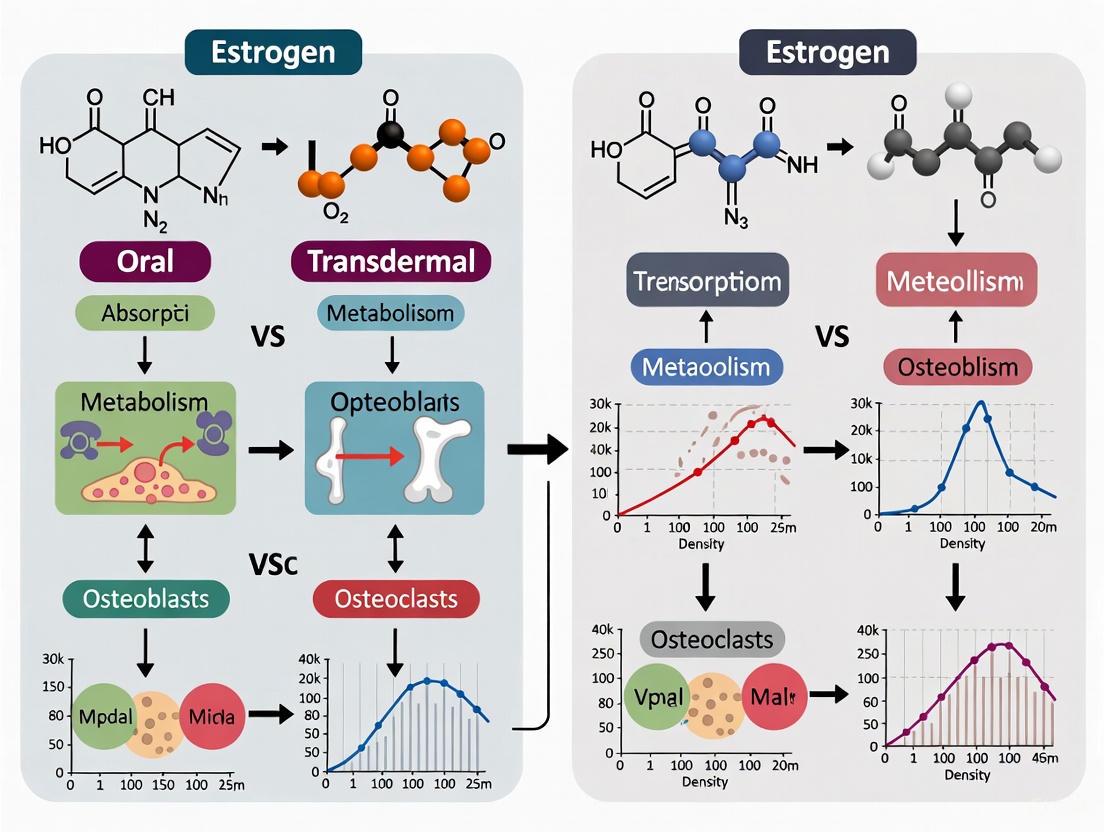
This article provides a scientific review of the comparative efficacy, mechanisms, and safety profiles of oral versus transdermal estrogen for the preservation of bone mineral density (BMD) in postmenopausal women...
Oral vs. Transdermal Estrogen for Bone Density: A Comparative Efficacy Analysis for Researchers
Abstract
This article provides a scientific review of the comparative efficacy, mechanisms, and safety profiles of oral versus transdermal estrogen for the preservation of bone mineral density (BMD) in postmenopausal women and transgender individuals receiving feminizing hormone therapy. It synthesizes foundational science, clinical methodologies, and recent evidence, including meta-analyses and cohort studies, to evaluate BMD outcomes, cardiovascular safety, and fracture risk. Tailored for researchers and drug development professionals, the analysis addresses key considerations for study design and therapeutic optimization, highlighting the distinct pharmacodynamic profiles of each administration route and their implications for long-term bone health.
Estrogen's Role in Bone Metabolism and the Rationale for Different Administration Routes
The Pathophysiology of Estrogen Deficiency and Bone Loss
Estrogen is a fundamental regulator of skeletal growth and bone homeostasis in both men and women [1]. It functions as a key hormonal mediator of bone remodeling, the lifelong process of coordinated bone resorption and formation that maintains skeletal integrity [1] [2]. The dramatic bone loss that follows estrogen deficiency, particularly in postmenopausal women, results from a complex interplay of cellular and immune system dysregulation that tips the balance of bone remodeling toward excessive resorption [1] [2]. Understanding these pathophysiological mechanisms provides the critical foundation for evaluating therapeutic interventions, including the comparative efficacy of different estrogen administration routes such as oral and transdermal delivery systems for preserving bone mineral density (BMD). This review examines the pathophysiology of estrogen-deficient bone loss within the context of comparative efficacy research between oral and transdermal estrogen, providing researchers with experimental data and methodologies relevant to drug development.
Molecular and Cellular Mechanisms of Estrogen-Deficient Bone Loss
Estrogen Signaling in Bone Cells
Estrogen exerts its protective effects on bone primarily through estrogen receptors (ERs), which are highly expressed in osteoblasts, osteocytes, and osteoclasts [2]. The dominant acute effect of estrogen is the blockade of new osteoclast formation [1]. Estrogen binds with ERs to suppress the action of nuclear factor-κβ ligand (RANKL) and promote the expression of osteoprotegerin (OPG), thus inhibiting osteoclast formation and bone resorptive activity [2]. The lack of estrogen alters the expression of estrogen target genes, increasing the secretion of pro-inflammatory cytokines including IL-1, IL-6, and tumor necrosis factor (TNF) [2]. This creates a pro-osteoclastogenic environment that accelerates bone loss.
- In Osteoblasts: Estrogen activates Wnt/β-catenin signaling, thereby increasing osteogenesis [2]. It also upregulates bone morphogenetic protein (BMP) signaling, which promotes mesenchymal stem cell differentiation toward the osteoblast lineage rather than adipocytes [2].
- In Osteoclasts: Estrogen deficiency induces RANKL expression, which binds to its receptor RANK on osteoclast precursors, promoting their differentiation and activation [1] [2]. Estrogen also inhibits osteoclast differentiation and promotes osteoclast apoptosis by increasing TGFβ production [2].
- In Osteocytes: These bone-embedded cells act as mechanosensors. Estrogen deficiency impairs their response to mechanical strain and increases their production of RANKL and sclerostin (a Wnt pathway inhibitor), further promoting bone resorption and reducing bone formation [2].
Immunological Pathways in Estrogen Deficiency
Recent research has revealed unexpected regulatory effects of estrogen centered at the level of the adaptive immune response [1]. Estrogen deficiency leads to increased IL-7, which promotes T cell activation [2]. Activated T cells produce pro-inflammatory molecules such as IL-1, IL-6, and TNFα, all of which stimulate osteoclast formation [1] [2]. Furthermore, estrogen deficiency amplifies T cell activation and osteoclastogenesis by increasing reactive oxygen species (ROS), leading to increased TNF production [2]. The net result of these complex interactions is a state of high bone turnover with a pronounced negative balance where bone resorption significantly outstrips bone formation.
Diagram 1: Integrated Pathways of Estrogen Deficiency-Induced Bone Loss. This diagram illustrates the complex molecular and cellular pathophysiology triggered by estrogen deficiency, highlighting interactions between hormonal changes, immune activation, and signaling pathway disruptions that collectively drive bone loss.
Comparative Pharmacokinetics: Oral vs. Transdermal Estrogen
The route of estrogen administration significantly influences its pharmacokinetic profile, which has profound implications for its physiological effects, therapeutic efficacy, and safety profile, particularly in bone density research [3] [4]. The fundamental difference lies in the first-pass hepatic metabolism that oral estrogens undergo but transdermal formulations bypass.
Table 1: Pharmacokinetic Comparison of Oral vs. Transdermal Estradiol Administration
| Parameter | Oral Estradiol | Transdermal Estradiol | Research Implications |
|---|---|---|---|
| Bioavailability | Low (2–10%) due to extensive first-pass metabolism [4] | High, as it bypasses first-pass metabolism [3] | Transdermal requires lower doses for equivalent systemic exposure |
| Estradiol (E2):Estrone (E1) Ratio | Low (~0.1–0.2) [3] | Approaches unity (~1.0) [3] [5] | Oral creates unphysiological E1 dominance; transdermal mimics premenopausal balance |
| Peak-Trough Fluctuation | High (54–67% fluctuation) [5] | Gel: Similar to oral (56–67%) [5]Patch: Potentially higher (89%) [5] | Fluctuation may influence continuous bone protective signaling |
| Hepatic First-Pass Effects | Significant, increases SHBG, CRP, and clotting factors [6] [7] | Minimal, neutral effect on hepatic protein synthesis [7] | Oral route linked to higher VTE risk; transdermal may be safer for certain populations [6] |
| Impact on Lipid Profile | Decreases LDL, increases HDL and triglycerides [6] [7] | Neutral or modest beneficial effects on triglycerides [7] | Transdermal may be preferred for patients with hypertriglyceridemia |
The pharmacokinetic differences extend to clinical outcomes. Transdermal estrogen provides a more favorable safety profile regarding cardiovascular risks, with studies suggesting a lower risk of venous thromboembolism (VTE), myocardial infarction, and stroke compared to oral estrogen [6]. This is particularly relevant for long-term bone density studies where patient adherence and comorbidity management are crucial. Furthermore, the stable, physiological E2:E1 ratio achieved with transdermal administration may offer a more natural hormonal environment for bone remodeling processes [3] [5].
Experimental Models for Studying Estrogen Deficiency and Therapy
Validated Animal Models of Osteopenia and Osteoporosis
Reliable experimental models are essential for investigating the pathophysiology of estrogen deficiency and evaluating the efficacy of therapeutic interventions like different estrogen formulations.
Ovariectomized Rat Model: The bilateral ovariectomy (OVX) model in female rats is the gold standard for simulating postmenopausal osteoporosis [8]. A recent validation study in Wistar female rats demonstrated that ovariectomy induces progressive changes in bone structure, with osteopenia onset at 30 days post-OVX (T-score: -2.42) and established osteoporosis after 40 days (T-score: -4.38 at G40) [8]. This model allows for precise tracking of bone density loss and microarchitectural deterioration over time.
Key Methodology (Ovariectomy in Rats) [8]:
- Animals: Female Wistar rats, 12 weeks old.
- Anesthesia: Intramuscular administration of ketamine (75 mg/kg) with xylazine.
- Surgical Procedure: Bilateral ovariectomy via 0.5 cm ventral transverse incisions to expose and remove ovaries.
- Post-op Monitoring: Daily physical examination including attitude, appetite, and comfort level.
- Euthanasia Time Points: 30, 40, 60, and 80 days post-OVX to capture different stages of bone loss.
- Outcome Measures: Microcomputed tomography (μCT) analysis of femurs for bone density and trabecular count; T-score calculation.
Equine Model of Disuse-Induced Bone Loss: An alternative model in horses uses stall confinement combined with unilateral heel elevation to induce skeletal unloading and quantifiable bone density loss over two months, detectable by computed tomography (CT) [9]. This model serves as a practical alternative for developing new pharmacological targets in large animals.
Assessment Techniques for Bone Density and Turnover
Imaging Modalities:
- Microcomputed Tomography (μCT): Provides high-resolution 3D analysis of bone microarchitecture, including bone volume fraction, trabecular thickness, and connectivity density in rodent models [8].
- Computed Tomography (CT): Used in larger animal models (e.g., equine) to quantify bone density changes in limbs, with segmentation at a fixed Hounsfield Unit (HU) threshold (e.g., 400 HU) for bone analysis [9].
Serum Biomarkers of Bone Turnover [9] [2]:
- Bone Formation Markers: Osteocalcin (OC) and Bone-specific Alkaline Phosphatase (B-ALP).
- Bone Resorption Markers: Cross-linked C-telopeptides of type I collagen (CTX-I) and hydroxyproline.
- Sampling Protocol: Blood collection at baseline, mid-study, and endpoint; serum analysis via ELISA or colorimetric methods.
Diagram 2: Experimental Workflow for Evaluating Estrogen Therapies. This flowchart outlines a standardized protocol for comparative studies of estrogen formulations in animal models, from model establishment through to final data analysis.
Clinical Evidence: Bone Mineral Density Outcomes by Route
Clinical evidence, particularly from meta-analyses, provides crucial data on the comparative efficacy of different estrogen routes for preserving bone mineral density in estrogen-deficient states.
Table 2: Clinical Efficacy of Transdermal Estrogen on Bone Mineral Density (BMD) in Postmenopausal Women [7]
| Follow-up Period | Number of Studies | Pooled Percent Change in BMD | 95% Confidence Interval | Heterogeneity (I²) |
|---|---|---|---|---|
| 1 Year | 6 | +3.4% | 1.7% to 5.1% | 0.0% |
| 2 Years | 3 | +3.7% | 1.7% to 5.7% | 0.0% |
A meta-analysis of nine clinical trials concluded that one to two years of transdermal estrogen therapy was associated with a statistically significant 3.4–3.7% increase in BMD compared to baseline values [7]. The homogeneity across studies (I² = 0.0%) and lack of publication bias strengthen this evidence. While direct head-to-head comparisons with oral estrogen in this meta-analysis were limited, the documented BMD improvement confirms the biological efficacy of transdermally delivered estradiol in preventing bone loss.
The beneficial effects of estrogen on bone are observed regardless of the administration route, as both can effectively reverse the pathophysiological processes of estrogen deficiency. However, the choice of route allows researchers and clinicians to tailor therapy based on individual patient pharmacokinetics, risk factors, and therapeutic goals.
The Scientist's Toolkit: Essential Research Reagents and Materials
Table 3: Key Research Reagents for Investigating Estrogen Deficiency and Therapy
| Reagent/Material | Application in Research | Experimental Function |
|---|---|---|
| Ovariectomized (OVX) Animal Models [8] | Pathophysiology studies & drug efficacy testing | Gold-standard model for inducing estrogen-deficient bone loss |
| 17β-Estradiol (Micronized) [3] | Formulation for oral and transdermal delivery | Bioidentical estrogen for hormone replacement studies |
| CTX-I ELISA Kit [9] | Serum bone resorption marker quantification | Measures cross-linked C-telopeptides of type I collagen |
| Osteocalcin ELISA Kit [9] | Serum bone formation marker quantification | Measures osteocalcin, a specific product of osteoblasts |
| Microcomputed Tomography (μCT) [8] | Bone microarchitecture analysis | Provides 3D quantification of bone density and trabecular structure |
| Estradiol & Estrone RIAs [5] | Pharmacokinetic profiling | Measures serum hormone levels for bioavailability studies |
| Transdermal Delivery Systems [6] [7] | Route comparison studies | Patches and gels for non-oral estrogen administration |
| Bone Phantom Controls [9] | Imaging standardization | Ensures consistency and accuracy in longitudinal CT scanning |
Core Objectives of Estrogen Therapy in Bone Density Preservation
The decline in estrogen during menopause precipitates a critical imbalance in bone remodeling, accelerating bone resorption and increasing the risk of osteoporosis, a condition characterized by low bone mineral density (BMD) and fragile bones [10] [11]. Over a woman's lifespan, bones reach peak density in early adulthood, and estrogen plays a crucial role in the normal bone turnover cycle by promoting bone formation and inhibiting bone breakdown [12]. The cessation of ovarian function leads to a dramatic reduction in estrogen, which in turn disrupts this balance, resulting in a net loss of bone mass. Estrogen therapy is a well-established intervention to counteract this process. The core objective of this therapy is not merely to alleviate menopausal symptoms but to systemically preserve bone density and significantly reduce fracture risk by restoring the protective effects of estrogen on the skeletal system [13] [14]. This review focuses on the comparative efficacy of the two primary routes of administration—oral and transdermal—in achieving this fundamental bone-preserving objective, providing a critical analysis for researchers and drug development professionals.
Molecular Mechanisms of Estrogen in Bone Remodeling
Estrogen exerts its protective effects on bone through complex genomic and non-genomic pathways that regulate both osteoclasts (bone-resorbing cells) and osteoblasts (bone-forming cells). Understanding these mechanisms is essential for appreciating the therapeutic objectives of estrogen replacement.
The primary pathway involves estrogen binding to estrogen receptors (ERs) in the cytoplasm, forming a complex that translocates to the nucleus and binds to Estrogen Response Elements (EREs) on DNA to regulate gene transcription [15]. A key genomic action is the promotion of osteoprotegerin (OPG) production. OPG acts as a decoy receptor for RANKL (Receptor Activator of Nuclear Factor Kappa-B Ligand), preventing RANKL from binding to its receptor RANK on osteoclast precursors and thereby inhibiting osteoclast differentiation and activity [15]. Concurrently, estrogen promotes osteoblast survival and function via the activation of the Wnt/β-catenin signaling pathway [15].
Estrogen deficiency accelerates bone resorption through a rise in pro-inflammatory cytokines (e.g., IL-1, IL-6, TNF-α) and RANKL, which collectively promote osteoclastogenesis [15]. The following diagram illustrates the core signaling pathways by which estrogen maintains bone homeostasis.
Diagram Title: Estrogen Signaling Pathways in Bone Cells
Comparative Efficacy of Oral vs. Transdermal Estrogen
Fundamental Pharmacokinetic and Physiological Differences
The route of estrogen administration fundamentally influences its pharmacokinetic profile and subsequent physiological effects, which is a critical consideration for therapeutic efficacy and safety. Oral estrogens, such as conjugated equine estrogens (CEEs) or micronized estradiol, undergo extensive first-pass metabolism in the liver. This process results in the conversion of estradiol to estrone and leads to heightened hepatic synthesis of various proteins, including sex hormone-binding globulin (SHBG), triglycerides, and coagulation factors [13]. These hepatic effects are thought to underlie the increased risks of venous thromboembolism (VTE) and gallstones associated with oral therapy [13].
In contrast, transdermal estrogens (e.g., gels, patches, sprays) are absorbed directly into the systemic circulation, bypassing first-pass hepatic metabolism. This results in a more physiological estradiol-to-estrone ratio and avoids the induction of hepatic protein synthesis [13]. Consequently, transdermal delivery is associated with a potentially lower risk of VTE and may be more suitable for individuals with comorbidities such as migraines, hypertension, or elevated cardiovascular disease risk [16] [13].
Bone Mineral Density Outcomes from Key Studies
Both oral and transdermal estrogen therapies have demonstrated efficacy in preventing postmenopausal bone loss. The following table summarizes quantitative BMD outcomes from pivotal studies, providing a clear comparison of their effectiveness.
Table 1: Comparative Bone Mineral Density (BMD) Outcomes of Estrogen Therapies
| Study / Reference | Population | Intervention | Duration | BMD Outcome (Lumbar Spine) | BMD Outcome (Femoral Neck) |
|---|---|---|---|---|---|
| Weiss et al., 1999 [17] | Postmenopausal women (n=261) | Transdermal Estradiol Patch (0.025, 0.0375, 0.05, 0.1 mg/day) | 2 years | Significant, dose-dependent prevention of bone loss vs. placebo (P<0.001 for 0.05 & 0.1 mg/d) [17] | Significant prevention of bone loss vs. placebo (all doses P≤0.044) [17] |
| Dural et al., 2022 [18] | Adolescents with POI | Transdermal Estradiol | 24 months | Significant increase in BMD Z-score (∆ +0.68, P<0.05) [18] | Significant increase in BMD Z-score (∆ +0.56, P<0.05) [18] |
| Meta-analysis [19] | Postmenopausal women | Various HRT formulations | 2 years | Average BMD increase of 7% over two years [19] | Data consolidated |
| Glynne et al., 2025 [12] | Perimenopausal & Postmenopausal women | Transdermal Estradiol (Real-world setting) | Cross-sectional | Wide variation in serum estradiol levels; 25% on highest dose had subtherapeutic levels [12] | N/A |
The data confirm that both routes of administration are effective. A meta-analysis of 57 studies showed that HRT, in general, can increase bone density by 7% on average over two years and reduce spinal fractures by a third [19]. Specific to transdermal forms, a randomized controlled trial demonstrated that even low-dose transdermal estradiol (0.025 mg/day) was statistically superior to placebo in preserving BMD at the lumbar spine and femoral neck over two years [17]. Furthermore, therapy has shown success in special populations, such as adolescents with premature ovarian insufficiency (POI), where it significantly improved BMD Z-scores [18].
A critical finding for researchers is the significant individual variability in the absorption of transdermal estrogen. A recent real-world study found that one in four women using the highest licensed dose of transdermal ERT had low, subtherapeutic estradiol levels, suggesting a higher prevalence of "poor absorbers" than previously recognized [12]. This highlights that the actual estradiol level achieved from a given transdermal dose cannot be reliably predicted from group averages and may require verification through hormone testing to ensure bone-protective levels are met [12].
Detailed Experimental Protocols for Bone Density Research
For researchers designing studies to evaluate estrogen therapy, adherence to rigorous methodologies is paramount. The following protocols are derived from key studies cited in this review.
Protocol 1: Randomized Controlled Trial for BMD in Postmenopausal Women
This protocol is based on the study by Weiss et al. (1999) which evaluated a transdermal estradiol matrix system [17].
- Objective: To evaluate the efficacy, safety, and tolerability of a transdermal estradiol matrix system for the prevention of postmenopausal bone loss over 24 months.
- Study Design: Multicenter, randomized, double-blind (active vs. placebo), placebo-controlled, parallel-group study. Note: The study was not blinded to dose levels due to differing patch sizes.
- Participants:
- Population: Surgically or naturally postmenopausal women (N=261).
- Key Criteria: Mean age ~52 years; mean duration of menopause ~32 months.
- Intervention:
- Active Treatment: Application of an estradiol matrix transdermal system (0.025, 0.0375, 0.05, or 0.1 mg/d) twice weekly for 2 years.
- Control: Matching placebo patch.
- Add-on Therapy: Non-hysterectomized women (n=100) also received 2.5 mg medroxyprogesterone acetate daily for endometrial protection.
- Primary Outcome Measures:
- Efficacy: Percentage change from baseline in the BMD of the L1-L4 anteroposterior lumbar spine and the femoral neck, measured by dual-energy X-ray absorptiometry (DEXA) at 24 months.
- Safety & Tolerability: Assessment of adverse events throughout the study period.
Protocol 2: Longitudinal Study on Bone and Neurobehavioral Health in Youth with POI
This protocol is based on the 2025 case-control study by Glynne et al. focusing on a special population [18].
- Objective: To assess the impact of transdermal estrogen replacement therapy on bone and neurocognitive outcomes in adolescents with idiopathic POI over 24 months.
- Study Design: 24-month longitudinal, case-control study.
- Participants:
- Cases: Adolescent females (ages 11.0-19.0 years) newly diagnosed with idiopathic POI, naïve to ERT (n=9).
- Controls: Normally menstruating adolescents matched for age, race, and body mass index (BMI) (n=9).
- Intervention:
- Cases: Treated with escalating doses of transdermal estrogen (TDE2) to achieve physiologic estradiol levels.
- Controls: Observed without intervention.
- Primary Outcome Measures:
- Bone Health: Changes in lumbar spine BMD Z-score (measured by DXA) and 3% distal radius trabecular volumetric BMD (measured by peripheral quantitative computed tomography, pQCT).
- Neurocognitive Health: Quality of life (CHQ-87 survey) and memory (ChAMP assessment).
- Data Collection: Anthropometric measures, serum estradiol levels, and outcome measures were collected at baseline, 12 months, and 24 months.
The workflow for these complex clinical studies can be visualized as follows:
Diagram Title: Clinical Trial Workflow for Estrogen Therapy
The Scientist's Toolkit: Essential Research Reagents and Materials
For experimental research in estrogen therapy and bone density, several key reagents and tools are fundamental. The following table details these essential components and their research applications.
Table 2: Key Research Reagent Solutions for Estrogen and Bone Density Studies
| Reagent / Material | Research Function and Application |
|---|---|
| 17β-estradiol | The primary bioactive human estrogen; used as the active pharmaceutical ingredient (API) in both oral (micronized) and transdermal formulations for interventional studies [13] [17]. |
| Conjugated Equine Estrogens (CEEs) | A complex mixture of estrogens derived from pregnant mare's urine; a common comparator in historical and contemporary oral therapy trials [10] [11]. |
| Medroxyprogesterone Acetate (MPA) / Micronized Progesterone | Progestogens co-administered in studies involving women with an intact uterus to provide endometrial protection from unopposed estrogen [17]. The choice impacts safety outcomes (e.g., breast cancer risk) [10]. |
| Dual-energy X-ray Absorptiometry (DEXA/DXA) | The gold-standard non-invasive imaging technique for measuring areal Bone Mineral Density (BMD) at clinically relevant sites (lumbar spine, femoral neck) as a primary efficacy endpoint [10] [18]. |
| Peripheral Quantitative Computed Tomography (pQCT) | Advanced imaging tool used to measure three-dimensional volumetric BMD (vBMD) and distinguish between cortical and trabecular bone compartments, providing deeper insights into bone microstructure [18]. |
| ELISA/Kits for Serum Estradiol | Essential for quantifying circulating estradiol levels to verify therapeutic range attainment, assess compliance, and correlate drug exposure (pharmacokinetics) with BMD response (pharmacodynamics) [12]. |
| ELISA/Kits for Bone Turnover Markers | Used to measure biochemical markers of bone formation (e.g., P1NP) and resorption (e.g., CTX) as dynamic, short-term indicators of treatment response and bone remodeling activity [10]. |
The core objective of estrogen therapy in bone density preservation is effectively met by both oral and transdermal administration routes, as evidenced by their proven efficacy in increasing BMD and reducing fracture risk. The choice between them, however, is not one of superior efficacy for bone health, but rather a balance of pharmacokinetic, safety, and individual patient factors. Transdermal estrogen offers a distinct profile by avoiding first-pass hepatic metabolism, which is associated with a lower risk of VTE and potentially more favorable outcomes for women with specific comorbidities. A critical consideration for researchers and clinicians is the significant individual variability in transdermal estrogen absorption, which can lead to subtherapeutic levels in a substantial proportion of users even at high doses. This underscores the potential future role of therapeutic drug monitoring to ensure optimal bone-protective effects. Future research should focus on personalized dosing strategies and further elucidate the long-term comparative effectiveness of these routes within diverse populations.
The route of estrogen administration fundamentally determines its pharmacokinetic profile, creating distinct hormonal milieus with significant implications for clinical efficacy and safety. Oral estrogens undergo extensive first-pass metabolism in the liver, which profoundly alters their biological activity and systemic effects [20]. In contrast, transdermal delivery systems provide direct absorption into the systemic circulation, bypassing hepatic first-pass effects and establishing a more physiological hormone profile [21]. These divergent pathways are particularly relevant when evaluating estrogen therapy for maintaining bone mineral density (BMD) in postmenopausal women, as the metabolic consequences extend beyond estrogen exposure to impact bone-specific biomarkers and overall risk profiles.
This comparative analysis examines the pharmacokinetic fundamentals distinguishing oral and transdermal estrogen administration, with specific application to bone density research. We synthesize experimental data from clinical studies, meta-analyses, and pharmacodynamic investigations to provide researchers and drug development professionals with evidence-based insights for protocol design and therapeutic optimization.
Pharmacokinetic Principles: First-Pass Metabolism Versus Direct Absorption
Oral Estrogen Administration and Hepatic First-Pass Metabolism
When administered orally, estrogens are absorbed from the gastrointestinal tract and transported via the portal vein directly to the liver, where they undergo extensive presystemic metabolism before reaching the systemic circulation [20]. This first-pass effect has several consequential pharmacokinetic implications:
- Non-physiologic metabolite patterns: Oral 17β-estradiol is rapidly converted to estrone and estrone sulfate in the liver, resulting in an estrone/estradiol ratio of approximately 5:1, which diverges significantly from the 1:1 ratio observed in premenopausal women [21].
- Marked hepatic stimulation: The high hepatic exposure induces synthesis of hormone-binding proteins (including sex hormone-binding globulin and thyroid-binding globulin) and affects lipid metabolism [20].
- Dose requirements: Due to extensive presystemic metabolism, oral estrogens require higher doses to achieve therapeutic systemic concentrations compared to non-oral routes [20].
Transdermal Estrogen Delivery and Systemic Absorption
Transdermal estrogen delivery systems (patches, gels) facilitate direct absorption through the skin into the systemic circulation, bypassing hepatic first-pass metabolism [21]. This fundamental difference yields distinct pharmacokinetic advantages:
- Physiologic hormone profile: Transdermal administration maintains serum estradiol and estrone concentrations within the early follicular phase range of premenopausal women, with an estradiol/estrone ratio approximating 1 [21].
- Sustained delivery: Continuous application over days to weeks provides stable serum levels without the peak-trough fluctuations associated with oral dosing [21].
- Avoidance of hepatic first-pass: By circumventing initial liver metabolism, transdermal delivery achieves therapeutic effects with lower estrogen doses and minimizes impacts on hepatic protein synthesis and lipid metabolism [20].
Table 1: Comparative Pharmacokinetic Profiles of Oral Versus Transdermal Estrogen
| Parameter | Oral Estrogen | Transdermal Estrogen | Research Implications |
|---|---|---|---|
| First-Pass Metabolism | Extensive hepatic metabolism | Bypasses hepatic first-pass | Differential impacts on liver-synthesized proteins |
| Estradiol/Estrone Ratio | ~1:5 (non-physiologic) [21] | ~1:1 (physiologic) [21] | Tissue-specific estrogenic activity varies |
| Dose Requirement | Higher due to presystemic metabolism | Lower due to direct absorption | Potency comparisons require route-specific dosing |
| Serum Concentration Profile | Fluctuating with peaks and troughs | Steady-state maintenance [21] | Different dosing regimens for consistent effect |
| Hepatic Impact | Marked effects on lipid metabolism and binding proteins | Minimal hepatic effects [20] | Cardiovascular risk profiles differ by route |
Experimental Data and Methodologies
Bone Mineral Density Outcomes: Comparative Efficacy Data
Multiple clinical trials and meta-analyses have evaluated the bone-protective effects of transdermal estrogen, with consistent findings supporting its efficacy for osteoporosis prevention in postmenopausal women. A meta-analysis of nine clinical trials (n=643 women) demonstrated that 1-2 years of transdermal estrogen therapy significantly increased bone mineral density compared to baseline values [22] [7]. The pooled percent change in BMD was 3.4% (95% CI: 1.7-5.1) after one year and 3.7% (95% CI: 1.7-5.7) after two years of treatment [22]. These improvements were statistically significant and homogeneous across studies (I²=0.0%), indicating consistent treatment effects [22].
Table 2: Bone Mineral Density Outcomes with Transdermal Estrogen Therapy
| Study Design | Participant Characteristics | Intervention | BMD Outcome | Statistical Significance |
|---|---|---|---|---|
| Kim et al. (2014) [22] | Postmenopausal women (n=149) | Transdermal patch (estradiol 1.5mg twice weekly) or gel (0.1% estradiol daily) for 2 years | Lumbar spine: +4.9%Hip: +4.2% | P<0.05 |
| Stanosz (2009) [22] | Postmenopausal women (n=75) | Transdermal 17β-estradiol patches (25-75μg) with cyclic progesterone for 1 year | Lumbar spine (L2-L4): +3.8% | P<0.05 |
| Ettinger (2004) [22] | Postmenopausal women (n=417) | Unopposed transdermal estradiol (0.014mg/day) for 2 years | Lumbar spine: +2.6%Total hip: +0.4% | P<0.05 |
| Davas (2003) [22] | Postmenopausal women (n=160) | Transdermal estrogen (0.05mg twice weekly) with MPA or alendronate for 1 year | Lumbar spine: +4.1% | P<0.05 |
Dose-Response Relationship and Minimum Effective Dose
Research has established a clear dose-response relationship for transdermal estrogen's effects on bone metabolism. A 1994 prospective study by Sciencedirect evaluated dose reduction effects in surgically menopausal women, finding that 0.025 mg/day was insufficient to prevent bone demineralization, while both 0.05 mg/day and 0.10 mg/day effectively maintained BMD over 12 months [23]. This study implemented a rigorous methodology where participants were randomized to two transdermal estrogen regimens with systematic dose reduction after six months, with BMD measured by single photon absorptiometry at baseline, 6 months, and 12 months [23].
Biochemical markers of bone turnover responded predictably to dose adjustments. Alkaline phosphatase and urinary hydroxyproline excretion decreased significantly with higher doses (-34.90% and -30.90% respectively with 0.05 mg/day) but increased again when doses were reduced to subtherapeutic levels [23]. This demonstrates that adequate dosing is critical for maintaining the antiresorptive effect of transdermal estrogen on bone.
Key Experimental Protocols in Bone Density Research
Methodologies for evaluating estrogen effects on bone mineral density have been standardized across clinical trials, incorporating several key elements:
- BMD Measurement Techniques: Most studies utilize dual-energy X-ray absorptiometry (DXA) at lumbar spine and hip regions, with some earlier studies employing single photon absorptiometry for forearm measurements [22] [23].
- Biomarker Assessment: Studies typically monitor serum bone turnover markers including alkaline phosphatase (AP), osteocalcin (BGP), and urinary hydroxyproline (OHP) excretion at baseline and predetermined intervals [23].
- Study Duration: Bone remodeling cycles necessitate minimum 12-month intervention periods to detect significant BMD changes, with many trials extending to 24 months for comprehensive assessment [22].
- Control Groups: Placebo-controlled designs are implemented where ethically permissible, with some studies using active comparators (e.g., bisphosphonates) or routine checkup controls [22].
Diagram Title: Metabolic Pathways of Oral vs. Transdermal Estrogen
The Scientist's Toolkit: Essential Research Reagents and Materials
Table 3: Key Research Materials for Estrogen Pharmacokinetic and Bone Density Studies
| Reagent/Material | Specification Purpose | Experimental Application |
|---|---|---|
| 17β-Estradiol Formulations | Pharmaceutical grade for human administration | Clinical trial interventions; reference standard for analytical quantification |
| Transdermal Delivery Systems | Patches (0.025-0.1 mg/day) or gels (0.1%) | Route-specific administration; dose-response studies [21] [23] |
| Bone Turnover Assays | ELISA kits for osteocalcin, alkaline phosphatase | Biomarker monitoring of bone formation and resorption activities [23] |
| HPLC-MS/MS Systems | High-performance liquid chromatography with tandem mass spectrometry | Precise quantification of serum estradiol, estrone, and metabolites [21] |
| DEXA Scanner | Dual-energy X-ray absorptiometry | Gold-standard BMD measurement at lumbar spine and hip sites [22] |
| Cytochrome P450 Assays | CYP3A4 activity panels | Drug interaction studies for tamoxifen-estradiol coadministration [24] |
Diagram Title: Experimental Workflow for Estrogen Bone Studies
Research Implications and Future Directions
The pharmacokinetic distinctions between oral and transdermal estrogen administration have profound implications for bone research and drug development. The avoidance of first-pass metabolism with transdermal delivery translates to more physiological hormone profiles and potentially different effects on extra-skeletal tissues, which may influence trial outcomes and safety profiles [20] [21]. Emerging research areas include:
- Personalized therapeutic approaches: Genetic polymorphisms in estrogen-metabolizing enzymes may predispose individuals to respond differentially to various administration routes [24].
- Novel coadministration strategies: Computational PBPK modeling suggests potential compatibility between tamoxifen and estradiol in specific clinical contexts, challenging traditional contraindications [24].
- Extended therapeutic applications: The bone-protective effects of transdermal estrogen at lower systemic exposures warrant investigation in high-risk populations, including breast cancer survivors with treatment-induced menopause [24].
Future clinical trials should prioritize head-to-head comparisons of oral versus transdermal estrogen with bone-specific endpoints, incorporating modern pharmacokinetic modeling techniques and genomic analyses to identify patient subgroups most likely to benefit from each administration route.
Key Biomarkers and Outcomes in Bone Density Research
The comparative efficacy of oral versus transdermal estrogen for bone density research is evaluated through a multifaceted approach that integrates bone mineral density (BMD) measurements, specific bone turnover markers (BTMs), and hormonal assays. This methodological framework allows researchers to quantify the impact of different estrogen administration routes on bone metabolism, turnover rates, and fracture risk in postmenopausal women. The assessment relies on established biomarkers that reflect the dynamic balance between bone formation and resorption processes, which are critically influenced by estrogen status.
This research guide provides a comprehensive comparison of the key experimental parameters, biomarkers, and methodological considerations essential for conducting rigorous investigations in this field. By standardizing assessment protocols and outcome measures, researchers can generate comparable data to elucidate the differential effects of estrogen formulation on skeletal health.
Bone Turnover Biomarkers: Analytical Performance and Clinical Utility
Bone turnover biomarkers provide sensitive, dynamic measures of skeletal metabolism that complement static BMD measurements. These biomarkers are categorized based on their association with bone formation or resorption processes.
Table 1: Key Bone Turnover Biomarkers in Osteoporosis Research
| Biomarker | Category | Biological Function | Research Context | Sample Type | Preanalytical Considerations |
|---|---|---|---|---|---|
| P1NP | Formation | Procollagen type I N-propeptide released during type I collagen synthesis | Preferred for monitoring anabolic treatment; minimal diurnal variation [25] [26] | Serum | No fasting required; stable with freezing [25] |
| CTX-1 | Resorption | C-terminal telopeptide of type I collagen released during collagen breakdown | Preferred for antiresorptive therapy monitoring; shows rapid response [25] [26] | Serum (fasting) | Significant diurnal variation; requires morning fasting collection [25] [26] |
| Osteocalcin | Formation | Non-collagenous protein produced by osteoblasts; regulates mineralization | Correlates with bone formation rate; useful for assessing osteoblast activity [27] | Serum | Marker of osteoblast function; varies with bone formation status [27] |
| BALP | Formation | Isoenzyme of alkaline phosphatase from osteoblasts | Indicator of osteoblastic activity; useful for managing osteoporosis [27] | Serum | Requires specific assays to distinguish from other ALP isoenzymes [27] |
| NTX-1 | Resorption | N-terminal telopeptide of type I collagen | Alternative resorption marker; can be measured in urine or serum [25] [27] | Urine/Serum | Higher biological variability than CTX-1 [26] |
The International Osteoporosis Foundation (IOF) and International Federation of Clinical Chemistry (IFCC) recommend P1NP and CTX-1 as reference biomarkers for osteoporosis research due to their superior performance characteristics, clinical validity, and efforts toward standardization [25] [26]. These markers show the most significant and predictable changes in response to osteoporosis treatments.
Comparative Efficacy: Oral vs. Transdermal Estrogen
Bone Mineral Density Outcomes
Bone mineral density measured by dual-energy X-ray absorptiometry (DXA) serves as the primary endpoint in most bone density trials. The T-score, expressed as standard deviations from the mean BMD of healthy young adults, defines diagnostic categories: normal (> -1), osteopenia (-1 to -2.5), and osteoporosis (≤ -2.5) [28].
Table 2: BMD as a Predictor of Fracture Risk Across Studies
| Study | Population | Follow-up | Key Findings | Implications for Estrogen Research |
|---|---|---|---|---|
| Cranney et al. [29] | 16,505 postmenopausal women (mean age 65) | 3 years | Fracture rates: 26.2/1000 person-years (osteoporosis) vs. 8.2/1000 (normal BMD); OR for fracture: 3.52-6.85 (osteoporosis) | BMD identifies high-risk groups who may benefit most from estrogen therapy |
| Johnell Meta-Analysis [29] | 38,973 participants (9,891 men, 29,082 women) | Up to 16.3 years | Each SD decrease in femoral neck BMD increased hip fracture risk: RR 2.94 (men), RR 2.88 (women) at age 65 | Confirms BMD as valid surrogate for fracture risk in hormone therapy trials |
| NORA [29] | 164,000 postmenopausal women | 12 months | Osteoporotic BMD associated with 4x fracture rate vs. normal BMD (95% CI: 3.6-4.5) | Supports BMD as primary outcome in prevention trials |
| Pasco et al. [29] | 616 postmenopausal women | 5.6 years | RR for fracture increased 65% for each SD decrease in BMD (RR 1.65, 95% CI: 1.32-2.05) | Highlights importance of BMD monitoring during treatment |
While BMD provides valuable information, substantial evidence indicates that most fragility fractures occur in individuals with T-scores above the osteoporotic range, highlighting the need for complementary assessment methods including BTMs and clinical risk factors [25] [29].
Bone Turnover Marker Response to Estrogen Therapy
Estrogen therapy primarily exerts antiresorptive effects on bone metabolism, which is reflected in the rapid suppression of bone resorption markers.
Table 3: BTM Response Patterns to Estrogen Therapies
| Parameter | Oral Estrogen | Transdermal Estrogen | Research Implications |
|---|---|---|---|
| CTX-1 Reduction | Significant suppression (~50-60%) within 3-6 months [26] | Significant suppression (~50-60%) within 3-6 months | Similar antiresorptive potency regardless of administration route |
| P1NP Reduction | Significant suppression (~40-50%) within 3-6 months [26] | Significant suppression (~40-50%) within 3-6 months | Consistent formation marker response across administration routes |
| Monitoring Schedule | Baseline, 3 months (CTX-1), 6 months (P1NP) [25] | Baseline, 3 months (CTX-1), 6 months (P1NP) | Standardized monitoring protocol applicable to both routes |
| Therapeutic Assessment | LSC >27% for CTX-1, >20% for P1NP indicates response [26] | LSC >27% for CTX-1, >20% for P1NP indicates response | Same response criteria apply to both administration methods |
The similar BTM response patterns between oral and transdermal estrogen formulations suggest comparable antiresorptive effects on bone metabolism, though pharmacokinetic differences may influence other safety and tolerability parameters.
Hormonal Assays and Novel Biomarkers in Bone Research
Sex Hormone Measurements
Advanced techniques for sex hormone quantification provide critical insights into the relationship between hormonal status and bone metabolism:
- Mass Spectrometry Methods: Isotope dilution liquid chromatography tandem mass spectrometry (ID-LC-MS/MS) represents the gold standard for measuring total testosterone and estradiol in serum, offering superior specificity and sensitivity compared to immunoassays [30].
- Hormonal Ratios: The estradiol-to-testosterone (E2/T) ratio has emerged as a significant predictor of BMD, potentially offering better specificity for identifying low BMD compared to estradiol alone [30].
- Threshold Values: Research indicates that total estradiol levels <5 pg/mL are associated with a 2.5-fold increase in hip and vertebral fracture risk in older women, providing a potential target threshold for therapeutic interventions [31] [32].
Emerging Biomarker Technologies
Novel approaches to bone health assessment show promise for enhancing research capabilities:
- MicroRNA Panels: Circulating microRNAs (e.g., OsteomiR panel) regulate gene expression post-transcriptionally and influence osteoblast and osteoclast differentiation, offering potential as specific biomarkers of bone metabolism [25].
- Bone Regulator Biomarkers: Markers including RANKL, osteoprotegerin (OPG), dickkopf-1 (DKK-1), and sclerostin provide insights into the regulatory pathways controlling bone remodeling processes [27].
Experimental Protocols and Methodological Standards
Bone Turnover Marker Assessment Protocol
Standardized protocols for BTM measurement are essential for generating reliable, comparable research data:
Baseline Sample Collection:
- Obtain samples prior to treatment initiation
- Collect blood for P1NP and CTX-1 after overnight fast (particularly important for CTX-1)
- Process samples within 2 hours; freeze at ≤ -20°C for long-term storage [25]
Follow-up Assessments:
- For antiresorptive therapies (including estrogen): 3 months for CTX-1, 6 months for P1NP
- For anabolic therapies: 1-3 months for P1NP (expect increased levels) [25]
Analytical Considerations:
Figure 1: Bone Turnover Marker Assessment Workflow
Bone Density Measurement Protocol
Standardized DXA acquisition and interpretation protocols:
Site Selection:
- Primary: Lumbar spine (L1-L4) and proximal femur
- Secondary: Forearm (when primary sites cannot be measured) [28]
Quality Assurance:
- Calibration with phantom scans
- Consistent positioning across serial measurements
- Same scanner for follow-up assessments when possible
Data Interpretation:
- T-score based on NHANES III reference database for femoral neck
- Consider least significant change (LSC ~3-5% for spine, ~4-6% for hip)
Signaling Pathways in Estrogen-Mediated Bone Protection
Estrogen exerts protective effects on bone through multiple cellular pathways that regulate bone remodeling balance.
Figure 2: Estrogen Signaling Pathways in Bone Metabolism
Research Reagent Solutions for Bone Density Studies
Table 4: Essential Research Materials and Analytical Tools
| Reagent/Assay | Application | Technical Specifications | Research Utility |
|---|---|---|---|
| P1NP Immunoassays | Bone formation assessment | Measures intact P1NP; automated platforms available [25] | Monitoring anabolic response; treatment adherence |
| CTX-1 ELISA | Bone resorption quantification | Serum-based; requires fasting samples [25] [26] | Assessing antiresorptive therapy efficacy |
| ID-LC-MS/MS | Sex hormone quantification | Gold standard for estradiol/testosterone [30] | Precise hormone level correlation with BMD changes |
| DXA Phantoms | BMD measurement calibration | Daily quality assurance; cross-calibration [28] | Ensuring longitudinal measurement precision |
| RNA Extraction Kits | miRNA analysis | Required for OsteomiR panel or custom miRNA profiling [25] | Novel biomarker discovery and validation |
| EDTA Plasma Tubes | Sample collection for CTX-1 | Superior stability for CTX-1 compared to serum [25] | Preanalytical standardization for resorption markers |
Comprehensive assessment of estrogen therapy on bone health requires a multimodal approach that integrates BMD measurements, dynamic BTMs (P1NP and CTX-1), and hormonal assays. While oral and transdermal estrogen demonstrate similar effects on traditional bone biomarkers, selection between administration routes may be influenced by non-skeletal factors including metabolic profiles, patient-specific risk factors, and individual preferences. Future research incorporating emerging biomarkers such as miRNA profiles and hormonal ratios promises to enhance personalized treatment approaches and improve fracture risk prediction in postmenopausal osteoporosis.
Research Methodologies and Clinical Application in Bone Density Studies
Standardized Protocols for Measuring Bone Mineral Density (BMD)
Accurate and standardized measurement of Bone Mineral Density (BMD) is fundamental to osteoporosis research, particularly when evaluating the comparative efficacy of interventions such as oral versus transdermal estrogen. The diagnostic classification of osteoporosis itself relies on BMD T-scores, defined by the World Health Organization as a value of -2.5 or less at the femoral neck, using the female, white, age 20-29 years NHANES III database as the reference standard [33]. Without rigorous standardization protocols, variations in equipment, scanning modes, and calibration can compromise data integrity and hinder valid cross-study comparisons.
Different BMD measurement technologies, including Dual-Energy X-ray Absorptiometry (DXA), Quantitative Computed Tomography (QCT), and emerging methods like Bioelectrical Impedance Analysis (BIA), each present unique standardization challenges. For instance, DXA densitometers from different manufacturers have demonstrated statistically significant differences in BMD measurements of the same phantom, with Lunar devices typically overestimating BMD by 5-22% across the density range, while Hologic and Osteosys devices tend to underestimate values [34]. Such systematic errors underscore the necessity of comprehensive cross-calibration and adherence to established guidelines, such as those from the International Society for Clinical Densitometry (ISCD), to ensure reliable data in clinical research [33].
Comparative Analysis of BMD Measurement Technologies
BMD measurement modalities vary significantly in their underlying technology, output metrics, and applications in research settings. DXA remains the most widely used and clinically established method, providing areal BMD (g/cm²) measurements. In contrast, QCT offers true volumetric density (mg/cm³) and can separately assess trabecular and cortical bone [35]. Emerging technologies like BIA propose convenient alternatives but require further validation against gold standards.
Table 1: Comparative Performance of BMD Measurement Technologies
| Technology | Measured Parameter | Accuracy Assessment | Precision Assessment | Radiation Exposure | Key Limitations |
|---|---|---|---|---|---|
| DXA | Areal BMD (g/cm²) | Significant differences between manufacturers [34] | CVsd: 0.01-2.46% depending on manufacturer and density [34] | Low | Areal density dependent on bone size; cannot distinguish trabecular vs. cortical bone |
| QCT | Volumetric BMD (mg/cm³) | RME: 1.21-11.89% depending on system and dose [35] | RSD: 0.33-9.08% depending on system and dose [35] | Higher than DXA (85% reduction with low-dose protocols) [35] | Higher radiation dose; less widespread for dedicated BMD assessment |
| BIA | Estimated BMD (g/cm²) | Mean difference: -0.053 g/cm² vs. DXA [36] | LOA: -0.290 to 0.165 g/cm² [36] | None | Underestimates BMD compared to DXA; limited interchangeability |
Standardization Protocols Across Technologies
DXA Standardization Guidelines
According to ISCD Official Positions, DXA facilities must implement rigorous quality control programs including periodic phantom scanning (at least once per week), precision assessment, and cross-calibration when changing equipment [33]. Each facility should determine its own precision error and calculate Least Significant Change (LSC) values through in vivo assessment, measuring 15 patients 3 times or 30 patients 2 times with repositioning [33]. The minimum acceptable precision for an individual technologist is 1.9% for the lumbar spine (LSC=5.3%), 1.8% for the total hip (LSC=5.0%), and 2.5% for the femoral neck (LSC=6.9%) [33].
Cross-calibration between DXA systems requires specific protocols. When changing hardware but not the entire system, 10 phantom scans with repositioning should be performed before and after the change, with service contact triggered if a greater than 1% difference in mean BMD is observed [33]. For changing entire systems, scanning 30 patients representative of the facility's population once on the initial system and twice on the new system within 60 days is recommended [33].
QCT Standardization Methods
QCT standardization utilizes calibration phantoms scanned simultaneously with the patient to convert Hounsfield units to volumetric BMD values. The European Spine Phantom (ESP) serves as a universal standard, containing three vertebrae-equivalent inserts with known hydroxyapatite densities (typically 50, 102, and 197 mg/cm³) representing osteoporotic, osteopenic, and normal bone mass [35]. Low-dose protocols have demonstrated accuracy comparable to normal-dose scanning while reducing radiation exposure by approximately 85% [35].
Recent studies evaluating the iCare QCT system showed relative measurement errors (RME) of 1.21-8.88% under normal-dose and 2.14-8.59% under low-dose protocols across different density levels, with precision (RSD) ranging from 0.33-2.34% [35]. These values fall within acceptable ranges for clinical monitoring and research applications.
Experimental Protocols for BMD Method Validation
Phantom-Based Validation Studies
Phantom studies provide the foundation for validating BMD measurement technologies. The European Spine Phantom (ESP) has been extensively used for this purpose, with a standardized methodology across multiple studies:
Experimental Protocol 1: Multi-Scanner DXA Validation
- Objective: To evaluate discrepancy and standardization of DXA devices from multiple manufacturers [34]
- Phantom: European Spine Phantom (serial no. 126) with three vertebral inserts of known density (L1: 0.496 g/cm², L2: 0.990 g/cm², L3: 1.499 g/cm²) [34]
- Equipment: 36 DXA devices (10 Hologic Discovery-W, 16 Lunar Prodigy Advance, 10 Osteosys Dexxum-T) [34]
- Scanning Procedure: The phantom was scanned 5 times without repositioning on each device [34]
- Data Collection: BMD (g/cm²), bone mineral content (BMC, g), and area (cm²) for each vertebra (L1, L2, L3) and for the three together (L1-L3) [34]
- Analysis: Accuracy assessed by comparing measured BMD with actual phantom values; precision assessed via coefficient of variation (CVsd) and Bland-Altman limits of agreement [34]
Experimental Protocol 2: Low-Dose QCT Validation
- Objective: To assess accuracy and precision of lumbar spine BMD measurements using low-dose iCare QCT [35]
- Phantom: European Spine Phantom (serial no. ESP-040) with hydroxyapatite inserts of 50, 102, and 197 mg/cm³ [35]
- Equipment: GE Revolution 256-row CT scanner with Mindways QCT and iCare QCT workstations [35]
- Scanning Parameters:
- Normal-dose: Automatic tube current (200-370 mA), 120 kV
- Low-dose: Fixed tube current (40 mA), 120 kV [35]
- Scanning Procedure: Phantom scanned 10 times consecutively for each dose group during the same session [35]
- Analysis: Relative measurement error (RME), relative standard deviation (RSD), Pearson correlation, and Bland-Altman analysis [35]
In Vivo Validation Protocols
Experimental Protocol 3: BIA Versus DXA Validation
- Objective: To evaluate accuracy of bioelectrical impedance analysis (BIA) for whole-body BMD assessment [36]
- Participants: 318 healthy adults (145 male, 173 female) aged 37.67 ± 19.44 years [36]
- Equipment: Foot-to-foot BIA (StarBIA-201) and DXA (Lunar Prodigy, GE Medical Systems) [36]
- Testing Procedure: Each participant underwent BIA and DXA scanning on the same day
- Analysis: Linear regression analysis, Pearson's correlation coefficient, Bland-Altman plot, and paired t-tests [36]
- Statistical Methods: Bland-Altman limits of agreement calculated as mean difference ± 1.96 SD of differences [36]
Figure 1: BMD method validation workflow diagram illustrating the parallel pathways for phantom-based and in vivo validation studies, culminating in standardized accuracy and precision metrics.
Application to Estrogen Therapy Research
Implications for Oral vs. Transdermal Estrogen Studies
Standardized BMD measurement is particularly crucial when investigating the comparative efficacy of oral versus transdermal estrogen administration for bone health. Menopause hormone therapy (MHT) has demonstrated significant benefits for bone density, with combined estrogen and progesterone MHT proving more effective than estrogen-only regimens [10]. The accuracy requirements for detecting treatment effects necessitate rigorous methodology, as even small measurement errors could obscure differential effects between administration routes.
Research indicates that both MHT and exercise independently preserve BMD in menopausal women, with combined approaches yielding enhanced benefits [10]. The mechanistically distinct pathways—MHT reducing bone resorption through inhibited osteoclast activity, while exercise promotes bone formation via osteoblast stimulation—underscore the importance of precise BMD measurement to quantify these complementary effects [10].
Research Design Considerations
When designing studies comparing oral and transdermal estrogen, researchers should consider:
- Measurement Consistency: Use the same DXA manufacturer and model throughout the study period to eliminate inter-device variability [34]
- Scan Mode Selection: For Hologic systems, Fast Array mode provides optimal balance between scanning time, radiation exposure, and measurement accuracy [37]
- Site Selection: Measure BMD at both PA spine and hip in all patients, with forearm measurement under specific circumstances (hyperparathyroidism, very obese patients) [33]
- Follow-up Timing: Schedule repeat BMD testing considering age, baseline BMD, treatment type, and clinical factors affecting bone loss rate [33]
Table 2: Key Reagents and Research Materials for BMD Studies
| Item | Specification | Research Application | Critical Function |
|---|---|---|---|
| European Spine Phantom (ESP) | Three vertebral inserts with known hydroxyapatite densities (e.g., 50, 102, 197 mg/cm³) [35] [34] | Cross-calibration of DXA and QCT systems; precision assessment | Provides reference standard for instrument calibration and accuracy verification |
| Quality Control Phantom | Manufacturer-specific (e.g., Hologic, Lunar, Mindways phantom) | Daily/weekly system calibration [35] [33] | Ensures longitudinal measurement stability and detects instrument drift |
| Calibration Standards | Hydroxyapatite solutions or solid references of known concentration | QCT calibration and linearity verification | Converts Hounsfield units to volumetric BMD values (mg/cm³) |
| Positioning Aids | Foam supports, positioning straps, leg immobilization devices | Standardized patient positioning for DXA scans | Minimizes measurement variability due to positioning differences |
Standardized BMD measurement protocols provide the essential foundation for rigorous research comparing the efficacy of oral versus transdermal estrogen therapies. The documented variability between measurement systems—with differences of up to 22% between manufacturers—highlights the critical importance of cross-calibration and adherence to established guidelines [34]. Phantom validation remains indispensable for establishing measurement accuracy, while in vivo precision assessment determines clinically meaningful change thresholds.
Future methodological developments should focus on harmonizing BMD measurements across platforms, validating low-dose protocols that maintain diagnostic accuracy, and establishing standardized reporting metrics for estrogen therapy trials. Only through such rigorous standardization can researchers reliably detect the potentially subtle differential effects of oral versus transdermal estrogen administration on bone mineral density.
Design Considerations for Longitudinal and Comparative Clinical Trials
Longitudinal and comparative clinical trials are fundamental to advancing medical therapeutics, providing critical evidence on the efficacy and safety of interventions over time. This guide examines the core design principles for these studies, using the comparative efficacy of oral versus transdermal estrogen for bone density research as a contextual framework. We objectively compare these administration routes through structured data presentation, detailed experimental methodologies, and visualization of key design elements to inform researchers, scientists, and drug development professionals.
Longitudinal clinical trials are characterized by the collection of repeated measurements from study participants over a period of time. A primary objective of many such trials is to compare rates of change in a continuous response variable—such as bone mineral density (BMD)—between two or more intervention groups [38] [39]. This design is uniquely powerful for understanding how a disease progresses and how an intervention modifies that progression. The repeated measures structure allows each participant to serve as their own control to some degree, which can enhance the statistical power to detect treatment effects by accounting for within-subject correlation [40].
The fundamental trade-off in designing a longitudinal trial often involves balancing the number of participants (n) with the number of measurements per participant (m). For a fixed level of statistical power, these two variables can be adjusted in opposite directions; a study with fewer participants can maintain its power by taking more frequent measurements from each one, and vice versa [38] [39]. This relationship becomes more complex when considering practical constraints like cost, participant burden, and the inevitable presence of missing data due to dropout, a common challenge in long-term studies [39].
Core Design Considerations for Longitudinal Trials
Core Design Components and Their Interactions
The design of a robust longitudinal trial requires careful consideration of several interconnected components. The relationships between these elements can be visualized as a workflow, guiding researchers from initial objectives to final design choices.
Control Arm Selection
The choice of an appropriate control arm is critical for interpreting the results of a comparative trial. The main options include [41]:
- Placebo Concurrent Control: The control group receives an inert substance that mimics the active intervention. This design is optimal for demonstrating superiority but is only ethical when no effective standard treatment exists or for short-term studies with no risk of permanent harm.
- Active Treatment Concurrent Control: The control group receives the current standard of care. This design can be used to demonstrate superiority, non-inferiority, or equivalence of the new intervention and is often the most ethical choice when proven therapies are available.
- Dose-Comparison Concurrent Control: Different doses or regimens of the same active intervention are compared. This design is used to establish a dose-response relationship.
- Add-On Design: The experimental intervention or a placebo is added to a background of standard therapy that all participants receive. This is common in trials for conditions where withholding standard care would be unethical.
Randomization Schemes
Randomization is the cornerstone of eliminating bias in treatment assignment. Various schemes exist to improve balance and efficiency [41]:
- Simple Randomization: analogous to flipping a coin; can lead to imbalanced group sizes, especially in smaller trials.
- Stratified Randomization: participants are first grouped into strata based on key prognostic variables (e.g., baseline BMD, age), and then randomized within each stratum. This ensures balance between treatment groups for those factors.
- Block Randomization: participants are randomized in small blocks (e.g., 4 or 6) to ensure that treatment group sizes remain closely balanced throughout the recruitment period.
- Cluster Randomization: entire groups of participants (e.g., clinics, geographical areas) are randomized together to the same intervention. This is used when there is a high risk of "contamination" if individuals within a group were to receive different interventions.
Handling Missing Data and Dropout
Dropout, where participants leave a study permanently before its completion, is a major threat to the validity of longitudinal trials. The power of a study is a direct function of the number of participants and the completeness of their data [39]. Unanticipated dropout can lead to a significant loss of power and potentially biased results.
Strategies to address this include [39] [40]:
- Proactive Planning: At the design stage, increasing the target sample size to account for an expected rate of dropout.
- Longitudinal Modeling: Using statistical models (e.g., linear mixed-effects models) that can provide valid inferences under the "missing at random" assumption by leveraging all available data points from a participant, including those collected before dropout [40].
- Sensitivity Analyses: Pre-planning analyses to assess how sensitive the study's conclusions are to different assumptions about the missing data mechanism.
Application: Trial Design for Estrogen Therapy on Bone Density
The comparison of oral and transdermal estrogen formulations for maintaining bone mineral density in postmenopausal women serves as an excellent model for applying these design principles.
Comparative Efficacy and Safety Data
A 2002 study provides a direct comparison of the effects of different estrogen administration routes on BMD, a key efficacy outcome. The core findings are summarized in the table below [42].
Table 1: Comparison of Estrogen Therapies on Bone Mineral Density (BMD) Over Two Years [42]
| Treatment Group | Number of Participants | Baseline BMD (Mean) | BMD at 2 Years (Mean) | Statistical Significance (Within/Among Groups) |
|---|---|---|---|---|
| Transdermal Estrogen (T-E) | 15 | Normal | Normal | Not Significant (P > 0.05) |
| Oral Estrogen (E) | 18 | Normal | Normal | Not Significant (P > 0.05) |
| Oral Estrogen + Progestogen (E-P) | 17 | Normal | Normal | Not Significant (P > 0.05) |
Supporting Experimental Data: All participants received calcium (500 mg/day) supplementation. The BMD of the lumbar spine (L2–L4) was measured at baseline, year one, and year two. Statistical analysis using t-tests and Pearson correlation found no significant differences in BMD over time within each group or between the groups at the end of the study, indicating similar therapeutic value for bone loss prevention [42].
Beyond efficacy, the route of administration carries distinct pharmacological and safety profiles, which are critical for trial design and clinical decision-making.
Table 2: Key Pharmacological and Safety Differences Between Oral and Transdermal Estrogen [43] [44]
| Characteristic | Oral Estradiol | Transdermal Estradiol |
|---|---|---|
| First-Pass Liver Metabolism | Yes | No |
| Estrone (E1):Estradiol (E2) Ratio | High (e.g., 5:1) | Physiological (~1:1) |
| Impact on Liver-Synthesized Proteins | Increased (e.g., clotting factors) | Minimal change |
| Associated VTE Risk | Higher | Lower |
| Dosing Frequency | Daily | Daily (Gel) to Twice-Weekly/Weekly (Patch) |
| Common Local Side Effects | None | Skin irritation (patches) |
Proposed Experimental Protocol for a Comparative Trial
Title: A Randomized, Controlled, Longitudinal Trial Comparing the Efficacy and Safety of Oral versus Transdermal Estradiol on Bone Mineral Density in Postmenopausal Women.
Primary Objective: To compare the change in lumbar spine (L2-L4) BMD from baseline to 24 months between women receiving oral estradiol and those receiving transdermal estradiol.
Key Design Elements:
- Design: Randomized, active-controlled, parallel-group, longitudinal trial.
- Participants: Postmenopausal women with low bone mass but not yet osteoporotic.
- Interventions:
- Group 1 (Oral): Oral estradiol (1 mg/day) + oral progesterone (if uterus present).
- Group 2 (Transdermal): Transdermal estradiol (50 μg/day patch) + oral progesterone (if uterus present).
- All participants receive calcium and vitamin D supplementation.
- Randomization: 1:1 allocation using stratified block randomization. Stratification factors would include baseline BMD T-score and age.
- Blinding: Double-dummy design to maintain blinding. Group 1 receives active oral pills and a placebo patch. Group 2 receives a placebo pill and an active patch [41].
- * Assessments:*
- BMD Measurement: Dual-energy X-ray absorptiometry (DXA) scans of the lumbar spine and hip at baseline, 12 months, and 24 months.
- Safety Monitoring: Regular assessment of adverse events, with specific attention to thrombotic events and local skin reactions.
- Biochemical Markers: Serum estradiol and estrone levels at designated intervals to verify pharmacokinetic differences.
This protocol incorporates key design features to ensure a robust and unbiased comparison, including an active-control, blinding, stratification for key confounders, and a pre-specified longitudinal analysis plan.
The Scientist's Toolkit: Essential Research Reagents and Materials
The following table details key materials and methodological solutions essential for conducting a longitudinal trial in bone density research, such as the one described above.
Table 3: Research Reagent Solutions for Estrogen and Bone Density Trials
| Item / Solution | Function / Rationale |
|---|---|
| 17β-Estradiol (Bioidentical) | The active pharmaceutical ingredient for both oral and transdermal formulations; ensures comparison of equivalent molecules [43]. |
| Placebo Tablets & Patches | Critical for the double-dummy design to maintain blinding and minimize performance bias [41]. |
| Dual-Energy X-ray Absorptiometry (DXA) | The gold-standard method for precise and accurate measurement of bone mineral density at the spine and hip [42]. |
| Linear Mixed-Effects Models (LMM) | The primary statistical method for analyzing longitudinal BMD data; efficiently handles within-subject correlation and missing data [40] [45]. |
| Calcium & Vitamin D Supplements | Standard background care provided to all participants to control for nutritional confounding and ensure any treatment effect is accurately attributed to the estrogen therapy [42]. |
| Automated Clinical Trial Management System | Software for managing patient randomization, scheduling, and data collection; crucial for maintaining data integrity and protocol adherence in complex, long-term studies. |
Designing rigorous longitudinal and comparative clinical trials requires a meticulous approach that balances statistical power, ethical considerations, and practical constraints. Using the comparison of oral and transdermal estrogen for bone health as a framework, we have outlined the critical elements of such designs. The evidence suggests that while both routes of administration are therapeutically valuable for bone density, they differ significantly in their pharmacological and safety profiles. A well-designed trial, employing strategies like active controls, stratified randomization, double-dummy blinding, and longitudinal data analysis, is paramount to generating reliable evidence that can guide clinical practice and therapeutic development.
For researchers and drug development professionals in osteoporosis, a central challenge has been validating short-term biomarkers that reliably predict long-term fracture risk reduction. Bone Mineral Density (BMD), measured by dual-energy X-ray absorptiometry (DXA), has long served as a primary efficacy endpoint in clinical trials. However, its surrogacy value for the definitive clinical outcome—fracture prevention—has been rigorously evaluated only in recent large-scale analyses. Simultaneously, the comparative efficacy of different therapeutic approaches, including the route of estrogen administration in hormone therapy, continues to be refined with new evidence. This guide synthesizes current data to objectively compare the performance of various interventions and administration routes, with a specific focus on bridging short-term BMD changes with long-term antifracture efficacy.
Comparative Efficacy of Oral vs. Transdermal Estrogen
The choice between oral and transdermal estrogen administration carries distinct implications for metabolism, risk profiles, and bone efficacy. A 2022 systematic review comparing these routes provides critical insights for trial design [46].
Key Comparative Data: Oral vs. Transdermal Estrogen
| Parameter | Oral Estrogen | Transdermal Estrogen | Clinical/Research Implications |
|---|---|---|---|
| First-Pass Metabolism | Undergoes significant first-pass hepatic metabolism [47] | Bypasses first-pass metabolism [47] | Transdermal route provides more stable serum levels without supraphysiologic hepatic exposure [47]. |
| VTE Risk | Higher risk of venous thromboembolism (VTE) [46] | Lower risk of venous thromboembolism (VTE) [46] | VTE risk is the clearest clinical difference; transdermal is safer for patients at risk [46]. |
| Lipid Profile Impact | More pronounced effects on HDL/LDL ratio; increases triglycerides [47] | Less pronounced lipid effects; more favorable impact on triglycerides [47] | Oral may be preferred for lipid improvement, transdermal for patients with hypertriglyceridemia. |
| Mental Health Risk | Associated with a higher incidence of anxiety and depression [48] | Associated with a lower incidence of anxiety and depression [48] | Transdermal may be preferred for patients with existing or potential mental health concerns [48]. |
| BMD & Fracture Efficacy | Similar improvements in BMD and fracture risk reduction compared to transdermal route [46] | Similar improvements in BMD and fracture risk reduction compared to oral route [46] | Both routes are effective for osteoporosis; choice can be individualized based on non-skeletal risk profiles. |
Experimental Protocols in Key Studies
The foundational data for the comparative efficacy of estrogen routes comes from a systematic review and meta-analysis methodology. The 2022 review by Štrom et al. adhered to the Preferred Reporting Items for Systematic Reviews and Meta-Analyses (PRISMA) guidelines [46]. The protocol involved:
- Literature Search: A systematic search across PubMed, Scopus, and Web of Science from January 1990 to December 2021 using terms including "HRT," "estrogen replacement," and "menopausal hormone therapy" [46].
- Study Selection: Inclusion of randomized controlled trials (RCTs) and observational studies comparing oral and transdermal estrogens in postmenopausal women, with outcomes covering VTE, cardiovascular risk, lipid/carbohydrate metabolism, and BMD [46].
- Quality Assessment: RCT quality was assessed using the Cochrane risk-of-bias tool (Rob 2.0), while observational studies were evaluated with the Newcastle-Ottawa Scale (NOS) [46]. The majority of included RCTs presented a high or medium risk of bias, whereas observational studies were generally of good quality [46].
BMD as a Surrogate for Fracture Risk: A Meta-Regression Analysis
The correlation between treatment-induced BMD changes and fracture risk reduction has been quantitatively established through a landmark individual patient data (IPD) meta-regression.
BMD-Fracture Risk Relationship from IPD Meta-Regression [49]
| Fracture Type | Association with BMD Change (r²) | p-value | Proportion of Treatment Effect (PTE) Explained by Hip BMD |
|---|---|---|---|
| Vertebral Fracture | Spine BMD: 0.61 | p = 0.0003 | 67% |
| Hip Fracture | Total Hip BMD: 0.41 | p = 0.014 | 44% |
| Non-Vertebral Fracture | Total Hip BMD: 0.53 | p = 0.0021 | 57% |
Surrogate Threshold Effect and Experimental Protocol
The IPD analysis established a Surrogate Threshold Effect, determining that a minimum 24-month percentage change in total hip BMD is required to predict fracture reduction in future trials reliably. These thresholds range from 1.42% to 3.18%, depending on the fracture site [49]. This provides a powerful tool for designing trials with BMD as a primary surrogate endpoint.
The experimental protocol for this definitive analysis was as follows:
- Data Pooling: Individual patient data from 91,779 participants across 23 randomized, placebo-controlled trials were included [49].
- Study Types: The dataset comprised 12 bisphosphonate trials, 2 hormone therapy trials, 3 PTH receptor agonist trials, 1 denosumab trial, and others [49].
- Analytical Method: Meta-regression analyses were performed to correlate the treatment-related differences in 24-month BMD percent change (active minus placebo) with the relative risk reduction for fractures [49].
The diagram below illustrates the logical pathway and supporting evidence for validating BMD as a surrogate endpoint.
Efficacy of Sequential and Monotherapy Regimens
Sequential therapy—starting with an anabolic agent followed by an antiresorptive—is a key strategy for high-risk patients. Recent studies have explored optimizing the duration of the initial anabolic phase.
Efficacy of Short-Term Anabolic Therapy Followed by Antiresorptives [50] [51]
| Therapy Regimen | Lumbar Spine BMD % Change | Total Hip BMD % Change | Femoral Neck BMD % Change | Key Findings |
|---|---|---|---|---|
| Short-Term Romosozumab (3-10 mo) → Antiresorptive [50] | +13.5% [8.6, 16.6] | +2.9% [0.3, 7.3] | +3.2% [0.4, 7.8] | BMD gains were similar to a 12-month romosozumab cohort. |
| Short-Term Anabolic (3-6 mo) → Denosumab (Hip Fx Patients) [51] | +3.6% ± 3.7% | +1.9% ± 4.1% | +4.4% ± 7.9% | Significant increases in BMD at all sites (p<0.001). |
| Anabolic Monotherapy (Hip Fx Patients) [51] | Non-significant change | Non-significant change | Non-significant change | Highlights necessity of sequential antiresorptive therapy. |
Experimental Protocol for Sequential Therapy
A 2025 multicenter, retrospective case series investigated the viability of short-course anabolic treatment [50]:
- Patient Population: 26 patients (25 postmenopausal women, 1 man) with a median age of 73, at high fracture risk [50].
- Intervention: Patients received a median of 6 monthly romosozumab injections (range 3-10) instead of the standard 12, before switching to antiresorptives (denosumab, zoledronate, or alendronate) [50].
- Outcome Measurement: BMD at the lumbar spine, total hip, and femoral neck was measured at baseline and 12 months using DXA [50].
- Key Finding: BMD gains over 12 months were not significantly different from those in a comparator cohort (n=99) that completed the full 12-month romosozumab course [50].
The Scientist's Toolkit: Essential Research Reagents and Materials
The following table details key reagents and instruments essential for conducting research in bone biology and osteoporosis treatment efficacy.
Essential Research Reagents and Materials
| Item | Function/Application in Research |
|---|---|
| Dual-energy X-ray Absorptiometry (DXA) | The gold-standard non-invasive method for measuring areal Bone Mineral Density (BMD) in g/cm² at clinically relevant sites (spine, hip) [52] [51]. |
| Bone Turnover Markers (BTMs): CTX & P1NP | CTX (C-terminal telopeptide): A biomarker of bone resorption [51]. P1NP (Procollagen type 1 N-terminal propeptide): A biomarker of bone formation [51]. Used to monitor early response to therapy. |
| Fracture Risk Assessment Tool (FRAX) | A computer-based algorithm that calculates a patient's 10-year probability of a major osteoporotic or hip fracture, integrating clinical risk factors with or without BMD [53] [52] [54]. |
| Vertebral Fracture Assessment (VFA) | A low-radiation method performed using DXA to identify vertebral fractures, which are often asymptomatic but critically important for risk stratification [50]. |
| Anabolic Agents (e.g., Romosozumab, Teriparatide) | Romosozumab: A monoclonal antibody that inhibits sclerostin, leading to a dual effect of increasing bone formation and decreasing resorption [50] [55]. Teriparatide: A recombinant parathyroid hormone analog that stimulates new bone formation [52] [51]. |
| Antiresorptive Agents (e.g., Denosumab, Bisphosphonates) | Denosumab: A monoclonal antibody that inhibits RANKL, reducing osteoclast formation and activity [53] [55]. Bisphosphonates: Pyrophosphate analogs that inhibit osteoclast-mediated bone resorption and are first-line treatments [55] [52]. |
The workflow for evaluating a new osteoporosis therapy, from animal models to clinical endpoint validation, is summarized below.
The evidence confirms that BMD is a robust surrogate endpoint for fracture outcomes, explaining a substantial proportion (44-67%) of the treatment effect across drug classes [49]. This validation can streamline the design of future clinical trials, reducing their size, duration, and cost. For hormone therapy, the bone-protective efficacy of oral and transdermal estrogen is equivalent [46], allowing the choice of administration route to be tailored to the patient's non-skeletal risk profile, particularly concerning VTE [46] and mental health [48]. Furthermore, emerging data on sequential therapy suggests that shorter courses of potent anabolic agents like romosozumab may be feasible without compromising short-term BMD gains [50] [51], though long-term fracture outcomes require further study. These insights collectively empower researchers and drug developers to design more efficient and targeted strategies for combating osteoporosis.
Estrogen therapy, a cornerstone of menopausal hormone therapy (MHT) and feminizing hormone therapy (FHT), is administered via several routes, primarily oral tablets and transdermal systems (patches, gels, or creams) [6]. The fundamental difference between these routes lies in their metabolism: oral estrogen undergoes first-pass metabolism in the liver, which impacts the synthesis of clotting factors, lipids, and other hepatically-derived proteins. In contrast, transdermal estrogen is absorbed directly into the systemic circulation, bypassing the liver, which results in a different physiological and safety profile [6] [56] [48]. This distinction is critical for monitoring cardiovascular and thromboembolic safety endpoints in both clinical practice and research settings. The choice of administration route involves balancing efficacy, individual health risks, and patient preference, making a clear understanding of comparative safety data essential for researchers and clinicians.
Comparative Cardiovascular and Thromboembolic Risk Profiles
Extensive research has compared the safety profiles of oral and transdermal estrogen, revealing significant differences in their effects on cardiovascular risk factors and thromboembolic event rates.
Effects on Cardiovascular Risk Factors
The following table summarizes the differential effects of oral and transdermal estrogen on key cardiovascular risk parameters, as established by clinical studies and meta-analyses.
Table 1: Comparative Effects on Cardiovascular Risk Parameters: Oral vs. Transdermal Estrogen
| Risk Parameter | Oral Estrogen | Transdermal Estrogen | Clinical Implications |
|---|---|---|---|
| Venous Thromboembolism (VTE) Risk | Significantly increased risk [6] | Potentially lower risk [6] [56] | Critical for patients with history of VTE or high thrombotic risk. |
| Lipoprotein(a) [Lp(a)] | Reduces level by 15-20% [57] [56] | Less pronounced effect [56] | Lp(a) is a genetic risk factor for cardiovascular disease. |
| Triglycerides | Increases levels [57] [56] | Neutral or reduces levels [56] | Favorable transdermal profile for patients with hypertriglyceridemia. |
| LDL Cholesterol | Reduces level by 9-18 mg/dL [56] | Reduces level [6] | Both routes have a beneficial effect. |
| HDL Cholesterol | Increases level [57] [56] | Increases level [6] | Both routes have a beneficial effect. |
| Blood Pressure | Minor reduction in SBP (1-6 mmHg); combined therapy may increase SBP [56] | Neutral or reduces DBP (up to 5 mmHg) [56] | Transdermal may be preferred in hypertensive patients. |
| Coagulation Factors | Increases coagulation factors (e.g., fibrinogen) [57] | Minimal to no increase [57] | Explains differential VTE risk. |
| Inflammatory Markers | Can increase inflammatory markers [57] | Minimal impact [57] | May influence atherosclerotic risk. |
Clinical Outcomes and Underlying Mechanisms
The differential impact on risk factors translates to varied clinical outcomes. A large body of evidence, including cohort studies and systematic reviews, indicates that oral estrogen therapy is associated with a higher risk of venous thromboembolism (VTE) compared to transdermal formulations [6]. This is mechanistically explained by the first-pass hepatic metabolism of oral estrogen, which leads to a greater increase in the production of clotting factors such as fibrinogen, resulting in a pro-thrombotic state [6] [56].
Regarding atherosclerotic cardiovascular disease, the timing and formulation of therapy are critical. Early findings from studies like the Women's Health Initiative (WHI) using oral conjugated equine estrogen (CEE) showed increased risks of coronary heart disease and stroke, particularly in older postmenopausal women [56]. However, contemporary research suggests that transdermal estrogen and micronized progesterone have lower cardiovascular risks than oral and synthetic formulations, especially when initiated in younger women (within 10 years of menopause onset) [56]. This has led to the "timing hypothesis," which posits that the cardiovascular benefits of MHT are greatest when initiated early in the menopause transition.
Table 2: Summary of Key Clinical Safety Outcomes
| Safety Endpoint | Oral Estrogen | Transdermal Estrogen | Supporting Evidence |
|---|---|---|---|
| VTE Risk | Increased | Lower risk | Systematic Reviews, Cohort Studies [6] [56] |
| Stroke Risk | Increased (~40%) [56] | Lower risk (doses <50 mcg) [56] | Cohort Studies, Clinical Guidelines [56] |
| Myocardial Infarction (MI) Risk | CEE+MPA formulation increases risk (HR 1.29) [56] | Safer profile [56] | Clinical Trials, Cohort Studies [56] |
| Mental Health (Anxiety/Depression) | Higher incidence [48] | Lower incidence [48] | Cohort Study (n=~3,800) [48] |
Experimental Protocols for Safety Monitoring
Robust clinical research on the safety of estrogen therapies relies on standardized methodologies to monitor and adjudicate cardiovascular and thromboembolic endpoints. Below are detailed protocols for key experimental approaches cited in comparative studies.
Prospective Cohort Study Design for Cardiovascular Outcomes
Objective: To compare the incidence of obesity, cardiovascular disease, anxiety, depression, and Alzheimer’s disease among postmenopausal women receiving oral versus transdermal hormone therapy [48].
Methodology:
- Population Recruitment: Enroll over 3,800 postmenopausal women initiating hormone therapy. To isolate the effect of the therapy route, explicitly exclude women with established CVD risk factors (e.g., diabetes, obesity, hyperlipidemia, hypertension, tobacco use) at baseline [48].
- Exposure Definition: Clearly categorize participants into two cohorts based on the route of estrogen administration: oral or transdermal. Adherence should be verified via prescription records.
- Outcome Measurement: The primary outcomes are incident diagnoses of anxiety, depression, and cardiovascular disease during the follow-up period. These are typically identified through periodic patient interviews, validated questionnaires (e.g., PHQ-9 for depression, GAD-7 for anxiety), and review of medical records for new CVD diagnoses.
- Confounding Control: Collect extensive data on potential confounders, including age, BMI, time since menopause, and lifestyle factors. Use multivariate statistical models (e.g., Cox proportional hazards regression) to adjust for these factors and calculate hazard ratios (HR) with 95% confidence intervals (CI) for outcomes between the two groups.
Biomarker Analysis in a Randomized Controlled Trial (RCT)
Objective: To evaluate the long-term effects of oral hormone therapy on biomarkers associated with cardiovascular health [57].
Methodology:
- Trial Design: Utilize data from a long-term national study, such as the Women's Health Initiative (WHI). Participants are randomly assigned to an active therapy group (e.g., conjugated equine estrogen with or without medroxyprogesterone acetate) or a placebo group [57].
- Biospecimen Collection: Collect non-fasting blood samples from participants at pre-specified intervals: baseline, year 1, year 3, and year 6. Process samples (centrifugation, aliquoting) and store them at -80°C or lower until analysis [57].
- Biomarker Assays: Use standardized, validated clinical laboratory techniques to quantify key cardiovascular biomarkers. These include:
- Lipid Profile: LDL-C, HDL-C, total cholesterol, and triglycerides.
- Lipoprotein(a): A genetic risk factor for atherosclerosis.
- Glucose and Insulin: To assess insulin resistance (e.g., HOMA-IR).
- Coagulation Factors: Such as fibrinogen.
- Statistical Analysis: Perform longitudinal data analysis to compare changes in biomarker levels from baseline between the treatment and placebo arms. Account for repeated measures and adjust for multiple comparisons.
Retrospective Analysis of Bone Mineral Density (BMD) and Safety
Objective: To compare the effects of transdermal versus oral estrogen on BMD while noting safety observations in a clinical cohort [58].
Methodology:
- Study Population and Design: Conduct a retrospective review of medical records for 149 postmenopausal women: 100 receiving HT (46 oral, 54 transdermal) and 49 untreated controls. Apply strict inclusion/exclusion criteria, such as no prior HT exposure within 6 months and no diseases/medications affecting bone metabolism [58].
- BMD Measurement: Perform dual-energy X-ray absorptiometry (DXA) at the lumbar spine (L2-L4) and total hip at baseline and annually for two years. To ensure consistency across different DXA machine types (e.g., Hologic, Lunar), convert BMD values to standardized BMD (sBMD) using universally accepted equations [58].
- Safety Data Collection: Systematically extract adverse event data from patient charts, with a focus on documented cardiovascular events (e.g., MI, stroke), thromboembolic events (DVT, PE), and other relevant safety signals.
- Data Analysis: Compare the percentage change in sBMD from baseline to 2 years between the oral, transdermal, and control groups using repeated measures ANOVA. Report the incidence of safety events in each group.
Visualization of Metabolic Pathways and Clinical Decision Logic
The differential safety profiles of oral and transdermal estrogen are rooted in their distinct metabolic pathways. The following diagram illustrates these pathways and their clinical consequences.
The decision to prescribe oral versus transdermal estrogen must be guided by an individual's specific health profile and risks. The following logic diagram outlines a structured, evidence-based approach for clinicians and researchers.
The Scientist's Toolkit: Essential Reagents and Materials
Research into the comparative safety of estrogen formulations requires specific reagents, assays, and methodologies. The following table details key solutions and their applications in this field.
Table 3: Essential Research Reagents and Methodologies for Safety Endpoint Studies
| Research Tool | Function/Application | Example in Context |
|---|---|---|
| Direct Oral Anticoagulants (DOACs) | Used as an active comparator in studies evaluating VTE risk associated with different estrogen formulations; their cost-effectiveness is also a research topic [59] [60]. | Apixaban, Rivaroxaban as comparators for VTE treatment in cancer patients, a population at high risk for thromboembolism [60]. |
| Validated Biomarker Assays | Quantifying cardiovascular risk factors in serum/plasma to objectively measure the physiological impact of estrogen routes. | ELISA or immunoturbidimetric assays for Lipoprotein(a), LDL-C, HDL-C, triglycerides, and coagulation factors like fibrinogen [57] [56]. |
| Dual-Energy X-ray Absorptiometry (DXA) | The gold-standard technique for measuring Bone Mineral Density (BMD) at key sites (lumbar spine, hip) to assess treatment efficacy [7] [58]. | Hologic or Lunar DXA systems; standardization equations are used to pool data from different machine types [58]. |
| Retrievable Inferior Vena Cava (IVC) Filters | Medical devices used in the treatment and prevention of pulmonary embolism in high-risk VTE patients; their use reflects the clinical burden of VTE [61] [62]. | Studied in the context of VTE treatment device markets; not a direct reagent but a relevant clinical tool for managing a serious safety endpoint [62]. |
| Structured Data Extraction Forms | Systematic tools for collecting consistent data on safety endpoints (e.g., VTE, MI, stroke) from medical records or trial case report forms. | Used in retrospective cohort studies and systematic reviews to ensure complete and unbiased capture of adverse events [6]. |
| Health Economic Models | (e.g., Cost-effectiveness analysis, Cost-utility analysis) used to evaluate the economic impact of different treatment strategies, incorporating safety event costs. | Assessing the cost-effectiveness of DOACs vs. LMWH for cancer-associated thrombosis, which can be influenced by estrogen therapy in relevant populations [60]. |
The route of estrogen administration is a critical determinant of its cardiovascular and thromboembolic safety profile. Oral estrogen therapy, while effective, carries a well-established higher risk of VTE and stroke, largely attributable to its first-pass hepatic effects. Transdermal estrogen therapy offers a safer alternative from a cardiovascular risk perspective, with a more favorable impact on thrombosis, triglycerides, and inflammation. For researchers designing studies and clinicians treating patients, this evidence underscores the necessity of a personalized approach. The choice of therapy must be guided by an individual's baseline CV risk, age, time since menopause, and specific risk factors (e.g., history of VTE, hypertension, hypertriglyceridemia, or mood disorders). Integrating these safety endpoints into clinical decision-making and research protocols is paramount for optimizing patient outcomes in estrogen therapy.
Addressing Research Challenges and Optimizing Therapeutic Regimens
The comparative efficacy of oral versus transdermal estrogen therapy for bone mineral density (BMD) represents a significant area of clinical investigation, particularly within gender-affirming care and postmenopausal osteoporosis treatment. A robust comparison of these administration routes necessitates careful consideration of key confounding variables—specifically age, body mass index (BMI), and concomitant medications—that can significantly influence therapeutic outcomes. These factors directly modulate drug pharmacokinetics, hormonal concentrations, and最终的bone responses, potentially obscuring the true relationship between administration route and efficacy. This guide objectively compares product performance through experimental data while providing detailed methodologies for managing these critical confounders in research settings.
The biological plausibility for controlling these variables is well-established. Age significantly influences metabolic capacity and body composition, while BMI directly affects serum estrogen concentrations due to aromatization in adipose tissue [63]. Concomitant medications, particularly those impacting liver function or bone metabolism, can alter drug metabolism and therapeutic outcomes. Failure to adequately measure, analyze, and control for these variables introduces bias and threatens the validity of comparative studies, making it difficult to isolate the true effect of administration route on bone density outcomes.
Variable-Specific Mechanisms and Control Strategies
Body Mass Index (BMI): Adipose Tissue as a Metabolic Variable
BMI influences estrogen pharmacokinetics through multiple mechanisms that must be accounted for in study design and analysis.
Physiological Mechanisms: Adipose tissue expresses aromatase, which converts androgens to estrogens, contributing to endogenous estrogen production [64]. This becomes particularly relevant in postmenopausal women where it becomes the primary source of estrogen [63]. Research demonstrates that overweight and obese women using estrogen therapy attain significantly greater concentrations of total estradiol (P=0.01) and free estradiol (P=0.002) compared to women with normal BMI, even when receiving the same dosage [63]. This relationship is further complicated by the inverse association between BMI and sex hormone-binding globulin (SHBG), resulting in higher bioavailable estrogen in individuals with elevated BMI [63].
Control Methodologies:
- Stratification: Pre-stratify recruitment to ensure balanced representation across BMI categories (<25, 25-29.9, ≥30 kg/m²)
- Statistical Adjustment: Include BMI as a continuous covariate in multivariate regression models analyzing BMD outcomes
- Dose Adjustment Protocols: Implement BMI-adjusted dosing regimens in study protocols to achieve target serum estradiol levels
- Body Composition Measurement: Supplement BMI with DXA-derived body composition analysis to differentiate adipose versus lean mass effects
Age: A Multifaceted Physiological Confounder
Age represents a complex confounding variable that influences both drug metabolism and bone physiology through multiple pathways.
Pharmacokinetic and Physiological Effects: Age-related changes significantly alter estrogen pharmacokinetics. Older women experience decreased hepatic and renal function, reduced cardiac output, and changes in body composition that collectively increase oral estrogen bioavailability due to reduced first-pass metabolism [63]. Concurrently, age directly impacts bone physiology through mechanisms independent of estrogen status, including reduced bone formation rate, impaired osteoblast function, and altered calcium absorption [65]. The relationship between reproductive age and bone health is further evidenced by Mendelian randomization studies confirming that later menopause age (a proxy for longer endogenous estrogen exposure) has a positive causal relationship with BMD at multiple skeletal sites [66].
Control Methodologies:
- Cohort Design: Implement narrow age-band recruitment (e.g., 45-55, 56-65, 66-75 years) or match participants by age decade
- Menopausal Status Stratification: Stratify analysis by menopausal status (pre-, peri-, postmenopausal) or reproductive age markers
- Statistical Adjustment: Include age as a continuous covariate in final analysis models
- Sensitivity Analysis: Conduct subgroup analyses to evaluate treatment effect consistency across age strata
Concomitant Medications: Pharmacokinetic and Pharmacodynamic Interactions
Concomitant medications represent a potentially modifiable confounding variable that can directly alter drug exposure or bone metabolism.
Key Medication Classes:
- Enzyme-Inducing Agents: Medications such as rifampin, anticonvulsants, and St. John's Wort increase cytochrome P450 activity, potentially accelerating oral estrogen metabolism
- Bone-Active Medications: Bisphosphonates, SERMs, denosumab, and teriparatide directly influence bone remodeling and BMD
- Glucocorticoids: Induce osteoporosis through increased bone resorption and decreased bone formation
- Acid-Reducing Agents: May alter enteric absorption of oral formulations
- Thyroid Hormones: Supraphysiological doses increase bone turnover
Control Methodologies:
- Strict Inclusion/Exclusion Criteria: Define permitted and prohibited medications in study protocols
- Prospective Medication Documentation: Record all prescriptions, over-the-counter medications, and supplements
- Stratification: Stratify randomization by use of bone-active medications
- Statistical Adjustment: Include concomitant medications as covariates in multivariate models
- Interaction Testing: Statistically test for interactions between administration route and specific medication classes
Comparative Efficacy Data: Accounting for Confounders
Table 1: Bone Mineral Density Outcomes from Clinical Studies with Controlled Confounding Variables
| Study Design | Participant Characteristics | Confounder Control Methods | Oral Estrogen ΔBMD % | Transdermal Estrogen ΔBMD % | Key Findings |
|---|---|---|---|---|---|
| Meta-analysis (9 trials) [7] | Postmenopausal women (n=643) | Subgroup analysis by follow-up duration | +3.4% (1-year) [7] | +3.7% (2-year) [7] | Both routes significantly improve BMD; transdermal provides sustained benefit |
| Prospective cohort [6] | Transgender women (age-adjusted) | Multivariate adjustment for age, BMI | Not significant at lumbar spine [6] | +2.5% at lumbar spine (p<0.05) [6] | Transdermal associated with significant BMD improvement after confounding adjustment |
| Cross-sectional [30] | US females >50 years (n=1,012) | Weighted multivariate regression adjusting for age, race, BMI, medications | N/A (observational) | N/A (observational) | Estradiol-to-testosterone ratio positively correlated with BMD (β=0.15, p<0.01) after confounder adjustment |
Table 2: Safety and Metabolic Profiles with Confounding Variable Considerations
| Parameter | Oral Estrogen | Transdermal Estrogen | Confounding Variable Considerations |
|---|---|---|---|
| Cardiovascular Risk | Higher VTE risk [6] | Lower VTE risk [6] | Risk amplified with advanced age and elevated BMI [63] |
| Lipid Profile | Unfavorable TG elevation [6] | Neutral TG effect [6] | BMI interacts with triglyceride response [63] |
| First-Pass Metabolism | Significant hepatic impact [6] | Bypasses liver [6] | Age reduces hepatic first-pass metabolism [63] |
| Dosing Considerations | Standard dosing [6] | Lower doses effective [6] | BMI correlates with achieved estradiol levels [63] |
Experimental Protocols for Confounding Variable Control
Protocol 1: Serum Hormone Monitoring with BMI Stratification
Objective: To evaluate achieved estradiol levels by administration route across BMI categories while controlling for age and concomitant medications.
Methodology:
- Participant Stratification: Recruit 150 participants stratified by BMI category (<25, 25-29.9, ≥30 kg/m²) and age decade (45-54, 55-64, 65-74 years)
- Administration Protocols:
- Oral group: 2mg 17β-estradiol daily
- Transdermal group: 0.05mg/24hr estradiol patch twice weekly
- Blood Collection: Fasting morning blood samples at baseline, 3, 6, and 12 months
- Laboratory Analysis:
- LC-MS/MS for total estradiol, estrone, free estradiol
- Immunoassay for SHBG
- Calculation of free estradiol using validated algorithms [63]
- Concomitant Medication Control: Exclude participants taking enzyme-inducing drugs; record all medications; stratify analysis by proton pump inhibitor use
Statistical Analysis:
- Mixed-effects models with random intercepts for participants
- Primary predictors: administration route, time, BMI category
- Adjustment for age, baseline hormone levels, concomitant medications
- Interaction testing: route × BMI, route × age
Protocol 2: Bone Density Response with Comprehensive Confounder Control
Objective: To compare 24-month BMD changes between administration routes while controlling for age, BMI, and bone-active medications.
Methodology:
- Participant Selection: 200 postmenopausal women with T-score <-1.0 at lumbar spine or femoral neck
- Exclusion Criteria: Use of bone-active medications within 12 months (except stable calcium/vitamin D)
- Confounder Measurement:
- DXA for BMD (lumbar spine, femoral neck, total hip) and body composition
- Detailed medication history including duration and dosage
- Reproductive age calculation (menarche to menopause)
- Intervention Groups:
- Oral estradiol (1mg/day) with cyclic progesterone
- Transdermal estradiol (50μg/day) with cyclic progesterone
- Primary Endpoint: Percent change in lumbar spine BMD at 24 months
Statistical Analysis:
- Multiple linear regression with primary predictors: treatment group, age, baseline BMI
- Secondary analysis with stratification by BMI category and age group
- Sensitivity analysis excluding participants initiating bone-active medications during study
Research Toolkit: Essential Reagents and Methodologies
Table 3: Essential Research Reagents and Methodologies for Estrogen Comparative Studies
| Reagent/Methodology | Specific Application | Confounding Variable Addressed | Protocol Notes |
|---|---|---|---|
| LC-MS/MS | Quantification of total estradiol, estrone, testosterone | BMI, Age | Gold standard for hormone assessment; superior to immunoassays [30] |
| DXA (Hologic QDR series) | BMD (spine, hip, forearm) and body composition | BMI, Age | Use same manufacturer for longitudinal consistency [65] |
| SHBG Immunoassay | Calculation of free estradiol index | BMI | Essential for assessing bioavailable hormone [63] |
| Standardized Medication Coding | Document concomitant medications | Concomitant Medications | Use ATC classification system for standardization |
| Structured Clinical Interviews | Reproductive history, menopausal status | Age | Calculate reproductive age (menarche to menopause) [66] |
| Biobanking | Genetic analysis, future biomarkers | All | Store serum, plasma, DNA for future confounding analyses |
Visualizing Confounding Pathways and Control Strategies
Visualization 1: Pathways Through Which Confounding Variables Influence Estrogen Research
Visualization 2: Comprehensive Workflow for Managing Confounding Variables
The valid comparison of oral versus transdermal estrogen efficacy for bone health demands meticulous attention to age, BMI, and concomitant medications as critical confounding variables. The experimental protocols and methodological frameworks presented herein provide researchers with evidence-based approaches for isolating the true administration route effect from these potent confounding influences. Future research should prioritize prospective designs with adequate power for subgroup analyses, standardized measurement of potential confounders, and statistical approaches that explicitly model the complex relationships between these variables and bone outcomes. Only through such rigorous methodology can we generate reliable evidence to inform clinical decision-making regarding estrogen administration routes for bone health preservation across diverse patient populations.
Interpreting Heterogeneity in Treatment Response and Adherence Issues
The management of bone density loss with estrogen therapy is a cornerstone of treatment for postmenopausal women and other hypogonadal individuals. However, a significant clinical challenge persists: the considerable heterogeneity in treatment response and adherence across patient populations. This variability presents substantial obstacles for researchers investigating the comparative efficacy of oral versus transdermal estrogen formulations and for clinicians seeking to optimize individual patient outcomes. The fundamental pharmacokinetic differences between these administration routes—primarily the first-pass hepatic metabolism associated with oral estrogens versus the direct systemic absorption of transdermal formulations—contribute significantly to this heterogeneity [6] [4] [21].
Understanding the sources and patterns of this variability is crucial for advancing personalized treatment approaches. This guide systematically compares the performance of oral and transdermal estrogen formulations for bone density research, examining the experimental evidence surrounding response heterogeneity and adherence issues. By synthesizing pharmacokinetic, clinical efficacy, and patient-reported data, we provide a framework for researchers and drug development professionals to interpret variable outcomes in bone density studies and design more robust clinical trials that account for these inherent differences.
Comparative Pharmacokinetics and Metabolic Pathways
Fundamental Pharmacokinetic Differences
The route of estrogen administration fundamentally alters its pharmacokinetic profile, metabolic pathway, and subsequent biological effects. Oral estrogens undergo extensive first-pass metabolism in the liver, resulting in minimal systemic bioavailability (approximately 2-10%) and conversion to estrone, leading to a non-physiological estradiol-to-estrone ratio [4] [21]. In contrast, transdermal estrogens bypass hepatic first-pass metabolism, providing more stable serum estradiol levels and maintaining a physiological estradiol-to-estrone ratio close to 1, similar to premenopausal women [21] [67].
These metabolic differences have profound implications for bone metabolism research. The liver-first metabolism of oral estrogens creates a disproportionate effect on hepatic protein synthesis, including clotting factors, lipid metabolism, and sex hormone-binding globulin (SHBG) production [6] [4]. This may explain the differential safety profiles between routes while potentially not affecting the direct action of estrogen on bone tissue, where both routes demonstrate comparable efficacy in maintaining bone mineral density (BMD) [58].
Estrogen Signaling and Bone Metabolism Pathway
The following diagram illustrates the key metabolic pathways and biological effects of oral versus transdermal estrogen administration, particularly as they relate to bone metabolism:
Pathway of Estrogen Administration and Bone Effects
This metabolic pathway illustrates how the same therapeutic agent (estrogen) produces different metabolic and clinical effects based solely on administration route, contributing to the heterogeneity in treatment response observed in clinical studies.
Comparative Efficacy Data for Bone Health
Bone Mineral Density Outcomes
Clinical studies directly comparing the effects of oral and transdermal estrogen on bone mineral density demonstrate comparable efficacy between administration routes, despite their pharmacokinetic differences. The following table summarizes key findings from comparative studies:
Table 1: Bone Mineral Density Changes with Oral vs. Transdermal Estrogen
| Study Population | Study Design | Treatment Duration | Oral Estrogen BMD Change | Transdermal Estrogen BMD Change | Statistical Significance |
|---|---|---|---|---|---|
| Postmenopausal Korean women [58] | Retrospective cohort | 2 years | Lumbar spine: +4.8%Total hip: +3.5% | Lumbar spine: +4.9%Total hip: +4.2% | P > 0.05 (NS) |
| Postmenopausal women [46] | Systematic review | Variable (multiple studies) | Significant improvement vs. control | Significant improvement vs. control | No significant difference between routes |
| Transgender and nonbinary individuals [6] | Prospective cohort | Variable | Improved BMD | Improved BMD | No significant difference between routes |
The consistent finding across diverse patient populations is that both oral and transdermal estrogen therapies significantly improve bone mineral density compared to untreated controls, with no statistically significant differences between administration routes when appropriate dosing is used [58]. This suggests that the osteoprotective effects of estrogen are mediated primarily through direct action on bone tissue rather than through hepatic-mediated mechanisms.
Variability in Serum Estrogen Levels
A crucial factor in interpreting heterogeneity in treatment response is the significant variability in serum estrogen levels achieved with the same nominal dose, particularly with transdermal administration:
Table 2: Sources of Variability in Estrogen Therapy Response
| Variability Factor | Impact on Treatment Response | Clinical Implications |
|---|---|---|
| Individual Absorption Variation [68] | Transdermal E2 values differed between women by as much as 138 pg/mL on identical doses | Standard dosing produces non-uniform serum levels across population |
| First-Pass Metabolism Differences [4] | Oral estrogen bioavailability ranges from 2-10% due to individual variation in gut and liver metabolism | Contributes to unpredictable serum levels with oral administration |
| SHBG Production [6] | Oral estrogen increases SHBG, potentially altering free hormone availability | May influence biological activity despite similar total serum levels |
| Body Composition | Adipose tissue aromatization affects estrogen metabolism and distribution | Creates population-specific response patterns |
This pharmacokinetic variability has important methodological implications for bone density research. Studies that rely solely on administered dose rather than measured serum levels may miss crucial exposure-response relationships, potentially obscuring true treatment effects in subgroups of patients.
Methodological Approaches in Key Studies
Experimental Protocols for Bone Density Assessment
Research comparing the bone protective effects of different estrogen formulations typically employs standardized methodologies with specific technical considerations:
Dual-Energy X-ray Absorptiometry (DXA) Protocol: The primary outcome measure in most bone density studies is BMD assessment using DXA at the lumbar spine (L2-L4) and total hip [58]. To address methodological heterogeneity, researchers should implement standardization procedures when multiple DXA systems are used within a study. The Korean study employed standardized BMD calculations using universal standardization equations: sBMD at the spine = 1.0550 × (BMD measured by Hologic system - 0.972) + 1.0436 = 0.9683 × (BMD measured by Lunar system - 1.1) + 1.0436; sBMD at the total hip = (1.008 × BMD measured by Hologic system) + 0.006 = (0.979 × BMD measured by Lunar system - 0.031) [58].
Serum Estrogen Monitoring: Given the significant variability in achieved serum levels, sophisticated pharmacokinetic studies employ liquid chromatography mass spectrometry/mass spectrometry (LCMSMS) methodology for precise measurement of estradiol and estrone concentrations, providing superior accuracy and specificity compared to conventional immunoassays [67]. Tandem mass spectrometry assays with quantification limits of 2.5 pg/mL and recombinant cell bioassays for total bioactive estrogens represent gold-standard approaches for correlating serum levels with biological effects [67].
Study Design Considerations: Optimal study design includes randomized treatment allocation, appropriate washout periods (typically 6 weeks for prior estrogen therapy), and standardized timing of serum sampling relative to administration [67]. For transdermal formulations, steady-state sampling typically occurs on day 15 after initiation, with measurements at 0, 4, 8, 12, 16, and 24 hours after dosing to characterize the complete pharmacokinetic profile [67].
Research Reagent Solutions Toolkit
Table 3: Essential Research Materials and Assays for Estrogen Bone Studies
| Reagent/Assay | Specific Function | Research Application |
|---|---|---|
| LCMSMS Estradiol/Estrone Assay [67] | Precise quantification of serum sex hormones using mass spectrometry | Gold-standard pharmacokinetic analysis; correlation of serum levels with BMD response |
| Recombinant Cell Bioassay [67] | Measurement of total bioactive estrogens in plasma | Assessment of biological activity beyond immunoreactive hormone levels |
| DXA Systems with Standardization [58] | Bone mineral density quantification at key skeletal sites | Primary efficacy endpoint measurement; requires cross-calibration between systems |
| FSH/LH Immunoassays | Assessment of hypothalamic-pituitary-ovarian axis suppression | Pharmacodynamic marker of estrogenic activity |
| SHBG Immunoassays | Quantification of sex hormone binding globulin | Marker of hepatic estrogenic effect; modulator of free hormone availability |
| Lipid Profile Assays | Comprehensive cholesterol and triglyceride measurement | Assessment of metabolic effects differing between administration routes |
Adherence Patterns and Safety Considerations
Factors Influencing Adherence and Persistence
Adherence to estrogen therapy represents a significant challenge in clinical practice and a source of heterogeneity in real-world effectiveness studies. The route of administration influences adherence through several mechanisms:
Table 4: Adherence Considerations by Administration Route
| Adherence Factor | Oral Estrogen | Transdermal Estrogen |
|---|---|---|
| Dosing Frequency | Daily | Patch: twice weekly; Gel: daily |
| Application Issues | None | Skin reactions (patch); transfer risk (gel) |
| Symptom Control | Potentially fluctuating levels | More stable serum levels |
| Perceived Safety | Higher VTE concern [46] | Lower VTE concern [6] |
| Lifestyle Integration | Familiar administration method | Requires planning for patch/gel use |
Patient interviews from recent Health Technology Assessments reveal that individual preferences and experiences significantly influence long-term adherence, with some patients switching between formulations due to side effects, convenience, or perceived effectiveness [6] [16]. This treatment switching introduces additional complexity when interpreting real-world evidence and long-term observational studies of bone outcomes.
Safety and Tolerability Profiles
The safety differences between administration routes represent an important source of heterogeneity in treatment response, particularly for patients with specific risk profiles:
Venous Thromboembolism (VTE) Risk: Systematic reviews consistently demonstrate that transdermal estrogen carries a significantly lower risk of VTE compared to oral formulations, making it preferable for patients with elevated baseline thrombotic risk [46]. This safety advantage is attributed to the avoidance of first-pass hepatic effects on clotting factor synthesis [6].
Metabolic and Cardiovascular Effects: Oral estrogen produces more pronounced effects on lipid metabolism (both beneficial and adverse) and inflammatory markers compared to transdermal routes [6] [46]. While both routes improve bone density similarly, the metabolic differences may influence cardiovascular risk profiles differently, particularly in susceptible populations.
Skin Reactions: Transdermal systems introduce route-specific adverse effects including skin irritation, contact dermatitis, and adhesion problems, which can negatively impact adherence and necessitate formulation switching [16].
Research Implications and Future Directions
Interpreting Heterogeneity in Clinical Trials
The documented variability in treatment response and adherence patterns has important implications for the design and interpretation of bone density research:
Dosing Considerations: The non-linear relationship between nominal dose and achieved serum levels, particularly for transdermal systems, complicates dose-response assessment [68]. Future trials should incorporate therapeutic drug monitoring to establish true exposure-response relationships rather than relying solely on administered dose.
Patient Stratification: Pre-specified subgroup analyses based on factors known to influence estrogen metabolism (age, BMI, liver function, concomitant medications) can help identify subpopulations with differential treatment responses [67].
Adherence Monitoring: Objective measures of adherence (electronic monitoring, serum level verification) are particularly important in long-term bone studies where non-adherence can substantially attenuate observed treatment effects.
Methodological Recommendations
To address the challenges of heterogeneity in estrogen therapy research, we recommend the following methodological approaches:
Incorporating Serum Level Monitoring: All comparative efficacy trials should include systematic monitoring of serum estradiol and estrone levels to account for pharmacokinetic variability [68] [67].
Standardized Outcome Assessment: Bone density studies should use standardized DXA protocols with cross-calibration between measurement systems and predefined anatomical regions of interest [58].
Patient-Reported Outcomes: Include validated measures of treatment satisfaction, side effect burden, and adherence barriers to contextualize efficacy findings [6] [16].
Appropriate Follow-up Duration: Bone remodeling cycles necessitate sufficient study duration (typically ≥2 years) to detect meaningful between-group differences in BMD outcomes [58].
The following diagram illustrates a recommended workflow for designing studies that account for heterogeneity in estrogen therapy response:
Heterogeneity-Aware Study Design Framework
The heterogeneity in treatment response and adherence patterns between oral and transdermal estrogen formulations stems from fundamental differences in pharmacokinetics, metabolic effects, and individual patient factors. While both administration routes demonstrate comparable efficacy for bone density preservation, their differential safety profiles and variability in serum level achievement contribute to distinct clinical considerations.
For researchers investigating the osteoprotective effects of estrogen, accounting for these sources of heterogeneity through careful study design, serum level monitoring, and appropriate patient stratification is essential for generating meaningful comparative evidence. The methodological framework presented in this guide provides a structured approach to interpreting variable outcomes in bone density studies and advancing our understanding of how administration route influences the long-term skeletal benefits of estrogen therapy.
Future research should focus on identifying genetic, metabolic, and clinical factors that predict individual responses to specific estrogen formulations, ultimately enabling personalized selection of administration route to optimize bone health outcomes while minimizing risks for diverse patient populations.
The decline in estrogen during menopause is a primary driver of bone density loss, making hormone therapy a cornerstone for preventing postmenopausal osteoporosis. Estrogen therapy works by repleting endogenous estrogen levels, which play a major role in the development and maintenance of the human skeleton [69]. The route of administration—oral or transdermal—significantly influences the therapy's risk-benefit profile, particularly concerning cardiovascular and cancer risks. This analysis examines the comparative efficacy of these administration routes for bone density preservation while contextualizing their extra-skeletal safety profiles, providing a critical resource for research and development professionals.
Quantitative Comparison of Efficacy and Risks
Bone Density Outcomes: Oral vs. Transdermal Estrogen
Table 1: Comparative Impact on Bone Mineral Density (BMD) and Key Risks
| Outcome Measure | Oral Estrogen Therapy | Transdermal Estrogen Therapy | Key Supporting Evidence |
|---|---|---|---|
| Spine BMD Increase | 3.5-5.0% over 3 years [69] | 3.4-3.7% over 1-2 years [7] | PEPI Trial, Meta-analysis of 9 RCTs |
| Hip BMD Increase | 1.7% over 3 years [69] | Data specific to hip not quantified in available studies | PEPI Trial |
| Fracture Risk Reduction | Up to 38-71% risk reduction for hip and total fractures [69] | Data on fracture risk reduction not specifically quantified for transdermal route in results | Million Women Study, SOF Trial |
| Cardiovascular Thrombotic Risk | Higher risk, especially in older women and smokers [6] [70] | Lower risk profile; preferred for patients with hypertension/migraines [6] [70] | Large-scale RCTs and Cohort Studies |
| Breast Cancer Risk (Combined Therapy) | Increases with longer use (>5 years) [71] [72] | More data needed for route-specific risk, but risk is regimen-specific [70] | Women's Health Initiative Studies |
Cardiovascular and Cancer Risk Profiles
Table 2: Comparative Safety Profile by Administration Route
| Risk Category | Oral Estrogen Therapy | Transdermal Estrogen Therapy | Notes & Context |
|---|---|---|---|
| Venous Thromboembolism (VTE) | Increased risk [6] [70] | Lower risk [70] | Transdermal avoids first-pass liver metabolism, reducing clotting factor production [70]. |
| Lipid Profile Impact | Can raise triglyceride levels; variable effects on LDL/HDL [6] [7] | More favorable; can lower triglycerides, improve LDL/HDL profiles [6] [7] | Transdermal delivery prevents liver-mediated overproduction of triglyceride [7]. |
| Stroke Risk | Slightly increased risk [73] | Lower risk compared to oral [70] | Risk is rare (<10 events/10,000 women) and varies by formulation [73]. |
| Breast Cancer Risk (Estrogen-Only) | Not linked to higher risk; may lower risk in some groups [72] | More data needed for route-specific risk | Applies to women without a uterus. Risk is regimen and duration-specific [70]. |
| Breast Cancer Risk (Estrogen+Progestin) | Increases with longer use (>5 years) [71] [72] | More data needed for route-specific risk | Absolute risk is low. Newer formulations may be more neutral [71]. |
Experimental Protocols and Methodologies
Core Research Designs for Comparative Efficacy
The evidence base for comparing estrogen formulations relies on several key experimental designs, each with distinct methodologies and objectives crucial for drug development.
1. Randomized Controlled Trials (RCTs) for BMD and Fracture Outcomes RCTs represent the gold standard for evaluating efficacy. Key elements include:
- Population: Postmenopausal women, typically within 10 years of menopause onset, with or without an intact uterus. Age stratification (e.g., <60 vs. >60 years) is critical [73].
- Intervention/Comparator: Random assignment to oral estrogen (e.g., CEE 0.625 mg/day) or transdermal estrogen (e.g., 17β-estradiol patch) versus placebo or active comparator. For women with a uterus, a progestogen is added to both arms.
- Outcome Measures:
- Primary: Percent change in Bone Mineral Density (BMD) at the lumbar spine and hip, measured via Dual-Energy X-ray Absorptiometry (DXA) at baseline, 1, and 2 years [7] [69].
- Secondary: Incidence of vertebral and non-vertebral fragility fractures, assessed via radiographs or clinical diagnosis over a longer follow-up (e.g., 3-5 years) [69].
- Analysis: Intention-to-treat analysis comparing mean percent BMD change and fracture hazard ratios between groups.
2. Atherosclerosis Imaging Trials for Cardiovascular Safety These trials assess subclinical cardiovascular disease, a key safety endpoint.
- Population: Postmenopausal women without (e.g., EPAT trial) and with (e.g., WELL-HART trial) pre-existing clinical vascular disease to test the "timing hypothesis" [73].
- Intervention: Oral vs. transdermal estrogen versus placebo.
- Outcome Measures: Change in carotid artery intima-media thickness (CIMT) or coronary artery calcium score, measured via ultrasound or CT, respectively [73].
- Significance: Supports the "healthy endothelium hypothesis," where estrogen has beneficial effects on healthy vasculature but not established plaque [73].
3. Meta-Analyses of Clinical Event Trials This methodology synthesizes data from multiple RCTs to increase statistical power for rare safety outcomes.
- Literature Search: Systematic search of databases (MEDLINE, Embase, Cochrane Central) for RCTs and prospective cohort studies using controlled vocabulary and keywords [6].
- Selection Criteria: Pre-defined PICO (Population, Intervention, Comparator, Outcomes) criteria. Exclusion of non-English articles, opinion pieces, and narrative reviews [6].
- Data Extraction & Quality Appraisal: Independent extraction by multiple reviewers. Use of AMSTAR 2 for systematic reviews, ROBINS-I for non-randomized studies, and AGREE II for guidelines [6].
- Statistical Analysis: Pooling of outcome data (e.g., VTE events, breast cancer incidence) using random-effects models to calculate pooled risk ratios and 95% confidence intervals [7].
Visualizing the "Timing Hypothesis" in Cardiovascular Research
The "timing hypothesis" is a central concept for understanding the cardiovascular effects of menopausal hormone therapy. The following diagram illustrates the logical relationship between estrogen therapy initiation timing and its effect on arterial health.
The Scientist's Toolkit: Essential Research Reagents and Materials
Table 3: Key Reagents and Materials for Experimental Research
| Item | Function in Research | Application Context |
|---|---|---|
| Conjugated Equine Estrogens (CEE) | Reference standard oral estrogen; mixture of multiple estrogens derived from pregnant mares' urine. | Used as active comparator in RCTs (e.g., WHI, PEPI) to establish baseline efficacy and safety profile [69]. |
| 17β-Estradiol Transdermal Patch | Delivers identical molecular form of human estrogen through skin; avoids first-pass liver metabolism. | Key intervention for testing transdermal route in cardiovascular and bone density trials [70] [7]. |
| Medroxyprogesterone Acetate (MPA) | Synthetic progestogen; added to estrogen therapy for endometrial protection in women with a uterus. | Critical component in combination therapy trials (e.g., WHI EPT) to assess its modulation of estrogen's effects and risks [73] [69]. |
| Dual-Energy X-ray Absorptiometry (DXA) | Gold standard non-invasive method for measuring areal bone mineral density (BMD) at spine and hip. | Primary outcome tool in bone efficacy trials; used for serial measurements to track percent BMD change over time [7] [69]. |
| High-Sensitivity C-Reactive Protein (hs-CRP) Assay | Biomarker for systemic inflammation and predictor of cardiovascular event risk. | Used in safety trials to assess the inflammatory impact of different estrogen routes [70]. |
The choice between oral and transdermal estrogen for bone protection requires a nuanced analysis of individual risk profiles. Transdermal estrogen presents a compelling option for patients where cardiovascular and thrombotic risk minimization is paramount, leveraging its metabolic advantages and excellent bone efficacy [6] [70] [7]. Oral estrogen remains highly effective for bone density preservation and fracture reduction, with a safety profile that is most favorable for younger (under 60), recently menopausal women without contraindications [73] [69].
Future research should focus on long-term, head-to-head RCTs comparing modern formulations of both routes, with specific attention to breast cancer risk differentials and the evaluation of emerging agents like estetrol, which may offer improved safety profiles [70]. For researchers and drug developers, this analysis underscores that the optimal estrogen therapy is not a one-size-fits-all proposition but a carefully calibrated decision based on the specific balance of skeletal benefits against cardiovascular and oncological risks.
Optimizing Dosing and Treatment Duration for Maximum Bone Protective Effect
The decline in estrogen during menopause disrupts the bone remodeling cycle, accelerating bone resorption and leading to a decrease in bone mineral density (BMD) and an increased risk of osteoporosis. [10] Estrogen replacement therapy counteracts this process, serving as an effective intervention for the prevention of postmenopausal bone loss. [74] The central question for researchers and clinicians is how to optimize the dosing and treatment duration of different estrogen administration routes to maximize this bone-protective effect. This guide provides a comparative analysis of experimental data on oral versus transdermal estrogen, focusing on their efficacy, pharmacokinetics, and practical considerations for achieving optimal bone outcomes.
Comparative Efficacy: Oral vs. Transdermal Estrogen on BMD
Clinical trials and systematic reviews have consistently shown that both oral and transdermal estrogen therapies are effective in preserving and maintaining BMD in postmenopausal women when adequate serum estradiol levels are achieved.
Table 1: Key Clinical Trial Outcomes on Bone Mineral Density
| Study (Year) | Study Design | Intervention Groups | Treatment Duration | Key Findings on BMD |
|---|---|---|---|---|
| Cetinkaya et al. (2002) [74] | Clinical Trial | Transdermal E2 (n=15), Oral E2 (n=18), Oral E2-P (n=17) | 2 years | No significant difference in lumbar spine (L2-L4) BMD within or among the three groups after 1 and 2 years. All regimens showed similar therapeutic value. |
| Systematic Review (2022) [46] | Systematic Review (51 studies) | Oral vs. Transdermal HRT | Varied | Oral and transdermal administration routes are similar regarding BMD improvements. |
| Scoping Review (2025) [10] | Scoping Review (20 studies) | MHT, Exercise, and Combination | Varied | Combined estrogen and progesterone MHT is more effective than estrogen-only. Low doses for longer durations more effectively preserve BMD. |
A 2002 clinical trial by Cetinkaya et al. directly compared transdermal estrogen, oral estrogen, and oral estrogen-progestogen therapy. The study concluded that all three regimens had similar therapeutic value in preventing bone loss, with no significant differences in lumbar spine BMD measurements after two years of treatment. [74] A more recent 2022 systematic review of 51 studies corroborates these findings, stating that oral and transdermal routes lead to similar improvements in BMD. [46] This suggests that the bone protective effect is achieved regardless of the administration route, provided the therapy is administered.
Pharmacokinetics and Dose Optimization
While the net effect on BMD may be equivalent, the pharmacokinetic profiles of oral and transdermal estrogens are distinctly different, which has implications for dosing and individual patient response.
Table 2: Pharmacokinetic Comparison of Oral vs. Transdermal Estrogen
| Parameter | Oral Estrogen | Transdermal Estrogen | Research Significance |
|---|---|---|---|
| Systemic Bioavailability | Low (2% - 10%) due to extensive first-pass metabolism [4] | High, as it bypasses first-pass metabolism [4] | Transdermal route requires a lower systemic dose to achieve therapeutic levels. |
| Estradiol (E2)/Estrone (E1) Ratio | Low ratio; leads to excessively high estrone levels [21] | Ratio approximates 1, similar to the premenopausal follicular phase [21] | Transdermal delivery provides a more physiological hormonal profile. |
| Achieved Estradiol Levels | Varies with dose and individual metabolism | Highly variable between individuals and product formulations [12] | Highlights need for individualized dosing and potential therapeutic drug monitoring. |
| Key Metabolic Difference | First-pass liver effects impact synthesis of lipids, binding proteins, and clotting factors [4] | Minimal impact on liver-synthesized compounds [4] | Explains differential risk profiles for VTE and lipid changes. |
A critical finding from recent research is the significant individual variability in the absorption of transdermal estrogens. A 2023 study found that FDA-approved gels and patches provided significantly higher estradiol levels than compounded creams at similar doses. [12] Furthermore, a 2025 real-world study revealed that a substantial proportion of women using even the highest licensed doses of transdermal estrogen had subtherapeutic estradiol levels, suggesting a higher than expected prevalence of "poor absorbers." [12] This underscores that the assigned dose does not guarantee a therapeutic systemic concentration, making individual dose verification through hormone testing a potential tool for optimization.
Bone-Protective Estradiol Threshold
For bone protection, achieving a minimum serum estradiol threshold is necessary. Research indicates that levels of at least 20-60 pg/mL are required to prevent postmenopausal bone loss effectively. [12] This threshold is a crucial consideration when verifying the adequacy of a chosen dose and administration route for an individual.
Experimental Protocols for Bone Density Research
For researchers designing studies to evaluate the bone efficacy of estrogen therapies, several standardized protocols are evident in the literature.
Bone Mineral Density (BMD) Measurement
- Primary Tool: Dual-energy X-ray Absorptiometry (DXA) is the gold standard for measuring BMD. [30] [75]
- Measurement Sites: The most common sites assessed are the lumbar spine (L1-L4 or L2-L4) and the femoral neck. [74] [30] [75]
- Outcome Metrics: BMD is reported as absolute density (g/cm²) and as a T-score, which compares the patient's BMD to that of a healthy young adult reference population. Osteoporosis is defined by the WHO as a T-score of ≤ -2.5 standard deviations. [30] [10]
- Study Duration: Clinical trials typically measure BMD at baseline and then annually or at the end of the first and second years of treatment to track changes over time. [74]
Hormone Level Assessment
- Methodology: Isotope dilution liquid chromatography tandem mass spectrometry (ID-LC-MS/MS) is used for the highly sensitive and specific measurement of serum sex hormones like estradiol and testosterone. [30]
- Alternative Method: Some studies utilize dried urine testing with a 24-hour collection to estimate average hormone exposure, which can help account for fluctuations from transdermal applications. [12]
- Hormone Ratios: Recent research explores the estradiol-to-testosterone (E2/T) ratio as a potential biomarker for bone health, with a higher ratio being positively correlated with BMD. [30]
The following diagram illustrates the core experimental workflow for clinical studies in this field:
Mechanisms of Action and Research Gaps
Molecular Mechanism of Estrogen in Bone Protection
Estrogen plays a critical role in maintaining the balance between bone resorption by osteoclasts and bone formation by osteoblasts. The molecular mechanism can be summarized as follows:
As illustrated, estrogen exerts its protective effect by promoting osteoblast activity (bone formation) and inhibiting osteoclast activity (bone resorption). It achieves the latter by promoting osteoclast apoptosis and decreasing the expression of RANKL, a key signal for osteoclast differentiation and activation. [10] The decline in estrogen during menopause disrupts this balance, leading to increased bone resorption and loss of BMD.
Identified Research Gaps
Despite the established efficacy of estrogen therapy, several research gaps remain:
- The long-term impact of initiating therapy during the menopausal transition on cardiovascular and breast cancer risk is not fully understood. [76]
- There is significant individual variability in the absorption and metabolism of transdermal estrogen, yet standardized protocols for therapeutic drug monitoring are not established in clinical guidelines. [12]
- More longitudinal studies are needed to confirm the utility of hormonal ratios (E2/T) as biomarkers for osteoporosis risk and treatment efficacy. [30]
- Comparative effectiveness research on estrogen therapy often has limitations, being of low quality or insufficient power, recommending further rigorous investigation. [46]
The Scientist's Toolkit: Essential Research Reagents and Materials
Table 3: Key Reagents and Equipment for Bone Density and Hormone Research
| Item | Specific Example | Research Function |
|---|---|---|
| DXA Scanner | Hologic QDR densitometer (e.g., QDR 4500 A) [30] | Gold-standard measurement of Bone Mineral Density (BMD) at key skeletal sites. |
| LC-MS/MS System | Isotope Dilution Liquid Chromatography Tandem Mass Spectrometry [30] | High-precision quantification of serum sex hormones (estradiol, testosterone). |
| Validated ELISA/Kits | Estradiol and Testosterone Immunoassays | Alternative method for hormone level measurement, though with potentially less specificity than LC-MS/MS. |
| Transdermal Delivery Systems | Estradiol patches (e.g., matrix-type), FDA-approved gels [21] [12] | Investigational products for transdermal administration route; formulation can affect absorption. |
| Oral Estrogen Formulations | Micronized 17β-estradiol, Conjugated Equine Estrogens (CEE) [21] | Investigational products for oral administration route. |
| Statistical Software | IBM SPSS, R software | For complex statistical analysis, including weighted multivariate regression and management of NHANES-type data. [30] |
The collective evidence demonstrates that both oral and transdermal estrogen therapies are effective for preserving bone mineral density in postmenopausal women, with neither route holding a clear superiority in terms of bone efficacy. The primary clinical difference lies in their pharmacokinetic and safety profiles, particularly the lower risk of venous thromboembolism associated with the transdermal route. [46] For researchers and drug development professionals, the key to optimization lies in recognizing the significant individual variability in estradiol absorption, particularly with transdermal products. Future research should focus on standardizing therapeutic drug monitoring, validating hormonal biomarkers like the E2/T ratio, and conducting long-term studies to refine dosing strategies that ensure every patient achieves estradiol levels sufficient for maximum bone protection.
Evidence Validation and Direct Comparative Analysis of Efficacy and Safety
The decline in estrogen levels during menopause is a primary driver of accelerated bone loss, increasing the risk of osteoporosis and related fractures in postmenopausal women [7]. Hormone replacement therapy (HRT) has long been recognized as an effective strategy to prevent this bone loss, with the route of estrogen administration—oral versus transdermal—being a critical factor in its efficacy and safety profile [46]. While oral estrogen has been the conventional administration route, transdermal estrogen delivery has gained significant attention for its ability to provide therapeutic benefits with fewer systemic side effects, primarily because it bypasses first-pass liver metabolism [7] [47]. This review synthesizes evidence from recent meta-analyses and systematic reviews to quantitatively compare the effects of transdermal versus oral estrogen on bone mineral density (BMD) in postmenopausal women, providing researchers and drug development professionals with evidence-based insights for clinical decision-making and therapeutic development.
The fundamental pharmacological difference between these administration routes lies in their metabolic processing. Oral estrogen undergoes significant first-pass metabolism in the liver, leading to heightened production of coagulation factors and inflammatory markers associated with increased thrombotic risk [46] [47]. In contrast, transdermal delivery allows estrogen to enter systemic circulation directly through the skin, achieving more stable serum estradiol levels without creating supraphysiologic concentrations in the liver [47]. This fundamental pharmacokinetic distinction underpins the differing clinical profiles of these administration routes, particularly regarding bone protection, thrombotic risk, and metabolic effects.
Quantitative Analysis of BMD Improvement with Transdermal Estrogen
Magnitude of BMD Preservation
A 2017 meta-analysis specifically examining transdermal estrogen delivery provides compelling quantitative data on BMD preservation. The analysis, which included nine clinical trials and 643 postmenopausal women, demonstrated that transdermal estrogen therapy significantly increased BMD compared to baseline values. The pooled percent change in BMD was statistically significant at both one-year and two-year follow-up periods [7]:
- 1-year follow-up: 3.4% increase in BMD (95% CI: 1.7-5.1)
- 2-year follow-up: 3.7% increase in BMD (95% CI: 1.7-5.7)
The analysis reported no significant heterogeneity among studies (I² = 0.0% for both follow-up periods) and no publication bias, strengthening the reliability of these findings [7]. This consistent improvement across multiple studies suggests that transdermal estrogen provides effective protection against postmenopausal bone loss, with benefits sustained over at least a two-year period.
Comparative Efficacy Versus Oral Estrogen
When comparing administration routes, a comprehensive 2022 systematic review of 51 studies concluded that oral and transdermal estrogen provide comparable benefits for BMD preservation, with no significant differences in their effects on bone mineral density [46]. This indicates that while the routes differ pharmacokinetically, both effectively deliver estrogen to target tissues, including bone.
However, the same review identified a crucial distinction in safety profiles: Venous thromboembolism (VTE) risk was significantly higher with oral estrogen compared to transdermal delivery [46]. This finding represents the "clearest and strongest clinical difference between the two administration routes" according to the authors, who consequently endorsed transdermal HRT as safer than oral administration [46].
Table 1: Comparative Efficacy and Safety of Estrogen Administration Routes
| Parameter | Transdermal Estrogen | Oral Estrogen | Clinical Significance |
|---|---|---|---|
| BMD Improvement (1-2 years) | 3.4-3.7% | Comparable efficacy | Both routes effective for bone protection |
| VTE Risk | Lower risk | Significantly higher | Strongest differentiating safety factor |
| Metabolic Effects | More favorable triglyceride profile | Pronounced effects on hepatic protein synthesis | May influence cardiovascular risk |
| First-Pass Metabolism | Avoided | Significant | Underlies differential safety profile |
Methodological Approaches in Transdermal Estrogen Research
Experimental Designs and Protocols
The meta-analysis on transdermal estrogen employed rigorous methodology to ensure robust findings [7]. The researchers conducted a comprehensive literature search across multiple databases (Cochrane Library, MEDLINE, Embase, CINAHL, and Sciences Citation Index), covering publications from January 1989 to February 2016. The study selection process followed PRISMA guidelines and required included studies to be clinical trials published in English that measured BMD changes after one or two years of transdermal estrogen therapy [7].
The quality assessment of included trials utilized the Cochrane Collaboration's tool for assessing risk of bias in randomized trials. Of the nine studies ultimately included in the meta-analysis, none exhibited selection bias or attrition bias, though some had unclear risk in performance bias (3 studies), detection bias (1 study), and reporting bias (1 study) [7]. The statistical analysis employed a random effects model to calculate pooled estimates of BMD changes, with heterogeneity assessed using I² statistics and publication bias evaluated through funnel plots and Egger's test [7].
Dosing Considerations and Individual Variability
A critical methodological consideration in transdermal estrogen research involves the substantial individual variability in estradiol absorption and metabolism. Recent evidence indicates that achieving adequate bone protection requires estradiol levels to reach a minimum threshold—approximately 20-60 pg/mL in serum [12]. However, research from 2023 and 2025 reveals significant variability in estradiol levels achieved with transdermal therapy, with some women showing substantially lower absorption than others using the same dose and formulation [12].
Notably, a 2025 study found that 25% of women using the highest licensed dose of transdermal ERT (100mcg patch twice weekly or 4 pumps gel daily) still had subtherapeutic estradiol levels [12]. This variability highlights the importance of therapeutic drug monitoring rather than relying solely on standardized dosing protocols. Studies have reported up to 10-fold differences in estradiol levels between women using the same dose of estradiol patch or gel [12], suggesting that without individual-level testing, a significant proportion of women may receive inadequate bone protection despite nominal HRT use.
Molecular Mechanisms of Estrogen Action on Bone
Estrogen exerts its protective effects on bone through multiple molecular pathways that regulate the balance between bone formation and resorption. The primary mechanism involves direct action on estrogen receptors (ERα and ERβ) present on both osteoblasts (bone-forming cells) and osteoclasts (bone-resorbing cells). The following diagram illustrates the key signaling pathways through which transdermal estrogen maintains bone mineral density:
Estrogen Signaling Pathways in Bone Metabolism
The diagram illustrates how transdermal estrogen, after entering systemic circulation, activates estrogen receptors that modulate three primary pathways: (1) enhanced osteoblast activity and OPG production, (2) increased osteoclast apoptosis and reduced resorptive activity, and (3) decreased pro-inflammatory cytokines that drive osteoclastogenesis [7] [47]. The net effect of these coordinated actions is the preservation of bone mass and reduction in bone turnover that characterizes estrogen's protective role in skeletal homeostasis.
Essential Research Methodology and Reagents
Key Experimental Components
Research on transdermal estrogen and bone health relies on specific methodologies and reagents to ensure accurate, reproducible results. The following table outlines critical components of the research toolkit for investigating estrogen effects on BMD:
Table 2: Essential Research Reagents and Methodologies
| Research Component | Function/Application | Research Context |
|---|---|---|
| Dual-energy X-ray Absorptiometry (DXA) | Gold standard for BMD measurement at lumbar spine, femoral neck, and hip | Primary outcome measurement in clinical trials |
| Serum Estradiol Immunoassays | Quantification of circulating estradiol levels | Therapeutic drug monitoring and dose optimization |
| Dried Urine Testing | Comprehensive assessment of estrogen metabolites via 4-spot collection | Alternative to serum for monitoring transdermal absorption |
| Bone Turnover Markers | CTX (resorption), Osteocalcin, BALP (formation) | Secondary endpoints for bone metabolism dynamics |
| Transdermal Delivery Systems | Patches, gels, and creams with varying absorption profiles | Intervention delivery and comparative efficacy studies |
The selection of appropriate assessment methodologies is crucial for valid results. While serum testing has been conventional, recent evidence suggests that dried urine testing with validated 4-spot collection within a 24-hour period may better capture the fluctuating pharmacokinetic patterns of transdermal gels and creams [12]. This approach helps average out daily fluctuation patterns seen in serum after application of topical estrogen formulations.
Optimizing Research Protocols
Based on current evidence, several considerations can enhance research protocols in this field. First, accounting for the substantial interindividual variability in transdermal estrogen absorption is essential. Study designs should incorporate measures of achieved estradiol levels rather than relying solely on administered doses [12]. Second, research timelines should recognize that meaningful BMD changes typically require at least 12 months of intervention, with more robust effects observed at 24 months [7].
For clinical applications, the evidence suggests that hormone level monitoring should be integrated into management strategies when bone protection is a therapeutic goal. This is particularly relevant for women using compounded creams, which demonstrate different absorption profiles compared to FDA-approved gels and patches [12]. Ensuring that achieved estradiol levels reach the protective threshold (20-60 pg/mL in serum) is necessary to obtain the bone preservation benefits demonstrated in the meta-analyses.
The meta-analysis findings demonstrate that transdermal estrogen therapy provides statistically significant and clinically relevant improvements in bone mineral density—approximately 3.4-3.7% over 1-2 years—comparable to oral estrogen but with a more favorable safety profile, particularly regarding venous thromboembolism risk [7] [46]. These results underscore the importance of individualized therapeutic approaches that consider both efficacy and safety dimensions when selecting estrogen administration routes for postmenopausal bone health.
For drug development professionals and researchers, these findings highlight several key considerations. First, the differential metabolic effects of oral versus transdermal administration routes may inform the development of future estrogen therapies with optimized benefit-risk profiles [47]. Second, the substantial individual variability in transdermal absorption suggests opportunities for personalized medicine approaches through therapeutic drug monitoring [12]. Finally, the comparable efficacy but superior safety profile of transdermal estrogen supports its consideration as a first-line option for postmenopausal women seeking bone protection, particularly those with additional risk factors for thromboembolic events.
Future research should focus on optimizing transdermal delivery systems to minimize absorption variability, identifying genetic or physiological factors that influence estrogen absorption and metabolism, and conducting long-term studies comparing fracture reduction outcomes between administration routes. Such investigations will further refine our understanding of how estrogen therapy can most effectively preserve bone health in postmenopausal women while minimizing potential risks.
The route of estrogen administration represents a critical decision point in hormone therapy, with significant implications for bone mineral density (BMD) outcomes and overall safety profiles. Estrogen therapy remains a cornerstone for preventing and treating bone loss in various clinical contexts, including postmenopausal osteoporosis and gender-affirming care [6] [69]. The fundamental physiological rationale stems from estrogen's central role in regulating bone remodeling by inhibiting osteoclast activity and promoting osteoblast survival, thereby maintaining the balance between bone resorption and formation [30] [69]. The rapid decline in endogenous estrogen production that occurs during menopause is directly associated with significant bone loss and increased risk for fragility fracture, making therapeutic intervention essential for at-risk populations [69].
While the skeletal benefits of estrogen therapy are well-established, the comparative efficacy of different administration routes has emerged as a key research focus with important clinical implications. Oral estrogen, the most traditional route, undergoes first-pass hepatic metabolism, which influences both its metabolic effects and potential adverse events [6]. In contrast, transdermal estrogen delivery via patches, gels, or creams bypasses the gastrointestinal tract and hepatic first-pass effect, providing more stable serum hormone levels and potentially differing impacts on bone and metabolic parameters [6] [58]. Understanding these distinctions is particularly relevant for clinical decision-making, as patient-specific factors including cardiovascular risk, thrombotic susceptibility, and individual preference must be considered when formulating treatment plans [6].
This review synthesizes head-to-head evidence comparing the effects of oral versus transdermal estrogen on BMD, examining methodological approaches across key studies, analyzing quantitative outcomes, and discussing implications for research and clinical practice within the broader context of comparative efficacy research for bone health.
Methodological Approaches in Comparative Studies
Study Designs and Participant Characteristics
Research comparing the skeletal effects of oral and transdermal estrogen has encompassed various study designs, each with distinct methodological strengths and limitations. Randomized controlled trials (RCTs) represent the gold standard for direct efficacy comparisons. For instance, one early RCT randomized 66 early postmenopausal women to receive either transdermal HRT (continuous 17β-oestradiol 0.05 mg/day with cyclic norethisterone acetate) or oral HRT (continuous conjugated equine oestrogens 0.625 mg/day with cyclic dl-norgestrel) for three years, with 30 matched untreated women studied concurrently as controls [77]. This design allowed for direct comparison of interventions while controlling for confounding variables through randomization.
Observational cohort studies provide complementary real-world evidence through both prospective and retrospective designs. A retrospective study of 149 postmenopausal Korean women evaluated BMD changes in three groups: 46 receiving oral estrogen (conjugated estrogen 0.625 mg or equivalent), 54 using transdermal estrogen (patch or gel), and 49 untreated controls [58]. This design offered insights into effectiveness in clinical practice settings but was potentially limited by confounding factors. Similarly, systematic reviews of the evidence have identified multiple primary studies consisting of prospective cohort studies tracking participants over time and retrospective cohort studies examining groups over past periods, though no RCTs specifically designed for gender-affirming care contexts have been conducted [6].
Bone Mineral Density Assessment Protocols
Standardized BMD measurement represents a critical methodological component across all comparative studies. Dual-energy X-ray absorptiometry (DXA) serves as the primary assessment tool, with consistent anatomical sites measured across studies to enable valid comparisons. The lumbar spine (typically L1-L4 or L2-L4) and proximal femur (including femoral neck and total hip) constitute the principal regions of interest due to their relevance to osteoporotic fractures [77] [78] [58].
Methodological rigor in BMD assessment includes consistent use of the same DXA scanner at each center across different time points within longitudinal studies [78]. Standardization procedures address potential inter-device variability, with calculations such as standardized BMD (sBMD) applied when different systems (e.g., Hologic and Lunar DXA systems) are used across study sites [58]. Measurement intervals typically include baseline assessments prior to intervention initiation followed by periodic evaluations at 6-month, 1-year, 2-year, and up to 5-year timepoints depending on study duration [77] [78].
Table 1: Key Methodological Elements in Comparative BMD Studies
| Study Element | Standard Protocols | Measurement Instruments | Quality Control Measures |
|---|---|---|---|
| BMD Assessment | DXA of lumbar spine and hip | Hologic QDR densitometer; Lunar DXA system | Same scanner per center; standardized BMD calculations |
| Study Duration | 2-5 years follow-up | Annual or biannual assessments | Consistent timing across participants |
| Participant Allocation | Randomized controlled trials; observational cohorts | Stratification by menopausal status/indication | Control group matching in observational studies |
| Data Collection | Prospective; retrospective chart review | Standardized case report forms | Centralized data monitoring |
Experimental Workflow for Comparative BMD Studies
The following diagram illustrates the standard experimental workflow employed in head-to-head studies comparing oral versus transdermal estrogen effects on BMD:
Comparative Efficacy Data: Oral vs. Transdermal Estrogen
Quantitative BMD Outcomes Across Studies
Direct comparative studies consistently demonstrate that both oral and transdermal estrogen administration routes significantly improve BMD compared to untreated controls, with generally comparable efficacy between routes when appropriate dosing is used. In a 2-year study of postmenopausal Korean women, lumbar spine BMD increased by 4.8% in the oral estrogen group (n=46) and 4.9% in the transdermal estrogen group (n=54), while total hip BMD increased by 3.5% and 4.2% respectively [58]. These similar outcomes suggest comparable therapeutic effects on skeletal sites with different trabecular and cortical bone composition.
Longer-term investigations support the sustainability of these BMD improvements. A 3-year randomized trial found that both transdermal HRT (continuous 17β-oestradiol 0.05 mg/day with cyclic norethisterone acetate) and oral HRT (continuous conjugated equine oestrogens 0.625 mg/day with cyclic dl-norgestrel) significantly increased bone density at both lumbar spine and femoral neck sites compared to untreated controls who experienced declines of 4% and >5% at these respective sites [77]. Importantly, the study reported no significant differences between the treatment groups, indicating equivalent skeletal protection [77]. Similarly, a 2-year study investigating various dosages of estradiol matrix transdermal systems (0.025-0.1 mg/d) found significant differences favoring all active estradiol doses over placebo in percentage change from baseline in lumbar spine BMD, with the higher doses (0.05 and 0.1 mg/d) showing particularly robust effects (P<0.001) [17].
Table 2: Comparative BMD Outcomes from Head-to-Head Studies
| Study Population | Intervention Details | Study Duration | Lumbar Spine BMD Change | Femoral Neck/Total Hip BMD Change |
|---|---|---|---|---|
| Postmenopausal Korean Women [58] | Oral CE (0.625 mg) vs. Transdermal (patch/gel) | 2 years | Oral: +4.8%Transdermal: +4.9% | Oral: +3.5%Transdermal: +4.2% |
| Early Postmenopausal Women [77] | Transdermal (17β-E2) vs. Oral (CEE) | 3 years | Both groups: Significant increase vs. control (-4%) | Both groups: Significant increase vs. control (>-5% loss) |
| Postmenopausal Women with Normal BMD [74] | T-E vs. E vs. E-P | 2 years | No significant differences within or between groups | Not specified |
| Surgically/Naturally Postmenopausal [17] | Transdermal E2 (0.025-0.1 mg/d) | 2 years | All doses significantly different vs. placebo | All doses significantly different vs. placebo |
Impact of Progestogen Addition and Formulation Considerations
The addition of progestogen to estrogen therapy for endometrial protection does not appear to significantly modify the skeletal response to either oral or transdermal administration. In the Korean postmenopausal women study, changes in BMD were not significantly different between estrogen-alone and estrogen-progestogen groups within both oral and transdermal administration routes [58]. This suggests that the progestogen component, while necessary for women with intact uteri, does not substantially enhance the bone-protective effects of estrogen therapy through either administration route.
Dose-response relationships for transdermal estrogen demonstrate that even lower doses provide significant skeletal protection. The estradiol matrix transdermal system study found significant prevention of postmenopausal bone loss at all dosages from 0.025 to 0.1 mg/d, with percentage changes from baseline in femoral neck BMD after 2 years of treatment consistently demonstrating efficacy compared with placebo (all P≤0.044) [17]. This indicates that the transdermal route provides flexibility in dosing while maintaining beneficial effects on bone metabolism.
Molecular Mechanisms and Research Methods
Estrogen Signaling Pathways in Bone Metabolism
Estrogen exerts its protective effects on bone through multiple molecular mechanisms that are independent of administration route but may be influenced by the differential metabolic profiles of oral versus transdermal delivery. The primary pathway involves estrogen receptor activation on osteoblasts and osteoclasts, modulating both bone formation and resorption processes. The following diagram illustrates key signaling pathways through which estrogen regulates bone metabolism:
The molecular mechanisms illustrated above operate regardless of administration route, but the hepatic first-pass effect of oral estrogen may influence additional metabolic pathways that indirectly affect bone metabolism. Oral estrogen administration increases hepatic production of insulin-like growth factor-1 (IGF-1) and sex hormone-binding globulin (SHBG), which may have secondary effects on bone remodeling [6]. In contrast, transdermal estrogen delivery produces minimal effects on these hepatic proteins, potentially resulting in a more direct skeletal effect without additional metabolic modifications [6] [58].
Essential Research Reagents and Methodologies
BMD comparative studies utilize standardized research tools and assessment methodologies to ensure consistent, reproducible results across study sites and populations. The following table details key research reagents and methodologies employed in the cited studies:
Table 3: Essential Research Reagents and Methodologies for BMD Studies
| Research Tool/Reagent | Specific Application | Research Function | Examples from Studies |
|---|---|---|---|
| Dual-Energy X-ray Absorptiometry (DXA) | BMD measurement at lumbar spine, femoral neck, total hip | Quantitative assessment of areal BMD (g/cm²) | Hologic QDR densitometer; Lunar DXA system [78] [58] |
| Standardized BMD Calculation | Cross-calibration between different DXA systems | Enables pooling of data from multiple centers | Universal standardization equations [58] |
| Serum Hormone Assays | Quantification of estradiol, testosterone levels | Assessment of hormonal status and compliance | ID-LC-MS/MS for estradiol/testosterone [30] |
| Bone Turnover Markers | Measurement of bone formation/resorption | Dynamic assessment of bone metabolism | Biochemical markers (specific assays not detailed) [77] |
| Estradiol Formulations | Experimental interventions | Direct comparison of administration routes | Matrix transdermal systems; oral conjugated estrogens [77] [17] |
Discussion and Research Implications
Interpretation of Comparative Evidence
The synthesized evidence indicates that both oral and transdermal estrogen administration routes provide effective preservation and improvement of BMD across diverse patient populations, with no consistent superiority of one route over the other for skeletal outcomes. This equivalence persists despite the fundamentally different pharmacokinetic profiles and metabolic effects of these administration routes [6] [58]. The comparable efficacy suggests that the fundamental mechanisms of estrogen action on bone tissue—mediated through direct receptor activation on bone cells—function independently of the route of administration and associated metabolic differences.
The consistency of findings across study designs and populations strengthens the conclusion of comparable efficacy. RCTs, prospective cohorts, and retrospective analyses collectively demonstrate similar BMD improvements with both routes [77] [58] [17]. This methodological triangulation provides robust evidence for researchers and clinicians considering route selection factors beyond sheer efficacy. The similar outcomes also suggest that the hepatic first-pass effect associated with oral estrogen, while influencing cardiovascular risk markers and thrombotic factors, does not substantially enhance or diminish the skeletal protective effects of estrogen therapy [6].
Safety Considerations and Clinical Translation
While BMD outcomes are comparable between administration routes, safety profiles differ significantly, influencing route selection in specific patient populations. Oral estrogen administration is associated with higher risks of venous thromboembolism (VTE) and cardiovascular complications, attributed to the first-pass hepatic effect that increases production of clotting factors and inflammatory markers [6]. In contrast, transdermal estrogen demonstrates a more favorable safety profile regarding thrombotic risk, making it potentially more appropriate for individuals with elevated baseline VTE risk, hypertension, or migraine with aura [6].
These safety differentials assume particular importance in the context of the recognized relationship between sex hormone ratios and bone health. Recent research indicates that the estradiol-to-testosterone ratio (E2/T ratio) shows superior specificity for predicting low BMD compared to estradiol alone, with increasing E2/T ratio positively correlated with BMD and negatively correlated with osteoporosis-related fracture risk [30]. This emerging understanding of hormonal balance highlights the complexity of estrogen's skeletal effects and suggests that the differential impact of administration routes on sex hormone metabolism may have clinical relevance beyond the established efficacy equivalence.
Knowledge Gaps and Future Research Directions
Despite the established efficacy of both administration routes, significant knowledge gaps remain regarding long-term outcomes and specific population responses. Future research priorities should include:
Long-term comparative studies: Existing evidence primarily covers 2-3 year periods; longer-term outcomes (>5 years) remain inadequately documented for both routes [6] [77] [58].
Dose-response optimization: While both routes demonstrate efficacy, precise dose equivalencies and optimization strategies require further investigation, particularly for transdermal formulations [17].
Special population responses: Research specifically addressing route efficacy in gender-affirming care, premature ovarian insufficiency, and diverse ethnic populations remains limited [6].
Combination therapy protocols: The interaction between administration route and adjunctive bone-active agents (e.g., bisphosphonates, RANK-ligand inhibitors) represents an area for future investigation.
In conclusion, the head-to-head evidence demonstrates comparable efficacy between oral and transdermal estrogen routes for improving BMD, despite their distinct metabolic profiles. Route selection should therefore be individualized based on patient-specific factors including cardiovascular risk, thrombotic susceptibility, and personal preference, with the assurance that either route provides effective skeletal protection when appropriately dosed and administered.
The route of estrogen administration is a critical determinant of its safety profile, particularly concerning venous thromboembolism (VTE) and cardiovascular risk. While both oral and transdermal estrogen formulations are effective for managing menopausal symptoms and preserving bone density, they exhibit markedly different risk profiles due to their distinct metabolic pathways. This guide provides a systematic comparison of the safety profiles of oral versus transdermal estrogen, with a specific focus on VTE and cardiovascular risk differentials. The analysis is situated within the broader context of bone density research, where long-term hormone therapy considerations must balance skeletal benefits against potential thrombotic and cardiovascular hazards. For researchers and drug development professionals, understanding these risk differentials is essential for designing safer hormone therapies and formulating patient-specific treatment protocols that maximize therapeutic benefits while minimizing adverse events.
Quantitative Safety Profile Comparison
Table 1: Cardiovascular and Thrombotic Risk Profile of Oral vs. Transdermal Estrogen
| Risk Parameter | Oral Estrogen | Transdermal Estrogen | References |
|---|---|---|---|
| Venous Thromboembolism (VTE) Risk | |||
| VTE Odds Ratio vs. Non-users | OR: 4.2 (95% CI: 1.5-11.6) | OR: 0.9 (95% CI: 0.4-2.1) | [79] |
| Cardiovascular Risk Factors | |||
| Systolic Blood Pressure (SBP) Change | ↓ 1–6 mm Hg | Neutral or beneficial effects | [56] |
| Diastolic Blood Pressure (DBP) Change | Variable | ↓ up to 5 mm Hg | [56] |
| Low-Density Lipoprotein (LDL) | ↓ 9–18 mg/dL | More favorable triglyceride profile | [56] |
| Specific Cardiovascular Events | |||
| Hypertension Risk | 19% higher risk vs. vaginal; 14% higher vs. transdermal | Lower risk profile | [80] |
| Ischemic Stroke Risk | Increased risk (~40%), especially in women >60 years | Lower risk with doses <50 mcg | [56] |
| Myocardial Infarction (MI) Risk | Varies by formulation and timing | Safer profile, particularly in younger women | [56] |
Table 2: Impact on Coagulation and Inflammatory Markers
| Biomarker | Oral Estrogen | Transdermal Estrogen | Clinical Significance | |
|---|---|---|---|---|
| Prothrombotic Markers | ||||
| Coagulation Factors (VII, VIII, IX) | Hepatic induction via first-pass effect | Little to no effect | Increases thrombosis potential | [79] |
| C-reactive Protein | Increases | No increase or beneficial effect | Marker of inflammation | [79] |
| Fibrinolytic System | ||||
| Tissue Plasminogen Activator | - | Suppressive effect | [79] | |
| Plasminogen Activator Inhibitor | - | Suppressive effect | [79] | |
| Antithrombin Activity | Decreases | Little to no effect | Reduces natural anticoagulation | [79] |
Underlying Mechanisms and Pathophysiological Pathways
The differential safety profiles of oral and transdermal estrogen formulations stem primarily from their distinct routes of administration and subsequent metabolic processing.
First-Pass Hepatic Metabolism and Its Consequences
Oral estrogen administration subjects the hormone to extensive first-pass metabolism in the liver, resulting in high local concentrations that drive the hepatic synthesis of various proteins, including clotting factors and inflammatory markers. This phenomenon underlies the prothrombotic state associated with oral therapy. The liver responds to this estrogen surge by increasing production of coagulation factors (VII, VIII, IX), fibrinogen, and C-reactive protein, while simultaneously decreasing antithrombin activity [79]. These coordinated changes create a net prothrombotic milieu that predisposes individuals to VTE.
In contrast, transdermal estrogen delivery bypasses first-pass hepatic metabolism, allowing for steady absorption directly into the systemic circulation. This results in more physiological estrogen levels that do not disproportionately stimulate hepatic protein synthesis [79]. Consequently, transdermal formulations demonstrate little to no effect on coagulation parameters, inflammatory markers, or thrombin generation, explaining their superior safety profile regarding thrombotic risk.
Differential Effects on Cardiovascular Risk Factors
The contrasting metabolic effects of oral versus transdermal estrogen extend to cardiovascular risk factors:
- Blood Pressure Regulation: Oral estrogen therapy produces minor reductions in systolic BP (1-6 mm Hg) but can increase systolic BP when combined with progestins. Transdermal estrogen demonstrates more favorable effects, reducing diastolic BP by up to 5 mm Hg [56].
- Lipid Metabolism: Both routes improve lipid profiles by reducing LDL cholesterol, but oral estrogen tends to increase triglycerides, while transdermal delivery has more neutral effects [56].
- Glucose Homeostasis: Transdermal estrogen appears to offer advantages for insulin sensitivity, particularly in women with metabolic risk factors [56].
Diagram 1: Metabolic Pathways and Thrombotic Risk Differential Between Oral and Transdermal Estrogen. Oral administration undergoes first-pass hepatic metabolism, creating a prothrombotic state, while transdermal delivery bypasses this pathway, resulting in a neutral coagulation profile.
Methodological Approaches in Key Studies
ESTHER Study (Case-Control Design)
The ESTHER study employed a multicenter case-control design to specifically investigate the relationship between route of estrogen administration and VTE risk [79].
Methodology:
- Study Population: Postmenopausal women aged 45-70 years, including both cases with confirmed VTE and matched controls without VTE.
- Exposure Assessment: Detailed documentation of hormone therapy use, including formulation, route of administration, and duration.
- Confounding Control: Comprehensive adjustment for known VTE risk factors, including obesity, immobilization, genetic thrombophilias, and recent surgical procedures.
- Statistical Analysis: Calculation of odds ratios with 95% confidence intervals to quantify the association between hormone therapy exposure and VTE risk.
Key Findings: The study demonstrated a markedly different risk profile between administration routes, with oral estrogen users showing a 4.2-fold increased risk of VTE compared to non-users, while transdermal estrogen users showed no statistically significant increase (OR 0.9) [79].
Scoping Review on High-Risk Populations (Sobel et al.)
A comprehensive scoping review systematically evaluated the safety of transdermal estrogen in menopausal women at increased baseline risk for thrombotic events [81].
Methodology:
- Literature Search: Comprehensive search of published studies from 2000-2020, identifying 13 primary articles meeting inclusion criteria.
- Population Focus: Specific analysis of women with elevated VTE risk, including those with prior VTE, increased BMI, thrombophilia, tobacco use, autoimmune diseases, and other proinflammatory conditions.
- Outcome Measures: Incident VTE events, changes in coagulation parameters, and markers of inflammatory activity.
- Quality Assessment: Critical appraisal of included studies for methodological rigor and potential biases.
Key Findings: Across all high-risk subgroups, transdermal estrogen demonstrated minimal to no increased VTE risk and in some cases showed improved thrombotic profiles compared to oral formulations [81].
The Researcher's Toolkit: Essential Reagents and Assays
Table 3: Key Research Reagents and Methodologies for Estrogen Pathway Investigation
| Reagent/Assay | Application in Estrogen Research | Research Utility | |
|---|---|---|---|
| Coagulation Assays | |||
| Factor VII, VIII, IX Activity Assays | Quantify procoagulant potential | Measures hepatic protein synthesis response | [79] |
| Antithrombin Activity Assay | Assess natural anticoagulant depletion | Indicator of prothrombotic state | [79] |
| Thrombin Generation Assay | Global coagulation capacity | Evaluates overall thrombotic potential | [79] |
| Inflammatory Markers | |||
| C-reactive Protein (CRP) Immunoassays | Measure systemic inflammation | Marker of cardiovascular risk | [79] |
| Hormone Assays | |||
| 17β-estradiol Radioimmunoassay | Quantify serum estrogen levels | Correlate hormone levels with thrombotic markers | [77] |
| Molecular Biology Reagents | |||
| Hepatic Cell Culture Systems (e.g., HepG2) | In vitro first-pass metabolism modeling | Study direct hepatic effects of estrogen | [79] |
| RT-PCR Reagents for Coagulation Factor mRNA | Quantify gene expression changes | Mechanism of estrogen-induced protein synthesis | [79] |
The route of estrogen administration significantly impacts safety profiles, with transdermal delivery demonstrating clear advantages over oral administration for both venous thromboembolism and cardiovascular risk. This differential risk profile stems primarily from the first-pass hepatic metabolism of oral estrogen, which triggers prothrombotic changes in coagulation factors, anticoagulant proteins, and inflammatory markers. For researchers investigating bone density preservation, these findings are particularly relevant when considering long-term hormone therapy protocols. The superior safety profile of transdermal estrogen may allow for extended duration of therapy in appropriate candidates, potentially maximizing skeletal benefits while minimizing thrombotic and cardiovascular hazards. Future research should focus on further elucidating the molecular mechanisms underlying these route-specific effects and exploring how individual patient factors, including genetic polymorphisms and comorbid conditions, might modulate these risk differentials.
For researchers and drug development professionals investigating postmenopausal osteoporosis, the comparative efficacy of oral and transdermal estrogen therapies represents a critical area of investigation. While menopausal hormone therapy (MHT) is well-established for its bone-protective effects, understanding the persistence of these benefits after treatment cessation has significant implications for therapeutic sequencing and clinical guidelines. This analysis synthesizes current evidence on the long-term trajectory of bone mineral density (BMD) and fracture risk following discontinuation of both oral and transdermal estrogen formulations, providing a structured comparison of quantitative outcomes to inform future research and clinical practice.
The fundamental biological mechanism through which estrogen deficiency accelerates bone loss involves increased osteoclast activity and bone resorption. Estrogen plays a crucial role in maintaining bone remodeling balance by promoting osteoblast activity and reducing osteocyte apoptosis, while also inhibiting osteoclast function. The decline in estrogen during menopause disrupts this equilibrium, leading to accelerated bone loss and increased fracture risk [10]. Both oral and transdermal MHT counter this process by suppressing bone resorption, though their pharmacological profiles differ due to distinct metabolic pathways.
Quantitative Comparison of Bone Density Changes Across Therapies
The following tables synthesize experimental data from multiple clinical studies, providing a structured comparison of BMD changes and fracture risk outcomes associated with oral versus transdermal estrogen therapies and their post-discontinuation trajectories.
Table 1: Comparative Efficacy of Oral vs. Transdermal Estrogen Therapy on Bone Mineral Density
| Study Reference | Therapy Type | Duration | Lumbar Spine BMD Change | Femoral Neck/Hip BMD Change | Sample Size |
|---|---|---|---|---|---|
| Hillard et al. [77] | Transdermal (0.05 mg/day 17β-oestradiol) | 3 years | Significant increase (p<0.001 vs untreated) | Significant increase (p<0.001 vs untreated) | 66 total (divided between groups) |
| Hillard et al. [77] | Oral (0.625 mg/day CEE) | 3 years | Significant increase (p<0.001 vs untreated) | Significant increase (p<0.001 vs untreated) | 66 total (divided between groups) |
| Cetinkaya et al. [74] | Transdermal Estrogen | 2 years | No significant difference between groups | Not reported | 15 |
| Cetinkaya et al. [74] | Oral Estrogen | 2 years | No significant difference between groups | Not reported | 18 |
| Cetinkaya et al. [74] | Oral Estrogen-Progestogen | 2 years | No significant difference between groups | Not reported | 17 |
| Korean Retrospective Study [82] | Oral Estrogen | 2 years | +4.8% | +3.5% (total hip) | 46 |
| Korean Retrospective Study [82] | Transdermal Estrogen | 2 years | +4.9% | +4.2% (total hip) | 54 |
Table 2: Bone Density and Fracture Risk Changes After Therapy Discontinuation
| Study Parameter | Sheedy et al. [83] | Vinogradova et al. [84] | Antiosteoporosis Therapy Review [85] |
|---|---|---|---|
| Study Design | Prospective observational | Nested case-control | Systematic review |
| Population | 961 postmenopausal women | 648,747 women with first fracture vs 2,357,125 controls | Postmenopausal women discontinuing MHT |
| Follow-up Period | 5 years | Up to 10+ years post-discontinuation | 12 months post-MHT |
| Key Finding on Discontinuation | Greatest BMD loss at total hip (-0.021 g/cm²) | Fracture risk peaks at ~3 years post-discontinuation | Antiresorptives after MHT further increase BMD |
| Continued Users | No bone loss | N/A | N/A |
| Never Users | BMD loss of -0.012 g/cm² | Reference group | N/A |
| Intervention Post-Discontinuation | Physical activity did not modify relationship | Longer MHT use (≥5 years) associated with lower risk | Alendronate increased LS BMD by 2.3%; Raloxifene increased LS BMD by 3% |
Experimental Protocols and Methodologies
Clinical Trial Designs for Assessing Long-Term Bone Density Effects
The foundational research comparing oral and transdermal estrogen formulations employs rigorous clinical trial methodologies. Hillard et al. conducted a randomized trial where 66 early postmenopausal women were allocated to either transdermal HRT (continuous 17β-oestradiol 0.05 mg/day with norethisterone acetate added for 14 days per cycle) or oral HRT (continuous conjugated equine oestrogens 0.625 mg/day with dl-norgestrel added for 12 days per cycle) [77]. A control group of 30 matched untreated women was studied concurrently. The primary outcome was BMD measurement at the lumbar spine and proximal femur using dual-photon absorptiometry at 6-month intervals for 3 years, with additional assessment of bone turnover markers [77].
The Korean retrospective study evaluated 149 postmenopausal women, with 100 receiving hormone therapy (46 oral, 54 transdermal) and 49 serving as controls [82]. Oral formulations consisted of conjugated equine estrogen 0.625 mg or equivalent, while transdermal delivery used either a patch (estradiol 1.5 mg twice weekly) or gel (0.1% estradiol gel 1.5 mg daily). BMD was measured at the lumbar spine (L2-L4) and total hip using dual-energy X-ray absorptiometry (DXA) at baseline and annually for two years. To standardize measurements across different DXA systems, researchers applied universal standardization equations [82].
Discontinuation and Sequential Therapy Study Methods
Sheedy et al. conducted a prospective observational study analyzing participants in the Buffalo OsteoPerio study with hip bone density data at two timepoints (1997-2001 and 2002-2007) [83]. The study categorized women into three hormone therapy groups: non-users at both timepoints, those who discontinued use between assessments, and continuous users. This design allowed for analysis of BMD change in relation to discontinuation status after the landmark 2002 Women's Health Initiative findings, with secondary analysis exploring whether self-reported physical activity modified these relationships [83].
The 2024 systematic review on sequential therapy after MHT discontinuation followed PRISMA guidelines, identifying studies through comprehensive searches of PubMed, Scopus, and Cochrane databases [85]. Inclusion criteria encompassed randomized controlled trials and observational studies in postmenopausal women who had received MHT for at least one year, with extractable data on BMD or fragility fractures at ≥6 months follow-up after discontinuation. The review specifically examined the effects of antiresorptive or osteoanabolic treatment initiated after MHT cessation [85].
Signaling Pathways and Molecular Mechanisms
The bone protective effects of estrogen therapies operate through multiple molecular pathways. The following diagram illustrates key signaling mechanisms through which estrogen modulates bone remodeling, highlighting the distinct pathways affected by oral versus transdermal administration.
The divergent pharmacological pathways of oral versus transdermal estrogen administration significantly influence their biological effects. Oral estrogen undergoes extensive first-pass hepatic metabolism, converting estradiol to estrone and stimulating hepatic production of sex hormone-binding globulin (SHBG) and coagulation factors [13]. In contrast, transdermal delivery bypasses this first-pass metabolism, maintaining more stable serum levels of 17β-estradiol with minimal impact on liver-derived proteins [82]. Despite these metabolic differences, both routes ultimately activate estrogen receptors that modulate key bone remodeling pathways, including RANKL/RANK/OPG and Wnt signaling, to inhibit osteoclast activity and promote osteoblast function [85] [10].
Research Reagent Solutions for Bone Density Studies
Table 3: Essential Research Materials for Investigating Estrogen Effects on Bone Metabolism
| Reagent/Equipment | Primary Function | Research Application | Example Specifications |
|---|---|---|---|
| Dual-Energy X-ray Absorptiometry (DXA) | Quantitative BMD measurement | Primary outcome assessment in clinical trials | Hologic or Lunar systems with standardization equations [82] |
| Bone Turnover Markers | Assess bone resorption/formation | Secondary endpoints for bone metabolism | CTX (resorption), P1NP (formation) [77] |
| Transdermal Delivery Systems | Controlled estrogen delivery | Experimental transdermal administration | Estradiol patch (1.5 mg twice weekly) or gel (0.1% estradiol daily) [82] |
| Oral Estrogen Formulations | Estrogen receptor activation | Comparative oral therapy studies | Conjugated equine estrogen (0.625 mg/day) or equivalent [77] |
| Progestogen Components | Endometrial protection | Combined hormone therapy regimens | Norethisterone acetate, medroxyprogesterone acetate, micronized progesterone [77] [10] |
| Cell Culture Models | In vitro mechanism studies | Osteoclast/osteoblast differentiation | Primary human osteoblasts, osteocyte cell lines [10] |
Comparative Analysis of Post-Therapy Bone Trajectory
The trajectory of bone health following therapy discontinuation reveals clinically significant patterns that inform sequential treatment strategies. Research demonstrates that upon cessation of MHT, rapid bone loss occurs, essentially mirroring the accelerated bone loss observed during early menopause [85]. The nested case-control study by Vinogradova et al. identified a distinctive fracture risk pattern post-discontinuation: protection diminishes completely by one year after stopping MHT, with risk peaking at approximately three years before subsequently declining to levels comparable to, and eventually lower than, never-users beyond the ten-year mark [84].
This pattern varies significantly with treatment duration. Patients with less than five years of MHT exposure experienced an estimated 14 extra fracture cases per 10,000 women-years during the 1-10 year post-discontinuation period following estrogen-progestogen treatment. In contrast, those with five or more years of exposure had only 5 extra cases [84]. This duration-dependent protective effect underscores the potential long-term benefits of extended therapy, particularly for women at high fracture risk.
Sequential antiresorptive therapy after MHT discontinuation represents a promising strategy to maintain bone gains. Evidence indicates that alendronate (10 mg/day for 12 months) further increased lumbar spine BMD by 2.3% following MHT and maintained femoral neck BMD [85]. Similarly, raloxifene (60 mg/day) demonstrated increases of 3% and 2.9% in lumbar spine and femoral neck BMD, respectively, at 12 months post-MHT [85]. These findings suggest that targeted sequential therapy can effectively mitigate the accelerated bone loss that typically follows MHT cessation.
The comparative analysis of oral and transdermal estrogen therapies reveals comparable efficacy in preserving bone mineral density despite distinct metabolic pathways. The critical finding for clinical practice and drug development is that the protective effects of MHT on bone are not permanent upon cessation, with a well-defined trajectory of bone loss and fracture risk escalation following discontinuation. This underscores the necessity for strategic sequential treatment approaches, particularly for high-risk populations.
Future research should prioritize several key areas: optimizing the timing and selection of sequential therapies after MHT discontinuation, exploring novel targeted estrogen delivery systems that maximize skeletal benefits while minimizing extraskeletal risks [86], and investigating personalized approaches based on genetic metabolic profiles. The development of bone-specific estrogen delivery systems, such as the double-layer encapsulated estradiol that bypasses reproductive tissues [86], represents a promising frontier for targeted osteoporosis therapeutics with improved risk-benefit profiles.
Conclusion
The current evidence base confirms that both oral and transdermal estrogen are effective in preserving and improving bone mineral density, with meta-analyses showing significant BMD increases associated with transdermal delivery. The critical distinction lies in their safety profiles; transdermal estrogen offers a favorable risk-benefit ratio by bypassing first-pass hepatic metabolism, thereby mitigating the increased risks of venous thromboembolism and adverse lipid changes associated with oral formulations. For researchers and drug developers, these findings underscore the importance of administration route as a key variable in trial design and therapeutic strategy. Future research should prioritize long-term, prospective studies that directly compare fracture outcomes, explore the mechanisms behind the persistent protective effect post-cessation, and investigate the efficacy of ultra-low-dose transdermal formulations. This will enable more personalized and risk-adjusted treatment paradigms for osteoporosis prevention across diverse patient populations.
References
- 1. Estrogen deficiency and bone loss: an inflammatory tale - PMC [https://pmc.ncbi.nlm.nih.gov/articles/PMC1451218/]
- 2. Osteoporosis Due to Hormone Imbalance - PubMed Central [https://pmc.ncbi.nlm.nih.gov/articles/PMC8836058/]
- 3. Pharmacokinetics of estradiol [https://en.wikipedia.org/wiki/Pharmacokinetics_of_estradiol]
- 4. Pharmacokinetic and pharmacologic variation between ... [https://pubmed.ncbi.nlm.nih.gov/8530713/]
- 5. Absorption and bioavailability of oestradiol from a gel, ... [https://www.sciencedirect.com/science/article/abs/pii/S0378512299000213]
- 6. Comparative Evidence Between Transdermal and Oral ... - NCBI [https://www.ncbi.nlm.nih.gov/books/NBK614934/]
- 7. The Effects of Transdermal Estrogen Delivery on Bone ... [https://brieflands.com/journals/ijpr/articles/124928]
- 8. The Validation of an Experimental Model in Wistar Female ... [https://www.mdpi.com/2306-5354/12/7/702]
- 9. New Model of Disuse-Induced Bone Density Loss in Horses [https://pmc.ncbi.nlm.nih.gov/articles/PMC12607326/]
- 10. Impact of menopause hormone therapy, exercise, and their ... [https://www.frontiersin.org/journals/reproductive-health/articles/10.3389/frph.2025.1542746/full]
- 11. Impact of menopause hormone therapy, exercise, and their ... [https://pmc.ncbi.nlm.nih.gov/articles/PMC12104296/]
- 12. Optimizing Estrogen Therapy in Menopause [https://dutchtest.com/articles/optimizing-estrogen-therapy-osteoporosis-prevention]
- 13. Review of hormonal replacement therapy options for the ... [https://pmc.ncbi.nlm.nih.gov/articles/PMC12463494/]
- 14. Hormone replacement therapy (HRT): osteoporosis [https://theros.org.uk/information-and-support/osteoporosis/treatment/hormone-replacement-therapy/]
- 15. Primary Osteoporosis Induced by Androgen and Estrogen ... [https://www.mdpi.com/1422-0067/25/22/12139]
- 16. Comparative Evidence Between Transdermal and Oral ... - NCBI [https://www.ncbi.nlm.nih.gov/books/NBK614933/]
- 17. An estradiol matrix transdermal system for the prevention of ... [https://www.sciencedirect.com/science/article/abs/pii/S0149291800800570]
- 18. Effect of Transdermal Estrogen Therapy on Bone and ... [https://www.sciencedirect.com/science/article/abs/pii/S1083318825002347]
- 19. Can HRT and testosterone prevent osteoporosis? [https://www.drlouisenewson.co.uk/knowledge/can-hrt-and-testosterone-prevent-osteoporosis]
- 20. The pharmacokinetics and efficacy of different estrogens ... [https://pubmed.ncbi.nlm.nih.gov/11228470/]
- 21. Comparison with conventional oral estrogens used for ... [https://www.sciencedirect.com/science/article/pii/0002937885905691]
- 22. The Effects of Transdermal Estrogen Delivery on Bone ... [https://pmc.ncbi.nlm.nih.gov/articles/PMC5423263/]
- 23. Bone metabolism changes after transdermal estradiol dose ... [https://www.sciencedirect.com/science/article/pii/0378512294900639]
- 24. Simulated Pharmacokinetic Compatibility of Tamoxifen and ... [https://www.mdpi.com/2813-3137/3/4/33]
- 25. Biochemical Markers of Osteoporosis - StatPearls - NCBI - NIH [https://www.ncbi.nlm.nih.gov/books/NBK559306/]
- 26. Laboratory Testing of Bone Turnover Markers - Mayo Clinic Labs [https://news.mayocliniclabs.com/2023/08/07/laboratory-testing-of-bone-turnover-markers/]
- 27. Bone biomarker for the clinical assessment of osteoporosis [https://biomarkerres.biomedcentral.com/articles/10.1186/s40364-017-0097-4]
- 28. Bone density test [https://www.mayoclinic.org/tests-procedures/bone-density-test/about/pac-20385273]
- 29. VALIDITY OF BONE MINERAL DENSITY AS OUTCOME ... [https://www.ncbi.nlm.nih.gov/books/NBK349114/]
- 30. The association between sex hormones and bone mineral ... [https://www.nature.com/articles/s41598-025-89985-z]
- 31. Estrogen and bone health in men and women [https://pubmed.ncbi.nlm.nih.gov/25555470/]
- 32. Estrogen and bone health in men and women [https://www.sciencedirect.com/science/article/abs/pii/S0039128X14003031]
- 33. Official Adult Positions [https://iscd.org/official-positions-2023/]
- 34. Result of Proficiency Test and Comparison of Accuracy ... [https://pmc.ncbi.nlm.nih.gov/articles/PMC4466444/]
- 35. Comparative evaluation of accuracy, precision, and ... [https://www.frontiersin.org/journals/medical-technology/articles/10.3389/fmedt.2025.1575553/full]
- 36. Comparison of whole body bone mineral density ... [https://www.nature.com/articles/s41598-024-80721-7]
- 37. Comparison of Differences in Bone Mineral Density ... [https://pmc.ncbi.nlm.nih.gov/articles/PMC9674387/]
- 38. Guidelines for the design of clinical trials with longitudinal ... [https://pubmed.ncbi.nlm.nih.gov/12057878/]
- 39. Guidelines for the design of clinical trials with longitudinal ... [https://www.sciencedirect.com/science/article/pii/S0197245602002052]
- 40. Longitudinal Modeling in Clinical Trial Design [https://www.berryconsultants.com/resource/longitudinal-modeling-in-clinical-trial-design-methodological-advantages-challenges]
- 41. Clinical Trial Designs - PMC [https://pmc.ncbi.nlm.nih.gov/articles/PMC6434767/]
- 42. of the effects of Comparison , transdermal ... estrogen oral estrogen [https://link.springer.com/article/10.1007/s774-002-8446-8]
- 43. A Comparison of Oral and Transdermal Estradiol in Transfeminine... [https://transfemscience.org/articles/oral-vs-transdermal-e2/]
- 44. Clinical efficacy of estradiol transdermal system in the treatment of [https://www.dovepress.com/clinical-efficacy-of-estradiol-transdermal-system-in-the-treatment-of--peer-reviewed-fulltext-article-RRTD]
- 45. Longitudinal Trial Design: A Software-Assisted Approach to ... [https://www.preprints.org/manuscript/202511.1823]
- 46. Effects of transdermal versus oral hormone replacement ... [https://pmc.ncbi.nlm.nih.gov/articles/PMC10147786/]
- 47. Are all estrogens created equal? A review of oral vs. ... [https://pubmed.ncbi.nlm.nih.gov/22011208/]
- 48. Oral or Transdermal Hormone Therapy? The Mental Health ... [https://menopause.org/press-releases/oral-or-transdermal-hormone-therapy-the-mental-health-risks-are-not-the-same]
- 49. Treatment-related changes in bone mineral density as a ... [https://www.sciencedirect.com/science/article/abs/pii/S2213858720301595]
- 50. Early transition from short-term romosozumab to ... [https://pmc.ncbi.nlm.nih.gov/articles/PMC12313788/]
- 51. Short-term anabolic agent and sequential therapy to improve ... [https://josr-online.biomedcentral.com/articles/10.1186/s13018-025-06084-5]
- 52. Osteoporosis - Diagnosis and treatment [https://www.mayoclinic.org/diseases-conditions/osteoporosis/diagnosis-treatment/drc-20351974]
- 53. Estimation of Long‐Term Efficacy of Denosumab Treatment ... [https://pmc.ncbi.nlm.nih.gov/articles/PMC7117843/]
- 54. New evidence-based guideline for the management of ... [https://www.osteoporosis.foundation/news/new-evidence-based-guideline-management-osteoporosis-men-20240325-1145]
- 55. Osteoporosis Treatment: Updated Guidelines From ACOG [https://www.aafp.org/pubs/afp/issues/2023/0700/practice-guidelines-osteoporosis-treatment.html]
- 56. Cardiovascular Risk Associated with Menopause and ... [https://pmc.ncbi.nlm.nih.gov/articles/PMC12511246/]
- 57. Can hormone therapy improve heart health in menopausal ... [https://pennstatehealthnews.org/2025/04/can-hormone-therapy-improve-heart-health-in-menopausal-women/]
- 58. Effect of Transdermal Estrogen Therapy on Bone Mineral ... [https://e-jmm.org/DOIx.php?id=10.6118/jmm.2014.20.3.111]
- 59. Pharmacoeconomic evaluation of direct oral ... [https://pubmed.ncbi.nlm.nih.gov/40356837/]
- 60. Pharmacoeconomic evaluation of direct oral ... [https://www.frontiersin.org/journals/public-health/articles/10.3389/fpubh.2025.1498692/full]
- 61. Venous Thromboembolism Treatment Devices Market ... [https://finance.yahoo.com/news/venous-thromboembolism-treatment-devices-market-151300092.html]
- 62. Venous Thromboembolism Treatment Market 2025-2035 [https://www.futuremarketinsights.com/reports/venous-thromboembolism-treatment-market]
- 63. Influence of Age and Obesity on Serum Estradiol, Estrone, and ... [https://pmc.ncbi.nlm.nih.gov/articles/PMC2775642/]
- 64. Estrogen Deficiency and the Origin of Obesity during ... [https://pmc.ncbi.nlm.nih.gov/articles/PMC3964739/]
- 65. Bone Mineral Density in Estrogen-Deficient Young Women [https://pmc.ncbi.nlm.nih.gov/articles/PMC2708959/]
- 66. Causal relationship between reproductive factors and ... [https://www.frontiersin.org/journals/genetics/articles/10.3389/fgene.2024.1393106/full]
- 67. Pharmacokinetics and Pharmacodynamics of Oral and ... [https://pmc.ncbi.nlm.nih.gov/articles/PMC3205885/]
- 68. Variability of serum estrogens among postmenopausal ... [https://www.sciencedirect.com/science/article/pii/S0015028202047556]
- 69. Revisiting Estrogen: Efficacy and Safety for ... [https://pmc.ncbi.nlm.nih.gov/articles/PMC2957171/]
- 70. Menopausal Hormone Therapy—Risks, Benefits and ... [https://www.mdpi.com/1422-0067/26/22/11098]
- 71. HRT and Breast Cancer Risk Explained | BCRF [https://www.bcrf.org/about-breast-cancer/hrt-breast-cancer-risk/]
- 72. Hormone Replacement Therapy (HRT) and Breast Cancer ... [https://www.breastcancer.org/risk/risk-factors/using-hormone-replacement-therapy]
- 73. Menopausal Hormone Replacement Therapy and ... [https://pmc.ncbi.nlm.nih.gov/articles/PMC9178928/]
- 74. of the effects of Comparison , transdermal ... estrogen oral estrogen [https://pubmed.ncbi.nlm.nih.gov/11810416/]
- 75. Comparative study on bone mineral density in ... [https://pmc.ncbi.nlm.nih.gov/articles/PMC12529552/]
- 76. The 2025 Menopausal Hormone Therapy Guidelines [https://pmc.ncbi.nlm.nih.gov/articles/PMC12438153/]
- 77. Long-term effects of transdermal and oral hormone ... [https://pubmed.ncbi.nlm.nih.gov/7696830/]
- 78. Comparative study on bone mineral density in ... [https://www.frontiersin.org/journals/oncology/articles/10.3389/fonc.2025.1465256/full]
- 79. Postmenopausal Estrogen Therapy Route of ... [https://www.acog.org/clinical/clinical-guidance/committee-opinion/articles/2013/04/postmenopausal-estrogen-therapy-route-of-administration-and-risk-of-venous-thromboembolism]
- 80. How Oral Estrogen Impacts Cardiovascular Risk After ... [https://www.thecardiologyadvisor.com/features/how-oral-estrogen-impacts-cardiovascular-risk-after-menopause/]
- 81. Transdermal estrogen therapy in menopausal women at ... [https://pubmed.ncbi.nlm.nih.gov/35357370/]
- 82. Effect of Transdermal Estrogen Therapy on Bone Mineral ... [https://synapse.koreamed.org/articles/1092687]
- 83. Discontinuation of hormone therapy and bone mineral density [https://pubmed.ncbi.nlm.nih.gov/38019034/]
- 84. Study shows persistent bone protective effect of ... [https://www.urologytimes.com/view/study-shows-persistent-bone-protective-effect-of-menopausal-hormone-therapy]
- 85. Antiosteoporosis therapy after discontinuation of ... [https://pmc.ncbi.nlm.nih.gov/articles/PMC11219436/]
- 86. Bone-targeted estrogen delivery reverses postmenopausal ... [https://www.acs.org/pressroom/presspacs/2025/november/bone-targeted-estrogen-delivery-reverses-postmenopausal-osteoporosis-in-mice.html]