Optimizing Vitamin D Deficiency Management in Older Adults: From Foundational Science to Advanced Therapeutics
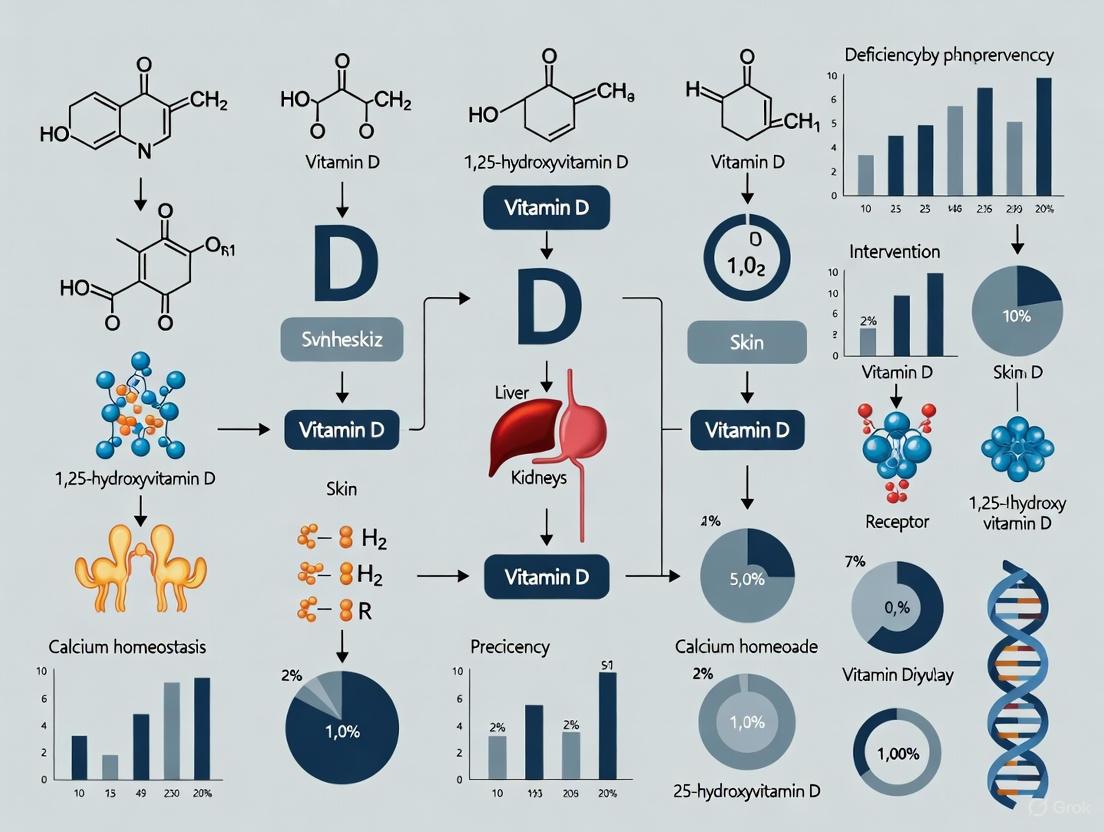
This article provides a comprehensive analysis of vitamin D deficiency management for the aging population, tailored for researchers and drug development professionals.
Optimizing Vitamin D Deficiency Management in Older Adults: From Foundational Science to Advanced Therapeutics
Abstract
This article provides a comprehensive analysis of vitamin D deficiency management for the aging population, tailored for researchers and drug development professionals. It explores the unique pathophysiology of vitamin D deficiency in older adults, including age-related declines in cutaneous synthesis and metabolic activation. The review critically appraises current clinical guidelines and supplementation strategies, highlighting the nuanced efficacy of different dosages and regimens on musculoskeletal outcomes. It further delves into advanced therapeutic approaches, including novel drug delivery systems and vitamin D analogs designed to minimize calcemic effects while maximizing targeted benefits. Finally, the synthesis offers a forward-looking perspective on validating new biomarkers and comparative effectiveness of emerging therapies, aiming to bridge translational gaps in clinical practice and future drug development.
The Aging Physiology of Vitamin D: Pathophysiology, Epidemiology, and Clinical Consequences
Age-Related Changes in Cutaneous Synthesis and Bioactivation
FAQ: Core Mechanisms and Experimental Troubleshooting
FAQ 1: What are the primary age-related changes in the skin that impact vitamin D synthesis? The core issue is a significant, age-dependent decrease in the epidermal concentration of the essential precursor, 7-dehydrocholesterol (7-DHC) [1]. Research on surgically obtained skin from individuals aged 8 to 92 years confirmed that this reduction leads to a more than twofold decrease in the skin's capacity to produce previtamin D₃ when exposed to ultraviolet radiation [1]. The epidermis is the major site for previtamin D₃ formation, accounting for over 80% of the total production in the skin [1].
FAQ 2: Beyond precursor availability, how does aging alter the bioactivation and signaling of vitamin D in the skin? Aging affects the entire Vitamin D–Vitamin D receptor (VDR) signaling axis. This axis is a crucial hub for integrating photic, redox, and metabolic cues to maintain skin immune homeostasis and structural integrity [2]. Disruption of this pathway with age amplifies "inflammaging" (chronic low-grade inflammation), accelerates the decline of dermal and epidermal structure, and compromises the skin's resilience [2]. This involves complex molecular shifts, including altered crosstalk between Nrf2-mediated antioxidant networks, Wnt/β-catenin, and NF-κB signaling [2].
FAQ 3: Our in-vitro model using aged keratinocytes shows inconsistent VDR pathway activation. What are potential confounding factors? Several factors could be at play. First, confirm the bioavailability of the active form of vitamin D (1α,25-dihydroxyvitamin D₃) in your culture system, as aging can affect the enzymatic steps of bioactivation [3]. Second, consider the cellular microenvironment; aged skin exhibits phenotypic shifts in various cell types (melanocytes, Langerhans cells) that are tightly linked to VDR-governed transcriptional programs [2]. Your model may need to account for this paracrine signaling. Finally, ensure that your light exposure protocols for stimulating synthesis do not cause photodegradation of topical vitamin D compounds, a known practical limitation [2].
FAQ 4: We are measuring vitamin D synthesis in ex-vivo aged skin explants. What is a key methodological consideration for quantifying synthesis? A critical step is to directly quantify the epidermal levels of 7-dehydrocholesterol in your samples before proceeding with UV exposure experiments [1]. This will establish a baseline for the synthesis capacity of each specific tissue sample. Subsequent analysis of previtamin D₃ formation should be performed separately for the epidermal and dermal layers, as the epidermis is the primary production site, contributing over 80% of the total yield [1].
FAQ 5: What in-vivo pathways are implicated in vitamin D-mediated wound healing in aged skin? Recent research indicates that vitamin D supplementation accelerates wound closure in aged mice by modulating key processes. These include promoting the resolution of inflammation (M1-to-M2 macrophage polarization), enhancing angiogenesis, and facilitating the epithelial-mesenchymal transition (EMT) crucial for re-epithelialization [3]. Mechanistically, these promoting effects on EMT are mediated through the inactivation of the Hippo signaling pathway, specifically through the downregulation of Mst1 and Lats1 and the subsequent activation of YAP/TAZ [3].
The following tables consolidate key quantitative findings from relevant studies on age-related changes and interventional effects.
Table 1: Age-Related Changes in Cutaneous Vitamin D Synthesis Capacity
| Parameter | Young Subjects (8-18 yrs) | Aged Subjects (77-82 yrs) | Change with Aging | Measurement Method | Source |
|---|---|---|---|---|---|
| Epidermal 7-DHC Concentration | Higher | Lower | Age-dependent decrease | Analysis of surgically obtained skin | [1] |
| Previtamin D₃ Production | Higher | Lower | >2-fold decrease | HPLC analysis after UV exposure | [1] |
| Epidermal Contribution to Total Previtamin D₃ | >80% | >80% | Remains the primary site | Layer-specific quantification | [1] |
Table 2: Effects of Vitamin D Intervention on Aging Biomarkers in Clinical Trials
| Intervention | Study Population | Duration | Key Outcome | Quantitative Effect | Source |
|---|---|---|---|---|---|
| Vitamin D₃ (2000 IU/day) | Adults ≥50/55 yrs (VITAL sub-study, n=1,054) | 4 years | Telomere length attrition | 38-40% reduction in shortening rate vs. placebo [4] [5] | [4] [5] |
| Vitamin D₃ (2000 IU/day) | Adults ≥70 yrs (DO-HEALTH, n=777) | 3 years | DNAm PhenoAge (Biological Age) | Additive benefit with Omega-3 & exercise (std. effect: -0.24 to -0.32 units) [6] | [6] |
| Vitamin D Supplementation | Aged Mice (12-month-old C57BL/6) | Pre-wounding: 3 months | Wound closure rate | Significantly accelerated | [3] |
Experimental Protocols
Protocol 1: Quantifying Age-Related Decline in Cutaneous Vitamin D Synthesis Potential (Ex-Vivo) This protocol is adapted from a foundational study that directly evaluated this phenomenon [1].
- 1. Tissue Acquisition: Obtain full-thickness human skin samples from donors across a wide age range (e.g., young, middle-aged, elderly) via surgery or biopsy, with appropriate ethical approval.
- 2. Precursor Measurement:
- Separately isolate the epidermis from the dermis.
- Extract lipids from the epidermal tissue.
- Quantify the concentration of 7-dehydrocholesterol using high-performance liquid chromatography (HPLC).
- 3. UV Irradiation:
- Expose separate, fresh skin samples to a standardized dose of ultraviolet radiation (UVB, e.g., 290-315 nm).
- 4. Product Analysis:
- Following irradiation, separately analyze the epidermal and dermal layers.
- Extract and quantify the amount of synthesized previtamin D₃ using HPLC.
- Troubleshooting: Ensure UV dose is calibrated and consistent. Rapid processing of tissues post-irradiation is essential to prevent thermal isomerization of previtamin D₃.
Protocol 2: Evaluating Vitamin D's Impact on Wound Healing in an Aged Mouse Model (In-Vivo) This protocol is based on a study investigating mechanisms of VD in aged skin [3].
- 1. Animal Model: Utilize aged (e.g., 12-month-old) C57BL/6 J mice. House under controlled conditions.
- 2. Pre-treatment: Administer vitamin D supplementation via drinking water or diet for a period of 3 months prior to wounding to ensure systemic effect. A control group receives a standard diet.
- 3. Wound Creation: Anesthetize mice and create full-thickness excisional wounds on the dorsal skin.
- 4. Monitoring & Tissue Collection:
- Monitor wound closure daily by photographing wounds and calculating wound area using image analysis software.
- At predetermined time points post-wounding (e.g., days 3, 7, 14), euthanize animals and collect wound tissue and serum.
- 5. Downstream Analysis:
- Histology: Analyze tissue sections for re-epithelialization, collagen deposition, and immune cell infiltration (H&E, Masson's trichrome).
- Molecular Analysis: Use ELISA/qPCR to measure markers of inflammation (IL-6, TNF-α, IL-10), angiogenesis (VEGF, CD31), and EMT (E-cadherin, N-cadherin, Vimentin).
- Pathway Analysis: Assess Hippo pathway activity via Western blot for p-YAP, YAP, TAZ, Mst1, and Lats1.
Protocol 3: Assessing Vitamin D Effect on Keratinocyte Migration and EMT via Hippo Pathway (In-Vitro)
- 1. Cell Culture: Use human keratinocyte cell lines (e.g., HaCaT). Culture under standard conditions.
- 2. Treatment:
- Pre-treat cells with 1α,25(OH)₂D₃ (the active form of VD) for 24-48 hours.
- To establish mechanism, include a treatment group pre-incubated with a YAP inhibitor (e.g., Verteporfin) prior to VD exposure.
- 3. Functional Assay - Migration:
- Perform a scratch wound healing assay.
- Create a scratch in a confluent cell monolayer and monitor closure over 24-48 hours with time-lapse microscopy.
- 4. Molecular Analysis:
- Analyze EMT markers (E-cadherin, Vimentin) and Hippo pathway components (p-YAP/YAP) via Western blot or immunofluorescence.
- Troubleshooting: Optimize the concentration of 1α,25(OH)₂D₃ and Verteporfin for your specific cell line. Ensure consistent scratch width at time zero.
Signaling Pathway and Experimental Workflow Diagrams
The Scientist's Toolkit: Research Reagent Solutions
Table 3: Essential Reagents and Tools for Investigating Cutaneous Vitamin D Synthesis and Action
| Item | Function/Application | Specific Examples / Notes |
|---|---|---|
| 7-Dehydrocholesterol (7-DHC) Standard | Quantitative standard for HPLC measurement of epidermal 7-DHC precursor levels [1]. | Critical for establishing baseline synthesis capacity in aged vs. young skin models. |
| 1α,25-Dihydroxyvitamin D₃ (Calcitriol) | The bioactive form of Vitamin D for in-vitro studies on keratinocytes, fibroblasts, etc. [3]. | Used to treat cells to directly activate VDR signaling pathways. |
| Vitamin D Receptor (VDR) Antibodies | Detection of VDR protein expression and localization (IHC, IF, Western Blot) in skin tissues/cells. | Key for confirming target engagement and expression changes with aging. |
| Hippo Pathway Antibodies | Probing pathway activity in mechanistic studies. Includes anti-YAP/TAZ, p-YAP, Lats1, Mst1 [3]. | Essential for investigating the mechanism of VD-induced cell migration and EMT. |
| YAP/TAZ Inhibitor (e.g., Verteporfin) | Pharmacological inhibitor to confirm the role of the Hippo/YAP axis in vitamin D effects [3]. | A critical tool for mechanistic validation in loss-of-function experiments. |
| ELISA Kits for Cytokines & Markers | Quantifying inflammatory cytokines (IL-6, TNF-α, IL-10), angiogenic factors (VEGF), and EMT markers. | Used for analyzing cell culture supernatants, serum, or tissue homogenates. |
| Aged Mouse Models | In-vivo models for studying age-related impairments in vitamin D synthesis, wound healing, and skin function [3]. | C57BL/6 J mice, 12 months or older. |
| Standardized UV Source | For ex-vivo and in-vivo protocols to stimulate cutaneous vitamin D synthesis [1] [7]. | Requires calibrated UVB lamps (e.g., 290-315 nm) with controlled irradiance. |
Global Epidemiology and High-Risk Populations in Geriatric Care
Vitamin D deficiency represents a significant global health challenge, particularly for the older adult population. This fat-soluble vitamin is essential for calcium homeostasis and bone metabolism, with deficiency leading to well-established skeletal complications such as osteomalacia in adults and increased fracture risk [8]. Despite widespread recognition of these effects, vitamin D deficiency remains remarkably prevalent worldwide, affecting approximately 1 billion people across both developed and developing nations [8]. Recent large-scale analyses indicate that globally, 15.7% of the population has severe vitamin D deficiency (serum 25-hydroxyvitamin D [25(OH)D] <30 nmol/L), while 47.9% has levels below 50 nmol/L, classified as insufficient [9]. This pervasive deficiency carries substantial implications for geriatric care, functional independence, and healthcare systems globally.
Global Prevalence and Epidemiological Patterns
The distribution of vitamin D deficiency demonstrates distinct geographical and demographic patterns that inform public health strategies. A comprehensive pooled analysis of 308 studies with 7.9 million participants from 81 countries revealed striking disparities in prevalence across World Health Organization regions [9]. The Eastern Mediterranean Region and Lower-middle-income countries bear the highest burden, while populations living at high latitudes experience significantly greater deficiency rates due to reduced ultraviolet B radiation exposure [9]. Seasonal variation profoundly impacts vitamin D status, with prevalence in winter-spring approximately 1.7 times higher than in summer-autumn [9].
Table 1: Global Prevalence of Vitamin D Deficiency by WHO Region (2000-2022)
| WHO Region | Prevalence of 25(OH)D <30 nmol/L | Prevalence of 25(OH)D <50 nmol/L |
|---|---|---|
| African Region | Data not specified | Data not specified |
| Region of the Americas | Data not specified | Data not specified |
| South-East Asia Region | Data not specified | Data not specified |
| European Region | Data not specified | Data not specified |
| Eastern Mediterranean Region | Highest prevalence | Highest prevalence |
| Western Pacific Region | Data not specified | Data not specified |
Table 2: Vitamin D Deficiency Prevalence by Population Characteristics
| Population Characteristic | Prevalence/Association |
|---|---|
| Older Adults (General) | 61% deficient in U.S. [8] |
| Nursing Home Residents | 50-60% deficient in U.S. [8] |
| Hospitalized Patients | 50-60% deficient in U.S. [8] |
| Individuals with Obesity | 35% higher prevalence [8] |
| American Indian Adolescents | 50.8% deficient [10] |
| Gender Differences | Men more deficient than women in older population [11] [12] |
High-Risk Populations in Geriatric Care
Physiological and Environmental Risk Factors
The aging process itself introduces multiple physiological challenges that predispose older adults to vitamin D deficiency. Cutaneous synthesis of vitamin D declines significantly with age due to reduced concentrations of 7-dehydrocholesterol in the skin, with production at 70 years being approximately half of that at 20 years [12]. Additional age-related factors include reduced sun exposure, particularly among institutionalized elderly; decreased renal conversion of 25(OH)D to the active 1,25-dihydroxyvitamin D form; and reduced intestinal responsiveness to vitamin D [8] [12]. The high prevalence of polypharmacy in older populations further exacerbates this problem, as medications such as phenobarbital, carbamazepine, and rifampin can induce hepatic p450 enzymes that accelerate vitamin D catabolism [8].
Clinical Consequences and Comorbidities
Vitamin D deficiency manifests with both skeletal and extraskeletal consequences that significantly impact geriatric health. Chronic deficiency leads to reduced intestinal calcium and phosphorus absorption, triggering secondary hyperparathyroidism that stimulates bone resorption and increases fracture risk [8]. The relationship between vitamin D status and cardiovascular disease risk factors is particularly relevant, with research demonstrating significant associations between deficiency and obesity, low HDL-C, metabolic syndrome, and incident diabetes [10]. Among American Indian adolescents, those with vitamin D deficiency showed a significantly higher incidence rate of diabetes over 13 years (1.32 vs. 0.68 per 100 person-years) [10]. Falls represent another critical concern, with evidence indicating that daily low-dose vitamin D regimens reduce fall risk in the elderly, while infrequent large bolus doses may paradoxically increase it [12].
Diagnostic Approaches and Methodological Protocols
Laboratory Assessment and Interpretation
Accurate assessment of vitamin D status is fundamental to both clinical management and research. The circulating concentration of total serum 25-hydroxyvitamin D represents the preferred biomarker for determining vitamin D status due to its stability and correlation with body stores [8] [9]. Diagnostic thresholds remain somewhat controversial, with the 2019 Endocrine Society guidelines defining deficiency as 25(OH)D <30 ng/mL (50 nmol/L), insufficiency as 30-50 ng/mL (50-77 nmol/L), and sufficiency as >50 ng/mL (>77 nmol/L) [8]. The International Society for Clinical Densitometry and International Osteoporosis Foundation recommend maintaining serum 25(OH)D levels of at least 30 ng/mL to minimize fracture risk in older individuals [8]. When vitamin D deficiency is identified, assessment of secondary hyperparathyroidism through PTH and serum calcium levels is recommended [8].
Table 3: Vitamin D Status Classification by Different Organizations
| Organization | Deficiency | Insufficiency | Sufficiency |
|---|---|---|---|
| Endocrine Society | <30 nmol/L (12 ng/mL) | 30-50 nmol/L (12-20 ng/mL) | >50 nmol/L (>20 ng/mL) |
| Institute of Medicine | <30 nmol/L (12 ng/mL) | 30-50 nmol/L (12-20 ng/mL) | ≥50 nmol/L (≥20 ng/mL) |
| Consensus for Older Adults | <30 nmol/L | - | >50 nmol/L (goal) [12] |
Experimental Protocol: Serum 25-Hydroxyvitamin D Measurement
Principle: Quantification of total serum 25-hydroxyvitamin D [25(OH)D] using liquid chromatography-tandem mass spectrometry (LC-MS/MS), currently considered the gold standard method for vitamin D status assessment [10].
Materials and Equipment:
- Serum samples collected after fasting or random state
- LC-MS/MS system with appropriate sensitivity
- Deuterated internal standards for 25(OH)D₂ and 25(OH)D₃
- Solid-phase extraction equipment
- Calibrators traceable to reference standards
Procedure:
- Sample Collection: Collect venous blood samples in serum separator tubes. Protect from light immediately after collection.
- Processing: Allow blood to clot at room temperature for 30-60 minutes, then centrifuge at 1000-2000 × g for 10 minutes. Aliquot serum and store at -80°C if not analyzed immediately [10].
- Protein Precipitation: Add 200 μL of serum to 400 μL of methanol containing deuterated internal standards. Vortex mix vigorously for 60 seconds.
- Centrifugation: Centrifuge at 13,000 × g for 10 minutes to pellet proteins.
- Solid-Phase Extraction: Transfer supernatant to preconditioned solid-phase extraction cartridges. Wash with water-methanol mixtures and elute with organic solvent.
- Chromatographic Separation: Inject extract onto reversed-phase C18 column. Use gradient elution with methanol/water containing formic acid.
- Mass Spectrometric Detection: Use multiple reaction monitoring (MRM) in positive electrospray ionization mode. Quantify against calibration curve with concentrations spanning 5-300 nmol/L.
- Quality Control: Include at least three levels of quality control materials with each batch.
Troubleshooting:
- Low Precision: Check internal standard addition consistency; verify mass spectrometer calibration
- Matrix Effects: Evaluate extraction efficiency; use appropriate internal standards
- Carryover: Increase wash steps in autosampler; inject blank samples between high-concentration samples
Vitamin D Metabolic Pathway and Research Workflow
Vitamin D Metabolism and Regulation: This diagram illustrates the metabolic activation of vitamin D from cutaneous synthesis and dietary sources through hepatic 25-hydroxylation and renal 1α-hydroxylation to form biologically active 1,25-dihydroxyvitamin D, which regulates calcium homeostasis in intestine and bone [8].
Research Reagent Solutions for Vitamin D Studies
Table 4: Essential Research Reagents for Vitamin D Investigations
| Reagent/Material | Function/Application | Specifications |
|---|---|---|
| 25-Hydroxyvitamin D Standards | LC-MS/MS calibration and quantification | Certified reference materials for both D2 and D3 forms |
| Deuterated Internal Standards | Mass spectrometric quantification accuracy | 25(OH)D₃-d₆ and 25(OH)D₂-d₃ for isotope dilution |
| Vitamin D Receptor Antibodies | Immunohistochemistry and Western blot | Monoclonal antibodies for protein localization and expression |
| CYP27B1 (1α-hydroxylase) Assays | Renal activation enzyme activity | Cell-based or biochemical assays for conversion of 25(OH)D to 1,25(OH)₂D |
| Vitamin D Binding Protein | Transport protein studies | Purified human DBP for binding affinity and free hormone studies |
| Differentiated Caco-2 Cells | Intestinal calcium transport studies | In vitro model for vitamin D-mediated transcellular calcium transport |
| Primary Osteoblasts | Bone mineralization assays | Human or rodent cells for studying skeletal effects of vitamin D |
Frequently Asked Questions: Technical Troubleshooting
Q1: Our LC-MS/MS measurements of 25(OH)D show high variability between replicates. What could be causing this issue?
A: Precision problems in 25(OH)D quantification typically stem from inconsistent sample preparation. Ensure protein precipitation is complete by vortexing for a full 60 seconds and confirm centrifugation speed and duration. Check that internal standards are properly mixed before addition and verify that their concentrations are consistent across samples. Deteriorated calibration standards can also cause variability—prepare fresh calibrators and include multiple quality control levels with each run [10].
Q2: We're finding unexpectedly low 25(OH)D levels in our older adult participants despite reported supplementation. What factors should we investigate?
A: Several age-specific factors could explain this discrepancy. First, confirm actual adherence to supplementation protocols. Second, evaluate for potential malabsorption syndromes more common in older adults, such as celiac disease, inflammatory bowel disease, or pancreatic insufficiency [8]. Third, review medication lists for drugs that enhance hepatic catabolism of vitamin D, including phenobarbital, carbamazepine, dexamethasone, or rifampin [8]. Finally, consider the impact of obesity, as higher body fat sequesters vitamin D and reduces circulating 25(OH)D levels [12].
Q3: Our cell culture models aren't showing expected vitamin D response in genes like CYP24A1. What might be interfering with the vitamin D signaling pathway?
A: Begin by verifying the biological activity of your 1,25(OH)₂D₃ stock solution through dose-response curves. Check serum concentration in your culture media, as high serum (≥10%) can bind significant amounts of vitamin D metabolites, reducing free concentration. Confirm proper functioning of your vitamin D receptor (VDR) through Western blot or functional assays. Test for the presence of contaminating mycoplasma, which can alter cellular responses. Ensure cells are not confluent, as density affects VDR expression and responsiveness.
Q4: We're observing inconsistent results in vitamin D intervention studies with older participants. What design elements should we reevaluate?
A: Inconsistent outcomes often reflect population heterogeneity. Stratify participants by baseline 25(OH)D levels, as benefits are most apparent in those with deficiency (<30 nmol/L) [12]. Ensure adequate sample size to detect clinically meaningful differences. Standardize the timing of blood collection relative to supplementation and consider seasonal variation [9]. For skeletal outcomes, combine vitamin D with calcium supplementation as the combination is more effective than vitamin D alone [12]. Avoid large bolus dosing in older adults, as this has been associated with increased fall risk [12].
Despite four decades of extensive research, significant knowledge gaps persist regarding vitamin D requirements and optimal management in aging populations. Recent trends show declining research output and National Institutes of Health funding for vitamin D studies since their peak in 2021, raising concerns about addressing unresolved questions [13]. Critical research priorities include elucidating genetic variations in vitamin D pathways, determining optimal supplementation strategies for frail elderly, understanding extraskeletal effects, and developing personalized approaches based on individual responsiveness [13]. The persistently high global prevalence of vitamin D deficiency, particularly among high-risk geriatric populations, underscores the urgent need for continued scientific investigation, evidence-based clinical guidelines, and effective public health interventions to mitigate this pervasive health issue.
Vitamin D, a secosteroid hormone, is crucial for maintaining calcium and phosphorus homeostasis and skeletal health. However, its role extends far beyond bone metabolism. The discovery of vitamin D receptors (VDR) in numerous extra-skeletal tissues, including vascular smooth muscle cells, cardiomyocytes, and immune cells, has revealed its involvement in a myriad of physiological processes [14]. In older populations, vitamin D deficiency is particularly prevalent due to reduced cutaneous synthesis, inadequate dietary intake, and limited sun exposure [15]. This deficiency has been linked to several age-related conditions, including cognitive decline, cardiovascular diseases, and Alzheimer's disease, making its management a critical area of geriatric research [15] [16] [14]. This technical resource provides troubleshooting guides and experimental protocols to support research into vitamin D's molecular pathways and its implications for health and disease in aging populations.
Key Molecular Pathways and Experimental Analysis
Vitamin D Metabolism and Signaling
Vitamin D from cutaneous synthesis or dietary intake is transported to the liver, where it undergoes hydroxylation by cytochrome P450 enzymes (primarily CYP2R1) to form 25-hydroxyvitamin D [25(OH)D], the major circulating form and standard clinical measure of vitamin D status [17]. This metabolite is then converted in the kidneys by the mitochondrial enzyme 25-hydroxyvitamin D-1α-hydroxylase (CYP27B1) to generate the hormonally active form, 1,25-dihydroxyvitamin D [1,25(OH)2D] [17]. The biological effects of 1,25(OH)2D are mediated through its binding to the vitamin D receptor (VDR), which heterodimerizes with the retinoid X receptor (RXR). This complex then binds to vitamin D response elements (VDREs) in the promoter regions of target genes, regulating their transcription [14]. Notably, CYP27B1 is also expressed in extra-renal sites, enabling local production of active vitamin D for autocrine and paracrine signaling [17].
Cardioprotective Signaling Pathways
Preclinical studies have elucidated several molecular pathways through which vitamin D exerts cardioprotective effects. Vitamin D modulates vascular tone and prevents fibrosis and hypertrophy through effects on major signal transduction pathways, including NF-kB, Nrf2, PI3K/AKT/mTOR, Calcineurin/NFAT, TGF-β/Smad, and AMPK [14]. It also influences epigenetic mechanisms governing inflammation, oxidative stress, and pathological remodeling. Through these pathways, vitamin D demonstrates the capacity to decrease inflammation, attenuate hypertrophy, reduce plaque formation, and improve cardiac function in various cardiovascular disease models [14].
Neuroprotective Mechanisms
Vitamin D exhibits significant neuroprotective properties through multiple mechanisms. It enhances neuronal proliferation, differentiation, and synaptic plasticity, contributing to central nervous system homeostasis [15]. Vitamin D reduces neuroinflammation and oxidative stress, and low vitamin D levels have been linked to cognitive decline and increased risk of Alzheimer's disease [15]. Recent research on centenarian women revealed that higher serum 25(OH)D levels were independently associated with lower odds of Alzheimer's disease, with a particularly strong protective association observed below a threshold of 29.3 ng/mL [16].
Quantitative Research Findings on Vitamin D Interventions
Cognitive and Cardiovascular Outcomes in Older Adults
Table 1: Vitamin D Supplementation Effects on Cognitive Function and Blood Pressure in Older Adults with Hypertension [15]
| Outcome Measure | Supplemented Group (≥5,000 IU/day) | Comparison Group | P-value | Adjusted Improvement |
|---|---|---|---|---|
| Recognition Memory (points) | +3.1 ± 2.4 | +1.2 ± 2.0 | 0.01 | +1.8 points (95% CI: 0.9-2.7; p=0.002) |
| Systolic BP (mmHg) | -12.8 ± 7.2 | -7.1 ± 6.8 | 0.03 | -10.7 mmHg (p=0.01) |
| Global Cognition (MoCA) | Significant improvement | Minimal improvement | - | - |
| Strongest Response in | Baseline MoCA < 22 & 25(OH)D < 20 ng/mL | - | - | - |
Vitamin D and Alzheimer's Disease Risk in Centenarian Women
Table 2: Vitamin D Association with Alzheimer's Disease Risk in Female Centenarians [16]
| Vitamin D Measure | Findings | Statistical Significance |
|---|---|---|
| Per 1 ng/mL increase | 5% reduced risk | OR = 0.95 (95% CI: 0.90-1.00; p=0.037) |
| Highest vs. Lowest Quartile | 87% reduced risk | OR = 0.13 (95% CI: 0.03-0.50; p=0.007) |
| Threshold Effect | Protective association strongest below 29.3 ng/mL | Identified via restricted cubic spline analysis |
| Consistency | Effects consistent across subgroups (smoking, hypertension) | No significant interactions |
Research Reagent Solutions
Table 3: Essential Research Reagents for Vitamin D Molecular Pathway Studies
| Reagent/Category | Specific Examples | Research Application |
|---|---|---|
| Vitamin D Metabolites | Vitamin D3 (Cholecalciferol), Vitamin D2 (Ergocalciferol), 25(OH)D, 1,25(OH)2D | In vitro and in vivo supplementation studies; receptor binding assays |
| Cell Lines | Cardiomyocyte cell lines, Vascular smooth muscle cells, Endothelial cells, Macrophages | Mechanistic studies of vitamin D effects on specific cell types |
| Animal Models | CYP2R1 knockout mice, VDR knockout mice, Diet-induced deficiency models, Disease-specific models (hypertension, hypertrophy) | Study of vitamin D metabolism, signaling, and disease mechanisms in vivo |
| Antibodies | Anti-VDR, Anti-CYP27B1, Anti-CYP24A1, Anti-RXR | Protein localization, expression analysis (Western blot, IHC) |
| Assay Kits | 25(OH)D ELISA/EIA, 1,25(OH)2D ELISA, PTH ELISA, Calcium assay kits | Assessment of vitamin D status and related biochemical parameters |
| Molecular Biology Tools | VDRE reporter constructs, siRNA/shRNA for VDR/CYP genes, ChIP assay kits | Study of gene regulation, promoter binding, pathway analysis |
Experimental Protocols for Vitamin D Research
Protocol: Retrospective Cohort Study on Cognitive and Cardiovascular Outcomes
Objective: To evaluate the association between vitamin D supplementation and improvements in cognitive function and blood pressure in older adults with hypertension and mild cognitive deficits [15].
Methodology:
- Study Design: Retrospective review of patient records (January 2022 - December 2023)
- Participants: Age ≥65 years with documented hypertension, baseline 25(OH)D <30 ng/mL, and mild cognitive impairment (MoCA <26) or subjective cognitive complaints
- Groups: Supplemented (≥5,000 IU/day vitamin D2 for ≥6 months) vs. Comparison (no or minimal supplementation)
- Exclusion Criteria: Incomplete data, secondary cognitive disorders, severe renal/hepatic dysfunction, parathyroid disorders, malabsorption syndromes, chronic glucocorticoid/anticonvulsant therapy, active malignancy, sensory impairment, prior high-dose vitamin D intake
- Primary Outcomes: Recognition memory (HVLT-R), global cognition (MoCA), systolic and diastolic BP
- Statistical Analysis: Multivariable regression, propensity-score-matched analyses, stratified analyses based on baseline MoCA and 25(OH)D levels
Protocol: Centenarian Study on Alzheimer's Disease Risk
Objective: To examine the association between serum 25(OH)D levels and Alzheimer's disease risk in Chinese female centenarians [16].
Methodology:
- Study Population: 514 female participants aged ≥100 years from China Healthy Longevity Multicenter Study (CHLMS)
- AD Diagnosis: Education-adjusted MMSE thresholds and clinical exclusion of non-AD dementias
- Laboratory Measurements: Fasting serum 25(OH)D measured using enzymatic assays on Cobas analyzer (Roche Diagnostics); additional biomarkers (osteocalcin, CTX, PTH, creatinine, calcium, phosphorus) assessed using standardized protocols
- Statistical Analysis: Logistic regression models (unadjusted and adjusted), restricted cubic spline analysis for non-linear relationships, piecewise regressions for threshold effects, subgroup analyses
Protocol: Preclinical Assessment of Cardiovascular Effects
Objective: To elucidate the molecular mechanisms of vitamin D's cardioprotective effects using preclinical models [14].
Methodology:
- In Vitro Models: Cardiomyocyte cell lines treated with 1,25(OH)2D3 to assess differentiation, hypertrophy, and pathological remodeling
- In Vivo Models:
- Knockout mice (CYP2R1, VDR) to study deficiency effects
- Diet-induced deficiency models
- Disease-specific models (hypertension, hypertrophy, myocardial infarction)
- Pathway Analysis: Assessment of NF-kB, Nrf2, PI3K/AKT/mTOR, Calcineurin/NFAT, TGF-β/Smad, and AMPK signaling pathways through Western blot, qPCR, and immunohistochemistry
- Functional Outcomes: Cardiac function (echocardiography), hypertrophy, fibrosis (histology), inflammation (cytokine profiling), oxidative stress markers
Troubleshooting Guides and FAQs
Q1: Our clinical study on vitamin D and cognitive function in older adults is showing inconsistent results. What factors should we consider?
A1: Several factors can influence outcomes:
- Baseline Status: Ensure participants have confirmed deficiency (25(OH)D <30 ng/mL) at baseline. Stronger effects are often seen in those with lower baseline levels (<20 ng/mL) [15].
- Supplementation Protocol: Use adequate dosing (≥5,000 IU/day in deficient older adults) and sufficient duration (≥6 months) to achieve therapeutic levels [15].
- Cognitive Assessment: Use sensitive, domain-specific cognitive tests (e.g., HVLT-R for recognition memory) in addition to global screens like MoCA [15].
- Stratified Analysis: Conduct subgroup analyses based on baseline cognitive status (MoCA <22 vs. higher) and deficiency severity [15].
Q2: We're observing variable responses to vitamin D supplementation in our preclinical cardiovascular models. How can we standardize our approach?
A2: Consider these strategies:
- Model Selection: Choose disease-specific models (hypertension, hypertrophy) rather than generic deficiency models to better mimic human conditions [14].
- Dosing Regimen: Implement dose-response studies and ensure proper vehicle controls. Monitor serum 25(OH)D levels in animals to confirm deficiency/sufficiency states.
- Endpoint Selection: Include multiple molecular endpoints (pathway activation, epigenetic modifications) alongside functional measures (blood pressure, cardiac function) [14].
- Timing:
Q3: What are the current recommendations for vitamin D testing and supplementation in older adult research populations?
A3: Based on recent Endocrine Society guidelines (2024) and research evidence:
- Testing: Routine vitamin D testing is not recommended for all healthy adults, including those with obesity or darker skin tones [18].
- Supplementation Groups: Specific groups benefiting regardless of testing include: adults >75 years (may lower mortality risk), pregnant women (reduces complications), and adults with pre-diabetes (may reduce progression to diabetes) [18].
- Dosing: 600 IU for people <75 years; 800 IU for people >75 years. Doses under 4,000 IU are generally safe, but super-high intermittent doses are not recommended [18].
- Research Context: In clinical trials with confirmed deficiency, higher doses (5,000 IU/day) have shown efficacy for cognitive and cardiovascular outcomes [15].
Q4: How do we address the translational gap between promising preclinical findings and mixed clinical outcomes in vitamin D research?
A4: This common challenge requires:
- Population Targeting: Focus on deficient populations rather than general populations [15] [16].
- Intermediate Endpoints: Include molecular endpoints (e.g., pathway modulation, epigenetic changes) alongside clinical outcomes to demonstrate biological activity even without clinical effects [14].
- Threshold Effects: Analyze data for potential threshold effects (e.g., the 29.3 ng/mL threshold for AD protection in centenarians) rather than assuming linear relationships [16].
- Combination Approaches: Consider vitamin D as part of multimodal interventions rather than monotherapy, particularly in multifactorial conditions like cognitive decline and cardiovascular disease.
The determination of sufficient serum 25-hydroxyvitamin D (25(OH)D) levels remains a significant challenge in clinical research and practice, particularly for studies focused on older populations. Despite its role as the primary biomarker of vitamin D status, consensus on specific threshold concentrations that define deficiency or sufficiency has been elusive, with different organizations proposing varied criteria based on divergent interpretations of evidence [19] [20]. This lack of standardization is particularly problematic for researchers designing intervention studies and clinicians implementing screening programs for older adults, who represent a population at heightened risk for vitamin D deficiency due to age-related decreases in dermal synthesis, reduced outdoor activity, and comorbidities that affect vitamin D metabolism [19] [21].
The complexity is further compounded by analytical challenges in 25(OH)D measurement, seasonal variations in levels, and ongoing debates regarding the serum concentrations required for optimal skeletal versus non-skeletal outcomes [20] [22]. This technical guide addresses these challenges through frequently asked questions, methodological protocols, and analytical frameworks to support researchers in navigating the complexities of vitamin D status assessment in aging populations.
FAQ: Navigating Threshold Controversies and Methodological Challenges
FAQ 1: What are the current threshold controversies in defining vitamin D status, and how do they impact research in older adults?
Different scientific organizations have established varying threshold concentrations for defining vitamin D status, creating challenges for comparing research outcomes across studies. The Institute of Medicine (IOM) considers a minimal 25(OH)D concentration of 20 ng/mL (50 nmol/L) as physiologically adequate for at least 97.5% of the population [20]. In contrast, the Endocrine Society has historically recommended serum levels of >30 ng/mL (>75 nmol/L) as optimal, though their revised 2024 statement did not provide specific reference values for optimal serum 25(OH)D concentrations, noting that "in healthy adults, 25(OH)D levels that provide outcome-specific benefits have not been established in clinical trials" [20] [23].
This discrepancy is particularly relevant for geriatric research, as older adults are vulnerable to musculoskeletal consequences of insufficiency. The prevalence of vitamin D deficiency in older populations is significant, with one study of older adults in Iran finding that 8.42% had vitamin D deficiency (<12 ng/mL) and 17.06% had insufficient levels (12-20 ng/mL), meaning approximately 25% of the cohort had suboptimal vitamin D status [19].
Table 1: Comparative 25(OH)D Thresholds from Major Organizations
| Organization | Deficiency | Insufficiency | Sufficiency | Notes |
|---|---|---|---|---|
| Institute of Medicine (IOM) | <12 ng/mL (<30 nmol/L) | - | ≥20 ng/mL (≥50 nmol/L) | Considered adequate for 97.5% of population [20] |
| Endocrine Society (2011) | <20 ng/mL (<50 nmol/L) | 21-29 ng/mL (52.5-72.5 nmol/L) | ≥30 ng/mL (≥75 nmol/L) | Revised 2024 guidelines more cautious on specific thresholds [20] [24] |
| Polish Panel (2023) | <20 ng/mL (<50 nmol/L) | 20-30 ng/mL (50-75 nmol/L) | >30-50 ng/mL (>75-125 nmol/L) | Distinguishes between "ideal" and sufficiency ranges [24] |
FAQ 2: What methodological challenges affect 25(OH)D measurement and how can researchers address them?
Significant analytical challenges persist in 25(OH)D measurement, primarily concerning assay variability and lack of harmonization between different laboratory methods. A comparative evaluation of three automated immunoassays found that all methods exhibited both proportional and constant systematic errors, with biases "well above the maximum acceptable bias" [22]. Consequently, 25(OH)D concentrations measured by different assays were not comparable, and these methods demonstrated disagreement in classifying subjects into deficiency or sufficiency categories [22].
For the biologically active metabolite 1,25-dihydroxyvitamin D (1,25(OH)2D), measurement challenges are even more pronounced due to its picomolar concentrations (103-fold lower than 25(OH)D), short half-life (4-5 hours), and high lipophilicity [25]. Unlike 25(OH)D, no comparable standardisation programme exists for 1,25(OH)2D at the same level, with no established Reference Measurement Procedure or Standard Reference Materials available for laboratory calibration [25]. These methodological limitations are particularly relevant for researchers conducting longitudinal studies or multi-center trials where consistent measurement across timepoints and sites is essential.
FAQ 3: How does seasonal variation impact vitamin D status assessment in research studies?
Vitamin D status exhibits significant seasonal fluctuation, particularly at latitudes above 40°N where UVB exposure is insufficient during autumn and winter months [24]. A study of healthy Slovenian adults found significantly lower 25(OH)D levels in winter (44.13 ± 17.82 nmol/L) compared to summer (74.97 ± 22.75 nmol/L; p < 0.001) [24]. This seasonal variation extends beyond total 25(OH)D to include bioavailable fractions, with calculated bioavailable 25(OH)D significantly lower in winter (7.45 ± 5.66 nmol/L) compared to summer (13.11 ± 8.27 nmol/L; p < 0.001) [24].
The COVID-19 pandemic exacerbated these seasonal patterns, with research from Bavaria, Germany demonstrating that mean vitamin D levels decreased significantly from 26.7 μg/L pre-pandemic to 26.0 μg/L during the pandemic (p < 0.001), with deficiency rates increasing from 31.2% to 35.2% (p < 0.001) [26]. These declines were particularly pronounced among elderly women, highlighting the importance of accounting for both seasonal and extraordinary environmental factors when assessing vitamin D status in research populations [26].
FAQ 4: What are the key considerations for vitamin D research in institutionalized older adults?
Nursing home residents represent a particularly vulnerable subpopulation for vitamin D deficiency, with a high prevalence of insufficiency that is frequently undertreated [21]. The French Group of Geriatrics and Nutrition has proposed a model of intervention based on systematic vitamin D supplementation (1,000 IU/day) upon admission and throughout the resident's stay without preliminary evaluation of baseline levels [21]. This population-based approach contrasts with individual-based protocols that require serum testing before and after supplementation, which may be impractical in institutional settings [21].
This approach is supported by evidence from the Vitamin D and Omega-3 Trial (VITAL), which demonstrated that vitamin D supplementation did not reduce the risk of cancer, cardiovascular disease, or fractures in generally healthy populations, challenging the clinical value of routine testing in individuals without specific risk factors [27]. For researchers designing studies in long-term care settings, these findings suggest that interventional trials might prioritize practical supplementation protocols over extensive biochemical monitoring.
Experimental Protocols and Methodological Standards
Protocol: Population-Based Assessment of Vitamin D Status in Older Adults
The following protocol is adapted from the Birjand Longitudinal Aging Study (BLAS), which employed a robust methodology for assessing vitamin D status in a population-based sample of older adults [19]:
- Study Population and Sampling: Recruit participants aged ≥60 years using a multistage stratified cluster random sampling method to ensure representative sampling. Exclusion criteria should include very short life expectancy and conditions that preclude informed consent.
- Data Collection: Collect demographic data, medical history, medication use (including vitamin D supplements), and smoking status using standardized questionnaires. Assess physical activity levels using validated instruments such as the LASA Physical Activity Questionnaire (LAPAQ), calculating metabolic equivalents (METs) from international reference tables.
- Anthropometric Measurements: Measure height and weight according to established protocols (e.g., NHANES anthropometric protocol) using calibrated equipment. Calculate Body Mass Index (BMI) as weight in kilograms divided by height in meters squared.
- Nutritional Assessment: Screen for malnutrition using the Mini Nutrition Assessment (MNA) questionnaire, which has been validated for use with older adult populations.
- Blood Collection and Processing: Collect blood samples after a 12-hour overnight fast. Separate serum by centrifugation at 6000 rpm and store at <-70°C until analysis.
- Biochemical Analysis: Measure serum 25(OH)D using reliable methods such as ELISA, ensuring documentation of intra-assay coefficients. Simultaneously measure serum calcium levels using autoanalyzers.
- Statistical Analysis and Standardization: Standardize prevalence estimates according to reference populations (e.g., WHO 2000-2025) to enable cross-study comparisons. Evaluate factors associated with vitamin D deficiency using univariate and multiple logistic regression models.
Protocol: Longitudinal Assessment of Seasonal Variation
For researchers investigating seasonal variations in vitamin D status, the following protocol adapted from studies of seasonal fluctuation provides a methodological framework [26] [24]:
- Study Design: Implement a repeated measures design with sample collection at the end of summer (peak vitamin D levels) and end of winter (nadir vitamin D levels).
- Laboratory Measurements: Measure serum 25(OH)D, vitamin D binding protein (DBP) using ELISA, and albumin using standardized clinical chemistry methods.
- Calculation of Vitamin D Fractions: Calculate free and bioavailable 25(OH)D using established formulas that incorporate total 25(OH)D, DBP, and albumin concentrations.
- Statistical Analysis: Employ paired t-tests to compare seasonal differences in total, free, and bioavailable 25(OH)D. Use correlation analysis (e.g., Pearson's r) to examine relationships between total and bioavailable vitamin D across seasons.
Vitamin D Metabolism and Research Workflow
The following diagram illustrates vitamin D metabolism and the key stages in research workflows for assessing status in older populations:
Diagram 1: Vitamin D Metabolism and Research Considerations. This workflow outlines the pathways from source intake to metabolic activation and highlights key methodological considerations for research in older populations.
The Scientist's Toolkit: Essential Research Reagents and Materials
Table 2: Essential Research Reagents and Materials for Vitamin D Status Studies
| Item | Function/Application | Technical Considerations |
|---|---|---|
| ELISA Kits for 25(OH)D | Quantification of total 25(OH)D serum concentrations | Validate against reference methods; document cross-reactivity with D2 and D3 forms [19] |
| LC-MS/MS Systems | High-specificity measurement of vitamin D metabolites | Considered reference method but requires technical expertise; allows separate D2/D3 quantification [25] |
| DBP ELISA Kits | Measurement of vitamin D binding protein concentrations | Essential for calculating free and bioavailable vitamin D fractions [24] |
| Standard Reference Materials | Assay calibration and method validation | Currently available for 25(OH)D but not for 1,25(OH)2D [25] |
| Serum/Plasma Collection Tubes | Biological sample preservation | Use appropriate preservatives; maintain cold chain during processing and storage [19] |
| Cryogenic Storage Systems | Long-term sample preservation (-70°C) | Essential for preserving labile vitamin D metabolites in longitudinal studies [19] |
The determination of sufficient 25(OH)D levels continues to present methodological and interpretive challenges for researchers studying older populations. The absence of standardized thresholds, coupled with analytical variability between assays and significant seasonal fluctuations, necessitates rigorous methodological approaches in research design. For geriatric populations specifically, consideration of age-related physiological changes, institutionalization status, and comorbidity burden is essential for appropriate assessment and interpretation of vitamin D status.
Future research directions should prioritize the development of standardized assay systems, establishment of age-specific reference ranges, and clarification of optimal 25(OH)D concentrations for key health outcomes in older adults. By addressing these methodological challenges, the research community can advance toward more consistent assessment protocols that enhance comparability across studies and ultimately inform evidence-based clinical guidelines for vitamin D management in aging populations.
Clinical Strategies and Advanced Delivery Systems for Effective Repletion
Analysis of the 2024 Endocrine Society Clinical Practice Guideline
The 2024 Endocrine Society Clinical Practice Guideline, "Vitamin D for the Prevention of Disease," represents a significant update to the 2011 recommendations, marking a substantial shift in the approach to vitamin D supplementation and testing for generally healthy populations [23]. Developed by a multidisciplinary panel and co-sponsored by numerous professional organizations including the American Association of Clinical Endocrinology and European Society of Endocrinology, this guideline specifically addresses the use of vitamin D to lower disease risk in individuals without established indications for vitamin D treatment or 25-hydroxyvitamin D (25[OH]D) testing [23]. This analysis examines these new recommendations through the critical lens of vitamin D deficiency management in older populations, providing researchers and clinical scientists with a technical framework for implementation and further investigation.
The guideline acknowledges that while numerous studies demonstrate associations between serum 25(OH)D concentrations and various common disorders including musculoskeletal, metabolic, cardiovascular, malignant, autoimmune, and infectious diseases, the benefit-risk ratio of widespread vitamin D supplementation remains unclear, and optimal vitamin D intake and serum 25(OH)D concentrations for disease prevention continue to be uncertain [23]. This cautious stance reflects the evolving evidence base and aims to provide more targeted recommendations for specific populations while curbing unnecessary testing and supplementation in those unlikely to benefit.
Key Recommendations: Population-Specific Guidance
Table 1: 2024 Endocrine Society Guideline Recommendations by Population
| Population | Recommended Action | Potential Benefit | Evidence Certainty |
|---|---|---|---|
| Adults <75 years | Against supplementation beyond IOM recommended daily intakes [28] | Not specified for general population | Variable across outcomes |
| Adults ≥75 years | Supplementation above IOM recommended daily intakes [28] | Lower mortality risk [29] | High certainty for mortality reduction [29] |
| Pregnant people | Empiric vitamin D supplementation above IOM recommendations [28] | Reduced risk of pre-eclampsia, intra-uterine mortality, preterm birth, small-for-gestational age birth, and neonatal mortality [28] | Low certainty [29] |
| Adults with prediabetes | Supplementation above IOM recommended daily intakes [28] | Reduced progression to diabetes [29] | Moderate certainty [29] |
| Children & Adolescents ≤18 years | Supplementation above IOM recommended daily intakes [28] | Prevent nutritional rickets and reduce respiratory infections [28] | Low certainty for respiratory infections [29] |
| All populations studied | Against routine 25(OH)D testing [28] | Outcome-specific benefits based on levels not identified [28] | Insufficient evidence |
Dosing and Administration Protocols
For adults aged 50 years and older who have indications for vitamin D supplementation, the guideline suggests daily, lower-dose vitamin D instead of non-daily, higher-dose regimens [28]. This recommendation is supported by evidence that high-dose intermittent vitamin D administration may increase fall risk compared to lower-dose daily dosing [29]. The systematic review supporting the guideline concluded that dosing frequency and magnitude require careful consideration, particularly in older adult populations where safety concerns may be heightened [29].
The guideline does not specify exact dosage amounts for most populations, reflecting the insufficient evidence to determine optimal dosing protocols. However, it emphasizes that recommendations should exceed the Institute of Medicine (IOM) recommended daily allowances, which are 600 IU for individuals 1-70 years old and 800 IU for those over 70 [30]. For context, research in nursing home populations has proposed systematic supplementation of 1,000 IU/day for all residents without preliminary evaluation of baseline levels [21], suggesting this may be a reasonable starting point for institutionalized older adults while acknowledging that ideal dosing may vary by individual risk factors and setting.
Technical Implementation: Troubleshooting Common Scenarios
Frequently Asked Questions for Research Implementation
*Q: What methodology was used to develop the 2024 guideline? A: The guideline was developed using the Grading of Recommendations Assessment, Development and Evaluation (GRADE) approach to assess certainty of evidence [29]. A systematic review of 37,007 citations identified 151 studies addressing 14 prioritized clinical questions [29]. The panel considered evidence quality, individuals' and providers' values and preferences, and other contextual factors to develop clinical recommendations [29].
*Q: How should researchers implement the recommendation against routine 25(OH)D testing in study designs? A: The guideline suggests against routine testing because outcome-specific benefits based on 25(OH)D levels have not been identified, even in high-risk populations such as those with dark complexion or obesity [28]. Research protocols should therefore focus on empiric supplementation based on population risk characteristics rather than biomarker-driven approaches. This represents a significant shift from the 2011 recommendations that endorsed testing in high-risk groups.
*Q: What are the implications for clinical trials targeting older adults? A: For trials involving adults ≥75 years, the guideline supports supplementation above IOM recommendations due to demonstrated mortality reduction [28]. The supporting systematic review found high-certainty evidence for mortality benefit in this population [29]. Research protocols should incorporate daily lower-dose regimens rather than intermittent high-dose approaches, which may increase fall risk [29].
*Q: How do these recommendations address discordant findings from recent studies? A: The guideline acknowledges limitations in the available evidence, including that many large clinical trials were not designed for the outcomes they reported and studied populations often had adequate vitamin D levels at baseline [28]. The panel could not determine specific blood-level thresholds for 25(OH)D for adequacy or target levels for disease prevention, highlighting critical knowledge gaps for future research [28].
Troubleshooting Guide: Implementation Challenges
*Challenge: Reconciling with Recent Positive Findings in Older Adults Issue: Recent research not included in the guideline evidence review demonstrates potential benefits that appear to contradict recommendations. A 2025 retrospective cohort study of older adults with hypertension and mild cognitive deficits found that vitamin D supplementation (≥5,000 IU/day) was associated with significant improvements in recognition memory (+3.1 ± 2.4 vs. +1.2 ± 2.0 points; p = 0.01) and systolic blood pressure reduction (-12.8 ± 7.2 vs. -7.1 ± 6.8 mmHg; p = 0.03) [15]. Resolution Strategy: Note that the guideline specifically addresses prevention in healthy populations without established indications. These findings involving hypertensive adults with cognitive deficits may represent a distinct population with different risk-benefit considerations. Research protocols should clearly differentiate between prevention in healthy older adults and management in those with established conditions.
*Challenge: Resistance to Population-Based Approaches in Specialized Settings Issue: Nursing home and institutional settings present unique implementation challenges. A 2023 review proposed a model of systematic vitamin D supplementation (1,000 IU/day) upon admission and throughout the resident's stay without preliminary serum testing, arguing that current personalized protocols are impractical in these settings [21]. Resolution Strategy: For research in institutional settings, consider pragmatic trial designs that align with real-world constraints. The population-based approach suggested for nursing homes [21] may balance efficacy with feasibility while respecting the guideline's emphasis on avoiding routine testing.
*Challenge: Navigating Controversial Recommendations for High-Risk Groups Issue: The suggestion against routine 25(OH)D testing in dark-skinned individuals has generated significant controversy [31]. Critics argue this recommendation contradicts known physiological risks, as dark-skinned individuals have significantly lower serum 25(OH)D levels due to reduced cutaneous synthesis [31]. Resolution Strategy: Researchers should note that this recommendation was based on absence of randomized clinical trials specifically addressing screening in dark-skinned populations rather than evidence of no benefit [31]. Study designs targeting health disparities should carefully document the rationale for testing or supplementation decisions in these populations.
Experimental Protocols & Methodologies
Detailed Protocol: Vitamin D Supplementation in Older Hypertensive Adults with Cognitive Concerns
Based on the retrospective study by Dhahbi et al. (2025) that demonstrated benefits in a high-risk older population [15], the following experimental protocol can be adapted for prospective trials:
Population Criteria:
- Inclusion: Age ≥65 years; documented hypertension; serum 25(OH)D <30 ng/mL; mild cognitive impairment (MoCA <26) or subjective cognitive complaints [15]
- Exclusion: Secondary cognitive disorders (major stroke, Parkinson's disease dementia, psychiatric illness with psychosis); severe renal/hepatic dysfunction; parathyroid or calcium-handling disorders; malabsorption syndromes; chronic glucocorticoid or anticonvulsant therapy; active malignancy; sensory impairment precluding cognitive testing; prior high-dose vitamin D intake (>800 IU/day within 3 months) [15]
Supplementation Protocol:
- Intervention: 5,000 IU/day vitamin D2 (ergocalciferol) for ≥6 consecutive months [15]
- Comparison: No supplementation or minimal supplementation (<800 IU/day)
- Form: Hospital-formulary 5,000 IU ergocalciferol capsules [15]
Assessment Schedule:
- Baseline and 6-month follow-up (±2 weeks) [15]
- Primary outcomes: Recognition memory (HVLT-R), global cognition (MoCA), systolic and diastolic BP
- Secondary outcomes: Serum 25(OH)D levels, safety parameters (serum calcium for hypercalcemia monitoring)
- Additional measures: Demographics, body mass index, hypertension duration, antihypertensive medications, comorbidity index
Monitoring Protocol:
- Assess for mild hypercalcemia (observed in 3.8% of supplemented patients vs. 1.3% in comparisons) [15]
- Consider more frequent monitoring in those with baseline levels <20 ng/mL, who showed stronger responses (+2.8 points in recognition memory; p = 0.003) [15]
Research Reagent Solutions for Vitamin D Investigation
Table 2: Essential Research Materials for Vitamin D Clinical Studies
| Reagent/Material | Function/Application | Technical Specifications |
|---|---|---|
| Ergocalciferol (Vitamin D2) | High-dose supplementation intervention | 5,000 IU capsules; hospital-formulary grade [15] |
| 25-hydroxyvitamin D (25[OH]D) Assay | Quantification of vitamin D status | Measures circulating 25(OH)D; LC-MS/MS preferred for accuracy [30] |
| Montreal Cognitive Assessment (MoCA) | Assessment of global cognitive function | Validated tool for mild cognitive impairment; cutoff <26 indicates impairment [15] |
| Hopkins Verbal Learning Test-Revised (HVLT-R) | Specific assessment of recognition memory | Detects changes in verbal learning and memory [15] |
| Vitamin D Binding Globulin (VDBG) Assay | Evaluation of vitamin D transport protein | Understanding bioavailable vitamin D fractions [30] |
| Parathyroid Hormone (PTH) Assay | Assessment of secondary hyperparathyroidism | Marker of vitamin D biological activity [31] |
| Serum Calcium Measurement | Safety monitoring for hypercalcemia | Critical for high-dose supplementation protocols [15] |
Visualizing Vitamin D Metabolism & Research Pathways
Vitamin D Metabolic Pathway and Experimental Assessment
Figure 1: Vitamin D Metabolic Pathway and Research Assessment Points
Research Decision Algorithm for Older Adult Populations
Figure 2: Research Decision Algorithm for Vitamin D in Older Adults
Critical Analysis & Research Implications
Methodological Limitations and Evidence Gaps
The 2024 guideline reflects both the strengths and limitations of the current evidence base. The systematic review supporting the guideline identified significant limitations in the available literature, including that many large clinical trials were not designed for the outcomes they reported, and studied populations often had vitamin D blood levels that most would consider adequate at baseline [28]. This fundamental methodological issue may explain the discrepancy between encouraging observational data and largely null results from randomized trials.
Specific critical evidence gaps identified include:
- Threshold uncertainty: The panel could not determine specific blood-level thresholds for 25-hydroxyvitamin D for adequacy or for target levels for disease prevention [28]
- Population specificity: Limited evidence for high-risk subgroups including institutionalized older adults [21]
- Mechanistic understanding: Despite proposed mechanisms including modulation of the renin-angiotensin-aldosterone system (RAAS), vascular endothelial function, and neuroprotective effects [15], the translation to clinical outcomes remains incompletely understood
- Dosing optimization: Ideal dosing regimens (daily vs. intermittent, specific IU amounts) require further clarification across different populations
Controversies and Divergent Perspectives
The guideline has generated significant controversy, particularly regarding recommendations against routine testing in high-risk populations. A 2025 rebuttal specifically criticized the suggestion against routine 25(OH)D screening in dark-skinned individuals, arguing that this recommendation contradicts physiological knowledge and may exacerbate health disparities [31]. Critics note that dark-skinned individuals have significantly lower serum 25(OH)D levels due to reduced cutaneous synthesis from melanin competition for UVB photons [31].
Similarly, the guideline's minimal attention to pediatric populations, particularly infants, has been questioned [31]. Recent randomized controlled trials demonstrate that monitored vitamin D supplementation protocols in preterm infants significantly increase serum 25(OH)D concentrations and improve metabolic bone parameters [31], suggesting more nuanced approaches may be necessary for vulnerable populations.
Future Research Directions
The 2024 guideline highlights numerous opportunities for future investigation:
Population-Focused Trials:
- Targeted studies in adults ≥75 years focusing on mortality, mobility, and cognitive outcomes
- Research in prediabetic populations to clarify optimal dosing for diabetes prevention
- Investigations in institutionalized older adults to validate population-based approaches [21]
Methodological Innovations:
- Standardized protocols for 25(OH)D measurement to improve cross-study comparability
- Incorporation of free and bioavailable vitamin D assessments alongside total 25(OH)D
- Investigation of genetic modifiers of vitamin D metabolism and response
Mechanistic Studies:
- Elucidation of vitamin D's role in neuroprotection through anti-inflammatory and neurotrophic effects [15]
- Clarification of vascular mechanisms, particularly RAAS modulation and endothelial function [15]
- Exploration of interactions between vitamin D status and antihypertensive medications in older adults
The 2024 Endocrine Society Guideline provides an important framework for vitamin D research and clinical practice, particularly emphasizing a more targeted approach to supplementation and testing. For researchers investigating vitamin D in older populations, these recommendations offer both guidance and opportunities to address persistent evidence gaps through rigorously designed studies that account for the complex interplay between vitamin D status, aging, and chronic disease.
Frequently Asked Questions (FAQs) and Troubleshooting
FAQ 1: What is precision dosing and why is it critical in clinical research? Precision dosing is a model-informed approach to drug development and administration that moves beyond standard, fixed-dose regimens. It utilizes patient-specific clinical and biological data, along with pharmacokinetic (PK) and pharmacodynamic (PD) models, to determine an optimal drug dose for an individual or sub-population. This is crucial because patients exhibit large variability in drug clearance and exposure, which is poorly predicted by weight-based dosing alone. Implementing precision dosing aims to improve clinical efficacy, reduce side effects, and achieve better overall outcomes [32].
FAQ 2: How do I choose between daily (continuous) and intermittent (bolus) dosing regimens in a study protocol? The choice depends on the drug's pharmacokinetic and pharmacodynamic profile and the desired therapeutic outcome.
- Intermittent/Bolus Dosing involves administering discrete doses at specified intervals. This is often guided by the drug's operational multiple dosing half-lives, which predict drug accumulation and fluctuation at steady-state more accurately than the terminal half-life. It is suitable when target peak concentrations ((C_{max})) are critical for efficacy or when allowing drug concentrations to fall between doses is beneficial to reduce tolerance or toxicity [33].
- Continuous Dosing maintains a consistent drug level in the body, often via infusion. This is appropriate when a stable target concentration ((C_{min}) or AUC) is necessary for sustained effect, particularly for drugs with a narrow therapeutic index [34].
FAQ 3: Our experimental data shows an unexpected attenuation of pharmacodynamic response after multiple doses, despite stable plasma concentrations. What could be the cause? This indicates a potential mismatch between PK and PD. A documented phenomenon, sometimes called "attenuation of responsiveness," can occur where the physiological effect (e.g., QTc prolongation) diminishes over time even when plasma drug levels remain constant. This may be due to physiological adaptation or tolerance. In your analysis, compare the slope of the concentration-response relationship after the first dose versus at steady-state. A significant change in this slope confirms pharmacodynamic attenuation, which must be accounted for in dose regimen design [34].
FAQ 4: What are common pitfalls in calculating bolus doses for complex regimens? Common issues include:
- Ignoring Active Metabolites: Failing to account for the PK/PD of active metabolites can lead to misjudging efficacy and toxicity.
- Incorrect Half-Life Application: Using the terminal half-life ((t{1/2,β})) instead of the operational multiple dosing half-lives ((t{1/2,op \, Cmax}), (t_{1/2,op \, AUC})) can lead to inaccurate predictions of drug accumulation and fluctuation [33].
- Insufficient Dosing History: Dosing recommendations should be "history-aware," considering previous doses and their timing to avoid under-dosing or over-dosing (insulin stacking) [32] [35].
FAQ 5: How do I troubleshoot inconsistent outcomes in a vitamin D supplementation trial in older adults? Inconsistencies often arise from:
- Highly Variable Baseline Status: Participants may have vastly different baseline 25(OH)D levels, body mass indices, and comorbidities (e.g., renal impairment, osteoporosis) that affect absorption and response.
- Inadequate Dosing: Doses may be too low to overcome deficiency or maintain sufficiency in this population. Guidelines often recommend specific doses for older adults, such as 800-1000 IU/day for bone health [36].
- Unaccounted Covariates: Factors like diet, sun exposure, and genetic differences in vitamin D metabolism are frequently unmeasured but significantly influence outcomes [30].
Experimental Protocols & Methodologies
Protocol for Implementing a Model-Informed Precision Dosing Platform
This protocol outlines the steps for integrating a PK model-informed decision support system into a clinical study, based on the development of the NeoRelief platform for morphine [32].
1. Define the PK/PD Model:
- Select an appropriate structural PK model (e.g., one- or two-compartment) from published literature.
- Identify and incorporate key covariate relationships (e.g., body size, age/maturation, organ function, genetic polymorphisms). The general model structure can be: ( P = P{std} \times F{size} \times F{mat} \times F{org} \times F{age} \times F{sex} ) where (P) is the individual PK parameter (Clearance or Volume), and (P_{std}) is the standard population parameter [32].
2. Develop the Software Architecture:
- Set up a web service API (e.g., using ASP.NET Core) to host the PK/PD model engine.
- Ensure the platform can securely extract necessary patient data from electronic health records (EHR) or clinical databases: demographic data (weight, age, sex), physiological data (serum creatinine, liver enzymes), medication history (dose, time, route), and, if available, drug concentration measurements [32].
3. Implement Bayesian Forecasting:
- Incorporate a Bayesian estimation module. This allows for individual PK parameter estimation by fitting the population model to the individual patient's drug concentration data and dosing history, resulting in a personalized PK profile [32].
4. Generate Dosing Recommendations:
- The platform should use the individualized PK parameters to simulate concentration-time profiles and calculate dosing regimens that achieve a pre-defined target exposure (e.g., AUC or (C_{min})).
- Implement "history-aware" dosing logic that suggests dose adjustments based on the entire treatment history, not just as a new first dose [32].
5. Clinical Validation:
- Conduct clinical studies to validate that the use of the platform leads to improved patient outcomes, such as better pain control, reduced side effects, or fewer rescue doses, compared to standard dosing [32].
Protocol for Comparing Continuous vs. Intermittent Dosing Regimens
This methodology is adapted from a study investigating the pharmacodynamics of dofetilide [34].
1. Study Design:
- Use a randomized, controlled, parallel-group design.
- Group 1 (Continuous Dosing): Receives the drug at a fixed interval (e.g., twice daily) for the duration of the study to achieve steady-state.
- Group 2 (Intermittent Dosing): Receives single doses of the drug at specific, less frequent intervals (e.g., once every 5 days), with placebo administered in between to maintain blinding.
- Group 3 (Placebo Control): Receives matching placebo throughout.
2. Pharmacokinetic Sampling:
- Collect frequent blood samples (e.g., pre-dose, 0.5, 1, 2, 3, 4, 6, 8, 10, 12 hours post-dose) on multiple study days (e.g., Days 1, 5, 10, 17, 24) in both active groups.
- Analyze plasma concentrations using a validated assay (e.g., LC-MS/MS).
- Calculate PK parameters: (C{max}), (T{max}), (AUC_{(0-τ)}), and half-life.
3. Pharmacodynamic Assessment:
- Measure the relevant biomarker or clinical endpoint (e.g., QTc interval for a cardioactive drug, pain score for an analgesic, 25(OH)D level for vitamin D) at the same time points as PK sampling.
- Ensure measurements are performed in a blinded manner.
4. Data Analysis:
- Construct PK/PD models by plotting the effect measure against the plasma concentration for each group and each study day.
- Compare the slopes of the concentration-effect relationships between the continuous and intermittent groups at different time points. A significant difference in slopes indicates a time-dependent change in responsiveness [34].
Data Presentation
Table 1: Comparison of Operational Multiple Dosing Half-Lives vs. Terminal Half-Life
This table summarizes key concepts for designing intermittent dosing regimens [33].
| Half-Life Metric | Definition | Clinical Application in Dosing Interval (τ) Selection |
|---|---|---|
| Terminal Half-Life ((t_{1/2,β})) | The slowest phase of drug elimination, often derived from the terminal slope of the concentration-time curve. | A traditional but often inaccurate predictor for multi-compartmental or orally dosed drugs. |
| Operational (t{1/2}) for (C{max}) ((t_{1/2,op \, Cmax})) | The dosing interval that results in a two-fold accumulation of the maximum concentration ((C_{max})) at steady-state compared to the first dose. | Selecting τ close to (t{1/2,op \, Cmax}) ensures predictable (C{max}) accumulation, critical for efficacy/toxicity. |
| Operational (t{1/2}) for Fluctuation ((t{1/2,op \, fluct})) | The dosing interval that results in a two-fold ratio between (C{max}) and minimum concentration ((C{min})) at steady-state. | Selecting τ close to (t_{1/2,op \, fluct}) ensures predictable peak-to-trough fluctuation. |
| Operational (t{1/2}) for (AUC) ((t{1/2,op \, AUC})) | The dosing interval that results in a two-fold accumulation of the area under the curve ((AUC_{0-τ})) at steady-state. | Selecting τ close to (t_{1/2,op \, AUC}) ensures predictable accumulation of total drug exposure. |
Table 2: Synopsis of Guideline Recommendations for Vitamin D Supplementation in Older Populations
This table synthesizes findings from a systematic review of guidelines (2013-2024) [36].
| Guideline / Population | Recommended for Screening? | Supplementation Recommendation & Dosage | Target 25(OH)D Threshold (nmol/L) |
|---|---|---|---|
| General Older Adult Population | No guideline recommended general population screening. | No recommendation for general supplementation without risk factors. | N/A |
| Older Adults with/Ot Risk of Osteoporosis | Yes, for people at risk. | Recommended by most guidelines; dosage typically 400-1000 IU/day. | Minimum of 50-75 nmol/L |
| Older Adults (General, for Fall Prevention) | Yes, for people at risk. | American Geriatrics Society recommends 1000 IU/day for all adults ≥65 years. | 75 nmol/L |
| Adults with Conditions Increasing Risk (e.g., Celiac Disease) | Yes, for all with the specific risk condition. | Recommended, but dosage often not specified in guidelines. | Not consistently specified |
Visualization: Pathways and Workflows
Vitamin D Metabolism & Dosing Logic
Precision Dosing Clinical Workflow
The Scientist's Toolkit: Research Reagent Solutions
Table 3: Essential Materials for Precision Dosing Research
| Item / Reagent | Function in Research |
|---|---|
| Electronic Health Record (EHR) Data | Source for real-world patient clinical data (weight, age, serum creatinine, medication history) required for population modeling and covariate analysis [32]. |
| Validated Bioanalytical Assay (e.g., LC-MS/MS) | To accurately quantify drug and metabolite concentrations in plasma/serum for pharmacokinetic analysis and therapeutic drug monitoring (TDM) [32] [34]. |
| Pharmacokinetic Modeling Software (e.g., PrecisePK, Edsim++) | Software platforms used to build, validate, and simulate PK/PD models. They enable Bayesian forecasting to individualize dosing based on TDM data [32] [37]. |
| Population PK Model Parameters | Published parameter estimates (e.g., clearance, volume of distribution, covariate relationships) for a specific drug, which form the Bayesian "prior" for initial dosing before TDM data is available [32] [37]. |
| Clinical Endpoint Assays | Kits and tools to measure pharmacodynamic endpoints (e.g., ELISA for biomarkers, 25(OH)D immunoassays, ECG for QTc) to establish the PK/PD relationship [36] [34]. |
Troubleshooting Guides
Lipid-Based Delivery Systems
Problem: Poor Solubility and Bioavailability of Vitamin D in Older Adult Formulations Older adults often have age-related changes in digestion and absorption, making vitamin D delivery particularly challenging. Lipid-based systems can address these issues, but specific formulation hurdles must be overcome.
- Question: Why does my lipid-based vitamin D formulation show low and variable oral bioavailability in pre-clinical models?
- Answer: Low bioavailability often stems from poor dispersion, inadequate digestion of the lipid vehicle, or precipitation of the drug post-dispersion.
- Solution: Reformulate using a systematic approach:
- Check Solubility: Ensure adequate drug solubility (>50 mg/g) in the lipid vehicle. Consider mixed glycerides or medium-chain triglycerides [38].
- Assess Dispersion: Perform a simple dispersion test by mixing the formulation with aqueous media under gentle agitation. The absence of drug precipitate after complete mixing is required. If precipitation occurs, adjust the surfactant blend [38].
- Consider Digestion: For triglycerides, digestion by intestinal lipases is often crucial. If your formulation contains high surfactant levels that inhibit digestion, consider a Type I or II formulation that relies more on digestion for dispersion [38].
Problem: Instability of Lipid Nanoparticles (SLNs/NLCs) during Storage
- Question: My Solid Lipid Nanoparticles (SLNs) for vitamin D encapsulation aggregate and show drug expulsion upon storage. How can I improve their physical stability?
- Answer: Drug expulsion and particle aggregation are common challenges with SLNs due to the crystallization behavior of the solid lipid.
- Solution:
- Switch to NLCs: Replace a portion of the solid lipid with a liquid lipid (oil) to create a less ordered crystalline matrix. This nanostructured lipid carrier (NLC) can accommodate more drug and minimize expulsion during storage [39] [40].
- Optimize Surfactants: Use a combination of surfactants with different Hydrophilic-Lipophilic Balance (HLB) values to create a more sterically stabilized particle and prevent aggregation [38].
- Implement Lyophilization: Add cryoprotectants like trehalose or sucrose and lyophilize the nanoparticle dispersion to create a stable powder for long-term storage [40].
Polymeric Delivery Systems
Problem: Inconsistent Drug Release from Long-Acting Polymeric Formulations
- Question: The release profile of vitamin D from my PLGA-based microparticle formulation is inconsistent, with significant batch-to-batch variation. What is the cause?
- Answer: Inconsistent release is frequently linked to poor control over polymer properties and manufacturing parameters.
- Solution:
- Control Polymer Properties: Standardize the molecular weight, lactide:glycolide ratio, and end-group chemistry of your PLGA. Lower molecular weight and a higher ratio of glycolide typically lead to faster erosion and drug release [41].
- Adopt a QbD Approach: Implement a Quality by Design (QbD) framework. Identify Critical Quality Attributes (CQAs) like particle size and Critical Process Parameters (CPPs) like homogenization speed. Use forced degradation studies to understand peptide and protein stability within the polymer matrix [41].
- Use Advanced Monitoring: Employ techniques like Fluorescence Resonance Energy Transfer (FRET) to visually correlate in vitro drug release profiles with polymer degradation, allowing for better formulation optimization [41].
Problem: Challenges in Scaling Up Polymeric Nanoparticle Production
- Question: My laboratory-scale synthesis of chitosan nanoparticles for vitamin D encapsulation is successful, but the process fails during scale-up, resulting in inconsistent particle size.
- Answer: Scaling up from lab to industrial production is a major hurdle for polymeric nanoparticles due to batch-to-batch variability from conventional methods [42].
- Solution:
- Shift to Continuous Production: Move away from batch synthesis. Explore microfluidic or impinging jet mixer systems that allow for highly controlled, rapid mixing of polymer and drug solutions, ensuring homogeneous nanoparticle formation with high reproducibility [42].
- Standardize Raw Materials: Ensure the quality, viscosity, and degree of deacetylation of chitosan are consistent across batches.
- Inline Monitoring: Implement Process Analytical Technology (PAT) tools, such as inline Dynamic Light Scattering (DLS), for real-time monitoring of particle size during synthesis [42].
Nanoparticle Systems: General Challenges
Problem: Rapid Clearance and Low Target Site Accumulation
- Question: My vitamin D-loaded nanoparticles are rapidly cleared from the bloodstream and show low accumulation in the target tissue. How can I enhance their circulation time and targeting?
- Answer: Rapid clearance is typically mediated by the Mononuclear Phagocyte System (MPS), which recognizes nanoparticles as foreign.
- Solution:
- Surface PEGylation: Graft polyethylene glycol (PEG) onto the nanoparticle surface. This creates a hydrophilic "stealth" layer that reduces protein adsorption (opsonization) and delays MPS recognition, leading to a longer circulatory half-life [43] [44].
- Utilize Active Targeting: Conjugate targeting ligands (e.g., folic acid, hyaluronic acid, peptides) to the nanoparticle surface. These ligands bind to specific receptors overexpressed on target cells (e.g., in bone tissue for vitamin D action), enhancing cellular uptake via receptor-mediated endocytosis [45] [41].
- Employ Biomimetic Coatings: Use red blood cell membranes or other natural cell membranes to camouflage nanoparticles. This "cloaking" technique helps the particles evade the immune system, significantly improving their circulation and targeting capabilities [45] [40].
Problem: Nanoparticle Toxicity and Immunogenicity
- Question: My nanoparticle formulation shows promising efficacy in vitro, but I observe signs of immune toxicity and inflammation in animal models.
- Solution:
- Choose Biocompatible Materials: Prioritize materials with established safety profiles. For lipids, use Generally Recognized As Safe (GRAS) excipients. For polymers, use biodegradable ones like PLGA or chitosan, which break down into non-toxic metabolites [46] [44].
- Thorough Characterization: Conduct detailed physicochemical characterization (size, charge, morphology) and use orthogonal analysis methods. Subtle changes in these parameters can significantly impact biological behavior and toxicity [43].
- Comprehensive Toxicology Screening: Perform rigorous in vitro and in vivo toxicological assessments, including studies on biodistribution, immune cell activation (e.g., cytokine release), and potential organ-specific toxicities before clinical translation [43] [44].
Frequently Asked Questions (FAQs)
Q1: What are the key advantages of using lipid-based nanoparticles over polymeric ones for oral delivery of vitamin D in older populations? A1: Lipid-based nanoparticles, particularly Solid Lipid Nanoparticles (SLNs) and Nanostructured Lipid Carriers (NLCs), are potent oral carriers due to their ability to enhance the solubility of lipophilic drugs like vitamin D, protect them from degradation, and simplify intestinal absorption. They are composed of physiologically well-tolerated lipids and can be manufactured without harsh organic solvents, which is advantageous for scale-up and regulatory approval [39] [40].
Q2: How can I actively target my nanoparticle system to specific tissues relevant to vitamin D deficiency, such as bone? A2: Active targeting involves attaching ligands to the surface of your nanoparticles that recognize and bind to receptors on the target cells. For bone targeting, ligands like bisphosphonates can be used. The process involves:
- Ligand Selection: Identify a receptor highly expressed on your target cell population.
- Surface Conjugation: Chemically conjugate the ligand to the surface of pre-formed nanoparticles or incorporate ligand-linked lipids/polymers during formulation.
- Validation: Verify the targeting efficiency in cell culture models with receptor-positive and receptor-negative cells before moving to in vivo studies [45] [43].
Q3: What are the critical parameters to characterize for my nanoparticle formulation to ensure quality and reproducibility? A3: A robust nanoparticle characterization is essential. Key parameters include:
- Particle Size and Polydispersity Index (PDI): Determines size distribution and homogeneity.
- Zeta Potential: Indicates surface charge and predicts colloidal stability.
- Drug Loading and Encapsulation Efficiency: Quantifies how much drug is successfully incorporated.
- In Vitro Drug Release Profile: Assesses the release kinetics under physiological conditions.
- Morphology: Visual confirmation using TEM or SEM. Reproducible manufacturing requires tight control over these parameters [43] [44].
Q4: My formulation successfully encapsulates vitamin D, but the release is too rapid. How can I achieve a more sustained release profile? A4: To achieve sustained release:
- For Polymeric Systems: Use polymers with a slower degradation rate, such as high molecular weight PLGA or polycaprolactone (PCL). Increasing the hydrophobicity of the polymer can also slow down water penetration and drug diffusion [41].
- For Lipid Systems: Switch from a liquid nanoemulsion to solid lipid nanoparticles (SLNs). The solid matrix provides a greater barrier to drug diffusion, resulting in a more sustained release profile compared to liquid lipid systems [39] [40].
Table 1: Lipid Formulation Classification System (LFCS) for Oral Delivery [38]
| Formulation Type | Composition | Key Characteristics | Advantages | Disadvantages |
|---|---|---|---|---|
| Type I | 100% Oils (e.g., triglycerides) | Non-dispersing; requires digestion | GRAS status; simple; excellent compatibility | Poor solvent capacity unless drug is highly lipophilic |
| Type II | Oils + Water-insoluble Surfactants (HLB<10) | Self-emulsifying (SEDDS); forms turbid dispersion | Unlikely to lose solvent capacity on dispersion | Turbid dispersion; may require digestion for absorption |
| Type III | Oils + Surfactants + Cosolvents (HLB>10) | Self-microemulsifying (SMEDDS); forms clear dispersion | Clear dispersion; absorption without digestion | Potential loss of solvent capacity on dispersion |
| Type IV | Water-soluble Surfactants + Cosolvents | Forms micellar solution | Good solvent capacity for many drugs | High risk of drug precipitation on dispersion; not digestible |
Table 2: Comparison of Key Nanoparticle Delivery Systems [39] [41] [40]
| System Type | Typical Size Range | Key Features | Best For | Key Challenges |
|---|---|---|---|---|
| Liposomes | 20 - 1000 nm | Bilayer structure; encapsulates both hydrophilic and hydrophobic drugs | Vaccine delivery, cancer therapy, enhancing solubility | Stability, scalability, rapid clearance |
| Solid Lipid Nanoparticles (SLNs) | 40 - 1000 nm | Solid lipid core; improved stability over liposomes; controlled release | Oral delivery of lipophilic drugs (e.g., Vitamin D), topical products | Drug expulsion upon storage, limited drug loading capacity |
| Nanostructured Lipid Carriers (NLCs) | 40 - 1000 nm | Blend of solid and liquid lipids; higher drug loading than SLNs; less expulsion | Enhanced bioavailability for poorly soluble drugs | More complex formulation than SLNs |
| Polymeric Nanoparticles (e.g., PLGA) | 10 - 1000 nm | Biodegradable; tunable drug release; can be surface-functionalized | Long-acting injectables, controlled/sustained release, targeted therapy | Scale-up challenges, potential acidic degradation products, batch-to-batch variability |
Experimental Protocols
Protocol 1: Preparation of Vitamin D-Loaded Nanostructured Lipid Carriers (NLCs) using High-Pressure Homogenization [39] [40]
Objective: To fabricate Vitamin D-loaded NLCs with high encapsulation efficiency and stability.
Materials:
- Lipids: Solid lipid (e.g., Glyceryl monostearate), Liquid lipid (e.g., Miglyol 812)
- Surfactants: Soy lecithin, Polysorbate 80
- Drug: Vitamin D3 (Cholecalciferol)
- Equipment: High-shear homogenizer, High-pressure homogenizer, Particle size analyzer
Method:
- Oil Phase: Melt the solid lipid (1.5% w/v) and mix it with the liquid lipid (0.5% w/v). Dissolve Vitamin D3 (0.1% w/v) and soy lecithin (1.0% w/v) in the molten lipid mixture. Maintain at ~5-10°C above the melting point of the solid lipid.
- Aqueous Phase: Dissolve polysorbate 80 (1.5% w/v) in purified water (to 100% v/v) and heat to the same temperature as the oil phase.
- Pre-emulsification: Add the aqueous phase to the oil phase under high-shear homogenization (10,000 rpm for 5 minutes) to form a coarse pre-emulsion.
- High-Pressure Homogenization: Pass the pre-emulsion through a high-pressure homogenizer for 5-10 cycles at a pressure of 500-1500 bar while maintaining the temperature.
- Cooling and Solidification: Allow the hot nanoemulsion to cool to room temperature, allowing the lipid phase to recrystallize and form solid NLCs.
- Characterization: Determine particle size, PDI, and zeta potential using dynamic light scattering. Analyze drug encapsulation efficiency by ultracentrifugation followed by HPLC analysis of the supernatant.
Protocol 2: Formulation of a Sustained-Release Vitamin D PLGA Microsphere System [41]
Objective: To develop PLGA microspheres for the sustained release of Vitamin D, suitable for long-acting injection.
Materials:
- Polymer: PLGA (50:50 lactide:glycolide, MW ~20 kDa)
- Drug: Vitamin D3
- Solvents: Dichloromethane (DCM), Polyvinyl alcohol (PVA) solution (1% w/v)
- Equipment: Magnetic stirrer, Sonicator, Centrifuge, Freeze dryer
Method:
- Organic Phase: Dissolve PLGA (500 mg) and Vitamin D3 (25 mg) in DCM (10 mL).
- Aqueous Phase: Prepare a 1% w/v PVA solution in water as the continuous phase.
- Emulsification: Add the organic phase to the PVA solution (100 mL) under constant stirring (500 rpm). Sonicate the mixture using a probe sonicator (50% amplitude, 2 minutes) to form an oil-in-water (O/W) emulsion.
- Solvent Evaporation: Stir the emulsion continuously at room temperature for 4-6 hours to allow the DCM to evaporate and the microspheres to harden.
- Collection and Washing: Collect the microspheres by centrifugation (10,000 rpm, 10 minutes). Wash three times with purified water to remove residual PVA and unencapsulated drug.
- Lyophilization: Re-suspend the washed microspheres in a 5% w/v sucrose solution as a cryoprotectant and freeze-dry to obtain a free-flowing powder.
- Characterization: Analyze particle size and morphology by SEM. Perform in vitro release studies by incubating microspheres in phosphate buffer saline (pH 7.4) at 37°C and measuring Vitamin D release over time by HPLC.
Signaling Pathways & Workflows
Nanoparticle Delivery Pathways
The Scientist's Toolkit: Research Reagent Solutions
Table 3: Essential Materials for Developing Vitamin D Delivery Systems
| Category | Specific Reagent/Component | Critical Function |
|---|---|---|
| Lipid Systems | Medium-Chain Triglycerides (MCTs) | Oil phase; enhances solubility of lipophilic drugs like Vitamin D [38]. |
| Glyceryl Monostearate (GMS) | Solid lipid core for SLNs/NLCs; provides matrix for controlled release [39] [40]. | |
| Soy Lecithin | Natural, low-HLB surfactant; stabilizes lipid dispersions and promotes membrane fusion [38]. | |
| Polysorbate 80 | High-HLB surfactant; critical for forming self-emulsifying systems and stabilizing nano-dispersions [38]. | |
| Polymer Systems | PLGA (Poly(lactic-co-glycolic acid)) | Biodegradable polymer backbone for sustained-release microspheres and nanoparticles [41]. |
| Chitosan | Natural, mucoadhesive polymer; enhances permeability and enables targeted oral delivery [46] [44]. | |
| Polyethylene Glycol (PEG) | Provides "stealth" properties by reducing opsonization and increasing circulation half-life [43] [44]. | |
| Targeting Agents | Hyaluronic Acid | Ligand for targeting CD44 receptors, often overexpressed on cancer cells and in inflamed tissues [41]. |
| Folic Acid | Ligand for targeting folate receptors, overexpressed on many cancer cell types [41]. | |
| Characterization | Polyvinyl Alcohol (PVA) | Stabilizer and emulsifying agent in the preparation of polymeric microparticles and nanoparticles [41]. |
| Dialysis Membranes (various MWCO) | Essential for in vitro drug release studies to separate nanoparticles from released drug [44]. | |
| Sucrose/Trehalose | Cryoprotectants to prevent nanoparticle aggregation during lyophilization for long-term storage [40]. |
Frequently Asked Questions (FAQs)
Q1: What is the fundamental scientific rationale for co-administering calcium and vitamin D in older populations?
The rationale is based on their synergistic biological relationship. Vitamin D is essential for the active absorption of calcium in the intestine. In older adults, age-related physiological decline often leads to insufficient vitamin D levels and inadequate dietary calcium intake. When vitamin D is deficient, the body cannot efficiently absorb calcium, regardless of calcium intake. This can lead to a negative calcium balance, triggering secondary hyperparathyroidism, where the parathyroid glands overproduce hormone to normalize blood calcium levels by leaching it from the skeleton. This process accelerates bone loss, increasing the risk of osteoporosis and fractures. Coadministration ensures that adequate substrate (calcium) is present alongside the facilitator (vitamin D) for optimal absorption, thereby supporting bone mineralization and reducing fracture risk [47] [48].
Q2: What does clinical evidence reveal about the efficacy of monotherapy versus combination therapy on fracture risk?
Clinical evidence from meta-analyses of randomized controlled trials (RCTs) clearly demonstrates that combination therapy is superior to monotherapy for fracture reduction in older adults. The following table summarizes the key findings:
| Supplementation Regimen | Effect on Fracture Risk | Key Supporting Evidence |
|---|---|---|
| Vitamin D Alone | Not effective in preventing hip, vertebral, or total fractures [47]. | Cochrane review: RR 1.01 for any new fracture [47]. |
| Calcium Alone | Modest effect in reducing total fracture risk [47]. | Meta-analyses indicate a modest reduction, though long-term compliance is poor [47]. |
| Calcium & Vitamin D Combined | Significant reduction in total fractures and hip fractures [47] [49]. | Patient-level meta-analysis of 7 trials: Combined therapy reduced hip and total fractures [47]. |
A large patient-level meta-analysis of 68,500 patients from seven major trials concluded that vitamin D given alone is not effective in preventing fractures, but the combination of calcium and vitamin D reduces hip fractures and total fractures [47].
Q3: What are the optimal dosages for calcium and vitamin D co-supplementation in older adults for fracture prevention?
Optimal dosing is critical for efficacy and safety. The consensus from major health organizations suggests the following daily intake for older adults:
| Nutrient | Recommended Daily Allowance (RDA) | Safe Upper Limit |
|---|---|---|
| Calcium | 1,000 - 1,200 mg [50] [48] | 2,000 mg [48] |
| Vitamin D | 800 - 1,000 IU [50] [51] | 4,000 IU [48] |
For fall prevention, a specific dose-response relationship has been identified. A 2024 network meta-analysis found that vitamin D supplementation at 800-1000 IU/day was associated with a lower risk of falls (RR=0.85), while higher doses (>1000 IU/day) were less effective and could even increase risk [51]. Furthermore, daily dosing regimens were more effective than intermittent bolus dosing [51].
Q4: What are common experimental challenges when studying nutrient supplementation in aging populations, and how can they be troubleshooted?
| Challenge | Impact on Research | Troubleshooting Strategy |
|---|---|---|
| Poor Long-term Compliance | Underestimates true efficacy of the intervention [47]. | Implement pill counts, use bio-markers (e.g., serum 25(OH)D) for objective adherence monitoring, and design user-friendly supplement forms (e.g., small, easy-to-swallow) [47] [52]. |
| Patient Heterogeneity | Varied response due to differences in baseline nutrient status, age, and comorbidities [51]. | Pre-stratify randomization based on key covariates like baseline serum 25(OH)D levels (e.g., ≤50 nmol/L vs >50 nmol/L) and BMI [51]. |
| Inadequate Dosing | Null findings due to sub-therapeutic dosing [49]. | Ensure dosing aligns with established efficacy data (e.g., >400 IU Vitamin D) and use pilot studies to confirm the dose raises serum 25(OH)D to target levels (>60 nmol/L) [47] [49]. |
| Confounding from Diet & Lifestyle | Difficult to isolate the effect of the supplement from background diet and physical activity. | Use detailed food frequency questionnaires and activity logs as covariates in statistical analysis. Consider a run-in period to stabilize dietary habits. |
Experimental Protocols & Methodologies
Protocol 1: Assessing the Impact of Coadministration on Fracture Incidence
This protocol is based on the design of large-scale RCTs cited in meta-analyses [47] [49].
- Study Population: Recruit community-dwelling, postmenopausal women and men over a specified age (e.g., 65+). Key exclusion criteria: history of osteoporotic fractures, diagnosis of osteoporosis, known vitamin D deficiency, renal impairment, or use of medications affecting bone metabolism.
- Randomization & Blinding: Randomize participants into one of four arms using a computer-generated sequence:
- Arm A: Combined therapy (e.g., 1000 mg Calcium Carbonate + 800 IU Vitamin D3)
- Arm B: Vitamin D monotherapy (800 IU Vitamin D3)
- Arm C: Calcium monotherapy (1000 mg Calcium Carbonate)
- Arm D: Placebo Maintain double-blinding with matched placebos.
- Intervention & Duration: Supplements are administered daily. The study duration is typically long-term (e.g., 3-5 years) to accrue a sufficient number of fracture events.
- Primary Outcome Measurement: Incident radiologically confirmed fractures (total, hip, non-vertebral). Data is collected through periodic patient contact and verified against medical and hospital records.
- Secondary Biomarker Analysis: Measure serum 25-hydroxyvitamin D [25(OH)D], Parathyroid Hormone (PTH), and serum/urinary calcium at baseline, 12 months, and study end. This provides mechanistic insight into the intervention's biological effect.
Protocol 2: Evaluating the Efficacy on Fall Prevention
This protocol is informed by the recent 2024 network meta-analysis on falls [51].
- Study Population: Older adults (e.g., ≥70 years) at increased risk of falls, living in the community or institutional settings. Participants are stratified by baseline 25(OH)D status (deficient vs. sufficient).
- Intervention & Dosing Regimen: Test different dosages and regimens. Crucially, this includes:
- A daily low-dose arm (400-600 IU Vitamin D).
- A daily high-dose arm (800-1000 IU Vitamin D).
- An intermittent high-bolus dose arm (e.g., 50,000 IU monthly or 500,000 IU annually).
- A placebo arm. Calcium (e.g., 500-1200 mg) may be co-administered to all active arms except placebo to reflect real-world practice.
- Outcome Measurement: The primary outcome is the rate of falls, measured prospectively using monthly fall calendars returned by participants. A fall is defined as "unintentionally coming to rest on the ground, floor, or other lower level."
- Statistical Analysis: Analyze results using a negative binomial regression model to compare fall rates between groups, adjusting for baseline characteristics.
Signaling Pathways and Metabolic Workflow
Vitamin D Metabolism and Calcium Homeostasis
Research Decision Framework for Supplementation Studies
The Scientist's Toolkit: Research Reagent Solutions
| Reagent / Material | Function in Research | Key Considerations |
|---|---|---|
| Cholecalciferol (Vitamin D3) | The most common and bioidentical form of vitamin D used in supplementation trials [47] [50]. | Preferred over ergocalciferol (D2) for its longer half-life and greater potency in raising serum 25(OH)D levels. |
| Calcium Carbonate | A high-elemental-calcium, cost-effective supplement [50] [48]. | Requires gastric acid for absorption; must be administered with meals. Not suitable for individuals with achlorhydria or on proton pump inhibitors. |
| Calcium Citrate | A highly bioavailable calcium supplement [52] [48]. | Can be taken with or without food. The preferred form for older adults with reduced stomach acid or those taking acid-reducing medications. |
| Calcidiol (25-hydroxyvitamin D) | A precursor metabolite used to rapidly correct deficiency [53] [48]. | Bypasses hepatic hydroxylation. Useful in patients with liver failure, malabsorption syndromes, or on medications like glucocorticoids. |
| Enzyme-Linked Immunosorbent Assay (ELISA) | To quantify serum concentrations of 25-hydroxyvitamin D [25(OH)D] and Parathyroid Hormone (PTH) [48]. | Essential for verifying participant baseline status, monitoring compliance, and understanding mechanistic pathways (e.g., PTH suppression). |
| Dual-Energy X-ray Absorptiometry (DXA) | To measure Bone Mineral Density (BMD) at the hip and spine [48]. | Used as a secondary endpoint or for screening/stratification. Provides a direct measure of the intervention's impact on bone mass. |
Addressing Therapeutic Gaps, Non-Responders, and Comorbidities
Mitigating Malabsorption in Obesity, Bariatric Surgery, and IBD Patients
FAQ: Troubleshooting Guide for Vitamin D Malabsorption Syndromes
FAQ 1: Why are patients with obesity, IBD, or a history of bariatric surgery at such high risk for vitamin D deficiency?
The risk is high due to a combination of factors that can be categorized into three main mechanisms, as outlined in the table below.
Table 1: Mechanisms of Vitamin D Deficiency in High-Risk Patient Populations
| Mechanism | Obesity | Bariatric Surgery | Inflammatory Bowel Disease (IBD) |
|---|---|---|---|
| Malabsorption | - | Malabsorptive procedures (e.g., RYGB, BPD) bypass primary vitamin D absorption sites in the duodenum and proximal jejunum [54] [55]. | Chronic inflammation, disease activity, and surgical resections impair the intestinal mucosa's absorptive capacity [54] [56]. |
| Altered Distribution/Sequestration | Vitamin D, being fat-soluble, becomes sequestered in adipose tissue, reducing its circulating bioavailability [57] [55]. | - | - |
| Insufficient Intake & Synthesis | Often correlated with poor dietary intake [57]. | Reduced gastric capacity and food intolerances can limit intake [55]. | Restrictive diets, avoidance of certain foods, and loss of appetite reduce dietary intake [56]. |
FAQ 2: What is the recommended protocol for assessing vitamin D status in these patient populations prior to intervention?
A standardized pre-intervention assessment is crucial for establishing a baseline and guiding therapy.
- Analyte: Measure serum 25-hydroxyvitamin D (25(OH)D), as it is the major circulating form and best indicator of overall vitamin D status [30] [55].
- Thresholds: There is some debate, but common definitions are:
- Additional Tests: It is advisable to also check serum Calcium, Parathyroid Hormone (PTH), and Phosphorus levels to assess the functional impact of vitamin D status on bone metabolism [58] [55].
FAQ 3: Standard oral vitamin D3 supplementation is ineffective in many patients with malabsorption. What are the potential solutions?
When conventional supplements fail, consider these alternative approaches, which are summarized in the table below.
Table 2: Troubleshooting Guide for Ineffective Vitamin D Supplementation
| Issue | Potential Solution | Rationale & Protocol |
|---|---|---|
| Fat Malabsorption (e.g., post-RYGB, Crohn's disease) | Switch to 25-hydroxyvitamin D3 (Calcifediol) [59]. | This metabolite is more hydrophilic and less dependent on biliary salts for absorption. Studies show it raises serum 25(OH)D levels more effectively than vitamin D3 in patients with fat malabsorption syndromes [59]. |
| Persistent Deficiency | Use high-dose regimens of Vitamin D3 [55]. | A systematic review concluded that high-dose supplementation (≥ 2,000 IU/day) is more effective than lower doses at achieving sufficiency post-bariatric surgery. Doses of 4,000 IU/day or more may be needed for patients with obesity [55]. |
| General Ineffectiveness | Ensure proper formulation and timing. | Use micellized, liquid, or powder-filled capsule formulations that may enhance absorption. Administer with the largest meal of the day to maximize fat-stimulated absorption [55]. |
FAQ 4: How do we monitor the efficacy and safety of high-dose vitamin D supplementation regimens?
Monitoring is essential to ensure efficacy and avoid toxicity.
- Frequency: Check serum 25(OH)D, calcium, and PTH levels at 3-month intervals after initiating or changing therapy until levels stabilize in the target range. Thereafter, annual monitoring is recommended [58] [55].
- Therapeutic Target: The goal is to achieve and maintain a serum 25(OH)D level > 30 ng/mL (75 nmol/L) [55].
- Safety: Vitamin D toxicity is rare but serious. Monitor for hypercalcemia. Doses should be tailored to the individual patient's response, with awareness that requirements can be highly variable [58].
Experimental Protocols for Research
Protocol 1: Assessing the Efficacy of 25-hydroxyvitamin D3 vs. Vitamin D3
Objective: To compare the bioavailability and efficacy of oral 25-hydroxyvitamin D3 (Calcifediol) versus standard Vitamin D3 (Cholecalciferol) in patients with confirmed fat malabsorption.
Methodology:
- Subject Recruitment: Recruit adult patients with conditions causing fat malabsorption (e.g., status-post Roux-en-Y gastric bypass, Crohn's disease with small bowel involvement) and vitamin D deficiency (25(OH)D < 20 ng/mL).
- Study Design: Randomized, double-blind, active-controlled trial.
- Intervention:
- Group A: Receives daily oral 25-hydroxyvitamin D3 (e.g., 10-30 mcg).
- Group B: Receives daily oral Vitamin D3 (e.g., 50 mcg / 2,000 IU).
- Measurements:
- Primary Endpoint: Change in serum 25(OH)D from baseline to 12 weeks.
- Secondary Endpoints: Changes in PTH, serum calcium, and bone turnover markers (e.g., CTX, P1NP).
- Statistical Analysis: ANCOVA will be used to compare the change in 25(OH)D between groups, adjusting for baseline values.
Diagram 1: Vitamin D management workflow
Protocol 2: Evaluating the Gut Microbiome-Vitamin D Axis in IBD
Objective: To investigate the correlation between serum vitamin D metabolites and gut microbiome composition in patients with IBD, and the effect of supplementation.
Methodology:
- Cohort: Patients with active or quiescent Crohn's disease or Ulcerative colitis.
- Sample Collection: At baseline and post-intervention, collect:
- Blood: for 25(OH)D, 1,25-(OH)2D, and inflammatory markers (e.g., CRP).
- Stool: for 16S rRNA gene sequencing and metagenomic analysis.
- Intervention: Administer high-dose vitamin D3 (e.g., 4,000 IU/day) for 8-12 weeks.
- Data Analysis:
- Microbiome: Analyze alpha-diversity (Shannon index) and beta-diversity (PCoA). Identify differentially abundant taxa.
- Correlation: Perform Spearman correlation between changes in vitamin D levels and changes in microbial taxa or diversity indices.
- Outcome: Correlate microbial shifts with changes in disease activity scores (e.g., CDAI, Mayo score).
Diagram 2: Vitamin D & gut microbiome relationship
The Scientist's Toolkit: Research Reagent Solutions
Table 3: Essential Research Materials for Investigating Vitamin D Malabsorption
| Item / Reagent | Function / Application in Research |
|---|---|
| 25-Hydroxyvitamin D (Calcifediol) | The primary metabolite for studying bioavailability in malabsorption models and as an investigative therapeutic intervention [59]. |
| Chemically Defined Vitamin D3 (Cholecalciferol) | The standard supplement used as a control in comparative efficacy studies and for establishing baseline dose-response curves [55]. |
| ELISA/LCMS Kits for 25(OH)D | For accurate and precise quantification of the major circulating vitamin D metabolite in serum/plasma to assess status [19] [30]. |
| Immunoassays for Intact PTH | To measure the biological activity of vitamin D on calcium homeostasis; elevated PTH indicates functional vitamin D deficiency [58] [55]. |
| 16S rRNA Sequencing Reagents | To analyze the composition of the gut microbiome and investigate its bidirectional relationship with vitamin D status [54]. |
| Caco-2 Cell Line | A human colon adenocarcinoma cell line used to create in vitro models of the intestinal barrier for studying vitamin D's role in epithelial integrity and absorption [54]. |
| Cytokine Panels (e.g., IL-6, TNF-α) | To quantify inflammatory status in IBD or obesity models and assess the immunomodulatory effects of vitamin D supplementation [54] [56]. |
Frequently Asked Questions (FAQs)
FAQ 1: What is the core mechanism by which hepatic enzyme inducers cause nutrient deficiencies? Hepatic enzyme inducers, such as rifampicin and carbamazepine, increase the expression and activity of cytochrome P450 (CYP) enzymes. This enhanced metabolic activity can accelerate the catabolism and clearance of essential nutrients, notably vitamin D, leading to lower circulating levels and potential deficiencies. Vitamin D is a substrate for several CYP enzymes, including CYP3A4 and CYP24A1, making its status particularly vulnerable to changes in enzyme activity [60] [61].
FAQ 2: Why is the older population especially vulnerable to these interactions? Older adults are at heightened risk due to a combination of factors: a high prevalence of polypharmacy, which increases exposure to enzyme-inducing drugs; age-related reductions in skin synthesis of vitamin D; and potentially diminished nutritional intake. When enzyme-inducing drugs are added to this profile, the risk of precipitating or worsening nutrient deficiencies is significantly amplified [62] [63].
FAQ 3: How long does it take for enzyme induction to affect nutrient status after starting a new medication? The onset and offset of enzyme induction are dependent on the half-lives of both the inducing drug and the enzyme itself. For a short-half-life inducer like rifampicin, effects can be observed within 24 hours. However, a rule of thumb for CYP3A4 inducers is that the maximal effect is typically reached at least 14 days after starting the medication and can persist for a similar period after the inducer is stopped [60].
FAQ 4: In our research on older populations, what are the key experimental protocols for monitoring this interaction? A comprehensive protocol should include:
- Baseline and Periodic Blood Sampling: Measure serum 25-hydroxyvitamin D [25(OH)D] as the primary marker of vitamin D status. Also, track the plasma levels of the inducing drug (e.g., carbamazepine) to ensure therapeutic compliance and exposure [64].
- Functional Biomarkers: Monitor biomarkers of bone metabolism (e.g., PTH, calcium) and liver function (e.g., ALT, AST) to assess the functional consequences of altered nutrient status [64] [63].
- Dietary Records: Maintain detailed records of dietary intake to control for and assess the contribution of nutritional sources of vitamin D [62].
FAQ 5: Beyond vitamin D, which other nutrients are affected by enzyme inducers? While vitamin D is a primary concern, enzyme induction can also impact the status of other fat-soluble vitamins. For instance, CYP3A4 is involved in the metabolism of vitamin A. Furthermore, the induction of broad-spectrum enzymes and transporters like P-glycoprotein (P-gp) can potentially affect the bioavailability of a wide range of micronutrients, an area that requires further research [60] [61].
Key Experimental Data and Protocols
Quantitative Data on Enzyme Kinetics and Nutrient Disposition
Table 1: Key Characteristics of Major Cytochrome P450 Enzymes Implicated in Drug-Nutrient Interactions [60]
| CYP Enzyme | Approximate Hepatic Half-life (Hours) | Inducible? | Key Substrates (Drugs/Nutrients) |
|---|---|---|---|
| CYP3A4 | 72 | Yes | Atorvastatin, Cyclosporine, Vitamin D3 |
| CYP2C9 | 104 | Yes | Warfarin, Phenytoin |
| CYP2C19 | 26 | Yes | Clopidogrel, Proton Pump Inhibitors |
| CYP1A2 | 39 | Yes | Caffeine, Clozapine |
| CYP2D6 | 51 | No | Codeine, Tamoxifen |
Table 2: Common Hepatic Enzyme Inducers and Their Clinical Impact on Nutrient Metabolism [60] [65] [61]
| Inducer Drug | Induced Enzymes | Impact on Nutrient Metabolism | Clinical Research Considerations |
|---|---|---|---|
| Rifampicin | CYP3A4, CYP2C9, CYP2C19, P-gp | Significantly increases metabolism of Vitamin D | A potent, short-half-life inducer; effects are rapid. |
| Carbamazepine | CYP3A4, CYP2C9 | Increases metabolism of Vitamin D and Folate | Monitor for osteomalacia in long-term studies. |
| Phenobarbital | CYP3A4, CYP2C9, CYP2C19 | Increases metabolism of Vitamin D | Long half-life (3-5 days); induction may take a week to manifest. |
Detailed Experimental Protocol: Assessing Vitamin D Status in an Animal Model of Enzyme Induction
This protocol is adapted from methodologies used to investigate vitamin D deficiency in chronic liver disease and can be applied to study the effects of enzyme-inducing drugs [64].
Objective: To quantify the effects of a known hepatic enzyme inducer (e.g., rifampicin) on serum levels of vitamin D metabolites and related biomarkers in an aged rodent model.
Materials:
- Animal Model: Aged mice or rats (e.g., C57BL/6J, 12+ months old).
- Enzyme Inducer: Rifampicin or carbamazepine for administration.
- Control Diet: Pair-fed control liquid diet.
- Experimental Diet: Liquid diet containing the enzyme inducer.
- Key Reagents: ELISA or RIA kits for 25(OH)D, PTH, ALT, AST; reagents for hepatic ADH/ALDH activity; TRI reagent for RNA isolation; primers for CYP3A4, VDR, and CYP24A1.
Methodology:
- Acclimatization: House aged animals under UV-filtered light with free access to control diet and water for one week.
- Randomization: Randomly assign animals into two groups:
- Control Group: Fed a control liquid diet.
- Inducer Group: Fed a liquid diet containing the enzyme inducer (e.g., rifampicin mixed at a defined concentration).
- Dosing Period: Maintain the dietary intervention for a minimum of 4-6 weeks to allow for full enzyme induction and measurable effects on nutrient status.
- Sample Collection: At the endpoint, euthanize animals and collect:
- Blood: Centrifuge to obtain serum for analysis of 25(OH)D, PTH, and liver enzymes (ALT, AST).
- Liver Tissue: Immediately freeze portions in liquid nitrogen for RNA/protein analysis and store at -80°C. Fix another portion in paraformaldehyde for histology.
- Analysis:
- Biochemical Assays: Quantify serum 25(OH)D using a radioimmunoassay (RIA) or ELISA kit. Measure liver enzymes and PTH levels via standard automated analyzers or kits.
- Gene Expression: Extract total RNA from liver tissue. Perform quantitative RT-PCR to measure mRNA expression of CYP3A4, VDR, and CYP24A1. Normalize data to a housekeeping gene (e.g., β-actin).
- Histology: Perform H&E staining on liver sections to assess steatosis and general morphology. Use TUNEL staining to evaluate hepatocyte apoptosis if oxidative stress is a research focus.
Visualization of Key Pathways and Workflows
Vitamin D Metabolism and CYP Enzyme Induction Pathway
Experimental Workflow for Investigating Drug-Induced Nutrient Depletion
The Scientist's Toolkit: Essential Research Reagents
Table 3: Key Research Reagent Solutions for Investigating Drug-Nutrient Interactions [64] [61]
| Research Reagent | Function & Application in Experimental Models |
|---|---|
| Lieber-DeCarli Liquid Diet | A well-established formulation for administering alcohol or other drugs (like enzyme inducers) to rodents in a controlled, pair-feeding study design. |
| 25-Hydroxyvitamin D RIA Kit | The gold-standard assay for quantitatively measuring serum 25(OH)D levels, the primary biomarker of vitamin D status, in both clinical and animal studies. |
| CYP3A4 Antibodies | Essential for Western Blot analysis and immunohistochemistry to quantify protein expression levels of this key enzyme in liver and intestinal tissues. |
| qPCR Primers for CYP3A4, VDR, CYP24A1 | Used to measure mRNA expression changes via quantitative RT-PCR, providing insights into the transcriptional regulation of vitamin D metabolism and enzyme induction. |
| PXR/VDR Reporter Assay Kits | Cell-based assays used to screen and confirm whether a drug compound acts as an agonist for the nuclear receptors PXR or VDR, which drive CYP3A4 expression. |
Optimizing Regimens for Institutionalized and Frail Elderly Populations
Troubleshooting Common Research and Clinical Challenges
FAQ 1: What is the recommended daily vitamin D supplementation dose for frail elderly patients, particularly in nursing homes, and is routine testing necessary?
For the institutionalized frail elderly, a population-based approach to supplementation is recommended over individualized testing and dosing. Key expert recommendations are summarized in the table below.
Table 1: Vitamin D Supplementation Guidelines for Frail and Institutionalized Elderly
| Population | Recommended Regimen | Rationale & Evidence | Testing Recommendation |
|---|---|---|---|
| Nursing Home Residents | 1,000 IU/day of vitamin D₃ (cholecalciferol) starting at admission and continuing throughout stay [21]. | High prevalence of deficiency; systematic supplementation is a safe, well-tolerated, and practical strategy to ensure adequacy without complex protocols [21]. | Against routine testing. A systematic approach makes preliminary and follow-up serum level assessments unnecessary [21]. |
| Adults ≥75 Years | Empiric supplementation is suggested to potentially lower mortality risk [66]. | Benefit is recognized, though the optimal dose for this outcome remains unclear from available evidence [66]. | Against routine testing. There is insufficient evidence to define target serum levels for disease prevention [66]. |
FAQ 2: How does vitamin D supplementation impact the progression of frailty in older adults at risk for falls?
Evidence on vitamin D's effect on frailty status is mixed and appears to be dose-dependent. A secondary analysis of the STURDY trial provides key insights.
Table 2: Effects of Vitamin D Dose on Frailty Worsening in At-Risk Older Adults (STURDY Trial Analysis) [67]
| Vitamin D₃ Dose (IU/day) | Effect on Worsening Frailty Status | Hazard Ratio (HR) & 95% CI |
|---|---|---|
| 200 (Control) | Reference group | HR = 1 (Reference) |
| 1000 | No significant difference | Not Reported |
| 2000 | Nearly doubled the risk | HR = 1.89 (95% CI: 1.13–3.16) |
| 4000 | Lower risk of developing frailty | HR = 0.22 (95% CI: 0.05–0.97) |
Key Findings: The study concluded that high-dose vitamin D supplementation (≥1000 IU/day pooled) did not prevent frailty compared to 200 IU/day. The significant findings for individual doses may be due to chance (type 1 error), highlighting the need for more research [67].
Experimental Protocol: The STURDY trial was a two-stage Bayesian, response-adaptive, randomized controlled trial [67].
- Participants: 688 community-dwelling adults aged ≥70 years with elevated fall risk and low serum 25(OH)D (10–29 ng/mL).
- Intervention: Randomized to daily oral vitamin D₃ at 200 IU (control), 1000 IU, 2000 IU, or 4000 IU.
- Frailty Assessment: Measured at baseline, 3, 12, and 24 months using a 5-component phenotype (unintentional weight loss, exhaustion, slowness, low activity, weakness).
- Analysis: Cox models estimated the risk of developing frailty or worsening frailty status.
FAQ 3: What are the potential benefits of vitamin D supplementation for frail elderly patients with infectious diseases like COVID-19?
Quasi-experimental data suggests a significant survival benefit for frail elderly COVID-19 patients who were regularly supplemented with vitamin D.
Table 3: Vitamin D Supplementation and 14-Day Survival in Hospitalized Frail Elderly with COVID-19 [68]
| Patient Group | Supplementation Regimen | Unadjusted Survival at Day 14 | Fully-Adjusted Hazard Ratio (HR) for Mortality |
|---|---|---|---|
| Group 1: Regular Supplementation | Oral bolus vitamin D₃ (e.g., 50,000 IU/month) over the preceding year. | 93.1% | HR = 0.07 (p = 0.017) |
| Group 2: Acute Supplementation | Single 80,000 IU dose of vitamin D₃ at COVID-19 diagnosis. | 81.2% | HR = 0.37 (p = 0.28) |
| Group 3: No Supplementation | No vitamin D before or after diagnosis. | 68.7% | HR = 1 (Reference) |
Key Findings: Regular vitamin D supplementation was associated with less severe COVID-19 and significantly better survival in hospitalized frail elderly patients. The effect of supplementation after diagnosis was not statistically significant [68].
Experimental Protocol: The GERIA-COVID study was a quasi-experimental, hospital-based study [68].
- Participants: 77 frail elderly patients (mean age 88) hospitalized for COVID-19.
- Intervention Groups:
- Group 1: Regular bolus vitamin D supplementation in the year prior to infection.
- Group 2: Single high-dose vitamin D supplement at COVID-19 diagnosis.
- Group 3: No vitamin D supplementation (comparator).
- Outcomes: Primary: 14-day mortality. Secondary: Clinical severity measured by the WHO Ordinal Scale for Clinical Improvement (OSCI).
- Analysis: Adjusted for age, gender, functional abilities, comorbidities, and hospital treatments.
Visualizing Vitamin D Metabolism and Frailty
The following diagram illustrates the central pathway of vitamin D metabolism and its hypothesized link to the frailty phenotype, based on the physiological processes described in the research [58] [67].
Diagram: Proposed Pathway Linking Vitamin D Status to Frailty. This figure synthesizes the biological pathway from vitamin D intake and activation to its physiological effects on systems that influence the clinical components of frailty [58] [67].
The Scientist's Toolkit: Research Reagent Solutions
Table 4: Essential Materials for Vitamin D Research in Aging Populations
| Research Reagent / Material | Function & Application in Aging Studies |
|---|---|
| Cholecalciferol (Vitamin D₃) | The primary supplemental form used in clinical trials (e.g., STURDY, GERIA-COVID); available in various doses for dose-finding studies [67] [68]. |
| Serum 25-Hydroxyvitamin D (25[OH]D) Assay | The gold-standard biomarker for establishing vitamin D status in study participants; critical for defining inclusion criteria and measuring compliance [66] [67]. |
| Frailty Phenotype Assessment Tool | A validated instrument comprising five components (weight loss, exhaustion, slowness, low activity, weakness) to classify participants as robust, pre-frail, or frail [67]. |
| Ordinal Scale for Clinical Improvement (OSCI) | A 9-point World Health Organization scale used to measure disease severity and clinical outcomes in acute illness trials, such as COVID-19 [68]. |
| Bolus Dose Formulations (e.g., 50,000 IU, 80,000 IU) | High-dose preparations used in quasi-experimental and real-world studies to examine the effects of intermittent high-dose versus daily low-dose supplementation [68]. |
The development of low-calcemic vitamin D analogs represents a significant advancement in therapeutic chemistry, aiming to harness the potent immunomodulatory properties of vitamin D without triggering dangerous elevations in blood calcium levels (hypercalcemia). The active hormonal form of vitamin D, 1,25-dihydroxyvitamin D3 (calcitriol), is a established as a potent modulator of immune cell function [69]. However, its clinical application as an immunosuppressant is severely limited because systemic application induces hypercalcemic toxicity [69]. This technical support center provides researchers with practical guidance for developing and testing novel vitamin D analogs with dissociated biological activities, framed within the urgent need for improved therapeutic options for managing chronic conditions, including those prevalent in older populations with vitamin D deficiency.
Key Experiments & Data
Efficacy and Calcemic Effects of ZK156979 vs. Calcitriol
The following data summarizes findings from a pivotal in vivo study investigating the novel analog 22-ene-25-oxa-vitamin D (ZK156979) in a mouse model of TNBS-induced colitis [69].
Table 1: Comparative Analysis of ZK156979 and Calcitriol in TNBS-Induced Colitis
| Parameter | Calcitriol (0.2 μg/kg) | ZK156979 (0.1-2.0 μg/kg) |
|---|---|---|
| Serum Calcium Impact | Induced a trend toward hypercalcemia [69] | No significant changes in calcium levels [69] |
| Clinical Colitis Severity | Reduced severity [69] | Clearly reduced severity; abrogated body weight loss and diarrhea [69] |
| Dosing Window Efficacy | Effective in early (days 0-3) and late (days 3-5) treatment [69] | Effective in both early and late treatment phases [69] |
| Impact on Inflammatory Mediators | Down-regulated MPO, TNF-α, IFN-γ, T-bet [69] | Down-regulated MPO, TNF-α, IFN-γ, T-bet [69] |
| Impact on Anti-inflammatory Mediators | Data not available in source | Up-regulated IL-10 and IL-4 protein levels [69] |
Experimental Protocol: TNBS-Induced Colitis Model
This protocol is adapted from the study that established the efficacy of ZK156979 [69].
Objective: To evaluate the prophylactic and therapeutic efficacy of novel vitamin D analogs in a T-helper cell type 1 (Th1)-mediated murine model of colitis.
Materials:
- Animals: Male, 8-week-old BALB/c mice (e.g., from Charles River Laboratories) [69].
- Disease Induction Agent: 2,4,6-Trinitrobenzene sulfonic acid (TNBS) in a rectal enema.
- Test Compounds: Novel vitamin D analog (e.g., ZK156979) and calcitriol as a control.
- Vehicle: Ethanol/PBS or other suitable vehicle for compound dissolution.
Methodology:
- Colitis Induction: Mice are lightly anesthetized. A rectal enema containing a defined concentration of TNBS (diluted in an ethanol/PBS solution to break immune tolerance) is administered [69].
- Compound Administration:
- Daily Monitoring: Record body mass and a clinical activity score (assessing diarrhea, lethargy, etc.) daily [69].
- Terminal Analysis (Day 5 or as defined):
- Macroscopic & Microscopic Analysis: Excised colon tissue is scored for inflammation, ulceration, and wall thickness [69].
- Myeloperoxidase (MPO) Assay: Measure MPO activity in colon tissue as a quantitative marker of neutrophil infiltration [69].
- Cytokine Analysis: Determine levels of key cytokines (e.g., TNF-α, IFN-γ, IL-10, IL-4) in colon tissue homogenates using ELISA [69].
- Western Blot Analysis: Assess expression of key transcription factors like T-bet in colon tissue [69].
- Serum Analysis: Measure serum calcium and creatinine levels to assess calcemic activity and potential renal toxicity [69].
Signaling Pathways and Workflows
VDR Signaling and Analog Engineering Strategy
This diagram illustrates the core signaling pathway of vitamin D and the strategic goal of engineering analogs that selectively modulate immune responses without activating calcium metabolism.
Experimental Workflow for Analog Validation
This flowchart outlines the critical path for the preclinical validation of a novel low-calcemic vitamin D analog.
Troubleshooting Guides & FAQs
Frequently Asked Questions
Q1: What is the fundamental principle behind engineering low-calcemic vitamin D analogs? The principle is functional selectivity or biased signaling [70]. The goal is to design a molecule that binds the Vitamin D Receptor (VDR) but preferentially triggers signaling pathways responsible for immune modulation, while minimally activating pathways involved in intestinal calcium absorption and bone resorption. This can be achieved by modifying the parent calcitriol structure to alter its interaction with the VDR and its co-regulatory proteins [69] [70].
Q2: Which specific structural modifications to calcitriol are known to reduce calcemic activity? The search results highlight a successful example: the introduction of a 22-ene-25-oxa modification creates the analog ZK156979 [69]. This change alters the geometry and electronic properties of the molecule, which is believed to affect its binding mode to the VDR and its metabolic stability, ultimately preserving immunosuppressive capacity while shedding hypercalcemic effects.
Q3: What is the most critical in vivo experiment to confirm a low-calcemic profile? The concurrent measurement of serum calcium levels alongside efficacy endpoints in an appropriate animal model is paramount [69]. As shown in Table 1, the proof is demonstrating significant improvement in disease parameters (e.g., reduced colitis severity) without inducing a statistically significant increase in blood calcium compared to control animals, which is a typical side effect of calcitriol.
Q4: How can I assess immunomodulatory potency in vitro before moving to animal models? A standard method is to use phytohemagglutinin (PHA)-stimulated human peripheral blood mononuclear cells (PBMCs). The ability of a novel analog to inhibit T-cell proliferation in this assay, with a potency comparable to calcitriol, is a strong indicator of preserved immunosuppressive activity [69].
Troubleshooting Common Experimental Issues
Problem: Lack of Efficacy in Disease Model
- Potential Cause: Low in vivo potency or poor bioavailability.
- Solution:
- Confirm the analog's stability in serum.
- Re-evaluate the dosing regimen (dose, frequency, route of administration). Consider testing a higher dose range, as done with ZK156979 (0.1-2.0 μg/kg) [69].
- Verify the compound has been properly formulated and administered.
Problem: Persistent Hypercalcemia in Analogs
- Potential Cause: The structural modifications were insufficient to dissociate calcemic from immunomodulatory functions.
- Solution:
- Return to structure-activity relationship (SAR) studies. Focus on modifications known to impact calcium regulation, such as those involving the A-ring, seco-B-ring, or side chain (e.g., 22-ene-25-oxa) [69] [71].
- Explore allosteric modulation or targeting unique receptor complexes (e.g., with RAMPs) to achieve selectivity, as is done in other drug classes [70].
Problem: High Variability in Cytokine Data from Tissue Homogenates
- Potential Cause: Inconsistent tissue collection, homogenization, or protein extraction.
- Solution:
- Standardize the exact region of colon tissue to be collected.
- Use a consistent tissue-to-buffer ratio and homogenization technique across all samples.
- Include a protease inhibitor cocktail in the homogenization buffer.
- Normalize cytokine levels to the total protein content in the homogenate.
The Scientist's Toolkit
Table 2: Essential Research Reagents for Vitamin D Analog Development
| Reagent / Material | Function / Application |
|---|---|
| 22-ene-25-oxa-vitamin D (ZK156979) | A prototype low-calcemic analog with well-preserved immunosuppressive activity; serves as an excellent reference compound [69]. |
| TNBS (2,4,6-Trinitrobenzene sulfonic acid) | A chemical hapten used to induce a reproducible, Th1-polarized colitis in mouse models for testing anti-inflammatory compounds [69]. |
| Myeloperoxidase (MPO) Activity Assay Kit | A key quantitative assay to measure neutrophil infiltration into inflamed tissues, such as the colon [69]. |
| VDR-Expressing Cell Line | A cellular system (e.g., transfected HEK-293 or THP-1 cells) for conducting initial in vitro screens of analog binding and transcriptional activation. |
| PHA-Stimulated PBMCs | An in vitro functional assay system to test the direct immunosuppressive (anti-proliferative) potency of novel analogs on human immune cells [69]. |
| ELISA Kits for Cytokines (TNF-α, IFN-γ, IL-10) | Essential for quantifying the levels of key pro-inflammatory and anti-inflammatory cytokines in tissue homogenates or cell culture supernatants [69]. |
| T-bet Antibody for Western Blot | Used to assess the expression of this master Th1 transcription factor, a key downstream target of successful vitamin D analog therapy [69]. |
Evaluating Clinical Efficacy, Safety, and Future Therapeutic Directions
Meta-Analysis of Vitamin D Supplementation on Falls and Fracture Risk
Frequently Asked Questions (FAQs)
1. Does vitamin D supplementation reduce the risk of falls in older adults? The evidence is mixed and appears to depend on dosage and administration regimen. A 2025 meta-analysis of community-dwelling adults ≥65 years found no overall association between vitamin D supplementation and fall risk (OR = 0.99; 95%CI: 0.95–1.03) [72] [73]. However, another 2024 network meta-analysis found that 800-1000 IU/day significantly reduced fall risk by 15% (RR = 0.85, 95%CI: 0.74–0.95) compared to placebo [74].
2. What is the optimal vitamin D dosage for fall prevention? Research consistently identifies 800-1000 IU per day as the most effective dosage range [74] [75]. Doses below 800 IU/day appear ineffective, while very high doses (>1000-2000 IU/day) may paradoxically increase fall risk [74] [76] [75].
3. Does administration frequency (daily vs. intermittent) impact effectiveness? Yes, administration frequency significantly impacts outcomes. Daily supplementation at 800-1000 IU is associated with a 22% reduction in fall risk (RR = 0.78, 95%CI: 0.64–0.92), while intermittent dosing shows no preventive effect [74]. The GRIO position statement specifically recommends daily supplementation when possible [76].
4. Does vitamin D supplementation reduce fracture risk? For fracture prevention specifically, evidence is limited. A 2025 meta-analysis on combined calcium and vitamin D supplementation in postmenopausal women with osteoporosis found no significant reduction in overall fracture risk (RR = 0.98, 95%CI: 0.89–1.07) [77]. However, vitamin D supplementation may provide fracture risk reduction indirectly through fall prevention.
5. Which populations benefit most from vitamin D supplementation? The most significant benefits are observed in older adults (≥65 years) with vitamin D deficiency (serum 25(OH)D ≤ 50 nmol/L) [74] [78]. One meta-analysis found vitamin D supplementation significantly reduced falls in deficient individuals (RR = 0.69, 95%CI: 0.52–0.86) but not in those with normal levels [74].
Table 1: Effect of Vitamin D Supplementation on Fall Risk
| Population | Dosage | Administration | Risk Ratio (95% CI) | Reference |
|---|---|---|---|---|
| Community-dwelling ≥65 years | Any dose | Any regimen | 0.99 (0.95-1.03) | [72] [73] |
| Older adults | 800-1000 IU/day | Daily | 0.85 (0.74-0.95) | [74] |
| Older adults | >1000 IU/day | Any regimen | 1.02 (0.96-1.09) | [72] |
| Vitamin D deficient (≤50 nmol/L) | 800-1000 IU/day | Daily | 0.69 (0.52-0.86) | [74] |
Table 2: Effect of Combined Calcium and Vitamin D on Fracture Risk in Postmenopausal Women
| Outcome | Number of Studies | Participants | Risk Ratio (95% CI) | Reference |
|---|---|---|---|---|
| Overall fracture risk | 11 | 43,869 | 0.98 (0.89-1.07) | [77] |
| Any clinical fracture | 3 (>42,000) | >42,000 | 0.95 (0.85-1.07) | [77] |
| Pelvic BMD improvement | 11 | 43,869 | SMD = 0.20 (0.05-0.35) | [77] |
Experimental Protocols
Protocol 1: Systematic Review and Meta-Analysis Methodology
Search Strategy:
- Database selection: PubMed, EMBASE, Cochrane Library, Web of Science
- Time frame: Database inception to current (typically 2005-present)
- Search terms: "vitamin D," "ergocalciferol," "cholecalciferol," "accidental fall," "fracture," "randomized controlled trial"
- Language restrictions: English and other languages based on team capabilities [72] [77] [74]
Inclusion/Exclusion Criteria:
- Population: Community-dwelling older adults (typically ≥50 or ≥65 years)
- Intervention: Vitamin D2 or D3 supplementation, with or without calcium
- Comparison: Placebo or no treatment
- Outcomes: Documented falls or fractures
- Study design: Randomized controlled trials with minimum 3-6 months follow-up [74] [75]
Quality Assessment:
- Cochrane Risk of Bias (RoB 2) tool across five domains [72] [74]
- GRADE approach for certainty of evidence assessment [78]
Statistical Analysis:
- Random-effects models using inverse variance method
- Heterogeneity assessment using I² statistic
- Publication bias evaluation with funnel plots, Egger's test [72] [74]
- Bayesian network meta-analysis for multiple treatment comparisons [74]
Protocol 2: Serum Vitamin D Measurement and Standardization
Sample Collection:
- Collect 2 mL fasting blood samples
- Process serum using standardized protocols [79]
Analysis Methods:
- Primary method: Liquid chromatography-tandem mass spectrometry (LC-MS/MS)
- Alternative methods: Immunoassays (with standardization considerations)
- Quality control: Participation in Vitamin D External Quality Assessment Scheme (DEQAS) [78]
Standardization:
- Use of National Institute of Standards and Technology (NIST) reference materials
- Cross-laboratory calibration for comparability [78]
Visual Synthesis of Research Findings
Diagram 1: Vitamin D Supplementation Efficacy on Fall Risk
Diagram 2: Meta-Analysis Workflow for Vitamin D Studies
The Scientist's Toolkit: Research Reagent Solutions
Table 3: Essential Research Materials and Methods
| Reagent/Method | Specification | Research Application | Key Considerations |
|---|---|---|---|
| Cholecalciferol (D3) | Pharmaceutical grade | Primary intervention in RCTs | Preferred over ergocalciferol (D2) in most studies [72] [75] |
| 25(OH)D Assays | LC-MS/MS preferred | Vitamin D status assessment | Standardization critical; use NIST references & DEQAS [78] |
| Calcium Supplements | Calcium citrate/carbonate | Combination therapy | Typically 500-1200 mg/day with vitamin D [77] [80] |
| Fall Diaries | Standardized recording | Outcome assessment | Prospective daily recording most reliable [72] |
| Fracture Adjudication | Radiographic confirmation | Primary outcome | Requires blinded endpoint committee [77] |
Comparative Efficacy of Vitamin D2 vs. D3 and Native Vitamin D vs. Analogs
FAQs: Key Questions from Researchers
Q1: What is the fundamental difference in efficacy between vitamin D2 and vitamin D3 for raising serum total 25(OH)D levels?
A1: Evidence consistently demonstrates that vitamin D3 is more effective than vitamin D2 at raising serum total 25-hydroxyvitamin D [25(OH)D] concentrations, which is the primary marker of vitamin D status. A systematic review and meta-analysis of 20 comparative studies found that the increase in total 25(OH)D was significantly greater with vitamin D3 supplementation. The weighted mean difference (WMD) in the change of total 25(OH)D was 10.39 nmol/L (40%) lower for the vitamin D2 group compared to the vitamin D3 group when analyzed using liquid chromatography-tandem mass spectrometry (LC-MS/MS) [81]. Furthermore, emerging research indicates that vitamin D2 supplementation may actively decrease circulating levels of 25(OH)D3, potentially counteracting the benefits of endogenous D3 or D3 supplementation [82] [83].
Q2: Are there specific patient factors that modify the response to vitamin D2 versus D3 supplementation?
A2: Yes, Body Mass Index (BMI) is a significant effect modifier. The same meta-analysis found that BMI was the strongest response modifier, reducing statistical heterogeneity to 0% in subgroups. The significant difference in the vitamin D-induced change in total 25(OH)D between D2 and D3 was lost predominantly in subjects with a BMI >25 kg/m² [81]. This suggests that obesity can blunt the differential effect, a critical consideration for study design and patient management. Baseline 25(OH)D concentration is another important factor to consider when comparing the effects [81].
Q3: How do active vitamin D analogs compare to native vitamin D (D2/D3) in their effects on musculoskeletal outcomes in older adults?
A3: Active vitamin D analogs (calcitriol, alfacalcidol, eldecalcitol) and native vitamin D have distinct effect profiles. A meta-analysis focused on elderly people showed that active vitamin D analogs reduce the risk of falls by 19% [84]. Regarding muscle strength, active analogs did not improve global muscle, hand grip, or back extensor strength, but they did show a significant enhancement in quadriceps strength [84]. In contrast, native vitamin D is crucial for bone health, but its effects on fracture prevention in older adults are less consistent than those of some analogs in specific populations [85].
Q4: What is the proposed mechanism for vitamin D2's potential to lower 25(OH)D3 levels?
A4: Research suggests the involvement of a regulatory feedback loop. When vitamin D2 is supplemented, it increases total vitamin D levels in the blood. This is hypothesized to upregulate the activity of the CYP24A1 enzyme, which is responsible for the catabolism and clearance of vitamin D metabolites. The increased enzymatic activity may accelerate the disposal of both 25(OH)D2 and 25(OH)D3, leading to a net decrease in the more beneficial 25(OH)D3 levels [83].
Q5: In which clinical scenarios might active vitamin D analogs be preferred over native vitamin D?
A5: Active vitamin D analogs are often preferred in patients with impaired renal or hepatic function, as they bypass the need for endogenous activation [8] [84]. They may also be considered in specific therapeutic contexts for osteoporosis. A comparative meta-analysis indicated that in primary osteoporosis, analogs like alfacalcidol and calcitriol were superior to native vitamin D in preventing bone loss and spinal fractures [85]. Furthermore, research is exploring specialized uses for analogs, such as in Vitamin D Receptor (VDR) resistance, as seen in some cases of multiple sclerosis [86].
Quantitative Data Comparison
Table 1: Efficacy Comparison of Vitamin D2 vs. Vitamin D3
| Outcome Measure | Vitamin D2 | Vitamin D3 | Statistical Significance | Notes |
|---|---|---|---|---|
| Change in Total 25(OH)D [81] | Lower Increase | Greater Increase | WMD: -10.39 nmol/L (95% CI: -14.62, -6.16); P < 0.00001 | Analysis based on 12 daily-dosed studies using LC-MS/MS. |
| Impact on 25(OH)D3 Levels [82] [83] | Decreases levels | Increases or maintains levels | Significant reduction in 25(OH)D3 with D2 supplementation | A meta-analysis of 11 RCTs (n=655) confirmed this effect. |
| Effect on Specific 25(OH)D Forms [81] | Positive impact on 25(OH)D2 | Positive impact on 25(OH)D3 | Not Significant | Both forms effectively raise their corresponding hydroxylated metabolites. |
| Influence of BMI >25 kg/m² [81] | Diminished efficacy difference | Diminished efficacy difference | P = 0.99 | The significant superiority of D3 over D2 is lost in this subgroup. |
Table 2: Efficacy Comparison of Native Vitamin D vs. Active Analogs in Bone and Muscle Health
| Outcome Measure | Native Vitamin D (D2/D3) | Active Vitamin D Analogs | Statistical Significance & Notes |
|---|---|---|---|
| Fall Risk (Elderly) [84] | Inconsistent results across studies | 19% reduction in risk | Risk Ratio (RR) with 95% CI reported for analogs. |
| Quadriceps Strength [84] | Inconsistent results | Significant enhancement | Effect observed in pooled analysis and for alfacalcidol/eldecalcitol. |
| Spinal BMD (Primary Osteoporosis) [85] | Effect Size (ES) = 0.21 | Effect Size (ES) = 0.43 | ANOVA-1, P = 0.047. Analogs show superior prevention of bone loss. |
| Fracture Prevention (Primary Osteoporosis) [85] | Rate Difference (RD) = 2% | Rate Difference (RD) = 10% | Analogs provide a more marked preventive efficacy against fractures. |
Experimental Protocols & Methodologies
Protocol 1: Comparing the Efficacy of Vitamin D2 and D3 Supplementation
Objective: To determine the comparative efficacy of daily vitamin D2 versus vitamin D3 supplementation in raising serum total 25(OH)D, 25(OH)D2, and 25(OH)D3 concentrations in healthy adults.
Methodology Details:
- Study Design: Randomized, double-blind, placebo-controlled trial.
- Participants: Healthy adults with vitamin D insufficiency (e.g., serum 25(OH)D between 12-30 ng/mL). Stratification by BMI is recommended.
- Intervention: Participants are randomized to one of three arms for 8-12 weeks:
- Arm 1: Daily oral vitamin D2 (e.g., 1000-4000 IU).
- Arm 2: Daily oral vitamin D3 (e.g., 1000-4000 IU).
- Arm 3: Placebo.
- Blood Collection & Analysis: Fasting blood samples are collected at baseline and endpoint.
- Primary Outcome: Serum total 25(OH)D, 25(OH)D2, and 25(OH)D3 concentrations.
- Gold-Standard Assay: Analysis should be performed using Liquid Chromatography-Tandem Mass Spectrometry (LC-MS/MS). This is critical as it can distinguish between D2 and D3 metabolites, unlike some immunoassays [81].
- Secondary Outcomes: Serum PTH, calcium, and phosphate levels.
- Data Analysis: Calculate the mean change in total 25(OH)D and its metabolites in each group. Use ANCOVA to compare changes between the D2 and D3 groups, adjusting for baseline levels and BMI [81].
Protocol 2: Evaluating the Impact of Active Vitamin D Analogs on Muscle Strength
Objective: To assess the effect of active vitamin D analog supplementation versus native vitamin D on quadriceps strength and fall incidence in an elderly population.
Methodology Details:
- Study Design: Randomized, controlled, double-dummy trial.
- Participants: Elderly individuals (e.g., >65 years) at high risk for falls, with confirmed low vitamin D status.
- Intervention: Participants are randomized to one of two arms for 6-12 months:
- Arm 1: Active vitamin D analog (e.g., alfacalcidol 0.5-1.0 mcg/day).
- Arm 2: Native vitamin D (e.g., cholecalciferol 800-2000 IU/day). Calcium supplementation may be provided to both groups if dietary intake is low [84].
- Outcome Measures:
- Primary Outcome: Isometric quadriceps strength measured using an isokinetic dynamometer.
- Secondary Outcomes:
- Hand grip strength measured with a hand dynamometer.
- Back extensor strength.
- Fall incidence: Documented prospectively using monthly fall diaries or calendars [84].
- Statistical Analysis: Use intention-to-treat analysis. For muscle strength (continuous data), calculate the Standardized Mean Difference (SMD). For fall incidence (dichotomous data), calculate the Risk Ratio (RR). A random-effects model should be used for meta-analysis if pooling data [84].
Signaling Pathways and Metabolic Workflows
Vitamin D Metabolism and Signaling
Vitamin D Research Experimental Workflow
The Scientist's Toolkit: Research Reagent Solutions
Table 3: Essential Reagents and Materials for Vitamin D Comparative Studies
| Item | Function/Application | Critical Specifications |
|---|---|---|
| Cholecalciferol (Vitamin D3) [81] | Native vitamin D3 supplement for intervention arms. | Pharmaceutical grade; specify source (e.g., lanolin, lichen). |
| Ergocalciferol (Vitamin D2) [81] | Native vitamin D2 supplement for intervention arms. | Pharmaceutical grade; specify source (e.g., plant/UV-exposed mushrooms). |
| Active Vitamin D Analogs [84] | Intervention for studies on renal-impaired models or specific musculoskeletal outcomes. | Calcitriol, Alfacalcidol, Eldecalcitol; highly purified. |
| LC-MS/MS Kit [81] | Gold-standard method for quantifying 25(OH)D2 and 25(OH)D3 separately in serum/plasma. | High sensitivity and specificity; validated for both metabolites. |
| Vitamin D Immunoassay Kit | Alternative, higher-throughput method for total 25(OH)D measurement. | Note: May not distinguish well between D2 and D3 [81]. |
| Isokinetic Dynamometer [84] | Objective measurement of muscle strength (e.g., quadriceps). | Must be calibrated for use in elderly populations. |
| Hand Grip Dynamometer [84] | Standardized measurement of hand grip strength. | Validated model (e.g., Jamar). |
| Validated Fall Diary [84] | Prospective documentation of fall incidents in longitudinal studies. | Should be simple, clear, and used with monthly reminders. |
| Human VDR Protein [86] | For in vitro binding assays to study receptor affinity of analogs. | Recombinant, full-length or ligand-binding domain. |
| Cell Lines (e.g., Caco-2, HK-2) | In vitro models for studying vitamin D metabolism, calcium transport, and VDR signaling. | Ensure VDR expression is confirmed. |
Technical Support Center: Research Troubleshooting Guides
Frequently Asked Questions
Q1: My in-vitro model shows inconsistent immune cell responses to 1,25(OH)₂D₃ treatment. What could be causing this?
Inconsistent cellular responses often stem from variations in the local expression of vitamin D metabolizing enzymes, creating divergent intracrine environments [87]. Key troubleshooting steps include:
- Verify Receptor and Enzyme Expression: Confirm the presence of Vitamin D Receptor (VDR) and the activation enzyme 1α-hydroxylase (CYP27B1) in your specific immune cell types (e.g., macrophages, dendritic cells) using Western blot or PCR [87].
- Check 25(OH)D₃ Precursor Availability: Ensure consistent and sufficient levels of the precursor 25-hydroxyvitamin D (25(OH)D₃) in your culture medium, as this is the substrate for local activation to 1,25(OH)₂D₃ [87].
- Measure Standardized Outputs: Use consistent, quantifiable endpoints like secretion of antibacterial peptides (e.g., cathelicidin) or expression of surface maturation markers on dendritic cells [87].
Q2: When testing vitamin D in animal models of autoimmunity, what are the primary mechanisms I should be measuring to confirm efficacy?
Focus on mechanisms related to the suppression of inflammatory pathways and promotion of regulatory responses. The antihyperglycemic effects of vitamin D are mediated through several key mechanisms [87]:
- Cytokine Profiling: Measure the suppression of pro-inflammatory cytokines, particularly Interleukin-17 (IL-17), a critical driver of autoimmune conditions like multiple sclerosis (EAE model) [87].
- T-cell Population Analysis: Evaluate the induction of regulatory T cells (Tregs) and the concurrent suppression of T-helper 17 (Th17) cells [87].
- Transcriptional Regulation: Investigate the recruitment of transcriptional repressors to the IL-17 promoter, including NFAT and Runx1, and the induction of Foxp3 [87].
Q3: How can I determine if observed cardiovascular benefits in an elderly cohort are directly attributable to vitamin D supplementation and not confounding factors?
To establish causality in clinical populations, implement a rigorous methodology to isolate the vitamin D effect [8]:
- Baseline Assessment: Obtain precise baseline serum 25-hydroxyvitamin D (25(OH)D) levels and markers of cardiovascular health (e.g., blood pressure, arterial stiffness) prior to intervention [8].
- Control for Secondary Hyperparathyroidism: Measure serum Parathyroid Hormone (PTH) and calcium levels. Vitamin D deficiency can cause secondary hyperparathyroidism, which independently affects cardiovascular risk [8].
- Implement Adequate Dosing: Ensure the supplementation regimen is sufficient to raise and maintain serum 25(OH)D levels above 30 ng/mL to elicit biological effects [8]. Account for known confounders like age, BMI, baseline vitamin D status, and concurrent kidney function in your statistical analysis [8].
Table 1: Vitamin D Supplementation Protocols and Associated Outcomes in Research
| Population / Model | Intervention Protocol | Key Measured Outcomes | Reference / Context |
|---|---|---|---|
| Nursing Home Residents (Older Adults) | 1,000 IU/day of Vitamin D₃ (systematic, without baseline testing) [21] | Prevents and treats insufficiency; reduces fracture/fall risk [8] [21] | Population-based management model [21] |
| Adults with Deficiency (<20 ng/mL) | 6,000 IU/day or 50,000 IU/week for 8 weeks, then 1,000-2,000 IU/day maintenance [8] | Raises serum 25(OH)D to >30 ng/mL [8] | Standard clinical repletion protocol [8] |
| NOD Mouse Model (Type 1 Diabetes) | 1,25(OH)₂D₃ (active form) administered [87] | Suppression of diabetes incidence [87] | Investigation of autoimmune disease modulation [87] |
| MCF-7 Breast Cancer Cells | 1,25(OH)₂D₃ treatment [87] | Induction of C/EBPα; inhibition of tumor growth [87] | In-vitro cancer progression model [87] |
Table 2: Essential Research Reagent Solutions for Vitamin D Investigations
| Reagent / Material | Function / Rationale | Example Application |
|---|---|---|
| 25-Hydroxyvitamin D (25(OH)D₃) | Primary circulating precursor for intracrine synthesis of active vitamin D within target cells [87] | Studying innate immune responses in macrophages; investigating non-renal vitamin D activation [87] |
| 1,25-Dihydroxyvitamin D (1,25(OH)₂D₃) | The most active form of vitamin D; binds directly to the Vitamin D Receptor (VDR) [87] | In-vitro studies of gene transcription, immune modulation, and cancer cell proliferation [87] |
| VDR Ligand-Binding Assay | Tool to quantify receptor binding and affinity, or to identify the presence of the functional receptor [87] | Determining VDR expression levels in different tissues or cell lines [87] |
| CYP27B1 (1α-hydroxylase) Inhibitors | Pharmacological tool to block the local conversion of 25(OH)D to 1,25(OH)₂D [87] | Establishing the significance of intracrine vs. endocrine vitamin D signaling pathways [87] |
| GPRC6A Receptor Agonists/Antagonists | Research tools for investigating the role of this putative receptor for undercarboxylated osteocalcin, which may interact with vitamin D pathways in metabolism [88] | Exploring molecular pathways in muscle-bone crosstalk and energy metabolism [88] |
Detailed Experimental Protocols
Protocol 1: Evaluating the Impact of Vitamin D on Macrophage Antibacterial Responses
Objective: To assess the enhancement of bacterial killing in macrophages via the vitamin D-dependent intracrine pathway [87].
- Cell Preparation: Isolate human macrophages (e.g., primary monocyte-derived macrophages or THP-1 cell line differentiated with PMA).
- Pathogen Sensing Activation: Stimulate cells with a Toll-like receptor (TLR) ligand (e.g., Lipopolysaccharide (LPS) for TLR4) to upregulate endogenous CYP27B1 and VDR expression [87].
- Precursor Provision: Co-incubate cells with a physiological concentration (e.g., 50-100 nM) of 25-hydroxyvitamin D₃ (25(OH)D₃) [87].
- Infection Challenge: Infect macrophages with a relevant intracellular bacterium (e.g., Mycobacterium tuberculosis).
- Outcome Measurement:
- Quantitative PCR: Measure mRNA expression of antibacterial peptides (cathelicidin (LL-37) and β-defensin 2) [87].
- Immunofluorescence/Flow Cytometry: Detect the formation of autophagosomes using LC3-specific antibodies [87].
- Colony Forming Unit (CFU) Assay: Lyse cells after infection, plate the lysate on agar, and count bacterial colonies to directly quantify bacterial killing efficiency [87].
Protocol 2: Assessing the Role of Vitamin D in Suppressing T-cell Mediated Autoimmunity
Objective: To analyze the mechanisms by which 1,25(OH)₂D₃ suppresses IL-17 production and promotes Treg differentiation [87].
- T-cell Polarization: Isolate naïve CD4+ T-cells from mouse spleen or human PBMCs. Culture them under Th17-polarizing conditions (TGF-β, IL-6, IL-1β, IL-23) or Treg-polarizing conditions (TGF-β, IL-2) [87].
- Intervention: Add 1,25(OH)₂D₃ (e.g., 10-100 nM) to the test cultures. Include a vehicle control.
- Flow Cytometry Analysis:
- Surface & Intracellular Staining: After stimulation, stain cells for surface CD4, intracellular IL-17A (for Th17 cells), and the transcription factor Foxp3 (for Treg cells) [87].
- Analysis: Quantify the percentage of IL-17A+ (Th17) and Foxp3+ (Treg) cells in the cultures with and without 1,25(OH)₂D₃ treatment.
- Mechanistic Investigation (Chromatin Immunoprecipitation - ChIP): For a deeper mechanistic insight, perform ChIP on polarized T-cells using antibodies against NFAT or Runx1. Probe the precipitated DNA for the promoter region of the IL-17 gene to assess transcription factor binding [87].
Signaling Pathways and Experimental Workflows
Vitamin D Modulation of Innate and Adaptive Immunity
Clinical Management of Vitamin D Status in Older Adults
Novel Biomarkers and Receptor-Targeted Therapies in Preclinical and Clinical Development
FAQs: Biomarkers and Receptor-Targeted Therapies in the Context of Aging and Vitamin D
Q1: What are the key challenges in using traditional cancer biomarkers for older populations, who often have concurrent conditions like vitamin D deficiency?
Traditional biomarkers like PSA (prostate-specific antigen) and CA-125 often lack sufficient sensitivity and specificity, leading to overdiagnosis and overtreatment [89]. This is particularly problematic for older adults, as conditions like benign prostatic hyperplasia can elevate PSA, and various non-malignant age-related conditions can influence CA-125 levels [89]. Furthermore, vitamin D deficiency, prevalent in older populations, is linked to chronic inflammation and altered immune function, which could potentially confound the interpretation of inflammatory biomarkers used in immuno-oncology [90].
Q2: How can emerging biomarker technologies address the specific needs of an aging population?
Emerging technologies like liquid biopsies, which analyze circulating tumor DNA (ctDNA) or circulating tumor cells (CTCs) from a blood sample, offer a less invasive alternative to tissue biopsies, which is a significant advantage for frail, older patients [89]. Artificial intelligence (AI) and machine learning can integrate multi-omics data to improve diagnostic accuracy [89]. For older adults, these tools can help in developing a more comprehensive picture of their health status by potentially integrating vitamin D levels—a known biomarker of ill-health and ageing—with other diagnostic information [91].
Q3: My in vitro models show variable response to Vitamin D Receptor (VDR)-targeted therapies. What factors should I investigate?
Variable responses can stem from several factors:
- VDR Polymorphisms: Certain VDR gene polymorphisms are associated with differential receptor function and have been linked to varying risks for neurodegenerative diseases and cancer [92] [90]. Genotyping your model systems is crucial.
- Cellular Ageing Context: Ageing is associated with reduced cutaneous vitamin D production and changes in its metabolism [12]. Ensure your model accounts for the aged cellular microenvironment, including factors like mitochondrial dysfunction and increased oxidative stress, which are influenced by vitamin D status [90].
- Co-activator Availability: The presence of co-activators like the anti-ageing protein Klotho is essential for effective VDR signaling. Klotho expression can be downregulated with age and in vitamin D deficiency [90].
Q4: What are the primary considerations for combining novel receptor-targeted therapies with nutritional interventions like vitamin D supplementation in clinical trials for older adults?
Safety is the paramount concern. Specifically, you must:
- Monitor for Hypercalcemia: High-dose vitamin D supplementation can lead to elevated blood calcium levels, a risk that requires careful monitoring, especially in older adults with potentially reduced kidney function [12] [21].
- Avoid Bolus Dosing: In older populations, infrequent, large bolus doses of vitamin D have been associated with an increased risk of falls. Daily low-dose regimens (e.g., 1,000-2,000 IU/day) are generally safer and recommended [12] [21].
- Assess Baseline Status: The therapeutic benefits of vitamin D supplementation are most pronounced in individuals who are truly deficient. Measuring serum 25-hydroxyvitamin D (25(OH)D) levels at baseline is essential, with a consensus goal to maintain levels >50 nmol/L [12] [91].
Troubleshooting Guides for Common Experimental Issues
Issue 1: Low Sensitivity in Detecting Circulating Tumor DNA (ctDNA)
Potential Causes and Solutions:
- Cause: Suboptimal Blood Sample Processing.
- Solution: Ensure blood samples are collected in specialized cell-stabilizing tubes and processed within a strict timeframe (e.g., within 2-6 hours) to prevent white blood cell lysis and the release of genomic DNA that dilutes the ctDNA signal.
- Cause: Inadequate Sequencing Depth.
- Solution: Use next-generation sequencing (NGS) panels designed for high sensitivity. Increase the sequencing depth to 10,000x or higher to detect low-frequency variants present in early-stage cancer or minimal residual disease.
- Cause: High Background Noise from Clonal Hematopoiesis.
- Solution: Perform paired sequencing of a patient's peripheral blood mononuclear cells (PBMCs) to identify and filter out mutations originating from clonal hematopoiesis of indeterminate potential (CHIP), a common phenomenon in older individuals.
Issue 2: Off-Target Toxicity in Preclinical Models of T-Cell Engagers
Potential Causes and Solutions:
- Cause: On-Target, Off-Tumor Cytokine Release.
- Solution: Implement a step-up dosing regimen in first-in-human studies to mitigate severe cytokine release syndrome (CRS). For preclinical validation, use animal models that express the human target antigen to better predict on-target, off-tumor effects.
- Cause: Unspecific T-Cell Activation.
- Solution: Develop conditionally active bispecific antibodies. For example, M0324 is designed to activate the CD40 pathway only in the presence of high MUC1 levels on tumor cells, thereby restricting activity to the tumor microenvironment [93].
Issue 3: Inconsistent Activation of the Vitamin D Receptor (VDR) in Cellular Models
Potential Causes and Solutions:
- Cause: Inadequate Delivery of Lipophilic Vitamin D Compounds.
- Solution: Solubilize vitamin D and its analogs in ethanol and use carrier proteins like bovine serum albumin (BSA) for in vitro delivery to ensure consistent cellular uptake.
- Cause: Resistance due to Impaired VDR Function.
- Solution: Investigate natural vitamin D analogs identified through computational screening. Complex 3 (CID 134692690) and Complex 5 (CID 131954606) have shown high binding affinity to VDR and may overcome resistance seen with standard calcitriol [86].
- Cause: Serum Vitamin D-Binding Protein (DBP) Interference in Assays.
- Solution: When measuring free hormone activity, use techniques like equilibrium dialysis to separate free from protein-bound vitamin D, or use commercial assays designed to measure "bioavailable" 25(OH)D.
Table 1: Novel Receptor-Targeted Therapies in Development (Data from AACR 2025)
| Therapeutic Agent | Target(s) | Therapeutic Modality | Key Cancer Indications | Development Stage |
|---|---|---|---|---|
| ABBV-969 [93] | PSMA & STEAP1 | Bispecific Antibody-Drug Conjugate (ADC) | Metastatic Castration-Resistant Prostate Cancer (mCRPC) | Phase I Trial |
| ABP-102/CT-P72 [93] | HER2 & CD3 | Bispecific T-Cell Engager | HER2-expressing Cancers | Preclinical (IND-ready) |
| AMG 410 [93] | Pan-KRAS | Small Molecule Inhibitor | Pancreatic Cancer | IND Application |
| AZD0022 [93] | KRAS G12D | Small Molecule Inhibitor | Pancreatic, Colorectal, & Lung Cancers | Phase I/IIa Trial |
| BAY 3547926 [93] | Glypican-3 (GPC3) | Antibody-based Radionuclide (Actinium-225) | Hepatocellular Carcinoma | Phase I Trial |
| BMS-986449 [93] | IKZF2/IKZF4 (Helios/Eos) | Transcription Factor Degrader | Advanced Solid Cancers | Phase I Trial (with Nivolumab) |
| BNT327 [94] | PD-L1 & VEGF-A | Bispecific Antibody | Solid Tumors | Phase I/II Trial (with ADCs) |
| GDC-2992 [93] | Androgen Receptor (wild-type & mutant) | Bifunctional Inhibitor | Advanced/Metastatic Prostate Cancer | Phase I Trial |
| GSK4418959 (IDE275) [93] | WRN Helicase | Small Molecule Inhibitor | Cancers with Microsatellite Instability (MSI-H) | Preclinical/Phase I |
Table 2: Vitamin D Biomarker and Supplementation Guidelines in Older Populations
| Parameter | Clinical / Biomarker Significance | Recommendation / Consensus |
|---|---|---|
| Serum 25(OH)D Level [12] [91] [21] | Primary biomarker of vitamin D status and supply. | Target level >50 nmol/L to avoid deficiency-related negative outcomes. |
| Supplementation in Nursing Homes [21] | Addresses high prevalence of deficiency in institutionalized elderly. | Systematic supplementation of 1,000 IU/day from admission, without initial level testing. |
| Dosing Regimen [12] | Impacts risk of falls. | Daily low-dose regimens are preferred; large bolus doses may increase fall risk. |
| Calcium Supplementation [12] [21] | Works synergistically with vitamin D to reduce fracture risk. | Prescribe only in case of poor dietary calcium intake. |
| VDR as a CNS Target [92] | VDR expression in the brain implies a role in neuroprotection. | A potential target for treating age-related neurodegenerative diseases (Alzheimer's, Parkinson's). |
Experimental Protocols for Key Methodologies
Protocol 1: Molecular Docking and Dynamics for Vitamin D Receptor (VDR) Agonist Screening
Objective: To identify and validate natural Vitamin D analogs with high binding affinity and stability for the VDR, for potential use in resistant conditions like Multiple Sclerosis [86].
Methodology:
- Protein Preparation:
- Obtain the crystal structure of the VDR ligand-binding domain (LBD) from the Protein Data Bank (PDB ID: 1DB1).
- Clean the protein structure by removing water molecules and the native ligand (calcitriol).
- Add polar hydrogen atoms and assign Kollman united atom charges using software like AutoDock Tools.
- Ligand Library Construction:
- Curate a library of natural Vitamin D analogs from databases like PubChem and Pharmit.
- Prepare ligands by energy minimization using MMFF94 force field and convert them into pdbqt format.
- Molecular Docking:
- Define the docking grid to encompass the entire ligand-binding pocket of the VDR.
- Perform docking simulations using AutoDock Vina or similar software.
- Analyze results based on docking scores (kcal/mol) and inhibition constants (Ki). Select top hits (e.g., Complex 3 and Complex 5 with scores of -12.2 and -12.1 kcal/mol, respectively) for further analysis [86].
- Molecular Dynamics (MD) Simulation:
- Solvate the top VDR-ligand complexes in a cubic water box using a solvent model like TIP3P.
- Neutralize the system with ions (e.g., Na+/Cl-).
- Run 200 ns MD simulations using AMBER or GROMACS.
- Analyze trajectories for Root Mean Square Deviation (RMSD), Root Mean Square Fluctuation (RMSF), hydrogen bonding, and Solvent Accessible Surface Area (SASA) to confirm complex stability [86].
Protocol 2: Preclinical Evaluation of a Bispecific T-Cell Engager
Objective: To assess the efficacy and specificity of a HER2xCD3 bispecific T-cell engager (e.g., ABP-102/CT-P72) using in vivo xenograft models [93].
Methodology:
- Animal Model Generation:
- Use immunodeficient mice (e.g., NSG mice).
- Subcutaneously implant HER2-positive or HER2-low human cancer cell lines.
- Reconstitute the mouse immune system with human peripheral blood mononuclear cells (PBMCs) or a pre-established human immune system.
- Treatment Groups:
- Group 1: Vehicle control.
- Group 2: Positive control (e.g., a biosimilar HER2xCD3 bispecific antibody).
- Group 3: Experimental therapy (ABP-102/CT-P72).
- Dosing and Monitoring:
- Administer the therapeutic agent intravenously once tumor volumes reach a predetermined size (e.g., 150 mm³).
- Monitor tumor volume 2-3 times per week using calipers.
- Monitor mouse body weight and signs of cytokine release syndrome (CRS) as indicators of toxicity.
- Endpoint Analysis:
- Terminate the study when control tumors reach a maximum allowable volume.
- Compare tumor growth curves and perform statistical analysis (e.g., two-way ANOVA).
- Harvest tumors for immunohistochemistry analysis of T-cell infiltration (CD3+, CD8+ cells) and tumor cell apoptosis (TUNEL assay).
Signaling Pathways and Experimental Workflows
Diagram 1: VDR Signaling in Cellular Ageing
VDR Signaling in Ageing Pathway: This diagram illustrates the hypothesis that Vitamin D deficiency, through reduced Vitamin D Receptor (VDR) activation and downstream effects on Klotho and Nrf2, accelerates key cellular ageing processes [90].
Diagram 2: Novel Therapy Screening Workflow
Therapy Screening Workflow: This flowchart outlines the computational pipeline for identifying promising natural Vitamin D analogs, from initial library construction through to final experimental validation [86].
The Scientist's Toolkit: Research Reagent Solutions
Table 3: Essential Research Reagents and Materials
| Reagent / Material | Function / Application | Example / Specification |
|---|---|---|
| VDR Protein Structure (PDB: 1DB1) | High-resolution template for structure-based drug design and molecular docking studies [86]. | Human VDR Ligand-Binding Domain co-crystallized with calcitriol (2.4 Å resolution). |
| Liquid Biopsy Collection Tubes | Stabilizes blood samples for ctDNA and CTC analysis, preventing genomic DNA contamination [89]. | Cell-free DNA BCT tubes or similar proprietary formulations. |
| Natural Vitamin D Analog Libraries | Source of compounds for screening novel VDR agonists to overcome therapeutic resistance [86]. | Curated from PubChem and Pharmit; includes 317+ structurally similar compounds. |
| Immunodeficient Mouse Models | In vivo platform for evaluating efficacy of human-specific therapeutics (e.g., T-cell engagers, ADCs). | NSG (NOD-scid-gamma) or NOG mice, often with human immune system reconstitution. |
| Anti-PD-1/PD-L1 Inhibitors | Standard checkpoint inhibitors used as combination partners for novel immunotherapies in preclinical models. | Commercial antibodies (e.g., nivolumab biosimilar) for in vivo studies [93] [94]. |
| 25-Hydroxyvitamin D ELISA Kit | Quantifies the primary circulating biomarker of vitamin D status (25(OH)D) in serum/plasma [91] [95]. | Immunoassay kits for measuring total 25(OH)D levels in patient or model organism samples. |
Conclusion
The management of vitamin D deficiency in older adults requires a sophisticated, evidence-based approach that moves beyond one-size-fits-all supplementation. Key takeaways indicate that daily dosing of 800-1000 IU vitamin D3 is effective for fall prevention, particularly in deficient individuals, while high intermittent bolus doses may be counterproductive. Successful management often necessitates combination with calcium and tailored approaches for populations with malabsorption or obesity. Future research must prioritize the development and clinical translation of advanced drug delivery systems and novel vitamin D analogs with optimized therapeutic profiles. For biomedical and clinical research, the implications are clear: focus should shift to precision medicine strategies, validating non-skeletal benefits in robust trials, and overcoming the translational barriers that have limited the deployment of next-generation vitamin D-based therapeutics.
References
- 1. Aging decreases the capacity of human skin to produce ... [https://pmc.ncbi.nlm.nih.gov/articles/PMC424123/]
- 2. Vitamin D and the aging skin: insights into oxidative stress ... [https://pmc.ncbi.nlm.nih.gov/articles/PMC12584448/]
- 3. Vitamin D promotes wound healing in aged skin by ... [https://www.sciencedirect.com/science/article/abs/pii/S096007602500127X]
- 4. Vitamin D supplements may slow biological aging [https://news.harvard.edu/gazette/story/2025/05/vitamin-d-supplements-may-slow-biological-aging/]
- 5. 维生素D与生物衰老减缓相关,哈佛大学新研究显示 - 家庭医生 [https://www.familydoctor.cn/news/weishengsu-d-shengwu-shuailao-jianhuan-xiangguan-hafodaxue-xin-yanjiu-xianshi-191706.html]
- 6. Individual and additive effects of vitamin D, omega-3 and ... [https://www.nature.com/articles/s43587-024-00793-y]
- 7. A pilot clinical trial to explore the effects of UV exposure on ... [https://www.nature.com/articles/s41598-025-09203-8]
- 8. Vitamin D Deficiency - StatPearls - NCBI Bookshelf [https://www.ncbi.nlm.nih.gov/books/NBK532266/]
- 9. Global and regional prevalence of vitamin D deficiency in ... [https://www.frontiersin.org/journals/nutrition/articles/10.3389/fnut.2023.1070808/full]
- 10. Association between vitamin D deficiency ... [https://www.cdc.gov/pcd/issues/2025/24_0354.htm]
- 11. Vitamin D deficiency in elderly: Risk factors and drugs ... [https://pmc.ncbi.nlm.nih.gov/articles/PMC6178567/]
- 12. Vitamin D in the older population: a consensus statement - PMC [https://pmc.ncbi.nlm.nih.gov/articles/PMC9607753/]
- 13. Global Trends in Vitamin D Research From 1985 to 2024 [https://journals.stfm.org/primer/2025/umer-2024-0124/]
- 14. Vitamin D as a modulator of molecular pathways involved ... [https://www.sciencedirect.com/science/article/abs/pii/S0024320524006520]
- 15. Impact of vitamin D supplementation on cognitive impairment ... [https://pmc.ncbi.nlm.nih.gov/articles/PMC12234330/]
- 16. The relationship between vitamin D levels and Alzheimer's ... [https://www.frontiersin.org/journals/nutrition/articles/10.3389/fnut.2025.1628732/full]
- 17. Vitamin D: Metabolism, Molecular Mechanism of Action, and ... [https://pmc.ncbi.nlm.nih.gov/articles/PMC4839493/]
- 18. New Vitamin D Guidelines: Who Really Needs Supplements? [https://healthcare.utah.edu/the-scope/health-library/all/2024/12/new-vitamin-d-guidelines-who-really-needs-supplements]
- 19. The Prevalence and Determinants of Vitamin D Status ... [https://pmc.ncbi.nlm.nih.gov/articles/PMC10080568/]
- 20. The Optimal Protective 25-Hydroxyvitamin D Level for ... [https://pmc.ncbi.nlm.nih.gov/articles/PMC12029153/]
- 21. Vitamin D supplementation in older adults [https://www.sciencedirect.com/science/article/pii/S1279770723018134]
- 22. Comparative evaluation of three automated immunoassays [https://www.sciencedirect.com/science/article/pii/S2352551721000512]
- 23. Vitamin D for the Prevention of Disease Guideline Resources [https://www.endocrine.org/clinical-practice-guidelines/vitamin-d-for-prevention-of-disease]
- 24. Seasonal variation of total and bioavailable 25-hydroxyvitamin ... [https://www.frontierspartnerships.org/journals/acta-biochimica-polonica/articles/10.3389/abp.2024.13108/full]
- 25. 1,25-Dihydroxyvitamin D Testing in Clinical Practice [https://pmc.ncbi.nlm.nih.gov/articles/PMC12447537/]
- 26. Monitoring changes in vitamin D levels during the COVID- ... [https://www.nature.com/articles/s41467-025-64192-6]
- 27. Vitamin D Testing – Clinical Implementations for ... [https://myadlm.org/science-and-research/scientific-shorts/2025/vitamin-d-testing-clinical-implementations-for-laboratory-practice]
- 28. Endocrine Society Guideline recommends healthy adults ... [https://www.endocrine.org/news-and-advocacy/news-room/2024/endocrine-society-recommends-healthy-adults-take-the-recommended-daily-allowance-of-vitamin-d]
- 29. A Systematic Review Supporting the Endocrine Society ... [https://pubmed.ncbi.nlm.nih.gov/38828942/]
- 30. Vitamin D: recent advances, associated factors, and its role ... [https://www.nature.com/articles/s41538-025-00460-5]
- 31. Vitamin D for the prevention of diseases in children [https://www.frontiersin.org/journals/endocrinology/articles/10.3389/fendo.2025.1578609/full]
- 32. embedded Decision Support Platform for Morphine ... [https://pmc.ncbi.nlm.nih.gov/articles/PMC7378965/]
- 33. Intermittent Drug Dosing Intervals Guided by the Operational ... [https://pmc.ncbi.nlm.nih.gov/articles/PMC3677834/]
- 34. Pharmacodynamic effect of continuous vs intermittent dosing ... [https://pmc.ncbi.nlm.nih.gov/articles/PMC1874554/]
- 35. Guidelines for Optimal Bolus Calculator Settings in Adults [https://pmc.ncbi.nlm.nih.gov/articles/PMC3045234/]
- 36. A systematic review of evidence-based clinical guidelines ... [https://pmc.ncbi.nlm.nih.gov/articles/PMC12395781/]
- 37. FAQ [https://www.precisepk.com/faq]
- 38. Lipid-Based Drug Delivery Systems - PMC [https://pmc.ncbi.nlm.nih.gov/articles/PMC4590796/]
- 39. Challenges in Oral Drug Delivery and Applications of Lipid ... [https://pubmed.ncbi.nlm.nih.gov/32753006/]
- 40. The future of lipid-based drug delivery systems [https://www.cas.org/resources/cas-insights/future-lipid-drug-delivery]
- 41. Recent Advances in Polymeric Delivery Vehicles for ... [https://pmc.ncbi.nlm.nih.gov/articles/PMC11435192/]
- 42. Scale-up polymeric-based nanoparticles drug delivery ... [https://www.sciencedirect.com/science/article/pii/S2352952022000111]
- 43. Challenges in Development of Nanoparticle-Based ... [https://pmc.ncbi.nlm.nih.gov/articles/PMC3326161/]
- 44. Review Nanoparticle-enhanced drug delivery systems [https://www.sciencedirect.com/science/article/abs/pii/S0167732225001576]
- 45. Advances in drug delivery systems, challenges and future ... [https://pmc.ncbi.nlm.nih.gov/articles/PMC10320272/]
- 46. Nanoparticles as Drug Delivery Systems: A Review of the ... [https://pmc.ncbi.nlm.nih.gov/articles/PMC10096782/]
- 47. Prevention of Fractures in Older People with Calcium and ... [https://pmc.ncbi.nlm.nih.gov/articles/PMC3257715/]
- 48. Understanding the Endocrine Impact of Vitamin D, Calcium ... [https://consultqd.clevelandclinic.org/understanding-the-endocrine-impact-of-vitamin-d-calcium-deficiency-in-the-elderly]
- 49. Vitamin D, Calcium, or Combined Supplementation for the ... [https://www.uspreventiveservicestaskforce.org/uspstf/recommendation/vitamin-d-calcium-or-combined-supplementation-for-the-primary-prevention-of-fractures-in-adults-preventive-medication]
- 50. Calcium/Vitamin D Requirements, Recommended Foods & ... [https://www.bonehealthandosteoporosis.org/patients/treatment/calciumvitamin-d/]
- 51. Effect of vitamin D, calcium, or combined supplementation ... [https://pubmed.ncbi.nlm.nih.gov/38698349/]
- 52. Calcium supplementation strategies for older people [https://www.sciencedirect.com/science/article/abs/pii/S0924224425003711]
- 53. Calcium, Vitamin D, and Aging in Humans - PMC [https://pmc.ncbi.nlm.nih.gov/articles/PMC11643400/]
- 54. Vitamin D and malabsorptive gastrointestinal conditions [https://pmc.ncbi.nlm.nih.gov/articles/PMC9946876/]
- 55. Vitamin D status and supplementation before and after ... [https://link.springer.com/article/10.1007/s11154-023-09831-3]
- 56. The Role of Vitamin D in Inflammatory Bowel Disease [https://pmc.ncbi.nlm.nih.gov/articles/PMC6566188/]
- 57. Vitamin D alteration associated with obesity and bariatric ... [https://pmc.ncbi.nlm.nih.gov/articles/PMC5444639/]
- 58. Vitamin D Deficiency: Causes, Symptoms & Treatment [https://my.clevelandclinic.org/health/diseases/15050-vitamin-d-vitamin-d-deficiency]
- 59. Study Finds New and Effective Treatment for Vitamin D ... [https://www.bumc.bu.edu/camed/2021/05/20/study-finds-new-and-effective-treatment-for-vitamin-d-deficiency/]
- 60. Understanding enzyme or transporter-based drug ... [https://www.sps.nhs.uk/articles/understanding-enzyme-or-transporter-based-drug-interactions/]
- 61. Interplay between Vitamin D and the Drug Metabolizing ... [https://pmc.ncbi.nlm.nih.gov/articles/PMC3549031/]
- 62. Drug-food Interactions in the Era of Molecular Big Data ... [https://pmc.ncbi.nlm.nih.gov/articles/PMC10258917/]
- 63. The importance of vitamin D status in chronic liver disease [https://www.sciencedirect.com/science/article/pii/S0168827812003601]
- 64. Vitamin D Deficiency Aggravates Hepatic Oxidative Stress and ... [https://pmc.ncbi.nlm.nih.gov/articles/PMC7063183/]
- 65. FDA's Examples of Drugs that Interact with CYP Enzymes ... [https://www.fda.gov/drugs/drug-interactions-labeling/healthcare-professionals-fdas-examples-drugs-interact-cyp-enzymes-and-transporter-systems]
- 66. To D or Not To D ? What Questions Does the Latest... - Endocrine News [https://endocrinenews.endocrine.org/to-d-or-not-to-d-what-questions-does-the-latest-endocrine-society-guideline-answer-about-vitamin-d-supplements/]
- 67. The effects of vitamin D supplementation on frailty in older ... [https://bmcgeriatr.biomedcentral.com/articles/10.1186/s12877-022-02888-w]
- 68. Vitamin D Supplementation Associated to Better Survival in ... [https://www.mdpi.com/2072-6643/12/11/3377]
- 69. The New Low Calcemic Vitamin D Analog 22-Ene-25-Oxa ... [https://www.sciencedirect.com/science/article/abs/pii/S0022356524329945]
- 70. Drug Selectivity - an overview [https://www.sciencedirect.com/topics/pharmacology-toxicology-and-pharmaceutical-science/drug-selectivity]
- 71. Rational Approaches to Improving Selectivity in Drug Design [https://pmc.ncbi.nlm.nih.gov/articles/PMC3285144/]
- 72. Efficacy of Vitamin D Supplementation on the Risk of Falls ... [https://pmc.ncbi.nlm.nih.gov/articles/PMC12429313/]
- 73. Efficacy of Vitamin D Supplementation on the Risk of Falls ... [https://pubmed.ncbi.nlm.nih.gov/40943885/]
- 74. Effect of vitamin D, calcium, or combined supplementation on ... [https://bmcgeriatr.biomedcentral.com/articles/10.1186/s12877-024-05009-x]
- 75. Effect of Vitamin D Supplementation on Risk of Fractures ... [https://www.e-enm.org/journal/view.php?number=2294]
- 76. Daily or intermittent vitamin D supplementation in patients ... [https://www.sciencedirect.com/science/article/pii/S1297319X2500017X]
- 77. The effects of combined calcium and vitamin D ... [https://pmc.ncbi.nlm.nih.gov/articles/PMC12506016/]
- 78. Expert consensus on vitamin D in osteoporosis - Annals of Joint [https://aoj.amegroups.org/article/view/9070/html]
- 79. Association between vitamin levels and geriatric hip fractures [https://www.frontiersin.org/journals/nutrition/articles/10.3389/fnut.2025.1421257/full]
- 80. Vitamin D and calcium supplementation in women undergoing ... [https://eurjmedres.biomedcentral.com/articles/10.1186/s40001-025-02412-x]
- 81. Comparison of the Effect of Daily Vitamin D2 and ... [https://www.sciencedirect.com/science/article/pii/S2161831323013947]
- 82. Vitamin D supplements: D3 may be more beneficial than D2 [https://www.medicalnewstoday.com/articles/vitamin-d3-d2-supplements-better-boosting-vitamin-d-levels-deficiency-study]
- 83. Vitamin D2 reduces D3 levels: What the research says ... [https://thriva.co/hub/research-roundup/vitamin-d2-vs-d3]
- 84. Effects of active vitamin D analogues on muscle strength ... [https://www.frontiersin.org/journals/endocrinology/articles/10.3389/fendo.2024.1327623/full]
- 85. Vitamin D Analogs Versus Native Vitamin D in Preventing ... [https://www.springermedicine.com/vitamin-d-analogs-versus-native-vitamin-d-in-preventing-bone-los/20645176]
- 86. Structure based in silico screening of natural Vitamin D ... [https://www.nature.com/articles/s41598-025-13943-y]
- 87. Vitamin D: beyond bone - PMC - PubMed Central [https://pmc.ncbi.nlm.nih.gov/articles/PMC3717170/]
- 88. Osteocalcin: Beyond Bones [https://www.e-enm.org/journal/view.php?number=2500]
- 89. Cancer Biomarkers: Reflection on Recent Progress, Emerging ... [https://pmc.ncbi.nlm.nih.gov/articles/PMC12468363/]
- 90. Vitamin D deficiency accelerates ageing and age‐related ... [https://pmc.ncbi.nlm.nih.gov/articles/PMC5685827/]
- 91. Vitamin D as a Biomarker of Ill-Health among the Over-50s [https://pmc.ncbi.nlm.nih.gov/articles/PMC6836048/]
- 92. The Vitamin D Receptor as a Potential Target for ... [https://pubmed.ncbi.nlm.nih.gov/36831327/]
- 93. New Drugs on the Horizon Sessions at AACR Annual ... [https://www.aacr.org/blog/2025/06/13/new-drugs-on-the-horizon-sessions-unveiled-12-therapeutics-at-aacr-annual-meeting-2025/]
- 94. BioNTech to Present Clinical and Preclinical Data Across ... [https://investors.biontech.de/news-releases/news-release-details/biontech-present-clinical-and-preclinical-data-across-mrna-and]
- 95. Vitamin D across the lifecycle: physiology and biomarkers [https://www.sciencedirect.com/science/article/pii/S0002916523241404]