Optimizing Hormone Assay Precision in Exercise Science: A Methodological Guide for Researchers
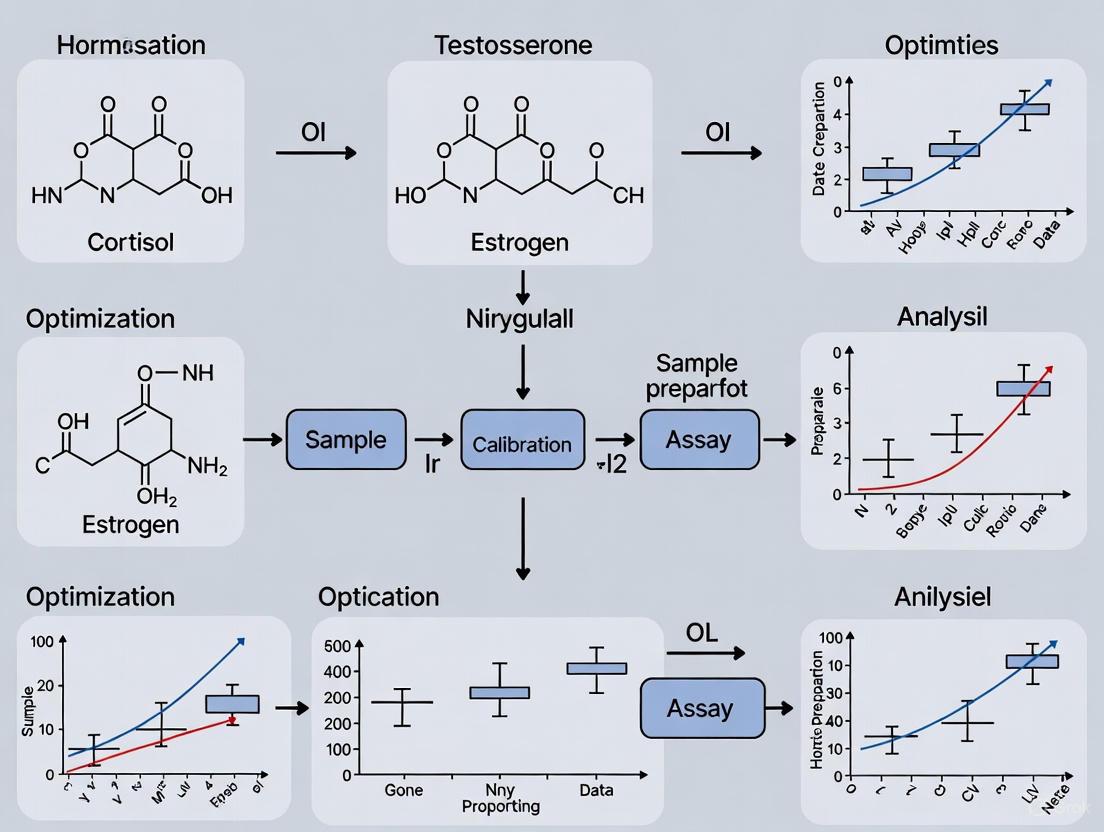
Accurate hormone measurement is paramount for valid exercise science and sports medicine research, yet methodological pitfalls can significantly compromise data integrity.
Optimizing Hormone Assay Precision in Exercise Science: A Methodological Guide for Researchers
Abstract
Accurate hormone measurement is paramount for valid exercise science and sports medicine research, yet methodological pitfalls can significantly compromise data integrity. This article provides a comprehensive framework for researchers and drug development professionals to enhance the precision of hormonal outcomes. It covers the foundational biologic factors influencing hormone levels, advanced methodological approaches for specimen collection and analysis, strategies for troubleshooting common pre-analytical and analytical errors, and rigorous procedures for assay validation. By synthesizing current best practices, this guide aims to empower scientists to produce more reliable, reproducible, and physiologically relevant data in studies involving physical activity and athletic performance.
Understanding Key Hormones and Sources of Biological Variance in Exercise Studies
Troubleshooting Guides
Guide 1: Addressing Pre-Analytical and Analytical Errors in Hormone Assays
Problem: Inconsistent or biologically implausible hormone measurements are obtained from exercise study samples.
Explanation: Hormone assays are highly susceptible to errors introduced during sample collection, handling, and the analysis process itself. These pre-analytical and analytical factors can compromise data integrity and lead to false conclusions.
Solution: Implement a standardized protocol for sample management and assay selection.
- Step 1: Select the Appropriate Assay Technique.
- For Steroid Hormones (Cortisol, Testosterone): Prefer mass spectrometry (LC-MS/MS) over immunoassays to avoid issues with cross-reactivity from other steroid molecules, which is a known problem with immunoassays [1].
- For Peptide Hormones (Growth Hormone, Insulin): Immunoassays are commonly used, but be aware that protein variants can cause discrepancies between different methods [1].
- Step 2: Control Pre-Analytical Variables.
- Sample Collection: Note that fasting is not required for some hormones like Anti-Müllerian Hormone (AMH) [2], but verify requirements for your specific assays. Avoid using haemolysed samples, as haemolysis can falsely elevate readings [2].
- Sample Storage: For long-term stability, store serum samples at -80°C. Significant increases in measured concentration occur with storage at -20°C or -40°C, and even after short periods at 4°C or room temperature [2].
- Step 3: Control Analytical Variables.
- Assay Verification: Always perform an on-site verification of a new assay kit before running study samples. Do not rely solely on the manufacturer's data [1].
- Microplate Placement: If using an ELISA, ensure samples are not placed only on the edge of the microtitre plate, as this "edge effect" can artificially inflate readings [2].
Guide 2: Interpreting Acute Hormonal Responses to Exercise
Problem: Difficulty distinguishing between meaningful physiological responses and artifact when measuring hormones immediately after exercise.
Explanation: Acute exercise is a potent stimulus for hormone release, but the response is modulated by factors such as exercise modality, intensity, and the individual's training status. Furthermore, acute changes (e.g., a transient rise in testosterone post-exercise) should not be conflated with chronic, resting hormonal adaptations [3] [4].
Solution: Contextualize acute hormone measurements with the exercise stimulus and individual factors.
- Step 1: Match the Hormone to the Exercise Stimulus.
- Testosterone & Growth Hormone: These show acute, transient increases following high-intensity resistance training and interval training [4]. The magnitude of this response can be influenced by the volume of exercise and an individual's training experience [3].
- Cortisol: This catabolic hormone increases with maximal exercise and during long-duration endurance activities, often in an inverse relationship with testosterone [3] [4].
- Insulin: Sensitivity to insulin increases after long-term exercise. During exercise, insulin levels are typically suppressed while glucagon levels rise to maintain blood glucose [4].
- Step 2: Account for Individual Variability.
- Sex: Acute elevations in testosterone following resistance exercise are more pronounced and consistent in men than in women [3].
- Menstrual Cycle Phase: In eumenorrheic women, baseline and exercise-induced testosterone levels fluctuate across the cycle, peaking during the mid-cycle (ovulatory) phase [5].
- Step 3: Differentiate Acute Response from Chronic Adaptation. A single post-exercise measurement indicates a response to a specific bout of exercise. Resting hormonal status is a separate measure that may adapt over weeks or months of training [3].
Frequently Asked Questions (FAQs)
FAQ 1: How does the menstrual cycle affect testosterone measurement in female exercise studies?
Testosterone levels in women fluctuate significantly across the menstrual cycle. A 2025 randomized controlled trial demonstrated that in eumenorrheic women, total testosterone levels are highest during the mid-cycle phase, followed by the luteal phase, and are lowest in the follicular phase [5]. Furthermore, an integrated exercise protocol caused an immediate increase in testosterone levels post-exercise across all phases, with the peak response also observed at mid-cycle [5]. Therefore, for accurate longitudinal assessment, it is critical to standardize the timing of sample collection to the same menstrual phase.
FAQ 2: What is the most reliable method for measuring testosterone in exercise research?
For the most accurate results, particularly in samples from women where concentrations are lower, liquid chromatography-tandem mass spectrometry (LC-MS/MS) is superior to immunoassays [1]. Immunoassays are prone to cross-reactivity with other steroids (e.g., DHEAS), leading to falsely high readings. This problem is exacerbated in specific populations, such as women using oral contraceptives (which alter binding protein levels) or neonates [1]. If using an immunoassay, a thorough on-site verification with study-specific samples is essential.
FAQ 3: How should serum samples be stored to ensure hormone stability before analysis?
The gold standard for long-term storage is -80°C [2]. Studies on AMH stability show that hormone concentrations can increase significantly when samples are stored at higher temperatures: rises are observed after 1 month at -20°C, 3 days at 4°C, and just 1 day at room temperature [2]. If immediate analysis is not possible, samples should be frozen at -80°C as soon as possible after processing and centrifugation.
FAQ 4: What are the key anabolic and catabolic relationships between cortisol, testosterone, and growth hormone during exercise?
These hormones form an integrated system for regulating muscle anabolism and catabolism:
- Testosterone: The primary anabolic hormone; it increases protein synthesis, reduces protein catabolism, and supports muscle hypertrophy [3].
- Growth Hormone (GH): Part of the anabolic pathway; it enhances bone and tissue growth and fat metabolism. Its release is complex and depends on the "type" of GH aggregate measured and the magnitude of exercise stress [3] [4].
- Cortisol: A catabolic glucocorticoid that often opposes the actions of anabolic hormones. It is robustly activated by exercise stress and promotes the breakdown of carbohydrates and fats [3] [4]. The balance between these hormones is a key determinant of the tissue remodeling response to exercise.
Table 1: Impact of Sample Storage Conditions on Hormone Assay Accuracy
| Storage Temperature | Storage Duration | Observed Effect on Measured Hormone Concentration | Recommendation |
|---|---|---|---|
| Room Temperature (~25°C) | 1 day | Significant increase [2] | Avoid; analyze immediately |
| 4°C (Refrigeration) | 3 days | Significant increase [2] | Avoid for more than 1-2 days |
| -20°C (Standard Freezer) | 1 month | Significant increase [2] | Acceptable for short-term only |
| -40°C (Ultra-Low Freezer) | 4 months | Significant increase [2] | Good for medium-term storage |
| -80°C (Ultra-Low Freezer) | 9 months | No significant change [2] | Recommended for long-term storage |
Table 2: Acute Hormonal Responses to Different Exercise Modalities
| Hormone | Response to Resistance/High-Intensity Exercise | Response to Prolonged Endurance Exercise | Primary Physiological Role in Exercise |
|---|---|---|---|
| Testosterone | Transient increase post-exercise [4] | May transiently decrease [5] | Promotes protein synthesis, muscle repair & growth [3] |
| Growth Hormone | Robust increase, promotes tissue growth [4] | Increases with exercise intensity & duration [3] | Stimulates bone/tissue growth, fat metabolism [4] |
| Cortisol | Increases with volume of exercise [3] | Increases significantly with duration [4] | Mobilizes energy (carbs/fats), catabolic actions [3] [4] |
| Insulin | Suppressed during activity [4] | Suppressed during activity [4] | Promotes glucose uptake; sensitivity increases long-term [4] |
Experimental Protocols
Protocol 1: Integrated Exercise Intervention for Hormonal Assessment
Objective: To evaluate the effects of a structured, equipment-minimal integrated exercise regimen on total testosterone levels in eumenorrheic women across menstrual cycle phases [5].
Methodology:
- Design: Two-armed, parallel-group, single-blinded, randomized controlled trial.
- Participants: Eumenorrheic females, aged 20-40, with normal BMI.
- Intervention:
- Treatment Group: Performed an integrated exercise plan 3 times per week for 16 weeks. The regimen included squats, tandem walks, arm swings with loads, crunches, bending, and roll-ups.
- Control Group: Advised to walk for 30 minutes, 3 times a week for 16 weeks.
- Blood Sampling & Analysis: Total testosterone levels (ng/dl) were measured pre-intervention, mid-intervention, and post-intervention during three distinct phases: follicular, mid-cycle (ovulation), and luteal. Samples were taken pre-exercise and within 15 minutes post-exercise [5].
Protocol 2: Verification of a Hormone Assay Kit
Objective: To perform an on-site verification of a commercial hormone assay kit prior to its use in a scientific study, ensuring reliability and accuracy of measurements [1].
Methodology:
- Precision Verification: Assess within-run and between-run precision by repeatedly measuring quality control samples with low, medium, and high concentrations. Calculate the Coefficient of Variation (CV); a CV <10-15% is typically desirable.
- Accuracy/Recovery Check: Spike a known amount of the pure hormone into a serum sample and measure the recovery percentage.
- Linearity: Dilute a high-concentration sample and confirm that measured values decrease in a linear, proportional manner.
- Specificity/Cross-reactivity: Review the manufacturer's data on cross-reactivity with known similar compounds. If possible, test with samples expected to have high levels of potential cross-reactants.
- Run Internal Quality Controls (IQCs): Include at least two levels of IQCs (independent of the kit manufacturer) in every assay run to monitor performance over time [1].
Signaling Pathway Diagrams
Hormone Response to Exercise
Experimental Workflow Diagram
Hormone Assay Workflow
The Scientist's Toolkit: Research Reagent Solutions
| Essential Material / Solution | Function in Hormone Exercise Research |
|---|---|
| LC-MS/MS Grade Solvents | Required for mass spectrometry-based hormone analysis to ensure minimal background interference and high sensitivity [1]. |
| Validated Immunoassay Kits | For hormone measurement via ELISA/ELISA-like methods. Must be independently verified for precision, accuracy, and specificity before use [1]. |
| Sex Hormone-Binding Globulin (SHBG) Assay | Critical for calculating free testosterone, as total testosterone measurements can be misleading when SHBG concentrations are abnormal [3] [1]. |
| Stable Quality Control Sera | Independent quality control materials at low, medium, and high concentrations are used to monitor assay performance and drift over time [1]. |
| Anti-Haemolysis Tubes | Specialized blood collection tubes that help prevent the rupture of red blood cells, minimizing haemolysis which can alter assay results [2]. |
| Ultra-Low Temperature Freezer (-80°C) | Essential for the long-term stability of serum samples, preventing degradation and artificial increases in measured hormone concentrations [2]. |
In exercise research, precise hormone measurement is critical for drawing accurate conclusions. Biological factors such as sex, age, and body composition are significant confounders that can dramatically alter hormone levels and their interpretation. This guide provides troubleshooting advice and FAQs to help researchers identify, control for, and account for these variables in their experimental designs, thereby optimizing the precision of hormone assays in exercise studies.
Quantitative Data on Key Confounders
The following tables summarize the documented effects of key biological confounders on hormone levels and related parameters, providing a reference for interpreting experimental data.
Table 1: Cross-Sectional Associations Between Sex Hormones and Body Composition in Men [6]
| Hormone | Lean Body Mass | Total and Trunk Fat Mass | Android/Gynoid Fat Ratio |
|---|---|---|---|
| Testosterone | Positive association | Negative association | Negative association |
| Estradiol | Negative association | Positive association | Positive association |
| SHBG | Not specified | Negative association | Not specified |
Table 2: Sexual Dimorphism in Hormone-Body Composition Relationships [7]
| Parameter | Men | Women |
|---|---|---|
| Primary Fat Distribution | Android (abdominal) | Gynoid (peripheral) |
| Testosterone & Fat Mass | Strong negative association | No consistent association |
| Estradiol & Fat Mass | Positive association | Negative association |
| Estradiol & Lean Mass | Negative association | Positive association |
Frequently Asked Questions (FAQs)
FAQ 1: Why is the method of hormone measurement so important in confounder analysis? Immunoassays can lack specificity, especially for low hormone levels. Liquid chromatography–tandem mass spectrometry (LC-MS/MS) is considered superior for its high accuracy and precision, and it is the preferred method per the Endocrine Society Position Statement [7]. Using inferior methods can introduce measurement error, obscuring true biological relationships.
FAQ 2: How can body composition confound hormone levels in men? In men, adiposity (fat mass) is a major confounder. Adipose tissue contains the enzyme aromatase, which converts testosterone into estradiol. Consequently, men with higher fat mass often have lower testosterone and higher estradiol levels, creating a hormonal profile that can be mistaken for a primary endocrine disorder rather than a consequence of body composition [6].
FAQ 3: Do sex hormones affect body composition differently in men and women? Yes, the effects are often opposing. For example, in men, higher testosterone is associated with more lean mass and less fat mass. In women, testosterone does not show a consistent association with fat mass, while higher estradiol is associated with more lean mass and less fat mass [7]. Applying findings from one sex to the other is a common pitfall.
FAQ 4: What is the directionality between hormones and body composition? Longitudinal studies imply that body composition has a stronger influence on hormone levels than the reverse. For instance, one study found that baseline hormone levels did not predict changes in anthropometric measures like weight or waist circumference over nearly five years, but body composition was correlated with hormone levels at a single time point [6].
Experimental Protocols for Controlling Confounders
Protocol: Designing a Study to Account for Sex, Age, and Body Composition
1. Participant Stratification and Characterization:
- Recruitment: Deliberately recruit participants across key strata (e.g., by sex, age decades, and BMI categories) to ensure a population that allows for the analysis of these confounders [8].
- Baseline Characterization: Collect comprehensive baseline data:
- Body Composition: Measure using Dual-Energy X-ray Absorptiometry (DXA). Report both total and regional fat mass (e.g., android/gynoid ratio) and lean mass [6] [7].
- Hormone Profiling: Measure sex steroids (testosterone, estradiol) and SHBG using LC-MS/MS where possible. Calculate free hormone concentrations using validated equations [7].
2. Exercise Intervention and Monitoring:
- Standardized Dose: Implement a carefully controlled exercise regimen. Document the type, intensity, frequency, and duration of all sessions [8].
- Monitor Extrinsic Factors: Record and, if possible, control for other variables known to influence exercise response and hormone levels, such as:
- Time of day of exercise and testing (circadian rhythms)
- Dietary intake
- Sleep habits
- Medication use [9]
3. Statistical Analysis:
- Use multivariable regression analyses, including the confounders (sex, age, body composition metrics) as independent variables in the model to isolate the effect of the exercise intervention on hormone outcomes [6] [7].
Visual Guide to Confounding Pathways
The following diagram illustrates how sex, age, and body composition confound the relationship between an exercise intervention and measured hormone outcomes.
The Scientist's Toolkit: Essential Reagents & Materials
Table 3: Key Reagents and Materials for Hormone and Body Composition Analysis
| Item | Function/Application | Key Considerations |
|---|---|---|
| LC-MS/MS Instrumentation | Gold-standard measurement of sex steroids (testosterone, estradiol) [7]. | Superior to immunoassays for specificity, especially at low concentrations. |
| DXA Scanner | Precise measurement of body composition, including regional fat and lean mass [6] [7]. | Critical for moving beyond simple BMI to metabolically relevant fat distribution. |
| Validated ELISA Kits | Immunoassay-based measurement of hormones, cytokines, and other biomarkers. | Ensure high specificity and sensitivity; be aware of potential cross-reactivity [10] [11]. |
| Standardized Hormone Panels | Pre-configured test panels for consistent hormone profiling. | Useful for screening multiple hormones simultaneously (e.g., Quest panels) [12]. |
| Automated Plate Washer | Consistent and thorough washing of ELISA plates. | Reduces variation and high background caused by manual washing [10]. |
| Calibrated Pipettes | Accurate and precise liquid handling for reagent and sample preparation. | Regular calibration is essential to minimize technical variation [10] [11]. |
The Impact of Menstrual Cycle Phase and Hormonal Contraceptive Use in Female Participants
Frequently Asked Questions (FAQs)
FAQ 1: What are the most common methodological errors in menstrual cycle phase determination, and how can I avoid them? Many studies rely on error-prone methods for determining menstrual cycle phase. Common errors include using self-report "count" methods alone, applying standardized ovarian hormone ranges without validation, and inferring phase from hormone changes measured at only two time points [13]. To avoid these, implement more frequent hormone assays where possible and use statistically sophisticated methods that account for individual variability in cycle length and hormone profiles [13] [14].
FAQ 2: How does data collection method affect the reporting of menstrual cycle-related symptoms? The method of data collection significantly impacts reported symptoms. Retrospective questionnaires often show greater symptom prevalence compared to daily monitoring, which is more sensitive to short-term variations and less prone to memory bias [15]. For more accurate assessment of symptom frequency and cyclicity, use daily prospective monitoring rather than relying solely on retrospective recall [15].
FAQ 3: What are the key considerations when designing studies involving hormonal contraceptive users? When studying hormonal contraceptive users, clearly document the type of contraceptive used, duration of use, and regimen. Be aware that combined oral contraceptive pill users typically have suppressed endogenous sex steroid hormones [16]. For studies involving progestin-only methods, note that different delivery systems may have varying systemic effects. Recent FDA guidance recommends no BMI restrictions in enrollment criteria and careful definition of "on-treatment" pregnancy [17].
FAQ 4: How can I improve the temporal alignment of hormone trajectories across participants with different cycle lengths?
Traditional count-based methods often misalign hormonal dynamics due to individual variability in ovulation timing [14]. Implement Phase-Aligned Cycle Time Scaling (PACTS) using the menstrualcycleR package, which generates continuous time variables anchored to both menses and ovulation [14]. This approach accommodates variable cycle lengths and supports various ovulation detection methods, significantly improving alignment of estradiol and progesterone trajectories across individuals [14].
Troubleshooting Common Experimental Issues
Problem: Inconsistent hormone phase confirmation across participants despite using standardized hormone ranges. Solution: Standardized hormone ranges are highly error-prone for phase determination [13]. Instead, establish individual baselines for each participant and track hormone changes relative to these personalized baselines [18]. When possible, use quantitative at-home hormone monitoring systems that adjust for individual factors like hydration levels and establish personalized baselines for luteinizing hormone (LH) and pregnanediol-3-glucuronide (PdG) [18].
Problem: High participant dropout in longitudinal menstrual cycle studies. Solution: Implement remote monitoring technologies to reduce participant burden [18]. Use daily smartphone applications for symptom tracking that are convenient and minimally disruptive [15]. Consider implementing compensation structures that acknowledge the additional time commitment required for frequent monitoring.
Problem: Conflicting results between objective performance metrics and athlete perceptions. Solution: This discrepancy is common in menstrual cycle research [15] [19]. Include both objective performance measures and qualitative assessments in your study design. For example, combine GPS tracking or dynamometer measurements with interviews or daily self-report measures of perceived performance, sleep quality, fitness, and mood [15]. This mixed-methods approach provides a more comprehensive understanding of menstrual cycle impacts.
Problem: Difficulty accounting for age-related variations in menstrual cycle characteristics. Solution: Age significantly influences cycle phase lengths, with follicular phase length declining with age while luteal phase length increases [18]. When designing studies, stratify participants by age group and account for age as a covariate in analyses. For greater precision, use hormone monitoring platforms that incorporate age into their cycle day prediction algorithms [18].
Hormone Fluctuation and Methodological Comparison Tables
Table 1: Characteristic Hormone Levels Across the Menstrual Cycle Phases
| Cycle Phase | Estradiol Characteristics | Progesterone Characteristics | Key Identifying Hormone Patterns |
|---|---|---|---|
| Early Follicular | Low levels, beginning gradual rise | Low levels | Baseline LH and PdG prior to LH surge [18] |
| Pre-ovulatory | Peak concentration, significant rise above baseline | Low levels, pre-surge | LH surge detected, above baseline levels [18] |
| Mid-Luteal | Secondary, smaller peak post-ovulation | Sustained elevated levels, peak concentration | Elevated PdG confirming ovulation within 72 hours of LH peak [18] |
| Late Luteal/Premenstrual | Declining levels | Rapid decrease due to corpus luteum degradation | Low PdG and estradiol prior to menstruation [13] |
Table 2: Comparison of Methodological Approaches for Menstrual Cycle Phase Determination
| Method | Procedure | Advantages | Limitations | Agreement with Hormone-Confirmed Phase |
|---|---|---|---|---|
| Forward Calculation | Counting forward from menses onset based on assumed 28-day cycle | Simple, requires minimal resources | Ignores individual variability in cycle length | Poor (Cohen's κ: -0.13 to 0.53) [13] |
| Backward Calculation | Counting backward from next (estimated) menses based on past cycle length | Accounts for individual's typical cycle length | Requires accurate prediction of next menses | Poor to moderate (Cohen's κ: -0.13 to 0.53) [13] |
| Hormone Range Method | Comparing single hormone measurement to standardized ranges | Provides biochemical confirmation | High error rate due to inter-individual variation | Poor to moderate (Cohen's κ: -0.13 to 0.53) [13] |
| PACTS Method | Phase-Aligned Cycle Time Scaling anchored to menses and ovulation | Accounts for individual variability in ovulation timing | Requires ovulation detection | High alignment of hormone trajectories [14] |
Experimental Protocols for Hormone Assay Precision
Protocol 1: Validating Menstrual Cycle Phase Determination
Purpose: To accurately determine menstrual cycle phase for exercise studies through hormonal assay and monitoring.
Materials:
- Quantitative hormone monitoring system (e.g., urine test strips with smartphone app reader)
- Daily symptom tracking application
- Venipuncture equipment for serum hormone validation (optional)
- Controlled temperature storage for samples
Procedure:
- Baseline Assessment: Record participant age, average cycle length, and first day of last menstrual period [18].
- Hormone Monitoring: Collect daily urine samples for LH and PdG quantification. Use a platform that establishes personalized baselines and adjusts for hydration and pH [18].
- Ovulation Detection: Identify the LH peak, defined as levels rising above the individual's established baseline. Confirm ovulation by detecting a rise in PdG within 72 hours after the highest LH levels [18].
- Phase Determination: Define follicular phase as the first day after bleeding cessation to the date of peak LH. Define luteal phase as days from first day after ovulation to day before next menstruation [18].
- Data Analysis: Implement Phase-Aligned Cycle Time Scaling to normalize cycle length across participants [14].
Validation: Compare phase determination against retrospective analysis using next menstrual period start date for accuracy assessment.
Protocol 2: Assessing Musculoskeletal Health Across the Menstrual Cycle
Purpose: To evaluate the effects of menstrual cycle phase and hormonal contraceptive use on bone metabolism, muscle strength, and tissue properties.
Materials:
- Dual-energy X-ray absorptiometry (DXA) for bone density
- High-resolution peripheral quantitative computed tomography (HRpQCT) for bone microstructure
- Isometric dynamometer for knee extensor and flexor strength
- Myoton device for tendon stiffness, tone, and elasticity
- ELISA kits for bone turnover markers and hormone assays
Procedure:
- Participant Grouping: Recruit five cohorts: eumenorrheic non-users, combined oral contraceptive pill users, hormonal implant users, hormonal intrauterine system users, and hormonal injection users [16].
- Testing Schedule: For eumenorrheic participants, schedule testing sessions across multiple cycle phases (early follicular, pre-ovulatory, mid-luteal). For hormonal contraceptive users, test during active and break phases where applicable [16].
- Sample Collection: Collect first-void urine samples and fasted blood samples for biochemical analysis of calcium and bone metabolism, hormones, and metabolic markers [16].
- Musculoskeletal Assessment: Perform strength measurements, tendon assessments, functional movement analysis, and bone density scans according to standardized protocols [16].
- Data Analysis: Use linear mixed effects models to assess within-group cycle phase effects and ANCOVA for between-group contraceptive effects [16].
Research Reagent Solutions and Essential Materials
Table 3: Essential Research Materials for Menstrual Cycle and Hormonal Contraceptive Studies
| Item | Function/Application | Key Considerations |
|---|---|---|
| Quantitative Urine Hormone Tests | Tracking LH and PdG fluctuations for ovulation detection and cycle phase confirmation | Select tests that adjust for hydration and establish personalized baselines [18] |
| ELISA Kits | Quantifying serum/plasma estradiol, progesterone, LH, FSH | Choose kits with appropriate sensitivity for low hormone levels in early follicular phase |
| Digital Symptom Tracking Platform | Prospective daily monitoring of symptoms, well-being, and performance metrics | Reduces recall bias; enables analysis of symptom patterns [15] |
| High-Resolution pQCT | Assessing bone microstructure and volumetric bone mineral density | Superior to DXA for detecting subtle changes in bone strength [16] |
| Isometric Dynamometer | Measuring muscle strength variations across cycle phases | Essential for detecting potential performance fluctuations [16] |
| Validated Knowledge Questionnaire | Assessing participant and staff understanding of menstrual cycle and hormonal contraceptives | Use tools with established validity and reliability across domains [20] |
Methodological Workflow and Hormone Pathway Diagrams
Experimental Design Workflow for Menstrual Cycle Studies
Menstrual Cycle Hormone Fluctuations and Physiological Effects
Circadian Rhythms and Timing of Specimen Collection
The circadian system regulates ~24-hour oscillations in nearly all physiological processes, including hormone secretion, gene expression, and metabolism [21]. For researchers conducting exercise studies, this rhythmicity presents both a challenge and an opportunity. Properly timed specimen collection is crucial for obtaining accurate, interpretable hormone assay data, as many biomarkers exhibit significant diurnal variation that can confound results if not accounted for. This technical support center provides troubleshooting guides, protocols, and FAQs to help researchers optimize specimen collection timing to enhance hormone assay precision in exercise research contexts.
Understanding Circadian Rhythms in Hormone Secretion
Core Circadian Concepts for Researchers
- Circadian Rhythm: An endogenous ~24-hour cycle in physiological processes, maintained even in the absence of external cues [21].
- Zeitgeber: An external time cue that entrains circadian rhythms (e.g., light, exercise, food intake) [22].
- Chronotype: An individual's natural preference for sleep/wake timing (e.g., morningness/eveningness), which reflects their underlying circadian phase [23].
- Phase Shift: A change in the timing of a circadian rhythm (advance or delay) relative to external time [23].
- Dim Light Melatonin Onset (DLMO): The gold standard marker for assessing circadian phase in humans, measured via serial saliva or blood sampling in dim light [24].
Hormonal Circadian Profiles
Different hormones exhibit distinct circadian patterns that must be considered when planning specimen collection [25]:
| Hormone | Circadian Pattern | Peak Time | Nadir Time | Considerations for Exercise Studies |
|---|---|---|---|---|
| Melatonin | Nocturnal secretion | Late night (~2-4 AM) | Daytime | Primary circadian phase marker; suppressed by light and affected by some exercise [24] [26]. |
| Cortisol | Morning peak | Morning wake-up | Evening/Overnight | Robust rhythm; acrophase correlates with ARNTL1 gene expression in saliva [27]. |
| TSH | Nocturnal rise | Before sleep onset | Daytime | Affected by sleep deprivation; rhythm disrupted in thyroid disorders [25]. |
| Testosterone | Morning peak | Morning | Evening | Critical to control sampling time in studies of exercise-induced changes. |
Experimental Protocols for Circadian Assessment
Dim Light Melatonin Onset (DLMO) Assessment
Purpose: To determine an individual's circadian phase precisely [24].
Materials: Dim red light (<10 lux), saliva collection kits (Salivette), freezer (-20°C or -80°C), radioimmunoassay or ELISA kits for melatonin.
Protocol:
- Participant Preparation: Participants avoid bright light for at least 1 hour before sampling. Maintain dim light (<10-30 lux) throughout collection. Avoid caffeine, alcohol, and strenuous exercise for 24 hours prior. Avoid eating, drinking, or brushing teeth 30 minutes before each sample.
- Sample Collection: Collect saliva samples hourly (e.g., every 30-60 minutes) starting 5 hours before habitual bedtime and continuing until 2 hours after bedtime [24].
- Sample Processing: Centrifuge saliva samples, aliquot, and store at -80°C until analysis.
- Analysis: Measure melatonin concentration in each sample. DLMO is typically defined as the time when melatonin concentration rises above a fixed threshold (e.g., 4 pg/mL) or 2 standard deviations above the mean of the first three daytime samples.
Core Clock Gene Expression from Saliva
Purpose: To assess molecular circadian rhythms in peripheral tissues non-invasively [27].
Materials: RNAprotect or other RNA stabilizer, 1.5 mL saliva, RNA extraction kit, qPCR system, primers for core clock genes (e.g., ARNTL1, PER2, NR1D1).
Protocol:
- Sample Collection: Collect 1.5 mL unstimulated saliva at multiple time points across 24+ hours (e.g., 3-4 times/day over 2 consecutive days). Immediately mix with RNA stabilizer at 1:1 ratio [27].
- RNA Extraction: Extract total RNA following manufacturer's protocol. Verify RNA quality/purity (A260/230 and A260/280 values).
- Gene Expression Analysis: Perform qPCR for core clock genes. Normalize to housekeeping genes. Analyze rhythmic parameters (acrophase, amplitude) using cosine fitting or similar algorithms.
The Scientist's Toolkit: Key Research Reagent Solutions
| Reagent/Material | Function | Example Application |
|---|---|---|
| RNAprotect Solution | Stabilizes RNA in saliva samples | Preserving RNA for gene expression analysis from saliva [27] |
| Salivette Tubes | Standardized saliva collection | Hormone (melatonin, cortisol) and DNA/RNA collection [24] |
| Melatonin RIA/ELISA Kits | Quantify melatonin in saliva/blood | Determining DLMO for circadian phase assessment [24] |
| qPCR Reagents & Primers | Quantify gene expression | Analyzing circadian clock gene rhythms (ARNTL1, PER2, etc.) [27] |
| Actigraphy Devices | Objective sleep/wake monitoring | Assessing sleep timing and continuity alongside hormone measures [28] |
Troubleshooting Guides & FAQs
Problem: Inconsistent Hormone Measurements
Potential Causes & Solutions:
- Variable Sampling Times: Implement strict, fixed collection times relative to each participant's wake time or circadian phase, not just clock time.
- Uncontrolled Light Exposure: Ensure dim light conditions (<10-30 lux) before and during melatonin sampling using a lux meter.
- Food Interference: Standardize participant fasting (30-60 minutes) before saliva collection to avoid contamination.
Problem: High Inter-individual Variability in Data
Potential Causes & Solutions:
- Ignoring Chronotype: Assess and account for chronotype using Morningness-Eveningness Questionnaire (MEQ). Consider stratifying analysis by chronotype [23].
- Exercise Timing Effects: Note that exercise timing differentially affects circadian phase: morning exercise typically causes phase advances, while effects of evening exercise depend on chronotype [23].
Problem: Difficulty Implementing Frequent Sampling
Potential Causes & Solutions:
- Limited Lab Access: Explore at-home collection methods with detailed participant training and remote monitoring.
- Cost of Repeated Assays: Consider targeted sampling around anticipated peak/trough times based on established rhythms of your target hormone.
Frequently Asked Questions
Q: How many time points are needed to assess a circadian rhythm in a hormone? A: While the gold standard involves frequent sampling (e.g., every 1-2 hours for 24 hours), methodological research on gene expression suggests that 3-4 timepoints per day over 2 consecutive days can provide reliable rhythm assessment for some parameters [27].
Q: Can I use a single blood draw to assess circadian phase? A: Emerging methods using metabolomics or transcriptomics from a single blood draw show promise, but these are not yet well-validated for widespread clinical or research use [29]. Currently, DLMO remains the gold standard.
Q: How does exercise itself affect circadian rhythms and hormone measurements? A: Exercise is a potent zeitgeber that can phase shift the circadian system. The effect depends on timing: morning exercise typically causes phase advances, while evening exercise has more variable effects depending on chronotype [23]. This means the exercise intervention itself may alter the rhythmic parameters you are measuring.
Q: What is the best way to control for circadian effects in exercise trials? A: Standardize collection times relative to each participant's wake time or circadian phase. Consider measuring and controlling for chronotype. For crossover designs, maintain consistent timing across conditions. For parallel designs, match groups for chronotype distribution and strictly control sampling times.
Circadian Biology Workflow
Exercise Timing and Circadian Phase Shifts
Research demonstrates that exercise timing systematically influences circadian phase, which must be considered when designing studies and interpreting results [23]:
| Exercise Timing | Typical Phase Shift | Chronotype Consideration | Impact on Hormone Assessment |
|---|---|---|---|
| Morning (10h after DLMO) | Phase advance ~0.6 hours | Consistent advances across chronotypes | May shift hormone rhythms earlier, affecting timing of peaks/troughs |
| Evening (20h after DLMO) | Minimal net phase shift | Advances in late chronotypes; delays in early chronotypes | Highly variable effects depending on participant chronotype |
Key Takeaways for Researchers
- Standardize Rigorously: Control not only clock time but also time relative to wake, light exposure, food intake, and exercise bouts.
- Account for Individual Differences: Measure and control for chronotype, especially in studies involving evening exercise.
- Choose Appropriate Markers: Select hormones and collection methods aligned with your research question—use melatonin for phase assessment, cortisol for HPA axis rhythm, and clock genes for molecular rhythm assessment.
- Consider Exercise as a Zeitgeber: Recognize that your exercise intervention may itself alter circadian timing, particularly in longer-term studies.
Influence of Mental Health Status and Acute Stress on Baseline Hormone Levels
FAQs: Hormone Analysis in the Context of Mental Health and Acute Stress
Q1: Why is the timing of sample collection so critical for measuring stress hormones like cortisol?
The timing of sample collection is paramount because hormones like cortisol follow a strong diurnal rhythm. Levels are typically highest 30-60 minutes after waking and then progressively decline throughout the day [30] [31]. In exercise studies, the timing of sampling relative to the exercise bout is equally crucial. Acute stress and exercise can cause transient elevations in hormones like cortisol and testosterone, with peaks occurring at different times post-exercise [5] [32]. To establish a true "baseline," samples must be collected in a standardized manner, accounting for both time of day and temporal relationship to any intervention or stressor.
Q2: Which biomarkers are most relevant for assessing the impact of chronic stress in a research setting?
Chronic stress affects multiple physiological systems, leading to a range of measurable biomarkers:
- HPA Axis Biomarkers: Cortisol (measured in serum, saliva, urine, or hair for long-term assessment) and Adrenocorticotropic Hormone (ACTH) are primary indicators [30].
- Autonomic Nervous System (ANS) Biomarkers: Catecholamines, such as epinephrine and norepinephrine, are key and are often measured in urine [30] [31].
- Immunological Biomarkers: Chronic stress can promote a pro-inflammatory state, elevating markers like C-reactive protein (CRP) and pro-inflammatory cytokines (e.g., IL-6) [30].
- Metabolic Biomarkers: Glucose, HbA1c, triglycerides, and cholesterol levels can also be influenced by prolonged stress [30].
Q3: What are the common pitfalls in hormone immunoassays, and how can they be avoided?
Common pitfalls include cross-reactivity, matrix effects, and interference from binding proteins [1]. For example, steroid hormone immunoassays are notorious for cross-reactivity with other similar molecules, which can lead to falsely elevated readings. These issues are particularly pronounced in study populations with unusual binding protein concentrations (e.g., pregnant women, oral contraceptive users) [1]. Mitigation strategies include:
- Technique Selection: Using liquid chromatography-tandem mass spectrometry (LC-MS/MS) where possible, as it generally offers superior specificity for steroid hormones [1].
- Assay Verification: Always performing an on-site verification of a new assay with samples relevant to your study population before analyzing precious study samples [1].
- Quality Controls: Using independent quality controls that span the expected concentration range to monitor assay performance over time [1].
Q4: How do psychological factors like anxiety modulate the physiological response to a stressor like relationship conflict?
Psychological traits can significantly moderate the endocrine response to psychosocial stress. Research shows that individuals with elevated anxiety or a history of chronic relationship stress exhibit different cortisol recovery patterns following a couple conflict compared to those with lower anxiety [33]. For instance, after a negative interaction, men with high anxiety showed less cortisol recovery (prolonged elevation), whereas women with high anxiety showed more recovery [33]. This highlights that individual differences in mental health status must be accounted for when interpreting hormone data in response to acute social stressors.
Troubleshooting Guides
Guide 1: Inconsistent Baseline Hormone Levels Between Study Cohorts
Problem: Measured baseline hormone levels (e.g., cortisol, testosterone) vary unpredictably between control and intervention groups, potentially obscuring the true effect of an experimental treatment.
Solution: Implement strict pre-analytical and analytical controls.
1. Standardize Pre-Analytical Protocols:
- Timing: Collect all baseline samples at a fixed time of day, considering the circadian rhythm. For exercise studies, clearly define if "baseline" is pre-exercise resting state or at a specific time post-exercise [5] [32].
- Participant Instructions: Standardize participant preparation (fasting status, avoidance of strenuous exercise, alcohol, and caffeine for 24 hours prior) [1].
- Sample Handling: Document and standardize procedures for sample processing (centrifugation speed/time), storage temperature, and freeze-thaw cycles [1].
2. Validate Your Assay for the Specific Study Population:
- Conduct an on-site verification of the hormone assay using a subset of samples from your actual study population. This confirms the assay performs reliably with your specific sample matrix [1].
3. Account for Moderating Variables:
- Screen for and document psychological factors (e.g., anxiety, chronic stress) and medications that are known to influence hormone levels. These can be included as covariates in statistical models [33].
Guide 2: Different Hormone Assays Yield Conflicting Results for the Same Sample
Problem: Sending aliquots of the same sample to different laboratories or analyzing them with different techniques (e.g., immunoassay vs. LC-MS/MS) produces discrepant results.
Solution: Scrutinize and report methodological details.
1. Investigate Technique-Specific Limitations:
- If using Immunoassays: Suspect cross-reactivity with structurally similar hormones or matrix effects from atypical binding protein concentrations. This is a known issue for testosterone measurements in women and children [1].
- If using LC-MS/MS: While generally more specific, poorly validated methods or lack of laboratory expertise can also lead to inaccuracies [1].
2. Choose the Right Tool for the Question:
- For steroid hormones (cortisol, testosterone, DHEA), LC-MS/MS is often the gold standard due to its high specificity and ability to measure multiple analytes simultaneously [1].
- For peptide hormones, validated immunoassays may be sufficient, but be aware of variant proteins that may cause discrepancies between methods [1].
3. Ensure Laboratory Expertise:
- Use laboratories with proven expertise and quality certifications (e.g., ISO15189) for the specific hormone and technique. Do not rely solely on kit inserts [1].
Data Presentation
Table 1: Key Hormonal Biomarkers of Stress and Their Dynamics
| Hormone/Biomarker | Physiological System | Response to Acute Stress | Response to Chronic Stress | Recommended Measurement Matrix | Key Considerations |
|---|---|---|---|---|---|
| Cortisol | HPA Axis | Rapid increase, peaks ~20-40 min post-stressor [33] [34] | Can be dysregulated (initially high, then blunted); hair cortisol provides long-term index [30] | Saliva (free), Serum (total), Urine, Hair [30] [31] | Strong diurnal rhythm; sensitive to timing and psychological moderators like anxiety [33] |
| ACTH | HPA Axis | Rapid increase, precedes cortisol peak [34] | Can be elevated or dysregulated [30] | Serum | Useful for assessing upstream HPA axis activity |
| Catecholamines (Epinephrine/Norepinephrine) | Autonomic Nervous System (SAM Axis) | Very rapid surge (seconds), "fight or flight" response [34] | Can lead to sustained elevation [30] | Urine (Dried urine filters recommended) [31] | Short half-life; reflects immediate sympathetic activation |
| Testosterone | HPG Axis | Acute exercise can cause transient increase; response modulated by exercise type and intensity [5] [32] | Chronic stress can suppress levels [32] | Serum | LC-MS/MS preferred for specificity, especially in women and children [1] |
| DHEA | Adrenal Gland | May increase in response to acute stress | Can become imbalanced relative to cortisol [31] | Saliva, Urine [31] | Anabolic precursor; balances some effects of cortisol |
| CRP / IL-6 | Immune System | Can increase with intense or prolonged stress | Consistently elevated, indicating low-grade inflammation [30] | Serum | Key link between chronic stress, inflammation, and disease risk |
Table 2: Optimizing Hormone Assay Selection and Validation
| Assay Challenge | Impact on Data Quality | Recommended Solution | Application in Exercise/Stress Research |
|---|---|---|---|
| Cross-Reactivity (Immunoassays) | Falsely elevated concentrations of target hormone [1] | Use more specific techniques like LC-MS/MS for steroid hormones [1] | Critical for accurate measurement of testosterone in females with PCOS or cortisol in matrices with similar steroids |
| Matrix Effects / Binding Protein Interference | Inaccurate results in specific populations (e.g., pregnant women, oral contraceptive users) [1] | Verify assay performance in your specific study population; use equilibrium dialysis or calculated free hormone where appropriate [1] | Ensures reliability of hormone data in diverse participant groups common in exercise studies |
| Lot-to-Lot and Day-to-Day Variation | Introduces uncontrolled variability and noise into longitudinal data [1] | Run independent quality controls spanning the expected concentration range with each assay batch [1] | Essential for longitudinal training studies where pre/post comparisons are made |
| Lack of Assay Verification | Unknown accuracy and precision for your specific samples, risking false conclusions [1] | Perform on-site validation (precision, accuracy, reportable range) before analyzing study samples [1] | Fundamental best practice for any research study to ensure data integrity |
Experimental Protocols
Protocol 1: Establishing a Reliable Hormonal Baseline in an Exercise-Stress Study
Objective: To obtain a true baseline measurement of cortisol and testosterone, uncontaminated by diurnal variation or pre-test anxiety.
Materials: Saliva collection kits (e.g., Salivettes) or serum separator tubes, freezer (-80°C), laboratory equipment for LC-MS/MS or validated immunoassay.
Procedure:
- Participant Preparation: Instruct participants to avoid strenuous exercise, alcohol, and caffeine for 24 hours prior to testing. For saliva collection, ensure no food or drink (except water) 1 hour prior.
- Standardized Time: Schedule all testing sessions for the same time of day (e.g., 8:00 - 10:00 AM) to control for diurnal variation [30].
- Acclimatization: Upon arrival, have the participant rest in a quiet, comfortable room for 30 minutes before the first sample collection.
- Baseline Sample Collection:
- Saliva/Blood Draw: Collect the first sample (T1) after the rest period.
- Psychological Assessment: Immediately after T1, administer standardized questionnaires (e.g., Perceived Stress Scale, State-Trait Anxiety Inventory) to quantify mental health status as a potential covariate [33].
- Acute Stress Induction (if applicable): If the study design includes an acute stressor (e.g., Trier Social Stress Test, intense exercise bout), proceed with the protocol.
- Post-Stress Sampling: Collect subsequent samples at pre-determined intervals (e.g., +15, +30, +60, +90 min) to capture the reactivity and recovery trajectory of hormone levels [33].
- Sample Processing & Storage: Centrifuge saliva/blood samples according to standardized protocols, aliquot, and immediately store at -80°C. Avoid repeated freeze-thaw cycles [1].
- Batch Analysis: Analyze all samples from the same participant in the same assay batch to minimize inter-assay variability [1].
Protocol 2: Validating a Hormone Assay for a Specific Research Cohort
Objective: To verify that a commercially available hormone assay kit performs with acceptable precision and accuracy in the specific population under study (e.g., elite athletes, individuals with obesity).
Materials: Commercial assay kit, internal quality control (QC) materials, sample aliquots from the target population.
Procedure:
- Precision (Repeatability):
- Assay three QC pools (low, medium, high concentration) 20 times in a single run.
- Calculate the mean, standard deviation (SD), and coefficient of variation (CV%). The CV% should be within the manufacturer's claims or <10-15% for acceptance.
- Precision (Intermediate Precision):
- Assay the same three QC pools in duplicate over 10 separate days.
- Calculate the total CV% to assess day-to-day and operator-related variability.
- Accuracy (Spike Recovery):
- Take a low-concentration patient sample and split it into three aliquots.
- Spike two aliquots with a known quantity of the target hormone at different levels.
- Measure the concentration of the unspiked and spiked samples. The recovery should be 100% ± 15%.
- Linearity and Reportable Range:
- Serially dilute a high-concentration sample with a zero-standard. Ensure the measured values demonstrate a linear relationship with the expected values.
- Correlation with Reference Method (if possible):
- Run a set of ~20 patient samples with both the new kit and a established reference method (e.g., LC-MS/MS).
- Perform a correlation analysis (e.g., Passing-Bablok regression) to check for systematic bias.
Signaling Pathways and Workflows
HPA Axis Pathway
Hormone Assay Workflow
The Scientist's Toolkit
Table 3: Essential Research Reagent Solutions for Hormone Analysis
| Reagent / Material | Function / Application | Key Considerations for Precision |
|---|---|---|
| LC-MS/MS Grade Solvents & Columns | Used in mass spectrometry for hormone separation and detection. Provides high specificity and sensitivity. | Purity is critical to reduce background noise and ion suppression, ensuring accurate quantification [1]. |
| High-Specificity Antibodies (for Immunoassay) | Bind target hormone in immunoassays. The quality of the antibody determines assay specificity. | Check cross-reactivity data; polyclonal antibodies may be less specific than monoclonal ones [1]. |
| Independent Quality Control (QC) Materials | Pools of serum/saliva with known hormone concentrations used to monitor assay precision and accuracy over time. | Must be independent of kit manufacturer and span the assay's reportable range (low, medium, high) [1]. |
| Steroid-Free/Stripped Serum | Serum with endogenous hormones removed. Used for preparing calibration standards and in spike-recovery experiments for assay validation. | Ensures the matrix for standards is as similar as possible to the patient samples, improving accuracy [1]. |
| Stabilizing Agents (e.g., protease inhibitors) | Added to sample collection tubes (especially for peptides) to prevent hormone degradation post-collection. | Essential for maintaining analyte integrity between sample collection and analysis, particularly for labile hormones [1]. |
| Standardized Saliva Collection Kits (e.g., Salivettes) | Non-invasive collection of saliva for measuring free, bioavailable cortisol and other hormones. | The polymer swab material can influence recovery; consistency in kit type throughout a study is vital [31]. |
Frequently Asked Questions
FAQ: What are the key biologic factors that can introduce variance in hormone assay results? Several biologic factors can significantly influence hormonal measurements and must be controlled for in participant pooling. Key factors include sex, age, body composition, menstrual cycle status, and circadian rhythms [35]. Until puberty, males and females show little difference in resting hormonal profiles, but significant differences manifest thereafter and persist through adulthood [35]. Age affects hormonal reactivity, with prepubertal children and postmenopausal adults showing different responses compared to their counterparts [35]. Varying levels of adiposity can influence cytokines that in turn affect metabolic and inflammatory hormones [35].
FAQ: Are there known racial and ethnic variations in baseline hormone levels? Yes, though the data from exercise studies is limited. Some identified differences include:
- Resting parathyroid hormone levels tend to be higher in Blacks than Whites [35].
- White females tend to have higher levels of estrogens than Asian females [35].
- Reproductive hormone levels during gestational periods may vary across races (Whites, Blacks, Hispanics, Asians, and Indians) [35]. It is critical to note that hormonal responses to exercise and exercise training related to race have not been well studied, and the limited available data do not suggest drastically different response outcomes [35].
FAQ: How can participant pooling strategies minimize variance in hormone assays? To minimize variance and increase the validity of your data, researchers should design studies to monitor, control, and adjust for key biologic factors [35]. This includes:
- Matching participants by sex, chronologic age or maturation level, and adiposity (not just body weight) [35].
- Grouping participants with similar menstrual status (eumenorrheic vs. amenorrheic) or in similar phases of their menstrual cycle for testing [35].
- Conducting blood sampling at a standardized time of day to account for circadian rhythms [35].
- Using mental health screening questionnaires to identify potential psychological problems that could confound hormonal measures [35].
FAQ: Beyond biology, what other considerations exist for pooling racial/ethnic groups? Unique barriers related to participation and engagement must be considered, as they can affect study recruitment and retention. These include:
- Perceived cultural mismatch: Potential participants may perceive that a study's philosophy, values, or practices run counter to those of their own culture [36].
- Under-representation: Feelings of being underrepresented in a study's leadership, history, or general participant pool can generate mistrust [36].
- Social environment: Concerns about prejudice, discrimination, or heightened scrutiny within a study context can influence participation [36].
- Language barriers: These can diminish or preclude participation, especially for recent immigrants and those with low acculturation [36].
Troubleshooting Guides
Problem: Unexplained variance in hormone assay results within a pooled participant group.
- Potential Cause 1: Uncontrolled circadian rhythms. Hormonal levels fluctuate throughout the day.
- Solution: Standardize the time of day for all specimen collections for a given participant and across participant groups [35].
- Potential Cause 2: Unaccounted for differences in body composition.
- Solution: Match participants for adiposity (e.g., via BMI categories) rather than simply matching body weights. Grouping normal-weight, overweight, and obese individuals in the same pool can complicate outcomes [35].
- Potential Cause 3: Failure to control for menstrual cycle phase in female participants.
- Solution: Conduct exercise testing with females of similar menstrual status or in similar phases of their cycle. This also applies to females using oral contraceptives [35].
Problem: Low recruitment or retention rates among racial/ethnic minority groups.
- Potential Cause 1: Lack of cultural competence in study materials or design.
- Solution: Consider cultural adaptation of study protocols or materials where feasible and scientifically valid. This could involve providing materials in multiple languages or ensuring diversity among research staff [36].
- Potential Cause 2: Logistical and attitudinal barriers.
- Solution: Actively work to reduce logistical barriers (e.g., providing transportation, flexible scheduling) and address attitudinal barriers through clear communication about the study's benefits and confidentiality [36].
Data Presentation
Table 1: Biologic Factors Influencing Hormonal Variance in Exercise Studies
| Factor | Known Variations | Impact on Hormonal Measurements | Participant Pooling Consideration |
|---|---|---|---|
| Sex | Post-puberty, males show increased androgens; females show menstrual cycle pulsatile release of sex hormones [35]. | Different exercise responses (e.g., earlier, greater testosterone rise in males) [35]. | Test single-sex populations or ensure hormonal outcomes are not sex-influenced. |
| Age | GH and testosterone typically decrease with age; cortisol and insulin resistance increase [35]. | Pre/post-pubertal children and pre/post-menopausal adults have drastically different hormonal responses [35]. | Match participants by chronologic age or maturation level. |
| Body Composition | Increased adiposity elevates resting insulin and leptin levels [35]. | Reduced catecholamine and GH response to exercise in obese individuals; elevated cortisol responses in some [35]. | Match participants for adiposity (e.g., BMI categories) rather than body weight. |
| Menstrual Cycle | Large, dramatic fluctuations in estradiol-β-17, progesterone, LH, and FSH across phases [35]. | Alters exercise and training responses for key reproductive hormones [37]. | Test females with similar menstrual status or in the same cycle phase. |
| Circadian Rhythms | Many hormones (e.g., cortisol) display predictable daily variations [35]. | Time of day can significantly affect resting and post-exercise hormone levels [35]. | Standardize time of day for all specimen collections. |
Experimental Protocols
Detailed Methodology for Controlling Biologic Variance in Endocrine Exercise Studies
This protocol is adapted from established methodological guidelines for exercise endocrinology research [35].
1. Pre-Study Participant Screening and Characterization
- Recruitment: Recruit a homogeneous sample based on the research question. Avoid mixing sexes, ages, or fitness levels unless that is the variable of interest.
- Screening Questionnaire: Administer a comprehensive health and lifestyle questionnaire. This should capture:
- Mental Health: Use a validated screening tool (e.g., PHQ-9 for depression, GAD-7 for anxiety) administered by a trained individual to identify conditions that may alter resting hormone levels [35].
- Menstrual History: For female participants, record menstrual status (eumenorrheic, amenorrheic), cycle length, regularity, and use of hormonal contraceptives [35] [37].
- Physical Activity Level: Use a standardized tool (e.g., IPAQ) to assess and match activity levels and training history.
- Baseline Testing: Prior to intervention, conduct the following assessments:
- Body Composition: Measure via DEXA, BIA, or skinfold calipers to quantify adiposity [35].
- Hormonal Baseline: Collect fasted blood/plasma/saliva samples at a standardized time of day (e.g., 0700-0900 hours) after a 24-48 hour period without strenuous exercise.
2. Specimen Collection and Handling Protocol
- Standardization: Collect all specimens under identical conditions (time of day, posture, rest period prior to collection).
- Menstrual Cycle Tracking: For eumenorrheic women not on oral contraceptives, phase should be verified through tracking methods (e.g., basal body temperature, ovulation kits, calendar counting) with testing scheduled consistently within the same phase (e.g., early follicular) [35].
- Processing: Process samples immediately according to the specific analyte's requirements (e.g., centrifugation, freezing at -80°C). Avoid multiple freeze-thaw cycles.
- Batch Analysis: Analyze all samples from a single participant and from all participants within a matched group in the same assay batch to minimize inter-assay variance [35].
The following workflow diagram summarizes the key steps for managing participant pooling to minimize biological variance:
The Scientist's Toolkit
Table 2: Essential Research Reagent Solutions for Hormone Assays in Exercise Studies
| Item | Function in Experimental Protocol |
|---|---|
| Anticoagulant Tubes (e.g., EDTA) | Prevents blood coagulation for plasma collection, preserving protein-based hormones for accurate analysis [35]. |
| Serum Separator Tubes (SST) | Allows blood to clot and then separates serum for assays requiring non-anticoagulated samples [35]. |
| Salivary Collection Kits | For non-invasive collection of saliva to measure bioavailable levels of hormones like cortisol and testosterone [35]. |
| Enzyme Immunoassay (EIA) Kits | Provides reagents for quantifying specific hormones (e.g., cortisol, testosterone, estradiol) in serum, plasma, or saliva [35]. |
| Radioimmunoassay (RIA) Kits | A highly sensitive method for measuring hormones at very low concentrations, though requiring specific safety protocols [35]. |
| Liquid Chromatography-Mass Spectrometry (LC-MS/MS) | The gold standard for specific, multiplexed hormone quantification, offering high sensitivity and specificity [35]. |
| Protein Assay Kits (e.g., BCA) | Determines total protein concentration in samples, which can be used to normalize hormone data [35]. |
| Hormone-Free Matrix | Used to create standard curves in immunoassays, ensuring accurate quantification by mimicking the sample background [35]. |
Selecting and Implementing Advanced Assay Methodologies
Technical Support Center
Frequently Asked Questions (FAQs)
Q1: My ELISA results show a high background across the entire plate. What could be causing this and how can I fix it? A: High background in ELISA is commonly caused by insufficient washing or blocking. To resolve this, increase the number and/or duration of your wash steps. You can also add a 30-second soak step between washes. Additionally, ensure you are using an effective blocking agent (e.g., BSA or casein) at the correct concentration and for a sufficient duration to prevent non-specific binding [38] [39].
Q2: I am not getting any signal in my ELISA when I know my sample should be positive. What are the first things I should check? A: Begin by verifying the correct preparation and order of your reagents. Ensure the detection antibody is compatible and used at an appropriate concentration; you may need to titrate it. If your standard curve is acceptable but sample signals are absent, the target analyte in your samples may be below the detection limit of the assay. Try concentrating your sample or performing a serial dilution to check for recovery. Also, confirm that your buffers are fresh and not contaminated [38] [39].
Q3: My LC-MS/MS data is noisy, and I'm struggling with matrix effects from my biological samples. What steps can I take? A: Matrix effects are a common challenge in LC-MS/MS. To mitigate them, ensure you have a robust sample preparation protocol. Techniques such as protein precipitation followed by liquid-liquid extraction can effectively clean up your sample. The use of isotope-labeled internal standards for each analyte is crucial, as it corrects for ionization suppression or enhancement in the mass spectrometer, ensuring quantitative accuracy [40].
Q4: Why would I choose LC-MS/MS over the simpler and more cost-effective ELISA for my hormone study? A: The choice depends on your specific requirements. LC-MS/MS is superior when you need high specificity to distinguish between closely related molecules (e.g., steroid hormones or drug metabolites), exceptional sensitivity to detect very low concentrations (e.g., trace-level tobacco exposure in children), or the ability to multiplex (measure multiple analytes simultaneously). While ELISA is simpler, its reliance on antibodies can lead to cross-reactivity, potentially compromising accuracy for structurally similar compounds [41] [42] [43].
Q5: My ELISA results show high variability between duplicate wells. How can I improve reproducibility? A: Poor duplicates are often due to pipetting errors or inconsistent washing. Ensure all solutions are thoroughly mixed before use and that your pipettes are properly calibrated. Check that your plate washer is functioning correctly, with all ports clean and unobstructed. Using a fresh plate sealer for each step and ensuring all reagents are at room temperature before starting the assay can also significantly improve reproducibility [38] [44] [39].
Troubleshooting Guides
ELISA Troubleshooting Guide
| Problem | Possible Cause | Recommended Solution |
|---|---|---|
| No or Weak Signal | Reagents added in wrong order or prepared incorrectly [38]. | Repeat assay, follow protocol precisely for preparation and order [38] [39]. |
| Target concentration below detection limit [39]. | Concentrate sample or use a more sensitive method (e.g., LC-MS/MS) [42]. | |
| Antibody concentration too low [39]. | Increase antibody concentration or incubation time [39]. | |
| High Background | Insufficient washing [38]. | Increase wash number/duration; add a soak step [38]. |
| Inadequate blocking [39]. | Increase blocking agent concentration or time [39]. | |
| HRP concentration too high or contamination [38]. | Titrate HRP reagent; use fresh buffers and disposables to avoid HRP contamination [38] [39]. | |
| Poor Duplicates | Pipetting inaccuracies [44]. | Calibrate pipettes; mix reagents thoroughly [39]. |
| Uneven washing [38]. | Check plate washer; ensure consistent washing across all wells [38]. | |
| Evaporation during incubation [39]. | Use plate sealers during all incubation steps [38] [39]. | |
| Poor Reproducibility | Variations in incubation time/temperature [38]. | Adhere strictly to protocol timing and temperature; avoid drafts [38] [39]. |
| Using old or contaminated buffers [38]. | Prepare fresh buffers for each experiment [38] [39]. |
LC-MS/MS Troubleshooting Guide
| Problem | Possible Cause | Recommended Solution |
|---|---|---|
| Low Sensitivity | Ion suppression from matrix effects [40]. | Optimize sample cleanup (e.g., liquid-liquid extraction); use stable isotope internal standards [40]. |
| Instrument calibration or contamination. | Perform routine instrument maintenance and calibration; check ion source for contamination. | |
| Poor Chromatography | Column degradation or contamination. | Flush and/or replace chromatography column; use in-line guard columns. |
| Suboptimal mobile phase or gradient. | Adjust mobile phase pH or organic solvent gradient for better peak separation. | |
| Quantification Inaccuracy | Lack of appropriate internal standards [40]. | Use deuterated or other isotope-labeled internal standards for each analyte [40]. |
| Calibration curve outside linear range. | Ensure samples fall within the validated linear range of the calibration curve. |
Quantitative Data Comparison
The following tables summarize key performance metrics for ELISA and LC-MS/MS, drawing from direct comparative studies.
| Feature | ELISA | LC-MS/MS |
|---|---|---|
| Principle | Antibody-antigen interaction | Physical separation and mass-based detection |
| Specificity | Moderate (susceptible to cross-reactivity) | High (can distinguish molecular isoforms) |
| Sensitivity | Good for moderate concentrations | Excellent for trace-level detection |
| Throughput | High | Moderate |
| Cost | Relatively inexpensive | More expensive (instrumentation, expertise) |
| Multiplexing | Limited (typically single analyte) | High (can measure multiple analytes simultaneously) |
| Sample Volume | Typically low (e.g., saliva, serum) [42] | Can be very low (e.g., 25 μL serum) [40] |
Table 2: Performance in Direct Comparative Studies
| Study & Analyte | Key Finding (ELISA vs. LC-MS/MS) | Implication for Research |
|---|---|---|
| Salivary Cotinine (TSE in children) [42] | ELISA overestimated levels (GeoM: 5.7 ng/mL) vs. LC-MS/MS (GeoM: 4.1 ng/mL). Associations with sex/race were only significant with LC-MS/MS. | LC-MS/MS provides more accurate quantification and reveals subtle demographic associations. |
| Salivary Sex Hormones (Healthy adults) [43] | Poor correlation for estradiol and progesterone; stronger for testosterone. LC-MS/MS showed expected physiological differences; ELISA did not. | LC-MS/MS is more reliable for profiling estradiol and progesterone, critical for exercise endocrine studies. |
| Tacrolimus (Transplant patients) [45] | ELISA was less accurate at lower drug concentrations. Assay choice led to dosage prediction differences of 0-30%. | LC-MS/MS is critical for therapeutic drug monitoring where precise, low-concentration measurement is vital. |
Experimental Protocols
This protocol is designed for the simultaneous quantification of 14 adrenocortical steroids (e.g., cortisol, testosterone, DHEA) using a small sample volume.
Sample Preparation:
- Protein Precipitation: Mix 250 μL of serum with 500 μL of acetonitrile containing internal standards (e.g., cortisone-d8, cortisol-d4, testosterone-d3).
- Liquid-Liquid Extraction: Add 1.5 mL of a hexane:ethyl acetate (60:40, v/v) mixture to the supernatant. Evaporate the organic layer to dryness under a nitrogen stream.
- Reconstitution: Reconstitute the dry residue in 100 μL of a methanol:water (50:50, v/v) mixture.
LC-MS/MS Analysis:
- Chromatography: Use a C18 column with a gradient elution of water and acetonitrile, both containing 0.1% formic acid. The total run time is 8.5 minutes.
- Mass Spectrometry: Operate the tandem mass spectrometer with dual-polarity electrospray ionization (ESI) to detect both positively and negatively ionized steroids. Use Multiple Reaction Monitoring (MRM) for specific and sensitive quantification.
Quantification: Plot a calibration curve for each analyte using spiked blank samples. Quantify analyte concentrations in unknown samples by comparing the analyte-to-internal standard peak area ratio to the calibration curve.
This outlines a generic protocol for salivary hormone measurement using commercial ELISA kits.
- Sample Collection: Collect saliva using appropriate devices (e.g., Salivette). Centrifuge to obtain clear, particle-free saliva and store at -80°C until analysis.
- Assay Procedure:
- Coating: If developing a new ELISA, coat the plate with capture antibody in coating buffer overnight.
- Blocking: Block the plate with a protein-based buffer (e.g., BSA) for 1-2 hours.
- Incubations: Add samples and standards to the wells, followed by the detection antibody. Each step is typically followed by a wash cycle.
- Detection: Add the enzyme substrate (e.g., TMB for HRP) and incubate for a defined period for color development.
- Stop and Read: Add stop solution and immediately read the absorbance on a plate reader at the appropriate wavelength (e.g., 450 nm).
Research Reagent Solutions
The following table details essential materials and reagents used in the featured LC-MS/MS protocol for steroid hormone analysis [40].
| Item | Function in the Experiment |
|---|---|
| C18 Chromatography Column | Separates the complex mixture of steroid hormones before they enter the mass spectrometer. |
| Stable Isotope Internal Standards (e.g., Cortisol-d4) | Critical for quantitative accuracy; corrects for sample loss during preparation and ion suppression in the mass spectrometer. |
| Mass Spectrometer (Triple Quadrupole) | The core detection instrument; filters and quantifies specific steroid ions with high sensitivity and specificity. |
| Steroid Reference Standards | High-purity compounds used to create calibration curves for absolute quantification of each hormone. |
| LC-MS Grade Solvents (Acetonitrile, Methanol) | High-purity solvents used in mobile phases and sample preparation to minimize background noise and contamination. |
| Protein Precipitation Solvent (Acetonitrile) | Removes proteins from serum samples, providing a cleaner extract for analysis. |
| Liquid-Liquid Extraction Solvents (Hexane:Ethyl Acetate) | Further purifies the sample by selectively extracting steroid hormones from the aqueous matrix. |
Workflow and Decision-Making Visualizations
The following diagrams illustrate the core experimental workflow and the logic for selecting the appropriate analytical platform.
Key Considerations for Pre-Analytical Phase Optimization
Errors during the pre-analytical phase (patient preparation, sample collection, handling) account for 46-68% of all laboratory errors, compared to only 7-13% during the analytical phase within the laboratory. Minimizing these pre-analytical errors is therefore crucial for reliable hormone assay results in exercise research [46].
Table: Factors Affecting Hormone Assay Results in Exercise Studies
| Factor | Impact on Hormone Assays | Recommended Protocol |
|---|---|---|
| Time of Day | Circadian variation significantly affects cortisol, growth hormone, testosterone [46] | Collect blood between 7-9 a.m. for most tests; specific timing for circadian hormones [46] [47] |
| Fasting Status | Glucose, bone markers, lipids change postprandially; prolonged fasting affects results [46] | Fast for 12 hours; water permitted; avoid alcohol 24h prior; no smoking/coffee/tea morning of test [46] [47] |
| Posture | Transitioning supine→upright reduces circulating volume by ~10%, affecting renin, aldosterone, catecholamines [46] | For plasma metanephrines: supine for 30 minutes prior to venipuncture; document posture for aldosterone/renin [46] |
| Exercise Timing | Acute exercise transiently alters testosterone, cortisol, prolactin [5] [48] | Standardize time between last exercise bout and blood draw; document in protocol (e.g., 24-48h rest) |
| Medications/Supplements | Biotin (>5mg/day) interferes with immunoassays; various medications affect analyte concentrations [46] | Withhold biotin supplements ≥1 week before testing; document all medications/supplements [46] |
Frequently Asked Questions (FAQs) for Researchers
Q1: What is the optimal blood collection time for exercise studies investigating hormonal rhythms? A: For most hormonal assays, collect blood between 7:00 a.m. and 9:00 a.m. to control for diurnal variation [47]. For specific hormones:
- Cortisol: Test for hypocortisolism in morning; midnight for excess cortisol screening [46]
- Aldosterone-Renin Ratio (ARR): Mid-morning collection is recommended [46]
- Testosterone in PCOS/exercise studies: Timing should account for menstrual cycle phase (e.g., luteal phase) [49]
Q2: How should we prepare participants for fasting blood draws without introducing confounding variables? A: Implement a 12-hour fasting protocol with the following conditions:
- Water consumption is permitted to avoid dehydration-induced analyte changes [46] [47]
- Strict avoidance of alcohol for 24 hours before sampling [47]
- No cigarette smoking, coffee, or tea on the morning of collection [47]
- Avoid prolonged fasting (>16 hours) to prevent false positives in glucose tolerance tests [46]
Q3: What are the critical steps to prevent sample hemolysis in blood collections? A: Hemolysis (>98% in vitro) significantly alters potassium, AST, LDH, and other analytes. Prevent it by [46] [50]:
- Minimizing tourniquet time
- Using appropriate needle gauge (21-22 gauge recommended)
- Allowing alcohol to completely dry before venipuncture
- Avoiding forceful transfer from syringe to tube
- Gently inverting tubes with additives 5-10 times (do not shake)
- Centrifuging within recommended timeframes after clot formation
Q4: What is the correct order of draw when collecting multiple tubes for hormone panels? A: Follow this sequence to prevent cross-contamination [46]:
- Blood culture tubes
- Sodium citrate tubes (blue top)
- Serum gel tubes (red/gold top)
- Lithium heparin tubes (green top)
- EDTA tubes (lavender top - transfusion)
- EDTA tubes (lavender top - full blood examination)
- EDTA + Gel tubes
- Fluoride/EDTA tubes (grey top)
Q5: How do we handle blood samples for hormone assays after collection? A: Proper post-collection handling is vital [46] [50] [51]:
- Serum samples: Allow to clot completely (30-60 minutes) before centrifugation; separate serum from cells within 2 hours of collection
- Plasma samples: Centrifuge within 2 hours of venipuncture; indicate anticoagulant type on transport tube
- Temperature control: Maintain appropriate temperature during transport/storage; use cryogenic preservation for long-term storage
- Documentation: Label all samples with at least two patient identifiers at time of collection; maintain chain of custody documentation
Troubleshooting Common Pre-Analytical Problems
Table: Common Sample Collection Issues and Solutions
| Problem | Potential Impact on Hormone Assays | Corrective Action |
|---|---|---|
| Hemolysis | False elevation of K+, AST, LDH; interference with bilirubin, immunoassays [46] | Use proper needle size; avoid traumatic draws; do not shake tubes; ensure alcohol is dry [46] [50] |
| Lipemia | Spectral interference; turbidity affects many assays [50] | Confirm 12-hour fasting; avoid high-fat meals 24h prior; note: fasting not required for routine lipids [46] [50] |
| QNS (Quantity Not Sufficient) | Unable to perform all tests; need for recollection [50] | Draw adequate volume; know test requirements; fill tubes completely [50] |
| Clotting in Anticoagulant Tubes | Improper preservation; sample rejection [46] | Invert tubes gently 5-10 times immediately after collection; ensure proper mixing [46] [50] |
| Improper Storage Temperature | Analyte degradation; loss of hormone integrity [51] | Process/store at required temperature; use temperature-monitored shipping for transports [51] |
| IV Fluid Contamination | Dramatic dilution/altered analyte concentrations [46] | Never draw from arm receiving IV fluids; use opposite arm [46] |
The Scientist's Toolkit: Essential Research Reagent Solutions
Table: Key Materials for Hormone Assay Blood Collection
| Item | Function/Application in Exercise Research |
|---|---|
| Serum Gel Tubes (Gold top) | For hormone assays requiring serum; gel separates serum from clotted blood during centrifugation [50] |
| EDTA Tubes (Lavender top) | Preserves blood for hematology; chelates calcium to prevent clotting; suitable for plasma hormone studies [46] |
| Sodium Citrate Tubes (Blue top) | For coagulation studies; binds calcium reversibly; important in exercise hemostasis research [46] |
| Lithium Heparin Tubes (Green top) | Produces plasma for chemistry tests; inhibits thrombin formation; suitable for immediate processing [46] |
| Cryogenic Storage Systems | Maintain sample integrity at ultra-low temperatures for biobanking and future hormone analyses [51] |
| Temperature-Controlled Shipping | Preserves sample stability during transport; critical for multi-site exercise trials [51] |
| Barcode Tracking Systems | Ensures sample traceability from collection through analysis; maintains chain of custody [52] |
Experimental Workflow: Blood Sampling Protocol for Hormone Assay Precision
Blood Sampling Workflow for Hormone Assays
This workflow outlines the comprehensive process for optimal blood sampling in exercise hormone research, emphasizing critical control points where pre-analytical errors commonly occur.
Troubleshooting Guides
Common Sample Collection and Handling Errors
Researchers frequently encounter pre-analytical errors that compromise hormone assay precision. The table below outlines common pitfalls and corrective actions for each sample matrix.
| Sample Matrix | Common Error | Impact on Hormone Assay | Corrective Action |
|---|---|---|---|
| Serum | Incomplete clot formation; hemolysis [53] | Alters analyte concentration; releases interferents [53] | Allow blood to clot for 30 minutes at room temperature; centrifuge at 1000-2000 RCF for 10 minutes [53] |
| Plasma | Use of incorrect anticoagulant [53] | Binds to or degrades target hormones [53] | Use EDTA for most hormone panels; ensure proper mixing and centrifugation post-collection [53] |
| Saliva | Food or drink contamination [54] [55] | Skews cortisol, testosterone measurements [54] [55] | Collect saliva after 1-hour fast; avoid caffeine, alcohol, and teeth-brushing beforehand [54] |
| Dried Urine (DUTCH) | Incomplete saturation of filter paper [54] | Inaccurate quantification due to variable sample volume [54] | Saturate filter paper completely; air-dry samples horizontally for ≥24 hours [54] |
| All Matrices | Improper freezing or freeze-thaw cycles [53] | Accelerates hormone degradation [53] | Aliquot samples; store at ≤ -80°C; avoid repeated freeze-thaw cycles (>3 cycles not recommended) [53] |
Matrix-Specific Interference and Resolution
Different biological matrices present unique challenges for hormone quantification. The following guide addresses specific interference issues.
| Challenge | Affected Matrices | Troubleshooting Protocol |
|---|---|---|
| Matrix Effect (Ion Suppression/Enhancement) | Primarily plasma, serum [53] | Apply a sample clean-up step using supported liquid extraction (SLE) or dilute-and-shoot with a compatible solvent [53] |
| Low Analytic Concentration | Saliva [55] | Use highly sensitive detection methods (LC-MS/MS); employ sample concentration techniques during extraction [53] |
| Incomplete 24-Hour Collection | Traditional liquid urine [54] | Adopt the 4-spot dried urine method; studies show excellent consistency with 24-hour collections (ICC = 0.89-0.95) [54] |
| High Lipid Content (Lipemia) | Serum, plasma [53] | Use ultracentrifugation to remove lipids prior to analysis [53] |
| Dilute Urine Specimen | Dried urine, liquid urine [54] | Check creatinine concentration; reject samples with urine creatinine <0.1 mg/dl for analysis [54] |
Frequently Asked Questions (FAQs)
What is the evidence supporting dried urine (DUTCH test) as a valid alternative to 24-hour liquid urine collection for cortisol profiling?
Recent validation studies demonstrate strong agreement between methods [54]. Research shows:
- Excellent Consistency: Near-ideal consistency between liquid and dried urine for total urine free cortisol, total urine cortisone, and total cortisol metabolites (ICCs = 0.99, 0.97, and 0.96, respectively) [54].
- Representative of 24-hour Collection: A 4-spot collection (upon awakening, 2 hours post-awakening, late afternoon, and at bedtime) shows good-to-excellent consistency with a 24-hour liquid collection (ICCs = 0.89, 0.95, and 0.92, respectively) [54].
- Reflects Diurnal Rhythm: The diurnal pattern of cortisol measured in dried urine shows no significant difference from the pattern observed in salivary cortisol (p=0.83) [54].
For exercise studies, why is saliva becoming a preferred matrix for monitoring metabolic stress?
Saliva offers several advantages for exercise physiology research, with recent studies highlighting novel applications [55]:
- Non-Invasive Sampling: Enables safe, frequent collection before, during, and after exercise without causing additional stress to the athlete [55].
- Metabolic Window: Saliva shares many common components with blood, making it a promising tool for metabolomic studies ("sportomics") to unravel metabolic signatures of physical exertion [55].
- Novel Biomarkers: Research is validating new salivary biomarkers for exercise response. For example, a 2025 study found salivary thiocyanate (SCN−) concentration consistently decreases in response to physical exertion, potentially serving as a novel marker of physiological stress [55].
How do I choose between serum and plasma for a specific hormone panel in my study?
The choice depends on the analyte stability and the anticoagulant's effect [53].
- Serum: Often preferred for its simplicity and to avoid potential interference from anticoagulants. It is the standard for many immunoassays.
- Plasma (EDTA): Yields a higher sample volume and is better for unstable analytes due to faster processing. It is typically required for LC-MS/MS assays. However, the EDTA tube must be validated for your specific hormone targets, as some antibodies used in immunoassays may be sensitive to it [53].
- Key Consideration: The sample preparation technique must be optimized for the chosen matrix to manage matrix effects, which are a key hurdle in bioanalysis [53].
What are the critical steps to ensure accurate hormone results from salivary samples?
Pre-analytical rigor is paramount [54] [55]:
- Timing: Note the exact collection time to account for diurnal variation (e.g., for cortisol).
- Contamination Control: Participants should not eat, drink (except water), brush teeth, or smoke for at least 1 hour before collection [54].
- Collection Method: Use specific Salivette swabs; passive drooling into a sterile tube is an alternative. The method must be consistent across all study participants [54].
- Storage: Centrifuge swabs upon receipt, aliquot the clear saliva, and freeze at -80°C until analysis [53].
Experimental Protocols
Protocol 1: Validated 4-Spot Dried Urine Collection for Cortisol Metabolites
This protocol is adapted from a published cross-sectional study design [54].
Materials:
- DUTCH filter paper cards (EBF 903 sample collection filter paper) [54]
- Instruction sheets for participants
- Low-adsorption microcentrifuge tubes
- -80°C freezer for storage
Procedure:
- Collection Times: Instruct participants to collect four samples in one day:
- Spot 1: Immediately upon awakening.
- Spot 2: 2 hours after awakening.
- Spot 3: Between 4 pm and 5 pm (before evening meal).
- Spot 4: At bedtime.
- Saturation: Participants saturate the filter paper by urinating directly on it or by dipping the paper into a clean cup of urine for 5 seconds.
- Drying: Samples are left open to air-dry at room temperature for a minimum of 24 hours. Avoid stacking papers.
- Shipping and Storage: Once dry, place the filter papers in the provided envelopes and mail to the lab. Upon receipt, punches can be taken for extraction and analysis, with extracts stored at -80°C [54].
Validation Data from Literature:
| Analytic | Consistency between 4-Spot & 24-Hour (ICC) | Consistency between Liquid & Dried Urine (ICC) |
|---|---|---|
| Total Urine Free Cortisol | 0.89 | 0.99 |
| Total Urine Cortisone | 0.95 | 0.97 |
| Total Cortisol Metabolites | 0.92 | 0.96 |
Protocol 2: Salivary Thiocyanate Analysis for Exercise Response Monitoring
This protocol is based on a validated Vis-photometric method for quantifying exercise-induced changes in salivary thiocyanate [55].
Materials:
- Sterile saliva collection tubes (e.g., Salivette)
- Microcentrifuge
- UV-Vis spectrophotometer
- Ferric nitrate solution (0.1 M in 1.5 M nitric acid)
- Artificial saliva for calibration standards
- Nitric acid (1.5 M)
Procedure:
- Sample Collection: Collect saliva pre- and post-exercise using swabs or passive drooling. Centrifuge at 1500 RCF for 15 minutes to obtain clear saliva [55].
- Calibration Curve: Prepare thiocyanate standards in artificial saliva across a concentration range of 0.01 to 1.5 mM [55].
- Derivatization: Mix 200 µL of clear saliva (or standard) with 800 µL of 1.5 M nitric acid and 200 µL of ferric nitrate solution. This forms the red thiocyanatoiron complex [55].
- Measurement: Measure the absorbance of the solution at 450 nm against a blank prepared with artificial saliva [55].
- Calculation: Calculate the thiocyanate concentration in samples from the linear calibration curve (y = 2.1343x) [55].
Method Performance [55]:
| Parameter | Value |
|---|---|
| Linear Range | 0.01 - 1.5 mM |
| Limit of Detection (LOD) | 0.004 mM |
| Limit of Quantification (LOQ) | 0.01 mM |
| Regression Model (ANOVA p-value) | 1.35 × 10⁻⁵¹ |
Workflow and Pathway Visualizations
Sample Analysis Workflow for Exercise Studies
Hormone Measurement Pathways by Matrix
The Scientist's Toolkit: Research Reagent Solutions
Essential materials and their functions for hormone assay optimization in exercise research.
| Item | Function in Research | Key Considerations |
|---|---|---|
| EDTA Plasma Tubes | Anticoagulant for plasma separation; preserves protein structure [53]. | Preferred for LC-MS/MS; check compatibility with specific hormone immunoassays [53]. |
| Serum Clot Activator Tubes | Promotes clot formation for clean serum separation [53]. | Standard for many clinical hormone immunoassays. |
| Salivette Cortisol Swabs | Specifically designed for collection of saliva for hormone analysis [54]. | Use cotton-based swabs; synthetic fibers can interfere with some assays [54]. |
| DUTCH Filter Paper Cards | Standardized medium for dried urine collection [54]. | EBF 903 paper is validated for mass spectrometry analysis [54]. |
| Supported Liquid Extraction (SLE) Plates | Sample clean-up to remove phospholipids and reduce matrix effect in LC-MS/MS [53]. | Superior to protein precipitation for minimizing ion suppression [53]. |
| LC-MS/MS Grade Solvents | High-purity solvents for mobile phase and sample reconstitution [53]. | Reduces background noise and improves assay sensitivity [53]. |
| Stable Isotope-Labeled Internal Standards | Corrects for analyte loss during sample preparation and matrix effects in MS [53]. | Essential for achieving high accuracy in quantitative bioanalysis [53]. |
| Artificial Saliva | Matrix for preparing calibration standards in salivary hormone assays [55]. | Ensures standard curve matches the sample matrix for accurate quantification [55]. |
I was unable to locate specific technical guides or FAQs for troubleshooting wide concentration ranges in hormone assays for elite athletes. The search results returned were focused on general website FAQ page design and color palettes, which do not address your specialized scientific protocol needs.
To find the information you require, I suggest these alternatives:
- Use Specific Scientific Search Terms: Combine precise keywords in scientific databases like PubMed, Google Scholar, or Scopus. Example searches could include:
- "troubleshooting wide dynamic range immunoassay sport endocrinology"
- "optimizing assay precision for cortisol DHEA elite athletes"
- "multiplex immunoassay validation exercise physiology"
- Consult Methodological Guidelines: Look for protocol papers or method-validation guidelines from organizations like the International Olympic Committee (IOC) on biomarker research in sports science, or from clinical chemistry associations like the CLSI (Clinical and Laboratory Standards Institute).
- Review Manufacturer Documentation: The technical data sheets and application notes from reagent and assay kit manufacturers (e.g., R&D Systems, BioTek, Luminex, Roche Diagnostics) often contain detailed troubleshooting sections for specific sample matrices.
I hope these suggestions help you find the necessary technical details for your research. If you are able to find a relevant paper or specific protocol you'd like summarized, I would be glad to help analyze it for you.
In exercise research, the integrity of biochemical data—particularly hormone assays—is paramount for drawing valid conclusions about physiological adaptations, recovery, and performance. A substantial body of evidence indicates that 60-70% of laboratory errors originate in the pre-analytical phase, encompassing everything from test ordering to sample processing [56]. For researchers investigating hormonal responses to exercise, such as testosterone, cortisol, and growth hormone, pre-analytical variability can obscure true physiological signals and compromise study outcomes. This technical support resource is designed to equip scientists with standardized protocols and troubleshooting guides to fortify the earliest stages of their experimental workflows, thereby enhancing the precision and reliability of hormone assay data within exercise science.
Troubleshooting Guide: Common Pre-Analytical Errors in Hormone Assays
The following table catalogs frequent pre-analytical challenges, their impact on hormone measurements, and evidence-based corrective actions.
Table 1: Troubleshooting Guide for Pre-Analytical Errors in Hormone Assays
| Error Category | Specific Issue | Potential Impact on Hormone Assays | Corrective Action |
|---|---|---|---|
| Sample Collection | Hemolysis (in-vitro) | Spurious release of intracellular analytes; spectral interference in immunoassays [56]. | Use proper needle gauge (e.g., 21G over 23G); avoid traumatic tube handling or forcing blood through the needle [57]. |
| Use of Wrong Anticoagulant | Falsely altered results; e.g., EDTA can interfere with some immunofluorometric methods [58]. | Adhere to strict order of draw; verify tube type compatibility with the specific hormone assay [57]. | |
| Clotted Sample | Invalid results for assays requiring plasma or whole blood. | Ensure tubes are inverted gently according to manufacturer's instructions immediately after collection. | |
| Patient & Subject Preparation | Lack of Fasting/Recent Meal | Alters metabolic hormone levels (e.g., insulin, glucose); lipemia can cause spectral interference [56]. | Standardize fasting duration (e.g., 8-12 hours) for specific tests; record dietary intake prior to sampling [56]. |
| Uncontrolled Diurnal/Circadian Rhythm | Misrepresentation of basal levels for hormones with pulsatile secretion (e.g., cortisol, testosterone) [59] [58]. | Collect samples at a standardized time of day for all subjects, clearly documenting collection time [58]. | |
| Strenuous Exercise Before Sampling | Acute elevation of stress hormones (e.g., cortisol, GH) and muscle damage markers [60]. | Mandate a period of rest (e.g., 24-48 hours) without strenuous activity prior to baseline blood draws. | |
| Sample Handling & Transport | Incorrect Order of Draw | Anticoagulant carry-over can contaminate samples and interfere with immunoassays [57]. | Follow CLSI order: 1. Blood cultures, 2. Serum tubes, 3. Sodium citrate, 4. Lithium heparin, 5. K2 EDTA, 6. Others [57]. |
| Use of Pneumatic Tube Systems | Can cause mechanical hemolysis, affecting a wide range of analytes [57]. | Validate pneumatic tube systems for sample integrity; use padded containers or manual transport for critical samples. | |
| Sample Processing & Storage | Delay in Processing/ Separation | Hormone degradation in whole blood; shifts in analyte levels between cells and plasma [58]. | Process samples (centrifugation, aliquoting) within a defined, validated timeframe (e.g., 30-60 minutes for labile hormones). |
| Improper Storage Temperature | Degradation of steroid hormones, leading to falsely low values [58]. | Flash-freeze plasma/serum aliquots in cryovials at -70°C to -80°C; avoid repeated freeze-thaw cycles. |
Frequently Asked Questions (FAQs) for Researchers
FAQ 1: Why is the timing of blood collection so critical for hormone assays in exercise studies?
Many hormones exhibit diurnal variation and are influenced by recent physical activity. For instance, cortisol peaks in the morning and declines throughout the day, while testosterone shows a circadian rhythm [59] [58]. Furthermore, a single bout of exercise can acutely elevate hormones like growth hormone, cortisol, and prolactin [59]. To establish reliable baseline measures, it is essential to control for these factors by collecting samples at a standardized time of day and after a mandated period of rest from strenuous exercise.
FAQ 2: Our research involves frequent sampling during prolonged exercise. What is the best practice for handling samples in the field?
The core principle is to mimic controlled laboratory conditions as closely as possible. This involves:
- Using pre-chilled, approved collection tubes.
- Placing samples immediately on wet ice in the dark after collection.
- Centrifuging samples at a designated field lab station within the validated timeframe (e.g., within 30 minutes for labile hormones).
- Flash-freezing separated plasma/serum in a portable dry shipper with liquid nitrogen before transfer to a -80°C freezer [58]. A validation study should be conducted to confirm analyte stability under your specific field handling conditions.
FAQ 3: We keep getting hemolyzed samples from our athletes. What are we doing wrong?
Hemolysis during collection can be caused by several technical factors:
- Needle Gauge: Using too small a needle (e.g., 23G or higher) increases shear stress on red blood cells. A 21G needle is often recommended [57].
- Tourniquet Use: Leaving a tourniquet on for more than one minute can contribute to hemolysis [57].
- Collection Technique: Forcefully expelling blood through the needle or vigorously shaking collection tubes can rupture cells. Ensure blood flows freely into the tube and invert tubes gently.
FAQ 4: How can we be sure our estradiol and testosterone assays are accurate, especially at low concentrations seen in some athletes?
This is a challenge due to the historically poor sensitivity and specificity of direct immunoassays, particularly for estradiol in postmenopausal women and men [61]. The best practice is to use an assay that has been standardized against a reference method. Seek out laboratories that participate in accuracy-based proficiency testing programs, such as the CDC's Hormone Standardization Program (HoSt) [62]. Methods employing liquid chromatography-tandem mass spectrometry (LC-MS/MS) are generally considered the gold standard for steroid hormone analysis due to their high specificity and sensitivity [61].
Experimental Protocol: Standardized Blood Collection and Processing for Hormone Assays
The following workflow provides a detailed methodology for sample collection and initial processing, designed to minimize pre-analytical variation.
Title: Blood Collection and Processing Workflow
Step-by-Step Protocol:
Pre-Collection Planning (24 Hours Prior):
- Instruct participants to abstain from strenuous exercise for 24 hours and to fast for 8-12 hours if required by the assay (e.g., for metabolic panels).
- Schedule all blood collections for a standardized morning time window (e.g., 7:00 - 9:00 AM) to control for diurnal variation of hormones [58].
Equipment and Reagent Preparation:
- Gather appropriate, validated blood collection tubes. For steroid hormones, serum tubes (red-top) are commonly used, but specific assays may require particular anticoagulants (e.g., EDTA plasma) [58].
- Pre-label all tubes with unique subject and timepoint identifiers.
- Pre-chill coolers with wet ice if immediate processing on ice is required.
Patient Identification and Preparation:
- Identify the participant using two independent identifiers (e.g., full name and date of birth).
- Confirm adherence to pre-collection instructions (fasting, exercise rest).
Phlebotomy Procedure:
- Select the median cubital vein as the primary site.
- Cleanse the site with 70% isopropyl alcohol and allow it to dry completely.
- Apply a tourniquet 4-5 finger widths above the site and ensure it is not left on for longer than one minute [57] [63].
- Perform venipuncture using a 21-gauge needle to reduce shear stress and the risk of hemolysis [57].
- Draw blood in the correct order of draw to prevent cross-contamination of additives [57].
Post-Collection Handling:
- Gently invert collection tubes the recommended number of times to ensure proper mixing with any additives. Do not shake.
- Place tubes immediately in a rack on wet ice.
Transport to the Laboratory:
- Transport samples to the lab promptly via manual carry or a validated pneumatic tube system that does not cause excessive agitation [57].
Initial Processing:
- Centrifugation: Centrifuge samples within 30-60 minutes of collection. Follow assay-specific requirements for speed, duration, and temperature (e.g., 1500-2000 x g for 10-15 minutes at room temperature or 4°C) [58].
- Aliquoting: Carefully pipette the supernatant (serum or plasma) into pre-labeled cryovials. Avoid disturbing the buffy coat or cell pellet.
- Storage: Immediately flash-freeze aliquots at -70°C to -80°C. Avoid repeated freeze-thaw cycles by creating single-use aliquots.
Quality Control and Sample Rejection:
- Visually inspect samples for hemolysis, lipemia, and icterus. Use automated serum indices (H-index, L-index, I-index) if available.
- Establish and adhere to strict sample rejection criteria based on these quality measures [56].
The Scientist's Toolkit: Essential Research Reagents and Materials
Table 2: Essential Materials for Pre-Analytical Processing in Hormone Research
| Item | Function & Critical Specification |
|---|---|
| Evacuated Blood Collection Tubes | Tube type (serum, EDTA, heparin) must be validated for the target hormone. Plastic tubes may be preferred over glass for some hormones to prevent adsorption [58]. |
| 21-Gauge Hypodermic Needles | The larger bore size reduces fluid shear stress during blood draw, significantly lowering the risk of in-vitro hemolysis [57]. |
| Tourniquet (Single-Use) | To make veins prominent. Must be single-use or regularly disinfected to prevent cross-contamination between participants [63]. |
| 70% Isopropyl Alcohol Swabs | For skin antisepsis prior to venipuncture. Must be allowed to dry completely to avoid sample contamination and hemolysis. |
| Pre-Labeled Cryogenic Vials | For stable long-term storage of serum/plasma aliquots. Must be compatible with ultra-low temperatures. |
| Refrigerated Centrifuge | For separating serum or plasma from cells. Temperature control (e.g., 4°C) is critical for preserving the integrity of labile proteins and hormones. |
| Portable Wet Ice Baths & Coolers | To maintain sample temperature (0-4°C) immediately post-collection and during transport from the field to the core lab, slowing metabolic processes. |
| -80°C Freezer | For long-term archival of sample aliquots. Stable, ultra-low temperatures are essential for preserving hormone stability over months or years. |
| Automated Serum Indices Analyzer | To quantitatively assess sample quality (Hemolysis, Lipemia, Icterus indices), providing an objective measure for sample acceptability [56]. |
Troubleshooting Guides
Guide 1: Inconsistent Hormone Assay Results
Problem: Unreliable or fluctuating results in hormone assays, such as for IGF-I or Adrenocorticotropic Hormone (ACTH), despite using validated testing kits.
Potential Causes & Solutions:
- Cause: Multiple freeze-thaw cycles degrading sensitive analytes.
- Cause: Inconsistent thawing methods leading to sample degradation.
- Cause: Improper storage temperature allowing enzymatic or chemical activity to continue.
Guide 2: Suspected Sample Contamination
Problem: Microbial contamination or chemical interference in samples, leading to failed assays or inaccurate readings.
Potential Causes & Solutions:
- Cause: Break in aseptic technique during aliquoting or sample handling.
- Cause: Contaminants leeching from collection tubes or storage vials.
- Solution: Source blood collection tubes and cryovials from reputable manufacturers. Be aware that separator gels, polymer coatings, and anticoagulants can release compounds (e.g., plasticizers, slip agents) that interfere with mass spectrometry analysis [69].
- Cause: Cross-contamination between samples during aliquoting.
Guide 3: Loss of Sample Viability or Molecular Integrity
Problem: Degraded RNA, DNA, or proteins extracted from stored samples, rendering them useless for downstream analysis.
Potential Causes & Solutions:
- Cause: Slow or improper initial freezing of tissues, leading to ice crystal formation.
- Cause: Temperature fluctuations during storage or during sample retrieval.
- Cause: Using inappropriate storage temperatures for specific sample types.
- Solution: Follow sample-specific guidelines. For example, purified RNA requires storage at -80°C, while viable cells need cryogenic temperatures (-150°C to -196°C) for long-term storage [66].
Frequently Asked Questions (FAQs)
FAQ 1: How do freeze-thaw cycles specifically impact hormones relevant to exercise research?
The impact varies by hormone. One study found that repeated freeze-thaw cycles caused a significant and relevant increase in Plasma Renin Activity and a small decrease in ACTH. However, other hormones like IGF-I, P-III-NP, fT4, TT4, and TSH showed no significant effects from multiple cycles [64] [65]. To be safe, minimizing freeze-thaw cycles for all endocrine parameters is a critical best practice.
FAQ 2: What is the best practice for aliquoting serum samples to ensure precision?
The cornerstone of precise aliquoting is a standardized protocol:
- Homogenize: Ensure the original sample is fully thawed and mixed thoroughly to eliminate nutrient or analyte gradients [70].
- Calibrate Equipment: Use regularly calibrated pipettes. For microvolumes, gravimetric calibration is recommended to verify delivery volume [71].
- Work in a Controlled Environment: Perform aliquoting in a laminar flow hood using sterile technique to prevent contamination and evaporation [70] [71].
- Label Clearly: Use smudge-proof, cryogenic labels with essential information (unique ID, date, analyte) to ensure traceability [70] [66].
FAQ 3: What are the recommended storage temperatures for different biological samples used in hormone and metabolic research?
The optimal temperature is dependent on the sample matrix and the intended analysis. The following table summarizes best practices:
Table: Recommended Storage Temperatures for Biological Samples
| Sample Type | Short-Term Storage | Long-Term Storage | Key Considerations |
|---|---|---|---|
| Serum/Plasma (for hormone assays) | 4–8°C (up to 7 days) [72] | -80°C or lower [66] [72] [69] | Avoid frost-free freezers that have automatic thaw cycles [68]. |
| Whole Blood | 4–8°C (up to 24 hrs before processing) [72] | Not recommended; process and separate components first. | |
| Tissue (Fresh Frozen) | On ice or 4°C during processing [73] | -80°C (multi-year) or -150°C/LN₂ (decades+) [66] [73] | Snap-freeze immediately after collection (within 30 mins) [73]. |
| PBMCs / Viable Cells | 4°C for very short term | -150°C to -196°C in liquid nitrogen vapor phase [66] | Requires cryoprotectant (e.g., 10% DMSO) and controlled-rate freezing [66]. |
| DNA | -20°C to -80°C [66] | -80°C [66] | Extremely stable for decades at -80°C [66]. |
| RNA | -80°C only [66] | -80°C or lower [66] | Highly degradable; requires ultra-low temperatures. |
FAQ 4: How should samples be thawed for hormone analysis?
The general rule is slow and controlled thawing.
- Place the frozen aliquot on ice or in a refrigerator (4°C) until fully thawed [66] [67].
- Once thawed, mix the sample gently by inverting the tube to ensure homogeneity [66].
- Avoid rapid thawing at room temperature or in warm water, as this can be detrimental to some sensitive biomarkers.
Experimental Protocols
Protocol 1: Standardized Aliquoting of Serum for Hormone Assay Biobanking
Purpose: To divide a bulk serum sample into smaller, single-use aliquots to minimize freeze-thaw cycles and preserve hormone integrity for future exercise studies.
Materials:
- Processed serum sample
- Laminar flow hood
- Sterile, sealable cryogenic vials (e.g., 0.5 mL or 1.0 mL capacity)
- Calibrated pipettes and sterile tips
- Permanent marker or cryo-labels
- Personal Protective Equipment (PPE): lab coat, gloves
- 70% ethanol and lint-free wipes
Methodology:
- Preparation: Run the laminar flow hood for 15-30 minutes. Wipe all surfaces, pipettes, and the outside of the sample container with 70% ethanol [70].
- Sample Homogenization: Ensure the primary serum sample is completely thawed (preferably at 4°C). Gently invert the tube 10-15 times to achieve a homogenous solution, avoiding bubble formation [70] [69].
- Aliquoting: Using a calibrated pipette, transfer the desired volume from the primary sample into each pre-labeled cryogenic vial. Work efficiently to minimize the time the sample is exposed to the environment [70] [71].
- Sealing and Storage: Tightly close each vial. Place the aliquots in a pre-cooled rack or on ice. Transfer the aliquots to a -80°C freezer for long-term storage as soon as possible [70] [66].
- Documentation: Record the new aliquot IDs, location in the freezer, and date in your laboratory inventory management system (LIMS) [66].
Protocol 2: Snap-Freezing Tissue Specimens for Molecular Analysis
Purpose: To rapidly preserve tissue samples (e.g., muscle biopsies from exercise studies) to maintain the integrity of labile molecules like RNA, proteins, and metabolites.
Materials:
- Fresh tissue specimen (e.g., muscle biopsy)
- Liquid Nitrogen (LN₂) or dry ice/isopropanol bath
- Cryovials (cryogenic-grade, with O-ring seal)
- Pre-cooled containers (e.g., Styrofoam box)
- Forceps, dissection tools
- Labels resistant to extreme temperatures
Methodology:
- Immediate Handling: Post-collection, keep the tissue sample on ice (4°C) and process for freezing within 30 minutes [73].
- Preparation: Pre-label cryovials with all necessary sample information. Partially fill a Dewar flask with liquid nitrogen or prepare a dry ice/isopropanol slurry.
- Snap-Freezing: Using forceps, gently submerge the tissue specimen directly into the liquid nitrogen or place it securely in a pre-cooled cryovial before immersion. Hold it for 30-60 seconds, or until freezing is complete and boiling ceases [66] [73].
- Transfer to Storage: Immediately transfer the snap-frozen sample to a pre-cooled rack on dry ice. Once all samples are frozen, quickly move them to their designated long-term storage at -80°C or in a liquid nitrogen tank (-150°C or lower) [66] [73].
Signaling Pathways and Workflows
Sample Integrity Workflow
The Scientist's Toolkit
Table: Essential Research Reagent Solutions and Materials
| Item | Function in Sample Storage |
|---|---|
| Cryogenic Vials | Sterile, sealable tubes with O-rings designed to withstand ultra-low temperatures (-150°C to -196°C) without cracking, preventing contamination and desiccation [66]. |
| Cryoprotectants (e.g., DMSO) | Agents like Dimethyl Sulfoxide (DMSO) reduce ice crystal formation during freezing, which is critical for preserving the viability of cells like PBMCs [66]. |
| Stabilizing Reagents (e.g., RNAlater) | Aqueous solutions that permeate tissues to stabilize RNA at 4°C or room temperature for a limited time, useful when immediate freezing is not possible [66]. |
| Liquid Nitrogen (LN₂) / Dry Ice | Used for the snap-freezing of tissues to rapidly preserve molecular integrity and for maintaining the cold chain during sample transport [73]. |
| Cryogenic Labels | Labels designed to withstand extreme temperatures and moisture, preventing smudging and loss of sample identification [66]. |
| LIMS (Laboratory Information Management System) | Software for tracking sample location, freeze-thaw history, and donor information, which is essential for proper inventory management and avoiding use of expired samples [66]. |
Identifying and Mitigating Pre-Analytical and Analytical Pitfalls
Controlling for Exercise-Induced Hemoconcentration and Hydration Status
What are exercise-induced hemoconcentration and hemodilution?
Exercise-induced hemoconcentration is a physiological phenomenon where the percentage of red blood cells in blood increases during physical exertion. This is observed as a rise in hemoglobin (Hb) and hematocrit (Hct) levels [74]. Conversely, post-exercise hemodilution describes the return of these parameters to baseline levels during recovery [75]. In the context of hormone assays, these fluid shifts are critical. Hemoconcentration can artificially elevate the concentration of hormones in blood samples, not due to increased hormone secretion, but simply because the plasma volume has temporarily decreased. If not controlled for, this can lead to a significant overestimation of the hormonal response to exercise.
Why is controlling hydration status essential for hormone assay precision?
Hydration status directly influences plasma volume. Dehydration can mimic or exacerbate exercise-induced hemoconcentration, while hyperhydration can cause hemodilution [75]. For hormone assays, this means that a participant's hydration status is a major confounding variable. A change in plasma volume can alter hormone concentrations independently of the actual endocrine response. Therefore, to ensure that measured changes in hormone levels reflect true secretory activity and not just fluid shifts, researchers must standardize and monitor hydration before, during, and after experimental exercise protocols.
Frequently Asked Questions (FAQs)
Q1: How significantly can exercise impact hematocrit and hormone concentration values? The impact is substantial and physiologically relevant. Studies have observed hemoglobin increases of 5-7% at peak exercise [74]. In elite athletes performing maximal effort, hemoglobin levels can rise dramatically, as shown in the table below summarizing data from a study on Hungarian canoeists [75].
Table 1: Observed Hemoglobin and Hematocrit Changes During Maximal Exercise
| Condition | Time Point | Hemoglobin (g/dL) | Hematocrit (%) |
|---|---|---|---|
| Hydrated State | Rest | (Baseline) | (Baseline) |
| Peak Exercise | 17.4 (Median) | 53.50 (Median) | |
| 30-min Post-Exercise | 15.7 (Median) | 48.15 (Median) | |
| Dehydrated State | Rest | (Baseline) | (Baseline) |
| Peak Exercise | 16.9 (Median) | 51.90 (Median) | |
| 30-min Post-Exercise | 15.75 (Median) | 48.25 (Median) |
Q2: Does dehydration significantly alter the degree of hemoconcentration during exercise? Interestingly, research suggests that the intensity of exercise is a primary driver of hemoconcentration, while hydration status may have a less pronounced effect than previously thought. One study found that while a dehydrated state led to a lower maximal power output, the dynamics of hemoconcentration and the subsequent hemodilution 30 minutes post-exercise were not significantly different from the hydrated state [75]. However, it is crucial to note that plasma osmolality (a key indicator of hydration) remained elevated in the dehydrated group even after hemoglobin and hematocrit normalized, indicating that fluid balance was not fully restored [75].
Q3: What is the typical timeframe for blood values to normalize after exercise? Complete hemodilution, where hemoglobin and hematocrit return to near-baseline levels, has been documented within 30 minutes after a single acute anaerobic exercise bout [75]. However, the timeline can vary with exercise modality. Other research shows that after high-intensity interval training (HIIT), parameters may take up to 3-6 hours to fully return to resting levels [75].
Q4: What is the underlying mechanism causing exercise-induced hemoconcentration? The phenomenon is primarily driven by a fluid flux out of the vascular space into the surrounding tissues and muscle cells. This is likely caused by an increase in intramuscular osmotic pressure from metabolites like lactate, as well as increased hydrostatic blood pressure [74] [75]. The similar percentage increase in both hemoglobin and plasma proteins points to this fluid shift mechanism, rather than a recruitment of red blood cells from organs like the spleen [74].
Diagram 1: Mechanism of hemoconcentration during intense exercise, where fluid shifts lead to artificially elevated hormone readings.
Troubleshooting Guides
Problem: Inconsistent Hormone Levels Across Participants
Potential Cause: Unstandardized pre-test hydration status and physical activity. Solution:
- Standardize Hydration: Instruct participants to consume a standardized volume of water (e.g., 5-7 mL/kg) 2-3 hours before testing. Avoid alcohol and caffeine for 24 hours prior [76].
- Control Diet & Exercise: Mandate a 24-hour period of no strenuous activity before the lab visit and record all food and fluid intake.
- Measure Hydration: Use pre-test urine specific gravity (USG) or osmolality to objectively confirm a hydrated state (e.g., USG < 1.020).
Problem: Cannot Determine if a Hormone Change is "Real" or Due to Plasma Shift
Potential Cause: Lack of correction for plasma volume changes. Solution:
- Measure a Stable Blood Marker: Collect blood pre-, immediately post-, and during recovery from exercise.
- Calculate Plasma Volume Change: Use established equations (e.g., Dill and Costill formula) based on simultaneous measurements of hemoglobin and hematocrit at all time points [74] [75].
- Correct Hormone Values: Apply the calculated plasma volume change to adjust the raw hormone concentration values.
Diagram 2: Experimental workflow for obtaining plasma volume-corrected hormone data.
Problem: Hemolyzed or Unreliable Blood Samples
Potential Cause: Improper blood collection, handling, or processing. Solution:
- Use Correct Tubes: For plasma, use EDTA (lavender), citrate (blue), or heparin (green) tubes. For serum, use plain red-top tubes [77].
- Process Promptly: Centrifuge blood samples within 30 minutes of collection. Prolonged storage can alter cell morphology and increase hemolysis risk [78] [77].
- Follow Centrifugation Protocols: For serum, allow blood to clot for 15-30 minutes at room temperature, then centrifuge at 1,000-2,000 x g for 10 minutes. For plasma, centrifuge anticoagulated blood at the same specifications [77].
- Store Appropriately: Aliquot the supernatant (serum/plasma) immediately and store at -20°C or lower to avoid freeze-thaw cycles that can degrade hormones [77].
The Scientist's Toolkit: Essential Research Reagents & Materials
Table 2: Key Materials for Hormone Assay Research in Exercise Studies
| Item | Function/Application | Key Considerations |
|---|---|---|
| EDTA Blood Collection Tubes (Lavender Top) | Prevents coagulation for plasma separation. Preferred for many hormone assays. | Inhibits clotting by chelating calcium; check analyte compatibility [77]. |
| Serum Blood Collection Tubes (Red Top) | Allows blood to clot for serum separation. | Required for certain hormone tests; clotting time of 15-30 mins is critical [77]. |
| Heparin Tubes (Green Top) | Anticoagulant for plasma separation. | Can be contaminated with endotoxin, which may stimulate cytokine release [77]. |
| Microhematocrit Capillary Tubes & Centrifuge | Directly measures packed cell volume (PCV)/hematocrit. | A simple, low-cost method for calculating plasma volume changes [78] [79]. |
| Automated Hematology Analyzer | Provides calculated hematocrit, hemoglobin, RBC count, and indices. | Uses Coulter principle; efficient for high sample throughput [78] [79]. |
| Portable Hemoglobinometer | Point-of-care hemoglobin measurement. | Useful for rapid, field-based assessments of hemoconcentration. |
| Osmometer | Measures plasma/serum osmolality. | The gold-standard objective measure of hydration status [75]. |
| Urine Specific Gravity (USG) Refractometer | Assesses pre-test hydration status from a urine sample. | A quick, non-invasive method to screen for dehydration (e.g., USG > 1.020 suggests hypohydration). |
Distinguishing True Receptor Antagonism from Cytotoxicity and Assay Interference
Frequently Asked Questions (FAQs)
Q1: Why is it crucial to differentiate true receptor antagonism from cytotoxicity in my assays? Confounding cytotoxic effects can make the interpretation of in vitro assay results difficult and uncertain. A decrease in your reporter signal could indicate a successful antagonistic effect or be a non-specific consequence of compound-mediated cell death. Accurately distinguishing between these mechanisms is essential for correctly characterizing your compounds' mode of action and avoiding false conclusions in drug discovery or endocrine disruptor screening [80].
Q2: What are the common types of compound interference in high-content screening (HCS) assays? Compound interference can be broadly divided into two categories:
- Technology-Related: Includes compound autofluorescence and fluorescence quenching. These can produce artifactual bioactivity readouts or mask true bioactivity depending on your assay design [81].
- Non-Technology-Related: Primarily manifested as cellular injury or "cytotoxicity," or dramatic changes in cell morphology and adhesion. This can lead to substantial cell loss, invalidating image analysis algorithms and scoring as false positives or negatives [81].
Q3: How can I practically check if my compound's activity is confounded by cytotoxicity? The most direct method is to multiplex a cell viability assay within your primary transcriptional activation test. By running the viability assay in the same well, you can determine if a reduction in your reporter signal correlates with a loss of cell health. Well-characterized assays for this include lactate dehydrogenase (LDH) release for cytotoxicity, and MTS or similar tetrazolium-based assays for metabolic activity/viability [80] [82] [83].
Q4: My compound is cytotoxic and shows antagonistic activity. How should I proceed? This is a common scenario. In such cases, it is critical to report both activities. The multiplexed approach adds value by better characterizing the complete mode of action and allowing for a more informed classification of effects. You should determine the concentration at which cytotoxicity begins (the cytotoxic threshold) and ensure your reported antagonistic activity is observed at concentrations well below this threshold to confirm specificity [80].
Q5: What steps can I take during assay development to minimize interference?
- Cell Seeding Density: Optimize cell seeding density to ensure a robust number of cells for analysis, even if some compound-mediated cell loss occurs [81].
- Statistical Flagging: Use statistical analysis to flag outliers in parameters like nuclear counts and fluorescence intensity, which can indicate substantial cell loss or autofluorescence [81].
- Orthogonal Assays: Confirm hits using an orthogonal assay that utilizes a fundamentally different detection technology (e.g., not fluorescence-based) to rule out technology-based interference [81].
Troubleshooting Guide: Common Experimental Issues
Issue: Inconsistent Antagonism Results Across Replicates
- Potential Cause: Compound precipitation or instability in the assay buffer, leading to varying effective concentrations.
- Solution: Visually inspect wells for precipitate. Consider using a different solvent or vehicle control, and ensure compound stocks are fresh and properly stored.
Issue: High Background Signal in Control Wells
- Potential Cause: Autofluorescence from media components (e.g., riboflavins) or from the test compound itself [81].
- Solution: Switch to a low-fluorescence or phenol-red-free media. For compound autofluorescence, implement a counter-screen to measure the compound's intrinsic fluorescence at your assay's excitation/emission wavelengths [81].
Issue: Sudden Loss of Signal in All Wells, Including Controls
- Potential Cause: Failure of a key reagent, such as the luciferase substrate in a reporter gene assay, or a problem with the detection instrument.
- Solution: Check reagent integrity and preparation steps. Run a system suitability test with known controls to verify instrument and reagent functionality.
Issue: Inability to Distinguish Cytotoxicity from Antagonism in a High-Content Imaging Assay
- Potential Cause: The image analysis algorithm is not properly segmenting dead or dying cells, which often have altered morphology.
- Solution: Incorporate a vital dye (e.g., propidium iodide) into your multiplexed assay to positively identify dead cells. Adjust your analysis algorithm to count and exclude these cells from the primary readout analysis [81].
The following table summarizes key quantitative data and thresholds from relevant studies on cytotoxicity and receptor antagonism.
Table 1: Summary of Quantitative Data from Key Studies
| Assay Type / Context | Key Measured Parameter | Reported Values / Thresholds | Biological / Technical Interpretation |
|---|---|---|---|
| Sigma-2 Receptor Functional Assay [82] | EC50 for cell death (viability assay) | Ranged from 11.4 μM to >200 μM for various ligands | Potency of ligands to induce cell death; used to classify agonists/antagonists relative to a reference agonist. |
| COPD Exacerbation Prediction [83] | Serum Cell Viability (LDH assay Optical Density) | Median OD: 0.737 (Used as cutoff: OD > 0.737 = Low Viability) | Patients with low cell viability had a 2.69x higher risk of severe exacerbation and 5.79x higher mortality risk. |
| Cytotoxicity Multiplexing [80] | Cytotoxicity Threshold | Varies by compound | The concentration at which a compound begins to reduce cell viability, which must be distinguished from the receptor-mediated IC50. |
Detailed Experimental Protocols
Protocol 1: Multiplexed Androgen Receptor (AR) Antagonism and Cytotoxicity Assay
This protocol is adapted from methods used to differentiate true AR inhibition from cytotoxicity-mediated effects in the CALUX assay [80].
1. Principle: To test whether a decrease in AR-mediated reporter gene transactivation is due to specific receptor antagonism or non-specific cytotoxicity by simultaneously measuring both endpoints in the same well.
2. Key Reagents & Materials:
- Cell Line: Androgen Receptor-responsive cell line (e.g., AR CALUX).
- Assay Medium: Phenol-red-free medium, charcoal-stripped serum.
- Control Compounds: Known AR antagonist (e.g., hydroxylflutamide), known cytotoxicant (e.g., cycloheximide), vehicle control.
- Test Compounds: Dissolved in an appropriate vehicle (e.g., DMSO).
- Luciferase Substrate: To measure AR-mediated transcriptional activity.
- Viability Assay Reagent: A homogeneous, compatible reagent such as a tetrazolium-based compound (e.g., MTS) or resazurin.
3. Method:
- Cell Seeding: Seed AR-responsive cells into a 96-well plate at a density optimized for robust growth and assay signal.
- Compound Treatment: The next day, treat cells with a range of concentrations of the test compounds, reference antagonist, and cytotoxic controls. Include a vehicle control for baseline and maximum response.
- Incubation: Incubate for the predetermined exposure time (e.g., 24 hours).
- Multiplexed Detection:
- Add the cell viability reagent (e.g., MTS) directly to the culture medium and incubate for 1-4 hours as per manufacturer's instructions.
- Measure the absorbance of the formazan product produced by viable cells (e.g., at 490nm).
- Without removing the medium, add the luciferase assay reagent to lyse the cells and initiate the luminescent reaction.
- Measure the luminescent signal, which corresponds to AR transactivation activity.
- Data Analysis:
- Normalize luminescence data (% of vehicle control) and viability data (% of vehicle control).
- Plot dose-response curves for both signals.
- True Antagonism: A decrease in luminescence with no corresponding decrease in viability.
- Cytotoxicity-Mediated Effect: A decrease in both luminescence and viability at similar concentrations.
- Mixed Activity: A decrease in luminescence at concentrations below the cytotoxic threshold, followed by a further drop as cytotoxicity sets in.
Protocol 2: Functional Characterization of Receptor Ligands using Viability and Apoptosis
This protocol outlines a method for defining agonists/antagonists for receptors like Sigma-2, where a functional outcome is cell death [82].
1. Principle: To categorize ligands as agonists, partial agonists, or antagonists based on their potency to induce cell death and activate apoptosis executioners relative to a standard agonist.
2. Key Reagents & Materials:
- Cell Line: Relevant cancer cell line (e.g., EMT-6 mouse breast cancer, MDA-MB-435 human melanoma).
- MTS Reagent: CellTiter 96 AQueous One Solution.
- Caspase-3/7 Assay Reagent: Apo-ONE Homogeneous Caspase-3/7 Assay (Z-DEVD-R110 substrate).
- Reference Agonist: e.g., Siramesine for Sigma-2 receptors.
- Microplate Reader: Capable of reading absorbance (490 nm) and fluorescence (Ex ~485 nm, Em ~535 nm).
3. Method:
- Cell Plating: Plate cells in 96-well plates (e.g., 5,000 cells/well) and culture for 24 hours.
- Compound Treatment: Treat cells with a serial dilution of test and reference compounds for a set time (e.g., 24 hours).
- Caspase-3/7 Activity Measurement:
- Add the homogeneous caspase-3/7 reagent directly to the culture medium.
- Incubate for 30 minutes to 18 hours (optimize for signal strength).
- Measure the fluorescence (RFU), which is proportional to caspase activity.
- Cell Viability Measurement (on the same plate):
- Directly add MTS reagent to the wells.
- Incubate for 1-2 hours at 37°C.
- Measure the absorbance at 490nm.
- Data Analysis:
- Calculate % viability and % caspase activity relative to vehicle controls.
- Determine EC50 values for cytotoxicity and caspase activation for each ligand.
- Categorization: Compare the EC50 and maximal response (% of control) of your test ligands to the reference agonist (Siramesine). A ligand with similar efficacy and potency is an agonist; one that inhibits the effect of a known agonist is an antagonist.
Signaling Pathways and Experimental Workflows
Diagram 1: A decision workflow for troubleshooting a drop in reporter signal, guiding the user to distinguish between true antagonism, cytotoxicity, and technical interference.
Diagram 2: Parallel pathways of a multiplexed assay system showing how a true antagonist and a cytotoxicant affect the primary reporter signal and viability readouts via different mechanisms.
The Scientist's Toolkit: Key Research Reagents
Table 2: Essential Reagents for Differentiating Antagonism from Cytotoxicity
| Reagent / Assay | Function / Principle | Key Application in Troubleshooting |
|---|---|---|
| Tetrazolium Salts (MTS, MTT) | Measures metabolic activity. Viable cells reduce the compound to a colored formazan product. | Multiplexed viability readout; indicates overall cellular health and metabolic competence [82]. |
| Lactate Dehydrogenase (LDH) Assay | Measures membrane integrity. Cytotoxicity releases the cytosolic LDH enzyme into the supernatant. | Quantifies cytotoxic cell death directly; useful for serum-based prognostic assays [83]. |
| Caspase-3/7 Assay | Measures apoptosis activation. Uses a pro-fluorescent substrate cleaved by active caspases. | Distinguishes specific apoptotic cell death from other forms of cytotoxicity or growth inhibition [82]. |
| Constitutively-Expressed Reporter (e.g., GFP, Renilla) | Serves as an internal control for transfection efficiency and general cell health/count. | Normalizes the primary reporter signal (e.g., firefly luciferase) to account for cell loss and non-specific effects [80]. |
| Reference Agonist (e.g., Siramesine) | A well-characterized ligand known to activate the receptor and its downstream functional response. | Serves as a benchmark for potency and efficacy to categorize new ligands as agonists/antagonists [82]. |
| Reference Cytotoxicant (e.g., Cycloheximide) | A compound known to induce general cell death via protein synthesis inhibition. | Positive control for cytotoxicity assays to validate the performance of the viability/cytotoxicity readout [80]. |
Accurate hormone measurement is fundamental to exercise science research, where pre-analytical sample handling can significantly impact data integrity. The stability of hormone analytes through repeated freeze-thaw cycles represents a critical methodological consideration for researchers studying exercise-induced hormonal responses. This technical guide synthesizes evidence from recent validation studies to provide evidence-based protocols for maintaining hormone stability in research settings, directly supporting the optimization of hormone assay precision in exercise studies.
Hormone Stability Data: Evidence from Systematic Studies
Comprehensive Stability Findings Across Multiple Hormone Classes
Recent systematic studies have investigated the effects of repeated freeze-thaw cycles on various hormone classes relevant to exercise research. The table below summarizes stability data for endocrine analytes after multiple freeze-thaw cycles:
Table 1: Stability of Hormone Analytes After Repeated Freeze-Thaw Cycles
| Hormone Analyte | Sample Type | Freeze-Thaw Cycles Tested | Stability Classification | Key Findings |
|---|---|---|---|---|
| 17-OH Progesterone | Serum | 4 | Stable | No significant change observed [84] |
| Aldosterone | Serum & Plasma | 4 | Stable | Stable in both matrices [84] |
| Androstenedione | Serum | 4 | Stable | Maintained concentration within acceptable limits [84] |
| Anti-Müllerian Hormone | Serum | 4 | Stable | Demonstrated robustness through multiple cycles [84] |
| Cortisol | Serum & Plasma | 4 | Stable | Consistent performance in both matrices [84] |
| DHEA-S | Serum | 4 | Stable | Sulphated hormone showed resistance to degradation [84] |
| Proinsulin C-peptide | Serum | 4 | Stable | Peptide hormone remained stable [84] |
| SHBG | Serum | 4 | Stable | Binding protein maintained integrity [84] |
| Free Thyroxine (fT4) | Serum | 4 | Unstable | Significant increase beyond allowable bias [84] |
| Free Thyroxine (fT4) | Plasma | 4 | Inconclusive | Requires further verification [84] |
| Human Growth Hormone | Plasma | 4 | Inconclusive | Results were not definitive [84] |
| Parathyroid Hormone | Plasma | 4 | Inconclusive | Requires additional validation [84] |
Earlier Validation Studies Supporting Freeze-Thaw Stability
Earlier investigations into freeze-thaw effects on reproductive hormones align with recent findings:
Table 2: Historical Stability Data for Reproductive Hormones
| Hormone | Sample Type | Freeze-Thaw Cycles | Storage Temperature | Stability Outcome |
|---|---|---|---|---|
| FSH | Serum | 10 | -20°C & -70°C | Stable at both temperatures [85] |
| LH | Serum | 10 | -20°C & -70°C | No significant changes [85] |
| Prolactin | Serum | 10 | -20°C & -70°C | Resistant to degradation [85] |
| Androstenedione | Serum | 10 | -20°C & -70°C | Maintained concentration [85] |
| 17α-Hydroxyprogesterone | Serum | 10 | -20°C & -70°C | Stable through multiple cycles [85] |
| Progesterone | Serum | 10 | -70°C | Minimal decrease (1.1% per cycle) [85] |
| Insulin | Serum | 10 | -20°C & -70°C | No significant changes [85] |
| SHBG | Serum | 10 | -20°C | Moderate decrease (3.3% per cycle) [85] |
Experimental Protocols for Freeze-Thaw Stability Validation
Standardized Freeze-Thaw Testing Methodology
Researchers should adhere to standardized protocols when validating freeze-thaw stability for specific hormone assays. The following workflow outlines a systematic approach:
Detailed Experimental Procedure
Based on methodology from recent stability studies, the following protocol ensures reliable freeze-thaw validation:
Sample Preparation:
- Collect venous blood following standard phlebotomy procedures
- Use appropriate anticoagulants for plasma samples (e.g., EDTA)
- Allow complete clot formation for serum samples (30 minutes at room temperature)
- Centrifuge at 1800 × g for 10 minutes [86]
- Pool samples from multiple donors to create representative matrices
- Aliquot into single-use volumes to avoid repeated freezing and thawing of the same sample
Baseline Measurement:
- Analyze fresh samples immediately after processing (T0)
- Include quality control materials at multiple concentrations
- Perform replicates to establish baseline variability
Freeze-Thaw Cycling:
- Freeze aliquots at -80°C for 24 hours between cycles
- Thaw completely at room temperature (approximately 1 hour)
- Mix properly after thawing using automatic pipettes [86]
- Analyze immediately after thawing or refreeze for subsequent cycles
Data Analysis:
- Calculate percentage change from baseline concentrations using:
[(Cx - C1)/C1] × 100%where C1 is the baseline concentration and Cx is the concentration after freeze-thaw cycles [86] - Compare changes to allowable bias based on biological variation
- Apply statistical tests with appropriate multiple comparison corrections
- Calculate percentage change from baseline concentrations using:
Troubleshooting Guides & FAQs
Frequently Asked Questions on Freeze-Thaw Stability
Table 3: Frequently Asked Questions on Hormone Stability
| Question | Evidence-Based Answer | Practical Recommendation |
|---|---|---|
| How many freeze-thaw cycles can most hormones tolerate? | 8 of 17 endocrine analytes remained stable through 4 cycles; some hormones tolerate up to 10 cycles [84] [85] | Limit to 3 cycles for critical analyses; aliquot generously during initial processing |
| Does storage temperature affect freeze-thaw stability? | Most hormones show similar stability at -20°C and -70°C through multiple cycles [85] | -80°C is preferred for long-term storage; -20°C may suffice for short-term with stable analytes |
| Which hormones are most vulnerable to freeze-thaw effects? | Free thyroxine in serum shows significant increases beyond allowable bias after multiple cycles [84] | Always analyze free thyroxine from fresh or single-thaw samples whenever possible |
| How should I handle hormones with inconclusive stability data? | Several hormones (hGH, erythropoietin, estradiol) showed inconsistent stability across studies [84] | Conduct study-specific validation or use fresh samples for these analytes |
| Are stability characteristics matrix-dependent? | Some hormones (aldosterone, cortisol) show similar stability in serum and plasma, while others may differ [84] | Validate stability in your specific sample matrix before beginning large-scale studies |
Troubleshooting Common Issues
Problem: Inconsistent hormone measurements across replicate samples
- Potential Cause: Incomplete thawing or improper mixing after thawing
- Solution: Ensure complete thawing at room temperature (≈1 hour) and mix properly with automatic pipettes before analysis [86]
Problem: Significant deviation from expected hormone concentrations
- Potential Cause: Excessive freeze-thaw cycles beyond analyte stability
- Solution: Review stability data for specific hormones and limit cycles accordingly; implement single-use aliquots during initial processing
Problem: Discrepancies between fresh and previously frozen samples
- Potential Cause: Matrix-dependent degradation or binding protein alterations
- Solution: Include matched fresh and frozen samples in validation experiments; use consistent sample processing protocols
Problem: High inter-assay variation after multiple freeze-thaw cycles
- Potential Cause: Cumulative degradation or analyte adsorption to storage tubes
- Solution: Use low-protein-binding tubes; add stabilizers if appropriate; implement quality control samples at each freeze-thaw stage
The Scientist's Toolkit: Essential Research Reagent Solutions
Table 4: Essential Materials for Hormone Stability Research
| Reagent/Equipment | Function in Stability Studies | Technical Considerations |
|---|---|---|
| Pooled Human Serum/Plasma | Provides biologically relevant matrix for stability testing | Should represent study population; check for interfering substances |
| Quality Control Materials | Monitors analytical performance across freeze-thaw cycles | Use at least two concentration levels (low and high) [87] |
| Low-Protein-Binding Tubes | Minimizes analyte adsorption during storage | Essential for peptide hormones and low-concentration analytes |
| Temperature-Monitored Freezers | Maintains consistent storage conditions | Use freezers with continuous temperature monitoring and alarms |
| Automated Clinical Analyzer | Provides precise hormone measurements | Should have established precision profiles for target analytes |
| Aliquot Tubes (Eppendorf-type) | Enables single-use samples for freeze-thaw studies | 1.5-mL tubes are practical for multiple analyses [86] |
| Matrix-matched Calibrators | Ensures accurate quantification | Should undergo same freeze-thaw conditions as patient samples |
Stability Assessment Decision Framework
The following diagram outlines a systematic approach for determining hormone stability in research settings:
The systematic investigation of freeze-thaw effects on hormone stability provides exercise researchers with critical guidance for optimizing pre-analytical protocols. While many hormones demonstrate remarkable resilience to multiple freeze-thaw cycles, analyte-specific validation remains essential for generating reliable data. By implementing the standardized protocols, troubleshooting guides, and stability assessment frameworks presented in this technical support document, researchers can significantly enhance the precision and reproducibility of hormone measurements in exercise studies.
Managing Cross-Reactivity in Immunoassays for Structurally Similar Steroids
For researchers in exercise studies, achieving precise hormone measurements is paramount. Immunoassays are a cornerstone technique in clinical and research laboratories due to their ability to be performed on standard chemistry analyzers, making on-site analysis feasible even for smaller laboratories [88]. However, a significant limitation for exercise physiologists is interference in these assays caused by compounds with high structural similarity to the target steroid [88]. This cross-reactivity can lead to inaccurate hormone readings, potentially compromising data on anabolic-catabolic balance, overtraining status, and adrenal function. This guide provides troubleshooting and methodological advice to manage this critical issue.
FAQs: Understanding Cross-Reactivity
1. What is cross-reactivity in steroid hormone immunoassays?
Cross-reactivity occurs when compounds other than the target hormone—such as structurally related endogenous metabolites, drugs, or synthetic steroids—bind to the antibodies in an immunoassay, generating a false-positive signal or overestimating the true hormone concentration [88]. This is a common challenge in exercise research, where subjects may use medications or possess unique metabolic profiles.
2. Why is managing cross-reactivity particularly important in exercise research?
Accurate hormonal data is essential for interpreting physiological states in athletes. Cross-reactivity can obscure true hormonal shifts related to overtraining, recovery, and adaptation [89] [90]. For instance, falsely elevated cortisol readings due to cross-reacting substances could be misinterpreted as a high-stress or overtraining state, leading to inappropriate adjustments in training load [90].
3. Which steroids and drugs are known to cause significant cross-reactivity?
The following table summarizes common interferents identified for various steroid hormone assays [88]:
Table 1: Common Cross-Reactants in Steroid Hormone Immunoassays
| Target Assay | Cross-Reactant | Potential Clinical/Research Impact |
|---|---|---|
| Cortisol | 6-Methylprednisolone, Prednisolone | High likelihood of clinically significant effect in patients administered these drugs [88]. |
| Cortisol | 21-Deoxycortisol | Clinically relevant cross-reactivity in patients with 21-hydroxylase deficiency [88]. |
| Cortisol | 11-Deoxycortisol | Relevant in 11β-hydroxylase deficiency or after metyrapone challenge [88]. |
| Testosterone | Methyltestosterone, other anabolic steroids | May cause clinically significant false positives; interpretation limited by sparse pharmacokinetic data [88]. |
| Testosterone | Norethindrone | Therapy may impact immunoassay measurement of testosterone in women [88]. |
4. Can I change the selectivity of an immunoassay without finding new antibodies?
Yes. Cross-reactivity is not a fixed parameter determined solely by the antibodies. It can be modulated by the assay format and reaction conditions [91]. Shifting to more sensitive assay formats (e.g., chemiluminescent assays) that require lower concentrations of reagents can reduce cross-reactivity, making the assay more specific [91]. Furthermore, using a heterologous assay format—where the steroid derivative used to prepare the immunogen is different from the one used in the detection system—can narrow the spectrum of selectivity and improve sensitivity [92] [91].
5. What can I do if my sample comes from a non-validated species or matrix?
For multi-species analytes like steroids (corticosterone, etc.), cyclic nucleotides, or small lipids, the identical molecular structure across species means the assay should work even without specific validation [93]. However, samples in non-validated matrices (e.g., serum, plasma) will likely require dilution or extraction to eliminate matrix interference—where proteins, lipids, or other sample components interfere with antibody binding [93].
Troubleshooting Guides
Problem: Inexplicably High Hormone Readings
Potential Cause: Cross-reactivity from structurally similar compounds.
Steps for Resolution:
- Identify Potential Interferents: Review the patient's or research subject's medication list (e.g., synthetic glucocorticoids, anabolic agents) and consider underlying conditions (e.g., congenital adrenal hyperplasia) that can cause a buildup of precursor steroids [88]. Refer to your assay's package insert for a cross-reactivity profile.
- Treat Samples with Dissociation Reagent: For serum or plasma samples, always use the provided Dissociation Reagent. This reagent frees steroids from specialized binding proteins (e.g., albumin, CBG) to which they bind in circulation, ensuring they are available for detection. Remember to further dilute the sample after treatment as per kit instructions to eliminate matrix interference from the reagent itself [93].
- Consider Sample Extraction: For complex samples, use an Extraction Solution (an acidic, organic solvent) to precipitate proteins and other interfering substances, leaving the analyte of interest in solution. This is particularly useful for samples like serum, plasma, and saliva in assays for oxytocin or arginine-vasopressin [93].
- Validate with a More Specific Method: If cross-reactivity is still suspected, confirm the result using a more specific method like Liquid Chromatography-Tandem Mass Spectrometry (LC-MS/MS), which can physically separate and distinguish between structurally similar molecules [88].
Problem: Poor Assay Sensitivity or Specificity
Potential Cause: The assay design or reagents are not optimized for the required sensitivity.
Steps for Resolution:
- Optimize the Enzyme Conjugate: Research shows that incorporating spacers (or bridges) between the steroid and the enzyme (e.g., Horseradish Peroxidase) in the conjugate can dramatically improve sensitivity and specificity. The physicochemical nature of the spacer (hydrophilic, hydrophobic) is more critical than its length [92].
- Experimental Insight: One study found that using a urea spacer in a prednisolone enzyme conjugate resulted in a sensitivity of 0.018 ng/mL, a significant improvement over longer spacers like adipic acid dihydrazide (ADH), which yielded 1.22 ng/mL [92].
- Acetylate Samples for Cyclic Nucleotides: For assays measuring cAMP or cGMP, acetylation of standards and samples can significantly improve the antibody's reactivity, leading to a more sensitive measurement. Acetylate samples after they have been diluted to the concentration for the assay [93].
- Use Correct Curve Fitting: For competitive immunoassays, the sigmoidal standard curve is most accurately fit by a four-parameter logistic (4PL) model. Using linear or other models can produce inaccurate readings, especially at the high and low ends of the curve [93].
Experimental Protocols & Technical Diagrams
Experimental Workflow: Spacer Optimization for Enzyme Conjugates
The following diagram illustrates a key experimental approach for improving assay performance by incorporating spacers.
Diagram 1: Spacer Optimization Workflow
Detailed Methodology [92]:
- Spacer Selection: Choose homobifunctional spacer molecules with varying atomic lengths and physicochemical properties (e.g., urea (3-atom), ethylenediamine or EDA (4-atom), carbohydrazide or CH (5-atom), adipic acid dihydrazide or ADH (10-atom)).
- Enzyme Modification: Incorporate the selected spacer into the amino-blocked Horseradish Peroxidase (HRP). Purify the spacer-incorporated enzyme using dialysis or column chromatography.
- Conjugate Preparation: Couple the carboxyl derivative of your target steroid (e.g., Prednisolone-21-hemisuccinate) to the spacer-incorporated enzyme using a coupling agent like EDAC.HCl.
- Assay Development: Develop a competitive ELISA using antibodies raised against your steroid immunogen (e.g., PSL-21-HS-BSA) and the newly prepared enzyme conjugates.
- Parameter Comparison: Compare the assay parameters for each spacer-enzyme conjugate combination.
- Sensitivity: Determine the concentration causing a 50% decrease in signal (ED50). A lower ED50 indicates higher sensitivity.
- Specificity: Test a panel of structurally related steroids to calculate the percentage cross-reactivity for each conjugate.
Conceptual Framework: Modulating Cross-Reactivity
This diagram illustrates how assay design choices influence cross-reactivity profiles.
Diagram 2: Factors Affecting Assay Selectivity
Key Concept: The cross-reactivity of an immunoassay is not an intrinsic property of the antibodies alone. It can be modulated by the conditions of the analysis [91].
- Low-Sensitivity, High-Reagent Conditions: Assays requiring high concentrations of antibodies and labeled antigens tend to have broader cross-reactivity, making them more "class-specific." This may be useful for detecting a group of related compounds.
- High-Sensitivity, Low-Reagent Conditions: Shifting to more sensitive detection systems (e.g., CLIA vs. ELISA) that use lower concentrations of reagents creates a more stringent binding environment, resulting in narrower cross-reactivity and a more "molecule-specific" assay [91].
The Scientist's Toolkit: Key Research Reagent Solutions
Table 2: Essential Reagents for Optimizing Steroid Immunoassays
| Research Reagent | Function | Application in Troubleshooting |
|---|---|---|
| Dissociation Reagent | Frees steroids from binding proteins (e.g., CBG, albumin) in serum/plasma. | Essential pre-treatment for serum/plasma samples to ensure accurate measurement of free steroid concentrations [93]. |
| Extraction Solution | Acidic, organic solvent that precipitates proteins and interfering substances. | Purifies samples from complex matrices (serum, saliva) to reduce matrix interference before analysis [93]. |
| Homobifunctional Spacers (e.g., Urea, EDA, ADH) | Molecular bridges between the steroid hapten and a carrier protein/enzyme. | Critical for optimizing the sensitivity and specificity of in-house developed immunoassays by reducing steric hindrance [92]. |
| Heterologous Antigen | A steroid derivative for immunization that is structurally different from the derivative used in the detection system. | Used in assay development to narrow antibody selectivity and improve sensitivity by reducing bridge recognition [92] [91]. |
| Acetylating Reagents | Chemically modifies cyclic nucleotides (cAMP, cGMP) in samples and standards. | Enhances antibody binding to the target analyte, thereby improving the sensitivity of the assay [93]. |
I have gathered and analyzed the search results for your query. Unfortunately, none of the provided sources contain information related to controlling for participant fitness level, training status, or optimizing hormone assay precision for exercise studies. The search results are primarily focused on topics such as web accessibility color contrast, programming tips for changing console text colors, and general diagramming tools, which do not align with the technical content required for your thesis.
To provide you with the high-quality, specific content you need, I recommend:
- Refining your search terms using more specific biochemical or methodological keywords, such as "cortisol assay protocol for aerobic exercise," "controlling for VO2 max in hormone studies," or "pre-analytical handling of blood samples for peptide hormones."
- Consulting specialized databases like PubMed, Google Scholar, or your institution's library resources for peer-reviewed papers on exercise endocrinology and hormone assay methodology.
I am ready to assist you once more relevant information is available. Please feel free to try a new search.
Strategies for Homogeneous Participant Grouping to Reduce Inter-Individual Variance
Frequently Asked Questions (FAQs)
Q1: Why is reducing inter-individual variance a priority in hormone assay research for exercise studies? High inter-individual variance can mask the true effect of an exercise intervention on hormonal responses. Since a person's gut microbiota, which is influenced by daily diet, can exhibit considerable day-to-day variation, this can contribute to intra-individual variance in study outcomes [94]. By forming more homogeneous participant groups, researchers can reduce this extraneous "noise," thereby increasing the statistical power and sensitivity of the experiment to detect genuine, exercise-induced hormonal changes [94].
Q2: What are the primary categories of factors that contribute to inter-individual response variability? The factors influencing how individuals respond to an intervention like exercise can be broadly classified into two categories, as summarized in the table below.
Table 1: Key Factors Contributing to Inter-Individual Response Variability
| Factor Category | Description | Examples |
|---|---|---|
| Non-Modifiable Factors | Predetermined characteristics that cannot be manipulated but should be accounted for in study design. | Genetics, sex, age, neurological subtype [95] [96]. |
| Modifiable & Extrinsic Factors | Characteristics or behaviors that can be standardized or controlled as part of the experimental protocol. | Diet, timing of exercise, circadian rhythms, sleep habits, medication use, dietary interactions [94] [9]. |
Q3: How can I control for modifiable factors like diet in a study? Implementing a short-term, standardized diet is a proven strategy. Research has shown that when participants consume a homogeneous, additive-free diet for just 10 days, it significantly reduces day-to-day variation in their gut microbiota composition [94]. This suggests that controlling dietary intake can stabilize a key source of biological variance, leading to more consistent measurements of outcomes like hormone levels.
Q4: What statistical methods are available if my groups still show variance heterogeneity? Even with careful grouping, some variance may persist. Advanced statistical models like the Multilevel Model with Heterogeneous Variance (also known as Location-Scale models) can be used. These models relax the standard assumption that all individuals have the same variance. Instead, they allow you to explicitly model and examine differences in intraindividual variability (e.g., why some participants' hormone levels are more stable than others) [97].
Q5: What is the trade-off between sample homogeneity and generalizability? This is a critical consideration. Overly strict inclusion criteria can create a highly homogeneous sample that is not representative of the broader population. For instance, a systematic review of exercise trials for cerebral palsy found that adults and individuals with high support needs were grossly underrepresented, which threatens the external validity and real-world application of the findings [96]. Researchers must consciously reconcile the competing interests of adequate sample size, internal validity (through homogeneity), and external validity (through representativeness) [96].
Troubleshooting Guides
Problem: High Baseline Variance in Pilot Data Your preliminary data shows large differences between participants before the intervention even begins.
- Potential Cause: Inadequate screening for key prognostic variables or a failure to control modifiable extrinsic factors.
- Solutions:
- Stratified Randomization: Do not rely on simple randomization alone, especially for small sample sizes. Identify key baseline characteristics known to influence your outcome (e.g., age, sex, baseline fitness level, hormonal status) and use them as stratification factors. This ensures a nearly perfect balance of these covariates between your intervention and control groups [98] [99].
- Restriction: Tighten your inclusion and exclusion criteria to enroll a more specific sub-population. For example, you might restrict your study to pre-menopausal females aged 30-40 who are sedentary, to reduce variance introduced by age, sex, and fitness level [96] [99].
- Statistical Adjustment: Plan to measure key covariates at baseline. During analysis, use statistical techniques like Analysis of Covariance (ANCOVA) to adjust for pre-existing differences, which can reduce residual variance and increase power [99].
Problem: Significant Within-Group Variance During the Intervention Despite careful grouping, participants within the same group show highly variable responses to the exercise regimen.
- Potential Cause: Uncontrolled modifiable factors or underlying genetic differences.
- Solutions:
- Standardize Extrinsic Factors: Implement protocols to control environmental and behavioral variables. This includes providing standardized meals [94], requiring consistent sleep schedules, conducting all tests at the same time of day to account for circadian rhythms [9], and documenting any medication or supplement use.
- Utilize Crossover Designs: If feasible, employ a crossover design where each participant acts as their own control. This powerful method inherently controls for all time-invariant inter-individual differences, potentially reducing sample size requirements by 50-70% by eliminating between-subject variance from the equation [100].
- Adopt a "Personalized" Research Approach: Acknowledge that some variability is inherent and systematic. Focus on identifying the molecular, genetic, and phenotypic transducers that predict why certain individuals are "responders" and others are "non-responders" to a specific exercise prescription [9].
Problem: Low Statistical Power to Detect a Meaningful Effect The experiment requires an unfeasibly large sample size to achieve adequate power.
- Potential Cause: The outcome measure is too noisy or the study design is not optimized for sensitivity.
- Solutions:
- Use Continuous Outcomes: Whenever possible, use a continuous outcome variable (e.g., change in cortisol level in nmol/L) instead of a binary one (e.g., "high" or "low" cortisol). Continuous variables contain more information and can reduce the required sample size by 10-40% [100].
- Employ Adaptive Designs: Use adaptive trial designs that allow for sample size re-estimation based on interim results. This ensures you do not over-enroll participants unnecessarily and can re-calibrate if the initial variance estimates were too low [100].
- Improve Measurement Precision: Ensure the highest quality of your hormone assays. Use techniques like ID-LC-MS/MS where appropriate to avoid cross-reactivity issues from immunoassays. Perform rigorous on-site assay verification to confirm precision and accuracy before analyzing study samples [1].
The following workflow outlines a systematic approach for planning and implementing participant grouping strategies:
The Scientist's Toolkit: Essential Reagents & Materials
Table 2: Key Reagent Solutions for Hormone Assay Precision
| Item / Solution | Function in Experiment | Technical Considerations |
|---|---|---|
| ID-LC-MS/MS | Gold-standard technique for measuring steroid hormones and some peptides with high specificity. | Superior to immunoassays by minimizing cross-reactivity; essential for accurate total steroid measurement, especially in subjects with atypical binding protein concentrations [1]. |
| Validated Immunoassay Kits | Common method for measuring peptide hormones and some steroids. | Requires rigorous on-site verification, not just use of kit controls. Check for cross-reactivity and matrix effects specific to your study population [1]. |
| Independent Quality Control (QC) Samples | To monitor assay performance and stability over time. | Should be independent of the kit manufacturer and span the expected concentration range of study samples to detect assay drift [1]. |
| Standardized Dietary Modules | To control for dietary-induced variation in gut microbiota and systemic physiology. | Short-term (e.g., 10-day) additive-free, processed food-free diets can significantly reduce intra-individual variance in biomarkers [94]. |
| Stable Isotope-Labeled Internal Standards | Used in ID-LC-MS/MS to correct for sample preparation losses and ionization variations. | Critical for achieving high accuracy and precision in quantitative mass spectrometry [1]. |
Establishing Assay Reliability and Biological Relevance
FAQs and Troubleshooting Guides
Accuracy and Precision
Q1: What is the core difference between accuracy and precision, and why does it matter for my hormone assay results? Accuracy and precision are distinct but complementary concepts fundamental to reliable measurements [101].
- Accuracy refers to how close a measured value is to the true or accepted reference value [101]. In your hormone assays, an accurate method correctly reports the actual concentration of testosterone or cortisol in a sample.
- Precision, however, refers to the closeness of agreement between a series of measurements obtained from multiple sampling of the same homogeneous sample under prescribed conditions [102]. A precise method will yield very similar results when the same sample is measured repeatedly, indicating low random error [103].
The classic analogy of a dartboard is often used for illustration [104]:
- Neither accurate nor precise: Darts are scattered far from the bull's-eye.
- Precise but not accurate: Darts are clustered tightly together but far from the bull's-eye. This suggests a systematic error (bias).
- Accurate but not precise: Darts are scattered evenly around the bull's-eye. The average position is accurate, but individual measurements are variable.
- Both accurate and precise: Darts are clustered tightly on the bull's-eye.
For hormone assays, this distinction is critical. High precision ensures that observed changes in hormone levels (e.g., after exercise) are real and not due to assay variability. High accuracy ensures that the reported concentration values are correct and can be trusted for clinical or research decisions [103].
Q2: My assay shows good precision but poor accuracy. What are the likely causes and solutions? This scenario (a tight cluster of darts away from the bull's-eye) typically indicates the presence of systematic error, or bias [101].
Troubleshooting Guide:
| Potential Cause | Investigation | Corrective Action |
|---|---|---|
| Calibration Error | Check the calibration curve and the reference standards. | Use fresh, certified reference materials. Re-calibrate the instrument. |
| Matrix Interference | The sample matrix (e.g., plasma, serum) may be affecting the assay. | Perform a recovery experiment by spiking a known amount of analyte into the matrix [103]. Use a different sample preparation method or a validated matrix-specific assay. |
| Specificity Issues | Other components in the sample are cross-reacting with the assay reagents. | Validate the method's specificity by analyzing samples expected to contain interfering substances [103] [102]. |
| Improper Sample Handling | Sample degradation or improper processing. | Review and standardize pre-analytical procedures (collection, storage, freeze-thaw cycles) and perform sample stability tests [103]. |
Parallelism
Q3: What is parallelism, and why is its validation critical for biomarker assays in exercise studies? Parallelism is a key validation parameter for ligand-binding assays (like ELISAs) used for biomarkers and hormones. It assesses whether the dilution–response curve of a real (incurred) sample is parallel to the standard concentration–response curve [105].
In exercise studies, you often measure hormones in biological matrices like serum or plasma. The matrix in these real samples is complex and different from the artificial buffer used to prepare the standard curve. Parallelism demonstrates that the analyte in the real sample behaves immunochemically the same as the reference standard across different dilutions [106]. If the curves are parallel, it confirms that you can accurately measure the analyte concentration in the sample by diluting it into the assay's quantitative range.
Q4: My parallelism test failed. What does this mean and how should I proceed? Failure of parallelism (non-parallel curves) indicates that the substance being measured in the real sample does not behave identically to the pure reference standard used for calibration [106]. This makes the reported concentration ambiguous and unreliable.
Troubleshooting Guide for Non-Parallelism:
| Potential Cause | Investigation | Corrective Action |
|---|---|---|
| Matrix Effects | The sample matrix is causing interference that is not overcome by dilution. | Test different dilution matrices or use a sample preparation step (e.g., extraction) to clean up the sample. |
| Analyte Heterogeneity | The analyte in the sample may exist in different forms (e.g., fragments, bound to proteins, glycosylated) that are not present in the reference standard. | Investigate the molecular forms of the biomarker present in your sample type. You may need a different, more specific assay. |
| Assay Selectivity Issues | The assay antibodies are cross-reacting with structurally similar, but different, molecules in the sample. | Validate the method's selectivity against known potential interferents [103]. |
| Hook Effect (Prozone Effect) | At high concentrations, the signal can decrease, distorting the curve. This is less common with modern assays but should be ruled out. | Test a wider range of dilutions. If a hook effect is present, a dilution will yield a higher, not lower, measured concentration. |
Sensitivity
Q5: How is the sensitivity of an analytical method determined and reported? In analytical chemistry, sensitivity is often defined by two key parameters [102]:
- Limit of Detection (LOD): The lowest amount of analyte in a sample that can be detected, but not necessarily quantitated, under the stated experimental conditions. It is a limit test.
- Limit of Quantification (LOQ): The lowest concentration of an analyte that can be quantitatively determined with acceptable levels of precision and accuracy [103]. The LOQ is the true benchmark for the lowest concentration your assay can reliably report.
Q6: My method's LOQ is not low enough to detect baseline hormone levels in my study participants. What can I do?
- Sample Pre-concentration: If possible, concentrate your sample (e.g., using solid-phase extraction or lyophilization) before analysis.
- Improve Signal-to-Noise: Optimize incubation times, temperatures, or reagent concentrations to enhance the specific signal. Using a more sensitive detection system (e.g., chemiluminescence instead of colorimetry) can also help.
- Reduce Background Noise: Identify and minimize sources of background interference or non-specific binding in the assay.
- Methodology Change: Consider switching to a more sensitive technology platform if optimization is insufficient.
Experimental Protocols for Key Validation Experiments
Protocol 1: Determining Precision (Repeatability and Intermediate Precision)
This protocol follows the step-by-step approach outlined in method validation literature [103].
Objective: To determine the closeness of agreement between independent test results under stipulated conditions (repeatability and intermediate precision).
Materials:
- Quality Control (QC) samples at three concentrations: Low (near LOQ), Medium (mid-range), and High (near the upper limit of quantification).
- All standard reagents and equipment for the assay.
Methodology:
- Experiment Design: Analyze each QC level multiple times.
- For repeatability (within-run precision): Run all replicates of the three QC levels in a single assay run.
- For intermediate precision (between-run precision): Run the three QC levels in separate assay runs over different days (e.g., 5 days), with a different analyst or using different reagent lots if possible.
- Calculation: For each QC level, calculate the mean, standard deviation (SD), and coefficient of variation (CV%).
- CV% = (Standard Deviation / Mean) x 100
- Acceptance Criteria: The CV% for each level should be within pre-defined limits based on the assay's intended use. For many bioanalytical methods, a CV of ≤15-20% is acceptable, with ≤20% at the LOQ [103].
Protocol 2: Assessing Parallelism
Objective: To demonstrate that the dilution-response curve of an incurred sample is parallel to the standard curve [105] [106].
Materials:
- A pool of incurred samples (e.g., serum from exercised individuals) with a high enough concentration of the analyte to require dilution.
- Reference standard.
- Assay reagents.
Methodology:
- Sample Preparation: Prepare a series of doubling dilutions of the incurred sample pool using the appropriate blank matrix. Also, prepare the standard curve according to the assay protocol.
- Analysis: Run all dilutions of the sample and the standard curve in the same assay.
- Data Analysis:
- Plot the dose-response curves for the standard and the diluted sample.
- Visually assess if the curves are parallel.
- For a statistical assessment, fit the data to the appropriate model (e.g., a 4-parameter logistic (4PL) model). Test if the curves are parallel by comparing a model where the slopes and asymptotes are constrained to be equal versus an unconstrained model using an F-test or equivalence testing [106].
- Acceptance Criteria: The calculated relative potency should be consistent across the dilutions used, and the statistical test should not show significant non-parallelism (e.g., p > 0.05 for significance testing).
Table 1: Key Analytical Validation Parameters and Definitions
| Parameter | Core Definition | Importance in Hormone Assay for Exercise Studies |
|---|---|---|
| Accuracy (Trueness) | Closeness of agreement between the average value and an accepted reference value [103]. | Ensures that reported changes in hormone levels (e.g., post-exercise testosterone increase [5]) reflect true biological changes, not systematic bias. |
| Precision | Closeness of agreement between independent test results [103]. | Distinguishes true biological variation from assay "noise," crucial for detecting subtle exercise-induced hormonal shifts. |
| Parallelism | Relative accuracy from recovery tests on the biological matrix against the calibrators in a substitute matrix [103]. | Validates that the assay accurately measures the endogenous hormone in complex biological samples like serum or saliva [105]. |
| Sensitivity (LOQ) | The lowest concentration measurable with acceptable precision and accuracy [103] [102]. | Determines the assay's ability to quantify low, baseline levels of hormones (e.g., cortisol in rested athletes [32]). |
Table 2: Example Precision Profile for a Hypothetical Testosterone ELISA
This table exemplifies data generated from Protocol 1.
| QC Level | Nominal Concentration (ng/dL) | Mean Observed Concentration (ng/dL) | Standard Deviation (SD) | CV% | n | Acceptance Criteria Met? |
|---|---|---|---|---|---|---|
| Low | 15.0 | 15.8 | 1.2 | 7.6% | 10 | Yes (≤20%) |
| Medium | 50.0 | 48.5 | 3.1 | 6.4% | 10 | Yes (≤15%) |
| High | 150.0 | 145.2 | 8.0 | 5.5% | 10 | Yes (≤15%) |
Visualization of Concepts and Workflows
Analytical Validation Parameter Relationships
Parallelism Testing Workflow
The Scientist's Toolkit: Research Reagent Solutions
Table 3: Essential Materials for Hormone Assay Validation
| Item | Function in Validation | Example in Context |
|---|---|---|
| Certified Reference Standard | Provides the "true value" for establishing accuracy and calibrating the assay [103]. | A certified testosterone standard with a known concentration for constructing the calibration curve. |
| Quality Control (QC) Samples | Used to monitor precision and accuracy over time. Should be at low, mid, and high concentrations within the assay range [102]. | Commercially available or internally prepared pooled human serum with known testosterone levels. |
| Blank Matrix | The biological fluid without the analyte of interest. Critical for testing specificity, preparing calibrators, and dilution linearity/parallelism studies [103] [105]. | Charcoal-stripped serum used to prepare the standard curve dilutions for a serum-based assay. |
| Selective Antibodies | The core reagent that defines the assay's specificity. Must have high affinity and minimal cross-reactivity to similar molecules [103]. | Monoclonal antibody specific for total testosterone with low cross-reactivity to dihydrotestosterone (DHT). |
| Software for Curve Fitting & Statistical Analysis | Used to generate the standard curve, calculate results, and perform statistical tests for parallelism and precision [106]. | Software that performs 4PL regression and includes an F-test for parallelism. |
Frequently Asked Questions (FAQs)
1. What is biological validation and why is it critical for hormone assays in exercise research? Biological validation confirms that an assay can detect physiologically relevant changes in hormone levels. It moves beyond analytical validation to demonstrate that the method responds to actual biological events, such as stress or physical exercise. In exercise studies, this ensures that measured hormonal changes (e.g., in cortisol or testosterone) genuinely reflect the physiological impact of the intervention and are not merely analytical artifacts [107] [1].
2. My immunoassay results are inconsistent. What are the common causes? Inconsistent results can stem from several sources related to reagents, equipment, or user technique [11].
- Pipetting Inconsistency: Ensure pipettes are calibrated and tips create a proper seal.
- Inadequate Washing: Wells not washed uniformly can leave different amounts of unbound antibody, causing variation.
- Plate Stacking: Stacking plates during incubation prevents even temperature distribution.
- Reagents Not Mixed: All reagents and samples must be mixed well and equilibrated to room temperature before use.
- Wells Drying Out: Do not leave plates unattended for prolonged periods after washing.
3. How does the choice of technique (e.g., Immunoassay vs. LC-MS/MS) impact my results? The choice of technique is fundamental. Immunoassays are widely used but can suffer from cross-reactivity with similar molecules, leading to falsely high readings. For example, some testosterone immunoassays cross-react with DHEAS, which is particularly problematic in samples from women. Liquid chromatography-tandem mass spectrometry (LC-MS/MS) generally offers superior specificity and can measure multiple hormones simultaneously, but requires significant expertise and validation. The decision should be based on the required specificity, the sample matrix, and the hormones of interest [1].
4. What pre-analytical factors must I control for in exercise studies? Careful control of pre-analytical variables is key to reliable data [1] [108]:
- Timing: Hormone levels follow circadian rhythms. For exercise studies, standardize the time of sample collection, with early morning often recommended.
- Sample Matrix: Consider the advantages and disadvantages of serum, plasma, saliva, or feces (for corticosteroid metabolites). The matrix must be appropriate for the assay.
- Storage Conditions and Freeze-Thaw Cycles: Define consistent storage temperatures (e.g., -80°C) and minimize freeze-thaw cycles to prevent hormone degradation.
- Participant Status: Account for factors like fasting state, menstrual cycle phase in women, and recent exercise history, as these can significantly influence hormone levels.
Troubleshooting Guides
Guide 1: Addressing Weak or Slow Color Development in ELISA
Weak color development can lead to inaccurate low concentration readings. The following table outlines common causes and solutions [11].
| Symptom | Possible Cause | Solution |
|---|---|---|
| Color developing slowly | Plates/reagents not at room temperature. | Ensure all reagents and plates are equilibrated to room temperature before use. Avoid incubation on cold benches. |
| Weak color development | Conjugate is too weak or contaminated. | Check expiration dates and storage conditions of reagents. Prepare substrate solutions fresh as instructed. |
| Incorrect assay procedure. | Verify that all components were added in the correct sequence and that the substrate incubation was not cut short. | |
| Contamination of solutions. | Avoid using reagents containing sodium azide or peroxidase as preservatives, which can interfere with the substrate reaction. |
Guide 2: Resolving Inconsistent Absorbance Readings Across the Plate
High variability between duplicates or across the plate undermines data reliability. Use this checklist to identify the issue [11].
- Check Pipetting Technique: Confirm pipettes are calibrated and tips are properly sealed. Pay close attention during serial dilution steps.
- Inspect Washer Performance: Ensure the plate washer delivers consistent wash buffer volume to each well, leaving no residual unbound antibody.
- Avoid Plate Stacking: Incubate plates singly to ensure even temperature across all wells.
- Mix Reagents Thoroughly: Vortex or mix all reagents and samples adequately before pipetting onto the plate.
- Protect Plate from Drying: Process the plate promptly after the final wash step.
Experimental Protocols
Detailed Methodology: Biologically Validating a Stress Assay in an Animal Model
This protocol is adapted from a study validating a non-invasive stress assessment in chickens, providing a template for correlating a physiological stressor with assay results [107].
1. Experimental Design
- Subjects: Adult laying hens.
- Stimulus Application: Subjects are subjected to a defined stressor, such as one hour of transport.
- Sample Collection: Droppings are collected before the stressor (to establish baseline levels) and subsequently for a defined period (e.g., 36 hours post-stressor).
2. Sample Collection and Storage
- Collect droppings at predefined intervals.
- Weigh and freeze samples immediately at -20°C or lower to prevent hormone degradation.
- Maintain consistency in storage time and temperature for all samples.
3. Hormone Analysis via Enzyme Immunoassay (EIA)
- Sample Preparation: Lyophilize and homogenize droppings. Precisely weigh a subsample and extract steroids with a suitable solvent (e.g., methanol).
- Assay Procedure:
- Reconstitute dried extracts in assay buffer.
- Perform the EIA for corticosterone metabolites (CM) in duplicate, following the kit manufacturer's instructions.
- Include a standard curve and quality control samples in every run.
- Data Calculation: Express results as nmol/kg of droppings to standardize for sample weight.
4. Data Analysis and Validation Criteria
- Compare post-stressor CM concentrations to baseline values using appropriate statistical tests (e.g., paired t-test).
- Successful Biological Validation is achieved when a known physiological stimulus (transport) causes a statistically significant increase (e.g., p=0.02) in measured hormone metabolites compared to baseline [107].
Quantitative Data from a Biological Validation Experiment
The table below summarizes the key findings from the referenced stress validation study, demonstrating a successful biological validation [107].
| Experimental Condition | Mean CM Concentration (nmol/kg) | Statistical Significance (p-value) vs. Baseline |
|---|---|---|
| Baseline (Pre-stressor) | 101 | - |
| Post-1 Hour Transport | 328 | 0.02 |
| Post-10 Min Restraint | 166 | 0.87 (Not Significant) |
| New Environment (36h) | > 313 | < 0.05 |
The Scientist's Toolkit: Research Reagent Solutions
This table details essential materials and their functions for setting up and troubleshooting hormone assays in a research setting.
| Item | Function & Importance |
|---|---|
| Validated Antibody | The core of an immunoassay; must have high specificity and affinity for the target hormone to minimize cross-reactivity and ensure accurate measurement [1]. |
| Quality Control (QC) Samples | Independent samples with known concentrations used to monitor assay precision and accuracy across different runs, crucial for detecting lot-to-lot or day-to-day variation [1]. |
| Standard Curve Materials | A dilution series of the pure hormone used to interpolate hormone concentrations in unknown samples. Accuracy depends on precise preparation [11] [1]. |
| Matrix-Appropriate Assay Buffer | The solution used to dilute samples and reagents. It must mimic the sample matrix to prevent matrix effects that can interfere with antibody binding and cause inaccurate results [1]. |
| Enzyme-Substrate System | Produces the detectable signal (e.g., color change). The system must be stable and yield a consistent signal proportional to the amount of hormone present [11]. |
Signaling Pathways and Experimental Workflows
Biological Validation Workflow
Stress-Induced HPA Axis Activation
Using Known Biological Differences for Validation (e.g., Testosterone in Males vs. Females)
FAQs on Biological Validation for Hormone Assays
1. Why is the known biological difference in testosterone between males and females a useful validation tool? This difference provides a built-in positive control for your assay system. A well-functioning testosterone assay should consistently and significantly differentiate between healthy male and female samples. Failure to detect this expected difference can indicate problems with assay sensitivity, specificity, or calibration [109].
2. What is a major laboratory-related challenge when diagnosing low testosterone in males? A significant challenge is the extreme variability in reference ranges established by different laboratories. One study found that the lower limit of normal for total testosterone varied by 426% (84 to 470 ng/dL) across laboratories, even within the same city, which can lead to inconsistent diagnoses [110].
3. How does the timing of sample collection impact testosterone measurement accuracy? Testosterone levels in men follow a diurnal rhythm, with peak levels occurring in the morning. For the most accurate results, blood samples should be collected between 8 and 10 a.m. Consistency in timing is critical for repeated tests to ensure valid comparisons [111].
4. My assay results show an unexpected overlap between male and female testosterone values. What could be wrong? This could point to several issues. First, verify the sample collection timing, especially for male subjects. Second, investigate the assay method; mass spectrometry is considered the gold standard, while some immunoassays may lack accuracy at lower concentrations typical in female samples [109] [112]. Third, confirm that the laboratory's reference ranges are appropriate for the population you are studying [110].
Troubleshooting Guide: Hormone Assay Validation
| Problem | Potential Causes | Recommended Actions |
|---|---|---|
| Failure to detect known sex-based difference | - Insufficient assay sensitivity- Improper sample collection timing (for males)- Assay calibration drift- Degraded samples (if shipped) | - Verify assay limit of quantification (LOQ)- Standardize collection to 8-10 a.m. for males [111]- Run known-concentration controls- Inspect sample collection and storage chain |
| High variability in results | - Sample degradation- Inconsistent sample processing- Interfering substances in sample matrix | - Ensure samples are not exposed to extreme temperatures during transit [111]- Follow consistent centrifugation and aliquot protocols- Check for hemolysis or lipemia in samples |
| Results inconsistent with clinical presentation | - Using an inappropriate reference range- Measuring only total testosterone- Assay-specific bias | - Consult laboratory for their validated reference intervals [110]- Consider testing Free Testosterone or SHBG [111]- Be aware of methodological differences (e.g., immunoassay vs. mass spec) [112] |
| Drift in quality control data over time | - Reagent lot change- Instrument performance issues- Calibration curve instability | - Document and monitor performance after new reagent lots are introduced- Perform preventative instrument maintenance- Re-calibrate according to manufacturer protocol |
Experimental Protocol: Validating a Testosterone Assay Using Known Sex Differences
This protocol provides a framework for validating a testosterone assay's ability to distinguish the established biological difference between adult males and females.
1. Objective To confirm that a testosterone measurement method can reliably differentiate the significantly different testosterone concentrations found in healthy adult males versus females.
2. Methodology
- Sample Size Calculation: A priori power analysis should be performed. A minimum of 20 participants per group (male and female) is recommended for initial validation.
- Participant Recruitment:
- Inclusion Criteria: Healthy, medication-free adults aged 20-40. Female participants should be eumenorrheic (have regular menstrual cycles) and the phase of their cycle should be documented, as testosterone levels fluctuate [5].
- Exclusion Criteria: History of endocrine disorders, use of hormonal medications, recent intense exercise (within 24 hours), and obesity, as these factors can influence testosterone levels.
- Sample Collection:
- Collect blood samples via venipuncture.
- For male participants, collection must occur between 8:00 a.m. and 10:00 a.m. to account for diurnal variation [111].
- Process samples (centrifuge, aliquot serum) promptly and freeze at -80°C until analysis.
- Assay Procedure:
- Analyze all samples in a single batch, if possible, to minimize inter-assay variability.
- Include male and female samples randomly across the assay plate.
- Follow the manufacturer's instructions precisely for the chosen method (e.g., LC-MS/MS, immunoassay).
- Data Analysis:
- Compare the mean testosterone concentrations between the male and female groups using an appropriate statistical test (e.g., unpaired t-test if data is normally distributed, or Mann-Whitney U test if not).
- The expected result is a statistically significant (p < 0.05) difference, with male levels typically being several times higher than female levels.
The workflow for this validation experiment is outlined below:
Key Research Reagent Solutions
The following table details essential materials and their functions for conducting hormone assays in exercise research.
| Item | Function in Research |
|---|---|
| LC-MS/MS (Liquid Chromatography-Tandem Mass Spectrometry) | Considered the gold-standard method for sex steroid hormone measurement due to its high specificity and accuracy, especially at low concentrations [109] [112]. |
| Automated Immunoassay Systems | Widely used platform for high-throughput clinical testing. Requires careful validation against a reference method, as accuracy can vary between manufacturers and lots [110] [109]. |
| Equilibrium Dialysis Kit | The reference method for measuring free (bioavailable) testosterone, which is not bound to proteins like SHBG and albumin [109]. |
| Sex Hormone-Binding Globulin (SHBG) Assay | Essential for calculating free testosterone and the free androgen index, providing a more physiologically relevant measure of hormone activity than total testosterone alone [111] [49]. |
| CDC Hormone Standardization Program | A program that accredits laboratories and assays to promote uniformity and reliability in testosterone measurements, crucial for multi-center studies [109]. |
Reference Data for Expected Testosterone Ranges
The tables below summarize key quantitative data for interpreting testosterone results in a biological validation context.
Table 1: Typical Total Testosterone Ranges by Sex and Age (in ng/dL) [111]
| Group | Typical Total Testosterone Range |
|---|---|
| Adult Males (20-39) | 300 - 1000 ng/dL |
| Adult Males (40-59) | 250 - 900 ng/dL |
| Adult Males (60+) | 200 - 800 ng/dL |
| Eumenorrheic Females (Follicular Phase) | ~26 - 42 ng/dL (varies by cycle phase) [5] |
Table 2: Common Clinical Thresholds for Male Hypogonadism [110]
| Association | Proposed Threshold (ng/dL) |
|---|---|
| American Urological Association (AUA) | 300 |
| Endocrine Society | 264 |
| European Association of Urology (EAU) | 350 |
In exercise science research, precise hormone measurement is critical for understanding physiological adaptations to training. The implementation of robust quality control (QC) procedures, including the use of internal standards and rigorous assessment of inter-assay reproducibility, forms the foundation of reliable data generation. This technical support center provides essential guidance for researchers seeking to optimize hormone assay precision in exercise studies, addressing common challenges through targeted troubleshooting and methodological standardization.
Frequently Asked Questions (FAQs)
1. What are the key specifications to verify when implementing a new ELISA kit for hormone analysis?
Before implementing any new ELISA kit, researchers should verify several key performance characteristics as shown in the table below. [113]
| Specification | Description | Acceptance Criteria |
|---|---|---|
| Precision | Consistency of results within and between assay runs | Intra- and inter-assay CV < 10% [113] |
| Linearity of Dilution | Accuracy of sample concentration across dilutions | Results 70-130% of expected value [113] |
| Parallelism | Similar detection of recombinant and natural samples | Dose-response should mirror standard curve [113] |
| Recovery | Accurate quantitation in complex matrices (e.g., serum) | Average recovery 80-120% [113] |
| Sensitivity | Lowest detectable level of analyte | Defined limit of detection [113] |
| Specificity | Detection of target analyte without cross-reactivity | No significant cross-reactivity with similar substances [113] |
2. Why is inter-assay reproducibility critical for longitudinal exercise studies?
Longitudinal exercise studies involve measuring hormone levels over time (e.g., throughout a training intervention). High inter-assay reproducibility ensures that observed changes reflect true physiological adaptations rather than technical variability between assay runs. International validation guidelines often require a lower 95% confidence interval for inter-laboratory agreement to exceed 87% with a kappa value ≥ 0.5 to be considered acceptable. [114] [115] For example, the Xpert HPV assay demonstrated 97.8% inter-laboratory agreement (κ=0.948), while the AmpFire assay showed 95.3% agreement (κ=0.897). [114] [115]
3. What biological factors can introduce variance in hormone measurements in exercise participants?
Multiple biologic factors can significantly influence hormonal measurements and must be controlled or accounted for in study design. [35]
| Factor | Impact on Hormone Measurements |
|---|---|
| Sex | Post-puberty, androgen levels differ; menstrual cycle phase in females affects sex steroid hormones and GH response. [35] |
| Age | GH and testosterone typically decrease with age, while cortisol and insulin resistance increase. [35] |
| Body Composition | Adiposity influences cytokines (e.g., leptin, IL-6) which can affect metabolic and inflammatory hormones. [35] |
| Time of Day (Circadian Rhythms) | Many hormones (e.g., cortisol) exhibit strong diurnal variation. [35] |
| Menstrual Cycle Status | Estradiol-β-17, progesterone, LH, and FSH fluctuate dramatically across phases. [35] |
4. How can internal standards improve the reliability of hormone data?
Internal standards (IS), particularly stable isotope-labeled analogs of the target analytes, are crucial for advanced techniques like LC-MS/MS. They correct for inefficiencies in sample preparation (e.g., extraction recovery) and signal suppression or enhancement from the sample matrix (ion suppression). In a validated LC-HRMS/MS method for steroids and thyroid hormones, deuterated and 13C-labeled internal standards for each analyte were used to ensure precise and accurate quantification. [116]
Troubleshooting Guide
This section addresses common issues encountered during hormone immunoassays, their potential causes, and corrective actions. [117] [11]
High Background Signal
| Problem | Potential Causes | Solutions |
|---|---|---|
| High Background | Insufficient washing leaving unbound antibody. | Increase number of washes; add a 30-second soak step between washes; ensure wells are aspirated completely. [117] |
| Ineffective blocking, leading to non-specific binding. | Use a different blocking buffer (e.g., 5-10% serum); add blocking reagent to wash buffer. [117] | |
| Detection antibody concentration is too high. | Titrate the antibody to determine the optimal working concentration. [117] |
High Variation Between Replicates
| Problem | Potential Causes | Solutions |
|---|---|---|
| High Variation | Inconsistent pipetting technique. | Calibrate pipettes; ensure tips create a good seal; watch for consistent liquid uptake and release. [117] [11] |
| Inadequate mixing of reagents or samples. | Thoroughly mix all reagents and samples before pipetting onto the plate. [117] [11] | |
| Non-homogenous samples or presence of bubbles. | Mix samples thoroughly before use; centrifuge to remove particulates; remove bubbles before reading. [117] | |
| Plates stacked during incubation, causing uneven temperature. | Avoid stacking plates to ensure even temperature distribution across all wells. [117] [11] |
Weak or No Signal
| Problem | Potential Causes | Solutions |
|---|---|---|
| Weak/No Signal | Critical reagent omitted (e.g., detection antibody, enzyme substrate). | Double-check protocol and ensure all steps and reagents were added correctly. [117] |
| Target analyte concentration below detection limit. | Decrease the sample dilution factor or concentrate the sample. [117] | |
| Wash buffer contains sodium azide, which inhibits HRP. | Avoid using sodium azide in buffers for HRP-based detection systems. [117] | |
| Incubation time too short. | Follow recommended incubation times; for difficult samples, consider overnight incubation at 4°C. [117] |
Experimental Protocols for Key Experiments
Protocol: Determining Inter-Assay Reproducibility
This protocol is adapted from reproducibility assessments used for clinical assays. [114] [115]
1. Principle: To evaluate the consistency of results generated by the same assay across different runs and different days, and if applicable, across different laboratories.
2. Materials:
- A panel of patient samples (e.g., serum, plasma) representing a range of concentrations, including low, medium, and high levels of the analyte. The panel should include both positive and negative samples. [114]
- Fully validated and calibrated assay kits.
- Appropriate laboratory equipment (pipettes, plate readers, etc.).
3. Procedure:
- Intra-Laboratory Reproducibility: Have a single operator analyze the entire panel of samples in multiple separate runs (e.g., on different days). [114]
- Inter-Laboratory Reproducibility: Distribute identical aliquots of the sample panel to multiple participating laboratories. Each laboratory performs the assay using the same protocol and kit lot. [114] [115]
- Analysis: Calculate the overall percentage agreement (positive and negative) and Cohen's kappa statistic for categorical data. For quantitative data, calculate the coefficient of variation (CV%) between runs or laboratories. [114]
4. Acceptance Criteria: International guidelines for clinical assays often require the lower bound of the 95% confidence interval for agreement to be >87% with a kappa >0.5. [114] [115] For quantitative assays, inter-assay CV should typically be <10%. [113]
Protocol: Validating a Hormone Assay Using Volumetric Absorptive Microsampling (VAMS)
This protocol is based on a study developing an LC-HRMS/MS method for capillary blood. [116]
1. Principle: To validate a robust method for quantifying steroid and thyroid hormones from a small volume of capillary blood collected via VAMS devices, useful for field-based exercise studies.
2. Materials:
- Mitra VAMS devices (e.g., 30 μL).
- LC-HRMS/MS system.
- Steroid and thyroid hormone reference standards and deuterated internal standards (e.g., Cortisol-d4, Testosterone-d3, T4-13C6). [116]
- Methanol, tert-butyl methyl ether (TBME), formic acid.
3. Procedure:
- Sample Collection: Collect capillary blood from fingertip onto VAMS tip, ensuring full saturation.
- Sample Preparation:
- Place the VAMS tip in a tube and add internal standard solution.
- Extract analytes with a solvent like TBME.
- Evaporate the organic layer to dryness under a gentle stream of nitrogen.
- Reconstitute the dry residue in a mobile phase-compatible solvent.
- LC-HRMS/MS Analysis: Inject the sample onto the LC-HRMS/MS. The use of internal standards for each analyte corrects for extraction efficiency and matrix effects. [116]
- Validation Parameters: Assess precision (intra- and inter-assay CV <12%), accuracy (<13% deviation), and analyte stability under various storage conditions. [116]
Workflow and Troubleshooting Diagrams
Hormone Assay Workflow and QC Integration
Systematic Immunoassay Troubleshooting Logic
The Scientist's Toolkit: Research Reagent Solutions
| Item | Function / Application | Example / Specification |
|---|---|---|
| Deuterated Internal Standards | Correct for sample prep losses and matrix effects in LC-MS/MS. | Cortisol-d4, Testosterone-d3, T4-13C6 for precise quantification. [116] |
| Volumetric Absorptive Microsampling (VAMS) | Minimally invasive, precise capillary blood collection for field studies. | Mitra devices for 30 μL samples; enables athlete self-collection. [116] |
| Precision ELISA Kits | Quantify specific hormones with validated performance characteristics. | Kits with intra-assay CV <10% and inter-assay CV <10%. [113] |
| Quality Control (QC) Sera | Monitor inter-assay reproducibility and long-term assay performance. | Commercially available serum controls at low, medium, and high concentrations. [116] |
| Stable, HRMS-Compatible Solvents | Efficient extraction and chromatographic separation of hormones. | tert-Butyl methyl ether (TBME), methanol, formic acid. [116] |
Troubleshooting Guide: Common TCR Experimental Issues
Q1: Our experimental data shows high variability in TCR measurements between participants under identical training loads. What could be the cause of this inconsistency?
A: High inter-individual variability in TCR is common and can be attributed to several factors:
- Training Status: Well-trained athletes demonstrate a different TCR response compared to untrained individuals. Trained runners showed a biphasic TCR profile during high-intensity exercise (80% heart rate), whereas non-runners did not [118].
- Individual Circadian Rhythms: Both testosterone and cortisol exhibit strong circadian rhythms. Testosterone peaks at wake-up and gradually decreases, while cortisol peaks 30 minutes after waking and drops sharply toward the evening. Failure to control for sampling time can introduce significant variability [119].
- Type of Exercise: The hormonal response is modulated by exercise modality. For instance, playing football may raise TCR, while netball might increase cortisol and lower TCR [118].
- Psychological Stress: Pre-competition anxiety can significantly elevate cortisol levels, independently of the physical load. Official competitions produce a greater decrease in TCR than simulated competitions [118].
Q2: We are observing a dissociation between TCR values and athlete performance metrics. Is TCR still a valid biomarker in this context?
A: Yes, but its interpretation may need refinement. A declining or low TCR is a validated marker of a shift toward a catabolic state and insufficient recovery [118]. However, the relationship with performance can be complex.
- Competition Context: In elite athletes during competition, a decrease in TCR (due to a pronounced rise in cortisol) has been associated with better performance. This suggests that in high-stakes scenarios, elevated cortisol may reflect acute competitive engagement rather than just negative stress [118] [120].
- Gender-Specific Predictive Value: In amateur beach sprint rowers, a higher TCR was correlated with a worse podium result in female athletes, but no significant correlation was found in males. This indicates gender may influence the predictive power of TCR for performance outcomes [120].
Q3: When collecting saliva samples, what are the critical pre-analytical factors we must control for to ensure data validity?
A: Pre-analytical standardization is crucial for reliable hormone measurement [121].
- Sample Timing: Collect samples at standardized times relative to the athlete's circadian rhythm and exercise bout. Studies consistently collect samples at baseline (pre-exercise), immediately post-exercise, and at 30- and 60-minutes post-exercise to capture the dynamic response [119] [122].
- Contamination Prevention: Participants should not brush their teeth, chew gum, or consume any food or drink except water within 15 minutes before saliva collection via passive drooling [119].
- Immediate Processing: Saliva samples should be stored immediately at -80°C after collection to preserve hormone integrity until analysis [119].
Experimental Protocols: Key Methodologies for TCR Assessment
Protocol for Serial Salivary TCR Measurement in Response to Acute Exercise
This protocol is adapted from studies on long-distance runners and high-intensity functional training athletes [119] [122].
Objective: To characterize the acute response of the salivary Testosterone-to-Cortisol Ratio to exercises of different intensities.
Sample Collection Workflow:
- Participants: 20 elite male long-distance runners.
- Standardization: Participants' lifestyle habits (wake-up time, meals, bedtime) were standardized in a dormitory setting.
- Exercise Intervention: Participants are divided into two groups performing different exercise regimens on consecutive days.
- Non-Interval Training (non-IT) Group: Light jogging for 60 minutes (morning and evening).
- Interval Training (IT) Group: Fixed-distance running (e.g., 12,000 m) in the morning and high-intensity interval training (e.g., 7x1000m) in the evening.
- Saliva Sampling Time Points (over two days):
- Upon waking (5:00 am)
- Before morning exercise (5:30 am)
- After morning exercise (7:00 am)
- Before breakfast (7:30 am)
- Before lunch (12:00 pm)
- Before evening exercise (16:00 pm)
- After evening exercise (18:30 pm)
- Before dinner (19:00 pm)
- Sample Collection Method: Collect at least 500 µL of saliva via unstimulated passive drooling into polypropylene tubes (e.g., SaliCap) [119].
- Hormone Analysis:
- Assay: Electrochemiluminescence Immunoassay (ECLIA).
- Platform: Cobas 8000 system (Roche Diagnostics) using Elecsys Testosterone II and Cortisol II assays.
- Quality Control: Intra- and inter-assay coefficients of variation (CVs) for salivary testosterone were 4.2% and 5.6%, and for salivary cortisol were 4.1% and 4.6%, respectively [119].
Protocol for TCR Monitoring During a Training Competition
This protocol is based on a study of a 5-week High-Intensity Functional Training (HIFT) competition [122].
Objective: To monitor changes in TCR across a multi-week competition and relate them to training overload.
Methodology:
- Participants: Recreationally trained male and female HIFT practitioners.
- Study Design: Saliva samples are collected each week of the competition on the day of the workout.
- Sample Collection Time Points (each week):
- PRE: Before the warm-up.
- IP: Immediately post-exercise.
- 30P: 30 minutes post-exercise.
- 60P: 60 minutes post-exercise.
- Data Analysis:
- Calculate TCR by dividing testosterone concentration (pg·mL⁻¹ or nmol/L) by cortisol concentration (ng·mL⁻¹ or µmol/L).
- A decline in the Free Testosterone-Cortisol Ratio (FTCR) by ≥30% from a baseline value is considered a significant indicator of insufficient recovery [118].
- An absolute FTCR value lower than 0.35 × 10⁻³ (with Free Testosterone in nmol/L and Cortisol in µmol/L) has also been proposed as a threshold for overtraining [118].
Signaling Pathways and Experimental Workflows
Hormonal Regulation Pathways
The following diagram illustrates the core hypothalamic-pituitary axes that regulate cortisol and testosterone production, and their general effects in the context of exercise.
Salivary TCR Assay Workflow
This diagram outlines the step-by-step experimental workflow for assessing the testosterone-to-cortisol ratio from saliva samples.
The Scientist's Toolkit: Key Research Reagent Solutions
The following table details essential materials and reagents used in the featured TCR experiments for exercise studies.
| Item/Reagent | Function & Application in TCR Research |
|---|---|
| Saliva Collection Tubes (e.g., SaliCap, IBL International) | Polypropylene tubes for hygienic and standardized collection of saliva via passive drooling. Critical for pre-analytical consistency [119]. |
| Elecsys Testosterone II & Cortisol II Immunoassays (Roche) | Ready-to-use reagent kits for the quantitative determination of testosterone and cortisol in human saliva and serum on automated platforms like the Cobas 8000 system [119]. |
| Cobas 8000 System Analyzer | Automated, modular clinical chemistry and immunoassay analyzer system used to run ECLIA tests with high precision and throughput [119]. |
| ECLIA (Electrochemiluminescence Immunoassay) | The core detection technology. Offers high sensitivity and wide measuring range for quantifying low hormone concentrations in saliva [119]. |
| Borg Rating of Perceived Exertion (RPE) Scale | A subjective measure (scale 6-20) of an athlete's exercise intensity. Used to correlate physiological hormone responses with perceived effort [119] [122]. |
| Wearable Heart Rate & GPS Devices (e.g., Fitbit, GPS Trackers) | Provides objective external load data (heart rate, distance, speed) to correlate with internal hormonal load (TCR) [123] [119]. |
| DALDA (Daily Analysis of Life Demands for Athletes) Questionnaire | A psychometric tool to assess sources of stress and symptoms of stress in athletes, providing context for TCR variations beyond physical training [120]. |
Accurately measuring hormonal responses is fundamental to exercise studies research. While enzyme-linked immunosorbent assays (ELISAs) provide a cost-effective and widely available method for hormone detection, a significant challenge arises when commercial kits designed for human samples are applied to animal models. Without proper validation, researchers risk generating inaccurate data, leading to false conclusions about physiological responses to exercise. This case study outlines a systematic framework for validating human commercial ELISA kits for use in animal models, specifically within the context of optimizing hormone assay precision for exercise research.
The core issue lies in matrix effects and potential cross-reactivities. Biological samples from different species (serum, plasma, saliva, feces) contain unique interfering components that can affect antibody binding and, consequently, the accuracy of the assay [124]. A kit validated for human serum may not perform reliably with equine or bovine samples due to differences in protein composition, enzymatic activity, or the presence of cross-reacting molecules [125] [126]. Therefore, relying solely on manufacturer's specifications, which are typically based on human matrices, is insufficient for cross-species applications.
Core Principles of ELISA Kit Validation
Before deploying a commercial ELISA kit in a new species, a two-tiered validation approach is essential: analytical validation and biological validation.
Analytical Validation: Establishing Assay Performance
Analytical validation confirms that the assay itself performs reliably from a technical standpoint with the new sample matrix. Key parameters are summarized in the table below.
Table 1: Key Parameters for Analytical Validation of ELISA Kits
| Validation Parameter | Description | Acceptance Criteria | Relevance to Exercise Studies |
|---|---|---|---|
| Parallelism [127] [128] | Confirms that the endogenous analyte in the sample behaves similarly to the kit's standard curve analyte when serially diluted. | The dilution curve should be parallel to the standard curve. | Ensures accurate quantification of hormone levels across physiological ranges, crucial for detecting subtle exercise-induced changes. |
| Accuracy (Recovery) [127] [128] | Measures the ability to recover a known amount of the standard analyte spiked into the sample matrix. | Generally 80–120% recovery [127]. | Verifies that the complex matrix of animal samples (e.g., equine plasma) does not interfere with detecting the true hormone concentration. |
| Precision [127] [128] | Assesses the reproducibility of results within a plate (intra-assay) and between different plates/runs (inter-assay). | Coefficient of Variation (CV) typically <10% [127]. | Essential for reliable longitudinal studies, ensuring that measured changes in hormone levels are due to exercise intervention, not assay noise. |
| Sensitivity (Lower Limit of Detection) [127] [128] | The lowest concentration of the analyte that can be reliably distinguished from background noise. | Determined by adding two standard deviations to the mean optical density of the zero standard [127]. | Critical for detecting low basal levels of hormones or small but biologically significant changes post-exercise. |
| Specificity [127] [128] | The ability of the assay to detect only the target analyte without cross-reacting with similar molecules. | Minimal cross-reactivity with related compounds (e.g., other steroid hormones). | Confirms that the signal measured is specifically from the target hormone (e.g., cortisol), not its metabolites or other similar molecules. |
Biological Validation: Confirming Physiological Relevance
A kit that passes analytical validation must also be biologically validated. This demonstrates that the assay can detect biologically significant changes in hormone levels in response to a known physiological event or condition [125]. For exercise research, this often involves:
- Using a Known Stressor: Applying a standardized exercise protocol or other stressor that is expected to alter hormone levels. For instance, trailering has been successfully used as a stressor to validate a cortisol ELISA in horses, showing a significant rise in plasma cortisol immediately post-transport and in fecal cortisol metabolites 24 hours later [125].
- Comparing Different Physiological States: Comparing hormone levels between groups with known physiological differences, such as testosterone levels in bulls versus cows [126].
A failure in biological validation, even with a successful analytical validation, indicates that the kit is not suitable for measuring physiologically relevant changes in that specific species and sample matrix.
Troubleshooting Guide & FAQs
This section addresses common problems encountered when validating and using human ELISA kits in animal models.
Frequently Asked Questions
Q1: The kit works perfectly with human samples, but shows no signal with my animal samples. What could be wrong? A: This is a classic sign of lack of cross-reactivity. The antibody in the human-specific kit may not recognize the animal version of the protein or hormone due to species-specific structural differences [129]. Solution: Research the homology between the human and animal target analyte. Contact the kit manufacturer to inquire about known cross-reactivity, or consider using a kit specifically designed for your species if available.
Q2: My standard curve looks good, but my sample readings are inconsistent or erratic. What should I check? A: This often points to matrix effects [124] [128]. The animal sample matrix (e.g., plasma proteins) can interfere with antibody binding.
- Solution: Ensure you are diluting the sample in the kit's recommended diluent as per the parallelism test. Inadequate washing is another common cause of high background and poor replicates [130] [38]. Double-check your washing procedure and ensure all reagents are at room temperature before use to ensure even distribution across the plate [130].
Q3: I've validated my ELISA for plasma, but can I use it for feces or saliva from the same animal? A: Not without re-validation. Each sample matrix is unique and must be validated independently. For example, a cortisol ELISA validated for equine plasma was separately validated for equine fecal cortisol metabolites [125]. Matrix effects in saliva or fecal extracts can be very different from those in plasma [124].
Q4: How do I know if my results are biologically plausible? A: Compare your results to the established physiology of the animal. For example, in a validated assay, cortisol levels should increase after a known stressor like exercise or transport [125] [126], and testosterone should be higher in males than females [126]. If your results contradict expected physiological patterns, the assay may not be accurately detecting the analyte despite seeming to work analytically [129].
Troubleshooting Common Problems
Table 2: ELISA Troubleshooting Guide for Common Issues
| Problem | Possible Cause | Solution |
|---|---|---|
| Weak or No Signal [130] [38] [39] | Reagents not at room temperature; Incorrect storage; Expired reagents; Insufficient detection antibody. | Allow all reagents to warm up for 15-20 mins before use; Check storage conditions (typically 2-8°C); Confirm expiration dates; Check pipetting and dilution calculations. |
| High Background [130] [38] [39] | Insufficient washing; Plate sealers reused; Contaminated buffers; Substrate exposed to light. | Increase number/duration of washes; Use fresh plate sealers for each incubation; Prepare fresh buffers; Protect substrate from light. |
| Poor Replicate Data (High CV) [130] [38] [39] | Inconsistent pipetting; Inadequate washing; Bubbles in wells; Uneven coating. | Check pipette calibration and technique; Ensure consistent and thorough washing; Centrifuge plate to remove bubbles before reading; Ensure consistent reagent addition. |
| Poor Standard Curve [130] [38] | Incorrect serial dilution of standard; Degraded standard; Capture antibody not properly bound. | Carefully recalculate and prepare new standard dilutions; Use a fresh vial of standard; Ensure you are using an ELISA plate (not tissue culture plate) and correct coating buffer. |
Experimental Protocols for Validation
Protocol 1: Parallelism Test
Purpose: To ensure the animal sample dilutes in a manner parallel to the kit's standard curve, confirming that the assay accurately measures the endogenous analyte across its detectable range [127] [128].
Method:
- Prepare the Sample: Use a pooled sample from your animal model with a high endogenous concentration of the target analyte.
- Create Serial Dilutions: Serially dilute the pooled sample using the kit's recommended dilution buffer. Create a range of dilutions (e.g., 1:2, 1:4, 1:8, 1:16) that will fall within the dynamic range of the standard curve.
- Run the Assay: Analyze these dilutions on the same plate as the kit's standard curve.
- Analyze Data: Plot the measured concentration of each dilution against its dilution factor. The resulting line should be parallel to the line generated by the standard curve. A lack of parallelism indicates significant matrix interference.
Protocol 2: Biological Validation via Known Stressor
Purpose: To demonstrate that the assay can detect a physiologically relevant change in hormone levels in response to a controlled stimulus, such as an exercise protocol [125] [126].
Method:
- Experimental Design: Select a cohort of animals. For a crossover design, each animal serves as its own control.
- Baseline Sampling: Collect baseline samples (blood, saliva, etc.) prior to the application of the stressor.
- Apply Stressor: Administer a standardized exercise protocol (e.g., treadmill run) of predetermined intensity and duration.
- Post-Stressor Sampling: Collect samples at predetermined time points post-exercise. The timing is critical and depends on the hormone and sample matrix (e.g., immediate for plasma cortisol, delayed for fecal cortisol metabolites [125]).
- Analysis: Process all samples in a single assay to minimize inter-assay variability. A significant difference between pre- and post-stressor concentrations confirms biological validation.
The Scientist's Toolkit: Research Reagent Solutions
The following table details key materials and reagents essential for the successful validation and application of ELISAs in cross-species research.
Table 3: Essential Research Reagents and Materials for ELISA Validation
| Item | Function & Importance | Considerations for Cross-Species Work |
|---|---|---|
| Validated Commercial ELISA Kit | The core component for analyte detection. | Choose a kit with high sensitivity and a broad dynamic range. Prefer kits that provide detailed cross-reactivity data. |
| Species-Specific Reference Standard | Used for spiking recovery experiments and as a positive control. | Purified analyte from the target species is ideal. If unavailable, assess parallelism with a homologous standard. |
| Appropriate Sample Collection Tubes | Ensures sample integrity at collection. | Use tubes with correct anticoagulants (e.g., heparin, EDTA for plasma) as per kit and analyte stability requirements [125]. |
| Matrix-Matched Diluent | The buffer used to dilute samples for assay. | Critical for minimizing matrix effects. The kit's diluent may need optimization for animal samples based on recovery tests. |
| Quality Blocking Buffer | Reduces non-specific binding to the plate, lowering background. | Standard buffers like BSA or casein are common, but optimization may be needed for specific animal sample matrices [39]. |
| Precision Pipettes and Calibrated Plate Washer | Ensures accurate reagent dispensing and consistent washing. | Essential for achieving low intra- and inter-assay CVs. Improper washing is a leading cause of high background and poor precision [130] [38]. |
Conclusion
Optimizing hormone assay precision is not a single step but a continuous process embedded throughout study design, execution, and analysis. This synthesis underscores that reliable data requires meticulous control over biologic confounders—such as sex, menstrual cycle, and circadian rhythms—coupled with rigorous methodological choices, from advanced LC-MS/MS to careful sample handling. Furthermore, distinguishing true endocrine effects from assay artifacts through comprehensive validation is critical for accurate interpretation. Future research must focus on developing even more specific high-throughput methods, establishing standardized protocols for emerging biomarkers, and creating hormone-specific guidelines for sample stability. By adopting these principles, researchers can significantly enhance the quality of exercise endocrinology data, leading to more valid physiological insights and more effective, evidence-based interventions in sports medicine and metabolic health.
References
- 1. Improving Science by Overcoming Laboratory Pitfalls With ... [https://pmc.ncbi.nlm.nih.gov/articles/PMC7993596/]
- 2. Factors affecting the accuracy and reliability of the ... [https://pmc.ncbi.nlm.nih.gov/articles/PMC8165850/]
- 3. Frontiers | Growth Hormone(s), Testosterone, Insulin-Like Growth Factors, and Cortisol: Roles and Integration for Cellular Development and Growth With Exercise [https://www.frontiersin.org/journals/endocrinology/articles/10.3389/fendo.2020.00033/full]
- 4. Exercise Endocrine System Interaction [https://www.physio-pedia.com/Exercise_Endocrine_System_Interaction]
- 5. Effects of integrated exercise approach on total ... [https://www.nature.com/articles/s41598-025-00599-x]
- 6. Sex Steroid Hormone Levels and Body Composition in Men [https://pmc.ncbi.nlm.nih.gov/articles/PMC3667256/]
- 7. Differential Association of Sex Hormones with Metabolic ... [https://www.mdpi.com/2077-0383/12/14/4783]
- 8. Precision exercise medicine - PubMed Central - NIH [https://pmc.ncbi.nlm.nih.gov/articles/PMC6818669/]
- 9. Understanding the variation in exercise responses to guide ... [https://www.sciencedirect.com/science/article/pii/S155041312300476X]
- 10. 101 ELISA Troubleshooting Tips for Research in 2024 [https://www.assaygenie.com/101-elisa-troubleshooting-tips?srsltid=AfmBOopeAgHLxLHZitBBUviI8cduKREY36XLx1VfHUGEJe4qsgqDRi1i]
- 11. Troubleshooting Immunoassays [https://www.anshlabs.com/resources/immunoassay-troubleshooting/]
- 12. How to Test Hormone Levels: FAQ Guide - Quest Diagnostics [https://www.questhealth.com/articles/how-to-test-hormone-levels-faq-guide.html?srsltid=AfmBOor3G-rWelmdOvPgwVOKY6nudIg9_QxHE-rTUMcc5wVAKSwIYCjN]
- 13. Determining Menstrual Cycle Phase - PubMed Central - NIH [https://pmc.ncbi.nlm.nih.gov/articles/PMC10714354/]
- 14. Studying the Menstrual Cycle as a Continuous Variable [https://www.sciencedirect.com/science/article/abs/pii/S0306453025003075]
- 15. Menstrual cycle or hormonal contraceptive related ... [https://www.frontiersin.org/journals/sports-and-active-living/articles/10.3389/fspor.2025.1693190/full]
- 16. Effect of Menstrual Cycle and Hormonal Contraception on ... [https://www.researchprotocols.org/2024/1/e50542]
- 17. Variability in Contraceptive Clinical Trial Design and the ... [https://pmc.ncbi.nlm.nih.gov/articles/PMC8520877/]
- 18. Using Hormone Data and Age to Pinpoint Cycle Day within ... [https://www.mdpi.com/1648-9144/59/7/1348]
- 19. Sport can do better: female athletes' perspectives on ... [https://www.frontiersin.org/journals/sports-and-active-living/articles/10.3389/fspor.2025.1597469/full]
- 20. The Development of a Valid and Reliable Questionnaire to ... [https://pmc.ncbi.nlm.nih.gov/articles/PMC12619082/]
- 21. Circadian rhythms revealed: unraveling the genetic ... [https://www.frontiersin.org/journals/sleep/articles/10.3389/frsle.2025.1544945/full]
- 22. Effects of exercise on circadian rhythms in humans - PMC [https://pmc.ncbi.nlm.nih.gov/articles/PMC10598774/]
- 23. Circadian rhythm phase shifts caused by timed exercise ... [https://pmc.ncbi.nlm.nih.gov/articles/PMC7098792/]
- 24. Circadian Rhythm Timing and Associations With Sleep ... [https://pmc.ncbi.nlm.nih.gov/articles/PMC12322714/]
- 25. The Chronobiology of Hormone Administration: “Doctor, What ... [https://pmc.ncbi.nlm.nih.gov/articles/PMC12448648/]
- 26. Insights into exercise timing to regulate circadian clocks ... [https://www.sciencedirect.com/science/article/pii/S2667268522000675]
- 27. Comprehensive integrative analysis of circadian rhythms in ... [https://www.nature.com/articles/s44323-025-00035-3]
- 28. Methods for Assessment of Sleep and Circadian Rhythms ... [https://link.springer.com/article/10.1007/s11906-025-01345-4]
- 29. A blood test for your body clock? It's on the horizon [https://www.colorado.edu/today/2021/07/27/blood-test-your-body-clock-its-horizon]
- 30. Physiological biomarkers of chronic stress: A systematic review [https://pmc.ncbi.nlm.nih.gov/articles/PMC8434839/]
- 31. Stress & Adrenal Hormone Testing [https://www.zrtlab.com/test-specialties/stress-hormones/]
- 32. How Does Physical Activity Modulate Hormone Responses? [https://www.mdpi.com/2218-273X/14/11/1418]
- 33. Anxiety and Chronic Couple Relationship Stress Moderate Adrenocortical Response to Couple Interaction in Expectant Parents - PMC [https://pmc.ncbi.nlm.nih.gov/articles/PMC3800024/]
- 34. Physiology, Stress Reaction - StatPearls - NCBI Bookshelf [https://www.ncbi.nlm.nih.gov/books/NBK541120/]
- 35. Research Methodology: Endocrinologic Measurements in ... [https://pmc.ncbi.nlm.nih.gov/articles/PMC2582556/]
- 36. Racial/Ethnic Disparities in Mutual Help Group Participation ... [https://pmc.ncbi.nlm.nih.gov/articles/PMC7934641/]
- 37. Effects of exercise on sex steroid hormones (estrogen ... [https://bmcwomenshealth.biomedcentral.com/articles/10.1186/s12905-024-03203-y]
- 38. Troubleshooting Guide: ELISA [https://www.rndsystems.com/resources/troubleshooting-guide-elisa-development]
- 39. ELISA Troubleshooting Guide [https://www.bio-techne.com/resources/protocols-troubleshooting/elisa-troubleshooting]
- 40. PMC Search Update [https://pmc.ncbi.nlm.nih.gov/articles/PMC10385589/]
- 41. The advantages and the limitations of LC-MS/MS and Elisa ... [https://www.biotrial.com/bioanalysis-lc-ms-ms-vs-elisa/]
- 42. Comparison of Liquid Chromatography Mass Spectrometry ... [https://pmc.ncbi.nlm.nih.gov/articles/PMC7068296/]
- 43. Comparing immunoassay and mass spectrometry ... [https://www.sciencedirect.com/science/article/pii/S0306453025001027]
- 44. Common errors in manual ELISA assays and how ... [https://automata.tech/case-studies/common-errors-in-manual-elisa-assays-and-how-automation-can-help/]
- 45. Comparison of an ELISA and an LC/MS/MS method for ... [https://pubmed.ncbi.nlm.nih.gov/12352932/]
- 46. Preparation for blood tests: what can go wrong before the ... [https://pmc.ncbi.nlm.nih.gov/articles/PMC12377977/]
- 47. Standardization of collection requirements for fasting ... [https://www.sciencedirect.com/science/article/abs/pii/S0009898113004464]
- 48. The Comparative Effects of High-Intensity Interval Training ... [https://www.mdpi.com/2075-4663/13/3/67]
- 49. The Effects of Different Exercises on Insulin Resistance and ... [https://pmc.ncbi.nlm.nih.gov/articles/PMC12427719/]
- 50. Introduction to Specimen Collection [https://www.labcorp.com/test-menu/resources/introduction-to-specimen-collection]
- 51. Best Practices for Handling Blood Samples [https://www.solomon.org/best-practices-for-handling-blood-samples/]
- 52. Sample Collection & Processing Best Practices For Labs [https://qbench.com/blog/sample-collection-processing-best-practices-for-labs]
- 53. Current developments of bioanalytical sample preparation ... [https://www.sciencedirect.com/science/article/pii/S2095177922000193]
- 54. Dried urine and salivary profiling for complete assessment ... [https://pmc.ncbi.nlm.nih.gov/articles/PMC7744704/]
- 55. Exploring Salivary Thiocyanate as a Novel Biomarker of ... [https://www.mdpi.com/1420-3049/30/11/2476]
- 56. Preanalytical Errors in Clinical Laboratory Testing at a ... [https://pmc.ncbi.nlm.nih.gov/articles/PMC10981510/]
- 57. Best practices in phlebotomy: Sticking with the basics [https://myadlm.org/cln/articles/2024/mayjune/best-practices-in-phlebotomy-sticking-with-the-basics]
- 58. Pre-analytical issues for testosterone and estradiol assays [https://www.sciencedirect.com/science/article/abs/pii/S0039128X08001438]
- 59. Causes of Preanalytical Interferences on Laboratory ... [https://pmc.ncbi.nlm.nih.gov/articles/PMC7109499/]
- 60. Biomarkers in Sports and Exercise: Tracking Health ... [https://pmc.ncbi.nlm.nih.gov/articles/PMC5640004/]
- 61. Standardization of steroid hormone assays: why, how, and ... [https://pubmed.ncbi.nlm.nih.gov/17855686/]
- 62. Steroid Hormones Standardization Programs | CSP [https://www.cdc.gov/clinical-standardization-programs/php/hormones/index.html]
- 63. Best practices in phlebotomy - NCBI [https://www.ncbi.nlm.nih.gov/books/NBK138665/]
- 64. Effects of repeated freeze-thaw cycles on endocrine ... [https://pubmed.ncbi.nlm.nih.gov/27303059/]
- 65. The effects of a freeze-thaw cycle and pre-analytical ... [https://pubmed.ncbi.nlm.nih.gov/22511534/]
- 66. Long-Term Biological Sample Storage [https://www.veritasinnovation.com/blog-archive/comprehensive-best-practices]
- 67. Key Considerations for Reliable Biological Sample Storage [https://www.phchd.com/us/biomedical/blog/key-considerations-for-reliable-biological-sample-storage]
- 68. Safe Storage Temperatures for Biological Materials [https://www.azenta.com/learning-center/blog/safe-storage-temperatures-biological-materials]
- 69. Recommendations and Best Practices for Standardizing the ... [https://pmc.ncbi.nlm.nih.gov/articles/PMC7344701/]
- 70. Aliquoting FBS: Best Practices, Common Risks & Alternatives [https://www.capricorn-scientific.com/knowledge-center/aliquot-fbs]
- 71. Mastering Aliquoting Techniques for Precise Laboratory ... [https://dev.housing.arizona.edu/aliquoting]
- 72. Collection, storage and shipment of specimens for laboratory ... [https://www.ncbi.nlm.nih.gov/books/NBK143256/]
- 73. Proper Preparation of Fresh Frozen Tissue Post-Collection [https://biosampleconnect.com/resources/proper-preparation-of-fresh-frozen-tissue-post-collection]
- 74. Exercise-induced hemoconcentration in heart failure due to ... [https://pubmed.ncbi.nlm.nih.gov/10073838/]
- 75. An observational study of the Hungarian canoeists | PLOS One [https://journals.plos.org/plosone/article?id=10.1371/journal.pone.0277978]
- 76. Fluid Management - StatPearls - NCBI Bookshelf [https://www.ncbi.nlm.nih.gov/books/NBK532305/]
- 77. Blood Plasma and Serum Preparation [https://www.thermofisher.com/us/en/home/references/protocols/cell-and-tissue-analysis/elisa-protocol/elisa-sample-preparation-protocols/blood-plasma-serum-preparation.html]
- 78. Hematocrit - StatPearls - NCBI Bookshelf [https://www.ncbi.nlm.nih.gov/books/NBK542276/]
- 79. Hematocrit - a review of different analytical methods [https://acutecaretesting.org/en/articles/hematocrit--a-review-of-different-analytical-methods]
- 80. Differentiating true androgen receptor inhibition from ... [https://pubmed.ncbi.nlm.nih.gov/28377212/]
- 81. Interference and Artifacts in High-content Screening - NCBI - NIH [https://www.ncbi.nlm.nih.gov/books/NBK615088/]
- 82. Functional assays to define agonists and antagonists of the ... [https://pmc.ncbi.nlm.nih.gov/articles/PMC3923374/]
- 83. Cell viability measured by cytotoxicity assay as a biomarker ... [https://www.nature.com/articles/s41598-025-14536-5]
- 84. Stability of 17 endocrine analytes in serum or plasma after ... [https://pubmed.ncbi.nlm.nih.gov/40243258/]
- 85. Repeated freezing and thawing does not generally alter ... [https://www.sciencedirect.com/science/article/pii/S0015028201019860]
- 86. The effect of storage time and freeze-thaw cycles on the ... [https://pmc.ncbi.nlm.nih.gov/articles/PMC3900085/]
- 87. A Developer's Guide to Diagnostic Assay Stability Testing [https://www.biosynth.com/blog/diagnostic-assay-stability-testing]
- 88. Cross-reactivity of steroid hormone immunoassays: clinical ... [https://pubmed.ncbi.nlm.nih.gov/25071417/]
- 89. How Your Hormones Affect Athletic Performance and Why ... [https://www.zrtlab.com/blog/archive/how-your-hormones-affect-athletic-performance/]
- 90. OVERTRAINING AND THE ENDOCRINE SYSTEM. CAN ... [https://www.endocrinology.org/endocrinologist/153-autumn-24/features/overtraining-and-the-endocrine-system-can-hormones-indicate-overtraining/]
- 91. Changing Cross-Reactivity for Different Immunoassays ... [https://www.mdpi.com/2076-3417/11/14/6581]
- 92. Development and optimization of an in-house ... [https://pmc.ncbi.nlm.nih.gov/articles/PMC10477981/]
- 93. Frequently Asked Questions [https://www.arborassays.com/frequently-asked-questions/?srsltid=AfmBOooyrKUfn6dGlCKK58zB4fWDRTMf6Yo3noGYLhAkxcm5HCh4Yzhy]
- 94. Diet standardization reduces intra- individual microbiome variation... [https://pmc.ncbi.nlm.nih.gov/articles/PMC9704386/]
- 95. Causes and Consequences of Interindividual Response ... [https://pmc.ncbi.nlm.nih.gov/articles/PMC8339555/]
- 96. A systematic review of sample representativeness and ... [https://www.sciencedirect.com/science/article/pii/S2772696725000171]
- 97. Chapter 6 - Multilevel Model with Heterogeneous Variance for... [https://quantdev.ssri.psu.edu/sites/qdev/files/ILD_Ch06_2017_MLMwithHeterogeneousVariance.html]
- 98. 可信实验白皮书系列03:随机对照实验 [https://tech.meituan.com/2025/06/05/meituan-ab-online-controlled-experiment-03.html]
- 99. 如何在实验设计中控制混杂变量? - FAQ [https://wispaper.ai/zh/faq/how-to-control-confounding-variables-in-experimental-design]
- 100. 临床试验中降低样本量的15种策略 [https://www.medsci.cn/article/show_article.do?id=a4a519024469]
- 101. Accuracy and Precision | Research Starters [https://www.ebsco.com/research-starters/physics/accuracy-and-precision]
- 102. The 6 Key Aspects of Analytical Method Validation [https://www.elementlabsolutions.com/uk/chromatography-blog/post/6-key-aspects-of-analytical-method-validation]
- 103. A Practical Guide to Immunoassay Method Validation - PMC [https://pmc.ncbi.nlm.nih.gov/articles/PMC4541289/]
- 104. Practices of Science: Precision vs. Accuracy [https://manoa.hawaii.edu/exploringourfluidearth/physical/world-ocean/map-distortion/practices-science-precision-vs-accuracy]
- 105. Parallelism: considerations for the development, validation ... [https://www.bioanalysis-zone.com/parallelism-considerations-for-the-development-validation-and-implementation-of-pk-and-biomarker-ligand-binding-assays/]
- 106. What is Parallelism in Bioassay? [https://www.quantics.co.uk/blog/what-is-parallelism-in-bioassay/]
- 107. Biological validation of a non-invasive method for stress ... [https://pubmed.ncbi.nlm.nih.gov/19226930/]
- 108. How to Test Hormone Levels: FAQ Guide - Quest Diagnostics [https://www.questhealth.com/articles/how-to-test-hormone-levels-faq-guide.html?srsltid=AfmBOop0pt8WEU3JsoawBXVSWYvRpKd_dhTZWa1Pgtfu1Ec_Wigrq_bt]
- 109. Testosterone Assays: Current Techniques and Pitfalls [https://www.excelmale.com/threads/testosterone-assays-current-techniques-and-pitfalls.32100/]
- 110. Testosterone threshold, assay and costs among ... [https://pmc.ncbi.nlm.nih.gov/articles/PMC12271928/]
- 111. The 2025 Levels Guide to male hormone testing [https://www.levels.com/blog/guide-to-male-hormone-testing]
- 112. Reevaluating the threshold for low total testosterone [https://myadlm.org/science-and-research/clinical-chemistry/clinical-chemistry-podcasts/2025/reevaluating-the-threshold-for-low-total-testosterone]
- 113. ELISA Kit Validation and Quality Testing | Thermo Fisher Scientific - CA [https://www.thermofisher.com/ca/en/home/life-science/antibodies/immunoassays/elisa-kits/elisa-kit-validation-quality-testing.html]
- 114. of intra- and Validation -laboratory inter of the Xpert... reproducibility [https://virologyj.biomedcentral.com/articles/10.1186/s12985-018-1076-6]
- 115. Intra- and interlaboratory reproducibility evaluation toward... [https://pubmed.ncbi.nlm.nih.gov/38847316/]
- 116. Development of an LC-HRMS/MS Method for Quantifying ... [https://www.mdpi.com/2218-1989/14/6/328]
- 117. 101 ELISA Troubleshooting Tips for Research in 2024 [https://www.assaygenie.com/101-elisa-troubleshooting-tips?srsltid=AfmBOop-sAkqtbmOTF-7jMIFHJK5ZzNUcX3S6fiL0RaB_fO16PP2Q4_f]
- 118. The Testosterone: Cortisol Ratio - A Tool with Practical Use ... [https://pmc.ncbi.nlm.nih.gov/articles/PMC12604835/]
- 119. Assessment of exercise-induced stress via automated ... [https://www.nature.com/articles/s41598-023-41620-5]
- 120. Testosterone/cortisol ratio: gender effect and prediction of ... [https://www.frontiersin.org/journals/sports-and-active-living/articles/10.3389/fspor.2024.1466619/full]
- 121. Optimized biomarker evaluation and molecular testing in ... [https://pubmed.ncbi.nlm.nih.gov/39258585/]
- 122. Testosterone and Cortisol Responses to Five High- ... [https://www.mdpi.com/2075-4663/6/3/62]
- 123. Monitoring Training Load to Understand Fatigue in Athletes [https://pmc.ncbi.nlm.nih.gov/articles/PMC4213373/]
- 124. Validation of a Commercial Enzyme-Linked ... [https://pmc.ncbi.nlm.nih.gov/articles/PMC9599069/]
- 125. Validation of a Commercial ELISA Kit for Non-Invasive ... [https://pmc.ncbi.nlm.nih.gov/articles/PMC11475127/]
- 126. The validation of a commercial enzyme-linked ... [https://pmc.ncbi.nlm.nih.gov/articles/PMC7047911/]
- 127. ELISA Kit Validation and Quality Testing [https://www.thermofisher.com/us/en/home/life-science/antibodies/immunoassays/elisa-kits/elisa-kit-validation-quality-testing.html]
- 128. ELISA Assay Validation: Best Practices, Methods, and Key ... [https://www.nebiolab.com/elisa-assay-validation-guide/]
- 129. Irisin – a myth rather than an exercise-inducible myokine [https://www.nature.com/articles/srep08889]
- 130. ELISA Troubleshooting Guide [https://www.thermofisher.com/us/en/home/life-science/protein-biology/protein-biology-learning-center/protein-biology-resource-library/pierce-protein-methods/overview-elisa/elisa-troubleshooting-guide.html]