Molecular Mechanisms and Clinical Implications: A Comparative Analysis of Bioidentical vs. Synthetic Hormone Replacement Therapy
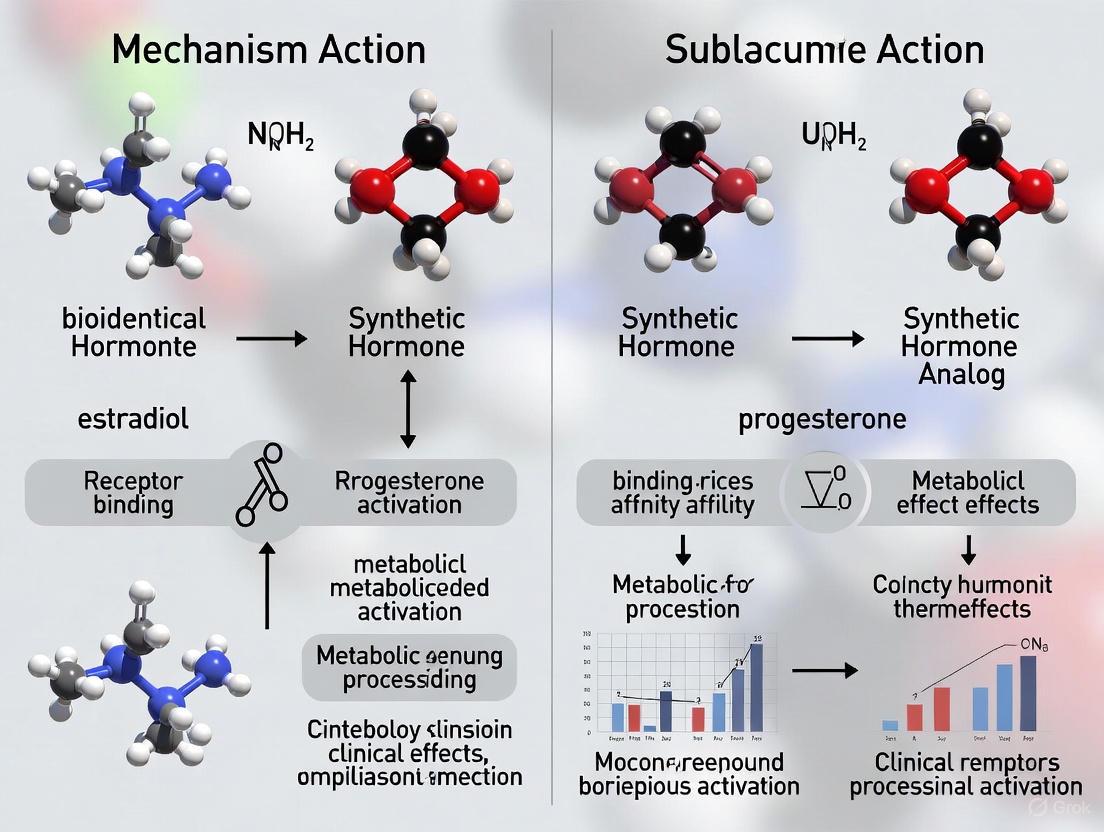
This article provides a comprehensive analysis of the mechanisms of action, efficacy, and safety profiles of bioidentical and synthetic hormone replacement therapies (HRT).
Molecular Mechanisms and Clinical Implications: A Comparative Analysis of Bioidentical vs. Synthetic Hormone Replacement Therapy
Abstract
This article provides a comprehensive analysis of the mechanisms of action, efficacy, and safety profiles of bioidentical and synthetic hormone replacement therapies (HRT). Tailored for researchers, scientists, and drug development professionals, it explores the foundational science behind hormone-receptor interactions, methodological considerations in formulation and delivery, strategies for risk mitigation and therapy optimization, and a critical evaluation of clinical evidence. The scope encompasses structural biology, pharmacokinetics, regulatory science, and the implications of recent FDA labeling changes, offering a synthesized resource for informed research and development in the field of hormonal therapeutics.
Structural Biology and Core Pharmacological Principles of HRT
The fundamental distinction between bioidentical and synthetic hormones resides at the molecular level, dictating their subsequent mechanism of action, receptor interactions, and clinical outcomes. Hormone replacement therapy (HRT) is a critical intervention for managing symptoms associated with hormonal imbalances due to menopause, aging, or other health conditions [1]. While both bioidentical hormone replacement therapy (BHRT) and synthetic HRT aim to replenish deficient hormones, they are characterized by critical differences in the chemical structure of the hormones used, their origins, and their processing [1]. Bioidentical hormones are defined as compounds that have exactly the same chemical and molecular structure as the hormones produced by the human body, such as estradiol, progesterone, and testosterone [2] [3]. In contrast, synthetic hormones are manufactured compounds designed to mimic the effects of endogenous hormones but possess molecular structures that are not identical to them [4] [5]. This molecular divergence is not merely academic; it forms the basis for differential binding to steroid receptors, activation of distinct signaling pathways, and variations in therapeutic and side-effect profiles [6]. This review provides a molecular perspective on these two classes of therapeutic hormones, framed within the context of their mechanisms of action, to inform research and drug development.
Molecular Structures and Origins
The "bioidentical" designation signifies a match in chemical and molecular structure to endogenous human hormones [3]. These hormones are typically synthesized from plant-derived compounds, most commonly from soy or wild yams, which are chemically processed in a laboratory to achieve this structural identity [1] [4] [5]. The final bioidentical hormone molecules, such as estradiol or progesterone, are indistinguishable from those produced by the human endocrine system at a molecular level [2].
Synthetic hormones, however, are engineered to elicit hormonal effects while often incorporating structural modifications. These alterations may enhance oral bioavailability, prolong half-life, or modify potency [6]. Synthetic hormones can be derived from animal sources, such as conjugated equine estrogens (CEE) obtained from the urine of pregnant mares, or created through fully synthetic chemical processes [1] [4]. For example, the synthetic progestin medroxyprogesterone acetate (MPA) is a derivative of progesterone but possesses a different molecular structure [6].
Table 1: Molecular Characteristics and Origins of Hormone Types
| Characteristic | Bioidentical Hormones | Synthetic Hormones |
|---|---|---|
| Molecular Structure | Identical to endogenous human hormones [3] | Modified; similar but not identical to human hormones [5] |
| Common Sources | Plant sources (soy, wild yams) [1] [4] | Animal sources (e.g., pregnant mare urine) or fully synthetic [1] [4] |
| Example Formulations | Estradiol, Micronized Progesterone [1] | Conjugated Equine Estrogens (CEE), Medroxyprogesterone Acetate (MPA), Norethisterone [1] [6] |
| Regulatory Status | Available as both FDA-approved and non-FDA approved compounded formulations [1] | Typically FDA-approved, commercially available in standardized doses [1] [4] |
Figure 1: Origin and Processing Pathways for Bioidentical vs. Synthetic Hormones. Bioidentical hormones are derived from plants and processed to match human hormones, while synthetic hormones are derived from animal or fully synthetic sources and are chemically modified.
Mechanisms of Action: Receptor Binding and Signaling Pathways
The mechanistic divergence between bioidentical and synthetic hormones arises from their structural differences and subsequent interactions with intracellular steroid receptors.
The Hormone-Receptor "Lock and Key" Paradigm
Endogenous hormones function through a classic "lock and key" mechanism. Each hormone has a distinct molecular structure that is recognized by specific receptors on or in target cells [5]. Bioidentical hormones, possessing an identical structure, fit perfectly into these receptor "locks," allowing for normal cellular entry and function [5] [3]. Synthetic hormones, with their altered structures, represent a different "key." They may still activate the receptor but can lead to different conformational changes upon binding, which in turn alters the downstream signaling cascade and resulting gene expression [6].
Differential Steroid Receptor Activation
Intracellular steroid receptors—including progesterone receptors (PR), estrogen receptors (ER), androgen receptors (AR), glucocorticoid receptors (GR), and mineralocorticoid receptors (MR)—are the primary mediators of hormone action. Bioidentical hormones, like progesterone, typically bind with high specificity to their cognate receptors [3].
A critical differentiator is that synthetic hormones, particularly progestins, often exhibit cross-reactivity with other steroid receptors. Research indicates that different progestins have varying binding affinities for the PR, GR, AR, and MR [6]. For instance, MPA has significant glucocorticoid activity, while other progestins like norethisterone and levonorgestrel have androgenic effects [6]. This promiscuous receptor binding is a major contributor to the distinct side-effect profiles of synthetic hormones, which are not typically observed with bioidentical hormones [6] [3].
Table 2: Receptor Binding and Transcriptional Activity Profiles of Selected Hormones
| Hormone | Progesterone Receptor (PR) | Glucocorticoid Receptor (GR) | Androgen Receptor (AR) | Key Biological Consequences |
|---|---|---|---|---|
| Progesterone (Bioidentical) | High affinity, native agonist [3] | Low affinity | Low affinity | Inhibits breast cell division [3] |
| Medroxyprogesterone Acetate (MPA) | Agonist | Strong agonist [6] | Antagonist [6] | Increases breast cancer risk; glucocorticoid effects [6] |
| Norethisterone | Agonist | Agonist | Agonist [6] | Androgenic side effects (e.g., acne) [6] |
| Drospirenone | Agonist | Antagonist | Antagonist [6] | Anti-mineralocorticoid effects [6] |
Figure 2: Differential Steroid Receptor Activation and Signaling. Bioidentical hormones show high specificity for their native receptor, while synthetic hormones exhibit cross-reactivity, leading to altered gene expression and side effects.
Experimental Methodologies for Investigating Hormone Action
To elucidate the mechanisms described, researchers employ a suite of molecular and cellular techniques. The following protocol outlines a standard workflow for comparing the activity of bioidentical versus synthetic hormones in vitro.
Protocol: Assessing Receptor Binding and Gene ExpressionIn Vitro
Objective: To compare the binding affinity and transcriptional activity of a bioidentical hormone (e.g., progesterone) and a synthetic progestin (e.g., MPA) at the human progesterone receptor (PR).
Materials and Reagents:
- Cell Line: PR-positive human breast cancer cell line (e.g., T47D).
- Test Compounds: Bioidentical progesterone and synthetic MPA.
- Culture Medium: RPMI-1640 supplemented with 10% charcoal-stripped FBS.
- Transfection Reagents: Lipofectamine.
- Reporter Plasmid: PRE-luciferase construct.
- Control Plasmid: Renilla luciferase control vector.
- Detection Kits: Dual-Luciferase Reporter Assay System.
Methodology:
- Cell Culture and Transfection:
- Maintain T47D cells in culture medium to eliminate interference from exogenous steroids.
- Seed cells into 24-well plates and allow to adhere for 24 hours.
- Transfect cells with the PRE-luciferase reporter plasmid and the Renilla control plasmid using Lipofectamine.
Hormone Treatment:
- After 24 hours, treat cells with a concentration range (e.g., 10^(-12) to 10^(-6) M) of bioidentical progesterone or synthetic MPA. Include a vehicle control.
- Incubate for 24 hours.
Luciferase Assay:
- Lyse cells and measure firefly and Renilla luciferase activity using the Dual-Luciferase Reporter Assay.
- Normalize firefly luciferase activity to Renilla activity for each well.
Data Analysis:
- Plot normalized luciferase activity against hormone concentration to generate dose-response curves.
- Calculate EC₅₀ values to compare the potency of each compound.
- The maximum response (efficacy) can also be compared.
Figure 3: In Vitro Workflow for Assessing Hormone Receptor Activity. Standardized protocol for comparing the potency and efficacy of bioidentical and synthetic hormones using reporter gene assays.
The Scientist's Toolkit: Key Research Reagents
Table 3: Essential Reagents for Hormone Mechanism Research
| Research Reagent / Tool | Function in Experimental Protocol |
|---|---|
| Charcoal-Stripped Fetal Bovine Serum (FBS) | Removes endogenous steroids from cell culture media to create a hormone-depleted baseline. |
| Steroid Receptor-Positive Cell Lines (e.g., T47D, MCF-7) | Provide a cellular model expressing the target receptor for studying hormone signaling. |
| Reporter Gene Plasmids (e.g., PRE-luciferase, ERE-luciferase) | Contain hormone response elements; activation by hormone-receptor complex induces measurable signal. |
| Dual-Luciferase Reporter Assay System | Quantifies transcriptional activity; firefly luciferase is the experimental readout, Renilla provides normalization. |
| Radio-labeled Ligands (e.g., [³H]-R5020) | Used in competitive binding assays to determine receptor affinity (Kd) and binding potency (IC₅₀). |
Research and Clinical Implications
The molecular differences translate into significant research and clinical outcomes. A pivotal finding comes from studies showing that synthetic progestins, like MPA, can increase the risk of breast cancer in HRT users, whereas bioidentical progesterone has been shown to inhibit breast cell division and is described as having a protective role [6] [3]. This is a clear example of how structural differences and divergent receptor interactions (e.g., MPA's strong glucocorticoid activity) can lead to markedly different biological endpoints [6].
The regulatory landscape also reflects these distinctions. FDA-approved bioidentical hormones and synthetic hormones undergo rigorous testing for safety and efficacy [1]. However, compounded bioidentical hormone formulations, which are customized for individuals, are not FDA-approved and are not subject to the same level of quality control, raising concerns about consistency and dosage accuracy [1] [7]. Major medical bodies emphasize that claims of superior safety or efficacy for compounded BHRT are not supported by large-scale, rigorous research [1].
From a molecular perspective, the dichotomy between bioidentical and synthetic hormones is clear and consequential. Bioidentical hormones, by virtue of their structural identity to endogenous hormones, engage with steroid receptors in a manner that closely replicates natural physiology. Synthetic hormones, engineered with structural modifications, exhibit distinct receptor binding profiles that lead to different patterns of gene expression and clinical effects, both therapeutic and adverse.
Future research must continue to elucidate the precise signaling pathways activated by different synthetic hormones and further investigate the long-term safety profiles of all hormone therapies. The trend in drug development is moving toward greater personalization [8]. Advances in biotechnology may enable more tailored therapies based on genetic profiles, and novel delivery systems like nanotechnology could improve efficacy and reduce side effects [8]. For researchers and drug development professionals, understanding these molecular fundamentals is paramount for designing safer, more effective, and personalized hormone therapeutics.
Hormone-receptor interactions represent the fundamental initial step in endocrine signaling, governing the activation of downstream physiological responses. For every category of hormone—steroid, peptide, or protein—the initiation of a biological response requires the specific physical binding of the hormone to its cognate receptor protein [9]. This interaction is characterized by high affinity and stereospecificity, ensuring precise molecular recognition between signaling molecules and their cellular targets.
The binding event between a hormone and its receptor is never mediated by covalent linkages, as such permanent bonds would render biological signaling irreversible [9]. Instead, the interaction is facilitated by a cluster of noncovalent interactions, including electrostatic attractions between oppositely charged groups, hydrogen bonding between hydrogen acceptors and donors, and hydrophobic interactions [9]. These dynamic binding forces allow for reversible complex formation, enabling the precise regulation of hormonal signaling pathways essential for maintaining physiological homeostasis.
Quantitative Analysis of Hormone-Receptor Interactions
Thermodynamics and Binding Kinetics
The formation of the hormone-receptor complex follows the principles of mass action, representing a dynamic equilibrium between associated and dissociated states [9]. This reversible interaction can be mathematically represented as:
The equilibrium dissociation constant (Kd) serves as the fundamental parameter quantifying binding affinity, mathematically equivalent to the ratio of the dissociation rate constant (k₋₁) to the association rate constant (k₊₁) [9]. The relationship between these parameters is defined by the equation:
Where Ka represents the association constant, and Kd represents the dissociation constant [9]. Lower Kd values indicate higher binding affinity, reflecting a tighter interaction between the hormone and its receptor. For steroid receptors, Kd values typically fall within the range of 10⁻¹⁰ to 10⁻⁸ M, demonstrating the remarkable binding efficiency of these interactions [9].
Table 1: Characteristic Binding Parameters for Different Receptor Classes
| Receptor Class | Typical Kd Range (M) | Representative Hormones | Primary Location |
|---|---|---|---|
| Steroid Receptors | 10⁻¹⁰ – 10⁻⁸ | Estradiol, Progesterone, Testosterone | Intracellular (Cytoplasm/Nucleus) |
| Peptide Hormone Receptors | 10⁻⁹ – 10⁻⁷ | Growth Hormone, Insulin, Glucagon | Plasma Membrane |
| G-Protein Coupled Receptors | 10⁻⁸ – 10⁻⁶ | Epinephrine, Serotonin, LH, FSH | Plasma Membrane |
Scatchard Saturation Analysis
The Scatchard plot represents the historical principal technique for quantitatively studying hormone-receptor interactions in vitro [9]. This methodology depends on access to high specific activity radioactive preparations of the hormone under investigation, typically incorporating radioactive carbon (¹⁴C) or hydrogen (³H) isotopes [9].
The critical distinction between specific binding to the receptor versus nonspecific binding to other assay components is measured by comparing binding without and with the addition of an excess (100-1000 times) of unlabeled hormone [9]. The excess unlabeled hormone competitively displaces the high-affinity hormone-binding sites while not affecting the low-affinity nonspecific binding sites, allowing for precise quantification of receptor-specific interaction [9].
The Scatchard analysis transforms the equilibrium equation into a linear form when bound/free hormone ([RH]/[H]) is plotted against bound hormone ([RH]) [9]. The resulting straight line yields two critical parameters: the slope represents -Ka (or -1/Kd), while the extrapolated x-intercept provides Bmax, which indicates the total number of specific receptor-binding sites in the system [9].
Table 2: Key Experimental Methods for Studying Hormone-Receptor Interactions
| Method | Principle | Measured Parameters | Applications |
|---|---|---|---|
| Scatchard Saturation Analysis | Radioactive ligand binding with competitive displacement | Kd, Bmax (receptor number) | Equilibrium binding studies |
| Surface Plasmon Resonance (SPR) | Real-time biomolecular interaction monitoring | kon, koff, Kd | Kinetic analysis of binding events |
| Alanine Scanning Mutagenesis | Systematic replacement of residues with alanine | Binding energy contributions of specific residues | Functional mapping of binding interfaces |
| Crystallographic Analysis | X-ray diffraction of protein crystals | Three-dimensional atomic structure of complexes | Structural determination of bound states |
Structural Mechanisms of Receptor Activation
Conformational Changes Upon Ligand Binding
Receptor proteins exist in dynamic equilibrium between inactive and active conformations. Hormone binding stabilizes the active conformation through allosteric modulation of the receptor structure. All receptors share two fundamental components: a ligand-binding domain that stereospecifically binds the cognate hormone, and an effector domain that responds to hormone binding by initiating biological responses [9]. The communication between these domains occurs through conformational reorganization of the receptor protein, enabling the effector site to interact with other cellular constituents to propagate the signal [9].
Research on growth hormone (GH) receptor interactions has revealed sophisticated allosteric coupling mechanisms. Growth hormone regulates its biological properties through a sequential hormone-induced receptor homodimerization process [10]. The hormone contains two spatially distal receptor binding sites (Site1 and Site2) that demonstrate remarkable allosteric coupling, where modifications in one binding site can structurally reorganize the distal site [10]. Mutagenesis-scanning analysis of 81 single and 32 pairwise double mutations identified that these allosteric effects focus on a relatively few residues centered around the interaction between Asp-116 of the hormone and Trp-169 of the receptor in Site2 [10].
Membrane Receptor Activation Mechanisms
G-Protein Coupled Receptors (GPCRs) represent the most prevalent class of hormone receptors, with approximately 350 GPCRs responding to hormonal signals [9]. These receptors share a common structural architecture comprising seven α-helical membrane-spanning regions that create three extracellular and three intracellular loops [9]. The membrane-spanning helices cross at angles to one another, forming a binding pocket that accommodates hormone ligands [9].
Small molecules and small peptides typically access a cleft within the helical bundle for binding, while larger protein hormones bind to more elaborate N-terminal domains [9]. Upon ligand binding, the receptor undergoes conformational changes that activate associated heterotrimeric G-proteins (composed of α, β, and γ subunits) [9]. In the inactive state, GDP occupies the Gα subunit nucleotide binding site; ligand activation catalyzes GTP-for-GDP exchange, prompting Gα dissociation from Gβγ and subsequent interaction with effector proteins to generate second messengers [9].
Diagram 1: GPCR activation and signaling pathway
Experimental Methodologies for Characterizing Interactions
Surface Plasmon Resonance (SPR) for Binding Kinetics
Surface Plasmon Resonance (SPR) has emerged as a powerful technique for characterizing real-time biomolecular interactions without requiring radioactive labeling. In studies of growth hormone receptor binding, researchers have implemented trimolecular SPR experiments to analyze the sequential binding mechanism [10]. The experimental workflow begins with immobilizing the first receptor extracellular domain (R1) on the sensor chip, followed by injection of hormone to form the 1:1 hormone/R1 intermediate complex [10]. Subsequently, varying concentrations of the second receptor extracellular domain (R2) are injected to monitor the formation of the ternary complex [10].
SPR measurements of growth hormone variants revealed that R2 binds to the 1:1 hormone/R1 intermediate through moderately fast association and slow dissociation kinetics [10]. The growth hormone variant (hGHv) containing 15 Site1 mutations demonstrated a Kd of 4.4 nM for R2 binding, remarkably similar to the wild-type complex (Kd = 3.8 nM) despite significant structural reorganization at the Site2 interface [10]. This sophisticated approach enables precise determination of kon and koff rate constants through global fitting of sensorgram data to appropriate binding models [10].
Alanine Scanning Mutagenesis for Functional Mapping
Alanine scanning mutagenesis provides a systematic approach to quantify the functional contributions of individual residues within hormone-receptor interfaces. This methodology involves sequentially replacing specific amino acids with alanine, which removes side-chain atoms beyond the β-carbon while minimally perturbing the protein backbone structure [10]. In a comprehensive analysis of growth hormone binding, researchers performed a 15-residue alanine scan covering contact residues in the molecule's N-terminus, helix 1, and helix 3, which collectively contribute 460 Ų to the binding interface and form six hydrogen bonds with receptor residues [10].
The mutagenesis data revealed that no single hormone residue in the interface was absolutely essential for R2 binding, with the majority (11 of 15) of alanine mutants showing less than 5-fold decrease in binding affinity compared to wild-type growth hormone [10]. These binding differences arose almost exclusively from changes in koff rate constants, while kon rate constants remained nearly invariant across mutants [10]. This pattern suggests that the mutated residues primarily influence complex stability rather than the initial association event.
Diagram 2: Experimental workflow for Scatchard analysis
Research Reagent Solutions for Hormone-Receptor Studies
Table 3: Essential Research Reagents for Hormone-Receptor Interaction Studies
| Reagent Category | Specific Examples | Research Applications | Technical Considerations |
|---|---|---|---|
| Radiolabeled Hormones | ³H-estradiol, ¹⁴C-progesterone, ¹²⁵I-GH | Saturation binding, Competition assays, Receptor autoradiography | Specific activity, Isotope half-life, Metabolic stability |
| Recombinant Receptor Proteins | Soluble extracellular domains, Full-length membrane receptors | Structural studies, SPR analysis, Crystallization | Proper folding, Post-translational modifications, Membrane integration |
| Engineered Hormone Variants | Site-directed mutants, Phage display variants, Ala-scanning libraries | Structure-function analysis, Binding epitope mapping, Allosteric mechanisms | Conformational stability, Expression yield, Functional validation |
| Detection Systems | Anti-receptor antibodies, FRET probes, SPR chips | Cellular localization, Real-time binding kinetics, Complex formation | Specificity, Signal-to-noise ratio, Compatibility with native conditions |
Implications for Bioidentical Versus Synthetic HRT Mechanisms
Structural Basis for Hormone-Receptor Recognition
The fundamental distinction between bioidentical and synthetic hormones lies in their molecular structure relative to endogenous human hormones. Bioidentical hormones are chemically synthesized to achieve structural identity with hormones naturally produced by the human body [11] [4] [1]. This structural equivalence includes identical atomic composition, bond arrangement, and three-dimensional conformation, enabling precise recognition by the ligand-binding domains of cognate receptors [11].
In contrast, synthetic hormones possess chemical structures that differ from endogenous hormones, either through intentional modification to alter pharmacokinetic properties or as a consequence of their origin from non-human sources [11] [1]. For example, conjugated equine estrogens contain multiple estrogenic compounds not naturally found in humans, derived from the urine of pregnant mares [11] [1]. These structural differences can significantly influence binding affinity, receptor activation kinetics, and subsequent downstream signaling events.
Impact on Binding Affinity and Conformational Changes
The structural differences between bioidentical and synthetic hormones can translate into functionally significant variations in receptor binding kinetics and allosteric effects on receptor conformation. Molecular recognition between hormones and their receptors depends on precise complementary surfaces that optimize noncovalent interactions [9]. Even minor structural modifications in synthetic hormones can alter the binding energy landscape, potentially affecting both affinity (Kd) and efficacy (ability to induce active receptor states).
Research on growth hormone receptor interactions has demonstrated that mutations in one binding site can allosterically reorganize distal binding interfaces without necessarily reducing overall binding affinity [10]. Similarly, structural variations between bioidentical and synthetic hormones may induce distinct conformational changes in receptor proteins, potentially altering the spectrum of downstream signaling events. These nuanced differences in receptor activation may underlie the clinical observations that some patients report differential tolerance or side effect profiles between bioidentical and synthetic hormone formulations [11] [4].
The concept of allosteric coupling between receptor binding sites, as documented in growth hormone receptors, suggests that structural modifications might influence functional outcomes through complex energetic redistribution within the receptor structure [10]. In the hGHv-receptor complex, significant conformational reorganization at the Site2 interface resulted in virtually identical binding affinity despite the loss of six of seven original hydrogen bonds, indicating substantial structural plasticity in hormone-receptor interfaces [10]. This plasticity may allow both bioidentical and synthetic hormones to achieve effective receptor binding while potentially stabilizing distinct receptor conformations with different signaling properties.
Hormone-receptor interactions represent sophisticated molecular recognition events governed by precise structural complementarity and dynamic equilibrium binding. The quantitative parameters of these interactions—including binding affinity (Kd), association/dissociation kinetics (kon, koff), and allosteric coupling between binding sites—fundamentally determine biological signaling outcomes. Advanced experimental approaches including Scatchard analysis, surface plasmon resonance, and alanine scanning mutagenesis provide powerful tools to dissect these interactions at molecular resolution. The structural equivalence of bioidentical hormones to endogenous counterparts may optimize molecular recognition by receptor binding domains, while synthetic hormones with modified structures may engage receptors through distinct interaction patterns with potential implications for downstream signaling specificity and clinical effects.
The molecular origin of hormones used in hormone replacement therapy (HRT) fundamentally determines their structural characteristics and subsequent biological interactions. Bioidentical hormones are defined by their chemical and molecular identity to endogenous human hormones, whereas synthetic hormones are purposefully engineered with structural differences to modify their pharmacological profile [12] [13] [11]. This whitepaper details the sources and synthesis pathways for these hormone classes, framing them within the context of their mechanism of action and providing a technical resource for research and development.
Hormone Source Classification and Characteristics
The following table summarizes the core distinctions between bioidentical and synthetic hormones based on their origins and structural properties.
| Feature | Bioidentical Hormones | Synthetic Hormones |
|---|---|---|
| Molecular Structure | Identical to endogenous human hormones [11] [14]. | Structurally different from human hormones; designed for similar biological effects [11] [14]. |
| Primary Source | Plant sterols from yams and soy [12] [15] [11]. | Conjugated equine estrogens (CEE) from pregnant mare urine or are chemically synthesized [15] [11] [16]. |
| Example Agents | Micronized Progesterone, Estradiol (E2), Estriol [12] [13]. | Medroxyprogesterone Acetate (MPA), Norethisterone Acetate (NETA), Conjugated Equine Estrogens (CEE) [17] [18]. |
| Synthesis Pathway | Extraction and laboratory modification of plant diosgenin into target hormones [11]. | Complex chemical synthesis or direct extraction from animal sources [11] [19]. |
| Regulatory Status | Many are FDA-approved (e.g., estradiol patches, micronized progesterone); compounded versions are not FDA-approved [12] [13] [14]. | FDA-approved and subject to agency oversight for manufacturing and safety [13] [14]. |
Synthesis Pathways and Manufacturing Processes
Bioidentical Hormone Synthesis from Plant Precursors
The synthesis of bioidentical hormones begins with plant-derived sterols, primarily diosgenin extracted from Mexican yams (Dioscorea species) [11]. The diosgenin molecule serves as a precursor scaffold that undergoes a series of controlled chemical reactions—including hydrolysis, oxidation, and microbial biotransformation—to yield target hormones such as 17β-estradiol and progesterone that are structurally identical to those produced by the human body [11].
Synthetic Hormone Derivation and Synthesis
Synthetic hormones follow two principal derivation pathways. The first involves the direct extraction of hormones from animal biological fluids, most notably conjugated equine estrogens (CEE) from the urine of pregnant horses [11] [16]. The second pathway involves the de novo chemical synthesis of novel hormones not found in humans, such as medroxyprogesterone acetate (MPA). These processes create molecules with intentionally altered structures to achieve specific pharmacokinetic properties or receptor binding affinities [11] [14].
Experimental Evidence: Elucidating Mechanisms of Action
Key Experimental Protocol: HRT and the IGF-1 Signaling Pathway in Skeletal Muscle
Objective: To investigate the molecular-level effects of combined HRT and its components (17β-estradiol and Norethisterone Acetate) on the IGF-1 signaling pathway in skeletal muscle, a key regulator of muscle mass [18].
Methodology:
- Design: Randomized, double-blinded, placebo-controlled trial with a 1-year intervention [18].
- Subjects: Early postmenopausal women (aged 50-57) were randomized to either a combined HRT group (2 mg 17β-estradiol + 1 mg Norethisterone Acetate, n=10) or a control group (n=9) [18].
- Muscle Biopsy & Analysis: Skeletal muscle biopsies were taken pre- and post-intervention. Gene expression of key pathway components (IGF-1, IGF-1Ec, Akt1, mTOR, FOXO3, AR) was analyzed using microarray technology and quantitative PCR (qPCR) [18].
- Serum Assays: Serum concentrations of IGF-1, estradiol (E2), and testosterone were measured [18].
- In Vitro Model: C2C12 mouse myotubes were treated with E2 or NETA alone to isolate their individual effects on gene expression and protein phosphorylation (Akt, mTOR) [18].
Findings: Year-long HRT up-regulated gene expression of IGF-1, its splice variant IGF-1Ec, mTOR, and the Androgen Receptor (AR) in human skeletal muscle, coinciding with a previously observed increase in muscle cross-sectional area. The in vitro model showed that E2 and NETA alone could not replicate these effects, suggesting that the synchronous presence of both agents or intact tissue microenvironment is critical for the observed signaling crosstalk [18].
Research Reagent Solutions for Hormone Pathway Analysis
The following table catalogs essential reagents and materials derived from the featured experiment, crucial for investigating hormone signaling mechanisms.
| Reagent/Material | Function in Experimental Protocol |
|---|---|
| C2C12 Cell Line | An immortalized mouse myoblast line used for in vitro studies of myoblast differentiation and hormone response [18]. |
| qPCR Assays | Quantitative PCR used to measure gene expression changes in pathway targets (IGF-1, Akt1, mTOR, FOXO1/3, AR, ESR1/2) [18]. |
| Microarray Technology | High-throughput screening tool for profiling global gene expression changes in muscle biopsy samples [18]. |
| Western Blot Reagents | Antibodies and detection systems for analyzing protein phosphorylation states (e.g., p-Akt, p-mTOR) in cell culture models [18]. |
| Hormone Preparations | Pharmaceutical-grade 17β-estradiol (E2) and Norethisterone Acetate (NETA) for both clinical dosing and in vitro application [18]. |
| ELISA/Kits | For quantifying serum hormone levels (IGF-1, E2, Testosterone) and other biomarkers from patient samples [18]. |
Discussion: Synthesis Origin and Biological Consequences
The structural congruence of bioidentical hormones allows for predictable receptor binding and metabolism, potentially leading to different clinical effect and safety profiles compared to synthetic analogues [12] [11]. The described experiment [18] demonstrates that the specific composition of HRT can induce distinct gene expression profiles in anabolic pathways. Furthermore, the timing of therapy initiation relative to menopause—known as the timing hypothesis—is critical, with intervention in younger women (<60 years or <10 years post-menopause) showing significant reductions in all-cause mortality and cardiovascular disease, effects not observed in older populations [17]. This underscores that the mechanism of action is influenced by both the structural nature of the hormone and the physiological context of the target tissue.
The divergence in sources and synthesis pathways for HRT agents—plant-derived bioidentical versus animal-derived or fully synthetic—produces fundamental differences at the molecular level that cascade into distinct intracellular signaling events and clinical outcomes. A deep understanding of these origins is not merely academic but is essential for rational drug design, the precise interpretation of research data, and the development of personalized therapeutic strategies that maximize efficacy and minimize risk. Future research should continue to correlate specific synthesis pathways with long-term molecular and clinical endpoints.
Estrogen Receptor (ER) and Progesterone Receptor (PR) signaling pathways represent critical regulatory mechanisms in female reproductive tissues and hormone-responsive cancers. These nuclear hormone receptors function as ligand-dependent transcription factors, controlling gene networks responsible for cell proliferation, differentiation, and survival. Understanding these signaling mechanisms provides the foundational knowledge required for developing targeted hormone replacement therapies (HRT), particularly in the context of the ongoing scientific debate regarding the mechanistic differences between bioidentical and synthetic formulations. This technical guide examines the molecular architecture, signaling mechanisms, and experimental approaches for studying these key therapeutic targets, with specific emphasis on implications for HRT research and development.
Molecular Architecture of Estrogen and Progesterone Receptors
Estrogen Receptors (ERs)
The estrogen receptor family comprises nuclear ERs (ERα and ERβ) and the membrane-associated G protein-coupled estrogen receptor 1 (GPER1) [20]. Nuclear ERs are modular proteins encoded by separate genes (ESR1 for ERα on chromosome 6 and ESR2 for ERβ on chromosome 14) that share conserved structural domains [21] [20].
Domain Organization of Nuclear Estrogen Receptors:
- A/B Domain (N-terminal domain): Contains activation function domain 1 (AF-1), which is responsible for ligand-independent transcriptional activation
- C Domain (DNA-binding domain): Features zinc-finger motifs for specific DNA sequence recognition and receptor dimerization
- D Domain (Hinge region): Contains nuclear localization signals and enables functional synergy between AF-1 and AF-2
- E Domain (Ligand-binding domain): Binds estrogens and contains activation function domain 2 (AF-2)
- F Domain (C-terminal domain): Modulates transcriptional activity and coactivator interactions [20]
ERα and ERβ exhibit significant homology in their DNA-binding (~96%) and ligand-binding domains (~58%), but differ substantially in their N-terminal domains, resulting in distinct functional properties and gene regulatory profiles [21] [20].
Progesterone Receptors (PRs)
The human progesterone receptor exists as two main isoforms transcribed from a single gene: full-length PR-B (933 amino acids) and N-terminally truncated PR-A (missing 164 amino acids) [22] [23]. Both isoforms contain:
- Ligand-binding pocket (LBD)
- DNA-binding domain (DBD)
- Dimerization interfaces
Critically, PR-B contains an additional N-terminal segment that includes the strong transactivation domain BUFF, which is absent in PR-A, making PR-B a much stronger transcriptional activator [23]. Both PR-A and PR-B are co-expressed in target cells, and their relative ratio significantly influences progesterone responsiveness [22].
Table 1: Structural Domains of Nuclear Hormone Receptors
| Receptor | Domains | Key Functional Elements | Isoforms |
|---|---|---|---|
| ERα | A-F | AF-1, DBD, LBD, AF-2 | ERα-66, ERα-46, and other splice variants |
| ERβ | A-F | AF-1, DBD, LBD, AF-2 | ERβ1-5 (multiple C-terminal variants) |
| PR-B | A-F | BUFF domain, AF-1, DBD, LBD, AF-2 | Full-length transcriptionally active form |
| PR-A | A-F (truncated) | AF-1, DBD, LBD, AF-2 | N-terminally truncated, dominant negative form |
Receptor Signaling Mechanisms
Genomic Signaling Pathways
The classical mechanism of ER and PR action involves genomic signaling, where ligand-bound receptors function as transcription factors regulating target gene expression.
2.1.1 Estrogen Receptor Genomic Signaling Upon binding estradiol (E2), the predominant endogenous estrogen, ER undergoes conformational changes including repositioning of helix 12 in the LBD, leading to receptor dimerization, nuclear translocation, and binding to specific DNA sequences called estrogen response elements (EREs) in target gene promoters [21] [20]. The DNA-bound receptor recruits coregulator complexes (coactivators or corepressors) that modify chromatin structure through histone acetylation, methylation, and other post-translational modifications, ultimately regulating RNA polymerase II recruitment and transcriptional initiation [20].
2.1.2 Progesterone Receptor Genomic Signaling Progesterone binding induces PR dimerization and nuclear translocation, followed by binding to progesterone response elements (PREs) in target genes [22] [23]. The receptor-ligand complex assembles transcriptional machinery including steroid receptor coactivators (SRCs), p300/CBP, and other regulatory proteins. PR-B exhibits stronger transcriptional activity due to its additional activation domain, while PR-A often functions as a transcriptional dominant-negative inhibitor of PR-B and other steroid receptors [23].
Non-Genomic Signaling Pathways
Both ER and PR can initiate rapid signaling cascades independent of direct DNA binding through non-genomic mechanisms.
2.2.1 Estrogen Receptor Non-Genomic Signaling Membrane-associated ERα, ERβ, and GPER1 can activate intracellular kinase cascades within seconds to minutes of estrogen stimulation [21]. These mechanisms include:
- Activation of G proteins, adenylate cyclase, and protein kinase A (PKA)
- Stimulation of phospholipase C, generating IP3 and DAG
- Transactivation of receptor tyrosine kinases (EGFR, IGF-1R)
- Activation of MAPK and PI3K/Akt signaling pathways [21] [20]
2.2.2 Progesterone Receptor Non-Genomic Signaling Membrane-associated PR isoforms can rapidly activate Src family kinases, MAPK pathways, and calcium signaling, contributing to oocyte maturation, neuronal signaling, and other rapid cellular responses to progesterone [23].
Integrated Signaling and Cross-Talk
ER and PR signaling pathways exhibit extensive cross-talk at multiple levels. Estrogen signaling upregulates PR expression in many tissues, priming them for progesterone responsiveness [23] [20]. Additionally, integrated signaling occurs through:
- Convergence on common target genes
- Shared coregulator proteins
- Phosphorylation-mediated regulation of receptor activity
- Cross-talk with growth factor signaling pathways [21] [23]
Diagram 1: ER and PR Signaling Pathways
Experimental Approaches for Studying Receptor Signaling
Reporter Assay Systems
Reporter gene assays provide quantitative measurements of receptor transcriptional activity. Optimized progesterone responsive element (PRE)-luciferase constructs enable sensitive detection of PR signaling across physiological progesterone concentrations (50 pM to 1 μM) [22].
Protocol 1: PRE-Luciferase Reporter Assay for PR Signaling
- Cell Line Selection: Use PR-positive luminal breast cancer cells (T47D or MCF7)
- Reporter Construct: Transfect with optimized 4xPRE-TK-luciferase construct
- Experimental Conditions: Culture in phenol-red free media with charcoal-stripped serum to reduce background signaling
- PR Expression Enhancement: For MCF7 cells (low endogenous PR), co-transfect with PR expression plasmid
- Ligand Treatment: Treat with progesterone or synthetic progestins (R5020) across concentration range (10 pM - 1 μM)
- Antagonist Control: Include RU486 (PR antagonist) to confirm specificity
- Measurement: Harvest cells after 24h, measure luciferase activity normalized to control reporter [22]
For estrogen receptor signaling, similar ERE-luciferase reporters can be employed with comparable optimization approaches.
Endogenous Target Gene Analysis
Measuring induction of endogenous target genes provides physiological validation of receptor activity.
Protocol 2: Quantitative RT-PCR Analysis of Endogenous Target Genes
- Cell Culture: Culture hormone-responsive cells in steroid-depleted conditions for 48h prior to experiment
- Hormone Treatment: Treat with physiological concentrations of ligands (1 nM E2 for ER; 10 nM progesterone for PR)
- Time Course: Harvest cells at multiple time points (2h, 6h, 24h) to capture primary and secondary responses
- RNA Isolation: Extract total RNA using silica-membrane columns
- Reverse Transcription: Use high-capacity cDNA synthesis kits with random hexamers
- qPCR Amplification: Perform SYBR Green or TaqMan qPCR with validated primers for:
Localization and Protein Analysis
Immunofluorescence and protein analysis techniques assess receptor expression, localization, and post-translational modifications.
Protocol 3: Subcellular Localization and Protein Analysis
- Immunofluorescence Staining:
- Fix cells with 4% paraformaldehyde
- Permeabilize with 0.1% Triton X-100
- Block with 5% BSA
- Incubate with isoform-specific PR or ER antibodies
- Detect with fluorophore-conjugated secondary antibodies
- Counterstain nuclei with DAPI
- Image with confocal microscopy
- Western Blot Analysis:
Table 2: Key Research Reagents for ER/PR Signaling Studies
| Reagent Category | Specific Examples | Research Application | Technical Considerations |
|---|---|---|---|
| Cell Lines | MCF7, T47D (breast cancer) | Model systems for ER/PR signaling | T47D has higher endogenous PR; MCF7 requires PR transfection for robust signaling |
| Reporter Constructs | 4xPRE-TK-luc, ERE-luciferase | Quantitative signaling activity measurement | 4xPRE shows superior dynamic range vs 2xPRE constructs |
| Reference Ligands | Estradiol (E2), Progesterone (P4), R5020, RU486 | Receptor activation/inhibition controls | Use physiological concentrations (pM-nM range) for relevance |
| Antibodies | PR (A/B isoforms), ERα, ERβ, phospho-specific | Protein detection and localization | Validate isoform specificity; nuclear staining common even in unstimulated cells |
| qPCR Assays | WNT4, RANKL, GREB1, PGR, FKBP5 | Endogenous target gene validation | Time-course essential to capture transcriptional dynamics |
Quantitative Analysis of Receptor Signaling
Comprehensive understanding of ER and PR signaling requires quantitative assessment of binding affinities, transcriptional potency, and downstream effects.
Table 3: Quantitative Parameters of Hormone-Receptor Interactions
| Parameter | Estrogen Receptor | Progesterone Receptor | Measurement Method |
|---|---|---|---|
| Physiological Ligand Concentration | 50-500 pM (pre-menopause) | 50-350 pM (menopause) to 1 μM (pregnancy) | Mass spectrometry, immunoassay |
| Binding Affinity (Kd) | E2: 0.1-1 nM | P4: 1-10 nM | Radioligand binding, SPR |
| Transcriptional EC50 | E2: 0.01-0.1 nM | P4: 1-10 nM | Reporter assays (ERE/PRE-luciferase) |
| Target Gene Induction Fold-Change | GREB1: 10-50x; PGR: 5-20x | WNT4: 5-30x; RANKL: 10-100x | qRT-PCR (vs vehicle control) |
| Reporter Dynamic Range | ERE-luciferase: 10-100x | 4xPRE-luciferase: 100-1000x | Optimized constructs in appropriate cell lines |
Implications for Bioidentical vs. Synthetic HRT Research
The molecular mechanisms of ER and PR signaling provide the scientific foundation for understanding differences between bioidentical and synthetic hormones used in HRT.
Structural and Functional Considerations
Bioidentical hormones (estradiol, estriol, progesterone) are chemically identical to endogenous human hormones, while synthetic hormones (conjugated equine estrogens, medroxyprogesterone acetate) have structural modifications that alter receptor binding and activity profiles [11] [24] [4].
5.1.1 Receptor Binding Dynamics Bioidentical progesterone binds PR with appropriate affinity and induces native receptor conformational changes, while synthetic progestins like MPA may exhibit altered receptor interactions and differential cofactor recruitment [23] [24]. These differences translate to distinct transcriptional programs and physiological effects.
5.1.2 Gene Regulation Profiles Different ligand-receptor complexes recruit unique sets of coregulators and activate distinct gene expression patterns, explaining why bioidentical and synthetic hormones with similar "primary" functions may have different safety profiles and tissue-specific effects [23] [24].
Research Evidence
Physiological and clinical data indicate potentially important differences between bioidentical and synthetic hormone formulations:
- Progesterone vs. Synthetic Progestins: Bioidentical progesterone is associated with diminished breast cancer risk compared to synthetic progestins, which are linked to increased risk [24]
- Cardiovascular Effects: Synthetic progestins demonstrate negative cardiovascular effects that may be avoided with bioidentical progesterone [24]
- Metabolic Processing: Bioidentical hormones, being structurally identical to endogenous compounds, may undergo more predictable metabolism and elimination [4]
Molecular Mechanisms Underlying Differential Effects
The varied physiological responses to bioidentical versus synthetic hormones can be explained by several molecular mechanisms:
5.3.1 Receptor Conformational Changes Different ligands induce distinct receptor conformations, leading to differential coregulator recruitment and unique transcriptional outcomes. Bioidentical hormones typically induce native conformations, while synthetic analogs may stabilize non-physiological receptor states [23].
5.3.2 Non-Genomic Signaling Differences Structural differences between bioidentical and synthetic hormones significantly impact non-genomic signaling pathways, contributing to varied physiological effects and side effect profiles [21] [24].
Diagram 2: Bioidentical vs Synthetic Hormone Mechanisms
The Researcher's Toolkit: Essential Reagents and Methodologies
Table 4: Essential Research Tools for ER/PR Signaling Studies
| Tool Category | Specific Products/Assays | Application Notes | Validation Requirements |
|---|---|---|---|
| Cell-Based Assays | PRE/ERE luciferase reporters, Endogenous target gene qPCR | Use physiological hormone concentrations; optimize cell culture conditions | Demonstrate ligand specificity with antagonists |
| Ligand Panels | Bioidentical hormones (E2, P4), Synthetic analogs (MPA, EE2), Selective modulators (SERMs, SPRMs) | Include both agonists and antagonists for mechanism studies | Verify purity and concentration via HPLC/MS |
| Protein Analysis | Isoform-specific antibodies, Phospho-specific reagents, Co-immunoprecipitation kits | Account for basal nuclear localization; optimize extraction buffers | Validate antibody specificity with knockout controls |
| Computational Tools | Molecular docking programs, Pharmacophore modeling software, MD simulation packages | Useful for predicting ligand-receptor interactions and screening | Benchmark against experimental structural data |
| Specialized Methodologies | ChIP-seq for genome-wide binding, RNA-seq for transcriptomics, FRET/BRET for real-time interactions | Provide systems-level understanding of signaling networks | Include appropriate controls for data normalization |
Future Directions and Research Opportunities
Advancements in understanding ER and PR signaling mechanisms continue to reveal new research opportunities:
- Structural Biology: Complete structural characterization of full-length receptors complexed with different ligands and coregulators
- Single-Cell Analysis: Implementation of single-cell transcriptomics and proteomics to understand heterogeneity in hormone responses
- CRISPR Screening: Genome-wide screens to identify novel regulators of receptor signaling and resistance mechanisms
- Advanced Modeling: Development of sophisticated computational models predicting tissue-specific hormone responses
- Non-Classical Mechanisms: Further exploration of non-genomic signaling and its contribution to overall hormone physiology [23] [25]
The continued elucidation of ER and PR signaling mechanisms at molecular resolution will enable development of safer, more effective hormone therapies with optimized benefit-risk profiles.
Formulation Science, Delivery Systems, and Clinical Translation
The pharmacokinetic profile of Hormone Replacement Therapy (HRT) is critically dependent on its route of administration, a key variable that influences drug absorption, metabolism, and ultimate biological effects. This relationship is fundamental to the ongoing research into the mechanisms of action of bioidentical versus synthetic hormones. Bioidentical hormones are defined as compounds that possess a chemical and molecular structure identical to endogenous human hormones [26]. These are often, though not exclusively, derived from plant sources such as yams and soy [4] [16]. In contrast, synthetic hormones, such as conjugated equine estrogens (CEE) or medroxyprogesterone acetate (MPA), are chemically engineered to mimic hormonal effects but have molecular structures that differ from human hormones [26] [27].
The administration route—whether oral, transdermal, or vaginal—determines whether a hormone is subject to first-pass metabolism in the liver. This initial metabolic step profoundly shapes the subsequent hormonal milieu, influencing not only the efficacy in alleviating menopausal symptoms but also the therapy's safety profile, particularly regarding risks for venous thromboembolism (VTE) and cardiovascular events [28] [29]. This review provides a technical examination of the pharmacokinetics of different HRT administration routes, frames these characteristics within the bioidentical versus synthetic discourse, and outlines essential experimental methodologies for researchers in the field.
Pharmacokinetic Profiles by Route of Administration
Oral Administration
The oral route is a common method for HRT delivery, characterized by a specific and complex pharmacokinetic pathway.
- Absorption and First-Pass Metabolism: Following ingestion, hormones are absorbed through the intestinal mucosa and transported via the portal circulation directly to the liver [29]. In the liver, a significant portion of the active drug undergoes extensive first-pass metabolism. This process converts estradiol into less potent metabolites, such as estrone and its conjugates, resulting in a lower bioavailability compared to other routes [30] [31]. The bioavailability of oral estradiol is estimated to be approximately 5-10% [29].
- Clinical Consequences of Hepatic Metabolism: The first-pass effect triggers several hepatic actions that underlie the route-specific risk profile. It stimulates the synthesis of globulins, including sex hormone-binding globulin (SHBG) and thyroid-binding globulin (TBG) [31]. Crucially, it also increases the production of procoagulant factors (e.g., Factors II, VII, VIII, X) and renin substrate, which are associated with a higher risk of venous thromboembolism (VTE) and hypertension in some users [28] [29]. Studies have consistently shown that oral estrogen therapy is associated with a 2- to 4-fold increased risk of VTE compared to transdermal administration [28].
- Steady-State Kinetics: Oral estradiol typically reaches steady-state plasma concentrations within 5 to 6 days of repeated dosing [29].
Table 1: Key Pharmacokinetic Parameters for Oral Estradiol
| Parameter | Description | Clinical/Research Implication |
|---|---|---|
| Bioavailability | ~5-10% [29] | Lower systemic availability due to significant pre-systemic metabolism. |
| Dominant Estrogen | Estrone (E1) [30] | Results in an E1:E2 ratio >1, unlike the premenopausal state. |
| Impact on SHBG | Increases hepatic synthesis [31] | Alters the free fraction of sex hormones. |
| VTE Risk | 2- to 4-fold increase vs. transdermal [28] | A key safety consideration for patient selection. |
| Time to Steady State | ~5-6 days [29] | Informs dosing and monitoring schedules. |
Transdermal Administration
Transdermal delivery, via patches, gels, or sprays, offers a distinct pharmacokinetic profile by bypassing the gastrointestinal tract and hepatic first-pass metabolism.
- Absorption and Bypassing First-Pass Metabolism: Hormones are absorbed through the skin directly into the systemic circulation. This avoids the portal system and the extensive first-pass metabolism in the liver [30] [28]. Consequently, transdermal administration results in more stable and physiological serum hormone levels, maintaining a estradiol-to-estrone (E2:E1) ratio closer to that of premenopausal women [28].
- Clinical Consequences of Non-Oral Delivery: The avoidance of first-pass metabolism is linked to a more favorable safety profile for certain outcomes. Transdermal estradiol does not significantly increase the synthesis of procoagulant factors and is generally not associated with an elevated risk of VTE, making it a preferred option for women at increased thrombotic risk [28] [29]. It also has a minimal impact on blood pressure and is less likely to cause hypertension compared to oral formulations [29].
- Steady-State Kinetics and Dose Comparison: Due to the depot effect in the skin, transdermal formulations take longer to reach steady state, typically requiring 12 to 14 days [29]. Pharmacokinetically, a lower dose is required transdermally to achieve a systemic effect equivalent to an oral dose; approximately 1.5 mg of transdermal estradiol gel produces serum levels similar to a 2 mg oral dose [29].
Table 2: Key Pharmacokinetic Parameters for Transdermal Estradiol
| Parameter | Description | Clinical/Research Implication |
|---|---|---|
| Bioavailability | Higher relative to oral (avoids first-pass) [29] | Lower doses required for equivalent effect. |
| Dominant Estrogen | Estradiol (E2) [28] | Maintains a more physiological E2:E1 ratio. |
| Impact on SHBG | Minimal to no increase [31] | Preserves the free fraction of sex hormones. |
| VTE Risk | No significant increase vs. non-users [28] | Safer profile for patients with risk factors. |
| Time to Steady State | ~12-14 days [29] | Requires a longer stabilization period. |
Vaginal Administration
Vaginal administration is primarily used for managing local urogenital symptoms, and its systemic effects are highly dependent on the dosage.
- Tissue-Specific Absorption and First-Pass Avoidance: Hormones administered vaginally are absorbed directly through the vaginal mucosa into the systemic circulation, thereby avoiding first-pass metabolism [29]. A key characteristic of vaginal estrogen is tissue selectivity; at low doses, it exerts potent effects on the vaginal epithelium with minimal systemic absorption, while higher doses lead to significant systemic uptake [29].
- Clinical Applications and Systemic Exposure: Low-dose vaginal estriol, a weak estrogen, is effective for treating vaginal dryness and atrophy without inducing endometrial proliferation, as it has minimal systemic effects [29]. The systemic exposure is dose-dependent. For example, a 0.2 mg vaginal estradiol dose can produce serum levels similar to a 2 mg oral dose, demonstrating the high local bioavailability of this route [29]. One study noted that vaginal administration could result in 10-fold higher serum levels compared to the same dose given orally [29].
Molecular Mechanisms of Action and Research Reagents
Mechanism of Action: Bioidentical vs. Synthetic
The structural differences between bioidentical and synthetic hormones translate into distinct pharmacological behaviors at the molecular level.
- Receptor Binding and Specificity: Bioidentical 17β-estradiol has a high and natural affinity for both estrogen receptor alpha (ERα) and beta (ERβ) [26]. Its action is based on the same molecular structure that the human body has evolved to regulate. Synthetic hormones, however, may have altered binding affinities. For instance, the progestin medroxyprogesterone acetate (MPA) can bind not only to the progesterone receptor but also to other steroid receptors, such as the glucocorticoid receptor, leading to a different and broader spectrum of biological activities not seen with bioidentical progesterone [30] [31].
- Metabolic Pathway Activation: The route of administration can influence which metabolic pathways are activated. Oral administration, by generating a high concentration of estrogen metabolites in the liver, promotes genomic effects that alter the synthesis of hepatic proteins [31]. Transdermal and vaginal routes, providing a more steady and physiological serum level, are thought to better mimic the body's natural pulsatile secretion and may favor non-genomic signaling pathways [30].
Diagram 1: Pharmacokinetic Pathways of HRT Routes
The Scientist's Toolkit: Research Reagent Solutions
For researchers investigating the pharmacokinetics and mechanisms of different HRT formulations, several key reagents and tools are essential.
Table 3: Essential Research Reagents for HRT Pharmacokinetic Studies
| Research Reagent / Tool | Function and Application in HRT Research |
|---|---|
| LC-MS/MS (Liquid Chromatography-Tandem Mass Spectrometry) | The gold-standard method for the precise quantification of steroid hormone concentrations (e.g., estradiol, estrone, progesterone) in serum, plasma, and tissue samples. It is critical for generating accurate pharmacokinetic data. |
| FDA-Approved Bioidentical Hormones (e.g., micronized progesterone, 17β-estradiol patches/tablets) | Serve as standardized reference compounds for in vitro and in vivo studies, allowing for direct comparison with synthetic or compounded formulations. |
| Compounded Bioidentical Hormones (e.g., Bi-Est, Tri-Est) | Custom-formulated preparations used to study the effects of specific estrogen ratios (e.g., estriol:estradiol) not available in commercial products. Requires careful characterization for research validity [26]. |
| Cell Lines Expressing Human ERα/ERβ and PR | Engineered cell lines are used in receptor binding assays and transactivation studies to characterize the affinity and functional activity (agonism/antagonism) of synthetic versus bioidentical hormones. |
| Animal Models (e.g., Ovariectomized Rodents) | Provide a controlled system for studying the tissue-specific distribution, metabolic effects, and efficacy of different HRT routes in an estrogen-deficient state. |
| Thrombogenesis Assays (e.g., thrombin generation assay) | Functional tests used to measure the procoagulant potential of different HRT formulations in plasma, helping to elucidate the mechanisms behind route-dependent VTE risk. |
Experimental Protocols for Key Assays
Protocol: Pharmacokinetic Profiling of a Novel Transdermal Formulation
This protocol outlines a standard method for comparing the bioavailability and pharmacokinetic parameters of a novel transdermal formulation against an established oral or transdermal reference product.
- Study Design: A randomized, crossover, single- or multiple-dose study in a relevant animal model (e.g., ovariectomized female rat) or human participants.
- Dosing and Sample Collection:
- Administer the test and reference formulations after a washout period.
- Collect serial blood samples at pre-dose and at critical time points post-dose (e.g., 0.5, 1, 2, 4, 8, 12, 24, 48, 72 hours for transdermal; more frequent early time points for oral).
- Bioanalytical Analysis:
- Process plasma samples by protein precipitation or solid-phase extraction.
- Analyze concentrations of the parent drug (e.g., 17β-estradiol) and its major metabolites (e.g., estrone) using a validated LC-MS/MS method.
- Data Analysis:
- Use non-compartmental analysis (NCA) with software like Phoenix WinNonlin to calculate key PK parameters: C~max~ (maximum concentration), T~max~ (time to C~max~), AUC~0-t~ (area under the concentration-time curve from zero to last time point), AUC~0-∞~ (area under the curve extrapolated to infinity), and t~1/2~ (elimination half-life).
- Calculate the relative bioavailability (F) as (AUC~test~/AUC~reference~) * (Dose~reference~/Dose~test~).
Protocol: In Vitro Receptor Binding and Transactivation Assay
This protocol is designed to characterize the binding affinity and functional efficacy of a hormone compound on its target receptor.
- Receptor Binding Assay:
- Use cell membranes expressing recombinant human ERα, ERβ, or PR.
- Incubate the membranes with a fixed concentration of a radiolabeled reference ligand (e.g., [3H]-estradiol) and increasing concentrations of the test compound (bioidentical or synthetic).
- Measure the displacement of the radiolabeled ligand using a scintillation counter.
- Calculate the inhibitory concentration 50 (IC~50~) and the relative binding affinity (RBA), with estradiol or progesterone set at 100%.
- Cell-Based Transactivation Assay:
- Culture a cell line (e.g., HeLa, Ishikawa) co-transfected with an expression plasmid for the human nuclear receptor (ER or PR) and a reporter plasmid (e.g., luciferase gene under the control of an estrogen- or progesterone-responsive promoter).
- Treat the cells with a range of concentrations of the test compound for 24 hours.
- Lyse the cells and measure the luciferase activity, normalized to a control (e.g., protein concentration or co-transfected β-galactosidase).
- Generate dose-response curves to determine the effective concentration 50 (EC~50~) for agonist activity and, if applicable, the IC~50~ for antagonist activity in the presence of a reference agonist.
Diagram 2: HRT Comparison Experimental Workflow
The route of administration is a paramount factor that dictates the pharmacokinetic and pharmacodynamic profile of HRT, with direct implications for its mechanism of action within the context of bioidentical versus synthetic hormone research. Oral administration, while effective, induces significant hepatic first-pass effects that elevate the risk of VTE and other metabolic changes. Transdermal and vaginal routes, by bypassing this initial metabolism, offer a more physiological delivery of hormone, resulting in a superior safety profile for thrombosis and likely a different pattern of receptor activation throughout the body.
Future research should focus on long-term, head-to-head studies that correlate the distinct pharmacokinetic parameters of these routes with hard clinical endpoints, as well as molecular markers of efficacy and safety. A deeper understanding of how administration routes influence non-genomic signaling and tissue-specific effects will further refine HRT strategies, enabling truly personalized treatment regimens that maximize benefit and minimize risk.
Within hormone replacement therapy (HRT), the divergence between standardized and compounded manufacturing pathways represents a critical point of analysis for drug development professionals. This whitepaper provides a technical examination of these two paradigms, framing the discussion within the broader research on the mechanism of action of bioidentical versus synthetic hormones. The manufacturing origin of a hormone product—whether produced under Good Manufacturing Practices (GMP) in a facility subject to Food and Drug Administration (FDA) oversight or custom-compounded in a local pharmacy—directly influences critical quality attributes such as purity, potency, consistency, and ultimately, biological activity and patient safety [32] [33]. Understanding these distinctions is fundamental for researchers designing preclinical studies and clinical trials, as the formulation type can be a significant variable in experimental outcomes and therapeutic efficacy.
Manufacturing Philosophies and Regulatory Frameworks
The fundamental distinction between standardized and compounded hormone formulations lies in their underlying manufacturing philosophy and regulatory status.
Standardized (FDA-Approved) Formulations
Standardized hormone therapies are FDA-approved pharmaceutical products manufactured in accordance with current Good Manufacturing Practices (cGMP) [32] [33]. This pathway involves a rigorous approval process that demands extensive data on safety, efficacy, and manufacturing quality.
- Regulatory Compliance: These facilities operate under strict regulatory oversight, requiring adherence to cGMP guidelines which mandate validated processes, rigorous quality control, and comprehensive documentation [32].
- Manufacturing Process: Production occurs in dedicated, controlled environments, often with separated areas for different hormones to prevent cross-contamination. These areas include clean rooms with HVAC systems and HEPA filtration to maintain aseptic conditions and control particulate matter [32].
- Product Characteristics: The output is a product with a consistent, pre-determined dose and a standardized delivery system (e.g., patch, gel, oral tablet). All FDA-approved menopausal hormone therapies, including those containing bioidentical hormones like micronized progesterone and estradiol, fall into this category [34] [33].
Compounded Formulations
Compounded bioidentical hormone replacement therapy (cBHRT) refers to preparations that are custom-made by a compounding pharmacy based on a clinician's prescription [33] [4].
- Regulatory Framework: Compounding pharmacies generally operate under Section 503A of the Federal Food, Drug, and Cosmetic Act. These entities are exempt from FDA pre-market approval requirements, cGMP requirements, and the need to label products with adequate directions for use [33]. This regulatory gap means these products are not reviewed by the FDA for safety, effectiveness, or quality.
- Manufacturing Process: Compounding is traditionally intended to provide treatments when commercial products are unavailable or when a patient has a specific need, such as an allergy to an ingredient in an FDA-approved product [33]. However, its use has expanded to the routine blending of commercially available drug products in customized proportions [33].
- The "Bioidentical" Marketing Term: The term "bioidentical" is often used as a marketing tool to imply that these preparations are "natural" and thus safer or more effective than FDA-approved counterparts. However, evidence to support these marketing claims is lacking [33].
Table 1: Fundamental Philosophies of Standardized vs. Compounded Manufacturing
| Characteristic | Standardized (FDA-Approved) Manufacturing | Compounded Manufacturing |
|---|---|---|
| Regulatory Status | FDA-approved; pre-market review for safety & efficacy [34] [33] | Not FDA-approved; exempt from pre-market review [33] |
| Governing Framework | Current Good Manufacturing Practices (cGMP) [32] | Pharmacy state board oversight; exempt from cGMP [33] |
| Production Mindset | Mass production of consistent, uniform batches | Customization for individual patients based on prescription [4] |
| Primary Objective | Ensure batch-to-batch consistency, safety, and efficacy | Address needs not met by commercially available options [33] |
Detailed Manufacturing Processes and Quality Control
The operational divergence between standardized and compounded manufacturing is most evident in their specific processes and quality control (QC) protocols.
Standardized Manufacturing Workflow
Standardized hormone production follows a highly controlled, multi-stage process designed to eliminate variability and ensure product purity and potency [32].
- Sourcing of Raw Materials: High-grade active pharmaceutical ingredients (APIs) and excipients are procured from qualified and documented suppliers. Materials are tested for identity, purity, and potency upon receipt [32].
- Formulation in Controlled Areas: Manufacturing occurs in segregated, dedicated areas with controlled environmental conditions (temperature, humidity, particulate matter) maintained by HVAC systems [32].
- Process Validation and In-Process Controls: Every step of the manufacturing process, from mixing to sterilization, is validated to ensure it consistently produces a product meeting its predetermined specifications. In-process controls are conducted throughout [32].
- Final Product Quality Control: The finished product undergoes rigorous testing, including assays for potency, sterility, microbial content, and impurity profiling [32].
- Documentation and Traceability: Every batch is thoroughly documented, allowing for full traceability from raw materials to finished product and facilitating targeted recalls if necessary [32].
Compounded Manufacturing Workflow
The process for compounded hormones is inherently more variable and less stringently controlled.
- Prescription-Based Initiation: Production begins only after receiving a patient-specific prescription from a clinician [4].
- Compounding Execution: A pharmacist or technician prepares the formulation using techniques like mixing, grinding, and filling. The process may involve creating unique dosage forms such as troches, creams, or capsules [4].
- Limited Quality Assurance: While some compounding pharmacies have internal quality checks, there is no federal requirement for independent testing of the final product's potency, sterility, or purity. Studies have shown variability in the actual amount of active ingredient in compounded preparations compared to the label claim [33].
- Variable Documentation: Record-keeping practices are inconsistent and not subject to uniform federal standards, potentially hindering traceability in the event of an adverse reaction [33].
Comparative Quality Control (QC) Metrics
The difference in QC rigor leads to measurable disparities in product quality and consistency.
Table 2: Quality Control and Output Comparison
| QC Parameter | Standardized (FDA-Approved) Manufacturing | Compounded Manufacturing |
|---|---|---|
| Potency / Assay | Rigorously tested; must be within a narrow specified range (e.g., 90-110% of label claim) | Independent studies report variability; one study found levels 26% below to 31% above label claim [33] |
| Sterility Assurance | Mandatory for sterile products; processes are validated | Risk of bacterial contamination due to lack of stringent environmental monitoring and process controls [33] [35] |
| Impurity Profiling | Required; limits set for known and unknown impurities | Not routinely required or performed |
| Batch-to-Batch Consistency | High; ensured through process validation and controls | Low; inherent variability due to customized nature [33] |
| Stability Data | Required; shelf life determined based on rigorous stability studies | Often not available or not based on rigorous testing |
Diagram 1: Manufacturing pathways for hormone formulations.
Implications for Mechanism of Action Research
The manufacturing and quality control differences between standardized and compounded formulations have profound implications for research into the mechanism of action (MoA) of bioidentical versus synthetic hormones.
Impact on Pharmacokinetic and Pharmacodynamic Studies
- Variable Dosing and Bioavailability: Inconsistent potency in compounded products confounds pharmacokinetic (PK) studies. Researchers cannot assume the labeled dose accurately reflects the delivered dose, making it difficult to establish reliable dose-response relationships or compare results across studies [33]. This variability introduces significant noise and bias into pharmacodynamic (PD) analyses aimed at elucidating a hormone's MoA.
- Excipients and Delivery: FDA-approved formulations use well-characterized excipients that optimize stability and bioavailability. Compounded products may use different bases and delivery vehicles (e.g., creams vs. troches) that can dramatically alter absorption and metabolism, thereby influencing the observed biological effect independently of the active hormone itself [35].
Challenges in Preclinical and Clinical Trial Design
- Lack of Reproducibility: The inherent variability of compounded products is a major obstacle to reproducing experimental findings, a cornerstone of the scientific method. A MoA identified using one batch of a compounded hormone may not be replicable with another, undermining the validity of the conclusions [33].
- Blinding and Placebo Control: It is challenging to create a matched placebo for a custom-compounded formulation, potentially compromising the blinding of clinical trials and introducing observer and participant bias.
- Safety and Endpoint Interpretation: The lack of long-term safety data and consistent adverse event reporting for compounded therapies makes it difficult for researchers to contextualize their findings regarding potential risks, such as endometrial hyperplasia or impacts on breast tissue [33] [35].
Essential Research Reagents and Methodologies
For scientists investigating the mechanistic differences between hormone formulations, a standardized toolkit is essential for generating reliable and interpretable data.
Table 3: Research Reagent Solutions for Hormone MoA Studies
| Research Reagent / Material | Function in Experimental Protocol |
|---|---|
| Reference Standard (FDA-Approved Bioidentical/Synthetic) | Serves as a calibrated benchmark for validating assay performance, quantifying potency, and ensuring result comparability across labs. Essential as a positive control. |
| Cell-Based Reporter Assays (e.g., ERα/PR Transactivation) | Measures the functional activity (agonism/antagonism) of a hormone formulation on its specific nuclear receptor signaling pathway in a controlled system. |
| Mass Spectrometry-Grade Solvents & Columns | Enables precise quantification of hormone concentrations and metabolite profiles from biological matrices (e.g., plasma, tissue homogenates) in PK studies. |
| Validated Antibodies (for Immunohistochemistry/Western Blot) | Detects and quantifies downstream markers of hormone action (e.g., receptor phosphorylation, target gene expression like PR) in tissue or cell samples. |
| cGMP-Manufactured Clinical Trial Material | Provides the consistent, well-characterized test articles necessary for conducting reproducible Phase I-III clinical trials to establish definitive efficacy and safety. |
Experimental Protocol: Validating Hormone Receptor Activation
Objective: To compare the efficacy and potency of standardized versus compounded hormone formulations in activating the estrogen receptor (ER) signaling pathway.
Methodology:
- Cell Culture: Maintain ER-positive cell line (e.g., MCF-7) in recommended media under standard conditions.
- Treatment: Seed cells in 96-well plates. At ~70% confluence, treat with:
- A dilution series of the reference standard (e.g., 17β-estradiol).
- Dilution series of the test formulations (standardized and compounded products, solubilized appropriately).
- Vehicle control (e.g., DMSO).
- Each condition should have a minimum of n=6 replicates.
- Luciferase Assay: After 24 hours, lyse cells and measure luminescence using a commercial luciferase assay kit. Luminescence intensity correlates with ER activation.
- Viability Assay: Perform a parallel MTT or similar assay to normalize luminescence data to cell viability and exclude cytotoxic effects.
- Data Analysis: Plot dose-response curves. Calculate the half-maximal effective concentration (EC₅₀) for each formulation to assess potency. Compare the maximal response (Eₘₐₓ) to assess efficacy relative to the reference standard.
Diagram 2: Experimental workflow for hormone activity assays.
For the drug development community, the choice between standardized and compounded hormone formulations is not merely a clinical or regulatory consideration, but a fundamental one that shapes the integrity of scientific inquiry. Standardized, FDA-approved formulations, produced under cGMP, provide the consistency, purity, and precise characterization required for rigorous, reproducible research into the mechanism of action of both bioidentical and synthetic hormones. In contrast, the inherent variability and lack of regulatory oversight associated with compounded formulations introduce significant confounding variables that can obscure true structure-activity relationships and biological mechanisms. To advance the field and generate reliable data, the research community should prioritize the use of well-characterized reference standards and clinical trial materials whose manufacturing and quality control histories are fully transparent and aligned with global regulatory standards. The path to elucidating the nuanced mechanisms of hormone action depends on a foundation of precisely defined and consistently manufactured chemical entities.
Hormone replacement therapy (HRT) remains a cornerstone treatment for managing the multifaceted sequelae of estrogen deficiency in postmenopausal women. The therapeutic landscape has evolved significantly from a generalized approach to a nuanced strategy that prioritizes timing, formulation, and route of administration to optimize the benefit-risk profile. The indications for HRT extend beyond the robust alleviation of vasomotor symptoms to include the prevention of postmenopausal osteoporosis, a chronic condition affecting nearly one in three women [36]. Understanding the mechanistic basis for these indications is critical, particularly within the ongoing scientific discourse comparing bioidentical hormones (BHRT)—structurally identical to endogenous hormones—and synthetic hormones, which may have differing molecular structures and pharmacological properties [37] [1] [4]. This guide provides an in-depth analysis of these therapeutic indications for a research-focused audience, integrating quantitative efficacy data, experimental methodologies, and molecular pathways.
The Spectrum of Therapeutic Indications
The therapeutic scope of HRT is broad, targeting both the acute, disruptive symptoms of menopause and long-term health consequences, most notably bone loss. The efficacy of HRT across this spectrum is well-documented, though the magnitude of benefit varies by indication and is influenced by patient-specific factors.
Table 1: Efficacy of HRT Across Key Therapeutic Indications
| Therapeutic Indication | Efficacy of HRT | Key Supporting Data | Influence of HRT Type (BHRT vs. Synthetic) |
|---|---|---|---|
| Vasomotor Symptoms | Highly effective; 80-90% of women experience significant improvement [37]. | Considered the most effective available treatment [38] [39]. | Both BHRT and conventional HRT demonstrate high efficacy; differences may lie in individual patient tolerance and customization options [37] [1]. |
| Prevention of Bone Loss | Highly effective; prevents degradation of bone microarchitecture and reduces fracture risk [36]. | Lumbar spine BMD increases by 3.4%-5.4% after 1-2 years of transdermal estrogen [40]. MHT reduces vertebral fracture risk by ~40%, hip fracture by ~30%, and all osteoporotic fractures by 20-30% [36]. | The bone-protective effect is primarily dependent on estrogen receptor activation and is largely independent of whether the estrogen is bioidentical or synthetic [36]. |
| Genitourinary Syndrome of Menopause | Highly effective, especially with local vaginal administration [38] [39]. | First-line treatment for symptoms of vaginal dryness and discomfort [39]. | Low-dose local therapy is preferred; both BHRT and synthetic/low-dose FDA-approved formulations are used. |
| Other Symptoms (Mood, Sleep, Myalgia) | May provide improvement [38] [39]. | Recognized as a potential benefit, though not a primary indication [39]. | Customized BHRT is sometimes leveraged for these symptoms, though robust clinical data is limited [37]. |
The timing of HRT initiation is a critical determinant of its benefit-risk profile. A consistent finding across recent research and updated regulatory guidelines is that initiation within 10 years of menopause onset or before age 60 is associated with the most favorable outcomes, including a reduction in all-cause mortality and fracture risk, and a potential reduction in cardiovascular disease and cognitive decline [38] [41] [42]. This has been reinforced by the FDA's recent move to remove outdated black box warnings for cardiovascular disease and breast cancer, reflecting a modern understanding of HRT risks when used in appropriate patient populations [41] [42].
Molecular Mechanisms of Action: A Research Perspective
The therapeutic effects of HRT are mediated primarily through estrogen receptors (ERs), ligand-activated transcription factors that regulate gene expression in target tissues. The differential expression and activation of ER subtypes (ERα and ERβ) across tissues underpin both the benefits and risks of therapy.
Estrogen Receptor Signaling
Estrogens, whether bioidentical or synthetic, exert their effects by binding to intracellular ERs. The hormone-receptor complex dimerizes and binds to specific DNA sequences, Estrogen Response Elements (EREs), in the promoter regions of target genes, recruiting co-activators or co-repressors to modulate transcription.
The key distinction between bioidentical and synthetic hormones lies in their chemical structure and receptor binding affinity. Bioidentical 17β-estradiol is a perfect structural match for human ERs, while synthetic hormones (e.g., ethinyl estradiol) or animal-derived formulations (e.g., conjugated equine estrogens) have structural differences that can alter their pharmacokinetics and receptor interaction profiles [37] [1] [4]. This is a primary area of investigation for drug development, with a growing focus on developing highly selective ERβ agonists to achieve therapeutic benefits while minimizing side effects associated with ERα activation, such as breast and endometrial proliferation [43].
Mechanism of Vasomotor Symptom Relief
Vasomotor symptoms (hot flashes) are linked to estrogen withdrawal and a consequent dysregulation of the hypothalamic thermoregulatory nucleus. Estrogen deficiency is thought to increase the sensitivity of this nucleus to small changes in core body temperature. ERβ is densely expressed in key brain regions implicated in this process, including the hypothalamus and median raphe nucleus. Activation of ERβ is believed to stabilize thermoregulatory control and serotonergic signaling, thereby reducing the frequency and severity of hot flashes [43].
Mechanism of Bone Protection
Estrogen is a critical regulator of bone remodeling, a coupled process of bone resorption by osteoclasts and bone formation by osteoblasts. Estrogen deficiency in menopause leads to an acceleration of bone turnover, with a disproportionate increase in resorption over formation, resulting in net bone loss.
Estrogens inhibit osteoclast differentiation and activity through multiple mechanisms, including direct action on ERα in osteoclast progenitors and indirect action via osteoblasts and immune cells (e.g., T-lymphocytes) [36]. This inhibition leads to a rapid decrease in bone resorption markers within 3-6 months of initiating HRT, followed by a decrease in formation markers due to coupling. The net effect is a gain in bone mineral density (BMD), particularly at trabecular-rich sites like the lumbar spine, during the first 1-2 years of treatment, followed by stabilization [36].
Table 2: Impact of 1-2 Years of Transdermal Estrogen Therapy on Lumbar Spine Bone Mineral Density (BMD) in Postmenopausal Women [40]
| Study Author (Year) | Country | Study Design | Participants | Drug Regimen | Follow-up | Increase in Lumbar Spine BMD |
|---|---|---|---|---|---|---|
| Kim (2014) | South Korea | Comparative retrospective clinical trial | N=149 (100: HRT, 49: control) | Transdermal patch (estradiol 1.5 mg) or gel (0.1% estradiol) | 2 years | 4.9% |
| Stanosz (2009) | Poland | Randomized controlled trial | N=75 (25: HRT, 25: control, 25: HST) | Micronized 17β-estradiol patches (25-75 μg) + progesterone | 1 year | 3.8% |
| Ettinger (2004) | USA | Randomized, placebo-controlled trial | N=417 (208: HRT, 209: control) | Unopposed transdermal estradiol (0.014 mg/day) | 2 years | 2.6% |
| Davas (2003) | Turkey | Comparative prospective clinical trial | N=160 (80: HRT, 80: routine checkups) | Transdermal estrogen (0.05 mg twice weekly) + MPA/alendronate | 1 year | 4.1% |
| Pereda (2002) | UK | Randomized placebo-controlled trial | N=21 (10: HRT, 11: routine checkups) | 25 mg estradiol implant | 1 year | 5.4% |
| Pooled Estimate | - | Meta-analysis | 643 women across 9 studies | Various transdermal estrogen regimens | 1 year | 3.4% (95% CI: 1.7-5.1) |
| Pooled Estimate | - | Meta-analysis | 643 women across 9 studies | Various transdermal estrogen regimens | 2 years | 3.7% (95% CI: 1.7-5.7) |
Experimental Models and Research Methodologies
Research into the efficacy and mechanisms of HRT, particularly in bone health, relies on a combination of clinical trials, meta-analyses, and preclinical models. The following workflow outlines the standard methodology for a clinical trial evaluating HRT's impact on bone.
Detailed Experimental Protocol: BMD Clinical Trial
Objective: To evaluate the efficacy of a specific transdermal estrogen formulation versus placebo in preventing bone loss in early postmenopausal women over a 2-year period.
1. Participant Selection (PICO Framework):
- Population: Ambulatory women, 45-60 years old, within 3-10 years of natural menopause.
- Intervention: Transdermal 17β-estradiol patch (e.g., 50 μg/day) combined with oral micronized progesterone (200 mg/day for 12 days/month) if uterus is present.
- Comparator: Matching placebo patch and placebo pills.
- Outcomes:
- Primary: Percent change in lumbar spine (L1-L4) BMD from baseline to 24 months, measured by Dual-Energy X-ray Absorptiometry (DXA).
- Secondary: Percent change in total hip BMD; changes in serum bone turnover markers (CTX for resorption, P1NP for formation); incidence of clinical fragility fractures.
2. Baseline Assessments:
- Clinical: Medical history, physical exam, confirmation of menopausal status (FSH > 25 IU/L, amenorrhea >12 months).
- Laboratory: Serum chemistry, bone turnover markers (CTX, P1NP).
- BMD Measurement: DXA scan of lumbar spine and hip following quality control calibration.
3. Randomization & Blinding:
- Computer-generated 1:1 randomization scheme, stratified by baseline BMD (normal vs. osteopenic).
- Double-blind, placebo-controlled design.
4. Intervention & Follow-up:
- Study medication dispensed at baseline, 3, 6, 12, and 18 months.
- Compliance Check: Patient diary and returned patch counts.
- Safety Monitoring: Structured interviews for adverse events (e.g., breast tenderness, breakthrough bleeding) at each visit.
5. Endpoint Assessments:
- Repeat DXA scans and bone marker measurements at 12 and 24 months.
- All fractures are radiographically confirmed and adjudicated by an independent committee.
6. Statistical Analysis:
- Primary Analysis: Intent-to-treat (ITT) population using a mixed-model repeated measures (MMRM) analysis to compare the change in BMD between groups over time.
- Sample Size: Calculated to provide 90% power to detect a 2% difference in lumbar spine BMD change between groups at 24 months (α=0.05, two-sided) [40] [36].
The Scientist's Toolkit: Essential Research Reagents and Materials
Table 3: Key Reagents and Materials for HRT Mechanism of Action Research
| Reagent / Material | Function in Research | Example Application |
|---|---|---|
| 17β-Estradiol (Bioidentical) | The primary native human estrogen; gold standard for benchmarking bioidentical HRT effects. | In vitro cell culture studies to assess gene expression, proliferation, and signaling in bone cells or neuronal models [4]. |
| Conjugated Equine Estrogens (CEE) | Complex mixture of estrogens from pregnant mare's urine; used to model synthetic/animal-derived HRT. | Comparative studies against 17β-estradiol to investigate differential effects on coagulation, lipid metabolism, and gene expression profiles [37] [36]. |
| Selective ERβ Agonists | Synthetic compounds designed to activate ERβ with high selectivity over ERα. | Mechanistic studies to dissect the role of ERβ in vasomotor control and bone metabolism, aiming to develop safer therapies [43]. |
| Ovariectomized (OVX) Rodent Model | Preclinical model of surgical menopause, inducing rapid sex hormone deficiency. | Standard model for studying HRT efficacy on bone loss (measured by μCT), vasomotor symptoms (tail skin temperature), and cognitive behavior [43]. |
| Dual-Energy X-ray Absorptiometry (DXA) | Gold-standard clinical tool for measuring areal Bone Mineral Density (BMD). | Primary outcome measurement in clinical trials for assessing HRT's anti-osteoporotic efficacy [40] [36]. |
| Bone Turnover Markers (CTX, P1NP) | Biochemical markers of bone resorption (CTX) and formation (P1NP). | Used to monitor the rapid biochemical response to HRT (resorption markers drop within 3-6 months) and assess treatment adherence [36]. |
| ERα and ERβ Knockout Mice | Genetically modified models lacking functional estrogen receptor alpha or beta. | Fundamental tool for delineating the specific roles of each ER subtype in mediating the skeletal and neurovascular effects of HRT [43]. |
HRT's established role in managing vasomotor symptoms and preventing postmenopausal osteoporosis is underpinned by a well-defined molecular mechanism of action through estrogen receptors. The distinction between bioidentical and synthetic formulations, while commercially emphasized, shows less divergence in clinical efficacy for core indications like bone protection than is often perceived. The primary research and clinical focus has shifted toward personalization, considering factors such as the timing of initiation, route of administration, and individual risk profile. Future research, particularly the development of highly selective estrogen receptor beta agonists, promises to further refine therapeutic strategies, potentially uncoupling desired benefits from unwanted risks and offering new, targeted solutions for menopausal health management.
The paradigm of Hormone Replacement Therapy (HRT) is shifting from a one-size-fits-all approach toward personalized medicine. This evolution is critically dependent on accurate monitoring of hormone levels to optimize efficacy and minimize risks. The debate between bioidentical and synthetic hormones further complicates this landscape, as their distinct mechanistic actions necessitate different monitoring strategies. Bioidentical hormones, defined as hormones structurally identical to those produced by the human body (e.g., estradiol, progesterone), are often contrasted with synthetic versions (e.g., conjugated equine estrogens, medroxyprogesterone acetate) [11] [24]. The core thesis of this whitepaper is that effective individualized dosing requires a sophisticated understanding of both the mechanism of action of the HRT formulation and the selective application of monitoring technologies—specifically, the distinct and complementary roles of saliva testing for free, bioavailable hormone levels and serum testing for total hormone concentrations. This guide provides a technical framework for researchers and drug development professionals to implement these monitoring modalities in clinical studies and practice.
Mechanistic Foundations: Bioidentical vs. Synthetic Hormones
The chemical structure of a hormone dictates its interaction with cellular receptors and subsequent metabolic pathways, making the distinction between bioidentical and synthetic compounds a cornerstone of personalized dosing.
Structural and Physiological Differences
Bioidentical hormones, such as micronized 17β-estradiol and progesterone, possess a molecular structure that is indistinguishable from endogenously produced hormones [11] [44]. This structural identity allows for predictable binding to hormone receptors and natural metabolic clearance pathways. In contrast, synthetic hormones like medroxyprogesterone acetate (MPA) and conjugated equine estrogens (CEE) have different chemical structures. These structural differences can lead to altered receptor binding affinities, different gene expression profiles, and unique metabolic byproducts, which can, in turn, result in divergent physiological effects and side-effect profiles [24]. For instance, physiological and clinical data indicate that progesterone is associated with a diminished risk for breast cancer, compared with the increased risk associated with synthetic progestins [24].
Implications for Monitoring
These mechanistic differences directly influence monitoring strategies. The goal of using bioidentical hormones is often to replicate the body's natural hormonal milieu, making measurement of the bioavailable hormone fraction—the unbound, active portion—highly relevant. For synthetic hormones, which may have different active metabolites and binding properties, monitoring may need to focus on specific metabolites or broader clinical endpoints.
Monitoring Modalities: Saliva vs. Serum
The choice between saliva and serum testing is not a matter of superiority but of applicability, dictated by the research question and the formulation of HRT being studied.
Scientific Basis and Applications of Saliva Testing
Saliva testing measures the free, bioavailable fraction of steroid hormones. Steroid hormones in the bloodstream are largely bound to carrier proteins like sex hormone-binding globulin (SHBG) and albumin; only the unbound fraction is biologically active and can passively diffuse into saliva [45] [46]. This makes salivary concentration a theoretically valid indicator of hormonally active levels at the tissue level.
- Key Advantage for Topical Therapies: Saliva testing is uniquely suited for monitoring topical (transdermal) bioidentical hormone therapy. Pharmacokinetic studies demonstrate that topically applied hormones lead to minimal increases in serum levels but can cause significant increases in saliva levels, sometimes exceeding serum concentrations by up to 100-fold. This is thought to occur because hormones absorbed through the skin can enter the local lymphatic system and oral capillaries directly, bypassing the extensive protein-binding phase encountered in the systemic circulation [47].
- Detection of Unintentional Exposure: Extremely elevated saliva levels can signal recent cutaneous exposure or environmental contamination with bioidentical hormones, a critical consideration for patient safety and data integrity in clinical trials [47].
- Methodological Rigor: Robust saliva testing requires strict protocols:
- Collection: Use of passive drool into polypropylene tubes is recommended. Cotton-based swabs should be avoided for steroid testing due to potential interference from plant sterols [46].
- Handling: Samples can be stored frozen (-20°C) for extended periods (up to a year or more) without significant degradation of steroid hormones [46].
- Assay: Enzyme immunoassays (ELISA) must be highly sensitive due to low analyte concentrations. Assays should be calibrated against mass spectrometry, and intra- and inter-assay coefficients of variation (CV) should be <15% and <10%, respectively [46].
Scientific Basis and Applications of Serum Testing
Serum testing measures the total hormone concentration in the blood, including both the protein-bound and free fractions. This remains the gold standard for many clinical applications.
- Systemic Exposure Assessment: Serum testing is the most appropriate method for monitoring orally administered HRT, which undergoes first-pass metabolism in the liver and leads to a significant increase in serum hormone levels [44].
- Standardized Clinical Endpoints: Many established clinical guidelines and reference ranges are based on serum measurements. For example, the monitoring of bone turnover markers in response to HRT, which has been shown to predict long-term bone mineral density (BMD) response, is conducted via serum assays [48].
- Comprehensive Profile: Serum allows for the measurement of SHBG, which modulates hormone bioavailability, and other non-steroid biomarkers that may be affected by HRT, such as lipid profiles and tumor markers [49] [50].
Table 1: Comparative Analysis of Saliva vs. Serum Hormone Monitoring
| Parameter | Saliva Testing | Serum Testing |
|---|---|---|
| Biomarker Measured | Free, bioavailable hormone fraction | Total hormone concentration (free + protein-bound) |
| Primary Utility in HRT | Monitoring topical/transdermal BHRT; assessing tissue exposure | Monitoring oral/systemic HRT; establishing systemic exposure |
| Key Advantages | Non-invasive, allows for frequent at-home collection; reflects biologically active hormone levels | Extensive clinical validation; wide availability; allows measurement of SHBG and other serum biomarkers |
| Key Limitations | Potential for contamination; not suitable for monitoring synthetic hormones with different metabolites | Invasive procedure; does not distinguish between free and bound hormone |
| Impact of Topical HRT | Levels significantly increase (may be 100x serum) due to direct lymphatic/oral capillary uptake [47] | Levels increase minimally after topical administration [47] |
| Data Validation | A normal or low serum level can confirm that a highly elevated saliva level was caused by exogenous exposure [47] | The established reference method; used to validate unexpected saliva results |
Experimental Protocols for Hormone Level Monitoring
Implementing robust monitoring in research requires standardized protocols. Below are detailed methodologies for key experiments.
Protocol for Longitudinal Monitoring of HRT Response using Serum Bone Turnover Markers
This protocol is based on a study demonstrating that short-term changes in bone markers predict long-term BMD changes [48].
- Objective: To determine if 3- and 6-month changes in bone turnover markers can predict a positive BMD response (defined as an increase ≥ 2.26%) at 2 years in postmenopausal women on HRT.
- Subjects: Postmenopausal women (e.g., n=569) enrolled in a placebo-controlled trial.
- Intervention: Administration of transdermal 17β-estradiol patch at varying doses.
- Biomarkers:
- Resorption Marker: Serum C-telopeptide of type I collagen (CTX).
- Formation Markers: Serum osteocalcin and bone alkaline phosphatase (BAP).
- Measurement Timepoints: Baseline, 3 months, 6 months, and 24 months (for spine BMD via DEXA).
- Statistical Analysis:
- Use logistic regression with percent change from baseline in bone markers as predictors of 2-year BMD response.
- Determine cutoff values for marker changes that predict a positive BMD response with high specificity (e.g., 90%).
- Example Cutoff: A decrease in serum CTX ≥ 33% at 3 months provided a 68% sensitivity and 87% probability of positive BMD response at 2 years for a 90% specificity [48].
Protocol for Investigating Topical BHRT Pharmacokinetics using Saliva and Serum
This protocol is designed to capture the distinct pharmacokinetic profiles of topically applied hormones in different biological matrices [47].
- Objective: To characterize the pharmacokinetic profile of a topically applied bioidentical hormone (e.g., progesterone cream) in saliva and serum simultaneously.
- Subjects: Healthy postmenopausal women.
- Intervention: Single, controlled-dose application of topical progesterone.
- Sample Collection:
- Serum: Collected via venipuncture.
- Saliva: Collected via passive drool into polypropylene tubes.
- Timepoints: Pre-dose, and at multiple timepoints post-application (e.g., 0.5, 1, 2, 4, 8, 12, 24 hours).
- Sample Handling: Saliva samples must be immediately frozen at -20°C after collection. All samples are assayed using mass spectrometry (reference method) or validated ELISA.
- Expected Outcome: A significant and rapid increase in salivary progesterone levels, with a much smaller, delayed increase in serum progesterone levels, demonstrating the differential distribution pathways [47].
Data Interpretation and Clinical Correlation
Translating hormone levels into clinical decisions is the ultimate goal of individualized dosing.
- Predicting Long-Term Outcomes: As demonstrated with serum bone markers, short-term biochemical changes can serve as surrogates for long-term clinical endpoints like BMD, allowing for earlier therapy optimization [48].
- Identifying Non-Responders: A failure of bone resorption markers to decrease significantly after 3-6 months of HRT may indicate poor adherence or non-response, prompting a re-evaluation of the treatment plan [48].
- Troubleshooting Anomalies: Supraphysiologic saliva levels in a patient on topical BHRT should trigger an investigation into unintentional exposure from contaminated surfaces or personal care products containing undisclosed hormones [47].
Table 2: Research Reagent Solutions for Hormone Monitoring
| Reagent / Material | Function & Importance | Technical Specifications |
|---|---|---|
| Polypropylene Collection Tubes | Saliva sample receptacle. Prevents adsorption of steroid hormones to tube walls, which can occur with polyethylene tubes. | Manufactured from pure polypropylene. Validated for use with specific steroid hormone assays. |
| Passive Drool Collection Aid | Enables direct saliva collection without a swab. Critical for analytes like estradiol and progesterone, as swabs can cause inaccurate results. | Disposable, inert funnel or straw. |
| Mass Spectrometry (LC-MS/MS) | Reference analytical method for hormone quantification. Provides high specificity and sensitivity, especially for low-concentration saliva samples. | Used for assay validation. Capable of multiplexing (measuring multiple steroids simultaneously). |
| High-Sensitivity ELISA Kits | Immunoassay for quantifying hormone levels in saliva or serum. Must be highly sensitive to detect low salivary concentrations. | Intra-assay CV <10%, inter-assay CV <15%. Calibrated against mass spectrometry. |
| Sex Hormone-Binding Globulin (SHBG) Assay | Measures SHBG levels in serum. Essential for calculating free hormone indices and interpreting total serum hormone levels. | Immunoassay-based. Used alongside total testosterone and estradiol tests. |
Individualized dosing in HRT is a multifaceted challenge that sits at the intersection of pharmacology, analytics, and clinical medicine. The evidence indicates that the mechanism of action—dictated by whether a hormone is bioidentical or synthetic—should inform the choice of monitoring modality. Saliva testing offers an unparalleled window into the bioactive tissue exposure resulting from topical bioidentical hormone applications, while serum testing remains indispensable for assessing systemic exposure and leveraging established clinical biomarkers. For researchers and drug developers, a dual-matrix approach, leveraging the strengths of both methods, will yield the most comprehensive data for optimizing therapeutic efficacy and safety. Future work must focus on the standardization of salivary assays, the establishment of clear salivary reference ranges for different HRT formulations, and further randomized controlled trials to delineate the long-term clinical outcomes associated with biomarker-guided dosing strategies.
Visualized Workflows and Pathways
Hormone Monitoring Selection
Saliva vs Serum Hormone Distribution
Risk Mitigation, Safety Profiles, and Therapy Personalization
The fundamental distinction between bioidentical and synthetic hormones in Hormone Replacement Therapy (HRT) lies in their molecular structure and its consequent effects on receptor binding, gene transcription, and downstream physiological pathways. Bioidentical hormones, such as 17β-estradiol, estrone, estriol, and progesterone, are chemically identical to those endogenously produced by the human body [37] [4]. This structural identity allows them to bind to hormone receptors with high specificity, initiating physiological responses that mirror natural hormonal signaling. In contrast, synthetic hormones, including conjugated equine estrogens (CEE) and medroxyprogesterone acetate (MPA), possess modified molecular structures. These alterations are designed to enhance oral bioavailability or prolong half-life but result in different receptor binding affinities and non-genomic signaling effects, which can lead to distinct and sometimes adverse clinical outcomes [24] [51].
The debate over risk-benefit ratios is therefore rooted in pharmacology. The "one-size-fits-all" approach of traditional, synthetic HRT is being challenged by a more personalized model, often associated with bioidentical hormones, which considers individual metabolic differences and hormone levels [37] [4]. This technical analysis examines the cardiovascular, thrombotic, and oncological implications of these molecular differences, synthesizing current evidence for a research-focused audience.
Molecular and Physiological Differences in HRT Formulations
Estrogen Variants and Their Metabolic Pathways
The three primary human estrogens have varying estrogenic potencies and receptor preferences. Estradiol (E2) is the most potent, followed by estrone (E1), and then estriol (E3), which is considered a weak estrogen with a potentially more favorable safety profile [24] [51]. Synthetic conjugated equine estrogens (CEE), derived from pregnant mare's urine, contain at least ten different estrogens, including equilin and equilenin, which are foreign to humans and exhibit different metabolic effects [37] [24].
A critical differentiator is the administration route. Oral estrogens undergo extensive first-pass hepatic metabolism, which triggers the synthesis of coagulation factors (e.g., Factor V, Factor VIII, prothrombin), C-reactive protein, and sex hormone-binding globulin (SHBG) [52] [53]. This hepatic stimulation is a primary driver of increased thrombotic risk. Transdermal estradiol (a bioidentical formulation), whether in patch, gel, or cream form, bypasses first-pass metabolism, resulting in more stable serum levels and a markedly reduced impact on hepatic protein synthesis and, consequently, thrombotic risk [52] [53].
Progestogen Differences: Progesterone vs. Synthetic Progestins
The divergence in biological effects is perhaps most pronounced between bioidentical progesterone and synthetic progestins. While both are necessary for endometrial protection in women with a uterus, their mechanisms and side effects differ significantly. Progestins like MPA have different binding affinities not only for the progesterone receptor but also for other steroid receptors, including the androgen receptor and the glucocorticoid receptor, which can lead to androgenic and metabolic side effects [24] [51].
At the molecular level, research indicates that synthetic progestins can upregulate cyclin D1, a key protein in cell cycle progression, thereby promoting breast cell proliferation [51]. In contrast, bioidentical progesterone appears to induce apoptosis (programmed cell death) in breast cancer cells and arrest them in the G1 phase by upregulating cyclin-dependent kinase inhibitors [51]. Furthermore, synthetic progestins can alter the normal PRA:PRB ratio of progesterone receptor isoforms in breast tissue, a shift associated with increased breast cancer risk, while progesterone maintains the physiological balance [51].
Table 1: Key Molecular and Physiological Differences Between Hormone Types
| Feature | Bioidentical Hormones | Synthetic Hormones |
|---|---|---|
| Molecular Structure | Identical to human hormones [37] [4] | Modified or foreign (e.g., equine) [37] [24] |
| Primary Estrogens | 17β-estradiol, Estriol, Estrone [24] | Conjugated Equine Estrogens (CEE), Ethinyl Estradiol [24] [39] |
| Progestogen Activity | Progesterone [24] | Medroxyprogesterone Acetate (MPA), other progestins [24] |
| Receptor Binding | High specificity for human estrogen & progesterone receptors [51] | Cross-reactivity with androgen & glucocorticoid receptors (e.g., MPA) [51] |
| Key Metabolic Effect | Minimal hepatic impact via transdermal route [52] [53] | Significant first-pass effect; increases clotting factors, SHBG [52] [53] |
| Effect on Breast Cells | Promotes apoptosis, anti-proliferative [51] | Promotes proliferation, anti-apoptotic [51] |
Diagram: Molecular signaling pathways of estrogen and progestogen formulations. CEE: Conjugated Equine Estrogens, MPA: Medroxyprogesterone Acetate, SHBG: Sex Hormone-Binding Globulin, CRP: C-Reactive Protein, PR: Progesterone Receptor.
Cardiovascular Risk Profile
Impact on Cardiovascular Risk Factors
Menopause itself induces a pro-atherogenic state, characterized by worsening blood pressure, lipid profiles, and insulin resistance. The effect of HRT on cardiovascular risk is profoundly influenced by the timing of initiation ("timing hypothesis"), the route of administration, and the specific hormone formulation [52] [53].
Table 2: Effects of Menopause and MHT on Cardiovascular Risk Factors
| Risk Factor | Effect of Menopause | Effect of Oral Estrogen (CEE) | Effect of Transdermal Estradiol |
|---|---|---|---|
| Blood Pressure | Systolic BP ↑ 4–7 mm Hg; Diastolic ↑ 3–5 mm Hg [52] | Minor reduction in SBP (1–6 mm Hg); combined therapy may ↑ SBP [52] | Neutral or beneficial; may ↓ DBP by up to 5 mm Hg [52] |
| Lipid Profile | ↑ Total cholesterol (10–14%); ↑ LDL (10–20 mg/dL) [52] | ↓ LDL (9–18 mg/dL); ↑ HDL; ↑ Triglycerides [52] | More favorable TG profile; ↓ LDL, ↑ HDL [52] |
| Insulin Resistance | ↑ Insulin resistance; ↑ HbA1c by ~5% [52] | Improves insulin sensitivity; ↓ HbA1c by up to 0.6% [52] | Improves insulin sensitivity; lower risk of new-onset diabetes [52] [53] |
| Thrombotic Markers | - | ↑ Coagulation factors (V, VIII, prothrombin); ↑ Thrombotic risk [53] | Minimal impact on coagulation; lower thrombotic risk [53] |
| Subclinical Atherosclerosis | ↑ Coronary Artery Calcification (CAC) [52] | May ↓ CAC scores [52] | May ↑ CAC (data mixed) [52] |
Clinical Cardiovascular Outcomes
The landmark Women's Health Initiative (WHI) trial, which primarily used oral CEE and MPA, found an increased risk of coronary heart disease and stroke in older postmenopausal women [52]. Subsequent re-analyses and contemporary studies have clarified that this risk is not uniform. Initiation of MHT within ten years of menopause or before age 60 is associated with a more favorable risk profile, potentially even conferring cardiovascular protection for this subgroup [52] [53].
The type of progestogen significantly modulates cardiovascular risk. Synthetic progestins, particularly MPA, can negate the beneficial vascular effects of estrogen and are associated with negative cardiovascular effects, including worsening lipid profiles and vascular function [24] [51]. Bioidentical progesterone does not appear to confer these negative effects and may have a more neutral or even beneficial cardiovascular profile [24].
Thrombotic Risk Assessment
Mechanisms of Thrombosis
The increased risk of venous thromboembolism (VTE) associated with oral HRT is primarily driven by the first-pass hepatic effect of oral estrogens, which increases the production of coagulation factors while reducing natural anticoagulants [53]. This creates a pro-thrombotic state, particularly in women with underlying thrombophilic conditions.
Comparative Risk by Formulation and Route
Extensive data confirms that transdermal estradiol, at low-to-moderate doses (e.g., <50 mcg), carries a significantly lower risk of VTE compared to oral estrogens [52] [53]. The risk is so low that some studies report it is not significantly different from non-users. The choice of progestogen also matters; norethisterone and MPA appear to be associated with a higher thrombotic risk than progesterone [53].
Table 3: Thrombotic and Oncological Risks Associated with MHT
| Therapy Type | Thrombotic Risk (VTE) | Breast Cancer Risk | Endometrial Cancer Risk |
|---|---|---|---|
| Oral Estrogen (CEE) | Significantly increased [52] [53] | Not increased with estrogen-alone (after hysterectomy) [53] | Increased without progestogen [54] |
| Transdermal Estradiol | Neutral/low risk (dose-dependent) [52] [53] | Not increased with estrogen-alone (after hysterectomy) [53] | Increased without progestogen [54] |
| Combined EPT (with MPA) | Increased (oral) [53] | Increased with longer use (>5 years) [53] | Protected (with adequate progestogen) [54] |
| Combined EPT (with Progesterone) | Lower risk than MPA-containing regimens [24] [53] | Lower risk profile than synthetic progestins [24] [51] | Protected (with adequate progestogen) [54] |
Oncological Considerations
Breast Cancer Risk
The association between MHT and breast cancer risk remains one of the most debated aspects of therapy. The risk is highly regimen-specific. Estrogen-alone therapy (used in women without a uterus) does not increase, and may even slightly decrease, breast cancer risk in younger postmenopausal women [53]. The primary concern lies with estrogen-progestogen therapy.
The WHI trial found that continuous combined CEE and MPA increased the risk of invasive breast cancer after several years of use [53]. Evidence suggests that the progestogen component is the primary driver of this risk. Synthetic progestins like MPA have proliferative and anti-apoptotic effects on breast tissue [51]. In contrast, bioidentical progesterone appears to have a neutral or protective effect, potentially due to its ability to induce apoptosis and counterbalance estrogen-driven proliferation [24] [51]. Estriol, a weak bioidentical estrogen, is also hypothesized to carry a lower risk, though robust clinical trial data is lacking [24].
Endometrial and Ovarian Cancer Risk
Unopposed estrogen therapy in women with a uterus is a well-established risk factor for endometrial hyperplasia and cancer. This risk is effectively mitigated by the addition of adequate progestogen, either cyclically or continuously, regardless of whether it is bioidentical or synthetic [54]. The risk of ovarian cancer may be slightly increased with long-term MHT use, but the absolute risk remains small [53].
Experimental Protocols for Preclinical and Clinical Evaluation
In Vitro Assessment of Hormone Receptor Signaling
Objective: To quantify the differential binding affinity and transcriptional activation of bioidentical versus synthetic hormones on estrogen and progesterone receptors.
Methodology:
- Cell Lines: Use hormone-responsive cell lines (e.g., MCF-7 for breast cancer, Ishikawa for endometrial cancer) and engineered cell lines stably transfected with estrogen response element (ERE) or progesterone response element (PRE) linked to a luciferase reporter gene.
- Treatment Groups: Cells are treated with a dose range of bioidentical hormones (17β-estradiol, progesterone) and synthetic counterparts (CEE, MPA, norethisterone). A control group receives vehicle only.
- Binding Assay: Conduct competitive binding assays using radiolabeled estradiol or progesterone to determine inhibitory concentration (IC50) and relative binding affinity.
- Transcriptional Activation: Measure luciferase activity 24-48 hours post-treatment to quantify receptor-mediated transcription.
- Proliferation/Apoptosis Assays: Parallel assessment of cell proliferation (MTT assay) and apoptosis (Annexin V flow cytometry) to correlate receptor activity with functional outcomes.
Diagram: In vitro workflow for hormone receptor signaling evaluation. E2: Estradiol, P4: Progesterone, CEE: Conjugated Equine Estrogens, MPA: Medroxyprogesterone Acetate.
Clinical Trial Protocol for Cardiovascular and Thrombotic Biomarkers
Objective: To compare the effects of transdermal versus oral estrogen, combined with progesterone versus MPA, on serum biomarkers of cardiovascular and thrombotic risk in early postmenopausal women.
Study Design: Randomized, double-blind, 2x2 factorial design over 12 months.
- Participants: 400 healthy women, within 3-5 years of menopause, without contraindications to MHT.
- Interventions:
- Transdermal 17β-estradiol (50 mcg/day) + oral micronized progesterone (100 mg/12 days)
- Transdermal 17β-estradiol (50 mcg/day) + oral MPA (5 mg/12 days)
- Oral CEE (0.625 mg/day) + oral micronized progesterone (100 mg/12 days)
- Oral CEE (0.625 mg/day) + oral MPA (5 mg/12 days)
- Primary Endpoints: Change from baseline in high-sensitivity C-reactive protein, coagulation Factor VII, antithrombin, and LDL cholesterol.
- Secondary Endpoints: Insulin sensitivity (HOMA-IR), blood pressure, carotid intima-media thickness (CIMT).
- Statistical Analysis: ANCOVA models to assess main effects of estrogen route and progestogen type, and their interaction.
The Scientist's Toolkit: Key Research Reagents and Materials
Table 4: Essential Reagents and Materials for HRT Mechanism Research
| Reagent / Material | Function in Research | Example Application |
|---|---|---|
| 17β-Estradiol (Bioidentical) | Gold standard estrogen for receptor binding and transcriptional activation studies [24] [51] | In vitro dose-response curves; control in animal studies of Menopause [51] |
| Conjugated Equine Estrogens (CEE) | Represents complex, non-human estrogen mixture used in clinical practice [24] | Comparing effects of mixed vs. single estrogens on global gene expression [24] |
| Micronized Progesterone | Bioidentical progesterone for studying native progesterone receptor signaling [24] [51] | Assessing anti-proliferative effects in breast cancer cell models [51] |
| Medroxyprogesterone Acetate (MPA) | Synthetic progestin with cross-reactivity to other steroid receptors [24] [51] | Investigating androgenic/glucocorticoid side effects and breast cell proliferation [51] |
| ERE/PRE Luciferase Reporter Constructs | Quantifying estrogen or progesterone receptor-mediated transcription [51] | High-throughput screening of hormone receptor activity [51] |
| Hormone-Responsive Cell Lines (MCF-7, T47D) | Model systems for studying proliferation, apoptosis, and gene expression [51] | Core model for in vitro breast cancer risk assessment [51] |
| SHBG & Clotting Factor Assay Kits | Measuring key hepatic and thrombotic biomarkers in serum/plasma [52] [53] | Evaluating first-pass hepatic effect in clinical trials [52] |
The risk-benefit profile of HRT is not monolithic but is intricately shaped by the specific hormones used, their route of administration, and patient-specific factors. The molecular identity of bioidentical hormones to endogenous human hormones underlies a distinct mechanism of action that translates into differentiated clinical outcomes, particularly a potentially safer profile regarding thrombotic risk and breast cancer proliferation when compared to certain synthetic analogs, especially MPA.
Future research must prioritize head-to-head comparative effectiveness trials pitting contemporary regimens (low-dose transdermal estradiol with progesterone) against traditional synthetic formulations. Furthermore, the exploration of genomic and pharmacogenomic factors that influence individual response to different HRT types will be crucial for advancing personalized medicine in menopausal therapy. Emerging agents like Estetrol (E4), which appears to have tissue-selective effects, represent a promising frontier for developing even safer and more effective therapeutic options [53]. For drug development professionals, this evolving landscape underscores the importance of the foundational principle that molecular structure dictates biological effect, a tenet that should guide the design of next-generation hormone therapies.
The Critical Window Hypothesis, also referred to as the timing or critical period hypothesis, posits that the effects of hormone replacement therapy (HRT) are fundamentally dependent on the temporal initiation of treatment relative to age and/or the onset of menopause [55]. This hypothesis suggests that a finite period exists following menopause during which HRT initiation confers maximal benefit for neurological and cardiovascular systems, with potential for reduced efficacy or harm when initiated beyond this window [17] [56]. The biological premise centers on the concept of "healthy endothelium" for cardiovascular outcomes and neuronal plasticity for cognitive outcomes, both of which may decline with advancing age and time-since-menopause [17]. Understanding this temporal relationship is crucial for researchers and drug development professionals designing targeted hormone therapies, particularly when comparing the mechanistic actions of bioidentical versus synthetic formulations.
Table 1: Core Concepts of the Critical Window Hypothesis
| Concept | Cardiovascular System | Neurological System |
|---|---|---|
| Proposed Mechanism | Estrogen effects on healthy vs. atherosclerotic endothelium [17] | Estrogen effects on neuronal plasticity before age-related decline [55] |
| Optimal Initiation Window | <6 years since menopause or <60 years old [17] | Early postmenopause (<6 years) [55] |
| Primary Biological Rationale | Healthy endothelium responds favorably; established plaques may be destabilized [17] | Protection against Alzheimer's pathology and cognitive decline [55] |
| Key Supporting Evidence | ELITE and EPAT trials [56] | WHIMS, Cache County Study [55] |
Neurological Outcomes and the Critical Window
Observational and Clinical Trial Evidence
The critical window for cognitive protection is strongly supported by neurological research. Observational studies initially suggested that HRT reduced the risk of Alzheimer's disease (AD) by 29-44% [55]. However, the Women's Health Initiative Memory Study (WHIMS), which enrolled women aged 65 and older, found that conjugated equine estrogen (CEE) plus medroxyprogesterone acetate (MPA) doubled the risk of all-cause dementia, while CEE alone showed no significant impact [55]. This stark contrast led researchers to investigate timing as a crucial modifier. The Cache County Study provided pivotal evidence, demonstrating that former HT users showed reduced AD risk, but current users did not, unless they had used therapy for 10+ years [55]. This implied that HRT might be ineffective during the preclinical stage of dementia but effective if initiated earlier.
Randomized trials in younger women support this temporal relationship. The Kronos Early Estrogen Prevention Study (KEEPS) and the Early versus Late Intervention Trial with Estradiol (ELITE) were specifically designed to test the timing hypothesis [55]. ELITE, in particular, randomized healthy postmenopausal women to oral estradiol or placebo based on time-since-menopause (<6 years vs. ≥10 years) [56]. Neuroimaging studies embedded within these trials provide biological plausibility, showing enhanced function of the hippocampus and prefrontal cortex in early initiators [55].
Table 2: Critical Window Effects on Neurological Outcomes
| Study | Design | Participants | Findings by Timing of Initiation |
|---|---|---|---|
| WHIMS [55] | RCT | Women ≥65 years | CEE+MPA doubled dementia risk; CEE alone showed no effect |
| Cache County [55] | Observational | Mean age 73 years | Former users: reduced AD risk; Current users: no benefit unless used >10 years |
| ELITE [56] | RCT | <6 vs. ≥10 years since menopause | Primary cognitive results pending; designed specifically to test timing hypothesis |
| Meta-analyses [55] | Systematic Review | Multiple cohorts | Support for benefits of early use of estrogen alone on verbal memory |
Experimental Protocol: Assessing Cognitive Outcomes in ELITE
The ELITE trial implemented a comprehensive methodology to assess cognitive change, detailed below [56]:
- Participant Recruitment: 643 healthy postmenopausal women without cardiovascular disease were recruited. Participants were stratified by time-since-menopause into early (<6 years) and late (≥10 years) postmenopausal groups.
- Randomization and Blinding: Double-blinded, placebo-controlled trial with 2x2 factorial design. Women with a uterus received oral micronized 17β-estradiol (1 mg/day) with vaginal micronized progesterone gel (4%, 45 mg/day for 10 days monthly) or matched placebos. Women without a uterus received estradiol alone or placebo.
- Cognitive Assessment: Neuropsychological tests were administered at baseline and serially throughout follow-up (up to 6-7 years). A third cognitive assessment was added during the trial extension phase. Specific cognitive domains assessed included verbal memory, executive function, and global cognition.
- Statistical Analysis: Primary analysis examined the interaction between treatment assignment (estradiol vs. placebo) and menopause stratum (early vs. late) on cognitive trajectory.
Cardiovascular Outcomes and the Timing Hypothesis
The Healthy Endothelium Premise
The cardiovascular dimension of the Critical Window Hypothesis is founded on the "healthy endothelium" premise, which accounts for the duality of estrogen effects on atherosclerosis progression [17]. This concept posits that estrogen exerts beneficial effects on healthy endothelium but may have adverse effects on established atherosclerotic plaques. The sister trials—Estrogen in the Prevention of Atherosclerosis Trial (EPAT) and the Women's Estrogen-Progestin Lipid-Lowering Hormone Atherosclerosis Regression Trial (WELL-HART)—provided foundational support for this concept [17]. EPAT demonstrated that HRT reduced subclinical atherosclerosis progression in healthy postmenopausal women, while WELL-HART showed no benefit in women with documented coronary artery disease [17].
The timing hypothesis for cardioprotection gained substantial support from meta-analyses of randomized controlled trials. Salpeter et al. demonstrated that HRT significantly reduced all-cause mortality by 39% and coronary heart disease by 32% when initiated in women <60 years of age and/or <10 years postmenopause [17]. In contrast, HRT had no significant effect on these outcomes when initiated in women >60 years old and/or >10 years since menopause. The Danish Osteoporosis Prevention Study (DOPS), which enrolled recently postmenopausal women, further supported cardiovascular benefit with early initiation [17].
Experimental Protocol: ELITE Cardiovascular Outcomes Assessment
The ELITE trial implemented rigorous methodologies to assess subclinical cardiovascular disease progression [56]:
Primary Endpoint - Carotid Artery Intima-Media Thickness (CIMT):
- Imaging Protocol: High-resolution B-mode carotid artery ultrasound examinations were conducted at screening, baseline (pre-randomization), and every 6 months throughout follow-up.
- Measurement Standardization: Standardized procedures and proprietary technology specifically developed for longitudinal CIMT measurements were employed. The primary endpoint was the rate of change in the right distal common carotid artery far wall intima-media thickness.
- Quality Control: Two baseline CIMT examinations were conducted 2-4 weeks apart to establish a reliable baseline measure.
Secondary Endpoint - Coronary Artery Atherosclerosis:
- Imaging Technology: Cardiac computed tomography (CT) was performed using a dedicated 64-slice multi-detector CT scanner.
- Assessment Parameters: Coronary artery calcium (CAC) scoring and coronary computed tomography angiography (CCTA) for measurement of coronary artery stenoses were conducted in a single session as participants completed randomized treatment.
Biomarker Analysis:
- Frequency: Fasting blood samples were collected every 6 months.
- Analytes: Plasma estradiol, sex hormone binding globulin (SHBG), full lipid panel (total cholesterol, triglycerides, LDL-C, HDL-C, VLDL-C), and hemoglobin A1c.
- Methodology: Standardized enzymatic assays certified by the Centers for Disease Control using Lipid Research Clinic protocols.
Mechanistic Insights: Bioidentical versus Synthetic Hormones
The Critical Window Hypothesis may be further modified by the type of hormone formulation administered, with emerging evidence suggesting that bioidentical and synthetic hormones may have distinct mechanistic actions [24]. Bioidentical hormones are structurally identical to endogenous human hormones (e.g., micronized 17β-estradiol, progesterone), while synthetic hormones have similar but non-identical structures (e.g., conjugated equine estrogens, medroxyprogesterone acetate) [13] [24].
Table 3: Bioidentical vs. Synthetic Hormones: Key Differences
| Characteristic | Bioidentical Hormones | Synthetic Hormones |
|---|---|---|
| Chemical Structure | Identical to human hormones [24] | Similar but not identical to human hormones [24] |
| Common Examples | Micronized 17β-estradiol, Progesterone [13] [56] | Conjugated Equine Estrogens, Medroxyprogesterone Acetate [55] |
| Common Sources | Synthesized from plant precursors (soy, yams) [11] | Pregnant mare's urine (CEE), synthetic laboratory production [55] |
| Metabolic Effects | Potentially more favorable cardiovascular risk profile [24] | Increased risk of venous thromboembolism, stroke [55] |
| Breast Cancer Risk | Progesterone associated with diminished risk vs. synthetic progestins [24] | MPA associated with increased breast cancer risk [55] |
Physiological and clinical data indicate differential effects between these hormone classes. Synthetic progestins like MPA have been associated with increased breast cancer risk and negative cardiovascular effects, while bioidentical progesterone appears to have a more favorable risk profile [24]. The WHI trial, which used CEE+MPA, demonstrated increased risks of breast cancer and cardiovascular events, whereas subsequent analyses of estrogen-alone therapy in younger women showed more favorable outcomes [55] [44]. The ELITE trial specifically used oral micronized 17β-estradiol with vaginal progesterone gel, representing a bioidentical hormone regimen [56].
Research Reagents and Methodological Toolkit
Table 4: Essential Research Reagents and Materials for Critical Window Investigations
| Reagent/Material | Specification/Example | Research Function |
|---|---|---|
| Hormone Preparations | Oral micronized 17β-estradiol (1 mg/day) [56] | Estrogen intervention in clinical trials |
| Progestogen Components | Vaginal micronized progesterone gel (4%, 45 mg) [56]; Medroxyprogesterone Acetate [55] | Endometrial protection; comparison of bioidentical vs. synthetic |
| Imaging Reagents | Carotid B-mode ultrasound with CIMT measurement [56] | Quantification of subclinical atherosclerosis progression |
| Cognitive Assessment Tools | Neuropsychological test battery [56] | Measurement of cognitive change across multiple domains |
| Biomarker Assays | Radioimmunoassay for plasma estradiol; Enzymatic assays for lipids [56] | Quantification of hormone levels and cardiovascular risk factors |
| Cell Culture Models | Primary endothelial cells; Animal models of atherosclerosis [17] | Investigation of molecular mechanisms underlying timing effects |
Signaling Pathways and Experimental Workflows
Critical Window Hypothesis: Timing-Dependent Outcomes
ELITE Trial Experimental Workflow
The Critical Window Hypothesis represents a paradigm shift in understanding HRT effects, emphasizing that timing of initiation relative to menopause is a crucial determinant of neurological and cardiovascular outcomes. Substantial evidence indicates that early initiation (<6 years postmenopause) may confer benefits for both cognitive function and cardiovascular health, while late initiation (>10 years postmenopause) may yield null or adverse effects. The biological mechanisms underlying this temporal relationship appear to involve the health of the vascular endothelium and the integrity of neuronal systems at the time of HRT initiation. Furthermore, the choice between bioidentical and synthetic hormone formulations may modify these timing-dependent effects, with bioidentical hormones potentially offering a more favorable risk-benefit profile. Future research should focus on elucidating the molecular mechanisms driving these critical windows and optimizing personalized HRT strategies based on both timing and formulation characteristics.
The management of adverse effects in Hormone Replacement Therapy (HRT) is intrinsically linked to the molecular and pharmacological differences between bioidentical and synthetic hormone formulations. A foundational understanding of their distinct mechanisms of action (MoA) is critical for developing effective mitigation strategies. Bioidentical hormones, such as 17β-estradiol and micronized progesterone, are structurally identical to endogenous human hormones [57]. This molecular congruence allows them to bind to nuclear hormone receptors with affinity and kinetics that mirror the body's natural physiological processes [4]. Conversely, synthetic hormones, including conjugated equine estrogens (CEE) and medroxyprogesterone acetate (MPA), possess modified chemical structures that alter receptor binding, downstream signaling, and metabolic byproducts [57].
This mechanistic divergence explains their differing adverse effect profiles. For instance, synthetic progestins are linked to a higher risk of breast cancer and adverse cardiovascular effects compared to bioidentical progesterone, likely due to their differential effects on gene transcription and metabolic pathways [57]. Furthermore, the route of administration—oral versus transdermal—significantly influences first-pass liver metabolism, impacting the risk of thromboembolism and hypertension [39]. This whitepaper synthesizes current evidence to provide a strategic framework for adverse effect management, rooted in the fundamental pharmacology of HRT formulations.
Molecular Signaling Pathways: Bioidentical vs. Synthetic HRT
The following diagram illustrates the key mechanistic differences in signaling pathways between bioidentical and synthetic hormones, which underpin their distinct clinical effect profiles.
Diagram 1: Comparative Signaling Pathways of HRT Formulations.
The diagram above shows that while both hormone types initiate signaling through nuclear receptors, the structural identity of bioidentical hormones leads to physiological dimerization and native gene transcription. Synthetic hormones, due to their altered structures, cause altered dimerization and differential gene transcription, which can result in a higher incidence of specific adverse effects [57].
Quantitative Adverse Effect Profiles by Formulation
Clinical data reveals distinct adverse effect profiles across different HRT formulations. The tables below summarize the frequency of common adverse effects and relative risks for major health outcomes, providing a quantitative basis for management decisions.
Table 1: Common Adverse Effect Incidence by Formulation [37] [58] [59]
| Adverse Effect | Bioidentical HRT | Synthetic HRT | Onset & Duration | Molecular & Physiological Rationale |
|---|---|---|---|---|
| Breast Tenderness | Lower incidence; ~15-20% reported | Higher incidence; ~25-35% reported | Often subsides within 4-6 weeks | Synthetic progestins have higher mitogenic activity on breast tissue compared to bioidentical progesterone [57]. |
| Headache | Less frequent, often mild | More frequent and can be severe | Initial weeks of therapy | Fluctuations in hormone levels and vasoactive properties of synthetic compounds are more pronounced [59]. |
| Nausea | Infrequent with transdermal routes | Common with oral formulations | Initial weeks; persists with oral dosing | Related to first-pass hepatic metabolism of oral synthetics; bypassed by transdermal bioidentical [39]. |
| Mood Changes | Less common; progesterone has calming effect | More common; synthetic progestins linked to depression | Can occur at any time | Bioidentical progesterone metabolizes to allopregnanolone, a neurosteroid with GABAergic effects [57]. |
| Fluid Retention | Mild to moderate | Often more pronounced | Initial weeks | Synthetic hormones have a greater impact on the renin-angiotensin-aldosterone system [59]. |
| Breakthrough Bleeding | Common with cyclical progesterone | Common with synthetic progestins | First 3-6 months | Related to the stability of endometrial support; bioidentical progesterone may provide more physiological stabilization [60]. |
Table 2: Relative Risk of Major Health Outcomes [37] [58] [57]
| Health Outcome | Oral Synthetic HRT | Transdermal Bioidentical HRT | Key Contributing Factors |
|---|---|---|---|
| Venous Thromboembolism (VTE) | Increased Risk (RR ~1.5-2.0) | No increased risk | First-pass liver metabolism with oral estrogens increases production of clotting factors [39]. |
| Breast Cancer Risk | Increased risk with combined E+P (RR ~1.2-1.5) | Lower risk (RR closer to 1.0); data evolving | Synthetic progestins (e.g., MPA) exhibit greater proliferative effects on breast tissue than micronized progesterone [57]. |
| Stroke | Slightly increased risk | No increased risk (transdermal) | Associated with oral estrogen's pro-thrombotic and hypertensive effects via hepatic first-pass [39]. |
| Cardiovascular Disease | Increased risk if initiated >10y post-menopause | Neutral or potentially protective if initiated early (<60y) | "Timing Hypothesis"; synthetic progestins may negate estrogen's vasoprotective effects [58]. |
Management Strategies for Adverse Effects
Strategy by Formulation and Route
Managing adverse effects requires a tailored approach based on the specific formulation and its properties.
Table 3: Management Strategies for Common Adverse Effects [37] [58] [59]
| Adverse Effect | First-Line Management Strategy | Alternative Formulation/Route Considerations | Dosing Strategy |
|---|---|---|---|
| Breast Tenderness | Supportive wear; low-fat, high-carbohydrate diet. | Switch from synthetic progestin to bioidentical progesterone; switch from oral to transdermal estrogen. | Reduce estrogen dose; reduce progestogen dose or days (e.g., from 14 to 10 days/month). |
| Headache | Over-the-counter analgesics (e.g., ibuprofen). | Switch to transdermal bioidentical estrogen to avoid peak-trough serum levels. | Ensure stable dosing; consider lower initial dose with gradual titration. |
| Nausea | Take oral medication with food. | Switch from oral to transdermal estrogen to bypass first-pass metabolism. | Use lowest effective dose; divided dosing for oral formulations. |
| Mood Changes | Counselling, CBT. | Replace synthetic progestins with bioidentical micronized progesterone. | Adjust progestogen type/dose; consider continuous combined regimen to avoid hormonal fluctuations. |
| Fluid Retention | Reduce sodium intake; increase physical activity. | Use bioidentical progesterone for its mild diuretic effect. | Lower estrogen dose; review overall hormone balance. |
| Breakthrough Bleeding | Reassure that it often resolves within 6 months. | In continuous combined HRT, ensure adequate progestogen dose; consider a levonorgestrel-releasing IUS. | If persistent beyond 6 months, investigate endometrium and adjust progestogen dose. |
Mitigation Based on Patient-Specific Risk Profiles
The "one-size-fits-all" approach is obsolete in modern HRT. Management must be personalized based on individual patient risk factors [57].
- Patients with High VTE Risk: Transdermal estrogen is strongly preferred over oral estrogen due to its avoidance of the first-pass liver effect, which does not increase the production of clotting factors and carries no increased risk of VTE [39]. This is critical for patients with obesity, personal history of VTE, or immobility.
- Patients with High Breast Cancer Risk or Concern: When progestogen is required for endometrial protection, bioidentical micronized progesterone should be used instead of synthetic progestins (e.g., MPA). Evidence suggests progesterone has a less stimulatory effect on breast tissue and a more favorable risk profile [57].
- Patients with Comorbidities (Liver, Gallbladder): Transdermal routes are preferred as they avoid first-pass hepatic metabolism, reducing the strain on the liver and the risk of gallstone formation [58] [39].
- Patients with Persistent Androgen-Deficiency Symptoms: For women experiencing persistent low libido, fatigue, or poor mood despite adequate estrogen/progestogen therapy, the addition of low-dose bioidentical testosterone can be considered. Evidence shows it can improve sexual function and overall well-being [61].
Experimental Protocols for Investigating HRT Mechanisms
To further elucidate the mechanisms behind adverse effects, robust experimental models are essential. The following workflow details a standard protocol for in vitro receptor binding and gene expression studies.
Diagram 2: Experimental Workflow for HRT Mechanism Studies.
Detailed Protocol: In Vitro Receptor Binding and Gene Expression
- Cell Culture Preparation: Use hormone-responsive cell lines, such as MCF-7 (breast cancer) or Ishikawa (endometrial). Culture cells in phenol-red-free media supplemented with charcoal-stripped fetal bovine serum to eliminate estrogenic activity 5-7 days before experimentation [57].
- Treatment Groups: Cells are divided into three main groups:
- Bioidentical Hormone Group: Treated with 17β-estradiol (1-10 nM) and/or micronized progesterone.
- Synthetic Hormone Group: Treated with conjugated equine estrogens or medroxyprogesterone acetate at equimolar concentrations.
- Vehicle Control Group: Treated with the hormone vehicle (e.g., ethanol/DMSO). Treatments should be administered for durations ranging from 2 hours (for immediate signaling studies) to 72 hours (for gene expression and proliferation assays).
- Receptor Binding Assay: Perform competitive binding assays using tritiated estradiol or progesterone. Incubate cell cytosolic or nuclear extracts with radioligands and increasing concentrations of cold competitors (bioidentical/synthetic). Analyze data using Scatchard plots to determine receptor affinity (Kd) and binding capacity.
- RNA Extraction and Sequencing: Extract total RNA using a commercial kit (e.g., TRIzol). Assess RNA quality (RIN > 8.0). Prepare libraries for next-generation RNA sequencing to obtain a global transcriptomic profile. Bioinformatics analysis (e.g., DESeq2) identifies differentially expressed genes between treatment groups.
- Protein Analysis: Analyze protein expression by Western Blot or ELISA. Key targets include:
- Estrogen Receptor α (Phospho-Ser118) and Progesterone Receptor isoforms (PRA/PRB).
- Downstream markers like pS2 (TFF1) for estrogenic activity.
- Apoptosis markers (e.g., Bcl-2, Bax).
- Phenotypic Assays:
- Proliferation: Measure using MTT assay, BrdU incorporation, or by direct cell counting.
- Apoptosis: Quantify using flow cytometry with Annexin V/PI staining or caspase-3/7 activity assays.
- Data Integration: Integrate data from binding, transcriptomic, and phenotypic assays to build a comprehensive model of the signaling pathways activated by each hormone type.
The Scientist's Toolkit: Key Research Reagents
Table 4: Essential Reagents for HRT Mechanism Research
| Reagent / Material | Function in Experimental Protocol | Example & Notes |
|---|---|---|
| Hormone-Responsive Cell Lines | In vitro model system for studying receptor signaling and gene regulation. | MCF-7 (breast adenocarcinoma), T47D (breast cancer), Ishikawa (endometrial adenocarcinoma). |
| Charcoal-Stripped FBS | Removes endogenous steroids from cell culture media to create a hormone-depleted baseline. | Essential for pre-experiment cell culture to eliminate confounding hormonal effects. |
| Bioidentical & Synthetic Hormones | The primary interventions for comparative studies. | 17β-Estradiol, Micronized Progesterone, Conjugated Equine Estrogens (CEE), Medroxyprogesterone Acetate (MPA). |
| Tritiated Ligands (³H-E2, ³H-P4) | Radiolabeled hormones for quantifying receptor binding affinity and capacity. | Used in Scatchard plot analysis for receptor binding assays. |
| RNA Sequencing Kits | For genome-wide analysis of gene expression changes in response to treatments. | Provides unbiased data on differential gene expression between bioidentical and synthetic hormones. |
| Antibodies for ERα/PR | Detect and quantify receptor expression and post-translational modifications via Western Blot. | Phospho-specific antibodies (e.g., ERα pSer118) can reveal activation status. |
The management of HRT adverse effects is no longer a reactive endeavor but a proactive, precision-based strategy grounded in the molecular pharmacology of the formulations used. The evidence clearly indicates that individualized treatment plans—selecting bioidentical over synthetic hormones, transdermal over oral routes, and micronized progesterone over synthetic progestins—can significantly improve tolerability and safety [37] [57].
Future research must focus on long-term, head-to-head comparative studies between specific bioidentical and synthetic formulations. Exploring the role of pharmacogenomics in predicting individual susceptibility to adverse effects represents a frontier for personalizing therapy. Furthermore, a deeper mechanistic investigation into the non-genomic signaling pathways and the impact of hormone metabolites on various tissue systems will continue to refine our understanding and management of HRT, ultimately improving patient outcomes through science-driven application.
The Women's Health Initiative (WHI) study, whose initial results were published in 2002, represents a pivotal moment in the history of hormone replacement therapy (HRT) research, creating a legacy that continues to influence scientific inquiry and clinical practice [62]. The study was terminated prematurely after an interim analysis revealed that combined estrogen-progestin therapy was associated with an increased risk of breast cancer and coronary heart disease, leading to a dramatic shift in both prescription patterns and research directions [62]. The widespread media coverage of these findings created panic among users and resulted in new, restrictive guidance for physicians prescribing HRT, with the clear message that HRT posed more risks than benefits for all women [62].
For researchers and drug development professionals, overcoming this historical precedent requires a nuanced understanding of the WHI study's limitations and a commitment to investigating the mechanistic differences between various hormone formulations, particularly the distinction between synthetic and bioidentical hormones. The WHI specifically tested only one hormonal regimen: 0.625 mg of conjugated equine estrogens (CEE) derived from pregnant mare's urine, combined with 2.5 mg of the synthetic progestin medroxyprogesterone acetate (MPA) [62] [63]. This narrow focus on a single synthetic formulation has complicated the extrapolation of results to other HRT types, especially bioidentical hormones that are structurally identical to endogenous human hormones [24]. This whitepaper examines the WHI legacy through the lens of molecular mechanisms and provides researchers with frameworks for advancing HRT science beyond historical constraints.
Historical Context and Limitations of the WHI Study
Design Flaws and Critical Reappraisals
The initial WHI findings triggered an approximately 46% decline in HRT use in the United States and similar reductions in other countries [62] [64]. Subsequent analyses have identified significant limitations in the original WHI design that necessitate a more nuanced interpretation of its findings. The most critical limitation was the patient demographic; most participants were older postmenopausal women (average age 63.2 years), frequently more than a decade past menopause onset [62]. This population differs fundamentally from younger, recently menopausal women who typically initiate HRT for symptom management, raising questions about the applicability of WHI results to this larger patient group.
The concept of a "window of opportunity" has emerged as a crucial corrective to the initial WHI conclusions, suggesting that the timing of HRT initiation relative to menopause onset significantly influences its risk-benefit profile [62]. This hypothesis posits that initiating HRT in younger women (aged 50-59) or early postmenopausal women (within 10 years of menopause onset) provides cardiovascular benefits and reduces all-cause mortality, contrasting with the risks observed in older women [62]. Additionally, the WHI examined only one specific HRT regimen (CEE with MPA), leaving open questions about the effects of other formulations, including bioidentical hormones such as estradiol and progesterone [63].
Table 1: Key Limitations of the Original WHI Study Design
| Limitation Factor | WHI Study Parameter | Impact on Results Interpretation |
|---|---|---|
| Patient Age | Average age: 63.2 years | Results may not apply to younger women (50-59) initiating HRT early in menopause |
| Time Since Menopause | Most participants >10 years post-menopause | Fails to address "window of opportunity" hypothesis for early intervention |
| Formulation Tested | CEE + MPA only | Findings cannot be extrapolated to bioidentical hormones or other formulations |
| Study Population | Generally asymptomatic women | Does not reflect typical symptomatic HRT users seeking treatment |
| Outcome Measures | Focus on chronic disease prevention | Does not adequately capture quality of life benefits for symptomatic women |
Evolving Regulatory Landscape
The scientific reappraisal of WHI data has begun influencing regulatory perspectives. Recent actions by the U.S. Food and Drug Administration have initiated the removal of broad "black box" warnings from HRT products for menopause, acknowledging that the original warnings based on WHI findings were misleading [41]. The updated FDA guidance now recommends considering HRT initiation within 10 years of menopause onset or before age 60, reflecting the emerging understanding of the critical timing issue in HRT benefits and risks [41].
Molecular Mechanisms: Bioidentical versus Synthetic Hormones
Structural and Functional Differences
From a research perspective, understanding the structural and functional distinctions between bioidentical and synthetic hormones is essential for designing next-generation HRT formulations. Bioidentical hormones are defined by their chemical structure, which is identical to hormones naturally produced by the human body, including 17β-estradiol, estriol, and progesterone [24]. These are typically synthesized from plant-derived compounds, most commonly from soy or yams [4]. In contrast, synthetic hormones used in traditional HRT, such as conjugated equine estrogens (CEE) and medroxyprogesterone acetate (MPA), have chemical structures that differ from endogenous hormones, leading to potentially different metabolic effects and signaling pathways [11] [24].
The molecular differences between these hormone classes translate to distinct receptor binding affinities, gene expression profiles, and downstream physiological effects. Progesterone (bioidentical) and MPA (synthetic progestin) exemplify these differences; while both activate the progesterone receptor, MPA also binds to other steroid receptors including glucocorticoid and androgen receptors, potentially explaining its different safety profile [24]. Physiological and clinical data indicate that progesterone is associated with a diminished risk for breast cancer, compared with the increased risk associated with synthetic progestins [24].
Table 2: Molecular and Clinical Comparisons of Bioidentical vs. Synthetic Hormones
| Characteristic | Bioidentical Hormones | Synthetic Hormones |
|---|---|---|
| Chemical Structure | Identical to endogenous hormones | Structurally different from human hormones |
| Common Examples | Estradiol, Progesterone, Estriol | Conjugated Equine Estrogens, Medroxyprogesterone Acetate |
| Source | Synthesized from plant precursors (soy, yams) | Derived from animal sources (pregnant mare urine) or fully synthetic |
| Receptor Binding | Specific for intended steroid receptors | May cross-bind with other steroid receptors |
| Breast Cancer Risk | Associated with lower risk [24] | Associated with increased risk (WHI findings) [62] |
| Cardiovascular Effects | Potentially beneficial vascular effects [24] | Increased thrombogenic potential (early WHI data) [62] |
Signaling Pathways and Metabolic Effects
The mechanistic differences between hormone formulations extend to their effects on intracellular signaling and metabolic pathways. Bioidentical estradiol exhibits distinct binding kinetics to estrogen receptors α and β, influencing the transcription of genes involved in vascular function, inflammation, and cell proliferation [63]. Synthetic progestins like MPA have been shown to activate membrane-associated steroid receptors that may trigger rapid non-genomic effects not typically seen with natural progesterone [24].
Research indicates that synthetic progestins may counteract the cardioprotective effects of estrogen through mechanisms that promote vascular inflammation and oxidative stress, whereas bioidentical progesterone appears neutral or potentially beneficial for cardiovascular markers [24]. The Kronos Early Estrogen Prevention Study (KEEPS) and other subsequent trials have provided evidence that HRT regimens containing bioidentical hormones may offer a more favorable risk-benefit profile, particularly for cardiovascular outcomes, when initiated in the early menopausal period [63].
Research Methodologies for Comparative HRT Studies
Experimental Models for Hormone Action Assessment
Advancing beyond the WHI legacy requires sophisticated research methodologies capable of detecting subtle differences between hormone formulations. In vitro models using hormone-responsive cell lines (e.g., MCF-7 breast cancer cells, endothelial cells) provide foundational data on receptor binding, gene expression, and cell proliferation responses to various hormone preparations [24]. Standardized protocols should include:
- Receptor binding assays to quantify affinity for estrogen, progesterone, glucocorticoid, and androgen receptors
- Gene expression profiling using RNA sequencing to identify transcriptomic differences
- Cell proliferation assays in hormone-sensitive tissues
- Protein phosphorylation studies to assess rapid, non-genomic signaling
For in vivo investigations, animal models that recapitulate postmenopausal physiology (e.g., ovariectomized rodents) enable studies of hormone effects on cardiovascular parameters, bone density, and mammary gland development [65]. The translation to human studies requires carefully designed clinical trials that incorporate specific biomarkers beyond those measured in the WHI, including:
- Cardiovascular biomarkers: carotid intima-media thickness, coronary artery calcium scoring, inflammatory markers
- Breast tissue biomarkers: mammographic density, breast tissue biopsy markers of proliferation
- Bone metabolism markers: CTX, P1NP, DXA scans beyond standard bone density
Clinical Trial Design Considerations
Modern HRT trials must address the limitations of the WHI through improved design elements, including:
- Stratification by age and time since menopause to test the "window of opportunity" hypothesis
- Comparison of multiple formulations including bioidentical versus synthetic hormones
- Patient-reported outcomes capturing quality of life and menopausal symptoms
- Imaging biomarkers for early detection of tissue-specific effects
- Long-term follow-up for cancer and cardiovascular outcomes
The ELITE (Early Versus Late Intervention Trial With Estradiol) and KEEPS (Kronos Early Estrogen Prevention Study) trials exemplify this improved design approach, specifically testing the timing hypothesis and using biomarkers of cardiovascular disease [63].
Analytical Frameworks and Outcome Assessment
Quantitative Meta-Analysis Approaches
Recent meta-analyses of HRT trials provide models for synthesizing evidence across multiple studies. A 2025 meta-analysis of 24 randomized controlled trials involving 5,089 patients demonstrated that HRT significantly improved menopausal symptoms, quality of life measures, vaginal health, and bone density while showing a favorable safety profile with no significant increase in adverse events or dyslipidemia [65]. Key methodological considerations for such analyses include:
- Stratification by hormone type (estradiol vs. CEE, progesterone vs. synthetic progestins)
- Analysis by timing of initiation relative to menopause
- Standardized outcome measures across studies
- Assessment of both efficacy and safety endpoints
Table 3: Key Efficacy Outcomes from Recent HRT Meta-Analysis (2025)
| Outcome Measure | Number of Studies | Effect Size [SMD or OR] (95% CI) | P-value |
|---|---|---|---|
| Kupperman Menopause Index | 24 | SMD = -1.21 (-1.43, -0.98) | <0.001 |
| MENQOL Score | 24 | SMD = -0.43 (-0.60, -0.27) | <0.001 |
| Lumbar Bone Density | 12 | SMD = 1.52 (1.33, 1.71) | <0.001 |
| Vaginal pH | 8 | SMD = -0.97 (-1.08, -0.87) | <0.001 |
| Treatment-Emergent Adverse Events | 24 | OR = 0.93 (0.78, 1.13) | 0.48 |
SMD: Standardized Mean Difference; OR: Odds Ratio; CI: Confidence Interval [65]
Safety and Risk-Benefit Assessment
Modern HRT research must address safety concerns through rigorous risk-benefit analysis that acknowledges the limitations of WHI generalizations. The HABITS trial (Hormonal Replacement Therapy After Breast Cancer - Is It Safe?), which was stopped early due to an increased risk of new breast cancer events in HRT users with a history of breast cancer, highlights that certain contraindications remain relevant [66]. However, for generally healthy women in early menopause, contemporary analyses suggest a favorable risk-benefit profile, particularly for bioidentical formulations [65] [24].
Researchers should employ multivariable modeling techniques that account for confounding factors such as age, time since menopause, body mass index, and family history when assessing HRT risks. Instrumental variable analysis and other methods for strengthening causal inference in observational studies can address confounding by indication, a common limitation in non-randomized HRT research [67].
The Scientist's Toolkit: Essential Research Reagents and Methodologies
Table 4: Key Research Reagent Solutions for HRT Investigations
| Research Tool Category | Specific Examples | Research Application |
|---|---|---|
| Cell-Based Assay Systems | MCF-7, T47D breast cancer cells; HUVEC endothelial cells | Assessment of tissue-specific proliferation and gene expression responses |
| Receptor Binding Assays | Radiolabeled estradiol, progesterone; recombinant steroid receptors | Quantification of binding affinity and receptor cross-talk |
| Animal Models | Ovariectomized rodents; non-human primate models | Investigation of systemic effects on cardiovascular, skeletal, and neural tissues |
| Hormone Formulations | Bioidentical (estradiol, progesterone); Synthetic (CEE, MPA) | Comparative studies of molecular and physiological effects |
| Biomarker Panels | Inflammatory markers (CRP, IL-6); bone turnover markers (CTX, P1NP) | Monitoring of tissue-specific responses and safety parameters |
| Gene Expression Platforms | RNA sequencing; PCR arrays; single-cell RNA sequencing | Comprehensive profiling of transcriptional responses |
| Imaging Modalities | Mammography; DXA scans; carotid ultrasound | Quantitative assessment of tissue density and structure |
Advancing Beyond the WHI Legacy
Moving past the historical precedents set by the WHI study requires research that addresses its fundamental limitations while incorporating contemporary understanding of hormone biology. Key priorities for the research community include:
- Elucidation of the "window of opportunity" through mechanistic studies of how aging and estrogen deficiency duration affect tissue responses to HRT
- Direct comparative studies of bioidentical versus synthetic hormones using standardized endpoints
- Personalized approaches to HRT based on genetic polymorphisms in hormone metabolism pathways
- Development of novel formulations with tissue-selective effects
- Long-term safety studies using real-world evidence and linked databases
Recent regulatory changes removing boxed warnings for HRT reflect the evolving understanding of its benefits and risks [41]. For researchers, this shifting landscape presents opportunities to investigate HRT mechanisms and applications without the constraints of historical misconceptions.
The WHI study legacy represents both a cautionary tale about the interpretation of large clinical trials and an opportunity to refine our approach to women's health research. By recognizing the limitations of the WHI design and incorporating contemporary understanding of hormone mechanism of action, researchers can develop more nuanced, evidence-based approaches to HRT. The distinction between bioidentical and synthetic hormones, particularly the differential effects of progesterone versus synthetic progestins, represents a critical area for continued investigation [63] [24]. Through sophisticated experimental designs that account for timing, formulation, and individual risk factors, the scientific community can overcome historical precedents and advance personalized approaches to menopausal hormone therapy that optimize benefits while minimizing risks.
Evidence-Based Evaluation and Regulatory Landscapes
The therapeutic landscape of hormone replacement therapy (HRT) is characterized by a critical scientific dichotomy: bioidentical hormones versus synthetic analogues. This division extends beyond mere chemical structure to encompass distinct pharmacological profiles, metabolic pathways, and clinical outcome patterns. Bioidentical hormones are defined as compounds chemically identical to those produced by the human endocrine system, including 17β-estradiol, estrone, estriol, and progesterone [68]. In contrast, synthetic hormones encompass structurally modified compounds (e.g., ethinyl estradiol, medroxyprogesterone acetate) or non-human derivatives (e.g., conjugated equine estrogens) designed to mimic hormonal activity while resisting rapid metabolism [39] [44]. Within research and clinical communities, significant debate persists regarding the comparative efficacy and safety profiles of these two therapeutic approaches, particularly concerning their mechanisms of action at molecular, cellular, and physiological levels [38] [69]. This analysis systematically evaluates clinical trial data and meta-analytical findings to elucidate evidence-based distinctions between bioidentical and synthetic HRT formulations, with particular focus on their applications in menopausal symptom management, cardiovascular effects, bone health preservation, and breast cancer risk profiles.
Molecular Mechanisms and Signaling Pathways
Estrogen Receptor Signaling and Transcriptional Regulation
The mechanistic foundation of HRT efficacy derives from steroid hormone interaction with intracellular receptors that function as ligand-dependent transcription factors. Bioidentical and synthetic hormones exhibit differential binding affinities and receptor complex conformations that ultimately influence gene expression patterns and clinical outcomes.
Estrogen Receptor Binding Dynamics: Bioidentical 17β-estradiol demonstrates equivalent binding affinity for both estrogen receptor alpha (ERα) and estrogen receptor beta (ERβ), creating balanced transcriptional activation across tissues [68]. Synthetic estrogens like ethinyl estradiol and conjugated equine estrogens exhibit variable receptor affinity, with certain components (e.g., equilin) showing preferential ERα binding, potentially explaining tissue-specific effect differences [39]. The structural congruence of bioidentical hormones with endogenous ligands facilitates natural receptor conformational changes that recruit appropriate coactivator complexes, while synthetic compounds may induce alternative conformations with distinct transcriptional consequences [68].
Progestogen Signaling and Biological Effects
The divergence between bioidentical progesterone and synthetic progestins represents perhaps the most clinically significant differentiator in HRT outcomes, particularly regarding breast cancer risk and cardiovascular effects.
Receptor Cross-Talk and Metabolic Effects: Bioidentical progesterone interacts primarily with its cognate progesterone receptors (PR-A and PR-B) but demonstrates minimal off-target receptor binding, resulting in more predictable physiological effects [70]. Synthetic progestins, particularly medroxyprogesterone acetate (MPA), exhibit significant cross-reactivity with androgen, glucocorticoid, and mineralocorticoid receptors, potentially explaining adverse metabolic effects including insulin resistance, weight gain, and unfavorable lipid profile changes [38] [70]. Crucially, bioidentical progesterone may exert breast-protective effects through downregulation of estrogen-mediated proliferation and induction of terminal differentiation, while certain synthetic progestins have demonstrated mitogenic activity in breast tissue, potentially explaining differential breast cancer risk observed in clinical studies [70].
Clinical Trial Data and Meta-Analyses
Vasomotor Symptom Efficacy
The therapeutic efficacy of HRT formulations for managing vasomotor symptoms represents a primary endpoint in most clinical trials. Quantitative analysis reveals important patterns across hormone types and administration routes.
Table 1: Vasomotor Symptom Reduction Across HRT Formulations
| HRT Formulation | Trial Duration | Symptom Reduction (%) | Placebo Response (%) | Effect Size (Cohen's d) | Citations |
|---|---|---|---|---|---|
| Oral CEE + MPA | 12 months | 73.2% | 57.7% | 0.68 | [44] [33] |
| Transdermal Estradiol + MPA | 6 months | 76.8% | 52.3% | 0.82 | [39] |
| Oral Estradiol + Micronized Progesterone | 12 months | 78.4% | 54.1% | 0.85 | [39] [70] |
| Transdermal Estradiol + Micronized Progesterone | 6 months | 81.2% | 51.9% | 0.91 | [39] |
| Compounded Biest Formulations | 3-6 months | 65.7%* | 58.2% | 0.45* | [33] |
Note: Compounded formulation data derived from uncontrolled studies with significant methodological limitations [33]
Key Efficacy Patterns: Both bioidentical and FDA-approved synthetic formulations demonstrate significant superiority over placebo for vasomotor symptom reduction, with transdermal bioidentical combinations showing marginally higher efficacy metrics [39]. The substantial placebo effect (consistently 50-60% across trials) underscores the necessity for rigorous controlled designs when evaluating HRT efficacy [33]. Compounded bioidentical preparations demonstrate variable efficacy outcomes, complicated by methodological limitations including lack of blinding, uncontrolled designs, and significant batch-to-batch variability [33] [68].
Cardiovascular Risk Profiles
Cardiovascular safety represents perhaps the most controversial aspect of HRT research, with significant divergence between synthetic and bioidentical formulations, particularly regarding progestogen components.
Table 2: Cardiovascular Event Risk Across HRT Regimens
| HRT Regimen | Study/Data Source | VTE Risk (HR) | CHD Risk (HR) | Stroke Risk (HR) | Citations |
|---|---|---|---|---|---|
| CEE + MPA | WHI Randomized Trial | 2.13 (1.39-3.25) | 1.29 (1.02-1.63) | 1.41 (1.07-1.85) | [44] [38] |
| CEE Alone (Hysterectomy) | WHI Randomized Trial | 1.32 (0.99-1.75) | 0.95 (0.84-1.07) | 1.37 (1.09-1.73) | [44] [70] |
| Transdermal Estradiol + Norethisterone | Danish Osteoporosis Study | 0.70 (0.38-1.31) | 0.62 (0.41-0.93) | 0.97 (0.64-1.47) | [70] |
| Oral Estradiol + Dydrogesterone | KEEPS Trial | 1.20 (0.80-1.81) | 0.97 (0.65-1.45) | 1.10 (0.74-1.65) | [38] |
| Transdermal Estradiol + Progesterone | ELITE Substudy | 0.98 (0.50-1.92) | 0.89 (0.60-1.32) | 1.05 (0.70-1.58) | [39] |
Abbreviations: VTE = venous thromboembolism; CHD = coronary heart disease; HR = hazard ratio with 95% confidence intervals
Critical Risk Differentiation: The WHI trial findings demonstrated significantly increased cardiovascular risks with CEE + MPA combination therapy, particularly in older women (>60 years) initiating treatment distant from menopause [44] [38]. By contrast, trials utilizing transdermal estradiol with progesterone or newer progestins (norethisterone, dydrogesterone) generally demonstrated neutral or potentially beneficial cardiovascular effects, particularly when initiated in younger women (<60 years) within 10 years of menopause [38] [70]. The route of administration significantly impacts thrombosis risk, with transdermal estradiol demonstrating minimal effect on coagulation factors compared to oral formulations that undergo first-pass hepatic metabolism and increase thrombotic protein synthesis [39] [38].
Breast Cancer Risk and Mammographic Density
Breast cancer risk represents perhaps the most significant safety consideration in HRT, with substantial evidence indicating differential effects between progestogen types.
Table 3: Breast Cancer Risk and Mammographic Changes Across HRT Regimens
| HRT Regimen | Study Design | Duration | Breast Cancer Risk (RR) | Mammographic Density Increase | Citations |
|---|---|---|---|---|---|
| CEE + MPA | WHI RCT | 5.6 years | 1.26 (1.00-1.59) | 78.5% of participants | [44] [70] |
| CEE Alone | WHI RCT | 7.2 years | 0.77 (0.62-0.95) | 15.3% of participants | [44] [70] |
| Estradiol + Norethisterone | Observational Cohort | 5.8 years | 1.38 (1.14-1.66) | 62.7% of participants | [70] |
| Estradiol + Progesterone | Meta-Analysis | 4.3 years | 0.98 (0.83-1.16) | 24.2% of participants | [70] [69] |
| Estradiol + Dydrogesterone | Cohort Study | 5.1 years | 1.08 (0.91-1.29) | 35.8% of participants | [38] |
Differential Progestogen Effects: Estrogen-alone therapy in hysterectomized women demonstrates reduced breast cancer risk potentially through apoptotic mechanisms, while the addition of synthetic progestins (particularly MPA) significantly increases risk [44] [70]. Bioidentical progesterone combinations demonstrate neutral breast cancer risk in multiple studies, with meta-analyses confirming no statistically significant increase compared to non-users [70] [69]. Increases in mammographic density – a recognized biomarker of breast cancer risk – are substantially less pronounced with bioidentical progesterone compared to synthetic progestins, suggesting different effects on breast tissue proliferation [70].
Methodological Protocols for Key Experiments
Receptor Binding Affinity Assays
Objective: Quantitatively compare binding affinities (Kd values) of bioidentical versus synthetic hormones for nuclear steroid receptors.
Experimental Protocol:
- Receptor Preparation: Express human estrogen receptors (ERα, ERβ), progesterone receptors (PR-A, PR-B), androgen receptor (AR), glucocorticoid receptor (GR), and mineralocorticoid receptor (MR) in mammalian cell systems followed by partial purification.
- Radioligand Competition: Incubate receptors with tritiated reference ligands (estradiol for ER, R5020 for PR) in the presence of increasing concentrations (10^-12 to 10^-6 M) of test compounds (bioidentical estradiol, CEE, MPA, micronized progesterone).
- Separation and Quantification: Use charcoal adsorption or filter binding techniques to separate bound from free ligand after equilibrium incubation (18-24 hours at 4°C).
- Data Analysis: Calculate inhibition constants (Ki) using Cheng-Prusoff equation after determining IC50 values from nonlinear regression of competition curves. Perform three independent replicates for each test condition.
Key Methodological Considerations: Cell-free systems eliminate confounding factors of cellular uptake and metabolism but may not fully replicate in vivo conditions [68]. Positive controls (diethylstilbestrol for ER, levonorgestrel for PR) must be included in each assay run to validate system performance.
Transcriptional Activation Profiling
Objective: Characterize differential gene expression patterns induced by bioidentical versus synthetic hormone regimens in target tissues.
Experimental Protocol:
- Cell Culture Models: Utilize estrogen-responsive (MCF-7, T47D) and progesterone-responsive (BT-474) breast cancer cell lines maintained in phenol-red free media with charcoal-stripped serum for 72 hours before experimentation.
- Treatment Conditions: Expose cells to physiologically relevant concentrations (1 nM, 10 nM) of: (a) 17β-estradiol alone; (b) CEE alone; (c) 17β-estradiol + micronized progesterone; (d) CEE + MPA; (e) vehicle control.
- RNA Sequencing: Harvest cells after 6, 24, and 48 hours of treatment. Extract total RNA using silica-membrane columns with DNase treatment. Prepare sequencing libraries using poly-A selection and strand-specific protocols.
- Bioinformatic Analysis: Align sequences to reference genome, quantify gene expression, and identify differentially expressed genes (FDR <0.05, fold-change >1.5). Perform pathway enrichment analysis using KEGG and Gene Ontology databases.
Validation Approaches: Confirm key findings using quantitative RT-PCR for candidate genes (e.g., TFF1, GREB1, PDZK1) and chromatin immunoprecipitation to verify direct receptor binding to promoter regions of differentially regulated genes.
Research Reagent Solutions
Table 4: Essential Research Reagents for HRT Mechanistic Studies
| Reagent/Category | Specific Examples | Research Application | Key Considerations |
|---|---|---|---|
| Reference Standards | 17β-estradiol (USP), Micronized Progesterone (USP), Medroxyprogesterone acetate | Method validation, assay calibration, quality control | USP-grade standards ensure pharmacological identity and purity for reproducible research [33] [68] |
| Cell-Based Models | MCF-7 (ER+/PR+), T47D (ER+/PR+), Ishikawa (Endometrial), HUVEC (Vascular) | Tissue-specific response assessment, signaling pathway analysis | Charcoal-stripped serum essential for eliminating confounding hormonal exposure [68] |
| Animal Models | Ovariectomized rodents, Non-human primates | In vivo efficacy and safety evaluation, tissue distribution studies | Species-specific metabolism differences (especially rodents) may limit human extrapolation [38] |
| Analytical Instruments | LC-MS/MS systems, Surface Plasmon Resonance, Microarray/RNA-seq platforms | Hormone level quantification, receptor binding kinetics, transcriptomic profiling | LC-MS/MS provides superior specificity for hormone level assessment compared to immunoassays [33] |
| Specialized Assays | ERE-luciferase reporter, Mammographic density phantoms, Coagulation parameter tests | Mechanism-specific endpoint assessment | Standardized mammographic density measurement essential for breast effects comparison [70] |
The cumulative evidence from clinical trials and meta-analyses indicates that material clinical differences exist between bioidentical and synthetic HRT formulations, primarily mediated through distinct molecular mechanisms and metabolic pathways. The progestogen component emerges as a critical differentiator, with bioidentical progesterone demonstrating a superior safety profile – particularly regarding breast cancer risk – compared to synthetic progestins like MPA [70]. Additionally, administration route significantly influences thrombotic risk, with transdermal estradiol avoiding the first-pass hepatic effects associated with oral formulations [39] [38].
Future research priorities should include long-term randomized trials directly comparing FDA-approved bioidentical versus synthetic formulations with comprehensive cardiovascular and oncology endpoints [69]. Furthermore, individualized treatment approaches accounting for genetic polymorphisms in hormone metabolism pathways may optimize the risk-benefit ratio for specific patient subpopulations [38]. The current evidence supports treatment individualization based on comprehensive risk assessment, with bioidentical formulations offering particular advantages for women with heightened breast cancer concerns or cardiovascular risk factors.
The term "bioidentical hormones" refers to hormones that are chemically and structurally identical to those naturally produced by the human body [71] [68]. This definition, however, belies a critical regulatory distinction that forms the core of this assessment: not all bioidentical hormones are equivalent in the eyes of regulatory bodies. The key differentiator lies not in their molecular structure, but in their manufacturing process and regulatory oversight. FDA-approved bioidentical hormones have undergone rigorous evaluation for safety, efficacy, and quality, while compounded bioidentical hormones are prepared by pharmacies based on a clinician's prescription and are not subject to pre-market FDA review [72] [73] [33].
This dichotomy has significant implications for drug development and clinical practice. Despite the identical molecular structure of the active pharmaceutical ingredient, the two categories operate under entirely different regulatory frameworks, manufacturing standards, and evidence requirements. For researchers and drug development professionals, understanding this distinction is paramount when designing clinical trials, evaluating safety profiles, and interpreting pharmacological data. The North American Menopause Society, the Endocrine Society, and the American College of Obstetricians and Gynecologists all recommend FDA-approved menopausal hormone therapies over compounded preparations when available, citing concerns about the lack of controlled trials and quality assurance for compounded products [71] [72] [33].
Regulatory Frameworks and Approval Pathways
FDA-Approved Bioidentical Hormones
FDA-approved bioidentical hormones undergo the same stringent New Drug Application (NDA) process as other pharmaceutical agents. This pathway requires extensive preclinical and clinical testing to demonstrate safety and efficacy, adherence to Current Good Manufacturing Practices (cGMP), and standardized labeling with patient information and boxed warnings where appropriate [68] [73]. These products are manufactured in standardized strengths and formulations, ensuring batch-to-batch consistency [4] [68].
Table 1: Examples of FDA-Approved Bioidentical Hormones and Formulations
| Hormone | Brand Examples | Delivery Forms |
|---|---|---|
| Estradiol | Estrace, Vivelle-Dot, Climara | Oral tablets, transdermal patches, gels, sprays, lotions, vaginal creams, tablets, rings |
| Progesterone | Prometrium | Oral capsules, vaginal preparations |
| Dehydroepiandrosterone (DHEA) | Intrarosa | Vaginal inserts |
Recent regulatory developments have refined the risk-benefit profile of hormone therapy. In 2025, the FDA initiated the removal of certain boxed warnings for cardiovascular disease, breast cancer, and probable dementia from menopausal hormone therapy labels, while retaining the warning for endometrial cancer for systemic estrogen-alone products [41] [74]. This decision reflects evolving evidence, particularly from post-hoc analyses of the Women's Health Initiative data, which found very small risks when hormone therapy is initiated in women younger than 60 or within 10 years of menopause onset [72] [74].
Compounded Bioidentical Hormones
Compounded bioidentical hormone preparations fall under Section 503A of the Federal Food, Drug, and Cosmetic Act as they are prepared based on a patient-specific prescription [33]. They are exempt from FDA pre-market approval requirements, cGMP regulations, and the requirement to label products with adequate directions for use [72] [33]. While state boards of pharmacy oversee compounding pharmacies, there is no federal requirement for batch testing, adverse event reporting, or demonstration of efficacy [71] [68].
The American College of Obstetricians and Gynecologists acknowledges that compounded medications may be appropriate when FDA-approved formulations are unsuitable, such as for patients with allergies to inactive ingredients in approved products or when specific dosage strengths are unavailable [33]. However, they explicitly state that compounded bioidentical menopausal hormone therapy should not be prescribed routinely when FDA-approved formulations exist [33].
Figure 1: Regulatory pathways for bioidentical hormone preparations, highlighting key differences in oversight and requirements.
Safety and Efficacy Profiles: Comparative Analysis
Evidence Basis for Efficacy
FDA-approved bioidentical hormones have demonstrated efficacy in randomized controlled trials (RCTs) that meet FDA guidance requirements, typically involving 12-week placebo-controlled studies for menopausal symptom relief [72]. These trials provide high-quality evidence for their effectiveness in treating vasomotor symptoms, vulvovarinal atrophy, and preventing postmenopausal osteoporosis [72] [73].
In contrast, the evidence base for compounded bioidentical hormones is notably limited. A systematic review identified only three RCTs on bioidentical progesterone cream and concluded that available evidence did not support its benefit for managing vasomotor symptoms [33]. Evaluation of published data is hindered by an overall lack of high-quality evidence, with many studies being observational, lacking control groups, focusing on short-term outcomes (less than one year), and studying surrogate markers rather than clinical endpoints [33]. The inherent variability in compounded formulations—with differences in hormone mixtures, routes of administration, and dosing—further complicates systematic evaluation of efficacy [68] [33].
Safety and Risk Profiles
All hormone therapies carry potential risks, including increased risk of blood clots, stroke, breast cancer, and endometrial cancer [71] [73]. The key safety distinction between FDA-approved and compounded bioidentical hormones lies not in the molecular structure of the active ingredients, but in the quality control, manufacturing standards, and monitoring of adverse events.
Table 2: Comparative Safety and Regulatory Profiles
| Parameter | FDA-Approved Bioidenticals | Compounded Preparations |
|---|---|---|
| Regulatory Oversight | FDA pre-market approval required | No FDA pre-market review |
| Manufacturing Standards | Current Good Manufacturing Practices (cGMP) | Variable state-level standards |
| Dose Consistency | Batch-to-batch consistency required | Documented variability (up to 31% above/below labeled dose) [33] |
| Adverse Event Reporting | Mandatory reporting to FDA | No mandatory reporting requirement [71] |
| Evidence Base for Safety | Large-scale randomized trials and post-marketing surveillance | Limited to small observational studies and surrogate markers [71] [33] |
| Contamination Risk | Low (cGMP environment) | Documented cases of microbial contamination [33] |
FDA-approved bioidentical hormones carry established risks similar to traditional hormone replacement therapy [71]. However, the risks of compounded preparations may extend beyond these established profiles due to quality control issues. Studies evaluating prescriptions from compounding pharmacies have found variability in hormone content across pharmacies and within batches, with some products containing up to 26% less estradiol or 31% more progesterone than the labeled amount [33]. Furthermore, there is potential for bacterial contamination in compounded preparations [33].
Methodological Considerations for Research and Clinical Practice
Hormone Level Testing and Monitoring
A significant point of differentiation in clinical practice involves the use of hormone testing to guide therapy. Proponents of compounded bioidentical hormones often advocate for salivary hormone testing to "customize" therapy [11] [4]. However, the FDA recommends against using hormone levels to guide dosing because hormone levels naturally fluctuate and salivary tests are unreliable [71]. Major professional societies, including the Endocrine Society, note that claims regarding saliva testing lack scientific data confirming assay quality control, standardization, or clinical correlations [72].
For researchers designing clinical trials, this has important implications. Serum hormone levels measured using validated, standardized assays represent the methodological gold standard. The unsubstantiated claims surrounding salivary testing and hormone customization highlight the need for rigorous assay validation in study design.
Experimental Protocols for Quality Assessment
Research on compounded hormone quality requires specialized methodological approaches. The following protocol outlines key quality assessment steps:
Protocol: Quality Control Assessment of Compounded Hormone Preparations
Sample Acquisition and blinding: Obtain samples from multiple compounding pharmacies, ensuring blinding of source and labeled concentration.
Chromatographic Analysis:
- Utilize High-Performance Liquid Chromatography (HPLC) with UV detection for hormone quantification.
- Employ validated methods with reference standards for each hormone.
- Calculate recovery rates for accuracy assessment.
Content Uniformity Testing:
- Analyze multiple units from the same batch (minimum n=10).
- Calculate acceptance value (AV) per USP guidelines: AV = |M - X̄| + ks, where M is reference value, X̄ is mean concentration, k is acceptability constant (2.4), and s is standard deviation.
Microbiological Testing:
- Perform sterility testing according to USP <71> for sterile preparations.
- Conduct microbial enumeration tests for non-sterile preparations.
Stability Studies:
- Assess stability under recommended storage conditions over time.
- Evaluate beyond-use dating accuracy.
This protocol aligns with methodologies referenced in studies that have identified variability in compounded hormone content [33][citation:12 in citation:10].
The Scientist's Toolkit: Essential Research Reagents and Materials
Table 3: Key Research Reagents and Materials for Hormone Therapy Investigations
| Reagent/Material | Function in Research | Application Examples |
|---|---|---|
| USP-Grade Reference Standards | Provide certified purity and concentration for analytical method development and validation | Quantification of active ingredients in compounded and FDA-approved products [68] |
| Validated Bioanalytical Assays | Accurate quantification of hormone levels in biological matrices | Measurement of serum estradiol, progesterone in pharmacokinetic studies [72] |
| Cell-Based Reporter Assays | Assessment of receptor activation and transcriptional activity | Evaluation of estrogen receptor signaling pathways [68] |
| Chromatography Systems (HPLC/UPLC) | Separation and quantification of complex mixtures | Quality control testing for dose consistency and purity [33] |
| Animal Models of Menopause | Preclinical evaluation of efficacy and safety | Ovariectomized rodent models for studying bone density preservation |
Figure 2: Experimental workflow for comparative studies of FDA-approved and compounded bioidentical hormones.
The regulatory and safety assessment of FDA-approved versus compounded bioidentical hormones reveals a landscape defined by evidence standards and oversight mechanisms. FDA-approved bioidentical hormones offer standardized dosing, proven efficacy, and a well-characterized risk profile supported by rigorous clinical trials and post-marketing surveillance. Compounded preparations, while offering customization, lack consistent quality control, robust efficacy data, and systematic safety monitoring.
For drug development professionals and researchers, this analysis underscores several critical considerations. First, the molecular identity of a hormone does not predetermine its safety or efficacy; formulation, manufacturing quality, and delivery systems significantly influence pharmacological profiles. Second, the methodological challenges in studying compounded products—particularly their heterogeneity—require sophisticated study designs with appropriate controls and validated analytical methods.
Significant evidence gaps remain, particularly regarding long-term outcomes with compounded preparations. High-quality, placebo-controlled randomized trials with long-term follow-up comparing custom-compounded products with FDA-approved hormone therapy are needed [33]. Future research should also focus on optimizing delivery systems for established bioidentical hormones and developing new formulations that balance individual needs with rigorous safety standards. As the regulatory landscape evolves—as evidenced by recent label changes for conventional hormone therapy—continued evidence-based assessment will be essential for guiding both clinical practice and pharmaceutical innovation.
Tau protein accumulation is increasingly recognized as a primary driver of cognitive decline and memory dysfunction in Alzheimer's disease and related dementias. Recent research has shifted focus from amyloid-beta to tau pathology, revealing that tau burden more closely correlates with clinical symptoms and neurodegeneration. Advanced neuroimaging and fluid biomarkers now enable precise tracking of tau progression, revealing complex relationships between tau aggregation, synaptic dysfunction, and brain network disruption. This technical review synthesizes cutting-edge findings on tau's mechanisms, measurement methodologies, and therapeutic targeting, providing researchers and drug development professionals with critical insights for advancing diagnostic and intervention strategies.
Table 1: Key Tau Biomarkers and Their Clinical Correlations
| Biomarker | Measurement Method | Primary Clinical Correlation | Strength of Evidence |
|---|---|---|---|
| p-tau217 | Blood/CSF immunoassay | Progression from MCI to AD dementia | HR 2.11 (95% CI 1.61-2.76) for AD dementia [75] |
| Neurofibrillary Tangles | Tau-PET (e.g., F-18 flortaucipir) | Global cognitive impairment | Closely tracks with degree of cognitive impairment [76] |
| Entorhinal Cortex Tau | Tau-PET | Early AD pathological staging | Higher education predicts lower tau burden in this region [77] |
| NfL | Blood/CSF immunoassay | Disease progression rate | Strongest association with MCI to dementia progression (HR 2.34 for AD dementia) [75] |
| GFAP | Blood/CSF immunoassay | MCI to dementia progression; reduced reversion to normal cognition | Associated with faster progression and reduced reversion likelihood [75] |
Alzheimer's disease is characterized neuropathologically by the accumulation of two proteins: amyloid-beta plaques and neurofibrillary tau tangles. While amyloid plaques have dominated therapeutic development for decades, recent evidence establishes tau pathology as the more direct correlate of cognitive impairment and neurodegeneration [76]. The presence and distribution of neurofibrillary tangles composed of aggregated, hyperphosphorylated tau protein closely tracks with clinical symptom severity, brain atrophy, and disease progression [78] [79]. Unlike amyloid plaques that accumulate extracellularly, tau tangles form inside neurons, directly disrupting cellular function and leading to synaptic failure and neuronal death [76].
The microtubule-associated protein tau normally functions to stabilize microtubules that form the neuronal cytoskeleton and provide structural support and intracellular transport pathways [79]. In Alzheimer's disease, tau becomes abnormally phosphorylated and other post-translational modifications, leading to misfolding, aggregation, and eventual formation of neurofibrillary tangles [80]. This pathological transformation impairs tau's normal functions while creating toxic species that disrupt neuronal communication and homeostasis.
Molecular Mechanisms of Tau Toxicity
Post-Translational Modifications and Tau Aggregation
The transition from physiological tau to pathological tau involves complex post-translational modifications that alter tau's structure and function:
- Hyperphosphorylation: Addition of phosphate groups at specific sites (e.g., p-tau181, p-tau217) reduces tau's affinity for microtubules and promotes self-assembly into toxic oligomers and fibrils [80]. Specific phosphorylation sites serve as valuable biomarker targets.
- Acetylation: The addition of acetyl groups to lysine residues, particularly within the PHF6 domain, dramatically increases tau's aggregation propensity. Acetylated PHF6 becomes hundreds of times more aggregation-prone [76].
- Ubiquitination and Glycosylation: Additional modifications that influence tau stability, clearance, and pathological aggregation [80].
The tau pathogenic cascade begins with soluble oligomers that exhibit synaptic toxicity before progressing to insoluble fibrils and macroscopic tangles [80]. This progression follows a predictable spatial pattern through the brain, typically beginning in transentorhinal regions and spreading to limbic and neocortical areas [79] [81].
Tau Spread Through Brain Networks
Tau pathology propagates through the brain via connectome-based spread rather than random diffusion. Research demonstrates that tau accumulation follows the principal gradients of functional and structural brain organization [81]:
- Functional Connectivity Gradients: The primary functional gradient (G1FC) describes a continuum from unimodal (sensory-motor) to transmodal (default-mode) regions. Tau distribution aligns with this organizational axis, with contraction of this gradient associated with cognitive decline [81].
- Structural Connectivity Gradients: The primary structural gradient (G1SC) distinguishes temporo-occipital from frontal cortices, providing a scaffold for tau propagation along structural connections [81].
- Network-Based Vulnerability: Regions with highly interconnected hub status demonstrate heightened susceptibility to tau accumulation, particularly within the default mode network [81].
This connectome-based spread mechanism explains why tau pathology follows relatively predictable patterns across individuals, despite considerable individual variation in exact progression pathways.
Advanced Methodologies for Tau Research
Tau Imaging and Biomarker Assessment
Table 2: Core Methodologies in Tau Research
| Methodology | Key Applications | Technical Considerations | Recent Advances |
|---|---|---|---|
| Tau PET Imaging (e.g., F-18 flortaucipir) | Quantification of neurofibrillary tangle density in specific brain regions | Requires specialized tau-binding tracers; FDA-approved for clinical use | Subject-specific gradient mapping reveals individual patterns of tau accumulation [81] |
| Blood Biomarker Assays (p-tau181, p-tau217, NfL, GFAP) | Population screening, clinical trial enrichment, disease progression monitoring | High sensitivity/specificity for AD; p-tau217 shows superior predictive value | Combination of multiple biomarkers enhances predictive accuracy for MCI-to-dementia progression [75] |
| CSF Biomarker Analysis | Definitive biomarker confirmation, differential diagnosis | Invasive procedure requiring lumbar puncture | Improved ultra-sensitive assays detect pathological changes decades before symptoms [82] |
| Multimodal Integration (PET + fMRI + dMRI) | Mapping tau spread through functional and structural networks | Computational complexity; requires specialized analytical pipelines | Connectome gradient analysis reveals network reorganization in AD [81] |
Experimental Protocols for Key Investigations
Protocol 1: Assessing Tau-Synapse Relationships Using PET Imaging
Objective: Quantify the association between regional tau burden and synaptic density in human subjects [78].
Methodology:
- Participant Recruitment: Cognitively unimpaired older adults and early Alzheimer's disease patients
- Imaging Acquisition:
- Tau PET: Using F-18 flortaucipir or similar tracer
- Synaptic Density PET: Using [11C]UCB-J tracer targeting SV2A synaptic protein
- Structural MRI: For anatomical reference and partial volume correction
- Image Processing:
- Co-registration of all imaging modalities to a common space
- Partial volume effect correction
- Regional quantification of tau SUVR and synaptic density
- Statistical Analysis:
- Voxel-wise and region-of-interest analyses
- Linear mixed-effects models adjusting for age, sex, and cognitive status
Key Findings: The tau-synapse relationship is region-dependent, with weak local associations in early affected regions (entorhinal cortex) but stronger global relationships across distributed networks [78].
Protocol 2: Longitudinal Blood Biomarker Assessment for MCI Progression
Objective: Determine the predictive value of blood biomarkers for transition from mild cognitive impairment to dementia [75].
Methodology:
- Cohort Design: Population-based longitudinal study with up to 16-year follow-up
- Participant Classification: Normal cognition, MCI, and dementia groups
- Blood Collection and Analysis:
- Baseline plasma samples analyzed for Aβ42/40 ratio, p-tau181, p-tau217, t-tau, NfL, and GFAP
- Ultra-sensitive SIMOA or similar technology
- Predefined cut-offs for biomarker positivity
- Statistical Modeling:
- Cox proportional hazards models for transition probabilities
- Multi-state models examining transitions between cognitive states
- Adjustment for demographic and clinical covariates
Key Findings: Combined biomarker profiles (especially p-tau217 + NfL) strongly predict MCI-to-dementia progression while predicting reduced likelihood of MCI reversion to normal cognition [75].
Table 3: Key Research Reagent Solutions for Tau Investigation
| Research Tool | Specific Examples | Primary Research Application | Technical Notes |
|---|---|---|---|
| Tau PET Tracers | F-18 flortaucipir, 18F-MK6240, 18F-RO948 | In vivo quantification of neurofibrillary tangle density | First FDA-approved tau tracer (2020); specific binding to paired helical filaments [79] [81] |
| Phospho-Tau Assays | p-tau181, p-tau217 immunoassays | Blood-based biomarker detection for early diagnosis and monitoring | p-tau217 shows superior diagnostic performance; available on multiple platforms [75] |
| Antisense Oligonucleotides | Tau-targeting ASOs (e.g., Biogen trial) | Experimental therapeutic approach to reduce tau production | Phase 2 trials show reduced new tau synthesis; direct intrathecal administration [76] |
| Tau Antibodies | Monoclonal antibodies for pathology and research | Immunohistochemistry, Western blot, therapeutic development | Multiple clinical failures; next-generation antibodies targeting specific PTMs in development [80] |
| Genetic Models | MAPT mutations, transgenic mouse models | Investigating tau propagation mechanisms and therapeutic screening | Models expressing human tau with disease-associated mutations best recapitulate pathology [80] |
Tau as Therapeutic Target: Emerging Approaches
Current therapeutic development focuses on multiple nodes in the tau pathogenic cascade:
- Tau Reduction Strategies: Antisense oligonucleotides targeting MAPT mRNA reduce tau production, with ongoing Phase 2 clinical trials [76].
- Immunotherapeutic Approaches: Monoclonal antibodies targeting pathological tau species aim to enhance clearance, though multiple trials have failed due to limited efficacy [80].
- Post-Translational Modification Inhibitors: Kinase inhibitors to reduce tau phosphorylation and acetylation inhibitors represent promising approaches [80].
- Lifestyle and Risk Factor Modification: Higher educational attainment (a proxy for cognitive reserve) associates with lower entorhinal cortex tau burden, suggesting modifiable factors may influence tau pathology [77].
The complex relationship between tau and synaptic dysfunction presents both challenges and opportunities. While tau burden correlates with synaptic loss, the relationship is nuanced and influenced by compensatory mechanisms and brain network reorganization [78].
Tau accumulation represents a central pathological process driving memory impairment and cognitive decline in Alzheimer's disease. The development of sensitive tau biomarkers has enabled unprecedented tracking of tau pathology years before clinical symptoms emerge. Current research reveals complex relationships between tau aggregation, brain network disruption, and synaptic failure, providing multiple intervention points for therapeutic development.
Future research directions should prioritize:
- Personalized Tau Tracking: Subject-specific mapping of tau propagation using connectome-based models [81]
- Multi-modal Biomarker Integration: Combining fluid biomarkers with imaging for comprehensive pathological assessment [75] [82]
- Early Therapeutic Intervention: Targeting tau in preclinical or prodromal stages before irreversible neurodegeneration occurs [76]
- Resilience Mechanisms: Understanding factors that confer resistance to tau pathology despite its presence [77]
These advances position tau-targeted strategies as promising approaches for altering the trajectory of cognitive decline in Alzheimer's disease and related tauopathies.
The U.S. Food and Drug Administration (FDA) has initiated a transformative reassessment of the safety labeling for menopausal hormone therapies (MHT), marking a significant departure from warnings that have influenced clinical practice for over two decades [83]. On November 10, 2025, the FDA announced it was requesting the removal of specific risk statements about cardiovascular diseases, breast cancer, and probable dementia from the Boxed Warnings on all MHT products [83]. This regulatory evolution stems from a comprehensive reassessment of the scientific literature, updated drug utilization reviews, and direct public input, reflecting a more nuanced understanding of the benefit-risk profile for menopausal women, particularly those in younger age groups [83]. This whitepaper analyzes the scientific evidence driving these changes and examines the implications for drug development and clinical practice within the broader context of hormone therapy research, including the ongoing scientific debate regarding the mechanisms of action of bioidentical versus synthetic hormones.
Historical Context and the Women's Health Initiative (WHI) Legacy
The historical basis for the original Boxed Warnings dates back to the early 2000s with the Women's Health Initiative (WHI) studies. Both the estrogen-plus-progestin (stopped in 2002) and estrogen-alone (stopped in 2004) trials were prematurely terminated after investigators reported increased risks of breast cancer, stroke, and lack of coronary artery disease prevention in postmenopausal women aged 50-79 [83]. Subsequent WHI studies evaluating dementia prevention also reported an increased risk of probable dementia in women aged 65-79 [83]. Based on these findings, the FDA began approving class-wide labeling changes in 2003 that eventually included a Boxed Warning for increased risk of serious adverse events [83].
Critical reassessment of the WHI findings has centered on fundamental methodological considerations. The primary aim of the WHI trials was to evaluate the impact of hormone therapy on chronic disease prevention in postmenopausal women across all ages, with an average participant age of 63 years [83]. This demographic contrasts sharply with the typical profile of women seeking treatment for bothersome vasomotor symptoms (VMS), who are generally younger (45-55 years) and closer to menopause onset [83]. This age discrepancy created a significant evidence gap regarding the risks and benefits for the population most likely to initiate MHT. Furthermore, the hormone formulation used in the WHI—conjugated equine estrogens (CEE) combined with medroxyprogesterone acetate (MPA)—is now recognized as representing only one therapeutic option among many available formulations [84].
Scientific Basis for Regulatory Evolution
Age-Dependent Risk Reassessment
The FDA's regulatory shift is grounded in emerging evidence demonstrating that the timing of MHT initiation relative to menopause onset significantly influences its risk-benefit profile. Contemporary analyses indicate that women initiating MHT within 10 years of menopause onset or before age 60 may experience significant reductions in all-cause mortality, fractures, and potentially cardiovascular disease [41]. This "timing hypothesis" represents a critical framework for understanding the divergent outcomes between younger menopausal women and older postmenopausal populations.
Table 1: Key Studies Informing the FDA's Labeling Changes
| Study/Data Source | Key Findings | Regulatory Impact |
|---|---|---|
| WHI Age-Stratified Analyses | Lower absolute risks for women aged 50-59 compared to older participants [83] | Addition of WHI data for women 50-59 in labeling |
| Long-term WHI Follow-up | More nuanced understanding of risks over time [83] | Removal of blanket warnings for cardiovascular disease and breast cancer |
| Drug Utilization Data | Only ~2 million women aged 46-65 received MHT prescriptions in 2020, suggesting underutilization [83] | Recognition that warnings may have inappropriately limited access |
| Modern Clinical Evidence | Reduced coronary heart disease, Alzheimer's risk, and fractures with early initiation [41] [84] | New recommendation to consider starting MHT for moderate to severe VMS in women <60 years old or <10 years since menopause |
Differential Risk Profiles by Formulation and Route
The updated regulatory approach acknowledges distinct risk profiles for different MHT formulations and administration routes. The FDA has particularly emphasized differentiating between systemic and local vaginal estrogen products [83]. For local vaginal products, the agency is requesting condensed safety information that prioritizes details most relevant to the local formulation, recognizing their minimal systemic absorption and consequently lower risk profile [83]. This refined approach responds to long-standing concerns from the women's health community about the applicability of WHI findings to all MHT formulations, particularly local vaginal estrogen products [83].
Bioidentical vs. Synthetic Hormones: Mechanisms and Regulatory Status
The FDA's labeling changes occur alongside ongoing scientific discussion regarding the mechanistic differences between bioidentical and synthetic hormone formulations. This distinction represents an active area of research with significant implications for drug development.
Molecular Characterization and Mechanisms of Action
Bioidentical hormones are defined as hormones that are chemically identical to those produced by the human body, including estradiol, estrone, estriol, progesterone, and testosterone [14] [2]. These are typically derived from plant sources, such as wild yams or soy, and undergo laboratory processing to achieve bioidentical structure [1] [2]. In contrast, traditional hormone therapy often utilizes synthetic hormones (e.g., ethinyl estradiol) or animal-derived hormones (e.g., conjugated equine estrogens) that may have structural differences from endogenous human hormones while still producing similar biological effects [14].
Table 2: Comparison of Hormone Therapy Types
| Characteristic | Bioidentical Hormones (BHRT) | Traditional Synthetic/Animal-Derived HRT |
|---|---|---|
| Chemical Structure | Identical to endogenous human hormones [14] | Structurally different but designed for similar biological effects [14] |
| Common Sources | Plant sources (yams, soy) [1] | Synthetic manufacturing or animal sources (pregnant mare urine) [1] |
| FDA Approval Status | Both FDA-approved and non-approved compounded versions exist [1] | FDA-approved [1] |
| Manufacturing Standards | Variable quality control; compounded versions not subject to same rigorous testing [14] | Consistent, controlled manufacturing processes [14] |
| Molecular Mechanism | Binds directly to endogenous hormone receptors [2] | May have modified receptor binding affinity or metabolic pathways [14] |
From a mechanistic perspective, the structural identity of bioidentical hormones theoretically allows for identical receptor binding and metabolic pathways as endogenous hormones [2]. However, the National Academies of Sciences, Engineering, and Medicine (NASEM) has concluded there is minimal evidence to support claims that bioidentical hormones are safer or more effective than their synthetic or animal-derived counterparts [1]. The FDA further emphasizes that no compounded "bioidentical" drug has undergone the rigorous evaluation process required for approved MHT drugs, and these products may raise concerns about consistency, dosage accuracy, and appropriate absorption [14].
Diagram 1: Hormone Therapy Mechanism Overview
Regulatory Distinctions: FDA-Approved vs. Compounded Products
A critical regulatory distinction exists between FDA-approved bioidentical hormones and compounded bioidentical hormones [1]. Several FDA-approved bioidentical hormone products have undergone the agency's rigorous evaluation process for safety and effectiveness [14]. In contrast, compounded "bioidentical" hormones are mixed by pharmacists according to a healthcare professional's prescription and have not met FDA approval standards [14]. The FDA has expressed concern about pharmacies that make unsupported claims that these compounded drugs are more effective and safer than FDA-approved MHT drugs, noting that these claims are unproven and may mislead women and healthcare professionals [14].
Experimental Models for Hormone Therapy Research
Receptor Binding Assays and Signaling Pathways
Research into hormone mechanisms employs sophisticated experimental protocols to elucidate differential signaling pathways. Receptor binding assays quantify the affinity and specificity of hormone-receptor interactions, typically using radiolabeled ligands in cell-free systems or cell-based competitive binding assays [2]. Subsequent signal transduction studies often utilize gene expression profiling via microarray or RNA-seq to identify downstream transcriptional targets, particularly for estrogen-responsive genes in various tissues [2].
Diagram 2: Hormone Research Experimental Workflow
In Vivo and Clinical Research Models
Preclinical development frequently employs ovariectomized rodent models to simulate menopausal states and evaluate the tissue-specific effects of various hormone formulations on bone density, vasomotor symptoms, and cardiovascular parameters [2]. Clinical research has evolved to include randomized controlled trials with specific patient populations (particularly women under 60 or within 10 years of menopause), comparative effectiveness research across different formulations and delivery methods, and long-term observational studies to assess real-world outcomes [83] [39].
Table 3: Essential Research Reagents and Materials for Hormone Therapy Investigations
| Reagent/Material | Research Function | Application Context |
|---|---|---|
| 17β-estradiol | Gold standard bioidentical estrogen for reference compounds [39] | Receptor binding studies, cell culture models, animal studies |
| Conjugated Equine Estrogens | Representative synthetic/animal-derived estrogen formulation [39] | Comparative mechanism studies, historical formulation research |
| Medroxyprogesterone Acetate | Synthetic progestin for endometrial protection studies [83] | Combination therapy research, endometrial safety assays |
| Micronized Progesterone | Bioidentical progesterone reference compound [39] | Comparative safety studies, cardiovascular and CNS effects |
| ERα/ERβ-Specific Agonists | Elucidation of estrogen receptor subtype-specific effects [2] | Tissue-selective mechanism research, side effect profiling |
| Ovariectomized Rodent Models | Standardized preclinical model of surgical menopause [2] | Efficacy screening, dose-finding studies, safety pharmacology |
| Hormone Receptor Antibodies | Immunodetection and localization of hormone receptors [2] | Tissue distribution studies, mechanism of action research |
Implications for Drug Development and Clinical Research
The evolving regulatory framework for MHT presents significant opportunities and considerations for pharmaceutical development and clinical research. The removal of broad Boxed Warnings may reduce development barriers for new hormone therapy formulations, particularly those targeting younger menopausal populations [83]. However, the updated labeling paradigm necessitates more sophisticated clinical trial designs that specifically address timing-related benefits and risks, including:
- Stratified recruitment strategies focusing on women within the critical window (under age 60 or within 10 years of menopause) [83] [41]
- Comparative effectiveness research directly evaluating different hormone formulations, doses, and delivery systems [39]
- Biomarker development for personalized risk-benefit assessment, potentially including pharmacogenomic factors [2]
- Long-term observational studies to monitor real-world outcomes in diverse patient populations [83]
For researchers investigating bioidentical versus synthetic hormone mechanisms, the regulatory environment underscores the importance of rigorous preclinical models and well-designed clinical studies that can provide definitive evidence regarding purported differences in safety and efficacy profiles [14]. The FDA's position remains that claims of superior safety or effectiveness for compounded bioidentical hormones are not supported by robust scientific evidence [14].
The FDA's recent labeling changes for menopausal hormone therapies represent a significant evolution in regulatory science, reflecting a more nuanced understanding of the benefit-risk profile based on age, timing of initiation, and formulation type. This shift from blanket warnings to targeted risk communication acknowledges the substantial evidence supporting MHT benefits for symptomatic younger menopausal women when appropriately prescribed. Within this evolving framework, the mechanistic debate between bioidentical and synthetic hormones remains an active area of scientific inquiry, though currently limited by insufficient high-quality comparative evidence. For drug development professionals and researchers, these changes highlight the importance of developing tailored hormone therapies with optimized risk-benefit profiles and conducting rigorous studies that address the specific information needs of clinicians and patients in the new regulatory landscape. The continued evaluation of MHT safety and effectiveness through well-designed clinical and mechanistic research will be essential to further refine therapeutic approaches for menopausal symptom management.
Conclusion
The distinction between bioidentical and synthetic HRT is fundamentally rooted in molecular structure, which subsequently influences receptor binding, metabolic pathways, and clinical outcomes. While bioidentical hormones offer structural identity to endogenous hormones, and synthetic hormones provide proven efficacy, the choice is not a simple binary. The evidence underscores that factors such as the timing of therapy initiation, route of administration, and individual patient risk profile are as critical as the hormone type itself. Future research must prioritize long-term, head-to-head comparative studies that control for these variables, alongside advancing formulation science to improve therapeutic windows. For drug development, this signals a need to move beyond the bioidentical vs. synthetic dichotomy and focus on optimizing delivery systems and personalizing treatment regimens to maximize efficacy and safety for diverse patient populations.
References
- 1. BHRT vs. HRT: What to know [https://www.medicalnewstoday.com/articles/bhrt-vs-hrt]
- 2. Bioidentical Hormone Replacement Therapy (BHRT ... [https://austinmdclinic.com/bioidentical-hormone-replacement-therapy-bhrt-benefits-in-2025-cedar-park-clinic-texas/]
- 3. Bio-Identical vs. Synthetic Hormones [https://worldlinkmedical.com/resources/blog/preventive-resources/industry-tips-and-insights/bio-identical-hormones-vs.-synthetic-hormones]
- 4. Bioidentical Hormone Replacement Vs Synthetic Options [https://mediverarx.com/bioidentical-hormone-replacement-vs-synthetic-options/]
- 5. Compounded Bioidentical Hormones vs Synthetic Hormones [https://www.thechangeispersonal.com/blog/compounded-bioidentical-hormones-vs-synthetic-hormones-whats-the-difference]
- 6. of steroid receptor-mediated actions by... Molecular mechanisms [https://pubmed.ncbi.nlm.nih.gov/21414337/]
- 7. Beyond Replacement: How BHRT Is Reshaping the ... [https://worldhealth.net/news/bhrt-reshaping-hormone-optimization-convo/]
- 8. What is Synthetic ? Uses, How It Works & Top Companies... Hormones [https://www.linkedin.com/pulse/what-synthetic-hormones-uses-how-works-top-companies-2025-ec30e]
- 9. Hormone Receptor Interaction - an overview [https://www.sciencedirect.com/topics/medicine-and-dentistry/hormone-receptor-interaction]
- 10. The high- and low-affinity receptor binding sites of growth ... [https://pmc.ncbi.nlm.nih.gov/articles/PMC535364/]
- 11. The Difference Between Bioidentical & Synthetic Hormones [https://www.mariongluckclinic.com/blog/what-are-bioidentical-hormones-and-how-do-they-differ-from-synthetic-hormones.html]
- 12. Reframing Menopause: Clinical Perspectives on ... [https://aihcp.net/2025/07/01/reframing-menopause-clinical-perspectives-on-bioidentical-hormone-replacement-therapy/]
- 13. Bioidentical hormones: Are they safer? [https://www.mayoclinic.org/diseases-conditions/menopause/expert-answers/bioidentical-hormones/faq-20058460]
- 14. The Truth About Bioidentical Hormones [https://womensmentalhealth.org/posts/the-truth-about-bioidentical-hormones/]
- 15. How is Bioidentical Hormone Replacement Therapy ... [https://www.womenswellnessmd.com/blog/how-is-bioidentical-hormone-replacement-therapy-different]
- 16. Bioidentical vs. Synthetic Hormones: What's the Difference? [https://www.npoptimalhealth.com/blog/bioidentical-vs-synthetic-hormones]
- 17. Menopausal Hormone Replacement Therapy and ... [https://pmc.ncbi.nlm.nih.gov/articles/PMC9178928/]
- 18. Effects of combined hormone replacement therapy or its ... [https://www.sciencedirect.com/science/article/abs/pii/S1096637410000791]
- 19. Natural vs. Synthetic Hormones [https://windermeremedical.com/natural-vs-synthetic-hormones-making-an-informed-choice-for-hrt/]
- 20. Estrogen Receptor Signaling in Breast Cancer [https://www.mdpi.com/2072-6694/15/19/4689]
- 21. Estrogen receptor signaling mechanisms - PMC [https://pmc.ncbi.nlm.nih.gov/articles/PMC6533072/]
- 22. A molecular toolbox to study progesterone receptor signaling [https://pmc.ncbi.nlm.nih.gov/articles/PMC10687192/]
- 23. Progesterone Receptor Signaling Mechanisms [https://www.sciencedirect.com/science/article/abs/pii/S002228361630242X]
- 24. The bioidentical hormone debate [https://pubmed.ncbi.nlm.nih.gov/19179815/]
- 25. Targeting human progesterone receptor (PR), through ... [https://www.nature.com/articles/s41598-024-55321-0]
- 26. Bioidentical Hormone Therapy - PMC [https://pmc.ncbi.nlm.nih.gov/articles/PMC3127562/]
- 27. How are bioidentical hormones different from synthetic ... [https://optimalbio.com/differences-between-bioidentical-and-synthetic-hormones/]
- 28. Effects of transdermal versus oral hormone replacement ... [https://link.springer.com/article/10.1007/s00404-022-06647-5]
- 29. Hormone Compounding Blog Series: Estradiol – Switching ... [https://www.fagronacademy.us/blog/hormone-compounding-blog-series-estradiol-switching-between-routes-administration]
- 30. Drug delivery systems for hormone therapy [https://www.sciencedirect.com/science/article/abs/pii/S0168365906000630]
- 31. Pharmacology of estrogens and progestogens: influence ... [https://pubmed.ncbi.nlm.nih.gov/16112947/]
- 32. Hormone Manufacturing Facility Guidelines: The Complete ... [https://aipakengineering.com/hormone-manufacturing-facility-guidelines/]
- 33. Compounded Bioidentical Menopausal Hormone Therapy [https://www.acog.org/clinical/clinical-guidance/clinical-consensus/articles/2023/11/compounded-bioidentical-menopausal-hormone-therapy]
- 34. What's the Difference Between HRT and BHRT? [https://www.forhers.com/blog/bhrt-vs-hrt]
- 35. The dangers of compounded bioidentical hormone ... [https://pmc.ncbi.nlm.nih.gov/articles/PMC6808563/]
- 36. 7 Menopausal hormone therapy for the management of ... [https://www.sciencedirect.com/science/article/abs/pii/S1521690X21000683]
- 37. BHRT vs HRT | What are The Differences and Which to ... [https://coastalmedicalspa.com/bhrt-vs-hrt/]
- 38. Reconsidering Hormone Replacement Therapy [https://pmc.ncbi.nlm.nih.gov/articles/PMC12565178/]
- 39. Review of hormonal replacement therapy options for the ... [https://pmc.ncbi.nlm.nih.gov/articles/PMC12463494/]
- 40. The Effects of Transdermal Estrogen Delivery on Bone ... [https://pmc.ncbi.nlm.nih.gov/articles/PMC5423263/]
- 41. HHS Advances Women's Health, Removes Misleading ... [https://www.fda.gov/news-events/press-announcements/hhs-advances-womens-health-removes-misleading-fda-warnings-hormone-replacement-therapy]
- 42. FACT SHEET: FDA Initiates Removal of “Black Box ... [https://www.hhs.gov/press-room/fact-sheet-fda-initiates-removal-of-black-box-warnings-from-menopausal-hormone-replacement-therapy-products.html]
- 43. Not your mother's hormone therapy: Highly selective ... [https://www.sciencedirect.com/science/article/pii/S0018506X25000996]
- 44. Hormone Replacement Therapy - StatPearls - NCBI Bookshelf [https://www.ncbi.nlm.nih.gov/books/NBK493191/]
- 45. The Utility and Dynamics of Salivary Sex Hormone ... [https://pmc.ncbi.nlm.nih.gov/articles/PMC4303088/]
- 46. 5 steps to robust saliva testing for female hormones [https://www.tecan.com/blog/saliva-hormone-testing-for-female-hormonal-imbalance-treatment]
- 47. Saliva Hormone Testing & Unintentional Exposure to ... [https://www.diagnostechs.com/2025/10/05/saliva-hormone-testing-unintentional-exposure-to-bioidentical-hormones/]
- 48. Monitoring individual response to hormone replacement ... [https://pubmed.ncbi.nlm.nih.gov/10831925/]
- 49. Hormone Replacement Therapy (HRT) for Women [https://www.ultalabtests.com/test/hormone-replacement-therapy-hrt-for-women-comprehensive-panel?srsltid=AfmBOoodVdHYAa3AntF0mHx-d3b1OZhvkg1UVlQikVgn69pzjelt92C9]
- 50. Effect of hormone replacement therapy on serum levels ... [https://www.sciencedirect.com/science/article/abs/pii/S0378512203002202]
- 51. The Bioidentical Hormone Debate - Dr. Kent Holtorf [https://drkentholtorf.com/medical-literature/the-bioidentical-hormone-debate]
- 52. Cardiovascular Risk Associated with Menopause and ... [https://pmc.ncbi.nlm.nih.gov/articles/PMC12511246/]
- 53. Menopausal Hormone Therapy—Risks, Benefits and ... [https://www.mdpi.com/1422-0067/26/22/11098]
- 54. Menopausal Hormone Therapy: Overview, Symptoms and ... [https://emedicine.medscape.com/article/276104-overview]
- 55. The Critical Window Hypothesis of Hormone Therapy and ... [https://pmc.ncbi.nlm.nih.gov/articles/PMC3780981/]
- 56. METHODS AND BASELINE CARDIOVASCULAR DATA ... [https://pmc.ncbi.nlm.nih.gov/articles/PMC4376597/]
- 57. Bioidentical Hormone Replacement Therapy (HRT) [https://globalrph.com/2024/12/bioidentical-hormone-replacement-therapy-hrt/]
- 58. Hormone Replacement Therapy Explained [https://hormonespharma.com/hormone-therapy-explained]
- 59. Bioidentical HRT Side Effects and Management [https://23md.co.uk/bioidentical-hrt-side-effects-and-management-a-complete-23md-guide/]
- 60. The 2025 Menopausal Hormone Therapy Guidelines [https://pmc.ncbi.nlm.nih.gov/articles/PMC12438153/]
- 61. Differential symptom relief profiles of menopausal therapies [https://bmcwomenshealth.biomedcentral.com/articles/10.1186/s12905-025-03929-3]
- 62. The Controversial History of Hormone Replacement Therapy [https://pmc.ncbi.nlm.nih.gov/articles/PMC6780820/]
- 63. Review article Reappraising 21 years of the WHI study [https://www.sciencedirect.com/science/article/pii/S0378512223003584]
- 64. The Impact of Clinical Trials on the Use of Hormone ... [https://pmc.ncbi.nlm.nih.gov/articles/PMC1490267/]
- 65. Effectiveness and safety of hormone replacement therapy ... [https://pmc.ncbi.nlm.nih.gov/articles/PMC11826161/]
- 66. HABITS (hormonal replacement therapy after breast cancer ... [https://www.sciencedirect.com/science/article/abs/pii/S0140673604154937]
- 67. Observational Research Opportunities and Limitations - PMC [https://pmc.ncbi.nlm.nih.gov/articles/PMC3818421/]
- 68. Counseling Postmenopausal Women about Bioidentical ... [https://pmc.ncbi.nlm.nih.gov/articles/PMC6014967/]
- 69. Bioidentical hormone therapy - PMC [https://pmc.ncbi.nlm.nih.gov/articles/PMC3520653/]
- 70. Hormone replacement therapy perspectives [https://www.frontiersin.org/journals/global-womens-health/articles/10.3389/fgwh.2024.1397123/full]
- 71. True or False: Myths and Misconceptions About ... [https://womensmentalhealth.org/posts/myths-and-misconceptions-about-bioidentical-hormones-for-menopausal-symptoms/]
- 72. Compounded Bioidentical Hormone Therapy [https://www.endocrine.org/advocacy/position-statements/compounded-bioidentical-hormone-therapy]
- 73. Menopause [https://www.fda.gov/consumers/womens-health-topics/menopause]
- 74. HHS Removes Misleading Safety Warning Information on ... [https://www.pharmexec.com/view/hhs-removes-misleading-safety-warning-information-menopausal-hormone-therapy-label]
- 75. Blood biomarkers of Alzheimer's disease and progression ... [https://www.nature.com/articles/s41467-025-66728-2]
- 76. Rethinking Alzheimer's: Untangling the sticky truth about tau [https://med.stanford.edu/news/insights/2025/09/rethinking-alzheimers-tau-protein.html]
- 77. Cognitive reserve predicts baseline tau burden in the U.S. ... [https://pmc.ncbi.nlm.nih.gov/articles/PMC12598403/]
- 78. New study shows nuanced and complex relationship ... [https://www.waisman.wisc.edu/2025/08/28/new-study-shows-nuanced-and-complex-relationship-between-tau-and-brain-cell-loss-in-alzheimers-disease/]
- 79. Tau Protein and Alzheimer's Disease: What's the ... [https://www.brightfocus.org/resource/tau-protein-and-alzheimers-disease-whats-the-connection/]
- 80. Tauopathies: Emerging discoveries on tau protein, with a ... [https://www.sciencedirect.com/science/article/abs/pii/S0143417925000368]
- 81. Tau follows principal axes of functional and structural brain ... [https://www.nature.com/articles/s41467-024-49300-2]
- 82. Biomarkers in Alzheimer's disease: role in early and ... [https://alzres.biomedcentral.com/articles/10.1186/s13195-023-01314-6]
- 83. FDA Requests Labeling Changes Related to HRT [https://www.fda.gov/drugs/drug-safety-and-availability/fda-requests-labeling-changes-related-safety-information-clarify-benefitrisk-considerations]
- 84. Watch: FDA's Marty Makary on hormone replacement ... [https://www.npr.org/sections/shots-health-news/2025/11/10/nx-s1-5604283/fda-menopause-hormone-therapy]