Methodological Approaches for Studying Transgenerational Effects of Hormone Modulation: From Foundational Concepts to Clinical Translation
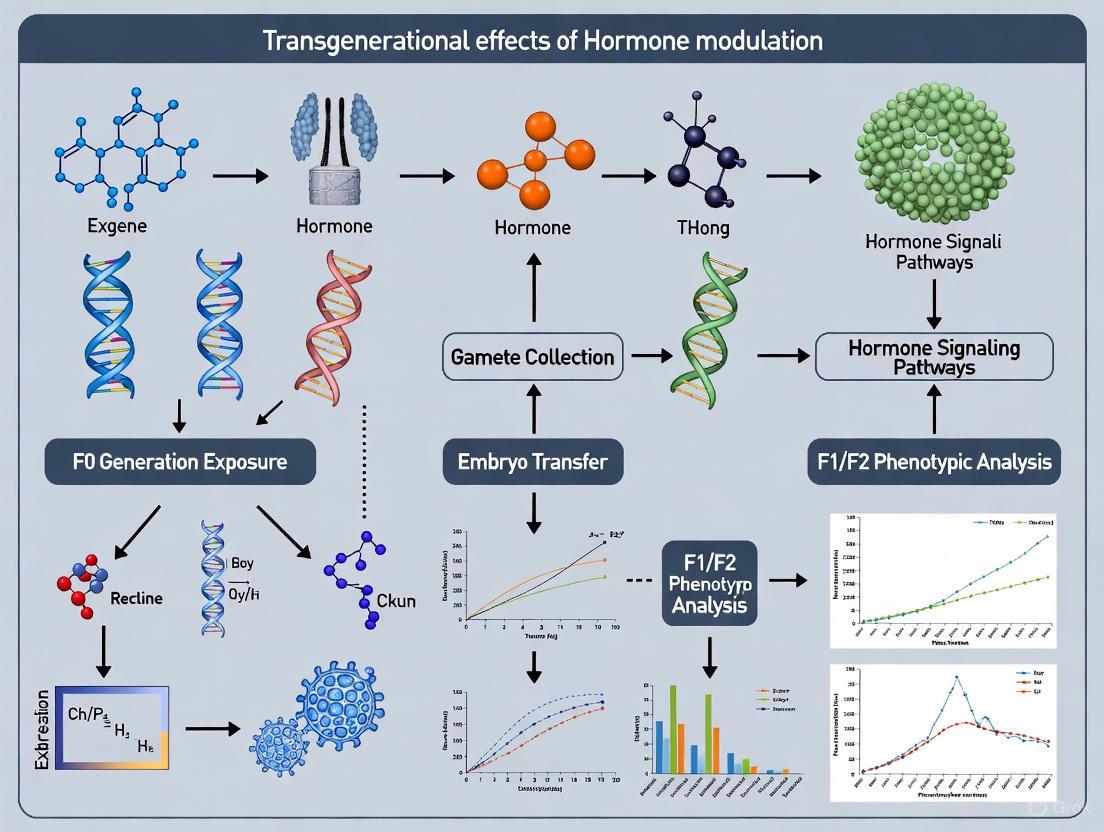
This article provides a comprehensive methodological framework for researchers and drug development professionals investigating the transgenerational inheritance of phenotypes induced by hormone-modulating agents.
Methodological Approaches for Studying Transgenerational Effects of Hormone Modulation: From Foundational Concepts to Clinical Translation
Abstract
This article provides a comprehensive methodological framework for researchers and drug development professionals investigating the transgenerational inheritance of phenotypes induced by hormone-modulating agents. We synthesize current scientific understanding, detailing robust experimental designs to distinguish true transgenerational effects from multigenerational exposures, with a focus on endocrine-disrupting chemicals (EDCs) as model compounds. The content explores cutting-edge techniques for profiling epigenetic marks in germ cells and somatic tissues, addresses critical challenges in confounder control and data interpretation in human studies, and outlines rigorous validation strategies. By integrating foundational principles with advanced applications and troubleshooting, this guide aims to equip scientists with the tools necessary to advance this complex and rapidly evolving field, with significant implications for toxicology risk assessment and precision medicine.
Core Concepts and Evidence: Establishing the Basis for Transgenerational Inheritance
The accurate differentiation between transgenerational and multigenerational inheritance is a fundamental prerequisite in developmental and toxicological research, particularly in studies investigating the heritable effects of environmental exposures such as endocrine-disrupting chemicals (EDCs). These terms are often used interchangeably in scientific literature, yet they describe fundamentally distinct biological phenomena with critical implications for experimental design and data interpretation. Multigenerational inheritance encompasses exposures that affect multiple generations simultaneously because they were directly exposed to the initial stimulus, while transgenerational inheritance requires the transmission of phenotypic or epigenetic information to generations that were never directly exposed to the original environmental insult [1] [2].
This distinction becomes particularly critical in the context of hormone modulation research, where chemicals such as bisphenol A (BPA), phthalates, and vinclozolin can induce epigenetic modifications in germ cells, potentially leading to inherited disease susceptibilities across multiple generations [2] [3]. The proper classification of these inheritance patterns directly impacts the interpretation of a compound's ability to permanently alter the germline epigenome versus causing temporary physiological effects on directly exposed tissues. Furthermore, understanding these mechanisms is essential for drug development professionals assessing the long-term safety profiles of pharmaceutical agents and their potential for inducing heritable epigenetic changes.
Table 1: Key Definitions in Inheritance Research
| Term | Definition | Key Characteristic |
|---|---|---|
| Intergenerational Effects | Effects lasting 1-2 generations; the parent's environment affects their offspring [4]. | Direct exposure of the germ cells or developing embryo to the environmental stimulus. |
| Multigenerational Effects | Effects seen in generations that were directly exposed to the original stimulus (F0, F1, and F2 in maternal exposure) [1]. | Multiple generations experience direct exposure simultaneously. |
| Transgenerational Effects | Effects observed in generations that had no direct exposure to the original stimulus (F3 and beyond in maternal exposure; F2 and beyond in paternal exposure) [4] [1]. | Transmission occurs without direct exposure, implying permanent germline modification. |
Critical Distinctions and Biological Significance
Defining the Generational Boundary
The operational definitions of transgenerational and multigenerational inheritance are intrinsically linked to the developmental timing of germ cell formation and the route of exposure. In experimental models, this distinction is primarily determined by whether the genetic material for subsequent generations was present at the time of exposure [4]. When a pregnant female (designated as the F0 generation) is exposed to an environmental stimulus, three generations are simultaneously exposed: the F0 mother herself, the F1 offspring developing in utero, and the F2 germline within the developing F1 offspring [1] [2]. Consequently, effects observed in the F0, F1, and F2 generations following maternal exposure are considered multigenerational, as all these generations experienced direct exposure.
In contrast, true transgenerational inheritance is only demonstrable in the F3 generation and beyond following maternal line exposure, as these generations were not directly exposed to the original stimulus [1]. This temporal distinction has profound implications for experimental design, as studies concluding transgenerational inheritance based solely on F2 observations in maternal exposure models are methodologically flawed. The situation differs for paternal exposures, where transgenerational effects can be observed in the F2 generation, as the only directly exposed generation is the F0 father and his F1 germ cells [2].
Evolutionary and Biological Rationale
The persistence of non-genetic inheritance across generations raises fundamental questions about its evolutionary significance and biological rationale. From an adaptive perspective, intergenerational effects (typically lasting 1-2 generations) potentially evolved to transmit crucial environmental information to immediate offspring without permanently altering the genetic code [4]. This mechanism allows organisms to respond to transient environmental challenges while maintaining genetic stability across evolutionary timescales. Examples of such adaptive responses include the development of wings in pea aphids when parents experience stress and diapause regulation in silk moths [4].
Transgenerational effects, persisting for three or more generations, may represent either a maladaptive consequence of severe environmental disruption or a mechanism for long-term adaptation. The transmission of epigenetic information beyond the F3 generation suggests that certain environmental exposures can induce relatively stable epigenetic reprogramming of the germline, potentially leading to increased disease susceptibility across multiple generations [5]. The trade-offs between adaptive plasticity and maladaptive pathology form a central focus in transgenerational epigenetics research, particularly in the context of EDC exposures [4].
Experimental Design and Methodological Considerations
Establishing a Transgenerational Inheritance Study
The demonstration of bona fide transgenerational inheritance requires meticulous experimental design with particular attention to generational tracking, proper controls, and route of exposure. The following workflow outlines the critical steps for establishing a transgenerational inheritance study:
Key Methodological Protocols
Animal Model Selection and Breeding Scheme
The selection of appropriate animal models and implementation of a rigorous breeding scheme are fundamental to transgenerational research. For mammalian studies, rodents (particularly rats and mice) are the most widely used models due to their relatively short generation times and well-characterized epigenomes. The breeding protocol must be designed to distinguish between maternal exposure and paternal exposure scenarios, as the generational boundaries for transgenerational inheritance differ between these routes [1] [2].
For maternal exposure studies, the recommended breeding scheme involves:
- F0 Generation: Expose pregnant dams during the period of gonadal sex determination in the embryos (typically E8-E14 in mice, E8-E18 in rats).
- F1 Generation: Breed exposed F1 females with unexposed control males to produce F2 offspring.
- F2 Generation: Breed F2 females with unexposed control males to produce F3 offspring.
- F3 Generation: This represents the first transgenerational generation for maternal exposure, as no direct exposure occurred [1].
For paternal exposure studies:
- F0 Generation: Expose males during spermatogenesis or prior to mating.
- F1 Generation: Breed exposed F0 males with unexposed females.
- F2 Generation: This represents the first transgenerational generation for paternal exposure, as only the F0 germline was directly exposed [2].
Throughout the breeding scheme, it is critical to maintain strict environmental controls, including temperature, light cycles, and diet, to minimize confounding variables. All breeding should be conducted using outcrossing to unexposed partners to distinguish germline transmission from other inheritance mechanisms.
Epigenetic Analysis of Germ Cells and Somatic Tissues
Comprehensive epigenetic profiling is essential for establishing mechanistic links between environmental exposures and heritable phenotypic changes. The following protocol outlines a multi-tiered approach to epigenetic analysis in transgenerational inheritance studies:
Germ Cell Isolation and Processing:
- Isolate primordial germ cells from E13.5 embryos or collect mature sperm from adult animals.
- Extract genomic DNA using gentle extraction methods to preserve epigenetic marks.
- Isect RNA for small RNA sequencing to profile miRNA, piRNA, and other non-coding RNAs.
DNA Methylation Analysis:
- Perform whole-genome bisulfite sequencing (WGBS) to assess global methylation patterns.
- Conduct reduced representation bisulfite sequencing (RRBS) for cost-effective methylation analysis of CpG-rich regions.
- Utilize pyrosequencing for validation of candidate differentially methylated regions (DMRs).
Histone Modification Profiling:
- Perform chromatin immunoprecipitation followed by sequencing (ChIP-seq) for key histone modifications (H3K4me3, H3K27me3, H3K9ac, etc.).
- Utilize low-cell number ChIP protocols (e.g., CUT&RUN, CUT&Tag) for germ cell analyses.
Data Integration and Validation:
- Integrate multi-omics datasets to identify persistently altered epigenetic regulatory regions across generations.
- Validate candidate regions using targeted epigenetic editing approaches (CRISPR-dCas9 systems).
- Correlate epigenetic changes with transcriptional changes in relevant tissues.
Table 2: Essential Research Reagents for Transgenerational Studies
| Reagent Category | Specific Examples | Research Application |
|---|---|---|
| Endocrine Disrupting Chemicals | Bisphenol A (BPA), Vinclozolin, Di-(2-ethylhexyl) phthalate (DEHP) [2] | Model compounds for inducing transgenerational effects through hormonal pathways. |
| Epigenetic Analysis Kits | Bisulfite conversion kits, ChIP-grade antibodies, DNA methyltransferase assays [1] | Detection and quantification of epigenetic modifications in germ cells and somatic tissues. |
| Germ Cell Isolation Reagents | Collagenase, Trypsin-EDTA, Fluorescence-activated cell sorting (FACS) antibodies | Isolation of pure germ cell populations for epigenetic analysis. |
| Molecular Biology Tools | Whole-genome bisulfite sequencing kits, Small RNA sequencing library prep kits [5] | Comprehensive profiling of epigenetic marks across generations. |
Molecular Mechanisms and Signaling Pathways
Epigenetic Mechanisms of Transgenerational Inheritance
The molecular basis of transgenerational inheritance involves three primary epigenetic mechanisms that can escape the widespread epigenetic reprogramming that occurs during gametogenesis and early embryogenesis. These mechanisms work in concert to maintain epigenetic information across generational boundaries:
DNA Methylation
DNA methylation represents the most extensively studied mechanism in transgenerational epigenetics. This process involves the addition of methyl groups to cytosine bases within CpG dinucleotides, typically leading to transcriptional repression when occurring in promoter regions [1]. During normal development, two major waves of epigenetic reprogramming occur: first, shortly after fertilization, and second, during primordial germ cell development [5]. These reprogramming events involve widespread erasure and reestablishment of DNA methylation patterns, with most environmentally-induced methylation changes being reset.
However, certain genomic regions can evade this reprogramming, including imprinted genes, retrotransposons, and some repetitive elements [5]. EDCs such as vinclozolin and BPA have been shown to induce altered DNA methylation patterns in sperm that persist across multiple generations, particularly in differentially methylated regions (DMRs) [3]. These transgenerationally persistent DMRs are often located in gene promoters and regulatory elements associated with diseases that manifest in subsequent generations, providing a potential mechanistic link between environmental exposures and heritable disease risk.
Histone Modifications
Histone modifications constitute another crucial epigenetic mechanism in transgenerational inheritance. Histones undergo various post-translational modifications, including methylation, acetylation, phosphorylation, and ubiquitination, which collectively regulate chromatin structure and gene accessibility [5]. These modifications can form a "histone code" that influences transcriptional states and can be maintained through cell divisions.
In the context of transgenerational inheritance, certain histone modifications have been shown to resist reprogramming during gametogenesis. For example, H3K4me3, H3K27me3, and H3K9me3 have been implicated in the transmission of epigenetic information across generations [5]. EDC exposure can alter the enzymatic machinery responsible for establishing and maintaining these histone marks, including histone methyltransferases and demethylases, leading to persistent changes in chromatin states that can be transmitted to subsequent generations [1].
Non-coding RNAs
Various classes of non-coding RNAs have emerged as important mediators of transgenerational epigenetic inheritance. This includes microRNAs (miRNAs), small interfering RNAs (siRNAs), and Piwi-interacting RNAs (piRNAs) that can regulate gene expression at the transcriptional and post-transcriptional levels [5]. These RNA species can be directly transmitted through gametes and influence embryonic development and gene expression in the resulting offspring.
In animal models, exposure to EDCs and other environmental stressors has been shown to alter the composition of small RNAs in sperm, which can mediate the transmission of acquired traits to subsequent generations [5]. The RNA-mediated pathway is particularly significant as it provides a mechanism for the rapid adaptation to environmental changes without altering DNA sequence or permanent epigenetic marks. Furthermore, non-coding RNAs can interact with other epigenetic mechanisms, such as directing DNA methylation to specific genomic loci, creating a complex regulatory network for transgenerational inheritance.
Applications in Hormone Modulation Research
Endocrine Disrupting Chemicals as Model Compounds
Endocrine disrupting chemicals serve as powerful model compounds for studying transgenerational inheritance due to their ability to interfere with hormonal signaling during critical developmental windows. Three well-characterized classes of EDCs have been particularly informative in transgenerational research:
Bisphenols: Bisphenol A (BPA) and its analogs (BPS, BPF, BPAF) are industrial chemicals used in plastics manufacturing that exhibit estrogenic activity [2]. Transgenerational studies have demonstrated that developmental exposure to BPA can induce reproductive abnormalities, metabolic disorders, and behavioral changes persisting into the F3 generation and beyond. The estimated exposure in humans ranges from 0.01 to 13 µg/kg/day for children and up to 4.2 µg/kg/day for adults, with safety levels set at 50 µg/kg/day by the US-EPA [2].
Phthalates: Di-(2-ethylhexyl) phthalate (DEHP), dibutyl phthalate (DBP), and other phthalates are widely used as plasticizers and have been associated with transgenerational inheritance of reproductive abnormalities and metabolic disorders [1] [2]. The mechanisms involve altered DNA methylation patterns in sperm and disruption of steroid hormone signaling pathways.
Vinclozolin: This fungicide used in agricultural applications has become a prototypical compound in transgenerational research due to its potent anti-androgenic effects and ability to induce transgenerational disease phenotypes [2]. Exposure during gestation has been shown to promote reproductive abnormalities, kidney disease, and tumor development across multiple generations through altered DNA methylation patterns in the germline.
Implications for Drug Development and Safety Assessment
The phenomenon of transgenerational inheritance has profound implications for pharmaceutical development and safety assessment protocols. Traditional toxicological studies typically examine direct exposure effects within a single generation, potentially missing heritable epigenetic effects that manifest in subsequent generations. Incorporating transgenerational assessment into safety evaluation protocols requires:
- Extended Generational Testing: Including F2 and F3 generations in safety assessment protocols for compounds with hormonal activity or epigenetic modifying potential.
- Germline Epigenetic Profiling: Implementing standardized epigenetic screening of sperm and oocytes from exposed animals to identify potential heritable epigenetic alterations.
- Multi-generational Phenotypic Screening: Comprehensive health assessment across multiple generations, including metabolic, reproductive, neurological, and immunological endpoints.
Furthermore, understanding transgenerational epigenetic mechanisms opens new avenues for therapeutic intervention, targeting the epigenetic machinery to prevent or reverse the inheritance of acquired disease susceptibilities. The emerging field of epi-drug development focuses on compounds that can modify epigenetic marks, potentially offering strategies to mitigate transgenerational disease risks.
The distinction between transgenerational and multigenerational inheritance represents a critical conceptual framework with significant methodological implications for research on hormonal modulation and epigenetic inheritance. Proper experimental design must account for the fundamental differences in generational exposure status, with particular attention to the minimum generational requirements for establishing true transgenerational inheritance. The molecular mechanisms involving DNA methylation, histone modifications, and non-coding RNAs provide a mechanistic basis for the transmission of environmental information across generations without altering DNA sequence.
As research in this field advances, standardized protocols and rigorous methodological approaches will be essential for distinguishing between direct exposure effects and bona fide germline epigenetic inheritance. This distinction has profound implications for understanding disease etiology, assessing chemical safety, and developing novel therapeutic strategies that address the heritable consequences of environmental exposures.
Epigenetics represents the study of heritable changes in gene function that occur without altering the underlying DNA sequence [6]. These dynamic modifications form a crucial regulatory layer that translates genetic information into cellular phenotypes, serving as a key mechanism through which environmental factors, including hormone exposure, can induce lasting biological changes. The transgenerational inheritance of epigenetic states provides a plausible molecular framework for understanding how ancestral exposures can influence offspring phenotypes [7]. For researchers investigating the transgenerational effects of hormone modulation, a comprehensive understanding of three core epigenetic mechanisms—DNA methylation, histone modifications, and non-coding RNAs—is essential for designing methodologically sound studies and accurately interpreting resulting data.
This document provides detailed application notes and experimental protocols for investigating these key epigenetic mechanisms within the specific context of transgenerational hormone research. The guidance is structured to equip scientists with practical methodologies for capturing epigenetic changes across generations, with particular emphasis on protocols suitable for analyzing limited biological samples often encountered in multi-generational studies.
DNA Methylation: Protocols and Applications
DNA methylation involves the covalent addition of a methyl group to the 5-carbon position of cytosine bases, primarily within CpG dinucleotides [8] [6]. This modification is catalyzed by DNA methyltransferases (DNMTs), with DNMT1 maintaining existing methylation patterns during DNA replication, while DNMT3A and DNMT3B establish de novo methylation patterns [9]. In mammalian systems, DNA methylation typically leads to gene silencing by altering chromatin structure and preventing transcription factor binding [6]. The reversible nature of this modification, facilitated by Ten-Eleven Translocation (TET) family enzymes that initiate demethylation, makes it a dynamic regulator of gene expression in response to environmental cues [6].
Application in Transgenerational Studies
DNA methylation analysis is particularly valuable in transgenerational hormone research because methylation patterns can be maintained through cell divisions and potentially transmitted across generations, serving as molecular footprints of ancestral exposures [7]. Studies in plant systems have demonstrated that specific genetic sequences can instruct new DNA methylation patterns, revealing a paradigm-shifting mechanism for establishing novel epigenetic states that could be transmitted to offspring [10]. In the context of hormone modulation, researchers can investigate whether parental hormone exposures establish persistent DNA methylation patterns at genes regulating endocrine function, metabolism, or stress response in subsequent generations.
Table 1: DNA Methylation Analysis Methods for Transgenerational Studies
| Method | Resolution | Throughput | Key Applications in Hormone Research | Sample Requirements |
|---|---|---|---|---|
| Whole-Genome Bisulfite Sequencing (WGBS) | Single-base | Genome-wide | Discovery of novel differentially methylated regions (DMRs) in hormone-responsive genes | High-quality DNA (>100ng) |
| Reduced Representation Bisulfite Sequencing (RRBS) | Single-base | Targeted (CpG-rich regions) | Cost-effective profiling of promoter regions in large multi-generational cohorts | DNA (50-100ng) |
| Bisulfite Pyrosequencing | Quantitative single-base | Locus-specific | Validation of candidate DMRs in hormone pathway genes | DNA (10-20ng) |
| Methylation-Sensitive High-Resolution Melting (MS-HRM) | Regional | Locus-specific | Rapid screening of hormone receptor promoter methylation | DNA (5-10ng) |
| EPIC Array | Single-CpG | Genome-wide (850,000 CpGs) | Standardized analysis of predefined regulatory elements in population studies | DNA (250-500ng) |
Detailed Protocol: RRBS for Multi-Generational Sampling
Principle: RRBS combines restriction enzyme digestion with bisulfite sequencing to enrich for CpG-dense genomic regions, providing a cost-effective approach for DNA methylation analysis in multi-generational studies [8].
Workflow:
DNA Quality Control and Quantification
- Use fluorometric methods (e.g., Qubit) for accurate DNA quantification
- Verify DNA integrity via agarose gel electrophoresis or Fragment Analyzer
- Minimum requirement: 50ng high-quality genomic DNA (A260/A280 = 1.8-2.0)
MspI Restriction Digestion
- Set up digestion reaction:
- Genomic DNA: 50-100ng
- MspI (20U/μL): 20 units
- CutSmart Buffer: 5μL
- Nuclease-free water to 50μL
- Incubate at 37°C for 8 hours followed by enzyme inactivation at 65°C for 20 minutes
- Set up digestion reaction:
End-Repair and Adenylation
- Prepare end-repair master mix:
- Klenow Fragment (3'→5' exo-): 5 units
- dNTPs (10mM each): 0.4μL
- T4 DNA Polymerase: 1 unit
- T4 Polynucleotide Kinase: 5 units
- Corresponding buffers as manufacturer recommended
- Incubate at 30°C for 30 minutes, then clean up using AMPure XP beads
- Prepare end-repair master mix:
Adapter Ligation
- Use methylated adapters compatible with bisulfite sequencing
- Ligation reaction:
- Digested DNA: 45μL
- Methylated Adapters (15μM): 2μL
- T4 DNA Ligase (400U/μL): 1.5μL
- Ligase Buffer: 5.5μL
- Incubate at 16°C for 16 hours
Bisulfite Conversion
- Use commercial bisulfite conversion kit (e.g., EZ DNA Methylation-Gold Kit)
- Convert 200ng adapter-ligated DNA following manufacturer's protocol
- Desulfonate and elute in 20μL elution buffer
Library Amplification and Size Selection
- Perform PCR amplification with bisulfite-converted DNA
- PCR conditions:
- Initial denaturation: 95°C for 2 minutes
- 12-15 cycles: 95°C for 30s, 60°C for 30s, 72°C for 45s
- Final extension: 72°C for 5 minutes
- Size-select 150-400bp fragments using AMPure XP beads
Sequencing and Data Analysis
- Sequence on Illumina platform (PE 150bp recommended)
- Align reads using Bismark or BS-Seeker2
- Perform differential methylation analysis with methylKit or DSS
Critical Considerations for Transgenerational Studies:
- Process all generational samples in the same batch to minimize technical variation
- Include both exposed and control lineages across multiple generations
- Spike-in unmethylated lambda DNA to monitor conversion efficiency
- Account for potential genetic sequence variation when interpreting methylation differences
Diagram 1: RRBS workflow for DNA methylation analysis in transgenerational studies.
Histone Modifications: Protocols and Applications
Histone modifications represent post-translational chemical modifications to histone proteins that package DNA into chromatin [9]. These modifications include acetylation, methylation, phosphorylation, and ubiquitination occurring primarily on the N-terminal tails of histones H2A, H2B, H3, and H4 [9] [11]. The combinatorial nature of these modifications forms a "histone code" that regulates chromatin accessibility and gene expression [6]. For example, histone acetylation generally promotes an open chromatin state and gene activation, while specific methylation patterns can either activate or repress transcription depending on the modified residue and methylation state [11]. These modifications are dynamically regulated by opposing enzyme families: histone acetyltransferases (HATs) versus histone deacetylases (HDACs), and histone methyltransferases (HMTs) versus histone demethylases (KDMs) [6].
Application in Transgenerational Studies
Histone modifications are increasingly recognized as potential carriers of transgenerational epigenetic information, though their mechanisms of transmission are less well characterized than DNA methylation [11]. In the context of hormone modulation research, histone modifications offer insights into the chromatin states that potentially maintain gene expression programs across generations. For example, parental hormone exposures might establish persistent H3K4me3 (activating) or H3K27me3 (repressive) marks at genes involved in hormone synthesis, metabolism, or signaling that are transmitted to offspring. Studies in model organisms suggest that certain histone modifications can survive the extensive epigenetic reprogramming that occurs during gametogenesis and early embryogenesis, positioning them as potential transgenerational epigenetic carriers.
Table 2: Histone Modification Analysis Methods for Transgenerational Studies
| Method | Target | Resolution | Information Output | Sample Requirements |
|---|---|---|---|---|
| ChIP-Seq | Genome-wide histone marks | 200-500bp | Binding sites and enrichment peaks | 1-10 million cells per immunoprecipitation |
| CUT&Tag | Genome-wide histone marks | Single-nucleosome | Mapping with lower cell input | 50,000-500,000 cells |
| ChIP-qPCR | Candidate loci | Locus-specific | Quantitative enrichment at specific regions | 0.5-1 million cells |
| Histone Modification Immunoblotting | Global levels | Protein-level | Abundance of specific modifications | 50-100μg total protein |
| Immunofluorescence | Nuclear localization | Single-cell | Spatial distribution and cell-to-cell variation | Fixed cells on coverslips |
Detailed Protocol: Low-Input CUT&Tag for Histone Modification Profiling
Principle: Cleavage Under Targets and Tagmentation (CUT&Tag) uses a protein A-Tn5 transposase fusion protein targeted to specific histone modifications by antibodies, enabling efficient tagmentation and library construction with low cell inputs—particularly valuable for transgenerational studies where sample material may be limited.
Workflow:
Cell Preparation and Permeabilization
- Isolate nuclei from tissue (e.g., hypothalamic regions, gonads) of F1-F3 generation offspring
- Wash cells with Wash Buffer (20mM HEPES pH 7.5, 150mM NaCl, 0.5mM Spermidine, 1× protease inhibitors)
- Resuspend 50,000-100,000 cells in 50μL Wash Buffer
- Add activated Concanavalin A-coated magnetic beads (10μL per sample) and incubate 15 minutes at room temperature
Antibody Binding
- Prepare primary antibody solution in Antibody Buffer (Wash Buffer + 0.01% Digitonin + 2mM EDTA):
- Anti-histone antibody (e.g., H3K4me3, H3K27me3): 1-2μg
- Species-matched non-specific IgG as control
- Incubate with beads-bound cells overnight at 4°C
- Prepare primary antibody solution in Antibody Buffer (Wash Buffer + 0.01% Digitonin + 2mM EDTA):
pA-Tn5 Adapter Complex Binding
- Prepare pA-Tn5 adapter complex by incubating protein A-Tn5 transposase (2.5μM) with assembled mosaic end adapters (10μM) for 30 minutes at room temperature
- Wash cells twice with 200μL Dig-Wash Buffer (Wash Buffer + 0.01% Digitonin)
- Resuspend in 50μL Dig-Wash Buffer containing 1:100 dilution of pA-Tn5 adapter complex
- Incubate for 1 hour at room temperature
Tagmentation
- Wash cells twice with 200μL Dig-Mg Buffer (Dig-Wash Buffer + 10mM MgCl₂)
- Resuspend in 50μL Dig-Mg Buffer
- Incubate at 37°C for 1 hour
- Stop tagmentation by adding 2.5μL 0.5M EDTA, 1.25μL 10% SDS, and 1.25μL 20mg/mL Proteinase K
- Incubate at 55°C for 30 minutes to digest proteins
DNA Purification and Library Amplification
- Extract DNA with phenol:chloroform:isoamyl alcohol (25:24:1)
- Precipitate with ethanol and glycogen carrier
- Resuspend in 21μL TE buffer
- Prepare PCR reaction:
- DNA: 20μL
- Universal i5 and i7 primers (15μM each): 2.5μL each
- 2× NEB Next High-Fidelity PCR Master Mix: 25μL
- Amplify with cycling conditions:
- 72°C for 5 minutes
- 98°C for 30 seconds
- 13-16 cycles: 98°C for 10s, 63°C for 10s, 72°C for 30s
Library Purification and Sequencing
- Clean up with AMPure XP beads (1.2× ratio)
- Quality control via Bioanalyzer/TapeStation
- Sequence on Illumina platform (SE 50bp sufficient for most applications)
Critical Considerations for Transgenerational Studies:
- Use the same antibody lot for all generational samples to ensure consistency
- Include biological replicates from multiple litters within each generation
- Process control and experimental lineages simultaneously
- Validate key findings with orthogonal methods (e.g., ChIP-qPCR)
Diagram 2: Hormonal regulation of gene expression through histone modifications.
Non-Coding RNAs: Protocols and Applications
Non-coding RNAs (ncRNAs) represent a diverse class of functional RNA molecules that do not encode proteins but play crucial regulatory roles in gene expression [12] [13]. These include microRNAs (miRNAs, ~22 nucleotides), long non-coding RNAs (lncRNAs, >200 nucleotides), circular RNAs (circRNAs), and others [9] [12]. These regulatory RNAs operate through diverse mechanisms: miRNAs typically bind to target mRNAs to induce degradation or translational repression [13]; lncRNAs can interact with chromatin-modifying complexes to influence epigenetic states [12]; while circRNAs can function as miRNA sponges or protein scaffolds [12]. A specialized subclass termed "epi-miRNAs" can directly target epigenetic regulators like DNMTs, HDACs, and TETs, creating integrated feedback loops between the different epigenetic layers [13].
Application in Transgenerational Studies
ncRNAs are emerging as promising candidates for mediating transgenerational epigenetic inheritance of hormone-induced phenotypes [12]. Gametes (sperm and oocytes) carry diverse ncRNA populations that can potentially transmit information to the next generation. In hormone modulation research, investigators can examine whether parental hormone exposures alter ncRNA profiles in gametes and whether these altered ncRNA signatures are associated with phenotypic outcomes in offspring. For example, changes in sperm miRNA content following parental hormone disruption might program metabolic or reproductive traits in subsequent generations. The stability of certain ncRNAs, particularly circRNAs, makes them particularly interesting as potential durable signals that could survive the epigenetic reprogramming between generations.
Table 3: Non-Coding RNA Analysis Methods for Transgenerational Studies
| Method | Target RNA Class | Throughput | Key Applications | Sample Requirements |
|---|---|---|---|---|
| Small RNA-Seq | miRNAs, piRNAs, tRNA fragments | Genome-wide | Profiling of small RNA populations in gametes and embryos | Total RNA (100ng-1μg) |
| Total RNA-Seq | lncRNAs, circRNAs, mRNAs | Genome-wide | Transcriptome-wide analysis of coding and non-coding RNAs | Total RNA (100ng-1μg) |
| RT-qPCR | Specific miRNAs/lncRNAs | Targeted | Validation of candidate ncRNAs | Total RNA (10-100ng) |
| Nanostring nCounter | Predefined ncRNA panels | Multiplexed | Targeted analysis without amplification bias | Total RNA (100-300ng) |
| CircRNA-Specific RNA-Seq | Circular RNAs | Genome-wide | Enrichment and identification of circRNAs | Total RNA (1-2μg) |
Detailed Protocol: Small RNA Sequencing from Limited Samples
Principle: Small RNA sequencing specifically enriches for and sequences RNAs in the 18-40 nucleotide size range, enabling comprehensive profiling of miRNAs and other small regulatory RNAs that may serve as transgenerational signals following hormone exposure.
Workflow:
RNA Extraction and Quality Control
- Extract total RNA using miRNeasy Mini Kit or equivalent
- Include phase separation to recover small RNAs
- Assess RNA quality using Bioanalyzer RNA Nano or Small RNA Kit
- Minimum requirement: 100ng total RNA with RIN >7.0
3' Adapter Ligation
- Prepare 3' adapter ligation reaction:
- Total RNA: 100ng
- 3' SR Adaptor (25μM): 1μL
- T4 RNA Ligase 2, truncated (200U/μL): 1μL
- PEG 8000 (50%): 6μL
- RNase Inhibitor (40U/μL): 0.5μL
- T4 RNA Ligase Buffer: 1μL
- Incubate at 25°C for 1 hour
- Prepare 3' adapter ligation reaction:
5' Adapter Ligation
- Purify ligation products using RNA Clean XP beads (1.8× ratio)
- Prepare 5' adapter ligation reaction:
- 3' ligated RNA: 12.5μL
- 5' SR Adaptor (25μM): 1μL
- T4 RNA Ligase (30U/μL): 1μL
- PEG 8000 (50%): 6μL
- ATP (10mM): 1μL
- DMSO: 1μL
- RNase Inhibitor (40U/μL): 0.5μL
- T4 RNA Ligase Buffer: 1μL
- Incubate at 25°C for 1 hour
Reverse Transcription and PCR Amplification
- Purify ligation products with RNA Clean XP beads (1.8× ratio)
- Perform reverse transcription with RT primer
- Set up PCR reaction:
- cDNA: 10μL
- Universal Reverse Primer (25μM): 1μL
- Indexed Forward Primer (25μM): 1μL
- 2× KAPA HiFi HotStart ReadyMix: 13μL
- Amplify with cycling conditions:
- 98°C for 45 seconds
- 10-12 cycles: 98°C for 15s, 60°C for 30s, 72°C for 30s
- Final extension: 72°C for 1 minute
Size Selection and Library Quality Control
- Run PCR products on 6% TBE PAGE gel
- Excise bands corresponding to 145-160bp (miRNA insert + adapters)
- Crush gel slice and elute in 300μL 0.3M NaCl overnight at 4°C
- Precipitate with ethanol and resuspend in 15μL TE buffer
- Validate library quality using Bioanalyzer High Sensitivity DNA kit
Sequencing and Data Analysis
- Sequence on Illumina platform (SE 50bp recommended)
- Process raw data: adapter trimming, quality filtering
- Align to reference genome using Bowtie or STAR
- Quantify miRNAs with miRDeep2 or similar tools
- Identify differentially expressed miRNAs with DESeq2 or edgeR
Critical Considerations for Transgenerational Studies:
- Process all generational samples simultaneously to minimize batch effects
- Include external RNA controls (e.g., ERCC RNA Spike-In Mix) for normalization
- For sperm RNA analyses, include DNase treatment to remove contaminating DNA
- Validate key miRNA changes with RT-qPCR using specific stem-loop primers
Diagram 3: Non-coding RNA mechanisms in epigenetic regulation.
The Scientist's Toolkit: Essential Research Reagents
Table 4: Essential Research Reagents for Epigenetic Studies in Transgenerational Hormone Research
| Reagent Category | Specific Examples | Primary Function | Application Notes |
|---|---|---|---|
| DNA Methylation Inhibitors | 5-Azacytidine, Decitabine | DNMT inhibition; DNA hypomethylation | Confirm demethylation with locus-specific analyses; use at low concentrations (0.1-5μM) to avoid toxicity |
| HDAC Inhibitors | Vorinostat, Trichostatin A | Pan-HDAC inhibition; histone hyperacetylation | Assess acetylation changes via immunoblotting; monitor cell viability as high concentrations induce apoptosis |
| HAT Inhibitors | Garcinol, C646 | HAT inhibition; reduced histone acetylation | Validate specificity with multiple HAT family members; use chromatin-bound fraction for activity assays |
| Bromodomain Inhibitors | JQ1, I-BET762 | Reader domain inhibition; disrupts recognition of acetylated histones | Effective in cancer and inflammation models; assess BET protein displacement with cellular localization assays |
| EZH2 Inhibitors | GSK126, Tazemetostat | H3K27me3 inhibition; reactivation of silenced genes | Verify target engagement via H3K27me3 reduction; combination approaches often needed for full effect |
| DNMT Antibodies | Anti-5-methylcytosine, Anti-DNMT1 | Detection of global methylation, enzyme localization | Optimize for specific applications (IHC, WB, IF); validate with positive and negative controls |
| Histone Modification Antibodies | Anti-H3K4me3, Anti-H3K27me3, Anti-H3K9ac | Chromatin immunoprecipitation, immunoblotting | Verify specificity with peptide competition; use ChIP-grade validated antibodies for sequencing applications |
| Bisulfite Conversion Kits | EZ DNA Methylation series | Convert unmethylated cytosine to uracil | Include unmethylated and methylated DNA controls; optimize conversion time to balance completeness and DNA damage |
| Small RNA Library Prep Kits | NEBNext Small RNA Library | Construction of sequencing libraries from small RNAs | Include size selection steps to enrich for specific RNA classes; use unique molecular identifiers to reduce amplification bias |
Integrated Experimental Design for Transgenerational Epigenetic Studies
Successful investigation of transgenerational epigenetic effects requires careful experimental design that accounts for the unique challenges of multi-generational research. Below is a recommended framework for designing studies examining the transgenerational effects of hormone modulation:
Generational Cohort Establishment:
- F0 Generation: Expose during critical developmental windows (e.g., gestation, puberty)
- F1 Generation: Direct fetal exposure (if F0 exposed during pregnancy)
- F2 Generation: First potentially transgenerational cohort (germline exposure only)
- F3 Generation: Definitive transgenerational cohort (no direct exposure)
Tissue Collection Strategy:
- Collect multiple tissues relevant to hormone signaling (hypothalamus, pituitary, gonads, liver)
- Preserve tissues for multiple genomic analyses (flash freeze for RNA/DNA, fix for histology)
- Bank gametes (sperm, oocytes) for germline-focused epigenetic analyses
- Consider temporal sampling across development in offspring generations
Control Groups:
- Vehicle-treated controls maintained under identical conditions
- Outbred strains to capture genetic diversity relevant to human populations
- Consider including positive control compounds with known transgenerational effects
Integrated Multi-Omic Analysis:
- Process samples for DNA methylation (RRBS/WGBS), histone modifications (CUT&Tag), and ncRNA profiling (small RNA-seq) in parallel
- Apply consistent bioinformatic pipelines across all generational cohorts
- Integrate datasets to identify coordinated epigenetic changes across modalities
This integrated approach enables researchers to capture the complexity of transgenerational epigenetic inheritance and determine whether hormone exposures establish stable epigenetic memories that persist across multiple generations through combined alterations in DNA methylation, histone modifications, and non-coding RNA regulation.
Endocrine-disrupting chemicals (EDCs) are exogenous substances that interfere with the normal function of the body's hormonal systems [14]. The study of EDCs such as vinclozolin, bisphenol A (BPA), and phthalates using animal models has provided critical insights into their mechanisms of action, transgenerational effects, and broader health implications. This document synthesizes key methodological approaches and findings from animal studies investigating these compounds, with particular focus on experimental design, molecular pathways, and epigenetic mechanisms relevant to researchers studying transgenerational effects of hormone modulation.
Table 1: Comparative Summary of EDC Effects in Animal Models
| EDC | Typical Doses in Animal Studies | Primary Exposure Routes | Key Organ Effects | Molecular Pathways |
|---|---|---|---|---|
| Vinclozolin | 100-200 mg/kg/day [15] [14] | Oral administration [15] | Lung: inflammation, fibrosis, collagen deposition [15]; Vascular: endothelial dysfunction [16]; Reproductive: anti-androgenic effects [15] | Oxidative stress, Nf-kb pathway activation, Nrf-2/HO-1 suppression, apoptosis [15] |
| Bisphenol A (BPA) | 0.5-50 μg/kg/day [14] [17] | Food, water, dermal [17] | Ovarian: reduced follicular growth, PCOS-like symptoms [17]; Testicular: altered spermatogenesis [17]; Brain: altered development [18] | Estrogen receptor binding, steroidogenesis disruption, epigenetic modifications [17] |
| Phthalates (e.g., DEHP, DBP) | 20-750 mg/kg/day [19] [14] | Food, inhalation, dermal [19] | Reproductive: testicular atrophy, reduced sperm count [19]; Developmental: malformations, reduced weight [19]; Placental: altered gene methylation [20] | Androgen receptor antagonism, PPAR activation, oxidative stress, DNA methylation changes [19] [20] |
Table 2: Transgenerational Inheritance Patterns of EDC Effects
| Exposure Scenario | Directly Exposed Generations | First Unexposed Generation | Key Epigenetic Mechanisms | Representative Findings |
|---|---|---|---|---|
| Pregnant F0 female exposed | F0 (mother), F1 (in utero), F2 (germ cells) [14] | F3 [14] | DNA methylation, histone modifications, non-coding RNAs [14] | Vinclozolin: F3 ovarian disease, sperm defects [14]; Phthalate mixture: F3 ovarian follicle reduction [14] |
| F0 male or non-pregnant female exposed | F0 (exposed individual), F1 (germ cells) [14] | F2 [14] | Germline epigenetic alterations [14] | Vinclozolin: F2-F3 testicular and prostate abnormalities [14]; BPA: F2 behavioral changes [21] |
Experimental Protocols for EDC Research
Protocol: 28-Day Oral Vinclozolin Exposure and Lung Toxicity Assessment
Background: This protocol assesses the effects of chronic vinclozolin exposure on non-reproductive organs, specifically lung tissue, in murine models [15].
Materials:
- Experimental animals (e.g., C57BL/6 mice)
- Vinclozolin ((RS)-3-(3,5-Dichlorophenyl)-5-methyl-5-vinyloxazolidine-2,4-dione)
- Corn oil vehicle
- Tissue collection supplies (dissection tools, cryovials, etc.)
- Western blot equipment and reagents
- ELISA kits for ROS, H2O2, RNS, and interleukins
- Histology supplies (fixatives, stains including Masson's trichrome)
- TUNEL assay kit for apoptosis detection
Procedure:
- Preparation of Test Substance: Prepare vinclozolin at 100 mg/kg in corn oil vehicle. Maintain fresh aliquots for daily administration [15].
- Animal Dosing: Administer vinclozolin solution orally to experimental group daily for 28 days. Control groups receive corn oil vehicle only [15].
- Tissue Collection: Euthanize animals 24 hours after final dose. Collect lung tissues and separate into aliquots for (a) histology (fixed in formalin), (b) protein analysis (flash frozen), and (c) molecular analysis (flash frozen) [15].
- Histological Analysis: Process fixed tissues, embed in paraffin, section at 5μm, and stain with H&E for general morphology and Masson's trichrome for collagen deposition. Score inflammatory infiltrates and fibrotic lesions [15].
- Molecular Analysis:
- Perform Western blotting for Nf-kb pathway proteins (Ikb-α degradation, Nf-kb nuclear translocation) and Nrf-2/HO-1 pathway [15].
- Conduct ELISA assays for ROS, H2O2, RNS, and cytokines (IL-1β, IL-18, IL-6, IL-10, IL-4) according to manufacturer protocols [15].
- Assess antioxidant enzymes (SOD, GPx, CAT) activity using commercial assay kits [15].
- Apoptosis Assessment: Perform TUNEL assay on lung sections and Western blotting for Bax/Bcl-2 ratio to quantify apoptotic changes [15].
- Data Analysis: Compare experimental and control groups using appropriate statistical tests (e.g., t-tests, ANOVA with post-hoc analysis).
Protocol: Transgenerational EDC Exposure Model
Background: This protocol outlines methods for studying multigenerational and transgenerational inheritance of EDC effects through germline epigenetic modifications [14].
Materials:
- Gestating F0 females (rats or mice)
- EDCs of interest (vinclozolin, BPA, phthalates, or mixtures)
- Breeding supplies (cages, pedigree tracking system)
- Tissue collection supplies for multiple generations
- Epigenetic analysis equipment (bisulfite conversion reagents, methylation arrays, sequencing platforms)
Procedure:
- F0 Generation Exposure: Expose gestating F0 females to EDCs during critical periods of germline development (e.g., E8-E14 in rats) [14].
- Generational Breeding:
- Breed exposed F1 offspring to unexposed control animals to produce F2 generation.
- Breed F2 animals to produce F3 generation (first potentially transgenerational generation) [14].
- Continue to F4 and beyond to confirm true transgenerational inheritance.
- Tissue Collection and Phenotyping: At each generation, collect relevant tissues for:
- Reproductive organs (testes, ovaries) for histological analysis
- Sperm and oocytes for epigenetic analysis
- Blood for hormone level assessment
- Other organs based on suspected effects (e.g., lung, kidney, brain) [14]
- Epigenetic Analysis:
- Extract DNA from germ cells and target tissues
- Perform genome-wide DNA methylation analysis (e.g., Illumina MethylationEPIC array)
- Validate candidate differentially methylated regions with bisulfite sequencing
- Analyze histone modifications via ChIP-seq where appropriate
- Assess non-coding RNA expression profiles [14]
- Data Integration: Correlate epigenetic modifications with phenotypic outcomes across generations using bioinformatic approaches.
Signaling Pathways and Molecular Mechanisms
Vinclozolin-Induced Oxidative Stress and Apoptosis Pathway
Figure 1: Vinclozolin-induced cellular stress pathway. Vinclozolin exposure triggers reactive oxygen species (ROS) generation, leading to oxidative stress that simultaneously activates pro-inflammatory Nf-kb signaling while suppressing protective Nrf-2 pathways, ultimately resulting in cellular apoptosis [15].
Transgenerational Epigenetic Inheritance Mechanism
Figure 2: Transgenerational epigenetic inheritance. When F0 generation is exposed to EDCs during critical windows of germ cell development, epigenetic modifications become programmed in the germline and can be transmitted through multiple generations, resulting in phenotypic changes even in unexposed F3 individuals [14].
The Scientist's Toolkit: Essential Research Reagents
Table 3: Key Research Reagents for EDC Studies
| Reagent/Category | Specific Examples | Research Application | Function in EDC Studies |
|---|---|---|---|
| EDC Compounds | Vinclozolin, Bisphenol A, DEHP, DBP [15] [19] [17] | In vivo exposure studies | Direct test substances for evaluating endocrine disruption effects |
| Vehicle Substances | Corn oil, Dimethyl sulfoxide (DMSO) [15] [16] | Solubilization and administration of EDCs | Enable proper delivery of lipophilic EDCs in animal models |
| Molecular Biology Kits | ELISA kits (ROS, H2O2, RNS, cytokines) [15], Western blot reagents [15] | Oxidative stress and inflammation assessment | Quantify molecular responses to EDC exposure |
| Epigenetic Analysis Tools | Illumina Methylation BeadChips [20], Bisulfite conversion kits [20] | DNA methylation profiling | Identify epigenetic modifications associated with EDC exposure |
| Histology Supplies | Masson's trichrome stain [15], H&E stain [15], TUNEL assay kits [15] | Tissue morphology and apoptosis detection | Visualize structural and cellular changes in target organs |
| Antibodies | Anti-Bax, Anti-Bcl-2, Anti-Nf-kb, Anti-Ikb-α [15] | Protein expression analysis by Western blot/IHC | Detect expression changes in apoptosis and inflammation pathways |
Animal model studies of EDCs such as vinclozolin, BPA, and phthalates have established robust methodological approaches for investigating the transgenerational effects of hormone modulation. The protocols and data summarized here provide a framework for designing studies that can elucidate the complex mechanisms through which environmental exposures program biological changes across generations. Future research in this field should prioritize standardized exposure protocols, integrated multi-omics approaches, and careful consideration of dose-response relationships relevant to human exposure levels.
Understanding the windows of susceptibility during germ cell reprogramming is fundamental for hormone modulation research. Primordial Germ Cells (PGCs), the progenitors of sperm and eggs, undergo two major waves of genome-wide epigenetic reprogramming in mammals, making them critically susceptible to environmental exposures, including endocrine-disrupting chemicals (EDCs) and nutritional factors [22] [23]. During these periods, the elaborate orchestration of DNA methylation erasure, re-establishment, and histone modification is vulnerable to disruption. Such disruptions can alter the germline's epigenetic blueprint, leading to molecular changes that are stably transmitted across generations, a phenomenon known as transgenerational epigenetic inheritance [2] [24] [25]. This application note details the key methodologies for identifying these susceptible windows and for investigating the consequent transgenerational effects of hormone-modulating compounds.
Key Experimental Models and Readouts for Germline Studies
Selecting an appropriate model system is a primary methodological consideration. The following table summarizes the principal models used in germ cell reprogramming studies, their applications, and the key phenotypic readouts measured to assess transgenerational effects.
Table 1: Experimental Models for Studying Windows of Susceptibility in Transgenerational Research
| Experimental Model | Key Applications and Features | Primary Transgenerational Readouts |
|---|---|---|
| Mouse Model [23] | Gold standard for mammalian PGC studies; enables precise genetic and epigenetic manipulation; well-characterized PGC specification and migration. | Altered DNA methylation in F2/F3 PGCs; changes in histone modifications (H3K27me3, H3K9me2); offspring metabolic profiles, brain development, and behavior [2] [24]. |
| Chicken Embryo/PGC Model [22] | Allows precise temporal control over exposures without maternal confounding effects; liver is primary site of lipogenesis (90%), useful for metabolic studies; unique PGC epigenome without global DNA demethylation. | Sperm DNA methylation (5mC, 6mA) and non-coding RNA (miRNA, lncRNA) alterations; offspring growth, hepatic lipogenesis, and lipid/glucose metabolism profiles [22]. |
| Human Fetal Germ Cells (FGCs) [26] | Direct translation to human health; studied via in vitro culture systems; provides single-cell resolution epigenomic data. | Phase-specific chromatin accessibility; DNA methylation dynamics at imprinting control regions (ICRs) and retrotransposons (e.g., SVA, LINE-1); response of FGCs to BMP signaling pathway manipulation. |
| Zebrafish [27] | High fecundity, external development, transparency; excellent for high-throughput screening of EDCs; used to study parental (F0) social stress effects. | Offspring growth performance, feeding behavior, intestinal health, and gene expression patterns related to stress and inflammation [27]. |
Core Protocol: Profiling Epigenetic Susceptibility in Mammalian Germ Cells
This protocol outlines the procedure for assessing the impact of an exposure during the critical window of germ cell reprogramming in a mouse model, with a focus on downstream DNA methylation analysis.
Materials and Reagents
- Pregnant Mice: F0 generation, at specified gestational days (e.g., E8.5 for early PGC specification, E13.5 for gonadal PGCs).
- Test Compound: Hormone modulator or EDC (e.g., Bisphenol A, Vinclozolin) dissolved in appropriate vehicle.
- PGC Isolation Reagents: Collagenase/Dispase solution, FACS antibodies (e.g., anti-MVH, anti-SSEA1).
- DNA/RNA Extraction Kits: High-quality kits for low cell numbers (e.g., from Qiagen or Zymo Research).
- Bisulfite Conversion Kit: (e.g., EZ DNA Methylation-Lightning Kit, Zymo Research).
- Library Prep Kits: For Whole-Genome Bisulfite Sequencing (WGBS) or Reduced Representation Bisulfite Sequencing (RRBS).
- scBS-seq/scCOOL-seq Reagents: As described in [26].
Step-by-Step Procedure
In Uero Exposure (F0 Generation):
- Time the mating of F0 mice to achieve precise gestational dates.
- Administer the test compound or vehicle control to pregnant dams via oral gavage or subcutaneous injection during the target window (e.g., E10.5-E12.5, covering peak PGC demethylation).
- Maintain a control group exposed to vehicle only.
Isolation of Fetal Gonads and PGC Sorting (F1 Generation):
- At E13.5, euthanize the pregnant dam and dissect the embryos. Collect the fetal gonads under a stereomicroscope.
- Digest the gonadal tissue using a collagenase-based enzyme mix to create a single-cell suspension.
- Stain the cells with fluorescently-labeled antibodies against PGC-specific surface markers (e.g., MVH, SSEA1).
- Isulate a pure population of PGCs using Fluorescence-Activated Cell Sorting (FACS). A portion of gonadal somatic cells should also be sorted as a control.
DNA Extraction and Bisulfite Conversion:
- Extract genomic DNA from the sorted F1 PGCs using a kit designed for low input.
- Treat the DNA with a bisulfite conversion kit according to the manufacturer's instructions. This process converts unmethylated cytosines to uracils, while methylated cytosines remain as cytosines.
Library Preparation and Sequencing:
- Prepare sequencing libraries from the bisulfite-converted DNA. For genome-wide coverage, use WGBS. For a more cost-effective analysis targeting CpG-rich regions, use RRBS.
- Perform high-throughput sequencing on an Illumina platform to a recommended depth of >20x coverage for WGBS.
Bioinformatic and Statistical Analysis:
- Align the sequenced reads to a bisulfite-converted reference genome using tools like
BismarkorBS-Seeker2. - Calculate methylation levels for each cytosine in the genome. Identify Differentially Methylated Regions (DMRs) between exposed and control PGCs using tools like
DSSormethylKit. - Annotate DMRs to genomic features (promoters, enhancers, gene bodies, transposable elements) and perform pathway enrichment analysis.
- Align the sequenced reads to a bisulfite-converted reference genome using tools like
Transgenerational Phenotyping (F2 and F3 Generations):
- Breed the exposed F1 generation to unexposed, wild-type partners to generate F2 offspring.
- The F2 germline carries the potential epigenetic alterations. Breed F2 individuals to generate F3 offspring, which is the first generation considered truly transgenerationally exposed if the F0 mother was exposed [2].
- In F2 and F3 adults, assess phenotypic endpoints relevant to the exposure, such as metabolic parameters (body weight, glucose tolerance), behavioral tests (anxiety, cognition), and reproductive function. Analyze PGCs/gametes from F2 for persistent epigenetic marks.
The Scientist's Toolkit: Essential Research Reagents
Table 2: Key Research Reagent Solutions for Germ Cell and Transgenerational Studies
| Reagent / Solution | Function and Application | Example Use-Case |
|---|---|---|
| LDN-193189 2HCl [26] | A selective BMP signaling pathway inhibitor; used to dissect the role of BMP signaling in germ cell development in vitro. | Culturing human FGCs to investigate how BMP signaling regulates proliferation and the WNT pathway via chromatin accessibility. |
| 5-Azacytidine (5-azaC) [28] | A DNA methyltransferase inhibitor; induces global DNA demethylation. Used to study the functional consequences of hypomethylation. | Treatment of plants or cell cultures to investigate the relationship between DNA methylation, hormone biosynthesis (ABA, auxin), and stress responses. |
| FACS Antibodies (e.g., anti-C-KIT, anti-MVH, anti-IL13RA2, anti-PECAM1) [26] | Enable isolation of pure populations of specific PGC phases (mitotic, meiotic, oogenetic) via fluorescence-activated cell sorting. | Isolation of phase-specific human FGCs (e.g., IL13RA2+ meiotic prophase FGCs) for single-cell epigenomic profiling. |
| DNMT & TET Enzyme Assays [23] [25] | Quantify the activity of DNA methyltransferases (DNMT1, DNMT3A/B) and Ten-eleven translocation (TET) demethylases. | Profiling the enzymatic drivers of epigenetic reprogramming in germ cells following EDC exposure. |
| In Ovo Injection Setup [22] | A method for the precise delivery of nutrients, chemicals, or nucleic acids into chicken embryos, bypassing maternal effects. | Studying the effects of methyl donors (e.g., folic acid) or metabolic disruptors on the epigenetic state of chicken PGCs and subsequent offspring phenotype. |
Visualizing Signaling and Epigenetic Crosstalk in Germ Cells
The following diagram illustrates the key signaling pathways and epigenetic mechanisms that are active during germ cell reprogramming and are susceptible to disruption.
Figure 1: Signaling and Epigenetic Crosstalk in Germ Cells. This diagram outlines the core mechanism where external modulators like EDCs and nutrition disrupt key signaling pathways (BMP, WNT, Retinoic Acid) during critical windows of germ cell development. This disruption leads to alterations in the epigenetic machinery (DNA methylation, histone modifications, non-coding RNA), which can result in a permanently altered germline epigenome. When these modified germ cells form the next generation, they can give rise to transgenerational phenotypes in the F2 and F3 generations, even in the absence of direct exposure [22] [26] [25].
The investigation of transgenerational effects—where exposures in one generation (F0) lead to phenotypic changes in subsequent, unexposed generations (F2 and beyond)—represents a frontier in environmental and reproductive health research. Within this field, a central controversy persists, particularly in human studies: the challenge of reconciling associative epidemiological findings with definitive mechanistic proof. This application note examines this methodological divide, framing the issue within the context of hormone modulation research. For researchers and drug development professionals, this document provides a structured analysis of the current evidence, summarizes quantitative data, and offers detailed protocols to bridge the gap between population-level observations and molecular-level understanding, with a focus on epigenetic mechanisms as a primary mediator of these effects.
The Evidentiary Divide: Epidemiology vs. Mechanism
The evidence for transgenerational inheritance in humans is assessed through two distinct, yet complementary, methodological approaches. The table below summarizes the core strengths and limitations of each.
Table 1: Comparing Epidemiological and Mechanistic Approaches to Transgenerational Research
| Aspect | Epidemiological Findings (Human Populations) | Mechanistic Proof (Model Organisms) |
|---|---|---|
| Core Evidence | Associative links between ancestral exposures and offspring health outcomes [29] [30] | Direct, causal demonstrations of phenotype transmission and underlying molecular pathways [31] [32] [33] |
| Key Strengths | High human relevance; reflects real-world exposure complexities; can identify novel associations [30] | Controlled environment; establishes causality; enables tissue-specific molecular dissection [31] [32] |
| Major Limitations | Inability to control confounding variables; practical challenges of multi-decade studies; cannot prove causality [30] | Uncertain translatability to humans; often uses supraphysiological exposure doses [29] [30] |
| Primary Data Outputs | Odds ratios, hazard ratios, correlation coefficients | Differentially expressed genes (DEGs), differentially methylated regions (DMRs), and phenotypic measures (e.g., hormone levels, follicle counts) [31] [32] |
A critical analysis of the current literature reveals a clear pattern: while compelling mechanistic proof is accumulating from animal models, direct evidence in humans remains largely epidemiological. For instance, animal studies provide direct evidence that exposure to substances like propylparaben or PM2.5 can induce reproductive abnormalities that persist transgenerationally via identified epigenetic marks [32] [33]. In contrast, human studies often document associations between, for example, EED exposure and declining sperm quality, but cannot definitively establish a transgenerational causal link, highlighting the "black box" of human research [30].
Quantitative Data from Model Organisms
Well-controlled animal studies provide the quantitative foundation for mechanistic claims. The following table synthesizes key quantitative findings from recent transgenerational studies, highlighting the specific exposures, models, and robust molecular changes observed.
Table 2: Summary of Quantitative Findings from Key Transgenerational Studies
| Study Model | F0 Exposure | Transgenerational Phenotype in Unexposed Offspring (F2-F3) | Key Molecular Changes (vs. Control) |
|---|---|---|---|
| Green-legged Partridgelike Chickens [31] | Synbiotic & Choline (in ovo) | N/A (Molecular endpoints in gonads) | F3 SYNCHs group: 1,897 DEGs, 786 DMRs.F3 SYNCHr group: 2,804 DEGs, 2,880 DMRs. |
| Mouse (Ovarian Reserve) [32] | Propylparaben (PrP) | Decreased Anti-Müllerian Hormone (AMH); Increased atretic follicles; Decreased primordial follicles. | Hypomethylation of Rhobtb1 promoter in oocytes; Altered methylation in 7253 hypermethylated and 10,117 hypomethylated genes in F2 oocytes. |
| Mouse (Male Hypogonadism) [33] | Real-world PM2.5 (Paternal) | F1 & F2 Males: Low sperm count, reduced testosterone, elevated LH. | Dysregulated sRNAs (miR6240, piR016061) in F0 sperm; Reduced Tet1 expression leading to hypermethylation of testosterone synthesis genes (e.g., Lhcgr, Gnas). |
The data in Table 2 underscores the capacity of ancestral exposures to induce significant and persistent molecular alterations. The chicken model demonstrates a clear cumulative effect with repeated exposure across generations (SYNCHr), resulting in a greater number of epigenetic perturbations [31]. The mouse models directly link specific epigenetic changes—DNA hypomethylation of Rhobtb1 and sRNA-mediated hypermethylation—to tangible, inherited pathological phenotypes [32] [33].
Experimental Protocols for Mechanistic Investigation
To facilitate the replication and extension of mechanistic research, the following detailed protocols are adapted from recent high-impact studies.
Protocol for a Transgenerational Animal Study
This protocol outlines the core workflow for assessing the transgenerational impact of an in utero exposure in a mammalian model, based on the study of diminished ovarian reserve (DOR) [32].
Title: Transgenerational Assessment of Ovarian Reserve Following Prenatal Exposure Objective: To determine if a prenatal exposure can induce a diminished ovarian reserve phenotype that is transmitted to subsequent, unexposed generations. Experimental Workflow:
Key Materials:
- Animals: ICR or C57BL/6J mice.
- Test Compound: e.g., Propylparaben (PrP), dissolved in appropriate vehicle (e.g., corn oil).
- Dosing: Administer via intraperitoneal injection to pregnant dams during critical windows of fetal development (e.g., fetal sex determination period, E7-E14). Include vehicle-only control group.
- Tissue Collection: Collect ovaries and oocytes at specified time points (e.g., 12 weeks of age) across F1-F3 generations.
Methods:
- Generate F1-F3 Generations: Breed exposed F0 females with unexposed males to produce F1 offspring. The F1 offspring are the first unexposed generation. Breed F1 animals to produce F2, and F2 to produce F3, ensuring no further direct exposure.
- Phenotypic Assessment:
- Ovarian Reserve: Quantify follicles at all stages (primordial, primary, secondary, antral) on histologically stained ovarian sections. Count atretic follicles.
- Hormonal Measurement: Measure serum levels of Anti-Müllerian Hormone (AMH), 17β-estradiol (E2), and progesterone (P4) via ELISA.
- Estrous Cycle Monitoring: Perform vaginal cytology daily over 2-3 cycles to assess cycle regularity.
- Molecular Analysis:
- DNA Methylation Analysis: Perform single-cell Whole-Genome Bisulfite Sequencing (scWGBS) on collected MII oocytes and/or Whole-Genome Bisulfite Sequencing (WGBS) on ovarian tissue to identify transgenerational DMRs [32].
Protocol for Evaluating Sperm Epigenetics in Transgenerational Inheritance
This protocol focuses on the paternal line of inheritance, detailing the analysis of epigenetic marks in sperm, which are hypothesized to carry information across generations [33].
Title: Analysis of Paternal Sperm Epigenome in Transgenerational Inheritance Objective: To characterize small RNA (sRNA) and DNA methylation profiles in the sperm of exposed males and their unexposed offspring to identify potential epigenetic vectors. Experimental Workflow:
Key Materials:
- Animals: Adult male mice (e.g., C57BL/6J).
- Exposure System: Real-ambient PM2.5 exposure system or controlled dosing chamber for other EEDs.
- Sperm Collection Media.
- Reagents: TRIzol for RNA/DNA extraction, kits for sRNA library prep, bisulfite conversion kits.
Methods:
- Paternal Exposure and Sperm Collection: Expose F0 adult males to the environmental stressor (e.g., PM2.5) for a defined period (e.g., 60 days). Collect mature sperm from the cauda epididymis post-exposure.
- Epigenetic Profiling of F0 Sperm:
- sRNA Sequencing: Isolate total RNA from sperm. Construct sRNA libraries for high-throughput sequencing to profile miRNAs and piRNAs. Identify differentially expressed sRNAs [33].
- Bioinformatic Analysis: Predict mRNA targets of dysregulated sRNAs (e.g., miR6240, piR016061) using target prediction algorithms.
- Generational Phenotyping and Validation:
- Generate F1 offspring via natural mating or Intracytoplasmic Sperm Injection (ICSI) with F0 sperm.
- Assess F1-F3 male offspring for reproductive phenotypes (sperm count, motility, hormone levels, testicular histology).
- Perform WGBS on F1-F3 sperm or testicular tissue to assess DNA methylation status at candidate gene promoters (e.g., Lhcgr, Gnas). Validate gene expression changes via RT-qPCR [33].
Signaling Pathways in Epigenetic Transmission
The mechanistic studies point to converging pathways through which epigenetic information is transmitted and manifests as phenotypic change in subsequent generations. The following diagram synthesizes these pathways, highlighting key molecules and processes.
This pathway illustrates the core hypothesis: an environmental exposure induces epigenetic alterations in the germline of the F0 generation. These alterations, carried by molecules such as sRNAs, DNA methylation, and histones that can escape embryonic reprogramming, are transmitted via gametes. Upon fertilization, they can influence gene expression during embryonic development, ultimately leading to phenotypic changes in the resulting offspring and subsequent generations, even in the absence of direct exposure [34] [32] [33].
The Scientist's Toolkit: Key Research Reagent Solutions
Advancing transgenerational research requires a specific set of reagents and tools. The following table catalogs essential solutions for key experimental procedures in this field.
Table 3: Key Research Reagent Solutions for Transgenerational Epigenetics
| Research Reagent / Solution | Primary Function / Application | Specific Examples from Literature |
|---|---|---|
| Bisulfite Conversion Kits | To convert unmethylated cytosines to uracils for subsequent sequencing, enabling base-resolution mapping of DNA methylation. | Used for Whole-Genome Bisulfite Sequencing (WGBS) of ovarian tissue and single-cell WGBS (scWGBS) of oocytes to identify transgenerational DMRs [32]. |
| sRNA Sequencing Kits | To construct sequencing libraries from small RNA populations (e.g., miRNAs, piRNAs) for profiling and discovery of potential epigenetic vectors in sperm. | Used to identify dysregulated miR6240 and piR016061 in the sperm of PM2.5-exposed males, which target genes like Lhcgr and Nsd1 [33]. |
| Reduced Representation Bisulfite Sequencing (RRBS) Kits | A cost-effective method for analyzing DNA methylation patterns in a subset of genomic regions enriched for CpG islands and promoters. | Employed for DNA methylation analysis in male gonadal tissues of chickens across three generations [31]. |
| Synbiotic & Choline Preparations | Defined nutritional bioactive substances used for in ovo stimulation to study nutriepigenetic effects and transgenerational inheritance. | PoultryStar synbiotic (2 mg/embryo) and choline chloride (0.25 mg/embryo) suspended in saline for in ovo injection [31]. |
| Endocrine Disruptor Chemicals (EDCs) | Well-characterized chemical stressors (e.g., parabens, phthalates) used to model the impact of environmental exposures on the germline. | Propylparaben (PrP) administered to pregnant mice to model transgenerational inheritance of diminished ovarian reserve (DOR) [32]. |
Research Designs and Technical Tools: Profiling Epigenetic Inheritance Across Models
Studying the transgenerational effects of hormone modulation requires meticulously controlled experimental designs that can distinguish true germline epigenetic inheritance from other forms of intergenerational transmission. Optimal animal study designs must account for genetic confounding, in vitro fertilization artifacts, and maternal care influences to ensure valid interpretation of results. This protocol outlines three critical methodological approaches for investigating how parental hormonal exposures affect subsequent generations through epigenetic mechanisms, with particular relevance for endocrine-disrupting chemical research, reproductive biology, and developmental programming studies. The designs emphasized here specifically address germline epigenetic inheritance by controlling for confounding factors such as in utero exposures, maternal care transmission, and direct fetal exposure, thereby enabling researchers to distinguish true transgenerational effects that persist beyond the directly exposed generation.
Experimental Designs for Transgenerational Research
Inbred Strain Selection and Breeding Schemes
The use of inbred animal strains provides genetic uniformity that reduces variability in transgenerational studies, increasing statistical power while controlling for genetic confounding. The Green-legged Partridgelike chicken model demonstrates particular value as an outbred population that may be more sensitive to epigenetic modifications compared to inbred strains, serving as a valuable model for transgenerational epigenetic studies [31]. For rodent models, isogenic strains (e.g., C57BL/6 mice) offer genetic consistency that enhances detection of environmentally-induced epigenetic changes.
Critical breeding scheme considerations:
- Generation-spanning design: Implement at least three generations (F0-F3) to demonstrate true transgenerational inheritance [31] [35]
- Cross-fostering protocols: Utilize foster mothers to control for postnatal maternal effects [35]
- Lineage tracking: Maintain separate maternal and paternal lineages to identify sex-specific inheritance patterns [35]
Table 1: Animal Model Selection Criteria for Transgenerational Studies
| Model System | Genetic Characteristics | Advantages | Limitations |
|---|---|---|---|
| Inbred Rodents | Isogenic background | Reduced variability, controlled genetics | Limited genetic diversity |
| Outbred Chickens | Heterogeneous population | Enhanced epigenetic sensitivity | Higher baseline variability |
| Zebrafish | High fecundity | External development, rapid generation time | Different epigenetic mechanisms |
| Outbred Rodents | Genetic diversity | Human-relevant genetic variation | Requires larger sample sizes |
In Vitro Fertilization (IVF) Protocols to Control for Maternal Effects
IVF methodologies enable researchers to distinguish germline transmission from in utero effects by bypassing internal gestation and maternal interactions. A recent mouse model study demonstrated that IVF itself induces transgenerational effects, highlighting both its utility and the necessity for appropriate controls [36].
Comprehensive IVF Protocol:
Step 1: Gamete Collection and Preparation
- Superovulate 4-6 week old female mice with pregnant mare serum gonadotropin (PMSG) followed by human chorionic gonadotropin (hCG) 48 hours later
- Collect oocytes from ampullae 13-15 hours post-hCG administration
- Isolate sperm from cauda epididymis of sexually mature males (12+ weeks)
- Capacitate sperm in appropriate medium for 30-60 minutes at 37°C, 5% CO2
Step 2: In Vitro Fertilization and Embryo Culture
- Co-incubate oocytes with capacitated sperm (1-2×10^6 sperm/mL) for 4-6 hours
- Wash fertilized oocytes to remove excess sperm and culture in KSOM medium
- Culture embryos to blastocyst stage (96 hours post-fertilization)
Step 3: Embryo Transfer and Generation of IVF Cohort
- Transfer 8-12 blastocysts per pseudopregnant recipient (2.5 days post-coitum)
- Generate F1 IVF offspring and naturally-conceived controls in parallel
- Breed F1 animals with wild-type partners to produce F2 generation
- Continue breeding through paternal or maternal lineage to F3 for transgenerational assessment [36]
Critical controls for IVF studies:
- Naturally conceived controls from the same strain
- Sham manipulation groups controlling for embryo handling
- Multiple generation follow-up to assess persistence of effects
Foster Mother Protocols to Control for Postnatal Influences
Cross-fostering methodologies effectively separate in utero exposure effects from postnatal maternal care influences, which is particularly crucial in transgenerational studies where maternal behavior can itself be modified by experimental manipulations and transmitted to subsequent generations [35].
Standardized Foster Protocol:
Step 1: Preparation of Foster Dams
- Time naturally birthing dams to be within 24 hours of experimental dams
- Select foster mothers with proven maternal care history when possible
- Acclimate foster dams to single housing 3-5 days pre-parturition
Step 2: Cross-Fostering Procedure
- Within 12-24 hours post-birth, carefully remove foster dam from nest
- Randomly redistribute pups between biological and foster dams, maintaining equal litter sizes
- Gently coat pups with soiled bedding from foster dam's cage to standardize olfactory cues
- Monitor maternal acceptance for 30 minutes continuously, then periodically for 24 hours
Step 3: Maternal Behavior Assessment
- Conduct standardized observations of maternal behaviors (licking, grooming, nursing, nest building) at multiple timepoints post-fostering
- Record pup growth metrics weekly to ensure adequate care
- Maintain fostered pups with foster dams until standard weaning age [35]
Table 2: Quantitative Outcomes from Representative Transgenerational Studies
| Study System | Experimental Intervention | Generations Assessed | Key Phenotypic Outcomes | Molecular Changes |
|---|---|---|---|---|
| Chicken Model [31] | In ovo synbiotic + choline | F1-F3 | Reproductive tissue development | 2,804 DEGs, 2,880 DMRs in F3 |
| Rat Model [35] | Prenatal EDC exposure | F1-F3 | Altered maternal care, anxiety behaviors | Lineage-specific effects |
| Mouse IVF Model [36] | IVF conception | F1-F2 | Testicular abnormalities, metabolic changes | Altered DNA methylation in testes/sperm |
| Zebrafish Model [37] | Parental social isolation | F1 only | Enhanced growth performance | Altered growth gene expression |
Integrated Experimental Workflow for Transgenerational Studies
The following diagram illustrates a comprehensive experimental workflow that integrates inbred strains, IVF, and foster mother protocols to study transgenerational effects of hormone modulation:
The Scientist's Toolkit: Essential Research Reagents and Materials
Table 3: Essential Research Reagents for Transgenerational Hormone Research
| Reagent/Material | Application | Specific Examples | Protocol Considerations |
|---|---|---|---|
| Inbred Animal Strains | Genetic uniformity | C57BL/6 mice, Green-legged Partridgelike chickens | Use consistent substrain, maintain isogenicity through brother-sister mating |
| Hormone Formulations | Experimental modulation | Aroclor 1221 (1 mg/kg), vinclozolin (1 mg/kg) [35] | Dose relevant to human exposure, administer during critical developmental windows |
| Embryo Culture Media | IVF procedures | KSOM, HTF, mHTF | Pre-equilibrate media 4+ hours before use, quality test each batch |
| Synbiotic Preparations | Developmental programming | PoultryStar (2 mg/embryo) with probiotics + inulin [31] | Standardize administration route, dose, and timing (E12 in chickens) |
| DNA Methylation Analysis Kits | Epigenetic assessment | RRBS, LUMA, Methylation arrays | Include bisulfite conversion controls, duplicate measurements |
| RNA Isolation Kits | Transcriptomic profiling | GeneMATRIX Universal RNA Purification Kit [31] | Preserve tissues in RNAlater, include DNase treatment step |
| Histological Stains | Tissue morphology | H&E, Masson's Trichrome, Picrosirius Red [36] | Standardize fixation time, staining duration, and washing steps |
Advanced Methodological Considerations
Statistical Design and Power Analysis
Sample size determination for transgenerational studies must account for the hierarchical structure of the data (multiple generations, litters within generations, and individuals within litters). The Experimental Design Assistant provides a framework for planning robust experiments that minimize animals used while maintaining statistical power [38]. Key considerations include:
- Blocking designs: Arrange experiments in blocks based on breeding cohort or time to account for batch effects
- Covariate adjustment: Include relevant biological covariates (e.g., litter size, sex ratio, maternal weight)
- Pseudo-replication avoidance: Ensure the experimental unit is correctly identified (e.g., litter vs. individual pup)
For transgenerational studies, a minimum of 6-8 breeding pairs per experimental group is recommended to account for potential infertility issues and to maintain genetic diversity within inbred strains. Power calculations should be based on effect sizes from preliminary studies or the literature, with recognition that transgenerational effects may be smaller than direct exposure effects.
Molecular Endpoint Assessment
Integrated multi-omics approaches provide comprehensive assessment of transgenerational epigenetic effects:
DNA methylation analysis: Reduced Representation Bisulfite Sequencing (RRBS) provides cost-effective genome-wide methylation assessment with high coverage of CpG-rich regions [31]. Focus on differentially methylated regions (DMRs) that persist across generations.
Transcriptomic profiling: RNA sequencing identifies differentially expressed genes (DEGs) in target tissues. Pathway enrichment analysis (e.g., for cytoskeletal organization, extracellular matrix, Wnt signaling) helps interpret biological significance [31].
Integrative analysis: Combine methylation and expression data to identify genes with coordinated regulatory changes, providing stronger evidence for functional epigenetic regulation.
Troubleshooting and Quality Control
Common methodological challenges in transgenerational studies include:
- Generation time management: Maintain detailed breeding records and implement staggered breeding to ensure age-matched experimental groups
- Cohort maintenance: Implement strategies to maintain all experimental lines simultaneously, avoiding sequential generation assessment that confounds age and generation effects
- IVF efficiency optimization: Pre-test all media batches and maintain strict temperature/pH control during procedures
- Cross-fostering success: Monitor pup weight gain and survival rates as indicators of successful fostering
- Epigenetic assay reproducibility: Include technical replicates and reference samples in all epigenetic analyses
Quality control checkpoints should be established at each generation, including assessment of fertility rates, litter sizes, pup viability, and baseline developmental milestones. Any significant deviations from expected ranges may indicate unintended selection pressures or health issues that could confound transgenerational effects.
This comprehensive protocol provides a methodological framework for conducting rigorous transgenerational studies of hormone modulation effects, with particular attention to controlling for genetic, in utero, and postnatal influences through appropriate use of inbred strains, IVF, and foster mother protocols.
In studies investigating the transgenerational effects of environmental exposures, precise definition of each generation is critical. The F0 generation represents the founding parents directly exposed to an environmental factor, such as an endocrine disrupting chemical (EDC) or physiological stressor. Their immediate offspring constitute the F1 generation, while grandchildren and great-grandchildren are designated F2 and F3, respectively. A fundamental distinction exists between multigenerational effects (direct exposure of multiple generations) and transgenerational effects (germline transmission without direct exposure). When a pregnant F0 female is exposed, her F1 offspring (in utero) and the F2 germline within those offspring are also directly exposed. Thus, the F3 generation represents the first truly transgenerational offspring in maternal exposure paradigms. In contrast, for paternal exposures where only the F0 male is exposed, the F2 generation is the first transgenerational generation as only the F1 germline is directly exposed [39] [1].
Generational Paradigms and Experimental Design
Maternal (Matrilineal) Exposure Paradigm
When exposure occurs during F0 pregnancy, multiple generations are directly exposed simultaneously. The developing F1 embryo and the primordial germ cells (PGCs) that will give rise to the F2 generation are both directly exposed to the maternal environment. Consequently, observed phenotypes in the F1 and F2 generations may result from direct exposure effects rather than true germline transmission [39] [1]. This paradigm requires careful experimental design to distinguish between direct toxicology and inherited epigenetic effects.
Table 1: Generational Definitions in Maternal Exposure Paradigms
| Generation | Exposure Status | Inheritance Classification | Key Considerations |
|---|---|---|---|
| F0 | Directly exposed | Foundational exposure | Gestating female exposed during pregnancy |
| F1 | Directly exposed in utero | Multigenerational | Developing embryo and somatic tissues directly exposed |
| F2 | Germline directly exposed | Multigenerational | Primordial germ cells within F1 embryo directly exposed |
| F3 | Not directly exposed | Transgenerational | First generation without direct exposure |
Paternal (Patrilineal) Exposure Paradigm
When exposure is limited to the F0 male, the experimental paradigm differs significantly. Only the F0 male and his germ cells (sperm) are directly exposed. The F1 generation is derived from these exposed germ cells, making them directly exposed at the germline level. The F2 generation, being derived from the F1 germline which was not directly exposed, represents the first truly transgenerational generation in paternal lineage studies [39] [1].
Table 2: Generational Definitions in Paternal Exposure Paradigms
| Generation | Exposure Status | Inheritance Classification | Key Considerations |
|---|---|---|---|
| F0 | Directly exposed | Foundational exposure | Adult male exposed |
| F1 | Germline directly exposed | Multigenerational | Derived from directly exposed sperm |
| F2 | Not directly exposed | Transgenerational | First generation without direct exposure |
Quantitative Data from Transgenerational Studies
Empirical evidence from animal models demonstrates the transmission of specific phenotypes across generations following initial environmental exposures. The tables below summarize key quantitative findings from published transgenerational studies.
Table 3: Transgenerational Phenotypic Inheritance Following Prenatal Stress
| Generation | Phenotypic Changes | Tissues Affected | Statistical Significance |
|---|---|---|---|
| F1 | Reduced birth weight, altered stress response | Whole organism, HPA axis | p<0.05 |
| F2 | Reproductive defects, metabolic alterations | Uterus, testes, pancreas | p<0.05 |
| F3 | Anxiety-like behavior, sperm deficits | Brain, testes | p<0.05 |
Table 4: DNA Methylation Changes Across Generations Following Stress
| Generation | DMRs Identified | Methylation Change | Inheritance Pattern |
|---|---|---|---|
| F0 | 24,427 | Founding exposure | |
| F1 | 7,975 | predominantly hypomethylation | Intergenerational |
| F2 | 5,173 | mixed hyper/hypomethylation | Transgenerational |
Data from a study on long-term psychological stress in mice revealed 24,427 differentially methylated regions (DMRs) in F0 sperm, 7,975 in F1, and 5,173 in F2, demonstrating transgenerational inheritance of epigenetic alterations with approximately 0.48% of paternal DMRs transmitted transgenerationally [40].
Experimental Protocols for Generational Tracking
Protocol 1: Establishing Maternal Exposure Models
Objective: To investigate transgenerational inheritance following maternal exposure to endocrine disrupting chemicals during gestation.
Materials:
- Timed-pregnant F0 females (e.g., Sprague-Dawley rats)
- Endocrine disrupting chemical (e.g., vinclozolin, BPA, phthalates)
- Control vehicle (e.g., corn oil, DMSO)
- Animal housing with controlled temperature, humidity, and light cycle
Procedure:
- F0 Exposure: Administer EDC or vehicle control to pregnant dams via oral gavage or subcutaneous injection during critical developmental windows (e.g., embryonic days 8-14 for gonadal sex determination in rodents).
- F1 Generation: Cross exposed F0 females with unexposed males. At birth, record litter size, sex ratios, and birth weights. Cross F1 offspring with unexposed control partners to produce F2 generation.
- F2 Generation: Breed F2 animals with unexposed control partners to produce F3 generation.
- Phenotypic Assessment: In each generation, assess relevant phenotypes including reproductive parameters (sperm count, motility, ovarian follicle counts), metabolic profiles (glucose tolerance, body weight), behavior (anxiety tests, social behavior), and disease incidence (tumor development, immune function).
- Tissue Collection: Collect reproductive tissues (testes, ovaries, uterus), brain regions, blood, and stored germ cells for molecular analyses.
Critical Considerations: Include pair-fed controls for nutritional confounding factors. Monitor maternal care behaviors in F0 and F1 dams as this can confound transgenerational effects. Use outcrossing with control partners in each generation to distinguish germline transmission from maternal effects [39] [41] [1].
Protocol 2: Paternal Exposure and Transgenerational Analysis
Objective: To assess paternal-specific transmission of exposure effects through the male germline.
Materials:
- Post-pubertal F0 males
- Environmental stressor or EDC
- Control females for breeding
- Sperm collection apparatus
Procedure:
- F0 Exposure: Expose post-pubertal F0 males to stress paradigm (e.g., chronic restraint stress) or EDC for duration of at least one full spermatogenic cycle (35 days in mice, 56 days in rats).
- F1 Production: Mate exposed F0 males with naive control females to produce F1 offspring.
- F2 Production: Mate F1 males with naive control females to produce F2 generation.
- Germline Analysis: Collect sperm from F0, F1, and F2 males for epigenetic analyses including whole-genome bisulfite sequencing (WGBS) for DNA methylation, chromatin immunoprecipitation (ChIP) for histone modifications, and small non-coding RNA sequencing.
- Molecular Validation: Assess epigenetic changes in specific genomic regions including imprinted genes, transposable elements, and gene promoters of candidate genes related to observed phenotypes.
Critical Considerations: Ensure exposure occurs after sexual maturation to avoid in utero confounding effects. Analyze multiple male offspring from different litters to account for litter effects. Include fostering procedures to control for paternal care effects [40] [1].
Signaling Pathways and Molecular Mechanisms
The molecular basis of transgenerational inheritance involves epigenetic reprogramming of the germline that escapes the typical erasure and resetting during embryonic development. Key mechanisms include:
DNA Methylation: Stable differential methylation regions (DMRs) in sperm have been identified across multiple generations following initial exposures. These germline DMRs are often distinct from somatic DMRs and frequently associate with imprinted genes and metastable epialleles [40] [1].
Histone Modifications: Post-translational modifications to histones, particularly in spermatogonial stem cells, can transmit exposure information across generations. These include changes in H3K4me3, H3K27me3, and H3K9ac patterns [1].
Non-coding RNAs: Sperm-borne small non-coding RNAs (sncRNAs), including tRNA-derived small RNAs (tsRNAs), miRNA, and rRNA-derived small RNAs (rsRNAs), serve as vectors of transgenerational information. These sncRNAs can influence embryonic development and gene expression in subsequent generations [40].
The Scientist's Toolkit: Essential Research Reagents
Table 5: Essential Reagents for Transgenerational Research
| Reagent/Category | Specific Examples | Function/Application |
|---|---|---|
| Endocrine Disruptors | Vinclozolin, Bisphenol A (BPA), Diethylstilbestrol (DES), Phthalates | Foundational exposures to induce epigenetic reprogramming |
| Molecular Biology Kits | Whole-genome bisulfite sequencing (WGBS) kits, ChIP-seq kits, RNA-seq kits | Epigenetic and transcriptomic profiling |
| Antibodies | Anti-5-methylcytosine, Anti-H3K27me3, Anti-H3K4me3, Anti-H3K9ac | Detection of specific epigenetic marks |
| Animal Models | Sprague-Dawley rats, C57BL/6J mice, zebrafish | Established models for multigenerational studies |
| Software Tools | Bismark, MEDIPS, DiffBind, nf-core/methylseq | Bioinformatics analysis of epigenetic data |
Precise definition and tracking of F0, F1, F2, and F3 generations is fundamental to distinguishing between multigenerational and transgenerational inheritance. The experimental paradigm must account for critical differences between maternal and paternal exposure models, with the F3 generation representing the first unequivocally transgenerational offspring in maternal lineages and F2 in paternal lineages. Standardized protocols, careful consideration of exposure windows, and comprehensive molecular analyses of germline epigenetic states are essential for advancing our understanding of transgenerational inheritance mechanisms in hormone modulation research.
The germ cell lineage serves as the vital conduit for transmitting genetic and epigenetic information across generations, forming the foundational basis for sexual reproduction and species survival [42]. Unlike somatic cells, germ cells undergo extensive epigenetic reprogramming, a process that erases and re-establishes epigenetic marks to reset genomic potential for totipotency [43]. This reprogramming is particularly crucial in the context of transgenerational inheritance, where environmental exposures such as endocrine-disrupting chemicals (EDCs) can induce epigenetic changes that persist in subsequent generations without direct exposure [14] [2]. The molecular mechanisms underlying these transgenerational effects are thought to be mediated primarily through epigenetic modifications in the germline, including DNA methylation, histone modifications, and non-coding RNAs [14].
Comprehensive analysis of the germ cell epigenome presents unique methodological challenges due to the scarcity of primordial germ cells (PGCs) during early development, their complex migration pathway, and the dynamic nature of epigenetic remodeling during gametogenesis [43] [42]. In humans, PGCs emerge around week 2 of embryonic development and undergo genome-wide DNA demethylation, with levels decreasing to less than 5% globally, though certain genomic regions exhibit resistance to this reprogramming [43]. Recent advances in isolation techniques and sensitive omics technologies have enabled researchers to profile these rare cell populations with unprecedented resolution, providing insights into the epigenetic mechanisms that may mediate transgenerational effects of hormone modulation [43] [42]. This application note details standardized protocols for germ cell purification and multi-omics epigenomic profiling, with particular emphasis on methodologies applicable to transgenerational endocrine disruption research.
Germ Cell Purification Strategies
In Vivo Primordial Germ Cell Isolation
The isolation of primordial germ cells (PGCs) from developing embryos provides the most direct approach for studying germline epigenomics in physiological contexts. In mammalian systems, PGCs are specified early in embryogenesis and follow a well-defined developmental trajectory [43] [42]. The purification of these rare cells requires careful timing and specific surface markers for identification and isolation.
Table 1: Markers for Primordial Germ Cell Isolation Across Species
| Species | Developmental Stage | Key Surface Markers | Reference |
|---|---|---|---|
| Human | Weeks 2-9 post-fertilization | SOX17, TFAP2C, PRDM1, CDH5, DAZL, DDX4 | [43] [42] |
| Mouse | E6.25-E13.5 | PRDM1, PRDM14, TFAP2C, SOX2, DND1 | [43] |
| Non-human Primate | E11-E50 | SOX17, TFAP2C, PRDM1, NANOG, OCT4 | [42] |
Protocol 2.1.1: Immunomagnetic Isolation of Murine PGCs
- Embryo Dissection: Dissect mouse embryos at E10.5-E11.5, when PGCs are migrating through the hindgut to colonize the genital ridges [43].
- Tissue Dissociation: Digest embryonic tissues using collagenase-trypsin solution (0.125% trypsin, 1% collagenase) at 37°C for 15-20 minutes with gentle agitation.
- Cell Staining: Incubate single-cell suspension with anti-Fragilis (IFITM1) antibody conjugated to magnetic microbeads for 30 minutes at 4°C.
- Magnetic Separation: Pass cells through a magnetic column, retaining PGCs bound to magnetic beads.
- Flow Cytometry Validation: Analyze purity using additional markers such as SSEA-1 or OCT4 via flow cytometry.
- Cryopreservation: Resuspend purified PGCs in freezing medium (90% FBS, 10% DMSO) for long-term storage at -80°C or liquid nitrogen.
Protocol 2.1.2: Fluorescence-Activated Cell Sorting (FACS) of Human Fetal Germ Cells
- Tissue Acquisition: Obtain human fetal gonadal tissues between weeks 7-9 post-fertilization, when PGCs express high levels of key markers [42].
- Single-Cell Preparation: Dissociate tissues using enzyme-free cell dissociation buffer with gentle pipetting to minimize epigenetic stress.
- Antibody Staining: Incubate cells with fluorophore-conjugated antibodies against TFAP2C and SOX17, the critical specifiers of human PGC fate [42].
- Viability Staining: Add DAPI or propidium iodide to exclude dead cells.
- Cell Sorting: Use a high-speed cell sorter with a 100μm nozzle to minimize shear stress. Gate on TFAP2C+/SOX17+ population.
- Quality Control: Assess cell viability and purity before downstream applications.
In Vitro Models: Primordial Germ Cell-Like Cells (PGCLCs)
The establishment of in vitro differentiation systems for generating primordial germ cell-like cells (PGCLCs) from pluripotent stem cells has revolutionized germ cell research, particularly for human studies where embryonic tissue access is limited [42]. These models provide a scalable alternative to primary cell isolation and enable genetic manipulation studies.
Protocol 2.2.1: Induction of Human PGCLCs via 4i Method
- Pluripotent Stem Cell Culture: Maintain human pluripotent stem cells (hPSCs) in 4i media containing inhibitors for GSK3β, MEK, BRAF, and SRC family kinases to establish a naive-like state competent for germline fate [42].
- Germline Competence Assessment: Confirm expression of germline competence markers (SOX17, BLIMP1) before PGCLC induction.
- PGCLC Induction: Treat competent hPSCs with BMP2 (50 ng/mL) or BMP4 (50 ng/mL) for 3-5 days to specify PGCLC fate.
- 3D Aggregate Formation: Transfer cells to low-attachment plates in PGCLC medium to promote self-organization.
- Characterization: Analyze induction efficiency by flow cytometry for SOX17 and TFAP2C, with successful differentiations typically achieving 30-50% efficiency [42].
Protocol 2.2.2: Induction of Human PGCLCs via iMeLC Method
- Mesodermal Priming: Convert hPSCs to incipient mesoderm-like cells (iMeLCs) using media containing ACTIVIN A (100 ng/mL) and the WNT signaling agonist CHIR99021 (3 μM) for 48 hours [42].
- PGCLC Specification: Transfer iMeLCs to PGCLC induction medium containing BMP4 (50 ng/mL), SCF (100 ng/mL), and LIF (1000 U/mL).
- 3D Culture: Seed cells in low-attachment U-bottom plates to form aggregates over 4-6 days.
- Harvesting: Dissociate aggregates with gentle enzymatic treatment for analysis or sorting.
Table 2: Comparison of PGCLC Induction Methods
| Parameter | 4i Method | iMeLC Method |
|---|---|---|
| Starting Cell State | Naive-like hPSCs | Primed hPSCs |
| Key Inducers | BMP2/BMP4 | ACTIVIN A, CHIR99021, BMP4 |
| Efficiency | 30-50% | 40-60% |
| Developmental Fidelity | High similarity to in vivo hPGCs | High similarity to in vivo hPGCs |
| Technical Complexity | Moderate | Moderate to High |
| Scalability | High | High |
Omics Profiling Technologies
Reduced Representation Bisulfite Sequencing (RRBS)
RRBS provides a cost-effective approach for analyzing DNA methylation patterns in germ cells, with particular utility for profiling limited cell numbers. This method uses restriction enzymes to enrich for CpG-rich regions, enabling methylation quantification at approximately 1-3 million CpG sites in the human genome.
Protocol 3.1.1: RRBS for Low-Input Germ Cell Samples
- DNA Extraction: Isolate genomic DNA from purified germ cells (minimum 100-1000 cells) using silica-column based kits with carrier RNA to maximize recovery.
- Restriction Digestion: Digest DNA with MspI (CCGG) restriction enzyme at 37°C for 8 hours.
- End Repair and A-Tailing: Repair DNA ends and add adenine overhangs using Klenow fragment.
- Adapter Ligation: Ligate methylated adapters to digested fragments.
- Bisulfite Conversion: Treat adapter-ligated DNA with sodium bisulfite using commercial kits optimized for low input (e.g., EZ DNA Methylation-Lightning Kit).
- PCR Amplification: Amplify libraries for 12-18 cycles using high-fidelity polymerase.
- Library QC and Sequencing: Validate library quality by Bioanalyzer and sequence on Illumina platforms (minimum 10-20 million reads per sample).
Technical Considerations: For germ cell studies, special attention must be paid to the global hypomethylation state of PGCs, which reaches <5% at the lowest point [43]. Include appropriate controls and spike-ins for normalization.
Chromatin Immunoprecipitation Sequencing (ChIP-seq)
ChIP-seq enables genome-wide mapping of histone modifications and transcription factor binding sites, providing critical insights into the chromatin states that regulate germ cell development.
Protocol 3.1.2: Low-Input ChIP-seq for Germ Cells
- Crosslinking: Fix 10,000-50,000 purified germ cells with 1% formaldehyde for 10 minutes at room temperature.
- Chromatin Shearing: Sonicate chromatin to 200-500 bp fragments using Covaris or Bioruptor.
- Immunoprecipitation: Incubate chromatin with antibody-bound beads overnight at 4°C. Key antibodies for germ cell studies include:
- H3K4me3 (active promoters)
- H3K27me3 (facultative heterochromatin)
- H3K9me2/3 (constitutive heterochromatin)
- Library Preparation: Use ultra-low input library kits with unique molecular identifiers to minimize amplification bias.
- Sequencing: Sequence on Illumina platforms (recommended depth: 20-50 million reads).
Germ Cell-Specific Applications: During PGC development, repressive histone modifications exhibit distinct patterns. H3K27me3 produces stronger signals in migratory-stage PGCs compared to surrounding somatic cells, but becomes depleted by weeks 7-9 in human development [43]. H3K9me2 is present at lower levels in PGCs than in somatic cells, while H3K9me3 remains at similar levels [43].
RNA Sequencing (RNA-seq)
Transcriptome profiling of germ cells reveals stage-specific gene expression patterns and regulatory networks essential for germline development.
Protocol 3.1.3: Single-Cell RNA-seq of Germ Cells
- Single-Cell Suspension: Prepare viable single-cell suspension from purified germ cells or PGCLCs with >90% viability.
- Library Preparation: Use droplet-based systems (10X Genomics) or plate-based methods (Smart-seq2) depending on required sensitivity and throughput.
- Sequencing Depth: Target 50,000-100,000 reads per cell for droplet-based methods or 2-5 million reads per cell for full-length transcript protocols.
- Bioinformatic Analysis: Process data using standard pipelines (Cell Ranger, Seurat) followed by specialized germ cell analysis.
Key Germ Cell Markers for Validation: Core germline genes include PRDM1, PRDM14, TFAP2C, SOX17 (human-specific), DAZL, DDX4, and PIWIL2 [43] [42]. Expression dynamics should be consistent with developmental stage.
Integrated Workflow for Germ Cell Epigenome Analysis
The comprehensive analysis of germ cell epigenomes requires integration of multiple purification and profiling approaches. The following workflow diagram illustrates the complete experimental pipeline from cell isolation to multi-omics integration:
Diagram 1: Integrated workflow for germ cell epigenome analysis, highlighting parallel paths for cell purification and multi-omics profiling.
Research Reagent Solutions
Table 3: Essential Reagents for Germ Cell Epigenome Analysis
| Reagent Category | Specific Products | Application | Technical Notes |
|---|---|---|---|
| Cell Isolation | Anti-TFAP2C Antibody, Anti-SOX17 Antibody, Anti-DDX4 Antibody | FACS/MACS purification | Validate species reactivity; use directly conjugated antibodies for live cell sorting |
| Cell Culture | BMP2/BMP4, ACTIVIN A, CHIR99021, LIF, SCF | PGCLC differentiation | Use recombinant human proteins for human models; quality varies by vendor |
| DNA Methylation | MspI Restriction Enzyme, EZ DNA Methylation-Lightning Kit, Methylated Adapters | RRBS library prep | Include unmethylated lambda phage DNA as conversion control |
| Chromatin Analysis | Anti-H3K27me3, Anti-H3K4me3, Anti-H3K9me2 | ChIP-seq | Validate antibodies with peptide blocking; titrate for low-input applications |
| RNA Profiling | SMART-Seq HT Kit, Chromium Next GEM Single Cell 3' Kit | RNA-seq/scRNA-seq | Assess RNA integrity (RIN >8.5) for bulk RNA-seq |
| Library Prep | ThruPLEX DNA-Seq Kit, KAPA HyperPrep Kit | Low-input library construction | Incorporate unique molecular identifiers (UMIs) for duplicate removal |
Applications in Transgenerational Research
The methodologies described herein enable critical investigations into how environmental exposures, particularly endocrine-disrupting chemicals (EDCs), can alter the germline epigenome to induce transgenerational effects. Proper application of these protocols allows researchers to:
- Identify Epigenetic Vulnerabilities: Map specific genomic regions in germ cells that are susceptible to reprogramming by EDCs such as bisphenols, phthalates, and vinclozolin [14] [2].
- Elucidate Mechanisms: Determine whether transgenerational effects are mediated through DNA methylation changes, histone modifications, or non-coding RNAs in the germline [14].
- Establish Biomarkers: Develop epigenetic signatures in germ cells that predict transgenerational phenotypic outcomes.
Studies utilizing these approaches have revealed that EDCs can cause transgenerational effects on reproduction and behavior through epigenetic mechanisms in the germline [2] [44]. For instance, prenatal exposure to EDCs can alter DNA methylation patterns in germ cells that persist into the F3 generation, which is considered the first truly transgenerational generation as it is the first not directly exposed [14] [2].
The protocols outlined in this application note provide a standardized framework for germ cell epigenome analysis that can be applied across species and experimental paradigms, with particular relevance for researchers investigating the transgenerational effects of hormone-modulating compounds.
Investigating the transgenerational effects of environmental exposures, including endocrine modulators, in human populations presents substantial methodological challenges. Unlike intergenerational effects, which can be observed in directly exposed offspring (F1), true transgenerational inheritance requires the manifestation of phenotypes in generations that were not directly exposed to the original environmental stimulus (F2 and beyond) [45]. This distinction is particularly important when studying hormone modulation research, as endocrine-disrupting chemicals (EDCs) can interfere with hormone action across generations through epigenetic mechanisms [30] [44]. Two specialized observational approaches—transgenerational space-time cluster detection and transgenerational case-control design—have emerged as powerful methodological tools for identifying these effects in human populations where controlled experimental designs are ethically prohibitive [45].
These methods are fundamentally proband-centric, meaning they are designed around the phenotype of interest in the proband generation for case selection and family pedigree creation [45]. Both approaches incorporate at least three generations of paternal lineage to observe potential transgenerational effects, with paternal grandparent lineages being particularly informative for distinguishing true transgenerational inheritance from intergenerational effects [45]. The following sections provide detailed application notes and protocols for implementing these sophisticated epidemiological methods in hormone modulation research.
Transgenerational Space-Time Cluster Detection
Conceptual Framework and Principles
Transgenerational space-time cluster detection is a geospatial epidemiological method that identifies statistically significant clusters of ancestors (parents and grandparents) who shared geographical locations and time periods, with the outcome defined as having a child or grandchild with a specific phenotype [45] [46]. This approach operates on the premise that ancestors who lived in the same geographical area during the same time period likely shared similar environmental exposures, which may have induced epigenetic changes transmitted to subsequent generations [46].
The method is particularly valuable for hypothesis generation in situations where specific environmental exposures are unknown or poorly characterized, as it can identify spatial and temporal patterns that may be associated with increased risk of disease in descendants [46]. When applied to hormone modulation research, this method can help identify critical developmental windows and geographical patterns associated with transgenerational inheritance of endocrine-related phenotypes.
Table 1: Key Characteristics of Transgenerational Space-Time Cluster Detection
| Aspect | Specification | Research Application |
|---|---|---|
| Study Design | Retrospective space-time cluster analysis | Identifies ancestral geographic-temporal patterns associated with descendant health outcomes [46] |
| Data Structure | Multi-generational family pedigrees linked to residential histories | Requires at least three generations of geographical and temporal data [45] |
| Primary Outcome | Statistical clustering of ancestors in space and time | Ancestral clusters indicate potential shared environmental exposures [46] |
| Key Metric | Relative Risk (RR) within identified clusters | Quantifies increased disease risk in descendants from clustered ancestors [46] |
| Vulnerable Windows | Birth (0-1 year), childhood (2-11 years), adolescence (12-17 years) | Developmental periods with heightened susceptibility to environmental exposures [46] |
Protocol for Implementation
Data Requirements and Preparation
Family Pedigree Data: Establish multi-generational family pedigrees using probands with the phenotype of interest (cases) and without (controls). The Utah Population Database (UPDB) exemplifies a suitable data resource, containing extensive genealogical records linked to health data [46].
Residential History: Compile historical residential data for ancestors across vulnerable developmental windows:
Case and Control Selection:
Analytical Procedure
Spatial Scan Statistics: Implement Bernoulli space-time binomial relative risk (RR) scan statistics to identify significant clusters. This approach uses moving windows of varying spatial and temporal dimensions to test whether the observed number of cases within each window exceeds the expected number [46].
Monte Carlo Simulation: Conduct 999 Monte Carlo simulations to evaluate statistical significance of identified clusters, establishing p-values through comparison of observed and simulated log-likelihood ratios [46].
Lineage-Specific Analysis: Perform separate analyses for maternal and paternal lineages (mothers, fathers, maternal grandmothers, maternal grandfathers, paternal grandmothers, paternal grandfathers) to identify parent-of-origin effects [46].
Developmental Window Analysis: Conduct stratified analyses for each vulnerable developmental period (birth, childhood, adolescence) to identify critical exposure windows [46].
Diagram 1: Space-Time Cluster Analysis Workflow
Application Example: Autism Spectrum Disorder (ASD)
A recent application of this method to ASD identified 13 statistically significant space-time clusters with increased relative risk (RR > 1.0) and 7 with decreased risk (RR < 1.0) [46]. Key findings included:
- Highest Risk Period: Paternal grandparents during birth and childhood in the 1950s-1960s showed the greatest relative risk (RR = 2.86-2.96) for ASD in grandchildren [46].
- Urban-Rural Gradient: High-risk clusters were typically smaller and located in urban areas, while protective clusters covered larger rural areas [46].
- Lineage Effects: Both maternal and paternal lineages showed significant clusters, suggesting potential epigenetic mechanisms through both germlines [46].
Table 2: Example Results from ASD Space-Time Cluster Study
| Ancestor Type | Developmental Window | Time Period | Relative Risk | Cluster Size | Location Type |
|---|---|---|---|---|---|
| Paternal Grandfather | Birth, Childhood | 1950s-1960s | 2.86-2.96 | Small | Urban |
| Paternal Grandmother | Birth, Childhood | 1950s-1960s | 2.86-2.96 | Small | Urban |
| Maternal Grandfather | Adolescence | 1960s-1970s | 1.85 | Medium | Mixed |
| Maternal Grandmother | Childhood | 1960s-1970s | 1.92 | Medium | Mixed |
| Control Ancestors | Multiple | 1950s-1970s | <1.0 | Large | Rural |
Transgenerational Case-Control Study Design
Conceptual Framework and Principles
The transgenerational case-control design is a retrospective epidemiological approach that compares the ancestral exposure histories of probands with a specific phenotype (cases) to those without the phenotype (controls) [45] [47]. This method tests specific hypotheses about associations between ancestral environmental exposures and descendant health outcomes, providing a complementary approach to the hypothesis-generating space-time cluster method.
In the context of hormone modulation research, this design is particularly valuable for investigating specific endocrine-disrupting exposures such as famine[natural experiment], chemical exposures [30], or psychological stress [48] during ancestral development and their association with reproductive, metabolic, or neurodevelopmental outcomes in subsequent generations.
Protocol for Implementation
Study Population and Recruitment
Proband Identification:
- Cases: Identify individuals (probands) with the phenotype of interest through clinical registries, medical records, or specialized assessments [47].
- Controls: Select matched controls without the phenotype from the same population base, typically matched on sex, age, and other relevant confounders [47].
Pedigree Extension:
- Extend pedigrees backward to include at least two ancestral generations (parents and grandparents) [45].
- Document complete demographic and vital information for all ancestors.
Sample Size Considerations:
- Power calculations should account for the multigenerational structure and potential attrition in historical exposure data.
- The Leningrad Siege study exemplified adequate power to detect odds ratios as small as 1.47 with approximately 87 exposed descendants and 175 controls [47].
Exposure Assessment and Phenotyping
Ancestral Exposure Assessment:
- Documentary Evidence: Utilize historical records, employment data, environmental monitoring data, or residential histories to characterize ancestral exposures [45].
- Proxy Measures: Implement validated proxy measures for historical exposures when direct measurements are unavailable (e.g., famine exposure during siege periods [47]).
Proband Phenotyping:
- Conduct comprehensive phenotyping of probands using standardized protocols, including clinical examinations, laboratory tests, and structured interviews [47].
- The Leningrad Siege descendants study assessed 44 phenotypic risk factors, including metabolic parameters, eating patterns, and renal function [47].
Covariate Data Collection:
- Collect data on potential confounders across generations, including socioeconomic status, education, lifestyle factors, and medical history [47].
Statistical Analysis
Primary Association Testing:
- Employ logistic regression models adjusted for sex, generation, and relevant covariates (e.g., BMI) to test associations between ancestral exposures and descendant outcomes [47].
- Account for multiple testing using appropriate corrections (e.g., Bonferroni correction when testing multiple phenotypes) [47].
Lineage-Specific Effects:
Dose-Response Relationships:
- When exposure data permit quantification, test for dose-response relationships between ancestral exposure intensity/magnitude and descendant phenotype risk [30].
Diagram 2: Transgenerational Case-Control Design
Application Example: Famine Exposure and Descendant Phenotypes
The Leningrad Siege study exemplifies the transgenerational case-control approach, investigating descendants of individuals who experienced severe famine during World War II [47]. Key methodological aspects and findings included:
- Study Population: 54 children (F1) and 30 grandchildren (F2) of 58 siege survivors, compared to 175 population-based controls matched on sex, age, and BMI [47].
- Primary Findings:
- Statistical Approach: Logistic models testing 34 independent phenotypes with significance threshold of p < 0.0015 after Bonferroni correction [47].
Table 3: Significant Phenotypic Differences in Leningrad Siege Descendants
| Phenotype Category | Specific Measure | Generation | Effect Size/Direction | Statistical Significance |
|---|---|---|---|---|
| Renal Function | Glomerular Filtration Rate (GFR) | F1 & F2 (combined) | Decreased | Significant (meta-analysis) |
| Renal Function | Creatinine | F1 & F2 (combined) | Increased | Significant (meta-analysis) |
| Dietary Pattern | Fish Consumption | F1 | Insufficient | Significant |
| Dietary Pattern | Red Meat Consumption | F1 | Excessive | Significant |
| Metabolic Parameters | Blood Pressure, Lipids, Glucose | F1 & F2 | No difference | Not significant |
The Scientist's Toolkit: Essential Research Reagents and Materials
Successful implementation of transgenerational studies requires specialized resources and methodological tools. The following table summarizes key components of the research toolkit for these sophisticated epidemiological approaches.
Table 4: Essential Research Reagents and Materials for Transgenerational Studies
| Resource Category | Specific Tool/Resource | Application in Transgenerational Research |
|---|---|---|
| Genealogical Databases | Utah Population Database (UPDB) | Multi-generational pedigree construction with linked health records [46] |
| Geocoding Systems | Historical GIS platforms | Geocoding of ancestral residential histories across developmental windows [46] |
| Statistical Software | Space-time scan statistics (SaTScan) | Detection of significant space-time clusters in ancestral populations [46] |
| Statistical Packages | R programming language (specialized libraries) | Generalized linear models, pedigree analysis, multiple testing corrections [47] |
| Phenotyping Tools | Standardized clinical protocols | Comprehensive assessment of descendant phenotypes (e.g., renal function, dietary patterns) [47] |
| Exposure Assessment | Historical environmental databases | Reconstruction of ancestral exposures (air quality, water contaminants, nutritional status) [45] |
| Epigenetic Analysis | Bisulfite sequencing, small RNA sequencing | Mechanistic validation of identified associations (e.g., sperm DNA methylation) [48] |
Integration with Hormone Modulation Research
The application of transgenerational space-time clustering and case-control designs to hormone modulation research requires specific methodological considerations. Endocrine-disrupting chemicals (EDCs) - including heavy metals, plasticizers, and persistent organic pollutants - can disrupt male and female reproduction through multiple pathways, including receptor interference, oxidative stress induction, and epigenetic modifications [30]. These mechanisms provide biological plausibility for transgenerational effects observed through epidemiological methods.
Recent evidence suggests that EDCs can induce transgenerational inheritance of reproductive dysfunction through epigenetic mechanisms in animal models, though human evidence remains limited [30]. The methodological approaches described herein can help bridge this translational gap by identifying robust associations in human populations that can subsequently be investigated through epigenetic analyses. For example, childhood maltreatment exposure has been associated with specific sperm DNA methylation patterns and small non-coding RNA expression in humans, providing a potential mechanism for transmission of stress effects to subsequent generations [48].
When applying these methods to hormone modulation research, particular attention should be paid to:
- Critical Exposure Windows: Focus on developmental periods when hormonal systems are most vulnerable to programming effects (e.g., prenatal development, puberty) [46].
- Sex-Specific Effects: Analyze maternal and paternal lineages separately to identify parent-of-origin effects [45].
- Epigenetic Validation: When feasible, incorporate epigenetic analyses (DNA methylation, histone modifications, non-coding RNA) to provide mechanistic support for observed associations [48].
These sophisticated observational methods provide powerful approaches for investigating the transgenerational effects of environmental exposures in human populations, generating hypotheses that can be explored using epigenomic data to establish conclusive evidence of transgenerational heritable effects [45]. Their application to hormone modulation research offers particular promise for understanding how ancestral exposures to endocrine-disrupting chemicals may influence disease risk across multiple generations.
Within hormone modulation research, a paramount challenge is linking observed physiological traits, or phenotypes, with the underlying molecular alterations they stem from. This integrative analysis is especially critical for understanding transgenerational effects, where an environmental exposure in one generation can result in phenotypic changes in subsequent, unexposed generations. Such effects are mediated by epigenetic mechanisms and molecular changes in key tissues. This Application Note provides detailed protocols and analytical frameworks for correlating phenotypic data with molecular changes in two central tissues: the gonads, as the custodians of germline and hereditary information, and neural tissues, which regulate neuroendocrine signaling and behavior. The methodologies outlined here are designed to support the broader thesis that understanding these complex correlations requires a multidisciplinary approach, combining advanced molecular profiling with rigorous phenotypic and statistical analysis [31] [2].
Data Presentation: Key Phenotypic and Molecular Findings
Integrative analysis hinges on the clear organization of quantitative data. The following tables summarize core phenotypic observations and their correlated molecular changes, as exemplified by transgenerational studies.
Table 1: Correlating Gonadal Molecular Changes with Phenotype Across Generations This table synthesizes data from a transgenerational study on the impact of in ovo stimulation with synbiotic and choline on male gonads in chickens. It links specific molecular changes to observable phenotypic outcomes [31].
| Generation | Treatment Group | Key Phenotypic Observations | Differentially Expressed Genes (DEGs) | Differentially Methylated Regions (DMRs) | Enriched Pathways / Functional Annotations |
|---|---|---|---|---|---|
| F1 | SYN (Synbiotic) | Minimal phenotypic change reported [31] | Minimal changes [31] | Not Profiled | Not Significantly Enriched [31] |
| F1 | SYNCH (Synbiotic + Choline) | Phenotype at F1 not explicitly detailed [31] | Not Profiled | Not Profiled | Not Available |
| F2 | SYNs (Single F1 dose) | Phenotype not explicitly detailed [31] | Data not highlighted [31] | Data not highlighted [31] | Not Available |
| F2 | SYNCHs (Single F1 dose) | Phenotype not explicitly detailed [31] | Data not highlighted [31] | Data not highlighted [31] | Not Available |
| F3 | SYNs (Single F1 dose) | Minimal and diminishing phenotypic effects [31] | Minimal and diminishing changes [31] | Minimal and diminishing changes [31] | Not Significantly Enriched [31] |
| F3 | SYNCHs (Single F1 dose) | Phenotypic changes inferred from molecular data [31] | 1,897 DEGs [31] | 786 DMRs [31] | Cytoskeletal organization, Extracellular matrix, TGF-beta signaling [31] |
| F3 | SYNCHr (Repeated dose) | Strongest phenotypic effect, indicating cumulative impact [31] | 2,804 DEGs [31] | 2,880 DMRs [31] | Wnt signaling, Focal adhesion, Adipocytokine signaling [31] |
Table 2: Molecular and Phenotypic Correlations in Neural Tissues from EDC Studies This table summarizes findings from research on endocrine-disrupting chemicals (EDCs), linking neural molecular changes to behavioral and developmental phenotypes across generations [2].
| Exposure (Model Organism) | Key Phenotypic / Behavioral Observations | Molecular Changes in Neural Tissues | Implicated Pathways / Mechanisms |
|---|---|---|---|
| Bisphenol A (BPA) (Rodents) | Altered sociosexual behavior, anxiety, depression, learning, and memory [2] | Acts as an estrogen agonist through estrogen receptor 1 (ESR1); Alters brain gene expression [2] | Disruption of neurogenesis, synaptic connectivity, neurotransmitter expression [2] |
| Phthalates (e.g., DEHP, DBP) (Rodents) | Impacts motor behavior, anxiety, cognition, and sociosexual behavior [2] | Alters gene expression and epigenetic markers in the brain [2] | Neuronal apoptosis, migration, and differentiation errors [2] |
| Vinclozolin (VIN) (Rodents) | Altered stress, anxiety, and social behavior in offspring [2] | Epigenetic modifications (DNA methylation) in sperm and brain [2] | Germline-mediated epigenetic transmission [2] |
Experimental Protocols
A robust integrative analysis requires standardized, detailed protocols for generating correlative data. The following sections provide methodologies for key experiments in this domain.
Protocol: In Ovo Stimulation and Multi-Generational Tissue Collection
This protocol is adapted from a study on transgenerational epigenetic inheritance in avian models and is a cornerstone for generating F0-exposed lineages [31].
- 1. Ethical Approval: Obtain approval from the relevant Institutional Animal Care and Use Committee (IACUC) or equivalent ethical body. All procedures must adhere to national and international guidelines (e.g., Directive 2010/63/EU) [31].
- 2. Egg Incubation & Candling:
- Source fertilized eggs from the F0 generation.
- Incubate under standard conditions (e.g., 37.5°C, 55% relative humidity) with regular turning.
- On day 12 of incubation, candle eggs to identify viable embryos.
- 3. In Ovo Injection:
- Randomly assign viable F1 embryos to experimental groups.
- Prepare injection solutions in a sterile laminar flow hood. Common groups include:
- Control (C): 0.2 mL of 0.9% physiological saline.
- Treatment 1 (SYN): 2 mg/embryo of synbiotic (e.g., PoultryStar) suspended in 0.2 mL saline.
- Treatment 2 (SYNCH): 2 mg/embryo synbiotic + 0.25 mg/embryo choline chloride suspended in 0.2 mL saline.
- Disinfect the injection site (broad end of the egg) with 70% ethanol.
- Using a micro-injection system and a sterile needle, inject 0.2 mL of the assigned solution into the air sac or albumen. Seal the hole with sterile wax or glue.
- 4. Rearing and Breeding:
- Continue incubation until hatching.
- Rear hatched chicks under controlled, semi-intensive conditions with ad libitum access to food and water.
- At sexual maturity, breed F1 birds to produce the F2 generation. To isolate transgenerational (germline) effects from intergenerational (direct exposure) effects, split treatment groups in the F2 and F3 generations into subgroups that either receive repeated injections or are bred without further intervention [31].
- 5. Tissue Collection & Preservation:
- At the desired endpoint (e.g., 21 weeks post-hatch), euthanize subjects humanely.
- For gonadal tissue (testes): Immediately dissect and divide.
- For RNA isolation: Place ~100 mg tissue in RNAlater, incubate overnight at 4°C, then store at -80°C.
- For DNA isolation: Flash-freeze ~100 mg tissue on dry ice and store at -20°C or -80°C.
- For neural tissue (brain regions):
- Rapidly dissect specific regions of interest (e.g., hypothalamus, hippocampus) on a chilled surface.
- Process and preserve samples as above for subsequent omics analyses.
Protocol: Integrated Transcriptomic and Epigenomic Analysis
This protocol describes the core workflow for molecular profiling from collected tissues, enabling the correlation of gene expression with epigenetic states [31].
- 1. Nucleic Acid Extraction:
- Total RNA Extraction: Homogenize tissue (e.g., using metal beads in a homogenizer). Isolate total RNA using a commercial kit (e.g., GeneMATRIX Universal RNA Purification Kit). Treat samples with DNase I to remove genomic DNA contamination. Assess RNA integrity and concentration using an Agilent Bioanalyzer or similar; ensure RIN > 8.0 for sequencing.
- Genomic DNA Extraction: Use a standard phenol-chloroform extraction or commercial kit designed for methylome analysis. Assess DNA purity and concentration via spectrophotometry.
- 2. Library Preparation and Sequencing:
- For Transcriptomics (RNA-Seq): From high-quality RNA, prepare stranded mRNA-seq libraries (e.g., using poly-A selection for mRNA enrichment). Sequence on an Illumina platform to a minimum depth of 30 million paired-end reads per sample.
- For Epigenomics (DNA Methylation): Perform Reduced Representation Bisulfite Sequencing (RRBS). Digest genomic DNA with the MspI restriction enzyme, which is insensitive to cytosine methylation. Size-select fragments, perform bisulfite conversion (e.g., using EZ DNA Methylation-Lightning Kit), and prepare sequencing libraries. Sequence on an Illumina platform.
- 3. Bioinformatic Data Analysis:
- RNA-Seq Analysis:
- Quality Control: Use FastQC to assess raw read quality. Trim adapters and low-quality bases with Trimmomatic.
- Alignment: Map cleaned reads to the reference genome (e.g., GRCg6a for chicken) using a splice-aware aligner like STAR.
- Quantification: Count reads mapping to genes using featureCounts.
- Differential Expression: Identify DEGs using packages like DESeq2 or edgeR in R. Apply a false discovery rate (FDR) correction, with an adjusted p-value < 0.05 and |log2FoldChange| > 1 considered significant.
- RRBS Analysis:
- Preprocessing: Use Trim Galore! to trim RRBS-specific adapters and low-quality bases.
- Alignment: Map bisulfite-converted reads to a bisulfite-converted reference genome using Bismark.
- Methylation Calling: Extract methylation calls (counts of methylated and unmethylated cytosines in CpG context).
- Differential Methylation: Identify DMRs using tools such as methylKit or DSS. A threshold of ±10% methylation difference and FDR < 0.05 is commonly used.
- RNA-Seq Analysis:
- 4. Integrative Bioinformatics:
- Functional Enrichment: Perform Gene Ontology (GO) and Kyoto Encyclopedia of Genes and Genomes (KEGG) pathway enrichment analysis on lists of DEGs and genes associated with DMRs using clusterProfiler or DAVID.
- Correlation Analysis: Integrate DEG and DMR data by correlating the promoter/gene body methylation status of a gene with its expression level. Identify genes that are both differentially expressed and differentially methylated.
Mandatory Visualization
Visualizing the complex relationships and workflows is essential for understanding integrative analysis. The following diagrams, generated with Graphviz DOT language, adhere to the specified color and contrast requirements.
Experimental Workflow for Transgenerational Analysis
This diagram outlines the overarching multi-generational study design for correlating tissue-specific molecular changes with phenotype [31].
Molecular Analysis & Data Integration Pipeline
This diagram details the core molecular and bioinformatic protocol for processing gonadal and neural tissues [31].
Signaling Pathways in Transgenerational Phenotypes
This diagram synthesizes key signaling pathways identified in gonadal and neural tissues that are implicated in transgenerational phenotypic changes [31] [2] [49].
The Scientist's Toolkit: Research Reagent Solutions
A successful integrative analysis relies on high-quality, specific reagents. The following table details essential materials and their functions for the protocols described herein.
Table 3: Essential Reagents for Transgenerational Hormone Modulation Studies
| Item / Reagent | Function / Application | Example / Specification |
|---|---|---|
| PoultryStar solUS Synbiotic | In ovo bioactive substance; modulates gut microbiota and exerts nutriepigenetic effects [31]. | Contains prebiotic (inulin) and probiotic strains (Pediococcus acidilactici, Bifidobacterium animalis, Enterococcus faecium, Lactobacillus reuteri); 2 mg/embryo [31]. |
| Choline Chloride | In ovo bioactive substance; methyl-group donor involved in epigenetic regulation [31]. | Sigma-Aldrich Cat. No. C7527; 0.25 mg/embryo [31]. |
| RNAlater Stabilization Solution | Stabilizes and protects RNA integrity in tissue samples prior to homogenization and extraction [31]. | ThermoFisher Scientific, Cat. No. AM7021 [31]. |
| GeneMATRIX Universal RNA Purification Kit | Isolation of high-quality, DNase-treated total RNA from homogenized tissue samples for RNA-Seq [31]. | EURx, Cat. No. E3598 [31]. |
| MspI Restriction Enzyme | Restriction enzyme for RRBS library preparation; cuts CCGG sequences regardless of CpG methylation [31]. | High-fidelity enzyme from, e.g., New England Biolabs. |
| EZ DNA Methylation-Lightning Kit | Rapid bisulfite conversion of genomic DNA for RRBS, converting unmethylated cytosines to uracils [31]. | Zymo Research. |
| STAR Aligner | Spliced Transcripts Alignment to a Reference; essential for accurate alignment of RNA-Seq reads [31]. | Open-source software. |
| Bismark Bisulfite Read Mapper | Aligns bisulfite-converted sequencing reads to a reference genome and performs methylation calling [31]. | Open-source software. |
| DESeq2 / edgeR | R/Bioconductor packages for differential expression analysis of count data from RNA-Seq experiments [31]. | Open-source statistical software. |
Navigating Pitfalls and Confounders in Transgenerational Research
In transgenerational hormone modulation research, a primary challenge is distinguishing true epigenetic inheritance from the confounding effects of genetic inheritance. Phenotypic traits observed in subsequent generations (F1 and beyond) may be caused by the transmission of underlying DNA sequence variations rather than the inheritance of epigenetic marks. Failing to rule out genetic inheritance can lead to the false interpretation of an epigenetic effect, compromising the validity of your findings. This document details the application of haplotype analysis and whole-genome sequencing (WGS) as critical methodologies to confirm that observed transgenerational phenotypes are independent of DNA sequence variation.
The fundamental principle is that a true, primary epimutation—one not caused by a genetic variant—will not co-segregate with a specific DNA sequence or haplotype block across generations [50]. If an abnormal methylation pattern (epimutation) is always linked to the same parental haplotype in a family, it is classified as a secondary epimutation, which is a consequence of a cis- or trans-acting genetic mutation that disrupts transcription and leads to aberrant DNA methylation [50]. Therefore, ruling out this genetic causality is a foundational step in studies of environmental exposures, such as hormone modulators.
Key Methodological Approaches
Two complementary genomic approaches are essential for controlling genetic confounding.
Haplotype Analysis
Haplotype analysis investigates whether an observed epimutation consistently associates with a specific set of linked genetic variants on a single chromosome inherited from a parent.
- Objective: To determine if the epimutation and phenotype co-segregate with a unique parental haplotype across multiple generations. Consistent co-segregation strongly suggests the epimutation is secondary to a genetic sequence variant.
- Application: This is a powerful first step for analyzing familial data or multi-generation breeding studies in model organisms.
Whole-Genome Sequencing (WGS)
WGS provides a base-by-base examination of the entire genome to identify any potential DNA sequence variants that could be the root cause of the observed epimutation and phenotype.
- Objective: To identify underlying genetic variants (single nucleotide polymorphisms (SNPs), insertions/deletions (indels), or structural variations) that may be responsible for creating the epimutation.
- Application: WGS is critical when haplotype analysis suggests a genetic link, or as a proactive measure to rule out subtle or distant genetic variants that might be missed by targeted approaches. Special attention should be paid to mutations in neighboring genes that could cause transcriptional read-through, a known mechanism for inducing secondary epimutations [50].
The following workflow integrates these approaches into a coherent experimental strategy.
Detailed Experimental Protocols
Protocol for Haplotype Analysis Co-Segregation Studies
This protocol outlines the steps to establish or rule out a genetic link for an epimutation.
I. Sample Collection and DNA Preparation
- Collect biological samples (e.g., blood, tissue, saliva) from multiple individuals across at least two generations of a family or experimental pedigree. This must include affected and unaffected individuals.
- Extract high-molecular-weight genomic DNA using standard phenol-chloroform or column-based kits. Assess DNA quality and quantity via spectrophotometry (e.g., Nanodrop) and fluorometry (e.g., Qubit).
II. Genotyping and Haplotype Reconstruction
- Genotyping: Subject DNA samples to genome-wide genotyping using a microarray or, for greater resolution, perform whole-genome sequencing (see Protocol 3.2).
- Variant Calling: From sequencing data, identify SNPs and indels using a standardized bioinformatics pipeline (e.g., BWA for alignment, GATK for variant calling).
- Phasing: Determine the haplotype phases (the specific combination of alleles on each parental chromosome) using statistical methods implemented in software like
SHAPEIT2orEagle. Family trios or multi-generational data significantly improve phasing accuracy.
III. Co-Segregation Analysis
- Visually inspect and tabulate the inheritance of the chromosomal region harboring the epimutation alongside the epigenetic and phenotypic status of each individual.
- The epimutation is considered genetically linked if it is always present when a specific parental haplotype is inherited and always absent when that haplotype is absent. Any instance of the epimutation occurring without the haplotype (or vice versa) breaks the linkage and argues against a primary genetic cause.
Protocol for Causative Variant Discovery via Whole-Genome Sequencing
This protocol provides a framework for using WGS to identify genetic variants that may cause secondary epimutations.
I. Library Preparation and Sequencing
- Fragment genomic DNA to a target size of 300-500 bp.
- Prepare a sequencing library using a commercial kit (e.g., Illumina DNA Prep). This includes end-repair, adapter ligation, and PCR amplification.
- Sequence the library on a high-throughput platform (e.g., Illumina NovaSeq) to achieve a minimum of 30x coverage across the genome.
II. Bioinformatic Analysis for Variant Discovery
- Quality Control: Use
FastQCto assess raw read quality. - Alignment: Map sequencing reads to a reference genome (e.g., GRCh38 for human) using a splice-aware aligner like
BWA-MEMorSTAR. - Variant Calling: Call SNPs and small indels using
GATK HaplotypeCaller. For structural variants, use additional tools likeMantaorDelly. - Annotation: Annotate all identified variants with functional consequences (e.g., using
SnpEfforANNOVAR) and population frequencies (e.g., from gnomAD).
III. Prioritization of Causative Genetic Variants
- Filter for Rare Variants: Focus on variants with a low allele frequency in population databases, as common variants are unlikely to cause rare epigenetic disorders.
- Focus on Regulatory Regions: Prioritize variants located in:
- The gene harboring the epimutation and its immediate neighboring genes.
- Cis-regulatory elements (promoters, enhancers, insulators) of the gene.
- Genes encoding proteins involved in the epigenetic machinery (e.g., DNA methyltransferases, chromatin remodelers).
- Investigate Transcriptional Read-Through: Pay special attention to loss-of-function mutations in the 3' end of a gene upstream of the epimutation, as these can disrupt transcription termination and cause silencing of a downstream gene [50].
The Scientist's Toolkit: Research Reagent Solutions
Table 1: Essential Reagents and Kits for Genetic Confounding Analyses.
| Item | Function/Application | Example Product/Source |
|---|---|---|
| High-Fidelity DNA Polymerase | Accurate amplification of DNA fragments for library preparation and validation. | Q5 High-Fidelity DNA Polymerase (NEB) |
| Whole-Genome Sequencing Library Prep Kit | Preparation of sequencing-ready libraries from genomic DNA. | Illumina DNA Prep |
| Methylation-Specific PCR or Bisulfite Sequencing Reagents | For parallel validation of the epimutation status across samples. | EZ DNA Methylation-Gold Kit (Zymo Research) |
| Bioinformatics Pipelines | For alignment, variant calling, and haplotype phasing. | GATK, BWA, SHAPEIT2 |
| Sanger Sequencing Reagents | For orthogonal validation of prioritized genetic variants. | BigDye Terminator v3.1 (Thermo Fisher) |
Data Presentation and Interpretation
Table 2: Interpretation of Key Analytical Outcomes.
| Analytical Result | Interpretation | Implication for Transgenerational Study |
|---|---|---|
| Epimutation co-segregates with a specific haplotype; a causative variant is identified. | The phenotype is driven by a secondary epimutation. | The transgenerational effect is explained by standard genetic inheritance. Hormonal exposure may be coincidental. |
| Epimutation shows no linkage to a haplotype; no causative variants found. | Evidence supports a primary epimutation. | Study provides stronger evidence for a true transgenerational epigenetic effect of the hormone modulator. |
| Epimutation co-segregates with a haplotype, but no obvious variant is found. | Inconclusive. A cryptic genetic variant or a variant in a difficult-to-sequence region may be the cause. | Further analysis with long-read sequencing or functional genomic studies is required. Claims of epigenetic inheritance are weak. |
The following diagram summarizes the logical decision process after identifying a candidate genetic variant.
Application Notes: Conceptual Framework and Key Challenges
The study of transgenerational effects in humans is inherently complex, requiring careful distinction between different types of inheritance and their interacting mechanisms. Table 1 outlines the primary categories of inheritance that must be controlled in human studies of hormone modulation.
Table 1: Categories of Inheritance in Transgenerational Studies
| Inheritance Category | Definition | Key Mechanisms | Research Control Strategies |
|---|---|---|---|
| Genetic Inheritance | Transmission of DNA sequence variations from parents to offspring. | Mendelian inheritance of gene alleles. | Genomic sequencing; statistical correction for genetic background. |
| Epigenetic Inheritance | Germline transmission of molecular factors that regulate gene expression without altering DNA sequence. | DNA methylation, histone modifications, non-coding RNAs [2] [51]. | Epigenome-wide association studies (EWAS); analysis of sperm/egg epigenetic marks. |
| Ecological Inheritance | Niche construction through the modification of environmental conditions that are passed on to descendants [52]. | Altered physical, chemical, and biological environments (e.g., pollutant load, habitat structure). | Longitudinal environmental monitoring; quantification of EDC exposure [2]. |
| Cultural Inheritance | Transmission of learned behaviors, beliefs, and technologies through social learning. | Teaching, imitation, language, and symbolic communication [53]. | Questionnaires on family practices; analysis of social networks and cultural trends. |
A critical methodological limitation is disentangling intergenerational effects from true transgenerational effects. As illustrated in Figure 1, an exposure affecting a pregnant female (F0 generation) also directly exposes the embryo (F1) and its germline, which will form the F2 generation. Thus, phenotypes in the F0, F1, and F2 can all be a result of direct exposure. A true transgenerational effect, which implies germline transmission of an epigenetic mark, is only unequivocally demonstrated in the F3 generation and beyond, which were never directly exposed [2]. This poses a profound logistical challenge for human studies, which must track lineages across many decades.
Human studies face unique constraints in controlling for ecological and cultural inheritance. Unlike model organisms, humans cannot be randomized to controlled environments for multiple generations. Furthermore, cultural transmission mechanisms—such as conformist bias, where individuals disproportionately adopt majority beliefs—can create strong cultural inertia that mimics or masks biological inheritance [53]. This cultural inertia can exacerbate fitness declines when environments change, making it difficult to isolate the effects of germline epigenetic inheritance.
Experimental Protocols
This section provides a detailed methodology for a multi-generational cohort study, which is the gold-standard design for investigating transgenerational effects in human populations.
Protocol: Establishing a Multi-Generational Human Cohort
Aim: To investigate the transgenerational effects of endocrine-disrupting chemical (EDC) exposure on metabolic outcomes, controlling for genetic, ecological, and cultural inheritance.
Study Design: Prospective, multi-generational family cohort.
Participant Recruitment (F0 Generation):
- Recruit 500 families through prenatal care clinics.
- Key inclusion criteria: Pregnant individuals in the first trimester, with planned long-term residence in the study area to facilitate follow-up.
- Collect baseline data on F0 socio-economic status, education, diet, lifestyle, and known exposure to EDCs (e.g., occupation, product use).
Exposure Assessment:
- Biomarkers: Collect bio-specimens (blood, urine) from F0 mothers at each trimester. Analyze for concentrations of target EDCs (e.g., Bisphenol A, Phthalates) using mass spectrometry [2].
- Environmental Monitoring: Deploy passive air and dust samplers in a subset of F0 households to quantify environmental EDC levels.
Outcome Assessment (Across Generations):
- F1 Generation: Conduct detailed phenotyping at birth (e.g., birth weight, cord blood epigenetics), during childhood (growth, neurodevelopment), and adolescence (pubertal onset, metabolic markers).
- F2 and F3 Generations: As the cohort ages, implement identical phenotyping protocols for each subsequent generation at equivalent life stages.
Control for Confounding Inheritance:
- Genetic Control: Perform whole-genome sequencing on F0 trios (F0 parent, child, and other parent) to control for inherited genetic variants in statistical models.
- Ecological Control: Annually survey household characteristics (e.g., location, building materials, water source) and measure localized environmental pollutants.
- Cultural Control: Administer standardized questionnaires every 5 years to assess transmission of dietary habits, physical activity levels, and other health-related behaviors.
Statistical Analysis:
- Use mixed-effects models to assess the association between F0 EDC exposure and offspring outcomes.
- Include fixed effects for genetic principal components, socio-economic status, and cultural factors.
- Include random effects for family identification to account for non-independence of observations within families.
Protocol: Integrated Multi-Omics Analysis for Mechanism
This protocol is applied to bio-specimens collected from the cohort to identify potential molecular mechanisms of transgenerational inheritance.
Aim: To identify persistent epigenetic and transcriptional changes linked to ancestral EDC exposure.
Workflow: The following diagram outlines the major steps for processing and analyzing cohort samples.
Step-by-Step Procedures:
Nucleic Acid Isolation:
- Extract high-quality genomic DNA and total RNA from peripheral blood mononuclear cells (PBMCs) or sperm samples using commercial kits with DNase treatment for RNA.
- Quantify and assess integrity using spectrophotometry and bioanalyzer systems.
Epigenomic Profiling:
- Perform Epigenome-Wide Association Studies (EWAS) using microarray or bisulfite sequencing platforms to measure DNA methylation.
- Conduct Chromatin Immunoprecipitation Sequencing (ChIP-seq) for a subset of samples to profile histone modifications (e.g., H3K27me3, H3K4me3) [51].
Transcriptomic Profiling:
Hormone Analysis:
- Quantify serum concentrations of steroid hormones (e.g., estradiol, testosterone, cortisol) and phytohormones using Liquid Chromatography-Tandem Mass Spectrometry (LC-MS/MS) [7].
- Measure levels of hormone biosynthesis precursors and metabolites to map pathway disruptions.
Data Integration:
- Use bioinformatics pipelines to integrate DNA methylation, histone modification, and gene expression data.
- Perform pathway enrichment analysis (e.g., KEGG, GO) to identify biological processes—such as "plant hormone signal transduction" or "brassinosteroid biosynthesis"—that are consistently altered across generations [7].
The Scientist's Toolkit: Research Reagent Solutions
Table 2: Essential Reagents and Materials for Transgenerational Studies
| Item/Category | Function/Application | Examples & Notes |
|---|---|---|
| EDC Analytical Standards | Quantification of exposure levels in bio-specimens and environmental samples using LC-MS/MS. | Certified reference materials for Bisphenol A (BPA), BPS, BPF, Di-(2-ethylhexyl) phthalate (DEHP) [2]. |
| Nucleic Acid Extraction Kits | High-quality, high-purity DNA and RNA isolation from various tissues (blood, sperm, tissue biopsies). | Kits should be validated for compatibility with downstream sequencing and epigenetic applications. |
| Epigenomics Kits | Preparation of libraries for DNA methylation and histone modification analysis. | Bisulfite conversion kits; ChIP-seq kits with validated antibodies for H3K27me3, H3K4me3, etc. [51]. |
| Next-Generation Sequencing | For whole-genome, epigenome, and transcriptome profiling across generations. | RNA-seq, Whole-Genome Bisulfite Sequencing (WGBS), ChIP-seq. |
| Multiplex Immunoassays | High-throughput screening of cytokine and hormone levels in serum/plasma. | Luminex-based assays for profiling inflammatory and endocrine markers. |
| Statistical Software | Advanced data analysis, including mixed-effects modeling and multi-omics data integration. | R/Bioconductor packages (e.g., limma, DESeq2, lme4); specialized EWAS analysis software. |
Signaling Pathways in Transgenerational Hormone Modulation
Exposure to EDCs can dysregulated endocrine signaling, and these disruptions can potentially be inherited. The following diagram synthesizes core hormone signaling pathways and their epigenetic regulation, as informed by model organism studies [2] [51].
Distinguishing Primary vs. Secondary Epimutations
Primary epimutations arise from stochastic or unknown causes and are not associated with any underlying genetic sequence change [54] [55]. In contrast, secondary epimutations result from cis- or trans-acting genetic mutations that disrupt the epigenetic regulatory machinery, leading to aberrant methylation in trans [54]. The distinction between these two types is critical for risk assessment, clinical management, and understanding transgenerational inheritance in hormone modulation research [54] [56].
This protocol provides a structured framework for discriminating between primary and secondary epimutations, with a specific focus on contexts relevant to endocrine and hormonal signaling pathways.
Core Concepts and Key Distinctions
The following table summarizes the fundamental characteristics that differentiate primary and secondary epimutations.
Table 1: Key Characteristics of Primary vs. Secondary Epimutations
| Characteristic | Primary Epimutation | Secondary Epimutation |
|---|---|---|
| Underlying Genetic Aberration | No [54] | Yes (often cis-acting variants, deletions, insertions, or duplications) [54] |
| Mendelian Inheritance | No (though potentially heritable in some cases) [54] | Yes (follows the associated genetic variant) [54] |
| Variant Epiallele Frequency (VEF) | Can be low-level mosaic (e.g., BRCA1) or high (e.g., some MLH1) [54] | Typically high, approaching 0.5 (hemiallelic) [54] |
| Cancer Risk (Hazard Ratio) | Moderate [54] | High [54] |
| Mechanistic Basis | Idiopathic, stochastic, or environmentally induced [55] | Driven by a genetic defect in or near the affected locus (e.g., EPCAM deletions causing MSH2 methylation) [54] |
Diagram 1: Decision pathway for distinguishing primary and secondary epimutations. VEF: Variant Epiallele Frequency.
Experimental Protocols for Discrimination
Comprehensive Genetic and Epigenetic Profiling
Objective: To conclusively identify or rule out a cis-acting genetic variant as the cause of an observed epimutation.
Workflow:
- DNA Extraction: Isolate high-quality genomic DNA from patient blood, normal mucosa, or other constitutional tissues. A matched tumor sample can also be informative.
- Targeted Sequencing:
- Perform next-generation sequencing using a multi-gene panel or whole-exome sequencing.
- Critical: Ensure the panel includes full coverage of promoter regions and known regulatory elements of the gene of interest (e.g., MLH1, BRCA1). For MSH2 epimutations, include analysis of the EPCAM gene [54].
- Analysis: Variant calling should focus on single-nucleotide variants, small insertions/deletions, and larger structural variants (deletions, duplications) within the locus.
- Methylation Analysis of Constitutional Tissues:
- Method: Use highly sensitive, quantitative techniques such as Methylation-Sensitive Droplet Digital PCR (ddPCR) or bisulfite pyrosequencing [57] [58].
- Rationale: These methods can detect low-level mosaic methylation that may be missed by standard techniques like MS-MLPA [57]. ddPCR is particularly suited for quantifying variant epiallele frequency (VEF) with high precision.
- Tissue Sampling: Analyze methylation in multiple tissues (e.g., blood, buccal mucosa, normal colonic mucosa) to assess the soma-wide presence of the epimutation [57].
Interpretation:
- Secondary Epimutation: Identification of a plausible cis-acting variant (e.g., MLH1 c.-27C>A) [54] that co-segregates with the methylation phenotype in the family.
- Primary Epimutation: No pathogenic genetic variant found after comprehensive sequencing. Methylation may be mosaic and not show Mendelian inheritance [54].
Tumor Molecular Profiling for Classification
Objective: To leverage the distinct molecular signatures of tumors caused by primary/secondary epimutations versus sporadic methylation for classification.
Workflow:
- Tumor DNA Extraction: Extract DNA from formalin-fixed, paraffin-embedded (FFPE) tumor tissue.
- Genome-Wide DNA Methylation Analysis:
- Platform: Use array-based (e.g., EPIC array) or sequencing-based (Whole Genome Bisulfite Sequencing) methods [57].
- Bioinformatic Analysis: Perform unsupervised consensus clustering. Tumors from true epimutation carriers (both primary and secondary) will cluster separately from sporadic MLH1-methylated cancers and form a distinct group with known constitutional epimutation cases [57].
- Somatic Mutation Analysis:
- Method: Utilize whole-exome sequencing or a targeted cancer gene panel on matched tumor-normal pairs [57].
- Targets: Assess mutation status of key genes like BRAF (p.V600E). Sporadic MLH1-methylated colorectal cancers are frequently BRAF mutant and CIMP-high, while Lynch syndrome and epimutation-related tumors are typically BRAF wild-type and lack a high-CIMP phenotype [57].
Interpretation:
- A tumor profile that clusters with known epimutation cases and is BRAF wild-type supports a constitutional epimutation (primary or secondary) as the underlying cause.
- This approach is particularly useful for reclassifying variants of uncertain significance (e.g., MLH1: c.-11C > T) by demonstrating that the associated tumor shares a molecular fingerprint with known epimutation-driven cancers [57].
Diagram 2: Integrated experimental workflow for epimutation analysis.
The Scientist's Toolkit: Research Reagent Solutions
Table 2: Essential Reagents and Kits for Epimutation Analysis
| Research Reagent / Kit | Primary Function | Application Note |
|---|---|---|
| Methylation-Sensitive ddPCR Assays | Ultra-sensitive absolute quantification of methylated alleles; detects low-level mosaicism (VEF < 1%) [57]. | Critical for identifying mosaic primary epimutations. Ideal for analyzing limited DNA from multiple normal tissues. |
| Bisulfite Conversion Kits (e.g., EZ DNA Methylation kits) | Chemically converts unmethylated cytosines to uracils, allowing methylation status to be read as sequence differences [59]. | Essential pre-processing step for bisulfite sequencing and pyrosequencing. Conversion efficiency must be validated. |
| Whole Genome Bisulfite Sequencing (WGBS) | Provides a base-resolution, genome-wide map of DNA methylation patterns [60]. | Gold standard for unbiased discovery; used for tumor methylation clustering and identifying novel epimuted loci. |
| Targeted Bisulfite Sequencing Panels | High-depth sequencing of pre-defined genomic regions (e.g., promoter CpG islands of cancer risk genes) [55]. | Cost-effective for screening multiple candidate genes in cohort studies. |
| MS-MLPA Probemixes (e.g., for Lynch syndrome) | Simultaneously detects copy number variations and promoter methylation at specific gene loci. | A common clinical screening tool; however, may miss low-level methylation detectable by ddPCR [57]. |
| EPIC Methylation Array | Interrogates methylation at over 850,000 CpG sites across the genome. | Robust platform for tumor methylation clustering analysis and epigenome-wide association studies (EWAS) [57]. |
In the field of transgenerational epigenetic inheritance research, particularly in studies investigating the effects of hormone-modulating substances such as endocrine-disrupting chemicals (EDCs), the integrity of germ cell samples is paramount [2] [61]. Sperm epigenetic profiles serve as crucial biomarkers for sperm quality, fertility status, and potential transgenerational impacts [62]. However, semen samples, especially from oligozoospermic individuals, are frequently contaminated with somatic cells, which possess completely distinct DNA methylation patterns [62]. Even minimal somatic contamination can significantly distort epigenetic data, leading to erroneous conclusions about germ cell-specific modifications and potentially misattributing transgenerational effects [62]. This application note details a comprehensive, robust strategy to detect, remove, and account for somatic cell contamination in sperm epigenetic studies, ensuring the validity of data within methodological approaches for transgenerational research.
The Challenge of Somatic Contamination in Transgenerational Research
Spermatogenesis involves extensive DNA methylation reprogramming, which can be altered by environmental exposures, including EDCs [62] [2] [61]. These sperm epigenetic anomalies can impact embryonic development and the health of subsequent generations, forming the basis of transgenerational inheritance hypotheses [62] [2]. The fundamental problem is that somatic cells, such as leukocytes, have hypermethylated regions that are characteristically hypomethylated in germ cells [62]. When studying environmentally-induced hypermethylation in sperm, a signal from contaminating somatic cells can create a false positive, obscuring true epigenetic changes and compromising the foundation of transgenerational studies [62]. This risk is particularly acute in infertility research, where oligozoospermic samples—often a focus of such studies—have a higher likelihood of significant somatic cell contamination [62].
A Comprehensive Plan for Ensuring Germ Cell Purity
The following integrated protocol, incorporating both wet-lab and computational dry-lab checks, is designed to completely eliminate the influence of somatic DNA contamination in sperm epigenetic studies. The workflow below illustrates the complete integrated protocol for ensuring germ cell purity.
Initial Quality Control: Microscopic Examination
Objective: To visually assess the presence of somatic cells in the fresh semen sample before any purification steps.
Protocol:
- Wash Sample: Centrifuge the fresh semen sample at 200 × g for 15 minutes at 4°C. Discard the supernatant and resuspend the pellet in 1X Phosphate-Buffered Saline (PBS). Repeat this wash step twice [62].
- Microscopic Inspection: Place a aliquot of the washed sample on a microscope slide and examine under a microscope (e.g., Nikon Eclipse Ti-S Inverted microscope) using a 20x objective lens [62].
- Identification and Counting: Identify somatic cells (e.g., leukocytes, which are typically larger and rounder than spermatozoa) and estimate their concentration relative to sperm count. Note that this method may fail to detect contamination levels below 5% [62].
Somatic Cell Lysis Buffer (SCLB) Treatment
Objective: To enzymatically and chemically lyse and remove contaminating somatic cells from the semen sample.
Protocol:
- Buffer Preparation: Freshly prepare Somatic Cell Lysis Buffer (SCLB) containing 0.1% SDS and 0.5% Triton X-100 in nuclease-free distilled water [62].
- Incubation: After the final PBS wash, resuspend the sperm pellet in the freshly prepared SCLB. Incubate for 30 minutes at 4°C [62].
- Pellet Sperm: Centrifuge the sample to pellet the sperm cells. Discard the supernatant containing the lysed somatic cell debris.
- Wash: Wash the pellet once more with 1X PBS to remove any remaining lysis buffer.
- Post-Lysis QC: Re-examine the purified sample under a microscope to confirm the significant reduction or elimination of somatic cells. If somatic cells are still detected, repeat the SCLB treatment cycle [62].
Table 1: Key Reagents for Somatic Cell Removal
| Research Reagent | Function / Explanation |
|---|---|
| Phosphate-Buffered Saline (PBS) | An isotonic solution used for washing sperm samples to remove seminal plasma and cellular debris without causing osmotic damage. |
| Somatic Cell Lysis Buffer (SCLB) | A detergent-based buffer containing SDS and Triton X-100 that selectively permeabilizes and lyses somatic cells while leaving resilient spermatozoa intact. |
| SDS (Sodium Dodecyl Sulfate) | A strong ionic detergent in SCLB that disrupts lipid membranes and denatures proteins of somatic cells. |
| Triton X-100 | A non-ionic detergent in SCLB that solubilizes membrane lipids and proteins, enhancing the lysis efficiency. |
Post-Hoc Quality Assessment: Biomarker-Based Contamination Check
Objective: To bioinformatically identify and filter out samples with residual somatic cell contamination after wet-lab processing, using a defined panel of methylation biomarkers.
Protocol:
- Epigenetic Profiling: Perform genome-wide DNA methylation analysis on the purified sperm DNA using a platform such as the Infinium Human Methylation 450K BeadChip or its successors [62].
- Biomarker Panel Application: Analyze the methylation data against a predefined panel of 9,564 CpG sites. These sites were identified as being highly methylated (>80% methylation) in blood (a somatic cell proxy) and minimally methylated (<20% methylation) in pure sperm, and are not differentially methylated in infertility [62].
- Quantitative Cut-off Application: Calculate the aggregate methylation signal from these biomarker CpG sites. Apply a strict 15% contamination cut-off during data analysis. Samples indicating somatic contamination levels exceeding this threshold should be excluded from final analysis, as a 5% somatic contamination can significantly bias results in certain scenarios [62].
Table 2: Key Resources for Biomarker-Based Quality Control
| Research Resource | Function / Explanation |
|---|---|
| Infinium Methylation BeadChip | A microarray platform for robust, high-throughput DNA methylation analysis across hundreds of thousands of CpG sites in the human genome. |
| 9,564 CpG Biomarker Panel | A predefined set of genomic locations that serve as a sensitive and specific molecular signature for detecting somatic cell DNA contamination in sperm samples. |
| Bioinformatic Pipelines (e.g., R/Bioconductor) | Computational tools and scripts used to process raw methylation data, apply the biomarker panel, and calculate the percentage of somatic contamination. |
The following diagram illustrates the logic and calculations behind establishing the 15% contamination cut-off, which is critical for data interpretation.
Table 3: Quantitative Framework for Somatic Contamination Assessment
| Scenario | Description | Impact on Observed Methylation | Recommended Action |
|---|---|---|---|
| Microscopy Detection Limit | Somatic cells <5% of sperm count [62] | Potential for false positive hypermethylation signals. | Assume baseline contamination exists; proceed to SCLB treatment and biomarker check. |
| Post-SCLB Contamination | Residual contamination not eliminated by lysis buffer [62]. | Continued risk of data skewing, especially in low-count samples. | Mandatory biomarker-based screening post-methylation profiling. |
| >15% Contamination (Bioinformatic) | Biomarker CpG panel indicates significant contamination [62]. | High risk of misleading conclusions; data is unreliable. | Exclude sample from final analysis. Re-isolate DNA if possible. |
The proposed multi-layered strategy—combining physical removal via SCLB treatment with rigorous pre- and post-analytical quality checks—provides a robust defense against the confounding effects of somatic cell contamination in sperm epigenetic studies [62]. For research on the transgenerational effects of hormone modulation, where accurate attribution of epigenetic changes in the germline is the final goal, implementing such a comprehensive plan is not optional but essential. It ensures that observed epigenetic signatures are genuinely representative of germ cell programming, thereby solidifying the foundation upon which conclusions about transgenerational inheritance are built.
Addressing Reporting Bias and the Need for Independent Replication
Transgenerational research, which examines how environmental exposures can influence the phenotypes of subsequent, unexposed generations, is a rapidly evolving field with profound implications for understanding disease etiology [63]. Studies in this area frequently investigate how hormone-modulating factors, such as endocrine-disrupting chemicals (EDCs) or nutritional interventions, can produce heritable changes through epigenetic mechanisms like DNA methylation, histone modifications, and non-coding RNAs without altering the DNA sequence itself [63] [64]. However, the methodological complexity of these studies, combined with publication pressures and the challenge of distinguishing true transgenerational effects from intergenerational exposures, creates significant vulnerability to reporting bias [65] [64]. This application note provides a structured framework of methodological approaches and experimental protocols designed to mitigate reporting bias and strengthen the validity of findings through rigorous, independently replicable study designs.
Quantitative Evidence: Current Status and Gaps
Table 1: Evidence Assessment for Transgenerational Hormone Modulation Studies
| Research Focus Area | Consistency of Reported Findings | Level of Independent Replication | Key Methodological Gaps Identified |
|---|---|---|---|
| EDCs & Fertility | Consistent associations with impaired semen quality, decreased ovarian reserve, and altered hormone levels [66]. | Limited; numerous observational studies but few replicated experimental designs or causal confirmations [67] [66]. | Reliance on observational data; challenges in controlling for concurrent exposures; lack of consensus on low-dose effects [66]. |
| Ancestral Diet Effects | Demonstrated in model organisms; diet experiences of grandparents and parents combine to shape offspring foraging phenotypes [68]. | Low; limited number of multi-generational studies with controlled diet switches [68]. | Poor understanding of how intergenerational consistency vs. change primes offspring for stable vs. novel environments [68]. |
| Ancestral Smoking | Significant associations with grandchildren's behavior, body composition, and IQ; sex-specific effects observed [65]. | Emerging; a small number of longitudinal studies show indirect associations, but direct replication is needed [65]. | Difficulty in disentangling in utero effects from post-natal behavioral and environmental transmissions [65]. |
| Hormone-Risk Behavior Link | Modest significant effects of testosterone and estradiol on risk-taking; inconsistent findings for cortisol [69]. | Moderate; meta-analyses exist but note variability due to study design, hormone measurement, and behavior type [69]. | High heterogeneity in study designs, hormone measurement techniques, and definitions of risk-taking behavior [69]. |
Experimental Protocols for Robust Transgenerational Research
Protocol for a Transgenerational EDC Exposure Study
This protocol outlines a robust design to study the effects of an endocrine-disrupting chemical across multiple generations in a rodent model, controlling for confounding exposures and incorporating blinding.
- 1. Research Question & Hypothesis: To test the hypothesis that developmental exposure to a specific EDC (e.g., Vinclozolin or BPA) induces epigenetic alterations in the germline, leading to specific disease phenotypes (e.g., prostate disease, infertility) in subsequent, unexposed generations.
- 2. Experimental Design & Lineage Control:
- Founder Generation (F0): Time-mated female animals are randomly assigned to exposure or control groups.
- Direct Exposure Generation (F1): The F1 generation is exposed in utero and via germline. Tissues and germ cells should be collected from a subset for immediate epigenetic analysis.
- Transgenerational Generations (F2, F3): To claim a true transgenerational effect, phenotypes must be observed in the F3 generation for exposures to the pregnant F0 female, as the F2 generation fetus and its germline (which will become the F3) were directly exposed [63] [64]. For direct exposure of the F0 male, effects in the F2 generation are considered transgenerational.
- Cross-Fostering: At birth (F1), pups from exposed mothers should be cross-fostered to unexposed control mothers to eliminate effects of differential maternal care.
- 3. Blinding & Randomization:
- All treatments (EDC vs. vehicle control) should be coded by a individual not involved in data collection.
- Animal husbandry, phenotypic assessments, and data analysis must be performed by researchers blinded to the group assignments.
- Randomization should be applied to the assignment of F0 dams to treatment groups and the allocation of pups to foster mothers.
- 4. Phenotypic Assessment:
- Use standardized, objective endpoints relevant to the hypothesis (e.g., sperm motility and count analysis, ovarian follicle counts, metabolic cage assessments, tumor histopathology).
- For behavioral studies, use automated tracking systems where possible to minimize observer bias.
- 5. Molecular Analysis (Epigenetics):
- Tissue Collection: Collect germ cells (sperm, oocytes) and relevant somatic tissues (e.g., prostate, ovary) at defined developmental time points.
- Genome-Wide Profiling: Perform epigenome-wide association studies (EWAS) using platforms like the Illumina Infinium MethylationEPIC BeadChip to assess DNA methylation at ~850,000 sites [70]. This reduces the bias of only investigating candidate regions.
- Validation: Use bisulfite pyrosequencing to validate differentially methylated regions (DMRs) identified in the EWAS in an independent set of samples.
- 6. Data Analysis & Transparency:
- Pre-register the experimental design, primary hypotheses, and statistical analysis plan in a public repository before data collection begins.
- All raw data (phenotypic, epigenetic), analysis code, and detailed protocols must be made publicly available upon publication.
Protocol for an Independent Replication Study
This protocol provides a checklist for designing a study with the primary goal of independently replicating a published transgenerational finding.
- 1. Pre-Replication Liaison:
- Contact the original authors to clarify any ambiguous methodological details and, if possible, obtain the original protocols and analysis scripts.
- Publicly pre-register the replication attempt, explicitly stating the primary effect and sample size from the original study that you are aiming to replicate.
- 2. Fidelity vs. Improvement:
- Direct Replication: Strive to use the same species/strain, sex, exposure compound, dose, route of administration, and primary outcome measures as the original study.
- Structured Improvements: If improvements are necessary (e.g., due to reagent availability), document the justification and ensure the new method is functionally equivalent or superior. Key improvements might include:
- Using a more precise method for hormone measurement (serum over saliva) [69].
- Increasing the sample size to achieve higher statistical power.
- Incorporating an additional, orthogonal assay to confirm the epigenetic state (e.g., combining DNA methylation analysis with chromatin immunoprecipitation).
- 3. Multi-Center Approach:
- For high-impact findings, a multi-laboratory replication effort is the gold standard. This involves at least two independent labs conducting the same pre-registered protocol to assess the reproducibility of the effect across different environments [64].
- 4. Analysis and Reporting:
- Analyze the data exactly as pre-registered.
- Report the results regardless of the outcome (positive, negative, or null).
- In the publication, directly compare the effect size and confidence intervals from the replication attempt with those from the original study.
Visualizing Workflows and Relationships
Transgenerational Study Workflow
Bias Mitigation Strategy
The Scientist's Toolkit: Key Research Reagents & Materials
Table 2: Essential Reagents for Transgenerational Hormone Modulation Studies
| Reagent / Material | Function / Application | Key Considerations |
|---|---|---|
| Endocrine Disruptors(e.g., Vinclozolin, BPA, Phthalates) | To model environmental exposures and induce epigenetic changes in the germline [63] [66]. | Use purified compounds to avoid contaminant effects. Dose selection is critical; aim for environmentally relevant, low-dose exposures rather than overtly toxic levels. |
| Illumina Infinium MethylationEPIC BeadChip | For genome-wide, hypothesis-free discovery of differentially methylated regions (DMRs) in somatic and germline tissues [70]. | Covers >850,000 CpG sites. Requires high-quality DNA. Data normalization and correction for cell type heterogeneity are essential steps in analysis. |
| Bisulfite Conversion Kit(e.g., ZymoResearch EZ DNA Methylation Kit) | To treat genomic DNA prior to methylation analysis, converting unmethylated cytosines to uracils while leaving methylated cytosines intact [70]. | Conversion efficiency must be quantitatively confirmed. Over-treatment can lead to DNA degradation. |
| Polygenic Score (PGS) Calculations | To disentangle direct genetic effects from indirect genetic nurture effects on the offspring methylome and phenotype [70]. | Requires high-powered GWAS summary statistics for the trait of interest. Quality control of genetic data is paramount. |
| Specific Hormone Assays(e.g., ELISA, Mass Spectrometry) | To precisely measure circulating or tissue levels of hormones (e.g., Estradiol, Testosterone, LH, FSH) that may be altered by ancestral exposures [69] [66]. | Mass spectrometry is considered the gold standard for specificity. Sample type (serum vs. saliva) can influence results and interpretability [69]. |
| Cross-Fostering Protocol | To control for the confounding effects of postnatal maternal care and behavior on offspring outcomes [68]. | Must be meticulously timed immediately after birth. Requires a cohort of unexposed, synchronous foster dams. |
Establishing Causality and Evaluating Methodological Efficacy
Within methodological approaches for studying the transgenerational effects of hormone modulation, two powerful techniques have emerged for functional validation of epigenetic mechanisms: sperm RNA injection and CRISPR/dCas9-based epigenome editing. These approaches enable researchers to directly test hypotheses regarding the role of specific epigenetic marks and RNA molecules in transmitting phenotypic information across generations via the germline.
Hormone modulation can create lasting effects through epigenetic reprogramming, with sex hormone receptors like the estrogen receptor (ER) and androgen receptor (AR) acting as major transcriptional regulators that alter the regulatory chromatin landscape of cells [71]. These epigenetic changes can potentially be transmitted to subsequent generations, contributing to transgenerational phenotypes observed in response to endocrine-disrupting chemicals (EDCs) and other hormonal manipulations [2].
The following application notes detail experimental protocols for applying sperm RNA injection and CRISPR/dCas9-based epigenome editing to investigate these transgenerational mechanisms, with particular emphasis on studies involving hormone modulation research.
Technical Comparison of Functional Validation Methods
Table 1: Comparison of Functional Validation Methods for Transgenerational Epigenetics Research
| Parameter | Sperm RNA Injection | CRISPR/dCas9 Epigenome Editing |
|---|---|---|
| Primary Application | Validating RNA-mediated transgenerational inheritance; identifying specific sperm RNAs carrying epigenetic information | Establishing causal relationship between specific epigenetic marks at gene loci and phenotypic outcomes |
| Key Deliverables | Identification of specific siRNA/miRNA/tsRNA species responsible for phenotypic transmission; assessment of offspring gene expression and phenotype | Targeted epigenetic silencing (CRISPRi) or activation (CRISPRa) of genes; durable repression (CRISPRoff); assessment of gene expression and phenotypic changes |
| Throughput | Medium (focused on specific RNA populations) | High (capable of targeting multiple genomic loci simultaneously) |
| Technical Complexity | Moderate (requires RNA extraction, purification, and microinjection expertise) | High (requires guide RNA design, delivery system optimization, and epigenetic confirmation) |
| Duration of Effect | Potentially transgenerational (dependent on RNA species and stability) | Transient to long-term (weeks to months); CRISPRoff enables stable silencing through cell divisions [72] [73] |
| Key Validation Metrics | Offspring phenotypic analysis; transcriptomic profiling; epigenetic status in subsequent generations | Target gene expression changes; chromatin immunoprecipitation (ChIP); DNA methylation analysis; RNA-seq |
| Integration with Hormone Modulation Studies | Direct testing of sperm RNA contribution to hormone-mediated transgenerational phenotypes; identification of hormone-responsive RNA populations | Direct manipulation of epigenetic regulators at hormone-responsive genes; testing causal role of specific epigenetic marks in hormone signaling pathways |
Sperm RNA Injection: Application Notes and Protocol
Background and Principles
Sperm RNA injection represents a direct methodological approach for testing the functional role of sperm-borne RNAs in transgenerational inheritance. This technique is particularly valuable in the context of hormone modulation research, where parental exposure to EDCs may alter the sperm RNA profile, potentially mediating transgenerational effects on offspring neurodevelopment, metabolism, and reproductive function [2].
The protocol involves the extraction of total or fractionated RNA from sperm of exposed males, followed by microinjection of these RNAs into wild-type zygotes. Subsequent assessment of offspring phenotypes can confirm the functional capacity of sperm RNAs to transmit specific traits.
Detailed Experimental Protocol
Sperm Collection and RNA Extraction
- Sperm Isolation: Isolate sperm from cauda epididymides of adult male mice (8-12 weeks old) by mincing tissue in PBS and allowing sperm to swim out for 15 minutes at 37°C [74] [75].
- RNA Extraction: Use TRIzol reagent with additional steps to remove protamines and enrich for small RNAs. Include DNase I treatment to eliminate genomic DNA contamination.
- RNA Quantification and Quality Control: Assess RNA concentration using Nanodrop and integrity via Bioanalyzer. For small RNA analysis, use specific assays (miRNA QC kit) to verify presence of miRNA/siRNA populations.
RNA Fractionation and Preparation
- Size Fractionation: Use column-based methods (MirVana miRNA Isolation Kit) to separate small RNAs (<200 nt) from larger RNAs.
- Concentration and Buffer Exchange: Concentrate RNA using centrifugal filters and exchange into microinjection buffer (0.1 mM EDTA in nuclease-free water).
- Quality Control: Verify RNA integrity post-processing using capillary electrophoresis and confirm absence of degradation.
Zygote Collection and Microinjection
- Superovulation and Zygote Collection: Administer PMSG (5 IU) and hCG (5 IU) to 4-6 week old female mice 48 hours apart. Mate with fertile males and collect zygotes from oviducts 20-22 hours post-hCG.
- Microinjection System Setup: Use a piezoelectric microinjection system with holding and injection pipettes. Set up injection parameters: pulse intensity 0.5-0.7 psi, pulse duration 0.1-0.5 sec.
- RNA Injection: Inject approximately 5-10 pL of RNA solution (containing 2-5 ng/μL total RNA or equivalent small RNA fraction) into the male pronucleus of zygotes.
Embryo Transfer and Offspring Analysis
- Embryo Culture: Culture injected zygotes in KSOM medium at 37°C, 5% CO₂ until the two-cell stage (24 hours post-injection).
- Embryo Transfer: Transfer 15-20 two-cell embryos into the oviducts of pseudopregnant female mice (0.5 days post-coitum).
- Offspring Phenotyping: Conduct comprehensive phenotypic analysis of resulting offspring, including:
Critical Controls and Validation
- Control Injections: Include zygotes injected with: (1) buffer alone, (2) RNA from control males, (3) RNase-treated RNA samples.
- Molecular Validation: Confirm presence of injected RNAs in developing embryos using RT-qPCR and assess epigenetic and transcriptomic changes in offspring tissues.
- Transgenerational Assessment: Breed resulting offspring to F2 and F3 generations to assess stability and persistence of phenotypes.
CRISPR/dCas9 Epigenome Editing: Application Notes and Protocol
Background and Principles
CRISPR/dCas9-based epigenome editing enables targeted manipulation of epigenetic marks without altering the underlying DNA sequence. This approach is particularly valuable for studying transgenerational effects of hormone modulation by allowing researchers to establish causal relationships between specific epigenetic modifications at hormone-responsive genes and phenotypic outcomes [72] [71].
The catalytically dead Cas9 (dCas9) serves as a programmable DNA-binding platform that can be fused to various epigenetic effector domains, enabling precise deposition or removal of epigenetic marks at specific genomic loci. This technology has been successfully applied in both in vitro and in vivo models, including neurons [76], and holds promise for studying transgenerational epigenetic inheritance mechanisms.
Detailed Experimental Protocol
Target Selection and Guide RNA Design
- Target Identification: Select target genomic regions based on prior epigenomic data (e.g., DMRs from multigenerational studies). Hormone response elements and promoter regions of genes involved in hormone signaling pathways are particularly relevant [71] [7].
- Guide RNA Design: Design 3-5 gRNAs flanking the target epigenetic region using online tools (CRISPOR, Benchling). For epigenetic editing, design gRNAs to tile across the region of interest (typically 200-500 bp).
- Specificity Assessment: Check potential off-target sites using genome-wide specificity prediction algorithms and select gRNAs with minimal off-target potential.
Epigenome Editor Assembly and Validation
- Effector Domain Selection: Based on desired outcome:
- Delivery Construct Preparation: Clone gRNAs into appropriate expression vectors (U6 promoter). For in vivo applications, consider all-in-one vectors expressing both dCas9-effector and gRNAs.
- In Vitro Validation: Test editing efficiency in cell lines (e.g., HEK293T) before proceeding to in vivo models.
Delivery Methods for Epigenome Editors
Table 2: Delivery Methods for CRISPR/dCas9 Epigenome Editing Systems
| Delivery Method | Best Use Cases | Advantages | Limitations |
|---|---|---|---|
| Plasmid DNA Transfection | In vitro systems; cell lines | Simple protocol; cost-effective; sustained expression | Lower efficiency in primary cells; potential integration concerns |
| mRNA Nucleofection | Primary cells; hard-to-transfect cells | High efficiency; transient expression; no risk of genomic integration | Requires specialized equipment; potential cytotoxicity [73] |
| Virus-like Particles (VLPs) | Neuronal cultures; in vivo applications | Efficient delivery to hard-to-transfect cells (e.g., neurons); short half-life reduces off-target effects | Complex production; limited packaging capacity [76] |
| Lipid Nanoparticles (LNPs) | In vivo systemic delivery | Clinical relevance; efficient in vivo delivery; targetable to specific tissues | Primarily accumulates in liver; optimization required for other tissues [77] |
In Vivo Application and Validation
- Animal Models: Utilize appropriate models for transgenerational studies (typically mice or rats). For hormonal studies, consider models with sensitive endocrine readouts.
- Delivery Route: Choose delivery method based on target tissue:
- Intravenous injection for systemic delivery (liver-targeted via LNPs) [77]
- Local injection for specific tissue targeting
- In vitro editing of gametes or early embryos for direct germline modification
- Dosing Optimization: Conduct pilot studies to determine optimal editor-to-gRNA ratio and total dose for desired epigenetic effects without toxicity.
Molecular Validation and Phenotypic Assessment
Epigenetic Editing Efficiency Validation
- DNA Methylation Analysis: Perform bisulfite sequencing of target regions to confirm methylation changes.
- Histone Modification Analysis: Conduct ChIP-qPCR or ChIP-seq for specific histone marks at target loci.
- Chromatin Accessibility: Assess ATAC-seq at edited regions to confirm chromatin state changes.
- Transcriptional Output: Measure gene expression changes via RT-qPCR and RNA-seq.
Phenotypic Characterization
- Physiological Assessments: Conduct relevant phenotypic analyses based on target genes and biological context.
- Behavioral Testing: For neuroendocrine targets, perform behavioral batteries (anxiety, cognition, social behavior) [2].
- Reproductive Function: Assess fertility parameters, gamete quality, and hormone levels [74] [75].
- Transgenerational Tracking: Breed edited animals and assess persistence of epigenetic marks and phenotypes in subsequent generations without further intervention.
The Scientist's Toolkit: Essential Research Reagents
Table 3: Essential Research Reagents for Sperm RNA Injection and Epigenome Editing
| Reagent Category | Specific Examples | Function and Application |
|---|---|---|
| CRISPR/dCas9 Components | dCas9-DNMT3A, dCas9-TET1, dCas9-KRAB | Effector domains for targeted DNA methylation, demethylation, and gene repression [73] [76] |
| Guide RNA Cloning Systems | U6-promoter vectors, all-in-one expression constructs | Delivery of gRNA sequences to target specific genomic loci |
| Delivery Vehicles | Lipid nanoparticles (LNPs), Virus-like particles (VLPs), Adenoviral vectors (AVV) | In vivo and in vitro delivery of epigenome editing components [77] [76] |
| RNA Isolation & Analysis | TRIzol, MirVana miRNA Kit, Small RNA Bioanalyzer chips | Extraction and quality assessment of sperm RNAs, particularly small RNA populations |
| Microinjection Supplies | Piezoelectric microinjector, Holding and injection pipettes, Microinjection buffer | Physical delivery of RNA into zygotes for functional validation |
| Epigenetic Validation Tools | Bisulfite sequencing kits, ChIP kits, ATAC-seq kits | Confirmation of successful epigenetic modifications at target loci |
| Hormone Assays | ELISA kits for estradiol, testosterone, cortisol | Assessment of endocrine parameters in response to epigenetic manipulations |
| Animal Models | C57BL/6 mice, Transgenic reporter strains, Hormone receptor knockout models | In vivo validation of transgenerational epigenetic effects |
Visualizing Experimental Workflows
Sperm RNA Injection Workflow
CRISPR/dCas9 Epigenome Editing Workflow
Integration with Hormone Modulation Studies
The integration of sperm RNA injection and CRISPR/dCas9-based epigenome editing provides a powerful methodological framework for investigating transgenerational effects of hormone modulation. These functional validation approaches enable researchers to move beyond correlation and establish causality in epigenetic inheritance studies, particularly relevant for understanding how EDCs and other hormone-modifying exposures can produce heritable phenotypic changes.
As the field advances, these techniques continue to be refined with improved delivery systems, more specific epigenetic effectors, and enhanced validation methodologies. The application of these tools in hormone modulation research will undoubtedly yield critical insights into the mechanisms by which environmental exposures during sensitive developmental windows can shape health and disease trajectories across multiple generations.
The study of transgenerational inheritance—where phenotypic traits or molecular patterns induced by environmental exposures are transmitted to subsequent generations—requires robust and carefully selected animal models. Research into the transgenerational effects of hormone modulation, whether through endocrine-disrupting chemicals (EDCs), nutritional interventions, or direct hormone administration, relies heavily on cross-species comparisons to elucidate conserved mechanisms and model human health implications. This review provides a structured comparison of the primary animal models used in this field, detailing their specific applications, experimental protocols, and the unique insights they offer into the mechanisms of epigenetic inheritance across generations. The ability to compare findings across rodent models, avian systems, and non-human primates significantly strengthens the translational potential of fundamental research in this domain.
Model Organisms in Transgenerational Hormone Research
Animal models are indispensable for dissecting the complex pathways of transgenerational inheritance because they allow for controlled exposures, tissue sampling, and multigenerational breeding designs that are infeasible in human studies [78] [79]. The transmission of phenotypes to unexposed generations (F3 and beyond) is often mediated by epigenetic modifications, such as alterations in DNA methylation, histone modifications, and non-coding RNA expression, which can be transmitted via the germline [2] [80] [81]. The table below summarizes the key characteristics, advantages, and applications of the main model organisms used in this research.
Table 1: Cross-Species Comparison of Key Model Organisms in Transgenerational Research
| Model Organism | Key Characteristics & Advantages | Typical Research Applications | Inheritance Study Design |
|---|---|---|---|
| Rodents (Mice/Rats) | - Short generation time, well-characterized genetics, controlled breeding [78] [79]- Established protocols for hormone/EDC exposure [2] [82]- Amenable to genetic and epigenetic manipulation | - EDC effects on brain & reproduction [2] [80]- Gender-affirming hormone therapy (GAHT) models [83] [82]- Nutritional programming [78] | F0 Exposure (e.g., pregnancy):F1 (exposed embryo), F2 (exposed germline) = Intergenerational.F3 (first unexposed) = Transgenerational [2]. |
| Avian Models (Chicken) | - In ovo access to developing embryo for precise intervention [81]- Bypasses maternal system; direct embryonic exposure- Distinct epigenetic reprogramming windows during germ cell development [81] | - Immunological and developmental programming [81]- Nutritional interventions (e.g., synbiotics, choline) [81] | F0 Exposure (In ovo):F1 (exposed embryo) = Direct effect.F2 (germline of F1) = Intergenerational.F3 = Transgenerational [81]. |
| Non-Human Primates (NHPs) | - Closest physiological & reproductive similarity to humans [78]- Complex social structures and longer lifespans- Ideal for translational validation of findings from other models | - Limited but critical studies on EDCs and developmental origins of health and disease (DoHaD) [78]- High-cost limits large multigenerational cohorts | Designs vary; often focused on F1 offspring due to long generation times. Full transgenerational studies (to F3) are rare and logistically challenging. |
Application Notes and Experimental Protocols
Rodent Models for Endocrine Disruptor Studies
Application Note: Rodents, particularly mice and rats, are the most extensively used models for investigating the transgenerational effects of EDCs like bisphenols (BPA, BPS), phthalates (DEHP, DBP), and vinclozolin [2] [80]. These studies have linked prenatal or perinatal EDC exposure to adverse outcomes in brain development, metabolic health, and reproductive function across multiple generations, primarily through epigenetic mechanisms.
Protocol: Gestational Exposure and Multigenerational Breeding
- Animal Model Selection: Use inbred strains (e.g., C57BL/6 mice) to minimize genetic variability. House animals under standard conditions (12h light/dark cycle, ad libitum access to food and water).
- Exposure Paradigm:
- F0 Generation: Time-mate adult females. Expose pregnant dams to the EDC or vehicle control via oral gavage, subcutaneous injection, or in drinking water/diet. For BPA, common exposure ranges are from environmental (≤ 50 µg/kg/day) to higher doses relative to the U.S. EPA safety level [2].
- Critical Periods: Exposure typically occurs during key developmental windows, such as gestational days 8-14 or throughout gestation and lactation.
- Breeding Scheme to Establish Generations:
- F1 Generation: Offspring from exposed F0 dams are the directly exposed F1 generation. A subset is used for analysis, while others are bred to produce the F2 generation.
- F2 Generation: To produce the F2 generation, breed F1 males or females with unexposed partners from the same strain. The F2 generation is considered directly exposed if its germline was exposed in utero [2].
- F3 Generation: To establish a transgenerational lineage, breed F2 males or females with unexposed partners. The F3 generation is the first considered truly transgenerationally affected, as it is the first not directly exposed to the original EDC [2].
- Tissue Collection and Analysis: Euthanize animals at desired timepoints (e.g., postnatal day, adulthood). Collect tissues of interest (e.g., brain regions, gonads, liver, sperm). Analyze for:
- Histopathology: Tissue structure and morphology.
- Molecular Profiling: DNA methylation (e.g., Whole-Genome Bisulfite Sequencing), histone modifications (ChIP-seq), and non-coding RNA expression [2] [80].
- Behavioral Testing: Assays for anxiety, cognition, and social behavior to link molecular changes to functional outcomes [2].
Avian Models for Epigenetic Programming
Application Note: The chicken (Gallus gallus domesticus) is a powerful model for studying intergenerational and transgenerational effects due to the accessibility of the embryo via in ovo injection [81]. This allows for precise timing and dosing of epigenetic modulators, such as nutrients and synbiotics, while bypassing maternal influences.
Protocol: In ovo Stimulation and Multigenerational Tracking
- Egg Selection and Incubation: Obtain fertilized eggs from a specific pathogen-free (SPF) source. Incubate at 37.5°C and 55-60% relative humidity, turning automatically several times per hour.
- In ovo Injection:
- Window: Perform injection on day 12 of incubation (E12), a key window for epigenetic sensitivity and immune system development [81].
- Procedure: Candle eggs to locate the air cell and viable embryo. Swab the eggshell with 70% ethanol. Create a small hole over the air cell. Inject a solution (e.g., 0.2 mL of synbiotic like PoultryStar solUS, with or without choline as a methyl donor) into the air cell using a sterile syringe and 21-gauge needle [81]. Seal the hole with sterile wax. Include sham-injected (vehicle) and non-injected control groups.
- Hatching and Rearing: After hatching, rear chicks under standard husbandry conditions.
- Establishing Subsequent Generations:
- F1 Generation: Birds that hatched from injected eggs.
- F2 Generation: Produce by breeding F1 males and females. For a "repeated exposure" group, F2 eggs are also injected on E12. For a "single exposure" group, F2 eggs are not injected to test germline transmission [81].
- F3 Generation: Produce by breeding F2 males and females without any injection. This generation is analyzed for transgenerational effects.
- Phenotypic Analysis: Euthanize birds at specific ages (e.g., day 14, 21 weeks). Collect lymphoid organs (thymus, bursa of Fabricius, spleen, cecal tonsils). Analyze:
- Organ Morphometry: Cortex-to-medulla ratios in central immune organs.
- Immune Cell Composition: Use flow cytometry or immunohistochemistry to quantify B lymphocytes (Bu-1+), T helper cells (CD4+), and cytotoxic T cells (CD8+) [81].
Rodent Models for Hormone Therapy Research
Application Note: Preclinical rodent models are being developed to study the long-term and potentially intergenerational effects of gender-affirming hormone therapy (GAHT). These models aim to more accurately reflect clinical regimens, moving beyond simple gonadectomy and hormone replacement [83] [82].
Protocol: Modeling Gender-Affirming Hormone Therapy in Male Mice
- Animal Grouping: Utilize wild-type C57BL/6 male mice (e.g., 8-10 weeks old). Divide into experimental groups (n=10/group), for example:
- Group 1 (Intact Control): Intact males receiving daily vehicle (oil) injection.
- Group 2 (Intact + GAHT): Intact males receiving daily subcutaneous injection of Estradiol Benzoate (EB, 150 µg/kg/day) and Finasteride (F, 0.25 mg/day) [83].
- Group 3 (ORX Control): Orchidectomized (ORX) males receiving vehicle.
- Group 4 (ORX + E2): ORX males receiving EB (150 µg/kg/day) [83].
- Dosing Regimen: Administer treatments daily for a sustained period (e.g., 8 weeks). Monitor animals daily for health.
- Phenotypic Characterization:
- Metabolic Phenotyping: Weekly body weight and food intake. At endpoint, assess body composition (DEXA/MRI), metabolic rate (indirect calorimetry), and activity levels [83].
- Glucose Homeostasis: Perform intraperitoneal glucose and insulin tolerance tests (IPGTT, IPITT) to assess metabolic function [83].
- Behavioral Assays: Conduct open field, elevated plus maze, and Y-maze tests to assess anxiety-like behavior and cognition [83].
- Tissue Collection and Molecular Analysis: Collect hypothalamic, hepatic, adipose, and intestinal tissues for gene expression analysis (e.g., RNA-seq, qPCR) [83].
Visualization of Experimental Workflows
Transgenerational Inheritance Design
The following diagram illustrates the critical distinction between intergenerational and transgenerational inheritance in mammalian and avian models, which is fundamental to experimental design.
In Ovo Stimulation Workflow
This diagram outlines the specific workflow for conducting a multigenerational study in an avian (in ovo) model, highlighting the two primary experimental approaches.
The Scientist's Toolkit: Research Reagent Solutions
Table 2: Essential Reagents and Materials for Transgenerational Hormone Research
| Reagent/Material | Function/Application | Example Use-Case |
|---|---|---|
| Bisphenol A (BPA) & Analogs | A model endocrine-disrupting chemical (EDC); acts as an estrogen receptor agonist to disrupt normal hormonal signaling [2]. | Gestational exposure in rodents to study transgenerational effects on brain development and metabolism [2]. |
| Estradiol Benzoate (EB) | A potent, slow-metabolizing estrogen ester. Used in hormone therapy models [83] [82]. | Modeling feminizing GAHT regimens in intact or gonadectomized rodents [83]. |
| Finasteride | A 5-alpha-reductase inhibitor that blocks the conversion of testosterone to DHT, acting as an androgen blocker [83]. | Used in combination with estrogen in rodent models of GAHT for trans women to suppress androgenic effects [83]. |
| Synbiotics (Pre/Probiotics) | A combination of prebiotics and probiotics used to modulate the host's microbiome [81]. | In ovo administration in avian models to study intergenerational effects on immune system development and epigenetic programming [81]. |
| Choline | An essential nutrient that serves as a primary methyl group donor for DNA and histone methylation reactions [81]. | Co-administration with synbiotics in ovo to enhance or study nutrient-mediated epigenetic modifications [81]. |
| DNA Methylation Kits | Kits for bisulfite conversion and subsequent sequencing (e.g., Whole-Genome Bisulfite Sequencing) to map genome-wide methylation patterns. | Profiling epigenetic marks in sperm or specific tissues (brain, gonads) across generations (F1-F3) to identify stable epimutations [2] [81]. |
Epigenetic mechanisms, particularly DNA methylation, are fundamental to studying the transgenerational effects of hormone modulation. The reproducibility and sensitivity of the assays used to detect these changes are critical for generating reliable data. This application note provides a structured comparison of current DNA methylation profiling platforms and details standardized protocols for their benchmarking. Framed within methodological approaches for transgenerational endocrine research, we present a comparative analysis of key technologies, experimental workflows for validation, and a curated toolkit of research reagents to ensure robust and replicable findings.
The capacity of environmental factors, including endocrine-disrupting chemicals (EDCs), to induce heritable phenotypic changes across generations is mediated by epigenetic remodeling [2] [71]. DNA methylation, a key mitotically heritable epigenetic mark, plays a pivotal role in this process by regulating gene expression without altering the DNA sequence [84]. In transgenerational studies, where direct exposure to the initial trigger is absent in later generations (e.g., F3 and beyond), DNA methylation patterns in the germline serve as a primary molecular substrate for inherited effects [2] [31].
Robust profiling of these epigenetic changes is therefore foundational to hormone modulation research. However, the field employs a diverse array of technologies, each with distinct performance characteristics in sensitivity (the ability to detect true methylation changes, especially in low-input samples) and reproducibility (the consistency of results across replicates and labs) [84]. This application note addresses the pressing need to benchmark these platforms, providing clear protocols and criteria for selecting the optimal assay to ensure data integrity in studies of transgenerational inheritance.
Platform Comparison: Assay Performance and Data Output
The choice of methylation profiling technology involves a trade-off between genomic coverage, resolution, cost, and data analysis complexity. The table below summarizes the key features of widely used methods, providing a basis for informed experimental design.
Table 1: Benchmarking Key DNA Methylation Profiling Technologies
| Technique | Key Features & Resolution | Best Applications in Hormone Research | Limitations & Reproducibility Concerns | Citation |
|---|---|---|---|---|
| Whole-Genome Bisulfite Sequencing (WGBS) | Single-base resolution, comprehensive genome-wide coverage. | Discovery of novel DMRs in germline or target tissues (e.g., brain, gonads) after EDC exposure. | High cost; complex data analysis; bisulfite conversion can degrade DNA, impacting sensitivity. | [84] |
| Illumina Infinium Methylation BeadChip | Interrogates over 450,000 (450K) to 900,000+ predefined CpG sites; cost-effective, rapid. | Large-scale cohort studies; validation of candidate DMRs identified from sequencing. | Limited to predefined sites; cannot discover novel CpGs outside the array. | [84] |
| Reduced Representation Bisulfite Sequencing (RRBS) | Targets CpG-rich regions (promoters, CpG islands); single-base resolution at a lower cost than WGBS. | Cost-effective profiling of methylation in gene regulatory regions across multiple samples/generations. | Coverage is biased towards CpG-dense regions; may miss important intergenic or enhancer regions. | [84] [31] |
| Enhanced Linear Splint Adapter Sequencing (ELSA-seq) | High-sensitivity targeted methylation detection in cell-free DNA. | Liquid biopsy applications; detecting low-abundance methylation biomarkers in plasma. | A specialized, targeted method not suited for genome-wide discovery. | [84] |
| TET-Assisted Pyridine Borane Sequencing (TAPS) | Single-base resolution without bisulfite-induced DNA damage. | Emerging technology offering high-quality methylation data, especially for precious, low-input samples. | Newer methodology; may have higher initial costs and less established bioinformatics pipelines. | [85] |
Experimental Protocols for Benchmarking Assays
To ensure the validity of data used in transgenerational studies, new laboratory workflows or computational pipelines should be benchmarked against established standards. The following protocols outline this process.
Protocol: Wet-Lab Benchmarking of DNA Methylation Platforms
Objective: To empirically compare the sensitivity and reproducibility of two or more methylation profiling platforms (e.g., BeadChip vs. RRBS) using the same set of biological samples.
Materials:
- DNA Samples: High-quality genomic DNA extracted from tissues of interest (e.g., sperm, ovarian tissue). Include a commercially available standardized control DNA (e.g., from Zymo Research).
- Reagent Kits: Platform-specific library prep and sequencing kits (e.g., Illumina DNA Prep) or BeadChip kits.
- Equipment: Qubit fluorometer, Bioanalyzer/TapeStation, sequencing platform (e.g., Illumina NovaSeq) or iScan system for arrays.
Procedure:
- Sample Preparation: Split each DNA sample into technical replicates (n≥3) for each platform to be tested.
- Library Preparation & Sequencing: Perform library preparation for each platform according to manufacturers' protocols. For sequencing-based methods, sequence all libraries in the same run to minimize batch effects.
- Data Processing: Process raw data through standardized bioinformatic pipelines for each platform (e.g., alignment, methylation calling). For arrays, use the associated normalization and background correction methods.
- Analysis of Reproducibility:
- Calculate the Pearson correlation coefficient of methylation levels (beta-values) between technical replicates for each platform. Higher inter-replicate correlation indicates better reproducibility.
- Perform Principal Component Analysis (PCA) to visualize the clustering of technical replicates.
- Analysis of Sensitivity:
- Spike-in controlled mixtures of methylated and unmethylated DNA at known ratios (e.g., 0%, 25%, 50%, 75%, 100%) and process them through each platform.
- Calculate the deviation of the measured methylation value from the expected value for each ratio. Platforms with lower deviation are more sensitive and accurate.
Protocol: Computational Analysis Using Cloud-Based Epigenomic Platforms
Objective: To utilize a centralized platform for the reproducible analysis of large-scale public or in-house datasets, minimizing computational variability.
Materials:
- Dataset: Publicly available ChIP-seq or ATAC-seq datasets (e.g., from GEO under accession GSE163853) or in-house data [86].
- Software Platform: The Epigenomic Analysis Platform (EAP) or similar cloud-based resource [86].
Procedure:
- Data Upload/Selection: Within EAP, upload your processed sequencing files or browse and select relevant public datasets (e.g., a H3K27ac ChIP-seq dataset from a hormone-treated model, ID: DS001).
- Workflow Configuration: Select a pre-configured workflow for "Differential Peak Calling" or "Motif Analysis." The use of a standardized, configuration-free environment is key to reproducibility.
- Execution and Downstream Analysis: Execute the analysis. EAP supports both supervised and unsupervised analyses on heterogeneous datasets, allowing for functional enrichment and identification of hormone-responsive regulatory elements [86].
- Cross-Platform Validation: Compare the differentially accessible regions or histone modification peaks identified in EAP with differentially methylated regions (DMRs) from your DNA methylation data to build a cohesive multi-omics model of hormone-mediated transgenerational inheritance.
The diagram below illustrates the core decision-making workflow for selecting and applying these benchmarking protocols.
Diagram: Benchmarking Protocol Selection Workflow. This flowchart guides researchers in selecting the appropriate wet-lab or computational benchmarking pathway based on their experimental objective.
The Scientist's Toolkit: Essential Reagents and Platforms
A selection of key reagents, technologies, and platforms is critical for executing the protocols described above.
Table 2: Research Reagent Solutions for Epigenetic Assays
| Category / Item | Function / Description | Example Use-Case |
|---|---|---|
| Enzymes & Biochemicals | ||
| DNA Methyltransferases (DNMTs) | "Writer" enzymes that catalyze the addition of methyl groups to cytosine, using S-adenosyl methionine (SAM) as a methyl donor [84]. | In vitro methylation for positive controls. |
| TET Enzymes | "Eraser" enzymes that initiate DNA demethylation by oxidizing 5-methylcytosine (5mC) [84]. | Studying active demethylation processes in reprogramming. |
| Bisulfite Conversion Reagents | Chemically deaminates unmethylated cytosines to uracils, while methylated cytosines remain unchanged [84]. | Essential sample prep for WGBS, RRBS, and bisulfite-PCR. |
| Analysis Platforms & Kits | ||
| Illumina Infinium BeadChip | Hybridization-based microarray for profiling methylation at 450,000 to 900,000+ pre-defined CpG sites [84]. | High-throughput, cost-effective screening of sample cohorts. |
| EAP (Epigenomic Analysis Platform) | A cloud-based platform for configuration-free, reproducible analysis of large-scale ChIP-seq and ATAC-seq datasets [86]. | Integrating histone modification/chromatin accessibility data with methylation data. |
| TruDiagnostic / Generation Lab Tests | Commercial DNA methylation tests for calculating biological age and organ-specific aging metrics [87] [88]. | Potential for assessing physiological age acceleration in model organisms or clinical samples. |
Signaling Pathways in Hormone Modulation and Epigenetic Remodeling
Sex hormone receptors function as ligand-dependent transcription factors that directly remodel the epigenome. Understanding this signaling is crucial for designing assays that capture the primary effects of hormone modulation.
Diagram: Hormone Receptor-Mediated Epigenetic Remodeling. This diagram illustrates the primary genomic signaling pathway where ligand-bound sex hormone receptors directly recruit chromatin modifiers to remodel the epigenome, a key mechanism in transgenerational inheritance [71].
The rigorous benchmarking of epigenetic assays is not a mere technical exercise but a fundamental requirement for producing valid and reproducible science in transgenerational hormone research. As evidenced by studies on EDCs [2] and nutritional interventions [31], the epigenetic signals transmitted across generations can be subtle and complex. By adopting the standardized protocols and comparative frameworks outlined in this application note—encompassing wet-lab techniques, computational platforms, and a clear understanding of the underlying biology—researchers can confidently select the most sensitive and reproducible methods. This ensures that the critical task of linking ancestral exposures to heritable epigenetic outcomes is built upon a foundation of robust and reliable data.
The investigation of transgenerational effects—where exposures in one generation influence phenotypes in subsequent, unexposed generations—presents a significant challenge in biomedical research. While animal models provide compelling evidence for these phenomena, validating them in human populations requires sophisticated methodological approaches that can untangle complex genetic, environmental, and temporal relationships. Longitudinal cohort studies, which track participants over time, and historical datasets, which provide retrospective information across generations, offer powerful but underutilized frameworks for this validation. When strategically applied to hormone modulation research, these approaches can elucidate how ancestral exposures to endocrine-disrupting chemicals (EDCs), hormonal therapies, or stress-related pathways contribute to disease susceptibility in descendants. This Application Note provides detailed protocols for leveraging these human studies to strengthen the evidentiary basis for transgenerational effects, with specific application to hormone modulation research.
Foundational Concepts and Definitions
Transgenerational versus Intergenerational Inheritance
Critical to study design is distinguishing between intergenerational and transgenerational effects, as the required methodology and lineage tracking differ substantially.
Intergenerational Effects: These occur when the exposed generation (F0) and their directly exposed germ cells (which become the F1 generation) manifest phenotypes. In mammals, direct exposure of the fetus (F1) also exposes the primordial germ cells that give rise to the F2 generation. Therefore, to observe a true transgenerational effect, phenotypes must persist in the F3 generation (for maternal and paternal lineages) where these individuals have never been directly exposed [45] [29] [89].
Transgenerational Effects: These are observed in unexposed generations beyond the direct exposure window. For a paternal lineage, exposure to the F0 male affects his sperm (F1 germline), and effects seen in the F2 generation (the grandchildren) are considered transgenerational. For maternal lineages, where the fetus (F1) and its germ cells (F2) are directly exposed, effects must be observed in the F3 generation to be deemed transgenerational [45].
Table 1: Nomenclature for Proband-Centric Transgenerational Studies
| Ancestor Exposed | Ahnentafel Code | Inheritance Type | Key Consideration |
|---|---|---|---|
| Father | XM | Intergenerational | Direct exposure of parent |
| Mother | XF | Intergenerational | Direct exposure of parent + in utero exposure of F1 |
| Paternal Grandfather | XMM | Transgenerational | Paternal germline transmission; F2 (proband) is unexposed |
| Paternal Grandmother | XMF | Transgenerational | Paternal germline transmission; F2 (proband) is unexposed |
| Maternal Grandfather | XFM | Intergenerational | In utero exposure of F1 (mother) |
| Maternal Grandmother | XFF | Intergenerational | In utero exposure of F1 (mother) |
The Role of Longitudinal Cohorts
Longitudinal cohort studies follow a group of individuals over time, collecting biological, clinical, and environmental data at multiple time points. They are uniquely powerful for transgenerational research because they:
- Establish Temporal Sequences: They can determine whether an epigenetic change precedes, coincides with, or follows a change in health status or exposure, helping to establish causality [90].
- Capture Dynamic Processes: Epigenetic marks, such as DNA methylation, are dynamic. Longitudinal studies track these changes across the life course and across generations, moving beyond static snapshots [91] [90].
- Reduce Recall Bias: Prospective data collection is more reliable than retrospective recall of historical exposures [92].
- Enable Life Course Analysis: They facilitate the study of how early-life hormonal or stress exposures (e.g., maternal stress, EDCs) program long-term health outcomes in offspring and subsequent generations [93] [94] [29].
Key Study Designs and Methodological Approaches
Two specialized study designs are particularly suited for initial detection of transgenerational associations in human populations using existing datasets.
Transgenerational Space-Time Cluster Detection
This geospatial method identifies statistical associations between ancestral environments and descendant health outcomes.
Workflow Overview:
Detailed Protocol:
Proband Identification and Pedigree Construction:
- Identify a cohort of individuals (probands) with a well-defined phenotype of interest (e.g., major depressive disorder, obesity, specific hormone-sensitive cancers). This can be drawn from an existing longitudinal cohort [92] [91].
- Construct a family pedigree for each proband, extending back at least two generations (to grandparents). Prioritize the use of well-documented genealogical records or linked family data within cohort studies.
- For transgenerational hypothesis testing related to paternal exposures, focus on lineages connecting the proband (X) to the paternal grandfather (XMM) or paternal grandmother (XMF) [45].
Geolocation and Historical Data Alignment:
- Determine the primary residential locations (with geographic coordinates) of the ancestors during critical developmental windows (e.g., their own childhood, adolescence, or when they were in utero).
- Source historical environmental data relevant to the research question (e.g., pesticide use records, air pollution levels, water contamination data, famine indices) and align these datasets chronologically and spatially with the ancestral locations.
Statistical Analysis via Space-Time Scan Statistics:
- Use a moving window (cylindrical in space-time) to scan the study area and time period.
- The base of the cylinder represents a geographic area, and the height represents a time period.
- For each potential cluster, a likelihood ratio test is calculated to compare the rate of the proband's health outcome inside the window versus outside the window.
- A Monte Carlo hypothesis testing procedure (e.g., 999 permutations) is used to obtain p-values and identify clusters that are unlikely to have occurred by chance [45].
Interpretation: A statistically significant space-time cluster indicates that probands with a specific health outcome are more likely to have ancestors who lived in a particular geographic area during a specific time period. This association generates a hypothesis for a transgenerational effect, which must then be followed by epigenetic analysis.
Transgenerational Retrospective Case-Control Design
This epidemiological approach compares the ancestral exposure histories of probands with a disease (cases) to those without (controls).
Workflow Overview:
Detailed Protocol:
Subject Selection:
- Cases: Probands from a longitudinal cohort who have developed the health outcome of interest.
- Controls: Probands from the same source population who have not developed the outcome, matched to cases on key confounding variables such as proband's sex, age, and socioeconomic status. Using siblings or cousins as controls can help control for shared genetic and environmental background [45].
Exposure Assessment for Ancestors:
- This is the most challenging step and relies on high-quality historical records or proxy measures.
- Direct Methods: Use occupational records (e.g., exposure to pesticides, industrial chemicals), military service records, medical records (e.g., hormone therapy, documented stress disorders), or residential proximity to contamination sites.
- Proxy Methods: Use known historical events (e.g., famine periods, natural disasters) as a population-level exposure indicator for ancestors living in that area at that time [94].
Data Analysis:
- Organize data to reflect the transgenerational lineage (e.g., paternal grandfather's exposure vs. proband's health status).
- Use logistic regression to calculate the odds ratio (OR) for the association between ancestral exposure and proband case-status, adjusting for potential confounders like the proband's own lifestyle factors available in the longitudinal data.
- A significant OR indicates that case probands are more likely than control probands to have an ancestor with a specific exposure history [45].
Integrating Molecular Epigenetic Validation
Findings from the above designs require validation through molecular analysis to provide evidence for an epigenetic mechanism.
Epigenome-Wide Association Studies (EWAS) in Trios and Multigeneration Families
Objective: To identify specific DNA methylation patterns in probands that are associated with ancestral exposures.
Protocol Details:
- Sample Selection: Select case and control probands from the initial study, plus ideally, biological samples from their parents and grandparents if available through biobanks [92] [90].
- DNA Methylation Profiling:
- Extract DNA from peripheral blood or other relevant tissues. Blood is a common source, but its cellular heterogeneity must be accounted for.
- Perform genome-wide DNA methylation analysis using platforms like the Illumina Infinium MethylationEPIC BeadChip, which interrogates over 850,000 CpG sites [91] [95].
- Data Processing and Normalization:
- Process raw intensity data (.idat files) using pipelines like
ChAMPin R to obtain normalized beta-values (methylation proportions ranging from 0 to 1) [91]. - Account for technical variation (batch effects) using methods like
ComBat[91]. - Estimate and adjust for blood cell type composition (e.g., CD4+ T cells, CD8+ T cells, B cells, monocytes, neutrophils) using reference-based algorithms like
EpiDISHto avoid confounding [91].
- Process raw intensity data (.idat files) using pipelines like
- Statistical Modeling:
- For a longitudinal analysis of methylation change, use a linear mixed-effects model:
ΔM_i = β_0 + β_S * ΔExposure_Ancestor + β_age * age_i + β_sex * sex_i + γ (cell proportions)_i + (random intercept for family)WhereΔM_iis the change in methylation of a specific CpG in individualiover time, andΔExposure_Ancestoris the historical exposure metric of their ancestor [91]. - For cross-sectional analysis, test for association between methylation level at a single time point and ancestral exposure status.
- For a longitudinal analysis of methylation change, use a linear mixed-effects model:
Table 2: Key Research Reagent Solutions for Epigenetic Analysis of Transgenerational Effects
| Reagent / Tool | Function | Application Note |
|---|---|---|
| Illumina Infinium MethylationEPIC BeadChip | Genome-wide profiling of DNA methylation at >850,000 CpG sites. | The standard for population-scale epigenome-wide association studies (EWAS). Covers enhancer regions, which are crucial for gene regulation [91] [95]. |
| EZ DNA Methylation Kit (Zymo Research) | Bisulfite conversion of genomic DNA. | Critical pre-processing step that converts unmethylated cytosines to uracils, allowing methylation status to be determined via sequencing or array hybridization. |
| EpiDISH R Package | Computational deconvolution of cell-type proportions from bulk tissue DNA methylation data. | Essential for adjusting for cellular heterogeneity in blood samples, a major confounder in EWAS [91]. |
| ChAMP (Chip Analysis Methylation Pipeline) | Integrated R-based pipeline for quality control, normalization, and analysis of methylation array data. | Streamlines data processing, including background correction, BMIQ normalization, and batch effect adjustment [91]. |
| METAL Software | Tool for fixed-effects meta-analysis of genome-wide association or EWAS results. | Enables combining results from multiple cohorts to increase statistical power, crucial for detecting subtle transgenerational effects [91]. |
Application to Hormone Modulation Research
The protocols above are highly relevant for investigating the transgenerational impacts of hormonal perturbations.
- Endocrine Disrupting Chemicals (EDCs): Apply the case-control design to test if grandfathers' occupational exposure to pesticides (e.g., vinclozolin, DDT) is associated with increased risk of obesity or neurodevelopmental disorders in grandchild probands. Validate by measuring sperm DNA methylation in the exposed generation (F0) and peripheral blood methylation in the grandchild (F2) generation [89].
- Maternal Stress and HPA Axis Programming: Use longitudinal cohorts with data on maternal prenatal stress to investigate stress susceptibility in grand-offspring. Molecular validation would focus on epigenetic changes in genes regulating the hypothalamic-pituitary-adrenal (HPA) axis, such as the glucocorticoid receptor (NR3C1) [93] [29].
- Gender-Affirming Hormone Therapy (GAHT): While long-term transgenerational human studies are lacking, the framework exists. Longitudinal cohorts tracking individuals receiving GAHT and their future children (F1) and grandchildren (F2) could utilize these methods to explore potential effects. Initial molecular studies could track epigenetic clock dynamics (e.g., HorvathClock, DunedinPACE) in the F0 generation as a biomarker of physiological change [95].
Limitations and Best Practices
- Causation vs. Correlation: The initial epidemiological designs can only reveal associations. Epigenetic validation is required to suggest a biological mechanism.
- Confounding: It is impossible to perfectly control for all shared genetic, environmental, and lifestyle factors across generations. Using family-based controls (e.g., cousin comparisons) is a powerful strategy to mitigate this [45] [96].
- Data Quality and Availability: Historical exposure data is often incomplete or imprecise. Using multiple sources or proxies strengthens the analysis.
- Sample Size: Transgenerational effects are likely subtle, requiring large sample sizes. Meta-analysis across multiple cohorts using tools like
METALis often necessary [91].
By integrating rigorous epidemiological designs with state-of-the-art molecular epigenetics, researchers can leverage longitudinal cohorts and historical data to move from correlation toward causation in the complex field of transgenerational hormone modulation.
Evaluating the Adaptive vs. Deleterious Nature of Transgenerational Phenotypes
Application Notes
Conceptual Framework and Key Challenges
Transgenerational epigenetic inheritance describes the transmission of non-DNA sequence-based epigenetic alterations, such as DNA methylation and histone modifications, across multiple generations in eukaryotic organisms, resulting in profound changes in gene expression and phenotype [56]. In the context of hormone modulation research, a primary challenge lies in distinguishing true transgenerational effects from intergenerational effects. For a mammalian population, a transgenerational effect requires demonstration in the F3 generation (the first unexposed generation) when the F0 generation was exposed, as the F1 embryo and its F2 germline are directly exposed in utero [56] [45]. The following table summarizes the key characteristics of this inheritance and the challenges in its study:
Table 1: Key Characteristics and Research Challenges in Transgenerational Phenotype Evaluation
| Aspect | Description | Key Challenge |
|---|---|---|
| Definition | Inheritance of epigenetic marks (e.g., DNA methylation, histone mods) across multiple generations without continued environmental stimulus. [56] | Differentiating from parental/intergenerational effects where exposure directly affects the embryo or its germline. [56] |
| Mechanisms | DNA CpG methylation, histone biochemical alterations, and action of non-coding RNAs. [56] | Epigenetic reprogramming in primordial germ cells and the zygote can erase most marks; identifying those that escape is difficult. [45] |
| Adaptive Potential | Can transmit information about the parental environment to progeny, potentially enhancing survival (e.g., stress resilience in plants). [56] [51] | Demonstrating a clear fitness advantage in a controlled manner is complex; what is adaptive in one context may be deleterious in another. |
| Deleterious Outcomes | Linked to inheritance of disease susceptibilities, such as type 2 diabetes mellitus, obesity, and testis/kidney diseases in animal models. [56] | Attributing a disease phenotype in the F3+ generation solely to an ancestral exposure amidst numerous confounding lifestyle and genetic factors. [45] |
| Hormonal Interface | Epigenetic modifications profoundly regulate hormonal synthesis, signaling, and response pathways (e.g., ABA, auxin, GA, JA). [51] | Disentangling the causal relationship, as hormones can also regulate the expression of epigenetic machinery genes (methyltransferases/demethylases). [51] |
The Ahnentafel genealogical coding system provides a proband-centric nomenclature crucial for study design. In this system, the proband is 'X', and ancestors are coded by sex (M/F). For instance, an association between an exposure in a paternal grandfather (XMM) and a phenotype in the proband is consistent with a transgenerational effect [45].
Quantitative Evidence from Model Organisms
Evidence for transgenerational phenotypes varies significantly between plants, invertebrates, and mammals, with the most robust evidence coming from non-mammalian models. The table below summarizes quantitative findings from key studies and model systems.
Table 2: Quantitative Evidence of Transgenerational Phenotypes in Model Organisms
| Organism | Exposure / Intervention | Observed Transgenerational Phenotype (Generation) | Associated Epigenetic / Molecular Change |
|---|---|---|---|
| Rat | Gestating F0 exposure to plastic-derived compounds. [56] | Increased disease rates (testis, kidney, multiple) in F3. [56] | Specific DNA methylation biomarkers identified in F3 sperm. [56] |
| Mouse | F0 female fed a high-fat diet. [56] | Epigenetic changes in neural stem/progenitor cells in F3, despite standard diet in F1-F3. [56] | Persistent epigenetic changes in the brain. [56] |
| Mouse / Rat | F0 folate supplementation. [56] | Enhanced axon regeneration in F1-F3 progeny after spinal cord injury. [56] | Not specified (suggested epigenetic mechanism). |
| Daphnia magna | F0 toxic copper exposure. [56] | Modified transcriptional patterns (F1, F2, F3). [56] | Increased transcripts for DNA repair, oxidative stress mitigation, detoxification, circadian clock. [56] |
| Plants (e.g., Wheat, Rice) | F0 drought or salt stress. [51] | Progeny exhibit altered stress resilience. [51] | Altered expression of ABA- and auxin-related genes; heritable DNA methylation/histone marks. [51] |
| Arabidopsis thaliana | Hypomethylating agent (5-azacytidine). [51] | Altered concentrations of ABA, auxin (IAA), and ethylene in seedlings. [51] | Upregulation of DRM2 and downregulation of ROS1 in roots. [51] |
Experimental Protocols
Protocol 1: Transgenerational Case-Control Study Design for Human Populations
Application: This epidemiological method is used to identify statistical associations between ancestral environmental exposures and phenotypic outcomes in subsequent generations, generating hypotheses for transgenerational inheritance [45].
Workflow Diagram:
Materials:
- Research Reagent Solutions:
- Phenotype Registry: Well-characterized cohort or population health database for proband identification.
- Genealogical Records: Vital records, census data, or family interviews for pedigree construction.
- Historical Environmental Datasets: Data on toxins, climate, nutrition, etc., that can be geospatially and temporally linked to ancestors.
- Statistical Software: Standard packages (e.g., R, SAS) for performing logistic regression or similar analyses, controlling for confounders.
Procedure:
- Proband Identification: Define the phenotype of interest (e.g., obesity, specific disease). Select cases (probands with the phenotype) and matched controls (probands without) [45].
- Pedigree Construction: For each proband, establish a family pedigree focusing on paternal lineage to isolate transgenerational effects. The minimum requirement is data on the proband (X), the father (XM), and the paternal grandfather (XMM) [45].
- Ancestral Exposure Assessment: For the ancestors (e.g., XMM), collect data on their environmental conditions. This requires aligning historical environmental data with the ancestor's life history (time and place) [45].
- Statistical Analysis: Using a case-control study design, test for a statistically significant association between the exposure in the paternal grandfather (XMM) and the phenotype in the proband (X). The analysis must control for potential confounding factors, including the parents' (F1) environment and genotype [45].
- Interpretation: A significant association is consistent with a transgenerational effect and warrants follow-up investigation using epigenomic tools [45].
Protocol 2: Assessing Transgenerational Epigenetic Inheritance in Rodent Models
Application: This controlled laboratory protocol is used to provide direct evidence of transgenerational epigenetic inheritance of a phenotype, such as one induced by hormone modulation, in a mammalian model.
Workflow Diagram:
Materials:
- Research Reagent Solutions:
- Animal Model: Inbred rodent strain (e.g., C57BL/6 mice, Sprague-Dawley rats) to minimize genetic variation.
- Hormone/Modulator: The compound of interest (e.g., synthetic hormone, endocrine disruptor) in a vehicle for controlled exposure.
- Tissue Collection Supplies: Tools for collecting somatic tissues (e.g., liver, brain) and germ cells (sperm, oocytes).
- Epigenomic Analysis Kits:
- DNA Methylation: Bisulfite conversion kits followed by sequencing (e.g., Whole Genome Bisulfite Sequencing - WGBS) or array-based analysis (e.g., Illumina EPIC array).
- Histone Modifications: Chromatin Immunoprecipitation sequencing (ChIP-seq) with antibodies against specific marks (e.g., H3K27me3, H3K4me3).
- Non-coding RNA: Small RNA sequencing kits for profiling miRNA and siRNA.
Procedure:
- F0 Exposure: Expose gestating female animals (F0) to the hormone modulator during the critical window of fetal germ cell development (e.g., embryonic days 8-14 in mice) [56]. Include vehicle-control groups.
- Outcrossing and Breeding: For all subsequent generations, mate exposed lineage animals with unexposed, wild-type partners to eliminate direct exposure effects. Generate the F1, F2, and crucially, the F3 generation [56].
- Phenotypic Screening: Systematically evaluate F1, F2, and F3 animals for the phenotype of interest (e.g., glucose tolerance for diabetes, tumor incidence, behavioral changes) and compare to the control lineage.
- Epigenetic Analysis: Harvest tissues and germ cells (sperm) from F1-F3 animals. Perform epigenomic analyses to identify stable epimutations (e.g., differentially methylated regions - DMRs) that are inherited across generations and associate with the observed phenotype [56] [97].
- Causal Linkage: To firmly establish causality, techniques like CRISPR/Cas9-based epigenetic editing can be used to introduce or erase specific epimutations in the germline and assess the phenotype in offspring [56].
The Scientist's Toolkit: Essential Research Reagents
Table 3: Key Reagents for Transgenerational Hormone Modulation Research
| Item | Function / Application in Research |
|---|---|
| 5-Azacytidine | A DNA hypomethylating agent used to investigate the functional role of DNA methylation in hormonal regulation and stress responses in plants and other models. [51] |
| Bisulfite Conversion Kit | Essential reagent for preparing DNA for methylation analysis. Converts unmethylated cytosines to uracils, allowing for the quantification of methylated positions via sequencing or PCR. [56] |
| Chromatin Immunoprecipitation (ChIP)-grade Antibodies | Specific antibodies against histone modifications (e.g., H3K27me3, H3K4me3) used to pull down modified chromatin fragments for sequencing (ChIP-seq) to map epigenetic landscapes. [51] |
| CRISPR/dCas9 Epigenetic Editing System | A targeted approach to methylate (dCas9-DNMT3A) or demethylate (dCas9-TET1) specific genomic loci in vivo to test the causal role of an epimutation in transgenerational phenotype transmission. [56] |
| Small RNA Sequencing Kit | For the comprehensive profiling of microRNAs (miRNAs) and other small non-coding RNAs, which are key mediators of epigenetic regulation and transgenerational inheritance. [56] [51] |
| Hormone Assay Kits | ELISA or MS-based kits for the precise quantification of hormone levels (e.g., ABA, IAA, JA, cortisol) in serum or tissues, linking epigenetic changes to physiological outcomes. [51] |
Conclusion
The methodological landscape for studying transgenerational effects of hormone modulation is maturing, moving from observational correlation to mechanistic causation. A conclusive demonstration of this phenomenon requires a synergistic approach that integrates controlled animal models, which allow for the isolation of germline transmission, with carefully designed human studies that account for genetic and environmental confounders. Future research must prioritize the functional validation of identified epigenetic marks and the development of standardized, high-throughput protocols for germ cell analysis. For drug development and clinical practice, these findings underscore the critical need for long-term safety assessments that consider multigenerational health impacts. Unlocking the principles of transgenerational epigenetic inheritance will not only revolutionize our understanding of disease etiology but also open new avenues for diagnostic biomarkers and preventive strategies in precision medicine.
References
- 1. Multigenerational and transgenerational effects of endocrine ... [https://pmc.ncbi.nlm.nih.gov/articles/PMC4662893/]
- 2. Intergenerational and transgenerational effects of ... [https://www.frontiersin.org/journals/endocrinology/articles/10.3389/fendo.2025.1571689/full]
- 3. Multigenerational and transgenerational effects of ... [https://www.sciencedirect.com/science/article/abs/pii/S1084952115001056]
- 4. Multigenerational Epigenetic Inheritance: Transmitting ... [https://pmc.ncbi.nlm.nih.gov/articles/PMC8858334/]
- 5. Transgenerational epigenetic inheritance [https://en.wikipedia.org/wiki/Transgenerational_epigenetic_inheritance]
- 6. Epigenetics-targeted drugs: current paradigms and future challenges | Signal Transduction and Targeted Therapy [https://www.nature.com/articles/s41392-024-02039-0]
- 7. Integrated transcriptome and hormone reveals ... [https://www.sciencedirect.com/science/article/pii/S2095311925002576]
- 8. From DNA Methylation and Histone Modifications to Non- ... [https://www.mdpi.com/2076-3417/15/18/9940]
- 9. New Generation of Clinical Epigenetics Analysis and Diagnosis for Precision Medicine - PMC [https://pmc.ncbi.nlm.nih.gov/articles/PMC12192280/]
- 10. Epigenetic changes regulate gene expression, but what regulates epigenetics? - Salk Institute for Biological Studies [https://www.salk.edu/news-release/epigenetic-changes-regulate-gene-expression-but-what-regulates-epigenetics/]
- 11. Histone modifications: Unveiling the epigenetic enigma of ... [https://www.sciencedirect.com/science/article/pii/S2214031X25001433]
- 12. Non-coding RNAs in heart failure: epigenetic regulatory ... [https://pmc.ncbi.nlm.nih.gov/articles/PMC12631195/]
- 13. Non-coding RNAs at the intersection of epigenetics and ... [https://www.frontiersin.org/journals/epigenetics-and-epigenomics/articles/10.3389/freae.2025.1699969/full]
- 14. Transgenerational Effects of Endocrine-Disrupting Chemicals ... [https://pmc.ncbi.nlm.nih.gov/articles/PMC6525581/]
- 15. Chronic Exposure to Endocrine Disruptor Vinclozolin ... [https://pmc.ncbi.nlm.nih.gov/articles/PMC9569619/]
- 16. The endocrine disruptor vinclozolin causes endothelial ... [https://www.sciencedirect.com/science/article/abs/pii/S0014299924004461]
- 17. The Impact of Bisphenol A on Fertility, Reproductive System ... [https://pmc.ncbi.nlm.nih.gov/articles/PMC6481157/]
- 18. Plastics, EDCs & Health: Authoritative Guide [https://www.endocrine.org/topics/edc/plastics-edcs-and-health]
- 19. Phthalates and Their Impacts on Human Health - PMC [https://pmc.ncbi.nlm.nih.gov/articles/PMC8157593/]
- 20. Exposure to Phthalate, an Endocrine Disrupting Chemical ... [https://www.nature.com/articles/s41598-018-24505-w]
- 21. A cross-species comparative approach to assessing multi [https://www.sciencedirect.com/science/article/pii/S001393512101358X]
- 22. Primordial germ cells as a potential model for ... [https://pmc.ncbi.nlm.nih.gov/articles/PMC12034734/]
- 23. Epigenetic Reprogramming in Mice and Humans [https://www.mdpi.com/2073-4409/12/14/1874]
- 24. Intergenerational and transgenerational effects of endocrine ... [https://pmc.ncbi.nlm.nih.gov/articles/PMC12133532/]
- 25. Endocrine-disrupting chemicals (EDCs) and epigenetic ... [https://www.sciencedirect.com/science/article/pii/S2214750024002713]
- 26. Dissecting the epigenomic dynamics of human fetal germ ... [https://www.nature.com/articles/s41422-020-00401-9]
- 27. Parental social environment has transgenerational effects ... [https://pmc.ncbi.nlm.nih.gov/articles/PMC12328830/]
- 28. Epigenetic Regulation of Growth, Hormonal Balance, and ... [https://www.mdpi.com/1467-3045/47/6/404]
- 29. Transgenerational impacts of early life adversity [https://www.sciencedirect.com/science/article/pii/S0149763424002549]
- 30. The impact, mechanisms and prevention strategies of ... [https://www.frontiersin.org/journals/endocrinology/articles/10.3389/fendo.2025.1573526/full]
- 31. Transgenerational effects of in ovo stimulation with ... [https://www.nature.com/articles/s41598-025-16387-6]
- 32. Transgenerational inheritance of diminished ovarian ... [https://pmc.ncbi.nlm.nih.gov/articles/PMC12441155/]
- 33. Inter- and trans-generational impacts of real-world PM2.5 ... [https://www.nature.com/articles/s41421-024-00657-0]
- 34. Improving the odds of survival: transgenerational effects of ... [https://pmc.ncbi.nlm.nih.gov/articles/PMC11982362/]
- 35. Maternal care modulates transgenerational effects of ... [https://pmc.ncbi.nlm.nih.gov/articles/PMC6366859/]
- 36. In vitro fertilization induces reproductive changes in male ... [https://pmc.ncbi.nlm.nih.gov/articles/PMC12016927/]
- 37. Parental social environment has transgenerational effects ... [https://www.nature.com/articles/s41598-025-13802-w]
- 38. What is the optimum design for my animal experiment? - PMC [https://pmc.ncbi.nlm.nih.gov/articles/PMC8749281/]
- 39. What is an Epigenetic Transgenerational Phenotype? F3 or F2 - PMC [https://pmc.ncbi.nlm.nih.gov/articles/PMC2249610/]
- 40. Sperm epigenetic alterations contribute to inter [https://www.nature.com/articles/s41421-021-00343-5]
- 41. Transgenerational transmission of prenatal maternal stress ... [https://www.sciencedirect.com/science/article/pii/S030645302500174X]
- 42. The establishment and regulation of human germ cell lineage [https://stemcellres.biomedcentral.com/articles/10.1186/s13287-025-04171-2]
- 43. Epigenetic reprogramming in mouse and human primordial ... [https://www.nature.com/articles/s12276-024-01359-z]
- 44. Transgenerational Effects of Prenatal Endocrine Disruption ... [https://www.mdpi.com/2305-6304/10/2/47]
- 45. Observational methods for human studies of ... [https://pmc.ncbi.nlm.nih.gov/articles/PMC11178273/]
- 46. Evidence of transgenerational effects on autism spectrum ... [https://ij-healthgeographics.biomedcentral.com/articles/10.1186/s12942-022-00313-4]
- 47. Transgenerational and intergenerational effects of early ... [https://www.nature.com/articles/s41598-023-37119-8]
- 48. Exposure to childhood maltreatment is associated with ... [https://www.nature.com/articles/s41380-024-02872-3]
- 49. Integrative analysis of miRNA-mRNA expression in the ... [https://www.sciencedirect.com/science/article/pii/S0888754324000776]
- 50. A critical view on transgenerational epigenetic inheritance ... [https://www.nature.com/articles/s41467-018-05445-5]
- 51. Transgenerational Memory of Phenotypic Traits in Plants [https://pmc.ncbi.nlm.nih.gov/articles/PMC12192256/]
- 52. Humans as niche constructors: Revisiting the concept of ... [https://www.sciencedirect.com/science/article/pii/S2530064417300500]
- 53. The experimental evolution of human culture: flexibility, fidelity ... [https://pmc.ncbi.nlm.nih.gov/articles/PMC9627710/]
- 54. From Rare Events Toward Major Cancer Risk Factors? - PMC [https://pmc.ncbi.nlm.nih.gov/articles/PMC11995855/]
- 55. Methylation marks in blood DNA reveal breast cancer risk ... [https://www.nature.com/articles/s41698-024-00611-z]
- 56. Adaptation and changing phenotypes through ... [https://pmc.ncbi.nlm.nih.gov/articles/PMC12351697/]
- 57. Identifying primary and secondary MLH1 epimutation carriers ... [https://clinicalepigeneticsjournal.biomedcentral.com/articles/10.1186/s13148-023-01511-y]
- 58. Comprehensive and quantitative multilocus methylation ... [https://www.sciencedirect.com/science/article/pii/S1098360021031154]
- 59. Genome-wide quantitative analysis of DNA methylation ... [https://pmc.ncbi.nlm.nih.gov/articles/PMC4071208/]
- 60. Transgenerational epimutations induced by multi ... [https://www.nature.com/articles/srep39843]
- 61. Effects of Endocrine-Disrupting Chemicals in the Brain [https://pmc.ncbi.nlm.nih.gov/articles/PMC12565183/]
- 62. Tackling somatic DNA contamination in sperm epigenetic ... [https://www.frontiersin.org/journals/reproductive-health/articles/10.3389/frph.2025.1506117/full]
- 63. EPIGENETIC TRANSGENERATIONAL ACTIONS OF ... [https://pmc.ncbi.nlm.nih.gov/articles/PMC2848884/]
- 64. Present and future challenges for the investigation of ... [https://www.sciencedirect.com/science/article/pii/S0160412023000491]
- 65. Transgenerational consequences of grandparents ... [https://pmc.ncbi.nlm.nih.gov/articles/PMC12612766/]
- 66. Associations Between Endocrine-Disrupting Chemical ... [https://www.mdpi.com/2075-1729/15/7/993]
- 67. Integrative causal inference illuminates gene-environment ... [https://www.sciencedirect.com/science/article/pii/S0147651325010243]
- 68. Transgenerational effects of grandparental and parental ... [https://www.nature.com/articles/s42003-022-03200-7]
- 69. Unpacking the link between hormonal fluctuations and risk- ... [https://www.sciencedirect.com/science/article/abs/pii/S0149763425002155]
- 70. Intergenerational transmission of complex traits and the ... [https://www.nature.com/articles/s41380-025-02981-7]
- 71. Epigenetic remodeling by sex hormone receptors and ... [https://pmc.ncbi.nlm.nih.gov/articles/PMC12095348/]
- 72. Epigenetic editing: from concept to clinic [https://www.nature.com/articles/s41573-025-01323-0]
- 73. CRISPR Epigenome Editing in Human Cells using Plasmid ... [https://pubmed.ncbi.nlm.nih.gov/40522884/]
- 74. CRISPR/Cas9‐mediated genome editing reveals seven testis ... [https://pmc.ncbi.nlm.nih.gov/articles/PMC11166886/]
- 75. CRISPR/Cas9-based genetic screen of SCNT ... [https://www.nature.com/articles/s41598-021-94851-9]
- 76. CRISPR epigenome editor offers potential gene therapies [https://www.asbmb.org/asbmb-today/science/042525/crispr-epigenome-editor-treat-neuro-disorders]
- 77. CRISPR Clinical Trials: A 2024 Update [https://innovativegenomics.org/news/crispr-clinical-trials-2024/]
- 78. Animal models for understanding the mechanisms of ... [https://www.frontiersin.org/journals/nutrition/articles/10.3389/fnut.2025.1655811/full]
- 79. Animal models for understanding the mechanisms of ... [https://pmc.ncbi.nlm.nih.gov/articles/PMC12507597/]
- 80. Transgenerational Effects of Endocrine Disrupting Chemicals [https://www.frontiersin.org/research-topics/66885/transgenerational-effects-of-endocrine-disrupting-chemicals-unraveling-hormonal-and-health-impacts-across-generationsundefined]
- 81. Effects of in ovo stimulation with potential epigenetic ... [https://www.nature.com/articles/s41598-025-06183-7]
- 82. Rodent Model of Gender-Affirming Hormone Therapies as ... [https://www.mdpi.com/1660-4601/18/23/12640]
- 83. 7288 A Preclinical Mouse Model of Gender-Affirming ... [https://pmc.ncbi.nlm.nih.gov/articles/PMC11454560/]
- 84. DNA methylation and machine learning - PubMed Central - NIH [https://pmc.ncbi.nlm.nih.gov/articles/PMC12512482/]
- 85. 2025 Trends in Methylation and Epigenetic Testing [https://www.geneusdna.com/en-tw/blog/methylation-epigenetic-trends-2025?]
- 86. EAP: a versatile cloud-based platform for efficient ... [https://www.sciencedirect.com/science/article/pii/S2001037025004945]
- 87. Best Epigenetic Age Test (2025): TruDiagnostic Named ... [https://finance.yahoo.com/news/best-epigenetic-age-test-2025-110000428.html]
- 88. Best DNA Methylation Test: Top 3 Epigenetic Tests [https://www.generationlab.com/blog/best-dna-methylation-tests]
- 89. The Invisible Influence: Can Endocrine Disruptors ... [https://www.mdpi.com/2673-7140/5/3/46]
- 90. The role of longitudinal cohort studies in epigenetic ... [https://pmc.ncbi.nlm.nih.gov/articles/PMC3446311/]
- 91. Longitudinal analysis of epigenome-wide DNA methylation ... [https://clinicalepigeneticsjournal.biomedcentral.com/articles/10.1186/s13148-024-01679-x]
- 92. Longitudinal Intergenerational Birth Cohort Designs [https://pmc.ncbi.nlm.nih.gov/articles/PMC4798594/]
- 93. Genetic, Epigenetic, and Hormonal Regulation of Stress ... [https://pmc.ncbi.nlm.nih.gov/articles/PMC11947386/]
- 94. New visions and research trends in fetal-originated adult ... [https://www.sciencedirect.com/science/article/pii/S1359644625002302]
- 95. Tracking Epigenetic Biomarkers of Health and Aging During ... [https://pmc.ncbi.nlm.nih.gov/articles/PMC12204027/]
- 96. Intergenerational transmission: Theoretical and ... [https://www.sciencedirect.com/science/article/pii/S1878929320300839]
- 97. Text has enhanced contrast | ACT Rule | WAI [https://www.w3.org/WAI/standards-guidelines/act/rules/09o5cg/]