Metabolic Rhythms: Unraveling the Complex Biochemical Patterns Across the Menstrual Cycle for Research and Drug Development
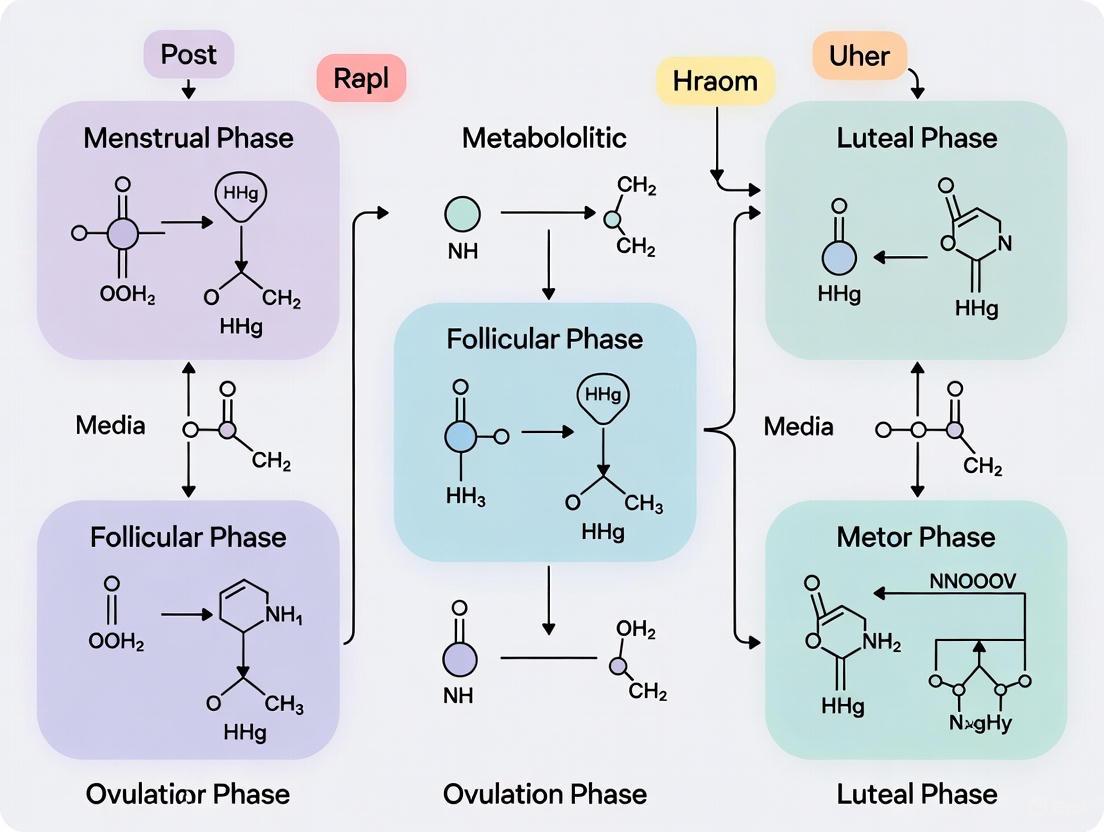
This article synthesizes current evidence on the dynamic metabolic fluctuations that occur across the menstrual cycle phases in pre-menopausal women.
Metabolic Rhythms: Unraveling the Complex Biochemical Patterns Across the Menstrual Cycle for Research and Drug Development
Abstract
This article synthesizes current evidence on the dynamic metabolic fluctuations that occur across the menstrual cycle phases in pre-menopausal women. For researchers, scientists, and drug development professionals, we explore the foundational biochemical changes in metabolites, lipids, and vitamins; discuss methodological approaches and challenges in menstrual cycle research; analyze factors that modify metabolic responses; and validate these patterns through large-scale cohort studies and clinical implications. The findings highlight critical considerations for clinical trial design, pharmacotherapy, and the development of personalized medicine approaches that account for cyclic metabolic variability.
Core Metabolic Fluctuations: Documenting the Biochemical Rhythm of the Menstrual Cycle
The menstrual cycle represents a quintessential model of biological rhythm, orchestrated by a complex interplay of hormones that extend their influence far beyond the reproductive system. For researchers and drug development professionals, understanding the intricate relationship between estrogen, progesterone, and metabolic signaling pathways is paramount for developing targeted therapies for hormone-related conditions. Recent metabolomic studies have revealed that the rhythmic fluctuations of sex hormones throughout the menstrual cycle create corresponding metabolic patterns that affect virtually every physiological system [1]. This whitepaper provides a technical examination of hormonal regulation, phase classification methodologies, and the consequent metabolic signaling patterns that inform both basic research and clinical applications.
Hormonal Regulation of the Menstrual Cycle
The Hypothalamic-Pituitary-Ovarian Axis
The menstrual cycle is governed by the hypothalamic-pituitary-ovarian (HPO) axis, a coordinated system that operates through sophisticated feedback mechanisms. Gonadotropin-releasing hormone (GnRH) from the hypothalamus stimulates the anterior pituitary to secrete follicle-stimulating hormone (FSH) and luteinizing hormone (LH) [2] [3]. These gonadotropins then act on the ovaries to stimulate follicle development and sex steroid production. The system is primarily regulated through negative feedback, except at the midpoint of the cycle when a critical estradiol level triggers positive feedback, resulting in the LH surge that induces ovulation [3].
Ovarian Hormone Production and Regulation
Ovarian hormone synthesis occurs through a collaborative process between theca and granulosa cells. LH stimulates theca cells to produce androstenedione, which then diffuses into granulosa cells where FSH stimulates aromatase to convert it first to testosterone and then to 17-β estradiol [3]. This two-cell system allows for precise control of estrogen production throughout the cycle. Following ovulation, the ruptured follicle forms the corpus luteum, which produces progesterone to prepare the endometrium for potential implantation [4].
Table: Primary Hormones in Menstrual Cycle Regulation
| Hormone | Source | Primary Functions | Regulatory Role |
|---|---|---|---|
| GnRH | Hypothalamus | Stimulates FSH and LH release from pituitary | Pulsatile secretion regulates gonadotropin release |
| FSH | Anterior Pituitary | Stimulates follicle growth and development | Regulated by GnRH, estradiol, and inhibin |
| LH | Anterior Pituitary | Triggers ovulation, supports corpus luteum | Surge triggered by positive estradiol feedback |
| Estradiol | Ovarian follicles | Endometrial proliferation, negative/positive feedback | Primary regulator of HPO axis feedback loops |
| Progesterone | Corpus luteum | Endometrial maturation, maintains early pregnancy | Suppresses gonadotropins in luteal phase |
Menstrual Cycle Phase Classification
Ovarian and Endometrial Cycles
The menstrual cycle comprises two concurrent cycles—the ovarian cycle and the endometrial cycle—each with distinct phases. The ovarian cycle includes the follicular, ovulatory, and luteal phases, while the endometrial cycle consists of the menstrual, proliferative, and secretory phases [3]. These phases are characterized by specific hormonal profiles and physiological changes that can be monitored through multiple parameters.
Table: Menstrual Cycle Phase Characteristics
| Phase | Cycle Days | Dominant Hormones | Ovarian Events | Endometrial Status |
|---|---|---|---|---|
| Menstrual | 1-5 | Low estrogen, low progesterone | Follicle recruitment begins | Tissue shedding, bleeding |
| Proliferative (Follicular) | 5-13 | Rising estrogen | Follicle growth and dominance | Stromal and glandal growth |
| Ovulatory | 13-15 | Estrogen peak, LH surge | Follicle rupture, oocyte release | Continued proliferation |
| Secretory (Luteal) | 15-28 | Rising then falling progesterone | Corpus luteum formation and function | Glandular secretion, decidualization |
Hormonal Patterns Across Phases
Hormonal fluctuations follow a predictable pattern through the menstrual cycle. Estradiol levels rise during the follicular phase, peak just before ovulation, then show a secondary rise during the luteal phase before declining if pregnancy does not occur [5] [4]. Progesterone remains low during the follicular phase but rises sharply after ovulation, with the corpus luteum producing significant amounts for approximately 11-14 days before rapidly declining, triggering menstruation [4]. The careful timing of these hormonal shifts is critical for both reproductive function and systemic metabolic effects.
Metabolic Signaling Across the Menstrual Cycle
Metabolic States and Hormonal Influence
The menstrual cycle interacts with the body's fundamental metabolic states—absorptive (fed) and postabsorptive (fasting). Insulin and glucagon serve as primary regulators of these states, but sex hormones significantly modulate their effects [6]. Estradiol enhances insulin sensitivity and promotes glucose uptake in cells, while progesterone may induce mild insulin resistance, particularly during the luteal phase [5]. These metabolic influences create a rhythmic pattern of nutrient utilization that corresponds to cycle phases.
Metabolomic Fluctuations Throughout the Cycle
Comprehensive metabolomic studies have identified significant rhythmicity in 208 out of 397 tested metabolites across the menstrual cycle [1]. These fluctuations represent a profound interconnection between reproductive hormones and systemic metabolism. The luteal phase demonstrates particularly notable metabolic shifts, potentially indicative of increased anabolic activity.
Table: Key Metabolomic Changes Across Menstrual Cycle Phases
| Metabolite Class | Luteal Phase Changes | Proposed Biological Significance | Research Implications |
|---|---|---|---|
| Amino Acids | 39 amino acids and derivatives significantly decreased | Increased protein synthesis/anabolic state | Vulnerability to hormone-related disorders |
| Lipid Species | 18 lipid species significantly decreased | Altered membrane composition/energy storage | Cyclic differences in nutrient utilization |
| Vitamin D | Highest levels during menstrual phase | Hormone-modulated activation pathway | Timing considerations for supplementation |
| Glutathione Metabolism | Significant rhythmic changes | Fluctuating oxidative stress regulation | Phase-dependent detoxification capacity |
| Urea Cycle Intermediates | Significant rhythmic changes | Altered nitrogen metabolism | Adaptation to protein metabolic demands |
One-Carbon Metabolism and Hormonal Regulation
One-carbon metabolism (OCM), crucial for cell division and epigenetic regulation, shows significant fluctuation throughout the menstrual cycle. Mathematical modeling demonstrates that estradiol upregulates key OCM enzymes including cystathionine β-synthase (CBS), thymidylate synthase (TS), and dihydrofolate reductase (DHFR) [7]. These regulatory effects explain observed sex differences in homocysteine levels and have important implications for understanding cyclic patterns in nucleotide synthesis and methylation processes.
Experimental Protocols for Menstrual Cycle Research
Phase Determination Methodologies
Accurate phase classification is fundamental to menstrual cycle research. The following protocols represent best practices for phase determination:
Hormonal Verification Protocol:
- Collect serum samples during proposed phase windows
- Analyze estradiol, progesterone, LH, and FSH levels
- Confirm follicular phase: progesterone <2 nmol/L
- Confirm luteal phase: progesterone >16 nmol/L
- Confirm ovulation: LH surge >20 IU/L with subsequent progesterone rise
Cycle Mapping Protocol:
- Record first day of menses (Cycle Day 1)
- Track cycle length for 2-3 consecutive cycles
- Use urinary LH kits to detect ovulation
- Measure basal body temperature (BBT) to confirm luteal phase
- Calculate phases: Menstrual (days 1-5), Follicular (day 5 to ovulation), Luteal (ovulation to next menses)
Metabolomic Profiling Protocol
The following protocol is adapted from comprehensive metabolic studies [1]:
Sample Collection:
- Collect biofluids at 4-5 timepoints across a single cycle
- Use standardized conditions (fasting, time of day)
- Process plasma, urine, and serum within 2 hours of collection
- Store at -80°C until analysis
Analytical Methods:
- Employ LC-MS and GC-MS for broad metabolomic coverage
- Use targeted approaches for specific metabolite classes
- Incorporate lipidomics for phospholipid profiling
- Implement clinical chemistry panels for standard biomarkers
- Apply HPLC-FLD for B vitamin quantification
Data Analysis:
- Normalize data for batch effects
- Apply false discovery rate (FDR) correction for multiple testing
- Use mixed-effects models to account for repeated measures
- Perform pathway analysis to identify affected metabolic routes
Research Reagent Solutions
Table: Essential Research Tools for Menstrual Cycle Studies
| Reagent/Category | Specific Examples | Research Application | Technical Considerations |
|---|---|---|---|
| Hormone Assay Kits | ELISA for estradiol, progesterone, LH, FSH | Phase verification, hormonal profiling | Consider pulsatile secretion in timing |
| Metabolomics Platforms | LC-MS, GC-MS systems | Comprehensive metabolic profiling | Requires specialized normalization for cyclic data |
| LH Surge Detectors | Urinary LH test kits | Ovulation timing | Consumer versions adequate for phase estimation |
| RNA/Protein Analysis | qPCR, Western blot reagents | Molecular pathway analysis | Tissue-specific expression patterns |
| Mathematical Modeling | OCM simulation software [7] | Predictive metabolic modeling | Incorporates hormonal regulation of enzymes |
Visualization of Metabolic Pathways
Discussion and Research Implications
The intricate relationship between hormonal fluctuations and metabolic signaling throughout the menstrual cycle presents significant implications for research design and therapeutic development. The metabolic patterns observed—particularly the widespread reduction in amino acids and lipid species during the luteal phase—suggest a cyclical reprogramming of metabolic priorities that may create windows of vulnerability to hormone-sensitive conditions [1]. For drug development professionals, these rhythmic metabolic changes underscore the importance of considering cycle phase in clinical trial design, especially for compounds targeting metabolic pathways or hormone-sensitive conditions.
The regulation of one-carbon metabolism by estradiol provides a mechanistic link between sex hormones and fundamental cellular processes including nucleotide synthesis and epigenetic regulation [7]. This relationship has particular relevance for understanding sex differences in drug metabolism and toxicity profiles. Furthermore, the rhythmicity of metabolic processes highlights potential opportunities for chronotherapeutic approaches that align treatment administration with specific cycle phases to optimize efficacy and minimize adverse effects.
Future research directions should focus on elucidating the molecular mechanisms through which sex hormones regulate metabolic enzymes and transporters, with particular attention to tissue-specific effects. Additionally, more comprehensive metabolomic studies across diverse populations will strengthen our understanding of how individual factors such as age, BMI, and genetic background interact with cyclic hormonal changes to influence metabolic outcomes.
The menstrual cycle represents a fundamental, rhythmic biological process characterized by dynamic hormonal fluctuations that govern far more than just reproduction. Within the context of broader research on metabolic patterns across menstrual cycle phases, a compelling body of evidence indicates that these hormonal shifts significantly regulate systemic metabolism. Advanced metabolomic profiling has revealed that the luteal phase, in particular, is marked by substantial decreases in plasma concentrations of amino acids and biogenic amines [8] [9]. This rhythmic metabolic behavior may represent a physiological adaptation to support potential pregnancy, but it also creates a window of vulnerability for hormone-related health issues such as premenstrual syndrome (PMS) and premenstrual dysphoric disorder (PMDD) [8]. Understanding these cyclic fluctuations is crucial for researchers and drug development professionals, as it informs the timing of metabolic assessments, the development of targeted nutritional strategies, and the design of clinical trials for female-specific health conditions.
Quantitative Evidence of Metabolic Shifts
Comprehensive metabolic studies provide quantitative evidence for the significant reduction of amino acids and biogenic amines during the luteal phase. The following tables summarize the key findings from recent research.
Table 1: Significant Reductions in Amino Acids and Biogenic Amines During the Luteal Phase (Draper et al., 2018) [8]
| Metabolite Class | Total Metabolites Measured | Significantly Changed (p<0.05) | Meeting FDR Threshold (q<0.20) | Representative Metabolites (Effect Size Luteal vs. Follicular) |
|---|---|---|---|---|
| Amino Acids & Derivatives | 54 | 48 | 39 | Ornithine (-0.35), Arginine (-0.34), Alanine (-0.35), Glycine (-0.31), Serine (-0.26), Methionine (-0.25) |
| Lipid Species | Not Specified | Not Specified | 18 | Various Phospholipids and Sphingolipids |
| Total Metabolomics | 397 | 208 | 71 | Neurotransmitter precursors, Glutathione metabolism metabolites, Urea cycle metabolites |
Table 2: Specific Amino Acid Contrasts Between Menstrual Cycle Phases (Draper et al., 2018) [8]
| Amino Acid | Luteal vs. Follicular (L-F) Effect Size | Luteal vs. Menstrual (L-M) Effect Size | Premenstrual vs. Luteal (P-L) Effect Size | False Discovery Rate (FDR) q-value |
|---|---|---|---|---|
| Threonine | -0.45 | -0.59 | 0.43 | 6.73E-09 |
| Ornithine | -0.35 | -0.47 | 0.31 | 2.12E-05 |
| Arginine | -0.34 | -0.47 | 0.28 | 5.51E-04 |
| Alanine | -0.35 | -0.45 | 0.35 | 3.93E-04 |
| Glycine | -0.31 | -0.40 | 0.34 | 4.36E-04 |
| Serine | -0.26 | -0.37 | 0.28 | 2.50E-03 |
The data indicate a consistent pattern of decline across multiple amino acids during the luteal phase, with a subsequent recovery in the premenstrual and menstrual phases [8]. This pattern is not isolated to healthy populations; it is also observed in clinical contexts, such as phenylketonuria (PKU), where phenylalanine concentrations reach their lowest point in the early luteal phase before rising to a maximum during the early follicular phase [10]. Furthermore, targeted research on the urea cycle amino acids arginine, citrulline, and ornithine confirms their significant decline in the luteal phase, postulated to be linked to rising progesterone levels [11].
Detailed Experimental Protocols
To ensure reproducibility and critical evaluation, this section outlines the core methodologies from the pivotal studies cited.
- Study Population & Sample Collection: 34 healthy, premenopausal, euthyroid women with regular cycles and no hormonal contraception. Biofluids (plasma, urine, serum) were collected at four distinct timepoints aligned to a 5-phase cycle classification: Menstrual (M), Follicular (F), Periovulatory (O), Luteal (L), and Premenstrual (P). Phases were defined using serum hormones, urinary luteinizing hormone, and self-reported timing.
- Sample Analysis:
- Metabolomics and Lipidomics: Plasma and urine were analyzed using Liquid Chromatography-Mass Spectrometry (LC-MS) and Gas Chromatography-Mass Spectrometry (GC-MS).
- Clinical Chemistries: Standard clinical biochemical analyses were performed on serum.
- Micronutrients: Plasma B vitamins were quantified using High-Performance Liquid Chromatography with Fluorescence Detection (HPLC-FLD).
- Data Processing and Statistical Analysis: Metabolite data were logarithmically transformed. Phase-to-phase contrasts (e.g., Luteal-Follicular, Luteal-Menstrual) were tested for statistical significance (p < 0.05) with multiple testing corrections applied using a False Discovery Rate (FDR) threshold of q < 0.20.
- Study Population: 10 patients with classic PKU on a low-protein diet and amino acid mixture, with regular menstrual cycles.
- Longitudinal Monitoring: Over six months, patients collected capillary blood via dried blood spots twice weekly for phenylalanine measurement via mass spectrometry.
- Cycle Tracking and Dietary Control: Patients documented their menstrual cycle and completed detailed 72-hour nutritional protocols at two time points (mid-follicular and late luteal) to control for potential dietary confounders.
- Data Analysis: The cycle was subdivided into four phases (early follicular, late follicular, early luteal, late luteal). A one-way repeated measures ANOVA with Bonferroni post-hoc testing was used to compare phenylalanine concentrations across phases.
- Focus: Investigate longitudinal changes in arginine metabolism and its link to nuclear factor kappa B (NF-κB) activation.
- Methods: Plasma samples from healthy women were analyzed for arginine, ornithine, citrulline, and polyamines. Activation of the NF-κB p65 subunit in peripheral blood mononuclear cells (PBMCs) was also measured across the cycle to probe immune-metabolic interactions.
Proposed Biological Pathways and Mechanisms
The observed widespread decline in amino acids and biogenic amines during the luteal phase is driven by a complex interplay of hormonal and metabolic factors. The following diagram synthesizes the key mechanisms described in the research.
Diagram: Mechanisms of Amino Acid Decline in the Luteal Phase. The peak in progesterone drives an anabolic state and increased amino acid utilization for protein turnover and immune modulation, leading to lower plasma concentrations.
The primary driver behind this metabolic shift is the peak in progesterone during the luteal phase [11]. This hormonal change creates a state of heightened whole-body protein turnover, as evidenced by increased resting metabolic rate, amino acid oxidation, and nitrogen excretion [11]. The decline is not uniform; specific pathways are particularly affected. The urea cycle amino acids arginine, ornithine, and citrulline show pronounced decreases [8] [11]. This is mechanistically linked to an upregulation of both arginase and nitric oxide (NO) synthase activities in reproductive tissues like the endometrium and corpus luteum, diverting arginine towards the production of ornithine (a polyamine precursor) and NO (involved in angiogenesis and implantation) [11]. Furthermore, the decline in arginine may play a direct role in immune tolerance by reducing T cell receptor expression and subsequent NF-κB activation, facilitating a shift towards a TH2-type immune response that is favorable for potential embryo implantation [11].
The Scientist's Toolkit: Essential Research Reagents and Materials
To conduct rigorous research in this field, specific reagents and analytical platforms are required. The following table details key solutions used in the cited studies.
Table 3: Key Research Reagent Solutions for Metabolic Cycle Studies
| Reagent/Material | Specific Example | Function in Research |
|---|---|---|
| Mass Spectrometry Kits | AbsoluteIDQ p180 kit [12] | Standardized quantitative analysis of up to 188 metabolites (amino acids, biogenic amines, lipids, sugars) from biofluids. |
| Chromatography Columns | Waters BEH C18 column [12] | Separation of complex metabolite mixtures prior to mass spectrometry analysis, crucial for resolving isomers. |
| Internal Standards | Isotopically Labeled Amino Acids [12] | Enables precise quantification by correcting for matrix effects and instrument variability during MS analysis. |
| Hormone Assays | Immunoassays for Progesterone, Estradiol, LH, FSH [8] | Essential for accurate, hormone-based confirmation of menstrual cycle phase. |
| Sample Collection | Dried Blood Spot (DBS) Cards [10] | Facilitates convenient longitudinal at-home sampling for stable analyte tracking. |
The rhythmic decrease of amino acids and biogenic amines during the luteal phase is a robust metabolic phenomenon with significant implications for women's health and physiology. The consistency of these findings across healthy populations and those with inborn errors of metabolism like PKU underscores the fundamental nature of this biological rhythm [8] [10]. Future research should focus on elucidating the precise molecular mechanisms by which sex hormones regulate specific metabolic transporters and enzymes. Furthermore, translating this knowledge into personalized nutrition strategies and cycle-informed drug dosing represents a promising frontier. For researchers, these findings mandate the careful consideration and reporting of menstrual cycle phase in study design and data analysis involving premenopausal women, as it is a critical variable influencing metabolic phenotypes.
The menstrual cycle represents a fundamental biological rhythm characterized by dynamic hormonal shifts that regulate reproductive function. A growing body of evidence indicates that these hormonal fluctuations exert significant influence beyond the reproductive axis, modulating systemic metabolic processes including the status of key vitamins and cofactors. This whitepaper examines the rhythmic variations of Vitamin D and B-complex vitamins across menstrual cycle phases, framing these patterns within the broader context of cyclic metabolic adaptations. Understanding these micronutrient rhythms is essential for developing targeted therapeutic interventions and advancing women's health research methodologies.
Recent metabolomic studies have revealed that approximately 52% of detected metabolites exhibit significant fluctuations across the menstrual cycle, demonstrating the profound metabolic restructuring that occurs during this recurrent physiological process [1]. These rhythmic patterns form a critical foundation for interpreting laboratory values, designing clinical trials, and personalizing nutritional interventions for women across the reproductive lifespan.
Metabolic Context of Menstrual Cycle Rhythmicity
The menstrual cycle is governed by precisely coordinated endocrine signaling between the hypothalamic-pituitary-ovarian axis, resulting in characteristic patterns of estradiol, progesterone, luteinizing hormone (LH), and follicular stimulating hormone (FSH) secretion. These hormonal variations drive not only reproductive tissue changes but also systemic metabolic adaptations that influence nutrient utilization and status.
Comprehensive metabolic profiling has identified significant rhythmicity in 208 out of 397 tested metabolites and micronutrients across menstrual cycle phases [1]. These fluctuations occur within a framework of cyclic tissue remodeling, immune modulation, and energy substrate utilization that characterizes the luteal, follicular, ovulatory, menstrual, and premenstrual phases. The metabolic patterns observed suggest a state of increased anabolic demand during the luteal phase, followed by recovery and resetting during menstruation and the follicular phase [1].
Table 1: Primary Metabolic Patterns Across Menstrual Cycle Phases
| Metabolic Parameter | Luteal Phase Pattern | Follicular Phase Pattern | Menstrual Phase Pattern |
|---|---|---|---|
| Amino Acids | Significant decrease (37 amines, FDR<0.20) [1] | Increasing levels from menstrual baseline [1] | Peak levels for multiple amino acids [1] |
| Phospholipids | Decreased (17 species, FDR<0.20) [1] | Increasing from luteal nadir [1] | Not specified in results |
| Energy Substrates | Variable mitochondrial function [13] | Enhanced fatty acid coupling efficiency [13] | Not specified in results |
| Inflammatory Markers | Not specified in results | Not specified in results | Elevated CRP in some contrasts [1] |
Vitamin D Rhythmicity and Regulatory Functions
Fluctuation Patterns and Physiological Significance
Vitamin D demonstrates significant rhythmic variation across the menstrual cycle, with the menstrual phase consistently showing higher levels compared to luteal (L-M contrast, FDR<0.20) and periovulatory phases (O-M contrast, FDR<0.20) [1]. This pattern coincides with the progesterone peak during the luteal phase and subsequent hormone withdrawal during menstruation, suggesting potential regulatory interactions between vitamin D metabolism and sex hormone signaling.
The physiological implications of vitamin D rhythmicity extend to multiple aspects of reproductive function and menstrual health. Vitamin D receptors (VDRs) are expressed throughout the reproductive system, including ovarian, uterine, pituitary, and hypothalamic tissues [14]. Through these receptors, vitamin D modulates the expression of over 300 genes involved in follicular maturation, steroid hormone production, and endometrial receptivity [15].
Vitamin D in Menstrual Disorders
Menstrual Cycle Regularity: Clinical evidence consistently demonstrates that vitamin D status correlates with menstrual cycle regularity. Women with regular cycles exhibit significantly higher vitamin D levels compared to those with irregular cycles, with vitamin D deficiency associated with a 13-fold increased odds of cycle irregularity [15]. Vitamin D insufficiency may contribute to delayed ovulation, prolonged follicular phase, and extended cycle length through multiple mechanisms, including regulation of anti-Müllerian hormone (AMH) gene expression [15].
Polycystic Ovary Syndrome (PCOS): Vitamin D deficiency is prevalent in 67-85% of women with PCOS, a condition characterized by menstrual irregularities and anovulation [14]. Randomized controlled trials demonstrate that vitamin D repletion in deficient women with PCOS improves ovarian morphology, increases ovulation rates, and enhances menstrual cycle regularity [14]. In one RCT, over 75% of women receiving weekly vitamin D supplementation (30,000 IU) for 24 weeks experienced improved cycle regularity and reduced cycle length [14].
Dysmenorrhea: Vitamin D status significantly influences menstrual pain. Multiple randomized controlled trials have demonstrated that vitamin D supplementation in deficient women substantially reduces pain intensity in primary dysmenorrhea [16] [15]. A 2025 RCT found that combined vitamin D and E supplementation reduced pain scores from 7.85±1.15 to 3.75±1.40 (p<0.001) on the Numerical Pain Rating Scale [16]. The proposed mechanisms include modulation of uterine prostaglandin synthesis, regulation of calcium homeostasis to prevent uterine spasms, and anti-inflammatory effects on endometrial tissue [15].
Table 2: Vitamin D Intervention Studies in Menstrual Disorders
| Disorder | Study Design | Intervention | Key Outcomes | Citation |
|---|---|---|---|---|
| PCOS | Double-blind RCT, n=84 | 30,000 IU/week Vit D (12 or 24 weeks) | >75% improved regularity; increased ovulation; reduced testosterone in high LH/FSH | [14] |
| Primary Dysmenorrhea | Double-blind RCT, n=106 | Vit D 50,000U weekly + Vit E 400U daily | NPRS: 7.85±1.15 to 3.75±1.40; PMS scores 32.42±4.67 to 9.02±8.84 | [16] |
| Primary Dysmenorrhea | Double-blind RCT | Single dose 300,000 IU Vit D | Significant reduction in pain intensity and systemic symptoms | [15] |
B Vitamin Dynamics and Metabolic Roles
Rhythmic Fluctuation Patterns
B vitamin status exhibits complex rhythmicity across the menstrual cycle, though with different patterns than those observed for vitamin D. Pyridoxic acid (a vitamin B6 metabolite) demonstrates significant elevation during the menstrual phase compared to the periovulatory phase (FDR<0.20) [1]. Riboflavin (vitamin B2) shows a statistically significant decrease in the luteal versus pre-menstrual phases, though this does not reach the FDR threshold after multiple testing correction [1].
The broader B-complex vitamins, including thiamine (B1), riboflavin (B2), niacin (B3), vitamin B-6, folate, and vitamin B-12, serve as essential cofactors in neurotransmitter synthesis, energy production, and nucleic acid metabolism—processes intrinsically linked to menstrual cycle physiology [17]. Their fluctuation patterns suggest varying metabolic demands across cycle phases.
Functional Significance in Menstrual Health
Premenstrual Syndrome (PMS): Epidemiological evidence indicates that dietary intake of specific B vitamins influences PMS risk. The Nurses' Health Study II found that high intakes of thiamine and riboflavin from food sources were inversely associated with incident PMS, with women in the highest quintile of riboflavin intake experiencing a 35% lower risk of developing PMS compared to those in the lowest quintile (RR: 0.65; 95% CI: 0.45, 0.92) [17]. Interestingly, B vitamin intake from supplements did not demonstrate similar protective effects, suggesting potential synergies with food matrices or additional nutritional components [17].
Menstrual Cycle Regularity: Vitamin B12 deficiency has been associated with menstrual disturbances, including irregular cycles and amenorrhea [18]. This relationship may be mediated through multiple mechanisms, including B12's essential role in red blood cell formation—particularly important given monthly blood loss during menstruation [18]. Women with heavy menstrual bleeding may be at increased risk of deficiency, creating a potential vicious cycle of worsening menstrual symptoms.
Nutrient Cofactor Interactions: B vitamins function synergistically in methyl group transfer and cellular energy production, processes that support the liver's metabolic clearance of estrogen and other reproductive hormones [19]. Adequate B vitamin status, particularly B2, B3, and B6, is also necessary for optimal thyroid hormone production, which indirectly influences menstrual regularity through modulation of metabolic rate and hormone signaling [19].
Experimental Methodologies for Investigating Vitamin Rhythmicity
Longitudinal Study Designs
Research into vitamin fluctuations across menstrual cycles requires meticulous study designs that account for hormonal variability and metabolic dynamics. The following protocols represent methodological approaches from key studies in this field:
Comprehensive Metabolic Profiling Protocol (Adapted from Rehn et al. [1]):
- Participant Selection: Recruit healthy, premenopausal women (age 18-25) with regular menstrual cycles (consistent length with <6 days variance). Exclude participants using hormonal contraceptives, with diagnosed menstrual disorders, or taking medications that might interfere with results.
- Cycle Phase Determination: Utilize luteinizing hormone (LH) ovulation test kits to pinpoint the ovulatory event. Schedule sample collection for five distinct phases: menstrual (days 1-5), follicular (days 6-11), periovulatory (2 days post-LH surge), luteal (7 days post-ovulation), and premenstrual (2 days before next menses).
- Sample Collection: Obtain blood samples (plasma, serum) and first-void urine samples at each phase. Process samples immediately and store at -80°C until analysis.
- Analytical Techniques: Employ LC-MS and GC-MS for metabolomics and lipidomics; HPLC-FLD for B vitamin quantification; standard clinical chemistry analyzers for hormone panels (estradiol, progesterone, LH, FSH) and clinical parameters.
Vitamin D Intervention RCT Protocol (Adapted from Toth et al. [14]):
- Participant Recruitment: Enroll women with confirmed PCOS (Rotterdam criteria) and vitamin D deficiency (serum 25(OH)D 10-30 ng/mL). Exclude those with BMI ≥36, other endocrine disorders, or current vitamin D supplementation.
- Randomization and Blinding: Use computer-generated randomization sequences with block design. Implement double-blinding with matched placebo tablets.
- Intervention Protocol:
- Group D12: Placebo for 12 weeks followed by Vitamin D3 (30,000 IU/week) for 12 weeks
- Group D24: Vitamin D3 (30,000 IU/week) continuously for 24 weeks
- Outcome Assessment: Monitor menstrual cycle regularity (daily logs), ovarian morphology (transvaginal ultrasonography at baseline, 12, and 24 weeks), ovulation rates (serum progesterone), and hormone profiles (testosterone, LH/FSH ratio).
Analytical Approaches
Advanced analytical techniques enable comprehensive assessment of vitamin status and metabolic correlates:
Metabolomic Profiling: Untargeted LC-MS and GC-MS platforms allow simultaneous quantification of hundreds of metabolites, facilitating discovery of novel rhythmic patterns beyond the primary vitamins of interest [1]. Statistical analysis should include phase-phase contrasts with false discovery rate correction for multiple testing.
Mitochondrial Function Assessment: High-resolution respirometry on permeabilized muscle fibers evaluates mitochondrial respiratory capacity across cycle phases, revealing potential functional correlates of vitamin fluctuations [13]. Key measurements include glutamate/malate LEAK respiration, maximal coupled and uncoupled respiration, and fatty acid-supported respiration.
Integrated Hormone and Metabolic Analysis: Combine hormone measurements (estradiol, progesterone, LH, FSH) with vitamin status and clinical parameters to identify potential regulatory relationships and mechanistic pathways [1].
Diagram Title: Vitamin D Signaling in Menstrual Cycle Regulation
Research Reagent Solutions
Table 3: Essential Research Materials for Investigating Vitamin Rhythmicity
| Reagent/Assay | Manufacturer/Provider | Application | Key Features |
|---|---|---|---|
| LC-MS Metabolomics Platform | Multiple vendors (e.g., Sciex, Thermo) | Comprehensive vitamin and metabolite profiling | Quantitative analysis of 400+ metabolites; identification of rhythmic patterns [1] |
| LH Ovulation Test Kits | Premom (Easy Healthcare Corp.) | Precise cycle phase determination | Home-based testing for LH surge detection; accurate ovulation timing [13] |
| Vitamin D ELISA | Multiple vendors (e.g., DiaSorin, IDS) | Serum 25(OH)D quantification | Gold standard assessment; essential for deficiency diagnosis [14] [16] |
| High-Resolution Respirometry | Oroboros Instruments | Mitochondrial function assessment | Measurement of oxidative phosphorylation across cycle phases [13] |
| Vitamin B HPLC-FLD Assay | Multiple vendors | B vitamin quantification in plasma | Simultaneous measurement of multiple B vitamins and metabolites [1] |
Implications for Research and Therapeutic Development
The rhythmic fluctuations of vitamins and cofactors across the menstrual cycle present both challenges and opportunities for research and drug development. The demonstrated variability in vitamin D and B vitamin status necessitates careful consideration of cycle phase in clinical trial design, laboratory interpretation, and therapeutic dosing strategies.
Research Design Considerations:
- Phase-Specific Recruitment: Stratify participant enrollment by menstrual cycle phase to control for metabolic variability
- Longitudinal Sampling: Implement repeated measures within participants across multiple cycle phases to capture rhythmic patterns
- Standardized Timing: Specify sample collection relative to confirmed ovulation (via LH testing) rather than calendar estimates
Therapeutic Implications:
- Chrononutrition Strategies: Align vitamin supplementation timing with metabolic demands of specific cycle phases
- Personalized Dosing: Consider baseline vitamin status and cycle characteristics when determining intervention protocols
- Combination Therapies: Leverage synergistic nutrient interactions (e.g., vitamin D and E for dysmenorrhea) [16]
Future Research Directions:
- Elucidate molecular mechanisms linking sex hormone fluctuations to vitamin metabolism and signaling
- Investigate cycle-phase dependent responses to nutritional interventions
- Explore implications for hormone-related conditions beyond reproduction (e.g., autoimmune disorders, mood disorders)
- Develop standardized protocols for incorporating cycle phase considerations into clinical research
The emerging understanding of vitamin and cofactor rhythmicity underscores the essential nature of considering menstrual cycle physiology in biomedical research and clinical practice. By accounting for these dynamic patterns, researchers and clinicians can advance the development of more effective, personalized approaches to women's health across the reproductive lifespan.
The menstrual cycle represents a fundamental biological rhythm characterized by dynamic fluctuations in key reproductive hormones, including estradiol, progesterone, follicular-stimulating hormone (FSH), and luteinizing hormone (LH). These hormonal variations regulate not only reproductive function but also exert pleiotropic effects on systemic energy metabolism [20]. For researchers and drug development professionals, understanding these metabolic shifts is crucial for designing sex-specific therapeutic interventions and accounting for metabolic variability in clinical trials. The prevailing scientific perspective suggests that these hormonal changes significantly influence substrate utilization, creating distinct metabolic phenotypes across cycle phases [20]. This technical review synthesizes current evidence on phase-dependent metabolism of carbohydrates, fats, and proteins, providing methodological frameworks for investigating these shifts in research settings.
Menstrual Cycle Phases: Hormonal Regulation and Metabolic Framework
The menstrual cycle is typically divided into two primary phases: the follicular phase (FP) and luteal phase (LP), separated by ovulation. The FP extends from menses onset to ovulation, characterized by rising estrogen levels and low progesterone. Following ovulation, the LP features elevated levels of both progesterone and estrogen, with progesterone dominating the hormonal milieu [21]. These hormonal fluctuations create a dynamic metabolic environment, as estrogen and progesterone influence substrate metabolism through both direct mechanisms (e.g., enzyme regulation) and indirect pathways (e.g., modulating other metabolic hormones) [20].
From a research perspective, accurate phase determination is methodologically critical. The calendar-based method calculates phases relative to total cycle length, typically defining the luteal phase as the last 14 days of a completed cycle [21]. More precise hormonal verification utilizes serum measurements of estradiol, progesterone, FSH, and LH, with urinary luteinizing hormone surge detection providing additional confirmation of ovulation [22] [23]. The 5-phase classification system (menstrual, follicular, periovulatory, luteal, premenstrual) offers enhanced temporal resolution for metabolic studies [1].
Phase-Dependent Substrate Metabolism
Carbohydrate Metabolism
Table 1: Carbohydrate Metabolism Parameters Across Menstrual Cycle Phases
| Parameter | Follicular Phase | Luteal Phase | Research Support |
|---|---|---|---|
| Muscle Glycogen Content | Lower | Higher (glycogen sparing effect) | [20] |
| Hepatic Glucose Ra/Rd | Higher | Lower during exercise | [20] |
| Carbohydrate Oxidation | Higher during exercise | Lower during exercise | [20] |
| Glycogen Utilization | Higher during exercise | Lower during exercise | [20] [24] |
| Blood Glucose | Higher | Lower (significant decrease) | [1] |
| Lactate Response | Higher peak response | Lower peak response to exercise | [20] |
Research consistently demonstrates distinct shifts in carbohydrate handling between menstrual phases. At rest, muscle glycogen content appears higher in the LP compared to FP when dietary carbohydrate intake is standardized [20]. During exercise, multiple studies report reduced glycogen utilization in the LP versus FP. For instance, during standardized 60-minute cycling bouts at approximately 70% VO₂max, a significant muscle glycogen sparing effect was observed in the LP [20]. This phenomenon is potentially mediated by estrogen-driven enhancement of fat oxidation, reducing carbohydrate dependence.
The rate of appearance (Ra, primarily from hepatic glycogenolysis) and disappearance (Rd) of glucose demonstrate phase-specific patterns. Zderic et al. documented lower glucose Ra and Rd during LP compared to FP when exercise intensity approached 90% of lactate threshold [20]. Similarly, Devries et al. reported lower glucose Ra, Rd, and total glycogen utilization during endurance exercise (90-minute cycling at 65% VO₂max) in LP versus FP [20]. These findings collectively suggest that LP promotes glycogen storage at rest and conservation during submaximal exercise.
Carbohydrate oxidation rates during exercise parallel these utilization patterns, with consistently lower rates observed in LP compared to FP across multiple study designs [20]. This variance appears exercise intensity-dependent, as demands exceeding the lactate threshold increasingly favor carbohydrate oxidation regardless of menstrual phase [20].
Lipid Metabolism
Table 2: Lipid Metabolism Parameters Across Menstrual Cycle Phases
| Parameter | Follicular Phase | Luteal Phase | Research Support |
|---|---|---|---|
| Fat Oxidation | Lower during exercise | Higher during exercise | [20] |
| Lipoprotein Lipase Activity | Lower | Higher (estrogen-promoted) | [20] |
| Hormone-Sensitive Lipase Activity | Lower | Higher (estrogen-promoted) | [20] |
| Catecholamine-Induced Lipolysis | Reduced | Enhanced | [20] |
| Total Cholesterol | Variable | Non-linear association | [25] |
| HDL Cholesterol | Variable | Non-linear association | [25] |
| LDL Cholesterol | Variable | Non-linear association | [25] |
| Phospholipid Species | Higher | Significantly reduced (17 species FDR<0.20) | [1] |
Lipid metabolism demonstrates significant phase-dependent variation, particularly during exercise. Hackney et al. reported that conditions with higher estrogen levels (either endogenous LP elevation or exogenous administration) resulted in significantly higher fat oxidation and correspondingly lower carbohydrate oxidation during endurance running compared to low-estrogen conditions [20]. This metabolic shift toward enhanced lipid utilization in the LP has been consistently replicated across multiple research models [20].
The physiological mechanisms underlying these shifts involve both direct and indirect estrogen actions. Direct effects include estrogen-mediated increases in lipoprotein lipase and hormone-sensitive lipase activity, enhanced catecholamine-induced lipolysis, and downregulation of lipogenic-related genes [20]. Indirect actions involve estrogen facilitation of other lipolytic hormones and glycogenic pathways [20].
Recent large-scale metabolomic analyses reveal that lipid rhythmicity extends beyond oxidation rates. Comprehensive profiling identified 139 lipid species with detectable plasma levels, 57 of which showed significant variation across menstrual phases [1]. Notably, 17 lipid species (including 6 lysophosphatidylcholines [LPCs], 10 phosphatidylcholines [PCs], and 1 lysophosphatidylethanolamine [LPE]) demonstrated significant decreases during the luteal phase at a false discovery rate (FDR) <0.20 [1]. Cholesterol profiles also exhibit non-linear relationships with menstrual phase, with significant variations observed in total, HDL, and LDL cholesterol, though not in triglycerides [25].
Protein and Amino Acid Metabolism
Protein and amino acid metabolism demonstrates distinct phase-specific patterns, though research in this area is less extensive than for carbohydrates and lipids. Comprehensive metabolomic analysis reveals significant decreases in plasma amino acids and derivatives during the luteal phase [1]. Of 54 amino acids and biogenic amines detected, 48 showed statistically significant differences (p<0.05) across five phase contrast comparisons [1].
Notably, 37 amines reached statistical significance (FDR<0.20) in the luteal-menstrual phase contrast, with 19 meeting this threshold for luteal-follicular comparison [1]. Specific amino acids including ornithine, arginine, alanine, glycine, methionine, and proline showed significant variation across all five phase comparisons, consistently demonstrating reduction during the luteal phase [1]. These findings potentially indicate an anabolic state during the progesterone peak, with recovery occurring during menstruation and follicular phase [1].
Regarding amino acid oxidation, Lariviere et al. noted increased oxidation of the branched-chain amino acid leucine during the LP, suggesting this may represent an additional mechanism for carbohydrate sparing during this phase [20]. This finding highlights the complex interplay between all three macronutrient systems across the menstrual cycle.
Methodological Considerations for Metabolic Research
Experimental Protocols for Menstrual Cycle Metabolic Studies
Phase Verification Protocol:
- Participant Screening: Recruit eumenorrheic women with predictable normal-length cycles (22-35 days), confirmed by prospective tracking for 2-3 cycles [22].
- Phase Determination: Utilize urinary luteinizing hormone (LH) surge detection to identify ovulation, with phase confirmation via serum hormone measurements (estradiol, progesterone, LH, FSH) [22] [23].
- Phase Classification: Define late-follicular phase as days -7 to -1 before menstruation onset, and mid-luteal phase as 5-9 days post-ovulation [22].
Dietary Standardization Protocol:
- Run-in Diet: Implement a 2-day energy- and macronutrient-balanced diet prior to each testing visit [22].
- Dietary Controls: For exercise metabolism studies, standardize carbohydrate intake (e.g., 6-8 g/kg/day) for 3 days prior to testing to normalize glycogen stores [20].
- Assessment Method: Employ weighed food records and 24-hour recalls across multiple cycles to account for cycle-related dietary variations [26].
Metabolic Assessment Protocol:
- Resting Metabolic Rate: Measure via indirect calorimetry after 12-hour overnight fast, 48-hour exercise avoidance, and caffeine abstinence [22].
- Substrate Oxidation During Exercise: Assess during steady-state exercise (60-90 minutes at 65-70% VO₂max) using respiratory gas analysis [20].
- Muscle Biopsy: Obtain from vastus lateralis pre- and post-exercise for glycogen quantification and metabolic pathway analysis [20] [24].
- Metabolomic Profiling: Utilize LC-MS and GC-MS platforms to analyze 400+ metabolites across multiple cycle phases [1].
Technical Pathways in Menstrual Cycle Metabolism
This pathway diagram illustrates the complex hormonal regulation of substrate metabolism across menstrual phases. Estrogen dominance during the follicular phase promotes lipolysis and glycogen synthase activity, enhancing fat oxidation and glycogen storage. Conversely, progesterone elevation in the luteal phase influences mitochondrial function and protein synthesis, potentially explaining observed shifts in carbohydrate oxidation and amino acid utilization patterns.
Research Reagents and Methodological Tools
Table 3: Essential Research Reagents for Menstrual Cycle Metabolic Studies
| Reagent/Category | Specific Examples | Research Application | Key References |
|---|---|---|---|
| Hormone Assays | Serum estradiol, progesterone, LH, FSH ELISA/EIA kits | Phase verification and correlation with metabolic parameters | [22] [23] |
| Metabolomic Platforms | LC-MS, GC-MS systems | Comprehensive profiling of 400+ metabolites across cycles | [1] |
| Substrate Oxidation | Indirect calorimetry systems (e.g., ParvoMedics TrueOne) | Measurement of respiratory exchange ratio (RER) for carbohydrate/fat oxidation | [22] [20] |
| Exercise Physiology | Standardized cycle ergometers, VO₂max testing equipment | Controlled exercise bouts for metabolic assessment | [20] [24] |
| Dietary Control | Standardized meals, food weighing scales, nutritional analysis software | Dietary standardization and assessment of ad libitum intake | [22] [26] |
| Molecular Biology | Western blot reagents, RNA extraction kits, proteomic platforms | Analysis of muscle metabolic enzymes and signaling pathways | [24] |
Research Implications and Future Directions
The documented metabolic shifts across menstrual phases have significant implications for research design and drug development. Phase-dependent metabolic variability may influence drug metabolism, as suggested by associations between CYP3A activity and progesterone fluctuations [23]. Furthermore, exercise intervention studies in females must account for menstrual phase, as training adaptations appear phase-specific. Recent proteomic research demonstrates that sprint interval training conducted during the follicular phase enhances filament organization and skeletal system development, while luteal phase training suppresses mitochondrial pathways [24].
Future research should prioritize several key areas: First, elucidating molecular mechanisms through advanced proteomic and metabolomic approaches in well-controlled studies. Second, establishing standardized methodologies for phase determination and dietary control to enhance cross-study comparability. Third, exploring individual variability factors such as the moderating effects of fat mass and physical activity on metabolic responses to hormonal fluctuations [25]. Finally, translating basic science findings into practical applications for optimizing female-specific nutritional strategies, exercise programming, and pharmaceutical interventions.
Understanding these metabolic rhythms represents a crucial step toward precision medicine approaches for premenopausal women, potentially informing strategies for managing conditions such as premenstrual syndrome (PMS), which demonstrates significant associations with ultra-processed food intake and craving patterns across menstrual phases [26].
Research Methodologies and Translational Applications in Metabolic Cycle Studies
Metabolomics, the comprehensive analysis of small molecule metabolites, has emerged as a powerful tool for revealing the dynamic physiological state of an organism. By measuring the ultimate downstream product of biological processes, metabolomic profiling provides a direct readout of cellular activity and metabolic flux that is highly responsive to both genetic and environmental influences [27]. In the specific context of researching metabolic patterns across menstrual cycle phases, advanced analytical platforms including liquid chromatography-mass spectrometry (LC-MS), gas chromatography-mass spectrometry (GC-MS), and dedicated lipidomics platforms are indispensable for capturing the nuanced rhythmicity of endocrine and metabolic regulation [1] [28]. This technical guide details the core principles, methodologies, and applications of these platforms, with specific consideration for studies of cyclic metabolic variation in premenopausal women.
Core Analytical Platforms in Metabolomics
The choice of analytical platform is dictated by the chemical diversity of the metabolome and the specific research question. The table below summarizes the primary techniques used in large-scale metabolomic studies.
Table 1: Core Analytical Platforms in Metabolomics
| Platform | Best Suited For | Sample Introduction | Key Strengths | Key Limitations |
|---|---|---|---|---|
| GC-MS | Volatile compounds, fatty acids, steroids, organic acids [29] | Gas chromatography [29] | High separation efficiency; robust compound identification with spectral libraries [29] | Requires chemical derivatization for non-volatile metabolites; limited to smaller, volatile molecules [29] |
| LC-MS | Semi-/non-volatile molecules, lipids, phospholipids, complex metabolites [30] [29] | Liquid chromatography [30] | Broad coverage without derivatization; high sensitivity and compatibility with diverse metabolites [31] [29] | Can suffer from matrix effects; compound identification can be challenging |
| Direct Infusion-MS | High-throughput lipidomic screening [29] | Direct infusion (no chromatography) [29] | Extremely fast analysis; minimal sample preparation [29] | No chromatographic separation leads to ion suppression; requires high-resolution MS for complex mixtures [29] |
Mass spectrometry (MS) serves as the primary detection system in modern metabolomics due to its exceptional sensitivity and capacity for compound identification [29]. Separation techniques coupled to MS, such as GC or LC, are critical for resolving complex biological mixtures. GC-MS excels in analyzing volatile compounds, whereas LC-MS provides a versatile platform for a wider range of metabolites, particularly lipids and complex molecules, without the need for derivatization [29]. The emerging approach of direct infusion-MS offers the highest throughput for lipidomic screening but sacrifices chromatographic separation [29].
Lipidomics: A Specialized Field within Metabolomics
Lipidomics, defined as the large-scale study of pathways and networks of cellular lipids, is a crucial branch of metabolomics [30] [29]. Lipids represent a fundamental component of the human metabolic network, constituting approximately 70% of plasma metabolites and playing critical roles in cell membrane structure, energy storage, and signal transduction [30]. The strategic role of lipidomics is particularly evident in gynecological research, where lipid metabolism reprogramming is closely linked to the pathophysiology of conditions such as ovarian cancer, cervical cancer, and endometriosis [30] [27].
Analytical Strategies in Lipidomics
MS-based lipidomics can be implemented through three primary strategies, each with distinct objectives and applications:
- Untargeted Lipidomics: This comprehensive, exploratory approach aims for a global analysis of all detectable lipids in a sample to discover novel biomarkers and pathways [30]. It typically employs high-resolution mass spectrometry (HRMS) and data-dependent acquisition (DDA) or data-independent acquisition (DIA) modes [30].
- Targeted Lipidomics: This hypothesis-driven approach focuses on the precise identification and absolute quantification of a predefined set of lipid molecules, such as potential biomarkers identified from untargeted studies [30]. It uses techniques like multiple reaction monitoring (MRM) on triple quadrupole instruments for high sensitivity and accuracy [30].
- Pseudo-targeted Lipidomics: This hybrid approach combines the broad coverage of untargeted methods with the quantitative rigor of targeted approaches, using information from initial untargeted screens to develop highly sensitive targeted assays for a wide array of lipids [30].
The Lipidomics Workflow
A robust lipidomics workflow involves a series of critical, interconnected steps from sample collection to biological interpretation. Key stages include lipid extraction using organic solvents, chromatographic separation, mass spectrometric analysis, and sophisticated data processing with bioinformatic interpretation [30] [31]. Quality control (QC), through the use of internal standards and reference materials, is embedded throughout the process to ensure analytical reproducibility and data reliability [31] [32].
Diagram 1: The comprehensive lipidomics workflow, highlighting critical quality control checkpoints at each stage to ensure data reliability.
Metabolic Patterns Across the Menstrual Cycle
The menstrual cycle is a fundamental biological rhythm governed by interacting levels of progesterone, estradiol, and gonadotropins [1]. Research using metabolomic and lipidomic platforms has revealed that this hormonal rhythmicity drives significant and reproducible metabolic shifts, creating distinct patterns across cycle phases [1] [28] [25].
A study of 34 healthy premenopausal women using LC-MS and GC-MS profiling found that 208 out of 397 tested metabolites changed significantly (p < 0.05) across the cycle, with 71 meeting a false discovery rate (FDR) threshold of 0.20 [1]. These rhythmic changes were particularly pronounced in neurotransmitter precursors, glutathione metabolism, and the urea cycle [1]. Another study developing a high-throughput LC-MS method for large-scale serum analysis reported that 12.6% of total detected ions, including lipids and amino acids, were significantly altered during a normal menstrual cycle [28].
Table 2: Key Metabolite and Lipid Changes Across Menstrual Cycle Phases
| Metabolite Class | Specific Example Metabolites | Direction of Change (Luteal vs. Other Phases) | Biological Implications |
|---|---|---|---|
| Amino Acids & Derivatives | Ornithine, Arginine, Alanine, Glycine, Methionine, Proline, Serine, Threonine [1] | ↓ Decrease [1] | Suggests an anabolic state during the progesterone peak; increased nitrogen utilization [1] |
| Complex Lipids | Lysophosphatidylcholine (LPC) species, Phosphatidylcholine (PC) species, Lysophosphatidylethanolamine (LPE 22:6) [1] | ↓ Decrease [1] | Reflects hormone-driven remodeling of membrane lipids and energy substrates [1] |
| Energy Metabolism Metabolites | Glucose [1] [25] | ↓ Decrease in Luteal phase [1] [25] | Indicates altered systemic energy regulation and demand |
| Vitamins & Cofactors | Vitamin D (25-OH vitamin D), Pyridoxic Acid (Vitamin B6 metabolite) [1] | ↑ Increase in Menstrual phase [1] | Points to cyclic differences in nutrient metabolism and requirements |
These metabolic fluctuations are not merely observational. A large cross-sectional study of 8,694 women from the UK Biobank confirmed a significant non-linear association between the menstrual cycle phase and cholesterol profiles, including total, HDL, and LDL cholesterol [25]. This study also found that the magnitude of metabolic variation was moderated by factors such as body fat mass and physical activity levels, highlighting the interaction between cyclical biology and modifiable lifestyle factors [25].
Diagram 2: Proposed model of hormonal drivers and metabolic consequences during the luteal phase of the menstrual cycle, based on metabolomic findings.
Practical Methodologies and Protocols
High-Throughput LC-MS Metabolomics for Large Cohort Studies
The analysis of large-scale sample sets, such as those required for menstrual cycle studies with serial sampling, demands high-throughput methods without compromising data quality. A proven protocol involves:
- Sample Preparation: Utilize a 96-well filter plate for semi-automated protein precipitation and sample cleanup. This approach can reduce preprocessing time by approximately 70% compared to conventional methods [28].
- Chromatography: Employ a short UPLC BEH C8 column (e.g., 2.1 × 50 mm, 1.7 µm) with a fast gradient. A 12-minute LC method has been demonstrated to provide sufficient metabolome coverage while reducing analysis time by 60% [28].
- Mass Spectrometry: Operate the mass spectrometer in switching positive/negative electrospray ionization (ESI) mode to maximize metabolite coverage in a single injection [28].
This optimized workflow has been successfully applied to profile time-series serum samples from a female cohort across an entire menstrual cycle, enabling the identification of periodically changing metabolites that correlate with estrone and progesterone patterns [28].
Quantitative Clinical Lipidomics Profiling
For robust lipid quantification in population studies, the following methodology ensures high reproducibility:
- Sample Preparation: Implement a stable isotope dilution approach with addition of internal standards (IS) prior to lipid extraction for accurate quantification. Use a semi-automated protocol in a 96-well format for high throughput [32].
- Lipid Separation and Analysis: Apply a hydrophilic interaction liquid chromatography (HILIC) method to separate lipid classes prior to MS analysis. Quantify lipid species using specific multiple reaction monitoring (MRM) transitions on a triple quadrupole instrument [32].
- Quality Control: Intermittently analyze National Institute of Standards and Technology (NIST) plasma reference material as a quality control (QC) throughout the batch sequence. This practice allows for monitoring of instrument performance and achieving a median between-batch reproducibility of <9% [32]. This step is critical to confirm that biological variability exceeds analytical variability.
The Scientist's Toolkit: Essential Reagents and Materials
Table 3: Key Research Reagent Solutions for Metabolomics and Lipidomics
| Item/Category | Specific Examples | Function in Workflow |
|---|---|---|
| Internal Standards (IS) | Stable isotope-labeled lipid standards (e.g., d7-PC, d5-TG), amino acids | Enable absolute quantification; correct for analyte loss during preparation and matrix effects during MS analysis [32] |
| Chromatography Columns | HILIC column; Reverse-phase C8/C18 UPLC columns; GC capillary columns (e.g., 5% diphenyl polysiloxane) [29] | Separate complex metabolite mixtures; HILIC separates by lipid class, RPLC separates by fatty acyl chain [30] [29] |
| Derivatization Reagents | N-methyl-N-(trimethylsilyl)trifluoroacetamide (MSTFA) with catalysts (e.g., TMCS, NH4I) [29] | Convert non-volatile metabolites (e.g., fatty acids, steroids) into volatile derivatives suitable for GC-MS analysis [29] |
| Quality Control Materials | NIST SRM 1950 (Human Plasma); in-study pooled quality control (QC) samples [32] | Monitor analytical performance, batch-to-batch reproducibility, and instrument stability over time [31] [32] |
| Sample Preparation Aids | 96-well filter plates; organic solvents (MeOH, ACN, CHCl3) for protein precipitation and lipid extraction [28] | Facilitate high-throughput, reproducible sample processing and extraction of metabolites/lipids [28] |
The field of metabolomics is poised to become a central pillar of biomedical research, with some experts viewing metabolism as "the next biomedical frontier" [33]. The application of advanced profiling techniques in menstrual cycle research exemplifies this potential, transforming the understanding of a fundamental biological rhythm into a detailed map of metabolic fluctuations. Future developments will likely focus on:
- Enhanced Integration: Combining metabolomic and lipidomic data with other omics layers (genomics, proteomics) to build comprehensive models of cyclic biological regulation [30].
- Advanced Computational Tools: Development of next-generation computational modeling tools to better understand complex metabolic interactions and protein-lipid dynamics in health and disease [34].
- Standardization and Throughput: Continued refinement of high-throughput, robust quantitative methods will be essential for large-scale epidemiological studies and clinical applications [28] [32].
In conclusion, LC-MS, GC-MS, and dedicated lipidomics platforms provide the technical foundation for deciphering the complex metabolic patterns associated with the menstrual cycle. The rigorous application of these techniques, coupled with careful experimental design that accounts for cyclic hormonal influences, is yielding critical insights into female physiology and paving the way for novel diagnostic strategies and personalized nutritional and therapeutic interventions.
The intricate interplay between metabolic flux and endocrine rhythms represents a frontier in personalized medicine. For researchers and drug development professionals, understanding metabolic patterns across menstrual cycle phases is critical, as the cyclical variations in hormones like estradiol and progesterone directly influence fundamental cellular processes, from mitochondrial respiration to systemic fuel utilization [13] [1]. Traditional metabolic assessment methods, often confined to laboratory settings, fail to capture the dynamic, real-time physiological changes that occur across these phases. This whitepaper details a novel framework integrating real-time CO2 tracking and digital biomarker development to provide continuous, precise metabolic insights. Such a approach is indispensable for creating a high-resolution map of the female metabolic phenotype, enabling more nuanced drug efficacy studies, clinical trial design, and ultimately, personalized therapeutic strategies that account for cyclical physiological variation.
Technical Foundations of Real-Time CO2 Tracking
Handheld Metabolic Devices for Fuel Utilization Assessment
The measurement of metabolic fuel utilization (carbohydrates vs. fats) has traditionally been the domain of indirect calorimetry systems, or metabolic carts. These systems measure the volume of carbon dioxide produced (VCO2) and oxygen consumed (VO2) to calculate the Respiratory Exchange Ratio (RER), where an RER near 0.7 indicates predominant fat oxidation and an RER approaching 1.0 signifies carbohydrate oxidation [35]. While this method is considered a laboratory standard, it is expensive, time-consuming (requiring up to 40 minutes per test), and confined to clinical settings, making it ill-suited for capturing metabolic fluctuations across the menstrual cycle [35].
A novel technological advancement addresses these limitations. The Lumen device is a handheld, calibration-free metabolic tool that determines fuel utilization by measuring the percentage of CO2 (% CO2) in a single exhaled breath [35]. The underlying principle is that oxygen consumption remains relatively stable at rest; therefore, changes in metabolic fuel use are primarily reflected in alterations in CO2 production. Carbohydrate oxidation produces more CO2 relative to oxygen consumed, whereas fat oxidation produces less [35]. The device employs a specific breathing maneuver: after a normal expiration, the user takes a deep breath in through the device, holds it for 10 seconds, and then exhales steadily. A built-in CO2 sensor and flow sensor determine the CO2 production rate from this maneuver, with the smartphone app guiding the user and validating the breath's quality [35].
Table 1: Key Performance Metrics from Lumen Device Validation Study
| Parameter | Metabolic Cart (RER) | Lumen Device (% CO2) |
|---|---|---|
| Measurement Principle | VO2 and VCO2 analysis under a ventilated hood | CO2 concentration from a single breath maneuver |
| Testing Environment | Laboratory setting | Real-world, at-home setting |
| Measurement Time | ~40 minutes to establish steady-state | Less than a minute per breath maneuver |
| Response to Glucose Intake | Significant increase of 0.089 (p<0.001) | Significant increase of 0.28 (p<0.001) |
| Statistical Agreement | Benchmark | Regression showed agreement (F1,63=18.54; P<0.001) |
| Primary Advantage | Laboratory gold standard | Real-time, personalized metabolic feedback |
A validation study on 33 healthy participants demonstrated the efficacy of this approach. Both the metabolic cart (RER) and the Lumen device (% CO2) showed a statistically significant increase following glucose ingestion, confirming a shift toward carbohydrate metabolism. Critically, regression analyses revealed a significant agreement between the two measurement methods, establishing the validity of the handheld device for detecting acute changes in metabolic fuel utilization [35]. This capability for real-time, frequent measurement provides a practical tool for monitoring the metabolic shifts that occur throughout the menstrual cycle.
Sensor-Based Systems for Cellular Metabolic Analysis
At the cellular level, optical sensor-based systems have revolutionized the analysis of cell metabolism and bioenergetics. These systems rely on optochemical O2, pH, and CO2 sensors to report on key metabolic pathways, including glycolysis and the tricarboxylic acid (TCA) cycle coupled with oxidative phosphorylation (OxPhos) [36].
The main operational principles and readouts are as follows:
- Extracellular Acidification Rate (ECA): Measured using pH sensors, ECA is primarily a proxy for glycolytic flux, as glycolysis produces lactic acid.
- Oxygen Consumption Rate (OCR): Measured using highly sensitive O2 sensors (e.g., phosphorescent probes), OCR reports on mitochondrial OxPhos activity.
- CO2 Production: While more challenging, CO2 sensors can provide direct insight into the TCA cycle activity [36].
These sensors can be integrated into multi-parameter platforms, such as microplates or cartridge-based systems, allowing for simultaneous monitoring of OCR and ECA. This provides a comprehensive view of cellular bioenergetics, distinguishing between energy derived from glycolysis and mitochondrial respiration. Such detailed metabolic phenotyping is essential for investigating how hormonal fluctuations during the menstrual cycle might influence fundamental cellular processes in various tissues [36].
Metabolic Patterns Across the Menstrual Cycle
Systemic Metabolic Rhythmicity
Advanced metabolomic profiling reveals that the menstrual cycle is characterized by significant rhythmicity in a wide array of metabolites. A comprehensive study analyzing plasma and urine from 34 healthy women across five cycle phases (Menstrual, Follicular, Periovulatory, Luteal, Premenstrual) found that 208 out of 397 tested metabolites and micronutrients changed significantly (p < 0.05), with 71 meeting a false discovery rate (FDR) threshold of q < 0.20 [1]. These fluctuations indicate a profound systemic metabolic reprogramming driven by hormonal changes.
Table 2: Summary of Key Metabolite Changes Across the Menstrual Cycle
| Metabolite Class | Observed Change | Cycle Phase with Most Pronounced Effect | Potential Physiological Implication |
|---|---|---|---|
| Amino Acids & Biogenic Amines | Significant decrease | Luteal Phase (vs. Menstrual & Follicular) | Increased nitrogen utilization, potential anabolic state |
| Phospholipids (e.g., LPCs, PCs) | Significant decrease | Luteal Phase | Altered membrane turnover and lipid signaling |
| Vitamin D (25-OH) | Significant increase | Menstrual Phase | Cyclical variation in vitamin D status |
| 4-Pyridoxic Acid (Vitamin B6 metabolite) | Significant increase | Menstrual Phase | Altered B6 metabolism or clearance |
| Glucose | Significant decrease | Luteal Phase | Altered systemic glucose regulation |
Notably, 39 amino acids and derivatives and 18 lipid species were significantly reduced during the luteal phase compared to other phases [1]. This general decrease may represent a state of increased protein turnover and anabolic demand during the progesterone peak, with recovery occurring during menstruation and the follicular phase. These cyclic patterns provide a baseline for understanding healthy metabolic rhythmicity and may reveal points of vulnerability to hormone-related health issues such as Premenstrual Syndrome (PMS) and Premenstrual Dysphoric Disorder (PMDD) [1].
Mitochondrial Function and Cardiovascular Dynamics
The influence of the menstrual cycle extends to tissue-specific functions, including skeletal muscle mitochondria and the cardiovascular system.
- Mitochondrial Respiration: Research on skeletal muscle biopsies from 29 females found a limited but significant influence of the menstrual cycle on mitochondrial function. Glutamate/malate-supported LEAK respiration (a measure of proton leak) was higher in the luteal phase, and mitochondrial H2O2 emission was significantly increased in the early follicular phase. However, maximal coupled and uncoupled respiration, fatty acid-supported respiration, and mitochondrial content (via citrate synthase activity) showed no differences between phases [13]. This suggests that the menstrual cycle phase specifically influences submaximal respiratory control and reactive oxygen species signaling in muscle, without altering maximal respiratory capacity.
- Cardiovascular Fluctuations: A large-scale study utilizing data from wrist-worn devices across 45,811 menstrual cycles defined a novel "cardiovascular amplitude" metric. This study found that resting heart rate (RHR) and heart rate variability (RMSSD) fluctuate in a consistent pattern: RHR reaches its lowest point and RMSSD its highest around day 5 of the cycle (end of menstruation), while RHR peaks and RMSSD reaches its nadir around days 26-27 (late luteal phase) [37]. This cardiovascular amplitude was attenuated in older participants and those using hormonal birth control, mirroring known differences in hormonal fluctuations [37]. This demonstrates the potential of wearable-derived digital biomarkers to non-invasively mirror underlying endocrine physiology.
Development and Application of Digital Biomarkers
Defining Digital Biomarkers for 3PM
Digital biomarkers (DBs) are measurable, quantifiable physiological, behavioral, and environmental parameters collected via digital health technologies like wearables, smart devices, and medical sensors [38]. In the context of Predictive, Preventive, and Personalized Medicine (3PM), DBs are instrumental in shifting healthcare from a reactive to a proactive model. They enable continuous, real-time monitoring of health parameters outside clinical settings, providing a rich, longitudinal data stream ideal for capturing cyclic patterns like those in the menstrual cycle [38].
For menstrual cycle research, relevant DBs include:
- Resting Heart Rate (RHR) & Heart Rate Variability (HRV): As demonstrated, these show consistent, hormone-driven patterns across the cycle and can be accurately tracked with consumer wearables [37].
- Sleep Metrics: Sleep quality and architecture are intricately linked to metabolic health and are known to vary across the menstrual cycle. DBs for total sleep time, sleep latency, and sleep efficiency are highly relevant [38].
- Wrist Temperature: Used for retrospective ovulation estimation and prediction of the next menses, wrist temperature is a key DB for cycle phase identification in free-living conditions [39].
- Physical Activity and Recovery: Data on activity levels and physiological recovery from exertion can provide insights into energy availability and metabolic strain throughout the cycle.
Large-scale digital cohort studies, such as the Apple Women's Health Study, are pioneering the use of these DBs to establish normative patterns and investigate associations between cycle characteristics and long-term health outcomes, including cardiometabolic conditions [39].
Methodologies for Data Collection and Analysis
Experimental Protocol for Validating a Handheld Metabolic Device [35]:
- Participant Recruitment: Recruit healthy participants (e.g., n=33, age 18-45, BMI <30 kg/m²) excluding those with intense training regimens or metabolic/pulmonary/cardiovascular disease.
- Familiarization Period: Provide participants with the device (e.g., Lumen) to use at home for a minimum number of sessions (e.g., 30 sessions over 10 days) to ensure proficiency with the breathing maneuver.
- Laboratory Testing (Fasted State): Schedule a morning lab visit after a 12-hour fast.
- Collect a baseline blood glucose sample.
- Perform indirect calorimetry (metabolic cart) measurement with the participant in a supine position until a steady-state RER is achieved (e.g., ≤5% coefficient of variation in VO2 and VCO2 for ≥5 minutes).
- Seat the participant and, after a 5-minute rest, perform duplicate measurements with the handheld device.
- Metabolic Challenge: Administer a standardized glucose load (e.g., 150g in divided servings).
- Laboratory Testing (Post-Challenge): 45 minutes after the initial glucose drink, repeat steps 3a-3c.
- Data Analysis: Use reduced major axis regression to test for agreement between the RER values from the metabolic cart and the % CO2 values from the handheld device.
Methodology for Large-Scale Wearable Data Analysis [37]:
- Cohort Definition: Identify a large cohort (e.g., >10,000 participants) from a digital health platform who meet inclusion criteria (e.g., regular cycles, consistent wearable use).
- Data Aggregation: Aggregate daily wearable-derived parameters (RHR, RMSSD) and self-reported menstrual cycle start/end dates.
- Cycle Alignment: Align all cycles to a common start date (Day 1 = first day of menses).
- Population-Level Modeling: Use Generalized Additive Mixed Models (GAMMs) to analyze the relationship between cycle day and cardiovascular metrics, establishing population-level patterns (e.g., RHR nadir at day 5, peak at day 26).
- Individual Metric Calculation: For each participant, calculate an individual "cardiovascular amplitude" (e.g., mean RHR in the final 7 days of the cycle minus mean RHR on days 2-8).
- Cohort Analysis: Investigate how this amplitude metric is influenced by factors like age, BMI, and hormonal contraceptive use using General Linear Models (GLMs).
The Scientist's Toolkit: Research Reagent Solutions
Table 3: Essential Materials for Metabolic and Menstrual Cycle Research
| Item / Reagent | Function / Application | Example in Context |
|---|---|---|
| Handheld Metabolic Device (e.g., Lumen) | Measures CO2 in exhaled breath to determine real-time fuel utilization (carbohydrate vs. fat) in free-living subjects. | Tracking daily shifts in substrate oxidation across menstrual cycle phases [35]. |
| Indirect Calorimetry System (Metabolic Cart) | Laboratory gold standard for measuring VO2 and VCO2 to calculate RER and resting energy expenditure. | Validating new devices or establishing baseline metabolic phenotypes in a controlled lab setting [35]. |
| Optical O2, pH, CO2 Sensors | Integrated into platforms (e.g., Seahorse XF Analyzer) to measure OCR and ECA in cell cultures. | Profiling mitochondrial function and glycolytic rate in cell lines treated with cycle-phase specific serum [36]. |
| Wrist-Worn Wearable (Actigraphy/PPG) | Continuously collects physiological data (RHR, HRV, skin temperature, activity) in real-world settings. | Deriving digital biomarkers (e.g., cardiovascular amplitude) for non-invasive cycle phase monitoring and health assessment [37] [39]. |
| BIOPS and MiR05 Buffers | Specific preservation and permeabilization buffers for ex vivo analysis of mitochondrial function in muscle fiber bundles. | Conducting high-resolution respirometry on muscle biopsies to assess cycle-phase effects on mitochondrial respiration [13]. |
| LC-MS / GC-MS Platforms | High-throughput, untargeted profiling of a wide range of metabolites (metabolomics) and lipid species (lipidomics). | Identifying and quantifying rhythmic fluctuations in plasma amino acids, lipids, and vitamins across the menstrual cycle [1]. |
Visualizing Metabolic Workflows and Relationships
Experimental Workflow for Metabolic Monitoring
Metabolic Pathways and Hormonal Interaction
The integration of real-time CO2 tracking and digital biomarker development marks a transformative advance in metabolic research, particularly within the nuanced context of the menstrual cycle. The technologies and methodologies detailed in this whitepaper—from handheld breath analyzers and cellular sensor systems to the large-scale analysis of wearable data—provide researchers and drug developers with an unprecedented toolkit. This toolkit enables the move from static, snapshot metabolic assessments to a dynamic, continuous understanding of how physiology rhythmically changes. By embracing these novel monitoring approaches, the scientific community can deconstruct the complex metabolic patterns driven by hormonal cycles. This will undoubtedly accelerate the development of more personalized, effective, and timely interventions, ensuring that female physiology is optimally represented in metabolic health research and therapeutic innovation.
The menstrual cycle is a fundamental biological rhythm characterized by dynamic fluctuations in reproductive hormones that orchestrate both ovarian and uterine events. In recent years, research has increasingly focused on understanding how these hormonal variations influence metabolic processes across cycle phases [1]. However, a significant methodological challenge persists: the lack of standardized approaches for defining and assessing menstrual cycle phases [40] [41]. Current literature reveals inconsistencies in phase definitions, variable assay quality, and insufficient reporting of validity measures for salivary and urinary hormone detection methods [40]. This technical guide addresses these challenges by presenting a standardized framework for cycle phase assessment that integrates hormonal, urinary, and self-reported data, with specific application to metabolic pattern research. By implementing the protocols and methodologies outlined herein, researchers can enhance reproducibility, improve cross-study comparisons, and advance our understanding of metabolic rhythmicity in relation to female physiology.
Current Challenges in Cycle Phase Assessment
Methodological Inconsistencies
The accurate assessment of menstrual cycle phases faces several methodological hurdles. A primary concern is the variability in phase definitions across studies. Research indicates significant inconsistencies in how researchers delineate cycle phases, with some employing rigid count-based methods (e.g., follicular phase = days 1-14) that overlook individual differences in ovulation timing and cycle length [41]. This approach is problematic given the known variability in follicular phase length, potentially misaligning hormonal trajectories and reducing statistical power [41].
Additionally, a scarcity of reported hormone values for specific cycle phases has been noted in literature since the early 2000s [40]. This limitation, compounded by inadequate reporting of validity and precision measures for salivary and urinary assays, creates substantial challenges for study comparisons and meta-analyses. While the inclusion of intra-assay coefficient reporting represents a strength in some studies, the overall lack of standardized quality parameters remains concerning [40].
The table below summarizes key methodological challenges identified in recent scoping reviews:
Table 1: Key Methodological Challenges in Menstrual Cycle Phase Assessment
| Challenge Category | Specific Issues | Impact on Research |
|---|---|---|
| Phase Definition | Inconsistent criteria for phase boundaries; Over-reliance on count-based methods [41] | Misalignment of hormonal data; Reduced statistical power |
| Assay Quality | Limited validity data (sensitivity, specificity); Variable precision measures [40] | Challenges comparing hormone values across studies |
| Data Reporting | Scarce hormone values for phases; Incomplete method descriptions [40] | Hinders meta-analyses and reproducibility |
| Temporal Alignment | Failure to account for individual ovulation timing; Variable cycle lengths [41] | Incorrect phase classification |
Limitations of Current Assessment Methods
Commonly used methods for cycle phase assessment each present distinct limitations. Salivary hormone testing measures the bioavailable fraction of hormones but demonstrates inconsistent validity and precision for detecting the subtle changes characteristic of menstrual cycle dynamics [40]. Urinary hormone assays detect hormone metabolites rather than native hormones, creating interpretation challenges when comparing to serum values [40]. While serum hormone testing remains the gold standard for hormone detection, its invasiveness and cost limit its feasibility for frequent sampling required in dense longitudinal designs [40] [42].
The emergence of wearable sensors and digital tracking technologies offers promising alternatives but introduces new challenges regarding data standardization, validation against gold standards, and algorithm transparency [39] [43]. Without rigorous standardization across these diverse methodologies, research on metabolic patterns across the menstrual cycle will continue to yield conflicting results.
Standardized Framework for Integrated Phase Assessment
Core Principles
The proposed framework for standardizing cycle phase assessment rests on three foundational principles:
- Temporal Precision: Implementing precise temporal alignment of data relative to both menses and ovulation to account for individual variability in cycle length and follicular phase duration [41].
- Multi-Modal Integration: Combining hormonal biomarkers with self-reported data and physiological parameters to create a comprehensive phase assessment.
- Analytical Transparency: Documenting all assay quality parameters, including validity and precision measures, to enable critical evaluation and cross-study comparison [40].
Phase-Aligned Cycle Time Scaling (PACTS)
The Phase-Aligned Cycle Time Scaling (PACTS) methodology addresses critical limitations of count-based approaches by generating continuous time variables anchored to two biological events: menses onset and ovulation [41]. This approach accommodates variable cycle lengths and supports various ovulation detection methods, including luteinizing hormone (LH) surge detection in urine, basal body temperature shifts, or norm-based estimation when biomarkers are unavailable.
The PACTS framework improves alignment of estradiol (E2) and progesterone (P4) trajectories, particularly in the variable follicular phase, and outperforms traditional count-based methods in statistical power and precision [41]. Implementation is facilitated through the companion menstrualcycleR R package, which provides a reproducible framework for applying this methodology.
The following diagram illustrates the PACTS workflow for standardizing menstrual cycle time:
Phase Definition Criteria
Based on current evidence, the following standardized criteria are recommended for phase classification:
Table 2: Standardized Menstrual Cycle Phase Definitions
| Phase | Temporal Criteria | Hormonal Criteria | Metabolic Significance |
|---|---|---|---|
| Menstrual (M) | Days 1-5 post-menses onset | Low E2, low P4 | Baseline metabolic state; Vitamin D elevation observed [1] |
| Follicular (F) | Post-menstrual to pre-ovulatory | Rising E2, low P4 | Anabolic state; Amino acid availability [1] |
| Periovulatory (O) | 2 days before to 3 days after LH peak | E2 peak, LH surge, rising P4 | Energy utilization shift; Acylcarnitine increases [1] |
| Luteal (L) | Post-ovulation to pre-menses | High P4, moderate E2 | Catabolic state; Reduced amino acids & lipids [1] |
| Premenstrual (P) | 3-5 days before menses | Declining E2 and P4 | Symptom emergence; Metabolic transition [1] |
Methodological Protocols
Hormonal Assessment Methods
Urinary Hormone Detection
Urinary hormone assessment provides a non-invasive method for tracking hormone metabolites across the cycle. The following protocol is recommended:
Sample Collection: First-morning void samples provide concentrated analyte measurements. Collect in sterile containers, record volume, and aliquot for analysis. Freeze at -20°C if not analyzing immediately [1] [42].
Analytical Techniques:
- Luteinizing Hormone (LH): Use qualitative ovulation prediction kits for surge detection or quantitative immunoassays for concentration measurement. The LH surge typically precedes ovulation by 24-48 hours [42].
- Estrogen and Progesterone Metabolites: Quantitative immunoassays or mass spectrometry-based methods can track patterns of estrogen conjugates and pregnanediol glucuronide (PdG) [40].
Quality Control: Report intra- and inter-assay coefficients of variation (CV), with optimal CVs <10% for precise phase detection [40].
Salivary Hormone Assessment
Salivary testing measures the bioavailable fraction of steroids, but requires rigorous methodology:
Sample Collection: Collect passive drool or using synthetic swabs at consistent times, avoiding contamination from food, drink, or blood. Consider circadian variation in hormone secretion [40].
Analytical Considerations:
- Estradiol and Progesterone: Use high-sensitivity immunoassays validated for saliva matrix. Salivary estradiol shows significant correlation with serum levels but requires careful interpretation due to lower concentrations [40].
- Methodological Reporting: Document completeness of sample collection, sampling conditions, and storage procedures to enable evaluation of potential confounders [40].
Self-Reported and Digital Tracking
Integrating self-reported data provides contextual information for biological measures:
Cycle Tracking: Participants record daily symptoms, bleeding patterns, and other cycle-related phenomena using structured diaries or mobile applications [42] [39].
Wearable Device Data: Commercial devices (e.g., Oura Ring, Apple Watch) can capture physiological parameters including wrist temperature, heart rate, heart rate variability, and sleep metrics [42] [43]. These parameters show phase-dependent variations that can supplement hormonal data.
Validation: When using digital technologies, report device specifications, data processing algorithms, and validation studies comparing to gold standard measures [39].
Metabolic Assessment Protocols
Research on metabolic patterns across the menstrual cycle requires specialized methodologies:
Metabolomic Profiling: Use liquid chromatography-mass spectrometry (LC-MS) and gas chromatography-mass spectrometry (GC-MS) to analyze plasma and urine samples collected at each phase [1]. This approach can detect rhythmicity in neurotransmitter precursors, glutathione metabolism, urea cycle intermediates, and lipid species [1].
Mitochondrial Function Assessment: In skeletal muscle research, conduct high-resolution respirometry on permeabilized muscle fibers to measure mitochondrial respiration, coupling efficiency, and H₂O₂ emission across cycle phases [13].
Clinical Chemistries: Analyze serum for glucose, lipids, high-density lipoprotein (HDL), and C-reactive protein (CRP) to track inflammatory and metabolic shifts [1].
Data Integration and Analytical Approaches
Machine Learning Applications
Machine learning techniques show promise for classifying menstrual cycle phases using multi-modal data. Recent research demonstrates:
Feature Extraction: Physiological signals including skin temperature, electrodermal activity (EDA), interbeat interval (IBI), and heart rate (HR) collected from wearable devices can be processed using fixed window or rolling window techniques for feature engineering [43].
Model Performance: Random forest classifiers have achieved 87% accuracy and AUC-ROC of 0.96 when classifying three phases (period, ovulation, luteal) using wristband-collected data [43]. For four-phase classification (adding follicular), accuracy decreases to 68%, highlighting the increased complexity with more granular phase distinctions [43].
Personalized Approaches: Transfer learning and individualized algorithms can improve performance by accounting for inter-individual variability in physiological patterns [43].
Metabolic Pathway Visualization
Research has identified significant fluctuations in metabolic pathways across the menstrual cycle. The following diagram illustrates key metabolic shifts observed in comprehensive profiling studies:
Statistical Considerations
Multilevel Modeling: Implement hierarchical nonlinear models, such as generalized additive mixed models (GAMMs), to account for within-subject dependency across repeated measures and model nonlinear hormone trajectories [41].
Multiple Testing Correction: When analyzing numerous metabolites or physiological parameters, apply false discovery rate (FDR) control (e.g., q < 0.20) to balance type I and type II error rates [1].
Covariate Adjustment: Consider potential confounders including age, body mass index, physical activity levels, and sleep patterns that may interact with cycle phase effects [42].
Research Reagent Solutions
Table 3: Essential Research Reagents and Materials for Menstrual Cycle Studies
| Reagent/Material | Function | Application Notes |
|---|---|---|
| LH Urine Test Kits (e.g., Premom) | Detection of luteinizing hormone surge for ovulation identification | Qualitative results; use according to manufacturer timing instructions; ~99% accuracy for detecting ovulation [13] |
| Salivary Hormone Immunoassays | Quantification of bioavailable estradiol and progesterone in saliva | Require high sensitivity; matrix-specific validation; report CVs [40] |
| LC-MS/MS Systems | Metabolomic profiling of plasma/urine samples | Identify 200+ significantly changed metabolites across cycle; detect amino acids, lipids, vitamins [1] |
| High-Resolution Respirometry (Oroboros O2k) | Assessment of mitochondrial function in tissue samples | Measure LEAK, coupled, uncoupled respiration; H₂O₂ emission [13] |
| Wearable Devices (e.g., Oura Ring, FDA-approved diagnostic rings) | Continuous monitoring of physiological parameters | Track skin temperature, HR, HRV, sleep metrics; validate against gold standards [42] [43] |
| Mira Fertility Monitor | Quantitative urinary hormone tracking | Measures E3G, LH, PdG; provides concentration values [42] |
Standardizing menstrual cycle phase assessment through integrated methodological approaches is essential for advancing research on metabolic patterns and other physiological processes across the cycle. The framework presented here, incorporating hormonal, urinary, and self-reported data within a temporally precise structure, addresses critical limitations in current methodologies. Implementation of these protocols will enhance reproducibility, enable more meaningful cross-study comparisons, and ultimately advance our understanding of cycle-phase dependent metabolic rhythmicity in women's health. Future directions should focus on validating digital technologies against gold standard measures, developing open-source analytical tools, and establishing consensus guidelines for phase definitions in research contexts.
In the study of metabolic patterns across menstrual cycle phases, researchers face two paramount statistical challenges: the multiple testing problem arising from the high-dimensionality of metabolomic data, and the complex, non-linear cyclical patterns inherent to endocrine rhythms. This guide provides an in-depth technical framework for addressing these challenges, enabling robust biological discovery in female physiology and drug development research. Proper handling of these issues is critical for distinguishing true physiological signals from statistical artifacts, ultimately leading to more reliable biomarkers and therapeutic targets.
The Multiple Testing Problem in Metabolomics
Problem Definition and Biological Context
In menstrual cycle metabolomics studies, advanced analytical platforms like LC-MS and GC-MS routinely measure hundreds to thousands of metabolites simultaneously from biological samples collected across multiple cycle phases [1]. When each metabolite is tested for cyclical variation, the probability of false positives increases dramatically. In a study identifying 208 significantly changed metabolites out of 397 tested, appropriate multiple testing correction was essential to distinguish true rhythmicity from chance findings [1].
The multiple testing problem arises because the significance level (α, typically 0.05) represents the probability of a false positive for a single test. When conducting m independent hypothesis tests, the probability of at least one false positive increases to 1 - (1-α)^m. For 397 metabolites, this probability exceeds 99.9% without correction [44] [45]. This issue is particularly acute in menstrual cycle studies where researchers examine numerous metabolites across multiple temporal phases.
Correction Methods and Application
Table 1: Multiple Testing Correction Methods for Menstrual Cycle Metabolomics
| Method | Control Type | Procedure | Advantages | Disadvantages | Use Case in Menstrual Research |
|---|---|---|---|---|---|
| Bonferroni | Family-Wise Error Rate (FWER) | Divide significance threshold α by number of tests (m) | Simple implementation, strong control | Overly conservative, reduces power | Primary metabolite analysis with small number of pre-specified targets |
| Benjamini-Hochberg | False Discovery Rate (FDR) | Sort p-values, compare to (i/m)α where i is rank | More power than FWER methods, controls proportion of false positives | Requires uniformly distributed p-values under null | Exploratory analysis of untargeted metabolomics data [1] |
| q-value | FDR | Estimate proportion of true null hypotheses (π₀) | Adaptive to data structure, more accurate FDR estimation | Computational complexity | Large-scale metabolomic screens for biomarker discovery |
In practice, menstrual cycle metabolomics studies often employ FDR control rather than FWER control. For example, in one study examining 397 metabolites across menstrual phases, 71 metabolites reached the FDR 0.20 threshold, indicating that approximately 20% of these significant findings are expected to be false positives [1]. This approach balances discovery with false positive control in exploratory research.
Characterizing Cyclical Non-linear Patterns in Menstrual Physiology
Defining Cyclical Patterns in Time Series Data
The menstrual cycle represents a true biological rhythm characterized by recurring patterns of hormone secretion and metabolic change. In time series analysis, it is crucial to distinguish between three types of patterns:
- Trend: Long-term increase or decrease not specific to menstrual cycling
- Seasonality: Fixed-frequency patterns tied to calendar events (e.g., diurnal rhythms)
- Cyclical patterns: Fluctuations without fixed frequency, typically longer than seasonal patterns [46]
Menstrual cycles exhibit both seasonal (e.g., circadian hormone variations) and cyclical patterns (e.g., the approximately 28-day rhythm itself). The average menstrual cycle lasts 28 days but normally ranges from 24 to 38 days, creating inherent frequency variability [3]. This distinguishes it from strictly fixed-frequency seasonal patterns.
Hormonal Drivers of Metabolic Cyclicality
The menstrual cycle is governed by complex interactions between hypothalamic, pituitary, and ovarian hormones that create rhythmic metabolic patterns:
- Follicular phase: Characterized by rising FSH and estrogen, promoting endometrial proliferation
- Ovulatory phase: Triggered by the LH surge, releasing the oocyte
- Luteal phase: Dominated by progesterone, preparing the endometrium for implantation [3]
These hormonal shifts drive metabolic changes observed in metabolomic studies. For example, the luteal phase shows decreased levels of 39 amino acids and derivatives and 18 lipid species, possibly indicating an anabolic state during the progesterone peak [1].
Analytical Framework for Cyclical Metabolic Patterns
Encoding Cyclical Temporal Features
The circular nature of menstrual cycle time requires special encoding techniques for machine learning models. Direct use of cycle day as a linear feature would inaccurately represent the continuity between cycle end and beginning. Several encoding methods address this:
- One-hot encoding: Creates binary variables for distinct phases (menstrual, follicular, ovulatory, luteal)
- Trigonometric encoding (sine/cosine transformation): Maps cycle day to coordinates on a unit circle
- Basis functions: Fourier, B-spline, or Gaussian basis functions to approximate cyclic patterns [47]
For a 28-day cycle, trigonometric encoding would be implemented as:
cycle_sin = sin(2π * day / 28)cycle_cos = cos(2π * day / 28)
This preserves the continuous, cyclical nature of the temporal variable and allows models to recognize that day 28 is adjacent to day 1.
Experimental Design for Temporal Sampling
Table 2: Sampling Protocol for Menstrual Cycle Metabolomics
| Cycle Phase | Hormonal Characteristics | Optimal Sampling Points | Key Metabolic Findings | Sample Size Considerations |
|---|---|---|---|---|
| Menstrual (M) | Low estrogen and progesterone | Days 1-3 of heavy bleeding | Elevated vitamin D, pyridoxic acid | 33 samples in referenced study [1] |
| Follicular (F) | Rising estrogen, low progesterone | Days 5-10 | Higher amino acids, phospholipids | 31 samples in referenced study [1] |
| Periovulatory (O) | LH/FSH surge, estrogen peak | Day 14 ± 2 days | Increased acylcarnitines | 15 samples in referenced study [1] |
| Luteal (L) | High progesterone, moderate estrogen | Days 17-24 | Decreased amino acids (39 compounds), lipids (18 species) | 27 samples in referenced study [1] |
| Premenstrual (P) | Declining hormones | Days 25-28 | Transition state before menstruation | 11 samples in referenced study [1] |
Adequate sampling across phases is crucial, as demonstrated in one study that collected 117 total samples across 34 women [1]. Phase classification should be confirmed through serum hormones (progesterone, estradiol), urinary luteinizing hormone, and self-reported cycle timing.
Integrated Statistical Workflow
Comprehensive Analytical Pipeline
A robust analytical pipeline for menstrual cycle metabolomics must integrate both multiple testing correction and cyclical pattern detection:
The Researcher's Toolkit
Table 3: Essential Research Reagents and Platforms for Menstrual Cycle Metabolomics
| Reagent/Platform | Function | Application in Menstrual Research | Example Findings |
|---|---|---|---|
| LC-MS/MS | Liquid chromatography with tandem mass spectrometry for metabolite separation and quantification | Targeted and untargeted profiling of plasma/urine metabolites | Identification of 208 significantly changed metabolites [1] |
| GC-MS | Gas chromatography-mass spectrometry for volatile compound analysis | Analysis of organic acids, urinary metabolites | Detection of uracil, succinic acid, and citric acid rhythmicity [1] |
| HPLC-FLD | High-performance liquid chromatography with fluorescence detection | Sensitive quantification of B vitamins in plasma | Assessment of cyclical patterns in vitamin levels [1] |
| Immunoassays | ELISA/RIA for hormone quantification | Serum progesterone, estradiol, LH, FSH measurement | Phase classification and correlation with metabolic changes [3] |
| Stable Isotope Tracers | Labeled substrates for metabolic flux analysis | Dynamic assessment of pathway activities across cycle | Not explicitly mentioned but valuable for future research |
Addressing multiple testing and cyclical non-linear patterns is fundamental to advancing research in menstrual cycle metabolomics. Implementation of FDR control methods properly balances discovery with false positive control, while appropriate encoding of cyclical time captures the inherent rhythmicity of female physiology. This statistical framework enables researchers to reliably identify metabolic patterns that could inform therapeutic development for menstrual-related disorders, precision medicine approaches tailored to cycle phase, and deeper understanding of female metabolic health. As metabolomic technologies advance with spatial resolution and flux analysis capabilities [48], these statistical considerations will become increasingly important for extracting meaningful biological insights from complex temporal data.
Addressing Research Inconsistencies and Metabolic Modifiers
Within the context of investigating metabolic patterns across menstrual cycle phases, accounting for confounding variables is paramount for research integrity. Fluctuations in hormones regulate a natural metabolic rhythmicity, as evidenced by the finding that 208 out of 397 tested metabolites showed significant changes across the cycle in healthy women [1]. This inherent variability can be obscured or distorted by the influence of other powerful modulators of metabolism, namely body composition and physical activity levels. This technical guide details how fat mass, fitness, and physical activity function as critical confounding factors, provides methodologies for their rigorous assessment, and offers frameworks for integrating these variables into robust study designs for researchers, scientists, and drug development professionals.
Quantitative Evidence of Confounding Effects
Empirical data from multiple studies underscore the significant association between body composition, physical activity, and metabolic parameters, which can confound menstrual cycle research.
Table 1: Evidence for Physical Activity as a Confounding Factor
| Study Finding | Research Context | Impact as a Confounding Factor |
|---|---|---|
| Negative correlation between eating frequency and adiposity metrics became non-significant after controlling for PAEE and fitness [49] [50]. | 85 premenopausal women; relation between eating frequency and body composition [49] [50]. | Demonstrates that apparent diet-metabolism relationships can be entirely mediated by physical activity levels. |
| Greater magnitude of metabolite variation across the menstrual cycle was observed in the lowest quartiles of physical activity [25]. | 8,694 regularly menstruating women; association between cycle phase and metabolites [25]. | Indicates that low physical activity may amplify metabolic fluctuations, potentially biasing cycle phase comparisons. |
| Whole-body fat-to-muscle mass ratio (FMR) was negatively correlated with physical activity (β = -0.07) and protein intake (β = -0.12), and positively with carbohydrate (β = 0.04) and sodium (β = 0.13) intake, independent of BMI [51]. | 1,518 healthy Japanese adults; correlation between FMR and lifestyle factors [51]. | Shows that body composition is independently linked to dietary and activity patterns, which themselves vary across the cycle. |
Table 2: Impact of Fat Mass and Physical Activity on Menstrual Cycle Metabolites
| Confounding Variable | Documented Effect on Metabolic Rhythmicity | Proposed Mechanism |
|---|---|---|
| Fat Mass | Moderates the association between menstrual cycle phase and metabolite concentrations; higher variability in cholesterol profiles observed in highest and lowest fat mass quartiles [25]. | Adipose tissue is a metabolically active endocrine organ that influences and is influenced by sex hormones, altering substrate metabolism and energy availability [25]. |
| Physical Activity & Fitness | Attenuates cyclical metabolic fluctuations; women with higher fitness show less pronounced variation in metabolites across phases [25]. | Improved insulin sensitivity, enhanced substrate utilization, and a blunted inflammatory response associated with fitness buffer hormone-driven metabolic shifts [25] [51]. |
Experimental Protocols for Assessing Key Confounders
Body Composition Assessment
1. Dual-Energy X-ray Absorptiometry (DXA):
- Principle: Uses two low-dose X-ray beams to differentiate between bone mineral, fat mass, and lean soft tissue mass.
- Protocol:
- Participants should be assessed in a fasted state (≥4 hours) and wearing light clothing, removing all metal objects [52].
- Position the participant supine on the scanning bed with limbs slightly away from the body as per manufacturer guidelines.
- The whole-body scan is performed, and regional analysis (arms, legs, trunk) is conducted to calculate regional and whole-body Fat-to-Muscle Mass Ratio (FMR) [51].
- Data Output: Absolute mass (kg) and percentage (%) of fat mass, lean mass, and bone mineral content for the whole body and specific regions.
2. Bioelectrical Impedance Analysis (BIA):
- Principle: Measures the opposition of body tissues to a small, alternating electrical current to estimate body composition.
- Protocol:
- Participants should abstain from strenuous exercise and alcohol for 24 hours and be fasted and well-hydrated for at least 4 hours prior [51].
- The participant lies supine with limbs not touching the torso. Electrodes are placed on the hand, wrist, foot, and ankle.
- The device measures impedance, which is used in population-specific algorithms to estimate fat and lean mass.
- Data Output: Estimated whole-body fat and lean mass, from which FMR can be derived.
Physical Activity and Energy Expenditure Measurement
1. Accelerometry (Objective Measure):
- Principle: An accelerometer (e.g., ActiGraph) is worn on the hip or wrist to detect and record movement accelerations.
- Protocol:
- Participants wear the device during all waking hours for a minimum of 7 consecutive days, including weekend days [49] [51].
- They remove it only for water-based activities.
- A valid day requires ≥10 hours of wear time. Data is processed using validated cut-points to categorize activity into sedentary, light, moderate, and vigorous intensities.
- Data Output: Physical Activity Energy Expenditure (PAEE), counts per minute, and time spent in each activity intensity.
2. International Physical Activity Questionnaire (IPAQ) - Long Form (Subjective Measure):
- Principle: A self-reported questionnaire that captures activity across four domains: job-related, transportation, household/gardening, and leisure-time.
- Protocol:
- Administer the questionnaire via interview or self-administration.
- Participants report the frequency (days/week) and duration (minutes/day) of various activities over the last 7 days.
- Activity-specific metabolic equivalent (MET) values are assigned to calculate total weekly MET-minutes.
- Data Output: Total physical activity in MET-min/week, categorized into low, moderate, and high activity levels [25].
Cardiorespiratory Fitness Assessment
1. Submaximal Cycle Ergometer Test:
- Principle: Estimates maximal oxygen consumption (VO₂ max) from heart rate response to submaximal exercise workloads.
- Protocol (as used in UK Biobank):
- Participants perform a 6-minute cycle test on an ergometer. Workload is adjusted based on age, sex, height, weight, and resting heart rate [25].
- Heart rate is monitored pre-, during, and post-exercise.
- Predicted maximal work rate is calculated by extrapolating the heart rate-workload relationship to an age-predicted maximal heart rate.
- VO₂ max is predicted using the standard equation: METs = 7 + (workload in W × 10.8 / body mass in kg) / 3.5 [25].
- Data Output: Predicted VO₂ max (mL/kg/min).
Visualizing the Interplay of Confounders in Research Design
The following diagram illustrates the logical relationships between menstrual cycle phases, metabolic outcomes, and key confounding factors, highlighting the pathways through which bias can be introduced.
The Scientist's Toolkit: Research Reagent Solutions
Table 3: Essential Materials and Tools for Investigating Metabolic Confounders
| Item / Assay | Function in Experimental Protocol | Example Application |
|---|---|---|
| Dual-Energy X-ray Absorptiometry (DXA) Scanner | Precisely quantifies regional and whole-body fat mass, lean mass, and bone density. | Gold-standard measurement for calculating Fat-to-Muscle Mass Ratio (FMR), a key body composition confounder [51]. |
| Tri-Axial Accelerometer | Objectively measures frequency, duration, and intensity of physical activity via body movement. | Used in 7-day wear protocols to calculate Physical Activity Energy Expenditure (PAEE), correcting for self-reporting bias [49]. |
| Cycle Ergometer with ECG | Administers standardized submaximal exercise tests for predicting cardiorespiratory fitness (VO₂ max). | Assessing participant fitness level as a potential moderator of menstrual cycle metabolic variability [25]. |
| Standardized Food Frequency Questionnaire (FFQ) | Captures habitual dietary intake patterns to account for nutritional confounders. | Identifying dietary patterns (e.g., "high-fat", "traditional") associated with body composition and metabolic health [52] [53]. |
| Automated Clinical Chemistry Analyzer | Measures serum concentrations of metabolites (glucose, lipids, CRP) and hormones (estradiol, progesterone). | Core platform for quantifying cyclical changes in metabolic outcomes and confirming menstrual cycle phases [1] [25]. |
| Latent Class Analysis (LCA) Software | Statistical person-centered analysis to identify subgroups with shared lifestyle patterns. | Modeling how clusters of risk factors (e.g., low activity, high-fat diet) interact to influence metabolic outcomes [53]. |
Integrating precise measurements of fat mass, fitness, and physical activity is not merely a statistical adjustment but a fundamental requirement for elucidating true hormone-driven metabolic patterns across the menstrual cycle. The evidence demonstrates that these factors are potent modifiers of metabolic rhythmicity. Employing the objective protocols and analytical frameworks outlined in this guide will enable researchers to isolate the specific effects of cyclic hormonal changes from other influential lifestyle variables, thereby enhancing the validity, reproducibility, and clinical applicability of findings in women's health and metabolic drug development.
Emerging research positions the menstrual cycle as a critical, yet often overlooked, rhythmic regulator of systemic metabolism and inflammatory tone. This whitepaper synthesizes current evidence on the fluctuations of key inflammatory mediators—C-reactive protein (CRP), Insulin-like Growth Factor-1 (IGF-1), and an array of cytokines—across menstrual phases, framing them as potential mechanisms underlying cyclical metabolic patterns. Within the context of polycystic ovary syndrome (PCOS), these fluctuations are amplified and dysregulated, creating a state of chronic low-grade inflammation that disrupts both reproductive and metabolic function. We provide a detailed analysis of quantitative findings, delineate core signaling pathways, and present standardized experimental protocols to guide future research and therapeutic development. Understanding these mechanisms is paramount for developing phase-targeted interventions and for the precise interpretation of metabolic biomarkers in premenopausal women.
The menstrual cycle is a fundamental biological rhythm characterized by dynamic fluctuations in pituitary and ovarian hormones, which orchestrate not only reproductive function but also systemic metabolic processes. Metabolic flexibility, the body's ability to efficiently switch between fuel sources, appears to be modulated across the cycle, with research indicating rhythmicity in parameters such as insulin sensitivity, lipid metabolism, and substrate utilization [1] [54]. These cyclical patterns are reflected in the metabolome, with studies identifying significant variations in amino acids, lipids, and energy metabolites across different phases [1]. The luteal phase, in particular, is characterized by decreased levels of many amino acids and specific lipid species, potentially indicative of an increased anabolic state driven by progesterone [1].
Critically, this metabolic rhythmicity is closely intertwined with the immune system. The field of immunometabolism explores the complex cross-talk between inflammatory pathways and metabolic control, a relationship that is dynamically active throughout the menstrual cycle. Fluctuations in sex steroids can directly and indirectly influence the production and activity of inflammatory mediators. Failure to account for this cyclical variation in research and clinical diagnostics can lead to significant misinterpretation of biomarker data, obscuring true pathological signals and impairing risk assessment for metabolic and cardiovascular diseases [55]. This whitepaper explores the hypothesis that cyclical changes in CRP, IGF-1, and cytokines are key mechanistic drivers of the inherent metabolic patterns observed in healthy cycling women, and that the dysregulation of this system is a core feature of endocrine-metabolic disorders like PCOS.
Core Inflammatory Mediators: Fluctuations and Functional Roles
C-Reactive Protein (CRP) and Systemic Inflammation
CRP, a classic acute-phase protein produced by the liver, is a sensitive marker of systemic low-grade inflammation. Evidence confirms that CRP levels are not static in premenopausal women but exhibit variation across the menstrual cycle.
- Cyclical Fluctuations: Studies have reported that CRP levels are significantly higher during menses compared to other phases of the cycle. One analysis found that nearly twice as many women were classified as having an elevated cardiovascular risk (based on high-sensitivity CRP >3 mg/L) during menstruation [55]. This pattern suggests a pro-inflammatory environment during the early follicular phase.
- Metabolic and Clinical Implications: Elevated CRP is a well-established marker of insulin resistance and cardiovascular risk. Its cyclical rise during menses may indicate a period of heightened inflammatory susceptibility. In the context of PCOS, this baseline inflammation is often elevated and less variable, contributing to a persistent pro-inflammatory state that underpins metabolic dysfunction [56] [57]. The table below summarizes key observations regarding CRP and cytokine fluctuations.
Table 1: Fluctuations of Inflammatory Mediators Across the Menstrual Cycle and in PCOS
| Mediator | Change Across Healthy Cycle | Change in PCOS | Primary Source | Proposed Metabolic Impact |
|---|---|---|---|---|
| CRP | Increases during menses [55] | Chronically elevated [58] | Liver (primarily) | Promotes insulin resistance; marker of cardiovascular risk. |
| IGF-1 | Requires further characterization | Dysregulated; linked to IR and HA [57] | Liver, ovarian cells | Mimics insulin; promotes ovarian androgen production. |
| IL-6 | Varies cyclically with cytokines [54] | Elevated in plasma and FF [58] | Immune cells, adipocytes | Central regulator of acute phase response and insulin sensitivity. |
| TNF-α | Varies cyclically with cytokines [54] | Elevated in plasma and FF [56] [58] | Macrophages, adipocytes | Disrupts insulin receptor signaling; promotes apoptosis. |
| IL-18 | Data limited | Elevated in plasma [58] | Macrophages | Induces IFN-γ and other pro-inflammatory cytokines. |
| MCP-1 | Data limited | Elevated in plasma [58] | Various cell types | Recruits monocytes to sites of inflammation. |
Insulin-like Growth Factor-1 (IGF-1) at the Crossroads of Metabolism and Inflammation
IGF-1, while traditionally viewed as a growth and metabolic hormone, is a pivotal player in the immunometabolic network, with its signaling deeply intertwined with inflammatory processes.
- Molecular Mimicry of Insulin: IGF-1 shares significant structural homology with insulin and can activate the insulin receptor, thereby promoting glucose uptake and exerting insulin-like effects. This is particularly relevant in tissues like the ovary [57].
- Dysregulation in PCOS: In PCOS, IGF-1 signaling is often perturbed. It works synergistically with Luteinizing Hormone (LH) to enhance theca cell androgen production, contributing to hyperandrogenemia. Furthermore, it interacts with inflammatory pathways; for instance, IGF-1 can activate the PI3K/Akt/mTOR pathway, which is also a key node in insulin signaling and can be disrupted by inflammatory cytokines like TNF-α [56] [57]. This creates a vicious cycle where metabolic inflammation impairs IGF-1/insulin signaling, which in turn exacerbates metabolic dysfunction.
The Cytokine Network
Cytokines are the signaling proteins that coordinate the local and systemic inflammatory response. Their rhythmic fluctuation is a key mechanism for metabolic cycling.
- Systemic vs. Local Environments: High-dimensional immune profiling has revealed distinct "immunomes" in systemic circulation versus the local ovarian follicular environment. In PCOS, pre-treatment plasma shows elevated levels of IL-4, IL-6, IL-9, and IL-10, which partially normalize after ovarian stimulation. However, the follicular fluid remains enriched with specific immune populations and factors, suggesting compartment-specific inflammation [58].
- Synergistic Disruption: In PCOS, cytokines such as TNF-α and IL-6 are upregulated and act synergistically to disrupt insulin signaling pathways (e.g., PI3K/AKT/MAPK) and sex steroid hormone signaling (e.g., by affecting CYP19A1 aromatase activity). This promotes a deleterious microenvironment in tissues like the endometrium, leading to clinical manifestations such as implantation failure and miscarriage [56].
Signaling Pathways Linking Inflammation and Metabolic Dysfunction
Chronic low-grade inflammation disrupts metabolic homeostasis through several highly integrated intracellular signaling pathways. The following diagram illustrates the key pathways involved.
Diagram 1: Key Inflammatory Signaling Pathways in Metabolic Dysfunction. This diagram integrates the NF-κB, MAPK, JAK-STAT, and PI3K/AKT/mTOR pathways, showing how mediators like TNF-α, IL-6, and IGF-1 activate receptors and trigger intracellular cascades that lead to altered gene expression and clinical outcomes such as insulin resistance. [56] [57] [59]
The pathways detailed in Diagram 1 are central to the inflammatory response in metabolic tissues:
- NF-κB Pathway: Activated by cytokines (TNF-α, IL-1) and pattern recognition receptors (TLRs), NF-κB is a master regulator of pro-inflammatory gene expression. Its activation leads to the transcription of cytokines (IL-6, TNF-α), chemokines, and adhesion molecules, perpetuating a local and systemic inflammatory state that interferes with insulin signaling [59].
- MAPK Pathway: Inflammatory stimuli activate various MAPKs (JNK, p38), which phosphorylate transcription factors like AP-1. JNK, in particular, can phosphorylate insulin receptor substrate-1 (IRS-1) on serine residues, a key mechanism for inducing insulin resistance [56] [59].
- JAK-STAT Pathway: This pathway is primarily activated by cytokine receptors (e.g., for IL-6). Upon ligand binding, JAKs phosphorylate STAT proteins, which dimerize and translocate to the nucleus to drive the expression of inflammatory genes. Dysregulation of JAK-STAT signaling is implicated in chronic inflammatory diseases [59].
- PI3K/AKT/mTOR Pathway: This is the canonical pathway for metabolic signaling by both insulin and IGF-1. It promotes glucose uptake and anabolic processes. In PCOS, this pathway is a point of convergence and conflict, where inflammatory signals (e.g., via JNK) inhibit PI3K/AKT, while IGF-1 seeks to activate it, leading to pathway dysfunction and metabolic compromise [56] [57].
Experimental Protocols for High-Dimensional Immune Profiling
To investigate the complex interplay of inflammatory mediators, robust and comprehensive experimental approaches are required. The following section details a protocol for simultaneous profiling of systemic and local immune environments, as used in contemporary research [58].
Study Design and Sample Collection
Objective: To comprehensively characterize the immune cell composition and cytokine landscape in both systemic circulation and the local ovarian follicular environment in women with PCOS and matched controls.
Participant Cohort:
- Groups: Women with PCOS (diagnosed by Rotterdam criteria) and control women with regular menstrual cycles and normal ovarian reserve.
- Key Exclusions: Autoimmune conditions, immunomodulating medications, endometriosis, type 1 diabetes, active malignancy.
Sample Collection Timeline:
- Visit 1 (Pre-treatment): Collection of peripheral blood during the early follicular phase.
- Visit 2 (At Transvaginal Oocyte Retrieval - TVOR): Collection of peripheral blood and follicular fluid (FF). FF is aspirated from the first two dominant follicles, with care taken to avoid blood contamination.
Laboratory Methodology
The following workflow chart outlines the core laboratory processes for sample analysis.
Diagram 2: Experimental Workflow for Immune Profiling. This chart outlines the process from sample collection to data analysis, detailing the parallel processing of blood and follicular fluid for cellular and soluble mediator analysis. [58]
Table 2: Research Reagent Solutions for Immune Profiling
| Category | Specific Reagent / Tool | Function in Protocol | Key Analytes / Targets |
|---|---|---|---|
| Sample Prep | Density Gradient Medium (e.g., Ficoll) | Isolation of peripheral blood mononuclear cells (PBMCs) from whole blood. | PBMCs |
| Cryopreservation Medium | Long-term storage of cell pellets (PBMCs, FF-derived cells) in liquid nitrogen. | Live cells | |
| Cytokine Analysis | Multiplex Cytometric Bead Array (CBA) | Simultaneous quantification of multiple soluble proteins in plasma and FF supernatant. | IL-2, IL-4, IL-6, IL-9, IL-10, IL-17A, TNF-α, MCP-1, VEGF, EGF, etc. [58] |
| Cell Analysis | LIVE/DEAD Fixable Blue Stain | Viability staining to exclude dead cells from flow cytometry analysis. | - |
| Fluorochrome-conjugated Antibodies (≥26) | Cell surface and intracellular staining for phenotyping and functional analysis. | Monocyte (CD14, CD16), T-cell (CD3, CD4, CD8, CTLA-4), B-cell (CD19), NK-cell (CD56) markers, etc. [58] | |
| Data Analysis | Flow Cytometry Analysis Software (e.g., FlowJo) | Primary data processing and visualization. | - |
| Dimensionality Reduction Algorithms (t-SNE, UMAP) | Visualization of high-dimensional data in 2D plots. | - | |
| Graph-based Clustering (PhenoGraph) | Unsupervised identification of distinct cell populations from high-parameter data. | - |
Key Data Outputs and Analysis
- Cytokine Concentrations: Compare analyte levels between PCOS and controls in plasma (at both visits) and FF. For example, pre-treatment plasma in PCOS shows elevated IL-4, IL-6, IL-9, and IL-10, while FF is enriched in angiogenic factors like VEGF [58].
- Immune Cell Populations: Identify and quantify immune cell subsets. Findings may include higher numbers of classical monocytes and a trend toward increased CTLA4-positive T regulatory cells in the PCOS follicular fluid [58].
- Integrated Analysis: Correlate immune findings with clinical parameters (e.g., BMI, insulin sensitivity, androgen levels) to establish functional relationships.
Quantitative Data Synthesis
The following tables consolidate quantitative findings from key studies to provide a clear overview of the inflammatory landscape in both healthy menstrual cycles and PCOS.
Table 3: Summary of Quantitative Findings from Key Studies on Inflammatory Mediators
| Study & Population | Key Findings Related to Inflammatory Mediators |
|---|---|
| The BioCycle Study (n=259) [1] | - Of 397 metabolites tested, 208 (52%) changed significantly (p<0.05) across the cycle.- Glutathione metabolism and urea cycle metabolites showed rhythmicity.- 39 amino acids and derivatives and 18 lipid species decreased in the luteal phase (FDR < 0.20). |
| UK Biobank (n=8,694) [54] | - Non-linear associations were observed between menstrual cycle phase and total cholesterol (p<0.001), HDL (p<0.001), LDL (p=0.012).- No significant association found for glucose, triglyceride, or TyG index.- Fat mass and physical activity moderated metabolite concentration variations. |
| High-Dimensional Profiling (PCOS vs. Controls) [58] | - Pre-treatment PCOS plasma was elevated in IL-4, IL-6, IL-9, IL-10.- TVOR plasma in all participants had higher IL-2, IL-4, IL-9, IL-17A, TNF-α, MCP-1 vs. FF.- Follicular Fluid was enriched with VEGF and EGF.- PCOS FF showed higher classical monocytes and a trend for more CTLA4+ T-regs. |
| Review of Cardiometabolic Biomarkers [55] | - Nearly twice as many women had high cholesterol (≥200 mg/dL) in the follicular vs. luteal phase (14.3% vs. 7.9%).- Nearly twice as many women had high CVD risk (hs-CRP >3 mg/L) during menses vs. other phases (12.3% vs. 7.4%). |
The evidence is compelling that inflammatory mediators—CRP, IGF-1, and a network of cytokines—undergo rhythmic fluctuations during the menstrual cycle and represent a fundamental mechanism governing metabolic patterns in premenopausal women. In the pathological context of PCOS, this delicate rhythmicity is lost, giving way to a state of chronic low-grade inflammation that drives both reproductive and metabolic dysfunction. The dysregulation of key signaling pathways, including NF-κB, MAPK, JAK-STAT, and PI3K/AKT, provides a molecular framework connecting inflammation to insulin resistance and hyperandrogenism.
Future research must leverage high-dimensional technologies, as outlined in the experimental protocols, to build a more precise atlas of immunometabolic changes across the cycle in diverse populations. For drug development, this knowledge opens avenues for chronotherapeutic approaches, where interventions—such as anti-inflammatory agents or IGF-1 pathway modulators—are timed to specific menstrual phases for maximal efficacy and minimal side effects. Furthermore, clinical guidelines must evolve to recommend the standardization of biomarker assessment to specific menstrual phases to improve diagnostic accuracy and risk stratification for premenopausal women. Acknowledging and investigating the menstrual cycle as a key variable is not a niche concern but a prerequisite for precision medicine in women's health.
The menstrual cycle represents a critical, often overlooked, biological rhythm that significantly influences metabolic physiology and nutritional status. Within the context of broader research on metabolic patterns across menstrual cycle phases, understanding the interaction between diet composition and the specific hormonal milieu of each cycle phase is paramount. Females have historically been underrepresented in nutritional science, creating a significant knowledge gap in female-specific physiology [60]. The cyclical fluctuations of estrogen and progesterone create distinct hormonal environments that modulate energy metabolism, substrate utilization, and feeding behavior [60] [1]. This technical guide synthesizes current evidence on cyclic metabolic patterns, providing researchers and drug development professionals with structured data, methodological frameworks, and mechanistic insights to advance the field of cycle-phase specific nutrition.
Menstrual Cycle Phases: Definitions and Hormonal Landscapes
The menstrual cycle is characterized by dynamic hormonal shifts that create distinct metabolic environments. While traditionally divided into two broad phases, contemporary research guidelines recommend finer classification to capture specific hormonal milieus [60]:
- Early Follicular Phase: Days 1-5 of menstrual bleeding, characterized by low estrogen and low progesterone levels.
- Late Follicular Phase: Approximately 14-26 hours prior to ovulation, featuring high estrogen with low progesterone (<6.36 nmol/L).
- Ovulatory Phase: 24-36 hours surrounding ovulation, confirmed by luteinizing hormone surge, with medium estrogen and low progesterone (<6.4 nmol/L).
- Mid-Luteal Phase: Approximately 7 days post-ovulation, with medium estrogen and high progesterone (>16 nmol/L) [60].
These phases represent distinct endocrinological states that influence physiological processes including appetite regulation, nutrient partitioning, and energy expenditure. Estrogen is hypothesized to exert appetite-suppressive effects, while progesterone in the presence of estrogen may stimulate appetite [60]. Understanding these precise definitions is fundamental for designing rigorous nutritional studies and interpreting findings within the context of cyclic metabolic patterns.
Quantitative Metabolic and Nutritional Changes Across Cycle Phases
Energy Intake and Macronutrient Selection
Table 1: Energy Intake Variations Across Menstrual Cycle Phases
| Study Reference | Population | Follicular Phase Intake (kcal/day) | Luteal Phase Intake (kcal/day) | Mean Difference (kcal/day) | Statistical Significance |
|---|---|---|---|---|---|
| Johnson et al 1994 [60] | 26 women, 32.3±4.3 years | 1736±427 (ovulatory) | 1902±452 | +166 | P < 0.05 |
| Martini et al 1994 [60] | 18 women, 26.9±4.9 years | 1908±38 (mid-follicular) | 2067±45 (mid-luteal) | +159 | P < 0.05 |
| Brazilian Cohort Study [60] | 30 women | 1730±254 | 2259±375 | +529 | P < 0.05 |
| Reimer et al [60] | Not specified | Follicular baseline | Luteal measurement | +337 | P < 0.05 |
Research consistently demonstrates increased energy intake during the luteal phase compared to follicular phases, with mean increases ranging from 90-529 kcal/day [60]. This pattern is not universal, however, with some studies reporting no significant phase-related differences [22]. A 2025 study controlling for pre-test diet found no significant differences in ad libitum energy or macronutrient intake between late-follicular and mid-luteal phases, suggesting methodological factors may influence findings [22].
Metabolic Rate and Substrate Utilization
Table 2: Metabolic Parameters Across Menstrual Cycle Phases
| Parameter | Follicular Phase Pattern | Luteal Phase Pattern | Significance | Study References |
|---|---|---|---|---|
| Resting Metabolic Rate | Baseline | Tended to be higher (104±218 kcal/day) | P=0.074 | Smith et al. 2025 [22] |
| Carbohydrate Oxidation | Higher preference | Reduced preference | P < 0.05 | [60] |
| Fat Oxidation | Reduced preference | Stronger preference during exercise | P < 0.05 | [60] |
| Protein Catabolism | Baseline | Increased | P < 0.05 | [60] |
The luteal phase is characterized by increased resting energy expenditure and altered substrate utilization. Multiple studies document a stronger preference for fat utilization during exercise in the luteal phase alongside increased protein catabolism [60]. These metabolic shifts have implications for nutritional requirements and exercise physiology across the cycle.
Micronutrient and Metabolite Rhythmicity
Advanced metabolomic profiling reveals significant fluctuations in micronutrients and metabolites throughout the menstrual cycle. A comprehensive study analyzing 397 metabolites and micronutrients found 208 significantly changed (p<0.05) across cycle phases, with 71 reaching false discovery rate threshold of 0.20 [1]:
- Amino Acids: 39 amino acids and derivatives decreased significantly in the luteal phase (FDR<0.20), possibly indicating an anabolic state during progesterone peak [1].
- Lipids: 18 lipid species decreased in the luteal phase, including phospholipids and lysophosphatidylcholines [1].
- Vitamins: Vitamin D (25-OH vitamin D) showed significant decreases in luteal versus menstrual phases (q<0.20), with highest levels during menstruation [1].
- Antioxidants: Glutathione metabolism precursors showed cyclic rhythmicity, suggesting altered oxidative stress management across phases [1].
These findings indicate that nutrient utilization and requirements fluctuate across the cycle, potentially creating phase-specific vulnerabilities and therapeutic opportunities.
Experimental Methodologies for Menstrual Cycle Nutrition Research
Phase Verification Protocols
Accurate phase identification is critical for rigorous menstrual cycle research. The following methodologies represent current best practices:
Hormonal Verification Protocol [60] [61]:
- Collect serum samples for estradiol and progesterone quantification
- Define early follicular phase: progesterone <1.1 ng/mL, estradiol 20-60 pg/mL
- Define late follicular phase: estradiol >150 pg/mL, progesterone <1.1 ng/mL
- Define ovulatory phase: urinary luteinizing hormone (LH) surge positive, estradiol 60-150 pg/mL
- Define mid-luteal phase: progesterone >5 ng/mL, estradiol 60-150 pg/mL
- Time luteal phase testing approximately 7 days after confirmed ovulation
Cycle Tracking Adjunct Methods [61]:
- Participant-maintained menstrual calendars
- Mobile application cycle tracking
- Basal body temperature charting (less reliable)
- Urinary ovulation predictor kits for home use
Dietary Assessment Methodologies
Controlled Feeding Studies [22]:
- Implement 2-day energy- and macronutrient-balanced run-in diets prior to testing
- Use pre-weighed ad libitum meals to objectively measure intake
- Standardize meal composition and presentation
- Control for palatability, energy density, and variety
Free-Living Assessment Methods [60] [62]:
- 3-7 day estimated food records at multiple cycle phases
- Food Frequency Questionnaires (147-item semiquantitative FFQ validated)
- Digital photography of food intake
- Mobile application dietary logging with prompt verification
Biomarker Correlation [61] [1]:
- Phenylalanine levels in special populations (e.g., phenylketonuria patients)
- Plasma amino acid profiling via LC-MS/MS
- Urinary nitrogen excretion to validate protein intake
- Serum vitamin and mineral quantification
Metabolic Pathways and Nutrient-Hormone Interactions
Figure 1: Hormonal Regulation of Nutrient Metabolism Across Menstrual Cycle
The interplay between sex hormones and nutrient metabolism creates the foundation for cycle-phase specific nutritional patterns. Estrogen and progesterone directly and indirectly influence appetite regulation, energy expenditure, and substrate utilization through multiple pathways [60] [1]. These interactions have implications for energy intake, body composition, and metabolic disease risk in female populations.
Pathophysiological Implications and Clinical Correlations
Menstrual Disorders and Nutritional Status
Research demonstrates significant associations between nutritional status, anthropometric measures, and menstrual disorders. A cross-sectional study of 217 women found 52.5% experienced at least one menstrual disorder, with painful menstruation (41%) being most prevalent, followed by premenstrual syndrome (24.9%) and irregular menstruation (22.1%) [62]. Women with menstrual disorders exhibited significantly higher waist circumference (86.7±14.0 cm vs. 76.0±11.8 cm, p<0.001) and consumed more calories, protein, carbohydrates, and total fat compared to those without disorders [62]. The proportion of all menstrual disorders was significantly higher among women with overweight or obesity compared to normal BMI women (p<0.001) [62].
Special Populations: Inborn Errors of Metabolism
Patients with inborn errors of metabolism exhibit exaggerated metabolic responses to menstrual cycle hormonal fluctuations. In phenylketonuria (PKU) patients, phenylalanine (Phe) concentrations show significant variation across cycle phases (F(2.85, 271.13)=5.79, p<0.001), with lowest levels in the early luteal phase (627.9±179.0 μmol/L) and highest during menstrual bleeding in the early follicular phase (702.2±188.8 μmol/L) [61]. These fluctuations occurred without significant changes in protein, phenylalanine, or calorie intake, suggesting direct hormonal influence on metabolic control rather than dietary mediation [61].
Research Reagent Solutions and Methodological Toolkit
Table 3: Essential Research Materials for Menstrual Cycle Nutrition Studies
| Reagent/Equipment | Specification | Research Application | Example Use |
|---|---|---|---|
| Urinary LH Test Kits | Qualitative immunochromatographic | Ovulation confirmation | Phase verification [60] [61] |
| LC-MS/MS Systems | Triple quadrupole, electrospray ionization | Metabolite quantification | Phe measurement in PKU patients [61] |
| Indirect Calorimeter | Hood or canopy system | Resting metabolic rate measurement | Energy expenditure across phases [22] |
| Dietary Assessment Software | Mevalia EASY DIET or equivalent | Nutritional intake tracking | 72-hour dietary protocols [61] |
| ELISA Kits | Estradiol, progesterone | Hormonal phase verification | Serum hormone quantification [60] |
| Dried Blood Spot Cards | Standardized collection format | Remote biomarker monitoring | Home-based Phe testing [61] |
This toolkit represents essential methodologies for advancing research in menstrual cycle nutrition and metabolism. Proper implementation of these reagents and protocols ensures rigorous phase verification, accurate metabolic assessment, and comprehensive nutritional evaluation throughout cycle phases.
The interplay between diet composition and menstrual cycle phase represents a critical dimension of female physiology with implications for clinical practice, athletic performance, and chronic disease management. The consistent pattern of increased energy intake during the luteal phase, coupled with phase-specific fluctuations in metabolite profiles, suggests endogenous hormonal regulation of nutritional status. Future research should prioritize standardized phase definitions, improved dietary assessment methodologies, and exploration of nutraceutical interventions timed to specific cycle phases. Integration of multi-omics approaches (metabolomics, lipidomics, proteomics) with hormonal profiling will further elucidate the complex mechanisms underlying cyclic metabolic patterns, enabling development of personalized, phase-specific nutritional strategies for women across the lifespan.
Research into metabolic patterns across menstrual cycle phases is critically important for understanding female physiology and developing targeted therapeutic interventions. However, this field is characterized by significant methodological heterogeneity, where differences in how studies are designed and executed lead to conflicting and inconsistent findings. A fundamental challenge lies in the accurate determination of menstrual cycle phase, a common proxy for specific hormonal milieus. The reliance on under-validated methodologies creates a ripple effect, undermining the comparability of results across studies and obscuring the true relationship between ovarian hormones and metabolic function. This whitepaper details the sources of this methodological heterogeneity and provides a structured framework for resolving inconsistent findings, with the goal of enhancing the validity and applicability of future research in women's health.
The primary sources of inconsistency in menstrual cycle research can be categorized into three major areas, each introducing significant variability and potential for error.
Phase Determination by Self-Report ("Count Methods")
Many behavioral, psychological, and neuroscientific studies rely on self-reported information to predict menstrual cycle phase, a practice that is common but empirically problematic [63].
- Forward Calculation: This method counts forward from the first day of menstruation, defining phases based on a prototypical 28-day cycle. For example, the early follicular phase might be defined as days 3–7 [63].
- Backward Calculation: This method estimates the start of the next menses based on past cycle length and defines phases by counting backward from this estimated date (e.g., identifying ovulation as 15 days prior to the next menses) [63].
- Inherent Limitations: These projection methods assume cycle regularity that often does not exist. One analysis found that 76% of menstrual cycle studies from 2010–2022 used such projection methods, despite their well-documented inaccuracy [63].
Phase "Confirmation" by Hormone Ranges
To validate projected phases, researchers sometimes assay ovarian hormones on a few study days and compare the values to pre-defined ranges. This method is highly error-prone due to several factors:
- Source of Ranges: The hormone ranges used are often drawn from assay manufacturer data or small research samples with uncertain methodological quality [63].
- Individual Variability: Hormone levels exhibit significant variation between individuals, making universal ranges a poor tool for confirming phase for any single participant [63].
- Prevalence: Approximately 19% of phase-defining studies were found to utilize these unvalidated range methods [63].
Insufficient Hormone Sampling
Another common but inadequate method involves measuring hormone changes from only two or a few time points over the cycle to "confirm" a projected phase. This approach fails to capture the full dynamic trajectory of estradiol and progesterone, which is essential for accurate phase characterization [63]. The combination of these methods results in phases being incorrectly determined for many participants, with studies showing Cohen’s kappa estimates ranging from -0.13 to 0.53, indicating disagreement to only moderate agreement with more rigorous measures [63].
A Framework for Resolving Inconsistent Findings
To reconcile the conflicting results produced by methodologically heterogeneous studies, a robust meta-analytic approach is required. This involves more than simply pooling data; it requires a critical methodological evaluation.
Meta-Analysis with Methodological Rigor
Meta-analysis, the process of evaluating and combining the results of conflicting studies, is a key tool for reconciliation. A effective meta-analysis must integrate two techniques [64]:
- Methodologic Analysis: Clinical trials are judged according to a set of standards to assess scientific validity and clinical applicability. This involves screening out studies that use demonstrably unreliable methods for phase determination.
- Pooled Analysis: The results of the scientifically valid studies are then combined and compared to provide a more reliable overall estimate of effects [64].
This combined strategy ensures that the meta-analysis has enhanced scientific validity and clinical applicability, moving beyond a simple pooling of all available data regardless of quality.
Improved Primary Study Design
Resolving inconsistencies requires not only better synthesis of existing work but also the design of better primary studies. Recommendations for future research on metabolic patterns across the menstrual cycle include:
- Frequent Hormone Assays: Moving beyond one or two hormone measurements to more frequent assays (when possible) to properly capture hormone dynamics [63].
- Statistical Sophistication: Utilizing sophisticated statistical methods, such as time-series analysis, that can model within-person hormonal fluctuations and their relationship to metabolic outcomes [63].
- Accounting for Engagement in Self-Tracked Data: With the rise of mobile health data, researchers must develop procedures to distinguish true physiological patterns from tracking anomalies related to user engagement [65].
Quantitative Data Synthesis
The tables below summarize key quantitative findings related to methodological challenges and biological variability in menstrual cycle research.
Table 1: Common Methodological Approaches and Their Documented Problems in Menstrual Cycle Phase Determination
| Methodological Approach | Description | Documented Limitations | Reported Prevalence in Literature (2010-2022) |
|---|---|---|---|
| Self-Report Projection | Predicting phase using forward/backward calculation from menses [63]. | High error rate; ignores individual cycle variability. | 76% of phase-defining studies [63] |
| Hormone Range Confirmation | Using predefined estradiol/progesterone ranges to "confirm" a projected phase [63]. | Uses unvalidated universal ranges; ignores individual hormone level variation. | 19% of phase-defining studies [63] |
| Limited Hormone Sampling | Measuring hormone changes from only two or a few time points [63]. | Fails to capture the full, dynamic trajectory of hormone fluctuations. | Information Not Specified |
Table 2: Cycle Characteristics from a Large-Scale Self-Tracked Data Study, Highlighting Inherent Variability
| Cycle Characteristic | Overall Cohort (n=378,694) | Consistently Not Highly Variable Group | Consistently Highly Variable Group (7.68% of cohort) |
|---|---|---|---|
| Average User Age | 25.49 years (median 25) [65] | Information Not Specified | Information Not Specified |
| Average Tracked Cycles per User | 12.89 (median 11) [65] | Information Not Specified | Information Not Specified |
| Mean Cycle Length | 29.73 days (median 29) [65] | Information Not Specified | Median: 34 days [65] |
| Mean Period Length | 4.08 days (median 4) [65] | Information Not Specified | Information Not Specified |
| Cycle Length Variability (CLD) | Information Not Specified | Lower variability (Median CLD < 9 days) [65] | Higher variability (Median CLD ≥ 9 days) [65] |
Experimental Protocols and Workflows
This section outlines a rigorous protocol for a study investigating metabolic patterns across the menstrual cycle, designed to mitigate the methodological pitfalls described previously.
Detailed Experimental Protocol for Metabolic Cycle Studies
Objective: To precisely characterize variations in metabolic markers (e.g., resting metabolic rate, glucose metabolism, lipid oxidation) across defined menstrual cycle phases. Participants: Recruit females aged 18-35 with self-reported regular cycles (21-35 days), not using hormonal contraception, and free from conditions/medications known to affect metabolism or cycle regularity. Core Protocol:
- Hormonal Monitoring: Collect daily saliva or capillary blood samples for at least one complete menstrual cycle. Assay samples for estradiol and progesterone using validated immunoassays.
- Metabolic Phenotyping: Schedule laboratory visits for comprehensive metabolic assessment at three key phases:
- Early Follicular Phase: Confirmed by low and stable estradiol and progesterone levels during the first 5 days of the cycle.
- Late Follicular Phase/Ovulation: Confirmed by the distinct peak in estradiol and a surge in luteinizing hormone (LH) detected in the daily samples.
- Mid-Luteal Phase: Confirmed by sustained elevated progesterone levels, typically 5-9 days after the detected LH surge.
- Standardization: Conduct all metabolic tests at the same time of day for each participant after an overnight fast and 24-hour abstention from strenuous exercise and alcohol. Data Analysis: Use repeated-measures ANOVA or linear mixed models to test for the main effect of menstrual cycle phase on each metabolic outcome, with hormone concentrations included as continuous covariates.
Visualizing the Experimental Workflow
The diagram below visualizes the participant flow and key procedures in the proposed rigorous experimental protocol.
Figure 1: Workflow for Rigorous Metabolic Cycle Study. This diagram outlines the sequence of events from participant recruitment through data analysis, highlighting the parallel processes of continuous hormone monitoring and time-point-specific metabolic phenotyping.
Visualizing Hormonal Dynamics and Phase Determination
Understanding the underlying hormonal patterns is crucial for proper study design. The following diagram depicts the typical fluctuations of key hormones and how they define menstrual cycle phases.
Figure 2: Menstrual Cycle Phases and Hormonal Landmarks. This diagram illustrates the sequential nature of menstrual cycle phases, which are defined by specific hormonal events rather than fixed calendar days.
The Scientist's Toolkit: Research Reagent Solutions
For researchers designing studies on metabolic patterns across the menstrual cycle, selecting the appropriate tools is critical for generating valid and reliable data.
Table 3: Essential Research Reagents and Materials for Menstrual Cycle Metabolic Studies
| Item | Function/Application | Technical Considerations |
|---|---|---|
| Enzyme Immunoassay (EIA) Kits | Quantify concentrations of 17-β-estradiol and progesterone in saliva, serum, or urine samples [63]. | Saliva kits reduce participant burden for daily sampling. Choose kits with demonstrated sensitivity to capture low perimenstrual levels. |
| Luteinizing Hormone (LH) Urine Test Strips | Detect the pre-ovulatory LH surge, a critical marker for pinpointing ovulation and defining the luteal phase [63]. | Useful for at-home participant use to time laboratory visits for the peri-ovulatory and mid-luteal phases. |
| Indirect Calorimetry System | The gold-standard for measuring resting metabolic rate (RMR) and substrate utilization (carbohydrate vs. fat oxidation) [63]. | Essential for the metabolic phenotyping component. Requires strict standardization of pretest conditions (fasting, rest). |
| Structured Menstrual Cycle Interview | A validated questionnaire to obtain detailed self-report data on cycle history, regularity, and symptoms [63]. | Provides crucial contextual data but should not be used as the sole method for phase determination in a rigorous study. |
| Data Analysis Software (R, Python) | Implement sophisticated statistical models like linear mixed-effects models to analyze longitudinal hormone and metabolic data [63]. | Necessary to account for within-subject correlations and the time-varying nature of hormone concentrations. |
This whitepaper synthesizes current evidence on how age, ethnicity, and metabolic health status modify physiological responses across the menstrual cycle. While core metabolic patterns exhibit rhythmicity during the menstrual cycle, emerging research demonstrates significant effect modification by population characteristics. Understanding these modifiers is crucial for research design, clinical interpretation, and drug development targeting female physiology. Key findings indicate that menstrual cycle characteristics vary substantially by age, with distinct patterns observed from adolescence through perimenopause. Ethnic differences in cycle length and variability challenge the application of uniform clinical benchmarks. Furthermore, metabolic health status, particularly adiposity and physical activity levels, modifies the relationship between menstrual cycle phase and metabolite concentrations. This technical guide provides detailed methodologies and analytical frameworks for researchers to account for these critical effect modifiers in study design and data interpretation.
Within the broader thesis of metabolic patterns across menstrual cycle phases research, it is fundamental to recognize that the menstrual cycle does not exist as an isolated biological system. Its expression and metabolic correlates are modified by a range of population characteristics. Historically, research in female physiology has suffered from homogenization, often extrapolating findings from limited, homogeneous cohorts to all pre-menopausal women. This approach overlooks the critical modifiers of age, ethnicity, and metabolic health status, potentially obscuring meaningful biological signals and leading to inequitable healthcare applications. This guide details the empirical evidence for these effect modifiers and provides methodologies for their rigorous investigation, aiming to enhance the precision and applicability of research in this domain.
Quantitative Data Synthesis of Effect Modifiers
Table 1: Impact of Demographic Factors on Menstrual Cycle Length and Variability
Data synthesized from the Apple Women's Health Study (n=12,608 participants; 165,668 cycles) [66] [67]. Reference group for age is 35-39 years, for ethnicity is White, and for BMI is 18.5-25 kg/m².
| Modifier Category | Subgroup | Mean Cycle Length Difference (Days, 95% CI) | Odds Ratio for Long Cycles (95% CI) | Cycle Variability vs. Reference |
|---|---|---|---|---|
| Age | < 20 years | +1.6 (+1.3, +1.9) | 1.85 (1.48, 2.33) | Increased by 46% |
| 20-24 years | +1.4 (+1.2, +1.7) | 1.87 (1.56, 2.25) | - | |
| 25-29 years | +1.1 (+0.9, +1.3) | - | - | |
| 30-34 years | +0.6 (+0.4, +0.7) | - | - | |
| 40-44 years | -0.5 (-0.3, +0.7) | - | - | |
| 45-49 years | -0.3 (-0.1, +0.6) | 1.72 (1.41, 2.09) | Increased by 45% | |
| ≥ 50 years | +2.0 (+1.6, +2.4) | 6.47 (5.25, 7.98) | Increased by 200% | |
| Ethnicity | Asian | +1.6 (+1.2, +2.0) | 1.43 (1.17, 1.75) | Higher Variability |
| Hispanic | +0.7 (+0.4, +1.0) | - | Higher Variability | |
| Black | -0.2 (-0.1, +0.6) | - | - | |
| BMI (kg/m²) | ≥ 40 (Class 3 Obese) | +1.5 (+1.2, +1.8) | - | Higher Variability |
Table 2: Metabolic Fluctuations Across the Menstrual Cycle and Moderating Factors
Data from UK Biobank (n=8,694) and targeted metabolomic studies [25] [54] [1].
| Metabolic Parameter | Observed Fluctuation Across Cycle (Phase of Peak/Nadir) | Statistical Significance (p-value) | Key Effect Modifiers Identified |
|---|---|---|---|
| HDL Cholesterol | Non-linear rhythmicity | < 0.001 | Fat Mass, Physical Activity |
| LDL Cholesterol | Non-linear rhythmicity | 0.012 | Fat Mass, Physical Activity |
| Total Cholesterol | Non-linear rhythmicity | < 0.001 | Fat Mass, Physical Activity |
| Total:HDL Cholesterol Ratio | Non-linear rhythmicity | < 0.001 | Fat Mass, Physical Activity |
| Glucose | Decrease in Luteal vs. Menstrual, Pre-menstrual, & Periovulatory | 0.072 (NS) | - |
| Triglycerides | No consistent rhythmicity | 0.066 (NS) | - |
| Amino Acids (Plasma) | Significant decrease in Luteal phase (e.g., Ornithine, Arginine) | FDR < 0.20 | - |
| Phospholipids (Plasma) | Significant decrease in Luteal phase (e.g., LPCs, PCs) | FDR < 0.20 | - |
Detailed Experimental Protocols for Investigating Effect Modification
Protocol for Large-Scale Digital Cohort Studies (Apple Women's Health Study Model)
Objective: To characterize population-level variations in menstrual cycle characteristics and associated physical activity patterns [66] [21] [67].
Participant Recruitment & Eligibility:
- Enroll pre-menopausal participants aged 18+ using a digital application platform.
- Collect baseline demographics via survey: age, self-reported ethnicity, height, weight, medical and reproductive history, including cycle regularity.
- Obtain informed consent for continuous data tracking.
Data Collection Workflow:
- Menstrual Cycle Tracking: Participants log daily menstrual bleeding. Cycle length is calculated as the interval between first days of consecutive periods.
- Physical Activity Monitoring: Connect wearable devices (e.g., Apple Watch) to log exercise type, duration (minutes/day), and step count.
- Covariate Assessment: Repeated surveys capture changes in health status, medications (e.g., hormonal contraceptives), and lifestyle factors.
Data Cleaning & Processing:
- Cycle Inclusion Criteria: Apply exclusion criteria to cycles; typical exclusion includes cycles <21 or >36 days, cycles with recorded bleeding after day 7, and cycles from participants with recent pregnancy, hormonal contraceptive use, or specific medical conditions.
- Phase Definition: Use the calendar method for phase approximation if hormonal data is unavailable (e.g., Luteal phase: last 14 days of a completed cycle; Follicular phase: from period start until luteal phase).
- Activity Data Processing: Exclude days with less than 16 hours of wearable device wear time. Aggregate daily exercise minutes and step count.
Statistical Analysis:
- Use linear mixed-effects models to analyze cycle length and exercise minutes, with random intercepts for participants to account for within-individual correlation.
- Adjust models for covariates: age, ethnicity, BMI, parity, smoking, and socioeconomic status.
- Quantify variability using intra-individual standard deviation or coefficient of variation.
Protocol for Metabolic Biomarker Assessment Across the Cycle (UK Biobank Model)
Objective: To investigate associations between menstrual cycle phase and metabolite concentrations, and to explore effect modification by adiposity and fitness [25] [54].
Participant Inclusion Criteria:
- Regularly menstruating pre-menopausal women.
- Menstrual cycle duration 21-36 days.
- Exclude individuals based on: >36 days since last period, menstrual bleeding after cycle day 7, estradiol concentration outside 31-2864 pmol/L, <1 year since last childbirth, contraceptive pill use, or hormone replacement therapy, and diagnosis of type 2 diabetes or cancer.
Exposure Variable Calculation (Menstrual Cycle Phase):
- Collect self-reported data: "How many days since your last menstrual period?" and "How many days is your usual menstrual cycle?"
- Calculate standardized time within the menstrual cycle: (Days since last period / Usual cycle length). A value of 0 represents cycle start, 1 represents cycle end.
- Define phases: Follicular phase (0.00–0.54) and Luteal phase (0.54–1.00).
Blood Sampling and Biochemical Analysis:
- Sample Collection: Draw non-fasting blood samples at a single timepoint per participant, noting time since last food/drink intake. Exclude samples from participants with a fasting time <4 hours.
- Biomarker Assay: Analyze serum using standardized platforms (e.g., AU5800, Beckman Coulter).
- Primary Outcomes: Glucose; Triglyceride; Total, HDL, and LDL Cholesterol; Total:HDL Cholesterol ratio; Triglyceride-glucose index (TyG).
- Potential Mediators/Moderators: C-reactive protein (CRP), Insulin-like Growth Factor-1 (IGF-1), estradiol.
Assessment of Modifiers:
- Anthropometrics: Measure height, weight, and body composition (e.g., fat mass, fat-free mass) using a calibrated bioimpedance analyzer (e.g., Tanita BC-418 MA).
- Cardiorespiratory Fitness: In a subset, perform a submaximal 6-minute cycle ergometer test to predict maximal oxygen uptake (VO2 max).
- Physical Activity: Assess using the International Physical Activity Questionnaire (IPAQ).
- Grip Strength: Measure using a hydraulic hand dynamometer (e.g., Jamar J00105).
Statistical Analysis:
- Use Generalized Additive Models (GAM) to investigate non-linear associations between the standardized cycle time (0-1) and metabolite outcomes.
- Conduct moderator analysis by testing interaction terms between cycle phase and modifiers (e.g., quartiles of fat mass, physical activity).
- Perform mediator analysis using established statistical frameworks to explore if inflammatory markers explain the phase-metabolite relationship.
Visualizing Complex Relationships and Workflows
Data Analysis Workflow for Metabolic Studies
Diagram 1: Research workflow for metabolic cycle studies.
Relationship Between Effect Modifiers and Cycle Physiology
Diagram 2: Conceptual model of effect modification.
The Scientist's Toolkit: Essential Research Reagents and Materials
Table 3: Key Reagent Solutions and Analytical Platforms for Menstrual Cycle Research
| Item / Reagent | Function / Application | Example Product / Protocol |
|---|---|---|
| Multiplate Impedance Aggregometry | Assesses platelet function; used to rule out cycle-phase effects on aggregation [68]. | Multiplate Analyzer (Roche) |
| Indirect Calorimetry System | Measures Resting Metabolic Rate (RMR) to investigate energy expenditure variations across phases [22]. | Metabolic Cart (e.g., Cosmed Quark) |
| LC-MS / GC-MS Platforms | For untargeted metabolomics and lipidomics to profile rhythmicity of amino acids, lipids, and organic acids [1]. | Liquid Chromatography-Mass Spectrometry (e.g., Thermo Scientific Orbitrap) |
| Automated Clinical Chemistry Analyzer | Quantifies standard metabolic panels (cholesterol, triglycerides, glucose, HDL, LDL) in large cohort studies [25] [54]. | AU5800 Clinical Chemistry Analyzer (Beckman Coulter) |
| Body Composition Analyzer | Measures fat mass, fat-free mass; critical for assessing adiposity as an effect modifier [25] [54]. | Tanita BC-418 MA Bioimpedance Analyzer |
| Submaximal Cycle Ergometer | Assesses cardiorespiratory fitness (VO2 max prediction) for fitness stratification [25] [54]. | Monark Ergomedic 834E |
| Hydraulic Hand Dynamometer | Measures grip strength as a proxy for overall muscular fitness [25] [54]. | Jamar J00105 |
| Ultrasensitive Hormone Immunoassays | Precisely quantify estradiol, progesterone, LH, FSH for precise cycle phase confirmation [22] [1]. | DXI 800 (Beckman Coulter) |
| International Physical Activity Questionnaire (IPAQ) | Standardized tool for assessing self-reported physical activity levels [25] [54]. | IPAQ (Long or Short Form) |
Clinical Validation and Comparative Implications for Health and Disease
Menstrual cycle regularity serves as a non-invasive indicator of systemic metabolic health in reproductive-aged women. This technical review synthesizes evidence from epidemiological, clinical, and metabolomic studies demonstrating that menstrual irregularity significantly correlates with specific metabolic syndrome components, particularly dyslipidemia and central adiposity. The association persists independently of polycystic ovary syndrome (PCOS) diagnosis, suggesting menstrual cycle patterns may represent a distinct clinical marker for identifying women at elevated cardiometabolic risk. Advanced metabolomic profiling reveals phase-dependent fluctuations in amino acids, lipids, and energy substrates throughout the menstrual cycle, providing mechanistic insights into the metabolic-hormonal interplay. This review consolidates quantitative evidence, experimental methodologies, and analytical frameworks to support the integration of menstrual cycle characteristics into metabolic risk assessment protocols for both clinical and research applications.
The menstrual cycle represents a complex neuroendocrine process that interacts profoundly with systemic metabolic regulation. Beyond its reproductive function, emerging evidence positions menstrual cycle characteristics as sensitive indicators of cardiometabolic health. Menstrual irregularity—defined as consistent cycles exceeding 35 days or exhibiting absent predictability—affects approximately 14-25% of reproductive-aged women and may signal underlying metabolic dysfunction [69] [67].
The physiological basis for this association lies in the bidirectional relationship between sex hormones and metabolic pathways. Estrogen and progesterone fluctuations throughout the cycle modulate insulin sensitivity, lipid metabolism, and energy substrate utilization [1]. Consequently, disruptions in menstrual cyclicity often reflect alterations in these fundamental metabolic processes, frequently manifesting before overt clinical disease emerges.
This technical review examines the specific metabolic syndrome components most strongly associated with menstrual irregularity, drawing upon cross-sectional and prospective studies across diverse populations. We further explore the dynamic metabolic patterns characterizing normal menstrual cyclicity to establish a comparative baseline for identifying pathological deviations. The synthesized evidence supports the thesis that menstrual cycle monitoring provides a valuable framework for investigating metabolic patterns across physiological phases in women's health research.
Epidemiological Evidence: Population-Based Associations
Large-scale epidemiological studies consistently demonstrate associations between menstrual irregularity and adverse metabolic profiles across the reproductive lifespan, from adolescence through adulthood.
Evidence from Adult Populations
A cross-sectional analysis of 2,742 South Korean women aged 19-40 years revealed significantly higher age-adjusted odds ratios for metabolic syndrome (MetS) and specific components among those with irregular menstrual cycles compared to women with regular cycles [69]. The table below summarizes the adjusted odds ratios from this investigation:
Table 1: Association between menstrual irregularity and metabolic syndrome components in Korean women (KNHANES 2010-2012)
| Metabolic Parameter | Adjusted Odds Ratio | 95% Confidence Interval |
|---|---|---|
| Metabolic Syndrome (Overall) | 1.35 | 1.08-1.68 |
| High Waist Circumference (≥80 cm) | 1.31 | 1.07-1.61 |
| High Triglycerides (≥150 mg/dL) | 1.29 | 1.03-1.61 |
| Low HDL-C (<50 mg/dL) | 1.26 | 1.02-1.55 |
| High Fasting Glucose (≥100 mg/dL) | 1.11 | 0.89-1.39 |
| High Blood Pressure (≥130/85 mm Hg) | 1.08 | 0.86-1.35 |
This pattern of association, with stronger effects for adiposity and dyslipidemia than for glucose or blood pressure, suggests menstrual irregularity may be particularly sensitive to lipid metabolism disturbances [69].
The Tehran Lipid and Glucose Study (TLGS) followed 2,128 women for 15 years in a prospective design, providing longitudinal evidence [70]. After adjustment for BMI, fasting blood sugar, family history, and parity, women with irregular cycles exhibited a 73% increased risk of developing type 2 diabetes mellitus (HR 1.73, 95% CI: 1.14-2.64) and a 33% increased risk of pre-diabetes (HR 1.33, 95% CI: 1.05-1.69) compared to those with regular cycles [70]. Notably, no significant associations emerged for hypertension or dyslipidemia in this cohort, suggesting the diabetic relationship may be particularly robust across ethnicities.
Early Life Indicators and Developmental Trajectories
The association between menstrual characteristics and metabolic health emerges early in the reproductive lifespan. Research from the Pittsburgh Girls Study examined 352 participants (68.2% Black) with adolescent menstrual cycle assessment and early adulthood cardiometabolic profiling [71]. Adolescents with irregular cycles at age 15 demonstrated significantly poorer metabolic profiles a decade later, including:
Table 2: Cardiometabolic parameters in early adulthood (ages 22-25) by adolescent menstrual regularity
| Cardiometabolic Parameter | Regular Cycles | Irregular Cycles | P-value |
|---|---|---|---|
| Fasting Insulin (mIU/L) | 12.3 ± 0.8 | 15.9 ± 1.4 | 0.015 |
| Fasting Glucose (mg/dL) | 85.2 ± 0.6 | 88.4 ± 1.1 | 0.035 |
| Triglycerides (mg/dL) | 82.5 ± 4.1 | 104.7 ± 8.9 | 0.035 |
| Systolic BP (mm Hg) | 112.4 ± 0.8 | 116.8 ± 1.5 | 0.005 |
| Diastolic BP (mm Hg) | 71.9 ± 0.6 | 74.9 ± 1.1 | 0.010 |
These differences translated to clinically meaningful risk elevations, with the irregular cycle group having 1.89 to 2.56 times higher odds of developing pre-disease cardiometabolic indices [71]. This association remained significant after adjusting for racial and socioeconomic factors, highlighting the potential of menstrual irregularity as an early, simple marker for future metabolic disease risk, particularly in high-risk populations like Black women who experience disproportionate cardiometabolic disease burden.
Metabolic Rhythmicity Across the Menstrual Cycle
Understanding the normal metabolic fluctuations throughout a healthy menstrual cycle provides essential context for interpreting the pathological significance of menstrual irregularities. Advanced metabolomic profiling technologies have enabled detailed mapping of these rhythmic patterns.
Phase-Dependent Metabolic Signatures
A comprehensive longitudinal study analyzing 397 metabolites and micronutrients across five menstrual cycle phases in 34 healthy premenopausal women revealed substantial rhythmicity [1]. Of the compounds analyzed, 208 demonstrated significant variation throughout the cycle (p<0.05), with 71 maintaining significance after false discovery rate correction (FDR<0.20). The most pronounced changes occurred in neurotransmitter precursors, glutathione metabolism, and the urea cycle [1].
The luteal phase exhibited particularly distinctive metabolic patterns, characterized by significant decreases in plasma amino acids and derivatives. Specifically, 39 amino acids and derivatives and 18 lipid species decreased significantly during the luteal phase (FDR<0.20), potentially indicating an anabolic state during the progesterone peak with subsequent recovery during menstruation and the follicular phase [1]. These fluctuations may represent a period of vulnerability to hormone-related health issues in susceptible individuals.
Lipid and Vitamin Dynamics
Lipid metabolism demonstrates clear cyclical patterns, with 17 lipid species—including 6 lysophosphatidylcholines (LPCs), 10 phosphatidylcholines (PCs), and 1 lysophosphatidylethanolamine (LPE)—showing significant reduction during the luteal phase relative to the follicular phase (FDR<0.20) [1]. These phospholipids play crucial roles in membrane integrity, cell signaling, and inflammatory pathways, suggesting cyclic hormonal fluctuations may systematically influence these fundamental biological processes.
Micronutrient analysis revealed significant rhythmicity in vitamin D (25-OH vitamin D) and pyridoxic acid (vitamin B6 metabolite) [1]. Vitamin D levels decreased significantly during the luteal phase compared to menstrual and periovulatory phases, with the menstrual phase consistently showing higher levels. This pattern may have implications for vitamin D supplementation timing and interpretation of clinical measurements.
Methodological Approaches in Menstrual Cycle Research
Menstrual Cycle Phase Assessment Protocols
Accurate phase determination is methodologically critical for metabolic studies across the menstrual cycle. The following table summarizes key methodological approaches from cited studies:
Table 3: Methodological approaches for menstrual cycle phase assessment in metabolic studies
| Study | Population | Cycle Phase Assessment Method | Metabolic Assessment |
|---|---|---|---|
| KNHANES [69] | 2,742 women aged 19-40 | Self-reported regularity: irregular defined as cycles < or >35 days | Anthropometrics, fasting blood samples, clinical chemistry |
| Metabolomic Study [1] | 34 healthy premenopausal women | 5-phase classification: menstrual (M), follicular (F), periovular (O), luteal (L), premenstrual (P) based on serum hormones, urinary LH, and self-report | LC-MS, GC-MS for metabolomics and lipidomics; HPLC-FLD for B vitamins |
| Smith et al. [22] | 18 participants, age 21±4 | Urinary LH surge and prospective cycle days: late-follicular vs. mid-luteal | Indirect calorimetry for RMR, appetite ratings, ad libitum energy intake |
| Apple Women's Health Study [67] | 12,608 participants | Mobile app tracking of 165,668 cycles; calendar method for phase determination | Cycle length and variability analysis by age, ethnicity, BMI |
The incorporation of hormonal measurement (serum or urinary) with cycle day tracking provides the most precise phase classification, while large-scale epidemiological studies typically rely on self-reported regularity or mobile application data [1] [67].
Metabolic Syndrome Component Assessment
Standardized criteria for metabolic syndrome components ensure consistency across studies. The most commonly applied definition derives from the Heart, Lung, and Blood Institute and American Heart Association guidelines, requiring at least three of the following [69]:
- Fasting plasma glucose ≥100 mg/dL (or medication for hyperglycemia)
- Blood pressure ≥130/85 mm Hg (or antihypertensive medication)
- Triglycerides ≥150 mg/dL (or medication for hypertriglyceridemia)
- HDL cholesterol <50 mg/dL
- Waist circumference for Asians ≥80 cm (with ethnicity-specific cutoffs)
For adolescent populations, modified criteria incorporate age-adjusted percentiles for BMI and blood pressure while maintaining similar biochemical thresholds [71].
Pathophysiological Framework and Signaling Pathways
The association between menstrual irregularity and metabolic dysfunction involves multiple interconnected physiological systems. The following diagram illustrates key pathways and their interactions:
Diagram 1: Pathophysiological pathways linking menstrual irregularity and metabolic dysfunction. Key interactions between insulin resistance, hormonal dysregulation, and metabolic syndrome components create a self-perpetuating cycle.
The relationship between menstrual irregularity and metabolic dysfunction represents a classic bidirectional paradigm. Insulin resistance contributes to hyperandrogenism through multiple mechanisms, including reduced sex hormone-binding globulin (SHBG) production and direct stimulation of ovarian theca cell androgen synthesis [72] [73]. The resulting androgen excess further exacerbates insulin resistance, creating a self-perpetuating cycle that disrupts hypothalamic-pituitary-ovarian axis function, ultimately manifesting as menstrual irregularity.
Simultaneously, the hormonal disturbances associated with anovulation or oligo-ovulation—particularly progesterone deficiency and estrogen dominance—adversely affect glucose homeostasis, lipid metabolism, and adipose tissue distribution [1]. This complex interplay explains why menstrual irregularity often precedes overt metabolic disease by years or even decades, positioning it as a valuable early warning indicator.
Research Reagent Solutions and Methodological Toolkit
The following table catalogues essential research reagents and methodologies employed in menstrual cycle metabolic research:
Table 4: Essential research reagents and methodologies for menstrual cycle metabolic studies
| Category | Specific Reagents/Methods | Research Application | Key References |
|---|---|---|---|
| Hormonal Assays | ELISA for LH, FSH, estradiol, progesterone, testosterone | Cycle phase confirmation, hormonal milieu characterization | [1] [73] |
| Metabolic Profiling | LC-MS, GC-MS platforms for metabolomics and lipidomics | Comprehensive metabolic signature analysis across cycle phases | [1] |
| Clinical Chemistry | Enzymatic colorimetric methods for glucose, triglycerides, cholesterol | Standardized metabolic parameter quantification | [69] [70] |
| Insensitivity Assessment | HOMA-IR, fasting insulin, hyperinsulinemic-euglycemic clamp | Insulin resistance evaluation | [72] [73] |
| Molecular Biology | SHBG quantification, androgen panel (free testosterone, DHEA-S) | Hyperandrogenism assessment in PCOS and non-PCOS populations | [72] [73] |
Liquid chromatography-mass spectrometry (LC-MS) and gas chromatography-mass spectrometry (GC-MS) have been particularly transformative, enabling simultaneous quantification of hundreds of metabolites from small plasma or serum volumes [1]. These platforms facilitate comprehensive metabolic mapping across cycle phases, revealing subtle rhythmic patterns that would remain undetected with conventional biochemical approaches.
Research Workflow for Metabolic-Menstrual Cycle Investigations
The following diagram outlines a systematic research workflow for investigating metabolic patterns across menstrual cycle phases:
Diagram 2: Research workflow for metabolic-menstrual cycle investigations. The systematic approach encompasses participant selection, precise cycle phase determination, comprehensive metabolic assessment, and integrated data analysis.
This workflow emphasizes methodological rigor in cycle phase determination, which represents a critical methodological challenge. Incorporating urinary luteinizing hormone (LH) surge detection enhances precision beyond calendar-based estimates alone [22]. The phased biological sampling protocol should align with key hormonal milestones: menstrual phase (days 1-5), late follicular phase (pre-ovulatory, days 7-12), periovulatory window (LH surge ±1 day), and mid-luteal phase (7 days post-ovulation) [1] [22].
The consolidated evidence firmly establishes menstrual irregularity as a clinically significant marker of metabolic dysfunction, with particular specificity for dyslipidemia and diabetic risk. The association manifests across diverse populations and age groups, from adolescence through mid-adulthood, and persists independently of PCOS diagnosis.
From a research perspective, these findings highlight:
- Methodological Imperatives: Precise menstrual cycle characterization should be standardized in women's health research, with documentation of regularity, cycle length, and hormonal parameters.
- Metabolic Rhythmicity: The normal menstrual cycle involves predictable metabolic fluctuations that must be accounted for in study design and clinical measurement interpretation.
- Early Risk Stratification: Simple assessment of menstrual regularity provides a valuable, low-cost tool for identifying young women at elevated future metabolic risk, enabling targeted preventive interventions.
Future investigations should prioritize elucidating the molecular mechanisms underlying the metabolic-hormonal interplay, with particular focus on mitochondrial function, nutrient-sensing pathways, and adipose tissue biology across cycle phases. Additionally, research examining the potential metabolic benefits of interventions that regularize menstrual cyclicity would provide causal insights into these relationships.
For drug development and clinical practice, incorporating menstrual cycle characteristics into risk assessment algorithms may enhance early identification of women who would benefit from intensified metabolic monitoring or targeted preventive therapies.
The hormonal fluctuations of the menstrual cycle in eumenorrheic women represent a significant biological variable influencing exercise metabolism and performance. The primary ovarian hormones, oestrogen and progesterone, fluctuate predictably across the cycle, exerting profound effects on carbohydrate, fat, and protein metabolism in skeletal muscle and other tissues [74]. Understanding these phase-specific metabolic perturbations is crucial for developing targeted training and nutritional strategies for female athletes and for the scientific community to refine research methodologies in exercise physiology and pharmacology. This review synthesizes current evidence on metabolic substrate utilization across menstrual phases, providing a technical guide for researchers and clinicians.
The menstrual cycle is divided into two main phases: the follicular phase (from menses to ovulation) and the luteal phase (from ovulation to the next menses). The early follicular phase is characterized by low concentrations of both oestrogen and progesterone, while the late follicular phase features a pre-ovulatory surge in oestrogen with suppressed progesterone. The mid-luteal phase is marked by elevated levels of both hormones, with the ratio of oestrogen to progesterone (E/P ratio) potentially being a critical factor in metabolic regulation [74]. These hormonal variations activate receptor-mediated pathways in skeletal muscle that ultimately influence fuel selection during exercise, with implications for endurance capacity, strength adaptation, and nutritional requirements.
Metabolic Profiles Across Menstrual Cycle Phases
Hormonal Regulation of Substrate Utilization
Oestrogen and progesterone demonstrate both synergistic and antagonistic relationships in their regulation of exercise metabolism. Oestrogen promotes endurance performance by altering carbohydrate, fat, and protein metabolism, while progesterone often appears to act antagonistically [74]. The literature suggests that a high E/P ratio, as seen in the mid-luteal phase, may be particularly favorable for endurance performance due to metabolic adjustments that spare glycogen and increase lipid oxidation.
Evidence verified by stable tracer methodology indicates that oestrogen concentrations in the luteal phase reduce reliance on muscle glycogen during exercise. Although not yet fully supported by human tracer studies, oestrogen appears to increase free fatty acid availability and oxidative capacity during exercise, creating a metabolic environment that favors endurance performance [74]. Oestrogen's stimulation of 5'-AMP-activated protein kinase (AMPK) may explain many of its metabolic actions, including enhanced glucose uptake and fatty acid oxidation. Conversely, both oestrogen and progesterone suppress gluconeogenic output during exercise, which may compromise performance in ultra-long events if energy replacement supplements are inadequate [74].
Table 1: Hormonal and Metabolic Characteristics Across Menstrual Cycle Phases
| Cycle Phase | Oestrogen Profile | Progesterone Profile | Dominant Metabolic Adaptations | Performance Implications |
|---|---|---|---|---|
| Early Follicular | Low | Low | Lower muscle glycogen storage; Higher reliance on muscle glycogen during exercise | Potentially reduced endurance performance |
| Late Follicular | High (pre-ovulatory surge) | Suppressed | Improved performance in cycling time trials; Enhanced glucose availability and uptake | Potentially improved high-intensity endurance performance |
| Mid-Luteal | High | High (with high E/P ratio) | Reduced muscle glycogen utilization; Increased lipid oxidation; Augmented muscle glycogen storage capacity | Favorable for endurance performance when E/P ratio is high |
Protein Metabolism Across the Cycle
The menstrual cycle also influences protein metabolism, with implications for muscle repair and adaptation to training. Supplementing energy intake during exercise with protein may be more relevant when progesterone concentration is elevated compared with menstrual phases favoring a higher relative oestrogen concentration, as progesterone promotes protein catabolism while oestrogen suppresses protein catabolism [74]. This suggests that protein requirements may fluctuate throughout the cycle, with potentially higher needs during the luteal phase when progesterone is elevated.
Experimental Methodologies for Investigating Cycle Metabolism
Protocol for the IMPACT Study
The IMPACT study (Impact of Menstrual cycle-based Periodized training on Aerobic performance: a Clinical Trial) provides a robust methodological framework for investigating exercise performance across menstrual phases [75]. This randomized, controlled trial evaluates the effect of exercise periodization during different phases of the menstrual cycle on physical performance in well-trained women.
Participant Selection and Screening:
- Inclusion Criteria: Healthy, eumenorrheic women aged 18-35 years with regular menstruation (26-32 days interval); BMI 19-26 kg/m²; exercising ≤ three times/week for the previous 6 months [75].
- Exclusion Criteria: Chronic disease, neurological disorders, musculoskeletal injury in the last 6 months, irregular menstruation, pregnancy or lactation in the last 6 months, use of hormonal contraceptives or regular medication for the last 3 months [75].
- Hormonal Verification: Menstrual cycle phases are determined by serum hormone analysis throughout the intervention period to objectively confirm cycle phase rather than relying on calendar methods alone [75].
Study Design: The IMPACT study employs a randomized, controlled trial design with three parallel groups:
- Follicular phase-based training group
- Luteal phase-based training group
- Regular training throughout the menstrual cycle (control) [75]
The study includes a run-in menstrual cycle for baseline assessments before randomization, with outcome measurements including aerobic performance (primary outcome), muscle strength, body composition, and blood markers assessed at baseline and post-intervention [75].
Experimental Workflow: IMPACT Study Design
Methodological Considerations for Metabolic Phenotyping
Accurate assessment of metabolic responses requires careful methodological consideration. The Apple Women's Health Study, while large in scale, relies on self-reported data and wearable device metrics rather than direct physiological measurements [21]. For precise metabolic phenotyping, more controlled laboratory methods are required:
Substrate Utilization Assessment:
- Indirect Calorimetry: Measurement of respiratory exchange ratio (RER) to determine carbohydrate versus fat oxidation during exercise.
- Stable Isotope Tracers: Use of labeled glucose, fatty acids, or amino acids to track substrate kinetics in real-time during exercise [74].
- Muscle Biopsy: Analysis of muscle glycogen content, metabolic enzyme activities, and hormone receptor expression across cycle phases [75].
Hormonal Assays:
- Regular serum collection for oestradiol and progesterone quantification
- Calculation of E/P ratio to account for hormonal balance rather than absolute concentrations
- Timing of assessments relative to confirmed ovulation (e.g., via luteinizing hormone surge) [74]
Molecular Mechanisms: Signaling Pathways in Hormone-Mediated Metabolism
The metabolic effects of ovarian hormones are mediated through complex signaling pathways that influence substrate utilization in skeletal muscle. Oestrogen and progesterone act through their respective receptors to modulate metabolic priorities during exercise.
Hormonal Regulation of Exercise Metabolism
Oestrogen's activation of 5'-AMP-activated protein kinase (AMPK) serves as a central mechanism coordinating many of its metabolic effects [74]. AMPK functions as a cellular energy sensor that, when activated, promotes glucose uptake and fatty acid oxidation while inhibiting energy-consuming processes. This mechanism explains the observed enhancement of fat utilization and glycogen sparing during exercise in high-oestrogen phases. The expression of oestrogen receptors (ERα and ERβ) and progesterone receptors in human skeletal muscle varies throughout the menstrual cycle, potentially influencing the sensitivity of muscle tissue to these hormonal signals [75].
Research Reagent Solutions for Metabolic Studies
Table 2: Essential Research Reagents for Menstrual Cycle Metabolic Studies
| Reagent/Category | Specific Examples | Research Application |
|---|---|---|
| Hormone Assay Kits | ELISA for oestradiol and progesterone; LC-MS/MS validation | Quantitative verification of menstrual cycle phase; Correlation of hormone levels with metabolic outcomes |
| Metabolic Substrates | Stable isotope tracers (e.g., [U-¹³C]glucose, [1,2-¹³C]acetate) | Precise tracking of substrate utilization kinetics; Measurement of mitochondrial oxidative capacity |
| Molecular Biology Reagents | qPCR primers for metabolic genes; Western blot antibodies for AMPK, hormone receptors | Analysis of molecular pathways in muscle tissue; Correlation of receptor expression with metabolic responses |
| Cell Culture Models | Primary human skeletal muscle cells; C2C12 mouse myotubes | In vitro investigation of hormone effects on muscle metabolism; Mechanistic studies without participant burden |
| Data Analysis Tools | MetaboAnalyst; Statistical packages (R, SPSS) | Multivariate analysis of metabolomic data; Integration of hormonal, metabolic, and performance data |
MetaboAnalyst provides a suite of online tools specifically designed for metabolomic data analysis and interpretation, supporting a wide variety of data input types commonly generated by metabolomic studies, including GC/LC-MS raw spectra, MS/NMR peak lists, and metabolite concentrations [76]. For comprehensive GC-MS based metabolomics, methods typically rely on derivatization with an oximation reagent followed by silylation to extend the application range to polar metabolites [77].
The systematic investigation of phase-specific metabolic substrate utilization provides a scientific foundation for developing targeted interventions in athletic training, clinical practice, and drug development. For researchers, the methodological frameworks and experimental protocols outlined here provide a roadmap for conducting rigorous investigations in this evolving field. For drug development professionals, understanding these metabolic fluctuations is essential for designing clinical trials that account for menstrual cycle phase as a biological variable, particularly for compounds targeting metabolic pathways or musculoskeletal health. Future research should continue to elucidate the molecular mechanisms underlying hormonal regulation of exercise metabolism and translate these findings into evidence-based recommendations that optimize female health and performance across the lifespan.
Abstract Metabolic flexibility (MetFlex), the body's capacity to adapt fuel utilization in response to changes in energy demand and nutrient availability, is a cornerstone of metabolic health [78] [79]. In women, reproductive hormones not only regulate menstrual cyclicity but also exert significant influence on energy substrate metabolism. This whitepaper synthesizes current evidence to provide a comparative analysis of MetFlex between eumenorrheic women and those with irregular menstrual cycles. We detail the molecular interplay between ovarian hormones and metabolic pathways, standardize methodologies for assessing MetFlex in the context of the menstrual cycle, and identify critical gaps in the existing literature concerning irregularly cycling populations. The findings underscore the necessity of incorporating menstrual status as a key biological variable in metabolic research and drug development.
1.1 Defining Metabolic Flexibility and Inflexibility Metabolic flexibility is the ability of an organism to respond or adapt to conditional changes in metabolic demand [78]. This concept extends to the cellular and tissue level, particularly in skeletal muscle and adipose tissue, enabling efficient transitions between fasting and fed states, as well as between rest and exercise [78] [79]. The primary mechanism involves a shift in fuel selection: in the fasted state, a metabolically flexible system preferentially oxidizes fatty acids, while in the insulin-stimulated postprandial state, it efficiently switches to carbohydrate oxidation [78] [80]. This adaptability is crucial for maintaining energy homeostasis and insulin sensitivity.
Conversely, metabolic inflexibility is characterized by a diminished capacity to make these substrate transitions. It is a hallmark of pathological conditions such as obesity, type 2 diabetes (T2D), and sarcopenia [78] [79] [81]. In these states, an impaired switch from lipid to glucose oxidation under insulin-stimulated conditions contributes to ectopic lipid accumulation and insulin resistance [78]. Assessing MetFlex typically involves measuring the change in the Respiratory Quotient (RQ = VCO₂/VO₂) or the Respiratory Exchange Ratio (RER) during metabolic challenges, such as a hyperinsulinemic-euglycemic clamp or an oral glucose tolerance test (OGTT) [80] [82]. A larger positive ΔRQ (from fasting to insulin-stimulated states) indicates greater metabolic flexibility.
1.2 The Menstrual Cycle: Phases and Hormonal Milieu The menstrual cycle is governed by predictable fluctuations in key ovarian hormones:
- Estrogen (particularly Estradiol): Concentrations are low in the early follicular phase (EFP), rise to a peak just before ovulation (late follicular phase, LFP), and exhibit a second, broader peak during the mid-luteal phase (MLP) [74] [83].
- Progesterone: Levels are negligible during the follicular phase and rise substantially after ovulation, reaching a peak in the MLP [74] [83].
Eumenorrhea refers to regular, ovulatory menstrual cycles with a typical length of 21-35 days [84]. Irregular cycles, often indicative of anovulation or oligo-ovulation (as seen in conditions like Polycystic Ovary Syndrome or functional hypothalamic amenorrhea), are characterized by a disruption in this hormonal rhythm, frequently leading to prolonged periods of low estrogen and/or androgen excess or low hormone levels.
Hormonal Regulation of Metabolic Flexibility
The cyclical variation in estrogen and progesterone in eumenorrheic women creates a dynamic metabolic environment. These hormones have profound, and often antagonistic, effects on carbohydrate, lipid, and protein metabolism.
2.1 Mechanisms of Estrogen and Progesterone Action Estrogen is generally considered to enhance metabolic traits that favor endurance and flexibility. Progesterone often acts in an antagonistic manner, though the net effect depends on their relative concentrations, best represented by the estrogen-to-progesterone (E/P) ratio [74].
Table 1: Metabolic Effects of Ovarian Hormones
| Hormone | Effects on Carbohydrate Metabolism | Effects on Lipid Metabolism | Effects on Protein Metabolism |
|---|---|---|---|
| Estrogen | Increases glucose availability and uptake into Type I muscle fibers [74]. Augments muscle glycogen storage capacity in the luteal phase [74]. | Increases free fatty acid (FFA) availability and oxidative capacity during exercise [74]. Stimulates 5'-AMP-activated protein kinase (AMPK), a key regulator of cellular energy [74]. | Suppresses whole-body protein catabolism [74]. |
| Progesterone | Can inhibit glucose uptake, opposing estrogen's action [74]. Suppresses gluconeogenic output during exercise [74]. | Can antagonize estrogen's effects on fat oxidation [74]. | Promotes protein catabolism [74]. |
2.2 Signaling Pathway of Ovarian Hormones in Metabolic Flexibility The following diagram summarizes the complex interplay between ovarian hormones and their metabolic targets in skeletal muscle, leading to changes in substrate utilization and metabolic flexibility.
Metabolic Flexibility Across the Eumenorrheic Cycle
Evidence from studies on eumenorrheic women demonstrates that metabolic function is not static but varies across menstrual phases.
3.1 Performance and Substrate Utilization A systematic review and meta-analysis found that exercise performance is trivially reduced during the early follicular phase (EFP) compared to all other phases, with the largest effect (trivial) seen between the EFP and the late follicular phase (LFP) [83]. This aligns with the hormonal theory, as the EFP is characterized by low levels of both estrogen and progesterone. Research indicates that a high E/P ratio in the mid-luteal phase is associated with improved endurance performance, likely due to glycogen-sparing and increased reliance on fat oxidation [74]. One study found that "minimum power" in the Wingate anaerobic test was significantly higher in the mid-luteal phase compared to the follicular phase, though other performance parameters like VO₂max, agility, and strength showed no significant differences [84].
3.2 Key Experimental Protocols for Assessment To ensure reproducibility and comparability across studies, standardized protocols are essential.
Table 2: Key Methodologies for Assessing Menstrual Cycle Phase and Metabolic Flexibility
| Assessment Target | Protocol Details | Key Measurements & Outputs |
|---|---|---|
| Menstrual Cycle Phase Verification | Ovulation Detection: Urine luteinizing hormone (LH) kits (e.g., Laboquick, sensitivity 30mIU/mL) used for 5 days starting 2 days before estimated ovulation. A positive test confirms ovulation; the mid-luteal phase is defined as 4-8 days post-ovulation [84].Hormonal Assays: Serum or salivary kits to measure 17β-estradiol and progesterone concentrations to define early follicular (low E2, low P4), late follicular (high E2, low P4), and mid-luteal (high E2, high P4) phases [74]. | - Phases confirmed by LH surge and/or hormone concentrations.- E/P ratio (pmol/nmol) calculation [74]. |
| Metabolic Flexibility (Whole-Body) | Oral Glucose Tolerance Test (OGTT) + Indirect Calorimetry: After an overnight fast (≥10h), ingest 75g glucose. Measure gas exchange via indirect calorimetry (e.g., VMax Encore) fasted and at 60-min post-ingestion [80] [82].Euglycemic-Hyperinsulinemic Clamp + Indirect Calorimetry: The gold standard. Insulin is infused to achieve steady-state hyperinsulinemia, and glucose is infused to maintain euglycemia. Gas exchange is measured fasted and during the clamp [78] [82]. | - ΔRQ = RQpost-challenge - RQfasting. A higher ΔRQ indicates greater flexibility [80] [82].- Glucose disposal rate (clamp).- Carbohydrate and Fat oxidation rates (calculated). |
| Exercise Metabolism | Substrate Oxidation during Exercise: Participants perform aerobic or anaerobic exercise (e.g., at 65% VO₂max or Wingate test) with gas exchange measurement [74] [81]. | - RQ/RER during exercise.- Fat and Carbohydrate oxidation rates.- Contribution of substrates to energy expenditure. |
The Knowledge Gap: Irregularly Cycling Women
A critical finding of this analysis is the profound lack of direct, comparative studies on MetFlex in women with irregular menstrual cycles versus eumenorrheic women. This represents a significant blind spot in metabolic research. The existing body of evidence, as cited herein, almost exclusively focuses on eumenorrheic models [74] [83] [84].
Based on the established role of ovarian hormones, it is biologically plausible that irregular cycles—which signify a disruption in the normal hormonal milieu—would be associated with metabolic inflexibility. For instance:
- Anovulatory Cycles/PCOS: Characterized by hyperandrogenism and insulin resistance, which are independently linked to metabolic inflexibility [78].
- Functional Hypothalamic Amenorrhea: Characterized by low estrogen states, potentially impairing the beneficial metabolic actions of estrogen outlined in Table 1 and Figure 1.
Extrapolating from the mechanistic data, one could hypothesize that irregularly cycling women would exhibit a blunted ΔRQ in response to an OGTT or clamp compared to their eumenorrheic counterparts, reflecting an impaired ability to switch from lipid to glucose oxidation. Furthermore, they may display a greater reliance on carbohydrate oxidation during fasting and rest, a phenotype observed in other metabolically inflexible states like sarcopenia [81].
The Scientist's Toolkit: Research Reagent Solutions
Table 3: Essential Reagents and Kits for Investigating Menstrual Cycle and Metabolism
| Research Tool | Function & Application | Example Protocol Use |
|---|---|---|
| Urine LH Ovulation Kits | Detects the pre-ovulatory LH surge in urine to objectively confirm ovulation and timeline the luteal phase. | At-home testing by participants for 3-5 days around expected ovulation; positive test defines day 0 of the luteal phase [84]. |
| Serum/Salivary Hormone ELISA Kits | Quantifies concentrations of 17β-estradiol and progesterone from biological samples to biochemically define menstrual cycle phases. | Blood or saliva sampling in the designated phases (e.g., EFP, MLP); kits from providers like Salimetrics, Demeditec, or Roche Elecsys used per manufacturer instructions [74]. |
| Standardized OGTT Solution | A precisely dosed (75g) glucose solution for challenging postprandial metabolism in a standardized, reproducible manner. | Administered after baseline blood and gas exchange measurements; commercially available as Trutol 75 or similar [80] [82]. |
| Indirect Calorimetry System | Measures oxygen consumption (VO₂) and carbon dioxide production (VCO₂) to calculate whole-body energy expenditure and substrate utilization. | Systems like VMax Encore or Cosmed Quark are used with a ventilated hood or facemask during rest and metabolic challenges to calculate RQ and oxidation rates [80] [82] [81]. |
| Stable Isotope Tracers | Allows for the dynamic tracing of substrate fluxes (kinetics) through metabolic pathways, providing mechanistic insight beyond whole-body oxidation. | e.g., D-[6,6–2H₂]-glucose infused during an OGTT or clamp to calculate rates of glucose appearance and disposal [74] [80]. |
This comparative analysis establishes a strong mechanistic link between the cyclic hormonal environment in eumenorrheic women and a dynamic state of metabolic flexibility. The evidence suggests that the early follicular phase, with its low hormone levels, may represent a state of relative metabolic inflexibility compared to other cycle phases. More critically, the analysis highlights a fundamental gap: the near-complete absence of direct research on MetFlex in irregularly cycling women.
Implications for researchers, scientists, and drug development professionals are substantial:
- Inclusion of Menstrual Status: Female participants must be stratified by menstrual cycle regularity and, for eumenorrheic women, tested in standardized, hormonally verified phases. The E/P ratio may be a more informative metric than phase alone [74].
- Target Population for Intervention: Irregularly cycling women may represent a high-risk population for underlying metabolic inflexibility, making them a crucial target for early lifestyle or pharmacological interventions.
- Drug Development: The efficacy and pharmacokinetics of metabolic drugs may be modulated by menstrual cycle phase and regularity. Clinical trials must account for this biological variable to avoid confounding results and to identify potential sex-specific effects.
Future research must prioritize direct comparisons using the methodologies outlined in this whitepaper to definitively characterize the metabolic phenotype of irregular cycles. This will not only advance fundamental science but also pave the way for more personalized and effective healthcare for all women.
Conclusion
The menstrual cycle represents a fundamental biological rhythm with profound implications for metabolic regulation, demonstrating consistent patterns of fluctuation in amino acids, lipids, vitamins, and energy substrates. These metabolic rhythms are moderated by body composition, physical activity, and inflammatory markers, offering potential intervention points for metabolic optimization. For biomedical research and drug development, these findings underscore the critical need to account for menstrual cycle phase in clinical trial design, drug dosing regimens, and therapeutic development. Future research should focus on establishing standardized methodological approaches for cycle phase classification, elucidating the molecular mechanisms linking hormonal fluctuations to metabolic changes, and developing phase-specific nutritional and pharmaceutical interventions that leverage these natural metabolic rhythms for improved health outcomes in women.
References
- 1. Menstrual cycle rhythmicity: metabolic patterns in healthy ... [https://www.nature.com/articles/s41598-018-32647-0]
- 2. Physiology, Endocrine Hormones - StatPearls - NCBI Bookshelf [https://www.ncbi.nlm.nih.gov/books/NBK538498/]
- 3. Physiology, Menstrual Cycle - StatPearls - NCBI Bookshelf [https://www.ncbi.nlm.nih.gov/books/NBK500020/]
- 4. - Women's Health Issues - MSD Manual Consumer... Menstrual Cycle [https://www.msdmanuals.com/home/women-s-health-issues/biology-of-the-female-reproductive-system/menstrual-cycle]
- 5. The 2025 Guide to female hormone tests | Levels | Levels Levels [https://www.levels.com/blog/guide-to-female-hormone-tests]
- 6. Metabolic States of the Body | Anatomy and Physiology II [https://courses.lumenlearning.com/suny-ap2/chapter/metabolic-states-of-the-body/]
- 7. One-carbon metabolism during the menstrual cycle and ... [https://journals.plos.org/ploscompbiol/article?id=10.1371/journal.pcbi.1009708]
- 8. Menstrual cycle rhythmicity: metabolic patterns in healthy ... [https://pmc.ncbi.nlm.nih.gov/articles/PMC6167362/]
- 9. Menstrual cycle rhythmicity: metabolic patterns in healthy ... [https://pubmed.ncbi.nlm.nih.gov/30275458/]
- 10. The influence of menstrual cycle on metabolic control and ... [https://pmc.ncbi.nlm.nih.gov/articles/PMC12257650/]
- 11. Progesterone-associated arginine decline at luteal phase of ... [https://journals.plos.org/plosone/article?id=10.1371/journal.pone.0200489]
- 12. Metabolome analysis as a potential source of ... [https://www.nature.com/articles/s41598-025-22598-8]
- 13. Menstrual cycle influence on skeletal muscle mitochondrial ... [https://pmc.ncbi.nlm.nih.gov/articles/PMC12254574/]
- 14. Improved Menstrual Cycles and Increased Fertility with ... [https://www.grassrootshealth.net/blog/improved-menstrual-cycles-increased-fertility-vitamin-d-new-findings-randomized-controlled-trial/]
- 15. Vitamin D and Menstrual Cycle Regularity [https://omegaquant.com/vitamin-d-and-menstrual-cycle-regularity/]
- 16. Effect of vitamin D and E supplementation on pain relief ... [https://pmc.ncbi.nlm.nih.gov/articles/PMC12481977/]
- 17. Dietary B vitamin intake and incident premenstrual syndrome [https://www.sciencedirect.com/science/article/pii/S0002916523022773]
- 18. How Taking B12 Can Make Menstruation More Comfortable [https://www.everydayhealth.com/menstrual-cycle-disorders/how-does-b12-affect-the-menstrual-cycle/]
- 19. Irregular periods or no period [https://www.glenvillenutrition.ie/irregular-periods-or-no-period/]
- 20. Menstrual Cycle Hormonal Changes and Energy Substrate ... [https://www.mdpi.com/1660-4601/18/19/10024]
- 21. Exploring Exercise Habits by Menstrual Cycle Phase [https://hsph.harvard.edu/research/apple-womens-health-study/study-updates/exploring-exercise-habits-by-menstrual-cycle-phase/]
- 22. Energy intake and appetite in laboratory and free-living ... [https://pubmed.ncbi.nlm.nih.gov/41005066/]
- 23. Studies on CYP3A activity during the menstrual cycle as ... [https://pmc.ncbi.nlm.nih.gov/articles/PMC8525181/]
- 24. Global Proteomics Reveals Distinct Muscle Adaptations to ... [https://www.sciencedirect.com/science/article/pii/S1535947625001525]
- 25. Association between menstrual cycle phase and ... [https://pmc.ncbi.nlm.nih.gov/articles/PMC10709933/]
- 26. Premenstrual Syndrome, Ultra‐Processed Food Intake ... [https://pmc.ncbi.nlm.nih.gov/articles/PMC12206854/]
- 27. The Current Applications of Metabolomics in ... [https://pmc.ncbi.nlm.nih.gov/articles/PMC11767062/]
- 28. A high throughput metabolomics method and its ... [https://www.sciencedirect.com/science/article/abs/pii/S0039914018303278]
- 29. Mass Spectrometry-based Lipidomics and Its Application to ... [https://pmc.ncbi.nlm.nih.gov/articles/PMC4390758/]
- 30. The strategic role of lipidomics in biomarker identification ... [https://www.frontiersin.org/journals/endocrinology/articles/10.3389/fendo.2025.1546512/full]
- 31. Tips and tricks for LC–MS-based metabolomics and ... [https://www.sciencedirect.com/science/article/pii/S0165993624004230]
- 32. Clinical lipidomics reveals high individuality and sex ... [https://www.sciencedirect.com/science/article/pii/S0022227525000409]
- 33. Metabolism as the next biomedical frontier [https://www.nature.com/articles/d42473-025-00227-2]
- 34. NIH grant allows for development of next-generation ... [https://research.wayne.edu/news/nih-grant-allows-for-development-of-next-generation-computational-tools-to-study-fat-metabolism-and-disease-67493]
- 35. A Handheld Metabolic Device (Lumen) to Measure Fuel ... [https://pmc.ncbi.nlm.nih.gov/articles/PMC8167606/]
- 36. Optical sensor-based systems for the analysis of cell ... [https://www.sciencedirect.com/science/article/pii/S0925400525000784]
- 37. A Novel method for quantifying fluctuations in wearable ... [https://www.nature.com/articles/s41746-024-01394-0]
- 38. Digital biomarkers: 3PM approach revolutionizing chronic ... [https://pmc.ncbi.nlm.nih.gov/articles/PMC11147994/]
- 39. Publications | Apple Women's Health Study [https://hsph.harvard.edu/research/apple-womens-health-study/publications/]
- 40. Complexities in salivary and urinary methodology for ... [https://gremjournal.com/journal/01-2025/complexities-in-salivary-and-urinary-methodology-for-ovulation-and-menstrual-cycle-hormone-detection-a-scoping-review/]
- 41. Studying the Menstrual Cycle as a Continuous Variable [https://www.sciencedirect.com/science/article/abs/pii/S0306453025003075]
- 42. Exploring alterations in sleep-related physiological and ... [https://pmc.ncbi.nlm.nih.gov/articles/PMC12306290/]
- 43. Machine learning-based menstrual phase identification ... [https://www.nature.com/articles/s44294-025-00078-8]
- 44. Multiple comparisons problem [https://en.wikipedia.org/wiki/Multiple_comparisons_problem]
- 45. Correction For Multiple Comparisons [https://www.statsig.com/glossary/correction-for-multiple-comparisons]
- 46. 2.3 Time series patterns | Forecasting [https://otexts.com/fpp2/tspatterns.html]
- 47. Cyclical features in time series forecasting [https://skforecast.org/0.8.1/faq/cyclical-features-time-series]
- 48. Metabolomics in drug research and development: The recent ... [https://pmc.ncbi.nlm.nih.gov/articles/PMC10465962/]
- 49. Physical activity is a confounding factor of the relation ... [https://pubmed.ncbi.nlm.nih.gov/18996853/]
- 50. Physical activity is a confounding factor of the relation ... [https://www.sciencedirect.com/science/article/pii/S0002916523233481]
- 51. Association of fat-to-muscle mass ratio with physical activity ... [https://www.nature.com/articles/s41598-024-61289-8]
- 52. Association between dietary patterns and obesity-related ... [https://www.nature.com/articles/s41598-025-18446-4]
- 53. Lifestyle patterns, nutritional, and metabolic syndrome ... [https://bmcgeriatr.biomedcentral.com/articles/10.1186/s12877-024-04659-1]
- 54. Association between menstrual cycle phase and metabolites ... [https://bmcmedicine.biomedcentral.com/articles/10.1186/s12916-023-03195-w]
- 55. Failure to Consider the Menstrual Cycle Phase May Cause ... [https://pmc.ncbi.nlm.nih.gov/articles/PMC3873842/]
- 56. Molecular Impact of Metabolic and Endocrine Disturbance on ... [https://pmc.ncbi.nlm.nih.gov/articles/PMC12563804/]
- 57. When IGF-1 Meets Metabolic Inflammation and Polycystic ... [https://www.sciencedirect.com/science/article/abs/pii/S1567576924010506]
- 58. High-dimensional immune profiling of follicular fluid and ... [https://www.frontiersin.org/journals/immunology/articles/10.3389/fimmu.2025.1628031/full]
- 59. Inflammatory responses and inflammation-associated ... [https://pmc.ncbi.nlm.nih.gov/articles/PMC5805548/]
- 60. Dietary energy intake across the menstrual cycle: a narrative ... [https://pmc.ncbi.nlm.nih.gov/articles/PMC10251302/]
- 61. The influence of menstrual cycle on metabolic control and diet ... [https://ojrd.biomedcentral.com/articles/10.1186/s13023-025-03890-2]
- 62. Nutritional Status and Anthropometric Indices in relation to ... [https://pmc.ncbi.nlm.nih.gov/articles/PMC7803165/]
- 63. Determining Menstrual Cycle Phase - PubMed Central - NIH [https://pmc.ncbi.nlm.nih.gov/articles/PMC10714354/]
- 64. Resolving conflicting clinical trials: guidelines for meta- ... [https://pubmed.ncbi.nlm.nih.gov/3367182/]
- 65. Characterizing physiological and symptomatic variation in ... [https://www.nature.com/articles/s41746-020-0269-8]
- 66. Menstrual cycle length variation by demographic ... [https://pmc.ncbi.nlm.nih.gov/articles/PMC10226714/]
- 67. Menstrual cycle length variation by demographic ... [https://www.nature.com/articles/s41746-023-00848-1]
- 68. of Effects , gender and age on platelet function... menstrual cycle [https://pubmed.ncbi.nlm.nih.gov/29737900/]
- 69. Association between Metabolic Syndrome and Menstrual ... [https://pmc.ncbi.nlm.nih.gov/articles/PMC4754284/]
- 70. Menstrual Cycle Irregularity and Metabolic Disorders [https://journals.plos.org/plosone/article?id=10.1371/journal.pone.0168402]
- 71. Menstrual Cycle Irregularity in Adolescence Is Associated With ... [https://pmc.ncbi.nlm.nih.gov/articles/PMC10547276/]
- 72. Metabolic syndrome linked to menstrual, hormonal, insulin ... [https://www.healio.com/news/endocrinology/20120325/metabolic-syndrome-linked-to-menstrual-hormonal-insulin-irregularities-in-adolescence]
- 73. Clinical and biochemical characteristics of women with ... [https://www.sciencedirect.com/science/article/pii/S1028455914000667]
- 74. The effect of the menstrual cycle on exercise metabolism [https://pubmed.ncbi.nlm.nih.gov/20199120/]
- 75. Impact of Menstrual cycle-based Periodized training on ... [https://pmc.ncbi.nlm.nih.gov/articles/PMC10823667/]
- 76. MetaboAnalyst - Wikipedia [https://en.wikipedia.org/wiki/MetaboAnalyst]
- 77. metabolomics based on gas chromatography mass... Quantitative [https://link.springer.com/article/10.1007/s11306-010-0254-3]
- 78. Metabolic flexibility in health and disease - PMC [https://pmc.ncbi.nlm.nih.gov/articles/PMC5513193/]
- 79. Review Metabolic Flexibility in Health and Disease [https://www.sciencedirect.com/science/article/pii/S1550413117302206]
- 80. Measuring Postprandial Metabolic Flexibility to Assess ... [https://pmc.ncbi.nlm.nih.gov/articles/PMC8562077/]
- 81. Differences in muscle energy metabolism and ... [https://pmc.ncbi.nlm.nih.gov/articles/PMC8978004/]
- 82. Similar Metabolic Health in Overweight/Obese Individuals ... [https://www.frontiersin.org/journals/nutrition/articles/10.3389/fnut.2021.745907/full]
- 83. The Effects of Menstrual Cycle Phase on Exercise Performance in Eumenorrheic Women: A Systematic Review and Meta-Analysis - PubMed [https://pubmed.ncbi.nlm.nih.gov/32661839/]
- 84. The effect of menstrual cycle phase on multiple performance test parameters | 2021, Volume 56, Issue 4 | Turkish Journal of Sports Medicine [https://www.journalofsportsmedicine.org/full-text/584/eng]