Immunoassay Kits for Hormone Measurement: A Comprehensive Guide to Plasma vs. Serum Analysis for Researchers
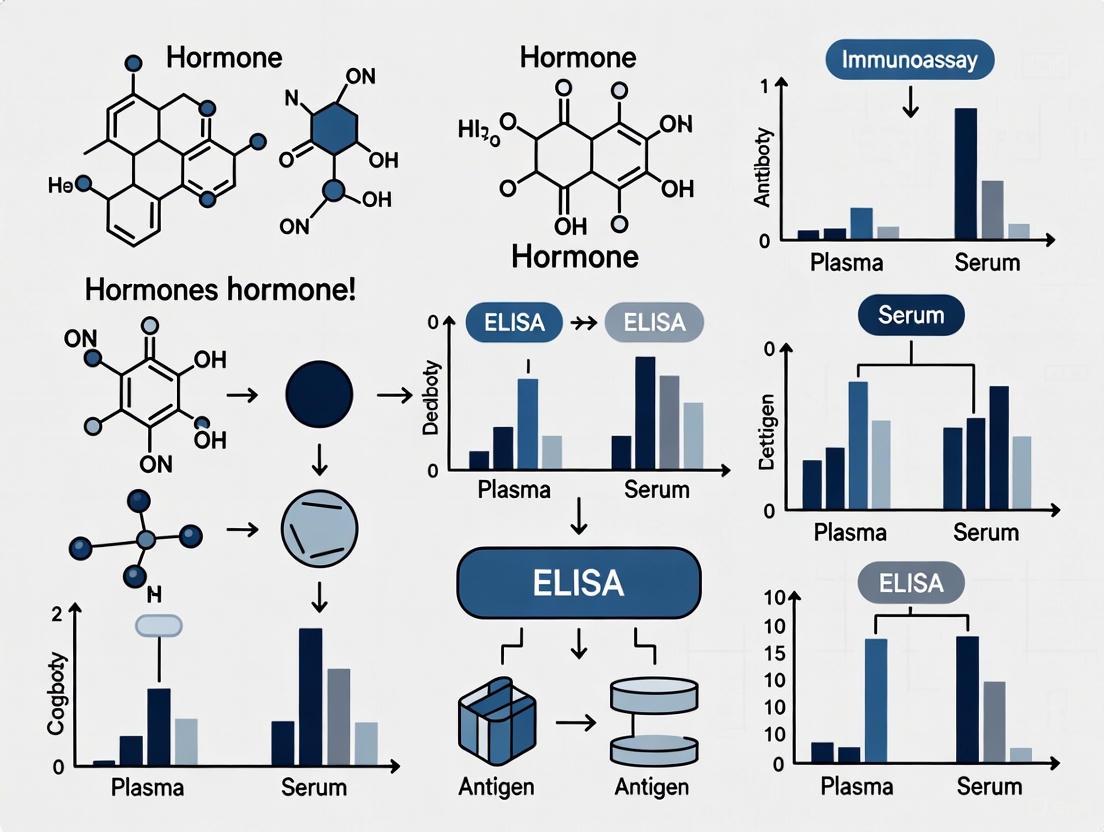
This article provides a critical analysis for researchers and drug development professionals on the use of immunoassay kits for hormone quantification in serum and plasma.
Immunoassay Kits for Hormone Measurement: A Comprehensive Guide to Plasma vs. Serum Analysis for Researchers
Abstract
This article provides a critical analysis for researchers and drug development professionals on the use of immunoassay kits for hormone quantification in serum and plasma. It explores the foundational principles of hormone immunoassays, examines methodological considerations for different sample matrices, addresses key troubleshooting and optimization challenges, and delivers a rigorous validation and comparative assessment against mass spectrometry. The scope synthesizes current research to guide assay selection, optimize protocol design, and enhance the accuracy and reproducibility of hormone data in both research and clinical translation.
The Foundation of Hormone Immunoassays: Principles, Pitfalls, and Market Dynamics
Immunoassays are foundational biochemical techniques that detect and quantify specific analytes—such as hormones, antibodies, pathogens, or tumor markers—within biological fluids including plasma, serum, urine, and saliva [1] [2]. These assays operate on the core principle of specific antigen-antibody binding, leveraging the high specificity of immunological reactions. The resulting complexes are detected and quantified through various signaling methods, including colorimetric, fluorescent, or chemiluminescent reactions [1]. In modern clinical and research laboratories, particularly in the critical field of hormone measurement, these techniques have evolved from manual Enzyme-Linked Immunosorbent Assay (ELISA) procedures to fully automated, high-throughput chemiluminescence immunoassay (CLIA) systems [2] [3]. This evolution is driven by the increasing demand for precise, sensitive, and rapid diagnostic results to support patient treatment, drug development, and clinical research [1] [2]. The transition to automation has significantly enhanced analytical performance, reducing human error and enabling faster turnaround times, which is crucial for both routine diagnostics and large-scale research studies comparing hormone levels in plasma and serum [2].
Core Principles and Methodologies
Fundamental Immunoassay Principles
At its core, every immunoassay depends on the specific molecular recognition between an antibody and its target antigen. The fundamental components required for these assays include a solid phase (such as a microtiter plate or magnetic microparticles) to immobilize the complex, a capture molecule (an antibody or antigen), a detection molecule conjugated to a reporter enzyme or label, and a detection system to measure the resulting signal [1] [4]. The measurable signal generated is directly or inversely proportional to the concentration of the analyte in the sample. A standard curve, generated from samples with known analyte concentrations, is essential for accurate interpolation of unknown sample values [1] [5].
ELISA: Types and Protocols
The Enzyme-Linked Immunosorbent Assay (ELISA) represents a versatile and widely adopted format for immunoassay detection. The following section outlines the major types of ELISA and their associated protocols.
Table 1: Comparison of Major ELISA Types and Their Characteristics
| ELISA Type | Core Principle | Advantages | Disadvantages | Typical Applications |
|---|---|---|---|---|
| Direct ELISA | Antigen is immobilized; a single enzyme-labeled primary antibody binds directly to the antigen. [5] | Simple, quick procedure with fewer steps; lower background noise. [5] | Lower sensitivity; limited to antigens that bind directly to antibodies. [5] | Screening antigens; rapid diagnostic tests. [5] |
| Indirect ELISA | Antigen is immobilized; an unlabeled primary antibody binds, followed by an enzyme-labeled secondary antibody. [1] [5] | Higher sensitivity due to signal amplification; versatile for detecting a wide range of antigens. [5] | More complex with an extra step; potential for nonspecific binding. [5] | Detecting serum antibodies; antibody titer determination. [1] [5] |
| Sandwich ELISA | A capture antibody is immobilized; the antigen binds, and a second, enzyme-labeled detection antibody completes the "sandwich". [5] [6] | High specificity and sensitivity; low interference; ideal for complex samples. [5] | Requires two specific antibodies against different epitopes; more technically demanding and costly. [5] | Quantifying biomarkers (e.g., cytokines, hormones) in serum/plasma. [5] [6] |
| Competitive ELISA | Sample antigen and labeled reference antigen compete for a limited number of antibody-binding sites. Signal is inversely proportional to analyte concentration. [1] [5] [6] | Effective for quantifying small molecules; flexible format. [5] | Generally less sensitive; requires careful optimization of conditions. [5] | Measuring small molecules (e.g., hormones, drugs). [5] [6] |
Detailed Protocol: Sandwich ELISA for Hormone Quantification
The sandwich ELISA is the preferred method for quantifying specific protein hormones (e.g., cortisol, testosterone) in plasma or serum due to its high specificity [5] [6].
Key Research Reagent Solutions:
- Solid Phase: 96-well microplate, typically composed of polystyrene or polyvinyl. [1]
- Coating Buffer: Carbonate-bicarbonate buffer (pH 9.6) or phosphate-buffered saline (PBS) for immobilizing the capture antibody. [1]
- Capture and Detection Antibodies: A matched antibody pair specific to unique epitopes on the target hormone.
- Blocking Buffer: 1-5% Bovine Serum Albumin (BSA) or casein in PBS to cover unsaturated binding sites on the solid phase and prevent nonspecific binding. [1]
- Wash Buffer: PBS or Tris-buffered saline (TBS) with a detergent such as 0.05% Tween 20 to remove unbound materials. [1]
- Enzyme Conjugate: Horseradish Peroxidase (HRP) or Alkaline Phosphatase (AP) linked to the detection antibody. [1]
- Substrate: Tetramethylbenzidine (TMB) for HRP (yields a blue product), or p-Nitrophenyl Phosphate (pNPP) for AP (yields a yellow product). [1]
- Stop Solution: 1M sulfuric acid (for TMB) or 1M sodium hydroxide (for pNPP) to terminate the enzyme-substrate reaction. [1]
Step-by-Step Workflow:
- Coating: Dilute the capture antibody in coating buffer and add to the microplate wells. Incubate for the recommended time (e.g., overnight at 4°C or 1-2 hours at 37°C). [1]
- Washing: Wash the plate 2-3 times with wash buffer to remove any unbound antibody.
- Blocking: Add blocking buffer to each well and incubate for 1-2 hours at room temperature to prevent nonspecific binding.
- Washing: Repeat the washing step.
- Sample/Antigen Addition: Add calibrators, quality controls, and prepared sample dilutions (e.g., plasma/serum) to the designated wells. Incubate to allow the target hormone to bind to the capture antibody.
- Washing: Wash thoroughly to remove any unbound antigen and other sample components.
- Detection Antibody Addition: Add the enzyme-conjugated detection antibody. Incubate to form the antibody-antigen-antibody "sandwich" complex.
- Washing: Perform a final wash to remove any excess, unbound detection antibody.
- Substrate Addition: Add the enzyme-specific substrate solution. Incubate in the dark for a defined period (typically 15-30 minutes) for colour development.
- Signal Detection: Add stop solution and measure the absorbance of the solution in each well immediately using a microplate reader at the appropriate wavelength (e.g., 450 nm for TMB). [1]
Diagram 1: Sandwich ELISA workflow for hormone quantification.
Chemiluminescence Immunoassay (CLIA) and Automation
Chemiluminescence Immunoassays represent a significant technological advancement over colorimetric ELISA. CLIA utilizes chemical reactions that produce light (luminescence) as the detectable signal, rather than a color change [3] [7]. This method offers superior sensitivity and a broader dynamic range, often exceeding 3-4 logs, which allows for the accurate quantification of analytes with very low or very high concentrations without the need for sample dilution [4]. The process involves a reaction where the enzyme conjugate (e.g., HRP or AP) catalyzes the conversion of a chemiluminescent substrate (e.g., acridinium ester or luminol derivatives), resulting in the emission of light measured as Relative Light Units (RLUs) by a luminometer [3].
The full potential of CLIA is realized through integration with automated immunoassay analyzers. These systems streamline the entire testing process, from sample and reagent handling to incubation, washing, and signal detection, within a single integrated platform [2]. Automation reduces manual hands-on time, minimizes human error, standardizes incubation times and temperatures, and provides a faster turnaround, making it ideal for high-volume clinical laboratories [2]. Modern automated CLIA systems can process hundreds of samples per hour, performing numerous tests simultaneously on a single sample [2].
Table 2: Performance Comparison: Traditional ELISA vs. Modern Chemiluminescence Platform
| Parameter | Traditional ELISA | Modern MSD/CLIA Platform |
|---|---|---|
| Sample Volume Requirement | 50–100 μL (per analyte) [4] | 10–25 μL (for multiple analytes) [4] |
| Multiplexing Capability | No [4] | Yes (up to 10 analytes simultaneously) [4] |
| Dynamic Range | 1–2 logs [4] | 3–4+ logs [4] |
| Assay Protocol | Multiple, complex wash steps [1] [5] | Typically 1-3 simple wash steps [4] |
| Throughput | Slow [4] | Rapid (up to 960 results in 1-3 min) [4] |
| Susceptibility to Matrix Effects | Yes [4] | Greatly Reduced [4] |
Critical Methodological Considerations for Hormone Assays
Cross-Reactivity and Specificity
A significant challenge in steroid hormone immunoassays is cross-reactivity, where structurally similar compounds interfere with the assay by binding to the antibody instead of the target hormone [8]. This can lead to clinically significant false positives or overestimation of hormone concentrations. For example, prednisolone and 6-methylprednisolone show high cross-reactivity with some cortisol assays, and certain anabolic steroids can cross-react with testosterone assays [8]. The risk is particularly high in conditions like 21-hydroxylase deficiency, where the accumulating precursor 21-deoxycortisol may cross-react in cortisol immunoassays [8]. Computational molecular similarity analysis can help predict potential cross-reactors, but rigorous empirical validation is essential [8]. For critical applications, more specific methods like Liquid Chromatography-Tandem Mass Spectrometry (LC-MS/MS) may be required to circumvent these limitations [8].
Assay Validation and Comparison
When implementing a new immunoassay or comparing results across different platforms, rigorous method validation is crucial. Key performance parameters must be evaluated:
- Precision: Assessed through intra-assay (within-run) and inter-assay (between-run) Coefficients of Variation (CV). For instance, automated CLIA platforms often demonstrate superior precision, with inter-assay CVs as low as 0.7-1.9%, compared to 6.2-13.5% for some manual ELISA kits. [9]
- Accuracy and Correlation: Studies comparing commercial assays for hormones like Anti-Müllerian Hormone (AMH) show that while different methods (e.g., from Beckman Coulter, Roche, Ansh Labs) are generally well-correlated, significant differences in calibration can lead to numerically different results. [9]
- Linearity and Dilution Recovery: The assay should demonstrate a linear response across the claimed measuring range, and patient samples diluted with assay diluent should recover expected values. [9]
- Sample Stability: Hormone stability under different storage conditions (e.g., fresh vs. frozen-thawed serum) must be verified, as it can impact results. [9]
Diagram 2: Key steps for immunoassay method validation.
Immunoassay technology has progressed remarkably from the manual, colorimetric ELISA to the sensitive, automated, and high-throughput chemiluminescence systems that dominate modern clinical and research laboratories. Understanding the core principles, advantages, and limitations of each format is paramount for selecting the appropriate technology. For hormone measurement in plasma and serum, factors such as sensitivity, dynamic range, specificity (particularly cross-reactivity), and throughput are critical considerations. While ELISA remains a versatile and widely used tool, especially in research settings, the shift toward automated CLIA platforms is undeniable, driven by their superior performance, efficiency, and reliability in supporting drug development, clinical diagnostics, and rigorous scientific research.
Molecular heterogeneity presents a significant challenge in the development and application of specific immunoassays for hormone and biomarker measurement. The presence of multiple molecular isoforms, metabolites, and post-translationally modified forms of a target analyte can substantially impact assay performance, leading to potential inaccuracies in clinical diagnostics and research. This application note explores the key sources of molecular heterogeneity affecting assay specificity, using specific examples from hormone measurement, and provides detailed protocols to identify, characterize, and mitigate these challenges within the context of plasma and serum comparison research.
The complexity of biological systems means that what is often considered a single analyte—such as growth hormone or anti-Müllerian hormone—actually comprises multiple variants with potentially different biological activities and immunoreactivities. These variants include splice isoforms, post-translational modifications, proteolytic fragments, and metabolic products, all of which may be recognized differently by various assay reagents [10] [11]. Understanding and accounting for this heterogeneity is crucial for developing reliable assays that accurately reflect the biological state being measured.
Isoforms and Genetic Variants
Growth Hormone (GH) provides a classic example of molecular heterogeneity arising from multiple sources. The human GH gene cluster contains two GH genes (GH1 or GH-N and GH2 or GH-V) in addition to genes encoding chorionic somatomammotropin [10]. Alternative mRNA splicing of the GH1 transcript yields two principal products: 22K-GH (the main pituitary form) and 20K-GH (comprising approximately 10% of circulating GH) [11]. These isoforms differ in their biological activities, with 20K-GH and GH-V demonstrating poor lactogenic activity compared to 22K-GH [10].
Anti-Müllerian Hormone (AMH) exhibits complexity through its proteolytic processing. AMH is synthesized as a pro-hormone that undergoes proteolysis to form a family of isoforms, including a 58 kDa N-terminal "pro-region" domain (AMHN) and a biologically active 12.5 kDa C-terminal domain (AMHC) [12]. These dimerize to form the 140 kDa AMHN,C hormone, which represents the most potent bioactive form [12]. Different commercial AMH assays target various parts of the hormone molecule, leading to variability in measurements depending on which isoforms are detected.
Table 1: Principal Isoforms of Key Hormones and Their Characteristics
| Hormone | Isoform | Origin | Key Features | Relative Abundance |
|---|---|---|---|---|
| Growth Hormone | 22K-GH | Pituitary (GH1 gene) | 191 amino acids; principal form | >90% of circulating GH [11] |
| 20K-GH | Alternative splicing of GH1 | 176 aa; deletion of residues 32-46; slower clearance | ~10% of circulating GH [11] | |
| GH-V | Placental (GH2 gene) | Tonic secretion during pregnancy | Rises during 2nd/3rd trimester [10] | |
| Anti-Müllerian Hormone | AMHN,C | Proteolytic cleavage | 140 kDa; most potent bioactive form | Primary active form [12] |
| AMHC | C-terminal homodimer | 12.5 kDa; less active than AMHN,C | Lower activity form [12] | |
| Vitamin K | K1 (Phylloquinone) | Plants, algae, cyanobacteria | Polyprenyl side chain; coagulation function | Main dietary form [13] |
| K2 (Menaquinone) | Bacterial production | Multiple menaquinone forms (MK-4) | Converted from K1 in tissues [13] |
Metabolites and Metabolic Interference
Metabolites can significantly influence assay performance, both through direct interference and by representing alternative forms of the target analyte. Vitamin K isoforms demonstrate how structurally similar molecules can exhibit different biological activities and present challenges for specific measurement. The vitamin K family includes K1 (phylloquinone), K2 (menaquinone, with multiple subforms), and K3 (menadione, a pro-vitamin) [13]. These isoforms show distinct structure-activity relationships, exemplified by their different lipid-reducing activities in zebrafish models, with EC50 values of 1.2 μM for K3 compared to 21.1 μM for K2, while K1 showed no activity up to 50 μM [13].
The matrix used for analysis (plasma vs. serum) introduces another layer of complexity due to differences in metabolite composition. A comprehensive metabolomic study comparing five blood matrices found significant differences in metabolite levels between plasma (with different anticoagulants) and serum [14]. For example, amino acids and their derivatives showed lower levels in plasma compared to serum, while other compounds were elevated in plasma [15]. These matrix effects must be considered when developing and validating assays, as they can substantially impact measured analyte concentrations.
Impact on Assay Performance and Specificity
Calibration and Standardization Challenges
The selection of appropriate calibrator material is crucial for accurate protein biomarker measurement but presents significant challenges due to molecular heterogeneity. Ideally, calibrator material should be structurally and functionally representative of the endogenous analyte found in clinical samples; however, this is often not achievable [16]. Key considerations include:
- Physicochemical properties of the endogenous analyte (monomer, dimer, trimer, etc.)
- Relevant isoforms, post-translational modifications, and cleavage products
- Expression system used for recombinant calibrator material (E. coli, insect cells, eukaryotic)
- Potential for misfolded proteins with altered bioactivity [16]
The lack of commutability of reference materials further complicates standardization. Commutability describes the equivalence of mathematical relationships between results of different measurement procedures for reference material and representative patient samples [12]. Without proper commutability, patient results may vary significantly depending on the assay used, even when standardized against the same reference material.
Antibody Specificity and Epitope Recognition
Differential recognition of molecular variants by assay antibodies represents a major source of variability between immunoassays. For growth hormone, the heterogeneous mixture of isoforms in blood is further complicated by differential recognition in various immunoassays [10]. While assays specific for 22K-GH, 20K-GH, and GH-V have been developed, most commercial assays measure a mixture of isoforms with differences in affinity [11].
This challenge is equally relevant for AMH measurement, where commercial assays utilize different antibody pairs targeting various parts of the hormone molecule [12]. Since different bioactive forms of AMH exist, the choice of antibody pairs determines which isoforms are detected and measured, potentially leading to discrepancies between assays in their clinical correlations.
Experimental Protocols for Characterization
Protocol 1: Comprehensive Isoform Characterization
Objective: To identify and characterize multiple molecular isoforms of a target protein in biological samples.
Materials:
- Reference standard materials for principal isoforms (e.g., WHO Reference Reagents) [12]
- Immunoassay systems with documented specificity for different epitopes
- LC-MS/MS system with appropriate chromatographic columns
- Biological samples (serum, plasma) with appropriate collection tubes [14]
Procedure:
- Sample Preparation: Collect paired serum and plasma samples (using various anticoagulants) from the same donors [14]. Process samples within 2 hours of collection, with centrifugation at 1500-2000 × g for 15 minutes at 4°C. Aliquot and store at -80°C.
- Parallel Immunoassay Analysis: Analyze all samples using at least two different immunoassay platforms with documented differences in isoform recognition. Include calibrators traceable to international standards where available.
- Chromatographic Separation: Perform liquid chromatography using appropriate stationary phases to separate isoforms based on physicochemical properties. For growth hormone isoforms, consider size-exclusion chromatography to separate monomers, dimers, and oligomers [11].
- Mass Spectrometric Analysis: Utilize high-resolution mass spectrometry to identify different molecular forms. For vitamin K isoforms, use LC-HR-ESI-MS with MS/MS fragmentation to confirm identification [13].
- Data Analysis: Compare isoform patterns across different sample types (serum vs. plasma), and correlate immunoassay results with specific isoforms quantified by MS.
Protocol 2: Metabolite Interference Assessment
Objective: To evaluate the impact of metabolites and matrix effects on assay performance.
Materials:
- Targeted metabolomics platform analyzing 150+ metabolites [15]
- UPLC system coupled to triple quadrupole mass spectrometer
- Stable isotope-labeled internal standards
- Quality control materials (pooled human serum/plasma)
Procedure:
- Sample Collection: Collect fasting blood samples from healthy volunteers representing both sexes and relevant age groups [15]. Use multiple collection tubes (serum, EDTA plasma, heparin plasma, citrate plasma) from each donor.
- Metabolite Extraction: Add 50 μL of sample to 50 μL of spiking solution (containing stable isotope-labeled standards) and 250 μL of HPLC-grade methanol. Vortex, store at -20°C for 20 minutes, then centrifuge at 14,000 rpm for 20 minutes. Collect 150 μL of supernatant for analysis [15].
- LC-MS/MS Analysis: Perform chromatographic separation using HILIC or reverse-phase columns. Use multiple reaction monitoring (MRM) for targeted metabolite quantification.
- Data Processing: Normalize metabolite levels using internal standards. Identify metabolites showing significant differences between matrices using paired t-tests with false discovery rate correction.
- Correlation Analysis: Assess correlation between metabolite levels and immunoassay results across different matrices to identify potential interferents.
Table 2: Key Metabolites Showing Matrix-Dependent Variations
| Metabolite Class | Specific Metabolites | Direction of Change | Potential Impact on Assays |
|---|---|---|---|
| Amino acids & derivatives | Multiple compounds | Lower in plasma vs. serum [15] | May affect protein-binding interactions |
| Nitrogen-containing compounds | Various metabolites | Higher in males vs. females [15] | Sex-specific reference ranges needed |
| Glycerophospholipids | Multiple species | Altered by vitamin K isoforms [13] | May influence membrane-associated assays |
| Vitamin K isoforms | K1, K2, K3, OH-PhQ | Different bioactivities [13] | Varied recognition in vitamin K assays |
The Scientist's Toolkit: Research Reagent Solutions
Table 3: Essential Reagents and Materials for Heterogeneity Research
| Reagent/Material | Function/Application | Key Considerations |
|---|---|---|
| WHO International Reference Reagents | Calibrator traceability | Ensure commutability with patient samples [12] [16] |
| Isotope-labeled internal standards | Metabolite quantification | Correct for extraction efficiency and matrix effects [15] |
| Multiple anticoagulant tubes | Matrix comparison studies | Assess interference from different additives [14] |
| Isoform-specific antibodies | Epitope mapping | Characterize antibody recognition patterns [11] |
| Recombinant protein isoforms | Assay calibrators | Should represent endogenous forms [16] |
| Stable cell lines | Protein expression | Produce reference materials with proper PTMs [16] |
Strategic Recommendations for Mitigation
Assay Development and Validation
To address molecular heterogeneity in assay development, adopt a comprehensive characterization approach that includes:
- Epitope Mapping: Systematically map antibody recognition sites to understand which isoforms and variants are detected [11].
- Commutability Assessment: Validate that calibrators behave similarly to native patient samples across the measuring range [12] [16].
- Cross-Platform Comparison: Evaluate assay performance against multiple measurement platforms, including LC-MS/MS reference methods where available.
Standardization and Harmonization
Achieving consistent measurement across platforms and laboratories requires:
- Adoption of International Standards: Use WHO Reference Reagents where available to establish traceability [12].
- Commutable Quality Control Materials: Implement QC materials that demonstrate performance comparable to patient samples.
- Harmonized Reporting: Establish consensus on medical decision points that account for isoform heterogeneity [11].
For growth hormone measurement, the recommendation is to use 22K-GH specific assays calibrated against the pure 22K-GH reference preparation 98/574 to improve diagnosis and facilitate comparison of results between laboratories [11]. Similar approaches should be developed for other heterogenous analytes.
Molecular heterogeneity in the forms of isoforms, metabolites, and post-translational modifications significantly impacts the specificity and performance of immunoassays. Navigating this complexity requires a systematic approach to assay development, validation, and standardization. By understanding the specific sources of heterogeneity for each analyte, implementing comprehensive characterization protocols, and adopting appropriate reference systems, researchers and clinicians can improve the accuracy and reliability of hormone and biomarker measurements. The protocols and strategies outlined in this application note provide a framework for addressing these challenges in both research and clinical settings.
The global immunoassay market is experiencing significant expansion, driven by increasing diagnostic needs and technological advancements. Immunoassays, which are diagnostic tests that detect target analytes via antibody-antigen interactions, remain foundational tools in clinical laboratories and point-of-care settings for detecting proteins, hormones, drugs, and infectious agents [17].
This market encompasses various products, including reagents and kits, analyzers/instruments, and software services, with diverse applications across infectious diseases, endocrinology, oncology, and other clinical areas [18] [19].
Quantitative Market Projections
Table 1: Global Immunoassay Market Size and Growth Projections
| Source/Region | Base Year/Value | Projection Year/Value | Compound Annual Growth Rate (CAGR) |
|---|---|---|---|
| Global Market (Multiple Sources) | |||
| MarketsandMarkets [18] | USD 35.53 billion (2025) | USD 47.76 billion (2030) | 6.1% (2025-2030) |
| Future Market Insights [19] | USD 34.2 billion (2025) | USD 55.6 billion (2035) | 5.0% (2025-2035) |
| Wissen Research [20] | USD 31.6 billion (2024) | USD 44.8 billion (2030) | 6.0% (2025-2030) |
| Statifacts [21] | USD 32,820 million (2024) | USD 53,970 million (2034) | 5.1% (2024-2034) |
| Regional Markets | |||
| U.S. Market [22] | USD 9.43 billion (2025) | USD 14.22 billion (2034) | 4.93% (2025-2034) |
| Clinical Immunoassay Analyzer Segment [23] | USD 10.59 billion (2025) | USD 20.93 billion (2033) | 12.02% (2026-2033) |
Key Market Growth Drivers
Several interconnected factors are propelling the immunoassay market forward:
- Rising Disease Prevalence: The increasing incidence of chronic diseases (cancer, diabetes, cardiovascular disorders) and infectious diseases creates growing demand for accurate diagnostic and monitoring solutions [18] [20].
- Aging Demographics: The growing global geriatric population requires more frequent health monitoring and disease screening, driving immunoassay adoption [20].
- Technological Advancements: Innovations in automation, miniaturization, multiplexing, and biomarker discovery are enhancing immunoassay capabilities and applications [17].
- Point-of-Care Testing Expansion: Decentralized testing demand continues to rise, fueled by the need for rapid results in clinical settings and home-based testing [18] [20].
- Healthcare Infrastructure Development: Emerging economies, particularly in the Asia-Pacific region, are investing heavily in healthcare infrastructure, increasing access to diagnostic technologies [19].
Key Market Players and Competitive Landscape
The immunoassay market features a competitive landscape with established global players and innovative newcomers. These companies compete through product innovation, strategic partnerships, and geographic expansion.
Table 2: Leading Companies in the Global Immunoassay Market and Their Specializations
| Company | Key Platforms/Technologies | Specializations/Strengths |
|---|---|---|
| Abbott Laboratories | Architect and Alinity immunoassay platforms, Abbott Prism | Automated analyzers, high-throughput testing, blood screening, broad test menu [24] [19] |
| F. Hoffmann-La Roche Ltd. | Cobas series analyzers, Elecsys immunoassays | High-throughput automated systems, integrated solutions, oncology and infectious disease testing [18] [24] |
| Danaher Corporation | Beckman Coulter immunoassay systems | Laboratory automation, consistent assay performance, reduced turnaround time [18] [19] |
| Siemens Healthineers AG | ADVIA Centaur, Atellica platforms | Fully automated, high-throughput immunoassay platforms, advanced analytics integration [18] [24] |
| Thermo Fisher Scientific Inc. | Comprehensive suite of immunoassay systems, reagents, and consumables | Broad portfolio supporting both research and clinical testing, global reach [24] [19] |
| Bio-Rad Laboratories, Inc. | ELISA kits, Western blotting solutions, Bio-Plex assays | Strong presence in research reagents, multiplexing capability, reliable clinical results [18] [24] |
| bioMérieux S.A. | Comprehensive immunoassay solutions | Infectious disease, oncology, and toxicology applications, chemiluminescent detection expertise [24] [19] |
| Sysmex Corporation | Hematology and immunoassay diagnostics | Data-driven workflow integration, high-sensitivity testing [24] [19] |
| QuidelOrtho Corporation | Rapid immunoassay diagnostics | Point-of-care and laboratory-based solutions, infectious disease, cardiology applications [24] |
Technological Trends and Innovations
The immunoassay industry is undergoing significant technological transformation, enhancing diagnostic capabilities across healthcare settings.
Dominant Technology Platforms
- Enzyme-Linked Immunosorbent Assay (ELISA): Maintains significant market share due to its high sensitivity, specificity, standardized protocols, cost-effectiveness, and compatibility with high-throughput laboratories [18] [20].
- Chemiluminescence Immunoassay (CLIA): Gaining traction due to enhanced sensitivity, automation capabilities, and broad dynamic range [18] [21].
- Rapid Tests and Lateral Flow Immunoassays: Experiencing accelerated growth driven by point-of-care testing demand, low cost, and ease of use [17] [21].
- Fluorescent Immunoassays (FIA) and Multiplexing Technologies: Enabling simultaneous detection of multiple analytes, improving efficiency for complex diagnostic panels [18] [20].
Emerging Technological Innovations
- Automation and High-Throughput Systems: Laboratories are increasingly adopting fully automated systems that improve workflow efficiency, reduce manual errors, and enhance reproducibility [23] [18].
- Miniaturization and Microfluidics: Development of compact, portable devices enabling point-of-care testing with reduced sample and reagent requirements [24] [17].
- Digital Integration and Artificial Intelligence: Incorporation of AI algorithms for data analysis, quality control, and result interpretation, enhancing diagnostic accuracy and operational efficiency [25] [21].
- Advanced Detection Technologies: Innovations in ultra-sensitive detection platforms, such as Quanterix's digital immunoassay technology, enabling measurement of previously undetectable low-abundance biomarkers [24].
- Multiplexed Assay Panels: Growing adoption of tests that simultaneously measure multiple biomarkers, particularly valuable in oncology, autoimmune diseases, and infectious disease profiling [25] [20].
Application in Hormone Measurement: Research Context and Methodologies
Immunoassays play a crucial role in hormone measurement research, providing valuable tools for quantifying steroid hormones and other biomarkers in plasma and serum samples.
Comparison of Hormone Measurement Platforms
Table 3: Comparison of Immunoassay and LC-MS/MS Methods for Hormone Measurement
| Parameter | Automated Immunoassays (AIAs) | Liquid Chromatography-Tandem Mass Spectrometry (LC-MS/MS) |
|---|---|---|
| Throughput | High-throughput, rapid data turnaround [26] | Moderate throughput, though improving with automation |
| Cost Considerations | Lower instrument costs (<$100,000), reasonably priced reagents [26] | High instrument costs (>$600,000), expensive consumables and maintenance [26] |
| Specificity | Potential cross-reactivity with structurally similar compounds [26] | High specificity and selectivity for individual steroids [26] |
| Multiplexing Capability | Generally single-analyte measurements | Ability to simultaneously analyze multiple steroids [26] |
| Sample Volume | Moderate requirements (e.g., 275μl for E2, P4, and T combined) [26] | Often smaller sample volumes required [26] |
| Technical Expertise | Minimal specialized training required | Significant technical expertise needed [26] |
| Performance Characteristics | Excellent agreement with LC-MS/MS for E2 and P4 in most ranges; may overestimate E2 at >140 pg/ml and underestimate P4 at >4 ng/ml [26] | Reference method with high accuracy; particularly superior for testosterone measurements where AIA consistently underestimates concentrations [26] |
Experimental Protocol: Automated Immunoassay for Steroid Hormone Measurement
Principle: Competitive electrochemiluminescence immunoassay (ECLIA) for quantitative determination of 17β-estradiol (E2), progesterone (P4), and testosterone (T) in serum samples [26].
Materials and Reagents:
- Roche cobas e411 analyzer or equivalent automated platform [26]
- Elecsys Estradiol Gen III, Progesterone Gen III, and Testosterone Gen II assay reagents (Roche Diagnostics) [26]
- Serum samples (minimum 275μl for E2, P4, and T combined) [26]
- Calibrators and quality control materials
Procedure:
- Sample Preparation: Collect blood samples and allow to clot. Centrifuge at appropriate speed to separate serum. Aliquot and store frozen at -20°C if not testing immediately [26].
- Instrument Setup: Load reagents, calibrators, and controls according to manufacturer specifications. Perform system calibration as required [26].
- Sample Loading: Place sample tubes in the analyzer rack. The system automatically pipettes required volumes (35μl for E2, 30μl for P4, 20μl for T) [26].
- Immunoassay Reaction:
- The system adds specific biotinylated monoclonal antibodies to the samples, forming antigen-antibody complexes [26].
- Streptavidin-coated microparticles and ruthenium-complex-labeled hormone derivatives are added, binding to available antibody sites [26].
- The complete complex binds to the solid phase via biotin-streptavidin interaction [26].
- Measurement: The reaction mixture is aspirated into the measuring cell where microparticles are magnetically captured onto the electrode surface. Unbound substances are removed. Application of voltage induces chemiluminescent emission, measured by a photomultiplier [26].
- Data Calculation: Results are determined via a two-point calibration curve and manufacturer-provided master curve referenced through reagent barcode [26].
Performance Characteristics:
- Assay ranges: E2 (25-3000 pg/ml), P4 (0.2-60 ng/ml), T (0.12-15 ng/ml) [26]
- Lower limit of quantification: E2 (25 pg/ml), P4 (0.2 ng/ml), T (0.12 ng/ml) [26]
- Limit of detection: E2 (5 pg/ml), P4 (0.05 ng/ml), T (0.025 ng/ml) [26]
Research Reagent Solutions for Hormone Immunoassays
Table 4: Essential Research Reagents for Hormone Immunoassay Applications
| Reagent/Material | Function | Examples/Specifications |
|---|---|---|
| Specific Antibodies | Bind target hormones with high specificity; determine assay sensitivity and specificity | Monoclonal or polyclonal antibodies with minimal cross-reactivity to structurally similar compounds [26] |
| Labeled Tracers | Enable detection and quantification of antibody-antigen interactions | Ruthenium complex-labeled derivatives (ECLIA), enzyme conjugates (ELISA), radioactive labels (RIA) [26] |
| Solid Phase Systems | Provide surface for antibody immobilization and separation of bound/free analytes | Streptavidin-coated microparticles, magnetic beads, microtiter plates [26] |
| Calibrators and Standards | Establish reference curve for quantitative measurements | Certified reference materials with known concentrations, matrix-matched to samples [26] |
| Quality Control Materials | Monitor assay performance and reproducibility | Pooled serum samples with low, medium, and high hormone concentrations [26] |
| Assay Buffers and Diluents | Optimize reaction conditions and minimize non-specific binding | Buffer systems with appropriate pH, ionic strength, and blocking agents [26] |
Regional Market Analysis and Future Outlook
The immunoassay market demonstrates distinct regional variations in growth patterns and adoption rates:
- North America: Maintains dominant market position (approximately 35% share in 2025) driven by advanced healthcare infrastructure, high adoption of innovative technologies, and strong presence of key market players [19] [22]. The U.S. market specifically is projected to grow from USD 9.43 billion in 2025 to USD 14.22 billion by 2034 [22].
- Europe: Represents a well-established market with Germany, United Kingdom, Italy, and France as key contributors. Characterized by stringent regulatory standards and growing adoption of automated systems [23].
- Asia-Pacific: Emerging as the fastest-growing region due to expanding healthcare infrastructure, government investments in healthcare, large population base, and increasing awareness of advanced diagnostics [19] [20]. Countries like China and India are particularly significant growth markets.
- Latin America and Middle East & Africa: Showing gradual market growth driven by improving economic conditions, rising healthcare accessibility, and increasing disease prevalence [18].
The future immunoassay market will be shaped by several converging trends: increased adoption of multiplexed testing platforms, growing integration of artificial intelligence for data analysis and interpretation, expansion of point-of-care testing in decentralized settings, development of novel biomarkers for precision medicine applications, and continued emphasis on cost-effective diagnostic solutions, particularly in emerging markets [25] [20] [17]. These advancements will further solidify the position of immunoassays as indispensable tools in both clinical diagnostics and research applications, particularly in hormone measurement and related biomedical fields.
For researchers conducting hormone measurements, the choice between serum and plasma as a sample matrix is a critical pre-analytical consideration with profound implications for data quality and interpretation. While both are derived from blood, their fundamental differences in composition, influenced by the collection method and processing, can significantly impact assay performance. Within the context of immunoassay-based hormone measurement, understanding these distinctions is paramount for ensuring accurate, reproducible, and biologically relevant results. This note details the inherent properties of each matrix, evaluates their performance in analytical assays, and provides standardized protocols to guide selection and processing within a research and drug development framework.
Fundamental Definitions and Compositional Differences
The primary distinction between serum and plasma lies in the presence or absence of clotting factors.
- Plasma is the liquid portion of blood that remains when clotting is prevented. Blood is collected into tubes containing an anticoagulant (e.g., EDTA, heparin, citrate), immediately mixed, and centrifuged to remove blood cells. Consequently, plasma retains the full complement of proteins present in circulating blood, including clotting factors such as fibrinogen [27]. In simple terms, plasma represents the in vivo state of blood more completely.
- Serum is the liquid portion of blood after clotting has occurred. Blood is collected without anticoagulant, allowed to clot at room temperature (typically 30–60 minutes), and then centrifuged to remove the clot and blood cells. This process consumes clotting factors like fibrinogen and traps them in the clot, thereby depleting them from the serum [27].
The clotting process itself introduces additional variables. During clot formation, platelets and white blood cells can become activated and release various intracellular components, such as hormones, cytokines, and growth factors, into the serum. A notable example is vascular endothelial growth factor (VEGF), which can be ~6-fold higher in serum than in plasma due to platelet release, a difference attributable purely to the pre-analytical matrix preparation and not to biology [27]. This can lead to artifactual elevations of certain analytes in serum.
Table 1: Core Differences Between Serum and Plasma Matrices
| Characteristic | Plasma | Serum |
|---|---|---|
| Definition | Liquid portion of unclotted blood | Liquid portion of clotted blood |
| Clotting Factors | Present (e.g., fibrinogen) | Largely absent or significantly reduced |
| Preparation Time | Short (no clotting wait) | Longer (requires 30-60 min clotting time) |
| Cellular Release | Minimal (if processed promptly) | Significant (platelet degranulation) |
| Key Pre-Analytical Advantage | More controlled and consistent processing | N/A |
| Key Pre-Analytical Concern | Potential anticoagulant interference | Variability in clot formation and composition |
Impact on Hormone Measurement and Analytical Performance
The choice of matrix directly influences the quantitative results of hormone measurements, particularly when using immunoassays. The compositional differences can affect assay specificity, accuracy, and precision.
Matrix-Specific Biases in Immunoassays
Immunoassays can be susceptible to matrix effects, where components of the sample interfere with the antibody-antigen interaction. Automated immunoassays (AIAs) can show excellent agreement with more specific methods like liquid chromatography–tandem mass spectrometry (LC-MS/MS) for some hormones but not others. For instance, a study on rhesus macaques showed that while AIA and LC-MS/MS had excellent agreement for 17β-estradiol (E2) and progesterone (P4), AIA consistently underestimated testosterone concentrations relative to LC-MS/MS [26]. This highlights that inaccuracy is both analyte-specific and method-dependent.
Furthermore, the clotting process in serum generation can alter the concentration of protein-binding partners for hormones. This shift in the binding protein profile can affect the amount of free hormone available for detection in some assay formats, potentially leading to discrepancies between serum and plasma measurements of the same individual.
Validation for Specific Species and Matrices
It is critical to validate an immunoassay for the specific matrix and species being studied, as commercial kits are often optimized for human serum. For example, a chemiluminescent immunoassay for progesterone was successfully validated for both cattle serum and plasma, with performance metrics meeting acceptance criteria. However, the study noted that the serum matrix demonstrated greater accuracy than plasma for this particular assay and species [28]. Similarly, an enzyme immunoassay for testosterone in green iguanas required rigorous validation, including parallelism and recovery tests, to ensure reliable measurement in the non-mammalian matrix [29]. These examples underscore that the optimal matrix (serum vs. plasma) may not be universal and must be determined empirically for each research context.
Table 2: Comparative Performance of Hormone Assays Across Different Matrices and Methods
| Analyte | Species | Assay Method | Key Finding (Serum vs. Plasma) | Source |
|---|---|---|---|---|
| Progesterone | Cattle | Automated Chemiluminescent IA | Serum matrix was more accurate than plasma. Within-run CV <5%. | [28] |
| Testosterone | Green Iguana | Enzyme Immunoassay (EIA) | Method validated for plasma; accuracy 82±6%, precision CV <15%. | [29] |
| 17β-Estradiol, Progesterone | Rhesus Macaque | Automated IA vs. LC-MS/MS | Good agreement between IA and LC-MS/MS; AIA overestimated E2 at >140 pg/mL. | [26] |
| Testosterone | Rhesus Macaque | Automated IA vs. LC-MS/MS | AIA consistently underestimated concentrations vs. LC-MS/MS. | [26] |
| Broad Metabolites | Human | Quantitative LC-MS | Minimal differences between serum and plasma; only sarcosine and pyruvic acid differed. | [30] |
Pre-Analytical Workflows and Standard Operating Procedures
Variability in pre-analytical handling is a major source of error in hormone measurement. Standardizing protocols is essential for data integrity.
Sample Collection and Processing
The following workflow outlines the critical decision points and steps for proper sample collection and processing.
Diagram Title: Blood Sample Processing Workflow
Critical Pre-Analytical Factors
Adherence to strict timing and temperature controls during processing is non-negotiable for metabolite and hormone stability.
- Time and Temperature: Time and temperature showed the strongest influence on the integrity of plasma and serum metabolomes and proteomes [31]. For combined analysis, a compromise is to keep blood samples on ice (4°C) for up to 2 hours prior to processing and snap-freezing [31]. Leaving samples at room temperature for extended periods (e.g., 4-8 hours) leads to significant degradation and alteration of analytes [32] [31].
- Freeze-Thaw Cycles: Multiple freeze-thaw cycles can degrade labile hormones and should be minimized. Aliquoting samples is recommended to avoid repeated freezing and thawing [32].
- Hemolysis: Hemolysis can release intracellular components and interfere with many immunoassays, leading to inaccurate results. It is crucial to avoid rough handling during collection and processing.
The Scientist's Toolkit: Essential Research Reagents and Materials
Table 3: Key Reagent Solutions for Serum and Plasma Hormone Analysis
| Item | Function/Description | Application Note |
|---|---|---|
| EDTA Tubes | Anticoagulant that chelates calcium to prevent clotting. | Preferred for plasma proteomics; minimizes ex vivo alterations. [27] |
| Heparin Tubes | Anticoagulant that activates antithrombin III. | Used for plasma collection; can interfere in some MS-based assays. |
| Serum Tubes | Tube without anticoagulant, may contain clot activator. | Standard for many clinical chemistry assays; requires defined clotting time. [27] |
| Certified Reference Material | Pure, certified analyte for calibration and spiking. | Essential for assay validation (accuracy/recovery tests). E.g., Progesterone, 1.0 mg/mL in acetonitrile. [28] |
| Stable Isotope-Labeled Standards | Internal standards for MS (e.g., deuterated hormones). | Corrects for matrix effects and losses in sample preparation; ensures quantification accuracy. [33] |
| Automated Immunoassay System | Platform for high-throughput hormone analysis (e.g., IMMULITE, Roche cobas). | Provides rapid turnaround; requires thorough method validation for non-human species. [26] [28] |
The decision to use serum or plasma for hormone measurement is not trivial and requires strategic consideration. Based on the current evidence, plasma is generally recommended for discovery-phase research and proteomic/metabolomic studies due to its more complete representation of the in vivo proteome, more controlled processing, and lower pre-analytical variability [30] [27]. However, the choice must be guided by the specific analyte, assay, and species.
For any study, the following are imperative:
- Consistency: Use the same matrix type throughout a study to ensure comparability of results.
- Validation: Rigorously validate the immunoassay for the chosen matrix and species, assessing parallelism, recovery, precision, and accuracy.
- Standardization: Implement and meticulously document a strict SOP for sample collection, processing, and storage to minimize pre-analytical variation. By carefully considering the fundamental differences between serum and plasma and adhering to robust pre-analytical practices, researchers can ensure the reliability and interpretability of their hormone data.
Methodological Strategies for Accurate Hormone Quantification in Serum and Plasma
Accurate hormone measurement is foundational to endocrine research, clinical diagnostics, and drug development. The selection of an appropriate assay kit is a critical decision that directly impacts data reliability, reproducibility, and experimental conclusions. This guide provides a structured approach to kit selection across different hormone classes, focusing on methodological comparisons, sample considerations, and experimental validation protocols essential for researchers and drug development professionals.
Immunoassays remain the predominant technology for hormone quantification due to their sensitivity, specificity, and high-throughput capabilities. However, significant methodological differences exist between assay formats, platforms, and manufacturers that can substantially impact results [34] [35] [36]. Understanding these variables within the context of your specific hormone targets and experimental requirements is essential for generating valid, reproducible data.
Fundamental Assay Format Considerations
Immunoassay Types and Their Applications
The selection of an appropriate immunoassay format depends on the molecular characteristics of the target hormone and the required sensitivity and specificity.
Table 1: Immunoassay Formats and Their Applications in Hormone Measurement
| Assay Format | Principle | Optimal Use Cases | Advantages | Limitations |
|---|---|---|---|---|
| Competitive ELISA | Labeled and unlabeled antigens compete for limited antibody binding sites [37]. | Small molecules (steroid hormones, thyroid hormones) [38] [37]. | Suitable for low molecular weight antigens; no need for two distinct epitopes. | Inverse signal relationship; generally lower dynamic range. |
| Sandwich ELISA | Capture and detection antibodies bind to different epitopes on the target antigen [37]. | Large proteins with multiple epitopes (ACTH, FSH, LH) [34]. | High specificity and sensitivity; broad dynamic range. | Requires larger antigens with multiple epitopes. |
| Chemiluminescence Immunoassay (CLIA) | Uses enzyme-labeled antibodies that produce light as a detectable signal [35] [36]. | High-throughput clinical testing (cortisol, aldosterone) [35] [36]. | Enhanced sensitivity over colorimetric detection; wider dynamic range. | Requires specialized instrumentation for luminescence detection. |
| Bead-Based Multiplex Immunoassays | Antibody-coated beads distinguished by color or size enable multiple analyte detection [37]. | Cytokine panels, hormone profiling in limited samples. | Multiplexing capability; reduced sample volume requirement. | Potential for cross-reactivity; complex data analysis. |
Sample Type Selection: Serum vs. Plasma
The choice between serum and plasma can significantly impact hormone measurement results due to differences in matrix composition.
- Matrix Composition Differences: Serum lacks clotting factors present in plasma, which can affect analyte stability and antibody binding [39]. Plasma collection avoids the clotting process, potentially reducing variability and protein degradation [39].
- Practical Considerations: For SARS-CoV-2 antibody detection, serum and plasma demonstrate strong correlation and can be used interchangeably [40]. However, for proteomic applications, plasma is generally recommended due to more consistent protein composition and reduced platelet-derived protein contamination [39].
- Hormone-Specific Considerations: Certain hormones, particularly various tau forms and Aβ peptides, consistently appear at lower levels in serum likely due to protein loss during clotting [39]. Researchers should consult literature specific to their target analyte when choosing between serum and plasma.
Method-Specific Performance Characteristics
Comparative Performance Across Platforms
Substantial evidence demonstrates significant variability in hormone measurement across different analytical platforms, which must be considered when selecting assays.
Table 2: Method Comparison Studies for Hormone Assays
| Hormone | Comparison | Key Findings | Clinical/Research Implications |
|---|---|---|---|
| Adrenocorticotropic Hormone (ACTH) | Roche vs. Siemens immunoassays in 602 specimens [34]. | 9.3% of specimens showed >50% difference between methods; Siemens generally yielded higher results (89.2% of outliers) [34]. | Method-specific reference ranges needed; caution interpreting abnormally high ACTH with Siemens assay. |
| Urinary Free Cortisol (UFC) | Four immunoassays (Autobio, Mindray, Snibe, Roche) vs. LC-MS/MS [35]. | All immunoassays showed strong correlation with LC-MS/MS (Spearman r=0.950-0.998) but with proportional positive bias [35]. | Immunoassays reliable for CS diagnosis but require method-specific cut-offs (178.5-272.0 nmol/24h). |
| Aldosterone | CLIA (Mindray, Liaison) vs. LC-MS/MS in patients with varying renal function [36]. | CLIA overestimated PAC vs. LC-MS/MS; overestimation exacerbated with declining eGFR (46.4% to 74.9% for Mindray) [36]. | LC-MS/MS preferred for patients with renal impairment; CLIA results in this population require cautious interpretation. |
| Testosterone | ELISA for multiple sample types [38]. | Suitable for extracted serum, plasma, fecal extracts, urine, and tissue culture media with sensitivity of 15.2 pg/mL [38]. | Versatile platform for research applications across diverse biological matrices. |
Limitations and Interference Considerations
Immunoassays are susceptible to various interference factors that can compromise result accuracy:
- Heterophilic Antibody Interference: Human anti-mouse antibodies (HAMA) or other heterophilic antibodies can cause falsely elevated or decreased hormone measurements [34]. Absorption experiments or dilution tests can help identify this interference [34].
- Cross-Reactivity: Antibodies may cross-react with structurally similar compounds or metabolites, particularly problematic for steroid hormone assays [36]. Review manufacturer cross-reactivity data before kit selection.
- Matrix Effects: Complex biological matrices can enhance or suppress immunoassay signal [41]. Recovery experiments (typically 80-120% acceptable) should be performed to validate kit compatibility with your specific sample matrix [41].
- Hook Effect: In sandwich immunoassays, extremely high antigen concentrations can saturate both capture and detection antibodies, leading to artificially low results [42]. Sample dilution linearity experiments can identify this phenomenon.
Hormone Class-Specific Recommendations
Protein and Peptide Hormones
Protein and peptide hormones (e.g., ACTH, PTH, insulin, FSH, LH) require specific considerations for accurate measurement:
- Recommended Format: Sandwich immunoassays are preferred due to their high specificity and ability to detect intact molecules [34] [37].
- Sample Stability Considerations: ACTH is particularly susceptible to preanalytical degradation [34]. Plasma samples should be processed promptly (within 2 hours) and stored at -80°C in low-protein-binding tubes.
- Platform-Specific Discordance: As demonstrated with ACTH measurements, different immunoassay platforms can yield clinically significant differences [34]. When changing methods, establish method-specific reference ranges.
- Specificity Requirements: Ensure the selected assay detects the specific isoform of interest, as some hormones circulate in multiple forms (e.g., intact PTH vs. fragments).
Steroid Hormones
Steroid hormones (e.g., cortisol, aldosterone, testosterone, estradiol) present unique challenges due to their small size and structural similarities:
- Recommended Format: Competitive immunoassays are necessary due to the small molecular size and single epitope [38] [37].
- Extraction Considerations: For urinary free cortisol, some protocols still recommend organic solvent extraction to improve specificity, though newer direct immunoassays show good correlation with LC-MS/MS [35].
- Matrix-Specific Validation: For testosterone measurement in feces or urine, extensive validation is required to address matrix effects [38].
- Technical Replication: Due to the lower dynamic range of competitive assays, increased technical replication (duplicates or triplicates) is recommended.
Special Considerations for Challenging Populations
Certain physiological conditions can significantly impact hormone assay performance:
- Renal Impairment: As demonstrated with aldosterone measurements, declining glomerular filtration rate can exacerbate overestimation by immunoassay [36]. In patients with eGFR <30 mL/min/1.73m², LC-MS/MS is strongly preferred for steroid hormone measurement.
- Pregnancy: Hormone concentrations during pregnancy often exceed normal reference ranges, potentially exceeding the analytical measurement range of standard assays.
- Pediatric Populations: Many hormone assays are validated for adult populations but may lack sensitivity for pediatric concentrations.
Experimental Protocols for Assay Validation
Protocol 1: Kit Performance Verification
Before implementing any new hormone assay, conduct a comprehensive verification study to confirm manufacturer claims under local conditions.
Materials and Reagents:
- Kit components including standards, controls, and detection reagents
- Biological samples representing expected measurement range
- Appropriate matrix for standard dilution (assay buffer or hormone-stripped matrix)
- Microplate reader capable of appropriate wavelength detection
- Precision pipettes and calibrated liquid handling systems
Procedure:
- Precision Assessment: Run three quality control levels (low, medium, high) in replicates of five within the same run (intra-assay precision) and across five different runs (inter-assay precision). Calculate coefficient of variation (CV), with acceptable performance typically <15% [41].
- Accuracy Evaluation: Spike known concentrations of purified analyte into biological matrix at three different levels. Calculate percent recovery (measured/expected × 100); acceptable recovery typically 80-120% [41].
- Linearity of Dilution: Prepare a sample with high analyte concentration and serially dilute with appropriate matrix. Results should demonstrate linearity with acceptable recovery (80-120%) at each dilution.
- Lower Limit of Quantification (LLOQ): Determine the lowest concentration that can be measured with acceptable precision (CV <20%) and accuracy (80-120% recovery) [41].
- Method Comparison: If replacing an existing method, run approximately 40 patient samples by both methods and assess correlation using Passing-Bablok regression and Bland-Altman analysis [35].
Expected Outcomes: Verification report documenting precision, accuracy, reportable range, and comparison to existing method (if applicable). This establishes the fitness-for-purpose of the assay before implementation.
Protocol 2: Interference Detection
Interfering substances can compromise assay accuracy. This protocol helps identify potential interference issues.
Materials and Reagents:
- Patient samples with potentially interfering substances (hemolyzed, icteric, lipemic)
- Additional serum or plasma samples for spiking experiments
- Potentially interfering substances (bilirubin, hemoglobin, intralipid)
- Native and heterophile antibody blocking tubes
Procedure:
- Endogenous Interference Screening: Visually inspect samples for hemolysis, icterus, or lipemia. Compare results from clear versus compromised samples.
- Heterophilic Antibody Assessment: Perform serial dilutions on samples with unexpected results. Non-linear dilution patterns suggest interference [34].
- HAMA Interference Testing: Split potentially interfered samples and retest with and without heterophile blocking reagents. Significant differences suggest heterophile antibody interference.
- Spike Recovery with Interferents: Add known concentrations of potential interferents (bilirubin, hemoglobin, intralipid) to samples and assess recovery.
Expected Outcomes: Identification of potential interferents affecting measurement, establishment of sample acceptability criteria, and development of protocols for managing potentially compromised samples.
The Scientist's Toolkit: Essential Research Reagent Solutions
Table 3: Essential Reagents and Materials for Hormone Assay Implementation
| Reagent/Material | Function | Selection Considerations |
|---|---|---|
| Quality Controls | Monitor assay precision and accuracy across runs [41]. | Should include at least three levels (low, medium, high); preferably commutable with patient samples. |
| Matrix-Matched Standards | Calibrate the assay to account for matrix effects [41]. | Should mimic patient sample matrix as closely as possible; stripped matrix may be required. |
| Heterophile Blocking Reagents | Reduce interference from human anti-animal antibodies [34]. | Essential for troubleshooting unexpected results; use with non-linear dilution samples. |
| Stability-Enhancing Additives | Preserve labile hormones during storage [34]. | Protein-based stabilizers for peptide hormones; antioxidants for catecholamines. |
| Sample Collection Tubes | Standardize pre-analytical variables [39]. | Consider plasma (EDTA, heparin) vs. serum tubes; avoid gel separator tubes for some analytes. |
| Assay Diluents | Optimize matrix for measurement [41]. | Should produce parallel dilution curves to standards; manufacturer-recommended diluents preferred. |
Selecting the appropriate hormone assay requires careful consideration of multiple factors, including hormone characteristics, sample type, required sensitivity, and potential interfering substances. Method-specific differences between platforms can significantly impact results, necessitating thorough validation and establishment of method-specific reference intervals.
As immunoassay technologies continue to evolve, trends toward multiplexing, improved sensitivity, and reduced sample volumes will expand research capabilities. However, the fundamental principles of rigorous validation, interference detection, and appropriate sample handling remain essential for generating reliable hormone measurement data. By applying the systematic approach outlined in this guide, researchers can make informed decisions in assay selection and implementation, ultimately enhancing data quality and reproducibility in endocrine research and drug development.
Standardized Protocols for Sample Collection and Processing of Serum and Plasma
The accuracy of hormone measurement in research and clinical diagnostics is fundamentally dependent on the pre-analytical phase, particularly the methods of sample collection and processing. Variations in these protocols can significantly alter analyte concentrations, potentially leading to erroneous conclusions and affecting participant classification in studies [43]. This application note provides detailed, evidence-based protocols for the collection and processing of serum and plasma, contextualized within a broader research framework comparing the suitability of these matrices for hormone immunoassays. The critical importance of these standardized procedures is highlighted by recent findings demonstrating that EDTA-plasma yields significantly higher concentrations of 17β-estradiol and progesterone compared to serum, underscoring that these matrices are not interchangeable without appropriate adjustment [43].
Comparative Analysis of Serum and Plasma for Hormone Measurement
Key Differences and Implications
The choice between serum and plasma involves distinct collection protocols and resultant sample compositions. Serum is the liquid fraction remaining after whole blood has been allowed to clot, a process that consumes fibrinogen and other coagulation factors. Plasma, in contrast, is the liquid fraction of anti-coagulated whole blood, obtained by centrifugation before clotting occurs; it therefore retains all coagulation factors. The choice of anticoagulant (e.g., EDTA, heparin) is a critical variable in plasma collection [43] [44].
Quantitative Comparison of Hormone Concentrations
Recent research directly comparing hormone levels in these matrices reveals consistent and significant differences. The following table summarizes key quantitative findings from a 2025 study investigating 17β-estradiol and progesterone in young, physically active females [43].
Table 1: Quantitative Comparison of Hormone Concentrations in Plasma vs. Serum
| Hormone | Median Plasma Concentration | Median Serum Concentration | Percentage Increase in Plasma | Statistical Significance (P-value) |
|---|---|---|---|---|
| 17β-estradiol | 40.75 pg/ml | 28.25 pg/ml | 44.2% higher | < 0.001 |
| Progesterone | 1.70 ng/ml | 0.95 ng/ml | 78.9% higher | < 0.001 |
Despite these absolute concentration differences, the study reported strong positive correlations between plasma and serum values for 17β-estradiol (r=0.72) and progesterone (r=0.89), indicating that both matrices are suitable for biomarker analysis but are not directly equivalent [43]. This finding is corroborated by a separate metabolomics study which found that for most metabolites, different blood collection methods (venous, microblade, fingerstick) produced nearly identical results when comparing identical biofluid types, reinforcing that the biofluid type itself is a major variable [30].
Standardized Protocols for Sample Collection and Processing
Blood Collection and Sample Processing Workflow
The following diagram illustrates the critical decision points and standardized steps in the sample collection and processing workflow, from blood draw to analyte measurement.
Detailed Experimental Methodology
The protocols below are synthesized from recent studies to ensure sample integrity for hormone measurement.
A. Venous Blood Collection
- Patient Preparation: Participants should be in a fasted state and have rested in a supine position for at least 30 minutes prior to collection to stabilize hormone levels [43].
- Collection Technique: Apply a tourniquet to the upper arm and perform venipuncture from an antecubital vein. Collect blood into both EDTA (K2) and serum separator tubes (SST) to allow for direct matrix comparison [43].
- Immediate Post-Collection Handling:
- For EDTA Tubes: Gently invert the tube 10 times immediately after draw to ensure thorough mixing of blood with the anticoagulant. Place the tube on wet ice for transport to the laboratory [44].
- For Serum Tubes: After collection, permit the blood to clot in a vertical position for 30 minutes at room temperature. Do not disturb the clot during this period [43].
B. Plasma Processing from EDTA Whole Blood
- Centrifugation: Process samples promptly. Centrifuge the EDTA tubes at 3500g for 10 minutes at 4°C [43].
- Aliquoting: Carefully extract the resulting plasma supernatant (the top layer) using a pipette, taking extreme care not to disturb the buffy coat (white blood cell layer) or red blood cells. Transfer into pre-labeled cryovials.
- Storage: Immediately snap-freeze aliquots and store them at -80°C to prevent analyte degradation until analysis [43] [44].
C. Serum Processing from Clotted Whole Blood
- Clotting: After the 30-minute clotting period, ensure a firm clot has formed.
- Centrifugation: Centrifuge the SST tubes at 3500g for 10-15 minutes at 4°C [43].
- Aliquoting: Pipette the clear serum supernatant into pre-labeled cryovials, avoiding any transfer of the clot or cellular material.
- Storage: Immediately snap-freeze aliquots and store them at -80°C [43].
The Scientist's Toolkit: Essential Research Reagents and Materials
The following table details key reagents and materials required for the standardized collection, processing, and analysis of serum and plasma samples, as referenced in the cited methodologies.
Table 2: Essential Research Reagent Solutions for Sample Processing and Immunoassay
| Item | Function/Application | Specific Examples & Notes |
|---|---|---|
| EDTA Vacutainer Tubes | Prevents coagulation by chelating calcium; for plasma collection. | K2 EDTA tubes are specified in protocol [43]. |
| Serum Separator Tubes (SST) | Contains a gel barrier and clot activator; for serum collection. | Gold-top SST vacutainers [43]. |
| Competitive Immunoassay Kits | Quantifies specific hormones (e.g., 17β-estradiol, progesterone). | Competitive immunoenzymatic assays; manufacturer protocols must be followed [43] [45]. |
| Blocking Buffers | Reduces nonspecific binding in immunoassays, lowering background signal. | 1% BSA or 10% host serum in TBS/TBS-T [45]. |
| Wash Buffers | Removes unbound reagents during immunoassay steps. | PBST or TBST (0.05% Tween-20) [45]. |
| Cryogenic Vials | Long-term storage of serum and plasma aliquots. | Must be compatible with -80°C storage [43] [44]. |
| Chemiluminescent Substrate | Generates light signal for detection in automated immunoassay systems. | Used in platforms like the HISCL system for high-throughput analysis [46]. |
Impact of Pre-Analytical Variables on Glutathione Measurement
The necessity of strict protocol adherence extends beyond hormones to other critical biomarkers. Research on plasma glutathione (GSH), a key indicator of REDOX imbalance in psychiatric and neurological disorders, demonstrates that pre-analytical conditions drastically impact measured levels [44].
Table 3: Impact of Sample Preparation on Glutathione Measurement
| Pre-Analytical Variable | Impact on Glutathione (GSH) Levels | Recommended Gold Standard |
|---|---|---|
| Anticoagulant Type | Significantly alters free GSH and GSSG levels. | Standardize on a single type; EDTA is common. |
| Deproteinization | Prevents spontaneous oxidation of free GSH to GSSG during storage. | Deproteinize plasma prior to storage. |
| Storage Temperature | -80°C is essential; storage at 4°C leads to GSH degradation and oxidation. | Store deproteinized aliquots at -80°C. |
| Processing Time | The time delay between collection and plasma freezing affects GSSG/free GSH ratio. | Minimize processing time; standardize across all samples. |
These findings confirm that sample collection, processing, and storage conditions are not mere technical details but are fundamental to data integrity and reproducibility, especially for unstable analytes [44].
Standardized protocols for the collection and processing of serum and plasma are non-negotiable for robust and reproducible hormone measurement in research. Evidence conclusively shows that plasma and serum yield numerically different absolute concentrations for key hormones like 17β-estradiol and progesterone, and thus cannot be used interchangeably without applying a correction factor [43]. Researchers must explicitly state the matrix used, adhere to a consistent, detailed protocol from collection through storage as outlined herein, and account for matrix-specific concentration differences when defining inclusion/exclusion criteria or classifying menstrual cycle status. Failure to control these pre-analytical variables introduces a significant and avoidable source of error, potentially compromising the validity of scientific and diagnostic conclusions.
Automation and High-Throughput Solutions for Efficient Hormone Profiling
The demand for precise and high-volume hormone profiling is rapidly increasing in clinical diagnostics and pharmaceutical development. Traditional manual hormone assays, such as the enzyme-linked immunosorbent assay (ELISA), are inherently time-consuming and labor-intensive, creating bottlenecks in research and clinical workflows [47]. The need to validate numerous candidate biomarkers across large clinical cohorts further exacerbates this challenge, necessitating solutions that can provide quantitative data through parallel analyses while conserving precious samples and reagents [48]. This application note details integrated automated workcells and advanced multiplexing technologies that transform endocrine profiling into efficient, walk-away processes. By comparing planar arrays, microbead assays, and mass spectrometry approaches, we provide a framework for implementing automated, high-throughput hormone analysis that maintains precision while dramatically increasing throughput.
Technology Platforms for Automated Hormone Analysis
Automated ELISA Workcells
ELISA remains one of the most prevalent methods for hormone quantitation due to its specificity and established validation protocols. The automation journey for ELISA workflows typically progresses through several stages, each adding layers of efficiency and reducing manual intervention [47].
Entry-level automation begins with automated plate handling systems that interface microplate washers and readers via robotic arms. Systems like the ELISA Workcell incorporate a SpectraMax Microplate Reader, AquaMax Microplate Washer, and Peak Robotics S-LAB Plate Handler, enabling sequential processing of multiple plates without manual instrument feeding [47].
Intermediate automation introduces environmental control for assays requiring specific incubation conditions. The ELISA Advanced EC Workcell adds a LiCONiC STX44 Automated CO2 Incubator to regulate temperature and humidity, maintaining cell viability for cell-based assays and standardizing incubation conditions across batches [47].
Advanced full automation integrates automated liquid handling to eliminate manual pipetting entirely. The ELISA HTSx Workcell represents the most sophisticated solution, combining a Microlab STAR Automatic Liquid Handler with multiple plate hotels (capacity: 80 microplates), robotic transfer between components, and optional incubation. This configuration enables complete walk-away operation after initial sample loading [47].
Table 1: Comparative Analysis of Automated ELISA Workcells
| Workcell Level | Key Components | Throughput Capacity | Manual Intervention Required | Best Application Context |
|---|---|---|---|---|
| Entry-Level | Plate handler, washer, reader | Medium | Plate loading between steps | Low-to-medium volume labs |
| Intermediate | Adds controlled incubation | Medium-high | Reagent addition | Cell-based hormone assays |
| Advanced | Full liquid handling + incubation | High | Initial sample loading only | Large-scale biomarker validation |
Multiplex Immunoassay Systems
Multiplex immunoassays represent a paradigm shift in high-throughput hormone profiling by enabling simultaneous quantification of multiple analytes from a single sample aliquot. Two primary formats dominate this space: planar array assays and microbead-based assays [48].
Planar array technology, exemplified by the MULTI-ARRAY system from Meso Scale Discovery, spots different capture antibodies at defined positions on two-dimensional arrays. This platform demonstrates superior linear signal output across a wide concentration range (10⁵ to 10⁶), making it particularly suitable for hormone panels with diverse physiological concentrations [48].
Microbead technology, such as the Bio-Plex system from Bio-Rad Laboratories, conjugates capture antibodies to distinct populations of fluorescent-coded beads. While offering slightly narrower dynamic range (10³ to 10⁴), this platform provides robust performance for cytokine and endocrine hormone panels with good precision across most analytes [48].
Comparative validation studies indicate that both MULTI-ARRAY and Bio-Plex systems deliver the precision (CV < 25%) and recovery (within 20% of actual concentration) necessary for reliable hormone quantification, outperforming other platforms like the A2 and FAST Quant systems in overall reliability [48].
Table 2: Performance Metrics of Leading Multiplex Immunoassay Platforms
| Platform | Technology Type | Linear Signal Range | Mean CV within Quantifiable Interval | Sample Volume Requirement |
|---|---|---|---|---|
| MULTI-ARRAY | Planar electrochemiluminescence | 10⁵ to 10⁶ | 4.7%-9.6% | Low (10-25 µL) |
| Bio-Plex | Microbead fluorescence | 10³ to 10⁴ | 2.8%-8.0% | Low (10-25 µL) |
| A2 | Planar fluorescence | 10³ | 6.0%-10.0% | Moderate (25-50 µL) |
| FAST Quant | Planar fluorescence | 10⁴ | 3.2%-5.0% | Moderate (25-50 µL) |
Liquid Chromatography-Tandem Mass Spectrometry (LC-MS/MS)
While immunoassays dominate clinical hormone testing, liquid chromatography-tandem mass spectrometry (LC-MS/MS) is increasingly recognized as the reference method for steroid hormone analysis due to its superior specificity, sensitivity, and accuracy [49]. This technology eliminates antibody cross-reactivity issues and enables simultaneous quantification of numerous structurally similar steroids in a single analytical run [50].
Modern LC-MS/MS methods can comprehensively profile up to 19 steroids in a single 12-minute run, requiring minimal sample volumes (as low as 10 µL of plasma or serum) [50] [49]. This makes LC-MS/MS particularly valuable for pediatric populations, small animal studies (e.g., zebrafish research), and situations where sample volume is limited [50]. The technology's ability to detect novel steroid biomarkers alongside traditional hormones positions it as an essential tool for advanced endocrine research and complex clinical diagnoses [49].
Comparative studies demonstrate that LC-MS/MS provides more accurate results than conventional immunoassays, particularly at low and extremely high hormone concentrations where immunoassays show significant limitations [49]. When implementing LC-MS/MS for hormone profiling, careful consideration of sample preparation is essential, with protein precipitation followed by solid-phase extraction providing optimal recovery and minimal matrix effects [49].
Methodologies and Experimental Protocols
High-Throughput Automated ELISA for Hormone Detection
Principle: This protocol adapts traditional ELISA methodology for automated, high-throughput execution using integrated workcells, enabling quantitative detection of hormones (e.g., estradiol, progesterone) from plasma or serum with minimal manual intervention [47] [51].
Materials and Reagents:
- 384-well Immulon Maxisorp ELISA plates
- Coating antigen (hormone-specific)
- Sample dilution buffer (PBS with 0.05% Tween-20 and 1% BSA)
- Assortment of Research Reagent Solutions (See Table 4)
- Blocking buffer (4% BSA in PBS)
- Primary antibodies (hormone-specific)
- Secondary antibodies (HRP-conjugated)
- TMB substrate solution
- Stop solution (1N sulfuric acid)
Equipment:
- Automated ELISA workstation with robotic arm (e.g., plate::handler II)
- Automated liquid handling platform (e.g., PerkinElmer Janus with 384w head)
- Automated plate washer (e.g., Biotek EL406 with 192-pin head)
- Automated plate reader (e.g., PerkinElmer Victor Nivo with 450nm filter)
- Robotic-compatible plate hotels and incubators [47] [51]
Procedure:
- Plate Coating: Program liquid handler to dispense coating antigen (1µg/mL in carbonate buffer) to all wells of 384-well plate (50µL/well). Incubate overnight at 4°C using automated hotel storage.
Plate Blocking: Remove coating solution via automated washer. Dispense 100µL/well blocking buffer using liquid handler. Incubate 1 hour at room temperature on automated shaker.
Sample and Standard Addition: Prepare standard curve through serial dilution using automated liquid handler. Transfer 25µL of standards and prediluted samples (1:10 in dilution buffer) to designated wells in triplicate.
Primary Antibody Incubation: Add 25µL/well of primary antibody diluted in assay buffer. Seal plates with automated plate sealer. Incubate 2 hours at room temperature with orbital shaking.
Washing: Perform four automated wash cycles using wash buffer (300µL/well/cycle) with 30-second soaks between washes.
Secondary Antibody Incubation: Add 50µL/well HRP-conjugated secondary antibody. Incubate 1 hour at room temperature with shaking.
Signal Development: After final wash cycle, add 50µL/well TMB substrate. Incubate exactly 15 minutes at room temperature.
Signal Termination: Add 50µL/well stop solution. Read absorbance at 450nm within 30 minutes using automated plate reader.
Data Analysis: Automate curve fitting and concentration calculation using four-parameter logistic regression within plate reader software [51].
Multiplex Hormone Panel Analysis Using Bead-Based Technology
Principle: This protocol leverages fluorescent-coded magnetic beads conjugated with capture antibodies against multiple hormones, enabling simultaneous quantification of analytes such as LH, FSH, prolactin, TSH, and steroid hormones from a single 25µL sample aliquot [48].
Materials and Reagents:
- Multiplex hormone panel kit (e.g., Bio-Plex Pro RBM Hormone Panel)
- Assay buffer, wash buffer, and detection antibodies from kit
- Sheath fluid and calibration standards for instrument
- 96-well filter plates
Equipment:
- Automated magnetic plate washer
- Bead-based array reader (e.g., Bio-Plex 200 or Luminex instruments)
- Plate shaker with heating capability
Procedure:
- Bead Preparation: Vortex magnetic bead suspension thoroughly. Add 50µL of bead solution to each well of 96-well filter plate.
Plate Washing: Place plate on magnetic holder for 30 seconds. Remove supernatant. Add 100µL wash buffer, repeat wash twice.
Standard and Sample Addition: Add 50µL of standards, controls, and prediluted samples to appropriate wells. Seal plate and incubate 1 hour with shaking at room temperature.
Detection Antibody Incubation: After washing, add 25µL of biotinylated detection antibody to each well. Incubate 30 minutes with shaking.
Streptavidin-Phycoerythrin Addition: Wash plate three times. Add 50µL streptavidin-PE to each well. Incubate 10 minutes with shaking.
Signal Reading: After final wash, resuspend beads in 125µL assay buffer. Read plate on bead-based array reader following manufacturer's calibration procedures.
Data Analysis: Use instrument software to generate standard curves and calculate hormone concentrations for each analyte [48] [52].
LC-MS/MS for Comprehensive Steroid Hormone Profiling
Principle: This protocol utilizes liquid chromatography-tandem mass spectrometry for simultaneous quantification of 14 steroid hormones (including corticosterone, cortisol, progesterone, testosterone, and estrogens) from low-volume plasma samples (10µL), overcoming antibody cross-reactivity limitations of immunoassays [50] [49].
Materials and Reagents:
- Internal standards (deuterated analogs for each analyte)
- HPLC-grade methanol and methyl tert-butyl ether (MTBE)
- Protease inhibitor cocktail
- Ammonium fluoride for mobile phase
- Solid-phase extraction plates (Oasis HLB 96-well µElution Plates)
Equipment:
- UPLC system with C18 column (2.1 mm × 100 mm, 1.7 μm)
- Tandem mass spectrometer with ESI source (e.g., TSQ Endura)
- Negative-pressure 96-well processor for SPE
- Refrigerated centrifuge with plate rotor
Procedure:
- Sample Preparation: Add 10µL plasma to 96-well plate containing 10µL internal standard mixture. Add 100µL methanol for protein precipitation. Centrifuge at 4°C (10,000 × g, 10 minutes).
Solid-Phase Extraction: Transfer supernatant to SPE plate preconditioned with methanol and water. Wash with 200µL 5% methanol. Elute with 50µL 90% methanol.
LC-MS/MS Analysis: Inject 8µL extract onto UPLC system. Use gradient elution with water/methanol containing 2mM ammonium fluoride. Total run time: 12 minutes.
Mass Spectrometry: Operate ESI source in positive and negative mode switching. Use multiple reaction monitoring (MRM) with two transitions per analyte for confirmation.
Data Analysis: Quantify hormones using peak area ratios relative to internal standards. Generate calibration curves for each analyte using weighted (1/x²) linear regression [50] [49].
The Scientist's Toolkit: Essential Research Reagent Solutions
Successful implementation of automated hormone profiling requires carefully selected reagents and materials optimized for high-throughput workflows. The following table details essential components and their functions within automated hormone analysis systems.
Table 4: Essential Research Reagent Solutions for Automated Hormone Profiling
| Reagent/Material | Function | Application Notes |
|---|---|---|
| Coated ELISA Plates | Solid phase for antibody immobilization | 384-well format preferred for high-throughput; maximize well uniformity |
| Magnetic Bead Kits | Capture antibody support for multiplexing | Ensure bead stability and consistent antibody coupling |
| Mass Spectrometry Internal Standards | Isotope-labeled analogs for quantification | Use deuterated versions of each target analyte |
| Automation-Compatible Buffers | Sample dilution, washing, blocking | Formulated to prevent precipitation in liquid handling systems |
| Stable Enzyme Conjugates | Signal generation in immunoassays | HRP conjugates with extended shelf-life |
| Chemiluminescent Substrates | High-sensitivity detection | Compatible with automated injectors on plate readers |
| Solid-Phase Extraction Plates | Sample cleanup for LC-MS/MS | 96-well format for parallel processing |
| Quality Control Materials | Process verification | Include at least three levels covering assay range |
Workflow Integration and Data Analysis
Integrated Automated Workflow for Hormone Profiling
The integration of automated systems into hormone profiling workflows follows a logical progression from sample preparation to data analysis. The schematic below illustrates the complete pathway for high-throughput hormone analysis, highlighting critical decision points and process streams.
Method Comparison and Selection Guidelines
Choosing the appropriate technology platform depends on multiple factors including analytical requirements, sample volume, and throughput needs. The following decision matrix provides guidance for selecting optimal hormone profiling methods.
Automation and high-throughput solutions represent the future of efficient hormone profiling in research and clinical diagnostics. Integration of automated workcells, multiplex technologies, and advanced mass spectrometry methods addresses the critical need for precise, reproducible hormone quantification across large sample cohorts. Each technology platform offers distinct advantages: automated ELISA provides robust single-analyte quantification, multiplex systems enable comprehensive endocrine panels from minimal sample volumes, and LC-MS/MS delivers unparalleled specificity for steroid hormone profiling. By implementing these automated solutions, researchers can overcome traditional bottlenecks in hormone analysis, accelerating biomarker validation and enhancing our understanding of endocrine function in health and disease. The continued evolution of these technologies, particularly through AI-driven data analysis and enhanced automation, promises even greater efficiencies in endocrine research and personalized medicine applications.
Immunoassays are fundamental tools in clinical and research laboratories for the quantitation of plasma and serum hormone concentrations. [8] Traditional methods like the enzyme-linked immunosorbent assay (ELISA) provide accurate detection of individual analytes but are limited by sample volume requirements and throughput, especially when evaluating complex hormonal interactions. [53] Emerging technologies, namely multiplex bead-based assays and digital immunoassays (d-IA), are overcoming these limitations. These advanced methodologies enable simultaneous, multi-analyte profiling from minimal sample volumes and offer unprecedented sensitivity, thereby providing a more comprehensive and efficient approach for hormone measurement in research and drug development. [53] [54]
This document details the principles, protocols, and applications of these two transformative technologies within the context of steroid and thyroid hormone analysis, supporting rigorous comparison and implementation in scientific research.
Multiplex Bead-Based Assays
Principle and Advantages
Multiplex bead-based assays, such as those employing Luminex xMAP (multi-analyte profiling) technology, use color-coded magnetic or non-magnetic microspheres. Each bead set is coated with a capture antibody specific to a unique target analyte, allowing for the simultaneous quantitation of multiple analytes in a single well. [53] Detection is achieved using a biotinylated detection antibody and a streptavidin-conjugated fluorophore. [53]
The core advantages of this technology include:
- Multiplexing Capability: Measurement of up to 500 targets in a single sample, though protein assays typically do not exceed 80 targets due to biological interference. [53]
- Sample Volume Efficiency: Requires only 25-50 µL of sample to generate data for dozens of analytes. [53]
- High Throughput: Automation-compatible 96-well or 384-well plate formats significantly reduce hands-on time and accelerate data generation. [53]
- Broad Dynamic Range: Allows for reliable detection of proteins across a wide concentration range. [53]
Detailed Protocol for a Bead-Based Multiplex Hormone Assay
The following protocol is adapted from validated methods for multiplex serological testing. [55]
Key Research Reagent Solutions:
- Carboxylated Microspheres: Spectrally distinct magnetic beads for covalent antigen or antibody coupling.
- Coupling Reagents: 1-ethyl-3-(3-dimethylaminopropyl) carbodiimide (EDAC) and sulfo-NHS for activating carboxyl groups on beads.
- Assay Diluent: Protein-based buffer to minimize non-specific binding.
- Capture Antibodies: Antibody pairs specific for target hormones.
- Detection Antibodies: Biotinylated antibodies for signal amplification.
- Streptavidin-R-Phycoerythrin (S-RPE): Fluorophore conjugate for detection.
- Wash Buffer: Typically a buffered solution with a surfactant like Tween 20.
Procedure:
- Bead Coupling:
- Activate the surface of carboxylated microspheres using an EDAC/sulfo-NHS chemistry protocol. [55]
- Covalently couple 1-10 µg of purified, target-specific capture antibody to each distinct bead set.
- Block remaining active sites with a blocking buffer, such as Tris or PBS with BSA.
- Resuspend coupled beads in a storage buffer and confirm coupling efficiency.
Assay Execution:
- Combine the coupled bead sets to create an "equi-mix" in assay diluent. [55]
- Add 50 µL of the bead mixture to each well of a 96-well microtiter plate.
- Add 50 µL of standard, control, or patient sample (e.g., serum or plasma) to the appropriate wells. Incubate with shaking for a specified time (e.g., 60 minutes) at room temperature.
- Perform a series of wash steps using a magnetic plate washer to remove unbound proteins.
- Add 50 µL of a biotinylated detection antibody cocktail. Incubate for a specified time (e.g., 30-60 minutes) followed by another wash cycle.
- Add 50 µL of S-RPE conjugate. Incubate for a shorter period (e.g., 10-30 minutes) protected from light, followed by a final wash.
- Resuspend the beads in a reading buffer and analyze on a multiplex instrument (e.g., Luminex FLEXMAP 3D).
Data Analysis:
- The instrument identifies each bead set by its internal fluorescent code and quantifies the median fluorescence intensity (MFI) of the RPE reporter for each bead.
- Generate a standard curve for each analyte by fitting the MFI of the standards to their known concentrations using a 5-parameter logistic (5-PL) curve fit.
- Interpolate the concentration of unknown samples from their respective standard curves.
Performance Characteristics
Validation of a multiplex bead assay must demonstrate performance comparable to established methods. [55] [56] Key validation parameters include:
- Specificity: Confirmed through inhibition experiments, with demonstrated specificities often >90-95% for each analyte. [55]
- Precision: Intra- and inter-assay coefficients of variation (CV) should typically be ≤15-20%. [55] [53]
- Accuracy: Spike-and-recovery experiments should yield recoveries within 80-120% of the expected value. [55]
- Assay Range: The range of reliable quantification must be established using international reference standards where available. [55]
Figure 1: Schematic workflow of a multiplex bead-based immunoassay.
Digital Immunoassays (d-IA)
Principle and Advantages
Digital immunoassays represent a revolutionary advancement in ELISA technology by enabling single-molecule counting. [54] In d-IA, immunocomplexes are isolated within arrays of femtoliter-sized wells. An enzymatic reaction on a single immunocomplex converts a fluorogenic substrate in its respective well, generating a localized, detectable fluorescent signal that is counted as a "digital" (positive or negative) event. [54] The absolute count of positive wells is used for ultra-sensitive quantification.
The core advantages of this technology include:
- Ultra-High Sensitivity: Capacity to detect molecules at concentrations orders of magnitude lower than conventional ELISA, down to the femptomolar range. [54]
- Minimal Sample Consumption: Requires sample volumes as low as 5-10 µL per assay. [54]
- Exceptional Precision: Digital counting provides a high degree of reproducibility.
- Broad Dynamic Range: The technology reliably quantifies analytes across a wide concentration spectrum. [54]
Detailed Protocol for a Digital TSH Immunoassay
The following protocol for a quantitative Thyroid-Stimulating Hormone (TSH) assay illustrates the application of d-IA for hormone measurement. [54]
Key Research Reagent Solutions:
- Magnetic Tosyl-Activated Beads: Solid-phase support (e.g., Magnosphere MS300) for antibody immobilization.
- Capture and Detection Antibodies: A matched pair, such as a β-subunit monoclonal antibody for capture and an α-subunit antibody conjugated to alkaline phosphatase for detection.
- Assay Specific Diluent (ASD): Buffer optimized for the specific immunoassay.
- Fluorogenic Substrate: For alkaline phosphatase, pyranine phosphate can be used. [54]
- Sealing Oil: FC-40 oil is used to partition the reaction mixture into femtoliter wells. [54]
Procedure:
- Immunoreaction and B/F Separation:
- Aspirate 5 µL of sample and mix with 50 µL of ASD.
- Add 50 µL of assay beads (coated with anti-TSH β-subunit antibody) and incubate at 37°C for 3 minutes.
- Perform bind/free (B/F) separation using a magnetic separation technology (e.g., Magtration) within a disposable pipette tip, followed by washing with buffer. [54]
Signal Generation:
- Mix the beads with 50 µL of a conjugate (anti-TSH α-subunit antibody conjugated with alkaline phosphatase).
- Incubate at 37°C for 2 minutes.
- Perform a second B/F separation and wash the beads to remove unbound conjugate.
Digital Detection and Imaging:
- Suspend the beads in 75 µL of substrate buffer containing 1 mM pyranine phosphate.
- Transfer the mixture to a microwell cup device and add FC-40 oil. The oil sinks, pushing the aqueous solution containing the beads into the femtoliter-sized wells. Each well can hold zero or one bead. [54]
- Add a top layer of phosphate-buffered saline with nigrosine to block ambient light.
- Capture time-lapse fluorescence images from the bottom of the cup device. Wells containing a bead with active enzyme will produce an increasing fluorescent signal over time.
Data Analysis:
- Analyze images using custom software to identify bead locations and calculate the fluorescence slope for each well.
- Wells with a slope above a defined threshold are counted as "positive."
- The concentration of the analyte is determined from the ratio of positive beads to the total number of beads using a standard curve. [54]
Performance Characteristics
The d-IA platform for TSH demonstrates exceptional performance: [54]
- Functional Sensitivity (LoQ): The lower limit of quantification is 0.00228 μIU/mL, which is superior to many third-generation TSH assays.
- Precision: The total coefficient of variation does not exceed 10%.
- Correlation: Shows good agreement with plasma and serum samples measured by established platforms.
Figure 2: Core principles of single-molecule detection in digital immunoassays.
Applications and Comparative Data in Hormone Measurement
Application Notes
Multiplex Bead-Based Assays are ideally suited for:
- Comprehensive Hormonal Profiling: Simultaneously measuring multiple hormones within a pathway (e.g., hypothalamic-pituitary-adrenal axis hormones) to understand their relational dynamics. [53]
- Immune Response Studies in Endocrinology: Investigating cytokines and chemokines in autoimmune thyroid diseases or diabetes. [53]
- Preclinical Drug Development: High-throughput screening of hormonal responses to candidate therapeutics in vitro and in vivo. [53]
Digital Immunoassays are critical for:
- Ultra-Sensitive Hormone Detection: Precisely quantifying very low levels of hormones, such as TSH in hyperthyroidism or hormones in pediatric samples. [54]
- Scarce Sample Scenarios: Enabling multiple tests from minimal sample volumes, reducing the burden on patients. [54]
- Validating Low-Abundance Biomarkers: Providing the sensitivity required for discovery and validation of novel hormonal biomarkers.
Quantitative Data Comparison
Table 1: Comparison of Immunoassay Methodologies for Hormone Measurement
| Parameter | Traditional ELISA | Multiplex Bead-Based Assay | Digital Immunoassay (d-IA) |
|---|---|---|---|
| Analytes per Sample | Single | Multiplex (e.g., up to 80 proteins) | Typically single (per well) |
| Sample Volume Required | ~50-100 µL per analyte | ~25-50 µL for 10-80 analytes | As low as 5 µL per analyte [54] |
| Throughput | Moderate | High | Moderate to High |
| Sensitivity | High (e.g., pM) | High (e.g., pM) | Ultra-high (e.g., fM) [54] |
| Dynamic Range | ~2-3 logs | ~3-4 logs [53] | >4 logs [54] |
| Functional Sensitivity (Example: TSH) | 0.0038 μIU/mL (3rd gen) [54] | Not typically reported for TSH | 0.00228 μIU/mL [54] |
| Key Advantage | Well-established, standardized | Multiplexing, sample efficiency | Extreme sensitivity, minimal sample |
A critical consideration for all immunoassay formats, particularly in steroid hormone measurement, is cross-reactivity. This occurs when structurally similar compounds (e.g., prednisolone, 21-deoxycortisol) interfere with the assay antibody, leading to clinically significant false positives. [8] While mass spectrometry is often used to avoid this issue, understanding and validating for potential cross-reactants is essential for accurate hormone measurement with any immunoassay. [8]
Table 2: Selected Cross-Reactive Steroids in Immunoassays (Exemplary Data) [8]
| Target Immunoassay | Cross-Reactive Compound | Context for Clinical Significance | Approximate Cross-Reactivity |
|---|---|---|---|
| Cortisol | Prednisolone | Patients administered this drug | High (≥5%) |
| Cortisol | 21-Deoxycortisol | Patients with 21-hydroxylase deficiency | High (≥5%) |
| Cortisol | 11-Deoxycortisol | 11β-hydroxylase deficiency or metyrapone challenge | Potentially clinically relevant |
| Testosterone | Methyltestosterone | Patients administered this anabolic steroid | Potentially clinically relevant |
| Testosterone | Norethindrone | Women on progestin therapy | Potentially clinically relevant |
Troubleshooting Immunoassay Performance: Overcoming Cross-Reactivity and Matrix Effects
Identifying and Mitigating Cross-Reactivity with Metabolites and Structurally Similar Analytes
Immunoassays are indispensable tools in clinical and research laboratories, prized for their high throughput, automation, and sensitivity for measuring a vast array of analytes, including hormones [57]. However, a significant limitation of these assays is cross-reactivity, a phenomenon where an antibody binds to and detects molecules other than the intended target analyte. These interfering substances are often structurally similar analogs or metabolites of the primary antigen, sharing common epitopes that the antibody recognizes [58] [59]. In the context of hormone measurement, where precise quantitation is critical, cross-reactivity can lead to false-positive results or an overestimation of the true analyte concentration, thereby compromising diagnostic and research data [60] [61].
The challenge is particularly acute when working with complex biological matrices like plasma and serum. These matrices differ in their composition; plasma contains clotting factors, while serum does not. This fundamental difference can influence the extent of matrix effects and interference, potentially altering cross-reactivity profiles and affecting the comparability of results between these two common sample types [62] [63]. Consequently, understanding, identifying, and mitigating cross-reactivity is not merely a procedural step but a fundamental requirement for ensuring the accuracy and reliability of hormone data in both research and clinical practice.
Theoretical Foundations of Cross-Reactivity
Cross-reactivity is not an intrinsic, fixed property of an antibody alone. Rather, it is an integral parameter determined by the combined effects of the antibody's binding characteristics and the specific conditions under which the immunoassay is run [59]. The affinity of an antibody for its target analyte versus a cross-reactant is governed by the molecular complementarity at the antigen-binding site. Even minor structural differences between molecules can lead to significant variations in binding affinity.
A critical insight from recent research is that cross-reactivity can be modulated by altering assay conditions. For competitive immunoassays, the following relationship has been established:
- Assays utilizing lower concentrations of antibodies and labeled antigens tend to be more specific, exhibiting lower cross-reactivity with structural analogs.
- Conversely, assays requiring higher reagent concentrations demonstrate higher cross-reactivity, making them more "class-specific" rather than "analyte-specific" [59].
This effect occurs because at low reagent concentrations, the assay is primarily driven by the highest-affinity interactions (i.e., the target analyte). As reagent concentrations increase, lower-affinity interactions with cross-reactants become more likely to form detectable immune complexes. This principle provides a powerful tool for researchers to tune the selectivity of an immunoassay without the need to generate new antibodies [59].
Experimental Protocols for Identifying Cross-Reactivity
A systematic approach to identifying cross-reactive substances is essential for robust immunoassay development and validation. The following protocols outline a comprehensive strategy, from data-driven discovery to experimental confirmation.
Protocol 1: Data-Driven Discovery Using Electronic Health Records
Purpose: To systematically identify potential cross-reactive substances by analyzing large-scale clinical data [60].
Workflow Overview:
Methodology:
- Data Assembly: Extract a large dataset of urine drug screen (UDS) immunoassay results and link each result to the corresponding patient's documented medication exposures within the preceding 30 days. In the foundational study, this included 698,651 UDS results across 10 different assays [60].
- Statistical Analysis: For each potential assay-ingredient pair, employ Firth logistic regression to quantify the association between drug exposure and a false-positive UDS result. The result is an odds ratio (OR), where an OR > 1 indicates that exposure to a substance increases the odds of a false-positive screen on that assay [60].
- Compound Prioritization: Rank the assay-ingredient pairs based on the strength of the association (e.g., lower bound of the 95% confidence interval for the OR). Apply filters to account for concurrent exposures to multiple drugs to isolate the effect of individual compounds [60].
Protocol 2: In Vitro Cross-Reactivity Validation
Purpose: To experimentally confirm suspected cross-reactivity identified through data mining or other means [60] [64].
Workflow Overview:
Methodology:
- Sample Preparation: Spike known concentrations of the suspected cross-reactive compound (the parent drug or its metabolite) into a drug-free urine, serum, or plasma matrix. The choice between serum and plasma should be consistent with the assay's intended clinical or research use [60] [63].
- Assay Execution: Analyze the spiked samples using the immunoassay in question. A minimum of two replicates per concentration is recommended [64].
- Data Calculation:
- Generate a dose-response curve for both the target analyte and the cross-reactant.
- Determine the concentration of each compound that produces a 50% inhibition of the signal (IC₅₀).
- Calculate the percent cross-reactivity using the standard formula [59]:
Key Validation Parameters for Immunoassays
When developing or validating an immunoassay, several performance characteristics must be evaluated to ensure reliability, particularly in the presence of potential cross-reactants. The table below summarizes key parameters and their acceptance criteria, which are critical for applications like hormone measurement in serum and plasma.
Table 1: Key Validation Parameters for Immunoassay Performance
| Parameter | Description | Typical Acceptance Criteria | Relevance to Cross-Reactivity |
|---|---|---|---|
| Precision | Measure of assay reproducibility (intra- and inter-assay) | Coefficient of Variation (CV) < 10% [64] | Ensures consistent cross-reactivity profile across runs. |
| Recovery | Accuracy of measuring analyte spiked into a matrix | 80-120% recovery [64] | Indicates minimal matrix interference, which can compound cross-reactivity effects. |
| Linearity of Dilution | Accuracy of measured concentration across dilutions | Results within 70-130% of expected value [64] | Helps identify matrix effects that may be concentration-dependent. |
| Parallelism | Similarity of dose-response between standard and sample | Parallel dilution curves [64] | Confirms that the assay detects the native analyte and standard in the same manner. |
| Sensitivity (LoD) | Lowest concentration distinguishable from blank | Determined by mean blank + 2 SD [64] | Defines the lower limit of quantitative range, which cross-reactants may affect. |
| Specificity | Ability to detect analyte exclusively | Minimal cross-reactivity with related compounds [64] | Directly assessed via cross-reactivity studies with metabolites and analogs. |
The Scientist's Toolkit: Essential Reagents and Materials
Successful management of cross-reactivity requires high-quality reagents and materials. The following table details essential components for developing and running robust immunoassays.
Table 2: Research Reagent Solutions for Immunoassay Development
| Reagent / Material | Function | Considerations for Cross-Reactivity |
|---|---|---|
| Specific Antibodies | Core recognition element for the analyte. | Monoclonal antibodies offer higher specificity; polyclonals can offer higher sensitivity but may have more cross-reactivity [61]. |
| Sample Matrix (Serum/Plasma) | The biological fluid containing the analyte. | Serum and plasma can have different interference profiles; validate in both if applicable [62] [63]. |
| Blocking Buffers | Reduce non-specific binding to solid surfaces. | Optimized buffers are crucial to minimize background and non-specific signal interference [61]. |
| Reference Standards | Pure analyte for calibration curves. | Critical for accurate quantitation and for calculating cross-reactivity percentages (IC₅₀) [59]. |
| Cross-Reactive Compounds | Structurally similar analytes/metabolites for testing. | A panel of likely cross-reactants should be sourced for validation studies [60] [64]. |
| Biotin-(Strept)avidin System | Common high-affinity capture/detection system. | Vulnerable to interference from high doses of supplemental biotin, leading to falsely elevated or suppressed results [57]. |
Strategies for Mitigating Cross-Reactivity and Interference
Once cross-reactivity is identified, several strategies can be employed to mitigate its impact.
- Optimize Assay Format and Reagent Concentrations: As predicted by theory, shifting to an assay format that operates at lower concentrations of antibodies and labeled antigens can enhance specificity. For instance, transitioning from a format with high reagent consumption to a miniaturized, automated nanofluidic system can reduce cross-reactivity by up to five-fold for some compounds [61] [59].
- Employ a Confirmatory Method: Immunoassays should be considered presumptive. Any positive or unexpected result, especially in a critical setting like hormone measurement, must be confirmed with a highly specific analytical technique such as Liquid Chromatography-Tandem Mass Spectrometry (LC-MS/MS). This technique physically separates the target analyte from cross-reactants before detection, virtually eliminating this source of error [60] [58].
- Utilize Heterologous Assay Designs: In competitive immunoassays, using a labeled antigen derivative that is structurally different from the one used for immunization (a "heterologous" design) can narrow the spectrum of antibodies involved in the reaction. This can selectively reduce the assay's sensitivity to certain cross-reactants, thereby improving specificity for the target analyte [59].
- Perform Sample Pre-Treatment and Dilution: Sample dilution is a common, though sometimes problematic, method to reduce matrix interference. A more sophisticated approach involves using platforms that minimize contact time between the sample matrix and reagents, thereby favoring the specific, high-affinity antibody-analyte interactions over lower-affinity, non-specific interactions [61]. However, dilution must be validated for linearity, as it is not always a linear process and can differentially affect various cytokines and hormones [62].
Effectively identifying and mitigating cross-reactivity is a cornerstone of generating reliable and accurate data from immunoassays, particularly in the nuanced field of hormone measurement where plasma and serum matrices present unique challenges. A multi-faceted approach is required, combining data-driven discovery methods, rigorous experimental validation of potential interferents, and the strategic implementation of mitigation techniques such as assay condition optimization and confirmatory testing. By systematically applying the protocols and strategies outlined in this document, researchers and drug development professionals can significantly enhance the specificity of their immunoassays, ensuring that results truly reflect the biology or pathology under investigation.
Matrix interference is a critical challenge in immunoassays, referring to the phenomenon where components within a biological sample interact with the analyte of interest or assay reagents, leading to skewed results and reduced analytical accuracy [65] [66]. These undesirable effects manifest as higher or lower measured concentrations than actually present and are particularly problematic in complex biological matrices like serum and plasma, which contain numerous interfering substances including phospholipids, carbohydrates, proteins, heterophilic antibodies, and other plasma components [65] [67].
The mechanisms of interference are diverse. Interfering substances may cause false positive signals by forming bridges between capture and detection antibodies, or they may produce false negative results by binding to the analyte or antibody, thereby reducing specific antibody-analyte interactions [66]. Additional factors contributing to matrix effects include sample viscosity, salt concentrations, and imbalances in pH, all of which can compromise assay precision and accuracy, especially in clinical and research settings where reliable quantitation is essential [65] [66].
Understanding and managing matrix interference is particularly crucial in hormone measurement research comparing plasma and serum, as significant differences in analyte recovery have been documented between these sample types. For instance, studies measuring intact parathyroid hormone (PTH) have demonstrated intra-individual differences as large as 25% between serum and EDTA plasma samples measured on the same analytical platform [68].
Detecting Matrix Interference
Spike-and-Recovery Experiments
The spike-and-recovery experiment is a fundamental approach for identifying matrix interference in immunoassays [65] [66]. This method involves adding a known quantity of purified standard protein to the biological sample and comparing the measured concentration to that obtained when the same standard is diluted in a ideal buffer matrix.
To perform a spike-and-recovery assessment:
- Add a known concentration of recombinant standard or purified analyte to the test sample
- Process the spiked sample through the entire assay procedure
- Compare the measured concentration to that of the standard diluted in dilution buffer
- Calculate percent recovery using the formula:
Percent Recovery = (Spiked Sample Concentration − Sample Concentration) / Spiked Standard Diluent Concentration × 100 [65]
While 100% recovery represents ideal performance, acceptable recovery typically falls within 80-120% for most immunoassay applications [65] [66]. Recovery values below 80% strongly suggest significant matrix interference is affecting assay performance.
Experimental Workflow for Spike-and-Recovery Assessment
Additional Detection Methods
Beyond spike-and-recovery experiments, researchers should employ parallel dilution to detect matrix effects. When samples are diluted, the measured analyte concentration should decrease proportionally. Non-linear dilution patterns (hook effects) often indicate matrix interference [66]. Comparing results across different sample matrices (e.g., serum vs. plasma) from the same donor can also reveal matrix-specific effects, as demonstrated in PTH measurements showing significantly different results between serum and EDTA plasma [68].
Strategies for Mitigating Matrix Interference
Sample Dilution and Processing
Sample dilution represents the most straightforward approach to reducing matrix interference. By diluting the sample in an appropriate buffer, the concentration of interfering substances decreases while maintaining detectable levels of the analyte [65] [66]. The key is to establish a Minimum Required Dilution (MRD) that sufficiently minimizes interference while keeping the target analyte within the assay's dynamic range [66].
Optimal dilution factors typically range from 2-fold to 5-fold, though this must be determined empirically for each sample type and analyte [65]. When employing dilution strategies, researchers should:
- Use the same dilution buffer for both samples and standards
- Ensure measured values fall within the assay's linear range
- Account for dilution factors in final concentration calculations [65]
For hormone measurements comparing plasma and serum, sample processing methods also significantly impact results. Studies have demonstrated that the increased stability of certain hormones (including PTH) in EDTA plasma compared to serum may account for observed differences between these matrices, particularly when delays occur between sample collection and processing [68].
Antibody Surface Coverage Optimization
Recent systematic research using microfluidic immunoassays has revealed that antibody surface coverage significantly influences susceptibility to matrix interference [67]. This study demonstrated that serum matrix interference was substantially affected by the density of capture antibodies immobilized on the solid surface, suggesting that low-affinity serum components (e.g., autoantibodies) compete with high-affinity antigens for binding sites when surface coverage is suboptimal [67].
Based on these findings, researchers can minimize matrix interference by:
- Optimizing antibody concentration during immobilization (typically 0-200 μg/mL range)
- Performing assay development in serum rather than buffer to account for matrix effects during optimization
- Increasing sample incubation times to improve assay performance in complex matrices [67]
This approach represents a paradigm shift from traditional methods that focus on sample modification to instead optimizing the assay system itself to resist interference.
Additional Mitigation Approaches
Matrix-matched calibration involves diluting both standards and samples in the same matrix, such as normal serum when working with serum samples [65] [66]. This approach helps balance matrix-induced variations but requires access to appropriate and representative blank matrices [66].
Sample neutralization addresses pH-related interference by adding buffering agents to adjust sample pH to the optimal range for the immunoassay (typically 7.0-7.5) [66]. This approach is particularly valuable when working with samples that have extreme pH values without requiring substantial dilution.
Protocol modifications can also reduce matrix effects. These include using smaller sample volumes, extending incubation periods, or employing simultaneous incubation approaches where the sample and detection antibody are incubated together in the coated capture well [66].
Comparative Data: Serum vs. Plasma Matrix Effects
Documented Differences in Hormone Measurements
Substantial evidence demonstrates that matrix choice significantly impacts hormone measurement results. The table below summarizes key findings from comparative studies:
Table 1: Comparative Recovery Data for Different Sample Matrices
| Analyte | Sample Type | Average Recovery | Recovery Range | Key Findings | Citation |
|---|---|---|---|---|---|
| Cytokines | Plasma (50% dilution) | 90% | 87-93% | Consistent recovery with proper dilution | [66] |
| Cytokines | Serum (50% dilution) | 99% | 86-108% | Slightly higher recovery vs. plasma | [66] |
| Cytokines | Cell Culture Medium | 100% | 96-104% | Optimal recovery in simpler matrix | [66] |
| PTH | Serum | -13.8% bias | 2.2% to 25.4% | Significant bias vs. EDTA plasma | [68] |
| PTH | EDTA Plasma | Reference | N/A | Increased stability vs. serum | [68] |
| MIS | Serum vs. Plasma | 98.5% correlation | N/A | High correlation between matrices | [69] |
The striking differences observed in PTH measurements between serum and EDTA plasma highlight the importance of matrix selection in hormone assays. The Deming regression equation derived from this study (serum = 0.8927 EDTA - 0.447) quantifies this relationship and demonstrates that EDTA plasma generally yields higher measured values than serum, likely due to the increased stability of PTH in EDTA samples [68].
Impact of Processing Delays
Time to separation and processing significantly affects results, particularly for labile analytes. One study documented separation time ranging from 10 to 231 minutes (median: 85 minutes) in routine clinical practice, contributing to variability in PTH measurements [68]. This finding underscores the importance of standardizing processing protocols when comparing serum and plasma samples.
Key Factors Contributing to Matrix Interference
Experimental Protocols
Protocol for Spike-and-Recovery Assessment
Purpose: To evaluate and quantify matrix interference in biological samples.
Materials:
- Test samples (serum, plasma, or other biological fluids)
- Purified recombinant standard of the target analyte
- Appropriate dilution buffer matching the assay system
- Complete immunoassay kit reagents
Procedure:
- Prepare a known concentration of the purified standard in dilution buffer (typically near the mid-point of the standard curve).
- Divide each test sample into two equal aliquots.
- Spike one aliquot with the prepared standard solution, maintaining minimal volume addition to avoid sample dilution effects.
- Process both spiked and unspiked samples through the standard immunoassay procedure.
- Calculate the measured concentration in both samples.
- Determine percent recovery using the formula:
Percent Recovery = (Spiked Sample Concentration − Unspiked Sample Concentration) / Added Standard Concentration × 100
- Interpret results: Recovery values of 80-120% generally indicate acceptable matrix effects, while values outside this range suggest significant interference requiring mitigation [65] [66].
Protocol for Minimum Required Dilution (MRD) Determination
Purpose: To establish the optimal sample dilution that minimizes matrix interference while maintaining analyte detectability.
Materials:
- Test samples with known or expected analyte concentrations
- Appropriate dilution buffer
- Serial dilution equipment
Procedure:
- Prepare a series of sample dilutions (e.g., 1:2, 1:5, 1:10, 1:20) using the recommended dilution buffer.
- Process each dilution through the standard immunoassay procedure.
- Plot measured concentration against dilution factor.
- Identify the dilution factor where further dilution does not significantly change the calculated recovery (linear range).
- Validate that the selected dilution maintains the analyte within the assay's measurable range.
- Establish the MRD as the most concentrated (least dilute) sample that demonstrates minimal matrix interference [66].
Protocol for Antibody Surface Coverage Optimization
Purpose: To determine the optimal antibody concentration for surface coating to minimize matrix interference.
Materials:
- Capture antibody solutions
- Coating buffer
- Microfluidic strips or assay plates
- Blocking buffer
Procedure:
- Prepare a series of capture antibody solutions with varying concentrations (e.g., 0, 25, 50, 100, 200 μg/mL) in coating buffer.
- Coat the solid surface (microfluidic strips or plates) with each antibody concentration using standard immobilization procedures.
- Block remaining surfaces with appropriate blocking buffer.
- Process samples with known analyte concentrations through the complete assay procedure for each antibody concentration.
- Measure the signal response and calculate recovery for each condition.
- Select the antibody concentration that provides optimal sensitivity with minimal matrix interference [67].
The Scientist's Toolkit: Essential Research Reagents and Materials
Table 2: Essential Research Reagents for Managing Matrix Interference
| Reagent/Material | Function | Application Notes | Citation |
|---|---|---|---|
| Species-Specific Serum | Matrix-matched calibration | Use as diluent for standards and samples to normalize matrix effects | [65] [66] |
| Protease-Free BSA | Blocking agent | Reduces nonspecific binding; use at 1-5% in buffer | [67] |
| Assay-Specific Diluent | Sample dilution | Optimized for specific assay to maintain analyte stability | [66] |
| Phosphate Buffered Saline (PBS) | Washing buffer | Removes unbound materials; typically with 0.05% Tween-20 | [67] |
| Antibody Coating Solutions | Surface immobilization | Varying concentrations (0-200 μg/mL) to optimize surface coverage | [67] |
| Spike/Recovery Standards | Interference assessment | Purified recombinant proteins for recovery experiments | [65] [66] |
| Microfluidic Strips | Assay platform | Enable high-throughput optimization studies | [67] |
Effective management of matrix interference is essential for reliable hormone measurement in serum, plasma, and other biological fluids. The strategies outlined in this document—including sample dilution, antibody surface coverage optimization, and matrix-matched calibration—provide researchers with practical approaches to mitigate these effects. The documented differences between serum and plasma matrices highlight the importance of consistent sample processing protocols and careful matrix selection in comparative studies. By implementing robust detection methods like spike-and-recovery experiments and applying appropriate mitigation strategies, researchers can significantly improve the accuracy and reliability of their immunoassay results, leading to more meaningful data interpretation and scientific conclusions.
The Impact of Calibration Standards on Result Discrepancies and Data Interpretation
Calibration standards are fundamental to the accuracy and reliability of immunoassays, yet inherent variations in their composition and application contribute significantly to discrepancies in hormone measurement results, particularly when comparing serum and plasma matrices. This application note details the sources of these discrepancies, provides validated protocols for method comparison and matrix equivalence testing, and offers evidence-based guidance to ensure data integrity in research and drug development.
In hormone measurement research, the comparison of data obtained from serum versus plasma samples is commonplace. However, method-related variations and inconsistencies in calibration standards can lead to discordant results, potentially compromising data interpretation and scientific conclusions [70]. Immunoassays are complex biochemical systems where reagents, calibrators, and instrumentation collectively influence results [71]. The calibration process, which establishes the relationship between the assay response and analyte concentration, is particularly vulnerable to variability that directly impacts result comparability. This application note, framed within broader thesis research on immunoassay kits, explores how calibration standards influence result discrepancies and provides actionable protocols to mitigate these effects.
The Critical Role of Calibration Standards
Definitions and Composition
Understanding the distinct roles of materials used in assay calibration is crucial:
- Standards: Represent the ideal material containing the analyte in the same matrix as the intended target. They are often difficult or impossible to attain in commercial manufacturing [72].
- Calibrators: Serve as pragmatic substitutes for standards. They are used to create reference points for comparing assay results to analyte levels in patient specimens [72]. They may not be in the same matrix as the target analyte, or an analytically pure analyte may not be available.
- Controls: Materials of known concentration used solely to verify that an assay is providing consistent results over time; they are not used for calibration [72].
The matrix used for calibrators is frequently a modified version of the native biological fluid. For instance, digoxin calibrators may use Acid Citrate Dextrose (ACD) plasma that has been clotted and filtered, resulting in a protein concentration of about 60 mg/mL compared to the 70 mg/mL found in authentic human serum [72]. For analytes like free Thyroxine (fT4), where concentration is tied to endogenous binding protein levels, the protein concentration must be carefully adjusted, often by ultrafiltration [72].
Several factors introduce variability into calibration systems:
- Analyte Sourcing and Quantification: Protein hormones like hCG and TSH were historically isolated from human tissues, presenting supply and biohazard concerns. While genetic engineering in mammalian cell cultures offers a solution, quantitating these proteins remains challenging due to issues like aggregation [72].
- International Reference Preparations (IRPs): Organizations like the WHO provide IRPs to promote consistency. However, these are often calibrated in international units (IUs) that do not equate directly to moles or exact weights, and successive IRP lots can vary slightly [72].
- Matrix Effects: Serum and plasma matrices can inhibit the detection of cytokines to varying degrees, affecting recovery and accuracy. This matrix effect is not uniform across all analytes [62].
Documented Impacts on Data Interpretation
Clinical Case Studies
Discrepancies arising from calibration and method differences have direct consequences for data interpretation:
- Thyroid Function Testing: A study comparing Abbott and Roche platforms for subclinical hypothyroidism found a 40% higher median TSH and 16% higher median fT4 on the Roche platform. Combined with differences in the manufacturers' reference intervals, this led to significant discordance in clinical management recommendations. Of patients identified with subclinical hypothyroidism, only 44% had concordant diagnoses across platforms [70].
- Insulin-like Growth Factor 1 (IGF-1): Different commercial IGF-1 assays demonstrate poor concordance with manufacturer-supplied reference intervals. This variability, attributed to differences in calibration and efficacy of IGF binding protein removal, complicates the serial monitoring of patients with growth hormone disorders [70].
- Salivary Sex Hormones: A comparative study of ELISA and LC-MS/MS for measuring salivary sex hormones showed poor ELISA performance for estradiol and progesterone. Machine-learning classification models revealed better results with LC-MS/MS, underscoring how the choice of method and its underlying calibration impacts the validity of hormone profiling [73].
Serum vs. Plasma Matrix Effects
The choice between serum and plasma is a critical pre-analytical factor with demonstrated effects on analyte measurement:
Table 1: Characteristics of Serum and Plasma Matrices
| Characteristic | Serum | Plasma (EDTA) |
|---|---|---|
| Preparation | Blood is allowed to clot; clot is removed via centrifugation [63] | Blood is collected with an anticoagulant; cells are removed via centrifugation [63] |
| Clotting Factors | Lacks clotting factors (consumed in clotting) [63] | Contains clotting factors [63] |
| Turn-around Time | Longer (requires ≥30 min for clotting) [74] | Shorter (no clotting required) [74] |
| Sensitivity | Generally offers higher sensitivity and greater metabolite concentrations [63] | May be more sensitive for detecting changes in low-abundance cytokines [62] |
| Reproducibility | Can be variable due to clotting process | Provides better reproducibility across different samples [63] |
| Key Limitations | - Platelet activation during clotting releases cytokines [74]- Higher non-specific background in immunoassays [62]- More susceptible to hemolysis [74] | - Requires accurate and consistent processing [74]- Anticoagulant can interfere in some assays |
A study on cytokine measurement using a multiplex bead-based flow cytometry kit concluded that IL-6, IL-8, and IL-10 measurement results were not comparable between serum and plasma, necessitating separate reference intervals for each matrix [74]. Furthermore, spike recovery experiments show that both serum and plasma inhibit the detection of many cytokines, with serum typically causing greater inhibition than plasma [62].
Experimental Protocols for Investigation
Protocol 1: Method Comparison for Hormone Assays
This protocol is designed to evaluate the consistency of results between two different measurement methods (e.g., different immunoassay platforms or ELISA vs. LC-MS/MS).
1. Sample Collection and Preparation:
- Collect fresh clinical specimens or use well-characterized biobanked samples.
- Ensure all samples are processed uniformly (centrifugation speed, time, aliquoting) and stored at -80°C.
2. Method Testing:
- Analyze all samples using both Method A and Method B.
- Perform all analyses within the stability window of the samples to avoid degradation.
- Include quality control samples and calibrators specific to each method in every run.
3. Data Analysis:
- Plot the results from Method A against Method B.
- Calculate the correlation coefficient (R²).
- Perform a Bland-Altman analysis to visualize the bias between the two methods and its relationship to the analyte concentration.
The workflow for this comparative analysis is outlined below.
Protocol 2: Matrix Equivalence and Recovery Testing
This protocol validates whether a single calibrator can be accurately used for samples in different matrices (e.g., serum vs. plasma).
1. Sample Pool Preparation:
- Prepare a pooled serum sample and a pooled plasma (e.g., EDTA) sample from multiple donors.
2. Spiking Experiment:
- Spike known concentrations of the pure analyte of interest into both the serum and plasma pools. Use at least three different concentration levels (low, mid, high).
- Include unspiked aliquots of each pool to determine baseline levels.
3. Assay and Calculation:
- Analyze all spiked and unspiked samples in the same assay run.
- Calculate the percentage recovery for each spike level in each matrix using the formula: % Recovery = [(Measured concentration - Baseline concentration) / Spiked concentration] × 100 [75].
- Recovery between 80-120% is generally considered acceptable, indicating minimal matrix effect [75].
The following diagram illustrates the key decision points in assessing matrix equivalence.
The Scientist's Toolkit: Key Research Reagent Solutions
The following table lists essential materials and their functions for conducting robust hormone measurement research.
Table 2: Essential Reagents and Materials for Hormone Immunoassay Research
| Item | Function & Importance |
|---|---|
| International Reference Preparations (IRPs) | Provide a consensus standard for value-assigning in-house calibrators, promoting cross-study comparability [72]. |
| Commutable Control Materials | Controls that behave like patient samples in different methods; essential for detecting matrix-dependent biases that non-commutable controls might mask [71]. |
| Charcoal-Stripped Serum/Plasma | A matrix depleted of endogenous hormones (e.g., T4); used for preparing calibrators in the hypothyroid range or for spike-and-recovery experiments [72]. |
| Anticoagulant Tubes (e.g., EDTA, Heparin) | For consistent plasma collection. The choice of anticoagulant must be validated, as it can be a source of interference [74]. |
| Analyte-Specific Antibodies | The core of immunoassay specificity. Cross-reactivity with similar molecules must be characterized to avoid false positives [75]. |
| Stable, Purified Analyte | Used for spiking experiments to determine recovery, linearity, and parallelism. Recombinant proteins are often preferred for glycosylated hormones [72]. |
| Protein Stabilizers/Preservatives | (e.g., sodium azide, protease inhibitors) prevent degradation of protein analytes and controls during storage, ensuring long-term stability [63]. |
The impact of calibration standards on result discrepancies is a fundamental consideration in hormone research. To ensure data integrity and reliable interpretation, researchers should adopt the following practices:
- Validate Matrix Commutability: Never assume serum and plasma results are interchangeable. Conduct recovery and parallelism experiments for each new analyte to confirm that a single calibration curve is appropriate [74] [62].
- Use Consistent Reagent Lots: Use the same lot of reagents, particularly calibrators and antibodies, throughout a single study to minimize variability [71].
- Participate in Proficiency Testing (EQA): Use external quality assessment schemes to benchmark your laboratory's results against peers and identify method-specific biases [71].
- Establish In-House Quality Controls: Implement rigorous internal quality control procedures using independent control materials to monitor assay performance over time [71] [72].
- Report Methodology in Detail: When publishing, provide comprehensive details of the immunoassay method, including the specific platform, calibrator types (e.g., WHO IRP), and sample matrix, to enable proper evaluation and replication of results [70].
Immunoassays are powerful analytical techniques used to quantify molecules of biological interest, such as hormones, by leveraging the specificity and selectivity of antibody reagents [45]. Their role in clinical and research laboratories is indispensable for the diagnosis, treatment, and prognosis of endocrine disorders [76]. However, the accuracy of these assays is highly dependent on two pivotal factors: the sample matrix (plasma vs. serum) and the characteristics of the assay's linear range. Variations in these elements can significantly influence the measured hormone concentrations, potentially leading to incorrect clinical interpretations or erroneous research conclusions [77]. This application note details protocols for comparing hormone measurements between plasma and serum and for evaluating the linear range of an immunoassay, providing a framework for optimizing these critical parameters.
Comparative Data: Plasma vs. Serum Hormone Measurements
The choice of sample matrix is a critical pre-analytical factor. A 2025 study demonstrated that measured concentrations of steroid hormones are significantly higher in EDTA plasma than in serum, a finding with crucial implications for setting inclusion/exclusion criteria in research and reference intervals in clinical practice [77].
Table 1: Comparison of 17β-Estradiol and Progesterone Concentrations in Paired Plasma and Serum Samples
| Hormone | Median Plasma Concentration | Median Serum Concentration | Percentage Increase in Plasma | Statistical Significance (P-value) |
|---|---|---|---|---|
| 17β-Estradiol | 40.75 pg/mL | 28.25 pg/mL | 44.2% | < 0.001 |
| Progesterone | 1.70 ng/mL | 0.95 ng/mL | 78.9% | < 0.001 |
Despite these concentration differences, the study found strong positive correlations between plasma and serum values for both 17β-estradiol (r = 0.72) and progesterone (r = 0.89), indicating that both matrices are suitable for biomarker analysis, though they are not directly interchangeable [77].
Experimental Protocols
Protocol 1: Method Comparison for Plasma and Serum Hormone Analysis
This protocol is designed to investigate the bias between plasma and serum matrices for specific hormone assays.
1. Sample Collection
- Participants: Recruit an appropriate cohort (e.g., n=25 physically active females) [77].
- Blood Draw: Collect venous blood from each participant simultaneously into two vacutainers:
- Tube A: K2EDTA tube for plasma preparation.
- Tube B: Serum separator tube (SST).
2. Sample Processing
- Plasma (Tube A): Centrifuge EDTA tubes promptly after collection. Separate the plasma and aliquot it for analysis.
- Serum (Tube B): Allow blood to clot at room temperature for 30-60 minutes. Subsequently, centrifuge the tube, separate the serum, and aliquot it [78].
3. Immunoassay Analysis
- Analyze all plasma and serum aliquots in a single batch to minimize inter-assay variability.
- Use a competitive immunoenzymatic assay for the target hormones (e.g., 17β-estradiol, progesterone).
- Follow the manufacturer's instructions precisely for reagent preparation, incubation times, and temperature.
4. Data Analysis
- Perform statistical analysis using a method such as the Wilcoxon signed-rank test to compare median plasma and serum concentrations [77].
- Assess the correlation between paired plasma and serum values using Spearman's rank correlation.
- Evaluate the agreement between matrices by calculating the mean bias and 95% limits of agreement (e.g., via Bland-Altman analysis).
Protocol 2: Verification of Assay Linear Range
Establishing the quantifiable range of an immunoassay is a fundamental step in method development and validation [45].
1. Preparation of Calibrators
- Reconstitute the manufacturer's standard according to the package insert.
- Perform a series of double-fold or serial dilutions using the appropriate matrix (e.g., hormone-depleted serum or a zero calibrator) to create a calibration curve spanning the expected analytical range [45] [79].
2. Assay Run
- Analyze each calibrator in duplicate following the optimized immunoassay protocol.
- Include quality control samples at low, medium, and high concentrations to monitor assay performance.
3. Curve Fitting and Linear Range Determination
- Plot the measured signal (e.g., absorbance, luminescence) against the theoretical concentration of the calibrators.
- Fit a curve using an appropriate model (e.g., 4- or 5-parameter logistic regression for non-linear curves) [45].
- The linear range is the portion of the curve where the relationship between concentration and signal is most stable and reproducible. This is often determined by assessing the precision profile, which plots the coefficient of variation (CV%) against concentration. The working range is typically where the CV is below a predefined acceptable level (e.g., 20% at the lower limit of quantification and 10% for other points) [45].
4. Validation with Quality Controls
- Assess the accuracy of the method within the defined linear range by testing QC samples. Calculate the percent recovery of the expected QC values.
Immunoassay Development and Validation Flowchart
The Scientist's Toolkit: Key Research Reagent Solutions
The robustness of an immunoassay is contingent on the quality and appropriateness of its reagents. The table below lists essential materials and their functions.
Table 2: Essential Reagents for Immunoassay Development and Optimization
| Reagent / Material | Function / Purpose | Examples / Notes |
|---|---|---|
| Coating Buffers | Stabilizes the coating of capture antibody/antigen on the microtiter plate. | 50 mM sodium bicarbonate (pH 9.6); PBS (pH 8.0) [45]. |
| Blocking Buffers | Blocks unoccupied sites on the solid phase to reduce nonspecific binding and background noise. | 1% BSA in TBS; 10% host serum; commercial protein-free blockers (e.g., from Pierce) [45] [80]. |
| Wash Buffers | Removes unbound reagents and matrix components between assay steps to minimize background. | PBS or TBS with 0.05% Tween-20 (PBST, TBST) [45]. |
| Matrix Diluent | Dilutes the sample to bring it within the assay's dynamic range and mitigates matrix effects. | Analyte-depleted serum; 1% BSA in buffer; tissue culture medium [45]. |
| Enzyme Conjugates & Substrates | Generates a measurable signal (colorimetric, fluorescent, chemiluminescent) proportional to the analyte. | HRP/TMB (colorimetric); Alkaline Phosphatase/pNPP; Europium chelates (fluorescence) [45] [81]. |
| Magnetic Nanoparticles | Used in magneto-immunoassays for selective recognition, separation, and pre-concentration of analyte. | Gold-shell coated MNPs (MNPs-Au) for improved sensitivity [81]. |
Critical Considerations for Assay Performance
Assay Specificity and Interference
A primary limitation of immunoassays is interference from compounds structurally similar to the target analyte. This cross-reactivity can lead to clinically significant inaccuracies [8].
- Clinical Impact: For example, prednisolone and 6-methylprednisolone show high cross-reactivity with some cortisol assays, potentially causing falsely elevated results in patients on these medications. Similarly, 21-deoxycortisol can cross-react in cortisol assays for patients with 21-hydroxylase deficiency [8].
- Mitigation: Always review the assay's package insert for cross-reactivity data. For critical applications, or when results are clinically discordant, confirmatory analysis with a more specific method like liquid chromatography-tandem mass spectrometry (LC-MS/MS) is recommended [8].
The Hook Effect
A phenomenon specific to sandwich immunoassays, the "hook effect" occurs when an extremely high concentration of analyte saturates both the capture and detection antibodies, preventing the formation of the "sandwich" complex. This leads to a falsely low signal and, consequently, a falsely low reported result [76]. This can be identified and mitigated by analyzing samples at multiple dilutions.
Hook Effect in Sandwich Immunoassays
Optimizing immunoassay protocols demands meticulous attention to both pre-analytical and analytical variables. The demonstrated bias between plasma and serum matrices necessitates that researchers and clinicians define and consistently use a single matrix type, as the results are not directly interchangeable without appropriate adjustment [77]. Furthermore, a rigorously defined linear range, established through precision profiles and recovery experiments, is fundamental for obtaining accurate and reproducible quantification [45]. Adherence to the detailed protocols for method comparison and linearity verification, along with a thorough understanding of potential interferences like cross-reactivity and the hook effect, will significantly enhance the reliability of hormone data generated in both research and clinical settings.
Validation and Comparative Analysis: Immunoassays vs. Mass Spectrometry
The choice between serum and plasma represents a fundamental consideration in experimental design for hormone measurement and biomarker research. Serum, obtained from clotted blood, and plasma, obtained from anticoagulated blood, are distinct matrices with differences in protein and analyte content that can significantly impact immunoassay results [27]. These differences pose a substantial challenge for integrating data across studies and leveraging biobanked samples, necessitating robust statistical approaches to establish method comparability. This application note provides detailed protocols and statistical frameworks for correlating serum and plasma measurements, specifically framed within hormone immunoassay research for drug development applications.
Statistical Framework for Correlation Analysis
Correlation Coefficients and Selection Criteria
The foundation of method comparability lies in quantifying the strength and direction of the linear relationship between paired serum and plasma measurements.
Pearson's Correlation Coefficient (r):
- Application: Best suited for assessing linear relationships between continuous, normally distributed variables [82] [83].
- Interpretation: Values range from -1 (perfect negative correlation) to +1 (perfect positive correlation). For method comparability, coefficients of ≥0.5 are typically considered to demonstrate moderate to strong linear relationships suitable for further modeling [84].
- Formula: The Pearson correlation coefficient is calculated as the covariance of the two variables divided by the product of their standard deviations [82].
Spearman's Rank Correlation Coefficient (ρ):
Statistical significance is assessed using p-values, where a p-value < 0.05 indicates that the observed correlation is unlikely to be due to chance alone [82] [83]. However, the practical significance of the correlation strength must be considered within the specific research context.
Advanced Modeling and Transformation Factors
When a strong linear relationship is established, linear regression modeling can be used to derive transformation factors, enabling direct normalization of values between serum and plasma.
A recent study utilizing the Olink proximity extension assay (PEA) technology demonstrated this approach by surveying 1,463 proteins across matched serum and plasma samples [84]. The research identified 686 proteins with linear serum-plasma relationships and developed protein-specific transformation factors using linear modeling. The validated workflow involved:
- Identifying Linear Relationships: Calculating Pearson correlations to select proteins with a coefficient ≥0.5.
- Model Development: Fitting linear models to the paired data for each protein.
- Outlier Handling: Using Cook's distance to identify and remove influential outliers that could distort the model.
- Validation: Independently validating the models and transformation factors across diverse patient cohorts and disease phenotypes, ultimately confirming 551 proteins with reproducible transformation factors [84].
This approach allows for the creation of a conversion factor (slope of the regression line) and an intercept, which can be applied to transform future measurements from one matrix to the other.
Data Visualization for Correlation Assessment
Visualization tools are critical for exploring relationships, identifying patterns, and validating model assumptions.
- Scatter Plots: The primary tool for visualizing the relationship between two continuous variables. Each point represents a paired serum-plasma measurement for a single sample. The spread of points around a theoretical line of unity (y=x) reveals the strength and nature of the correlation. Adding a trend line (linear regression line) helps visualize the overall association [82].
- Correlation Matrices: Useful when comparing multiple analytes simultaneously. These matrices display pairwise correlation coefficients in a table format, often with color-coding to quickly identify strong positive (blues) and negative (reds) associations [83] [85].
- Correlation Network Graphs: Advanced visualizations that represent variables as nodes (e.g., circles) and correlations as connecting lines (edges). The thickness and color of the lines can represent the strength and direction (positive/negative) of the correlation, helping to identify clusters of related analytes [85].
Figure 1: Statistical Workflow for Serum-Plasma Comparability. This flowchart outlines the key decision points and processes for establishing transformation factors.
Experimental Protocol for Serum-Plasma Correlation Studies
Sample Collection and Processing
Objective: To collect matched serum and plasma samples from the same donor with minimal pre-analytical variability.
Materials:
- Blood collection tubes: Serum tubes (e.g., red top) and plasma tubes with appropriate anticoagulants (e.g., EDTA, heparin, citrate) [84] [86].
- Centrifuge and refrigerated centrifuge.
- Pipettes and cryogenic vials for aliquoting.
- -80°C freezer for long-term storage.
Procedure:
- Blood Draw: Draw blood from consented donors into both serum and plasma tubes. The order of draw should be randomized to avoid bias.
- Sample Processing:
- Serum: Allow blood to clot in an upright position for 30-60 minutes at room temperature. Centrifuge at 2000g for 10-20 minutes at 4°C. Carefully pipette the supernatant (serum) into cryovials [84] [86].
- Plasma: Gently invert anticoagulant tubes 8 times immediately after draw. Centrifuge at ≤1300-2000g for 10-20 minutes at 4°C. Carefully pipette the supernatant (plasma) into cryovials [84] [86].
- Storage: Aliquot samples to avoid freeze-thaw cycles and store at -80°C until analysis.
Critical Considerations:
- Standardization: Processing time, temperature, and centrifugation speed must be identical for all samples to minimize pre-analytical variation [27].
- Hemolysis: Visually inspect samples for hemolysis and note any deviations, as hemolysis can affect analyte measurements.
- Ethics: Ensure written informed consent and approval from the Institutional Review Board (IRB) or Ethics Committee [84] [87].
Analytical Measurement and Data Collection
Objective: To quantify hormone levels or other analytes in paired serum and plasma samples using validated immunoassays.
Materials:
- Validated immunoassay kits (e.g., ELISA, PEA, RIA) for target hormones/analytes [88].
- Laboratory equipment specific to the chosen platform (e.g., microplate washer and reader, PCR machine for PEA).
- Laboratory information management system (LIMS) for data tracking.
Procedure:
- Batch Analysis: Analyze matched serum-plasma pairs in the same analytical batch to minimize inter-assay variability.
- Randomization: Randomize the sample order across the plate to avoid systematic bias.
- Quality Control: Include appropriate quality control samples (e.g., calibrators, internal controls) as per the kit manufacturer's instructions and laboratory standard operating procedures (SOPs).
- Data Export: Record raw and normalized (if applicable) concentration values for each analyte in each sample.
Critical Considerations:
- Assay Performance: Ensure the assay's functional sensitivity and dynamic range are appropriate for the expected analyte concentrations in both serum and plasma [88].
- Anticoagulant Interference: Be aware that some anticoagulants (e.g., citrate, ACD) can cause significant interference in certain assays, leading to inaccurate measurements [86].
Data Analysis and Interpretation Protocol
Step-by-Step Computational Analysis
Software: R Statistical Software is highly recommended for its extensive statistical and visualization capabilities.
Procedure:
- Data Preparation: Import data into R. Structure the data with columns for SampleID, Matrix (Serum/Plasma), and analyte concentrations.
- Descriptive Statistics: Calculate summary statistics (mean, median, standard deviation) for each analyte by matrix.
- Correlation Analysis:
- Linear Modeling:
- Use the
lm()function to fit a linear model for each analyte (e.g.,lm(Plasma ~ Serum, data)). - Extract the model coefficients (slope and intercept) to derive transformation factors.
- Use the
- Outlier Assessment: Calculate Cook's distance for each data point in the linear models to identify and potentially remove highly influential outliers that may skew the results [84].
- Validation: Apply the derived transformation factors to an independent validation cohort. Re-calculate correlations between the transformed and actual values to assess the robustness of the factors.
Interpretation and Reporting
- Correlation Strength: Report correlation coefficients and their p-values. Interpret the strength of the correlation using established guidelines (e.g., weak: 0.1-0.3, moderate: 0.3-0.5, strong: >0.5) [82].
- Transformation Factors: For analytes with strong correlations, report the slope (conversion factor), intercept, and coefficient of determination (R²) from the linear model.
- Limitations: Acknowledge that correlation does not imply causation. Note that transformation factors may be cohort-, disease-, or platform-specific and require validation in the intended context of use.
The Scientist's Toolkit: Research Reagent Solutions
Table 1: Essential Materials for Serum-Plasma Correlation Studies in Hormone Immunoassays
| Item | Function/Description | Example Types/Brands |
|---|---|---|
| Blood Collection Tubes | To collect serum and plasma with controlled clotting/anticoagulation. | Serum tubes (red top), EDTA plasma (lavender), Heparin plasma (green), Citrate plasma (blue) [27] [86] |
| Immunoassay Kits | To quantitatively measure specific hormones or proteins. | Olink PEA panels, BRAHMS Kryptor Tg assays, Beckman Coulter ACCESS kits, ELISA kits [84] [88] |
| Statistical Software | To perform correlation analysis, linear modeling, and data visualization. | R software with cor, lm, Hmisc, ggplot2 packages; Python with SciPy, Pandas [84] [83] |
| Centrifuge | To separate cells and clots from serum/plasma after blood collection. | Refrigerated centrifuges capable of maintaining 4°C [86] |
| Cryogenic Storage Vials | For long-term, stable storage of serum and plasma aliquots at ultra-low temperatures. | Sterile, screw-cap vials compatible with -80°C freezers |
Figure 2: Experimental Workflow for Paired Sample Processing. The protocol ensures matched samples are processed and analyzed in parallel to minimize variability.
Establishing method comparability between serum and plasma is a critical step for robust hormone research and drug development. By implementing the detailed statistical approaches and experimental protocols outlined in this application note—including rigorous correlation analysis, linear modeling to derive transformation factors, and careful validation—researchers can confidently integrate datasets from different blood matrices. This process enhances statistical power, maximizes the utility of biobanked samples, and ensures that biomarker discoveries and clinical conclusions are both reliable and reproducible.
Immunoassays serve as fundamental tools in the clinical and research laboratory for quantifying hormone levels, enabling the diagnosis and monitoring of complex endocrine disorders. While these assays provide scalability and high-throughput capabilities, their diagnostic performance must be rigorously evaluated against reference methods to ensure clinical accuracy. This is particularly critical in endocrinology, where precise hormone measurement directly impacts diagnostic classification and treatment decisions. The emergence of highly specific detection methods, particularly liquid chromatography-tandem mass spectrometry (LC-MS/MS), has provided a gold standard for evaluating the real-world performance of routine immunoassays. This application note synthesizes recent comparative studies to provide researchers and drug development professionals with a detailed analysis of immunoassay diagnostic accuracy across multiple endocrine conditions, supported by structured data and experimental protocols.
Comparative Analytical Performance
Urinary Free Cortisol in Cushing's Syndrome Diagnosis
A 2025 comparative study evaluated four new automated immunoassays against LC-MS/MS for measuring urinary free cortisol (UFC) in the diagnosis of Cushing's syndrome. The study utilized residual 24-hour urine samples from 94 patients with Cushing's syndrome and 243 patients without the condition. Each sample was analyzed using immunoassay platforms from Autobio (A6200), Mindray (CL-1200i), Snibe (MAGLUMI X8), and Roche (8000 e801), with a laboratory-developed LC-MS/MS method serving as the reference standard [89].
Table 1: Method Comparison Between Immunoassays and LC-MS/MS for Urinary Free Cortisol
| Platform | Spearman Correlation (r) | Proportional Bias | Linear Regression Slope | Constant (nmol/24h) |
|---|---|---|---|---|
| Autobio A6200 | 0.950 | Positive | 1.12 | 15.2 |
| Mindray CL-1200i | 0.998 | Positive | 1.08 | 8.7 |
| Snibe MAGLUMI X8 | 0.967 | Positive | 1.15 | 12.9 |
| Roche 8000 e801 | 0.951 | Positive | 1.11 | 14.5 |
Method comparison analyses revealed strong correlations with LC-MS/MS across all platforms, with Spearman correlation coefficients ranging from 0.950 to 0.998. Despite these strong correlations, all immunoassays demonstrated proportionally positive biases compared to the reference method, indicating consistent overestimation of UFC values across the measuring range [89] [90].
Table 2: Diagnostic Accuracy for Cushing's Syndrome Identification
| Platform | AUC | Cut-off Value (nmol/24h) | Sensitivity (%) | Specificity (%) |
|---|---|---|---|---|
| Autobio A6200 | 0.953 | 178.5 | 89.66 | 93.33 |
| Mindray CL-1200i | 0.969 | 245.0 | 93.10 | 95.00 |
| Snibe MAGLUMI X8 | 0.963 | 272.0 | 91.38 | 96.67 |
| Roche 8000 e801 | 0.958 | 210.5 | 90.80 | 94.17 |
Receiver operating characteristic (ROC) analysis demonstrated consistently high diagnostic accuracy across all platforms, with areas under the curve (AUC) ranging from 0.953 to 0.969. The optimal cut-off values determined for each assay varied substantially (178.5-272.0 nmol/24 h), highlighting the critical importance of establishing method-specific reference ranges rather than applying universal thresholds [89].
Steroid Hormone Analysis in Pediatric Endocrinology
The diagnostic challenges are particularly pronounced in pediatric endocrinology, where hormone concentrations are frequently low and molecular structures similar, creating analytical interference issues. While immunoassays remain widely used for initial screening of conditions like congenital adrenal hyperplasia (CAH), their limitations in specificity and sensitivity have led professional societies including The Endocrine Society and the Society for Endocrinology UK to recommend LC-MS/MS for confirmatory testing [91].
For CAH diagnosis and monitoring, initial 17-hydroxyprogesterone (17OHP) screening typically employs immunoassays, but increasing evidence supports using LC-MS/MS for quantifying 17OHP and related adrenal steroids to improve analytical precision and confirm immunoassay results. This approach enhances diagnostic accuracy, informs therapeutic decision-making, and supports more precise monitoring of treatment efficacy [91].
In polycystic ovary syndrome (PCOS) diagnosis, LC-MS/MS demonstrates superior sensitivity and specificity for quantifying PCOS-related androgens including total testosterone, free testosterone, androstenedione, and dehydroepiandrosterone sulfate (DHEAS). This enhanced accuracy helps reduce diagnostic variability and improves the reliability of PCOS diagnosis in both adolescent and adult populations [91].
Experimental Protocols
Protocol: Urinary Free Cortisol Measurement by Immunoassay
Principle: This protocol describes the quantitative measurement of urinary free cortisol in 24-hour urine collections using automated immunoassay platforms, based on the methodologies employed in the 2025 comparative study [89].
Materials and Reagents:
- 24-hour urine collection container with preservative (e.g., boric acid)
- Automated immunoassay analyzer (Autobio A6200, Mindray CL-1200i, Snibe MAGLUMI X8, or Roche 8000 e801)
- Platform-specific UFC reagent kits
- Calibrators and quality control materials
- Pipettes and appropriate consumables
Procedure:
- Sample Collection: Collect urine over a precise 24-hour period, keeping the collection container refrigerated throughout. Mix the total collection thoroughly and record total volume.
- Sample Preparation: Aliquot 5-10 mL of well-mixed urine into a transport tube. Centrifuge at 2000-3000 × g for 10 minutes to remove particulate matter if necessary.
- Instrument Preparation: Power on the automated analyzer and execute startup procedures according to manufacturer specifications.
- Calibration: Perform calibration using platform-specific calibrators. Establish a calibration curve following manufacturer recommendations.
- Quality Control: Assay two levels of quality control materials to verify calibration.
- Sample Analysis: Load prepared samples onto the analyzer. The assay automatically performs all pipetting, incubation, and washing steps.
- Data Analysis: The instrument software calculates UFC concentrations based on the calibration curve, typically reporting in nmol/24h or μg/24h.
Calculation: Multiply the measured concentration (nmol/L) by the total 24-hour urine volume (L) to obtain the UFC excretion rate in nmol/24h.
Technical Notes:
- Avoid repeated freeze-thaw cycles of urine samples
- Validate the assay range for excessively high values which may require dilution
- Adhere to method-specific reference ranges established by your laboratory
- Report results with appropriate interpretive comments based on clinical context
Protocol: Serum Estradiol Measurement by Competitive ELISA
Principle: This protocol describes the quantitative measurement of free 17β-estradiol in serum or plasma using a competitive enzyme-linked immunosorbent assay (ELISA), based on commercially available kits used in endocrine research [92].
Materials and Reagents:
- Transparent microtiter plate coated with donkey anti-sheep IgG antibody
- 17β-Estradiol standard solutions
- 17β-Estradiol peroxidase conjugate
- 17β-Estradiol sheep polyclonal antibody
- TMB substrate solution
- Stop solution (acid)
- Wash buffer
- Microplate reader capable of measuring absorbance at 450 nm
Procedure:
- Plate Preparation: Add standards or prediluted samples to the coated microtiter plate.
- Reagent Addition: Add 17β-Estradiol peroxidase conjugate and 17β-Estradiol sheep polyclonal antibody to each well.
- Incubation: Cover the plate and incubate shaking at room temperature for 1 hour to facilitate the competitive immunological reaction.
- Washing: Wash the plate thoroughly to remove unbound conjugate.
- Substrate Addition: Add TMB substrate solution to each well and incubate for precisely 15-30 minutes to develop color.
- Reaction Termination: Add stop solution to each well, changing the color from blue to yellow.
- Measurement: Read the optical density at 450 nm using a microplate reader within 30 minutes of adding stop solution.
Calculation:
- Calculate the average absorbance values for each standard and sample.
- Generate a standard curve by plotting the log of the standard concentrations versus the log of the absorbance.
- Determine sample concentrations from the standard curve using appropriate curve-fitting software.
- Apply any necessary dilution factors to calculate final concentrations.
Technical Notes:
- The assay sensitivity is typically 2.21 pg/mL with a total duration of 2.5 hours
- Samples with concentrations above the standard curve range should be diluted and reanalyzed
- Proper washing is critical to minimize background signal and ensure assay precision
- Validate assay performance for specific sample matrices before experimental use
Experimental Workflow and Decision Pathway
The following diagrams illustrate the standardized workflow for comparative method evaluation and the clinical decision pathway for endocrine testing based on the studies reviewed.
Comparative Method Evaluation Workflow
Endocrine Testing Decision Pathway
The Scientist's Toolkit: Research Reagent Solutions
Table 3: Essential Reagents and Materials for Endocrine Immunoassay Research
| Item | Function | Application Example |
|---|---|---|
| Coated Microtiter Plates | Solid phase for antibody immobilization | Pre-coated with donkey anti-sheep IgG for competitive ELISAs [92] |
| Antibody Pairs | Target capture and detection | Monoclonal or polyclonal antibodies specific to analyte of interest [93] |
| Enzyme Conjugates | Signal generation | Horseradish peroxidase (HRP) or alkaline phosphatase (AP) conjugates [94] |
| Calibrators/Standards | Quantitative reference | Characterized analyte solutions of known concentration [92] |
| Quality Control Materials | Assay performance verification | Pooled human serum with established target values [89] |
| TMB Substrate | Chromogenic reaction | Tetramethylbenzidine substrate for peroxidase enzymes [95] |
| Wash Buffers | Remove unbound material | Typically phosphate-based buffers with surfactants [95] |
| Stop Solution | Terminate enzymatic reaction | Acid solution to stabilize final signal [92] |
Discussion and Future Perspectives
The comparative data presented demonstrate that modern immunoassay platforms maintain strong correlation with mass spectrometry methods while offering practical advantages in workflow efficiency and accessibility. The consistent positive bias observed in UFC measurements across platforms, while analytically significant, does not preclude high diagnostic accuracy when method-specific cut-offs are established and validated. This suggests that the primary challenge in immunoassay utilization is not raw performance but rather appropriate implementation and interpretation.
The elimination of organic solvent extraction in newer immunoassay platforms simplifies laboratory workflows while maintaining diagnostic accuracy, representing a significant advancement in practical utility for clinical laboratories [89]. However, the observed variability in optimal cut-off values between platforms underscores the critical importance of establishing method-specific reference ranges rather than applying universal thresholds.
Future methodological developments will likely focus on standardizing automated mass spectrometry platforms to bridge the gap between research and routine clinical applications [91]. As automation increases accessibility to LC-MS/MS technology, we anticipate a shifting diagnostic paradigm where immunoassays serve as efficient screening tools with mass spectrometry providing definitive confirmation in complex cases, pediatric populations, and scenarios requiring extreme analytical sensitivity.
For researchers and drug development professionals, these findings highlight the necessity of:
- Method-specific validation for each endocrine biomarker
- Careful consideration of analytical limitations in pediatric and complex cases
- Strategic implementation of confirmatory testing protocols
- Ongoing harmonization efforts across platforms and laboratories
The continued evolution of immunoassay technologies promises enhanced performance characteristics while the complementary relationship with mass spectrometry will likely define the next generation of endocrine diagnostics.
Within clinical and research settings, the accurate quantification of steroid hormones in plasma and serum is fundamental for the diagnosis of endocrine disorders, drug development, and physiological investigations. For decades, immunoassays (IAs) have been the workhorses for such analyses due to their convenience and high throughput [96]. However, their limitations, including cross-reactivity from structurally similar compounds and matrix interferences, can lead to significant inaccuracies, particularly at low or high concentrations, resulting in systematic bias and proportional errors [49] [97]. Liquid chromatography-tandem mass spectrometry (LC-MS/MS) has emerged as a superior analytical technology, offering exceptional specificity and sensitivity, and is now widely considered the reference method for steroid hormone quantification [49] [73]. This application note details the use of LC-MS/MS to assess the bias and proportional error of immunoassay kits, providing researchers and scientists with validated protocols for rigorous method comparison.
Comparative Performance Data: Immunoassay vs. LC-MS/MS
A growing body of evidence demonstrates the systematic discrepancies between immunoassay and LC-MS/MS measurements. The following tables summarize key comparative findings from recent studies.
Table 1: Method Comparison for Salivary Sex Hormones in Healthy Adults [73]
| Hormone | Immunoassay (ELISA) Performance vs. LC-MS/MS | Observed LC-MS/MS Trends in Study Cohorts |
|---|---|---|
| Testosterone | Strong between-methods relationship. | Showed expected physiological differences between men and women. |
| Estradiol | Poor performance and lower validity. | Showed expected physiological differences between men and women. |
| Progesterone | Poor performance and much less valid. | Not specified in the abstract. |
| Overall Conclusion | Machine-learning classification models revealed better results with LC-MS/MS, underscoring its superiority for profiling healthy adults. |
Table 2: Method Comparison for Urinary Free Cortisol in Cushing's Syndrome Diagnosis [35]
| Immunoassay Platform | Correlation with LC-MS/MS (Spearman's r) | Observed Bias | Diagnostic Accuracy (AUC) |
|---|---|---|---|
| Autobio A6200 | 0.950 | Proportionally positive bias | 0.953 |
| Mindray CL-1200i | 0.998 | Proportionally positive bias | 0.969 |
| Snibe MAGLUMI X8 | 0.967 | Proportionally positive bias | 0.963 |
| Roche 8000 e801 | 0.951 | Proportionally positive bias | 0.958 |
| Overall Conclusion | All four direct immunoassays showed strong correlation and high diagnostic accuracy, but with consistent positive bias, indicating proportional error. |
Experimental Protocols for Method Comparison
Protocol 1: LC-MS/MS Method for Comprehensive Steroid Profiling
This protocol is adapted from a validated in-house method for profiling 17 steroid hormones and 2 drugs in a single analytical run [49].
3.1.1 Sample Preparation (Solid-Phase Extraction)
- Materials: Oasis HLB 96-well µElution Plates, negative-pressure-96 processor, methanol, acetonitrile, water.
- Step 1: Protein Precipitation. Add 200 µL of plasma or serum sample to 400 µL of methanol or acetonitrile. Vortex mix vigorously and centrifuge to precipitate proteins.
- Step 2: Solid-Phase Extraction (SPE). Load the supernatant onto the preconditioned SPE plate. Wash with a water-methanol solution. Elute analytes with methanol.
- Step 3: Reconstitution. Evaporate the eluent to dryness under a stream of nitrogen and reconstitute the residue in the initial mobile phase for LC-MS/MS analysis.
3.1.2 Instrumental Analysis (LC-MS/MS)
- LC System: Thermo Ultimate 3000 UPLC.
- Column: ACQUITY UPLC BEH C18 (2.1 mm × 100 mm, 1.7 µm).
- MS System: TSQ Endura triple quadrupole mass spectrometer with electrospray ionization (ESI) source.
- Chromatography: Use a binary mobile phase (e.g., water and methanol) with a gradient elution program for optimal separation of steroids.
- Mass Spectrometry: Operate in multiple reaction monitoring (MRM) mode. Monitor specific precursor-to-product ion transitions for each steroid and corresponding stable isotope-labeled internal standards.
3.1.3 Validation Parameters Assess the method according to the following criteria [49] [98]:
- Precision: Intra-day and inter-day coefficient of variation (CV).
- Accuracy: Recovery of known quantities of analytes.
- Linearity: Across the clinically relevant range.
- Limit of Quantification (LOQ): The lowest concentration that can be reliably measured.
- Matrix Effects: Evaluate the influence of different plasma and serum matrices.
Protocol 2: Procedure for Conducting a Method Comparison Study
This protocol outlines the steps for comparing the performance of an immunoassay against the LC-MS/MS reference method.
3.2.1 Sample Cohort Selection
- Select a sufficient number of residual patient plasma or serum samples (e.g., n > 100) to cover a wide concentration range for the target analyte(s) [35].
- Include samples from relevant patient populations and healthy controls.
3.2.2 Sample Analysis
- Analyze all samples using both the candidate immunoassay and the validated LC-MS/MS method.
- Perform immunoassays according to the manufacturer's instructions.
- For LC-MS/MS analysis, follow a detailed protocol, such as the one in Section 3.1.
3.2.3 Statistical Analysis for Bias and Error
- Passing-Bablok Regression: A non-parametric method used to compare two measurement techniques. It is robust to outliers and does not assume a normal distribution of errors. It provides an intercept (indicating constant bias) and a slope (indicating proportional error) [35].
- Bland-Altman Plot: A graphical method to visualize the agreement between two assays. Plot the difference between the two methods against their average. This reveals the average bias (systematic difference) and the limits of agreement [35].
- Spearman's Correlation Coefficient (r): A non-parametric measure of the monotonic relationship between the two methods [35].
- Proportional Reduction in Error (PRE): A statistical concept that quantifies how much knowledge of one variable (e.g., LC-MS/MS result) improves the prediction of another (e.g., IA result). Metrics like Pearson's r² have a PRE interpretation, indicating the proportion of variance in the immunoassay results explained by the LC-MS/MS results [99] [100].
The Scientist's Toolkit: Essential Research Reagents and Materials
Table 3: Key Reagent Solutions for LC-MS/MS Steroid Analysis
| Item | Function/Explanation |
|---|---|
| Stable Isotope-Labeled Internal Standards | Correct for losses during sample preparation and matrix effects during ionization; crucial for accuracy and precision [49]. |
| Solid-Phase Extraction (SPE) Plates | High-throughput purification and concentration of analytes from biological matrices, removing interfering compounds [49]. |
| UPLC BEH C18 Column | Provides high-efficiency chromatographic separation of structurally similar steroids prior to mass spectrometric detection [49]. |
| Mass Spectrometry Calibrants & Quality Controls | Ensure the accuracy and consistency of the LC-MS/MS system over time. |
Workflow and Relationship Visualizations
Diagram 1: Method Comparison and Bias Assessment Workflow
Diagram 2: LC-MS/MS versus Immunoassay Analytical Principles
The implementation of LC-MS/MS as a reference method is critical for objectively quantifying the bias and proportional error inherent in immunoassays for hormone measurement. The consistent finding of proportional positive bias across multiple IA platforms and analytes highlights the necessity of this rigorous comparison, especially in research and drug development where data accuracy is paramount. By adopting the detailed protocols and frameworks outlined in this document, scientists can ensure the generation of reliable, high-quality data, ultimately advancing the fields of clinical diagnostics and therapeutic development.
The accurate quantification of hormones in serum and plasma is a cornerstone of clinical endocrinology, influencing the diagnosis and treatment of a wide spectrum of diseases. Immunoassays are widely used for their rapid turnaround and automation, but their results can be significantly influenced by methodological variability and analytical limitations [101] [76]. This application note provides a detailed comparative evaluation of the measurement of three critical hormone classes: cortisol, growth hormone (GH), and sex steroids (estradiol and testosterone). Within the context of a broader thesis on immunoassay kit comparisons, we present structured experimental data, detailed protocols, and visual workflows to guide researchers and drug development professionals in selecting and implementing optimal measurement strategies.
Comparative Data Analysis
Table 1: Analytical Characteristics and Methodological Challenges for Key Hormones
| Analyte | Clinical Significance | Primary Circulating Forms | Common Methodologies | Key Methodological Challenges |
|---|---|---|---|---|
| Cortisol | Stress biomarker; diagnosis of adrenal insufficiency & Cushing's syndrome [102] [103] | ~90% protein-bound (CBG, albumin); ~3-5% free (bioactive) [102] | Immunoassay (ECLI, ELISA), LC-MS/MS | Total cortisol influenced by CBG levels; poor specificity of some immunoassays leading to cross-reactivity [102] [76] |
| Growth Hormone (GH) | Diagnosis of GH deficiency & acromegaly [101] [104] | Multiple isoforms (22kD, 20kD, dimers) [101] | Immunometric assays (e.g., chemiluminescence), LC-MS/MS | Significant between-method variability due to molecular heterogeneity and lack of assay standardization [101] [104] |
| Testosterone | Assessment of hypogonadism, PCOS, puberty disorders [105] | ~60% bound to SHBG; ~40% to albumin; ~1-2% free [105] | Direct Immunoassay, LC-MS/MS | Poor sensitivity and accuracy of direct immunoassays at low concentrations (e.g., in women and children) [105] |
| Estradiol (E2) | Fertility assessment, menopause diagnosis, oncology [105] | ~95% bound to SHBG; ~5% free [105] | Direct Immunoassay, LC-MS/MS | Lack of sensitivity and specificity of immunoassays for low-level quantification (e.g., in postmenopausal women, men) [105] |
Quantitative Performance Data from Comparative Studies
Table 2: Representative Quantitative Data from Hormone Measurement Studies
| Analyte / Context | Sample Size & Population | Key Comparative Findings | Reference Method / Cut-off | Impact of Clinical Parameters |
|---|---|---|---|---|
| Cortisol during GST | 171 children with short stature [106] | 84.8% achieved peak cortisol ≥450 nmol/L. Median peak cortisol: Females: 667.5 nmol/L vs. Males: 602 nmol/L (p=0.005) [106] | Peak cortisol ≥450 nmol/L (Roche Cortisol II) [106] | Negative correlation between peak cortisol and age (Spearman's rho -0.26, p<0.001) [106] |
| GH in Acromegaly (OGTT) | Not Specified | Method A results were 2.3x higher than Method B and 6x higher than Method C [104] | Not Specified | N/A |
| Testosterone Immunoassay Bias | CDC HoSt Program Data [105] | At 43.5 ng/dL, mean biases: Abbott Architect +30%, Beckman Coulter +83-89%, Siemens -8.5 to +22.7%, Roche Cobas +48% [105] | LC-MS/MS (CDC reference method) [105] | Bias more pronounced at low concentrations (typical for women and children) [105] |
Experimental Protocols
Detailed Protocol: Glucagon Stimulation Test (GST) for Cortisol and GH
Application: Assessment of the hypothalamic-pituitary-adrenal (HPA) axis and GH reserve in children [106].
Principle: Intramuscular or subcutaneous glucagon administration stimulates the release of cortisol and GH through mechanisms that may involve glucose fluctuations and activation of the HPA axis [106].
Materials:
- Reagents: Glucagon (1 mg/ml), materials for serum/plasma separation.
- Equipment: Intravenous access kit, centrifuge, freezer (-20°C or -80°C).
- Analytical Instruments: Automated immunoassay analyzer (e.g., Roche Cobas, Siemens Immulite) for cortisol and GH measurement. The cortisol assay used should be specified (e.g., Roche Cortisol II Electrochemiluminescence immunoassay - ECLI) [106].
Procedure:
- Preparation: The test should commence between 8:00 a.m. and 9:00 a.m. after an overnight fast. Establish intravenous access [106].
- Baseline Sampling: Collect blood samples at -30 and 0 minutes before glucagon injection for baseline cortisol, GH, and glucose measurements [106].
- Glucagon Administration: Administer glucagon intramuscularly or subcutaneously at a dose of 30 µg/kg, with a maximum dose of 1 mg [106].
- Post-Stimulation Sampling: Collect further blood samples at 30, 60, 90, 120, and 180 minutes after injection [106].
- Sample Handling: Centrifuge samples to separate serum or plasma. Store samples appropriately (typically frozen) until analysis [106].
- Analysis: Measure cortisol and GH concentrations in all samples using validated immunoassays [106].
Data Interpretation:
- A peak cortisol level of ≥ 450 nmol/L is considered indicative of a sufficient HPA axis response with the specified method [106].
- The GH cut-off for a normal response is typically 6-7 µg/L, but is method-dependent [106].
- Consider age and sex in interpretation, as peak cortisol is higher in females and younger children [106].
Detailed Protocol: Liquid Chromatography-Tandem Mass Spectrometry (LC-MS/MS) for Sex Steroids
Application: High-specificity measurement of low-level testosterone and estradiol in serum/plasma, crucial for diagnosing hypogonadism, monitoring hormone therapy, and research in women, children, and men [105].
Principle: Sample proteins are precipitated, and steroids are extracted. Liquid chromatography separates structurally similar steroids, which are then ionized and detected by mass spectrometry based on their specific mass-to-charge (m/z) ratios, providing high specificity and sensitivity [105].
Materials:
- Reagents: Internal standards (e.g., deuterated testosterone-d3, estradiol-d3), LC-MS grade solvents (methanol, acetonitrile, water), formic acid or ammonium acetate.
- Consumables: Microplates or vials, 96-well protein precipitation plates.
- Equipment: Positive pressure manifold or centrifuge, analytical evaporator, liquid handling system.
- Analytical Instrument: LC-MS/MS system.
Procedure:
- Sample Preparation: Pipette a defined volume of serum/plasma (e.g., 200-500 µL) into a tube or plate well. Add a known amount of internal standard solution to each sample to monitor and correct for procedural losses and ionization efficiency [105].
- Protein Precipitation and Extraction: Add a protein precipitation agent (e.g., zinc sulfate, methanol, or acetonitrile) to the sample. Vortex mix thoroughly and centrifuge to pellet the proteins. Transfer the supernatant containing the steroids to a new plate [102] [105].
- Liquid Chromatography (LC): Inject an aliquot of the extract onto the LC column. Use a reversed-phase C18 column and a gradient of water and organic solvent (e.g., methanol or acetonitrile) to achieve chromatographic separation of the steroids from each other and from matrix components [105].
- Tandem Mass Spectrometry (MS/MS): The eluting steroids are ionized (typically by electrospray ionization in positive mode). Specific precursor ions for each steroid and its internal standard are selected in the first mass analyzer, fragmented in a collision cell, and characteristic product ions are detected in the second mass analyzer. This selected reaction monitoring (SRM) provides high specificity [105].
- Quantification: The peak area ratio of the analyte to its internal standard is calculated. Quantification is achieved by comparing this ratio to a calibration curve prepared with known concentrations of the pure analyte [105].
Visual Workflows and Signaling Pathways
HPA Axis and Cortisol Bioavailability
HPA Axis Regulation Pathway
Hormone Measurement Decision Workflow
Hormone Method Selection Guide
The Scientist's Toolkit: Research Reagent Solutions
Table 3: Essential Reagents and Materials for Hormone Measurement Research
| Item | Function/Application | Key Considerations |
|---|---|---|
| Certified Reference Materials | Calibration and standardization of assays (e.g., NIBSC IS 98/574 for GH) [104] | Ensure commutability with patient samples; use internationally agreed standards. |
| Stable Isotope-Labeled Internal Standards | Essential for LC-MS/MS analysis of steroids (e.g., Testosterone-d3, Estradiol-d3) [105] | Corrects for matrix effects and losses during sample preparation; improves accuracy. |
| High-Specificity Antibodies | Critical component of immunoassays for cortisol, GH, and sex steroids. | Check cross-reactivity profiles with metabolites and related steroids; monoclonal vs. polyclonal. |
| Sample Preparation Kits | Solid-phase extraction (SPE) or protein precipitation for LC-MS/MS; sample diluents for immunoassays. | Optimize for recovery and removal of matrix interferents; automate for reproducibility. |
| Quality Control (QC) Materials | Monitor assay precision and accuracy across multiple runs. | Use at multiple concentrations (low, medium, high); should be commutable like patient samples. |
| Specialized Collection Devices | For specific bio-fluids (e.g., saliva for free cortisol, Salivette with synthetic swabs) [102] | Avoid interference from collection device (e.g., cotton can bind steroids). |
Conclusion
The comparison of immunoassay kits for hormone measurement in serum and plasma reveals a complex landscape where methodological choice directly impacts data reliability and clinical interpretation. Key takeaways include the critical influence of matrix selection, with studies showing poor comparability for cytokines and the need for protein-specific transformation factors for proteomic data. While newer direct immunoassays demonstrate improved diagnostic accuracy for disorders like Cushing's syndrome, method-specific biases and significant cross-reactivity issues persist. LC-MS/MS remains the gold standard for specificity, particularly for steroid hormones, underscoring the need for rigorous validation of immunoassays against reference methods. Future directions must focus on international standardization efforts, the development of commutable controls, and the integration of advanced technologies like AI and multiplexing to improve the accuracy, reproducibility, and clinical utility of hormone testing in biomedical research and drug development.
References
- 1. An overview of ELISA: a review and update on best laboratory ... [https://pmc.ncbi.nlm.nih.gov/articles/PMC11808753/]
- 2. Automated Immunoassay Analyzers Market Size to Surge ... [https://www.precedenceresearch.com/automated-immunoassay-analyzers-market]
- 3. Chemiluminescence Immunoassay Market Forecast, 2025- ... [https://www.coherentmarketinsights.com/market-insight/chemiluminescence-immunoassay-market-4656]
- 4. ELISA Comparison [https://www.mesoscale.com/en/technical_resources/our_technology/our_immunoassays/elisa_comparison]
- 5. Explore ELISA Types: Direct, Indirect, Sandwich, and More [https://www.bosterbio.com/blog/post/elisa-types-indirect-direct-sandwich-competitive-multiplex-elisa?srsltid=AfmBOorY54WnEYEYftZ8jY-eExbHJFwr3wwL_C6lDIlgTEkrVjaCRpp7]
- 6. Enzyme-Linked Immunosorbent Assay - an overview [https://www.sciencedirect.com/topics/chemistry/enzyme-linked-immunosorbent-assay]
- 7. Chemiluminescence Immunoassay Market Size Report, 2032 [https://www.metastatinsight.com/report/chemiluminescence-immunoassay-market]
- 8. Cross-reactivity of steroid hormone : clinical... immunoassays [https://bmcclinpathol.biomedcentral.com/articles/10.1186/1472-6890-14-33]
- 9. evaluation of three new commercial Comparative for... immunoassays [https://pubmed.ncbi.nlm.nih.gov/27702835/]
- 10. Growth hormone isoforms [https://pubmed.ncbi.nlm.nih.gov/19467614/]
- 11. Growth hormone : isoforms , clinical aspects and assays interference [https://clindiabetesendo.biomedcentral.com/articles/10.1186/s40842-018-0068-1]
- 12. Frontiers | Variation in the Measurement of Anti-Müllerian Hormone ... [https://www.frontiersin.org/journals/endocrinology/articles/10.3389/fendo.2021.719029/full]
- 13. Reduction of neutral lipid reservoirs, bioconversion and untargeted... [https://pubs.rsc.org/en/content/articlehtml/2024/fo/d3fo02915h]
- 14. Global biochemical analysis of plasma , serum and whole... | PLOS One [https://journals.plos.org/plosone/article?id=10.1371/journal.pone.0249797]
- 15. and Plasma metabolic serum of healthy adults shows... analysis [https://link.springer.com/article/10.1007/s11306-024-02108-z]
- 16. Recommendations for Selection and Characterization of Protein... [https://link.springer.com/article/10.1208/s12248-017-0146-9]
- 17. Global Immunoassay Market: Trends, Technologies, and ... [https://www.scienceandmedicinegroup.com/product/global-immunoassay-market-trends-technologies-and-growth-opportunities-2025/]
- 18. Immunoassay Market Growth, Drivers, and Opportunities [https://www.marketsandmarkets.com/Market-Reports/immunoassay-market-436.html]
- 19. | Global Immunoassay Analysis Report - 2035 Market Market [https://www.futuremarketinsights.com/reports/immunoassay-market]
- 20. Immunoassay Market to Grow at a CAGR of 6% During ... [https://finance.yahoo.com/news/immunoassay-market-grow-cagr-6-150000656.html]
- 21. Expected to Reach USD 53,970 Million by... Immunoassay Market Size [https://finance.yahoo.com/news/immunoassay-market-size-expected-reach-150200386.html]
- 22. US Immunoassay Market Companies [https://www.towardshealthcare.com/companies/us-immunoassay-companies]
- 23. Clinical Immunoassay Analyzer Market Report Size 2025 [https://www.linkedin.com/pulse/clinical-immunoassay-analyzer-market-size-2025-report-rw1jf]
- 24. 42 Leading Immunoassay Market Companies Shaping ... [https://www.researchandmarkets.com/articles/key-companies-in-immunoassay?srsltid=AfmBOop9z-LKhVTx9VvoeOUqg0kokDCe_PMX7AOK5uHnZsydKx4B_Tt6]
- 25. Immunoassay Market Research, Strategies, Trends and ... [https://www.businesswire.com/news/home/20251119561516/en/Immunoassay-Market-Research-Strategies-Trends-and-Forecasts-Report-2025-with-Executive-Guides-and-Impact-of-Artificial-Intelligence---ResearchAndMarkets.com]
- 26. Comparison of assay methods for quantifying sex hormone ... [https://pmc.ncbi.nlm.nih.gov/articles/PMC11327312/]
- 27. Blood Proteomics: Serum or Plasma – Which Should You ... [https://www.metwarebio.com/blood-proteomics-serum-vs-plasma/]
- 28. Validation of a fully automated chemiluminescent ... [https://www.frontiersin.org/journals/veterinary-science/articles/10.3389/fvets.2022.1064201/full]
- 29. Validation of an enzyme immunoassay for the ... [https://www.sciencedirect.com/science/article/abs/pii/S0016648019303557]
- 30. Quantitative comparison of whole blood, plasma and ... [https://pubmed.ncbi.nlm.nih.gov/41047413/]
- 31. Frontiers | Pre - analytical processing of plasma and serum samples... [https://www.frontiersin.org/journals/molecular-biosciences/articles/10.3389/fmolb.2022.961448/full]
- 32. - Pre that Affect Metabolite Stability in Human Urine... Analytical Factors [https://pubmed.ncbi.nlm.nih.gov/31349624/]
- 33. Assessment of matrix effects in quantitative GC-MS by ... [https://www.sciencedirect.com/science/article/pii/S0003269725001678]
- 34. Large-scale comparison of two immunoassays for ... [https://www.nature.com/articles/s41598-025-26501-3]
- 35. Comparative evaluation of four new immunoassays and LC ... [https://pmc.ncbi.nlm.nih.gov/articles/PMC12205834/]
- 36. Comparison of a chemiluminescence immunoassay with ... [https://www.sciencedirect.com/science/article/abs/pii/S0039128X24001788]
- 37. Types Of Immunoassay - And When To Use Them [https://www.quanterix.com/immunoassay-technologies-past-present-and-future/]
- 38. Testosterone ELISA Kit [https://www.arborassays.com/product/k032-h-testosterone-eia-kit/?srsltid=AfmBOooaq8FYgaTh1J6D8gk50h3sXSaGugbk25T-CjxFcOpbM3er6Gpe]
- 39. Plasma vs. serum: which is better for proteomic blood ... [https://www.medrxiv.org/content/10.1101/2025.11.08.25339626v1.full]
- 40. Comparative performance of serum and plasma samples in ... [https://www.sciencedirect.com/science/article/pii/S0166093425000795]
- 41. How to select the right ELISA kit - Biomedica [https://www.bmgrp.com/how-to-select-the-right-elisa/]
- 42. A Researcher's Guide to Selecting the Right ELISA Kit [https://www.xlbiotec.com/blog/a-researchers-guide-to-selecting-the-right-elisa-kit/]
- 43. Comparing 17β‐estradiol and progesterone concentrations in ... [https://pmc.ncbi.nlm.nih.gov/articles/PMC12314634/]
- 44. the impact of sample collection, processing, and storage on ... [https://www.nature.com/articles/s41398-024-03086-5]
- 45. Immunoassay Methods - Assay Guidance Manual - NCBI - NIH [https://www.ncbi.nlm.nih.gov/books/NBK92434/]
- 46. A high-throughput, fully automated competition assay to ... [https://www.nature.com/articles/s41598-025-94317-2]
- 47. Automation journey for high-throughput ELISA workflow [https://www.moleculardevices.com/lab-notes/microplate-readers/automation-journey-for-a-high-throughput-elisa-workflow]
- 48. Comparison of Multiplex Immunoassay Platforms - PMC [https://pmc.ncbi.nlm.nih.gov/articles/PMC2905867/]
- 49. Reliable in-house LC-MS/MS method for steroid hormone ... [https://www.sciencedirect.com/science/article/pii/S0009898125004899]
- 50. Quantification of steroid hormones in low volume plasma ... [https://www.sciencedirect.com/science/article/abs/pii/S0016648020302963]
- 51. A High-throughput Automated ELISA Assay for Detection of ... [https://pmc.ncbi.nlm.nih.gov/articles/PMC8799681/]
- 52. Quantitative Validation and Comparison of Multiplex ... [https://www.sciencedirect.com/science/article/pii/S2472555222079229]
- 53. Guide to Multiplex Immunoassays: Multiplex ELISA and More [https://www.thermofisher.com/blog/life-in-the-lab/guide-to-multiplex-immunoassays-multiplex-elisa-and-more/]
- 54. Frontiers | Development of a quantitative thyroid-stimulating hormone ... [https://www.frontiersin.org/journals/bioengineering-and-biotechnology/articles/10.3389/fbioe.2023.1227357/full]
- 55. Frontiers | Quantitative bead – based for simultaneous... multiplex assay [https://www.frontiersin.org/journals/immunology/articles/10.3389/fimmu.2025.1587567/full]
- 56. array Multiplex : performance evaluation and comparison... bead assays [https://pubmed.ncbi.nlm.nih.gov/16481199/]
- 57. An Analysis of the Biotin–(Strept) avidin System in Immunoassays ... [https://pmc.ncbi.nlm.nih.gov/articles/PMC10670868/]
- 58. Immunoassay Cross-reactivity: The Important of Accurate ... [https://blog.averhealth.com/immunoassay-cross-reactivity-the-important-of-accurate-interpretation]
- 59. Changing Cross-Reactivity for Different Immunoassays ... [https://www.mdpi.com/2076-3417/11/14/6581]
- 60. Discovering Cross-Reactivity in Urine Drug Screening ... [https://pmc.ncbi.nlm.nih.gov/articles/PMC7055671/]
- 61. Solutions to immunoassay interference, cross reactivity and ... [https://www.gyrosproteintechnologies.com/spinblog/immunoassay-interference-crossreactivity-challenges]
- 62. Effects of serum and plasma matrices on multiplex ... [https://pmc.ncbi.nlm.nih.gov/articles/PMC4332596/]
- 63. Serum Vs Plasma: Choosing the Right Sample for Your ... [https://www.biosynth.com/blog/serum-vs-plasma-for-diagnostic-assays]
- 64. ELISA Kit Validation and Quality Testing [https://www.thermofisher.com/us/en/home/life-science/antibodies/immunoassays/elisa-kits/elisa-kit-validation-quality-testing.html]
- 65. Managing Matrix Interference in Immunoassays: Tips and ... [https://www.bio-connect.nl/news/managing-matrix-interference-in-immunoassays-tips-and-solutions/]
- 66. Matrix Interference in Sandwich ELISA Kits [https://assaybiotechnology.com/site/matrix-interference]
- 67. Antibody Surface Coverage Drives Matrix Interference ... - PMC [https://pmc.ncbi.nlm.nih.gov/articles/PMC8741144/]
- 68. Differences between serum and plasma for intact parathyroid ... [https://pmc.ncbi.nlm.nih.gov/articles/PMC1770825/]
- 69. Comparison of serum and plasma measurements ... [https://www.sciencedirect.com/science/article/pii/S0015028207012095]
- 70. Impact of Variation between Assays and Reference ... [https://pmc.ncbi.nlm.nih.gov/articles/PMC10670091/]
- 71. Quality Control in Immunoassays : Ensuring Accuracy , Reliability and... [https://www.linkedin.com/pulse/quality-control-immunoassays-ensuring-accuracy-reliability-saikat-pal-v5mvc]
- 72. , Calibrators, and Controls in Standards - DCN Dx Immunoassays [https://dcndx.com/insights/standards-calibrators-controls-immunoassays/]
- 73. Comparing immunoassay and mass spectrometry ... [https://www.sciencedirect.com/science/article/pii/S0306453025001027]
- 74. Comparability evaluation of serum and plasma cytokine ... [https://www.sciencedirect.com/science/article/abs/pii/S000989812500230X]
- 75. ELISA Kit Validation and Quality Testing | Thermo Fisher Scientific - IN [https://www.thermofisher.com/in/en/home/life-science/antibodies/immunoassays/elisa-kits/elisa-kit-validation-quality-testing.html]
- 76. Hormone Immunoassay Interference: A 2021 Update - PMC [https://pmc.ncbi.nlm.nih.gov/articles/PMC8368230/]
- 77. 17β-estradiol and progesterone concentrations in young... Comparing [https://pubmed.ncbi.nlm.nih.gov/40077907/]
- 78. Comparison of commercial ELISA assays for quantification ... [https://www.nature.com/articles/s41598-017-06006-4]
- 79. High-Sensitive Detection and Quantitative of... Analysis [https://pmc.ncbi.nlm.nih.gov/articles/PMC8946628/]
- 80. 5 Essential Steps to Optimize Immunoassay Performance [https://www.antibodiesinc.com/blogs/news/5-essential-steps-optimize-immunoassay-performance?srsltid=AfmBOoqs-Bjjkar24ATg_-TIaW0Zm-rJqr2kd0d4pHSW35YxZ0-e0l0K]
- 81. Magneto-Immunoassay for the Detection and ... [https://www.mdpi.com/2079-6374/12/2/65]
- 82. 8.2 Correlation analysis and visualization [https://fiveable.me/data-visualization/unit-8/correlation-analysis-visualization/study-guide/DtkSkNxN52HflJB8]
- 83. Correlation matrix : A quick start guide to analyze, format ... [https://www.sthda.com/english/wiki/correlation-matrix-a-quick-start-guide-to-analyze-format-and-visualize-a-correlation-matrix-using-r-software]
- 84. A Method for Comparing Proteins Measured in Serum and ... [https://pmc.ncbi.nlm.nih.gov/articles/PMC12418474/]
- 85. A Comprehensive Guide to Correlation Network Graphs [https://www.metwarebio.com/correlation-network-graphs/]
- 86. Frontiers | A Comparison of Serum and Plasma Blood Collection... [https://www.frontiersin.org/journals/molecular-biosciences/articles/10.3389/fmolb.2021.682134/full]
- 87. Differentiating between normal and inflammatory blood ... [https://link.springer.com/article/10.1007/s00216-025-05802-6]
- 88. of Thyroglobulin Comparison Using Three Different... Measurements [https://pmc.ncbi.nlm.nih.gov/articles/PMC5053060/]
- 89. Comparative evaluation of four new immunoassays and LC ... [https://pubmed.ncbi.nlm.nih.gov/40584217/]
- 90. Comparative evaluation of four new immunoassays and LC ... [https://www.sciencedirect.com/science/article/pii/S235255172500037X]
- 91. Leveraging mass spectrometry for pediatric endocrine ... [https://diagnostics.roche.com/global/en/article-listing/lab-leaders/article/pediatric-endocrine-disorders-mass-spectrometry.html]
- 92. Serum 17β-Estradiol ELISA Kit [https://www.arborassays.com/product/estradiol-serum-eia-kit/?srsltid=AfmBOorNXN9xqlXg37GjwZHAj9pEiSJYynUBxTndpAdms7ZUahXoMij0]
- 93. Enzyme-Linked Immunosorbent Assay (ELISA) Kits [https://www.sigmaaldrich.com/US/en/products/protein-biology/immunoassay-platform-solutions/elisa-kits?srsltid=AfmBOoq1_WCKoZWQw_wC3bPDvLf5g9K-Q9vq6UMYAOZmV09b1EgmnlG0]
- 94. Human T3, T4, TSH ELISA Kit [ABIN2773773] [https://www.antibodies-online.com/kit/2773773/T3,+T4,+TSH+ELISA+Kit/?srsltid=AfmBOor-9hIseX2vFRw897DQk7ouRtJnpD6SvatGj9F9Vaq0Wt1jDPd0]
- 95. Bovine Growth Hormone ELISA Kit (A4614) [https://www.antibodies.com/catalog/elisa-kits/bovine-growth-hormone-elisa-kit-a4614]
- 96. sciencedirect.com/topics/pharmacology-toxicology-and-pharmaceutical... [https://www.sciencedirect.com/topics/pharmacology-toxicology-and-pharmaceutical-science/immunoassay]
- 97. How to Detect and Solve Immunoassay Interference | myadlm.org [https://myadlm.org/cln/articles/2015/october/how-to-detect-and-solve-immunoassay-interference]
- 98. Frontiers | A Practical Guide to Immunoassay Method Validation [https://www.frontiersin.org/journals/neurology/articles/10.3389/fneur.2015.00179/full]
- 99. Proportionate reduction of error [https://en.wikipedia.org/wiki/Proportionate_reduction_of_error]
- 100. Proportional Reduction in Error (PRE Test) [https://www.statisticshowto.com/proportional-reduction-in-error-pre-test/]
- 101. Measurement of human growth hormone by immunoassays [https://pmc.ncbi.nlm.nih.gov/articles/PMC7748084/]
- 102. Clinical and Technical Aspects in Free Cortisol Measurement [https://pmc.ncbi.nlm.nih.gov/articles/PMC9449105/]
- 103. Cortisol detection methods for stress monitoring in ... [https://www.sciencedirect.com/science/article/pii/S2772632023000053]
- 104. The harmonisation of growth hormone measurements [https://www.sciencedirect.com/science/article/abs/pii/S000989811400031X]
- 105. Recommendations for the measurement of sexual steroids in ... [https://pmc.ncbi.nlm.nih.gov/articles/PMC10197192/]
- 106. Sex and age differences in cortisol levels during glucagon ... [https://pmc.ncbi.nlm.nih.gov/articles/PMC12125804/]