IGF-1 and IGF-2 in Fetal Development: From Molecular Mechanisms to Therapeutic Targeting
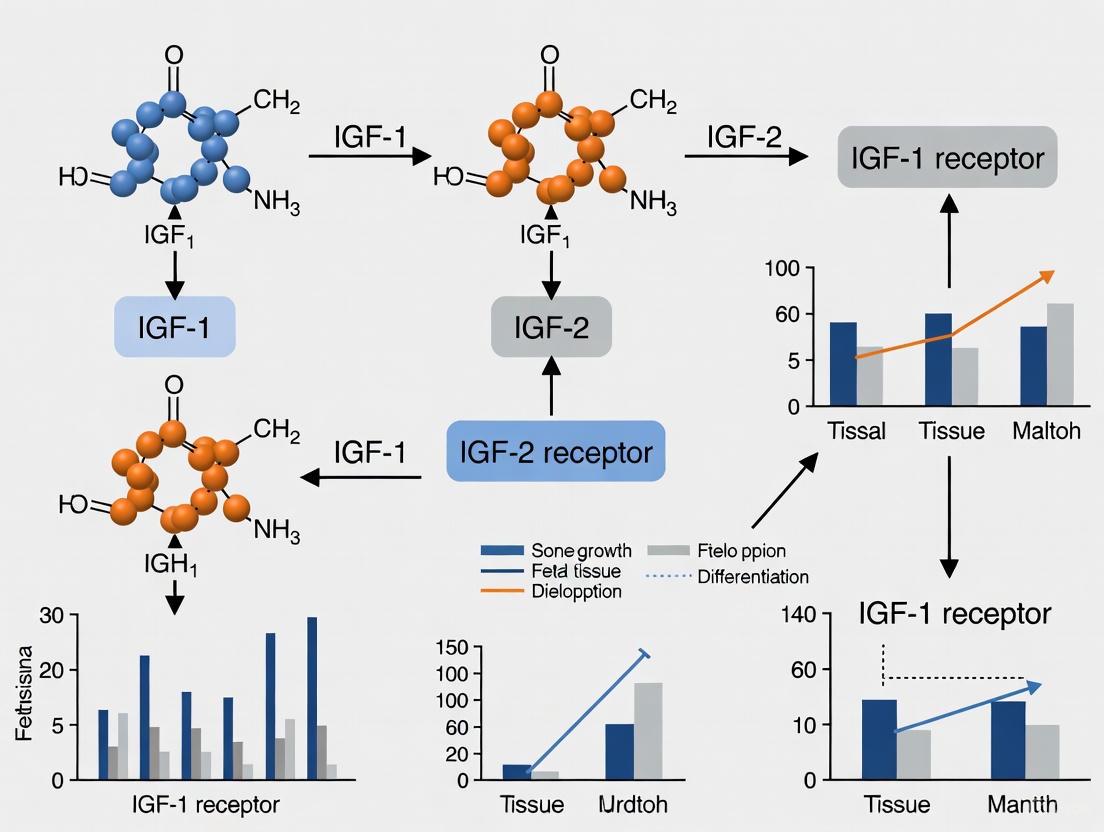
This article provides a comprehensive analysis of the distinct and synergistic roles of Insulin-like Growth Factor 1 (IGF-1) and Insulin-like Growth Factor 2 (IGF-2) in fetal tissue development.
IGF-1 and IGF-2 in Fetal Development: From Molecular Mechanisms to Therapeutic Targeting
Abstract
This article provides a comprehensive analysis of the distinct and synergistic roles of Insulin-like Growth Factor 1 (IGF-1) and Insulin-like Growth Factor 2 (IGF-2) in fetal tissue development. It explores the foundational biology of the IGF system, including ligand-receptor interactions and genomic imprinting, and details their critical functions in organogenesis, placental development, and angiogenesis. Methodological approaches for studying IGF activity, both in vitro and in vivo, are reviewed. The content further addresses the pathological consequences of IGF dysregulation, linking imbalances to intrauterine growth restriction, overgrowth syndromes, and prematurity-related complications. Finally, it examines current and emerging therapeutic strategies that target the IGF pathway, evaluating their potential and challenges in clinical translation for developmental disorders and regenerative medicine. This resource is tailored for researchers, scientists, and drug development professionals seeking a deep understanding of the IGF system in prenatal growth.
The IGF System Blueprint: Ligands, Receptors, and Developmental Programming
The insulin-like growth factor (IGF) system is a critical regulatory network governing fetal growth, development, and cellular metabolism. This system comprises two primary ligands—IGF-1 and IGF-2—along with their receptors, binding proteins, and associated proteases [1] [2]. These polypeptides share significant structural homology with insulin, reflecting their evolutionary relationship and overlapping functional roles in metabolic regulation and mitogenic signaling [3] [1]. During fetal development, IGF-1 and IGF-2 exert distinct yet complementary effects on tissue growth, organ formation, and skeletal maturation, with their precise structural features dictating receptor binding specificity and biological activity [4] [5].
The importance of the IGF axis in fetal development is underscored by gene knockout studies in mice. Disruption of the Igf1 gene results in fetal growth retardation to approximately 60% of normal size at term, while Igf2 deletion leads to similar growth impairment (about 60% of normal birth weight) [1] [4]. When both genes are simultaneously deleted, the effects are additive, resulting in mutants that reach only 30% of normal body weight, demonstrating the crucial role of both ligands in intrauterine growth [4]. In humans, circulating concentrations of IGF-I correlate positively with fetal size, length, and placental weight, emphasizing its significance in fetal growth regulation [4] [6].
Structural Organization of IGF Polypeptides
Domain Architecture and Sequence Homology
IGF-1 and IGF-2 are single-chain polypeptide hormones comprising 70 and 67 amino acids, respectively, with molecular weights of approximately 7.7 kDa and 7.5 kDa [7] [1]. Both molecules share a common structural blueprint organized into distinct domains labeled B, C, A, and D, arranged from N- to C-terminus, mirroring the domain organization of proinsulin [3] [1]. The primary sequence identity between IGF-1 and IGF-2 exceeds 55%, explaining their similar three-dimensional folds and structural properties [7] [3].
The tertiary structures of both IGFs are stabilized by three conserved disulfide bonds between cysteine residues, creating a characteristic scaffold with a central B-domain α-helix (Gly12–Cys21 in IGF-II) and two smaller antiparallel α-helices in the A-domain (Glu44–Arg49 and Leu53–Tyr59 in IGF-II) [3]. This structural framework provides the foundation for receptor interactions while accommodating sequence variations that confer functional specificity.
Table 1: Primary Structural Features of Human IGF-1 and IGF-2
| Structural Feature | IGF-1 | IGF-2 |
|---|---|---|
| Amino Acid Count | 70 | 67 |
| Molecular Weight | 7.7 kDa | 7.5 kDa |
| B Domain α-helix | Gly12–Cys21 | Gly12–Cys21 |
| A Domain α-helices | Equivalent regions | Glu44–Arg49, Leu53–Tyr59 |
| Disulfide Bonds | 3 conserved | 3 conserved |
| Sequence Identity | ~55% with IGF-2 | ~55% with IGF-1 |
Three-Dimensional Folding and Structural Conservation
The three-dimensional structures of IGF-1 and IGF-2 exhibit remarkable conservation, both featuring a globular core maintained by the invariant disulfide network [3]. This structural similarity extends to their relationship with insulin, with all three molecules sharing a common fold despite functional divergence. The structural homology between IGF-1 and IGF-2 presents challenges for immunological discrimination, as their surface epitopes share extensive similarities [7].
Molecular dynamic simulations have revealed that both IGF molecules display differential flexibility in their distinct loop structures, which contributes to their functional specialization [7]. For IGF-1, the loop spanning amino acid positions 74–90 (NKPTGYYGSSSRRAPQTG) exhibits high flexibility, while IGF-2 contains a corresponding flexible loop at positions 53–65 (SRPASRVSRRSRG) [7]. These structural variations, though localized, create distinct binding surfaces that enable specific molecular recognition by receptors and binding proteins.
Key Structural Divergence and Functional Implications
Differential Loop Structures and Epitope Specificity
The most significant structural divergence between IGF-1 and IGF-2 resides in their distinct turn-loop motifs, which constitute the primary molecular regions responsible for their functional differentiation [7]. For IGF-1, this critical loop encompasses residues 74–90 (sequence: NKPTGYYGSSSRRAPQTG), while IGF-2 possesses a structurally distinct loop at positions 53–65 (sequence: SRPASRVSRRSRG) [7]. These divergent loop structures represent the most obvious sequence difference between the two molecules and serve as key recognition epitopes for receptor binding and antibody specificity.
The functional importance of these structural differences is evidenced by experimental approaches employing epitope grafting, where researchers have successfully transplanted these loop sequences onto thermostable protein scaffolds (FKBP domains from Thermus thermophilus and Thermococcus gammatolerans SlyD) to generate highly specific monoclonal antibodies capable of discriminating between IGF-1 and IGF-2 [7]. This structural distinction is particularly crucial for diagnostic applications, as conventional immunization strategies using native IGFs or derived peptides have failed to generate antibodies targeting these specific loop motifs [7].
Receptor Binding Surfaces and Specificity Determinants
IGF-1 and IGF-2 engage with receptors through two primary binding surfaces—Site 1 and Site 2—that exhibit both conservation and variation between the two ligands [3]. Site 1 residues (Val43, Phe28, and Val14 in IGF-2; equivalent to insulin's Site 1) are critical for interactions with both IGF-1R and IR-A, while Site 2 residues (Glu12, Asp15, Phe19, Leu53, and Glu57 in IGF-2) contribute to receptor affinity through engagement with FnIII domains [3].
Alanine scanning mutagenesis studies have revealed that certain residues confer receptor specificity; for example, Gln18 mutation affects IGF-1R but not IR binding [3]. The C-domain of IGF-2 plays a particularly important role in determining receptor specificity, unlike IGF-1 whose C-domain interacts with the cysteine-rich domain of IGF-1R [3]. These subtle differences in binding surfaces, combined with variations in receptor expression and affinity, enable the two ligands to serve distinct biological roles despite their structural similarities.
Table 2: Functional Receptor Binding Characteristics of IGF-1 and IGF-2
| Binding Feature | IGF-1 | IGF-2 |
|---|---|---|
| Primary Receptor | IGF-1R | IGF-1R, IR-A |
| Site 1 Residues | Conserved equivalents | Val43, Phe28, Val14 |
| Site 2 Residues | Conserved equivalents | Glu12, Asp15, Phe19, Leu53, Glu57 |
| C Domain Role | Binds CR domain of IGF-1R | Determines receptor specificity |
| IR-A Affinity | Lower | High |
| IR-B Affinity | Low | Low |
Experimental Methodologies for Structural and Functional Analysis
Epitope Grafting and Scaffold Design
The high degree of structural homology between IGF-1 and IGF-2 necessitates sophisticated experimental approaches to study their distinct functions. Epitope grafting onto thermostable scaffolds represents a powerful methodology for investigating specific structural elements [7]. The experimental protocol involves:
Scaffold Selection: FKBP domains from extremophilic organisms (Thermus thermophilus and Thermococcus gammatolerans SlyD) provide optimal stability for epitope presentation. These scaffolds are small, monomeric, cysteine-free, and express well in E. coli [7].
Insertion Design: Molecular dynamic simulations guide the design of loop insertions. The IGF-1(74-90) loop (NKPTGYYGSSSRRAPQTG) or IGF-2(53-65) loop (SRPASRVSRRSRG) is integrated into the permissive site of the FKBP domain using minimal linkers—typically a single glycine residue at each junction—to minimize unwanted interactions with the scaffold [7].
Validation: Chimeric proteins are tested for immunogenicity and their ability to generate specific monoclonal antibodies that distinguish between IGF-1 and IGF-2, both when displayed on scaffolds and in their native contexts [7].
This approach has enabled the development of exceptionally specific monoclonal antibodies that can discriminate between the highly similar IGF isoforms, addressing a significant challenge in IGF research and diagnostics [7].
Receptor Binding Assays and Mutagenesis Approaches
Understanding the structural determinants of receptor binding specificity requires detailed functional assays:
Radioligand Competition Binding: Cells expressing specific receptors (IGF-1R, IR-A, or IR-B) are incubated with constant concentrations of radiolabeled IGFs (e.g., ^125I-IGF-II) and increasing concentrations of unlabeled competitors. Binding occurs over 16 hours at 4°C, followed by washing and quantification of cell-bound radioactivity [3].
Site-Directed Mutagenesis: Alanine scanning mutagenesis of putative binding residues (e.g., Val43, Phe28, Val14 for Site 1; Glu12, Asp15, Phe19, Leu53, Glu57 for Site 2) followed by purification and refolding of IGF analogues [3].
Functional Characterization: Mutant IGF analogues are tested for receptor binding affinity and capacity to activate downstream signaling pathways, using techniques such as receptor autophosphorylation assays and gene expression profiling [3] [8].
These methodologies have been instrumental in mapping the receptor binding surfaces of IGF-II and establishing how structural variations between IGF-I and IGF-II translate to functional differences in receptor engagement and signaling output [3].
Signaling Pathways and Biological Consequences in Fetal Development
The structural differences between IGF-1 and IGF-2 manifest in distinct signaling outcomes and biological effects during fetal development. Although both ligands primarily signal through the IGF-1 receptor, they stimulate different gene expression profiles and contribute to unique aspects of fetal growth [8].
Diagram 1: IGF Signaling Pathways in Fetal Development. IGF-1 signals primarily through IGF1R, while IGF-2 can engage both IGF1R and IR-A. The IGF2R acts as a scavenger, degrading IGF-II. Downstream signaling diverges into metabolic, survival, and growth-promoting pathways.
Distinct Roles in Fetal Growth Regulation
IGF-1 and IGF-2 play complementary but distinct roles during fetal development. IGF-1 production correlates closely with fetal size and length, serving as a key regulator of nutrient-dependent growth, particularly during later gestation [4] [5]. In contrast, IGF-2 functions as a primary fetal growth factor during early development, promoting placental growth and cellular proliferation [1] [2].
Gene expression studies reveal that these structural homologs activate different transcriptional programs despite signaling through the same primary receptor (IGF-1R). Microarray profiling of fibroblasts stimulated with equipotent concentrations of IGF-I, IGF-II, or insulin showed that each ligand regulates a unique set of transcripts, explaining their distinct biological effects [8]. This differential signaling occurs because the nature of the ligand, not just its affinity, influences the biological response, even through the same receptor [8].
Tissue-Specific Expression and Skeletal Development
The structural differences between IGF-1 and IGF-2 extend to their expression patterns and roles in specific fetal tissues, particularly in skeletal development. During limb morphogenesis, IGF-1 is expressed in the progress zone and condensing central core of developing limbs, where it promotes proliferation of mesenchymal cells and chondrocytes [4]. Both IGF-1 and IGF-2 are present throughout all zones of the growth plate, including resting, hypertrophic, and proliferative zones [4].
The importance of IGF-1 in skeletal development is evidenced by severe intrauterine growth retardation and impaired skeletal maturation associated with molecular defects in the IGF1 and IGF1R genes in humans [4]. Interestingly, despite in vitro evidence suggesting important roles for IGFs in limb patterning, gene ablation in mice does not result in truncated limbs or severe skeletal dysplasia, suggesting redundant mechanisms in chondro- and osteogenesis [4].
Research Reagent Solutions for IGF Studies
Table 3: Essential Research Reagents for IGF Structural and Functional Studies
| Reagent/Category | Specific Examples | Research Application | Key Features |
|---|---|---|---|
| Specific Antibodies | Anti-IGF-1 loop (74-90); Anti-IGF-2 loop (53-65) [7] | Immunoassays, immunohistochemistry | High specificity; minimal cross-reactivity |
| Engineered Scaffolds | TtSlyD-IGF-1; TgSlyD-IGF-2 chimeras [7] | Epitope presentation, immunization | Thermostable; high yield expression |
| Receptor Tools | scIGF-1R (minimized single-chain receptor) [3] | Binding studies, signaling analysis | Simplified receptor system |
| Cell Models | P6 IGF-1R cells; R-IR-A/IR-B cells [3] | Receptor-specific signaling studies | Defined receptor expression |
| Ligand Analogs | Alanine-scanning mutants [3] | Structure-function studies | Defined binding properties |
| Detection Reagents | Eu-IGF-II; ^125I-IGF-I [3] | Radioligand binding assays | High sensitivity detection |
The structural homology between IGF-1 and IGF-2 represents a fascinating example of molecular evolution wherein significant sequence conservation coexists with functional specialization. Their similar three-dimensional folds, maintained by conserved disulfide bonding patterns, enable engagement with common receptor systems, while their divergent loop structures and binding surfaces confer specificity in biological activity. These subtle structural variations allow the two ligands to play distinct yet complementary roles in fetal development, with IGF-2 acting as a primary growth factor during early gestation and IGF-1 assuming greater importance in nutrient-dependent growth during later stages.
The experimental methodologies reviewed—including epitope grafting, site-directed mutagenesis, and receptor-specific binding assays—provide powerful tools for deciphering how structural features translate to functional outcomes. Understanding these structure-function relationships is essential for developing targeted therapeutic interventions for fetal growth disorders, as epigenetic modifications to the IGF axis contribute significantly to pathologies such as SGA and LGA [6]. Continued research into the structural biology of these important growth factors will undoubtedly yield new insights into their roles in development and disease.
The Insulin-like Growth Factor 1 Receptor (IGF1R) and the Insulin Receptor A isoform (IR-A) are structurally related receptor tyrosine kinases (RTKs) that play indispensable roles in fetal development by regulating cellular processes such as proliferation, differentiation, metabolism, and survival [9] [10]. These receptors and their ligands—IGF-1, IGF-2, and insulin—form a complex signaling network that is particularly active during embryogenesis. The IGF signaling pathway is essential for cardiac development, with IGF2 acting as a primary mitogen inducing ventricular cardiomyocyte proliferation and morphogenesis [9]. Similarly, this system provides critical signals for the control of testis development and function [10]. This technical guide delineates the molecular mechanisms of IGF1R and IR-A activation of the PI3K/Akt and MAPK pathways, framed within the context of fetal tissue development. It further provides detailed experimental methodologies and key research tools for investigating these pathways, offering a comprehensive resource for researchers and drug development professionals.
Molecular Structure of IGF1R and IR-A
Receptor Composition and Isoforms
IGF1R and IR are transmembrane glycoproteins belonging to the subclass II receptor tyrosine kinase family. Both receptors exist as covalent dimers composed of two extracellular α-subunits and two transmembrane β-subunits linked by disulfide bonds [9] [11] [10]. The α-subunits contain the ligand-binding domains, while the β-subunits possess tyrosine kinase domains responsible for intracellular signal transduction [11]. The IR gene undergoes alternative splicing of exon 11, producing two isoforms: IR-B (containing exon 11) and IR-A (lacking exon 11) [10]. This structural variation has significant functional implications, as the IR-A isoform binds not only insulin but also IGF-2 with high affinity, and IGF-1 with lower affinity, behaving as a functional hybrid receptor [10].
Table 1: Ligand Binding Affinities of IGF1R and IR Receptors
| Receptor Type | IGF-1 | IGF-2 | Insulin |
|---|---|---|---|
| IGF1R | High | High | Low |
| IR-A | Low | High | High |
| IR-B | Low | Low | High |
| IGF1R/IR-A Hybrid | High | High | Moderate |
| IGF1R/IR-B Hybrid | High | Moderate | Moderate |
Structural Basis of Receptor Activation
Structural analyses using cryo-electron microscopy have revealed that IGF1R activation involves significant conformational rearrangements. In the inactive, apo state, IGF1R forms a Λ-shaped dimer with the two membrane-proximal FnIII-3 domains separated by approximately 67 Å, preventing kinase domain trans-autophosphorylation [12]. This autoinhibited conformation is maintained by inter-subunit interactions between the L1 domain of one protomer and the FnIII-2' domain of the other protomer [12]. Ligand binding to the primary site formed by the L1 and CR domains of one protomer and the α-CT' and FnIII-1' domains of the other protomer breaks these autoinhibitory interactions, inducing a transition to an asymmetric Γ-shaped active dimer [12]. This transition brings the membrane-proximal FnIII-3 domains within approximately 39 Å of each other, facilitating trans-autophosphorylation of the intracellular kinase domains [12]. The activation mechanism exhibits negative cooperativity, whereby binding of one IGF1 molecule to the dimer hinders binding of a second molecule, a phenomenon explained by the rigid connection formed between the liganded and unliganded α-CT domains [12].
Downstream Signaling Pathways
PI3K/Akt Signaling Cascade
Upon ligand binding and receptor autophosphorylation, IGF1R and IR-A recruit and phosphorylate adapter proteins of the Insulin Receptor Substrate (IRS) family, including IRS1-4 [10]. The phosphorylated tyrosine residues on IRS proteins serve as docking sites for the Src homology 2 (SH2) domains of the regulatory subunit of Phosphatidylinositol 3-Kinase (PI3K) [9] [10]. Activated PI3K converts phosphatidylinositol 4,5-bisphosphate (PIP2) to phosphatidylinositol 3,4,5-trisphosphate (PIP3) at the plasma membrane. PIP3 then recruits Akt (Protein Kinase B) and Phosphoinositide-Dependent Kinase 1 (PDK1) to the membrane, where PDK1 phosphorylates Akt at Thr308, partially activating it [13]. Full activation requires additional phosphorylation at Ser473 by the mTORC2 complex [13]. Activated Akt serves as a central signaling node, regulating numerous cellular processes through phosphorylation of downstream substrates:
- Cell Survival: Akt phosphorylates and inactivates pro-apoptotic proteins such as BAD and caspase-9, thereby promoting cell survival [14].
- Metabolism: Akt stimulates glucose uptake through translocation of GLUT4 transporters to the plasma membrane and enhances glycogen synthesis through inhibition of GSK-3β [13].
- Protein Synthesis and Growth: Akt activates the mTORC1 pathway, which promotes protein synthesis and cell growth through phosphorylation of downstream effectors like p70S6K and 4E-BP1 [13] [14].
In the context of fetal development, the PI3K-Akt pathway is crucial for cell proliferation and survival. For example, in the developing heart, IGF2 signaling through this pathway promotes cardiomyocyte proliferation and compact myocardial wall morphogenesis [9]. Similarly, Akt activation leads to cytoplasmic localization and inactivation of FOXO transcription factors, which are negative regulators of myocardial proliferation [9].
MAPK/ERK Signaling Cascade
Parallel to the PI3K/Akt pathway, IGF1R and IR-A activate the Mitogen-Activated Protein Kinase (MAPK) pathway, primarily through the Ras-Raf-MEK-ERK signaling module [9] [15]. Following receptor activation, the Grb2-SOS complex is recruited to phosphorylated IRS proteins or directly to the receptor [10]. SOS promotes the exchange of GDP for GTP on Ras, activating it. GTP-bound Ras then recruits and activates Raf, which phosphorylates and activates MEK, which in turn phosphorylates and activates ERK [15]. Activated ERK translocates to the nucleus and phosphorylates transcription factors such as Elk-1, c-Fos, and c-Myc, regulating gene expression involved in:
- Cell Proliferation: ERK signaling promotes G1 to S phase progression by regulating cyclin D1 expression and stabilizing the cyclin D1-CDK4 complex [15].
- Differentiation: ERK activity influences cellular differentiation programs in various fetal tissues [9].
- Cell Survival: While primarily pro-apoptotic in some contexts, ERK can promote survival in others by regulating BCL-2 family members [15].
In fetal development, the MAPK pathway works in concert with the PI3K/Akt pathway to coordinate growth and morphogenesis. For instance, in cardiac development, both ERK/MAPK and PI3K/Akt pathways are activated by IGF2 to promote ventricular cardiomyocyte proliferation [9]. Similarly, in endometrial carcinoma models (reflecting developmental pathways), IR-A/IGF-1R-mediated signals promote epithelial-mesenchymal transition by activating both PI3K/AKT and ERK pathways [15].
Table 2: Key Signaling Components and Their Functions in IGF1R/IR-A Pathways
| Signaling Component | Pathway | Primary Function | Role in Fetal Development |
|---|---|---|---|
| IRS1-4 | Both | Adapter proteins linking receptors to downstream effectors | Essential for transmitting growth signals during embryogenesis |
| PI3K | PI3K/Akt | Phosphorylates PIP2 to PIP3 | Regulates cardiomyocyte proliferation and compact myocardial wall formation |
| Akt | PI3K/Akt | Serine/threonine kinase regulating survival, growth, metabolism | Promotes cell survival and inhibits apoptosis in developing tissues |
| mTORC1 | PI3K/Akt | Regulates protein synthesis and cell growth | Controls tissue growth and organ size |
| GSK-3β | PI3K/Akt | Glycogen synthase kinase inhibited by Akt | Regulates metabolism and cell proliferation |
| Grb2/SOS | MAPK | Activates Ras by promoting GDP/GTP exchange | Initiates MAPK signaling cascade in response to growth factors |
| Ras | MAPK | Small GTPase initiating MAPK cascade | Key regulator of cell proliferation and differentiation |
| Raf | MAPK | MAPKKK that phosphorylates MEK | Transduces signals from Ras to MEK/ERK |
| MEK | MAPK | MAPKK that phosphorylates ERK | Dual-specificity kinase activating ERK |
| ERK | MAPK | Terminal kinase regulating transcription factors | Controls gene expression programs for proliferation and differentiation |
Role in Fetal Tissue Development
Cardiac Development
The IGF signaling pathway is particularly crucial for proper cardiac development. During embryogenesis, IGF2 serves as the primary mitogen inducing ventricular cardiomyocyte proliferation and compact myocardial wall morphogenesis [9]. IGF2 mRNA levels are significantly higher in embryonic ventricular tissue compared to IGF1, and this expression decreases dramatically after birth [9]. The epicardium serves as the main source of IGFs during cardiac development, with epicardial secretion of IGF2 required for cardiomyocyte proliferation until the establishment of the coronary circulation [9]. This signaling involves activation of both the ERK/MAPK and PI3K/Akt pathways [9]. Conditional deletion of both Igf1r and Insr genes in the myocardium results in decreased cardiomyocyte proliferation and ventricular wall hypoplasia, demonstrating the essential nature of this signaling axis [9].
Testis Development and Function
The insulin-like growth factor family provides essential signals for testis development and function, acting in an autocrine-paracrine manner [10]. Igf1 null males are infertile and exhibit reductions greater than 80% in both spermatogenesis and serum testosterone levels, highlighting the critical role of IGF signaling in reproductive development [10]. The complexity of this system is evidenced by the multiple ligands (insulin, IGF1, IGF2), receptors (INSR, IGF1R), and hybrid receptors that can form, creating a sophisticated regulatory network for testicular development, spermatogenesis, and steroidogenesis [10].
General Fetal Growth and Metabolism
IGF-1 serves as a major growth hormone in the fetus, with circulating IGF-1 concentrations correlating with fetal weight and bone length [13]. Genetic defects in IGF-1 and IGF-1 receptor in humans result in intrauterine growth restriction, being born small for gestational age, microcephaly, and developmental delays [13]. The metabolic effects of IGF-1 are particularly important during fetal development, as it promotes glucose uptake in peripheral tissues and helps coordinate the metabolic programming necessary for rapid growth [13]. During fetal life, serum IGF-1 concentration is regulated by nutrient supply from the mother, and the continuous supply of carbohydrates and amino acids supports the high energy demands of developing tissues through glycolysis [13].
Experimental Analysis of IGF1R and IR-A Signaling
Receptor Activation and Phosphorylation Analysis
Objective: To assess IGF1R/IR-A activation status and downstream signaling through PI3K/Akt and MAPK pathways.
Protocol 1: Western Blot Analysis of Signaling Components
- Cell Lysis: Prepare tissue extracts using lysis buffer (e.g., 10 μL buffer/mg tissue) containing protease and phosphatase inhibitors [14].
- Protein Quantification: Determine protein concentration using BCA or Bradford assay.
- Gel Electrophoresis: Separate proteins (20-50 μg per lane) by SDS-PAGE (8-12% gels).
- Membrane Transfer: Transfer proteins to PVDF or nitrocellulose membranes.
- Blocking: Incubate membrane with 5% BSA or non-fat milk in TBST for 1 hour.
- Primary Antibody Incubation: Incubate with specific primary antibodies in blocking buffer overnight at 4°C:
- Phospho-specific antibodies: p-IGF1R (Tyr1135/1136), p-IR (Tyr1150/1151), p-Akt (Ser473), p-ERK1/2 (Thr202/Tyr204)
- Total proteins: Total IGF1R, IR, Akt, ERK1/2 [14]
- Washing: Wash membrane 3× with TBST for 5 minutes each.
- Secondary Antibody Incubation: Incubate with HRP-conjugated secondary antibodies for 1 hour at room temperature.
- Detection: Develop using enhanced chemiluminescence (ECL) substrate and visualize with imaging system.
- Quantification: Analyze band intensity using densitometry software.
Key Controls:
- Include positive controls (IGF-1/IGF-2 stimulated cells)
- Include negative controls (unstimulated cells, receptor inhibitors)
- Normalize phospho-protein levels to total protein levels [14]
Ligand-Receptor Binding Studies
Protocol 2: ELISA-based IGF-1 Measurement
- Sample Preparation: For tissue samples, homogenize in extraction buffer (sodium acetate 7.5 mM; acetic acid 92.5 mM, pH 3.6) with protease inhibitors. Use 15 μL buffer/mg tissue [14].
- Homogenization: Extract using Potter-Elvehjem homogenizer, homogenize for 1 hour at 4°C.
- Centrifugation: Centrifuge at 3000×g for 10 minutes at 4°C. Collect supernatant.
- Concentration: Concentrate samples using Vivaspin 500 (3 kDa cutoff) at 13000×g for 90 minutes at 4°C.
- Drying: Dry samples using SpeedVac Concentrator at 30°C for 1 hour.
- Resuspension: Resuspend in 0.1 M HEPES buffer, pH 7.8, centrifuge for 10 minutes at 3000×g.
- ELISA Procedure:
- Add standards and samples to pre-coated wells
- Add detection antibody, incubate
- Add substrate solution, stop reaction
- Measure absorbance at appropriate wavelength [14]
- Calculation: Determine IGF-1 concentration from standard curve.
Table 3: Key Research Reagents for IGF1R/IR-A Signaling Studies
| Reagent Category | Specific Examples | Application/Function |
|---|---|---|
| Receptor Inhibitors | Tyrphostins (AG538, AG1024); Pyrrolo(2,3-d)-pyrimidine derivatives (NVP-AEW541); Monoclonal antibodies | Selective inhibition of IGF1R for functional studies [11] |
| Ligands | Recombinant IGF-1, IGF-2, Insulin | Receptor activation and signaling studies |
| Phospho-Specific Antibodies | p-IGF1R (Tyr1135/1136), p-IR (Tyr1150/1151), p-Akt (Ser473), p-ERK1/2 (Thr202/Tyr204) | Detection of pathway activation [14] |
| ELISA Kits | Quantikine ELISA Mouse/Rat IGF-1 | Quantitative measurement of IGF-1 levels [14] |
| Cell Culture Models | Immortalized cell lines, Primary cells from fetal tissues | In vitro signaling studies |
| Animal Models | Conditional knockout mice (MI2RKO, CIRKO), IGF-1/IGF-2 knockout mice | In vivo functional analysis [9] |
Functional Assays
Protocol 3: Cell Migration and Invasion Assays
- Cell Preparation: Serum-starve cells for 24 hours before experiment.
- Wound Healing/Migration Assay:
- Create scratch wound in confluent cell monolayer
- Treat with IGF ligands (IGF-1, IGF-2) with/without inhibitors
- Monitor wound closure at 0, 12, 24 hours
- Quantify migration rate [15]
- Transwell Invasion Assay:
- Coat transwell inserts with Matrigel
- Seed serum-starved cells in upper chamber
- Add IGF ligands to lower chamber as chemoattractant
- Incubate for 24-48 hours
- Fix, stain, and count invaded cells on membrane underside [15]
- Apoptosis Assay:
- Treat cells with IGF ligands with/without inhibitors
- Stain with Annexin V/PI
- Analyze by flow cytometry [15]
The Scientist's Toolkit
Table 4: Essential Research Reagents and Materials for IGF1R/IR-A Signaling Studies
| Reagent/Material | Supplier Examples | Specific Application | Technical Notes |
|---|---|---|---|
| Recombinant Human IGF-1 | Multiple commercial sources | Receptor activation, cell proliferation assays | Use acidic buffer for stock solutions to prevent aggregation |
| Recombinant Human IGF-2 | Multiple commercial sources | IR-A activation studies, fetal development models | Check purity and biological activity for each batch |
| IGF1R/IR Phospho-Specific Antibodies | Cell Signaling, Santa Cruz, Abcam | Western blot, immunohistochemistry | Validate specificity using knockout controls |
| PI3K/Akt Pathway Antibodies | Cell Signaling, Abcam | Detection of pathway activation | Use phospho-specific antibodies for activation status |
| MAPK Pathway Antibodies | Cell Signaling, R&D Systems | ERK phosphorylation analysis | Include total protein controls for normalization |
| IGF-1 ELISA Kit | R&D Systems, Abcam | Quantitative IGF-1 measurement | Acid-ethanol extraction improves IGF-1 recovery from samples [14] |
| IGF1R Inhibitors | Selleckchem, Tocris | Functional blockade studies | Consider selectivity over IR to avoid off-target effects [11] |
| IRS1/2 Antibodies | Cell Signaling, Millipore | Adapter protein studies | Immunoprecipitation suitable for interaction studies |
The IGF1R and IR-A receptor tyrosine kinases and their activation of the PI3K/Akt and MAPK pathways represent a fundamental signaling network orchestrating fetal tissue development. The structural complexity of these receptors, including their ability to form hybrid receptors and the negative cooperativity in ligand binding, allows for precise regulation of developmental processes. The experimental methodologies outlined provide robust approaches for investigating these pathways, while the research reagents table offers a practical resource for laboratory studies. Continuing research in this field promises to yield deeper insights into the molecular mechanisms of fetal development and potential therapeutic approaches for developmental disorders and cancers that hijack these fundamental signaling pathways.
The Insulin-like Growth Factor 2 Receptor (IGF2R) functions as a critical clearance receptor that maintains cellular homeostasis by regulating the bioavailability of IGF-II and activating Transforming Growth Factor-β (TGF-β). This whitepaper examines IGF2R's multifaceted role in fetal development, focusing on its molecular mechanisms, quantitative dynamics, and experimental approaches for investigating its function. Within the broader context of IGF signaling in fetal tissue development, IGF2R emerges as a crucial modulator that balances mitogenic signals through ligand degradation and latent growth factor activation. Understanding these coordinated functions provides valuable insights for therapeutic targeting in developmental disorders and cancer.
The insulin-like growth factor system comprises ligands (IGF-I, IGF-II), cell surface receptors (IGF1R, IGF2R, IR-A), and binding proteins (IGFBPs 1-6) that collectively regulate fundamental processes in fetal development, including proliferation, differentiation, and apoptosis [2]. Unlike other receptors in this system, IGF2R possesses unique characteristics that establish its role as a clearance receptor rather than a signaling initiator.
IGF2R, also known as the cation-independent mannose-6-phosphate receptor (CI-MPR), is a type I transmembrane protein of approximately 300 kDa that functions primarily as a molecular scavenger [16]. Its structure includes a large extracellular domain with fifteen repeating segments, a single transmembrane domain, and a short cytoplasmic tail. The extracellular domain contains distinct binding sites: one specific for IGF2 and others for mannose-6-phosphate (M6P)-tagged proteins [16]. This structural configuration enables IGF2R to perform dual sorting functions—clearing IGF2 from the cell surface and transporting lysosomal enzymes.
The receptor's role in fetal development is particularly crucial given the predominant expression of IGF2 during embryogenesis. While IGF-II functions as a key fetal growth factor, its levels must be precisely regulated to prevent excessive proliferation. IGF2R serves as the primary mechanism for this regulation, creating a balanced system that supports controlled development [17].
Molecular Mechanisms of IGF2R-Mediated Clearance
IGF2 Ligand Clearance and Degradation
IGF2R regulates IGF-II bioavailability through a continuous cycle of endocytosis and degradation that prevents sustained activation of mitogenic signaling pathways:
- Receptor-Ligand Binding: IGF2R binds IGF-II with high affinity at the cell surface but lacks intrinsic tyrosine kinase activity, distinguishing it fundamentally from IGF1R [17] [18].
- Cellular Internalization: Following ligand binding, IGF2R-IGF-II complexes accumulate in clathrin-coated vesicles and undergo endocytosis [16].
- Intracellular Trafficking: The internalized vesicles fuse with early endosomes, where the acidic environment (pH ~5.0-6.0) facilitates dissociation of IGF2 from its receptor [16].
- Lysosomal Degradation: Freed IGF2 is subsequently trafficked to lysosomes and degraded by acid hydrolases, while IGF2R recycles back to the cell surface or Golgi apparatus for additional rounds of clearance [17] [16].
This clearance function is particularly vital during fetal development, when IGF-II levels are significantly elevated. Gene knockout studies in mice demonstrate that disruption of this system leads to IGF-II accumulation, fetal overgrowth, and perinatal lethality, underscoring IGF2R's critical role in growth regulation [17].
M6P-Tagged Protein Trafficking
Beyond IGF2 clearance, IGF2R serves as the primary transporter for M6P-tagged lysosomal enzymes:
- Golgi Recognition: In the trans-Golgi network, IGF2R binds newly synthesized lysosomal enzymes bearing M6P tags [16].
- Vesicular Transport: The receptor-ligand complexes are packaged into transport vesicles mediated by GGA adaptor proteins [16].
- Endosomal Delivery: These vesicles deliver their cargo to endosomal compartments, where acidic conditions trigger release of the enzymes [16].
- Lysosomal Enzyme Activation: The released enzymes proceed to lysosomes, while IGF2R returns to the Golgi via the retromer complex [16].
This trafficking function ensures proper lysosomal biogenesis and cellular homeostasis, with implications for protein processing and degradation pathways throughout development.
Quantitative Analysis of IGF2R Expression and Function
Table 1: IGF2R Expression in Developing Human Tissues
| Tissue/Organ | Developmental Stage | Expression Level | Primary Function |
|---|---|---|---|
| Tooth Germ [19] | 7th-20th gestational week | Moderate in dental papilla | Regulation of crown morphogenesis |
| Kidney [17] | Embryonic and fetal periods | High in nephron precursors | Promotion of nephron formation |
| Liver [18] | Fetal period | High | IGF-II clearance, lysosomal enzyme trafficking |
| Skeletal Muscle [20] | Late gestation | Moderate | Modulation of IGF-II availability for differentiation |
| Placenta [5] | Throughout gestation | High | Regulation of feto-placental growth |
Table 2: IGF2R Binding Affinities and Kinetic Parameters
| Parameter | IGF2R-IGF2 Interaction | IGF2R-M6P Interaction |
|---|---|---|
| Binding Affinity (Kd) | High affinity (nM range) [17] | High affinity (nM range) [16] |
| Specificity | Specific for IGF2 (does not bind IGF1) [4] | Broad specificity for M6P-tagged proteins |
| pH Sensitivity | Dissociates at pH <6.0 [16] | Dissociates at pH <6.0 [16] |
| Biological Outcome | Ligand degradation [17] | Lysosomal enzyme delivery [16] |
IGF2R in TGF-β Pathway Activation
Molecular Basis of TGF-β Activation
IGF2R plays an indirect but crucial role in TGF-β pathway activation through its interaction with M6P-tagged latent TGF-β. The TGF-β superfamily includes potent inhibitors of muscle differentiation that functionally oppose IGF actions [20]. The activation mechanism proceeds as follows:
- Latent Complex Recognition: IGF2R binds the M6P residues on latent TGF-β binding proteins (LTBPs) and latent complexes [17].
- Cellular Uptake: The receptor facilitates intracellular trafficking of these latent complexes.
- Proteolytic Activation: During endosomal trafficking, pH changes and proteases including plasmin and MMPs activate TGF-β by cleaving the latency-associated peptide [17].
- Signal Initiation: Active TGF-β is secreted or released intracellularly to initiate SMAD-dependent signaling.
This IGF2R-mediated mechanism connects two seemingly disparate pathways, creating a regulatory network that balances growth promotion and differentiation inhibition.
Functional Crosstalk in Development
The interplay between IGF2R-mediated clearance and TGF-β activation creates a sophisticated regulatory circuit during fetal development:
- Balanced Differentiation: In skeletal muscle development, IGF-II promotes differentiation through IGF1R, while TGF-β inhibits it [20]. IGF2R modulates this balance by controlling IGF-II bioavailability and potentially influencing TGF-β activation.
- Tissue Morphogenesis: During renal development, IGF2R ensures proper nephron formation by preventing excessive IGF-II signaling while simultaneously facilitating TGF-β-mediated ECM remodeling and differentiation events [17].
- Pathway Integration: The functional outcome depends on the relative activity of these pathways, with IGF2R serving as a critical node that integrates and balances their opposing signals.
Table 3: Comparative Analysis of IGF2R Roles in Clearance and TGF-β Activation
| Aspect | IGF2 Clearance Function | TGF-β Activation Role |
|---|---|---|
| Primary Mechanism | Receptor-mediated endocytosis and lysosomal degradation | Latent complex trafficking and proteolytic activation |
| Developmental Outcome | Control of fetal growth rates | Regulation of differentiation and ECM organization |
| Experimental Evidence | Gene knockout studies showing fetal overgrowth [17] | In vitro studies of TGF-β activation in multiple cell types [17] |
| Pathological Implications | Wilms' tumor, Beckwith-Wiedemann syndrome [17] | Renal fibrosis, tissue scarring [17] |
| Therapeutic Potential | Targeting IGF-II bioavailability in cancer | Modulating fibrotic responses in chronic disease |
Experimental Approaches for Investigating IGF2R Function
Methodologies for Studying Clearance Dynamics
IGF2 Internalization and Degradation Assay
Purpose: To quantify IGF2R-mediated clearance kinetics in cultured cells.
Procedure:
- Cell Preparation: Plate target cells (e.g., mouse fibroblasts or human myoblasts) in 12-well plates at 1×10⁵ cells/well and culture until 80% confluent [20].
- Radioiodination: Label recombinant IGF2 with ¹²⁵I using the chloramine-T method to specific activity of 150-200 μCi/μg [20].
- Binding Phase: Incubate cells with 1 nM ¹²⁵I-IGF2 in binding buffer for 2 hours at 4°C to achieve surface binding without internalization.
- Internalization Phase: Rapidly warm cells to 37°C for timed intervals (0-60 minutes) to initiate endocytosis.
- Acid Stripping: Treat cells with acidic buffer (pH 3.0) for 5 minutes to remove surface-bound IGF2 while retaining internalized ligand.
- Quantification: Measure acid-resistant (internalized) radioactivity by gamma counting and normalize to total cellular protein.
- Degradation Assessment: Precipitate trichloroacetic acid-soluble fragments in medium to quantify ligand degradation.
Key Controls:
- Include excess unlabeled IGF2 (100 nM) to determine non-specific binding.
- Treat cells with phenylarsine oxide (50 μM) to inhibit endocytosis as a negative control.
- Use IGF2R-knockdown cells to confirm receptor specificity [20].
Data Interpretation: Internalization rates are calculated from the initial slope of acid-resistant counts versus time. Degradation half-life is determined by exponential decay analysis of intact intracellular IGF2 over time.
Assessing TGF-β Activation
Latent TGF-β Activation Assay
Purpose: To measure IGF2R-dependent activation of latent TGF-β.
Procedure:
- Cell Transfection: Co-transfect cells with IGF2R expression plasmids and a TGF-β-responsive luciferase reporter (3TP-Lux) [20].
- Ligand Preparation: Incubate cells with purified latent TGF-β complex (5-20 ng/mL) for 24 hours.
- Inhibition Studies: Treat parallel cultures with IGF2R blocking antibodies (10 μg/mL) or M6P (5 mM) to competitively inhibit receptor function.
- Luciferase Measurement: Lyse cells and measure luciferase activity using a commercial assay system.
- SMAD Phosphorylation Analysis: Perform Western blotting on cell lysates using phospho-specific Smad2/3 antibodies to confirm pathway activation.
Alternative Approach: Measure active TGF-β in conditioned medium using ELISA specific for the active form, or utilize co-culture systems with reporter cells responsive to active TGF-β [20].
Signaling Pathway Visualization
Figure 1: IGF2R-Mediated Clearance and TGF-β Activation Pathways. The diagram illustrates IGF2R's dual functions in IGF2 degradation (red pathway) and latent TGF-β activation (green pathway). After endocytosis and endosomal acidification, IGF2 is targeted for lysosomal degradation while latent TGF-β undergoes proteolytic activation. IGF2R recycles to continue both functions.
Essential Research Reagents and Methodologies
Table 4: Key Research Reagents for IGF2R Investigation
| Reagent/Category | Specific Examples | Research Application | Technical Notes |
|---|---|---|---|
| Cell Models | Mouse embryo fibroblasts (MEFs), C2C12 myoblasts, LNCaP prostate cells [21] [20] | Loss-of-function studies, differentiation assays | Select cells with endogenous IGF2R expression; validate knockdown efficiency |
| IGF2R Modulators | IGF2R siRNA (100 nM) [21], recombinant IGF2R extracellular domain | Functional inhibition studies | Use multiple siRNA constructs to control for off-target effects |
| Ligands & Binding Proteins | Recombinant IGF-II (100 ng/mL) [20], ¹²⁵I-IGF2, M6P (5 mM) | Binding and internalization assays | Include M6P competition controls to distinguish binding sites |
| Detection Reagents | Phospho-Smad2/3 antibodies, IGF2R blocking antibodies (10 μg/mL) [20] | Western blot, immunofluorescence | Validate antibody specificity with IGF2R-knockdown cells |
| Assay Systems | 3TP-Lux reporter [20], acid stripping protocol, matrigel invasion chambers [21] | Pathway activation, internalization, migration studies | Include appropriate controls for non-specific effects |
| Analytical Methods | Ligand blotting [20], quantitative RT-PCR [21], proteome profiler arrays [21] | Expression analysis, cytokine profiling | Normalize data to housekeeping genes/proteins |
IGF2R serves as a critical regulatory node that coordinates fetal development through its dual functions in IGF2 clearance and TGF-β pathway modulation. By controlling the bioavailability of a potent mitogenic factor and facilitating the activation of a key differentiation regulator, IGF2R maintains the precise balance between proliferation and differentiation required for proper morphogenesis. The experimental frameworks and analytical approaches outlined in this whitepaper provide researchers with robust methodologies for investigating these complex processes. Further elucidation of IGF2R's intricate functions will enhance our understanding of developmental biology and identify novel therapeutic opportunities for disorders of growth and differentiation.
The insulin-like growth factor (IGF) system, comprising IGF-1 and IGF-2, is fundamentally important for fetal growth and development. The bioavailability of these ligands is precisely regulated by a family of six high-affinity insulin-like growth factor-binding proteins (IGFBPs 1-6). These binding proteins form complex molecular structures that control IGF stability, tissue distribution, and receptor interaction. This review provides a comprehensive analysis of the structural mechanisms, quantitative dynamics, and experimental methodologies defining IGFBP function as regulatory gatekeepers. Within the context of fetal tissue development, we examine how IGFBPs modulate the critically important IGF signaling axis through both IGF-dependent and IGF-independent mechanisms, with implications for understanding normal development and growth-related disorders.
The insulin-like growth factor axis is a critical regulatory system for embryonic and postnatal growth and differentiation. IGF-1 and IGF-2, the two primary ligands, promote cellular proliferation, differentiation, and survival through activation of the IGF-1 receptor (IGF-1R). IGF-2 is particularly crucial for embryonic and fetal development, while IGF-1 is vital for postnatal growth [22] [2]. Gene knockout studies have confirmed these roles, with Igf2-deficient mice exhibiting significant growth retardation [2]. The IGF system is especially important for the development of organs such as the brain, liver, and kidney during fetal development [2].
The six IGF-binding proteins (IGFBP1-6) serve as fundamental regulators of this system by controlling the bioavailability of IGF ligands. These binding proteins maintain IGFs in the circulation and direct them to target tissues [23]. In the context of fetal development, this precise regulation ensures that IGF signaling occurs in the correct spatial and temporal patterns to orchestrate normal growth. Dysregulation of the IGF/IGFBP axis has been associated with various developmental abnormalities and growth disorders, underscoring its biological importance.
Structural Basis of IGFBP Function
Conserved Domain Architecture
All six IGFBPs share a common three-domain structure despite ranging in molecular weight from approximately 24 to 45 kDa [23]. The N-terminal domain (N-domain) and C-terminal domain (C-domain) are cysteine-rich and contain the IGF-binding sites, while the central linker domain (L-domain) is less structured and varies among IGFBP family members [23]. IGFBPs 1-5 contain six conserved disulfide bonds in the N-domain with a characteristic GCGCC motif, while IGFBP-6 lacks the last two cysteines of this motif, resulting in only five N-domain disulfide bonds and a different structural fold [23].
The structural organization of IGFBPs enables their high-affinity interactions with IGF ligands. Structural studies reveal that IGF-1 is wedged into a cleft formed by the palm/thumb-like N-domain and the flat-shaped C-domain [24]. This structural arrangement partially masks the IGF residues responsible for binding to the type 1 IGF receptor, thereby preventing receptor activation when IGF is bound to IGFBP [25]. The C-domain adopts a thyroglobulin type 1 fold and contains regions of flexibility that contribute to its functional diversity [23].
Molecular Mechanisms of IGF Binding and Release
Structural analyses have elucidated the precise molecular interactions between IGFBPs and their ligands. The N-terminal region of IGFBPs forms a rigid disulfide bond ladder-like structure, with the first five N-terminal residues binding to IGF and partially masking the receptor-binding region [25]. A high-affinity IGF-1 binding site is located in a globular structure within the N-domain [25]. The C-domain, while not forming stable binary complexes with either IGF or the N-domain alone, contributes to blocking the IGF-1 receptor-binding region in the ternary complex [25].
The linker domain plays a crucial role in regulating IGF bioavailability through proteolytic cleavage. This domain is the primary site for proteolysis by various IGFBP-degrading proteases [24]. Cleavage within the linker domain produces lower-affinity fragments that cannot effectively compete with IGF receptors for IGF binding, thereby increasing IGF bioavailability [25]. Recent structural insights from cryo-EM studies suggest that the linker domain may act as a "mechanical flap" covering IGF1 not yet wrapped by the N- and C-domains [24].
Table 1: Structural Features of IGFBPs 1-6
| IGFBP | Domain Structure | Disulfide Bonds | Key Structural Features | IGF Binding Affinity |
|---|---|---|---|---|
| IGFBP-1 | N-domain, Linker, C-domain | 6 in N-domain, 3 in C-domain | Contains RGD motif for integrin binding | High affinity for IGF-I and IGF-II |
| IGFBP-2 | N-domain, Linker, C-domain | 6 in N-domain, 3 in C-domain | Contains RGD motif; different N-subdomain structure | High affinity for both IGFs |
| IGFBP-3 | N-domain, Linker, C-domain | 6 in N-domain, 3 in C-domain | Primary carrier in ternary complex with ALS | High affinity for both IGFs |
| IGFBP-4 | N-domain, Linker, C-domain | 6 in N-domain, 3 in C-domain + extra in linker | 10 total disulfide bonds | High affinity for both IGFs |
| IGFBP-5 | N-domain, Linker, C-domain | 6 in N-domain, 3 in C-domain | Contains nuclear localization sequence, heparin binding domains | High affinity for both IGFs |
| IGFBP-6 | N-domain, Linker, C-domain | 5 in N-domain, 3 in C-domain | Different N-domain fold due to missing disulfides | 20-100x higher affinity for IGF-II |
Regulation of IGF Bioavailability
Ternary Complex Formation and Serum Half-Life
The formation of ternary complexes represents a fundamental mechanism for regulating systemic IGF bioavailability. In circulation, approximately 80-90% of IGFs are found in ternary complexes consisting of IGF, IGFBP-3 or IGFBP-5, and the acid-labile subunit (ALS) [24]. These large complexes (approximately 150 kDa) cannot cross the vascular endothelium, creating a stable reservoir of IGFs within the circulation [24] [23]. This reservoir function is crucial for maintaining consistent IGF exposure to developing fetal tissues.
Recent cryo-EM structural analysis of the IGF1/IGFBP3/ALS ternary complex has revealed a "parachute" shape with 1:1:1 stoichiometry [24]. The IGF1/IGFBP3 binary complex engages in long-range interactions with the entire concave surface of the horseshoe-like ALS, with both IGF1 and IGFBP3 participating in this interaction [24]. The structural organization of this complex explains its remarkable stability and extends the half-life of IGFs from less than 10 minutes for free IGF to 16-24 hours for ternary-complexed IGF [24].
Diagram 1: IGF Bioavailability Regulation via Complex Formation. This diagram illustrates how IGF transitions between free, binary, and ternary complexes, significantly extending its half-life in circulation.
Proteolytic Regulation of IGF Release
Proteolytic cleavage of IGFBPs serves as a key mechanism for controlled IGF release in specific tissue contexts. Multiple proteases have been identified that target IGFBPs, including pregnancy-associated plasma protein A (PAPP-A), matrix metalloproteinases (MMPs), thrombin, and prostate-specific antigen (PSA) [26]. These proteases primarily cleave within the linker domain of IGFBPs, resulting in fragments with significantly reduced affinity for IGFs [25].
Recent structural insights challenge the conventional model of IGF release. Cryo-EM studies suggest that proteolysis at the central linker domain of IGFBP3 induces release of its C-terminal domain rather than immediate IGF1 release from the ternary complex, yielding an intermediate complex that enhances IGF bioavailability [24]. This refined mechanism explains how localized proteolytic activity can fine-tune IGF availability in specific tissue microenvironments, such as those in developing fetal tissues.
Table 2: Proteases Regulating IGFBP Function and Bioavailability
| Protease | Target IGFBPs | Biological Context | Effect on IGF Signaling |
|---|---|---|---|
| PAPP-A | IGFBP-2, -4, -5 | Pregnancy, tissue remodeling | Increases IGF bioavailability |
| MMP-7 | IGFBP-1, -2, -4, -5, -6 | Cancer, tissue repair | Increases local IGF activity |
| Thrombin | IGFBP-5 | Coagulation, wound healing | Generates 20-24 kDa fragments |
| PSA | IGFBP-3, -5 | Reproductive tissues | Increases IGF bioavailability |
| ADAM proteases | IGFBP-3 | Various tissues | Regulates IGF activity |
Experimental Methodologies for Studying IGFBP Functions
Structural Biology Approaches
Cryo-Electron Microscopy for Ternary Complex Analysis The recent determination of the human IGF1/IGFBP3/ALS ternary complex structure using cryo-EM represents a significant methodological advancement [24]. The experimental protocol involves:
- Co-expression of full-length human IGF1, IGFBP3, and ALS in HEK293F cells
- Affinity chromatography purification of the stable ternary complex
- Size-exclusion chromatography to isolate properly assembled complexes
- Vitrification of samples for cryo-EM analysis
- Single-particle reconstruction to achieve 3.2 Å resolution
This methodology enables visualization of the detailed architecture of the parachute-like ternary complex and identification of crucial determinants for sequential and specific assembly [24]. The structure reveals that both IGF1 and IGFBP3 participate in interactions with the entire concave surface of ALS, with the hook loop at LRRCT of ALS and N-linked glycans attached to N368 of ALS contributing to stabilizing interactions [24].
X-ray Crystallography of IGFBP Domains X-ray crystallography has been instrumental in elucidating the structural details of isolated IGFBP domains and their complexes with IGFs. Key methodological considerations include:
- Expression and purification of individual N- and C-domains to facilitate crystallization
- Co-crystallization of IGFBP fragments with IGF-I to study binding interfaces
- Analysis of crystals using synchrotron radiation sources
- Structure determination by molecular replacement or experimental phasing
These approaches have yielded structures such as the ternary complex of N- and C-terminal domain fragments of IGFBP4 with IGF1, revealing how both domains collaborate to block IGF receptor-binding regions [25].
Quantitative Analysis of IGFBP Regulatory Functions
Mass-Action Kinetic Modeling Computational modeling provides a powerful approach to understand the integrated function of IGF system components. A recently developed mass-action kinetic model incorporates:
- Cell surface binding events between IGFs, IGFBPs, and receptors
- Phosphorylation dynamics of IGF1R
- Intracellular trafficking events
- Parameter estimation from experimental time courses of phosphorylated IGF1R
This modeling approach has demonstrated that IGFBP levels need to be approximately 390-fold greater than IGF1R to decrease phosphorylated IGF1R by 25%, highlighting the dominant role of IGFBPs in regulating IGF network activation compared to other regulatory mechanisms [27].
Cross-Sectional and Longitudinal Clinical Studies Human studies examining IGFBP dynamics employ carefully designed methodologies:
- Recruitment of age- and BMI-matched cohorts at varying disease stages
- Measurement of total serum IGF1, IGF2, and IGFBP1-7 levels using immunoassays
- Longitudinal sampling with monthly blood collection over extended periods
- Correlation of IGF/IGFBP levels with clinical outcomes and progression metrics
These studies have revealed that IGF1 and IGF2 levels are significantly lower in autoantibody-positive individuals compared to autoantibody-negative relatives of subjects with type 1 diabetes, suggesting IGF system dysregulation during disease progression [22].
Diagram 2: Experimental Workflow for IGFBP Research. This diagram outlines the integrated methodological approaches used to study IGFBP structure and function, from sample collection to functional validation.
The Scientist's Toolkit: Key Research Reagents and Methods
Table 3: Essential Research Reagents for IGFBP Studies
| Reagent/Method | Specific Example | Application | Technical Notes |
|---|---|---|---|
| Recombinant Human IGFBPs | IGFBP-3 (full length) | Ternary complex formation | Co-express with IGF1 and ALS for native complex |
| Domain-Specific Antibodies | Anti-IGFBP-4 N-domain | Immunoassays, Western blot | Distinguish intact vs. cleaved IGFBPs |
| Protease Inhibitors | MMP inhibitors | Functional assays | Prevent endogenous IGFBP cleavage |
| Cell Culture Models | OVCAR5 ovarian cancer cells | IGF1R phosphorylation studies | Calibrated for mass-action kinetic modeling [27] |
| Immunoassays | IGFBP-3 ELISA | Quantification in serum | Measure total levels; cannot distinguish cleaved forms |
| Structural Biology Tools | Cryo-EM | Ternary complex visualization | Requires stable complex formation and purification |
| Kinetic Modeling Software | Custom MATLAB code | Systems-level analysis | Parameters from experimental time courses [27] |
| Protease Assays | PAPP-A activity assays | IGFBP cleavage studies | Monitor specific proteolytic activities |
IGFBP Functions in Fetal Development Context
Within fetal tissue development, IGFBPs play particularly critical roles in spatial and temporal regulation of IGF signaling. IGF-2 functions as a primary fetal growth factor, and its precise regulation by IGFBPs is essential for normal organogenesis [2]. The specific expression patterns of different IGFBPs in various developing tissues suggest specialized functions for each binding protein during embryogenesis.
The structural features of IGFBPs enable them to perform unique functions in different developmental contexts. For example, IGFBP-5 contains a nuclear localization sequence that permits nuclear translocation, potentially enabling IGF-independent functions in gene regulation [26]. Similarly, heparin binding domains in IGFBP-5 facilitate interactions with the extracellular matrix, creating localized reservoirs of IGFs in specific tissue microenvironments during development [26].
Understanding the regulatory functions of IGFBPs in bioavailability provides crucial insights into normal fetal development and the etiology of growth disorders. The sophisticated structural mechanisms that govern IGF binding and release ensure that IGF signaling is precisely calibrated to support the complex process of tissue formation and organ development throughout gestation.
The IGF-binding proteins 1-6 serve as essential regulatory gatekeepers that control IGF bioavailability through complex structural mechanisms. Their functions extend beyond simple carrier proteins to include sophisticated regulation of IGF distribution, stability, and receptor activation. The formation of ternary complexes with ALS dramatically extends IGF half-life, while proteolytic cleavage provides a mechanism for localized IGF release in specific tissue contexts. Recent structural insights from cryo-EM have revolutionized our understanding of these complexes, providing atomic-level details of their assembly and disassembly. In the context of fetal development, where precise spatial and temporal control of growth signaling is paramount, IGFBPs play indispensable roles in ensuring appropriate IGF exposure to developing tissues. Continued research using the sophisticated methodological approaches outlined in this review will further elucidate the nuanced functions of these critical regulatory proteins.
The insulin-like growth factor 2 (IGF2) gene exemplifies the sophisticated interplay between genomic imprinting and promoter-driven regulation in mammalian biology. This peptide hormone serves a critical role in fetal development and metabolic regulation, with its precise spatiotemporal expression governed by a complex network of epigenetic mechanisms and promoter activities [17] [28]. The expression pattern of IGF2 is not merely a binary switch but rather a finely tuned orchestration that ensures proper gestational development while maintaining tissue homeostasis postnatally [29] [30]. Disruption of these regulatory layers can lead to significant pathologies, including fetal overgrowth syndromes and various cancers [28] [31]. Understanding the molecular machinery controlling IGF2 expression provides fundamental insights into broader principles of epigenetic regulation and its implications for developmental biology and disease pathogenesis, particularly within the context of fetal tissue development where IGF signaling plays a predominant role.
Genomic Imprinting of IGF2
The Epigenetic Foundation
Genomic imprinting represents a classic example of epigenetic regulation wherein genes are expressed in a parent-of-origin-specific manner [31]. The human IGF2 gene, located on chromosome 11p15.5, is part of a conserved imprinted gene cluster that includes the H19 gene [28]. This locus undergoes strict parental allele-specific expression, with transcription occurring exclusively from the paternal allele while the maternal allele remains silenced [17] [31]. This monoallelic expression pattern is established and maintained through differentially methylated regions (DMRs), particularly the intergenic DMR (IG-DMR) or imprinting control region 1 (ICR1) located between IGF2 and H19 [28].
The imprinting mechanism functions as an epigenetic switch through a CTCF-dependent insulation model. On the maternal allele, unmethylated ICR1 binds the epigenetic regulator CTCF, which acts as an insulator that prevents downstream enhancers from accessing IGF2 promoters [28] [32]. Concurrently, this CTCF binding facilitates enhancer interactions with the maternally expressed H19 gene. In contrast, the paternal ICR1 is methylated, preventing CTCF binding and allowing enhancers to activate IGF2 promoters while keeping H19 silent [28]. This sophisticated chromatin configuration ensures the precise parent-of-origin expression pattern critical for normal development.
Evolutionary Context and Biological Significance
The evolutionary conservation of IGF2 imprinting across mammalian species suggests its fundamental importance in developmental biology [31]. The prevailing "genetic conflict" hypothesis proposes that genomic imprinting evolved as a parental battle to control maternal nutrient allocation to offspring [31]. According to this theory, paternally expressed genes like IGF2 promote fetal growth to maximize nutrient extraction, while maternally expressed genes restrict growth to conserve maternal resources for future pregnancies [31]. This evolutionary perspective provides a framework for understanding why disrupted IGF2 imprinting frequently manifests in growth abnormalities.
Table: Key Components of the IGF2 Imprinting Control System
| Component | Genomic Location | Function | Methylation Status |
|---|---|---|---|
| ICR1/IG-DMR | Between IGF2 and H19 | Imprinting control region; CTCF binding site | Methylated (paternal), Unmethylated (maternal) |
| CTCF | Nuclear protein | Epigenetic regulator; chromatin insulator | Binds unmethylated maternal ICR1 |
| H19 | Downstream of IGF2 | Maternally expressed non-coding RNA | Maternal allele expressed, paternal allele silent |
| ZFPs (e.g., ZFP57) | Multiple locations | Imprinting maintenance factors | Regulates methylation stability |
Promoter Architecture and Regulation
Complex Promoter Structure
The human IGF2 gene exhibits remarkable regulatory complexity through its use of five distinct promoters (P0-P4) that drive expression of multiple mRNA isoforms [17] [28]. These promoters are differentially activated in a tissue-specific and developmental stage-specific manner, providing a sophisticated mechanism for fine-tuning IGF2 expression throughout ontogeny [17]. The gene spans approximately 30 kb of genomic DNA and consists of 10 exons, with only the final three exons encoding protein-coding sequences shared by all transcripts [17]. This arrangement allows for diverse regulatory inputs while maintaining a consistent peptide product.
Each promoter possesses unique structural and functional characteristics. Promoters P3 and P4 contain canonical TATA and CCAAT boxes recognized by RNA polymerase II, while P2 lacks these elements [17]. The P1 promoter includes an internal ribosomal entry site and is primarily active in the adult liver and choroid plexus [17]. Transient transfection assays have demonstrated that promoter activity varies considerably by cell type and species, with P3 exhibiting the highest transcriptional activity in hepatocyte-derived human cells, while P2 remains minimally active in most cell lines [17].
Developmental Stage-Specific Promoter Usage
The spatiotemporal control of IGF2 expression is achieved through precisely coordinated promoter switching during development [28]. In fetal tissues, promoters P2-P4 drive the majority of IGF2 transcription, with P3 and P4 being particularly active in non-hepatic fetal tissues [17]. The P0 promoter demonstrates placenta-specific activity and plays a critical role in determining placental size and composition [17] [33]. Loss of P0 activity reduces passive diffusion across the placenta, resulting in fetal growth retardation despite unaffected systemic fetal IGF2 levels, indicating that placental IGF2 operates independently of circulating IGF2 [17].
After birth, a dramatic shift occurs in promoter usage. Fetal promoters P3 and P4 are largely epigenetically silenced, while the adult-specific P1 promoter becomes active, particularly in the liver [28]. This developmental switching corresponds with an overall reduction in IGF2 transcription in most tissues during postnatal life [17]. However, certain pathologies, including Wilms' tumor and rhabdomyosarcoma, exhibit reactivation of the normally silenced fetal promoters P3 and P4, contributing to tumorigenesis [17].
Table: Developmental Regulation of IGF2 Promoters
| Promoter | Developmental Activity | Primary Tissues | Regulatory Features |
|---|---|---|---|
| P0 | Fetal (placental-specific) | Placenta, trophoblast | Regulates placental size and nutrient transport |
| P1 | Postnatal > Fetal | Adult liver, choroid plexus | Contains internal ribosomal entry site (IRES) |
| P2 | Fetal > Postnatal | Fetal liver | Lacks TATA and CCAAT boxes |
| P3 | Predominantly fetal | Non-hepatic fetal tissues | Contains TATA/CCAAT boxes; high activity in fetal period |
| P4 | Predominantly fetal | Non-hepatic fetal tissues | Contains TATA/CCAAT boxes; silenced after birth |
Signaling Pathways and Receptor Interactions
IGF2 Receptor Binding and Downstream Signaling
IGF2 exerts its biological effects through interactions with three specific receptors: IGF1 receptor (IGF1R), insulin receptor isoform A (IR-A), and IGF2 receptor (IGF2R) [17]. Each receptor activates distinct downstream signaling cascades that modulate cellular processes including proliferation, differentiation, metabolism, and survival [17] [30]. IGF1R is a transmembrane tyrosine kinase receptor that structurally resembles the insulin receptor [17]. Upon IGF2 binding, IGF1R activates both the PI3K/Akt and MAPK signaling pathways, promoting mitogenic and anti-apoptotic signals crucial for embryonic development [17].
IR-A, a splice variant of the insulin receptor lacking exon 11, demonstrates high affinity for IGF2 and is predominantly expressed in fetal tissues and certain cancers [17]. IGF2 binding to IR-A similarly activates PI3K/Akt and MAPK pathways, regulating cell metabolism and proliferation [17]. The biological consequences of ligand-receptor interactions are influenced by receptor subtype, as demonstrated in murine hematopoietic progenitor cells where IGF2 binding to IR-A induces pro-mitotic and anti-apoptotic signaling, while binding to IR-B promotes differentiation [17].
In contrast to these tyrosine kinase receptors, IGF2R lacks intrinsic signaling capacity and primarily functions as a scavenger receptor that binds and internalizes IGF2 for lysosomal degradation, thereby limiting its bioavailability and suppressing cellular over-proliferation [17] [34]. IGF2R also facilitates lysosomal enzyme trafficking via its function as the cation-independent mannose-6-phosphate receptor and modulates TGF-β signaling involved in extracellular matrix synthesis and immune regulation [17].
Diagram 1: IGF2 Signaling Pathways and Functional Outcomes. IGF2 binding to IGF1R and IR-A activates downstream PI3K/Akt and MAPK pathways, promoting proliferation, survival, and metabolic changes. In contrast, IGF2R binding leads to IGF2 degradation, limiting its biological activity.
System-Level Regulation by Binding Proteins and Receptors
The IGF signaling network represents a complex balance between ligands, receptors, and binding proteins that collectively determine net signaling output [34]. Insulin-like growth factor binding proteins (IGFBPs), a family of six high-affinity proteins, play a crucial role in regulating IGF bioavailability by competing with receptors for ligand binding [34]. Computational modeling and experimental validation in ovarian cancer systems have demonstrated that IGFBPs serve as the dominant regulatory mechanism for controlling IGF1R phosphorylation and network activity, with IGFBP levels requiring approximately 390-fold greater concentration than IGF1R to decrease phosphorylated IGF1R by 25% [34] [27].
Interestingly, mass-action kinetic models revealed that IGF2R plays a comparatively minor role in regulating IGF1R activation under most physiological conditions [34] [27]. Model analysis suggested IGF2R would need to be expressed at 320-fold greater levels than IGF1R to achieve a 25% reduction in phosphorylated IGF1R, a ratio unlikely to occur in most cancer types according to The Cancer Genome Atlas data [34]. This systems-level understanding highlights the hierarchical organization of regulatory mechanisms within the IGF network, with IGFBPs representing the primary control point for modulating pathway activity.
Experimental Approaches for Studying IGF2 Regulation
Analyzing Promoter Activity and Enhancer Function
Investigating the complex regulation of IGF2 requires sophisticated molecular techniques to dissect promoter-specific contributions and identify distal regulatory elements. A comprehensive approach developed for studying a muscle-specific enhancer involved bacterial artificial chromosome (BAC) recombineering to modify the native Igf2-H19 locus [32]. This methodology enables precise manipulation of large genomic regions while maintaining natural chromatin context.
Detailed Protocol: BAC Recombineering for Enhancer Mapping
- BAC Modification: The native Igf2 coding exons 3-6 are replaced with a nuclear-targeted enhanced green fluorescent protein (nEGFP) reporter gene using homologous recombination in E. coli strain SW102 [32].
- Enhancer Deletion: Specific enhancer regions (e.g., the 294 bp core muscle enhancer) are replaced with a bar-coded DNA cassette lacking transcription factor binding sites [32].
- Cell Line Generation: Modified BACs are transfected into mouse C3H10T1/2 mesenchymal stem cells followed by G418 selection (400 μg/ml) to generate stable cell lines [32].
- Myogenic Differentiation: Cells are infected with recombinant adenovirus for MyoD (Ad-MyoD) at 50% confluency, then switched to differentiation medium for up to 72 hours to induce myoblast conversion [32].
- Expression Analysis: IGF2 promoter activity is monitored via nEGFP expression and quantitative RT-PCR using primer sets specific for Igf2 exon 3 and 4 sequences [32].
This experimental system demonstrated that the 294 bp DNA fragment containing two E-boxes functions as a necessary and sufficient long-range enhancer for Igf2 transcription during skeletal muscle differentiation [32].
Investigating Transcriptional Regulation in Pathological Contexts
In cancer research, analyzing HIF-mediated regulation of IGF1R under hypoxic conditions provides insights into pathological IGF signaling. A comprehensive protocol for studying this regulation includes:
Chromatin Immunoprecipitation and Luciferase Reporter Assays
- Hypoxic Culture: GBM cells (U-87 MG, U-251 MG) are cultured under hypoxic conditions (1% O2, 5% CO2, 94% N2) for 12-72 hours depending on assay requirements [35].
- CRISPR/Cas9 Knockout: sgRNAs targeting HIF1α, HIF2α, and IGF1R are designed using the CRISPR design program and cloned into lentiCRISPRv2 vector for lentiviral production in HEK293T cells [35].
- Chromatin Immunoprecipitation (ChIP): Cells are cross-linked, chromatin is sheared, and immunoprecipitation is performed using antibodies against HIF1α and HIF2α [35].
- Quantitative PCR: Precipitated DNA is analyzed by qPCR with primers flanking the putative HRE sequence (5'-GAACGTGCCT-3') in the IGF1R promoter [35].
- Dual-Luciferase Reporter Assays: IGF1R promoter fragments containing wild-type or mutated HRE sequences are cloned into pGL3-basic vector and transfected into GBM cells with Renilla control for normalization [35].
This multifaceted approach demonstrated that HIF1α and HIF2α coordinately promote IGF1R expression by binding to specific hypoxia response elements within the IGF1R promoter, activating PI3K/AKT signaling and enhancing chemoresistance in glioblastoma [35].
Diagram 2: Experimental Workflow for IGF2 Enhancer Analysis. The diagram illustrates the key steps in BAC recombineering and cellular differentiation models used to identify and characterize tissue-specific enhancer elements regulating IGF2 expression.
The Scientist's Toolkit: Key Research Reagents
Table: Essential Research Reagents for Investigating IGF2 Regulation
| Reagent/Cell Line | Specific Application | Key Function/Utility |
|---|---|---|
| C3H10T1/2 cells | Mesenchymal stem cell model | Multipotent cells capable of myogenic differentiation after MyoD expression |
| U-87 MG, U-251 MG | Glioblastoma models | Hypoxia-responsive cell lines for studying HIF-IGF signaling in cancer |
| Recombinant BAC BMQ318O12 | Igf2-H19 locus manipulation | Contains 201 kb mouse chromosome 7 region for physiological genomic context studies |
| LentiCRISPRv2 vector | HIF1α/HIF2α/IGF1R knockout | CRISPR/Cas9 system for targeted gene disruption in mammalian cells |
| Ad-MyoD adenovirus | Myogenic differentiation | Efficient conversion of mesenchymal cells to myoblasts for muscle-specific studies |
| Anti-HIF1α/HIF2α antibodies | Chromatin immunoprecipitation | Specific antibodies for mapping transcription factor binding to IGF pathway genes |
| Pimonidazole hydrochloride | Hypoxia detection | Chemical probe that forms protein adducts in hypoxic cells (<1% O2) |
Pathological Implications and Therapeutic Opportunities
Dysregulation in Disease States
Aberrant IGF2 expression contributes significantly to various pathological conditions, particularly cancer and growth syndromes. In Beckwith-Wiedemann syndrome (BWS), an overgrowth disorder, IGF2 overexpression typically results from uniparental disomy (UPD) wherein both copies of IGF2 are paternally derived [30]. This loss of imprinting leads to biallelic expression and IGF2 overproduction, causing macrosomia, macroglossia, and increased cancer risk, particularly for Wilms' tumor [30]. Similarly, in cancer, IGF2 promotes tumor expansion and progression by activating key signaling pathways including PI3K/Akt and TGF-β [17].
The developmental regulation of IGF2 imprinting demonstrates tissue-specific patterns with pathological correlations. In human fetal liver, IGF2 is monoallelically expressed, but this imprinting relaxes during the second half of the first year of postnatal life, resulting in biallelic expression thereafter [29]. This developmental switch may contribute to the tissue-specific vulnerability to imprinting errors and their consequent pathologies.
Emerging Therapeutic Approaches
The precise understanding of IGF2 regulatory mechanisms has revealed several potential therapeutic intervention points. Strategies under investigation include:
- Epigenetic therapies targeting the aberrant methylation status of ICR1 in imprinting disorders
- Transcriptional targeting using tissue-specific promoters for directed gene therapy
- IGF1R-directed monoclonal antibodies to block downstream signaling in IGF2-driven cancers
- Receptor tyrosine kinase inhibitors targeting the AKT and MAPK pathways activated by IGF2
While IGF1R-targeted therapies have demonstrated limited efficacy in clinical trials to date, novel approaches combining these agents with other targeted therapies or exploiting synthetic lethal interactions in tumors with specific epigenetic alterations show promise [30]. The continued elucidation of IGF2 regulatory mechanisms will undoubtedly reveal additional therapeutic opportunities for managing growth syndromes and IGF2-driven malignancies.
The spatiotemporal control of IGF2 expression represents a paradigm of sophisticated gene regulation integrating genomic imprinting, promoter selection, and enhancer function. The precise orchestration of these mechanisms ensures appropriate IGF2 levels during critical developmental windows while preventing pathological overexpression in adulthood. Continued investigation of these regulatory layers using the advanced experimental approaches outlined herein will further illuminate this complex system and its broader implications for developmental biology, disease pathogenesis, and therapeutic development. The integration of computational modeling with mechanistic studies provides particularly powerful insights into the system-level properties of IGF signaling, offering a template for understanding similarly complex regulatory networks in mammalian biology.
Cell-cell signaling is a fundamental biological process that allows for the coordination of complex functions in multicellular organisms. Signaling molecules, or ligands, are released by signaling cells and bind to specific receptors on or in target cells, inducing a functional change. These communication strategies are broadly classified based on the distance the signal travels and the mode of delivery. The three primary modalities—endocrine, paracrine, and autocrine signaling—differ in their range, speed, and functional roles [36] [37]. Understanding these modalities is critical for dissecting the roles of key developmental growth factors, such as Insulin-like Growth Factor 1 (IGF-1) and Insulin-like Growth Factor 2 (IGF-2), in fetal tissue development. This guide provides an in-depth technical analysis of these signaling pathways, framed within the context of IGF research, for the scientific and drug development community.
Core Signaling Modalities
Endocrine Signaling
Endocrine signaling involves the secretion of hormones by endocrine glands or cells directly into the bloodstream. These signals travel throughout the body to reach distant target cells [36] [37].
- Key Characteristics:
- Long Distance: Signals are transported via the circulatory system.
- Slow Onset, Prolonged Effect: Due to the time required for circulation and dilution, the response is slower but often has a longer-lasting impact.
- Low Concentration: Hormones become highly diluted in the blood, yet target cells possess high-affinity receptors to detect them.
- Example in Context: The liver secretes IGF-1 into the bloodstream in response to pituitary growth hormone (GH). This endocrine-acting IGF-1 then travels systemically to promote growth in distant tissues like bone and cartilage [38] [39].
Paracrine Signaling
In paracrine signaling, a cell releases ligands that diffuse through the extracellular matrix to induce changes in nearby cells [36] [40] [37].
- Key Characteristics:
- Local Action: Signals act over a short range.
- Rapid and Transient: The response is typically quick but short-lived. To maintain a localized effect, paracrine factors are rapidly degraded by enzymes or taken up by neighboring cells.
- High Local Concentration: A high concentration gradient is established near the signaling cell.
- Example in Context: During fetal development, IGF-2 is secreted by embryonic tissues and acts locally on adjacent tissues to promote proliferation and patterning in a paracrine manner [41] [42]. Neuronal signaling via neurotransmitters is another classic example of paracrine communication [36] [37].
Autocrine Signaling
Autocrine signaling occurs when a cell secretes a ligand that binds to receptors on its own surface, affecting its own behavior [36] [37].
- Key Characteristics:
- Self-Stimulation: The signaling cell is also the target cell.
- Cell Fate and Differentiation: This modality is crucial during embryonic development, ensuring groups of identical cells differentiate into the same cell type.
- Survival and Inflammation: Autocrine signaling regulates pain sensation, inflammatory responses, and can trigger programmed cell death in infected cells.
- Example in Context: Certain cancer cells secrete IGF-1 or IGF-2 to stimulate their own growth and survival in an autocrine loop, contributing to tumor progression [38] [41].
Table 1: Comparative Overview of Signaling Modalities
| Feature | Endocrine | Paracrine | Autocrine |
|---|---|---|---|
| Range | Long-distance (systemic) | Short-range (local) | Self-signaling |
| Transport Medium | Bloodstream | Extracellular fluid | Extracellular fluid |
| Signal Duration | Long-lasting | Transient | Transient |
| Concentration at Target | Low | High | High |
| Example Ligands | Hormones (e.g., GH), IGF-1 (endocrine) | Neurotransmitters, IGF-2 (local) | Cytokines, IGF-1/2 (in cancer) |
| Primary Function | Coordinate slow, whole-body responses | Rapid local tissue coordination | Cell-fate determination, self-survival |
The IGF System: A Model for Multi-Modal Signaling in Development
The Insulin-like Growth Factor system is a quintessential model for understanding how different signaling modalities govern fetal development. This system comprises ligands, receptors, and binding proteins that work in concert [39] [41].
Ligands and Receptors
- IGF-1: A 70-amino acid peptide highly similar to insulin. It is a primary mediator of the effects of Growth Hormone (GH) and is crucial for postnatal growth. However, it also has significant GH-independent effects, particularly on fetal development [38] [39] [43].
- IGF-2: A 67-amino acid peptide that is a major fetal growth factor. It is highly expressed during embryonic development, supporting rapid tissue growth in the brain, skeleton, and muscle [41] [42].
- Receptors: The biological effects are primarily mediated through the IGF-1 Receptor (IGF-1R), a receptor tyrosine kinase expressed on almost all cell types. IGF-1 and IGF-2 both bind IGF-1R with high affinity. IGF-2 can also bind to the IGF-2 Receptor (IGF-2R), which acts mainly as a scavenger clearance receptor. Both ligands can also bind with lower affinity to the Insulin Receptor (IR) and its hybrids with IGF-1R [38] [41] [42].
IGF Binding Proteins (IGFBPs)
Circulating IGFs are almost entirely bound to a family of six high-affinity IGF Binding Proteins (IGFBP-1 to IGFBP-6). These proteins are critical modulators of IGF activity as they:
- Prolong half-life: Bound IGFs have a half-life of 30-90 minutes, compared to ~10 minutes for free IGFs [41].
- Control bioavailability: By sequestering IGFs, IGFBPs prevent them from binding to their receptors, thus fine-tuning IGF activity in a tissue-specific manner [44] [42].
- Exert IGF-independent effects: Some IGFBPs have biological functions that do not involve IGF binding [41].
Table 2: Key Components of the IGF System and Their Functions in Development
| Component | Key Characteristics | Role in Fetal Development |
|---|---|---|
| IGF-1 Ligand | 70 amino acids; primary mediator of GH; levels rise with gestational age [38] [41]. | Influences intrauterine linear growth; critical for brain, organ, and skeletal development [38]. |
| IGF-2 Ligand | 67 amino acids; major fetal growth factor; levels high prenatally, less GH-dependent [41] [42]. | Promotes fetal and placental growth and development; key for muscle and neurogenesis [41]. |
| IGF-1 Receptor | Receptor tyrosine kinase; activates PI3K/Akt & MAPK pathways [38] [44]. | Mediates most growth-promoting and anti-apoptotic effects of both IGF-1 and IGF-2. |
| IGF-2 Receptor | Cation-independent mannose-6-phosphate receptor; mainly a clearance receptor [42]. | Regulates extracellular IGF-2 levels; recent studies suggest roles in cell recruitment [42]. |
| IGFBP-3 | Most abundant carrier; forms ternary complex with IGF and acid-labile subunit [38] [41]. | Controls bioavailability of circulating IGFs; levels correlate with fetal growth. |
| IGFBP-6 | Inhibits IGF action; has higher affinity for IGF-2 than IGF-1 [41] [42]. | Potent regulator of IGF-2 activity in developing tissues. |
Experimental Analysis of IGF Signaling
Key Methodologies for Dissecting IGF Action
To elucidate the specific signaling modality and function of IGFs in development, researchers employ a suite of techniques.
1. Gene Knockout (KO) Models
- Objective: To determine the non-redundant, essential functions of a specific IGF system component in vivo.
- Protocol Summary:
- Step 1: Using homologous recombination in embryonic stem (ES) cells, the target gene (e.g., Igf1, Igf2, Igf1r) is disrupted.
- Step 2: Genetically modified ES cells are used to generate chimeric mice, which are bred to achieve germline transmission of the knockout allele.
- Step 3: The phenotype of homozygous knockout offspring is analyzed versus wild-type and heterozygous littermates.
- Key Findings:
2. In Vitro Angiogenesis Assay (from IGF-2 Research)
- Objective: To assess the direct pro-angiogenic effects of IGF-2 and its variants on endothelial cells (ECs) [42].
- Protocol Summary:
- Step 1: Isolate and culture human umbilical vein endothelial cells (HUVECs).
- Step 2: Seed cells on a basement membrane matrix (e.g., Matrigel).
- Step 3: Treat with experimental conditions: wild-type IGF-2, variant Des(1-6)IGF-2 (low IGFBP affinity), variant Leu27IGF-2 (IGF-2R selective), or vehicle control.
- Step 4: Incubate for several hours and quantify tube formation by measuring total tube length, number of branches, and closed meshes using image analysis software.
- Key Findings: IGF-2 and Des(1-6)IGF-2 significantly promoted tube formation, while Leu27IGF-2 had a weaker effect, indicating the primary role of IGF-1R/IR in this process [42].
3. Analysis of Natural Human Models (Laron Syndrome)
- Objective: To understand the differential roles of GH and IGF-1 in human growth.
- Protocol Summary:
- Step 1: Identify patients with severe short stature and high serum GH levels.
- Step 2: Perform genetic sequencing to confirm mutations or deletions in the GH receptor gene.
- Step 3: Clinically characterize patients from birth to adulthood, documenting auxology, organ size (e.g., brain, heart), and skeletal maturation.
- Step 4: Administer recombinant IGF-1 and monitor growth velocity and metabolic parameters.
- Key Findings: Laron Syndrome patients have profound IGF-1 deficiency. They are shorter at birth and have slow postnatal growth, organomicria, and skeletal retardation, which is reversed by IGF-1 treatment. This confirms IGF-1's critical role independent of GH in prenatal and postnatal growth [38].
IGF Signal Transduction Pathway
Upon binding to its primary receptor, IGF-1R, a well-defined intracellular signaling cascade is initiated. The following diagram illustrates the key pathways and their biological outcomes, which are critical for fetal development.
Pathway Description: Ligand binding induces IGF-1R autophosphorylation and activation. The receptor then phosphorylates intracellular adaptor proteins like IRS and SHC. This initiates two major signaling cascades [38] [44]:
- The MAPK (ERK) pathway is primarily stimulated by SHC, leading to proliferation and differentiation.
- The PI3K/Akt pathway is primarily stimulated by IRS, promoting cell survival, protein synthesis, and metabolism—critical processes for fetal growth.
The Scientist's Toolkit: Key Research Reagents
Table 3: Essential Reagents for Investigating IGF Signaling Modalities
| Reagent / Tool | Function & Mechanism | Application Example |
|---|---|---|
| Recombinant IGF-1 & IGF-2 | Purified human-sequence proteins used to stimulate IGF-1R and downstream pathways in vitro or in vivo. | Adding to cell culture (e.g., tenocytes, chondrocytes) to study proliferation and matrix synthesis [38] [44]. |
| Receptor Tyrosine Kinase (RTK) Inhibitors | Small molecules (e.g., AG1024, NVP-AEW541) that selectively inhibit IGF-1R tyrosine kinase activity. | Blocking IGF-1R signaling to confirm the specificity of observed effects and to study tumor growth dependence [40]. |
| IGF-2 Variants (e.g., Des(1-6)IGF-2, Leu27IGF-2) | Engineered ligands with modified receptor/IGFBP affinity to dissect specific pathways. | Using Des(1-6)IGF-2 (low IGFBP affinity) to study IGF action free from IGFBP regulation; using Leu27IGF-2 to isolate IGF-2R-specific effects [42]. |
| IGFBP-6 | Recombinant binding protein with high affinity for IGF-2, used to sequester the ligand and inhibit its action. | Applying to endothelial cell cultures to inhibit IGF-2-induced migration and tube formation, confirming the role of IGF-2 in angiogenesis [42]. |
| siRNA / shRNA for IGF-1R | RNA interference tools to knock down receptor expression at the mRNA level. | Transfecting cells to reduce IGF-1R protein levels and study the functional consequences on signaling and cell behavior. |
| Phospho-Specific Antibodies | Antibodies that detect activated (phosphorylated) forms of signaling proteins (e.g., p-IGF-1R, p-Akt, p-ERK). | Used in Western Blot or Immunofluorescence to map and quantify pathway activation upon ligand stimulation [44]. |
The distinct yet interconnected signaling modalities—endocrine, paracrine, and autocrine—form a sophisticated communication network that directs fetal development. The IGF system elegantly exemplifies how these modalities are employed: IGF-1 acts primarily as an endocrine hormone to coordinate overall growth, while both IGF-1 and IGF-2 function as crucial paracrine and autocrine factors to fine-tune local tissue patterning, cell proliferation, and survival. Disruptions in these pathways, as seen in Laron Syndrome or specific gene knockouts, lead to profound developmental defects. A deep mechanistic understanding of these signals, facilitated by the experimental tools and methodologies detailed herein, is paramount for developing novel therapeutic strategies aimed at treating growth disorders, facilitating tissue repair, and combating cancers driven by dysregulated IGF signaling.
Investigating IGF Activity: From In Vitro Models to Clinical Biomarker Assessment
In vitro functional assays for endothelial cells (ECs) are cornerstone methodologies in vascular biology, critical for investigating fundamental processes in fetal tissue development, wound healing, and pathological angiogenesis. By enabling the quantitative assessment of proliferation, migration, and tube formation, these assays provide powerful tools to decipher the molecular mechanisms governing blood vessel formation. Within the context of fetal development, growth factors from the insulin-like growth factor (IGF) family—particularly IGF-1 and IGF-2—emerge as pivotal regulators of these angiogenic processes. A comprehensive understanding of these assays, their applications, and their limitations is therefore essential for researchers aiming to elucidate the role of specific ligands, receptors, and signaling pathways in vascular morphogenesis. This guide details the core methodologies for these functional assays, with a specific focus on their application in studying the IGF system, to provide a robust technical framework for scientific investigation.
The IGF System in Endothelial Cell Biology
The insulin-like growth factor system is a complex network comprising ligands (IGF-1, IGF-2, and insulin), cell surface receptors (IGF-1R, IGF-2R, and the insulin receptor IR), and a family of six high-affinity IGF-binding proteins (IGFBPs) that modulate ligand bioavailability and function [42]. IGF-1 and IGF-2 are potent mitogens that signal primarily through the IGF-1R, activating downstream pathways such as PI3K/Akt and RAS/MAPK, which are crucial for cell survival, proliferation, and metabolic regulation [42]. While IGF-1 is a key mediator of postnatal growth, IGF-2 is considered a primary fetal growth factor, highly expressed during gestation and vital for normal placental and embryonic development [42] [45].
In endothelial cell biology, the activation of IGF-1R directly promotes essential angiogenic events. Research has demonstrated that IGF-1 stimulates the formation of vessel-like structures and upregulates the expression of key angiogenic genes and proteins, including VEGF-A, FGF-1, and PDGFB, in both mono-culture and EC/adipose-derived stem cell (ASC) co-culture systems [46]. Notably, a specific subpopulation of ECs known as tip cells—the leading cells of angiogenic sprouts—express high levels of IGF2 and IGF1R genes. Knockdown of these genes significantly reduces the tip cell population and impairs sprouting angiogenesis, confirming their functional importance in vascular guidance [45]. The pro-angiogenic effects of IGF-2 can be counteracted by IGF-binding proteins like IGFBP-6, which sequesters the ligand, though engineered variants such as Des(1-6)IGF-2 can evade this inhibition, highlighting the regulatory complexity of this system [42].
Core In Vitro Functional Assays
Proliferation Assays
Purpose and Application The endothelial proliferation assay measures the expansion of a cell population over time, providing a direct readout of cellular fitness and mitogenic activity. This assay is fundamental for evaluating the impact of pro-angiogenic factors like IGF-1 and IGF-2, or inhibitory molecules, on endothelial growth, a process critical for vessel sprouting and stability.
Detailed Protocol
- Cell Seeding: Seed endothelial cells (e.g., the murine tEnd.1 cell line or primary HUVECs) at a low, predetermined density (e.g., 3 × 10^4 cells per well in a 6-well plate) in complete growth medium and allow them to adhere for 16 hours [47].
- Treatment: Replace the medium with experimental media containing the test substances. For IGF studies, this typically includes:
- Incubation and Harvest: Incubate cells for a defined period (e.g., 8-72 hours, depending on the cell type and growth rate). After incubation, trypsinize the cells to create a single-cell suspension.
- Quantification: Count the cells manually using a hemocytometer or an automated cell counter. Viability can be assessed in parallel using trypan blue exclusion or an MTT assay, which measures metabolic activity [47].
Key Data Interpretation An increase in cell number or metabolic activity in treated groups compared to a negative control (e.g., serum-free medium) indicates a pro-proliferative effect. IGF-1 has been shown to increase the growth of primary pulmonary artery endothelial cells (PAECs) by up to 51% [49]. Data is typically presented as fold-change relative to the control or as a percentage of the control.
Migration Assays
Purpose and Application Endothelial cell migration is a prerequisite for angiogenic sprouting and lumen formation. This assay quantifies the directional movement of ECs in response to a chemical or physical gradient of chemoattractants, such as IGFs.
Detailed Protocol
- Cell Preparation: Serum-starve endothelial cells (e.g., tEnd.1, HUVECs, or hMVECs) for several hours to 24 hours to minimize baseline proliferation and migration activity.
- Assay Setup: The two most common methods are:
- Scratch/Wound Healing Assay: Create a uniform "wound" in a confluent cell monolayer using a sterile pipette tip. Wash away dislodged cells and add the experimental medium containing the test factor (e.g., IGF-1 or IGF-2 at 50-100 ng/mL).
- Transwell/Boyden Chamber Assay: Seed serum-starved cells in the upper chamber of a transwell insert with a porous membrane. Add the chemoattractant (e.g., IGF-1, IGF-2, or conditioned media) to the lower chamber. The concentration gradient induces directional migration.
- Incubation and Fixation: Incubate the cells for 6-24 hours (time varies by cell type and stimulus). For the transwell assay, non-migrated cells on the upper surface of the membrane are removed with a cotton swab.
- Staining and Quantification: Fix the cells (e.g., with 4% paraformaldehyde) and stain them (e.g., with crystal violet or calcein AM). Image multiple fields per well. Quantification involves:
- Scratch Assay: Measuring the change in the wound area over time using image analysis software.
- Transwell Assay: Counting the number of cells that have migrated to the lower side of the membrane.
Key Data Interpretation IGF-2 and its variant Des(1-6)IGF-2 have been demonstrated to significantly promote endothelial cell migration [42]. The results are presented as the percentage of wound closure or the number of migrated cells per field, normalized to the control group.
Tube Formation Assay
Purpose and Application The tube formation assay is a rapid, quantitative in vitro method that models the final stages of angiogenesis—the organization of endothelial cells into three-dimensional, lumen-containing, capillary-like structures. It is a gold standard for assessing the functional differentiation of ECs in response to pro-angiogenic signals [50].
Detailed Protocol
- Matrix Preparation: Thaw Basement Membrane Extract (BME, e.g., Matrigel) overnight at 4°C. Pre-chill pipette tips and a 24-well plate on ice. Pipette 250-300 µL of BME into each well, ensuring an even layer without bubbles. Incubate the plate at 37°C for 30 minutes to allow the matrix to solidify [50].
- Cell Preparation: Trypsinize endothelial cells (e.g., HUVECs, hMVECs, or the 3B-11 cell line) and resuspend them in the appropriate experimental medium (e.g., 7.5 x 10^6 cells/mL). For fluorescence visualization, cells can be pre-labeled with calcein AM (2 µg/mL) for 30-45 minutes prior to trypsinization [50].
- Assay Seeding: Gently plate the cell suspension (e.g., 75,000 cells in 300 µL of conditioned or experimental media) onto the surface of the polymerized BME. For IGF studies, the medium can be supplemented with IGF-1 (50-250 ng/mL) or conditioned media from IGF-producing cells [49] [46] [51].
- Incubation and Imaging: Incubate the plate at 37°C and 5% CO₂. Tube formation begins within 1-2 hours, with peak network complexity often observed between 4-12 hours. Image the networks at peak formation using a phase-contrast or fluorescence microscope [50].
- Quantification: Analyze the images with software such as ImageJ (with the Angiogenesis Analyzer plugin). Key parameters include [50] [49]:
- Number of Meshes/Loops: The closed polygons formed by connected tubes.
- Number of Branch Points/Nodes: Points where three or more tubules intersect.
- Total Tube Length: The combined length of all capillary-like structures.
Key Data Interpretation IGF-1 has been shown to increase the number of branch points in tube formation assays by 47% to 85% in primary PAECs, demonstrating its potent pro-angiogenic activity [49]. A significant increase in these parameters in treated groups indicates enhanced in vitro angiogenic potential.
Table 1: Summary of Quantitative Effects of IGFs on Endothelial Cell Functional Assays
| Assay Type | IGF Ligand | Concentration Used | Observed Effect | Cell Type | Source |
|---|---|---|---|---|---|
| Proliferation | IGF-1 | 250 ng/mL | ↑ 32% growth (Normal PAEC)↑ 51% growth (PPHN PAEC) | Ovine Pulmonary Artery ECs | [49] |
| Tube Formation | IGF-1 | 50 ng/mL | Promoted vessel-like structures & ASC recruitment | Mouse EC/ASC Co-culture | [46] |
| Tube Formation | IGF-1 | 250 ng/mL | ↑ 47% branch points (Normal PAEC)↑ 85% branch points (PPHN PAEC) | Ovine Pulmonary Artery ECs | [49] |
| Migration & Tube Formation | IGF-2 | 100 ng/mL | Significantly promoted both processes | Human Microvascular ECs | [42] |
| Migration & Tube Formation | Des(1-6)IGF-2 | 100 ng/mL | Significant promotion; evaded IGFBP-6 inhibition | Human Microvascular ECs | [42] |
Table 2: Essential Research Reagents for IGF-Focused Endothelial Cell Studies
| Reagent Category | Specific Examples | Function in Assay | Technical Notes |
|---|---|---|---|
| IGF Ligands | Recombinant IGF-1, IGF-2, Des(1-6)IGF-2, Leu27IGF2 [47] [42] | Activate signaling to stimulate pro-angiogenic responses. Variants help dissect specific receptor/BP interactions. | Use a concentration gradient (e.g., 5-250 ng/mL). Des(1-6)IGF-2 bypasses IGFBP inhibition. |
| Inhibitors | IGF-1R inhibitor (BMS-536924) [48], PI3K inhibitor (LY294002), Akt inhibitor (Perifosine) [48] | Block specific nodes in the signaling pathway to establish mechanism of action. | Pre-treat cells for 48h prior to assay [48]. |
| Assay Matrix | Reduced Growth Factor BME/Matrigel [50] | Provides a physiological 3D substrate for tube formation and cell migration. | Must be kept cold; lot concentration variability is critical (>10 mg/mL). |
| Cell Lines | HUVECs, hMVECs, tEnd.1, 3B-11 [50] [47] [45] | Representative endothelial models. hMVECs are highly relevant for microvascular studies. | Use low passage numbers (P2-P6) for primary cells to maintain phenotype [50]. |
| Detection Tools | Anti-CD31, anti-IGF-1R, anti-CD34 (tip cell marker) [48] [45] | Identify endothelial cells, confirm receptor expression, and isolate specific sub-populations. | CD34+ cells are enriched in tip cell markers like IGF2 and IGF1R [45]. |
Experimental Workflow and Signaling Pathways
The following diagram illustrates the integrated experimental workflow for conducting the three core functional assays, from cell preparation to data analysis, providing a logical roadmap for researchers.
Integrated Workflow for Endothelial Cell Functional Assays
The molecular effects of IGFs on endothelial cells are mediated through specific signaling cascades. The diagram below details the key IGF receptor-mediated pathway and its downstream effects on the core functional assays.
IGF Receptor Signaling in Endothelial Cell Angiogenesis
Advanced Technical Considerations
Complex Culture Systems
For more physiologically relevant models, researchers are increasingly utilizing co-culture systems. For instance, co-culturing ECs with adipose-derived stem cells (ASCs) in a three-dimensional collagen gel in the presence of IGF-1 leads to enhanced formation of stable vessel-like structures and upregulation of angiogenic genes (VEGF-A, PDGFB) via the PI3-kinase/Akt pathway [46]. Similarly, co-cultures of HUVECs and mesenchymal stem cells (MSCs) supplemented with IGF-1 produce vascular networks with significantly enhanced density and durability, both in vitro and in vivo [51].
Single-Cell Heterogeneity
Standard ensemble measurements might obscure critical biological nuances. High-throughput single-cell imaging has revealed that primary endothelial cell populations can exhibit a highly heterogeneous response to IGF-1 administration. This spatial and functional variability, driven by distinct sub-populations or lineages within the culture, can lead to ambiguous molecular readouts at the population level [49]. Therefore, techniques like fluorescence-activated cell sorting (FACS) to isolate specific sub-populations (e.g., CD34+ tip cells) or high-content imaging are recommended for a more precise understanding of IGF's effects [45].
The in vitro functional assays detailed in this guide—proliferation, migration, and tube formation—provide a robust, quantitative framework for dissecting the mechanisms of angiogenesis. When applied within the context of the IGF system, these methodologies powerfully illuminate the critical roles that IGF-1 and IGF-2 play in regulating endothelial cell behavior, particularly during fetal development where these factors are paramount. Mastery of these techniques, coupled with an appreciation for advanced models and cellular heterogeneity, equips researchers with the necessary tools to advance our understanding of vascular biology and develop novel therapeutic strategies for angiogenesis-dependent diseases.
Gene expression analysis in fetal tissues is a cornerstone of developmental biology, providing critical insights into the molecular mechanisms governing growth and maturation. The accurate profiling of transcripts, especially those encoding potent growth factors like Insulin-like Growth Factor 1 (IGF-1) and Insulin-like Growth Factor 2 (IGF-2), is essential for understanding both normal ontogeny and the pathogenesis of developmental disorders. This technical guide details the two predominant methodologies for transcript quantification—RNA Sequencing (RNA-seq) and quantitative Reverse Transcription PCR (qRT-PCR)—within the specific context of fetal tissue research. Framed by the crucial role of the IGF axis in fetal development, this document provides researchers, scientists, and drug development professionals with in-depth methodologies, data analysis frameworks, and practical tools to implement these technologies effectively in their investigative workflows.
The IGF signaling pathway, comprising IGF-1, IGF-2, their receptors (e.g., IGF1R), and binding proteins (IGFBPs), is a master regulator of fetal growth. It influences cellular proliferation, differentiation, and apoptosis in virtually all fetal tissues [52] [39]. The spatiotemporal expression of these molecules is tightly controlled, and its dysregulation is implicated in conditions like intrauterine growth restriction and macrosomia [6] [41]. For instance, epigenetic modifications such as promoter hypermethylation of the IGF1 gene and hypomethylation of IGFBP genes in placental tissue are associated with altered mRNA and protein levels, leading to a small-for-gestational-age (SGA) phenotype [6]. Therefore, precise measurement of these key players is not merely technical but fundamental to deciphering the molecular logic of fetal development.
The IGF Axis in Fetal Development
Biological Roles and Significance
The insulin-like growth factor system is a critical network for fetal growth, functioning as a key mediator between nutritional status and anabolic processes. IGF-1, a 70-amino-acid peptide hormone, is a primary mediator of the effects of growth hormone (GH) and stimulates systemic body growth, impacting skeletal muscle, cartilage, bone, and the nervous system [52] [39]. Its gene, located on chromosome 12, produces a hormone that circulates bound predominantly to IGFBP-3, which extends its half-life and modulates its bioavailability [39] [41]. In contrast, IGF-2, a 67-amino-acid peptide, is considered a primary fetal growth factor, crucial for placental development and organogenesis [41]. Its expression is often imprinted, with preferential expression of the paternal allele, and it signals mainly through the IGF-1 receptor (IGF1R) [53] [52].
The biological effects of IGF-1 and IGF-2 are not only dependent on their circulating levels but also on the local expression within fetal and placental tissues. This local production creates autocrine/paracrine signaling loops that are vital for normal development. The action of these ligands is fine-tuned by a family of six high-affinity binding proteins (IGFBP-1 to IGFBP-6) that stabilize the IGFs in circulation, control their transport to tissues, and modulate their interaction with surface receptors [6] [41]. The dynamic balance between IGFs and their binding proteins, often referred to as "net IGF bioavailability," is a critical determinant of fetal growth trajectory [6].
Association with Fetal Growth Disorders
Dysregulation of the IGF axis is strongly linked to pathological fetal growth patterns. Placental studies reveal that in SGA neonates, IGF1 mRNA and protein levels are decreased, while the expression of several IGFBPs (1, 2, 3, 4, and 7) is increased [6]. Epigenetically, this is associated with hypermethylation of the IGF1 promoter and hypomethylation of the IGFBP promoters, indicating a role for DNA methylation in silencing IGF1 and de-repressing the IGFBPs in this condition [6]. Conversely, in spontaneous pregnancy losses, an upregulation of IGF2 and downregulation of MEST (an imprinted gene) have been observed in both placental and fetal tissues, suggesting a fundamental role of imprinted genes and epigenetic regulators in maintaining pregnancy [54]. Furthermore, the expression of paternally expressed IGF2 in first-trimester chorionic villi has been shown to correlate significantly with birth weight, underscoring its importance from the earliest stages of gestation [53]. These findings solidify the IGF pathway as a central focus for research into the molecular basis of fetal growth disorders.
Table 1: Key Components of the IGF Axis in Fetal Development
| Component | Gene Location | Primary Origin in Fetus | Major Function in Fetal Development | Association with Growth Disorders |
|---|---|---|---|---|
| IGF-1 | 12q23.2 | Liver, Multiple Tissues | Primary mediator of GH; promotes longitudinal growth and organ development. | Downregulated in SGA placentas; promoter hypermethylation observed. |
| IGF-2 | 11p15.5 | Liver, Placenta | Major fetal growth factor; promotes placental and embryonic growth. | Upregulated in spontaneous pregnancy losses; correlates with birth weight. |
| IGF-1 Receptor | 15q25-q26 | Ubiquitous | Tyrosine kinase receptor mediating most effects of IGF-1 and IGF-2. | Lethal if knocked out in mice; hemizygosity associated with growth deficit. |
| IGFBP-1 | 7p12.3 | Liver, Placenta | Regulates IGF bioavailability; levels inversely correlated with birth weight. | Upregulated in SGA placentas; promoter hypomethylation observed. |
| IGFBP-3 | 7p12.3 | Liver, Placenta | Main circulating carrier protein for IGFs; controls half-life and bioavailability. | Upregulated in SGA placentas; promoter hypomethylation observed. |
Gene Expression Profiling Technologies
Quantitative Reverse Transcription PCR (qRT-PCR)
Principle and Workflow
qRT-PCR is a targeted method for quantifying the expression of a predefined set of genes. It is considered the gold standard for measuring specific cDNA targets due to its high sensitivity, specificity, and large dynamic range [55]. The process involves three core steps: first, RNA is reverse-transcribed into complementary DNA (cDNA) using the reverse transcriptase enzyme; second, the cDNA is amplified by the polymerase chain reaction (PCR) with gene-specific primers; and third, the amplification is monitored in real-time using fluorescent dyes or probes, allowing for precise quantification [55]. The point in the reaction at which the fluorescence exceeds a detection threshold (the quantification cycle, Cq) is inversely proportional to the starting quantity of the target transcript.
Key Experimental Protocol for Fetal Tissues
For reliable gene expression analysis in fetal tissues, a rigorous protocol must be followed:
- RNA Extraction: Isolate high-quality total RNA from homogenized fetal or placental tissue (e.g., using TRIzol reagent). RNA integrity should be verified using an instrument like a Bioanalyzer [56].
- Reverse Transcription: Convert 0.5-1 µg of total RNA to cDNA using a reverse transcriptase enzyme (e.g., M-MLV) and random hexamer or oligo-dT primers [53] [56].
- qPCR Amplification: Set up reactions containing cDNA, gene-specific primers, and a fluorescent master mix (e.g., SYBR Green). The primer sequences must be validated for specificity and efficiency. For example, in a study of chorionic villi, primers for IGF2 might be: Forward-
aacaccccacaaaagctcag, Reverse-tgcatggattttggttttca[53]. - Data Analysis: Normalize the Cq values of the target genes (e.g., IGF1, IGF2) to those of stable reference genes (e.g., β-actin [ACTB], porphobilinogen deaminase [PBDA]) using a validated method like the 2^(-ΔΔCt) method [53] [56]. Adherence to the MIQE (Minimum Information for Publication of Quantitative Real-Time PCR Experiments) guidelines is paramount for ensuring experimental rigor and reproducibility [57] [55].
RNA Sequencing (RNA-seq)
Principle and Workflow
RNA-seq is a comprehensive, hypothesis-agnostic approach for transcriptome analysis. It involves the direct, high-throughput sequencing of cDNA fragments, providing a digital measure of gene expression across the entire transcriptome [55]. A single RNA-seq experiment can simultaneously profile the expression of all genes, discover novel transcripts and gene fusions, identify alternative splicing events, and detect allele-specific expression [55]. The basic workflow begins with the isolation of total RNA, followed by the selection of poly-A RNA or depletion of ribosomal RNA. The RNA is then fragmented and converted into a library of cDNA fragments with adapters ligated to their ends. This library is sequenced on a platform like Illumina, generating millions of short reads. These reads are then mapped to a reference genome or transcriptome, and the number of reads mapped to each gene is counted and normalized (e.g., as FPKM or TPM) to estimate expression levels [55].
Key Experimental Protocol for Fetal Tissues
- Library Preparation: Isolate total RNA from fetal tissue with high integrity (RIN > 8). Prepare a sequencing library using a kit designed for RNA-seq (e.g., Illumina TruSeq). This typically involves mRNA enrichment, cDNA synthesis, adapter ligation, and PCR amplification [55].
- Sequencing: Load the library onto a high-throughput sequencer (e.g., Illumina NovaSeq) to generate a sufficient number of paired-end reads (e.g., 20-30 million reads per sample for standard gene-level quantification).
- Bioinformatic Analysis: This critical step requires specialized expertise.
- Quality Control: Use tools like FastQC to assess read quality.
- Alignment/Mapping: Map reads to a human reference genome (e.g., GRCh38) using a splice-aware aligner like STAR or HISAT2.
- Quantification: Generate a count matrix of reads per gene using featureCounts or HTSeq.
- Differential Expression: Identify genes that are significantly differentially expressed between groups (e.g., SGA vs. controls) using statistical packages in R/Bioconductor like DESeq2 or edgeR [55]. Following guidelines from consortia like ENCODE ensures robust study design and analysis [55].
Technology Comparison and Selection Criteria
Choosing between qRT-PCR and RNA-seq depends on the research objectives, resources, and scale of the investigation. The following table provides a direct comparison to guide this decision.
Table 2: Comparative Analysis of qRT-PCR and RNA-Seq
| Feature | qRT-PCR | RNA-Seq |
|---|---|---|
| Throughput | Low to medium (typically 1 to a few dozen genes) | High (entire transcriptome) |
| Hypothesis | Targeted (requires prior knowledge of gene sequence) | Discovery-driven (no prior knowledge needed) |
| Sensitivity | Very high, can detect low-abundance transcripts | High, but very lowly expressed genes may be missed |
| Dynamic Range | Large (~8-9 logs) | Very large (>10^5 fold) |
| Information | Quantification of known transcripts | Novel transcripts, splicing variants, mutations, fusions |
| Sample Input | Requires more RNA (e.g., >10 ng) | Requires less RNA (e.g., can be down to single-cell) |
| Cost per Sample | Lower for a small number of genes | Higher |
| Ease of Analysis | Relatively simple, standard software | Complex, requires bioinformatics expertise |
| Reproducibility | High, but can vary between laboratories | High reproducibility between runs |
For research focused on a predefined set of genes, such as validating changes in the IGF axis (IGF1, IGF2, IGFBPs, IGF1R), qRT-PCR is the ideal choice due to its low cost, simplicity, and high sensitivity [58]. However, for unbiased discovery of novel pathways, splicing variants, or comprehensive biomarker profiling in fetal development, RNA-seq is unparalleled [55]. It is important to note that the two techniques are highly complementary. RNA-seq can identify candidate genes, which are then validated and routinely monitored using the more accessible qRT-PCR platform [55]. Studies have shown a high correlation between the two methods, particularly for genes with medium to high expression levels and fold changes greater than 1.5 to 2 [57].
Experimental Design and Data Analysis
Application in IGF Pathway Research
The methodologies described above have been instrumental in elucidating the complex regulation of the IGF pathway in fetal tissues. For example, pyrosequencing of bisulfite-converted placental DNA has been used to analyze CpG methylation in the promoter regions of IGF1 and IGFBPs, revealing hypermethylation of IGF1 and hypomethylation of multiple IGFBPs in SGA placentas [6]. This epigenetic silencing and de-repression, confirmed by concomitant changes in mRNA levels measured by qRT-PCR, provides a mechanistic link between DNA methylation and the pathogenesis of fetal growth restriction [6]. Furthermore, RNA-seq has enabled the discovery of broader patterns of epigenetic dysregulation, such as the altered expression of TET enzymes (involved in DNA hydroxymethylation) and imprinted genes like MEST in placental and fetal tissues from second-trimester spontaneous pregnancy losses [54]. These findings highlight the power of integrating multiple molecular profiling techniques.
The Scientist's Toolkit: Essential Research Reagents
Successful gene expression profiling relies on a suite of reliable reagents and tools. The following table details essential components for experiments in this field.
Table 3: Research Reagent Solutions for Gene Expression Profiling
| Reagent / Tool Category | Specific Example | Function in Experiment |
|---|---|---|
| Nucleic Acid Isolation | TRIzol Reagent, Qiagen RNeasy Kits | Isolation of high-integrity total RNA from complex fetal tissues. |
| Reverse Transcription | M-MLV Reverse Transcriptase, Random Hexamers | Synthesis of stable cDNA from purified RNA template for downstream amplification. |
| qPCR Master Mix | SYBR Green, TaqMan Probes | Fluorescent detection and quantification of amplified cDNA during PCR cycling. |
| Gene-Specific Primers | IGF1, IGF2, ACTB primers [53] | Target-specific amplification of cDNA; must be validated for efficiency and specificity. |
| Reference Genes | β-actin (ACTB), PBDA, GAPDH [53] [56] | Endogenous controls for normalization of RNA input and quality variations. |
| RNA-seq Library Prep Kit | Illumina TruSeq RNA Library Prep Kit | Preparation of cDNA fragments with sequencing adapters for next-generation sequencing. |
| Bioinformatic Tools | STAR (aligner), DESeq2 (R package) | Mapping sequencing reads and performing statistical analysis for differential expression. |
IGF Signaling Pathway Visualization
The diagram below illustrates the core IGF-1 signaling pathway, a critical network in fetal development that is frequently profiled using the techniques described in this guide. This pathway highlights key components and their functional interactions, from ligand-receptor binding to downstream transcriptional and metabolic effects.
IGF-1 Signaling Pathway Diagram
The pathway initiates when IGF-1 or IGF-2 ligands bind to the IGF-1 receptor (IGF1R) on the cell surface. The bioavailability of these ligands is modulated by a family of IGF Binding Proteins (IGFBPs 1-6) [52] [41]. Upon ligand binding, IGF1R undergoes autophosphorylation and recruits intracellular substrates like IRS1. This triggers two major downstream signaling cascades: the RAS-RAF-MEK-ERK (MAPK) pathway, which primarily drives cell growth and proliferation, and the PI3K-AKT-mTOR pathway, which is a potent regulator of cell survival, anti-apoptosis, and anabolic metabolism including protein synthesis [52] [39]. The AKT node is a critical nexus, directly inhibiting pro-apoptotic factors and activating mTOR to stimulate biosynthetic processes. This integrated signaling network ensures coordinated control over fundamental cellular processes that are essential for fetal tissue development and growth.
The precise localization of proteins within tissues is a cornerstone of biological research, providing critical insights into their function and regulation. Immunohistochemistry (IHC) serves as a primary technique for achieving this localization, allowing researchers to visualize the distribution and abundance of specific proteins within the complex architecture of tissues. Within the specialized field of fetal development research, IHC takes on particular importance for elucidating the spatial and temporal dynamics of key growth factors. This technical guide details the application of IHC for studying the insulin-like growth factors (IGF) -I and -II in placental and embryonic structures, framing these methodologies within the broader context of their documented roles in driving feto-placental growth [59] [60].
The IGF system, comprising IGF-I, IGF-II, their receptors (IGF-1R and IGF-2R), and binding proteins, has a predominant role in fetal growth and development [60] [61]. These factors are involved in proliferation, differentiation, and apoptosis of fetal cells. IGF-II is expressed more abundantly than IGF-I during mid to late gestation, and it is suggested that Igf2 provides a constitutive drive for intrauterine growth, while Igf1 regulates growth in relation to nutrient supply [59]. Gene ablation studies in mice have consistently demonstrated that deletion of either Igf gene or the Igf1r gene retards fetal growth, underscoring their non-redundant functions [59] [61]. The placenta, as the critical interface between mother and fetus, is not only a site of IGF production but also a tissue whose growth and function are modulated by these factors [59] [62]. Therefore, visualizing where and when these proteins are expressed is essential for understanding normal development and pathologies such as intrauterine growth restriction and pre-eclampsia.
The IGF System in Feto-Placental Development
Biological Roles and Expression Patterns
The insulin-like growth factor system is a critical regulator of intrauterine growth. Its components are expressed in a developmentally regulated and tissue-specific manner, which can be investigated in detail through IHC.
- IGF-I and IGF-II: These two ligands are mitogenic polypeptides present in the fetal circulation, with concentrations of IGF-II being 3-10 fold higher than IGF-I during late gestation [59]. IGF transcripts and peptides have been detected in almost every fetal tissue from the pre-implantation stage onward [60] [61]. In the context of the placenta, IGFs influence placental development and function, affecting nutrient uptake and utilization [59].
- IGF Receptors: Signaling is primarily mediated through IGF-1R, a transmembrane glycoprotein with tyrosine kinase activity that binds IGF-I with high affinity and IGF-II to a lesser degree [60] [63]. IGF-2R, in contrast, lacks kinase activity and primarily binds IGF-II, functioning in its internalization and degradation [60].
- Signaling Pathway: The binding of IGF ligands to IGF-1R triggers intracellular signaling cascades that promote cell proliferation, differentiation, and survival. The following diagram illustrates the core IGF-1R signaling pathway:
Table 1: Key Components of the IGF System and Their Roles in Fetal Development
| Component | Expression in Feto-Placental Tissues | Primary Function | Phenotype of Gene Ablation |
|---|---|---|---|
| IGF-I | Widely expressed; levels correlate with fetal size and length [61]. | Regulates fetal growth in relation to nutrient supply; metabolic and mitogenic actions [59]. | ~60% of normal birth weight; postnatal growth retardation [61]. |
| IGF-II | More abundant than IGF-I; highly expressed in placenta, liver [59]. | Constitutive drive for intrauterine growth; key role in placental development [59]. | 60% of normal birth weight [59]. |
| IGF-1 Receptor | Expressed on many fetal and placental cell types [60]. | Mediates primary growth-promoting signals of IGF-I and IGF-II [60]. | 45% of normal birth weight; perinatal lethality [61]. |
| IGF-2 Receptor | Expressed in fetal tissues [60]. | Binds and internalizes IGF-II, limiting its availability [60]. | Not detailed in search results. |
Rationale for Spatial Localization in the Placenta and Embryo
Understanding the precise spatial localization of IGFs and their receptors is not merely descriptive; it is functionally imperative. The placenta is a highly heterogeneous organ, and the specific location of a protein within its architecture provides clues to its function. For instance, research using IHC and in situ hybridization has shown that Placenta-specific 1 (PLAC1), a gene implicated in placental development, is localized in the trophoblast columns and syncytiotrophoblast of first-trimester villi, as well as in extravillous trophoblasts (EVTs) invading the maternal decidua [62]. Functional studies confirmed that PLAC1 is involved in trophoblast invasion and migration [62].
Similarly, the insulin-like growth factor-2 mRNA-binding protein 3 (IGF2BP3) shows a dynamic expression pattern: it is highly expressed in early pregnancy placental villi, particularly in cytotrophoblast cells and the trophoblast column, but its expression drops significantly in third-trimester placentas [62]. This precise localization, achievable through IHC, supports its proposed role in promoting trophoblast invasion, and its aberrant expression may be linked to pre-eclampsia [62]. These examples underscore how IHC transforms abstract molecular data into a topographical map of function, directly within the context of tissue structure.
Immunohistochemistry Core Methodology
IHC is a multi-step process that combines anatomical, biochemical, and immunological techniques to visualize specific proteins in tissue sections. The following workflow outlines the core procedure, from tissue preparation to final visualization.
Detailed Experimental Protocol
This protocol provides a step-by-step guide for manual IHC, optimized based on standard practices and recent methodological advances [64] [65].
1. Tissue Preparation
- Collection and Fixation: Immediately after harvest, immerse tissue samples in formalin to preserve protein structure and tissue morphology. Fixation time should be standardized (e.g., 24-48 hours) to avoid under- or over-fixation, which can mask epitopes [65].
- Processing and Embedding: Dehydrate the fixed tissues through a graded series of alcohols, clear in xylene, and infiltrate and embed in paraffin wax to support the tissue for sectioning [65].
- Sectioning: Using a microtome, cut the paraffin block into thin sections, typically 3-5 µm thick. Float sections on a warm water bath to remove wrinkles, and mount them on glass slides. Bake slides at 60°C for 20-30 minutes to ensure adhesion [64] [65].
2. Dewaxing, Rehydration, and Antigen Retrieval
- Dewaxing and Rehydration: Immerse slides in xylene (2-3 changes, 5 min each) to dissolve the paraffin. Rehydrate the tissues through a graded series of ethanol (e.g., 100%, 95%, 70%) and finally into distilled water [64] [65].
- Antigen Retrieval: Formalin fixation creates cross-links that can mask antibody epitopes. To restore antigen accessibility, use a heat-induced epitope retrieval (HIER) method. Immerse slides in a container with retrieval buffer (e.g., citrate buffer, pH 6.0) and heat in a pressure cooker or microwave. A typical protocol is heating at 124°C for 4 minutes in a pressure cooker, followed by a 20-30 minute cool-down period before opening [64] [65].
3. Blocking and Antibody Incubation
- Blocking Endogenous Peroxidase: If using an enzyme-based detection system like Horseradish Peroxidase (HRP), incubate slides with 3% hydrogen peroxide for 5-10 minutes to quench endogenous peroxidase activity [64] [65].
- Protein Blocking: Apply a protein block (e.g., ready-to-use universal protein block, normal serum, or BSA) for 7-10 minutes. This step reduces non-specific binding of antibodies to charged sites on the tissue [64].
- Primary Antibody Incubation: Apply the optimized dilution of the primary antibody against the protein of interest (e.g., anti-IGF-I, anti-IGF-1R) to the tissue sections. Incubate in a humidified chamber for a defined period, which can range from 1 hour at room temperature to overnight at 4°C. The concentration and incubation time must be determined empirically for each antibody [64] [65].
- Secondary Antibody Incubation: After rinsing off the primary antibody, apply a secondary antibody conjugated to an enzyme (e.g., HRP or Alkaline Phosphatase - AP) or a fluorophore. The secondary antibody is raised against the species of the primary antibody (e.g., goat anti-rabbit). Incubate for 30 minutes at room temperature [64].
4. Detection, Counterstaining, and Visualization
- Detection: For chromogenic detection, apply the appropriate substrate. For HRP, 3,3'-Diaminobenzidine (DAB) is commonly used, producing a brown precipitate [64]. For AP, Fast Red can be used, producing a red precipitate. The reaction is stopped by rinsing in water after a specific development time (e.g., 6 minutes for DAB) [64].
- Counterstaining: To provide histological context, counterstain the nuclei with hematoxylin, which stains them blue [64] [65].
- Dehydration, Clearing, and Mounting: Dehydrate the sections through graded alcohols, clear in xylene, and mount under a coverslip with a permanent mounting medium [65].
- Visualization: Examine the stained slides under a light microscope. Positive staining for the protein of interest will be visible as a distinct color (brown for DAB) localized to specific cellular compartments, while nuclei will be blue.
The Scientist's Toolkit: Essential Research Reagents
Table 2: Essential Reagents for Immunohistochemistry Experiments
| Reagent / Material | Function / Purpose | Specific Examples |
|---|---|---|
| Fixative | Preserves tissue architecture and immobilizes antigens. | Formalin [65]. |
| Embedding Medium | Provides structural support for thin sectioning. | Paraffin wax [65]. |
| Antigen Retrieval Buffer | Reverses formalin-induced cross-links, exposing epitopes. | Citrate buffer (pH 6.0), Tris-EDTA buffer (pH 9.0) [65]. |
| Blocking Serum | Reduces non-specific background staining. | Normal goat serum, BSA (Bovine Serum Albumin) [64] [65]. |
| Primary Antibody | Binds specifically to the protein target of interest. | Anti-IGF-I, Anti-IGF-1R, Anti-PLAC1, Anti-IGF2BP3 [62] [65]. |
| Polymer-Based Secondary Antibody | Conjugated to an enzyme or fluorophore; binds to the primary antibody for detection. | Goat anti-rabbit HRP polymer, Goat anti-mouse AP polymer [64]. |
| Chromogen | Enzyme substrate that produces a colored, insoluble precipitate at the antigen site. | DAB (brown), Fast Red (red) [64]. |
| Counterstain | Provides contrast by staining tissue structures. | Hematoxylin (nuclear stain) [64] [65]. |
Advanced IHC Techniques for Co-localization and Quantification
While basic IHC identifies the presence of a single protein, advanced techniques enable the study of multiple proteins simultaneously and the objective quantification of expression.
Multiplexed Immunohistochemistry
Multiplexed IHC allows for the detection of two or more proteins on a single tissue section. This is invaluable for studying cellular phenotypes, protein interactions, and co-expression patterns within the tissue microenvironment. The process typically involves sequential staining, where each round of staining (primary antibody, secondary antibody, chromogen development) is performed for one target, followed by a denaturation step to strip the antibodies before proceeding to the next target [64]. Different chromogens (e.g., DAB-brown, Fast Red-red, Purple-purple) are used for each protein to distinguish them visually [64].
Quantitative and Computational Analysis
Traditional semi-quantitative scoring of IHC by pathologists, while useful, introduces subjectivity. Quantitative computational pathology platforms offer a high-throughput, objective alternative [64] [62].
- Multispectral Imaging and Automated Analysis: This approach combines multiplexed IHC with multispectral imaging and automated image analysis software. A spectral library is created for each chromogen, allowing the software to "unmix" the signals and quantify the expression of each protein separately [64]. The software can then:
- Segment tissues into different compartments (e.g., epithelial vs. stroma) [64].
- Segment subcellular compartments (nucleus, cytoplasm, membrane) [64].
- Apply thresholding to determine protein positivity [64].
- Perform co-localization analysis to identify double-positive or double-negative cell populations [64].
- Benefits of Quantitative IHC: This method returns data in a continuous rather than categorical format, minimizing bias and enabling the detection of more subtle expression changes. It is particularly powerful for analyzing large sample sizes, such as in tissue microarrays (TMAs) [64] [62].
- Color Optimization for Perception: Recent studies have also focused on optimizing the color maps of IHC images to maximize perceptual contrast for the human observer. The standard brown (DAB) and blue (hematoxylin) colors are suboptimal for human vision. Digital re-staining using optimized color maps (e.g., magenta-green) can improve the accuracy and efficiency of visual evaluation [66].
Table 3: Comparison of IHC Analysis Methodologies
| Method | Principle | Advantages | Limitations |
|---|---|---|---|
| Semi-Quantitative Pathologist Scoring | Visual assessment of staining intensity and percentage of positive cells. | Well-established, requires no specialized equipment for scoring. | Subjective, prone to inter-observer variability, low-throughput. |
| Multispectral Imaging with Automated Analysis [64] | Spectral unmixing of chromogen signals and software-driven segmentation/quantification. | Objective, high-throughput, provides continuous data, enables co-localization analysis. | Requires expensive instrumentation and specialized software, complex protocol optimization. |
| Digital Re-staining for Perceptual Contrast [66] | Replaces native chromogen colors with an optimized color map post-acquisition. | Increases information transfer to the human observer, can improve diagnostic accuracy. | Does not change the underlying quantitative data, primarily an aid for visual assessment. |
Application in Fetal and Placental Research: Key Targets & Workflow
Integrating the techniques described above allows for a comprehensive investigation of the IGF system in developing tissues. The following workflow diagrams a targeted experimental approach from hypothesis to analysis for a key placental process: trophoblast invasion.
Validated Targets and Expected Results
Applying IHC to placental and embryonic tissues has yielded critical insights into the localization of IGF system components. Below is a summary of key protein targets and their documented expression patterns, which can serve as a reference for experimental design and interpretation.
Table 4: IHC Localization of Key Proteins in Placental and Fetal Development
| Protein Target | Tissue / Model | Reported Cellular / Tissue Localization by IHC and Related Techniques | Functional Implication |
|---|---|---|---|
| PLAC1 [62] | 1st Trimester Human Placenta | Trophoblast columns, syncytiotrophoblast, and invasive extravillous trophoblasts. | Promotes trophoblast invasion and migration. |
| IGF2BP3 [62] | Human Placental Villi (Early Pregnancy) | Highly expressed in cytotrophoblast cells and the trophoblast column. Expression is lower in 3rd trimester and pre-eclamptic placentas. | Promotes trophoblast invasion; abnormal expression linked to pre-eclampsia. |
| IGF-I / IGF-II [61] | Fetal Growth Plate (Mouse/Pig) | Expressed in the resting, proliferative, and hypertrophic zones of the growth plate. | Involvement in chondrocyte proliferation and differentiation, driving skeletal growth. |
| IGF System Components [59] | General Feto-Placental Unit | Widespread expression in fetal tissues and placenta; specific localization patterns are developmentally and nutritionally regulated. | Metabolic, mitogenic, and differentiative actions; central role in coordinating fetal growth with placental function. |
Immunohistochemistry remains an indispensable tool in the molecular histologist's arsenal. Its power to link protein presence and localization with tissue morphology is unmatched. As detailed in this guide, when applied to the study of the IGF system in placental and embryonic structures, IHC moves beyond simple description to provide functional and mechanistic insights. The transition from subjective, semi-quantitative scoring to objective, quantitative multiplexed methods represents a significant technological leap, enabling more rigorous and reproducible research. By employing these advanced IHC techniques, researchers and drug development professionals can deepen our understanding of the fundamental mechanisms by which IGF-I and IGF-II orchestrate fetal development, paving the way for novel interventions in pregnancy pathologies and fetal growth disorders.
Insulin-like growth factors (IGF-1 and IGF-2) and their primary receptor (IGF1R) constitute a critical signaling axis governing fetal development, cellular proliferation, differentiation, and survival. Research utilizing genetically engineered mouse models has been instrumental in deciphering the specific physiological roles of these components. Studies consistently demonstrate that complete knockout of Igf1r results in severe growth retardation (approximately 45% of normal birth weight) and uniform neonatal lethality due to respiratory failure, underscoring its non-redundant role in embryonic development. In contrast, tissue-specific and conditional knockout models have revealed the complex, organ-specific functions of IGF signaling in the brain, lungs, testes, and other organ systems. This whitepaper synthesizes key phenotypic data from these animal models, providing a comprehensive resource for researchers and drug development professionals investigating the role of IGF signaling in fetal tissue development and disease pathogenesis.
The insulin-like growth factor system comprises two primary ligands (IGF-1 and IGF-2), their cell surface receptors (IGF1R, IGF2R, and insulin receptor), and a family of high-affinity binding proteins (IGFBPs 1-6) that modulate ligand availability and activity [67] [68]. IGF-1 and IGF-2 are single-chain polypeptide hormones with significant structural homology to proinsulin, acting as potent regulators of mitogenesis, cell survival, and differentiation through activation of the IGF1 receptor, a transmembrane tyrosine kinase [67]. The complexity of this signaling network arises from ligand-receptor cross-talk, hybrid receptor formation, and tissue-specific expression patterns, creating a sophisticated regulatory system essential for normal development.
Targeted gene disruption in mice has served as a powerful approach to delineate the specific biological functions of IGF system components. While constitutive (complete) knockouts establish the essential nature of these genes for viability, conditional knockout strategies utilizing Cre-loxP technology have enabled researchers to dissect tissue-specific functions in postnatal and adult stages, overcoming the perinatal lethality associated with systemic IGF1R deficiency [69]. These models have provided unprecedented insights into the roles of IGF signaling in various physiological and pathological processes, from brain development and function to pulmonary maturation and reproductive biology.
Table 1: Systemic Phenotypes of Complete Igf1r Knockout Mice
| Phenotypic Category | Specific Characteristics | References |
|---|---|---|
| Viability | Neonatal lethality (death within minutes of birth) | [70] [71] |
| Growth Patterns | Severe growth retardation (45% of normal birth weight) | [70] |
| Respiratory System | Respiratory failure, lung hypoplasia, underdeveloped diaphragm | [70] [71] |
| Organ Development | Markedly decreased lung weight (26% of control at E19.5) | [70] |
| Cellular Processes | Increased cell proliferation and apoptosis in lung tissue | [70] |
Complete knockout of Igf1r produces the most severe phenotypic consequences, with homozygous null mutants (IGF-1R-/-) displaying profound growth retardation and invariably dying shortly after birth due to respiratory failure [70] [71]. The lung phenotype is particularly striking, with IGF-1R-/- embryos exhibiting lungs four times smaller than controls at late gestation stages, displaying markedly thickened intersaccular mesenchyme and a developmental arrest at the canalicular stage of pulmonary maturation [70]. This demonstrates the essential role of IGF1R-mediated signaling in late gestational lung development and the transition to air breathing.
Interestingly, compound heterozygous mutant mice expressing only 22% of normal IGF-1R levels (IGF-1Rneo/-) are viable and exhibit normal lung morphology and respiratory function despite their significantly reduced receptor expression [70]. This indicates that minimal IGF1R signaling is sufficient for normal lung development, while complete absence of the receptor is incompatible with postnatal survival. The contrast between these models highlights the critical threshold effect in IGF1R signaling for essential organ development.
Tissue-Specific Phenotypes and Conditional Knockout Models
Table 2: Organ-Specific Phenotypes in Conditional Igf1r Knockout Models
| Target Tissue/Organ | Key Phenotypic Outcomes | Experimental Model | References |
|---|---|---|---|
| Brain Endothelium | Increased BBB permeability, accelerated endothelial senescence | VE-Cadherin-CreERT2/Igf1rfl/fl mice | [72] |
| Testes/Sertoli Cells | Impaired spermatogenesis, reduced fertility | Conditional knockout models | [67] [69] |
| Liver | Increased hepatocyte proliferation | Postnatal induced knockout | [69] |
| Lung Myofibroblasts | Simplified alveolar structure, BPD-like phenotype | Pdgfra-Cre;Igf1rfl/fl mice | [73] |
| Pancreatic β-cells | Hyperinsulinemia, glucose intolerance | β-cell-specific knockout | [69] |
Cerebromicrovascular and Blood-Brain Barrier Phenotypes
Endothelium-specific IGF1R knockout mice (VE-Cadherin-CreERT2/Igf1rfl/fl) demonstrate that IGF-1 signaling plays a crucial role in maintaining blood-brain barrier integrity and preventing accelerated vascular aging. These models show significantly increased permeability to fluorescent tracers of varying molecular weights (0.3-40 kDa), indicating compromised BBB function [72]. Furthermore, there is an increased presence of senescent endothelial cells in the cerebral microcirculation, linking IGF-1 signaling disruption to cerebromicrovascular aging processes that contribute to vascular cognitive impairment [72].
Pulmonary Development Phenotypes
Conditional inactivation of Igf1r in secondary crest myofibroblasts (SCMF) at the onset of alveologenesis results in a bronchopulmonary dysplasia (BPD)-like phenotype characterized by simplified alveolar structure and lung immaturity [73]. This model has been instrumental in constructing a gene regulatory network underlying alveologenesis, revealing how IGF1 signaling effects are transduced within SCMF and communicated to neighboring alveolar epithelial cells through WNT5A and FGF10 signaling bridges [73]. The phenotype underscores the essential role of IGF1R in driving the genetic program that controls SCMF function during critical stages of lung development.
Reproductive System Phenotypes
In the male reproductive system, IGF signaling plays critical roles in testis development and function. Igf1 null males are infertile and exhibit dramatic reductions in both spermatogenesis (greater than 80%) and serum testosterone levels [67]. Conditional inactivation of Igf1r in primary Sertoli cells highlights the importance of autocrine IGF-I effects in supporting normal spermatogenesis, with disrupted signaling leading to impaired testicular function and halted sperm production [69]. These models demonstrate the essential nature of localized IGF action in reproductive tissues.
Detailed Experimental Methodologies
Endothelial-Specific IGF1R Knockout and BBB Assessment
The generation of endothelium-specific IGF1R knockout models involves crossing VE-Cadherin-CreERT2 mice with Igf1r floxed (Igf1rfl/fl) mice [72]. Tamoxifen induction (75 mg/kg body weight for five consecutive days) in 3-month-old mice triggers Cre-mediated recombination and IGF1R deletion specifically in endothelial cells.
Blood-Brain Barrier Permeability Assessment:
- Intravital Two-Photon Microscopy: Following tamoxifen induction, mice are equipped with chronic cranial windows to enable real-time imaging of cerebrovascular permeability.
- Tracer Administration: Fluorescent tracers of different molecular weights (0.3 kDa to 40 kDa) are administered intravenously.
- Permeability Quantification: Extravasation of tracers across cerebral microvessels is quantified over time, with significantly increased cumulative permeability observed in knockout mice compared to controls [72].
Senescence Detection:
- Flow Cytometry: Brain single-cell suspensions are prepared from senescence reporter mice (VE-Cadherin-CreERT2/Igf1rfl/fl × p16-3MR).
- RFP-Booster Staining: Cells are stained with RFP-Booster (AlexaFluor-488) to detect senescent cells expressing the RFP-containing 3MR construct under control of the p16Ink4a promoter.
- Analysis: Increased presence of senescent endothelial cells is quantified in knockout mice compared to controls [72].
Lung Phenotype Analysis in IGF1R-Deficient Embryos
Histomorphometric Analysis:
- Tissue Collection: IGF-1R-/- and control embryos are collected at E14.5, E17.5, and E19.5 developmental timepoints.
- Weight Measurements: Lung weight, body weight, and other organ weights are systematically recorded and normalized.
- Morphological Assessment: Lung tissue sections are stained with hematoxylin and eosin to evaluate structural development, revealing thickened intersaccular mesenchyme and decreased airspace in mutants [70].
Immunohistochemical Characterization:
- Cell Differentiation Markers: Sections are stained with pro-SP-C (alveolar type II cells), NKX2-1 (thyroid transcription factor critical for lung development), CD31, and vWF (endothelial markers).
- Proliferation and Apoptosis Assays: Immunostaining for Ki-67 or phospho-histone H3 assesses proliferation rates, while TUNEL staining quantifies apoptotic cells, both showing significant increases in IGF-1R-/- lung tissue [70].
IGF Signaling Pathways: Molecular Mechanisms
IGF System Signaling Pathway. This diagram illustrates the complex molecular interactions initiated by IGF ligand binding, showing key receptors, downstream effectors, and biological outcomes. The pathway highlights the central role of IRS proteins in transducing signals through both PI3K-AKT and MAPK cascades, with additional crosstalk through JAK-STAT signaling.
The IGF1 receptor signals primarily through two major intracellular pathways: the phosphatidyl-inositol 3-kinase (PI3K)/AKT pathway and the mitogen-activated protein kinase (MAPK) pathway [67]. Upon ligand binding and receptor autophosphorylation, IGF1R recruits and phosphorylates insulin receptor substrate (IRS) proteins, which serve as docking stations for downstream effectors. The PI3K-AKT axis primarily regulates cell survival, metabolism, and protein synthesis through mTOR activation, while the MAPK pathway predominantly controls proliferation and differentiation programs [67]. Additionally, IGF1R can activate JAK-STAT signaling in certain cellular contexts, providing alternative regulatory mechanisms [67].
The Scientist's Toolkit: Essential Research Reagents
Table 3: Key Research Reagents for IGF Signaling Studies
| Reagent/Category | Specific Examples | Research Application | Function/Utility |
|---|---|---|---|
| Genetically Modified Mouse Lines | VE-Cadherin-CreERT2; Igf1rfl/fl | Endothelial-specific knockout | Enables temporal control of IGF1R deletion in endothelial cells |
| UBC-CreERT2; Igf1rfl/fl | Inducible whole-body knockout | Allows postnatal deletion of IGF1R across multiple tissues | |
| p16-3MR senescence reporter | Senescence detection | Identifies and quantifies senescent cells in tissues | |
| Molecular Biology Tools | Tamoxifen | Cre recombinase induction | Activates conditional gene deletion in CreERT2 systems |
| RFP-Booster (AlexaFluor-488) | Senescent cell detection | Enhances signal from RFP-expressing senescent cells | |
| Imaging & Analysis Reagents | Fluorescent tracers (0.3-40 kDa) | BBB permeability assessment | Measures vascular leakage and barrier integrity |
| Anti-pro-SP-C, NKX2-1, CD31, vWF | Lung development markers | Identifies specific cell types in developing lung | |
| Cell Culture Models | Primary MEFs from transgenic embryos | In vitro signaling studies | Provides cellular system for mechanistic investigations |
Research Implications and Future Directions
The phenotypic characterization of IGF system knockout mice has far-reaching implications for understanding human developmental disorders and diseases. The respiratory failure observed in IGF1R null mutants mirrors the pulmonary complications seen in preterm infants, while the cerebromicrovascular defects provide mechanistic insights into age-related cognitive decline [72] [70]. Furthermore, the reproductive phenotypes illuminate potential pathways involved in male infertility.
Future research directions include:
- Temporal Control of Gene Deletion: Advanced systems enabling precise temporal control of IGF component deletion to delineate developmental versus maintenance functions.
- Cell-Type Specific Resolution: Single-cell RNA sequencing and spatial transcriptomics applications to understand heterogeneous responses to IGF signaling disruption across different cell populations.
- Therapeutic Translation: Leveraging insights from knockout phenotypes to develop targeted interventions for conditions ranging from bronchopulmonary dysplasia to age-related cognitive decline.
- Human Genetic Correlations: Comparing mouse phenotypic data with human genetic variants in the IGF pathway to establish clinical relevance and identify potential therapeutic targets.
The continued refinement of IGF system animal models, combined with emerging technologies in genomics and molecular imaging, promises to further unravel the complex roles of these critical growth factors in health and disease.
The insulin-like growth factor (IGF) system, comprising IGF-1 and IGF-2 ligands, their receptors, and binding proteins, represents a critical signaling network governing fetal development, cellular growth, and metabolic regulation. Receptor phosphorylation serves as the fundamental molecular switch that transduces extracellular signals into intracellular responses through complex signaling cascades. This technical guide provides a comprehensive framework for studying IGF receptor phosphorylation and downstream signaling activation, with particular emphasis on applications in fetal tissue development research. We detail experimental methodologies, quantitative analytical approaches, and visualization techniques essential for investigating the nuanced roles of IGF-1 and IGF-2 in developmental processes, offering drug development professionals robust tools for interrogating this therapeutically significant pathway.
The insulin-like growth factor system is an evolutionarily conserved network essential for normal growth and development, particularly during fetal stages. The system consists of two primary ligands (IGF-1 and IGF-2), multiple receptors (IGF1R, IGF2R, and insulin receptor isoforms), and six high-affinity IGF-binding proteins (IGFBP1-6) that modulate ligand bioavailability [52] [74]. IGF-1, a 70-amino acid peptide hormone, shares significant structural homology with both IGF-2 and proinsulin, explaining its ability to bind with varying affinities to different receptors within the network [52]. During fetal development, IGF-2 demonstrates particularly prominent expression, functioning as a key fetal growth factor through its actions on IGF1R and the IR-A insulin receptor isoform [74].
The biological actions of IGF-1 and IGF-2 are primarily mediated through the IGF-1 receptor (IGF1R), a transmembrane tyrosine kinase that shares substantial structural and functional homology with the insulin receptor [75]. IGF1R exists as a heterotetrameric structure composed of two extracellular α-subunits responsible for ligand binding and two transmembrane β-subunits containing tyrosine kinase domains in their cytoplasmic portions [52]. Upon ligand binding, IGF1R undergoes autophosphorylation, initiating downstream signaling cascades, most notably the RAS-MAPK and PI3K-AKT pathways, which coordinate cellular responses including proliferation, differentiation, and survival [52] [74]. The phosphoproteome analysis reveals that IGF1R preferentially activates networks associated with Rho GTPases and cell cycle progression, distinguishing its signaling profile from the closely related insulin receptor [75].
The IGF-2 receptor (IGF2R), in contrast to IGF1R, lacks intracellular tyrosine kinase domains and functions primarily as a scavenger receptor that binds and internalizes IGF-2 for degradation, thereby indirectly modulating IGF signaling network activity [27]. Quantitative analysis of IGF network components demonstrates that IGFBPs serve as the dominant regulatory mechanism controlling IGF1R phosphorylation, requiring approximately 390-fold greater expression than IGF1R to reduce phosphorylation by 25%, while IGF2R would need to be 320-fold more abundant to achieve similar inhibition [27]. This intricate balance of ligands, receptors, and binding proteins creates a tightly regulated system crucial for proper fetal development, with dysregulation implicated in various developmental disorders and cancers.
IGF Receptor Signaling Pathways: Core Mechanisms
The IGF signaling axis represents a sophisticated network of molecular interactions that translate extracellular cues into intracellular responses. Understanding the core mechanisms of receptor activation and downstream signaling is essential for designing effective phosphorylation studies.
Receptor Activation and Phosphorylation
IGF-1 receptor activation initiates with ligand binding to the extracellular α-subunits, inducing conformational changes that facilitate trans-autophosphorylation of tyrosine residues within the intracellular β-subunit kinase domains [74]. This autophosphorylation event enhances the receptor's intrinsic tyrosine kinase activity and creates docking sites for adaptor proteins, principally the insulin receptor substrate (IRS) proteins and SHC [74]. The phosphorylation of specific tyrosine residues within these adaptor proteins enables recruitment and activation of downstream effectors, with IRS proteins primarily mediating PI3K/AKT pathway activation while SHC preferentially engages the MAPK pathway [74]. Recent phosphoproteomic studies have revealed that despite high homology between IGF1R and insulin receptor (IR), these receptors regulate distinct phosphorylation networks, with IGF1R preferentially activating proteins associated with Rho GTPases, mitosis, and cell cycle progression, highlighting the specificity of IGF1R signaling in growth regulation [75].
Downstream Signaling Cascades
The principal signaling pathways activated by phosphorylated IGF1R include:
PI3K-AKT-mTOR Pathway: Upon recruitment to phosphorylated IRS proteins, PI3K generates phosphatidylinositol (3,4,5)-trisphosphate (PIP3), which recruits AKT to the plasma membrane where it becomes phosphorylated at Ser473 and Thr308 [76]. Phosphorylated AKT regulates numerous substrates including mTOR, a central regulator of cell growth, protein synthesis, and metabolism. Research demonstrates that IGF1 preferentially activates the PIP3/AKT signaling axis compared to insulin, underscoring its importance in metabolic regulation [75]. AKT phosphorylation at Ser473 serves as a key readout for IGF system activity and can be enhanced by IGFBP2, which inactivates receptor tyrosine phosphatase beta (RPTPβ), thereby inhibiting PTEN-mediated PIP3 dephosphorylation [76].
RAS-MAPK Pathway: Ligand-activated IGF1R phosphorylates SHC, leading to recruitment of GRB2-SOS complex, RAS activation, and initiation of the RAF-MEK-ERK phosphorylation cascade [52] [74]. This pathway primarily regulates gene expression, cell cycle progression, and differentiation. The MAPK pathway exhibits complex interplay with other signaling networks, including cross-talk with calcium-calmodulin dependent kinase II (CaMKIIα) in neuronal systems, demonstrating the integrative nature of IGF signaling [77].
Novel Signaling Paradigms: Emerging research has identified non-canonical IGF signaling mechanisms, including nuclear translocation of IGF1R where it functions as a transcriptional activator [52]. Additionally, recent findings describe direct receptor-receptor interactions, such as IGF1R-mediated phosphorylation of the parathyroid hormone receptor (PTH1R) at tyrosine 494, which enhances actin polymerization and cellular differentiation in osteoblast systems [78]. These novel mechanisms expand the traditional understanding of IGF signaling and offer new avenues for investigative approaches.
Figure 1: Core IGF Signaling Pathway. This diagram illustrates the fundamental components of the IGF signaling network, including ligand-receptor interactions, key adaptor proteins, and major downstream pathways. IGFBPs function as critical regulators by sequestering ligands, while receptor phosphorylation initiates divergent signaling cascades through IRS/PI3K/AKT and SHC/RAS/MAPK axes.
Experimental Approaches for Phosphorylation Analysis
Comprehensive analysis of IGF receptor phosphorylation and downstream signaling requires integrated methodological approaches ranging from global phosphoproteomics to targeted pathway assays.
Global Phosphoproteomic Analysis
Mass spectrometry-based phosphoproteomics enables system-wide identification and quantification of phosphorylation events in response to IGF receptor activation. The experimental workflow involves:
- Cell Line Preparation: Utilize receptor-deficient cell systems (e.g., double knockout preadipocytes lacking both IR and IGF1R) reconstituted with specific receptors (IGF1R, IR, or chimeric receptors) to isolate IGF-specific signaling [75].
- Stimulation Conditions: Treat cells with appropriate ligands (10 nM IGF-1 or insulin for 15 minutes) in serum-free conditions to minimize confounding signaling activities [75].
- Sample Processing: Extract proteins, digest with trypsin, and enrich phosphopeptides using titanium dioxide or immobilized metal affinity chromatography (IMAC) prior to LC-MS/MS analysis [75].
- Data Acquisition and Analysis: Acquire phosphoproteomic data using high-resolution mass spectrometry, with false discovery rate (FDR) set at <0.05 for significance thresholding. Principal component analysis (PCA) effectively separates phosphoproteomic profiles based on receptor expression and activation status [75].
This approach identified 3,208 significantly different phosphosites (12.3% of total identified) between IR and IGF1R signaling, revealing distinct phosphorylation clusters including ligand-upregulated sites where one receptor showed significantly greater effect than the other (489 sites for IR>IGF1R; 340 sites for IGF1R>IR) [75].
Targeted Pathway Activation Assays
For focused investigation of specific IGF signaling branches, targeted bioassays provide enhanced sensitivity and physiological relevance:
BIRA (BP2-enhanced IGF-related AKT phosphorylation) Assay:
- Principle: Utilizes IGFBP2 preincubation to enhance IGF-dependent AKT-Ser473 phosphorylation through inhibition of RPTPβ, thereby increasing assay sensitivity [76].
- Cell Preparation: Seed appropriate cell lines (HEK293, HuH-7, C2C12, or 3T3-L1) in 24-well plates at 10^5 cells per well in culture medium containing 10% FBS. Prior to stimulation, serum-starve cells for 4-6 hours [76].
- Stimulation Protocol: Preincubate cells with 50 ng/mL IGFBP2 for 30 minutes, followed by treatment with IGF-1 (10-100 nM) or biological matrices (serum, cerebrospinal fluid, milk) for 15-60 minutes [76].
- Detection Method: Lyse cells and quantify AKT-Ser473 phosphorylation by capillary immuno-electrophoresis or Western blotting. Include controls for pathway specificity (IGF1R inhibitors, PI3K/AKT pathway inhibitors) [76].
- Validation: Demonstrate specificity using IGF1R-specific inhibitors (e.g., picropodophyllin) and small molecule inhibitors of downstream components. Optimal signal detection occurs 15-60 minutes post-stimulation [76].
KIRA (Kinase Receptor Activation) Assay:
- Principle: Directly measures IGF1R phosphorylation using antiphosphotyrosine antibodies to detect tyrosine phosphorylation in immobilized IGF1 receptor moieties [76].
- Application: Particularly useful for analyzing IGF-related activity in complex biological matrices including serum, ascites, and cerebrospinal fluid [76].
Quantitative Kinetic Modeling
Mathematical modeling of IGF network dynamics provides insights into system regulation and enables prediction of phosphorylation behavior under varying conditions:
- Model Framework: Develop mass-action kinetic models incorporating cell surface binding, phosphorylation, and intracellular trafficking events. Parameters should be calibrated using experimental time courses of phosphorylated IGF1R (pIGF1R) in response to IGF stimulation (e.g., 1 nM and 10 nM IGF1/IGF2) [27].
- Parameterization: Obtain kinetic parameters from literature or experimental analysis where possible. Fit remaining parameters to experimental pIGF1R dynamics, ensuring accurate capture of both transient peak and sustained phosphorylation phases [27].
- Validation: Test model predictions against experimental data from combined ligand stimulation (e.g., 0.5 nM IGF1 + 0.5 nM IGF2) to verify predictive capability [27].
- Application: Utilize validated models to analyze regulatory mechanisms, such as the relative importance of IGFBPs versus IGF2R in controlling IGF1R phosphorylation. Modeling revealed that IGFBPs serve as the dominant regulatory mechanism, requiring 390-fold overexpression relative to IGF1R to reduce pIGF1R by 25% [27].
Table 1: Phosphoproteomic Signatures of IGF1R vs. Insulin Receptor
| Signaling Characteristic | IGF1R | Insulin Receptor | Experimental Approach |
|---|---|---|---|
| Preferentially Regulated Pathways | Rho GTPases, cell cycle progression, mitosis | mTORC1, PIP3/AKT signaling | Global phosphoproteomics [75] |
| Ligand-Upregulated Phosphosites | 340 sites (IGF1R>IR) | 489 sites (IR>IGF1R) | LC-MS/MS quantification [75] |
| Basal State Phosphoproteome | Distinct phosphorylation profile | Distinct phosphorylation profile | Phosphosite clustering analysis [75] |
| Receptor Trafficking | Nuclear localization demonstrated | Primarily cytoplasmic | Immunofluorescence, subcellular fractionation [52] |
| Developmental Function | Embryonic growth, cellular differentiation | Metabolic homeostasis, glucose regulation | Genetic knockout studies [52] [74] |
Technical Protocols for Key Experiments
IGF1R Phosphorylation and Downstream Signaling Time Course
This protocol characterizes the temporal dynamics of IGF1R phosphorylation and subsequent activation of downstream effectors, essential for understanding signaling kinetics in developmental contexts.
Materials:
- Primary fetal cells or developmentally relevant cell lines
- Recombinant IGF-1 or IGF-2 (preparation: dissolve in distilled water to 100 µM stock, store at -80°C)
- IGF1R inhibitor picropodophyllin (PPP; preparation: dissolve in DMSO to 0.5 mM stock, store at -20°C)
- Phosphatase and protease inhibitor cocktails
- Antibodies: anti-phospho-IGF1R (Tyr1135/1136), anti-total IGF1R, anti-phospho-AKT (Ser473), anti-phospho-ERK1/2 (Thr202/Tyr204)
Procedure:
- Culture cells in appropriate medium until 70-80% confluency. Serum-starve for 4 hours to minimize basal signaling activity.
- Pre-treat cells with PPP (0.5 µM) or vehicle control (DMSO, <0.1%) for 30 minutes to establish IGF1R dependence.
- Stimulate cells with IGF-1 (10-50 nM) for varying durations (0, 5, 15, 30, 60, 120 minutes).
- Terminate stimulation by rapid aspiration and ice-cold PBS wash. Lyse cells in RIPA buffer containing phosphatase/protease inhibitors.
- Clarify lysates by centrifugation (14,000 × g, 15 minutes, 4°C). Determine protein concentration.
- Analyze phospho-signaling by Western blot (20-30 µg protein/lane) or phospho-specific ELISA.
- Quantify band intensities and normalize to total protein and loading controls.
Data Interpretation: IGF1R phosphorylation typically peaks within 5-15 minutes, while downstream AKT and ERK phosphorylation may demonstrate distinct temporal profiles. PPP should effectively abolish phosphorylation events, confirming IGF1R dependence [79] [76].
IGF Signaling in Actin Cytoskeletal Remodeling
This protocol assesses non-canonical IGF signaling through cytoskeletal reorganization, particularly relevant for developmental processes involving cellular differentiation and morphogenesis.
Materials:
- Primary osteoblasts or other developmentally relevant mesenchymal cells
- Recombinant IGF-1 and PTH
- Immunofluorescence reagents: paraformaldehyde, Triton X-100, blocking serum
- Antibodies: anti-phospho-PTH1R (Y494), anti-β-catenin, phalloidin (actin stain)
- Confocal microscopy equipment
Procedure:
- Culture cells on glass coverslips until 50-60% confluency.
- Serum-starve for 4 hours, then treat with IGF-1 (50 nM), PTH (10 nM), or combination for 15-120 minutes.
- Fix cells with 4% paraformaldehyde for 15 minutes at room temperature.
- Permeabilize with 0.1% Triton X-100 for 10 minutes, block with 2% BSA for 1 hour.
- Incubate with primary antibodies (1:100-1:500 dilution) overnight at 4°C.
- Apply fluorescent secondary antibodies (1:1000) and phalloidin for 1 hour at room temperature.
- Mount and image using confocal microscopy, quantifying dendrite length and actin polymerization.
Data Interpretation: Co-stimulation with IGF-1 and PTH should synergistically enhance dendrite formation and actin polymerization, effects that are abrogated by IGF1R inhibition or PTH1R deletion. Phosphorylated PTH1R (Y494) should localize to actin-rich structures [78].
Figure 2: Experimental Workflow for IGF Receptor Phosphorylation Studies. This diagram outlines the key steps in investigating IGF receptor phosphorylation and downstream signaling, from cell preparation through data interpretation, highlighting multiple analytical approaches for comprehensive assessment.
Research Reagent Solutions
Table 2: Essential Research Reagents for IGF Signaling Studies
| Reagent Category | Specific Examples | Research Application | Technical Notes |
|---|---|---|---|
| Recombinant Ligands | IGF-1, IGF-2 (0.1-100 nM) | Receptor activation studies | Dissolve in distilled water; use carrier-free formulations for specific receptor studies [79] |
| Receptor Inhibitors | Picropodophyllin (PPP; 0.05-0.5 µM) | IGF1R-specific inhibition | Dissolve in DMSO; validate specificity with insulin receptor activation [79] |
| Signaling Activators | CHIR99021 (1 µM) | Wnt/β-catenin pathway activation | Useful for pathway interaction studies; dissolve in DMSO [79] |
| Phospho-Specific Antibodies | Anti-pIGF1R (Tyr1135/1136), Anti-pAKT (Ser473), Anti-pERK (Thr202/Tyr204), Anti-pPTH1R (Y494) | Detection of phosphorylation events | Validate for specific applications; phosphorylation-specific antibodies require careful optimization [76] [78] |
| Binding Proteins | IGFBP1-6 (50 ng/mL for enhancement) | Modulation of ligand bioavailability | IGFBP2 enhances AKT phosphorylation in BIRA assay; phosphorylation status affects function [76] [80] |
| Cell Culture Models | Receptor-deficient cells (DKO preadipocytes), Primary fetal cells, OVCAR5 ovarian cancer cells | Context-specific signaling studies | Choose models relevant to developmental context; reconstitution systems isolate specific receptor effects [75] [27] |
| Detection Systems | Capillary immuno-electrophoresis, LC-MS/MS platforms, High-throughput confocal imaging | Quantitative phosphorylation analysis | Capillary systems reduce hands-on time; MS enables global phosphoproteomics [76] [75] [77] |
Data Analysis and Interpretation
Proper interpretation of IGF receptor phosphorylation data requires consideration of the complex interactions within the IGF system and appropriate normalization strategies.
Quantitative Analysis Parameters
- Normalization Approaches: Normalize phospho-protein signals to total target protein and loading controls. For developmental studies, include stage-specific reference samples to account for ontogenetic variations in expression [52].
- Kinetic Parameters: Quantify peak phosphorylation intensity, time to peak, and signal persistence. IGF1R phosphorylation typically demonstrates rapid kinetics (peak at 5-15 minutes), while downstream signals may exhibit more sustained activation [27].
- System Regulation Analysis: Account for IGFBP influence by measuring both free and total IGF levels in experimental systems. Computational modeling suggests IGFBPs, rather than IGF2R, dominate the regulation of IGF1R phosphorylation under most physiological conditions [27].
Developmental Considerations
- Receptor Expression Dynamics: IGF1R expression is abundant throughout ontogeny, beginning from the oocyte stage, with marked decline at late fetal stages and during adulthood that inversely correlates with terminal differentiation [52].
- Ligand Availability: IGF-2 serves as the predominant fetal ligand, with both systemic and locally produced IGF-1 contributing to developmental processes. Consider tissue-specific production and modification by binding proteins [74].
- Pathway Cross-Talk: In fetal development, IGF signaling demonstrates extensive interaction with other critical pathways including Wnt/β-catenin [79] and PTH signaling [78], necessitating integrated analytical approaches.
Table 3: Temporal Dynamics of IGF Signaling Components
| Signaling Component | Peak Phosphorylation/Activation | Duration of Signal | Developmental Regulation |
|---|---|---|---|
| IGF1R Autophosphorylation | 5-15 minutes | Transient (returns to baseline by 60-120 min) | Highest in embryonic stages; declines with differentiation [52] [27] |
| IRS-1 Phosphorylation | 10-30 minutes | Sustained (maintained >60 min) | Critical for somatic growth; Irs1-/- mice show growth retardation [74] |
| AKT (Ser473) Phosphorylation | 15-60 minutes | Variable based on cell context | Enhanced by IGFBP2; important for metabolic regulation [76] |
| ERK1/2 Phosphorylation | 10-45 minutes | Transient to sustained based on dose | Preferentially regulated by IGF1R vs. IR; associated with growth control [75] |
| PTH1R (Y494) Phosphorylation | 15-30 minutes | Sustained during differentiation | Osteoblast-to-osteocyte transition; actin polymerization [78] |
The intricate regulation of IGF receptor phosphorylation and downstream signaling represents a fundamental mechanism controlling fetal development and tissue homeostasis. This technical guide has outlined comprehensive approaches for investigating these processes, emphasizing the importance of context-specific methodology selection and integrated data interpretation. The continuing elucidation of novel IGF signaling paradigms, including receptor nuclear translocation and direct receptor-receptor phosphorylation, underscores the dynamic nature of this field and the need for sophisticated analytical approaches. As research progresses, particularly in the context of developmental biology and therapeutic development, the methods detailed herein provide a robust foundation for advancing our understanding of IGF system regulation and function.
The insulin-like growth factor (IGF) system, comprising IGF-I, IGF-II, their specific receptors, and binding proteins, represents a crucial regulatory axis in fetal growth and development. These polypeptides function as endocrine, paracrine, and autocrine factors that coordinate cellular proliferation, differentiation, and apoptosis during critical developmental windows [81]. Research has established that IGF transcripts and peptides are detectable in virtually all fetal tissues from the pre-implantation stage through final maturation, with serum concentrations closely correlated with fetal size and gestational progress [60] [82]. The fundamental role of IGFs is underscored by gene ablation studies where deletion of Igf1 or Igf2 in mice results in severe growth retardation (approximately 60% of normal birth weight), while double knockout models exhibit an even more pronounced phenotype [81]. In humans, molecular defects in the IGF1 and IGF1R genes are associated with severe intrauterine growth retardation and impaired skeletal maturation, highlighting their non-redundant functions in fetal development [60] [82].
This technical guide provides an in-depth analysis of serum IGF-I and IGF-II as circulating biomarkers for assessing fetal growth patterns and detecting pathological conditions. Within the broader context of fetal tissue development research, understanding the quantitative relationship between IGF levels and developmental outcomes enables researchers to identify diagnostic signatures, elucidate pathological mechanisms, and potentially develop targeted interventions for fetal growth disorders.
IGF Signaling Pathways in Fetal Development
Molecular Mechanisms and Biological Actions
The IGF system operates through complex signaling networks that regulate fetal growth at multiple levels:
Receptor Binding and Activation: IGF-I primarily signals through the IGF-1 receptor (IGF-1R), a transmembrane glycoprotein with tyrosine kinase activity. IGF-II can also activate IGF-1R, though with lower affinity, and additionally binds to the IGF-2 receptor (IGF-2R), which lacks signaling capacity and primarily functions to clear IGF-II from circulation [82]. Both ligands can also bind with lower affinity to the insulin receptor, creating metabolic cross-talk between these systems [81].
Downstream Signaling Cascades: Ligand binding to IGF-1R triggers autophosphorylation and recruitment of adaptor proteins (IRS, Shc) that activate two primary signaling pathways: the MAPK/ERK pathway (regulating cell proliferation and differentiation) and the PI3K/Akt pathway (controlling cell survival, metabolism, and protein synthesis) [81]. Akt activation further modulates downstream effectors including mTOR, GSK3β, FOXO transcription factors, and HDM2, collectively coordinating anabolic processes essential for fetal growth [81].
Bioavailability Modulation: The activity of IGFs is critically regulated by a family of six high-affinity IGF binding proteins (IGFBPs) that control their half-life, transport, and tissue availability [82] [6]. IGFBP-3 binds approximately 90% of circulating IGF-I in a ternary complex with an acid-labile subunit (ALS), significantly prolonging its half-life and creating a circulating reservoir [81]. Proteolytic cleavage of IGFBPs by pregnancy-associated proteases reduces their binding affinity, increasing local IGF bioavailability at critical tissue sites [6].
Figure 1: IGF Signaling Pathways in Fetal Development. IGF-I and IGF-II bind to and activate IGF-1R, triggering intracellular signaling cascades that regulate key cellular processes. The IGF-2R primarily functions in ligand clearance rather than signaling.
Tissue-Specific Expression and Regulation
The expression patterns of IGF system components vary significantly across fetal tissues and developmental stages:
Hepatic Production: The fetal liver represents the primary source of endocrine IGF-I, with production initially independent of growth hormone (GH) regulation and increasingly GH-dependent in later gestation [81]. Hepatic IGF-I secretion correlates with placental mass and infant birthweight, serving as a key determinant of overall fetal size [83].
Placental Expression: The placenta expresses both IGF-I and IGF-II, which regulate trophoblast invasion, spiral artery remodeling, and nutrient transport [6] [84]. In preeclampsia, significantly reduced levels of IGF-1 and IGF-1R in placental tissue contribute to insufficient trophoblast invasion and impaired placental development [84].
Skeletal Development: IGFs are detected throughout all zones of the growth plate, with expression in resting, proliferative, and hypertrophic chondrocytes [82]. While essential for longitudinal bone growth and skeletal maturation, IGFs appear to work alongside other trophic factors in bone morphogenesis, as gene ablation does not cause truncated limbs or severe skeletal dysplasia [60].
Table 1: Tissue-Specific Expression and Functions of IGF System Components During Fetal Development
| Tissue/Organ | IGF-I Expression | IGF-II Expression | Primary Functions |
|---|---|---|---|
| Liver | High (endocrine source) | High (fetal period) | Systemic growth regulation, nutrient metabolism |
| Placenta | Moderate | High | Trophoblast invasion, spiral artery remodeling, nutrient transport |
| Skeletal Tissue | Moderate (growth plate) | Moderate (growth plate) | Chondrocyte proliferation, bone elongation, maturation |
| Kidney | Low | High (fetal period) | Nephron development, organ growth |
| Lung | High (fetal period) | Low | Pulmonary maturation, branching morphogenesis |
| Central Nervous System | Moderate | Variable | Neuronal survival, axon guidance, myelination |
Quantitative Analysis of IGF Levels in Fetal Growth Disorders
Serum IGF Levels in Normal and Pathological Pregnancies
Circulating IGF concentrations serve as sensitive biomarkers of fetal growth status, with distinct alterations observed in various pathological conditions:
Normal Fetal Development: In uncomplicated pregnancies, serum IGF-II concentrations are several-fold higher than IGF-I during fetal life but decline rapidly after birth [82]. IGF-I levels progressively increase during gestation and show a strong positive correlation with fetal size, birth weight, and placental weight [82] [6]. The plasma concentration of IGF-I, but not IGF-II, consistently correlates with fetal length and growth parameters across multiple species [82].
Fetal Growth Restriction (FGR): Placental and serum IGF-I levels are significantly reduced in small-for-gestational-age (SGA) neonates, with corresponding increases in multiple IGFBPs (IGFBP-1, -2, -3, -4, and -7) that further decrease IGF bioavailability [6]. Epigenetic analyses reveal hypermethylation of the IGF1 promoter and hypomethylation of IGFBP promoters in placental tissues from SGA pregnancies, providing a mechanism for these expression changes [6].
Preeclampsia: Patients with preeclampsia demonstrate significantly reduced levels of IGF-1 and IGF-1R in both serum and placental tissues [84]. Quantitative analyses show these reductions correlate with disease severity and adverse neonatal outcomes, including lower birth weight. Receiver operating characteristic (ROC) analysis indicates serum IGF-1 has an area under the curve (AUC) of 0.944 for diagnosing preeclampsia, with 86% sensitivity and 100% specificity, while IGF-1R shows an AUC of 0.820 with 77% sensitivity and specificity [84].
Fetal Alcohol Spectrum Disorders (FASD): Children with prenatal alcohol exposure demonstrate significantly lower serum concentrations of both IGF-I and IGF-II compared to controls [85]. These reductions correlate with anthropometric and neurocognitive impairments, with IGF-I particularly affecting anthropometric measurements in girls, while IGF-II influences neuropsychological variables in both genders [85].
Table 2: Alterations in IGF System Components Across Fetal Growth Pathologies
| Pathological Condition | IGF-I Levels | IGF-II Levels | IGFBP Patterns | Epigenetic Changes |
|---|---|---|---|---|
| Appropriate for Gestational Age | Normal range (~286.1±52.4 ng/mL in adults) [81] | High fetal levels, decline after birth [82] | Balanced expression, proteolytic regulation [6] | Normal methylation patterns [6] |
| Small for Gestational Age (SGA) | Decreased in serum and placenta [6] | No significant difference [6] | Increased IGFBP-1,2,3,4,7 [6] | IGF1 hypermethylation; IGFBP hypomethylation [6] |
| Preeclampsia | Significantly decreased in serum and placenta [84] | Not fully characterized | Likely altered based on SGA association | Not fully characterized |
| Fetal Alcohol Spectrum Disorders | Significantly decreased [85] | Significantly decreased [85] | Not specified in studies | Not examined in studies |
| Large for Gestational Age (LGA) | No significant difference [6] | No significant difference [6] | Decreased IGFBP-1,2,3,4 [6] | No significant methylation changes [6] |
Diagnostic Performance of IGF Biomarkers
The diagnostic utility of IGF system components varies across different fetal pathologies:
Preeclampsia Diagnosis: Serum IGF-1 demonstrates outstanding diagnostic performance for preeclampsia with an AUC of 0.944, sensitivity of 86.0%, and specificity of 100.0% at optimal cutoff values. IGF-1R shows good diagnostic capability with an AUC of 0.820, 77.0% sensitivity, and 77.0% specificity [84].
Fetal Growth Restriction: The combination of decreased IGF-1 with elevated IGFBP-1, IGFBP-2, IGFBP-3, and IGFBP-4 provides a characteristic biomarker signature for fetal growth restriction. The strong negative correlation between birthweight centiles and IGF1 promoter methylation (r ≈ -0.6 to -0.73) suggests epigenetic markers may enhance diagnostic precision [6].
FASD Screening: The significant reductions in both IGF-I and IGF-II in children with prenatal alcohol exposure support their use as biomarkers for alcohol-induced fetal damage. The differential gender effects (IGF-I correlations with anthropometrics in girls, IGF-II with neuropsychological outcomes in both genders) may enable more personalized assessment approaches [85].
Experimental Methodologies for IGF Biomarker Analysis
Sample Collection and Processing Protocols
Standardized protocols for sample collection and processing are essential for reliable IGF biomarker measurements:
Blood Collection and Serum Separation: Fasting venous blood samples (3-5 mL) should be collected in appropriate tubes, transported at 4°C, and centrifuged at 2500 rpm for 10 minutes to separate serum. Aliquots should be frozen at -80°C within 15 minutes of collection to preserve biomarker integrity [84].
Placental Tissue Collection: Placental samples should be obtained from cord insertion sites within 15 minutes of delivery. Tissue sections (1 cm³) should be washed with sterile PBS or saline, fixed in 10% neutral formalin for 24-48 hours, then embedded in paraffin for sectioning (4 μm thickness) [84]. For RNA and protein analysis, fresh tissues should be snap-frozen in liquid nitrogen and stored at -80°C.
Meconium Analysis for Prenatal Exposure Assessment: For studies assessing prenatal alcohol exposure, meconium analysis of fatty acid ethyl esters (FAEE) provides a validated biomarker. A cutoff of 2 nmol/g distinguishes exposed (FAEE >2 nmol/g) from non-exposed (FAEE <2 nmol/g) populations [85].
Analytical Techniques for IGF System Quantification
Multiple methodological approaches enable comprehensive characterization of the IGF system:
Enzyme-Linked Immunosorbent Assay (ELISA): Commercial ELISA kits provide robust quantification of IGF-I and IGF-1R in serum samples. The standard protocol involves: (1) immobilizing capture antibodies in microplate wells; (2) adding sample or standards; (3) incubating with HRP-conjugated detection antibodies; (4) developing with TMB substrate; and (5) measuring absorbance at 450 nm with comparison to standard curves [84]. Sample dilution is often required to overcome interference from high-affinity IGFBPs.
Immunohistochemistry (IHC): Placental tissue sections undergo deparaffinization, antigen retrieval, peroxidase quenching, blocking, incubation with primary antibodies (e.g., anti-IGF-1, anti-IGF-1R), washing, secondary antibody application, chromogenic staining (DAB), counterstaining (hematoxylin), and mounting [84]. Quantitative analysis using image analysis software (e.g., ImageJ) calculates integrated optical density (IOD) and average optical density (AOD) values to objectively compare expression levels.
RNA Extraction and Quantitative RT-PCR: Total RNA isolation from placental tissues using commercial kits (e.g., RNeasy Mini Kits) followed by cDNA synthesis and quantitative PCR with gene-specific primers enables measurement of IGF and IGFBP transcript levels. Reference genes (e.g., β-actin, GAPDH) should be used for normalization, with expression calculated via the 2^(-ΔCT) method [6].
DNA Methylation Analysis: Bisulfite conversion of placental DNA followed by pyrosequencing of CpG islands in promoter regions of IGF1 and IGFBP genes provides quantitative methylation data. Specific CpG sites showing consistent correlations with gene expression include positions in the IGF1 promoter (CpG1 r=-0.6, p=0.007; CpG2 r=-0.73, p=0.0007) and multiple sites in IGFBP promoters [6].
Figure 2: Experimental Workflow for IGF Biomarker Analysis. Comprehensive assessment of the IGF system requires integrated methodologies spanning sample collection, protein and gene expression quantification, epigenetic analysis, and data integration.
Table 3: Essential Research Reagents for IGF Biomarker Investigations
| Reagent/Resource | Specific Examples | Research Applications | Technical Considerations |
|---|---|---|---|
| ELISA Kits | IGF-1 (SEA050Bo), IGF-1R kits | Serum biomarker quantification | Requires sample dilution; validate for pregnancy samples |
| Primary Antibodies | Anti-IGF-1 (SAB 32070), Anti-IGF-1R (SAB 43735) | IHC, Western blotting | Optimize dilution for placental tissue; validate specificity |
| RNA Isolation Kits | RNeasy Mini Kits, miRNeasy Serum/Plasma Kits | Total RNA extraction from tissues/plasma | Include RNase inhibitor; quantify via NanoDrop |
| cDNA Synthesis Kits | High-Capacity Reverse Transcription Kit with RNase inhibitor | cDNA synthesis for qRT-PCR | Use consistent input RNA (e.g., 350ng) |
| qPCR Reagents | SensiFAST SYBR Lo-ROX Kit | Gene expression analysis | Design divergent primers for circRNAs; use β-actin reference |
| IHC Reagents | SPN-9001 staining systems | Protein localization in tissues | Optimize antigen retrieval for placental specimens |
| Pyrosequencing Kits | Commercial bisulfite conversion and pyrosequencing kits | DNA methylation analysis | Focus on correlated CpG sites in promoters |
Research Implications and Future Directions
The analytical framework for circulating IGF biomarkers continues to evolve with several promising research avenues:
Multi-Biomarker Panels: Combining IGF-I and IGF-II measurements with specific IGFBPs (particularly IGFBP-1 and IGFBP-3) and placental epigenetic markers may enhance diagnostic and prognostic accuracy for fetal growth disorders [6]. The successful development of multi-analyte panels in oncology (e.g., CancerSEEK, OVA1) provides a methodological roadmap for similar approaches in perinatal medicine [86].
Liquid Biopsy Applications: Emerging technologies for analyzing circulating tumor cells (CTCs), circulating tumor DNA (ctDNA), and cell-free RNA (cfRNA) in oncology [86] could be adapted to perinatal settings for non-invasive fetal assessment through analysis of placental-derived materials in maternal circulation.
Artificial Intelligence Integration: AI and machine learning approaches that integrate multi-omics data in oncology biomarker development [86] could be leveraged to identify complex patterns in IGF system components, clinical parameters, and imaging data to improve prediction of adverse pregnancy outcomes.
Therapeutic Applications: Beyond diagnostic utility, understanding IGF signaling pathways may enable therapeutic interventions. IGF-1 replacement strategies in deficiency states [81] suggest potential applications in severe fetal growth restriction, though delivery methods and safety considerations require extensive investigation.
In conclusion, serum IGF-I and IGF-II measurements provide valuable insights into fetal growth processes and pathological deviations. When integrated with molecular analyses of placental tissue and epigenetic markers, these circulating biomarkers form a robust framework for understanding fetal development mechanisms, identifying at-risk pregnancies, and potentially guiding future therapeutic strategies. The continued refinement of analytical protocols and interpretation frameworks will further enhance their utility in both research and clinical contexts.
Pathological Consequences and Intervention Strategies for IGF Dysregulation
Beckwith-Wiedemann Syndrome (BWS) and Silver-Russell Syndrome (SRS) represent clinically opposite growth disorders originating from dysregulation of imprinted genes governing fetal growth. This whitepaper delineates the molecular etiology of these syndromes, focusing on the central role of the Insulin-like Growth Factor (IGF) system, particularly IGF-2 signaling through the IGF-1 receptor. We present a comprehensive analysis of the epigenetic and genetic disruptions within the 11p15.5 chromosomal region and their opposing effects on growth trajectories. The content synthesizes current understanding of the signaling pathways involved, detailed methodological approaches for molecular diagnosis, and essential research tools for investigating these imprinting disorders. Within the broader context of IGF research, this review underscores how BWS and SRS serve as natural models for understanding the precise regulation of fetal growth and development, offering valuable insights for therapeutic development in growth disorders and beyond.
Genomic imprinting is an epigenetic phenomenon that results in parent-of-origin-specific gene expression, a process crucial for normal mammalian fetal development. Unlike most genes where both alleles are expressed, imprinted genes are monoallelically expressed based on their parental origin [87]. This selective expression is regulated through epigenetic marks, primarily DNA methylation, which are established during gametogenesis and maintained throughout development [87]. Imprinted genes are particularly prevalent in pathways controlling fetal growth, placental development, and neuronal function, making their proper regulation essential for normal ontogeny.
Beckwith-Wiedemann Syndrome (BWS; OMIM 130650) and Silver-Russell Syndrome (SRS; OMIM 180860) are congenital imprinting disorders exhibiting diametrically opposed growth phenotypes [88]. BWS is characterized by prenatal and postnatal overgrowth, macroglossia, abdominal wall defects, visceromegaly, and an increased predisposition to embryonal tumors [89] [90]. Conversely, SRS presents with severe intrauterine and postnatal growth retardation, relative macrocephaly, a characteristic triangular face, body asymmetry, and feeding difficulties [91] [88]. The population incidence of BWS is estimated at 1 in 10,500 to 15,000 live births, while the birth prevalence for SRS with known molecular abnormalities is approximately 1 in 54,537 [89] [88]. Both syndromes demonstrate clinical and genetic heterogeneity, with their pathogenesis deeply rooted in the dysregulation of imprinted genes, particularly those within the IGF signaling pathway.
Molecular Genetics of BWS and SRS
The 11p15.5 Imprinted Region
The chromosomal region 11p15.5 harbors a complex cluster of imprinted genes that play critical roles in the regulation of fetal growth. This region contains two independently regulated domains: a telomeric domain controlled by Imprinting Control Region 1 (ICR1/H19 DMR) and a centromeric domain controlled by ICR2 (KvDMR1) [92] [91].
Table 1: Imprinted Genes in the 11p15.5 Region Relevant to BWS and SRS
| Gene | Expression | Function | Role in BWS | Role in SRS |
|---|---|---|---|---|
| IGF2 | Paternal | Growth factor promoting fetal growth | Overexpressed due to loss of imprinting | Reduced expression due to ICR1 hypomethylation |
| H19 | Maternal | Non-coding RNA with potential tumor suppressor function | Silenced due to ICR1 hypermethylation | Overexpressed due to ICR1 hypomethylation |
| CDKN1C | Maternal | Cyclin-dependent kinase inhibitor, cell cycle regulator | Inactivated via ICR2 hypomethylation or mutations | Not primarily involved |
| KCNQ1OT1 | Paternal | Non-coding RNA that silences maternal genes | Overexpressed due to ICR2 hypomethylation | Not primarily involved |
The ICR1 region regulates the reciprocal expression of IGF2 and H19 through an enhancer competition mechanism [91]. On the paternal allele, methylated ICR1 prevents CTCF binding, allowing enhancers to access and activate IGF2 expression while keeping H19 silenced. On the maternal allele, unmethylated ICR1 permits CTCF binding, insulating IGF2 from enhancers and directing them to activate H19 expression instead [91]. Disruption of this delicate balance underpins the pathogenesis of both BWS and SRS.
Genetic and Epigenetic Etiologies
The molecular abnormalities in BWS and SRS involve various epigenetic and genetic alterations affecting the 11p15.5 region, with each specific alteration correlating with different clinical features and inheritance patterns.
Table 2: Molecular Etiologies of BWS and SRS
| Molecular Mechanism | Effect on 11p15.5 | Frequency in BWS | Frequency in SRS |
|---|---|---|---|
| ICR1 hypomethylation | Loss of IGF2 imprinting, H19 overexpression | - | 38-63% |
| ICR2 hypomethylation | Loss of CDKN1C expression | ~50% | - |
| Paternal UPD(11p15) | Two paternal copies: IGF2 ON, CDKN1C OFF | ~20% | - |
| CDKN1C mutations | Impaired cell cycle regulation | 5-10% (40% in familial cases) | - |
| ICR1 hypermethylation | IGF2 overexpression, H19 silencing | Rare | - |
| Maternal UPD(7) | Altered expression of imprinted genes on chr7 | - | 5-10% |
| 11p15 duplications | Paternal: BWS; Maternal: SRS | 1-2% | <1% |
In BWS, the net effect of these alterations is increased expression of growth-promoting genes (particularly IGF2) and/or decreased expression of growth-inhibiting genes (particularly CDKN1C) [89] [90]. Approximately 85% of BWS cases are sporadic, while 10-15% show familial inheritance, particularly those cases associated with CDKN1C mutations, which are typically maternally inherited [89].
In SRS, the predominant molecular defect is hypomethylation of ICR1 in 11p15.5, leading to biallelic expression of H19 and reduced IGF2 expression [93] [91]. Additionally, approximately 5-10% of SRS cases result from maternal uniparental disomy of chromosome 7 (UPD(7)mat), making SRS the first imprinting disorder recognized to affect two different chromosomes [91] [88]. The remaining cases have unknown genetic causes, suggesting additional loci may be involved.
The IGF System in Fetal Growth Regulation
IGF Ligands and Receptors
The insulin-like growth factor system comprises ligands (IGF-1 and IGF-2), receptors (IGF-1R, IGF-2R, and insulin receptor), and IGF-binding proteins (IGFBPs 1-6) that collectively regulate cellular growth, proliferation, differentiation, and survival [94] [52]. IGF-1 is a 70-amino acid peptide and IGF-2 is a 67-amino acid peptide, both sharing significant structural homology with proinsulin [52].
IGF-1 and IGF-2 primarily signal through the IGF-1 receptor (IGF-1R), a transmembrane tyrosine kinase receptor with high structural homology to the insulin receptor [52]. IGF-1R is expressed ubiquitously throughout ontogeny and is essential for normal development, as demonstrated by the lethal phenotype of IGF-1R knockout mice, which die immediately after birth with severe growth retardation (45% of normal weight) and multiple developmental defects [52]. The IGF-2/M6P receptor primarily functions in ligand clearance rather than signal transduction, targeting IGF2 for lysosomal degradation [52].
Canonical IGF Signaling Pathways
The binding of IGF ligands to IGF-1R triggers receptor autophosphorylation and recruitment of adaptor proteins, primarily the insulin receptor substrate (IRS) proteins, which activate two principal signaling cascades:
The PI3K-AKT Pathway: Phosphoinositide 3-kinase (PI3K) phosphorylates PIP2 to generate PIP3, which recruits AKT to the plasma membrane where it is activated. AKT then phosphorylates numerous downstream targets including mTOR (promoting protein synthesis and cell growth), Bad and Caspase-9 (inhibiting apoptosis), and GSK-3β (regulating glycogen metabolism) [94].
The RAS-MAPK Pathway: Activation of this pathway through Shc-Grb2-SOS complex leads to RAS activation, initiating a phosphorylation cascade through RAF, MEK, and ERK, ultimately promoting cell proliferation and differentiation [52].
These signaling pathways are utilized by both IGF-1 and IGF-2, though with potentially different temporal and spatial patterns during development. IGF-2 plays a particularly crucial role in fetal growth, as evidenced by its imprinted expression pattern and the severe growth retardation observed in IGF-2 knockout mice [91].
Figure 1: IGF-1 Receptor Canonical Signaling Pathways. IGF-1 and IGF-2 binding activates IGF-1R, triggering both the PI3K-AKT-mTOR pathway (regulating cell survival and protein synthesis) and the RAS-RAF-MEK-ERK pathway (regulating cell proliferation and gene expression).
Experimental Methodologies for Molecular Analysis
Methylation Analysis of ICR1 and ICR2
Principle: DNA methylation analysis assesses the epigenetic status of differentially methylated regions (DMRs), specifically ICR1 (H19/IGF2 DMR) and ICR2 (KvDMR1) in 11p15.5, which show opposite methylation patterns in BWS and SRS.
Protocol:
- DNA Extraction: Isolate genomic DNA from patient lymphocytes, fibroblasts, or buccal cells using standard phenol-chloroform extraction or commercial kits.
- Bisulfite Conversion: Treat 500ng-1μg genomic DNA with sodium bisulfite using commercial conversion kits (e.g., EZ DNA Methylation Kit). This converts unmethylated cytosine to uracil while leaving methylated cytosine unchanged.
- Methylation-Specific Analysis:
- Methylation-Specific PCR (MSP): Design primer sets specific for methylated and unmethylated sequences after bisulfite conversion. Perform PCR amplification and analyze products by gel electrophoresis.
- Bisulfite Pyrosequencing: Amplify target regions by PCR using biotinylated primers. Analyze PCR products by pyrosequencing to quantify methylation percentages at multiple CpG sites.
- Methylation-Sensitive MLPA (MS-MLPA): Use probe mix containing methylation-sensitive restriction enzyme (HhaI) recognition sites. Digest DNA-enzyme-probe mixture, followed by PCR amplification and capillary electrophoresis. Calculate methylation ratios by comparing peak patterns of digested and undigested samples.
Interpretation: In BWS, ICR1 typically shows hypermethylation (loss of maternal methylation pattern) while ICR2 shows hypomethylation. In SRS, ICR1 shows characteristic hypomethylation (loss of paternal methylation pattern) [93] [91].
Microsatellite Analysis for Uniparental Disomy
Principle: Microsatellite analysis determines the parental origin of chromosomes by assessing short tandem repeat (STR) polymorphisms distributed throughout the chromosome.
Protocol:
- STR Selection: Select 8-12 highly polymorphic markers distributed along chromosome 11 (for BWS) or chromosome 7 (for SRS).
- PCR Amplification: Amplify STR loci using fluorescently labeled primers in multiplex PCR reactions.
- Capillary Electrophoresis: Separate PCR products by size using capillary electrophoresis and detect fluorescence signals.
- Genotype Analysis: Compare patient genotypes with parental genotypes. For UPD, the patient inherits two alleles from one parent (isodisomy) or identical haplotypes from one parent with no contribution from the other (heterodisomy).
Interpretation: Paternal UPD(11p15) confirms BWS diagnosis, while maternal UPD(7) confirms approximately 5-10% of SRS cases [91] [88].
Copy Number Variation Analysis
Principle: Array-based comparative genomic hybridization (aCGH) or single nucleotide polymorphism (SNP) arrays detect submicroscopic chromosomal deletions/duplications affecting imprinted regions.
Protocol:
- DNA Fragmentation and Labeling: Fragment patient and reference DNA and label with different fluorescent dyes (e.g., Cy5 for patient, Cy3 for reference).
- Hybridization: Co-hybridize labeled DNA to microarray chips containing oligonucleotide probes covering the genome at high density.
- Scanning and Analysis: Scan arrays to measure fluorescence ratios. Analyze data using specialized software to identify regions with abnormal copy number.
Interpretation: Identifies microdeletions/duplications affecting imprinted regions, such as paternal 11p15 duplications in BWS or maternal 11p15 duplications in SRS [93] [91].
Research Reagent Solutions
Table 3: Essential Research Reagents for Investigating Imprinting Disorders
| Reagent Category | Specific Examples | Research Application |
|---|---|---|
| DNA Methylation Analysis | EZ DNA Methylation Kit (Zymo Research), MS-MLPA Kits (MRC Holland), PyroMark PCR Kits (Qiagen) | Bisulfite conversion and methylation analysis of ICR1 and ICR2 |
| Cell Culture Models | Patient-derived fibroblasts, induced pluripotent stem cells (iPSCs), HEK293 cells with CRISPR-edited imprinted regions | In vitro modeling of imprinting disorders and drug screening |
| Antibodies | Anti-IGF2 (monoclonal), Anti-IGF-1Rβ (phospho-specific), Anti-CDKN1C, Anti-H19 | Western blot, immunohistochemistry, and immunofluorescence analysis |
| qPCR Assays | TaqMan Copy Number Assays (Thermo Fisher), Methylation-Specific qPCR Assays | Quantitative analysis of gene expression and copy number variations |
| CRISPR-Cas9 Systems | sgRNAs targeting ICR1/ICR2, dCas9-DNMT3A/3L (methylation editing), dCas9-TET1 (demethylation) | Epigenome editing to create disease models or potential therapeutic approaches |
| ELISA Kits | IGF2 Quantikine ELISA (R&D Systems), IGF-1R Phospho-ELISA Kits | Quantification of protein expression and activation states |
Beckwith-Wiedemann and Silver-Russell Syndromes exemplify the critical importance of precise regulation of the IGF system in fetal growth and development. These clinically opposite disorders stem from disruptions in the same genomic region but with opposing effects on growth regulatory genes, particularly IGF2. The molecular characterization of these syndromes has not only enhanced diagnostic capabilities but also provided profound insights into fundamental biological processes, including genomic imprinting, epigenetic regulation, and growth signaling pathways.
Future research directions should focus on several key areas: (1) elucidating the remaining unknown genetic causes of both syndromes; (2) understanding the mechanisms underlying the establishment and maintenance of imprinting marks during development; (3) investigating the relationship between specific molecular subtypes and cancer risk; (4) developing targeted therapeutic approaches that might modulate epigenetic states or IGF signaling; and (5) exploring potential connections between assisted reproductive technologies and imprinting disorders. As natural models of IGF system dysregulation, continued investigation of BWS and SRS will undoubtedly yield further insights with broad implications for understanding human growth, development, and disease.
Figure 2: 11p15.5 Imprinting Regulation in Normal Growth, BWS, and SRS. Normal growth requires balanced expression from paternal (IGF2 expressed) and maternal (H19 expressed) alleles. BWS results from ICR1 hypermethylation leading to increased IGF2 expression, while SRS results from ICR1 hypomethylation leading to decreased IGF2 expression.
Insulin-like growth factor 1 (IGF-1) is a critical regulator of fetal growth and development, with its serum concentrations sharply declining following very preterm birth. This postnatal deficiency creates a physiological crisis, disrupting normal organ maturation and contributing to several major complications of prematurity. This technical review synthesizes current evidence demonstrating that persistent low IGF-1 levels are strongly associated with the development of retinopathy of prematurity (ROP), bronchopulmonary dysplasia (BPD), and necrotizing enterocolitis (NEC). We present quantitative data linking specific IGF-1 thresholds and durations of deficiency to disease severity, detail the underlying molecular mechanisms involving disrupted vascular development and cellular maturation, and summarize ongoing therapeutic investigations including recombinant human IGF-1 replacement strategies. The evidence supports IGF-1 deficiency as a central pathway connecting preterm birth with multiple morbidities, offering a promising therapeutic target for mitigating complications in this vulnerable population.
The insulin-like growth factor system is a fundamental network for prenatal growth and development, comprising ligands (IGF-1 and IGF-2), receptors (IGF-1R, IGF-2R, and insulin receptor), and six binding proteins (IGFBP-1 to IGFBP-6) that modulate bioavailability [4] [61]. During gestation, IGF-1 concentrations progressively increase, directly correlating with fetal size and length, while IGF-II is particularly abundant in fetal tissues [4]. The expression of IGF-1 and its receptor (IGF-1R) begins early in embryogenesis, with immunohistochemical studies confirming IGF-1R presence in critical developing structures including the surface ectoderm, optic cup, lens placode, pharynx, respiratory diverticulum, foregut, liver cords, and metanephric blastema [95].
The essential role of IGF-1 is demonstrated by gene ablation studies; Igf1 null mutant mice exhibit severe growth retardation, with birth weights approximately 60% of normal, and continue to grow at a retarded rate postnatally [4] [61]. Similarly, humans with genetic defects affecting IGF-1 function present with severe intrauterine growth restriction, microcephaly, and developmental delays [96]. Following very preterm birth, the infant experiences an abrupt discontinuation of placental IGF-1 supply and a loss of amniotic fluid as a source of IGF-1, leading to serum concentrations dropping to an average of 10 ng/mL compared to >50 ng/mL at equivalent postmenstrual ages in utero [96]. This postnatal IGF-1 deficit occurs during a critical developmental period when many organs require IGF-1 for proper maturation, setting the stage for multiorgan dysfunction.
The Postnatal IGF-1 Deficiency Crisis
In the premature transition to extrauterine life, the infant faces a perfect storm of IGF-1 deprivation. The normal developmental rise in IGF-1 is interrupted, creating a significant gap between actual and expected IGF-1 levels that persists for weeks [96]. This deficiency is compounded by the immature metabolic state of preterm infants, who often struggle with nutrient assimilation and exhibit delays in switching from glycolytic to oxidative metabolism [96].
Table 1: IGF-1 Deficiency Correlations with Prematurity Morbidities
| Morbidity | Associated IGF-1 Levels | Key Temporal Relationship | Effect Size / Risk Modification |
|---|---|---|---|
| Retinopathy of Prematurity (ROP) | Mean levels during PMA 30-33 weeks: No ROP: 33 μg/L; Moderate ROP: 29 μg/L; Severe ROP: 25 μg/L [97] | Duration of IGF-1 <33 μg/L: No ROP: 23±2.6 days; Severe ROP: 52±7.5 days [97] | Each 5 μg/L increase in mean IGF-1 (30-33 wks PMA) decreases proliferative ROP risk by 45% [97] |
| Bronchopulmonary Dysplasia (BPD) | Lower neonatal IGF-1 concentrations correlate with later BPD development, independent of GA and birth weight [96] | Associated with low levels throughout early postnatal period [96] | Relative risk for any morbidity (ROP, BPD, IVH, NEC) increases 2.2-fold if IGF-1 ≤33 μg/L at 33 wks PMA [97] |
| Necrotizing Enterocolitis (NEC) | Low plasma IGF-1 levels predispose premature infants to NEC [98] | Intestinal IGF-1 and IGF-1R decreased as early as 8 hours after experimental NEC initiation [98] | Macrophage-specific IGF-1 deletion in mice increases susceptibility to experimental NEC [98] |
| Small for Gestational Age (SGA) Complications | SGA neonates display higher GH and IGF-1 plasma concentrations (e.g., IGF-1: 29.0 vs 18.7 ng/mL at day 10) indicating resistance [99] | GH resistance observed at day 3; IGF-1 resistance at day 10 [99] | Concomitant insulin resistance observed; explains defective catch-up growth and later metabolic syndrome risk [99] |
The consequences of this deficiency are profound. Low IGF-1 levels after premature birth are associated with poor general growth, impaired brain growth, and increased incidence of major neonatal morbidities [96]. The vascular, metabolic, and neurological complications that arise can be traced to the loss of IGF-1's pleiotropic functions, which include promoting proliferation, differentiation, and survival across multiple cell types, while inhibiting apoptosis [100] [96].
Molecular Mechanisms and Pathophysiological Pathways
Central Nervous System and Retinopathy of Prematurity
As part of the central nervous system, the retina provides a window into the neurovascular complications of IGF-1 deficiency. IGF-1 is crucial for normal retinal vascular development, acting as a permissive factor for vascular endothelial growth factor (VEGF)-mediated survival signaling in vascular endothelial cells [100] [96]. The two-phase model of ROP pathogenesis directly involves IGF-1:
- Phase 1 (Vascular Arrest): Postnatal IGF-1 drop causes initial cessation of normal retinal vessel growth.
- Phase 2 (Pathological Neovascularization): As the retina matures and metabolic demand increases, inadequate vascularization leads to hypoxia and subsequent pathological VEGF-driven neovascularization.
Low IGF-1 during postmenstrual ages 30-33 weeks is particularly predictive of severe ROP, with each 5 μg/L increase in mean IGF-1 concentration decreasing the risk of proliferative ROP by 45% [97]. Beyond the retina, low IGF-1 levels correlate with reduced brain volumes, particularly affecting unmyelinated white matter, gray matter, and cerebellar volumes at term equivalent age [96].
Pulmonary Development and Bronchopulmonary Dysplasia
IGF-1 is critical for prenatal lung organogenesis and growth, with expression continuing into the postnatal period during alveolarization [96]. The developing lung parenchyma and capillary network depend on IGF-1 signaling for proper maturation. In BPD, disrupted pulmonary microvascular development parallels the retinal vascular defects seen in ROP, suggesting a common mechanism of impaired IGF-1-mediated angiogenesis [96]. Lower IGF-1 concentrations in extremely preterm neonates correlate with later BPD development independent of gestational age and birth weight, indicating its specific role in pulmonary maturation rather than merely reflecting overall growth status [96].
Intestinal Integrity and Necrotizing Enterocolitis
The intestinal system depends on IGF-1 for microvascular development and mucosal barrier function. Recent research has identified that macrophage-derived IGF-1 plays a particularly crucial role in intestinal protection [98]. In the neonatal mouse intestine, macrophages producing IGF-1 are juxtaposed to endothelial cells in the villi and promote VEGF expression and endothelial cell proliferation through IGF-1 signaling [98]. When macrophage-derived IGF-1 is deficient, intestinal microvascular density decreases, predisposing the intestine to NEC. This mechanism is conserved in humans, as NEC tissues show decreased villous endothelial cell proliferation and reduced IGF-1-producing macrophages compared to controls [98].
Small for Gestational Age and Hormonal Resistance
Small for gestational age (SGA) preterm neonates present a particularly complex pathophysiology, exhibiting evidence of resistance to both GH and IGF-1 despite higher circulating concentrations of these hormones [99]. SGA neonates demonstrate elevated GH levels at day 3 (70.1 vs. 38.0 mIU/L in AGA) and higher IGF-1 at day 10 (29.0 vs. 18.7 ng/mL in AGA), suggesting impaired signaling downstream of hormone-receptor binding [99]. This resistance occurs alongside insulin resistance, creating a triad of endocrine dysfunction that explains the defective catch-up growth and higher prevalence of metabolic syndrome later in life in this population [99].
Experimental Models and Research Methodologies
Key Experimental Models
Table 2: Experimental Models for Studying IGF-1 in Prematurity Morbidities
| Model System | Application/Morbidity | Key Methodology | Insights Generated |
|---|---|---|---|
| Mouse NEC Model [98] | Necrotizing Enterocolitis | Hypoxia, enteral gavage of bacteria, formula feeding; Use of macrophage-specific IGF-1 knockout (Igf1f/fCx3cr1-Cre+/−) | Macrophage-derived IGF-1 is critical for intestinal microvascular development; exogenous IGF-1 preserves microvascular density and protects against NEC |
| ROP Clinical Cohort [97] | Retinopathy of Prematurity | Prospective longitudinal measurement of serum IGF-1 weekly in 84 preterm infants (24-32 weeks PMA) from birth until discharge | Established specific IGF-1 thresholds and duration of deficiency predictive of ROP severity; quantified risk reduction with IGF-1 increase |
| SGA Preterm Infant Cohort [99] | Small for Gestational Age Complications | Prospective comparative study of 73 singleton babies <2000g; auxological and hormonal (GH, IGF-1, insulin) data collected between day 1-60 | Documented concurrent GH and IGF-1 resistance in SGA neonates despite elevated hormone levels, explaining defective catch-up growth |
| Bovine Developmental Atlas [101] | Systemic IGF-1 Expression | qPCR analysis of IGF system components across embryonic (D48), fetal (D153), term (D277), and juvenile (D365-396) tissues | Comprehensive tissue- and stage-specific expression patterns; demonstrated pronounced postnatal reduction in lung/kidney IGF system components |
Essential Research Reagents and Tools
The Scientist's Toolkit: Key Reagents for IGF-1 Research
- Anti-IGF1-R Rabbit Polyclonal Antibody [95]: Used for immunohistochemical localization of IGF-1R in human embryonic tissues at 1:75 dilution, establishing tissue-specific expression patterns during critical developmental windows.
- Recombinant IGF-1 [98]: Applied at 100 ng/mL in in vitro co-culture systems to demonstrate rescue of endothelial cell sprouting; used in vivo to test therapeutic potential.
- IGF-1R Inhibitor (Picropodophyllin - PPP) [98]: Specific IGF-1R antagonist used at 500 nM to block IGF-1 signaling and validate mechanism of action in experimental systems.
- Sandwich Immunometric Assays (Immulite 2000 XPi) [99]: Automated system for precise quantification of GH (detection: 3-1,000 mUI/L) and IGF-1 (detection: 2-1,000 ng/mL) in small-volume neonatal plasma samples.
- Cx3cr1-GFP Reporter Mice [98]: Enable specific identification and isolation of intestinal macrophages for co-culture experiments and functional studies.
- Igf1 floxed (Igf1f/f) Mice [98]: Conditional knockout model allowing tissue-specific (e.g., macrophage) deletion of IGF-1 to establish cell-type-specific functions.
Methodological Protocols
Immunohistochemical Staining for IGF-1R [95]: Tissue sections from human embryos (28 days to 8 weeks gestation) are processed using anti-IGF1-R rabbit polyclonal antibody at 1:75 dilution, followed by application of the avidin-biotin peroxidase complex method to localize receptor distribution in developing structures.
Endothelial Cell-Macrophage Co-culture Assay [98]: Neonatal intestinal endothelial cells (from mT/mG mouse lamina propria) and CD11b+ myeloid cells (from Cx3cr1-GFP reporter mouse) are cultured together in Matrigel with growth factor-containing media (LL-0005, Lifeline Cell Technology). Endothelial cell sprouting is assessed over 72 hours, with experimental conditions including recombinant IGF-1 (100 ng/mL) and/or IGF-1R inhibitor PPP (500 nM).
Longitudinal Hormonal Profiling in Preterm Infants [99]: Blood samples collected through indwelling central venous lines or venipuncture between day 2-3, day 8-10, and day 25-35. Plasma concentrations of IGF-1, GH, and insulin measured using automated immunometric assays, with careful timing to coordinate with routine clinical blood sampling to minimize additional procedures.
Therapeutic Implications and Future Directions
The established relationship between IGF-1 deficiency and prematurity complications has prompted investigation of IGF-1 replacement as a potential therapeutic strategy. Recombinant human IGF-1 (rhIGF-1) administration aims to restore physiological levels that mimic intrauterine concentrations, potentially addressing multiple morbidities simultaneously [96]. A phase II clinical trial is underway to determine whether intravenous replacement of rhIGF-1/IGFBP-3 can improve growth and development while reducing prematurity-associated complications [100] [96].
Preclinical evidence supports this approach. In mouse models of NEC, exogenous IGF-1 administration preserved intestinal microvascular density and protected against disease development [98]. In a pig model of prematurity, rhIGF-1/BP3 complex decreased the incidence of severe NEC [98]. Similarly, IGF-1 treatment in a mouse model of ROP reduced retinopathy severity [96]. These findings across multiple model systems suggest that IGF-1 replacement may target the common underlying pathophysiology of disrupted vascular development rather than treating each morbidity individually.
The multifactorial nature of prematurity complications suggests that successful interventions will likely require a combined approach. IGF-1 replacement may be most effective when integrated with careful management of nutrition, oxygen exposure, and infection prevention. Future research directions include optimizing timing and dosing of IGF-1 supplementation, identifying biomarkers for patient stratification, and developing targeted delivery systems to specific vulnerable tissues while minimizing potential off-target effects.
Postnatal IGF-1 deficiency represents a central biological mechanism connecting very preterm birth with multiple organ morbidities, including ROP, BPD, and NEC. The evidence from clinical studies, animal models, and in vitro experiments consistently demonstrates that IGF-1 is crucial for normal vascular development and tissue maturation across multiple organ systems. The quantitative relationship between specific IGF-1 thresholds, duration of deficiency, and disease severity provides a strong rationale for therapeutic replacement strategies. As research progresses, targeting the IGF-1 pathway offers promising potential for addressing the fundamental pathophysiology of prematurity complications rather than merely managing their symptoms, potentially improving outcomes for this vulnerable population.
Non-islet cell tumor hypoglycemia (NICTH) represents a significant paraneoplastic syndrome wherein tumors secreting insulin-like growth factor 2 (IGF2) and its precursor pro-IGF2 (also known as "big IGF-2") induce profound metabolic dysregulation. This review delineates the molecular mechanisms through which aberrant pro-IGF2 production disrupts normal IGF bioavailability, leading to inappropriate insulin receptor activation and clinically significant hypoglycemia. Within the broader context of IGF physiology, this pathophysiological process represents a dysregulation of developmental pathways, as IGF-II is a key mitogen during fetal development that becomes quiescent in most tissues postnatally. The examination of pro-IGF2 in NICTH provides not only critical clinical insights but also a unique window into the fundamental role of IGF-II in growth regulation, offering potential targets for therapeutic intervention in both cancer and metabolic disease.
The insulin-like growth factor system is a critical regulatory network for normal growth and development, with IGF-II serving as a primary fetal mitogen. In normal physiology, IGF-II is encoded by the IGF2 gene on chromosome 11p15.5, an imprinted gene expressed primarily from the paternal allele [102]. The gene consists of multiple promoters and exons, translated as a pre-pro-IGF2 protein (180 amino acids in humans) containing several domains (B, C, A, D, and E) [30]. During processing, the 24-amino acid signal peptide is cleaved to form pro-IGF2, which undergoes O-glycosylation on its E-domain before final cleavage by proprotein convertase 4 (PC4) to release mature IGF2 (67 amino acids) [30]. This mature IGF2 is structurally similar to insulin and IGF-I but demonstrates distinct temporal expression patterns and regulatory controls.
The physiological significance of IGF-II in fetal development is profound. Gene ablation studies demonstrate that Igf2 null mutant mice exhibit birth weights approximately 60% of normal, highlighting its critical role in prenatal growth [61]. IGF-II is expressed at high levels throughout fetal tissues, regulating cell proliferation, differentiation, and survival during embryogenesis [61]. Postnatally, IGF-II expression declines in most tissues, though it persists in adults at variable levels across species. The re-emergence of IGF-II signaling in neoplasia represents a reversion to fetal patterns of gene expression, with significant consequences for metabolic homeostasis.
Molecular Pathogenesis of NICTH: From Pro-IGF2 to Hypoglycemia
Aberrant Pro-IGF2 Production and Processing
In NICTH, tumors reactivate the fetal program of IGF2 expression, leading to massive overproduction of the IGF-II precursor. The transformation of normal IGF2 processing in NICTH is characterized by several key abnormalities:
Promoter Dysregulation: Tumors frequently exhibit aberrant usage of IGF2 promoters (particularly P2-P4), which are normally subject to imprinting but become dysregulated through loss of imprinting (LOI) or other epigenetic alterations [103]. This leads to biallelic expression and significantly increased IGF2 production.
Incomplete Processing: The massive overexpression of pro-IGF2 overwhelms the processing capacity of proprotein convertases, resulting in accumulation of incompletely processed pro-IGF2 (big IGF-II) [104]. This 10-15 kDa high molecular weight form retains biological activity but exhibits altered binding characteristics.
Tumor Sources: NICTH occurs most commonly with large mesenchymal tumors (e.g., fibrosarcomas, hemangiopericytomas), hepatocellular carcinomas, and various epithelial malignancies [105] [106] [104]. These tumors often exceed 10 cm in diameter, with 70% of cases involving tumors larger than 10 cm [105].
Disruption of Normal IGF Bioavailability
The circulating IGF system is normally maintained in a precise equilibrium, with the majority of IGFs bound in a stable 150 kDa ternary complex consisting of IGF (I or II), IGF-binding protein-3 (IGFBP-3), and an acid-labile subunit (ALS) [106]. This complex serves as a reservoir that limits IGF bioavailability and prevents inappropriate receptor activation.
In NICTH, excessive pro-IGF2 production fundamentally disrupts this equilibrium through several mechanisms:
Ternary Complex Saturation: The massive oversupply of pro-IGF2 saturates available IGFBP-3 and ALS, shifting the equilibrium from the 150 kDa ternary complex to smaller 50 kDa binary complexes (pro-IGF2 bound to IGFBPs) [106].
Impaired Complex Formation: Pro-IGF2 demonstrates reduced binding affinity for IGFBP-3 and ALS compared to mature IGF2, further compromising ternary complex formation [106] [104].
Increased Tissue Accessibility: The smaller binary complexes readily cross capillary membranes, greatly increasing pro-IGF2 access to peripheral tissues and cognate receptors [106].
Table 1: Diagnostic Biomarkers in NICTH
| Parameter | Normal Physiology | NICTH Presentation | Clinical Significance |
|---|---|---|---|
| IGF2:IGF1 Ratio | ~3:1 | >10:1 (often >20:1) | Primary screening tool [106] [104] |
| Ternary:Binary Complex Ratio | ~80% ternary | ~80% binary [106] | Explains increased bioavailability |
| Growth Hormone | Normal pulsatile secretion | Suppressed [106] [104] | Feedback inhibition by IGF2 |
| Insulin/C-peptide | Appropriate to glucose levels | Suppressed [105] [104] | Rules out insulinoma |
| Tumor Size | Not applicable | >10 cm in 70% of cases [105] | Correlates with severity |
Receptor Activation and Metabolic Consequences
IGF2 Receptor Cross-Activation
The metabolic consequences of pro-IGF2 excess stem primarily from its ability to activate multiple receptors, with a particular predilection for insulin receptor isoform A (IR-A). The receptor activation profile includes:
Insulin Receptor Isoform A (IR-A): Pro-IGF2 binds and activates IR-A with high affinity (Kd ≈ 2.2-9.8 nM) [107]. IR-A is expressed predominantly in fetal tissues and becomes re-expressed in many cancers, making it a primary mediator of pro-IGF2 effects in NICTH.
IGF1 Receptor (IGF1R): Pro-IGF2 also activates IGF1R (Kd ≈ 0.5-4.4 nM) [107], contributing to both metabolic and growth-promoting effects.
Hybrid Receptors: IR-A/IGF1R hybrids further expand the signaling repertoire, creating additional pathways for metabolic disruption.
The following diagram illustrates the signaling pathways activated by pro-IGF2 in NICTH:
Downstream Metabolic Effects
The inappropriate activation of insulin signaling pathways by pro-IGF2 leads to several profound metabolic disturbances:
Enhanced Glucose Disposal: IR-A activation in muscle and adipose tissue stimulates glucose transporter translocation (particularly GLUT4) and enhances glucose uptake independent of normal metabolic requirements [108] [104].
Suppressed Hepatic Gluconeogenesis: Insulin-like signaling in the liver inhibits key gluconeogenic enzymes and reduces glucose output, further exacerbating hypoglycemia.
Counter-regulatory Hormone Suppression: Chronic pro-IGF2 exposure suppresses growth hormone secretion through negative feedback at the hypothalamic-pituitary axis, reducing an important counter-regulatory mechanism [106].
Lipogenesis and Anti-lipolysis: Insulin-like effects in adipose tissue promote lipid storage and inhibit hormone-sensitive lipase, limiting alternative fuel availability during fasting.
These effects collectively create a metabolic state characterized by persistent hypoglycemia, particularly during fasting periods when normal glucose counter-regulation would typically maintain euglycemia.
Experimental Approaches and Research Methodologies
Key Experimental Protocols
Research into pro-IGF2 biology and NICTH employs several specialized methodologies:
Kinase Receptor Activation Assay (KIRA) The KIRA assay provides a quantitative measure of bioactive IGFs in patient serum or conditioned media [108]. The protocol involves:
- Immobilization of IGF1R or IR-A extracellular domains on microtiter plates
- Incubation with test samples (serum, tumor extracts, or conditioned media)
- Detection of receptor autophosphorylation using phospho-specific antibodies
- Quantification of signaling competence relative to standards This method demonstrated significantly increased IGF bioactivity in NICTH patient serum, which was abrogated by IGF-neutralizing antibodies [108].
IGF2 Immunohistochemistry Localization of IGF2 production within tumor tissues provides critical diagnostic information:
- Tissue fixation in neutral buffered formalin and paraffin embedding
- Sectioning at 4-5μm thickness and mounting on charged slides
- Antigen retrieval using heat-induced epitope retrieval methods
- Incubation with anti-IGF2 monoclonal antibodies (e.g., Merck Millipore clone S1F2)
- Visualization using standard chromogenic detection systems This technique demonstrates strong cytoplasmic IGF2 immunoreactivity in tumor cells of NICTH patients [106] [104].
IGF2:IGF1 Ratio Determination Quantification of the IGF2:IGF1 ratio serves as an important diagnostic tool:
- Serum collection during hypoglycemic episodes
- Simultaneous measurement of IGF2 and IGF1 using specific immunoassays
- IGF2 measurement via radioimmunoassay
- IGF1 measurement using immunoassay (e.g., IDS-iSYS analyser)
- Calculation of molar ratio (significantly elevated >10:1 in NICTH) [104]
The Scientist's Toolkit: Essential Research Reagents
Table 2: Key Research Reagents for Pro-IGF2 and NICTH Investigation
| Reagent/Category | Specific Examples | Research Application | Functional Role |
|---|---|---|---|
| Anti-IGF2 Antibodies | Monoclonal anti-IGF2 (S1F2) [104] | IHC, Western blot, neutralization | IGF2 detection and functional inhibition |
| Receptor Binding Assays | Recombinant IR-A/IGF1R ectodomains [108] | KIRA assays, binding studies | Measurement of bioactive IGFs |
| IGF Signaling Inhibitors | IGF-neutralizing antibodies [108] | Functional studies, therapeutic exploration | Blockade of IGF-receptor interaction |
| M6P/IGF2R Ligands | PMP-BSA, PMP-OVA conjugates [109] | Receptor trafficking studies | Enhancement of IGF2 degradation |
| Protease Inhibitors | PC4/proprotein convertase inhibitors | Processing studies | Investigation of pro-IGF2 maturation |
| Animal Models | IGF2 transgenic mice [103] | Pathophysiological studies | In vivo modeling of IGF2 excess |
Therapeutic Strategies and Research Directions
Current Clinical Management
The management of NICTH follows a hierarchical approach targeting both the tumor and metabolic consequences:
Tumor Resection: Complete surgical removal of the IGF2-secreting tumor represents the definitive treatment, resulting in rapid resolution of hypoglycemia in most cases [106] [104].
Dietary Management: Frequent, high-carbohydrate meals help prevent fasting hypoglycemia but provide only symptomatic relief [104].
Pharmacological Intervention: Glucocorticoids (e.g., prednisolone 20-60 mg daily) suppress IGF2 expression and enhance hepatic gluconeogenesis [104]. Growth hormone administration has also been used to restore ternary complex formation.
Emerging Therapeutic Approaches: Novel strategies include IGF-neutralizing antibodies [108], M6P/IGF2R ligands that enhance IGF2 degradation [109], and receptor tyrosine kinase inhibitors targeting downstream signaling pathways.
Experimental Therapeutic Approaches
Research into targeted therapies for NICTH has revealed several promising strategies:
M6P/IGF2R-Mediated Clearance Exploiting the natural function of M6P/IGF2R represents a novel therapeutic strategy:
- Multivalent M6P-based ligands (e.g., PMP-BSA, PMP-OVA) bind M6P/IGF2R with high affinity (IC50 ≈ 13-21 nM) and promote receptor internalization [109]
- These ligands facilitate IGF2 degradation as a "passenger ligand," reducing bioactive IGF2 in the tumor microenvironment
- In proof-of-concept studies, these compounds decreased viability in IGF-dependent cancer cell lines [109]
IGF Signaling Blockade Neutralizing antibodies against IGF2 or its receptors demonstrate therapeutic potential:
- Anti-IGF antibodies completely inhibited IGF bioactivity in NICTH patient serum in vitro [108]
- Receptor blockade strategies target IR-A, IGF1R, or both, though careful consideration of metabolic consequences is required
Table 3: Therapeutic Approaches for NICTH
| Approach | Mechanism of Action | Evidence Level | Limitations/Considerations |
|---|---|---|---|
| Surgical Resection | Removal of IGF2 source | Clinical cases [106] [104] | Definitive but not always feasible |
| Glucocorticoids | Suppress IGF2 expression, enhance gluconeogenesis | Clinical cases [104] | Long-term side effects |
| Recombinant GH | Restore ternary complexes, counter suppression | Limited case reports | Variable efficacy |
| M6P-Based Ligands | Enhance IGF2 degradation via M6P/IGF2R | Preclinical [109] | Optimization of delivery needed |
| IGF-Neutralizing Antibodies | Direct blockade of IGF bioactivity | In vitro [108] | Potential interference with normal IGF function |
The study of pro-IGF2 in tumor-induced hypoglycemia provides more than just insights into a paraneoplastic syndrome; it offers a window into the fundamental biology of growth regulation. The re-emergence of fetal IGF2 expression patterns in neoplasia highlights the profound connection between developmental and oncological processes. The molecular mechanisms underlying NICTH—including promoter dysregulation, impaired protein processing, altered complex formation, and inappropriate receptor activation—represent distortions of normal developmental pathways that become pathologically reactivated in cancer.
Future research directions should focus on leveraging this developmental context to develop more targeted therapies. The exploration of M6P/IGF2R-mediated clearance mechanisms, isoform-specific receptor targeting, and epigenetic modulation of IGF2 expression all hold promise for managing NICTH while providing broader insights into growth regulation. Furthermore, understanding why certain tumors recapitulate fetal IGF2 expression so vigorously may reveal fundamental aspects of tumor metabolism and progression. As our knowledge of the IGF system deepens, the intersection of developmental biology and cancer metabolism continues to yield unexpected insights with significant clinical implications.
The insulin-like growth factor (IGF) system plays a pivotal role in fetal tissue development, with IGF-I and IGF-II exhibiting predominant functions in embryonic and fetal growth, cellular proliferation, differentiation, and skeletal development [60] [61]. The bioavailability of these ligands is primarily regulated by a family of six high-affinity IGF-binding proteins (IGFBPs) which control their distribution, half-life, and receptor access [110]. This technical guide examines molecular strategies for engineering IGF variants with modified IGFBP affinity, focusing on the Des(1-6)IGF-2 variant as a paradigm for enhancing bioavailability through evasion of IGFBP-mediated sequestration. We present structural insights, experimental methodologies, and quantitative data demonstrating how strategic modifications to the IGF molecule create tools with enhanced therapeutic potential for applications in fetal development research and beyond.
The IGF axis comprises two primary ligands (IGF-1 and IGF-2), their corresponding receptors (IGF1R, IGF2R, and insulin receptor isoforms), and six IGF-binding proteins (IGFBP-1 to IGFBP-6) that collectively regulate mitogenic, metabolic, and differentiation signals essential for proper embryogenesis [110]. During fetal development, IGF transcripts and peptides are detectable in nearly all tissues from pre-implantation stages through final maturation, with circulating concentrations closely correlated with fetal size and length [60] [61]. Gene ablation studies demonstrate that disruption of IGF signaling leads to severe intrauterine growth retardation, with Igf1 nullizygotes exhibiting approximately 40% reduction in birth weight and Igf1r nullizygotes showing even more profound growth deficiency (45% of normal) with perinatal lethality [61].
The extended half-life and endocrine functions of IGFs depend critically on their formation of ternary complexes with IGFBPs and the acid-labile subunit (ALS). In circulation, approximately 80-90% of IGFs exist in a 150-kDa ternary complex with IGFBP-3 or IGFBP-5 and ALS, extending the half-life from minutes (free IGF) to 12-16 hours [24] [111]. While this complexation system ensures IGF stability, it simultaneously limits bioactivity by restricting receptor access. This review explores the structural basis of IGF-IGFBP interactions and strategic modifications that modulate this relationship to enhance ligand bioavailability for research and therapeutic applications.
Structural Foundations of IGF-IGFBP Interactions
Molecular Architecture of IGF Ligands and Binding Proteins
IGF-1 and IGF-2 are single-chain polypeptides with molecular weights of approximately 7.6 kDa and 7.4 kDa respectively, sharing structural homology with proinsulin while retaining their C-peptide regions and possessing additional carboxyterminal D-domains [110]. The six IGFBPs (IGFBP-1 to -6) share a common tripartite organization consisting of highly conserved N-terminal (NBP) and C-terminal (CBP) domains, connected by a central linker domain (CLD) of variable sequence and structure [24]. The N- and C-terminal domains form a binding cleft that encloses the IGF molecule, with both domains contributing to high-affinity binding through cooperative interactions [110].
Recent cryo-EM structural analysis of the IGF1/IGFBP3/ALS ternary complex reveals a "parachute-like" architecture in which the IGF1/IGFBP3 binary complex engages the entire concave surface of the horseshoe-shaped ALS protein [24]. Within this complex, IGF1 is clamped between the NBP and CBP domains of IGFBP3, while the flexible CLD region acts as a "mechanical flap" covering regions of IGF1 not directly contacted by the structured binding domains. This structural arrangement physically blocks the receptor-binding epitopes of IGF1, providing a mechanistic basis for IGFBP-mediated inhibition of IGF signaling.
Determinants of IGF-IGFBP Binding Specificity and Affinity
The high-affinity interaction between IGFs and IGFBPs involves specific molecular contacts between IGF residues and complementary surfaces on both the NBP and CBP domains. Structural studies indicate that IGF residues involved in receptor binding significantly overlap with those engaged in IGFBP binding, explaining the competitive inhibition mechanism [110] [24]. The N-terminal regions of both IGF-1 and IGF-2 contribute importantly to IGFBP binding, with the first six residues of IGF-2 constituting a particularly critical recognition motif for several IGFBPs.
Table 1: Key Structural Domains in IGF-IGFBP Interactions
| Component | Structural Features | Functional Role |
|---|---|---|
| IGF-1 | 70 amino acids; B, C, A, D domains; 3 disulfide bonds | Binds IGF1R, IGF2R, IR-A; high affinity for IGFBP-3 |
| IGF-2 | 67 amino acids; B, C, A, D domains; 3 disulfide bonds | Higher affinity for IGF2R; key fetal growth promoter |
| IGFBP N-domain | Cysteine-rich; highly conserved | Cooperative binding with C-domain; primary IGF contact |
| IGFBP C-domain | Cysteine-rich; thyroglobulin type-1 motif | Stabilizes IGF binding; interacts with ALS |
| Central Linker Domain | Variable sequence; unstructured | Protease sensitivity; regulatory cleavage site |
| ALS | 19 LRR motifs; horseshoe structure | Ternary complex formation; half-life extension |
Engineering IGF Variants with Modified IGFBP Affinity
Rational Design Strategies
The strategic modification of IGF molecules to modulate IGFBP affinity represents a powerful approach to control bioavailability and signaling specificity. Engineering efforts have focused on identifying discrete molecular epitopes involved in IGFBP binding while preserving receptor activation capacity. Two primary strategies have emerged: (1) deletion or substitution of IGFBP contact residues to reduce binding affinity, and (2) selective modification of receptor binding epitopes to alter signaling pathway activation.
The Des(1-6)IGF-2 variant exemplifies the first approach, featuring deletion of the N-terminal hexapeptide which constitutes a primary IGFBP recognition motif [112] [42]. This modification substantially reduces affinity for multiple IGFBPs while maintaining receptor binding and activation potential. In contrast, the Leu27IGF-2 variant incorporates a single amino acid substitution (Leu27) that selectively enhances interaction with IGF2R without significantly altering IGFBP binding, enabling dissection of IGF2R-specific signaling pathways [42].
Characterized IGF Variants and Their Properties
Table 2: Engineered IGF Variants with Modified IGFBP Affinity
| Variant | Structural Modification | IGFBP Affinity | Receptor Selectivity | Key Properties |
|---|---|---|---|---|
| Wild-type IGF-2 | Full-length (67 aa) | High for all IGFBPs | IGF1R = IGF2R > IR-A | Natural ligand; strong IGFBP sequestration |
| Des(1-6)IGF-2 | Deletion of first 6 N-terminal residues | Greatly reduced | IGF1R = IGF2R > IR-A | Evades IGFBP inhibition; enhanced bioavailability |
| Leu27IGF-2 | Leucine substitution at position 27 | Unchanged | Enhanced IGF2R specificity | Selective IGF2R activation; IGFBP-sensitive |
| Wild-type IGF-1 | Full-length (70 aa) | High for all IGFBPs | IGF1R > IGF2R | Primary postnatal growth regulation |
Experimental Analysis of Engineered IGF Variants
Methodologies for Assessing IGF Variant Function
Cell-Based Migration and Tube Formation Assays: Experimental evaluation of IGF variant bioactivity typically employs human microvascular endothelial cells (e.g., HMEC-1) to assess pro-angiogenic functions [112] [42]. For migration assays, cells are serum-starved and seeded in transwell inserts, with test compounds (IGF-2, Des(1-6)IGF-2, or Leu27IGF-2 at 1-100 ng/mL) added to the lower chamber. After 4-24 hours, migrated cells are fixed, stained, and quantified. For tube formation analysis, cells are plated on growth factor-reduced Matrigel with test compounds, and capillary-like structure formation is assessed after 4-18 hours by measuring tube length, branching points, and loop formation.
Secretome Analysis via Antibody Array: To identify downstream mediators of IGF signaling, endothelial cells are treated with IGF variants for 24 hours, followed by collection of conditioned media [42]. Secreted angiogenic factors are profiled using antibody arrays membranes (e.g., Proteome Profiler Human Angiogenesis Array) incubated with conditioned media, followed by chemiluminescent detection and quantification. This approach identifies differentially regulated factors such as IL-6, uPAR, and MCP-1 that mediate IGF-dependent angiogenic effects.
In Ovo Angiogenesis (CAM) Assay: The chicken chorioallantoic membrane (CAM) assay provides an ex vivo model for assessing angiogenic potential [42]. Fertilized chicken eggs are incubated for 10 days, then a small window is created in the shell for access to the CAM. Sterile filter disks saturated with test compounds (IGF variants with or without IGFBP-6) are applied to the CAM, which is then re-sealed and incubated for 48-72 hours. Blood vessel formation is quantified by counting branch points and measuring vessel density relative to control.
IGFBP Interaction Studies: The influence of IGFBPs on variant activity is assessed by co-incubation experiments [42]. IGF variants are pre-incubated with IGFBP-6 (at molar ratios from 1:1 to 1:10) before application to cellular assays. The ability of IGFBP-6 to inhibit biological responses indicates dependence on canonical IGFBP interactions, while resistance to inhibition (as observed with Des(1-6)IGF-2) confirms successful evasion of IGFBP-mediated sequestration.
Quantitative Functional Data
Table 3: Experimental Performance of IGF Variants in Angiogenesis Models
| Parameter | Wild-type IGF-2 | Des(1-6)IGF-2 | Leu27IGF-2 | IGF-2 + IGFBP-6 |
|---|---|---|---|---|
| Endothelial Migration (% increase vs control) | 45-65% | 60-85% | 15-30% | 5-15% |
| Tube Formation (% increase vs control) | 50-70% | 70-95% | 20-35% | 10-20% |
| CAM Assay (vessel density increase) | 40-60% | 60-90% | 20-40% | Not reported |
| IGFBP-6 Inhibition | Complete | Minimal | Complete | Not applicable |
| IL-6 Secretion Induction | 3.5-fold | 4.8-fold | 1.8-fold | Not reported |
Signaling Pathways and Molecular Mechanisms
The signaling pathways activated by IGF variants demonstrate distinct patterns based on their receptor selectivity and IGFBP interactions. Wild-type IGF-2 activates both IGF1R and IGF2R but is subject to regulation by IGFBPs, which sequester the ligand and limit receptor access [110] [42]. Des(1-6)IGF-2 bypasses this regulation due to reduced IGFBP affinity, resulting in enhanced and prolonged IGF1R activation. Leu27IGF-2 exhibits preferential binding to IGF2R, which primarily internalizes IGF-2 for lysosomal degradation but may also initiate G-protein coupled signaling through sphingosine 1-phosphate receptors [110].
Downstream of IGF1R activation, both PI3K-Akt and RAS-MAPK pathways are engaged, promoting endothelial cell survival, proliferation, migration, and angiogenic gene expression [42]. Des(1-6)IGF-2 demonstrates particularly potent activation of these pathways due to its evasion of IGFBP-mediated sequestration, resulting in enhanced upregulation of angiogenic mediators including IL-6, uPAR, and MCP-1.
The Scientist's Toolkit: Research Reagent Solutions
Table 4: Essential Research Reagents for IGF Variant Studies
| Reagent/Category | Specific Examples | Research Application | Functional Role |
|---|---|---|---|
| IGF Variants | Des(1-6)IGF-2, Leu27IGF-2 | Bioavailability studies | IGFBP-evading probes |
| Cell Lines | HMEC-1 (microvascular endothelial) | Angiogenesis models | Primary response system |
| Binding Proteins | Recombinant IGFBP-6 | Inhibition studies | Sequestration control |
| Assay Systems | CAM assay, Transwell migration | Functional validation | In ovo and in vitro models |
| Analysis Tools | Angiogenesis antibody arrays | Secretome profiling | Mechanism elucidation |
| Detection Methods | Chemiluminescent immunoassay | IGF bioactivity measurement | Ligand activity quantitation |
Applications in Fetal Development Research
In the context of fetal development, IGF signaling plays particularly critical roles in skeletal development and overall embryonic growth [60] [61]. IGF transcripts and peptides are detectable in virtually all fetal tissues from pre-implantation stages, with specific localization observed in the growth plate resting zone, hypertrophic zone, and proliferative zone [61]. While gene ablation studies in mice demonstrate that IGFs are essential for normal fetal growth, they surprisingly are not required for limb outgrowth and patterning, suggesting redundant mechanisms in chondro- and osteogenesis [60].
Epigenetic regulation of the IGF axis further underscores its importance in fetal development. In placental studies of small-for-gestational-age (SGA) neonates, hypermethylation of the IGF1 promoter correlates with reduced IGF1 expression, while hypomethylation of IGFBP promoters associates with increased IGFBP expression, collectively reducing IGF bioavailability [6]. Engineered IGF variants with reduced IGFBP affinity potentially offer strategies to overcome such developmental constraints by maintaining IGF signaling despite aberrant IGFBP expression.
The therapeutic potential of IGFBP-evading variants extends to conditions of pathological angiogenesis, including cancer and ischemic diseases, where enhanced IGF bioavailability could promote beneficial vascular responses [112] [42]. Conversely, IGFBP-6 administration represents a potential strategy for suppressing pathological angiogenesis by sequestering endogenous IGF-2, highlighting the bidirectional therapeutic opportunities in modulating IGF-IGFBP interactions.
Strategic engineering of IGF variants with modified IGFBP affinity represents a powerful approach to control IGF bioavailability and signaling specificity. The Des(1-6)IGF-2 variant demonstrates that targeted deletion of N-terminal residues can substantially reduce IGFBP binding while preserving receptor activation, resulting in enhanced biological potency in angiogenesis models. These engineered molecules serve both as valuable research tools for dissecting IGF system function and as potential therapeutic candidates for conditions requiring modulated IGF activity. Future directions include development of additional specificity-enhanced variants and combination approaches that leverage both IGFBP evasion and receptor selectivity to achieve precise control over IGF signaling pathways in fetal development and disease contexts.
The insulin-like growth factor (IGF) system, comprising IGF-1 and IGF-2, represents a pivotal signaling network that orchestrates fetal tissue development and presents significant potential for regenerative medicine applications. During embryogenesis, IGF transcripts and peptides are detected in nearly every fetal tissue from the pre-implantation stage onward, with both factors playing predominant roles in fetal growth and development [60]. These factors are intimately involved in the proliferation, differentiation, and apoptosis of fetal cells, with serum concentrations closely correlated with fetal growth and length [60]. While IGF-2 is particularly crucial for early embryonic development, IGF-1 becomes increasingly important for later fetal growth and postnatal development. This developmental paradigm provides the fundamental rationale for harnessing IGF signaling in tissue engineering strategies aimed at recapitulating embryonic healing processes in adult tissues.
In the context of skeletal development, IGFs have been demonstrated to be involved in limb morphogenesis, though interestingly, gene ablation studies in mice resulted in growth retardation without severely affecting limb patterning, suggesting the existence of redundant mechanisms in chondro- and osteogenesis [60]. The therapeutic potential of the IGF system extends beyond developmental biology into the realm of regenerative medicine, where controlled delivery of these factors can enhance healing in various connective tissues. For instance, systemic administration of IGF-I has been shown to significantly improve healing in collagenous extracellular matrices, with demonstrated increases in maximum force (approximately 60%) and ultimate stress in injured ligaments [113]. This paper explores the integration of IGF-1 into fibrin-based hydrogels to create sustained delivery platforms that mimic the temporal and spatial presentation of growth factors during fetal development, thereby promoting efficient tissue regeneration.
IGF Biology and Signaling Pathways
Molecular Structure and Function
IGF-1, originally termed somatomedin C, is a multifunctional peptide mitogen with a molecular weight of 7,649 daltons [44]. It consists of 70 highly conserved amino acids arranged in a single chain with three intramolecular disulfide bridges, exhibiting high structural homology with insulin [44]. The liver serves as the primary source of IGF-1, accounting for approximately 80% of its synthesis and secretion, while the remaining 20% is produced locally by connective tissue cells, enabling both endocrine and paracrine/autocrine signaling modes [44]. This dual origin mirrors patterns observed during fetal development, where both systemic and local IGF production coordinate tissue growth and maturation.
In contrast, IGF-2 is structurally similar to IGF-1 but exhibits distinct expression patterns and receptor interactions. During fetal development, IGF-2 is highly expressed and supports rapid tissue growth, particularly in the brain, skeleton, and muscle [42]. Postnatally, IGF-2 levels decline but remain higher than IGF-1 levels in adults, though its precise physiological roles in maturity are less well understood [42]. IGF-2 is unique in its ability to interact with all receptors of the IGF system, including IGF-1R, IR, and IGF-2R, whereas IGF-1 cannot bind to IGF-2R [42]. This receptor versatility underscores the multifaceted biological functions of IGF-2, particularly in developmental contexts.
Signal Transduction Mechanisms
The biological activities of IGF-1 are primarily mediated through its interaction with the IGF-1 receptor (IGF-1R), a ubiquitously expressed transmembrane protein consisting of two α and two β subunits linked by disulfide bonds [44]. The β subunits contain intracellular tyrosine kinase domains that are activated upon IGF-1 binding to the extracellular α subunits, initiating downstream signaling cascades [44]. Ligand binding triggers tyrosine kinase activation, resulting in autophosphorylation of tyrosine residues and subsequent recruitment and phosphorylation of substrate proteins, including insulin receptor substrate (IRS) and SRC homology 2 domain-containing protein (SHC) [44]. These adaptor proteins then activate two principal intracellular pathways: the phosphoinositide 3-kinase (PI3K)/serine-threonine kinase (AKT) pathway and the mitogen-activated protein kinase (MAPK)/extracellular signal-regulated kinase (ERK) pathway [44].
The MAPK/ERK signaling cascade primarily mediates cellular proliferation, while the PI3K/AKT pathway predominantly regulates cell survival, protein synthesis, and apoptosis inhibition [44]. In skeletal muscle, for instance, IGF-1 increases protein synthesis via PI3K/Akt/mTOR and PI3K/Akt/GSK3β pathways while simultaneously inhibiting protein degradation by suppressing transcription of E3 ubiquitin ligases that regulate ubiquitin proteasome system (UPS)-mediated protein degradation [114]. The intricate balance between these pathways enables IGF-1 to coordinate complex processes such as myoblast differentiation, tendon healing, and bone regeneration, recapitulating its fundamental role in fetal tissue development.
Figure 1: IGF-1 Signaling Pathways. This diagram illustrates the major intracellular signaling cascades activated upon IGF-1 binding to its receptor, including the PI3K/AKT and MAPK/ERK pathways that regulate key cellular processes relevant to tissue regeneration.
Regulatory Mechanisms: IGF-Binding Proteins
A critical aspect of IGF biology involves the insulin-like growth factor binding proteins (IGFBPs), a family of six structurally related proteins (IGFBP-1 through IGFBP-6) that modulate IGF bioavailability and activity [44]. These binding proteins interact with IGF-1 with approximately the same affinity as IGF-1R and can bind up to 98% of all circulating IGF-1, with binding affinity nearly 10 times higher than that for IGF-1R [44]. Traditionally viewed as inhibitors that sequester IGFs and prevent receptor activation, IGFBPs are now recognized as playing more complex, context-dependent roles that can either enhance or inhibit IGF effects [42]. For instance, IGFBP-2 has been shown to promote angiogenesis by enhancing IGF-2-mediated VEGF transcription, while IGFBP-4 and IGFBP-6 typically inhibit IGF activity by forming binary or ternary complexes that limit ligand bioavailability [42].
The significance of IGFBP-mediated regulation in tissue regeneration is exemplified by studies showing that local administration of IGFBP-4 in a rat Achilles tendon injury model resulted in increased IGF-1 accumulation in the injured tendon, with subsequent activation of AKT phosphorylation and promotion of tendon healing [44]. This regulatory complexity must be considered when designing IGF-1 delivery systems, as the local IGFBP environment can significantly influence therapeutic outcomes.
Fibrin Hydrogels as Delivery Platforms
Biochemical Properties and Polymerization
Fibrin is a natural polymer derived from fibrinogen, a 340-kDa glycoprotein normally present in human blood plasma at concentrations of 1.5-4 g/L [115]. Fibrinogen is a symmetrical dimeric protein composed of three pairs of polypeptide chains (α, β, and γ) organized into three structural domains: a central E-domain connected to two identical terminal D-domains [115]. During the coagulation cascade, thrombin enzymatically cleaves fibrinopeptides A (FPA) and B (FPB) from fibrinogen, exposing binding sites that facilitate molecular assembly [115]. The cleavage of FPA exposes a tripeptide (Gly-Pro-Arg) at the N-terminus of the α-chain known as "knob" A that is complementary to a "hole" a in the γ-chain of another fibrin monomer, forming specific A:a interactions that drive fibrin polymerization [115].
The polymerization process begins with the formation of two-stranded trimers, which elongate longitudinally through the addition of more fibrin monomers to form protofibrils approximately 600-800 nm in length [115]. These protofibrils then aggregate laterally to form thick fibrin fibers, ultimately generating a three-dimensional fibrous network that functions as an insoluble hydrogel [115]. The mechanical properties, microstructure, and degradation behavior of the resulting fibrin hydrogel depend on numerous conditions, including the concentrations of fibrinogen and thrombin, ionic strength, pH, and the presence of other plasma proteins such as factor XIIIa, which covalently crosslinks fibrin chains to enhance mechanical stability [115].
Advantages and Limitations for Tissue Engineering
Fibrin hydrogels offer several advantages as tissue engineering scaffolds, including excellent biocompatibility, controllable and non-toxic degradation, minimal inflammatory response, and the ability to be obtained from a patient's own blood (autologous source) [115]. Furthermore, fibrin properties can be tuned by varying the precursor concentrations during polymerization, making them ideal for cell encapsulation, cell carriers, and injectable biomaterials for tissue regeneration applications [115]. The natural role of fibrin in wound healing and its rich abundance of cell adhesion motifs contribute to its effectiveness as a regenerative matrix.
Despite these advantages, fibrin hydrogels present significant limitations that must be addressed for many tissue engineering applications. These include a tendency to undergo rapid degradation both in vivo and in vitro, substantial shrinkage (particularly when containing embedded cells), poor mechanical properties that complicate handling, and batch-to-batch variability that affects standardization and reliability [115]. The rapid degradation of fibrin, with complete dissolution often occurring within days, is particularly problematic for delivering growth factors like IGF-1, which typically require sustained presence over weeks to effectively promote tissue regeneration [116].
Modification Strategies for Enhanced Performance
Multiple modification strategies have been developed to address the limitations of native fibrin hydrogels. One prominent approach involves the covalent crosslinking of fibrin with synthetic polymers such as polyethylene glycol (PEG). PEGylation of fibrinogen with PEG-(SMC)2 (Succinimidyl Carboxymethyl Ester) at a 5:1 molar ratio prior to polymerization has been shown to significantly enhance fibrin stability and modify its physical properties [116]. Rheological assessments demonstrate that PEGylated fibrin (p-fibrin) hydrogels exhibit viscoelastic behavior with Young's modulus values ranging from 2-6 kPa, suitable for many soft tissue engineering applications [117].
PEGylation substantially extends fibrin hydrogel persistence both in vitro and in vivo. While unmodified fibrin hydrogels typically degrade completely within a few days under physiological conditions with gentle agitation, PEGylated variants maintain structural integrity for at least 10 days, with significantly reduced degradation rates [116]. This extended stability is crucial for sustaining the release of incorporated therapeutic agents, including IGF-1. Additionally, PEGylation has been shown to increase the retention of encapsulated nanoparticles in mouse skeletal muscle and enhance the knockdown efficiency of targeted mRNA, demonstrating improved performance as a delivery platform [116].
Other modification strategies include the development of composite scaffolds incorporating synthetic materials (e.g., polyglycolic acid, polylactic acid, polycaprolactone, polyvinyl alcohol) or natural polymers (e.g., hyaluronic acid, alginate, collagen, silk fibroin) to enhance mechanical properties and stability [115]. For instance, silk fibroin–collagen mixed hydrogels have demonstrated excellent compressive mechanical properties suitable for applications in intervertebral disc therapy [118]. Similarly, laminin-111 enriched fibrin hydrogels have shown promise for skeletal muscle regeneration, with increasing laminin-111 concentration (50-450 μg/mL) resulting in highly fibrous scaffolds with progressively thinner interlaced fibers [117].
Covalent Incorporation Strategies for IGF-1
Factor XIIIa-Mediated Crosslinking
A highly specific method for covalently incorporating IGF-1 into fibrin hydrogels leverages the transglutaminase activity of factor XIIIa, an enzyme naturally involved in fibrin stabilization during coagulation. This approach involves engineering a recombinant IGF-1 variant containing an additional factor XIIIa substrate sequence at its N-terminus, enabling enzymatic crosslinking into the fibrin matrix during polymerization [119]. The technique was originally demonstrated with VEGF121, where researchers created a mutant variant, a2-PI1-8-VEGF121, containing the factor XIIIa substrate sequence NQEQVSPL at the aminoterminus [119]. This modified growth factor retained full mitogenic activity while becoming efficiently incorporated into fibrin during coagulation.
The covalent incorporation process occurs through a single-step reaction under physiological conditions in vivo, making it highly suitable for clinical applications [119]. When applied to IGF-1, this strategy enables the creation of fibrin matrixes with IGF-1 permanently conjugated throughout the hydrogel network, rather than merely physically entrapped. This covalent linkage prevents rapid diffusion of the growth factor out of the matrix, ensuring sustained local presentation to invading cells during the tissue regeneration process. The concentration of incorporated IGF-1 can be precisely controlled by adjusting the amount of modified IGF-1 added to the fibrinogen solution prior to polymerization, allowing dose-dependent effects on cellular responses.
Experimental Protocol for Covalent Incorporation
Materials:
- Recombinant IGF-1 modified with factor XIIIa substrate sequence (NQEQVSPL)
- Fibrinogen (human serum)
- Thrombin (bovine plasma)
- Calcium chloride (CaCl₂)
- Factor XIII (optional supplement)
- Buffer solutions (Hepes buffered saline, pH 7.4-7.8)
Procedure:
- Prepare the modified IGF-1 solution in HBS (pH 7.8) at a concentration suitable for the desired final concentration in the hydrogel.
- Dissolve fibrinogen in HBS (pH 7.4) at 40 mg/mL concentration.
- Mix the modified IGF-1 solution with the fibrinogen solution to achieve homogeneous distribution.
- Prepare thrombin solution (0.07 units/mL) in HBS containing 4.5 mM Ca²⁺ to activate factor XIII and initiate crosslinking.
- Combine the fibrinogen-IGF-1 mixture with the thrombin-Ca²⁺ solution in the desired mold or application site.
- Allow polymerization to proceed for 30 minutes at 37°C in a humidified environment.
Validation Methods:
- Radiolabeling with ¹²⁵I for quantification of incorporation efficiency
- ELISA assays to measure retained IGF-1 after extensive washing
- Bioactivity assessment using cell proliferation assays
This methodology enables the efficient and covalent incorporation of IGF-1 into fibrin hydrogels, creating a sustained delivery system that maintains growth factor bioactivity while resisting rapid diffusion and clearance.
Figure 2: Covalent Incorporation Workflow. This diagram outlines the key steps for factor XIIIa-mediated covalent incorporation of modified IGF-1 into fibrin hydrogels during polymerization.
Characterization and Performance Evaluation
Release Kinetics and Stability Profiles
The release kinetics of IGF-1 from fibrin hydrogels varies significantly between physically entrapped and covalently incorporated configurations. For physically entrapped IGF-1 in unmodified fibrin hydrogels, typically 70-90% of the initial load is released within the first 24-48 hours due to rapid diffusion and matrix degradation [116]. In contrast, covalently incorporated IGF-1 in PEGylated fibrin hydrogels demonstrates sustained release over extended periods, with measurable release continuing for at least 10-14 days [116]. This extended release profile aligns with the timeframe required for many regenerative processes, including cell migration, proliferation, and extracellular matrix synthesis during tendon and ligament healing.
The stability of IGF-1 within these delivery systems is influenced by both the hydrogel composition and the incorporation method. PEGylation not only extends fibrin hydrogel persistence but also protects encapsulated factors from proteolytic degradation. In vitro studies demonstrate that PEGylated fibrin hydrogels maintain structural integrity for at least 10 days under physiological conditions with gentle agitation, whereas unmodified fibrin hydrogels typically degrade completely within 3-5 days under identical conditions [116]. This enhanced stability directly translates to prolonged growth factor retention and activity at the implantation site.
Table 1: Comparative Performance of Fibrin Hydrogel Formulations for Growth Factor Delivery
| Parameter | Unmodified Fibrin | PEGylated Fibrin | Covalently Modified Fibrin with IGF-1 |
|---|---|---|---|
| Degradation Time | 3-5 days | 10+ days | 10-14 days |
| Young's Modulus | 1-3 kPa | 2-6 kPa | 2-6 kPa |
| IGF-1 Release Duration | 24-48 hours (burst release) | 5-7 days (sustained) | 10-14 days (prolonged) |
| Incorporation Efficiency | 60-80% (physical entrapment) | 70-85% (physical entrapment) | >90% (covalent) |
| Bioactivity Retention | 50-70% | 70-85% | 85-95% |
Biological Activity Assessment
The biological activity of released IGF-1 can be evaluated using both in vitro and in vivo models. In vitro assessment typically involves collecting eluents from IGF-1-modified fibrin hydrogels over time and applying them to responsive cell cultures. For instance, released IGF-1 maintains the ability to stimulate proliferation of human endothelial cells in a dose-dependent manner, with significant enhancement observed even after 7 days of release [119]. Similarly, myoblasts cultured on laminin-111 enriched fibrin hydrogels show significantly increased VEGF production and decreased IL-6 production compared to those on pure fibrin hydrogels, indicating maintained bioactivity of incorporated growth factors [117].
Western blot analysis further confirms that cells exposed to IGF-1 released from modified fibrin hydrogels show increased expression of MyoD and desmin (markers of muscle differentiation), along with decreased myogenin, suggesting promotion of early differentiation stages [117]. These molecular changes correlate with functional improvements in tissue regeneration models, confirming that the covalent incorporation process preserves IGF-1 bioactivity while enabling sustained presentation to target cells.
Therapeutic Efficacy in Preclinical Models
The therapeutic efficacy of IGF-1-enriched fibrin hydrogels has been demonstrated across multiple tissue regeneration models. In ligament healing studies, systemic administration of IGF-1 significantly improved maximum force (approximately 60% increase) and ultimate stress in healing medial collateral ligaments (MCLs) from both ambulatory and hindlimb unloaded animals [113]. These mechanical improvements correlated with enhanced matrix organization and significantly increased type-I collagen expression, key indicators of functional tissue restoration [113].
In skeletal muscle regeneration models, the combination of IGF-1 delivery with electromechanical stimulation significantly enhanced the production of VEGF and IGF-1 from myoblast-seeded fibrin-laminin-111 hydrogels, accelerating functional recovery [117]. Similarly, application of IGF-1-rich exosomes from cartilage endplate stem cells (CESCs) in a silk fibroin-collagen hydrogel promoted annulus fibrosus healing in a rat model of intervertebral disc degeneration, maintaining disc height and reducing degenerative changes [118]. These diverse applications underscore the versatility of IGF-1-enriched fibrin hydrogels for promoting regeneration across multiple tissue types.
Table 2: Quantitative Outcomes of IGF-1 Enhanced Healing in Preclinical Models
| Tissue Model | Experimental Groups | Maximum Force Improvement | Key Matrix Improvements | Reference |
|---|---|---|---|---|
| Medial Collateral Ligament | Amb + Saline vs. Amb + IGF-I | 60% increase | Significant increase in matrix organization and type-I collagen | [113] |
| Hindlimb Unloaded MCL | HU + Saline vs. HU + IGF-I | 60% increase | Greatly improved structural organization, significantly increased type-I collagen | [113] |
| Skeletal Muscle | Fibrin vs. Fibrin-LM-111 + EMS | N/A | Significant increase in VEGF and IGF-1 production | [117] |
| Intervertebral Disc | Injury vs. IGF1-CESCs@SF-collagen | Maintained disc height | Reduced degeneration, enhanced healing markers | [118] |
The Scientist's Toolkit: Essential Research Reagents
Table 3: Essential Research Reagents for IGF-1 Fibrin Hydrogel Research
| Reagent/Category | Specific Examples | Function/Application | Technical Notes |
|---|---|---|---|
| Fibrinogen Sources | Human serum fibrinogen (Sigma Aldrich), Fresh Frozen Plasma (FFP) | Scaffold matrix formation | Commercial fibrinogen: 40 mg/mL in HBS; FFP: 1-3 mg/mL fibrinogen concentration |
| Crosslinkers | PEG-(SMC)₂ MW3500 (JenKem Technology), Factor XIII | Polymer modification and growth factor conjugation | PEG:fibrinogen molar ratio 5:1; incubation 1h at 37°C |
| IGF-1 Variants | Recombinant IGF-1, a2-PI1-8-IGF-1 (factor XIIIa substrate modified) | Bioactive signaling molecule | Modified variant enables covalent incorporation via transglutaminase activity |
| Assessment Tools | EdU Cell Proliferation Kit, Live/Dead viability assay, Western blot reagents | Evaluation of cellular responses and bioactivity | EdU assay measures proliferation; Western blot for MyoD, desmin, myogenin |
| Characterization Reagents | Alexa Fluor conjugated fibrinogen, Bradford reagent, rheometry tools | Material characterization | Rheometry for storage (G′) and Young's moduli; Bradford for degradation quantification |
The covalent incorporation of IGF-1 into fibrin hydrogels represents a significant advancement in sustained growth factor delivery for tissue regeneration. By mimicking the sustained signaling patterns observed during fetal development, where IGFs are continuously presented to developing tissues, these engineered systems address a critical limitation of conventional growth factor therapies: rapid clearance and short duration of action. The factor XIIIa-mediated crosslinking approach provides a specific, efficient method for creating stable IGF-1-fibrin matrixes that maintain bioactivity while resisting rapid diffusion and degradation.
Future developments in this field will likely focus on creating more sophisticated multi-factor delivery systems that better recapitulate the complex signaling environments of fetal development. Combining IGF-1 with other developmentally relevant factors such as IGF-2 variants—which can exhibit enhanced bioavailability due to reduced IGFBP binding—may yield synergistic effects on tissue regeneration [42]. Additionally, the integration of these bioactive hydrogels with electromechanical stimulation protocols, which have been shown to significantly enhance VEGF and IGF-1 production from embedded cells, may further accelerate functional tissue restoration [117].
As tissue engineering evolves toward more clinically translatable approaches, the combination of fibrin-based delivery systems with patient-specific stem cells and exosomes represents a promising frontier. The demonstrated success of IGF-1-rich exosomes from cartilage endplate stem cells in promoting intervertebral disc healing suggests that integrating developmental biology principles with advanced biomaterial design will yield increasingly effective regenerative therapies [118]. Through continued refinement of these sustained delivery platforms, researchers move closer to achieving the ultimate goal of regenerative medicine: the complete functional restoration of damaged tissues and organs.
The insulin-like growth factor (IGF) system, comprising IGF-1, IGF-2, their receptors (IGF-1R, IGF-2R, insulin receptor [IR]), and six high-affinity binding proteins (IGFBPs), represents a critical signaling network essential for fetal development and tissue growth [59] [9]. During intrauterine development, IGF signaling provides a fundamental drive for cellular proliferation, differentiation, and survival, with IGF-2 serving as the primary mitogen during fetal stages [9]. The system's complexity arises from receptor heterodimerization, ligand-receptor cross-talk, and intricate regulatory mechanisms involving IGFBPs [120] [121]. While this tightly regulated system is crucial for normal development, its dysregulation contributes significantly to oncogenesis, making it an attractive target for therapeutic intervention [122] [123]. This review examines the current landscape of receptor-targeted therapies against the IGF axis, focusing on monoclonal antibodies and tyrosine kinase inhibitors, while contextualizing their development within fundamental IGF biology research.
Biological Foundation: IGF Signaling in Fetal Tissue Development
The IGF Ligands and Their Developmental Regulation
The insulin-like growth factors IGF-1 and IGF-2 demonstrate distinct temporal expression patterns and biological functions during development. IGF-2 is the predominant fetal mitogen, with expression levels 3-10 fold higher than IGF-1 during late gestation [59]. Gene deletion studies reveal that IGF-2 null mice experience generalized growth retardation exclusively in utero, whereas IGF-1 deletion affects both prenatal and postnatal growth [9] [120]. The Igf2 gene is imprinted, expressed primarily from the paternal allele, and provides constitutive drive for intrauterine growth through placental effects and direct paracrine actions on fetal tissues [59].
In cardiac development, IGF-2 serves as the primary mitogen inducing ventricular cardiomyocyte proliferation and compact myocardial wall morphogenesis [9]. Epicardial-derived IGF-2, initially stimulated by circulating erythropoietin and later by placental nutrient transport, is crucial for cardiomyocyte proliferation until coronary circulation establishment [9]. IGF-1 plays a more significant role in postnatal growth regulation and demonstrates greater responsiveness to nutritional and endocrine signals than IGF-2 [59].
IGF Receptors and Signaling Pathways
The IGF system operates through three transmembrane receptors: IGF-1R, IR, and IGF-2R. IGF-1R and IR share approximately 60% amino acid homology and can form functional hybrid receptors (IGF-1R/IR) with distinct signaling properties [121] [123]. IGF-1R is the primary signaling receptor for both IGF-1 and IGF-2, while IGF-2R primarily functions as a scavenger receptor that sequesters and degrades IGF-2, thereby modulating its bioavailability [121].
Table 1: IGF Receptor Characteristics and Functions
| Receptor | Structure | Primary Ligands | Key Functions in Development |
|---|---|---|---|
| IGF-1R | α2β2 heterotetramer | IGF-1, IGF-2 | Primary mitogenic signaling; cardiomyocyte proliferation; organ growth |
| IR-A | α2β2 heterotetramer | Insulin, IGF-2 | Fetal development; metabolic functions; expressed in malignant cells |
| IR-B | α2β2 heterotetramer | Insulin | Predominantly metabolic functions; glucose homeostasis |
| IGF-1R/IR Hybrid | αβ heterodimers | IGF-1, IGF-2, Insulin | Mitogenic signaling; implicated in therapeutic resistance |
| IGF-2R | Single-chain | IGF-2 | Scavenger function; ligand degradation; growth dampening |
Ligand binding to IGF-1R induces conformational changes in the pre-formed α2β2 heterotetramer, resulting in autophosphorylation of tyrosine residues in the activation loop (Y1131, Y1135, Y1136) of the intracellular kinase domain [121]. This creates docking sites for adaptor proteins, primarily insulin receptor substrates (IRS1-4) and Shc, initiating two principal signaling cascades: the PI3K/AKT/mTOR pathway regulating cell survival, metabolism, and growth, and the RAS/MAPK pathway controlling proliferation and differentiation [9] [121].
Diagram 1: IGF System Signaling Pathways. IGF ligands activate IGF-1R, IR, or hybrid receptors, initiating downstream signaling through PI3K/AKT/mTOR and RAS/MAPK pathways to regulate cellular processes.
IGF Binding Proteins and Bioavailability Regulation
The six IGFBPs (IGFBP1-6) constitute a critical regulatory layer controlling IGF system activity. These binding proteins modulate IGF bioavailability by sequestering ligands, creating circulating reservoirs, controlling tissue distribution, and facilitating ligand-receptor interactions in specific contexts [120]. During fetal development, IGFBP-2 predominates in serum, while postnatally, approximately 85% of IGFs circulate in ternary complexes with IGFBP-3 and the acid-labile subunit (ALS) [120]. The proteolytic cleavage of IGFBPs during pregnancy reduces their IGF affinity, shifting IGF activity control [6]. Epigenetic regulation of IGFBP expression in the placenta directly correlates with fetal growth disorders, demonstrating the system's developmental significance [6].
Therapeutic Targeting Strategies
Monoclonal Antibodies Targeting the IGF Axis
Monoclonal antibodies (mAbs) developed against the IGF system primarily target either the receptors or the ligands themselves. Anti-IGF-1R antibodies block ligand-receptor interactions and may induce receptor internalization and downregulation [122] [123]. Despite strong preclinical rationale, clinical results with anti-IGF-1R mAbs have been largely disappointing, leading to termination of development programs for agents like figitumumab, ganitumab, and dalotuzumab [123].
More promising approaches include dual-specific antibodies that neutralize both IGF-1 and IGF-2 ligands. The human monoclonal antibody m708.5 binds with picomolar affinity to both IGF-1 and IGF-2, effectively inhibiting phosphorylation of both IGF-1R and IR in tumor cells [124]. This strategy circumvents resistance mechanisms mediated by IGF-2 signaling through IR-A, which typically limits the efficacy of IGF-1R-selective antibodies [122] [124].
Table 2: Monoclonal Antibodies Targeting the IGF System
| Antibody | Target | Clinical Status | Key Findings |
|---|---|---|---|
| Figitumumab | IGF-1R | Phase III (discontinued) | No PFS improvement in NSCLC; hyperglycemia |
| Ganitumab | IGF-1R | Phase III (discontinued) | No OS improvement in pancreatic cancer; no EFS benefit in Ewing sarcoma |
| Dalotuzumab | IGF-1R | Phase III (discontinued) | No benefit in metastatic colon cancer; activity in single Ewing sarcoma case |
| Teprotumumab | IGF-1R | FDA-approved (non-oncologic) | Thyroid eye disease |
| m708.5 | IGF-1 & IGF-2 | Preclinical | Dual ligand neutralization; inhibits both IGF-1R and IR signaling |
| Xentuzumab | IGF-1 & IGF-2 | Phase II (discontinued) | Initial promise but disappointing results in prostate and breast cancer trials |
Tyrosine Kinase Inhibitors
Small-molecule tyrosine kinase inhibitors (TKIs) target the intracellular kinase domain of IGF-1R, competing with ATP binding to prevent receptor autophosphorylation and subsequent signal transduction [121] [123]. The high structural homology between IGF-1R and IR kinase domains presents a significant challenge, as most ATP-competitive inhibitors affect both receptors, potentially causing metabolic disturbances including hyperglycemia and hyperinsulinemia [123].
Linsitinib represents the most extensively studied IGF-1R TKI, demonstrating potent preclinical activity but limited efficacy in multiple clinical trials including adrenocortical carcinoma, non-small cell lung cancer, and Ewing sarcoma [123]. AXL-1717, a non-ATP competitive IGF-1R inhibitor, has shown some promise and holds orphan drug status for malignant astrocytomas [123].
Experimental Approaches and Methodologies
Preclinical Evaluation of IGF-Targeted Therapies
Standardized experimental protocols have been established to evaluate the efficacy of IGF-targeted therapies in preclinical models. For antibody therapeutics like m708.5, comprehensive in vitro and in vivo assessments are conducted [124].
Binding Affinity Determination: Surface plasmon resonance (Biacore) analysis quantifies antibody-antigen interactions. Biotinylated IGF-1 or IGF-2 is immobilized on streptavidin-coated sensor chips, and varying antibody concentrations are injected at 30 μL/min flow rate using HEPES buffered saline with EDTA and surfactant P-20 (pH 7.4). Association and dissociation phase data are fitted to a 1:1 binding model to calculate kinetic parameters [124].
Cell Proliferation Assays: Tumor cells are seeded in 96-well plates in RPMI-1640 medium with 2.5% FBS. After 24 hours, cells are treated with serially diluted therapeutic agents alone or in combination. Following 48-hour exposure, cell viability is quantified using MTS colorimetric assays measured at 540 nm. Dose-response curves are constructed and combination indices calculated using Chou-Talalay methods [124].
In Vivo Xenograft Studies: Immunodeficient mice receive subcutaneous implants of human tumor cells. When tumors reach 100-200 mm³, animals are randomized into treatment groups receiving control IgG, experimental antibody (e.g., m708.5 at 10-30 mg/kg), combination therapies, or vehicle. Tumor volumes are measured biweekly, and overall survival monitored. Statistical analyses typically employ two-way ANOVA for tumor volume comparisons and log-rank tests for survival analyses [124].
Diagram 2: Therapeutic Development Workflow. Sequential process for developing IGF-targeted therapies from target identification through clinical evaluation.
Research Reagent Solutions
Table 3: Essential Research Reagents for IGF Pathway Investigation
| Reagent/Category | Specific Examples | Research Application | Technical Considerations |
|---|---|---|---|
| Recombinant Ligands | Human IGF-1, IGF-2 (R&D Systems) | Receptor activation studies; proliferation assays | Species specificity (human vs. mouse IGFs); preservation of ternary structure |
| Cell Line Models | Neuroblastoma (BE(2)-C, SK-N-SH); Sarcoma (TC-71, RH-30) | Preclinical efficacy screening | Endogenous IGF pathway activation; receptor expression levels |
| Antibodies for Detection | Anti-IGF-1Rβ (BD Biosciences); Anti-phospho-IGF-1R | Western blot; flow cytometry; IHC | Phospho-specific validation; cross-reactivity with IR |
| Signal Transduction Assays | Phospho-AKT (S473); Phospho-ERK1/2 (T202/Y204) | Downstream pathway inhibition | Time-dependent phosphorylation changes |
| Animal Models | Subcutaneous xenografts; transgenic models | In vivo efficacy assessment | Host immune status; tumor microenvironment |
| Binding Assay Systems | Biacore T100; ELISA platforms | Affinity measurements; ligand blocking | Kinetic parameter calculation; buffer optimization |
Current Challenges and Future Perspectives
Resistance Mechanisms and Limitations
The clinical development of IGF-targeted therapies faces several significant challenges. Compensatory signaling through IR-A, particularly in response to IGF-2 stimulation, represents a primary resistance mechanism to IGF-1R-selective inhibitors [122] [123]. The formation of IGF-1R/IR hybrid receptors and crosstalk with other receptor systems (e.g., HER2, EGFR, integrins) creates bypass signaling pathways that maintain proliferative and survival signals despite IGF-1R blockade [121] [123].
Metabolic toxicities, particularly hyperglycemia resulting from IR inhibition, have limited the dosing and efficacy of dual IGF-1R/IR inhibitors [122] [123]. The lack of predictive biomarkers for patient stratification has also hampered clinical trial success, as IGF-1R expression alone does not reliably predict therapeutic response [123].
Emerging Strategies and Future Directions
Recent insights into IGF-1R subcellular localization suggest potential biomarker applications, with nuclear IGF-1R correlating with improved response to certain therapeutic classes [123]. Combination strategies represent the most promising approach, with preclinical data supporting IGF inhibition together with chemotherapy, mTOR inhibitors, endocrine therapies, and other targeted agents [122] [124].
The dual ligand-neutralizing antibody m708.5 demonstrates particular synergy with temsirolimus (mTOR inhibitor) in neuroblastoma models, significantly inhibiting tumor growth and prolonging survival in xenograft studies [124]. This approach simultaneously targets growth factor signaling and downstream pathway effectors, creating complementary inhibition nodes.
Future success will likely require biomarker-driven patient selection, rational combination therapies, and continued investigation of the complex IGF biology that first motivated therapeutic targeting of this system. The fundamental role of IGF signaling in fetal development provides essential insights into the pathway's physiological functions and pathological dysregulation, informing more effective therapeutic strategies.
Functional Validation and Comparative Analysis of IGF-1 vs. IGF-2 Roles
Functional knockdown and knockout studies represent cornerstone methodologies in developmental biology for elucidating the essential roles of specific genes in organogenesis. This technical guide examines the application of these approaches in mammalian systems, with particular emphasis on validating the critical functions of Insulin-like Growth Factor 1 (IGF-1) and Insulin-like Growth Factor 2 (IGF-2) during fetal tissue development. We provide comprehensive experimental protocols, quantitative phenotypic analyses, and visualization of signaling pathways to establish robust frameworks for gene function validation. The integral roles of IGF signaling components in coordinating proliferation, differentiation, and maturation during lung, mandibular condyle, and cardiac development serve as paradigmatic examples for researchers investigating organogenetic processes. Emphasis is placed on strategic experimental design, validation methodologies, and interpretation of phenotypic outcomes to establish causal relationships between gene function and developmental processes.
The functional interrogation of gene activity during organ formation requires precise genetic perturbation strategies that can be temporally and spatially controlled. Knockout approaches completely eliminate gene function, typically through targeted gene disruption or introduction of premature stop codons, while knockdown strategies achieve partial reduction in gene expression or function. In the context of IGF signaling research, each approach offers distinct advantages for deciphering the complex roles of these pleiotropic regulators during organogenesis.
The IGF signaling axis comprises multiple ligands (IGF-1, IGF-2), receptors (IGF-1R, IGF-2R, IR-A), and binding proteins (IGFBPs) that collectively regulate essential cellular processes including proliferation, differentiation, and metabolic homeostasis [30]. During mammalian development, IGF-2 is particularly critical for fetal growth, with heterozygous deletions resulting in approximately 60% reduction in birth weight compared to 10-20% reduction in IGF-1 heterozygous deletions, underscoring its predominant role in embryonic development [30]. The application of knockout and knockdown technologies has been instrumental in mapping the specific contributions of these signaling components to discrete stages of organ formation.
Experimental Approaches for Genetic Perturbation
CRISPR/Cas9-Mediated Knockout Strategies
The CRISPR/Cas9 system has revolutionized the generation of knockout models through its precision and efficiency in creating targeted double-strand breaks (DSBs) in the genome. The subsequent repair via non-homologous end joining (NHEJ) often results in insertions or deletions (INDELS) that disrupt gene function [125].
Protocol: CRISPR/Cas9 Knockout in Mammalian Systems
- Guide RNA Design: Select 20-nucleotide sequences adjacent to 5'-NGG-3' PAM sequences using established design tools (e.g., CRISPick) with high on-target and low off-target scores [126]
- Vector Construction: Clone guide RNA sequences into appropriate CRISPR vectors (e.g., pRDA_550 for Cas12a systems) expressing both the Cas nuclease and guide RNAs
- Delivery: Introduce constructs into target cells via lentiviral transduction or electroporation
- Validation: Confirm gene disruption through sequencing of target loci and functional assays (Western blot, immunohistochemistry)
For IGF pathway components, targeting early exons ensures complete disruption of functional domains. The efficiency of Cas12a systems has been demonstrated particularly effective in multiplexed knockout approaches, enabling the simultaneous targeting of paralogous genes [126].
Conditional and Tissue-Specific Knockout Models
For genes with essential functions in multiple organs or at early developmental stages, conditional knockout strategies enable spatial and temporal control of gene disruption.
Protocol: Tissue-Specific IGF-1R Knockout in Lung Development
- Mouse Model Generation: Cross IGF-1R floxed mice (Igf1rneo/−) with tissue-specific Cre drivers (e.g., Sftpc-Cre for lung epithelium, Wnt1-Cre for neural crest-derived tissues) [70] [127]
- Genotype Validation: Confirm recombination events through PCR analysis of target tissues
- Phenotypic Analysis: Assess organogenesis defects through histological, morphometric, and functional assays
This approach revealed that complete IGF-1R knockout (IGF-1R−/−) causes lethal respiratory failure in neonates due to severe lung hypoplasia, while mice with 22% of normal IGF-1R levels (IGF-1Rneo/−) develop normal lung architecture and function, demonstrating a threshold effect [70].
Knockdown Approaches
Knockdown methodologies provide complementary approaches to complete knockout, enabling the study of dosage-sensitive genes and partial loss-of-function scenarios.
Morpholino-Mediated Knockdown in Zebrafish
- Design morpholino oligonucleotides complementary to translation start sites or splice junctions of target IGF genes
- Microinject morpholinos into 1-4 cell stage embryos
- Assess efficacy through quantitative PCR and functional assays
Zebrafish models are particularly valuable for IGF pathway analysis due to their small size, transparency, and capacity for high-throughput screening of genetic interactions [125].
Analyzing Phenotypic Outcomes in Organogenesis
Quantitative Morphometric Analysis
Comprehensive phenotypic characterization requires rigorous quantification of developmental defects. The following table summarizes key morphometric parameters for evaluating organogenesis in IGF pathway mutants:
Table 1: Morphometric Analysis of IGF-1R Knockout Embryos at E19.5 [70]
| Parameter | IGF-1R+/+ | IGF-1R−/− | Reduction | p-value |
|---|---|---|---|---|
| Body weight (mg) | 1294.1 ± 14.9 | 593.5 ± 21.1 | 54% | p < 0.001 |
| Lung weight (mg) | 40.76 ± 1.57 | 10.73 ± 0.82 | 74% | p < 0.001 |
| Lung/Body weight ratio (%) | 3.15 ± 0.10 | 1.90 ± 0.13 | 40% | p < 0.001 |
| Heart weight (mg) | 9.80 ± 0.35 | 4.55 ± 0.33 | 54% | p < 0.001 |
| Liver weight (mg) | 73.49 ± 3.30 | 38.52 ± 1.95 | 48% | p < 0.001 |
Histological and Molecular Characterization
Protocol: Assessment of Lung Development in IGF-1R−/− Embryos [70]
- Tissue Collection: Harvest embryonic lungs at E14.5, E17.5, and E19.5 developmental timepoints
- Histological Processing: Fix in 4% PFA, embed in paraffin, section at 5μm thickness
- Staining: Perform hematoxylin and eosin staining to assess general morphology
- Immunohistochemistry: Probe with markers of lung maturation (pro-SP-C, NKX2-1) and endothelial development (CD31, vWF)
- Quantitative Analysis: Measure intersaccular mesenchymal thickness, airspace area, and proliferation indices (Ki67) versus apoptosis (TUNEL)
Application of this protocol revealed that IGF-1R−/− lungs exhibit markedly thickened intersaccular mesenchyme, strongly delayed maturation, and arrest in the canalicular stage of development, accompanied by significantly increased both cell proliferation and apoptosis [70].
Functional Rescue Experiments
Rescue experiments provide critical evidence establishing causal relationships between gene function and observed phenotypes.
Protocol: IGF-2 Rescue in PLAGL1-Deficient Mandibular Condyle [127]
- Generate PLAGL1-deficient model: Create Wnt1-Cre;Plagl1pat fl/+ mice with specific knockout in cranial neural crest cells
- Establish ex vivo culture system: Maintain mandibular condyle explants in serum-free medium
- Treatment: Add exogenous IGF-2 (100ng/mL) to culture medium
- Assessment: Evaluate osteoblast differentiation through alkaline phosphatase staining, Alizarin Red mineralization assays, and osteogenic marker expression (Runx2, Sp7)
This approach demonstrated that exogenous IGF-2 treatment effectively rescues impaired osteoblast differentiation caused by Plagl1 deficiency, confirming IGF-2 as a critical downstream effector in mandibular condyle development [127].
The IGF Signaling Axis in Organogenesis: Key Findings
Lung Development
The IGF pathway plays stage-specific roles throughout pulmonary development:
Table 2: Stage-Specific Roles of IGF Signaling in Lung Development [70]
| Developmental Stage | IGF-1R Expression | Primary Function | Knockout Phenotype |
|---|---|---|---|
| Embryonic (E14.5) | Emerging | Progenitor proliferation | Mild hypoplasia |
| Canalicular (E17.5) | Peak expression | Epithelial differentiation, vascular maturation | Severe hypoplasia, thickened mesenchyme |
| Saccular (E19.5) | High | Alveolar septation, surfactant production | Arrested development, respiratory failure |
Complete IGF-1R knockout results in fourfold smaller lungs at late gestation, with delayed epithelial differentiation and impaired vascular development, establishing its essential role in coordinating structural and functional maturation [70].
Mandibular Condyle Development
The PLAGL1-IGF2 axis represents a critical regulatory circuit for postnatal bone formation:
Diagram 1: PLAGL1-IGF2 Regulatory Axis in Mandibular Condyle Development [127]
PLAGL1 deficiency disrupts osteogenesis through downregulation of the IGF2/IGFBP pathway, leading to disordered glucose metabolism, defective extracellular matrix organization, and impaired ossification - defects reversible upon IGF2 supplementation [127].
Cardiac Morphogenesis
Advanced live imaging and computational integration approaches have enabled detailed analysis of heart tube formation during early organogenesis:
Diagram 2: Computational Framework for Analyzing Cardiac Morphogenesis [128]
This methodology integrates multiple incomplete live imaging datasets into a deterministic consensus model, enabling quantification of tissue deformation patterns and generation of in-silico fate maps that track cardiomyocyte trajectories during heart tube formation [128].
The Scientist's Toolkit: Essential Research Reagents
Table 3: Essential Research Reagents for IGF Pathway Studies in Organogenesis
| Reagent/Category | Specific Examples | Research Application | Key Considerations |
|---|---|---|---|
| CRISPR Systems | Cas9, Cas12a (enAsCas12a) | Targeted gene disruption | Cas12a offers superior multiplexing capability [126] |
| Animal Models | IGF-1Rneo/−, Wnt1-Cre;Plagl1pat fl/+ | Tissue-specific knockout | Neural crest-specific (Wnt1-Cre) for craniofacial studies [127] |
| IGF Ligands/Reagents | Recombinant IGF-2, IGF-1 | Rescue experiments | Dose-dependent effects (typically 50-100ng/mL) [127] |
| Lineage Tracing Tools | Wnt1-cre;tdTomato, Rosa26RtdTomato/+ | Fate mapping | Neural crest-derived lineage identification [127] |
| Imaging Reporters | Nkx2.5eGFP | Live imaging of organogenesis | Cardiac progenitor visualization [128] |
| Analysis Platforms | Waddington-OT, in4mer pipeline | Trajectory inference, genetic interaction mapping | Integration of temporal data for fate prediction [129] [126] |
Functional knockdown and knockout studies provide indispensable tools for validating essential roles of genes in organogenesis, with the IGF signaling pathway serving as a paradigmatic example of how coordinated ligand-receptor interactions orchestrate complex developmental processes. The experimental frameworks outlined in this technical guide emphasize strategic model selection, comprehensive phenotypic characterization, and mechanistic validation through rescue approaches to establish robust causal relationships between gene function and organ formation. As technological advances in genome engineering, live imaging, and computational integration continue to evolve, they will undoubtedly yield increasingly precise understanding of the spatiotemporal control mechanisms governing organogenesis, with profound implications for regenerative medicine and therapeutic development.
The Insulin-like Growth Factor (IGF) system, comprising IGF-1 and IGF-2 and their cognate receptors (IGF1R, IR-A, IGF2R), plays a fundamental role in regulating fetal growth and development. This whitepaper provides a comprehensive technical analysis of the binding affinities and specificities of IGF-1 and IGF-2 for their receptors. We synthesize quantitative binding data, elucidate structural binding mechanisms through visualized pathways, and present detailed experimental methodologies. The distinct affinity profiles of these ligands, particularly IGF-2's high affinity for the fetal-expressed IR-A, underscore their specialized roles in developmental biology. This resource aims to equip researchers and drug development professionals with the foundational knowledge necessary to navigate the complexities of the IGF system in the context of fetal tissue research.
The IGF system is a critical regulator of cellular proliferation, differentiation, and survival during prenatal development. While both IGF-1 and IGF-2 are essential for normal growth, their expression patterns and receptor preferences diverge significantly, fine-tuning developmental processes [94]. IGF-2 is a key growth factor during fetal development and is expressed from the paternal allele in mammals, with its transcription intricately controlled by an imprinted genomic region [94]. Conversely, IGF-1, though also present, becomes more prominent in postnatal life. The biological actions of these ligands are mediated through a network of receptors: the IGF-1 Receptor (IGF1R), the Insulin Receptor A isoform (IR-A), and the IGF-2 Receptor (IGF2R) [27].
The IGF1R and IR-A are tyrosine kinase receptors that activate potent mitogenic and metabolic signaling pathways. The IGF2R, in contrast, lacks signaling capability and primarily functions to clear IGF-2 from the extracellular space, thereby modulating its bioavailability [27]. The distinct ligand-binding affinities of these receptors form a complex control system. Notably, the IR-A isoform binds IGF-II with high affinity, creating a potent mitogenic signaling pathway that many cancer cells exploit, providing a mechanism for resistance to treatments targeting the IGF-1R [130]. Understanding the quantitative and mechanistic basis of these interactions is therefore paramount for both developmental biology and therapeutic development.
Quantitative Analysis of Ligand-Receptor Affinities
The binding affinities of IGF-1 and IGF-2 for their receptors define their biological activity and functional specificity. The data reveal a pattern where IGF-1 is the preferred ligand for IGF1R, while IGF-2 demonstrates a unique ability to engage multiple receptors with high affinity.
Table 1: Comparative Binding Affinities of IGF-1 and IGF-2
| Receptor | IGF-1 Affinity | IGF-2 Affinity | Key Functional Notes |
|---|---|---|---|
| IGF1R | High (Primary ligand) | High (Slightly lower than IGF-1) | Primary signaling receptor for both ligands; activates MAPK/PI3K pathways [94] [52]. |
| IR-A | Lower affinity than for IGF1R | High affinity | IGF-2/IR-A signaling promotes proliferation, survival, and migration in cancer cells [130]. |
| IR-B | Low affinity | Low affinity | The exon 11-encoded sequence in IR-B likely causes steric hindrance for IGF-II binding [3]. |
| IGF2R | Does not bind | High affinity | Lacks tyrosine kinase domain; binding leads to lysosomal degradation of IGF2, regulating its levels [27] [130]. |
The affinity of IGF-2 for IR-A is a critical feature of the fetal IGF system. The IR-A isoform binds both IGF-II and insulin with high affinity to promote mitogenic outcomes [130]. This is in contrast to the IR-B isoform, which has a low affinity for IGF-II, a distinction thought to be due to steric hindrance between the 12 amino acids encoded by exon 11 of IR-B and the IGF-II C domain [3]. Furthermore, the interaction of IGF-II with its receptors involves specific residues; for example, mutation of the IGF-II residue Glu12 to Lys disproportionately affected the level of IR-A phosphorylation and subsequent ability to activate Akt [130]. The IGF2R plays a counter-regulatory role, as the IGF-2-IGF2R complexes undergo cellular trafficking, potentially regulating extracellular IGF2 levels and providing an indirect mechanism to influence cellular behavior [27].
Structural and Mechanistic Basis of Binding
The structural biology underlying ligand-receptor interactions provides a framework for understanding the affinity data. The receptors for IGF-1 and IGF-2 share an evolutionary history and structural homology, yet key differences account for their ligand specificity.
IGF-1 and IGF-2 Binding to IGF1R and IR
The IGF1R is a disulfide-linked (αβ)₂ homodimer. Each α subunit is extracellular and involved in ligand binding, while the β subunits span the membrane and contain intracellular tyrosine kinase domains [44] [52]. Cryo-EM structures reveal that only one IGF1 molecule binds the Γ-shaped asymmetric IGF1R dimer in the active state [12]. The binding site is formed by the L1 and CR domains of one IGF1R protomer and the α-CT and FnIII-1 domains of the other [12]. This 1:1 stoichiometry is consistent with the phenomenon of negative cooperativity, where binding of the first ligand hinders the binding of a second [12] [131].
IGF-2 is highly homologous to IGF-1 and shares similar receptor binding surfaces. Residues such as Val43, Phe28, and Val14 (equivalent to insulin's "site 1") are critical to IGF-1R and IR binding [3]. A distinct second binding surface on IGF-2, formed by Glu12, Phe19, Leu53, and Glu57, potentially engages the IGF-1R at one or more of the FnIII domains [3]. The C-domain of IGF-II is largely responsible for the differences in specificity between IGF-I and IGF-II for the IR and IGF-1R [3].
The Unique Role of IGF2R
The IGF2R, or mannose-6-phosphate receptor, is structurally and functionally distinct from IGF1R and IR. It is a single-chain polypeptide lacking intrinsic tyrosine kinase activity [27]. Its primary role in the IGF system is to bind IGF-2 with high affinity and target it for degradation in lysosomes, thereby functioning as a scavenger receptor that controls the extracellular levels of IGF-2 [27] [130]. This is a crucial mechanism for attenuating IGF-2 signaling, particularly during development, as evidenced by the fact that Igf2r−/− mice exhibited increased levels of IGF2 and died perinatally due to abnormal growth [27].
Diagram 1: IGF Ligand-Receptor Binding and Functional Outcomes. This diagram summarizes the affinity relationships between ligands (IGF-1, IGF-2) and their receptors, leading to either activation of mitogenic/metabolic signaling or ligand degradation.
Detailed Experimental Protocols for Binding Studies
To generate the quantitative data discussed, robust and specific experimental protocols are required. Below is a detailed methodology for measuring ligand-receptor binding, representative of approaches used in the cited literature.
Immunocaptured Receptor Binding Assay
This protocol allows for the specific measurement of ligand binding to IGF1R or IR isoforms in a cell-free system, minimizing confounding effects from cellular metabolism.
Key Reagents:
- Cell Lines: Engineered cell lines overexpressing the human receptor of interest (e.g., P6 cells for IGF-1R, R–IR-A or R–IR-B for IR isoforms) [3].
- Lysis Buffer: 20 mM HEPES, 150 mM NaCl, 1.5 mM MgCl₂, 10% (v/v) glycerol, 1% (v/v) Triton X-100, 1 mM EGTA, 1 mM PMSF, pH 7.5.
- Capture Antibodies: Anti-IGF-1R antibody (e.g., 24-31) or anti-IR antibody (e.g., 83-7) for immobilizing receptors [3] [130].
- Labeled Ligands: Eu-IGF-II or Eu-insulin for time-resolved fluorescence resonance energy transfer (TR-FRET) detection [3].
- Equipment: White, opaque 96-well plates (e.g., Greiner Lumitrac 600), plate reader capable of TR-FRET measurement.
Procedure:
- Receptor Extraction: Serum-starve receptor-overexpressing cells for 4 hours. Lyse cells in lysis buffer for 1 hour at 4°C. Centrifuge lysates at 2,200 × g for 10 minutes to remove insoluble material [3].
- Receptor Immobilization: Coat 96-well plates with the appropriate capture antibody. Add 100 µL of clarified cell lysate to each well and incubate to allow receptor immunocapture [3].
- Competitive Binding: Add approximately 500,000 fluorescent counts of Eu-labeled ligand (e.g., Eu-IGF-II for IGF-1R/IR-A studies) to each well along with a serial dilution of unlabeled competitor (IGF-1, IGF-2, or insulin). Incubate the plate for 16 hours at 4°C to reach equilibrium [3].
- Washing and Detection: Wash wells four times with 20 mM Tris buffer to remove unbound ligand. Add enhancement solution and measure fluorescence (e.g., at 615 nm for Europium) [3].
- Data Analysis: Plot fluorescence signal against the logarithm of competitor concentration. Calculate IC₅₀ values and derive relative binding affinities (Kₐ).
Phosphorylation and Internalization Kinetics
Beyond simple binding, functional outcomes such as receptor activation and trafficking are critical. This protocol assesses downstream events.
Key Reagents:
- Phospho-Specific Antibodies: Antibodies against phosphorylated tyrosine residues on the receptor (e.g., pY1146, pY1150, pY1151 for IR-A) and downstream effectors (pAkt, pMAPK) [130].
- Biotinylation Reagent: NHS-Biotin for cell surface protein labeling.
- Cell Lines: hIR-A overexpressing fibroblasts or myoblasts [130].
Procedure:
- Stimulation and Lysis: Serum-starve cells, then stimulate with IGF-1, IGF-2, or insulin for various time points (e.g., 0, 5, 10, 30 min). Lyse cells immediately.
- Western Blotting: Resolve proteins by SDS-PAGE, transfer to membrane, and probe with phospho-specific antibodies. Strip and re-probe for total receptor to confirm equal loading [130].
- Internalization Assay: Label cell surface proteins with NHS-Biotin on ice. Stimulate with ligands at 37°C for defined periods to allow internalization. Strip remaining surface biotin and lyse cells. Capture biotinylated (internalized) proteins with streptavidin beads and detect the receptor of interest by Western blotting [130].
Diagram 2: Experimental Workflow for Immunocaptured Binding Assay. This flowchart outlines the key steps in a competitive binding assay to quantify ligand-receptor affinity.
The Scientist's Toolkit: Essential Research Reagents
A successful investigation into the IGF system requires a suite of well-characterized reagents. The table below details essential tools for studying ligand-receptor interactions.
Table 2: Key Research Reagents for IGF Ligand-Receptor Studies
| Reagent Category | Specific Example | Function and Application | Key Characteristics/Considerations |
|---|---|---|---|
| Engineered Cell Lines | hIR-A overexpressing R⁻ fibroblasts [130] | Isolates IR-A signaling from IGF1R; ideal for binding and phosphorylation studies. | Derived from IGF-1R knockout mouse embryonic fibroblasts. |
| P6 IGF-1R cells (BALB/c3T3) [3] | Model for high-level human IGF-1R expression. | Useful for IGF-1R-specific binding and activation assays. | |
| Capture Antibodies | Anti-IGF-1R mAb (24-31) [3] | Immunocapture of IGF-1R from cell lysates for binding assays. | Enables specific study of IGF-1R without IR interference. |
| Anti-IR mAb (83-7) [3] [130] | Immunocapture of IR isoforms for binding assays. | Critical for studying IR-A and IR-B separately. | |
| Ligand Analogs & Mutants | (His4, Tyr15, Thr49, Ile51) IGF-I (qIGF-I) [130] | Binds IR-A with high affinity but has low metabolic activity; useful for dissecting signaling pathways. | Helps separate mitogenic from metabolic signaling outcomes. |
| IGF-II Site 1 & Site 2 Alanine Mutants [3] | Mapping critical receptor binding residues on IGF-II. | e.g., Val43Ala, Phe28Ala, Val14Ala (Site 1); Glu12Ala (Site 2). | |
| Detection Antibodies | Anti-phospho-IR/IGF1R (pY1146/pY1150/pY1151) [130] | Detection of activated, phosphorylated receptors in Western blot or TR-FRET. | Key for measuring receptor activation kinetics. |
| Labeled Ligands | Europium (Eu)-labeled IGF-II (Eu-IGF-II) [3] | Tracer for sensitive, non-radioactive competitive binding assays (TR-FRET). | Replaces radioactive iodination; longer half-life. |
| ¹²⁵I-Tyr31 IGF-I [3] | Radioactive tracer for traditional competitive binding assays. | High sensitivity but requires handling of radioisotopes. |
Implications for Fetal Tissue Development Research
The distinct ligand-receptor affinity profiles have direct and profound implications for understanding fetal development. The IGF-II/IR-A signaling pathway is particularly salient. The high affinity of IGF-2 for IR-A creates a potent mitogenic circuit that is highly active during fetal life [130]. This pathway promotes proliferation and survival, driving the rapid expansion of fetal tissues. The expression of IR-A is a common feature in many fetal tissues and is often re-expressed in cancers, highlighting its role as a "fetal" receptor that supports growth [130].
The regulatory role of IGF2R is equally critical. By sequestering and degrading IGF-2, IGF2R acts as a fundamental brake on fetal growth. This is dramatically demonstrated in knockout models, where the absence of IGF2R leads to uncontrolled IGF-2 levels and perinatal lethality due to overgrowth [27]. Computational modeling of the IGF network suggests that while IGF2R can influence IGF1R activation, its expression levels would need to be extraordinarily high (e.g., 320-fold greater than IGF1R) to significantly counter IGF2 signaling in a context like ovarian cancer [27]. This indicates that in many physiological and pathological contexts, the IGF-binding proteins (IGFBPs) may play a more dominant role in regulating ligand bioavailability [27]. A systems-level understanding of these interactions—where IGF-2 drives growth via IR-A and IGF1R, while being checked by IGF2R and IGFBPs—is essential for modeling fetal development and identifying potential therapeutic entry points for developmental disorders and cancers of developmental origin.
The insulin-like growth factor (IGF) system, comprising IGF-1, IGF-2, their specific receptors, and a family of binding proteins, represents a critical regulatory network controlling fetal growth and development. These phylogenetically ancient neurotrophic hormones play distinct yet complementary roles in orchestrating developmental processes from embryogenesis through maturation. While both factors share structural similarity to insulin and promote growth, they exhibit markedly different expression patterns, regulatory mechanisms, and tissue-specific functions during fetal development. IGF-1 emerges as a paramount factor in central nervous system (CNS) development and maturation, exhibiting potent effects on cellular neuroplasticity. In contrast, IGF-2 serves as a predominant fetal growth factor, particularly during gestation, with essential functions in placental development and organ growth. Understanding the tissue-specific actions of these factors provides crucial insights into normal developmental processes and the pathogenesis of fetal growth disorders, offering potential therapeutic targets for a range of developmental abnormalities. This review synthesizes current understanding of the distinct roles of IGF-1 and IGF-2 in fetal development, with particular emphasis on their tissue-specific actions and the underlying molecular mechanisms.
IGF-1: A Key Regulator of Central Nervous System Development
Expression Patterns and Regulatory Mechanisms
IGF-1 is a 70-amino acid peptide hormone expressed throughout the CNS during critical periods of development. Unlike its hepatic production, which is growth hormone (GH)-dependent and contributes predominantly to circulating levels, CNS-derived IGF-1 originates primarily from neurons and glial cells, where it acts via autocrine and paracrine mechanisms [1]. IGF-1 transcripts and peptides have been detected in almost every fetal tissue from as early as pre-implantation through final maturation stages [60]. During brain development, IGF-1 expression is temporally regulated, peaking during periods of active synaptogenesis and neuronal differentiation. The production of IGF-1 in the brain is less dependent on GH than hepatic IGF-1 and is influenced by various factors including nutrition, neuronal activity, and thyroid hormone [1].
Cellular and Molecular Actions in the CNS
IGF-1 exerts multifaceted effects on CNS development through its interaction with the IGF-1 receptor (IGF-1R), a transmembrane glycoprotein with tyrosine kinase activity [60]. Signaling occurs primarily through two canonical pathways: the PI3K-Akt pathway, which predominantly mediates survival and metabolic effects, and the Ras-Raf-MAP pathway, which primarily influences proliferation and differentiation [132].
Table: IGF-1 Actions in CNS Development
| Developmental Process | Cellular Effects | Signaling Pathways |
|---|---|---|
| Neuronal Proliferation | Increased precursor cell division | MAPK/ERK |
| Neuronal Differentiation | Dendritic arborization, axonal outgrowth | PI3K/Akt |
| Synaptogenesis | Spine formation, synapse maturation | PI3K/Akt, MAPK |
| Cell Survival | Anti-apoptotic effects | PI3K/Akt |
| Myelination | Oligodendrocyte development and maturation | PI3K/Akt |
The effects of IGF-1 on cellular neuroplasticity are particularly significant. Neuroplasticity refers to the adaptive changes made by the CNS in response to changing functional demands, crucial for processes such as learning and memory [132]. IGF-1 promotes this plasticity through structural and functional modifications, including regulation of synaptic strength and neuronal connectivity. Evidence from models of perturbed and reparative plasticity demonstrates that IGF-1 is essential for experience-dependent cortical plasticity and cognitive function [132].
Animal models provide compelling evidence for the critical role of IGF-1 in CNS development. Transgenic mice with targeted ablation of IGF-1 production in the brain show impaired neuronal somatic and dendritic growth, while IGF-1-overexpressing mice exhibit increased postnatal brain growth [1]. Specific functions in the hippocampus and central amygdala for memory and temperature control, respectively, are evident after IGF-1R knock-out in those tissues [1]. Furthermore, IGF-1 can cross the blood-brain barrier, allowing circulating IGF-1 to exert endocrine effects on the brain, including negative feedback inhibition of GH secretion by the anterior pituitary [1].
IGF-2: The Predominant Fetal Growth Factor
Genomic Imprinting and Expression Dynamics
IGF-2 is a 67-amino acid peptide hormone encoded by a maternally imprinted gene located on chromosome 11p15.5 in humans, with expression favoring the paternally inherited allele [133]. This unique genomic arrangement reflects evolutionary considerations regarding parental genetic interests, with paternal genes favoring nutrient extraction from the mother to enhance fetal growth. The IGF-2 gene is transcribed from multiple promoters, with P1 promoter activity being biallelic in specific tissues like adult liver, while promoters P2-P4 display monoallelic expression [103]. Regulation of IGF-2 imprinting involves a complex interplay of DNA methylation and binding of the protein CTCF to the H19 imprinting control region, which functions as an insulator limiting enhancer access to the IGF-2 promoter [133].
The expression pattern of IGF-2 during development is distinct from that of IGF-1. IGF-2 concentrations are highest during prenatal development, positioning it as a primary fetal growth factor [1]. In contrast to IGF-1, IGF-2 expression is not under GH control [1]. While circulating IGF-II levels decline after birth in rodents, they remain high in humans throughout life, suggesting ongoing physiological roles [1]. The predominant role of IGF-2 as a growth-promoting hormone during gestation is well-established, with particularly abundant expression in fetal skeletal muscle [1].
Receptor Interactions and Tissue-Specific Growth Promotion
IGF-2 exerts its biological effects through interaction with multiple receptors, including the IGF-1 receptor (IGF-1R), the insulin receptor A isoform (IR-A), and the IGF-2/mannose-6-phosphate receptor (IGF-2R) [133]. The binding to IGF-1R and IR-A initiates tyrosine kinase-mediated signaling pathways that promote mitogenesis and cell survival. In contrast, IGF-2R primarily functions as a scavenger receptor, mediating internalization and degradation of IGF-2, thereby regulating its bioavailability [1]. The disruption of the maternal Igf-2r allele in mice leads to increased circulating IGF-2 and enhanced growth, confirming its role in limiting IGF-2 activity [1].
Table: Consequences of IGF Gene Manipulations in Mouse Models
| Genetic Manipulation | Phenotypic Outcome | Implications |
|---|---|---|
| Igf1 nullizygotes | Birth weight ~60% of normal; postnatal growth retardation | Essential for fetal and postnatal growth |
| Igf2 nullizygotes | Birth weight 60% of normal; catch-up growth by adulthood | Primarily important for prenatal growth |
| Igf-1r nullizygotes | Birth weight 45% of normal; perinatal lethality | Critical receptor for developmental viability |
| Igf2 & Igf-1r double knock-out | Additive growth reduction | Evidence of complementary functions |
| Igf-2r disruption | Increased circulating IGF-2; fetal overgrowth | Confirms role as clearance receptor |
IGF-2 stimulates fetal growth in a sex- and organ-dependent manner. Experimental administration of IGF-2 in late pregnancy in rat models demonstrated particularly pronounced effects on organs of the digestive system, including the stomach, intestine, liver, and pancreas [134]. Notably, male fetuses showed greater susceptibility to IGF-2 effects, with significant increases in overall fetal weight and multiple organ weights, while in female fetuses, IGF-2 administration increased only stomach weight [134]. This sexual dimorphism in IGF-2 responsiveness highlights the complex interplay between growth factors and endocrine signaling during fetal development.
Comparative Analysis: Tissue-Specific Actions and Regulatory Distinctions
Differential Expression and Regulation
The temporal expression patterns of IGF-1 and IGF-2 during development reveal their distinct biological roles. IGF-2 functions as the predominant growth factor during embryonic and fetal development, with expression levels highest during gestation. In contrast, IGF-1 plays a more significant role in postnatal growth and maturation, particularly during puberty when its concentrations peak [135]. This differential expression is regulated at both the transcriptional and epigenetic levels.
The regulation of these two factors also differs significantly. IGF-1 production is strongly influenced by GH through the action of signal transducer and activator of transcription 5b (STAT5b), with nutrition playing a critical modulatory role [1]. Conversely, IGF-2 expression is largely GH-independent and is predominantly regulated by genomic imprinting mechanisms [133]. Recent evidence suggests that in adults, while IGF-2 may have limited function as a circulating factor, locally produced IGF-2 has important postnatal roles, including being essential for longitudinal and appositional murine postnatal bone development [1].
Receptor Signaling and Bioavailability
The signaling mechanisms and bioavailability of IGF-1 and IGF-2 are modulated through distinct receptor interactions and binding protein affinities. IGF-1 binds almost exclusively to IGF-1R with high affinity, whereas IGF-2 interacts with IGF-1R, IR-A, and IGF-2R [133]. The binding of IGF-2 to IR-A is particularly significant in fetal tissues and cancers, where it elicits mitogenic responses [103].
The bioavailability of both IGFs is regulated by a family of six IGF-binding proteins (IGFBPs) that modulate their interaction with receptors. In pregnancy, IGFBPs are cleaved by proteases, reducing their affinity for IGFs and increasing IGF bioavailability [6]. Alterations in the IGF axis are implicated in fetal growth disorders, with placental samples from small for gestational age (SGA) neonates showing lower IGF-1 mRNA and protein levels and higher IGFBP levels, while the opposite pattern is observed in placentas from large for gestational age (LGA) neonates [6]. These changes are associated with epigenetic modifications, including hypermethylation of the IGF1 promoter and hypomethylation of IGFBP promoters in SGA pregnancies [6].
Experimental Approaches and Research Methodologies
Animal Models and Genetic Manipulations
Understanding the tissue-specific actions of IGF-1 and IGF-2 has been significantly advanced through animal models, particularly genetically modified mice. These approaches include global knock-out models, tissue-specific conditional knock-outs, and transgenic overexpression systems.
Table: Essential Research Reagents for IGF Signaling Studies
| Research Reagent | Application | Key Function |
|---|---|---|
| Igf1-null mice | Growth studies | Determine IGF-1-specific functions |
| Igf2-null mice | Fetal growth analysis | Assess paternal allele contribution |
| Igf-1r nullizygotes | Receptor function studies | Elucidate signaling mechanisms |
| Conditional knock-out models | Tissue-specific studies | Define organ-specific actions |
| LID (Liver-specific IGF-1 Deficient) mice | Endocrine vs. autocrine/paracrine actions | Distinguish local vs. systemic effects |
| MID (Muscle-specific IGF-1 Deficient) mice | Tissue-specific knockout | Study metabolic and growth paracrine effects |
The experimental protocol for establishing the role of IGF-2 in late pregnancy growth involves specific methodologies. In a rat model, repeated intrafetal IGF-2 administration is performed during gestational days 19-21 (GD19-GD21) [134]. The procedure involves:
- Precise timing of administration during late pregnancy
- Direct intrafetal injection to ensure localized delivery
- Careful measurement of consequent changes in fetal organ weights
- Analysis of insulin/IGF-axis component expression across different tissues
- Sex-stratified data analysis to identify sexual dimorphisms
This methodology has revealed that elevated circulating IGF-2 in late pregnancy predominantly stimulates growth of digestive system organs, with male fetuses showing greater susceptibility to these effects [134].
Molecular and Epigenetic Analysis Techniques
Investigation of the IGF axis in fetal growth disorders employs integrated molecular approaches. Placental samples obtained from cord insertions immediately after delivery are analyzed using complementary techniques [6]:
- Pyrosequencing: Quantifies DNA methylation levels at CpG sites in promoter regions of IGF axis components
- Reverse transcription PCR (rtPCR): Measures mRNA expression levels of IGFs and IGFBPs
- Western blotting: Determines protein levels of IGF system components
- Correlation analysis: Relates epigenetic modifications with gene expression and phenotypic outcomes
These approaches have demonstrated that in SGA neonates, IGF1 promoter regions show hypermethylation, while promoters of various IGFBPs (IGFBP1, IGFBP2, IGFBP3, IGFBP4, and IGFBP7) are hypomethylated compared to appropriately grown neonates [6]. These epigenetic changes correspond with decreased IGF1 expression and increased IGFBP expression, providing a mechanism for the reduced IGF bioavailability in growth-restricted fetuses.
Signaling Pathways and Molecular Mechanisms
The signaling pathways mediated by IGF-1 and IGF-2 represent complex networks that regulate cellular processes in a tissue-specific manner. The following diagrams illustrate key signaling pathways and their functional outcomes in different tissue contexts.
Diagram: Tissue-Specific Signaling Pathways of IGF-1 and IGF-2 - This diagram illustrates the distinct receptor interactions and downstream signaling pathways activated by IGF-1 in CNS development versus IGF-2 in fetal growth promotion.
Diagram: Experimental Workflow for IGF-2 Function Analysis - This diagram outlines the methodology and key findings from studies investigating the tissue-specific and sex-dependent effects of IGF-2 administration in late gestation.
The tissue-specific actions of IGF-1 and IGF-2 in fetal development represent a paradigm of biological specialization within a conserved signaling system. IGF-1 emerges as a critical regulator of CNS development, with profound effects on neurogenesis, synaptogenesis, and cellular plasticity that extend into postnatal life. Conversely, IGF-2 serves as the predominant fetal growth factor, with essential roles in placental development, nutrient transfer, and organ-specific growth, particularly of the digestive system. The sexual dimorphism in IGF-2 responsiveness further highlights the complexity of this regulatory system.
Future research directions should focus on elucidating the epigenetic mechanisms that fine-tune the expression of IGFs and their binding proteins in a tissue-specific manner, particularly in the context of fetal programming and the developmental origins of health and disease. The potential therapeutic applications of targeting the IGF axis in growth disorders, neurological conditions, and metabolic diseases warrant further investigation. Additionally, understanding the complex interplay between IGF signaling and other developmental pathways may reveal novel regulatory networks that could be harnessed for therapeutic benefit. As research methodologies advance, particularly in single-cell analysis and genome editing, our understanding of the tissue-specific actions of IGF-1 and IGF-2 will continue to deepen, potentially opening new avenues for intervention in a range of developmental disorders.
The insulin-like growth factor (IGF) and vascular endothelial growth factor (VEGF) systems represent two pivotal regulatory axes coordinating placental development and fetal growth. This technical review synthesizes current evidence on the statistical and mechanistic correlations between IGF-1 and VEGF expression during placental angiogenesis. Mounting data from epigenetic studies, gene expression analyses, and protein quantification experiments demonstrate a coordinated relationship between these pathways in regulating trophoblast function and vascular development. In pregnancies complicated by fetal growth disorders, significant dysregulation of both systems occurs with measurable statistical correlations to clinical outcomes. This whitepaper provides detailed experimental methodologies for investigating IGF-1/VEGF cross-talk and presents a structured analysis of quantitative data linking these pathways, offering researchers technical guidance for future mechanistic studies and therapeutic development.
Placental development is a complex biological process requiring precise coordination between growth factors and angiogenic signaling pathways to establish adequate maternal-fetal circulation. The insulin-like growth factor system, particularly IGF-1 and IGF-2, has been established as a master regulator of fetal growth, with gene ablation studies demonstrating 40-50% reduction in fetal weight in knockout models [4]. Concurrently, the VEGF family governs placental vasculogenesis and angiogenesis, with VEGF haploinsufficiency resulting in embryonic lethality due to catastrophic vascular defects [136].
Within the context of fetal development research, understanding the functional correlation between these systems provides critical insights into placental physiology and pathophysiology. This technical review examines the quantitative relationship between IGF-1 and VEGF expression in placental development, with particular emphasis on statistical linkages observed in both normal pregnancies and those complicated by fetal growth disorders. The integration of these signaling pathways represents a promising area for therapeutic intervention in pregnancy complications such as preeclampsia and intrauterine growth restriction (IUGR).
Molecular Mechanisms of IGF and VEGF in Placental Development
The IGF System in Feto-Placental Growth
The IGF axis comprises IGF-1, IGF-2, their specific receptors (IGF-1R and IGF-2R), and six high-affinity binding proteins (IGFBPs) that modulate bioavailability [4]. During gestation, this system exerts profound effects on fetal growth through:
- Mitogenic stimulation: IGFs act as progression factors in the cell cycle, increasing DNA synthesis and cellular differentiation in fetal tissues [5]
- Metabolic regulation: IGF-1 enhances nutrient transfer across the placenta and promotes anabolic processes [6]
- Tissue-specific effects: IGF-2 demonstrates particular importance in placental development, with gene deletion studies showing reduced placental weight and impaired function [5]
IGF-1 and IGF-2 are expressed from the earliest stages of pre-implantation development through tissue maturation [4]. The concentration of IGF-1 in fetal serum correlates positively with fetal size, length, and birth weight across multiple species, including humans [4]. The system is nutritionally sensitive, with substrate and oxygen availability significantly impacting IGF-1 concentrations [5].
VEGF Signaling in Placental Angiogenesis
The VEGF family includes VEGF-A (hereafter VEGF), VEGF-B, VEGF-C, VEGF-D, and placental growth factor (PlGF), with VEGF-A representing the predominant pro-angiogenic factor [136]. VEGF signaling occurs primarily through two tyrosine kinase receptors:
- VEGFR-1 (Flt-1): Binds VEGF, PlGF, and VEGF-B; has weak tyrosine kinase activity
- VEGFR-2 (KDR/Flk-1): The primary angiogenic signal transducer; preferentially utilizes the PLCγ-PKC-MAPK pathway [137]
Placental vascular development occurs through both vasculogenesis (de novo vessel formation from angioblasts) and angiogenesis (sprouting from existing vessels) [136]. VEGF is critically required for all stages of placental vascular formation, with spatial and temporal expression patterns closely correlated with vascular growth events [136]. The human placenta develops an extensive 550 km capillary network with 15m² surface area at term, largely under VEGF direction [136].
Integrated Pathway Signaling
The molecular integration of IGF and VEGF signaling occurs through several documented mechanisms:
- Shared downstream effectors: Both systems activate overlapping intracellular pathways, including MAPK and PI3K-Akt, potentially creating synergistic amplification [138]
- Transcriptional co-regulation: HIF-1α, induced by hypoxic conditions, stimulates expression of both VEGF and IGFBP-1, creating a hypoxic response network [139] [140]
- Receptor cross-talk: Evidence suggests potential transactivation between IGF-1R and VEGFR-2, though the precise mechanisms require further elucidation
The following diagram illustrates the key molecular relationships between the IGF and VEGF signaling pathways in placental development:
Figure 1: Integrated IGF and VEGF Signaling Pathways in Placental Development. The diagram illustrates shared regulatory inputs (hypoxia, nutrients) and converging downstream effectors (PI3K-AKT, MAPK) that mediate cross-talk between these systems.
Quantitative Analysis of IGF-1 and VEGF Correlation
Expression Patterns in Normal Pregnancy
During normal pregnancy, both IGF and VEGF systems demonstrate coordinated temporal expression patterns. Placental VEGF expression increases with gestational age, with particularly high production during the third trimester in both ovine and human pregnancies [136]. Similarly, IGF-1 concentrations rise progressively throughout gestation, with circulating levels correlating positively with fetal size and length [4].
Table 1: Temporal Expression Patterns of IGF-1 and VEGF in Normal Pregnancy
| Gestational Period | IGF-1 Expression | VEGF Expression | Primary Angiogenic Process |
|---|---|---|---|
| First Trimester | Moderate | High | Vasculogenesis, early branching angiogenesis |
| Second Trimester | Increasing | High | Branching angiogenesis predominates |
| Third Trimester | High | Very High | Non-branching angiogenesis, vessel elongation |
The functional relationship between these systems is evidenced by their coordinated expression in specific placental compartments. VEGF is predominantly expressed in the villous trophoblast, while IGF-1 receptors are present on both trophoblast and endothelial cells, creating paracrine signaling loops [136].
Correlation in Pathological Pregnancies
In pregnancies complicated by fetal growth disorders, strong statistical correlations emerge between IGF system components and VEGF expression. Epigenetic studies have revealed coordinated dysregulation in both pathways in small-for-gestational-age (SGA) neonates:
Table 2: IGF-1 and VEGF Axis Alterations in Fetal Growth Disorders
| Parameter | Appropriate for Gestational Age (AGA) | Small for Gestational Age (SGA) | Large for Gestational Age (LGA) |
|---|---|---|---|
| IGF-1 mRNA | Normal | Decreased (p<0.05) | Unchanged |
| IGF-1 Protein | Normal | Reduced trend | Unchanged |
| IGF-1 Promoter Methylation | Normal | 1.5x hypermethylation | Unchanged |
| VEGF Expression | Normal | Conflicting reports | Limited data |
| IGFBP1-4,7 mRNA | Normal | Significantly increased (p<0.001) | Significantly decreased (p<0.05) |
| sFlt-1 (VEGF antagonist) | Normal | Often increased | Often decreased |
Data synthesized from [6] and [136]
In SGA pregnancies, significant negative correlation exists between IGF-1 promoter methylation and birthweight centiles (r = -0.6 to -0.73 for specific CpG sites) [6]. Concurrently, hypomethylation of IGFBP promoters correlates with their increased expression, further reducing IGF bioavailability.
A study examining serum markers in women undergoing frozen embryo transfer found a positive correlation between IGF-1 concentration and β-hCG levels in pregnant participants (rs = 0.490, p = 0.013), though direct VEGF correlation didn't reach significance in this cohort [141]. This suggests IGF-1 may have prognostic value for placental function, potentially through interactions with angiogenic pathways.
Statistical Relationships in Experimental Models
Gene knockout studies provide compelling evidence for functional interaction between IGF and VEGF systems. While single knockout of either IGF-1 or VEGF results in severe growth retardation, the combined deficiency produces additive effects, suggesting complementary but non-redundant functions [4] [136].
Table 3: Phenotypic Consequences of Gene Manipulation in Model Systems
| Genetic Manipulation | Placental Phenotype | Fetal Phenotype | Vessel Defects |
|---|---|---|---|
| IGF-1 nullizygous | Moderate reduction | 40% weight reduction | Delayed skeletal maturation |
| IGF-2 nullizygous | Placental reduction | 60% weight reduction | Normal patterning |
| VEGF heterozygous | Severe vascular defects | Embryonic lethal | Impaired vasculogenesis |
| IGF-1R nullizygous | Severe reduction | 55% weight reduction | Immediate postnatal death |
Data synthesized from [4] and [136]
The dose-dependent relationship between IGF-1 and fetal growth further supports its correlation with vascular function, as adequate placental perfusion is prerequisite for nutrient delivery and growth [4].
Experimental Protocols for IGF-1/VEGF Correlation Analysis
Placental Tissue Collection and Processing
Protocol 1: Standardized Placental Sampling
- Collect placental biopsies (1cm³) from cord insertion site immediately after delivery
- Divide each sample into three aliquots:
- Flash-freeze in liquid N₂ for RNA/protein analysis
- Preserve in RNAlater for epigenetic studies
- Fix in 4% paraformaldehyde for immunohistochemistry
- Maintain consistent sampling location across specimens to reduce regional variation
- Document gestational age, birth weight, and maternal comorbidities
Protocol 2: Villous Explant Culture
- Under sterile conditions, isolate placental villi from terminal tips
- Wash in PBS to remove maternal blood
- Culture in DMEM/F12 medium with 10% FBS at 37°C in 5% CO₂
- Treat with IGF-1 (0-100ng/mL) and/or VEGF (0-50ng/mL) for 24-72 hours
- Collect conditioned media for analysis of secreted factors
- Process tissue for RNA/protein extraction
Molecular Analysis Techniques
Protocol 3: Simultaneous IGF-1/VEGF Expression Quantification
- RNA extraction: Use TRIzol method with DNase I treatment
- Reverse transcription: High-Capacity cDNA Reverse Transcription Kit with random primers
- Quantitative PCR:
- IGF-1 primers: Forward 5'-GCCTGTGCAGAGTGAGCTTT-3', Reverse 5'-AGAGCGGGCTGCTTTTGT-3'
- VEGF primers: Forward 5'-CGAAGTGGTGAAGTTCATGG-3', Reverse 5'-TTCTGTATCAGTCTTTCCTGG-3'
- Use 18S rRNA as reference gene
- Cycling conditions: 95°C for 10min, then 40 cycles of 95°C for 15s and 60°C for 1min
- Data analysis: Calculate ΔΔCt values for relative quantification
Protocol 4: Epigenetic Analysis of IGF-1 Promoter
- DNA extraction: QIAamp DNA Mini Kit with proteinase K digestion
- Bisulfite conversion: EZ DNA Methylation-Lightning Kit
- Pyrosequencing:
- Design primers targeting CpG islands in IGF-1 promoter
- Amplify with biotinylated primers
- Sequence using PyroMark Q96 MD system
- Quantify methylation percentage at each CpG site
- Correlation analysis: Linear regression of methylation status with VEGF expression
Protocol 5: Protein Level Correlation Analysis
- Protein extraction: RIPA buffer with protease and phosphatase inhibitors
- Western blotting:
- Separate 30μg protein on 4-12% Bis-Tris gel
- Transfer to PVDF membrane, block with 5% BSA
- Probe with anti-IGF-1 (1:1000), anti-VEGF (1:800), anti-β-actin (1:5000)
- Develop with ECL and quantify by densitometry
- ELISA:
- Use Quantikine ELISA kits for IGF-1 and VEGF
- Follow manufacturer's protocols precisely
- Run samples in duplicate with standard curves
The following diagram illustrates a comprehensive experimental workflow for investigating IGF-1/VEGF correlations:
Figure 2: Experimental Workflow for Investigating IGF-1/VEGF Correlation. The diagram outlines comprehensive methodology from sample collection through data integration.
Statistical Analysis Methods
Protocol 6: Correlation and Regression Analysis
- Data distribution testing: Shapiro-Wilk test for normality
- Correlation analysis:
- Pearson correlation for normally distributed data
- Spearman's rank correlation for non-parametric data
- Calculate correlation coefficients (r) and 95% confidence intervals
- Multiple regression:
- Model VEGF expression as function of IGF-1, gestational age, and pathology status
- Check for multicollinearity using variance inflation factors
- Group comparisons:
- Student's t-test for two groups (AGA vs SGA)
- ANOVA with post-hoc testing for multiple groups
- Significance threshold: p<0.05 with Bonferroni correction
Research Reagent Solutions
Table 4: Essential Research Reagents for IGF-1/VEGF Placental Studies
| Reagent Category | Specific Products | Application | Technical Notes |
|---|---|---|---|
| Antibodies for IHC/Western | Anti-IGF-1 (Ab9572), Anti-VEGF (Ab46154), Anti-IGF-1R (Ab39675) | Protein localization and quantification | Validate for placental tissue; check cross-reactivity |
| ELISA Kits | Quantikine ELISA Human IGF-1 (DG100), Human VEGF (DVE00) | Protein quantification in serum/tissue extracts | Use high-sensitivity versions for low-abundance samples |
| qPCR Assays | TaqMan Gene Expression Assays: IGF-1 (Hs01547656m1), VEGF (Hs00900055m1) | mRNA expression analysis | Include reference genes (18S, GAPDH, β-actin) |
| Methylation Analysis | EZ DNA Methylation-Lightning Kit, PyroMark CpG Assays | Epigenetic regulation studies | Design assays targeting promoter CpG islands |
| Recombinant Proteins | Human IGF-1 (291-G1), Human VEGF (293-VE) | Functional studies in cell culture | Use carrier proteins to prevent adhesion to plastic |
| Cell Culture Reagents | DMEM/F12 medium, Matrigel for tube formation assays | Functional angiogenesis assays | Use low-growth factor Matrigel for vessel assays |
Discussion and Future Directions
The statistical correlation between IGF-1 and VEGF expression in placental development represents more than mere association; it reflects fundamental biological integration essential for successful pregnancy. The consistent observation that both systems are coordinately dysregulated in fetal growth disorders underscores their functional connection. However, several critical questions remain unresolved and represent promising research directions:
Direct versus Indirect Correlation
The precise nature of the IGF-1/VEGF relationship requires further elucidation. While statistical correlations are established, mechanistic studies must determine whether this represents:
- Direct regulation where IGF-1 signaling directly modulates VEGF transcription
- Parallel coordination through shared upstream regulators (e.g., HIF-1α)
- Functional compensation where one system upregulates in response to the other's deficiency
Therapeutic Implications
The strong correlation between these systems suggests potential therapeutic approaches for pregnancy complications:
- Combined supplementation: IGF-1 with VEGF in cases of placental insufficiency
- Epigenetic modulation: Demethylating agents to normalize IGF-1 expression in growth-restricted pregnancies
- Receptor targeting: Dual-specificity molecules that engage both IGF-1R and VEGFR
Technical Considerations for Future Studies
Future research should address several methodological challenges:
- Standardization of sampling protocols to reduce placental regional variation
- Longitudinal designs capturing dynamic changes throughout gestation
- Single-cell approaches to resolve cellular heterogeneity in expression patterns
- Integrated multi-omics combining epigenomic, transcriptomic, and proteomic data
The relationship between IGF-1 and VEGF in placental development exemplifies the complexity of growth factor networks in reproductive biology. Continued technical innovation in measuring and manipulating these systems will enhance our understanding of placental pathophysiology and generate novel interventions for pregnancy complications.
The insulin-like growth factor (IGF) system, particularly IGF-I and IGF-II, plays a critical role in fetal growth and development. This whitepaper examines human genetic evidence from naturally occurring mutations, including IGF1R haploinsufficiency and 11p15 duplication cases, to elucidate the distinct and overlapping functions of these signaling pathways. Analysis of these genetic variants provides unique insights into the molecular mechanisms governing fetal tissue development, with significant implications for therapeutic development in growth disorders. The evidence demonstrates that while both IGF ligands are crucial for normal development, they exhibit different dependencies on the IGF1 receptor and have distinct temporal expression patterns, suggesting both receptor-dependent and independent mechanisms of action.
The IGF system comprises two primary ligands (IGF-I and IGF-II), cell surface receptors (IGF1R and IGF2R), and six high-affinity binding proteins (IGFBP-1 to -6) that collectively regulate cellular proliferation, differentiation, and apoptosis [60] [4]. IGF-I and IGF-II are single-chain polypeptides structurally similar to proinsulin but differ in their receptor affinity and expression patterns throughout development [41]. IGF signaling is primarily mediated through IGF1R, a transmembrane glycoprotein with tyrosine kinase activity, while IGF2R (the cation-independent mannose-6-phosphate receptor) lacks signaling capacity and primarily functions in IGF-II degradation and internalization [4].
Thesis Context: Within the broader research on IGF-1 and IGF-2 in fetal tissue development, human genetic disorders provide invaluable natural experiments that reveal functional mechanisms often obscured in model systems. Cases of IGF1R haploinsufficiency and 11p15 duplications represent complementary genetic models that illuminate the complex regulation of fetal growth pathways and their clinical implications.
Background: IGF System Components and Expression
IGF Ligands and Receptors
IGF-I and IGF-II demonstrate distinct developmental expression patterns. IGF-II is highly abundant during fetal life, with concentrations several-fold higher than IGF-I in fetal plasma [4]. Notably, high IGF-II concentrations decline rapidly after birth, while IGF-I levels rise in the postnatal period, primarily due to growth hormone (GH)-stimulated hepatic production [4]. The IGF2 gene is located in the 11p15.5 region in humans and is an imprinted gene expressed primarily from the paternal allele [142].
IGF1R binds both IGF-I and IGF-II but has a higher affinity for IGF-I (up to 20-fold), while IGF2R strongly binds IGF-II but not IGF-I [4]. The IGF1R gene is located on chromosome 15q26.3 and spans 315kb [142]. During fetal development, IGFs function as autocrine/paracrine factors and classical hormones, with transcripts detected in almost all fetal tissues from the pre-implantation stage through tissue maturation [60].
Genomic Imprinting at 11p15.5
The 11p15.5 region contains two imprinting control regions (ICs) that regulate fetal growth [143] [144]:
- IC1 (Telomeric Domain): Contains IGF2 (paternally expressed) and H19 (maternally expressed long non-coding RNA)
- IC2 (Centromeric Domain): Includes CDKN1C (maternally expressed cyclin-dependent kinase inhibitor) and KCNQ1OT1
Proper regulation of this region is critical, as epigenetic or genetic alterations can lead to opposite growth disorders: Silver-Russell syndrome (SRS, growth retardation) or Beckwith-Wiedemann syndrome (BWS, overgrowth) [143] [144].
Human Genetic Evidence: Case Analyses and Quantitative Data
IGF1R Haploinsufficiency Syndromes
IGF1R haploinsufficiency results from deletions or inactivating mutations of the IGF1R gene on chromosome 15q26.3, leading to partial IGF-1 resistance and significant growth impairment [142] [145].
Table 1: Clinical and Biochemical Features of IGF1R Haploinsufficiency
| Parameter | Patient 1 [142] | Patient 2 [145] | Typical Presentation |
|---|---|---|---|
| Birth Weight | 2380 g (-0.6 SDS) | 1930 g (-1.46 SDS) | Intrauterine growth restriction |
| Birth Head Circumference | 30 cm (-2.4 SDS) | 29.2 cm (-2.16 SDS) | Microcephaly |
| Postnatal Growth | Early childhood growth retardation | Persistent growth delay (-4.27 SDS at 18 months) | Postnatal growth restriction |
| IGF-I Levels | Elevated (2.1 SDS at 8 years) | Upper normal range (248 µg/L) | Elevated/Normal-high |
| Response to GH Therapy | Not reported | Slight improvement (-5.11 to -3.5 SDS) | Poor to moderate |
| Additional Features | Microcephaly, intellectual disability | Triangular face, clinodactyly, limb asymmetry | Dysmorphic features, cognitive impairment |
The biochemical profile typically shows elevated IGF-I levels, defining a state of IGF-I resistance, with paradoxically high GH levels in some cases [142]. The bone manifestations include reduced cortical bone with increased trabecular elements, as demonstrated by peripheral quantitative computed tomography (pQCT), and significantly reduced amplitude-dependent speed of sound and bone transmission time values on quantitative ultrasonography [145].
11p15 Duplication Syndromes
Duplications in the 11p15.5 region lead to contrasting phenotypes depending on the parental origin of the duplication:
Table 2: Phenotypic Spectrum of 11p15 Duplication Syndromes
| Parameter | Paternal Duplication (BWS-like) | Maternal Duplication (SRS-like) |
|---|---|---|
| Representative Case | Patient 1: 896Kb duplication [146] | Three-generation pedigree [144] |
| Growth Pattern | Prenatal overgrowth (>95th percentile) | Severe fetal growth restriction |
| Characteristic Features | Macroglossia, nephromegaly, hepatomegaly | Forehead protrusion, facial asymmetry, feeding difficulties |
| Methylation Status | Gain of methylation at IC1 | Enhanced methylation at IC2 |
| Tumor Risk | Low risk subgroup | Not reported |
| IGF-II Expression | Overexpression (theoretical) | Not directly measured |
Paternally derived duplications cause BWS with overgrowth phenotypes, likely through IGF2 overexpression, while maternally derived duplications lead to SRS with growth restriction, potentially through altered CDKN1C expression or other mechanisms [143] [146] [144].
Integrated Analysis: Combined Genetic Defects
A particularly informative case involved a patient with both an 11p15 paternal duplication (expected to cause overgrowth) and a 15q26.3 deletion including IGF1R (expected to cause growth retardation) [142]. Despite the duplication that should have caused BWS, the patient exhibited growth retardation, microcephaly, and intellectual disability, consistent with the IGF1R deletion phenotype. This case suggests that IGF1R signaling is essential for IGF-II mediated growth promotion, and that IGF-II's role may be less critical in postnatal growth, leaving IGF-I and GH as the primary regulators [142].
Table 3: Comparative Analysis of Genetic Defects on Growth Parameters
| Growth Parameter | IGF1R Haploinsufficiency | 11p15 Paternal Dup | 11p15 Maternal Dup | Combined Defect |
|---|---|---|---|---|
| Prenatal Growth | Mild to moderate restriction | Significant overgrowth | Severe restriction | Appropriate for GA |
| Postnatal Growth | Significant retardation | Continued overgrowth | Severe retardation | Early childhood retardation |
| Skeletal Maturation | Delayed bone age | Advanced maturation (theoretical) | Delayed maturation | Not reported |
| Response to GH | Poor | Not indicated | Beneficial | Not reported |
| IGF-I Levels | Elevated (resistance) | Normal (theoretical) | Low (theoretical) | Elevated |
Experimental Protocols and Methodologies
Genetic and Epigenetic Analysis Techniques
Chromosome Microarray Analysis (CMA)
- Purpose: Detection of copy number variations (CNVs) such as deletions and duplications
- Protocol: Genomic DNA is extracted from patient samples (amniotic fluid, peripheral blood). For Affymetrix Cytoscan 750K array, DNA is digested, ligated to adaptors, PCR-amplified, labeled, and hybridized to the array. Scanning and analysis identify CNVs [146] [144].
- Application: Identification of 15q26.3 deletions encompassing IGF1R and 11p15.5 duplications [142] [146].
Methylation-Specific Multiplex Ligation-Dependent Probe Amplification (MS-MLPA)
- Purpose: Simultaneous detection of copy number changes and methylation status in imprinted regions
- Protocol: DNA is denatured and hybridized with MS-MLPA probes (SALSA MLPA Probemix ME030-B2 for BWS/SRS). After hybridization, the reaction is divided into two aliquots: one digested with a methylation-sensitive restriction enzyme and one undigested. Ligation, PCR amplification, and fragment separation by capillary electrophoresis follow. Analysis of peak patterns determines copy number and methylation indices [146] [144].
- Application: Analysis of IC1 and IC2 methylation status in 11p15.5 duplication cases [146] [144].
Biochemical and Functional Assays
IGF System Component Analysis
- Serum IGF-I and IGF-II Measurement: Radioimmunoassays (RIAs) or ELISA-based methods quantify IGF levels. Prior ethanol-acid extraction separates IGFs from binding proteins [145].
- IGF-Binding Protein Analysis: Immunoassays, Western blotting, or RIAs assess IGFBP levels [41].
- Glucose Tolerance Tests: Oral glucose administration with serial measurements of glucose and insulin levels to assess metabolic impact of IGF system disruptions [145].
Bone Status Assessment
- Dual-Energy X-Ray Absorptiometry (DXA): Measures areal bone mineral density (aBMD) [145].
- Peripheral Quantitative Computed Tomography (pQCT): Assesses volumetric BMD and differentiates between cortical and trabecular bone compartments [145].
- Quantitative Ultrasonography (QUS): Evaluates bone quality through speed of sound and bone transmission time measurements [145].
Signaling Pathways and Molecular Mechanisms
The genetic evidence from human cases reveals a complex interplay between IGF ligands and receptors during development. The following diagram illustrates the key signaling pathways and their disruptions in the studied genetic conditions:
Diagram 1: IGF Signaling Pathways and Genetic Disruptions. This diagram illustrates how IGF-I and IGF-II signal through IGF1R to promote growth, and how the genetic disorders disrupt this signaling. The red arrows indicate the sites of disruption in 11p15 duplication syndromes and IGF1R haploinsufficiency.
The molecular pathogenesis involves several key mechanisms:
- IGF1R Haploinsufficiency: Reduced IGF1R expression leads to diminished signaling capacity despite normal or elevated IGF-I levels, creating a state of IGF resistance [142] [145].
- 11p15 Paternal Duplication: Increased IGF2 gene dosage results in IGF-II overexpression, driving excessive fetal growth through IGF1R activation [146].
- 11p15 Maternal Duplication: Altered expression of imprinted genes in the IC2 region (including CDKN1C) leads to growth restriction, though the exact mechanism differs from IGF1R defects [144].
The evidence from the combined case (both 11p15 duplication and IGF1R deletion) suggests that IGF-II requires IGF1R for its growth-promoting effects, and that IGF1R haploinsufficiency dominates over the effects of IGF-II overexpression [142].
The Scientist's Toolkit: Research Reagent Solutions
Table 4: Essential Research Reagents for IGF Pathway Investigation
| Reagent/Category | Specific Examples | Research Application | Key Function |
|---|---|---|---|
| Genetic Analysis | SALSA MS-MLPA Probemix ME030-C1 BWS/RSS [144] | Methylation and copy number analysis of 11p15.5 | Simultaneous detection of CNVs and methylation status at IC1/IC2 |
| Microarray Platforms | Affymetrix Cytoscan 750K Array [146], Agilent SurePrint G3 CGH 8x60K [146] | Genome-wide copy number variation detection | Identification of deletions/duplications at 15q26.3 and 11p15.5 |
| Cell Culture Models | Primary fetal chondrocytes [4], limb bud mesenchymal cells [4] | In vitro studies of IGF effects on fetal tissues | Assessment of proliferation, differentiation in response to IGFs |
| Animal Models | Igf1r knockout mice [60], Igf2 knockout mice [4] | In vivo functional studies of IGF pathway components | Elucidation of developmental roles through gene ablation |
| Biochemical Assays | IGF-I and IGF-II RIAs/ELISAs [145], IGFBP immunoassays [41] | Quantification of circulating and tissue IGF system components | Measurement of ligand levels, binding proteins in biological samples |
| Bone Assessment | pQCT [145], DXA [145], quantitative ultrasonography [145] | Evaluation of skeletal development and quality | Assessment of bone density, architecture, and material properties |
Human genetic evidence from IGF1R haploinsufficiency and 11p15 duplication cases provides unique insights into the complex regulation of fetal development by the IGF system. These natural experiments demonstrate that IGF1R signaling is essential for both prenatal and postnatal growth, with its haploinsufficiency leading to significant growth retardation despite normal or elevated IGF-I levels. The 11p15 duplication cases highlight the importance of genomic imprinting in growth regulation, with parental origin determining the phenotypic outcome.
The case with both genetic defects is particularly informative, suggesting that IGF1R function is dominant over IGF-II dosage effects and that IGF-II's growth-promoting actions are largely mediated through IGF1R. These findings have important implications for drug development, particularly for growth disorders, suggesting that strategies to enhance IGF1R signaling or downstream pathways may be more effective than simply increasing IGF ligand levels in cases of IGF1R deficiency.
Further research should focus on identifying modifiers that account for the phenotypic variability in these disorders and developing targeted therapies that can modulate specific components of the IGF signaling pathway based on the underlying genetic defect.
The Insulin-like Growth Factor (IGF) system represents a crucial evolutionarily conserved signaling network that plays fundamental roles in growth, development, and metabolism across the animal kingdom. In mammals, this system comprises two primary ligands (IGF-1 and IGF-2), two main receptors (IGF1R and IGF2R), and a family of six high-affinity binding proteins (IGFBPs 1-6) that collectively regulate the bioavailability and activity of IGF ligands [52] [27]. The IGF system exhibits remarkable functional conservation despite significant molecular divergence across species, making it an ideal model for studying evolutionary developmental biology and comparative endocrinology. The critical importance of this system is demonstrated by the severe developmental consequences of its disruption; mice with targeted deletions of Igf1, Igf2, or Igf1r genes exhibit profound growth retardation, with birth weights reduced to 45-60% of normal, and often die perinatally [4] [52].
Within the context of fetal development, IGF signaling plays a predominant role in coordinating tissue growth and maturation. IGF transcripts and peptides have been detected in almost every fetal tissue from as early as pre-implantation through final maturation stages [4]. The system operates through complex molecular interactions where IGF-1 and IGF-2 bind to the IGF1 receptor (IGF1R), a transmembrane glycoprotein with tyrosine kinase activity that initiates downstream signaling cascades including the RAS-MAPK and PI3K-AKT pathways [52]. The type 2 IGF receptor (IGF2R), in contrast, lacks signaling capability and primarily functions to clear IGF2 from circulation, thereby indirectly modulating IGF system activity [27]. This intricate regulatory network ensures precise spatiotemporal control of developmental processes, with particular importance in skeletal development, organogenesis, and metabolic programming.
Comparative Anatomy of the IGF System Across Taxa
Mammalian IGF System Components and Architecture
The mammalian IGF system demonstrates remarkable complexity and coordination in regulating fetal development. IGF-1, a 70-amino acid peptide hormone structurally similar to proinsulin, functions as a primary mediator of growth hormone effects and plays crucial roles in cellular proliferation, differentiation, and apoptosis throughout fetal development [52] [39]. IGF-2, sharing approximately 62% homology with IGF-1, acts as a potent fetal growth factor particularly important for placental development and nutrient transfer [5]. The biological actions of both ligands are primarily mediated through IGF1R, which when activated triggers intracellular signaling cascades including the RAS-MAPK pathway (regulating cell proliferation and differentiation) and the PI3K-AKT pathway (controlling cell survival and metabolism) [52].
The IGF binding proteins (IGFBPs 1-6) add another layer of regulation to this system by modulating IGF bioavailability through high-affinity interactions. These binding proteins extend IGF half-life, facilitate tissue-specific localization, and in some cases, exert IGF-independent effects through their own receptors [4]. During fetal development, the expression patterns of these components are precisely regulated, with IGF2 generally more abundant than IGF1 in fetal tissues [5]. The critical importance of this system is evidenced by the severe intrauterine growth retardation observed in cases of IGF system disruption, highlighting its non-redundant functions in supporting normal fetal growth trajectories [6].
Insect IGF System: Conservation and Divergence
Insects possess a simplified yet functionally analogous IGF signaling system centered on insulin-like peptides (ILPs) and a single insulin receptor (IR) that parallels the mammalian IGF1R. The insect ILP family includes both insulin-like peptides and IGF-like growth factor peptides, with significant variation in gene number across species—from a single ILP in locusts to 38 in Bombyx mori [147]. These peptides are synthesized as pre-propeptides containing signal peptide, B-chain, C-chain, and A-chain domains, with mature peptides forming heterodimeric structures stabilized by disulfide bridges, similar to their mammalian counterparts [147].
The Drosophila insulin-like peptides (DILP1-8) demonstrate both structural and functional conservation with mammalian IGFs, particularly in their regulation of growth, metabolism, and lifespan. Drome-ILP5, for instance, shares significant structural similarity with mammalian insulins and can even activate human insulin receptors and decrease glucose levels in rats [147]. Insect ILPs are produced not only in neurosecretory cells but also in various peripheral tissues including the midgut, fat body, and salivary glands, allowing for both endocrine and paracrine regulation of development [147]. This distributed production system enables sophisticated control of metabolism and growth in a stage-specific and tissue-specific manner, reflecting the evolutionary adaptation of IGF signaling to insect developmental paradigms.
Table 1: Comparative Analysis of IGF System Components in Mammalian and Insect Models
| Component | Mammalian System | Insect System | Functional Conservation |
|---|---|---|---|
| Ligands | IGF-1, IGF-2 | Multiple ILPs (1-38 depending on species) | Growth promotion, metabolic regulation |
| Primary Receptors | IGF1R, IGF2R | Single IR (tyrosine kinase), Lgr3 (GPCR) | Tyrosine kinase signaling, regulation of development |
| Binding Proteins | IGFBP1-6 | Not well-characterized | Bioavailability modulation (in mammals) |
| Signaling Pathways | RAS-MAPK, PI3K-AKT | RAS-MAPK, PI3K-AKT | Conservation of downstream signaling |
| Developmental Roles | Fetal growth, organ development | Body size, metamorphosis, metabolic regulation | Growth control, timing of developmental transitions |
Molecular Mechanisms of IGF Signaling in Development
Receptor Activation and Intracellular Signaling Cascades
The primary mechanism of IGF action in both mammalian and insect systems involves ligand binding to receptor tyrosine kinases, initiating intracellular signaling cascades that ultimately regulate gene expression and cellular function. In mammals, IGF-1 binding to IGF1R induces receptor autophosphorylation and recruitment of adaptor proteins including IRS1 and Shc, which activate two principal pathways: the RAS-MAPK pathway and the PI3K-AKT pathway [52]. The RAS-MAPK cascade promotes cell proliferation and differentiation through sequential phosphorylation of RAF, MEK, and ERK kinases, while the PI3K-AKT pathway stimulates protein synthesis, glucose uptake, and cell survival through PDK1-mediated AKT activation [52].
Recent research has revealed intriguing additional mechanisms, including the nuclear translocation of IGF1R where it may function as a transcriptional activator [52]. The co-localization of IGF1R and MAPK in the nucleus suggests novel paradigms for IGF1R-MAPK network function beyond traditional signaling models. In insects, the signaling cascade downstream of insulin receptor activation demonstrates remarkable conservation, with similar engagement of PI3K and AKT orthologs to regulate cell growth and metabolism [147]. This conservation underscores the fundamental importance of these pathways in coordinating growth with nutritional status and developmental timing across diverse species.
Regulatory Mechanisms and Cross-Talk
The IGF system does not operate in isolation but rather engages in extensive cross-talk with other hormonal and signaling pathways to integrate diverse developmental cues. In insects, ILP signaling interacts with multiple other regulatory systems including peptide hormones like sulfakinins (SKs) and tachykinin-related peptides (TKPs), which co-regulate metabolism and growth [147]. Brain insulin-producing cells in insects often co-express these additional regulatory peptides, and express receptors for still others, creating complex regulatory networks that enable precise metabolic control [147].
In mammalian fetal development, IGF signaling interacts with nutritional status, oxygen availability, and endocrine factors including glucocorticoids and thyroid hormones [5]. The system demonstrates plasticity in response to environmental conditions, with fetal IGF concentrations affected by manipulations that alter placental nutrient supply [5]. This regulatory flexibility allows the IGF system to modulate fetal growth trajectories according to resource availability, representing an important adaptive mechanism. Epigenetic regulation further fine-tunes IGF system activity, with DNA methylation of IGF1 and IGFBP promoters correlating with gene expression changes in fetal growth disorders [6].
Diagram 1: IGF Signaling Pathways in Mammalian and Insect Systems. This diagram illustrates the conserved intracellular signaling cascades activated by IGF/ILP binding to their respective receptors in mammalian and insect systems, highlighting parallel pathways regulating growth, metabolism, and survival.
Experimental Approaches for Cross-Species Analysis
Computational Methods for Comparative Studies
Cross-species analysis of the IGF system benefits from sophisticated computational approaches that can identify conserved functional elements despite sequence divergence. Kim et al. (2010) developed a computational framework for characterizing transcription factor motifs using cross-species comparison across large evolutionary distances, which can be adapted for IGF system analysis [148]. This approach employs a statistical scoring system for motif scanning, uses different scores for predicting targets of different motifs, and implements novel methods for dealing with redundancies among significant motif-function associations [148]. The framework uses cross-species comparison to improve prediction specificity without relying on non-coding sequence alignment, making it particularly valuable for comparing greatly diverged species like mammals and insects.
Another computational approach involves mass-action kinetic modeling of IGF network components to analyze system behavior under different conditions. Durai et al. (2016) developed such a model incorporating IGF1, IGF2, IGF1R, IGF2R, and IGFBPs to examine the relative importance of different regulatory mechanisms [27]. Their model, calibrated using experimental data from ovarian cancer cells, revealed that IGFBP levels would need to be 390-fold greater than IGF1R to decrease phosphorylated IGF1R by 25%, while IGF2R would require 320-fold overexpression for similar effect—conditions unlikely to occur naturally based on Cancer Genome Atlas data [27]. This modeling approach helps identify which system components exert the greatest influence on network output, guiding experimental prioritization.
Molecular Techniques for Functional Analysis
Functional analysis of IGF system components across species employs a range of molecular techniques to elucidate expression patterns, regulatory mechanisms, and physiological roles. Key methodologies include:
Gene expression analysis: RT-PCR, in situ hybridization, and RNA sequencing enable precise mapping of IGF component expression during development. These techniques have revealed that IGF transcripts are present in almost all human and rodent fetal tissues, with particularly high expression in liver, pancreas, and osteochondrous tissue [4].
Protein localization and quantification: Immunohistochemistry and Western blotting allow spatial resolution of IGF peptides and receptors within tissues. Studies using these methods have localized IGFs to specific zones of the growth plate in developing bones and demonstrated their presence in resting, hypertrophic, and proliferative chondrocytes [4].
Epigenetic analysis: Pyrosequencing of promoter regions assesses DNA methylation status, which has been shown to regulate IGF1 and IGFBP expression in fetal growth disorders. Hypermethylation of the IGF1 promoter correlates with reduced IGF1 expression in small-for-gestational-age neonates [6].
Receptor binding and trafficking studies: Ligand binding assays combined with subcellular fractionation and microscopy techniques elucidate receptor activation and internalization dynamics. Research using these approaches has demonstrated that IGF-IGF1R complexes undergo receptor-mediated endocytosis with subsequent lysosomal degradation or recycling [27].
Table 2: Experimental Protocols for IGF System Analysis
| Method | Application | Key Steps | Considerations for Cross-Species Studies |
|---|---|---|---|
| Immunohistochemistry | Protein localization in tissues | Tissue fixation, antigen retrieval, primary antibody incubation, detection | Antibody cross-reactivity must be validated across species |
| Gene Expression Analysis | Transcript quantification | RNA extraction, reverse transcription, qPCR with specific primers | Primer design in conserved regions enables cross-species comparison |
| Promoter Methylation Analysis | Epigenetic regulation | DNA extraction, bisulfite conversion, pyrosequencing | Conserved CpG islands may indicate functionally important regulatory regions |
| Receptor Phosphorylation Assay | Signaling activation | Cell stimulation, protein extraction, immunoprecipitation, Western blot | Temporal dynamics may vary between species |
| Mass-Action Kinetic Modeling | System behavior prediction | Parameter estimation, model calibration, validation experiments | Conservation of reaction rates assumptions should be tested |
The Scientist's Toolkit: Research Reagent Solutions
Table 3: Essential Research Reagents for IGF System Studies
| Reagent Category | Specific Examples | Research Applications | Technical Considerations |
|---|---|---|---|
| IGF Ligands | Recombinant human IGF-1, IGF-2; Drome-ILP5 | Cell stimulation experiments, binding assays | Species-specific activity may require homologous reagents |
| Receptor Antibodies | Anti-IGF1R α-subunit, anti-phospho-IGF1R | Western blotting, immunohistochemistry, immunoprecipitation | Phospho-specific antibodies require careful validation |
| Signaling Inhibitors | PI3K inhibitors (LY294002), AKT inhibitors | Pathway dissection, functional studies | Off-target effects necessitate appropriate controls |
| Binding Protein Reagents | Recombinant IGFBP1-7, IGFBP antibodies | Bioavailability studies, complex formation analysis | Protease resistance varies among IGFBPs |
| Animal Models | Igf1 null mice, IGF1R knockout mice | In vivo functional analysis | Lethality of some knockouts requires conditional approaches |
Research Applications and Future Directions
The comparative analysis of IGF system function across mammalian and insect models provides powerful insights into both conserved core mechanisms and lineage-specific adaptations. This cross-species approach has revealed fundamental principles of growth regulation, including how nutrient sensing is integrated with developmental programs, how body size is determined, and how metabolic homeostasis is maintained throughout life [149] [147]. These insights have translational relevance for understanding human growth disorders, metabolic diseases, and cancer, as the IGF pathway is frequently dysregulated in these conditions [52] [39].
Future research directions include exploiting cross-species comparisons to identify novel regulatory mechanisms, developing more sophisticated computational models that incorporate evolutionary information, and applying CRISPR-based genetic technologies to precisely manipulate IGF system components in diverse organisms. The continued investigation of IGF signaling in both mammalian and insect models will undoubtedly yield additional insights into the evolutionary developmental biology of growth control and provide new therapeutic avenues for manipulating this critical system in disease contexts.
Conclusion
The IGF system, with its two principal ligands IGF-1 and IGF-2, constitutes a master regulatory network for fetal growth, orchestrating cellular proliferation, differentiation, and survival in a tissue- and stage-specific manner. While IGF-2 acts as a primary driver of early fetal growth, IGF-1 becomes increasingly critical in the third trimester for brain development and metabolic regulation. The system's complexity, governed by receptor specificity, binding protein modulation, and genomic imprinting, allows for precise control, but also creates multiple points of potential failure leading to pathology. Future research must focus on elucidating the nuanced crosstalk between IGF and other signaling pathways, developing more sophisticated models of human development, and translating mechanistic insights into targeted therapies. Promising avenues include recombinant IGF-1 supplementation for preterm complications, engineered IGF variants for regenerative medicine, and refined receptor-targeted agents for cancers driven by this pathway. Validated biomarkers for patient stratification will be essential for the success of these clinical interventions, paving the way for a new era of precision medicine in prenatal and developmental disorders.
References
- 1. Insulin-like growth factors: Ligands, binding proteins, and receptors ... [https://pmc.ncbi.nlm.nih.gov/articles/PMC8513159/]
- 2. Insulin-like growth factor - Wikipedia [https://en.wikipedia.org/wiki/Insulin-like_growth_factor]
- 3. A Novel Approach to Identify Two Distinct Receptor Binding Surfaces of... [https://pmc.ncbi.nlm.nih.gov/articles/PMC2658059/]
- 4. Insulin-like growth factors in embryonic and fetal growth and skeletal development (Review) - PMC [https://pmc.ncbi.nlm.nih.gov/articles/PMC4094767/]
- 5. The Insulin-like Growth Factors and feto-placental Growth - ScienceDirect [https://www.sciencedirect.com/science/article/abs/pii/S0143400403000808]
- 6. Insulin-like growth factor axis in pregnancies affected by fetal growth disorders | Clinical Epigenetics | Full Text [https://clinicalepigeneticsjournal.biomedcentral.com/articles/10.1186/s13148-016-0178-5]
- 7. A novel epitope-presenting thermostable scaffold for the development... [https://pmc.ncbi.nlm.nih.gov/articles/PMC6737233/]
- 8. Frontiers | IGF -I, IGF - II , and Insulin Stimulate Different Gene... [https://www.frontiersin.org/journals/endocrinology/articles/10.3389/fendo.2013.00098/full]
- 9. The Insulin-like Growth Factor Signalling in Cardiac... Pathway [https://pmc.ncbi.nlm.nih.gov/articles/PMC8745665/]
- 10. The emerging role of insulin-like growth factors in testis development ... [https://link.springer.com/article/10.1186/2051-4190-24-12]
- 11. Insulin-like growth factor 1 receptor - Wikipedia [https://en.wikipedia.org/wiki/Insulin-like_growth_factor_1_receptor]
- 12. Structural basis of the activation of type 1 insulin-like growth factor receptor | Nature Communications [https://www.nature.com/articles/s41467-019-12564-0]
- 13. Insulin‐like growth factor 1 has multisystem effects on foetal and... [https://pmc.ncbi.nlm.nih.gov/articles/PMC5069563/]
- 14. Hypoactivity Affects IGF-1 Level and PI3K/AKT Signaling Pathway in Cerebral Structures Implied in Motor Control | PLOS One [https://journals.plos.org/plosone/article?id=10.1371/journal.pone.0107631]
- 15. - IR / A - IGF -mediated signals promote epithelial-mesenchymal... 1 R [https://pubmed.ncbi.nlm.nih.gov/30426831/]
- 16. Insulin-like growth 2 receptor - Wikipedia factor [https://en.wikipedia.org/wiki/Insulin-like_growth_factor_2_receptor]
- 17. Molecular Medicine Reports [https://www.spandidos-publications.com/10.3892/mmr.2025.13730?text=fulltext]
- 18. Targeting insulin-like growth factor axis in hepatocellular carcinoma [https://jhoonline.biomedcentral.com/articles/10.1186/1756-8722-4-30]
- 19. Involvement of IGF - 2 , IGF - 1 R, IGF - 2 and PTEN in R of... development [https://pmc.ncbi.nlm.nih.gov/articles/PMC4993294/]
- 20. - TGF Inhibits Muscle Differentiation by Blocking Autocrine Signaling... β [https://pmc.ncbi.nlm.nih.gov/articles/PMC3089035/]
- 21. IGFBP2 alteration contributes to prostate cancer progression by... [https://biosignaling.biomedcentral.com/articles/10.1186/s12964-025-02414-6]
- 22. Insulin-Like Growth Factor Dysregulation Both Preceding and Following... [https://pmc.ncbi.nlm.nih.gov/articles/PMC7034187/]
- 23. Insulin-Like Growth Factor Binding Proteins: A Structural Perspective - PMC [https://pmc.ncbi.nlm.nih.gov/articles/PMC3356058/]
- 24. Structural basis for assembly and disassembly of the IGF/IGFBP/ALS ternary complex | Nature Communications [https://www.nature.com/articles/s41467-022-32214-2]
- 25. Structural basis for the inhibition of insulin-like growth factors by insulin-like growth factor-binding proteins - PMC [https://pmc.ncbi.nlm.nih.gov/articles/PMC1551901/]
- 26. Frontiers | Insulin-like growth factor binding protein 5: Diverse roles in... [https://www.frontiersin.org/journals/oncology/articles/10.3389/fonc.2022.1052457/full]
- 27. Quantitative analysis of insulin-like growth factor receptor and... [https://bmcsystbiol.biomedcentral.com/articles/10.1186/s12918-016-0263-6]
- 28. Human IGF Gene Epigenetic and Transcriptional Regulation: At the... 2 [https://pmc.ncbi.nlm.nih.gov/articles/PMC10296432/]
- 29. of Developmental of the regulation gene... genomic imprinting IGF 2 [https://pubmed.ncbi.nlm.nih.gov/8168079/]
- 30. OBM Genetics | Insulin-Like Growth Factor 2 in Physiology, Cancer... [https://www.lidsen.com/journals/genetics/genetics-03-04-096]
- 31. – an epigenetic Genomic of imprinting ... regulation fetal development [https://actavetscand.biomedcentral.com/articles/10.1186/1751-0147-49-S1-S7]
- 32. Characterizing a distal muscle enhancer in the mouse Igf2 locus - PMC [https://pmc.ncbi.nlm.nih.gov/articles/PMC4729695/]
- 33. Placental-specific IGF-II is a major modulator of placental and fetal ... [https://www.nature.com/articles/nature00819?error=cookies_not_supported&code=bae5e819-fb88-4817-95fb-5eb695d0efdb]
- 34. Quantitative analysis of insulin-like growth factor 2 receptor and insulin-like growth factor binding proteins to identify control mechanisms for insulin-like growth factor 1 receptor phosphorylation - PMC [https://pmc.ncbi.nlm.nih.gov/articles/PMC4746774/]
- 35. Frontiers | Coordinated regulation of IGF R by HIF1α and... 1 [https://www.frontiersin.org/journals/pharmacology/articles/10.3389/fphar.2025.1575332/full]
- 36. 9.2: Signaling Pathways, Hormones and Endocrine System - Medicine LibreTexts [https://med.libretexts.org/Bookshelves/Veterinary_Medicine/Book:_Introductory_Animal_Physiology_(Hinic-Frlog)/9:_Maintaining_Internal_Balance/9.2:_Signaling_Pathways_Hormones_and_Endocrine_System]
- 37. Types of Signals | Biology for Majors I [https://courses.lumenlearning.com/wm-biology1/chapter/reading-types-of-signals/]
- 38. Insulin-like growth factor 1 (IGF-1): a growth hormone - PMC [https://pmc.ncbi.nlm.nih.gov/articles/PMC1187088/]
- 39. Insulin-like growth factor - Wikipedia [https://en.wikipedia.org/wiki/Insulin-like_growth_factor_1]
- 40. Paracrine signaling - Wikipedia [https://en.wikipedia.org/wiki/Paracrine_signaling]
- 41. - IGF and 1 - IGF as Molecules Linked to Causes and Consequences of... 2 [https://pmc.ncbi.nlm.nih.gov/articles/PMC11012406/]
- 42. Frontiers | The role of IGF-2 and its variants in enhancing endothelial migration and angiogenesis [https://www.frontiersin.org/journals/cell-and-developmental-biology/articles/10.3389/fcell.2025.1598705/full]
- 43. Mechanisms of disease: metabolic effects of growth hormone and insulin-like growth factor 1 - PubMed [https://pubmed.ncbi.nlm.nih.gov/17315038/]
- 44. Frontiers | Insulin-like growth factor-1 (IGF-1) empowering tendon regenerative therapies [https://www.frontiersin.org/journals/bioengineering-and-biotechnology/articles/10.3389/fbioe.2025.1492811/full]
- 45. IGF2 and IGF1R identified as novel tip cell genes in primary microvascular endothelial cell monolayers | Angiogenesis [https://link.springer.com/article/10.1007/s10456-018-9627-4]
- 46. IGF‐1 promotes angiogenesis in endothelial cells/adipose‐derived stem cells co‐culture system with activation of PI3K/Akt signal pathway - PMC [https://www.ncbi.nlm.nih.gov/pmc/articles/PMC6529130/]
- 47. Combined Effect of Insulin-Like Growth Factor- and CC... | PLOS One [https://journals.plos.org/plosone/article?id=10.1371/journal.pone.0121249]
- 48. -mediated mesenchymal- IGF transition as a potential... 1 endothelial [https://bmcmedicine.biomedcentral.com/articles/10.1186/s12916-025-04433-z]
- 49. Heterogeneous response of endothelial to insulin-like growth... cells [https://pmc.ncbi.nlm.nih.gov/articles/PMC6899026/]
- 50. Endothelial Cell Tube Formation Assay for the In Vitro Study of Angiogenesis - PMC [https://pmc.ncbi.nlm.nih.gov/articles/PMC4540586/]
- 51. Enhancing engineered vascular networks in vitro and in vivo: The effects of IGF1 on vascular development and durability - PMC [https://www.ncbi.nlm.nih.gov/pmc/articles/PMC6528972/]
- 52. The IGF1 Signaling Pathway: From Basic Concepts to Therapeutic Opportunities - PMC [https://pmc.ncbi.nlm.nih.gov/articles/PMC10573540/]
- 53. Paternally Expressed , Imprinted Insulin-Like Growth... | PLOS One [https://journals.plos.org/plosone/article?id=10.1371/journal.pone.0085454]
- 54. Altered expression of epigenetic regulators and imprinted genes in... [https://pubmed.ncbi.nlm.nih.gov/31221015/]
- 55. Comprehensive molecular screening: from the RT-PCR to the RNA-seq - PMC [https://www.ncbi.nlm.nih.gov/pmc/articles/PMC4369859/]
- 56. Insulin-like growth factor 1 and 2 ( IGF , 1 ) expression in human... IGF 2 [https://jneuroinflammation.biomedcentral.com/articles/10.1186/1742-2094-10-37]
- 57. Do results obtained with RNA-sequencing require independent verification? - PMC [https://www.ncbi.nlm.nih.gov/pmc/articles/PMC7823214/]
- 58. Choosing between RT-qPCR and RNA-seq: a back-of-the-envelope estimate towards the definition of the break-even-point | Analytical and Bioanalytical Chemistry [https://link.springer.com/article/10.1007/s00216-014-7687-x]
- 59. The insulin-like growth factors and feto- placental growth [https://pubmed.ncbi.nlm.nih.gov/13129676/]
- 60. Insulin-like growth factors in embryonic and fetal growth and skeletal... [https://pubmed.ncbi.nlm.nih.gov/24859417/]
- 61. Insulin-like growth factors in embryonic and fetal growth and skeletal... [https://www.spandidos-publications.com/10.3892/mmr.2014.2258?text=fulltext]
- 62. Talk: Placenta - Villi Development - Embryology [https://embryology.med.unsw.edu.au/embryology/index.php?title=Talk:Placenta_-_Villi_Development]
- 63. Visualization of Ligand-Bound Ectodomain Assembly in the Full-Length Human IGF-1 Receptor by Cryo-EM Single-Particle Analysis - ScienceDirect [https://www.sciencedirect.com/science/article/pii/S0969212620300794]
- 64. Quantitation of Protein Expression and Co- localization Using... [https://pmc.ncbi.nlm.nih.gov/articles/PMC4913774/]
- 65. How to Use Immunohistochemistry (IHC) for Cellular Localization of... [https://www.linkedin.com/pulse/how-use-immunohistochemistry-ihc-cellular-proteins-huang-md-phd-cqc0e]
- 66. New Colors for Histology: Optimized Bivariate Color Maps Increase Perceptual Contrast in Histological Images - PMC [https://pmc.ncbi.nlm.nih.gov/articles/PMC4696851/]
- 67. The emerging role of insulin-like growth factors in testis development ... [https://bacandrology.biomedcentral.com/articles/10.1186/2051-4190-24-12]
- 68. Insulin-like Growth Factor Signaling in... | Encyclopedia MDPI [https://encyclopedia.pub/entry/15294]
- 69. Differential organ phenotypes after postnatal Igf gene conditional... 1 r [https://link.springer.com/article/10.1007/s11248-014-9837-5]
- 70. of Insulin-Like Growth Factor- Knockout Receptor Impairs Distal... 1 [https://pmc.ncbi.nlm.nih.gov/articles/PMC3491012/]
- 71. Knockout of insulin-like growth factor-1 receptor impairs distal lung morphogenesis - PubMed [https://pubmed.ncbi.nlm.nih.gov/23139760/]
- 72. Endothelial deficiency of insulin-like growth factor- receptor... [https://pmc.ncbi.nlm.nih.gov/articles/PMC10922445/]
- 73. Decoding the IGF signaling gene regulatory network behind... 1 [https://elifesciences.org/articles/77522]
- 74. The Insulin-like Growth Factor Signaling Pathway in Breast Cancer... [https://pmc.ncbi.nlm.nih.gov/articles/PMC9782138/]
- 75. Distinct signaling by insulin and IGF - 1 and their extra- and... receptors [https://pmc.ncbi.nlm.nih.gov/articles/PMC8092608/]
- 76. Development of a Sensitive Bioassay for the Analysis of IGF-Related Activation of AKT/mTOR Signaling in Biological Matrices - PMC [https://pmc.ncbi.nlm.nih.gov/articles/PMC7995968/]
- 77. Frontiers | A Putative Mechanism of Age-Related Synaptic Dysfunction... [https://www.frontiersin.org/journals/neuroanatomy/articles/10.3389/fnana.2018.00035/full]
- 78. - IGF induced I of PTH phosphorylation enhances osteoblast... receptor [https://www.nature.com/articles/s41413-017-0002-7?error=cookies_not_supported&code=4e8469b9-d54f-4055-a7c2-d866dc07c5a1]
- 79. - IGF promotes trophectoderm cell proliferation of porcine embryos by... 1 [https://biosignaling.biomedcentral.com/articles/10.1186/s12964-025-02191-2]
- 80. Immunoassay of serine-phosphorylated isoform of insulin-like growth factor (IGF) binding protein (IGFBP)-1 - PubMed [https://pubmed.ncbi.nlm.nih.gov/17005169/]
- 81. Human conditions of insulin-like growth factor-I ( IGF -I) deficiency [https://translational-medicine.biomedcentral.com/articles/10.1186/1479-5876-10-224]
- 82. Insulin-like growth factors in embryonic and fetal and skeletal... growth [https://www.spandidos-publications.com/mmr/10/2/579]
- 83. Frontiers | Recent insights into the role of hormones during... [https://www.frontiersin.org/journals/endocrinology/articles/10.3389/fendo.2024.1340432/full]
- 84. Investigating serum and placental levels of IGF - 1 and IGF - 1 R in preecl [https://www.dovepress.com/investigating-serum-and-placental-levels-of-igf-1-and-igf-1r-in-preecl-peer-reviewed-fulltext-article-IJWH]
- 85. concentrations of Serum -I/ IGF -II as IGF of alcohol... biomarkers [https://pubmed.ncbi.nlm.nih.gov/30733584/]
- 86. Cancer Biomarkers: Reflection on Recent Progress, Emerging Innovations, and the Clinical Horizon - PMC [https://pmc.ncbi.nlm.nih.gov/articles/PMC12468363/]
- 87. Genomic Imprinting [https://learn.genetics.utah.edu/content/epigenetics/imprinting/]
- 88. Silver-Russell Syndrome and Beckwith-Wiedemann Syndrome: Opposite Phenotypes with Heterogeneous Molecular Etiology - PMC [https://www.ncbi.nlm.nih.gov/pmc/articles/PMC4988259/]
- 89. - Beckwith : MedlinePlus Genetics Wiedemann syndrome [https://medlineplus.gov/genetics/condition/beckwith-wiedemann-syndrome/]
- 90. – Beckwith - Wikipedia Wiedemann syndrome [https://en.wikipedia.org/wiki/Beckwith%E2%80%93Wiedemann_syndrome]
- 91. - Silver : genetic basis and molecular genetic testing Russell syndrome [https://ojrd.biomedcentral.com/articles/10.1186/1750-1172-5-19]
- 92. Beckwith-Wiedemann and Russell-Silver Syndromes: from new molecular insights to the comprehension of imprinting regulation - PubMed [https://pubmed.ncbi.nlm.nih.gov/24322424/]
- 93. 11p15 ICR 1 Partial Deletions Associated with IGF /H19 DMR... 2 [https://pubmed.ncbi.nlm.nih.gov/27701793/]
- 94. The signaling landscape of insulin-like growth factor 1 - PMC [https://pmc.ncbi.nlm.nih.gov/articles/PMC11748690/]
- 95. Expression of the insulin-like growth factor receptor during human... [https://pubmed.ncbi.nlm.nih.gov/19241236/]
- 96. Role of Insulinlike Growth Factor 1 in Fetal Development and in the Early Postnatal Life of Premature Infants - PMC [https://pmc.ncbi.nlm.nih.gov/articles/PMC5779855/]
- 97. serum insulin-like growth factor I Postnatal is associated... deficiency [https://pubmed.ncbi.nlm.nih.gov/14595040/]
- 98. Macrophage-derived IGF-1 protects the neonatal intestine against necrotizing enterocolitis by promoting microvascular development | Communications Biology [https://www.nature.com/articles/s42003-022-03252-9]
- 99. Small for Gestational Age Preterm Neonates Exhibit Defective... [https://pmc.ncbi.nlm.nih.gov/articles/PMC8382944/]
- 100. - IGF in 1 , a CNS neurovascular disease... retinopathy of prematurity [https://pmc.ncbi.nlm.nih.gov/articles/PMC5085844/]
- 101. Atlas of tissue- and developmental stage specific gene expression for the bovine insulin-like growth factor (IGF) system | PLOS One [https://journals.plos.org/plosone/article?id=10.1371/journal.pone.0200466]
- 102. : IGF , Genetic and Epigenetic Abnormalities - PMC 2 Development [https://pmc.ncbi.nlm.nih.gov/articles/PMC9221339/]
- 103. The Role of Insulin-Like Growth Factor 2 and Its Receptors in Human... [https://molmed.biomedcentral.com/articles/10.1007/BF03402082]
- 104. IGF-2 mediated hypoglycemia and the paradox of an apparently benign lesion: a case report & review of the literature | BMC Endocrine Disorders | Full Text [https://bmcendocrdisord.biomedcentral.com/articles/10.1186/s12902-022-01175-4]
- 105. Clinical features of insulin-like growth factor-II producing non-islet-cell tumor hypoglycemia - PubMed [https://pubmed.ncbi.nlm.nih.gov/16860583/?dopt=Abstract]
- 106. Frontiers | Non-islet cell tumor concurrent with... hypoglycemia [https://www.frontiersin.org/journals/surgery/articles/10.3389/fsurg.2022.968077/full]
- 107. IGF2: A Role in Metastasis and Tumor Evasion from Immune Surveillance? - PMC [https://www.ncbi.nlm.nih.gov/pmc/articles/PMC9855361/]
- 108. Bioactive insulin-like growth factors as a possible molecular target for... [https://pubmed.ncbi.nlm.nih.gov/25535894/]
- 109. Inhibition of insulin-like growth factor II (IGF-II)-dependent cell growth by multidentate pentamannosyl 6-phosphate-based ligands targeting the mannose 6-phosphate/IGF-II receptor - PMC [https://www.ncbi.nlm.nih.gov/pmc/articles/PMC5308735/]
- 110. Signaling Pathways of the Insulin-like Growth Factor Binding Proteins - PMC [https://pmc.ncbi.nlm.nih.gov/articles/PMC10502586/]
- 111. Drug delivery of Insulin-like growth factor I - ScienceDirect [https://www.sciencedirect.com/science/article/abs/pii/S0939641115002064]
- 112. The role of IGF - 2 and its variants in enhancing endothelial migration... [https://pubmed.ncbi.nlm.nih.gov/40454313/]
- 113. Systemic administration of IGF-I enhances healing in collagenous extracellular matrices: evaluation of loaded and unloaded ligaments - PMC [https://pmc.ncbi.nlm.nih.gov/articles/PMC1851714/]
- 114. Mechanisms of IGF-1-Mediated Regulation of Skeletal Muscle Hypertrophy and Atrophy - PubMed [https://pubmed.ncbi.nlm.nih.gov/32858949/]
- 115. Technological advances in fibrin for tissue engineering - PMC [https://pmc.ncbi.nlm.nih.gov/articles/PMC10426312/]
- 116. Modified fibrin hydrogel for sustained delivery of RNAi lipopolyplexes in skeletal muscle - PMC [https://pmc.ncbi.nlm.nih.gov/articles/PMC9887344/]
- 117. Laminin-111 enriched fibrin for skeletal muscle hydrogels regeneration [https://pubmed.ncbi.nlm.nih.gov/28697464/]
- 118. Frontiers | Silk fibroin–collagen hydrogel loaded with IGF -CESCs... 1 [https://www.frontiersin.org/journals/pharmacology/articles/10.3389/fphar.2025.1552174/full]
- 119. conjugated VEGF- Covalently matrixes for endothelialization fibrin [https://infoscience.epfl.ch/entities/publication/f9a49a35-4d60-4ca3-95a0-953b8740896f]
- 120. Insulin-Like Growth Factor-1 Physiology: Lessons from Mouse Models - PMC [https://pmc.ncbi.nlm.nih.gov/articles/PMC5488279/]
- 121. Inhibition of the Insulin-like Growth Factor-1 Receptor (IGF1R) Tyrosine Kinase as a Novel Cancer Therapy Approach - PMC [https://pmc.ncbi.nlm.nih.gov/articles/PMC2888655/]
- 122. Insulin-Like Growth Factor ( IGF ) Pathway Targeting in Cancer: Role of... [https://pubmed.ncbi.nlm.nih.gov/28815409/]
- 123. IGF-1R targeting in cancer – does sub-cellular localization matter? | Journal of Experimental & Clinical Cancer Research | Full Text [https://jeccr.biomedcentral.com/articles/10.1186/s13046-023-02850-7]
- 124. A dual specific anti-IGF-1/IGF-2 human monoclonal antibody alone and in combination with temsirolimus for therapy of neuroblastoma - PMC [https://pmc.ncbi.nlm.nih.gov/articles/PMC4978514/]
- 125. CRISPR Knockouts vs. Knockins: Key Differences | ZeClinics CRO [https://www.zeclinics.com/blog/what-are-knockouts-and-knockins/]
- 126. Efficient gene knockout and genetic interaction screening using the in4mer CRISPR/Cas12a multiplex knockout platform | Nature Communications [https://www.nature.com/articles/s41467-024-47795-3]
- 127. PLAGL 1 - IGF axis regulates osteogenesis of postnatal condyle... 2 [https://www.nature.com/articles/s41368-025-00386-4?error=cookies_not_supported&code=2881e742-8e00-4b4b-9684-dbcbd273c00a]
- 128. A method for analysing tissue motion and deformation during... [https://journals.plos.org/ploscompbiol/article?id=10.1371/journal.pcbi.1013275]
- 129. Tracking early mammalian organogenesis – prediction and validation ... [https://pmc.ncbi.nlm.nih.gov/articles/PMC10906099/]
- 130. Frontiers | Ligand- Binding at the Insulin Receptor... Affinity [https://www.frontiersin.org/journals/endocrinology/articles/10.3389/fendo.2015.00107/full]
- 131. Recombinant Insulin-Like Growth Factor 1 Dimers: Receptor Binding ... [https://pmc.ncbi.nlm.nih.gov/articles/PMC9985566/]
- 132. The role of Insulin-Like Growth Factor 1 ( IGF - 1 ) in brain development ... [https://pubmed.ncbi.nlm.nih.gov/27038749/]
- 133. Insulin-like growth factor 2 - Wikipedia [https://en.wikipedia.org/wiki/Insulin-like_growth_factor_2]
- 134. IGF2 stimulates fetal growth in a sex- and organ-dependent manner | Pediatric Research [https://www.nature.com/articles/pr2017221]
- 135. Insulin-like growth factor ( IGF ) | Britannica [https://www.britannica.com/science/insulin-like-growth-factor]
- 136. Regulation of Placental Angiogenesis - PMC [https://pmc.ncbi.nlm.nih.gov/articles/PMC5589442/]
- 137. Vascular Endothelial Growth Factor (VEGF) and Its Receptor (VEGFR) Signaling in Angiogenesis: A Crucial Target for Anti- and Pro-Angiogenic Therapies - PMC [https://pmc.ncbi.nlm.nih.gov/articles/PMC3411125/]
- 138. signaling Angiogenic and anti- pathways therapy for cancer angiogenic [https://www.nature.com/articles/s41392-023-01460-1?error=cookies_not_supported&code=a03f1dd9-19d5-4c88-89e7-6ef0ea5b4c36]
- 139. Frontiers | Decoding the molecular pathways governing trophoblast... [https://www.frontiersin.org/journals/endocrinology/articles/10.3389/fendo.2024.1486608/full]
- 140. The discovery of placenta growth factor and its biological activity | Experimental & Molecular Medicine [https://www.nature.com/articles/emm20121]
- 141. Expression of vascular A (VEGFA)... endothelial growth factor [https://pubmed.ncbi.nlm.nih.gov/35243939/]
- 142. Roles of Type 1 Insulin-Like Growth Factor (IGF) Receptor and IGF-II in Growth Regulation: Evidence From a Patient Carrying Both an 11p Paternal Duplication and 15q Deletion - PMC [https://pmc.ncbi.nlm.nih.gov/articles/PMC6503735/]
- 143. Familial 1.3-Mb 11p15.5p15.4 Duplication in Three Generations Causing Silver-Russell and Beckwith-Wiedemann Syndromes - PubMed [https://pubmed.ncbi.nlm.nih.gov/26732610/]
- 144. Prenatal diagnosis of a silver-russell syndrome caused by 11p15 duplication and pedigree analysis - PMC [https://pmc.ncbi.nlm.nih.gov/articles/PMC11686225/]
- 145. Frontiers | Bone Status in a Patient with Insulin-Like Growth... [https://www.frontiersin.org/journals/endocrinology/articles/10.3389/fendo.2017.00227/full]
- 146. De novo paternal origin duplication of chromosome 11p15.5: report of two Chinese cases with Beckwith-Wiedemann syndrome - PMC [https://pmc.ncbi.nlm.nih.gov/articles/PMC5738159/]
- 147. Frontiers | Insulin-Like Peptides and Cross -Talk With Other Factors in... [https://www.frontiersin.org/journals/physiology/articles/10.3389/fphys.2021.701203/full]
- 148. Characterization of Transcription Factor Motifs Using... Functional [https://journals.plos.org/ploscompbiol/article?id=10.1371/journal.pcbi.1000652]
- 149. Molecular signatures of longevity: insights from cross - species ... [https://pmc.ncbi.nlm.nih.gov/articles/PMC5807068/]