Hormone Testing in Research: A Comparative Analysis of Serum, Saliva, and Urine Methodologies
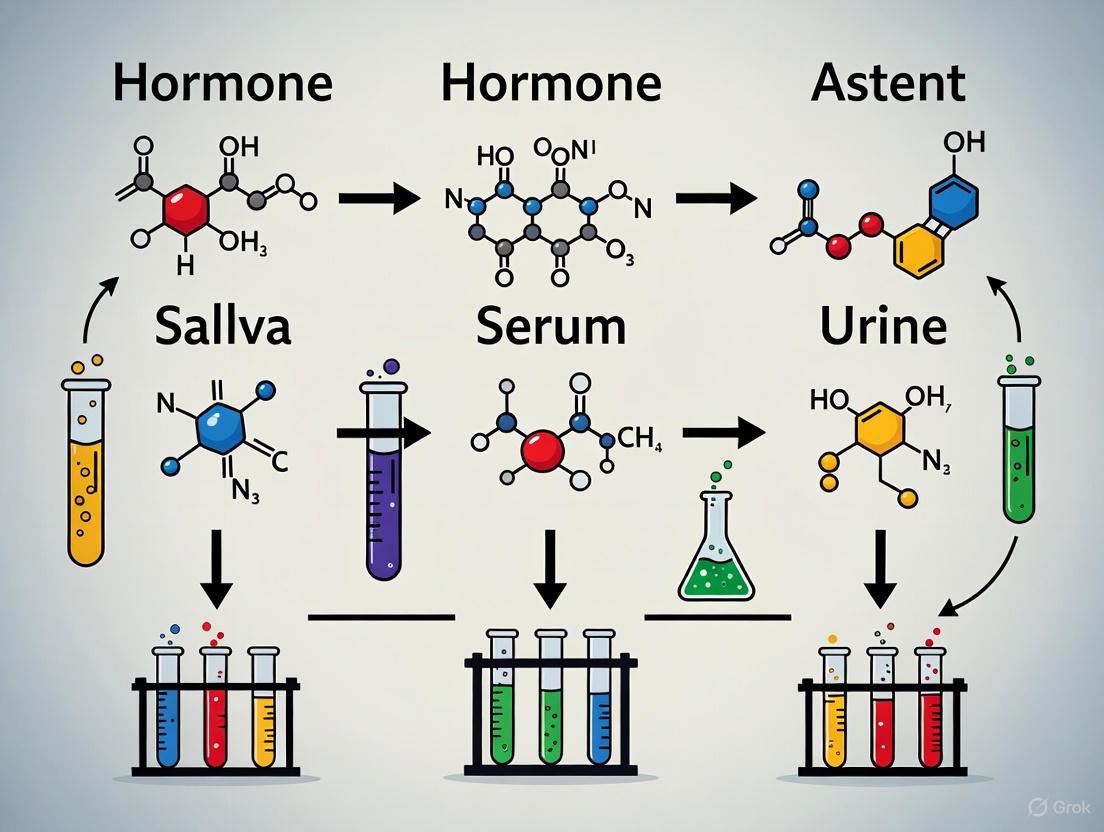
This article provides a comprehensive analysis for researchers and drug development professionals on the three primary hormone testing methodologies: serum, saliva, and urine.
Hormone Testing in Research: A Comparative Analysis of Serum, Saliva, and Urine Methodologies
Abstract
This article provides a comprehensive analysis for researchers and drug development professionals on the three primary hormone testing methodologies: serum, saliva, and urine. It establishes the foundational principles of what each method measures, from total serum levels to bioavailable salivary hormones and urinary metabolic pathways. The content delves into specific methodological protocols, appropriate clinical and research applications, and troubleshooting for assay optimization. A direct, evidence-based comparison evaluates the analytical performance, limitations, and complementarity of each technique. Finally, the review synthesizes key selection criteria and explores future directions, including technological innovations like anti-immunocomplex antibodies and LC-MS/MS, that are poised to enhance sensitivity, standardization, and accessibility in hormonal diagnostics.
Foundational Principles: What Serum, Saliva, and Urine Tests Actually Measure
The diagnostic precision of hormone analysis depends on a fundamental principle: the careful selection of the molecular target. Measuring "hormones" as a single, homogeneous category is insufficient for both clinical diagnostics and research. The biological activity, clearance rate, and metabolic fate of a hormone are determined by its specific form—whether it is total hormone circulating in the bloodstream, the free, bioavailable fraction accessible to tissues, or its metabolized products excreted in urine. The choice of diagnostic target directly influences the clinical interpretation of a patient's hormonal status [1] [2].
This document provides Application Notes and Protocols for researchers and scientists, focusing on the distinct information provided by total, free, and metabolized hormone measurements across serum, saliva, and urine matrices. We present standardized methodologies, comparative data, and visualization tools to guide assay selection and interpretation in both research and drug development contexts.
Biological Significance of Hormone Forms
Total Hormones in Serum
The vast majority of steroid and thyroid hormones in the bloodstream are bound to carrier proteins, such as sex hormone-binding globulin (SHBG) and albumin. This protein-bound complex constitutes the "total hormone" pool, which serves as a robust, stable reservoir. Measurement of total hormones in serum provides an excellent overview of the body's total hormone production and overall endocrine status. However, because the bound fraction is biologically inactive, this measurement may not always correlate directly with hormonal activity at the tissue level [2].
Free, Bioavailable Hormones
The unbound fraction of hormones, typically 1-5% of the total concentration, is biologically active and able to cross cell membranes to exert effects on target tissues and diffuse into saliva. This free fraction represents the immediate, bioavailable hormone signal.
Saliva testing has emerged as a validated, non-invasive method for assessing these free hormone levels. Salivary concentrations reflect the hormonally active fraction available to tissues, providing a dynamic assessment of functional hormone status. This is particularly valuable for hormones with diurnal rhythms or for monitoring hormone replacement therapy [3] [4].
Metabolized Hormones in Urine
Urine contains hormone metabolites—the end products of hepatic and renal processing. Profiling these metabolites in a 24-hour collection or through multiple dried spot samples provides an integrated picture of hormone production and clearance over time. Crucially, urine metabolite analysis reveals the activity of key enzymatic pathways (e.g., CYP450 enzymes, COMT, and reductases), offering insights into an individual's unique hormone metabolism that cannot be gleaned from serum or saliva alone [5] [6] [7].
Table 1: Diagnostic Utility of Different Hormone Forms
| Hormone Form | Primary Matrix | Key Clinical/Research Information | Key Limitations |
|---|---|---|---|
| Total Hormone | Serum | Total hormonal output; overall endocrine status. | Does not reflect bioavailable fraction. |
| Free Hormone | Saliva, Serum (ultrafiltration) | Biologically active, tissue-available fraction. | Moment-in-time snapshot; sensitive to acute fluctuations. |
| Hormone Metabolites | Urine | Hormone production and metabolic pathway activity over time. | Indirect measurement; does not measure parent hormones. |
Figure 1: Metabolic Pathway from Hormone Synthesis to Diagnostic Measurement. The diagram traces the pathway from hormone synthesis to the different molecular forms targeted by serum, saliva, and urine tests, highlighting the distinct diagnostic information each sample type provides.
Analytical Considerations by Testing Matrix
Serum Analysis for Total and Free Hormones
Serum testing primarily quantifies total hormones. Sophisticated techniques like equilibrium dialysis are required to measure the minute concentrations of free hormones directly in serum. Modern immunoassays are the workhorse for high-throughput serum hormone analysis. However, they can be plagued by cross-reactivity with structurally similar compounds, leading to potential inaccuracies [8] [9].
The Thyrotropin-Releasing Hormone (TRH) Stimulation Test is a classic dynamic function test performed in serum. The protocol involves:
- Drawing a baseline serum Thyroid-Stimulating Hormone (TSH) level.
- Intravenously injecting 500 µg of TRH over one minute.
- Drawing subsequent serum TSH levels at 30 and optionally 60 minutes post-injection. A normal response is a rise in the 30-minute TSH value of at least 5 mIU/mL above baseline. This test helps differentiate pituitary and hypothalamic disorders [9].
Saliva Analysis for Free Hormones
Saliva is an ideal matrix for free hormone assessment because the process of transudation from blood to saliva selectively allows only the unbound, lipophilic hormones to pass. Mass spectrometry is the gold standard for salivary hormone analysis. A 2025 comparative study demonstrated that LC-MS/MS was vastly superior to enzyme-linked immunosorbent assay (ELISA) for accurately quantifying salivary estradiol and progesterone, with machine-learning models confirming better classification results with LC-MS/MS [8].
Critical pre-analytical factors for saliva collection include:
- Collection Device: Use validated swabs or passive drool into polypropylene tubes. Cotton swabs can contain plant sterols that interfere with steroid immunoassays, and polyethylene tubes can adsorb steroids [4].
- Timing: Multiple collections across the day are essential for assessing hormones with diurnal rhythms like cortisol [3].
- Contamination: Avoid blood contamination from vigorous tooth brushing, which can skew results [4].
Urine Analysis for Hormone Metabolites
Urine hormone profiling leverages mass spectrometry (LC-MS/MS or GC-MS/MS) to separate and quantify a large number of hormone metabolites simultaneously. This provides a functional readout of enzymatic activity throughout steroidogenic pathways. A key advantage is the ability to capture hormone output over time, such as with a 24-hour collection or a more convenient 4-spot dried urine method, which has been validated to show excellent agreement with 24-hour collections for reproductive hormones [5].
Table 2: Analytical Techniques for Hormone Measurement Across Matrices
| Analytical Technique | Principle | Best-Suited Matrices | Key Advantages | Key Challenges |
|---|---|---|---|---|
| Immunoassay (IA) | Antibody-antigen binding | Serum, Saliva | High-throughput, low cost, widely available | Cross-reactivity, lower specificity, limited multiplexing |
| Liquid Chromatography Tandem Mass Spectrometry (LC-MS/MS) | Separation by chromatography followed by mass-based detection | Serum, Saliva, Urine | High specificity and sensitivity, multiplexing capability, considered gold standard | High instrument cost, requires specialized expertise |
| Gas Chromatography Mass Spectrometry (GC-MS/MS) | Volatilization and separation followed by mass-based detection | Urine (for metabolite profiling) | High resolution for structurally similar metabolites | Requires derivatization, complex sample preparation |
Experimental Protocols for Comprehensive Hormone Profiling
Protocol: Diurnal Cortisol Assessment via Saliva
Application: Evaluation of hypothalamic-pituitary-adrenal (HPA) axis rhythm and adrenal function.
Materials:
- Saliva collection kits (polypropylene tubes or validated swabs).
- Freezer (-20°C) for sample storage.
- LC-MS/MS platform for analysis.
Procedure:
- Collection: Collect saliva samples at four time points: upon waking, 30 minutes after waking, before lunch, and before bed. Note exact collection times.
- Handling: Participants should avoid eating, drinking, or brushing teeth for 30 minutes before collection. Store samples in a home freezer after collection.
- Shipping & Analysis: Ship frozen samples on dry ice to a CLIA-certified laboratory for LC-MS/MS analysis of free cortisol.
- Interpretation: A healthy rhythm shows a peak 30 minutes after waking and a steady decline throughout the day. A flattened curve or elevated nighttime cortisol suggests HPA axis dysfunction [3].
Protocol: Estrogen Metabolism Profiling via Dried Urine
Application: Comprehensive mapping of estrogen metabolism pathways, including assessment of cancer-relevant metabolite ratios.
Materials:
- Dried urine filter paper cards (e.g., Whatman Body Fluid Collection Paper).
- LC-MS/MS or GC-MS/MS system.
- Enzymes for deconjugation (e.g., Helix pomatia extract).
- Internal standards for quantification.
Procedure:
- Collection: Completely saturate filter paper strips with urine at four time points: first morning void, 2 hours after waking, afternoon, and before bed [5].
- Drying: Air-dry the samples at room temperature for 24 hours. Analytes are stable at room temperature for several weeks [5].
- Extraction & Hydrolysis: In the lab, punch out a section of the dried urine spot and extract steroids with a buffer. Hydrolyze conjugates using enzymatic hydrolysis to convert metabolites back to their free forms [5].
- Derivatization & Analysis: For GC-MS/MS, derivatize extracts and analyze. For LC-MS/MS, analysis can often proceed without derivatization.
- Data Normalization: Normalize all analyte concentrations to urine creatinine to account for variations in urine concentration [5] [7].
- Interpretation: Calculate key ratios:
Figure 2: Dried Urine Hormone Metabolite Profiling Workflow. The process from non-invasive sample collection to the generation of a comprehensive report detailing hormone metabolite levels and key metabolic ratios.
The Scientist's Toolkit: Key Research Reagents and Materials
Table 3: Essential Reagents and Materials for Hormone Analysis
| Item | Function/Application | Critical Specifications |
|---|---|---|
| LC-MS/MS System | Gold-standard quantification of hormones and metabolites in all matrices. | High sensitivity (picogram), ability to resolve isobaric compounds (e.g., cortisol vs. cortisone). |
| Polypropylene Collection Tubes | Sample collection for saliva. | Prevents adsorption of lipophilic steroids, which occurs with polyethylene tubes. |
| Validated Saliva Swabs | Non-invasive saliva collection. | Must be validated for the specific analyte; cotton may contain interfering plant sterols. |
| Dried Urine Filter Cards | Convenient room-temperature stable urine collection. | Standardized size and absorption capacity (e.g., Whatman Body Fluid Collection Paper). |
| Enzymes for Hydrolysis | Deconjugation of glucuronidated/sulfated metabolites in urine prior to analysis. | Helix pomatia extract is common; must have high activity for broad steroid spectrum. |
| Deuterated Internal Standards | Used in MS for quantification; corrects for sample loss during preparation. | Isotope-labeled version of each target analyte (e.g., Estradiol-d3, Cortisol-d4). |
| Reference Materials | Calibration and quality control for all assays. | Certified reference materials with defined purity and concentration. |
The diagnostic targets of total, free, and metabolized hormones are not interchangeable; they provide complementary layers of information on endocrine function. Serum offers a snapshot of total hormone production, saliva accurately reflects the bioactive free fraction, and urine provides an integrated profile of metabolic clearance and pathway activity. The choice of matrix and target should be driven by the specific research or clinical question.
Mass spectrometry, particularly LC-MS/MS, has become the definitive technology for precise hormone measurement across all matrices due to its superior specificity and sensitivity. For researchers and drug developers, a multi-matrix approach that strategically combines these different diagnostic targets offers the most holistic view of endocrine physiology, enabling more accurate diagnostics, personalized treatment strategies, and a deeper understanding of endocrine pathways in health and disease.
Serum testing represents the cornerstone of clinical hormone assessment, providing a robust and widely standardized method for quantifying total circulating hormone levels. This protocol details the application of serum-based assays for endocrine analysis, emphasizing its critical role in establishing diagnostic baselines, monitoring therapeutic interventions, and validating novel testing methodologies. While alternative matrices like saliva and urine offer insights into free hormone dynamics and metabolic clearance, serum remains the preeminent reference standard for comprehensive endocrine evaluation in research and clinical diagnostics. The following application notes provide a structured framework for implementing serum hormone testing with analytical rigor.
In clinical and research settings, the validation of serum hormone testing is paramount to ensure the reporting of accurate and precise results. Method validation serves as the first step in establishing a Lean-Total Quality Management system in a laboratory, with the goal of eliminating errors in test results [10]. The validation process for test methods and instrumentation includes defined qualification phases: Installation Qualification (IQ), Operational Qualification (OQ), and Performance Qualification (PQ) [10].
Before introducing a new method, laboratories must verify key performance characteristics, including precision, accuracy, reportable range, reference intervals, analytical sensitivity, and analytical specificity [10]. These parameters ensure that the method provides reliable performance for patient testing and research applications.
Reference Interval Verification
A critical component of method validation involves verifying that reference intervals are appropriate for the patient population. According to CLSI document C28-A2, laboratories can adopt reference intervals from manufacturers, reference laboratories, or published literature [10]. The validation procedure involves testing 20 representative healthy individuals; the test is considered validated if no more than two results fall outside the manufacturer's proposed limits [10].
Comprehensive Reference Ranges for Serum Hormones
The following tables summarize standard reference ranges for key hormone categories. These ranges provide essential benchmarks for interpreting test results in both clinical and research contexts.
Table 1: Thyroid Hormone Reference Ranges in Serum [11]
| Test | Reference Range |
|---|---|
| TSH | 0.5 to 5.0 IU/mL |
| Free T4 | 0.7 to 1.9 ng/dL |
| Total T3 | 80-220 ng/dL |
| Thyroid Peroxidase Antibody | <9 IU/mL |
| Thyroglobulin Antibody | 0 to 116 IU/mL |
Table 2: Reproductive Hormone Reference Ranges in Serum [11]
| Hormone/Test | Reference Range | Notes |
|---|---|---|
| Estrone (Estrogen) | 12-72 pg/mL | |
| Estradiol (Estrogen) | <15 to 750 pg/mL | Varies widely by menstrual cycle phase and menopausal status. |
| Estriol (Estrogen) | 0-350 pg/mL | |
| Progesterone | <1 to 300 ng/mL | Varies widely by menstrual cycle phase and menopausal status. |
| FSH | 0 to 134.8 mIU/mL | Highly dependent on age, sex, and puberty status. |
| LH | 1.24 to 52.3 IU/mL | Dependent on gender and phase of menstrual cycle. |
Table 3: Adrenal and Other Hormone Reference Ranges in Serum [11]
| Hormone | Reference Range | Notes |
|---|---|---|
| ACTH | 10-60 pg/mL | |
| Cortisol | 3-20 mcg/dL | Varies by time of day; follows a diurnal rhythm. |
| Intact Parathyroid Hormone | 15-65 pg/mL | Must be interpreted in combination with calcium and phosphorus levels. |
Experimental Protocols for Serum Hormone Assays
Protocol for Verification of Analytical Accuracy
Analytical accuracy refers to the agreement between a test result and the true value of the analyte [10].
- Sample Selection: Collect 20 serum samples that span the entire testing range of the assay [10].
- Comparative Analysis: Analyze the selected samples using both the new method (under validation) and a established reference method.
- Data Analysis: Perform linear regression analysis on the results from the two methods.
- Acceptance Criteria: Verify that the average bias between the two methods is within pre-defined allowable limits. A high degree of analytical accuracy is demonstrated by a coefficient of determination (r²) approaching 1.0 (e.g., r² = 0.99) [10].
Protocol for Verification of Precision
Precision, or repeatability, is quantified by analyzing the variation in repeated measurements of the same sample [10].
- Inter-Assay Variation:
- Select abnormal serum samples with analyte concentrations at medically decision-making levels.
- Process each sample in triplicate (3 times per run) for 5 consecutive days, generating 15 replicates total.
- Calculate the mean, standard deviation (SD), and coefficient of variation (CV) for the data set.
- Intra-Assay Variation:
- Run a single abnormal serum sample 20 times in a single analytical run.
- Calculate the mean, SD, and CV for these 20 replicates.
- Acceptance Criteria: The obtained CV should be comparable to the manufacturer's claims. Typical validation studies report inter-assay CVs of ~1.04% and intra-assay CVs of ~1.54% for well-performing assays [10].
Protocol for Verification of Reportable Range
The reportable range is the span of test result values over which the laboratory can establish or verify the accuracy of the measurement [10].
- Sample Preparation: Use materials that span the analytical measurement range (AMR), such as commercial linearity materials, proficiency testing samples, or patient samples with known results. Prepare samples at three levels: low, midpoint, and high.
- Analysis: Run the prepared samples in the method under validation.
- Verification: The method should accurately measure the analyte across the entire claimed range without requiring sample dilution or pre-treatment that is not part of the standard assay process. The AMR must be verified before a method is introduced and checked every 6 months thereafter [10].
The Scientist's Toolkit: Research Reagent Solutions
The table below outlines essential materials and reagents required for establishing and performing validated serum hormone testing.
Table 4: Essential Research Reagents for Serum Hormone Testing
| Reagent / Material | Function |
|---|---|
| Certified Reference Materials | Used for recovery experiments to verify analytical accuracy by comparing test results to a known "true" value [10]. |
| Commercial Linearity Materials | Used to verify the Analytical Measurement Range (AMR) of an assay, ensuring accuracy across low, mid, and high concentrations [10]. |
| Control Sera (Level 1 & 2) | Used for daily quality control and to verify precision (inter-assay and intra-assay variation) [10]. |
| Calibrators | Used to calibrate instruments and establish a standard curve for quantitative analysis. |
| Antibody Assays (ELISA/CLIA) | Immunoassays for the specific detection and quantification of peptide hormones (e.g., FSH, LH, insulin) and total steroid levels [12]. |
| Interference Check Solutions | Solutions containing potential interferents (e.g., bilirubin, hemoglobin, lipids) to verify the analytical specificity of the assay [10]. |
Comparative Context and Application Workflow
Serum testing is uniquely positioned to assess total circulating hormone levels, including protein-bound fractions, making it the best initial test for establishing baseline endocrine status and diagnosing classic endocrine disorders [13] [12]. It is the definitive method for evaluating peptide hormones such as FSH, LH, and insulin, as well as thyroid hormones [12].
In contrast, saliva testing measures the free, bioavailable fraction of steroid hormones, ideal for assessing tissue uptake and diurnal patterns like the cortisol rhythm [14] [13]. Urine testing provides a cumulative view of hormone metabolites, offering a metabolic map of how hormones are processed and cleared through Phase I and Phase II detoxification pathways [14] [12]. The following workflow diagram illustrates the decision-making process for selecting and implementing serum hormone testing.
Serum testing maintains its status as the gold standard for the assessment of total circulating hormone levels, providing a validated and universally accepted framework for endocrine diagnostics. Its strength lies in its ability to establish diagnostic baselines, monitor systemic hormone status, and provide a reference point against which other testing modalities can be compared. When integrated with salivary free hormone data and urinary metabolite profiles, serum testing contributes to a holistic, multi-matrix understanding of endocrine function, driving forward both clinical diagnostics and research in drug development.
Salivary hormone testing has emerged as a critical methodology in endocrinology research, providing unique access to the bioavailable fraction of steroid hormones that are actively available for tissue uptake. Unlike serum measurements which capture both protein-bound and free hormones, saliva specifically measures the unbound, biologically active hormones that have diffused through the acinar cells of salivary glands via passive diffusion. This physiological process selectively allows only free hormones to pass into saliva, as the large protein carriers such as sex hormone-binding globulin (SHBG) and albumin cannot cross the lipid bilayer of cell membranes [3]. Consequently, salivary concentrations provide researchers with a direct window into the hormonally active components that interact with cellular receptors throughout the body, offering distinct advantages for investigating endocrine function in both basic science and clinical trial settings.
The scientific foundation of salivary testing rests on the lipophilic nature of steroid hormones. Because these hormones are derived from cholesterol and are hydrophobic, they require protein carriers for transport in aqueous environments like blood. In saliva, which has a more favorable lipid environment, hormones exist primarily in their free forms [2]. This fundamental difference in matrix composition underpins the unique clinical and research applications of salivary hormone assessment, particularly for understanding dynamic hormone fluctuations and tissue-specific hormone availability.
Methodological Considerations for Salivary Hormone Analysis
Comparative Analysis of Hormone Testing Matrices
Table 1: Comparison of Hormone Testing Methodologies in Research Applications
| Parameter | Saliva Testing | Serum Testing | Urine Testing |
|---|---|---|---|
| Hormones Measured | Free, bioavailable steroid hormones | Total hormone levels (bound + free) | Metabolized/conjugated hormones |
| Physiological Basis | Passive diffusion of free hormones | Venous blood collection | Kidney filtration and excretion |
| Temporal Resolution | High (minute-to-minute) | Single point-in-time | Cumulative (hours since last void) |
| Collection Method | Non-invasive self-collection | Phlebotomy required | Mid-stream or timed collection |
| Research Applications | Diurnal rhythm studies, HRT monitoring, circadian biology | Diagnostic endocrinology, total hormone assessment | Metabolic pathway analysis, clearance studies |
| Key Limitations | Not suitable for troche/sublingual therapies [1] | Does not differentiate bound vs. free hormones | Does not reflect tissue uptake of topical/oral medications [1] |
Technical Validation and Analytical Considerations
The analytical validity of salivary hormone testing depends heavily on both collection methodology and assay precision. Enzyme-linked immunosorbent assays (ELISA) provide the necessary sensitivity for quantifying hormones in saliva, where concentrations are typically significantly lower than in serum [4]. For optimal results, inter-assay coefficients of variation (CV) should be <15%, and intra-assay CV over triplicates should be <10% [4]. Liquid chromatography-tandem mass spectrometry (LC-MS/MS) serves as the established reference method for hormone quantification, and laboratories should validate their salivary ELISA tests against MS results to ensure analytical accuracy [4].
Sample collection methodology critically impacts assay performance. Research demonstrates that polypropylene collection tubes are preferred over polyethylene, which may adsorb steroids [4]. Similarly, cotton-based collection materials can introduce interference due to plant sterols that cross-react in steroid immunoassays [4]. For certain analytes, passive drool collection without swabs is required to prevent under-recovery or over-recovery of the measured analyte [4]. Vigorous tooth-brushing immediately before sample collection should be avoided as it can cause blood contamination that significantly skews testosterone measurements for at least 30 minutes [4].
Experimental Protocols for Salivary Hormone Assessment
Protocol for Diurnal Cortisol Rhythm Assessment
Objective: To characterize the circadian rhythm of cortisol secretion through serial salivary collections across a waking day.
Materials:
- Polypropylene saliva collection tubes
- Cold storage facilities (-20°C freezer)
- Laboratory-grade timer or programmed reminders
- Laboratory information management system (LIMS) for sample tracking
Procedure:
- Sample Collection Timing: Collect samples at four time points: (1) immediately upon waking, (2) 30 minutes post-awakening, (3) approximately 4:00 PM, and (4) immediately before bedtime [14].
- Pre-collection Protocol: Participants should refrain from eating, drinking, brushing teeth, or smoking for at least 30 minutes before each collection.
- Sample Collection: Provide 1-2 mL of passive drool directly into pre-labeled polypropylene tubes without using swabs or collection devices that may interfere with assay performance.
- Sample Handling: Immediately freeze samples at -20°C after collection. Studies demonstrate steroid hormones remain stable in frozen saliva for up to one year with no remarkable variations in concentration [4].
- Shipping and Analysis: Transport frozen samples on dry ice to the analytical laboratory. Analyze using validated ELISA or LC-MS/MS methods with appropriate quality controls.
Data Interpretation: The cortisol awakening response (CAR) is calculated as the increase from waking to 30 minutes post-awakening. The diurnal slope is assessed by comparing morning to evening values. Normal rhythms show highest levels upon waking, a peak 30 minutes post-awakening, and a gradual decline throughout the day [3].
Protocol for Menstrual Cycle Hormone Mapping
Objective: To track estradiol and progesterone fluctuations across the menstrual cycle to identify ovulatory status and phase characteristics.
Materials:
- 30+ polypropylene saliva collection tubes
- Standardized cycle tracking chart
- -20°C storage capability
- Automated ELISA platform for high-throughput analysis
Procedure:
- Study Design: Participants collect daily saliva samples throughout one complete menstrual cycle, ideally for a minimum of 30 consecutive days.
- Collection Standardization: All samples should be collected at the same time each day, preferably before 10:00 AM, before eating or drinking.
- Sample Processing: Centrifuge samples at 3000×g for 15 minutes to remove mucins and debris before analysis.
- Hormone Analysis: Measure estradiol and progesterone using sensitive ELISA kits validated for salivary matrices with lower limits of quantification appropriate for expected physiological ranges.
- Data Validation: Include quality control samples with known concentrations in each assay batch. Apply correction for any plate-to-plate variation.
Data Analysis: Create daily hormone profiles with progesterone levels typically showing a distinct rise following ovulation and estradiol demonstrating both a pre-ovulatory surge and secondary rise during the luteal phase [4]. Cycle phases are identified based on characteristic hormone patterns: menstruation (low estradiol and progesterone), follicular phase (rising estradiol), peri-ovulatory (estradiol peak), and luteal phase (elevated progesterone).
Figure 1: Experimental workflow for comprehensive menstrual cycle hormone mapping using salivary analysis
Essential Research Reagent Solutions
Table 2: Key Research Reagents for Salivary Hormone Analysis
| Reagent/Material | Specification | Research Application |
|---|---|---|
| Polypropylene Collection Tubes | Low hormone-binding properties | Sample collection and storage |
| Enzyme Immunoassay Kits | Validated for salivary matrices | Quantification of steroid hormones |
| Stable Isotope-Labeled Internal Standards | Deuterated or 13C-labeled hormones | LC-MS/MS method reference standards |
| Enzyme Hydrolysis Reagents | β-glucuronidase/sulfatase from Helix pomatia | Deconjugation for total hormone measurement |
| Quality Control Materials | Pooled saliva with known concentrations | Inter-assay and intra-assay validation |
| Derivatization Reagents | Bis(trimethylsilyl)trifluoroacetamide | GC-MS/MS analysis preparation |
Applications in Research and Drug Development
Salivary hormone testing provides unique insights across multiple research domains. In clinical trial monitoring, salivary measurements offer a non-invasive method for frequent sampling to assess drug pharmacodynamics and dosing efficacy for hormone replacement therapies [1]. For circadian biology studies, the ability to capture cortisol awakening response and diurnal rhythms through at-home collection provides ecological validity unmatched by single-point serum measurements [14] [3]. In women's health research, serial salivary sampling allows detailed mapping of hormonal fluctuations across the menstrual cycle, enabling identification of ovulatory status, luteal phase defects, and perimenopausal transitions with greater participant compliance than repeated phlebotomy [4].
The complementary relationship between salivary and urinary hormone assessments is particularly valuable in comprehensive research protocols. While saliva reveals real-time bioavailable hormone levels, urine testing provides information about hormone metabolism and clearance pathways [14]. This combined approach can distinguish between hormone production deficiencies versus clearance abnormalities, offering insights into liver function, methylation capacity, and phase I/II detoxification pathways that influence hormone activity [14].
Figure 2: Physiological pathway of hormone transfer from blood circulation to salivary measurement
Limitations and Methodological Constraints
Despite its advantages, salivary hormone testing presents specific limitations that researchers must consider. The methodology is not recommended for patients using troche or sublingual hormone delivery systems, as these administration routes deliver high hormone concentrations locally to salivary glands, creating artificially elevated measurements that do not reflect whole-body hormone exposure [1]. Additionally, salivary testing does not assess hormone metabolites or conjugation pathways, requiring complementary urinary testing for comprehensive metabolic profiling [14].
Methodologically, salivary testing requires rigorous standardization of both collection protocols and analytical methods. The field would benefit from improved inter-laboratory standardization and larger reference databases for salivary hormone levels across diverse populations [4] [15]. Researchers should establish their own laboratory-specific reference ranges through controlled studies rather than relying exclusively on manufacturer-provided ranges, particularly when studying special populations or conditions affecting salivary flow rate and composition.
Urine testing for hormone metabolism provides a comprehensive functional profile of steroid hormone production, biotransformation, and elimination pathways. Unlike serum measurements that offer momentary snapshots of hormone levels, urine analysis captures integrated metabolic activity over time, typically through 24-hour collections or multiple dried spot samples throughout the day [16] [6]. This methodology enables researchers to quantify parent hormones and their downstream metabolites, revealing the efficiency of critical detoxification pathways that influence hormonal balance, disease risk, and therapeutic outcomes [17] [7].
The analytical foundation of modern urinary hormone profiling relies on mass spectrometry technologies, primarily liquid chromatography tandem mass spectrometry (LC-MS/MS) and gas chromatography tandem mass spectrometry (GC-MS/MS) [5] [6]. These platforms provide the sensitivity and specificity required to resolve structurally similar metabolites at low concentrations while minimizing cross-reactivity issues inherent to immunoassays [5]. By measuring the complete metabolic pathway from active hormones to their excreted waste products, researchers gain unprecedented insight into enzymatic activity, genetic polymorphisms, and environmental influences on endocrine function [16] [17].
Key Metabolic Pathways and Analytical Targets
Phase I Detoxification: Hydroxylation
The initial metabolic transformation of steroid hormones occurs through cytochrome P450-mediated hydroxylation, which converts parent hormones into metabolite variants with differing biological activities [16] [17]. This phase I process determines the subsequent pathway and potential biological impact of estrogen and other steroid hormones.
Table: Primary Phase I Estrogen Metabolites and Biological Significance
| Metabolite | Enzyme Source | Biological Activity | Research Implications |
|---|---|---|---|
| 2-Hydroxyestrone (2-OH-E1) | CYP1A1/CYP1A2 | Weak estrogenic activity; considered protective | Higher ratios associated with reduced breast cancer risk [16] [17] |
| 4-Hydroxyestrone (4-OH-E1) | CYP1B1 | Can form DNA-damaging semiquinones/quinones | Elevated levels may indicate increased cancer risk; requires efficient phase II methylation [16] [17] |
| 16α-Hydroxyestrone (16α-OH-E1) | CYP3A4 | Estrogenically active; supports bone health but proliferative | High levels associated with hormone-sensitive cancers; balance with 2-OH pathway important [16] |
The functional output of these competing hydroxylation pathways provides critical insight into disease mechanisms. Research demonstrates that individuals with predominant 4-hydroxylation pathways may face increased risk of hormone-sensitive cancers due to potential DNA damage from reactive intermediates, while the 2-hydroxylation pathway generally produces protective metabolites [17]. The 16α-hydroxylation pathway supports bone density but exhibits proliferative potential that requires balancing with protective pathways [16] [6].
Phase II Detoxification: Conjugation
Following hydroxylation, phase II conjugation reactions transform metabolites into water-soluble compounds for excretion [16] [17]. This critical step determines the ultimate elimination of hormone metabolites and protects against accumulation of potentially genotoxic intermediates.
Table: Major Phase II Conjugation Pathways
| Conjugation Pathway | Key Enzymes | Function | Research Applications |
|---|---|---|---|
| Methylation | Catechol-O-methyltransferase (COMT) | Converts catechol estrogens to methoxy forms | Assessing methylation efficiency; identifying COMT polymorphism effects [16] [18] |
| Glucuronidation | UDP-glucuronosyltransferases (UGTs) | Adds glucuronic acid for biliary excretion | Evaluating hepatic conjugation capacity; gut microbiome interactions [16] |
| Sulfation | Sulfotransferases (SULTs) | Adds sulfate group for renal excretion | Measuring water-soluble metabolite excretion [16] |
The methylation pathway deserves particular research attention, as COMT enzyme activity determines whether potentially harmful 4-OH catechol estrogens are safely neutralized to 4-methoxyestrogens or accumulate as reactive quinones that can form DNA adducts [17] [18]. The 2-methoxyestrone (2-MeO-E1) and 2-methoxyestradiol (2-MeO-E2) metabolites resulting from methylation not only represent successful detoxification but also exhibit their own anti-angiogenic and pro-apoptotic properties [16].
Methodological Approaches and Protocols
Specimen Collection Methods
Two primary urine collection methodologies support hormone metabolite research, each with distinct advantages for experimental design:
24-Hour Urine Collection: This traditional approach involves collecting all urine produced over a full 24-hour period in containers, typically refrigerated and preserved with boric acid during collection [5] [6]. This method provides the most comprehensive assessment of total daily hormone production and metabolite excretion, effectively averaging diurnal variations [6]. The methodology captures analytes with short half-lives or nocturnal secretion patterns, including direct measurement of melatonin, oxytocin, and growth hormone [6].
Dried Urine Spot Collection: This innovative approach involves collecting multiple spot urine samples (typically 4-5) throughout the day by saturating filter paper cards that are air-dried and stored at room temperature [5] [6]. Validation studies demonstrate excellent agreement between dried and liquid urine methods, with intraclass correlation coefficients (ICCs) greater than 0.90 for reproductive hormones and good to excellent agreement (ICC: 0.75-0.99) for organic acids [5]. The four-sample collection protocol (first morning, late morning, afternoon, and bedtime) effectively represents the 24-hour hormonal milieu while offering significant practical advantages for field research and longitudinal studies [5].
Analytical Methodology: LC-MS/MS Protocol
The following detailed protocol outlines the standard methodology for analyzing hormone metabolites from urine specimens using liquid chromatography tandem mass spectrometry:
Table: Research Reagent Solutions for LC-MS/MS Hormone Metabolite Analysis
| Reagent/Equipment | Specifications | Research Function |
|---|---|---|
| Solid Phase Extraction Columns | C18 columns (e.g., UCT LLC) | Isolation of conjugated hormones from urine matrix |
| Enzymatic Hydrolysis Reagents | Helix pomatia extract in acetate buffer (pH 5.9) | Deconjugation of glucuronide and sulfate metabolites |
| Derivatization Reagents | Bis(trimethylsilyl)trifluoroacetamide + acetonitrile | Volatilization for GC-MS/MS analysis (if applicable) |
| Internal Standards | Deuterated steroid analogs (Steraloids) | Quantification normalization and quality control |
| LC-MS/MS System | Agilent 7890/7000B or equivalent | High-sensitivity analyte separation and detection |
Sample Preparation Protocol:
- Aliquot and Extraction: Dispense 600μL of liquid urine or equivalent volume extracted from dried filter paper using 2mL of 100mM ammonium acetate (pH 5.9) [5].
- Solid Phase Extraction: Transfer aliquots to C18 SPE columns, wash with appropriate buffers, and elute conjugated hormones using methanol [5].
- Evaporation: Dry eluate under nitrogen at 40°C to concentrate analytes [5].
- Enzymatic Hydrolysis: Incubate with Helix pomatia extract (containing sulfatase and glucuronidase activity) in acetate buffer at 55°C for 90 minutes to liberate aglycones from conjugated forms [5].
- Liquid-Liquid Extraction: Quench enzymatic reaction with sodium hydroxide and extract free hormones with ethyl acetate [5].
- Derivatization (GC-MS/MS): For laboratories using GC-MS/MS, derivatize dried extracts with BSTFA + acetonitrile at 70°C for 30 minutes to enhance volatility and detection sensitivity [5].
Instrumental Analysis:
- Chromatographic Separation: Employ reverse-phase C18 columns with gradient elution (typically water/methanol or water/acetonitrile with 0.1% formic acid) to resolve isobaric metabolites [5] [7].
- Mass Spectrometric Detection: Utilize multiple reaction monitoring (MRM) for optimal sensitivity and specificity, quantifying analytes against deuterated internal standard calibration curves [5].
- Data Processing: Normalize analyte concentrations to urine creatinine to account for variations in urine concentration, expressing results as μg/g creatinine [5] [7].
Data Interpretation and Key Metabolic Ratios
Critical Metabolic Ratios for Research Applications
The analytical value of urinary hormone metabolite testing extends beyond individual metabolite concentrations to encompass calculated ratios that reflect functional metabolic activity:
Table: Key Metabolic Ratios for Research Interpretation
| Metabolic Ratio | Calculation | Research Interpretation | Clinical Research Implications |
|---|---|---|---|
| 2/16α-OH-E1 Ratio | 2-OHE1 / 16α-OHE1 | Phase I hydroxylation balance | <1.5 suggests elevated estrogen-sensitive cancer risk; >2.0 indicates protective metabolism [16] [6] |
| 2/4-OH-E1 Ratio | 2-OHE1 / 4-OHE1 | Genotoxic vs. protective balance | Low ratio indicates higher potential for DNA damage and hormone-related cancers [16] |
| Methylation Ratio | 2-MeOE1 / 2-OHE1 | Phase II COMT efficiency | Ratio <0.5 suggests impaired methylation, potentially requiring nutritional support (SAMe, folate, B vitamins) [6] [7] |
| Estrogen Quotient (EQ) | E3 / (E1 + E2) | Protective estrogen balance | Optimal >1.5-2.0; higher EQ associated with breast protective effects [6] |
| Androgen Ratio | Androsterone / Etiocholanolone | 5α- vs. 5β-reductase activity | Indicates metabolic preference impacting prostate health, alopecia, and androgen signaling [7] |
Quality Assurance and Method Validation
Robust hormone metabolite research requires rigorous quality control procedures:
- Analytical Precision: State-of-the-art LC-MS/MS platforms achieve coefficients of variation <5% for most steroid metabolites, significantly outperforming immunoassay methods [7].
- Method Correlation: Validation studies demonstrate excellent agreement between dried urine and liquid urine methods, with ICCs >0.90 for reproductive hormones and good to excellent agreement for organic acids (ICC: 0.75-0.99) [5].
- Stability Parameters: Dried urine samples maintain analyte stability for up to 84 days at room temperature, facilitating flexible study designs and shipping logistics [5].
- Creatinine Normalization: Expressing results relative to urine creatinine concentration controls for hydration status and enables valid longitudinal comparisons [5] [7].
Research Applications and Future Directions
Urinary hormone metabolite profiling enables sophisticated research applications across multiple disciplines:
- Cancer Risk Assessment: Large-scale studies like the GENICA trial demonstrate that premenopausal women with elevated 4-OHE2 levels (90th percentile) have a 2.3-fold higher breast cancer risk than those in the 10th percentile, establishing metabolite ratios as valuable risk stratification tools [17].
- Therapeutic Monitoring: Research applications include monitoring hormone replacement therapy outcomes, assessing biochemical responses to nutritional interventions (e.g., DIM, cruciferous vegetables), and identifying individuals with functional COMT deficiencies requiring methylation support [16] [18] [7].
- Environmental Toxicology: Urinary metabolite patterns can reveal endocrine disruption from xenoestrogens in plastics, pesticides, and industrial chemicals, providing functional biomarkers of exposure effect [16] [18].
- Nutrigenomics Research: The methodology enables investigation of how genetic polymorphisms (COMT, CYP1A1, CYP1B1, MTHFR) interact with nutritional status to influence hormone metabolism and disease risk [17] [18].
Future methodological developments will likely focus on expanding analyte panels, enhancing automation, standardizing reference ranges across populations, and integrating genomic data for personalized medicine applications. The continuing evolution of mass spectrometry technology promises improved sensitivity for low-abundance metabolites and higher throughput for large-scale epidemiological studies.
The Impact of Collection Method on Data Interpretation in Research Settings
In the fields of endocrinology and drug development, the accurate assessment of hormone levels is fundamental to both research and clinical diagnostics. However, the biological data researchers obtain is inherently influenced by the method of its collection. The choice between serum, saliva, and urine testing is not merely a logistical decision but a fundamental one that dictates which hormonal fractions and metabolites are accessible for measurement, thereby shaping all subsequent data interpretation [2]. Using an inappropriate collection method for a given research question can lead to misleading results, such as overestimating systemic hormone exposure or completely missing key metabolic pathways.
This article delineates the scientific principles, appropriate applications, and limitations of each major hormone testing medium. It provides researchers and drug development professionals with a structured framework for selecting the optimal specimen type, ensuring that the data generated accurately reflects the physiological process under investigation.
Comparative Analysis of Testing Methodologies
The three primary testing mediums—serum, saliva, and urine—provide distinct windows into the endocrine system. Their differences stem from the basic physiology of steroid hormones, which are hydrophobic and require specific adaptations to be measured in water-based mediums like serum and urine [2].
Table 1: Primary Characteristics and Applications of Hormone Testing Methodologies
| Specimen Type | What is Measured | Key Research Applications | Critical Limitations |
|---|---|---|---|
| Serum/Plasma [13] | Total hormone levels (both protein-bound and free fractions); baseline endogenous hormones. | Establishing initial endocrine diagnoses; monitoring pellet, patch, or oral hormone replacement therapy (HRT) [13]; conventional thyroid function testing. | Invasive collection; does not distinguish between bioavailable and protein-bound hormone; single time-point snapshot. |
| Saliva [3] [13] | Unbound, bioavailable steroid hormones that are actively available to tissues [3]. | Assessing transdermal HRT [13]; evaluating diurnal cortisol and cortisone patterns [3]; monitoring tissue uptake of hormones [1]. | Not suitable for troche/sublingual therapies (causes false-high readings) [1]; cannot assess hormone metabolites or conjugation pathways. |
| Urine [13] [19] | Hormone metabolites (the by-products of hormone processing and clearance); parent hormones + metabolites [19]. | Investigating hormone metabolism and clearance pathways [13]; assessing cancer risk via estrogen metabolite ratios (e.g., 2-OHE1:16α-OHE1) [7] [19]; diurnal cortisol patterns. | Not reflective of tissue uptake for topical medications [1]; risk of contamination for vaginal hormone delivery [1]; 24-hour collection can be cumbersome. |
Table 2: Quantitative Data and Methodological Specifications
| Parameter | Saliva Testing | Urine Testing (HUMAP Example) | Serum Testing (TRH Stimulation Example) |
|---|---|---|---|
| Example Analytes | Cortisol, Estradiol, Progesterone, Testosterone, DHEA [3] | 40+ markers including parent hormones, Phase I/II metabolites, cortisol, melatonin, BPA [7] [19] | Thyroid-Stimulating Hormone (TSH) [9] |
| Technology | ELISA, Mass Spectrometry (as reference) [4] | Liquid Chromatography Tandem Mass Spectrometry (LC-MS/MS) [7] | Immunoassay [9] |
| Collection Protocol | Passive drool into polypropylene tubes; avoid cotton swabs for most steroids [4] | 4-spot dried urine on filter strips or 24-hour liquid collection [7] [19] | IV injection of 500 µg TRH; serum drawn at baseline, 30-, and 60-minutes post-injection [9] |
| Key Advantage | Measures bioactive, free fraction; excellent for circadian rhythm [3] | Reveals functional enzyme activity (e.g., COMT, CYP450) and detoxification capacity [7] | Gold standard for dynamic function tests (e.g., HPA axis) [9] |
Signaling Pathways and Hormone Fractions by Sample Type
The diagram below illustrates the origin and nature of the hormonal information captured in each testing medium, clarifying their relationship to systemic hormone activity.
Research Applications and Protocols
Detailed Experimental Workflows
To ensure reliable and reproducible results, adherence to standardized protocols for sample collection and handling is paramount. The following workflows detail the procedures for each method.
Protocol 1: Salivary Hormone Collection for Diurnal Profiling
Principle: Saliva collection is a non-invasive method to track the unbound, biologically active fraction of steroid hormones, making it ideal for assessing circadian rhythms and response to transdermal therapies [3].
Workflow Diagram:
Protocol 2: Dried Urine Metabolite Profiling (e.g., HUMAP/ZRT)
Principle: Urine metabolite profiling using LC-MS/MS provides a comprehensive snapshot of hormone production, phase I and II metabolism, and clearance over a period of time, offering unique insight into enzymatic pathways and detoxification capacity [7] [19].
Workflow Diagram:
Data Interpretation and Key Applications in Research
The value of hormone testing is realized only through accurate interpretation of the data within its specific clinical and research context.
Saliva Test Interpretation: Salivary results reflect the free, bioavailable fraction of hormones. For cortisol, the diurnal rhythm is a key diagnostic feature, where a flattened pattern can indicate HPA axis dysregulation [3]. For sex hormones like estradiol and progesterone, results must be interpreted against reference ranges specific to gender, age, and (for premenopausal women) menstrual cycle phase [3]. A significant limitation is that saliva testing is not recommended for patients using troche or sublingual hormone therapies, as these can cause locally high concentrations in the salivary glands, leading to a false-high estimate of systemic hormone exposure [1].
Urine Metabolite Interpretation: Urine testing provides a functional readout of enzyme activity through calculated ratios. Key interpretive ratios include:
- 2-OHE1:16α-OHE1: A ratio below 1.5 suggests a higher risk for estrogen-sensitive cancers and indicates a pattern of estrogen dominance [7] [19].
- 2-MeOE1:2-OHE1 (COMT Ratio): This measures the efficiency of catechol-O-methyltransferase, a crucial methylation enzyme. A low ratio suggests sluggish COMT activity, which can be supported with methyl donors like SAMe, folate, and B vitamins [7].
- Androsterone:Etiocholanolone: This ratio indicates the balance between 5α-reductase (producing potent androgens) and 5β-reductase pathways, providing insight into conditions like androgenic alopecia or prostate health [7].
The Scientist's Toolkit: Essential Research Reagents & Materials
Selecting the appropriate collection materials is critical for assay validity, as certain materials can interfere with hormone quantification.
Table 3: Essential Research Reagents and Materials for Hormone Testing
| Item | Function/Application | Critical Specification Notes |
|---|---|---|
| Polypropylene Collection Tubes | Sample receptacle for saliva collection. | Essential. Polypropylene minimizes adsorption of steroid hormones. Polyethylene tubes should be avoided as they adsorb steroids, reducing recovery [4]. |
| Passive Drool Collection Aid | Non-absorbent funnel to facilitate saliva transfer into tube. | Preferred for widest analyte compatibility. Ensures no loss or interaction of hormones with absorbent materials [4]. |
| Dried Urine Filter Strips | Matrix for absorbing and stabilizing urine samples for transport. | Enables convenient at-home multi-spot collection without needing a liquid jug. Strips are shelf-stable for 30 days [19]. |
| LC-MS/MS Grade Solvents | Mobile phase and extraction solvents for urinary metabolomics. | Gold Standard. LC-MS/MS provides superior sensitivity and specificity, with a coefficient of variation <5%, and can distinguish isobaric compounds (e.g., cortisol vs. cortisone) [7]. |
| High-Sensitivity ELISA Kits | Quantification of low-concentration hormones in saliva. | Must be validated for saliva matrix. Look for intra-assay CV <10% and inter-assay CV <15%. Correlation with MS results adds confidence [4]. |
| Enzymatic Deconjugation Reagents | Hydrolyze Phase II glucuronide/sulfate conjugates in urine prior to MS analysis. | Allows measurement of total hormone output (free + conjugated), crucial for understanding complete metabolic picture [7]. |
The interpretation of hormonal data is inextricably linked to the method of its collection. Serum provides a total hormone snapshot, saliva reveals the bioavailable fraction, and urine unveils the metabolic fate. There is no single "best" method; rather, the choice is dictated by the specific research question [2]. A nuanced understanding of the strengths and limitations of each platform—such as the inappropriateness of saliva for sublingual therapy monitoring or the inability of serum to reflect tissue-level metabolism—is fundamental to robust experimental design and accurate data interpretation in both basic research and clinical drug development.
Methodological Protocols and Targeted Applications in Clinical Research
The accurate quantification of hormones in biological matrices is a cornerstone of clinical diagnostics, epidemiological research, and drug development. The selection of an appropriate analytical technique is paramount, as it directly impacts the reliability and interpretability of the generated data. This application note provides a detailed comparison of three fundamental techniques—Enzyme-Linked Immunosorbent Assay (ELISA), Radioimmunoassay (RIA), and Liquid Chromatography-Tandem Mass Spectrometry (LC-MS/MS)—within the context of hormone testing across serum, saliva, and urine matrices. Understanding the strengths, limitations, and specific protocols of each method is essential for researchers and scientists designing studies in endocrinology, especially those investigating the comparative value of different biological samples [12].
Technique Comparison and Quantitative Data
The following tables summarize the core characteristics and performance metrics of ELISA, RIA, and LC-MS/MS for hormonal analytics, synthesizing data from comparative studies.
Table 1: Fundamental Characteristics of Hormone Analysis Techniques
| Feature | ELISA | RIA | LC-MS/MS |
|---|---|---|---|
| Principle | Antibody-antigen interaction with enzymatic detection [20] | Antibody-antigen interaction with radioactive detection [21] | Physical separation and mass-based detection [22] |
| Throughput | High | High | Moderate to High [23] |
| Cost | Relatively inexpensive [22] | Inexpensive | More expensive [22] |
| Automation | High | High | High |
| Key Strength | Simplicity, cost-effectiveness [22] | Established, wide historical use | Unparalleled specificity and multiplexing capability [21] [22] |
| Primary Limitation | Cross-reactivity, antibody dependency [20] [22] | Radioactive waste, limited dynamic range | Cost, operational complexity [22] |
Table 2: Performance Metrics in Hormone Analysis (Based on Urinary Estrogens)
| Metric | ELISA | RIA | LC-MS/MS |
|---|---|---|---|
| Accuracy (vs LC-MS/MS) | Consistently overestimates concentration (1.4 to 11.8x higher) [21] | Consistently overestimates concentration (1.6 to 2.9x higher) [21] | Reference method |
| Specificity | Can be affected by cross-reactivity [20] [22] | Can be affected by cross-reactivity [21] | Highly specific, distinguishes isoforms and metabolites [21] [22] |
| Precision (CV) | ≤14.2% [21] | ≤17.8% [21] | ≤9.4% [21] |
| Reproducibility (ICC) | ≥97.2% [21] | ≥95.2% [21] | ≥99.6% [21] |
| Multiplexing | Typically single-analyte | Typically single-analyte | High (e.g., 15 estrogens concurrently) [21] |
Detailed Experimental Protocols
Protocol: LC-MS/MS for Urinary Estrogen Metabolites
This protocol is adapted from a study comparing methods for measuring urinary estrogens in a breast cancer case-control study [21].
1. Sample Preparation:
- Collection: Collect first-morning urine samples from participants. For 24-hour urinary metabolites, collect urine over a full 24-hour period [12].
- Storage: Freeze samples at -80°C until analysis.
- Hydrolysis: Enzymatically hydrolyze urine samples to liberate estrogen glucuronides into their free forms.
- Solid-Phase Extraction (SPE): Pass hydrolyzed samples through a suitable SPE cartridge (e.g., C18) to clean up the sample and pre-concentrate analytes. Elute estrogens with an organic solvent like methanol or acetonitrile.
- Evaporation and Reconstitution: Evaporate the eluent to dryness under a gentle stream of nitrogen. Reconstitute the dry residue in the initial mobile phase for LC-MS/MS analysis.
2. Liquid Chromatography (LC):
- Column: Use a reversed-phase UPLC or HPLC column (e.g., 1.0 mm x 150 mm, packed with 1.7-1.8 µm particles) [23].
- Mobile Phase: (A) Water with 0.1% formic acid; (B) Acetonitrile or Methanol with 0.1% formic acid.
- Gradient: Employ a linear gradient from 5% B to 95% B over 10-30 minutes, depending on the required separation depth.
- Flow Rate: 50 µL/min for micro-flow LC [23].
- Injection Volume: 5-20 µL.
3. Mass Spectrometry (MS/MS):
- Ionization: Electrospray Ionization (ESI) in negative mode.
- Mass Analyzer: Triple quadrupole.
- Data Acquisition: Multiple Reaction Monitoring (MRM). For each estrogen metabolite (e.g., Estrone, Estradiol, Estriol, 2-hydroxyestrone, 16α-hydroxyestrone), optimize the instrument to detect specific precursor ion > product ion transitions.
- Quantification: Use calibration curves constructed from analyte standards. Isotope-labeled internal standards for each estrogen are critical for accurate quantification to correct for matrix effects and ionization efficiency.
Protocol: ELISA for Urinary Reproductive Hormones
This protocol is based on the validation of a commercial ELISA for urinary estrone-3-glucuronide (E3G), pregnanediol glucuronide (PdG), and luteinizing hormone (LH) [24].
1. Sample and Reagent Preparation:
- Collection: Collect first-morning urine samples. Centrifuge to remove particulates.
- Reagents: Allow all kit components (e.g., microplate, standards, controls, conjugate, substrate) to reach room temperature before use.
2. Assay Procedure:
- Coat: (For sandwich ELISA, e.g., LH): A capture antibody is pre-coated on the microplate. (For competitive ELISA, e.g., E3G, PdG): An antigen is pre-coated.
- Add Samples/Standards: Add urine samples, calibration standards, and quality controls to the appropriate wells.
- Incubate with Detection Antibody: Add a biotinylated detection antibody (sandwich) or a biotinylated antigen (competitive) to the wells. Incubate to allow for antibody-antigen binding.
- Wash: Wash the plate multiple times with a wash buffer to remove unbound materials.
- Add Enzyme Conjugate: Add Streptavidin-Horseradish Peroxidase (HRP) conjugate. Streptavidin binds with high affinity to the biotin, and unbound conjugate is washed away.
- Add Substrate: Add a colorimetric HRP substrate (e.g., TMB). The enzyme catalyzes a reaction that produces a colored product.
- Stop Reaction: Add a stop solution (e.g., sulfuric acid) to halt the enzyme reaction, which changes the color and stabilizes the signal.
3. Data Analysis:
- Measure the absorbance of each well at the appropriate wavelength (e.g., 450 nm) using a microplate reader.
- Generate a standard curve by plotting the absorbance of the standards against their known concentrations.
- Use the standard curve to interpolate the concentration of hormones in the unknown urine samples.
Visualizing Workflows and Method Selection
The following diagrams illustrate the core workflows and the decision-making process for selecting an analytical technique and biological matrix.
Workflow for Hormone Analysis
Technique Selection Guide
Essential Research Reagent Solutions
Table 3: Key Reagents and Materials for Hormonal Analytics
| Item | Function | Application Notes |
|---|---|---|
| High-Affinity Antibodies | Molecular recognition for capture and detection in immunoassays [20]. | Monoclonal antibodies offer higher specificity; pAbs may cause cross-reactivity. Critical for both ELISA and RIA. |
| Stable Isotope-Labeled Internal Standards | Correct for sample loss and matrix effects in mass spectrometry [21]. | e.g., ¹³C or ²H-labeled versions of the target analytes. Essential for accurate LC-MS/MS quantification. |
| Solid-Phase Extraction (SPE) Cartridges | Sample clean-up and pre-concentration for LC-MS/MS. | C18 cartridges are common. Removes interfering salts and compounds from urine and serum. |
| LC Column (Reversed-Phase) | Chromatographic separation of analytes prior to MS detection. | 1.0-2.1 mm ID columns for micro-flow LC provide robustness [23]. Sub-2 µm particles for high resolution. |
| Enzyme Conjugates (HRP/AP) | Generate a detectable signal (color, light) in ELISA. | Horseradish Peroxidase (HRP) or Alkaline Phosphatase (AP) linked to streptavidin or detection antibodies. |
| Mass Calibration Standards | Calibrate the mass-to-charge (m/z) scale of the mass spectrometer. | Necessary for ensuring mass accuracy. Often a mixture of known compounds across a wide m/z range. |
Application in Serum, Saliva, and Urine Research
The choice of matrix interplays critically with the selection of analytical technique, each offering unique insights.
Serum/Plasma: This matrix is the conventional standard for measuring circulating hormone levels and is well-suited for peptide hormones like FSH and LH, typically measured by immunoassays [12] [25]. However, it primarily reflects total hormone levels (bound + free) and is susceptible to matrix effects in immunoassays, which can vary by clinical condition (e.g., pregnancy, renal failure) [26].
Saliva: Saliva is ideal for measuring the biologically active "free" fraction of steroid hormones (e.g., cortisol, sex hormones) and is valuable for assessing diurnal rhythm, such as with multi-point cortisol curves [12]. It is non-invasive but can be contaminated by topical hormones and is not recommended for troche or sublingual therapies [1].
Urine: Urine, particularly 24-hour collections, provides a valuable integrated measure of hormone excretion and metabolism. It is the preferred matrix for assessing hormone metabolites via LC-MS/MS, offering insights into liver detox pathways and individual metabolic patterns [21] [12]. For example, the 2-hydroxyestrone:16α-hydroxyestrone ratio in urine, a putative biomarker of breast cancer risk, is best measured by LC-MS/MS due to the poor correlation of this ratio between ELISA and LC-MS/MS in postmenopausal women [21]. Urine is not reflective of tissue uptake from topical hormone therapies [1].
ELISA, RIA, and LC-MS/MS each occupy a critical niche in the hormonal analytics landscape. While ELISA and RIA offer cost-effective, high-throughput solutions for specific single-analyte tests, LC-MS/MS emerges as the superior technique for research requiring high specificity, multiplexing, and accurate quantification, especially at low concentrations and for metabolic studies. The ongoing comparison of serum, saliva, and urine matrices underscores that there is no single "best" matrix; rather, the choice depends on the biological question. LC-MS/MS, with its high specificity and ability to profile numerous metabolites simultaneously, is particularly powerful for deepening our understanding of endocrine function across these different biological windows.
In the systematic evaluation of hormone testing methods—spanning serum, saliva, and urine—serum analysis remains the cornerstone for the diagnosis of classic endocrine disorders and the establishment of baseline hormonal profiles. Serum testing is uniquely positioned to provide a snapshot of systemic hormonal activity, measuring hormones, their binding proteins, and autoantibodies directly from the bloodstream [12]. For researchers and drug development professionals, serum assays offer a robust, standardized medium for assessing endocrine function, validating novel biomarkers, and monitoring therapeutic interventions. The protocols outlined herein detail the application of serum-based methodologies for investigating hypothalamic-pituitary-thyroid (HPT) and hypothalamic-pituitary-adrenal (HPA) axes, which are frequently disrupted in endocrine disease states [27] [28].
Advantages and Limitations of Serum Testing
Key Advantages in Research and Clinical Settings
- Measurement of Peptide Hormones: Serum is the preferred matrix for quantifying peptide hormones such as Follicle-Stimulating Hormone (FSH), Luteinizing Hormone (LH), Insulin, and Thyroid-Stimulating Hormone (TSH), which are crucial for diagnosing central endocrine disorders [12] [29].
- Establishment of Baselines: Fasting morning serum samples provide reference points for hormonal circadian rhythms, such as the 8:00 AM cortisol peak, which is essential for diagnosing conditions like Cushing's syndrome and adrenal insufficiency [28].
- High-Throughput Automation: Automated immunoassay platforms enable efficient processing of large sample volumes with excellent reproducibility, which is vital for large-scale clinical trials and epidemiological studies [28].
- Comprehensive Biomarker Panels: Serum allows for simultaneous measurement of hormones, their precursors, and antibodies (e.g., GAD65, TPO), providing a systems-level view of endocrine pathophysiology [30] [31].
Inherent Limitations and Considerations
- Protein-Bound Hormones: Standard serum immunoassays typically measure total hormone levels, which can be influenced by concentrations of binding proteins like Thyroxine-Binding Globulin (TBG) and albumin [27] [32].
- Pulsatile Secretion Patterns: The pulsatile nature of hormones like LH and cortisol means single time-point measurements may not accurately reflect total integrated secretion, necessitating multiple samples or pooled measurements for certain applications [27].
- Dynamic Testing Requirement: Static serum measurements are often insufficient for diagnosing endocrine dysfunction; suppression and stimulation tests are frequently required to delineate the level of defect within an endocrine axis [27] [28].
Table 1: Comparison of Serum Hormone Testing with Other Biological Matrices
| Characteristic | Serum | Saliva | Urine (24-hour) |
|---|---|---|---|
| Primary Application | Peptide hormones; baseline levels; autoantibodies [12] | Free cortisol patterns; sex hormones in cycling women [12] | Hormone metabolites; adrenal health; integrated production [12] |
| Hormone Form Measured | Total (bound + free) and free (via specific assays) [27] [32] | Free (bioavailable) [12] | Free hormones and metabolites [12] |
| Key Advantage | Widely accepted standard; high throughput; establishes clinical baselines [12] [28] | Non-invasive; reflects free hormone levels; ideal for circadian rhythm studies [12] [28] | Provides integrated view of hormone production and metabolism over 24 hours [12] |
| Major Limitation | Invasive collection; influenced by binding proteins; "snapshot" timing [27] [12] | Sensitive to contamination; not ideal for peptide hormones [12] | Cumbersome collection; accuracy dependent on complete collection [12] [28] |
Serum Applications in Classic Endocrine Disorders
Thyroid Dysfunction
The diagnosis and management of thyroid dysfunction rely heavily on serum-based assays. The HPT axis is a classic example of an endocrine feedback loop, and its evaluation requires precise measurement of its components.
Diagram 1: Hypothalamic-Pituitary-Thyroid (HPT) Axis Feedback Loop. T4/T3 exert negative feedback on the pituitary and hypothalamus. Key diagnostic serum markers (TRH, TSH, T4, T3) are shown in green ovals.
Table 2: Key Serum Biomarkers for Thyroid Disorder Diagnosis and Management
| Analyte | Clinical/Research Utility | Typical Reference Range (Adults) | Pre-Analytical Considerations |
|---|---|---|---|
| TSH | First-line, most sensitive screening test for primary thyroid dysfunction [32] | 0.4 – 4.5 µU/mL [32] | Diurnal variation (peak around midnight); relatively stable in morning [27] |
| Free T4 (FT4) | Confirms hyper- or hypothyroidism after abnormal TSH; assesses thyroid hormone pool [33] [32] | 0.7 – 1.8 ng/dL [32] | Unaffected by changes in binding proteins; preferred over total T4 [33] [32] |
| Free T3 (FT3) | Diagnoses T3-toxicosis; assesses severity of hyperthyroidism [33] | ~0.3 ng/dL (free fraction) [32] | More potent bioactive hormone; short half-life [32] |
| Total T4 (TT4) | Reflects total circulating thyroxine | 4.0 – 12.0 µg/dL [32] | Affected by pregnancy, estrogens, liver disease, and binding protein concentrations [32] |
| Thyroglobulin (Tg) | Tumor marker for monitoring differentiated thyroid cancer [34] | Method-dependent | Presence of anti-Tg antibodies can interfere with measurement [34] |
| Anti-TPO Antibodies | Marker of autoimmune thyroiditis (Hashimoto's) [32] | Method-dependent | High sensitivity for autoimmune disease; aids in determining etiology [32] |
Experimental Protocol 1: Diagnosis of Thyroid Dysfunction
- Sample Collection: Collect a single venous blood sample (5-10 mL) in a serum separator tube from a fasting, ambulatory patient between 8:00 AM and 10:00 AM to minimize diurnal variation [27] [32].
- Sample Processing: Allow blood to clot at room temperature for 30 minutes. Centrifuge at 1000-2000 RCF for 10 minutes. Aliquot serum into cryovials and freeze at -20°C or -70°C if not analyzed immediately.
- Primary Testing: Measure serum TSH using a third-generation immunometric assay. This is the initial screening step [32].
- Reflex Testing:
- Data Interpretation: Correlate results with clinical presentation. Primary hyperthyroidism presents with low TSH and high FT4/FT3. Primary hypothyroidism presents with high TSH and low FT4 [32].
Adrenal Disorders
Disorders of the HPA axis, including Cushing's syndrome and adrenal insufficiency, require a combination of baseline serum measurements and dynamic tests for accurate diagnosis.
Diagram 2: Hypothalamic-Pituitary-Adrenal (HPA) Axis and Diagnostic Tests. Key serum markers (CRH, ACTH, Cortisol) are shown in green ovals. Red arrows show stimulation, while blue dashed arrows show negative feedback.
Table 3: Serum Biomarkers in the Diagnosis of Adrenal Disorders
| Analyte/Test | Clinical/Research Utility | Interpretation | Methodology Notes |
|---|---|---|---|
| Morning Serum Cortisol | Screens for adrenal insufficiency [28] | Low level suggests insufficiency; requires ACTH stimulation for confirmation [28] | Affected by CBG; immunoassays vs. LC-MS/MS offer varying specificity [28] |
| ACTH | Differentiates ACTH-dependent vs. ACTH-independent Cushing's [28] | Low/undetectable in adrenal tumors; high/inappropriately normal in pituitary/ectopic Cushing's [28] | Labile molecule; requires collection in pre-chilled EDTA tube on ice; rapid processing [28] |
| Late-Night Salivary Cortisol | Screens for Cushing's syndrome (loss of diurnal rhythm) [28] | Elevated level suggests Cushing's syndrome | Not a serum test, but a crucial correlate in the diagnostic pathway [28] |
| 1 mg Overnight Dexamethasone Suppression Test | First-line test for Cushing's syndrome [28] | Failure to suppress morning serum cortisol suggests Cushing's | Dynamic test assessing feedback integrity [28] |
| Serum Steroid Precursors (e.g., 17-OHP, 11-deoxycortisol) | Differentiates adrenal mass pathology [31] | Markedly elevated in adrenal cortical carcinoma (ACC) vs. benign tumors [31] | Measured via LC-MS/MS; multi-analyte panels show high predictive value for ACC [31] |
Experimental Protocol 2: HPA Axis Evaluation for Cushing's Syndrome
- Initial Screening (Choose one):
- 1 mg Overnight Dexamethasone Suppression Test: Administer 1 mg dexamethasone orally at 11:00 PM. Measure serum cortisol at 8:00 AM the next morning. A cortisol level >1.8 µg/dL indicates possible Cushing's and requires further investigation [28].
- Late-Night Salivary Cortisol: Collect saliva sample between 11:00 PM and midnight. An elevated level suggests loss of diurnal rhythm [28].
- Confirmation & Differentiation:
- Measure 8:00 AM serum ACTH and cortisol.
- ACTH <10 pg/mL: Suggests ACTH-independent (adrenal) source.
- ACTH >20 pg/mL: Suggests ACTH-dependent (pituitary or ectopic) source. Further differentiation may require inferior petrosal sinus sampling (IPSS) [28].
- Advanced Biomarker Profiling: In cases of adrenal incidentaloma, measure a panel of serum steroid precursors (17-hydroxypregnenolone, pregnenolone, 11-deoxycortisol) via LC-MS/MS. A multi-analyte model significantly predicts adrenocortical carcinoma [31].
Diabetes and Metabolic Disorders
Serum biomarkers are fundamental for diagnosing diabetes, classifying its type, and monitoring β-cell function, particularly in therapeutic development.
Table 4: Serum Biomarkers in Diabetes Diagnosis and Prognosis
| Analyte | Clinical/Research Utility | Diagnostic Cut-off | Notes for Researchers |
|---|---|---|---|
| Fasting Plasma Glucose (FPG) | Diagnoses diabetes and prediabetes | ≥126 mg/dL (Diabetes) [30] | Standardized fasting required; reflects hepatic glucose output [30] |
| HbA1c | Reflects average glycemia over ~3 months | ≥6.5% (Diabetes) [30] | Not as sensitive as FPG or OGTT for diagnosis; can be affected by hemoglobinopathies [30] |
| C-Peptide | Assesses endogenous insulin secretion; differentiates T1D from T2D [30] | Low/undetectable in established T1D | More stable than insulin; key outcome measure for trials aiming to preserve β-cell function [30] |
| Glutamic Acid Decarboxylase Autoantibodies (GADA) | Predicts and diagnoses autoimmune (Type 1) diabetes [30] | Presence is predictive | One of five common autoantibodies; seroconversion to multiple autoantibodies is highly predictive of T1D development [30] |
The Scientist's Toolkit: Research Reagent Solutions
Table 5: Essential Reagents and Materials for Serum Endocrine Testing
| Item/Solution | Function in Experimental Protocol | Key Considerations |
|---|---|---|
| Serum Separator Tubes (SST) | Collection and processing of whole blood to yield clean serum | Ensures sample integrity; must follow manufacturer's centrifugation guidelines to avoid gel barrier disruption |
| Third-Generation TSH Immunoassay | Quantifies TSH with high sensitivity (<0.02 µU/mL) | Critical for distinguishing hyperthyroidism from euthyroidism; uses a two-site immunometric (sandwich) design [32] |
| LC-MS/MS Platform | Gold-standard method for specific steroid hormone quantification (e.g., cortisol, precursors) | High specificity; minimizes cross-reactivity; essential for novel biomarker validation (e.g., adrenal steroid panels) [28] [31] |
| Dexamethasone | Synthetic glucocorticoid for suppression tests (e.g., overnight DST) | Purity and accurate dosing are critical for reliable results in dynamic function testing [28] |
| Cortisol Immunoassay Kits | Measures total serum cortisol levels | Check for cross-reactivity with other steroids (e.g., prednisolone) and potential biotin interference in assay design [28] |
| Autoantibody Assay Kits (e.g., GADA, IA-2A, TPOab) | Detects autoimmune markers for disease classification and prediction | High specificity and sensitivity are required; used for stratifying patient risk in preclinical disease stages [30] [32] |
Serum analysis provides an indispensable foundation for the diagnosis of classic endocrine disorders and the establishment of normative hormonal baselines. Its strength lies in the ability to directly measure systemic concentrations of peptide hormones, autoantibodies, and a comprehensive profile of steroid hormones with high precision and reliability. While salivary and urine testing offer valuable insights into free hormone dynamics and integrated output, serum remains the primary matrix for definitive diagnostic protocols, drug development efficacy studies, and the validation of novel endocrine biomarkers. The continued advancement of assay technologies, particularly the adoption of LC-MS/MS, ensures that serum-based testing will maintain its central role in both clinical and research endocrinology.
Application Note: Assessing Adrenal Androgen Diurnal Rhythm in 21-Hydroxylase Deficiency
Background and Rationale
The assessment of adrenal steroid hormones is crucial for monitoring conditions such as classic 21-hydroxylase deficiency (21OHD). Traditional serum measurements face limitations including invasiveness and inability to capture frequent time points. The 11-oxygenated 19-carbon (11oxC19) androgens have emerged as significant adrenal-derived steroids and potential biomarkers in 21OHD [35]. Similar to 17-hydroxyprogesterone (17OHP), these compounds demonstrate a distinct diurnal rhythm, with highest concentrations in the early morning and progressive decline throughout the day [35]. Salivary analysis provides a non-invasive medium to accurately characterize this circadian pattern, enabling more precise treatment monitoring while enhancing patient compliance through simplified sample collection [35].
Key Quantitative Findings
The table below summarizes the mean reduction (Δ mean) in salivary 11-oxygenated androgen concentrations from the first (morning) to the fifth (evening) collection timepoint across patient and control groups [35].
Table 1: Diurnal Reduction Patterns of Salivary 11-Oxygenated Androgens
| Group | 11β-hydroxyandrostenedione (11OHA4) Δ mean | 11-ketotestosterone (11KT) Δ mean |
|---|---|---|
| Male 21OHD Patients | 66% | 57% |
| Male Controls | 83% | 63% |
| Female 21OHD Patients | 47% | 50% |
| Female Controls | 86% | 76% |
Correlation analyses revealed significant relationships between the area under the curve for 17OHP and 11KT (rpmale = 0.773, p<0.0001; rpfemale = 0.737, p<0.0001) and for 17OHP and 11OHA4 (rpmale = 0.633, p=0.0002; rpfemale = 0.564, p=0.0014) in 21OHD patients, supporting the relevance of 11oxC19 androgens as biomarkers [35].
Experimental Protocol: Salivary Diurnal Rhythm Profiling
Participant Preparation and Inclusion Criteria
- Participant Selection: Recruit confirmed classic 21OHD patients and age- and BMI-matched controls [35].
- Exclusion Criteria: Eliminate subjects with conditions affecting circadian rhythm (e.g., shift work) or using medications that interfere with glucocorticoid metabolism [35].
- Pre-collection Instructions: Provide standardized instructions covering saliva collection technique, dietary restrictions (avoid food and beverages 1 hour before sampling), and oral hygiene (refrain from brushing teeth 1 hour before collection to prevent gingival fluid contamination) [36].
Sample Collection Workflow
- Collection Device: Use commercially available salivettes (e.g., Sarstedt) [35].
- Time Points: Collect 5 samples throughout the day with precise timing documentation:
- Timepoint 1: Upon awakening (06:00-08:00), before morning medication
- Timepoint 2: Lunchtime (12:00-13:00)
- Timepoint 3: Afternoon (16:00)
- Timepoint 4: Evening (20:00)
- Timepoint 5: Before bedtime (22:00-23:00) [35]
- Collection Method: Employ passive drooling into the collection device to minimize stimulation that could alter salivary composition [36]. Record exact collection time and any deviations from protocol.
Sample Processing and Storage
- Processing: Centrifuge samples post-collection to separate clear saliva from particulate matter and mucins [36].
- Aliquoting: Divide supernatant into multiple aliquots to avoid repeated freeze-thaw cycles [36].
- Storage: Immediately freeze samples at or below -20°C for short-term storage; for long-term preservation (years), store at -80°C with minimal degradation [36].
Analytical Methodology
- Technique: Utilize liquid chromatography-tandem mass spectrometry (LC-MS/MS) for simultaneous quantification of multiple steroids [35].
- Target Analytes: Measure 17OHP, androstenedione (A4), testosterone (T), 11β-hydroxyandrostenedione (11OHA4), and 11-ketotestosterone (11KT) [35].
- Quality Control: Include internal standards for each analyte to account for matrix effects and recovery variations.
Data Analysis and Interpretation
Calculate the area under the curve for each steroid across the five timepoints to assess total daily exposure. Analyze circadian patterns using cosine analysis or similar mathematical modeling. The strong correlations between 17OHP and 11oxC19 androgens in 21OHD patients support the utility of these novel biomarkers for treatment monitoring [35].
Diagram Title: Salivary Diurnal Rhythm Assessment Workflow
Application Note: Monitoring Topical Therapies for Oral Mucosal Diseases
Background and Rationale
Oral mucosal diseases including oral lichen planus, recurrent aphthous stomatitis, and mucositis present significant therapeutic challenges. Conventional systemic therapies often yield poor targeting and undesirable side effects, while standard topical formulations face limitations due to rapid salivary clearance and inadequate mucosal retention [37]. The oral cavity's dynamic environment—characterized by constant salivary flow, enzymatic activity, and mechanical movements—significantly limits drug residence time, with conventional gels and liquids often retaining less than 15% of drug content after one hour [37]. Advanced mucoadhesive drug delivery systems (MDDS) provide a promising approach to overcome these barriers, and salivary monitoring offers a non-invasive method to assess local drug concentration and residence time.
Key Challenges in Topical Oral Therapy
Table 2: Challenges in Topical Oral Drug Delivery and Mitigation Strategies
| Challenge | Impact on Drug Delivery | Mitigation Strategy |
|---|---|---|
| Salivary washout (0.5-1.5 L/day) | Rapid clearance; reduced residence time and bioavailability | Mucoadhesive polymers (chitosan, carbopol); multilayer films; mussel-inspired adhesives |
| Enzymatic degradation (proteases, esterases) | Up to 90% activity loss for protein-based agents within 30 minutes | Enzyme inhibitors; protective nanocarriers (liposomes, solid lipid nanoparticles) |
| Mucosal permeability limitations | 2- to 5-fold lower permeability in keratinized regions (gingiva, hard palate) | Penetration enhancers; muco-penetrating carriers; chitosan-modified nanoparticles |
| Anatomical and functional constraints (swallowing, chewing) | Retention time <5-10 minutes for conventional formulations | Mucoadhesive patches and films (retention >100 minutes) |
| Patient-centric barriers (unpleasant taste, frequent dosing) | Up to 60% therapy discontinuation within first week | Taste-masked, once-daily, moisture-independent platforms |
Experimental Protocol: Evaluating Topical Formulation Performance
Formulation Design Considerations
- Mucoadhesive Systems: Develop patches, films, or gels using bioadhesive polymers (chitosan, carbopol) to prolong residence time [37].
- Nanocarrier Integration: Incorporate liposomes, solid lipid nanoparticles, or polymeric nanoparticles to protect labile drugs and enhance mucosal penetration [37].
- Stimuli-Responsive Design: Implement temperature- or pH-sensitive systems (e.g., thermosensitive hydrogels) that respond to oral environment changes [37].
Salivary Sampling for Drug Monitoring
- Collection Timing: Collect saliva at predetermined intervals post-application (e.g., 5, 15, 30, 60, 120, 240 minutes) [37].
- Collection Method: Use passive drooling or specialized collection devices that avoid stimulation, ensuring representative sampling of the oral environment [36].
- Site-Specific Collection: For localized therapies, consider targeted collection using micro-sampling techniques from the application site.
Analytical Approaches
- Drug Concentration Analysis: Utilize HPLC or LC-MS/MS to quantify active pharmaceutical ingredient concentrations in saliva [37].
- Residence Time Assessment: Calculate elimination half-life and mean residence time from salivary concentration-time profiles.
- Biomarker Monitoring: For disease-modifying therapies, assess inflammatory mediators (e.g., IL-6, CXCL-8) to correlate drug levels with therapeutic effect [38].
Advanced Research Reagent Solutions
Table 3: Essential Research Reagents for Salivary Therapeutic Monitoring
| Reagent/Carrier | Function | Application Example |
|---|---|---|
| Mucoadhesive polymers (Chitosan, Carbopol) | Increases contact time with mucosa; improves retention | Buccal patches for sustained drug release |
| Liposomes | Protects labile drugs from enzymatic degradation; enhances penetration | Peptide and protein drug delivery |
| Solid Lipid Nanoparticles (SLNs) | Improves drug stability; provides controlled release | Antifungal agent delivery for oral candidiasis |
| Thermosensitive hydrogels | Liquid at room temperature; gels at body temperature for localized retention | In situ forming gels for aphthous ulcers |
| Enzyme inhibitors (e.g., protease inhibitors) | Reduces enzymatic degradation of sensitive therapeutics | Protein-based drug stabilization |
| Penetration enhancers (e.g., bile salts, surfactants) | Temporarily increases mucosal permeability | Enhancing absorption of hydrophilic drugs |
Diagram Title: Topical Therapy Development Pathway
Comparative Considerations for Hormone Testing Matrices
While this application note focuses on salivary analysis, researchers should recognize that different testing matrices (serum, urine, saliva) each present distinct advantages and limitations. The optimal choice depends on the specific research question and analytical goals [2]. Serum testing reflects total hormone concentrations including protein-bound fractions, while salivary testing typically measures the bioavailable, unbound fraction of hormones [2]. Urine testing provides integrated hormone metabolite profiles over collection periods but may not accurately reflect tissue uptake for topical therapies [1]. For diurnal rhythm assessment, salivary sampling offers practical advantages for frequent collection timepoints, while for therapeutic monitoring of topical applications, saliva directly reflects local drug availability in the oral cavity.
Within the comparative analysis of hormone testing methodologies—serum, saliva, and urine—urine analysis establishes its unique niche by providing a comprehensive matrix for investigating estrogen metabolism and quantifying long-term hormonal burden. Unlike serum, which measures moment-in-time circulating levels, or saliva, which assesses bioavailable hormone fractions, urine captures hormone metabolites excreted over a period, offering a cumulative picture of hormone production, metabolic pathways, and clearance efficiency [14]. This application note details the protocols and scientific underpinnings of urine-based assessment, focusing on its critical role in profiling estrogen metabolism and its relevance for researchers and drug development professionals.
Scientific Rationale and Key Analytes
Urine testing excels in measuring the end-products of hormone metabolism. When hormones like estrogen are processed by the liver, they undergo Phase I (hydroxylation) and Phase II (methylation, glucuronidation, sulfation) detoxification pathways, converting them into metabolites that are excreted in urine [16]. The pattern of these metabolites provides a functional readout of metabolic pathway activity, which is not obtainable through standard serum or saliva tests.
The "long-term hormone burden" refers to the cumulative exposure to hormones and their metabolic byproducts over time. A single blood or saliva sample can miss this integrated exposure due to hormonal pulsatility and diurnal variation. In contrast, a 24-hour urine collection or a series of dried spot samples averages these fluctuations, providing a more stable and representative measure of total hormone production and elimination [5] [14]. This is particularly valuable for assessing the body's metabolic handling of endogenous hormones or externally administered hormone therapies.
Key Estrogen Metabolites in Urine Analysis
The following table summarizes the primary estrogen metabolites measured in urine and their research significance.
Table 1: Key Estrogen Metabolites Measured in Urine and Their Research Significance
| Analyte | Metabolic Pathway | Biological/Role | Research Implication |
|---|---|---|---|
| 2-Hydroxyestrone (2-OHE1) | Phase I, CYP1A1/2 | "Protective" metabolite with weak estrogenic activity [16] | Lower risk profile for estrogen-sensitive conditions; favored pathway. |
| 4-Hydroxyestrone (4-OHE1) | Phase I, CYP1B1 | "Potentially harmful" metabolite; can form DNA-damaging quinones [16] | Associated with increased oxidative stress and genotoxic risk. |
| 16α-Hydroxyestrone (16α-OHE1) | Phase I, CYP3A4 | "Proliferative" metabolite with persistent estrogenic activity [16] | Associated with heightened estrogenic stimulation of tissues. |
| 2-Methoxyestrone (2-MeOE1) | Phase II (Methylation) | Methylated, inactivated metabolite of 2-OHE1 [16] | Marker for efficient Phase II methylation detoxification capacity. |
Critical insights are derived not from individual metabolite concentrations alone, but from their ratios, which reflect the balance between protective, harmful, and proliferative metabolic pathways [16].
Table 2: Key Estrogen Metabolite Ratios and Their Interpretative Value
| Ratio | Calculation | Interpretative Value |
|---|---|---|
| 2/16 α-OHE1 Ratio | 2-OHE1 / 16α-OHE1 | Assesses balance of "protective" vs. "proliferative" pathways. A low ratio may indicate a less favorable metabolic profile [16]. |
| 2/4-OHE1 Ratio | 2-OHE1 / 4-OHE1 | Compares "protective" to "potentially harmful" pathways. A low ratio may suggest a higher risk for DNA damage [16]. |
| Methylation Ratio | 2-MeOE1 / 2-OHE1 | Indicates the efficiency of Phase II methylation. A low ratio suggests impaired methylation, allowing for accumulation of precursor metabolites [16]. |
Experimental Protocols and Methodologies
Sample Collection Methods
Two primary urine collection methods are validated for research on estrogen metabolism.
- 24-Hour Urine Collection: This is the traditional gold standard for quantifying total daily hormone output.
- Protocol: Participants receive a large collection container, often containing a preservative like boric acid. They discard the first urine of the day and then collect all subsequent voids for the next 24 hours, including the first urine of the following day. The container is kept refrigerated throughout the collection period. The total volume is measured, and an aliquot is stored at -80°C until analysis [5] [39].
- Dried Urine Spot Collection (4-Spot Method): This method has been validated as a convenient and reliable alternative to the cumbersome 24-hour collection.
- Protocol: Participants saturate a defined filter paper (e.g., Whatman Body Fluid Collection Paper) with urine at four specific times during a single day: first morning void, 2 hours after awakening, in the afternoon (~4 PM), and before bed (~10 PM) [5] [39]. The filter papers are air-dried at room temperature for 24 hours. Dried samples are stable at room temperature for extended periods (up to 84 days demonstrated [5]), simplifying storage and shipping.
Analytical Methodology: Mass Spectrometry
The complexity of measuring multiple structurally similar hormone metabolites requires high-specificity analytical technology. Mass spectrometry, particularly when coupled with chromatography, is the method of choice.
- Workflow: The general workflow for analyzing steroid hormones from dried urine involves extraction, hydrolysis of conjugates, and derivatization before analysis by GC-MS/MS [5] [39].
- Sample Processing:
- Extraction: The equivalent of ~600 µL of urine is extracted from the dried filter paper using an ammonium acetate buffer (pH 5.9) [5] [39].
- Solid Phase Extraction (SPE): The extract is loaded onto a C18 SPE column to isolate the conjugated hormones, which are then eluted with methanol [39].
- Enzymatic Hydrolysis: The conjugated hormones are hydrolyzed back to their free forms using enzymes from Helix pomatia in an acetate buffer (55°C, 90 minutes) to cleave glucuronide and sulfate groups [5] [39].
- Liquid-Liquid Extraction: The free hormones are extracted into an organic solvent like ethyl acetate [39].
- Derivatization: The extracted analytes are derivatized, for example, with bis(trimethylsilyl)trifluoroacetamide, to improve their volatility and detection characteristics for GC-MS/MS [5].
- Instrumental Analysis:
- Gas Chromatography Tandem Mass Spectrometry (GC-MS/MS): Ideal for resolving and quantifying steroid hormone isomers (e.g., 2-OHE1 vs. 4-OHE1) due to high chromatographic resolution [39]. The derivatized samples are injected into the GC-MS/MS system for separation and quantification.
- Liquid Chromatography Tandem Mass Spectrometry (LC-MS/MS): Also used for water-soluble compounds and can be applied to specific hormone panels [5].
- Data Normalization: All analyte concentrations from urine are normalized to urine creatinine to account for variations in urine concentration and hydration status [5] [40].
Diagram 1: Urine Hormone Metabolite Analysis Workflow.
The Scientist's Toolkit: Research Reagent Solutions
Table 3: Essential Research Materials for Urine-Based Hormone Metabolite Analysis
| Item / Reagent | Function in Protocol |
|---|---|
| Filter Paper (Whatman) | Matrix for dried urine sample collection, storage, and transport [5]. |
| Boric Acid Preservative | Added to 24-hour liquid urine containers to inhibit microbial growth and stabilize analytes [5]. |
| Ammonium Acetate Buffer | Solution for extracting hormones and metabolites from the dried filter paper matrix [5] [39]. |
| C18 Solid Phase Extraction (SPE) Columns | Purify and concentrate the conjugated hormones from the urine extract prior to hydrolysis [39]. |
| Helix pomatia Digestive Juice | Enzyme preparation containing sulfatase and glucuronidase activity to hydrolyze conjugated hormones to free forms [5] [39]. |
| Derivatization Reagent (e.g., BSTFA) | Chemically modifies steroids to increase volatility and stability for GC-MS/MS analysis [5]. |
| Deuterated Internal Standards | Added to correct for sample preparation losses and instrument variability; crucial for quantification accuracy. |
| GC-MS/MS or LC-MS/MS System | Instrumental platform for separation, detection, and quantification of hormone metabolites. |
Data Interpretation and Metabolic Pathway Mapping
Interpreting urine hormone data requires evaluating both absolute levels and critical ratios to understand the flux through different metabolic pathways. The following diagram maps the core pathways of estrogen metabolism that can be profiled via urine analysis.
Diagram 2: Estrogen Metabolism Pathways Profiled in Urine.
Validation and Comparative Data
The reliability of dried urine testing, particularly the 4-spot method, is supported by robust scientific validation. Peer-reviewed studies have demonstrated excellent agreement between dried urine and liquid urine measurements for a wide array of reproductive hormones, with intraclass correlation coefficients (ICCs) consistently >0.90 [5] [40]. Furthermore, the 4-spot collection method shows excellent agreement (ICC >0.9 for 14 of 17 metabolites) with the logistically burdensome 24-hour urine collection, validating its use for estimating total daily hormone production [5] [40]. Comparative studies have also shown that profiles of estrogen and progesterone metabolites from dried urine serve as a good surrogate for serum hormone levels measured by radioimmunoassay (RIA) [39].
Hormonal imbalances present a significant diagnostic challenge due to the complex interplay between endocrine systems, dynamic fluctuations, and individual metabolic variations. While single-method hormone testing provides valuable data, it often captures only a limited aspect of endocrine status. This application note demonstrates how integrating serum, saliva, and urine testing methodologies creates a comprehensive hormonal profile that surpasses the limitations of individual approaches. Combined testing enables researchers and clinicians to capture both systemic circulating levels and tissue-level bioavailability, diurnal rhythmicity, and metabolic pathways for a complete functional assessment. The protocols outlined herein provide a framework for designing studies that accurately reflect endocrine function in complex cases, leading to more precise diagnostic insights and personalized therapeutic strategies.
Hormones regulate hundreds of physiological processes, and their imbalances often manifest with nonspecific, overlapping symptoms that complicate diagnosis [41]. The diagnostic challenge is compounded by the biological complexity of hormonal activity, which encompasses not only circulating concentrations but also diurnal rhythmicity, protein binding, receptor interactions, and metabolic clearance.
Single-method testing provides an incomplete picture of this complex landscape. Serum testing, while the conventional standard, primarily measures total hormone levels and may not reflect tissue uptake or bioavailable fractions [12]. Saliva testing captures free, bioavailable hormones but offers limited insight into metabolic pathways [14]. Urine testing provides a valuable window into hormone metabolism and clearance but lacks the temporal resolution to capture rapid fluctuations [1] [12]. These limitations are particularly problematic in complex cases involving multiple endocrine systems, hormone therapies, or unexplained symptomatology where conventional testing yields normal results despite significant clinical symptoms.
Comparative Analysis of Testing Modalities
A strategic combination of testing methodologies addresses the inherent limitations of individual approaches by capturing complementary aspects of endocrine function. The table below summarizes the core applications and limitations of each primary testing matrix.
Table 1: Core Characteristics and Applications of Hormone Testing Modalities
| Specimen Type | Primary Applications | Key Measurable Hormones | Technical Limitations |
|---|---|---|---|
| Serum/Blood Spot | Baseline hormone levels, peptide hormones, thyroid function, infertility workups [12] [42] | TSH, FSH, LH, insulin, total testosterone, estradiol, progesterone, prolactin, SHBG [43] [42] | Does not distinguish free vs. bound hormones; poor reflection of tissue uptake for topical therapies; single timepoint [12] [2] |
| Saliva | Bioavailable hormone fractions, diurnal cortisol patterns, cortisol awakening response, monitoring topical HRT [12] [14] [42] | Free cortisol, estradiol, progesterone, testosterone, DHEA [14] [42] | Not recommended for troche/sublingual therapies; sensitive to local contamination; does not assess metabolite pathways [1] [14] |
| Urine | Hormone metabolite profiling, estrogen metabolism pathways, cortisol-cortisone balance, 24-hour hormone output [12] [14] [42] | Estrogen metabolites (2-OH, 4-OH, 16-OH), cortisol metabolites, androgen metabolites, melatonin [14] [42] | Not reflective of tissue uptake; risk of contamination with vaginal hormone delivery; cumbersome collection protocol [1] [12] |
Quantitative Performance Metrics
Method selection must also consider analytical performance characteristics. The following table summarizes key operational parameters for each testing modality based on multicentric evaluations.
Table 2: Analytical Performance Considerations for Hormone Testing
| Parameter | Serum/Plasma | Saliva | Urine |
|---|---|---|---|
| Sample Stability | 72 hours at +4°C for most hormones [44] | Varies by analyte; generally stable with proper collection | 24-hour collection requires refrigeration during process [42] |
| Temporal Resolution | Instantaneous (minutes) [1] | Instantaneous (minutes) [1] | Cumulative (hours since last void) [1] |
| Interference Potential | Cross-reactivity with fragments in immunoassays [45] | Contamination from oral treatments, blood, toothpaste [12] | Contamination from vaginal hormone delivery [1] |
| Assay Standardization | Established for most routine hormones; PTH standardization ongoing [45] | Varies by laboratory; less standardized than serum | Limited standardization for metabolite ratios |
Integrated Testing Protocols for Complex Cases
The following experimental protocols detail specific methodologies for implementing combined testing approaches in research and clinical development settings.
Protocol 1: Comprehensive Adrenal Stress Response Profiling
This protocol simultaneously assesses cortisol production, diurnal rhythmicity, and metabolic clearance to differentiate various adrenal dysfunction patterns.
Materials and Methods:
- Sample Collection: Simultaneous collection of saliva and urine at four time points: awakening, 30 minutes post-awakening, before dinner, and before bed [14]
- Saliva Processing: Collect using approved synthetic swabs; centrifuge at 3000 rpm for 15 minutes; store aliquoted supernatant at -20°C until analysis [41]
- Urine Processing: Collect 5-10 mL at each time point; record total 24-hour volume if applicable; aliquot and store at -20°C; avoid preservatives for most hormone analyses
- Analytical Methods:
- Salivary cortisol: High-sensitivity ELISA or LC-MS/MS
- Urinary free cortisol and cortisone: LC-MS/MS
- Urinary cortisol metabolites (tetrahydrocortisol, allotetrahydrocortisol, tetrahydrocortisone): LC-MS/MS
Data Interpretation:
- Salivary data reveals diurnal rhythm and cortisol awakening response
- Urinary metabolite ratios indicate 11β-HSD enzyme activity (cortisol-cortisone shuttle)
- Combined analysis differentiates production deficits from clearance abnormalities
Protocol 2: Sex Hormone Status and Metabolism Assessment
This protocol evaluates both bioavailable sex hormones and their metabolic pathways, particularly valuable for hormone-sensitive conditions and therapy monitoring.
Materials and Methods:
- Sample Collection:
- Serum: Single blood draw (day 21 of cycle for cycling women)
- Saliva: Four collections throughout day to capture fluctuations
- Urine: First morning void or 24-hour collection [42]
- Special Handling:
- For serum: Process within 2 hours; freeze aliquots at -80°C for long-term storage
- Cycle mapping: Consider multiple serum/saliva collections across menstrual cycle or DUTCH cycle mapping [41]
- Analytical Methods:
- Serum: Total estradiol, progesterone, testosterone, SHBG (immunoassay or LC-MS/MS)
- Saliva: Free estradiol, progesterone, testosterone (ELISA or LC-MS/MS)
- Urine: Estrogen metabolites (2-OHE1, 4-OHE1, 16α-OHE1), progesterone metabolites, androgen metabolites (LC-MS/MS)
Data Interpretation:
- Serum provides baseline levels and calculated free fractions
- Saliva reveals tissue-available hormone fluctuations
- Urine identifies estrogen metabolism patterns (protective vs. potentially genotoxic)
Protocol 3: Monitoring Hormone Replacement Therapy (HRT) Efficacy
This protocol addresses the critical need for accurate monitoring of various HRT formulations, where single-method testing often yields misleading results.
Materials and Methods:
- Sample Collection Timing:
- Trough levels immediately before next dose
- Peak levels based on formulation pharmacokinetics
- Method Selection by Route:
- Complementary Testing:
- Urine metabolite profiling to assess hormonal balance and clearance
- Serum SHBG to calculate free hormone indices
Data Interpretation:
- Match method to delivery route to avoid artifactual results
- Combine tissue availability (saliva) with metabolic processing (urine) for complete picture
- Track patterns over time rather than focusing on single timepoints
The Scientist's Toolkit: Essential Research Reagents and Materials
Table 3: Essential Research Reagents and Platforms for Combined Hormone Testing
| Reagent/Platform | Function | Application Notes |
|---|---|---|
| LC-MS/MS Systems | Gold standard for hormone quantification; high specificity for structurally similar analytes and metabolites [45] [46] | Essential for urine metabolite profiling; enables multiplexed panels; requires specialized expertise [46] |
| High-Sensitivity ELISA Kits | Measure low-concentration hormones in saliva and urine matrices | Validate for specific matrix; check cross-reactivity with metabolites |
| Stabilized Collection Devices | Preserve sample integrity during transport and storage | Critical for saliva cortisol; select devices validated for specific analytes |
| Quality Control Materials | Monitor assay performance across multiple sample runs | Use matrix-matched controls; include at multiple concentration levels |
| Reference Standards | Quantify absolute hormone concentrations | Use isotopically-labeled internal standards for MS workflows |
Visualizing Combined Testing Workflows
The following diagrams illustrate the decision pathways and integrative relationships central to combined hormone testing approaches.
Diagram 1: Combined Testing Decision Pathway for Complex Cases
Diagram 2: Hormone Pathway Integration Across Testing Matrices
Combined hormone testing represents a paradigm shift in endocrine assessment, moving beyond isolated measurements to a systems biology approach that captures the dynamic complexity of hormonal regulation. The integrated protocols outlined in this application note provide researchers and clinicians with a robust framework for investigating complex endocrine cases where single-method testing proves insufficient. By simultaneously evaluating circulating levels, tissue bioavailability, and metabolic fate of hormones, this approach enables truly personalized diagnostic insights and therapeutic interventions. As endocrine research advances, combined testing methodologies will play an increasingly vital role in deciphering the intricate relationships between hormonal systems and developing targeted interventions for complex endocrine disorders.
Troubleshooting Assay Challenges and Optimizing Test Selection
Matching Test Methodology to Hormone Supplementation Type
The accurate assessment of hormonal status is fundamental to both clinical management and research in endocrinology. The diagnostic efficacy of hormone level measurements is profoundly influenced by the choice of testing methodology, which should be closely matched to the specific type of hormone supplementation a subject is receiving. Utilizing an inappropriate testing method can yield misleading results that do not reflect true bioavailable hormone levels at the tissue level, ultimately leading to incorrect dosing and suboptimal research or clinical outcomes [1]. The three primary testing modalities—serum, saliva, and urine—each possess distinct characteristics, measuring different hormone fractions and serving complementary diagnostic purposes.
Steroid hormones, due to their lipophilic nature, present a unique challenge as they are not soluble in water-based environments. Consequently, in mediums like serum and urine, these hormones must either be bound to protein carriers or conjugated to become soluble. This fundamental biochemical principle underpins the variations in what each testing medium measures [2]. Serum testing typically captures total hormone levels, including protein-bound and free fractions, and is widely regarded as the conventional standard for initial diagnosis. In contrast, saliva testing measures the free, bioavailable fraction of hormones that is biologically active and capable of entering cells. Urine testing provides a cumulative view, reflecting hormonally active metabolites that have been processed and excreted by the body over time [47] [7] [48]. This application note delineates the appropriate application of each testing methodology in research settings, with a specific focus on optimizing test selection based on the route of hormone supplementation.
Comparative Analysis of Testing Methodologies
Technical Specifications and Clinical Applications
Table 1: Comparative Analysis of Hormone Testing Methodologies
| Feature | Saliva Testing | Serum Testing | Urine Testing |
|---|---|---|---|
| Hormone Fraction Measured | Free, unbound (bioavailable) hormones [47] | Total hormones (bound + free) [47] | Metabolites of hormone production and clearance [13] [48] |
| Primary Clinical/Research Utility | Monitoring transdermal HRT; assessing bioavailable hormone tissue uptake; diurnal cortisol patterns [1] [13] | Establishing baseline endogenous levels; initial diagnosis; monitoring pellet, patch, or oral HRT [13] [49] | Evaluating hormone metabolism, clearance, and enzyme pathway activity [7] [13] |
| Ideal Supplementation Types for Monitoring | Topical, oral, injectable, pellet delivery [1] | Pellet, patch, or oral HRT [13] | Not recommended for assessing topical or vaginal delivery due to contamination risk or non-reflective tissue uptake [1] |
| Limitations with Specific Supplementation | Not accurate for troche or sublingual therapies (causes false-high readings) [1] | May not reflect tissue uptake after topical dosing [47] | May show no uptake with topical or extremely high levels with oral medications [1] |
| Collection Method | Non-invasive, pain-free, at-home collection [47] | Invasive (venipuncture), requires clinical setting [47] | Non-invasive; multi-spot or 24-hour collection [7] |
| Key Hormones Measured | Cortisol, DHEA, Progesterone, Testosterone, Estradiol [47] | TSH, Prolactin, Vitamin D, Total Testosterone, IGF-1 [47] [49] | Parent hormones and their metabolites (e.g., Estrogen quotients, Cortisol metabolites) [7] |
| Assay Technology Examples | ELISA, LC-MS/MS, Lab-on-a-chip sensors [47] [50] | Immunoassay, Immunochemiluminometric Assay (ICMA), LC-MS/MS [9] [51] [49] | Liquid Chromatography Tandem Mass Spectrometry (LC-MS/MS) [7] |
Data Interpretation Across Methodologies
A core challenge in endocrine research is the accurate interpretation of data derived from different methodologies. For instance, a serum test might indicate normal total levels of a hormone, while a saliva test could reveal a significant deficiency in the bioavailable fraction, which often correlates more strongly with physiological symptoms [47]. Similarly, urinary metabolite profiles provide a functional readout of enzymatic activity, such as the balance between 2-hydroxyestrone and 16-alpha-hydroxyestrone, which is linked to estrogenic cancer risk [7]. The ratios of various metabolites, such as the Cortisol:Cortisone ratio (illuminating 11β-HSD activity) or the Androsterone:Etiocholanolone ratio (indicating 5α- vs. 5β-reductase bias), are unique insights afforded almost exclusively by urinary metabolomic analysis [7]. Researchers must therefore align their interpretive framework with the specific biological information captured by each testing medium.
Experimental Protocols for Key Assessments
Protocol 1: TRH Stimulation Test (Serum)
Objective: To assess the functional integrity of the pituitary-thyroid axis by measuring the Thyroid-Stimulating Hormone (TSH) response to Thyrotropin-Releasing Hormone (TRH) stimulation [9].
Methodology: Immunoassay [9].
Procedure:
- Reagent Preparation: Obtain one ampule of TRH (500 µg) from the pharmacy [9].
- Baseline Sample: Draw a baseline blood sample for TSH measurement [9].
- Stimulation: Inject 500 µg of TRH intravenously over precisely 1 minute [9].
- Post-Stimulation Samples: Draw subsequent blood samples for TSH measurement at 30 minutes and optionally at 60 minutes after the start of the IV injection [9].
- Specimen Handling: Collect serum in plain, red-top tubes. Label each specimen clearly (e.g., "baseline," "30-minute," "60-minute") and indicate the time of draw. Transport and store samples at ambient temperature [9].
Interpretation: A normal response is defined by a rise in the 30-minute TSH value of at least 5 mIU/mL above the baseline. A delayed peak, observed at the 60-minute sample, is suggestive of hypothalamic disease [9].
Protocol 2: Diurnal Cortisol Rhythm (Saliva)
Objective: To non-invasively map the diurnal (circadian) pattern of free, bioavailable cortisol secretion.
Methodology: Enzyme-Linked Immunosorbent Assay (ELISA) or Liquid Chromatography coupled with Tandem Mass Spectrometry (LC-MS/MS) [47] [50].
Procedure:
- Kit Preparation: Utilize a saliva collection kit that includes appropriate stabilizing buffers to prevent hormone degradation.
- Sample Collection: The subject provides saliva samples at multiple scheduled time points throughout a single day (e.g., upon waking, 30 minutes post-waking, noon, late afternoon, and before bed). The subject should not eat, drink, or brush teeth for at least 30 minutes prior to each collection [47].
- Sample Stability: Saliva samples are generally stable and can be mailed to the testing laboratory. They can be refrigerated or frozen for short-term storage prior to shipment [47].
- Analysis: Samples are analyzed using highly sensitive and specific assays like ELISA or the gold-standard LC-MS/MS to quantify free cortisol levels at each time point [47] [50].
Interpretation: The results are plotted to visualize the cortisol awakening response (CAR) and the expected diurnal decline, producing a curve. A flattened rhythm is indicative of hypothalamic-pituitary-adrenal (HPA) axis dysregulation, often associated with chronic stress or burnout [47] [48].
Protocol 3: Comprehensive Hormone Metabolite Profiling (Urine)
Objective: To obtain a 24-hour snapshot of hormone production, metabolism, and clearance, providing insights into sex-steroid and adrenal pathways.
Methodology: Liquid Chromatography Tandem Mass Spectrometry (LC-MS/MS) [7].
Procedure:
- Collection: The subject collects all urine over a full 24-hour period in a provided container, often kept chilled. Alternatively, a multi-spot collection (e.g., 4 specific time points) onto dried urine cards may be used [7].
- Sample Preparation: The total urine volume is measured and acidified. It is then divided into aliquots. Samples undergo solid-phase extraction to isolate free and conjugated steroids, followed by enzymatic de-conjugation to measure total hormone output [7].
- Analysis:
- Technology: LC-MS/MS. This technology is selected for its high specificity, sensitivity (picogram range), and ability to distinguish between isobaric compounds (e.g., cortisol vs. cortisone) without cross-reactivity [7] [51].
- Normalization: Results are indexed per gram of creatinine to correct for variations in urine concentration and ensure accurate comparisons [7].
Interpretation: The profile is interpreted by analyzing key ratios:
- Estrogen Metabolism: The 2-OHE1:16α-OHE1 ratio (a lower ratio <1.5 suggests higher estrogenic cancer risk).
- Methylation Efficiency: The 2-MeOE1:2-OHE1 ratio (reflects COMT enzyme activity).
- Androgen Metabolism: The Androsterone:Etiocholanolone ratio (indicates 5α-reductase activity) [7].
Visualizing Testing Pathways and Decisions
Hormone Testing Selection Workflow
The following diagram outlines a systematic decision pathway for selecting the appropriate hormone testing methodology based on the research objective and supplementation type.
Urine Hormone Metabolomics Workflow
The following diagram details the experimental workflow for comprehensive urine hormone metabolite profiling using LC-MS/MS.
The Scientist's Toolkit: Essential Research Reagents and Materials
Table 2: Essential Research Reagents and Materials for Hormone Testing
| Item | Function/Application |
|---|---|
| LC-MS/MS Kits | Gold-standard for specificity and sensitivity; essential for urinary metabolomic profiling and reference method validation for serum/saliva assays [7] [51]. |
| Saliva Collection Kit | Includes stabilizing buffers and tubes; enables non-invasive, at-home sample collection for free hormone measurement [47]. |
| 24-Hour Urine Collection Container | A chilled container for cumulative sample collection, crucial for accurate assessment of total hormone production and clearance [7]. |
| Serum Separator Tubes (SSTs) | Red-top or gel-barrier tubes for clean serum separation during phlebotomy, required for standard serum immunoassays [9] [49]. |
| Immunoassay Kits (ELISA/ICMA) | For high-throughput analysis of specific hormones in serum or saliva (e.g., Growth Hormone ICMA) [49]. |
| Thyrotropin-Releasing Hormone (TRH) | Pharmaceutical-grade reagent required for dynamic pituitary function stimulation tests (e.g., TRH Stimulation Test) [9]. |
| Reference Standards | Certified reference materials (e.g., WHO International Standard 98/574 for hGH) for assay calibration and ensuring result accuracy across labs [49]. |
| Solid-Phase Extraction (SPE) Cartridges | Used in urine sample prep to isolate and concentrate steroid hormones and metabolites prior to LC-MS/MS analysis [7]. |
Accurate hormone analysis is fundamental to both clinical diagnostics and research, yet the chosen methodology—whether serum, saliva, or urine—inherently shapes the analytical profile of the test, including its sensitivity, specificity, and susceptibility to cross-reactivity. Immunoassays, while widely used for their convenience, are particularly prone to interference from compounds with structural similarity to the target steroid [52]. This cross-reactivity can lead to clinically significant false positives, profoundly impacting patient diagnosis and treatment monitoring. For example, the administration of prednisolone can interfere with cortisol immunoassays, and certain anabolic steroids may cause false positives in testosterone assays [52]. The core of this challenge lies in the hydrophobic, lipophilic nature of steroid hormones, which dictates how they are presented in different testing mediums: in watery environments like serum and urine, they must be bound to protein carriers or conjugated, whereas saliva more readily reflects the free, bioavailable fraction [2]. Understanding these technical limitations is therefore not merely an analytical exercise but a prerequisite for generating reliable, clinically actionable data across various applications, from stress monitoring and fertility workups to personalized hormone replacement therapy.
Quantitative Comparison of Analytical Performance
The performance of hormone testing methods varies significantly across matrices and analytical techniques. The table below summarizes key performance metrics, including sensitivity, precision data, and the impact of cross-reactivity, based on current literature.
Table 1: Analytical Performance Metrics Across Hormone Testing Methods
| Testing Method | Reported Sensitivity/ Precision | Key Cross-Reactivity Concerns | Clinical Significance of Interference |
|---|---|---|---|
| Serum Immunoassay | Intra-assay CV <15%, Inter-assay CV <15% often targeted [4]. | • Cortisol Assay: 6-Methylprednisolone, Prednisolone [52].• Testosterone Assay: Methyltestosterone, other anabolic steroids [52].• Cortisol Assay (Endogenous): 21-deoxycortisol in 21-hydroxylase deficiency; 11-deoxycortisol post-metyrapone [52]. | High likelihood of clinically significant effect for patients on specific drugs (e.g., prednisolone) or with certain enzymatic deficiencies [52]. |
| Saliva Immunoassay (ELISA) | Intra-assay CV over triplicates <10%; Inter-assay CV <15% [4]. | Highly dependent on collection device. Cotton swabs with plant sterols cause erroneous results for DHEA, progesterone, testosterone, and estradiol [4]. | Contamination from blood or use of invalidated collection swabs can skew results, leading to misdiagnosis [4]. |
| Dried Urine (LC-MS/MS/ GC-MS/MS) | Excellent agreement with liquid urine (ICC >0.90 for most reproductive hormones) [5]. | Mass spectrometry offers high structural specificity, inherently reducing cross-reactivity compared to immunoassays [5]. | Improved accuracy for profiling hormone metabolites; less prone to false positives from structurally similar molecules [5]. |
Detailed Experimental Protocols for Method Validation
To ensure the reliability of hormone testing, rigorous validation of methods and careful execution of protocols are essential. The following sections provide detailed procedures for key experimental processes.
Protocol for Validating Saliva-Based ELISA
1. Objective: To establish a sensitive and precise salivary ELISA for steroid hormones (e.g., progesterone, estradiol, cortisol) for the monitoring of menstrual cycle dynamics or diurnal rhythm [4].
2. Materials:
- Collection Device: Validated polypropylene swabs or passive drool kits; avoid cotton swabs and polyethylene tubes due to analyte adsorption or contamination [4].
- Assay Kits: High-sensitivity ELISA kits suitable for salivary matrices.
- Equipment: Microplate reader, automated plate washer (optional but recommended for precision), freezer (-20°C) for sample storage.
3. Procedure: - A. Sample Collection: Instruct participants to avoid vigorous tooth-brushing or eating for at least 30 minutes prior to collection to prevent blood contamination [4]. Collect samples at the required times (e.g., daily across menstrual cycle, or for diurnal cortisol: upon waking, 30 minutes post-waking, noon, late afternoon, and bedtime) [53]. Samples can be stored frozen at -20°C for up to a year or longer without remarkable changes in steroid hormone concentration [4]. - B. Assay Execution: Follow manufacturer instructions for the ELISA. Ensure all samples, standards, and controls are run in duplicate or triplicate. - C. Data Analysis: Calculate the mean concentration for each sample. Determine intra-assay Coefficient of Variation (CV) from replicates, aiming for <10% [4]. Compare results between assays (inter-assay CV), aiming for <15% [4]. - D. Validation against Reference Method: Where possible, correlate a subset of samples with a reference method like Liquid Chromatography with Tandem Mass Spectrometry (LC-MS/MS) to provide extra assurance of accuracy [4].
Protocol for Cross-Reactivity Assessment in Immunoassays
1. Objective: To empirically determine the potential for structurally similar compounds to cause interference in a steroid hormone immunoassay [52].
2. Materials:
- Immunoassay System: Clinical chemistry analyzer and associated reagent kits for the target hormone (e.g., cortisol, testosterone).
- Interferents: A panel of potential cross-reactants, including endogenous metabolites (e.g., 21-deoxycortisol, 11-deoxycortisol) and commonly administered drugs (e.g., prednisolone, methyltestosterone).
3. Procedure:
- A. Preparation of Solutions: Prepare solutions of the target hormone and each potential cross-reactant at a high concentration (e.g., 1000 ng/mL).
- B. Spiking and Dilution: Spike a hormone-free matrix (e.g., stripped serum) with the cross-reactant. A serial dilution of the cross-reactant is typically performed.
- C. Measurement: Run the spiked samples on the immunoassay system.
- D. Calculation of Cross-Reactivity: Calculate the cross-reactivity percentage using the formula: (Concentration of target hormone read by assay / Concentration of cross-reactant added) x 100%. A clinically significant interaction is suspected if the cross-reactivity is high and the interfering compound can reach sufficient concentrations in vivo [52].
Protocol for Comprehensive Hormone Metabolite Profiling via Dried Urine
1. Objective: To obtain a complete profile of sex and adrenal hormones and their metabolites from dried urine samples, providing a representation of daily hormone production and metabolism [5].
2. Materials:
- Collection Kit: Filter paper cards (e.g., Whatman Body Fluid Collection Paper) [5].
- Analysis: LC-MS/MS and GC-MS/MS systems.
3. Procedure: - A. Sample Collection: Participants collect four spot urine samples throughout the day by completely saturating a section of filter paper: 1) first-morning void, 2) 2 hours post-waking, 3) afternoon (~4 PM), and 4) before bed (~10 PM) [5]. The filter paper is air-dried at room temperature for 24 hours. Dried samples are stable at room temperature for at least 84 days [5]. - B. Sample Extraction and Preparation: Punch out a section of the dried urine filter paper. Extract analytes using a buffer like 100 mM ammonium acetate (pH 5.9). Perform solid-phase extraction (SPE) and hydrolyze conjugated hormones using enzymes (e.g., from Helix pomatia) to convert them to free forms [5]. - C. Mass Spectrometric Analysis: - Analyze water-soluble compounds (e.g., cortisol, cortisone) via LC-MS/MS. - Derivatize and analyze non-polar compounds (e.g., reproductive hormone metabolites) via GC-MS/MS [5]. - D. Data Normalization and Interpretation: Normalize all analyte values to urine creatinine concentration to account for variations in urine concentration. Compare the pattern and levels of hormone metabolites to established reference ranges.
Visualization of Testing Workflows and Cross-Reactivity
The following diagrams illustrate the logical workflow for selecting a hormone testing method and the mechanism of cross-reactivity in immunoassays.
Diagram 1: Hormone Testing Method Selection
Diagram 2: Immunoassay Cross-Reactivity Mechanism
The Scientist's Toolkit: Essential Research Reagents and Materials
Successful execution of hormone testing protocols relies on a set of key materials, each with a specific function to ensure analytical integrity.
Table 2: Essential Research Reagents and Materials for Hormone Testing
| Item | Function/Application | Critical Considerations |
|---|---|---|
| Validated Saliva Collection Swabs | Collection of saliva for steroid hormone analysis. | Must be validated for the specific analyte of interest (e.g., a swab for cortisol may not be valid for testosterone). Polypropylene is recommended; avoid cotton due to plant sterol contamination [4]. |
| Filter Paper Cards | Collection and stabilization of dried urine samples. | Enables room-temperature transport and storage of samples. Proven stability for many analytes for at least 84 days at room temperature [5]. |
| High-Sensitivity ELISA Kits | Quantification of hormones in saliva or other low-concentration matrices. | Must provide the sensitivity needed for low salivary hormone levels. Kits should be standardized with low intra- and inter-assay CVs [4]. |
| Reference Standard Materials | Calibration and quality control for all analytical methods, including MS. | Certified pure compounds are essential for accurate calibration curves and ensuring method accuracy [5]. |
| LC-MS/MS & GC-MS/MS Systems | Gold-standard for hormone profiling with high specificity and multi-analyte capability. | LC-MS/MS for water-soluble compounds; GC-MS/MS (often with derivatization) for non-polar steroids and metabolites. Provides high resolution of structurally similar compounds [5]. |
| Enzymes for Hydrolysis (e.g., Helix pomatia) | Deconjugation of glucuronide and sulfate hormone metabolites in urine prior to MS analysis. | Crucial for measuring the total output of hormone metabolites, providing a complete picture of hormone production and metabolism [5]. |
Pre-analytical variation is the leading cause of error in laboratory medicine, accounting for up to 75% of all testing mistakes [54]. In hormone testing, pre-analytical factors encompass all steps from test ordering until sample analysis, including patient preparation, specimen collection, transportation, and storage [54]. The hydrophobic nature of steroid hormones fundamentally influences their behavior across different testing mediums—serum (water-based), urine (water-based), and saliva (lipid-friendly) [2]. Understanding and controlling these variables is essential for generating reliable data in research and drug development contexts, particularly when comparing hormone testing methodologies.
Critical Pre-Collection Variables
Pre-collection variables are patient-dependent factors that occur before specimen collection. Standardizing these parameters is crucial for valid inter-study comparisons.
Diurnal Variation and Timing of Collection
Many hormones exhibit significant circadian rhythms, making timing of collection a critical consideration [54] [55].
- Cortisol: Peaks in the early morning and declines throughout the day
- Testosterone: Highest levels typically occur in the morning
- Thyroid-Stimulating Hormone (TSH): Peaks during late night and early morning hours
- Iron: Can increase by as much as 50% from morning to afternoon [54]
- Potassium: May decline from morning to afternoon by an average of 1.1 mmol/L [54]
Table 1: Impact of Diurnal Variation on Key Hormones and Analytes
| Analyte | Diurnal Pattern | Recommended Collection Time |
|---|---|---|
| Cortisol | Peaks early morning, declines throughout day | 8:00 AM for baseline measurement |
| Testosterone | Highest in morning | 7:00-10:00 AM for representative levels |
| TSH | Peaks late night/early morning | Morning collection; consistent timing for serial monitoring |
| Iron | Increases up to 50% from morning to afternoon | Morning collection after fasting |
| Renin, Aldosterone | Varies throughout day | Strictly controlled collection time per study protocol |
For research protocols, documenting exact collection time is essential. Serial measurements should be performed at the same time of day, and population-based studies should standardize collection windows across participants [54].
Fasting Status and Dietary Considerations
Food ingestion significantly impacts metabolic hormones and certain steroid hormones [54]. A study of 166 metabolites found that while most metabolites were stable after 9-12 hours of fasting, significant differences were observed in samples donated after fasting ≤4 hours, particularly for bile acids, purines/pyrimidines, and vitamins [56].
- Glucose and Triglycerides: Significantly increase after meals [54] [55]
- Bile Acids: Show greater variation in non-fasting samples [56]
- Vitamin Levels: Differ by fasting status and time of day [56]
- Special Considerations: Bananas (high in serotonin) affect 5-hydroxyindoleacetic acid testing; caffeine and alcohol impact various hormone measurements [54]
Table 2: Fasting Requirements for Hormone Testing
| Fasting Duration | Impact on Hormones and Metabolites | Research Application |
|---|---|---|
| ≤4 hours | Significant differences in bile acids, purines/pyrimidines, vitamins [56] | Generally not recommended for metabolic studies |
| 5-8 hours | Intermediate variability for certain metabolites [56] | Acceptable for some clinical protocols |
| 9-12 hours | Most metabolites stable (geometric mean peak areas within 15%) [56] | Optimal for most research protocols |
| ≥13 hours | Reference category for comparison [56] | Gold standard for metabolic studies |
An overnight fasting period of 10-14 hours is optimal for minimizing variations in most analytes [54]. Researchers should explicitly document and standardize fasting duration across study participants.
Additional Physiologic Variables
- Posture: Changing from supine to upright position increases hydrostatic pressure, reducing plasma volume and increasing concentration of proteins and protein-bound hormones. Albumin, total protein, enzymes, calcium, and protein-bound drugs may become elevated [54] [55].
- Exercise: Strenuous physical activity transiently increases creatine kinase, aspartate aminotransferase, and lactate dehydrogenase. Chronic exercise decreases serum gonadotropin and sex steroid concentrations in long-distance athletes while elevating prolactin [55]. Researchers should instruct participants to avoid moderate to strenuous exercise for 24 hours before specimen collection.
- Stress: Mental and physical stress induces production of ACTH, cortisol, and catecholamines. Stress-induced hyperventilation affects acid-base balance and elevates leukocyte counts, serum lactate, and free fatty acids [55].
Sample Collection Protocols by Matrix
Serum/Plasma Collection Protocols
Applications: Baseline levels of endogenous hormones, initial endocrine diagnosis, monitoring pellet, patch, or oral hormone replacement therapy [13].
Diagram: Serum/Plasma Collection Workflow
Detailed Protocol:
- Patient Preparation: Maintain supine position for 15-20 minutes before blood draw to minimize posture effects [55]. Standardize fasting status according to research requirements (typically 10-14 hours overnight fast) [54].
- Venipuncture: Use appropriate needle gauge (21-22G) to prevent hemolysis. Apply tourniquet for minimal time (<1 minute) to avoid hemoconcentration. Draw tubes in proper order to prevent cross-contamination with additives [55].
- Tube Selection: Choose appropriate collection tubes:
- Serum separator tubes for most hormone tests
- EDTA plasma for certain peptide hormones
- Note: Heparin tubes were used in NHS cohort; EDTA tubes in HPFS cohort [56]
- Processing: Allow complete clot formation (30 minutes for serum). Centrifuge at recommended speed and duration. Aliquot immediately to prevent additional metabolism. Store at -80°C for long-term preservation.
Urine Collection Protocols
Applications: Assessment of hormone metabolism and clearance, evaluation of enzyme pathways, comprehensive hormone profiling [13] [2].
Detailed Protocol:
- Collection Type: Determine appropriate collection method:
- First-morning void: Concentrated hormones, good for baseline assessment
- 24-hour collection: Total hormone production assessment
- Timed collections: Multiple points throughout day for dynamic profiling
- Preservatives: Add appropriate preservatives (e.g., ascorbic acid) immediately after collection if required by testing methodology.
- Storage During Collection: Keep samples refrigerated or on ice during 24-hour collection periods.
- Documentation: Record total collection volume and time period for accurate concentration calculations.
- Processing: Mix 24-hour collection thoroughly before aliquoting. Freeze aliquots at -20°C or below promptly after collection.
Saliva Collection Protocols
Applications: Measurement of bioavailable hormone fraction, monitoring transdermal hormone replacement therapy, assessment of diurnal cortisol patterns [13].
Detailed Protocol:
- Patient Preparation: No eating, drinking, or tooth brushing for at least 30 minutes before collection. Avoid citrus fruits and dairy products which can affect pH.
- Collection Method: Use manufacturer-specific collection devices (Salivette, plain cotton swabs). Passive drool into tubes is preferred for certain analytes.
- Timing for Diurnal Curves: Collect at standardized times (e.g., upon waking, 30 minutes post-waking, noon, 4 PM, bedtime) for cortisol rhythm assessment.
- Processing: Centrifuge saliva samples to remove mucins and debris. Store at -80°C for long-term preservation.
Experimental Protocols for Pre-Analytical Variable Assessment
Protocol: Evaluating Temporal Effects on Hormone Measurements
Objective: To quantify the effect of diurnal variation and seasonality on hormone concentrations in research populations.
Methodology:
- Participant Selection: Recruit healthy volunteers representing study demographics (age, sex, BMI).
- Sampling Schedule: Collect samples at multiple time points:
- Diurnal variation: 8 AM, 12 PM, 4 PM, 8 PM
- Seasonal variation: Monthly or quarterly collections across a full year
- Standardized Conditions: Control for fasting status, posture, and activity level before collection.
- Analysis: Use LC-MS/MS for comprehensive hormone profiling to maintain analytical consistency [56].
Data Analysis: Calculate percentage differences in geometric mean concentrations between time points. Apply multivariable linear regression adjusting for potential confounders (age, BMI, menstrual cycle phase) [56].
Protocol: Comparing Hormone Stability Across Sample Matrices
Objective: To evaluate the stability of specific hormones across serum, urine, and saliva matrices under various pre-analytical conditions.
Methodology:
- Paired Sample Collection: Collect serum, urine, and saliva samples simultaneously from participants.
- Stability Testing: Aliquot samples and expose to different conditions:
- Temperature variations (room temperature, 4°C, -20°C, -80°C)
- Time delays before processing (0, 2, 6, 24, 48 hours)
- Freeze-thaw cycles (0, 1, 3, 5 cycles)
- Analysis: Measure hormone concentrations using validated methods for each matrix.
Data Analysis: Calculate intraclass correlation coefficients (ICC) comparing samples processed immediately versus after delays. Define acceptable reproducibility as ICC ≥0.75 [56].
Research Reagent Solutions and Essential Materials
Table 3: Essential Materials for Hormone Research Studies
| Category | Specific Items | Research Application |
|---|---|---|
| Sample Collection | Serum separator tubes, EDTA tubes, saliva collection devices, urine preservatives, bar-coded labels | Standardized specimen acquisition across study sites |
| Laboratory Analysis | LC-MS/MS systems, immunoassay platforms, mass spectroscopy reagents, quality control materials | High-sensitivity hormone quantification with minimal cross-reactivity [46] |
| Sample Storage | Cryogenic vials, -80°C freezers, liquid nitrogen storage systems, automated aliquoters | Preservation of sample integrity for long-term studies |
| Data Management | Laboratory Information Management Systems (LIMS), electronic lab notebooks, statistical analysis software | Tracking pre-analytical variables and analyzing complex datasets |
Pre-analytical variables introduce substantial variability in hormone testing, potentially compromising research validity and reproducibility. Based on current evidence, the following best practices are recommended:
- Standardize Protocols: Develop and meticulously document detailed SOPs for participant preparation, sample collection, processing, and storage.
- Control Timing: Account for diurnal and seasonal variations through standardized collection times and seasonal documentation.
- Validate Stability: Conduct matrix-specific stability testing for novel hormones or non-standard collection protocols.
- Document Variables: Systematically record all pre-analytical conditions for potential statistical adjustment.
- Select Appropriate Matrix: Choose collection matrix based on research question—serum for baseline hormones, urine for metabolism studies, saliva for free hormone fraction and diurnal patterns.
Implementation of these evidence-based protocols will enhance the reliability of hormone data in research settings, facilitating more valid comparisons across studies and advancing our understanding of endocrine function in health and disease.
Navigating Contamination Risks in Saliva and Urine Samples
Hormone testing is a critical component of diagnostic and research protocols, with sample integrity being paramount for accurate results. The choice of sample matrix—saliva, urine, or serum—carries distinct advantages and contamination risks that directly impact analytical validity. Saliva and urine testing offer non-invasive collection advantages but present unique challenges in pre-analytical phases where contamination can compromise data integrity [57] [36]. Within the broader thesis comparing hormone testing methodologies, this document provides essential application notes and experimental protocols to identify, mitigate, and manage contamination risks specific to saliva and urine samples in research and drug development settings.
Comparative Analysis of Sample Types
Quantitative Contamination Risk Assessment
The table below summarizes contamination characteristics across different sample matrices:
Table 1: Contamination Profile Across Biological Sample Types
| Sample Type | Primary Contamination Risks | Impact on Hormone Assays | Detection Methods |
|---|---|---|---|
| Saliva | Topical hormone contamination [58], improper collection technique [36], dietary interference, salivary gland selection [36] | Supraphysiologic elevations (e.g., >100,000 pg/mL for steroids) [58]; altered protein biomarkers [36] | ELISA [59], LC-MS/MS, fluorescent detection [60] |
| Urine | Environmental adulteration, improper collection technique [61], microbial degradation, exogenous hormone exposure [1] | False metabolite profiles; inaccurate hormone clearance calculations [1] [13] | HPLC [36], ELISA [59], mass spectrometry [36] |
| Serum | Hemolysis, improper handling, fibrin formation | Protein-bound hormone disruption; altered free hormone fractions | Immunoassay, chromatography |
Hormone Recovery Across Matrices
Research demonstrates significant differences in biomarker recovery between sample types under controlled conditions:
Table 2: 8-OHdG Concentration Across Sample Types in Gutka Consumers and Controls [59]
| Study Group | Saliva 8-OHdG (ng/mL) | Urine 8-OHdG (ng/mL) | Serum 8-OHdG (ng/mL) |
|---|---|---|---|
| Control (A) | 1.6495 ± 0.29322 | 1.2911 ± 0.48726 | 0.4675 ± 0.26786 |
| OSMF (B) | 1.6920 ± 0.60871 | 1.3231 ± 0.48496 | 0.6428 ± 0.54765 |
Statistical analysis revealed 8-OHdG concentration was significantly higher in saliva compared to serum (P-value <0.05), with no significant difference between saliva and urine concentrations (P-value >0.05) [59]. This establishes saliva as a superior matrix for this oxidative stress biomarker while highlighting similar performance between saliva and urine.
Saliva Sample Contamination: Mechanisms and Protocols
Specialized Contamination Vectors
Topical Hormone Transfer
Saliva testing is uniquely susceptible to contamination from topical hormone sources. Research demonstrates that topical application of bioidentical hormones can cause saliva levels to exceed serum levels by up to 100-fold, potentially yielding results >100,000 pg/mL that do not reflect endogenous production [58]. This occurs because hormones applied to the skin are robustly present in saliva but minimally diffuse into blood, making saliva the preferred matrix for detecting unintentional percutaneous exposure [58].
Collection Methodology Effects
The collection technique significantly influences saliva composition. Cotton-based collection methods can statistically significantly decrease DHEA, testosterone, estradiol, and progesterone (p<0.005) compared to no-cotton methods, while cortisol and cotinine remain unaffected [36]. The passive drooling method minimizes stimulation and bacterial contamination compared to spitting techniques, providing superior sample integrity for hormone analysis [36].
Comprehensive Saliva Collection Protocol
Pre-Collection Guidelines
- Timeline: 1-2 days before collection, implement environmental decontamination [58]
- Surface Cleaning: Wipe down all potential contact surfaces with appropriate cleaning agents
- Laundering: Wash bed linens and hand towels to remove hormone residues [58]
- Product Restrictions: Discontinue all personal care products (cosmetics, lip balms, moisturizers) 24 hours pre-collection [58]
- Hormone Avoidance: Cease all bioidentical hormone therapies 24 hours pre-collection [58]
- Dietary Restrictions: No food, beverage, or tobacco for 60 minutes pre-collection [36]
- Mouth Rinsing: Rinse with plain water 10 minutes before collection [36]
Collection Procedure
- Positioning: Maintain consistent mouth position throughout collection as salivary gland outputs vary [36]
- Technique: Utilize passive drooling into collection vial without stimulation [36]
- Volume: Collect minimum 1-2 mL for most hormone assays [36]
- Timing: Note exact collection time for time-sensitive hormones (e.g., cortisol) [57]
- Documentation: Record any deviations from protocol or potential contaminants
Post-Collection Processing
- Storage Temperature: Process immediately or store at 4°C for ≤6 hours [36]
- Long-term Preservation: Freeze at -20°C for short-term; -80°C for long-term storage [36]
- Freeze-Thaw Management: Aliquot to avoid repeated freeze-thaw cycles [36]
Saliva Collection Workflow
The following diagram illustrates the complete saliva collection and processing pathway:
Urine Sample Contamination: Mechanisms and Protocols
Urine-Specific Contamination Challenges
Collection Technique Variability
Urine contamination rates show significant variation based on collection method. Mid-stream clean-catch (MSCC) protocols reduce but do not eliminate contamination risk, with studies showing continued contamination despite standardized protocols [61]. Straight catheterization provides superior sample integrity but introduces invasiveness concerns [61].
Hormone Formulation Interference
The reliability of urine hormone assessment depends heavily on supplementation type. Urine testing cannot accurately assess topical hormone delivery as it does not reflect tissue uptake, while oral medications may show artificially high levels [1]. Vaginal hormone delivery carries high contamination risk during urine collection [1].
Comprehensive Urine Collection Protocol
Pre-Analytical Protocol
Implement a 3-step pre-analytical protocol to reduce contamination [61]:
Collection Technique Training
- Mid-stream clean-catch demonstration with visual aids
- Cleansing technique standardization (front-to-back for females)
- Hand hygiene protocol implementation
Specimen Handling Procedures
- Appropriate container selection (sterile, preservative-containing when needed)
- Labeling protocol standardization (patient ID, date, time)
- Minimum volume requirements (typically 10-30 mL for most assays)
Transportation Logistics
- Time-to-processing targets (<2 hours for culture, <24 hours for chemistry with refrigeration)
- Temperature control maintenance (4°C for delays >1 hour)
- Transport media utilization when appropriate
Quality Assessment Parameters
- Visual Inspection: Cloudiness, unusual color, particulate matter
- Dipstick Screening: Leukocyte esterase, nitrites, blood, protein
- Microscopic Evaluation: Epithelial cell count (>5-10/hpf suggests contamination)
- Culture Criteria: >100,000 CFU/mL of a single organism for significance
Urine Collection Workflow
The following diagram illustrates the urine collection and contamination control pathway:
Research Reagent Solutions
Essential Materials for Contamination Control
Table 3: Research Reagent Solutions for Hormone Testing Contamination Management
| Reagent/Material | Function | Application Specifics |
|---|---|---|
| Protease Inhibitor Cocktails | Preserves protein integrity in saliva | Inhibits proteolytic degradation during processing; essential for salivary proteomics [36] |
| RNase Inhibitors | Maintains RNA integrity for genetic studies | Critical for RNA analysis from saliva; QIAzol method enables storage >2 years at -80°C [36] |
| Sterile Urine Preservative Tubes | Stabilizes urine metabolites | Prevents bacterial overgrowth; maintains hormone metabolite integrity during transport [61] |
| Salivary Cortisol Collection Kits | Standardizes cortisol sampling | Includes appropriate tubes; minimizes interference from collection materials [36] |
| ELISA Kits (8-OHdG) | Quantifies oxidative stress biomarker | Validated for multiple matrices; saliva shows highest sensitivity [59] |
| LC-MS/MS Reference Standards | Gold standard for hormone quantification | Differentiates endogenous vs. exogenous hormones; essential for contamination detection [58] |
| Antimicrobial Preservatives | Prevents microbial degradation | Added to urine collections for extended storage; type varies by analytical method |
| Cotton-Free Saliva Collection Devices | Prevents hormone adsorption | Alternative to cotton swabs; eliminates statistically significant decreases in steroid hormones [36] |
Navigating contamination risks in saliva and urine samples requires meticulous attention to pre-analytical variables that differ significantly from serum-based testing. Saliva presents unique challenges from topical hormone exposure and collection techniques, while urine requires rigorous protocols to avoid environmental and handling contamination. The protocols and analytical frameworks provided here enable researchers to select appropriate matrices based on their specific experimental questions while implementing robust contamination control measures. As hormone testing methodologies evolve, particularly with advancements in at-home testing technologies [60] [62], the fundamental principles of contamination prevention remain essential for generating reliable, reproducible data in both clinical and research settings.
The accurate assessment of hormonal status is fundamental to both clinical diagnostics and research in endocrinology. The three primary sampling matrices—serum, saliva, and urine—provide distinct yet complementary windows into the complex endocrine system. Each method captures different physiological fractions of hormones, from the total circulating levels in serum to the bioavailable fraction in saliva and the metabolic end-products in urine. Understanding the intrinsic characteristics, advantages, and limitations of each modality is crucial for selecting the appropriate testing methodology for specific research questions and for the accurate interpretation of results within the context of hormonal physiology [12] [14].
Hormonal balance is dynamic, influenced by circadian rhythms, pulsatile secretion, menstrual cyclicity, and environmental factors. Consequently, a single measurement may provide an incomplete picture. The choice of testing matrix directly determines which aspect of hormone physiology is being measured, making methodology a critical variable in experimental design and data analysis [3] [63]. This document outlines the core applications, technical protocols, and interpretive frameworks for each major testing modality to support robust scientific research.
Comparative Analysis of Testing Matrices
The table below provides a systematic comparison of the three primary hormone testing methodologies, summarizing their core applications, inherent limitations, and optimal use cases to guide experimental selection.
Table 1: Comparative Analysis of Serum, Saliva, and Urine Hormone Testing Methodologies
| Testing Method | Core Applications & Measured Fractions | Inherent Limitations | Optimal Use Cases |
|---|---|---|---|
| Serum/Plasma | Total hormone levels; Peptide hormones (e.g., FSH, LH, insulin); Thyroid hormones (T3, T4, TSH) [12]. | Does not distinguish free from protein-bound steroids; Single time-point snapshot; Invasive collection [12] [14]. | Diagnosis of thyroid disorders; Assessment of pituitary function; Conventional clinical diagnostics [63] [12]. |
| Saliva | Free, bioavailable steroid hormones (e.g., cortisol, estradiol, progesterone, testosterone); Diurnal/circadian rhythm assessment [3] [4] [14]. | Not suitable for troche/sublingual therapies (local contamination); Sensitive to oral health & blood contamination; Lower analyte concentrations [1] [4]. | Adrenal rhythm/cortisol mapping; Monitoring bioavailable sex hormones; Free androgen/index estimation [3] [12]. |
| Urine | Hormone metabolites & conjugation patterns; Phase I/II detoxification pathways; 24-hour integrated production [5] [6] [14]. | Does not reflect real-time, bioavailable hormone levels; Collection can be cumbersome; Hydration status can influence results [63] [12] [6]. | Comprehensive estrogen metabolism profiling; Assessment of long-term hormone production/metabolic trends [12] [14]. |
The performance characteristics of these methodologies have been quantitatively validated in research settings. For urine testing, a 2021 study demonstrated that a four-spot dried urine collection showed excellent agreement with traditional 24-hour liquid urine collections for 14 out of 17 reproductive hormones, with intraclass correlation coefficients (ICCs) exceeding 0.90. The remaining three metabolites showed good agreement (ICCs 0.78-0.85) [5]. For salivary testing, the strong correlation between salivary and serum free hormone levels has been consistently affirmed, making it a reliable medium for assessing bioactive hormone concentrations [3].
Table 2: Analytical Performance and Key Hormone Targets by Testing Modality
| Testing Method | Key Hormone Targets | Collection Protocol | Evidence of Reliability/Validation |
|---|---|---|---|
| Serum/Plasma | TSH, Free T4, Total T3, FSH, LH, Prolactin, Insulin, Total Testosterone, Estradiol [63]. | Single venipuncture, typically morning [64]. | Gold standard for peptide hormones; Widest established reference ranges [63] [12]. |
| Saliva | Cortisol (diurnal), free Estradiol, free Progesterone, free Testosterone, DHEA [3] [4]. | 4-5 timed collections over 24h (e.g., upon waking, 30m post-waking, noon, evening) [3] [14]. | Strong correlation with serum free hormone levels; High reliability for circadian rhythm assessment (ICC >0.90 for cortisol) [3]. |
| Urine (24-hr) | Estrogen metabolites (2-OHE1, 16α-OHE1), Cortisol metabolites (THE, THF, a-THF), 6-Sulfatoxymelatonin [5] [6]. | All urine collected over a full 24-hour period into a single container [6]. | Comprehensive metabolite profile; Reference method for total daily hormone production [5] [6]. |
| Urine (Dried Spot) | Same as 24-hr urine, plus cortisol/cortisone circadian pattern [5] [6]. | 4 spot collections saturating filter paper (first morning, +2h, afternoon, bedtime) [5]. | Excellent agreement with 24-hr liquid urine for most reproductive hormones (ICC >0.90) [5]. |
Detailed Experimental Protocols
Protocol for Salivary Hormone Assessment
Objective: To determine the diurnal pattern of free, bioavailable cortisol and the levels of sex hormones at specific time points.
Materials:
- Polypropylene Tubes: Used for sample collection to prevent adsorption of steroid hormones to the tube walls [4].
- Passive Drool Kit or Validated Swab: Swabs must be specifically validated for the target analytes (e.g., cotton Salivettes are only approved for cortisol, not for sex hormones) [4].
- Cold Storage: Freezer maintained at -20°C or lower for sample preservation [4].
Procedure:
- Timing: Collect samples at four predetermined times: upon waking (T0), 30 minutes post-waking (T+30), around noon (T~12), and before bed (T~22) [3] [14].
- Patient Preparation: Instruct participants to avoid vigorous tooth-brushing, eating, or drinking for at least 30 minutes prior to each collection to prevent blood contamination or dilution [4].
- Sample Collection: For passive drool, participants drool directly into the polypropylene tube. If using a swab, participants place the swab in their mouth until saturated.
- Sample Handling: Label tubes clearly with patient ID, date, and collection time. Freeze samples immediately after collection. Stability data indicates frozen samples can be stored at -20°C for up to a year without significant degradation of steroid hormone concentrations [4].
- Analysis: Utilize highly sensitive quantitative assays, such as Enzyme-Linked Immunosorbent Assay (ELISA) or Mass Spectrometry (MS). Assays should have an inter-assay coefficient of variation (CV) of <15% and an intra-assay CV of <10% [4].
Protocol for Dried Urine Hormone Assessment
Objective: To profile hormone metabolites and their ratios over a 15-hour waking period, providing a practical alternative to 24-hour collections.
Materials:
- Filter Paper: Standardized body fluid collection paper (e.g., Whatman Brand) [5].
- Puncture-Free Transport Pouches: For mailing or transporting dried samples.
- Liquid Chromatography-Tandem Mass Spectrometry (LC-MS/MS) or Gas Chromatography-MS/MS (GC-MS/MS) Systems: For high-sensitivity, specific multiplexed analysis [5].
Procedure:
- Timing: Collect four spot urine samples during waking hours: first morning void (T1), 2 hours after awakening (T2), in the afternoon (e.g., ~4 PM, T3), and before bed (T4) [5] [6].
- Sample Collection: Participants saturate a defined area (e.g., 2x3 inches) of the filter paper with urine directly during urination [5].
- Sample Handling: Allow the saturated filter paper to air-dry completely at room temperature for 24 hours. Dried samples are stable at room temperature for at least 84 days [5].
- Shipping: Place dried urine cards in puncture-proof pouches and ship at ambient temperature.
- Laboratory Analysis:
- Extraction: Punch out a disc from the dried urine spot and extract metabolites using a buffer like 100mM ammonium acetate (pH 5.9) [5].
- Hydrolysis & Derivatization: Incubate with hydrolyzing enzymes (e.g., from Helix pomatia) to deconjugate metabolites, followed by extraction and derivatization for GC-MS/MS analysis [5].
- Mass Spectrometry Analysis: Analyze extracts using GC-MS/MS or LC-MS/MS. All analyte concentrations are normalized to urine creatinine to account for variations in urine concentration [5].
Protocol for Serum Hormone Assessment & Synacthen Test
Objective: To measure total hormone levels and assess adrenal reserve function via stimulation testing.
Materials:
- Venipuncture Kit: Including tourniquet, antiseptic, and serum separator tubes.
- Chemiluminescent Immunoassay (CLIA) System: e.g., ARCHITECT iSystem (Abbott) or IMMULITE 2000 (Siemens) [64].
- Cosyntropin (Synacthen): 1 µg for Low-Dose Test (LDT) or 250 µg for High-Dose Test (HDT) [64].
Procedure (Short Synacthen Stimulation Test - SST):
- Timing & Baseline: Perform test between 8:00-10:00 AM. Collect a baseline morning serum cortisol (MSC) sample [64].
- Stimulation: Administer 1 µg (LDT) or 250 µg (HDT) of cosyntropin intravenously immediately after baseline draw [64].
- Post-Stimulation Collection: Draw subsequent blood samples at 30 minutes (and optionally 60 minutes) post-injection [64].
- Sample Analysis: Centrifuge blood samples and analyze serum for cortisol using a validated CLIA.
- Interpretation: A 30-minute cortisol level ≥18 µg/dL (500 nmol/L) is considered an adequate adrenal response. MSC can be used for screening; levels <5 µg/dL (138 nmol/L) highly suggest adrenal insufficiency (AI), while levels >15 µg/dL (414 nmol/L) make AI unlikely. An MSC threshold of ~10.9 µg/dL (301 nmol/L) demonstrates a sensitivity of 70% and specificity of 85.5% for predicting SST failure [64].
Signaling Pathways and Experimental Workflows
The following diagrams, generated using Graphviz DOT language, illustrate the hypothalamic-pituitary-adrenal (HPA) axis pathway and the experimental workflow for hormone testing.
Diagram 1: HPA Axis Feedback Loop
Diagram 2: Hormone Testing Workflow
The Scientist's Toolkit: Essential Research Reagents & Materials
The table below details key reagents, materials, and analytical platforms essential for conducting rigorous hormone research across different testing modalities.
Table 3: Essential Research Reagents and Materials for Hormone Testing
| Item Name | Function/Application | Technical Notes & Validation |
|---|---|---|
| Polypropylene Collection Tubes | Sample receptacle for saliva. | Prevents adsorption of steroid hormones; polyethylene should be avoided due to steroid binding [4]. |
| Validated Saliva Swabs | Non-invasive saliva collection. | Must be validated for specific target analytes; cotton Salivettes are only for cortisol, not sex hormones, due to plant sterol interference [4]. |
| Filter Paper (Whatman Grade) | Medium for dried urine spot collection. | Standardized absorbency for consistent sample volume (e.g., 2x3 inch saturation) [5]. |
| Helix pomatia Digestive Juice | Enzyme preparation for hydrolysis. | Hydrolyzes glucuronide and sulfate conjugates of hormones in urine prior to MS analysis [5]. |
| LC-MS/MS & GC-MS/MS Systems | Gold-standard for hormone quantification. | Provides high sensitivity, specificity, and multiplexing capability for steroids and metabolites; minimizes cross-reactivity of immunoassays [5] [6]. |
| Chemiluminescent Immunoassay (CLIA) | Automated serum hormone analysis. | Common in clinical labs for high-throughput analysis of peptide hormones (LH, FSH) and total steroid levels; known inter-assay CVs of 3-10% [64]. |
| Cosyntropin (Synacthen) | Synthetic ACTH for SST. | Used to directly stimulate adrenal cortisol production for functional reserve testing (1 µg for LDT; 250 µg for HDT) [64]. |
| Creatinine Assay Kit | Urine normalization standard. | Critical for normalizing urine hormone metabolite concentrations to account for variations in hydration and renal function [5]. |
Integrated Interpretation and Contextual Analysis
The final and most critical phase of hormone assessment is the integrated interpretation of data within a rich contextual framework. A result is never diagnostic in isolation; its meaning is derived from the confluence of methodological, biological, and clinical contexts.
Key Contextual Variables for Interpretation:
- Circadian and Ultradian Rhythms: Hormones like cortisol and melatonin follow strong diurnal patterns, requiring timed collections for meaningful interpretation. A single cortisol measurement is clinically uninterpretable without reference to its collection time [3] [64].
- Menstrual Cycle Phase: In premenopausal women, sex hormone levels are highly dynamic. An estradiol or progesterone value must be referenced to the specific day of the menstrual cycle (e.g., luteal phase progesterone) [3] [63].
- Age and Sex: Normal reference ranges are population-specific and must be stratified by age and sex due to profound physiological differences [63].
- Supplementation and Medication: The testing methodology must be matched to the therapy. For example, saliva testing is inaccurate for patients using troche or sublingual hormones due to local contamination of salivary glands, while urine testing may not accurately reflect tissue uptake of topical hormones [1] [12].
- Metabolic Phenotyping: Urine metabolite ratios, such as the 2/16α-hydroxyestrone ratio or the cortisol/cortisone balance, provide functional insight into an individual's metabolic tendencies, which can inform disease risk and therapeutic targeting [6] [14].
In conclusion, the sophisticated researcher leverages the complementary strengths of serum, saliva, and urine testing to construct a multi-dimensional model of endocrine function. Serum provides the broad systemic overview, saliva reveals the bioactive, tissue-available fraction and its rhythms, and urine unveils the metabolic fate of hormones. By adhering to rigorous protocols and interpreting data through a holistic, context-aware lens, researchers and clinicians can translate laboratory findings into profound insights into health and disease.
Validation and Comparative Analysis: Performance Metrics and Future Directions
Hormone testing is a critical tool for researchers and clinicians investigating endocrine function, developing new therapeutics, and diagnosing metabolic disorders. The choice of sample matrix—serum, saliva, or urine—significantly influences the biological information obtained, as each captures different aspects of hormone secretion, metabolism, and activity [14]. Serum testing has traditionally been the conventional standard in clinical settings, but saliva and urine testing are increasingly recognized for their unique advantages in specific research contexts, particularly for assessing bioavailable hormone fractions and metabolic pathways [63] [19].
This application note provides a systematic, evidence-based comparison of these three primary hormone testing methodologies. We summarize their respective strengths, limitations, and optimal applications through structured data tables, detailed experimental protocols, and visual workflows to guide researchers and drug development professionals in selecting the most appropriate method for their specific scientific objectives.
Capability Comparison at a Glance
The following table provides a high-level overview of the core capabilities of each hormone testing method, highlighting their primary analytical strengths and the type of data they yield.
Table 1: Core Capabilities of Hormone Testing Methods
| Testing Method | Primary Strength | Hormones Best Suited For | Key Data Output |
|---|---|---|---|
| Serum/Blood [12] [65] | Gold standard for total hormone levels; best for peptide hormones. | FSH, LH, Prolactin, Insulin, Thyroid Hormones [12] [65] | Total hormone concentration (bound + free) from a single point in time. |
| Saliva [3] [14] | Measures free, bioavailable hormone fraction; ideal for circadian rhythms. | Cortisol, Estradiol, Progesterone, Testosterone, DHEA [3] [14] | Diurnal patterns of biologically active hormones at the tissue level. |
| Urine [5] [19] | Reveals hormone metabolism and clearance pathways over time. | Estrogen Metabolites, Androgen Metabolites, Cortisol, Cortisone [14] [19] | Comprehensive metabolic map of hormone breakdown products and clearance efficiency. |
Detailed Methodological Comparison
A deeper analysis of the technical specifications, advantages, and limitations of each method is crucial for experimental design. The table below synthesizes this information for direct comparison.
Table 2: Technical Specifications and Functional Comparison of Testing Methods
| Parameter | Serum/Blood Testing | Saliva Testing | Urine Testing |
|---|---|---|---|
| Biomarker Type | Total hormone levels (free and protein-bound) [65]. | Free, bioavailable hormones [3] [14]. | Hormone metabolites and conjugates [14] [19]. |
| Temporal Profile | Single-point snapshot [12] [65]. | Dynamic diurnal rhythm (via multiple collections) [3] [14]. | Integrated picture over several hours (e.g., 24-hr or 4-spot) [5] [39]. |
| Key Strengths | - Established reference ranges.- Essential for peptide hormones.- High clinical acceptance [12] [65]. | - Non-invasive collection.- Reflects tissue-available hormone.- Ideal for circadian rhythm studies (cortisol) [3] [4]. | - Assesses hormone metabolism & detoxification pathways.- Identifies carcinogenic metabolite risk.- Dried strips are shelf-stable [5] [19]. |
| Key Limitations | - Cannot distinguish free from bound steroid hormones.- Invasive procedure.- Misses hormonal fluctuations [12] [65]. | - Sensitive to blood contamination, oral health, and food intake.- Not suitable for all hormones (e.g., conjugated DHEA-S) [63] [3] [4]. | - Does not capture real-time, free hormone levels.- Collection process can be cumbersome.- Results can be influenced by hydration and kidney function [63] [14]. |
| Optimal Research Applications | - Establishing baseline levels of peptide hormones.- Thyroid function studies.- Conventional diagnostic correlation [12] [65]. | - Stress biology and HPA axis function.- Monitoring hormone rhythms in cycling women.- Bio-identical hormone therapy monitoring [3] [12]. | - Cancer risk studies (breast, prostate).- Investigating liver detoxification phases.- Large-scale epidemiological studies [5] [19]. |
Experimental Protocols for Hormone Assessment
Protocol for Salivary Hormone Profiling
Salivary hormone testing requires careful attention to sample collection to ensure analyte integrity and result reliability [4].
1. Sample Collection Protocol:
- Device: Use polypropylene tubes; avoid polyethylene tubes (can adsorb steroids) and cotton-based swabs (plant sterols can cross-react in immunoassays) [4].
- Timing: For diurnal cortisol, collect 4-5 samples at specific times: upon awakening, 30 minutes post-awakening, noon, late afternoon, and before bed [3]. For sex hormones in cycling women, daily sampling throughout the menstrual cycle may be necessary [4].
- Procedure: Collect passive drool or use a swab validated for the specific analyte. Patients should avoid eating, drinking, brushing teeth, or using topical products for at least 30-60 minutes before collection to prevent contamination [4]. Visually inspect samples for blood contamination.
2. Sample Storage & Transport:
- Samples can be stored in a home freezer after collection. For longer-term storage (up to a year), freeze at –20 °C. Samples are stable through multiple freeze-thaw cycles [4].
- Ship frozen or at room temperature based on the laboratory's specific requirements.
3. Analytical Methodology:
- Technology: Enzyme-Linked Immunosorbent Assay (ELISA) or Luminescence Immunoassay are sensitive and economically viable for most labs. Liquid Chromatography with Tandem Mass Spectrometry (LC-MS/MS) is the reference method for highest accuracy and multi-analyte panels [66].
- Data Interpretation: Results are compared to lab-specific reference ranges established for the menstrual cycle phase, time of day, age, and sex [3] [66].
Protocol for Dried Urine Hormone Metabolite Testing
Dried urine testing offers a convenient and reliable alternative to 24-hour liquid urine collection [5] [39].
1. Sample Collection Protocol (4-Spot Method):
- Materials: Filter paper strips (e.g., Whatman Body Fluid Collection Paper) [5] [39].
- Timing: Collect four samples during waking hours: first morning void, 2 hours after awakening, afternoon (~4 PM), and before bed (~10 PM) [5].
- Procedure: Completely saturate a defined area of the filter paper with urine. Allow the paper to dry at room temperature for 24 hours, exposed to air [5]. Dried samples are shelf-stable at room temperature for at least 30 days [19].
2. Sample Analysis via Mass Spectrometry:
- Extraction: The equivalent of ~600 µL of urine is extracted from the filter paper using an ammonium acetate buffer [5] [39].
- Hydrolysis & Derivatization: Conjugated hormones are hydrolyzed using enzymes (e.g., Helix pomatia) to free forms. Analytes are then derivatized for volatility [5] [39].
- Analysis: Gas Chromatography or Liquid Chromatography coupled with Tandem Mass Spectrometry (GC-MS/MS or LC-MS/MS) provides high sensitivity and specificity, allowing for the resolution of numerous steroid hormones and their metabolites from a small sample volume [5] [39].
- Normalization: All analyte concentrations are normalized to urine creatinine to account for variations in urine concentration [5].
Experimental Workflow Visualization
The following diagram illustrates the parallel workflows for hormone testing using serum, saliva, and urine samples, from collection to data analysis.
The Scientist's Toolkit: Essential Research Reagents & Materials
Successful hormone testing relies on specific reagents and collection materials. The following table details key components required for accurate analysis.
Table 3: Essential Reagents and Materials for Hormone Testing
| Item | Function/Application | Key Considerations |
|---|---|---|
| Polypropylene Collection Tubes [4] | Container for saliva samples during collection and storage. | Prevents adsorption of steroid hormones to the tube walls, which can occur with polyethylene tubes. |
| Filter Paper Collection Kits [5] [19] | Medium for collecting and drying urine samples in the "4-spot" method. | Must use specified paper (e.g., Whatman); allows for room-temperature stabilization and easy transport. |
| Helix Pomatia Digestive Juice [5] [39] | Enzyme cocktail used in urine testing to hydrolyze glucuronide and sulfate conjugates back to free hormones. | Critical for measuring the total output of hormone metabolites; requires specific pH and temperature conditions. |
| Derivatization Reagents [5] | Chemicals like BSTFA used in GC-MS/MS to make steroids volatile and thermally stable for analysis. | Essential step for GC-MS/MS; derivatization efficiency directly impacts assay sensitivity and accuracy. |
| Isotope-Labeled Internal Standards [5] | Added to each sample at the start of MS analysis. | Corrects for sample loss during preparation and ion suppression in the mass spectrometer, ensuring quantitative precision. |
| Creatinine Assay Kits [5] | Measures creatinine concentration in urine samples. | Used to normalize hormone metabolite values, correcting for variations in urine concentration and hydration status. |
The accurate measurement of hormone levels is a cornerstone of endocrine research, clinical diagnostics, and drug development. The choice of biological matrix—serum, saliva, or urine—fundamentally influences the analytical performance of hormone assays, impacting their sensitivity, reproducibility, and standardization. Each matrix provides a different window into the endocrine system, measuring distinct fractions of hormones, from free and bioavailable to metabolized and protein-bound. This application note provides a detailed comparative evaluation of these testing matrices, supported by quantitative data and standardized experimental protocols, to guide researchers and scientists in selecting and implementing the most appropriate methodology for their specific research objectives.
Comparative Performance of Hormone Testing Matrices
The table below summarizes the key analytical characteristics of serum, saliva, and urine for hormone testing, synthesizing data from validation studies.
Table 1: Analytical Performance Characteristics of Hormone Testing Matrices
| Parameter | Serum/Plasma | Saliva | Urine (24-hour) | Urine (Dried Spot) |
|---|---|---|---|---|
| Hormone Fraction Measured | Total (free + protein-bound) | Free, bioavailable fraction [4] [67] | Metabolites (conjugated) [2] | Metabolites (conjugated) [5] [68] |
| Key Advantage | Widely accepted; measures total circulating levels | Reflects biologically active fraction; non-invasive [4] | Integrated measure of daily production | Convenient; room temperature storage [5] [68] |
| Key Limitation | Invasive collection; does not distinguish free from bound hormone | Low analyte concentrations; potential for contamination [4] [69] | Cumbersome collection; imprecise timing [5] | Requires normalization to creatinine [5] [68] |
| Sensitivity Considerations | High-sensitivity assays widely available | Requires highly sensitive immunoassays (e.g., extracted ELISA) or MS [4] [67] | Well-suited for MS analysis of metabolites | Comparable to liquid urine MS [5] [68] |
| Reproducibility Evidence | Standardized phlebotomy protocols | Strong correlation with serum free hormones (e.g., Sal-T vs. free T: r=0.92-0.97) [67] | Gold standard for daily output | Excellent agreement with 24-h urine (ICCs >0.9 for 14/17 hormones) [5] [68] |
| Collection Standardization | Controlled clinic setting; timing critical for pulsatile hormones | Fasting sample; avoid contaminants; standardized collection device [4] [69] | Full 24-hour collection with preservative; volume measurement | Four-spot method (first morning, +2h, afternoon, bedtime) [5] [68] |
Experimental Protocols for Method Validation
Protocol: Validation of Salivary Hormone Assays against Serum Free Fractions
Objective: To establish the correlation between salivary hormone levels and serum free hormone concentrations.
Materials:
- Collection Devices: Inert polymer-based saliva collection aids (e.g., Salivette with polymer swabs, validated for specific analytes). Avoid cotton swabs for steroids other than cortisol, due to plant sterol interference [4].
- Blood Collection: Serum separator tubes.
- Assay Platform: Sensitive ELISA with extraction or LC-MS/MS.
- Validation Controls: Pooled samples for intra- and inter-assay precision.
Methodology:
- Participant Preparation: Participants should fast and refrain from brushing teeth for at least 1 hour prior to sample collection to prevent blood contamination [4] [69].
- Paired Sample Collection: Collect passive drool saliva and venous blood serum simultaneously from each participant.
- Sample Processing:
- Saliva: Centrifuge saliva samples at 1500 x g for 15 minutes. Aliquot supernatant and store at ≤ -20 °C. Note: Steroid hormones in saliva are stable for at least a year at -20°C [4].
- Serum: Allow blood to clot, centrifuge, and aliquot serum. Process free hormone analysis using equilibrium dialysis or validated analog methods.
- Quantitative Analysis: Analyze all samples in duplicate. For salivary estrogen, ensure the laboratory uses an extracted assay to concentrate samples and remove background interference, improving accuracy [67].
- Data Analysis: Perform correlation analysis (e.g., Pearson's r) between salivary hormone levels and serum free hormone concentrations. Calculate intra-assay and inter-assay coefficients of variation (CV), targeting <10% and <15%, respectively [4].
Protocol: Equivalence Testing of Dried Urine versus 24-Hour Liquid Urine
Objective: To validate that a four-spot dried urine collection method yields hormone metabolite results equivalent to a traditional 24-hour liquid urine collection.
Materials:
- Filter Paper: Standardized filter paper for body fluid collection (e.g., Whatman Body Fluid Collection Paper, cut to 2" x 3") [5] [68].
- 24-Hour Container: Plastic container with boric acid preservative.
- Analysis Platform: GC-MS/MS or LC-MS/MS for reproductive hormones and organic acids.
Methodology:
- Participant Instruction: Provide participants with materials and detailed instructions for simultaneous 24-hour and four-spot collections.
- Sample Collection:
- 24-Hour Urine: Collect all urine for 24 hours in a refrigerated container with boric acid. Record total volume [5] [68].
- Four-Spot Dried Urine: At specified times during the same 24-hour period (first void, 2 hours post-awakening, ~4 PM, before bed), saturate the filter paper with urine. Air-dry at room temperature for 24 hours [5] [68].
- Sample Analysis:
- Data Analysis: Calculate Intraclass Correlation Coefficients (ICCs) to assess agreement between the two methods. ICC values >0.9 are considered excellent, and >0.75 are good [5] [68]. A Bland-Altman analysis can be used to check for systematic biases.
Visual Workflows and Relationships
Hormone Testing Matrix Decision Pathway
The following diagram outlines a logical workflow for selecting the appropriate hormone testing matrix based on research objectives and practical constraints.
Dried Urine Validation Workflow
This diagram details the experimental workflow for validating a dried spot urine method against the gold-standard 24-hour collection.
The Scientist's Toolkit: Research Reagent Solutions
The following table lists essential materials and reagents required for the hormone testing methodologies discussed, based on protocols from peer-reviewed studies.
Table 2: Essential Research Reagents and Materials for Hormone Testing
| Item | Specification/Function | Application Notes |
|---|---|---|
| Polymer-based Saliva Swab | Passive drool aid; must be validated for specific analytes. | Avoid cotton for steroid assays due to plant sterol cross-reactivity [4]. |
| Polypropylene Collection Tubes | Sample storage; polypropylene minimizes steroid hormone adsorption [4]. | Do not use polyethylene tubes for steroids [4]. |
| Saliva Collection Filter Paper | Standardized surface area for dried urine collection (e.g., 2" x 3") [5] [68]. | Ensures consistent sample volume for elution and analysis. |
| Enzyme Immunoassay (ELISA) Kits | Quantification of hormones; must be high-sensitivity for saliva. | Look for kits with extraction protocols for low-concentration analytes like estrogen [4] [67]. |
| Mass Spectrometry Internal Standards | Isotope-labeled analogs for precise quantification (GC-MS/MS/LC-MS/MS). | Critical for achieving high accuracy and reproducibility in urine and saliva profiling [5] [68]. |
| Enzymes for Hydrolysis | Helix pomatia extract for deconjugating glucuronide/sulfate metabolites in urine [5] [68]. | Essential for measuring total hormone metabolite levels in urine. |
| Boric Acid Preservative | Added to 24-hour urine collection containers to stabilize analytes. | Maintains sample integrity during prolonged collection [5] [68]. |
The accurate measurement of hormone concentrations is fundamental to the diagnosis and management of numerous endocrine, reproductive, and metabolic disorders. Traditional hormone testing methods—including serum, saliva, and urine analyses—rely heavily on immunoassay technologies that have remained largely unchanged in principle for decades. Conventional competitive immunoassays, while useful for large molecules, present significant limitations for small analytes like steroid hormones, including insufficient sensitivity, cross-reactivity issues, and poor reproducibility at low concentrations [70] [71]. These limitations are particularly problematic in clinical scenarios requiring precise measurement of minimal hormone residues, such as in patients undergoing aromatase inhibitor therapy for breast cancer or in pediatric endocrinology [72]. The heterogeneity of hormones in circulation, variability among reference preparations, and interference from binding proteins further complicate assay standardization and result interpretation [71] [73]. This paper explores the transformative potential of anti-immunocomplex antibodies and related next-generation technologies that are poised to redefine the analytical landscape of hormone testing.
Fundamental Principles
Anti-immunocomplex (anti-IC) antibodies represent a novel class of binding molecules that recognize a unique epitope formed only when a primary antibody is bound to its target antigen. Unlike traditional antibodies that bind directly to a specific site on the antigen itself, anti-IC antibodies specifically bind to the structural complex created by the antibody-antigen interaction [70]. This unique binding mechanism enables the development of non-competitive, sandwich-style immunoassays for small molecules—a format previously unavailable due to the insufficient number of epitopes on low molecular weight analytes like steroid hormones.
Comparative Assay Architectures
The fundamental difference between traditional competitive assays and novel non-competitive formats utilizing anti-IC antibodies is illustrated below:
Performance Validation: Quantitative Data Analysis
Analytical Performance of Next-Generation Hormone Assays
Extensive validation studies have demonstrated the superior performance characteristics of assays incorporating anti-immunocomplex technology compared to conventional methods, as summarized in the table below.
Table 1: Performance Comparison of Estradiol (E2) Immunoassays
| Assay Parameter | Conventional Competitive Immunoassay | Anti-Immunocomplex hs-E2 Assay | LC-MS/MS (Reference) |
|---|---|---|---|
| Limit of Detection | ~20-30 pmol/L [72] | 4.84 pmol/L [72] | Variable (method dependent) |
| Limit of Quantification | ~30-50 pmol/L [72] | 7.11 pmol/L [72] | Variable (method dependent) |
| Precision (CV) | Typically >10% at low concentrations [71] | <6.4% across measuring range [72] | Typically <10% |
| Correlation with LC-MS/MS | Weak below 147 pmol/L (r value not specified) [72] | Strong (r = 0.998) even at low concentrations [72] | Reference method |
| Clinical Utility in Low-E2 Conditions | Limited discrimination [72] | Reveals significant differences between treatment groups [72] | Gold standard |
Diagnostic Performance in Clinical Settings
The enhanced analytical sensitivity of anti-IC assays translates directly to improved clinical performance, particularly in challenging low-concentration scenarios.
Table 2: Clinical Performance of High-Sensitivity Hormone Assays
| Clinical Scenario | Conventional Assay Performance | Anti-IC Assay Performance |
|---|---|---|
| Breast Cancer Patients on Aromatase Inhibitors | Unable to reliably detect E2 suppression differences [72] | Clear discrimination of E2 levels between treatment regimens [72] |
| Pediatric Endocrinology | May lack sensitivity for low physiological levels | Theoretical promise for accurate baseline measurement (research phase) [74] |
| Male & Postmenopausal Hormone Monitoring | Functional but limited low-end precision | Enhanced tracking of sub-normal fluctuations |
| Fertility Treatment Monitoring | Adequate for peak levels but limited for baseline | Potential for refined cycle management and suppression confirmation |
Experimental Protocols
Protocol: Development of Anti-Immunocomplex Fabs via Phage Display
This protocol outlines the methodology for generating anti-immunocomplex antibody fragments (Fabs) for testosterone detection as described in foundational research [70].
4.1.1 Materials and Reagents
- Synthetic human Fab phage display library
- Immunocomplex (IC) antigen: Testosterone or estradiol complexed with primary antibody
- M13KO7 helper phage
- PEG/NaCl for phage precipitation
- ELISA plates coated with primary antibody-hormone complex
- Anti-M13 horseradish peroxidase (HRP)-conjugated antibody
- TMB substrate solution
- E. coli TG1 strain for phage propagation
4.1.2 Methodological Steps
- Panning Rounds: Perform four rounds of biopanning against the target immunocomplex immobilized on solid phase.
- Phase Amplification: After each round, amplify eluted phages using M13KO7 helper phage in E. coli TG1 culture.
- Output Monitoring: Track enrichment by comparing phage output from IC-coated wells versus control wells.
- Clone Screening: After round 4, screen individual clones for specific binding to IC versus primary antibody alone via phage ELISA.
- Expression and Purification: Express positive Fab clones in E. coli HB2151 and purify using nickel-NTA chromatography.
- Characterization: Determine half-maximal effective concentration (EC~50~) via dose-response curves. Reported EC~50~ for testosterone IC Fab: 570 pM [70].
4.1.3 Critical Parameters
- Stringency washes should increase progressively across panning rounds
- Include adequate controls to eliminate primary antibody-specific binders
- Validate specificity against structurally similar hormones
Protocol: CL AIA-PACK hs-E2 Immunoassay Procedure
This protocol details the analytical procedure for the commercially developed high-sensitivity estradiol assay utilizing anti-IC antibody technology [72].
4.2.1 Materials and Reagents
- CL AIA-PACK hs-E2 reagents (TOSOH Bioscience)
- Calibrators and controls
- Anti-IC antibody conjugated to detection enzyme
- Solid-phase primary anti-estradiol antibody
- Wash buffer
- Chemiluminescent substrate
4.2.2 Assay Procedure
- Sample Preparation: Pipette 50 µL of serum sample, calibrator, or control into assay tube.
- First Incubation: Add solid-phase primary antibody and incubate at 37°C for 10 minutes to form immunocomplexes.
- Second Incubation: Add enzyme-labeled anti-IC antibody and incubate at 37°C for 10 minutes.
- Wash Step: Perform wash cycle to remove unbound conjugate.
- Signal Development: Add chemiluminescent substrate and incubate for 5 minutes.
- Measurement: Measure relative light units (RLUs) in the AIA system.
- Calculation: Convert RLUs to concentration (pmol/L) via calibration curve.
4.2.3 Performance Verification
- Precision: Verify CV <6.4% across assay range
- Sensitivity: Confirm limit of detection ≤4.84 pmol/L
- Linearity: Validate across measuring range (dilutional linearity)
- Correlation: Check agreement with LC-MS/MS (r = 0.998) [72]
Protocol: Lateral Flow Assay Development for Estradiol
This protocol describes the construction of a point-of-care lateral flow assay using anti-IC antibody fragments, based on proof-of-concept research [70].
4.3.1 Materials and Reagents
- Nitrocellulose membrane
- Conjugate pad containing gold nanoparticle-labeled anti-IC antibody fragment
- Sample pad
- Absorbent pad
- Plastic cassette
- Primary anti-estradiol antibody (test line)
- Secondary antibody (control line)
- Running buffer
4.3.2 Assembly and Optimization
- Membrane Preparation: Strip primary antibody onto test line and control antibody onto control line using precision dispenser.
- Conjugate Application: Apply gold-conjugated anti-IC antibody fragment to conjugate pad and dry.
- Assembly: Layer sample pad, conjugate pad, nitrocellulose membrane, and absorbent pad on backing card with 2mm overlaps.
- Casssing: Insert assembled strip into plastic cassette.
- Assay Optimization: Adjust running buffer composition, antibody concentrations, and flow times for optimal sensitivity.
4.3.3 Testing Procedure
- Apply 75 µL of sample (serum, saliva, or urine) to sample well.
- Add 2 drops of running buffer to buffer well.
- Wait 15 minutes for visual signal development.
- Interpret results: Both test and control lines should appear for positive results; only control line for negative results.
The Scientist's Toolkit: Essential Research Reagents
Table 3: Key Reagents for Anti-Immunocomplex Assay Development
| Reagent / Material | Function / Application | Examples / Specifications |
|---|---|---|
| Synthetic Fab Phage Library | Source of diverse antibody fragments for initial selection | Human synthetic Fab library with >10^9^ diversity [70] |
| Primary Monoclonal Antibodies | Target capture and immunocomplex formation | High-affinity anti-testosterone or anti-estradiol antibodies [70] |
| Anti-Immunocomplex Fabs | Specific detection of formed immunocomplexes | Clone-specific Fabs (EC~50~ = 570 pM for testosterone) [70] |
| HRP-Conjugated Anti-M13 Antibody | Phage detection in screening assays | Commercial anti-M13 HRP, dilution 1:5000 [70] |
| Gold Nanoparticles | Label for lateral flow applications | 40nm colloidal gold for conjugate pad [70] |
| Nitrocellulose Membrane | Matrix for lateral flow test lines | Pore size 8-15μm for optimal flow [70] |
| Chemiluminescent Substrate | Signal generation in automated immunoassays | Enhanced luminescence for high sensitivity [72] |
Integrated Workflow for Assay Development
The complete pathway from discovery to commercial application involves multiple interconnected stages, as visualized in the following workflow:
Future Perspectives and Commercial Translation
The ICDx (ImmunoComplex Diagnostics) project at the University of Turku represents a concerted effort to bridge the gap between laboratory innovation and clinical implementation [74]. This 24-month Research to Business initiative, supported by €700,000 in funding from Business Finland, aims specifically at commercializing anti-IC antibody technology for hormone diagnostics [74]. The project roadmap includes both centralized laboratory applications and decentralized testing platforms, potentially enabling home-based hormone monitoring for fertility and stress management [74]. This transition from academic research to commercial viability signals a maturation of the technology and suggests imminent broader accessibility for both clinical and research applications. The ongoing development of these assays for integration with digital health platforms further positions anti-IC technology as a cornerstone of future personalized medicine approaches to endocrine monitoring.
Anti-immunocomplex antibody technology represents a paradigm shift in hormone analytics, effectively addressing long-standing limitations of conventional immunoassays. Through their unique mechanism of action, these antibodies enable non-competitive sandwich assay formats for small molecules, yielding exceptional sensitivity, precision, and correlation with reference methods like LC-MS/MS. As validated by the clinical performance of the CL AIA-PACK hs-E2 assay and proof-of-concept lateral flow devices, this technology offers tangible improvements in diagnostically challenging low-hormone scenarios. With dedicated commercial development initiatives underway, anti-IC antibody-based assays are poised to set new standards for hormone testing across research, clinical laboratory, and eventually point-of-care settings, potentially rendering obsolete the traditional methodological compromises between sensitivity, convenience, and cost.
The field of endocrine diagnostics is undergoing a significant transformation, moving from centralized laboratory testing toward decentralized, personalized approaches. Traditional serum testing, while remaining the clinical gold standard for many applications, provides a single-point snapshot of total hormone levels and requires invasive blood draws by trained personnel in clinical settings [47] [63]. The emerging paradigm leverages technological advances in saliva and urine testing modalities that enable convenient, non-invasive sample collection by patients in their own homes, facilitating more dynamic assessment of hormone fluctuations and personalized clinical insights [47] [3]. This shift is driven by both patient demand for convenience and the clinical need for more physiologically relevant data that captures diurnal rhythms and tissue-available hormone fractions.
The fundamental difference between these testing modalities lies in what they measure. Serum testing measures total hormone concentrations (both protein-bound and free fractions) in the bloodstream [47] [75]. In contrast, saliva testing measures the free, bioavailable fraction of hormones that are biologically active and available to tissues [47] [3]. Urine testing provides information about hormone metabolites and their clearance patterns, offering insights into how the body is processing and eliminating hormones [1] [5]. Each method provides distinct yet complementary clinical information, with the choice of modality depending on the specific diagnostic question, hormone of interest, and type of hormone supplementation being monitored [1] [13].
Current Testing Modalities: Technical Specifications and Applications
Comparative Analysis of Testing Methodologies
Table 1: Technical comparison of hormone testing methodologies
| Parameter | Serum/Blood Spot Testing | Saliva Testing | Urine Testing |
|---|---|---|---|
| Hormones Measured | Total hormone levels (bound + free) [47] | Free, bioavailable hormones [47] [3] | Hormone metabolites and clearance patterns [1] [5] |
| Collection Method | Phlebotomy or finger stick [47] [75] | Spit into tube or onto strip [47] | Spot collection or 24-hour volume [5] [39] |
| Clinical Applications | Baseline endogenous levels, initial diagnosis, thyroid hormones, pellet/patch/oral HRT monitoring [13] [75] | Tissue hormone levels, transdermal HRT monitoring, diurnal cortisol patterns [13] [3] | Hormone metabolism assessment, enzyme pathway analysis, comprehensive hormone production [5] [13] |
| Advantages | Widely accepted, established reference ranges, comprehensive hormone panels [63] [75] | Non-invasive, captures circadian rhythms, reflects bioactive fraction [47] [3] | Non-invasive, provides metabolite profiling, useful for enzyme function assessment [5] [63] |
| Limitations | Invasive, stressful for patients, single timepoint [47] [63] | Not suitable for troche/sublingual therapies [1], potential oral contamination | Not reflective of tissue uptake for topical/oral medications [1], hydration dependence [63] |
Analytical Methodologies and Validation
Modern hormone testing employs sophisticated analytical techniques with high sensitivity and specificity. Mass spectrometry has emerged as a particularly valuable technology, with both gas chromatography and liquid chromatography tandem mass spectrometry (GC-MS/MS and LC-MS/MS) enabling analysis of multiple hormone and organic acid metabolites from small sample volumes [5]. These techniques provide high assay sensitivity, accuracy with small volumes, and the ability to evaluate multiple analytes simultaneously with high resolution of closely related structures [5].
Validation studies have demonstrated excellent agreement between traditional liquid urine and dried urine methods, with intraclass correlation coefficients (ICCs) greater than 0.90 for reproductive hormones and good to excellent agreement (ICC range: 0.75 to 0.99) for organic acids [5]. Similarly, comparisons between 4-spot urine collections and 24-hour urine collections show excellent agreement (ICC > 0.9) for most urine metabolites [5]. For saliva testing, refined enzyme-linked immunosorbent assays (ELISAs) and immunochemical methods have been optimized for saliva, with specialized antibodies and assay kits providing the sensitivity needed to detect hormones in picogram-range quantities [47].
Experimental Protocols for Decentralized Hormone Testing
Dried Urine Hormone Metabolite Profiling
The dried urine test for comprehensive hormones (DUTCH) protocol represents a significant advancement in decentralized hormone metabolite testing [5] [39]. This methodology enables complete profiling of steroid hormone metabolites from dried urine samples collected on filter paper.
Sample Collection Protocol:
- Materials: Whatman Body Fluid Collection Paper (2 × 3 inch), storage bags, desiccant packet [5]
- Collection Schedule: Four samples collected during waking hours: (1) first morning void, (2) 2 hours after awakening, (3) afternoon (approximately 4 PM), and (4) before bed (approximately 10 PM) [5]
- Procedure: Completely saturate filter paper with urine, allow to dry at room temperature for 24 hours, store with desiccant until analysis [5]
- Sample Stability: Analyte stability in dried urine at room temperature demonstrated for up to 84 days [5]
Analytical Methodology:
- Extraction: Equivalent of 600 μL urine extracted from filter paper using 2 mL of 100 mM ammonium acetate (pH 5.9) [5] [39]
- Hydrolysis: Conjugated hormones hydrolyzed from glucuronide and sulfate forms using Helix pomatia enzymes in acetate buffer (55°C, 90 minutes) [5] [39]
- Derivatization: Analytes derivatized using mixture of acetonitrile and bis(trimethylsilyl)trifluoroacetamide (70°C, 30 minutes) [5]
- Analysis: GC-MS/MS analysis on Agilent 7890/7000B system [5] [39]
- Normalization: All analytes normalized to urine creatinine to account for concentration variations [5]
Diagram 1: Dried urine hormone testing workflow
Salivary Hormone Profiling Protocol
Salivary hormone testing enables assessment of the bioavailable fraction of steroid hormones through non-invasive collection. The following protocol details the methodology for comprehensive salivary hormone assessment.
Sample Collection Protocol:
- Materials: Saliva collection tubes (avoiding hormone loss or interference), storage containers, cold packs if necessary [47]
- Collection Schedule: For diurnal cortisol: upon awakening, 30 minutes after awakening, before lunch, before dinner, before bed [3]. For sex hormones: typically first morning sample, though multiple samples may be collected throughout menstrual cycle [47]
- Procedure: Avoid eating, drinking, or brushing teeth 60 minutes before collection. Pool saliva in mouth and passively drool into collection tube or use salivette. Record collection time [47]
- Sample Stability: Samples generally stable when frozen; specific stability depends on analyte [47]
Analytical Methodology:
- Ultrasensitive Immunoassays: Refined ELISAs optimized for saliva using specialized antibodies for high sensitivity detection [47]
- Lab-on-a-Chip Sensors: Microfluidic biosensors that measure hormones like cortisol and DHEA from saliva droplets, with data transmission to smartphones [47]
- Mass Spectrometry: LC-MS/MS used for certain salivary hormones to provide high specificity and sensitivity [47]
- Quality Control: Cross-validation against reference methods like mass spectrometry to ensure accuracy [47]
Table 2: Research reagent solutions for hormone testing
| Reagent/Equipment | Application | Function | Technical Specifications |
|---|---|---|---|
| Whatman Body Fluid Collection Paper | Dried urine/blood spot collection | Matrix for sample collection, preservation, and transport | 2 × 3 inch sheets, cellulose-based filter paper [5] |
| Helix pomatia Digestive Juice | Urine hormone hydrolysis | Enzyme cocktail containing glucuronidase and sulfatase activities for deconjugation | Incubation at 55°C for 90 minutes in acetate buffer [5] [39] |
| BSTFA Derivatization Reagent | GC-MS/MS analysis | Silylation agent for volatility and detection enhancement | Reaction at 70°C for 30 minutes with acetonitrile [5] |
| C18 Solid Phase Extraction Columns | Sample cleanup | Isolation and concentration of target analytes | Conditional with methanol, sample application, interference washing, analyte elution [5] |
| Salivary ELISA Kits | Saliva hormone quantification | Antibody-based detection of specific hormones in saliva | Optimized for saliva matrix, picogram sensitivity, validated against reference methods [47] |
| Lab-on-a-Chip Biosensors | Point-of-care saliva testing | Integrated microfluidic sensors for rapid hormone detection | Smartphone connectivity, minute-scale results, cortisol and DHEA detection [47] |
Emerging Technologies and Future Directions
Advanced Biosensing Platforms
The future of decentralized hormone testing lies in the development of advanced biosensing platforms that provide real-time, continuous monitoring capabilities. Lab-on-a-chip technology represents one of the most promising directions, with researchers developing devices that can measure cortisol and DHEA simultaneously from small saliva samples [47]. These microfluidic systems integrate sample processing and detection on a single chip, enabling rapid analysis that transmits data directly to smartphones within minutes [47]. This technology transforms a process that traditionally took days into near-instantaneous results, facilitating truly personalized dynamic hormone assessment.
Further innovation is occurring in wearable sensor technology that can continuously monitor hormone levels through interstitial fluid or sweat. While not yet widely commercialized for steroid hormones, the principles established for continuous glucose monitoring provide a foundation for expansion into endocrine diagnostics. These systems would enable unprecedented tracking of hormone fluctuations in response to stressors, sleep patterns, diet, and other lifestyle factors, moving beyond single timepoint measurements to continuous dynamic assessment.
Integrated Multi-Modal Assessment
The future of personalized hormone testing will likely involve integrated assessment combining multiple sampling matrices to provide a comprehensive endocrine profile. Each testing modality provides unique insights:
- Serum: Total hormone pool and established diagnostic thresholds [75]
- Saliva: Bioavailable, tissue-active hormone fractions and diurnal patterns [3]
- Urine: Metabolic clearance pathways and enzyme activity assessment [5] [39]
The combination of these approaches enables researchers and clinicians to develop a complete picture of hormone production, activity, and metabolism. This integrated approach is particularly valuable for understanding complex endocrine disorders where production, regulation, or clearance pathways may be disrupted.
Diagram 2: Integrated approach to personalized hormone testing
Data Integration and Artificial Intelligence
The future of personalized hormone testing will heavily rely on advanced computational approaches to integrate complex multidimensional data. Artificial intelligence and machine learning algorithms can identify patterns in hormone fluctuations that may not be apparent through conventional analysis. These approaches can:
- Identify subtle hormone rhythm disruptions preceding clinical symptoms
- Predict individual responses to hormone therapies based on metabolic patterns
- Correlate hormone patterns with lifestyle factors and environmental exposures
- Develop personalized reference ranges based on demographic and clinical characteristics
The integration of continuous hormone data with other physiological parameters (sleep, activity, heart rate variability) will enable truly personalized approaches to endocrine health that consider the unique characteristics and circumstances of each individual.
The field of hormone testing is evolving toward increasingly decentralized and personalized approaches that leverage the unique advantages of different testing matrices. While serum testing remains essential for established diagnostic applications, saliva and urine testing enable convenient, non-invasive assessment that captures dynamic hormone patterns and metabolic pathways not visible through single timepoint blood tests. The future of endocrine diagnostics lies in the intelligent integration of these complementary methodologies, supported by advanced biosensing technologies and computational analysis, to provide truly personalized hormone assessment that accounts for individual patterns, preferences, and physiological characteristics.
Conclusion
The choice between serum, saliva, and urine hormone testing is not about finding a single superior method, but about selecting the most appropriate tool for a specific research question. Serum offers a broad, conventional snapshot, saliva provides real-time data on bioavailable hormone flux, and urine delivers a comprehensive map of metabolic pathways and clearance. For a complete physiological picture, these methods are often complementary. Future directions in hormone testing are firmly aimed at overcoming current limitations in sensitivity and standardization, with promising innovations like the ICDx project's anti-immunocomplex antibody technology and the refinement of LC-MS/MS. These advances will accelerate the shift towards more precise, personalized, and accessible diagnostic tools, ultimately enhancing drug development and clinical research outcomes in endocrinology.
References
- 1. Accurate Hormone for Different... | ZRT Laboratory Testing [https://www.zrtlab.com/sample-types/hormone-testing-for-different-supplementation-types/]
- 2. , Comparing , and Saliva : Choosing... Urine Serum Hormone Testing [https://www.drkarafitzgerald.com/2021/07/12/comparing-saliva-urine-and-serum-hormone-testing-choosing-the-best-test-for-each-patient/]
- 3. : Cortisol and Saliva Result Interpretation Guide Testing Hormone Test [https://www.rupahealth.com/post/saliva-testing-cortisol-and-hormone-test-result-interpretation-guide]
- 4. Five key points to ensure reliable and accurate saliva testing [https://www.news-medical.net/whitepaper/20240506/5-key-points-to-ensure-reliable-and-accurate-saliva-testing-for-female-hormones.aspx]
- 5. Reliability of a dried urine test for comprehensive assessment of urine hormones and metabolites - PMC [https://pmc.ncbi.nlm.nih.gov/articles/PMC7962249/]
- 6. Comparing Hormone Profiles: Dried Urine vs. 24-Hour Testing [https://www.meridianvalleylab.com/24-hour-urine-versus-dried-urine-hormone-testing/]
- 7. HUMAP Urine Hormone & Metabolite Test: Complete 2025 Guide – Revolution Health & Wellness [https://revolutionhealth.org/blogs/news/humap-urine-hormone-metabolite-test]
- 8. Comparing immunoassay and mass spectrometry techniques for salivary sex hormone analysis - ScienceDirect [https://www.sciencedirect.com/science/article/pii/S0306453025001027]
- 9. Thyrotropin-Releasing Hormone (TRH) Stimulation Test, Serum - Network Reference Lab [https://nrl.testcatalog.org/show/TSH]
- 10. Validation Protocol: First Step of a Lean-Total Quality Management Principle in a New Laboratory Set-up in a Tertiary Care Hospital in India - PMC [https://pmc.ncbi.nlm.nih.gov/articles/PMC3162948/]
- 11. How to Interpret Your Hormone Results | Everlywell Test [https://www.everlywell.com/blog/womens-health/how-to-interpret-your-hormone-test-results/]
- 12. Hormone Testing: When to Use Serum, Saliva, and Urine [https://www.meridianvalleylab.com/hormone-testing-when-to-use-serum-saliva-and-urine/]
- 13. When should I test in hormones or saliva ? vs urine vs serum [https://help.vibrant-wellness.com/hc/en-us/articles/10992922797211-When-should-I-test-hormones-in-saliva-vs-urine-or-vs-serum]
- 14. Saliva vs. Urine Hormone Testing: What’s the Difference? [https://vibrant-wellness.com/blog/saliva-vs.-urine-hormone-testing-whats-the-difference]
- 15. Complexities in salivary and urinary methodology for ovulation and... [https://gremjournal.com/journal/01-2025/complexities-in-salivary-and-urinary-methodology-for-ovulation-and-menstrual-cycle-hormone-detection-a-scoping-review/]
- 16. Estrogen Metabolites in Urine : Key Indicators of Hormone Metabolism [https://www.rupahealth.com/post/estrogen-metabolites-in-urine-key-indicators-of-hormone-metabolism]
- 17. What Urinary Metabolite Testing Tells Us about Estrogen... Hormone [https://www.drkarafitzgerald.com/2025/05/01/what-urinary-hormone-metabolite-testing-tells-us-about-estrogen-metabolism-and-breast-cancer-risk/]
- 18. Estrogen Metabolism and Breast Cancer Risk | Amy Myers MD [https://www.amymyersmd.com/blogs/articles/estrogen-metabolism]
- 19. Urine Hormones Testing | ZRT Laboratory [https://www.zrtlab.com/test-specialties/urine-hormones/]
- 20. Why are Sensitivity and Specificity Important Parameters for... - Enzo [https://www.enzo.com/note/why-are-sensitivity-and-specificity-important-parameters-for-an-elisa/]
- 21. of liquid chromatography-tandem mass spectrometry... Comparison [https://pubmed.ncbi.nlm.nih.gov/20056650/]
- 22. The advantages and the limitations of LC-MS/MS and Elisa methods in bioanalysis. | Biotrial [https://www.biotrial.com/bioanalysis-lc-ms-ms-vs-elisa/]
- 23. Robust, reproducible and quantitative analysis of thousands of proteomes by micro-flow LC–MS/MS | Nature Communications [https://www.nature.com/articles/s41467-019-13973-x]
- 24. Validation of urinary reproductive hormone measurements using a novel smartphone connected reader | Scientific Reports [https://www.nature.com/articles/s41598-023-36539-w]
- 25. Development of a Highly Sensitive for Measurement of FSH in... ELISA [https://pubmed.ncbi.nlm.nih.gov/33475143/]
- 26. The effect of serum matrix and gender on cortisol measurement by commonly used immunoassays - PubMed [https://pubmed.ncbi.nlm.nih.gov/24361991/]
- 27. Overview of Endocrine - Disorders and Metabolic... Endocrine [https://www.merckmanuals.com/professional/endocrine-and-metabolic-disorders/principles-of-endocrinology/overview-of-endocrine-disorders]
- 28. Endocrine Testing Protocols: Hypothalamic Pituitary Adrenal Axis - Endotext - NCBI Bookshelf [https://www.ncbi.nlm.nih.gov/books/NBK278940/]
- 29. Abbreviated Tests of Endocrine Function - Clinical Methods - NCBI Bookshelf [https://www.ncbi.nlm.nih.gov/books/NBK704/]
- 30. biomarkers for Serum and prediction of type 1 diagnosis ... diabetes [https://pmc.ncbi.nlm.nih.gov/articles/PMC6177288/]
- 31. steroid levels can help differentiate Serum adrenal disorders [https://www.healio.com/news/endocrinology/20190430/serum-steroid-levels-can-help-differentiate-adrenal-disorders]
- 32. 2. Pathophysiology and Diagnosis of Thyroid | Medicare... Disease [https://nap.nationalacademies.org/read/10682/chapter/4]
- 33. function tests and Thyroid protocols for investigation of... diagnostic [https://pubmed.ncbi.nlm.nih.gov/1809076/]
- 34. Current Standards and Recent Advances in Biomarkers of Major Endocrine Tumors - PMC [https://pmc.ncbi.nlm.nih.gov/articles/PMC6139354/]
- 35. Profiles of 11-oxygenated Androgens Follow a Salivary ... Diurnal [https://pmc.ncbi.nlm.nih.gov/articles/PMC8530726/]
- 36. Compliance with Saliva Collection Protocol in Healthy Volunteers: Strategies for Managing Risk and Errors - PMC [https://pmc.ncbi.nlm.nih.gov/articles/PMC6036086/]
- 37. Drug Delivery in Oral Mucosal Diseases: Challenges, Carriers... Topical [https://biomedpharmajournal.org/vol18no3/topical-drug-delivery-in-oral-mucosal-diseases-challenges-carriers-and-innovations-a-comprehensive-review/]
- 38. Human saliva stimulates skin and oral wound healing in vitro [https://pubmed.ncbi.nlm.nih.gov/30968584/]
- 39. and progesterone metabolites using... Evaluating urinary estrogen [https://pmc.ncbi.nlm.nih.gov/articles/PMC6661742/]
- 40. Reliability of a dried urine test for comprehensive assessment of urine hormones and metabolites - PubMed [https://pubmed.ncbi.nlm.nih.gov/33722278/]
- 41. Unlocking Hormonal Health: A Comprehensive Guide to... [https://www.rupahealth.com/post/unlocking-hormonal-health-a-comprehensive-guide-to-understanding-and-choosing-the-right-hormonal-testing-for-your-patients]
- 42. Understanding Different Types of Hormone Tests | BodyLogicMD [https://www.bodylogicmd.com/hormone-testing/hormone-tests/]
- 43. Estrogen Hormones and Estrogen Tests: Purpose, Procedure, Results [https://www.webmd.com/women/estrogen-test]
- 44. Proposal for delta check limits of frequently requested hormones using... [https://www.biochemia-medica.com/en/journal/35/1/10.11613/BM.2025.010704]
- 45. Frontiers | Parathyroid hormone assay standardization in CKD-MBD... [https://www.frontiersin.org/journals/endocrinology/articles/10.3389/fendo.2025.1702206/full]
- 46. Endocrine Testing Market | Global Market Analysis Report - 2035 [https://www.futuremarketinsights.com/reports/endocrine-testing-market]
- 47. Saliva-Based Hormone Testing | Medix Biochemica [https://articles.medixbiochemica.com/saliva-hormone-testing-a-non-invasive-revolution-in-endocrine-diagnostics]
- 48. The Interplay Between Thyroid, Adrenal, and Sex Hormones in... [https://www.rupahealth.com/post/thyroid-adrenal-sex-hormones-functional-medicine]
- 49. 004275: Growth Hormone | Labcorp [https://www.labcorp.com/tests/004275/growth-hormone]
- 50. Saliva-based Hormone Diagnostics: advances, applications, and future perspectives - PubMed [https://pubmed.ncbi.nlm.nih.gov/40354119/]
- 51. Androgen Excess? New Guidelines Shift Focus Beyond Just PCOS [https://www.medscape.com/viewarticle/androgen-excess-new-guidelines-shift-focus-beyond-just-pcos-2025a1000j3o]
- 52. Cross-reactivity of steroid hormone immunoassays: clinical significance and two-dimensional molecular similarity prediction - PubMed [https://pubmed.ncbi.nlm.nih.gov/25071417/]
- 53. A Functional Medicine UTI Protocol: Specialized Testing , Therapeutic... [https://www.rupahealth.com/post/a-functional-medicine-uti-protocol-specialized-testing-therapeutic-diet-and-supplements]
- 54. - Pre Variation | myadlm.org Analytical [https://myadlm.org/cln/articles/2016/july/preanalytical-variation-the-leading-cause-of-error-in-laboratory-medicine]
- 55. preanalysis:precollection variables | PPTX [https://www.slideshare.net/slideshow/preanalysisprecollection-variables/63555989]
- 56. Impact of pre - analytic blood sample factors on... collection [https://pmc.ncbi.nlm.nih.gov/articles/PMC4873428/]
- 57. Everything You Need To Know About Hormone | Everlywell Testing [https://www.everlywell.com/blog/womens-health/everything-you-need-to-know-about-hormone-testing/]
- 58. & Unintentional... - DiagnosTechs, Inc. Saliva Hormone Testing [https://www.diagnostechs.com/2025/10/05/saliva-hormone-testing-unintentional-exposure-to-bioidentical-hormones/]
- 59. evaluation of Comparative , salivary and serum 8-OHdG in... urinary [https://pmc.ncbi.nlm.nih.gov/articles/PMC11126255/]
- 60. Mira Hormone Monitor: Bringing Lab-Quality Testing to the Home (Review 2025) | Femtech Insider [https://femtechinsider.com/mira-hormone-monitor-review/]
- 61. Diagnostic Stewardship Protocol to Reduce Urine Contamination: A Quality Improvement Project - ScienceDirect [https://www.sciencedirect.com/science/article/abs/pii/S1555415520306498]
- 62. Hormone testing: Trends to watch in 2025 - Health Journal [https://healthjournal.uk/5-trends-that-are-shaping-the-future-of-hormone-testing/]
- 63. 101: How to Hormone and Interpret Your Results Testing Test [https://www.rupahealth.com/post/hormone-testing-101-how-to-test-and-interpret-your-results]
- 64. Frontiers | Morning serum cortisol as a predictor of synacthen... [https://www.frontiersin.org/journals/endocrinology/articles/10.3389/fendo.2025.1655146/full]
- 65. ; Hormone , Testing or Serum ? Saliva Urine [https://www.warragulwellnesscentre.com.au/post/hormone-testing-serum-saliva-or-urine]
- 66. Riding the waves: how saliva makes sense of female... - Tecan testing [https://www.tecan.com/blog/riding-the-waves-how-saliva-testing-makes-sense-of-female-hormone-levels]
- 67. American Express | Hormone Lab UK [https://hormonelab.co.uk/blogs/blog/saliva-testing-the-science-behind-its-accuracy-and-clinical-relevance-3]
- 68. Reliability of a dried urine test for comprehensive assessment of urine hormones and metabolites | BMC Chemistry | Full Text [https://bmcchem.biomedcentral.com/articles/10.1186/s13065-021-00744-3]
- 69. Clinical and diagnostic utility of saliva as... - Biochemia Medica [https://www.biochemia-medica.com/en/journal/25/2/10.11613/BM.2015.018]
- 70. Development of anti - immunocomplex for rapid... - UTUPub antibodies [https://www.utupub.fi/handle/10024/178143]
- 71. Growth hormone assays: current methodologies and their limitations - PubMed [https://pubmed.ncbi.nlm.nih.gov/17429592/]
- 72. Analytical performance and clinical evaluation of CL AIA-PACK... [https://pubmed.ncbi.nlm.nih.gov/40835216/]
- 73. PTH Assays: Understanding What We Have and Forecasting What We Will Have - PMC [https://pmc.ncbi.nlm.nih.gov/articles/PMC3324155/]
- 74. ICDx project aims to commercialize the next generation of hormone ... [https://inflames.utu.fi/icdx-project-aims-to-commercialize-the-next-generation-of-hormone-tests/]
- 75. From Saliva to Serum: Comprehensive Testing for Men's Hormonal Health [https://www.rupahealth.com/post/from-saliva-to-serum-comprehensive-testing-for-mens-hormonal-health]