Hormone Ratio Calculation in Endocrine Research: Methods, Pitfalls, and Advanced Applications
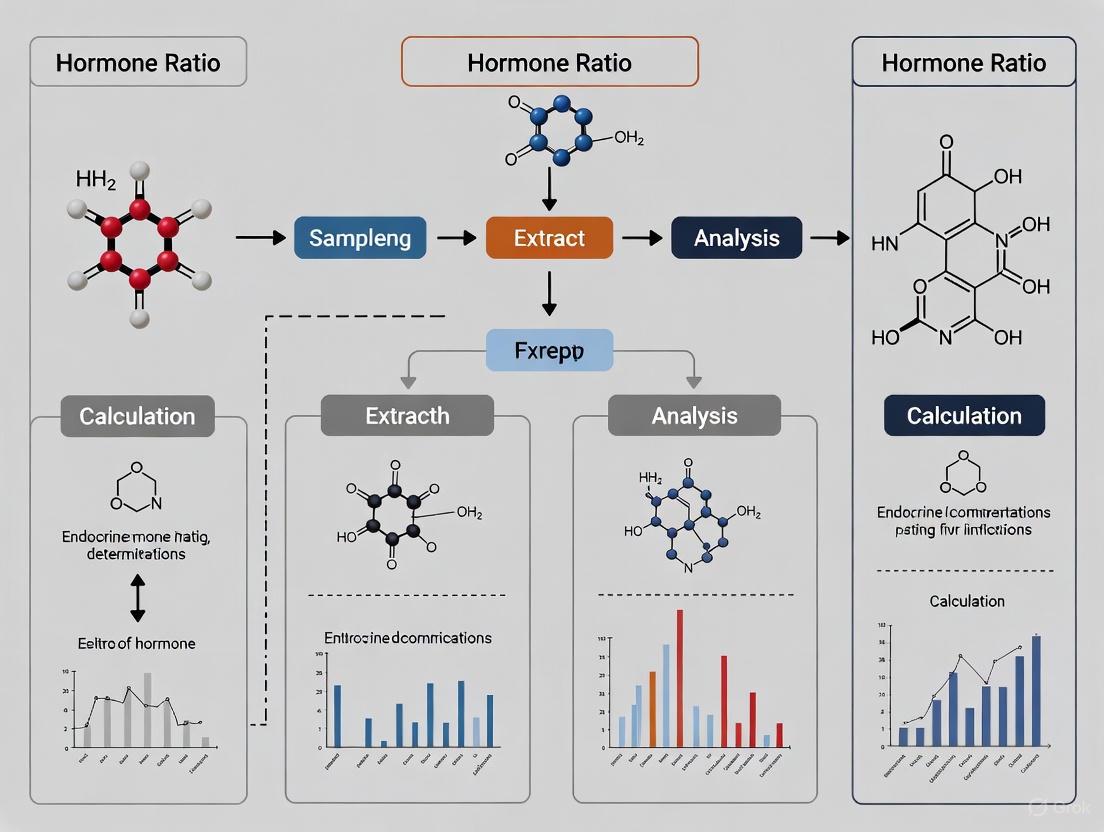
This article provides a comprehensive guide to hormone ratio calculation for researchers and drug development professionals.
Hormone Ratio Calculation in Endocrine Research: Methods, Pitfalls, and Advanced Applications
Abstract
This article provides a comprehensive guide to hormone ratio calculation for researchers and drug development professionals. It covers the biological rationale for using ratios, explores foundational statistical principles and inherent challenges, and details robust calculation methodologies. The content further addresses troubleshooting common analytical issues, validation techniques against clinical outcomes, and compares ratio analysis with alternative statistical approaches. By synthesizing current research and emerging trends, this resource aims to equip scientists with the knowledge to effectively implement and interpret hormone ratios in endocrine studies.
The Why and When: Biological Rationale and Core Concepts of Hormone Ratios
In endocrine research, the analysis of individual hormone concentrations has long been the standard approach. However, a paradigm shift is occurring toward ratio-based analysis that captures the dynamic interplay between biologically related hormones. Hormone ratios provide a sophisticated methodological framework for investigating the joint effects of two interdependent hormones with opposing or mutually suppressive actions, offering insights that isolated hormone measurements cannot reveal [1]. This approach is particularly valuable for understanding complex endocrine relationships in contexts such as stress response, reproductive health, and cancer risk assessment [2] [3].
The biological rationale for ratio analysis stems from numerous documented instances of hormonal antagonism and synergy. For example, progesterone's essential role in modulating estradiol-driven endometrial proliferation represents a fundamental protective mechanism that maintains tissue homeostasis [2]. Similarly, the balance between testosterone and cortisol reflects the complex crosstalk between the hypothalamic-pituitary-gonadal (HPG) and hypothalamic-pituitary-adrenal (HPA) axes [3]. This application note establishes rigorous protocols for hormone ratio calculation, analysis, and interpretation to advance research reproducibility and biological relevance.
Statistical Foundations and Methodological Considerations
The Rationale for Ratio Analysis
Hormone ratios have gained popularity throughout the neuroendocrine literature because they provide a straightforward way to simultaneously analyze the effects of two interdependent hormones [1]. The conceptual framework posits that the balance between opposing hormones often proves more biologically meaningful than either hormone alone. This is particularly evident in cases where one hormone modulates the effects of another, such as cortisol suppressing pituitary sensitivity to gonadotropins or progesterone opposing estradiol's proliferative effects [3].
The progesterone-estradiol (P4:E2) ratio exemplifies this principle, serving as a biologically meaningful marker of endometrial and breast cancer risk [2]. Epidemiological studies using mass spectrometry-based quantification have demonstrated that pre-diagnostic levels of progesterone relative to estradiol in postmenopausal women are inversely associated with endometrial cancer risk, validating the clinical utility of ratio-based assessment [2].
Statistical Challenges and Solutions
Despite their conceptual appeal, raw hormone ratios present significant statistical challenges that researchers must address:
- Distributional asymmetry: Ratio distributions tend to be highly skewed and leptokurtic, with marked outliers, even when component hormones are normally distributed [3]
- Directional arbitrariness: The ratio A/B is not linearly related to B/A, making results dependent on the ultimately arbitrary decision of which ratio to compute [1]
- Measurement error amplification: Raw ratios exhibit a striking lack of robustness to measurement error, with validity dropping rapidly under realistic error conditions [3]
Table 1: Statistical Properties of Raw vs. Log-Transformed Ratios
| Property | Raw Ratio (A/B) | Log-Transformed Ratio (ln[A/B]) |
|---|---|---|
| Distribution | Often highly skewed and leptokurtic | Approximately normal |
| Directional Relationship | A/B ≠ B/A | ln(A/B) = -ln(B/A) |
| Measurement Error Robustness | Low; validity drops rapidly with error | High; maintains validity under error |
| Mathematical Form | Division | Linear combination (lnA - lnB) |
| Interpretation | Complex, non-linear | Additive, opposing effects |
To address these concerns, log-transformation of hormone ratios represents a statistically robust alternative [1] [3]. The log of a ratio equals the difference between the logged components (ln[A/B] = ln[A] - ln[B]), capturing equal additive but opposing effects of two log-transformed hormones. This approach produces more normal distributions, eliminates directional arbitrariness, and demonstrates remarkable robustness to measurement error [3].
Figure 1: Statistical transformation pathway demonstrating the conversion of raw hormone measurements into analytically robust ratio formats.
Key Hormone Ratios in Research and Clinical Applications
Reproductive Health Ratios
The PdG/E1G ratio (pregnanediol glucuronide to estrone glucuronide) represents a non-invasive urinary biomarker that provides valuable insights into hormonal balance and function throughout the menstrual cycle [4]. This ratio reflects the balance between progesterone and estrogen metabolites, which is essential for successful ovulation, implantation, and maintenance of pregnancy [4].
In clinical practice, the PdG/E1G ratio serves as a biomarker of hormonal balance and reproductive health, providing insights into ovulatory function, luteal phase integrity, and overall fertility in women [4]. Abnormalities in this ratio may indicate ovulatory dysfunction, luteal phase defects, or other reproductive disorders, guiding clinicians in diagnosing and managing various endocrinological concerns [4].
For serum measurements, the estrogen-to-progesterone ratio should ideally be 10:1 when checked on day 21 of a 28-day cycle, with deviations indicating potential issues such as estrogen dominance or anovulatory cycles [5].
Stress and Behavioral Endocrinology Ratios
The testosterone/cortisol ratio has emerged as a popular metric in behavioral neuroendocrinology, potentially serving as a hormonal marker for social aggression and the balance between the HPG and HPA axes [3]. This ratio conceptually represents how the effects of testosterone might be suppressed by the presence of cortisol, providing an index of testosterone action that accounts for cortisol's suppressive effects [3].
Table 2: Clinically Significant Hormone Ratios and Their Applications
| Ratio | Component Hormones | Biological Significance | Research/Clinical Context |
|---|---|---|---|
| PdG/E1G Ratio | PdG (progesterone metabolite), E1G (estrogen metabolite) | Marker of ovulatory function and luteal phase quality | Female fertility assessment, menstrual cycle monitoring [4] |
| P4:E2 Ratio | Progesterone, Estradiol | Endometrial cancer risk assessment, endometrial homeostasis | Postmenopausal women's health, cancer risk stratification [2] |
| T/C Ratio | Testosterone, Cortisol | Balance between HPG and HPA axes | Stress research, behavioral neuroendocrinology [3] |
| EP Ratio | Estradiol, Progesterone | Joint effects across ovarian cycles | Female sexual desire, preferences, conceptive status [3] |
Experimental Protocols for Hormone Ratio Analysis
Sample Collection and Timing Protocols
Urinary Hormone Metabolite Assessment (PdG/E1G Ratio)
- Sample Collection: Collect first-morning urine samples in specialized containers with preservatives to stabilize hormone metabolites during transportation and storage [4]. Proper labeling and documentation of collection time are essential for accurate interpretation.
- Timing for Cycling Women: For progesterone metabolite (PdG) testing, collect samples during the luteal phase, ideally starting 7-10 days after ovulation and continuing until the next menstrual period [4]. For estrogen metabolite (E1G) testing, collect samples throughout the entire menstrual cycle to assess estrogen levels, which typically peak around ovulation.
- Timing for Menopausal Women: Collect samples at any time during the month, with specific instructions for women on hormone replacement therapy [4].
- Preparation Requirements: Advise patients to avoid certain medications, supplements, and dietary factors that could interfere with hormone metabolism or excretion before urine collection [4].
Serum Hormone Assessment
- Blood Collection: Serum blood tests represent the gold standard for hormone testing, providing less erroneous results compared to finger prick tests [5].
- Timing for Cycling Women: For progesterone assessment, draw blood on day 21 of a 28-day cycle to evaluate the estrogen-to-progesterone ratio [5].
- Methodology: Use isotope dilution liquid chromatography-tandem mass spectrometry (ID LC-MS/MS) for high-specificity hormone quantification [2]. This method involves dissociating hormones from serum binding proteins, followed by sequential liquid-liquid extraction and quantification using mass spectrometry with isotopically labeled internal standards.
Analytical and Computational Methods
Mass Spectrometry-Based Hormone Quantification
The adoption of mass spectrometry has overcome the limitations of traditional immunoassays by offering highly specific, sensitive, and reproducible hormone quantification, making it the preferred method in both research and clinical settings [2]. The protocol involves:
- Sample Preparation: Dissociate hormones from serum binding proteins
- Extraction: Perform sequential liquid-liquid extraction
- Quantification: Use mass spectrometry with isotopically labeled internal standards
- Quality Control: Include values above the limit of detection (LOD) - 0.86 ng/dL for progesterone and 1.72 pg/mL for estradiol [2]
Machine Learning Approach for Ratio Analysis
Recent advances employ supervised machine learning frameworks to model the relationship between hormone ratios and broad arrays of features spanning hormonal, demographic, dietary, and inflammatory domains [2]. The protocol includes:
- Data Preparation: Use natural log-transformed ratio of progesterone to estradiol concentrations (P4:E2), calculated as log(progesterone/estradiol) [2]
- Model Development: Implement XGBoost model with 70/30 stratified train-test split
- Feature Analysis: Compute SHAP (SHapley Additive exPlanations) values to interpret feature contributions
- Validation: Perform cross-validation and performance benchmarking
Figure 2: Comprehensive experimental workflow for hormone ratio analysis from sample collection to clinical application.
Research Reagent Solutions
Table 3: Essential Research Reagents and Materials for Hormone Ratio Analysis
| Reagent/Material | Function/Application | Specifications |
|---|---|---|
| ID LC-MS/MS System | Gold-standard hormone quantification with high specificity and sensitivity | Isotope dilution liquid chromatography-tandem mass spectrometry; LOD: 0.86 ng/dL (progesterone), 1.72 pg/mL (estradiol) [2] |
| Stabilized Urine Collection Containers | Preservation of hormone metabolites during sample transport and storage | Contain preservatives to stabilize PdG and E1G metabolites [4] |
| Serum Blood Collection Tubes | Acquisition of samples for serum hormone analysis | Preferred over finger prick tests for reduced erroneous results [5] |
| DUTCH Test | Dried Urine Test for Comprehensive Hormones; assessment of hormone metabolism | Useful for evaluating estrogen metabolism pathways and metabolites [5] |
Hormone ratio analysis represents a methodological advancement in endocrine research, moving beyond isolated hormone measurements to capture biologically meaningful interactions between hormonally mediated pathways. The statistical robustness of log-transformed ratios, combined with gold-standard quantification methods and computational approaches, provides researchers with powerful tools for investigating complex endocrine relationships across diverse physiological and clinical contexts. By implementing the standardized protocols and methodological considerations outlined in this application note, researchers can advance our understanding of hormonal regulation and generate clinically actionable insights for diagnostic and therapeutic applications.
In endocrine research, the physiological effect of a hormone is often modulated by the presence of another. Hormone ratios have emerged as a critical tool for capturing the joint effect or "balance" between two hormones with opposing or mutually suppressive actions [3]. These ratios aim to provide a more holistic summary of an individual's endocrine state than can be gleaned from measuring single hormones in isolation. The testosterone-to-cortisol (T/C) ratio, for instance, reflects the dynamic balance between anabolic and catabolic processes, which is vital for understanding athletic training and recovery [6]. The progesterone-to-estradiol (P4/E2) ratio is pivotal for assessing female reproductive health and menstrual cycle dynamics [7] [8], while the testosterone-to-estradiol (T/E) ratio in men is crucial for understanding the interplay of androgens and estrogens in various physiological systems [9]. However, the calculation and interpretation of these ratios are methodologically nuanced. This document provides application notes and detailed protocols for the rigorous study of these key hormone ratios within a research context, highlighting both their utility and their statistical pitfalls.
Quantitative Reference Tables for Key Hormone Ratios
The following tables summarize the reference ranges, primary research applications, and key methodological considerations for the three focal hormone ratios.
Table 1: Key Hormone Ratios in Research: Applications and Reference Values
| Hormone Ratio | Primary Research Application | Reported Reference / Target Range | Key Correlations & Outcomes |
|---|---|---|---|
| Testosterone/Cortisol (T/C) | Marker of training load & recovery in athletes [6]. | A decrease of >30% from baseline suggests insufficient recovery [6]. | Positively correlated with stroke in males and females [10]. |
| Progesterone/Estradiol (P4/E2) | Assessment of hormonal dominance & fertility window in the luteal phase [7] [8]. | 100 - 500 (calculated from values in consistent units, e.g., pg/mL) [11] [8]. | A high E/P ratio at ovulation induction predicts IVF success [7] [11]. |
| Testosterone/Estradiol (T/E) | Evaluation of hormonal balance in men's health, esp. with testosterone or AI therapy [9]. | 10 - 30 (with T in ng/dL, E2 in pg/mL) [9]. | Values >30 linked to reduced bone density; <10 linked to thyroid dysfunction [9]. |
Table 2: Methodological Considerations and Assay Protocols for Hormone Ratio Analysis
| Analytical Factor | Testosterone & Cortisol | Progesterone & Estradiol (E2) | Common Considerations |
|---|---|---|---|
| Preferred Sample Matrix | Saliva (correlates with free hormone levels) [12] or Serum [12]. | Serum, Blood Spot, or Saliva [8]. | Matrix choice impacts the fraction measured (free vs. total). |
| Recommended Assay | Automated Electrochemiluminescence Immunoassay (ECLIA) [12]. | Immunoassay; LC-MS/MS for high accuracy. | LC-MS/MS is the gold standard for steroid separation and measurement [9] [10]. |
| Key Unit Conversions | Not applicable for ratio calculation if units are consistent. | 1 ng/mL Progesterone = 1000 pg/mL1 pg/mL Estradiol = 3.6713 pmol/L [11]. | Consistent units are mandatory before division. |
| Critical Statistical Consideration | Raw ratios lack robustness to measurement error; use log-transformed ratios (ln(T/C)) [3] [13]. | Raw ratios are highly skewed; log-transformation (ln(Pg/E2)) is recommended [3]. | Log-transformation improves distribution normality and robustness to error [3]. |
Detailed Experimental Protocols
Protocol 1: Assessing Exercise-Induced Stress via the Salivary Testosterone-to-Cortisol Ratio
This protocol is adapted from a study on male long-distance runners to evaluate the T/C ratio as a marker of exercise-induced stress and recovery [12].
3.1.1 Materials and Reagents
- Sample Collection Tubes: Polypropylene tubes for unstimulated passive drooling (e.g., SaliCap, IBL International) [12].
- Automated Immunoassay System: Cobas 8000 system or equivalent.
- Reagent Kits: Elecsys Testosterone II and Elecsys Cortisol II assays (Roche Diagnostics) or equivalent.
- Cold Storage: -80°C freezer for sample preservation.
3.1.2 Procedure
- Participant Preparation and Sampling: Standardize participant lifestyle habits (wake-up time, meals) for at least 24 hours prior. Collect saliva samples via unstimulated passive drooling. Participants must not brush teeth, chew gum, or consume any food or drink (except water) 15 minutes before collection.
- Sampling Timepoints: Collect samples at critical timepoints to account for circadian rhythm. Example schedule: upon waking (e.g., 5:00 am), before morning exercise (5:30 am), after morning exercise (7:00 am), before breakfast (7:30 am), before lunch (12:00 pm), before evening exercise (16:00 pm), after evening exercise (18:30 pm), and before dinner (19:00 pm) [12].
- Sample Handling: Centrifuge blood samples at 1500 × g at 4°C for 10 minutes to separate serum. Immediately freeze all saliva and serum samples at -80°C until analysis.
- Hormone Measurement: Perform simultaneous measurement of testosterone and cortisol concentrations in saliva and/or serum using an automated ECLIA platform according to manufacturer instructions.
- Data Calculation:
- Calculate the raw T/C ratio:
T/C = [Testosterone] / [Cortisol]. Ensure hormone concentrations are in consistent units. - Calculate the rate of change for the ratio:
(Post-exercise T/C Ratio / Pre-exercise T/C Ratio) * 100%. - For statistical robustness, calculate the log-transformed ratio:
ln(T/C) = ln([Testosterone]) - ln([Cortisol])[3].
- Calculate the raw T/C ratio:
3.1.3 Interpretation A decrease in the T/C ratio of more than 30% in the post-exercise period compared to baseline is indicative of a significant stress response and insufficient recovery [6]. The log-transformed ratio should be used for correlation and regression analyses.
Protocol 2: Determining the Progesterone-to-Estradiol Ratio for Reproductive Health Studies
This protocol outlines the measurement and calculation of the P4/E2 ratio, commonly used in studies of the menstrual cycle and fertility.
3.2.1 Materials and Reagents
- Blood Collection Supplies: Venipuncture kit and serum separator tubes for blood spot or serum collection.
- Assay Platform: Validated immunoassay (IA) or liquid chromatography-tandem mass spectrometry (LC-MS/MS).
- Unit Conversion Tools: Standardized formulas or calculators.
3.2.2 Procedure
- Sample Collection and Timing: For menstrual cycle studies, collect blood samples during the mid-luteal phase, approximately 7 days post-ovulation (around day 21 in a 28-day cycle) [7]. Record the specific cycle day and/or confirm ovulation.
- Hormone Measurement: Quantify progesterone and estradiol levels from serum, blood spot, or saliva using a validated, precise assay. LC-MS/MS is preferred for its high specificity, especially for estradiol [9].
- Unit Standardization: This is a critical step. Convert both hormone concentrations to the same unit (typically pg/mL) before ratio calculation.
- Ratio Calculation: Calculate the P4/E2 ratio:
P4/E2 Ratio = Progesterone (pg/mL) / Estradiol (pg/mL).
3.2.3 Interpretation In reproductive-aged women, a P4/E2 ratio between 100 and 500 during the luteal phase is considered indicative of a healthy hormonal balance [11] [8]. A ratio below 100 suggests estrogen dominance, while a ratio above 500 may indicate progesterone dominance [7] [8]. In the context of IVF, a high estradiol-to-progesterone (E/P) ratio on the day of ovulation induction is a positive predictor of clinical pregnancy [7] [11].
Signaling Pathways and Data Analysis Workflows
The following diagrams illustrate the core physiological concepts and standard analytical workflows for hormone ratio research.
Hormonal Balance and Physiological Impact Pathway
Experimental and Data Processing Workflow
The Scientist's Toolkit: Essential Research Reagents and Materials
Table 3: Essential Reagents and Materials for Hormone Ratio Research
| Item / Solution | Function / Application | Example Products / Notes |
|---|---|---|
| LC-MS/MS System | Gold-standard method for accurate, simultaneous quantification of multiple steroid hormones. | Triple quadrupole mass spectrometers are ideal for high-sensitivity analysis [9] [10]. |
| High-Quality Immunoassays | Robust and often automated measurement of single hormones. | Elecsys Testosterone II & Cortisol II on Cobas 8000 system [12]. |
| Standardized Collection Tubes | For stress-free, unstimulated saliva collection. | SaliCap polypropylene tubes [12]. |
| Certified Reference Materials | Calibration and quality control to ensure assay accuracy across batches. | CRMs traceable to international standards are critical [9]. |
| Unit Conversion Calculator | Ensures hormone concentrations are in consistent units before ratio calculation. | Essential for P4/E2 ratio; can be built in Excel or using online tools [11]. |
Critical Methodological Considerations
- Robustness to Measurement Error: A paramount concern. Raw hormone ratios suffer from a striking lack of robustness to measurement error [3]. Noise in the denominator, especially when its distribution is positively skewed (common with hormones), is dramatically amplified. This can cause the correlation between the measured ratio and the underlying "true" biological ratio to drop rapidly.
- Statistical Recommendations: To mitigate this, log-transformation of the ratio is strongly recommended [3] [13]. The log-ratio (
ln(A/B)) is equivalent to the differenceln(A) - ln(B), which is more robust to noise, results in more normal distributions, and solves the asymmetry problem (sinceln(A/B) = -ln(B/A)). - Alternative Analytical Approaches: Researchers should consider using multiple linear regression with both hormones included as separate predictors, along with their interaction term, to disentangle the individual and interactive effects that a single ratio might obscure [3] [13].
By adhering to these detailed protocols and carefully considering the methodological caveats, researchers can reliably employ these key hormone ratios to generate robust and meaningful insights into endocrine function.
In endocrine research, the balance and interaction between hormones, rather than their individual concentrations, often govern critical physiological processes. The analysis of hormone ratios has become a fundamental method for investigating these interdependent relationships, providing a straightforward way to simultaneously analyze the effects of two interdependent hormones [13]. This approach is particularly valuable for understanding phenomena such as hormonal crosstalk, where signaling pathways interact to produce integrated cellular responses.
The progesterone–estradiol (P4:E2) ratio exemplifies the biological significance of this approach. This ratio represents more than a simple mathematical relationship; it embodies a crucial regulatory mechanism where progesterone's protective role against estradiol-driven proliferation is essential for maintaining endometrial homeostasis [2]. Similarly, in plant systems, hormonal crosstalk coordinates complex developmental processes and stress responses through sophisticated interaction networks [14] [15]. Modeling these intricate relationships requires specialized statistical approaches and experimental protocols that account for the complexity of endocrine signaling networks.
Statistical Foundations for Hormone Ratio Analysis
Key Considerations in Ratio Calculation and Interpretation
Hormone ratio analysis presents specific statistical challenges that researchers must address to ensure valid interpretations. A primary concern lies in their distributional properties and inherent asymmetry, which can affect parametric statistical analyses [13]. The arbitrary decision of how to compute the ratio (A/B versus B/A) can influence results, necessitating appropriate statistical treatments.
Table 1: Statistical Methods for Hormone Ratio Analysis
| Method | Application | Advantages | Limitations |
|---|---|---|---|
| Log-Transformation | Normalizing ratio distributions | Creates symmetrical distributions; handles inherent ratio asymmetry | Alters scale of measurement; requires back-transformation for interpretation |
| Non-Parametric Tests | Analyzing non-normal ratio distributions | Does not assume normal distribution; resistant to outliers | Less statistical power than parametric equivalents when assumptions are met |
| Moderation Analysis | Testing interaction effects between hormones | Provides insights into how one hormone modifies another's effect | Requires larger sample sizes; more complex interpretation |
| Machine Learning with SHAP | Identifying complex, nonlinear predictors of ratios | Handles high-dimensional data; provides feature importance rankings | Complex implementation; requires substantial computational resources |
For accurate ratio analysis, researchers should consider log-transformation of hormone ratios as an appropriate method to address statistical problems associated with their asymmetric distribution [13]. This approach normalizes the data, enabling the use of powerful parametric statistical tests. Alternatively, non-parametric methods offer robust solutions when distributional assumptions cannot be met.
Beyond statistical considerations, the interpretational challenges of ratios warrant careful attention. A ratio represents a composite measure that may reflect multiple biological phenomena, making it essential to specify what this index reflects at the biological level [13]. In many cases, moderation analysis provides a more insightful alternative to ratio analysis by directly testing how the effect of one hormone depends on the level of another.
Advanced Modeling Approaches
Recent advances in computational biology have introduced sophisticated modeling techniques for hormonal crosstalk. Explainable machine learning approaches now enable researchers to extract nonlinear, multivariate patterns from high-dimensional biomedical data while retaining interpretability [2]. This is particularly valuable in clinical and physiological contexts where traditional "black-box" models limit translational applications.
The integration of mathematical modeling with experimental endocrinology has emerged as a powerful approach for studying hormone functions. However, models developed by different research groups often focus on different aspects of hormones and cannot be readily integrated to study hormonal systems as a whole [14]. This highlights the need for unified modeling frameworks that can accommodate the crosstalk nature of hormones and their interplay across diverse experimental contexts.
Experimental Protocol: Quantifying and Modeling Hormone Ratios
Protocol 1: Hormone Ratio Calculation and Statistical Analysis
Objective: To accurately measure, calculate, and statistically analyze hormone ratios from biological samples.
Table 2: Research Reagent Solutions for Hormone Ratio Analysis
| Reagent/Material | Specifications | Function | Example Application |
|---|---|---|---|
| Mass Spectrometry Kit | Isotope dilution liquid chromatography-tandem mass spectrometry (ID LC-MS/MS) | Gold-standard hormone quantification with high specificity and sensitivity | Precise measurement of progesterone and estradiol concentrations [2] |
| Serum Binding Protein Dissociation Reagents | Chemical disruptors of hormone-protein binding | Dissociates hormones from serum binding proteins prior to extraction | Freeing hormones for accurate quantification in mass spectrometry |
| Liquid-Liquid Extraction Solvents | High-purity organic solvents | Sequential extraction of hormones from biological matrices | Isolating progesterone and estradiol from serum samples |
| Isotopically Labeled Internal Standards | Deuterated or 13C-labeled hormone analogs | Internal controls for quantification accuracy | Correcting for recovery variations in mass spectrometry [2] |
| Log-Transformation Software | Statistical packages (R, Python, SPSS) | Normalizing ratio distributions for parametric analysis | Addressing inherent asymmetry in hormone ratio data [13] |
Procedure:
Sample Collection and Preparation:
- Collect biological samples (serum, plasma, or tissue homogenates) using standardized protocols.
- Immediately process samples to prevent hormone degradation; freeze at -80°C if batch analysis is planned.
Hormone Quantification:
- Utilize isotope dilution liquid chromatography-tandem mass spectrometry (ID LC-MS/MS) for hormone measurement [2].
- Dissociate hormones from serum binding proteins using appropriate chemical reagents.
- Perform sequential liquid-liquid extraction to isolate target hormones.
- Quantify hormones using mass spectrometry with isotopically labeled internal standards for precision.
Ratio Calculation:
- Calculate raw hormone ratios by dividing the concentration of hormone A by hormone B (e.g., progesterone/estradiol).
- Apply natural log-transformation to the ratios to address distributional asymmetry: ln(A/B) [13] [2].
- For analyses where the direction of the ratio is biologically arbitrary, consider computing both A/B and B/A to test analysis robustness.
Statistical Analysis:
- Assess distribution normality using Shapiro-Wilk or Kolmogorov-Smirnov tests.
- For non-normal distributions, implement non-parametric statistical tests (Mann-Whitney U for two groups; Kruskal-Wallis for multiple groups).
- For normalized data, employ parametric tests (t-tests or ANOVA) with appropriate post-hoc comparisons.
- Conduct moderation analysis to test whether the effect of one hormone on the outcome depends on the level of another hormone.
Protocol 2: Machine Learning Approach for Hormone Ratio Prediction
Objective: To identify key predictors of hormone ratios using explainable machine learning.
Procedure:
Data Preparation:
- Compile a comprehensive dataset including hormone measurements, anthropometric, demographic, dietary, metabolic, and inflammatory variables [2].
- For postmenopausal women, include features such as FSH, waist circumference, CRP, total cholesterol, and LH based on established predictive value [2].
- Implement a 70/30 stratified train-test split to maintain ratio distribution in both sets.
Model Development:
- Utilize XGBoost algorithm for its handling of complex, nonlinear relationships.
- Set the natural log-transformed hormone ratio as the target variable: ln(P4/E2).
- Perform hyperparameter tuning using cross-validation to optimize model performance.
Model Interpretation:
- Compute SHAP (SHapley Additive exPlanations) values to interpret feature contributions [2].
- Rank features by their mean absolute SHAP values to identify the most influential predictors.
- Analyze directional relationships through SHAP dependence plots.
Validation:
- Assess model performance using RMSE, MAE, and R² on the test set.
- Benchmark against traditional statistical models (linear regression).
- Perform sensitivity analysis by modeling individual hormones (estradiol and progesterone) as separate outcomes to identify shared versus unique predictors [2].
Data Presentation and Visualization in Hormone Research
Effective data presentation is crucial for communicating hormone ratio research findings. Quantitative data visualization transforms numerical data into accessible charts and graphs, making complex relationships comprehensible [16]. The selection of appropriate visualization methods depends on the specific analytical goals and data characteristics.
Table 3: Data Visualization Methods for Hormone Research
| Visualization Type | Primary Application | Hormone Research Example | Best Practices |
|---|---|---|---|
| Bar Charts | Comparing values across discrete categories | Comparing hormone ratios between experimental groups or patient cohorts | Order categories meaningfully; begin Y-axis at zero to avoid misinterpretation [17] |
| Line Graphs | Depicting trends or relationships over time | Tracking hormone ratio changes throughout menstrual cycle or treatment period | Use clear labels; display error bars for variability representation [17] |
| Scatter Plots | Analyzing relationships between continuous variables | Correlating hormone ratios with clinical outcomes or other biomarkers | Add regression lines to illustrate trends; use bubble size for third variable [17] |
| Box and Whisker Plots | Displaying distribution characteristics and outliers | Representing variations in hormone ratios across population samples | Use for non-parametric data; box shows median and quartiles, whiskers show range [17] |
| Heatmaps | Visualizing data density or correlation matrices | Displaying correlation patterns between multiple hormones and clinical parameters | Use color gradients effectively; cluster related variables for pattern recognition [16] |
For hormone ratio studies, researchers should prioritize clarity and accuracy in visual representations. Avoid distorting data relationships through inappropriate scaling or truncated axes. Each figure should be self-explanatory with comprehensive legends that enable interpretation without reference to the main text [17]. When presenting ratio data, consider using log-scaled axes when appropriate to better visualize proportional relationships.
Applications in Therapeutic Development and Clinical Research
The modeling of hormonal crosstalk and ratio analysis has significant implications for drug development and clinical research. Understanding the dynamic interplay between progesterone and estradiol has informed therapeutic strategies that leverage progesterone's antiproliferative effects on the endometrium [2]. This approach has been incorporated into the management of complex atypical hyperplasia and early-stage endometrial tumors in patients who are not surgical candidates.
In breast cancer research, the recognition that progesterone plays a divergent role compared to its endometrial function – enhancing rather than opposing estrogen-mediated risk – underscores the importance of context-specific hormonal balance [2]. This divergence highlights the necessity of tissue-specific models of hormonal crosstalk for accurate therapeutic prediction.
The application of explainable machine learning to hormone ratio research represents a paradigm shift in identifying complex, nonlinear predictors of hormonal balance. This approach has identified FSH, waist circumference, and CRP as the most influential contributors to the P4:E2 ratio in postmenopausal women, providing new insights into the multifactorial regulation of hormonal dynamics [2]. These data-driven insights offer potential biomarkers for risk stratification and targets for intervention.
Future directions in hormonal crosstalk modeling will likely involve the development of integrative models that incorporate all relevant experimental data to elucidate complex physiological processes [14]. Such models will need to account for the spatiotemporal dynamics of hormone interactions and their downstream effects on gene expression, cellular function, and tissue-level responses.
The analysis of hormone ratios has become a fundamental methodology in endocrine research, providing a powerful tool for investigating the complex interplay between interdependent hormonal systems. These ratios offer a practical approach to simultaneously quantify the balance between two hormones, which often provides more biologically meaningful information than evaluating each hormone in isolation. The progesterone-to-estradiol (P4:E2) ratio, for instance, represents a crucial biological marker where progesterone's protective effect against estradiol-driven proliferation is essential for maintaining endometrial homeostasis [2]. Similarly, the testosterone-to-cortisol (T/C) ratio has gained prominence in neuroendocrine research as an indicator of anabolic-catabolic balance [1].
The calculation and interpretation of these ratios, however, present significant statistical and methodological challenges that researchers must carefully address. The very structure of ratio data introduces inherent distributional asymmetries that can compromise the validity of standard parametric statistical tests. Furthermore, the biological interpretation of these ratios requires sophisticated understanding of the underlying endocrine physiology. This article provides comprehensive application notes and experimental protocols for the effective implementation of hormone ratio analysis across diverse clinical and research contexts, from fertility assessment to cancer risk profiling.
Statistical Foundations for Hormone Ratio Analysis
Methodological Challenges and Solutions
Ratio analysis in endocrine research is associated with specific statistical concerns that must be addressed to ensure valid results. One primary issue lies in the distributional properties of ratio data, which typically exhibit inherent asymmetry and non-normality [1]. This asymmetry leads to a critical methodological problem: the results of parametric statistical analyses become affected by the ultimately arbitrary decision of which way around the ratio is computed (i.e., A/B or B/A). This fundamental instability necessitates specialized statistical approaches.
Two robust methodological solutions have emerged to address these challenges. Non-parametric methods offer one viable approach, as they do not assume normal distribution of data and are therefore less sensitive to the peculiar distributional properties of ratios. Log-transformation of hormone ratios represents another statistically sound approach, as it effectively normalizes the data distribution and resolves the asymmetry problem [1]. This transformation creates a more symmetrical distribution that better meets the assumptions of parametric statistical tests. For the progesterone-estradiol ratio specifically, research has demonstrated that using the natural log-transformed ratio, calculated as log(progesterone/estradiol), provides optimal statistical properties for analysis [2].
Alternative Analytical Approaches
Beyond traditional ratio analysis, moderation analysis has been proposed as a potentially more insightful alternative for investigating reciprocal hormone effects [1]. This approach allows researchers to test whether the relationship between one hormone and an outcome variable depends on the level of another hormone, providing a more nuanced understanding of hormonal interactions than a simple ratio can offer. When employing ratio analysis, researchers must carefully consider which statistical approach is best suited to their specific research question and further investigate what exactly the biological index reflects on the biological level [1].
Table 1: Statistical Methods for Hormone Ratio Analysis
| Method | Key Principle | Advantages | Limitations |
|---|---|---|---|
| Standard Ratio (A/B) | Direct division of two hormone concentrations | Simple calculation; intuitive interpretation | Inherent distribution asymmetry; arbitrary directionality |
| Log-Transformed Ratio | Natural logarithm of the ratio (log[A/B]) | Normalizes distribution; enables parametric testing | Less intuitive interpretation; requires back-transformation |
| Non-Parametric Methods | Rank-based analysis of ratios | No distributional assumptions; robust to outliers | Reduced statistical power; less familiar to researchers |
| Moderation Analysis | Tests interaction effects between hormones | Models complex interactions; avoids ratio limitations | Complex interpretation; larger sample size requirements |
Hormone Ratios in Clinical Applications
Cancer Risk Assessment and Prediction
Hormone ratios have demonstrated significant utility in oncology research, particularly for assessing cancer risk. The P4:E2 ratio has emerged as a biologically meaningful marker of endometrial and breast cancer risk [2]. Recent epidemiological evidence indicates that pre-diagnostic levels of progesterone relative to estradiol in postmenopausal women are inversely associated with endometrial cancer risk, aligning with the biological premise of progesterone's antiproliferative effects on the endometrium [2]. This protective role of progesterone against estradiol-driven proliferation follows the "unopposed estrogen theory," where estrogen not opposed by adequate progesterone concentration can exert unregulated mitogenic effects, leading to excessive endometrial proliferation and potentially endometrial hyperplasia and adenocarcinoma [2].
Machine learning approaches have advanced the predictive capability of hormone ratios for cancer risk assessment. Recent research using XGBoost models to predict the log-transformed P4:E2 ratio in postmenopausal women achieved an R² of 0.298 on the test set, with SHAP (SHapley Additive exPlanations) analysis identifying FSH (0.213), waist circumference (0.181), and CRP (0.133) as the most influential contributors to the ratio, followed by total cholesterol (0.085) and LH (0.066) [2]. This approach demonstrates how hormone ratios can be contextualized within a broader physiological framework to enhance their predictive value.
Hereditary Cancer Syndromes and Fertility Considerations
Hormone ratio analysis takes on additional significance in the context of hereditary cancer syndromes, where specific genetic mutations dramatically increase cancer susceptibility. The most common syndromes associated with gynecological cancers include Hereditary Breast and Ovarian Cancer (HBOC) syndrome, Lynch syndrome (LS), Cowden syndrome (CS), Peutz-Jeghers syndrome (PJS), and Hereditary Leiomyomatosis and Renal Cell Carcinoma (HLRCC) syndrome [18]. These syndromes, predominantly inherited in an autosomal dominant manner, significantly impact fertility considerations and necessitate specialized approaches to hormone assessment.
For BRCA mutation carriers in HBOC syndrome, the cumulative risk of developing ovarian cancer by age 80 is 44% for BRCA1 and 17% for BRCA2 mutation carriers [18]. In Lynch syndrome, the lifetime risk of endometrial cancer reaches 60%, with ovarian cancer risk at 24% [18]. These elevated risks directly impact fertility preservation strategies, making accurate hormone assessment crucial for timing interventions. Cowden syndrome, associated with PTEN mutations, carries a 28% lifetime risk of endometrial cancer, with onset beginning as early as age 25 [18]. These risk profiles underscore the importance of comprehensive hormonal assessment, including ratio analysis, in managing hereditary cancer susceptibility.
Table 2: Hereditary Cancer Syndromes and Associated Gynecological Cancers
| Syndrome | Gene Mutations | Related Gynecological Cancers | Lifetime Risk | Common Pathological Types |
|---|---|---|---|---|
| HBOC | BRCA1, BRCA2 | Ovarian Cancer | 44% (BRCA1), 17% (BRCA2) | High-grade serous carcinoma, Endometrioid carcinoma |
| Lynch Syndrome | MLH1, MSH2, MSH6, PMS2 | Endometrial Cancer, Ovarian Cancer | 60% (EC), 24% (OC) | Endometrioid carcinoma, Clear cell carcinoma |
| Cowden Syndrome | PTEN | Endometrial Cancer | 28% | Endometrioid adenocarcinoma |
| Peutz-Jeghers Syndrome | STK11/LKB1 | Ovarian Cancer, Cervical Cancer | 18-21% (OC), 10% (CC) | Sex cord tumor, Gastric-type endocervical adenocarcinoma |
| HLRCC | FH | Uterine Fibroids | Not quantified | Uterine leiomyoma with high proliferative capacity |
Experimental Protocols for Hormone Ratio Research
Mass Spectrometry-Based Hormone Quantification
Protocol Title: Isotope Dilution Liquid Chromatography-Tandem Mass Spectrometry (ID LC-MS/MS) for Progesterone and Estradiol Quantification
Principle: This protocol employs isotope dilution liquid chromatography-tandem mass spectrometry for highly specific and sensitive measurement of steroid hormones, overcoming the limitations of traditional immunoassay-based approaches through minimal cross-reactivity and enhanced precision [2].
Materials and Reagents:
- Serum samples from participants
- Isotopically labeled internal standards for progesterone and estradiol
- Liquid-liquid extraction solvents (typically methyl tert-butyl ether)
- LC-MS grade water, methanol, and acetonitrile
- Ammonium acetate or formic acid for mobile phase modification
- Calibrators and quality control materials at defined concentrations
Procedure:
- Sample Preparation: Dissociate hormones from serum binding proteins using appropriate buffering conditions.
- Liquid-Liquid Extraction: Perform sequential liquid-liquid extraction to isolate progesterone and estradiol from serum matrix.
- Derivatization (if required): For enhanced sensitivity, particularly for estradiol, chemical derivatization may be employed.
- Chromatographic Separation: Inject extracts onto reversed-phase LC column (e.g., C18) with gradient elution using water and organic modifiers.
- Mass Spectrometric Detection: Utilize multiple reaction monitoring (MRM) for specific quantification of each hormone and its corresponding internal standard.
- Data Analysis: Calculate hormone concentrations using the internal standard method with calibration curves.
Quality Control:
- Include quality control samples at low, medium, and high concentrations in each batch
- Maintain precision with coefficient of variation <15%
- Ensure values above the limit of detection (LOD): 0.86 ng/dL for progesterone and 1.72 pg/mL for estradiol [2]
Computational Protocol for Machine Learning Analysis of P4:E2 Ratio
Protocol Title: XGBoost Modeling with SHAP Interpretation for Hormone Ratio Analysis
Principle: This protocol applies machine learning to model the relationship between the P4:E2 ratio and multiple predictive features, enabling identification of complex, potentially nonlinear relationships while ensuring interpretability through SHAP analysis [2].
Data Preparation:
- Data Splitting: Implement a 70/30 stratified train-test split to maintain distribution of target variable
- Feature Engineering: Include hormonal (FSH, LH), anthropometric (waist circumference), metabolic (total cholesterol), inflammatory (CRP), demographic (age, age at menarche), and dietary variables
- Target Variable Transformation: Calculate natural log-transformed P4:E2 ratio as log(progesterone/estradiol)
- Handling Missing Values: Apply appropriate imputation strategies for missing data
- Feature Scaling: Normalize continuous variables to standardize value ranges
Model Training:
- Algorithm Selection: Implement XGBoost regression algorithm
- Hyperparameter Tuning: Optimize parameters through cross-validation
- Model Validation: Perform k-fold cross-validation on training set
- Performance Benchmarking: Compare against baseline models
Model Interpretation:
- SHAP Value Calculation: Compute SHAP values to quantify feature contributions
- Feature Importance Ranking: Rank features by mean absolute SHAP values
- Dependency Analysis: Plot feature effects against target variable
Validation Metrics:
- Root Mean Square Error (RMSE)
- Mean Absolute Error (MAE)
- R-squared (R²) value
- For P4:E2 ratio modeling, typical performance includes RMSE of 0.746, MAE of 0.574, and R² of 0.298 on test set [2]
Visualization of Experimental Workflows
Hormone Ratio Analysis Workflow
Hereditary Cancer Risk Assessment Pathway
Research Reagent Solutions
Table 3: Essential Research Reagents for Hormone Ratio Studies
| Reagent/Material | Specifications | Application | Key Considerations |
|---|---|---|---|
| ID LC-MS/MS System | High-resolution mass spectrometer with liquid chromatography | Gold-standard hormone quantification | Provides specific, sensitive measurement with minimal cross-reactivity |
| Isotopic Internal Standards | Deuterated or 13C-labeled progesterone and estradiol | Quantitative accuracy through isotope dilution | Corrects for extraction efficiency and matrix effects |
| Quality Control Materials | Low, medium, and high concentration pools | Method validation and quality assurance | Ensures precision across measurement range |
| DNA Sequencing Kits | Next-generation sequencing panels for cancer genes | Genetic testing for hereditary syndromes | Identifies pathogenic variants in BRCA, MMR genes |
| XGBoost Software Package | Python/R implementation with SHAP extension | Machine learning modeling | Handles nonlinear relationships with interpretability |
| Statistical Software | R, Python, or specialized packages | Ratio transformation and analysis | Enables log-transformation and non-parametric tests |
Hormone ratio analysis represents a sophisticated methodology that provides unique insights into endocrine function across diverse clinical and research contexts. The statistical considerations, particularly the need for log-transformation or non-parametric approaches, are essential for valid analysis. When properly implemented, these ratios serve as powerful biomarkers for cancer risk assessment, particularly in understanding the balance between progesterone and estradiol in endometrial homeostasis and cancer risk. The integration of advanced quantification methods like ID LC-MS/MS with machine learning approaches represents the cutting edge of hormone ratio research, enabling more accurate prediction and interpretation of these biologically significant parameters. As research progresses, further specification of what exactly these ratios reflect on the biological level will enhance their utility in both clinical practice and research settings.
From Theory to Practice: Robust Calculation Methods and Unit Management
In endocrine research, the Raw Ratio Method is a commonly used technique to capture the joint effect of two hormones with opposing or mutually suppressive actions. Calculating a ratio (e.g., Testosterone/Cortisol or Estradiol/Progesterone) offers a seemingly straightforward way to summarize the hormonal "balance" believed to influence physiology and behavior [3]. Despite its prevalence, this method suffers from significant and often underappreciated statistical pitfalls that can compromise research validity. This application note details the protocol for calculating raw ratios, underscores their inherent limitations with empirical evidence, and provides robust alternative methodologies for researchers and drug development professionals.
Protocol: Calculating and Analyzing Raw Hormone Ratios
Materials and Reagents
Table 1: Essential Research Reagent Solutions for Hormone Ratio Analysis.
| Item | Function in Analysis | Example Kits/Assays |
|---|---|---|
| Serum/Plasma Samples | Biological matrix for hormone measurement | Collected via venipuncture, processed per standard protocols |
| ELISA Kits | Quantify specific hormone concentrations | Salivary Cortisol ELISA, High-Sensitivity Estradiol EIA |
| LC-MS/MS Systems | High-specificity validation of hormone levels | Gold standard for steroid hormone profiling |
| Statistical Software | Data transformation and ratio calculation | R, SPSS, Python (with Pandas, SciPy) |
Experimental Workflow
The following diagram illustrates the standard workflow for a study incorporating the raw ratio method.
Step-by-Step Calculation Protocol
- Hormone Measurement: Quantify the concentrations of Hormone A and Hormone B in your sample set using validated assays (e.g., ELISA, LC-MS/MS). It is critical to account for assay measurement error, which is inherent in all biological measurements [3].
- Data Pre-processing: Inspect data for outliers and non-detectable values. Imputation methods for non-detects should be explicitly stated and justified.
- Ratio Calculation: For each subject, calculate the raw ratio using the formula: ( \text{Raw Ratio} = \frac{[\text{Hormone A}]}{[\text{Hormone B}]} ) where concentrations are typically in mass or molar units.
- Statistical Analysis: The raw ratio can then be used as a predictor variable in correlational or regression analyses to investigate its association with an outcome of interest (e.g., behavioral score, disease status).
Key Statistical Pitfalls and Empirical Evidence
The superficial simplicity of the raw ratio masks profound statistical problems that can lead to spurious conclusions.
Amplification of Measurement Error
A previously unrecognized limitation is the striking lack of robustness of raw ratios to measurement error [3]. Hormone levels are measured with error due to both imperfect assays and discrepancies between sampled levels and physiologically effective levels. Simulations demonstrate that noise in measured hormone levels is substantially exaggerated by ratios, especially when the denominator's distribution is positively skewed—a common feature of endocrine data [3].
Table 2: Impact of Measurement Error on Ratio Validity. Adapted from simulation studies [3].
| Measurement Error Level | Skewed Denominator | Raw Ratio Validity (Correlation with True Ratio) | Log-Transformed Ratio Validity |
|---|---|---|---|
| Low | No | High | High |
| Low | Yes | Moderate | High |
| Moderate | No | Moderate | High |
| Moderate | Yes | Low | High |
| High | Yes | Very Low | Moderate-High |
The validity (correlation between the measured ratio and the underlying true ratio) of raw ratios drops rapidly as measurement error increases. Log-transformed ratios maintain significantly higher and more stable validity across these conditions [3].
Distributional Problems and Asymmetry
Raw ratios typically produce highly skewed, leptokurtic distributions with extreme outliers, even when the component hormones are normally distributed [3] [13]. This violates the assumptions of many parametric statistical tests. Furthermore, the ratio A/B is not linearly related to B/A, making the results of analyses dependent on the arbitrary decision of which hormone is placed in the numerator [3] [13].
Fallacy of Ratio Correction for Confounding
Using a ratio to "correct" for a confounding variable (e.g., grip strength/body weight) is a common but flawed practice, often termed "Ratio Correction" or "Normalization" [19]. This approach can produce erroneous significance calls and misleading biological conclusions because its underlying assumptions are frequently violated. Analysis of Covariance (ANCOVA) is the statistically recommended method to adjust for confounding variables [19].
Ambiguous Interpretation
An association between a hormone ratio and an outcome can stem from multiple underlying scenarios: it could be driven solely by the numerator, solely by the denominator, by their additive effects, or by a true interaction [3] [13]. The raw ratio itself does not distinguish between these possibilities, potentially obscuring the true biological mechanism.
Robust Alternatives and Recommended Practices
Log-Transformation of Ratios
A simple and powerful alternative is to log-transform the ratio. The natural log of a ratio is the difference between the logged components: ( \ln(A/B) = \ln(A) - \ln(B) ) [3] [13].
Advantages:
- Robustness: Log-ratios are remarkably more robust to measurement error [3].
- Symmetry: ( \ln(A/B) = -\ln(B/A) ), so the choice of numerator/denominator affects only the sign of the association, not its magnitude or significance [13].
- Normalization: Log-transformation often mitigates positive skew, resulting in a distribution that better approximates normality [3].
Regression-Based Approaches
For a more nuanced and interpretable analysis, researchers should consider regression models that include both hormones as separate predictors.
Recommended Protocol:
- Log-transform the concentrations of Hormone A and Hormone B to normalize their distributions.
- Fit a multiple regression model of the form: ( \text{Outcome} = \beta0 + \beta1 \ln(A) + \beta_2 \ln(B) + \epsilon ) This model assesses the unique contribution of each logged hormone.
- To test for an interactive effect, add a multiplicative interaction term: ( \text{Outcome} = \beta0 + \beta1 \ln(A) + \beta2 \ln(B) + \beta3 [\ln(A) \times \ln(B)] + \epsilon ) A significant interaction term (( \beta_3 )) indicates that the effect of one hormone depends on the level of the other, providing a more precise test of "balance" than a simple ratio [13].
The logical relationship between the problematic ratio method and its robust alternatives is summarized below.
Table 3: Comparison of Hormone Ratio Analysis Methods.
| Method | Robust to Measurement Error? | Handles Skewed Data? | Symmetric (A/B vs. B/A)? | Interpretation |
|---|---|---|---|---|
| Raw Ratio (A/B) | No | No | No | Ambiguous; confounded by multiple effects |
| Log-Transformed Ratio (ln(A/B)) | Yes | Yes | Yes | Additive, opposing effects of logged hormones |
| Multiple Regression with Interaction | Yes (if logs used) | Yes (if logs used) | Not Applicable | Explicit; tests for unique and interactive effects |
The raw ratio method provides a simple but statistically flawed metric for capturing hormonal balance. Its susceptibility to measurement error, skewed distributions, and interpretative ambiguity necessitates a more rigorous approach. For researchers and drug developers, adopting log-transformed ratios or, preferably, comprehensive regression models with interaction terms is critical for generating valid, reliable, and interpretable results in endocrine research.
In endocrine research, the analysis of hormone pairs with opposing or mutually suppressive effects—such as testosterone/cortisol or estradiol/progesterone—is fundamental to understanding complex physiological states. A common practice to capture this joint effect is the calculation of a simple ratio (A/B). However, raw hormone ratios present significant statistical challenges that can compromise research validity. These ratios typically produce highly skewed distributions with marked outliers, even when the component hormones are normally distributed [3]. This skewness occurs because as denominator values approach zero, ratio values increase exponentially. Furthermore, the analysis is not robust; the correlation between a raw ratio and an outcome can differ dramatically depending on whether A/B or B/A is used, a choice that often appears arbitrary [3].
A critical and previously underrecognized limitation is the striking lack of robustness of raw ratios to measurement error. Hormone levels are inherently subject to noise from assay imperfections and physiological fluctuations. Simulations demonstrate that this noise is substantially exaggerated in raw ratios, especially when the denominator's distribution is positively skewed—a common feature of hormone data. Consequently, the validity of a raw ratio (its correlation with the underlying, true biological ratio) drops rapidly with even moderate measurement error [3]. The log-transformation, converting the ratio ln(A/B) to the difference ln(A) - ln(B), provides a powerful solution to these problems, establishing it as a gold standard for the analysis of hormone balances.
Theoretical Foundations: Why Log-Transform?
The transformation of a raw ratio into a log-ratio fundamentally changes the scale of analysis from a multiplicative to an additive one. This shift confers several statistical advantages critical for robust endocrinological research.
Statistical and Interpretative Advantages
Achieving Distributional Symmetry: Log-transformation effectively "pulls in" extreme values on the right tail and stretches out clustered values on the left tail of a right-skewed distribution. This often results in a more symmetric, and sometimes approximately normal, distribution [20] [21]. Normally distributed data is an assumption underlying many powerful parametric statistical tests.
Robustness to Measurement Error: Unlike raw ratios, log-ratios are remarkably robust to measurement error. The validity of a log-ratio remains stable across samples even in the presence of noise. Under certain conditions, such as moderate noise with positively correlated hormone levels, a measured log-ratio can be a more valid indicator of the underlying biological ratio than the measured raw ratio itself [3].
Resolution of Arbitrary Choice: The log-transformation eliminates the arbitrariness of choosing between A/B and B/A. Since
ln(A/B) = -ln(B/A), the results from statistical models will be identical in magnitude, differing only in the sign of the coefficient, which is easily interpreted [3].Stabilization of Variance: Hormonal data often exhibits heteroscedasticity, where the variance scales with the mean. Log-transforming the data can stabilize the variance across the range of measurements, meeting the assumption of homoscedasticity required for many linear models [22] [23].
Biological and Practical Interpretation
On a practical level, the log-transformation provides a more intuitive interpretation for relative changes. A constant ratio on the original scale (e.g., a consistent 20% difference) becomes a constant difference on the log-scale. This means that coefficients in a regression model using log-transformed variables can be interpreted in terms of percentage changes or elasticities, which are often more meaningful in biological contexts than absolute changes [22] [21].
Experimental Protocols and Application Workflows
Protocol: Log-Transformation of Hormone Ratios for Statistical Analysis
1. Pre-Analysis Data Validation
- Verify Positivity: Confirm that all hormone concentration values (A and B) are positive. The logarithm of zero or a negative number is undefined [20].
- Handle Values Below Detection Limit: For values reported as below the assay's limit of detection (LOD), avoid setting them to zero. A recommended practice is to impute them using a value such as LOD/√2 or to use statistical methods designed for censored data [20].
2. Data Transformation
- Apply the natural logarithm (ln) to each hormone concentration. Most statistical software packages (e.g., R, SAS, SPSS, Python) have built-in functions for this.
- Calculate the Log-Ratio: Create a new variable representing the hormonal balance. This is computationally performed as: ( \text{Log-Ratio} = \ln(A) - \ln(B) ) which is mathematically identical to ( \ln(A/B) ) [3].
3. Distributional Assessment
- Visual Inspection: Generate histograms or Q-Q plots of both the raw ratio (A/B) and the new log-ratio variable.
- Statistical Tests: Use normality tests (e.g., Shapiro-Wilk) to compare the distributional fit. The primary goal is not necessarily strict normality but a sufficient reduction in skewness to meet the assumptions of subsequent parametric tests [20].
4. Statistical Modeling and Inference
- Use the log-ratio variable (
ln(A) - ln(B)) as a predictor or outcome in your chosen statistical model (e.g., linear regression, t-test, ANOVA). - Interpretation of Coefficients: In a linear regression with a log-transformed outcome, a one-unit increase in the predictor is associated with a
(exp(β)-1)*100%change in the original outcome [22].
Application in a Predictive Model: The Breast Cancer Example
A practical application of this principle is the log(ER)*log(PgR)/Ki-67 model used to predict response to neoadjuvant chemotherapy in hormone receptor-positive, HER-2 negative breast cancer [24].
Experimental Workflow:
- Patient Cohort: Include 181 patients with HR+/HER2- breast cancer, clinically node-positive before chemotherapy.
- Data Collection: Obtain Estrogen Receptor (ER) and Progesterone Receptor (PgR) levels as percentages. Obtain the Ki-67 proliferation index as a percentage.
- Formula Application:
- For ER and PgR, calculate
log10(ER)andlog10(PgR). Note: If ER or PgR is 0, the value is set to 0 as the logarithm is undefined. - The logarithmic index is computed as: ( \text{Index} = \frac{\log{10}(ER) \times \log{10}(PgR)}{Ki\text{-}67} ).
- For ER and PgR, calculate
- Cutoff Determination: Using Receiver Operating Characteristic (ROC) curve analysis, determine the ideal cutoff value (reported as 0.12) to discriminate between patients with and without a pathological complete response (pCR) [24].
- Statistical Analysis: Use logistic regression to assess the index's predictive power. An index above 0.12 was associated with an approximately threefold increased risk of residual disease (Odds Ratio: 3.17, 95% CI: 1.48–6.75) [24].
Table 1: Summary of Statistical Findings from the Breast Cancer Logarithmic Model Study
| Variable | Group | Number of Patients (n) | Residual Disease (Non-pCR) | Pathological Complete Response (pCR) | Odds Ratio for Residual Disease |
|---|---|---|---|---|---|
| log(ER)*log(PgR)/Ki-67 | Low (< 0.12) | 86 | 59 (68.6%) | 27 (31.4%) | Reference |
| High (≥ 0.12) | 95 | 83 (87.4%) | 12 (12.6%) | 3.17 (95% CI: 1.48–6.75) |
Visual Workflow: From Raw Data to Interpretation
The following diagram illustrates the logical pathway for deciding on and applying a log-transformation to hormone data, incorporating the breast cancer model as a specific application.
Diagram 1: Decision and application workflow for the log-transformation of hormone data.
The Scientist's Toolkit: Essential Reagents and Materials
Successful implementation of these analytical methods relies on high-quality foundational data. The following table details key materials and methodological considerations.
Table 2: Key Research Reagent Solutions and Methodological Considerations
| Item / Factor | Function / Description | Statistical Impact & Consideration |
|---|---|---|
| Validated Immunoassay Kits | Quantification of specific hormone concentrations (e.g., ELISA for Cortisol, LC-MS for Estradiol). | High-quality kits minimize technical variation and measurement error, which is critical as error is amplified in ratios [25] [3]. |
| Standard Reference Materials | Calibrators and controls used to ensure assay accuracy and precision across batches. | Essential for maintaining data consistency, especially in longitudinal studies or multi-center trials [25]. |
| Data Pretreatment Software | Statistical software (R, Python, SAS, SPSS) capable of log-transformation and distributional diagnostics. | Necessary for executing the transformation and for assessing its effect via histograms, Q-Q plots, and normality tests [20] [22]. |
| Biological Factors (Covariates) | Sex, age, menstrual cycle phase, body composition, circadian rhythms [25]. | Critical confounders that must be recorded and controlled for in statistical models to avoid biased estimates of hormone relationships. |
The log-transformation of hormone ratios is more than a statistical convenience; it is a methodological imperative for producing valid, reliable, and interpretable results in endocrine research. By addressing the profound skewness, lack of robustness to measurement error, and arbitrariness inherent in raw ratios, the log-ratio method establishes itself as a gold standard. The provided protocols and the exemplified log(ER)*log(PgR)/Ki-67 model offer researchers a clear, actionable framework for implementation.
Future research should continue to explore the biological meaning of these log-ratios and further compare their predictive performance against alternative approaches like moderation analysis. As the field moves toward more complex multi-hormone models, the principles of log-transformation will remain a cornerstone of rigorous endocrine data analysis.
In endocrine research and drug development, the accurate calculation of hormone ratios is paramount for understanding physiological status and therapeutic efficacy. The balance between hormones, such as testosterone and estradiol, plays a critical role in numerous biological functions, and its quantification requires precise measurement and unit conversion [9]. Different laboratories and clinical studies may report hormone concentrations using varied unit conventions—primarily mass-based units (ng/dL, pg/mL) or molar units (nmol/L, pmol/L). This creates a significant challenge for data comparison, meta-analysis, and the establishment of universal clinical thresholds. For instance, the testosterone to estradiol (T:E) ratio has emerged as a significant biomarker, with a calculated range of 10 to 30 (using testosterone in ng/dL and estradiol in pg/mL) being associated with beneficial health outcomes in men [9]. Achieving such calculations demands rigorous methodology. These Application Notes provide a standardized framework for unit conversion and ratio calculation to ensure consistency and reliability in endocrine research.
Quantitative Data: Hormone Unit Conversion Factors
The following tables summarize the essential conversion factors for steroid hormones commonly involved in ratio calculations. The factors are derived from established reference materials and are critical for ensuring accurate inter-conversions between conventional and SI units [26].
Table 1: Conversion Factors for Testosterone and Its Precursors
| Analyte | Conventional Unit (Reported) | Conversion Factor (CF) | SI Unit | Example Conversion |
|---|---|---|---|---|
| Testosterone, Total | ng/dL | 0.0347 | nmol/L | 500 ng/dL × 0.0347 = 17.35 nmol/L |
| Androstenedione | ng/dL | 0.0349 | nmol/L | 150 ng/dL × 0.0349 = 5.235 nmol/L |
| Dehydroepiandrosterone (DHEA) | ng/mL | 3.467 | nmol/L | 2.0 ng/mL × 3.467 = 6.934 nmol/L |
Table 2: Conversion Factors for Estrogens
| Analyte | Conventional Unit (Reported) | Conversion Factor (CF) | SI Unit | Example Conversion |
|---|---|---|---|---|
| Estradiol | pg/mL | 3.671 | pmol/L | 30 pg/mL × 3.671 = 110.13 pmol/L |
| Estrone | pg/mL | 3.699 | pmol/L | 40 pg/mL × 3.699 = 147.96 pmol/L |
| Estriol, Unconjugated | ng/mL | 3.47 | nmol/L | 1.5 ng/mL × 3.47 = 5.205 nmol/L |
The general formulas for conversion are:
- Conventional to SI unit: conventional unit × CF = SI unit
- SI to Conventional unit: SI unit ÷ CF = conventional unit [26]
Experimental Protocols
Protocol: Liquid Chromatography-Tandem Mass Spectrometry (LC-MS/MS) for Steroid Hormone Measurement
1. Principle: This protocol details the measurement of serum testosterone and estradiol using LC-MS/MS, the gold-standard method for its high specificity and sensitivity in separating and quantifying steroid hormones.
2. Reagents and Materials:
- Calibrators and Quality Controls: Serially diluted stock solutions of pure testosterone and estradiol standards in charcoal-stripped serum.
- Internal Standard Solution: Stable isotope-labeled (e.g., ¹³C₃) testosterone and estradiol.
- Sample Preparation: Solid-phase extraction (SPE) cartridges or supported liquid extraction (SLE) plates.
- LC-MS/MS System: Equipped with a C18 reverse-phase column and a positive electrospray ionization (ESI+) source.
3. Procedure:
- Step 1: Sample Preparation. Pipette 500 µL of serum sample, calibrator, or control into a labeled tube. Add a fixed volume (e.g., 50 µL) of internal standard solution to all tubes to correct for procedural losses and matrix effects.
- Step 2: Protein Precipitation and Extraction. Add a organic solvent (e.g., methanol or acetonitrile) to precipitate proteins. Vortex mix vigorously and centrifuge. Transfer the supernatant to an SPE cartridge for further purification to remove interfering lipids and salts.
- Step 3: Evaporation and Reconstitution. Evaporate the eluent to complete dryness under a gentle stream of nitrogen. Reconstitute the dry extract with a defined volume of a mobile phase initial condition (e.g., water/methanol mixture) to ensure compatibility with the LC system.
- Step 4: LC-MS/MS Analysis.
- Chromatography: Inject a fixed volume (e.g., 10 µL) onto the LC system. Use a binary gradient with mobile phase A (water with 0.1% formic acid) and mobile phase B (methanol with 0.1% formic acid) to achieve chromatographic separation of testosterone, estradiol, and their internal standards. This step is critical for resolving analytes from isobaric interferences.
- Mass Spectrometry: Analyze the eluent using MS/MS with multiple reaction monitoring (MRM). Monitor specific precursor-to-product ion transitions for each analyte and its internal standard. The instrument software generates a calibration curve from the calibrators and calculates the concentration of the unknowns based on their peak area ratios (analyte/internal standard).
4. Data Analysis: Concentrations are automatically calculated by the instrument software against the linear calibration curve. Results are typically reported in ng/dL or pg/mL and must be converted as needed for ratio analysis.
Protocol: Calculation and Interpretation of the Testosterone:Estradiol (T:E) Ratio
1. Principle: This protocol standardizes the calculation of the T:E ratio from measured serum concentrations, a critical metric for assessing hormonal balance in endocrine research [9].
2. Prerequisites: Valid measurement results for total testosterone (in ng/dL) and total estradiol (in pg/mL) obtained from a validated method (e.g., Protocol 3.1).
3. Procedure:
- Step 1: Verify Unit Consistency. Confirm that the testosterone value is in ng/dL and the estradiol value is in pg/mL. If the units are inconsistent, apply the conversion factors from Section 2 prior to calculation.
- Step 2: Perform Ratio Calculation. Use the following formula:
- T:E Ratio = [Testosterone (ng/dL)] / [Estradiol (pg/mL)]
- Step 3: Interpret the Result. Compare the calculated ratio to established biological or clinical ranges. Current research suggests that in men, a T:E ratio between 10 and 30 is associated with beneficial outcomes, while deviations may be linked to conditions like reduced bone density or thyroid dysfunction [9].
4. Notes: The T:E ratio can also be calculated in molar units, which requires first converting both hormone values to molar concentrations (e.g., nmol/L for both) using the provided conversion factors. The numerical value of the ratio will differ from the conventional unit-based calculation, so the unit convention must be explicitly stated in any report.
Visualization of the Hormone Ratio Analysis Workflow
The following diagram illustrates the logical workflow from sample collection to research interpretation, highlighting the critical steps of unit harmonization and ratio calculation.
The Scientist's Toolkit: Research Reagent Solutions
Table 3: Essential Materials for Hormone Ratio Studies
| Item | Function in Research |
|---|---|
| Certified Reference Standards | Pure, characterized testosterone and estradiol for instrument calibration and method development. |
| Stable Isotope-Labeled Internal Standards | Correct for matrix effects and losses during sample preparation in quantitative MS. |
| Charcoal-Stripped Serum | A matrix devoid of endogenous steroids for preparing calibration curves and quality controls. |
| Solid-Phase Extraction (SPE) Cartridges | Purify complex biological samples (serum, plasma) by isolating target analytes from interfering components. |
| Aromatase Inhibitors (e.g., Letrozole) | Pharmacologic tool to manipulate the T:E ratio for experimental validation of its physiological impact [9]. |
In endocrine research, the calculation of hormone ratios and the establishment of precise reference intervals are fundamental for distinguishing normal physiological function from pathological states. This protocol details methodologies for calculating key hormone ratios and establishing population-specific reference ranges, which are critical for diagnostic precision, therapeutic monitoring, and drug development. Hormone ratios provide a dynamic perspective on endocrine balance, offering insights that absolute hormone levels alone may not reveal, particularly in conditions like polycystic ovary syndrome (PCOS), stress-related disorders, and age-related hormonal decline [27] [13]. The following sections present structured case studies, experimental protocols, and data visualization tools to standardize these processes in research and clinical settings.
Case Study 1: Calculation of Clinically-Relevant Hormone Ratios
Background and Rationale
Hormone ratios serve as biomarkers of endocrine homeostasis, reflecting the balance between synergistic and antagonistic hormonal pathways. Their utility spans from evaluating metabolic stress and anabolic states to diagnosing reproductive disorders [27]. Analyzing ratios helps to mitigate individual variability and provides a more integrated view of endocrine function. However, researchers must be aware of statistical considerations, such as distribution asymmetry and the arbitrary nature of ratio direction (A/B vs. B/A), which can influence parametric analysis outcomes. The use of log-transformation or non-parametric methods is often recommended to address these concerns [13].
Key Hormone Ratios: Formulas and Interpretative Ranges
The table below summarizes the formulas, clinical applications, and typical reference ranges for four key hormone ratios used in endocrine research and practice.
Table 1: Key Clinically-Relevant Hormone Ratios
| Ratio Type | Formula | Primary Clinical/Research Context | Common Reference Range |
|---|---|---|---|
| Testosterone to Cortisol (T:C) | Total Testosterone / Cortisol [27] | Sports science, stress monitoring, overtraining syndrome [27] | 20–40 [27] |
| Testosterone to Estradiol (T:E2) | Total Testosterone / Estradiol [27] | Assessment of hormonal balance in both males and females [27] | 10–50 [27] |
| Estrogen to Progesterone (E:P) | Estradiol / Progesterone [27] | Women's health, menstrual cycle evaluation, estrogen dominance [27] | 100–500 (Best evaluated during luteal phase) [27] |
| LH to FSH Ratio | LH / FSH [27] | Reproductive medicine, diagnosis of PCOS [27] | <2 (Ratios >2 may suggest PCOS) [27] |
Experimental Protocol: Calculating and Interpreting Ratios
Materials and Equipment
- Research Reagent Solutions:
- Electrochemiluminescence Immunoassay (ECLIA) System (e.g., Roche Cobas e411/e601/e801): For precise quantification of serum hormone levels [28] [29].
- Quality Control Materials: PreciControl ISD or equivalent for ensuring assay precision and participating in external quality assessment programs [28].
- Sample Collection Tubes: BD Vacutainer system or equivalent serum separation tubes [28].
- Calibrators: Method-specific calibrators traceable to international standards are essential for accurate results.
Step-by-Step Procedure
Sample Collection and Preparation:
Hormone Quantification:
- Analyze serum samples for target hormones (e.g., Testosterone, Cortisol, Estradiol, Progesterone, LH, FSH) using a validated immunoassay platform (e.g., ECLIA) [28] [29].
- Process all samples from a single study cohort in the same batch to minimize inter-assay variability.
- Include three levels of quality control materials in each run to verify precision.
Data Pre-processing and Unit Consistency:
- Review raw data from the analyzer. Exclude samples with technical errors.
- Crucially, ensure all hormone values are in consistent units before calculation. Convert units if necessary (e.g., testosterone in ng/dL and estradiol in pg/mL require conversion to a common molar unit) to avoid erroneous ratios [27].
Ratio Calculation:
- Apply the formulas from Table 1 using the pre-processed concentration data.
- Utilize software like Microsoft Excel, SPSS, or Prism for efficient batch calculation.
Statistical Analysis and Interpretation:
- For group comparisons, consider the distribution of the ratio data. Apply log-transformation if data are skewed before using parametric tests [13].
- Compare calculated ratios against established reference ranges (e.g., Table 1) for initial clinical interpretation.
- Perform moderation analysis as an alternative to simple ratio comparison to understand how one hormone modifies the effect of another [13].
Figure 1: Workflow for hormone ratio calculation and analysis. Key steps include standardized sample collection, data quality control, and appropriate statistical treatment.
Case Study 2: Establishing Population-Specific Reference Intervals
Background and Rationale
Reference intervals (RIs) are critical decision-support tools for interpreting laboratory results. Manufacturer-provided RIs may not be transferable to all populations due to genetic, environmental, and lifestyle factors [28] [29] [30]. Establishing population-specific RIs is therefore essential for diagnostic accuracy. This is particularly true for hormones, where concentrations can be influenced by age, sex, body composition, and assay methodology [29] [30]. Laboratories can establish RIs via a direct method (recruiting healthy individuals) or an indirect method (mining existing laboratory data), with the latter being more cost-effective and practical for large-scale studies [29].
Data Presentation: Reference Intervals from Recent Studies
The following tables consolidate reference intervals for key hormones from recent population-specific studies, highlighting variations.
Table 2: Female Sex Hormone Reference Intervals in Peruvian Women (Follicular Phase) Data derived from a study of 659 healthy women (18-40 years) on Roche Cobas e411 [28].
| Hormone | Units | N | Mean ± SD | 95% CI |
|---|---|---|---|---|
| FSH | mIU/ml | 131 | 11.48 ± 21.10 | 7.89 - 15.08 |
| LH | ng/mL | 121 | 10.58 ± 11.55 | 9.01 - 12.95 |
| Progesterone | ng/mL | 155 | 8.19 ± 11.90 | 6.31 - 10.07 |
| Prolactin | ng/mL | 120 | 24.29 ± 32.74 | 19.46 - 30.63 |
| Estradiol | pmol/mL | 131 | 147.08 ± 473.8 | 66.3 - 227.9 |
Table 3: Age-Stratified Androgen Reference Intervals in Croatian Women (20-45 years) Established indirectly from 3500 (DHEAS) and 520 (Androstenedione) subjects on Roche Cobas ECLIA [29].
| Hormone | Age Group | 95% Reference Interval |
|---|---|---|
| DHEAS (µmol/L) | 20-25 years | 3.65 - 12.76 |
| 25-35 years | 2.97 - 11.50 | |
| 35-45 years | 2.30 - 9.83 | |
| Androstenedione (nmol/L) | 20-30 years | 3.02 - 9.43 |
| 30-45 years | 2.23 - 7.75 |
Table 4: Androgen Levels in Western Chinese Men by Age Group Data from a population-based study of 1166 men [30].
| Hormone | Units | Young Adults (20-39 yrs), N=227 | Older Adults (40-89 yrs), N=939 |
|---|---|---|---|
| Total Testosterone (TT) | nmol/L | 16.88 ± 5.29 | 16.82 ± 4.80 |
| Calculated Free Testosterone (cFT) | nmol/L | 0.37 ± 0.11 | 0.30 ± 0.09 |
| Sex Hormone Binding Globulin (SHBG) | nmol/L | Not Specified | Not Specified |
| Luteinizing Hormone (LH) | IU/L | Not Specified | Not Specified |
Experimental Protocol: Establishing Reference Intervals via Indirect Method
Materials and Equipment
- Laboratory Information System (LIS): Contains historical patient data including hormone levels, age, sex, and other relevant test results.
- Statistical Software: IBM SPSS, R, or Stata capable of handling large datasets and performing complex statistical calculations [28] [30].
- Validated Immunoassay Platform: As described in Section 2.3.1.
Step-by-Step Procedure
Data Extraction and Subject Filtering:
- Extract a large dataset of laboratory results from the LIS over a defined period (e.g., several years) [29].
- Apply exclusion criteria to filter out likely diseased individuals. This can be done using other laboratory tests as proxies for health. For example, to establish female androgen RIs, exclude records where testosterone, SHBG, or FSH fall outside manufacturer-defined healthy ranges, or where FSH indicates menopausal status [29].
Data Partitioning and Outlier Detection:
- Partition the purified dataset into relevant subgroups (e.g., by age and sex) [29] [30].
- Test for the need for age partitioning using statistical measures like standard deviation ratio and bias ratio [29].
- Identify and exclude outliers using statistical methods like the Tukey method after Box-Cox transformation [29].
Statistical Calculation of Reference Intervals:
- Follow guidelines such as the CLSI EP28-A3c [28] [29].
- Test data for normality using tests like Shapiro-Wilk or Kolmogorov-Smirnov.
- Calculate the 2.5th and 97.5th percentiles for the 95% reference interval using non-parametric percentile methods for non-Gaussian data, or parametric methods after appropriate transformation for normal data [29].
Verification and Validation:
- Compare the newly established RIs with those provided by the manufacturer or from other similar populations.
- Assess the transferability of the intervals, ideally verifying them with a smaller, directly recruited cohort of healthy individuals.
Figure 2: Indirect method workflow for establishing reference intervals from laboratory data.
The Scientist's Toolkit: Essential Research Reagents and Software
Successful execution of the protocols above requires a suite of reliable reagents and analytical tools.
Table 5: Essential Research Reagents and Software Solutions
| Item | Function/Application | Examples/Notes |
|---|---|---|
| Automated Immunoassay System | Precise and high-throughput quantification of hormone levels. | Roche Cobas e411/e801 (ECLIA); Beckman Access (Chemiluminescent) [28] [30]. |
| Method-Specific Calibrators & Controls | Ensures assay precision, accuracy, and traceability. Critical for longitudinal studies and RI establishment. | PreciControl ISD; participation in CAP EQA program is recommended [28]. |
| Statistical Analysis Software | Data management, descriptive and inferential statistics, creation of publication-quality graphs. | IBM SPSS, GraphPad Prism, R, Stata [28] [31] [30]. Prism is particularly noted for its wide range of statistical tests and graphing capabilities tailored for scientific research [31]. |
| Data Visualization Tools | Transforming complex data into intuitive graphs and charts for analysis and presentation. | GraphPad Prism, ChartExpo, Microsoft Excel. Tools like bar charts, line graphs, and scatter plots are essential for quantitative data [32] [33] [31]. |
This protocol has outlined standardized methods for two critical procedures in endocrine research: the calculation of clinically-relevant hormone ratios and the establishment of population-specific reference intervals. The case studies and data tables provide researchers with actionable benchmarks and methodologies. Adherence to these detailed protocols—including stringent pre-analytical sample handling, rigorous data quality control, and appropriate statistical techniques—ensures the generation of robust, reliable, and interpretable data. These practices are indispensable for advancing our understanding of endocrine physiology, improving diagnostic accuracy, and informing the development of novel endocrine-based therapeutics.
Hormone ratios, such as the Testosterone/Cortisol (T/C) ratio, have become a popular metric in endocrine research for analyzing the interdependent effects of two hormones. However, this straightforward method carries significant statistical and interpretational concerns that are often overlooked. The analysis of ratios is fundamentally associated with distributional asymmetry, meaning the results of parametric statistical analyses can be influenced by the arbitrary decision of how the ratio is computed (i.e., A/B vs. B/A) [1]. Furthermore, what a hormone ratio precisely reflects at a biological level is not always clear, potentially limiting its meaningfulness in specific research contexts [1]. This document outlines these limitations and introduces moderation analysis as a more robust and insightful alternative for investigating reciprocal hormone effects.
Key Concepts: From Ratios to Moderation
Fundamental Problems with Hormone Ratio Analysis
The use of hormone ratios introduces two primary categories of challenges:
- Statistical Problems: The distribution of a ratio is inherently asymmetric. This asymmetry can violate the assumptions of common parametric statistical tests. Consequently, a statistical model might yield a significant result for a T/C ratio but a non-significant result for a C/T ratio using the same dataset, leading to inconsistent and unreliable conclusions [1].
- Interpretational Problems: A single ratio value can represent multiple underlying biological realities. For instance, the same T/C ratio could result from high testosterone and high cortisol, or low testosterone and low cortisol, which likely represent very different physiological states. This ambiguity complicates the biological interpretation of the results.
Moderation Analysis as a Superior Alternative
Moderation analysis is a statistical technique used to determine if the relationship between an independent variable (e.g., a stress intervention) and a dependent variable (e.g., athletic performance) changes depending on the level of a third variable, known as the moderator variable (e.g., cortisol level) [1].
In this framework, instead of combining two hormones into a single ratio, one hormone is treated as a moderator of the other's effect. This approach allows researchers to ask more nuanced questions, such as: "Does the effect of a stress intervention on performance depend on an individual's cortisol level?"
Experimental Protocols and Data Presentation
Protocol: Implementing Moderation Analysis
The following workflow provides a step-by-step guide for conducting a moderation analysis in an endocrine study.
Step-by-Step Protocol:
Variable Definition and Preparation:
- Clearly designate your Independent Variable (X), Dependent Variable (Y), and Moderator Variable (M). For example, X could be a cognitive stress task, Y could be performance accuracy, and M could be salivary cortisol level.
- Center the Variables: Before creating the interaction term, center both the predictor (X) and moderator (M) variables (i.e., subtract the mean from each value). This reduces multicollinearity between the main effects and the interaction term, making the model more stable and the coefficients easier to interpret.
- Check Assumptions: Ensure your data meets the assumptions of linear regression (linearity, homoscedasticity, normality of residuals, and independence of observations).
Model Specification and Fitting:
- Create Interaction Term: Compute a new variable that is the product of the centered independent variable (X) and the centered moderator variable (M).
- Fit the Model: Use a multiple regression model to regress the dependent variable (Y) on the independent variable (X), the moderator (M), and the interaction term (X*M). The model equation is:
Y = β₀ + β₁X + β₂M + β₃(X*M) + e.
Post-Analysis and Interpretation:
- Test the Interaction: The key test for moderation is the significance of the coefficient for the interaction term (β₃). A statistically significant β₃ indicates that the relationship between X and Y depends on the level of M.
- Probe Simple Slopes: If the interaction is significant, follow up by testing the simple slope of X on Y at specific levels of the moderator M (typically at low (-1 SD), medium (mean), and high (+1 SD) values). This reveals how the relationship changes.
- Visualize: Create a simple slope plot to visualize the interaction. This plot displays the relationship between X and Y at different levels of M, making the nature of the interaction easy to understand.
Data Presentation: Comparing Analytical Approaches
The table below summarizes the core differences between the traditional ratio approach and moderation analysis.
Table 1: Statistical Comparison of Ratio vs. Moderation Analysis
| Feature | Traditional Ratio Analysis | Moderation Analysis |
|---|---|---|
| Statistical Foundation | Simple division; creates a single composite variable. | Multiple regression with an interaction term. |
| Handling of Asymmetry | Prone to asymmetry; results depend on ratio orientation (A/B vs. B/A). [1] | No inherent asymmetry; treats each variable as a distinct entity. |
| Biological Interpretation | Ambiguous; a single ratio value can represent multiple physiological states. | Precise; tests how the effect of one hormone is conditioned on the level of another. |
| Information Retention | Can lose information by collapsing two variables into one. | Preserves the unique variance of each individual hormone. |
| Key Test/Output | Association between the ratio and an outcome. | Significance of the interaction term (X*M). |
The Scientist's Toolkit: Research Reagent Solutions
Successful implementation of these statistical methods relies on high-quality data collection. The following table details essential materials for hormone assessment in related research.
Table 2: Essential Research Reagents for Hormone Assessment
| Reagent / Material | Function in Experimental Protocol |
|---|---|
| Salivary Collection Kits (e.g., Salivettes) | Non-invasive collection of saliva samples for the measurement of steroid hormones (e.g., cortisol, testosterone) and enzymes like salivary alpha-amylase. [1] |
| Enzyme-Linked Immunosorbent Assay (ELISA) Kits | Quantitative measurement of specific hormone concentrations in biological samples (serum, saliva, urine) using antibody-antigen binding. |
| Radioimmunoassay (RIA) Kits | Highly sensitive method for quantifying hormone levels using radioactive isotopes; often used for hormones with very low circulating concentrations. |
| LC-MS/MS Standard Kits | Certified reference materials for Liquid Chromatography with Tandem Mass Spectrometry, considered the gold standard for accurate and specific hormone quantification. |
| Sample Storage & Preservation | Secure, temperature-controlled storage (-20°C or -80°C freezers) to maintain hormone integrity from collection through analysis. |
Advanced Considerations and Visualization
Statistical Decision Pathway
Choosing the right analytical path is crucial. The following diagram outlines the logical decision process for selecting between ratio and moderation analysis.
Handling Ratio Analysis Appropriately
If, after consideration, a ratio is deemed the most appropriate metric for a specific research question, several techniques can mitigate its statistical problems [1]:
- Log-Transformation: Applying a natural log transformation to the ratio (e.g., ln[A/B]) can normalize the asymmetric distribution, making the variable more suitable for parametric testing.
- Non-Parametric Methods: Using statistical tests that do not assume a normal distribution (e.g., Mann-Whitney U test, Spearman's rank correlation) can be a robust alternative for analyzing non-transformed ratios.
Navigating Analytical Pitfalls: Measurement Error, Skewed Data, and Interpretation
In endocrine research, the calculation of hormone ratios—such as the Testosterone to Estradiol (T:E) ratio—has become a cornerstone for investigating the interplay between interdependent hormones [1] [9]. These ratios offer a straightforward metric to summarize complex endocrine relationships. However, the statistical properties of ratio data present significant challenges, termed here as "The Distribution Problem." Ratio distributions are inherently prone to severe skewness (asymmetry), abnormal kurtosis (tail heaviness), and high sensitivity to outliers [1] [34]. These characteristics can invalidate standard parametric statistical tests and lead to unreliable interpretations. This document provides detailed application notes and protocols for researchers to effectively manage these distributional challenges within hormone studies, ensuring robust and reproducible analyses.
Understanding Distributional Properties in Ratio Data
The Nature of Ratio Distributions
A ratio distribution is constructed from the ratio of two random variables, Z = X/Y [34]. In endocrinology, X and Y typically represent concentrations of two different hormones. These distributions are often heavy-tailed, meaning they exhibit more extreme values than a normal distribution, and their shape is fundamentally asymmetric [1] [34]. A critical concern is that the outcome of an analysis can be altered by the arbitrary decision of whether to compute A/B or B/A [1].
Key Statistical Measures
- Skewness: A measure of distribution asymmetry. A value of 0 indicates perfect symmetry. Positive skewness signifies a long right tail, while negative skewness indicates a long left tail [35] [36].
- Kurtosis: A measure of "tailedness," or the combined weight of a distribution's tails relative to the entire distribution. It is not a direct measure of peakedness. A kurtosis greater than 3 (or excess kurtosis greater than 0) indicates heavier tails than a normal distribution (leptokurtic), while a value less than 3 indicates lighter tails (platykurtic) [36].
Table 1: Guidelines for Interpreting Skewness and Kurtosis
| Statistic | Value Range | Interpretation |
|---|---|---|
| Skewness | -0.5 to 0.5 | Approximately symmetric |
| -1.0 to -0.5 or 0.5 to 1.0 | Moderately skewed | |
| < -1.0 or > 1.0 | Highly skewed | |
| Excess Kurtosis | Close to 0 | Tails similar to normal distribution |
| > 0 | Heavier tails than normal (leptokurtic) | |
| < 0 | Lighter tails than normal (platykurtic) |
Pre-Analysis Data Assessment Protocol
Visual and Numerical Distribution Analysis
Principle: Before statistical testing, thoroughly assess the distribution of the hormone ratio. Procedure:
- Calculate Raw Ratios: Compute the hormone ratio (e.g., T:E ratio as Testosterone in ng/dL / Estradiol in pg/mL) [9].
- Visualize: Create a histogram and a Q-Q (Quantile-Quantile) plot of the raw ratios.
- Compute Statistics: Calculate and report the skewness and kurtosis for the dataset. Interpretation: A histogram that deviates strongly from a bell-shape and a Q-Q plot where points deviate from the diagonal line suggest non-normality. High absolute skewness (>0.5) or extreme kurtosis confirms the need for corrective data treatment [35] [36].
Outlier Detection and Management
Principle: Identify and justify the handling of extreme values that disproportionately influence skewness and kurtosis [35]. Procedure (IQR Method):
- Calculate the first (Q1) and third (Q3) quartiles of the ratio data.
- Compute the Interquartile Range (IQR = Q3 - Q1).
- Define the lower limit as Q1 - 1.5 × IQR.
- Define the upper limit as Q3 + 1.5 × IQR.
- Any data point outside the lower and upper limits is considered a potential outlier [35]. Decision Workflow: Justify the removal of outliers based on biological plausibility or measurement error. If no justification exists, use robust statistical methods or report results with and without outliers.
Diagram 1: Data Assessment and Outlier Management Workflow (Width: 760px)
Core Statistical Methodologies for Ratio Analysis
Log-Transformation of Ratios
Principle: A log-transformation (e.g., natural log) can effectively correct for positive skewness and make the data more symmetrical, stabilizing the variance and making the distribution more suitable for parametric tests [1] [37]. Procedure:
- Apply the natural logarithm to each calculated ratio:
ln(Ratio). - Re-assess the skewness and kurtosis of the log-transformed values.
- Perform parametric statistical analyses (e.g., t-tests, ANOVA) on the log-transformed data.
- Back-transform the results (using the exponential function) for interpretation in the original ratio scale, if necessary. Note: This method cannot be applied if the ratio values are zero or negative.
Non-Parametric Statistical Analysis
Principle: When data transformation is insufficient or inappropriate, non-parametric tests offer an alternative that does not rely on assumptions of normality [1]. Procedure:
- For two-group comparisons: Use the Mann-Whitney U Test (instead of an independent samples t-test).
- For paired comparisons: Use the Wilcoxon Signed-Rank Test (instead of a paired samples t-test).
- For correlations: Use Spearman's Rank Correlation (instead of Pearson's correlation).
Empirical Bayes Estimation for Ratios
Principle: This method is particularly useful when dealing with ratios derived from small counts (e.g., 1/2, 0/1), which can yield extreme and unreliable percentages. Empirical Bayes uses the overall data distribution to calculate a stabilized, shrunken estimate for each ratio, pulling extreme values toward the overall mean [38]. Procedure:
- Define Success and Total: For a ratio A/(A+B), 'A' is the success and 'A+B' is the total tries.
- Fit a Prior Distribution: Model the distribution of all ratios using a Beta distribution, estimating its shape parameters (α and β) from the data.
- Calculate Posterior Estimates: For each observation, compute the Bayes estimate as:
(A + α) / ( (A+B) + α + β ). Interpretation: This method increases the reliability of ratios where the total number of observations is low, providing a more accurate reflection of the underlying trend [38].
Table 2: Comparison of Core Statistical Methodologies
| Method | Primary Use Case | Key Advantage | Key Limitation |
|---|---|---|---|
| Log-Transformation | Correcting positive skewness | Simple to apply and interpret; facilitates parametric tests | Cannot handle zero or negative values |
| Non-Parametric Tests | Severely non-normal or ordinal data | No distributional assumptions; robust to outliers | Generally less statistical power than parametric equivalents |
| Empirical Bayes | Ratios from small sample sizes | Stabilizes estimates for small counts; reduces noise | More complex implementation; requires fitting a prior |
Advanced Alternative: Moderation Analysis
Principle: Rather than analyzing a pre-computed ratio, moderation analysis uses statistical regression to test the interaction between two hormones, thereby assessing how the effect of one hormone on an outcome depends on the level of the other hormone [1]. Procedure:
- Do not pre-compute the ratio. Instead, include both hormones (X and Y) and their product (X × Y) as independent variables in a multiple regression model with the outcome variable (Z).
Outcome Z ~ b₀ + b₁X + b₂Y + b₃(X × Y) - A statistically significant coefficient for the interaction term (b₃) indicates that the relationship between X and Z is moderated by Y (and vice versa). Advantage: This approach avoids the statistical and interpretational pitfalls associated with ratio variables and provides a more nuanced and powerful test of the interdependent relationship [1].
Diagram 2: Statistical Method Selection Guide (Width: 760px)
Application in Endocrinology: The Testosterone:Estradiol Ratio
Biological Context and Calculation
The balance between Testosterone (T) and Estradiol (E2) is critical in male physiology, controlled by gonadal secretion and peripheral conversion via the aromatase enzyme [9]. The T:E ratio is typically calculated as Total Testosterone (ng/dL) / Total Estradiol (pg/mL) [9]. A growing body of literature suggests a beneficial range for this ratio may lie between 10 and 30, with deviations associated with conditions such as impaired spermatogenesis, reduced bone density, and thyroid dysfunction [9]. This ratio is increasingly relevant in the context of exogenous testosterone therapy and the off-label use of aromatase inhibitors [9].
Recommended Protocol for T:E Ratio Analysis
Given the potential for skewed distributions and the impact of assay variability, the following protocol is recommended for the analysis of the T:E ratio:
- Calculate the raw T:E ratio for all subjects.
- Assess the distribution by plotting a histogram and calculating skewness and kurtosis.
- Apply a log-transformation to the raw ratios to manage skewness.
- Perform group comparisons or correlations using the log-transformed values (parametric tests).
- Report back-transformed geometric means and confidence intervals for interpretability, or use non-parametric tests if normality is not achieved post-transformation.
The Scientist's Toolkit: Research Reagent Solutions
Table 3: Essential Materials and Reagents for Hormone Ratio Studies
| Item | Function/Application |
|---|---|
| Salivary Collection Kits (e.g., Salimetrics) | Non-invasive collection of saliva for robust measurement of steroid hormones (Cortisol, Testosterone) and enzymes (salivary alpha-amylase) [1]. |
| Validated Immunoassay Kits | For the precise quantification of hormone levels (Testosterone, Estradiol, Cortisol) in serum, plasma, or saliva samples. |
| Aromatase Inhibitors (e.g., Anastrozole, Letrozole) | Pharmacologic tools to manipulate the T:E ratio by inhibiting the conversion of testosterone to estradiol, useful for experimental validation [9]. |
| Statistical Software (R, Python with scipy.stats) | For implementing log-transformations, non-parametric tests (Mann-Whitney U, Wilcoxon), outlier detection (IQR method), and advanced methods like Empirical Bayes estimation [35] [38]. |
| Distfit Library (Python) | To fit a Beta distribution to ratio data, a key step in implementing the Empirical Bayes estimation method [38]. |
In endocrine research, the analysis of hormone ratios has become an established method for capturing the joint effect or balance between two interdependent hormones with opposing or mutually suppressive effects. Researchers frequently use ratios such as testosterone/cortisol, estradiol/progesterone, and testosterone/estradiol to investigate endocrine relationships and their implications for physiological and behavioral outcomes. The fundamental appeal of ratio analysis lies in its ability to provide a straightforward way to simultaneously analyze the effects of two interdependent hormones, creating a single metric that reflects their balance [13].
However, traditional raw ratio analysis presents significant statistical and interpretational concerns that have not been sufficiently addressed in endocrine research. One particularly critical problem is the striking lack of robustness of raw hormone ratios in the face of measurement error, which encompasses both the inability of assays to perfectly assess concentrations "in the tube" and discrepancies between levels at the time of sample collection and effective levels that produce the physiological and/or behavioral effects of interest [39]. This methodological challenge substantially compromises the validity of research findings that rely on raw ratio analysis.
Theoretical Foundations: The Problem with Raw Ratios
Statistical Properties and Limitations
Raw ratio analysis suffers from two fundamental statistical problems that undermine its reliability in research applications. First, raw ratios exhibit inherent distributional asymmetry, meaning that the choice of which hormone serves as the numerator versus denominator arbitrarily affects statistical outcomes. This asymmetry means that parametric statistical analyses yield different results based on the ultimately arbitrary decision of whether to compute A/B or B/A [13]. This asymmetry problem creates an artificial constraint on analytical outcomes that reflects methodological choices rather than biological reality.
The second critical problem involves the amplification of measurement error. Noise in measured hormone levels becomes substantially exaggerated by ratios, particularly when the distribution of the hormone in the denominator is positively skewed—a pattern frequently observed in endocrine data [39]. This error amplification occurs because the ratio metric non-linearly transforms the measurement errors from both numerator and denominator variables, creating a compounded error structure that biases analytical outcomes.
The Mathematical Basis for Logarithmic Transformation
Logarithmic transformation of ratios addresses these fundamental limitations through several mathematical mechanisms that improve statistical properties and analytical robustness:
Symmetrization Effect: The log transformation converts multiplicative relationships into additive ones, effectively linearizing the metric. This means that deviations in the numerator receive equal weight to deviations in the denominator, unlike raw ratios which are affected more by changes in the denominator, especially when the denominator values are small [40]. The transformation ensures that log(A/B) = -log(B/A), creating symmetrical handling of reciprocal relationships.
Distribution Normalization: The sampling distribution of raw ratios is typically skewed, especially with small sample sizes, while the distribution of log-transformed ratios approximates normality more closely. This distributional improvement enhances the validity of parametric statistical tests and confidence interval estimation [13] [40].
Error Stabilization: Logarithmic compression reduces the disproportionate influence of extreme values and minimizes the amplification of measurement error that plagues raw ratio analysis. This stabilization is particularly valuable when dealing with the positive skewness commonly observed in hormone distributions [39].
Table 1: Comparative Properties of Raw Ratios vs. Log-Transformed Ratios
| Property | Raw Ratios | Log-Transformed Ratios |
|---|---|---|
| Effect of Numerator/Denominator Changes | Asymmetric | Symmetric |
| Sampling Distribution | Skewed | Approximately normal |
| Robustness to Measurement Error | Low | High |
| Handling of Skewed Distributions | Amplifies skew | Reduces skew |
| Interpretation of Equal Effect Sizes | 2 and 0.5 are asymmetric | 0.693 and -0.693 are symmetric |
Visualization 1: Logical workflow comparing raw ratio analysis versus log-transformed ratio analysis, highlighting the critical transformation step that enables valid statistical inference.
Experimental Evidence: Quantitative Comparisons
Simulation Studies on Measurement Error
Recent simulation studies have quantitatively demonstrated the superior performance of log-transformed ratios under conditions of measurement error. Using both idealized distributions and empirically observed distributions from studies of estrogen and progesterone, researchers have evaluated the validity of raw versus log-transformed ratios as the correlation between measured levels and underlying effective levels [39]. These simulations reveal that the validity of raw hormone ratios drops rapidly in the presence of realistic levels of measurement error, while log-ratios maintain substantially higher and more stable validity across samples.
Notably, under certain conditions—such as moderate amounts of noise with positively correlated hormone levels—log-ratios may provide a more valid measurement of the underlying raw ratio than the measured raw ratio itself. This counterintuitive finding underscores the profound impact of measurement error amplification in raw ratio analysis and the protective effect of logarithmic transformation [39].
Empirical Validation in Endocrinology
The theoretical advantages of log-ratio transformation are substantiated by empirical investigations in endocrine research. In studies examining calculated parameters of thyroid homeostasis, researchers have found that simple ratios (such as the T3/T4 ratio used to estimate deiodinase activity) are conceptually incompatible with known kinetic properties of enzyme-mediated processes because they incorrectly assume linear relationships [41]. These inherent deficiencies have motivated the development of more robust structure parameters based on mathematical modeling that effectively incorporate logarithmic relationships.
Table 2: Performance Comparison of Ratio Methods Under Measurement Error Conditions
| Condition | Raw Ratio Validity | Log-Transformed Ratio Validity | Performance Advantage |
|---|---|---|---|
| Low Measurement Error | Moderate | High | Moderate |
| High Measurement Error | Low | Moderate-High | Substantial |
| Positively Skewed Denominator | Low | Moderate | Substantial |
| Correlated Hormones with Moderate Noise | Low-Moderate | High | Significant |
| Small Sample Sizes | Low (High Variance) | Moderate (Reduced Variance) | Substantial |
Practical Protocols for Log-Ratio Implementation
Standardized Log-Ratio Calculation Protocol
Protocol 1: Basic Log-Ratio Calculation for Hormone Pair Analysis
Data Preparation: Begin with raw hormone concentration measurements. Ensure all values are positive and above the detection limit of the assay. For values below detection, implement appropriate imputation methods consistent with standard practices in your field.
Ratio Computation: Calculate the raw ratio by dividing the numerator hormone concentration by the denominator hormone concentration: [ R = \frac{A}{B} ] where A and B represent the concentrations of the two hormones.
Logarithmic Transformation: Apply the natural logarithm to the raw ratio: [ L = \ln(R) = \ln\left(\frac{A}{B}\right) ] This transformation converts the ratio to the log-ratio metric.
Statistical Analysis: Conduct all subsequent statistical analyses using the log-transformed ratios. This includes descriptive statistics, correlation analysis, regression modeling, and group comparisons.
Interpretation and Back-Transformation: For interpretation of results, back-transform log-ratio effects to the original ratio scale using the exponential function: [ R = e^{L} ] Report back-transformed values with confidence intervals for meaningful interpretation of effect sizes.
Advanced Implementation: Handling Multiple Hormones and Compositional Data
For studies involving multiple hormone measurements that form compositional data (where hormones represent parts of a whole), researchers should consider more sophisticated log-ratio approaches developed in the field of compositional data analysis:
Protocol 2: Compositional Log-Ratio Analysis for Multiple Hormones
Data Closure: Normalize the hormone profile for each subject so that measurements sum to a constant (typically 1 or 100%), acknowledging the compositional nature of the data.
Log-Ratio Transformation Selection: Choose an appropriate log-ratio transformation based on research questions:
- Additive Log-Ratio (ALR): Use when a natural reference hormone exists. Transforms all ratios relative to this reference.
- Centered Log-Ratio (CLR): Use when no natural reference exists. Compares each hormone to the geometric mean of all hormones.
- Isometric Log-Ratio (ILR): Use for orthogonal contrasts between groups of hormones.
Multivariate Analysis: Conduct multivariate analyses on the transformed data, recognizing that the log-ratio coordinates preserve the compositional structure.
Result Interpretation: Interpret results in terms of relative relationships between hormones rather than absolute values, consistent with the compositional framework.
Visualization 2: Decision workflow for implementing log-ratio analysis in endocrine research, showing appropriate pathways for both single hormone pair analysis and multiple hormone compositional analysis.
The Scientist's Toolkit: Essential Research Reagents and Materials
Table 3: Essential Research Reagents and Computational Tools for Log-Ratio Analysis
| Item | Function | Application Notes |
|---|---|---|
| High-Sensitivity Immunoassay Kits | Precise quantification of hormone concentrations | Select assays with low coefficients of variation to minimize measurement error at source |
| Laboratory Information Management System (LIMS) | Tracking and managing sample data | Ensures data integrity throughout processing chain |
| Statistical Software (R/Python) | Implementation of log-ratio transformations | R packages: 'compositions'; Python: 'scikit-bio' |
| Reference Materials for Assay Validation | Quality control and calibration | Essential for establishing measurement precision |
| Data Transformation Scripts | Automated log-ratio calculation | Custom scripts for batch processing of multiple ratios |
The implementation of log-ratio transformations represents a methodologically superior approach to hormone ratio analysis in endocrine research, particularly in the presence of measurement error. The theoretical advantages of logarithmic transformation—including symmetrization, distribution normalization, and error stabilization—are substantiated by empirical evidence from simulation studies and practical applications. Researchers should adopt these methods as standard practice when investigating relationships between hormones, as they provide more robust and statistically valid conclusions compared to traditional raw ratio analysis.
Future methodological development should focus on refining log-ratio approaches for complex endocrine systems involving multiple hormones and dynamic interactions. Additionally, further research is needed to establish standardized reference ranges for log-transformed hormone ratios across diverse populations and clinical conditions. By embracing these advanced analytical approaches, endocrine researchers can enhance the reliability and interpretability of their findings, ultimately advancing our understanding of hormone interactions in health and disease.
In endocrine research, the use of ratios to express the relationship between two interdependent hormones has become increasingly popular as it offers a straightforward method for simultaneous analysis [13]. Ratios such as testosterone-to-estradiol (T:E) or progesterone-to-estradiol (P4:E2) provide a biologically meaningful marker that can be more informative than evaluating each hormone independently [2] [9]. These ratios attempt to capture the balance between hormonal signaling pathways, which is crucial for understanding endocrine homeostasis and dysfunction.
However, the statistical analysis of ratios is associated with significant methodological concerns that have not been sufficiently considered in endocrine research practice [13]. One fundamental issue lies in the inherent arbitrariness of ratio directionality—the decision of whether to compute A/B or B/A is ultimately discretionary yet can profoundly impact analytical outcomes and biological interpretation. This review examines the statistical consequences of ratio directionality arbitrariness and establishes evidence-based justification criteria for appropriate ratio analysis in endocrine research.
The Statistical Problem of Ratio Directionality
Distributional Asymmetry and Its Consequences
Hormone ratios present major statistical concerns related to their distributional properties and inherent asymmetry [13]. Unlike raw hormone values, ratios naturally exhibit skewed distributions that violate the normality assumptions underlying many parametric statistical tests. This distributional asymmetry means that the results of parametric analyses are affected by the ultimately arbitrary decision of which way around the ratio is computed (i.e., A/B or B/A) [13].
Table 1: Impact of Ratio Directionality on Statistical Properties
| Statistical Property | A/B Ratio | B/A Ratio | Consequence for Analysis |
|---|---|---|---|
| Distribution Shape | Right-skewed | Left-skewed | Different p-values in parametric tests |
| Variance Structure | Heteroscedastic | Heteroscedastic | Altered Type I/II error rates |
| Outlier Influence | Amplified by low B values | Amplified by low A values | Potentially different conclusions |
| Data Range | 0 to ∞ | 0 to ∞ | Identical range but different interpretation |
The fundamental mathematical property of ratios that creates this analytical challenge is their non-linear nature. A ratio A/B decreases non-linearly as B increases, while the inverse ratio B/A increases non-linearly under the same conditions. This inverse relationship means that standard parametric tests (e.g., t-tests, ANOVA, Pearson correlation) applied to A/B versus B/A will yield different results, with potentially divergent conclusions about statistical significance and effect magnitude [13].
Biological Interpretation Challenges
The arbitrariness of ratio directionality extends beyond statistical computation to biological interpretation. In endocrine research, different ratio directions are often used interchangeably in the literature without clear justification, creating confusion and hindering comparability across studies [9]. For instance, the testosterone-to-estradiol ratio (T:E) emphasizes the relative dominance of androgenic signaling, while the inverse estradiol-to-testosterone ratio (E:T) focuses on estrogenic predominance, yet both attempt to describe the same hormonal relationship.
The interpretation becomes particularly problematic when researchers selectively report only the ratio direction that shows statistical significance—a form of p-hacking that increases false discovery rates. Without pre-established biological rationale for ratio directionality, such practices undermine the validity of research findings and contribute to the reproducibility crisis in endocrine science.
Methodological Solutions and Analytical Approaches
Statistical Remediation Strategies
To address the statistical problems inherent in ratio analysis, researchers have developed several methodological approaches that mitigate the impact of ratio directionality arbitrariness:
Logarithmic Transformation: The log-transformation of hormone ratios (e.g., log[A/B]) effectively symmetrizes their distribution and stabilizes variance [13] [2]. This transformation converts the ratio into a linear difference metric (log[A] - log[B]) where the inverse ratio is simply the negative value, eliminating the directionality problem. Log-transformed ratios approximate normal distribution more closely and satisfy the assumptions of parametric statistical tests.
Non-parametric Methods: Distribution-free statistical methods (e.g., Mann-Whitney U test, Spearman correlation) do not assume normality and are thus less affected by ratio asymmetry [13]. These methods are particularly useful when dealing with small sample sizes or heavily skewed ratio distributions that cannot be adequately normalized through transformation.
Moderation Analysis: Rather than analyzing pre-computed ratios, researchers can use moderation analysis (interaction testing in regression models) to examine how the relationship between hormone A and an outcome variable depends on levels of hormone B [13]. This approach treats both hormones as separate variables in a multivariate model, thereby avoiding ratio computation entirely while providing more nuanced insights into their interdependent effects.
Table 2: Comparison of Analytical Approaches for Hormone Ratios
| Method | Procedure | Advantages | Limitations |
|---|---|---|---|
| Raw Ratio Analysis | Direct computation of A/B or B/A | Intuitive; biologically familiar | Highly sensitive to ratio directionality; distributional violations |
| Log-Transformed Ratio | Analysis of log(A/B) | Symmetrical distribution; directionality invariant | Interpretation less intuitive; requires back-transformation |
| Non-parametric Tests | Rank-based analysis of raw ratios | No distributional assumptions; robust to outliers | Reduced statistical power; limited multivariate application |
| Moderation Analysis | Regression with interaction term (A × B) | No ratio computation; tests interdependence directly | Complex interpretation with continuous moderators |
Experimental Protocol for Robust Ratio Analysis
Based on the current evidence, we propose the following standardized protocol for hormone ratio analysis in endocrine research:
Step 1: Pre-specify Ratio Directionality Justify and pre-register the theoretical rationale for the chosen ratio direction (A/B vs. B/A) based on biological mechanisms rather than analytical convenience. For example, in studying progesterone's protective role against estradiol-driven proliferation, the P4:E2 ratio (rather than E2:P4) directly reflects the biological hypothesis [2].
Step 2: Assess Distributional Properties
- Test both raw hormones and their ratios for normality using Shapiro-Wilk or Kolmogorov-Smirnov tests
- Visualize distributions with histograms and Q-Q plots
- Evaluate skewness and kurtosis statistics
Step 3: Apply Appropriate Data Transformation
- For ratio variables, apply natural log transformation: ln(A/B)
- Confirm normalization of transformed distributions
- For values below detection limits, use imputation methods consistent with assay characteristics
Step 4: Implement Primary Statistical Analysis
- For log-transformed ratios: Use parametric tests (t-tests, ANOVA, linear regression)
- For untransformed ratios: Use non-parametric alternatives
- For hypothesis testing beyond simple group comparisons: Use moderation analysis with interaction terms
Step 5: Conduct Sensitivity Analyses
- Report analyses using both ratio directions to demonstrate robustness
- Compare results from raw ratios, log-transformed ratios, and moderation approaches
- Document any discrepant findings across analytical methods
Conceptual Framework and Experimental Workflow
The following diagrams illustrate the conceptual relationship between ratio calculation decisions and their analytical consequences, along with a standardized workflow for robust hormone ratio analysis.
Conceptual Framework of Ratio Arbitrariness
Experimental Workflow for Robust Ratio Analysis
The Scientist's Toolkit: Research Reagent Solutions
Table 3: Essential Reagents and Methods for Hormone Ratio Research
| Reagent/Method | Function in Ratio Analysis | Technical Considerations |
|---|---|---|
| ID LC-MS/MS (Isotope Dilution Liquid Chromatography-Tandem Mass Spectrometry) | Gold-standard method for precise hormone quantification [2] | High specificity and sensitivity; minimizes cross-reactivity; essential for accurate ratio calculation |
| Liquid-Liquid Extraction | Sample preparation for mass spectrometry-based hormone measurement [2] | Removes interfering substances; improves assay accuracy |
| Log Transformation | Statistical normalization of ratio distributions [13] [2] | Creates symmetrical distributions; eliminates ratio directionality arbitrariness |
| Non-parametric Tests | Distribution-free statistical analysis [13] | Useful when transformation insufficient; Mann-Whitney U, Spearman correlation |
| Moderation Analysis | Alternative to ratio analysis using regression with interaction terms [13] | Tests hormone interdependence without ratio computation; more nuanced interpretation |
The arbitrariness of A/B versus B/A ratio computation presents significant statistical challenges that can compromise the validity and reproducibility of endocrine research findings. The directionality decision affects both distributional properties and biological interpretation, creating analytical arbitrariness that must be addressed through methodological rigor.
Based on current evidence, we recommend: (1) pre-specifying ratio directionality with biological justification; (2) applying log-transformation to normalize ratio distributions; (3) implementing sensitivity analyses with different ratio directions and analytical approaches; and (4) considering moderation analysis as an alternative to ratio computation. Future research should focus on establishing consensus guidelines for specific hormonal ratios in different physiological and pathological contexts, and developing standardized reporting standards for ratio analyses in endocrine publications.
As hormone ratio research evolves, particularly with emerging applications in explainable machine learning [2] and precision medicine, resolving these fundamental methodological issues will be essential for generating reliable insights into endocrine function and dysfunction.
In endocrine research, a central challenge is distinguishing whether an observed physiological effect is driven by a single hormone or arises from a true biochemical interaction between multiple hormones. The distinction is critical for advancing our understanding of endocrine pathophysiology and for developing targeted therapies. A prominent example is the progesterone-estradiol (P4:E2) ratio, a biologically meaningful marker where the interaction between hormones, rather than their isolated concentrations, determines physiological outcomes such as endometrial homeostasis and cancer risk [2]. This document, framed within a broader thesis on hormone ratio calculation methods, provides application notes and detailed protocols to guide researchers in designing experiments that can statistically and biologically disentangle these complex relationships.
Key Concepts and Quantitative Evidence
Understanding whether a hormonal effect is independent or interactive requires a foundation in both the biological context of specific hormones and the statistical methods used to detect interactions. The following sections summarize key evidence and quantitative data that inform this analytical process.
Evidence for Hormone-Specific and Interactive Effects
Table 1: Documented Independent and Interactive Effects of Key Hormones
| Hormone(s) | Reported Independent Effects | Reported Interactive Effects | Biological Context |
|---|---|---|---|
| Progesterone (P4) | Unique variance in cortical surface area (Default Mode Network) and subcortical volumes [42]. | Antagonizes estradiol-driven endometrial proliferation; the P4:E2 ratio is a key risk marker for endometrial cancer [2]. | Brain development; Postmenopausal cancer risk. |
| Estradiol (E2) | Peaks during proestrus cause a 20-30% increase in hippocampal dendritic spine density and enhance neural signal backpropagation in mice [43]. | Synergistic and antagonistic dynamics with progesterone across the reproductive lifespan [2]. | Spatial learning & memory; Reproductive health. |
| Progesterone & Estradiol (P4:E2 Ratio) | Not applicable; the ratio is inherently an interactive metric. | A low P4:E2 ratio (unopposed estrogen) is a recognized risk factor for endometrial hyperplasia and cancer [2]. | Postmenopausal health; Hormone therapy. |
| Testosterone | Unique variance in cortical thinning (prefrontal, parietal, cingulate) post-puberty [42]. | Converted to estradiol via aromatization, acting on estrogen receptors in the brain [43]. | Brain development during puberty. |
Quantitative Data Analysis Primer
Disentangling hormonal factors relies heavily on quantitative methods that can isolate unique contributions and test for interactions.
- Descriptive Statistics (e.g., mean, median, standard deviation) summarize the basic features of hormone level data within a sample [44] [45].
- Inferential Statistics are used to make predictions about a population from sample data. Key methods include:
- Correlation: Assesses the relationship between two hormone levels.
- Regression Analysis: Allows researchers to model the relationship between a dependent variable (e.g., a health outcome) and multiple independent variables (e.g., levels of two hormones). Including an interaction term (e.g., Hormone A × Hormone B) in a regression model is the primary statistical test for a true interaction, determining if the effect of one hormone depends on the level of the other [44].
- Machine Learning: Advanced techniques like XGBoost can model complex, non-linear relationships between multiple predictors and a hormonal outcome (e.g., the P4:E2 ratio). Tools like SHAP (SHapley Additive exPlanations) can then interpret the model to identify the most influential predictors and their directional effects [2].
Experimental Protocols
This section outlines detailed methodologies for conducting studies aimed at elucidating individual versus interactive hormonal effects.
Protocol: Cross-Sectional Analysis of Hormone Ratios using Explainable Machine Learning
This protocol details a data-driven approach to identify key predictors of a hormone ratio, such as P4:E2, in a human population, clarifying whether predictors are shared by or unique to each hormone [2].
1. Study Design and Population
- Design: Cross-sectional study using a large, publicly available dataset (e.g., NHANES).
- Population: Define inclusion/exclusion criteria (e.g., postmenopausal women, excluding those on hormone therapy) [2].
- Sample Size: Leverage a large sample (e.g., n > 1900) for robust machine learning model training.
2. Hormone Measurement and Target Variable Derivation
- Measurement Method: Use isotope dilution liquid chromatography–tandem mass spectrometry (ID LC-MS/MS), the gold standard for specific and sensitive steroid hormone quantification [2].
- Target Variable: Calculate the natural log-transformed ratio of the two hormones of interest (e.g., log(P4/E2)). Optionally, also model each hormone independently as a target variable to disentangle their unique predictors.
3. Feature Selection and Preprocessing
- Features: Compile a broad array of potential predictors informed by literature, including:
- Hormonal: Follicle-stimulating hormone (FSH), Luteinizing hormone (LH).
- Anthropometric: Waist circumference.
- Metabolic: Total cholesterol, C-reactive protein (CRP).
- Demographic & Dietary: Age, age at menarche, total kilocalories, macronutrients [2].
- Data Cleaning: Address missing data, remove values below the limit of detection, and standardize variables.
4. Machine Learning Modeling and Interpretation
- Model Training: Use a machine learning algorithm like XGBoost. Employ a 70/30 stratified train-test split and cross-validation to prevent overfitting [2].
- Model Interpretation: Compute SHAP values to quantify the contribution and direction of each feature's impact on the predicted hormone ratio.
Protocol: Longitudinal In Vivo Imaging of Hormone-Driven Neural Plasticity
This protocol describes a method to directly observe how natural fluctuations of interacting hormones, such as estradiol and progesterone across a cycle, influence cellular structure and function in a living animal model [43].
1. Animal Model and Hormone Cycle Tracking
- Model: Female mice.
- Cycle Stage Determination: Daily vaginal cytology to stage the 4-day estrous cycle. Key stages: Proestrus (high estradiol) and Estrus (low estradiol).
2. In Vivo Structural and Functional Imaging
- Technique: Two-photon laser scanning microscopy through a cranial window.
- Structural Imaging: Repeatedly image the same dendritic branches in the hippocampus over multiple cycles. Track the formation and pruning of dendritic spines.
- Functional Imaging:
- Calcium Imaging: Use indicators (e.g., GCaMP) to measure neural activity (e.g., in place cells) in response to environmental cues across cycle stages.
- Electrophysiology: Measure action potential backpropagation in dendrites.
3. Data Analysis
- Spine Density: Quantify and compare spine density between proestrus and estrus.
- Neural Coding: Analyze the reliability and specificity of place cell firing fields across the cycle.
- Statistical Comparison: Use paired t-tests or ANOVA to compare measurements from the same animal across different hormonal stages.
The Scientist's Toolkit: Research Reagent Solutions
Table 2: Essential Materials and Reagents for Hormonal Interaction Studies
| Item | Function/Application | Example & Notes |
|---|---|---|
| ID LC-MS/MS | Gold-standard method for highly specific and sensitive quantification of steroid hormones (estradiol, progesterone) in serum/plasma [2]. | Overcomes limitations of immunoassays. Critical for accurate ratio calculation. |
| Two-Photon Microscope | Enables high-resolution, long-term imaging of neural structure and activity in live, anesthetized animals [43]. | For tracking dendritic spine dynamics across hormone cycles. |
| Genetically Encoded Calcium Indicators (e.g., GCaMP) | Reports neural activity in vivo when imaged via two-photon microscopy [43]. | For measuring hormone-dependent changes in hippocampal place cell activity. |
| Machine Learning Library (XGBoost) | A powerful, scalable algorithm for building predictive models of complex, non-linear biological data [2]. | Implemented in Python/R. |
| SHAP (SHapley Additive exPlanations) | A game theory-based method for interpreting the output of machine learning models [2]. | Identifies key predictors of a hormone ratio and their directional effect. |
| Graph Visualization Software (e.g., Cytoscape, Gephi) | Visually represents complex relationships and networks, such as feature importance or correlation structures [46] [47]. | Aids in data exploration and presentation of high-dimensional results. |
Analytical Decision Workflow
The following diagram outlines a step-by-step logical process for determining the nature of a hormonal association, integrating the protocols and methods described in this document.
Addressing Estrogen Dominance and Progesterone Dominance through Ratio Interpretation
The analysis of steroid hormone ratios, specifically the progesterone to estradiol (P4:E2) ratio, represents a significant advancement over individual hormone measurement in endocrine research and drug development. The biological rationale for this approach lies in the intricate synergistic and antagonistic relationships between these hormones, particularly their role in regulating cellular proliferation and maintaining endocrine homeostasis. Research demonstrates that the P4:E2 ratio provides a more meaningful biomarker of hormonal status than absolute concentrations alone because it reflects the dynamic balance between these functionally interconnected hormones [2].
According to the unopposed estrogen theory, estrogen that is not adequately opposed by progesterone can exert unregulated mitogenic effects, leading to excessive endometrial proliferation and potentially resulting in endometrial hyperplasia and adenocarcinoma [2]. Progesterone's antiproliferative effects on estrogen-primed tissues form the basis for therapeutic strategies targeting hormone-sensitive conditions. The P4:E2 ratio has emerged as a biologically meaningful marker of endometrial and breast cancer risk, making it a valuable target for both diagnostic assessment and therapeutic intervention development [2].
Quantitative Reference Data and Clinical Significance
Optimal Ratio Ranges and Imbalance Classifications
Table 1: Reference Ranges for Progesterone:Estradiol Ratio and Associated Clinical Implications
| Ratio Status | Progesterone:Estradiol Ratio | Clinical Significance | Associated Health Risks |
|---|---|---|---|
| Optimal Balance | 100-500 pg/mL [48] | Physiological hormonal equilibrium | Minimal associated risk |
| Estrogen Dominance | Below optimal range | Unopposed estrogen activity | Endometrial hyperplasia, fibroids, endometriosis, breast cancer, worsened PMS, infertility [48] [49] [50] |
| Progesterone Deficiency | Below optimal range | Insufficient progesterone to balance estrogen effects | Irregular periods, miscarriage risk, preterm labor, infertility, anxiety, weight gain [48] |
Epidemiological and Clinical Context
Hormonal imbalances affect approximately 80% of women during their lifetime, with estrogen dominance representing a prevalent pattern with significant clinical implications [48]. Conditions associated with estrogen dominance include breast cancer (264,000 women and 2,400 men diagnosed annually in the U.S.), uterine fibroids (affecting up to 80% of women by age 50), and endometriosis (affecting at least 11% of reproductive-aged women) [50]. These statistics highlight the substantial population health impact of hormonal ratio disturbances and underscore the importance of precise analytical approaches for both research and clinical applications.
Experimental Protocols for Hormone Ratio Analysis
Sample Collection and Pre-Analytical Processing
Protocol 1: Serum Collection for Steroid Hormone Analysis
- Participant Preparation: Participants should fast for 8-12 hours and avoid strenuous exercise for 24 hours prior to sample collection. Document precise timing of collection relative to menstrual cycle phase for premenopausal women [48] [2].
- Blood Collection: Draw blood into serum separator tubes using venipuncture standard phlebotomy procedures.
- Sample Processing: Allow samples to clot at room temperature for 30 minutes, then centrifuge at 1,300-2,000 RCF for 10 minutes. Aliquot serum into cryovials within 2 hours of collection.
- Storage: Flash-freeze aliquots at -80°C until analysis. Avoid multiple freeze-thaw cycles (maximum 2 cycles recommended).
Protocol 2: Urine Sample Collection for Metabolite Analysis
- Collection Timing: For comprehensive metabolic assessment, collect first-morning void or 24-hour urine samples [51].
- Preservation: Add 0.5% (w/v) ascorbic acid as a preservative immediately upon collection [52].
- Processing: Centrifuge urine at 6,000 × g at 4°C for 5 minutes to remove particulate matter [52].
- Storage: Aliquot supernatant and store at -80°C until analysis.
Analytical Methodology: Gold-Standard Mass Spectrometry
Protocol 3: Isotope Dilution Liquid Chromatography-Tandem Mass Spectrometry (ID LC-MS/MS) for Serum Hormones
Sample Preparation:
- Thaw frozen serum samples on ice
- Add isotopically labeled internal standards (estradiol-d3 and progesterone-d9) to correct for recovery variations [52]
- Perform liquid-liquid extraction using methyl tert-butyl ether
- Evaporate extracts under nitrogen stream and reconstitute in mobile phase
LC-MS/MS Analysis:
- Chromatography: Use reversed-phase C18 column (100 × 2.1 mm, 1.8 μm) with gradient elution (mobile phase A: 0.1% formic acid in water; B: 0.1% formic acid in methanol)
- Mass Spectrometry: Operate in positive electrospray ionization mode with multiple reaction monitoring (MRM)
- Key Transitions: Monitor specific precursor→product ion transitions for estradiol (271.2→145.2) and progesterone (315.3→97.1)
- Quality Control: Include calibration standards and quality control samples at three concentrations in each batch [2]
Data Analysis:
Protocol 4: Urinary Metabolite Profiling via UPLC-MS/MS
Enzymatic Hydrolysis:
- Incubate 1 mL urine with 10 μL β-glucuronidase/sulfatase (85,000 units/mL) from Helix pomatia in 0.15 M sodium acetate buffer (pH 4.6) containing 2 mg L-ascorbic acid for 20 hours at 37°C [52]
Extraction and Derivatization:
- Extract hydrolyzed metabolites using solid-phase extraction (C18 cartridges)
- Derivatize with dansyl chloride to enhance detection sensitivity for estrogens
- Reconstitute in methanol-water (1:1, v/v) for analysis
UPLC-MS/MS Analysis:
- Separate 14 estrogen metabolites and 9 progesterone metabolites using reversed-phase chromatography with acetonitrile-water gradient
- Utilize tandem mass spectrometry with multiple reaction monitoring for specific metabolite quantification [52]
Advanced Statistical and Machine Learning Approaches
Protocol 5: Machine Learning Framework for Ratio Analysis
Data Preprocessing:
Predictive Modeling:
- Implement XGBoost algorithm with 70/30 stratified train-test split
- Optimize hyperparameters using Bayesian optimization with 5-fold cross-validation
- Validate model performance using root mean square error (RMSE), mean absolute error (MAE), and R² metrics [2]
Model Interpretation:
- Compute SHAP (SHapley Additive exPlanations) values to quantify feature importance
- Identify key predictors among hormonal, anthropometric, demographic, dietary, metabolic, and inflammatory variables [2]
Research Reagent Solutions and Essential Materials
Table 2: Essential Research Reagents for Hormone Ratio Analysis
| Reagent/Category | Specific Examples | Research Application | Technical Notes |
|---|---|---|---|
| Reference Standards | Estradiol (E2), Progesterone (P4), Deuterated internal standards (E2-d3, P4-d9) | Quantification calibration, Recovery correction | Source with >97% purity; Use isotopically labeled standards for ID LC-MS/MS [52] |
| Enzymes for Hydrolysis | β-glucuronidase/sulfatase from Helix pomatia (Type H-2) | Deconjugation of phase II metabolites in urine | Activity: 85,000 units/mL; Incubate 20h at 37°C [52] |
| Chromatography | C18 UPLC columns (100 × 2.1 mm, 1.8 μm), Mobile phases (methanol, water with 0.1% formic acid) | Metabolite separation | Gradient elution; Maintain column temperature at 40°C [52] |
| Mass Spectrometry | LC-MS/MS systems with ESI source, MRM capability | Sensitive and specific detection | Operate in positive ion mode for steroid hormones [2] [52] |
| Sample Collection | Serum separator tubes, Cryovials, Ascorbic acid | Biological specimen preservation | Add antioxidant to urine samples immediately after collection [52] |
Data Interpretation and Analytical Considerations
Statistical Approaches for Ratio Analysis
The analysis of hormone ratios presents specific statistical challenges that require specialized approaches:
- Distributional Characteristics: Raw ratio data typically exhibit asymmetric distributions, requiring log-transformation before parametric statistical analysis [13].
- Directional Arbitrariness: Statistical results can be affected by the arbitrary decision of which hormone forms the numerator (P4/E2 vs. E2/P4). Non-parametric methods or consistent ratio direction application is recommended [13].
- Moderation Analysis: As an alternative to ratio analysis, researchers can employ moderation analysis to test whether the effect of one hormone on an outcome depends on the level of the other hormone, potentially offering more nuanced biological insights [13].
Machine Learning for Predictive Modeling
Recent research employing machine learning approaches with NHANES data has identified key predictors of the P4:E2 ratio in postmenopausal women:
- Top Influential Features: Follicle-stimulating hormone (FSH) (SHAP importance: 0.213), waist circumference (0.181), and C-reactive protein (CRP) (0.133) emerged as the most influential contributors to P4:E2 ratio variation [2].
- Hormone-Specific Predictors: FSH and waist circumference were key predictors for estradiol, while total cholesterol and luteinizing hormone (LH) were most influential for progesterone [2].
- Model Performance: The XGBoost model for log-transformed P4:E2 ratio achieved an RMSE of 0.746, MAE of 0.574, and R² of 0.298 on the test set, demonstrating the feasibility of predicting hormonal ratios from multidimensional features [2].
Research Applications and Translational Perspectives
Experimental Workflow for Hormone Ratio Studies
The following diagram illustrates the comprehensive experimental workflow for hormone ratio analysis:
Hormone Metabolism and Regulatory Pathways
Understanding the metabolic pathways of estrogen and progesterone provides crucial context for interpreting hormone ratios:
Therapeutic Applications and Future Directions
The P4:E2 ratio has significant implications for drug development and therapeutic monitoring:
- Risk Stratification: The ratio serves as a valuable biomarker for identifying individuals at increased risk for hormone-sensitive conditions, enabling targeted preventive strategies [2].
- Therapeutic Monitoring: Hormone ratios provide a sensitive measure of treatment efficacy for interventions targeting hormonal balance, including selective estrogen receptor modulators, aromatase inhibitors, and hormone replacement therapies [49].
- Drug Development: Understanding ratio dynamics informs the development of targeted therapies that specifically modulate the balance between estrogen and progesterone signaling rather than simply suppressing individual hormones [2].
Future research directions should focus on establishing population-specific reference ranges for hormone ratios across different ethnic groups, ages, and physiological states, as well as validating ratio thresholds for clinical decision-making in various therapeutic contexts.
Ensuring Validity: Assay Techniques, Model Comparisons, and Clinical Correlations
The accurate quantification of hormone concentrations is the cornerstone of endocrine research, diagnostics, and therapeutic drug monitoring. Within this field, the calculation of hormone ratios has emerged as a powerful diagnostic and research tool, providing insights into the feedback and crosstalk mechanisms that govern the endocrine system [53]. The validity of these ratios, however, is entirely dependent on the precision and accuracy of the underlying hormone measurements. For decades, immunoassays (IAs) have been the workhorse of clinical and research laboratories due to their automation and rapid turnaround. However, a growing body of evidence reveals significant limitations in their accuracy, particularly at low concentrations and in complex matrices. In contrast, liquid chromatography-tandem mass spectrometry (LC-MS/MS) has demonstrated superior specificity and precision, establishing itself as the gold standard for steroid and thyroid hormone analysis [54] [55]. This application note details the critical methodological differences between these platforms, providing researchers with quantitative data and standardized protocols to ensure the highest data quality for hormone ratio analysis.
Comparative Analysis of Method Performance
The fundamental difference between the two techniques lies in their analytical principle. Immunoassays rely on the binding of an antibody to the hormone, a process susceptible to cross-reactivity from structurally similar molecules. LC-MS/MS, however, separates hormones chromatographically before identifying them based on their unique mass-to-charge ratio, thereby achieving a higher level of specificity [56].
Table 1: Fundamental Methodological Characteristics of Immunoassay and LC-MS/MS.
| Characteristic | Immunoassay (IA) | Liquid Chromatography-Tandem Mass Spectrometry (LC-MS/MS) |
|---|---|---|
| Analytical Principle | Antigen-antibody binding with chemical or radioactive detection | Physical separation followed by mass-based detection |
| Throughput | High | Moderate to High |
| Specificity | Moderate; susceptible to cross-reactivity [56] | High; reduces cross-reactivity via separation and mass detection [57] |
| Sensitivity | Often inadequate at low concentrations (e.g., in children, postmenopausal women) [54] | Excellent; capable of quantifying low-pg/mL levels [54] |
| Multiplexing Capability | Low; typically single-analyte | High; simultaneous quantification of multiple analytes [57] |
| Sample Volume | Low | Low to Moderate |
Quantitative Evidence of Analytical Bias
Numerous method-comparison studies have quantified the significant analytical bias of immunoassays relative to LC-MS/MS. This bias is most pronounced for steroid hormones and in samples with low concentrations.
Table 2: Documented Analytical Bias of Immunoassays for Various Hormones vs. LC-MS/MS.
| Hormone | Sample Population | Immunoassay Bias vs. LC-MS/MS | Clinical Impact |
|---|---|---|---|
| Testosterone | Non-diabetic young obese men (n=273) | IA mean: 3.20 ng/mL; LC-MS/MS mean: 3.78 ng/mL. IA resulted in 53.7% hypoandrogenemia diagnosis vs. 26.3% by LC-MS/MS [58]. | Over-diagnosis of hypoandrogenemia, potentially leading to unnecessary treatment [58]. |
| Testosterone | Proficiency Testing (CAP Y-06) | Mean results for various IAs ranged from 75.68 to 89.97 ng/dL, while the LC-MS/MS peer group mean was 83.96 ng/dL [54]. | Significant inter-method variability complicates longitudinal study and reference interval establishment. |
| Multiple Steroids | General patient population (n=49) | Mean relative biases for aldosterone, cortisol, DHEAS, testosterone, progesterone, and 17-OH-progesterone ranged from -31% to +137% across different IAs [56]. | Renders IAs unsuitable for accurate monitoring in conditions like congenital adrenal hyperplasia. |
| Thyroid Hormones (T4, T3) | Patient sera | A blind study found no statistical difference between LC-MS and ECLIA/ELISA for free thyroid hormones, though LC-MS offered superior sensitivity [57]. | LC-MS/MS provides a viable, highly sensitive alternative for thyroid hormone profiling. |
Detailed Experimental Protocols
To ensure the reliability and reproducibility of hormone data, standardized protocols are essential. Below are detailed methodologies for both platforms.
Protocol: LC-MS/MS for Serum Steroid Hormone Panel
This protocol is adapted from studies evaluating aldosterone, cortisol, DHEAS, testosterone, progesterone, and 17-hydroxyprogesterone [56].
1. Principle: Serum samples are purified via solid-phase extraction (SPE). The extracted steroids are separated using liquid chromatography and quantified by tandem mass spectrometry using stable isotope-labeled internal standards for each analyte.
2. Materials and Reagents:
- Calibrators and Controls: Commercially available multiplexed steroid panels traceable to certified reference materials (e.g., MassChrom Steroids from Chromsystems) [56].
- Internal Standards: Isotopically labeled ISTDs for each analyte (e.g., Testosterone-( d3 ), Cortisol-( d4 )) [56].
- Solvents: LC-MS grade methanol, water, and formic acid.
- Solid-Phase Extraction: C18 or similar SPE cartridges (e.g., Hypersep C18) [57].
- Equipment: LC system coupled to a triple-quadrupole mass spectrometer (e.g., Shimadzu LCMS-8050) with an electrospray ionization (ESI) source [56].
3. Step-by-Step Procedure:
- Sample Preparation: Aliquot 50-100 µL of serum. Add the internal standard working solution to each sample, calibrator, and control.
- Protein Precipitation and SPE: Dilute the sample with a buffer (as per kit instructions) and apply to a conditioned SPE cartridge. Wash with water and a water-methanol mixture. Elute steroids with pure organic solvent (e.g., methanol).
- Evaporation and Reconstitution: Evaporate the eluate to dryness under a gentle stream of nitrogen. Reconstitute the dry residue in a mobile phase starting solution (e.g., 30% aqueous, 70% methanol).
- LC-MS/MS Analysis:
- Chromatography: Inject the reconstituted sample onto a reversed-phase or pentafluorophenyl (PFF) column. Use a gradient elution with mobile phase A (0.1% formic acid in water) and B (0.1% formic acid in methanol) [57].
- Mass Spectrometry: Operate the MS in multiple reaction monitoring (MRM) mode. Monitor at least two specific mass transitions for each analyte and one for its corresponding ISTD. Ions are typically detected in positive mode for androgens and corticosteroids and negative mode for others like DHEAS [56].
4. Data Analysis: Quantify analyte concentrations by comparing the analyte/ISTD peak area ratio of the sample to the calibration curve generated from the calibrators.
Protocol: Automated Immunoassay for Testosterone
This protocol outlines a common chemiluminescence-based IA, as evaluated in comparative studies [58].
1. Principle: This is a competitive immunoassay. Testosterone in the patient sample competes with a constant amount of acridinium ester-labeled testosterone for binding sites on polyclonal rabbit anti-testosterone antibodies coated onto paramagnetic particles.
2. Materials and Reagents:
- Analyzer: Fully automated immunoassay analyzer (e.g., Abbott Architect i2000SR, Siemens Advia Centaur) [56] [58].
- Test Kit: Commercially available testosterone immunoassay reagents, calibrators, and controls.
- Consumables: Sample cups, diluents.
3. Step-by-Step Procedure:
- Preparation: Load patient samples, calibrators, and controls onto the analyzer.
- Automated Process:
- The system mixes a small sample aliquot (e.g., 50 µL) with the anti-testosterone antibody-coated paramagnetic particles and the acridinium-labeled testosterone.
- After an incubation period, the mixture is washed to separate the bound from unbound fractions.
- The chemiluminescent signal is initiated by adding acid and base reagents. The light signal is inversely proportional to the concentration of testosterone in the sample.
- Calibration: A master calibration curve is provided by the manufacturer and is lot-specific.
4. Data Analysis: The instrument's software automatically calculates testosterone concentrations in the samples by interpolating the measured luminescence signals against the stored calibration curve.
Visualizing the Workflows
The following diagrams illustrate the core procedural and conceptual differences between the two analytical techniques.
Diagram 1: Comparative analytical workflows for Immunoassay and LC-MS/MS. The multi-step purification and physical separation of LC-MS/MS underpin its superior specificity.
Diagram 2: Decision pathway impact on hormone ratio validity. The initial choice of assay technology directly determines the analytical bias and thus the scientific validity of calculated hormone ratios.
The Scientist's Toolkit: Essential Research Reagents and Materials
The following table lists key reagents and materials critical for implementing the LC-MS/MS protocol for hormone analysis.
Table 3: Essential Research Reagent Solutions for LC-MS/MS Hormone Analysis.
| Item | Function/Description | Example |
|---|---|---|
| Certified Calibrators & Controls | Provide traceability to reference methods and monitor assay performance across analytical runs. | Commercially available multiplex steroid panels (e.g., from Chromsystems) with values assigned by reference methods [56]. |
| Stable Isotope-Labeled Internal Standards (ISTDs) | Correct for sample preparation losses and matrix effects in the mass spectrometer, improving accuracy and precision. | Deuterated versions of each analyte (e.g., Testosterone-( d3 ), Cortisol-( d4 )) [56] [59]. |
| Chromatography Column | Separates analytes from each other and from matrix components before mass spectrometric detection. | Pentafluorophenyl (PFP or F5) or C18 reversed-phase columns [57]. |
| High-Purity Solvents & Additives | Serve as the mobile phase for chromatography; purity is critical to minimize background noise. | LC-MS grade water, methanol, acetonitrile, and formic acid or ammonium acetate [57] [59]. |
| Solid-Phase Extraction (SPE) Cartridges | Purify and pre-constitute the sample by retaining analytes of interest while removing proteins and other interferences. | C18 or polymer-based SPE cartridges (e.g., Hypersep C18) [57]. |
The move from immunoassay to LC-MS/MS for hormone quantification represents a critical advancement in endocrine research methodology. While IAs offer speed and convenience, their documented analytical biases, which can exceed 100% for some steroids, render them unsuitable for research where precision is paramount—especially when calculating hormone ratios [53] [56]. The superior specificity, sensitivity, and multiplexing capabilities of LC-MS/MS provide researchers with data of higher fidelity, ensuring that conclusions drawn from hormone ratios are based on analytically sound measurements. As the field continues to evolve, embracing LC-MS/MS will be essential for unlocking deeper, more reliable insights into endocrine function and dysfunction.
Within endocrine research, the calculation of hormone and metabolite ratios has emerged as a powerful paradigm for extracting functional biological insights that absolute concentrations alone may fail to reveal. These ratios can serve as proxies for enzyme activities, markers of pathological states, and integrative indicators of systemic physiological status [60]. A significant advancement in this field is the shift from invasive serum measurements to non-invasive urinary assays. However, for a urinary ratio to be considered analytically valid, it must demonstrate a strong and consistent correlation with its corresponding serum gold standard. This Application Note details the experimental and statistical protocols for establishing this critical correlation, framed within the broader thesis that hormone ratio calculation methods are pivotal for advancing endocrine research and clinical diagnostics.
Quantitative Evidence: Correlation of Urinary and Serum Biomarker Ratios
Empirical evidence from recent clinical studies robustly supports the principle that urinary metabolite ratios can accurately reflect serum concentrations. The quantitative findings from key validation studies are summarized in the table below.
Table 1: Summary of Clinical Evidence for Urinary Biomarker Ratios Correlated with Serum Measurements
| Biomarker Ratio | Clinical Application | Correlation with Serum | Key Statistical Performance Metrics |
|---|---|---|---|
| Urinary C-Peptide Creatinine Ratio (UCPCR) [61] | Differentiating Type 1 from Type 2 Diabetes | Post-prandial UCPCR correlates with serum C-peptide from Mixed-Meal Tolerance Test (MMTT). | AUC: 0.991; Optimal Cut-off: <0.25 nmol/mmol for T1DM (100% Sensitivity, 91.7% Specificity) |
| Urinary Prolactin Creatinine Ratio [62] | Diagnosing True vs. Macroprolactinemia | Urinary prolactin (monomeric, active form) correlates with post-PEG serum monomeric prolactin. | Significant difference in ratio between hyperprolactinemia and macroprolactinemia groups (p<0.05); Higher serum-to-urinary prolactin ratio in macroprolactinemia. |
| Progesterone-to-Estradiol (P4:E2) Ratio [2] | Assessing Endometrial Cancer Risk | Serum P4:E2 ratio, measured via ID LC-MS/MS, is a validated risk marker. | (Model Performance: R²=0.298) Serves as the gold standard against which predictive models are built. |
Experimental Protocols
Protocol 1: Validating the Urinary C-Peptide Creatinine Ratio (UCPCR)
Principle
This protocol validates the UCPCR against the gold standard Mixed-Meal Tolerance Test (MMTT) with serial serum C-peptide measurements. C-peptide is co-secreted with insulin, is cleared renally, and has a longer half-life than insulin, making its integrated secretion measurable in urine [61].
Sample Collection and Handling
- Patient Preparation: Participants should be on their usual diet and medications. Fasting is not required.
- Urine Collection: Collect a post-prandial urine sample 2-4 hours after a standardized mixed meal containing 50-60g of carbohydrates. The patient should void their bladder completely before the meal and collect the subsequent urination.
- Sample Preservation: Collect urine in a sterile container with boric acid preservative. Samples are stable at room temperature for up to 72 hours with this preservative [61].
- Gold Standard Test: For validation, perform a full MMTT with serum C-peptide measurements at fasting, 30, 60, and 120 minutes post-meal.
Analysis and Data Processing
- Laboratory Analysis: Measure urinary C-peptide and urinary creatinine concentration from the same sample using a chemiluminescent immunoassay or similar validated platform.
- Calculation:
- UCPCR (nmol/mmol) = [Urinary C-peptide (nmol/L)] / [Urinary Creatinine (mmol/L)]
- AUC for Serum C-peptide: Calculate the area under the curve for the serum C-peptide values from the MMTT.
- Statistical Validation: Perform correlation analysis (e.g., Pearson's correlation) between the single UCPCR and the serum C-peptide AUC. Conduct ROC analysis to determine the optimal diagnostic cut-off for distinguishing patient groups (e.g., T1DM vs. T2DM).
Protocol 2: Discriminating Hyperprolactinemia from Macroprolactinemia
Principle
This protocol uses the urinary prolactin-to-creatinine ratio to distinguish true hyperprolactinemia (high biologically active monomeric prolactin) from macroprolactinemia (high inactive macroprolactin). Monomeric prolactin is filtered by the kidneys, whereas the large macroprolactin complex is not [62].
Sample Collection and Handling
- Simultaneous Sampling: Collect paired blood and urine samples in the morning after an overnight fast.
- Blood Processing: Separate serum for two assays:
- Total prolactin measurement.
- Monomeric prolactin measurement after polyethylene glycol (PEG) precipitation to remove macroprolactin.
- Urine Processing: Measure prolactin and creatinine concentration in the urine sample.
Analysis and Data Processing
- Calculations:
- Urinary Prolactin/Creatinine Ratio = [Urinary Prolactin (mIU/L)] / [Urinary Creatinine (mmol/L)]
- Serum Post-PEG Recovery (%) = [Post-PEG Prolactin] / [Pre-PEG Prolactin] × 100
- Statistical Validation and Interpretation: Compare the urinary prolactin/creatinine ratio between the group with true hyperprolactinemia (post-PEG recovery >60%) and the macroprolactinemia group (recovery <60%) using the Mann-Whitney U test. A significantly lower ratio is expected in the macroprolactinemia group [62].
Core Analytical Workflow for Biomarker Ratio Validation
The following diagram illustrates the generalized experimental workflow for validating any urinary metabolite ratio against a serum gold standard.
The Scientist's Toolkit: Research Reagent Solutions
Table 2: Essential Reagents and Materials for Urinary Metabolite Ratio Studies
| Item | Function/Application | Key Considerations |
|---|---|---|
| Boric Acid Preservative Tubes | Stabilizes urinary peptides/hormones during storage and transport. | Prevents degradation; allows room temperature stability for up to 72 hours [61]. |
| Polyethylene Glycol (PEG) 6000 | Precipitation of macroprolactin from serum samples. | Critical for differentiating true hyperprolactinemia from macroprolactinemia [62]. |
| Chemiluminescence Immunoassay Kits | Quantification of specific biomarkers (e.g., C-peptide, Prolactin). | Offers high sensitivity and specificity; select kits standardized against WHO reference materials [62] [61]. |
| ID LC-MS/MS | Gold-standard method for absolute quantification of steroid hormones. | Provides high specificity and sensitivity for serum hormone ratios, overcoming limitations of immunoassays [2]. |
| Uniformly ¹³C-Labelled Yeast Extract | Internal standard for quantitative mass spectrometry imaging and metabolomics. | Corrects for matrix effects, enabling pixel-wise normalization and accurate spatial quantification [63]. |
The rigorous validation of urinary metabolite ratios against established serum gold standards represents a significant leap forward in endocrine research and clinical practice. The protocols detailed herein provide a framework for establishing these correlations, emphasizing simultaneous sampling, robust normalization, and advanced statistical analysis. The adoption of validated urinary ratios offers a compelling path toward more accessible, cost-effective, and patient-friendly diagnostic and research tools, directly supporting the broader thesis that sophisticated hormone ratio calculation methods are indispensable for unlocking deeper physiological insights.
Hormone ratio analysis has become an established method in endocrine research for investigating the interrelated effects of two hormones. The technique is popular for its straightforward interpretability, offering a single metric that captures the balance between two interdependent physiological markers [13]. The T/C ratio (Testosterone to Cortisol) is a classic example, frequently used as a biochemical marker to monitor anabolic-catabolic balance in athletes and in stress physiology studies [13].
However, the application of ratios is associated with significant statistical and interpretational concerns that are often overlooked. A primary issue lies in their inherent distributional asymmetry, where the decision to compute A/B versus B/A can arbitrarily influence the outcome of parametric statistical tests [13]. Furthermore, a ratio's biological meaning can be ambiguous, making it difficult to discern what specific physiological mechanism the index truly reflects [13].
This Application Note provides a structured framework for benchmarking traditional hormone ratio analysis against a more robust statistical alternative: moderation analysis using interaction terms. We present standardized protocols to guide researchers in the design, execution, and interpretation of comparative analyses, ensuring methodological rigor in the study of interdependent hormone effects.
Key Concepts and Statistical Limitations
The Ratio Analysis Problem
The core appeal of a hormone ratio—summarizing a complex relationship into a single, comparable number—is also its greatest weakness. The following table summarizes the primary limitations and the proposed solutions.
Table 1: Core Limitations of Hormone Ratio Analysis and Recommended Mitigations
| Limitation | Statistical Consequence | Recommended Mitigation |
|---|---|---|
| Distributional Asymmetry | Non-normal distribution; results change based on ratio orientation (A/B vs. B/A) [13]. | Use of non-parametric statistics or log-transformation of the ratio [13]. |
| Interpretational Ambiguity | Inability to distinguish whether an effect is driven by the numerator, denominator, or a true interactive effect [13]. | Moderation analysis to model the interactive effect of the two original hormones [13]. |
| Loss of Information | The individual variances and absolute levels of the two constituent hormones are collapsed [13]. | Analysis of main effects in addition to the interaction term. |
The Moderation Analysis Alternative
Moderation analysis, implemented via multiple regression with an interaction term, provides a powerful alternative. This approach models the outcome variable ( Y ) as a function of:
- Hormone A (main effect)
- Hormone B (main effect)
- The product of Hormone A and Hormone B (interaction effect)
The model is expressed as: Y = β₀ + β₁A + β₂B + β₃(A×B) + ε
This method overcomes the key limitations of ratio analysis by:
- Preserving Individual Variance: The main effects of each hormone are independently estimated.
- Testing Explicit Interaction: The interaction term (β₃) directly tests if the effect of one hormone depends on the level of the other.
- Maintaining Scale Integrity: It avoids the distributional problems inherent in ratio creation.
Experimental Design and Benchmarking Protocol
This protocol outlines a systematic comparison between ratio analysis and moderation analysis, guiding researchers from hypothesis to interpretation.
Core Experimental Workflow
The following workflow diagrams the key stages for a robust benchmarking study, from initial design to final model interpretation.
Detailed Protocol Steps
Step 1: Hypothesis and Variable Definition
- Define Primary Hypothesis: Clearly state the biological interplay under investigation (e.g., "Does cortisol moderate the effect of testosterone on muscle recovery?").
- Identify Variables: Designate the two hormones (Predictor 1 and Predictor 2) and the primary outcome variable (e.g., muscle strength, cognitive score). Include relevant covariates (e.g., age, BMI, sex).
Step 2: Data Collection and Preparation
- Sample Collection: Follow standardized protocols for sample timing, handling, and storage to minimize pre-analytical variation [64]. For diurnal hormones, use fixed times or frequent sampling.
- Hormone Assay: Prioritize high-specificity methods like LC-MS/MS to avoid cross-reactivity issues common in immunoassays, especially for steroid hormones [64].
- Data Management: Record raw hormone values. Create derived variables:
- Ratio:
Hormone_A / Hormone_B - Log-Ratio:
log(Hormone_A / Hormone_B) - Centered Variables:
Hormone_A_centered = Hormone_A - mean(Hormone_A)andHormone_B_centeredfor the interaction term to reduce multicollinearity.
- Ratio:
Step 3: Analytical Model Specification
Fit the following statistical models to the same dataset:
Model 1: Ratio Model
Outcome ~ β₀ + β₁ * (Hormone_A / Hormone_B) + CovariatesModel 2: Log-Ratio Model
Outcome ~ β₀ + β₁ * log(Hormone_A / Hormone_B) + CovariatesModel 3: Moderation Model
Outcome ~ β₀ + β₁ * Hormone_A_centered + β₂ * Hormone_B_centered + β₃ * (Hormone_A_centered * Hormone_B_centered) + Covariates
Step 4: Model Fitting and Comparison
- Fit Models: Use standard statistical software (e.g., R, Python, SPSS).
- Check Assumptions: For ratio/log-ratio models, check residuals for normality and homoscedasticity. For the moderation model, check for multicollinearity using VIF scores.
- Compare Performance: Evaluate models using:
- Akaike Information Criterion (AIC)
- Bayesian Information Criterion (BIC)
- R² (or Adjusted R²)
Step 5: Interpretation and Reporting
- Ratio Model: A significant β₁ suggests the outcome is associated with the balance between Hormone A and B, but the driver is ambiguous.
- Moderation Model:
- β₁ (Hormone A): The effect of Hormone A on the outcome when Hormone B is at its mean level.
- β₂ (Hormone B): The effect of Hormone B on the outcome when Hormone A is at its mean level.
- β₃ (Interaction): The extent to which the effect of Hormone A changes for each unit change in Hormone B (and vice versa). A significant β₃ indicates a true interactive effect that a ratio cannot fully capture.
- Report Comprehensively: Present results from all models, including effect sizes, confidence intervals, and model fit statistics to allow for a complete comparison.
Data Analysis and Visualization
Comparative Analysis Framework
To benchmark the methods, analyze their performance across key statistical dimensions. The table below outlines a standard comparison framework.
Table 2: Framework for Benchmarking Ratio vs. Moderation Analysis
| Benchmarking Metric | Ratio Analysis | Log-Ratio Analysis | Moderation Analysis |
|---|---|---|---|
| Model Specification | Y ~ Ratio |
Y ~ log(Ratio) |
Y ~ A + B + A*B |
| Biological Question Addressed | Is the balance between A and B associated with Y? | Is the log-balance between A and B associated with Y? | Does B modify the effect of A on Y (and vice versa)? |
| Key Interpretational Strength | Intuitive, single metric for balance. | Handles asymmetry; more normal distribution. | Isolates the unique effect of each hormone and their interaction. |
| Key Interpretational Weakness | Cannot determine which hormone drives the effect. | Interpretation is less intuitive (multiplicative effect). | Requires more complex interpretation (simple slopes). |
| Handling of Raw Information | Collapses two dimensions into one. | Collapses two dimensions into one, on a log scale. | Preserves and uses both original dimensions. |
| Recommended Use Case | Exploratory analysis; clinical settings requiring a simple index. | Standard approach if a ratio is deemed biologically meaningful. | Confirmatory analysis; testing specific hypotheses about hormonal interplay. |
Visualizing Model Interpretation
The core difference in interpretation between the models is how they conceptualize the relationship between Hormones A and B. The following diagram contrasts these fundamental approaches.
The Scientist's Toolkit: Research Reagent Solutions
The reliability of any endocrine study hinges on the quality of hormone measurements. The following table details essential reagents and methodologies, emphasizing quality control.
Table 3: Essential Reagents and Methods for Hormone Measurement
| Reagent / Method | Function / Principle | Key Considerations for Research |
|---|---|---|
| Immunoassay Kits (RIA, ELISA) | Antibody-based quantification of hormone concentration. | High risk of cross-reactivity with structurally similar steroids; verify specificity for your hormone and sample matrix [64]. |
| Liquid Chromatography-Tandem Mass Spectrometry (LC-MS/MS) | Physical separation followed by highly specific mass-based detection. | Considered the gold standard for steroid hormones; superior specificity; allows multiplexing [64]. |
| Internal Quality Control (QC) Samples | Commercially available or pooled in-house samples run with each assay batch. | Critical for monitoring assay precision and detecting drift over time; should span low, medium, and high concentrations [64]. |
| Stable Isotope-Labeled Internal Standards (for LC-MS/MS) | Added to each sample to correct for sample-specific losses and ion suppression. | Essential for achieving high accuracy and precision in mass spectrometry methods [64]. |
| Sample Collection Tubes | Containers for blood, saliva, or urine collection. | Matrix (serum, plasma, saliva) can affect results; ensure compatibility with chosen assay; note any additives (e.g., anticoagulants) [64]. |
This protocol provides a rigorous framework for moving beyond simple hormone ratios to more nuanced and statistically robust models of endocrine interaction. While the ratio approach may suffice for initial exploratory analysis or in contexts where a simple composite index is clinically useful, its interpretational limitations are significant.
Moderation analysis using interaction terms offers a superior method for testing specific hypotheses about how one hormone modifies the effect of another. By preserving the individual identities of each hormone, this approach provides clearer insights into the underlying physiological mechanisms. Researchers are encouraged to adopt this benchmarking protocol to validate the assumptions of their models, ensuring that their conclusions about hormonal interplay are built on a solid statistical foundation.
Within endocrine research, the accurate calculation and interpretation of hormone ratios represent a critical methodology for deciphering complex physiological states, disease risks, and therapeutic outcomes. Traditional statistical approaches often struggle to capture the multivariate, non-linear interactions that underlie these ratios. This application note details a robust framework that leverages the Extreme Gradient Boosting (XGBoost) machine learning algorithm, coupled with SHapley Additive exPlanations (SHAP), to predict and interpret multivariate hormone ratios. This methodology, framed within a broader thesis on advancing hormone ratio calculation methods, provides researchers, scientists, and drug development professionals with a powerful tool for generating data-driven, interpretable biological insights.
The progesterone-to-estradiol (P4:E2) ratio serves as a pertinent example. It is a biologically meaningful marker, where progesterone's protective role against estradiol-driven proliferation is essential for endometrial homeostasis [2]. An imbalance in this ratio is implicated in increased risks of conditions like endometrial hyperplasia and adenocarcinoma [2]. The XGBoost-SHAP framework moves beyond simple linear associations, modeling complex interactions from high-dimensional data to identify key predictors and provide transparent, quantitative explanations for its predictions, thereby enabling more precise risk stratification and hypothesis generation.
Theoretical Background
Multivariate Ratios in Endocrine Research
Hormone ratios, such as the P4:E2 ratio, offer a more integrative view of endocrine function than assessing individual hormones in isolation. They capture the dynamic balance and functional antagonism or synergy between hormonal pathways [2]. For instance, the P4:E2 ratio is more informative for assessing endometrial cancer risk than evaluating either hormone independently [2]. Similarly, the ratio of basal luteinizing hormone (LH) to follicle-stimulating hormone (FSH) is a valuable diagnostic marker for idiopathic central precocious puberty (ICPP) [65]. Machine learning models are particularly suited for analyzing these ratios because they can handle the complex, non-linear relationships that often characterize endocrine systems.
XGBoost (Extreme Gradient Boosting) is a highly efficient and scalable machine learning algorithm based on gradient-boosted decision trees. Its key advantages include:
- High Predictive Performance: Consistently delivers state-of-the-art results on structured data, as evidenced by its high Area Under the Curve (AUC) values in various medical prediction tasks [66] [65].
- Handling of Complex Relationships: Capable of modeling non-linear interactions and complex patterns without pre-specified assumptions [67].
- Robustness: Includes built-in regularization to prevent overfitting.
SHAP (SHapley Additive exPlanations) is a unified approach based on cooperative game theory for interpreting the output of any machine learning model. It assigns each feature an importance value for a particular prediction, ensuring consistent and locally accurate explanations. In the context of endocrine research, SHAP translates the "black box" nature of complex models into actionable insights by:
- Identifying Global Feature Importance: Ranking the overall contribution of variables (e.g., age, waist circumference) to the predicted ratio across the entire dataset [66] [2].
- Providing Local Explanations: Illustrating how each feature influences the prediction for a single individual, facilitating personalized interpretation.
Application Notes: Empirical Evidence and Performance
The XGBoost-SHAP framework has demonstrated significant utility across multiple endocrine research domains. The following table summarizes quantitative performance data from key studies.
Table 1: Performance of XGBoost Models in Predicting Endocrine-Related Outcomes
| Prediction Target | Cohort | Sample Size | Key Performance Metrics | Top SHAP-Identified Predictors |
|---|---|---|---|---|
| Progesterone-Estradiol (P4:E2) Ratio [2] | Postmenopausal Women (NHANES) | 1,902 | RMSE: 0.746, MAE: 0.574, R²: 0.298 | FSH, Waist Circumference, CRP, Total Cholesterol, LH |
| Hypertension [66] | Postmenopausal Women (KNHIS) | 3,289 | AUC: 92.12%, MCC: 0.71 | Age, Waist Circumference |
| Idiopathic Central Precocious Puberty (ICPP) [65] | Female Pediatric Patients | 246 | AUC: 0.90 (Validation Set) | Uterine Volume, Bone Age/Chronological Age, Basal FSH, Basal LH |
| Clinical Pregnancy [68] | Endometriosis Patients (Fresh Embryo Transfer) | 1,752 | Training AUC: 0.764; Testing AUC: 0.622 | Male Age, Normal Fertilization Count, Transferred Embryo Count |
| Thyroid Nodule Malignancy [67] | Patients with Thyroid Nodules | 2,014 | AUC: 0.928, Accuracy: 0.851 | Nodule Margin, Extrathyroidal Extension, Age, Aspect Ratio, fT3 |
The data underscores the framework's robustness. For example, in predicting the log-transformed P4:E2 ratio, the model successfully accounted for nearly 30% of the variance, with FSH and waist circumference emerging as the dominant predictors [2]. This highlights the role of both hormonal and metabolic factors in postmenopausal hormone balance. Furthermore, the high AUC (0.928) in thyroid nodule malignancy prediction demonstrates the model's excellent discriminative ability in diagnostic classification tasks [67].
Experimental Protocols
This section provides a detailed, step-by-step protocol for developing and implementing an XGBoost-SHAP model for multivariate hormone ratio prediction.
Protocol: End-to-End Workflow for Hormone Ratio Prediction
Objective: To build, validate, and interpret an XGBoost model for predicting a multivariate hormone ratio (e.g., P4:E2) from clinical, demographic, and laboratory data.
I. Data Preparation and Preprocessing
Data Sourcing and Cohort Definition:
- Source data from cohort studies or electronic health records. For example, the NHANES database provides mass-spectrometry-validated hormone data [2].
- Apply strict inclusion/exclusion criteria. For postmenopausal women, this may include absence of menses for 12+ months and no current hormone therapy [2].
- Extract relevant features spanning domains such as:
Data Cleaning and Preprocessing:
- Handle missing data using appropriate methods (e.g., multiple imputation via Random Forest regression for variables with <20% missingness, or last observation carried forward for time-series clinical data) [68].
- Calculate the target variable, the hormone ratio (e.g., P4:E2), and consider log-transformation to stabilize variance if the distribution is skewed [2].
- Partition the dataset randomly into a training set (typically 70%) and a testing set (30%) using stratified sampling to preserve the distribution of the outcome [69] [2].
II. Feature Selection and Model Training
Feature Selection:
- Employ multiple feature selection techniques to identify a robust set of predictors and minimize overfitting. Common methods include:
- Univariate Analysis: Select features with p-value < 0.05 [69].
- LASSO (Least Absolute Shrinkage and Selection Operator) Regression: Performs variable selection and regularization by shrinking less important coefficients to zero [65] [70].
- Boruta Algorithm: A wrapper method that compares the importance of real features to shadow features [69].
- Use the intersection of variables identified by all three methods for model construction [69].
- Employ multiple feature selection techniques to identify a robust set of predictors and minimize overfitting. Common methods include:
Model Training with Hyperparameter Tuning:
- Implement the XGBoost algorithm on the training set.
- Perform hyperparameter tuning via a grid or random search with 10-fold cross-validation to optimize key parameters [65]. The following table lists critical hyperparameters and their common tuning ranges.
Table 2: Key XGBoost Hyperparameters for Tuning
| Hyperparameter | Description | Common Range / Values |
|---|---|---|
learning_rate |
Shrinks the contribution of each tree to prevent overfitting. | 0.01 - 0.3 |
max_depth |
The maximum depth of a tree. Controls model complexity. | 3 - 10 |
n_estimators |
The number of boosted trees to fit. | 100 - 1000 |
subsample |
The fraction of samples used for fitting each tree. | 0.7 - 1.0 |
colsample_bytree |
The fraction of features used for fitting each tree. | 0.7 - 1.0 |
reg_alpha, reg_lambda |
L1 and L2 regularization terms on weights. | 0 - 100 |
III. Model Validation and Interpretation
Performance Evaluation:
- Use the held-out test set to evaluate the final model.
- Report standard metrics: Area Under the Receiver Operating Characteristic Curve (AUC/AUROC) for classification; Root Mean Square Error (RMSE), Mean Absolute Error (MAE), and R² for regression [2] [65].
- Generate calibration plots to assess the agreement between predicted probabilities and observed frequencies [65].
- Perform Decision Curve Analysis (DCA) to evaluate the model's clinical utility and net benefit across different risk thresholds [69] [65].
Model Interpretation with SHAP:
- Calculate SHAP values for the entire test set using the optimized XGBoost model.
- Generate the following plots to interpret the model:
- SHAP Summary Plot: A beeswarm plot that shows the distribution of feature impacts (global importance) [2].
- SHAP Dependence Plot: For a single feature, shows how its value affects the model's output.
- SHAP Force Plot: Explains an individual prediction, showing how features pushed the model's output from the base value to the final prediction.
Diagram 1: End-to-End XGBoost-SHAP Workflow for Hormone Ratio Prediction
The following table details key reagents, software, and data resources essential for implementing the described protocols.
Table 3: Essential Research Reagents and Computational Tools
| Category | Item / Software | Specification / Function | Example / Note |
|---|---|---|---|
| Data & Cohorts | NHANES Database | Publicly available source of demographic, dietary, examination, and laboratory data, including gold-standard hormone measurements via ID LC-MS/MS [2]. | Critical for population-level studies in endocrinology. |
| Institutional EHR Data | Source of clinical variables, ultrasound findings, and patient outcomes for model development and validation [67] [65]. | Requires IRB approval and careful data curation. | |
| Laboratory Analysis | ID LC-MS/MS | Isotope Dilution Liquid Chromatography-Tandem Mass Spectrometry. Gold-standard method for specific, sensitive, and reproducible quantification of steroid hormones [2]. | Overcomes limitations of traditional immunoassays. |
| Hematology Analyzer | For complete blood count parameters (e.g., Hemoglobin, Neutrophil Count) [69]. | Used to calculate derived inflammatory indices. | |
| Roche Modular P Analyzer | For enzymatic measurement of metabolic biomarkers like total cholesterol [2]. | ||
| Software & Libraries | R / Python | Primary programming languages for data analysis and machine learning. | R: caret, xgboost, SHAPforxgboost packages. Python: scikit-learn, xgboost, shap libraries. |
| SHAP Library | Python library for calculating and visualizing SHAP values, compatible with XGBoost models. | Enables model interpretation via summary, dependence, and force plots. | |
| Derived Indices | Inflammatory Ratios | Composite indices calculated from blood counts and lipids (e.g., Monocyte-to-HDL Ratio, Neutrophil-to-HDL Ratio) [69]. | Serve as proxies for chronic inflammation. |
| Triglyceride-Glucose (TyG) Index | A surrogate marker of insulin resistance, calculated from fasting triglycerides and glucose [69]. | ln[TG(mg/dL) × FPG(mg/dL)/2] |
Advanced Implementation and Visualization
A core strength of the SHAP framework is its ability to deconstruct and visualize the model's decision-making process. The following diagram and explanation detail how SHAP values are computed and presented.
Diagram 2: SHAP Value Calculation for a Single Prediction
The SHAP explanation model for an individual prediction is represented as a linear combination of feature attributes: f(x) = φ₀ + φ₁ + φ₂ + ... + φₙ, where f(x) is the final model prediction for instance x, φ₀ is the base value (the average model output over the training dataset), and each φᵢ is the SHAP value representing the feature's contribution to the deviation from the base value [2]. A positive φᵢ pushes the prediction higher, while a negative one pulls it lower. This additive feature attribution allows for an intuitive, human-readable breakdown of a complex model's output for any single patient, making it immensely valuable for personalized medicine and hypothesis generation.
The integration of XGBoost and SHAP provides a powerful, synergistic framework for advancing the field of hormone ratio calculation in endocrine research. This approach moves beyond traditional linear models by capturing complex, multivariate interactions to generate highly accurate predictions. More importantly, the SHAP framework demystifies the model's logic, transforming it from a black box into a source of transparent, quantifiable, and clinically interpretable insights. By following the detailed application notes and experimental protocols outlined in this document, researchers and drug developers can robustly identify key drivers of endocrine balance and dysfunction, ultimately accelerating the pace of discovery and the development of personalized therapeutic strategies.
Within endocrine research, the analysis of hormone ratios represents a significant methodological advancement over the isolated measurement of individual hormones. This approach provides a more nuanced understanding of endocrine dynamics by capturing the balance and interplay between key regulatory molecules. Framed within a broader thesis on hormone ratio calculation methods, this article details how specific hormonal ratios serve as potent biomarkers for predicting critical clinical outcomes, including fertility success, bone health, and long-term disease risk. We present structured data, detailed experimental protocols, and essential resource tools to equip researchers and drug development professionals in implementing these analytical strategies in their work.
Clinical Evidence: Hormone Ratios and Bone Health Outcomes
Emerging evidence strongly supports the clinical relevance of hormone ratios, particularly in the context of postmenopausal bone health. The estradiol-to-testosterone (E2/T) and testosterone-to-estradiol (T/E2) ratios have been identified as significant predictors of bone mineral density (BMD) and fracture risk.
Table 1: Association of Sex Hormone Ratios with Bone Mineral Density and Fracture Risk
| Hormone Ratio | Association with Femoral Neck BMD | Association with FRAX Fracture Risk | Statistical Performance |
|---|---|---|---|
| Estradiol-to-Testosterone (E2/T) | Positive correlation; higher ratio associated with higher BMD [71]. | Negative correlation; higher ratio associated with lower 10-year major osteoporotic and hip fracture risk [71]. | Demonstrates superior specificity for diagnosing osteoporosis compared to estradiol alone [71]. |
| Testosterone-to-Estradiol (T/E2) | Negative correlation; higher ratio associated with lower BMD [71]. | Positive correlation; higher ratio associated with higher 10-year major osteoporotic and hip fracture risk [71]. | Serves as a specific biomarker for predicting low BMD [71]. |
Furthermore, reproductive history itself, which is governed by underlying hormonal states, is linked to osteoporosis risk. A large pooled analysis of five cohorts found that a history of infertility, recurrent miscarriages (≥3), stillbirth, or low parity (≤1 live birth) was associated with a modestly higher risk of osteoporosis, with hazard ratios ranging from 1.14 to 1.20 [72].
Experimental Protocols for Hormone Ratio Analysis
Protocol 1: Measuring Sex Hormone Ratios for Bone Health Assessment
This protocol outlines the steps for quantifying serum sex hormones and calculating their ratios for correlation with BMD and fracture risk.
- 1. Sample Collection: Collect non-fasting serum samples from participants. For postmenopausal women, confirm the absence of menstrual cycles for at least 12 consecutive months. Exclude individuals on hormone therapy or medications affecting bone metabolism [71].
- 2. Hormone Quantification: Measure serum testosterone and estradiol concentrations using isotope dilution liquid chromatography tandem mass spectrometry (ID-LC-MS/MS). This method is the gold standard due to its high specificity, sensitivity, and minimal cross-reactivity [71] [2].
- Procedure: Dissociate hormones from serum binding proteins, perform liquid-liquid extraction, and quantify using mass spectrometry with isotopically labeled internal standards [2].
- 3. Ratio Calculation: Calculate the unit-free ratios using the formulas:
- E2/T Ratio: (10 × Estradiol (pg/mL)) / Testosterone (ng/mL)
- T/E2 Ratio: Testosterone (ng/mL) / (10 × Estradiol (pg/mL)) [71]
- 4. Outcome Measurement:
- 5. Statistical Analysis: Employ weighted multivariate linear regression models to assess the association between hormone ratios and BMD/FRAX scores, adjusting for confounders like age, race, BMI, and menopausal status [71].
Protocol 2: Mendelian Randomization for Causal Inference
This methodology uses genetic variants as instrumental variables to infer causal relationships between exposures (e.g., menstrual factors) and outcomes (e.g., BMD), minimizing confounding and reverse causation [73].
- 1. Genetic Instrument Selection:
- Obtain genetic variants (Single-Nucleotide Polymorphisms or SNPs) associated with the exposure of interest (e.g., age at menarche, last menstrual period) from large-scale Genome-Wide Association Studies (GWAS) at a genome-wide significance threshold (p < 5 × 10⁻⁸) [73].
- Clump SNPs to ensure independence (linkage disequilibrium, LD r² < 0.001).
- Calculate the F-statistic to confirm strength of instruments; F > 10 indicates a low risk of weak instrument bias [73].
- 2. Outcome Data Collection: Source genetic association data for the outcome (e.g., site-specific BMD) from consortia such as the Genetic Factors for Osteoporosis (GEFOS) Consortium [73].
- 3. Causal Estimation:
- Perform a Two-Sample Mendelian Randomization analysis using the Inverse Variance Weighted (IVW) method as the primary analysis [73].
- 4. Sensitivity Analyses:
- Conduct MR-Egger regression and Weighted Median analyses to test for and correct pleiotropy.
- Use the MR Pleiotropy Residual Sum and Outlier (MR-PRESSO) test to identify and remove outlier SNPs.
- Assess heterogeneity with Cochran’s Q statistic and perform Leave-One-Out analysis to determine if results are driven by a single SNP [73].
Diagram 1: Mendelian Randomization Workflow for Causal Inference.
Signaling Pathways and Hormonal Regulation
The clinical associations of hormone ratios are grounded in their roles in critical biological pathways. The progesterone-to-estradiol (P4:E2) ratio is crucial for maintaining endometrial homeostasis, while the estradiol-to-testosterone (E2/T) ratio is a key regulator of bone metabolism.
Diagram 2: Hormone Ratios in Endometrial and Bone Tissue Regulation.
The Scientist's Toolkit: Research Reagent Solutions
Table 2: Essential Reagents and Kits for Hormone Ratio Research
| Item / Assay | Function & Application | Key Considerations |
|---|---|---|
| ID-LC-MS/MS | Gold-standard method for precise quantification of steroid hormones (estradiol, testosterone, progesterone) in serum [71] [2]. | High specificity and sensitivity; requires specialized instrumentation and expertise. Preferable over immunoassays for ratio analysis. |
| Dual-energy X-ray Absorptiometry (DXA) | Non-invasive measurement of areal Bone Mineral Density (BMD) at key sites (e.g., femoral neck, lumbar spine) for osteoporosis diagnosis [71]. | The gold standard for BMD assessment. Critical for correlating hormone ratios with bone health outcomes. |
| Enzyme-Linked Immunosorbent Assay (ELISA) | Quantification of protein biomarkers (e.g., inflammatory cytokines like CRP, adipokines) in serum or plasma to explore correlations with hormone ratios [2]. | Widely accessible and high-throughput. Choose kits with validated specificity and low cross-reactivity. |
| Fracture Risk Assessment Tool (FRAX) | Algorithm calculating a patient's 10-year probability of a major osteoporotic or hip fracture, integrating clinical risk factors with optional BMD [71]. | Essential for translating BMD and hormone data into clinically relevant fracture risk predictions. |
| QCT Pro Software | Enables precise measurement of volumetric BMD (vBMD) via Quantitative Computed Tomography, less affected by spinal degeneration than DXA [74]. | Provides a more precise 3D assessment of trabecular bone. Useful for detailed mechanistic studies. |
Conclusion
Hormone ratios provide a valuable, though statistically complex, means of quantifying endocrine balance and interdependency. The choice of calculation method—favoring log-transformation over raw ratios—profoundly impacts the robustness and interpretability of research findings. Future work must focus on standardizing measurement protocols, further elucidating the biological mechanisms that ratios reflect, and integrating advanced statistical and machine learning models to unravel the complex, non-linear relationships governing endocrine function. A meticulous and critical approach to ratio analysis is paramount for generating reliable, translatable insights in both basic research and clinical drug development.
References
- 1. Determining the appropriate statistical approach for ... [https://salimetrics.com/determining-the-appropriate-statistical-approach-for-effective-analysis-of-hormone-ratios/]
- 2. Feature-Level Insights into the Progesterone–Estradiol ... [https://www.mdpi.com/2673-2688/6/8/187]
- 3. Hormone ratios suffer from striking lack of robustness to ... [https://www.sciencedirect.com/science/article/abs/pii/S0306453022001433]
- 4. PdG/E1G Ratio [https://www.rupahealth.com/biomarkers/pdg-e1g-ratio]
- 5. Blood Tests For Hormone Levels | What You Need To Know [https://www.mariongluckclinic.com/blog/blood-tests-for-hormone-levels-qa.html]
- 6. Testosterone to Cortisol (T:C) - The All Important Ratio [https://www.medichecks.com/blogs/testosterone/testosterone-cortisol-the-all-important-ratio?srsltid=AfmBOoqQSYMNEph0ZxoRioUC18H9slyg1_p-ODm9-Yd1CsBDzDwDGXTj]
- 7. Progesterone to estrogen ratio calculator [https://www.testmottagningen.se/en/kalkylatorer/progesteron-ostrogen-ratio/]
- 8. The Pg/E2 (Progesterone/Estradiol) Ratio [https://www.zrtlab.com/blog/archive/progesterone-estradiol-pg-e2-ratio/]
- 9. A Review on Testosterone: Estradiol Ratio—Does It Matter ... [https://pmc.ncbi.nlm.nih.gov/articles/PMC12257316/]
- 10. The association of cortisol, testosterone, and ... [https://pubmed.ncbi.nlm.nih.gov/38878843/]
- 11. Progesterone to Estrogen Ratio Calculator [https://www.omnicalculator.com/health/pg-e2-ratio]
- 12. Assessment of exercise-induced stress via automated ... [https://www.nature.com/articles/s41598-023-41620-5]
- 13. How to use and interpret hormone ratios [https://pubmed.ncbi.nlm.nih.gov/26521052/]
- 14. Necessity for modeling hormonal crosstalk in arabidopsis ... [https://pubmed.ncbi.nlm.nih.gov/40082164/]
- 15. Plant Hormones and Membrane Transporters [https://www.frontiersin.org/journals/plant-science/articles/10.3389/fpls.2025.1699212/full]
- 16. Visualizing Quantitative Data: Best Practices [https://ajelix.com/data/visualizing-quantitative-data-best-practices/]
- 17. Utilizing tables, figures, charts and graphs to enhance the ... [https://pmc.ncbi.nlm.nih.gov/articles/PMC10394528/]
- 18. Risk Assessment and Fertility Counseling for Hereditary ... [https://pmc.ncbi.nlm.nih.gov/articles/PMC12405969/]
- 19. The fallacy of Ratio Correction to address confounding ... [https://pmc.ncbi.nlm.nih.gov/articles/PMC4152922/]
- 20. Best practice in statistics: The use of log transformation - PMC [https://pmc.ncbi.nlm.nih.gov/articles/PMC9036143/]
- 21. What is the reason the log transformation is used with right- ... [https://stats.stackexchange.com/questions/107610/what-is-the-reason-the-log-transformation-is-used-with-right-skewed-distribution]
- 22. Interpreting Log Transformations in a Linear Model | UVA Library [http://library.virginia.edu/data/articles/interpreting-log-transformations-in-a-linear-model]
- 23. Centering, scaling, and transformations: improving the ... [https://bmcgenomics.biomedcentral.com/articles/10.1186/1471-2164-7-142]
- 24. A logarithmic model for hormone receptor-positive and ... [https://pmc.ncbi.nlm.nih.gov/articles/PMC10004284/]
- 25. Research Methodology: Endocrinologic Measurements in ... [https://pmc.ncbi.nlm.nih.gov/articles/PMC2582556/]
- 26. International System of Units (SI) Conversion [https://www.mayocliniclabs.com/order-tests/si-unit-conversion.html]
- 27. Hormone Ratio Calculator [https://calculatorshub.net/health/hormone-ratio-calculator/]
- 28. Reference intervals of the sex hormonal profile in healthy women: A retrospective single-center study in Peru - PMC [https://pmc.ncbi.nlm.nih.gov/articles/PMC9475304/]
- 29. Androgens in women: Establishing reference intervals for dehydroepiandrostenedione sulphate and androstenedione on the Roche Cobas - PMC [https://pmc.ncbi.nlm.nih.gov/articles/PMC10231767/]
- 30. Reference Ranges and Association of Age and Lifestyle Characteristics with Testosterone, Sex Hormone Binding Globulin, and Luteinizing Hormone among 1166 Western Chinese Men - PMC [https://pmc.ncbi.nlm.nih.gov/articles/PMC5053410/]
- 31. Prism [https://www.graphpad.com/features]
- 32. 9 Data Presentation Tools for Business Success [https://prezentium.com/data-presentation-guide/]
- 33. Top 6 Visualizations for Quantitative Data Analysis Methods [https://chartexpo.com/blog/quantitative-data-analysis-methods]
- 34. Ratio distribution [https://en.wikipedia.org/wiki/Ratio_distribution]
- 35. Skewness and Kurtosis with Outliers [https://towardsdatascience.com/skewness-and-kurtosis-with-outliers-f43167532c69/]
- 36. Are the Skewness and Kurtosis Useful Statistics? [https://www.spcforexcel.com/knowledge/basic-statistics/are-skewness-and-kurtosis-useful-statistics/]
- 37. A Guide for Data Scientists: Log‐Ratio Transformations in ... [https://medium.com/@nextgendatascientist/a-guide-for-data-scientists-log-ratio-transformations-in-machine-learning-a2db44e2a455]
- 38. How Reliable Is a Ratio? [https://towardsdatascience.com/how-reliable-is-a-ratio-1467f50e943d/]
- 39. Hormone ratios suffer from striking lack of robustness to ... [https://pubmed.ncbi.nlm.nih.gov/35598493/]
- 40. Why do we log transform response ratios? - Cross Validated [https://stats.stackexchange.com/questions/433529/why-do-we-log-transform-response-ratios]
- 41. Calculated Parameters of Thyroid Homeostasis [https://www.frontiersin.org/journals/endocrinology/articles/10.3389/fendo.2016.00057/full]
- 42. Disentangling the unique contributions of age, pubertal stage ... [https://pmc.ncbi.nlm.nih.gov/articles/PMC11609316/]
- 43. Hormone cycles shape the structure and function of key ... [https://news.ucsb.edu/2025/021876/hormone-cycles-shape-structure-and-function-key-memory-regions-brain]
- 44. Quantitative Data Analysis Methods & Techniques 101 [https://gradcoach.com/quantitative-data-analysis-methods/]
- 45. Quantitative Data Analysis Methods: Types + Techniques [https://contentsquare.com/guides/quantitative-data-analysis/methods/]
- 46. Network Visualization - Data Visualization [https://guides.library.jhu.edu/datavisualization/network]
- 47. Graph Visualization Explained: Tools, Techniques & Use ... [https://cambridge-intelligence.com/graph-visualization-software/]
- 48. Estrogen to Progesterone Ratio: Why it's Important? [https://www.rupahealth.com/post/estrogen-to-progesterone-ratio]
- 49. High Estrogen: Causes, Symptoms, Dominance & Treatment [https://my.clevelandclinic.org/health/diseases/22363-high-estrogen]
- 50. A Functional Medicine Protocol for Estrogen Dominance [https://www.rupahealth.com/post/a-functional-medicine-protocol-for-estrogen-dominance]
- 51. Got Estrogen Dominance? How to Tell and What You Can ... [https://garnerpelvichealth.com/what-is-estrogen-dominance-do-you-have-it-and-what-you-can-do-now/]
- 52. Dynamic change of estrogen and progesterone ... [https://www.nature.com/articles/s41598-025-92866-0]
- 53. Ratiocination of ratios in endocrinology [https://pubmed.ncbi.nlm.nih.gov/39407388/]
- 54. Clinical utility of laboratory developed mass spectrometry ... [https://pmc.ncbi.nlm.nih.gov/articles/PMC9900367/]
- 55. Rapidity and Precision of Steroid Hormone Measurement [https://www.mdpi.com/2077-0383/11/4/956]
- 56. Analytical bias of automated immunoassays for six serum ... [https://pmc.ncbi.nlm.nih.gov/articles/PMC7394251/]
- 57. A direct comparison of liquid chromatography-mass ... [https://link.springer.com/article/10.1007/s00216-019-01724-2]
- 58. Measurement of Serum Testosterone in Nondiabetic ... [https://www.mdpi.com/2218-273X/10/12/1697]
- 59. Correlation between Serum Levels of 3,3ʹ,5ʹ ... [https://journals.plos.org/plosone/article?id=10.1371/journal.pone.0138864]
- 60. Untargeted pixel-by-pixel metabolite ratio imaging as a ... [https://elifesciences.org/articles/96892]
- 61. Urinary C-peptide creatinine ratio as a non-invasive ... [https://www.frontiersin.org/journals/endocrinology/articles/10.3389/fendo.2025.1687920/full]
- 62. Comparison of urinary prolactin and serum/urine ... [https://pmc.ncbi.nlm.nih.gov/articles/PMC12522544/]
- 63. Spatial quantitative metabolomics enables identification of ... [https://www.nature.com/articles/s42255-025-01340-8]
- 64. Improving Science by Overcoming Laboratory Pitfalls With ... [https://pmc.ncbi.nlm.nih.gov/articles/PMC7993596/]
- 65. Interpretable XGBoost model identifies idiopathic central ... [https://pmc.ncbi.nlm.nih.gov/articles/PMC12219956/]
- 66. XGBoost and SHAP-Based Analysis of Risk Factors for ... [https://pmc.ncbi.nlm.nih.gov/articles/PMC12189996/]
- 67. XGBoost-based machine learning model combining ... [https://www.frontiersin.org/journals/endocrinology/articles/10.3389/fendo.2025.1639639/full]
- 68. Machine learning prediction of clinical pregnancy in ... [https://pmc.ncbi.nlm.nih.gov/articles/PMC12406419/]
- 69. Development and validation of an explainable machine ... [https://www.frontiersin.org/journals/endocrinology/articles/10.3389/fendo.2025.1611499/full]
- 70. A machine-learning-derived online prediction model for ... [https://www.sciencedirect.com/science/article/pii/S016503272500271X]
- 71. The association between sex hormones and bone mineral ... [https://www.nature.com/articles/s41598-025-89985-z]
- 72. The association of infertility, miscarriage, stillbirth, and ... [https://www.sciencedirect.com/science/article/pii/S0015028225009598]
- 73. Genetic Insights Into the Relationship Between Menstrual ... [https://pmc.ncbi.nlm.nih.gov/articles/PMC12598576/]
- 74. a QCT-based cross-sectional study | Scientific Reports [https://www.nature.com/articles/s41598-025-09387-z]