Hormonal Interplay: How Exercise-Induced Neuroendocrine Responses Modulate Mental Health
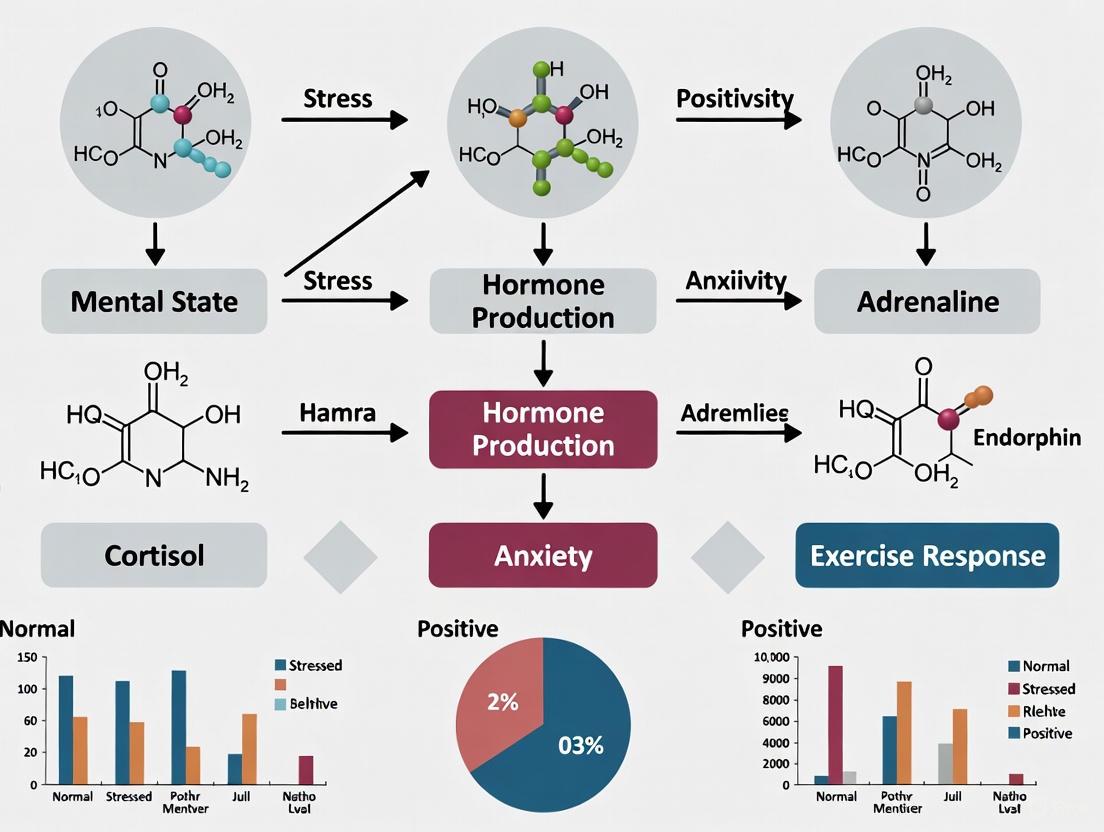
This article synthesizes current research on the neuroendocrine mechanisms through which physical exercise influences mental health, targeting researchers, scientists, and drug development professionals.
Hormonal Interplay: How Exercise-Induced Neuroendocrine Responses Modulate Mental Health
Abstract
This article synthesizes current research on the neuroendocrine mechanisms through which physical exercise influences mental health, targeting researchers, scientists, and drug development professionals. We explore foundational hormonal pathways, including adiponectin, dopamine, and estrogen, and their roles in mediating exercise's antidepressant and anxiolytic effects. The scope encompasses methodological approaches for studying these interactions, strategies for optimizing exercise prescriptions, and a comparative analysis of how different exercise modalities elicit distinct hormonal and mental health outcomes. The findings highlight promising non-pharmacological targets and inform the development of novel therapeutic strategies.
Neuroendocrine Pathways: The Biological Bridge Between Exercise and Mental Health
Major depressive disorder represents one of the leading causes of global disability, creating an urgent need for effective, rapid-acting antidepressant interventions with minimal side effects [1]. While the mental health benefits of physical activity have been recognized for decades, the precise neurobiological mechanisms translating physical exertion into improved mood have remained incompletely understood [2]. Recent research has illuminated a compelling pathway involving adiponectin, a hormone secreted by adipose tissue that communicates directly with the brain to mediate structural and functional neural changes [3].
This whitepaper synthesizes cutting-edge research establishing adiponectin as a crucial molecular mediator linking exercise to neuroplasticity and mood enhancement. We examine the complete signaling cascade from exercise-induced adiponectin release to epigenetic modifications that strengthen synaptic connections, focusing specifically on the hormone's rapid antidepressant properties. The findings presented herein position adiponectin signaling as both a fundamental biological mechanism and a promising therapeutic target for mood disorders.
Molecular Mechanisms of Adiponectin Signaling in the Brain
Adiponectin Structure and Systemic Functions
Adiponectin is a 244-amino acid protein with a molecular weight of approximately 26 kDa, encoded by the ADIPOQ gene on chromosome 3q27 [4]. It circulates in the bloodstream as three distinct oligomeric complexes: low molecular weight (LMW) trimers, medium molecular weight (MMW) hexamers, and high molecular weight (HMW) multimers, with the HMW form considered the most biologically active [4] [5]. Unlike most adipokines, adiponectin exists at remarkably high concentrations in plasma (3–30 μg/mL), accounting for up to 0.05% of total serum protein [4].
Beyond its established roles in glucose regulation and insulin sensitization, adiponectin demonstrates significant anti-inflammatory properties through its capacity to suppress NF-kB signaling and TNF-α production [4] [5]. These systemic functions establish adiponectin as a guardian angel adipokine with protective effects against metabolic and inflammatory conditions [5].
The Adiponectin-APPL1 Signaling Cascade in Neurons
The antidepressant mechanism of adiponectin initiates when the hormone binds to its specific receptor, AdipoR1, highly expressed on glutamatergic neurons in the anterior cingulate cortex (ACC) [1] [2]. This binding triggers the recruitment and nuclear translocation of the adaptor protein APPL1 (Adaptor Protein containing Pleckstrin homology domain, Phosphotyrosine binding domain, and Leucine zipper motif) [1].
Once inside the nucleus, APPL1 initiates epigenetic modifications by preventing histone deacetylase 2 (HDAC2) from binding to chromatin, thereby alleviating transcriptional repression [1]. This chromatin remodeling enhances the expression of genes encoding synaptic proteins, ultimately promoting spinogenesis—the formation of new dendritic spines that receive signals from other neurons [1] [2]. The complete signaling pathway is illustrated in Figure 1 below.
Figure 1. Adiponectin-mediated signaling pathway from exercise to antidepressant effects. The cascade begins with exercise-induced adiponectin release, culminating in epigenetic modifications that enhance synaptic structure and function [1] [2].
This molecular pathway operates with remarkable speed, producing antidepressant effects within hours of exercise initiation [1] [2]. The rapid timescale represents a significant advantage over conventional antidepressants, which typically require weeks to manifest therapeutic effects.
Experimental Evidence Linking Exercise, Adiponectin, and Mood Enhancement
Human Studies Demonstrating Rapid Mood Improvement
A rigorously controlled human study investigated the psychological effects of a single 30-minute treadmill session at moderate intensity (70-80% of age-predicted maximum heart rate) in 40 participants [1]. Psychological assessments using the Profile of Mood States (POMS) questionnaire demonstrated significant reductions in total mood disturbance scores following exercise [1] [2]. Participants reported increased vigor and self-esteem alongside decreased tension, depression, and fatigue [2].
Quantitative analysis revealed that this exercise intervention elevated serum adiponectin levels by an average of +0.44 μg/mL, with this increase directly correlating with mood improvement [1]. These findings provide clinical evidence supporting acute exercise as an accessible intervention for immediate mood enhancement.
Animal Models Elucidating Causal Mechanisms
Complementary rodent studies employing chronic unpredictable stress models demonstrated that a single 30-minute treadmill session produced rapid antidepressant effects observable within two hours and persisting for up to 24 hours [2]. Crucially, global knockout of adiponectin or selective deletion of AdipoR1 in ACC glutamatergic neurons completely abolished these exercise-induced benefits [1].
Chemogenetic manipulation established both necessity and sufficiency of ACC glutamatergic neurons in this process—inhibiting these neurons prevented the antidepressant effects of exercise, while artificially activating them mimicked the benefits in sedentary mice [2]. These causal manipulations provide compelling evidence for adiponectin signaling through ACC glutamatergic neurons as essential for exercise-induced mood enhancement.
Table 1: Key Quantitative Findings from Exercise-Adiponectin Studies
| Parameter | Experimental Model | Measurement | Reference |
|---|---|---|---|
| Exercise Protocol | Human participants | 30-minute treadmill at 70-80% MHR | [1] |
| Mood Improvement | Human POMS questionnaire | Reduced total mood disturbance | [1] [2] |
| Adiponectin Increase | Human serum | +0.44 μg/mL elevation | [1] |
| Onset of Antidepressant Effect | Mouse behavioral tests | Within 2 hours post-exercise | [2] |
| Duration of Effect | Mouse behavioral tests | Up to 24 hours post-exercise | [2] |
| Neural Activation Peak | Mouse ACC neurons | APPL1 nuclear translocation at 2 hours | [1] |
Methodological Approaches for Investigating Adiponectin Signaling
Experimental Workflows in Adiponectin Research
The investigation of adiponectin's role in exercise-induced neuroplasticity requires integrated methodologies spanning behavioral analysis, molecular biology, and genetic manipulation. Figure 2 illustrates a comprehensive experimental workflow that combines human and animal studies to establish causal mechanisms.
Figure 2. Integrated experimental workflow for investigating adiponectin signaling. The approach combines human psychological assessment with animal model manipulation to establish correlative and causal relationships [1] [2].
The Scientist's Toolkit: Essential Research Reagents
Table 2: Key Research Reagents for Investigating Adiponectin Signaling
| Reagent/Category | Specific Examples | Research Application | Function in Experimental Design |
|---|---|---|---|
| Genetic Models | Adiponectin global knockout mice; AdipoR1 conditional knockout mice | Loss-of-function studies | Establish necessity of adiponectin signaling for exercise effects [1] |
| Activity Markers | c-Fos mapping; Calcium imaging with GCaMP | Neural activation tracking | Identify and monitor exercise-activated neural populations [1] [2] |
| Receptor Agonists | AdipoRon (small-molecule AdipoR1 agonist) | Gain-of-function studies | Mimic adiponectin effects in sedentary animals [5] |
| Neural Manipulation | Chemogenetic receptors (DREADDs) | Circuit manipulation | Control specific neuron populations to establish causality [2] |
| Synaptic Markers | Dendritic spine staining; Synaptic protein antibodies | Structural analysis | Quantify spinogenesis and synaptic changes [1] |
| Epigenetic Tools | Histone acetylation antibodies; HDAC2 inhibitors | Epigenetic mechanism analysis | Investigate chromatin remodeling in antidepressant response [1] |
Implications for Therapeutic Development and Future Research
The delineation of adiponectin's role in mediating exercise-induced neuroplasticity presents compelling opportunities for therapeutic innovation. The AdipoR1 receptor emerges as a particularly promising target for developing rapid-acting antidepressant interventions that mimic the benefits of physical exercise [1]. Small molecule agonists like AdipoRon, currently in preclinical development, demonstrate the feasibility of this approach [5].
Future research should address several critical knowledge gaps, including the optimal exercise parameters for maximizing adiponectin response, potential gender differences in adiponectin signaling, and the durability of exercise-induced epigenetic modifications [2]. Additionally, the interplay between adiponectin and other exercise-induced mediators such as BDNF and irisin warrants further investigation [6] [3].
From a clinical perspective, the accessibility of exercise as a low-cost, minimal-side-effect intervention positions it as a valuable strategy for both treating depressive symptoms and preventing their development in at-risk populations [2]. The rapid timescale of adiponectin-mediated mood improvement offers particular promise for addressing acute depressive episodes when conventional antidepressants would not yet have taken effect.
The research synthesized in this whitepaper establishes adiponectin as a crucial molecular messenger connecting physical exercise to structural and functional brain changes that underlie mood enhancement. Through its action on ACC glutamatergic neurons and subsequent epigenetic regulation, adiponectin signaling represents a fundamental mechanism by which peripheral metabolic activity influences central nervous system function and emotional state.
These findings significantly advance our understanding of the body-brain connection and provide a robust scientific foundation for leveraging exercise as a targeted intervention for mood disorders. For drug development professionals, the adiponectin pathway offers novel targets for therapeutic development, while for researchers, it opens new avenues for investigating how lifestyle factors can directly influence brain health through defined molecular mechanisms.
This whitepaper synthesizes current research on the modulation of dopaminergic reward circuits by two key factors: the steroid hormone estrogen and physical exercise. Converging evidence from rodent models and human studies demonstrates that both factors potentiate dopamine signaling through distinct yet complementary mechanisms, thereby enhancing reinforcement learning and motivational states. Estrogen primarily amplifies dopamine reward prediction errors (RPEs) by downregulating dopamine transporter (DAT) expression, while exercise induces adiponectin-mediated synaptic plasticity in prefrontal regions. Understanding these mechanisms provides crucial insights for developing novel therapeutic interventions for neuropsychiatric disorders characterized by dopamine dysregulation, particularly those with symptom fluctuations across hormonal states.
Dopaminergic circuits originating from the ventral tegmental area (VTA) and projecting to the nucleus accumbens (NAc) and prefrontal cortex (PFC) constitute the core neural substrate for reward processing, reinforcement learning, and motivational control [7]. Dopamine (DA) neurons encode reward prediction errors (RPEs)—the discrepancy between expected and received rewards—which serve as critical teaching signals for value-based learning [7]. The potency of these dopaminergic signals is not static but is dynamically modulated by various endogenous and exogenous factors.
This technical review examines two potent modulators of dopaminergic circuitry: estrogen, a steroid hormone with both genomic and non-genomic actions in the brain, and physical exercise, a non-pharmacological intervention with demonstrated neuroplastic effects. A growing body of evidence indicates that both factors enhance dopamine signaling through specific molecular mechanisms, with significant implications for learning, motivation, and mental health. Within the broader context of mental health research, understanding these modulatory pathways is essential for developing hormone-informed treatments and exercise-based interventions for dopamine-related disorders.
Estrogen Modulation of Dopaminergic Signaling
Genomic and Non-Genomic Estrogen Receptor Signaling
Estradiol (17β-estradiol, E2), the most potent estrogen, exerts its effects through three known receptors: estrogen receptor alpha (ERα), estrogen receptor beta (ERβ), and G protein-coupled estrogen receptor (GPER1) [8] [9]. These receptors are distributed throughout the brain, including regions innervated by dopamine inputs such as the PFC, dorsal striatum, NAc, and hippocampus [8].
ER signaling occurs through two primary mechanisms:
- Genomic (Slow) Signaling: E2 diffuses across the cell membrane and binds to inactive ERs in the cytoplasm. The receptor-ligand complex dimerizes, translocates to the nucleus, and binds to estrogen response elements (EREs) on DNA to regulate gene transcription [9].
- Non-Genomic (Rapid) Signaling: Membrane-associated ERs (mERs) activate intracellular kinase cascades (e.g., MAPK, PI3K) within minutes of E2 binding, modulating neuronal excitability and synaptic transmission without altering gene transcription [8].
Table 1: Estrogen Receptor Types, Localization, and Signaling Mechanisms
| Receptor Type | Primary Localization | Signaling Mechanism | Key Brain Regions |
|---|---|---|---|
| ERα | Nucleus, Cell Membrane | Genomic (ERE binding), Non-genomic (Kinase activation) | Hypothalamus, Amygdala |
| ERβ | Nucleus, Cell Membrane | Genomic (ERE binding), Non-genomic (Kinase activation) | Hippocampus, DRN, PFC |
| GPER1 | Cell Membrane | Exclusively Non-genomic (G-protein coupled) | Widespread CNS distribution |
The following diagram illustrates the intricate signaling pathways through which estrogen receptors modulate dopaminergic function:
Estrogen Potentiation of Dopamine Reward Prediction Errors
Recent research demonstrates that endogenous fluctuations in 17β-estradiol significantly enhance dopamine RPE signaling and reinforcement learning [10] [11] [12]. In a seminal study by Golden et al. (2025), female rats were trained on a self-paced temporal wagering task that manipulated reward expectations by varying reward magnitudes over blocks of trials [10] [13].
Table 2: Key Behavioral Findings from Estrogen-Dopamine Interaction Studies
| Experimental Measure | High Estrogen State (Proestrus) | Low Estrogen State (Diestrus) | Statistical Significance |
|---|---|---|---|
| Behavioral sensitivity to reward blocks | Enhanced | Reduced | P < 0.001 |
| Influence of previous reward on trial initiation | Stronger | Weaker | P = 8.43 × 10⁻⁵ |
| Dopamine RPE dynamic range in NAc | Wider | Narrower | Significant correlation with serum E2 levels |
| Weight of recent rewards in value updating | Increased | Decreased | Correlation with block sensitivity |
The experimental workflow below outlines the comprehensive methodology used to establish the causal relationship between estrogen fluctuations and enhanced reinforcement learning:
Rats initiated trials by nose-poking into a center port, triggering auditory cues indicating reward volume (4-64μl) [10]. The key behavioral metric was trial initiation time, which reflects the rat's expectation of future rewards—shorter initiation times indicate higher expected value [10] [13]. When estrogen levels were naturally high during proestrus, rats showed enhanced sensitivity to reward blocks, with initiation times changing more dramatically between low- and high-reward blocks compared to low-estrogen stages (diestrus) [10].
Neurophysiological recordings using fiber photometry in the NAc revealed that dopamine signals functioned as RPEs, with surges when rewards exceeded expectations and dips when rewards were smaller than expected [10] [13]. Crucially, these dopamine RPE signals were amplified during high-estrogen states, exhibiting a wider dynamic range, particularly for large positive prediction errors [13].
Molecular Mechanisms: DAT Downregulation and Dopamine Dynamics
Proteomic analyses revealed the molecular mechanism underlying enhanced dopamine signaling: following endogenous increases in 17β-estradiol, dopamine transporter (DAT) expression was significantly reduced in the NAc [10] [13]. DAT is responsible for dopamine reuptake from the synaptic cleft, and its downregulation prolongs dopamine signaling, allowing successive dopamine release events to accumulate and produce larger, more sustained peaks [13]. This mechanism was confirmed through computational modeling, which demonstrated that slower dopamine clearance amplifies RPE signals without altering the fundamental reward prediction error computation [10].
Causal evidence was established through estrogen receptor (ER) knockdown in the VTA using short-hairpin RNA (shRNA) [10] [13]. This intervention suppressed behavioral sensitivity to reward states, mimicking the low-learning state observed during low-estrogen phases and demonstrating that estrogen signaling in midbrain dopamine circuits is necessary for the enhanced reinforcement learning [13].
Exercise-Induced Modulation of Reward Circuits
Acute Exercise Activates a Novel Adipokine-Brain Pathway
While estrogen modulates dopamine signaling through direct action on reward circuits, exercise engages a different pathway involving peripheral factors that communicate with the brain. A recent study revealed that a single 30-minute session of moderate-intensity exercise produces rapid antidepressant effects mediated by adiponectin, a hormone released from adipose tissue during physical activity [2].
The experimental protocol for elucidating this pathway involved both human participants and a mouse model of depression:
- Human component: 40 participants (half with anxiety/depression symptoms) completed a 30-minute treadmill run at moderate intensity, with psychological assessments before and after exercise.
- Animal component: Mice subjected to chronic unpredictable stress underwent a similar 30-minute treadmill protocol, with behavioral tests (e.g., forced swim test) assessing depression-like behaviors.
In exercised mice, adiponectin levels increased in the medial prefrontal cortex and bound to AdipoR1 receptors on glutamatergic neurons in the anterior cingulate cortex (ACC) [2]. This binding triggered the translocation of the adaptor protein APPL1 into the nucleus, where it promoted epigenetic changes (increased acetylation of histone H4) that facilitated the expression of genes involved in synaptic formation [2]. Consequently, researchers observed increased dendritic spine formation in the ACC within hours of exercise, indicating rapid structural plasticity [2].
The following diagram illustrates this multi-system pathway through which exercise induces rapid neuroplastic changes:
Comparative Mechanisms: Estrogen vs. Exercise Modulation
Table 3: Comparative Analysis of Dopaminergic Modulation by Estrogen and Exercise
| Modulation Characteristic | Estrogen | Exercise |
|---|---|---|
| Primary molecular target | Dopamine Transporter (DAT) | Adiponectin Receptor (AdipoR1) |
| Key brain regions affected | Nucleus Accumbens, VTA | Anterior Cingulate Cortex, Prefrontal Cortex |
| Temporal dynamics | Cycle-dependent (hours-days) | Rapid (hours post-exercise) |
| Primary effect on neurotransmission | Enhanced dopamine signaling duration | Enhanced glutamatergic synaptic plasticity |
| Behavioral manifestation | Improved reinforcement learning | Reduced depression-like behavior |
| Receptor systems involved | ERα, ERβ, GPER1 (genomic & non-genomic) | AdipoR1 (non-genomic) |
| Downstream effectors | Reduced dopamine reuptake | APPL1 nuclear translocation, histone acetylation |
Integrated Mental Health Implications
The modulation of dopaminergic reward circuits by estrogen and exercise has profound implications for understanding and treating mental health disorders. The fluctuation of estrogen levels throughout the menstrual cycle and perimenopause may explain why women experience varying severity of symptoms in dopamine-related disorders such as depression, ADHD, and substance use disorders [11] [12]. The enhanced dopamine RPE signaling during high-estrogen states aligns clinically with observations that reward sensitivity and motivation can vary across hormonal cycles [10].
Similarly, the identification of adiponectin as a mediator of exercise-induced antidepressant effects provides a mechanistic basis for the mental health benefits of physical activity [2]. This is particularly relevant given that consistent physical activity is recognized for its mental health benefits, though the immediate impact of a single exercise session has been less understood until now [2].
For drug development professionals, these findings highlight promising therapeutic targets:
- For estrogen-based therapies: Selective estrogen receptor modulators (SERMs) that target specific ER subtypes in dopamine circuits could potentially stabilize learning and motivation across hormonal fluctuations.
- For exercise-minetic development: Compounds that mimic the effects of exercise on adiponectin signaling or downstream pathways could provide antidepressant effects for individuals unable to engage in physical activity.
The Scientist's Toolkit: Research Reagent Solutions
Table 4: Essential Research Reagents for Investigating Estrogen and Exercise Effects on Reward Circuits
| Reagent / Method | Application | Key Function in Research |
|---|---|---|
| Fiber Photometry with DA Sensors | In vivo dopamine recording | Measures real-time dopamine dynamics in specific brain regions (e.g., NAc) during behavior [10] [13] |
| shRNA for Estrogen Receptors | Gene knockdown | Causally tests necessity of specific ERs in dopaminergic regions [10] [13] |
| E2-BSA Conjugate (membrane-impermeable) | Receptor localization | Distinguishes membrane vs. intracellular receptor effects [8] |
| Adiponectin KO Mice | Genetic manipulation | Tests necessity of adiponectin for exercise effects [2] |
| Chemogenetics (DREADDs) | Neural circuit manipulation | Tests sufficiency of specific neural pathways in behavioral effects [2] |
| ELISA for 17β-estradiol | Hormone quantification | Correlates behavioral and neural measures with hormone levels [10] |
| Western Blot for DAT/SERT | Protein quantification | Measures transporter expression changes following manipulations [10] [13] |
| Viral Vector-based Tracing | Circuit mapping | Identifies connectivity between hormonal and dopaminergic regions [8] |
This whitepaper has synthesized compelling evidence that both estrogen and exercise significantly modulate dopaminergic reward circuits, though through distinct mechanisms. Estrogen directly amplifies dopamine RPE signals in the nucleus accumbens by downregulating dopamine transporters, thereby enhancing reinforcement learning. Exercise engages a peripheral-central pathway where adiponectin from fat tissue activates prefrontal receptors, triggering epigenetic changes and structural plasticity that underlie rapid antidepressant effects.
These findings provide a robust biological framework for understanding how hormonal states and lifestyle factors influence learning, motivation, and mental health. For researchers and drug development professionals, these insights reveal novel therapeutic targets for treating dopamine-related disorders while highlighting the importance of considering hormonal status in treatment planning and clinical trial design. Future research should focus on elucidating the precise molecular pathways linking estrogen receptors to DAT regulation and exploring potential interactions between estrogen and exercise pathways in modulating mental health outcomes.
The neuroendocrine response to physical exercise represents a critical component of the body's adaptive mechanism to metabolic and psychological stress. For researchers and drug development professionals, a precise understanding of the dynamics of cortisol, epinephrine, and norepinephrine during exercise offers valuable insights for developing targeted therapeutic interventions. These hormones, central to the hypothalamic-pituitary-adrenal (HPA) axis and sympathetic nervous system (SNS) activation, not only regulate cardiovascular and metabolic functions during physical stress but also exhibit complex interactions with mental health outcomes [14] [15]. This technical review examines the multidimensional mechanisms through which different exercise modalities influence these hormonal responses, with particular emphasis on implications for mental health research and pharmaceutical development.
The intricate balance of these hormones is governed by a complex interplay of factors including exercise intensity, duration, modality, and individual characteristics such as training status, metabolic health, and circadian rhythms [16] [17]. Disruptions in these hormonal patterns are increasingly recognized as biomarkers for overtraining syndrome, mood disorders, and cardiovascular risk, highlighting their dual role in both physiological adaptation and pathological states [14] [17]. By synthesizing current evidence on exercise-induced hormonal fluctuations, this review aims to establish a mechanistic foundation for leveraging physical activity as a non-pharmacological intervention in mental health while identifying potential targets for novel therapeutic agents.
Hormonal Response Mechanisms to Exercise
Cortisol Dynamics
Cortisol, a glucocorticoid produced by the adrenal cortex, serves as a primary mediator of the body's stress response through activation of the HPA axis. During exercise, cortisol secretion is stimulated by adrenocorticotropic hormone (ACTH) from the pituitary gland, resulting in increased plasma concentrations that correlate with exercise intensity and duration [17]. The magnitude of cortisol response demonstrates significant variation depending on exercise modality, with high-intensity endurance exercise and resistance training provoking the most substantial increases [17].
The metabolic functions of cortisol during exercise include facilitation of gluconeogenesis, mobilization of free fatty acids, and modulation of inflammatory responses [15]. Beyond these acute effects, cortisol plays a crucial role in long-term adaptation to exercise training through its influence on protein metabolism and substrate utilization. However, the circadian regulation of cortisol must be considered in experimental designs, as basal levels typically peak in the morning (approximately 8:00 AM) and reach their nadir during the night, independent of behavioral triggers [16] [18]. This endogenous rhythm results in differential cortisol responses to exercise depending on the time of day, with altered reactivity observed at different circadian phases [16].
Chronic exercise training induces adaptive changes in HPA axis responsiveness, typically manifesting as attenuated cortisol responses to standardized exercise bouts in trained individuals [17]. This blunted response reflects improved physiological efficiency and reduced stress reactivity. However, excessive training volumes without adequate recovery can lead to dysfunction of the HPA axis, characterized by a flattened diurnal cortisol profile and altered exercise-induced secretion patterns [14] [17]. Such abnormalities serve as objective biomarkers for overtraining syndrome and may contribute to the mood disturbances frequently observed in overtrained athletes [14].
Catecholamine Response Patterns
The catecholamines epinephrine (adrenaline) and norepinephrine (noradrenaline) are released from the adrenal medulla and sympathetic nerve endings in response to exercise, mediating numerous cardiovascular and metabolic adaptations. Epinephrine primarily functions as a circulating hormone, while norepinephrine acts mainly as a neurotransmitter in the sympathetic nervous system [15]. The secretion of both catecholamines increases exponentially with exercise intensity, particularly when exercise exceeds 60-75% of maximal capacity [15].
Epinephrine exerts profound effects on exercise metabolism through hepatic glycogenolysis, adipose tissue lipolysis, and skeletal muscle blood flow regulation [15]. Norepinephrine contributes to cardiovascular regulation through increased heart rate, cardiac contractility, and vascular resistance [16]. Research utilizing forced desynchrony protocols has demonstrated significant circadian variation in both epinephrine and norepinephrine at rest, with troughs during the biological night and peaks across the biological day [16]. Notably, the reactivity of both catecholamines to exercise varies across the circadian cycle, exhibiting a ≈12-hour rhythm with peaks at approximately 9:00 AM and 9:00 PM [16].
Endurance training induces substantial adaptations in catecholamine metabolism, including decreased sympathetic activation at standardized submaximal workloads and enhanced catecholamine-mediated lipolysis [15]. These adaptations contribute to the glycogen-sparing effect observed in trained athletes, potentially delaying the onset of fatigue during prolonged exercise [15]. The catecholamine response to exercise is blunted in trained individuals at absolute workloads, though maximal catecholamine release capacity may be enhanced [17].
Interplay Between Hormonal Systems
The interactions between cortisol and catecholamines during exercise represent a finely orchestrated neuroendocrine response that optimizes physiological function under conditions of metabolic stress. The SNS and HPA axis demonstrate bidirectional communication, with catecholamines potentially stimulating ACTH release and cortisol modulating catecholamine receptor sensitivity [17]. This crosstalk ensures an integrated stress response that coordinates cardiovascular, metabolic, and immunological adaptations to exercise.
Emerging evidence suggests that these hormonal interactions extend beyond acute exercise responses to influence long-term structural adaptations. For instance, catecholamines and cortisol jointly regulate cardiac remodeling through their effects on growth factors such as insulin-like growth factor-1 (IGF-1) and vascular endothelial growth factor (VEGF) [19]. Additionally, the balance between anabolic and catabolic hormones mediates tissue-specific adaptations to different exercise modalities, with implications for both physical and mental health outcomes [17] [19].
Experimental Approaches and Methodologies
Standardized Exercise Protocols
Investigating exercise-induced hormonal responses requires rigorous experimental methodologies to ensure reproducible and interpretable results. The forced desynchrony (FD) protocol represents the gold standard for dissociating endogenous circadian influences from behavioral and environmental effects on hormonal secretion [16]. In this approach, subjects are scheduled to live on non-24-hour days (e.g., 20-hour cycles) in controlled laboratory environments, enabling researchers to assess hormonal responses to standardized exercise bouts distributed uniformly across the circadian cycle.
For catecholamine assessment, moderate-intensity continuous exercise on a bicycle ergometer has been widely utilized. A representative protocol involves 30 minutes of cycling at 60% of maximum heart rate, with blood sampling performed before, during, and after the exercise bout to capture dynamic hormonal changes [20]. This methodology has demonstrated that the exercise-induced rise in cortisol, epinephrine, and norepinephrine shows similar patterns in well-controlled type-I diabetics and healthy subjects, though growth hormone responses may differ significantly [20].
High-intensity interval training (HIIT) protocols have gained prominence for investigating hormonal responses to strenuous exercise. These typically involve repeated bouts of exercise at 85-95% of maximal heart rate interspersed with active recovery periods. Such protocols consistently elicit substantial increases in both catecholamines and cortisol, with the magnitude of response correlated with work intensity and duration [17].
Table 1: Standardized Experimental Exercise Protocols for Hormonal Assessment
| Protocol Type | Intensity | Duration | Sample Timing | Primary Hormones Measured |
|---|---|---|---|---|
| Forced Desynchrony | 60% HRmax | 30 min | Across circadian phases | Cortisol, Epinephrine, Norepinephrine |
| Moderate Continuous | 60-75% VO₂max | 30-60 min | Pre, during, post | Cortisol, Catecholamines, GH |
| High-Intensity Interval | 85-95% HRmax | 4-10 bouts | Pre, post, recovery | Catecholamines, Cortisol, Testosterone |
| Incremental Test | Ramp to exhaustion | 10-15 min | Pre, each stage, post | Catecholamines, Cortisol, ACTH |
Analytical Methodologies
Accurate quantification of stress hormones requires sophisticated analytical techniques with appropriate sensitivity and specificity. Plasma catecholamine measurement typically employs high-performance liquid chromatography with electrochemical detection (HPLC-EC), providing the necessary precision for detecting exercise-induced concentration changes that may range from picomolar to nanomolar levels [16]. Alternative approaches include liquid chromatography-mass spectrometry (LC-MS) and radioenzymatic assays, each offering distinct advantages in throughput, sensitivity, and cost.
Cortisol assessment commonly utilizes immunoassay techniques (ELISA, RIA) in serum, saliva, or urine samples. Salivary cortisol measurement offers the advantage of non-invasive collection, enabling frequent sampling that captures dynamic exercise-induced fluctuations [17]. When interpreting cortisol data, researchers must consider its pulsatile secretion pattern and the potential influence of corticosteroid-binding globulin (CBG) on measured concentrations.
For comprehensive hormonal profiling, integrated sampling protocols combining blood, saliva, and urine collections are recommended. These should include baseline measurements, multiple timepoints during exercise, and extended recovery period assessments to fully characterize hormonal dynamics. Recent advances in continuous metabolite monitoring and minimally invasive microdialysis techniques show promise for future exercise endocrinology research, potentially enabling real-time hormonal measurement during physical activity [21].
Table 2: Analytical Methods for Exercise Hormone Assessment
| Analyte | Sample Matrix | Primary Method | Sensitivity Requirements | Considerations |
|---|---|---|---|---|
| Epinephrine/Norepinephrine | Plasma | HPLC-EC | 10-50 pg/mL | Stabilize with anti-oxidants |
| Cortisol | Serum/Saliva | ELISA/RIA | 0.1-0.5 μg/dL | Account for CBG binding |
| ACTH | Plasma | Chemiluminescence | 5-10 pg/mL | Rapid processing required |
| Metanephrines | Urine | LC-MS | Varies | 24-h collection for baseline |
Quantitative Hormonal Responses to Exercise
The magnitude and temporal pattern of hormonal responses to exercise vary significantly based on exercise modality, intensity, duration, and individual fitness characteristics. Understanding these quantitative relationships is essential for designing targeted exercise interventions and interpreting hormonal data in research settings.
Under basal conditions, plasma epinephrine concentrations typically range from 20-50 pg/mL, while norepinephrine levels range from 200-400 pg/mL [16]. During moderate-intensity exercise (60% VO₂max), epinephrine levels may increase by 50-100%, with norepinephrine showing increases of 100-200% above resting values [16]. High-intensity exercise can provoke much more substantial responses, with epinephrine increasing by 500-750% and norepinephrine by 300-500% in some protocols [17].
Cortisol demonstrates similarly intensity-dependent responses, with moderate exercise potentially increasing plasma concentrations by 30-50%, while exhaustive exercise may elevate cortisol by 100-200% above baseline [17]. The temporal dynamics also differ among hormones, with catecholamines typically peaking during or immediately after exercise, while cortisol peaks may be delayed until 20-30 minutes post-exercise [17].
Circadian biology significantly modulates these hormonal responses. Research using forced desynchrony protocols has identified that the cortisol rhythm at rest shows a peak-to-trough amplitude of approximately 85% of the mean, peaking at a circadian phase corresponding to 9:00 AM [16]. Epinephrine demonstrates a circadian rhythm amplitude of approximately 70% of the mean, while norepinephrine shows a 35% amplitude [16]. Perhaps more importantly, the reactivity of these hormones to exercise varies across the circadian cycle, with greatest vagal withdrawal at ≈9:00 AM and peaks in catecholamine reactivity at ≈9:00 AM and ≈9:00 PM [16].
Table 3: Quantitative Hormonal Responses to Different Exercise Intensities
| Exercise Intensity | Cortisol Response | Epinephrine Response | Norepinephrine Response | Time to Peak |
|---|---|---|---|---|
| Low (40% VO₂max) | ±10% | +50-100% | +100-150% | 10-20 min |
| Moderate (60% VO₂max) | +30-50% | +100-200% | +200-300% | 20-30 min |
| Heavy (80% VO₂max) | +75-100% | +300-500% | +400-600% | 10-15 min |
| Supramaximal (≥100% VO₂max) | +100-200% | +500-750% | +500-800% | 5-10 min |
Molecular Signaling Pathways
The hormonal responses to exercise initiate complex intracellular signaling cascades that mediate both acute functional changes and long-term structural adaptations. Understanding these molecular pathways provides insights into potential therapeutic targets for drug development.
Diagram 1: Neuroendocrine signaling pathways in exercise
Cortisol exerts its effects through both genomic and non-genomic mechanisms. The genomic actions involve diffusion of cortisol across the plasma membrane, binding to cytosolic glucocorticoid receptors (GR), and translocation of the activated receptor complex to the nucleus where it modulates gene transcription [17]. This pathway regulates the expression of numerous genes involved in metabolism, inflammation, and cellular stress response. Non-genomic actions of cortisol occur rapidly through membrane-associated receptors and secondary messenger systems [17].
Catecholamines signal primarily through G-protein coupled adrenergic receptors, with epinephrine showing high affinity for β₂-adrenergic receptors and norepinephrine for α₁-adrenergic receptors [15]. Receptor activation stimulates adenylate cyclase (for β-receptors) or phospholipase C (for α₁-receptors), initiating intracellular signaling cascades that rapidly modify cellular function through protein phosphorylation [15]. These pathways regulate diverse processes including glycogenolysis, lipolysis, cardiac contractility, and vascular tone.
The interplay between these signaling systems creates a coordinated response network that optimizes physiological function during exercise. Cortisol potentiates catecholamine action by upregulating adrenergic receptor expression and enhancing coupling efficiency between receptors and their intracellular effectors [17]. Conversely, catecholamines can influence HPA axis activity through central mechanisms and direct effects on the adrenal cortex [17].
Research Reagent Solutions
Table 4: Essential Research Reagents for Exercise Endocrinology Studies
| Reagent Category | Specific Examples | Research Application | Technical Considerations |
|---|---|---|---|
| Catecholamine Analysis | HPLC-EC kits, LC-MS standards | Plasma catecholamine quantification | Require antioxidant preservation (EGTA/glutathione) |
| Cortisol Immunoassays | ELISA kits, RIA kits, CLIA kits | Serum/salivary cortisol measurement | Account for cross-reactivity with cortisone |
| Hormone Stabilizers | Protease inhibitors, anticoagulants | Sample integrity preservation | EDTA plasma for catecholamines; serum for cortisol |
| Receptor Antagonists | Propranolol (β-blocker), Mifepristone (GR antagonist) | Mechanistic pathway analysis | Determine receptor specificity and crossing blood-brain barrier |
| Enzyme Assays | COMT activity assays, MAO activity kits | Catecholamine metabolism assessment | Control for genetic polymorphisms in enzymes |
Mental Health Implications
The intersection of exercise-induced hormonal responses and mental health represents a promising area for therapeutic development. Regular physical activity consistently demonstrates positive effects on mental well-being through multiple neurobiological mechanisms, with stress hormone modulation playing a central role [14] [22]. The relationship between exercise and mental health involves complex interactions between physiological, psychological, and social factors.
From a neuroendocrine perspective, exercise promotes a more adaptive response to psychological stressors, characterized by rapid hormonal activation followed by efficient recovery [22]. This physiological pattern is associated with improved stress resilience and reduced vulnerability to anxiety disorders [14]. Regular exercise also attenuates sympathetic nervous system reactivity to non-exercise stressors, potentially mitigating the harmful effects of chronic psychological stress on cardiovascular and metabolic health [15] [22].
The mental health benefits mediated through exercise-induced hormonal changes include reduced anxiety, improved mood, and enhanced stress resistance. These effects are mediated through multiple pathways, including regulation of the HPA axis, increased endorphin production, modulation of neurotrophic factors, and enhanced central norepinephrine transmission [22]. Structural exercise adaptations include increased hippocampal volume, enhanced prefrontal cortex function, and improved connectivity within neural networks involved in emotional regulation [14].
Diagram 2: Mental health benefits of exercise-induced hormonal changes
For individuals with established mental health conditions, exercise interventions show particular promise. In major depressive disorder, exercise demonstrates comparable efficacy to antidepressant medications in some populations, with effects potentially mediated through normalization of HPA axis dysfunction and increased monoamine availability [14] [22]. For anxiety disorders, the exposure to controlled physiological arousal during exercise may promote desensitization to somatic anxiety symptoms through mechanisms involving habituation and enhanced inhibitory learning [22].
The social context of exercise further modulates its mental health benefits through psychosocial mechanisms. Group-based exercise interventions enhance social adaptability and strengthen peer bonds, which are critical factors in preventing depression and anxiety [23]. This highlights the importance of considering both biological and psychosocial mechanisms when designing exercise-based interventions for mental health.
The dynamic interplay between exercise and stress hormones represents a sophisticated adaptive system that integrates physiological, psychological, and social dimensions of health. For researchers and pharmaceutical developers, understanding these complex relationships offers valuable insights for creating targeted interventions that optimize hormonal responses to enhance both physical and mental well-being. The precise modulation of cortisol, epinephrine, and norepinephrine through exercise prescription holds significant promise for preventing and treating stress-related disorders, with potential applications spanning from primary prevention to adjunctive treatment of established mental health conditions.
Future research directions should include elucidating the molecular mechanisms by which exercise-induced hormonal changes mediate neuroplasticity, investigating individual differences in hormonal responsiveness to exercise, and developing personalized exercise prescriptions based on hormonal profiling. Additionally, the exploration of exercise mimetics that replicate the beneficial hormonal effects of physical activity represents a promising avenue for pharmaceutical development, particularly for populations with limited capacity for exercise. As our understanding of these mechanisms deepens, the strategic application of exercise as a therapeutic modality will continue to evolve, offering new opportunities for enhancing mental health through targeted neuroendocrine modulation.
The gut-brain axis represents a paradigm-shifting framework in neuroendocrine research, comprising a complex, bidirectional communication network that intricately links gastrointestinal tract function with central nervous system signaling. This systematic review examines the sophisticated mechanisms through which exercise modulates this axis, focusing on microbial metabolite production and their consequent hormonal effects. Evidence synthesized from current literature demonstrates that physical activity induces significant shifts in gut microbiota composition, thereby altering the production of neuroactive metabolites including short-chain fatty acids (SCFAs), bile acids, and neurotransmitters. These microbial molecules subsequently regulate host endocrine pathways, including hypothalamic-pituitary-adrenal (HPA) axis activity, insulin sensitivity, and gonadal hormone function, with profound implications for mental health and metabolic disease states. This whitepaper provides a comprehensive technical analysis of these relationships, detailed experimental methodologies, and visual signaling pathways to guide future research and therapeutic development in this emerging field.
The gut-brain axis has emerged as a fundamental regulatory system integrating neural, endocrine, immune, and metabolic pathways between the gastrointestinal tract and the central nervous system. The human gastrointestinal tract harbors trillions of microorganisms comprising a diverse ecological community known as the gut microbiota, which encodes approximately 150 times more genes than the human genome [24]. This microbial organ system functions as an active endocrine organ, producing a diverse array of neuroactive compounds that fundamentally influence host physiology and brain function.
Within mental health research, particularly in investigations concerning hormonal responses to exercise, the gut-brain axis provides a novel framework for understanding individual variations in exercise adaptation and psychological outcomes. The axis facilitates bidirectional communication through multiple parallel pathways: neural connections (vagus nerve and enteric nervous system), endocrine signaling (cortisol, other gut hormones), immune mediators (cytokines), and microbial metabolites (SCFAs, neurotransmitters) [24] [25]. This complex network allows gut microbiota to influence stress responsiveness, emotional regulation, and metabolic homeostasis—each critical factors in exercise-related mental health outcomes.
Recent advances demonstrate that exercise, as a potent physiological stressor, significantly remodels the gut microbiota and its metabolic output, thereby creating a novel pathway through which physical activity influences mental health via endocrine signaling [26] [27] [28]. This technical review examines the mechanistic underpinnings of these relationships, with particular emphasis on translational implications for targeting this axis in mental health disorders and metabolic conditions.
Core Communication Pathways of the Gut-Brain Axis
The gut-brain axis employs multiple parallel signaling routes to maintain bidirectional communication between the gastrointestinal tract and the central nervous system. The primary pathways include neural connections, endocrine signaling, immune mediators, and microbial metabolites, each contributing to the axis' integrated function.
Neural Pathways
The vagus nerve serves as the primary direct neural connection between the gut and brain, often described as the "gut-brain superhighway" [24]. This cranial nerve provides afferent signaling from the gastrointestinal tract to the brainstem and efferent signaling from the brain to the gut, enabling rapid communication. The enteric nervous system (ENS), embedded throughout the gastrointestinal wall, contains approximately 500 million neurons organized into two major plexuses: the myenteric (Auerbach's) plexus regulating gut motility and the submucosal (Meissner's) plexus controlling secretion, blood flow, and nutrient absorption [24]. The ENS can operate independently but maintains constant communication with the central nervous system via the vagus nerve.
Endocrine and Immune Signaling
Endocrine pathways primarily involve the HPA axis, which regulates cortisol release in response to various stressors, including exercise [29] [25]. Gut microbiota significantly influence HPA axis development and reactivity, with germ-free animals demonstrating exaggerated HPA responses to stress that normalize following microbial colonization [25]. Immune signaling occurs through cytokine production and release, with gut microbiota modulating systemic inflammatory tone. Compromised intestinal barrier function permits translocation of bacterial lipopolysaccharide (LPS) into circulation, triggering TLR4/NF-κB signaling and pro-inflammatory cytokine release (IL-1β, IL-6, TNF-α) that can activate microglia and remodel synapses in mood-relevant brain circuits [25].
Table 1: Primary Communication Pathways of the Gut-Brain Axis
| Pathway | Components | Signaling Molecules | Functional Role |
|---|---|---|---|
| Neural | Vagus nerve, Enteric nervous system | Neurotransmitters (acetylcholine, norepinephrine) | Rapid gut-brain signaling, regulation of digestion, appetite, and mood |
| Endocrine | HPA axis, Enteroendocrine cells | Cortisol, CRH, ACTH, gut hormones (GLP-1) | Stress response regulation, energy homeostasis, metabolic control |
| Immune | Cytokines, Pattern recognition receptors | IL-1β, IL-6, TNF-α, LPS | Inflammation regulation, immune activation, neuroinflammation modulation |
| Microbial Metabolites | Gut microbiota | SCFAs, bile acids, neurotransmitters | Microbial-endocrine cross-talk, barrier integrity, systemic metabolism |
Microbial Metabolite Signaling
Gut microbiota produce numerous neuroactive metabolites that directly or indirectly influence brain function and endocrine signaling. Key microbial metabolites include short-chain fatty acids (acetate, propionate, butyrate) produced through dietary fiber fermentation; secondary bile acids derived from host primary bile acids; and various neurotransmitters including serotonin, dopamine, and GABA [24] [26]. These microbial products can directly activate host receptors, influence epithelial barrier integrity, modulate immune function, and regulate host hormone production and sensitivity.
Diagram 1: Gut-Brain Axis Communication Pathways. This diagram illustrates the primary neural, endocrine, and immune pathways facilitating bidirectional communication between the gut and brain, highlighting the central role of microbial metabolites.
Exercise as a Modulator of Gut Microbiota Composition and Function
Exercise represents a powerful non-pharmacological intervention that significantly reshapes gut microbiota composition and metabolic function, with differential effects based on intensity, duration, and modality. Appropriate exercise induces beneficial microbial adaptations, while excessive exercise may potentially disrupt gut homeostasis.
Intensity-Dependent Effects of Exercise
Emerging evidence demonstrates that exercise exhibits hormetic effects on the gut-brain axis, where moderate-intensity exercise promotes beneficial adaptations, while excessive intensity or duration may produce detrimental effects [27]. Animal studies reveal that 40 minutes of moderate exercise enhances cognitive abilities related to object recognition and location memory, alongside increased hippocampal neurogenesis. However, these benefits disappear when exercise intensity or duration is significantly increased, indicating a threshold effect [27].
Human studies demonstrate that moderate-intensity endurance exercise increases microbial diversity and abundance of beneficial taxa, including Akkermansia muciniphila, Faecalibacterium, and Roseburia [26] [28]. These microbial changes correlate with improved metabolic parameters and reduced inflammation. Conversely, prolonged high-intensity endurance exercise may induce gastrointestinal distress through splanchnic hypoperfusion, increasing intestinal permeability and potentially facilitating bacterial translocation [30].
Modality-Specific Microbial Responses
Different exercise modalities produce distinct microbial signatures, suggesting precision exercise prescriptions may be warranted. Endurance training preferentially enriches SCFA-producing bacteria (Faecalibacterium, Roseburia) and improves insulin sensitivity, while resistance training demonstrates particular efficacy in reducing inflammatory markers in obese individuals [26]. High-intensity interval training (HIIT) represents a time-efficient approach that lowers basal cortisol concentrations and reduces catecholamine response with regular training [29].
Table 2: Exercise-Induced Changes in Gut Microbiota and Associated Metabolites
| Exercise Modality | Microbial Changes | Metabolite Alterations | Hormonal Consequences |
|---|---|---|---|
| Endurance Training | ↑ Akkermansia, ↑ Faecalibacterium, ↑ Roseburia, ↑ Bifidobacterium | ↑ Butyrate, ↑ Propionate, ↑ Secondary bile acids | Improved insulin sensitivity, Reduced inflammation, Enhanced GLP-1 secretion |
| Resistance Training | ↑ Microbial diversity, ↓ Proteobacteria | ↓ LPS, Modest SCFA increases | Reduced resting cytokine concentrations, Attenuated inflammatory response |
| High-Intensity Interval Training | Variable changes, Potential ↑ Akkermansia | Reduced post-exercise LPS, SCFA modulation | Lower basal cortisol, Reduced catecholamine response |
| Excessive/Overtraining | ↓ Microbial diversity, ↑ Mucin-degrading bacteria, ↑ Ruminococcus gnavus | ↓ SCFAs, ↑ Intestinal permeability markers | Elevated basal cortisol, Increased inflammatory cytokines, HPA axis dysregulation |
Microbial Metabolites: Key Mediators of Exercise-Induced Hormonal Changes
Gut microbiota produce numerous metabolites that mediate the endocrine effects of exercise, with short-chain fatty acids, bile acids, and neuroactive compounds representing the most significant classes.
Short-Chain Fatty Acids (SCFAs)
SCFAs, including butyrate, propionate, and acetate, are produced through microbial fermentation of dietary fiber and exert multifaceted hormonal effects. Butyrate enhances gut barrier integrity by upregulating tight junction proteins (ZO-1, occludin), inhibits histone deacetylases (suppressing androgen synthesis enzyme CYP17A1), and activates GLP-1 secretion via FFAR3-dependent mechanisms [26]. Propionate reduces hepatic gluconeogenesis and improves insulin sensitivity, while acetate influences appetite regulation and systemic metabolism.
Exercise increases the abundance of SCFA-producing bacteria and elevates circulating SCFA levels, creating a mechanistic link between physical activity and metabolic health [26] [28]. In overweight women, a 6-week endurance exercise program increased Akkermansia abundance and altered glycerophospholipid metabolism, indicating enhanced microbial metabolic capacity [28].
Bile Acid Metabolism
Exercise significantly modifies bile acid metabolism through microbial transformations, increasing secondary bile acids (e.g., deoxycholic acid) that activate hepatic farnesoid X receptor (FXR) [26]. FXR activation inhibits gluconeogenic enzymes (PEPCK/G6Pase) and upregulates androgen-clearance enzymes (SULT2A1/CYP3A4), providing a potential mechanism for exercise-mediated improvement in hyperandrogenism conditions such as PCOS [26].
Neuroactive Metabolites
Gut microbiota produce numerous neurotransmitters and neuromodulators, including serotonin, dopamine, GABA, and tryptophan metabolites, which influence mood, cognition, and stress responsiveness [24] [25]. Exercise-induced microbial changes alter the production of these neuroactive compounds, potentially contributing to the psychological benefits of physical activity. Specifically, tryptophan metabolism represents a critical intersection point, with microbial regulation of the kynurenine pathway influencing serotonin availability and neuroprotection [25].
Diagram 2: Exercise-Induced Microbial Metabolite Signaling to Hormonal Outcomes. This diagram illustrates the pathway from exercise intervention through microbial shifts and metabolite production to ultimate hormonal consequences.
Experimental Methodologies for Investigating the Exercise-Gut-Brain-Endocrine Axis
Rigorous experimental approaches are essential for elucidating the complex relationships between exercise, gut microbiota, and hormonal outcomes. The following section details key methodologies employed in this research domain.
Human Exercise Intervention Studies
Well-controlled human interventions represent the gold standard for investigating exercise effects on the gut-brain-endocrine axis. Key design considerations include:
Participant Selection and Stratification: Studies should carefully characterize participants based on fitness level, baseline microbiota composition, hormonal status, and exercise history. Research indicates that individual microbial baseline composition significantly influences exercise responsiveness [28].
Exercise Protocol Standardization: The 6-week endurance exercise program provides a validated model [28]. This protocol typically involves:
- Baseline assessments (VO₂max, body composition, hormonal profiles)
- Supervised moderate-intensity endurance exercise (3-5 sessions/week)
- Progressive intensity adjustment (50-70% VO₂max)
- Dietary standardization throughout the study period
- Regular biological sampling (blood, feces, occasionally urine)
Sample Collection and Processing: Standardized protocols for fecal sample collection (immediate freezing at -80°C), blood collection (consistent time of day to control for circadian variations), and proper storage are critical for reliable metabolite and hormone measurements [28].
Microbiota Transplantation Techniques
Fecal microbiota transplantation (FMT) provides a powerful tool for establishing causal relationships between exercise-induced microbial changes and physiological outcomes [27]. The standard protocol involves:
- Donor selection from exercised versus sedentary subjects
- Fecal material processing (homogenization, filtration, suspension in sterile saline)
- Recipient preconditioning with antibiotics to reduce resident microbiota
- Transplantation via oral gavage or colonoscopy
- Subsequent assessment of endocrine, metabolic, and behavioral outcomes
Animal studies using FMT from exercised donors to sedentary recipients have successfully transferred exercise-induced benefits, including enhanced cognitive function and neurogenesis, confirming the causal role of microbiota in mediating exercise effects [27].
Multi-Omic Analytical Approaches
Integrative multi-omics methodologies provide comprehensive insights into exercise-induced changes:
Metagenomic Sequencing: Shotgun metagenomic sequencing enables taxonomic and functional profiling of gut microbiota, identifying exercise-responsive taxa and metabolic pathways [26] [28].
Metabolomic Profiling: Liquid chromatography high-resolution mass spectrometry (UPLC-HRMS) allows untargeted characterization of exercise-responsive metabolites in serum and feces [28]. Key analytical considerations include:
- Sample extraction with appropriate solvents (methanol, acetonitrile)
- Quality control samples (pooled quality controls, internal standards)
- Chromatographic separation (reverse phase for lipids, HILIC for polar metabolites)
- Data processing with specialized software (XCMS, MS-DIAL)
Hormonal Assays: Multiplex immunoassays or LC-MS/MS for simultaneous quantification of stress hormones (cortisol, ACTH), metabolic hormones (insulin, GLP-1), and inflammatory markers (cytokines) provide endocrine context for microbial changes.
Table 3: Essential Research Reagent Solutions for Gut-Brain Axis Investigations
| Research Tool Category | Specific Reagents/Assays | Research Application | Technical Considerations |
|---|---|---|---|
| Microbiota Analysis | DNA extraction kits (QIAamp PowerFecal Pro), 16S rRNA primers, Shotgun metagenomic library prep kits | Taxonomic and functional profiling of gut microbiota | Standardized extraction critical, appropriate controls for contamination |
| Metabolite Detection | UPLC-HRMS systems, SCFA standards, Bile acid standards, Neurotransmitter panels | Quantification of microbial metabolites | Stable isotope internal standards recommended, proper sample preservation |
| Hormone Assays | Cortisol ELISA, Multiplex cytokine panels, LC-MS/MS for steroid hormones | Endocrine response measurement | Diurnal variation considerations, appropriate sample matrix (serum, saliva) |
| Barrier Function Assessment | FITC-dextran, Zonulin ELISA, Occludin antibodies | Intestinal and blood-brain barrier integrity | Timing critical for permeability assays, tissue fixation for immunohistochemistry |
| Molecular Biology Reagents | RNA extraction kits, RT-PCR reagents, Chromatin immunoprecipitation kits | Mechanism investigation (gene expression, epigenetic regulation) | Rapid processing of tissues, RNase-free conditions |
Implications for Mental Health and Hormonal Research
The exercise-gut-brain-endocrine axis has profound implications for understanding mental health disorders and developing novel therapeutic approaches, particularly within the context of hormonal responses to exercise.
Stress-Related Disorders and HPA Axis Regulation
Gut microbiota play a fundamental role in HPA axis development and regulation, with germ-free animals displaying exaggerated stress responses [25]. Exercise-induced microbial changes moderate HPA reactivity to stressors, potentially explaining the stress-buffering effects of regular physical activity. The enrichment of SCFA-producing bacteria with exercise enhances gut barrier function, reduces LPS translocation, and subsequently dampens neuroinflammation, collectively contributing to improved stress resilience [26] [25].
Metabolic and Neuroendocrine Conditions
In polycystic ovary syndrome (PCOS), exercise ameliorates core pathologies through gut microbiota-mediated mechanisms [26]. Exercise enrichment of beneficial taxa (Faecalibacterium, Akkermansia) and reduction of pro-inflammatory pathogens (Proteobacteria) elevates SCFAs and secondary bile acids while suppressing LPS translocation. These microbial shifts activate multiple coordinated pathways: SCFAs enhance gut barrier integrity and inhibit histone deacetylases (suppressing CYP17A1-mediated androgen synthesis), while secondary bile acids activate hepatic FXR to inhibit gluconeogenesis and upregulate androgen-clearance enzymes (SULT2A1/CYP3A4) [26].
Future Research Directions and Therapeutic Applications
The gut-brain axis represents a promising target for novel therapeutic interventions in mental health and endocrine disorders. Potential approaches include:
- Microbiota-directed exercise prescriptions tailored to individual microbial baselines and endocrine profiles
- Psychobiotics specifically selected for their ability to produce neuroactive metabolites
- Precision nutrition combining exercise interventions with targeted dietary strategies to optimize microbial metabolite production
- Fecal microbiota transplantation from exercised donors as a therapeutic modality for metabolic and mental health disorders
Future research should prioritize human trials with multi-omic integrations, longitudinal designs to establish temporal relationships, and targeted interventions in specific clinical populations with hormonal disturbances.
The gut-brain axis represents a fundamental biological system that mediates numerous exercise-induced benefits for mental and metabolic health. Through the production of microbial metabolites including SCFAs, bile acids, and neurotransmitters, gut microbiota function as a critical endocrine organ that translates physical activity into hormonal signaling with far-reaching consequences for host physiology. The hormetic nature of exercise intensity highlights the importance of balanced exercise prescriptions to optimize gut-brain communication.
Future research integrating multi-omic methodologies with well-controlled exercise interventions will further elucidate the molecular mechanisms underlying these relationships and facilitate the development of microbiota-targeted approaches for mental health disorders and endocrine conditions. The gut-brain-endocrine axis thus represents a promising frontier for personalized medicine approaches that harness the therapeutic potential of exercise-mediated microbial modulation.
From Bench to Biomarker: Research Methods and Therapeutic Applications
The comprehensive profiling of hormonal and metabolomic responses to exercise provides an unparalleled window into the complex biochemical adaptations that underpin physical health and performance. These molecular signatures are not only crucial for understanding physiological performance and recovery but are also profoundly relevant to mental health research. The hypothalamic-pituitary-adrenal (HPA) axis, a central stress response system, is directly activated by physical exertion, creating an intimate connection between exercise-induced stress, metabolic output, and psychological states. Disruptions in the circadian rhythm of stress hormones like cortisol are documented features of both overtraining syndrome in athletes and various mood disorders, positioning exercise challenge tests as valuable experimental paradigms for investigating stress response circuitry in health and disease [31] [32]. This technical guide details the core analytical techniques—High-Performance Liquid Chromatography (HPLC), Electrochemiluminescence Immunoassay (ECLIA), and Liquid Chromatography (LC)—that enable researchers to decode these responses with high precision and reliability.
Core Analytical Techniques
Electrochemiluminescence Immunoassay (ECLIA)
Principle and Application: ECLIA is an automated, high-throughput immunoassay technique ideal for quantifying specific hormones in biological samples. It combines immunochemical reactions with electrochemiluminescence detection. When a specific voltage is applied, a chemiluminescent reaction produces light proportional to the concentration of the analyte. This method is particularly suited for measuring steroid hormones like cortisol and testosterone in saliva and serum, which is critical for assessing exercise-induced stress and the anabolic-catabolic balance [32].
Experimental Protocol for Salivary Hormone Measurement:
- Sample Collection: Collect saliva samples using unstimulated passive drooling into specialized collection devices (e.g., Salivette cotton swabs or SaliCap polypropylene tubes). Participants must refrain from eating, drinking (except water), or brushing teeth for at least 15 minutes prior to collection [31] [32].
- Sampling Design for Circadian Rhythm: To account for individual circadian rhythms, collect samples sequentially at multiple timepoints. A typical protocol for athletes involves collection at waking (e.g., 05:00), before morning exercise (e.g., 06:00), immediately after exercise (e.g., 07:00), before breakfast (e.g., 07:30), and at further intervals throughout the day (e.g., 12:00, 16:00, 18:30, 19:00) [31] [32].
- Sample Pre-treatment: Centrifuge saliva samples at 1500×g at 4°C for 10 minutes to separate the clear supernatant from mucins and debris. Store aliquots at -20°C or -80°C until analysis [31].
- Automated Analysis: Analyze samples using an automated system like the Cobas 8000 or Modular Analytics E170 with Elecsys Cortisol II and Testosterone II reagent kits. The intra- and inter-assay coefficients of variation (CVs) for salivary cortisol are typically below 5%, demonstrating high reproducibility [32].
Liquid Chromatography (LC) and High-Performance Liquid Chromatography (HPLC)
Principle and Application: LC and its higher-pressure variant, HPLC, separate compounds in a complex liquid mixture based on their differential interaction with a stationary phase and a mobile phase. This is a foundational separation technique in metabolomics and hormone analysis.
- HPLC for Catecholamines: HPLC with electrochemical or fluorescence detection is the method of choice for measuring catecholamines like dopamine, epinephrine, and norepinephrine in plasma. These molecules are key stress hormones and neurotransmitters [33].
- LC-Mass Spectrometry (LC-MS/MS): When coupled with tandem mass spectrometry (MS/MS), LC becomes a powerful tool for untargeted metabolomics, enabling the identification and quantification of hundreds to thousands of small molecule metabolites (e.g., amino acids, lipids, organic acids) in a single run. This provides a comprehensive view of metabolic perturbations induced by exercise [34].
Experimental Protocol for Untargeted Plasma Metabolomics:
- Sample Collection and Preparation: Collect venous blood into EDTA or heparin tubes after an overnight fast. Centrifuge at 1500×g for 10-15 minutes to isolate plasma. Deproteinize the plasma using cold organic solvents like methanol or acetonitrile (typically a 1:3 or 1:4 sample-to-solvent ratio). Centrifuge again, and evaporate the supernatant to dryness under nitrogen or a vacuum. Reconstitute the dried extract in a solvent compatible with the LC mobile phase (e.g., water/methanol) [35] [36].
- LC-MS/MS Analysis:
- Chromatography: Inject the reconstituted sample onto a reverse-phase C18 column. Use a binary gradient mobile phase (e.g., water and methanol or acetonitrile, both with 0.1% formic acid) to elute metabolites over a 10-20 minute run time.
- Mass Spectrometry: Operate the mass spectrometer in both positive and negative electrospray ionization (ESI) modes to maximize metabolite coverage. Use data-dependent acquisition (DDA) to fragment the most abundant ions for subsequent identification.
- Data Processing: Process raw data using software tools like XCMS, MZmine, or MS-DIAL for peak picking, alignment, and normalization. Identify metabolites by matching their accurate mass and fragmentation spectra against reference databases (e.g., Human Metabolome Database) [34].
Key Metabolic and Hormonal Signatures
Profiling studies consistently reveal specific metabolic shifts in response to exercise, which can be quantified using the techniques above.
Table 1: Key Metabolites Altered by Exercise and Their Physiological Significance
| Metabolite Class | Specific Metabolites | Change with Exercise | Postulated Physiological Role | Primary Analytical Technique |
|---|---|---|---|---|
| Amino Acids & Derivatives | Tyrosine, Branched-Chain Amino Acids (Valine, Isoleucine), 4-Hydroxyproline | ↑ or ↓ (depends on context) | Energy substrate for TCA cycle, indicator of exercise-induced adaptation, muscle damage repair [36]. | LC-MS/MS |
| Energy Metabolism | Lactate, Succinate, Malate, Citrate, Oxaloacetate | ↑ | Anaerobic glycolysis, TCA cycle activation, mitochondrial energy production [35] [36]. | LC-MS/MS, NMR |
| Lipids & Fatty Acids | Acylcarnitines, Free Fatty Acids, Ketone Bodies | ↑ (Acute), ↓ (Chronic) | Fatty acid oxidation, energy source during endurance exercise [37] [38]. | LC-MS/MS |
| Oxidative Stress | 5-Oxoproline | ↑ | Marker of glutathione metabolism and oxidative stress [39]. | LC-MS/MS |
| Hormones | Cortisol, Testosterone | ↑ (Acute response) | Stress response, catabolic (cortisol) and anabolic (testosterone) signaling, immune modulation [31] [32] [33]. | ECLIA, HPLC |
Table 2: Hormonal Ratios and Calculated Indices for Assessing Training Status
| Biomarker / Ratio | Formula | Interpretation | Analytical Technique |
|---|---|---|---|
| Testosterone-to-Cortisol (T/C) Ratio | Salivary [Testosterone] / [Cortisol] | Decrease indicates high catabolic/anabolic stress; potential marker of overtraining [32]. | ECLIA |
| Rate of Change in Cortisol | [Cortisol] post-exercise / [Cortisol] pre-exercise (%) | Higher rate of change indicates greater exercise-induced stress response [31]. | ECLIA |
Signaling Pathways and Experimental Workflows
The biological response to exercise involves coordinated signaling across multiple systems. The following diagrams map the core pathways and methodological workflows.
Diagram 1: HPA Axis and Metabolic Signaling in Exercise. This diagram illustrates the activation of the Hypothalamic-Pituitary-Adrenal (HPA) axis by exercise stress, leading to cortisol release and subsequent metabolic effects. CRH: Corticotropin-Releasing Hormone; ACTH: Adrenocorticotropic Hormone; FFA: Free Fatty Acids.
Diagram 2: Integrated Workflow for Hormone and Metabolite Analysis. This flowchart outlines the key stages of a typical profiling study, from careful experimental design to final data interpretation.
The Scientist's Toolkit: Essential Research Reagents and Materials
Successful profiling requires specific, high-quality reagents and materials throughout the experimental pipeline.
Table 3: Research Reagent Solutions for Hormonal and Metabolomic Profiling
| Item | Function / Application | Example Products / Kits |
|---|---|---|
| Saliva Collection Device | Stress-free, non-invasive collection of saliva for hormone analysis. | Salivette (Sarstedt), SaliCap (IBL International) [31] [32] |
| Electrochemiluminescence Immunoassay Kits | Automated, quantitative measurement of specific hormones like cortisol and testosterone. | Elecsys Cortisol II, Elecsys Testosterone II (Roche Diagnostics) [32] |
| HPLC Kit for Catecholamines | Quantitative measurement of dopamine, epinephrine, and norepinephrine in plasma. | Plasma Catecholamine Kit (Chromsystems) [33] |
| Liquid Chromatography System | Separation of complex metabolite mixtures prior to detection. | Various HPLC and UHPLC systems (e.g., Waters, Agilent, Thermo Fisher) |
| Mass Spectrometer | High-sensitivity detection and identification of separated metabolites. | Tandem MS systems (e.g., AB SCIEX Qtrap, Thermo Orbitrap) [33] |
| Data Processing Software | Peak picking, alignment, and statistical analysis of raw metabolomic data. | XCMS, MZmine, MS-DIAL [34] |
| Reference Metabolite Databases | Identification of unknown metabolites based on mass and fragmentation patterns. | Human Metabolome Database (HMDB) [35] |
The integration of ECLIA, HPLC, and LC-MS/MS provides a powerful, multi-omics framework for dissecting the intricate hormonal and metabolomic responses to exercise. ECLIA offers robust, high-throughput quantification of key stress and anabolic hormones, directly linking to HPA axis activity and mental health. LC-MS/MS-based metabolomics delivers a systems-level view of the metabolic network, revealing adaptations in energy, lipid, and amino acid metabolism. The rigorous application of these techniques, with careful attention to pre-analytical variables and standardized protocols, is generating actionable biomarkers for optimizing athletic performance, tailoring recovery, and, significantly, for understanding the molecular basis of the exercise-mental health nexus. Future advancements will undoubtedly stem from deeper multi-omics integration and the translation of these complex datasets into personalized health and training strategies.
The investigation of how exercise influences neuroendocrine function, and how this relationship is modulated by stress and mental health states, represents a critical frontier in physiological research. Animal models provide the foundational tools for dissecting the complex mechanisms underlying psychoneuroendocrine interactions in a controlled manner. Research demonstrates that chronic stress is a potent risk factor for neuropsychiatric diseases, with significant sex biases in prevalence—females show higher incidences of depression, anxiety, and PTSD [40]. Understanding these mechanisms requires sophisticated modeling approaches that range from ethologically relevant stress paradigms to precisely targeted chemogenetic interventions. These experimental tools enable researchers to unravel how exercise induces neuroplastic adaptations within key brain circuits that regulate both metabolic and emotional processes, offering insights relevant to drug development for stress-related disorders [41] [42].
The hypothalamus serves as a central integration point for these interactions, processing both stress and exercise-related signals through specialized nuclei including the arcuate nucleus (ARC), paraventricular hypothalamus (PVH), and lateral hypothalamus (LH) [41]. This technical guide comprehensively outlines the major experimental approaches in this field, providing detailed methodologies, data synthesis, and visualization tools to advance research into how exercise can counter stress-induced maladaptations through targeted neuroendocrine mechanisms.
Chronic Stress Paradigms in Rodent Models
Paradigm Classifications and Implementation
Chronic stress rodent models are essential for investigating the neurobiological mechanisms underlying stress pathophysiology and the protective effects of exercise. These paradigms can be broadly categorized according to stressor type, duration, and etiological relevance to human conditions.
Table 1: Chronic Stress Paradigms in Rodent Models
| Paradigm Type | Key Features | Duration | Physiological Outcomes | Behavioral Outcomes | Etiological Relevance |
|---|---|---|---|---|---|
| Chronic Social Stress | Unstable social hierarchy, constant exposure | 7-19 days (adolescent mice) | Altered adrenal sensitivity, decreased hippocampal corticosteroid receptors [43] [44] | Increased anxiety, persistent effects post-stress [43] [44] | High - based on human social stress pathology |
| Chronic Multimodal Stress | Combined sensory, psychological, homeostatic stressors | 14 days (e.g., restraint, white noise, predator odor) [40] | Not specified in results | Changes in mechanical sensitivity (von Frey test) [40] | Moderate - integrates multiple stress modalities |
| Chronic Variable/Unpredictable Stress | Alternating mild stressors, prevents adaptation | Typically 7-28 days [44] | HPA axis dysregulation, corticosterone elevation [45] | Anxiety-like behavior, anhedonia [42] | Moderate - mimics unpredictable life stressors |
| Social Defeat Stress | Agonistic encounters, physical confrontation | Acute or repeated (days-weeks) [42] | Increased inflammation, microglial activation [45] | Social avoidance, depression-like behavior [42] | High - models psychosocial trauma |
Detailed Protocol: Chronic Social Stress Paradigm
The chronic social stress paradigm during adolescence represents an etiologically relevant model for investigating long-term neuroendocrine and behavioral consequences of stress. Below is the detailed methodological protocol:
- Animals: Utilize male CD1 mice (26-28 days old upon arrival), housed in groups of four per cage under a 12-hour light/dark cycle with ad libitum access to food and water [44].
- Stress Procedure:
- Continuously house experimental mice in groups of 8-10 individuals in large cages (60×38×20 cm) for 7-19 days during adolescence.
- This creates an unstable social environment with constant, unavoidable stress without physical isolation.
- Control groups remain in stable housing conditions of 4 mice per standard cage [44].
- Social Behavior Assessment: Monitor aggressive behaviors including attack latency and frequency throughout the stress period using standardized behavioral coding.
- Post-Stress Evaluation: After the stress period, include a 7-day rest period before conducting behavioral and neuroendocrine tests to assess persistent effects [43].
- Neuroendocrine Measures: Collect trunk blood for corticosterone assessment, measure adrenal gland weight, and analyze corticosteroid receptor expression in hippocampal subregions using in situ hybridization [44].
- Behavioral Testing: Employ standardized tests including elevated plus maze, open field, and social interaction tests to quantify anxiety-like behaviors [44].
- Pharmacological Validation: Test antidepressant efficacy using paroxetine (SSRI, 10 mg/kg/day) or CRHR1 antagonist DMP696 to reverse stress-induced effects [44].
This paradigm demonstrates strong predictive validity for pharmacological interventions and exhibits significant persistent effects on HPA axis function and anxiety-like behavior that endure beyond the stress exposure period [43] [44].
Chemogenetic Approaches for Circuit-Specific Manipulations
Fundamental Principles and Applications
Chemogenetics has revolutionized exercise neuroendocrinology by enabling precise temporal control over specific neuronal populations involved in stress and metabolic regulation. The Designer Receptors Exclusively Activated by Designer Drugs (DREADD) system provides cell-type-specific manipulation of neuronal activity in response to biologically inert ligands such as clozapine-N-oxide (CNO) [40].
The most commonly applied approach utilizes Gq-coupled DREADDs (hM3Dq) to activate targeted neuronal populations. When expressed in corticotropin-releasing factor (CRF) neurons, hM3Dq activation triggers neuronal discharge through the canonical Gq signaling pathway, initiating hypothalamic-pituitary-adrenal (HPA) axis activation and corticosterone release [40]. This method allows researchers to directly test causal relationships between specific neuronal populations and physiological or behavioral outcomes relevant to exercise and stress responses.
Table 2: Chemogenetic Approaches in Exercise Neuroendocrinology
| Application | Target Population | DREADD Type | Activation Method | Key Findings | References |
|---|---|---|---|---|---|
| CRF Neuron Activation | CRF neurons in PVN, amygdala, BNST | hM3Dq (Gq) | CNO (0.25-5 mg/kg i.p. or cookie dough) | Acute HPA activation, sex-specific physiological and behavioral effects [40] | [40] |
| LH Neuron Modulation | Lateral hypothalamus neurons activated by ABA | hM3Dq (Gq) & Gi DREADDs | CNO injection or Fos-TRAP2 system | Activation increased feeding and locomotion; inhibition reduced both behaviors [46] | [46] |
| Neuronal Ensemble Control | ABA-activated ensembles in LH | hM3Dq and hM4Di | CNO re-activation | LH (but not LS) ensembles control feeding and excessive running in ABA model [46] | [46] |
Detailed Protocol: CRF Neuron Activation Model
The following protocol details the implementation of chemogenetic approaches for activating CRF neurons to model stress responses:
- Genetic Strategy: Cross CRF-Cre mice with floxed DREADD hM3Dq reporter mice to generate offspring with CRF neuron-specific DREADD expression (CRF-Cre+/- X DREADD+/-, termed DREADD+). Use littermates without DREADD expression as controls (CRF-Cre+/- X DREADD-/-) [40].
- Validation of Expression: Confirm DREADD expression and neuronal activation through:
- CNO Administration:
- Prepare CNO dihydrochloride (Hello Bio, #HB6149) in 0.9% saline at 1 mM concentration for intraperitoneal injection [40].
- For chronic studies, employ non-invasive administration via cookie dough treats (0.1 mg CNO/g dough) using Transgenic Dough Diet (Bio-Serv #S3472) or commercial cookie dough [40].
- Utilize dose range of 0.25-5 mg/kg based on desired intensity of HPA activation [40].
- HPA Axis Assessment: Collect blood samples (10 μL) via tail snip at baseline, 30, 60, and 120 minutes post-CNO administration. Measure plasma corticosterone levels using 125I-Corticosterone radioimmunoassay (MP Biomedicals, #07120103) [40].
- Chronic Activation Protocol: Administer CNO daily for 7-14 days, monitoring body weight, thymus weight (as an indicator of chronic stress), and behavioral outcomes [40].
- Behavioral Testing: Assess anxiety-like behaviors (open field test), learned fear (fear conditioning), and mechanical sensitivity (von Frey filament test) following chronic CRF neuron activation [40].
This approach reveals sex-specific dissociations in stress responses—despite greater corticosterone responses in females, males show more pronounced physiological impacts (reduced body and thymus weights), while females exhibit enhanced fear-related behaviors [40].
The Scientist's Toolkit: Essential Research Reagents
Table 3: Key Research Reagents for Exercise Neuroendocrinology Studies
| Reagent/Category | Specific Examples | Function/Application | Research Context |
|---|---|---|---|
| DREADD Systems | hM3Dq (Gq), hM4Di (Gi) | Chemogenetic activation or inhibition of specific neuronal populations [40] | CRF neuron activation studies; LH manipulation in ABA model [40] [46] |
| DREADD Ligands | Clozapine-N-oxide (CNO) | Activate DREADD receptors; biologically inert ligand [40] | Acute and chronic neuronal manipulation studies [40] [46] |
| Genetic Tools | CRF-Cre mice; floxed DREADD reporters | Cell-type-specific targeting of neuronal populations [40] | Targeting stress-related neuroendocrine populations [40] |
| Activity Markers | c-Fos antibodies; HA-tag antibodies | Validate neuronal activation and DREADD expression [40] | Mapping activated circuits post-stimulation [40] [46] |
| HPA Axis Assays | Corticosterone RIA (MP Biomedicals) | Quantify hormonal stress response [40] | Measuring HPA axis activation in stress and exercise models [40] [47] |
| Behavioral Tests | Open field; fear conditioning; von Frey | Assess anxiety, learning, and sensory responses [40] | Phenotypic characterization of stress and exercise effects [40] [42] |
| Exercise Modalities | Voluntary wheel running; forced treadmill | Implement exercise interventions in rodent models [41] | Studying exercise-induced neuroplasticity [41] |
Signaling Pathways and Neuroendocrine Integration
The interaction between exercise and stress pathways converges on key hypothalamic nuclei that integrate peripheral signals with central commands. The following diagram illustrates the primary signaling pathways involved in these interactions:
The hypothalamic arcuate nucleus (ARC) serves as a critical integration site for exercise and stress signals. Exercise induces rapid reorganization of ARC POMC and NPY/AgRP neuronal activity—high-intensity interval exercise activates POMC neurons while inhibiting NPY/AgRP neurons, creating an overall anorexigenic and metabolically favorable state [41]. These exercise-induced adaptations counter stress-induced dysregulation of the HPA axis, which is characterized by CRF neuron hyperactivity and excessive glucocorticoid release [40] [42].
Experimental Workflows: From Paradigm to Analysis
The following diagram outlines a comprehensive workflow integrating chronic stress paradigms, exercise interventions, and chemogenetic approaches in exercise neuroendocrinology research:
This integrated workflow enables researchers to systematically investigate interactions between stress, exercise, and specific neuroendocrine circuits. The multi-tiered assessment strategy captures physiological, neural, molecular, and behavioral endpoints essential for understanding the complete picture of exercise-stress interactions.
Animal models in exercise neuroendocrinology have evolved from relatively non-specific stress exposure paradigms to highly precise chemogenetic interventions that permit causal testing of circuit-specific hypotheses. The integration of these approaches has revealed that exercise induces structural and functional neuroplasticity within key hypothalamic circuits that regulate both metabolic and stress responses [41]. These adaptations counter the maladaptive changes induced by chronic stress, which include HPA axis dysregulation, increased inflammatory signaling, and structural remodeling of limbic circuits [45] [42].
Future research in this field will benefit from increased attention to sex-specific mechanisms underlying stress and exercise responses, given the demonstrated differences in physiological and behavioral outcomes following identical manipulations [40]. Additionally, the development of more refined temporal control over neuronal manipulation, combined with advanced transcriptomic and proteomic approaches, will further elucidate the molecular mechanisms through which exercise confers resilience to stress-related disorders. These insights will accelerate the development of targeted therapeutic interventions that mimic the beneficial neuroendocrine effects of exercise for individuals affected by chronic stress and associated mental health conditions.
Within the broader thesis on the mental health impact on hormonal responses to exercise, this guide addresses a critical methodological challenge: the design of human trials that accurately capture both the immediate and sustained physiological and psychological effects of physical activity. The interplay between exercise-induced hormonal fluctuations and mental health outcomes is complex, bidirectional, and unfolds across different timescales. A sophisticated trial design is therefore paramount to disentangle these acute temporal responses from long-term adaptive changes. Such research is essential for developing targeted, effective, and personalized exercise interventions for mental health.
This paper provides an in-depth technical guide for researchers, scientists, and drug development professionals, focusing on the core principles of designing trials that concurrently assess acute and longitudinal hormonal and mental health outcomes. It synthesizes current evidence and methodologies, with an emphasis on quantitative data presentation, standardized protocols, and visualization of key pathways.
Core Quantitative Data Synthesis
The following tables synthesize key quantitative findings from recent meta-analyses and systematic reviews, providing a reference for expected effect sizes and outcome variability in this field.
Table 1: Chronic Effects of Exercise on Inflammatory Biomarkers in Depression (Meta-Analysis Findings)
| Biomarker | Population | Number of Studies (Participants) | Standardized Mean Difference (SMD) or Effect | P-value | Conclusion |
|---|---|---|---|---|---|
| TNF-α | People with clinical depression | 10 studies (n=497) | SMD = 0.296 (0.03 to 0.562) | p = 0.029 | Small, significant increase [48] |
| IL-6 | People with clinical depression | 10 studies (n=497) | No significant chronic effects found | > 0.05 | No significant change [48] |
| IL-1β | People with clinical depression | 10 studies (n=497) | No significant chronic effects found | > 0.05 | No significant change [48] |
Table 2: Efficacy of High-Intensity Exercise on Depression Severity (Meta-Analysis of RCTs)
| Outcome Measure | Number of RCTs (Participants) | Standardized Mean Difference (SMD) | P-value | Conclusion on Efficacy |
|---|---|---|---|---|
| Overall Depression Scores (Composite) | 9 RCTs (n=514) | SMD = –0.23 (–0.39 to –0.07) | p = 0.006 | Modest, significant improvement [49] |
| Hamilton Rating Scale (HRSD) | 9 RCTs (n=514) | SMD = –0.44 (–0.69 to –0.18) | p = 0.0008 | Significant improvement [49] |
| Beck Depression Inventory (BDI-II) | 9 RCTs (n=514) | SMD = 0.12 (–0.10 to 0.34) | p = 0.28 | Not significant [49] |
Table 3: Mental Health Challenges and Stressors in Physical Education Students
| Stress Factor | Reported Prevalence | Key Associated Symptoms/Risks |
|---|---|---|
| Performance Anxiety | 30–35% | Fear of failure, chronic stress, burnout, emotional instability [14] |
| Overtraining Syndrome | Up to 60% | Chronic fatigue, irritability, mood disturbances, elevated cortisol, sleep disruption [14] |
| Academic-Athletic Imbalance | ~40% | Chronic stress, sleep deprivation, lower GPA, burnout [14] |
Experimental Protocols for Integrated Assessment
A robust trial must seamlessly integrate protocols for assessing acute responses within a longitudinal framework. The following outlines key methodological considerations.
Longitudinal Intervention Framework
The core study design is a randomized controlled trial (RCT). Adherence to reporting guidelines such as CONSORT 2025 is critical for transparency and reliability [50].
- Participants and Recruitment: Target a specific clinical (e.g., major depressive disorder) or at-risk population (e.g., physical education students facing high performance anxiety). Recruitment should be powered to detect clinically meaningful effect sizes, accounting for expected dropout rates, which can reach 30% in some exercise studies [49].
- Intervention Groups: A minimum of two groups is standard:
- Exercise Intervention Group: Receives a structured, supervised exercise program.
- Control Group: Could be a wait-list, treatment-as-usual, or active control (e.g., light stretching or health education) to control for non-specific effects.
- Intervention Specification: The exercise program must be precisely defined:
- Modality: Aerobic (e.g., running, cycling), resistance training, high-intensity interval training (HIIT), or mind-body (e.g., yoga). HIIT has shown efficacy in reducing depressive symptoms [49].
- Dose: Intensity (e.g., % of heart rate reserve, VO₂max), frequency (sessions/week), and duration (minutes/session).
- Periodization: How the dose progresses over time to prevent overtraining, a known risk that can exacerbate mood disturbances [14].
- Duration: To assess long-term effects and sustainability, interventions should ideally extend for ≥12 weeks, with some studies incorporating follow-up assessments at 6 or 12 months post-intervention.
Integrated Acute Assessment Protocol
Acute response testing is embedded within the longitudinal framework at strategic time points (e.g., at baseline and post-intervention).
- Timeline: Conduct an acute exercise session in a lab setting with pre-, immediate post-, and multiple post-exercise blood draws (e.g., 30-min, 60-min, 120-min) to capture hormone kinetics.
- Standardization: Control for confounding variables: participants should be fasting, refrain from strenuous activity and caffeine/alcohol for 24-48 hours prior, and testing should occur at the same time of day to account for diurnal hormone variation.
- Outcome Measures:
- Hormonal: Inflammatory markers (IL-6, TNF-α, IL-1β), neurotrophic factors (BDNF), and stress hormones (cortisol). Acute responses differ from chronic adaptations; for instance, a single bout of exercise may transiently increase pro-inflammatory markers, while long-term training promotes an anti-inflammatory state [48].
- Mental Health State: Administer visual analogue scales (VAS) for mood, anxiety, and fatigue immediately before and after the acute session.
Core Outcome Measures
- Mental Health (Primary & Secondary Outcomes):
- Clinician-Rated: Hamilton Rating Scale for Depression (HRSD/HAMD), Montgomery-Åsberg Depression Rating Scale (MADRS) [49].
- Self-Report: Beck Depression Inventory (BDI-II), Patient Health Questionnaire (PHQ-9) [49]. Other scales measure anxiety, stress, and quality of life (e.g., Women's Health Questionnaire) [51].
- Hormonal & Physiological Biomarkers:
- Blood-based: ELISA or multiplex immunoassays for cytokines (IL-6, TNF-α), BDNF, and cortisol.
- Functional Capacity: VO₂max testing, a marker of cardiorespiratory fitness that is often impaired in depression and can be improved with exercise [49].
Signaling Pathways and Neurobiological Mechanisms
The antidepressant effects of exercise are mediated by a complex interplay of neurobiological pathways, which can be conceptualized in terms of acute activation and long-term adaptation. The diagram below illustrates the key signaling pathways involved.
The experimental workflow for a trial integrating both acute and long-term assessments is a multi-stage process, as visualized below.
The Scientist's Toolkit: Research Reagent Solutions
This table details essential materials and tools required for conducting high-quality research in this domain.
Table 4: Essential Research Reagents and Materials
| Item / Solution | Function / Application | Technical Notes |
|---|---|---|
| ELISA Kits | Quantification of specific biomarkers (BDNF, Cortisol, IL-6, TNF-α) in serum/plasma. | Choose high-sensitivity kits validated for human samples. Critical for measuring hormonal outcomes. |
| Multiplex Immunoassay Panels | Simultaneous measurement of multiple cytokines or hormones from a single small-volume sample. | Efficient for broad biomarker profiling; reduces sample volume requirements and inter-assay variability. |
| EDTA/Lithium Heparin Tubes | Blood collection tubes for plasma separation for biomarker analysis. | Standardized collection tubes are essential for pre-analytical consistency. |
| Serum Separator Tubes (SST) | Blood collection tubes for serum separation. | Required for a range of biochemical and hormonal assays. |
| Validated Psychological Scales | Standardized measurement of mental health outcomes. | HRSD, HAMD (clinician-rated), BDI-II, PHQ-9 (self-report) are gold standards in depression trials [49]. |
| Cardiopulmonary Exercise Testing (CPET) | Objective assessment of cardiorespiratory fitness (VO₂max). | Provides a standardized measure of exercise intensity and a physiological outcome [49]. |
| Trial Registration & Protocol | Public registration (e.g., ClinicalTrials.gov) and detailed protocol. | Mandatory for RCTs. Follow CONSORT 2025 [50] and SPIRIT guidelines for reporting. |
| Data Management Platform | Secure system for storing and managing trial data, including participant experience data. | Increasingly important; regulatory bodies may require real-time participant burden monitoring [52]. |
Designing human trials to assess the acute and long-term effects of exercise on hormonal and mental health outcomes requires a meticulous, multi-faceted approach. By integrating controlled, longitudinal intervention frameworks with precise acute biomarker sampling and robust psychological assessment, researchers can generate high-quality evidence. Adherence to modern reporting standards and a clear understanding of the underlying neurobiological pathways are non-negotiable. As the field evolves, the incorporation of real-time data collection and adaptive trial designs guided by AI promises to further enhance the efficiency and personalization of future research, ultimately strengthening the scientific foundation for exercise as a core strategy in mental health management.
The interplay between mental health, hormonal responses, and physical exercise represents a frontier for psychopharmacology. Dysregulation of the hypothalamic-pituitary-adrenal (HPA) axis and other endocrine pathways is a well-established feature of various mental disorders, creating opportunities for targeted therapeutic interventions. This whitepaper synthesizes current evidence on key hormonal targets—including cortisol, allopregnanolone, and gut-brain axis metabolites—that demonstrate significant translational potential. By examining the mechanistic insights provided by exercise research, we identify novel pharmacotherapeutic approaches for major depressive disorder, postpartum depression, and related conditions. The integration of physiological modeling with advanced biomarker assessment provides a robust framework for accelerating drug development from preclinical discovery to clinical application.
Mental health disorders involve complex alterations in neuroendocrine function that extend beyond classical neurotransmitter systems. The hypothalamic-pituitary-adrenal (HPA) axis is frequently hyperactivated in conditions such as major depressive disorder (MDD), resulting in abnormal cortisol secretion patterns that contribute to neuronal injury, amplified inflammatory responses, and disrupted circadian rhythms [53]. Research indicates that cortisol dysregulation manifests differently across disorder subtypes and phases, with early or acute phases often marked by hyperactivation and sustained cortisol elevation, while prolonged stress exposure may lead to a blunted or exhausted hormonal response [53].
Beyond the HPA axis, other hormonal systems show promise as therapeutic targets. The neurosteroid allopregnanolone, a positive allosteric modulator of GABA-A receptors, has emerged as a critical target in postpartum depression, leading to the development of brexanolone as the first FDA-approved medication specifically for PPD [54] [55]. Furthermore, the gut-brain axis has gained recognition as a key regulator of mood and behavior, with gut-derived metabolites influencing inflammatory processes and neurotransmitter function [56]. Exercise research provides a unique lens for understanding these systems, as physical activity induces measurable changes in multiple hormonal pathways that correlate with psychological improvements, thereby revealing endogenous mechanisms that can be therapeutically harnessed.
Key Hormonal Targets and Mechanisms
HPA Axis and Cortisol Dynamics
Cortisol dysregulation represents a core mechanism linking psychological distress with physiological consequences. In depression, anxiety, and chronic stress, the HPA axis is frequently hyperactivated, resulting in abnormal secretion of cortisol [53]. According to the Glucocorticoid Cascade Hypothesis, persistent dysregulation of cortisol levels initiates a cascade of detrimental processes, resulting in cumulative damage including neuronal injury, amplified inflammatory responses, and disruption of circadian rhythms [53].
Recent interventional studies demonstrate that exercise modulates this system in a subtype-specific manner. A 2025 randomized controlled trial for major depressive disorder found that while antidepressant medication alone or combined with exercise did not modulate serum cortisol levels in the overall sample, multimodal exercise combined with medication significantly reduced cortisol specifically in hypercortisolemic MDD patients [57]. This finding highlights the importance of patient stratification in targeting hormonal pathways. At the completion of the study, hypercortisolemic MDD participants in the exercise group showed normalized cortisol levels comparable to those with normal cortisol at baseline (p=0.507, d=-0.22), while hypercortisolemic patients receiving pharmacotherapy alone continued to show significantly elevated levels (p<0.0001, d=-2.32) [57].
Table 1: Hormonal Targets for Novel Pharmacotherapies
| Hormonal Target | Associated Conditions | Therapeutic Mechanism | Development Status |
|---|---|---|---|
| Cortisol/HPA Axis | MDD with hypercortisolemia, anxiety disorders | HPA axis normalization, reduction in systemic cortisol levels | Preclinical and early clinical validation |
| Allopregnanolone | Postpartum depression, premenstrual dysphoric disorder | GABA-A receptor positive modulation | FDA-approved (Zuranolone), further indications in development |
| Gut-Brain Metabolites (e.g., anserine, indole-3-carboxylate) | Depression, diet-induced mood disorders | Attenuation of inflammation, blood-brain barrier penetration | Preclinical discovery phase |
| Orexin Receptor | Narcolepsy, hypersomnia | Orexin 2 receptor agonism | Phase 2 trials (Alixorexton) |
Neurosteroids and GABAergic Modulation
The neurosteroid allopregnanolone has emerged as a pivotal target for sex-specific mental health pharmacotherapies. As a positive allosteric modulator of GABA-A receptors, allopregnanolone enhances inhibitory neurotransmission, with particular relevance for conditions influenced by hormonal fluctuations. The successful development of brexanolone (Zurzuvae) for postpartum depression represents a paradigm shift in targeting neurosteroid pathways for mental health treatment [54] [55]. This breakthrough emerged from preclinical work exploring the link between allopregnanolone and depressive-like behaviors in the postpartum period, where researchers found that manipulating the GABA-A receptor could prevent depressive-like endophenotypes in animal models [58].
Current research is exploring expanded applications of this mechanism. Seaport Therapeutics is currently investigating GlyphAllo (SPT-300), a novel "glyphed" oral prodrug of allopregnanolone, in the phase 2b BUOY-1 study for MDD with or without anxious distress [59]. If successful, this could yield a first-in-class treatment for a broader patient population. However, research indicates that allopregnanolone-based therapies do not show efficacy for all hormone-sensitive conditions, as they appear ineffective for premenstrual dysphoric disorder, highlighting the complexity of hormonal targeting across different conditions [58].
Gut-Brain Axis Metabolites
Recent research has elucidated specific gut-derived metabolites that may serve as novel targets for mood disorder interventions. A 2025 preclinical study investigating the mechanisms through which exercise counteracts junk food-induced depression-like effects identified three key metabolites—anserine, indole-3-carboxylate, and deoxyinosine—that were decreased by a cafeteria diet but partially restored by voluntary exercise [56]. These findings suggest that gut microbiome-derived compounds may mediate the relationship between lifestyle factors and mental health.
The study employed untargeted metabolomics to analyze caecal contents, revealing that a high-fat, high-sugar diet dramatically altered the gut metabolome, affecting 100 out of 175 measured metabolites in sedentary animals [56]. Exercise showed more selective effects, modulating only a subset of these changes. Correlation analyses identified significant relationships between specific metabolites and behavioral outcomes, with several caecal metabolites including aminoadipic acid and 5-hydroxyindole-3-acetic acid showing negative associations with cognitive performance independent of experimental condition [56]. This suggests fundamental relationships between gut metabolite profiles and brain function that could be therapeutically targeted.
Methodological Approaches for Target Validation
Preclinical Modeling Strategies
Animal models remain indispensable for elucidating the complex relationships between hormonal systems and behavior, but require careful design to account for sex-specific factors and disorder heterogeneity. For postpartum depression research, investigators have developed multiple models reflecting the clinical diversity of the condition, including separate models for earlier onset and later onset PPD, each of which demonstrates distinct effects on depression endophenotypes and treatment efficacy [58]. This modeling approach mirrors the heterogeneity seen in clinical populations and enhances translational predictive value.
For menopause-related mental health research, methodological considerations must include menopause type (surgical vs. natural), timing of intervention, hormone formulation, and administration route [58]. Surgical menopause (ovariectomy) with subcutaneous administration of estrogens shortly following surgery aligns well with human findings regarding the critical window hypothesis, which suggests that menopausal hormone therapy is more beneficial when initiated closer to menopause [58]. Advanced genetic and imaging tools in animal models enable researchers to examine the influence of specific genetic polymorphisms or the contribution of particular neurons to neural circuits, providing mechanistic insights that can inform target selection.
Clinical Trial Design Considerations
Clinical validation of hormonally-targeted therapies requires careful attention to population stratification, biomarker assessment, and intervention timing. The differential response to exercise interventions based on cortisol status highlights the importance of patient stratification [57]. Future trial designs should incorporate baseline hormonal profiling to identify patient subgroups most likely to respond to specific interventions.
For women's mental health specifically, research must account for hormonal status across the lifespan. A comprehensive approach considers menstrual cycle phase, menopausal status, pregnancy, and use of hormonal contraceptives or menopausal hormone therapy [58]. The dramatic shift in perceptions and use of hormone therapy for menopause—with usage increasing from 8% in 2021 to 13% in 2025—underscores the evolving landscape of hormonal interventions and the need for continued research into their mental health applications [60].
Table 2: Experimental Protocols for Hormonal Target Validation
| Protocol Component | Description | Key Parameters | Outcome Measures |
|---|---|---|---|
| Hypercortisolemic MDD Model | 12-week multimodal, affect-adjusted exercise plus pharmacotherapy vs. pharmacotherapy alone [57] | Serum cortisol at baseline, week 5, week 12; subgroup analysis by cortisol status | Cortisol normalization in hypercortisolemic subgroup (p=0.507, d=-0.22) |
| Gut-Brain Axis Metabolomics | 7.5-week cafeteria diet with/without voluntary running wheel exercise in male rats [56] | Untargeted metabolomics of caecal contents (175 metabolites); plasma hormone analysis | 3 key metabolites restored by exercise: anserine, indole-3-carboxylate, deoxyinosine |
| Optimal Exercise Dose Response | Systematic review and network meta-analysis of 44 RCTs [53] | Exercise modality and dose (MET-min/week) vs. cortisol reduction | Inverted U-shaped relationship with optimal response at ~530 MET-min/week |
| Postpartum Depression Neurosteroid | Surgical menopause models with timed hormone administration [58] | Ovariectomy with subcutaneous estradiol; timing of initiation | Neural stem cell preservation with early intervention; cognitive protection |
Research Reagent Solutions
Table 3: Essential Research Reagents for Hormonal Target Investigation
| Reagent/Category | Specific Examples | Research Application | Technical Function |
|---|---|---|---|
| Hormone Assays | Serum cortisol, salivary cortisol, hair cortisol | Quantification of HPA axis activity across timeframes (acute to chronic) | Electrochemiluminescence immunoassay (ECLIA), ELISA, LC-MS |
| Metabolomics Platforms | Untargeted metabolomics, LC-MS/MS | Gut-brain axis metabolite discovery and validation | Identification and quantification of ~175 metabolites from caecal contents |
| Genetic Tools | CRISPR-Cas9, humanized genes, transcriptional analyses | Investigation of specific genetic polymorphisms in hormonal pathways | Cell-specific manipulation of gene expression in animal models |
| Neuroimaging Agents | Orexin receptor ligands, GABA-A radiotracers | In vivo visualization of target engagement | PET, fMRI for circuit-level analysis of hormonal interventions |
| Cell Line Models | Immortalized hypothalamic cells, gut organoids | High-throughput screening of candidate compounds | In vitro assessment of receptor activation and downstream signaling |
Pathway Visualizations
Hormonal Targets and Therapeutic Pathways
Target Validation Experimental Workflow
The translational potential of hormonal targets for novel pharmacotherapies is substantially enhanced by insights from exercise and mental health research. Key advancements include the stratification of patient populations by hormonal biomarkers, the development of compounds targeting neurosteroid pathways, and the exploration of gut-brain axis metabolites as novel therapeutic targets. Future research priorities should include the development of more sophisticated preclinical models that reflect the heterogeneity of mental health disorders, the validation of biomarker panels for treatment selection, and the design of targeted interventions for specific hormonal subtypes of mental illness. As our understanding of the complex interplay between hormonal systems and mental health deepens, targeted pharmacotherapies offer the promise of more effective, personalized treatment approaches with potentially faster onset of action and improved side effect profiles compared to conventional antidepressants.
Overriding Limitations: Diet, Dose, and Individual Variability in Exercise Response
The escalating consumption of a Western Diet (WD), characterized by high levels of saturated fats, refined carbohydrates, and ultra-processed foods, represents a significant environmental factor influencing global mental health trajectories. This technical review examines the mechanistic interference of WD patterning on the neurogenic and hormonal benefits typically induced by physical exercise, a critical consideration for research on mental health and hormonal responses. Within the gut-brain axis, WD consumption initiates a cascade of metabolic, hormonal, and inflammatory disturbances that fundamentally alter the brain's responsiveness to exercise. Understanding these diet-exercise interactions is paramount for developing targeted therapeutic strategies and pharmaceutical interventions aimed at preserving brain health in the context of modern dietary challenges.
WD consumption has been consistently linked to neurocognitive dysfunction across the lifespan [61]. The mechanisms underpinning this relationship involve a complex interplay of metabolic dysregulation, gut-brain axis disruption, and impaired neuroplasticity. Exercise, a well-established promoter of brain health, stimulates adult hippocampal neurogenesis, enhances synaptic plasticity, and regulates mood-affecting hormones. However, emerging evidence indicates that WD consumption creates a suboptimal biochemical environment that diminishes these exercise-mediated benefits. This review synthesizes current preclinical evidence to delineate the specific pathways through which WD impairs hormonal and neurogenic responses to exercise, with implications for mental health research and drug development.
Mechanistic Pathways of Western Diet Interference
Gut-Brain Axis Disruption and Metabolic Consequences
The gut-brain axis serves as a primary conduit through which WD consumption impairs brain function and modulates responses to exercise. A 2025 preclinical study demonstrated that a cafeteria-style WD profoundly alters the gut metabolome, significantly affecting 100 out of 175 measured metabolites in sedentary animals [62] [63]. These microbial-derived metabolites circulate systemically and influence brain function through multiple pathways, including vagal nerve stimulation, neuroimmune signaling, and neuroendocrine pathways.
Exercise exerts selective modulatory effects on this WD-disrupted system, partially restoring levels of specific mood-regulating metabolites: anserine, indole-3-carboxylate, and deoxyinosine [64] [65]. These compounds have been implicated in stress resilience and mood regulation, suggesting their potential role as biomarkers or therapeutic targets. Correlation analyses revealed that several caecal metabolites, including aminoadipic acid and 5-hydroxyindole-3-acetic acid, maintain negative associations with cognitive performance regardless of experimental condition [62]. This indicates fundamental relationships between gut metabolite profiles and brain function that persist despite exercise intervention.
The diagram below illustrates the complex interactions between WD consumption, exercise, and their integrated effects on the gut-brain axis and associated metabolic pathways:
Figure 1: Western Diet and Exercise Interactions on the Gut-Brain Axis. This diagram illustrates the complex pathways through which WD consumption (red) and exercise (green) exert opposing effects on gut microbiota, metabolite production, hormonal balance, and ultimately brain function and behavior. WD disrupts the system, while exercise provides counteractive benefits, though some exercise-induced benefits are blunted by WD.
Hormonal Signaling Disruption
WD consumption induces significant alterations in key metabolic hormones that interface with exercise-induced signaling pathways. Research demonstrates that sedentary animals on a cafeteria diet exhibit sharply elevated insulin and leptin levels, establishing a state of hormonal resistance that fundamentally changes cellular responsiveness [62] [64]. Exercise significantly attenuates these elevations, suggesting that hormonal normalization contributes to its protective effects against diet-induced behavioral changes.
The interaction between diet and exercise produces complex effects on enteroendocrine hormones. In standard chow-fed animals, exercise robustly increases glucagon-like peptide 1 (GLP-1) levels, but this response is blunted by WD consumption [62]. Conversely, exercise elevates peptide YY (PYY) levels specifically in cafeteria diet-fed rats, suggesting compensatory hormonal mechanisms that help stabilize metabolism under dietary challenge [64]. Fibroblast growth factor 21 (FGF-21) shows robust increases in response to WD regardless of exercise status, while glucagon levels decrease with the dietary intervention [62]. These findings reveal a complex endocrine network through which diet and exercise interact to influence metabolism and brain function.
Table 1: Hormonal Responses to Western Diet and Exercise Interventions
| Hormone | WD Effect (Sedentary) | Exercise Effect (Standard Diet) | Exercise Effect (WD) | Primary Function |
|---|---|---|---|---|
| Insulin | Sharp elevation [62] | Moderate reduction [64] | Significant attenuation of WD-induced elevation [62] | Metabolic regulation, neurotrophic signaling |
| Leptin | Substantial increase [65] | Moderate reduction [64] | Significant reduction toward normalization [65] | Appetite regulation, neurogenesis modulation |
| GLP-1 | Not reported | Robust increase [62] | Blunted response [62] [64] | Appetite regulation, hippocampal neuroprotection |
| PYY | Not reported | Minimal change [64] | Significant increase [62] [64] | Satiety signaling, gut-brain communication |
| FGF-21 | Strong increase [62] | Not reported | Maintained elevation (similar to WD) [62] | Metabolic stress hormone, energy balance |
| Glucagon | Decreased [62] | Not reported | Maintained reduction (similar to WD) [62] | Glucose mobilization, metabolic adaptation |
Impairment of Exercise-Induced Neurogenesis
Perhaps the most compelling evidence of WD interference with exercise benefits comes from studies on adult hippocampal neurogenesis (AHN). The hippocampus, a brain region critical for memory and emotion regulation, retains the ability to generate new neurons throughout life, a process strongly stimulated by physical exercise [66]. In standard chow-fed animals, exercise produces a robust increase in AHN, measured by doublecortin-positive cells in the dentate gyrus [62] [63].
However, WD consumption fundamentally alters the brain's neurogenic response to exercise. The 2025 study by Nolan et al. revealed that while exercise increased AHN in rats on a standard diet, this exercise-induced neurogenesis was blocked in animals consuming a cafeteria-style WD [63]. This finding indicates that WD creates a cellular environment that inhibits the brain's adaptive plasticity responses to physical activity, despite exercise still conferring mood benefits through other mechanisms.
The mechanisms underlying this neurogenic impairment likely involve multiple interconnected pathways. WD-induced systemic inflammation promotes neuroinflammation, creating an environment hostile to neuronal precursor cell proliferation and survival [67]. Additionally, WD alters signaling pathways critical for neurogenesis, including brain-derived neurotrophic factor (BDNF) and insulin-like growth factor 1 (IGF-1) signaling [66]. The metabolic switch from glucose to ketone bodies as cellular fuel, which occurs during exercise and is beneficial for neuroprotection, may also be impaired by the constant glucose availability from WD [66].
Experimental Models and Methodologies
Preclinical Study Design Specifications
Recent pivotal research employs carefully controlled experimental designs to isolate the effects of WD and exercise. A representative 2025 study utilized adult male rats subjected to either a standard chow diet or a rotating cafeteria diet consisting of various high-fat and high-sugar foods for seven and a half weeks [62] [64]. Half the animals in each dietary group received voluntary access to running wheels, creating a 2×2 factorial design (WD/Standard × Exercise/Sedentary) that enables researchers to distinguish independent and combined effects.
The cafeteria diet model specifically aims to mimic the human obesogenic environment by providing free-choice access to highly palatable, energy-dense foods commonly consumed in Western societies [61]. This approach models not only the nutritional composition of WD but also the behavioral aspects of food choice and preference development. Control groups typically receive standard rodent chow with balanced macronutrient composition and minimal processing.
The experimental workflow below outlines the key procedures and assessments in a comprehensive diet-exercise interaction study:
Figure 2: Experimental Workflow for Diet-Exercise Interaction Studies. This diagram outlines the standardized methodology used in preclinical research investigating WD and exercise interactions, including group assignment, intervention protocols, and multidimensional assessment approaches.
Behavioral Assessment Protocols
Comprehensive behavioral testing batteries are essential for evaluating the functional outcomes of diet and exercise interventions. Standardized tests assess multiple cognitive and emotional domains:
- Forced Swim Test: Measures depression-like behavior through immobility time, with reduced immobility indicating antidepressant-like effects [62] [63].
- Open Field Test: Assesses anxiety-like behavior through measures of thigmotaxis (time spent near walls) and total locomotion [61].
- Elevated Plus Maze: Evaluates anxiety-like behavior based on time spent in open versus enclosed arms [61].
- Spatial Navigation Tasks: Morris water maze or similar paradigms assess hippocampal-dependent learning and memory function [67] [61].
- Novel Object Recognition: Measures recognition memory, with preferential exploration of novel objects indicating intact memory [62].
In the forced swim test, animals exposed to WD typically show increased immobility, indicating depression-like behavior, while exercise counteracts this effect even in WD-fed animals [63]. Anxiety-like behaviors show more complex patterns, with exercise producing modest anxiolytic effects regardless of diet [62].
Molecular and Cellular Analysis Techniques
Advanced analytical methods enable researchers to probe the mechanisms underlying behavioral observations:
- Metabolomic Profiling: Untargeted metabolomics of cecal contents analyzes approximately 175 metabolites to assess gut microbial metabolism changes [62] [64]. Liquid chromatography-mass spectrometry (LC-MS) platforms provide comprehensive metabolite quantification.
- Hormone Assays: Plasma analysis of insulin, leptin, GLP-1, PYY, FGF-21, and glucagon using ELISA or multiplex immunoassay systems [62].
- Immunohistochemistry: Brain tissue analysis for doublecortin (DCX) to quantify adult hippocampal neurogenesis, with DCX-positive cells in the dentate gyrus serving as markers of immature neurons [62] [63].
- Gene Expression Analysis: RNA sequencing or quantitative PCR of hippocampal tissue to examine pathways related to inflammation, oxidative stress, and synaptic plasticity [68].
Table 2: Quantitative Effects of Western Diet and Exercise on Key Outcome Measures
| Outcome Measure | WD Effect (vs. Standard Diet) | Exercise Effect (vs. Sedentary) | WD + Exercise Interaction |
|---|---|---|---|
| Depression-like Behavior | ↑ Increased immobility in FST [62] | ↓ Reduced immobility in FST [63] | Exercise mitigates WD-induced increase [62] |
| Anxiety-like Behavior | Variable effects reported [61] | ↓ Modest reduction regardless of diet [62] | Additive benefit of exercise across diets [64] |
| Spatial Memory | Minimal impairment in adults [62] | ↑ Slight improvement in navigation [62] | Exercise benefit preserved with WD [62] |
| Hippocampal Neurogenesis | ↓ Prevents exercise-induced increase [63] | ↑ Robust increase with standard diet [62] | WD blocks neurogenic response to exercise [62] [63] |
| Insulin Level | ↑ Sharp elevation [62] | ↓ Reduction in standard diet [64] | Exercise attenuates WD-induced elevation [62] |
| Leptin Level | ↑ Substantial increase [65] | ↓ Reduction in standard diet [64] | Exercise attenuates WD-induced elevation [65] |
| Anserine (Gut Metabolite) | ↓ Decreased level [62] | ↑ Restoration toward normal [64] | Exercise partially reverses WD effect [62] |
The Researcher's Toolkit: Essential Reagents and Methodologies
Table 3: Key Research Reagents and Experimental Resources
| Reagent/Resource | Specification/Model | Research Application | Key Function |
|---|---|---|---|
| Cafeteria Diet Model | Rotating high-fat, high-sugar foods (e.g., peanut butter, chocolate, cheese) [62] | Mimics human Western diet composition and choice behavior | Induction of metabolic and behavioral changes relevant to human WD consumption |
| Voluntary Running Wheels | Standard rodent running wheels with revolution counters | Exercise intervention without forced exertion | Models voluntary physical activity in humans; measures exercise volume |
| Doublecortin (DCX) Antibody | Primary antibody for immunohistochemistry | Quantification of adult hippocampal neurogenesis | Marks immature neurons; indicator of neurogenic capacity |
| Metabolomics Platform | LC-MS/MS untargeted metabolomics | Analysis of cecal and plasma metabolites | Comprehensive profiling of gut-derived molecules influencing brain function |
| Multiplex Hormone Assay | Luminex or similar multiplex immunoassay | Simultaneous measurement of insulin, leptin, GLP-1, PYY | Assessment of endocrine changes related to metabolism and appetite regulation |
| Behavioral Test Apparatus | Forced swim tank, open field, elevated plus maze | Standardized behavioral phenotyping | Objective quantification of depression-like and anxiety-like behaviors |
Research Implications and Future Directions
The evidence that WD impairs specific neurogenic and hormonal benefits of exercise has substantial implications for mental health research and therapeutic development. The dissociation between exercise-induced mood benefits (preserved despite WD) and neurogenic benefits (blocked by WD) suggests these outcomes operate through partially distinct mechanisms [62] [63]. This understanding is crucial for designing targeted interventions that address the specific deficits induced by WD consumption.
Future research should address several critical knowledge gaps. First, the almost exclusive focus on male subjects in existing literature necessitates expanded investigation of sex differences in diet-exercise interactions [62] [68]. Second, longer intervention periods are needed to determine whether the observed effects represent transient adaptations or persistent alterations in brain plasticity mechanisms. Third, the specific components of WD responsible for impairing exercise benefits require identification—whether fat composition, sugar type and amount, food processing level, or additive combinations.
From a therapeutic perspective, the partial restoration of gut metabolites by exercise suggests promising biomarkers and intervention targets [64] [65]. The identified metabolites—anserine, indole-3-carboxylate, and deoxyinosine—warrant investigation as potential circulating factors mediating exercise benefits. Similarly, the hormonal changes observed, particularly the WD-specific elevation of PYY in response to exercise, indicate compensatory mechanisms that might be leveraged therapeutically [62].
For drug development professionals, these findings highlight the importance of considering dietary context when evaluating neuroactive compounds. The efficacy of compounds targeting neurogenesis or metabolic pathways may be significantly modulated by dietary patterns, potentially explaining variable treatment responses in clinical trials. Additionally, the gut-derived metabolites identified as responsive to both WD and exercise represent novel targets for pharmaceutical development in mood disorders.
The evidence reviewed herein establishes that Western diet consumption creates a biological context that fundamentally alters the brain's response to exercise, selectively preserving mood benefits while impairing hormonal regulation and neurogenic capacity. This nuanced understanding enables more precise targeting of interventions for mental health conditions in the context of modern dietary environments.
Contemporary research underscores a non-linear, dose-response relationship between physical exercise and mental health, mediated by significant neuroendocrine adaptations. This whitepaper synthesizes current evidence to define optimal dosing parameters—intensity and duration—for eliciting positive mental health outcomes through specific hormonal pathways. Findings indicate that moderate-intensity physical activity (MPA) of 30-59 minutes daily and vigorous-intensity physical activity (VPA) of up to 29 minutes daily confer the most substantial protective effects against mental health issues in adolescents, with rigorous cohort studies reporting up to a 56.4% and 49.2% reduction in odds ratios, respectively [69]. Beyond these thresholds, additional benefits are not observed, establishing a clear efficacy ceiling. The mechanisms underpinning this relationship involve exercise-induced modulation of the hypothalamic-pituitary-adrenal (HPA) axis, regulation of cortisol, and the release of neurotrophic factors like brain-derived neurotrophic factor (BDNF) [17] [14]. This paper details the experimental protocols for quantifying these relationships, visualizes the core neuroendocrine signaling pathways, and provides a toolkit of essential research reagents for scientists and drug development professionals exploring exercise as a therapeutic intervention.
Quantitative Analysis of Optimal Exercise Dosing
The relationship between exercise and mental health is not linear; greater volume does not invariably yield greater benefit. Data from a prospective cohort study of 6,991 adolescents provides precise quantitative evidence for optimal dosing windows [69].
Table 1: Optimal Daily Exercise Duration and Associated Mental Health Benefits
| Exercise Intensity | Optimal Daily Duration | Odds Ratio (OR) for Mental Health Issues | Reduction in Odds | Population |
|---|---|---|---|---|
| Moderate-Intensity (MPA) | 30-59 minutes | OR = 0.436 (95% CI: 0.327–0.581) [69] | 56.4% [69] | Adolescents |
| Vigorous-Intensity (VPA) | ≤ 29 minutes | OR = 0.508 (95% CI: 0.415–0.622) [69] | 49.2% [69] | Adolescents |
The non-linear nature of this relationship is further supported by a systematic review which concluded that a regime of 10-30 minutes of exercise is sufficient for mood improvements, and that exceeding this duration does not produce additional benefits [70]. Furthermore, the hormonal response is a key determinant of this ceiling effect; for instance, while acute exercise elevates cortisol, excessive volume can lead to chronic HPA axis dysregulation, a state associated with overtraining syndrome and worsened mental health outcomes [17] [14].
Table 2: Hormonal Responses to Exercise Intensity and Duration
| Hormone | Response to Acute Moderate-Intensity Exercise | Response to Acute Vigorous-Intensity Exercise | Long-Term Adaptation from Regular Training | Impact on Mental Health |
|---|---|---|---|---|
| Cortisol | Moderate increase [71] | Substantial increase [17] [71] | Basal level normalization or slight reduction [17] | High chronic levels are catabolic and linked to anxiety [17] [14]. |
| BDNF | Increased [14] | Robust increase [69] | Elevated basal levels [14] | Enhances neuroplasticity, mood, and stress resilience [14]. |
| Testosterone | Mild increase [71] | Significant increase (especially in men) [17] [71] | =/↓ (marginal change or slight reduction) [17] | Supports growth, libido, and mood [71]. |
| Growth Hormone (GH) | Promoted [71] | Potently stimulated [17] | ↑/=/↓ (variable) [17] | Promotes protein synthesis and well-being [71]. |
| Dopamine/Serotonin | Increased [71] | Increased [71] | Improved basal regulation [71] | Regulates mood, reward, and stress; "runner's high" [71]. |
Experimental Protocols for Dose-Response Research
To validate and extend the findings on exercise dosing, researchers employ rigorous methodological protocols. The following details key experimental designs from seminal studies.
Prospective Cohort Study: SEARCH Design
The "School-based Evaluation of Responses to Child Health Promotion (SEARCH)" study provides a robust protocol for investigating long-term associations [69].
- Participant Recruitment: The study analyzed data from 6,991 adolescents in Jiangsu, China. The cohort had a mean age of 12.71 ± 2.12 years and was 53.6% male [69].
- Assessment of Exposure (Physical Activity): PA was categorized as MPA or VPA based on self-reported activity levels. The specific thresholds for intensity were defined according to standard metabolic equivalent (MET) classifications [69].
- Assessment of Outcome (Mental Health): Mental health was assessed using the Strengths and Difficulties Questionnaire (SDQ), a validated psychometric tool. A predefined cutoff on the SDQ identified participants with mental health issues [69].
- Covariate Adjustment: Analyses adjusted for confounding factors including age, gender, nationality, and family structure to isolate the effect of physical activity [69].
- Statistical Analysis: The study employed cross-sectional and longitudinal analyses using multivariate logistic regression to calculate odds ratios (ORs) and 95% confidence intervals (CIs). The dose-response relationship was specifically tested for non-linearity [69].
Cross-Sectional Mediation Analysis
This design is used to investigate the psychological mechanisms linking exercise to mental health, such as through emotion regulation and self-efficacy [72].
- Participants and Sampling: A common approach is to use a random sampling method to recruit several hundred participants from a target population (e.g., university students). Sample size is determined based on the number of items in the survey instruments to ensure statistical power [72] [73].
- Measurement Tools:
- Physical Exercise: The International Physical Activity Questionnaire (IPAQ) or derivatives are used to calculate a composite score from intensity, duration, and frequency [72].
- Emotion Regulation: The Emotion Regulation Questionnaire (ERQ) is used, measuring cognitive reappraisal and expressive suppression subscales [72].
- Self-Efficacy: Scales based on Bandura's Self-Efficacy Theory are administered to assess belief in one's capabilities [72].
- Mental Health: Instruments measuring dimensions like psychological distress and social dysfunction are used [72].
- Data Analysis: Data is analyzed using structural equation modeling (SEM) to test for direct effects of exercise on mental health and indirect (mediating) effects through self-efficacy and emotion regulation [72].
Neuroendocrine Signaling Pathways in Exercise-Mental Health Interaction
The mental health benefits of exercise are mediated through complex, integrated signaling pathways that modulate hormonal and neurotrophic responses.
Diagram 1: Neuroendocrine pathways linking exercise dose to mental health.
The Hormonal Exercise Response Model (HERM) describes the temporal dynamics of this process [17]. Initially, exercise triggers rapid sympathetic nervous system activation, releasing catecholamines (e.g., adrenaline) and altering insulin and glucagon levels [17] [71]. As exercise continues, the hypothalamus stimulates the pituitary gland, activating the HPA axis and leading to increased cortisol secretion, a key stress hormone [17] [71]. The intensity and duration of exercise directly shape this response; VPA provokes a more pronounced neurochemical release, including BDNF and endorphins, which are critically linked to mood regulation and stress resilience [69] [14]. With prolonged training, these acute responses lead to adaptations, including attenuated stress reactivity and increased sensitivity of target tissues, reflecting improved physiological and psychological resilience [17].
The Scientist's Toolkit: Essential Research Reagents and Materials
To conduct rigorous research in this field, specific validated tools and materials are required for assessing exercise exposure, mental health outcomes, and underlying physiological mechanisms.
Table 3: Essential Research Reagents and Materials
| Tool/Reagent | Primary Function | Specific Application in Research |
|---|---|---|
| International Physical Activity Questionnaire (IPAQ) | Quantifies exercise exposure | A self-report tool to calculate composite scores for physical activity based on intensity, duration, and frequency [72]. |
| Strengths and Difficulties Questionnaire (SDQ) | Assesses mental health status | A behavioral screening questionnaire for adolescents used to identify mental health problems like emotional symptoms and conduct issues [69]. |
| Enzyme-Linked Immunosorbent Assay (ELISA) Kits | Quantifies hormone levels | Used to measure concentrations of key hormones in serum or saliva (e.g., cortisol, testosterone, BDNF) pre- and post-exercise intervention [17] [71]. |
| Electrochemiluminescence Immunoassay (ECLIA) | Quantifies hormone levels | An alternative, high-sensitivity method for measuring hormonal biomarkers like cortisol and testosterone in blood samples [17]. |
| Actigraphy Monitors | Objectively measures physical activity | Wearable devices that provide objective data on activity levels, energy expenditure, and sleep patterns, validating self-report questionnaires [14]. |
| Heart Rate Variability (HRV) Monitors | Assesses autonomic nervous system function | Used to monitor training load, recovery status, and stress reactivity, helping to prevent overtraining syndrome in study participants [14]. |
The evidence for a non-linear dose-response relationship between exercise and mental health is compelling, with defined optimal dosing windows for moderate and vigorous activity. The mediating neuroendocrine mechanisms, particularly those involving the HPA axis and neurotrophic signaling, provide a robust physiological basis for these observations. For researchers and drug development professionals, these findings highlight the potential of targeting these pathways pharmacologically and underscore the necessity of precise exercise dosing in lifestyle intervention trials. Future research should prioritize longitudinal designs with objective activity and biomarker measurements to further refine these dosing parameters and fully elucidate the causal pathways linking specific exercise protocols to lasting mental health resilience.
The neuroendocrine response to physical exercise is not uniform across individuals. It is shaped by a complex interplay of intrinsic factors, including biological sex and age, and extrinsic factors, such as training status and baseline fitness. Understanding these individual differences is critical for researchers and clinicians, particularly when framing investigations within the context of mental health. Mental well-being is intimately connected with endocrine function; stress resilience, mood, and cognitive function are all influenced by hormones like cortisol, testosterone, and estrogen [17] [14]. This technical guide provides an in-depth analysis of how sex hormones, age, and baseline fitness modulate an individual's hormonal response to exercise, with implications for designing personalized mental health and performance interventions.
Individual characteristics significantly influence basal hormonal levels and the response to both acute and chronic exercise. The table below synthesizes key gender-specific variations and training-induced adaptations based on current literature [17].
Table 1: Gender-Specific Hormonal Variations in Response to Training and Acute Exercise
| Hormone | Basal (F/M) | Chronic Training Impact (Basal) | Acute Exercise Response | Acute Exercise (F/M) |
|---|---|---|---|---|
| GH (Growth Hormone) | ↑ F | ↑/=/↓ | ↑ | ⇑ F |
| IGF-1 | ↑ M | ↑/=/↓ | ↑/= | ⇑ M |
| Cortisol | ↑ M | ↑/=/↓ | ↑ | ⇑ M, ↑ F |
| Testosterone | ↑ M | =/↓ | ↑/=/↓ | ⇑ M, ↑ F |
| Estradiol | ↑ F | =/↓ | ↑/=/↓ | ↑ F |
| Catecholamines | F = M | ↑/=/↓ | ↑ | ↑ M |
| ACTH | F = M | ↑/=/↓ | ↑ | ↑ F, = M |
| TSH | ↑ F, = M | ↑/=/↓ | ↑/=/↓ | ↑ F, = M |
| T3-T4 | F = M | ↑/=/↓ | ↑/=/↓ | F = M |
| LH-FSH | F = M | =/↓ | ↑/=/↓ | F = M |
| Insulin | F = M | ↓ | ↓ | F = M |
Legend: F, female; M, male; ↑, increase; ⇑, substantial increase; =, no significant variations; ↓, decrease. GH (Growth Hormone); IGF-1 (Insulin-like Growth Factor-1); TSH (Thyroid-Stimulating Hormone); T3 (Triiodothyronine); T4 (Thyroxine); LH (Luteinizing Hormone); FSH (Follicle-Stimulating Hormone); ACTH (Adrenocorticotropic Hormone).
The Role of Sex Hormones
Biological sex is a primary determinant of the muscle transcriptome and hormonal response to exercise, largely driven by circulating concentrations of testosterone and estradiol rather than genes on the Y chromosome [74]. These hormones regulate individual muscle protein synthesis and the transcriptional response to different training modes.
Experimental Insights into Sex Hormone Mechanisms
Objective: To investigate the inherent, sex-dependent differences in skeletal muscle transcriptional responses to distinct exercise training modes and the specific roles of testosterone and estradiol [74].
Methodology:
- Cohorts: Analysis of young and older cohorts undergoing aerobic, resistance, and combined exercise training.
- RNA Sequencing (RNA-seq): Muscle transcriptome analysis from vastus lateralis biopsies to assess sex-specific gene expression.
- Primary Human Myotube Culture: In vitro treatment of myotubes with physiological doses of testosterone and estradiol to isolate their effects from systemic factors.
- Protein Synthesis Measurement: Use of stable isotope labeling and mass spectrometry to measure amino acid incorporation into individual proteins in response to hormone treatment.
Key Findings: The study demonstrated that testosterone and estradiol have profound but distinct effects on amino acid incorporation into multiple individual proteins. These findings highlight the potential for designing sex-specific exercise programs and have implications for individuals undergoing gender-affirming hormone therapy [74].
Hormonal Fluctuations in Females
The menstrual cycle adds a layer of complexity to hormonal response in eumenorrheic females. The cyclical fluctuation of estrogen and progesterone is presumed to affect muscle mass, strength, and elasticity [75]. For instance, the neuroexcitatory effect of estrogen and neuroinhibitory effect of progesterone may cause alterations in power generation capacity and joint laxity [75]. A systematic review found that while exercise did not significantly affect free estradiol or progesterone levels, it did lead to a significant increase in testosterone levels (p < 0.00001) [75]. This modulation of sex hormones through physical activity is crucial for the overall health of females and may influence injury risk and performance.
The Impact of Age
Age is a significant factor that modulates the reactivity of the hypothalamic-pituitary axis. Older adults typically demonstrate an attenuated hormonal response to physical strain compared to younger individuals [17]. This age-related decline in endocrine reactivity is connected to changes in resting (basal) hormonal states and the response to subsequent exercise bouts.
The hormonal changes that occur with age likely explain the differential expression of transcripts in skeletal muscle observed between young and older cohorts [74]. Furthermore, stages of sexual development, such as puberty and menopause, significantly alter the endocrine response, necessitating a personalized approach to training prescription across the lifespan [17].
The Influence of Baseline Fitness
Baseline fitness and training status shape hormonal responses through adaptive processes. After prolonged exercise training, basal hormone levels typically show only marginal changes, a phenomenon influenced by the "basement effect," where further reductions are difficult to detect as values approach zero [17].
A key adaptation in trained individuals is the attenuation of hormonal responses to an acute exercise session compared to pre-training levels, even when the exercise bout is identical. These diminished responses are attributable to reduced stress reactivity and enhanced sensitivity of target tissues, reflecting positive adaptations to the training stimulus [17]. Overtraining syndrome (OTS), an imbalance between training and recovery, can reverse these adaptations, often indicated by increased catabolic markers like cortisol and suppressed anabolic hormones [17].
Mental Health Context
The interplay between individual differences, hormonal response, and mental health is a critical area of research. Structured exercise programs enhance mental well-being through neurobiological pathways, such as elevating brain-derived neurotrophic factor (BDNF) and serotonin, which improve mood and stress resilience [14]. However, the very factors discussed in this guide can modulate these benefits.
For instance, PE students and elite athletes, despite high fitness levels, often face unique stressors like performance anxiety and overtraining, which can lead to chronic cortisol elevation and mood disturbances [14]. This creates a paradox where a population assumed to be protected by an active lifestyle may be at comparable or higher risk for psychological distress. Age and biological sex can further influence an individual's vulnerability to these stressors and their capacity for stress resilience through exercise-induced neuroplasticity [14]. Therefore, recognizing individual differences is paramount for developing effective, evidence-based exercise interventions that optimize both mental health and performance outcomes.
Signaling Pathways and Experimental Workflows
The following diagram illustrates the conceptual framework of how individual differences modulate the hormonal response to exercise and its subsequent impact on mental health outcomes.
Diagram 1: Framework of individual differences in exercise-induced hormonal response and mental health.
The Scientist's Toolkit: Research Reagent Solutions
The following table details key materials and methodologies essential for investigating individual differences in exercise endocrinology.
Table 2: Essential Research Reagents and Methods for Hormonal Response Studies
| Reagent / Method | Primary Function in Research |
|---|---|
| RNA Sequencing (RNA-seq) | Comprehensive analysis of sex-specific and exercise-induced changes in the skeletal muscle transcriptome [74]. |
| Primary Human Myotube Culture | In vitro model to isolate the specific effects of hormones like testosterone and estradiol on muscle protein synthesis, independent of systemic factors [74]. |
| Mass Spectrometry with Stable Isotopes | Precise measurement of amino acid incorporation rates into individual muscle proteins to quantify protein synthesis [74]. |
| ELISA / Radioimmunoassay (RIA) | Gold-standard techniques for the quantitative measurement of specific hormone concentrations (e.g., cortisol, testosterone, estradiol) in serum, plasma, or saliva. |
| Muscle Biopsy (Vastus Lateralis) | Gold-standard method for obtaining in vivo human muscle tissue for molecular analysis (e.g., transcriptomics, proteomics) [74]. |
| Standardized Exercise Protocols | Controlled, laboratory-based exercise bouts (aerobic, resistance) to elicit reproducible hormonal responses for cross-study comparisons [17] [74]. |
Overtraining syndrome (OTS) represents a significant barrier to efficacy in athletic training and exercise-related mental health interventions. It is a condition of maladapted response to excessive exercise without adequate rest, resulting in systemic perturbations that include significant alterations to the hypothalamic-pituitary-adrenal (HPA) axis and mood disturbances [76]. Within the broader context of mental health impact on hormonal responses to exercise research, understanding OTS is crucial for developing safe and effective exercise protocols and pharmaceutical interventions. The syndrome manifests when an imbalance between training stress and recovery leads to a prolonged performance decrement—typically lasting more than two months—accompanied by mood disruptions and various physiological dysregulations [76] [77]. For researchers and drug development professionals, the complexity of OTS presents both a challenge and an opportunity: the multifactorial nature of its pathophysiology requires sophisticated diagnostic approaches and multi-targeted intervention strategies that address both the hormonal and psychological dimensions of the condition.
Pathophysiology of Overtraining Syndrome
Definitions and Diagnostic Criteria
OTS exists on a continuum with other training adaptation states. According to the European College of Sport Science's position statement, the progression begins with functional overreaching (FOR), characterized by short-term performance decrement (days to weeks) followed by supercompensation and improved performance [76]. When training intensity increases without sufficient recovery, athletes may progress to nonfunctional overreaching (NFOR), with longer performance decrement (weeks to months) accompanied by increased psychological and neuroendocrinologic symptoms [76]. OTS represents the most severe end of the spectrum, with performance decrements lasting more than two months and more severe symptomatology affecting multiple physiological systems [76] [77]. The diagnostic challenge lies in distinguishing OTS from NFOR, which often can only be accomplished after a period of complete rest, with OTS athletes failing to recover within the expected timeframe [76].
Table 1: Classification of Training Adaptation States
| Term | Synonym | Performance Decrement | Outcome | Recovery Time |
|---|---|---|---|---|
| Functional Overreaching (FOR) | Short-term overreaching | Days to weeks | Positive (supercompensation) | Full recovery with rest |
| Nonfunctional Overreaching (NFOR) | Long-term overreaching | Weeks to months | Negative due to symptoms | Full recovery after rest |
| Overtraining Syndrome (OTS) | - | >2 months | Negative, may end career | Months to years |
Epidemiological Considerations
Epidemiological data on OTS remains limited due to inconsistent terminology and diagnostic criteria across studies. Current evidence suggests OTS is relatively rare, but nonfunctional overreaching has a high prevalence among elite athletes [76]. One study found a lifetime prevalence of approximately 60% for NFOR in elite male and female runners, compared with 33% in nonelite female runners [76]. Among adolescent swimmers, surveys indicate that 35% have been "overtrained" at least once, with estimates of "staleness" ranging from 5% to 30% over a competitive season [76]. A more recent survey of elite adolescent athletes found approximately 30% reported NFO at least once in their careers, with these athletes averaging 2 episodes lasting 4 weeks each [76]. The risk appears significantly increased in individual sports, low physically demanding sports (such as golf), females, and elite athletes [76].
OTS Impact on the HPA Axis
Normal HPA Axis Function and Exercise Response
The hypothalamic-pituitary-adrenal (HPA) axis represents a critical neuroendocrine system that regulates the body's response to stress, including exercise stress. Under normal conditions, the hypothalamus secretes corticotropin-releasing hormone (CRH), which stimulates the anterior pituitary to release adrenocorticotropic hormone (ACTH), which in turn stimulates cortisol production from the adrenal cortex [78]. Cortisol, the primary glucocorticoid in humans, performs essential functions during exercise including stimulation of gluconeogenesis, mobilization of amino acids from extra-hepatic tissues, inhibition of glucose uptake in muscle and adipose tissue, and stimulation of lipolysis [78]. During acute exercise, cortisol levels increase in proportion to intensity once workload exceeds approximately 50-60% of VO₂max [78]. This exercise-induced cortisol response follows a typical pattern: "Cortisol released in response to exercise is inversely related to cortisol released in response to a psychosocial stressor" [79].
HPA Axis Dysregulation in OTS
In OTS, the normally adaptive HPA axis becomes dysregulated, though the specific nature of this dysregulation remains complex and sometimes contradictory in research findings. The hypothalamic hypothesis proposes that dysregulation of the hypothalamus and hormonal axes causes many OTS symptoms [76]. Some studies indicate that OTS is associated with a blunted HPA axis response, potentially due to downregulation at various levels of the axis [76] [77]. The Endocrine and Metabolic Responses on Overtraining Syndrome (EROS) study identified multiple HPA axis abnormalities in overtrained athletes, including alterations in basal ACTH and cortisol levels, as well as abnormal responses to stimulation tests such as the insulin tolerance test (ITT) and cosyntropin stimulation test [77]. This blunted response may represent an adaptive mechanism to chronic excessive stimulation, or potentially a maladapted state that impairs the athlete's ability to respond appropriately to stress.
Table 2: HPA Axis Parameters in OTS Diagnosis Based on EROS Study
| Parameter Category | Specific Markers | Application in OTS Diagnosis |
|---|---|---|
| Basal Hormones | ACTH, cortisol | Part of EROS-SIMPLIFIED tool |
| ITT Response | ACTH and cortisol during and after hypoglycemia | Part of EROS-COMPLETE tool |
| Cosyntropin Stimulation Test | Cortisol at 30 and 60 minutes post-injection | Assessment of adrenal reserve |
| Salivary Cortisol Rhythm | Cortisol at awakening, 30min post, 4PM, 11PM | Evaluation of diurnal rhythm |
The following diagram illustrates the normal HPA axis function and its dysregulation in OTS:
The Cortisol Misconception in OTS
A significant barrier to understanding OTS pathophysiology has been the oversimplified view of cortisol as merely a "catabolic villain" in exercise adaptation [78]. This misconception appears rooted in research focusing on the testosterone/cortisol ratio as an indicator of excessive training stress [78]. While Adlercreutz et al. originally proposed using the free testosterone/cortisol ratio based on free (not total) testosterone to identify overreaching, this nuance has often been lost in subsequent research [78]. Properly understood, cortisol has necessary and critically important functions during exercise and in the adaptation process associated with exercise training [78]. The view that cortisol increases lead predominantly to catabolism and undesirable training outcomes represents an over-simplification of this hormone's complex physiological actions, which include vital roles in glucose regulation, inflammation control, and metabolic adaptation [78].
Mood and Neurological Alterations in OTS
Central Fatigue Hypothesis
The neurological and mood alterations in OTS are substantial components of the syndrome. The central fatigue hypothesis proposes that increased tryptophan uptake in the brain leads to increased serotonin (5-HT) activity, resulting in mood symptoms characteristic of OTS [76]. During exercise, correlation has been observed between increased tryptophan, 5-HT, and fatigue [76]. Supporting this hypothesis, rats undergoing intense training show increased 5-HT, while selective serotonin reuptake inhibitors decrease performance, and athletes receiving branched-chain amino acid supplements (which compete with tryptophan for blood-brain barrier transport) demonstrate less fatigue [76]. This mechanism may explain many of the mood disruptions observed in OTS, including depression, loss of motivation, and fatigue [76] [80].
Neurobiological Mechanisms of Mood Disturbance
Recent research has identified specific neurobiological pathways through which exercise affects mood, which may be disrupted in OTS. A 2025 study revealed that a single session of exercise produces immediate antidepressant effects mediated by adiponectin, a fat-derived hormone that activates neural activity and promotes new spine formation in the prefrontal cortex [2]. This pathway involves adiponectin binding to AdipoR1 receptors on glutamatergic neurons in the anterior cingulate cortex, triggering APPL1 translocation to the nucleus and epigenetic modifications that lead to formation of new dendritic spines [2]. In OTS, this mood-enhancing pathway may be disrupted, potentially through excessive inflammatory signaling or hormonal alterations that interfere with adiponectin signaling or neural plasticity mechanisms.
The following diagram illustrates the adiponectin-mediated pathway of mood improvement through exercise and its potential disruption in OTS:
Psychological Manifestations and Assessment
The mood alterations in OTS manifest through specific psychological symptoms that can be quantitatively assessed. These include depression, insomnia, irritability, agitation, anxiety, loss of motivation, and lack of mental concentration [76]. Assessment tools such as the Recovery-Stress Questionnaire for Athletes (RESTQ-Sport) and Profile of Mood States (POMS) have been validated for monitoring these psychological parameters in athletes [81]. Recent research utilizing machine learning approaches has identified that psychological parameters, particularly RESTQ-Sport balance scores, serve as key predictors in multidimensional models for overtraining risk, with a feature importance of 0.83 (on a scale where 1.0 represents maximum importance) [81]. This underscores the critical importance of mood assessment in both research and clinical management of OTS.
Diagnostic Approaches and Experimental Protocols
The EROS Diagnostic Framework
The Endocrine and Metabolic Responses on Overtraining Syndrome (EROS) study represents a comprehensive investigation that identified more than 45 potential biomarkers of OTS [77]. This research proposed three diagnostic tools with reported 100% accuracy for OTS diagnosis without needing to exclude confounding disorders [77]. The EROS-CLINICAL utilizes only clinical parameters and serves as an initial assessment for athletes suspected of OTS [77]. When inconclusive, the EROS-SIMPLIFIED incorporates clinical parameters and basal hormones [77]. For population-based screening, research purposes, and unusual OTS presentations, the EROS-COMPLETE includes both basal and dynamic hormonal responses to stimulation tests [77]. This framework represents a significant advancement beyond the traditional dependence on exclusion-based diagnosis.
Multidimensional Prediction Models
Recent research has demonstrated the power of integrating multiple data streams for OTS risk prediction. A 2025 study developed a multidimensional prediction model for overtraining risk in youth soccer players that integrated physiological, psychological, and performance parameters through machine learning [81]. The random forest model with SMOTE to address class imbalance achieved an AUC-ROC of 0.94 in internal validation, with sensitivity and specificity of 0.87 and 0.92, respectively [81]. Key predictors included testosterone-to-cortisol ratio (feature importance: 0.89), RESTQ-Sport balance (0.83), and acute:chronic workload ratio (0.78) [81]. A simplified, non-invasive model excluding blood markers still achieved an AUC-ROC of 0.89, demonstrating the utility of accessible parameters [81]. This approach highlights the movement toward integrative, data-driven assessment in OTS research.
Experimental Protocols for HPA Axis Assessment
Comprehensive assessment of HPA axis function in OTS research requires standardized experimental protocols. The insulin tolerance test (ITT) represents a gold standard for assessing HPA axis integrity by evaluating ACTH and cortisol response to hypoglycemic stress [77]. The standard protocol involves administering intravenous insulin (0.1 U/kg body weight) to induce hypoglycemia (blood glucose < 40 mg/dL), with measurements of ACTH and cortisol at baseline, during hypoglycemia, and 30 minutes after hypoglycemia [77]. The cosyntropin stimulation test assesses adrenal reserve by administering ACTH (1 μg or 250 μg IV) and measuring cortisol response at 30 and 60 minutes post-injection [77]. Salivary cortisol rhythm assessment involves collecting samples at awakening, 30 minutes post-awakening, 4 PM, and 11 PM to evaluate diurnal pattern [77]. These protocols provide comprehensive assessment of HPA axis function at multiple levels.
Table 3: Experimental Protocols for HPA Axis Assessment in OTS Research
| Test | Procedure | Measured Parameters | Interpretation in OTS |
|---|---|---|---|
| Insulin Tolerance Test (ITT) | IV insulin (0.1 U/kg) with serial measurements | ACTH, cortisol at baseline, during and after hypoglycemia | Blunted response indicates HPA dysregulation |
| Cosyntropin Stimulation Test | ACTH (1μg or 250μg IV) with post-injection measurements | Cortisol at 30 & 60 minutes post-ACTH | Assesses adrenal cortisol reserve |
| Salivary Cortisol Rhythm | Saliva collection at 4 timepoints throughout day | Cortisol at awakening, +30min, 4PM, 11PM | Disrupted diurnal rhythm |
| Psychological Assessments | RESTQ-Sport, POMS questionnaires | Multiple mood and recovery parameters | Elevated scores indicate mood disturbance |
The Scientist's Toolkit: Research Reagent Solutions
Table 4: Essential Research Materials for OTS and HPA Axis Investigation
| Research Tool Category | Specific Examples | Research Application | Key Features |
|---|---|---|---|
| Hormone Assay Kits | ACTH ELISA, Cortisol ELISA, Salivary Cortisol EIA | Quantification of basal and stimulated hormone levels | High sensitivity (<5% inter-assay variability), standardized commercially available kits [77] |
| Stimulation Test Reagents | Cosyntropin (ACTH analog), Regular insulin | HPA axis dynamic function assessment | Pharmaceutical grade, standardized dosing protocols [77] |
| Psychological Assessment Tools | RESTQ-Sport, Profile of Mood States (POMS) | Quantitative mood and recovery status evaluation | Validated athlete-specific instruments, machine learning compatible [81] |
| Biochemical Assay Panels | Oxidative stress markers (ROS, antioxidant enzymes), Inflammatory cytokines (IL-6, TNF-α) | Assessment of systemic inflammation and oxidative stress | Multiplex capabilities, high accuracy for low-concentration analytes [82] [80] |
| Metabolic Function Tests | Insulin Tolerance Test (ITT) reagents, Functional Movement Screen (FMS) | Evaluation of metabolic and biomechanical parameters | Standardized protocols, validated outcome measures [77] [83] |
Overtraining syndrome represents a significant barrier to efficacy in both athletic performance and exercise-based mental health interventions. Its complex pathophysiology involves dysregulation of the HPA axis coupled with significant mood disturbances, creating a challenging clinical and research landscape. The intricate relationship between excessive exercise stress, hormonal responses, and neurological function underscores the need for multidisciplinary approaches that integrate endocrinology, neuroscience, and psychology. For drug development professionals and researchers, understanding these complex barriers is essential for developing targeted interventions that can restore HPA axis homeostasis and address the mood alterations that substantially impact quality of life and athletic performance. Future research directions should focus on longitudinal studies to establish causal pathways, development of targeted pharmaceutical interventions that address specific components of OTS pathophysiology, and personalized medicine approaches that account for individual variations in HPA axis sensitivity and psychological resilience.
Comparative Efficacy: Validating Exercise Modalities Against Pharmacological Interventions
The pursuit of rapid-acting antidepressant interventions represents a critical frontier in mental health research, given the significant limitations of conventional pharmacotherapies, including delayed onset of action, side effects, and treatment resistance. Within this context, exercise has emerged as a promising non-pharmacological alternative, with growing evidence supporting its mood-enhancing properties. While the long-term benefits of structured exercise programs for depressive disorders are well-documented, the acute neuromodulatory effects of distinct exercise modalities have remained comparatively underinvestigated. This review synthesizes current evidence from molecular, systems, and clinical neuroscience to directly compare the rapid antidepressant mechanisms of resistance training versus aerobic exercise, framing these effects within the broader paradigm of hormonal responses to physical stress and their intersection with mental health.
Understanding the temporal dynamics and mechanistic divergences between these exercise modalities is paramount for both basic research and translational applications. For drug development professionals, elucidating these endogenous antidepressant pathways may reveal novel therapeutic targets for developing rapid-acting pharmacological interventions. This analysis will integrate findings from recent randomized controlled trials, molecular studies, and meta-analyses to provide a comprehensive technical comparison, with specific emphasis on experimental protocols, signaling pathways, and neuroendocrine responses that underlie the acute mood-enhancing effects of both exercise modalities.
Quantitative Outcomes Comparison
Robust meta-analyses of randomized controlled trials (RCTs) provide evidence for the antidepressant effects of both resistance and aerobic exercise training programs. The table below summarizes the quantitative outcomes for depressive and anxiety symptom reduction across multiple studies and populations.
Table 1: Comparative Efficacy of Exercise Modalities on Mental Health Outcomes
| Outcome Measure | Resistance Training Effect Size (SMD/Δ) | Aerobic Exercise Effect Size (SMD/Δ) | Clinical Population | Notes |
|---|---|---|---|---|
| Depressive Symptoms (Overall) | Δ = 0.66 (95% CI: 0.48 to 0.83) [84] | SMD = -0.79 (95% CI: -1.01 to -0.57) [84] | Adults with depression or elevated symptoms | Moderate effect for RT, large for AE. |
| Depressive Symptoms (Mild to Moderate) | Δ = 0.90 (95% CI: 0.68 to 1.11) [84] | Not specified | Adults with mild-to-moderate symptoms | RT appears particularly effective. |
| Anxiety Symptoms | Small to moderate effects [85] | Moderate effects [86] | Healthy and clinical populations (e.g., GAD) | Limited rigorous RCTs for RT. |
| Rapid Mood Improvement | Limited direct evidence | Significant reduction in TMD score post-session [87] | Healthy and symptomatic adults | Single-bout AE study. |
Table 2: Key Characteristics of Acute Exercise Interventions
| Parameter | Resistance Training Protocol | Aerobic Exercise Protocol |
|---|---|---|
| Session Duration | 30-90 minutes [84] | 30 minutes (single-bout, rapid effect) [87] |
| Frequency | 2-3 sessions/week [84] | 3-5 sessions/week [88] |
| Intensity | 60-80% of 1RM [84] | 70-80% of Maximum Heart Rate [87] |
| Time to Effect | Weeks (evidence for sustained benefit) [84] | Hours (evidence for rapid effect) [87] |
| Primary Molecular Pathways | BDNF, monoamine neurotransmitters [85] [89] | Adiponectin-AdipoR1-APPL1, BDNF, endorphins [87] [89] |
Experimental Protocols for Acute Exercise Studies
Single-Bout Aerobic Exercise Protocol
The investigation of rapid antidepressant effects necessitates specialized experimental designs capable of capturing transient neurobiological and psychological changes.
- Participant Profile: Studies often include both healthy adults and those with subclinical depressive or anxiety symptoms, screened using the Hospital Anxiety and Depression Scale (HADS). A typical sample size may involve 40 participants, divided into symptomatic and asymptomatic groups [87].
- Exercise Intervention: The prototypical acute aerobic session consists of a 5-minute warm-up, followed by 20 minutes of treadmill running at an intensity maintained at 70-80% of age-predicted maximum heart rate (calculated as 220 BPM minus age), and concludes with a 5-minute cool-down period. Participants wear wireless heart rate monitors for real-time intensity adjustment [87].
- Mood Assessment Timeline: Critical to measuring acute effects, mood state is evaluated using the Profile of Mood States (POMS) questionnaire immediately before and after the exercise session. To avoid confounding from immediate physiological arousal, participants typically rest in a seated position for five minutes post-exercise before completing the follow-up POMS [87].
Resistance Training Experimental Framework
While most resistance training (RT) research investigates sustained interventions, the principles for studying acute effects share methodological similarities.
- Participant Profile: RCTs have included adults with diagnosed major depressive disorder or elevated depressive symptoms, with interventions lasting from 8 weeks to 8 months [84].
- Exercise Intervention: A common regimen involves training approximately three times per week for 12 weeks. Sessions typically last 30-90 minutes and incorporate multi-joint exercises targeting major muscle groups at intensities of 60-70% of one-repetition maximum (1RM) for beginners, with 8-12 repetitions per set [84]. Equipment can include machines, free weights, resistance bands, or bodyweight exercises.
- Outcome Measurement: Depressive symptoms are primarily assessed using standardized clinical scales such as the Hamilton Depression Rating Scale or Beck Depression Inventory. Secondary outcomes often include measures of strength, quality of life, and sleep quality, assessed at baseline, mid-intervention, and post-intervention [84] [88].
Molecular Mechanisms and Signaling Pathways
The acute antidepressant effects of exercise are mediated by distinct but overlapping molecular cascades that converge on enhanced neuroplasticity and mood regulation.
Aerobic Exercise: The Adiponectin-AdipoR1-APPL1 Axis
Recent cutting-edge research has elucidated a novel pathway for the rapid antidepressant effects of single-bout aerobic exercise.
Diagram 1: Aerobic Exercise Signaling Pathway
This pathway illustrates how acute aerobic exercise increases serum adiponectin, which crosses the blood-brain barrier and activates AdipoR1 receptors in the anterior cingulate cortex (ACC). This triggers APPL1 nuclear translocation, resulting in epigenetic modifications that enhance synaptic plasticity and produce rapid antidepressant effects within hours [87].
Resistance Training: Neuromuscular and Neurotrophic Mechanisms
While the temporal resolution of RT's acute effects is less defined, evidence points to several putative mechanisms that may contribute to more rapid mood improvement than previously recognized.
Diagram 2: Resistance Exercise Mechanisms
RT influences multiple systems: it modulates monoamine neurotransmitters (serotonin, norepinephrine, dopamine), increases brain-derived neurotrophic factor (BDNF) and insulin-like growth factor 1 (IGF-1) expression, stimulates endogenous opioid release, and promotes HPA axis regulation, collectively contributing to its antidepressant effects [85] [89].
Comparative Neurophysiological Signatures
Beyond molecular mechanisms, each exercise modality exhibits distinct neurophysiological activation patterns that may contribute to their acute mood effects. Acute aerobic exercise preferentially activates glutamatergic neurons in the anterior cingulate cortex, a key region for emotional regulation, with observable changes in neural activity within hours of exercise completion [87]. This temporal profile suggests rapid neuroplastic changes that align with the timecourse of mood improvement reported in human studies.
In contrast, resistance training's neurophysiological effects may involve different circuitry, potentially engaging striatal and hippocampal regions through its demonstrated effects on dopaminergic signaling and HPA axis regulation [85]. The musculoskeletal stress unique to resistance training induces a distinct profile of myokine and hormone release that may access the brain through both humoral and neural pathways, though the temporal resolution of these events requires further characterization.
The Scientist's Toolkit: Research Reagent Solutions
Table 3: Essential Reagents and Tools for Investigating Exercise-Related Antidepressant Mechanisms
| Reagent/Resource | Function/Application | Example Use in Featured Research |
|---|---|---|
| Adiponectin KO Mice | Genetic model to investigate adiponectin-specific effects. | Global knockout mice abolished exercise-induced antidepressant effects [87]. |
| AdipoR1 Floxed Mice | Enables cell-specific deletion of adiponectin receptor. | Deletion in ACC glutamatergic neurons blocked exercise benefits [87]. |
| c-Fos Immunostaining | Neural activity mapping throughout the brain. | Identified ACC as key region activated by acute exercise [87]. |
| CaMKII-cre Mice | Enables targeting of glutamatergic neurons. | Chemogenetic manipulation of ACC neurons modulated antidepressant response [87]. |
| In Vivo Calcium Imaging | Records real-time neural activity in behaving animals. | Confirmed rapid activation of ACC neurons during exercise [87]. |
| HDAC2 Antibodies | Investigates epigenetic mechanisms. | APPL1 translocation prevents HDAC2 chromatin binding [87]. |
| Profile of Mood States (POMS) | Validated scale for acute mood changes. | Measured rapid mood improvement after single-bout exercise [87]. |
| Wireless Heart Rate Monitors | Precisely controls and monitors exercise intensity. | Maintained 70-80% of maximum heart rate during aerobic protocol [87]. |
This head-to-head comparison reveals significant divergences in the temporal dynamics and mechanistic underpinnings of resistance versus aerobic exercise for acute antidepressant effects. The evidence indicates that single-bout aerobic exercise engages a rapid-acting adiponectin-mediated pathway culminating in epigenetic regulation within the ACC, producing mood-enhancing effects within hours. In contrast, while resistance training demonstrates robust antidepressant efficacy, its acute temporal profile and specific molecular pathways remain less clearly delineated and may operate through more complex neuromuscular and neurotrophic mechanisms.
For drug development professionals, these findings highlight promising targets for novel rapid-acting antidepressants, particularly the AdipoR1-APPL1 signaling axis. The demonstrated ability of exercise-induced adiponectin to produce rapid neuromodulatory effects presents an attractive template for developing peripherally-acting therapeutics that can access central mood-regulating circuits. Future research should prioritize high-temporal resolution mapping of resistance training's neurobiological effects and direct comparative studies examining both modalities within the same experimental paradigm. Such investigations would not only advance our fundamental understanding of exercise neuroscience but also accelerate the development of targeted interventions for mood disorders based on endogenous antidepressant mechanisms.
Physical exercise serves as a powerful physiological stressor, eliciting distinct and modality-specific neuroendocrine responses. This in-depth technical review synthesizes current evidence on the hormonal signatures induced by resistance training, aerobic exercise, and mind-body practices, with particular focus on implications for mental health research. We analyze quantitative data from randomized controlled trials and meta-analyses, detailing exercise-induced fluctuations in key hormones including cortisol, dehydroepiandrosterone (DHEA/S), testosterone, growth hormone (GH), and brain-derived neurotrophic factor (BDNF). The interplay between these hormonal pathways and mental health outcomes—such as depression, anxiety, and stress resilience—provides a critical framework for developing targeted, non-pharmacological therapeutic interventions. This synthesis aims to equip researchers and drug development professionals with a mechanistic understanding of exercise endocrinology, supporting the advancement of integrative treatment strategies for neuropsychiatric conditions.
The neuroendocrine system acts as a primary mediator between physical exertion and psychological well-being. Exercise modalities differ fundamentally in their physiological demands, leading to distinct hormonal activation patterns that can either exacerbate or ameliorate mental health conditions. Understanding these modality-specific signatures is crucial for leveraging exercise as a precision medicine tool in neuropsychiatry. This review deconstructs the endocrine responses to three major exercise categories—resistance training, aerobic exercise, and mind-body practices—within a mental health context, providing researchers with methodological frameworks and mechanistic insights for future investigation.
Resistance Training: Anabolic and Metabolic Adaptations
Hormonal Response Signature
Resistance exercise provokes a robust acute hormonal response critical for tissue growth and remodelling, with chronic adaptations that support both metabolic and mental health [90]. The primary hormonal players include:
Testosterone: Increases acutely following protocols high in volume, moderate to high in intensity (65-85% 1RM), using short rest intervals (30-90 seconds), and stressing large muscle masses [90] [29]. This acute response is considered more critical to tissue adaptation than chronic changes in resting concentrations.
Growth Hormone (GH) Superfamily: Exhibits significant acute elevations during 15-30 minutes post-exercise, with response magnitude dependent on exercise volume, lactate production, and acid-base balance [90]. The GH-IGF-1 axis mediates anabolic processes and has implications for cognitive function and mood regulation.
Cortisol: This catabolic hormone increases in response to similar protocols that stimulate testosterone release, creating a complex anabolic-catabolic balance that influences both physical adaptation and stress system reactivity [90] [29].
The mechanical tension and metabolic stress from resistance exercise stimulate muscle isoform of insulin-like growth factor-1 (IGF-1) expression, which plays a substantial role in tissue remodelling via up-regulation by mechanical signaling [90].
Experimental Protocols for Resistance Training Studies
Table 1: Methodological Framework for Studying Hormonal Responses to Resistance Exercise
| Program Variable | Hypertrophy Focus | Strength Focus | Muscle Endurance | Key Measurement Points |
|---|---|---|---|---|
| Intensity | 65-85% 1RM | >85% 1RM | <65% 1RM | Pre-exercise, immediately post, 15min, 30min, 60min post |
| Volume | 3-6 sets of 8-12 reps | 3-5 sets of 1-6 reps | 2-3 sets of 15-25 reps | Basal resting levels after 12-24h recovery |
| Rest Intervals | 30-90 seconds | 2-3 minutes | <30 seconds | Salivary or serum cortisol synchronized to circadian rhythm |
| Muscle Mass Emphasis | Large muscle groups | Compound movements | Full body circuits | Testosterone, GH, IGF-1, cortisol |
| Frequency | 2-4 days/week | 3-4 days/week | 2-3 days/week | Psychological assessments parallel to hormone sampling |
Methodological considerations include controlling for circadian hormone variations, nutritional status, and prior training history. Blood sampling should be standardized for time of day, with participants refraining from strenuous exercise for 48-72 hours pre-testing [90]. The acute hormonal response is optimized when programs incorporate progressive overload, variation, and specificity principles [91].
Mental Health Correlations
Resistance training fosters self-efficacy and emotional regulation through mastery experiences and physiological mechanisms [92]. The acute testosterone response may enhance motivation and reward processing, while the controlled stress exposure potentially builds resilience in hypothalamic-pituitary-adrenal (HPA) axis regulation. Chronic resistance training is associated with reduced anxiety and depressive symptoms, potentially mediated through enhanced neurotrophic factor signaling and improved insulin sensitivity that supports neuronal health [92] [93].
Aerobic Exercise: HPA Axis Modulation and Stress Hormone Dynamics
Hormonal Response Signature
Aerobic exercise primarily engages the HPA axis, with response patterns varying by intensity, duration, and training status:
Cortisol: A single bout of endurance exercise induces cortisol increase in an intensity- and duration-dependent manner [29]. Regular endurance training can result in relatively increased basal cortisolemia, while high-intensity interval training (HIIT) may lower basal cortisol concentrations [29].
DHEA/DHEA-S: These adrenal androgens, which function as cortisol antagonists, show differential response patterns. In depressive older adults, baseline elevations in cortisol:DHEA/S ratio have been observed, with aerobic exercise interventions effectively lowering this ratio, particularly in males [47].
Catecholamines: Acute aerobic exercise stimulates significant adrenaline and noradrenaline release, supporting cardiovascular function and substrate mobilization. Regular training reduces catecholamine response to submaximal exercise, indicating improved physiological efficiency [29] [71].
Table 2: Hormonal Responses to Different Aerobic Exercise Modalities
| Hormone | Moderate Endurance | High-Intensity Interval (HIIE) | Sprint Interval (SIE) | Mental Health Correlation |
|---|---|---|---|---|
| Cortisol | Moderate increase during exercise, returns to baseline within 60-90min | Significant acute increase, reduced basal levels with training | Extreme acute spike, potential for HPA axis overload with overuse | Elevated ratio to DHEA/S associated with depression; exercise normalizes ratio [47] |
| DHEA/S | Moderate increase, potential long-term basal elevation | Acute increase, improved cortisol:DHEA/S ratio with training | Limited data; potentially large acute increase | Acts as neurosteroid with neuroprotective effects; counteracts cortisol toxicity [47] |
| Adrenaline/Noradrenaline | Dose-dependent increase with intensity/duration | Robust response during work intervals | Extreme response during sprints | Enhances alertness and arousal; chronic dysregulation in anxiety disorders |
| BDNF | Moderate increase | Significant elevation post-exercise | Potent stimulus for release | Supports neurogenesis, synaptic plasticity; low levels in MDD [92] |
| Insulin | Improved sensitivity with training | Marked sensitivity improvements | Enhanced GLUT4 translocation | Insulin resistance linked to depressive pathophysiology; exercise ameliorates [93] |
Experimental Protocol: 12-Week Supervised Aerobic Intervention
A rigorous investigation into aerobic exercise impacts on depressive older adults exemplifies optimal methodological design [47]:
Population: 80 older adults (65-95 years) classified as depressive (n=50) or control (n=30) based on Profile of Mood States (POMS) analysis.
Intervention:
- Frequency: 3 sessions/week for 12 weeks
- Intensity: Moderate (defined as 65-75% age-predicted maximum heart rate)
- Duration: 30-45 minutes/session progressing over intervention period
- Modality: Walking, stationary cycling, or other rhythmic aerobic activities
Assessment Timepoints: Baseline and post-intervention (12 weeks)
Biochemical Measures: Plasma ACTH, corticosterone (CORT), cortisol, DHEA/S, cortisol:DHEA/S ratio
Psychological Measures: Profile of Mood States (POMS), Leisure-time Physical Activity (LTPA) questionnaire
Key Findings: The depressive group showed significant improvements in mood scores alongside physiological optimization of HPA axis hormones, particularly a decreased cortisol:DHEA/S ratio, which correlated with psychological improvement [47].
Mind-Body Practices: Stress System Regulation and Neuroendocrine Balance
Hormonal Response Signature
Mind-body exercises—including yoga, tai chi, qigong, Pilates, and mindfulness-based stress reduction—elicit a distinct neuroendocrine profile characterized by reduced HPA axis activity and enhanced parasympathetic tone:
Cortisol: Consistent evidence demonstrates reduced basal cortisol levels and blunted cortisol reactivity to psychosocial stress following regular mind-body practice [94] [95].
Inflammatory Markers: Meta-analyses indicate reduced pro-inflammatory cytokines and optimized immune function, potentially mediated through reduced cortisol and catecholamine-driven inflammation [94].
Reproductive Hormones: In perimenopausal and postmenopausal women, mind-body practices help stabilize estrogen fluctuations and associated mood symptoms [94] [95].
Experimental Evidence from Meta-Analyses
A comprehensive meta-analysis of 11 randomized controlled trials (n=1,005 participants) revealed significant benefits for perimenopausal and postmenopausal women [94]:
Table 3: Mind-Body Exercise Effects on Menopausal Symptoms and Bone Health
| Outcome Measure | Number of Studies | Standardized Mean Difference (SMD) | 95% Confidence Interval | P-value |
|---|---|---|---|---|
| Bone Mineral Density | 5 | 0.41 | 0.17 to 0.66 | 0.001 |
| Sleep Quality | 7 | -0.48 | -0.78 to -0.17 | 0.002 |
| Anxiety | 6 | -0.80 | -1.23 to -0.38 | 0.0002 |
| Depressive Mood | 8 | -0.80 | -1.17 to -0.44 | <0.0001 |
| Fatigue | 4 | -0.67 | -0.97 to -0.37 | <0.0001 |
Interventions typically spanned 12 weeks with sessions of 60-90 minutes performed 2-3 times weekly. Control groups maintained daily habits without structured mind-body practice.
Neuroendocrine Pathways: Visualizing Exercise-Hormone-Mental Health Interactions
HPA Axis Signaling Pathway
Experimental Workflow for Hormone-Exercise Research
The Scientist's Toolkit: Essential Research Reagents and Materials
Table 4: Essential Research Reagents for Exercise Endocrinology Studies
| Reagent/Material | Specific Function | Application Example | Technical Considerations |
|---|---|---|---|
| ELISA Kits (Salivary Cortisol) | Non-invasive assessment of free cortisol | Diurnal rhythm tracking, acute stress response | High sensitivity (0.07 µg/dL), correlates well with serum free cortisol |
| LC-MS/MS Platforms | Gold standard for steroid hormone quantification | Simultaneous measurement of cortisol, DHEA-S, testosterone | High specificity, requires technical expertise, costly |
| EDTA/Lithium Heparin Tubes | Blood collection for plasma separation | Hormone stability for peptide hormones (GH, ACTH) | Centrifugation timing critical (15-30min post-collection) |
| Protease Inhibitor Cocktails | Prevent hormone degradation in samples | Particularly important for peptide hormone analysis | Required for GH, IGF-1 measurement in stored samples |
| BDNF Immunoassays | Quantify neurotrophic factor response | Correlate exercise intensity with neuroplasticity markers | Serum vs plasma differences; platelet contamination concerns |
| Psychological Inventories (POMS, BDI, STAI) | Standardized mental health assessment | Correlation of hormonal changes with mood states | Validated versions for specific populations (athletes, clinical) |
| Actigraphy Monitors | Objective physical activity quantification | Control for non-exercise activity between groups | Important for ensuring adherence to activity prescriptions |
| Heart Rate Variability Systems | Assess autonomic nervous system balance | Parasympathetic activation in mind-body practices | Non-invasive indicator of stress recovery capacity |
Discussion and Research Implications
The modality-specific hormonal signatures detailed in this review underscore the sophisticated interplay between exercise parameters and neuroendocrine responses with direct relevance to mental health. Resistance training promotes anabolic processes through testosterone and GH signaling; aerobic exercise modulates HPA axis reactivity and the cortisol:DHEA/S balance; while mind-body practices optimize stress system regulation through enhanced parasympathetic tone and reduced inflammatory signaling.
For drug development professionals, these findings offer several compelling directions:
Combination Therapies: Exercise modalities may enhance responsiveness to pharmacological interventions for mood disorders by priming neuroendocrine systems and increasing neuronal plasticity.
Biomarker Identification: Hormonal ratios (cortisol:DHEA/S) and exercise-induced BDNF show promise as predictive biomarkers for treatment selection and monitoring.
Personalized Medicine Approaches: Individual neuroendocrine profiles may guide exercise prescription as adjunctive treatment in neuropsychiatric conditions.
Future research should prioritize longitudinal designs examining temporal dynamics between hormonal adaptations and psychological changes, dose-response relationships across exercise modalities, and mechanistic studies linking peripheral hormone changes to central nervous system effects. The integration of multi-omics approaches with exercise endocrinology will further elucidate the molecular networks through which different exercise modalities influence mental health.
Distinct exercise modalities engage specific neuroendocrine pathways that offer complementary approaches for mental health optimization. Resistance training's anabolic signature, aerobic exercise's HPA axis modulation, and mind-body practices' stress-buffering effects represent non-pharmacological strategies with demonstrated efficacy for improving psychological well-being through hormonal mechanisms. As research continues to delineate these complex interactions, exercise endocrinology promises to contribute significantly to advanced therapeutic development for mood and anxiety disorders, supporting a more integrated approach to mental health treatment that bridges pharmacological and lifestyle interventions.
This whitepaper synthesizes current scientific evidence on the mechanisms and efficacy of exercise as both a standalone and adjunctive treatment across various health conditions. For researchers in mental health and hormonal physiology, we present a detailed analysis of the neurobiological and immunometabolic pathways activated by physical activity. Data from recent meta-analyses and randomized controlled trials demonstrate that structured exercise interventions produce therapeutic effects comparable to conventional pharmaceutical treatments for depression and anxiety, while also modulating complex systems including the complement cascade and adipokine signaling. The evidence supports a paradigm shift toward integrating prescribed exercise into treatment frameworks, not merely as lifestyle advice but as a potent biological intervention.
Within the context of mental health and its impact on hormonal responses, the investigation of exercise extends far beyond simple cardiorespiratory fitness. Physical activity constitutes a powerful physiological stressor that initiates a cascade of neuroendocrine, immunometabolic, and psychological adaptations. For researchers and drug development professionals, understanding these pathways is critical for two primary reasons: first, to harness exercise as a non-pharmacological treatment with its own unique mechanistic profile, and second, to identify how it might interact with or potentiate the effects of conventional biologic and pharmaceutical therapies.
The concept of synergistic multidrug therapy—targeting multiple pathological pathways simultaneously—has become a cornerstone for treating complex diseases like cancer, hypertension, and metabolic disorders [96]. Exercise can be viewed through a similar lens; it is a multimodal intervention that concurrently engages numerous biological systems. This review will dissect the evidence for exercise as a standalone intervention that mimics the therapeutic outcomes of conventional treatments, and as an adjunctive therapy that works synergistically with established protocols to improve patient outcomes across a spectrum of conditions, with a particular focus on mental health.
Quantitative Evidence: Comparative Efficacy of Exercise and Conventional Treatments
Robust meta-analyses of randomized controlled trials (RCTs) provide strong evidence for the efficacy of exercise in managing both physical and mental health conditions. The tables below summarize key comparative findings.
Table 1: Impact of Exercise on Mental Health Conditions Based on Meta-Analyses
| Condition | Comparison | Effect Size & Findings | Key Metrics | Source |
|---|---|---|---|---|
| Major Depressive Disorder | Exercise vs. Non-active control (e.g., waitlist) | Large antidepressant effect size; magnitude similar to CBT and antidepressant medication. | Significant reduction in depressive symptoms; supervised, moderate-vigorous intensity most effective. [97] | |
| Anxiety & Stress-Related Disorders | Exercise vs. Non-active control (usual care, waitlist) | Medium effect size for symptom reduction. | Effective as standalone and adjunctive treatment; reduces anxiety sensitivity. [97] | |
| General Population Mood | Single 30-minute bout of moderate exercise | Rapid reduction in negative mood states (tension, fatigue); increased vigor. | Antidepressant effects observed within 2 hours and sustained for 24 hours in animal models. [2] |
Table 2: Impact of Exercise on Physiological Health and Biomarkers
| Condition / System | Intervention | Findings | Key Metrics | Source |
|---|---|---|---|---|
| Primary Osteoporosis | Exercise Training vs. Conventional Drug Therapy | Significant improvement in lumbar spine BMD (SMD = 0.78) and femoral neck BMD (SMD = 0.80). | Effective for pain relief (VAS); no significant difference in bone metabolism markers vs. drugs. [98] | |
| Coronary Heart Disease | Various Exercise Modalities | High-Intensity Interval Training increased peak oxygen consumption most (MD 4.5 mL/kg/min). | Combined aerobic & resistance and continuous aerobic exercise reduced all-cause mortality (RR 0.58 & 0.67). [99] | |
| Complement System | Acute Bout of Exercise | Increased anaphylatoxins (C3a, C5a) immediately post-exercise. | Exercise Training associated with reduced baseline C3; muscle strength negatively associated with C1q. [100] |
Experimental Protocols: Methodologies for Isolating Exercise Effects
A critical understanding of the evidence requires insight into the design of key experiments that delineate exercise-specific mechanisms.
Protocol: Investigating the Rapid Antidepressant Pathway of Acute Exercise
This protocol is derived from the study that identified a novel adiponectin-mediated pathway for the acute mood-enhancing effects of exercise [2].
- Objective: To determine the neurobiological mechanism by which a single bout of exercise produces rapid antidepressant effects.
- Human Subjects Component:
- Participants: 40 university students/staff, half with symptoms of anxiety/depression.
- Intervention: A single 30-minute session of moderate-intensity treadmill running.
- Assessments: Psychological questionnaires (mood, self-esteem) administered pre- and post-exercise. Blood samples likely taken to assess peripheral hormone levels.
- Animal Model Component (Mice):
- Subjects: Male mice subjected to chronic unpredictable stress to induce a depression-like phenotype.
- Exercise Intervention: A single 30-minute treadmill running session.
- Behavioral Tests: Forced swim test (FST) and others to quantify depression-like behavior at 2-hours and 24-hours post-exercise.
- Mechanistic Probes:
- c-Fos Staining: To map neuronal activation in the brain post-exercise, identifying the anterior cingulate cortex as a key region.
- Chemogenetics: Using engineered receptors (DREADDs) to selectively inhibit or activate glutamatergic neurons in the anterior cingulate cortex to test their necessity and sufficiency for the antidepressant effect.
- Molecular Analysis: ELISA/Western Blot to measure adiponectin levels in the brain. Immunostaining to visualize new dendritic spine formation. Use of AdipoR1 knockout mice to confirm receptor specificity.
- Key Workflow Diagram: The following diagram illustrates the central signaling pathway discovered in this study.
Protocol: Synergistic Cognitive and Aerobic Training in Stroke Survivors
This protocol outlines a rigorous RCT designed to test for synergistic effects between two non-pharmacological interventions [101].
- Objective: To determine if a sequential combination of aerobic exercise and cognitive training yields greater cognitive improvement in stroke survivors than either intervention alone.
- Study Design: Single-blind, multisite, randomized controlled trial.
- Participants: 75 stroke survivors with cognitive decline (MoCA < 26), at least 6 months post-stroke.
- Intervention Groups (12 weeks, 3 days/week):
- Aerobic Exercise (AE) Group: 60 minutes of stationary cycling.
- Cognitive Training (COG) Group: 60 minutes of computer-based cognitive tasks.
- Sequential Combination (SEQ) Group: 30 minutes of aerobic exercise immediately followed by 30 minutes of cognitive training.
- Primary Outcomes: Cognitive function tests, physiological biomarkers (e.g., serum BDNF), daily function, and quality of life.
- Assessment Timeline: Pre-intervention, immediately post-intervention, and 6-month follow-up.
- Rationale for Synergy: The protocol hypothesizes that aerobic exercise primes the brain by increasing arousal, neurotrophic factors (like BDNF), and facilitating neurogenesis, thereby creating an optimal state for the cognitive training that follows to be more effective [101].
Mechanistic Pathways: Beyond Endorphins to Systemic Biology
The therapeutic effects of exercise are underpinned by a complex network of interacting biological systems. The following diagram synthesizes key pathways from the literature, illustrating how exercise acts as a multimodal therapy.
Key System Interactions:
- Neuroplasticity and Mood: Exercise elevates key neurotrophic factors like Brain-Derived Neurotrophic Factor (BDNF) and neurotransmitters like serotonin, which promote neurogenesis, synaptogenesis, and overall brain health, leading to improved mood and cognitive function [14] [101]. The adiponectin-APPL1 pathway detailed in Section 3.1 is a specific example of this.
- Immunometabolic Response: The complement system, a key part of innate immunity, is significantly modulated by exercise. Acute exercise triggers a transient increase in anaphylatoxins (C3a, C5a) and activation of classical, alternative, and lectin pathways, likely as part of tissue repair and remodeling [100] [102]. In the long term, trained individuals show lower baseline levels of certain complement proteins like C3, suggesting an anti-inflammatory adaptation [100]. This interaction positions exercise as a modulator of sterile inflammation—inflammation without infection—which is crucial for recovery and metabolic health.
- Stress Resilience: Regular exercise trains the hypothalamic-pituitary-adrenal (HPA) axis, leading to more adaptive cortisol responses and enhanced resilience to psychological stress [14].
The Scientist's Toolkit: Key Research Reagents and Models
Research into the biological basis of exercise requires specific tools to measure and manipulate these complex pathways.
Table 3: Essential Research Reagents for Investigating Exercise Mechanisms
| Reagent / Model | Function / Application | Research Context |
|---|---|---|
| Chemogenetics (DREADDs) | Remote, selective control of specific neuronal populations to establish causality in behavior. | Used to confirm necessity of anterior cingulate glutamatergic neurons in exercise-induced antidepressant effect [2]. |
| c-Fos Immunostaining | A marker of recent neuronal activity to map brain regions activated by exercise. | Identified the anterior cingulate cortex and medial prefrontal cortex as key hubs post-exercise [2]. |
| ELISA/Kits for BDNF | Quantify protein levels of this crucial neurotrophin in serum or plasma as a biomarker of neuroplasticity. | Used as a physiological marker in trials combining exercise and cognitive training [101]. |
| Adiponectin & AdipoR1 Assays | Measure the hormone released from fat and its specific brain receptor. | Key for elucidating the fat-brain endocrine pathway in mood regulation [2]. |
| Complement Protein Assays (C3, C1q, C3a) | Quantify changes in complement system proteins and activation products in plasma. | Essential for monitoring exercise-induced immunometabolic changes and sterile inflammation [100] [102]. |
| Chronic Unpredictable Stress Model | A validated animal model for inducing a depression-like phenotype for testing interventions. | Used to demonstrate the antidepressant efficacy of exercise in a disease model [2]. |
The body of evidence unequivocally demonstrates that exercise is not merely a general health recommendation but a potent, multi-systemic intervention with significant standalone and synergistic therapeutic value. For researchers and drug development professionals, the implications are profound:
- Mechanism-Informed Prescription: Understanding specific pathways (e.g., adiponectin for mood, complement for inflammation) allows for the design of targeted exercise protocols (type, intensity, duration) to maximize benefits for specific conditions.
- Drug Development and Adjuvancy: Exercise-induced pathways offer novel targets for new pharmacotherapies. Furthermore, clinical trials of new drugs should consider exercise as a potential confounding variable or a synergistic adjunct, much like combination drug therapy.
- Personalized Medicine: Future research must focus on individual variability in response to exercise, influenced by genetics, sex, baseline fitness, and specific health status, to move from generic advice to personalized prescription.
The integration of exercise into therapeutic and research frameworks, with the same rigor applied to pharmaceutical interventions, is essential for advancing public health and developing more effective, holistic treatment strategies.
Within the specialized field of mental health's impact on hormonal responses to exercise, the pursuit of personalized interventions necessitates a sophisticated understanding of the mechanisms underlying treatment effects. The question is not merely whether an intervention works, but for whom it works best and how it achieves its effects. This is the realm of mediators and moderators. A mediator is a mechanism through which a variable operates, explaining the process by which an independent variable (e.g., an exercise intervention) influences a dependent variable (e.g., cortisol response) [103]. A moderator is a variable that affects the direction or strength of this relationship, identifying for whom or under what conditions the effect occurs [104]. For instance, a pre-existing anxiety condition (moderator) might influence the effect of exercise on growth hormone levels, which is itself mediated by changes in heart rate variability (mediator). Establishing a robust evidence base for these complex variables requires rigorous methodology, primarily through systematic reviews and best-evidence synthesis. This guide details the protocols for conducting such analyses, specifically contextualized for research on mental health and exercise-induced hormonal responses.
Methodological Framework for Systematic Reviews
Defining the Research Question and Protocol
The foundation of a high-quality systematic review is a precisely defined research question, typically structured using the PICOS framework (Population, Intervention, Comparator, Outcome, Study design) [104]. A sample protocol registration is detailed in [104].
Population: Researchers must clearly define the adolescent and young adult cohort (e.g., aged 12-30), including specific mental health diagnoses (e.g., major depressive disorder, generalized anxiety disorder) relevant to the exercise-hormone pathway. Intervention: The review should specify the psychotherapeutic or exercise interventions of interest, such as cognitive-behavioral therapy (CBT) or high-intensity interval training (HIIT). Comparator: This includes control conditions like wait-list, treatment-as-usual, or active comparators. Outcome: Primary and secondary outcomes must be predefined. These could include hormonal biomarkers (e.g., salivary cortisol, serum BDNF), psychological symptom scales, and functional outcomes. Study Design: The protocol should specify eligible designs, typically randomized controlled trials (RCTs) and quasi-experimental/naturalistic clinical trials that allow for causal inference about moderators and mediators [104].
Search Strategy and Study Selection
A comprehensive, systematic search is critical. This involves searching multiple electronic databases (e.g., PubMed, PsycINFO, Scopus, Web of Science) using controlled vocabulary and keywords related to the population, intervention, and the concepts of mediation and moderation [105] [104] [103]. As demonstrated in recent scoping reviews, search strings should combine terms for the population ("adolescent" OR "young adult"), intervention ("exercise" OR "psychotherapy"), outcomes ("aggression" OR "cortisol"), and statistical methods ("mediat" OR "moderat" OR "structural equation modeling") [103]. The study selection process should adhere to the PRISMA guidelines, with at least two independent reviewers screening titles/abstracts and full-text articles against the eligibility criteria [105] [103].
Data Extraction and Quality Assessment
Data extraction should be performed using a standardized form to capture details on study characteristics, participant demographics, intervention details, and the specific mediators/moderators analyzed. A key component is assessing the risk of bias in individual studies using tools like the Mixed Methods Appraisal Tool (MMAT) [104]. Furthermore, the quality of the predictor and moderator variables themselves must be evaluated, including their reliability and validity [104]. This dual-focused quality assessment is crucial for determining the overall robustness of the evidence.
Quantitative Data Synthesis and Analysis
The synthesis of evidence on mediators and moderators involves both statistical and narrative approaches. Table 1 summarizes common statistical methods, while Table 2 synthesizes key findings from recent reviews on frequently identified mediators and moderators.
Table 1: Statistical Methods for Analyzing Mediators and Moderators
| Method | Description | Use Case | Example in Exercise-Hormone Research |
|---|---|---|---|
| PROCESS Macro | A computational tool for path analysis-based mediation, moderation, and conditional process analysis. | Ideal for testing simple mediation and moderated-mediation models with observed variables. | Testing if the effect of exercise intensity on cortisol is mediated by perceived stress, and if this mediation is moderated by gender. |
| Structural Equation Modeling (SEM) | A multivariate technique that tests complex networks of relationships between observed and latent variables. | Suitable for testing models with multiple mediators/moderators and controlling for measurement error. | Modeling a network where exercise impacts cortisol through latent variables of "Psychological Distress" and "Autonomic Arousal." |
| Multi-Level Modeling (MLM) | Analyzes data with hierarchical structures (e.g., repeated measures nested within individuals). | Essential for longitudinal data where mediator and outcome variables are measured at multiple time points. | Analyzing how daily fluctuations in exercise-induced endorphins mediate the relationship between daily exercise and nightly cortisol levels across a 4-week intervention. |
Table 2: Exemplar Mediators and Moderators from Mental Health Research
| Category | Variable | Operationalization | Findings from Literature |
|---|---|---|---|
| Mediators | Problematic Use/Addiction | Compulsive engagement with a stimulus (e.g., exercise, social media) that impairs function. | A scoping review found problematic social media use mediates the path to aggression [103]. Analogously, exercise addiction could mediate negative hormonal outcomes. |
| Moral Disengagement | Cognitive restructuring to justify unethical actions. | A consistent mediator between dark personality traits and cyber aggression [103]. In exercise, it could mediate between obsessive traits and harmful overtraining. | |
| Depression & Anxiety | Scores on standardized clinical scales (e.g., PHQ-9, GAD-7). | Depression is a documented mediator between social media use and aggression [103]. It is a primary candidate for mediating mental health effects on exercise physiology. | |
| Moderators | Gender/Sex | Biological sex or gender identity. | Gender is a common moderator, with differences in resilience factors and aggression pathways [105] [103]. It is a critical effect modifier in hormonal research. |
| Cultural Setting | Country of origin or cultural values index. | The strength of mediation pathways can vary across cultures [103], highlighting the need for diverse samples in generalizing findings. | |
| Family Attachment | Quality of parent-child relationships measured via scales. | Acts as a buffer (moderator), weakening the link between risk factors and negative outcomes like aggression [103]. |
Best-Evidence Synthesis and Interpretation
Best-evidence synthesis moves beyond mere narrative summary to a critical evaluation of the consistency, quality, and biological plausibility of findings. The process involves grading the strength of evidence for each identified mediator and moderator based on the number of studies, the robustness of their designs (e.g., longitudinal vs. cross-sectional), and the consistency of their results [105] [104]. For example, a mediator supported by multiple prospective studies using robust statistical methods would be considered stronger evidence than one identified in a single, cross-sectional study. This synthesis should explicitly address the level of evidence for each variable, informing researchers and clinicians about which mechanisms are well-established and which require further investigation. The interpretation must also consider the specific context of mental health and hormonal responses, evaluating the plausibility of the mechanisms within established physiological and psychological frameworks.
The Scientist's Toolkit: Essential Reagents and Materials
Table 3 lists key research reagents and materials essential for conducting experimental research in the field of mental health and hormonal responses to exercise.
Table 3: Research Reagent Solutions for Hormonal and Psychological Assessment
| Item Name | Function/Brief Explanation |
|---|---|
| Salivary Cortisol ELISA Kit | Enzyme-linked immunosorbent assay for non-invasive measurement of cortisol, a key stress hormone, from saliva samples pre- and post-exercise. |
| BDNF Immunoassay | Quantifies Brain-Derived Neurotrophic Factor in serum or plasma, a protein linked to neuroplasticity and mood regulation, often affected by exercise. |
| Validated Psychological Scales | Standardized questionnaires (e.g., DASS-21 for depression/anxiety/stress, PSCI for perceived stress) to quantify mediator/moderator variables. |
| Actigraphy System | Objective measurement of physical activity and sleep patterns, used to control for and quantify exercise intervention adherence and intensity. |
| Heart Rate Variability (HRV) Monitor | Assesses autonomic nervous system activity, a potential physiological mediator between psychological state and hormonal output. |
| Statistical Software (R, Mplus) | Platforms capable of running complex analyses like Structural Equation Modeling (SEM) and multi-level modeling for mediator/moderator testing. |
| PROCESS Macro for SPSS/R | A dedicated statistical tool for conducting mediation, moderation, and conditional process analysis, simplifying complex path models. |
Conceptual and Experimental Workflow Diagrams
The following diagrams, generated using Graphviz and adhering to the specified color and contrast guidelines, illustrate core concepts and workflows.
Diagram 1: Conceptual model of mediation and moderation in exercise-hormone research.
Diagram 2: Systematic review workflow for mediator/moderator synthesis.
Conclusion
The evidence unequivocally establishes that exercise exerts its mental health benefits through a complex, multi-hormonal symphony involving adiponectin, dopamine, estrogen, and stress hormones. These findings illuminate viable non-pharmacological intervention targets and underscore the importance of personalized exercise prescriptions that account for diet, modality, and individual neuroendocrine profiles. Future research must prioritize longitudinal human studies, further elucidate the gut-brain-endocrine axis, and explore the translational potential of combining hormonal biomarkers with exercise protocols to develop next-generation, mechanism-based therapies for mental health disorders.
References
- 1. Rapid antidepressant effect of single-bout exercise is ... [https://pmc.ncbi.nlm.nih.gov/articles/PMC12602346/]
- 2. Scientists identify a fat-derived hormone that drives the ... [https://www.psypost.org/scientists-identify-a-fat-derived-hormone-that-drives-the-mood-benefits-of-exercise/]
- 3. Adiponectin as a Mediator of Neuroplasticity in Depression [https://www.mdpi.com/2218-273X/15/12/1642]
- 4. Biochemistry, Adiponectin - StatPearls - NCBI Bookshelf - NIH [https://www.ncbi.nlm.nih.gov/books/NBK537041/]
- 5. Harnessing adiponectin for sepsis: current knowledge, clinical ... [https://ccforum.biomedcentral.com/articles/10.1186/s13054-025-05516-2]
- 6. Exercise-Induced Neuroplasticity: Adaptive Mechanisms ... [https://www.mdpi.com/2673-9488/5/2/13]
- 7. Dopamine in motivational control: rewarding, aversive, and ... [https://pmc.ncbi.nlm.nih.gov/articles/PMC3032992/]
- 8. Estrogen receptors in the central nervous system and their ... [https://pmc.ncbi.nlm.nih.gov/articles/PMC4820286/]
- 9. The impact of estradiol on serotonin, glutamate, and ... [https://www.frontiersin.org/journals/neuroscience/articles/10.3389/fnins.2024.1348551/full]
- 10. Estrogen modulates reward prediction errors and ... [https://www.nature.com/articles/s41593-025-02104-z]
- 11. Scientists reveal a hidden hormone switch for learning [https://www.sciencedaily.com/releases/2025/11/251121090740.htm]
- 12. Study Sheds New Light on How Hormones Influence ... [https://www.nyu.edu/about/news-publications/news/2025/november/study-sheds-new-light-on-how-hormones-influence-decision-making-.html]
- 13. New research reveals how estrogen amplifies the brain's ... [https://www.psypost.org/new-research-reveals-how-estrogen-amplifies-the-brains-dopamine-signals/]
- 14. The long-term mental health benefits of exercise training ... [https://pmc.ncbi.nlm.nih.gov/articles/PMC12479544/]
- 15. How Does Your Body React to Stress? How Hormones Affect You [https://www.amu.apus.edu/area-of-study/health-sciences/resources/how-does-your-body-react-to-stress/]
- 16. Impact of the human circadian system, exercise, and their ... [https://pmc.ncbi.nlm.nih.gov/articles/PMC2996667/]
- 17. How Does Physical Activity Modulate Hormone Responses? [https://pmc.ncbi.nlm.nih.gov/articles/PMC11591795/]
- 18. The Role of Cortisol and Melatonin in the Synchronization ... [https://www.zrtlab.com/blog/archive/cortisol-and-melatonin-in-the-circadian-rhythm/]
- 19. An overview of the multi-dimensional mechanisms ... [https://www.frontiersin.org/journals/physiology/articles/10.3389/fphys.2025.1642389/full]
- 20. [ Effect of muscular exercise and metabolic control on cortisol , growth... [https://pubmed.ncbi.nlm.nih.gov/7025547/]
- 21. Molecular insights of exercise therapy in disease ... [https://www.nature.com/articles/s41392-024-01841-0]
- 22. Exercise and stress: Get moving to manage stress [https://www.mayoclinic.org/healthy-lifestyle/stress-management/in-depth/exercise-and-stress/art-20044469]
- 23. Physical activity enhances college students' mental health ... [https://www.nature.com/articles/s41598-025-07791-z]
- 24. Gut over Mind: Exploring the Powerful Gut–Brain Axis - PMC [https://pmc.ncbi.nlm.nih.gov/articles/PMC11901622/]
- 25. The gut–brain–circadian axis in anxiety and depression [https://www.frontiersin.org/journals/psychiatry/articles/10.3389/fpsyt.2025.1697200/full]
- 26. Exercise reshapes gut microbiota to ameliorate core ... [https://pmc.ncbi.nlm.nih.gov/articles/PMC12605003/]
- 27. Gut microbiota regulates exercise-induced hormetic ... [https://www.sciencedirect.com/science/article/pii/S2352396425003202]
- 28. Aerobic exercise training and gut microbiome-associated ... [https://www.nature.com/articles/s41598-023-38357-6]
- 29. Endocrine responses of the stress system to different types of ... [https://pmc.ncbi.nlm.nih.gov/articles/PMC10023776/]
- 30. Exploring the gut-exercise link: A systematic review of ... [https://pmc.ncbi.nlm.nih.gov/articles/PMC12175863/]
- 31. Assessment of exercise-induced stress by automated ... [https://pmc.ncbi.nlm.nih.gov/articles/PMC7431506/]
- 32. Assessment of exercise-induced stress via automated ... [https://www.nature.com/articles/s41598-023-41620-5]
- 33. Effects of Walking and Barre Exercise on CES-D, Stress ... [https://www.mdpi.com/2077-0383/14/5/1777]
- 34. Evaluating untargeted metabolomics pipelines for sports ... [https://pubs.rsc.org/en/content/articlehtml/2025/ay/d5ay01484k]
- 35. Sample Preparation for Metabolomic Analysis in Exercise ... [https://pmc.ncbi.nlm.nih.gov/articles/PMC11673972/]
- 36. Metabolomic and Proteomic Profiling of Athletes ... [https://www.mdpi.com/2075-4663/12/3/72]
- 37. Exploring Exercise-Induced Metabolic Changes Using ... [https://www.hilarispublisher.com/open-access/exploring-exerciseinduced-metabolic-changes-using-advanced-metabolomic-profiling-115089.html]
- 38. Impact of physical exercise, high intensity interval training ... [https://www.sciencedirect.com/science/article/pii/S2001037025001709]
- 39. Metabolomic profiling of extracellular vesicles reveals ... [https://pubmed.ncbi.nlm.nih.gov/41060833/]
- 40. Chemogenetic activation of CRF neurons as a model of ... [https://pmc.ncbi.nlm.nih.gov/articles/PMC10724197/]
- 41. Exercise-induced hypothalamic neuroplasticity: Implications ... [https://pmc.ncbi.nlm.nih.gov/articles/PMC10326746/]
- 42. Understanding stress: Insights from rodent models - PMC [https://pmc.ncbi.nlm.nih.gov/articles/PMC9559100/]
- 43. Persistent neuroendocrine and behavioral effects of a ... [https://pubmed.ncbi.nlm.nih.gov/17449187/]
- 44. Persistent neuroendocrine and behavioral effects of a ... [https://www.sciencedirect.com/science/article/abs/pii/S0306453007000376]
- 45. Immunity in rodent models of stress [https://www.sciencedirect.com/science/article/pii/S0006322325016130]
- 46. Chemogenetic re-activation of a neuronal ensemble in the ... [https://www.sciencedirect.com/science/article/pii/S0306452225006888]
- 47. Hormonal Function Responses to Moderate Aerobic Exercise ... [https://pmc.ncbi.nlm.nih.gov/articles/PMC7423410/]
- 48. Acute and chronic effects of physical exercise in ... [https://www.sciencedirect.com/science/article/abs/pii/S0022395624004771]
- 49. The impact of high-intensity exercise on patients with ... [https://www.frontiersin.org/journals/public-health/articles/10.3389/fpubh.2025.1616925/full]
- 50. CONSORT 2025 explanation and elaboration - PubMed Central [https://pmc.ncbi.nlm.nih.gov/articles/PMC11995452/]
- 51. The 2025 Menopausal Hormone Therapy Guidelines [https://pmc.ncbi.nlm.nih.gov/articles/PMC12438153/]
- 52. Five Predictions for Clinical Research in 2025 [https://www.muralhealth.com/blog/five-predictions-for-clinical-research-in-2025]
- 53. The Optimal Exercise Modality and Dose for Cortisol ... [https://www.mdpi.com/2075-4663/13/12/415]
- 54. Science Updates About Treatments [https://www.nimh.nih.gov/news/science-updates/treatments]
- 55. The Weekly Roundup for October 10, 2025 [https://womensmentalhealth.org/posts/weekly-roundup-october-10-2025/]
- 56. Exercise counteracts junk food's depression-like effects ... [https://www.eurekalert.org/news-releases/1102382]
- 57. The role of affect-adjusted and multimodal exercise as an ... [https://www.sciencedirect.com/science/article/abs/pii/S1755296625000183]
- 58. Translational perspectives on women's mental health - PMC [https://pmc.ncbi.nlm.nih.gov/articles/PMC12257279/]
- 59. The Psychiatric Pipeline in Review: Quarter 3, 2025 [https://www.psychiatrictimes.com/view/the-psychiatric-pipeline-in-review-quarter-3-2025]
- 60. Hormone Therapy Use, Understanding, and Perceptions ... [https://www.pharmacytimes.com/view/hormone-therapy-use-understanding-and-perceptions-have-positively-shifted-from-2021-to-2025]
- 61. Western Diet Consumption During Development [https://www.frontiersin.org/journals/neuroscience/articles/10.3389/fnins.2021.632312/full]
- 62. Running fixes what junk food breaks in the brain [https://www.sciencedaily.com/releases/2025/10/251021083638.htm]
- 63. New research suggests Exercise helps Protect the Brain ... [https://www.ucc.ie/en/apc/news/apc-news/new-research-suggests-exercise-helps-protect-the-brain-from-junk-food.html]
- 64. Exercise can mitigate depression-like behaviors induced ... [https://www.news-medical.net/news/20251021/Exercise-can-mitigate-depression-like-behaviors-induced-by-high-fat-high-sugar-diets.aspx]
- 65. Exercise may offset depression-like effects of Western diet ... [https://www.nutritioninsight.com/news/exercise-depression-metabolism-brain-mental-diet.html]
- 66. Neurotrophic effects of intermittent fasting, calorie ... [https://www.frontiersin.org/journals/aging/articles/10.3389/fragi.2023.1161814/full]
- 67. Western Diet: Implications for Brain Function and Behavior [https://pmc.ncbi.nlm.nih.gov/articles/PMC7719696/]
- 68. Western diet-induced cognitive and metabolic dysfunctions ... [https://www.sciencedirect.com/science/article/pii/S0261561424002905]
- 69. Non-linear dose-response association between physical activity and mental health in adolescents: a prospective cohort study based on SEARCH | International Journal of Behavioral Nutrition and Physical Activity | Full Text [https://ijbnpa.biomedcentral.com/articles/10.1186/s12966-025-01848-y]
- 70. Special Issue - Therapeutic Benefits of Physical Activity for Mood: A Systematic Review on the Effects of Exercise Intensity, Duration, and Modality - PubMed [https://pubmed.ncbi.nlm.nih.gov/30321106/]
- 71. Exercise Endocrine System Interaction [https://www.physio-pedia.com/Exercise_Endocrine_System_Interaction]
- 72. The impact of physical exercise on college students' mental ... [https://www.nature.com/articles/s41598-025-18352-9]
- 73. Quantitative Analysis in Exercise and Sport Science [https://openbooks.library.unt.edu/quantitative-analysis-exss/chapter/surveys-and-questionnaires/]
- 74. Impact of biological sex and sex hormones on molecular signatures of skeletal muscle at rest and in response to distinct exercise training modes - ScienceDirect [https://www.sciencedirect.com/science/article/pii/S1550413123003790]
- 75. Effects of exercise on sex steroid hormones (estrogen ... [https://pmc.ncbi.nlm.nih.gov/articles/PMC11186217/]
- 76. : A Practical Guide - PMC Overtraining Syndrome [https://pmc.ncbi.nlm.nih.gov/articles/PMC3435910/]
- 77. Diagnosis of Overtraining Syndrome: Results of the Endocrine ... [https://pmc.ncbi.nlm.nih.gov/articles/PMC7193300/]
- 78. Hormonal adaptation and the stress of exercise training [https://pmc.ncbi.nlm.nih.gov/articles/PMC5988244/]
- 79. The effects of exercise intensity on the cortisol response to ... [https://www.sciencedirect.com/science/article/pii/S0306453021002109]
- 80. The Role of Functional Nutrition in Preventing Overtraining ... Syndrome [https://www.rupahealth.com/post/the-role-of-functional-nutrition-in-optimizing-athletic-performance]
- 81. A multidimensional prediction model for overtraining risk in ... [https://pubmed.ncbi.nlm.nih.gov/40545715/]
- 82. How does exercise regulate the physiological responses of ... [https://pmc.ncbi.nlm.nih.gov/articles/PMC12466154/]
- 83. Predictive athlete performance modeling with machine ... [https://www.nature.com/articles/s41598-025-01438-9]
- 84. Resistance Training in Depression - PMC [https://pmc.ncbi.nlm.nih.gov/articles/PMC10745562/]
- 85. Resistance exercise for anxiety and depression: efficacy ... [https://www.sciencedirect.com/science/article/abs/pii/S1471491423002782]
- 86. The Effects of Aerobic and Resistance Exercise on ... [https://pmc.ncbi.nlm.nih.gov/articles/PMC12117297/]
- 87. Rapid antidepressant effect of single-bout exercise is ... [https://www.nature.com/articles/s41380-025-03317-1]
- 88. The Effects and Mechanisms of Exercise on the Treatment of ... [https://pmc.ncbi.nlm.nih.gov/articles/PMC8602192/]
- 89. Research progress on the mechanism of exercise against ... [https://pmc.ncbi.nlm.nih.gov/articles/PMC11572674/]
- 90. Hormonal responses and adaptations to resistance ... [https://pubmed.ncbi.nlm.nih.gov/15831061/]
- 91. How Does Physical Activity Modulate Hormone Responses? [https://www.mdpi.com/2218-273X/14/11/1418]
- 92. The long-term mental health benefits of exercise training ... [https://www.frontiersin.org/journals/psychiatry/articles/10.3389/fpsyt.2025.1678367/full]
- 93. The Best Exercises for Hormonal Imbalance [https://www.allarahealth.com/blog/weight-training-for-hormonal-health]
- 94. Effects of mind-body exercise on perimenopausal and ... [https://pmc.ncbi.nlm.nih.gov/articles/PMC11465887/]
- 95. How Do Sex Hormones Influence Mood Disorders in ... [http://www.ifm.org/articles/sex-hormones-the-female-brain-a-focus-on-mood-disorders]
- 96. of Synergistic Medicinal Herbs against Different... Effect Conventional [https://pmc.ncbi.nlm.nih.gov/articles/PMC9259343/]
- 97. The Therapist's Guide To Exercise And Mental Health [https://www.psychologytools.com/articles/the-therapists-guide-to-exercise-and-mental-health]
- 98. A Systematic Review and Meta‐Analysis of Randomized ... [https://pmc.ncbi.nlm.nih.gov/articles/PMC8313149/]
- 99. Some types of exercise interventions are more effective ... [https://www.sciencedirect.com/science/article/pii/S1836955324000195]
- 100. The effects of exercise on complement system proteins in ... [https://pubmed.ncbi.nlm.nih.gov/35452398/]
- 101. of aerobic Synergistic and cognitive training on... effects exercise [https://trialsjournal.biomedcentral.com/articles/10.1186/s13063-017-2153-7]
- 102. The Complement System as a Part of Immunometabolic ... [https://www.mdpi.com/1422-0067/25/21/11608]
- 103. Mediating and Moderating Mechanisms in the Relationship ... [https://pmc.ncbi.nlm.nih.gov/articles/PMC12192510/]
- 104. Predictors and moderators of outcome of psychotherapeutic ... [https://systematicreviewsjournal.biomedcentral.com/articles/10.1186/s13643-021-01788-1]
- 105. Mapping resilience: a scoping review on mediators and ... [https://pmc.ncbi.nlm.nih.gov/articles/PMC11429260/]