Heterophile Antibody Interference in Endocrine Testing: Mechanisms, Detection, and Mitigation Strategies for Research and Development
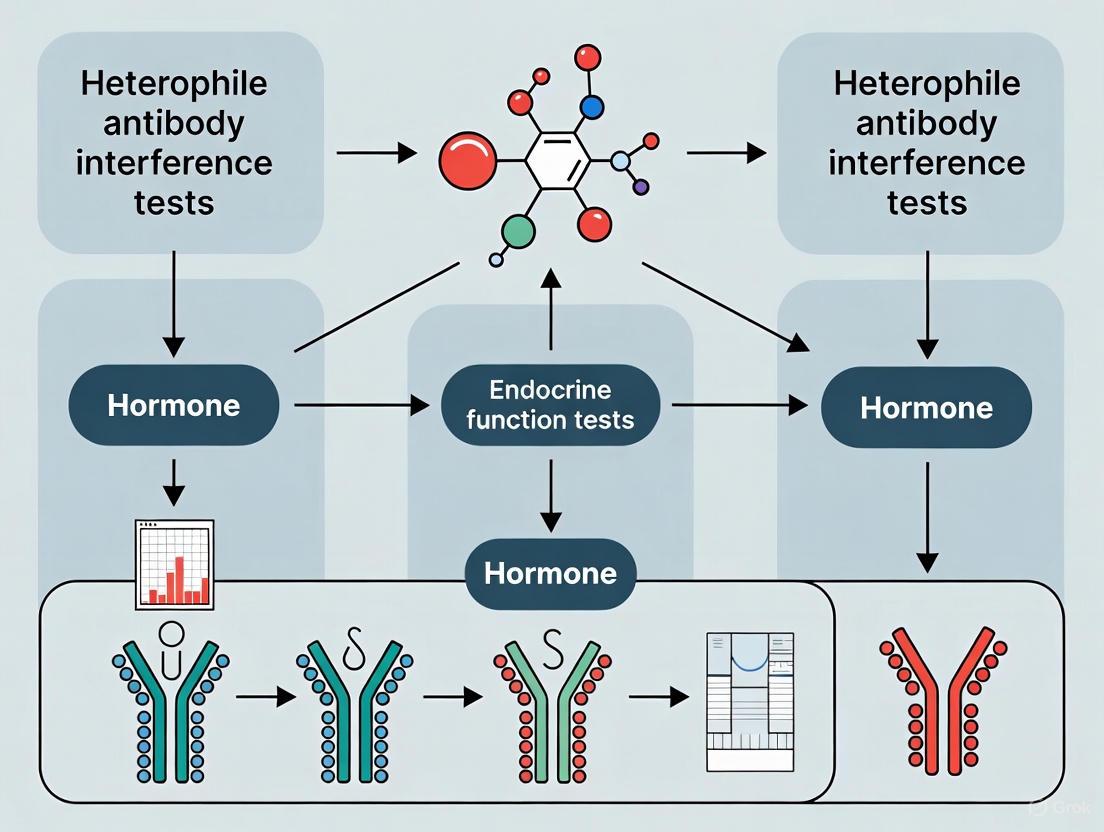
This article provides a comprehensive analysis of heterophile antibody interference in endocrine immunoassays, a critical challenge in biomedical research and clinical diagnostics.
Heterophile Antibody Interference in Endocrine Testing: Mechanisms, Detection, and Mitigation Strategies for Research and Development
Abstract
This article provides a comprehensive analysis of heterophile antibody interference in endocrine immunoassays, a critical challenge in biomedical research and clinical diagnostics. It explores the foundational mechanisms by which these endogenous antibodies cause analytical errors, leading to falsely elevated or depressed results in tests for hormones such as TSH, PTH, cortisol, and troponin. The content details current methodological approaches for detecting interference, including the use of heterophile blocking tubes (HBT), polyethylene glycol (PEG) precipitation, and platform-switching techniques. Furthermore, it offers troubleshooting and optimization protocols for resolving discrepant results and presents a comparative evaluation of validation strategies to ensure data integrity. Aimed at researchers, scientists, and drug development professionals, this review synthesizes recent evidence and case studies to advocate for robust, interference-resistant assay development and informed interpretation of endocrine profiles.
Understanding the Adversary: Foundational Science of Heterophile Antibody Interference
FAQ 1: What are heterophile antibodies and why are they a problem in immunoassays?
Answer: Heterophile antibodies are endogenous antibodies produced by the immune system against poorly defined, often cross-species, antigens (heterophile antigens) [1] [2]. They are generally weak antibodies with multispecific activities, meaning they can bind to multiple, unrelated antigens [1] [2].
The major problem in research and clinical diagnostics is that these antibodies can significantly interfere with immunoassays, a cornerstone technique for measuring hormones, tumor markers, and other analytes [1] [3]. They are particularly problematic in "sandwich" immunometric assays, where they can cause both false positive and false negative results by cross-linking the capture and detection antibodies or by blocking antibody binding sites [1] [4]. This interference can lead to erroneous data, incorrect conclusions, and potentially inappropriate downstream investigations [3] [5].
FAQ 2: What is the prevalence of heterophile antibodies in the human population?
Answer: The prevalence of heterophile antibodies in the general population is variable, with studies reporting a range. The table below summarizes key prevalence data.
Table 1: Prevalence of Heterophile Antibodies in Human Serum
| Population / Context | Reported Prevalence | Notes | Source |
|---|---|---|---|
| General Population | 0.17% - 40% | The wide range depends on the specific assay and population studied. [3] | |
| Health Survey Participants | 9.8% (women), 12.4% (men) | Detected via immunofluorescence; prevalence in men rose with age. [6] | |
| Automated Tumor Marker Immunoassays | 0.2% - 3.7% | Varies by the specific tumor marker assay. [3] | |
| General Population (Estimate) | 30% - 40% | A commonly cited estimate for the presence of antibodies with affinity to animal antibodies. [4] [7] |
FAQ 3: What are the primary origins of heterophile antibodies?
Answer: Heterophile antibodies can arise from various sources. The origins can be broadly categorized as follows.
Table 2: Origins and Sources of Heterophile Antibodies
| Origin / Source | Description | Associated Antibody Type |
|---|---|---|
| Infections | Exposure to certain viruses and bacteria. Epstein-Barr virus (EBV), causing infectious mononucleosis, is a classic and common trigger. [1] [7] Other viruses like Cytomegalovirus (CMV) and hepatitis E are also implicated. [7] | Heterophile antibodies (e.g., IgM antibodies against sheep/horse RBCs in EBV). [1] |
| Environmental Antigen Exposure | Contact with animals or animal products, leading to immunization against animal antigens. [3] [4] | Human Anti-Animal Antibodies (HAAA), such as Human Anti-Mouse Antibodies (HAMA). [1] [4] |
| Iatrogenic Exposure | Medical treatments involving animal-derived immunoglobulins, such as immunotherapy, some diagnostic agents, or rabbit antilymphocyte globulin. [5] [2] | Human Anti-Animal Antibodies (HAAA), typically with high affinity and specificity. [2] |
| Autoimmune & Inflammatory Conditions | Conditions like rheumatoid factor or systemic lupus erythematosus can be associated with heterophile antibodies. [4] [8] | Heterophile antibodies / Autoantibodies. [1] |
| Blood Transfusion & Pregnancy | Exposure to foreign blood cells or paternal antigens. [6] | Heterophile antibodies. [6] |
| Idiopathic / Natural | Arise naturally without a clearly identifiable cause or specific immunogen. [4] [2] | Heterophile antibodies. [2] |
Experimental Protocol 1: Method for Verifying Suspected Heterophile Antibody Interference
When immunoassay results are clinically or experimentally discordant, the following methodological workflow can be used to investigate potential heterophile antibody interference [4] [5].
Title: Workflow for detecting heterophile antibody interference
Detailed Methodology:
- Serial Dilution Study: Prepare a series of dilutions (e.g., 1:2, 1:4, 1:8) of the patient sample with the appropriate diluent and re-assay. A true analyte concentration will typically show a linear response upon dilution. In contrast, heterophile antibody interference often demonstrates a non-linear pattern because the interference does not dilute proportionally [1] [4].
- Alternative Platform Testing: Re-analyze the sample using an immunoassay from a different manufacturer that employs a different antibody pair (especially non-mammalian if possible) or a different methodology (e.g., liquid chromatography-mass spectrometry). A result that aligns with the clinical picture on an alternative platform strongly suggests interference on the original assay [3] [5].
- Use of Heterophile Blocking Reagents (HBR): Pre-treat the sample with a commercial heterophile blocking tube or reagent (e.g., Scantibodies HBT). These reagents contain a mixture of animal immunoglobulins or other proteins designed to bind and "neutralize" heterophile antibodies. The test is then repeated with the pre-treated sample. A significant change (e.g., >50% reduction for a falsely high result) in the measured value after HBR treatment confirms interference [4] [5].
- Polyethylene Glycol (PEG) Precipitation: Mix the sample with PEG to precipitate immunoglobulins, including heterophile antibodies. After centrifugation, the supernatant is assayed. A significant change in the measured value in the supernatant compared to the native sample indicates antibody interference [1] [5].
Experimental Protocol 2: Investigating Interference in a Sandwich Immunoassay
Sandwich immunoassays are particularly susceptible to interference. The following diagram and explanation detail the mechanisms.
Title: Mechanisms of heterophile antibody interference
Mechanisms Explained:
- Normal Assay: The analyte binds simultaneously to a solid-phase capture antibody and a labeled detection antibody, forming a "sandwich." The measured signal is directly proportional to the analyte concentration [1] [4].
- False Positive (Bridging): A heterophile antibody with the ability to bind to both the capture and detection antibodies can cross-link them in the absence of the true analyte. This creates a signal that is misinterpreted as a high concentration of the analyte [1] [3] [4].
- False Negative (Blocking): A heterophile antibody may bind to the analyte itself or to the antigen-binding site of either the capture or detection antibody. This blocks the formation of the sandwich complex, leading to an inappropriately low or undetectable signal [4].
The Scientist's Toolkit: Key Research Reagent Solutions
The following table lists essential reagents and methods used to troubleshoot and mitigate heterophile antibody interference.
Table 3: Key Reagents and Methods for Addressing Heterophile Antibody Interference
| Reagent / Method | Function / Purpose | Key Considerations |
|---|---|---|
| Heterophile Blocking Reagents (HBR) | Neutralize interfering antibodies in a sample by providing non-specific animal immunoglobulins for them to bind to, preventing assay interference. [1] [4] | Not 100% effective; estimated to be ineffective in 20-30% of cases due to antibody diversity. Must validate that the blocker itself does not interfere with the assay. [4] |
| Polyethylene Glycol (PEG) | Precipitates immunoglobulins (including heterophile antibodies) out of solution, allowing the analyte to be measured in the supernatant. [1] [5] | Can co-precipitate other proteins or the analyte of interest, potentially affecting recovery and accuracy. [1] |
| Species-Specific Blocking Reagents | For suspected Human Anti-Animal Antibodies (HAAA), use blocking reagents containing immunoglobulins from the specific species (e.g., mouse) used in the assay. [1] | More targeted than broad HBRs. Useful when the source of interference is known (e.g., from mouse monoclonal antibody therapy). [1] |
| Non-Mammalian Antibodies | Using antibodies from non-mammalian sources (e.g., chicken IgY) in the immunoassay can avoid interference from common human anti-mammalian antibodies. [1] | Requires development of specialized assays not commonly available on commercial platforms. [1] |
| Alternative Assay Platforms | Using a different methodology, such as mass spectrometry (LC-MS/MS) or an immunoassay from a different manufacturer with unique antibody pairs, can bypass interference. [3] [5] | Considered a gold-standard approach for confirmation. LC-MS/MS is not susceptible to protein-based interferences but may have higher cost and technical demands. [5] |
Troubleshooting Guides
Guide 1: Identifying and Resolving Heterophilic Antibody Interference
Problem: Suspected heterophilic antibody interference causing falsely elevated or decreased analyte results that are discordant with the clinical picture.
Background: Heterophilic antibodies are endogenous, poorly defined antibodies with multi-specific activities that can interfere with immunoassay antibodies [9]. They are a common cause of interference in immunometric assays and can lead to devastating clinical consequences [10].
Investigation Protocol:
- Clinical Correlation: Compare the laboratory result with the patient's clinical symptoms, history, and other diagnostic findings. Discordance is the primary indicator of potential interference [11] [10].
- Sample Interrogation:
- Serial Dilution: Prepare a series of dilutions (e.g., 1:2, 1:5, 1:10) of the patient sample and re-assay. A non-linear response (results do not decrease proportionally with dilution) suggests interference [12].
- Alternative Platform: Re-test the sample using an immunoassay from a different manufacturer that utilizes unique antibody pairs or a different assay principle (e.g., change from sandwich to competitive assay if possible) [12].
- Blocking Reagent Test: Pre-treat the sample with a commercial heterophile blocking tube (HBT) or reagent containing excess animal immunoglobulins. A significant change in the result post-treatment confirms heterophilic antibody interference [13].
- Physical Removal: For persistent interference, use protein A or G columns, or polyethylene glycol (PEG) precipitation to remove interfering antibodies from the sample prior to testing [14].
Resolution: Once interference is confirmed, report the result with a comment explaining the potential interference. Use the result from the method that eliminated the interference (e.g., after HBT treatment or from an alternative platform) for clinical interpretation [11].
Guide 2: Troubleshooting the High-Dose Hook Effect
Problem: Falsely low results in a sandwich immunoassay due to extremely high analyte concentrations.
Background: The hook effect occurs when the concentration of an analyte significantly exceeds the amount of capture and detection antibodies. This prevents the formation of the sandwiched complex, leading to a false-negative or inappropriately low result [14].
Investigation Protocol:
- Sample Dilution: Dilute the sample (e.g., 1:10, 1:100) and re-assay. A significant increase in the measured analyte concentration upon dilution is diagnostic for the hook effect [14].
- Review Clinical Context: Consider if the patient's condition is consistent with potentially very high levels of the analyte (e.g., PSA in metastatic prostate cancer, HCG in trophoblastic disease) [11].
Resolution: Always report the result obtained from the diluted sample. Modern automated analyzers often incorporate protocols to automatically re-test samples at multiple dilutions to circumvent this issue [14].
Guide 3: Addressing Cross-Reactivity and Endogenous Interference
Problem: Inaccurate results due to structurally similar molecules or endogenous sample components.
Background: Cross-reactivity occurs when metabolites, drugs, or endogenous substances with similar epitopes to the target analyte bind to the assay antibodies [11]. Other interferences include hemolysis, lipemia, and fibrin clots [14].
Investigation Protocol:
- Review Patient Medication History: Identify any drugs or metabolites known to cross-react with the assay [11].
- Inspect Sample Quality: Check for visual signs of hemolysis (red), icterus (yellow), or lipemia (milky). The presence of fibrin clots may also be visible or may clog assay probes [14].
- Sample Re-preparation: For lipemic samples, use high-speed centrifugation, lipid clearance reagents, or PEG precipitation to remove lipids. For suspected fibrin interference, re-centrifuge the sample [14].
Resolution: Use an alternative, more specific assay (e.g., LC-MS/MS) if available. Re-collect a sample if grossly hemolyzed, icteric, or lipemic.
Frequently Asked Questions (FAQs)
FAQ 1: What are the most common mechanisms of heterophilic antibody interference? The most common mechanism in sandwich immunoassays is bridging, where the heterophilic antibody simultaneously binds to the capture and detection antibodies, forming a false complex that generates a signal, leading to a false positive [12] [9]. They can also cause blocking by binding to the analyte's epitope, preventing antibody binding and causing false negatives [12].
FAQ 2: How prevalent is heterophilic antibody interference? The prevalence is generally low but is often higher in new, untested immunoassays. The incidence of detectable interference has been reported to be between 0.2% and 3.7% in various studies, though this can vary significantly by population and assay [11] [9].
FAQ 3: What patient history should alert me to potential interference? Be vigilant with patients who have:
- Close contact with animals (pets, occupational exposure) [12].
- Received therapy with animal-derived (e.g., murine) monoclonal antibodies [15] [10].
- A history of autoimmune diseases [12].
- Been recently transfused [14].
FAQ 4: Can heterophilic antibodies cause false results in infectious disease serology? Yes. Heterophilic antibodies are a documented cause of false-positive IgM results, which can lead to misdiagnosis of acute infection. This has been reported for Epstein-Barr virus (EBV), herpes simplex virus (HSV), cytomegalovirus (CMV), and others [13].
Data Presentation
Table 1: Effectiveness of Heterophile Blocking Tubes (HBT) in Resolving Interference
Data from a 2024 clinical study on viral IgM assays demonstrating the quantitative impact of HBT pretreatment [13].
| Analyte | Pretreatment Positivity Rate | Post-HBT Positivity Rate | Reduction in Reactivity | Clinical Impact |
|---|---|---|---|---|
| EBV VCA IgM | 38/185 (20.5%) | 5/185 (2.7%) | 32.2 U/mL to 12.8 U/mL | Reclassified 46 patients previously identified with primary EBV infection. |
| HSV IgM | 92/185 (49.7%) | 5/185 (2.7%) | 1.4 Index to 0.6 Index | Converted numerous cases from positive to negative. |
Table 2: Common Interference Types and Their Effects on Immunoassays
Summary of key interference mechanisms derived from the literature [11] [14] [9].
| Interference Type | Mechanism | Typical Effect on Result | Common Examples |
|---|---|---|---|
| Heterophile Antibodies | Binding to assay antibodies (bridging or blocking) | Falsely elevated or falsely lowered | TSH, HCG, Troponin, Tumor markers (e.g., PSA, CA-125) |
| High-Dose Hook Effect | Antigen excess in sandwich assays | Falsely low | Prolactin, HCG, PSA, IgE |
| Cross-Reactivity | Binding of structurally similar molecules | Falsely elevated or falsely lowered | Digoxin assays (digoxin-like factors), Cortisol assays (fludrocortisone) |
| Sample Quality (Lipemia) | Light scattering in turbidimetric/nephelometric assays | Interferes with signal detection | Nephelometry-based assays |
| Binding Proteins | Alters measurable free analyte concentration | Varies (falsely low free fraction) | Free Thyroxine (FT4), Free Testosterone |
Experimental Protocols
Protocol 1: Establishing Heterophilic Antibody Interference Using a Blocking Tube
Purpose: To confirm or rule out heterophilic antibody interference in a patient sample.
Principle: Heterophile blocking tubes (HBT) contain a proprietary blocking reagent comprising a mixture of animal immunoglobulins. These immunoglobulins bind and neutralize heterophilic antibodies in the sample, preventing them from interfering with the assay antibodies [13].
Reagents and Materials:
- Patient serum or plasma sample.
- Commercial Heterophile Blocking Tubes (HBT).
- Appropriate immunoassay reagents and analyzer.
- Pipettes and disposable tips.
Procedure:
- Preparation: Ensure the patient sample is well-mixed. Label two aliquots: "Untreated" and "HBT-Treated".
- Treatment: Transfer the recommended volume (e.g., 250 µL) of the patient sample into the HBT.
- Incubation: Incubate the sample in the HBT at room temperature for the time specified by the manufacturer (typically 15-60 minutes).
- Analysis: Run the untreated and HBT-treated samples in parallel on the immunoassay platform.
- Interpretation: A significant change (typically >30-50%) in the analyte concentration in the HBT-treated sample compared to the untreated sample is indicative of heterophilic antibody interference [13].
Protocol 2: Investigating the High-Dose Hook Effect
Purpose: To rule out antigen excess as a cause of falsely low results in a sandwich immunoassay.
Principle: At extremely high analyte concentrations, the antigen saturates both the capture and detection antibodies, preventing the formation of the "sandwich" complex. Diluting the sample reduces the antigen-to-antibody ratio, allowing the assay to function properly [14].
Reagents and Materials:
- Patient serum or plasma sample.
- Assay-specific sample diluent.
- Pipettes and serial dilution tubes.
Procedure:
- Baseline Measurement: Run the neat (undiluted) patient sample and record the result.
- Serial Dilution: Prepare a series of dilutions of the patient sample (e.g., 1:10, 1:100) using the recommended diluent.
- Analysis: Re-assay all diluted samples.
- Interpretation: If the measured concentration increases significantly with dilution (e.g., the 1:100 result is >10x higher than the neat result), the hook effect is confirmed. The result from the appropriate dilution should be reported.
Signaling Pathways and Workflows
Interference Investigation Workflow
Interference and Blocking Mechanism
The Scientist's Toolkit: Key Research Reagents & Materials
Table 3: Essential Reagents for Investigating Immunoassay Interference
| Item | Function/Application | Key Considerations |
|---|---|---|
| Heterophile Blocking Tubes (HBT) | Contains a mixture of animal immunoglobulins to neutralize heterophilic antibodies in patient samples prior to testing [13]. | Effective for confirming and resolving a significant portion of heterophile interference. Must be validated for each specific assay. |
| Animal Sera/Immunoglobulins | Non-specific blockers (e.g., mouse, goat IgG) added to assay reagents to saturate and neutralize interfering antibodies [10] [9]. | A common protective measure built into modern immunoassays by manufacturers. |
| Protein A/G Columns | Used to physically remove immunoglobulin-based interferents (e.g., heterophile antibodies, rheumatoid factor) from samples via affinity chromatography [14]. | Can be effective but may also remove the analyte of interest if it is an immunoglobulin. |
| Polyethylene Glycol (PEG) | Used for precipitation of high-molecular-weight proteins, including interfering antibodies, from serum samples [14]. | Requires optimization of concentration. The supernatant is tested after centrifugation. |
| Ruthenium-Labeled Assay Antibodies | Detection antibodies used in platforms like Elecsys (Roche); part of the electrochemiluminescence immunoassay (ECLIA) system. | The label and technology platform can be susceptible to specific interferences like biotin [14]. |
Heterophile antibodies are endogenous antibodies with low affinity and broad specificity that can bind to immunoassay reagents, leading to significant analytical interference [11] [16]. These antibodies are present in approximately 0.5-40% of the general population, with this wide range reflecting differences in assay susceptibility and population characteristics [3] [17]. The clinical consequences of this interference can be severe, including unnecessary surgical procedures, inappropriate chemotherapy, and incorrect diagnoses that may persist for years before detection.
Immunoassays function by leveraging the specific binding between an antibody and its target analyte. Heterophile antibodies interfere with this process by binding to the animal-derived antibodies used as reagents in these tests. In sandwich immunometric assays (commonly used for large molecules like TSH, PTH, and tumor markers), heterophile antibodies can bridge the capture and detection antibodies even in the absence of the target analyte, creating a false-positive signal [3]. In competitive immunoassays (often used for small molecules like cortisol and thyroid hormones), they can block antibody binding sites, leading to either falsely elevated or depressed results depending on the assay format [18] [19].
Table 1: Prevalence of Heterophile Antibody Interference in Various Assays
| Assay Type | Reported Interference Prevalence | Primary Interference Mechanism |
|---|---|---|
| Tumor Markers (8 automated assays) | 0.2-3.7% [3] | False elevation in sandwich immunoassays |
| TSH | Case reports with significant clinical impact [16] [20] | Both false elevation and suppression |
| PTH | Rare but documented cases [21] | False elevation leading to misdiagnosis |
| ACTH | Multiple case reports [17] | False elevation altering diagnostic pathway |
| Cortisol | Documented cases [19] | False depression mimicking adrenal insufficiency |
Mechanisms of Interference in Immunoassays
Fundamental Interference Pathways
Heterophile antibody interference occurs through several well-characterized mechanisms, primarily depending on whether the immunoassay follows a sandwich (immunometric) or competitive format. Understanding these pathways is crucial for developing effective detection and mitigation strategies.
Sandwich Immunoassay Interference: In this format, heterophile antibodies act as a bridge between the capture and detection antibodies without the target analyte being present. This artificial bridge formation generates a false signal that is interpreted as the presence of the target molecule [3]. The magnitude of interference depends on the concentration and affinity of the heterophile antibodies, as well as the assay design specifications. This mechanism particularly affects TSH, PTH, and tumor marker assays.
Competitive Immunoassay Interference: For competitive formats typically used for smaller molecules, heterophile antibodies can cause interference by binding to the animal-derived antibodies used in the assay, thereby blocking access to the analyte [18]. This can result in either falsely elevated or depressed values depending on whether the interference affects the bound or free fractions in the assay separation step. Cortisol and free thyroid hormone measurements are particularly vulnerable to this form of interference.
The following diagram illustrates the key interference mechanisms in both sandwich and competitive immunoassays:
Several factors increase the likelihood of heterophile antibody presence in patient samples. Exposure to animals or animal-derived products represents a significant risk factor, as these exposures can stimulate the production of antibodies that cross-react with assay reagents [3]. Viral infections, particularly Epstein-Barr virus (which causes infectious mononucleosis), Cytomegalovirus, and hepatitis E, are known triggers for heterophile antibody production [22]. Additionally, certain medical conditions and treatments increase risk, including autoimmune diseases (especially rheumatoid arthritis), blood transfusions, dialysis, and treatment with therapeutic antibodies or immunotherapy [3] [16].
Rheumatoid factor (RF), an autoantibody directed against the Fc portion of IgG, deserves special attention as it can function similarly to heterophile antibodies in immunoassays. RF has significant homology with Fc-domains in antibodies from several animal species, enabling it to bind assay antibodies and create interference [16]. This is particularly relevant given that RF is present in approximately 70% of rheumatoid arthritis patients and 5-10% of the general population.
High-Risk Endocrine Assays: Clinical Evidence and Impact
Thyroid-Stimulating Hormone (TSH) Assays
TSH measurements typically employ sandwich immunoassays, making them highly vulnerable to heterophile antibody interference. The clinical consequences can be significant, as demonstrated by a case report of a 5-year-old girl who was unnecessarily treated with levothyroxine for presumed hypothyroidism due to persistently elevated TSH levels (reaching 2747 mU/L). Despite increasing levothyroxine doses, her TSH remained elevated while free T4 stayed normal. When her sample was tested using an alternative platform, her TSH measured 1.82 mU/L, confirming heterophile antibody interference [20].
Another documented case involved a patient receiving higher-dose thyroid suppression therapy after thyroid cancer surgery. The patient showed elevated TSH levels suggesting inadequate suppression, but after pretreatment with a heterophilic antibody blocker, TSH measurements decreased significantly, confirming interference [22]. The vulnerability of TSH assays stems from their reliance on two animal-derived antibodies (typically murine monoclonal antibodies), creating multiple potential binding sites for heterophile antibodies.
Parathyroid Hormone (PTH) Assays
PTH measurements use immunometric "sandwich" techniques, creating vulnerability to heterophile interference. A compelling case series documented two patients with persistently high serum PTH levels (up to 2906 pg/mL) measured using a second-generation Roche electrochemiluminescence assay, despite normocalcemia. When tested using a different analytical platform (third-generation Roche Elecsys), PTH concentrations were normal (16.1 pg/mL and 36 pg/mL) [21].
One patient was referred for parathyroid surgery based on the erroneous diagnosis of normocalcemic hyperparathyroidism, which was only averted when assay interference was suspected. Serial dilution studies using normal mouse serum showed non-linearity, confirming the presence of interferents [21]. This case highlights how PTH immunoassay interference can mimic serious endocrine pathology and potentially lead to unnecessary invasive procedures.
Cortisol and ACTH Assays
The hypothalamic-pituitary-adrenal axis evaluation relies heavily on accurate cortisol and ACTH measurements, making interference particularly problematic. A documented case described a 45-year-old female incorrectly diagnosed with adrenal insufficiency based on multiple very low early morning cortisol measurements (<5 nmol/L) and abnormal synacthen tests. Further investigation revealed IgG antibody interference, and the patient was found to have a normally functioning adrenal axis [19].
For ACTH, heterophile antibody interference has led to significant misdiagnosis. In one case, a 54-year-old man with Cushing's syndrome had falsely elevated ACTH levels (14.4 pmol/L) on an Immulite assay, suggesting ACTH-dependent disease. This prompted unnecessary inferior petrosal sinus sampling and imaging studies. When tested on a different platform (Roche e170), his ACTH was 0.2 pmol/L, confirming ACTH-independent Cushing's syndrome caused by an adrenal adenoma [17]. Similar cases have prompted unnecessary pituitary surgery due to heterophile antibody interference with ACTH measurements.
Tumor Marker Assays
Tumor markers are particularly vulnerable to heterophile interference, with potentially devastating consequences. A comprehensive study of eight automated tumor marker immunoassays found heterophile antibody interference prevalence ranging from 0.2-3.7% [23]. The clinical impact can be severe, as demonstrated by a series of 12 women incorrectly diagnosed with postgestational choriocarcinoma based on persistently positive human chorionic gonadotropin (hCG) levels. Most underwent extirpative surgery or chemotherapy without diminution in hCG titers before discovering the false-positive results were due to heterophile antibodies [3].
Similarly, in thyroid nodule evaluation, a study of 378 subjects found 5 patients (1.3%) with falsely elevated calcitonin levels due to heterophile antibodies, while none had medullary thyroid cancer [3]. This highlights the danger of using tumor markers for screening in low-prevalence populations, where false positives may outnumber true positives.
Table 2: Documented Clinical Consequences of Heterophile Antibody Interference
| Assay Type | Documented Clinical Consequence | Reference |
|---|---|---|
| hCG | Unnecessary chemotherapy and surgery for misdiagnosed choriocarcinoma | [3] |
| Calcitonin | False suspicion of medullary thyroid carcinoma | [3] |
| ACTH | Unnecessary inferior petrosal sinus sampling and pituitary surgery | [17] |
| PTH | Referral for unnecessary parathyroid surgery | [21] |
| TSH | Unnecessary thyroid hormone replacement therapy | [20] |
| Cortisol | Incorrect diagnosis and treatment for adrenal insufficiency | [19] |
Detection and Troubleshooting Protocols
Systematic Approach to Suspecting Interference
Researchers and clinicians should maintain a high index of suspicion for heterophile antibody interference when encountering specific scenarios. The most fundamental red flag is discordance between laboratory results and clinical presentation - for instance, abnormal hormone levels in an asymptomatic patient, or test results that contradict other biochemical findings [21] [20]. Other warning signs include persistently abnormal results that fail to respond to clinical interventions, results that are physiologically implausible, and inconsistencies between related parameters (e.g., high PTH with normal calcium).
The following workflow provides a systematic approach for detecting and confirming heterophile antibody interference:
Experimental Protocols for Detection
Serial Dilution Studies: Prepare doubling dilutions of the patient sample (1:2, 1:4, 1:8) using the appropriate manufacturer's diluent or non-immune serum. Analyze each dilution in the same run as the undiluted sample. Calculate recovery at each dilution by multiplying the measured concentration by the dilution factor and comparing it to the undiluted value. Linearity is typically defined as recovery of 80-120% of the expected value. Non-linearity suggests interference [16].
Alternative Platform Assessment: Measure the analyte using a completely different immunoassay system from a different manufacturer. Ideally, select an platform that uses different antibody species (e.g., switch from murine-based to goat-based antibody systems) or a different detection methodology. Significant differences (>30%) between platforms suggest possible interference [21] [20].
Heterophile Blocking Reagent Treatment: Use commercial heterophile blocking reagents (e.g., HAMA Blocking Reagent from Fitzgerald) according to manufacturer instructions. Typically, this involves incubating the sample with the blocking reagent at a specified dilution (e.g., 1:500) for 1 hour at room temperature before measurement. Interference is suspected if values change significantly (outside 80-120% of untreated values) after blocking [16].
Polyethylene Glycol (PEG) Precipitation: Mix equal volumes of patient serum and 25% PEG 6000 solution (250 μL each). Vortex thoroughly for 20 minutes, then allow stabilization for 30 minutes. Centrifuge at 1500×g for 15 minutes at room temperature. Analyze the supernatant, accounting for the 1:2 dilution factor. Recovery of less than 40% suggests interference due to antibodies [16].
Research Reagent Solutions
Table 3: Essential Reagents for Heterophile Antibody Interference Investigation
| Reagent/Material | Function | Application Example |
|---|---|---|
| Heterophile Blocking Tubes | Contain blocking agents to neutralize heterophile antibodies | Pretreatment of samples before analysis to confirm interference |
| Non-immune Animal Sera | Provide animal immunoglobulins to bind heterophile antibodies | Used in dilution studies to minimize interference |
| PEG 6000 | Precipitates interfering antibodies from sample | Antibody depletion studies to confirm macromolecular interference |
| Commercial Blocking Reagents (e.g., HAMA Blocking Reagent) | Neutralize human anti-mouse antibodies and other heterophile antibodies | Sample pretreatment to identify and mitigate interference |
| Manufacturer-Specific Sample Diluents | Maintain matrix compatibility during dilution | Serial dilution studies for linearity assessment |
Frequently Asked Questions (FAQ)
Q: What is the estimated prevalence of heterophile antibody interference in immunoassays? A: Reported prevalence varies significantly by assay type and population. Studies indicate 0.2-3.7% for tumor marker assays, with overall estimates of 0.5-3% in the general population. However, in specific clinical contexts (e.g., rheumatoid factor-positive patients), the risk may be substantially higher [3] [17] [16].
Q: Which endocrine assays are most vulnerable to heterophile antibody interference? A: Sandwich immunoassays for TSH, PTH, ACTH, and various tumor markers (hCG, calcitonin, CEA) demonstrate particular vulnerability. Competitive assays for cortisol and free thyroid hormones can also be affected, though through different mechanisms [18] [3] [21].
Q: What are the most effective methods to confirm heterophile antibody interference? A: A combination approach is most reliable: (1) testing on an alternative analytical platform; (2) serial dilution studies assessing linearity; (3) heterophile blocking experiments; and (4) PEG precipitation. No single method detects all interference, so multiple approaches are often necessary [21] [16] [20].
Q: Can heterophile antibody interference be completely prevented? A: Complete prevention remains challenging, though manufacturers incorporate blocking agents into assay formulations to minimize risk. Dilution methods and platform switching represent the most reliable approaches for managing known interference. Researchers should maintain awareness of this limitation when interpreting immunoassay results, particularly when findings appear clinically discordant [11] [16].
Q: What clinical scenarios should raise suspicion for heterophile antibody interference? A: Key warning signs include: discordance between laboratory results and clinical presentation; persistent abnormal results unresponsive to clinical interventions; physiologically implausible results (e.g., extremely high PTH with normal calcium); and inconsistencies between related laboratory parameters [21] [19] [20].
Viral Infections, Autoimmunity, and Monoclonal Antibody Therapies
Frequently Asked Questions (FAQs)
Q1: What are heterophile antibodies and why are they a significant concern in clinical immunoassays?
A: Heterophile antibodies are endogenous, polyspecific antibodies that can bind to immunoglobulins from multiple animal species. They are a significant concern because they can interfere with antibody-based immunoassays, leading to falsely elevated or decreased results that do not reflect the patient's true clinical condition. This interference can cause misdiagnosis and inappropriate treatment [18] [24] [25]. They are often weakly reactive and cross-react with multiple antigens, and their prevalence can be as high as 30-40% in patient samples [24]. They are distinct from human anti-animal antibodies (HAMA), which are typically high-affinity antibodies developed after specific exposure to animal immunoglobulins [24].
Q2: What is the proposed link between viral infections and the formation of heterophile antibodies?
A: Viral infections are a known trigger for the production of heterophile antibodies [24]. The presence of heterophile antigens—antigens shared between microorganisms (like viruses) and human tissues—is a key mechanism. When the immune system responds to a viral infection, it produces antibodies that may cross-react with human tissues due to these shared antigens, potentially breaking immune tolerance and contributing to autoimmune reactions [26]. A classic example is the heterophile antibody response seen in 90-95% of Epstein-Barr virus (EBV) infections, which causes infectious mononucleosis [24].
Q3: How can heterophile antibody interference be detected and mitigated in the laboratory?
A: Several methodological approaches can be used to detect and confirm heterophile antibody interference. When interference is suspected, the following strategies are commonly employed [18] [16] [25]:
- Analysis on a Different Platform: Re-testing the sample on an immunoassay system from a different manufacturer can reveal discrepant results.
- Dilution Studies: Performing serial dilutions of the patient sample. A non-linear recovery upon dilution suggests interference.
- Use of Heterophile Blocking Tubes: Adding a commercial blocking reagent to the sample can neutralize interfering antibodies. A significant change in the analyte value after treatment indicates interference.
- Polyethylene Glycol (PEG) Precipitation: This method can deplete antibodies from the sample. A low recovery after PEG precipitation is indicative of interference.
- Use of a Reference Method: Confirming a result using a method not based on immunoassays, such as equilibrium dialysis for free thyroxine, can provide the true analyte concentration [25].
Troubleshooting Guides
Guide 1: Investigating Suspected Heterophile Interference in a Sandwich Immunoassay
This guide is designed for a non-competitive, two-site immunometric assay (e.g., for TSH), which is particularly vulnerable to heterophile interference [18] [16].
Step 1: Identify Discordant Results Compare laboratory findings with the patient's clinical presentation. Suspect interference if results are critically abnormal yet the patient is asymptomatic, or if results from different platforms are irreconcilable [25].
Step 2: Re-test on an Alternative Platform Analyze the same patient sample using a different immunoassay system that utilizes different antibody pairs or reagents [16] [25].
Step 3: Perform Serial Dilution Create a series of dilutions (e.g., 1:2, 1:4, 1:8) of the patient sample and the assay diluent. Measure the analyte concentration in each dilution and back-calculate the expected concentration in the undiluted sample by multiplying by the dilution factor.
- Interpretation: Linear dilution is defined as a recovery of 80–120% of the expected value at each dilution. Recovery outside this range indicates non-linearity and suggests interference [16].
Step 4: Employ Blocking Reagents Treat the sample with a heterophile antibody blocking reagent (e.g., HBT or HAMA blocker) according to the manufacturer's instructions, typically involving incubation at room temperature for one hour. Re-measure the analyte.
- Interpretation: A result that changes by more than 20% after blocking is considered positive for interference [16].
Step 5: (Optional) PEG Precipitation Mix the patient sample with an equal volume of 25% PEG solution. Vortex, incubate, and centrifuge. Analyze the supernatant, remembering to apply a dilution factor of 2.
- Interpretation: A recovery of less than 40% after PEG precipitation is indicative of interference caused by antibodies [16].
Guide 2: A Research Workflow for Studying Heterophile Antigens
This protocol outlines methods to investigate heterophile antigens shared between pathogens and human tissues, based on experimental research [26].
Step 1: Generate Antimicrobial Monoclonal Antibodies Immunize mice (e.g., Balb/c) with the pathogen or antigen of interest. Use Freund's complete adjuvant for the primary immunization and Freund's incomplete adjuvant for boosts. Fuse spleen cells from immunized mice with myeloma SP2/0 cells to generate hybridomas. Screen the resulting hybridoma supernatants for antibodies reactive to the immunizing pathogen using ELISA [26].
Step 2: Screen for Cross-Reactive Antibodies Screen the antimicrobial monoclonal antibodies for cross-reactivity with normal human tissues. This is efficiently done using a human tissue microarray (TMA) containing a wide range of normal tissues (e.g., brain, heart, kidney, pancreas, etc.). Use standard immunohistochemical (IHC) staining on the TMA to identify antibodies that bind to human tissues [26].
Step 3: Characterize Heterophilic Antibodies
- Confirm Specificity: Use techniques like immunofluorescence (on pathogen-infected cells) and western blotting to confirm that the monoclonal antibody binds specifically to the pathogen [26].
- Assay Reactivity: Use indirect ELISA to confirm the antibody's reactivity with the original microbial antigen [26].
- Evaluate Individual and Species Differences: Use IHC on TMAs containing the same tissue from multiple human donors, or tissues from different animal species, to investigate variations in heterophile antigen distribution [26].
Research Reagent Solutions
The table below summarizes key reagents used in the study of heterophile antibodies and related autoimmune phenomena.
Table 1: Essential Research Reagents and Materials
| Reagent / Material | Function / Application | Key Characteristics / Example |
|---|---|---|
| Human Tissue Microarray (TMA) | High-throughput screening of antibody cross-reactivity with a wide range of normal human tissues. | Contains multiple formalin-fixed, paraffin-embedded tissue spots from various organs (e.g., brain, heart, kidney, pancreas) on a single slide [26]. |
| Heterophile Blocking Tubes (HBT) | Neutralize heterophile antibody interference in patient samples prior to immunoassay analysis. | Contains blocking agents (e.g., non-immune animal serum or immunoglobulins) that bind interferents [24] [16]. |
| Monoclonal Antibody Discovery Platforms | Generation of therapeutic or research monoclonal antibodies. | Includes hybridoma, phage display, transgenic mice (e.g., HuMab Mouse), and single B cell technologies [27]. |
| Polyethylene Glycol (PEG) 6000 | Precipitation and depletion of antibodies (including heterophile antibodies) from serum samples to test for interference. | Used at 25% concentration; post-precipitation supernatant is analyzed [16]. |
Experimental Workflow and Signaling Diagrams
Heterophile Antibody Interference in Immunoassays
Pathogen-Induced Autoimmunity via Heterophile Antigens
Workflow for Troubleshooting Assay Interference
Frequently Asked Questions (FAQs)
1. What are heterophile antibodies and how do they interfere with immunoassays? Heterophile antibodies are naturally occurring human antibodies that can bind nonspecifically to animal-derived antibodies used in immunoassay reagents [13] [4]. In sandwich immunoassays, they can bridge the capture and signal antibodies even when the target analyte is absent, causing a false-positive result. Conversely, they can also block antibody binding sites, leading to a false-negative result [28] [4]. It is estimated that these interfering antibodies can be found in more than 10% of patients [4].
2. Which endocrine tests are most susceptible to this interference? Heterophile antibody interference has been documented in a wide range of immunoassays. Tests particularly vulnerable include those for Thyroid Function Tests (TSH), Prolactin, Follicle-Stimulating Hormone (FSH), Luteinizing Hormone (LH), and human Chorionic Gonadotropin (β-hCG) [28] [29]. Any test that uses an immunoassay method, especially sandwich-type assays, is potentially at risk.
3. What are the potential clinical consequences of undetected interference? The consequences can be severe and include:
- Misdiagnosis: A false-positive result can lead to a diagnosis of a non-existent endocrine disorder, such as hyperthyroidism or a prolactin-secreting pituitary tumor (prolactinoma) [28].
- Inappropriate Treatment: Patients may be subjected to unnecessary and potentially harmful treatments, such as medication, surgery, or chemotherapy, based on erroneous lab values [30] [31].
- Delayed Correct Diagnosis: The false result may obscure the true underlying condition, delaying appropriate care and causing patient harm [30].
4. How can I suspect heterophile antibody interference in my research data? The primary red flag is a clinically discordant result [4]. This means the laboratory result does not align with the overall clinical or research picture. Specific signs include:
- An implausibly high or low result that doesn't match other biomarkers or observations.
- Results that are inconsistent over time without a clinical explanation.
- Failure of the result to respond to treatments that should be effective.
5. What are the established methods to confirm heterophile interference? Several methods can be used to investigate suspected interference:
- Sample Dilution: A non-linear response to serial dilution can suggest the presence of an interfering substance [4].
- Heterophile Blocking Tubes (HBT): This is a common and practical method. The sample is pre-treated with a blocking reagent containing animal antibodies. If the result decreases significantly after HBT treatment, it confirms heterophile interference [13] [29].
- Alternative Methodologies: Re-testing the sample using a different platform (e.g., mass spectrometry) or a different manufacturer's assay that uses different antibody pairs can also help identify interference [28].
Troubleshooting Guide: Identifying and Resolving Heterophile Interference
Follow this systematic workflow to identify and mitigate heterophile antibody interference in your experimental or clinical research data.
Documented Cases and Statistical Impact
Heterophile antibody interference is not just a theoretical concern; it has a documented and significant impact on diagnostic accuracy. The following table summarizes key quantitative findings from recent studies.
Table 1: Documented Impact of Heterophile Antibody Interference in Serological Testing
| Study Focus | Interference Rate / Key Statistic | Clinical Impact of Interference | Citation |
|---|---|---|---|
| Viral Serology Testing (EBV, HSV, etc.) | 20.5% (38/185) of EBV VCA IgM samples showed interference. | 46 patients were initially misclassified as having primary EBV infection; reclassified after HBT treatment. | [13] |
| General Diagnostic Errors | Diagnostic errors have an overall rate of 11.1% across diseases. | An estimated 795,000 Americans die or are permanently disabled annually due to misdiagnosis. | [31] |
| Prevalence in Population | Heterophile antibodies are present in >10% of patient samples. | Creates a persistent risk of analytical error for a significant patient population. | [4] |
Experimental Protocol: Confirming Heterophile Interference Using Heterophile Blocking Tubes (HBT)
This protocol is adapted from a 2025 study investigating interference in viral serology and can be applied to endocrine test research [13].
1. Principle Heterophile Blocking Tubes (HBT) contain a proprietary blocking reagent consisting of pooled immunoglobulins from multiple animal species. When a serum sample is incubated in an HBT, these reagents bind to and neutralize heterophile antibodies, preventing them from interfering in the subsequent immunoassay.
2. Materials and Reagents
- Patient or research subject serum sample.
- Commercially available Heterophile Blocking Tubes (HBT).
- Appropriate immunoassay analyzer and corresponding test kits (e.g., for TSH, Prolactin, etc.).
- Standard laboratory equipment (micropipettes, centrifuge, vortex mixer).
3. Procedure
- Step 1: Baseline Measurement. Run the untreated serum sample on the immunoassay platform according to the manufacturer's instructions. Record this result.
- Step 2: HBT Pretreatment.
- Pipette the required volume of serum (as per HBT manufacturer's instructions, typically 100-250 µL) into the Heterophile Blocking Tube.
- Vortex the tube gently to mix.
- Incubate the tube at room temperature for the specified time (typically 30-60 minutes).
- Step 3: Post-Treatment Measurement. After incubation, run the pre-treated sample from the HBT on the same immunoassay platform. Ensure the test is performed identically to the baseline measurement.
- Step 4: Data Analysis. Compare the pre-treatment and post-treatment results. A significant change (often defined as a >50% reduction for suspected false positives) confirms the presence of heterophile antibody interference [29] [4].
The Scientist's Toolkit: Key Research Reagent Solutions
Table 2: Essential Materials for Investigating Heterophile Antibody Interference
| Reagent / Material | Primary Function | Application Notes |
|---|---|---|
| Heterophile Blocking Tubes (HBT) | Contains antibodies to bind and neutralize heterophile antibodies in a patient sample prior to testing. | The most common and practical solution for confirming and resolving interference in sandwich immunoassays [13] [29]. |
| Polyclonal Animal Sera | Added to assay diluents to block heterophile antibody binding sites. | Many commercial immunoassay manufacturers already incorporate this into their reagent formulations to minimize interference [13]. |
| Alternative Platform Assays | Using a different immunoassay technology or a platform from a different manufacturer. | Can help confirm a result if the alternative system uses different antibody pairs that are not susceptible to the same heterophile antibodies [28]. |
| Mass Spectrometry | A non-immunoassay based method for hormone measurement. | Considered a "gold standard" for avoiding immunoassay interferences but is more complex and costly [28]. |
Detecting the Signal from the Noise: Methodologies for Identifying Interference
What are heterophile antibodies and why do they interfere with immunoassays?
Heterophile antibodies are naturally occurring, weak, polyspecific antibodies found in approximately 30-40% of the general population [24] [32]. They can develop after viral infections (such as Epstein-Barr virus, which causes infectious mononucleosis), exposure to animals, or as a result of autoimmune disorders [33] [24] [32]. In sandwich immunoassays, which use animal-derived antibodies for capture and detection, heterophile antibodies can bridge these reagent antibodies even when the target analyte is absent. This creates a false-positive signal, leading to potentially inaccurate clinical results [13] [24].
In which types of tests is this interference most problematic?
Heterophile antibody interference can affect a wide range of immunoassays, causing significant issues in clinical and research settings. The table below summarizes the most commonly affected test categories.
Table 1: Common Immunoassays Susceptible to Heterophile Antibody Interference
| Test Category | Specific Examples | Potential Clinical Impact |
|---|---|---|
| Endocrine Tests | TSH, Free T4, Free T3, FSH, LH, Prolactin, Cortisol [29] [32] | Misdiagnosis of thyroid or adrenal disorders, leading to inappropriate treatment [32]. |
| Tumor Markers | Thyroglobulin (Tg), CEA, CA-125, PSA, Beta-hCG [29] [34] [35] | False suspicion of cancer recurrence or unnecessary diagnostic procedures [34] [35]. |
| Cardiac Markers | Cardiac Troponin (cTnI, cTnT), CK-MB [29] [33] | Misdiagnosis of acute myocardial infarction, leading to unneeded treatments and hospital stays [33]. |
| Infectious Disease Serology | EBV VCA IgM, HSV IgM, CMV IgM, Rubella IgM [13] | False diagnosis of an acute infection. |
Principles and Applications of Heterophile Blocking Tubes (HBT)
How do Heterophile Blocking Tubes (HBT) work?
Heterophile Blocking Tubes (HBT) are specialized sample collection tubes containing a blocking reagent, typically a mixture of non-specific animal immunoglobulins or antibody fragments at high concentration [29] [24]. The principle is competitive binding: when a patient sample is incubated in the HBT, any heterophile antibodies present bind preferentially to the non-specific immunoglobulins in the blocking reagent. This "soaks up" the interfering antibodies, preventing them from later bridging the specific animal antibodies used in the diagnostic immunoassay [29]. The effectiveness of this process is demonstrated by significant reductions in false positivity rates, as shown in the table below.
Table 2: Documented Effectiveness of HBT Pretreatment in Viral Serology Data from a study on 185 serum samples [13]
| Analyte | Positivity Before HBT | Positivity After HBT | Reduction in Positivity |
|---|---|---|---|
| EBV VCA IgM | 38/185 (20.5%) | 5/185 (2.7%) | ~86% |
| HSV IgM | 92/185 (49.7%) | 5/185 (2.7%) | ~95% |
| EBV VCA IgM (Mean Value) | 32.2 ± 35.8 U/mL | 12.8 ± 15.6 U/mL | ~60% |
Diagram 1: HBT Principle of Action
When should I suspect heterophile interference and use HBTs?
You should consider heterophile antibody interference and the use of HBTs in the following scenarios [34] [33] [35]:
- Unexplained Discordance: Test results are inconsistent with the clinical picture, other biochemical tests, or imaging findings.
- Implausible Stability: Persistently elevated analyte levels without the expected dynamic changes (e.g., cardiac troponin that does not rise and fall as expected for an acute MI) [33].
- Non-linearity in Dilution: When performing serial dilutions of the sample, the results do not show a linear pattern, which suggests interference.
- Platform Discrepancies: The same analyte measured using a different immunoassay platform or method (e.g., mass spectrometry) yields significantly different results [34] [35].
Experimental Protocol for HBT Pretreatment
What is the step-by-step protocol for HBT sample pretreatment?
The following protocol is synthesized from manufacturer instructions and published methodologies [29] [33].
Table 3: Step-by-Step HBT Pretreatment Protocol
| Step | Procedure | Key Parameters & Tips |
|---|---|---|
| 1. Sample Preparation | Collect serum or plasma in an appropriate tube (SST, red top, green top, or lavender top) [29]. Centrifuge to obtain a clear sample. | Minimum volume required is typically 0.5 mL [29]. |
| 2. Aliquot to HBT | Transfer 500 μL of patient serum or plasma into the Heterophile Blocking Tube [33]. | Ensure the tube contains a dried blocking reagent at the bottom. |
| 3. Mixing | Perform 5 complete inversions of the tube to ensure the sample thoroughly mixes with and reconstitutes the blocking reagent [33]. | Ensure the pellet at the bottom is fully dissolved. |
| 4. Incubation | Incubate the mixture for 1 hour at room temperature (approximately 25°C) [33]. | Do not exceed the recommended incubation time, as extremely strong heterophile antibodies may not be fully blocked. |
| 5. Analysis | The pretreated sample is now ready for analysis in the desired immunoassay. No further processing (e.g., centrifugation) is required. | Analyze the sample immediately after incubation for best results. |
Diagram 2: HBT Pretreatment Workflow
How do I interpret the results after HBT pretreatment?
Interpretation involves a direct comparison of the analyte concentration before and after HBT treatment:
- No Interference Detected: The analyte concentration in the HBT-pretreated sample is essentially the same as in the native (untreated) sample. The original result is considered reliable [29].
- Interference Confirmed: The analyte concentration in the HBT-pretreated sample is significantly lower (e.g., a decrease of >20% or a change that alters clinical interpretation) than in the native sample. This indicates the presence of heterophile antibodies that caused a false elevation in the original test. The result after HBT treatment is the more accurate value and should be used for clinical decision-making [13] [29] [35].
The Scientist's Toolkit: Research Reagent Solutions
Table 4: Essential Reagents and Methods for Investigating Heterophile Interference
| Reagent / Method | Function & Principle | Key Considerations |
|---|---|---|
| Heterophile Blocking Tubes (HBT) | Commercially available tubes containing a blocking reagent to neutralize heterophile antibodies in a sample prior to immunoassay analysis [29] [33]. | A practical and accessible first-line solution. May not block extremely high-titer heterophile antibodies [29] [35]. |
| Polyethylene Glycol (PEG) Precipitation | Precipitates macromolecules like immunoglobulins (including heterophile antibodies) out of solution. The supernatant is then analyzed [33]. | Can be effective but may also co-precipitate the analyte of interest, leading to false-low results. |
| IgG Depletion | Uses anti-human IgG antiserum to remove IgG-class antibodies from the sample, which can include heterophile antibodies [33]. | Effective for IgG interference. Requires careful optimization to avoid analyte loss. |
| Alternative Platform Testing | Measuring the analyte using an immunoassay from a different manufacturer or a different methodology (e.g., mass spectrometry) [34] [33] [35]. | Heterophile antibodies are often assay-specific. Mass spectrometry is largely unaffected by this interference and is considered a gold-standard confirmatory method [35]. |
| Serial Dilution | Performing linearity studies by serially diluting the patient sample and analyzing the dilutions. | Non-linear recovery (the "hook effect") is a classic indicator of interference [34] [35]. |
Frequently Asked Questions (FAQs) & Troubleshooting
Q1: Can HBT pretreatment cause false-negative results? While the primary purpose of HBTs is to eliminate false positives, heterophile antibodies can, in rare cases, cause false-negative results by blocking the binding sites of assay antibodies. HBT pretreatment can also resolve this type of interference, potentially normalizing a falsely low result [24] [32].
Q2: What should I do if HBT pretreatment does not resolve a suspected interference? HBTs are highly effective but may not neutralize all heterophile antibodies, particularly those with extremely high titers or unique specificities [29] [35]. In such cases, you should employ a combination of the tools listed in Table 4:
- Confirm non-linear recovery via serial dilution.
- Use an alternative immunoassay platform or mass spectrometry for a definitive measurement [34] [33] [35].
- Consider PEG precipitation or IgG depletion as additional investigative steps [33].
Q3: Are there any special specimen handling requirements for HBT testing? Serum or plasma samples stored refrigerated or frozen are typically suitable for subsequent HBT testing. One study noted that samples were stable for interference testing for at least 7 days refrigerated or 90 days frozen [34]. Always follow the specific stability guidelines provided with the HBT product.
Q4: How common is heterophile antibody interference? Studies suggest heterophile antibodies themselves are present in a significant portion (30-40%) of the population [24] [32]. However, the rate of clinically significant interference is lower but still impactful. Recent research on viral IgM tests found that HBT pretreatment significantly altered clinical interpretation for a substantial number of patients, indicating that interference is a non-trivial issue in routine testing [13].
The Problem of Heterophile Antibody Interference
Heterophile antibodies are endogenous human antibodies that can bind to reagent antibodies used in immunoassays, leading to inaccurate test results. This interference is a significant concern in endocrine testing, where it can cause false elevation or, less commonly, false depression of measured analyte concentrations. The prevalence of this interference is estimated to affect 0.5% to 3% of specimens, potentially leading to misdiagnosis, unnecessary invasive investigations, and inappropriate treatments [17] [3]. These antibodies can interfere with a wide array of tests, including tumor markers, endocrine tests (such as ACTH, cortisol, TSH, FT4), and cardiac injury markers [17] [3].
How PEG Precipitation Works
Polyethylene Glycol (PEG) precipitation is a well-established technique used to identify and mitigate this interference. The method functions by altering the solubility of proteins. PEG acts like a sponge, capturing water within protein structures. This process modifies their solubility, leading to the precipitation of larger molecules, including immunoglobulins and immunocomplexes [36]. Proteins with higher molecular weights, such as antibody complexes, exhibit lower solubility and precipitate out of solution, while smaller, free analytes remain in the supernatant [36]. By comparing the analyte concentration before and after PEG precipitation, the presence of interfering macromolecular complexes can be detected.
Table: Key Advantages of the PEG Precipitation Method
| Feature | Description |
|---|---|
| Simplicity | Easy to perform, requiring minimal specialized equipment [36]. |
| Cost-Effectiveness | Low cost compared to alternative methods like sialidase treatment or gel filtration chromatography [36]. |
| High Sensitivity & Specificity | Demonstrates high agreement with reference methods (e.g., 100% sensitivity, 96.2% specificity vs. sialidase treatment) [36]. |
| Scalability | The principle is readily scalable from clinical samples to industrial antibody purification [37] [38]. |
Experimental Protocols
Standard Protocol for Detecting Interference in Clinical Immunoassays
This protocol is adapted for use with serum samples to detect heterophile antibody interference in assays such as CA 19-9, TSH, or ACTH [36].
Reagents and Materials:
- Patient serum sample
- Polyethylene Glycol 6000 (PEG 6000)
- Appropriate buffer (e.g., distilled water, or a buffer like Tris or PBS for dilution)
- Centrifuge tubes
- Centrifuge capable of 1800-2000 × g
- Vortex mixer
Procedure:
- Preparation of 25% PEG Solution: Prepare a 25% (w/v) solution of PEG 6000 in an appropriate buffer or distilled water [36].
- Sample Mixing: Add an equal volume of the 25% PEG solution to the patient serum sample. For example, mix 200 µL of serum with 200 µL of PEG solution [36].
- Incubation: Thoroughly mix the solution using a vortex mixer. Then, incubate the mixture at room temperature for 30 minutes [36].
- Centrifugation: Centrifuge the sample at approximately 1800 × g for 10 minutes to form a pellet of precipitated proteins [36].
- Analysis: Carefully collect the supernatant. Measure the concentration of the analyte of interest (e.g., CA 19-9, TSH) in the supernatant using the standard immunoassay platform [36].
- Calculation: Calculate the percentage recovery of the analyte after PEG precipitation using the formula:
- Recovery (%) = (2 × [Analyte] after PEG) / ([Analyte] before PEG) × 100% [36].
Interpretation: A low recovery percentage suggests the presence of macromolecular complexes (like those caused by heterophile antibodies) that have been precipitated out. For example, in a study on CA 19-9, a recovery cutoff of below 37.9% was indicative of interference, with an Area Under the Curve (AUC) of 0.993 [36]. Results should always be correlated with the clinical picture.
Protocol for Antibody Purification and Aggregate Removal
This protocol outlines the use of PEG for purifying monoclonal antibodies (MAbs) from cell culture media, which shares the same core principle of exploiting solubility differences [37] [38].
Reagents and Materials:
- Clarified cell culture supernatant
- PEG (Molecular weight 3,350 or 6,000 Da)
- pH adjustment solutions (e.g., Tris, acetic acid)
- Depth filters or microfiltration hollow fiber membrane
- Resolubilization buffer (e.g., Phosphate-Buffered Saline - PBS)
Procedure:
- Conditioning: Adjust the pH of the clarified media. Optimal precipitation for some MAbs has been reported at pH 8.5 [38].
- Precipitation: Add a 40% (w/w) stock solution of PEG to the conditioned media to achieve the desired final concentration. For instance, a final concentration of 14% (w/v) PEG-3350 has been used successfully [38].
- Pellet Capture: Capture the precipitated antibody pellet using either depth filtration or microfiltration [38].
- Washing: Wash the immobilized pellet with a buffer containing PEG (e.g., 20 mM Tris pH 8.5 + 14.4% PEG-3350) to remove soluble impurities [38].
- Resolubilization: Redissolve the purified antibody pellet in an appropriate buffer, such as PBS or a chromatography equilibration buffer [38].
Optimization Notes:
- PEG Molecular Weight and Concentration: PEG-3350 often yields higher antibody recovery, while PEG-6000 can provide better impurity removal (e.g., Host Cell Protein - HCP reduction) [38].
- Performance: This process can achieve product yields of approximately 90% and HCP reduction of about 1 LRV (Log Reduction Value) [38].
Troubleshooting Guides and FAQs
FAQ 1: My analyte recovery after PEG is low, confirming interference. What are my next steps? A low recovery confirms the presence of an interfering substance, likely heterophile antibodies. The next steps include:
- Use a Different Platform: Re-analyze the sample on an immunoassay system from a different manufacturer, as they use different reagent antibodies that may not be susceptible to the same interference [17] [39].
- Employ Heterophile Blocking Tubes (HBT): Treat the sample with a commercial heterophile antibody blocking reagent before re-assaying. Note that some stubborn interferences may require two sequential treatments for complete removal [40].
- Serial Dilution: Perform a serial dilution of the sample. A non-linear result (e.g., lack of proportionality) is suggestive of interference [17] [3].
FAQ 2: I am not getting a good pellet after PEG precipitation. What could be wrong?
- Incorrect PEG Concentration: Verify the final concentration of PEG. The precipitation efficiency is highly dependent on PEG concentration. Optimization may be required for your specific antibody or sample type [38].
- Insufficient Incubation Time: Ensure the PEG-sample mixture is incubated for the full 30 minutes to allow for complete precipitation.
- Inadequate Centrifugation Force/Time: Confirm that the centrifugation speed and time meet the protocol specifications (e.g., 1800 × g for 10 minutes) to ensure all aggregates are pelleted [36].
FAQ 3: How specific is the PEG precipitation method for detecting heterophile antibodies? The PEG precipitation method is highly effective at precipitating macromolecular complexes, including those formed by heterophile antibodies. When validated against a reference method like sialidase treatment, it has shown 100% sensitivity and 96.2% specificity in identifying interference [36]. However, it is a functional test for interference and does not specifically identify the heterophile antibody itself, as other large complexes can also be precipitated.
The Scientist's Toolkit: Essential Research Reagents
Table: Key Reagents for PEG Precipitation Experiments
| Reagent/Material | Function/Description |
|---|---|
| PEG 6000 | The most commonly used precipitant for diagnostic interference testing; effectively precipitates immunoglobulins and complexes [36]. |
| PEG 3350 | Often used in therapeutic antibody purification; can offer a balance between high yield and impurity removal [38]. |
| Zinc Chloride (ZnCl₂) | A cross-linking agent that can be combined with PEG for enhanced antibody precipitation, achieving over 99% recovery in some processes [37]. |
| Heterophile Blocking Reagent (HBR) | Used as a follow-up or alternative method to confirm interference; contains blocking antibodies that neutralize heterophile antibodies [36] [40]. |
| Depth Filtration / Microfiltration Systems | Used for capturing the precipitated antibody pellet in industrial-scale purification, enabling a disposable downstream process [38]. |
Workflow and Signaling Pathways
The following diagram illustrates the logical decision-making workflow for identifying and resolving heterophile antibody interference in clinical immunoassays using PEG precipitation.
Diagram 1: Workflow for Investigating Immunoassay Interference with PEG Precipitation.
FAQs on Serial Dilution and Heterophile Antibody Interference
What is heterophile antibody interference, and why is it a problem in immunoassays? Heterophile antibodies are human antibodies that can bind nonspecifically to animal-derived antibodies used in immunoassay kits [13]. This interference can cause false-positive or false-negative results, compromising the clinical validity of tests for endocrine, cardiac, and other biomarkers [16] [13]. Immunometric (sandwich) assays are particularly vulnerable to this form of interference [16].
How can serial dilution studies help identify this interference? A serial dilution involves a step-wise dilution of a sample where the dilution factor remains the same for each step [41]. In a sample without interference, the measured analyte concentration should decrease linearly with each dilution. Non-linear recovery upon dilution is a primary marker for the presence of interfering substances like heterophile antibodies or Rheumatoid Factor (RF) [16].
What constitutes a significant non-linear recovery? In practice, linearity is often defined as a recovery of 80–120% of the expected value after dilution [16]. A sample showing recovery outside this range upon serial dilution is suspected of interference.
Besides serial dilution, what other methods can confirm interference? Multiple orthogonal methods should be used to confirm interference [16]:
- Analysis on a Different Platform: Re-measuring the sample on an immunoassay system from a different manufacturer.
- Blocking Experiments: Pre-treating the sample with a commercial heterophile blocking agent to neutralize interfering antibodies.
- PEG Precipitation: Using polyethylene glycol to deplete antibodies from the sample before re-analysis.
Troubleshooting Guide: Non-Linear Recovery in Serial Dilution
A non-linear recovery pattern in serial dilution studies indicates potential interference. The following table outlines the problem, common causes, and solutions.
| Observation | Potential Cause | Recommended Action |
|---|---|---|
| Consistently higher-than-expected recovery as the sample is diluted [16] | Presence of an interfering substance (e.g., heterophile antibody, RF) that causes a false elevation in the undiluted sample. | 1. Confirm with a different immunoassay platform [16].2. Treat sample with a heterophile blocking agent and re-assay [16] [13].3. Use PEG precipitation to deplete interfering antibodies [16]. |
| Consistently lower-than-expected recovery as the sample is diluted | Potential matrix effects or other interfering factors. | 1. Ensure the diluent is appropriate for the sample matrix and analyte [41].2. Verify the calibration of pipettes and instruments [42]. |
| Erratic or unpredictable recovery across dilution steps | Pipetting inaccuracies or improper mixing, leading to cumulative errors [41]. | 1. Use calibrated pipettes and ensure proper technique [42].2. Mix each dilution thoroughly before proceeding to the next step [41]. |
Experimental Protocol: Assessing Linearity via Serial Dilution
This protocol details the method for performing a serial dilution study to screen for heterophile antibody interference, as applied in recent research [16].
1. Principle The sample is subjected to a series of step-wise dilutions. The measured concentration of the analyte in each diluted sample is compared to the expected concentration. Non-linear recovery suggests the presence of an interfering substance.
2. Key Reagent Solutions
| Item | Function in the Experiment |
|---|---|
| Patient Serum Sample | The test specimen suspected of containing interfering antibodies. |
| Assay-Specific Diluent | A matrix-matched solution (e.g., manufacturer-provided diluent) used to dilute the sample without altering the assay's performance [16]. |
| Calibrated Pipettes | Essential for ensuring accurate and precise volume transfers at each dilution step [42]. |
| Automated Immunoanalyzer | The platform (e.g., Siemens Immulite, Abbott Architect) used to measure the analyte concentration in the undiluted and diluted samples [16]. |
3. Step-by-Step Workflow
4. Data Analysis and Interpretation The percentage recovery for each dilution is calculated as follows: Recovery % = (Measured Concentration in Diluted Sample / Expected Concentration) × 100 Where the Expected Concentration is the original undiluted concentration divided by the dilution factor.
Example: Data from a 10-fold Serial Dilution [41]
| Dilution Step | Dilution Factor | Measured Concentration | Expected Concentration | % Recovery | Interpretation |
|---|---|---|---|---|---|
| Undiluted | 1 | 200 µg/mL | — | — | Baseline |
| 1 | 10 | 25 µg/mL | 20 µg/mL | 125% | Non-Linear |
| 2 | 100 | 2.8 µg/mL | 2.0 µg/mL | 140% | Non-Linear |
| 3 | 1000 | 0.25 µg/mL | 0.20 µg/mL | 125% | Non-Linear |
The data table above shows a consistent recovery above 120%, indicating a likely interfering substance is causing a falsely high measurement in the undiluted sample.
Frequently Asked Questions
What is the primary purpose of alternative platform analysis? It is a critical troubleshooting strategy used to investigate suspected heterophile antibody interference by comparing patient sample results across different immunoassay instruments or kits. Discrepant results suggest method-specific interference [43] [34].
When should this analysis be initiated? It should be performed when laboratory results are clinically discordant—that is, they do not match the patient's symptoms, clinical history, or other biochemical findings [4] [44]. This is often the first trigger for an interference workup.
Why can results differ between platforms? Different manufacturers use unique pairs of capture and signal antibodies (often from different animal species or targeting different epitopes) in their assays. Heterophile antibodies are multispecific and may not bridge or interfere with these different antibody pairs in the same way [45] [34].
What constitutes a significant difference between platforms? A difference is considered significant if it leads to a change in clinical interpretation (e.g., a result moving from "hypothyroid" to "euthyroid" range). Laboratories should use internal method comparison data to establish specific criteria for each assay [43].
Can comparable results from two platforms rule out interference? Comparable results are strong evidence against interference for those specific methods. However, rare interferences with broad specificity could affect multiple platforms. If clinical suspicion remains high, further investigation with other techniques is recommended [43].
Experimental Protocol: Cross-Validation Using Alternative Platforms
1. Principle This protocol utilizes different immunoassay systems, which employ distinct reagent antibodies, to identify the presence of heterophile antibody interference. An interfering substance will typically cause a significant, non-reproducible discrepancy in the measured analyte concentration when the same sample is tested on an alternative platform [34] [44].
2. Materials and Equipment
- Patient serum or plasma sample
- At least two different immunoassay analyzers or test kits from different manufacturers for the target analyte (e.g., Roche Cobas, Siemens Centaur, Abbott Architect, Beckman Access)
- The alternative platform must use a different antibody set (different species, different clones) from the initial platform [34]
3. Procedure
- Sample Handling: Ensure the patient sample is collected and processed according to standard pre-analytical procedures for the analyte in question. Centrifuge and aliquot the sample to avoid repeated freeze-thaw cycles [44].
- Initial Analysis: Run the patient sample on the primary, routine immunoassay platform according to the manufacturer's instructions. Record the result.
- Alternative Analysis: Using a separate aliquot of the same patient sample, run the analyte on the alternative immunoassay platform. Adhere strictly to its specific manufacturer instructions [43] [34].
- Data Comparison: Tabulate the results from both platforms for direct comparison.
4. Interpretation of Results
- Interference is Unlikely: Results from the two platforms are comparable and fit within the established expected bias or agreement range for patient samples without interference [43].
- Interference is Likely: A significant discrepancy exists between the two platform results that would lead to a different clinical interpretation. This is suggestive of an interference, such as from heterophile antibodies, that affects one assay but not the other [34].
Research Reagent Solutions
The following table details key materials used in experiments to investigate heterophile antibody interference.
| Item | Function & Application | Key Considerations |
|---|---|---|
| Heterophile Blocking Tubes (HBT) | Contains proprietary mixture of animal immunoglobulins to neutralize heterophile antibodies in a patient sample prior to testing [40]. | Not 100% effective; some samples may require double treatment. Must validate compatibility with the specific immunoassay [43] [40]. |
| Polyclonal Blocking Reagents | Non-specific animal serum (e.g., mouse, goat) added to assay reagents or patient sample to bind and "block" interfering antibodies [45] [11]. | A common strategy built into many modern immunoassays by manufacturers, but occasional interferences still occur [11] [34]. |
| Interference-Free Diluent | A matrix-matched solution (often zero-standard or manufacturer-specific diluent) used for serial dilution studies to check for non-linearity [43]. | The diluent and protocol must be validated to rule out matrix effects which could be mistaken for interference [43]. |
| Analyte-Specific Controls | Patient or commercial control samples with known analyte concentrations, used to validate that blocking reagents or dilution do not affect the assay itself [43]. | Essential for verifying that any result change post-treatment is due to removing interference, not an artifact of the method. |
Data Presentation: Interference Investigation Outcomes
The table below summarizes quantitative outcomes from a hypothetical investigation using alternative platform analysis and supplemental techniques on samples with suspected interference.
| Suspect Result (Platform A) | Alternative Platform Result (Platform B) | Blocking Tube Result (Platform A) | Serial Dilution Study | Interpretation |
|---|---|---|---|---|
| TSH: 12.5 mIU/L (High) | TSH: 2.1 mIU/L (Normal) | TSH: 2.4 mIU/L (Normal) | Non-linear recovery | Positive for interference. Falsely elevated TSH on Platform A [46]. |
| hCG: 48 IU/L (Positive) | hCG: <2 IU/L (Negative) | hCG: <2 IU/L (Negative) | Non-linear recovery | Positive for interference. "Phantom hCG" resolved on alternative platform/blocking [34]. |
| Troponin: 0.45 ng/mL (High) | Troponin: <0.01 ng/mL (Normal) | Not Performed | Linear recovery | Platform-specific error or interference. Suggests issue with Platform A assay [24]. |
| FT4: 8.2 pmol/L (Low) | FT4: 8.5 pmol/L (Low) | FT4: 8.4 pmol/L (Low) | Linear recovery | Interference unlikely. Consistent result confirms true low value [44]. |
Fundamental Principles and Troubleshooting
Gel Filtration Chromatography: Core Concepts and Common Issues
What is the basic principle of gel filtration chromatography?
Gel filtration chromatography (also known as size-exclusion, gel-permeation, or molecular-sieve chromatography) separates molecules based on their size and hydrodynamic volume [47]. The stationary phase consists of porous beads. Larger molecules that cannot enter the pores are excluded and elute first in the void volume (V₀). Smaller molecules that can diffuse into the pores experience a larger column volume and elute later, with an elution volume (Vₑ) greater than V₀ [47]. The separation is characterized by the partition coefficient, Kₐᵥ [47].
What are common problems encountered during gel filtration and their solutions?
| Problem | Possible Cause | Solution |
|---|---|---|
| Poor Resolution | Sample volume too large | Apply sample in a small volume (1-5% of total bed volume) [47] |
| Column too short | Use longer columns (length-to-diameter ratio from 1:20 to 1:100) [47] | |
| Flow rate too high | Use lower flow rates (~2 mL/cm²/h for maximum resolution) [47] | |
| Tailed Peaks | Partial adsorption of molecules to matrix | Increase ionic strength of eluent (e.g., add 0.1-0.2 M NaCl/KCl); use more inert matrix [47] |
| Reduced Flow Rate | High sample viscosity | Reduce sample protein concentration (aim for <20 mg/mL) [47] |
| Column packing degradation | Clean column with 0.2 M NaOH or non-ionic detergents; store at 4°C with antimicrobial agent [47] | |
| Sample Dilution | Column volume too large for sample | Select a column size 4 to 20 times larger than the sample volume to minimize dilution [48] |
Which matrix should I choose for my separation?
The choice of matrix depends on the molecular size of your target molecule and the sample composition. The matrix should have a fractionation range that allows your molecule to elute after V₀ and before the total volume (Vt) [47]. For the best separation of molecules with similar masses, a matrix with a narrow fractionation range is ideal [47].
| Material | Example Media & Fractionation Range (for globular proteins) | Best Uses [47] |
|---|---|---|
| Dextran | Sephadex G-25 (1-5 kDa); Sephadex G-100 (4-150 kDa) | Good for desalting (G-10, G-25) [47] |
| Agarose | Sepharose 4B (60-20,000 kDa); Sepharose CL-2B (70-40,000 kDa) | Good for separating larger molecules [47] |
| Allyl Dextran/Bis-Acrylamide | Sephacryl S-200 HR (5-250 kDa); Sephacryl S-400 HR (20-8,000 kDa) | Mechanically robust; good for a wide range of sizes [47] |
Bioassay Systems (ELISA): Core Concepts and Common Issues
What are the primary sources of interference in sandwich immunoassays like ELISA?
The primary source of interference, especially in clinical samples, is heterophile antibodies [49] [3]. These are endogenous antibodies that can cross-link the capture and detection antibodies in a sandwich assay, even in the absence of the target analyte, leading to false-positive results [49] [3]. Rheumatoid factor (RF) is another common interfering substance [49].
ELISA Interference Mechanism
What are the most frequent ELISA problems and how can I fix them?
| Problem | Possible Cause | Solution |
|---|---|---|
| Weak or No Signal | Reagents not at room temperature | Allow all reagents to sit for 15-20 minutes before starting [50] |
| Incorrect antibody concentration | Titrate to find optimal primary/secondary antibody concentration; consider overnight incubation at 4°C [51] [52] | |
| Capture antibody didn't bind | Ensure you are using an ELISA plate (not tissue culture plate) and correct coating conditions [50] [51] | |
| High Background | Insufficient washing | Increase wash number/duration; add a soak step; ensure complete drainage [50] [51] |
| Non-specific binding | Increase blocking time/concentration; add detergent (e.g., 0.01-0.1% Tween-20) to wash buffer [51] | |
| Substrate exposure to light | Protect substrate from light; use fresh substrate [50] [51] | |
| High Variability Between Replicates | Inadequate washing | Ensure consistent, thorough washing across all wells [50] [51] |
| Improper pipetting | Check pipette calibration; ensure solutions are mixed thoroughly [51] | |
| Bubbles in wells | Centrifuge plate before reading [51] | |
| Poor Standard Curve | Incorrect serial dilution | Double-check pipetting technique and calculations [50] [51] |
| Degraded standard | Reconstitute standard correctly; avoid freeze-thaw cycles; use fresh aliquots [51] [49] | |
| Edge Effects | Uneven temperature/evaporation | Use plate sealers during incubations; avoid stacking plates; incubate in a stable-temperature environment [50] [51] |
Detection and Resolution of Heterophile Antibody Interference
How to Detect Heterophile Antibody Interference
Interference should be suspected when clinical findings and laboratory results are discordant, or when analyte levels remain persistently high despite clinical improvement [53] [3]. The following methods can confirm interference:
- Serial Dilution Test: Perform a linearity study by serially diluting the patient sample. A non-linear response is indicative of interference [54]. For example, if a 1:2 dilution does not yield approximately half the concentration, interference is likely.
- Blocking Reagent Test: Re-assay the sample after pre-incubation with a heterophile antibody blocking reagent. A significant change in the result (typically a decrease) confirms interference [53] [54] [3].
- Alternative Platform/Method: Analyze the sample using a different immunoassay platform or method (e.g., a platform using different antibody pairs or a non-immunoassay method). A discrepancy between results suggests interference [54] [3].
- Physical Removal Techniques: Interfering antibodies can sometimes be removed using gel filtration chromatography [54], precipitation with polyethylene glycol (PEG) [53], or treatment with protein A or G [54].
A Protocol for Detecting Heterophile Antibody Interference Using PEG Precipitation
This protocol is adapted from a clinical case study where PEG precipitation was used to resolve falsely elevated TSH levels [53].
Objective: To confirm the presence of heterophile antibodies in a serum sample causing immunoassay interference.
Materials:
- Patient serum sample
- Polyethylene Glycol (PEG) 6000
- Appropriate buffer (e.g., phosphate buffer saline, PBS)
- Microcentrifuge tubes
- Centrifuge
- Immunoassay analyzer for the target analyte (e.g., TSH)
Procedure:
- Preparation of PEG Solution: Prepare a 25% (w/v) solution of PEG 6000 in the chosen buffer.
- Sample Precipitation: Mix 200 µL of patient serum with 200 µL of the 25% PEG solution in a microcentrifuge tube.
- Incubation: Vortex the mixture thoroughly and allow it to incubate at room temperature for 10 minutes.
- Centrifugation: Centrifuge the sample at a high speed (e.g., 10,000 x g) for 10 minutes to pellet the precipitated proteins, including high molecular weight immunoglobulins.
- Analysis: Carefully collect the supernatant and assay it for the target analyte (e.g., TSH) using the standard immunoassay protocol.
- Interpretation: A significant reduction (e.g., normalization) of the analyte concentration in the PEG-treated supernatant, compared to the untreated sample, confirms the presence of heterophile antibody interference [53].
PEG Precipitation Workflow
The Scientist's Toolkit: Key Research Reagent Solutions
| Reagent / Material | Function in Context of Interference | Key Considerations |
|---|---|---|
| Heterophile Blocking Reagents | Commercially available cocktails of animal sera or immunoglobulin fragments that bind and neutralize heterophile antibodies in patient samples [54]. | Essential for confirming interference and obtaining valid results from problematic samples. |
| RF-Block Diluent | A specialized sample dilution buffer designed to eliminate interference from rheumatoid factor (RF) and heterophile antibodies [49]. | Use when analyzing plasma/serum samples, especially from patients with autoimmune disease [49]. |
| Gel Filtration Resins | For physical separation of interfering antibodies (large proteins) from smaller analytes or for buffer exchange into an optimal diluent [48] [54]. | Choose resins with appropriate fractionation ranges (e.g., Sephadex G-25 for desalting) [47] [48]. |
| Polyethylene Glycol (PEG) | Used to precipitate antibodies from serum samples, allowing the analysis of the cleared supernatant to check for interference [53]. | A common and effective method for investigating interference, as described in the protocol above. |
| ELISA Diluent with Blockers | Standard diluents for samples, standards, and antibodies that often contain proteins (e.g., BSA) to minimize non-specific binding [49]. | Check composition; standard diluents may not be sufficient to block potent heterophile antibodies. |
| Matched Antibody Pairs (ELISA) | Capture and detection antibodies validated to bind distinct epitopes on the target antigen, reducing the chance of both being bound by a single heterophile antibody [51] [49]. | Using recombinant, monoclonal, or F(ab')₂ fragments can further reduce interference [49]. |
Troubleshooting in Practice: An Optimization Framework for Erroneous Results
For researchers and drug development professionals, discordance between clinical presentation and laboratory results represents a significant challenge in endocrine research. Such discrepancies can compromise data integrity, lead to erroneous conclusions in clinical trials, and ultimately affect drug safety and efficacy assessments. A primary, yet often overlooked, source of this discordance is interference from heterophile antibodies—endogenous antibodies in human serum that can bind to assay reagents, causing falsely elevated or depressed measurements [3]. This guide provides a structured framework to identify, investigate, and resolve these interference issues.
FAQ: Understanding Heterophile Antibody Interference
What are heterophile antibodies and how common are they?
Heterophile antibodies are weak, multispecific antibodies that can interact with immunoassay reagents. They are present in approximately 0.17% to 40% of the general population [3]. A substantial number are induced by viral infections, most commonly the Epstein-Barr virus (EBV), but also by Cytomegalovirus (CMV) and hepatitis E [55]. Other proposed sources include exposure to animals or animal products, immunizations, blood transfusions, and autoimmune diseases [3].
Which types of immunoassays are most susceptible to interference?
Two-site immunometric (sandwich) assays are particularly vulnerable [3]. In these assays, heterophile antibodies can bridge the capture and detection antibodies even in the absence of the target antigen, leading to a false-positive signal, as illustrated in the diagram below.
Which endocrine tests are most frequently affected?
Heterophile antibodies can interfere with a wide array of endocrine tests, leading to both falsely high and falsely low values. The table below summarizes the most commonly affected tests and the potential clinical impact.
Table 1: Common Endocrine Tests Affected by Heterophile Antibody Interference
| Test Category | Specific Analytes | Potential False Result | Research and Clinical Impact |
|---|---|---|---|
| Thyroid Function | TSH, FT4, FT3 [55] | Falsely high or low [55] | Misclassification of euthyroid subjects as hypo-/hyperthyroid in clinical trials. |
| Pituitary Hormones | Prolactin, FSH, LH, ACTH [3] | Falsely high or low [56] | Inaccurate assessment of pituitary axis in endocrine studies. |
| Reproductive Hormones | Estradiol, Progesterone, Testosterone [3] | Falsely high or low | Compromised data in reproductive endocrinology and fertility research. |
| Adrenal Hormones | Cortisol [3] | Falsely low | False diagnosis of adrenal insufficiency; confounds stress-response studies. |
| Tumor Markers | Thyroglobulin, Calcitonin [57] [3] | Falsely high or low | Incorrect assessment of cancer recurrence or treatment efficacy. |
How can I distinguish heterophile interference from other assay pitfalls?
Heterophile interference is one of several pre-analytical and analytical challenges. The "hook effect," for instance, causes falsely low values in prolactin assays in the presence of very high antigen concentrations (e.g., in macroprolactinomas) [56]. Macroprolactinemia, where large molecular weight forms of prolactin cross-react in immunoassays, causes falsely elevated values [56]. The key differentiating factor is that heterophile antibody interference is an analyte-independent phenomenon; the interference is caused by the patient's sample matrix rather than the concentration of the hormone itself.
The Clinical-Laboratory Discordance Checklist
A methodical approach is essential for confirming interference. The following checklist and workflow provide a structured pathway for investigation.
Table 2: The Clinical-Laboratory Discordance Checklist
| Step | Action Item | Key Questions for Researchers |
|---|---|---|
| 1. Initial Correlation | Compare lab results with clinical data. | Does the biomarker level contradict the subject's clinical phenotype or other biochemical data? Is the result inconsistent with the treatment intervention? |
| 2. Repeat Analysis | Re-run the test on a fresh aliquot. | Is the result reproducible? Does it show a non-linear pattern on serial dilution? |
| 3. Alternative Platform | Re-test the sample on a different immunoassay platform. [57] | Does a different manufacturer's assay show a statistically significant discrepancy? |
| 4. Use Blocking Agents | Treat the sample with heterophile antibody blocking tubes. [57] | Do the measured values show a significant change (e.g., >90% reduction) after pre-treatment? |
| 5. Orthogonal Confirmation | Use a non-immunoassay method (e.g., LC-MS/MS). | Does a method based on a different principle (e.g., chromatography) confirm the initial result? |
Experimental Protocols for Investigating Interference
Protocol 1: Parallel Testing on Alternative Platforms
Purpose: To identify platform-dependent interference by comparing results across different immunoassay analyzers.
Methodology:
- Sample Preparation: Use the same patient serum aliquot for all tests to maintain consistency.
- Platform Selection: Choose immunoassay systems from different manufacturers (e.g., Siemens, Abbott, Roche, Beckman) that utilize different antibody pairs and detection systems [57].
- Testing and Analysis: Run the sample on each selected platform according to their respective standard operating procedures. Record the results.
- Interpretation: A significant discrepancy between platforms (e.g., a TSH of 5.52 μIU/ml on one platform vs. 0.12 μIU/ml on another) strongly suggests the presence of an interfering substance like heterophile antibodies [57].
Protocol 2: Heterophile Antibody Blocking Study
Purpose: To confirm the presence of heterophile antibodies by observing the effect of a specific blocking reagent.
Methodology:
- Sample Splitting: Split the patient serum sample into two equal aliquots.
- Pre-treatment: Pre-treat one aliquot with a heterophile antibody blocking reagent according to the manufacturer's instructions. The second aliquot serves as an untreated control.
- Re-testing: Re-analyze both the pre-treated and untreated samples on the same immunoassay platform.
- Interpretation: A significant change in the measured value in the pre-treated sample (e.g., a TSH drop from 5.52 μIU/ml to 0.003 μIU/ml) confirms heterophile antibody interference [57].
Protocol 3: Serial Dilution and Linearity Study
Purpose: To detect non-linearity, which is a hallmark of interference in immunoassays.
Methodology:
- Sample Dilution: Create a series of dilutions (e.g., 1:2, 1:4, 1:8, 1:16) of the patient serum using the appropriate diluent.
- Testing: Measure the analyte concentration in each dilution.
- Analysis: Plot the measured concentration against the dilution factor.
- Interpretation: A non-linear plot (where the measured value does not decrease proportionally with dilution) indicates interference. A linear plot suggests the result is reliable.
The Scientist's Toolkit: Key Research Reagent Solutions
Table 3: Essential Reagents and Materials for Interference Investigation
| Reagent / Material | Function in Investigation | Key Considerations for Researchers |
|---|---|---|
| Heterophile Antibody Blocking Tubes/Reagents | Contains proprietary blocking agents (e.g., animal serum, monoclonal antibodies) to neutralize heterophile antibodies in a sample [55]. | Essential for confirmation protocols. Different blockers may have varying efficacy; testing more than one type may be necessary. |
| Platform-Specific Calibrators and Controls | Ensures the analytical platform is performing within specified parameters before testing investigational samples. | Rule out general assay drift or calibration error as the cause of discordance. |
| Reference Standards | Provides a known concentration of the analyte for comparison and validation. | Useful for establishing baseline recovery in dilution studies. |
| Sample Dilution Buffers | A matrix-matched solution for performing serial dilution studies to check for non-linearity. | Critical for the serial dilution protocol. Using an inappropriate diluent can itself cause interference. |
Vigilance against heterophile antibody interference is non-negotiable in high-quality endocrine research and drug development. When laboratory results defy clinical logic, researchers must proactively suspect assay interference. By systematically applying the provided checklist, protocols, and toolkit, scientists can de-risk their studies, ensure the accuracy of their data, and draw reliable conclusions about the safety and efficacy of endocrine therapies.
Step-by-Step Diagnostic Algorithm for Investigating Suspect Endocrine Results
FAQ: Understanding and Troubleshooting Endocrine Test Interference
What are heterophilic antibodies and why are they a problem in endocrine testing? Heterophilic antibodies are human antibodies that can bind to animal antibodies (like those from mice, goats, or rabbits) used in immunoassay test kits. This interference occurs in patients without known exposure to these animals [16]. When present in a patient's sample, they can form a bridge between the capture and detection antibodies in a "sandwich"-type immunoassay. This false bridge generates a signal that is misinterpreted by the analyzer as the presence of the target hormone, leading to falsely elevated (or sometimes falsely low) results [39] [28]. This can lead to misdiagnosis and inappropriate treatment [39].
What is the "hook effect" and which tests are susceptible? The high dose "hook effect" is a phenomenon in sandwich immunoassays where extremely high concentrations of an analyte (like a hormone) saturate both the capture and detection antibodies. This prevents the formation of the proper "sandwich" complex, resulting in a falsely low or normal result when the true concentration is very high [28]. This is a significant risk when testing for prolactin in patients with large pituitary tumors (macroprolactinomas), as well as for biomarkers like beta-HCG in choriocarcinoma and thyroglobulin in thyroid cancer [28].
My patient's thyroid test results are clinically inconsistent. What steps should I take? When laboratory results do not match the clinical presentation, analytical interference should be suspected. The following step-by-step algorithm should be followed to investigate potential heterophilic antibody interference.
Step-by-Step Diagnostic Algorithm for Suspect Results
Experimental Protocols for Detecting Interference
Protocol 1: Serial Dilution for Linearity Assessment
Purpose: To detect non-linearity in analyte recovery, which suggests interference from heterophilic antibodies or other substances [16].
Materials:
- Patient serum sample
- Assay-specific diluent (e.g., Siemens TSH diluent)
- Precision pipettes
- Immunoassay analyzer (e.g., Siemens Immulite 1000)
Method:
- Prepare doubling dilutions of the patient sample (e.g., 1:2, 1:4, 1:8) using the manufacturer's recommended diluent [16].
- Measure the analyte concentration in the undiluted and all diluted samples in the same analytical run.
- Back-calculate the concentration in each diluted sample by multiplying the measured value by the dilution factor.
Interpretation:
- Linear Recovery: Results are within 80-120% of the expected value (based on the undiluted sample). Suggests no significant interference [16].
- Non-linear Recovery: Results are outside the 80-120% recovery range. Indicates potential interference [16].
Protocol 2: Heterophile Blocking Reagent Treatment
Purpose: To neutralize heterophilic antibodies in the sample and confirm their role in assay interference [16].
Materials:
- Patient serum sample
- Commercial heterophile blocking reagent (e.g., HAMA Blocking Reagent from Fitzgerald)
- Immunoassay analyzer
Method:
- Treat the patient sample with the heterophile blocking reagent at the manufacturer's recommended dilution (e.g., 1:500) [16].
- Incubate the mixture at room temperature for 1 hour [16].
- Measure the analyte concentration in the treated sample and compare it to the untreated sample.
Interpretation:
- A change of more than 20% in the analyte concentration after blocker treatment is considered evidence of heterophile interference [16].
Protocol 3: Polyethylene Glycol (PEG) Precipitation
Purpose: To precipitate macromolecular complexes, including antibody-bound hormones, helping to identify macrocomplex interference [28].
Materials:
- Patient serum sample
- Polyethylene Glycol 6000 (PEG)
- Distilled water
- Centrifuge
- Vortex mixer
Method:
- Prepare a 25% PEG solution by dissolving 25 mg of PEG 6000 in 100 ml of distilled water [16].
- Mix the patient sample with the PEG solution at a 1:1 ratio (e.g., 250 μL sample + 250 μL PEG solution) [16].
- Vortex the mixture thoroughly for 20 minutes, then let it stabilize for 30 minutes [16].
- Centrifuge at 1500 G for 15 minutes at room temperature [16].
- Use the supernatant for analysis, applying a dilution factor of 2 in the final calculation [16].
Interpretation:
- Recovery of less than 40% of the original analyte concentration after PEG precipitation suggests interference due to antibodies or macrocomplexes [16].
The following table summarizes the key performance characteristics and interpretation criteria for the primary methods used to detect heterophile antibody interference.
Table 1: Comparison of Methods for Detecting Heterophile Antibody Interference
| Method | Principle | Interpretation of Positive Interference | Advantages | Limitations |
|---|---|---|---|---|
| Different Platform Analysis [16] [39] | Compares results across immunoassay systems from different manufacturers (e.g., Siemens, Abbott, Roche). | Significant discrepancy (>20%) in results between different platforms. | Directly shows result variability; readily accessible. | Does not confirm the mechanism of interference; platform-specific differences can cause confusion. |
| Serial Dilution [16] | Assesses linearity of analyte recovery upon sample dilution. | Non-linear recovery (<80% or >120% of expected value). | Simple, cost-effective; can be performed in most labs. | May not detect all forms of interference; requires precise pipetting. |
| Heterophile Blocker [16] | Uses specific blocking agents to neutralize interfering antibodies. | >20% change in result after blocker treatment. | Confirms the role of heterophile antibodies; commercially available reagents. | Blockers may not neutralize all types of interfering antibodies. |
| PEG Precipitation [16] | Precipitates high molecular weight immune complexes. | Analyte recovery <40% after PEG treatment. | Identifies macrocomplex interference (e.g., macroprolactin). | Can co-precipitate free analyte; not specific for heterophile antibodies. |
Research Reagent Solutions for Endocrine Assay Troubleshooting
Table 2: Essential Research Reagents for Investigating Assay Interference
| Reagent / Material | Function / Purpose | Example Product / Specification |
|---|---|---|
| Heterophile Blocking Reagent | Neutralizes human anti-mouse antibodies (HAMA) and other heterophilic antibodies in patient samples to confirm interference. | HAMA Blocking Reagent (e.g., Fitzgerald, 85R-1001) [16]. |
| Polyethylene Glycol (PEG) | Used to precipitate macromolecular complexes (e.g., macroprolactin) to identify this specific form of interference. | PEG 6000, laboratory grade [16]. |
| Assay-Specific Diluent | Manufacturer-provided matrix for performing serial dilutions without altering assay chemistry. | Specific to analyzer (e.g., Siemens TSH diluent) [16]. |
| Control Sera | Known concentration materials used to validate assay performance and dilution integrity. | Platform-specific quality control materials. |
| Monoclonal Antibodies | Core components of immunometric assays; understanding their animal source (murine, goat) is key to predicting interference. | Varies by assay (e.g., murine anti-TSH, goat anti-TSH) [16]. |
Endocrine Test Interference Workflow
The following diagram provides a comprehensive overview of the logical workflow for investigating suspect endocrine results, integrating the various protocols and decision points.
FAQ: Application in Research and Drug Development
Why is understanding heterophile antibody interference critical for clinical trial research? In clinical trials for new endocrine therapies, inaccurate hormone measurements due to undetected interference can severely skew efficacy and safety data. For example, a 2024 study found that Rheumatoid Factor (RF) can cause heterophilic interference in TSH immunoassays [16]. If unaccounted for in a trial population with a high prevalence of rheumatoid arthritis, this could lead to incorrect classification of patients' thyroid status, potentially misrepresenting a drug's effect or toxicity profile. Implementing the described diagnostic algorithm ensures data integrity.
How can assay manufacturers mitigate this risk? Manufacturers incorporate blocking agents into immunoassay formulations to reduce heterophile interference [16] [28]. However, as case reports and the 2024 study confirm, these blockers are not 100% effective [16] [39]. Therefore, for drug developers and researchers, relying solely on manufacturer claims is insufficient. Protocols like serial dilution and cross-platform analysis should be built into the laboratory validation plan for critical trials, especially for endocrine endpoints.
What are heterophile antibodies and why are they a problem in drug development? Heterophile antibodies are naturally occurring human antibodies that can bind nonspecifically to the animal-derived monoclonal antibodies used in immunoassays [13]. During clinical trials, patients receiving investigational monoclonal antibody (mAb) therapies can develop these antibodies. They are a significant source of interference in immunoassays, typically causing false-positive results, though they can also cause false negatives in some competitive assays [13]. This interference can compromise the validity of critical safety and efficacy data, including endocrine function tests and biomarker measurements [15].
Can you provide a real-world example of this interference? A 2025 case report documented a patient with ovarian cancer participating in a clinical trial for Oregovomab (a mouse monoclonal antibody). Subsequent laboratory testing showed a dramatic, false elevation of parathyroid hormone (PTH) to 2011 pg/mL. After removing heterophile antibodies, the PTH level was a normal 36.4 pg/mL. The study concluded that the mouse-derived investigational antibody caused the heterophile antibody interference [15].
Troubleshooting Guides & FAQs
FAQ: Detection and Diagnosis
How can I suspect heterophile antibody interference in my study data? You should suspect interference when laboratory results are clinically inconsistent, show an unexplained dramatic spike after dosing with an investigational mAb, or are not reproducible with alternative testing methods [15]. The diagram below illustrates the mechanism of interference and common indicators.
What methods are available to confirm heterophile interference? The primary method for confirming interference is to re-test the sample after pretreatment with a Heterophile Blocking Tube (HBT). HBTs contain a mixture of animal immunoglobulins that bind and neutralize heterophile antibodies. A significant change in the assay result after HBT pretreatment confirms interference [13]. Other methods include re-analysis using a different platform or a dilution test that shows non-linearity.
How effective are Heterophile Blocking Tubes (HBTs)? A 2025 study on viral serology demonstrated that HBT pretreatment is highly effective. The table below summarizes the quantitative reduction in false positivity achieved with HBTs.
Table 1: Effectiveness of Heterophile Blocking Tubes (HBT) in Resolving Interference [13]
| Parameter | EBV VCA IgM | HSV IgM |
|---|---|---|
| Mean Reactivity (Untreated) | 32.2 ± 35.8 U/mL | 1.4 ± 1.0 Index |
| Mean Reactivity (HBT-Treated) | 12.8 ± 15.6 U/mL | 0.6 ± 0.4 Index |
| Positivity Rate (Untreated) | 38/185 (20.5%) | 92/185 (49.7%) |
| Positivity Rate (HBT-Treated) | 5/185 (2.7%) | 5/185 (2.7%) |
| Impact on Clinical Interpretation | Reclassified 46 patients previously identified with primary EBV infection | Converted numerous cases from positive to negative |
FAQ: Proactive Risk Mitigation
How can I proactively manage this risk in a clinical trial? Implementing a Failure Mode and Effects Analysis (FMEA) is a proven, systematic approach. An FMEA helps identify, prioritize, and mitigate potential failure points in a process before they occur. A 2024 study on managing mAb drugs in a pharmacy setting used FMEA to dramatically reduce risk, lowering the total Risk Priority Number (RPN) score from 3375 to 51 after two improvement cycles [58]. The workflow for this approach is shown below.
What advanced tools can help mitigate these pitfalls? Artificial Intelligence (AI) and Machine Learning (ML) are increasingly used to enhance bioanalysis. They can automate data processing, integrate complex datasets, and identify trends or anomalies that may indicate interference, thereby ensuring better regulatory compliance [59]. High-Resolution Mass Spectrometry (HRMS) is another powerful tool that provides exceptional specificity and can be used as an orthogonal method to immunoassays to verify results, especially for complex molecules like biologics [59].
Experimental Protocols
Protocol 1: Confirming Interference with Heterophile Blocking Tubes
Purpose: To confirm whether a discrepant laboratory result is due to heterophile antibody interference.
Materials:
- Heterophile Blocking Tubes (HBTs)
- Patient serum or plasma sample
- Appropriate immunoassay reagents and analyzer
Procedure [13]:
- Sample Pretreatment: Incubate a predetermined volume of the patient sample (e.g., 100-500 µL) in the HBT according to the manufacturer's instructions. This typically involves a brief incubation period (e.g., 10-60 minutes).
- Re-analysis: Run the HBT-pretreated sample on the same immunoassay platform using the standard protocol.
- Comparison: Compare the result from the HBT-pretreated sample to the original result from the naive (untreated) sample.
- Interpretation: A significant change (typically >30-50%) in the measured analyte concentration after HBT pretreatment confirms the presence of heterophile antibody interference.
Protocol 2: Using a Competitive Inhibition ELISA as an Alternative Method
Purpose: To quantify an analyte (e.g., a cytokine) using a method that may be less susceptible to certain types of heterophile interference than sandwich immunoassays.
Principle: This assay is based on the dose-dependent inhibitory effect of the liquid phase analyte on the binding of a specific monoclonal antibody to the immobilized antigen [60] [61].
Materials:
- Microtitre plates coated with recombinant antigen (e.g., IFN-γ)
- Specific monoclonal antibody (e.g., clones 20G7 or H-22 for IFN-γ)
- Alkaline phosphatase-conjugated secondary antibody (e.g., goat anti-mouse IgG)
- Enzyme substrate
- Standard solutions of the analyte
- Coat Plates: Immobilize the recombinant antigen on microtitre plate wells.
- Incubate with Sample and mAb: Mix a constant amount of the specific monoclonal antibody with serial dilutions of the standard or test sample. Add these mixtures to the antigen-coated wells. The analyte in the sample competes with the plate-bound antigen for binding to the monoclonal antibody.
- Wash: Remove unbound components.
- Detect Bound mAb: Add an enzyme-conjugated secondary antibody that binds to the captured monoclonal antibody.
- Develop and Read: Add enzyme substrate. Measure the absorbance, which is inversely proportional to the amount of analyte in the sample.
- Calculate: Extrapolate the concentration of the analyte in test samples from a standard inhibition curve.
The Scientist's Toolkit: Key Research Reagent Solutions
Table 2: Essential Reagents and Materials for Addressing Interference
| Item | Function/Benefit | Example Application |
|---|---|---|
| Heterophile Blocking Tubes (HBT) | Contains blocking reagents to neutralize heterophile antibodies in patient samples prior to testing. | Confirmatory testing for heterophile antibody interference [13]. |
| High-Affinity Monoclonal Antibodies | Antibodies with high affinity and specificity improve assay sensitivity and reduce nonspecific binding. | Used in competitive ELISAs for reliable quantification [60]. |
| Mouse Monoclonal Antibody, Functional Grade | Specifically purified and tested for low endotoxin levels, suitable for neutralization and capture assays. | Neutralization of human IFN-γ in bioassays; ELISA capture [62]. |
| Automated Immunoassay Platforms | High-throughput systems (e.g., Liaison XL, Architect i2000) for consistent and efficient serological testing. | Routine IgM/IgG testing for common viral pathogens [13]. |
| AI/ML Data Analysis Tools | Automate data processing, identify trends/anomalies, and perform predictive quality control. | Enhancing precision and detecting potential interference in complex datasets [59]. |
Heterophile antibodies are endogenous antibodies that can bind nonspecifically to the immunoassay reagents, leading to significant analytical interference [63]. This interference is a well-documented challenge in clinical diagnostics, often causing falsely elevated or depressed hormone levels that can misdirect clinical decisions, including cancer treatment plans [63]. This technical support center provides structured troubleshooting guides and FAQs to help researchers and scientists identify, confirm, and resolve such interference in endocrine and oncology testing.
Frequently Asked Questions (FAQs)
FAQ 1: What are heterophile antibodies and how do they cause interference? Heterophile antibodies are human antibodies that arise naturally or in response to external stimuli like infections, animal exposure, or certain therapies [63]. They interfere by cross-reacting with animal-derived antibodies (e.g., mouse, goat) used in sandwich or competitive immunoassays, creating a false signal that leads to an inaccurate result, either falsely high or low [13] [63].
FAQ 2: Which hormone tests are most susceptible to this interference? While heterophile interference can potentially affect any immunoassay, it is frequently reported in tests for hormones like testosterone, thyroid function tests, ACTH, and cortisol [63]. Immunoglobulin M (IgM) assays are particularly vulnerable to false-positive results [13].
FAQ 3: What are the clinical consequences of undetected interference? Spurious results can trigger unnecessary investigations, misdiagnosis, and inappropriate treatments. Case studies describe patients with falsely elevated testosterone levels nearly undergoing unnecessary procedures, and false-negative HER2 tests in breast cancer leading to withheld, potentially life-saving therapy [63] [64].
FAQ 4: What steps should I take if I suspect heterophile antibody interference?
- Flag Discrepancies: Be alert when laboratory results contradict the clinical picture.
- Use Blocking Reagents: Pretreat the sample with a heterophile blocking tube (HBT).
- Re-test via Alternate Method: Re-analyze using a different immunoassay platform.
- Confirm with Gold Standard: Send the sample for analysis by liquid chromatography-tandem mass spectroscopy (LC-MS/MS) [63].
FAQ 5: How effective are heterophile blocking tubes (HBTs)? HBTs are a highly effective and practical solution. One study demonstrated that HBT pretreatment significantly reduced both reactivity levels and positivity rates in viral IgM assays, effectively resolving interference and correcting clinical interpretations [13].
Troubleshooting Guides
Guide 1: Identifying Potential Heterophile Interference
Follow this logical workflow to assess the likelihood of interference in your results.
Guide 2: Confirming and Resolving Interference
This protocol outlines a step-by-step methodology to confirm and resolve suspected cases.
Experimental Data and Protocols
The table below summarizes key quantitative findings from recent studies on heterophile antibody interference.
Table 1: Documented Effects of Heterophile Antibody Interference in Immunoassays
| Analyte | Original Result (Untreated) | Result After HBT Treatment | Change in Positivity Rate | Citation |
|---|---|---|---|---|
| EBV VCA IgM | 32.2 ± 35.8 U/mL | 12.8 ± 15.6 U/mL | 20.5% to 2.7% | [13] |
| HSV IgM | 1.4 ± 1.0 index | 0.6 ± 0.4 index | 49.7% to 2.7% | [13] |
| Testosterone (CLIA) | >3.00 ng/mL (Female) | 0.12 ng/mL | N/A | [63] |
| Testosterone (CLIA) | 6.61 ng/mL (Male) | 14.20 ng/mL* | N/A | [63] |
| Testosterone (LC-MS/MS) | Not Performed | 0.16 ng/mL (Female) / 3.00 ng/mL (Male) | N/A | [63] |
Note: An increase after HBT treatment can also indicate interference. LC-MS/MS provides the definitive value. [63]
Detailed Experimental Protocol: HBT Pretreatment and Method Comparison
This protocol is adapted from studies investigating interference in viral and hormone serology [13] [63].
Objective: To confirm and resolve heterophile antibody interference in a hormone immunoassay.
Materials:
- Patient serum sample (naïve/untreated)
- Heterophile Blocking Tubes (HBTs) (e.g., Scantibodies)
- Immunoassay platform(s) (e.g., CLIA, CMIA)
- Access to LC-MS/MS facility
Procedure:
- Sample Division: Split the patient serum into two aliquots.
- Pretreatment: Incubate one aliquot according to the HBT manufacturer's instructions. The other aliquot remains untreated.
- Initial Analysis: Measure the analyte concentration in both the HBT-treated and untreated samples using the same immunoassay platform.
- Data Comparison: Calculate the percentage difference between the two results. A change of more than 30% is highly suggestive of heterophile interference.
- Confirmation: To obtain a definitive result, send the original sample to a reference laboratory for analysis by LC-MS/MS, which is not susceptible to this type of interference [63].
The Scientist's Toolkit: Research Reagent Solutions
Table 2: Essential Reagents and Materials for Investigating Assay Interference
| Item | Function / Principle | Example Use Case |
|---|---|---|
| Heterophile Blocking Tubes (HBT) | Contains blocking agents that neutralize heterophile antibodies in the sample prior to testing. | Resolving false-positive IgM results; clarifying discrepant testosterone levels [13] [63]. |
| LC-MS/MS (Liquid Chromatography-Tandem Mass Spectrometry) | A highly specific reference method that separates and detects analytes based on mass, avoiding antibody-based interference. | Providing a definitive analyte concentration to confirm a suspected false result from an immunoassay [63]. |
| Alternative Immunoassay Platforms | Using a different manufacturer's assay that employs unique antibody pairs and reagent compositions. | Identifying platform-specific interference by comparing results from different instruments [63]. |
| Sample Dilution Series | Analyzing the linearity of a result by testing serial dilutions of the sample. | Non-linearity (non-parallelism) in recovery suggests the presence of an interfering substance [64]. |
Frequently Asked Questions (FAQs)
1. What are heterophile antibodies and how do they interfere with immunoassays? Heterophile antibodies are endogenous antibodies in human serum that can bind nonspecifically to animal-derived monoclonal antibodies used in immunoassays [3]. In sandwich immunoassays, they can bridge the capture and detection antibodies even when the target analyte is absent, leading to false-positive results [28] [3]. Conversely, they can sometimes cause false depression of measured values [3].
2. Which types of immunoassays are most susceptible to this interference? Two-site immunometric or "sandwich" assays are particularly vulnerable to heterophile antibody interference [3]. These assays use at least two antibodies directed against different epitopes of an antigen. Competitive immunoassays can also be affected, though typically to a lesser degree [13].
3. What clinical consequences can result from undetected interference? Interference can lead to misdiagnosis, unnecessary further investigations, inappropriate treatments, and considerable patient anxiety [3]. Documented cases include incorrect diagnoses of choriocarcinoma based on false-positive hCG levels, leading to unnecessary chemotherapy or surgery, and erroneous endocrine diagnoses such as central hyperthyroidism or hyperparathyroidism [15] [3].
4. How can I identify potential heterophile antibody interference in my assay results? Suspicion should arise when laboratory results contradict the clinical picture or show non-linearity upon serial dilution [3]. Other indicators include implausibly high or low results, results that are inconsistent across different analytical platforms, or findings that don't correspond with other clinical evidence [28].
5. What strategies can manufacturers employ to block this interference? Manufacturers can incorporate blocking reagents such as non-specific animal immunoglobulins, antibody fragments, or specialized blocking proteins into assay diluents [13]. These blockers bind heterophile antibodies before they can interfere with the assay antibodies. The global market for these interference blockers is growing significantly, reflecting their importance in diagnostic accuracy [65].
Troubleshooting Guides
Guide 1: Diagnosing Suspected Heterophile Antibody Interference
| Step | Procedure | Expected Outcome |
|---|---|---|
| 1. Clinical Correlation | Compare laboratory results with clinical presentation and other diagnostic findings. | Identifies discrepancies suggesting potential analytical interference [3]. |
| 2. Serial Dilution | Perform serial dilutions of the patient sample and re-assay. | Non-linear results (non-parallelism) suggest interference [28] [3]. |
| 3. Alternative Platform | Re-test the sample using a different immunoassay platform or method. | Discordant results between platforms indicate likely interference [3]. |
| 4. Use of Blocking Tubes | Pre-treat the sample with a heterophile antibody blocking reagent (HBT) and re-assay. | A significant change in result after HBT treatment confirms heterophile interference [13]. |
| 5. Confirmatory Testing | Use an alternative non-immunoassay method (e.g., mass spectrometry) if available. | Provides an interference-free result for comparison [66]. |
Guide 2: Resolving Interference in Viral Serology IgM Testing
This protocol is adapted from a 2024 study investigating heterophile antibody interference in viral IgM assays [13].
| Step | Parameter | Specification |
|---|---|---|
| Sample Prep | HBT Pretreatment | Incubate patient serum with heterophile blocking tube reagents as per manufacturer's instructions prior to assay setup. |
| Assay Setup | Platforms | Liaison XL (DiaSorin), VIDAS (BioMérieux), Architect i2000 (Abbott). |
| Measurement | Targets | IgM for EBV VCA, HSV, VZV, CMV, Rubella, Toxoplasma gondii. |
| Interpretation | Positive Result | A significant reduction (>50%) in IgM reactivity or reclassification from positive to negative post-HBT treatment confirms interference. |
Expected Outcomes: The study demonstrated that HBT pretreatment significantly reduced both reactivity levels and positivity rates. For example, EBV VCA IgM reactivity dropped from 32.2 ± 35.8 U/mL to 12.8 ± 15.6 U/mL, and positivity rates fell from 20.5% to 2.7% [13].
Guide 3: Mitigating Interference in Pretransfusion Testing for Patients on Monoclonal Antibody Therapy
This guide addresses interference from drugs like daratumumab (anti-CD38) in blood bank immunoassays [67].
| Step | Procedure | Purpose |
|---|---|---|
| 1. DTT Treatment | Treat reagent red blood cells (RBCs) with 0.2 M dithiothreitol (DTT). | Denatures CD38 on RBC surface, preventing daratumumab binding [67]. |
| 2. Phenotype/Genotype | Perform extended RBC phenotyping/genotyping before initiating therapy. | Provides a baseline antigen profile for future compatible blood selection [67]. |
| 3. Antigen Matching | Select ABO/Rh(D)-compatible and K antigen-matched RBCs for transfusion. | Reduces alloimmunization risk when antibody detection is complicated by drug interference [67]. |
| 4. Strategy Optimization | Implement an optimized testing algorithm with validated 7-day DTT-treated cells. | Reduces turnaround time and cost while maintaining accuracy [67]. |
Validation: A retrospective study of 172 patients on daratumumab showed this mitigation strategy was effective, with no patients forming new clinically significant alloantibodies post-transfusion [67].
Experimental Protocols
Protocol 1: Evaluating Heterophile Blocking Tube (HBT) Efficacy
Objective: To quantify and eliminate heterophile antibody interference in viral IgM immunoassays [13].
Materials:
- Patient serum samples testing positive or equivocal for viral IgM.
- Heterophile Blocking Tubes (HBTs).
- Appropriate immunoassay platforms and reagents (e.g., Liaison XL, VIDAS, Architect i2000).
Methodology:
- Sample Collection: Collect residual serum samples that tested positive/equivocal in IgM assays.
- Baseline Testing: Perform complete IgM and IgG testing for the target viruses on naive (untreated) samples.
- HBT Pretreatment: Incubate each sample with HBT reagents according to the manufacturer's protocol.
- Post-Treatment Testing: Re-analyze the HBT-pretreated samples using the same immunoassay conditions.
- Data Analysis: Compare reactivity levels (U/mL or Index) and clinical interpretation (reactive/negative) before and after HBT treatment.
HBT Efficacy Evaluation Workflow
Protocol 2: Chromogenic Assay Optimization for Interference-Free Measurement
Objective: To optimize a two-stage chromogenic assay (emi-tenase) for accurate measurement of emicizumab levels, eliminating interference from endogenous Factor VIII [68].
Materials:
- Patient plasma samples.
- Emicizumab plasma calibrators and controls.
- FIXa, FX, and FXa-chromogenic substrate (S-2765).
- Assay buffer (Tris-HCl, NaCl, CaCl₂, MgCl₂, BSA, phospholipids).
- Water bath or heat block.
Methodology:
- Heat Inactivation: Treat plasma samples at 56°C for 30 minutes to denature endogenous FVIII. Centrifuge afterward.
- Assay Setup: In a final volume of 100μL, combine:
- 25μL of (pre-diluted) heat-treated sample/calibrator/control.
- 25μL of FIXa reagent.
- 25μL of FX reagent.
- Incubation: Incubate the mixture to allow tenase complex formation.
- Detection: Add 25μL of chromogenic substrate S-2765 and measure hydrolysis kinetics at 405nm.
- Automation (Optional): Scale up the assay to 200μL/reaction for automated analyzers like the BCS XP.
Validation: This optimized assay demonstrated a lower limit of quantification of 2 μg/mL (manual) and 9.5 μg/mL (automated), with intra- and inter-assay CVs not exceeding 20% [68].
The Scientist's Toolkit: Key Research Reagent Solutions
| Reagent / Material | Function & Application |
|---|---|
| Heterophile Blocking Tubes (HBT) | Pre-measurement incubation of patient serum to neutralize heterophile antibodies, reducing false positives in IgM and other sandwich immunoassays [13]. |
| Dithiothreitol (DTT) | A reducing agent that denatures CD38 on red blood cells by disrupting disulfide bonds; mitigates interference from anti-CD38 drugs like daratumumab in pretransfusion testing [67]. |
| Animal Immunoglobulins | Added to assay diluents by manufacturers to bind heterophile antibodies before they can interfere with assay antibodies; a common component in commercial blocker formulations [13] [65]. |
| Magnetic Microparticles (Coated) | Used in advanced immunoassay kits (e.g., for T3/T4 autoantibody detection) for efficient separation and sensitive detection of target analytes [66]. |
| Chromogenic Substrates | Produce a measurable colorimetric or luminescent signal upon enzyme cleavage; used in assays like the emi-tenase assay to quantify analyte activity without interference [68]. |
| Signal Stain Boost Detection Reagents | Polymer-based IHC detection reagents that offer enhanced sensitivity and reduced background compared to avidin/biotin-based systems [69]. |
Quantitative Data on Interference and Blocking Efficacy
Table 1: Prevalence and Impact of Heterophile Antibody Interference
| Assay / Context | Prevalence / Incidence of Interference | Key Quantitative Findings |
|---|---|---|
| General Tumor Marker Immunoassays [3] | 0.2% - 3.7% | Prevalence of heterophile antibodies causing interference in eight automated tumor marker assays. |
| Cardiac Troponin I (cTnI) [3] | 5.5% - 14% | False positives due to heterophile antibodies in patients with raised cTnI and normal creatine kinase. |
| Calcitonin in Thyroid Nodules [3] | 1.3% (5/378 patients) | Falsely elevated calcitonin levels due to heterophile antibodies; no patients had medullary thyroid cancer. |
| EBV VCA IgM [13] | 20.5% (38/185 samples) | Positivity rate pre-HBT fell to 2.7% (5/185) post-HBT. Mean reactivity dropped from 32.2 to 12.8 U/mL. |
| HSV IgM [13] | 49.7% (92/185 samples) | Positivity rate pre-HBT fell to 2.7% (5/185) post-HBT. |
Table 2: Optimized Mitigation Strategy Outcomes
| Parameter | Phase I (Baseline Strategy) | Phase II (Optimized Strategy) |
|---|---|---|
| Testing Complexity | High (Full phenotype, frequent Ab screens) | Reduced (Kell typing only, streamlined Ab screens) |
| Turnaround Time (TAT) | Standard | Significantly decreased [67] |
| Cost | Standard | Significantly decreased [67] |
| Alloimmunization Risk | 0% (No new clinically significant alloantibodies in 172 transfused patients) [67] | 0% (No new clinically significant alloantibodies) [67] |
Visualizing Interference and Blocking Mechanisms
Mechanism of Heterophile Interference and Blocking
Validation and Comparative Analysis: Ensuring Assay Fidelity and Data Integrity
FAQs: Understanding Heterophile Antibody Interference
What are heterophile antibodies and why do they interfere with immunoassays? Heterophile antibodies are naturally occurring, weakly reactive human antibodies that can bind nonspecifically to animal-derived antibodies used in immunoassays [24]. In sandwich immunoassays, which are commonly used for endocrine testing, these antibodies can bridge the capture and detection antibodies even when the target analyte is absent, causing false-positive results [24]. Conversely, they can also block antibody binding sites, leading to false-negative results [24].
Which patients are most at risk for this type of interference? Patients exposed to animal antigens through certain medical treatments are at particular risk. This includes patients who have received:
- Mouse monoclonal antibody therapies (e.g., Oregovomab for ovarian cancer) [15]
- Immunotherapy agents containing animal-derived components [24]
- Diagnostic procedures utilizing immunoglobulins or immunoglobulin fragments [24]
What are the typical patterns that might suggest heterophile antibody interference? Several red flags should prompt investigation:
- Drastic, unexpected analyte elevation that doesn't match the clinical picture (e.g., PTH >2000 pg/mL in a patient with normal calcium) [15]
- Persistently elevated levels lacking the expected rise-and-fall pattern seen in acute conditions [24]
- Discordant results between different testing platforms for the same analyte [34]
- Unusual multi-analyte elevations without clinical correlation (e.g., simultaneous elevations in T3, free T4, TSH, ACTH, and growth hormone) [15]
Which endocrine assays are particularly vulnerable to this interference? While any immunoassay can be affected, assays for the following analytes have been documented to experience significant interference:
- Parathyroid hormone (PTH) [15] [24]
- Human chorionic gonadotropin (hCG) [34]
- Thyroid function tests (TSH, T3, free T4) [15]
- Growth hormone [15]
- ACTH [15]
Troubleshooting Guides: Detection and Resolution
Step-by-Step Protocol: Evaluating Suspected Interference
Sample Pretreatment with Heterophile Blocking Tubes (HBT) Materials Required: Heterophile blocking tubes, patient serum sample, micropipettes [34] [13]
- Sample Preparation: Aliquot 500 μL of patient serum into a heterophile blocking tube [13].
- Incubation: Incubate at room temperature for 1 hour [13].
- Analysis: Re-analyze the pretreated sample using the original immunoassay platform [34].
- Interpretation: Compare results between untreated and HBT-pretreated samples. A significant reduction (>50% decrease) in measured analyte suggests heterophile antibody interference [13].
Alternative Platform Validation
- Parallel Testing: Split the patient sample and test on an alternative immunoassay platform that uses different antibody pairs or detection methods [34].
- Method Comparison: Compare results across platforms. Discordant results (e.g., elevated on one platform, normal on another) suggest interference [34].
Serial Dilution Study
- Prepare Dilutions: Create serial dilutions (e.g., 1:2, 1:4, 1:8) of the patient sample using appropriate diluent [34].
- Analyze Dilutions: Measure analyte concentration in each dilution.
- Assess Linearity: Non-linear patterns upon dilution (e.g., concentrations that don't decrease proportionally) suggest interference [34].
Quantitative Evidence of Interference Resolution
Table 1: Effectiveness of HBT Pretreatment in Resolving False Positive Results
| Analyte | Pre-Treatment Level | Post-Treatment Level | Reduction | Clinical Impact |
|---|---|---|---|---|
| EBV VCA IgM | 32.2 ± 35.8 U/mL | 12.8 ± 15.6 U/mL | 60% | Reclassified 46 patients from primary infection to resolved status [13] |
| HSV IgM | 1.4 ± 1.0 index | 0.6 ± 0.4 index | 57% | Positivity rate dropped from 49.7% to 2.7% [13] |
| PTH | 2011 pg/mL | 36.4 pg/mL | 98% | Avoided unnecessary intervention for suspected hyperparathyroidism [15] |
Diagnostic Workflow for Suspected Interference
The Scientist's Toolkit: Essential Research Reagents
Table 2: Key Reagents for Investigating Heterophile Antibody Interference
| Reagent/Equipment | Primary Function | Example Application | Considerations |
|---|---|---|---|
| Heterophile Blocking Tubes (HBT) | Contains blocking agents to neutralize heterophile antibodies | Sample pretreatment prior to immunoassay analysis; 1-hour incubation sufficient for most applications [13] | Effectiveness varies; may not eliminate all interference [24] |
| Alternative Platform Reagents | Uses different antibody pairs/species for detection | Method comparison studies; discordant results suggest interference [34] | Platform should utilize fundamentally different antibody combinations |
| Animal Sera (Mouse, Goat, Rabbit) | Source of non-specific immunoglobulins for blocking | Can be added to assay reagents or used for sample pretreatment [24] | Must match the species used for assay antibody production |
| Protein A/G Columns | Remove immunoglobulins via affinity chromatography | Sample pretreatment to eliminate interfering antibodies [24] | May also remove the analyte of interest in some cases |
| Dilution Buffers | Matrix-matched solutions for serial dilution studies | Linearity assessment; non-linear dilution suggests interference [34] | Must be appropriate for the specific assay matrix |
Experimental Protocols for Robustness Evaluation
Comprehensive Protocol: Method Validation for Heterophile Interference
Background: This protocol evaluates assay robustness against heterophile antibody interference during method validation or troubleshooting.
Materials:
- Test samples with known heterophile antibody interference
- Heterophile blocking tubes
- Alternative platform reagents
- Normal human serum (negative control)
- Quality control materials
Procedure:
- Sample Selection: Identify 5-10 samples with suspected interference based on clinical discordance [15].
- Baseline Testing: Analyze all samples using the standard immunoassay protocol.
- HBT Pretreatment: Process aliquots of each sample through HBT pretreatment as described above [13].
- Alternative Platform Analysis: Test all samples on an alternative platform with different antibody characteristics [34].
- Data Analysis: Calculate percentage reduction after HBT treatment and correlation between platforms.
Interpretation:
- >50% reduction after HBT treatment confirms significant interference [13]
- Poor correlation between platforms (<80%) suggests method-specific interference
- Document interference rate as percentage of samples showing significant HBT effect
Quality Control Protocol: Ongoing Monitoring
Implementation:
- Include Interference Checks: For all implausible results, implement HBT validation as a reflex test [34].
- Documentation: Maintain records of interference frequency by assay lot and patient population.
- Staff Training: Educate laboratory staff on recognition patterns for suspected interference [15].
Validation Criteria:
- Establish acceptable thresholds for interference rate (<5% of samples)
- Define action limits for method modification or replacement
- Document all interference incidents for trend analysis
This framework provides laboratories with practical tools to identify, confirm, and manage heterophile antibody interference, ensuring more reliable endocrine test results and appropriate patient management.
Heterophile antibodies are endogenous antibodies that can interfere with immunoassays, leading to falsely elevated or depressed laboratory results. This interference poses a significant challenge in clinical diagnostics and research, particularly in endocrine testing and drug development. Two primary methodological approaches for detecting and resolving this interference are Heterophile Blocking Tubes (HBT) and Polyethylene Glycol (PEG) precipitation. This technical guide provides a comparative assessment of these techniques to support researchers in selecting appropriate interference mitigation strategies.
FAQs on Heterophile Antibody Interference
What are heterophile antibodies and which assays do they affect most?
Heterophile antibodies are endogenous human antibodies that can bind nonspecifically to the animal-derived immunoglobulins used in immunoassay reagents [3]. They are polyspecific and bind with weak affinity to numerous antigens [5]. These antibodies may occur naturally or result from exposure to animals, therapeutic antibodies, vaccinations, or infections [5] [13].
This interference predominantly affects sandwich immunoassays (also called immunometric assays), where heterophile antibodies can bridge the capture and detection antibodies even in the absence of the target analyte, leading to false-positive results [18] [3]. They can also interfere with some competitive assays [13].
The table below outlines common tests susceptible to heterophile interference:
| Test Category | Specific Analytes Affected |
|---|---|
| Endocrine Tests | TSH, FT4, FT3, PTH, cortisol, prolactin, estradiol, testosterone, FSH, LH, ACTH, GH [15] [18] [3] |
| Tumor Markers | CA19-9, CEA, CA-125, AFP, βhCG, calcitonin, thyroglobulin, PSA [70] [3] |
| Cardiac Markers | Troponin, B-type natriuretic peptide (BNP), creatine kinase-MB [3] |
| Viral Serology | Epstein-Barr virus (EBV) IgM, herpes simplex virus (HSV) IgM, and other viral IgM assays [13] |
| Therapeutic Drug Monitoring | Digoxin, cyclosporine, tacrolimus [3] |
When should I suspect heterophile antibody interference in my experiments?
Suspect heterophile antibody interference in the following scenarios:
- Clinically discordant results: Laboratory values that contradict the clinical picture or other biochemical parameters [70] [5]. For example, elevated estradiol with unsuppressed gonadotropins in a post-menopausal patient [5], or significantly elevated TSH with normal thyroid hormones and no clinical symptoms of hypothyroidism [71].
- Results inconsistent across platforms: Markedly different values when the same sample is tested using alternative immunoassay methods or analytical platforms [70] [5].
- Unexpected analyte stability: Persistently elevated levels of a labile analyte that should fluctuate or decrease, such as persistently high TSH without expected biological variation [71].
- Non-linear dilution: Serial dilution of the sample shows non-linearity and non-parallelism with the standard curve [18].
Comparative Analysis: HBTs vs. PEG Precipitation
Mechanism of Action
The diagram above illustrates the fundamental difference in how HBTs and PEG precipitation neutralize heterophile antibody interference. HBTs contain specific blocking agents (often animal immunoglobulins or proprietary antibody fragments) that bind and neutralize heterophile antibodies before the immunoassay is run [5] [13]. PEG precipitation works by reducing solvent accessibility, causing high molecular weight complexes (including immunoglobulins and their complexes) to become insoluble and precipitate out of solution [71]. The supernatant is then measured, theoretically containing only the free, uncomplexed analyte.
Efficacy and Performance Data
| Parameter | Heterophile Blocking Tubes (HBT) | PEG Precipitation |
|---|---|---|
| Primary Mechanism | Neutralization with blocking reagents [5] [13] | Physical precipitation of macromolecules [71] |
| Reported Efficacy | 80.4% reduction in falsely elevated estradiol [5]; Significant reduction in viral IgM false positives [13] | Effectively corrected false CA19-9 results [70]; >75% PEG-precipitable TSH indicates macro-TSH [71] |
| Time Requirements | Brief pre-incubation (minutes to hours) [13] | Precipitation incubation + centrifugation (hours) [71] |
| Sample Integrity | Maintains original sample | Alters sample composition (precipitate removal) |
| Suitable Analytes | Broad applicability (hormones, tumor markers, antibodies) [70] [5] [13] | Better for large molecules; limited utility for small analytes [71] |
| Cost Considerations | Commercial tubes add per-test cost | Low reagent cost; requires laboratory preparation |
Advantages and Limitations
Detailed Experimental Protocols
Protocol for Heterophile Blocking Tube (HBT) Method
- Sample Preparation: Use fresh or properly stored frozen serum or plasma samples. Avoid repeated freeze-thaw cycles [5].
- HBT Pretreatment:
- Assay Measurement:
- Following incubation, use the pretreated sample directly in your standard immunoassay protocol.
- No additional processing or dilution is typically required.
- Result Interpretation:
- Compare results from HBT-treated samples with untreated samples.
- A significant reduction (e.g., >50%) in measured analyte concentration after HBT treatment suggests heterophile antibody interference [5].
Protocol for PEG Precipitation Method
- Sample Preparation: Use fresh or properly stored frozen serum or plasma samples [71].
- PEG Solution Preparation:
- Prepare a 25% (w/v) solution of PEG (typically PEG 6000) in appropriate assay buffer.
- Ensure complete dissolution of PEG powder.
- Precipitation Reaction:
- Mix equal volumes of patient serum and 25% PEG solution to achieve a final concentration of 12.5% PEG [71].
- Vortex the mixture thoroughly.
- Incubate at room temperature for 10-30 minutes.
- Centrifugation:
- Centrifuge the mixture at high speed (e.g., 1500-3000 × g) for 15-30 minutes to pellet precipitated complexes [71].
- Supernatant Measurement:
- Carefully collect the supernatant without disturbing the pellet.
- Measure the analyte concentration in the supernatant using your standard immunoassay.
- Calculation and Interpretation:
- Calculate the percentage of PEG-precipitable analyte using the formula:
- Interpretation thresholds are analyte-specific. For TSH, >75% precipitable TSH suggests macro-TSH [71].
The Scientist's Toolkit: Essential Research Reagents
| Reagent / Material | Function | Application Notes |
|---|---|---|
| Heterophile Blocking Tubes (HBT) | Contains blocking reagents to neutralize interfering antibodies [5] [13] | Commercially available from suppliers like Scantibodies; suitable for various immunoassay platforms |
| Polyethylene Glycol (PEG) | Precipitates high molecular weight complexes including immunoglobulins [70] [71] | Commonly used at 12.5-25% concentration; molecular weight 6000 typically used |
| Alternative Assay Platforms | Method comparison to detect platform-dependent interference [70] [5] | Essential validation step; keep aliquots of same sample for parallel testing |
| Animal Sera/Immunoglobulins | Supplemental blocking agents in assay reagents [13] | Included by manufacturers to reduce interference in commercial assays |
| Positive Control Sera | Samples with known heterophile antibody interference | Validate interference detection methods; may require institutional collaboration |
For researchers addressing heterophile antibody interference, the choice between HBT and PEG precipitation depends on your specific experimental context. HBTs offer a more straightforward approach for routine detection and are applicable to a wider range of analytes, while PEG precipitation provides a cost-effective alternative particularly valuable for identifying macro-molecular complexes like macro-TSH.
Best practices include:
- Always suspect interference when laboratory results contradict clinical presentation
- Use method comparison as an initial screening tool
- Consider using both HBT and PEG precipitation when investigating complex cases
- Establish laboratory-specific reference thresholds for PEG precipitation results
- Document all interference testing methodologies in research publications to enhance reproducibility
The optimal approach may involve a sequential strategy where suspected interference is first evaluated with HBTs due to their simplicity, followed by PEG precipitation for confirmation or for investigating specific macro-molecular complexes.
FAQs on Heterophile Antibody Interference
What is heterophile antibody interference and why is it a problem in endocrine tests?
Heterophile antibodies are human antibodies that can bind to assay reagents in immunometric tests, leading to misleading analytical results [17]. This interference is a significant problem in endocrine tests—such as those for ACTH, cortisol, PTH, and TSH—because it can cause false elevation or depression of measured hormone levels [17]. This can lead to incorrect diagnoses, unnecessary invasive procedures (e.g., inferior petrosal sinus sampling), or even inappropriate surgeries, directly impacting patient safety and treatment efficacy [17].
How prevalent is this type of interference?
Analytically significant heterophile antibodies are estimated to occur in 0.5% to 3% of clinical specimens, making it a non-rare phenomenon that validation protocols must address [17].
What are the key acceptance criteria for validating that an method is robust to this interference?
The core of statistical validation is to demonstrate that the method's error remains within allowable limits. Acceptance criteria should be based on the assay's intended use and its specification limits [72]. Key performance characteristics and their recommended acceptance criteria are summarized in the table below.
Table 1: Recommended Acceptance Criteria for Analytical Methods Validating Interference Robustness [72]
| Performance Characteristic | Recommended Evaluation & Acceptance Criteria |
|---|---|
| Bias/Accuracy | Bias % of Tolerance ≤ 10% (Excellent), where Tolerance = USL - LSL. |
| Repeatability (Precision) | Repeatability % of Tolerance ≤ 25% (for analytical methods). |
| Specificity | Measurement in the presence of interferent (units). Specificity/Tolerance *100 ≤ 10% (Acceptable). |
| Limit of Detection (LOD) | LOD/Tolerance *100 ≤ 10% (Acceptable). |
| Limit of Quantification (LOQ) | LOQ/Tolerance *100 ≤ 20% (Acceptable). |
What methodologies can be used to detect heterophile antibody interference in a sample?
When interference is suspected, several techniques can be employed to confirm its presence [17]:
- Analysis on an Alternative Platform: Re-measuring the sample using an immunoassay from a different manufacturer (e.g., Siemens Immulite vs. Roche Elecsys) [17].
- Serial Dilution: Testing the sample at various dilutions. A non-linear result is suggestive of interference [17].
- Polyethylene Glycol (PEG) Precipitation: Using PEG to precipitate antibodies and re-testing the supernatant [17].
- Heterophile Blocking Tubes: Treating the sample with proprietary blocking reagents before re-analysis [17]. More than one method may be required for confirmation.
A patient's clinical picture does not match their lab results. What is the recommended course of action?
This scenario warrants immediate suspicion of an assay interferent. The paramount step is close communication and collaboration between the clinical and laboratory staff [17]. The laboratory can then initiate specific investigations, such as those listed in the previous question, to identify potential interference.
The Scientist's Toolkit: Research Reagent Solutions
Table 2: Essential Materials for Interference Testing
| Item | Function |
|---|---|
| Heterophile Blocking Reagents | Proprietary formulations of animal serum or monoclonal antibodies to neutralize heterophile antibodies in a patient sample [17]. |
| Polyethylene Glycol (PEG) | Used to precipitate immunoglobulins from serum samples, allowing for re-analysis of the supernatant to check for interference [17]. |
| Alternative Assay Platforms | Immunoassay analyzers from different manufacturers (e.g., Siemens Immulite, Roche Cobas) that use different antibody pairs to help identify interference [17]. |
| Reference Standards | Well-characterized samples with known analyte concentrations, crucial for accuracy/bias studies and for spiking experiments [72]. |
Experimental Protocols for Interference Testing
Protocol 1: Evaluating Interference via Serial Dilution and Recovery
This protocol tests for the presence of interfering substances by assessing the linearity of sample dilution.
- Sample Preparation: Obtain the patient sample in question. Prepare a series of dilutions (e.g., 1:2, 1:4, 1:8) using the appropriate assay diluent or a analyte-free matrix.
- Analysis: Measure the analyte concentration in each dilution according to the standard assay procedure.
- Data Analysis: Plot the measured concentration against the dilution factor. In a non-interfered sample, the relationship should be linear. A non-linear plot suggests interference [17].
- Calculation: Calculate the percent recovery at each dilution:
(Measured Concentration / Expected Concentration) * 100. Consistent recovery near 100% indicates a lack of interference.
Protocol 2: Confirming Interference with Heterophile Blocking Tubes
This protocol uses specific blocking agents to confirm heterophile antibody interference.
- Aliquot Sample: Split the patient sample into two equal aliquots.
- Treatment: Treat one aliquot as per the instructions for the heterophile blocking tube. The other aliquot serves as an untreated control.
- Analysis: Measure the analyte concentration in both the treated and untreated aliquots on the same analytical platform.
- Interpretation: A significant change (typically >30% or a change that aligns the result with the clinical picture) in the analyte concentration in the treated sample confirms the presence of heterophile antibodies [17].
Method Validation Workflow and Interference Investigation
The following diagram illustrates the logical workflow for method validation and the specific pathway for investigating suspected heterophile antibody interference.
Analytical Method Selection and Verification
When bringing a new immunoassay into the laboratory, a structured approach to selection and verification is critical for managing the risk of heterophile antibody interference.
FAQs on Heterophile Antibody Interference
1. What are heterophile antibodies and how do they interfere with biomarker tests? Heterophile antibodies are human antibodies that can bind to animal antibodies used in laboratory immunoassays. In sandwich-style immunometric assays (IMAs), which are common for tests like thyroglobulin and ACTH, they can form a bridge between the capture and detection antibodies even when the target analyte is not present. This leads to a false positive result, incorrectly indicating a high level of the biomarker [73] [17].
2. Which biomarker tests are most susceptible to this interference? Heterophile antibody interference can affect a wide range of immunoassays. Key biomarkers impacted include:
- Endocrine Tests: Thyroglobulin (Tg), Adrenocorticotropin (ACTH), Thyroid-Stimulating Hormone (TSH), parathyroid hormone [73] [17].
- Tumor Markers: Prostate-specific antigen (PSA), Carcinoembryonic antigen (CEA), Calcitonin [17].
- Cardiac Markers: Troponin, B-type natriuretic peptide (BNP) [17].
3. What are the potential clinical consequences of undetected interference? Undetected interference can have serious clinical consequences, leading to misdiagnosis and unnecessary or even harmful treatments. Cases have been documented where false high Tg levels in thyroid cancer follow-up prompted consideration for further treatment, and false high ACTH levels led to unnecessary invasive pituitary sampling or surgery [73] [17].
4. What steps should be taken if interference is suspected? If a laboratory result does not fit the clinical picture, a collaborative investigation between the clinician and the laboratory should be initiated. The following steps can help identify interference [73] [17]:
- Retest the sample on a different instrument platform from another manufacturer.
- Perform serial dilutions; a non-linear result can suggest interference.
- Use a heterophile antibody blocking tube (HAB) and retest; a significant change in value indicates likely interference.
- Re-test for the biomarker using an alternative method (e.g., liquid chromatography-mass spectrometry) if available.
Troubleshooting Guides
Guide 1: Investigating Suspected Interference in a Thyroglobulin (Tg) Assay
Problem: A patient with a history of differentiated thyroid cancer has a detectable Tg level, but clinical examination and imaging show no evidence of recurrence.
Investigation Protocol:
- Confirm the Discrepancy: Contact the laboratory to discuss the result. If the patient is being followed at multiple centers, compare results from different laboratories using different assay platforms [73].
- Patient History: Communicate with the clinician to obtain a patient history, looking for potential sources of heterophile antibodies such as animal exposure, immunotherapy, rheumatological disease, or biotin treatment [73].
- Initial Laboratory Checks:
- Re-test the original sample to ruleoutine an analytical error.
- Test for Anti-Tg antibodies, which are a known interferent in Tg assays [73].
- Interference-Specific Testing:
- Serial Dilution: Perform a 1:2, 1:4, and 1:8 dilution of the patient sample. A non-linear recovery upon dilution suggests interference [73].
- Heterophile Blocking Reagent: Re-test the sample after pre-treating it with a heterophile antibody blocking reagent. A significant decrease in the measured Tg value confirms interference [73].
- Alternative Platform Analysis: Analyze the sample on a different manufacturer's immunoassay platform. A drastic difference in the result (e.g., 40 ng/mL on one platform vs. <0.1 ng/mL on another) strongly points to platform-specific interference [73].
Guide 2: Managing a Predictive Biomarker in a Clinical Trial
Problem: Ensuring that a predictive biomarker used for patient stratification in an early-phase clinical trial yields reliable and reproducible results that can be bridged to a future companion diagnostic assay.
Mitigation and Validation Protocol:
- Standardize Pre-Analytical Steps: Meticulously define and control sample collection, processing, and storage conditions. This is critical for labile analytes and should be documented in a Procedures Manual for all clinical sites [74].
- Plan for Sample Retention: Bank a portion of clinical trial samples for potential future bridging studies. This allows for re-testing with the final companion diagnostic assay. The FDA may require 90-95% of samples to be available for re-testing to support device approval [74].
- Validate the Clinical Trial Assay (CTA): The CTA, even if a prototype, must be rigorously validated. For FFPE-based assays, key parameters include evaluating analyte stability on cut slides and defining the minimum tumor content required for analysis [74].
- Establish a Multidisciplinary Team: Manage the process through a team with representatives from discovery science, clinical development, biomarker analytics, regulatory affairs, and companion diagnostics to address all technical and regulatory challenges [74].
Table 1: Methods for Detecting Heterophile Antibody Interference
| Method | Procedure | Interpretation of Positive Result |
|---|---|---|
| Alternative Platform Analysis [73] [17] | Re-test patient sample on an immunoassay system from a different manufacturer. | A significant difference in the measured value between platforms indicates interference specific to one assay. |
| Serial Dilution Study [73] [17] | Perform linear dilutions of the patient sample (e.g., 1:2, 1:4, 1:8) and re-assay. | Non-linearity (non-parallelism) in the recovery of the analyte suggests interference. |
| Heterophile Blocking Reagent [73] [17] | Pre-treat the sample with a proprietary blocking reagent (e.g., HAB tube) and re-test. | A significant decrease (e.g., >50%) in the analyte value after blocking confirms heterophile antibody interference. |
| PEG Precipitation [17] | Precipitate immunoglobulins from the sample using polyethylene glycol (PEG). | A change in the measured value in the supernatant indicates antibody-mediated interference. |
Table 2: Common Biomarkers Affected by Heterophile Antibodies
| Biomarker Category | Specific Examples | Clinical Context of Reported Interference |
|---|---|---|
| Endocrine Tests | Thyroglobulin (Tg), ACTH, TSH, PTH, Prolactin [73] [17] | Tg: False high values in thyroid cancer follow-up [73]. ACTH: False high values misleading Cushing's syndrome workup [17]. |
| Tumor Markers | PSA, CEA, Calcitonin, CA 19-9 [17] | Can lead to false positive cancer screening or recurrence monitoring. |
| Cardiac Markers | Troponin, BNP, CK-MB [17] | False elevation could lead to incorrect diagnosis of myocardial infarction or heart failure. |
The Scientist's Toolkit: Research Reagent Solutions
| Item | Function/Brief Explanation |
|---|---|
| Heterophile Antibody Blocking (HAB) Tubes [73] | Contains proprietary blocking reagents that neutralize heterophile antibodies, allowing for the accurate measurement of the true analyte concentration. |
| Polyethylene Glycol (PEG) [17] | Used to precipitate antibodies (including heterophile antibodies) from serum samples, helping to confirm their presence if the analyte value changes post-precipitation. |
| Procedures Manual [74] | A detailed document for clinical sites that standardizes sample collection, processing, and storage to minimize pre-analytical variability in biomarker levels. |
| Formalin-Fixed Paraffin-Embedded (FFPE) Tissue Sections [74] | A common source for tumor biomarker analysis. Requires validated protocols for sectioning, storage, and macrodissection to ensure analyte stability and result reproducibility. |
Technical Support Center
Troubleshooting Guides
Guide 1: Investigating Suspected Heterophile Antibody Interference
Reported Issue: Immunoassay results are clinically inconsistent, such as elevated TSH in a clinically euthyroid post-thyroidectomy patient [57].
Step-by-Step Investigation Protocol:
- Initial Result Assessment: Compare the result with the patient's clinical presentation and previous laboratory data. Note any implausible patterns, such as hormone levels that do not suppress or stimulate as expected [3] [75].
- Alternative Platform Validation: Re-test the patient sample on at least one alternative immunoassay platform from a different manufacturer. Significant discrepancies between platforms (e.g., TSH of 5.52 µIU/ml on one platform vs. 0.12 µIU/ml on another) are a strong indicator of interference [57].
- Serial Dilution Test: Perform a linearity study by serially diluting the patient sample with the appropriate zero calibrator or non-immune serum. A non-linear dilution curve is suggestive of interference [11] [3].
- Heterophile Blocking Tube (HBT) Pretreatment: Treat the sample with a heterophile blocking reagent (e.g., a tube containing blocking agents from mouse or other animal serums) and re-analyze. A significant decrease in the measured analyte concentration after HBT treatment confirms heterophile antibody interference [29].
- Urine Test Correlation (if applicable): For analytes like hCG, test a paired urine sample. Heterophile antibody complexes are typically not excreted in urine, so a positive serum test with a negative urine test indicates likely serum interference [3].
Interpretation of Findings: The table below summarizes the expected outcomes for each investigative step in the presence of heterophile antibodies.
| Investigation Step | Expected Outcome with Heterophile Interference |
|---|---|
| Clinical Correlation | Poor correlation; result does not fit the clinical picture [57] [3]. |
| Alternative Platform Testing | Significant discrepancy between results from different assay platforms [57] [75]. |
| Serial Dilution | Non-linear and non-parallel dilution recovery [11]. |
| HBT Pretreatment | Analyte concentration decreases significantly post-treatment [29]. |
| Urine Test (e.g., hCG) | Negative result in urine despite positive serum test [3]. |
Guide 2: Validating a New Immunoassay for Heterophile Antibody Interference
Objective: To establish the susceptibility and robustness of a new immunoassay platform to heterophile antibody interference during the validation process.
Detailed Methodology:
- Sample Preparation with Interferents:
- Source: Spike a pool of normal human serum with known concentrations of the analyte to create a baseline.
- Positive Controls: Add characterized heterophile antibodies or human anti-animal antibodies (HAAA) to aliquots of the baseline pool. Use sera from individuals with rheumatoid factor, or from those with known exposure to animals or animal antibodies [11] [3].
- Recovery Experiment:
- Test the baseline pool and the spiked interferent pools in triplicate on the new assay.
- Calculation:
% Recovery = (Measured concentration in interferent pool / Measured concentration in baseline pool) × 100 - Acceptance Criterion: Recovery should be within 90-110% to indicate minimal interference [11].
- Precision Profile under Interference:
- Analyze the spiked interferent pools over multiple runs and days to determine the inter-assay and intra-assay coefficients of variation (CV).
- Acceptance Criterion: The CV should not exceed the laboratory's predefined quality goals, typically <15% [76].
- Comparison with Reference Method:
- Test a panel of patient samples suspected of having heterophile interference (e.g., based on clinical discordance) using both the new platform and a reference method (e.g., mass spectrometry or an established platform with known low interference).
- Perform Passing-Bablok regression and Bland-Altman analysis to assess bias [75].
Frequently Asked Questions (FAQs)
FAQ 1: What are the most common endogenous substances that interfere with endocrine immunoassays?
The most prevalent interferents are endogenous antibodies. The table below lists key interferents and their sources.
| Interfering Substance | Description and Source |
|---|---|
| Heterophile Antibodies | Multispecific, low-affinity antibodies found in a large proportion of the general population (prevalence 0.17-40%). Sources can include exposure to animals, certain foods, or infections [3]. |
| Human Anti-Animal Antibodies (HAAA) | High-affinity antibodies developed after exposure to animal immunoglobulins, for example, through therapeutic drug treatments, occupational exposure, or pet ownership [11]. |
| Rheumatoid Factor (RF) | An autoantibody directed against the Fc portion of IgG, common in patients with autoimmune disorders like rheumatoid arthritis [11]. |
| Autoanalyte Antibodies | Endogenous antibodies that specifically bind to the analyte itself (e.g., anti-thyroglobulin antibodies), which can block or bridge assay antibodies [11]. |
FAQ 2: Our laboratory has fully automated platforms. Why are we still experiencing interference issues?
Automation improves workflow but does not eliminate the fundamental design limitations of immunoassays [75]. These systems are "black boxes" where the complex antigen-antibody interaction occurs within a patient's unique sample matrix. Interference arises from endogenous antibodies in the patient sample that the automated system cannot distinguish from the true assay signal. No commercial immunoassay is completely free from this risk [18] [11] [75].
FAQ 3: What is the gold standard method to definitively confirm heterophile antibody interference?
There is no single universal gold standard, but a combination of tests provides a definitive confirmation. The most widely accepted and practical method is the use of a Heterophile Blocking Tube (HBT) pretreatment. A significant reduction in the analyte measurement after HBT treatment confirms interference [29]. Other supportive methods include testing on an alternative platform (especially mass spectrometry, which is largely immune to such interference) and demonstrating non-linearity upon serial dilution [18] [75].
FAQ 4: Beyond blocking agents, what are the promising technological approaches for developing interference-resistant assays?
Research is focused on several next-generation strategies:
- Mass Spectrometry (MS): This is considered the ultimate solution for many small molecules (e.g., steroids, thyroid hormones) due to its high specificity based on mass-to-charge ratio, which is unaffected by antibody interference [75].
- Assay Design Innovation: Developing recombinant antibody fragments (e.g., single-chain variable fragments) that are less susceptible to bridging by heterophile antibodies. Using chimeric antibodies with human constant regions can also reduce immunogenicity and interference from HAAA [18].
- Hypothesis-Free Nucleic Acid-Based Tests: While currently more common in antimicrobial susceptibility testing, the principle of using nucleic acid recognition elements without predefined targets could inspire new, interference-free diagnostic approaches in other fields [77].
FAQ 5: How can we prevent misinterpretation of results due to interference in a clinical setting?
- For Clinicians: Always correlate laboratory results with the patient's clinical picture. Report any discordance to the laboratory for investigation [57] [3].
- For Laboratories: Establish and communicate clear procedures for investigating suspected interference. Maintain strong communication with clinical staff and participate in external quality assessment (EQA) schemes to monitor platform-specific biases [75] [29].
- For Researchers/Developers: Incorporate rigorous interference testing during assay development and validation, using the protocols outlined in the troubleshooting guides above.
The Scientist's Toolkit: Research Reagent Solutions
This table details essential materials and their functions for researching and mitigating heterophile antibody interference.
| Research Reagent / Tool | Function in Interference Investigation |
|---|---|
| Heterophile Blocking Reagents (HBR) | A solution of purified animal immunoglobulins or inert polymers added to the sample or assay buffer to neutralize heterophile antibodies and prevent them from bridging capture and detection antibodies [29]. |
| Heterophile Blocking Tubes (HBT) | Specially treated test tubes used for sample pretreatment. The tube coating contains blocking agents that bind interferents before the sample is assayed [29]. |
| Immunoglobulin-Depleted Serum | Serum stripped of immunoglobulins, used as a matrix for preparing calibration standards and for serial dilution studies to ensure a consistent protein background [11]. |
| Characterized Interferent Sera | Well-characterized human serum samples known to contain specific heterophile antibodies or HAAA. Used as positive controls during assay validation [11] [3]. |
| Platform-Specific Assay Diluents | The proprietary diluents provided with each immunoassay kit. Testing a sample in different diluents can reveal platform-specific vulnerabilities to interference [57] [75]. |
Assay Interference Mechanisms and Workflows
Interference Mechanism in Sandwich Assays
Interference Investigation Workflow
Conclusion
Heterophile antibody interference remains a significant, though often underestimated, obstacle to the accuracy of endocrine testing, with direct implications for biomedical research, drug development, and patient care. A synthesis of the key intents reveals that combating this issue requires a multi-faceted approach: a solid foundational understanding of interference mechanisms, rigorous application of detection methodologies, systematic troubleshooting of discordant results, and robust comparative validation of assay systems. The persistence of interference, even in modern automated platforms, underscores the necessity for continuous vigilance and refinement of laboratory protocols. Future efforts must focus on the development of more universally resistant immunoassay designs, the standardization of interference-testing protocols across laboratories, and increased education for researchers and clinicians. As novel biologic therapies, particularly murine-derived monoclonal antibodies, become more prevalent in oncology and other fields, the research community must proactively address the concomitant risk of assay interference to safeguard the integrity of scientific data and clinical outcomes.
References
- 1. Heterophile antibody [https://en.wikipedia.org/wiki/Heterophile_antibody]
- 2. When is a heterophile antibody not ... [https://pubmed.ncbi.nlm.nih.gov/10222346/]
- 3. When lab tests lie … heterophile antibodies [https://www.racgp.org.au/afp/2014/june/when-lab-tests-lie]
- 4. Heterophile Antibodies [https://myadlm.org/science-and-research/clinical-chemistry/clinical-chemistry-trainee-council/pearls-of-laboratory-medicine-in-english/2017/heterophile-antibodies]
- 5. Falsely elevated serum estradiol due to heterophile ... [https://pmc.ncbi.nlm.nih.gov/articles/PMC10065317/]
- 6. Population study of heterophile antibodies [https://pubmed.ncbi.nlm.nih.gov/6894990/]
- 7. Heterophile Antibodies and Hypothyroidism Testing [https://www.palomahealth.com/learn/heterophile-antibodies-hypothyroidism-testing?srsltid=AfmBOopZJs8_phErPn7OMjIo3efhYfsOh-5qdaZoo-1f5YnuFoX0zp5S]
- 8. Common Questions About Infectious Mononucleosis [https://www.aafp.org/pubs/afp/issues/2015/0315/p372.html]
- 9. Heterophile Antibody - an overview | ScienceDirect Topics [https://www.sciencedirect.com/topics/pharmacology-toxicology-and-pharmaceutical-science/heterophile-antibody]
- 10. Heterophilic antibody interference in immunometric assays [https://pubmed.ncbi.nlm.nih.gov/24094636/]
- 11. Interferences in Immunoassay - PMC - PubMed Central - NIH [https://pmc.ncbi.nlm.nih.gov/articles/PMC1904417/]
- 12. 「科普」嗜异性抗体:医学检测中不可忽视的“干扰者” [https://www.lhzxyy.com.cn/contents/4933/24855.html]
- 13. Resolving Heterophile Antibody Interference in Viral ... [https://pmc.ncbi.nlm.nih.gov/articles/PMC12558593/]
- 14. 免疫学检测方法中的干扰因素及对应措施 [https://www.ivdchina.org/cclabd/show-885.html]
- 15. False Positives Due to Heterophilic Antibodies - PubMed Central [https://pmc.ncbi.nlm.nih.gov/articles/PMC12545004/]
- 16. Heterophilic Interference of Rheumatoid Factor in TSH ... [https://pmc.ncbi.nlm.nih.gov/articles/PMC10962763/]
- 17. Heterophile Antibody to Adrenocorticotropin Hormone ... [https://pmc.ncbi.nlm.nih.gov/articles/PMC6486923/]
- 18. Hormone Immunoassay Interference: A 2021 Update - PMC [https://pmc.ncbi.nlm.nih.gov/articles/PMC8368230/]
- 19. A negative cortisol interference leading to a false diagnosis ... [https://www.sciencedirect.com/science/article/abs/pii/S0009898112001817]
- 20. Interference of heterophilic antibodies with thyroid ... [https://www.endocrine-abstracts.org/ea/0095/ea0095p156]
- 21. PTH immunoassay interference: differential diagnosis with ... [https://pmc.ncbi.nlm.nih.gov/articles/PMC11554362/]
- 22. Heterophile Antibodies and Hypothyroidism Testing [https://www.palomahealth.com/learn/heterophile-antibodies-hypothyroidism-testing?srsltid=AfmBOopZExzHfrepbCJ40EK29-RM4uCqlYsbalT4DnE7bZqDiqB_Ih4Y]
- 23. Prevalence of heterophilic antibody interference in eight ... [https://pubmed.ncbi.nlm.nih.gov/15613712/]
- 24. Heterophile Antibody - an overview [https://www.sciencedirect.com/topics/medicine-and-dentistry/heterophile-antibody]
- 25. Heterophile antibody interference affecting multiple Roche ... [https://www.sciencedirect.com/science/article/abs/pii/S0009898119319473]
- 26. The distribution of heterophilic antigens and their ... [https://pmc.ncbi.nlm.nih.gov/articles/PMC10667719/]
- 27. Technological advancements in antibody-based therapeutics ... [https://jbiomedsci.biomedcentral.com/articles/10.1186/s12929-025-01190-2]
- 28. Interpretation of common endocrine laboratory tests [https://pmc.ncbi.nlm.nih.gov/articles/PMC6657094/]
- 29. Heterophile Antibody Interferent Screen [https://mlabs.umich.edu/tests/heterophile-antibody-interferent-screen]
- 30. Failure to Diagnose: The Silent Danger Behind Delayed ... [https://www.edwardsragatz.com/blog/2025/november/failure-to-diagnose-the-silent-danger-behind-del/]
- 31. Staggering U.S. Misdiagnosis Statistics in Healthcare [https://www.fhvlegal.com/blog/staggering-u-s-diagnostic-error-statistics-july-2024/]
- 32. Heterophile Antibodies and Hypothyroidism Testing [https://www.palomahealth.com/learn/heterophile-antibodies-hypothyroidism-testing?srsltid=AfmBOoqm0dDeLPoGUJr2bHkDKAPdjzDPnmeOmh9PX3Bqh-810Kb2fy65]
- 33. Interfering heterophile antibodies as the cause of ... [https://www.biochemia-medica.com/en/journal/35/2/10.11613/BM.2025.021001/fullArticle]
- 34. IEHCG - Overview: Interference Evaluation Heterophile, ... [https://www.mayocliniclabs.com/test-catalog/overview/606587]
- 35. IETG - Overview: Interference Evaluation Heterophile, ... [https://www.mayocliniclabs.com/test-catalog/overview/610069]
- 36. Polyethylene glycol precipitation is a useful method for ... [https://www.nature.com/articles/s41598-025-07065-8]
- 37. Continuous precipitation of antibodies using oscillatory ... [https://www.sciencedirect.com/science/article/pii/S1383586623008328]
- 38. PEG Precipitation: A Powerful Tool for Monoclonal ... [https://www.biopharminternational.com/view/peg-precipitation-powerful-tool-monoclonal-antibody-purification]
- 39. Heterophilic antibody interference with TSH measurement ... [https://www.sciencedirect.com/science/article/abs/pii/S0009898120305477]
- 40. Removal of heterophilic antibody interference in thyroid ... [https://www.endocrine-abstracts.org/ea/0028/ea0028p382]
- 41. How to do serial dilutions (including calculations) | INTEGRA [https://www.integra-biosciences.com/united-states/en/blog/article/how-do-serial-dilutions-including-calculations]
- 42. Solutions for dilutions: A practical guide for lab techs. [https://www.statlab.com/news/solutions-for-dilutions-a-practical-guide-for-lab-techs]
- 43. Investigating Immunoassay Interferences [https://myadlm.org/cln/articles/2022/april/investigating-immunoassay-interferences]
- 44. Interferences in immunoassays: review and practical algor... [https://www.degruyterbrill.com/document/doi/10.1515/cclm-2021-1288/html?lang=en&srsltid=AfmBOopP70QRSx9B87_o8p02WA7NjKIXcbRD0jibpdeB4Ts7qu-jAcca]
- 45. Heterophile Antibody - an overview [https://www.sciencedirect.com/topics/neuroscience/heterophile-antibody]
- 46. Heterophile Antibodies and Hypothyroidism Testing | Paloma Health [https://www.palomahealth.com/learn/heterophile-antibodies-hypothyroidism-testing]
- 47. Gel-Filtration Chromatography - PMC [https://pmc.ncbi.nlm.nih.gov/articles/PMC7120005/]
- 48. Desalting and Gel Filtration Chromatography [https://www.thermofisher.com/us/en/home/life-science/protein-biology/protein-biology-learning-center/protein-biology-resource-library/pierce-protein-methods/desalting-gel-filtration-chromatography.html]
- 49. 11 tips for your first ELISA [https://www.mabtech.com/knowledge-hub/tips-for-your-first-elisa]
- 50. ELISA Troubleshooting Guide [https://www.thermofisher.com/us/en/home/life-science/protein-biology/protein-biology-learning-center/protein-biology-resource-library/pierce-protein-methods/overview-elisa/elisa-troubleshooting-guide.html]
- 51. ELISA Troubleshooting Guide [https://www.bio-techne.com/resources/protocols-troubleshooting/elisa-troubleshooting]
- 52. Troubleshooting a Faulty ELISA [https://bitesizebio.com/37935/troubleshooting-faulty-elisa/]
- 53. Reversible adrenal insufficiency and heterophile ... [https://pmc.ncbi.nlm.nih.gov/articles/PMC4046608/]
- 54. Heterophile - an overview [https://www.sciencedirect.com/topics/immunology-and-microbiology/heterophile]
- 55. Heterophile Antibodies and Hypothyroidism Testing [https://www.palomahealth.com/learn/heterophile-antibodies-hypothyroidism-testing?srsltid=AfmBOopoOHZSCT3JavoNW4OfKk4p1NjLf79xK5sejuhqrYma3MKf34Bb]
- 56. Common Pitfalls in the Interpretation of Endocrine Tests - PMC [https://pmc.ncbi.nlm.nih.gov/articles/PMC8453144/]
- 57. Heterophilic antibody interference with TSH measurement ... [https://pubmed.ncbi.nlm.nih.gov/33285118/]
- 58. Use of failure mode and effect analysis to improve the ... [https://www.nature.com/articles/s41598-025-89145-3]
- 59. Enhancing Bioanalysis and Drug Development with ... [https://www.pharmtech.com/view/enhancing-bioanalysis-and-drug-development-with-advanced-tools-and-technologies]
- 60. A competitive inhibition ELISA for the quantification of ... [https://pubmed.ncbi.nlm.nih.gov/8315291/]
- 61. A competitive inhibition ELISA for the quantification of ... [https://www.sciencedirect.com/science/article/pii/002217599390389O]
- 62. IFN gamma Monoclonal Antibody (NIB42), Functional ... [https://www.thermofisher.com/antibody/product/IFN-gamma-Antibody-clone-NIB42-Monoclonal/16-7318-81]
- 63. Intricate diagnosis due to falsely elevated testosterone ... [https://pmc.ncbi.nlm.nih.gov/articles/PMC12143982/]
- 64. Inaccurate lab reports put breast cancer patients at risk [https://www.cancernetwork.com/view/inaccurate-lab-reports-put-breast-cancer-patients-risk]
- 65. Immunoassay Interference Blocker Market [https://www.factmr.com/report/immunoassay-interference-blocker-market]
- 66. T3 and T4 autoantibodies: emerging biomarkers for ... [https://www.frontiersin.org/journals/endocrinology/articles/10.3389/fendo.2025.1537222/full]
- 67. Optimized strategy to mitigate daratumumab interference in ... [https://pmc.ncbi.nlm.nih.gov/articles/PMC12421236/]
- 68. Optimization and evaluation of a two-stage chromogenic ... [https://pmc.ncbi.nlm.nih.gov/articles/PMC9282532/]
- 69. Immunohistochemistry (IHC) Troubleshooting Guide & the ... [https://www.cellsignal.com/learn-and-support/troubleshooting/ihc-troubleshooting-guide?srsltid=AfmBOoqHtuAbaz_NsX83zycXS4ZjGHbJLzIL66k2v6CTImhtzzuYaeJi]
- 70. A case study of suspected heterophilic interference in ... [https://www.sciencedirect.com/science/article/pii/S294991862400007X]
- 71. PEG Precipitation to Detect Macro‐TSH in Clinical Practice [https://pmc.ncbi.nlm.nih.gov/articles/PMC11788973/]
- 72. Establishing Acceptance Criteria for Analytical Methods [https://www.biopharminternational.com/view/establishing-acceptance-criteria-analytical-methods]
- 73. The effect of heterophilic antibody in thyroglobulin... interference [https://www.degruyterbrill.com/document/doi/10.1515/tjb-2022-0156/html]
- 74. Practical Guidance for Implementing Predictive Biomarkers ... [https://pmc.ncbi.nlm.nih.gov/articles/PMC3819825/]
- 75. UNDERSTANDING THE LIMITATIONS OF YOUR LAB ... [https://www.endocrinology.org/endocrinologist/150-winter-23/features/understanding-the-limitations-of-your-lab-results/]
- 76. High Throughput Screening Assays for Drug Discovery [https://bellbrooklabs.com/high-throughput-screening-assays-drug-discovery/?srsltid=AfmBOoqBpp7sKIq3Z_ku2YrH0eTYzeNI216GciXhoaRqvP9w83F2FnBP]
- 77. Next-generation rapid phenotypic antimicrobial ... [https://www.nature.com/articles/s41467-024-53930-x]