Growth Hormone Therapy and Final Adult Height: Efficacy, Protocols, and Future Directions for Research and Development
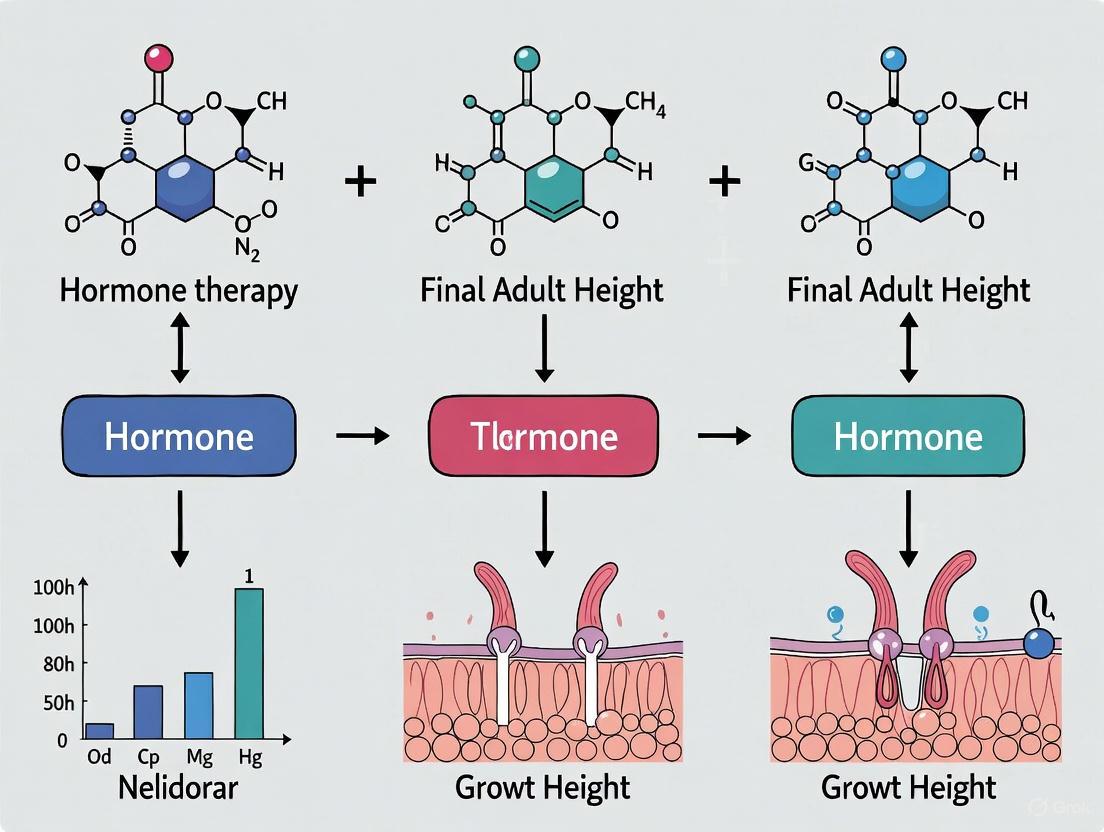
This article synthesizes current evidence on the impact of recombinant human growth hormone (rhGH) therapy on final adult height in individuals with growth hormone deficiency (GHD).
Growth Hormone Therapy and Final Adult Height: Efficacy, Protocols, and Future Directions for Research and Development
Abstract
This article synthesizes current evidence on the impact of recombinant human growth hormone (rhGH) therapy on final adult height in individuals with growth hormone deficiency (GHD). It explores the foundational pathophysiology of GHD, evaluates methodological approaches for treatment protocol design and real-world application, addresses key challenges in treatment optimization and diagnostics, and provides a comparative analysis of therapeutic outcomes across different etiologies of short stature. Aimed at researchers, scientists, and drug development professionals, this review consolidates findings from recent clinical studies, long-term cohort data, and meta-analyses to inform clinical trial design and the development of next-generation therapeutic strategies.
Understanding Growth Hormone Deficiency: Pathophysiology and the Rationale for rhGH Therapy
The Physiology of the GH-IGF-1 Axis and Its Role in Linear Growth
The growth hormone (GH)–insulin-like growth factor (IGF)-I axis represents the principal endocrine system responsible for regulating linear growth in children [1]. This complex physiological axis integrates hormonal signals, nutritional status, and local tissue factors to coordinate the anabolic processes required for normal skeletal development and maturation. Understanding this axis is not only fundamental to human physiology but is also critical in the context of treating growth disorders, where the impact of recombinant human GH (rhGH) therapy on final adult height is a primary research and clinical outcome [2] [3]. The axis functions as a tightly regulated network, whose failure or dysregulation leads to distinct growth pathologies, providing a clear therapeutic target for hormone intervention.
Core Physiology of the GH-IGF-1 Axis
Hormonal Components and Secretion Dynamics
The GH-IGF-1 axis is characterized by a hierarchical and feedback-regulated structure:
- Growth Hormone (GH): A 22 kDa, 191-amino acid protein secreted in a pulsatile fashion from the anterior pituitary gland. Its secretion is under dual hypothalamic control: stimulated by GH-releasing hormone (GHRH) and inhibited by somatostatin [1] [4].
- Insulin-like Growth Factor-I (IGF-I): A 7.65 kDa protein consisting of 70 amino acids, encoded by a gene on chromosome 12q23. It is produced predominantly by hepatocytes in the liver, though many other cells also secrete it for local autocrine/paracrine actions [1].
- IGF-Binding Proteins (IGFBPs): A family of six structurally related proteins (IGFBP-1 to -6) that bind IGF-I with high affinity. IGFBP-3 is the most abundant, with its production stimulated by GH. It forms a ternary complex with IGF-I and an acid-labile subunit (ALS), dramatically prolonging the half-life of IGF-I in the circulation [1] [5].
A key feature of this axis is the distinct secretory patterns of its components. GH secretion is episodic and pulsatile, with levels fluctuating significantly throughout the day. In contrast, IGF-I is secreted continuously, possesses a much longer half-life, and exhibits stable concentrations in the blood, making it a reliable biomarker for integrated GH secretion over a 24-hour period [4].
The Signaling Pathway and Hepatic Regulation
The systemic and local actions of the GH-IGF-1 axis are mediated through a specific signaling cascade, visually summarized in the diagram below.
This signaling pathway is critically modulated by intra-portal insulin [4]. Insulin delivered directly to the liver via the portal vein upregulates hepatic GH receptor (GHR) synthesis. This enhances hepatic sensitivity to GH, thereby potentiating IGF-I generation. This mechanism explains why nutritional status—which directly affects insulin levels—profoundly influences the GH-IGF-I axis.
Direct and Indirect Actions on the Growth Plate
Bone growth occurs at the cartilage growth plates, which consist of three main layers: the resting zone, the proliferative zone, and the hypertrophic zone [1]. The GH-IGF-I axis acts on these chondrocytes through integrated mechanisms:
- The Dual Effector Theory: This model reconciles the direct and indirect actions of GH and IGF-I [1]. GH acts directly on pre-chondrocytes in the resting zone, prompting their differentiation and clonal expansion. Subsequently, both systemic (endocrine) IGF-I from the liver and locally produced (paracrine/autocrine) IGF-I act on the proliferative and hypertrophic zones to stimulate further differentiation, cell proliferation, and matrix calcification, thereby increasing the height of the cell columns [1].
- Relative Contributions: Studies involving liver-specific IGF-I knockout mice demonstrated that while local IGF-I is crucial, the systemic IGF-I pool (stabilized in the ternary complex) is also indispensable for normal linear growth, as its deficiency leads to growth retardation [1].
Diagnostic and Therapeutic Applications in GHD
Investigating Short Stature and Diagnosing GHD
The diagnosis of Growth Hormone Deficiency (GHD) is multifaceted, relying on a combination of clinical and biochemical assessments [3]:
- Clinical Assessment: Begins with a thorough family and medical history, phenotypic examination, assessment of pubertal stage, and evaluation of body proportions and dysmorphic features.
- Anthropometrical Evaluation: Requires documentation of slow growth velocity, which is a more sensitive indicator than a single height measurement.
- Biochemical Investigations: Involves measurement of IGF-I and IGFBP-3 levels. In infants, IGFBP-3 is the preferred diagnostic tool due to very low normal IGF-I levels at this age [3].
- GH Stimulation Tests: The definitive diagnosis often requires two pharmacological GH provocative tests (e.g., with clonidine, arginine, or glucagon). A peak GH concentration below a specific cut-off (e.g., <7-10 ng/mL, depending on the assay and guidelines) confirms GHD [6] [7].
Impact of rhGH Therapy on Final Adult Height
Recombinant human GH (rhGH) is the standard treatment for GHD. Its primary goal is to normalize growth velocity and enable patients to achieve a final adult height within the normal range. Recent studies provide robust quantitative data on its effectiveness, as summarized in the table below.
Table 1: Impact of rhGH Therapy on Adult Height Outcomes in Idiopathic GHD (IGHD)
| Study Cohort | Sample Size (n) | Final Adult Height SDS (Mean) | Height SDS Gain (Mean) | Key Statistical Findings | Reference |
|---|---|---|---|---|---|
| rhGH-Treated Group | 84 | -0.45 | Significant Increase | β=0.41, 95% CI: 0.14–0.69; P=0.003 vs. untreated | [2] [8] |
| Untreated Group | 85 | -0.78 | — | Baseline height SDS, peak GH, and rhGH treatment significantly affected final height | [2] [8] |
This data demonstrates that rhGH treatment effectively and significantly improves final height outcomes in children with IGHD. Multiple regression analysis confirms that rhGH treatment is an independent positive predictor of final adult height SDS, even after controlling for other factors like baseline height and peak GH levels [2] [8].
Further real-world evidence from a large cohort study in Abu Dhabi reinforced these findings, showing that over 90% of children diagnosed with GHD achieved a normal final adult height following rhGH therapy [6]. The study also identified that a younger age at rhGH initiation, pre-pubertal status, and a greater growth response at one year were all associated with better long-term outcomes [6].
Critical Factors Modifying the GH-IGF-1 Axis
The function of the GH-IGF-1 axis is not isolated; it is modified by several key factors, the most significant being nutrition and insulin. The following diagram illustrates how intra-portal insulin levels in different physiological and disease states lead to characteristic alterations in GH and IGF-I levels.
These states are characterized by discordant GH and IGF-I levels, which are crucial to recognize for accurate diagnosis [4]. For instance, the "High GH / Low IGF-I" pattern seen in catabolic states indicates hepatic GH resistance, often driven by low portal insulin levels. Conversely, the "Low GH / Normal-High IGF-I" pattern in obesity reflects enhanced hepatic GH sensitivity due to compensatory hyperinsulinemia.
Other Modulating Factors
Beyond insulin, other hormones and conditions significantly influence the axis:
- Nutrition: Malnutrition has a potent inhibitory effect on IGF-I, IGFBP-3, and ALS, independent of GH status [1].
- Sex Steroids: Androgens stimulate IGF-I release, while oestrogens have a biphasic effect (stimulatory at low doses, inhibitory at high doses) [1].
- Inflammation: Chronic inflammation and pro-inflammatory cytokines (e.g., TNF-alpha) can induce hepatic GH resistance and impair local IGF-I action in the growth plate [1].
- Aging: There is a well-documented age-related decline in the amplitude and frequency of GH pulses, resulting in decreased circulating IGF-I levels [5].
The Scientist's Toolkit: Key Research Reagents and Methodologies
Research into the GH-IGF-1 axis and the efficacy of hormone therapy relies on a suite of specialized reagents and protocols. The following table details essential tools for experimental and clinical investigation.
Table 2: Essential Research Reagents and Methodologies for GH-IGF-1 Axis Investigation
| Tool / Reagent | Primary Function & Application | Key Details / Rationale |
|---|---|---|
| GH Stimulation Tests | Diagnosing GH deficiency. | Use of two pharmacological provocation agents (e.g., Clonidine, Arginine, Glucagon). Peak GH <7-10 ng/mL is diagnostic for GHD [6] [7]. |
| Immunoassays for IGF-I/IGFBP-3 | Quantifying serum levels of axis components. | Measures integrated GH secretion. Requires age- and sex-matched reference ranges. IGFBP-3 is more reliable in infants [1] [3]. |
| Recombinant Human GH (rhGH) | The therapeutic agent for clinical treatment of GHD. | Standard therapy since 1985. Daily subcutaneous injections; long-acting formulations in development [1] [3]. |
| IGF-I SDS Calculation | Standardizing IGF-I measurements for patient age and sex. | Uses normative data from demographically matched healthy pediatric cohorts for accurate clinical interpretation [8]. |
| Bone Age Radiography | Assessing skeletal maturation. | X-ray of left hand and wrist compared to standardized atlas (e.g., Greulich & Pyle). Delayed bone age is a characteristic finding in GHD [6]. |
| Proportion of Days Covered (PDC) | Measuring adherence to rhGH therapy in real-world studies. | PDC >80% indicates good adherence. Suboptimal adherence is a major factor in poor treatment outcomes [7]. |
The GH-IGF-1 axis is a master regulator of linear growth, integrating hormonal, nutritional, and metabolic signals through a complex network of systemic and local effects. Its core physiology, centered on the GH-driven hepatic production of IGF-I, is indispensable for normal postnatal growth. Within the context of growth hormone deficiency research, the axis provides the fundamental mechanistic framework for understanding the efficacy of rhGH therapy. Robust clinical evidence confirms that rhGH intervention significantly improves final adult height in children with GHD, with treatment outcomes being optimal when therapy is initiated early and adherence is maintained. Future research, including the development of long-acting GH formulations and personalized dosing strategies guided by IGF-I monitoring, promises to further refine therapeutic success and deepen our understanding of this critical endocrine pathway.
Idiopathic growth hormone deficiency (IGHD) represents a significant diagnostic and therapeutic challenge in pediatric endocrinology, characterized by insufficient growth hormone (GH) secretion without identifiable organic etiology. This comprehensive technical review examines the diagnostic criteria, clinical manifestations, and therapeutic outcomes of IGHD, with particular focus on the impact of recombinant human GH (rhGH) therapy on final adult height. Through systematic analysis of contemporary research and clinical protocols, we elucidate the complex interplay between diagnostic parameters, treatment responsiveness, and long-term auxological outcomes. The synthesis of evidence presented herein aims to inform research methodologies and therapeutic development for this complex endocrine disorder, contributing valuable insights to the broader thesis on hormone therapy efficacy in growth disorders.
Idiopathic growth hormone deficiency (IGHD) is a heterogeneous endocrine disorder characterized by insufficient secretion of growth hormone from the anterior pituitary gland without demonstrable organic etiology [9] [10]. The condition manifests primarily as growth failure in children, with an estimated prevalence of approximately 1:4,000 to 1:10,000 [9] [11]. IGHD represents a distinct diagnostic entity within the broader spectrum of GH deficiency (GHD), which encompasses congenital, acquired, and idiopathic forms [12]. The diagnostic pathway for IGHD requires rigorous exclusion of known causes of pituitary dysfunction, including structural abnormalities, genetic mutations, tumors, trauma, and irradiation-related damage [13] [10].
The pathophysiological mechanisms underlying IGHD remain incompletely elucidated, though evidence suggests heterogeneous origins including hypothalamic-pituitary dysregulation, functional GH secretory defects, and transient deficiencies related to physiological factors [10]. Magnetic resonance imaging (MRI) studies of patients with IGHD have revealed anatomical variations in some cases, with pituitary stalk interruption syndrome observed in a significant proportion and normal pituitary anatomy in others [10]. The clinical management of IGHD centers on rhGH replacement therapy, with treatment objectives extending beyond linear growth acceleration to include metabolic optimization and achievement of genetic height potential [14] [15].
Diagnostic Criteria and Clinical Presentation
Diagnostic Classification and Definitions
IGHD is formally classified based on severity and associated hormonal deficiencies. The diagnostic criteria require comprehensive clinical, auxological, and biochemical assessment to establish GH insufficiency and exclude organic etiology [10] [16].
Table 1: Diagnostic Classification of Idiopathic Growth Hormone Deficiency
| Classification Category | Diagnostic Criteria | Clinical Implications |
|---|---|---|
| Severity Classification | Severe: GH peak <5 ng/mL | Greater height deficit, more pronounced metabolic alterations |
| Partial: GH peak 5-10 ng/mL | Variable growth impairment, better initial growth potential | |
| Temporal Pattern | Congenital IGHD | Present from birth, often with more severe manifestations |
| Acquired IGHD | Onset later in childhood, often with normal initial growth | |
| Hormonal Deficiency Pattern | Isolated IGHD | Deficiency limited to GH only |
| Combined Pituitary Hormone Deficiency | GH deficiency with additional pituitary hormone deficits |
Clinical Manifestations and Auxological Characteristics
The clinical presentation of IGHD varies considerably in severity and temporal onset, though characteristic features emerge across the patient population. Key clinical manifestations include:
Growth Failure: The hallmark feature of IGHD is progressive growth failure, typically defined by height more than 2 standard deviations (SD) below the mean for age and gender [14] [15]. Growth velocity is markedly reduced, often falling below 1.4 inches (approximately 5 cm) per year after age 3 years [9]. Notably, decreased growth rate may manifest at different developmental stages, with approximately 55% of cases presenting before 6 months of age, 71% before 1 year, and 79% before 2 years [10].
Somatic Features: Children with IGHD often present with immature facial appearance, delayed dental development, and reduced nail and hair growth [9]. Body composition alterations include increased adiposity (particularly central fat distribution), decreased muscle mass, and reduced bone mineral density [9] [17].
Metabolic Alterations: Beyond growth impairment, IGHD is associated with metabolic disturbances including hypoglycemia (particularly in young children), dyslipidemia, and insulin resistance [9] [10] [17]. These manifestations reflect the broader metabolic role of GH beyond linear growth.
Developational Delays: Delayed puberty is commonly observed, with bone age typically delayed by more than 2 years compared to chronological age [10] [15]. Motor milestone acquisition may also be delayed in severe early-onset cases [16].
Table 2: Key Clinical and Biochemical Diagnostic Parameters for IGHD
| Parameter | Finding in IGHD | Diagnostic Significance |
|---|---|---|
| Height Velocity | <5 cm/year after age 3 years | Primary indicator of growth failure |
| Bone Age | Delayed >2 years vs chronological age | Indicator of physiological maturation delay |
| GH Stimulation Test | Peak GH <10 ng/mL to two provocative tests | Confirmatory for GH deficiency |
| IGF-1 Levels | Low for age and gender | Supportive evidence, reflects GH activity |
| IGFBP-3 Levels | Often reduced | Supportive evidence, reflects GH dependency |
| Pituitary MRI | Normal or structural variants without tumor | Exclusion of organic pathology, required for idiopathic diagnosis |
Diagnostic Methodologies and Experimental Protocols
GH Stimulation Testing Protocols
The diagnosis of IGHD requires demonstration of insufficient GH secretion through provocative stimulation testing. Standard protocols involve pharmacological stimulation with measurement of GH response at regular intervals [9] [16].
Insulin Tolerance Test (ITT) Protocol:
- Patient Preparation: Fasting overnight (8-12 hours), intravenous line establishment
- Baseline Sampling: Blood samples for glucose and GH at time 0
- Insulin Administration: Regular insulin 0.05-0.15 U/kg IV bolus to induce hypoglycemia (goal glucose <40 mg/dL)
- Sampling Protocol: Blood samples for GH at 30, 60, 90, and 120 minutes post-admission
- Diagnostic Threshold: Peak GH response <10 ng/mL indicative of deficiency [16]
- Safety Monitoring: Continuous clinical supervision with glucose monitoring and 50% dextrose solution available for significant hypoglycemia
Alternative Stimulation Protocols:
- Arginine Stimulation Test: 0.5 g/kg (maximum 30 g) IV infusion over 30 minutes
- Clonidine Stimulation Test: 0.15 mg/m² orally with GH measurement every 30 minutes for 2 hours
- Glucagon Stimulation Test: 0.03 mg/kg (maximum 1 mg) IM with GH measurement over 3 hours
- Macimorelin Stimulation Test: Recently approved oral agent with high diagnostic accuracy [9]
Auxological Assessment Protocols
Comprehensive auxological evaluation forms the foundation of IGHD diagnosis and monitoring. Standardized protocols ensure accurate assessment of growth patterns and treatment response [15].
Anthropometric Measurement Standards:
- Height Measurement: Harpenden stadiometer, three consecutive measurements (mean recorded)
- Growth Velocity: Calculation over minimum 6-month period (preferably 12 months)
- Height Standard Deviation Score (SDS): Calculation based on age and gender-specific references
- Parental Height Measurement: Direct measurement (not reported) for target height calculation
- Body Proportion Assessment: Upper/lower segment ratio, arm span
Bone Age Assessment Protocol:
- Radiographic Standard: Left hand and wrist X-ray
- Assessment Method: Greulich-Pyle atlas method [15]
- Interpretation: Calculated as ratio of bone age to chronological age (BA/CA)
- Predictive Utility: Adult height prediction using Bayley-Pinneau or Tanner-Whitehouse methods
Research Reagent Solutions and Methodologies
Table 3: Essential Research Reagents and Materials for IGHD Investigation
| Reagent/Material | Research Application | Technical Specifications |
|---|---|---|
| Recombinant Human GH | Therapeutic intervention studies | 0.025-0.035 mg/kg/day sc (pediatric); 0.1-0.3 mg/day (adult) [14] [12] |
| GH Immunoassay Kits | GH quantification in stimulation tests | Chemiluminescence-based assays (e.g., DPC IMMULITE 1000) [14] |
| IGF-1 Assay Systems | Assessment of GH biological activity | Intra-assay CV <3.0%, interassay CV <6.2% [14] |
| IGFBP-3 Measurement | Evaluation of GH-dependent binding proteins | Standardized ELISA or chemiluminescence platforms |
| Pituitary MRI Contrast Agents | Anatomical assessment of pituitary gland | Gadolinium-enhanced T1-weighted imaging |
| Genetic Testing Panels | Exclusion of monogenic GHD causes | GH1, GHRHR, BTK gene sequencing [16] |
Impact of rhGH Therapy on Final Adult Height
Therapeutic Efficacy and Height Outcomes
rhGH replacement represents the cornerstone of IGHD management, with demonstrated efficacy in normalizing growth trajectories and improving final height outcomes. Long-term observational studies provide compelling evidence for the positive impact of rhGH therapy on adult height.
A recent 2025 study examining 169 IGHD patients who reached adult height demonstrated significantly greater final height SDS in rhGH-treated patients (-0.45 SDS) compared to untreated counterparts (-0.78 SDS) [14]. Multiple regression analysis confirmed the significant effect of rhGH treatment on adult height (β=0.41, 95% CI: 0.14-0.69; P=0.003) after adjusting for confounding variables [14]. Importantly, baseline height SDS, peak GH levels, and rhGH treatment collectively determined final height outcomes, highlighting the multifactorial nature of treatment response [14].
Spanish research involving 139 IGHD patients treated to adult height demonstrated that rhGH therapy produced a net height gain of 0.06 ± 0.7 SD relative to target height [15]. This study further established that first-year treatment response parameters strongly predicted long-term outcomes, with good responders (defined by various growth velocity criteria) achieving significantly better final height [15]. The treatment responsiveness index during the first year correlated positively with final height outcome (r=0.249, p=0.003), strengthening the predictive value of early growth response [15].
Table 4: Quantitative Outcomes of rhGH Therapy in IGHD Patients
| Outcome Measure | rhGH-Treated Group | Untreated Group | Statistical Significance |
|---|---|---|---|
| Final Adult Height SDS | -0.45 (-1.13 to 0.05) [14] | -0.78 (-1.78 to 0.45) [14] | P<0.05 |
| Height SDS Gain | Significant increase [14] | Minimal change | P<0.05 |
| Achievement of Target Height | 0.06 ± 0.7 SD above target [15] | Below target height | Not specified |
| First-Year Growth Velocity | ≥3 cm/year increase (good responders) [15] | Not applicable | Predictive of final height (p=0.000) |
Determinants of Treatment Response
Multiple factors influence the magnitude of growth response to rhGH therapy in IGHD patients. Understanding these determinants enables treatment optimization and personalized therapeutic approaches.
Treatment Timing and Duration: Earlier initiation and longer treatment duration correlate with improved height outcomes [15]. The window of maximal responsiveness typically precedes pubertal development, though continued treatment through adolescence provides additional height gain.
GH Deficiency Severity: Patients with severe IGHD (GH peak <5 ng/mL) demonstrate greater absolute height gains than those with partial deficiency, though both groups benefit significantly from treatment [15]. This likely reflects the greater growth reserve capacity in less severely affected children.
First-Year Treatment Response: Multiple studies confirm that growth response during the initial treatment year predicts long-term outcomes [15]. Various criteria define "good response," including:
- Increase in growth velocity ≥3 cm/year
- Growth velocity ≥1 SD increase from baseline
- Height gain ≥0.5 SD
- Height gain ≥0.3 SD
Metabolic Factors: Beyond direct growth promotion, rhGH therapy ameliorates metabolic disturbances associated with IGHD. Recent research demonstrates significant improvements in lipid profiles (reduced total cholesterol), liver function (decreased ALT/AST), and body composition (reduced BMI SDS) during long-term treatment [17]. These metabolic benefits potentially contribute to overall growth optimization.
Idiopathic growth hormone deficiency represents a complex diagnostic entity with heterogeneous clinical manifestations and therapeutic responses. The established diagnostic criteria, incorporating comprehensive auxological assessment, GH stimulation testing, and exclusion of organic pathology, provide a robust framework for accurate identification. The substantial evidence demonstrating significant improvement in final adult height with rhGH therapy underscores the critical importance of early diagnosis and intervention. Contemporary research continues to refine our understanding of treatment response predictors, particularly the prognostic value of first-year growth parameters and the influence of deficiency severity on long-term outcomes. Future research directions should prioritize personalized treatment approaches based on genetic, metabolic, and clinical profiling to optimize therapeutic efficacy and advance drug development in this challenging endocrine disorder.
Growth Hormone Deficiency (GHD) represents a significant clinical challenge in endocrinology, characterized by insufficient production or secretion of growth hormone (GH) from the anterior pituitary gland. Understanding the multisystem consequences of untreated GHD is crucial for researchers and drug development professionals working to optimize therapeutic interventions. This comprehensive review, framed within the broader context of research on hormone therapy's impact on final adult height, synthesizes current evidence on the natural history of untreated GHD and the mechanistic basis for GH replacement strategies. The ramifications of untreated GHD extend far beyond the well-established stature abnormalities to encompass profound metabolic, cardiovascular, and quality-of-life implications that persist throughout the lifespan [18] [9].
The GH-insulin-like growth factor-1 (IGF-1) axis constitutes a pivotal endocrine system regulating growth, metabolism, and body composition. When this axis is disrupted, a cascade of physiological alterations ensues, with the specific manifestations varying according to the age of onset and duration of deficiency. Recent genetic advances have illuminated the complex molecular underpinnings of GHD, identifying numerous genes that impact final stature through isolated or combined abnormalities of GH, GH insensitivity, and IGF-1 resistance [18]. This scientific progress has enabled more precise diagnostic approaches and targeted therapeutic development, yet fundamental questions remain regarding optimal intervention timing and the long-term consequences of deficiency states.
Clinical Manifestations of Untreated GHD Across the Lifespan
Pediatric Presentation: Growth and Developmental Consequences
In pediatric populations, the most conspicuous manifestation of untreated GHD is short stature, typically defined as a height of at least two standard deviations (SD) below the normal mean value for age and sex in a reference population [18]. The growth pattern characteristic of GHD includes a slow height velocity, with children growing less than approximately 1.4 inches (3.5 cm) per year after their third birthday [9]. Beyond absolute height deficits, children often present with delayed bone age, a younger-looking face than expected for their age, impaired hair and nail growth, delayed tooth development, and delayed puberty [9]. In infants and toddlers, untreated GHD may manifest as hypoglycemia due to the counter-regulatory role of GH in glucose homeostasis [9].
The phenotypic presentation of genetic forms of GHD varies according to the specific molecular defect. For instance, isolated GHD type IA, resulting from GH1 gene mutations, presents with severe GHD starting in infancy, undetectable GH levels, and development of anti-GH antibodies that compromise response to therapy [18]. The differential diagnosis for short stature is broad, encompassing normal variants (familial short stature and constitutional delay of growth and puberty) as well as other pathological conditions, necessitating rigorous diagnostic evaluation to identify true GHD cases [18].
Adult Sequelae: Metabolic and Cardiovascular Complications
The consequences of untreated GHD extend well beyond the achievement of final height, with adults experiencing a multisystem syndrome that significantly impacts metabolic health and overall quality of life. Adults with untreated GHD demonstrate increased adiposity (particularly visceral adiposity), decreased lean body mass, reduced bone mineral density, dyslipidemia, and insulin resistance [9] [19] [20]. These metabolic alterations collectively elevate cardiovascular risk, with untreated adults showing higher prevalence of atherosclerosis and increased cardiovascular mortality [19] [20].
A recent large-scale database study investigating complications in untreated adult GHD (AGHD) patients revealed strikingly higher prevalence rates of metabolic disorders compared to the general population. As shown in Table 1, untreated AGHD patients experienced significantly greater rates of diabetes mellitus, dyslipidemia, and osteoporosis than age- and sex-matched controls from the general population [19]. These findings underscore the critical importance of the GH-IGF-1 axis in maintaining metabolic homeostasis throughout life.
Table 1: Prevalence of Complications in Untreated Adult GHD Versus General Population
| Complication | Untreated AGHD Population | General Population | Relative Increase |
|---|---|---|---|
| Diabetes Mellitus | 9.3% | 3.6% | 2.6x |
| Osteoporosis | 4.8% | 1.3% | 3.7x |
| Dyslipidemia | 22.0% | 3.9% | 5.6x |
Beyond physical health parameters, adults with untreated GHD frequently report reduced sense of wellbeing, increased anxiety and depression, decreased energy levels, and diminished exercise capacity [9] [20]. These quality-of-life impairments highlight the extrapolated effects of GH deficiency on psychological and functional domains.
Impact on Final Adult Height and the Rationale for Intervention
Natural History of Untreated Pediatric GHD
The profound impact of untreated GHD on final adult height is well-established in the literature. Historical data indicate that individuals with severe, untreated isolated idiopathic GHD achieved a mean adult height of -4.7 SD (approximately -6.0 SD according to some reports) compared to reference populations [21]. This represents one of the most severe height deficits among endocrine disorders and underscores the critical role of GH in postnatal linear growth. Without intervention, these individuals face substantial height reduction that persists throughout life, with associated psychosocial and functional consequences.
The height deficit in untreated GHD results from disrupted chondrogenesis at the growth plate, where GH and IGF-1 normally regulate chondrocyte differentiation and proliferation [18]. The GH-IGF-1 axis functions through both endocrine and paracrine/autocrine mechanisms, with GH stimulating the differentiation of reserve cells into chondrocytes in the resting zone and IGF-1 promoting the proliferation of chondrocytes in the proliferative zone [21]. When this coordinated sequence is disrupted, bone elongation is impaired, resulting in the progressive height deficit characteristic of untreated GHD.
Therapeutic Efficacy of Recombinant Human GH
Recombinant human growth hormone (rhGH) replacement represents the cornerstone of GHD management, with extensive clinical evidence supporting its efficacy in normalizing growth velocity and improving final height outcomes. A 2025 study examining adult height outcomes in idiopathic GHD (IGHD) patients demonstrated significantly greater final height standard deviation score (SDS) in rhGH-treated patients compared to untreated controls (-0.45 vs. -0.78, respectively; β=0.41, 95% CI: 0.14-0.69; P=0.003) [14]. Multiple regression analysis confirmed that baseline height SDS, peak GH, and rhGH treatment significantly affected final adult height and height SDS gain in the IGHD population [14].
Table 2: Final Height Outcomes in GH-Treated Versus Untreated Idiopathic GHD Patients
| Parameter | rhGH-Treated Group | Untreated Group | P-value |
|---|---|---|---|
| Final Adult Height SDS | -0.45 (IQR: -1.13 to 0.05) | -0.78 (IQR: -1.78 to 0.45) | <0.05 |
| Height SDS Gain | Significantly greater | Lower | <0.05 |
| Multiple Regression Coefficient | β=0.41 (95% CI: 0.14, 0.69) | Reference | 0.003 |
Earlier large-scale database analyses corroborate these findings, with one international database of 1,258 patients demonstrating that GH-treated children with idiopathic GHD achieved near-final height SDS within the range of -0.7 to -1.1 for Caucasian patients, representing substantial improvement from pretreatment deficits [22]. The analysis further revealed that the first-year increase in height SDS and prepubertal height gain strongly correlated with total height gain, emphasizing the importance of early intervention initiation [22].
Metabolic Sequelae of Untreated GHD
Body Composition Alterations
Untreated GHD profoundly impacts body composition across the lifespan, characterized by increased adiposity (particularly abdominal/visceral fat) and decreased lean body mass [20] [23]. These alterations reflect the lipolytic and anabolic properties of GH, which normally promotes lipid mobilization and protein synthesis. In the deficiency state, the balance shifts toward fat accumulation and muscle loss, creating a metabolic profile associated with increased cardiovascular risk.
The body composition changes in untreated GHD have been quantitatively documented through various imaging and assessment techniques. Adults with untreated GHD demonstrate approximately 7-10% higher body fat percentage compared to matched controls, with visceral adipose tissue accumulation being particularly prominent [20]. This pattern of adiposity is significant given the established relationship between visceral fat and metabolic disease risk. Concurrently, lean mass reductions of approximately 5-8% have been reported, predominantly affecting muscle tissue and contributing to diminished strength and exercise capacity [20].
Lipid and Carbohydrate Metabolism Dysregulation
A consistent finding in untreated GHD is dyslipidemia, characterized by elevated total cholesterol, low-density lipoprotein (LDL) cholesterol, and triglyceride levels, along with potentially reduced high-density lipoprotein (HDL) cholesterol [19] [17] [23]. The lipid profile alterations observed in untreated GHD resemble those of the metabolic syndrome and contribute to the accelerated atherogenesis and increased cardiovascular mortality documented in this population [19].
The pathophysiological basis for these lipid abnormalities involves multiple mechanisms, including reduced LDL receptor expression and activity, decreased lipoprotein lipase function, and impaired cholesterol clearance [23]. GH normally stimulates lipolysis and fatty acid oxidation while inhibiting lipogenesis; in its absence, lipid homeostasis is disrupted, favoring pro-atherogenic lipid particle patterns.
Carbohydrate metabolism is similarly affected in untreated GHD, with evidence of insulin resistance and impaired glucose tolerance [17] [23]. Although fasting glucose may remain normal, dynamic testing frequently reveals compensatory hyperinsulinemia and reduced insulin sensitivity. This prediabetic state reflects the complex interplay between GH and glucose regulation, where GH both antagonizes insulin action in peripheral tissues and stimulates insulin secretion. The net effect in prolonged deficiency is β-cell stress and deteriorating glucose homeostasis.
Table 3: Metabolic Parameters in Untreated GHD and Response to rhGH Therapy
| Metabolic Parameter | Untreated GHD Status | Response to rhGH Therapy | Long-term Outcome with Treatment |
|---|---|---|---|
| Total Cholesterol | Increased | Decreased | Sustained improvement |
| LDL Cholesterol | Increased | Decreased | Sustained improvement |
| Triglycerides | Increased | Decreased | Sustained improvement |
| Visceral Adiposity | Markedly increased | Reduced | Significant improvement |
| Lean Body Mass | Decreased | Increased | Significant improvement |
| Insulin Sensitivity | Decreased | Transient reduction, then improvement | Neutral or slight improvement |
| Bone Mineral Density | Decreased | Increased | Significant improvement |
Cardiovascular and Bone Health Implications
The metabolic disturbances in untreated GHD collectively contribute to increased cardiovascular morbidity and mortality. Epidemiological studies indicate that untreated adults with GHD have approximately a 1.5- to 2-fold increased risk of cardiovascular events compared to the general population [19]. This risk profile is multifactorial, stemming from the combined effects of adverse body composition, dyslipidemia, insulin resistance, endothelial dysfunction, and increased inflammatory markers.
Bone health is similarly compromised in untreated GHD, with reduced bone mineral density and increased fracture risk observed across age groups [19] [23]. The anabolic effects of GH on bone tissue are mediated both directly and through IGF-1 stimulation of osteoblast activity. In deficiency states, bone remodeling becomes uncoupled, with resorption exceeding formation and resulting in progressive bone loss. This osteoporotic phenotype is particularly consequential in elderly GHD patients, in whom fracture risk is already elevated due to age-related bone loss.
Molecular Mechanisms and Signaling Pathways
The GH-IGF-1 axis represents a complex endocrine system with multifaceted regulatory mechanisms. As illustrated in the signaling pathway diagram below, GH secretion from the pituitary somatotroph cells is stimulated by hypothalamic growth hormone-releasing hormone (GHRH) and inhibited by somatostatin [18]. GH then acts directly on target tissues and indirectly through stimulation of IGF-1 production, primarily from the liver. The cellular effects of GH are mediated through the GH receptor, which activates the JAK-STAT signaling pathway and subsequent gene transcription changes that underlie the pleiotropic effects of GH [21].
Diagram 1: GH-IGF-1 Axis Signaling Pathway in Normal and Deficient States
Genetic studies have identified numerous molecular defects that disrupt this signaling cascade at various levels. Mutations affecting pituitary development (HESX1, LHX3, LHX4, SOX2, SOX3, OTX2), somatotroph differentiation (POU1F1, PROP1), GH synthesis (GH1), and GH signaling (GHR, STAT5B) all culminate in the GHD phenotype through distinct mechanisms [18]. Understanding these molecular pathways is essential for developing targeted diagnostic approaches and personalized therapeutic strategies.
Research Methodologies and Experimental Protocols
Diagnostic Protocols and Assessment Techniques
Accurate diagnosis of GHD relies on a combination of auxological, biochemical, and imaging assessments. Current guidelines recommend GH stimulation testing for definitive diagnosis, with a peak GH response below established cutoffs (typically <6.7-10 ng/mL depending on the assay and protocol) considered diagnostic [9] [24]. The diagnostic workflow typically proceeds through a standardized sequence of assessments, as illustrated below:
Diagram 2: Diagnostic Protocol for Growth Hormone Deficiency
The research application of these diagnostic modalities requires careful standardization. GH stimulation tests typically use provocative agents such as insulin, glucagon, clonidine, or arginine, with serial blood sampling over 90-120 minutes to capture the peak GH response [9] [24]. The insulin tolerance test remains the gold standard for adult diagnosis, while multiple protocols are utilized in pediatric practice. Recent research has highlighted the importance of sex steroid priming prior to testing in peripubertal children to avoid false-positive diagnoses [24].
For metabolic assessment in research settings, comprehensive protocols should include body composition analysis (DXA scans for fat and lean mass distribution), oral glucose tolerance tests with parallel insulin measurements, fasting lipid profiles, and biomarkers of bone turnover [17] [20]. Advanced imaging techniques including magnetic resonance spectroscopy for hepatic fat quantification and vascular studies for endothelial function provide additional mechanistic insights in research contexts.
Clinical Trial Design Considerations
Research investigating the consequences of untreated GHD and the efficacy of interventional approaches must address several methodological challenges. Long-term randomized placebo-controlled trials are ethically complicated when an effective treatment exists, leading to reliance on historical controls, pretreatment projected height comparisons, and observational registry data [21]. Recent innovative trial designs, such as the GHD Reversal Trial, employ random assignment to continuation versus discontinuation of therapy in children with evidence of GHD reversal during puberty [24].
The GHD Reversal Trial exemplifies a modern approach to addressing key clinical questions in GHD management. This phase III, international, multicenter, randomized controlled non-inferiority trial aims to determine whether children with early GHD reversal who discontinue GH therapy achieve non-inferior near-final height SDS compared to those continuing treatment [24]. The study design includes comprehensive assessment of secondary outcomes including health-related quality of life, bone health indices, lipid profiles, and cost-effectiveness analyses [24].
The Scientist's Toolkit: Essential Research Reagents and Methodologies
Table 4: Essential Research Reagents and Methodologies for GHD Investigation
| Research Tool Category | Specific Examples | Research Applications | Technical Considerations |
|---|---|---|---|
| GH/IGF-1 Axis Assays | GH immunoassays, IGF-1 ELISA, IGFBP-3 measurements | Quantifying hormone levels in serum/plasma | Standardization between assays; age- and sex-specific reference ranges |
| GH Stimulation Agents | Insulin, glucagon, clonidine, arginine, GHRH | Assessing pituitary GH reserve | Different agents have varying safety profiles and diagnostic accuracy |
| Molecular Biology Reagents | PCR primers for GHD-related genes, next-generation sequencing panels | Genetic diagnosis of monogenic GHD forms | Identification of novel genes; variant interpretation challenges |
| Body Composition Tools | DXA scans, bioelectrical impedance, anthropometry | Quantifying fat and lean mass distribution | DXA considered gold standard for research applications |
| Metabolic Assessment Kits | Enzymatic lipid profiles, HbA1c, oral glucose tolerance tests | Comprehensive metabolic phenotyping | Standardized protocols essential for comparability |
| Imaging Modalities | Pituitary MRI, bone age X-rays, vascular ultrasound | Structural assessment and complication monitoring | Standardized reading protocols reduce interobserver variability |
Untreated Growth Hormone Deficiency exerts multisystem consequences that extend far beyond the well-recognized stature abnormalities to encompass significant metabolic, cardiovascular, and quality-of-life impairments. The natural history of untreated GHD includes substantial height deficits, with severely affected individuals achieving final heights approximately -4.7 SD below reference means, along with increased prevalence of diabetes mellitus, dyslipidemia, osteoporosis, and cardiovascular disease.
Recombinant human GH therapy effectively mitigates these consequences, with robust evidence demonstrating significant improvements in final height outcomes and metabolic parameters. Treatment initiation in childhood normalizes growth velocity and enables achievement of final height within the genetic target range, while replacement in adults reverses the body composition alterations and metabolic disturbances characteristic of the deficiency state.
Future research directions should focus on optimizing diagnostic accuracy, identifying predictors of treatment response, understanding the molecular mechanisms underlying GHD reversal, and developing novel therapeutic approaches for special populations. The continued investigation of the GH-IGF-1 axis will undoubtedly yield further insights into its fundamental physiology and clinical applications, ultimately improving outcomes for affected individuals across the lifespan.
The evolution of growth hormone (GH) therapy from pituitary extraction to recombinant biosynthesis represents one of the most significant advancements in modern endocrinology. This transition, necessitated by safety concerns and limited supply, has fundamentally transformed the treatment landscape for growth hormone deficiency (GHD), enabling rigorous study of its impact on final adult height. This whitepaper traces the technical and clinical evolution of recombinant human growth hormone (rhGH), examining its development, molecular characteristics, and demonstrated efficacy in normalizing adult height in GHD patients. The analysis incorporates quantitative data on height outcomes, detailed experimental methodologies from pivotal studies, and emerging innovations in long-acting formulations, providing researchers and drug development professionals with a comprehensive scientific resource framed within the broader context of hormone therapy impact on adult height achievement.
The foundational understanding that the pituitary gland secreted growth-promoting substances emerged in 1921, with Evans and Long documenting these observations in rats [25]. By 1932, Engelbach had named the substance "GH" extracted from bovine pituitary glands, though the species specificity of GH—which renders non-primate GH ineffective in humans—was not yet understood [26] [25]. The modern era of GH therapy commenced in 1957 when Raben successfully extracted human GH (hGH) from acetone-preserved pituitary glands using glacial acetic acid, followed in 1958 by the first documented treatment of a 17-year-old boy with pituitary dwarfism [26] [25].
The period from 1958 to 1985 marked the human pituitary-derived GH era, characterized by limited supply and centralized distribution. During this time, the National Pituitary Agency (NPA) in the United States supervised the collection of human pituitary glands from autopsies, extraction and purification of GH, and its distribution to pediatric endocrinologists under research protocols [26] [27]. Between 1963 and 1985, approximately 7,700 children in the U.S. and 27,000 children worldwide received pituitary-derived GH [26] [27]. Treatment criteria were stringent, typically requiring height standard deviation score (SDS) ≤ -2.5, growth rate < 3 cm/year, and bone age ≤ 75% of chronological age [25]. The limited supply necessitated rationing, with treatment often discontinued once children reached arbitrary height thresholds [27].
The pituitary GH era ended abruptly in 1985 following reports of fatal Creutzfeldt-Jakob disease (CJD) in young adults who had received pituitary-derived GH during childhood [26] [25]. The connection between cadaveric GH and prion transmission was recognized by the FDA and NIH, leading to the immediate suspension of pituitary GH distribution in April 1985 [26]. This safety crisis created an urgent need for a safer, more reliable GH source, catalyzing the transition to recombinant DNA technology.
Table 1: Evolution of Growth Hormone Therapeutic Platforms
| Era | Time Period | Source | Key Characteristics | Major Limitations |
|---|---|---|---|---|
| Pituitary-Derived | 1958-1985 | Human cadaver pituitaries | • Limited supply• Intramuscular administration• Dose: 0.5 IU/kg/week divided• GH response ≤5 ng/ml for diagnosis | • Risk of Creutzfeldt-Jakob disease• Restricted to severe GHD only• Batch-to-batch variability |
| First Recombinant | 1985 onward | Recombinant E. coli | • Methionyl-hGH (Somatonorm)• Unlimited supply• Subcutaneous administration | • Initial immunogenicity concerns• Daily injections required |
| Second Recombinant | Late 1980s onward | Recombinant DNA technology | • 22 kDa, 191 amino acid sequence identical to native GH• Improved purity• Reduced immunogenicity | • Daily injection regimen• Compliance challenges |
| Long-Acting Formulations | 2020s onward | Various recombinant platforms | • Once-weekly administration• Multiple molecular designs• PEGylated and non-PEGylated options | • Higher cost• Long-term safety data still emerging |
Molecular Evolution and Biosynthesis of Recombinant GH
Structural Characterization and Gene Cloning
The elucidation of GH's biochemical structure in 1972 provided the essential foundation for recombinant development [26]. Native human growth hormone is a 191-amino acid, 22-kDa single-chain polypeptide hormone with species-specific activity, explaining why earlier bovine and porcine GH preparations demonstrated minimal metabolic activity in humans [26]. The gene for GH was successfully cloned for the first time in 1979, enabling the subsequent development of recombinant production systems [26].
Recombinant DNA Production Methodologies
The first recombinant human GH (rhGH) was developed in 1981 by Genentech using a biosynthetic process in Escherichia coli [26]. This initial preparation, known as methionyl-rhGH, contained an additional methionine residue compared to the native hormone. Subsequently, an improved protein secretion technology was developed wherein the vector plasmid is isolated from a strain of E. coli, and the DNA strand to be cloned is derived from the appropriate source [26]. Both the plasmid and the required DNA strand are cleaved by restriction enzymes, joined together, and then reformed into a circular structure [26]. The recombinant plasmid is inserted into E. coli, which is then transformed to synthesize the desired protein—the method currently most commonly used to synthesize rhGH, known generically as somatotropin [26].
The transition to recombinant technology fundamentally addressed the two critical limitations of pituitary-derived GH: safety and supply. With unlimited quantities of rhGH available, clinical research expanded beyond severe GHD to investigate applications in non-GH-deficient short stature and additional indications in adults [26]. The improved purity of recombinant formulations also reduced immunogenicity concerns observed with earlier preparations [28].
Diagram 1: Timeline of Key Developments in GH Therapy Evolution
Impact on Adult Height: Clinical Evidence and Quantitative Outcomes
Pivotal Transitional Clinical Studies
The first clinical studies with recombinant-DNA-derived methionyl human growth hormone in GH-deficient children were published in 1986, demonstrating that biosynthetic hGH was biologically active and effective in promoting growth [28]. This landmark study established the foundation for subsequent clinical investigations that would systematically quantify the impact of rhGH on adult height outcomes.
A 2025 study published in PMC provided particularly compelling evidence regarding adult height outcomes, comparing 169 individuals with idiopathic GHD (IGHD) who had attained adult height, including both rhGH-treated and untreated groups [14]. This prospective, observational, open cohort investigation employed rigorous methodology: height was assessed using a stadiometer, adult height was defined as attainment of Tanner stage 5 with growth velocity <2 cm/year preceding year and <1 cm/year past 6 months, and IGF-1 serum concentrations were quantified via chemiluminescence assay on SIEMENS DPC IMMULITE 1000 analyzer [14]. The study controlled for multiple variables including bone age, birth weight, pubertal stage, and IGF-1 levels, with statistical analysis using Student's t-test for normally distributed data and Kruskal-Wallis H test for skewed distributions [14].
Quantitative Adult Height Outcomes
The 2025 study results demonstrated that in the IGHD population, the final adult height SDS was -0.78 (interquartile range: -1.78 to 0.45) in the rhGH untreated group compared to -0.45 (interquartile range: -1.13 to 0.05) in the rhGH-treated group [14]. These represented statistically significant differences (P<0.05), with multiple regression analysis confirming a significant increase in adult height SDS in patients treated with rhGH compared to those not treated with rhGH (β=0.41, 95% confidence interval: 0.14, 0.69; P=0.003) [14]. The study further identified that baseline height SDS, peak GH, and rhGH treatment significantly affected the final adult height and height SDS gain in the IGHD population [14].
Table 2: Adult Height Outcomes in Idiopathic GHD with and without rhGH Treatment
| Parameter | rhGH Untreated Group (n=85) | rhGH Treated Group (n=84) | Statistical Significance |
|---|---|---|---|
| Final Adult Height SDS | -0.78 (IQR: -1.78 to 0.45) | -0.45 (IQR: -1.13 to 0.05) | P < 0.05 |
| Height SDS Gain | - | Significantly greater than untreated | P < 0.05 |
| Multiple Regression Analysis | Reference | β=0.41 (95% CI: 0.14, 0.69) | P = 0.003 |
| Significant Influencing Factors | - | Baseline height SDS, peak GH, rhGH treatment | - |
Beyond idiopathic GHD, rhGH therapy has demonstrated significant benefits for other conditions leading to short stature. In Turner syndrome, treatment with rhGH at doses 20% higher than those used in GH deficiency has shown median adult height gains of approximately 5-8 cm [27]. For children born small for gestational age (SGA) who fail to demonstrate catch-up growth, high-dose GH treatment has been shown to accelerate growth, though long-term benefit and risk data remain limited [27]. For chronic kidney disease, GH treatment both before and after transplantation may prevent further deceleration of growth and narrow the height deficit, though even with treatment net adult height loss may be approximately 10 cm [27].
Experimental Protocols and Research Methodologies
Diagnostic Protocols for GHD
The diagnosis of growth hormone deficiency remains a clinical synthesis of auxologic, anatomic, and laboratory data rather than reliance on any single test [25]. According to the Growth Hormone Research Society Workshop consensus (2019), children should be considered for evaluation when presenting with: height SDS below -2, height that deviates from familial background, or significant decrease in height SDS (deflection of at least 0.3 SDS/year) [25]. The diagnosis does not require a height cutoff in very young children with hypoglycemia and/or midline defects/pathologies or recently developed GHD [25].
IGF-1 measurement should be undertaken using an assay with reliable reference data with ranges based on age, gender, and pubertal status [25]. For stimulation tests, most delegates at the workshop suggested revising the threshold of GH to 7 ng/ml, though historically a value of ≤10 ng/ml in two provocative tests was used for diagnosis [25]. For retesting after therapy, the insulin tolerance test (ITT) is the test of choice, with GHD recognized at a value of GH < 3 ng/ml [25].
Dosing and Monitoring Protocols
For GHD, the starting dose is typically 25 µg/kg/day (0.19 mg/kg/week) in most European countries [25]. Treatment should be initiated at the youngest possible age to achieve optimal growth response, administered subcutaneously on a daily basis, with FDA-approved doses ranging from 25–100 µg/kg/day [29]. While evening administration is sometimes suggested to mimic physiologic patterns, no firm evidence establishes this approach as more effective than administration at other times [29].
Routine follow-up of pediatric patients receiving rhGH should be performed by a pediatric endocrinologist in partnership with the primary care physician, with evaluations every 3-6 months [29]. The main parameter for adjusting rhGH should be the growth response, though IGF-I serum levels may provide additional information about treatment efficacy and theoretical safety, potentially offering earlier response indication than height velocity changes [25].
Diagram 2: Growth Hormone - IGF-1 Signaling Pathway and Regulatory Feedback
Emerging Innovations: Long-Acting Formulations
Development of Long-Acting GH (LAGH) Formulations
The most significant recent innovation in GH therapy has been the development of long-acting GH formulations designed to reduce administration frequency from daily to weekly injections. Multiple LAGH formulations have been developed, each with unique molecular characteristics: Sogroya (somapacitan) approved in Europe and the US for adults and children; Skytrofa (lonapegsomatropin) approved by US FDA and Europe for pediatric GHD; NGENLA (somatrogon) approved in multiple countries as a once-weekly injection; and Jintrolong, a polyethylene glycol LAGH (PEG-LAGH) approved in China for children with GHD [30].
A 2024 systematic review and network meta-analysis published in Scientific Reports compared the relative efficacy and safety of these LAGH formulations in prepubertal children with GHD [30]. The analysis included 11 randomized controlled trials with 1,899 total patients (1,222 in LAGH groups, 677 in daily GH groups) and employed Bayesian approach for relative evidence, with mean differences and 95% credible intervals for efficacy outcomes and risk ratios for adverse events [30].
Comparative Efficacy and Safety Profiles
The network meta-analysis demonstrated that PEG-LAGH showed better effect on height velocity than somatrogon, somapacitan, and lonapegsomatropin when compared with daily GH [30]. For height standard deviation score, PEG-LAGH demonstrated better improvement than somatrogon and somapacitan [30]. Regarding safety, PEG-LAGH reduced the risk of adverse events compared with other LAGH formulations and was comparable with daily GH [30].
These LAGH formulations represent a significant advancement in patient compliance and quality of life, addressing the systematic review finding that 71% of patients with GHD were non-adherent to prescribed daily treatment [30]. However, continued surveillance of those exposed to rhGH remains essential both during and after treatment, particularly with the advent of long-acting GH preparations with different pharmacokinetic and dynamic profiles compared to daily rhGH [25].
Table 3: Comparison of Long-Acting Growth Hormone Formulations
| LAGH Formulation | Brand Name | Approval Status | Height Velocity Efficacy | Safety Profile (AEs) |
|---|---|---|---|---|
| PEG-LAGH | Jintrolong | Approved in China for pediatric GHD | Best effect among LAGH | Comparable to daily GH |
| Somapacitan | Sogroya | Approved in US, Europe for pediatric and adult GHD | MD: 0.802 (95% CrI: -0.451, 2.068) | RR: 1.1 (95% CrI: 0.96, 1.4) |
| Somatrogin | NGENLA | Approved in US, Canada, Australia, Japan, UK, EU | MD: 0.105 (95% CrI: -0.419, 0.636) | RR: 1.1 (95% CrI: 0.98, 1.2) |
| Lonapegsomatropin | Skytrofa | Approved in US, Europe for pediatric GHD | MD: 1.335 (95% CrI: -0.3, 2.989) | RR: 1.1 (95% CrI: 0.91, 1.3) |
The Scientist's Toolkit: Essential Research Reagents and Materials
Table 4: Key Research Reagent Solutions for rhGH Investigation
| Reagent/Material | Function/Application | Technical Notes |
|---|---|---|
| Recombinant GH Preparations | • Efficacy studies• Dose-response investigations• Molecular characterization | • Multiple formulations available (methionyl, 191-amino acid)• Various expression systems (E. coli, mammalian) |
| IGF-1 Immunoassays | • Treatment monitoring• Pharmacodynamic studies• Diagnostic support | • Chemiluminescence assays preferred• Require age, gender, and pubertal status reference ranges |
| GH Stimulation Test Reagents | • Diagnostic confirmation• Severity assessment | • Multiple stimuli available (insulin, arginine, clonidine, glucagon)• Threshold of 7-10 ng/mL for diagnosis |
| Bone Age Assessment Tools | • Treatment indication• Growth potential evaluation• Therapy monitoring | • Greulich-Pyle or Tanner-Whitehouse methods• Critical for patient selection |
| Auxological Measurement Tools | • Growth velocity calculation• Treatment response monitoring | • Stadiometer for height• Electronic scale for weight• Standardized measurement protocols essential |
| Anti-GH Antibody Assays | • Immunogenicity assessment• Treatment efficacy investigation | • Particularly relevant for novel formulations• Neutralizing vs. non-neutralizing antibodies |
The evolution from pituitary extraction to recombinant biosynthesis has fundamentally transformed growth hormone therapy, enabling the rigorous demonstration of its impact on final adult height in deficient populations. The transition addressed critical limitations of safety and supply while creating opportunities for pharmaceutical innovation that continues with long-acting formulations. Quantitative evidence now firmly establishes that rhGH treatment significantly improves final adult height SDS in children with idiopathic GHD, with multiple studies confirming clinically relevant gains. The ongoing development of long-acting formulations promises to further optimize treatment adherence and outcomes while maintaining safety profiles comparable to daily rhGH. Continued research into pharmacogenetics, optimal dosing strategies, and long-term outcomes will further refine our understanding of how hormone therapy impacts final adult height, building upon the remarkable scientific journey from pituitary extraction to sophisticated biosynthesis.
Designing Effective rhGH Treatment Protocols: From Clinical Trials to Real-World Application
Standard Dosing Paradigms and Regimen Personalization
The pursuit of optimizing final adult height in children with growth hormone deficiency (GHD) represents a central challenge in pediatric endocrinology. Current therapeutic strategies navigate a complex balance between standardized dosing paradigms derived from population-based studies and personalized approaches tailored to individual patient characteristics. The evolution of recombinant human growth hormone (rhGH) therapy has transformed clinical practice, enabling precise hormone replacement while simultaneously creating new questions about optimal dosing, timing, and candidate selection [31]. This whitepaper examines the current evidence supporting both standardized and personalized rhGH regimens, with particular focus on their differential impacts on adult height outcomes. As the field progresses toward precision medicine, understanding this interplay becomes critical for researchers designing clinical trials and developing novel therapeutic agents aimed at maximizing growth potential while minimizing risks and costs.
Standard Dosing Paradigms in Growth Hormone Therapy
Established Dosing Guidelines and Regulatory Framework
The foundation of rhGH therapy rests upon decades of clinical experience and research establishing standardized dosing regimens for various indications. The U.S. Food and Drug Administration (FDA) has approved rhGH for multiple pediatric conditions, with GHD representing the original indication approved in 1985 [31]. Subsequent approvals expanded indications to include Turner syndrome (1996), idiopathic short stature (ISS, 2003), and other conditions, all specifically for height and growth considerations [31]. The Pediatric Endocrine Society (PES) guidelines, developed using the Grading of Recommendations Assessment, Development and Evaluation (GRADE) approach, provide evidence-based recommendations for rhGH therapy in children and adolescents with GHD, ISS, and primary IGF-I deficiency (PIGFD) [31].
For classic GHD, the strongest recommendations with high-quality supporting evidence include: (1) using rhGH to normalize adult height and avoid extreme shortness; (2) against relying solely on GH provocative test results for diagnosis due to limited sensitivity and specificity; and (3) regular monitoring for potential adverse effects including intracranial hypertension, slipped capital femoral epiphysis (SCFE), and scoliosis progression [31]. These guidelines acknowledge the well-documented efficacy of rhGH in severe GHD while recognizing the diagnostic and therapeutic challenges in partial deficiencies.
Standard Dosing Regimens by Indication
Standard rhGH dosing follows weight-based calculations, typically administered as daily subcutaneous injections. Table 1 summarizes the established dosing regimens for key pediatric indications.
Table 1: Standard rhGH Dosing Regimens for Pediatric Conditions
| Indication | Standard Dose Range | Dosing Frequency | Key Therapeutic Goals |
|---|---|---|---|
| Growth Hormone Deficiency | 0.18-0.35 mg/kg/week [32] | Daily subcutaneous injections | Normalize adult height, restore hormonal normalcy [31] |
| Idiopathic Short Stature | Up to 0.37 mg/kg/week [31] | Daily subcutaneous injections | Increase growth velocity and adult height [31] |
| Turner Syndrome | Up to 0.375 mg/kg/week [31] | Daily subcutaneous injections | Improve growth and final height [31] |
| Small-for-Gestational-Age | 0.48 mg/kg/week [31] | Daily subcutaneous injections | Achieve catch-up growth [31] |
The PES guidelines specifically recommend a "restrained dosing strategy" for ISS, reflecting the more modest height gains expected in this population and concerns about value-based care [31]. For severe GHD, the guidelines strongly endorse rhGH treatment to normalize adult height, representing one of the few strong recommendations based on decades of evidence demonstrating efficacy [31].
Efficacy of Standardized Regimens on Adult Height
Multiple studies have demonstrated the positive effect of standardized rhGH regimens on final adult height across different indications. In severe GHD, rhGH typically enables children to achieve their genetic height potential, with adult heights generally reaching the target range [31]. For idiopathic short stature, the height gains are more modest but statistically significant. A retrospective study of males with ISS and advanced bone age demonstrated that standardized rhGH monotherapy (22 patients treated for 24.9 ± 4.47 months) increased height standard deviation scores (HtSDS) for chronological age by 1.30 ± 0.58 and for bone age by 2.00 ± 0.27 [33]. The adult height achieved (170.9 ± 0.7 cm) did not significantly differ from target height in this group, suggesting appropriate but not excessive growth augmentation [33].
The concept of "evolving growth hormone deficiency" (EGHD) has emerged as an important consideration in standardization. A 2024 study identified patients who initially tested GH-sufficient but subsequently developed GHD on repeat testing, with 12 GH-treated EGHD males reaching an adult height of 0.08 ± 0.69 SD with a mean height gain of 1.83 ± 0.56 SD after 4.64 ± 1.4 years of therapy [32]. This finding underscores the potential limitations of single timepoint assessments and suggests some patients might benefit from reevaluation under standardized protocols.
Paradigm Shift: Toward Personalized Dosing Regimens
Limitations of Standardized Dosing and the Case for Personalization
Despite well-established standardized regimens, significant interindividual variability in treatment response has driven the exploration of personalized dosing approaches. The PES guidelines explicitly acknowledge this variability, particularly for ISS, recommending that "treatment for ISS should be pursued through a shared decision-making approach that assesses each patient's physical and psychological burdens and treatment risks and benefits" [31]. This represents a conditional recommendation reflecting lower-quality evidence and greater uncertainty about benefits in heterogeneous populations.
The fundamental challenge in standardized dosing lies in the biological complexity of the GH-IGF-I axis. Growth hormone secretion and response span a continuum, encompassing profound GHD to laboratory-defined "partial" GHD to ISS and primary IGF-I deficiency [31]. Diagnostic limitations further complicate standardization, as GH provocative tests have recognized limitations in sensitivity and specificity, and different GH assays can yield substantially different results from identical samples [31]. The PES guidelines specifically recommend "against reliance on GH provocative test results as the sole diagnostic criterion of GHD," highlighting the need for integrated diagnostic approaches [31].
Strategies for Regimen Personalization
Phenotype-Tailored Dosing
Advanced bone age presents a particular challenge in rhGH therapy, as it limits the remaining window for growth intervention. Combination therapies have emerged as a personalized strategy for this specific subgroup. In the retrospective study of males with ISS and advanced bone age (13-15 years), researchers compared three approaches: rhGH monotherapy (n=22), rhGH combined with gonadotropin-releasing hormone analog (GnRHa) (n=22), and rhGH combined with an aromatase inhibitor (AI) (n=24) [33]. The combination therapies produced significantly greater improvements than monotherapy. While the rhGH monotherapy group achieved an adult height not significantly different from target height (170.9 ± 0.7 cm vs. 169.7 ± 4.0 cm, P > 0.05), both combination therapy groups achieved adult heights significantly greater than their target heights (173.2 ± 1.5 cm and 173.5 ± 1.0 cm, respectively, vs. target heights of 169.7 ± 3.9 cm and 169.1 ± 3.9 cm, P < 0.05) [33]. This demonstrates how personalized approaches targeting specific physiological constraints (e.g., estrogen-mediated growth plate closure) can enhance height outcomes in selected populations.
Biochemical Monitoring and Dose Adjustment
The concept of the "GET score" (Growth hormone deficiency and Efficacy of Treatment) provides a structured framework for personalizing and monitoring rhGH therapy. Originally developed for adults with GHD, this composite score (0-100 points) integrates multiple relevant parameters: health-related quality of life (40%, comprising SF-36 (20%), EQ-5D-VAS (20%)), disease-related days off work (10%), and somatic parameters including bone mineral density (20%), waist circumference (10%), LDL cholesterol (10%), and body fat mass (10%) [34]. In a proof-of-concept study, the GET score distinguished significantly between untreated and GH-treated patients with adult GHD, with a least squares mean difference of +10.01 ± 4.01 (p = 0.0145) [34]. While validated in adults, similar multidimensional approaches could be adapted for pediatric growth monitoring to personalize dosing based on comprehensive response assessment rather than auxological parameters alone.
Diagnostic Reevaluation Strategies
The emerging concept of evolving GHD (EGHD) supports a personalized approach to diagnostic reevaluation. A 2024 study performed repeat GH stimulation tests in children with persistent growth failure despite initially sufficient GH levels (average peak 15.48 ± 4.92 ng/ml on first test) [32]. On repeat testing after 2.23 ± 1.22 years, the average peak GH fell to 7.59 ± 2.12 ng/ml, with 36% having peaks ≤7 ng/ml [32]. This EGHD cohort showed significant height gains with rhGH treatment (1.83 ± 0.56 SD over 4.64 ± 1.4 years) [32]. These findings demonstrate that a personalized approach including potential retesting in children with persistent growth failure can identify additional candidates who may benefit from rhGH therapy.
Comparative Efficacy of Standardized Versus Personalized Approaches
Table 2 compares adult height outcomes across different therapeutic strategies for males with ISS and advanced bone age, illustrating the potential advantage of personalized combination regimens in specific subgroups.
Table 2: Comparison of Therapeutic Regimens for Males with ISS and Advanced Bone Age
| Treatment Group | Sample Size | Treatment Duration (months) | ΔHtSDS-CA | ΔHtSDS-BA | Adult Height (cm) | Target Height (cm) | Statistical Significance vs. Target Height |
|---|---|---|---|---|---|---|---|
| rhGH monotherapy [33] | 22 | 24.9 ± 4.47 | +1.30 ± 0.58 | +2.00 ± 0.27 | 170.9 ± 0.7 | 169.7 ± 4.0 | P > 0.05 |
| GnRHa + rhGH [33] | 22 | 34.1 ± 3.36 | +1.42 ± 0.73 | +2.74 ± 0.28 | 173.2 ± 1.5 | 169.7 ± 3.9 | P < 0.05 |
| AI + rhGH [33] | 24 | 22.7 ± 2.49 | +1.39 ± 0.64 | +2.76 ± 0.31 | 173.5 ± 1.0 | 169.1 ± 3.9 | P < 0.05 |
This comparative analysis demonstrates that while all three regimens significantly improved adult height over predicted adult height (P < 0.05), only the personalized combination approaches achieved adult heights significantly greater than genetic target heights [33]. This suggests that phenotype-specific personalization can potentially exceed genetic height expectations in selected cases.
Experimental Protocols and Methodologies
Diagnostic Protocols for Growth Hormone Deficiency
The accurate diagnosis of GHD requires standardized protocols incorporating both auxological and biochemical assessments. The GH Research Society consensus recommends comprehensive evaluation including auxological, biochemical, and radiographic parameters [32]. For GH stimulation tests (GST), protocols typically involve:
- Preparation: Tests performed at 08:00 am following a minimum 8-hour overnight fast [32].
- Stimuli: Combination of two provocative agents administered simultaneously, typically 10% arginine HCL (0.5 g/kg) with either oral L-dopa (10 mg/kg, maximum 500 mg) or intramuscular glucagon (30 µg/kg) [32].
- Sampling: Blood samples for serum GH concentrations obtained at baseline and 30, 60, 90, 120, 150, and 180 minutes after administration of the first agent [32].
- Analysis: Serum GH measured by immunoassay, with a peak level <10 ng/mL historically considered diagnostic for GHD, though this threshold remains controversial [32].
The diagnostic workflow integrates multiple data sources, as illustrated in the following diagnostic pathway:
Diagram 1: Diagnostic Pathway for Growth Hormone Deficiency
Combination Therapy Protocol for Advanced Bone Age
For patients with advanced bone age and significant height deficit, combination therapy protocols offer a personalized approach to extend the growth period:
- Patient Selection: Males with advanced bone age (13-15 years) and ISS [33].
- Intervention Groups:
- Monitoring: Regular assessment of height, bone age, pubertal status, and potential adverse effects [33].
- Duration: Treatment continues until achievement of satisfactory adult height or growth plate fusion [33].
The following flowchart illustrates the strategic approach to combination therapy:
Diagram 2: Combination Therapy Strategy for Advanced Bone Age
GET Score Assessment Protocol
The GET score provides a structured methodology for comprehensive treatment monitoring:
- Parameters Assessed:
- Scoring System:
- Calculation: Sum all component scores (0-100 points), with adjustments for missing parameters [34].
The Scientist's Toolkit: Essential Research Reagents and Materials
Table 3 catalogues essential research reagents and methodologies critical for investigating growth hormone therapy and personalization approaches.
Table 3: Research Reagent Solutions for Growth Hormone Studies
| Reagent/Method | Research Function | Application in GH Research |
|---|---|---|
| Recombinant Human GH | Therapeutic intervention | Replacement therapy in GHD; height augmentation in ISS [31] [33] |
| GH Stimulation Tests (GST) | Diagnostic assessment | Provocative testing with arginine, L-dopa, glucagon to assess GH reserve [32] |
| IGF-I & IGFBP-3 Assays | Biochemical monitoring | Mass spectrometry (LC/MS-MS) for precise measurement of GH axis biomarkers [32] |
| Aromatase Inhibitors (AIs) | Combination therapy | Block estrogen synthesis to delay growth plate fusion in males [33] |
| GnRH Analogs | Combination therapy | Suppress pubertal progression to extend growth period [33] |
| Dual-Energy X-ray Absorptiometry (DXA) | Body composition analysis | Assess bone mineral density and body fat mass for GET score calculation [34] |
| GH Assays | Hormone quantification | Immunoassays (RIA) calibrated against international standards (IRP IS 80/505) [32] |
| Bone Age Assessment | Skeletal maturation evaluation | Radiographic evaluation of left hand/wrist using Greulich-Pyle standards [32] |
The pursuit of optimized final adult height in growth hormone deficiency represents an evolving balance between evidence-based standardized regimens and innovative personalized approaches. Current evidence supports standardized weight-based dosing for classic GHD, while recognizing that specific patient subgroups may benefit from personalized strategies incorporating combination therapies, biochemical monitoring, and diagnostic reevaluation. The emerging concepts of evolving GHD and multidimensional assessment tools like the GET score offer promising avenues for refining personalization in both clinical practice and research settings. As the field advances, the integration of standardized protocols with tailored approaches based on individual patient characteristics, biomarkers, and treatment responses holds the greatest potential for maximizing growth outcomes while maintaining safety and cost-effectiveness. Future research should focus on identifying reliable predictors of treatment response, validating personalization algorithms across diverse populations, and developing standardized frameworks for individualized dosing adjustments.
In the realm of growth hormone deficiency (GHD) research, accurately measuring treatment efficacy is paramount for both clinical management and drug development. The response to recombinant human growth hormone (rhGH) therapy is primarily quantified through three core endpoints: Height Velocity (HV), Height Standard Deviation Score (SDS), and Final Adult Height. These endpoints provide complementary information, serving distinct purposes across different phases of clinical trials and long-term patient management. HV offers a sensitive measure of short-term biological response, Ht-SDS contextualizes a child's height relative to population norms, and Final Adult Height represents the ultimate therapeutic outcome. Understanding the methodology, interpretation, and interrelationship of these endpoints is crucial for researchers and clinicians aiming to evaluate the impact of hormone therapy on growth outcomes in children with GHD and other growth disorders.
Defining the Core Endpoints
Height Velocity (HV)
Height Velocity is the rate of growth, typically measured in centimeters per year (cm/year). It is the most sensitive indicator of short-term biological response to rhGH therapy and is often used as a primary endpoint in initial phases of clinical trials.
- Methodology: HV is calculated from height measurements taken at standardized intervals (e.g., every 3-6 months). In a clinical trial setting, height is often measured in triplicate by a single observer using an identical instrument to minimize error [35]. The measurement is then annualized to express the growth rate over a full year.
- Significance: A significant increase in HV within the first year of treatment is a strong early indicator of treatment efficacy. For instance, in a study of children with idiopathic GHD, the first-year HV is a critical parameter for evaluating initial treatment response, though its power to predict final adult height is limited [36].
Height Standard Deviation Score (Ht-SDS)
Height Standard Deviation Score, also known as height Z-score, quantifies how many standard deviations a child's height is above or below the mean height for a specific age and sex in a reference population.
- Calculation: Ht-SDS = (Observed height - Mean height for age and sex) / Standard deviation of height for age and sex.
- Utility: Ht-SDS normalizes height for age and gender, allowing for comparisons across different ages and populations, and for tracking growth over time. An increase in Ht-SDS indicates that a child is improving their height position relative to their peers. In a Korean trial on idiopathic short stature, a significant increase in Ht-SDS was one of the key efficacy outcomes demonstrating the positive effect of GH therapy [35].
Final Adult Height
Final Adult Height is the definitive endpoint for assessing the long-term success of rhGH therapy. It represents the height attained after growth is complete.
- Operational Definition: Adult height is typically defined as the height attained when growth velocity falls below 2 cm/year, often coinciding with a bone age of over 16 years in girls and 18 years in boys, or achievement of Tanner stage 5 (adulthood) [14].
- Clinical Relevance: The therapeutic goal of rhGH therapy in children is to normalize childhood height and achieve a final adult height within the target range. Studies have shown that rhGH-treated children with idiopathic GHD achieve a significantly greater final adult height SDS compared to untreated counterparts (-0.45 vs. -0.78) [14]. The difference between final height and target height (FH-TH) is another critical metric, with combination therapy (GnRHa + GH) in girls with central precocious puberty showing a modest but significant improvement of 1.01 cm [37].
Table 1: Key Definitions and Characteristics of Core Efficacy Endpoints
| Endpoint | Unit of Measurement | Primary Utility | Timeframe | Key Advantage |
|---|---|---|---|---|
| Height Velocity (HV) | cm/year | Assessing short-term biological response | Short-term (e.g., 1st year of treatment) | High sensitivity to initial treatment effect |
| Height SDS (Ht-SDS) | Standard Deviation (SD) score | Contextualizing height against population norms | Medium to Long-term | Allows cross-age and population comparison |
| Final Adult Height | cm or SDS | Evaluating long-term therapeutic success | Long-term (end of growth) | Ultimate measure of treatment efficacy |
Experimental Protocols for Endpoint Assessment
Standardized Anthropometric Measurement Protocol
Robust and consistent measurement techniques are the foundation of reliable growth data.
- Instrumentation: Use a calibrated, wall-mounted stadiometer.
- Technique: The subject should be barefoot, standing upright with heels, buttocks, and shoulders touching the vertical board, and head in the Frankfort horizontal plane.
- Replication: To minimize error, multiple measurements (e.g., triplicate) should be taken by a single, trained observer. The mean value is used for analysis [35].
- Frequency: In growth studies, height is typically measured every 3 to 6 months. For precise HV calculation, the exact number of days between measurements should be recorded.
Clinical Trial Workflow for Growth Assessment
A typical protocol for assessing efficacy in a clinical trial involves multiple, structured visits.
Diagram 1: Clinical Trial Visits and Assessments. This workflow is adapted from a 12-month, randomized trial design for GH therapy [35].
Supporting Biochemical and Radiological Assessments
- Biochemical Markers: Serum Insulin-like Growth Factor-1 (IGF-1) and IGF Binding Protein-3 (IGFBP-3) are measured to monitor the biochemical response to GH therapy and assess safety [35] [38]. Levels are typically drawn at baseline and at regular intervals (e.g., every 3-6 months).
- Bone Age Assessment: A plain X-ray of the left hand and wrist is obtained to assess skeletal maturation, typically at baseline and annually thereafter. The ratio of change in bone age to chronological age (ΔBA/ΔCA) is a key parameter for evaluating the pace of maturation, which impacts final height potential [37].
Quantitative Data and Efficacy Benchmarks
Efficacy in Idiopathic Short Stature and GHD
Clinical trials have consistently demonstrated the positive impact of GH therapy on core endpoints. The following table summarizes key quantitative findings from recent studies.
Table 2: Efficacy Outcomes of GH Therapy from Clinical Studies
| Study Population | Intervention | Key Efficacy Findings | Study Reference |
|---|---|---|---|
| Idiopathic Short Stature (ISS) | GH (0.469 mg/kg/week) for 6 months | HV difference: +5.15 cm/year [95% CI: 4.09, 6.21] (p<0.0001)\nHt-SDS difference: +0.57 [95% CI: 0.43, 0.71] (p<0.0001) | [35] |
| Idiopathic GHD (IGHD) | rhGH (vs. Untreated) | Final Adult Height SDS:\nTreated: -0.45 [-1.13 to 0.05]\nUntreated: -0.78 [-1.78 to 0.45] (P<0.05) | [14] |
| Girls with Central Precocious Puberty (CPP) | GnRHa + GH (vs. GnRHa alone) | Final Height - Target Height: +1.01 cm [95% CI: 0.28 to 1.73] (P=0.006)\nPredicted Adult Height: +4.27 cm [95% CI: 3.47 to 5.08] (P<0.0001) | [37] |
The Relationship Between Short-Term and Long-Term Endpoints
A critical area of research is determining whether the first-year growth response (FYGR) can predict long-term outcomes.
- Predictive Limitations: Research on children with GHD indicates that while first-year parameters like ΔHt-SDS and HV are important, they perform poorly as sole predictors of poor final height outcome (PFHO) [36].
- Proposed Cut-offs: To achieve a 95% specificity in predicting a total ΔHt SDS of <1.0, the cut-off values for FYGR parameters are low (e.g., ΔHt SDS <0.35, HV SDS < -0.85), but with low sensitivities (around 40%), leading to a high number of false positives [36]. This underscores the need for continuous long-term monitoring.
The Scientist's Toolkit: Essential Research Reagents and Materials
Table 3: Essential Reagents and Materials for Growth Hormone Research
| Item | Function/Application in Research |
|---|---|
| Recombinant Human GH (rhGH) | The investigational product used to treat growth failure in various indications including GHD, Turner syndrome, and ISS [35] [14]. |
| Calibrated Stadiometer | The gold-standard instrument for obtaining precise and accurate height measurements in clinical trials [35] [14]. |
| IGF-1 & IGFBP-3 Immunoassays | Used to quantify serum levels of these GH-dependent biomarkers for monitoring biochemical response and safety [35] [14]. |
| Bone Age X-ray System | For obtaining and analyzing hand/wrist radiographs to determine skeletal age and calculate ΔBA/ΔCA [35] [37]. |
| GH Stimulation Test Agents | Pharmacological agents (e.g., glucagon, insulin) used with diagnostic tests to confirm GHD by assessing the pituitary's ability to secrete GH [14]. |
| Standardized Growth Charts | Population-specific references (e.g., Korean, Chinese, Flemish) essential for calculating Ht-SDS and HV-SDS [35] [14] [36]. |
The rigorous assessment of growth hormone therapy hinges on the precise measurement and interpretation of three key efficacy endpoints: Height Velocity, Height SDS, and Final Adult Height. Each serves a non-redundant purpose, from detecting early biological activity to quantifying the ultimate therapeutic achievement. For researchers and drug development professionals, a deep understanding of the standardized methodologies, expected effect sizes, and limitations associated with these endpoints is fundamental to designing robust clinical trials and accurately evaluating the impact of new hormonal therapies. While short-term gains in HV and Ht-SDS are encouraging, the field continues to seek better predictive biomarkers to connect early response to the final goal: optimizing adult height in children with growth disorders.
The evaluation of long-term data from clinical trials and cohort studies is fundamental to advancing the treatment of endocrine disorders. Within the specific context of growth hormone deficiency (GHD), this analytical framework provides crucial evidence for assessing the impact of hormone therapy on final adult height—a primary treatment outcome that can only be properly evaluated through longitudinal study designs. The analysis of such data presents unique methodological challenges, including attrition management, confounding control, and appropriate statistical handling of time-dependent variables. This whitepaper examines the rigorous methodologies required to interpret long-term data from GHD research, with particular focus on recent studies that demonstrate the efficacy of recombinant human growth hormone (rhGH) therapy in achieving meaningful improvements in adult height outcomes. By synthesizing evidence from controlled trials, observational cohorts, and ongoing clinical investigations, we establish a comprehensive analytical framework for evaluating therapeutic interventions in pediatric endocrinology where long-term outcomes are of paramount importance.
Analytical Framework for Long-Term Hormone Therapy Data
Core Methodological Principles
Interpreting long-term data requires adherence to several methodological principles that ensure validity and reliability. For growth hormone deficiency studies, intention-to-treat analysis preserves randomization benefits and provides conservative estimates of treatment effects, while per-protocol analysis offers insight into efficacy under optimal conditions. Handling of missing data through appropriate imputation techniques is critical, as attrition can substantially bias results in long-term studies. Time-to-event analyses, particularly for achieving final height milestones, provide dynamic perspectives on treatment effectiveness. Mixed-effects models appropriately account for within-subject correlations in longitudinal measurements, and proper adjustment for confounding variables—especially baseline auxological parameters—is essential for valid causal inference in observational studies.
Key Outcome Measures in GHD Research
The evaluation of hormone therapy effectiveness in GHD relies on specific auxological parameters. Final adult height standard deviation score (SDS) represents the primary endpoint, expressing a patient's height in standard deviations from the age- and sex-matched population mean, with positive changes indicating catch-up growth. Height velocity (cm/year) tracks short-term response, while height gain (cm) quantifies absolute improvement. The difference between final height and target height assesses achievement of genetic potential. Bone age advancement monitors treatment safety, ensuring physiological maturation without excessive acceleration. These validated endpoints provide a comprehensive framework for assessing both efficacy and safety of growth-promoting interventions.
Landmark Study Analysis: rhGH and Final Adult Height Outcomes
Study Design and Participant Characteristics
A recent 2025 cohort study provides compelling evidence regarding the long-term impact of rhGH therapy on adult height in idiopathic GHD (IGHD) populations [14]. This prospective, observational, open cohort investigation recruited 169 participants with IGHD who had attained their adult height between March 2013 and March 2021 at the Endocrinology Department of the Affiliated Hospital of Jining Medical University [14]. The study population consisted of 84 patients treated with rhGH and 85 untreated controls, with baseline characteristics showing no significant differences in age, bone age, sex distribution, birth weight, height parameters, body mass index, IGF-1 levels, or pubertal stage between the groups, ensuring comparability [14]. The rigorous inclusion criteria required peak GH values below 10 ng/mL following two different stimulation tests, low IGF-1 levels, delayed bone age, no other pituitary hormone abnormalities, and normal pituitary MRI findings [14].
Table 1: Baseline Characteristics of Study Participants
| Variable | Total IGHD (n=169) | Untreated (n=85) | rhGH-Treated (n=84) | P-value |
|---|---|---|---|---|
| Age (years) | 12.80 ± 1.84 | 12.92 ± 1.86 | 12.68 ± 1.81 | 0.40 |
| Male (%) | 137 (81.07) | 72 (84.71) | 65 (77.38) | 0.22 |
| Height SDS | Not reported | Not reported | Not reported | 0.93 |
| IGF-1 SDS | Not reported | Not reported | Not reported | 0.84 |
| Peak GH (ng/mL) | Not reported | Higher | Lower | 0.001 |
| Bone age (years) | 10.93 ± 2.20 | 11.09 ± 2.21 | 10.77 ± 2.20 | 0.36 |
Assessment Protocols and Outcome Measures
The study implemented comprehensive assessment protocols with follow-up visits every 3 months [14]. Height was measured using a stadiometer and expressed as SDS according to normative values for Chinese children [14]. Pubertal development was assessed through physical examination based on Tanner staging [14]. Adult height was rigorously defined as the height attained at Tanner stage 5 with growth velocity below 2 cm/year in the preceding year and under 1 cm/year in the past 6 months [14]. Laboratory assessments included serum IGF-1 concentrations quantified via chemiluminescence assay using the DPC IMMULITE 1000 analyzer, with tight precision demonstrated by intra-assay and interassay coefficients of variation of 3.0% and 6.2%, respectively [14]. IGF-1 SDS was calculated using normative data from demographically matched healthy pediatric cohorts [14].
Statistical Analytical Approach
The statistical analysis employed appropriate methods for handling both normally distributed and skewed data [14]. Continuous variables were presented as mean ± standard deviation or median with interquartile range, while categorical variables were expressed as percentages [14]. Between-group comparisons utilized χ² tests for categorical variables, Student's t-test for normally distributed data, and Kruskal-Wallis H test for skewed distributions [14]. The analytical approach included simple linear regression to examine factors influencing final adult height and height SDS gain, followed by multiple linear regression analyses to ascertain the independent impact of rhGH treatment on these primary outcomes [14]. All analyses were conducted using R version 4.2.2 with statistical significance defined as a two-tailed P-value <0.05 [14].
Key Efficacy Findings
The study demonstrated statistically significant and clinically meaningful improvements in final adult height outcomes with rhGH treatment [14]. The final adult height SDS was -0.78 (interquartile range: -1.78 to 0.45) in the untreated group compared to -0.45 (interquartile range: -1.13 to 0.05) in the rhGH-treated group [14]. Most importantly, multiple regression analysis revealed a significant increase in adult height SDS in patients treated with rhGH compared to untreated controls (β=0.41, 95% confidence interval: 0.14, 0.69; P=0.003) after adjusting for relevant covariates [14]. The study authors identified that baseline height SDS, peak GH, and rhGH treatment significantly affected the final adult height and height SDS gain in the IGHD population [14].
Table 2: Key Efficacy Outcomes from rhGH Treatment in IGHD
| Outcome Measure | Untreated Group | rhGH-Treated Group | Treatment Effect | P-value |
|---|---|---|---|---|
| Final Adult Height SDS | -0.78 (IQR: -1.78 to 0.45) | -0.45 (IQR: -1.13 to 0.05) | +0.33 SDS | <0.05 |
| Height SDS Gain | Lower | Significantly greater | β=0.41 (95% CI: 0.14, 0.69) | 0.003 |
| Clinical Significance | Suboptimal catch-up growth | Clinically meaningful improvement | Exceeded MCID | Not reported |
Emerging Research and Evolving Methodologies
Contemporary Clinical Trial Designs
Current clinical investigations in growth hormone deficiency continue to evolve methodologically, with ongoing trials focusing on both safety profiles and long-term effectiveness of newer therapeutic modalities. The Post-Authorisation Safety Study (PASS) of patients treated with lonapegsomatropin exemplifies this approach, aiming to characterize potential long-term safety risks under real-world conditions in post-marketing settings [39]. This study design acknowledges that pre-approval clinical trials, while rigorous, may have limitations in detecting rare adverse events or long-term safety concerns that only become apparent with larger-scale, longer-duration clinical use. Similarly, the non-interventional study of SKYTROFA (lonapegsomatropin) focuses on generating evidence for long-term effectiveness and safety in routine clinical care settings [39]. These pragmatic trial designs enhance the generalizability of findings to broader patient populations encountered in clinical practice.
Advanced Analytical Techniques in Longitudinal Data
Contemporary approaches to analyzing long-term hormone therapy data increasingly incorporate sophisticated statistical methods that account for the complex, time-dependent nature of growth trajectories. Mixed-effects models with random slopes and intercepts appropriately handle correlated longitudinal measurements within subjects while accommodating irregular time points and missing data. Time-varying covariate analyses allow researchers to examine how changes in factors such as BMI, IGF-1 levels, and pubertal status throughout the study period influence final height outcomes. Sensitivity analyses test the robustness of findings to different assumptions about missing data mechanisms, while propensity score methods in observational studies help minimize confounding by indication—a particular challenge in GHD research where treatment decisions may be influenced by disease severity.
Research Reagent Solutions for GHD Studies
Table 3: Essential Research Reagents and Materials for GHD Clinical Studies
| Reagent/Instrument | Specific Function | Application Example |
|---|---|---|
| DPC IMMULITE 1000 Analyzer | Quantification of serum IGF-1 concentrations | Chemiluminescence assay for IGF-1 monitoring with CV of 3.0-6.2% [14] |
| Automated Chemiluminescence System (ACS)-180 | Measurement of estradiol, testosterone, and SHBG | Hormonal profiling in longitudinal menopause studies [40] |
| rhGH Preparations | Replacement of deficient growth hormone | Clinical treatment to promote linear growth in pediatric GHD [14] |
| Lonapegsomatropin | Long-acting growth hormone analog | Evaluation in ongoing clinical trials for GHD [39] |
| Baecke Physical Activity Questionnaire | Assessment of habitual physical activity | Evaluation of physical activity as a covariate in longitudinal models [40] |
| Tanner Staging Protocol | Standardized assessment of pubertal development | Determination of pubertal status and adult height attainment [14] |
Visualizing Analytical Workflows and Signaling Pathways
Growth Hormone Research Experimental Workflow
Growth Hormone Signaling Pathway and Therapeutic Action
Implications for Clinical Practice and Research Design
The comprehensive analysis of long-term data from GHD studies provides compelling evidence for the positive impact of rhGH therapy on final adult height outcomes. The 2025 cohort study demonstrates both statistical significance and clinical meaningfulness, with rhGH-treated patients achieving significantly greater height SDS gains compared to untreated controls [14]. These findings underscore the importance of early diagnosis and consistent treatment adherence in optimizing growth outcomes for children with IGHD. For researchers, the methodological approaches detailed in this analysis—including rigorous outcome definitions, appropriate statistical handling of longitudinal data, and comprehensive assessment protocols—provide a template for designing robust clinical studies in pediatric endocrinology. The ongoing clinical trials investigating newer growth hormone formulations suggest continued evolution in therapeutic options and highlight the need for sustained long-term monitoring to fully characterize both efficacy and safety profiles [39]. As the field advances, the integration of these evidence-based approaches into both clinical practice and research design will ensure continued improvement in outcomes for individuals with growth hormone deficiency.
This whitepaper synthesizes real-world evidence (RWE) on growth hormone (GH) therapy, focusing on treatment patterns, adherence, and their impact on final adult height in patients with growth hormone deficiency (GHD). Data from large healthcare systems and international registries reveal that suboptimal adherence remains a significant challenge, negatively affecting growth outcomes. Emerging evidence suggests that long-acting GH formulations and connected digital health technologies can enhance adherence and are integral to optimizing treatment efficacy. This review provides methodologies for RWE collection and analysis, offering researchers and drug development professionals insights into the critical factors influencing real-world treatment success.
Within pediatric endocrinology, the impact of growth hormone therapy on final adult height is well-established, yet dependent on complex, real-world treatment dynamics. Real-world evidence derived from large healthcare databases and registries provides crucial insights into these patterns beyond the controlled environment of clinical trials [7]. This whitepaper examines RWE on GH treatment, with a specific focus on adherence metrics, treatment outcomes, and the methodologies used to collect this data, framing these findings within the broader thesis of maximizing final adult height.
The success of long-term GH therapy is contingent upon daily subcutaneous injections, making patient adherence a critical determinant of growth response [41] [42]. Non-adherence leads to suboptimal growth velocity and reduced final height, underscoring the need to understand and address this multifaceted issue [42] [43]. This document details the experimental protocols for gathering RWE, visualizes key data relationships, and highlights emerging trends, including the role of long-acting formulations and digital health tools in shaping future treatment paradigms.
Real-World Treatment Patterns and Demographics
Analysis of large healthcare databases reveals consistent demographic and treatment initiation patterns across different countries and healthcare systems.
Table 1: Patient Demographics and Treatment Initiation Patterns from Real-World Studies
| Study / Region | Sample Size | Mean Age at Start | Male Prevalence | Primary Indications | Time from Diagnosis to Treatment |
|---|---|---|---|---|---|
| Israel (Maccabi) [7] | 2,379 | 9.8 years | 62.1% | ISS (67.9%), GHD (25.7%) | 4.8 ± 3.3 years |
| France (Growzen) [41] | 481 | 9.9 years | 55% | GHD (55%), SGA (33%) | Data Not Specified |
| China (Jiangsu) [42] | 8,621 | 9.06 years | 54% | GHD, ISS, SGA, TS | Data Not Specified |
| Germany (INSIGHTS-GHT) [44] [45] | 70 (Pediatric) | 9.2 years | 76% | GHD (100%) | 2.1 months (median) |
A key finding across multiple studies is the gender disparity, with a consistent male predominance in treated cohorts, and a tendency for children from higher socioeconomic status families to initiate therapy [7]. The data also show significant delays in some regions between initial recognition of short stature and the start of treatment, potentially compromising outcomes [7].
The Emergence of Long-Acting Growth Hormone
Real-world registries are now capturing the adoption of long-acting GH (LAGH) formulations. The INSIGHTS-GHT registry in Germany reports early real-world use of three LAGH products: lonapegsomatropin, somapacitan, and somatrogon [44] [45]. These once-weekly formulations aim to reduce treatment burden. Notably, in real-world practice, most pediatric patients (82%) started LAGH at a dose below the manufacturer's recommendation, with a median of 92% of the recommended level, indicating a cautious clinical approach upon adoption [44] [45].
Adherence to Therapy: Rates, Impact, and Measuring Methodologies
Adherence is a primary focus of RWE studies due to its profound impact on treatment efficacy. Definitions and measurements of adherence vary, leading to a range of reported rates, but the correlation between high adherence and improved growth is consistent.
Table 2: Adherence Rates and Impact on Growth Outcomes in Real-World Settings
| Study / Region | Adherence Definition | Adherence Rate | Impact on Height SDS Gain |
|---|---|---|---|
| France (Growzen) [41] | High: ≥85% of injections | 85% maintained high adherence over study | 2-year gain: 0.8 (High) vs. +0.5 (Lower); p=0.030 |
| Israel (Maccabi) [7] [46] | PDC >80% | 78.2% (Year 1), declined to 68.1% (Year 3) | Data Not Specified |
| China (Jiangsu) [42] | Good: ≥86% of doses | Overall: 92%; LAGH: 94% vs. Daily GH: 91% (p<0.001) | Data Not Specified |
| Israel (Clalit HMO) [43] | Good: 11-12 pharmacy purchases/year | 55% treated >2 years; 44% had good long-term adherence | Data Not Specified |
Factors Influencing Adherence
Multivariate analyses from RWE identify key factors affecting adherence:
- Age and Puberty: Adherence is significantly higher in younger children and decreases with age, particularly during adolescence [41] [42]. One study found 91% high adherence in children starting at a mean age of 6.3 years, compared to 83% in those starting at 13.1 years [41].
- Formulation Type: Long-acting GH formulations are consistently associated with significantly higher adherence rates compared to daily injections [42]. The reduced injection frequency is a key driver of this improvement.
- Treatment Duration: Adherence declines over time, highlighting the challenge of maintaining long-term engagement with a chronic therapy [7] [43].
- Socioeconomic Factors: Regional differences and socioeconomic status can influence adherence levels, as seen in variations across different regions in China [42] and Israel [7].
Impact of Adherence on Final Height
The positive correlation between adherence and growth is quantifiable. A large French cohort study demonstrated that children with high adherence (≥85% of injections) had a significantly greater gain in height standard deviation score (HSDS) after two years (+0.8) compared to those with medium/low adherence (+0.5) [41]. This directly translates to improved catch-up growth and moves patients closer to their genetic height potential. Furthermore, initiating treatment at a younger age is associated with both better adherence and a greater HSDS gain, reinforcing the importance of early diagnosis and intervention [41].
Experimental Protocols for RWE Collection
The following section details the methodologies employed in the cited RWE studies, providing a framework for researchers designing similar analyses.
Retrospective Database Analysis
This is a common protocol for leveraging existing data from large healthcare systems [7] [43].
- Data Sources: Electronic Medical Records (EMRs), linked pharmacy claims data, and specialist registry data [7] [47].
- Cohort Identification: Patients are identified based on ICD diagnosis codes for GHD or other indications, and/or pharmacy prescriptions/purchases for GH [7] [47]. For example, the U.S. study adapted an algorithm using diagnoses like hypopituitarism, multiple pituitary hormone deficiencies, or a GH prescription to identify at-risk patients [47].
- Adherence Calculation:
- Proportion of Days Covered (PDC): The number of days a patient has medication available (based on pharmacy purchases) divided by the number of days in the observation period. A PDC >80% is commonly defined as good adherence [7].
- Injection Data from Connected Devices: For studies using devices like Easypod, adherence is computed directly as the number of injections received divided by the number prescribed over a specific period [41].
- Outcome Measurement:
- Height Standard Deviation Score (HSDS): Calculated using national reference growth curves. The change in HSDS (ΔHSDS) from treatment start to a specific time point (e.g., 1 year, 2 years, or adult height) is the primary efficacy outcome [41] [7].
- Adult Height Analysis: Height achieved at a defined endpoint (e.g., age 15 for girls, 17 for boys) is analyzed for patients who reached this milestone [7].
Registry Studies
Product-independent registries like INSIGHTS-GHT [44] [45] and GloBE-Reg [48] provide prospective, longitudinal data.
- Data Collection: Standardized electronic case report forms (eCRFs) are used by participating clinics to document patient demographics, diagnosis, treatment details (product, dose), laboratory results (IGF-I SDS), auxology (height, weight), and adverse events [44] [48].
- Patient Follow-up: Data are entered at baseline and at regular follow-up visits according to routine clinical practice, allowing for long-term observation [45].
The workflow below visualizes the pathway from data collection to clinical insight in RWE studies.
The Scientist's Toolkit: Key Reagents and Materials
The following table details essential tools and materials used in RWE studies on GH therapy, as derived from the analyzed literature.
Table 3: Research Reagent Solutions for RWE in GH Therapy
| Item / Tool | Function in RWE Research | Example from Literature |
|---|---|---|
| Connected Auto-injector | Electronically records the date and time of each injection, providing objective, real-time adherence data. | The Easypod device used in the French Growzen Connect study [41]. |
| IGF-I Immunoassay Kits | Measure serum IGF-I levels, a key pharmacodynamic biomarker for GH action and treatment safety monitoring. | Used in registry studies (INSIGHTS-GHT, GloBE-Reg) to document IGF-I SDS [44] [48]. |
| Electronic Data Capture (EDC) System | Provides a secure, centralized platform for entering, storing, and managing patient data from multiple clinical sites in registry studies. | The eDC system used by the INSIGHTS-GHT registry [44]. |
| Long-Acting GH Formulations | The therapeutic intervention being studied; used to assess real-world dosing, efficacy, and safety compared to daily GH. | Somapacitan, Lonapegsomatropin, and Somatrogon documented in the INSIGHTS-GHT registry [44] [45]. |
| Standardized Growth Curves | Provide reference data for calculating Height Standard Deviation Scores (HSDS), enabling standardized comparison of growth across populations. | French reference growth curves used in the French cohort study [41]; WHO references used in GloBE-Reg [48]. |
Real-world evidence from large healthcare systems provides an unvarnished view of GH therapy, consistently highlighting that suboptimal adherence is a major barrier to achieving optimal final adult height. Key modifiable factors include adolescent age, long treatment duration, and daily injection frequency. The integration of connected health technologies enables precise monitoring and early intervention, while the advent of long-acting GH formulations presents a promising strategy to reduce treatment burden and improve adherence.
For researchers and drug developers, these findings underscore the importance of:
- Designing therapies and delivery systems that minimize burden.
- Implementing robust, real-world data collection strategies post-launch.
- Developing personalized support interventions targeted at high-risk groups, such as adolescents.
Future research should focus on long-term outcomes of LAGH in real-world settings and the development of predictive models to identify patients at risk of non-adherence. By leveraging RWE, the field can move towards a more personalized and effective approach to GH therapy, ultimately improving final height outcomes for all patients.
Addressing Challenges in rhGH Therapy: Diagnostics, Variable Response, and Regimen Optimization
Limitations of GH Stimulation Tests and the Role of IGF-1 and IGFBP-3
The diagnosis of Growth Hormone Deficiency (GHD) remains a significant challenge in endocrinology, relying heavily on growth hormone stimulation tests (GHSTs) that are plagued by methodological limitations and diagnostic inaccuracy. This in-depth technical review examines the critical limitations of current GHST protocols and evaluates the emerging roles of Insulin-like Growth Factor-1 (IGF-1) and Insulin-like Growth Factor Binding Protein-3 (IGFBP-3) as complementary biomarkers. Framed within the context of optimizing hormone therapy to improve final adult height in GHD, this analysis synthesizes current evidence on test variability, the impact of patient factors like obesity and puberty on results, and the diagnostic utility of IGF-1/IGFBP-3 measurements. For researchers and drug development professionals, we provide structured quantitative data comparisons, detailed experimental methodologies, and visualizations of key biochemical pathways to inform the development of more reliable diagnostic approaches and personalized treatment strategies aimed at maximizing growth outcomes.
Accurate diagnosis of growth hormone deficiency (GHD) is fundamental to initiating appropriate hormone replacement therapy that can normalize growth trajectories and optimize final adult height. The growth hormone (GH) insulin-like growth factor-1 (IGF-1) axis represents a complex endocrine system wherein pituitary-secreted GH stimulates hepatic production of IGF-1, the primary mediator of growth-promoting effects [49]. This system is further modulated by IGF binding proteins, particularly IGFBP-3, which carries the majority of circulating IGF-1 and prolongs its half-life [50]. Within clinical and research settings, the diagnostic paradigm for GHD has historically relied on provocative stimulation tests to assess pituitary GH reserve. However, these tests demonstrate significant limitations including poor reproducibility, variable test-specific cut-points, and influence by multiple patient factors including age, nutritional status, body composition, and pubertal stage [49] [51]. The pulsatile secretion pattern of GH further complicates diagnostic assessment, as random GH measurements are clinically uninformative [49].
The imperative for diagnostic precision is magnified when considered within the broader thesis of achieving optimal final adult height through GH therapy. Inaccurate diagnosis can lead to two detrimental outcomes: unnecessary long-term treatment of children without true GHD, exposing them to potential risks without benefit, or failure to treat genuine GHD, resulting in preventable short stature. This review systematically addresses the technical limitations of current GH stimulation tests, evaluates the adjunctive role of IGF-1 and IGFBP-3 measurements, and discusses emerging protocols and biomarkers that may enhance diagnostic accuracy for researchers and therapy developers focused on maximizing growth outcomes.
Limitations of Growth Hormone Stimulation Tests
Growth hormone stimulation tests are the current cornerstone for biochemical confirmation of GHD, yet they suffer from multiple significant limitations that impact their diagnostic validity and utility in both clinical and research settings.
Methodological Variability and Diagnostic Inaccuracy
A fundamental challenge with GHSTs is the lack of a universal standard, leading to the use of multiple pharmacological stimuli with varying mechanisms of action and diagnostic cut-points. The insulin tolerance test (ITT) remains recognized as the historical gold standard for diagnosing adult GHD, requiring adequate hypoglycemia (blood glucose <40 mg/dL) to provoke a GH response [49]. However, the ITT carries risks of severe life-threatening hypoglycemia, seizures, and altered consciousness, making it contraindicated in elderly patients, those with cardio-/cerebrovascular disease, or individuals with seizure history [49]. This has driven the adoption of alternative stimuli, including glucagon, arginine, clonidine, L-dopa, and growth hormone-releasing hormone (GHRH), each with distinct limitations.
Comparative studies highlight significant variability in test performance. Research in children comparing insulin and L-dopa tests demonstrated substantially higher specificity (78.4% vs. 29.7%) and accuracy (93.6% vs. 79.2%) for the insulin test [52]. The glucagon stimulation test (GST) has gained popularity as an alternative to ITT, particularly in the United States following the discontinuation of GHRH analogs, but its diagnostic accuracy is compromised in overweight and obese individuals when applying the standard GH cut-point of 3μg/L [49]. A prospective study by Hamrahian et al. found that utilizing a lower GH cut-point of 1 μg/L improved diagnostic accuracy to 92% sensitivity and 100% specificity in this population [49]. The arginine test is no longer recommended in the United States as it requires a very low peak GH cut-point of 0.4 μg/L due to its weak secretagogue properties [49].
Table 1: Comparison of Common Growth Hormone Stimulation Tests
| Test Type | Mechanism of Action | GH Cut-Point | Advantages | Limitations |
|---|---|---|---|---|
| Insulin Tolerance Test (ITT) | Hypoglycemia-induced stress | 3-5 μg/L (adults) | Historical gold standard, assesses integrity of GH axis | Risk of severe hypoglycemia, seizures; contraindicated in elderly and those with cardiovascular disease |
| Glucagon Stimulation Test (GST) | Indirect stimulation mechanism | 3 μg/L (standard), 1 μg/L (obese) | Avoids hypoglycemia risk, reasonable alternative to ITT | Diagnostic accuracy reduced in obesity, requires different cut-points by BMI |
| L-dopa Test | Central dopaminergic activation | 10 ng/mL (children) | Oral administration | Low specificity (29.7%), variable accuracy |
| Arginine Test | Suppression of somatostatin | 0.4 μg/L (very low) | - | Poor GH secretagogue, no longer recommended in US |
| GHRH Test | Direct pituitary stimulation | >15 ng/mL (normal) | Direct assessment of pituitary function | GHRH availability limited in many regions |
Influence of Patient Factors on Test Results
GH stimulation test results are significantly influenced by various patient characteristics, complicating their interpretation:
- Obesity: Obesity creates a state of functional relative GH deficiency characterized by reduced spontaneous GH secretion, enhanced GH clearance, and blunted responses to stimulation tests [49]. Studies have demonstrated that obese individuals may require adjusted GH cut-points to avoid false-positive diagnoses of GHD.
- Age and Pubertal Status: GH secretion naturally declines with aging, and peripubertal children with low circulating sex steroids often show attenuated GH responses to stimulation tests [53]. This has led to the practice of sex steroid priming before testing in peripubertal children to reduce false-positive diagnoses.
- Assay Variability: Significant differences exist between GH assay methodologies and standards, creating inconsistency in results across testing centers [49]. Without harmonization of assays, establishing universal diagnostic cut-points remains challenging.
Table 2: Impact of Patient Factors on GH Stimulation Test Results
| Factor | Impact on GH Testing | Clinical Implications |
|---|---|---|
| Obesity | Blunted GH response to all stimuli; enhanced GH clearance | Requires lower diagnostic cut-points (e.g., 1 μg/L for GST instead of 3 μg/L) |
| Aging | Natural decline in GH secretion | Age-adjusted reference ranges needed |
| Pubertal Status | Attenuated response in prepubertal children | Sex steroid priming recommended in peripubertal children |
| Nutritional Status | Malnutrition suppresses GH and IGF-1 | Testing should be performed in euthyroid, well-nourished state |
| Assay Methodology | Different results across platforms and standards | Lack of harmonization prevents universal cut-points |
Diagram 1: Factors Affecting GH Stimulation Test Accuracy
The Role of IGF-1 and IGFBP-3 as Diagnostic Biomarkers
Given the limitations of GH stimulation tests, significant research interest has focused on identifying more stable biomarkers of the GH-IGF-1 axis, primarily IGF-1 and its principal binding protein IGFBP-3.
Diagnostic Performance of IGF-1
IGF-1 has theoretical advantages as a diagnostic biomarker due to its relative stability in circulation with minimal diurnal variation. However, evidence regarding its diagnostic utility is conflicting. A 2021 prospective study of 298 children with short stature found poor diagnostic accuracy for IGF-1 in screening for GHD, with an area under the ROC curve of only 0.517 [51]. At the optimal cutoff of -1.493 SD, sensitivity was 0.685 and specificity was 0.417, with positive and negative predictive values of 0.25 and 0.823, respectively [51]. The study concluded that IGF-1 level should not be used alone for GHD screening due to its poor diagnostic performance.
Several factors limit the diagnostic utility of isolated IGF-1 measurements:
- Overlap Between Populations: Significant overlap exists in IGF-1 levels between children with and without GHD [51].
- Influence of Non-GH Factors: IGF-1 levels are affected by nutritional status, liver function, hypothyroidism, and diabetes, reducing specificity for GHD diagnosis [49].
- Age-Related Decline: Like GH, IGF-1 levels naturally decline with aging and tend to be low in obesity, creating potential for misdiagnosis in older or overweight patients [49].
IGFBP-3 and the IGF-1/IGFBP-3 Molar Ratio
IGFBP-3, the primary carrier protein for IGF-1, has emerged as a potentially valuable adjunctive biomarker. It is GH-dependent and has a longer half-life than IGF-1, potentially offering a more integrated measure of GH secretion [50]. Research suggests that baseline IGFBP-3 may predict growth response to GH and IGF-1 therapy in children with non-GH deficient short stature [54] [55].
The IGF-1/IGFBP-3 molar ratio has been proposed as a crude indicator of free, biologically active IGF-1, which may better reflect GH activity at the tissue level [50]. Studies monitoring GH-treated patients have found that the molar ratio remains relatively stable during therapy, potentially serving as a safety index to avoid excessive GH exposure [50]. During three years of GH therapy, the molar ratio increased and plateaued at approximately 0.019, with similar ratios observed across patient groups regardless of their absolute IGF-1 SDS values [50].
Table 3: Diagnostic Characteristics of GH-IGF Axis Biomarkers
| Biomarker | Diagnostic Utility | Limitations | Role in Therapy Monitoring |
|---|---|---|---|
| IGF-1 | Poor standalone screening test (AUC 0.517); better for severe GHD | Affected by nutrition, age, liver function; low specificity | Target for dose titration; levels >+2 SDS may indicate over-replacement |
| IGFBP-3 | Potentially predicts response to therapy; more stable than IGF-1 | Less sensitive to acute GH changes | Concomitant rise with IGF-1 maintains molar ratio equilibrium |
| IGF-1/IGFBP-3 Molar Ratio | Indicator of free IGF-1 bioactivity; potentially better safety index | Crude estimate rather than direct measurement | Remains stable during GH therapy (plateaus at ~0.019) despite IGF-1 increases |
Diagram 2: GH-IGF-1-IGFBP-3 Axis Signaling Pathway
Experimental Protocols and Methodologies
Standardized protocols for assessing GH status are essential for research consistency and reliable diagnosis. This section details key methodological approaches referenced in the literature.
Growth Hormone Stimulation Test Protocols
Insulin Tolerance Test Protocol:
- Preparation: Overnight fast (10-12 hours), avoid medications affecting GH secretion.
- Procedure: Insert IV catheter; draw baseline sample for GH and glucose. Adminute regular insulin (0.1 IU/kg) as IV bolus. Monitor blood glucose every 15 minutes, aiming for hypoglycemia (<40 mg/dL or 50% reduction from baseline). Draw blood for GH at 0, 15, 30, 45, 60, 90, and 120 minutes [52].
- Safety Monitoring: Close medical supervision throughout test; have 50% dextrose solution available for immediate administration if severe hypoglycemia occurs.
- Interpretation: Peak GH <5-10 ng/mL (children) or <3-5 μg/L (adults) suggests GHD, depending on guidelines and assay used [49] [52].
Glucagon Stimulation Test Protocol:
- Preparation: Overnight fast, document weight and BMI.
- Procedure: Draw baseline GH sample. Administer glucagon (0.03 mg/kg up to 1 mg) intramuscularly or subcutaneously. Collect additional GH samples at 30, 60, 90, 120, 150, and 180 minutes [49].
- Interpretation: Peak GH <3 μg/L diagnostic for adult GHD; consider lower cut-point of 1 μg/L for overweight/obese patients (BMI >25) [49].
Sex Steroid Priming Protocols
For peripubertal children, particularly boys >11 years and girls >10 years with delayed puberty, sex steroid priming may be implemented before GH stimulation testing to reduce false-positive results [53]:
Estrogen Priming (Girls):
- Protocol: Ethinyl estradiol 50-100 mcg/day or conjugated estrogen 2.5-5 mg/day for 3 days before testing [53].
- Alternative: Micronized 17β-estradiol 1-2 mg daily for 3 days prior to test.
Testosterone Priming (Boys):
- Protocol: Testosterone enanthate 100 mg IM 3-7 days before testing [53].
- Alternative: Testosterone patches or gel for 3-7 days before testing.
The evidence indicates that sex steroid priming increases GH peak responses in many peripubertal children, potentially reducing the risk of false-positive GHD diagnoses, though protocols vary considerably [53].
Biomarker Assessment Methods
IGF-1 and IGFBP-3 Measurement:
- Sample Collection: Morning fasting samples, processed to serum or plasma within 2 hours.
- Assay Methods: Immunoassays (IRMA, ELISA) most common; LC/MS/MS increasingly used for IGF-1 due to superior specificity [54] [55].
- Standardization: Values should be converted to standard deviation scores (SDS) based on age- and sex-specific reference ranges [51] [55].
- Molar Ratio Calculation:
- IGF-1 (μg/L) ÷ 7.5 kDa = IGF-1 (nmol/L)
- IGFBP-3 (μg/mL) ÷ 42 kDa = IGFBP-3 (nmol/L)
- Molar Ratio = [IGF-1 (nmol/L)] ÷ [IGFBP-3 (nmol/L)] [50]
The Researcher's Toolkit: Essential Reagents and Materials
Table 4: Key Research Reagent Solutions for GH-IGF Axis Studies
| Reagent/Material | Function/Application | Research Considerations |
|---|---|---|
| Recombinant GH Preparations | Stimulation test control; therapy studies | Various brands exhibit different purity and bioactivity; consider international standards for calibration |
| GH Secretagogues | Provocative testing (insulin, glucagon, arginine, clonidine, L-dopa) | Source and purity affect test performance; follow established safety protocols for high-risk agents |
| GH Immunoassays | GH quantification in serum/plasma | Significant inter-assay variability; must validate against international reference preparations (WHO 98/574) |
| IGF-1 Immunoassays | IGF-1 measurement | Cross-reactivity with IGF-2; requires extraction to remove binding proteins; LC/MS/MS offers superior specificity |
| IGFBP-3 Immunoassays | IGFBP-3 quantification | Various commercial platforms available; limited standardization between assays |
| Sex Steroids for Priming | Testosterone, estrogen preparations | Various administration routes (oral, transdermal, IM); dosing protocols not standardized |
| Reference Standards | WHO international standards for GH, IGF-1 | Essential for assay calibration and inter-laboratory comparability |
The diagnosis of growth hormone deficiency remains challenging due to significant limitations in current gold-standard stimulation tests, including methodological variability, influence of patient factors, and safety concerns. While IGF-1 and IGFBP-3 offer potential as more stable biomarkers of the GH-IGF-1 axis, evidence indicates they lack sufficient diagnostic accuracy as standalone screening tools, particularly IGF-1 which demonstrates poor sensitivity and specificity for GHD diagnosis. The IGF-1/IGFBP-3 molar ratio shows promise as an indicator of free IGF-1 bioactivity and may have utility in monitoring therapy safety.
For researchers focused on optimizing hormone therapy to improve final adult height, several priorities emerge. First, standardized protocols for GH stimulation testing and sex steroid priming are urgently needed to reduce diagnostic variability. Second, continued development of multiplexed biomarker approaches incorporating IGF-1, IGFBP-3, and potentially novel markers may enhance diagnostic accuracy beyond single biomarker measurements. Third, consideration of patient-specific factors including BMI, pubertal status, and genetic background must be integrated into diagnostic algorithms. Future research should focus on validating integrated diagnostic models that combine clinical assessment, stimulation testing, and biomarker profiles to accurately identify children who will genuinely benefit from GH therapy, ultimately optimizing final height outcomes while minimizing unnecessary treatment.
Within the strategic framework of managing pediatric growth hormone deficiency (GHD), the paramount long-term objective is the normalization of final adult height (FAH). Recombinant human growth hormone (rhGH) therapy serves as the cornerstone intervention for this purpose. However, treatment response exhibits significant interindividual variability, making the prediction of outcomes a central challenge in clinical practice and drug development. This whitepaper synthesizes current evidence to delineate the baseline characteristics and biomarkers that predict response to rhGH therapy, providing researchers and pharmaceutical scientists with a data-driven foundation for optimizing clinical trial design and advancing personalized therapeutic strategies. The efficacy of rhGH is well-established, with treated patients demonstrating significantly greater final height SDS compared to untreated counterparts, underscoring the importance of understanding response predictors [8].
Key Predictors of Treatment Response
The response to growth hormone therapy is influenced by a complex interplay of auxological, biochemical, and patient-specific factors. The most significant predictors are summarized in the table below.
Table 1: Key Baseline Predictors of Response to Growth Hormone Therapy
| Predictor Category | Specific Factor | Association with Treatment Response | Clinical/Research Utility |
|---|---|---|---|
| Auxological Parameters | Baseline Height SDS | Lower baseline height (e.g., < -3 SDS) predicts greater height gain but also higher likelihood of persistent GHD [56]. | Strong prognostic indicator for long-term growth trajectory and permanence of deficiency. |
| Bone Age Delay (BA-CA) | Greater delay (more negative BA-CA) is associated with improved height gain [57]. | Indicates remaining growth potential; a key variable in machine learning prediction models. | |
| Growth Velocity at 1 Year | The most important predictor of persistent GHD in the transition phase; higher velocity associated with transient GHD [58]. | Early marker for long-term GH axis function and treatment efficacy. | |
| Biochemical & Hormonal | Peak GH on Stimulation Tests | Lower peak GH at initial diagnosis is associated with a higher risk of persistent GHD [58] [56]. | Helps distinguish between transient and permanent GHD, guiding transition-phase management. |
| IGF-I and IGFBP-3 SDS | Low baseline levels; a significant increase (e.g., +1.0 SDS for IGF-I) after 4 weeks of therapy serves as a short-term biomarker of responsiveness [59]. | Pharmacodynamic biomarkers for confirming biological response to rhGH. | |
| Demographic & Clinical | Sex | Female gender is negatively associated with persistent GHD, though it may be a positive predictor of rhGH efficacy in height gain [58]. | Consideration for stratifying patients in clinical trials and individualizing prognosis. |
| Pituitary MRI Findings | An abnormal pituitary region (e.g., ectopic posterior pituitary, stalk interruption) is the strongest single predictor of persistent GHD (7.2-10.6x higher risk) [56]. | Critical diagnostic tool for identifying organic etiology and predicting lifelong GH dependency. | |
| Chronological Age | Younger age at treatment onset is a positive predictor of height SDS gain [57]. | Supports the clinical principle of early intervention for optimal growth outcomes. |
Advanced Prediction Models
Moving beyond individual parameters, multivariate models and machine learning (ML) algorithms are emerging as powerful tools for outcome prediction. A study leveraging data from 786 children developed ML models to predict a clinically significant height SDS change (△HSDS ≥ 0.5) after 12 months of rhGH therapy. The Random Forest and Multi-Layer Perceptron models demonstrated high predictive accuracy, with AUROCs of 0.91 [57]. This analysis identified chronological age, bone age delay (BA-CA), baseline height SDS (HSDS), and BMI SDS (BSDS) as the most influential variables in the model, providing a quantifiable framework for anticipating early treatment response [57].
Experimental Protocols for Key Studies
To facilitate replication and validation in research settings, this section outlines the core methodologies from pivotal studies cited in this review.
Protocol for Identifying Predictors of Persistent GHD
Objective: To identify patient-related predictors of permanent GHD upon retesting at adult height [56].
- Study Design: Retrospective single-centre cohort study.
- Participants: 101 patients with childhood-onset, non-tumor-related isolated GHD who underwent retesting.
- Diagnostic Criteria (Childhood GHD): GH peak < 20 mIU/L in two provocative tests (or one test if pituitary MRI was abnormal or hypoglycemia was present).
- Intervention: GH therapy was administered until adult height (growth velocity < 0.5 cm/year with fused growth plates).
- Retesting & Outcome Definition: An insulin tolerance test was performed ≥1 month after GH discontinuation. Permanent GHD was defined as a GH peak < 15 mIU/L.
- Data Collection: Auxological, clinical, hormonal (GH peaks, IGF-1), and neuroradiological (MRI) data at diagnosis and follow-up.
- Statistical Analysis: Multivariate analysis to build a predictive model for persistent GHD, including variables such as height SDS, BMI SDS, GH peaks, and MRI findings.
Protocol for Short-Term Biomarker Response
Objective: To compare the short-term biomarker response to rhGH in GHD children born small for gestational age (SGA) versus appropriate for gestational age (AGA) [59].
- Study Design: Phase IV, open-label, multicenter, interventional study.
- Participants: Prepubertal Chinese children with GHD (n=205; 30 SGA, 175 AGA).
- Intervention: Daily subcutaneous rhGH (Saizen) at 0.033 mg/kg/day for 4 weeks.
- Primary Endpoint: Change in serum IGF-I standard deviation score (SDS) from baseline to 4 weeks.
- Secondary Endpoints: Change in IGFBP-3 SDS, and metabolic markers (glucose, insulin, lipids).
- Laboratory Analysis: Serum IGF-I and IGFBP-3 levels measured by a central laboratory. SDS scores calculated based on reference values.
- Statistical Analysis: Comparison of median changes in IGF-I SDS between GHD-AGA and GHD-SGA subgroups using Wilcoxon rank sum test.
Visualization of Predictive Pathways and Workflows
The following diagrams illustrate the logical workflow for predicting treatment persistence and the biological pathway of GH action biomarkers.
GHD Persistence Prediction Model
GH Therapy Biomarker Response Pathway
The Scientist's Toolkit: Research Reagent Solutions
Table 2: Essential Reagents and Assays for Growth Hormone Research
| Reagent/Assay | Primary Function in Research | Exemplars & Key Characteristics |
|---|---|---|
| GH Stimulation Agents | Provoke GH secretion from the pituitary to assess functional reserve and diagnose GHD. | Insulin (for ITT), Arginine, Glucagon, Clonidine, GHRH+Arginine组合测试 [58]. |
| GH & IGF-I Assays | Quantify hormone levels in serum/plasma for diagnostic and pharmacodynamic monitoring. | Immunoassays (e.g., DXI Beckmann Coulter for GH; Cis Bio International/IDS-iSYS for IGF-1); reporting in SDS based on age/sex references is critical [56]. |
| Bone Age Assessment Tool | Evaluate skeletal maturation to determine growth potential and treatment timing. | Greulich and Pyle Atlas, the standard method for bone age assessment in pediatric endocrinology studies [60]. |
| Recombinant Human GH | The therapeutic intervention for in vitro, in vivo, and clinical studies. | Saizen (Merck Serono); used at standardized doses (e.g., 0.033-0.035 mg/kg/day) [59] [56]. |
| Machine Learning Algorithms | Develop predictive models for treatment outcome using multi-parameter clinical data. | Random Forest, Multi-Layer Perceptron (MLP), XGBoost; effective for modeling complex, non-linear relationships in growth data [57]. |
The systematic identification and validation of predictors for rhGH treatment response are fundamental to advancing the therapeutic landscape for growth hormone deficiency. Key baseline auxological characteristics—most notably, severe short stature (height SDS < -3), significant bone age delay, and a low initial GH peak—are robust indicators of a heightened need for long-term therapy and a potentially greater magnitude of height gain. The integration of pituitary MRI findings significantly strengthens the prediction model for permanent GHD. Furthermore, short-term changes in IGF-I and IGFBP-3 SDS provide valuable, early biomarkers of biological response, enabling rapid assessment of treatment efficacy in clinical trials. The advent of sophisticated machine learning models that synthesize these multifaceted data points heralds a new era of precision medicine. For researchers and drug developers, these tools offer a powerful means to stratify patient populations, optimize trial endpoints, and ultimately, personalize treatment regimens to maximize final adult height outcomes for each individual.
Strategies for Improving Long-Term Adherence and Persistence
Within the broader research context of how hormone therapy influences final adult height in growth hormone deficiency (GHD), long-term treatment adherence and persistence emerge as critical determinants of therapeutic success. Achieving normal adult height requires consistent recombinant human growth hormone (rhGH) administration over many years, yet suboptimal adherence remains a significant challenge that undermines treatment efficacy [8]. This technical guide examines evidence-based strategies to optimize adherence and persistence, drawing upon recent clinical studies and technological innovations that demonstrate measurable impacts on long-term growth outcomes.
Quantitative Evidence: Adherence and Persistence Data
Table 1: Documented Adherence and Persistence Rates Across Formulations and Regions
| Study Population | Intervention/Formulation | Adherence/Persistence Rate | Time Frame | Impact on Growth Outcomes |
|---|---|---|---|---|
| Chinese pediatric patients (N=8,621) [42] | Long-acting GH formulations | 94% adherence | Treatment period | Higher adherence associated with improved growth velocity |
| Chinese pediatric patients (N=8,621) [61] | Daily GH injections | 91% adherence | Treatment period | Lower adherence associated with reduced height velocity |
| Japanese pediatric patients (JMDC cohort, N=452) [62] | Daily somatropin (90-day gap definition) | 65% persistence | 48 months | Discontinuation associated with worse growth outcomes |
| Japanese pediatric patients (MDV cohort, N=573) [62] | Daily somatropin (90-day gap definition) | 46% persistence | 48 months | Discontinuation associated with worse growth outcomes |
| Spanish caregivers of children with suboptimal adherence (N=51) [63] | Digital adherence program (ACDP) | 75% reached optimal adherence (from <85% baseline) | 3 months | Improved adherence expected to improve growth outcomes |
| IGHD patients treated with rhGH [8] | Daily rhGH vs. untreated controls | Final adult height SDS: -0.45 vs. -0.78 | Until adult height | Significant improvement in final height with treatment |
Table 2: Discontinuation Rates in Japanese Pediatric GHD Patients Using Different Gap Definitions [62] [64]
| Database | 60-Day Gap Definition | 90-Day Gap Definition | 120-Day Gap Definition |
|---|---|---|---|
| JMDC (N=452) | ~67% at 48 months | 35% at 48 months | ~16% at 48 months |
| MDV (N=573) | ~83% at 48 months | 54% at 48 months | ~28% at 48 months |
Intervention Strategies and Experimental Protocols
Long-Acting Formulations
Experimental Protocol for Long-Acting GH Formulation Clinical Trials [45] [65]
- Objective: Evaluate the efficacy, safety, and adherence of long-acting growth hormone (LAGH) formulations compared to daily rhGH in pediatric GHD.
- Design: Randomized, active-controlled, parallel-group, phase 3 trials.
- Participants: Pediatric patients (e.g., aged 3-18 years) with confirmed GHD.
- Intervention Groups:
- Experimental: Once-weekly LAGH injection (e.g., somatrogon, lonapegsomatropin, somapacitan).
- Active Comparator: Daily subcutaneous rhGH injection.
- Key Measurements:
- Primary Efficacy Endpoint: Annual height velocity (cm/year) at 12 months.
- Secondary Endpoints: Height standard deviation score (SDS), IGF-I SDS, bone age progression.
- Adherence Assessment: Calculated as the proportion of prescribed doses administered. For LAGH, this is based on the number of injections recorded via electronic monitoring devices (e.g., Easypod Connect) or medication diaries.
- Safety Monitoring: Adverse events, local tolerability at injection sites, antibody development.
- Statistical Analysis: Non-inferiority design for primary efficacy endpoint. Analysis of covariance (ANCOVA) for height velocity, mixed models for repeated measurements for auxological parameters.
Digital Health Interventions
Experimental Protocol for Digital Health Intervention to Support Adherence [63]
- Objective: Assess the impact of a mobile-based digital health intervention (Adhera Caring Digital Program, ACDP) on adherence and caregiver well-being in families of children undergoing GH therapy.
- Design: Prospective observational study with pre-post assessment.
- Participants: Caregivers of children with suboptimal adherence to GH therapy (below 85%) recruited from a pediatric endocrinology unit.
- Intervention:
- Platform: ACDP, a mobile application integrated with an AI-powered platform.
- Components: Condition-specific education, evidence-based caregiving strategies, self-management tools, personalized motivational messages.
- Data Integration: Objective adherence data from Easypod-Connect electronic auto-injector; patient-reported outcomes collected via validated scales.
- Duration: 3 months.
- Key Measurements:
- Primary Outcome: Adherence rate (%) measured electronically.
- Secondary Outcomes:
- Caregiver mental health: Depression, Anxiety, and Stress Scale (DASS-21).
- Positive mood: Positive and Negative Affect Schedule (PANAS).
- General well-being: Mental Health Continuum Short Form (MHC-SF).
- Self-efficacy: Generalized Self-Efficacy Scale (GSES).
- Health-related quality of life: KIDSCREEN-10 and QoLISSY.
- Data Collection: At baseline and after 3 months of using the ACDP.
- Statistical Analysis: Paired t-tests or Wilcoxon signed-rank tests to compare changes in adherence and psychological scores from baseline to follow-up.
Clinical Management and Support Strategies
Experimental Protocol for Assessing the Impact of Clinical Management on Persistence [62] [66]
- Objective: Identify predictors of discontinuation and evaluate the impact of clinical support strategies on long-term persistence.
- Design: Retrospective cohort study using claims or electronic health record databases.
- Data Sources: Large-scale databases (e.g., JMDC, MDV in Japan) containing prescription records and diagnosis codes.
- Study Population: Children and adolescents (e.g., 3-16 years) with a GHD diagnosis and at least one prescription for somatropin.
- Key Variables and Definitions:
- Persistence: Continuous refills of somatropin with no gaps in therapy exceeding a predefined threshold (e.g., 60, 90, or 120 days). The date of the last claim before the gap is the discontinuation date.
- Early Persistence: Proportion of patients with at least one refill after the initial prescription.
- Covariates: Demographics, concomitant medications, mental health diagnoses, healthcare utilization patterns.
- Statistical Analysis:
- Time-to-Event Analysis: Kaplan-Meier methods to estimate persistence rates over time (e.g., up to 48 months).
- Predictor Identification: Cox proportional hazards models to identify factors associated with time to discontinuation.
Visualizing Strategy Implementation and Outcomes
The Scientist's Toolkit: Research Reagent Solutions
Table 3: Essential Materials and Tools for Adherence and Growth Outcome Research
| Research Tool / Reagent | Function / Application | Example Use Case |
|---|---|---|
| Electronic Auto-Injector (e.g., Easypod Connect) | Electronically records date, time, and dose of each injection; enables objective adherence measurement. | Core component in digital health interventions [63] and real-world adherence studies. Provides reliable data for correlating adherence with growth outcomes. |
| Validated Patient-Reported Outcome (PRO) Measures | Quantifies psychosocial factors influencing adherence. | DASS-21: Measures caregiver depression, anxiety, stress [63]. QoLISSY: Assesses quality of life in short stature youth [63]. Used to identify non-adherence risk factors. |
| IGF-I Immunoassays | Measures serum IGF-I concentration as a pharmacodynamic biomarker of GH action and adherence. | Monitoring biochemical response to therapy; levels correlate with recent GH exposure and adherence [8] [45]. |
| Long-Acting GH Formulations (e.g., Somatrogon, Lonapegsomatropin, Somapacitan) | Weekly administered rhGH products to reduce injection burden. | Investigational agent in clinical trials comparing adherence and efficacy versus daily GH [45] [65]. |
| Digital Health Platform (e.g., Adhera Caring Digital Program) | Mobile-based application delivering education, monitoring, and personalized support to patients/caregivers. | Intervention tool in prospective studies assessing impact on adherence rates and caregiver well-being [63]. |
| Claims & EHR Databases (e.g., JMDC, MDV) | Large-scale real-world data sources for retrospective analysis of treatment patterns and persistence. | Studying long-term persistence and discontinuation predictors in large populations [62] [64]. |
Improving long-term adherence and persistence in growth hormone therapy requires a multifaceted approach that addresses the pharmacological, technological, and psychosocial dimensions of treatment management. The integration of long-acting formulations, digital health tools, and proactive clinical support creates a synergistic effect that sustains engagement with therapy over the many years required to achieve maximal adult height. For researchers and drug development professionals, these strategies represent promising avenues for intervention that can significantly enhance the real-world effectiveness of growth hormone therapy and ultimately improve final height outcomes for children with GHD.
Managing the Attenuation of Growth Response Over Time
Within the broader thesis on the impact of growth hormone (GH) therapy on final adult height in growth hormone deficiency (GHD), the phenomenon of attenuated growth response over time presents a significant clinical and research challenge. This attenuation refers to the decrease in growth velocity observed in some children after an initial positive response to recombinant human GH (hGH) therapy [31]. For researchers and drug development professionals, understanding and managing this phenomenon is crucial for optimizing long-term treatment outcomes and maximizing final adult height.
The Pediatric Endocrine Society guidelines, developed using the GRADE approach, acknowledge the complexities of hGH treatment, particularly in cases where growth responses are not sustained [31]. This technical guide explores the mechanisms, monitoring protocols, and management strategies for addressing attenuation of growth response, framed within the context of advancing GHD research and therapeutic innovation.
Pathophysiological Mechanisms and Contributing Factors
Evolving Nature of GHD
Recent research has identified "Evolving Growth Hormone Deficiency" (EGHD) as a distinct clinical entity where children initially test GH-sufficient but later demonstrate deficient GH secretion upon repeat testing [32]. In one proof-of-concept study, patients showed a significant decrease in peak GH levels on repeat stimulation tests (from 15.48 ± 4.92 ng/ml to 7.59 ± 2.12 ng/ml) over approximately two years, despite progressing through puberty [32]. This evolving endocrine deficiency may explain why some patients exhibit attenuated growth responses on standardized dosing regimens.
Biochemical and Metabolic Considerations
The growth hormone and insulin-like growth factor-I (IGF-I) axis demonstrates complex feedback mechanisms that may contribute to attenuated responses. Key factors include:
- Receptor Downregulation: Prolonged exposure to supra-physiological GH doses may lead to decreased receptor sensitivity [31].
- IGF-Binding Protein Dynamics: Changes in IGF-binding protein concentrations can alter IGF-I bioavailability, potentially diminishing the growth response over time [67].
- Metabolic Adaptation: The pleiotropic effects of GH on metabolism, body composition, and bone mineral density may undergo adaptive changes during long-term therapy [67].
Quantitative Assessment of Growth Response Patterns
Longitudinal Growth Data Analysis
Table 1: Evolution of Growth Parameters in Patients with Suspected EGHD
| Parameter | Initial Assessment | Follow-up Assessment (2.23 ± 1.22 years later) | Statistical Significance |
|---|---|---|---|
| Peak GH on GST (ng/ml) | 15.48 ± 4.92 | 7.59 ± 2.12 | p<0.005 |
| Height SDS | -1.68 ± 0.56 | -1.82 ± 0.63 | Significant decrease |
| IGF-1 SDS | -1.00 ± 0.88 | -1.08 ± 0.84 | Not significant |
| Chronological Age (years) | 10.07 ± 2.65 | 12.04 ± 2.41 | - |
| Percentage with Height <-2SD | 28% | Increased | - |
Data derived from a retrospective study of 53 patients (42 males) with repeated GH stimulation tests (GST) due to persistent growth failure [32].
Table 2: Adult Height Outcomes in Treated EGHD Patients
| Parameter | Pre-Treatment Value | Post-Treatment Value | Change with GH Therapy |
|---|---|---|---|
| Adult Height SDS | -1.82 ± 0.63 | 0.08 ± 0.69 | +1.83 ± 0.56 SDS |
| Treatment Duration (years) | - | 4.64 ± 1.4 | - |
| IGF-1 SDS on Treatment | - | -1.15 ± 0.81 | - |
Data from 12 male patients who reached adult height after GH treatment for EGHD [32].
Composite Endpoints for Treatment Efficacy
The GET (Growth hormone deficiency and Efficacy of Treatment) score provides a multidimensional approach to assessing treatment response, potentially identifying non-growth aspects of attenuation [67]. This composite score (0-100 points) incorporates:
- Health-Related Quality of Life (40%): SF-36 score (20 points) and EQ-5D-VAS (20 points)
- Economic Impact (10%): Disease-related days off work
- Somatic Parameters (50%): Bone mineral density (20%), waist circumference (10%), LDL cholesterol (10%), and body fat mass (10%)
In proof-of-concept testing, the GET score showed a significant difference between treated and untreated patients with a least squares mean difference of +10.01 ± 4.01 (p=0.0145) over a 2-year study period [67].
Experimental Protocols for Investigating Attenuation
Diagnostic Reevaluation Protocol
The following workflow outlines a systematic approach for investigating attenuated growth response in research settings:
GH Stimulation Test Methodology
For research investigating attenuation, the following standardized GH stimulation test protocol is recommended based on recent studies [32]:
- Preparation: Overnight fast (minimum 8 hours), performed at 08:00 AM
- Stimulus Agents: Combination of two provocative agents administered simultaneously:
- 10% arginine HCL (0.5 g/kg intravenously)
- Oral L-dopa (10 mg/kg, maximum 500 mg) OR intramuscular glucagon (30 µg/kg)
- Blood Sampling: Baseline (0 minutes) and at 30, 60, 90, 120, 150, and 180 minutes post-administration
- GH Measurement: Using polyclonal antibody RIA method calibrated against IRP IS 80/505 standard
- Diagnostic Threshold: Peak GH <10 ng/mL consistent with GHD [32]
This methodology demonstrated intra- and inter-imprecision coefficients of variation <10% in recent research on evolving GHD [32].
Signaling Pathways in Growth Response Attenuation
Research Reagent Solutions for Attenuation Studies
Table 3: Essential Research Materials for Growth Response Attenuation Investigations
| Reagent/Category | Specific Examples | Research Application & Function |
|---|---|---|
| GH Assay Systems | Double-antibody RIA (Endocrine Sciences) | Quantifying GH levels in stimulation tests; critical for EGHD diagnosis [32] |
| IGF-I Profiling | LC/MS-MS methodology | Gold standard for IGF-I measurement; Z-score calculation by age, sex, and puberty [32] |
| Body Composition | Tanita BIA scales, DXA scanners | Quantifying body fat mass%, lean mass changes during therapy [67] |
| Bone Assessment | DXA lumbar spine z-score | Monitoring bone mineral density response as part of GET score [67] |
| Quality of Life Metrics | SF-36, EQ-5D-VAS, QoL-AGHDA | Assessing HRQoL dimensions in GET score composite endpoint [67] |
| Long-Acting GH Formulations | Somapacitan, Somatrogon | Investigating whether altered pharmacokinetics mitigate attenuation [68] [69] |
Strategic Approaches to Managing Attenuation
Dose Optimization Strategies
For patients with confirmed evolving GHD or attenuated response, consider:
- Dose Escalation: Incremental increases (0.02-0.04 mg/kg/week) with careful monitoring of IGF-I levels to avoid supra-physiological exposure [31]
- Interval Adjustment: Investigation of alternative dosing schedules, particularly with long-acting formulations that may sustain more stable GH exposure [68]
- Metabolic Monitoring: Regular assessment of body composition, lipid profiles, and glucose metabolism to identify non-growth parameters that may benefit from continued therapy [67]
Composite Endpoint Implementation in Clinical Trials
Incorporating the GET score or similar multidimensional endpoints in clinical trials provides a more comprehensive assessment of treatment efficacy beyond height velocity alone [67]. This approach is particularly valuable for:
- Identifying non-responders who may benefit from alternative therapeutic strategies
- Demonstrating comprehensive treatment value despite potential attenuation of growth effects
- Supporting health economic analyses through inclusion of productivity metrics (days off work)
Future Research Directions
The global GHD market, projected to reach USD 6.89 billion by 2033, reflects ongoing innovation in therapeutic approaches [68] [69]. Promising research directions for addressing attenuation include:
- Personalized Dosing Algorithms: Incorporating genetic, metabolic, and biochemical profiles to predict and preempt attenuation
- Long-Acting Formulations: Clinical trials of weekly GH preparations (e.g., somapacitan, somatrogon) that may sustain more stable growth promotion [68] [69]
- Biomarker Discovery: Identification of novel biomarkers that predict attenuation risk before it manifests clinically
- Combination Therapies: Investigation of complementary agents that may sustain growth response in later treatment phases
Research into attenuated growth response must balance the demonstrated benefits of GH therapy—evidenced by significant adult height gains of 1.83 ± 0.56 SDS in treated EGHD patients [32]—against the need for restrained, evidence-based prescribing that acknowledges the potential limitations of long-term therapy [31].
Comparative Efficacy and Broader Applications: Validating rhGH Outcomes Across Indications
The pursuit of understanding and optimizing final adult height in children with short stature represents a central challenge in pediatric endocrinology. Recombinant human growth hormone (rhGH) therapy serves as the cornerstone treatment for various growth disorders, primarily Growth Hormone Deficiency (GHD) and Idiopathic Short Stature (ISS). While both conditions are indications for rhGH therapy, they differ fundamentally in etiology, diagnostic criteria, and underlying physiology. GHD results from insufficient GH secretion due to pituitary or hypothalamic dysfunction, whereas ISS is a diagnosis of exclusion, characterized by short stature without identifiable cause [70]. This analysis systematically compares height gain outcomes following rhGH therapy in these distinct populations, contextualizing the findings within the broader thesis that targeted hormone therapy can significantly alter the natural history of growth disorders and improve final adult height.
Diagnostic Delineation: GHD vs. ISS
Accurate diagnosis is paramount for treatment decisions and prognostic predictions. The diagnostic pathways for GHD and ISS diverge significantly, reflecting their distinct underlying pathologies.
Definite Growth Hormone Deficiency (dGHD) is confirmed through a combination of clinical, auxological, and laboratory criteria. Key diagnostic elements include:
- Auxological Criteria: Height more than 2 standard deviations (SD) below the population mean for age and gender or below mid-parental target height, and/or growth deceleration [70] [71].
- Stimulation Testing: Failure to achieve a peak GH concentration above a defined threshold (typically <7-10 ng/mL depending on guidelines and assay) in response to at least two pharmacological stimuli (e.g., arginine, clonidine, glucagon, insulin) [6] [71].
- Supportive Evidence: Low levels of insulin-like growth factor-1 (IGF-1) and its binding protein (IGFBP-3), which are more stable markers of GH activity [70] [71].
- Organic Correlation: In definite GHD, identification of a genetic cause, structural pituitary anomaly, or acquired damage (e.g., from tumors, irradiation) further confirms the diagnosis [72].
In contrast, Idiopathic Short Stature (ISS) is a diagnosis of exclusion. It is defined as a height more than 2 SD below the mean for age and gender in the absence of any evidence of systemic, endocrine, nutritional, or chromosomal abnormalities [70]. Crucially, children with ISS have normal GH responses to stimulation tests [72]. A proposed sub-classification further distinguishes "Short Stature Unresponsive to Stimulation (SUS)"—children with subnormal GH peaks but no identifiable organic cause—from both dGHD and ISS. Research indicates SUS patients respond to rhGH similarly to dGHD patients, suggesting they may represent a distinct physiological group [72].
The following diagnostic workflow outlines the key decision pathways for evaluating a child with short stature:
Comparative Efficacy of rhGH Therapy
Short-Term and Intermediate-Term Height Gain
Multiple studies demonstrate that rhGH therapy effectively increases height in both GHD and ISS children, though the magnitude of response often differs. A 2020 retrospective study found that after one year of therapy, both GHD and ISS groups achieved significant and statistically indistinguishable height gains (GHD: 125.26 cm to 134.23 cm; ISS: 125.51 cm to 134.04 cm; p=0.437) [73]. This suggests potent short-term effects regardless of etiology.
However, over longer periods, differences in response often emerge. A large 2025 post-hoc analysis of international outcome studies revealed that after up to 10 years of treatment, the change in height SDS was 1.45 for GHD children compared to 1.21 for ISS children [74]. This indicates a more robust long-term response in the GHD population. Similarly, a study from Abu Dhabi reported that while over 90% of children in both diagnostic groups achieved a normal adult height, the highest growth velocity at 1-year and 3-year follow-ups was consistently observed in the GHD group [6].
Final Adult Height Outcomes
The ultimate measure of rhGH therapy success is final adult height (FAH) or near adult height (NAH). Evidence confirms that treatment significantly improves FAH in both groups, but a relative disparity persists.
A 2025 retrospective study of patients who reached NAH found that 74% of children with dGHD and SUS achieved a normal height (≥ -2 SDS), compared to 65% of children with ISS [72]. Furthermore, multiple regression analysis identified the baseline height SDS and rhGH treatment as significant positive factors affecting final height SDS gain [14]. On average, long-term GH treatment (e.g., 6 years) in children with ISS leads to an adult height increase of approximately 6 cm, which is generally less than the gains observed in GHD cohorts [70].
The table below summarizes key quantitative outcomes from recent studies:
Table 1: Comparative rhGH Therapy Outcomes in GHD vs. ISS
| Outcome Measure | GHD Patient Data | ISS Patient Data | Source (Citation) |
|---|---|---|---|
| 1-Year Height Gain | 125.26 cm to 134.23 cm (Δ8.97 cm) | 125.51 cm to 134.04 cm (Δ8.53 cm) | Cureus (2020) [73] |
| Δ Height SDS (to NAH) | 1.45 (1.09) | 1.21 (0.86) | J Endocr Soc (2025) [74] |
| NAH SDS | -0.90 (1.20) | -1.21 (1.09) | J Endocr Soc (2025) [74] |
| Patients Reaching Normal Adult Height (≥ -2 SDS) | 74% (dGHD/SUS) | 65% | Front Endocrinol (2025) [72] |
| Mean Adult Height Increase | ~1.8-3.5 SDS (various studies) | ~6 cm over 6 years | Adv Pediatr (2022) [70] |
Key Predictive Factors and Response Modifiers
The response to rhGH is not uniform within diagnostic groups. Several patient-specific factors significantly influence growth outcomes:
- Age and Pubertal Status at Initiation: Younger age and pre-pubertal status at treatment initiation are consistently associated with better height outcomes [6] [75].
- Baseline Auxology: A lower initial height SDS and greater bone age delay are positive predictors of response, particularly in GHD [6] [72] [14].
- Genetic Potential: Mid-parental height SDS is a strong predictor of final height, especially in ISS patients [72].
- Treatment Adherence: Excellent adherence is critical for optimal outcomes. Poor adherence, often due to the burden of daily injections, is a major cause of suboptimal growth [76].
- GH Dose: Dosing is weight-based and often higher for ISS (e.g., 0.24-0.48 mg/kg/week) compared to GHD (e.g., 0.16-0.24 mg/kg/week) [71] [75]. The non-GHD SGA group required significantly higher doses by the second year of therapy to sustain growth [75].
Table 2: Factors Predicting Response to rhGH Therapy
| Factor | Influence on Height Gain | Relative Importance in GHD vs. ISS |
|---|---|---|
| Age at Treatment Start | Younger age → Better response | Critical in both, but potentially more crucial in ISS due to later diagnosis |
| Baseline Height SDS | Lower SDS → Greater ΔSDS | Strong predictor in both groups [72] [14] |
| Mid-Parental Height SDS | Higher MPH → Better FAH | Stronger predictor in ISS [72] |
| Treatment Adherence | Higher adherence → Better response | Critical in both; impacts real-world efficacy significantly [76] |
| GH Dose | Higher dose → Greater velocity (within limits) | ISS often requires higher mg/kg doses than GHD [70] [75] |
| Bone Age Delay | Greater delay → Better response | Characteristic of GHD; positive predictor in both [75] |
Experimental Protocols & Methodologies
Establishing the Diagnosis: GH Stimulation Testing
A core protocol in this field is the GH stimulation test, essential for diagnosing GHD [6] [71].
Protocol Details:
- Preparation: Patients fast overnight. Sex-steroid priming is recommended in peripubertal children to avoid false-positive results.
- Pharmacological Stimuli: Two different secretagogues are administered sequentially. Common agents include:
- Clonidine (oral, 0.15 mg/m²)
- Arginine (intravenous, 0.5 g/kg, max 30 g)
- Glucagon (intramuscular, 0.03 mg/kg, max 1 mg)
- Insulin (intravenous, 0.05-0.1 U/kg) – requires careful monitoring for hypoglycemia.
- Blood Sampling: Serial blood samples for GH measurement are taken at baseline and every 15-30 minutes for 90-120 minutes post-administration.
- Diagnostic Threshold: A peak GH concentration below the diagnostic cutoff (e.g., <7-10 ng/mL, depending on guidelines and assay methodology) in both tests confirms GHD [6] [71].
Assessing Treatment Efficacy in Clinical Studies
Clinical trials and observational studies, such as the NordiNet IOS and the LG Growth Study, follow standardized protocols to assess rhGH efficacy [74] [75].
Protocol Details:
- Baseline Assessment:
- Auxology: Height (SDS), weight (SDS), BMI (SDS), growth velocity (SDS).
- Bone Age: Determined by Greulich-Pyle method.
- Laboratory: IGF-I SDS and IGFBP-3 SDS.
- Parental Heights: To calculate mid-parental height SDS.
- Treatment Regimen:
- Dosing: rhGH administered subcutaneously daily. Starting dose is individualized per indication (e.g., GHD: ~0.16-0.24 mg/kg/week; ISS: ~0.24-0.48 mg/kg/week) [71].
- Duration: Studies typically report outcomes at 1 year, 3 years, and at Final/Near Adult Height (FAH/NAH).
- Follow-up Monitoring:
- Anthropometry: Height, weight, and growth velocity measured every 3-6 months.
- Safety & Dose Titration: Serum IGF-I levels monitored to guide dose titration and ensure safety, with targets within the normal range for age and pubertal stage [71].
- Endpoint Definition:
The Scientist's Toolkit: Key Research Reagents & Materials
Table 3: Essential Research Reagents and Materials for Growth Studies
| Item | Primary Function in Research |
|---|---|
| Recombinant Human GH (rhGH) | The therapeutic intervention; used in both in vivo studies and in vitro model systems to understand GH action. |
| GH Stimulation Test Agents (e.g., Clonidine, Arginine, Glucagon) | Pharmacological probes to assess the functional capacity of the pituitary to secrete GH in vivo. |
| Immunoassays for GH & IGF-I | Quantify hormone levels in serum and plasma. Modern immunochemiluminescent assays offer high sensitivity and specificity [6]. |
| IGF-I & IGFBP-3 ELISA Kits | Measure key downstream mediators of GH action; used as biomarkers of GH status and treatment adherence/response [71]. |
| Bone Age Atlas (e.g., Greulich & Pyle) | Standard reference for determining skeletal maturity from hand/wrist radiographs, a critical parameter for growth potential [75]. |
| Long-Acting GH Formulations (e.g., PEGylated rhGH) | Investigational tools to study the impact of altered pharmacokinetics on efficacy, safety, and patient adherence [76]. |
Future Directions and Therapeutic Innovations
The landscape of growth hormone therapy is evolving beyond traditional daily rhGH injections. Two major trends are shaping future research and clinical practice:
- Long-Acting Formulations: Weekly injections of PEGylated rhGH (e.g., Y-PEG) have demonstrated non-inferior efficacy and similar safety profiles compared to daily formulations in children with GHD and non-GHD conditions like ISS and SGA [76]. These agents significantly reduce injection frequency, with the potential to improve long-term adherence and outcomes. Future innovations aim for bi-weekly or even monthly administration [77].
- Oral Therapies: The pursuit of oral "height-increasing" drugs is advancing. Compounds like GS3-007a are small molecule growth hormone secretagogues (GHSR agonists) designed to stimulate endogenous GH release via daily oral administration [77]. This approach could revolutionize therapy by eliminating injections, though these products remain in early clinical stages.
The following diagram illustrates the molecular targets and physiological pathways of existing and investigational growth-promoting therapies:
The comparative analysis of height gain in GHD versus ISS unequivocally demonstrates that rhGH therapy is an effective intervention for improving growth and final adult height in both populations. However, fundamental differences in pathophysiology translate into divergent treatment responses. Children with GHD consistently exhibit a more robust and predictable growth response, often achieving greater gains in height SDS and a higher likelihood of reaching a normal adult height range. In contrast, the response in ISS is more variable and generally more modest, influenced heavily by genetic potential and the timing of intervention.
These findings reinforce the broader thesis that the impact of hormone therapy on final adult height is profoundly mediated by the underlying etiology of the growth disorder. Treatment is not a one-size-fits-all proposition; it must be informed by a precise diagnosis and an understanding of the distinct growth biology in each condition. Future research and drug development, particularly in long-acting and oral formulations, hold the promise of enhancing efficacy and adherence across all indications, potentially narrowing the outcome gap between different causes of short stature.
Within the broader research on the impact of hormone therapy on final adult height in growth hormone deficiency, syndromic short stature presents unique therapeutic challenges and opportunities for drug development. Turner Syndrome (TS) and being born Small for Gestational Age (SGA) are two significant indications for growth hormone (GH) therapy, each with distinct pathophysiologies yet sharing the common endpoint of compromised adult height. This whitepaper provides an in-depth technical analysis of the efficacy of recombinant human GH (rhGH) in these populations, synthesizing current clinical data, detailing experimental methodologies, and highlighting essential research tools. The objective is to furnish researchers and drug development professionals with a consolidated evidence base and methodological framework for evaluating and optimizing rhGH treatment protocols in these specific disorders.
Quantitative Efficacy Data and Comparative Analysis
Long-term studies and clinical trials have consistently demonstrated that rhGH therapy can significantly improve growth and final adult height in both TS and SGA populations. The tables below summarize key quantitative data on treatment outcomes.
Table 1: Final Adult Height (FAH) Outcomes in Turner Syndrome with GH Treatment
| Study / Reference | Patient Population | Mean GH Treatment Duration | Mean GH Dose | Mean FAH Achieved | Mean Height Gain vs. Untreated/Control |
|---|---|---|---|---|---|
| Systematic Review [78] [79] | Multiple cohorts | Varies (Studies from 2010-2021) | Adequate dose required | Within normal female population range | Significant gain compared to possible final height without therapy |
| KIGS Database Analysis [80] | 987 TS patients | >4 years | 0.27 mg/kg/week | 151.0 cm (1.5 TS SDS) | Prepubertal gain: 21.2 cm; Total gain detailed in model |
| Randomized Controlled Trial [81] | 61 girls, age 8-12 years | 5.7 years | 0.3 mg/kg/week | - | 7.2 cm average gain vs. control |
| Tertiary Care Center Study [82] [83] | 9 TS patients | ~3 years | 0.04-0.06 mg/kg/day | - | HtSDS increase of 0.99 |
Table 2: Final Adult Height (FAH) Outcomes in SGA with GH Treatment
| Study / Reference | Patient Population | Mean GH Treatment Duration | Mean GH Dose | Mean FAH / HtSDS Achieved | Mean Height Gain vs. Untreated/Control |
|---|---|---|---|---|---|
| Tertiary Care Center Study [82] [83] | 26 SGA patients | ~3 years | 0.025-0.05 mg/kg/day | - | HtSDS increase of 1.46 SD |
| Review of Indications [81] | Multiple cohorts | Long-term treatment | 0.035 mg/kg/day (approx.) | Normalization of adult height | Increased adult height shown in controlled trials |
Table 3: Key Predictive Factors for Adult Height Response
| Factor | Impact on Final Adult Height in TS | Impact on Final Adult Height in SGA |
|---|---|---|
| Age at Treatment Start | Negative correlation; younger age associated with better outcome [80]. Early initiation (before 4-6 years) can correct growth failure [81]. | Data not explicitly provided in search results. |
| Height at GH Start | Positive correlation; taller patients achieve better NAH [80]. | Data not explicitly provided in search results. |
| GH Dose | Positive correlation; higher doses improve outcome [80]. Standard dose is 0.035-0.050 mg/kg/day [81]. | Dose correlated with response; higher doses used (e.g., 0.035 mg/kg/day) [81]. |
| Responsiveness to GH | Positive correlation; first-year responsiveness is a key predictor [80]. | Data not explicitly provided in search results. |
| Mid-Parental Height | Positive correlation [80]. | Data not explicitly provided in search results. |
| Age at Puberty Onset | Positive correlation; later puberty associated with better NAH [80]. Estrogen initiation timing affects outcome [81]. | Data not explicitly provided in search results. |
| Karyotype (in TS) | No significant influence on height prognosis or GH-mediated gain [78] [79] [80]. | Not Applicable |
Analysis of Comparative Efficacy
The data indicates that the magnitude of height gain is syndrome-dependent. In TS, the height gain from GH therapy is substantial, with a mean increase of 7.2 cm in one RCT and treatment enabling achievement of height within the normal range for the general female population [79] [81]. For SGA children, the response is also significant, demonstrated by a marked improvement in Height Standard Deviation Score (HtSDS) [82] [81]. The growth response is most pronounced during the prepubertal years and the first several years of therapy [78] [82]. Furthermore, the karyotype in TS did not show predictive value for height prognosis, simplifying treatment considerations from a genetic standpoint [78] [80].
Detailed Experimental Protocols and Methodologies
The efficacy data presented above is derived from rigorous clinical studies. This section outlines the standard experimental frameworks and key methodological considerations for such trials.
Core Study Design and Patient Selection
A. Standard Clinical Trial Protocol Most definitive studies on final height are longitudinal, prospective, or randomized controlled trials (RCTs). A typical protocol involves:
- Baseline Assessment: Comprehensive auxological, biochemical, and radiological evaluation at study entry.
- Intervention: Daily subcutaneous injections of rhGH, often administered in the evening to mimic the physiological pattern of GH secretion [84]. Dose adjustment is based on growth velocity and IGF-I levels to maintain them within the target range (e.g., below +2 SDS) [82] [85].
- Monitoring & Follow-up: Regular assessments every 3-6 months for auxology (height, weight, pubertal status) and annually for bone age [82] [84]. Safety labs (glucose metabolism, IGF-I) are monitored periodically [81].
- Endpoint Measurement: Final Adult Height (FAH) is determined when growth velocity falls below 2 cm/year with a bone age of at least 13-14 years in girls with TS, or when a patient reaches Tanner stage 5 with a growth velocity under 2 cm/year [84] [14].
B. Patient Selection Criteria
- Turner Syndrome: Confirmed by karyotype analysis (partial or complete loss of one X chromosome). Diagnosis is often accompanied by short stature, a hallmark of the syndrome [78] [81].
- Small for Gestational Age (SGA): Defined as birth weight and/or length below -2 standard deviation scores (SDS) for gestational age compared to a gender-specific reference population. Candidates for GH therapy are typically those who fail to show catch-up growth by 2-4 years of age [82] [81].
- Exclusion Criteria: Common exclusions in clinical studies include patients with organic brain lesions, systemic diseases, other syndromes causing growth disorders (except the one studied), severe obesity, uncontrolled diabetes, untreated severe sleep apnea, or active malignancy [82] [85] [81].
Key Methodological Considerations and Adjuvant Therapies
A. Auxological and Biochemical Measurements
- Height SDS: Height is transformed into an SDS based on age- and sex-matched normative population data to standardize comparison [82] [14].
- Bone Age (BA): Assessed typically using the Greulich-Pyle method from a left hand-and-wrist radiograph. This is critical for determining skeletal maturity and predicting adult height [82].
- GH-IGF-I Axis Evaluation: GH deficiency is diagnosed via provocative testing (e.g., insulin tolerance test, clonidine, glucagon). A peak GH level below 10 ng/mL is often used as a diagnostic cut-off, with severe deficiency defined as <5 ng/mL [85] [14]. IGF-I and IGFBP-3 levels are measured by immunoassay (e.g., chemiluminescence) and converted to SDS values [85] [14].
B. Adjuvant Therapies in Turner Syndrome
- Oxandrolone: An anabolic steroid used in some protocols. A dose of 0.03-0.05 mg/kg/day added to GH has been shown to increase adult height by approximately 2.3-4.5 cm over GH alone, though it may cause slight virilization or delay in breast development [81].
- Estrogen Replacement: The timing and dosing of estrogen induction for puberty are critical. Recent approaches suggest that initiating ultra-low dose estrogen as early as 5 years of age, or delaying full estrogen replacement until age 14, may optimize final height outcomes [81].
Signaling Pathways and Mechanism of Action
The therapeutic effect of rhGH in promoting linear growth is primarily mediated through the GH-IGF-I axis, a complex signaling cascade.
The diagram illustrates the primary pathway through which exogenous rhGH exerts its growth-promoting effects. rhGH binds to the transmembrane GH receptor (GHR), triggering activation of the JAK2/STAT signaling cascade. This leads to the transcription of genes, most notably Insulin-like Growth Factor 1 (IGF-I) [14]. IGF-I is produced both in the liver (endocrine) and locally in target tissues like the growth plate chondrocytes (paracrine/autocrine). IGF-I then binds to its receptor (IGF1R), activating intracellular pathways such as PI3K/Akt and mTOR, which ultimately stimulate chondrocyte proliferation, differentiation, and longitudinal bone growth [86]. In TS, haploinsufficiency of the SHOX gene is a major cause of short stature and skeletal dysplasia, and GH therapy is thought to partially mitigate this defect by amplifying the downstream growth signals [81].
The Scientist's Toolkit: Essential Research Reagents & Materials
Successful clinical research in this field relies on a standardized set of reagents, assays, and diagnostic tools.
Table 4: Key Research Reagent Solutions and Essential Materials
| Category / Item | Specific Examples / Methods | Primary Function in Research Context |
|---|---|---|
| Recombinant Human GH | Liquid formulation for subcutaneous injection (e.g., via injection devices) [86]. | The primary therapeutic intervention being tested. |
| GH & IGF-I Axis Assays | GH: Chemiluminescence immunoassay (e.g., IMMULITE) for stimulation tests [85]. IGF-I/IGFBP-3: Immunoassays, converted to SDS values [85] [14]. | Diagnostic confirmation (GHD), treatment dose adjustment, and safety monitoring. |
| Auxological Tools | Stadiometer (height), Electronic Scale (weight), Tanner Staging criteria [14]. | Precise measurement of primary growth outcomes (height, weight, puberty). |
| Radiological Assessment | Greulich-Pyle Atlas for Bone Age determination [82]. | Assessment of skeletal maturity for predicting growth potential and determining treatment endpoint. |
| Karyotyping / Genetic Analysis | Standard cytogenetic techniques for TS confirmation. Genetic testing for SHOX deficiency [81]. | Accurate patient phenotyping and cohort stratification for TS and related disorders. |
| Safety Monitoring Assays | Fasting blood glucose, HbA1c, Lipid profiles, Liver/Kidney function tests [85]. | Monitoring potential adverse effects of long-term GH therapy. |
rhGH therapy represents a cornerstone treatment for improving final adult height in syndromic short stature, specifically Turner Syndrome and Small for Gestational Age. The efficacy is well-established, with gains of approximately 5-7 cm in TS and significant HtSDS improvements in SGA, fundamentally altering the natural history of growth in these conditions. Critical to maximizing outcomes is the optimization of treatment protocols, including initiating therapy at a young age, using adequate GH doses, and carefully managing the timing of adjuvant therapies like estrogen and oxandrolone in TS. Future research should focus on refining predictive models for individual response, understanding long-term safety profiles, and exploring the molecular mechanisms underlying the variable efficacy, potentially through pharmacogenomic studies. For drug development professionals, these findings underscore the importance of individualized treatment strategies and the need for continued innovation in both therapeutic formulations and diagnostic tools to further improve patient outcomes.
Within the broader research on the impact of hormone therapy on final adult height (FAH), combination therapy involving recombinant human growth hormone (rhGH) and gonadotropin-releasing hormone analogues (GnRHa) represents a significant advanced strategy. This approach is primarily investigated for children with compromised growth potential, aiming to maximize adult height by simultaneously stimulating growth and delaying pubertal progression. The therapeutic rationale hinges on a dual mechanism: rhGH directly promotes linear growth, while GnRHa suppresses the hypothalamic-pituitary-gonadal (HPG) axis, delaying epiphyseal fusion to extend the growth period [87] [88]. This whitepaper synthesizes current evidence and methodologies for researchers and drug development professionals evaluating these combination therapies, with a specific focus on outcomes in conditions such as central precocious puberty (CPP) and idiopathic short stature (ISS).
Clinical Evidence and Efficacy Outcomes
Recent clinical studies and meta-analyses provide a nuanced picture of the efficacy of rhGH and GnRHa combination therapy. The outcomes vary based on the underlying condition, patient characteristics, and treatment duration.
Table 1: Summary of Efficacy Outcomes from Key Clinical Studies
| Study Population | Therapy | Key Efficacy Findings | Study Reference |
|---|---|---|---|
| Girls with CPP (Meta-analysis of 9 studies) | GnRHa + GH vs. GnRHa | - FH–TH: +1.01 cm (WMD, P=0.006)- Final Height: No significant improvement (WMD = +0.14 cm, P=0.88)- PAH: +4.27 cm (WMD, P<0.0001)- Height Gain: +3.45 cm (WMD, P<0.0001) | [87] |
| Girls with Idiopathic CPP | GnRHa + rhGH vs. GnRHa | - Significantly greater height gain at 12, 24, and 30 months with combination therapy.- Greater improvement in PAH in combination group. | [88] |
| Girls with CPP | GnRHa + GH vs. GnRHa | - Height Gain (FAH–initial PAH): +9.22 cm vs. +4.72 cm (P<0.001).- No significant difference in achieved FAH between groups. | [89] |
| Pubertal Girls with Poor PAH | GH + GnRHa (4-year therapy) vs. Controls | - AH vs. initial PAH: +12.0 cm vs. +4.2 cm in controls (P<0.001).- 68.7% reached or superseded target height vs. 6.2% of controls. | [90] |
| Males with ISS at Advanced Bone Age | rhGH + GnRHa vs. rhGH alone | - Adult Height: 173.2 cm vs. 170.9 cm.- AH significantly exceeded target height in combination group. | [91] |
| Girls with Early and Fast Puberty | GnRHa vs. Untreated Controls | - FAH similar between groups (157.0 cm vs. 156.7 cm).- Subgroups with poorer PAH or younger age showed significant FAH improvement with GnRHa. | [92] |
Analysis of Efficacy Trends
The aggregated data reveals several critical trends for researchers. Combination therapy demonstrates a consistent and statistically significant benefit in improving predicted adult height (PAH) and height gain (defined as FAH minus initial PAH) across multiple studies [87] [89] [88]. This suggests a strong positive effect on growth potential during the treatment period. However, the translation of this effect into a statistically significant improvement in final adult height (FAH) is inconsistent. A 2025 meta-analysis concluded that while combination therapy enhances short-term growth, it does not consistently lead to a higher FAH compared to GnRHa monotherapy in girls with CPP [87].
The therapeutic effect appears most pronounced in specific patient subgroups. These include individuals with a more severely compromised height prognosis at baseline [92] [89], those who initiate treatment at a younger chronological age [92] [90], and patients who maintain a higher growth velocity during therapy [92]. Furthermore, studies in pubertal girls with idiopathic short stature and a poor height prediction have shown clinically relevant gains, with a high percentage achieving their genetic target height after a prolonged (4-year) treatment course [90].
Detailed Experimental Protocols
For the purpose of replicating study designs or developing new clinical trials, the following outlines key methodological components from seminal studies.
Patient Selection and Diagnostic Criteria
Central Precocious Puberty (CPP):
- Inclusion Criteria: Diagnosis is typically based on the onset of breast development before 8 years in girls or testicular volume ≥4 mL before 9 years in boys, accompanied by accelerated growth velocity and advanced bone age (BA) >1 year beyond chronological age (CA) [92] [89] [88]. Activation of the HPG axis must be confirmed via a GnRH stimulation test, with a peak LH level ≥5 IU/L often used as a diagnostic threshold [92] [60] [88].
- Exclusion Criteria: Studies commonly exclude patients with organic brain lesions, other chronic diseases affecting growth (e.g., Turner syndrome, chronic renal disease), prior growth-affecting treatments, or those with peripheral precocious puberty [92] [89] [60].
Idiopathic Short Stature (ISS) or Poor Predicted Adult Height:
- Inclusion Criteria: Protocols may target children in early puberty (e.g., breast stage B2-B3 in girls) with a bone age between 10-12 years and a PAH below a specific cutoff (e.g., <-2.5 SDS or <151 cm) [90]. Normal IGF-I levels and body proportions are often required.
- Rationale for Combination Therapy: The decision to add rhGH to GnRHa is frequently based on a PAH that is significantly below the patient's genetic target height (e.g., < -2 SDS) or a suboptimal growth velocity (<4 cm/year) during GnRHa monotherapy [89] [88].
Treatment Regimens and Dosing
GnRHa Administration:
- Drugs: Leuprolide acetate or triptorelin are commonly used [90] [89] [60].
- Dosage and Frequency: A standard dose is 3.75 mg administered via intramuscular or subcutaneous injection every 28 days [92] [90] [88]. Dosing may be adjusted based on body weight [89].
rhGH Administration:
- Dosage: The rhGH is typically administered as a daily subcutaneous injection. Doses range from 0.05 to 0.066 mg/kg/day [90] [88]. Some protocols use a weekly dose of 0.15–0.20 IU/kg/day [93].
- Monitoring: Doses may be adjusted to maintain IGF-I levels within center-specific reference ranges [90].
Outcome Measures and Follow-up Protocol
Primary Efficacy Endpoint:
- The gold standard for evaluating efficacy is the Final Adult Height (FAH), typically defined as a height measurement when bone age is ≥15 years, or when growth velocity is <1-2 cm per year [89] [60].
Key Auxological and Biochemical Parameters:
- Measurements at Regular Intervals (3-6 months): Height, weight, body mass index (BMI), Tanner stage for pubertal development [88].
- Annual Assessments: Bone age (using Greulich and Pyle method) [90] [89], predicted adult height (commonly calculated using the Bayley-Pinneau method) [92] [90] [89].
- Laboratory Tests: Serum LH, FSH, estradiol (in girls) or testosterone (in boys); IGF-I levels for safety monitoring [60] [88].
Safety Monitoring:
- Assessments for adverse events related to either medication, including local reactions, glucose metabolism parameters, and thyroid function [89] [91].
Signaling Pathways and Experimental Workflows
Mechanism of Action of Combination Therapy
The following diagram illustrates the coordinated signaling pathways through which rhGH and GnRHa act to promote growth.
Typical Clinical Trial Workflow
The workflow for a clinical study evaluating this combination therapy is outlined below.
The Scientist's Toolkit: Research Reagent Solutions
Table 2: Essential Materials and Reagents for Experimental Research
| Item | Function/Application | Examples/Specifications |
|---|---|---|
| GnRH Agonists | Suppress HPG axis; core intervention in experimental protocols. | Leuprolide acetate, Triptorelin; typically 3.75 mg depot formulations for monthly administration [90] [89] [60]. |
| Recombinant Human Growth Hormone (rhGH) | Stimulate linear growth; daily subcutaneous injection. | Somatropin; standard research doses of 0.05-0.066 mg/kg/day [90] [88]. |
| GnRH Stimulation Test Reagents | Diagnose CPP and confirm HPG axis suppression. | Synthetic GnRH (e.g., Gonadorelin); measure LH/FSH at 0, 30, 60 min. Peak LH ≥5 IU/L confirms CPP [92] [88]. |
| Immunoassay Kits | Quantify hormone levels for diagnosis and monitoring. | Chemiluminescence (CLIA) or IRMA kits for LH, FSH, Estradiol, Testosterone, IGF-I [89] [60]. |
| Bone Age Assessment Atlas | Assess skeletal maturation; primary outcome for treatment effect on growth plate. | Greulich and Pyle Atlas standard [90] [89] [60]. |
| Predicted Adult Height (PAH) Method | Calculate growth potential and treatment efficacy. | Bayley-Pinneau tables, commonly using the "accelerated" or "average" method [92] [90] [89]. |
Combination therapy with rhGH and GnRHa represents a sophisticated endocrine intervention that can significantly improve growth potential and final height outcomes in select pediatric populations. The evidence indicates that its success is highly dependent on patient-specific factors, including the underlying etiology, baseline height prognosis, and age at treatment initiation. For researchers and drug developers, these findings underscore the importance of rigorous patient stratification in clinical trial design. Future research should prioritize long-term, randomized controlled trials that not only confirm efficacy but also establish optimal treatment algorithms and further elucidate the safety profile of this potent combination therapy.
Within the specialized field of pediatric endocrinology, the impact of hormone therapy on final adult height represents a critical endpoint for evaluating therapeutic success in growth hormone deficiency (GHD). As treatment modalities evolve and research accumulates, meta-analyses and systematic reviews have become indispensable tools for synthesizing evidence and guiding clinical practice. These methodologies provide a consolidated view of therapeutic efficacy by quantitatively aggregating data across multiple studies, offering researchers and drug development professionals a powerful means to distinguish robust treatment effects from inconclusive findings. The rigorous application of these approaches is particularly vital in a field characterized by heterogeneous patient populations, varying treatment protocols, and long-term outcome measurements.
This technical guide examines the foundational principles of evidence synthesis as applied to growth hormone research, with specific focus on their utility in evaluating final adult height outcomes. Through detailed examination of experimental protocols, data presentation standards, and analytical frameworks, we aim to provide a comprehensive resource for conducting and interpreting systematic reviews and meta-analyses in this specialized domain. The consolidated evidence generated through these methodologies not only informs clinical guidelines but also identifies knowledge gaps that warrant further investigation, thereby shaping the future trajectory of growth hormone therapy research.
Quantitative Synthesis of Growth Hormone Therapy Outcomes
Meta-analyses provide quantitative estimates of treatment efficacy across multiple studies, enabling evidence-based conclusions about growth hormone therapy. The following tables summarize key outcomes for different indications and formulations.
Table 1: Efficacy of Recombinant Human Growth Hormone (rhGH) in Idiopathic GHD
| Outcome Measure | rhGH-Treated Group | Untreated Group | Treatment Effect (95% CI) | P-value |
|---|---|---|---|---|
| Final Adult Height SDS | -0.45 (IQR: -1.13 to 0.05) | -0.78 (IQR: -1.78 to 0.45) | β=0.41 (0.14, 0.69) [14] | 0.003 [14] |
| Height SDS Gain | Significantly greater | Significantly lower | P<0.05 [14] | <0.05 [14] |
Table 2: Network Meta-Analysis Comparing Long-Acting GH Formulations in Prepubertal GHD
| LAGH Formulation | Height Velocity vs. DGH (MD, 95% CrI) | Height SDS vs. DGH (MD, 95% CrI) | Safety (RR of AEs vs. DGH) |
|---|---|---|---|
| PEG-LAGH | -0.031 (-0.278, 0.215) [30] | -0.15 (-1.1, 0.66) [30] | 1.00 (0.82, 1.2) [30] |
| Somapacitan | 0.802 (-0.451, 2.068) [30] | 0.22 (-0.91, 1.3) [30] | 1.1 (0.96, 1.4) [30] |
| Lonapegsomatropin | 1.335 (-0.3, 2.989) [30] | - | 1.1 (0.91, 1.3) [30] |
| Somatrogon | 0.105 (-0.419, 0.636) [30] | -0.055 (-1.3, 0.51) [30] | 1.1 (0.98, 1.2) [30] |
Table 3: Combined GnRHa and GH Therapy in Central Precocious Puberty
| Outcome Measure | WMD with Combination Therapy (95% CI) | P-value | Heterogeneity (I²) |
|---|---|---|---|
| Final Height | 0.14 cm (-1.66 to 1.94) [87] | 0.88 [87] | - |
| Final Height Minus Target Height | 1.01 cm (0.28 to 1.73) [87] | 0.006 [87] | - |
| Predicted Adult Height | 4.27 cm (3.47 to 5.08) [87] | <0.0001 [87] | - |
| Height Gain | 3.45 cm (1.73 to 5.17) [87] | <0.0001 [87] | - |
| Growth Velocity | 1.40 cm/year (0.90 to 1.91) [87] | <0.0001 [87] | - |
Experimental Protocols for Evidence Synthesis
Systematic Review Methodology
Systematic reviews in growth hormone therapy follow rigorous, pre-specified protocols to minimize bias and ensure comprehensive evidence collection. The standard workflow encompasses several critical phases:
Search Strategy Development: Implementation of comprehensive, multi-database searches using structured Boolean queries combining Medical Subject Headings (MeSH) and free-text terms. Key search concepts typically include "growth hormone deficiency," "recombinant human growth hormone," "final adult height," and specific drug names (e.g., "somapacitan," "lonapegsomatropin") [30]. Searches are restricted to human studies and often to English language publications, with additional manual screening of reference lists to identify potentially missed studies [87].
Eligibility Criteria Application: Establishment of explicit inclusion and exclusion criteria prior to study selection. Population criteria typically focus on specific diagnostic definitions (e.g., IGHD characterized by peak GH <10 ng/mL after two stimulation tests, delayed bone age, and low IGF-1 levels) [14]. Intervention/comparator criteria define the therapeutic approaches being evaluated (e.g., rhGH versus no treatment, or combination GnRHa+GH versus GnRHa monotherapy) [87]. Outcome criteria specify the endpoints of interest, with final adult height representing the primary outcome in many reviews, defined as height at Tanner stage 5 with growth velocity <2 cm/year [14].
Quality Assessment: Utilization of standardized tools to evaluate methodological rigor of included studies. Randomized controlled trials are typically assessed using the Cochrane Risk of Bias tool (RoB 2.0) examining domains such as randomization process, deviations from intended interventions, missing outcome data, outcome measurement, and selection of reported results [87]. Non-randomized studies are frequently evaluated using the Newcastle-Ottawa Scale (NOS), which assesses selection, comparability, and outcome ascertainment, with studies scoring ≥6 points generally considered moderate-to-high quality [87].
Data Extraction and Synthesis: Implementation of standardized data extraction forms collecting information on study characteristics, patient demographics, intervention details, and outcome measures. Quantitative data including means, standard deviations, confidence intervals, and sample sizes are extracted for each outcome to enable subsequent meta-analysis [87].
Meta-Analytical Techniques
Meta-analysis provides statistical methods for combining results across independent studies to produce aggregate estimates of treatment effects. Key methodological considerations include:
Effect Size Calculation: Selection of appropriate effect measures based on outcome type. For continuous outcomes such as height SDS, height velocity, and final height, the weighted mean difference (WMD) or standardized mean difference (SMD) are commonly used [87]. Dichotomous outcomes (e.g., proportion achieving normal adult height) typically employ risk ratios (RR) or odds ratios (OR) with corresponding 95% confidence intervals [6].
Statistical Model Selection: Choice between fixed-effect and random-effects models based on assessment of heterogeneity. The fixed-effect model assumes a single true effect size shared by all studies, while the random-effects model allows for variation in true effect sizes across studies, providing more conservative estimates when heterogeneity is present [87]. Model selection is guided by the I² statistic, with values >50% typically indicating substantial heterogeneity warranting a random-effects approach [30].
Network Meta-Analysis: Extension of conventional pairwise meta-analysis that enables comparison of multiple interventions simultaneously, even when direct head-to-head evidence is limited. This methodology utilizes both direct comparisons (from RCTs comparing interventions directly) and indirect comparisons (via a common comparator, typically daily GH) to generate a comprehensive ranking of treatment efficacy [30]. Network meta-analyses are particularly valuable for comparing the expanding array of long-acting GH formulations when limited direct comparison studies exist.
Sensitivity and Subgroup Analyses: Conduct of pre-specified analyses to explore potential sources of heterogeneity and test the robustness of findings. Common subgroup analyses in growth hormone research include stratification by study design (RCTs versus observational studies), patient age, pubertal status, treatment duration, and baseline disease severity [87] [6]. Sensitivity analyses examine whether conclusions change when excluding studies with specific methodological limitations or high risk of bias.
The Scientist's Toolkit: Research Reagent Solutions
Table 4: Essential Reagents and Materials for Growth Hormone Research
| Research Tool | Function/Application | Technical Specifications |
|---|---|---|
| GH Stimulation Tests | Diagnostic confirmation of GHD | Two different stimuli (e.g., clonidine/arginine); peak GH <10 ng/mL confirms deficiency [14] |
| IGF-1 Chemiluminescence Assay | Quantification of insulin-like growth factor-1 | Intra-assay CV: 3.0%; Interassay CV: 6.2% (DPC IMMULITE 1000 analyzer) [14] |
| Bone Age Assessment | Evaluation of skeletal maturation | Greulich-Pyle method [75]; delayed bone age supports GHD diagnosis |
| Height Stadiometer | Precise height measurement | Required for calculating height SDS based on population-specific references [14] |
| Tanner Staging Criteria | Assessment of pubertal development | Physical examination based on standardized criteria; adult height defined at Tanner stage 5 [14] |
| rhGH Preparations | Therapeutic intervention | Daily injections: standard regimen; Long-acting formulations: once-weekly (e.g., somapacitan, lonapegsomatropin) [30] |
Critical Appraisal of Current Evidence and Methodological Challenges
The application of systematic review and meta-analysis methodology to growth hormone research has yielded several critical insights while simultaneously highlighting methodological challenges requiring careful consideration:
Efficacy Across Indications: Evidence from recent meta-analyses demonstrates that rhGH significantly improves final adult height in children with idiopathic GHD, with treated patients achieving height SDS values approaching population norms (-0.45 versus -0.78 in untreated controls) [14]. However, the therapeutic benefit varies considerably across different indications. For instance, combination therapy with GnRHa and GH in central precocious puberty shows significant improvements in predicted adult height and other intermediate outcomes but fails to demonstrate consistent benefits for final adult height [87] [37].
Novel Formulations: Network meta-analyses of long-acting growth hormone formulations represent a significant methodological advancement, enabling comparative effectiveness research despite the absence of direct head-to-head trials. Current evidence suggests that various LAGH formulations (PEG-LAGH, somapacitan, lonapegsomatropin, somatrogon) demonstrate generally comparable efficacy to daily GH, with some variations in specific outcome measures and safety profiles [30]. These analyses must be interpreted with consideration of the relatively short-term follow-up in most included studies, highlighting the need for long-term data on final height outcomes.
Heterogeneity and Generalizability: Significant methodological heterogeneity across primary studies presents challenges for evidence synthesis. Variations in diagnostic criteria (e.g., different GH cutoff values for deficiency), outcome definitions, treatment protocols, and patient populations introduce clinical and methodological diversity that may limit the generalizability of pooled estimates [6] [75]. The increasing inclusion of real-world evidence from observational studies in meta-analyses adds valuable complementary data to RCT findings but introduces additional potential for bias that must be addressed through rigorous quality assessment and appropriate statistical methods.
Patient Selection Factors: Meta-regression and subgroup analyses have identified several factors influencing treatment response, including younger age at treatment initiation, pre-pubertal status, lower baseline height SDS, and greater response during the first year of therapy [6]. These findings underscore the importance of early identification and intervention while highlighting the potential for personalized treatment approaches based on predictive characteristics.
Systematic reviews and meta-analyses provide an indispensable framework for evaluating the therapeutic efficacy of growth hormone interventions on final adult height. Through rigorous methodology and quantitative synthesis, these approaches have established robust evidence for rhGH efficacy in idiopathic GHD while offering more nuanced insights for complex clinical scenarios such as central precocious puberty and for comparing novel long-acting formulations. The evolving methodology of network meta-analysis represents a particularly promising approach for comparative effectiveness research in a landscape of multiple therapeutic options.
Future advancements in evidence synthesis will likely incorporate individual participant data meta-analysis, which enables more sophisticated exploration of treatment effect modifiers and patient-level predictors of response. Additionally, the integration of real-world evidence with controlled trial data through innovative statistical methods will expand our understanding of long-term outcomes and safety profiles. As growth hormone research continues to evolve, systematic review and meta-analysis methodologies will remain essential tools for generating reliable evidence to guide therapeutic decision-making and drug development strategies, ultimately optimizing growth outcomes for children with endocrine disorders.
Conclusion
Substantial evidence validates recombinant human growth hormone (rhGH) as an effective intervention for improving final adult height in children with GHD, with recent studies confirming significant gains in height standard deviation scores compared to untreated counterparts. Future biomedical research should prioritize the development of more reliable diagnostic biomarkers beyond stimulation tests, refinement of personalized dosing algorithms using real-world data, and exploration of long-term metabolic outcomes. For drug development, opportunities exist in creating long-acting rhGH formulations to enhance adherence, identifying genetic determinants of treatment response, and conducting rigorous trials to optimize combination therapies for complex cases, ultimately paving the way for more precise and effective growth-promoting treatments.
References
- 1. The growth hormone–insulin-like growth factor-I axis in the ... [https://pmc.ncbi.nlm.nih.gov/articles/PMC5987361/]
- 2. Recombinant growth hormone improves growth and adult ... [https://pubmed.ncbi.nlm.nih.gov/40225070/]
- 3. Short and Long-Term Effects of Growth Hormone in ... [https://pmc.ncbi.nlm.nih.gov/articles/PMC8440916/]
- 4. Growth hormone/insulin-like growth factor I axis in health ... [https://www.frontiersin.org/journals/endocrinology/articles/10.3389/fendo.2024.1456195/full]
- 5. The somatotropic axis in human aging - PubMed Central - NIH [https://pmc.ncbi.nlm.nih.gov/articles/PMC4919980/]
- 6. Recombinant growth hormone therapy in children with ... [https://www.frontiersin.org/journals/pediatrics/articles/10.3389/fped.2025.1516967/full]
- 7. Real-World Treatment Patterns and Outcomes of Growth ... [https://www.frontiersin.org/journals/pediatrics/articles/10.3389/fped.2021.711979/full]
- 8. Recombinant growth hormone improves growth and adult ... [https://tp.amegroups.org/article/view/136343/html]
- 9. Growth Hormone Deficiency (GHD): Symptoms & Treatment [https://my.clevelandclinic.org/health/diseases/23343-growth-hormone-deficiency-ghd]
- 10. Idiopathic growth hormone deficiency [https://pubmed.ncbi.nlm.nih.gov/10520414/]
- 11. Growth Hormone Deficiency [https://www.endocrine.org/patient-engagement/endocrine-library/growth-hormone-deficiency]
- 12. Growth Hormone Deficiency [https://www.aace.com/disease-and-conditions/ghd/growth-hormone-deficiency-overview]
- 13. Adult Growth Hormone Deficiency- Clinical Management - NCBI [https://www.ncbi.nlm.nih.gov/books/NBK425701/]
- 14. Recombinant growth hormone improves growth and adult height [https://pmc.ncbi.nlm.nih.gov/articles/PMC11983003/]
- 15. Growth hormone deficit. Does the first year of treatment ... [https://www.elsevier.es/es-revista-endocrinologia-diabetes-nutricion-english-ed--413-articulo-growth-hormone-deficit-does-first-S2530018021001141]
- 16. Growth hormone deficiency [https://en.wikipedia.org/wiki/Growth_hormone_deficiency]
- 17. Metabolic changes after growth hormone treatment in ... [https://www.frontiersin.org/journals/endocrinology/articles/10.3389/fendo.2025.1661018/full]
- 18. Diagnostic Challenges of Short Stature and Growth Hormone ... [https://pmc.ncbi.nlm.nih.gov/articles/PMC12383713/]
- 19. Prevalence and risk of complications in untreated patients ... [https://pubmed.ncbi.nlm.nih.gov/39966200/]
- 20. Impact of Long-Term Growth Hormone Replacement ... [https://www.frontiersin.org/journals/endocrinology/articles/10.3389/fendo.2021.635983/full]
- 21. Growth Hormone Treatment for Non-GHD Disorders [https://pmc.ncbi.nlm.nih.gov/articles/PMC10795916/]
- 22. Effect of growth hormone (GH) treatment on the near-final ... [https://pubmed.ncbi.nlm.nih.gov/16537676/]
- 23. Biological effects of recombinant human growth hormone ... [https://pubmed.ncbi.nlm.nih.gov/40320660/]
- 24. The Growth Hormone Deficiency (GHD) Reversal Trial: effect ... [https://trialsjournal.biomedcentral.com/articles/10.1186/s13063-023-07562-z]
- 25. Human growth hormone therapy – in three stages [https://www.termedia.pl/Human-growth-hormone-therapy-in-three-stages-past-present-and-future,138,54352,1,1.html]
- 26. History of growth hormone therapy - PMC [https://pmc.ncbi.nlm.nih.gov/articles/PMC3183530/]
- 27. Growth hormone therapy [https://en.wikipedia.org/wiki/Growth_hormone_therapy]
- 28. CLINICAL STUDIES WITH RECOMBINANT-DNA ... [https://www.sciencedirect.com/science/article/abs/pii/S0140673686910986]
- 29. Recombinant Growth Hormone - an overview [https://www.sciencedirect.com/topics/medicine-and-dentistry/recombinant-growth-hormone]
- 30. Long-acting growth hormone in the treatment of ... [https://www.nature.com/articles/s41598-024-58616-4]
- 31. Growth Hormone Treatment for Growth Hormone Deficiency ... [https://pmc.ncbi.nlm.nih.gov/articles/PMC5565215/]
- 32. Evolving growth hormone deficiency: proof of concept [https://www.frontiersin.org/journals/endocrinology/articles/10.3389/fendo.2024.1398171/full]
- 33. Effects of different therapy regimens to increase final adult ... [https://pubmed.ncbi.nlm.nih.gov/38053091/]
- 34. Design of the Growth hormone deficiency and Efficacy of ... [https://pmc.ncbi.nlm.nih.gov/articles/PMC5810096/]
- 35. Efficacy and Safety Evaluation of Human Growth Hormone ... [https://pmc.ncbi.nlm.nih.gov/articles/PMC7308103/]
- 36. Do They Predict Poor Adult Height Outcome? [https://pmc.ncbi.nlm.nih.gov/articles/PMC6888254/]
- 37. Efficacy of combined gonadotropin-releasing hormone ... [https://www.frontiersin.org/journals/endocrinology/articles/10.3389/fendo.2025.1662808/full]
- 38. Efficacy and safety of fermented oyster extract for height ... [https://www.sciencedirect.com/science/article/pii/S2213422020303280]
- 39. UCSF Growth Hormone Deficiency Clinical Trials for 2025 [https://clinicaltrials.ucsf.edu/growth-hormone-deficiency]
- 40. Longitudinal Assessment of the Menopausal Transition ... [https://pmc.ncbi.nlm.nih.gov/articles/PMC4158400/]
- 41. Adherence and Growth Outcomes in a Large Cohort of ... [https://pmc.ncbi.nlm.nih.gov/articles/PMC12603557/]
- 42. Adherence to recombinant human growth hormone therapy ... [https://www.frontiersin.org/journals/pediatrics/articles/10.3389/fped.2025.1617579/full]
- 43. Long-term adherence to growth hormone therapy in a large ... [https://www.sciencedirect.com/science/article/abs/pii/S1096637418300753]
- 44. First 100 patients receiving long-acting growth hormone ... [https://pmc.ncbi.nlm.nih.gov/articles/PMC12285006/]
- 45. First 100 patients receiving long-acting growth hormone therapy [https://ojrd.biomedcentral.com/articles/10.1186/s13023-025-03898-8]
- 46. Real-World Analysis Characterizes Trends in Growth ... [https://www.docwirenews.com/post/real-world-analysis-characterizes-trends-in-growth-hormone]
- 47. Prevalence, Treatment Patterns, and Characteristics of US ... [https://pmc.ncbi.nlm.nih.gov/articles/PMC12085356/]
- 48. SAT-185 First Real-World Evidence Of Somapacitan ... [https://pmc.ncbi.nlm.nih.gov/articles/PMC12543523/]
- 49. Growth Hormone Stimulation Tests in Assessing Adult ... - NCBI [https://www.ncbi.nlm.nih.gov/books/NBK395585/]
- 50. Combined Evaluation of IGF-1 and IGFBP-3 as an Index ... [https://jcrpe.org/articles/combined-evaluation-of-igf-1-and-igfbp-3-as-an-index-of-efficacy-and-safety-in-growth-hormone-treated-patients/doi/jcrpe.v1i5.240]
- 51. Insulin-like growth factor-1 level is a poor diagnostic ... [https://www.nature.com/articles/s41598-021-95632-0]
- 52. Growth Hormone Responses to Provocative Tests in Children ... [https://pmc.ncbi.nlm.nih.gov/articles/PMC4406992/]
- 53. Sex Steroid Priming on Growth Hormone Stimulation Test [https://pmc.ncbi.nlm.nih.gov/articles/PMC12563267/]
- 54. Baseline IGFBP - 3 as the Key Element to Predict Growth ... [https://pmc.ncbi.nlm.nih.gov/articles/PMC6113715/]
- 55. Baseline IGFBP - 3 as the Key Element to Predict Growth ... [https://brieflands.com/journals/ijem/articles/58928]
- 56. Identifying patient-related predictors of permanent growth ... [https://www.frontiersin.org/journals/endocrinology/articles/10.3389/fendo.2023.1270845/full]
- 57. Construction and evaluation of a height prediction model for ... [https://bmcendocrdisord.biomedcentral.com/articles/10.1186/s12902-025-01991-4]
- 58. Predictive Factors of Persistent Growth Hormone ... [https://pmc.ncbi.nlm.nih.gov/articles/PMC11941431/]
- 59. Comparative evaluation of short-term biomarker response to ... [https://pmc.ncbi.nlm.nih.gov/articles/PMC3632006/]
- 60. Final Adult Height in Girls Treated with GnRH Analogues ... [https://www.mdpi.com/2227-9067/12/6/756]
- 61. Adherence to recombinant human growth hormone therapy in ... [https://pmc.ncbi.nlm.nih.gov/articles/PMC12439475/]
- 62. Persistence with daily growth hormone among children and ... [https://pmc.ncbi.nlm.nih.gov/articles/PMC12352635/]
- 63. Enhancing Adherence and Mental Well-Being in Pediatric ... [https://pmc.ncbi.nlm.nih.gov/articles/PMC12558418/]
- 64. Persistence with daily growth hormone among children and ... [https://journals.plos.org/plosone/article?id=10.1371/journal.pone.0324728]
- 65. Rationale for Long-acting Growth Hormone Therapy and ... [https://jcrpe.org/articles/rationale-for-long-acting-growth-hormone-therapy-and-future-aspects/jcrpe.galenos.2024.2023-11-8]
- 66. Compliance and Persistence in Pediatric and Adult ... [https://www.sciencedirect.com/science/article/abs/pii/S1530891X20428927]
- 67. Design of the Growth hormone deficiency and Efficacy of ... [https://bmcendocrdisord.biomedcentral.com/articles/10.1186/s12902-018-0237-3]
- 68. Growth Hormone Deficiency Market Size, Top Share [https://straitsresearch.com/report/growth-hormone-deficiency-market]
- 69. Growth Hormone Deficiency Market Forecast to Reach ... [https://www.openpr.com/news/4254880/growth-hormone-deficiency-market-forecast-to-reach-usd-6-89]
- 70. Clinical Indications for Growth Hormone Therapy - PMC [https://pmc.ncbi.nlm.nih.gov/articles/PMC9754707/]
- 71. Pediatric Growth Hormone Deficiency Guidelines [https://emedicine.medscape.com/article/923688-guidelines]
- 72. Differences in growth in prepubertal children with definite ... [https://www.frontiersin.org/journals/endocrinology/articles/10.3389/fendo.2025.1628072/full]
- 73. Differences in Response to Recombinant Growth Hormone ... [https://pubmed.ncbi.nlm.nih.gov/32313760/]
- 74. Comparative Outcomes of GH Treatment in Pediatric ... [https://pubmed.ncbi.nlm.nih.gov/40980545/]
- 75. Comparison of growth hormone therapy response according ... [https://bmcpediatr.biomedcentral.com/articles/10.1186/s12887-024-05339-0]
- 76. 梁雁教授:长效生长激素在非GHD矮小症治疗中的新进展 [https://www.cn-healthcare.com/articlewm/20251107/content-1660368.html]
- 77. 口服“增高药”,不再是智商税? - ByDrug - 医药魔方 [https://bydrug.pharmcube.com/news/detail/735366e62e11e01dfbd436049fa82623]
- 78. Growth Hormone Treatment to Final Height in Turner ... [https://pubmed.ncbi.nlm.nih.gov/38151406/]
- 79. Growth Hormone Treatment to Final Height in Turner ... [https://www.sciencedirect.com/science/article/pii/S0149291823004770]
- 80. Major Determinants of Height Development in Turner ... [https://www.nature.com/articles/pr200721]
- 81. Growth hormone treatment in non ... [https://e-apem.org/m/journal/view.php?number=531]
- 82. Effect of growth hormone treatment on children with ... [https://pmc.ncbi.nlm.nih.gov/articles/PMC7569569/]
- 83. Effect of growth hormone treatment on children with ... [https://pubmed.ncbi.nlm.nih.gov/32191651/]
- 84. Growth Treatment – Turner Syndrome Foundation [https://turnersyndromefoundation.org/what_is_turner_syndrome/growth/growth-treatment/?srsltid=AfmBOooszO2J549oMbSUxd8Vu6lQIrwaRPmAQgF6z7wHod01OkqpbGGM]
- 85. Optimal final adult height achieved by low-dose recombinant ... [https://pmc.ncbi.nlm.nih.gov/articles/PMC11063080/]
- 86. The benefits of growth hormone therapy in patients with ... [https://www.sciencedirect.com/science/article/abs/pii/S1096637411001055]
- 87. Efficacy of combined gonadotropin-releasing hormone ... [https://pmc.ncbi.nlm.nih.gov/articles/PMC12537404/]
- 88. Gonadotropin-releasing hormone analogue and ... [https://www.frontiersin.org/journals/endocrinology/articles/10.3389/fendo.2022.1085385/full]
- 89. Effect of gonadotropin-releasing hormone agonist ... [https://www.nature.com/articles/s41598-023-28602-3]
- 90. Efficacy and safety of a 4-year combination therapy ... [https://www.frontiersin.org/journals/endocrinology/articles/10.3389/fendo.2023.1113750/full]
- 91. Effects of different therapy regimens to increase final adult ... [https://bmcpediatr.biomedcentral.com/articles/10.1186/s12887-023-04429-9]
- 92. The effects of gonadotropin-releasing hormone agonist on ... [https://pmc.ncbi.nlm.nih.gov/articles/PMC10655081/]
- 93. Combination therapy of GnRHa, RhGH and anastrozole to ... [https://bmcpediatr.biomedcentral.com/articles/10.1186/s12887-025-05703-8]