Ensuring Long-Term Pediatric Endocrine Drug Safety: Best Practices for Clinical Trial Monitoring and Pharmacovigilance
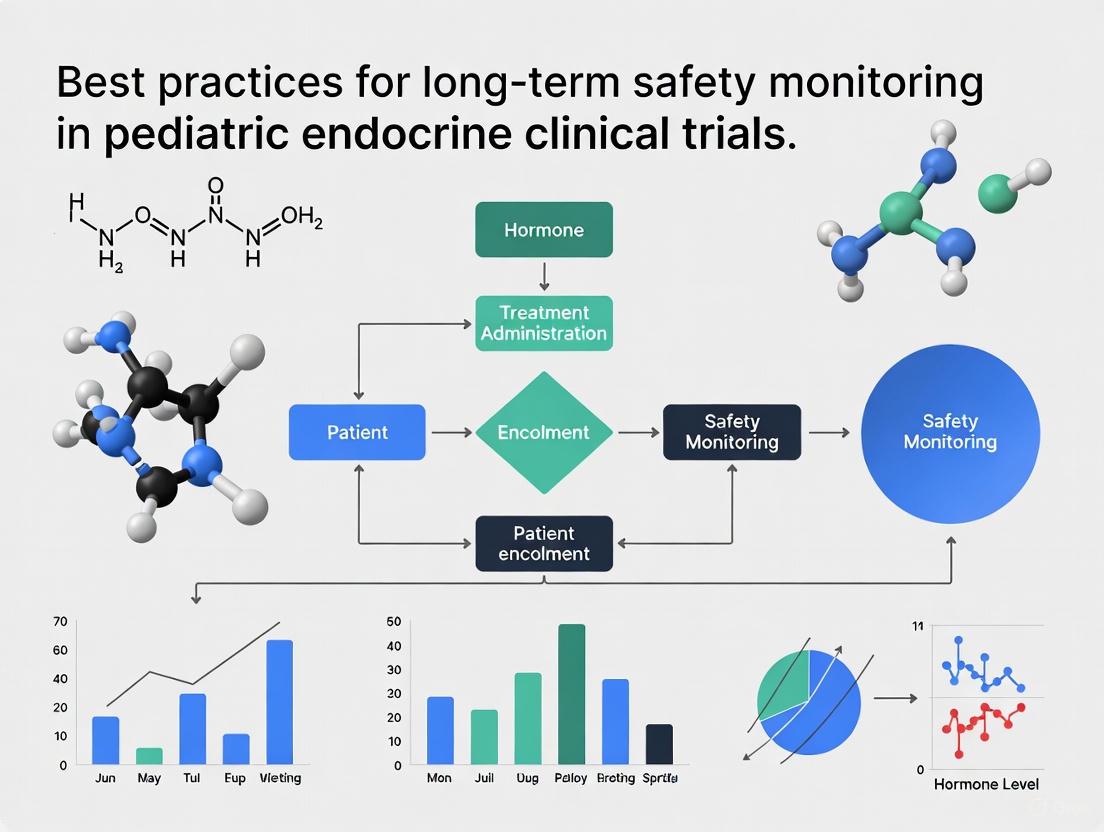
This article provides a comprehensive framework for designing and implementing robust long-term safety monitoring in pediatric endocrine clinical trials.
Ensuring Long-Term Pediatric Endocrine Drug Safety: Best Practices for Clinical Trial Monitoring and Pharmacovigilance
Abstract
This article provides a comprehensive framework for designing and implementing robust long-term safety monitoring in pediatric endocrine clinical trials. Aimed at researchers, scientists, and drug development professionals, it addresses the critical gap between the limited duration of pre-approval trials and the lifelong use of therapies for chronic childhood conditions. The content explores foundational ethical imperatives and regulatory landscapes, details practical methodological approaches for data collection, offers strategies for troubleshooting common operational and ethical challenges, and discusses frameworks for validating safety data and comparing monitoring strategies. Synthesizing recent analyses, global research priorities, and field-specific insights, this guide aims to enhance the quality of long-term safety evidence for endocrine drugs used in children.
The Imperative for Long-Term Safety Monitoring in Pediatric Endocrinology
Application Notes: The Pediatric Evidence Gap in Chronic Care
The development of safe and effective therapies for children with chronic conditions presents a unique challenge: balancing the finite duration of pre-approval clinical trials against the reality of potentially decades of lifelong treatment. This disconnect is particularly critical in pediatric endocrinology, where therapies often modify complex, lifelong developmental pathways. The following application notes synthesize current evidence and regulatory thinking to outline best practices for generating meaningful long-term safety and efficacy data.
The Scale of the Evidence Gap
Quantitative data reveal systematic challenges in the pediatric clinical trial landscape that directly impact the understanding of long-term therapy. A cross-sectional analysis of pediatric randomized clinical trials (RCTs) registered on ClinicalTrials.gov provides critical benchmarks [1].
Table 1: Completion and Reporting Rates for Pediatric Drug RCTs (Registered 2011-2013)
| Metric | Finding | Implication for Long-Term Safety |
|---|---|---|
| Trial Incompletion Rate | 16.54% of trials uncompleted [1] | Direct loss of potential long-term data on drug effects. |
| Primary Reason for Incompletion | Patient accrual issues (32.22%) [1] | Highlights recruitment challenges for chronic conditions. |
| Results Publication (Journal) | 70% of completed trials [1] | 30% non-publication rate creates evidence gaps and bias. |
| Results Reporting (Registry) | 58.48% of completed trials [1] | Regulatory non-compliance obscures data accessibility. |
| Median Time to Result Publication | 21 months [1] | Significant delays in translating research to clinical care. |
The non-publication of results, particularly for trials with negative or inconclusive findings, creates a phenomenon of publication bias [1]. This distorts the medical evidence base, impacting clinical guidelines and decision-making. For chronic pediatric conditions, where off-label drug use is frequent, this incomplete evidence profile poses significant risks for long-term patient safety [1].
Global Regulatory and Research Initiatives
Recent regulatory updates and global health initiatives emphasize modernized frameworks to address these gaps, advocating for more efficient trial designs and robust post-approval monitoring.
Table 2: Recent Regulatory and Policy Developments (2024-2025)
| Entity | Initiative/Guidance | Relevance to Long-Term Pediatric Safety |
|---|---|---|
| U.S. FDA | ICH E6(R3) GCP (Final Guidance, 2025) [2] | Introduces flexible, risk-based approaches; supports modern trial designs and technology. |
| U.S. FDA | Innovative Trial Designs for Small Populations (Draft Guidance, 2025) [2] | Recommends novel designs/endpoints for rare diseases to demonstrate effectiveness with small sample sizes. |
| U.S. FDA | Post-Approval Data Collection for Cell/Gene Therapies (Draft Guidance, 2025) [2] | Emphasizes robust long-term post-market monitoring for therapies with long-lasting effects. |
| WHO | Global Pediatric Clinical Trials Research Agenda (2025) [3] | Identifies 172 priority research questions for children 0-9 years to coordinate action and investment. |
| China NMPA | Revised Clinical Trial Policies (Effective Sept 2025) [2] | Aims to accelerate development and shorten approval timelines; allows adaptive trial designs. |
| Health Canada | Revised Draft Biosimilar Guidance (2025) [2] | Proposes removing routine requirement for Phase III efficacy trials, relying on analytical and PK/PD data. |
The World Health Organization's 2025 research agenda specifically calls for a greater focus on the inclusion of underrepresented populations, including children, to ensure research reflects global diversity [3]. This aligns with the need for long-term safety data that accounts for varied populations and healthcare settings.
Experimental Protocols for Long-Term Safety Monitoring
Building on the identified gaps and regulatory frameworks, the following protocols provide a methodological roadmap for integrating long-term safety assessment into pediatric endocrine clinical trials.
Protocol 1: Risk-Based & Decentralized Monitoring Framework
This protocol leverages modernized GCP principles to enhance participant retention and data quality over extended follow-up periods [2].
Objective: To implement a monitoring strategy that minimizes participant burden and facilitates continuous data collection in a pediatric chronic disease population.
Diagram: Pediatric Trial Long-Term Monitoring Workflow
Methodology:
- Risk-Based Monitoring (RBM): Implement a centralized monitoring system targeting verification of critical data points (e.g., primary efficacy endpoints, serious adverse events). This reduces on-site source data verification for non-critical data, focusing resources on high-risk areas [2].
- Decentralized Elements: Incorporate telehealth visits, electronic Patient-Reported Outcome (ePRO) and Clinical Outcome Assessment (eCOA) tools, and direct-to-patient shipment of study materials where feasible to reduce participant travel burden.
- Pediatric Retention Strategies:
- Age-Appropriate Communication: Utilize tailored newsletters, educational materials, and milestone celebrations.
- Flexible Scheduling: Offer clinic visits outside of school hours and during weekends.
- Minimized Burden: Streamline data collection, combining study procedures with routine clinical care where possible.
Protocol 2: Post-Approval Long-Term Follow-Up (LTFU) and Registry Integration
This protocol addresses the critical transition from pre-approval trials to ongoing post-market surveillance, as emphasized in recent draft guidances for therapies with long-lasting effects [2].
Objective: To establish a seamless framework for collecting long-term safety and effectiveness data for pediatric endocrine therapies after initial approval.
Diagram: LTFU & Registry Integration Logic
Methodology:
- Trial-Rollover Design: Pre-define an option for participants completing the core pre-approval trial to consent to enrollment in a long-term extension study or a dedicated product registry.
- Data Harmonization: Define a core dataset for long-term follow-up, aligned with regulatory requirements and standardized for integration with disease-specific natural history registries. This includes:
- Safety Endpoints: Incidence of serious adverse events, specific events of interest (e.g., impact on growth velocity, bone density, pubertal progression), and new chronic conditions.
- Effectiveness Endpoints: Long-term control of disease biomarkers, patient-reported quality of life, and functional status.
- Exploratory Endpoints: Biomarkers predictive of long-term response or late-emerging risks.
- Governance and Analysis Plan: Establish a Data Safety Monitoring Board (DSMB) for ongoing data review. Pre-specify statistical analysis plans for periodic (e.g., annual) evaluation of cumulative safety data.
The Scientist's Toolkit: Research Reagent Solutions
Table 3: Essential Materials for Advanced Pediatric Trial Conduct
| Item / Solution | Function / Application |
|---|---|
| Electronic Clinical Outcome Assessment (eCOA) | Captures patient-reported, observer-reported, and clinician-reported outcome data directly via tablet or web interface; minimizes data entry error, improves compliance. |
| Clinical Trial Management System (CTMS) | Centralized platform for managing trial operations, timelines, and site performance; critical for coordinating complex, multi-year pediatric studies. |
| Risk-Based Monitoring (RBM) Software | Enables centralized statistical monitoring of site data to identify anomalies, trends, and protocol deviations; focuses on-site monitoring efforts. |
| Electronic Data Capture (EDC) System | Secure, validated system for collecting clinical trial data; essential for ensuring data integrity and facilitating remote monitoring. |
| Long-Term Biobanking Repository | Stores biological samples (e.g., serum, DNA) for future exploratory biomarker analysis related to long-term safety and efficacy. |
| Interoperable Registry Platform | Technology enabling secure data exchange between clinical trials, product registries, and electronic health records for enriched long-term follow-up. |
| Age-Appropriate Assent Platforms | Digital or physical tools (e.g., interactive apps, booklets) designed to help children of different ages understand the trial and provide meaningful assent. |
The assessment of drug effects on pediatric growth, development, and puberty presents unique challenges that demand specialized monitoring approaches. Unlike adult populations, children undergo dynamic physiological changes that can be subtly disrupted by therapeutic interventions, potentially leading to lifelong consequences. Recent evidence highlights the particular vulnerability of developing endocrine systems to environmental and pharmaceutical exposures. Studies have identified that exposure to endocrine-disrupting chemicals (EDCs) and certain dietary sweeteners may prematurely activate reproductive pathways, with one study of 1,407 teens linking aspartame, sucralose, and glycyrrhizin consumption to increased risk of central precocious puberty, especially in genetically predisposed individuals [4] [5]. Furthermore, emerging research suggests that paternal exposures may have intergenerational effects, with grandfathers' chemical exposure associated with earlier menarche in granddaughters [6]. This application note establishes a framework for monitoring these vulnerable endpoints throughout pediatric endocrine trials, ensuring that long-term safety evaluation keeps pace with therapeutic innovation.
Quantitative Evidence: Compounds Affecting Developmental Timing
Documented Triggers of Altered Pubertal Timing
Table 1: Identified Compounds Associated with Alterations in Pubertal Timing
| Compound Category | Specific Compounds | Proposed Mechanism | Evidence Source | Key Findings |
|---|---|---|---|---|
| Artificial Sweeteners | Aspartame, Sucralose, Acesulfame Potassium (AceK) | Activation of "sweet taste" pathways in brain cells; Increased stress-related molecules; Gut microbiota alterations [4] | Taiwan Pubertal Longitudinal Study (n=1,407 teens) [4] [5] | Dose-dependent increased risk of central precocious puberty; Gender-specific effects (sucralose higher risk in boys; sucralose, glycyrrhizin & added sugars in girls) |
| Natural Sweeteners | Glycyrrhizin (from licorice) | Gut bacteria imbalance; Reduced activity of genes triggering puberty [4] | Taiwan Pubertal Longitudinal Study [4] [5] | Associated with higher risk of central precocious puberty, especially in girls |
| Endocrine-Disrupting Chemicals | Musk Ambrette (fragrance) | Activation of KISS1R and GnRHR receptors in hypothalamus [7] [8] | NIH screening of ~10,000 compounds using human cell lines [7] [8] | Activated KISS1R in neurons; Increased GnRH neurons and expression in zebrafish models |
| Prescription Medications | Cholinergic Agonists | Activation of GnRHR and KISS1R receptors [8] | NIH screening of ~10,000 compounds [8] | Identified as potential activators of puberty-related receptors |
| Environmental Chemicals | Phenoxyethanol (preservative) | Endocrine disruption with transgenerational effects [6] | Child Health and Development Studies (n=249 couples + descendants) [6] | Linked to earlier puberty when both parents had exposures; Paternal exposure showed strong influence |
Clinical Trial Endpoints for Growth and Development Assessment
Table 2: Key Efficacy and Safety Endpoints for Pediatric Growth and Development Trials
| Domain | Specific Endpoints | Measurement Frequency | Example from Literature |
|---|---|---|---|
| Growth Metrics | Annualized Height Velocity (AHV); Height Standard Deviation Score (SDS) [9] | Every 3-6 months during active growth phase; Less frequently in maintenance phases | Lonapegsomatropin trial: Mean height SDS improved from baseline to -0.39 at year 4 (n=298) [9] |
| Skeletal Maturation | Bone Age X-Ray; Assessment of accelerated skeletal maturation [9] | Annually or biannually, compared to chronological age | Lonapegsomatropin trial: No evidence of accelerated skeletal maturation reported [9] |
| Puberty Assessment | Tanner Staging; Age at menarche; Hormone levels (GnRH, kisspeptin) [4] | Every 6-12 months during peri-pubertal years | Taiwan Pubertal Longitudinal Study: Central precocious puberty diagnosed in 481/1407 teens via medical exams, hormone levels, and scans [4] |
| Metabolic Parameters | IGF-1 SDS; Hormone levels; Metabolic panels [9] | Every 6-12 months | Lonapegsomatropin trial: Mean weekly average IGF-1 remained within 0-2 SDS throughout trial [9] |
| Genetic Risk Assessment | Polygenic risk scores (19 CPP-related genes) [4] | Baseline for risk stratification | Taiwan Pubertal Longitudinal Study: Genetic predisposition quantified using polygenic risk scores [4] |
Experimental Protocols for Comprehensive Safety Monitoring
Protocol 1: Receptor-Based Screening for Pubertal Activation
Purpose: To identify compounds that activate key receptors in the reproductive axis (GnRHR and KISS1R) [7] [8].
Materials:
- Engineered human cell lines overexpressing GnRHR or KISS1R
- Test compounds (10,000-compound library)
- Zebrafish embryos for in vivo confirmation
- Molecular biology reagents for gene expression analysis
Procedure:
- Primary Screening: Expose engineered human cell lines to compound libraries measuring receptor activation.
- Dose-Response Studies: Conduct concentration-response curves for hit compounds.
- Neuronal Validation: Confirm findings in human hypothalamic neurons.
- In Vivo Translation: Treat zebrafish embryos during development; examine brain areas responsible for puberty-initiating hormones.
- Endpoint Analysis: Measure GnRH neuron count, gene expression, and anatomical changes in hypothalamic regions.
Validation Criteria: Compounds showing ≥50% receptor activation in primary screen progress to dose-response studies. In vivo effects require statistically significant expansion of hormone-producing brain areas in zebrafish.
Protocol 2: Longitudinal Pubertal Development Assessment
Purpose: To monitor pubertal progression and identify deviations from normal timing in clinical trial participants [4].
Materials:
- Validated pubertal assessment questionnaires
- Laboratory supplies for hormone measurement (GnRH, LH, FSH, estradiol, testosterone)
- Ultrasound equipment for pelvic/testicular imaging
- Genetic testing capabilities for polygenic risk scoring
Procedure:
- Baseline Assessment:
- Record comprehensive medical history including parental pubertal timing
- Collect genetic material for polygenic risk scoring (19 genes associated with central precocious puberty)
- Perform physical examination with Tanner staging
- Obtain baseline hormone levels and ultrasound measurements
Longitudinal Monitoring:
- Conduct pubertal assessments every 6 months
- Monitor growth velocity every 3-6 months
- Track sweetener/chemical exposure through validated questionnaires and urine biomarkers
- Document psychosocial functioning and quality of life
Endpoint Determination:
- Diagnose central precocious puberty using established criteria: pubertal onset <8 years (girls) or <9 years (boys) with confirmed hormonal activation
- Analyze relationship between exposures, genetic risk, and outcomes using multivariate models
Signaling Pathways and Experimental Workflows
Diagram 1: Puberty disruption pathway (46 characters)
Diagram 2: Clinical trial data workflow (32 characters)
The Scientist's Toolkit: Essential Research Reagents and Materials
Table 3: Key Research Reagent Solutions for Endocrine Development Studies
| Reagent/Material | Application | Specific Function | Example Use Case |
|---|---|---|---|
| Engineered Cell Lines | Receptor Activation Screening | Human cell lines overexpressing GnRHR or KISS1R for high-throughput compound screening [7] [8] | NIH screen of ~10,000 compounds identifying musk ambrette and cholinergic agonists as KISS1R/GnRHR activators [7] |
| Zebrafish Model System | In Vivo Validation | Vertebrate model with conserved reproductive development pathways for confirming puberty-disrupting effects [7] | Demonstration that musk ambrette expanded brain area controlling puberty-initiating hormones [7] |
| Validated Biomarker Assays | Exposure & Effect Assessment | Quantitative analysis of sweeteners, EDCs, and hormone levels in biological samples [4] | Taiwan study assessment of sweetener intake via questionnaires and urine testing [4] |
| Polygenic Risk Score Panels | Genetic Susceptibility | Customized genetic testing targeting 19 genes associated with central precocious puberty [4] | Stratification of participants by genetic risk in sweetener study [4] |
| CDISC-Compliant Data Tools | Clinical Trial Data Management | Standardized data collection (SDTM, ADaM) and analysis frameworks for regulatory-ready outputs [10] | Creation of SDTM domains (DM, AE, VS, LB) and ADaM datasets (ADSL, ADLB, ADAE) for efficient reporting [10] |
| Longitudinal Growth Analysis Software | Auxological Assessment | Specialized algorithms for calculating height velocity, SDS changes, and growth curve deviations [9] | Evaluation of lonapegsomatropin efficacy through annualized height velocity and height SDS parameters [9] |
Protecting pediatric populations from adverse endocrine effects requires sophisticated, multi-faceted monitoring approaches that account for unique developmental vulnerabilities. The protocols and frameworks presented here enable researchers to systematically evaluate potential impacts on growth, development, and pubertal timing throughout the clinical trial lifecycle. By integrating receptor-level screening, longitudinal developmental assessment, genetic risk stratification, and standardized data management, we can advance both therapeutic innovation and pediatric safety. These application notes provide a roadmap for implementing these essential safety monitoring practices, contributing to the broader thesis that robust, evidence-based frameworks are fundamental to ethical pediatric endocrine drug development.
The development of safe and effective endocrine treatments for children presents unique scientific and ethical challenges. Long-term safety monitoring in pediatric clinical trials is paramount, as children are a vulnerable population with dynamic growth and developmental processes. Two key US legislative acts, the Best Pharmaceuticals for Children Act (BPCA) and the Pediatric Research Equity Act (PREA), form a complementary framework to address these challenges [11]. The BPCA provides incentives for voluntary pediatric drug study, while PREA mandates that certain new drugs and biologics be assessed for safety and efficacy in children [12]. This foundation is critical for therapies requiring long-term administration, such as those for pediatric growth hormone deficiency (GHD), where understanding the sustained safety profile is a core component of the research agenda.
Regulatory Foundations: BPCA & PREA
Core Principles and Mandates
BPCA and PREA, though distinct in mechanism, share the common goal of generating high-quality data to guide pediatric therapeutic use [11].
- PREA (Pediatric Research Equity Act): This is a mandatory requirement. PREA mandates pediatric studies for certain new drugs and biological products. It applies to any application for a new active ingredient, new indication, new dosage form, new dosing regimen, or new route of administration. The core purpose is to ensure that new products are properly labeled for pediatric use, filling knowledge gaps about how drugs affect children [12].
- BPCA (Best Pharmaceuticals for Children Act): This is a voluntary framework that provides incentives for manufacturers to conduct pediatric studies. The primary incentive is an additional six months of marketing exclusivity for a drug, even if the studies do not result in a new pediatric label. This act is particularly important for studying on-patent and off-patent drugs that may not fall under PREA's mandates [11].
Together, these programs have significantly advanced pediatric drug development, leading to the pediatric assessment of over 500 products and improving drug safety and effectiveness for children worldwide [12].
Defining the Pediatric Population
A critical aspect of both BPCA and PREA-informed research is the recognition that "children" are not a homogeneous group. Regulations require that studies consider the following pediatric subpopulations, each with distinct physiological and metabolic characteristics [12]:
- Neonates (birth–27 days)
- Infants (28 days–23 months)
- Children (2–11 years)
- Adolescents (12–16/17 years)
This stratification is essential for designing appropriate long-term safety monitoring protocols in endocrine trials, as drug disposition and effect can vary dramatically across these developmental stages [11].
Clinical Context: Long-Acting Growth Hormone Therapies
The treatment of pediatric growth hormone deficiency (GHD) exemplifies the application of BPCA/PREA frameworks and the critical need for robust long-term safety data. The field has evolved from daily recombinant human growth hormone (rhGH) injections to long-acting growth hormone (LAGH) formulations, which reduce injection frequency from daily to weekly and aim to improve adherence and quality of life [13].
Quantitative Safety and Efficacy Data
Recent real-world and clinical trial data provide evidence for the long-term safety and efficacy of LAGH formulations. The following table summarizes key findings from two such products, PEG-rhGH (Jintrolong) and somatrogon.
Table 1: Long-Term Safety and Efficacy of Long-Acting Growth Hormone Formulations
| Parameter | PEG-rhGH (Jintrolong) - 5-Year Real-World Data [14] | Somatrogon - Phase III Clinical Trial Data [13] |
|---|---|---|
| Study Design | Real-world observational study (CGLS database), N=1,207 for safety; N=339 for 5-year efficacy | Global Phase III trial; non-inferiority design |
| Dosing | Weekly PEGylated rhGH | Once-weekly (0.66 mg/kg/wk) |
| Efficacy | Mean ∆Ht SDS: +2.1 ± 0.9 over 5 years. Better response with earlier treatment initiation. | Height Velocity (HV): 10.1 cm/yr at 12 months (vs. 9.78 cm/yr for daily somatropin). Ht SDS: Improved from -3.98 to -0.69 after 4 years. |
| Safety | Adverse Events (AEs): 46.6% incidence. Serious AEs (SAEs): 1.0% (n=12), none deemed treatment-related. | Safety profile comparable to daily somatropin. Higher prevalence of injection site pain. |
| Key Monitoring Note | N/A | IGF-1 levels fluctuate; measurement recommended on day 4 post-administration. |
Experimental Protocols for Long-Term Safety Monitoring
Based on the regulatory requirements and clinical data, the following protocol outlines a comprehensive methodology for monitoring long-term safety in pediatric endocrine trials.
Protocol: Long-Term Safety and Efficacy Monitoring in Pediatric Growth Hormone Trials
- 1. Objective: To evaluate the long-term safety, tolerability, and efficacy of [Investigational Product] in pediatric subjects with growth hormone deficiency over a [e.g., 5-year] period.
- 2. Study Population:
- Inclusion: Pediatric subjects (aged [range]) with confirmed GHD, GH-naive or specified washout period.
- Stratification: Subjects will be stratified into age cohorts per PREA subpopulations (Neonates, Infants, Children, Adolescents) for analysis.
- 3. Study Design: Long-term extension of a Phase III trial, or prospective/retrospective real-world registry (e.g., CGLS model [14]).
- 4. Key Efficacy Assessments (at baseline and each scheduled visit):
- Height: Measured using a calibrated stadiometer. Converted to Height Standard Deviation Score (Ht SDS) and Height Velocity (HV, cm/year).
- Insulin-like Growth Factor-1 (IGF-1): Measured centrally. Converted to IGF-1 SDS. For LAGH, specify timing relative to dose (e.g., day 4 post-administration for somatrogon [13]).
- Bone Age: Assessed annually via left hand and wrist radiograph (Greulich-Pyle method).
- 5. Key Safety Assessments:
- Adverse Events (AEs) & Serious AEs (SAEs): Documented continuously, categorized using MedDRA, and assessed for causality by investigators [14].
- Laboratory Parameters: Hematology, clinical chemistry, HbA1c, fasting glucose/insulin, thyroid function, anti-drug antibodies.
- Other Safety Measures: Vital signs, pubertal status (Tanner staging), fundoscopy/visual acuity.
- 6. Data Collection and Management:
- Frequency: Visits scheduled per protocol (e.g., every 3-6 months).
- Technology: Use Electronic Data Capture (EDC) systems for reliable data management [14].
Visualization of Regulatory and Safety Pathways
The following diagrams illustrate the interconnected regulatory pathways and the core workflow for long-term safety monitoring, as applied in this context.
Regulatory Pathway for Pediatric Drug Development
Long-Term Safety Monitoring Workflow
The Scientist's Toolkit: Essential Reagents and Materials
For researchers conducting long-term pediatric endocrine trials, the following tools and materials are essential for generating reliable and regulatory-compliant data.
Table 2: Key Research Reagent Solutions for Pediatric Endocrine Trials
| Item/Category | Function/Application in Pediatric Research |
|---|---|
| Calibrated Stadiometer | Precisely measures subject height for calculation of Height Velocity (HV) and Height Standard Deviation Score (Ht SDS), the primary efficacy endpoints [14]. |
| IGF-1 Immunoassay | Quantifies serum Insulin-like Growth Factor-1 levels, a critical pharmacodynamic biomarker for GH therapy. Requires age- and sex-matched normative values for SDS calculation [14] [13]. |
| Anti-Drug Antibody (ADA) Assay | Detects the development of neutralizing antibodies against biologic therapies like rhGH or LAGH, which can impact efficacy and safety [14]. |
| Bone Age Radiograph Atlas | Standardized reference (e.g., Greulich-Pyle) for assessing skeletal maturation, which can be influenced by endocrine therapies and is monitored for long-term effects. |
| Electronic Data Capture (EDC) System | Secure, compliant platform for managing large volumes of longitudinal clinical trial data from multi-center studies, as used in the CGLS registry [14]. |
| Validated Pharmacokinetic (PK) Assay | Measures drug concentration in serum over time. Crucial for characterizing the extended half-life of LAGH formulations and informing dosing intervals [13]. |
| MedDRA (Medical Dictionary for Regulatory Activities) | Standardized medical terminology for consistent categorization and reporting of adverse events (AEs) across the trial lifecycle [14]. |
The systematic evaluation of long-term drug safety in pediatric populations remains a significant challenge in clinical research and drug development. Children are not merely "small adults"; their developing organs and metabolic functions process drugs differently, which can lead to unique safety profiles and adverse drug reactions (ADRs) not observed in mature populations [15]. Despite recognition of these differences, a profound deficiency exists in the evidence base supporting the long-term use of medications in children, forcing clinicians to often rely on extrapolated adult data or limited pediatric studies [16]. This documentation gap is particularly critical in pediatric endocrine disorders, where treatments often span years during crucial developmental windows and may impact growth, metabolism, and puberty.
The designation of children as "therapeutic orphans" stems from historical underinvestment in targeted pediatric drug development [16]. A systematic analysis reveals that over 50% of medicines prescribed to children are used off-label, meaning they lack robust pediatric-specific safety and efficacy data [15]. This problem is compounded by the fact that 64% of new drugs and biologics relevant to pediatric patients still lack pediatric prescribing information within five years of FDA approval [11] [16]. In the context of endocrine trials, where treatments may influence complex hormonal pathways over years, these data gaps present substantial risks for unforeseen long-term consequences.
Quantitative Analysis of Pediatric Drug Safety Deficiencies
Recent data-driven analyses provide a stark quantification of the safety evidence gaps in pediatric pharmacotherapy. The 2025 update of the Key Potentially Inappropriate Drugs in Pediatrics (KIDs) List, a standardized tool akin to the Beers Criteria for older adults, identifies 39 specific drugs and/or drug classes and 10 excipients as potentially inappropriate for pediatric use due to elevated risks of significant ADRs [11] [17]. The development of this list involved a comprehensive review of primary, secondary, and tertiary literature, FDA safety communications, and product information, highlighting systemic safety concerns across the pediatric pharmacopeia.
Table 1: Documented Evidence Gaps in Pediatric Drug Safety
| Evidence Gap Indicator | Quantitative Measure | Implication for Pediatric Safety |
|---|---|---|
| Off-label Prescribing Rate | >50% of pediatric medications worldwide [15]; 83% in neonates [16] | Widespread use without robust age-specific safety and efficacy data |
| Lack of Pediatric Labeling | 64% of new drugs lack pediatric prescribing info within 5 years of approval [11] [16] | Critical delay in availability of evidence-based dosing and safety information |
| Preventable Adverse Drug Events (ADEs) | Up to 50% of ADRs in hospitalized pediatric patients are preventable [11] | Highlights systemic failures in safety monitoring and evidence application |
| KIDs List 2025 Update | 39 drugs/drug classes, 10 excipients identified as potentially inappropriate [17] | Specific, evidence-based catalog of high-risk therapies where alternatives should be considered |
An informatics approach integrating multiple databases—including the Merative MarketScan claims database, the Maternal and Pediatric Precision in Therapeutics (MPRINT) Knowledgebase, and the FDA Adverse Event Reporting System (FAERS)—has identified specific high-impact drugs where prescribing frequency dramatically outpaces safety evidence [16]. For example, benzonatate, a non-narcotic antitussive, had 229,550 pediatric prescriptions in the MarketScan database, yet only nine dedicated safety studies existed in the six decades since its 1958 approval, with documented serious ADRs including seizure, death, and arrhythmia [16]. This disconnect between clinical practice and supporting safety evidence underscores the critical need for enhanced long-term monitoring strategies, especially for chronic endocrine conditions requiring sustained pharmacological intervention.
Underlying Causes of Pediatric Safety Data Gaps
Ethical and Logistical Challenges in Pediatric Research
Including children in clinical trials presents unique ethical imperatives. As a vulnerable population, children cannot provide autonomous informed consent, requiring a process of parental permission and child assent [18]. The principle of protection mandates that pediatric research risks must be minimized and reasonable in relation to potential benefits, a standard rigorously enforced by institutional review boards (IRBs) and ethics committees [18]. These necessary protections, however, can create practical barriers to conducting the large-scale, long-term trials needed to identify rare or delayed adverse events.
Logistical challenges further complicate pediatric safety assessment. Low participation rates in clinical trials limit the statistical power needed to detect safety signals [15]. Furthermore, the pediatric population is not monolithic; it encompasses distinct developmental subgroups—neonates, infants, children, and adolescents—each with unique metabolic and physiological characteristics that require stratified investigation [18]. This necessity for age stratification increases trial complexity and cost. For long-term endocrine treatments, these challenges are magnified, as safety monitoring may need to track developmental milestones over many years to detect impacts on growth, bone health, or reproductive function.
Physiological and Methodological Complexities
The ontogeny of drug-metabolizing enzymes creates profound differences in how children absorb, distribute, metabolize, and eliminate medications compared to adults [16]. These developmental pharmacokinetic and pharmacodynamic variations mean that ADRs in children often manifest with greater severity and different presentations than in adults [16]. Additionally, some drug-related effects, particularly those impacting endocrine pathways, may only become apparent years after exposure, adding complexity to pediatric pharmacovigilance [15].
Traditional drug safety investigations often rely on hypothesis-driven methods based on known pharmacological mechanisms. While foundational, this approach primarily identifies "known knowns" and "known unknowns," potentially missing "unknown unknowns"—unexpected drug-ADE associations that emerge from real-world use [16]. A paradigm shift toward empirical, data-driven strategies is needed to detect these unanticipated long-term safety signals in pediatric populations, particularly for endocrine-disrupting therapies.
Emerging Frameworks and Regulatory Context
Regulatory Evolution and Incentive Structures
Recognizing these critical gaps, regulatory authorities worldwide have implemented frameworks to stimulate pediatric drug development. In the United States, the Best Pharmaceuticals for Children Act (BPCA) and the Pediatric Research Equity Act (PREA) provide a combination of incentives and mandates to encourage pediatric studies [16] [15]. These initiatives have led to more than 600 pediatric labeling changes since implementation, enhancing the availability of age-appropriate prescribing information [16]. Similar efforts include Europe's Paediatric Regulation and recent guidance from China's National Medical Products Administration on pediatric drug development [15].
The recent ICH E11A Guidance on Pediatric Extrapolation indicates that, under specific conditions, safety data can be extrapolated from adult populations to pediatric patients [19]. However, this guidance explicitly notes that developmental drug toxicity is not evaluable in adults, necessitating novel methods to address these unique pediatric safety questions [19]. In December 2025, the FDA will host a workshop on "Pediatric Developmental Safety Assessment: New Approach Methods" to discuss non-animal testing strategies that can better predict developmental risks in children [19].
Advancing Pharmacovigilance and Real-World Evidence
The growing emphasis on real-world data (RWD) represents a promising avenue for addressing long-term pediatric safety questions. The FDA's Advancing Real-World Evidence Program aims to integrate RWD into regulatory evaluations, facilitating post-approval safety monitoring in underrepresented populations like children [16]. Electronic health records (EHRs) and commercial claims data offer vast, high-dimensional datasets capturing prescribing practices, drug exposures, and patient outcomes across diverse clinical settings [16].
Table 2: Key Databases for Pediatric Drug Safety Research
| Database/Resource | Primary Function | Application in Safety Monitoring |
|---|---|---|
| FDA Adverse Event Reporting System (FAERS) | Postmarketing safety surveillance | Spontaneous reporting of adverse events; signal detection for rare ADRs [16] |
| MPRINT Knowledgebase | Curated literature repository | Classifies pharmacoepidemiology, PK, and clinical trial data from biomedical literature [16] |
| Merative MarketScan | Commercial claims database | Analyzes prescription patterns, healthcare utilization, and outcomes in insured populations [16] |
| KIDs List | Clinical practice tool | Identifies potentially inappropriate medications; informs clinical decision support [11] [17] |
Proactive safety data collection throughout the drug lifecycle—from development to market use—is essential for building a comprehensive pediatric safety framework [15]. For endocrine disorders, this might include long-term registries tracking growth velocity, bone density, metabolic parameters, and pubertal development in children exposed to specific therapies. Artificial intelligence and digital monitoring tools like wearables are emerging technologies that may enhance real-time signal detection and physiological monitoring in pediatric populations [15].
Experimental Protocols for Safety Signal Identification
Protocol 1: Data-Driven Identification of Pediatric Safety Gaps
Objective: To systematically identify and prioritize drugs with significant disparities between pediatric prescribing frequency and available safety evidence.
Methodology:
- Data Integration: Merge and analyze the following databases for pediatric populations (2016-2023):
- Merative MarketScan: Extract prescription volume data for all drugs prescribed to patients <18 years.
- MPRINT Knowledgebase: Quantify available safety evidence by classifying pharmacoepidemiology, pharmacokinetic, and clinical trial publications for each drug.
- FAERS: Analyze serious ADE reports where the drug is designated as primary or secondary suspect, restricting to healthcare professional reports in the U.S. for reliability [16].
- Prioritization Algorithm: Calculate a "Safety Evidence Gap Score" using the formula: (Prescription Volume) / (Number of Safety Publications + 1). A higher score indicates greater disparity between use and evidence.
- Signal Validation: For high-priority candidates (e.g., benzonatate [16]), conduct disproportionality analysis in FAERS using measures like Proportional Reporting Ratios (PRRs) to quantify association strength between drug and serious ADEs.
Protocol 2: Implementation of KIDs List Safeguards in Endocrine Trials
Objective: To operationalize the 2025 KIDs List recommendations within pediatric endocrine clinical research protocols to mitigate known medication risks.
Methodology:
- Gap Analysis: Cross-reference all investigational and concomitant medications in the trial protocol against the KIDs List (39 drugs/classes, 10 excipients) [17].
- System Safeguards:
- Electronic Health Record (EHR) Integration: Implement dose-range checking (DRC) alerts and clinical decision support (CDS) rules that trigger when a KIDs List medication is ordered for a pediatric participant in a contraindicated age range [17].
- Protocol-Specific Restrictions: For medications with "caution" recommendations, develop indication-based order sentences with mandatory monitoring parameters (e.g., increased blood pressure monitoring for mirabegron in children <3 years) [17].
- Monitoring Plan: Establish enhanced safety monitoring for any KIDs List medication required for trial participation, including more frequent assessment of specific ADRs (e.g., sleep disturbances for montelukast in participants ≤18 years) [17].
The Scientist's Toolkit: Research Reagent Solutions
Table 3: Essential Resources for Pediatric Drug Safety Research
| Resource/Tool | Function | Application Context |
|---|---|---|
| MPRINT Knowledgebase | Curated repository using NLP to classify pediatric pharmacology literature (93.4% precision, 95.6% recall) [16] | Rapid evidence synthesis; landscape analysis of pharmacotherapy evidence gaps |
| FDA Pediatric Safety Communications | Public notifications of emerging safety concerns in pediatric populations [11] | Signal identification for protocol development; risk-benefit assessment |
| KIDs List (2025 Edition) | Evidence-based list of potentially inappropriate drugs and excipients for pediatrics [11] [17] | Clinical trial safety planning; EHR clinical decision support configuration |
| Real-World Data (EHR, Claims) | High-dimensional datasets capturing drug exposures and outcomes in routine practice [16] | Postmarketing safety studies; natural history comparators for long-term outcomes |
Substantial deficiencies in long-term pediatric drug safety data represent a critical challenge in child health, particularly for endocrine disorders requiring sustained therapeutic intervention. The quantitative evidence of these gaps—from widespread off-label use to the identification of specific high-risk medications—demands a systematic response. Addressing this status quo requires a multi-faceted approach: leveraging emerging regulatory frameworks, advancing data-driven methodologies for signal detection, and implementing practical safeguards like the KIDs List in research protocols. For pediatric endocrine research specifically, the development of targeted, long-term monitoring strategies that account for the developmental impacts of therapies on growth and maturation is not merely an academic exercise but an ethical imperative to ensure the safety of our most vulnerable patients.
The establishment of robust, pediatric-specific safety endpoints is a critical component of clinical trials for endocrine disorders in children. Unlike adult populations, children present unique challenges as they are in a constant state of growth and development, making traditional safety monitoring insufficient. The high failure rate of pediatric trials—up to 42% of studies performed under the Best Pharmaceuticals for Children Act (BPCA) failed to achieve an indication—underscores the necessity for optimized trial design, including the selection of appropriate endpoints [20]. Endocrine trials, in particular, require meticulous long-term safety monitoring because interventions can fundamentally alter a child's growth trajectory, bone health, and metabolic homeostasis. This document, framed within a broader thesis on best practices for long-term safety monitoring, outlines the core safety outcomes and detailed protocols essential for ensuring the well-being of pediatric participants in endocrine clinical research.
Core Safety Endpoints in Pediatric Endocrine Trials
The selection of endpoints must reflect the developmental context of the pediatric population. Key safety concerns in endocrine trials often revolve around impacts on linear growth, skeletal integrity, and metabolic function. The following sections detail these core endpoints, supported by quantitative data where available.
Growth Velocity
Linear growth is a fundamental indicator of overall health and development in children. Disruptions from endocrine therapies can have irreversible consequences.
Table 1: Key Parameters for Monitoring Growth Velocity
| Parameter | Description | Measurement Method | Frequency | Contextual Data |
|---|---|---|---|---|
| Height/Length | Measure of linear growth | Stadiometer or infantometer | Every 3-6 months | Compare to age- and sex-specific z-scores [21] |
| Height Velocity | Annualized growth rate (cm/year) | Calculated from serial height measurements | Annually | Peak Height Velocity: ~13.1 yrs (AA boys), ~13.4 yrs (non-AA boys), ~11.0 yrs (AA girls), ~11.6 yrs (non-AA girls) [22] |
| Height Z-score | Standard deviation score relative to population mean | Calculated using CDC or WHO growth charts | Every 6 months | Detects deviations from growth trajectory [21] |
| Bone Age | Skeletal maturation assessment | Left hand and wrist X-ray | Annually | Identifies discrepancies between skeletal and chronological age |
Bone Density and Accrual
The bone mass achieved by young adulthood is a critical determinant of lifelong skeletal health. Endocrine treatments can interfere with the complex process of bone modeling and accrual.
Table 2: Bone Accrual Metrics and Normative Longitudinal Data
| Metric | Technique | Sites | Key Longitudinal Findings from BMDCS |
|---|---|---|---|
| Bone Mineral Content (BMC) | Dual-Energy X-ray Absorptiometry (DXA) | Whole Body (WB), Lumbar Spine, Femur | At age 7, children have 69.5-74.5% of maximal height but only 29.6-38.1% of maximal WB-BMC [22]. |
| Areal Bone Mineral Density (aBMD) | DXA | Whole Body, Lumbar Spine, Femur, Forearm (1/3 radius) | Adolescents gain 32.7-35.8% of maximal WB-BMC during the 2 years before and after peak height velocity [22]. |
| Bone Accrual Velocity | Serial DXA scans (g/year) | Whole Body | 6.9-10.7% of maximal WB-BMC is accrued after linear growth has ceased (velocity <1 cm/year) [22]. |
Metabolic Parameters
Endocrine systems are intrinsically linked to metabolism. Safety monitoring must therefore include a comprehensive metabolic panel to detect adverse shifts.
Table 3: Essential Metabolic Safety Parameters
| Parameter Category | Specific Biomarkers | Significance in Pediatric Trials |
|---|---|---|
| Glucose Metabolism | Fasting Glucose, Insulin, HbA1c, Oral Glucose Tolerance Test (OGTT) | Monitors for drug-induced insulin resistance or diabetes. |
| Lipid Metabolism | Total Cholesterol, LDL-C, HDL-C, Triglycerides | Assesses impact on cardiovascular risk profile. |
| Bone Metabolism | Bone-specific Alkaline Phosphatase (BSAP), Deoxypyridinoline (DPD) | BSAP (formation) and DPD (resorption) are confounded by growth; 77-80% of variability explained by sex, Tanner stage, WB-BMC, and growth velocity [21]. |
| Electrolytes & Renal | Sodium, Potassium, Calcium, Phosphate, Creatinine, eGFR | Evaluates renal function and mineral homeostasis, often affected by endocrine drugs. |
| Liver Function | ALT, AST, ALP, Bilirubin | Critical for drugs metabolized by the liver. |
Detailed Experimental Protocols for Endpoint Assessment
Protocol for Assessing Linear Growth and Bone Accrual
This protocol integrates anthropometry and DXA to provide a comprehensive assessment of physical development and skeletal health.
Objective: To accurately measure and monitor linear growth velocity and whole-body bone mineral content accrual in pediatric participants over the course of a clinical trial.
Materials and Reagents:
- Stadiometer: A wall-mounted, precision stadiometer (e.g., Holtain Ltd.) calibrated to measure height to the nearest 0.1 cm.
- DXA Scanner: A dual-energy X-ray absorptiometry system (e.g., Hologic Delphi series).
- Calibration Phantoms: Hydroxyapatite spine phantom for daily calibration; whole-body phantom for weekly quality control.
- Software: Manufacturer-specific analysis software (e.g., Hologic Apex).
Procedural Workflow:
- Pre-Visit Preparation: Schedule visits to minimize diurnal variation. Calibrate the stadiometer and DXA scanner according to manufacturer and institutional protocols.
- Height Measurement: The participant should be in light clothing without shoes. Position the participant on the stadiometer with heels together, back straight, and head in the Frankfort horizontal plane. Lower the headplate firmly onto the crown of the head. Record the measurement to the nearest 0.1 cm. Perform triplicate measurements and calculate the mean.
- DXA Scan Acquisition: Position the participant supine on the DXA scanning table according to the manufacturer's guidelines for a whole-body scan. Ensure the participant remains still during the scan to prevent motion artifact.
- Scan Analysis: Analyze the scan using the predefined regions of interest (ROI) for whole-body BMC and lean soft tissue mass. All scans should be analyzed by a central, certified DXA core laboratory to minimize inter-observer variability.
- Data Calculation:
- Height Velocity: Calculate the change in height (cm) over a standardized 12-month period.
- BMC Accrual Velocity: Calculate the change in whole-body BMC (g) over the same period.
- Z-score Derivation: Calculate height-for-age and WB-BMC-for-height z-scores using appropriate reference data (e.g., BMDCS reference data) [22] [21].
Protocol for Biomarker Analysis in Bone Metabolism
This protocol outlines the standardized collection and analysis of key biochemical markers of bone turnover.
Objective: To reliably measure serum bone-specific alkaline phosphatase (BSAP) and urinary deoxypyridinoline (DPD) for assessing bone formation and resorption activity.
Materials and Reagents:
- Bone Formation: Serum separator tubes (SST), equipment for serum processing (centrifuge), freezer (-80°C) for storage.
- Bone Resorption: Collection cups for second morning void urine, freezer (-80°C) for storage.
- Assay Kits: Validated immunoassay for BSAP (e.g., immunoradiometric assay) and for urinary DPD (e.g., high-performance liquid chromatography - HPLC).
- Analyzer: Platform appropriate for the chosen assay (e.g., HPLC system, IRMA analyzer).
Procedural Workflow:
- Sample Collection:
- BSAP (Serum): Collect non-fasting blood sample via venipuncture into an SST. Allow blood to clot for 30 minutes. Centrifuge at 1000-2000 RCF for 10 minutes. Aliquot serum into cryovials and store at -80°C until batch analysis.
- DPD (Urine): Instruct the participant to collect the second morning void urine sample into a provided cup. Aliquot the urine into cryovials and store at -80°C. Note: DPD is stable in urine long-term [21].
- Sample Analysis:
- BSAP: Analyze serum samples using a two-site immunoradiometric assay. Report results in µg/L.
- DPD: Analyze urine samples using HPLC. Simultaneously measure urine creatinine concentration. Report DPD as a ratio to creatinine (nmol/mmol creatinine).
- Data Interpretation: Interpret results in the context of the participant's sex, Tanner stage, height velocity, and baseline WB-BMC, as these factors explain the majority of variability in bone biomarker levels in healthy children [21].
The Scientist's Toolkit: Research Reagent Solutions
Table 4: Essential Materials for Pediatric Endpoint Assessment
| Item | Function/Application | Example & Specifications |
|---|---|---|
| Precision Stadiometer | Accurate, reproducible measurement of linear growth. | Holtain Stadiometer; measures to nearest 0.1 cm. |
| DXA System | Non-invasive assessment of bone mineral content (BMC), areal BMD (aBMD), and body composition. | Hologic QDR4500A/Delphi A; requires daily calibration with spine phantom. |
| BSAP Immunoassay | Quantification of bone-specific alkaline phosphatase, a biomarker of osteoblast activity and bone formation. | Two-site immunoradiometric assay (IRMA); inter-assay CV <8.5% [21]. |
| HPLC System | Precise separation and quantification of urinary deoxypyridinoline (DPD), a specific biomarker of bone resorption. | High-Performance Liquid Chromatography; inter-assay CV <7.8% [21]. |
| Tanner Stage Questionnaire | Standardized, non-invasive assessment of pubertal maturation. | Validated self-assessment questionnaire or clinician assessment [21]. |
| Centralized DXA Analysis | Minimizes inter-site and inter-operator variability in DXA scan analysis across multi-center trials. | A dedicated DXA Core Laboratory using standardized software (e.g., Hologic Apex) [22]. |
Ensuring the long-term safety of pediatric participants in endocrine trials demands a sophisticated, multi-system approach. As evidenced by regulatory analyses, trial success is significantly enhanced when endpoint selection is deliberate and scientifically sound [20]. The core endpoints of growth velocity, bone density, and metabolic parameters are not isolated metrics but are deeply interconnected. A therapy that impairs linear growth will inevitably affect bone accrual, and a shift in metabolic parameters can influence both. Furthermore, the interpretation of these endpoints, particularly bone biomarkers, must be rigorously adjusted for confounding factors like growth and maturation [21]. By adopting the detailed application notes and protocols outlined in this document, researchers can build a robust safety monitoring framework. This framework is essential not only for protecting children in clinical trials but also for defining the long-term risk-benefit profile of new endocrine therapies, ultimately ensuring that approved treatments support, rather than disrupt, healthy development.
Designing and Implementing Robust Long-Term Monitoring Protocols
Within pediatric endocrine clinical research, establishing robust frameworks for long-term safety and efficacy monitoring is paramount. Long-Term Extension (LTE) studies and registry-based randomized controlled trials (rRCTs) represent two methodological approaches that, when strategically integrated, can significantly enhance evidence generation for chronic conditions like type 1 diabetes and growth disorders. LTE studies, often originating from initial short-term randomized controlled trials (RCTs), provide critical data on the sustained effects of interventions but typically lack a concurrent internal control group, creating analytical challenges [23]. Conversely, rRCTs utilize existing organized data systems to efficiently conduct pragmatic trials, offering advantages in cost, recruitment speed, and real-world generalizability [24] [25]. This document outlines application notes and protocols for integrating these designs, specifically within the context of pediatric endocrine research, to establish best practices for long-term monitoring.
Background and Definitions
Long-Term Extension (LTE) Studies
LTE studies are typically open-label, uncontrolled follow-on studies from initial RCTs, allowing participants continued access to the investigational treatment. In pediatric trials, a key ethical consideration is the unwillingness to administer long-term placebos, making single-arm LTE designs a common, though methodologically challenging, choice [23]. The primary threat to validity in LTE studies is the absence of a contemporaneous internal control group, which complicates the attribution of observed outcomes solely to the treatment, as outcomes can be influenced by changing patient characteristics, natural disease history, and other external factors [23].
Registry-Based Randomized Controlled Trials (rRCTs)
An rRCT is a pragmatic trial that uses a patient registry as a platform to facilitate some or all key trial procedures, including patient identification, randomization, baseline data collection, and follow-up outcome ascertainment [25]. Registries are defined as "organized system[s] that use observational study methods to collect data (clinical and other) to evaluate specified outcomes for a population defined by a particular disease, condition, or exposure" [25]. A recent systematic review identified that rRCTs are most frequently conducted in the domains of medical devices/surgical procedures and drugs [24].
Table 1: Key Characteristics of LTE Studies and rRCTs
| Feature | Long-Term Extension (LTE) Study | Registry-Based RCT (rRCT) |
|---|---|---|
| Primary Purpose | Assess long-term safety & efficacy after an initial RCT [23] | Combine advantages of randomization (internal validity) with efficient, real-world data collection (external validity) [24] |
| Typical Design | Often single-arm, open-label [23] | Randomized, can be pragmatic or explanatory [25] |
| Control Group | Lacks concurrent internal control; may use external controls [23] | Uses internal control group (e.g., standard of care) identified and followed via the registry [25] |
| Data Source | Primarily protocol-specified study visits [23] | Primarily pre-existing registry data, sometimes supplemented with additional collection [24] |
| Key Challenge | Risk of confounding due to lack of a control group [23] | Data quality, completeness, and uniformity across registry sites [25] |
Integrated Protocol Architecture: LTE Studies and Registries
The integration of LTE studies with disease registries provides a powerful architecture to overcome the limitation of single-arm LTE designs. This model uses the registry to construct an external control cohort composed of patients who are comparable to those in the LTE but did not receive the investigational treatment.
Conceptual Workflow for Integration
The following diagram illustrates the logical workflow for integrating an LTE study with a disease registry to create an external control group.
Application Notes for Pediatric Endocrinology
The integration architecture is particularly relevant for pediatric conditions requiring lifelong management. For instance, in trials for novel insulins or agents like teplizumab (a therapy to delay progression of type 1 diabetes), an integrated design can address critical long-term questions [26]. The registry can provide data on standard clinical outcomes (e.g., HbA1c trends, severe hypoglycemia rates, growth velocity, pubertal progression) and safety events (e.g., adverse events related to immune modulation) from a comparable population not receiving the intervention, thus providing a benchmark for the LTE findings [23] [26].
Experimental Protocols and Methodologies
Protocol: Constructing an External Control Group from a Registry
This protocol details the steps for creating a valid external control group for a pediatric endocrine LTE study.
1. Define Registry Fitness-for-Purpose:
- Objective: Assess whether the candidate registry is suitable for the research question.
- Methods:
- Evaluate data elements against a pre-specified critical variable list (e.g., baseline auxology, pubertal Tanner stage, relevant lab values, prior treatment history).
- Quantify data completeness and quality through a feasibility analysis; a specific pilot analysis of the registry data is recommended [25].
- Confirm the registry population includes sufficient patients meeting the LTE study's key inclusion/exclusion criteria.
2. Design: Patient Selection and Matching:
- Objective: Identify a control cohort from the registry that is comparable to the LTE treatment cohort.
- Methods:
- Apply the same core eligibility criteria as the original RCT/LTE to the registry population.
- Use statistical techniques like propensity score matching to balance the treatment and external control groups on known confounders (e.g., age, sex, disease duration, baseline severity) [23].
- Account for temporal differences (e.g., evolving standard of care) by selecting contemporaneous registry patients or using statistical adjustment.
3. Outcome Ascertainment and Bias Mitigation:
- Objective: Ensure outcomes are measured and defined identically across the LTE and registry groups.
- Methods:
- Harmonize endpoint definitions. For example, "severe hypoglycemia" must have a consistent operational definition in both datasets [23].
- Assess and account for differential outcome ascertainment. Protocol-driven lab tests in an LTE may be more frequent than routine clinical testing in a registry, potentially leading to information bias [23].
- Pre-specify all outcome analysis plans to minimize reporting bias [27].
Protocol: Conducting a Registry-Based RCT (rRCT)
This protocol outlines the methodology for embedding a randomized trial within a pediatric endocrine registry.
1. Registry Setup and Trial Embedding:
- Objective: Leverage the registry infrastructure for trial procedures.
- Methods:
- Recruitment: Use the registry to identify potentially eligible participants, often through automated screening [25].
- Randomization: Implement a randomization module within the registry platform. This can be done centrally, with allocation concealed from investigators and patients [25].
- Baseline Data: Utilize data already captured in the registry (e.g., demographic, clinical history) to populate baseline characteristics, reducing duplication of effort.
2. Intervention and Follow-Up:
- Objective: Execute the trial intervention and collect outcome data.
- Methods:
- The intervention (e.g., a new drug, device, or care pathway) is administered according to the trial protocol.
- Follow-up: Outcome data are primarily collected through the registry's routine data collection processes (e.g., annual visits, linked electronic health records, claims data). This is a key source of efficiency [24] [25].
- For outcomes not routinely captured by the registry, targeted supplementary data collection may be necessary [24].
3. Data Management and Analysis:
- Objective: Ensure data quality and analyze results according to pre-specified plans.
- Methods:
- Implement quality assurance checks specific to the trial, even when using registry data [25].
- Conduct the primary analysis based on the intention-to-treat principle, using data from all randomized participants as captured by the registry.
Table 2: Quantitative Overview of rRCT Implementation (Based on a 2024 Review of 102 rRCTs) [24]
| Characteristic | Category | Number of rRCTs (%) |
|---|---|---|
| Study Domain | Medical Device or Surgical/Clinical Procedures | 45 (44.1%) |
| Drugs | 30 (29.4%) | |
| Health Service/Public Health | 23 (22.5%) | |
| Occupational Health | 4 (3.9%) | |
| Geographical Scope | Nordic Countries | 58 (56.9%) |
| United States of America | 18 (17.6%) | |
| Canada | 9 (8.8%) | |
| Multinational | 6 (5.9%) | |
| Data Collection | Used a mixed approach (registry + other sources) | 53 (52.0%) |
| Registry Contribution | Data Collection & Study Follow-up | 90-92 |
| Patient Recruitment | 56-61 | |
| Randomization | 28-38 |
The Scientist's Toolkit: Research Reagent Solutions
For researchers designing and conducting integrated LTE-registry studies or rRCTs in pediatric endocrinology, the following "toolkit" of methodological solutions is essential.
Table 3: Essential Research Reagent Solutions for Integrated Trial Designs
| Toolkit Item | Function & Application |
|---|---|
| Disease Registry (e.g., Type 1 Diabetes Exchange, GROW) | Serves as the platform for patient identification, external control construction, and long-term outcome data collection. Provides real-world context and efficiency [24] [25]. |
| External Control Group Methodology | Provides a counterfactual benchmark for single-arm LTE studies, enabling comparative assessment of long-term safety and effectiveness. Mitigates the major limitation of the single-arm design [23]. |
| Propensity Score Matching/Analysis | A statistical method used to create balance between a non-randomized external control group and the treatment group on measured baseline covariates, reducing selection bias [23]. |
| StaR Child Health Standards | Evidence-based guidelines for pediatric clinical trials. Provide critical guidance on ethical consent/assent, age-group classification, outcome selection, and minimizing risk of bias, all crucial for high-quality pediatric research [27]. |
| CONSORT-ROUTINE Checklist | An extension of the CONSORT statement for reporting RCTs conducted using cohorts and routinely collected data (like registries). Ensures transparent and complete reporting of rRCTs and integrated studies [25]. |
| Data Quality Assurance Plan | A pre-specified plan to verify the accuracy, completeness, and consistency of registry data used for trial endpoints. Critical for maintaining the integrity of the trial's conclusions [25]. |
Considerations for Pediatric Endocrine Research
The integration of these methodologies must be guided by the unique ethical and practical considerations of pediatric research.
- Ethical and Regulatory Frameworks: Adherence to guidelines from the Pediatric Endocrine Society (PES) and regulations like the Best Pharmaceuticals for Children Act (BPCA) and Pediatric Research Equity Act (PREA) is mandatory [27] [26]. These emphasize the need for long-term safety surveillance and the ethical imperative to minimize burden while generating evidence for pediatric populations.
- Age-Stratified Design: Pediatric trials must account for developmental heterogeneity. Protocols should stratify by age groups (e.g., pre-pubertal, pubertal) as recommended by StaR Child Health, as drug pharmacokinetics, safety profiles, and outcome measures can vary significantly [27].
- Outcome Selection: Endpoints must be valid, reliable, and relevant across the pediatric age spectrum. For endocrine trials, this can include dynamic measures of growth (height velocity bone age), pubertal progression, quality of life, and biomarkers of disease control (e.g., HbA1c, stimulated C-peptide) [27] [26].
The following diagram maps the key stakeholder considerations and operational workflows specific to pediatric endocrine research.
Determining Optimal Trial Duration and Follow-Up Frequency for Endocrine-Specific Outcomes
Long-term safety monitoring is a critical yet complex component of pediatric endocrine clinical trials. The extended developmental timeline from infancy through adolescence necessitates specialized trial designs that capture both efficacy and safety outcomes specific to growing individuals. This document provides application notes and detailed protocols to guide researchers in determining optimal trial duration and follow-up frequency for endocrine-specific outcomes, with emphasis on growth hormone therapies and emerging precision treatments. These frameworks are designed to address the unique challenges of pediatric endocrine research, including longitudinal growth assessment, pubertal development influences, and long-term metabolic safety.
Current Evidence and Quantitative Data Synthesis
Trial Duration and Follow-Up Patterns from Recent Studies
Analysis of recent clinical trials and consensus guidelines in pediatric endocrinology reveals consistent patterns in study design for endocrine-specific outcomes. The following table synthesizes quantitative data on trial durations and monitoring frequencies across key endocrine conditions.
Table 1: Trial Duration and Monitoring Frequency in Pediatric Endocrine Studies
| Condition/Therapy | Trial Phase | Primary Efficacy Duration | Long-Term Extension | Key Assessment Frequency | Evidence Source |
|---|---|---|---|---|---|
| Vosoritide for Achondroplasia | Phase III | 52 weeks (initial efficacy) | Up to 7 years (safety & sustained efficacy) | Height velocity: Annually; Safety: Continuous | [28] |
| Growth Hormone Deficiency (pGHD) | Clinical Practice (Post-Marketing) | 1 year (initial growth response) | Up to 38 years (long-term surveillance) | IGF-1: Regular intervals; Height: Every 3-6 months | [29] |
| General Pediatric Endocrine Trials | N/A | N/A | N/A | Consistent with CONSORT 2025 reporting standards for complete transparency | [30] |
Critical Endocrine-Specific Outcome Metrics
The selection of appropriate outcome metrics is fundamental to determining optimal trial duration. Pediatric endocrine trials must capture both short-term biochemical responses and long-term auxological and developmental outcomes.
Table 2: Core Outcome Measures and Their Temporal Characteristics in Pediatric Endocrine Trials
| Outcome Category | Specific Metrics | Short-Term Assessment (<1 Year) | Medium-Term Assessment (1-4 Years) | Long-Term Assessment (>4 Years) |
|---|---|---|---|---|
| Growth Velocity | Annualized height velocity (cm/year), Height Z-scores | Primary outcome | Sustainability of effect | Final adult height |
| Biochemical Markers | IGF-1 levels, Glucose metabolism, Bone turnover markers | Pharmacodynamic response, Safety | Tracking with pubertal status | Long-term metabolic safety |
| Skeletal Maturation | Bone age (Greulich-Pyle or Tanner-Whitehouse methods | Not primary focus | Critical for assessing impact on growth potential | Final bone age vs. final height |
| Safety & Tolerability | Injection site reactions, Antibody development | Acute tolerability profile | Chronic effects, Adherence impact | Long-term safety profile |
| Quality of Life | Disease-specific QoL measures, Patient-reported outcomes | Baseline establishment | Changes with growth and social demands | Adult transition outcomes |
Methodological Protocols for Trial Design
Protocol 1: Determining Minimum Trial Duration for Efficacy Endpoints
Objective: To establish a scientifically justified minimum trial duration for capturing primary efficacy endpoints in growth-modifying therapies.
Background: Trial duration must be sufficient to demonstrate a clinically meaningful treatment effect beyond normal growth variability. Short-term outcomes (1 year) are often used for regulatory approval, but longer durations are needed to assess sustainability.
Procedural Workflow:
Step-by-Step Methodology:
- Endpoint Definition: Clearly define the primary efficacy endpoint (e.g., change in height standard deviation score [SDS], annualized growth velocity).
- Natural History Analysis: Review longitudinal growth data from untreated historical cohorts to understand the expected growth trajectory and variability for the specific condition. For achondroplasia, this includes the well-documented achondroplasia growth charts [28].
- Effect Size Determination: Based on preclinical data and early-phase trials, establish the minimum clinically important difference (MCID). For growth velocity in growth hormone deficiency, this is typically 2-3 cm/year over baseline [29].
- Power Calculation: Conduct sample size calculations that account for the anticipated effect size, within-subject variability, and expected dropout rates. The CONSORT 2025 statement mandates explicit reporting of all assumptions supporting these calculations [30].
- Pubertal Status Integration: Stratify the analysis or adjust the sample size to account for heterogeneous pubertal timing in the cohort, which significantly impacts growth velocity.
- Duration Finalization: Set the minimum duration required to detect the MCID with sufficient power (typically ≥80%). For many growth-related therapies, a 1-year duration is standard for initial efficacy, but longer periods (2+ years) are needed to assess impact on height SDS.
Protocol 2: Establishing Follow-Up Frequency for Safety Monitoring
Objective: To create a risk-based monitoring schedule for detecting acute, intermediate, and long-term safety signals in pediatric endocrine trials.
Background: Safety monitoring must be frequent enough to detect adverse events with varying latencies, from immediate injection reactions to long-term metabolic effects, without imposing an undue burden that affects adherence.
Procedural Workflow:
Step-by-Step Methodology:
- Risk Categorization: Classify potential risks based on mechanism of action, preclinical findings, and class effects:
- Acute Risks (e.g., injection site reactions, hypoglycemia with insulin therapy): Monitor for the first 1-3 months.
- Intermediate Risks (e.g., impact on IGF-1 levels, antibody formation, thyroid function): Monitor every 3-6 months.
- Long-term Risks (e.g., impact on bone maturation, metabolic health, body composition): Monitor annually.
- Schedule Development: Create a tiered assessment schedule integrated into the trial protocol. For example, in vosoritide trials, initial frequent monitoring transitions to 6-month and then annual assessments for long-term follow-up [28].
- Trigger-Based Actions: Predefine thresholds that trigger more intensive monitoring (e.g., more frequent IGF-1 testing if levels exceed +2 SDS) or protocol-specified actions.
- Long-Term Follow-Up Planning: Design extended follow-up phases, either within the trial or through separate registry studies, to track outcomes like final adult height and metabolic health, as demonstrated in long-term growth hormone surveillance studies [29].
The Scientist's Toolkit: Research Reagent Solutions
Successful implementation of endocrine trial protocols requires specialized reagents and assays. The following table details essential research tools for monitoring endocrine-specific outcomes.
Table 3: Essential Research Reagents and Materials for Pediatric Endocrine Trials
| Reagent/Material | Primary Function | Application Context | Technical Notes |
|---|---|---|---|
| IGF-1 Immunoassays | Quantifies serum IGF-1 levels | Pharmacodynamic monitoring of GH therapy; safety profiling | Use age- and puberty-specific reference ranges; critical for dose monitoring [29] |
| Growth Hormone Assays | Measures endogenous and exogenous GH levels | Diagnostic confirmation, compliance monitoring, safety | Distinguish endogenous from recombinant forms when possible |
| Bone Age Assessment Kit | Standardized left hand/wrist radiographs | Skeletal maturation monitoring | Must use standardized method (e.g., Greulich-Pyle) by blinded reviewers |
| Disease-Specific Biomarker Assays | Measures target engagement biomarkers | Precision medicine trials (e.g., CNP analogs for achondroplasia) | Essential for confirming mechanism of action in novel therapies [28] |
| Standardized Height/Harpenden Stadiometer | Precise auxological measurement | Primary efficacy outcome (growth velocity) | Requires rigorous calibration and trained personnel to minimize error |
| Biobanking Supplies | Long-term storage of serial samples | Future biomarker discovery & retrospective analysis | Aliquots of serum, plasma, DNA at all key time points |
Integrated Monitoring Framework and Consensus Recommendations
Synthesizing evidence from recent guidelines and clinical trials, the following diagram illustrates an integrated framework for determining trial duration and follow-up frequency, contextualized within the broader pediatric endocrine research lifecycle.
Consensus Recommendations:
- Adopt a Phased Monitoring Approach: Implement intensive safety and pharmacodynamic monitoring in early phases, transitioning to efficacy-focused assessments in Phase III, with long-term surveillance for final outcomes and rare adverse events.
- Align with International Guidelines: Follow emerging consensus statements, such as those for vosoritide therapy, which provide practical frameworks for monitoring from treatment initiation through cessation [28].
- Ensure CONSORT 2025 Compliance: Adhere to updated reporting standards, including transparent description of outcome measurement variables, analysis metrics, method of aggregation, and time points for each outcome [30].
- Plan for Long-Term Data Collection: Design trials with embedded extension phases or seamless transition to post-marketing registries to capture critical long-term outcomes like final adult height and bone health.
- Implement Standardized Auxological Methods: Ensure all clinical sites use harmonized, rigorously calibrated equipment and trained personnel for height and weight measurements, as these constitute primary endpoints in most growth-related trials.
Selecting Sensitive Biomarkers and Non-Invasive Tools for Continuous Safety Assessment
The utilization of sensitive biomarkers and non-invasive tools is fundamental for advancing safety assessment in pediatric endocrine clinical trials. Children are not merely small adults; their ongoing physiological development, or ontogeny, directly influences disease evolution, biomarker expression, and therapeutic response [31]. This ontogeny necessitates a pediatric-specific framework for biomarker selection and validation, as standards derived from adult populations are often misaligned with pediatric physiology [31]. Continuous, long-term safety monitoring in this vulnerable population is further challenged by the invasive nature of repeated blood sampling, which can be distressing and impractical. The emergence of non-invasive wearable devices (WDs) offers a paradigm shift, enabling the collection of continuous, real-world data on a child's physiological status, thereby supporting personalized safety assessment and improving the quality of clinical trial data [32].
This document provides detailed application notes and protocols for selecting and applying sensitive biomarkers and non-invasive tools within the specific context of long-term pediatric endocrine research. It emphasizes practical methodologies, the critical consideration of developmental age, and the integration of novel technologies to optimize patient safety and data integrity.
Foundational Concepts and Selection Criteria
The Impact of Ontogeny on Biomarker Interpretation
Human development is a complex, non-linear process that profoundly affects organ function and drug disposition. Consequently, the interpretation of any biomarker in children must be referenced against age-specific norms [31].
- Renal Function: Serum creatinine, a widely used biomarker for glomerular filtration rate (GFR), demonstrates dramatic changes from infancy to adulthood. At birth, levels are elevated, reflecting maternal contribution, and then decrease postnatally as renal function matures. Adult-level GFR is not achieved until approximately one year of age [31]. Therefore, using a single reference value for all children is invalid.
- Hepatic Function: Enzymes such as γ-glutamyltransferase (GGT) have normal values in neonates and young children that are several times higher than adult levels. Similarly, alanine aminotransferase (ALT) levels are influenced by age, sex, and weight, underscoring the need for multi-factorial reference ranges [31].
- Hematological and Endocrine Profiles: Hemoglobin values and blood pressure norms are intrinsically age-dependent, and their interpretation requires standardized pediatric growth charts and percentile curves [31]. Failure to use appropriate references can lead to misdiagnosis and incorrect safety assessments.
Classification and Application of Biomarkers
Biomarkers serve as measurable indicators of biological processes, pathogenic states, or pharmacological responses to therapeutic intervention [33]. Their strategic application accelerates scientific discovery and enables precision medicine.
Table 1: Biomarker Classification and Clinical Utility in Pediatric Endocrinology
| Biomarker Type | Role in Clinical Trials | Pediatric Endocrine Example |
|---|---|---|
| Diagnostic | Confirms a specific disease or condition | Thyroid-stimulating hormone (TSH) and Free T4 for congenital hypothyroidism |
| Prognostic | Provides information on the likely course of a disease | C-peptide levels at diagnosis of Type 1 Diabetes to predict residual beta-cell function |
| Predictive | Identifies likelihood of response to a specific treatment | Genetic markers (e.g., GNAS mutations) to predict response to growth hormone therapy in certain conditions |
| Pharmacodynamic | Monifies a biological response to a therapeutic intervention | Hemoglobin A1c (HbA1c) for monitoring glycemic control in response to new insulins or medications |
| Safety | Monitors for potential drug-induced toxicity | Serum creatinine for renal function, alanine aminotransferase (ALT) for hepatic function |
Selecting Biomarkers for Pediatric Endocrine Trials
Established and Emerging Safety Biomarkers
The selection of biomarkers must be guided by the mechanism of action of the investigational product and its known or potential toxicities. In endocrine trials, this often involves monitoring metabolic, hepatic, and renal pathways.
Table 2: Key Safety Biomarkers for Long-Term Pediatric Endocrine Trials
| Biomarker | Biological Matrix | Monitored System | Pediatric-Specific Considerations |
|---|---|---|---|
| HbA1c [31] [33] | Blood | Metabolic / Glycemic Control | Gold standard for long-term glucose monitoring; requires age-specific targets. |
| Serum Creatinine [31] | Blood | Renal Function | Must be interpreted using age- and sex-specific normative values for GFR. |
| Alanine Aminotransferase (ALT) [31] | Blood | Hepatic Function | Reference ranges are age-, sex-, and weight-dependent. |
| C-Reactive Protein (CRP) [31] [33] | Blood | Inflammation / General Safety | A non-specific marker useful for monitoring systemic inflammatory responses. |
| IGF-1 [31] | Blood | Endocrine / Growth | Levels are highly age- and pubertal stage-dependent; essential for growth hormone therapy trials. |
| Neutrophil Gelatinase-Associated Lipocalin (NGAL) [31] | Blood or Urine | Renal (Acute Kidney Injury) | Emerging biomarker for earlier detection of renal injury compared to creatinine; pediatric norms under development. |
Non-Invasive Tools for Continuous Monitoring
The integration of wearable devices (WDs) into clinical trial protocols addresses the critical need for continuous, objective, and non-invasive safety data [32]. These devices collect large volumes of real-world data that can capture subtle, transient adverse events not identified through sporadic clinic visits.
- Areas of Application: In pediatric patients, WDs can continuously monitor vital signs (heart rate, respiratory rate), physical activity levels, sleep patterns, and glycemic trends [32]. This is particularly valuable for assessing the impact of endocrine therapies on overall well-being, growth, and metabolism.
- Advantages: WDs minimize the burden of frequent phlebotomy, reduce patient distress, and provide a more comprehensive picture of a child's health status in their natural environment. This dense, longitudinal data can reveal patterns and correlations that inform individual dose adjustments and supportive care [32].
The following workflow diagram outlines the integrated process for incorporating biomarkers and wearable data into a pediatric endocrine trial safety plan.
Experimental Protocols and Workflows
Protocol 1: Validating a Biomarker in a Pediatric Population
This protocol outlines the key steps for establishing the validity of a novel or existing biomarker for a pediatric endocrine trial, emphasizing ontogeny.
Objective: To determine the normal range and critical value thresholds for a specific biomarker (e.g., a novel urinary protein) across key pediatric age strata. Materials: See "Research Reagent Solutions" table (Table 3). Methodology:
- Cohort Stratification: Recruit healthy volunteers and, if applicable, patients with the target condition, stratified into the following age groups: Neonates (0-1 month), Infants (1-12 months), Toddlers (1-2 years), Children (2-12 years), and Adolescents (12-18 years) [31].
- Sample Collection: Collect biological samples (e.g., blood, urine, saliva) using standardized, pediatric-appropriate procedures. Record precise age, sex, weight, height, and pubertal Tanner stage for each subject.
- Biomarker Assay: Perform the biomarker measurement using a validated assay (e.g., ELISA, LC-MS/MS). All samples from a single subject should be analyzed in the same batch to minimize inter-assay variability.
- Data Analysis: Calculate the mean, standard deviation, and 2.5th/97.5th percentiles for the biomarker concentration within each age and sex stratum. Use statistical modeling to establish continuous percentiles across the pediatric age continuum if sample size permits.
Protocol 2: Integrating Wearable Device Data for Continuous Safety Monitoring
This protocol describes the methodology for incorporating data from non-invasive wearable devices into the safety monitoring plan of a clinical trial.
Objective: To continuously capture real-world physiological data for early detection of safety signals and assessment of quality of life. Materials: FDA-cleared or CE-marked wearable device (e.g., activity tracker, continuous glucose monitor), secure cloud platform for data aggregation. Methodology:
- Device Selection and Validation: Select a device appropriate for the pediatric age range, considering size, comfort, and battery life. Verify its accuracy against standard measures in a pilot sub-study [32].
- Patient Training and Onboarding: Provide children and their caregivers with clear instructions and hands-on training for using and charging the device.
- Data Acquisition and Transfer: Configure devices to continuously collect pre-defined metrics (e.g., heart rate, step count, sleep duration). Data should be passively synced to a secure platform to minimize participant burden.
- Data Processing and Signal Detection: Implement algorithms to clean the raw data and extract meaningful summary metrics. Establish thresholds for alerting clinical staff to significant deviations from a patient's baseline (e.g., sustained tachycardia, pronounced hypoactivity) [32].
The Scientist's Toolkit: Research Reagent Solutions
A successful pediatric biomarker and safety monitoring strategy relies on a suite of reliable reagents and tools. The following table details essential materials for the featured experiments.
Table 3: Essential Research Reagents and Materials for Pediatric Biomarker Studies
| Item | Function / Application | Example in Protocol |
|---|---|---|
| ELISA Kits | Quantifies specific protein biomarkers (e.g., cytokines, hormones, NGAL) in serum, plasma, or urine. | Measuring insulin-like growth factor-1 (IGF-1) levels in serum for growth studies. |
| LC-MS/MS Systems | Provides highly specific and sensitive quantification of small molecule biomarkers and drugs. | Validating a new steroid hormone panel for assessing adrenal function. |
| Biobanking Supplies | Ensizes the integrity of pediatric samples for future analysis; includes cryovials, DNA/RNA stabilizers, and temperature loggers. | Storing serial plasma samples from a long-term trial for retrospective biomarker discovery. |
| Point-of-Care Devices | Enables rapid measurement of biomarkers (e.g., HbA1c, glucose) in the clinic with minimal blood volume. | Frequent glucose monitoring during a trial of a new diabetes therapy. |
| Validated Wearable Devices [32] | Captures continuous, real-world physiological data (activity, heart rate, sleep) non-invasively. | Monitoring for drug-induced fatigue or sleep disturbance via actigraphy. |
| Automated Sample Prep Systems [33] | Automates nucleic acid or protein extraction, increasing throughput and reproducibility while reducing human error. | High-throughput preparation of DNA samples for pharmacogenomic studies. |
Data Integration and Long-Term Strategy
The future of pediatric safety assessment lies in the intelligent integration of multi-modal data. This involves correlating traditional intermittent biomarker data with the continuous streams from wearable devices and other digital health technologies [34] [32]. Advanced analytics, including artificial intelligence and machine learning, are poised to play a transformative role in this domain. These technologies can process complex, longitudinal datasets to identify subtle safety signals earlier, predict individual patient risks, and uncover novel digital biomarkers derived from wearable data [34] [33].
For long-term studies, a dynamic safety learning system is recommended. This system should be capable of adapting risk management strategies based on emerging real-world evidence, ensuring that the safety monitoring plan evolves throughout the product's lifecycle [34]. This proactive, integrated, and technology-driven approach is essential for protecting pediatric patients and advancing the development of endocrine therapies tailored to their unique needs.
Leveraging Real-World Data and Digital Health Technologies for Enhanced Pharmacovigilance
The discipline of pharmacovigilance has undergone profound evolution since its inception, transitioning from reliance on traditional spontaneous reporting systems toward more proactive, data-driven approaches to safety surveillance [35]. This shift is particularly critical in pediatric endocrine research, where traditional clinical trials face unique challenges including small, age-stratified populations, fragmented clinical data, and ethical constraints in long-term monitoring [36]. The integration of Real-World Data and digital health technologies presents unprecedented opportunities to overcome these limitations, enabling continuous safety monitoring throughout the entire therapeutic lifecycle.
The limitations of traditional pharmacovigilance are especially pronounced in pediatric populations. Empirical evidence indicates that only 5–10% of adverse drug reactions are formally reported through spontaneous reporting systems, with this issue being particularly acute in resource-limited settings [35]. Furthermore, children with endocrine disorders often require long-term therapeutic management, creating a critical need for robust post-marketing surveillance systems that can detect rare or delayed adverse events that may not be evident in pre-authorization clinical trials [35].
Table 1: Global Pediatric Real-World Data Sources for Pharmacovigilance Research
| Database Type | Geographic Coverage | Pediatric Population Size | Key Data Elements | Access Type |
|---|---|---|---|---|
| Electronic Health Records | Europe (47%), US (38%) | 6 databases >20 million observations | Diagnoses (89%), medications (93%), lab results (58%) | Limited outside access (71%) |
| Administrative Claims | Nationwide coverage (82%) | Varies from <500,000 to >1 million | Outpatient medications (93%), vaccine data (71%) | Approval required or local collaborators |
| Linked Database Systems | Multiple regions (7%) | All pediatric age groups | Height (31%), weight (33%), genetic data (22%) | Publicly available (18%) |
| Disease Registries | Asia-Pacific (5%), South America (2%) | Includes rare endocrine disorders | Vital signs (55%), imaging results (42%) | Restricted access common |
The landscape of real-world data sources suitable for pediatric pharmacoepidemiologic research is both diverse and expansive. A recent systematic survey identified 55 unique pediatric RWD sources with verified attributes globally, with the majority located in Europe (47%) or North America (38%) [37]. These databases predominantly feature nationwide coverage (82%) and contain either electronic health/medical records (47%) and/or administrative claims data (42%) [37]. This diversity of data sources enables researchers to select fit-for-purpose RWD sources that align with specific research questions in pediatric endocrine disorders.
Most profiled databases (91%) include children of all ages from birth until the 18th birthday, providing comprehensive coverage across developmental stages [37]. This is particularly valuable in pediatric endocrinology, where drug safety and effectiveness may vary significantly across different developmental phases. The databases capture crucial pediatric data attributes including diagnoses and comorbidities (89%), lab results (58%), vital signs (55%), and increasingly, genetic and biomarker data (22%) [37]. These elements are essential for monitoring both safety and effectiveness of endocrine treatments in real-world settings.
Enhancing Signal Detection with AI Technologies
Artificial intelligence has revolutionized adverse drug reaction detection by enabling the processing of both structured and unstructured data at unprecedented scale and speed. Modern AI applications in pharmacovigilance have evolved through three distinct phases: early applications focusing on signal detection in spontaneous reporting systems; integration of natural language processing for unstructured data from EHRs and social media; and advanced machine learning techniques that integrate diverse data sources to capture complex relationships [38].
Knowledge graph-based methods represent one of the most promising approaches, achieving an AUC of 0.92 in classifying known causes of ADRs, significantly higher than traditional statistical methods which typically achieve AUCs of 0.7-0.8 for similar tasks [38]. These graphs integrate diverse data and capture complex relationships between drugs, adverse events, and other factors, making them particularly suitable for detecting subtle adverse events associated with endocrine therapies in pediatric populations.
Table 2: Performance Metrics of AI Methods in Pharmacovigilance Applications
| Data Source | AI Method | Sample Size | Performance Metric | Reference |
|---|---|---|---|---|
| Social media—Twitter | Conditional random fields | 1,784 tweets | F-score: 0.72 | [38] |
| Social media—DailyStrength | Conditional random fields | 6,279 reviews | F-score: 0.82 | [38] |
| EHR—Clinical notes | Bi-LSTM with attention mechanism | 1,089 notes | F-score: 0.66 | [38] |
| FAERS database | Multi-task deep-learning framework | 141,752 drug–ADR interactions | AUC: 0.96 | [38] |
| Social media (Twitter) | BERT fine-tuned with FARM | 844 tweets | F-score: 0.89 | [38] |
Experimental Protocols and Methodologies
Protocol for Implementing AI-Enhanced Signal Detection
Objective: To establish a standardized protocol for implementing artificial intelligence technologies to enhance adverse drug reaction detection in pediatric endocrine populations using real-world data sources.
Materials and Reagents:
- Data Sources: Electronic Health Records (EHRs) with pediatric endocrine treatment data, administrative claims data, disease-specific registries for endocrine disorders
- AI Platforms: Natural Language Processing tools for clinical note analysis, machine learning frameworks (Python, R), knowledge graph construction software
- Validation Tools: Reference standard datasets of known ADRs, statistical packages for performance metric calculation
Methodology:
- Data Acquisition and Preprocessing
- Extract structured data (medication records, laboratory values, diagnostic codes) from EHR systems
- Apply NLP techniques to unstructured clinical notes to identify potential ADR mentions
- Implement data harmonization protocols to standardize data across different sources
- Create specialized pediatric data dictionaries for endocrine-specific terminology
Model Training and Validation
- Utilize multi-task deep learning frameworks for drug-ADR interaction detection
- Implement Bi-LSTM with attention mechanisms for temporal pattern recognition in longitudinal data
- Train models on known ADR associations from databases like FAERS and VigiBase
- Validate model performance using holdout datasets with expert-curated ADR labels
Signal Detection and Prioritization
- Apply disproportionality analysis measures adjusted for pediatric populations
- Implement knowledge graph embedding techniques to identify novel ADR patterns
- Utilize ensemble methods combining multiple AI approaches for improved sensitivity
- Establish threshold values for signal detection optimized for pediatric endocrine disorders
Quality Control Measures:
- Regular calibration against gold standard ADR datasets
- Performance monitoring using predefined metrics (sensitivity, specificity, F-score)
- Periodic re-training with updated data to maintain model accuracy
- Cross-validation with clinical expert review for detected signals
Protocol for Multi-Source Data Integration in Pediatric Endocrinology
Objective: To create a comprehensive framework for integrating diverse real-world data sources to enhance safety monitoring for pediatric endocrine therapies.
Materials:
- Data Linkage Tools: Privacy-preserving record linkage software, data harmonization platforms
- Temporal Analysis Software: Longitudinal data analysis packages, time-series modeling tools
- Visualization Platforms: Data dashboard systems, interactive visualization libraries
Methodology:
- Data Source Identification and Assessment
- Identify fit-for-purpose RWD sources using databases cataloged in global pediatric RWD inventories
- Assess data quality using established frameworks (e.g., FDA's RWE Framework)
- Evaluate completeness of key data elements for endocrine safety monitoring (growth parameters, metabolic labs, bone density measures)
Privacy-Preserving Data Linkage
- Implement tokenization techniques for patient matching across data sources
- Utilize differential privacy methods where appropriate for sensitive pediatric data
- Establish data use agreements compliant with regional regulations (GDPR, HIPAA)
Longitudinal Analysis for Safety Signal Detection
- Apply time-to-event analyses for delayed adverse effects
- Implement self-controlled case series designs for acute events
- Utilize sequence symmetry analysis for medication-associated outcomes
Validation Procedures:
- Comparison with randomized clinical trial results when available
- Negative control outcome analyses to detect unmeasured confounding
- Quantitative bias analysis to assess potential systematic errors
- Clinical review by pediatric endocrinologists for biological plausibility
The Scientist's Toolkit: Essential Research Reagents and Solutions
Table 3: Essential Research Reagents and Computational Tools for RWE Generation
| Tool Category | Specific Solutions | Function | Application in Pediatric Endocrinology |
|---|---|---|---|
| Data Sources | Electronic Health Records, Administrative Claims, Disease Registries | Provides real-world clinical data for analysis | Enables monitoring of growth parameters, metabolic outcomes, and rare ADRs |
| AI/ML Platforms | Natural Language Processing tools, Knowledge Graph frameworks, Deep learning libraries | Extracts information from unstructured data and identifies complex patterns | Detects subtle adverse events affecting growth and development |
| Analytical Tools | Disproportionality analysis software, Longitudinal data analysis packages, Signal detection algorithms | Quantifies associations between drugs and adverse events | Identifies endocrine-specific safety signals (e.g., impact on pubertal timing) |
| Validation Resources | Reference standard ADR datasets, Clinical terminologies (SNOMED, MedDRA), Biobank data | Provides ground truth for model training and validation | Ensures accurate detection of endocrine-specific adverse events |
| Visualization Tools | Interactive dashboards, Data storytelling platforms, Graph visualization software | Communicates complex safety data to diverse stakeholders | Tracks long-term safety outcomes across developmental stages |
Implementation Framework and Regulatory Considerations
The successful implementation of RWD and digital technologies in pharmacovigilance requires careful attention to regulatory standards and methodological rigor. Regulatory bodies including the U.S. Food and Drug Administration and the European Medicines Agency are increasingly utilizing Real-World Evidence to complement traditional adverse event reporting in regulatory decision-making [35]. The FDA formalized its approach to RWE through the 21st Century Cures Act, establishing a framework in 2018 to support drug approvals, new indications, and post-marketing safety evaluations [35].
For pediatric endocrine applications specifically, several key considerations must be addressed. First, age-appropriate endpoints must be defined that account for developmental changes and pediatric-specific safety concerns. Second, longitudinal follow-up mechanisms must be established to monitor effects on growth, development, and pubertal progression. Third, standardized data collection for pediatric endocrine parameters (height velocity, bone age, pubertal staging) must be implemented across data sources to ensure consistency in safety monitoring.
The future landscape of RWE in pharmacovigilance will continue to expand, incorporating data from digital health technologies, patient-reported outcomes, social media platforms, mobile applications, and genomic sources [35]. This evolution will enable more personalized and population-specific safety insights, particularly valuable in pediatric endocrinology where treatment responses and adverse effect profiles may vary significantly based on genetic factors, developmental stage, and underlying etiology.
The integration of real-world data and digital health technologies represents a paradigm shift in pharmacovigilance, offering unprecedented opportunities to enhance drug safety monitoring in pediatric endocrine disorders. By leveraging diverse data sources, advanced analytical methods, and continuous monitoring technologies, researchers can overcome the limitations of traditional spontaneous reporting systems and generate robust evidence regarding the long-term safety of endocrine therapies in children. As regulatory frameworks continue to evolve and methodological standards mature, these approaches will increasingly become integral components of comprehensive pharmacovigilance strategies, ultimately improving patient outcomes through more timely detection of adverse events and more personalized safety monitoring throughout childhood and adolescence.
Application Note: Integrating Growth and Pubertal Staging into Pediatric Endocrine CRFs
Long-term safety monitoring in pediatric endocrine clinical trials requires precise and consistent tracking of development. Standardized Case Report Forms (CRFs) are critical for collecting high-quality data on growth, pubertal staging, and metabolic health, ensuring reliable analysis and regulatory compliance [39]. This note outlines a framework for integrating these parameters, leveraging growth as a reliable bioassay for pubertal development to inform the safety profile of endocrine therapies over time [40].
The foundational principle of effective CRF design is to collect only data that directly supports the study's objectives, minimizing redundancy and user fatigue [41]. For pediatric studies, this means capturing key developmental milestones and anthropometric measures that are essential for assessing both efficacy and long-term safety. Electronic CRFs (eCRFs) are recommended, as they minimize transcription errors, facilitate real-time data entry, and enhance information management with built-in audit trails [39]. Furthermore, CRFs should be designed with regulatory compliance as a priority, adhering to standards such as CDISC to ensure data can withstand rigorous audits and support submission to agencies like the FDA and EMA [39].
Quantitative Data Standards for Growth and Puberty
The table below summarizes core quantitative data points and their standards for collection, which should be structured in the CRF to ensure consistency.
Table 1: Core Data Points for Growth and Pubertal Status Assessment
| Parameter | Data Collection Standard | Unit of Measurement | Frequency | Context & Thresholds |
|---|---|---|---|---|
| Height | Measured with calibrated electronic stadiometer; plotted on CDC growth charts [40]. | Centimeters (cm) [41] | Quarterly or per protocol visits [40] | Used for height velocity calculations. |
| Height Velocity | Annualized height velocity calculated between visits [40]. | cm/year | Between each study visit [40] | Pubertal threshold: ≥5.9 cm/y (males), ≥6.6 cm/y (females) [40]. |
| Weight | Measured with calibrated digital scale [40]. | Kilograms (kg) [41] | Quarterly or per protocol visits [40] | - |
| Body Mass Index (BMI) | Calculated from height and weight [40]. | kg/m² | Quarterly or per protocol visits [40] | CDC growth charts used for z-score calculation [40]. |
| Pubertal Status (via Tanner Stage) | Tanner staging by clinician (gold standard) [40]. | Stage 1-5 | At least annually [40] | Stage 1: Prepubertal; Stages 2-4: Pubertal; Stage 5: Postpubertal [40]. |
| Pubertal Status (via Growth Velocity) | Used when Tanner staging is unavailable; requires adjudication if discrepant [40]. | Prepubertal, Pubertal, Postpubertal | Calculated at each visit | Validated with 87% sensitivity against clinical Tanner staging [40]. |
Experimental Protocols for Consistent Data Collection
Protocol 1: Tiered Assignment of Pubertal Status
This protocol provides a methodology for assigning pubertal status when direct Tanner staging by a clinician is not available, which is common in large observational studies or when clinical assessments are infrequent [40]. This standardized approach is vital for consistent long-term safety monitoring across sites.
Workflow Overview
The following diagram illustrates the tiered decision-making process for assigning pubertal status.
Methodology Details
Tier A: Clinical Tanner Staging (Gold Standard)
- If a Tanner stage was documented by a pediatric endocrinologist on the day of the visit or within the preceding 6 months, this stage is used directly.
- If the staging was performed >6 but within 12 months and the participant was in Tanner stage 2 or 3, assign "pubertal" status, as progression to post-puberty typically takes over a year [40].
Tier B: Historical Tanner Staging
- If Tier A criteria are not met, use Tanner stage data from the medical record that does not meet the recency requirement.
- Apply logical rules: if the most recent previous and subsequent Tanner stages are the same (considering stages 2-4 as equivalent "pubertal"), assign that status. If the most subsequent stage is 1, assign "prepubertal"; if the most previous is 5, assign "postpubertal" [40].
Tier C: Other Clinical Indicators
- If Tiers A and B are unavailable, review the medical record for other indicators.
- For girls, use age at menarche: visits within 6 months of menarche are "pubertal," and visits >18 months after are "postpubertal" [40].
- Use documented provider assessments of pubertal status based on combined clinical evaluation.
Tier D: Anthropometric Assignment
- For visits unassigned by Tiers A-C, calculate the annualized height velocity between visits.
- Compare the velocity to established pubertal thresholds (≥5.9 cm/y for males; ≥6.6 cm/y for females) [40].
- Visually inspect the growth chart for a characteristic change in slope indicating the pubertal growth spurt.
- To minimize measurement error, require two height velocities across three sequential visits to meet the pubertal threshold for a "pubertal" assignment. Require three sequential visits with sub-threshold velocities for "pre-" or "postpubertal" assignment [40].
- In case of discrepancy between calculated velocity and growth chart trajectory, the pubertal status should be adjudicated by a multidisciplinary team (e.g., pediatric endocrinologist, pediatrician, statistician) [40].
Protocol 2: Annotating CRFs for Regulatory Submission
Annotated CRFs (aCRFs) are critical for regulatory compliance, providing a clear map between each CRF field and its corresponding variable in submission datasets like CDISC SDTM. This ensures data traceability and facilitates audit readiness [42].
Workflow Overview
The diagram below outlines the process for creating and implementing an annotated CRF.
Methodology Details
Annotation Process:
- Timing: Begin annotation once the CRF design is stable but before the First Patient First Visit (FPFV) [42].
- Content: Each data field on the CRF is linked to its corresponding SDTM domain and variable. For example, a height measurement field would be annotated with
VS.VSSTRESC(Vital Signs domain, Result or Finding in Original Units) [42]. - Standards: Use CDISC-controlled terminology to standardize responses (e.g., "M" for male, "F" for female in the DM domain) [42].
- Formatting: For PDF aCRFs, use capital letters for variable and domain names, place annotations without obstructing CRF text, and use a slightly larger font for domain-level annotations. Ensure the PDF is searchable with active hyperlinks and complies with FDA specifications (e.g., PDF versions 1.4-1.7, standard fonts, sufficient margins) [42].
Integration with EDC Systems:
- Modern EDC systems (e.g., Medidata Rave, Veeva Vault) allow annotations to be embedded directly as metadata [42].
- This enables real-time data validation and allows users to view the assigned variable name for a field within the EDC interface, improving data entry accuracy and clarity.
Validation and Submission:
- Use automated tools (e.g., Pinnacle 21 Validator) to check the annotated CRF and associated datasets for compliance with CDISC SDTM standards [42].
- The final aCRF is submitted to regulators as part of the application package, providing them with a clear roadmap to trace data from the collection point to the analysis dataset [42].
The Scientist's Toolkit: Research Reagent Solutions
The following table details essential tools and resources for implementing robust data collection in pediatric endocrine trials.
Table 2: Essential Tools and Resources for Pediatric Endocrine Data Collection
| Item / Tool | Function / Purpose | Application in Pediatric Endocrinology |
|---|---|---|
| Calibrated Digital Stadiometer | Precisely measures patient height. | Essential for obtaining accurate, serial height measurements to calculate growth velocity and assess pubertal progress [40]. |
| CDC Growth Charts | Reference for plotting anthropometric data. | Used to calculate BMI z-scores and visually assess a patient's growth trajectory against population norms [40]. |
| CDISC Standards (CDASH/SDTM) | Controlled terminology and structure for data collection and submission. | Ensures CRF fields for parameters like height, weight, and Tanner stage are standardized for regulatory acceptance [39] [42]. |
| EDC System with Annotation Support | Platform for electronic data capture and management. | Enforces data quality checks, streamlines data entry, and houses CRF annotation metadata for traceability [39] [42]. |
| MedDRA/CTCAE | Standardized medical terminology for coding adverse events. | Critical for consistent and reliable reporting of AEs and ADRs, a core component of long-term safety monitoring [43]. |
| Pubertal Velocity Thresholds | Objective, growth-based bioassay for pubertal status. | Used as a validated, objective method to assign pubertal status when clinical Tanner staging is impractical [40]. |
Overcoming Practical and Ethical Challenges in Pediatric Safety Trials
Mitigating Attrition and Maximizing Retention in Long-Term Pediatric Studies
Attrition in long-term pediatric clinical trials poses a significant threat to data validity, generalizability, and timely completion of research crucial for advancing child health. Participant retention remains particularly challenging in pediatric endocrine clinical trials, where long-term safety monitoring requires sustained engagement over extended periods. Empirical evidence indicates that nearly half of all clinical trials lose more than 11% of participants, with losses exceeding 20% considered a serious threat to trial validity [44]. Beyond compromising statistical power, high attrition rates introduce potential bias and substantially increase research costs, with estimates suggesting trial delays can cost sponsors between $600,000 to $8 million per day [45].
This application note synthesizes current evidence and provides structured protocols to address the multifactorial challenges of participant retention in pediatric studies. By implementing these proactive, evidence-based strategies, researchers can enhance the quality, efficiency, and generalizability of long-term pediatric safety monitoring in endocrine research.
Understanding Attrition: Quantitative Landscape and Contributing Factors
Quantitative Analysis of Participant Attrition
Table 1: Attrition Metrics Across Pediatric Research Contexts
| Research Context | Enrollment Rate | Retention Rate | Timeframe | Key Influencing Factors |
|---|---|---|---|---|
| Pediatric Cancer Psychosocial Study [46] | 86% | 95% | 1-year longitudinal | Tailored recruitment approach, strong clinic integration |
| BABY1000 Birth Cohort Study [47] | N/A | 45-95% (declining over time) | Through 6 weeks | Non-invasive procedures, coordination with routine healthcare |
| Caregiver-Child Dyads (Opioid Exposure) [47] | 76% (OMT group) | 72% (OMT) vs. 67% (comparison) | 8-year follow-up | Confidentiality assurances, working alliance |
| TARGet Kids! Primary Care Cohort [47] | N/A | 68% (≥1 follow-up) | Through 17 years | Engaging parents, minimizing question redundancy |
| Siblings of Children with ASD [47] | 83% | 85% | 36-month follow-up | Contact frequency, travel distance |
Analysis of the "leaky pipe" phenomenon in clinical trials reveals an industry benchmark wherein approximately 100 identified patients typically yield only 7 complete trial participants [48]. This progressive attrition occurs throughout the research continuum, with particular vulnerability at pre-screening, consent, and active participation phases.
Factors Influencing Pediatric Research Participation
Pediatric research retention is influenced by a complex interplay of factors spanning participant, trial design, and systemic domains:
Participant and Caregiver Factors: Children's motivation often stems from hope for improvement, as demonstrated in long-term video-EEG monitoring studies where participants viewed the procedure as an empowering step toward better health despite discomforts [49] [50]. Caregiver concerns include potential medical risks, psychological stress, logistical burdens (travel, time, childcare), and competing demands [46].
Trial Design Considerations: Overly strict eligibility criteria, frequent clinic visits, invasive procedures, and complex protocols substantially increase participant burden [44]. Children particularly note the importance of psychosocial safety and guardian presence during medical procedures [49].
Systemic and Societal Barriers: Individuals from disadvantaged backgrounds often face compounded barriers including financial constraints, transportation limitations, health literacy challenges, and historical mistrust of research institutions [46]. Fear of stigma or consequences (e.g., in substance exposure studies) further impedes participation [47].
Experimental Protocols for Retention Planning and Evaluation
Protocol 1: Proactive Retention Strategy Design
Objective: Systematically implement evidence-based retention strategies during trial design phase.
Materials:
- Multidisciplinary trial team (investigators, coordinators, patients/caregivers)
- Retention planning template
- Budget for retention activities (incentives, technology, staff training)
Workflow:
Procedure:
- Constitute Multidisciplinary Team: Include trial managers, research nurses, principal investigators, patient representatives, and caregivers in strategy development [51].
- Identify Attrition Risks: Conduct pre-trial risk assessment considering target population, study duration, visit frequency, and procedure burden.
- Select Evidence-Based Strategies: Choose strategies with empirical support for pediatric populations (see Section 4).
- Develop Retention Budget: Allocate specific resources for retention activities (incentives, technology, staff training).
- Create Monitoring Plan: Establish ongoing metrics to track retention rates and identify emerging issues.
- Implement and Train Staff: Ensure all team members understand retention protocols and their roles.
- Monitor and Adapt: Continuously evaluate strategy effectiveness and modify approaches as needed [51].
Protocol 2: Building Trust with Pediatric Participants and Caregivers
Objective: Establish and maintain trust with child participants and their caregivers throughout study participation.
Materials:
- Developmentally appropriate consent/assent materials
- Dedicated research coordinator
- Communication tools (newsletters, updates, contact system)
Procedure:
- Pre-Approach Phase:
- Engage clinical care teams early to champion the study [46]
- Introduce study staff to clinic personnel to build collaborative relationships
- Schedule approaches to align with routine clinical visits to minimize burden
Initial Connection:
- Conduct in-person introductions during clinical appointments [46]
- Coordinate with nursing staff to identify optimal timing for approach
- Provide clear, brief study overview and assess family readiness to engage
Informed Consent Process:
- Utilize clear, visually engaging consent forms with transparent risk disclosure [45]
- Ensure consent discussions address potential concerns about privacy and data use
- Implement developmentally appropriate assent procedures for children
Ongoing Relationship Management:
- Assign dedicated coordinator for consistent participant contact [44]
- Implement regular check-ins regardless of data collection schedule
- Provide study updates and acknowledge participant contributions
The Scientist's Toolkit: Research Reagent Solutions for Retention
Table 2: Essential Resources for Optimizing Pediatric Research Retention
| Tool Category | Specific Solution | Function in Retention | Evidence Base |
|---|---|---|---|
| Participant Communication | Dedicated coordinator system | Provides consistent point of contact, builds rapport | [44] [46] |
| Multilingual, developmentally appropriate materials | Ensures comprehension across diverse participants | [46] | |
| Visit reminders (text, call, email) | Reduces missed appointments | [44] | |
| Burden Reduction | Decentralized clinical trial components | Minimizes travel demands through remote data collection | [45] |
| Flexible scheduling options | Accommodates family routines and preferences | [46] | |
| Streamlined visit protocols | Reduces time commitment and discomfort | [44] | |
| Participant Recognition | Structured incentive programs | Acknowledges participation contributions | [52] [47] |
| Age-appropriate recognition items | Validates child participant contributions | [49] | |
| Certificate of participation | Provides symbolic acknowledgment of contribution | [47] | |
| Trust-Building Infrastructure | Community advisory board | Ensures cultural relevance and appropriate messaging | [46] |
| Patient navigator systems | Helps families overcome logistical barriers | [46] | |
| Retention Monitoring | Recruitment dashboards | Tracks enrollment and retention metrics in real-time | [45] |
| Withdrawal feedback questionnaires | Identifies systematic issues leading to attrition | [48] |
Strategic Framework for Retention Optimization
Foundational Principles for Pediatric Retention
Table 3: Evidence-Based Retention Strategies Across Research Continuum
| Research Phase | Proactive Strategies | Reactive Strategies | Pediatric Specific Adaptations |
|---|---|---|---|
| Study Design | Involve patients/caregivers in protocol development | Adapt protocols in response to early attrition data | Incorporate child-life specialists to minimize procedural distress |
| Minimize burden through reduced visit frequency | Implement rescue protocols for missed visits | Include play therapy and recreational activities [50] | |
| Participant Enrollment | Set clear expectations during consent process | Enhance consent understanding for hesitant families | Use developmentally appropriate assent procedures |
| Establish guardian presence as standard practice | Provide additional support for anxious children | Ensure psychosocial safety through companion presence [49] | |
| Active Participation | Maintain regular, meaningful contact | Increase contact frequency for disengaging participants | Implement age-appropriate communication and recognition |
| Provide flexible scheduling options | Offer make-up sessions for missed visits | Accommodate school and family schedules | |
| Study Completion | Plan end-of-study transitions | Conduct exit interviews with withdrawing participants | Create age-appropriate completion certificates [47] |
| Share study results with participants | Implement re-engagement protocols | Provide child-friendly results summaries |
Retention Pathways in Pediatric Research
Application to Pediatric Endocrine Clinical Trials
The strategies outlined in this document require specific adaptation to address the unique challenges of long-term safety monitoring in pediatric endocrine research. Several key considerations emerge:
Leveraging Hope as Motivation: Children and caregivers undergoing long-term monitoring for endocrine disorders often maintain strong motivation embedded in the hope of achieving better health outcomes [49] [50]. This intrinsic motivation should be acknowledged and reinforced throughout the study.
Psychosocial Safety Infrastructure: Given the personal nature of endocrine development, ensuring psychosocial safety through guardian presence, private assessment spaces, and gender-sensitive protocols is essential [49].
Age-Span Considerations: Pediatric endocrine trials often follow children through multiple developmental stages. Retention strategies must evolve alongside participants, with age-appropriate materials and engagement strategies that transition from childhood through adolescence.
Burden Mitigation for Chronic Conditions: Children with endocrine conditions often manage complex daily treatment regimens. Research protocols should minimize additional burden through coordinated visits, integrated data collection, and family-centered scheduling [46].
Implementation of these structured approaches to retention will significantly enhance the quality, efficiency, and generalizability of long-term pediatric endocrine safety data, ultimately accelerating the development of safer endocrine therapies for children.
Application Notes: Ethical Frameworks and Operational Protocols
The conduct of long-term clinical trials in pediatric populations, particularly within the field of endocrinology, requires a rigorous ethical framework that balances scientific necessity with paramount protection for this vulnerable group. These application notes synthesize current guidelines and evidence to provide actionable protocols for navigating consent, assent, and burden minimization, specifically contextualized for long-term safety monitoring studies.
Foundational Ethical Principles and Regulatory Justification
Pediatric patients are considered a vulnerable population due to their ongoing development and limited capacity for autonomous decision-making [18]. The ethical foundation for their participation in research rests on several key principles. The principle of protection mandates that children should only be exposed to research risks when the study offers a prospect of direct benefit, or when the risk is minimal and justified by the value of the knowledge to be gained for the pediatric population as a whole [18]. This is complemented by the principle of scientific necessity, which requires researchers to demonstrate that the trial is essential for improving pediatric care and cannot be conducted in adult populations [18]. Finally, the principle of justice ensures equitable selection of subjects and fair access to the potential benefits of clinical research [18].
Long-term safety monitoring in pediatric endocrine disorders is a critical application of these principles. Conditions such as growth hormone deficiency (GHD) require years of therapy to assess efficacy and safety fully, making sustained participant engagement and ethical vigilance essential. Real-world registry data, such as that from the CGLS database, confirms that long-term treatment can be conducted with a favourable safety profile and sustained benefit, underscoring the value of well-designed longitudinal studies [14].
Comprehensive Consent and Assent Protocols
Obtaining valid permission for a child's participation in research is a multi-tiered process involving both parental consent and, where appropriate, the child's assent.
Parental Informed Consent: This is a comprehensive process, not a single event, that must demonstrate honesty, transparency, and respect [53]. The following protocol is recommended for long-term studies:
- Investigator Presentation: The principal investigator or a senior sub-investigator should lead the initial consent discussion, signaling the study's importance [54].
- Structured Discussion: Conduct the discussion in a private, quiet setting. Begin by educating the family about the child's endocrine condition, its likely progression, and the standard plan of care irrespective of research participation [54].
- Risk-Benefit Communication: Clearly explain the purpose of the long-term safety monitoring. When presenting risks, use frequency information (e.g., "4 in 1000") rather than probabilities to enhance understanding [54]. For a long-term endocrine trial, explicitly discuss the commitment to multi-year follow-up.
- Document Review: Provide multiple copies of the consent document, encouraging parents to take notes and underline sections. Use clear, non-technical language and assure them that the literacy level has been calibrated for clarity [54] [53].
- Family Deliberation: Acknowledge the stress of decision-making and allow ample, private time for the family to review the document. Inform clinical staff that the family is not to be disturbed during this time [54].
Pediatric Assent: Assent is the affirmative agreement from a child to participate and should be sought from children who are developmentally able, often considered around age 7 and older [55] [18].
- Developmentally Appropriate Communication: Explain the study using age-appropriate language, photographs, images, or videos. For an endocrine trial, this could involve simple diagrams of how a medication helps the body grow [53].
- Assessment of Understanding: Directly ask the child to explain, in their own words, what they are being asked to do. Observe their behavior for eagerness or reluctance [53].
- Ongoing Process: For long-term trials, assent is not a one-time event. The agreement should be revisited as the child matures, with the information and process adapted to their developing cognitive abilities. Protocols must include plans for re-assenting children as they age, and for obtaining direct informed consent once they reach the legal age of majority [18].
Table 1: Core Components of the Consent and Assent Process
| Component | Target Participant | Key Actions | Considerations for Long-Term Trials |
|---|---|---|---|
| Informed Consent | Parent/Legal Guardian | Formal permission via signed document; comprehensive discussion of risks, benefits, alternatives [55] [54]. | Re-consent if protocol is substantially amended; maintain ongoing communication about study progress. |
| Assent | Child (typically ≥7 years) | Affirmative agreement developmentally tailored explanation; assessment of understanding [55] [53]. | Process must be repeated as the child matures; document any dissent and take it seriously. |
| Dissent | Child | Expression of unwillingness to participate, either verbally or through behavior [55]. | Researcher must honor the child's refusal, even if parental consent is provided. |
Protocols for Minimizing Participant Burden and Discomfort
Minimizing burden is an ethical imperative to reduce attrition and ensure the well-being of participants throughout a long-term study. Strategies should address physical, psychological, and logistical burdens.
Physical and Procedural Burden Mitigation: Clinical trial protocols must be designed to proactively minimize harm and discomfort [18].
- Blood Sampling: Utilize techniques such as microsampling, population PK modeling, and sparse sampling to drastically reduce blood draw volumes and frequency. Adhere to scientifically recommended maximum blood volumes for children [18].
- Pain Management: Implement protocols for topical anesthetics before venipuncture, use indwelling catheters to avoid multiple needle sticks, and employ trained child-life specialists to help children cope with procedures [18].
- Clinic Visits: Design flexible visit schedules that minimize disruption to school and family routines. Consolidate study procedures to reduce the number of required visits where possible.
Psychological and Logistical Burden Mitigation: Participant burden also includes cognitive strain and time commitment [56].
- Simplify Data Collection: Use concise, validated patient-reported outcome (PRO) tools where applicable. Employ adaptive questioning that tailors questions based on previous responses to minimize redundancy and cognitive fatigue for older children and parents [56].
- Flexible Administration: Offer flexible options for data reporting, such as bringing your own device (BYOD) or paper-based diaries, to accommodate family schedules and technological access [56].
- Cultural and Linguistic Sensitivity: Provide all study materials, including consent forms and PRO instruments, in the primary language of the participant family. Use certified medical interpreters for consent discussions, not family members [55] [56].
Ethical Research Design: The foundation of burden minimization lies in the trial design itself. Institutional review boards (IRBs) and independent data safety monitoring boards (DSMBs) play a crucial role in evaluating protocols to ensure risks are minimized and reasonable in relation to potential benefits [18]. Close, independent safety monitoring is especially critical for long-term studies to promptly identify and address any emerging concerns [18].
Quantitative Safety and Outcome Data in Long-Term Pediatric Endocrine Trials
The following data, derived from a five-year, real-world surveillance study of PEGylated recombinant human growth hormone (PEG-rhGH) in pediatric GHD, illustrates the long-term safety and efficacy outcomes achievable with careful trial design and monitoring [14].
Table 2: Five-Year Safety and Growth Response in Pediatric GHD (N=1,207 for safety; N=339 for efficacy) [14]
| Outcome Measure | Baseline Value | Year 1 | Year 3 | Year 5 |
|---|---|---|---|---|
| Height SDS (Mean ± SD) | -2.4 ± 0.9 | -1.4 ± 0.9 (Δ +1.0) | -0.7 ± 0.9 (Δ +1.7) | -0.3 ± 0.9 (Δ +2.1) |
| IGF-1 SDS (Mean ± SD) | -1.2 ± 1.3 | Information available in source | Data points included in study | Data points included in study |
| Adverse Event (AE) Incidence | -- | 46.6% overall incidence (563/1207 participants) | -- | -- |
| Serious AE (SAE) Incidence | -- | 1.0% (12/1207 participants); none related to treatment | -- | -- |
Key Findings: The data confirms that long-term treatment was associated with a sustained and significant increase in height standard deviation score (∆Ht SDS of 2.1 ± 0.9 over five years) and an acceptable safety profile, with no serious adverse events attributed to the treatment [14]. Subgroup analysis further indicated that initiating treatment at a younger age was associated with a more favourable growth response [14].
Experimental Protocols
Protocol for a Long-Term Pediatric Endocrine Safety Monitoring Study
This protocol outlines a methodology for conducting a long-term registry-based study, modeled on the CGLS database, to evaluate the safety and efficacy of an endocrine treatment in a pediatric population [14].
1. Study Design and Population:
- Design: A prospective, observational, registry-based cohort study. Participants are enrolled from multiple clinical centers and followed according to standard of care, with data collected at pre-specified intervals (e.g., every 6 months) [14].
- Population: Pediatric patients diagnosed with a defined endocrine disorder (e.g., GHD per established guidelines). Key inclusion criteria: GH-naive patients at baseline. Key exclusion criteria: history or diagnosis of tumor [14].
- Data Collection: Data is captured via an electronic Case Report Form (eCRF) and managed by an Electronic Data Capture (EDC) system. Data points include retrospective, retrospective-prospective, and purely prospective data [14].
2. Key Outcome Measures:
- Safety Outcomes: Documentation of all Adverse Events (AEs) and Serious AEs (SAEs), classified using the MedDRA system. The relationship to the treatment is determined by the investigator [14].
- Efficacy Outcomes: For growth studies, this includes height (converted to Height Standard Deviation Score, Ht SDS), height velocity (HV), and insulin-like growth factor-1 (IGF-1) levels [14].
- Additional Measures: Bone age (BA), chronological age (CA), Tanner stage for pubertal development, and dose [14].
3. Statistical Analysis:
- Continuous variables are reported as mean ± standard deviation and compared using non-parametric tests (Wilcoxon rank sum, Kruskal-Wallis). Categorical variables are reported as counts (%) and analyzed using Chi-squared or Fisher's exact tests [14].
- Multivariate linear regression is used to analyze the relationship between baseline characteristics (e.g., age, gender, GH peak, dose) and the primary efficacy outcome (e.g., ΔHt SDS at five years). Multiple imputation is used to handle missing data [14].
Protocol for Implementing a Dynamic Assent Process
This protocol ensures that a child's agreement to participate is maintained ethically throughout a long-term study.
1. Initial Capacity Assessment:
- Stage: Upon study entry and at each major age transition (e.g., early adolescence).
- Action: The research team, potentially with input from a psychologist or child-life specialist, assesses the child's cognitive ability and maturity to understand the study. The Institutional Review Board (IRB) can provide guidance on this assessment [53].
2. Tiered Assent Explanation:
- Ages 7-11: Use simple, concrete language and visual aids (pictures, videos) to explain what will happen during the visit. Focus on feelings and sensations (e.g., "This cream will make your arm feel cold before the poke.").
- Ages 12+: Provide a more detailed explanation of the study's purpose, including concepts like long-term safety and placebo control, using analogies appropriate to their developmental level.
3. Documentation of Agreement:
- For younger children, document their verbal agreement and cooperative behavior in the source documents.
- For adolescents, consider a written assent form that parallels the parental consent form but is written in age-appropriate language.
4. Ongoing Re-assent:
- At each annual visit, briefly re-explain the study and confirm the child's continued willingness to participate. When the child reaches the legal age of majority (18 in most regions), a full informed consent process must be conducted directly with them for continued participation [18].
Visualization Diagrams
Ethical Framework for Pediatric Research
The following diagram illustrates the logical relationship between the core ethical principles, their operationalization, and the ultimate goals in pediatric clinical research.
Long-Term Safety Monitoring Workflow
This workflow diagram outlines the key stages and decision points in a long-term pediatric safety monitoring study, from enrollment through to data analysis.
The Scientist's Toolkit: Research Reagent Solutions
This table details key materials, tools, and methodological approaches essential for conducting ethical and robust long-term pediatric endocrine trials.
Table 3: Essential Research Reagents and Methodological Tools
| Item / Methodology | Function / Application in Pediatric Endocrine Trials |
|---|---|
| Electronic Data Capture (EDC) System | Centralized platform for managing electronic Case Report Forms (eCRFs); ensures data integrity and facilitates real-time safety monitoring across multiple sites in long-term registries [14]. |
| Microsampling Techniques | Minimizes blood draw volumes from pediatric participants by using very small sample quantities, directly reducing physical burden and iatrogenic anemia risk [18]. |
| Pediatric-Specific PRO/COA Tools | Validated Patient-Reported Outcome (PRO) and Clinical Outcome Assessment (COA) instruments designed for children or parents to report on health status, quality of life, and treatment burden in an age-appropriate manner [56]. |
| IGF-1 Assay Kits | Reagents for measuring Insulin-like Growth Factor-1 levels, a critical pharmacodynamic biomarker for monitoring efficacy and safety in growth hormone trials [14]. |
| Population Pharmacokinetic (PopPK) Modeling | A mathematical modeling approach that allows for sparse sampling (fewer blood draws per child) by pooling data from all participants to characterize drug exposure, thereby minimizing burden [18]. |
| Electronic Consent (eConsent) Tools | Interactive, multimedia platforms that use videos, animations, and self-assessment quizzes to improve understanding of the research study during the informed consent process [53]. |
| Data Safety Monitoring Board (DSMB) | An independent committee of experts (not involved in the trial) that periodically reviews accumulating safety and efficacy data to protect participant welfare in long-term studies [18]. |
The field of pediatric endocrinology faces a critical juncture, marked by a growing patient population and a simultaneously declining specialist workforce [57]. This crisis directly threatens the feasibility of clinical trials, which are essential for generating evidence-based treatments for children with endocrine disorders. The incidence of type 1 and type 2 diabetes, endocrine disorders, and lipid conditions continues to rise, yet the pipeline of new specialists is shrinking, with fellowship applicants declining by 4.6% over the past decade [57]. This application note details the systemic contributors to this shortage and provides actionable, sustainable protocols for designing and executing clinical trials within this constrained environment, with a specific focus on robust, long-term safety monitoring.
Quantifying the Workforce Gap
A review of workforce trends from 2015 to 2025 reveals a fundamental mismatch between healthcare demands and specialist supply. The data in Table 1 underscores the severity of the workforce crisis.
Table 1: Pediatric Endocrinology Workforce Trends (2015-2025)
| Metric | 2015 Baseline | 2025 Projection/Trend | Implication for Clinical Trials |
|---|---|---|---|
| Fellowship Positions | 66 | 104 (by 2025) | Increased clinical burden on fewer specialists, limiting research capacity [57]. |
| Fellowship Applicants | (Baseline for -4.6% trend) | 4.6% decline over a decade | Dwindling pipeline of future physician-scientists [57]. |
| Match Rate (2024) | N/A | 64% | Nearly one-third of training positions remain unfilled, widening the workforce gap [57]. |
| Fellows' Ideal Patient Care Time | N/A | 61% | Highlights a desire for a balanced career including research [58]. |
| Actual Job Offer Patient Care Time | N/A | 75% | Reality forces greater clinical focus, crowding out research activities [58]. |
| Fellows Seeking ≥50% Research Time | N/A | 13% | Very small proportion of trainees are on a physician-scientist path [58]. |
Further exacerbating the problem is a mismatch between career aspirations and reality. A 2024 survey of pediatric endocrinology fellows found that while they ideally wanted to spend 61% of their time on patient care, the jobs they accepted required 75% clinical time [58]. This gap between ideal and actual clinical time crowds out opportunities for research, quality improvement, and education, threatening both career satisfaction and the future of clinical research in the field [58].
Strategic Framework for Sustainable Trials
Addressing these challenges requires a multi-pronged strategy targeting financial, educational, and operational barriers.
Mitigating Financial and Structural Barriers
- Advocate for Improved Compensation and Reimbursement: Pediatric endocrinologists earn less than their adult counterparts and other pediatric subspecialists, a key disincentive for trainees [57]. Reimbursement reform that reflects the time-intensive nature of endocrine care is essential.
- Expand Loan Forgiveness and Targeted Funding: Substantial medical education debt forces many fellows into high-clinical-load jobs [57]. Federal loan repayment programs and targeted, early-career research funding can make research careers sustainable [58].
- Integrate Advanced Practice Providers (APPs): Employing nurse practitioners and physician assistants in clinical trial teams can delegate routine follow-ups and data collection, freeing physician-scientists for complex decision-making and study design.
Enhancing Training and Integrating Technology
- Revamp Medical Education: Integrate endocrinology education and research exposure early into medical school and residency to stimulate interest [57] [58]. Foundational training should include simulation-based learning and varied assessment techniques to better equip trainees [59].
- Leverage Artificial Intelligence (AI) and Digital Tools: AI can augment a stretched workforce by automating tasks like insulin dose adjustment, detecting hypoglycemia from wearable device data, and screening for diabetic retinopathy [60]. This increases efficiency and allows specialists to focus on trial oversight.
- Expand Telemedicine Pathways: Telemedicine can extend the reach of specialist investigators to rural and underserved areas, improving patient access and potentially increasing recruitment and retention in clinical trials [57].
Core Protocol: Operationalizing Safety Monitoring in Workforce-Constrained Environments
A rigorous, yet efficient, Data and Safety Monitoring Board (DSMB) plan is the cornerstone of safe and credible pediatric trials. The following protocol aligns with NIH and ICH E3, E6, and E9 guidelines and is designed to be managed effectively even with limited clinical resources [61].
DSMB Charter and Composition
- Mandate: The DSMB is charged with protecting participant safety and ensuring data quality and integrity. It holds the authority to recommend continuation, amendment, or termination of the trial [61].
- Composition: For a pediatric endocrine trial, the board must include:
- A pediatric endocrinologist (Chair)
- A biostatistician with clinical trials experience
- An ethicist or bioethicist with expertise in pediatric research
- A patient advocate (e.g., a parent of a child with an endocrine disorder)
- Independence: All members must be independent of the study sponsor and the investigating team to avoid conflicts of interest [61].
Safety Data Monitoring Workflow
The following workflow ensures systematic safety review while conserving investigator time through clear delegation and automated reporting where possible.
Diagram: The DSMB safety data monitoring workflow provides an independent oversight mechanism, crucial for maintaining safety standards when clinical investigators are managing high workloads.
Key Monitoring Domains and Metrics
The DSMB's monitoring should be comprehensive, focusing on the domains listed in Table 2.
Table 2: Key Data and Safety Monitoring Domains for Pediatric Endocrine Trials
| Monitoring Domain | Specific Metrics & Data Sources | Review Frequency |
|---|---|---|
| Study Admission & Recruitment | Number screened, enrolled; eligibility criteria deviations; demographic distribution [61]. | Each DSMB meeting |
| Protocol Compliance | Adherence to visit schedule, medication administration rules, protocol deviations/violations [61]. | Each DSMB meeting |
| Participant Safety | Adverse Events (AEs): Frequency, severity, relatedness. Serious Adverse Events (SAEs): Individual case review, causality. Clinical Labs: Out-of-range values (e.g., liver function, electrolytes) [61]. | AEs: Each meetingSAEs: Expedited review |
| Data Quality & Integrity | Frequency of missing data, query rates, timeliness of data entry, source data verification [61]. | Each DSMB meeting |
| Efficacy (Interim Analysis) | Pre-specified interim analysis of primary/secondary endpoints to assess for overwhelming efficacy or futility [61]. | Per pre-defined plan in charter |
The Scientist's Toolkit: Essential Reagents for Pediatric Endocrine Trials
Success in pediatric trials requires age-appropriate materials and standardized reagents.
Table 3: Research Reagent Solutions for Pediatric Endocrine Trials
| Item | Function/Application | Considerations for Pediatric Populations |
|---|---|---|
| Age-Appropriate Formulations | Chewable tablets, minitablets, orodispersibles, palatable liquid formulations [62]. | Critical for adherence and accurate dosing; avoids rejection based on taste, smell, or texture [62]. |
| High-Sensitivity Hormone Assays | Quantifying low levels of hormones (e.g., cortisol, growth hormone, sex steroids). | Must be validated for pediatric reference ranges which differ by age and pubertal stage. |
| Biochemical Dried Blood Spot (DBS) Kits | Minimally invasive sample collection for PK/PD studies. | Reduces phlebotomy volume and stress, improving participation and retention [62]. |
| Validated Pediatric PROMs | Patient-Reported Outcome Measures for quality of life, treatment satisfaction. | Must be developmentally appropriate, with versions for children, adolescents, and parents. |
| Continuous Glucose Monitors (CGM) | Dense, real-world glycemic data for diabetes trials. | A key source of data for AI algorithms predicting hypoglycemia [60]. |
Experimental Protocol: A Lean, Adaptive Trial Design for Pediatric Endocrinology
This protocol outlines a hybrid decentralized, adaptive design that minimizes site burden and accelerates development.
Protocol Title
Adaptive, Multi-Center Trial to Evaluate the Pharmacokinetics and Safety of [Drug Name] in Children and Adolescents with [Endocrine Condition].
Methodology
- Overall Design: Seamless, adaptive Phase 2/3 design. An interim analysis is used to make a Go/No-Go decision for the Phase 3 pivotal stage, saving time and resources.
- Dosing Approach: Use a weight-based or body surface area-based dosing strategy with a titratable, age-appropriate formulation to account for the wide size range in pediatric populations [62].
- Sampling Strategy: Employ sparse PK sampling combined with population PK modeling to minimize the blood volume drawn from each participant. Utilize DBS kits where analytically validated [62].
- Endpoint Adjudication: A blinded, independent central committee should review key efficacy and safety endpoints (e.g., bone age X-rays, AEs of special interest) to reduce site-level bias.
Integrated Safety Monitoring Logic
The following diagram illustrates the decision-making logic for safety monitoring and interim analysis, a critical component of the adaptive design.
Diagram: The integrated safety monitoring logic path ensures predefined, objective criteria guide trial continuation decisions, protecting participant safety and trial integrity.
The pediatric endocrinology workforce shortage is a complex crisis that demands immediate, coordinated action. By implementing the strategies outlined—addressing financial disincentives, modernizing training, leveraging technology, and adopting efficient, safety-focused trial protocols like adaptive designs and robust DSMBs—the research community can build a more sustainable future. These approaches are not merely stopgap measures but are essential for revitalizing the workforce and ensuring that the growing healthcare needs of children with endocrine disorders can be met through high-quality, ethical, and conclusive clinical research.
Within the specialized field of pediatric endocrine clinical trials, accurate safety reporting presents a unique set of challenges. The primary difficulty lies in distinguishing genuine adverse events (AEs) from the wide spectrum of normal physiological changes that constitute growth and development in children [63]. This distinction is critical for generating reliable safety data, ensuring patient safety, and avoiding the overwhelming burden of reporting normal developmental milestones as adverse incidents. The inherent heterogeneity of the pediatric population, with its varying rates of physiological maturation, further complicates this process [63]. This document outlines standardized application notes and protocols to address these challenges, providing a framework for precise safety monitoring in long-term pediatric endocrine trials.
Defining the Challenge in Pediatric Endocrinology
Safety monitoring in pediatric trials is fundamentally different from adult trials due to the dynamic backdrop of ongoing development. Key challenges include:
- High Background Rate of Incidents: Common childhood ailments (e.g., fevers, minor injuries) and expected developmental changes (e.g., puberty) occur frequently and can be misclassified as AEs, leading to over-reporting and data noise [63].
- Lack of Neonatal-Specific Tools: While severity grading scales for AEs exist, many are adapted from adult tools and are not validated for neonates or children, potentially leading to inaccurate risk assessments [63].
- The Burden of Over-Reporting: Collecting every minor incident can overwhelm trial sites, diverting resources from critical activities and making it difficult to identify true safety signals [63]. A risk-proportional approach to safety reporting is essential to maintain both scientific rigor and practicality.
A Framework for Differentiation and Reporting
Categorization of Common Pediatric Events
The table below provides a framework for categorizing common occurrences in pediatric endocrine trials, aiding in the consistent differentiation between AEs and normal development.
Table 1: Differentiation Guide for Common Occurrences in Pediatric Endocrine Trials
| Event Category | Example | Typical Classification | Notes for Investigators |
|---|---|---|---|
| Growth & Maturation | Progression through Tanner puberty stages | Expected Development | Document as baseline or protocol-specified background information, not an AE. |
| Achievement of height or weight percentiles | Expected Development | Monitor as an efficacy endpoint, not a safety event. | |
| Common Childhood Illnesses | Self-limiting upper respiratory infection | Non-Serious AE | Report as an AE if it meets protocol-specified criteria (e.g., severity, duration). |
| Routine childhood vaccinations with mild local reaction | Non-Serious AE | Often pre-defined as "expected" and not reported unless severe. | |
| Potential Drug-Related AEs | Significant deviation from growth velocity | Suspected AE | Requires investigation for causality; report as an AE. |
| Accelerated bone age advancement | Suspected AE | Report as an AE; assess relationship to investigational product. | |
| Pubertal onset outside expected age range | Suspected AE | Report as an AE; requires endocrine evaluation for causality. |
Implementing a Risk-Proportional Reporting Strategy
The International Conference on Harmonisation (ICH) Good Clinical Practice (GCP) guideline allows for discretion in developing a pharmacovigilance strategy that is both rigorous and pragmatic [63]. For trials with an established safety profile in other populations, the scope of AE reporting can be tailored.
- Focused AE Collection: The protocol should pre-define a list of AEs that are critical to the safety assessment of the specific product. This minimizes the reporting of predictable and unrelated background events [63].
- Streamlined Serious AE (SAE) Reporting: Pre-defined, foreseeable SAEs that are common in the study population (e.g., specific childhood hospitalizations) may not require immediate reporting unless there is a suspected causal relationship to the investigational product [63]. This strategy significantly reduces site burden in populations with high baseline morbidity.
Essential Protocols for Safety Monitoring
Protocol for Growth Velocity Assessment
Objective: To accurately measure and assess growth velocity as a key safety and efficacy parameter, distinguishing normal variation from potential drug-induced effects.
Materials & Reagents:
- Stadiometer: A wall-mounted, calibrated stadiometer for precise height measurement.
- Calibrated Digital Scale: For accurate body weight measurement.
- Growth Velocity Calculator: Software or tool for calculating annualized growth velocity (cm/year).
- Age- and Sex-Matched Growth Charts: Standardized references (e.g., WHO, CDC) for calculating Standard Deviation Scores (SDS).
Methodology:
- Baseline Measurement: Perform height and weight measurements in triplicate at study baseline; calculate the mean.
- Scheduled Follow-ups: Conduct measurements at regular intervals (e.g., every 3-6 months) using identical equipment and procedures.
- Data Analysis:
- Calculate Height Velocity (HV) and HV SDS over each interval [64].
- Calculate Change in Height SDS (ΔHt SDS) from baseline.
- Plot measurements on growth charts to visualize trajectory.
- Signal Detection: A significant deviation from the patient's pre-treatment growth channel, or an HV SDS outside expected ranges, should trigger a causality assessment for potential reporting as an AE.
Protocol for Pubertal Staging Assessment
Objective: To monitor pubertal development systematically and identify premature or delayed onset/progression that may be related to the investigational product.
Materials & Reagents:
- Tanner Staging Guide: Standardized drawings and descriptions for pubic hair and breast/genital development.
- Pubertal Event History Form: Structured questionnaire for capturing menarche, voice breaking, etc.
- Bone Age Assessment Tools: Radiographic equipment and standardized atlas (e.g., Greulich & Pyle) for left hand and wrist X-ray.
Methodology:
- Training: Ensure all assessors are trained and validated in Tanner staging to minimize inter-observer variability.
- Staging: Perform and document Tanner stage at scheduled visits.
- Investigation of Anomalies:
- If pubertal onset/progression is outside population norms, investigate further.
- Consider bone age assessment to determine if skeletal maturation is accelerated or delayed compared to chronological age.
- Reporting: Document expected progression as part of normal development. Report significant, unexplained deviations as AEs.
The Scientist's Toolkit: Research Reagent Solutions
Table 2: Essential Materials for Pediatric Endocrine Safety Monitoring
| Item | Function/Best Practice |
|---|---|
| Calibrated Stadiometer | Gold-standard for precise height measurement; reduces measurement error in growth velocity calculations. |
| IGF-1 Immunoassay Kits | Quantifies Insulin-like Growth Factor-1 levels, a key pharmacodynamic biomarker for GH activity and safety [64]. |
| Bone Age Radiography Atlas | Standardized reference (e.g., Greulich & Pyle) for determining skeletal age from hand X-rays to assess maturation. |
| Validated Tanner Stage Guides | Visual and descriptive aids to ensure consistent and reliable clinical pubertal staging across sites. |
| Neonatal AE Severity Scale (NAESS) | A neonatal-specific tool for grading AE severity, though requires training for reliable use [63]. |
| Centralized Laboratory | Using a single, certified lab for biomarker analysis (e.g., IGF-1, HbA1c) ensures data consistency and comparability. |
Workflow and Signaling Pathways
Pediatric Safety Assessment Workflow
The following diagram illustrates the logical workflow for assessing and reporting incidents in a pediatric clinical trial, ensuring consistent differentiation between normal development and adverse events.
Growth Hormone (GH) - IGF-1 Signaling Pathway
Understanding the GH-IGF-1 axis is fundamental to monitoring efficacy and safety in growth-related endocrine trials. The diagram below outlines the key signaling pathway.
Key Monitoring Consideration: For long-acting GH (LAGH) products like Somatrogon, the timing of IGF-1 sampling is critical. Sampling at 96 hours (4 days) post-injection best approximates the mean IGF-1 SDS over the weekly dosing period, while days 2-3 (peak) and 6-7 (trough) can over- or underestimate exposure, respectively [64]. Maintaining IGF-1 SDS within the target range is vital for safety.
Application Note: Framework for Equitable Recruitment in Pediatric Trials
Health disparities in clinical research participation systematically exclude populations from the benefits of medical advances, ultimately limiting the generalizability of findings and perpetuating inequities [65] [66]. Within pediatric endocrine research, such as Type 1 Diabetes (T1D) studies, these disparities manifest through the underrepresentation of racial and ethnic minorities, non-English speaking families, and those from low-socioeconomic backgrounds [67] [66]. A multifaceted approach is therefore required to transform recruitment and retention paradigms, ensuring that clinical trial populations accurately reflect the broader patient community. This Application Note synthesizes evidence-based strategies to achieve this goal, with a specific focus on their application in long-term pediatric endocrine studies where sustained engagement is critical for valid safety monitoring.
Quantitative Evidence for Strategic Implementation
Data from recent pilot studies demonstrate the efficacy of targeted, equitable recruitment strategies. The Building the Evidence to Address Disparities in Type 1 Diabetes (BEAD-T1D) pilot study serves as a primary example, having exceeded its recruitment goals through intentional methods [67].
Table 1: Recruitment and Retention Outcomes from the BEAD-T1D Pilot Study [67]
| Metric | Study Outcome | Recruitment Goal |
|---|---|---|
| Overall Families Consented | 32 | N/A |
| Survey Completion | 31 | 30 |
| Focus Groups/Interviews | 26 | 20 |
| Advisory Board Membership | 22 | 10 |
| Consent Success Rate via Clinic Approach | 87% | N/A |
Table 2: Demographic Profile of Consented Participants in the BEAD-T1D Study [67]
| Demographic Characteristic | Percentage of Participants |
|---|---|
| Hispanic | 72% |
| Non-Hispanic White | 28% |
| Household Income <$50,000 | 69% |
| Primary Spanish-Speaking | 50% |
| Caregiver Female Sex | 81% |
| Mean Caregiver Age | 39 ± 7.9 years |
Similarly, a 2024 study on recruiting for pediatric cancer research implemented a tailored, relationship-centered framework and achieved an 86% enrollment rate and a 95% retention rate across three timepoints, with no heightened attrition in specific subgroups, proving the feasibility of equitable retention [46].
Conceptual Workflow for Equitable Recruitment
The following diagram illustrates a staged, participant-centric workflow for equitable recruitment, integrating solutions across the research timeline to address common barriers.
Experimental Protocols
Protocol 1: Implementing a Multi-Stage Recruitment and Retention Plan
Objective: To systematically recruit and retain a diverse and representative cohort of pediatric participants and their families in a long-term endocrine clinical trial.
Background: Successful enrollment is only the first step; long-term safety monitoring requires exceptionally high retention rates across all demographic subgroups [68] [46]. This protocol operationalizes the workflow in Diagram 1.
Materials: See "Research Reagent Solutions" table in Section 3.0.
Procedural Steps:
Pre-Approach Phase:
- Stakeholder Alignment: Conduct meetings with principal investigators, clinical care teams (physicians, APRNs, social workers), and clinic nursing staff to introduce the study, gather input, and establish collaborative partnerships [46].
- Pre-Screening and Communication: Screen electronic health records for eligible patients based on trial criteria. One week prior to a patient's clinic appointment, email their primary care team with the patient's name and appointment date to notify them of the planned research approach and gather any clinical contraindications to approaching the family [46].
- Logistical Planning: Proactively identify potential participation barriers (e.g., transportation, childcare, work conflicts) and prepare solutions such as travel vouchers, virtual visit options, or flexible scheduling [67] [66].
Initial Connection Phase:
- Culturally Congruent First Contact: A bilingual/bicultural research assistant (RA) initiates contact using the family's preferred language and modality (in-person during clinic visits, or virtually via video/phone call) [67].
- Clinic Integration: Upon arrival at the clinic, the RA re-introduces themselves to the patient's primary nurse, estimates the time required for research activities, and collaborates to identify an optimal time during the visit that does not disrupt clinical care [46].
- Respectful Introduction: The RA provides a brief, clear overview of their role and the study's purpose and explicitly asks the family, "Is this a good time for you to learn about the research?" [46].
Building Connection and Informed Consent Phase:
- Patient-Paced Consent: Conduct the informed consent process at a pace set by the parent/guardian to ensure full comprehension. Avoid rushing and encourage questions [67].
- Culturally and Linguistically Appropriate Materials: Utilize IRB-approved consent documents translated into relevant languages. Employ professional medical interpreters for the consent conversation if any language discordance exists; do not rely on ad-hoc interpretation by family members or non-credentialed staff [65] [66].
- Trust and Transparency: Discuss potential participant concerns openly, including historical abuses of medical research. Emphasize the voluntary nature of participation and the right to withdraw at any time without affecting clinical care [67] [69].
Follow-Up and Retention Phase:
- Flexible Scheduling: Offer research visits during non-standard hours (evenings, weekends) to accommodate family schedules. Combine research visits with routine clinical appointments to minimize burden [67] [46].
- Utilize Decentralized Methods: Incorporate remote monitoring tools (e.g., wearable devices for glucose monitoring in T1D), telemedicine check-ins, and electronic patient-reported outcome (ePRO) surveys to collect data with fewer in-person visits [70] [71].
- Personalized Engagement: Employ personalized communication (e.g., check-in calls, tailored messaging) to maintain connection. Provide timely feedback on collected health data and express gratitude for the family's ongoing contribution [71] [46]. Consider providing modest compensation for time and travel at each study visit [66].
Protocol 2: Operationalizing Diversity Plans for Regulatory Alignment
Objective: To develop and execute a Race and Ethnicity Diversity Plan that meets evolving regulatory requirements (e.g., FDA FDORA Act) and ensures the trial population reflects the prevalence of the disease in the community.
Background: Regulatory bodies now mandate proactive planning for diverse enrollment. A 2022 review found that 21% of trials had no Black enrollees and 25% had no Hispanic participants, starkly contrasting with disease burden data in these communities [69].
Materials: See "Research Reagent Solutions" table in Section 3.0.
Procedural Steps:
- Define Enrollment Goals: Early in clinical development, define specific enrollment goals for underrepresented racial and ethnic participants based on epidemiological data for the endocrine condition in the target population [69].
- Community-Engaged Site Selection: Prioritize clinical trial sites that serve diverse patient populations, including community-based hospitals and clinics, not just large academic tertiary care centers [65] [72]. Conduct a feasibility assessment to ensure sites have the cultural and linguistic competency and resources to recruit diverse populations effectively [72].
- Targeted Outreach and Trust Building: Partner with community organizations, faith-based groups, and patient advocacy groups trusted within underrepresented communities to co-develop recruitment materials and disseminate trial information [73] [69]. Acknowledge historical sources of medical mistrust and transparently address modern safeguards [69].
- Monitor and Report: Continuously monitor enrollment against diversity goals throughout the trial. Be prepared to implement corrective actions, such as enhancing community outreach or adding new recruitment sites, if goals are not being met. Report on diversity metrics and outcomes in regulatory submissions and subsequent publications [69].
The Scientist's Toolkit: Research Reagent Solutions
This table details essential materials and strategic solutions for implementing equitable recruitment and retention protocols.
Table 3: Key Research Reagent Solutions for Equitable Trials
| Item/Category | Function & Rationale in Equitable Recruitment | Specific Examples & Considerations |
|---|---|---|
| Bilingual/Bicultural Research Staff | Serves as a cultural and linguistic bridge, building trust and facilitating clear communication with underrepresented families. Critical for obtaining truly informed consent. [67] | Hiring dedicated, Spanish-speaking research coordinators for a study recruiting a large Hispanic population. |
| Translated & Low-Literacy Consent Documents | Ensures comprehension for non-English speakers and those with varying health literacy levels, upholding the ethical principle of informed consent. [65] [66] | IRB-approved consent forms translated by certified medical translation services, supplemented with pictorial aids. |
| Digital & Remote Monitoring Tools | Reduces geographic and logistical barriers to participation (transportation, time off work) through decentralized trial elements, crucial for retaining low-income and rural families. [70] [71] | Wearable continuous glucose monitors (CGM), secure ePRO platforms for surveys, and telemedicine software for virtual visits. |
| Flexible Incentive Structures | Compensates participants fairly for their time and effort, acknowledging the financial burden of participation (travel, parking, missed work). This is a key equity intervention. [71] [66] | Providing debit cards or gift cards upon completion of each study visit. Offering to cover parking or public transport costs directly. |
| Professional Medical Interpreter Services | Ensures accurate, unbiased communication during the consent process and study procedures when language discordance exists between staff and participants. [65] [66] | Contracting with video remote interpretation (VRI) services that offer on-demand access to a wide range of languages. |
| Community Advisory Board (CAB) | Provides ongoing, strategic input on study design, recruitment materials, and retention strategies from the perspective of the community, building trust and relevance. [67] [69] | Establishing a CAB with members from local community health advocacy groups and parents of pediatric patients from diverse backgrounds. |
Achieving equity in pediatric endocrine trial recruitment is a methodological imperative that requires moving beyond traditional, passive enrollment strategies. The protocols and tools outlined herein provide a actionable framework for actively engaging underrepresented populations. By investing in culturally and linguistically congruent staff, decentralizing study procedures to minimize burden, and building genuine trust through community partnerships and transparency, researchers can construct cohorts that are both scientifically rigorous and socially just. This approach is fundamental to generating long-term safety data that is truly representative and effective for all children who will ultimately use new endocrine therapies.
Evaluating and Benchmarking Safety Monitoring Strategies
Long-term safety monitoring in pediatric endocrine clinical trials presents distinct challenges that necessitate specialized methodologies. Pediatric populations exhibit dynamic physiology due to growth and development, creating a moving target for safety assessment that differs fundamentally from adult populations. Furthermore, pediatric clinical trials are often characterized by small-scale designs; an analysis of registered studies found that 58.9% enrolled only 1-100 participants [74]. This limitation, combined with the rare nature of many endocrine disorders, creates significant statistical power constraints that complicate safety signal detection [75].
The endocrine system's complex regulatory mechanisms mean that safety signals may manifest subtly over extended timelines, particularly for chronic therapies. Unlike adult populations, children may not exhibit immediate adverse events while remaining vulnerable to developmental disruptions with lifelong consequences. This application note provides a structured framework for validating safety signals from statistical detection through clinical relevance assessment, with specific consideration of pediatric endocrine research requirements.
Statistical Foundations for Safety Signal Detection
Quantitative Methods for Signal Identification
Robust safety signal detection requires multiple complementary statistical approaches to balance sensitivity with specificity. The following methods form the cornerstone of pediatric safety signal detection:
Table 1: Statistical Methods for Safety Signal Detection
| Method | Calculation | Threshold for Signal | Application Context |
|---|---|---|---|
| Proportional Reporting Ratio (PRR) | (a/(a+b))/(c/(c+d)) | PRR ≥2.0 | Initial signal screening for disproportionate reporting |
| Reporting Odds Ratio (ROR) | (a/b)/(c/d) | Lower 95% CI >1 | Comparative frequency analysis |
| Empirical Bayes Geometric Mean (EBGM) | Bayesian shrinkage estimator | EBGM05 ≥2.0 | Stable estimate for rare events |
| Information Component (IC) | Bayesian confidence interval | IC025 >0 | Quantifying unexpected reporting relationships |
For all measures: a = cases for drug of interest, b = non-cases for drug of interest, c = cases for other drugs, d = non-cases for other drugs [76].
These disproportionality analyses should be implemented hierarchically, with PRR and ROR serving as initial screening tools, followed by Bayesian methods (EBGM, IC) to refine signals and reduce false positives. In pediatric applications, stratification by age subgroups is critical, as metabolic profiles and adverse event patterns differ significantly across developmental stages.
Power Considerations in Pediatric Trials
Statistical power for safety signal detection in pediatric trials is frequently overestimated. An analysis of pediatric critical care trials found that observed effect sizes were approximately twofold less effective than hypothesized in 100% of neutral randomized controlled trials [75]. This optimism bias directly impacts safety monitoring, potentially leading to underpowered surveillance for adverse events.
To address this, power calculations for safety endpoints should:
- Incorporate real-world baseline event rates from multiple data sources
- Model composite outcomes by analyzing each component separately
- Account for secular trends in outcome incidence
- Utilize target trial emulation to refine assumptions before trial initiation [75]
For rare pediatric endocrine conditions, Bayesian methods with informative priors derived from adult studies or related conditions can enhance signal detection capabilities without requiring impractical sample sizes.
Integrated Safety Validation Protocol
Phase I: Signal Detection and Triage
Objective: Identify potential safety signals from multiple data sources and prioritize for evaluation.
Methodology:
- Data Source Integration: Aggregate safety data from clinical trials, spontaneous reports, literature, and real-world evidence. For pediatric endocrine applications, ensure inclusion of growth velocity, pubertal development, and bone age assessments.
- Disproportionality Analysis: Conduct initial signal detection using the statistical methods outlined in Table 1. For pediatric populations, calculate measures stratified by age bands (0-2, 2-6, 6-12, 12-18 years) to account for developmental pharmacodynamics.
- Signal Prioritization: Rank signals using a composite score incorporating statistical strength, biological plausibility, and potential clinical impact.
Quality Control: Independent statistical validation of all analyses; documentation of all parameter selections and exclusion criteria.
Phase II: Clinical Contextualization
Objective: Evaluate prioritized signals within clinical and biological context to distinguish causal relationships from spurious associations.
Methodology:
- Temporal Analysis: Assess dose-response and exposure-time relationships. For endocrine-disrupting signals, evaluate latency periods consistent with hormonal pathways.
- Consistency Assessment: Examine signal persistence across independent data sources and related compounds.
- Confounding Evaluation: Identify and adjust for comorbidities, concomitant medications, and disease-related factors that may mimic adverse drug effects.
- Biological Plausibility: Evaluate mechanism alignment with known endocrine pathways and preclinical findings.
Endpoint Considerations: For pediatric endocrine trials, include specialized parameters such as growth curves, Tanner staging, hormonal profiles, bone density, and metabolic markers beyond standard safety laboratories.
Phase III: Risk Characterization and Communication
Objective: Quantify absolute risk and develop risk minimization strategies.
Methodology:
- Incidence Calculation: Determine absolute risk and number needed to harm using clinical trial data and supplemented with real-world evidence when available.
- Risk-Benefit Integration: Contextualize safety findings within the therapeutic benefit profile, with special consideration for pediatric developmental milestones.
- Stakeholder Communication: Develop tailored materials for healthcare providers, patients, and caregivers that address age-specific concerns.
Visualization of Safety Validation Workflow
The following diagram illustrates the integrated safety signal validation process, highlighting decision points and iterative refinement loops specific to pediatric applications:
Best Practices for Pediatric Endocrine Safety Monitoring
Study Design Considerations
Effective safety monitoring in pediatric endocrine trials requires前瞻性 planning and implementation of several evidence-based practices:
Internal Performance Monitoring: Establish systems that regularly communicate patient experience data and safety metrics to staff and leadership [77]. This creates a culture of safety vigilance and enables rapid response to emerging signals.
Leverage Multiple Data Sources: Use phase II studies, meta-analyses, and target trial emulation to establish more realistic baseline event rates and effect size assumptions [75]. Historical control data often underestimate actual event rates in pediatric populations.
Standardized Pediatric Endpoints: Implement core outcome sets specific to pediatric endocrine conditions to enable cross-trial comparisons and meta-analyses. The Child Health Accountability Tracking (CHAT) group has recommended 20 core indicators for global monitoring of child health [78].
Family-Centered Feedback Systems: Collect patient and family experience data at optimal times (e.g., discharge, follow-up visits) using tailored modes (print, electronic) to capture safety concerns that may not be identified through traditional clinician assessment [77].
Addressing Statistical Power Limitations
Given the persistent challenge of small sample sizes in pediatric research, consider these approaches to enhance safety signal detection:
Bayesian Methods: Implement preplanned Bayesian analyses that incorporate prior knowledge from adult studies or related pediatric conditions [75]. This approach maximizes information use from limited data.
Sequential Designs: Utilize group sequential designs with interim analyses for efficacy and safety, allowing for early stopping or sample size adjustment based on accumulating data.
Composite Endpoints: Develop thoughtfully constructed composite safety endpoints that capture related adverse events, but ensure the intervention would plausibly affect all components similarly [75].
Collaborative Networks: Participate in consortia such as the International Neonatal Consortium and Pediatric Trials Network to harmonize safety data collection and increase pooled sample sizes for rare events.
Table 2: Essential Research Reagents and Resources for Pediatric Safety Monitoring
| Resource Category | Specific Tools/Systems | Application in Safety Monitoring |
|---|---|---|
| Safety Databases | FDA FAERS, WHO Vigibase | Disproportionality analysis and signal detection across multiple compounds |
| Statistical Software | R (with pharmacovigilance packages), SAS | Implementation of PRR, ROR, Bayesian analyses for safety data |
| Pediatric Outcomes Measures | Child HCAHPS, PedsQL, Growth Velocity Standards | Standardized assessment of patient experience and growth parameters |
| Laboratory Assays | HPLC-MS/MS for hormone levels, biomarkers of metabolic function | Objective measurement of endocrine function and treatment effects |
| Data Standards | CDISC SEND, CDASH, MedDRA terminology | Standardized data collection and reporting to enable pooled analyses |
| Risk Assessment Tools | TRIPOD, PROBAST | Methodological quality assessment for predictive safety models |
Validating safety signals in pediatric endocrine trials requires a multifaceted approach that acknowledges the statistical limitations and developmental considerations unique to children. By implementing the structured framework outlined in this protocol—integrating robust statistical methods with deep clinical contextualization—researchers can better distinguish clinically relevant safety signals from statistical noise. The ongoing evolution of pediatric safety monitoring will depend on continued collaboration across institutions, standardization of endpoints, and adoption of novel statistical methods that maximize learning from limited data. As regulatory attention on pediatric safety grows, these practices will become increasingly essential for ensuring the therapeutic benefit of endocrine treatments outweighs their risks in vulnerable pediatric populations.
Comparative Analysis of Monitoring Frameworks Across Therapeutic Areas (e.g., Neurology, Pulmonology)
Within pediatric endocrine clinical trials, establishing robust, long-term safety monitoring frameworks is a critical yet challenging endeavor. The longitudinal nature of these trials, designed to track growth, development, and metabolic changes over years or even decades, necessitates monitoring strategies that are both sensitive to subtle physiological shifts and practical for implementation. This application note performs a comparative analysis of established monitoring frameworks from neurology and pulmonology. By examining the structured pharmacovigilance tools from neurology and the digital remote-monitoring approaches from pulmonology, we extract and adapt core principles, protocols, and reagents to inform best practices for safety surveillance in pediatric endocrine research.
Comparative Analysis of Monitoring Framework Components
The table below summarizes the core components of monitoring frameworks in pharmacovigilance, neurology, and pulmonology, providing a structured comparison of their objectives, primary tools, and key metrics.
Table 1: Comparative Analysis of Monitoring Framework Components Across Therapeutic Areas
| Component | General Pharmacovigilance | Neurology (DNT Focus) | Pulmonology (Asthma Focus) |
|---|---|---|---|
| Primary Objective | Detect, assess, understand, and prevent adverse drug reactions (ADRs) or any other drug-related problem [79]. | Identify chemicals that cause harmful effects on the developing or mature nervous system [80] [81]. | Improve disease self-management and control through continuous, real-world symptom and biometric monitoring [82]. |
| Core Assessment Tools | - IPAT (43 indicators) [83]- WHO PV Indicators (63 indicators) [83]- WHO GBT Vigilance Module (26 sub-indicators) [83] | - DNT in vitro test battery (OECD Guidance No. 377) [80]- Zebrafish embryo models [81]- Computer-based prediction models [81] | - Digital Asthma Self-Management (DASM) smartphone app [82]- Wearable devices (e.g., smartwatch, sleep monitor) [82]- Asthma Control Test (ACT) [82] |
| Key Structural Metrics | - Existence of a PV center [83]- Legal provisions & regulations [83]- Budgetary & human resources [83] | - Coverage of key neurodevelopmental processes (e.g., proliferation, migration, synaptogenesis) [80] [81]- Use of human-relevant cells (e.g., LUHMES neurons) [81] | - Integration of passive biometric monitoring (e.g., heart rate, respiratory rate) [82]- Availability of tailored patient notifications ("smart nudges") [82] |
| Key Process Metrics | - Spontaneous ADR reporting rates [79]- Signal detection & causality assessment [79]- Risk Management Plan implementation [79] | - Measurement of behavioral effects (e.g., startle response, anxiety-like behaviour) [81]- Assessment of endocrine disruption & transcriptomic changes [81] | - Completion of daily symptom logs [82]- Adherence to medication [82] |
| Key Outcome Metrics | - Change in benefit-risk balance of pharmaceuticals [79]- Number of safety-related label changes or market withdrawals [79] | - Prediction of human cognitive hazard (e.g., IQ loss, ASD, ADHD risk) [80]- Cost savings from prevented neurodevelopmental disability [80] | - Change in Asthma Control Test (ACT) score [82]- Reduction in acute healthcare service use [82] |
Experimental Protocols for Framework Implementation
Protocol 1: Implementing a Structured Pharmacovigilance System Assessment
This protocol adapts the WHO Global Benchmarking Tool (GBT) for prospective use in a clinical trial setting to ensure pharmacovigilance system maturity [83] [84].
1. Pre-Assessment Planning
- Define Scope: Determine the trial-specific PV functions to be assessed (e.g., signal management, risk minimization).
- Form Assessment Team: Assemble a team with expertise in clinical science, regulatory affairs, and data management.
- Document Review: Collect and review all relevant trial documents, including the protocol, safety reporting plan, and data management plan.
2. Data Collection and Evaluation
- Conduct Structured Interviews: Use the 26 sub-indicators from the WHO GBT Vigilance Module as a guide to interview key trial personnel responsible for safety oversight [83].
- Evaluate Evidence: For each indicator, review supporting evidence such as Standard Operating Procedures (SOPs), safety database outputs, and committee meeting minutes.
- Score Maturity: Rate the maturity of each PV function on a predefined scale (e.g., from 1 [ad hoc] to 4 [optimized]), based on the evidence and interview responses.
3. Analysis and Reporting
- Gap Analysis: Identify components where the trial's safety monitoring system does not meet the benchmarked standards.
- Remediation Plan: Develop a corrective and preventive action plan (CAPA) to address identified gaps, assigning owners and timelines.
- Final Assessment Report: Document the findings, methodology, and CAPA for inclusion in the trial's master file and for regulatory submission.
Protocol 2: In Vitro Developmental Neurotoxicity (DNT) Screening for Endocrine Disruptors
This protocol outlines a methodology based on the OECD DNT in vitro testing battery, suitable for screening investigational endocrine products for potential developmental neurotoxicity [80] [81].
1. Test System Preparation
- Cell Culture: Maintain human-derived neural progenitor cells (e.g., LUHMES neurons) in appropriate culture conditions to support differentiation into various neural lineages [81].
- Plate Seeding: Seed cells into multi-well plates designated for different assay endpoints. Include replicate wells for test articles, vehicle controls, and positive controls.
2. Compound Exposure and Assaying
- Dosing: Expose the test systems to a range of concentrations of the investigational product, ensuring coverage of clinically relevant exposures. Include a vehicle control and a known neurotoxicant as a positive control.
- Endpoint Assessment: After a defined exposure period, assess a battery of key neurodevelopmental endpoints:
- Cellular Proliferation: Using immunofluorescence staining for Ki-67 or BrdU incorporation.
- Neurite Outgrowth: By imaging and quantifying the neurite length of stained neurons (e.g., using β-III-tubulin staining).
- Synapse Formation: Via immunostaining for pre- and post-synaptic markers (e.g., Synapsin and PSD-95).
- Cellular Metabolism: Using a standard MTT or Alamar Blue assay.
3. Data Analysis and Interpretation
- Data Normalization: Normalize all endpoint data to the vehicle control.
- Concentration-Response Modeling: Fit data to a concentration-response curve to determine benchmark doses (BMD) or no-observed-effect-levels (NOEL).
- Integrated Assessment: Integrate results across all endpoints using a predefined statistical or weight-of-evidence model (as per OECD Guidance No. 377) to generate an overall prediction of DNT potential [80].
Protocol 3: Digital Remote Monitoring for Pediatric Asthma Trials
This protocol details the implementation of a decentralized digital monitoring system, as validated in a clinical trial, for collecting real-world patient-reported outcomes and biometric data [82].
1. System Setup and Baseline Period
- Device Provision: Provide participants with a smartphone app and wearable devices (e.g., smartwatch, under-mattress sleep monitor) configured for the study.
- Baseline Data Collection: Over a 14-day baseline period, passively collect biometric data (nocturnal heart rate, respiratory rate, sleep duration) to establish participant-specific norms [82].
- Configure "Smart Nudges": Program the system to generate tailored notifications if subsequent data deviates from the individual's baseline norms.
2. Active Monitoring Phase
- Daily Entries: Prompt participants to complete a daily entry in the app, logging symptoms, triggers, and medication use.
- Passive Monitoring: The wearable devices continuously collect and transmit biometric data.
- Triggered Engagement: When a deviation from a biometric baseline is detected, the system sends a "smart nudge" notification encouraging the participant to complete a symptom log.
3. Data Integration and Outcome Assessment
- Asthma Control Calculation: Algorithmically classify weekly asthma control status ("well controlled" vs "not well controlled") based on the daily symptom logs, using a standardized guideline-based algorithm [82].
- Data Visualization: Present a calendar view of asthma control over time to the research team and, if applicable, the participant.
- Endpoint Calculation: The primary outcome is the change in the Asthma Control Test (ACT) score from baseline to follow-up (e.g., 12 months). ACT is administered directly through the app at scheduled intervals [82].
Signaling Pathways and Experimental Workflows
The diagram below illustrates the integrated workflow for a modern safety monitoring framework, combining decentralized data collection, structured assessment, and biomarker evaluation.
Figure 1: Integrated Safety Monitoring Workflow. This diagram outlines a comprehensive framework for long-term safety monitoring, integrating real-world data from digital tools, structured pharmacovigilance system assessments, and specialized biomarker testing to generate actionable safety outputs.
The Scientist's Toolkit: Research Reagent Solutions
The table below details key reagents, tools, and technologies essential for implementing the advanced monitoring frameworks described in this note.
Table 2: Essential Research Reagents and Tools for Advanced Monitoring Frameworks
| Category | Item / Technology | Specific Example / Model | Function in Monitoring Framework |
|---|---|---|---|
| In Vitro Test Systems | Human-derived neural progenitor cells | LUHMES neurons [81] | Differentiate into neurons for assessing compound-specific effects on neurodevelopment (DNT screening). |
| Zebrafish embryo model | Wild-type or transgenic lines [81] | Provides a complete, tractable nervous system for high-throughput behavioral and neurotoxicity screening. | |
| Biomarkers & Stains | Immunofluorescence markers | β-III-tubulin, Synapsin, PSD-95 [81] | Visualize and quantify neurite outgrowth and synaptogenesis in in vitro DNT models. |
| Cellular viability assay | MTT, Alamar Blue [81] | Measure compound-induced cytotoxicity in cell-based systems. | |
| Digital Monitoring Tools | Smartphone app for ePRO | Custom version of MyDataHelps [82] | Platform for daily symptom logging, patient education, and delivering tailored notifications. |
| Wearable biometric devices | Smartwatch (e.g., Apple Watch), under-mattress sleep monitor [82] | Passively collect real-world data on heart rate, respiratory rate, and sleep patterns. | |
| Data Analysis Software | High-Resolution Mass Spectrometry | Liquid/Gas Chromatography-HRMS [81] | Identify and characterize known and unknown chemical contaminants or metabolites in biosamples. |
| Statistical Analysis Software | Stata/MP [82] | Perform advanced statistical analyses, including concentration-response modeling and outcome comparisons. |
This comparative analysis demonstrates that robust long-term safety monitoring is not the purview of a single therapeutic area but a multidisciplinary science. The rigorous, indicator-based framework of pharmacovigilance provides the essential structural backbone for any trial safety system. The innovative, human-relevant in vitro methods from developmental neurotoxicity screening offer a paradigm for proactively identifying subtle, development-specific risks. Finally, the digital remote-monitoring strategies from pulmonology illustrate the power of leveraging technology to capture real-world, longitudinal patient data outside the clinic. For the pediatric endocrinologist, the path forward involves the strategic integration of these approaches: building a vigilant, structurally sound safety system, augmented by proactive biomarker screening and continuous digital monitoring, to fully safeguard the growth and development of children in clinical trials.
This application note synthesizes the current global research agenda and international consensus guidelines pertinent to pediatric endocrine clinical trials. It aligns experimental design and long-term safety monitoring protocols with priorities established by the World Health Organization (WHO) and leading endocrine societies. The document provides a structured framework to guide researchers and drug development professionals in implementing robust, globally relevant, and ethically sound clinical trials for the pediatric population, with a specific focus on generating reliable long-term safety data.
The Global Pediatric Research Landscape and Endocrine Priorities
WHO Global Research Agenda for Pediatric Clinical Trials
In 2025, the WHO published a new technical report, "The future of paediatric clinical trials – setting research priorities for child health," to address critical evidence gaps for children aged 0–9 years [3]. This agenda was developed through an inclusive process involving over 380 global stakeholders, resulting in 172 prioritized clinical research questions [3]. The initiative responds to the persistent under-representation of children in clinical trials, which leads to a lack of evidence directly applicable to their health needs, particularly in low- and middle-income countries [3] [85].
The agenda is designed to be practical and action-oriented, emphasizing feasibility, scalability, and equitable impact [3]. For researchers in pediatric endocrinology, this framework underscores the necessity of aligning trial objectives with the greatest public health needs to improve survival, growth, and development outcomes worldwide [85].
Table: Key Themes in the WHO Global Pediatric Clinical Trials Research Agenda
| Theme Area | Description of Research Focus | Relevance to Endocrine Trials |
|---|---|---|
| Infectious Diseases | Prevention and management of high-burden childhood illnesses. | Impact of infections on endocrine function; drug interactions. |
| Noncommunicable Diseases | Management of chronic conditions, including endocrine disorders. | Direct focus on diabetes, growth disorders, and puberty. |
| Newborn Health | Interventions to improve survival and reduce morbidity in neonates. | Early origins of endocrine disease; neonatal screening. |
| Nutrition | Optimizing nutritional support for growth and development. | Metabolic health, bone density, and growth parameters. |
| Early Childhood Development | Monitoring and supporting developmental milestones. | Cognitive outcomes linked to endocrine dysfunction. |
International Consensus Guidelines in Pediatric Endocrinology
Recent international consensus guidelines provide critical frameworks for diagnosing and managing endocrine conditions in children, thereby informing trial endpoints and safety monitoring.
- Endocrine Complications of Thalassemia: A 2024 guideline details the screening and management of endocrine dysfunctions in children and adolescents with β and α thalassemia [86]. Key recommendations include initiating regular screening before age 10 in transfusion-dependent thalassemia and from age 11 in non-transfusion-dependent cases for complications like hypogonadism, growth failure, and osteopenia [86]. Adherence to modern transfusion and iron chelation is highlighted as a preventive measure.
- Small for Gestational Age (SGA): The international SGA guideline recommends referral for diagnostic workup in children with persistent short stature (< -2.5 SDS at age 2 years or < -2 SDS at 3-4 years) and considers treatment with GH at 0.033 to 0.067 mg/kg/day [87]. It also suggests combined GnRHa therapy when short adult height is expected at pubertal onset [87].
- Achondroplasia: The 2025 consensus guideline on vosoritide therapy provides a detailed treatment pathway, from starting treatment to ongoing monitoring and cessation [28]. It recommends referring patients to an expert center upon diagnosis and emphasizes the need for long-term monitoring of efficacy and safety [28].
Application to Long-Term Safety Monitoring in Clinical Trials
The Critical Need for Standardized Adverse Event Monitoring
Long-term safety monitoring in pediatric populations presents unique challenges. Children experience developmentally dependent adverse events (AEs) that differ from adults; for instance, they may have higher rates of nausea and activation with antidepressants or greater weight gain with certain mood stabilizers [88]. The inherent limitations of pediatric AE reporting—such as a child's verbal abilities, self-awareness, and recall—necessitate robust, systematic monitoring protocols [88].
Based on a review of methods for monitoring AEs in pediatric psychopharmacology, which offers valuable parallels to endocrine trials, the following experimental protocols are recommended for implementation [88].
Protocol 1: Systematic AE Elicitation Using a Hybrid Model
Objective: To comprehensively capture and characterize treatment-emergent adverse events in a pediatric endocrine clinical trial population. Background: Relying solely on general inquiry (e.g., "Has anything changed?") leads to significant under-reporting of AEs. A study switch from general inquiry to systematic assessment saw an increase in captured suicidal AEs from 8.8% to 20.9% [88]. Methodology:
- Initial Visit: Establish a detailed baseline medical and psychological profile.
- General Inquiry: At each study visit, begin with a non-leading prompt to allow for spontaneous reporting.
- Systematic Inquiry: Follow with a structured review of all body systems. Instruments like the Safety Monitoring Uniform Report Form (SMURF), adapted from the Systematic Assessment for Treatment of Emergent Events (SAFTEE), are recommended as they are both systematic and pediatric-specific [88].
- Drug-Specific Checklist: Administer a targeted checklist for known AEs of the investigational product or drug class (e.g., a growth hormone-specific side effect scale).
- Corroboration: Collect AE data from multiple informants (child, parent/caregiver, teacher if relevant) and through objective measures (e.g., growth velocity, BMI Z-scores, lab values like HbA1c, thyroid function, IGF-1).
- Grading and Attribution: Grade AE severity (e.g., mild, moderate, severe) and assess causality in relation to the trial intervention.
Table: Comparison of AE Elicitation Methods in Pediatric Trials
| Method | Description | Advantages | Disadvantages |
|---|---|---|---|
| General Inquiry | Spontaneous reporting elicited by a clinician's open-ended question. | Brief; decreased risk of clinician bias. | Relies on patient/caregiver recall; underestimates AEs; not comprehensive [88]. |
| Drug-Specific Checklist | A checklist of side effects previously reported for the drug class. | Brief; time-efficient; targets known risks. | Not comprehensive; limited to known AEs; may miss novel signals [88]. |
| Systematic Elicitation (e.g., SMURF) | A systematic inquiry that covers all body systems. | Comprehensive; pediatric-specific; improves consistency of AE data [88]. | More time-consuming and resource-intensive to administer. |
Protocol 2: Long-Term Follow-Up for Endocrine-Specific Outcomes
Objective: To monitor the long-term impact of endocrine interventions on growth, puberty, metabolism, and bone health. Background: Endocrine treatments can have delayed effects that manifest years after initiation, necessitating extended follow-up beyond the core trial period. Methodology:
- Growth and Puberty: Every 6-12 months, measure height, weight, and calculate height velocity and BMI Z-scores. Perform Tanner staging annually to monitor pubertal progression.
- Metabolic Parameters: Annually, assess fasting glucose, insulin, lipid profile, and HbA1c. For specific drugs, more frequent monitoring may be required initially.
- Bone Health: Conduct bone age assessments annually. Consider dual-energy X-ray absorptiometry (DXA) scans every 1-2 years in high-risk populations (e.g., those on chronic steroid therapy or with thalassemia) [86].
- Quality of Life (QoL): Administer validated pediatric QoL instruments annually to capture the patient's perspective on treatment burden and overall well-being.
The Scientist's Toolkit: Research Reagent Solutions
The following table details key materials and tools essential for implementing the described protocols in pediatric endocrine research.
Table: Essential Research Reagents and Tools for Pediatric Endocrine Trial Safety Monitoring
| Item / Tool | Function / Application | Specification Notes |
|---|---|---|
| Systematic AE Assessment Form (e.g., SMURF) | Standardized form for comprehensive, pediatric-specific adverse event elicitation across all body systems [88]. | Ensure it is validated for the target age group and translated/culturally adapted as needed. |
| Drug-Specific AE Checklist | Targeted checklist for monitoring known side effects of the specific endocrine intervention under study. | Should be developed based on pre-clinical and early-phase clinical data for the investigational product. |
| Validated Pediatric QoL Instruments | Patient-reported outcome measures to assess the impact of disease and treatment on physical, emotional, and social functioning. | Examples include PedsQL or condition-specific modules (e.g., for diabetes or growth disorders). |
| Automated Hemoglobin A1c Analyzer | Essential for monitoring long-term glycemic control in trials for metabolic disorders or interventions affecting glucose metabolism. | Point-of-care devices can facilitate frequent monitoring. |
| IGF-1 and IGFBP-3 Immunoassay Kits | Critical biomarkers for assessing GH axis activity and monitoring the safety and efficacy of GH-related therapies. | Assays should be calibrated to international standards. |
| DXA Scanner | Gold-standard for assessing bone mineral density and body composition, vital for monitoring metabolic bone health. | Use pediatric reference databases for accurate Z-score calculation. |
| Electronic Patient-Reported Outcome (ePRO) System | Digital platform for collecting AE and QoL data directly from patients and caregivers, improving data quality and compliance. | Should be user-friendly for children and adolescents, with age-appropriate interfaces. |
Visualizing the Integrated Safety Monitoring Workflow
The following diagram illustrates the logical workflow for integrating global standards into a comprehensive safety monitoring plan for a pediatric endocrine clinical trial.
Assessing the Impact of Novel Therapies on Long-Term Safety Monitoring Requirements
The development of novel therapies, particularly in the field of pediatric endocrinology, represents one of the most transformative advancements in modern medicine. These therapies, including gene and cell therapy products (CGTs), are designed to achieve therapeutic effect through long-acting or permanent changes in the human body [89] [90]. Unlike conventional small molecule drugs with transient effects, the durable mechanism of action of these innovative treatments introduces unique safety considerations, including the potential for delayed adverse events that may manifest months or years after administration [89]. This paradigm shift necessitates a fundamental re-evaluation of traditional safety monitoring frameworks, especially within the vulnerable pediatric population where developmental processes create additional complexity.
Within pediatric endocrine clinical trials research, the imperative for robust long-term safety monitoring is particularly acute. Children represent a uniquely vulnerable population due to ongoing growth, development, and maturation of organ systems, including the endocrine axis which governs critical processes like growth, puberty, and metabolism [27]. The StaR Child Health initiative has systematically identified challenges specific to pediatric clinical research, noting that limitations in evidence generation have historically resulted in frequent off-label drug use, which can lead to adverse safety events and therapy failures [27]. Several studies have documented that 40-100% of hospitalized children receive at least one off-label prescription, highlighting the critical need for evidence-based pediatric dosing and safety information [27].
The regulatory landscape has evolved significantly to address these challenges. Over the past 15 years, legislation such as the Best Pharmaceuticals for Children Act (BPCA) and Pediatric Research Equity Act (PREA) in the United States has provided incentives and mandates to increase pediatric studies of new drugs [27]. Concurrently, regulatory agencies including the U.S. Food and Drug Administration (FDA) and European Medicines Agency (EMA) have issued specific guidance requiring long-term follow-up (LTFU) for gene therapy products, with recommended monitoring periods of 5-15 years to fully characterize delayed risks [91] [89]. These developments underscore the critical importance of developing specialized application notes and protocols for long-term safety monitoring that address the unique challenges of novel therapies in pediatric populations.
Key Challenges in Pediatric Long-Term Safety Monitoring
Population-Specific Vulnerabilities
Conducting long-term safety monitoring in pediatric populations presents distinctive challenges that extend beyond those encountered in adult populations. Children undergo continuous developmental changes that can alter drug pharmacokinetics and pharmacodynamics over time, necessitating age-specific safety assessments [27]. The informed consent process in pediatric research involves additional ethical complexities, as children lack decision-making capacity and are subject to parental authority, creating unique challenges to voluntary participation in long-term studies [27]. Furthermore, the number of biological samples required to determine appropriate drug dosing is often limited by ethical and practical considerations in pediatric populations [27].
Operational and Methodological Hurdles
Long-term safety monitoring programs for novel therapies face significant operational challenges that can compromise data quality and completeness. Extended monitoring periods spanning 5-15 years introduce substantial risks of patient attrition due to relocation, changing contact information, or simply loss of interest in the study [90]. This problem is exacerbated in rare disease populations, where patient numbers are already small and geographically dispersed [91]. Additionally, the administrative burden associated with long-term follow-up studies often leads to decreased investigator engagement and participation over time [91].
From a methodological perspective, missing data becomes increasingly problematic as study duration extends, potentially introducing bias if the reasons for dropout are related to treatment outcomes [90]. The ethical appropriateness of placebo controls becomes questionable in long-term studies, particularly when investigating serious conditions, often necessitating alternative study designs that may introduce new methodological complexities [90]. Furthermore, identifying clinically relevant and feasible pediatric-specific endpoints remains challenging, especially for novel therapies where the natural history of the disease may be poorly characterized [27] [91].
Table 1: Key Challenges in Pediatric Long-Term Safety Monitoring for Novel Therapies
| Challenge Category | Specific Challenges | Impact on Safety Monitoring |
|---|---|---|
| Population-Specific | Developmental changes affecting drug metabolism | Requires age-adjusted safety parameters and repeated assessments |
| Ethical complexities in consent/assent | May limit recruitment and retention, particularly in vulnerable groups | |
| Limited biological sample collection | Reduces capacity for pharmacokinetic and biomarker analysis | |
| Operational | Extended duration (5-15 years) | Increases risk of patient attrition and investigator fatigue |
| Small, scattered rare disease populations | Challenges enrollment of statistically meaningful sample sizes | |
| Administrative burden | Decreases site engagement and compliance with protocols | |
| Methodological | Missing data due to long duration | Potentially introduces bias in safety estimates |
| Ethical limitations on placebo use | Complicates determination of causal treatment effects | |
| Identification of pediatric-specific endpoints | Challenges accurate assessment of treatment safety and efficacy |
Regulatory Framework and Guidelines
International Regulatory Requirements
Global regulatory authorities have established specific frameworks to govern the long-term safety monitoring of novel therapies, with particular emphasis on products exhibiting persistent biological activity. The U.S. Food and Drug Administration (FDA) released updated guidance in January 2020 titled "Long-Term Follow-up After Administration of Human Gene Therapy Products," which provides detailed recommendations on the design and conduct of LTFU studies [89]. Similarly, the European Medicines Agency (EMA) has maintained its "Guideline on follow-up of patients administered with gene therapy medicinal products" since 2010, with similar considerations for risk profile assessment, underlying disease, and patient characteristics [89].
A cornerstone of the regulatory approach is the risk-based framework for determining when LTFU studies are necessary. Sponsors must systematically evaluate their product against five key criteria to determine the need for LTFU observations:
- Does the product utilize genome editing technology?
- Is the vector used only for ex vivo modification of cells?
- Do preclinical studies show persistence of the gene therapy product?
- Are the vector sequences integrated or is the genome otherwise genetically altered?
- Does the product have the potential for latency or reactivation? [89] [90]
This structured assessment enables sponsors to develop appropriately tailored safety monitoring plans that match the risk profile of their specific product.
Pediatric-Specific Research Standards
The StaR Child Health initiative has developed evidence-based standards specifically addressing methodological challenges in pediatric clinical research [27]. These standards provide critical guidance for designing robust safety monitoring protocols that account for children's unique needs and vulnerabilities. Key recommendations relevant to long-term safety monitoring include:
- Standard 1: Consent and Recruitment: Investigators must always obtain consent/assent, recognize a child's objection to research participation, seek to approach all eligible patients, ensure compensation doesn't induce unnecessary risks, and clearly differentiate clinical care from research participation [27].
- Standard 5: Outcomes in Children: Researchers should measure and report broadly accepted outcomes, use outcomes valid in the population of interest, report results of all outcomes, and document any changes to outcomes during the trial [27].
- Standard 6: Age Groups for Pediatric Trials: Protocols should consider age range in all aspects of design and the effect of developmental and psychosocial changes, use standardized age groupings, consider validated predictive models when available, and pool data with other studies when possible [27].
These pediatric-specific standards complement the broader regulatory requirements for novel therapies, providing a comprehensive framework for ensuring the ethical and methodological rigor of long-term safety monitoring in pediatric populations.
Table 2: Regulatory Requirements for Long-Term Follow-Up of Novel Therapies
| Regulatory Body | Key Guideline/Document | Recommended LTFU Duration | Key Considerations |
|---|---|---|---|
| U.S. FDA | Long-Term Follow-up After Administration of Human Gene Therapy Products (2020) | Minimum 5 years (up to 15 years for higher-risk products) | Integration potential, persistence, latency, genome editing activity [91] [89] |
| European Medicines Agency | Guideline on follow-up of patients administered with gene therapy medicinal products (2010) | Case-specific, based on risk profile | Underlying disease, co-morbidity, patient characteristics, product risk profile [89] |
| StaR Child Health | Standards for Research in Child Health | Throughout childhood and adolescence where applicable | Age-specific dosing, outcome measures, consent processes, developmental considerations [27] |
Application Notes: Protocol Development for Pediatric Endocrine Trials
Risk Assessment and Stratification Framework
A systematic risk assessment is fundamental to designing appropriate long-term safety monitoring protocols for novel therapies in pediatric endocrine disorders. The assessment should evaluate product-specific factors, patient-specific factors, and disease-specific factors in an integrated framework [90]. Product-specific factors include the integration potential of the vector, with gammaretrovirus and lentivirus vectors requiring more intensive monitoring due to their propensity for genomic integration, while adenovirus and AAV vectors (non-integrating) may have different risk profiles [89]. Similarly, genome editing products necessitate comprehensive LTFU due to permanent changes made to the host genome [89].
Patient-specific considerations are particularly important in pediatric endocrine trials, where the developmental status of the child significantly influences both therapeutic response and potential adverse events. The immature immune system in younger children may respond differently to gene therapy products compared to adults, potentially altering both efficacy and safety profiles [27]. Additionally, the underlying endocrine disorder itself may create unique vulnerabilities; for example, children with growth hormone disorders may have altered metabolic profiles that affect novel therapy safety.
The following decision algorithm provides a structured approach to risk assessment for novel therapies in pediatric endocrine trials:
Diagram 1: Risk assessment for LTFU requirements. LTFU=long-term follow-up.
Endpoint Selection and Outcome Measurement
Selecting appropriate endpoints for long-term safety monitoring in pediatric endocrine trials requires careful consideration of both general safety concerns and endocrine-specific physiological parameters. The StaR Child Health standards emphasize the need for population-specific clinical trial endpoints that are valid, reliable, and responsive to change in the pediatric population [27]. Core safety endpoints should include emergence of new clinical conditions, with particular attention to:
- New malignancies or progression of pre-malignant conditions
- New incidence or exacerbation of neurologic disorders
- New onset or exacerbation of autoimmune phenomena
- Disruption of normal endocrine axes (growth, puberty, thyroid, adrenal function)
- Abnormalities in metabolic parameters (glucose homeostasis, lipid metabolism, bone metabolism) [90]
In addition to these general safety endpoints, endocrine-specific monitoring should include longitudinal growth velocity measurements, bone age advancement assessments, pubertal staging according to Tanner criteria, and specific hormonal profiles relevant to both the targeted endocrine axis and potentially affected collateral systems. For therapies targeting specific endocrine pathways, monitoring should include assessment of feedback loops and compensatory mechanisms that might be disrupted.
The timing of assessment is critical in pediatric studies, as the same measurement may have different interpretations at different developmental stages. For example, assessment of growth parameters must account for normal developmental variation, while pubertal development assessments must be interpreted according to age-appropriate norms.
Comprehensive Monitoring Protocols
Long-Term Follow-Up Protocol Structure
A comprehensive long-term follow-up protocol for pediatric endocrine trials with novel therapies should be structured to capture both immediate and delayed safety events while minimizing patient burden to enhance retention. The protocol should include the following core components:
- Baseline Assessments: Comprehensive medical history, physical examination (including height, weight, BMI, pubertal staging), complete blood count, comprehensive metabolic panel, endocrine-specific biomarkers (e.g., IGF-1, thyroid function, cortisol, sex hormones), immunogenicity assays, and baseline imaging as indicated [90].
- Periodic Monitoring Schedule: Regular assessments at 3, 6, and 12 months post-treatment, then annually for minimum of 5 years (extended to 15 years for high-risk products) [89]. Each assessment should include targeted physical examination, laboratory safety panels, endocrine function tests, and age-appropriate developmental assessments.
- Patient Retention Strategies: Implementation of decentralized clinical trial elements, digital engagement solutions, patient support programs, and registry-based follow-up to maintain participant engagement over the extended monitoring period [91] [92].
- Data Collection and Management: Standardized case report forms, electronic data capture systems, and procedures for reporting serious adverse events to regulatory authorities in accordance with applicable regulations.
The integration of real-world evidence (RWE) collection into LTFU protocols is increasingly recognized as valuable for complementing traditional clinical trial data. The American Society of Gene & Cell Therapy (ASGCT) has emphasized the importance of RWE for therapies with durable treatment effects, particularly for understanding long-term outcomes in real-world clinical practice [92].
Age-Stratified Monitoring Approaches
Pediatric endocrine protocols must account for the profound physiological differences across childhood development stages. The Eunice Kennedy Shriver National Institute of Child Health and Human Development age groupings provide a useful framework for stratifying monitoring approaches [27]:
- Infants (28 days - 23 months): Focus on milestones, linear growth, head circumference, and basic endocrine function. More frequent monitoring (every 3-6 months) due to rapid developmental changes.
- Young Children (2-5 years): Monitoring of growth velocity, early pubertal signs, thyroid function, and cognitive development. Annual comprehensive assessments with interim growth checks.
- School-Age Children (6-11 years): Assessment of growth trajectory, weight changes, early metabolic parameters, and school performance. Annual comprehensive assessments.
- Adolescents (12-17 years): Intensive monitoring of pubertal progression, metabolic parameters, bone health, psychosocial adaptation, and transition to adult care planning.
- Young Adults (18+ years): Monitoring of final adult height, body composition, bone mineral density, fertility parameters, and long-term metabolic health.
Each age stratum requires tailored assessment tools, age-appropriate communication strategies, and developmentally relevant safety endpoints. The monitoring plan should anticipate and plan for transitions between these age groups during the course of long-term follow-up.
Integrated Safety Monitoring Workflow
The following workflow illustrates a comprehensive approach to long-term safety monitoring that integrates both centralized and decentralized elements to balance rigor with practicality:
Diagram 2: Integrated long-term safety monitoring workflow.
The Scientist's Toolkit: Essential Reagents and Materials
Successful implementation of long-term safety monitoring protocols for novel therapies in pediatric endocrine trials requires specialized reagents and materials. The following table details essential components of the research toolkit:
Table 3: Essential Research Reagent Solutions for Long-Term Safety Monitoring
| Reagent/Material | Function/Application | Specific Considerations for Pediatric Endocrine Trials |
|---|---|---|
| Vector-Specific PCR Assays | Detection and quantification of vector persistence and biodistribution | Must be validated for sensitivity in pediatric samples; account for DNA content variations by age [89] [90] |
| Immunogenicity Assays | Detection of host immune responses against the therapeutic product | Should characterize both humoral and cellular responses; consider age-related immune maturity [93] |
| Endocrine Biomarker Panels | Assessment of targeted endocrine axis and collateral systems | Must include age- and puberty-specific reference ranges; examples: IGF-1, GH, TSH, fT4, cortisol, gonadotropins, sex steroids [27] |
| Genomic Integration Site Analysis | Monitoring for vector integration and potential genotoxicity | Particularly critical for integrating vectors (gammaretroviurus, lentivirus); requires sensitive methods for limited sample volumes [89] |
| Age-Stratified Biobanking | Long-term storage of samples for future analysis | Collect and store serial samples (serum, plasma, DNA) at all timepoints; enable retrospective analysis [27] [90] |
| Digital Health Technologies | Remote monitoring of patient-reported outcomes and symptoms | Include validated pediatric instruments; accommodate literacy and developmental stage; minimize family burden [91] [92] |
| Autoimmunity Profiling Assays | Detection of novel autoimmune phenomena | Monitor tissue-specific autoantibodies relevant to endocrine organs (thyroid, pancreas, adrenal) [93] [90] |
The development of novel therapies for pediatric endocrine disorders represents a promising frontier in medicine, but brings unique challenges for long-term safety monitoring. These therapies, particularly gene and cell-based treatments, require specialized monitoring protocols that account for their persistent mechanism of action, potential for delayed adverse events, and the unique vulnerabilities of the pediatric population. A successful long-term safety strategy must integrate robust regulatory frameworks with pediatric-specific methodological standards and innovative operational approaches to maintain participant engagement over extended periods.
The protocol framework presented in this document provides a structured approach to designing comprehensive long-term safety monitoring programs that balance scientific rigor with practical implementation. By incorporating risk-based assessment, age-stratified monitoring, endocrine-specific endpoints, and innovative retention strategies, researchers can generate the high-quality evidence needed to ensure the safe use of novel therapies in children with endocrine disorders. As the field continues to evolve, ongoing collaboration between researchers, regulators, patients, and families will be essential to refine these approaches and advance the safe and effective application of novel therapies in pediatric endocrinology.
Within the specialized field of pediatric endocrine clinical research, the development and implementation of comprehensive monitoring plans are critical for ensuring patient safety and data integrity. These plans, however, contribute significantly to the substantial costs of clinical trials. This document provides application notes and protocols for analyzing the economic and operational viability of these monitoring strategies, framed within the broader context of best practices for long-term safety surveillance in pediatric endocrine disorders. The rising incidence of conditions like type 1 and type 2 diabetes and the concurrent decline in the pediatric endocrinology workforce underscore the urgent need for efficient, cost-effective monitoring solutions that optimize resource allocation without compromising care quality [57].
Background and Economic Context
Clinical trials are inherently expensive, with costs driven by complex processes, stringent regulatory requirements, and high resource demands [94]. In the United States, these costs are among the highest globally, with Phase III trials often ranging from $20 million to over $100 million [94]. The financial burden is further amplified in pediatric endocrine trials due to several field-specific challenges.
Table 1: Average Clinical Trial Costs in the United States
| Trial Phase | Participant Number | Cost Range (USD) | Key Cost Drivers |
|---|---|---|---|
| Phase I | 20-100 | $1 - $4 million | Investigator fees, specialized safety monitoring (e.g., pharmacokinetics) [94] |
| Phase II | 100-500 | $7 - $20 million | Increased participant numbers, longer duration, detailed endpoint analyses [94] |
| Phase III | 1,000+ | $20 - $100+ million | Large-scale recruitment, multiple sites, comprehensive data collection and regulatory submissions [94] |
A critical operational challenge is the growing workforce shortage in pediatric endocrinology. Between 2015 and 2025, despite an increase in fellowship positions from 66 to 104, nearly one-third remain unfilled, with only a 64% match rate in 2024 [57]. This shortage is driven by factors including lower financial compensation relative to training length, substantial medical education debt, and a high clinical workload leading to burnout [57]. This scarcity of specialists threatens patient access to care and increases the operational complexity and cost of conducting specialized trials, making the efficiency of monitoring plans even more critical.
Key Components and Cost Drivers of Monitoring Plans
A comprehensive monitoring plan is an integrated system designed to ensure patient safety and data quality. Its costs are influenced by several key components.
Table 2: Key Cost Components of Clinical Trial Monitoring
| Cost Component | Description | Impact on Pediatric Endocrinology |
|---|---|---|
| Data Collection & Management | Electronic Data Capture (EDC) systems, database management, and ongoing data monitoring [94]. | Essential for tracking growth metrics, hormone levels, and long-term developmental outcomes. |
| Personnel & Expertise | Salaries for clinical research coordinators, investigators, and data managers [94]. | Exacerbated by the specialist workforce shortage, commanding higher compensation [57]. |
| Patient Recruitment & Retention | Campaigns, advertisements, travel reimbursements, and retention strategies [94]. | Particularly challenging for rare endocrine disorders; costs can range from $15,000-$50,000 per patient [94]. |
| Laboratory & Diagnostic Testing | Routine and advanced tests (e.g., biomarker analyses, imaging) required by the protocol [94]. | Endocrine trials often involve frequent, specialized hormone assays and bone density scans. |
| Regulatory Compliance | Adherence to FDA/EMA regulations, safety reporting, and audits [94]. | Requires meticulous documentation of pediatric-specific safety and long-term developmental data. |
Protocol for Cost-Benefit Analysis of a Monitoring Plan
This protocol provides a step-by-step methodology for evaluating the economic and operational value of a comprehensive monitoring plan in a pediatric endocrine clinical trial.
Aim
To determine the economic and operational viability of a comprehensive monitoring plan by comparing its total costs to the financial benefits gained from prevented adverse outcomes and improved data quality.
Experimental Workflow
The following diagram illustrates the sequential protocol for conducting the cost-benefit analysis.
Detailed Methodology
Step 1: Define Monitoring Plan Scope and Objectives
- Objective: Clearly outline the safety and data quality goals of the monitoring plan.
- Procedure:
- Define the specific pediatric endocrine population (e.g., age subgroups, specific disorder).
- List critical data points to be monitored (e.g., hypoglycemic events, growth velocity, hormone levels).
- Establish thresholds for safety interventions and data quality benchmarks.
Step 2: Identify and Categorize Cost Components
- Objective: Itemize all direct and indirect costs associated with the monitoring plan.
- Procedure:
- Direct Costs: Include personnel (monitors, data managers), technology (EDC systems, wearables), laboratory tests, and site monitoring visits [94].
- Indirect Costs: Include administrative overhead, training, and regulatory submission preparation [94].
- Utilize internal financial records and vendor quotes to gather cost data.
Step 3: Quantify Total Monitoring Costs
- Objective: Calculate the total financial outlay for the monitoring plan over the trial's duration.
- Procedure:
- Sum all costs identified in Step 2.
- For personnel, calculate as:
(Hourly Rate x Hours Spent on Monitoring Activities). - The total cost of implementing a new system can be modest; one study reported an implementation cost of $13,644 ($7 per admission) for a Pediatric Early Warning System (PEWS) [95].
Step 4: Identify and Quantify Benefits (Cost Savings)
- Objective: Measure the financial benefits gained from the monitoring plan.
- Procedure:
- Prevented Adverse Events: Calculate costs avoided by preventing unplanned hospitalizations or intensive care transfers. The variable cost of an unplanned PICU transfer versus a hospital floor bed was $806 per day in one study [95].
- Operational Efficiency: Quantify savings from reduced data query resolution time and fewer protocol deviations.
- Formula:
Benefit = (Number of Adverse Events Prevented x Cost per Event) + (Hours Saved x Hourly Rate).
Step 5: Calculate Net Savings and Return on Investment (ROI)
- Objective: Determine the overall financial impact.
- Procedure:
- Net Savings:
Total Benefits (Step 4) - Total Costs (Step 3). - Example: A PEWS implementation resulted in 457 fewer PICU days, saving $354,514 annually after implementation costs [95].
- Return on Investment (ROI):
((Total Benefits - Total Costs) / Total Costs) x 100.
- Net Savings:
Step 6: Perform Sensitivity Analysis
- Objective: Test the robustness of the cost-benefit conclusion against uncertainty.
- Procedure:
- Vary key assumptions (e.g., cost of adverse events, frequency of events) to see how they affect the Net Savings and ROI.
- This confirms whether the monitoring plan remains cost-beneficial under different scenarios [95].
The Scientist's Toolkit: Research Reagent Solutions
Table 3: Essential Materials for Safety Monitoring and Data Management
| Item | Function in Monitoring |
|---|---|
| Electronic Data Capture (EDC) System | Software platform for collecting, storing, and managing clinical trial data in a compliant manner; essential for real-time safety monitoring [94]. |
| Pediatric Early Warning System (PEWS) | Standardized tool to identify early signs of clinical deterioration in pediatric patients, proven to reduce unplanned ICU transfers and generate cost savings [95]. |
| Electronic Health Records (EHR) | Integrated patient records that can be leveraged for efficient data collection and to track long-term patient outcomes [94]. |
| Laboratory Kits for Biomarker Analysis | Standardized kits for consistent measurement of endocrine-specific biomarkers (e.g., HbA1c, IGF-1, cortisol). |
| Telemedicine Platforms | Digital tools for remote patient monitoring and virtual visits, which can reduce site visit burdens and aid in decentralized trial models [94]. |
Data Management and Quality Assurance Protocol
Robust data management is the foundation of a viable monitoring plan. The process of ensuring quantitative data quality is a systematic, multi-stage workflow.
Protocol for Data Quality Assurance [96]:
Data Cleaning:
- Check for Duplications: Identify and remove identical copies of data, leaving only unique participant records.
- Handle Missing Data:
- Use a Missing Completely at Random (MCAR) test to analyze the pattern of missingness.
- Establish a pre-defined threshold for questionnaire completion (e.g., 50-100%) for participant inclusion/exclusion.
- For data missing at random, employ advanced imputation methods (e.g., Missing Values Analysis, estimation maximization).
- Check for Anomalies: Run descriptive statistics to identify responses that deviate from expected patterns (e.g., values outside the Likert scale range).
Data Analysis:
- Descriptive Analysis: The first cycle involves summarizing the dataset using frequencies, means, and standard deviations to explore trends.
- Psychometric Validation: Before further analysis, establish the reliability and validity of standardized instruments. Report Cronbach's alpha scores, with >0.7 considered acceptable for internal consistency [96].
- Inferential Analysis: The second cycle involves using statistical tests (parametric vs. non-parametric) to compare groups, analyze relationships, and test hypotheses, guided by the study design and data distribution.
Comprehensive monitoring plans in pediatric endocrine trials represent a significant but necessary investment. A rigorous cost-benefit analysis, as outlined in these application notes and protocols, demonstrates that their value extends beyond regulatory compliance to tangible economic and operational benefits. Key to viability is the adoption of efficient strategies such as lean protocol design, leveraging technology like EDC and telemedicine, and proactive data quality management [94] [96]. Given the systemic pressures of rising disease incidence and a constrained specialist workforce, the implementation of strategically designed, cost-effective monitoring is not merely an operational improvement but an essential component of sustainable pediatric endocrine clinical research [57].
Conclusion
The establishment of robust, long-term safety monitoring in pediatric endocrine clinical trials is not merely a regulatory hurdle but a fundamental ethical obligation to safeguard a vulnerable population requiring lifelong therapies. This synthesis of intents demonstrates that overcoming current limitations requires a multi-faceted approach: a foundational understanding of the unique risks to developing endocrine systems, the methodological rigor to design sensitive and sustainable monitoring protocols, the practical agility to troubleshoot real-world implementation challenges, and the analytical rigor to validate and compare strategies effectively. Future progress hinges on coordinated action—aligning with global research agendas, securing strategic funding for long-term studies, integrating advanced technologies for passive monitoring, and fostering a strengthened workforce. By adopting these best practices, the research community can generate the high-quality evidence needed to ensure the long-term safety and well-being of children treated for endocrine disorders.
References
- 1. completed vs. uncompleted pediatric clinical trials [https://www.frontiersin.org/journals/medicine/articles/10.3389/fmed.2025.1590125/full]
- 2. Regulatory Updates, September 2025 [https://www.caidya.com/resources/regulatory-updates-sept-2025/]
- 3. WHO publishes new global research agenda to strengthen ... [https://www.who.int/news/item/06-11-2025-who-publishes-new-global-research-agenda-to-strengthen-paediatric-clinical-trials]
- 4. Consuming certain sweeteners may increase risk of early ... [https://www.endocrine.org/news-and-advocacy/news-room/endo-annual-meeting/endo-2025-press-releases/chen-press-release]
- 5. Common sweeteners may be accelerating puberty in kids [https://www.sciencedaily.com/releases/2025/07/250714052231.htm]
- 6. Grandfather's chemical exposure may influence ... [https://www.news-medical.net/news/20250713/Grandfathere28099s-chemical-exposure-may-influence-granddaughtere28099s-puberty-timing.aspx]
- 7. Certain chemicals may trigger early puberty in girls [https://www.nih.gov/news-events/nih-research-matters/certain-chemicals-may-trigger-early-puberty-girls]
- 8. Girls may start puberty early due to chemical exposure [https://www.endocrine.org/news-and-advocacy/news-room/2024/girls-may-start-puberty-early-due-to-chemical-exposure]
- 9. Children with Growth Hormone Deficiency Treated ... [https://pubmed.ncbi.nlm.nih.gov/40049149/]
- 10. Best Practices in Clinical Trial Standardisation and ... [https://www.quanticate.com/blog/clinical-trial-standardisation]
- 11. Pediatric Pharmacy Association 2025 KIDs List of Key ... [https://pmc.ncbi.nlm.nih.gov/articles/PMC12351480/]
- 12. Critical PREA: FDA Pediatric Research Rule Explained [https://int.livhospital.com/prea-fda-pediatric-rule/]
- 13. Commentary on "Somatrogon in pediatric growth hormone ... [https://www.e-apem.org/m/journal/view.php?number=1075]
- 14. Five-year safety and growth response of long-acting ... [https://pmc.ncbi.nlm.nih.gov/articles/PMC12182472/]
- 15. Protecting Pediatric Patients: Advancing Drug Safety ... [https://www.caidya.com/protecting-pediatric-patients-pharmacovigilance/]
- 16. Identifying Pediatric Drug Safety Knowledge Gaps [https://pmc.ncbi.nlm.nih.gov/articles/PMC12530011/]
- 17. Safeguard Pediatric Patients—Act Upon the 2025 KIDs List [https://home.ecri.org/blogs/ismp-alerts-and-articles-library/safeguard-pediatric-patients-act-upon-the-2025-kids-list]
- 18. Ethical Aspects and Challenges in Pediatric Clinical Trials [https://www.linical.com/articles-research/ethical-aspects-and-challenges-in-pediatric-clinical-trials]
- 19. Pediatric Developmental Safety Assessment: New ... [https://www.fda.gov/drugs/news-events-human-drugs/pediatric-developmental-safety-assessment-new-approach-methods-12052025]
- 20. Primary Endpoints in Pediatric Efficacy Trials Submitted to ... [https://pmc.ncbi.nlm.nih.gov/articles/PMC6112107/]
- 21. Interpretation of Biomarkers of Bone Metabolism in Children [https://pmc.ncbi.nlm.nih.gov/articles/PMC2683408/]
- 22. Association Between Linear Growth and Bone Accrual in a ... [https://pmc.ncbi.nlm.nih.gov/articles/PMC5632753/]
- 23. Methods for external control groups for single arm trials or ... [https://pmc.ncbi.nlm.nih.gov/articles/PMC7756307/]
- 24. Use cases of registry‐based randomized controlled trials—A ... [https://pmc.ncbi.nlm.nih.gov/articles/PMC11573736/]
- 25. Registry-based randomised controlled trials: conduct ... [https://trialsjournal.biomedcentral.com/articles/10.1186/s13063-024-08209-3]
- 26. Pediatric Endocrine Society Statement on Considerations ... [https://pubmed.ncbi.nlm.nih.gov/38663372/]
- 27. Evidence-based guidelines for pediatric clinical trials [https://pmc.ncbi.nlm.nih.gov/articles/PMC3566240/]
- 28. International consensus guidelines on the implementation ... [https://www.nature.com/articles/s41574-024-01074-9]
- 29. Pfizer [https://espe-ese-congress2025.org/pfizer/]
- 30. CONSORT 2025 explanation and elaboration - PubMed Central [https://pmc.ncbi.nlm.nih.gov/articles/PMC11995452/]
- 31. Development of biomarkers to optimize pediatric patient ... [https://pmc.ncbi.nlm.nih.gov/articles/PMC3321646/]
- 32. Non-invasive wearable devices in paediatric cancer care [https://www.sciencedirect.com/science/article/pii/S2772610X25000078]
- 33. What Are Biomarkers? Definition, Applications and ... [https://blog.omni-inc.com/blog/what-are-biomarkers-and-whats-new-in-2025]
- 34. Post-Marketing Surveillance in 2025: Evolving Strategies ... [https://www.vitrana.com/post-marketing-surveillance-in-2025-evolving-strategies-for-real-world-safety-monitoring/]
- 35. The New World of Pharmacovigilance [https://www.linical.com/articles-research/the-new-world-of-pharmacovigilance?hsLang=en]
- 36. The Potential to Leverage Real-World Data for Pediatric ... [https://conect4children.org/2025/06/04/rwd/]
- 37. Overview of Global Real-World Data Sources for Pediatric ... [https://pmc.ncbi.nlm.nih.gov/articles/PMC10840986/]
- 38. Artificial intelligence in pharmacovigilance: advancing drug ... [https://pmc.ncbi.nlm.nih.gov/articles/PMC12317250/]
- 39. 10 Strategies for Effective CRF Clinical Trial Design [https://www.bioaccessla.com/br/blog/10-strategies-for-effective-crf-clinical-trial-design]
- 40. Determination of Pubertal Status in Youths With Type 1 ... [https://pmc.ncbi.nlm.nih.gov/articles/PMC6270965/]
- 41. How To Design a Case Report Form | 7 Best Practice Steps [https://www.certara.com/blog/how-to-design-a-case-report-form-7-best-practice-steps/]
- 42. The Ultimate Guide to CRF Annotation in Clinical Trials [https://www.quanticate.com/blog/crf-annotation]
- 43. Long-term safety and effectiveness of ruxolitinib in patients ... [https://pmc.ncbi.nlm.nih.gov/articles/PMC12490404/]
- 44. Patient Retention in Clinical Trials: Strategies & Impact [https://intuitionlabs.ai/articles/patient-retention-clinical-trials]
- 45. Strategies to optimise patient engagement and retention in ... [https://www.clinicaltrialsarena.com/news/strategies-to-optimise-patient-engagement-and-retention-in-clinical-trials/]
- 46. Tailored approach to participant recruitment and retention to ... [https://bmcmedresmethodol.biomedcentral.com/articles/10.1186/s12874-024-02287-2]
- 47. Recruitment and retention strategies to promote research ... [https://pmc.ncbi.nlm.nih.gov/articles/PMC11626585/]
- 48. Retention in Clinical Trials: Keeping Patients on Protocols [https://www.advarra.com/resources/retention-in-clinical-trials-keeping-patients-on-protocols/]
- 49. Understanding Children's experiences of Long-Term Video ... [https://pubmed.ncbi.nlm.nih.gov/40876197/]
- 50. Understanding Children's experiences of Long-Term Video ... [https://www.sciencedirect.com/science/article/pii/S1525505025004044?dgcid=api_sd_search-api-endpoint]
- 51. Planning retention strategies in clinical trials; a qualitative ... [https://www.sciencedirect.com/science/article/pii/S0895435625003129]
- 52. Strategies to Increase Enrollment and Retention in ... [https://pubmed.ncbi.nlm.nih.gov/40887097/]
- 53. Informed Consent and Assent - Research [https://www.chp.edu/research/research-excellence/researchers/informed-consent]
- 54. Positive Approach to Pediatric Informed Consent [https://www.appliedclinicaltrialsonline.com/view/positive-approach-pediatric-informed-consent]
- 55. Informed Consent in Pediatric Patients [https://www.oncolink.org/cancers/pediatric/resources/informed-consent-in-pediatric-patients]
- 56. Strategies to Minimize Burden in Clinical Trials with COAs ... [https://www.castoredc.com/blog/strategies-minimize-participant-healthcare-provider-burden-clinical-trials/]
- 57. Understanding the Decline of Pediatric Endocrinology ... [https://www.sciencedirect.com/science/article/pii/S1530891X25009826]
- 58. Bridging the Gap: Aligning Aspirations with Workforce ... [https://pediatricsnationwide.org/2025/04/07/bridging-the-gap-aligning-aspirations-with-workforce-reality-in-pediatric-endocrinology/]
- 59. Pediatric Endocrinology Education Among Trainees [https://pmc.ncbi.nlm.nih.gov/articles/PMC11693414/]
- 60. Artificial intelligence in paediatric endocrinology: conf... [https://www.degruyterbrill.com/document/doi/10.1515/jpem-2023-0554/html?lang=en&srsltid=AfmBOooWQURzyNEYLnZD6XAbOdv0WIsqNGiMPq81eXNzw6Veknnhu490]
- 61. Guidelines for Establishing and Operating a Data and Safety ... [https://nida.nih.gov/research/clinical-research/guidelines-establishing-data-safety-monitoring]
- 62. How to Conduct Clinical Trials in Children: A Tutorial - PMC [https://pmc.ncbi.nlm.nih.gov/articles/PMC6510379/]
- 63. Safety reporting in neonatal clinical trials: reflections towards ... [https://trialsjournal.biomedcentral.com/articles/10.1186/s13063-025-08723-y]
- 64. Somatrogon in pediatric growth hormone deficiency [https://pmc.ncbi.nlm.nih.gov/articles/PMC11917396/]
- 65. Equity Concerns Across Pediatric Research Recruitment [https://www.sciencedirect.com/science/article/abs/pii/S1876285923002668]
- 66. Equity concerns across pediatric research recruitment [https://pmc.ncbi.nlm.nih.gov/articles/PMC10782814/]
- 67. Findings from the BEAD-T1D Pilot Study - PubMed - NIH [https://pubmed.ncbi.nlm.nih.gov/39369697/]
- 68. Recruitment and retention of the participants in clinical trials [https://pmc.ncbi.nlm.nih.gov/articles/PMC7342338/]
- 69. Increasing Diversity in Clinical Trials: A Guide for Pharma ... [https://www.acclinate.com/increasing-diversity-in-clinical-trials-a-comprehensive-guide-for-pharma-companies]
- 70. Diverse Recruitment Strategies and the Future of Inclusive ... [https://www.wcgclinical.com/insights/diverse-recruitment-strategies-and-the-future-of-inclusive-clinical-trials/]
- 71. Patient Recruitment and Retention in Clinical Trials [https://mdgroup.com/blog/patient-recruitment-and-retention-in-clinical-trials-strategies-and-challenges/]
- 72. Mastering Patient Recruitment in Clinical Trials [https://www.clinicalleader.com/topic/patient-recruitment-and-enrollment]
- 73. 5 best recruitment strategies for clinical trials [https://www.ringcentral.com/us/en/blog/5-best-recruitment-strategies-for-clinical-trials/]
- 74. Updated analysis of pediatric clinical studies registered in ... [https://pmc.ncbi.nlm.nih.gov/articles/PMC8086350/]
- 75. Elements of Statistical Power in Pediatric Critical Care Trials [https://pmc.ncbi.nlm.nih.gov/articles/PMC9819260/]
- 76. Real-World Safety Concerns of Tirzepatide [https://pmc.ncbi.nlm.nih.gov/articles/PMC12469573/]
- 77. A Review of Best Practices for Monitoring and Improving ... [https://pmc.ncbi.nlm.nih.gov/articles/PMC11111154/]
- 78. Measuring and monitoring child health and wellbeing [https://pmc.ncbi.nlm.nih.gov/articles/PMC9764429/]
- 79. What Is Pharmacovigilance? A 2025 Guide for Pharma ... [https://www.vitrana.com/what-is-pharmacovigilance-a-2025-guide-for-pharma-leaders/]
- 80. Revolutionizing Developmental Neurotoxicity Testing [https://pmc.ncbi.nlm.nih.gov/articles/PMC12476533/]
- 81. Innovative approaches to assess developmental and adult ... [https://www.eu-parc.eu/projects/innovative-approaches-assess-developmental-and-adult-neurotoxicity]
- 82. A Digital Asthma Self-Management Program for Adults [https://pmc.ncbi.nlm.nih.gov/articles/PMC12272291/]
- 83. A comparative analysis of three pharmacovigilance system ... [https://pmc.ncbi.nlm.nih.gov/articles/PMC12237061/]
- 84. A comparative analysis of three pharmacovigilance system ... [https://journals.plos.org/plosone/article?id=10.1371/journal.pone.0327363]
- 85. The future of paediatric clinical trials – setting research ... [https://www.who.int/publications/i/item/9789240116597]
- 86. International Consensus Guideline on the Diagnosis and ... [https://pubmed.ncbi.nlm.nih.gov/40555215/]
- 87. International Consensus Guideline on SGA [https://www.endocrine.org/journals/endocrine-reviews/international-consensus-guideline-on-sga]
- 88. A Review of Methods for Monitoring Adverse Events in ... [https://pmc.ncbi.nlm.nih.gov/articles/PMC5938315/]
- 89. Long-Term Follow-Up in Gene Therapy Trials [https://premier-research.com/perspectives/long-term-follow-up-in-gene-therapy-trials-ensuring-patient-engagement-regulatory-compliance/]
- 90. Gene Therapy Products, Protocols and Potential Issues [https://www.precisionformedicine.com/blog/long-term-follow-up-studies-gene-therapy-products-protocols-potential-issues/]
- 91. Long-term follow-up [https://bgtcplaybook.document360.io/docs/long-term-follow-up]
- 92. Methods and Approaches for Capturing Post-Approval ... [https://www.asgct.org/advocacy/policy-statements/methods-and-approaches-for-capturing-post-approval-safety-and-efficacy-data-on-cgt-products-listening-session]
- 93. A Practical Guide to the Safety and Monitoring of New IBD ... [https://pmc.ncbi.nlm.nih.gov/articles/PMC6458527/]
- 94. The Ultimate Guide to Clinical in Trial Costs 2025 [https://www.sofpromed.com/ultimate-guide-clinical-trial-costs]
- 95. Cost-benefit analysis of implementing a pediatric early ... [https://pubmed.ncbi.nlm.nih.gov/31436324/]
- 96. Quantitative Data Quality Assurance, Analysis and Presentation [https://pmc.ncbi.nlm.nih.gov/articles/PMC12056448/]