Determining Limit of Quantitation (LOQ) in Hormone Assays: A Comprehensive Guide for Researchers and Developers
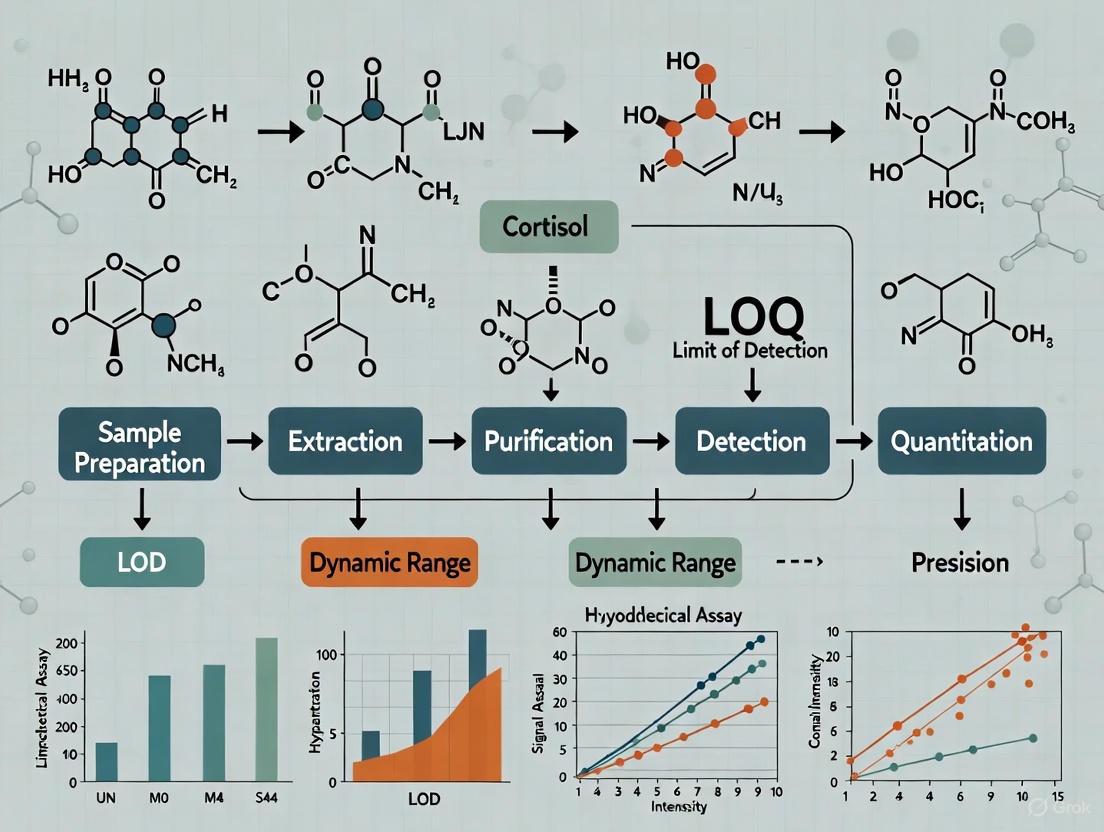
Accurate determination of the Limit of Quantitation (LOQ) is critical for ensuring the reliability of hormone assays in research and drug development.
Determining Limit of Quantitation (LOQ) in Hormone Assays: A Comprehensive Guide for Researchers and Developers
Abstract
Accurate determination of the Limit of Quantitation (LOQ) is critical for ensuring the reliability of hormone assays in research and drug development. This article provides a comprehensive framework for LOQ determination, covering foundational concepts, methodological approaches, troubleshooting common pitfalls, and validation strategies. It explores key challenges specific to hormone measurement, including matrix effects, cross-reactivity in immunoassays, and the advantages of mass spectrometry. Designed for researchers, scientists, and development professionals, this guide synthesizes current best practices and regulatory considerations to support the development of robust, fit-for-purpose analytical methods.
LOQ Fundamentals: Defining Detection and Quantitation Limits in Hormone Analysis
Core Definitions and Clinical Relevance
In analytical chemistry and clinical diagnostics, accurately measuring low analyte concentrations is crucial. The Limit of Blank (LoB), Limit of Detection (LoD), and Limit of Quantitation (LoQ) are three distinct performance characteristics that define the lower limits of an assay's capability, playing a vital role in validating methods, especially for hormone assays where low concentrations are clinically significant.
The table below summarizes the core definitions and purposes of these three key parameters.
| Parameter | Core Definition | Primary Purpose | Key Clinical/Research Implication |
|---|---|---|---|
| LoB (Limit of Blank) | The highest apparent analyte concentration expected from replicates of a blank sample (containing no analyte) [1] [2] [3]. | To distinguish a true signal from background noise and define the assay's "zero" [4] [3]. | Results ≤ LoB are considered "blank," and the analyte is reported as not detected [5]. |
| LoD (Limit of Detection) | The lowest analyte concentration that can be reliably distinguished from the LoB with a stated probability (e.g., 95%) [1] [2] [6]. | To confirm the presence of an analyte, but not necessarily to provide a precise quantitative value [4]. | Substance is present but cannot be accurately quantified; often reported as " |
| LoQ (Limit of Quantitation) | The lowest concentration at which the analyte can be measured with acceptable precision and accuracy (bias) [7] [1] [2]. | To provide a reliable quantitative result that meets predefined performance goals [6]. | The lowest value that can be reported as a numerical concentration with confidence [7] [5]. |
Standardized Experimental Protocols for Determination
Following standardized guidelines from organizations like the Clinical and Laboratory Standards Institute (CLSI) is essential for robust determination of LoB, LoD, and LoQ [1] [6]. The following workflow outlines the key steps involved.
Detailed Protocol Specifications
The experimental design requires careful planning regarding the number of replicates, samples, and operators to ensure results are reliable and capture expected assay variation.
1. Experimental Design and Sample Requirements
- Replicates: For a full validation, at least 60 replicate measurements are recommended for both blank and low-concentration samples. For verifying a manufacturer's claim, a minimum of 20 replicates may suffice [1].
- Sample Types: Use a commutable matrix (e.g., human serum) that matches real patient samples for both blank and low-concentration samples [1].
- Experimental Conditions: To ensure robustness, perform tests using multiple instrument lots, reagent lots, and operators over several days [1] [6].
2. Data Analysis and Calculations
- LoB Calculation:
LoB = mean_blank + 1.645(SD_blank)[1] [2] [8]. This establishes the 95th percentile of the blank distribution (one-sided). - LoD Calculation:
LoD = LoB + 1.645(SD_low concentration sample)[1] [2] [8]. This ensures a 95% probability that a sample at the LoD will be distinguishable from the LoB. - LoQ Determination: The LoQ is the lowest concentration where predefined goals for precision (e.g., CV ≤ 20%) and accuracy (e.g., bias ≤ 20%) are simultaneously met [7] [1]. This is often determined by testing serial dilutions and analyzing the precision and bias at each level.
The Scientist's Toolkit: Essential Research Reagent Solutions
Developing and validating a robust quantitative assay, particularly for hormones, requires specific reagents and materials to ensure accuracy and reproducibility.
| Item | Function | Example in Hormone Assay (e.g., Testosterone LC-MS/MS) |
|---|---|---|
| Certified Reference Material | Provides an accuracy base traceable to a standard; used to assign values to calibrators [9]. | NIST Standard Reference Material (SRM) 971 for testosterone [9]. |
| Stable Isotope-Labeled Internal Standard | Compensates for sample loss during preparation and matrix effects (e.g., ion suppression) during analysis [9]. | 16,16,17-d3 labeled testosterone [9]. |
| Matrix-Matched Calibrators & Controls | Calibrators in the same matrix as samples (e.g., serum) account for matrix effects. Controls monitor assay performance over time [8]. | Calibrators in stripped human serum; Low, Mid, High Positive Controls [8]. |
| Specific Antibodies / Engineered Cells | Provide the foundation for the assay's specificity. | CHO cells expressing human TSH receptor for a TSI bioassay [8]. |
| High-Purity Solvents & Reagents | Minimize background interference and noise, which is critical for achieving a low LoB [9]. | Mass spectrometry-grade water, methanol, and acetonitrile [9]. |
Troubleshooting and FAQs: Addressing Common Experimental Issues
FAQ 1: Our calculated LoQ is much higher than our LoD. What factors could be causing this, and how can we improve it?
- Potential Cause: High imprecision (CV) at low concentrations is the most common reason. This can be caused by high background noise (leading to a high LoB), low analytical sensitivity, or inconsistent sample processing.
- Solution: Focus on reducing background signal and non-specific binding to lower the LoB [6]. Optimize sample preparation steps for better recovery and consistency. Using a higher quality internal standard or antibody can improve signal-to-noise ratio and precision.
FAQ 2: When validating a commercial hormone assay, how should we verify the manufacturer's claims for LoD and LoQ?
- Action: Follow the verification protocol outlined in CLSI EP17. Test a minimum of 20 replicates of the manufacturer's blank and low-concentration sample (near the claimed LoD)[ccitation:2]. Calculate the observed LoB and LoD using the standard formulas and compare them to the manufacturer's claims. Your results should confirm that the assay performs as specified.
FAQ 3: In our research on pediatric testosterone, many patient results fall between the LoD and LoQ. How should we handle and report these values?
- Guidance: Results in this range should be reported as "< LoQ" or "detected but not quantifiable" to communicate the uncertainty in the precise numerical value [5]. For data analysis, caution is required. Censoring these data (e.g., treating them as zero) can introduce significant bias. Statistical methods tailored to non-quantifiable data may be necessary for accurate population analysis [7].
FAQ 4: Are there alternative methods for determining LoQ if our calibration curve is not linear at low concentrations?
- Alternative Approaches: Yes. The Signal-to-Noise (S/N) ratio method can be used, where the LoQ is defined as the concentration that yields a signal 10 times the background noise [7] [4]. Alternatively, the Functional Sensitivity approach defines LoQ as the concentration at which the inter-assay CV crosses a predetermined threshold (e.g., 20%) [1] [10]. The Accuracy Profile method, which uses tolerance intervals for total error, is another robust option [7].
The Critical Role of LOQ in Hormone Assay Fitness for Purpose
Core Concepts: Understanding LoB, LoD, and LoQ
What are the fundamental differences between Limit of Blank (LoB), Limit of Detection (LoD), and Limit of Quantitation (LoQ)?
LoB, LoD, and LoQ are distinct performance characteristics that describe the lowest concentrations an analytical method can reliably measure [1]:
- Limit of Blank (LoB): The highest apparent analyte concentration expected when replicates of a blank sample (containing no analyte) are tested [1]. It represents the 95th percentile of blank measurements and is calculated as: LoB = meanₛₗₐₙₖ + 1.645(SDₛₗₐₙₖ) [1].
- Limit of Detection (LoD): The lowest analyte concentration likely to be reliably distinguished from the LoB [1]. It ensures detection feasibility and is calculated as: LoD = LoB + 1.645(SDₗₒw ᶜᵒⁿᶜᵉⁿᵗʳᵃᵗᶦᵒⁿ ˢᵃᵐᵖˡᵉ) [1].
- Limit of Quantitation (LoQ): The lowest concentration at which the analyte can be reliably detected and measured with predefined precision and accuracy goals [1]. The LoQ may equal the LoD or exist at a much higher concentration, but it cannot be lower than the LoD [1].
The relationship between these parameters is progressive: LoB establishes the background noise, LoD confirms the analyte can be detected above this noise, and LoQ ensures the concentration can be quantified with acceptable performance [1] [6].
How do these concepts specifically apply to hormone immunoassays?
In hormone testing, these limits determine clinical utility. For example, low concentrations of hormones like estradiol, LH, FSH, and testosterone are essential for diagnosing and monitoring endocrine disorders [11]. The LoQ establishes the lowest concentration that can be reported with confidence for clinical decision-making. While automated immunoassays offer advantages, their limited analytical sensitivity at low concentrations remains a concern, making proper LoQ determination critical [11].
Table 1: Key Characteristics of LoB, LoD, and LoQ
| Parameter | Sample Type | Minimum Replicates (Establish/Verify) | Key Characteristics | Governing Equation |
|---|---|---|---|---|
| LoB | Sample containing no analyte | 60 / 20 | Highest apparent concentration in blank samples | LoB = meanₛₗₐₙₖ + 1.645(SDₛₗₐₙₖ) |
| LoD | Sample with low analyte concentration | 60 / 20 | Lowest concentration distinguished from LoB | LoD = LoB + 1.645(SDₗₒw ᶜᵒⁿᶜᵉⁿᵗʳᵃᵗᶦᵒⁿ ˢᵃᵐᵖˡᵉ) |
| LoQ | Sample at or above LoD | 60 / 20 | Meets predefined bias and imprecision goals | LoQ ≥ LoD |
Experimental Protocols: Determining LOQ for Hormone Assays
What is the standard experimental approach for determining LoQ?
The CLSI EP17 guideline provides a standardized framework for determining detection capability [1] [6]. A robust LoQ determination involves measuring replicates of blank samples and samples with low analyte concentrations across multiple days, instruments, and reagent lots to capture real-world variability [1]. For manufacturers, establishing these parameters typically requires 60 replicates, while laboratories verifying a manufacturer's claims may use 20 replicates [1].
Can you provide a specific example of LOQ determination for reproductive hormones?
Yes, a 2023 study established LoQ for estradiol, LH, FSH, and testosterone on Roche Cobas e801 systems [11]. Researchers:
- Prepared serum pools from patient residual samples at concentrations near manufacturer-reported LoQ values
- Selected pool concentrations: Estradiol (27.4, 50.7, 88.9 pmol/L), LH and FSH (0.3 IU/L), Testosterone (0.17 and 0.5 nmol/L)
- Conducted analysis: Analyzed pools in triplicate over five days on a single instrument with one analyst, one set of calibrators, and the same reagent lot to minimize inter-assay variation
- Calculated CV: Determined the lowest concentration meeting the predefined CV <20% criterion [11]
Table 2: Experimental LOQ Determination for Hormone Assays (Adapted from Goreta et al. 2023)
| Hormone | Tested Concentration | Observed CV | Meets LOQ Criteria (CV<20%) |
|---|---|---|---|
| Estradiol | 27.4 pmol/L | 19% | Yes |
| Estradiol | 50.7 pmol/L | 9.3% | Yes |
| Estradiol | 88.9 pmol/L | 6.0% | Yes |
| LH | 0.3 IU/L | 4.0% | Yes |
| FSH | 0.3 IU/L | 2.3% | Yes |
| Testosterone | 0.17 nmol/L | 7.8% | Yes |
| Testosterone | 0.5 nmol/L | 4.9% | Yes |
This study confirmed that all tested concentrations met the CV<20% criterion and could be defined as reliable LoQs for clinical use [11].
What alternative methods exist for determining detection limits?
Different analytical methods may require different approaches for limit determination [4]:
- Standard deviation of the response and slope: LOD = 3.3σ/Slope; LOQ = 10σ/Slope where σ = standard deviation of response
- Visual evaluation: Determining the minimum level at which analyte can be reliably detected by analysis of samples with known concentrations
- Signal-to-noise ratio: Setting LOD at signal-to-noise of 2:1 and LOQ at 3:1 for methods with background noise [4]
Troubleshooting Guides: Addressing Common LOQ Challenges
Why does my assay have an acceptable LoD but unacceptable LoQ?
This common issue occurs when an assay can detect the presence of an analyte but cannot measure it with sufficient precision and accuracy. The solution involves:
- Increasing analyte concentration: Test slightly higher analyte concentrations to determine where precision goals are met [1]
- Optimizing detection system: For Simoa assays, aim for a blank signal of 0.005-0.05 AEB (average enzymes per bead) to minimize background [6]
- Extending incubation times: Increase signal dynamic range, but avoid exceeding detection antibody and SAPE incubation times to prevent higher background [12]
How can I reduce variability in low-concentration hormone measurements?
- Sample preparation: Completely thaw samples, vortex thoroughly, and centrifuge at minimum 10,000 × g for 5-10 minutes to remove particulates [12]
- Pipetting technique: Use reverse pipetting for better precision, hold pipettes at consistent angles, and use mid-range pipette volumes [12]
- Temperature control: Warm all reagents to room temperature (20-25°C) before use, including after overnight cold room incubations [12]
- Plate washing: Use recommended orbital shakers (500-800 rpm) without splashing, ensure complete washing with provided buffers, and properly use magnetic separation blocks [12]
What are common interferents in hormone immunoassays that affect LOQ?
Immunoassays are susceptible to various interferences that particularly impact low-end measurements [13]:
- Cross-reactivity: Metabolites, precursors, or drugs with structural similarity to the target analyte (e.g., fulvestrant in estradiol assays, pegvisomant in GH assays) [13]
- Heterophile antibodies: Human antibodies that interfere with immunoassay reagents [13]
- Biotin: High concentrations can interfere with biotin-streptavidin separation systems [13]
- Sample matrix effects: Bilirubin, lipids, hemolysis, or improper sample collection tubes [13]
How can I suspect and confirm interference affecting my LOQ?
- Clinical discordance: Results inconsistent with clinical presentation or other biochemical parameters
- Dilution nonlinearity: Serial dilution does not yield expected concentration changes
- Method differences: Discrepant results between different assay platforms or methodologies
- Specific tests: Use heterophile blocking tubes, reassay after biotin clearance, or employ alternative detection methods like mass spectrometry when available [13]
Researcher's Toolkit: Essential Reagents and Materials
Table 3: Essential Research Reagent Solutions for LOQ Determination
| Reagent/Material | Function in LOQ Determination | Application Notes |
|---|---|---|
| Blank Matrix | Establishes LoB and background signal | Use analyte-free matrix commutable with patient samples; typically zero-level calibrator [1] |
| Low Concentration Samples | Determines LoD and LoQ | Use dilutions of lowest calibrator or specimens with weighed-in analyte; must be matrix-matched [1] |
| Wash Buffer with Detergent | Reduces non-specific binding | Contains Tween-20 to prevent bead aggregation; critical for reducing background [12] |
| Magnetic Bead Separation System | Immunocomplex separation | Enables efficient washing; ensure proper magnet engagement and aspiration settings [12] |
| Quality Control Materials | Verifies assay performance | Use at concentrations near LoQ; monitor precision (CV) across runs [11] |
| Heterophile Blocking Reagents | Identifies antibody interference | Helps troubleshoot erroneous low-end results [13] |
| Stable Detection Enzymes | Signal generation | Alkaline phosphatase or horseradish peroxidase; avoid azide preservatives that destroy peroxidase activity [13] |
Workflow Visualization: LOQ Determination Process
LOQ Determination Workflow
Frequently Asked Questions
Q: How often should we verify LoQ for our hormone assays? A: LoQ should be verified with each new reagent lot, major instrument maintenance, or when changing critical assay components. Regular monitoring through quality control at low concentrations is also recommended [12].
Q: Can we use the manufacturer's stated LoQ without verification? A: While manufacturer data provides guidance, CLSI recommends verification with 20 replicates using your specific instrumentation and local conditions, as performance can vary between laboratories [1].
Q: What CV target is appropriate for defining LoQ in hormone assays? A: For low-concentration hormones, CV ≤20% is commonly used, as demonstrated in the Roche Cobas e801 study [11]. However, some applications may require stricter targets based on clinical requirements.
Q: How does hook effect relate to LoQ? A: Hook effect occurs only in sandwich immunoassays at very high analyte concentrations, causing falsely low results. This differs from LoQ issues which concern low-end measurement capability. However, both can lead to erroneous clinical interpretations [13].
Q: What's the relationship between functional sensitivity and LoQ? A: Functional sensitivity typically refers to the concentration yielding CV=20%, making it essentially equivalent to LoQ when using this precision criterion [1] [11].
This guide provides essential information on determining the Limit of Blank (LoB), Limit of Detection (LoD), and Limit of Quantitation (LoQ) for researchers in hormone assay development.
Fundamental Definitions and Relationships
LoB, LoD, and LoQ describe the smallest concentration of an analyte that can be reliably measured by an analytical procedure [1].
- Limit of Blank (LoB): The highest apparent analyte concentration expected when replicates of a blank sample (containing no analyte) are tested [1] [6].
- Limit of Detection (LoD): The lowest analyte concentration likely to be reliably distinguished from the LoB and at which detection is feasible [1] [6].
- Limit of Quantitation (LoQ): The lowest concentration at which the analyte can be reliably detected and measured with stated acceptable precision and accuracy [1] [7] [6]. The LoQ cannot be lower than the LoD [1].
The following diagram illustrates the statistical relationship and calculation flow between a blank sample, a low-concentration sample, and the resulting LoB, LoD, and LoQ.
Frequently Asked Questions
What is the core statistical difference between LoD and LoQ?
The LoD is the level at which an analyte can be statistically distinguished from the blank, with no guarantee of the result's precision or accuracy. The LoQ, however, is the level at which precise and accurate quantification begins, meeting predefined performance goals for bias and imprecision [1] [7]. The LoQ may be equivalent to the LoD or exist at a much higher concentration [1].
How many replicates are needed to establish these limits reliably?
For a manufacturer establishing these parameters, it is recommended to use 60 replicates each for the blank and low-concentration samples. For a laboratory verifying a manufacturer's claims, 20 replicates are typically sufficient [1].
In hormone assays, why might an immunoassay yield incorrect results at low concentrations?
Immunoassays can suffer from cross-reactivity with similar molecules or interference from binding proteins in the sample matrix [14]. For instance, a radioimmunoassay showed a false decrease in serum testosterone after oral contraceptive use due to changing sex hormone-binding globulin (SHBG) levels. This error was corrected when measured with a more specific LC-MS/MS method [14]. This underscores the need for thorough verification in your specific study population.
My calculated LoQ seems too high for my clinical needs. What can I do?
The required LoQ is determined by the clinical or research context [7]. If your initial LoQ is too high, you can:
- Optimize the Method: Improve sample preparation or instrument conditions to reduce background noise and improve signal.
- Use a More Sensitive Technique: For steroid hormones, LC-MS/MS is often superior to immunoassays due to higher specificity and sensitivity [14].
- Re-evaluate Requirements: The EMA guideline states the "LLOQ should be adapted to expected concentrations and the aim of the study" [7]. It does not always need to be the lowest technically possible value if it sufficiently answers the research question.
Experimental Protocols and Calculations
Protocol for Determining LoB and LoD
This protocol is based on the CLSI EP17 guideline [1].
Sample Preparation:
- Blank Sample: Use a matrix that is commutable with real patient samples but contains no analyte (e.g., a zero calibrator or processed matrix).
- Low-Concentration Sample: Use a sample with a known, low concentration of the analyte, ideally close to the expected LoD.
Data Acquisition:
- Analyze at least 60 replicates of the blank sample and 60 replicates of the low-concentration sample if establishing the limits for a new method. For verification, 20 replicates of each are often acceptable [1].
- Perform measurements over multiple days and, if possible, with different reagent lots to capture realistic assay variability.
Statistical Calculation:
- Calculate LoB: Compute the mean and standard deviation (SD) of the results from the blank sample.
LoB = mean_blank + 1.645(SD_blank)This defines the 95th percentile of the blank distribution (one-sided) [1]. - Calculate LoD: Compute the mean and standard deviation (SD) of the results from the low-concentration sample.
LoD = LoB + 1.645(SD_low concentration sample)This ensures that a concentration at the LoD will exceed the LoB 95% of the time [1].
- Calculate LoB: Compute the mean and standard deviation (SD) of the results from the blank sample.
Protocol for Determining LoQ
The LoQ is the lowest concentration where the analyte can be quantified with acceptable accuracy and precision, defined by your pre-set goals [1] [7].
- Define Performance Goals: Set acceptance criteria for bias (e.g., ±20%) and imprecision (e.g., CV ≤ 20%) at the LoQ level [7].
- Analyze Replicates: Test multiple replicates (e.g., n=5-6) of samples at various low concentrations, including at or just above the estimated LoD.
- Calculate Precision and Accuracy: For each concentration level, calculate the %CV (precision) and the % relative error ( %RE, bias) from the nominal concentration.
- Establish LoQ: The LoQ is the lowest concentration where your predefined goals for both %CV and %RE are met [7]. If goals are not met at the LoD, test a slightly higher concentration.
The table below summarizes the features of LoB, LoD, and LoQ.
| Parameter | Sample Type | Key Characteristics | Primary Equation |
|---|---|---|---|
| LoB [1] | Sample containing no analyte | Highest measurement likely from a blank sample | LoB = mean_blank + 1.645(SD_blank) |
| LoD [1] | Sample with low analyte concentration | Lowest concentration distinguishable from LoB | LoD = LoB + 1.645(SD_low concentration sample) |
| LoQ [1] [7] | Sample with low analyte concentration | Lowest concentration meeting precision and accuracy goals | LoQ ≥ LoD (Goal: CV and Bias ≤ 20%) |
Alternative methods also exist for determining LoD and LoQ, which can be useful in different contexts.
| Method | Description | Typical Equation |
|---|---|---|
| Signal-to-Noise [7] [4] | Applicable to chromatographic or spectroscopic methods. Compares the analyte signal to background noise. | LOD: S/N ≈ 2-3 LOQ: S/N ≈ 10 |
| Standard Deviation & Slope [4] | Uses the variability of the response and the slope of the calibration curve. | LOD = 3.3 * σ / Slope LOQ = 10 * σ / Slope |
The Scientist's Toolkit: Essential Research Reagents & Materials
| Item | Function in LoB/LoD/LoQ Studies |
|---|---|
| Commutable Blank Matrix | A sample matrix (e.g., stripped serum, buffer) identical to real samples but without the analyte, crucial for accurate LoB determination [1]. |
| Low-Level Quality Control (QC) Materials | Samples with a known, low concentration of the analyte, used for determining LoD and verifying LoQ performance [14]. |
| Reference Standards | Highly characterized, pure analyte used to prepare calibrators and spike samples for recovery experiments [14]. |
| Binding Protein Blockers | In hormone assays, reagents that release protein-bound analyte to ensure accurate measurement of total concentration, preventing bias [14]. |
Workflow for Limit Determination
The following diagram provides a visual overview of the complete experimental workflow for determining and verifying LoB, LoD, and LoQ.
For researchers developing hormone assays, understanding and correctly applying the guidelines for detection capability is paramount. The Clinical and Laboratory Standards Institute (CLSI) EP17 and the International Council for Harmonisation (ICH) Q2(R2) provide structured approaches to determine the lowest concentrations your assay can reliably measure. While both guidelines address Limit of Blank (LoB), Limit of Detection (LoD), and Limit of Quantitation (LoQ), they originate from different regulatory perspectives and are applied in different contexts. CLSI EP17 is extensively used in clinical diagnostics, particularly for verifying manufacturer claims for in vitro diagnostic tests, while ICH Q2(R2) provides validation requirements for pharmaceutical analysis, recently updated with new training materials released in July 2025 [15] [16].
For hormone assay research, where compounds like testosterone, estrogen, and progesterone exist at very low concentrations in biological matrices, properly determining these limits ensures your method is "fit for purpose" and generates reliable data for critical decisions in drug development and clinical diagnostics [1] [9].
Core Definitions and Comparative Framework
The following table outlines the key parameters for detection capability as defined by CLSI EP17 and ICH Q2(R2):
| Parameter | CLSI EP17 Definition | ICH Q2(R2) Perspective | Primary Application in Hormone Assays |
|---|---|---|---|
| Limit of Blank (LoB) | "Highest apparent analyte concentration expected when replicates of a blank sample containing no analyte are tested." [1] | Primarily covered in biological assay contexts; not a focus in main guideline [4] | Determines background noise in matrix; critical for low-level hormone detection [1] |
| Limit of Detection (LoD) | "Lowest analyte concentration reliably distinguished from LoB." [1] | "Lowest amount of analyte in a sample which can be detected but not necessarily quantitated." [4] | Establishes minimum detectable hormone level; essential for sensitivity claims [9] |
| Limit of Quantitation (LoQ) | "Lowest concentration at which analyte can be reliably detected with predefined goals for bias and imprecision." [1] | "Lowest amount of analyte which can be quantitatively determined with suitable precision and accuracy." [4] | Defines lowest level for precise hormone measurement; crucial for pharmacokinetic studies [17] |
| Governing Principle | Empirical determination using actual biological samples [1] | Based on standard deviation of response and slope or visual evaluation [4] | - |
| Sample Requirements | 60 replicates for establishment; 20 for verification [1] | Typically fewer replicates; based on validation strategy [16] | - |
Conceptual Relationship of LoB, LoD, and LoQ
The diagram below illustrates the statistical relationship and progression from LoB to LoD to LoQ:
Experimental Protocols for LOQ Determination
CLSI EP17 Protocol for Hormone Assays
The CLSI EP17 protocol employs an empirical approach using actual biological samples to determine detection capabilities statistically [1].
Step 1: Determine Limit of Blank (LoB)
- Sample Preparation: Prepare a minimum of 20 blank replicates using the appropriate biological matrix (e.g., hormone-stripped serum, buffer) that is commutable with patient specimens [1].
- Analysis: Analyze all blank samples in multiple runs to capture routine variance.
- Calculation:
- Calculate the mean (meanblank) and standard deviation (SDblank) of the results.
- LoB = meanblank + 1.645(SDblank) [1].
- This establishes the threshold above which an observed signal likely comes from an analyte-containing sample (with a 5% false-positive rate).
Step 2: Determine Limit of Detection (LoD)
- Sample Preparation: Prepare a low-concentration hormone sample near the expected detection limit. Use a dilution of the lowest non-negative calibrator or patient specimen matrix containing a weighed amount of the authentic hormone standard (e.g., testosterone, progesterone) [1] [9].
- Analysis: Analyze at least 20 replicates of this low-concentration sample.
- Calculation:
- Calculate the standard deviation (SDlow) of the results.
- LoD = LoB + 1.645(SDlow concentration sample) [1].
- This ensures that 95% of measurements from a sample containing the analyte at the LoD concentration will exceed the LoB, minimizing false negatives to 5%.
Step 3: Determine Limit of Quantitation (LoQ)
- Define Performance Goals: Establish acceptable criteria for bias and imprecision (e.g., ≤20% CV for functional sensitivity, or based on allowable total error specific to the hormone assay) [1].
- Experimental Testing: Test replicates (recommended n=30) of samples with concentrations at or above the determined LoD.
- Data Analysis: Calculate the bias and imprecision (CV%) at each tested concentration.
- Establish LoQ: The LoQ is the lowest concentration where the predefined goals for bias and imprecision are simultaneously met. It cannot be lower than the LoD and is often at a higher concentration [1].
ICH Q2(R2) Approaches for LOQ Determination
ICH Q2(R2) describes multiple approaches, with the following being most common for chromatographic methods like LC-MS/MS used in hormone analysis:
Based on Standard Deviation of the Response and the Slope
This method is suitable for assays like LC-MS/MS where a calibration curve is used.
- Calibration Curve: Prepare a calibration curve using a minimum of 5 concentration levels in the low range.
- Analysis: Analyze multiple determinations (typically n=6) at each low concentration level.
- Calculation:
- LOQ = 10σ/S, where σ = the standard deviation of the response (residual standard deviation of the regression line) and S = the slope of the calibration curve [4].
- The slope converts the response variation back to the concentration scale.
Based on Signal-to-Noise Ratio
This approach is applicable to analytical procedures that exhibit baseline noise, such as those using UV or fluorescence detectors.
- Sample Preparation: Prepare and analyze blank and low-concentration hormone samples.
- Measurement: Compare the measured signal from the analyte to the background noise.
- Establishment: An LOQ is typically assigned to the lowest concentration that yields a signal-to-noise ratio of 3:1 or 10:1 [4].
The Scientist's Toolkit: Essential Research Reagent Solutions
| Reagent/Material | Function in LOQ Determination | Application Example |
|---|---|---|
| Authentic Hormone Standards | Serves as reference material for preparing calibrators and quality controls at known concentrations. | Progesterone, Estrone, Estradiol, Estriol, Testosterone reference standards [17] [9]. |
| Stable Isotope-Labeled Internal Standards | Corrects for analyte loss during preparation and matrix effects in mass spectrometry. | d3-Testosterone for LC-MS/MS assay development [9]. |
| Charcoal-Stripped Serum | Provides an analyte-free matrix for preparing blank and spiked samples for LoB, LoD, and LoQ studies. | Used to create matrix-matched calibrators and validate assay specificity [9]. |
| Certified Reference Materials (CRMs) | Provides a standardized material for verifying assay accuracy and standardization. | NIST SRM 971 for standardizing total testosterone assays [9]. |
| High-Purity Solvents & Buffers | Used in mobile phase preparation and sample reconstitution to minimize background noise and interference. | Mass spectrometry-grade water, acetonitrile, methanol, and phosphate buffers [17] [9]. |
Frequently Asked Questions (FAQs)
We are developing an LC-MS/MS assay for serum testosterone. Should we follow CLSI EP17 or ICH Q2(R2)?
The choice depends on the intended use and regulatory requirements of your assay. For clinical diagnostics applications (e.g., a test used for patient management), CLSI EP17 is the more specific guideline. For pharmaceutical analysis (e.g., supporting drug pharmacokinetics studies), ICH Q2(R2) is mandated. Many laboratories find value in applying the rigorous empirical sample testing of EP17 even for ICH-regulated work, as it provides robust data on actual assay performance at the low end [1] [9].
Our hormone assay LoD is acceptable, but the LoQ is clinically irrelevant. What should we do?
This is a common scenario. The LoD indicates the presence of the hormone, while the LoQ defines the level at which precise measurement occurs. If your LoQ is too high for clinical needs (e.g., distinguishing low from normal pediatric testosterone levels), you must improve the assay's precision and reduce bias at low concentrations. Investigate sources of imprecision, such as extraction efficiency, ion suppression in MS, or reagent variability. You may need to optimize the sample preparation process or the analytical conditions themselves [1] [9].
How do we handle non-Gaussian distribution of results at very low hormone concentrations?
CLSI EP17 explicitly addresses this issue. If the data from your blank or low-concentration samples do not follow a normal distribution, the guideline recommends using non-parametric statistical methods to determine the 95th percentiles for calculating LoB and LoD. This involves ranking the results and selecting the appropriate value from the ordered list, making the calculation robust against non-normality [1].
What is the most critical step in verifying a manufacturer's claimed LoQ for a commercial hormone assay?
The most critical step is to independently test a sufficient number of replicates (at least 20) of a sample with a concentration at or near the claimed LoQ using your routine laboratory protocol. Calculate the bias and imprecision (CV%) from your data and verify they meet the performance specifications you have defined (e.g., total error ≤20%) and align with the manufacturer's claims. This confirms the performance under your specific operating conditions [18].
How has the new ICH Q2(R2) guideline changed the approach to determining LOQ?
The updated ICH Q2(R2), along with ICH Q14, emphasizes a more holistic, lifecycle approach to analytical procedures. It encourages a stronger scientific rationale for the chosen validation approach (minimal vs. enhanced) and greater understanding of the procedure through risk assessment. For LOQ, the fundamental methodologies remain valid, but the justification for the selected approach and the performance criteria should be more thoroughly documented within the context of the assay's intended use [19] [16].
Practical LOQ Determination: Methodologies and Calculation Approaches
This technical support center provides troubleshooting guides and frequently asked questions (FAQs) for researchers determining the Limit of Quantitation (LOQ) in hormone assays using the calibration curve method, in accordance with ICH guidelines.
Frequently Asked Questions (FAQs)
Q1: How are the Limit of Detection (LOD) and Limit of Quantitation (LOQ) fundamentally different?
The Limit of Detection (LoD) is the lowest analyte concentration that can be reliably distinguished from the blank, but with no guarantee of acceptable precision or accuracy. In contrast, the Limit of Quantitation (LoQ) is the lowest concentration at which the analyte can not only be reliably detected but also quantified with predefined goals for bias and imprecision [1]. The LoQ represents a higher standard of performance, ensuring the measurement is fit for its intended purpose in quantitative analysis. The LoQ may be equivalent to the LoD, or it could be at a much higher concentration [1].
Q2: What is the standard formula for calculating LOQ from a calibration curve?
A common approach for calculating the LOQ is based on the standard error of the regression (or residual standard deviation) and the slope of the calibration curve. This relationship is expressed as:
LOQ = 10 * (S / k)
Where:
- S is the standard error of the regression (or residual standard deviation).
- k is the slope of the calibration curve [1] [20].
This calculation provides an estimate that should be verified experimentally to ensure it meets the required performance criteria for bias and imprecision (typically ≤20% CV) at the calculated concentration [1].
Q3: Our hormone assay results show high imprecision at low concentrations. What could be the cause?
High imprecision at low concentrations, which directly impacts the ability to determine a reliable LOQ, can stem from several sources related to standard preparation:
- Pipetting Errors: Using improper pipetting technique, such as holding the pipette at an angle or inserting the tip too deeply into the liquid, can significantly increase volume variation. One internal study showed that improper technique resulted in a standard deviation nearly nine times higher [21].
- Inappropriate Equipment Use: Using a pipette at the very low end of its volume range introduces higher relative error. Always select a pipette whose range closely matches the volume being dispensed [21].
- Solution Stability: Prepared standard solutions may degrade over time. It is critical to conduct stability studies in advance to establish how long working standards remain stable under specific storage conditions [21].
- Analyte Solubility: If the target hormone has limited solubility in the dilution solvent, it can lead to inhomogeneous solutions and serious calibration problems [21].
Q4: How do we validate that the calculated LOQ is fit-for-purpose for our hormone assay?
Once a provisional LOQ is calculated, it must be experimentally confirmed. This involves:
- Preparation and Analysis: Prepare samples at the calculated LOQ concentration and analyze them repeatedly (a minimum of 20 replicates is often recommended for verification) [1].
- Performance Assessment: Evaluate the bias and imprecision (CV%) of the results from these samples.
- Acceptance Criteria: The LOQ is considered validated if the observed bias and imprecision meet pre-defined goals. For hormone assays at the LOQ level, a CV of ≤20% is a typical benchmark [1] [20]. If the goals are not met, the LOQ must be re-estimated at a higher concentration [1].
Q5: What are the key acceptance criteria for the calibration curve's performance per ICH guidelines?
While ICH Q2 does not specify numerical acceptance criteria, it implies they should be generated based on the method's intended use [20]. The following table summarizes recommended acceptance criteria for key parameters, justified relative to the product specification tolerance or design margin.
Table 1: Recommended Acceptance Criteria for Key Calibration Curve Parameters
| Parameter | Description | Recommended Acceptance Criteria [20] |
|---|---|---|
| Linearity | The ability of the method to obtain results directly proportional to analyte concentration. | No systematic pattern in residuals; no statistically significant quadratic effect. Range should be 80-120% of specification limits or wider. |
| Bias/Accuracy | The difference between the measured value and the true reference value. | ≤ 10% of the specification tolerance (USL-LSL). |
| Repeatability | The precision under the same operating conditions over a short interval (intra-assay). | ≤ 25% of the specification tolerance. |
| LOQ | The lowest concentration that can be quantified with acceptable accuracy and precision. | LOQ should be ≤ 20% of the specification tolerance. Imprecision (CV) at the LOQ should be ≤ 20% [1]. |
Troubleshooting Guides
Issue: Poor Linearity of the Calibration Curve
| Symptom | Possible Cause | Corrective Action |
|---|---|---|
| Non-linear response, low R² value. | Matrix Effects: Interference from sample components other than the analyte. | - Use a matrix-matched calibration standard [14]. - Improve sample cleanup/purification prior to analysis. |
| Instrument Saturation: Analyte concentration exceeds the detector's linear dynamic range. | - Dilute the sample or calibration standards to remain within the instrument's confirmed linear range. - Use a shorter pathlength for UV detection. | |
| Chemical/Protein Binding: In hormone assays, binding proteins can sequester the analyte, leading to a non-linear response [14]. | - Ensure thorough extraction of the hormone from binding proteins during sample preparation [14]. |
Issue: High Imprecision at Low Concentrations (near LOQ)
| Symptom | Possible Cause | Corrective Action |
|---|---|---|
| High CV% for replicates at low concentrations. | Pipetting Volumes: Dispensing very small volumes of concentrated stock solutions magnifies relative error [21]. | - Prepare a bridging stock solution at an intermediate concentration to allow for larger, more accurate dilution volumes [21]. |
| Pipette Technique & Calibration: Inconsistent technique or uncalibrated pipettes [21]. | - Use proper pipetting technique (vertical hold, tip just below surface). - Ensure pipettes are regularly calibrated gravimetrically [21]. - Use positive displacement pipettes for viscous or volatile liquids [21]. | |
| Inhomogeneous Solutions: Inadequate mixing of standards. | - Use a vortex mixer, ensuring there is enough space in the vial for a vortex to form, indicating effective mixing [21]. |
Issue: Inconsistent LOQ Values Between Experiments
| Symptom | Possible Cause | Corrective Action |
|---|---|---|
| The calculated or verified LOQ varies from day to day. | Reagent/Lot Variability: Changes in antibody cross-reactivity or reagent performance between different lots [14]. | - Use the same reagent lot for an entire study if possible. - Fully re-validate the method when a new lot is introduced. |
| Standard Degradation: Prepared calibration standards are unstable [21]. | - Conduct stability studies for prepared standards. - Follow manufacturer's storage instructions for stock materials. - Note that different concentrations in a series may degrade at different rates [21]. | |
| Instrument Performance Drift: Changing sensitivity of the detector over time. | - Monitor the calibration curve slope and intercept as system suitability criteria. - Ensure proper instrument maintenance and calibration. |
Experimental Workflow and Reagent Solutions
Workflow for LOQ Determination in Hormone Assays
The following diagram illustrates the logical workflow for determining and validating the LOQ using the calibration curve method.
The Scientist's Toolkit: Key Research Reagent Solutions
Table 2: Essential Materials for Hormone Assay Calibration
| Item | Function | Key Considerations |
|---|---|---|
| High-Purity Hormone Standards | To create the calibration curve with known analyte concentrations. | Use certified reference materials from reputable suppliers. Purity >98% is typically required [22]. Verify stability under storage conditions [21]. |
| Appropriate Solvent/Matrix | To dissolve and dilute the calibration standards. | For immunoassays, use a matrix that matches the sample (e.g., hormone-free serum) to account for matrix effects [14]. Confirm analyte solubility [21]. |
| Calibrated Pipettes | To ensure accurate and precise volume transfer during serial dilution. | Use positive displacement pipettes for organic or viscous solvents [21]. Perform regular gravimetric calibration [21]. Select a pipette whose range matches the volume to be dispensed [21]. |
| Quality Antibodies | For immunoassay-based detection; provides the specificity for the target hormone. | Check for cross-reactivity with other steroid hormones, which is a known issue in immunoassays [14]. |
| Internal Standard (for LC-MS/MS) | To correct for losses during sample preparation and variations in instrument response. | Use a stable isotope-labeled version of the target analyte where possible [22]. |
The signal-to-noise ratio (S/N) is a fundamental performance parameter in analytical chemistry that measures the clarity of an analyte signal compared to baseline noise. In the context of hormone assay research, particularly when determining the Limit of Quantitation (LOQ), the S/N approach provides a practical means to establish the lowest concentration at which an analyte can be reliably measured with acceptable precision and accuracy.
The United States Pharmacopeia (USP) defines S/N as the ratio of peak height to baseline noise, calculated over a noise-free segment of a chromatogram. This standardized definition provides consistency for method transfer in the pharmaceutical industry [23]. The relationship between S/N and analytical performance characteristics is crucial: LOD (Limit of Detection) is typically defined as a S/N of 3:1, while LOQ requires a S/N of 10:1 to ensure reliable quantification [24] [25].
For hormone assays, establishing accurate LOQ values is especially challenging due to the low circulating concentrations of hormones like estradiol and testosterone in certain patient populations, such as postmenopausal women, children, and cisgender males [26] [27]. The S/N approach helps researchers validate methods that can distinguish these low analyte concentrations from background noise, ensuring clinically meaningful results.
Calculation Methods and Standards
Fundamental S/N Calculations
The signal-to-noise ratio approach utilizes direct measurements from analytical instrumentation to establish detection and quantification limits:
- LOD Calculation: LOD = 3 × (σ/S)
- LOQ Calculation: LOQ = 10 × (σ/S)
Where σ represents the standard deviation of blank noise and S represents the mean signal intensity of a low concentration analyte [25].
Regulatory bodies have established slightly different frameworks for S/N determination. The USP <621> defines S/N as 2 × (Signal/Noise), which differs from the straightforward Signal/Noise ratio commonly used in textbooks. This multiplicative factor can complicate comparisons with other standards or internal calculations [23].
The European Pharmacopoeia (Ph. Eur.) has updated its General Chapter 2.2.46, initially extending the noise measurement interval to at least twenty times the peak width before reverting to the original fivefold requirement due to practical challenges [23].
Comparison of S/N Calculation Methods
| Method Type | Sample Requirements | Calculation Approach | Best For |
|---|---|---|---|
| Direct S/N Measurement | Blank samples + low concentration standards | LOD = 3 × (σ/S); LOQ = 10 × (σ/S) | Methods with consistent background noise |
| Standard Deviation of Blank | Multiple blank determinations (n≥10) | LOB = Meanblank + 1.645 × SDblank; LOD = LOB + 1.645 × SDlow concentration | Regulated environments requiring statistical rigor |
| Standard Deviation of Response & Slope | Calibration curve with low concentration standards | LOD = 3.3σ/Slope; LOQ = 10σ/Slope | Methods without significant background noise |
| Visual Evaluation | 5-7 concentrations with 6-10 determinations each | Logistics regression for probability of detection | Qualitative or semi-quantitative methods |
Applications in Hormone Assay Development
Hormone-Specific Challenges
Hormone assays present unique challenges that make the S/N approach particularly valuable:
Low Concentration Measurements: Estradiol concentrations in postmenopausal women, children, and cisgender males are typically very low, requiring highly sensitive methods with excellent S/N characteristics [26] [27].
Matrix Effects: Biological matrices like serum, plasma, and sweat contain interfering compounds that increase background noise, negatively impacting S/N ratios [27] [28].
Dynamic Range Requirements: Hormones like progesterone can vary significantly in concentration (0.37-40 ng/mL), requiring assays with wide dynamic range while maintaining adequate S/N at lower limits [29].
Case Study: Progesterone Detection by Light-Initiated Chemiluminescent Assay (LICA)
A 2021 study demonstrated the application of S/N principles in validating a competitive immunoassay for progesterone quantification:
Performance Characteristics: The LICA method achieved an LOQ of 0.161 ng/mL with excellent linearity (0.37-40 ng/mL), demonstrating sufficient sensitivity for clinical measurement of progesterone [29].
Precision: The assay showed low coefficients of variation (CVs) with a synthetic CV of 2.16%, indicating minimal noise in replicate measurements [29].
Detection Capability: Following CLSI EP17-A2 guidelines, researchers calculated LOB (0.046 ng/mL), LOD (0.057 ng/mL), and LOQ (0.161 ng/mL) using statistical approaches complementary to S/N measurements [29].
Emerging Technologies: Wearable Hormone Sensors
Recent advances in wearable biosensors for hormone monitoring highlight the growing importance of S/N optimization:
Sweat-Based Estradiol Detection: Nanobiosensors using synthetic aptamers demonstrate sub-picomolar sensitivity for estradiol detection in sweat, requiring exceptional S/N characteristics to distinguish low hormone concentrations from background [27].
Non-Invasive Monitoring: These devices perform automated induction of sweating and can measure estradiol within 10 minutes, but face challenges in maintaining adequate S/N due to orders-of-magnitude lower hormone concentrations in sweat compared to blood [27].
Limitations and Challenges of the S/N Approach
Technical Limitations
While the S/N approach is widely used, it presents several significant limitations:
Instrument-Dependent Variability: Different chromatographic systems may calculate noise differently, with some using root mean square (RMS) values while others rely on peak-to-peak measurements, leading to discrepancies in reported S/N ratios [23].
Matrix Interference: Complex biological matrices (serum, plasma, sweat) contain compounds that can increase background noise or suppress analyte signals, adversely affecting S/N measurements [25].
Baseline Instability: Factors like baseline drift, fluctuations, and instrumental noise can impact noise measurements, particularly over extended analysis periods [23].
Regulatory and Standardization Challenges
Implementing S/N approaches across global regulatory landscapes presents additional challenges:
Differing Standards: The USP's definition of S/N as 2 × (Signal/Noise) differs from conventional understanding, complicating method transfers and comparisons [23].
Evolving Requirements: Recent updates to USP <621> and European Pharmacopoeia standards have created implementation challenges, with laboratories struggling to maintain compliance while ensuring practical feasibility [23].
Verification Complexities: Regulatory guidelines typically require 60 determinations for manufacturers to establish LOB and LOD, with 20 verifications needed by laboratories, creating resource-intensive validation processes [1].
Troubleshooting Guide: FAQs
FAQ 1: How can I improve poor S/N ratios in my hormone assay?
Solution: Implement a systematic approach to noise reduction:
- Sample Preparation: Use solid-phase extraction, liquid-liquid extraction, or protein precipitation to remove interfering compounds [25].
- Instrument Optimization: Adjust detector settings, signal integration time, or injection volume to enhance sensitivity [25].
- Background Correction: Apply baseline subtraction, signal averaging, or matrix-matched standards to reduce interference [25].
- Alternative Methods: For persistently poor S/N, consider switching to more sensitive techniques like LC-MS/MS instead of immunoassays for low-concentration hormones [26] [27].
FAQ 2: What should I do when my analyte concentration falls between LOD and LOQ?
Solution: Employ additional verification strategies:
- Replicate Measurements: Perform multiple analytical replicates to check for consistency and reduce variability through averaging [25].
- Sample Preconcentration: Use evaporation, solid-phase extraction, or liquid-liquid extraction to increase analyte concentration above LOQ [25].
- Method Modification: Optimize instrument parameters or use a calibration curve with lower concentration standards [25].
- Alternative Validation: Confirm results using a different analytical technique with better sensitivity [25].
FAQ 3: Why do I get different S/N values when using the same method on different instruments?
Solution: Address instrument-specific variables:
- Calibration Verification: Ensure all instruments are properly calibrated using traceable standards [23] [24].
- Noise Measurement Standardization: Implement consistent approaches to noise calculation (RMS vs. peak-to-peak) across all instruments [23].
- Environmental Controls: Monitor laboratory conditions (temperature, humidity) that may affect instrumental noise [24].
- Regular Maintenance: Establish preventive maintenance schedules to minimize instrument-specific noise variations [24].
FAQ 4: How does matrix selection affect S/N in hormone assays?
Solution: Consider matrix-specific effects:
- Serum vs. Plasma: Differences in clotting factors and anticoagulants can affect background noise; validate S/N separately for each matrix [28].
- Alternative Matrices: When using non-traditional matrices like sweat or saliva, account for lower analyte concentrations and potentially higher interference [27].
- Matrix Matching: Prepare standards in the same matrix as samples to correct for matrix-induced noise [25].
- Interference Testing: Systematically evaluate potential interferents specific to your hormone assay (e.g., cross-reactivity with similar hormones) [27].
Experimental Protocols for S/N Determination
Basic S/N Protocol for Hormone Assays
Materials Needed:
- Blank samples (matrix without analyte)
- Low-concentration quality control samples
- Calibrated analytical instrument (HPLC, LC-MS/MS, or immunoassay platform)
Procedure:
- Analyze Blank Samples: Perform multiple measurements (n≥10) of blank samples to establish baseline noise [4].
- Calculate Noise Characteristics: Determine meanblank and SDblank from blank measurements [1].
- Analyze Low-Concentration Samples: Test samples with analyte concentrations near expected LOQ (n≥10) [4].
- Calculate S/N Ratio: Determine mean signal intensity from low-concentration samples and compute S/N ratios [25].
- Establish LOD and LOQ: Apply LOD = 3 × (σ/S) and LOQ = 10 × (σ/S) using calculated values [25].
- Verify Experimentally: Confirm calculated LOD/LOQ by testing samples at these concentrations [24].
Protocol for Visual ELISA-Based S/N Determination
For hormone assays using ELISA methodology:
Procedure:
- Prepare Concentration Series: Create 5-7 concentrations from a known reference standard [4].
- Perform Multiple Determinations: Analyze each concentration with 6-10 replicates [4].
- Record Detection Events: For each sample, note whether the analyte is detected or not detected [4].
- Apply Logistics Regression: Use nominal logistics analysis to determine probability of detection [4].
- Set LOD and LOQ: Establish LOD at 99% detection probability and LOQ at 99.95% detection probability [4].
Essential Research Reagent Solutions
Key Materials for Hormone Assay Development
| Reagent/Material | Function | Application Examples |
|---|---|---|
| Matrix-Matched Standards | Correct for matrix effects; improve S/N | Serum-based standards for blood hormone assays; sweat-based calibrators for wearable sensors [27] [25] |
| High-Affinity Aptamers | Recognition elements with minimal non-specific binding | Wearable nanosensors for estradiol detection; alternative to antibodies for improved specificity [27] |
| Signal Amplification Systems | Enhance detection signal without proportional noise increase | Enzyme conjugates (HRP, AP) in ELISA; chemiluminescent substrates in LICA [28] [29] |
| Sample Preparation Kits | Remove interfering compounds; reduce background noise | Solid-phase extraction cartridges; protein precipitation reagents; liquid-liquid extraction systems [25] |
| Reference Materials | Standardize measurements across laboratories; verify S/N calculations | CDC-established reference materials for steroid hormones; manufacturer-provided quality controls [26] [29] |
Figure 1: S/N Method Selection and Workflow for Hormone Assay Validation
Figure 2: Key Limitations of the S/N Approach in Hormone Assays
FAQ 1: What is the fundamental difference between LOD and LOQ, and why is this critical for my hormone assay validation?
The Limit of Detection (LOD) and Limit of Quantitation (LOQ) define different capabilities of an analytical method. The LOD is the lowest concentration at which the analyte can be reliably detected but not necessarily quantified with acceptable precision and accuracy. In contrast, the LOQ is the lowest analyte concentration that can be quantitatively detected with stated accuracy and precision [7]. It is the level at which the method transitions from merely confirming the analyte's presence to reliably reporting its concentration.
For hormone assay research, this distinction is critical. While LOD is relevant for qualitative screening, LOQ defines the lower boundary of your quantitative working range. Results below the LOQ, often reported as "< LLOQ" (Lower Limit of Quantitation), lack the reliability required for data interpretation in pharmacokinetic studies or clinical diagnostics [7]. Proper LOQ determination ensures that the low-end concentrations of hormones—such as estradiol in postmenopausal women or testosterone in females—are measured with confidence [30].
- Key Acceptance Criteria for LOQ: For a concentration to be defined as the LOQ, its determination should typically demonstrate:
FAQ 2: How many replicates and matrix lots are required to rigorously establish the LOQ?
A robust LOQ determination must account for experimental variability introduced by the analytical system and the biological matrix. International guidelines provide clear recommendations on the scale of experimentation required.
The following table summarizes the experimental scale recommended for a thorough LOQ determination, distinguishing between the work required to establish a new method and to verify a manufacturer's claims [1].
Table 1: Experimental Scale for LOQ Determination
| Parameter | Purpose of Experimentation | Number of Replicates/Matrix Lots | Sample Characteristics |
|---|---|---|---|
| Limit of Blank (LoB) | Establish | 60 replicates of a blank sample [1] | Sample containing no analyte, commutable with patient specimens [1]. |
| Verify | 20 replicates of a blank sample [1] | ||
| Limit of Detection (LoD) | Establish | 60 replicates of a low-concentration sample [1] | Low concentration sample near the expected LoD, commutable with patient specimens [1]. |
| Verify | 20 replicates of a low-concentration sample [1] | ||
| Limit of Quantitation (LOQ) | Establish/Verify | 6 independent matrix lots [31] | Low concentration samples at or above the LoD; must meet precision and accuracy goals [1] [31]. |
The use of multiple matrix lots (e.g., 6 different individual serum or plasma sources) is crucial for identifying "relative matrix effects." These are lot-to-lot variations in the matrix that can differentially affect the analyte's signal, impacting the method's precision and accuracy. Failing to use multiple lots can lead to an underestimation of the method's true LOQ in a diverse patient population [31].
FAQ 3: What are the primary experimental methods for determining the LOQ?
There are several established approaches for determining LOQ, each with its own strengths and applicable scenarios. The choice of method depends on the detection technique and the requirements of the validating laboratory.
Table 2: Common Methodologies for LOQ Determination
| Method | Description | Typical Application in Hormone Assays |
|---|---|---|
| Signal-to-Noise Ratio (S/N) | The LOQ is the concentration that yields an analyte signal 10 times greater than the background noise [32]. | Commonly used in chromatographic methods (HPLC, LC-MS/MS). It is straightforward but requires a consistent method for measuring noise [7]. |
| Standard Deviation and Slope of the Calibration Curve | LOQ is calculated as LOQ = 10 × σ / S, where 'σ' is the standard deviation of the response (e.g., from low-level samples or the blank) and 'S' is the slope of the calibration curve [32]. | A widely applicable statistical approach, suitable for immunoassays and MS-based methods. The standard deviation can be derived from multiple measurements of a near-LOQ sample [7]. |
| Precision Profile (EURACHEM Approach) | Multiple samples at decreasing concentrations are analyzed. The LOQ is determined as the lowest concentration where the inter-assay CV is ≤ 20%, found by interpolating on a plot of CV% vs. concentration [7]. | This approach directly measures the precision component of the LOQ definition. It is empirical and provides a clear visual representation of the method's performance at low levels. |
| Accuracy Profile (Total Error Approach) | This method integrates both precision (random error) and accuracy (bias, or systematic error) into a single "total error" measurement. The LOQ is the lowest concentration where the total error falls within pre-defined acceptability limits [7]. | Considered a more comprehensive and modern approach, as it ensures that both precision and accuracy criteria are simultaneously met at the claimed LOQ. |
The workflow below illustrates the logical relationship between key analytical thresholds and the primary methods used to determine the LOQ.
FAQ 4: How do matrix effects influence LOQ, and how can I control for them in my hormone assay?
Matrix effects occur when components in a sample (e.g., serum, plasma) alter the analytical signal of the target analyte, leading to ion suppression or enhancement in MS-based methods or non-specific interference in immunoassays. These effects can significantly impact the accuracy, precision, and sensitivity of an assay, directly influencing the achievable LOQ [31] [33].
In the context of LOQ determination, a matrix effect can cause an over- or underestimation of the true analyte concentration at low levels, making it impossible to meet the required precision and accuracy criteria. This is why using a commutable matrix (one that behaves like a real patient sample) and testing multiple matrix lots is a non-negotiable part of the experimental design [1] [31].
Strategies to Control for Matrix Effects:
- Stable Isotope Dilution Mass Spectrometry (SIDA): This is considered the gold standard for LC-MS/MS methods. A stable isotopically-labeled version of the analyte (e.g., Estradiol-d5) is added as an internal standard at the beginning of sample preparation. Because the labeled analog has nearly identical chemical properties to the native analyte but a different mass, it co-elutes chromatographically and experiences the same matrix effects. The MS can differentiate them, and the internal standard's response is used to correct for signal suppression/enhancement and recovery losses in the native analyte [33].
- Matrix-Matched Calibration: Calibration standards are prepared in the same biological matrix (e.g., hormone-stripped serum) as the unknown samples. This ensures that the calibration curve experiences the same matrix effects as the samples, thereby improving quantitative accuracy. This is a common practice in both immunoassays and MS methods [33].
- Thorough Sample Cleanup: Using solid-phase extraction (SPE) or other purification techniques to remove interfering compounds from the sample extract can significantly reduce matrix effects [33].
- Optimized Chromatography: Modifying the liquid chromatography conditions to achieve better separation of the analyte from co-eluting matrix components can minimize ion suppression in ESI-MS [33].
The Scientist's Toolkit: Essential Reagents and Materials for LOQ Experiments
Table 3: Key Research Reagent Solutions for LOQ Determination
| Item | Function in LOQ Experiments | Example in Hormone Assay Context |
|---|---|---|
| Analyte-Free Matrix | Serves as the blank for LoB determination and the base for preparing calibration standards and QC samples. | Charcoal-stripped human serum or plasma to remove endogenous hormones. |
| Stable Isotope-Labeled Internal Standard | Corrects for losses during sample preparation and matrix effects during analysis, crucial for achieving low LOQ in MS methods. | 13C- or 2H-labeled hormones (e.g., Testosterone-13C3, Progesterone-d9) [30] [33]. |
| Certified Reference Material (CRM) | Provides a traceable and accurate value for the analyte, used to prepare calibration standards and assess method accuracy. | Certified reference standards for steroids (e.g., from NIST or Cerilliant) [30]. |
| Quality Control (QC) Samples | Prepared at low concentrations (near the expected LOQ) in the target matrix to evaluate precision and accuracy during validation. | In-house prepared pools of serum spiked with hormone standards at low, medium, and high concentrations. |
| Solid-Phase Extraction (SPE) Cartridges | Used for sample cleanup and pre-concentration, which helps reduce matrix effects and improve the signal-to-noise ratio. | Mixed-mode cation-exchange SPE for cleaning up basic compounds like melamine; C18 or HLB cartridges for general purification [33]. |
Accurate quantification of steroid hormones is fundamental to clinical diagnostics and endocrine research. The Limit of Quantitation (LOQ) represents the lowest concentration of an analyte that can be reliably measured with defined precision and accuracy under stated experimental conditions. Establishing a robust LOQ is particularly critical for steroid hormone analysis because these biomarkers circulate at very low concentrations (picomolar to nanomolar range) and their precise measurement is essential for diagnosing conditions like adrenal insufficiency, congenital adrenal hyperplasia, and Cushing's syndrome [34]. Traditional immunoassays are often limited by cross-reactivity and insufficient sensitivity at low concentrations, making LC-MS/MS (Liquid Chromatography-Tandem Mass Spectrometry) the preferred gold-standard technique due to its superior specificity, sensitivity, and ability to profile multiple steroids simultaneously [34] [35].
This case study, framed within broader thesis research on hormone assay validation, provides a detailed guide for researchers and drug development professionals on determining LOQ for steroid hormones using LC-MS/MS. The content is structured as a technical support center, offering troubleshooting guides, FAQs, and detailed protocols to address specific experimental challenges.
Key Concepts and Definitions
Hierarchical Levels of Detection
Understanding the distinctions between different detection limits is crucial for proper method validation. The following terms form a hierarchy of sensitivity [1] [32]:
- Limit of Blank (LoB): The highest apparent analyte concentration observed when replicates of a blank sample (containing no analyte) are tested. It is calculated as: LoB = meanblank + 1.645(SDblank). This establishes the threshold above which a signal can be distinguished from background noise.
- Limit of Detection (LoD): The lowest analyte concentration that can be reliably distinguished from the LoB. Detection is feasible at this level, but quantitative results may have unacceptable bias and imprecision. It is calculated as: LoD = LoB + 1.645(SD_low concentration sample).
- Limit of Quantitation (LOQ): The lowest concentration at which the analyte can not only be detected but also quantified with acceptable accuracy and precision. The LOQ is the primary concern for quantitative assays and is always greater than or equal to the LoD.
Table: Summary of Key Detection Capability Parameters
| Parameter | Definition | Sample Type | Typical Calculation |
|---|---|---|---|
| Limit of Blank (LoB) | Highest apparent concentration expected from a blank sample | Sample containing no analyte | LoB = meanblank + 1.645(SDblank) |
| Limit of Detection (LoD) | Lowest concentration reliably distinguished from LoB | Sample with low concentration of analyte | LoD = LoB + 1.645(SD_low concentration sample) |
| Limit of Quantitation (LOQ) | Lowest concentration quantified with defined precision and accuracy | Sample with concentration at or above the LoD | LOQ = 10 * (σ / S) |
The relationship between these parameters is sequential. An analyte signal must first exceed the LoB, then reach the LoD, and finally meet the more stringent requirements of the LOQ to be reportable as a reliable quantitative value.
Diagram: Hierarchy of Detection and Quantification Limits. The pathway from blank sample to a reliable quantitative result progresses through the sequentially determined LoB, LoD, and LOQ.
Calculation Methods for LOQ
The LOQ can be determined through several approaches, chosen based on the nature of the analytical method [32]:
- Signal-to-Noise Ratio (S/N): Primarily used for chromatographic methods. A S/N ratio of 10:1 is generally accepted for estimating the LOQ. This involves comparing signals from samples with known low analyte concentrations against a blank sample.
- Standard Deviation of the Blank and the Calibration Curve Slope: This is a common and robust calculation method. The formula is LOQ = 10 * (σ / S), where 'σ' is the standard deviation of the response (e.g., from multiple blank measurements) and 'S' is the slope of the calibration curve.
- Visual Examination: A practical approach where samples with known, decreasing concentrations of the analyte are analyzed to determine the minimum level at which acceptable quantification is possible.
- Precision-based Approach: Based on the CLSI EP17-A2 guideline, the LOQ is determined by testing replicates of a low-concentration sample and establishing the lowest concentration where the coefficient of variation (CV) meets a predefined goal (e.g., <20%) [11] [36].
Experimental Protocols for LOQ Determination
Sample Preparation and LC-MS/MS Analysis
A robust sample preparation protocol is vital for achieving a low LOQ by minimizing matrix effects.
Protocol from a Multi-Steroid Panel Method [34] [37]:
- Sample Volume: Use 100–250 µL of serum or plasma.
- Protein Precipitation: Add 200 µL of acetonitrile and vortex for 30 seconds.
- Liquid-Liquid Extraction: Add 1 mL of methyl tert-butyl ether (MTBE), vortex for 5 minutes, and centrifuge.
- Solid-Phase Extraction (SPE): Apply the supernatant to an Oasis HLB µElution 96-well plate for purification, which enhances sensitivity and reduces matrix effects.
- Derivatization (Optional for increased sensitivity): For estrogens and other low-level steroids, use isonicotinoyl chloride to derivative the extracts, improving ionization efficiency [37].
- Reconstitution: Evaporate the organic solvent under nitrogen and reconstitute the dry residue in 50–100 µL of 50% methanol.
-
- Chromatography: Utilize a reverse-phase UPLC BEH C18 column (2.1 mm x 100 mm, 1.7 µm). Employ a gradient elution with water and methanol or acetonitrile, often with ammonium acetate or formate as an additive.
- Mass Spectrometry: Operate the triple quadrupole mass spectrometer in positive electrospray ionization (ESI+) mode with Multiple Reaction Monitoring (MRM) for optimal specificity. Optimize MS parameters like collision energy for each steroid.
Diagram: Generic Workflow for Steroid Hormone Analysis by LC-MS/MS. The process involves sample preparation to clean and concentrate the analytes, followed by chromatographic separation and highly specific mass spectrometric detection.
Step-by-Step LOQ Determination Protocol
Follow this empirical protocol, based on CLSI guidelines, to establish the LOQ for your method [1] [36]:
- Prepare Samples: Prepare a minimum of 20 replicates each of a blank sample (analyte-free matrix) and a sample spiked with the analyte at a concentration near the expected LOQ.
- Analyze Samples: Process and analyze all replicates in a single batch to minimize inter-assay variation.
- Calculate LoB and LoD:
- LoB: Calculate the mean and standard deviation (SD) of the signals from the blank replicates. Compute LoB = meanblank + 1.645(SDblank).
- LoD: Calculate the mean and SD of the signals from the low-concentration sample replicates. Compute LoD = LoB + 1.645(SD_low concentration sample).
- Establish LOQ:
- Analyze the results from the low-concentration sample. The LOQ is the lowest concentration where both of the following are true:
- Precision: The CV is less than a predefined goal (e.g., 20%).
- Accuracy: The mean measured concentration is within ±20% of the true spiked concentration.
- If the initial low-concentration sample does not meet these criteria, repeat the process with a slightly higher concentration until the goals are met.
- Analyze the results from the low-concentration sample. The LOQ is the lowest concentration where both of the following are true:
Troubleshooting Guides & FAQs
Frequently Asked Questions (FAQs)
Q1: What is the difference between LOD and LOQ, and why does it matter for my steroid hormone assay?
The LOD is the limit at which you can detect that a steroid is present, but not necessarily measure it reliably. The LOQ is the limit at which you can confidently quantify it with known precision and accuracy. For clinical decision-making, such as diagnosing adrenal insufficiency based on low cortisol levels, results must be at or above the LOQ to be considered reliable [1] [32].
Q2: My method's LOQ for estradiol is too high for detecting levels in postmenopausal women. What can I do to improve it?
Estradiol is particularly challenging due to its very low circulating levels. To achieve a lower LOQ:
- Increase Sample Volume: Within feasible limits, use a larger initial serum volume (e.g., 500 µL) [39].
- Enhance Sample Cleanup: Implement a more specific SPE protocol or include a lipid removal step like Sephadex LH-20 chromatography for tissue samples [39].
- Employ Derivatization: Use a derivatization agent like isonicotinoyl chloride. This significantly enhances ionization efficiency in the mass spectrometer, boosting signal strength for estrogens and other steroids with low ionization efficiency [37].
Q3: I see inconsistent LOQ values for cortisol across different published methods. Why is that?
LOQ is method-dependent. Variations arise from differences in:
- Instrument Sensitivity: Different LC-MS/MS platforms have varying baseline performance.
- Sample Preparation: The choice and efficiency of extraction (e.g., protein precipitation vs. SPE vs. LLE) greatly impact matrix effects and final sensitivity [34] [37].
- Chromatography: Better separation of cortisol from interfering matrix components reduces noise and improves the S/N ratio.
- Validation Criteria: Different precision and accuracy acceptance criteria (e.g., CV <15% vs. <20%) will directly affect the established LOQ [11].
Troubleshooting Common LC-MS/MS Issues Affecting LOQ
Table: Troubleshooting Guide for LOQ Performance
| Problem | Potential Causes | Solutions & Checks |
|---|---|---|
| High Baseline Noise | Contaminated mobile phase, detector lamp failure, column bleed. | Prepare fresh mobile phase and solvents; check detector; condition or replace the column [40]. |
| Poor Chromatographic Peaks (Tailing/Fronting) | Column overload, secondary interactions with active sites, injection solvent mismatch. | Dilute the sample; use a column with less active sites (e.g., end-capped); ensure sample solvent is compatible with the mobile phase [40]. |
| Signal Suppression (Matrix Effects) | Co-eluting compounds from the sample matrix ionize poorly. | Improve sample cleanup (e.g., switch from PPT to SPE); use a stable isotope-labeled internal standard for each analyte; optimize chromatography to separate the analyte from interferences [34] [38]. |
| Insufficient Sensitivity | Low instrument response, poor ionization efficiency, low recovery in extraction. | Optimize MS/MS parameters (MRM transitions, collision energy); consider derivatization; re-optimize extraction protocol to improve recovery [37]. |
| Ghost Peaks in Blanks | Carryover from previous injections, contaminants in solvents or vials. | Increase wash steps in the autosampler cycle; run blank injections to identify source; use fresh, high-purity solvents and clean vials [40]. |
The Scientist's Toolkit: Research Reagent Solutions
Table: Essential Materials for LC-MS/MS Steroid Hormone Analysis
| Reagent / Material | Function / Application | Example from Literature |
|---|---|---|
| Stable Isotope-Labeled Internal Standards | Correct for analyte loss during preparation and matrix effects during ionization; essential for accuracy. | Cortisol-d4, Estradiol-d3, Testosterone-d3 [34] [37] [39]. |
| Solid-Phase Extraction (SPE) Plates | Purify and concentrate analytes from biological matrices, reducing ion suppression. | Oasis HLB µElution 96-well Plates [34]. |
| Derivatization Reagents | Enhance ionization efficiency and sensitivity for poorly ionizing steroids (e.g., estrogens). | Isonicotinoyl Chloride [37]. |
| Charcoal-Stripped Serum | A blank matrix for preparing calibration standards and quality control samples. | DC Mass Spect Gold steroid-free serum [37]. |
| UPLC BEH C18 Column | Provides high-resolution separation of complex steroid mixtures prior to MS detection. | ACQUITY UPLC BEH C18 (1.7 µm) [34]. |
| Sephadex LH-20 | Specific purification step for tissue extracts to remove high lipid content. | Used in tissue steroid profiling from breast cancer samples [39]. |
Case Study: LOQ Values from Recent Literature
The following table summarizes achievable LOQ values for various steroid hormones in different matrices, as reported in recent, validated LC-MS/MS methods. These values serve as benchmarks for researchers.
Table: Reported LOQ Values in Recent Steroid Hormone LC-MS/MS Assays
| Analyte | Matrix | Reported LOQ | Method Details | Citation |
|---|---|---|---|---|
| Cortisol | Serum | 1.0 ng/mL | 12-plex steroid panel with derivatization | [37] |
| Cortisol | Human Hair | 1.28 - 31.51 pg/mg (range across species) | SPE cleanup, 40 mg hair sample | [38] |
| 17β-Estradiol (E2) | Serum | 0.003 ng/mL | 9-plex steroid profile, LLE | [39] |
| 17β-Estradiol (E2) | Saliva | 1.0 pg/mL | On-line SPE, 7-plex panel | [35] |
| 17β-Estradiol (E2) | Serum | 0.005 ng/mL | 12-plex steroid panel with derivatization | [37] |
| Testosterone | Serum | 0.003 ng/mL | 9-plex steroid profile, LLE | [39] |
| Progesterone | Serum | 0.37 ng/mL | Automated Immunoassay (LICA) | [36] |
| Androstenedione | Breast Cancer Tissue | 0.038 pg/mg | LLE & Sephadex LH-20 purification | [39] |
Establishing Lower Limit of Quantification (LLOQ) with Precision and Bias Targets
Core Concepts and Definitions
What is the LLOQ and how does it differ from LOD and LOB?
The Lower Limit of Quantitation (LLOQ) is the lowest concentration of an analyte that can be quantitatively determined with acceptable precision and bias (accuracy) [6] [7]. It is crucial to distinguish it from two related but distinct parameters:
- Limit of Blank (LOB): The highest apparent analyte concentration expected to be found when replicates of a blank sample (containing no analyte) are tested. It is calculated as: LOB = mean~blank~ + 1.645(SD~blank~) [1].
- Limit of Detection (LOD): The lowest analyte concentration that can be reliably distinguished from the LOB. It is determined using both the LOB and a low-concentration sample: LOD = LOB + 1.645(SD~low concentration sample~) [1].
The LLOQ is always greater than or equal to the LOD and represents the point where precise and accurate quantification begins, not just detection [6] [1].
Why is properly establishing the LLOQ critical in hormone assays?
In hormone assays, such as testosterone measurement, clinically relevant concentrations can be very low (e.g., in women, children, or testosterone-deficient men) [41]. Immunoassays often exhibit significant positive bias at these low levels, leading to misdiagnosis [41]. Mass spectrometry methods, with their lower and well-characterized LLOQs, provide higher accuracy and lower variability, which is essential for reliable clinical decision-making [41].
Determination Methods and Acceptance Criteria
What are the common methods for determining the LLOQ?
There are several established approaches for determining the LLOQ, each with its own application context [7]. The choice of method should be fit-for-purpose based on the assay type and regulatory requirements.
Table 1: Common Methods for Determining LLOQ
| Method | Description | Typical Application |
|---|---|---|
| Precision and Bias Approach [7] | Analyzes replicates of a low-concentration sample. The LLOQ is the lowest concentration where precision (%CV) and bias (%RE) meet predefined targets (e.g., ≤20%). | The standard method for bioanalytical method validation of chromatographic and ligand-binding assays. |
| Signal-to-Noise (S/N) Ratio [7] | The LLOQ is the concentration where the analyte signal is at least 5 times (5:1) higher than the background noise. | Primarily used in chromatographic methods (e.g., HPLC, UPLC-MS/MS). |
| Standard Deviation and Slope [4] | Uses the standard deviation of the response (σ) and the slope (S) of the calibration curve: LLOQ = 10 σ/S. | Applicable for methods without significant background noise. |
| Visual Evaluation [4] | Concentration is varied, and the LLOQ is set at the level where the analyte can be reliably detected by an analyst or instrument (e.g., 99.95% detection probability using logistics regression). | Used for qualitative or semi-quantitative methods (e.g., visual color shift, presence on a gel). |
What are the standard acceptance criteria for LLOQ validation?
For bioanalytical methods, the accepted standards for LLOQ are well-defined [7] [42]. The analyte response at the LLOQ should be at least five times the response of the blank.
- Precision: The coefficient of variation (%CV) of at least five replicate samples should be ≤ 20% [7] [42].
- Accuracy/Bias: The mean calculated concentration should be within ±20% of the nominal (theoretical) concentration [7] [42].
Table 2: Acceptance Criteria for Bioanalytical Method Validation at LLOQ
| Parameter | Acceptance Criterion | Experimental Requirement |
|---|---|---|
| Precision (%CV) | ≤ 20% | Minimum of 5 replicates |
| Accuracy/Bias (%RE) | Within ± 20% of nominal concentration | Minimum of 5 replicates |
| Signal | At least 5 times the response of the blank | - |
The following workflow outlines the key steps in a precision and bias approach for LLOQ establishment:
Experimental Protocols
What is a detailed protocol for establishing LLOQ using the precision and bias approach?
This protocol is based on guidelines from the Clinical and Laboratory Standards Institute (CLSI) and ICH [6] [42].
- Sample Preparation: Prepare a minimum of five replicates of the analyte spiked into the appropriate biological matrix (e.g., serum, plasma) at the concentration you propose as the LLOQ. The matrix should be the same as that used for actual study samples [7] [42].
- Analysis: Analyze all replicates in a single run (for within-run precision) and across multiple runs on different days, using different instrument lots and operators if possible (for between-run precision) to capture total assay variability [6] [42].
- Data Calculation:
- Calculate the mean and standard deviation (SD) of the measured concentrations.
- Precision (%CV): Calculate as (SD / Mean) * 100.
- Accuracy/Bias (% Relative Error): Calculate as [(Mean Measured Concentration - Nominal Concentration) / Nominal Concentration] * 100.
- Acceptance: The proposed concentration is accepted as the LLOQ if the %CV and %Bias are both ≤ 20% [7] [42]. If not, a higher concentration must be tested.
Can you provide an example from a real hormone assay?
A 2022 study developing an Ultraperformance Liquid Chromatography-Tandem Mass Spectrometry (UPLC-MS/MS) method for serum testosterone provides a clear example [41].
- Objective: To reliably measure low testosterone concentrations where immunoassays fail.
- Method: The researchers used a precision and bias approach.
- Results:
- The intra- and inter-run precision (%CV) for their method were < 2.81%.
- The accuracy bias values were < 3.85%.
- Outcome: The LLOQ was successfully established at 0.03 nmol/L, a concentration low enough to accurately measure levels in women and testosterone-deficient men [41].
Troubleshooting Common Issues
What should I do if my LLOQ samples do not meet precision and bias criteria?
- Problem: High %CV (>20%) at the proposed LLOQ.
- Potential Cause: Insufficient analytical signal or high background noise.
- Solution: Check and optimize the sample preparation to improve recovery. For chromatographic methods, ensure the signal-to-noise ratio is adequate (e.g., ≥ 10:1 for LOQ) [7]. Increase the number of replicates during method development to better understand variability.
- Problem: Consistent bias (>|20%|) at the proposed LLOQ.
- Potential Cause: Non-specific binding, matrix interferences, or an improperly calibrated curve at the low end.
- Solution: Re-examine the selectivity/specificity of the assay. Use a stable isotope-labeled internal standard if available (for MS methods) to correct for losses [41]. Verify the calibration model (e.g., 4PL, 5PL) fits the low-concentration data well [43].
- Problem: The calculated LLOQ is higher than the clinically required level.
- Potential Cause: The assay sensitivity is insufficient for the intended use.
- Solution: Fundamentally improve the assay's sensitivity. This could involve concentrating the sample during extraction, using a more sensitive detector, or switching to a more advanced technology platform (e.g., moving from immunoassay to MS/MS) [41].
How should data below the LLOQ be handled statistically?
A common but statistically flawed practice is simple imputation (e.g., replacing non-quantifiable values with zero, LLOQ/2, or the LLOQ itself) [44] [45]. Recent research strongly advises against this, as it leads to biased estimates [44] [45].
- Recommended Approach: Use statistical methods designed for censored data, such as the censored sample maximum likelihood method [44] [45]. This method uses all the data—both the quantified values and the information that some values were below the LLOQ—to provide more accurate and precise parameter estimates.
The Scientist's Toolkit: Essential Reagent Solutions
Table 3: Key Reagents and Materials for LLOQ Validation in Hormone Assays
| Reagent/Material | Function in LLOQ Establishment | Example from Testosterone UPLC-MS/MS [41] |
|---|---|---|
| Certified Reference Standards | Provides the known, high-purity analyte for preparing accurate calibration curves and spiking LLOQ QC samples. | Certified reference material (CRM) testosterone from Cerilliant. |
| Stable Isotope-Labeled Internal Standard (IS) | Corrects for analyte loss during sample preparation and variability in instrument response, crucial for precision at low levels. | Testosterone-2,3,4-^13^C~3~ from Sigma-Aldrich. |
| Matrix-Matched Calibrators and QCs | Ensures that the calibration curve and QC samples behave like real patient samples, accounting for matrix effects. | Multilevel Serum Calibrator Set and Serum Controls from Chromsystems. |
| Characterized Biological Matrix | The blank matrix (e.g., hormone-stripped serum) used for preparing blanks and spiking standards is essential for determining LOB and LOD. | Used in preparation of calibrators and controls. |
| Standard Reference Material (SRM) | Used as an internal QC to verify method accuracy against a nationally or internationally recognized standard. | NIST SRM 971a (Hormones in Frozen Human Serum). |
Optimizing LOQ and Overcoming Common Challenges in Hormone Assays
Core Concepts: Matrix Effects and Matrix Selection
What are matrix effects and why are they critical for hormone assay sensitivity?
Matrix effects are the unintended alterations in analyte measurement caused by all components of a sample other than the analyte itself. In mass spectrometry, when these interfering components co-elute with your target hormone, they can significantly suppress or enhance ionization efficiency, directly impacting method sensitivity, precision, and accuracy, and ultimately elevating your Limit of Quantitation (LOQ) [46] [47].
Electrospray Ionization (ESI) is particularly prone to these effects due to competition among ion species for charged surface sites on generated droplets [46]. These interferences can range from hydrophilic molecules like inorganic salts in urine to hydrophobic compounds like phospholipids and proteins in plasma and serum [47].
Serum or Plasma: Which matrix should I use for hormone assays?
The choice between serum and plasma is fundamental, as it establishes the baseline matrix composition for your assay. The table below summarizes the key characteristics.
Table 1: Serum vs. Plasma for Hormone Assays
| Characteristic | Serum | Plasma (e.g., EDTA, Citrate, Heparin) |
|---|---|---|
| Definition | Cell-free fluid obtained after blood has clotted [48] [49] | Cell-free fluid obtained by adding anticoagulants to prevent clotting [48] [49] |
| Clotting Factors & Fibrinogen | Removed during clotting [49] | Remain present [49] |
| General Metabolite Concentration | Often higher, potentially offering higher sensitivity [49] | Often lower [49] |
| Reproducibility | Can be more variable [49] | Generally better reproducibility for metabolites [49] |
| Phospholipid Content | Can vary due to platelet activation during clotting | Generally more consistent, but depends on anticoagulant |
| Key Consideration | Clotting process releases substances that can interfere with analysis [49] | The type of anticoagulant can introduce its own analytical interference [48] |
Recommendation: The most critical rule is consistency. Use the same matrix type throughout a study [49]. For hormone assays, plasma is often preferred for its better reproducibility, but you must validate your specific assay in your chosen matrix [49].
Troubleshooting Guide: Identifying and Diagnosing Matrix Effects
How can I quickly identify if my hormone assay is suffering from matrix effects?
A systematic troubleshooting approach is key. The following workflow outlines a logical path to diagnose and address matrix effects.
What is the post-column infusion method and how do I perform it?
The post-column infusion experiment is a qualitative but powerful technique to visualize regions of ion suppression or enhancement in your chromatographic run [47].
Experimental Protocol:
- Setup: Connect a syringe pump containing a solution of your hormone analyte to a T-piece between the HPLC column outlet and the mass spectrometer inlet [47].
- Infusion: Start a constant infusion of the analyte at a concentration that produces a stable, decent signal intensity.
- Injection: Inject a processed sample of a blank matrix (e.g., stripped serum or plasma) from your chosen collection tube onto the LC column.
- Analysis: Monitor the MRM signal for your hormone. A stable signal indicates no matrix effects. A dip in the signal indicates ion suppression, and a peak indicates ion enhancement at that specific retention time [47].
Interpretation: This method creates a "map" of your chromatogram, showing you exactly where matrix effects are occurring, so you can focus your mitigation efforts, for example, by improving chromatographic separation in that region.
Experimental Protocols for Matrix Effect Assessment
How do I quantitatively measure the magnitude of matrix effects?
Once you've identified problematic regions, you can quantify the matrix effect using the Post-Extraction Spike Method [47].
Experimental Protocol:
- Prepare Samples:
- Set A (Matrix Standard): Spike your hormone analyte into a blank biological matrix (e.g., plasma), then process the sample through your entire sample preparation protocol (e.g., protein precipitation, SPE). n = 5
- Set B (Neat Standard): Spike the same concentration of your hormone analyte into a pure, post-extraction solution (e.g., reconstitution solvent). This represents the "neat" signal. n = 5
- Analysis: Analyze all samples by LC-MS/MS.
- Calculation: Calculate the Matrix Factor (MF) for each analyte.
MF = (Peak Area of Set A / Peak Area of Set B)
- Interpretation:
MF = 1: No matrix effect.MF < 1: Ion suppression.MF > 1: Ion enhancement.
A matrix effect is often considered significant if the MF deviates by more than ±15% from 1.
How are Limit of Blank (LoB), Limit of Detection (LoD), and Limit of Quantitation (LoQ) defined in the context of matrix?
These parameters are foundational for establishing the lower limits of your assay, and they must be determined in the presence of your sample matrix [1].
Table 2: Defining Assay Limits in a Matrix Context
| Term | Definition | How it's Determined |
|---|---|---|
| Limit of Blank (LoB) | The highest apparent analyte concentration expected to be found when replicates of a blank sample (containing no analyte) are tested [1]. | Measure replicates (n ≥ 20) of a blank matrix. LoB = mean_blank + 1.645 * (SD_blank) [1] |
| Limit of Detection (LoD) | The lowest analyte concentration that can be reliably distinguished from the LoB [1]. | Measure replicates (n ≥ 20) of a sample with low analyte concentration in the matrix. LoD = LoB + 1.645 * (SD_low concentration sample) [1] |
| Limit of Quantitation (LoQ) | The lowest concentration at which the analyte can be quantified with acceptable precision (CV) and accuracy (bias) [1]. | The lowest concentration on your calibration curve that meets predefined performance goals (e.g., CV < 20%, bias < ±15%). LoQ ≥ LoD [1] |
Critical Note: Your LoQ is directly impacted by matrix effects. High variability (imprecision) or significant bias caused by matrix effects will elevate your LoQ, reducing the functional sensitivity of your hormone assay.
Research Reagent Solutions and Materials
Selecting the right reagents and materials is the first step in controlling matrix effects.
Table 3: Essential Research Reagents and Materials for Mitigating Matrix Effects
| Item | Function & Rationale | Considerations for Hormone Assays |
|---|---|---|
| Anticoagulants (EDTA, Citrate, Heparin) | Prevents clotting to produce plasma; the choice affects the matrix composition [48]. | Test different types. EDTA plasma is common, but the anticoagulant can cause ion suppression. Consistency is key [48]. |
| Stripped/Blank Matrix | A matrix (serum/plasma) depleted of endogenous hormones; essential for preparing calibration standards for method development and assessing matrix effects [47]. | Verify that the stripping process does not alter the matrix in a way that makes it non-commutable with real patient samples [47]. |
| Stable Isotope-Labeled Internal Standard (SIL-IS) | The gold standard for compensating for matrix effects. The SIL-IS co-elutes with the analyte and experiences nearly identical ionization suppression/enhancement, normalizing the signal [47]. | Ideally, use an IS for every analyte. It is the most effective way to compensate for matrix effects and is required for robust bioanalytical validation. |
| Phospholipid Removal SPE/Ppt Plates | Solid-phase extraction (SPE) or precipitation plates designed specifically to remove phospholipids, a major source of ion suppression in ESI [46]. | Using selective sample clean-up, even beyond simple protein precipitation, is a primary strategy to minimize (rather than just compensate for) matrix effects [47]. |
| Matrix-Matched Calibration Standards | Calibrators prepared in the same blank matrix as the study samples. This ensures that standards and unknowns experience the same matrix effect [47]. | Necessary if a SIL-IS is not available. Requires a reliable source of blank matrix, which can be challenging for endogenous hormones [47]. |
Strategic Roadmap for Matrix Effect Mitigation
Your overall strategy for handling matrix effects depends on the required sensitivity of your hormone assay and the availability of key reagents. The following diagram outlines the decision-making process.
Mitigating Cross-Reactivity in Immunoassays for Steroid Hormones
FAQs: Understanding and Addressing Cross-Reactivity
What is cross-reactivity in steroid hormone immunoassays? Cross-reactivity occurs when substances other than the target hormone, such as structurally similar endogenous compounds, metabolites, or drugs, are recognized by the assay antibodies. This binding produces a false positive signal, leading to an overestimation of the true hormone concentration [50] [13]. It is primarily an issue of assay specificity.
Why is understanding cross-reactivity critical for determining the Limit of Quantitation (LoQ)? The LoQ is the lowest concentration at which an analyte can be reliably measured with acceptable precision and accuracy. Cross-reactive substances can cause a significant positive bias at low analyte concentrations, which directly impacts the accuracy requirement for defining the LoQ. An assay with high cross-reactivity may have a falsely optimistic LoQ if the validation does not account for these interferents, leading to inaccurate data, especially near the lower limits of detection [1].
Which steroid hormones and cross-reactants are most problematic? Cross-reactivity is a particular challenge for cortisol and testosterone assays. The table below summarizes common, clinically significant interferents.
| Target Hormone | Cross-Reactant | Context of Interference | Likelihood of Clinical Significance |
|---|---|---|---|
| Cortisol | Prednisolone | Corticoid therapy | High [50] |
| 6-Methylprednisolone | Corticoid therapy | High [50] | |
| 21-Deoxycortisol | 21-hydroxylase deficiency | High [50] | |
| 11-Deoxycortisol | 11β-hydroxylase deficiency or metyrapone challenge | High [50] | |
| Testosterone | Methyltestosterone | Anabolic steroid use | High [50] |
| Norethindrone | Progestin therapy | High in women [50] | |
| DHEA-Sulfate | Endogenous, particularly in females | Variable [50] [13] |
How can I investigate suspected cross-reactivity in a sample? A systematic troubleshooting approach is recommended [51]:
- Serial Dilution: Dilute the sample and assess analyte recovery. Non-linear recovery (e.g., a much higher concentration than expected upon dilution) suggests the presence of an interferent.
- Alternative Methodology: Re-analyze the sample using a different method, preferably a highly specific one like LC-MS/MS. A significant discrepancy between methods indicates a potential interference in the immunoassay [52].
- Blocking Reagents: Use commercially available blocking tubes or reagents to remove common interferents like heterophile antibodies or biotin. Always validate these reagents with negative control samples first [51].
Can I change an assay's cross-reactivity without developing new antibodies? Yes. Cross-reactivity is not an absolute property of the antibodies alone but is also influenced by the assay format and conditions. Research shows that using more sensitive detection systems that allow for lower concentrations of antibodies and competing antigens can reduce cross-reactivity, making the assay more specific. Furthermore, even within the same format, varying the ratio of immunoreactants or the incubation time can modulate selectivity [53].
Troubleshooting Guides
Problem: Inaccurate Hormone Measurement Suspected Due to Cross-Reactivity
Step 1: Clinical and Technical Assessment
- Check Clinical Concordance: Compare the result with the patient's clinical presentation and other laboratory findings. An unexpected result is often the first clue [51] [54].
- Review Medications: Check the patient's medication list for known cross-reactive drugs (e.g., prednisolone, anabolic steroids, DHEA supplements) [50] [13].
Step 2: Laboratory Investigation The following workflow outlines a robust protocol for identifying cross-reactivity:
Step 3: Interpretation and Resolution
- Non-Linear Recovery in Serial Dilution: Strongly indicates the presence of an interfering substance. The measured concentration will not decrease proportionally with dilution until the interferent is sufficiently diluted [51].
- Discrepancy with LC-MS/MS: LC-MS/MS is highly specific and is often considered the "gold standard" for resolving immunoassay discrepancies. If the LC-MS/MS result is significantly different, the immunoassay is likely compromised by cross-reactivity [52].
- Resolution with Blocking Reagents: If the measured value changes significantly after pre-treatment with blocking reagents, the interference is likely due to heterophile antibodies or biotin [51].
Solution: Once cross-reactivity is confirmed, the solution is to use an alternative, more specific method for accurate quantification. For steroid hormones, this is typically LC-MS/MS [52].
Problem: High Background or Non-Specific Signal in ELISA
Potential Causes and Solutions:
- Inconsistent Wash Steps: Ensure thorough and consistent washing across all wells to remove unbound reagents. Inadequate washing is a common cause of high background [55].
- Plate Handling: Do not stack plates during incubations, as this leads to uneven temperature distribution [55].
- Contaminated Reagents: Use fresh, high-quality reagents and ensure solutions are not contaminated [55].
- Non-Optimized Antibody Concentrations: Titrate all antibodies to determine the optimal concentration that maximizes the specific signal while minimizing background.
Key Experimental Protocols
Protocol 1: Serial Dilution for Interference Checking
This protocol is used to investigate anomalous results and assess the validity of the LoQ in the presence of potential interferents [51].
Methodology:
- Diluent: Use the manufacturer's recommended matrix (often a zero calibrator or analyte-free serum). Avoid diluents containing sodium azide if using a horseradish peroxidase (HRP) detection system [55].
- Dilution Series: Prepare a series of dilutions of the patient sample (e.g., 1:2, 1:4, 1:8, 1:16).
- Analysis: Measure the analyte concentration in each dilution.
- Calculation and Interpretation: Multiply the measured concentration by the dilution factor to obtain the "expected" recovery concentration.
- No Interference: The recovery concentrations will be similar across dilutions (linear recovery).
- Interference Present: The recovery concentrations will be higher at low dilutions and may plateau at higher dilutions once the interferent is diluted out.
Protocol 2: Cross-Reactivity Determination
This method quantifies the degree to which a substance cross-reacts with an immunoassay, which is critical data for LoQ and assay validation [50] [53].
Methodology:
- Sample Preparation: Spike a known, high concentration of the potential cross-reactant (e.g., prednisolone, 21-deoxycortisol) into a hormone-free matrix (blank sample).
- Dose-Response: Create a dilution series of the spiked sample to generate a dose-response curve for the cross-reactant.
- Calculation: The percent cross-reactivity is calculated using the formula:
- Cross-Reactivity (%) = (IC₅₀ of Target Analyte / IC₅₀ of Cross-Reactant) × 100% [53]
- IC₅₀ is the concentration that causes a 50% reduction of the signal in a competitive immunoassay.
The Scientist's Toolkit: Research Reagent Solutions
| Reagent / Tool | Function in Mitigating Cross-Reactivity |
|---|---|
| LC-MS/MS | Gold-standard method for highly specific hormone quantification, used to confirm immunoassay results and avoid cross-reactivity entirely [52]. |
| Heterophile Antibody Blocking Tubes | Contains blocking agents to neutralize human anti-animal antibodies that can cause false positives or negatives [51]. |
| Biotin Blocking Reagents | Removes excess biotin from samples, which can interfere with assays using biotin-streptavidin separation [13] [51]. |
| Monoclonal vs. Polyclonal Antibodies | Monoclonal antibodies offer higher specificity, reducing cross-reactivity with structurally unrelated compounds [13]. |
| Analyte-Free Serum | Essential matrix for preparing standards, blanks, and for serial dilution studies to check for interference [51]. |
| Two-Dimensional Molecular Similarity Analysis | A computational tool to predict potential cross-reactants during assay development by identifying compounds with high structural similarity to the target hormone [50]. |
Impact of Binding Proteins on Assay Performance and Quantitation Limits
This guide addresses the critical challenges that hormone-binding proteins pose to the accuracy and sensitivity of quantitative assays, providing targeted troubleshooting advice for researchers and drug development professionals.
Frequently Asked Questions (FAQs)
1. How do binding proteins specifically cause inaccurate results in hormone immunoassays? Binding proteins such as Thyroxine-Binding Globulin (TBG) and Corticosteroid-Binding Globulin (CBG) interfere because most immunoassays do not physically remove these proteins. The assay's antibody competes with the endogenous binding proteins for the hormone, disrupting the equilibrium and leading to inaccurate measurements. This is particularly problematic when binding protein concentrations are abnormal [56] [57]. For example, when TBG levels are low, immunoassays can significantly overestimate T3 and underestimate FT3 compared to gold-standard LC-MS/MS methods [56].
2. Why is the Limit of Quantitation (LoQ) for my hormone assay higher than expected, and how can I improve it? The LoQ is the lowest concentration at which an analyte can be measured with acceptable precision and accuracy. A high LoQ is often due to a poor signal-to-noise ratio (SNR) and interference from matrix components like binding proteins [58] [1]. To improve it, you can:
- Increase SNR: Optimize your detector settings and use signal processing techniques (e.g., Savitsky-Golay smoothing) to reduce baseline noise without over-smoothing and losing data [58].
- Reduce Interference: Implement a sample purification step, such as ultrafiltration or chromatographic separation, to remove binding proteins before analysis [56] [59].
- Enrich the Target: Use miniaturized assay formats (e.g., microarrays, nanofluidic sensors) to concentrate the analyte and enhance the signal [60].
3. What is the fundamental difference between a "binding assay" and a "quantitation assay"? All quantitation assays are based on a binding event (e.g., an antibody binding to a hormone). The key difference lies in the design and validation. A simple binding assay may confirm an interaction exists, but a reliable quantitation assay must:
- Be performed at equilibrium without disturbing that equilibrium during measurement.
- Vary the concentration of one reactant to determine the affinity (Kd).
- Be validated with standards of known concentration to define its Limit of Detection (LoD) and Limit of Quantitation (LoQ) [1] [61].
4. When should I use LC-MS/MS instead of an immunoassay for hormone quantitation? Liquid Chromatography Tandem Mass Spectrometry (LC-MS/MS) is often superior when:
- Binding protein concentrations are abnormal (e.g., in patients with renal disease or those taking oral contraceptives) [56].
- High specificity is required to distinguish between similar hormones or metabolites.
- Absolute quantitation is needed, as LC-MS/MS can use isotope-labeled internal standards to correct for losses during sample preparation [59] [62]. Immunoassays are generally higher-throughput and more accessible, but can be unreliable in the scenarios above [56] [59].
Troubleshooting Guide: Common Problems & Solutions
| Problem | Possible Cause | Recommended Solution |
|---|---|---|
| Inconsistent results between labs | Use of arbitrary reference standards (EU/mL) without absolute quantitation [62]. | Implement a method like MASCALE to calibrate ELISA responses to absolute IgG amounts using mass spectrometry [62]. |
| High background noise/low SNR | Non-specific binding or detector settings [58] [63]. | Optimize blocking conditions (use BSA/casein), optimize washing steps, and adjust detector time constant/data rate [58] [63]. |
| Poor recovery of low-abundance hormone | Target is bound to high-affinity binding proteins or lost in complex matrix [60] [59]. | Deplete abundant proteins (e.g., with MARS columns) or use targeted isolation (immunoprecipitation) prior to analysis [59]. |
| Assay not reaching equilibrium | Insufficient incubation time or disturbance of equilibrium during separation (e.g., washing) [61]. | Determine the required incubation time experimentally. For plate-based assays, ensure equilibrium is maintained before signal readout [61]. |
Key Definitions: LoB, LoD, and LoQ
Understanding these statistical parameters is crucial for validating any quantitative assay, especially in the context of hormone research where low concentrations are common [1].
| Parameter | Definition | Interpretation |
|---|---|---|
| Limit of Blank (LoB) | The highest apparent analyte concentration expected from replicates of a blank (analyte-free) sample [1]. | Measures an assay's background noise. Values below this are indistinguishable from noise [1]. |
| Limit of Detection (LoD) | The lowest analyte concentration that can be reliably distinguished from the LoB [1]. | Indicates the presence of an analyte. Typically requires a Signal-to-Noise Ratio (SNR) of 3:1 [58] [1]. |
| Limit of Quantitation (LoQ) | The lowest concentration at which the analyte can be quantified with acceptable precision (imprecision) and accuracy (bias) [1]. | The goal for a functional assay. Typically requires a SNR of 10:1 and must meet pre-defined performance goals [58] [1]. |
Relationship Between LoB, LoD, and LoQ
The following diagram illustrates the statistical relationship and distinction between LoB, LoD, and LoQ.
Experimental Protocol: Determining LoD and LoQ for a Hormone Assay
This protocol is based on the CLSI EP17 guideline and is essential for validating an assay's sensitivity [1].
1. Prepare Samples
- Blank Sample: Use a matrix (e.g., serum) that is commutable with patient specimens but contains no analyte.
- Low Concentration Sample: Use a sample with a known low concentration of the hormone, ideally near the expected LoD.
2. Conduct Measurements
- Independently measure at least 20 replicates (for a verification study) of the blank and low-concentration samples [1].
3. Calculate LoB and LoD
- LoB = meanblank + 1.645(SDblank)
- Assumes a Gaussian distribution; 95% of blank values will fall below this point [1].
- LoD = LoB + 1.645(SD_low concentration sample)
- This ensures that a concentration at the LoD will exceed the LoB with 95% confidence [1].
4. Establish LoQ
- Test samples at or above the LoD concentration.
- The LoQ is the lowest concentration where your measurements meet pre-defined goals for imprecision (e.g., CV ≤ 20%) and bias [1]. This is sometimes referred to as "functional sensitivity" [1].
The Scientist's Toolkit: Research Reagent Solutions
| Reagent / Material | Function in Assay Development | Key Consideration |
|---|---|---|
| Heavy Labelled Peptides/Proteins (AQUA) | Serves as an ideal internal standard for LC-MS/MS, correcting for variability in sample preparation and ionization [59] [62]. | Labelled proteins correct for inefficiencies in enzymatic digestion, while labelled peptides only correct from the peptide stage onward [59]. |
| Affinity Removal Columns (e.g., MARS) | Removes high-abundance proteins (e.g., albumin) from serum/plasma to reduce dynamic range and reveal low-abundance targets [59]. | May co-deplete your target hormone if it is bound to the removed proteins. Always check recovery [59]. |
| Specific Binding Protein Blockers (e.g., ANS) | Agents like 8-anilino-1-naphthalenesulfonic acid (ANS) disrupt the binding between hormones and their carrier proteins, freeing the hormone for detection [57]. | Must be optimized for each assay to ensure complete disruption without interfering with the antibody-antigen reaction [57]. |
| Proteotypic Peptides | Unique peptide sequences that serve as a surrogate for quantifying a specific protein by mass spectrometry [62]. | Must be unique to the target, reliably produced by digestion, and have favorable MS/MS fragmentation [59] [62]. |
| Nanoliquid Chromatography (nanoLC) | Downscaling LC from conventional (e.g., 2.1mm ID) to nano (75μm ID) increases electrospray ionization efficiency, greatly enhancing sensitivity for low-abundance targets [59]. | Requires more specialized equipment and is more prone to clogging than conventional LC, but offers significant gains in sensitivity [59]. |
Logical Workflow for Resolving Binding Protein Interference
Adopt this systematic approach when developing or troubleshooting a hormone quantitation assay to efficiently identify and correct issues related to binding proteins.
Strategies for Improving Sensitivity in Low-Level Hormone Measurement
For researchers in endocrinology and drug development, achieving superior sensitivity in hormone assays is paramount for accurate pharmacokinetic studies and diagnostic test development. The limit of quantitation (LOQ) represents the lowest concentration of an analyte that can be quantitatively determined with suitable precision and accuracy, serving as a critical benchmark for assay performance. This technical resource center addresses key methodological challenges and provides evidence-based strategies for enhancing sensitivity in hormone measurement, with a specific focus on pushing quantification limits in hormone assay research.
FAQ: Understanding Limits of Quantitation in Hormone Assays
What is the practical difference between LOD and LOQ?
The limit of detection (LOD) represents the lowest concentration that can be detected but not necessarily quantified, while the LOQ is the lowest concentration that can be measured with acceptable precision and accuracy, typically defined as a coefficient of variation (CV) ≤15-20% [64]. In practical terms, LOD indicates presence/absence, while LOQ provides quantitatively reliable data suitable for research analysis.
How can we reduce LOQ without changing instrumentation?
Several pre-analytical and methodological optimizations can reduce LOQ without capital equipment investment: implementing sample dilution techniques to enable high-volume injection [65], switching to more sensitive assay formats (such as digital immunoassays) [66], and optimizing antibody selection and reaction conditions to improve binding efficiency [64].
What are the key validation parameters for LOQ determination?
LOQ validation should include: demonstration of precision (CV ≤15-20%) at the claimed quantitation limit [64], accuracy (recovery of 80-120%), and establishing functional sensitivity where applicable. The validation should use matrix-matched samples and cover the entire anticipated measurement range.
How does sample matrix affect LOQ in hormone assays?
Biological matrices (serum, plasma, saliva, urine) contain interfering substances that can significantly impact LOQ. Serum/plasma contains binding proteins and lipids, while saliva contains mucins and variable pH. Urine has varying solute concentrations. Matrix-matched calibration standards and minimal required sample dilution help mitigate these effects [67].
Troubleshooting Guides
Problem: Inadequate Sensitivity for Low-Concentration Hormones
Issue: LOQ is too high for detecting hormones at physiological levels in certain populations (e.g., postmenopausal estrogen, POI AMH).
Solutions:
- Implement high-volume injection with sample dilution: Dilute samples with weak solvent to enable larger injection volumes without peak broadening in LC-MS/MS [65].
- Transition to digital detection platforms: Utilize digital immunoassay technology that enables single-molecule counting for ultratrace analysis [66].
- Employ automated assay systems: Replace manual ELISA with automated platforms (e.g., Elecsys Cobas) to reduce analytical variability from 10.3% to 3.3% CV [64].
Validation Approach: Compare CV at low concentrations before and after implementation. The high-volume injection technique can decrease LOQ by a factor of 2-5 [65].
Problem: Excessive Sample Volume Requirements
Issue: Assays require large sample volumes that are impractical for pediatric studies or multiple analyte testing.
Solutions:
- Adopt microflow LC-MS/MS: Reduce column dimensions to accommodate limited samples while maintaining sensitivity [65].
- Utilize digital immunoassay (d-IA) platforms: New d-IA systems can achieve equal functional sensitivity with only 5μL sample volume compared to 50μL in conventional assays [66].
- Optimize reagent concentrations: Higher quality antibodies with better affinity can reduce both sample and reagent volumes while maintaining performance.
Validation Approach: Demonstrate correlation between low-volume and standard methods across the measuring range, maintaining CV <10% at LOQ [66].
Problem: High Analytical Variability at Low Concentrations
Issue: Poor precision (CV >20%) near the lower end of the measuring range.
Solutions:
- Switch to automated systems: Elecsys Cobas demonstrated 2.8-3.3% CV versus 5.5-10.3% for manual ELISA across the measuring range [64].
- Implement improved assay protocols: Utilize two-step incubation with efficient wash steps and B/F separation technologies like Magtration [66].
- Extend incubation times: While potentially increasing throughput time, longer incubations can improve binding efficiency at low concentrations.
Validation Approach: Perform precision profiling across the assay range, ensuring CV Analytical < 0.25 × CV Within Biological Variation for optimal performance [64].
Experimental Protocols for Enhanced Sensitivity
Protocol 1: High Volume Injection with Sample Dilution for Micro UHPLC-MS/MS
This protocol enables increased injection volumes without compromising chromatographic performance for steroid hormone analysis [65].
Materials:
- Microbore RP-LC columns (e.g., 1.0 mm internal diameter)
- UHPLC-MS/MS system with compatible autosampler
- Weak solvent (diluent with lower elution strength than mobile phase)
- Protein precipitation reagents (e.g., acetonitrile or methanol)
Procedure:
- Prepare samples via protein precipitation with organic solvent.
- Dilute the supernatant with a calculated volume of weak solvent to reduce sample solvent strength.
- Optimize dilution factor empirically (typically 2-5 fold) to balance injection volume and solvent effects.
- Inject elevated volumes (up to 10-20μL) onto the microbore column.
- Employ gradient elution with MS/MS detection in multiple reaction monitoring (MRM) mode.
- Validate LOQ using matrix-matched calibrators with precision (CV <15%) and accuracy (85-115%) criteria.
Expected Outcomes: 2-5 fold reduction in LOQ for steroid hormones compared to conventional injection volumes [65].
Protocol 2: Digital Immunoassay for Ultratrace Analysis
This protocol outlines a d-IA approach for achieving exceptional sensitivity with minimal sample volume [66].
Materials:
- Tosyl-activated magnetic beads (e.g., Magnosphere MS300)
- Capture antibody (specific to target hormone)
- Detection antibody conjugated with alkaline phosphatase
- Femtoliter-sized microwell array device
- Fluorogenic substrate (e.g., pyranine phosphate)
- Imaging system with appropriate excitation/emission filters
Procedure:
- Immobilize capture antibody on magnetic beads.
- Incubate 5μL sample with antibody-conjugated beads for 3 minutes at 37°C.
- Perform B/F separation using magnetic separation technology.
- Wash beads thoroughly to remove unbound analyte.
- Incubate with enzyme-conjugated detection antibody for 2 minutes at 37°C.
- Perform secondary B/F separation and washing.
- Suspend beads in fluorogenic substrate solution and load into microwell array.
- Seal wells with FC-40 oil and image enzymatic activity using single-molecule fluorescence detection.
- Calculate signal% as (number of positive beads / total beads) × 100.
- Quantitate against matrix-matched calibration curve.
Expected Outcomes: LOQ of 0.00228 μIU/mL for TSH with only 5μL sample volume [66].
Performance Comparison of Advanced Hormone Assays
Table 1: Analytical Performance of Sensitive Hormone Assay Platforms
| Assay Platform | Analyte | LOQ | Sample Volume | Key Advantage |
|---|---|---|---|---|
| Micro UHPLC-MS/MS with high-volume injection [65] | Steroid hormones | 2-5x reduction vs. conventional | 10-20μL | Compatible with existing LC-MS infrastructure |
| Digital Immunoassay (d-IA) [66] | TSH | 0.00228 μIU/mL | 5μL | Single-molecule sensitivity |
| Elecsys Cobas automated platform [64] | AMH | 0.5 pmol/L | Not specified | Excellent precision (CV 2.8-3.3%) |
| Manual ELISA (AMH Gen II) [64] | AMH | 3.0 pmol/L | Not specified | Widely accessible technology |
| Highly sensitive AMH test [68] | AMH | Capable of detecting 2.45 pg/ml | Not specified | Predicts follicular development in POI patients |
Table 2: Impact of Methodological Improvements on LOQ
| Method Modification | Effect on LOQ | Implementation Complexity | Instrumentation Requirements |
|---|---|---|---|
| High volume injection with sample dilution [65] | 2-5x reduction | Moderate | UHPLC-MS/MS system |
| Transition to digital immunoassay [66] | 10-100x improvement | High | Specialized single-molecule detector |
| Automated vs. manual processing [64] | 6x improvement (0.5 vs. 3.0 pmol/L) | Moderate | Automated immunoassay platform |
| Microflow LC vs. conventional LC [65] | 2-3x improvement | High | Microflow-capable LC system |
Research Reagent Solutions
Table 3: Essential Reagents for Sensitive Hormone Assays
| Reagent | Function | Application Examples | Performance Considerations |
|---|---|---|---|
| Tosyl-activated magnetic beads | Solid phase for antibody immobilization | Digital immunoassays [66] | Uniform size distribution critical for single-molecule detection |
| High-affinity monoclonal antibodies | Analyte capture and detection | TSH d-IA [66], AMH assays [64] | Specificity against target hormone subunits reduces interference |
| Pyranine phosphate | Fluorogenic substrate | Alkaline phosphatase detection in d-IA [66] | High purity (>98.5%) essential for low background |
| Microbore UHPLC columns (1.0 mm ID) | Chromatographic separation | Micro UHPLC-MS/MS [65] | Reduced column volume enables larger relative injection volumes |
| Stable isotope-labeled internal standards | Mass spectrometry quantification | LC-MS/MS steroid hormone assays [65] | Corrects for matrix effects and recovery variations |
Workflow Visualization
Sensitivity Enhancement Workflow
Assay Technology Evolution
Sample Preparation Techniques to Enhance LOQ in Complex Matrices
For researchers in hormone assays, achieving a low and reliable Limit of Quantitation (LOQ) is paramount for accurately measuring trace-level hormones. The sample matrix—the biological material surrounding your analyte—is a major source of interference that can elevate your LOQ and compromise data integrity [69]. In hormone research, matrices like plasma, serum, or cerebrospinal fluid contain phospholipids, proteins, and salts that can cause ion suppression in mass spectrometry or cross-reactivity in immunoassays, obscuring the target analyte signal [31] [13]. Effective sample preparation is not merely a preliminary step; it is a critical strategy to purge these interferents, concentrate the analyte, and enhance the sensitivity of your method.
Frequently Asked Questions (FAQs)
What is the fundamental difference between LOD and LOQ, and why does LOQ matter more in my hormone quantification assays?
The Limit of Detection (LOD) is the lowest concentration at which an analyte can be detected, but not necessarily quantified with precision. It confirms the analyte's "presence." The Limit of Quantitation (LOQ), however, is the lowest concentration that can be measured with acceptable accuracy and precision, making it suitable for reliable quantification [70].
- Statistical Basis: LOD is typically calculated as 3 times the standard deviation of the blank noise, while LOQ is 10 times the standard deviation [25] [4].
- Implication for Hormone Research: In hormone assays, simply detecting a hormone is often insufficient. You need to know its exact concentration to monitor disease progression, therapy efficacy, or subtle physiological changes. Therefore, a low and robust LOQ is critical for generating meaningful quantitative data [31].
My analyte's signal falls between the LOD and LOQ. What steps can I take to improve quantification?
A signal between LOD and LOQ indicates the hormone is present but cannot be quantified with confidence [25]. To address this:
- Pre-concentrate the Sample: Use techniques like Solid-Phase Extraction (SPE) or evaporation to increase the analyte concentration relative to the matrix, pushing the signal above the LOQ [25] [71].
- Employ a More Sensitive Technique: Switch to a more specific and sensitive detection method. For example, move from UV-Vis spectroscopy to LC-MS/MS or from Flame Atomic Absorption Spectroscopy to ICP-MS for metal-based hormones [25].
- Optimize Instrument Parameters: Adjust detector settings, increase signal integration time, or modify injection volumes to enhance the signal-to-noise ratio [25].
- Use Matrix-Matched Standards: Prepare your calibration standards in a blank matrix that mimics your sample to correct for matrix-induced signal suppression or enhancement [25] [69].
How does Solid-Phase Extraction (SPE) specifically help in achieving a lower LOQ for hormones in blood plasma?
SPE is a powerful sample preparation technique that directly targets the factors that degrade LOQ in complex matrices like plasma [72] [73].
- Removes Matrix Interferences: SPE selectively retains the target hormone or interfering matrix components (like phospholipids and proteins), leading to a cleaner extract. This reduces matrix effects in LC-MS/MS, which are a primary cause of poor sensitivity and high LOQ [31] [72].
- Concentrates the Analyte: By loading a larger sample volume and eluting in a smaller solvent volume, SPE increases the hormone's concentration, thereby improving the signal and lowering the practical LOQ [71].
- Improves Reproducibility: A well-optimized SPE protocol ensures consistent recovery of the hormone across samples, which is a key requirement for a precise LOQ [72].
What are the most common pitfalls in sample preparation that lead to a poor or variable LOQ?
Common pitfalls include:
- Inadequate Selectivity: Choosing an SPE sorbent or extraction condition that does not sufficiently separate the hormone from matrix interferents [73].
- Low or Inconsistent Recovery: An inefficient elution step or analyte loss due to non-specific binding to container surfaces or the sorbent itself [73].
- Ignoring Matrix Variability: Failing to test the method with matrix lots from different sources (e.g., different donors). Hormone levels and matrix composition can vary significantly, affecting the LOQ [31] [69].
- Poor Protocol Design: Incorrectly conditioning the SPE sorbent or using overly strong wash solvents that prematurely elute the analyte [73].
Troubleshooting Guides
Problem 1: High Background Noise or Matrix Interference
Symptoms: Elevated baseline in chromatography, ion suppression/enhancement in MS, high blank signal, poor signal-to-noise ratio.
| Possible Cause | Diagnostic Steps | Corrective Action |
|---|---|---|
| Incomplete Removal of Phospholipids/Proteins | Check for broad peaks or elevated baseline in blank matrix injections. | Use selective SPE sorbents like Oasis PRiME HLB designed to remove phospholipids [72]. |
| Co-eluting Interferences | Analyze a blank matrix sample to identify interfering peaks at the analyte's retention time [69]. | Optimize the chromatographic method to improve separation. Use a more selective wash step in SPE [73]. |
| Endogenous Antibodies or Cross-reactants (Immunoassays) | Results are clinically implausible; test with alternative method [13]. | Use sample pre-treatment with blocking reagents or switch to a LC-MS/MS method for higher specificity [13]. |
Problem 2: Low or Irreproducible Analyte Recovery
Symptoms: Lower-than-expected peak area, inability to meet LOQ precision criteria (e.g., RSD <15% for six injections at LOQ level) [70].
| Possible Cause | Diagnostic Steps | Corrective Action |
|---|---|---|
| Improper SPE Sorbent Selection | Review logP, logD, and pKa of analyte. If the analyte is not retained, recovery will be low [73]. | For a wide range of hormones, use a hydrophilic-lipophilic balanced (HLB) sorbent. For ionizable hormones, use a mixed-mode ion-exchange sorbent [72]. |
| Inefficient Elution Solvent | Perform a mass balance study: analyze the eluate, the sorbent, and the loading/wash fractions [72]. | Increase elution solvent strength (e.g., higher organic content, adjust pH to neutralize analyte charge). Use a stronger solvent compatible with the sorbent chemistry [73]. |
| Non-specific Binding | Recovery is low even with a well-chosen sorbent and solvent. | Use low-binding plasticware. Add a small amount of a modifying agent (e.g., acid or surfactant) to the sample and solvents to compete for binding sites [73]. |
Problem 3: Inconsistent LOQ Determination
Symptoms: The calculated LOQ varies between experiments or fails to meet precision and accuracy criteria during validation.
| Possible Cause | Diagnostic Steps | Corrective Action |
|---|---|---|
| High Variability in Matrix Effects | Evaluate the matrix factor (MF) across 6 or more different matrix lots. A high CV (>15%) indicates significant variability [31]. | Use a stable isotope-labeled internal standard (SIL-IS) which co-elutes with the analyte and compensates for variable matrix effects [31]. |
| Insufficient Method Precision at Low Levels | Inject six replicates at the proposed LOQ level. If the RSD exceeds acceptance criteria (e.g., ≤15%), precision is inadequate [70]. | Pre-concentrate the sample to work at a higher concentration relative to the LOQ or further optimize the sample prep to reduce background noise [25]. |
Workflow and Relationship Diagrams
Systematic Workflow for LOQ Enhancement
The following diagram outlines a logical, step-by-step strategy for using sample preparation to achieve a lower LOQ in your hormone assays.
Figure 1: A systematic troubleshooting workflow for enhancing the Limit of Quantitation (LOQ) in complex matrices.
Solid Phase Extraction (SPE) Process
This diagram details the fundamental steps of the SPE load-wash-elute protocol, a cornerstone technique for sample clean-up.
Figure 2: The core steps of the Solid Phase Extraction (SPE) load-wash-elute process.
Research Reagent Solutions
The following table lists key materials and reagents essential for developing robust sample preparation methods to enhance LOQ.
| Item | Function & Application |
|---|---|
| Oasis HLB Sorbent | A hydrophilic-lipophilic balanced copolymer SPE sorbent for extracting a broad range of acidic, basic, and neutral hormones with high capacity [72]. |
| Mixed-Mode Ion-Exchange Sorbents (e.g., MCX, MAX) | Provide superior selectivity for ionizable hormones by combining reversed-phase and ion-exchange interactions, leading to cleaner extracts [72]. |
| Stable Isotope-Labeled Internal Standard (SIL-IS) | An isotopically labeled version of the target hormone. It corrects for analyte loss during preparation and variable matrix effects, crucial for achieving precision at LOQ [31]. |
| μElution Plates | SPE format designed for low-volume samples. Minimizes analyte loss due to non-specific binding and allows for elution in very small volumes, aiding pre-concentration [72]. |
| Matrix-Matched Calibrators | Calibration standards prepared in a processed, analyte-free matrix. Compensates for absolute matrix effects and improves quantification accuracy [25] [69]. |
Successfully enhancing the LOQ for hormone assays in complex matrices is a systematic process that hinges on effective sample preparation. By understanding the critical roles of matrix effect reduction, analyte concentration, and protocol reproducibility, researchers can select and optimize appropriate techniques like SPE. Utilizing the troubleshooting guides and best practices outlined—such as selecting the correct sorbent, employing a stable internal standard, and validating methods across multiple matrix lots—will lead to more sensitive, reliable, and reproducible bioanalytical data.
Assay Validation and Comparative Analysis: Immunoassay vs. Mass Spectrometry
In hormone assays research, the Limit of Quantification (LOQ) is defined as the lowest concentration of an analyte that can be quantitatively determined with suitable precision and accuracy under stated experimental conditions [74]. For drug development professionals and researchers, establishing a verified LOQ is not merely a regulatory formality but a fundamental requirement for generating reliable data in studies involving trace-level hormone quantification, such as in therapeutic drug monitoring or endocrine disorder diagnostics [74] [7]. The International Council for Harmonisation (ICH) Q2(R1) guideline provides the primary framework for this validation, defining LOQ as the parameter that ensures numerical reliability at low concentrations, distinguishing it from the Limit of Detection (LOD), which only confirms an analyte's presence [75] [76] [77].
This technical support guide outlines comprehensive protocols and troubleshooting advice for the experimental verification of LOQ, specifically addressing the critical parameters of precision, accuracy, and robustness. The verification process ensures your analytical method is "fit for purpose," providing documented evidence that the method performs reliably at its lowest quantifiable level, a crucial consideration for hormones with narrow therapeutic windows or those present at minute concentrations in biological matrices [1] [7].
Theoretical Foundations of LOQ
Definition and Regulatory Importance
The LOQ marks the transition from merely detecting an analyte to reliably reporting its concentration. According to ICH Q2(R1), it is "the lowest concentration at which the analyte can not only be reliably detected but at which some predefined goals for bias and imprecision are met" [1] [4]. For hormone assays, this translates to a concentration where measurements exhibit acceptable precision (typically ≤ 20% CV) and accuracy (80-120% of the nominal value), a requirement emphasized by multiple regulatory bodies including the FDA and EMA [78] [77] [7].
Calculation Methods for LOQ
You can determine the LOQ using several established approaches. The appropriate method often depends on the specific analytical technique and regulatory expectations.
Table 1: Standard Methods for LOQ Determination
| Method | Formula/Approach | Application Context |
|---|---|---|
| Signal-to-Noise Ratio [75] [76] | LOQ = Concentration at S/N ≥ 10:1 | Chromatographic methods (HPLC, LC-MS) where baseline noise is measurable. |
| Standard Deviation of the Response and Slope [75] [76] [4] | ( LOQ = \frac{10 \sigma}{S} ) Where ( \sigma ) = SD of response; ( S ) = slope of calibration curve | General approach, suitable for techniques without a clear baseline. |
| Standard Deviation of the Blank [4] | ( LOQ = Mean{blank} + 10(SD{blank}) ) | Methods where a blank sample (without analyte) is available and measurable. |
The following workflow outlines the standard process for LOQ determination and verification, integrating these calculation methods with subsequent experimental checks:
Figure 1: LOQ Determination and Verification Workflow
Core Experimental Protocols for LOQ Verification
Once a preliminary LOQ value is established mathematically, its practical verification through laboratory experiment is critical. This involves confirming that the method demonstrates acceptable precision, accuracy, and robustness at the claimed LOQ concentration.
Precision Testing at LOQ
Objective: To demonstrate that the analytical method can yield reproducible results when analyzing the analyte at the LOQ concentration.
Protocol:
- Sample Preparation: Prepare a minimum of six independent samples [7] of the hormone standard spiked at the LOQ concentration in the appropriate biological matrix (e.g., plasma, serum). This should be done from a single stock solution to ensure consistency.
- Analysis: Analyze all six samples through the complete analytical procedure, including sample preparation, extraction (if applicable), and instrumental analysis.
- Data Analysis: Calculate the measured concentration for each of the six replicates.
- Compute the mean and standard deviation (SD) of these results.
- Calculate the % Relative Standard Deviation (%RSD), also known as the Coefficient of Variation (CV): ( \%RSD = \frac{SD}{Mean} \times 100 )
Acceptance Criterion: The %RSD must be ≤ 20% [7]. A value exceeding this indicates that the method's precision at the proposed LOQ is insufficient for reliable quantification.
Accuracy Testing at LOQ
Objective: To confirm that the measured value at the LOQ is close to the true (theoretical) value, demonstrating the absence of significant bias.
Protocol:
- Sample Preparation: Use the same six samples prepared for the precision test.
- Analysis: The data generated for precision is typically used for the accuracy assessment.
- Data Analysis: For each of the six replicates, calculate the % Recovery.
- ( \% Recovery = \frac{\text{Measured Concentration}}{\text{Nominal (Spiked) Concentration}} \times 100 )
Acceptance Criterion: The mean % Recovery should be within 80-120% of the nominal LOQ concentration [7]. Each individual recovery should also be within this range, or the majority should, with strict limits on outliers.
Table 2: Summary of Acceptance Criteria for LOQ Verification
| Performance Characteristic | Experimental Requirement | Acceptance Criteria |
|---|---|---|
| Precision [7] | Six replicates at LOQ concentration | %RSD ≤ 20% |
| Accuracy [7] | Six replicates at LOQ concentration | Mean Recovery: 80-120% |
Robustness Testing
Objective: To evaluate the method's capacity to remain unaffected by small, deliberate variations in procedural parameters, ensuring the LOQ is reliable under normal operational fluctuations.
Protocol: Robustness is tested by making small, intentional changes to method parameters and analyzing their impact on the results for samples at the LOQ. A design-of-experiments (DoE) approach can be efficient.
- Identify Key Parameters: Select critical method steps that may vary, such as:
- HPLC Conditions: Mobile phase pH (±0.2 units), flow rate (±10%), column temperature (±5°C), detection wavelength (±2 nm) [78].
- Sample Preparation: Extraction time, solvent volume, different lots of critical reagents.
- Experimental Design: Prepare and analyze LOQ samples (n=3-6 per condition) while introducing one varied parameter at a time against a control set.
- Data Analysis: Monitor the impact on key outcomes such as:
- Measured concentration of the LOQ sample (% Recovery).
- Peak shape and signal-to-noise ratio.
Acceptance Criterion: While specific criteria for robustness may be method-dependent, the results (Recovery and Precision) from all modified conditions should still meet the primary acceptance criteria for LOQ, or the differences from the control should be within a pre-defined, justifiable limit (e.g., %RSD across conditions < 2%) [79] [78].
The Scientist's Toolkit: Essential Research Reagent Solutions
Table 3: Key Reagents and Materials for LOQ Verification in Hormone Assays
| Reagent/Material | Function in LOQ Verification | Key Considerations |
|---|---|---|
| Certified Reference Standard [79] | Provides the known, high-purity analyte for preparing calibration standards and spiking samples for accuracy/recovery studies. | Purity should be certified and traceable (e.g., ≥ 99.8%). Critical for defining the "true" concentration. |
| Appropriate Biological Matrix [7] | The blank material (e.g., hormone-free serum, plasma, urine) used to prepare calibration standards and QC samples. | Must be commutable with real patient samples. Using the wrong matrix can lead to inaccurate recovery data due to matrix effects. |
| Internal Standard (IS) | A structurally similar analog or stable isotope-labeled version of the analyte, added to all samples and standards. | Corrects for variability in sample preparation and instrument response. Essential for MS-based assays to improve precision. |
| Matrix-Matched Calibrators [7] | A series of standards with known concentrations of the analyte, prepared in the same biological matrix as the unknown samples. | Used to construct the calibration curve. Verifying linearity down to the LOQ is a prerequisite for its verification. |
| Quality Control (QC) Samples [79] | Samples spiked with the analyte at known concentrations (including at the LOQ), processed alongside unknown samples. | Used to validate the run. LOQ-level QCs are crucial for ongoing verification of the method's lower limit. |
Troubleshooting Guides and FAQs
FAQ 1: What is the fundamental difference between LOD and LOQ, and why does it matter for my hormone assay?
The LOD (Limit of Detection) is the lowest concentration that can be detected but not necessarily quantified, meaning you can confirm the analyte is "present." The LOQ (Limit of Quantitation) is the lowest concentration that can be measured with acceptable precision and accuracy, allowing you to report a reliable numerical value [75] [1] [76]. For hormone assays, this distinction is critical. While LOD might be sufficient for a presence/absence test, LOQ is essential for any study requiring quantitative results, such as measuring cortisol levels in stress response or monitoring drug concentrations in pharmacokinetic studies.
FAQ 2: During precision testing, my %RSD at the proposed LOQ is consistently above 20%. What are the primary corrective actions?
A high %RSD indicates insufficient precision. Your troubleshooting should focus on:
- Review Sample Preparation: This is a common source of variability. Ensure all pipetting, mixing, and extraction steps are highly consistent. Automating steps where possible can significantly improve precision.
- Check Instrument Performance: Verify that the instrument (e.g., HPLC, MS) is stable and properly calibrated. High background noise can worsen signal-to-noise ratio, impacting low-level precision. Ensure the system meets all system suitability criteria before the run [77].
- Re-evaluate LOQ Concentration: The mathematically calculated LOQ might be too optimistic. Empirically determine the lowest concentration where a 20% RSD is achievable by testing samples at slightly higher concentrations. The true LOQ is the lowest concentration that passes the validation test, not the one that is simply calculated.
FAQ 3: How do I demonstrate that my method is robust at the LOQ level?
Robustness is demonstrated by intentionally introducing small, realistic variations into your method and showing that the results for the LOQ sample remain within acceptance criteria.
- Test Key Parameters: Vary factors like mobile phase pH (±0.2), flow rate (±10%), column temperature (±5°C), or extraction time (±5%) [78].
- Use an Experimental Design: Instead of testing one factor at a time, a structured Design of Experiments (DoE) approach can efficiently test multiple factors and their interactions.
- Analyze the Impact: For each varied condition, analyze an LOQ sample. If the recovery remains within 80-120% and the precision is maintained, it demonstrates that your method is robust against that variation. Document these findings to define the method's operational tolerances.
FAQ 4: My accuracy (% Recovery) is outside the 80-120% range at the LOQ, but precision is good. What does this suggest?
This pattern typically points to a systematic bias rather than random error. Potential causes include:
- Incomplete Extraction: The sample preparation procedure may not be efficiently extracting the hormone from the matrix at low concentrations.
- Matrix Effects: Components in the biological matrix could be suppressing or enhancing the analyte's signal in the detector (especially common in mass spectrometry). Evaluate different sample cleanup procedures or use a more specific internal standard to compensate.
- Improper Calibration: The lower end of the calibration curve may not be truly linear or correctly defined. Re-examine the linearity of your curve and the weighting of your regression model, as 1/x or 1/x² weighting is often necessary for heteroscedastic data at low concentrations [7].
The accurate quantitation of sex hormones like estradiol, progesterone, and testosterone is fundamental to endocrine research and clinical diagnostics. The limit of quantitation (LOQ) defines the lowest concentration at which an analyte can be reliably measured with acceptable precision and accuracy, making it a critical metric for comparing analytical techniques. This technical support center addresses the key challenges researchers face when selecting and implementing these methods, providing evidence-based troubleshooting and procedural guidance to ensure data reliability.
Quantitative Performance Comparison
The following tables summarize key performance characteristics of immunoassay and LC-MS/MS methods for hormone quantitation, based on recent comparative studies.
Table 1: Overall Method Performance Characteristics
| Parameter | Immunoassay (ELISA) | Liquid Chromatography-Tandem Mass Spectrometry (LC-MS/MS) |
|---|---|---|
| Principle | Antibody-antigen binding with colorimetric, chemiluminescent, or electrochemiluminescent detection [80] | Physical separation followed by mass-to-charge ratio detection [81] |
| Typical Sample Types | Serum, plasma, urine, saliva [80] [81] | Serum, plasma, urine, saliva [81] [82] |
| Specificity | Moderate to Low; susceptible to cross-reactivity with structurally similar molecules [81] [82] | High; minimizes interferences through chromatographic separation and specific mass transitions [80] [81] |
| Multiplexing Capability | Limited; typically single analyte or small panels | High; can be developed to quantify multiple steroids simultaneously |
| Throughput | High | Moderate, but improving with automation |
| Technical Expertise Required | Moderate | High |
| Capital & Operational Cost | Lower | Higher |
Table 2: Comparative Analytical Performance from Recent Studies
| Study Context | Method Comparison | Key Correlation Finding | Diagnostic Performance (AUC) | Recommended LOQ Context |
|---|---|---|---|---|
| Urinary Free Cortisol (UFC) for Cushing's Syndrome [80] | 4 Immunoassays (Autobio, Mindray, Snibe, Roche) vs. LC-MS/MS | Spearman's r = 0.950 - 0.998 [80] | 0.953 - 0.969 [80] | Immunoassays showed high diagnostic accuracy, supporting their use for UFC screening. |
| Salivary Sex Hormones in Healthy Adults [81] | ELISA vs. LC-MS/MS | Strong relationship for testosterone only; poor for estradiol & progesterone [81] | Machine-learning models revealed better classification with LC-MS/MS data [81] | LC-MS/MS is superior for valid profiling of salivary estradiol and progesterone. |
| GnRH in Ewe Plasma [82] | Nano-HPLC-HRMS (No direct immunoassay comparison) | N/A | N/A | LOD: 0.008 ng/mL, LOQ: 0.024 ng/mL [82]. Highlights the sensitivity achievable with advanced MS. |
Troubleshooting Guides & FAQs
Pre-Analytical and Assay Execution
Q: What are the common causes of inconsistent results (high CV%) across my immunoassay plate?
- A: Inconsistencies often stem from pre-analytical or procedural errors. Key checks include:
- Plate Stacking: Avoid stacking plates during incubation, as it prevents even temperature distribution across all wells [55].
- Pipetting Calibration: Ensure pipettes are properly calibrated and tips are securely attached to form a good seal [55].
- Reagent Mixing: Thoroughly mix all antibodies, conjugates, and samples to ensure a homogeneous concentration before pipetting [55].
- Well Drying: Do not leave plates unattended after washing, as wells drying out can cause high and variable results [55].
- Inadequate Washing: Incomplete washing can leave different amounts of unbound antibody, leading to inconsistent signals. Ensure washers are functioning correctly and use the recommended wash buffer [55] [83].
Q: My ELISA shows weak color development. What could be wrong?
- A: Weak signal can reduce the dynamic range and elevate the effective LOQ. Investigate the following:
- Reagent Temperature: Ensure all reagents and the plate are at room temperature before starting. Incubating on a cold bench can slow the enzyme-substrate reaction [55].
- Reagent Integrity: Check expiration dates and storage conditions. Conjugate may be degraded, or substrate solutions may have been prepared incorrectly [55].
- Reagent Contamination: Sodium azide, a common preservative, can inhibit horseradish peroxidase (HRP). Avoid its use in wash buffers or sample diluents [83].
- Procedure Error: Verify that all reagents were added in the correct order and that the substrate was not added prematurely [55].
Data Analysis and Quantitation
Q: How should I fit my standard curve for the most accurate LOQ determination?
- A: The choice of curve-fitting algorithm is critical for accurate interpolation, especially at the lower end of the curve near the LOQ.
- Recommended Models: Use 4-parameter logistic (4PL), point-to-point, or cubic spline models. These are robust and accommodate the non-linear nature of most immunoassay dose-response curves [83].
- Model to Avoid: Do not use simple linear regression. Forcing a non-linear relationship into a straight line introduces significant inaccuracies, particularly at the curve extremes [83].
- Validation: The best way to assess accuracy is by "back-fitting" the standard values as unknowns. If the recovered values deviate significantly from the nominal values, the curve fit is inappropriate [83].
Q: My samples require dilution. How can I ensure accurate results?
- A: Improper dilution is a major source of error.
- Matrix-Matched Diluent: Always use the assay-specific diluent recommended by the manufacturer. This ensures that the diluted sample matrix matches the standard matrix, minimizing dilutional artifacts [83].
- Validation is Key: If you must use an alternative diluent, you must validate it.
- Blank Check: Assay the diluent alone. Its signal should not be significantly different from the zero standard.
- Spike-and-Recovery: Spike the analyte into the proposed diluent at multiple concentrations across the assay's range. Acceptable recovery is typically 95-105% [83].
- Carrier Protein: Diluents of only PBS or TBS can cause analyte adsorption to tube walls. Use a diluent containing an inert carrier protein (like BSA) to block non-specific binding [83].
The Scientist's Toolkit: Research Reagent Solutions
Table 3: Essential Reagents and Materials for Hormone Quantitation
| Item | Function / Application | Critical Considerations |
|---|---|---|
| Surrogate Matrix | Used for preparing calibration standards in LC-MS/MS when the authentic matrix (e.g., stripped plasma) is unavailable or unstable. Validated for GnRH quantitation in lieu of human plasma [82]. | Must be demonstrated to be analogous to the real matrix for the intended analyte to ensure accurate calibration [82]. |
| Solid-Phase Extraction (SPE) Cartridges | A pre-treatment step to purify and concentrate analytes from complex biological samples (e.g., urine, plasma) before LC-MS/MS analysis. Used in validated protocols for GnRH [82]. | Select sorbent chemistry based on the polarity of the target hormone. Critical for removing interfering substances and lowering the LOQ. |
| Stable Isotope-Labeled Internal Standards (e.g., Cortisol-d4) | Added to samples at the beginning of preparation for LC-MS/MS. Corrects for losses during sample clean-up and for variability in ionization efficiency [80]. | Essential for achieving high precision and accuracy in mass spectrometry-based quantitation. |
| Assay-Specific Diluent | A buffered solution, often with a carrier protein, for diluting samples that are above the analytical range of an immunoassay. | Prevents analyte adsorption and maintains the sample matrix to avoid artifactual results. Validation with spike-and-recovery is mandatory if not using the manufacturer's diluent [83]. |
| Mass Spectrometry Calibrators (e.g., NIST 921A) | Provides traceability to a certified reference material for cortisol, ensuring consistency and accuracy across methods and laboratories [80]. | Used by manufacturers to calibrate their immunoassay systems (e.g., Mindray, Roche) and LC-MS/MS methods. |
Experimental Workflow Diagrams
The following diagrams illustrate the core workflows for the two methodologies, highlighting steps critical to achieving a low and robust LOQ.
Workflow Comparison for Hormone Assays
This diagram illustrates the core steps for immunoassay and LC-MS/MS workflows. Key steps that directly impact the Limit of Quantitation (LOQ) are highlighted. For immunoassays, thorough washing is critical to reduce background noise, and using a non-linear curve fit is essential for accurate calculation at low concentrations [55] [83]. For LC-MS/MS, the addition of a stable isotope-labeled internal standard corrects for procedural losses and ionization variability, while effective chromatographic separation removes isobaric interferences that can cause inaccurate readings [80] [82].
Method comparison studies are essential for validating new measurement techniques against established reference methods in clinical and laboratory medicine. These studies investigate the accuracy and precision of a new method to ensure its validity before implementation in clinical practice or research [84]. In the specific context of hormone assay research, such as determining the limit of quantitation (LOQ), these studies ensure that new, often more practical or sensitive methods, produce comparable results to established reference techniques.
A complete method comparison analysis extends beyond simple correlation to encompass both the assessment of agreement in absolute values and the evaluation of trending ability—the method's capacity to detect changes in the measured quantity over time [84]. Failure to appropriately address the methodological challenges inherent in this analysis can lead to misinterpretation and erroneous conclusions, potentially compromising scientific findings or clinical decisions [84] [85].
Table: Key Terms in Method Comparison Studies
| Term | Definition | Primary Application |
|---|---|---|
| Limit of Agreement (LoA) | The range within which 95% of differences between two measurement methods are expected to fall [85]. | Bland-Altman analysis to visualize bias and its variability. |
| Clinical Concordance | The ability of a measurement technique to track clinically relevant changes in a quantity, not just its absolute value [84]. | Evaluating the utility of a new method for patient monitoring. |
| Limit of Quantitation (LOQ) | The lowest concentration of an analyte that can be quantitatively determined with acceptable precision and accuracy [82] [8]. | Defining the working range of an assay, crucial for low-concentration hormones. |
| Bias | The systematic difference between the measurements from a new method and a reference method [85]. | Estimating the average error introduced by a new method. |
Analytical Approaches and Statistical Methodologies
Bland-Altman Analysis for Assessing Agreement
The Bland-Altman analysis is a fundamental statistical technique used to assess the agreement between two quantitative measurement methods [85] [86]. It is preferred over correlation coefficients because it directly evaluates the differences between paired measurements, providing insights into bias and the scope of disagreement.
The core of this analysis is the Bland-Altman diagram (or difference plot), which plots the difference between the two measurements (y-axis) against the average of the two measurements (x-axis) for each sample [85]. This visualization allows for the immediate identification of systematic bias, trends in disagreement, and outliers. Key elements calculated and displayed on the plot include:
- Mean Difference: The average of all differences, indicating the systematic bias between the two methods.
- Limits of Agreement (LoA): Defined as the mean difference ± 1.96 times the standard deviation of the differences. This range defines the interval within which 95% of the differences between the two methods are expected to lie [85].
The following diagram illustrates the workflow for performing and interpreting a Bland-Altman analysis:
Evaluating Trending Ability and Clinical Concordance
For assays intended for monitoring, such as hormone level tracking, the ability to detect changes over time—trending ability—is as important as the accuracy of a single measurement. Clinical concordance evaluates this ability from a clinical perspective, asking whether the new method would lead to the same clinical decisions as the reference method when tracking changes [84]. This analysis goes beyond static agreement and is vital for methods used in patient management, where the direction and magnitude of change inform treatment decisions.
Determining Limits of Quantitation (LOQ) in Hormone Assays
The LOQ is a critical performance characteristic for hormone assays, especially when measuring low-abundance endogenous peptides like GnRH or Thyroid-Stimulating Immunoglobulin (TSI). The LOQ represents the lowest analyte concentration that can be quantitatively measured with acceptable accuracy and precision, defining the lower boundary of an assay's reportable range [82] [8].
Establishing the LOQ follows a structured process guided by organizations like the Clinical and Laboratory Standards Institute (CLSI). The process typically involves first determining the Limit of Blank (LoB) and Limit of Detection (LoD). The LoB is the highest apparent analyte concentration observed in blank samples, while the LoD is the lowest concentration that can be detected, but not necessarily quantified, with confidence [8]. The LOQ is then established as the concentration where the method demonstrates acceptable precision (e.g., ≤20% coefficient of variation) and accuracy (e.g., 80-120% of the true value) [82].
The methodology for determining these limits is demonstrated in a TSI bioassay study, which used the formulas:
- LoB = Mean blank + 1.645 × SD blank
- LoD = LoB + 1.645 × SD of a low concentration sample [8]
The LOQ was subsequently verified by testing multiple low-concentration samples and confirming that both precision and accuracy criteria were met at that level [8].
Experimental Protocols for Method Validation
Protocol: Validation of a Nano-HPLC-HRMS Method for GnRH Quantitation
This protocol is adapted from a study that validated a method to quantify the endogenous peptide Gonadotropin-Releasing Hormone (GnRH) in ewe plasma, using a surrogate matrix approach as per ICH and FDA guidelines [82].
1. Sample Preparation and Pre-treatment:
- Protein Precipitation & Solid-Phase Extraction (SPE): Subject plasma samples to protein precipitation followed by SPE to purify and enrich the target analyte (GnRH) and internal standard (l-LHRH-III). This step is critical for removing matrix interference and concentrating the low-abundance peptide [82].
2. Calibration Standard Preparation:
- Surrogate Matrix Approach: Prepare calibration standards in a surrogate matrix (e.g., a commercial serum diluent) instead of the actual biological plasma. This avoids interference from endogenous GnRH present in real plasma [82].
- Validation of Surrogate Matrix: Before full validation, compare the validation model using the surrogate matrix with one using real, stripped human plasma (confirmed to have undetectable GnRH). Parameters like accuracy and precision should be analogous to confirm the surrogate matrix is fit-for-purpose [82].
3. Instrumental Analysis:
- Nano-HPLC-HRMS Analysis: Analyze the extracted samples using a nano-high-performance liquid chromatography system coupled to a high-resolution mass spectrometer. This provides the high sensitivity and specificity required to discern and quantify the target peptide [82].
4. Validation Parameters Assessment:
- Limit of Detection (LOD) and LOQ: Determine LOD and LOQ experimentally. The cited study reported values of 0.008 ng/mL and 0.024 ng/mL, respectively [82].
- Accuracy and Precision: Assess intra-day and inter-day accuracy (expressed as % of nominal concentration) and precision (expressed as % coefficient of variation, %CV) using quality control samples prepared in human plasma. All values should fall within pre-defined acceptance criteria [82].
- Selectivity, Recovery, and Matrix Effect: Evaluate the method's selectivity against potential interferents, the efficiency of analyte recovery through the sample preparation, and the impact of the biological matrix on the ionization of the analyte [82].
Protocol: Analytical Validation of a Turbo TSI Bioassay
This protocol outlines the key performance studies for a novel cell-based bioassay for Thyroid-Stimulating Immunoglobulin (TSI), demonstrating validation aligned with clinical laboratory standards [8].
1. Determination of Assay Limits (LoB, LoD, LoQ):
- Perform measurements on blank samples and low-concentration samples spiked with the World Health Organization (WHO) international standard for TSI.
- Calculate LoB and LoD using CLSI-prescribed formulas [8].
- The LoQ is determined as the lowest concentration that can be measured with acceptable precision and accuracy. For the Turbo TSI assay, the LoQ was 0.021 IU/L, verified by testing 26 replicates at concentrations near the LoD [8].
2. Precision and Reproducibility Studies:
- Intra-assay Precision: Analyze multiple replicates of samples at various concentrations within a single run. The %CV should be ≤15% [8].
- Inter-assay Precision and Reproducibility: Test samples over multiple days, with different users, and at different sites. The overall reproducibility %CV should be ≤20% across the assay's measurable range [8].
3. Method Comparison and Agreement:
- Perform TSI measurements on a large cohort of patient serum samples (e.g., n=295) using both the new bioassay (Turbo TSI) and an FDA-cleared reference method (Thyretain TSI).
- Report the degree of agreement using Positive Percent Agreement (PPA) and Negative Percent Agreement (NPA) with 95% confidence intervals. The Turbo TSI study demonstrated a 95.2% PPA and 94.8% NPA [8].
Table: Summary of Key Performance Metrics from Validation Studies
| Validation Parameter | GnRH Nano-HPLC-HRMS [82] | Turbo TSI Bioassay [8] |
|---|---|---|
| Limit of Quantitation (LOQ) | 0.024 ng/mL | 0.021 IU/L |
| Limit of Detection (LOD) | 0.008 ng/mL | 0.014 IU/L |
| Reportable Range | Information not specified in excerpt | 0.021 IU/L to 11 IU/L |
| Precision (Intra-assay) | Acceptable per validation (specific %CV not stated) | ≤ 15% CV |
| Precision (Inter-assay/Reproducibility) | Acceptable per validation (specific %CV not stated) | ≤ 20% CV |
| Accuracy/Agreement | All validation values were acceptable | 95.2% PPA, 94.8% NPA vs. reference |
The Scientist's Toolkit: Research Reagent Solutions
Table: Essential Reagents and Materials for Hormone Assay Development
| Reagent / Material | Function and Importance |
|---|---|
| Certified Reference Standards | Provides the known quantity of the target hormone (e.g., GnRH, WHO IS for TSI) essential for calibration, determining accuracy, and establishing the LOQ [82] [8]. |
| Stable Isotope-Labeled Internal Standard | A chemically identical version of the analyte labeled with heavy isotopes (e.g., for MS). It corrects for variability in sample preparation and ionization efficiency, improving precision and accuracy [82]. |
| Surrogate Matrix | A substitute for the biological matrix (e.g., plasma) that is free of the endogenous analyte. Used to prepare calibration standards for endogenous hormones, enabling accurate quantification [82]. |
| Solid-Phase Extraction (SPE) Cartridges | Used for sample clean-up and pre-concentration. They remove interfering matrix components and enrich the target analyte, which is crucial for achieving a low LOQ for low-abundance hormones [82]. |
| Specialized Buffer Systems | Maintain optimal pH and ionic strength for the assay. In bioassays, they are critical for cell viability and specific antigen-antibody binding [8]. |
| Reporter Cell Lines | Genetically engineered cells (e.g., CHO cells expressing human TSH-R and luciferase) that produce a measurable signal (e.g., light) in response to the target hormone (e.g., TSI), enabling functional bioactivity measurement [8]. |
Troubleshooting Guides and FAQs
Frequently Asked Questions (FAQs)
Q1: Why is a correlation coefficient insufficient for a method comparison study? A: A correlation coefficient (like Pearson's r) measures the strength of a linear relationship between two methods, not their agreement. It is possible for two methods to be perfectly correlated but for one method to consistently give values that are 20 units higher than the other. A high correlation does not imply good agreement. Bland-Altman analysis is the recommended approach as it directly assesses the differences between methods [85].
Q2: How do I know if the limits of agreement from my Bland-Altman analysis are acceptable? A: The acceptability of the limits of agreement is a clinical or practical decision, not a statistical one. Researchers must define, a priori, a maximum allowable difference between methods that would not impact the interpretation or clinical decision based on the measurement. If the limits of agreement fall within this predefined, clinically acceptable range, the agreement is considered sufficient [85].
Q3: What is the key difference between assessing a "gold standard" and comparing two non-reference methods? A: When comparing a new method to a gold standard, you are directly evaluating the validity and measuring error of the new method. When neither method is a reference, you are simply assessing the degree of agreement between two error-prone techniques. The statistical approach (e.g., Bland-Altman analysis) is fundamentally the same in both situations [85].
Q4: How does the "context of use" influence biomarker assay validation? A: The context of use (COU) is critical. The required accuracy, precision, and LOQ for a biomarker assay depend entirely on its intended application. For example, an assay used for preliminary research screening may have more lenient criteria than one used for definitive patient diagnosis or labeling a pharmaceutical product. Validation criteria should be tailored to the specific objectives of the biomarker measurement [87].
Troubleshooting Common Experimental Issues
Problem: Poor agreement and wide limits of agreement in Bland-Altman analysis.
- Potential Cause 1: Proportional Bias. The difference between methods increases as the magnitude of the measurement increases. This is visible in a Bland-Altman plot where the data points fan out.
- Investigation & Solution: Plot the data and check for a pattern. A transformation of the data (e.g., logarithmic) may be appropriate. Alternatively, express the limits of agreement as a percentage of the average [85].
- Potential Cause 2: Underlying Functional Relationship. The two methods may be measuring related but different quantities, or one method may require calibration.
- Investigation & Solution: Examine the scatter plot of Method 1 vs. Method 2 for a clear functional (linear or non-linear) relationship. If a strong relationship exists, a regression equation can be derived to "correct" the new method's measurements, after which a new Bland-Altman analysis can be performed [85].
Problem: Failure to achieve a sufficiently low LOQ for an endogenous hormone.
- Potential Cause 1: High Background Noise or Matrix Interference.
- Investigation & Solution: Optimize sample clean-up procedures. Incorporate more rigorous steps like immunoaffinity purification or solid-phase extraction to remove interfering substances and enrich the target analyte [82]. Also, verify the selectivity of the detection method (e.g., HRMS) to ensure it is distinguishing the target hormone from similar molecules.
- Potential Cause 2: Inefficient Ionization or Low Signal.
- Investigation & Solution: For mass spectrometry methods, optimize the ionization source parameters. Consider using a nano-flow LC system which enhances sensitivity by improving ionization efficiency, thereby helping to lower the LOQ [82].
Problem: High variability (%CV) in a cell-based bioassay near the LOQ.
- Potential Cause: Inconsistent Cell Health or Assay Conditions.
- Investigation & Solution: Standardize cell culture and handling protocols meticulously. Ensure cells are passaged consistently and are used within a defined range of passages. Strictly control assay conditions such as incubation time, temperature, and reagent equilibration times. Conduct a robustness test to identify critical factors contributing to variability [8].
Core Validation Parameters & Their Relationship to LOQ
For any hormone assay, establishing a reliable Limit of Quantitation (LOQ) is a fundamental goal. The LOQ is the lowest concentration at which an analyte can not only be detected but also be measured with acceptable accuracy and precision, defined by pre-set goals for bias and imprecision [1]. This parameter is intrinsically linked to the core validation parameters of specificity, linearity, and stability. The following table summarizes these parameters and their direct impact on LOQ.
Table 1: Core Validation Parameters and Their Impact on LOQ
| Validation Parameter | Definition | Role in LOQ Determination | Common Issues Affecting LOQ |
|---|---|---|---|
| Specificity | The ability of the assay to measure the target hormone accurately in the presence of other components in the sample matrix [88]. | Ensures that the signal being measured at low concentrations is from the target hormone and not from cross-reactants or matrix interference, which can cause inaccurate quantitation [14]. | Cross-reactivity with related molecules or metabolites; matrix effects from binding proteins or endogenous compounds [88] [14]. |
| Linearity | The capacity of the assay to generate results that are directly proportional to the concentration of the hormone within a given range [88]. | Defines the assay's quantitative range. The lower limit of this range is capped by the LOQ, confirming that the method provides reliable results at low concentrations [88] [1]. | Non-linear response at low concentrations; poor recovery in sample dilutions (lack of parallelism) [88]. |
| Stability | The chemical stability of the hormone in a specific sample matrix under various conditions, such as storage, freeze-thaw cycles, and processing [89]. | Degradation of the hormone in stored samples leads to a lower measured concentration, making the established LOQ unreliable for real-world samples [89]. | Hormone degradation during sample storage or from repeated freeze-thaw cycles, leading to biased (low) results [89]. |
The relationship between these parameters and the establishment of the LOQ can be visualized in the following workflow.
Detailed Experimental Protocols
Protocol for Determining Specificity and Cross-Reactivity
Objective: To confirm that the assay accurately measures the target hormone without interference from structurally similar compounds or matrix components [88] [14].
Materials:
- Hormone standard of interest.
- Potential cross-reactants (e.g., hormone metabolites, precursors, or related synthetic compounds).
- Target biological matrix (e.g., serum, plasma).
- Stripped matrix (matrix devoid of the target hormone) for preparing spiked samples.
Methodology:
- Prepare Solutions: Prepare separate solutions of the target hormone and each potential cross-reactant in the stripped matrix.
- Run Assay: Analyze these solutions at a range of concentrations using the validated hormone assay.
- Calculate Cross-Reactivity: Calculate the percentage cross-reactivity for each compound using the formula:
- % Cross-reactivity = (Measured concentration of cross-reactant / Actual concentration of cross-reactant) x 100% [88].
- Assess Matrix Interference: Use a "spike and recovery" experiment. Spike a known amount of the hormone standard into the natural sample matrix and a control solution. Calculate the percentage recovery:
Troubleshooting:
- High Cross-Reactivity: Consider using a more specific antibody (for immunoassays) or a more selective detection method like LC-MS/MS [14].
- Poor Recovery: Optimize the sample pre-treatment, extraction procedure, or blocking buffers to minimize matrix effects [88].
Protocol for Establishing Linearity and Range (Including Parallelism)
Objective: To demonstrate that the assay provides results that are directly proportional to hormone concentration across the claimed range and that sample dilution provides accurate results [88].
Materials:
- High-concentration stock solution of the hormone standard in the appropriate matrix.
- Assay buffer or stripped matrix for serial dilution.
Methodology:
- Prepare Calibrators: Create a series of calibrators by serially diluting the stock solution to cover the entire expected concentration range (e.g., from the lower limit of quantitation to the upper limit of quantitation) [88] [36].
- Analyze and Plot: Analyze each calibrator in duplicate and plot the measured response (e.g., absorbance) against the theoretical concentration.
- Statistical Analysis: Perform regression analysis (e.g., linear, quadratic) to determine the best-fit model. The coefficient of determination (R²) should typically be >0.99 [36] [90].
- Test Parallelism: Identify samples with high endogenous levels of the hormone. Create a series of dilutions of this sample and analyze them. The observed concentrations, when corrected for dilution, should be consistent across the dilution series, producing a curve parallel to the standard curve [88].
Troubleshooting:
- Poor Linearity: Check for antibody saturation, enzyme kinetics, or pipetting errors. The assay range may need to be narrowed [88].
- Lack of Parallelism: This suggests matrix effects or differences between the standard material and the endogenous hormone. Assay optimization is required, which may include changing the reference standard, antibodies, or assay buffer [88].
Protocol for Evaluating Hormone Stability
Objective: To define the conditions under which the hormone remains stable in the sample matrix to ensure the integrity of samples prior to analysis, which is critical for accurate LOQ determination [89].
Materials:
- Pooled patient samples or matrix spiked with the hormone.
- Aliquots of the sample for each storage condition to be tested.
Methodology:
- Aliquot Samples: Prepare a large number of identical aliquots from the pooled sample.
- Apply Stress Conditions: Subject the aliquots to various conditions:
- Freeze-Thaw Stability: Subject aliquots to multiple freeze-thaw cycles (e.g., 1, 2, 4, 8 cycles). After the final cycle, analyze and compare to a freshly thawed aliquot or one frozen continuously at -80°C [89].
- Short-Term (Bench-Top) Stability: Leave aliquots at room temperature for different periods (e.g., 2, 4, 8, 24 hours) before analysis.
- Long-Term Stability: Store aliquots at the intended long-term storage temperature (e.g., -20°C or -80°C) and analyze them at predefined intervals over weeks or months.
- Analysis: Analyze all stability samples in a single batch to avoid inter-assay variation. The mean concentration of the stressed samples should be within ±15% of the mean concentration of the control (stable) samples [89].
Troubleshooting:
- Significant Degradation: If degradation is observed, establish stricter standard operating procedures for sample handling, limit the number of allowable freeze-thaw cycles, or define a shorter maximum storage time [89].
Troubleshooting Guides & FAQs
Frequently Asked Questions
Q1: Our LOQ seems acceptable with buffer-based standards, but is much higher with real patient samples. What could be the cause? A: This is a classic sign of matrix effects. The components in the patient serum or plasma (e.g., lipids, proteins, bilirubin) are interfering with the assay's ability to detect the hormone at low concentrations. You should perform a parallelism test and a spike-and-recovery experiment in the patient matrix to investigate and optimize the assay accordingly [88] [14].
Q2: We see a good signal at low concentrations, but the results are inconsistent. How can we improve the precision of our LOQ? A: Poor precision at low concentrations directly challenges the validity of your LOQ. Focus on:
- Precision: Formally determine the intra-assay and inter-assay precision (Coefficient of Variation, %CV) at concentrations near the proposed LOQ. A CV of less than 20% is often used as a criterion for the LOQ [1] [36].
- Robustness: Evaluate the impact of small, intentional changes in the method (e.g., incubation time, temperature, reagent lots) on the results. A robust method will have less variability [88].
Q3: How do freeze-thaw cycles impact the stability of hormones, and how should I handle my samples? A: The impact is hormone-dependent. For instance, one study found that cortisol concentrations significantly decreased after 4-8 freeze-thaw cycles, while testosterone remained stable [89]. To ensure accurate results, you must:
- Validate Stability: Perform a stability study specific to your hormone and matrix.
- Minimize Cycles: Aliquot samples to avoid repeated freezing and thawing.
- Standardize Procedures: Define and adhere to a strict sample handling protocol [89].
Troubleshooting Guide for Common Issues
Table 2: Troubleshooting Common Problems in Hormone Assay Validation
| Problem | Potential Causes | Solutions |
|---|---|---|
| High Background Signal | Inadequate plate washing; non-specific binding; contaminated reagents [88] [55]. | Optimize washing steps; test different blocking buffers; ensure reagent purity and proper storage [88]. |
| False Positive/False Negative Results | Antibody cross-reactivity; lot-to-lot reagent variability; sample degradation; matrix interference [88] [14]. | Validate specificity and cross-reactivity; maintain lot-to-lot consistency; verify sample stability; use parallelism testing [88] [89]. |
| Poor Replication Between Duplicates | Inconsistent pipetting; wells drying out during processing; inadequate mixing of reagents [55]. | Calibrate pipettes; ensure tips are sealed properly; do not leave plates unattended after washing; mix all reagents and samples thoroughly [55]. |
| Standard Curve is Non-Linear | Antibody saturation at high concentrations; insufficient sensitivity at low concentrations; inappropriate curve fitting model [88]. | Ensure standard concentrations span the dynamic range; use a more sensitive detection substrate; try a different regression model (e.g., 4- or 5-parameter logistic) [88] [90]. |
Visualization of Workflows
The following diagram illustrates the logical decision process for troubleshooting an assay that is failing to achieve a satisfactory LOQ, integrating the concepts of specificity, linearity, and stability.
The Scientist's Toolkit: Research Reagent Solutions
Table 3: Essential Materials and Reagents for Hormone Assay Validation
| Item | Function in Validation | Considerations |
|---|---|---|
| Reference Standards | Calibrators with known analyte concentration used to generate the standard curve [88]. | Use high-purity, well-characterized standards. Match the matrix of the standard diluent to the sample matrix as closely as possible [88]. |
| Quality Control (QC) Samples | Samples with known concentrations (low, mid, high) used to monitor precision and accuracy across runs [88] [14]. | Should be independent of the calibrators. Use at least two levels of QC to span the assay range, including one near the LOQ [14]. |
| Stripped/Blank Matrix | Matrix (e.g., serum) devoid of the target hormone, used for preparing calibrators and for specificity/recovery tests [88]. | Essential for demonstrating the assay does not detect interfering substances in the matrix itself. |
| Cross-Reactivity Panel | A panel of structurally related compounds to test assay specificity [88] [14]. | Should include major metabolites, precursors, and commonly co-administered drugs relevant to the hormone's pathway. |
| Binding Proteins/ Antibodies | The core recognition elements of the assay (for immunoassays) [88] [14]. | Titrate to optimal concentration for the best signal-to-noise ratio. High affinity and specificity are critical for a low LOQ [88]. |
| Stable Isotope-Labeled Internal Standards (for LC-MS/MS) | Added to each sample to correct for losses during sample preparation and for matrix-induced ion suppression/enhancement [14]. | Crucial for achieving high precision and accuracy, particularly at low concentrations near the LOQ. |
Troubleshooting Guides
Guide 1: Troubleshooting Poor LOQ in Estradiol Immunoassays
Problem: Inconsistent or imprecise results when measuring low-level estradiol in postmenopausal patient samples.
Investigation & Resolution:
- Reagent & Sample Preparation:
- Equipment & Procedure:
- Verify pipette calibration and technique to ensure consistent liquid handling, which greatly affects result consistency [55].
- Avoid stacking plates during incubations, as this prevents even temperature distribution across wells [55].
- Ensure adequate washing to prevent inconsistent results from varying amounts of unbound antibody [55].
- Signal Detection:
Guide 2: Improving Sensitivity for LC-MS/MS Methods
Problem: Inability to reliably quantify estradiol levels below 5 pg/mL in postmenopausal women using LC-MS/MS.
Investigation & Resolution:
- Sample Preparation:
- Increase serum sample volume (e.g., extracting 0.2 mL) and resuspend in a smaller volume to enhance overall sensitivity [91].
- Chromatographic Optimization:
- Switch from an isocratic method to a gradient elution to achieve "peak sharpening," resulting in narrower, higher peaks and better signal-to-noise ratio [92].
- Use a longer column combined with a slower flow rate to improve separation and sensitivity [91].
- Consider columns with smaller inner diameters (e.g., 3 mm vs. 4.6 mm) and smaller particle sizes to increase peak height and resolution [92]. Core-shell columns can also be evaluated to reduce peak broadening [92].
- Instrument Optimization:
Frequently Asked Questions (FAQs)
FAQ 1: Why is determining an accurate LOQ so critical for estradiol assays in postmenopausal women?
Clinically, postmenopausal women have very low circulating estradiol levels, often below 5 pg/mL, which are crucial for investigating sex steroid action in target tissues [91]. Accurate measurement at these levels is essential for research on conditions like coronary artery disease, stroke, and breast cancer [93]. Without a properly defined and sensitive LOQ, an assay cannot reliably distinguish between these low concentrations, leading to inaccurate data and potentially flawed clinical conclusions [93] [91].
FAQ 2: What are the common methodological causes of an unsatisfactory LOQ?
The main causes relate to specificity and sensitivity. Direct immunoassays often suffer from cross-reactivity with other estrogen metabolites or compounds, which can cause measured values to be significantly higher than the true value [93]. Furthermore, the limit of quantitation for many direct immunoassays is too high (30-100 pg/mL) for the sub-5 pg/mL range found in postmenopausal women [93]. Even LC-MS/MS methods can lack the necessary sensitivity if not meticulously optimized for low-level detection [93] [91].
FAQ 3: My assay's manufacturer lists an LOQ. Why should I verify it in my own laboratory?
The manufacturer's LOQ is established under controlled conditions. The actual performance in your lab can be affected by specific instrumentation, reagent lots, operator technique, and the local environment [55]. As noted by experts, a method's performance, particularly at very low concentrations, is not the same every day and can vary with sample preparation and instrumental noise [91]. Establishing and verifying the LOQ locally ensures it is "fit for purpose" for your specific research applications and quality requirements [1] [11].
FAQ 4: When should I consider switching from an immunoassay to a mass spectrometry-based method for estradiol measurement?
Mass spectrometry is generally preferred when studying postmenopausal populations, men, or children, where high analytical specificity and sensitivity are required for very low hormone concentrations [93] [26] [91]. Immunoassays can provide clinically meaningful results at higher concentrations (e.g., in reproductive-aged women) but often become unreliable at typical postmenopausal levels [91]. However, mass spectrometry is not a turnkey solution; it is technically demanding, expensive, and requires significant expertise to maintain and optimize for low-level measurement [91].
Data Presentation
Table 1: Established LOQ Values for Hormones on Roche Cobas e801 Platform
This table summarizes the determined LOQ (with CV <20%) for key hormones, demonstrating the practical application of LOQ establishment in a clinical research setting [11].
| Hormone | Pool Concentration | Coefficient of Variation (CV) | Meets LOQ Criteria (CV <20%) |
|---|---|---|---|
| Estradiol | 88.9 pmol/L | 6.0% | Yes |
| 50.7 pmol/L | 9.3% | Yes | |
| 27.4 pmol/L | 19.0% | Yes (Defined LOQ) | |
| LH | 0.3 IU/L | 4.0% | Yes |
| FSH | 0.3 IU/L | 2.3% | Yes |
| Testosterone | 0.5 nmol/L | 4.9% | Yes |
| 0.17 nmol/L | 7.8% | Yes |
Note: Concentration values are as reported in the source material [11].
Table 2: Comparison of Estradiol Assay Technologies for Postmenopausal Research
This table compares the key characteristics of different measurement technologies, highlighting their suitability for low-level hormone quantification [93] [91].
| Feature | Direct Immunoassays | Liquid Chromatography-Tandem Mass Spectrometry (LC-MS/MS) |
|---|---|---|
| Typical LOQ | 30 - 100 pg/mL | Can be optimized to <5 pg/mL |
| Specificity | Lower; susceptible to cross-reactivity | Higher; physical separation reduces interference |
| Throughput | High | Moderate |
| Technical Demand | Low | High |
| Cost | Lower | Higher |
| Best Application | High concentration measurements (e.g., infertility monitoring) | Low concentration measurements (e.g., postmenopausal women, men) |
Experimental Protocols
Protocol: Establishing LOQ for Hormone Assays on an Automated Platform
This protocol outlines a method for empirically determining the LOQ for hormones like estradiol, LH, FSH, and testosterone on an automated immunoassay analyzer [11].
1. Principle The LOQ is the lowest analyte concentration that can be reproducibly measured with a defined imprecision, typically expressed as a coefficient of variation (CV). This protocol establishes the LOQ as the concentration at which the CV is below 20% [11].
2. Materials
- Automated immunoassay analyzer (e.g., Roche Cobas e801).
- Reagent kits, calibrators, and controls for the target hormones.
- Patient residual serum samples for pool preparation.
3. Procedure
- Step 1: Pool Preparation. Prepare serum pools from residual patient samples. The target concentrations should be near the expected LOQ, based on the manufacturer's claims or preliminary experiments [11].
- Step 2: Replication and Analysis. Analyze the prepared pools over five days in triplicate. To eliminate inter-assay variation, perform all analyses in a single batch using one instrument, one analyst, and one set of reagents and calibrators [11].
- Step 3: Data Analysis. Calculate the CV for each concentration level of each hormone.
- Step 4: LOQ Determination. The lowest concentration at which the CV is below the predefined goal (e.g., 20%) is established as the LOQ for the method on that platform [11].
Workflow Visualization
LOQ Establishment Workflow
The Scientist's Toolkit
Table 3: Research Reagent Solutions for Low-Level Hormone Assay Development
| Item | Function |
|---|---|
| High-Sensitivity Immunoassay Kits (e.g., picoAMH) | Designed to measure very low analyte levels (e.g., 0.006-1.0 ng/mL for AMH) in matrices like serum from postmenopausal women [55]. |
| Chromatography Columns (e.g., core-shell, small particle size) | Improves chromatographic resolution and peak sharpening, which enhances signal-to-noise ratio for more reliable detection and quantitation at low levels [92]. |
| Certified Reference Materials | Provides a traceable standard for calibrating methods, which is critical for achieving accuracy and comparability of results across different laboratories and studies [93] [26]. |
| Sample Preparation Solvents & Derivatization Reagents | Used in LC-MS/MS to extract analytes from complex serum matrices and, in some methods, to chemically modify the hormone (derivatize) to improve ionization efficiency and sensitivity [91]. |
Conclusion
The accurate determination of LOQ is a cornerstone of reliable hormone assay development, with significant implications for research validity and clinical decision-making. This synthesis of foundational principles, methodological approaches, optimization strategies, and validation frameworks underscores that LOQ must be established through rigorous, statistically-sound procedures tailored to specific analytical techniques and biological matrices. The evolving landscape of hormone measurement increasingly favors LC-MS/MS for its superior specificity in quantifying low-concentration steroids, though well-characterized immunoassays remain valuable for many applications. Future directions will likely focus on standardizing LOQ determination across platforms, developing more sensitive detection methods for challenging matrices like tissue, and establishing robust reference intervals for improved clinical correlation. Ultimately, a thorough understanding of LOQ determination ensures that hormone assays generate meaningful, reproducible data capable of driving scientific discovery and advancing patient care.
References
- 1. Limit of Blank, Limit of Detection and Limit of Quantitation [https://pmc.ncbi.nlm.nih.gov/articles/PMC2556583/]
- 2. Limit of blank, limit of detection and limit of quantitation [https://pubmed.ncbi.nlm.nih.gov/18852857/]
- 3. Understanding LoB, LoD, and LoQ in clinical diagnostics [https://www.linkedin.com/posts/drrohitakumar_back-to-basics-lower-limits-of-activity-7329325855082475520-CVc-]
- 4. Method Validation Essentials, Limit of Blank ... [https://www.biopharminternational.com/view/method-validation-essentials-limit-blank-limit-detection-and-limit-quantitation]
- 5. LOB versus LOD versus LOQ [https://www.anshlabs.com/resources/lob-versus-lod-versus-loq/]
- 6. Approaches to Assay Characterization and Validation: Part 1 [https://www.quanterix.com/approaches-to-assay-characterization-and-validation-part-1-limit-of-detection-and-lower-limit-of-quantitation/]
- 7. Limit of Quantitation - an overview [https://www.sciencedirect.com/topics/nursing-and-health-professions/limit-of-quantitation]
- 8. Analytical validation of a novel bioassay for thyroid- ... [https://www.frontiersin.org/journals/endocrinology/articles/10.3389/fendo.2024.1468768/full]
- 9. Development and validation of a serum total testosterone ... [https://www.sciencedirect.com/science/article/abs/pii/S0009898112004743]
- 10. Limit of quantitation (LoQ) [https://analyse-it.com/docs/user-guide/measurement-systems-analysis/detection-capability/loq]
- 11. Establishing LOQ for estradiol, LH, FSH and testosterone ... [https://www.endocrine-abstracts.org/ea/0090/ea0090p471]
- 12. Tips & Tricks | Immunoassay Protocols & Troubleshooting [https://www.sigmaaldrich.com/US/en/technical-documents/product-supporting/milliplex/tips-tricks-immunoassay-protocol-troubleshooting-advice?srsltid=AfmBOoowHu0_RellavUCyPmbv8fncWj1Xljjm0lni7V8Z_H_OIAOjgJg]
- 13. Hormone Immunoassay Interference: A 2021 Update - PMC [https://pmc.ncbi.nlm.nih.gov/articles/PMC8368230/]
- 14. Improving Science by Overcoming Laboratory Pitfalls With ... [https://pmc.ncbi.nlm.nih.gov/articles/PMC7993596/]
- 15. | Evaluation of Detection Capability for EP ... 17 Clinical Laboratory [https://clsi.org/shop/standards/ep17/]
- 16. ICH publishes Training Materials on Q2(R2) and Q14 [https://www.gmp-compliance.org/gmp-news/ich-publishes-training-materials-on-q2r2-and-q14]
- 17. Method Development and Validation of Stability Indicating ... [https://www.longdom.org/open-access/method-development-and-validation-of-stability-indicating-rphplc-methodfor-the-determination-of-female-hormones-in-hormo-15558.html]
- 18. Comprehensive Guide to Validation and Verification Based on ... [https://tdxedge.com/2025/01/25/comprehensive-guide-to-validation-and-verification-based-on-clsi-guidelines/]
- 19. Navigating ICH Q2(R2) compliance in analytical method ... [https://www.sciencedirect.com/science/article/abs/pii/S0022354925002072]
- 20. Establishing Acceptance Criteria for Analytical Methods [https://www.biopharminternational.com/view/establishing-acceptance-criteria-analytical-methods]
- 21. Tips for Preparing Calibration Curve Standards and ... [https://www.restek.com/articles/tips-for-preparing-calibration-curve-standards-and-avoiding-sources-of-error?srsltid=AfmBOors4lAAm1YEuloRdrQRiH_RFmTbRu6TnfnvIDWSowlaTuANjv7P]
- 22. LC-MS/MS method for the determination of hormones [https://www.sciencedirect.com/science/article/abs/pii/S0278691520300922]
- 23. USP Signal-to-Noise Ratios: Standards and Challenges in ... [https://www.sepscience.com/usp-signal-to-noise-ratios-standards-and-challenges-in-chromatography-11213]
- 24. What Are LOD and LOQ in HPLC Methods? [https://altabrisagroup.com/lodloq-in-hplc-methods/]
- 25. Practical Analysis of LOD and LOQ with Examples [https://www.chemistryjobinsight.com/2025/03/practical-analysis-lod-loq-method.html]
- 26. Challenges in developing accurate assays for the ... [https://pubmed.ncbi.nlm.nih.gov/40729212/]
- 27. Personalized reproductive hormone monitoring in sweat [https://myadlm.org/science-and-research/clinical-chemistry/clinical-chemistry-podcasts/2024/personalized-reproductive-hormone-monitoring-in-sweat]
- 28. An overview of ELISA: a review and update on best laboratory ... [https://pmc.ncbi.nlm.nih.gov/articles/PMC11808753/]
- 29. Performance characteristics of the light-initiated ... [https://atm.amegroups.org/article/view/79675/html]
- 30. Comparison of assay methods for quantifying sex hormone ... [https://pmc.ncbi.nlm.nih.gov/articles/PMC11327312/]
- 31. Systematic Assessment of Matrix Effect, Recovery, and ... [https://pmc.ncbi.nlm.nih.gov/articles/PMC12613129/]
- 32. What is meant by the limit of detection and quantification (LOD ... [https://mpl.loesungsfabrik.de/en/english-blog/method-validation/limit-of-detection-quantifcation]
- 33. Important Considerations Regarding Matrix Effects When ... [https://www.chromatographyonline.com/view/important-considerations-regarding-matrix-effects-when-developing-reliable-analytical-residue-method]
- 34. Reliable in-house LC-MS/MS method for steroid hormone ... [https://www.sciencedirect.com/science/article/pii/S0009898125004899]
- 35. Quantitative analysis of estradiol and six other steroid ... [https://www.sciencedirect.com/science/article/abs/pii/S0039914015003549]
- 36. Performance characteristics of the light-initiated ... [https://pmc.ncbi.nlm.nih.gov/articles/PMC8506739/]
- 37. An LC/MS/MS method for analyzing the steroid ... [https://pmc.ncbi.nlm.nih.gov/articles/PMC7112139/]
- 38. A validated LC–MS/MS method for simultaneous ... [https://www.nature.com/articles/s41598-023-49940-2]
- 39. Quantification of multiple steroid hormones in serum and ... [https://www.frontiersin.org/journals/oncology/articles/10.3389/fonc.2024.1383104/full]
- 40. LC Troubleshooting Essentials: A Guide to Common ... [https://www.chromatographyonline.com/view/lc-troubleshooting-essentials-a-guide-to-common-problems-and-solutions-for-peak-tailing-ghost-peaks-and-pressure-spikes]
- 41. Clinical Usefulness of Ultraperformance Liquid Chromatography-Tandem Mass Spectrometry Method for Low Serum Testosterone Measurement - PMC [https://pmc.ncbi.nlm.nih.gov/articles/PMC9467846/]
- 42. Bioanalytical method validation: An updated review - PMC [https://pmc.ncbi.nlm.nih.gov/articles/PMC3658022/]
- 43. LOQs, LODs, Precision Error Profile, and Reportable Range [https://www.brendan.com/loqs-lods/]
- 44. Confidence interval comparison: Precision of maximum ... [https://pmc.ncbi.nlm.nih.gov/articles/PMC10621850/]
- 45. Precision of maximum likelihood estimates in LLOQ affected ... [https://journals.plos.org/plosone/article?id=10.1371/journal.pone.0293640]
- 46. Aspects of Matrix and Analyte Effects in Clinical ... [https://pmc.ncbi.nlm.nih.gov/articles/PMC7216566/]
- 47. Compensate for or Minimize Matrix Effects? Strategies ... [https://pmc.ncbi.nlm.nih.gov/articles/PMC7412464/]
- 48. Serum or Plasma (and Which Plasma), That Is the Question [https://pmc.ncbi.nlm.nih.gov/articles/PMC8981325/]
- 49. Serum vs. Plasma: What to Use for Your Research? [https://sanguinebio.com/blog/serum-vs-plasma-what-to-use-for-your-research/?srsltid=AfmBOorxg_biPxsYg1Pq3ydpCvCH8mRtVwGjPGsdaE15txdTWvi4oPrZ]
- 50. Cross-reactivity of steroid hormone immunoassays [https://pmc.ncbi.nlm.nih.gov/articles/PMC4112981/]
- 51. Investigating Immunoassay Interferences [https://myadlm.org/cln/articles/2022/april/investigating-immunoassay-interferences]
- 52. Using LC-MS/MS to optimize the OECD 456 H295R ... [https://www.labcorp.com/education-events/articles/using-lc-msms-optimize-oecd-456-h295r-steroidogenesis-assay-sensitive-and-selective-detection]
- 53. Changing Cross-Reactivity for Different Immunoassays ... [https://www.mdpi.com/2076-3417/11/14/6581]
- 54. Spurious Serum Hormone Immunoassay Results [https://touchendocrinology.com/general-endocrinology/journal-articles/spurious-serum-hormone-immunoassay-results-causes-recognition-management/]
- 55. Troubleshooting Immunoassays [https://www.anshlabs.com/resources/immunoassay-troubleshooting/]
- 56. The effect of specific binding proteins on immunoassay ... [https://pmc.ncbi.nlm.nih.gov/articles/PMC7844449/]
- 57. Hormone Binding Protein - an overview [https://www.sciencedirect.com/topics/medicine-and-dentistry/hormone-binding-protein]
- 58. Why Signal-to-Noise Ratio Determines Limit of Detection [https://www.thermofisher.com/blog/analyteguru/hplc-troubleshooting-tips-why-signal-to-noise-ratio-determines/]
- 59. Performing Quantitative Determination of Low-Abundant ... [https://www.intechopen.com/chapters/55315]
- 60. Pushing the detection limits: strategies towards highly ... [https://pmc.ncbi.nlm.nih.gov/articles/PMC8346249/]
- 61. A Guide to Simple and Informative Binding Assays - PMC [https://pmc.ncbi.nlm.nih.gov/articles/PMC2993736/]
- 62. Absolute quantitation of binding antibodies from clinical ... [https://pmc.ncbi.nlm.nih.gov/articles/PMC10771429/]
- 63. Binding Assays: Common Techniques and Key ... [https://fluidic.com/insight/things-to-consider-when-developing-your-binding-assays/]
- 64. Comparison of two different methods for measuring anti-mullerian... [https://link.springer.com/article/10.1186/s12958-015-0101-5]
- 65. Pushing quantitation in micro UHPLC-MS/MS analysis of... limits [https://pubmed.ncbi.nlm.nih.gov/27423010/]
- 66. Development of a quantitative thyroid-stimulating hormone ... [https://pmc.ncbi.nlm.nih.gov/articles/PMC10551129/]
- 67. Complexities in salivary and urinary methodology for ... [https://gremjournal.com/journal/01-2025/complexities-in-salivary-and-urinary-methodology-for-ovulation-and-menstrual-cycle-hormone-detection-a-scoping-review/]
- 68. A highly sensitive Anti-Müllerian hormone test as ... [https://pubmed.ncbi.nlm.nih.gov/40263374]
- 69. The Importance of the Sample Matrix [https://www.chromatographyonline.com/view/importance-sample-matrix-0]
- 70. How To Perform Detection Limit (DL) and Quantification ... [https://pharmaguru.co/detection-limit-dl-and-quantification-limit-ql/]
- 71. Why is Sample Preparation Critical in Analytical Chemistry [https://www.phenomenex.com/knowledge-center/spe-knowledge-center/sample-preparation-analytical-chemistry?srsltid=AfmBOoqIdWsuDWTeBUlCa5jF24ySRv1nwy2aXc6G0TgyFOUEy7SGyc7t]
- 72. Solid-Phase Extraction: From Sample Prep Fundamentals ... [https://www.waters.com/blog/solid-phase-extraction-from-sample-prep-fundamentals-to-best-practices/?srsltid=AfmBOoqtRxc64GJf_bkmbF7z7eivz-tnW0oqmC2MgHy6pZov7j03ckWz]
- 73. How Can We Improve Our Solid Phase Extraction ... [https://scioninstruments.com/us/blog/how-can-we-improve-our-solid-phase-extraction-processes/]
- 74. Advanced Applications of LOQ in Analytical Chemistry [https://www.chemistryjobinsight.com/2025/07/advanced-applications-of-loq-in-analytical-chemistry.html?m=1]
- 75. Analytical Method Validation: Back to Basics, Part II [https://www.chromatographyonline.com/view/analytical-method-validation-back-basics-part-ii]
- 76. What Is LOD and LOQ Determination in Analytical ... [https://altabrisagroup.com/lod-and-loq-determination/]
- 77. Key ICH Method Validation Parameters to Know [https://altabrisagroup.com/ich-method-validation-parameters/]
- 78. Analytical Method Development and Validation in ... [https://resolvemass.ca/analytical-method-development-and-validation-in-pharmaceuticals/]
- 79. Design and validation of a robust stability-indicating reversed ... [https://pmc.ncbi.nlm.nih.gov/articles/PMC12619242/]
- 80. Comparative evaluation of four new immunoassays and LC ... [https://pmc.ncbi.nlm.nih.gov/articles/PMC12205834/]
- 81. Comparing immunoassay and mass spectrometry ... [https://www.sciencedirect.com/science/article/pii/S0306453025001027]
- 82. Quantitation of endogenous GnRH by validated nano- ... [https://pmc.ncbi.nlm.nih.gov/articles/PMC9587114/]
- 83. Troubleshooting & FAQs [https://www.cygnustechnologies.com/resources/guidelines?srsltid=AfmBOoqdWyjZYTYFZ237ttG1NS3OSrSVy0oc4kXJG6R25t0VR5WrM14r]
- 84. Methodology of method comparison studies evaluating the ... [https://www.sciencedirect.com/science/article/pii/S0007091217302416]
- 85. Concordance Analysis: Part 16 of a Series on Evaluation ... [https://pmc.ncbi.nlm.nih.gov/articles/PMC3165924/]
- 86. Method Comparison Studies and Statistical Agreement ... [https://www.nature.com/research-intelligence/nri-topic-summaries/method-comparison-studies-and-statistical-agreement-analysis-micro-452415]
- 87. FDA Guidance for Industry on Bioanalytical Method ... [https://labs.iqvia.com/blog/fda-guidance-bioanalytical-method-validation-biomarkers]
- 88. ELISA Assay Validation: Best Practices, Methods, and Key ... [https://www.nebiolab.com/elisa-assay-validation-guide/]
- 89. The validation of a commercial enzyme-linked ... [https://pmc.ncbi.nlm.nih.gov/articles/PMC7047911/]
- 90. HPLC Method Development and Validation for ... [https://www.pharmtech.com/view/hplc-method-development-and-validation-pharmaceutical-analysis]
- 91. Very low estrogen levels during menopause complicate ... [https://www.healio.com/news/endocrinology/20201210/very-low-estrogen-levels-during-menopause-complicate-assay-use-measurement]
- 92. Method optimization to increase sensitivity in case of LOQ ... [https://mpl.loesungsfabrik.de/en/english-blog/high-performance-liquid-chromatography/method-optimization-sensitivity-hplc]
- 93. Challenges to the Measurement of Estradiol: An Endocrine ... [https://pmc.ncbi.nlm.nih.gov/articles/PMC3615207/]