Circadian Regulation of Endocrine Function: Molecular Mechanisms, Clinical Implications, and Therapeutic Opportunities
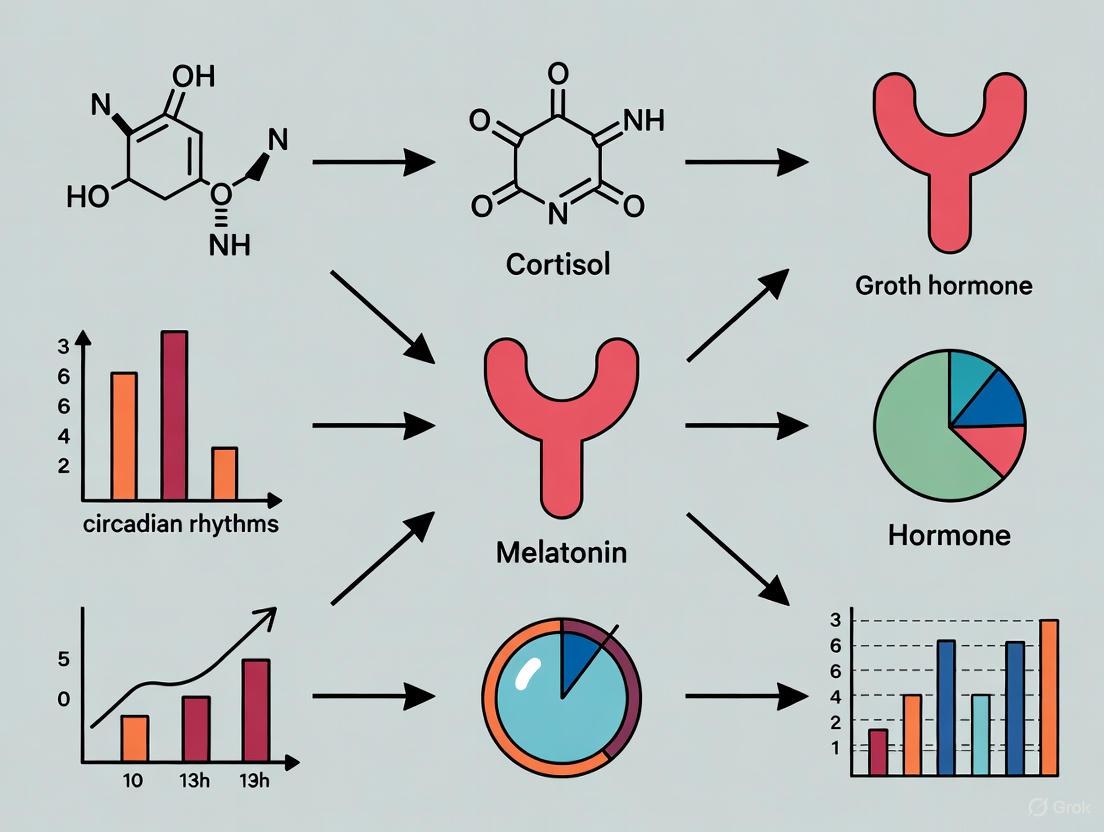
This article provides a comprehensive analysis of the bidirectional relationship between the circadian system and hormonal homeostasis, tailored for researchers and drug development professionals.
Circadian Regulation of Endocrine Function: Molecular Mechanisms, Clinical Implications, and Therapeutic Opportunities
Abstract
This article provides a comprehensive analysis of the bidirectional relationship between the circadian system and hormonal homeostasis, tailored for researchers and drug development professionals. It explores the foundational molecular architecture of the circadian clock, detailing how core clock genes regulate hormone secretion. The review further examines methodological approaches for investigating these interactions and the physiological consequences of circadian disruption, including metabolic syndrome, immune dysregulation, and impaired tissue repair. Finally, it synthesizes emerging therapeutic strategies that target circadian biology for treating endocrine-related diseases, offering insights for future biomedical research and clinical application.
The Circadian-Hormone Axis: Core Molecular Mechanisms and Systemic Regulation
The suprachiasmatic nucleus (SCN) serves as the master circadian pacemaker in the mammalian brain, governing the daily rhythms that synchronize physiology and behavior with the 24-hour solar day [1] [2]. This small, bilateral structure of approximately 10,000-20,000 neurons in the anterior hypothalamus orchestrates the timing of vital processes across the body, including the complex regulation of the endocrine system [3] [4] [1]. The SCN's role as a conductor is particularly crucial for the hypothalamic-pituitary-gonadal (HPG) axis and the rhythmic release of hormones such as cortisol, melatonin, growth hormone, and reproductive hormones [5] [6] [7]. Disruptions to SCN function are increasingly linked to metabolic disorders, mood disorders, and sleep diseases, underscoring its fundamental importance in maintaining physiological homeostasis [3] [8] [6]. This whitepaper details the anatomical, molecular, and functional architecture of the SCN, with a specific focus on its integral relationship with hormonal regulation, providing researchers and drug development professionals with a comprehensive technical guide to this central pacemaker.
Anatomical and Cellular Organization of the SCN
The SCN is strategically located in the ventral anterior hypothalamus, immediately dorsal to the optic chiasm and flanking the third ventricle [3] [1]. This positioning is critical for its function, allowing it to receive direct photic input from the retina. The nucleus is anatomically and functionally segregated into two primary subregions: the ventrolateral "core" and the dorsomedial "shell" [3] [9].
- Ventrolateral Core: This region is characterized by neurons that express vasoactive intestinal polypeptide (VIP). It serves as the primary input zone, receiving direct retinal innervation via the retinohypothalamic tract (RHT) from specialized, melanopsin-containing photosensitive retinal ganglion cells [3] [2]. Neurons in the core are crucial for entraining the SCN to external light-dark cycles and exhibit light-induced gene expression [3].
- Dorsomedial Shell: This region is predominantly composed of neurons expressing arginine-vasopressin (AVP) [3] [9]. The shell is implicated in the robust, autonomous generation of circadian rhythms and serves as a key output region, relaying timing signals to other brain areas [9] [2].
This core-shell arrangement facilitates a hierarchical processing of information: environmental light cues are integrated in the core, which then synchronizes the phase of the oscillators in the shell, resulting in a coherent rhythmic output [3] [9]. The SCN also contains other peptidergic neurons and utilizes GABA as a primary neurotransmitter, further contributing to its intricate internal network communication [3] [1].
Table: Key Neurochemical Signatures of SCN Subregions
| SCN Subregion | Primary Neuropeptide | Primary Input | Primary Function |
|---|---|---|---|
| Ventrolateral (Core) | Vasoactive Intestinal Polypeptide (VIP) | Retinohypothalamic Tract (RHT) | Entrainment to light; synchronization of internal SCN network |
| Dorsomedial (Shell) | Arginine-Vasopressin (AVP) | Input from SCN core and other hypothalamic areas | Autonomous rhythm generation; primary output signal |
Molecular Mechanisms of the SCN Clock
The cellular timekeeping mechanism within SCN neurons is driven by a self-sustaining transcriptional-translational feedback loop (TTFL) involving a set of core clock genes and their protein products [8] [7] [2]. This molecular oscillator operates with a period of approximately 24 hours and is present in virtually every cell, though it is most robust and autonomous within the SCN.
The core negative feedback loop involves the following sequence:
- Activation: The heterodimeric transcription factor complex CLOCK-BMAL1 binds to E-box enhancer elements in the promoter regions of target genes, including Period (Per1, Per2, Per3) and Cryptochrome (Cry1, Cry2), driving their transcription [8] [7].
- Accumulation and Repression: PER and CRY proteins accumulate in the cytoplasm throughout the day, form heteromeric complexes, and translocate back into the nucleus. There, they directly inhibit the transcriptional activity of their own activators, the CLOCK-BMAL1 complex [8] [2].
- Degradation and New Cycle: The PER-CRY repressor complex is progressively degraded, primarily through phosphorylation and ubiquitination pathways. This degradation relieves the inhibition on CLOCK-BMAL1, allowing a new cycle of transcription to begin [8].
An auxiliary stabilizing loop involves the nuclear receptors REV-ERBα and RORα. The Bmal1 gene is also regulated by E-boxes, making its transcription subject to the core loop. However, its promoter also contains ROR response elements (ROREs). RORα activates Bmal1 transcription, while REV-ERBα, whose expression is driven by CLOCK-BMAL1, represses it. This creates a second, interlocking feedback loop that enhances the stability and robustness of the core oscillator [8].
Diagram: Core Circadian Molecular Feedback Loop. The CLOCK-BMAL1 heterodimer activates transcription of Per, Cry, and Rev-erbα genes. PER-CRY proteins accumulate and inhibit CLOCK-BMAL1 activity. REV-ERBα protein represses Bmal1 transcription. Degradation of PER-CRY allows the cycle to restart.
Experimental Protocols for Investigating SCN Function
Real-Time Bioluminescence Imaging of SCN Slices
This methodology allows for the long-term, real-time monitoring of circadian gene expression in ex vivo SCN tissue.
Detailed Protocol:
- Animal Model: Utilize transgenic mice expressing a PER2::LUCIFERASE fusion protein, where the luciferase gene is fused to the Per2 gene [9] [4].
- Tissue Preparation: Sacrifice the animal and rapidly dissect the brain under cold, oxygenated artificial cerebrospinal fluid (aCSF). Prepare coronal hypothalamic slices (150-300 µm thick) containing the SCN using a vibratome.
- Culture Setup: Place the SCN slice onto a membrane insert within a culture dish. Maintain the slice in an air-interface culture with specialized medium (e.g., DMEM) supplemented with luciferin (0.1 mM), the substrate for luciferase [4].
- Data Acquisition: Place the culture in a light-tight, temperature-controlled chamber (e.g., 35.5-37°C) mounted on a cooled CCD camera or a photomultiplier tube system. Capture bioluminescence photons emitted from the tissue continuously for 5-10 days [9] [4].
- Data Analysis: Analyze the bioluminescence time series data using specialized software (e.g., BRASS, Metacycle) to determine period, phase, and amplitude of the circadian rhythm. Single-cell resolution can be achieved with advanced imaging, allowing for analysis of network synchrony [9] [4].
Cell-Type-Specific Circadian Analysis Using Color-Switch Reporters
A recent technological advancement enables the simultaneous tracking of circadian rhythms in different, genetically defined neuronal populations.
Detailed Protocol:
- Genetic Crossing: Generate compound mutant mice by crossing Color-Switch PER2::LUCIFERASE reporter mice with specific Cre-driver lines (e.g., VIP-ires-Cre or AVP-ires-Cre) [9].
- Reporter Mechanism: The Color-Switch mouse line initially expresses a red-emitting click beetle luciferase (PER2::CBR). Upon Cre-mediated recombination, the reporter irreversibly switches to express a green-emitting luciferase (PER2::CBG) in the target cell population [9].
- Dual-Channel Imaging: Prepare SCN slice cultures as above. Use a custom dual-color imaging device that splits the bioluminescence signal using a beam splitter. The signals are filtered (<550 nm for green, >625 nm for red) and projected onto different halves of a single CCD camera, allowing concurrent recording from both cell populations [9].
- Data Processing: Employ a custom analysis pipeline to separate the red and green channel time-series data. This allows for direct comparison of period, phase, and amplitude between, for example, VIP neurons (green) and non-VIP neurons (red) within the same SCN slice [9].
Diagram: Workflow for Cell-Type-Specific Circadian Imaging. This pipeline uses Cre-lox technology and dual-color bioluminescence to track PER2 rhythms in defined neuronal populations.
SCN Orchestration of Hormonal Rhythms
The SCN regulates the endocrine system through multiple efferent pathways to ensure hormonal release is appropriately timed. It projects directly and indirectly to key hypothalamic nuclei, such as the paraventricular nucleus (PVN), which controls the pituitary gland [5] [2]. This allows the SCN to govern the hypothalamic-pituitary-adrenal (HPA) axis, the HPG axis, and the pineal gland.
- Glucocorticoids: The SCN controls the circadian rhythm of cortisol (in humans)/corticosterone (in rodents) via a multi-step process. It sends arginine-vasopressin (AVP) projections to the PVN to rhythmically drive the HPA axis. The SCN also signals via the autonomic nervous system to gate the adrenal gland's sensitivity to ACTH, and the local adrenal clock further sharpens the rhythm [5]. Cortisol peaks at dawn (or before the active phase) to promote arousal and energy mobilization.
- Melatonin: The SCN generates a strong signal to the pineal gland via a multisynaptic pathway in the PVN and the spinal cord, which inhibits melatonin production during the day [5] [6]. This inhibition is lifted at night, allowing for a surge in melatonin that promotes sleep in diurnal species like humans. Light exposure at night can acutely suppress melatonin, a effect mediated by the SCN [5].
- Reproductive Hormones: The SCN is essential for the pre-ovulatory surge of luteinizing hormone (LH) in females. A specific population of SCN neurons projects to the kisspeptin neurons in the hypothalamus, which in turn stimulate gonadotropin-releasing hormone (GnRH) release, triggering the LH surge at a specific time of day [7].
- Other Metabolic Hormones: The SCN exerts indirect control over hormones like growth hormone (GH, linked to slow-wave sleep), prolactin (sleep-dependent), thyroid-stimulating hormone (TSH), leptin, and ghrelin, ensuring metabolic processes are aligned with the sleep-wake and feeding-fasting cycles [5] [6].
Table: SCN Regulation of Key Hormonal Rhythms
| Hormone | Site of Production | SCN Regulatory Mechanism | Peak/Circadian Profile | Functional Significance |
|---|---|---|---|---|
| Cortisol | Adrenal Cortex | AVP projection to PVN (HPA axis); autonomic innervation of adrenal [5] | Morning (before/during active phase) [5] [6] | Energy mobilization, wake promotion, stress response |
| Melatonin | Pineal Gland | Multisynaptic inhibition (lifted at night) [5] | Night (during sleep phase) [5] [6] | Sleep promotion, circadian entrainment, antioxidant activity |
| Luteinizing Hormone (LH) | Anterior Pituitary | Projection to kisspeptin neurons to trigger GnRH surge [7] | Afternoon/Evening (rodent proestrus) [7] | Triggers ovulation, regulates menstrual/estrous cycle |
| Growth Hormone (GH) | Anterior Pituitary | Sleep-stage dependent regulation [6] | First hours of sleep (associated with SWS) [6] | Tissue growth, repair, metabolism |
| Prolactin (PRL) | Anterior Pituitary | Sleep-wake cycle dependent regulation [6] | During sleep [6] | Lactation, immune function, reproduction |
The Scientist's Toolkit: Key Research Reagents and Models
Table: Essential Research Tools for SCN and Circadian Rhythm Investigation
| Research Tool / Reagent | Function and Application | Key Characteristics / Example |
|---|---|---|
| PER2::LUCIFERASE Reporter Mice [9] [4] | Real-time, long-term monitoring of circadian gene expression in ex vivo tissue explants or dispersed cells. | Allows non-invasive, high-temporal-resolution bioluminescence recording of PER2 protein dynamics. |
| Color-Switch PER2::LUC Mice [9] | Enables simultaneous, cell-type-specific circadian rhythm analysis within a heterogeneous tissue. | Cre-dependent switch from red (PER2::CBR) to green (PER2::CBG) bioluminescence. |
| Cre-lox Mouse Lines (e.g., VIP-ires-Cre, AVP-ires-Cre) [9] | Provides genetic access to specific neuronal populations for targeted manipulation or labeling. | Drives expression of Cre recombinase in a cell-type-specific manner (e.g., VIP or AVP neurons). |
| Conditional Knockout Mice (e.g., Bmal1 floxed) [9] | To study the function of core clock genes in specific SCN cell types or peripheral tissues. | Allows deletion of a gene of interest in a spatially and/or temporally controlled manner. |
| iDISCO & Light-Sheet Microscopy [4] | Volumetric imaging of PER2 expression or neuronal projections in intact, unsliced SCN tissue. | Provides a snapshot of phase distribution across the entire SCN network without slicing artifacts. |
| Luciferin [9] [4] | The substrate for firefly/click beetle luciferase, essential for bioluminescence imaging. | Added to culture medium for ex vivo experiments; can be administered in vivo for whole-animal imaging. |
The suprachiasmatic nucleus stands as a masterpiece of biological engineering, integrating environmental light cues to synchronize a vast network of cellular clocks, with the rhythmic endocrine system being one of its most critical outputs. Its intricate architecture—comprising a retinorecipient core that entrains to light and a rhythmic shell that generates coherent outputs—ensures precise temporal coordination of hormone release. The molecular TTFL provides the intrinsic timing mechanism, while network properties within the SCN confer robustness and flexibility.
Future research, leveraging advanced tools like cell-type-specific reporters, whole-tissue imaging, and intersectional genetics, will continue to decode how specific SCN subpopulations contribute to the timing of individual hormonal axes. For drug development, understanding the SCN's role offers promising avenues for chronotherapy—optimizing drug administration times to align with endogenous rhythms—and for developing novel treatments for circadian rhythm sleep-wake disorders, shift work-related metabolic diseases, and mood disorders linked to circadian misalignment. The SCN, as the master conductor of our internal time, remains a central focus for understanding and manipulating the fundamental rhythms of life and health.
The mammalian circadian clock is a cell-autonomous timing system that governs 24-hour physiological and behavioral rhythms through a core transcriptional-translational feedback loop (TTFL). This loop, composed of the transcriptional activators CLOCK and BMAL1 and the repressors PER and CRY, generates endogenous oscillations that regulate myriad physiological processes, including endocrine function. This technical review delineates the molecular architecture of the TTFL, details experimental methodologies for its investigation, and synthesizes current understanding of how this core clock mechanism imposes temporal structure on hormonal regulation. Emphasis is placed on genomic and biochemical regulatory mechanisms, with particular attention to implications for therapeutic development in circadian-related pathologies.
Molecular Architecture of the Core Circadian Feedback Loop
Core TTFL Components and Mechanism
The mammalian circadian clock operates through an autoregulatory transcriptional-translational feedback loop (TTFL) that cycles with approximately 24-hour periodicity [10] [11]. At its core, the basic helix-loop-helix PAS-domain transcription factors CLOCK (or its paralog NPAS2) and BMAL1 (ARNTL) form a heterodimeric complex that serves as the positive limb of the cycle [10] [12]. This CLOCK:BMAL1 complex binds to E-box enhancer elements (CACGTG) in the promoter regions of target genes, including Period (Per1, Per2, Per3) and Cryptochrome (Cry1, Cry2) genes [10] [13].
Following transcription and translation, PER and CRY proteins form multimeric complexes in the cytoplasm that translocate back to the nucleus to inhibit CLOCK:BMAL1-mediated transcription, completing the negative feedback loop [10] [14]. The entire cycle spans approximately 24 hours, with CLOCK:BMAL1-mediated activation occurring during the daytime in mice, followed by progressive accumulation of PER/CRY repressor complexes that suppress transcription during nighttime [10].
Auxiliary Feedback Loops
The core TTFL is stabilized by auxiliary feedback loops that provide additional regulatory layers. A key secondary loop involves nuclear receptors REV-ERBα/β and RORα/β/γ that regulate Bmal1 transcription through ROR-response elements (RREs) in its promoter [15] [12]. REV-ERBs act as transcriptional repressors, while RORs function as activators, creating a reciprocally oscillating system that reinforces Bmal1 expression rhythms [11] [15]. Additional regulatory components include DEC1/DEC2, which compete with CLOCK:BMAL1 for E-box binding, and DBP/NFIL3 that act on D-box elements to further refine transcriptional timing [11] [13].
Table 1: Core Components of the Mammalian Circadian TTFL
| Component | Role in TTFL | Paralogs/Variants | Functional Characteristics |
|---|---|---|---|
| CLOCK | Positive regulator; heterodimerizes with BMAL1 | NPAS2 (forebrain) | bHLH-PAS transcription factor; histone acetyltransferase activity |
| BMAL1 | Positive regulator; heterodimerizes with CLOCK | BMAL2 (ARNTL2) | bHLH-PAS transcription factor; critical transactivation domain |
| PER | Negative regulator; complexes with CRY | PER1, PER2, PER3 | PAS-domain proteins; PER1/2 essential in SCN, PER3 in periphery |
| CRY | Negative regulator; complexes with PER | CRY1, CRY2 | Photolyase homology domain; CRY1 potent repressor of CLOCK:BMAL1 |
Post-Translational Regulation and Protein Stability Control
Phosphorylation and Degradation Mechanisms
The circadian TTFL incorporates critical delays between transcription, translation, and nuclear translocation that are essential for generating sustained 24-hour oscillations. These delays are largely governed by regulated protein stability and subcellular localization [11] [12]. Casein kinase Iδ and Iε (CKIδ/ε) phosphorylate PER proteins, targeting them for ubiquitination by SCFβ-TrCP E3 ubiquitin ligase complexes and subsequent proteasomal degradation [11] [16]. Similarly, AMP-activated protein kinase (AMPK) phosphorylates CRY1, facilitating its FBXL3-mediated ubiquitination and degradation [12]. The balance between kinase and phosphatase activities (PP1, PP2A) determines the stability, cytoplasmic accumulation, and nuclear translocation timing of PER/CRY complexes [11].
Structural Insights into Core Clock Complexes
Structural biology has revealed intricate molecular interactions within clock protein complexes. The crystal structure of CLOCK:BMAL1 heterodimer reveals an asymmetric complex with CLOCK wrapping around BMAL1 [10]. The CRY1/PER2-CRY binding domain (CBD) complex shows PER2-CBD forming an extended conformation on CRY2 that winds around the CRY2 C-terminal helix, sterically hindering recognition by the SCFFbxl3 ubiquitin ligase [10]. CRY1 fulfills its repressor role by competing with coactivators for binding to the intrinsically unstructured C-terminal transactivation domain (TAD) of BMAL1, establishing a functional switch between activation and repression phases [14].
Table 2: Key Post-Translational Modifications in the Circadian TTFL
| Modification Type | Target Proteins | Enzymes Involved | Functional Consequences |
|---|---|---|---|
| Phosphorylation | PER1, PER2 | CKIδ/ε | Targets PER for degradation; regulates nuclear localization |
| Phosphorylation | PER2 | CK2 | Facilitates nuclear localization |
| Phosphorylation | CRY1 | AMPK | Promotes FBXL3-mediated degradation |
| Dephosphorylation | PER, TIM | PP1 | Stabilizes cytoplasmic complexes |
| Dephosphorylation | PER2 | PP1 (mammalian) | Promotes nuclear localization and stabilization |
| Ubiquitination | PER | SCFβ-TrCP | Proteasomal degradation |
| Ubiquitination | CRY | SCFFBXL3 | Proteasomal degradation |
Genomic and Circadian Regulation of Hormonal Pathways
Hierarchical Organization of Circadian Timing System
The mammalian circadian system is organized hierarchically, with a master pacemaker in the suprachiasmatic nucleus (SCN) of the hypothalamus synchronizing peripheral clocks throughout the body [10] [17]. The SCN receives photic input via the retinohypothalamic tract and coordinates peripheral oscillators through neural, endocrine, and behavioral outputs [5] [12]. This centralized control ensures temporal coordination across tissues, with peripheral clocks in organs like the liver, adrenal gland, and pancreas responding to both SCN-derived signals and local cues such as feeding time [5] [12].
Endocrine Regulation by Circadian Clocks
Hormonal systems exhibit robust circadian rhythms that are regulated through multiple mechanisms. The circadian system influences hormonal secretion through direct SCN control of endocrine axes, local clock function within endocrine glands, and circadian regulation of hormone target tissues [5]. Hormones can in turn act as zeitgebers (time-givers) that adjust peripheral clock phases, creating bidirectional communication between circadian and endocrine systems [5].
Figure 1: Hierarchical organization of circadian- endocrine regulation. The central SCN clock synchronizes peripheral tissue clocks through neural, humoral, and behavioral pathways, coordinating hormonal output.
Experimental Methodologies for TTFL Investigation
Genetic Complementation and Domain-Swapping Approaches
Studies elucidating BMAL1-specific functions employed systematic domain-swapping chimeras with its non-circadian paralog BMAL2 in Bmal1⁻/⁻ fibroblasts [14]. This approach identified the C-terminal transactivation domain (TAD) of BMAL1 as essential for circadian function, with chimeras containing BMAL2 TAD (Bmal1-H2) exhibiting significantly shortened periods (~3 hours) and complete loss of rhythmicity when both G and H regions were substituted (Bmal1-G2H2) [14]. Complementation experiments revealed that while BMAL2 could activate E-box-mediated transcription, it could not sustain circadian oscillations, highlighting functional distinctions between paralogs despite structural similarities [14].
CRISPR-Cas9-Mediated RRE Deletion Studies
To investigate the RRE-mediated auxiliary feedback loop, researchers employed CRISPR-Cas9 to delete two highly conserved RRE elements in the Bmal1 5'-UTR region, creating ΔRRE mutant cells and mice [15]. This approach demonstrated that while RRE elements are essential for rhythmic Bmal1 transcription, their deletion did not abolish behavioral rhythms or tissue-level oscillations, though it did reduce system robustness to perturbations [15]. Mutant tissues maintained circadian rhythms of E-box-controlled genes (Dbp, Rev-erbα, Per2) and RRE-controlled genes (E4bp4, Clock), indicating compensation through post-translational mechanisms [15].
Genomic and Proteomic Approaches
Genome-wide approaches have revealed extensive circadian regulation at multiple molecular levels. DNase I hypersensitive site (DHS) mapping across 24 hours in mouse liver showed 8% of 65,000 DHSs cycled with 24-hour periodicity, in phase with RNA polymerase II binding and H3K27ac marks [16]. Chromatin conformation capture (4C-seq) demonstrated rhythmic chromatin interactions, with enhancer-promoter contact frequency increasing at peak expression times [16]. Quantitative proteomics revealed ~500 rhythmic nuclear proteins (~10% of quantified proteins), while phospho-proteomics identified >5,000 rhythmic phosphorylation sites (~25% of sites), far exceeding rhythms in protein abundance [16].
The Scientist's Toolkit: Essential Research Reagents
Table 3: Key Research Reagents for Circadian TTFL Investigation
| Reagent/Tool | Application | Key Features/Functions |
|---|---|---|
| Bmal1⁻/⁻ Per2Luc fibroblasts | Genetic complementation studies | Arrhythmic background for rescue experiments with clock gene variants |
| CRISPR-Cas9 RRE deletion mutants | Auxiliary loop studies | ΔRRE models with constitutive Bmal1 expression but maintained oscillations |
| PER2::LUC reporter systems | Real-time rhythm monitoring | Bioluminescence recording of circadian dynamics in tissues and cells |
| CKIδ/ε inhibitors (PF-670462) | Pharmacological manipulation | Specific kinase inhibition to perturb PER phosphorylation and stability |
| REV-ERB agonists (SR9009) | Nuclear receptor targeting | Pharmacological manipulation of RRE-mediated transcription |
| Chromatin conformation capture (4C-seq) | 3D genome architecture | Mapping rhythmic chromatin interactions and enhancer-promoter contacts |
| Circadian proteomics/phosphoproteomics | Post-translational regulation | Comprehensive profiling of rhythmic protein abundance and modifications |
Implications for Hormonal Regulation and Therapeutic Applications
Circadian Regulation of Endocrine Axes
The TTFL governs hormonal secretion through multiple interconnected mechanisms. Glucocorticoid secretion exhibits robust circadian rhythms regulated by SCN control of the HPA axis, adrenal innervation, and local adrenal clock gating of ACTH sensitivity [5]. The Per1 gene contains glucocorticoid response elements (GREs), allowing cortisol to function as both a rhythm driver and zeitgeber for peripheral clocks [5]. Melatonin synthesis is directly controlled by the SCN, with nocturnal secretion patterns that provide feedback regulation of circadian timing [5] [6]. Thyroid-stimulating hormone (TSH) displays circadian variation that is modulated by sleep-wake cycles, while growth hormone (GH) secretion is tightly coupled to slow-wave sleep [6].
Chronotherapeutic Implications
Circadian disruption is implicated in various endocrine and metabolic disorders, including metabolic syndrome, diabetes, and sleep disorders [16] [12]. Familial Advanced Sleep Phase Disorder (FASPD) is linked to mutations in PER2 (S662G), CKIδ (T44A), and CRY2 (A260T), while Delayed Sleep Phase Disorder (DSPD) is associated with CRY1 mutations that enhance its affinity for CLOCK:BMAL1 [16]. Understanding TTFL mechanisms enables chronotherapeutic approaches targeting clock components or timing drug administration to endogenous rhythms [16] [12].
Figure 2: Bidirectional regulation between circadian TTFL and endocrine systems. The core clock regulates hormonal secretion through central and peripheral mechanisms, while hormones provide feedback that modulates circadian timing.
The transcriptional-translational feedback loop comprising BMAL1, CLOCK, PER, and CRY represents a fundamental biological mechanism that generates circadian rhythms and temporally organizes endocrine function. This molecular oscillator regulates hormone synthesis, secretion, and sensitivity through direct transcriptional control, SCN-mediated neural pathways, and local clock function in endocrine tissues. The intricate regulation of TTFL components through phosphorylation, ubiquitination, and subcellular localization provides precise timing control, while auxiliary feedback loops confer system robustness. Continuing investigation of TTFL mechanisms and their endocrine integration promises novel chronotherapeutic strategies for treating circadian-related metabolic, endocrine, and sleep disorders.
The suprachiasmatic nucleus (SCN) of the hypothalamus functions as the master circadian pacemaker in mammals, coordinating near-24-hour rhythms in physiology and behavior throughout the body [17] [18]. This bilateral structure, consisting of approximately 10,000 neurons per hemisphere in humans and 20,000 in rodents, maintains temporal harmony by transmitting timing signals to peripheral tissues and organs [19] [18]. The SCN achieves this synchronization through two primary output systems: neural pathways that direct rapid, specific communication to target brain regions, and endocrine pathways that deliver broader, rhythmic hormonal signals via circulation [8] [5]. These systemic synchronizers ensure that local circadian clocks in peripheral tissues remain aligned with both the external environment and the central SCN pacemaker, enabling organisms to anticipate and adapt to daily environmental cycles [20]. Disruption of this precise temporal organization is increasingly linked to various metabolic, cardiovascular, and psychological disorders, highlighting the critical importance of understanding SCN output mechanisms for both basic physiology and therapeutic development [8] [17].
Molecular Architecture of the SCN Clock
The SCN generates circadian rhythms through a cell-autonomous molecular clockwork based on transcriptional-translational feedback loops (TTFLs) involving a core set of clock genes [8] [20]. This molecular machinery is remarkably similar to that found in peripheral tissues, though the SCN network possesses unique properties that confer exceptional rhythm stability and resilience [18].
Core Clock Mechanism
The core negative feedback loop consists of heterodimers of BMAL1 and CLOCK proteins that activate transcription of Period (Per1, Per2, Per3) and Cryptochrome (Cry1, Cry2) genes by binding to E-box elements in their promoter regions [8]. Following translation, PER and CRY proteins form complexes in the cytoplasm, undergo post-translational modifications, and translocate back to the nucleus to inhibit BMAL1:CLOCK transcriptional activity, thus completing a approximately 24-hour cycle [8]. An auxiliary loop involves REV-ERBα and RORα, which compete for ROR response elements (RREs) in the Bmal1 promoter, providing additional stability to the core oscillator [8].
SCN Cellular Organization
The SCN exhibits a distinct neuroanatomical organization that underlies its specialized pacemaker function. It is divided into ventrolateral (core) and dorsomedial (shell) subregions based on neuronal peptidergic expression, connectivity, and functional characteristics [19] [3]. The core region receives direct photic input via the retinohypothalamic tract (RHT) and predominantly contains neurons expressing vasoactive intestinal peptide (VIP) and gastrin-releasing peptide (GRP) [19]. The shell region, which contains mainly arginine vasopressin (AVP)-expressing neurons, receives less direct retinal input but extensive intra-SCN connections from the core, and projects more broadly to hypothalamic and extra-hypothalamic targets [19] [3]. This organizational structure enables the SCN to integrate environmental light information and distribute coordinated timing signals throughout the organism.
Neural Output Pathways from the SCN
The SCN communicates timing information to the rest of the brain and peripheral tissues through dedicated neural pathways that regulate specific physiological and behavioral rhythms. These projections primarily target hypothalamic nuclei, which then relay signals to autonomic control centers that influence peripheral physiology.
Direct Hypothalamic Projections
Most monosynaptic efferents from the SCN terminate in nearby hypothalamic regions critical for circadian regulation of physiological processes [19]. Key projection targets include:
- Subparaventricular zone (SPZ): The primary recipient of SCN efferents, serving as a major relay station for distributing circadian information [19] [3]
- Dorsomedial hypothalamus (DMH): Integrates circadian and metabolic information to regulate feeding behavior, locomotor activity, and cardiovascular function [19]
- Medial preoptic area (MPA): Regulates body temperature and sleep-wake cycles [19]
- Paraventricular nucleus (PVN): Coordinates neuroendocrine and autonomic outputs [19]
These projections predominantly utilize GABA as their primary neurotransmitter, along with co-released peptides including AVP and VIP that modulate signal specificity and strength [19].
Autonomic Nervous System Pathways
The SCN influences peripheral physiology via multisynaptic autonomic pathways that relay through the PVN [20] [18]. The sympathetic pathway projects from the PVN to the intermediolateral cell column of the spinal cord, then to peripheral sympathetic ganglia that innervate various organs including the pineal gland, adrenal medulla, and white adipose tissue [18]. The parasympathetic pathway involves projections from the PVN to the dorsal motor nucleus of the vagus and nucleus ambiguus, which then send fibers to thoracic and abdominal organs via the vagus nerve [20]. These autonomic outputs allow the SCN to directly regulate organ functions in a time-dependent manner, including melatonin production, glucocorticoid secretion, and glucose homeostasis [20] [18].
Table 1: Major Neural Output Pathways from the SCN
| Pathway | Projection Target | Primary Neurotransmitters | Functional Role |
|---|---|---|---|
| Direct Hypothalamic | Subparaventricular zone (SPZ) | GABA, AVP | Main relay for circadian signals |
| Dorsomedial hypothalamus (DMH) | GABA, AVP | Feeding behavior, locomotion | |
| Medial preoptic area (MPA) | GABA, AVP | Thermoregulation, sleep | |
| Paraventricular nucleus (PVN) | GABA, AVP | Neuroendocrine integration | |
| Autonomic | Intermediolateral column | Glutamate (from PVN) | Sympathetic preganglionic neurons |
| Dorsal motor nucleus of vagus | Glutamate (from PVN) | Parasympathetic preganglionic neurons |
Figure 1: Neural Output Pathways from the SCN. The SCN projects to key hypothalamic regions which then relay signals to peripheral organs via the autonomic nervous system. Abbreviations: SPZ, subparaventricular zone; DMH, dorsomedial hypothalamus; MPA, medial preoptic area; PVN, paraventricular nucleus; ANS, autonomic nervous system.
Endocrine Output Pathways from the SCN
In addition to neural connections, the SCN regulates systemic physiology through hormonal pathways that transmit timing information via circulation. These endocrine outputs provide a broad, humoral synchronization signal that complements the specificity of neural pathways.
Melatonin Regulation Pathway
The SCN controls the daily rhythm of melatonin secretion from the pineal gland through a multisynaptic pathway that represents one of the best-characterized endocrine outputs [5] [18]. The pathway begins with SCN efferents projecting to the PVN, which then sends descending projections to sympathetic preganglionic neurons in the intermediolateral cell column of the spinal cord [18]. These neurons project to the superior cervical ganglion, whose postganglionic noradrenergic fibers innervate the pineal gland [18]. Norepinephrine release from these fibers during the night stimulates beta-1 and alpha-1 adrenergic receptors on pinealocytes, activating the cAMP signaling pathway and triggering the synthesis and secretion of melatonin [5] [18]. The SCN generates the precise daily timing of this signal while also transmitting light exposure information that can acutely suppress melatonin production when needed [5].
Glucocorticoid Regulation Pathway
The SCN regulates the daily rhythm of glucocorticoid secretion through multiple parallel mechanisms [5] [21]. The primary pathway involves SCN projections to the PVN that influence the hypothalamic-pituitary-adrenal (HPA) axis [5]. The SCN provides arginine vasopressin (AVP)-containing inputs to corticotropin-releasing hormone (CRH) neurons in the PVN, which then regulate pituitary adrenocorticotropic hormone (ACTH) secretion and subsequent adrenal glucocorticoid production [5]. Additionally, the SCN regulates adrenal sensitivity to ACTH through autonomic innervation via the splanchnic nerve [5] [21]. Finally, the intrinsic adrenal circadian clock gates the response to ACTH, creating a robust glucocorticoid rhythm that peaks just before the active phase [5]. This multi-layered regulation ensures appropriate timing of glucocorticoid secretion, which in turn acts as an important zeitgeber for peripheral clocks [5].
Other Hormonal Rhythms
Beyond melatonin and glucocorticoids, the SCN influences numerous other hormonal rhythms either directly or indirectly:
- Growth hormone: Shows a strong sleep-dependent secretion pattern with peaks during slow-wave sleep [18]
- Prolactin: Levels peak during sleep, with regulation involving both SCN output and sleep-wake mechanisms [8]
- Thyroid-stimulating hormone (TSH): Shows a nocturnal rise that is influenced by both circadian timing and sleep homeostasis [5]
- Reproductive hormones: Luteinizing hormone (LH) and follicle-stimulating hormone (FSH) rhythms are regulated by SCN outputs to GnRH neurons [21]
- Metabolic hormones: Leptin, ghrelin, adiponectin, and insulin rhythms are influenced by SCN regulation of feeding-fasting cycles and autonomic outputs [8] [21]
Table 2: Major Endocrine Output Pathways from the SCN
| Hormone | Source | SCN Regulation Pathway | Peak Time (Human) | Function as Zeitgeber |
|---|---|---|---|---|
| Melatonin | Pineal gland | PVN → spinal cord → superior cervical ganglion | Night (02:00-04:00) | Strong (phase resetting) |
| Cortisol | Adrenal cortex | PVN (CRH) → pituitary (ACTH) → adrenal + autonomic input | Morning (06:00-08:00) | Strong (peripheral clocks) |
| Growth Hormone | Pituitary | Indirect via sleep regulation | Early night (SWS) | Weak |
| Prolactin | Pituitary | Indirect via sleep and VIP signaling | Night | Moderate (liver clocks) |
Figure 2: Endocrine Output Pathways from the SCN. The SCN regulates hormonal rhythms through both neural pathways to endocrine glands and influences on hypothalamic-pituitary axes. Abbreviations: PVN, paraventricular nucleus; CRH, corticotropin-releasing hormone; ACTH, adrenocorticotropic hormone.
Experimental Methodologies for Studying SCN Outputs
Research into SCN neural and endocrine pathways employs specialized methodologies that enable precise manipulation and measurement of circadian outputs. The following experimental approaches represent gold standards in the field.
Neural Tracing Techniques
Anterograde and retrograde tracing methods are essential for mapping SCN neural connectivity [19]. For comprehensive mapping of SCN efferents, the anterograde tracer Phaseolus vulgaris leucoagglutinin (PHA-L) can be iontophoretically injected into the SCN, followed by immunohistochemical detection after appropriate survival times to visualize complete axonal projections [19]. To identify afferent inputs to the SCN, retrograde tracers such as Fluorogold or cholera toxin subunit B can be injected into target regions followed by fluorescence microscopy to identify back-labeled SCN neurons [19]. Modern viral tracing methods using cre-dependent herpes simplex virus or rabies virus systems offer enhanced specificity and the capability for trans-synaptic tracing, allowing complete mapping of multisynaptic pathways [20].
Electrophysiological Recordings
Multi-unit and single-unit extracellular recordings from SCN neurons both in vivo and in vitro provide direct measurement of SCN electrical activity rhythms [18]. For in vivo recordings, chronic electrode implants in freely moving animals allow correlation of SCN firing patterns with behavioral and physiological outputs [18]. In vitro approaches using hypothalamic slice preparations containing the SCN enable precise control of experimental conditions and pharmacological manipulations while maintaining the intrinsic circadian rhythm of electrical activity for multiple cycles [18]. Patch-clamp recordings from identified SCN neurons in slices allow detailed characterization of membrane properties and synaptic inputs that shape SCN output signals [19].
Hormonal Measurement Methods
Comprehensive assessment of endocrine rhythms requires frequent blood sampling to capture ultradian and circadian patterns. For human studies, indwelling intravenous catheters with remote sampling systems allow blood collection without disturbing sleep or behavior [18]. For animal studies, chronic jugular vein catheters connected to automated sampling systems enable high-temporal resolution hormone measurement in freely behaving animals [5]. Hormone quantification typically employs radioimmunoassay (RIA) or enzyme-linked immunosorbent assay (ELISA) techniques with sensitivity in the picogram to nanogram per milliliter range, sufficient to detect physiological concentrations of most hormones [18]. For simultaneous measurement of multiple hormones, multiplex bead-based immunoassays provide an efficient solution [21].
Table 3: Key Experimental Methods for Studying SCN Output Pathways
| Method Category | Specific Techniques | Key Applications | Technical Considerations |
|---|---|---|---|
| Neural Tracing | Anterograde tracing (PHA-L) | Mapping SCN efferent projections | Requires immunohistochemistry |
| Retrograde tracing (Fluorogold) | Identifying inputs to SCN | Compatible with other labels | |
| Viral trans-synaptic tracing | Complete circuit mapping | Requires genetic access | |
| Electrophysiology | Multi-unit in vivo recording | SCN activity in behaving animals | Chronic electrode implantation |
| Hypothalamic slice recording | SCN rhythm in controlled conditions | Maintains rhythm for 2-3 cycles | |
| Patch-clamp recording | Cellular mechanisms in SCN | Identified neuron physiology | |
| Endocrine Measures | Frequent blood sampling | Hormone rhythm characterization | Catheter placement critical |
| Radioimmunoassay (RIA) | High-sensitivity hormone detection | Radioactive materials required | |
| Multiplex immunoassays | Multiple hormones simultaneously | Platform-specific validation |
The Scientist's Toolkit: Essential Research Reagents
Research on SCN output pathways relies on specialized reagents and tools that enable precise manipulation and measurement of circadian signals. The following table summarizes key resources for investigators in this field.
Table 4: Essential Research Reagents for Studying SCN Output Pathways
| Reagent/Tool | Specific Examples | Research Application | Key Function |
|---|---|---|---|
| Neural Tracers | Phaseolus vulgaris leucoagglutinin (PHA-L) | Anterograde tracing of SCN efferents | Maps neural projections from SCN |
| Fluorogold, Cholera toxin B subunit | Retrograde tracing to SCN | Identifies inputs to SCN | |
| Cre-dependent rabies virus | Trans-synaptic circuit mapping | Identifies multisynaptic connections | |
| Antibodies | Anti-AVP, Anti-VIP, Anti-GRP | Neuropeptide identification in SCN | Characterizes SCN subregions |
| Anti-PER1/2, Anti-BMAL1 | Clock protein visualization | Tracks molecular clock components | |
| Phospho-specific antibodies | Post-translational modifications | Studies clock protein regulation | |
| Animal Models | Per1::luciferase, Per2::Luc | Real-time clock gene reporting | Monitors circadian timing in tissues |
| Clock gene knockouts (Bmal1^-/^) | Molecular mechanism studies | Tests necessity of clock components | |
| Cre-driver lines (VIP-Cre, AVP-Cre) | Cell-type specific manipulations | Targets SCN subpopulations | |
| Pharmacological Agents | Melatonin receptor agonists/antagonists | Testing melatonin signaling | Probes endocrine feedback |
| GR/MR ligands (corticosterone) | Glucocorticoid signaling studies | Tests HPA axis regulation | |
| VIP receptor modulators | SCN neuropeptide signaling | Studies intercellular coupling |
The SCN coordinates physiological timing throughout the body via precisely organized neural and endocrine output pathways that serve as fundamental systemic synchronizers. Neural outputs through direct hypothalamic projections and autonomic pathways provide specific, rapid regulation of target tissues, while endocrine outputs through melatonin, glucocorticoids, and other hormones deliver broader, rhythmic signals that synchronize peripheral clocks [8] [5] [20]. This dual-output system ensures both stability and flexibility in circadian organization, allowing organisms to maintain temporal harmony while adapting to changing environmental conditions. Disruption of these synchronizing pathways—through genetic mutation, environmental misalignment, or aging—contributes to various metabolic, cardiovascular, and neurological disorders [8] [17] [20]. Future research elucidating the precise mechanisms of SCN output regulation and their interactions with peripheral tissues will provide critical insights for developing chronotherapeutic strategies that optimize treatment timing for various conditions and mitigate the health consequences of circadian disruption.
Within the broader thesis investigating how circadian rhythms affect hormone levels, a critical bidirectional relationship emerges: while the central circadian clock regulates hormonal secretion, the hormones themselves, in turn, function as potent synchronizing signals for peripheral tissue clocks. These hormonal signals, termed zeitgebers (German for "time-givers"), are essential for maintaining temporal alignment across the body's myriad physiological systems [5] [22]. This review dissects the principal mechanisms by which hormones, including glucocorticoids, melatonin, and metabolic hormones, act as phasic drivers to reset, regulate, and tune circadian rhythms in peripheral organs. Understanding these endocrine-circadian interactions provides a foundational framework for developing chronotherapeutic strategies aimed at treating diseases arising from circadian disruption [8] [5] [20].
The circadian system is organized in a hierarchical network, with the suprachiasmatic nucleus (SCN) in the hypothalamus serving as the master pacemaker. The SCN receives direct light input from the retina and coordinates subordinate clocks in peripheral tissues and organs via neural, behavioral, and humoral outputs [17] [22] [20]. A core set of clock genes, including Bmal1, Clock, Period (Per), and Cryptochrome (Cry), form interlocking transcriptional-translational feedback loops (TTFLs) that generate approximately 24-hour molecular oscillations within individual cells [8] [22]. This molecular clockwork is present not only in the SCN but also in most peripheral cells, enabling local control of tissue-specific rhythmic functions [8] [20].
Molecular Architecture of the Circadian Clock
The autonomy of peripheral clocks necessitates robust synchronization mechanisms. The molecular circadian clock operates through a core transcriptional-translational feedback loop (TTFL) that is evolutionarily conserved [8] [22]. The core negative feedback loop involves the heterodimerization of the transcription factors CLOCK and BMAL1. This complex binds to E-box enhancer elements in the promoter regions of target genes, driving the transcription of Period (Per1, Per2, Per3) and Cryptochrome (Cry1, Cry2) genes [8]. After translation, PER and CRY proteins form heteromeric complexes in the cytoplasm, translocate back into the nucleus, and inhibit the transcriptional activity of CLOCK:BMAL1, thereby repressing their own transcription [8] [22].
An auxiliary feedback loop, centered on the rhythmic expression of Bmal1, provides stability and robustness. The nuclear receptors REV-ERBα/β and RORα/β competitively bind to ROR response elements (ROREs) in the Bmal1 promoter. REV-ERBs repress, while RORs activate, Bmal1 transcription, creating a second oscillatory loop that reinforces the core clock [8] [22]. This intricate molecular machinery is finely tuned by post-translational modifications, such as phosphorylation by kinases like CK1δ/ε, which regulate the stability and nuclear translocation of clock proteins, ensuring a precise ~24-hour cycle [22].
The following diagram illustrates these core molecular interactions:
Figure 1: Core Circadian Transcriptional-Translational Feedback Loop. The CLOCK:BMAL1 heterodimer activates transcription of Per and Cry genes, as well as the nuclear receptors Rev-Erb and Ror. The PER:CRY protein complex accumulates, translocates to the nucleus, and inhibits CLOCK:BMAL1 activity, completing the core negative feedback loop. The auxiliary loop involves Rev-Erb repression and Ror activation of Bmal1 transcription. Kinases like CK1δ/ε fine-tune the clock by regulating protein stability.
Endocrine Regulation of Peripheral Clocks
Hormones regulate circadian rhythms in peripheral tissues through three primary, non-mutually exclusive mechanisms: as zeitgebers that reset the phase of the local molecular clock, as rhythm drivers that directly impose rhythmicity on clock-controlled genes, and as tuners that modulate the amplitude of rhythmic outputs without altering the core clockwork [5].
Hormones as Circadian Zeitgebers
As zeitgebers, hormones can entrain peripheral clocks by directly modulating the expression of core clock genes. A key example is the glucocorticoid cortisol (corticosterone in rodents). The adrenal secretion of glucocorticoids follows a robust circadian rhythm, peaking around the onset of the active phase [5]. This rhythm is regulated by a multi-tiered system involving the SCN's control of the hypothalamic-pituitary-adrenal (HPA) axis, direct autonomic innervation of the adrenal gland, and the intrinsic adrenal clock, which gates the organ's sensitivity to adrenocorticotropic hormone (ACTH) [5].
Glucocorticoids bind to the glucocorticoid receptor (GR), a nuclear receptor that translocates to the nucleus and binds to glucocorticoid response elements (GREs) in target genes. Notably, several clock genes, including Per1 and Per2, contain GREs in their promoter regions [5]. Therefore, the rhythmic cortisol signal can directly reset the phase of peripheral clocks by driving the transcription of Per genes, thereby synchronizing the local TTFL [5]. This mechanism is particularly potent in organs like the liver, kidney, and heart.
Melatonin, a hormone secreted by the pineal gland during the night, serves as another crucial endocrine zeitgeber, particularly for the SCN itself and for peripheral tissues. Melatonin synthesis is tightly controlled by the SCN, which integrates light information received via the retinohypothalamic tract [5]. The SCN transmits signals that restrict melatonin production to the dark phase, while incidental light exposure at night can acutely suppress its release [5]. Melatonin exerts its effects by binding to two high-affinity G-protein coupled receptors, MT1 and MT2, which are expressed in various tissues, including the SCN, retina, and peripheral organs [5] [6]. In the SCN, melatonin receptor signaling can phase-shift neuronal firing rhythms, helping to entrain the central pacemaker to the light-dark cycle. In peripheral tissues, melatonin can reset local clocks, ensuring they remain in harmony with the central clock [5]. Exogenous melatonin administration is therefore used to manage circadian rhythm sleep-wake disorders, such as jet lag and shift work disorder [5].
Hormones as Rhythm Drivers and Tuners
Beyond resetting the core clock, hormones can act as rhythm drivers by binding to their receptors and directly regulating the rhythmic expression of clock-controlled output genes. This imposes a layer of rhythmicity on physiological processes that is independent of the local TTFL. Glucocorticoids, for example, drive the rhythmic expression of a large number of genes involved in metabolism and immune function in liver and adipose tissue through GRE-mediated transcription [5].
The concept of "tuning" describes a scenario where a largely arrhythmic hormonal signal elicits a rhythmic response in the target tissue due to circadian regulation of the hormone's receptor or downstream signaling components. This allows the tissue to interpret a constant hormonal signal in a time-dependent manner. Emerging evidence suggests that thyroid hormones may function in this capacity in the liver, where the expression of thyroid hormone transporters and deiodinases is regulated by the local clock, thereby gating the tissue's response to stable levels of circulating thyroid hormone [5].
Table 1: Primary Hormonal Zeitgebers and Their Mechanisms of Action
| Hormone | Source | Rhythmic Profile | Primary Receptor(s) | Target Tissues | Mechanism of Action |
|---|---|---|---|---|---|
| Glucocorticoids | Adrenal Cortex | Diurnal peak at wake-time; Ultradian pulses [5] | Glucocorticoid Receptor (GR) | Liver, Muscle, Heart, Adipose Tissue [5] | GR binds GREs in promoters of clock genes (e.g., Per1, Per2) and metabolic genes [5] |
| Melatonin | Pineal Gland | Nocturnal; peaks during dark phase [5] [6] | MT1, MT2 (GPCRs) | SCN, Retina, Peripheral Tissues [5] | Receptor signaling modulates SCN activity and resets peripheral tissue clocks [5] |
| Oxyntomodulin | Gut (L-cells) | Postprandial secretion [23] | Glucagon Receptor (GCGR) | Liver [23] | Activates cAMP signaling, induces Per1 expression, resets liver clock phase [23] |
Experimental Evidence and Key Signaling Pathways
The Gut-Liver Axis: Oxyntomodulin as a Feeding-Related Zeitgeber
Feeding time is a dominant zeitgeber for peripheral clocks, particularly in metabolic organs like the liver. The signals mediating this food-to-clock communication have been partially elucidated. A key experiment by Landgraf et al. (2015) identified the gut hormone oxyntomodulin as a critical endocrine signal that resets the liver clock in response to feeding [23].
Experimental Protocol:
- In Vitro Screening: A library of approximately 200 peptides involved in appetite and body weight regulation was screened for their ability to shift the circadian phase of explanted mouse liver tissue using real-time bioluminescence recording of PER2::LUCIFERASE rhythm.
- Phase-Response Curve (PRC): Liver explants were treated with oxyntomodulin at different circadian times to determine the magnitude and direction (phase advance vs. delay) of the clock resetting.
- Receptor Specificity: Explants were co-treated with oxyntomodulin and specific antagonists for the glucagon-like peptide-1 receptor (GLP-1R) or the glucagon receptor (GCGR) to identify the mediating receptor.
- Downstream Signaling: The involvement of the cAMP/PKA signaling pathway was investigated using pharmacological inhibitors.
- In Vivo Validation:
- Fasted mice were refed, and plasma oxyntomodulin levels were measured.
- Clock gene expression (Per1 and Per2) in the liver was analyzed following refeeding.
- To establish necessity, mice were injected with a neutralizing anti-oxyntomodulin antibody prior to refeeding, and the subsequent shift in the liver clock was assessed.
The study demonstrated that oxyntomodulin, released from gut L-cells after a meal, phase-shifts the liver clock by binding to glucagon receptors (GCGR), not GLP-1 receptors. This binding activates a cAMP-dependent signaling cascade that leads to a rapid, transient increase in Per1 gene expression in hepatocytes, thereby resetting the local TTFL [23]. Crucially, this effect was liver-specific, as oxyntomodulin had no effect on the SCN master clock [23].
The following diagram illustrates this signaling pathway:
Figure 2: Oxyntomodulin Signaling Resets the Liver Clock. Food intake stimulates the release of oxyntomodulin from gut L-cells. Oxyntomodulin binds to Glucagon Receptors (GCGR) on hepatocytes, activating the cAMP/PKA signaling pathway. This leads to a rapid induction of Per1 gene expression, which ultimately resets the phase of the liver's molecular circadian clock.
Systemic Hormonal Regulation
Other hormones also play significant roles in systemic circadian organization. The HPA axis rhythm is a classic example of SCN-driven endocrine regulation that subsequently synchronizes peripheral tissues. The SCN signals to the paraventricular nucleus (PVN) to trigger corticotropin-releasing hormone (CRH) and arginine-vasopressin (AVP) release, stimulating pituitary ACTH secretion, which in turn drives cortisol production in the adrenal cortex [5]. Metabolic hormones like insulin and leptin also exhibit circadian rhythms and can influence peripheral clocks. For instance, insulin has been shown to act as a zeitgeber for adipocyte clocks [5] [20]. Disruption of these hormonal rhythms, as seen in sleep disorders, leads to widespread dysregulation of circadian outputs [6].
Table 2: Experimental Models for Studying Hormonal Zeitgebers
| Experimental Approach | Key Readouts | Example Finding |
|---|---|---|
| In Vitro Tissue/Cell Culture | Bioluminescence rhythm (PER2::LUC); qPCR of clock genes; Pharmacological inhibition [23] | Oxyntomodulin induces phase-dependent shifts in liver explant rhythms via glucagon receptor [23]. |
| Hormone Administration | Phase-Response Curve (PRC); Clock gene expression (mRNA/protein); Behavioral rhythms (locomotor activity) [5] | Timed cortisol injections can entrain peripheral clocks in liver and kidney [5]. |
| Hormone Neutralization | Clock gene expression after expected stimulus (e.g., feeding); Altered phase of peripheral rhythms [23] | Anti-oxyntomodulin antibody blunts feeding-induced Per1 expression in liver [23]. |
| Genetic Knockout Models | Locomotor activity record; Metabolic phenotyping; Tissue-specific clock gene expression [8] [20] | Tissue-specific Bmal1 knockout (e.g., in liver) leads to organ-specific metabolic defects [20]. |
The Scientist's Toolkit: Research Reagent Solutions
Advancing research in this field requires a specialized toolkit of reagents and model systems to dissect the complex interactions between hormones and circadian clocks.
Table 3: Essential Research Reagents and Models
| Tool / Reagent | Function/Application | Specific Examples |
|---|---|---|
| Bioluminescence/Fluorescence Reporters | Real-time, longitudinal monitoring of circadian clock gene expression in living cells and tissues. | PER2::LUCIFERASE reporter mice or cell lines [23]. |
| Hormone Agonists/Antagonists | To probe the necessity and sufficiency of specific hormonal pathways in clock resetting. | GR antagonists (e.g., RU486); MT1/MT2 agonists (e.g., ramelteon) [5]. |
| Hormone Neutralizing Antibodies | To acutely block the function of an endogenous hormone in vivo without genetic manipulation. | Anti-oxyntomodulin IgG [23]. |
| Tissue-Specific Knockout Models | To dissect the tissue-autonomous role of specific clock genes or hormone receptors. | Liver-specific Bmal1 KO; Cardiomyocyte-specific Clock mutant mice [20]. |
| Human Cell Lines | For studying human-specific circadian mechanisms and for high-throughput drug screening. | U2OS cell line with stable circadian reporter [8]. |
Implications for Chronotherapy and Drug Development
The understanding that hormones act as zeitgebers for peripheral clocks has profound implications for pharmacology and therapeutics. The efficacy and toxicity of many drugs vary significantly depending on the time of day of administration, a concept known as chronotherapy [20]. This is because the expression and activity of drug metabolizing enzymes (e.g., cytochrome P450 enzymes in the liver), drug transporters, and cellular targets often follow circadian rhythms controlled by the molecular clock [8] [20].
For instance, the rhythmic secretion of cortisol, which potently synchronizes liver metabolism, influences the circadian expression of metabolic enzymes. Administering a drug when the enzymes required for its activation are at their peak, or when those responsible for its detoxification are at their trough, can dramatically improve therapeutic outcomes and reduce adverse effects [20]. Similarly, understanding the impact of meal-timing and the consequent release of gut hormones like oxyntomodulin on the liver clock can inform the optimal timing for medications that are metabolized by the liver [23]. The emerging field of chronomedicine seeks to apply these principles to treat circadian-related diseases, such as metabolic syndrome, cardiovascular disease, and cancer, by aligning interventions with the body's internal time [8] [20].
Hormones serve as critical non-photic zeitgebers, translating behavioral states like sleep, feeding, and stress into synchronizing signals for peripheral tissue clocks. Through mechanisms ranging from direct clock gene regulation to the tuning of rhythmic outputs, endocrine signals like glucocorticoids, melatonin, and gut hormones ensure temporal coordination across the organism. Disruption of these signals—through shift work, jet lag, or sleep disorders—uncouples peripheral oscillators from the central pacemaker and from each other, creating internal misalignment that is a key driver of modern metabolic, cardiovascular, and psychiatric diseases [8] [5] [6]. Future research must continue to delineate the specific signaling pathways and tissue-specific responses to hormonal zeitgebers. Integrating this knowledge into drug development and treatment schedules holds immense promise for the advancement of personalized chronotherapeutics, ultimately aligning medical practice with the intrinsic rhythms of human biology.
Circadian rhythms are endogenous ~24-hour oscillations that govern physiological processes, enabling organisms to anticipate and adapt to daily environmental cycles [12]. In mammals, the circadian timing system is hierarchically organized, with a master pacemaker in the suprachiasmatic nucleus (SCN) of the hypothalamus synchronizing peripheral clocks in virtually every tissue and organ [5] [12]. The endocrine system serves as a crucial interface in this hierarchy; numerous hormones, including melatonin, glucocorticoids, and metabolic hormones like leptin and ghrelin, exhibit robust circadian oscillations [5] [8]. These hormonal rhythms are not merely outputs of the central clock but also feed back to regulate and entrain circadian rhythms in target tissues [5]. At the molecular level, the core circadian clockwork consists of interlocked transcription-translation feedback loops (TTFLs) driven by a set of clock genes [8] [12]. However, the generation of a precise, robust ~24-hour rhythm requires extensive post-translational regulation. Phosphorylation and ubiquitination are two paramount post-translational modifications that fine-tune the stability, activity, and localization of core clock components, thereby imposing critical delays on the TTFL and integrating metabolic and hormonal signals [24] [25] [26]. This review delves into the molecular mechanisms of phosphorylation and ubiquitination in clock function, framing this discussion within the context of their role in mediating circadian hormone signaling.
Molecular Architecture of the Circadian Clock
The core mammalian circadian oscillator is built upon a network of TTFLs. The primary loop involves the heterodimeric transcription factors CLOCK and BMAL1, which bind to E-box enhancer elements to drive the transcription of their own repressors, the Period (Per1, Per2, Per3) and Cryptochrome (Cry1, Cry2) genes [8] [12]. After translation, PER and CRY proteins form complexes in the cytoplasm, translocate to the nucleus, and suppress CLOCK:BMAL1-mediated transcription, closing the negative feedback loop [8]. An auxiliary loop, involving the nuclear receptors REV-ERBα/β and RORα/β/γ, which rhythmically repress and activate Bmal1 transcription, respectively, confers additional stability and robustness to the oscillator [8] [12]. It is crucial to note that this transcriptional framework is insufficient to explain the ~24-hour period; post-translational mechanisms, particularly phosphorylation and ubiquitination, are indispensable for introducing the necessary delays and regulating the timing and amplitude of the clock [25] [26].
Table 1: Core Components of the Mammalian Circadian TTFL
| Component | Role in TTFL | Key Regulatory Modifications |
|---|---|---|
| CLOCK | Forms heterodimer with BMAL1; positive transcription factor | Phosphorylation (activation, degradation) [24] |
| BMAL1 | Forms heterodimer with CLOCK; positive transcription factor | Phosphorylation, Acetylation, SUMOylation, Ubiquitination [24] [25] |
| PER | Forms repressor complex with CRY; negative limb | Phosphorylation, Ubiquitination [25] [27] |
| CRY | Forms repressor complex with PER; negative limb | Phosphorylation, Ubiquitination [25] [12] |
| REV-ERB | Represses Bmal1 transcription; stabilizing loop | - |
| ROR | Activates Bmal1 transcription; stabilizing loop | - |
Phosphorylation: The Kinase-Driven Circadian Timer
Phosphorylation is a reversible post-translational modification that acts as a "molecular switch," precisely regulating the circadian clock by controlling the stability, subcellular localization, and transcriptional activity of core components [24] [8]. This process involves a balance of kinase and phosphatase activities, with several kinases being functionally conserved across phyla [25].
Key Kinases and Their Clock Substrates
Casein Kinase 1δ/ε (CK1δ/ε) are the most extensively studied circadian kinases. They primarily phosphorylate the PER proteins. A seminal discovery is the phosphoswitch mechanism regulating PER stability [27]. Phosphorylation of a "stabilizing site" (in a "casein kinase 1-binding domain" of PER2) by CK1 initially blocks the subsequent phosphorylation of a nearby "degron" region. When the stabilizing site is not occupied, CK1 phosphorylates the degron, priming PER for ubiquitination and degradation [27]. Mutations in CK1 phosphorylation sites can lead to familial sleep disorders, highlighting their physiological importance [25].
Glycogen Synthase Kinase 3β (GSK3β) phosphorylates multiple clock components. It promotes the degradation of PER2 and CRY2 and also phosphorylates CLOCK, targeting it for proteasomal degradation [24]. BMAL1 phosphorylation by GSK3β can influence its transcriptional activity and circadian period length [24].
Cyclin-Dependent Kinase 5 (CDK5) regulates the subcellular localization of CLOCK. Phosphorylation of CLOCK by CDK5 promotes its nuclear accumulation, which is essential for its transcriptional function [24].
Table 2: Key Kinases in the Mammalian Circadian Clock
| Kinase | Primary Clock Substrates | Functional Consequence |
|---|---|---|
| CK1δ/ε | PER, CRY, BMAL1 | Regulates PER stability via a phosphoswitch; controls period length [24] [27] |
| GSK3β | PER, CRY, CLOCK, BMAL1 | Promotes degradation of PER2, CRY2, and CLOCK; modulates transcriptional activity [24] |
| CDK5 | CLOCK | Promotes nuclear localization of CLOCK [24] |
| CK2 | BMAL1 | Regulates cytoplasm-to-nuclear translocation of BMAL1 [24] |
| AMPK | CRY | Promotes CRY degradation in response to metabolic state [12] |
Phosphorylation of the Positive Limb
The CLOCK:BMAL1 heterodimer is subject to complex phosphorylation regulation that dictates its transcriptional activity and nuclear retention. CLOCK phosphorylation oscillates, peaking at around circadian time (CT) 18 [24]. Phosphorylation at specific sites (e.g., Ser-446 and Ser-440/441) enhances its transactivation potential, while phosphorylation at other sites (e.g., Ser-38/42) leads to its inactivation and cytoplasmic retention [24]. Ultimately, GSK3β-mediated phosphorylation of CLOCK at Ser-427, which is dependent on a priming phosphorylation and on its interaction with BMAL1, targets CLOCK for proteasomal degradation, facilitating promoter clearance and the next cycle of transcription [24]. BMAL1 is also phosphorylated by several kinases, including CK2 at Ser-90, which regulates its nuclear translocation [24].
Phosphorylation of the Negative Limb
The PER and CRY repressors are heavily phosphorylated, which controls their complex formation, nuclear entry, and protein stability. As described, the phosphorylation of PER by CK1 is a tightly regulated, step-wise process that determines its half-life [27]. The progressive phosphorylation of PER and CRY throughout the subjective night creates a time-delay that is critical for generating a 24-hour cycle, as it slows the accumulation and nuclear translocation of the repressor complex [25]. Hyperphosphorylation of PER and CRY ultimately serves as a signal for their recognition by E3 ubiquitin ligases, leading to their degradation and the reactivation of the positive limb [25] [12].
Figure 1: The PER Phosphoswitch Mechanism. CK1δ/ε phosphorylation of PER follows a two-step process that determines protein stability. Initial phosphorylation at a stabilizing site blocks subsequent phosphorylation at a degron. If the stabilizing site is unoccupied, the degron is phosphorylated, triggering ubiquitination and degradation [27].
Ubiquitination: Timing Protein Turnover
Ubiquitination, the covalent attachment of ubiquitin chains to target proteins, is the primary mechanism controlling the regulated degradation of core clock proteins via the 26S proteasome. This process is orchestrated by E3 ubiquitin ligases, which provide substrate specificity.
Key E3 Ubiquitin Ligases in the Clock
The SCF (Skp1-Cullin-F-box) complex is a major E3 ligase family involved in the clock. Different F-box proteins confer substrate specificity:
- β-TrCP (BTRC): Recognizes phosphorylated PER proteins and targets them for degradation [12].
- FBXL3: Binds to and promotes the ubiquitination of CRY1 and CRY2, leading to their proteasomal degradation [12] [26]. The degradation of the repressor proteins PER and CRY during the late night/early day is a pivotal event that releases the inhibition on CLOCK:BMAL1, allowing a new cycle of transcription to begin.
Beyond the negative limb, ubiquitination regulates other clock components. For instance, the CLOCK:BMAL1 complex itself marks the Per1 and Per2 gene promoters through histone monoubiquitination, a process essential for the negative feedback regulation [8].
Table 3: Major E3 Ubiquitin Ligases in the Circadian Clock
| E3 Ubiquitin Ligase | Clock Substrate | Functional Consequence |
|---|---|---|
| SCF^β-TrCP^ | Phosphorylated PER | Targets PER for degradation, relieving transcriptional repression [12] |
| SCF^FBXL3^ | CRY1, CRY2 | Targets CRY for degradation, crucial for period determination [12] [26] |
| Unknown | CLOCK | BMAL1-dependent GSK3β phosphorylation primes CLOCK for degradation [24] |
Integration of Phosphorylation and Ubiquitination in the Circadian Cycle
The circadian clock relies on the exquisitely timed interplay between phosphorylation and ubiquitination. Phosphorylation acts as the timer and signal, while ubiquitination executes the degradation, thereby resetting the clock. The following diagram illustrates how these modifications are integrated into the core circadian feedback loop.
Figure 2: Integration of PTMs in the Core Circadian Feedback Loop. The circadian cycle is driven by the phosphorylation and subsequent ubiquitination of the PER:CRY repressor complex. Kinases progressively phosphorylate the complex, delaying its nuclear entry and finally marking it for recognition by E3 ubiquitin ligases, leading to its degradation and the initiation of a new transcriptional cycle [24] [25] [12].
Experimental Toolkit for Investigating Clock PTMs
Studying phosphorylation and ubiquitination in the circadian clock requires a combination of molecular biology, biochemistry, and omics technologies. Below is a summary of key methodologies and reagents.
Table 4: Research Reagent Solutions for Circadian PTM Studies
| Reagent / Method | Function / Application | Key Details |
|---|---|---|
| In Vitro Kinase Assay | Direct assessment of kinase-substrate relationships and phosphorylation sites. | Purified kinase (e.g., CK1δ) incubated with purified substrate (e.g., PER2) and [γ-³²P]ATP or cold ATP. Reaction products analyzed by SDS-PAGE/autoradiography or mass spectrometry [24] [27]. |
| Phosphospecific Antibodies | Detect and quantify specific phosphorylation events in cell/tissue lysates. | Antibodies targeting known phosphosites (e.g., pPER2-Ser659). Used in Western blotting, immunohistochemistry. Enables tracking of rhythmic phosphorylation [27]. |
| Tandem Mass Spectrometry (MS/MS) | Global, unbiased identification and mapping of PTM sites. | Used for phosphoproteomics and ubiquitinomics. Identifies novel phosphorylation/ubiquitination sites on clock proteins from tissue samples (e.g., liver) collected across circadian time [24]. |
| Cycloheximide Chase Assay | Measure protein half-life and stability. | Treat cells with protein synthesis inhibitor (cycloheximide) and monitor decay of target protein (e.g., PER) over time by Western blot. Determines effect of phosphorylation on stability [25]. |
| Mutagenesis (Site-Directed) | Determine functional significance of specific modification sites. | Create phosphodead (e.g., Ser→Ala) or phosphomimetic (e.g., Ser→Asp) mutants of clock genes. Express in cells (e.g., fibroblasts) or model organisms to assay period length, protein stability, localization [24] [27]. |
| Proteasome Inhibitors (MG132, Lactacystin) | Investigate role of ubiquitin-proteasome system in clock protein turnover. | Treat cells to block proteasomal degradation. Accumulation of ubiquitinated, phosphorylated proteins indicates they are proteasome targets [25] [12]. |
Detailed Protocol: Assessing PER2 Phosphorylation and Turnover
This protocol is adapted from methodologies used to elucidate the CK1-mediated phosphoswitch [27].
- Cell Culture and Transfection: Use circadian-reporter cell lines (e.g., U2OS containing a Bmal1-dLuc reporter) or primary fibroblasts. Transiently transfect with plasmids expressing wild-type or mutant (e.g., S659A) human PER2, often with an epitope tag (e.g., FLAG, HA) for detection.
- Treatment and Synchronization: Synchronize cellular clocks post-transfection. A common method is a dexamethasone shock (100 nM for 30 min). To assess degradation, treat cells with cycloheximide (100 µg/mL) at different circadian times after synchronization.
- Sample Collection and Lysis: Harvest cells at various time points (e.g., every 4 hours over 24-48 hours). Lyse cells in RIPA buffer supplemented with phosphatase inhibitors (e.g., sodium fluoride, β-glycerophosphate) and protease inhibitors to preserve phosphorylation states and prevent degradation.
- Immunoprecipitation (IP): Use an anti-FLAG M2 affinity gel to immunoprecipitate FLAG-tagged PER2 from clarified cell lysates.
- Western Blot Analysis:
- Resolve IP eluates and total lysates by SDS-PAGE.
- Transfer to PVDF membrane.
- Probe with primary antibodies:
- Anti-FLAG (to detect total PER2).
- Anti-phospho-PER2 (Ser659) (phosphospecific antibody).
- Anti-ubiquitin (to detect polyubiquitinated PER2 species, which appear as high-molecular-weight smears).
- Use appropriate HRP-conjugated secondary antibodies and chemiluminescent detection.
- Data Analysis: Quantify band intensities. The phospho-PER2/total PER2 ratio will demonstrate rhythmic phosphorylation. The cycloheximide chase will reveal differences in protein half-life between wild-type and mutant PER2.
Implications for Hormone Regulation and Therapeutic Outlook
The post-translational regulation of the circadian clock has profound implications for endocrine physiology and offers novel therapeutic avenues.
PTMs as a Nexus Between the Clock and Hormone Signaling
Hormones like glucocorticoids are potent zeitgebers for peripheral clocks. Glucocorticoid receptor signaling can directly regulate the transcription of clock genes, including Per1 and Per2 [5] [12]. The resulting changes in the abundance of these core clock components must then be processed through the established PTM-regulated cycles of stabilization and degradation to effect a phase shift. Furthermore, hormonal signals can directly influence kinase activities. For example, insulin signaling can modulate GSK3β activity, thereby providing a mechanistic link between metabolic state, hormonal status, and clock timing [5] [28]. Disruptions in PTMs (e.g., through mutations in CK1 or PER2) can therefore lead to circadian rhythm disorders and associated hormonal imbalances, such as sleep phase disorders and metabolic syndrome [25] [28].
Chronotherapeutic Strategies
Targeting the PTM machinery is an emerging strategy in chronotherapy. Developing small molecule modulators of circadian kinases (e.g., CK1δ/ε inhibitors) or components of the ubiquitination pathway holds promise for treating circadian rhythm sleep disorders, jet lag, and shift work disorder [27]. Moreover, given the tight link between circadian disruption, hormone-related cancers, and metabolic diseases, these approaches could have broader applications. The concept of chronomedicine—timing drug administration to coincide with the peak expression of specific drug targets or to minimize toxicity, as dictated by internal circadian rhythms—is a direct clinical application of this research [8] [12]. Understanding how PTMs govern the timing of clock-controlled hormone release and sensitivity can optimize treatments for hormone-related conditions, from cortisol replacement therapy to cancer chronotherapy.
Investigating Endocrine Rhythms: From Experimental Models to Clinical Assessment
The mammalian circadian system is a hierarchical network of biological clocks that orchestrates 24-hour rhythms in physiology and behavior, including endocrine functions. At the core of this system lies a molecular timekeeping mechanism present in virtually every cell, driven by a set of clock genes that form transcription-translation feedback loops (TTFLs) [8]. This molecular clockwork regulates the timing of hormone secretion, receptor sensitivity, and downstream signaling pathways [5]. The suprachiasmatic nucleus (SCN) of the hypothalamus serves as the master pacemaker, synchronizing peripheral clocks throughout the body, including those in endocrine tissues [17] [8]. Understanding how circadian rhythms affect hormone levels requires precise genetic and molecular tools to manipulate clock genes in animal models, enabling researchers to dissect the complex temporal regulation of endocrine systems.
Molecular Architecture of the Circadian Clock
Core Clock Genes and Feedback Loops
The mammalian circadian clock operates through interlocked transcriptional-translational feedback loops that generate ~24-hour molecular oscillations. The core components include:
- Positive Elements: BMAL1 (Brain and muscle ARNT-like 1) and CLOCK (Circadian locomotor output cycles kaput) form a heterodimer that activates transcription of clock-controlled genes by binding to E-box enhancer elements [8].
- Negative Elements: PER (Period) and CRY (Cryptochrome) proteins accumulate, form complexes, and translocate to the nucleus to inhibit CLOCK:BMAL1 transcriptional activity [8].
- Stabilizing Auxiliary Loop: REV-ERBα/β and RORα/γ compete for ROR response elements (ROREs) in the Bmal1 promoter, creating a secondary feedback loop that reinforces core oscillator stability [8].
The following diagram illustrates these core molecular interactions:
Post-Translational Modifications
Beyond transcriptional regulation, post-translational modifications critically fine-tune clock protein function:
- Phosphorylation: Casein kinase Iδ/ε phosphorylate PER proteins, targeting them for degradation and regulating their nuclear translocation kinetics [8].
- Ubiquitination: F-box proteins (FBXL3, FBXW11) mediate CRY and PER ubiquitination, leading to proteasomal degradation and determining circadian period length [8].
- Acetylation: CLOCK possesses histone acetyltransferase activity that epigenetically regulates chromatin state at circadian target genes [8].
Experimental Models for Circadian Manipulation
Genetic Mouse Models
Genetically engineered mouse models form the cornerstone of circadian research, enabling precise manipulation of specific clock components.
Table 1: Essential Genetic Mouse Models for Circadian Research
| Model Name | Genetic Manipulation | Key Phenotypic Features | Applications in Endocrine Research |
|---|---|---|---|
| Bmal1-/- | Global knockout of Bmal1 | Arrhythmic in constant darkness; reduced lifespan; metabolic syndrome | Studying circadian control of glucose metabolism, glucocorticoid rhythms |
| ClockΔ19 | Dominant-negative point mutation in Clock | Lengthened circadian period; disrupted rhythmicity | Investigating mood disorders, reproductive hormone cycles |
| Per1/2-/- | Double knockout of Per1 and Per2 | Rapid loss of behavioral rhythms in constant conditions | Examining vasopressin signaling, HPA axis regulation |
| Cry1/2-/- | Double knockout of Cry1 and Cry2 | Arrhythmic in constant darkness | Studying melatonin synthesis, photic entrainment pathways |
| Tissue-specific knockouts | Conditional alleles with Cre-lox system (e.g., Bmal1fl/fl) | Tissue-specific circadian disruption without systemic effects | Dissecting peripheral vs. central clock control of hormone secretion |
Circadian Phenotyping Protocols
Standardized protocols for assessing circadian rhythms in genetically modified mice are essential for reproducible research. The following workflow outlines key methodological steps:
Basic Protocol: Circadian Phenotyping in Mice [29]
Pre-experimental Housing: House mice under standard 12-hour light:12-hour dark (12:12 LD) conditions for at least 2 weeks to ensure stable entrainment before experimentation.
Activity Monitoring: Individually house mice in cages equipped with either:
- Running wheels connected to magnetic switches that record revolutions
- Infrared motion detectors mounted above home cages to detect general locomotion
Data Collection: Record activity in discrete bins (typically 5-10 minutes) continuously throughout the experiment using systems such as VitalView (Minimitter).
Entrainment Assessment: Maintain mice in 12:12 LD for 7-14 days while recording activity patterns. Nocturnal animals (e.g., mice) should show predominantly dark-phase activity.
Free-running Period (τ) Determination: Transfer mice to constant darkness (DD) for 2-3 weeks to assess endogenous circadian period. The activity onset free-runs, revealing the intrinsic period.
Phase Shift Analysis: Apply discrete light pulses (typically 15-30 minutes, 10-100 lux) at different circadian times to construct phase-response curves (PRCs).
Data Analysis: Calculate circadian parameters using established software:
- Period (τ): Length of one complete cycle in constant conditions
- Phase (Φ): Timing of a reference point (e.g., activity onset) relative to the LD cycle
- Amplitude: Magnitude of the rhythm's oscillation
- Phase Angle of Entrainment (ψ): Difference between activity onset and lights off
Specialized Circadian Manipulations
Bifurcation Protocol for Extreme Entrainment [30]
Recent research demonstrates unexpected flexibility in the circadian system through bifurcation protocols:
- Induction of Bifurcation: Expose mice to Light:Dark:Light:Dark (LDLD) cycles (e.g., 7:5:7:5) with dim scotophase illumination (<0.1 lux) for 4 weeks.
- Assessment of Bifurcated Rhythms: Confirm two distinct activity bouts per 24 hours, representing anti-phase oscillation of SCN subregions.
- Application to Non-24-hour Cycles: Transfer bifurcated mice to T-cycles beyond normal entrainment range (e.g., 15-hour or 30-hour days).
- Mechanistic Investigation: Examine clock gene expression patterns in SCN core vs. shell regions using in situ hybridization or reporter mice.
This approach reveals that the circadian system can entrain to extreme day lengths previously considered impossible, with implications for understanding shift work and jet lag.
Research Reagent Solutions
Table 2: Essential Research Reagents for Circadian Manipulation
| Reagent Category | Specific Examples | Function/Application | Key Considerations |
|---|---|---|---|
| Genetically Encoded Reporters | Per2::Luciferase, Bmal1::ELuc | Real-time monitoring of circadian gene expression in living tissues and cells | Enables longitudinal tracking without tissue destruction; compatible with high-throughput screening |
| Conditional Gene Targeting Systems | Cre-loxP (e.g., Bmal1flox/flox), CRISPR/Cas9 | Tissue-specific and temporally controlled gene manipulation | Allows dissociation of central vs. peripheral clock functions; inducible systems (Tet-On/Off) enable temporal control |
| Viral Vector Delivery Systems | AAV-Cre, Lentiviral-shRNA, AAV-DIO-constructs | Targeted delivery of genetic material to specific tissues or brain regions | Enables circuit-specific manipulation; useful for adult animals where developmental compensation is a concern |
| Pharmacological Modulators | KL001 (CRY stabilizer), SR9011 (REV-ERB agonist), Longdaysin (CK1δ inhibitor) | Acute manipulation of clock component activity | Provides temporal specificity; useful for probing specific biochemical functions within the clock network |
| Activity Monitoring Systems | Running wheels, infrared sensors, videotracking | Automated quantification of locomotor activity rhythms | Non-invasive longitudinal assessment; compatible with high-throughput phenotyping |
Measuring Circadian Outputs in Endocrine Research
Hormonal Rhythm Assessment
To investigate how circadian rhythms affect hormone levels, researchers must employ precise sampling methodologies:
- Serial Blood Sampling: Collect blood samples at 4-6 hour intervals across 24-48 hours to characterize hormonal profiles (e.g., cortisol, melatonin, ghrelin, leptin) [5].
- Salivary Hormone Measurement: Non-invasive collection for cortisol and melatonin rhythms, particularly useful in human studies [31].
- Tissue-Specific Sampling: Isolate endocrine organs (pituitary, thyroid, adrenal, pancreas) at different circadian time points for transcriptomic and proteomic analysis [5].
Circadian Parameters in Hormone Secretion
Table 3: Quantifying Circadian Hormonal Rhythms
| Hormone | Peak Phase (in humans) | Amplitude (Fold Change) | Primary Clock Regulation Mechanism | Effect of Clock Disruption |
|---|---|---|---|---|
| Melatonin | 02:00-04:00 | 5-10x increase | SCN control of pineal synthesis via multisynaptic pathway | Phase delay, reduced amplitude, sleep disorders |
| Cortisol | 06:00-08:00 | 2-3x increase | SCN regulation of HPA axis; adrenal clock gating | Flattened rhythm, altered stress response |
| Testosterone | 06:00-08:00 | 1.5-2x increase | Hypothalamic-pituitary-gonadal axis regulation | Altered pulsatile secretion, reproductive dysfunction |
| Growth Hormone | Early sleep | 10-20x pulses | Sleep-stage coupled secretion | Disrupted pulsatility, impaired tissue repair |
| Leptin | 00:00-02:00 | 1.5-2x increase | Adipocyte clock control of secretion | Loss of rhythmicity, appetite dysregulation |
Applications to Endocrine System Research
Case Study: Glucocorticoid Rhythms
The circadian regulation of glucocorticoid secretion demonstrates the multi-level control of endocrine functions:
- SCN Control: The SCN regulates the hypothalamic-pituitary-adrenal (HPA) axis through direct neuronal projections to the paraventricular nucleus [5].
- Adrenal Clock Gating: The local circadian clock in the adrenal cortex gates sensitivity to ACTH through regulation of MC2R expression and steroidogenic enzyme activity [5].
- Systemic Coordination: Glucocorticoids themselves function as zeitgebers for peripheral clocks, binding to glucocorticoid response elements (GREs) in target genes including Per1 [5].
Experimental approaches to dissect this system include:
- Adrenal-specific Bmal1 knockout mice to isolate adrenal clock function
- Serial blood sampling across circadian times under basal and stressed conditions
- Chromatin immunoprecipitation to identify GREs in circadian gene promoters
Integration with Hormonal Signaling Pathways
The molecular clock intersects with multiple endocrine signaling pathways:
Advanced Techniques and Future Directions
Single-Cell Circadian Analysis
Recent technological advances enable unprecedented resolution in circadian analysis:
- Single-cell RNA sequencing of endocrine tissues across circadian time reveals cell type-specific clock regulation [32].
- Spatiotemporal imaging of clock gene expression in living tissues using luciferase reporters illuminates phase relationships between cells.
- Circadian metabolomics identifies rhythmic metabolites that feed back onto endocrine function.
Circadian Interventions for Endocrine Disorders
Understanding circadian regulation of hormones enables novel therapeutic approaches:
- Chronotherapy: Timing drug administration to align with endogenous hormonal rhythms (e.g., midnight glucocorticoid dosing to minimize HPA suppression).
- Time-Restricted Feeding: Aligning food intake with circadian metabolic rhythms to improve glucose homeostasis.
- Targeted Clock Modulators: Developing small molecules that specifically tune circadian phase in endocrine tissues.
The genetic and molecular tools described herein provide a powerful toolkit for dissecting the complex interactions between circadian clocks and endocrine systems, with significant implications for understanding human health and disease.
Isolated, Confined, and Extreme (ICE) environments and Forced Desynchrony (FD) protocols represent two foundational methodological approaches for investigating endogenous circadian rhythms in humans. These controlled settings enable researchers to dissect the complex interplay between the central circadian pacemaker and hormonal regulation by removing or manipulating external time cues. This whitepaper provides a comprehensive technical overview of these experimental paradigms, detailing their implementation, key findings on hormonal regulation, and practical considerations for researchers studying circadian influences on endocrine function. The data synthesized herein underscore the critical importance of circadian timing for hormonal health and its implications for drug development and metabolic disease management.
The human circadian system is organized in a hierarchical manner, with a master pacemaker located in the suprachiasmatic nucleus (SCN) of the hypothalamus orchestrating peripheral clocks throughout the body [8] [17]. This central clock receives light input via the retinohypothalamic tract and synchronizes peripheral oscillators in tissues and organs via neuronal and hormonal signals [5]. Under constant conditions devoid of external time cues, the human circadian pacemaker exhibits an endogenous period (τ) averaging approximately 24.18 hours, slightly longer than the 24-hour solar day [17] [33].
The investigation of circadian rhythms in humans requires specialized methodologies that either eliminate environmental time cues or systematically manipulate them to reveal endogenous rhythmicity. Two primary approaches have emerged:
- Temporal Isolation Studies: Participants live in environments shielded from natural light-dark cycles and other Zeitgebers (time-giving cues), allowing their circadian rhythms to "free-run" at their intrinsic period [33].
- Forced Desynchrony Protocols: Participants are scheduled to live on sleep-wake cycles outside the range of entrainment (typically 20- or 28-hour "days"), thereby separating the influence of the endogenous circadian pacemaker from homeostatic sleep processes [34] [35].
These approaches are particularly valuable for understanding circadian regulation of hormones as they allow researchers to distinguish between rhythms driven by the endogenous pacemaker versus those influenced by behavioral cycles or environmental cues.
Experimental Methodologies and Protocols
Isolated, Confined, and Extreme (ICE) Environments
ICE environments mimic conditions of space missions and polar expeditions while providing controlled settings for circadian research. These facilities eliminate natural light-dark cycles and social time cues, allowing observation of free-running rhythms [34].
Key Implementation Parameters:
- Complete isolation from external time information (no clocks, windows, or communication with outside world)
- Lighting control: Either self-selected light/dark cycles or constant dim light conditions (<10 lux) [33]
- Duration: Typically ranging from several days to weeks, with longer studies providing more robust rhythm characterization
Representative Protocol Structure: A documented case study [33] employed a three-stage protocol in a specialized bunker facility:
- Stage 1 (Baseline): 57 hours of self-selected light/dark cycle while isolated
- Stage 2 (Constant Routine): 107 hours of constant dim light to observe free-running rhythms
- Stage 3 (Chronodisruption): 52 hours of light/dark cycle with imposed early wake-up times
Data collection in these environments typically includes continuous monitoring of core body temperature, melatonin (as a marker of circadian phase), cortisol, and other hormones at regular intervals, alongside performance metrics and subjective assessments.
Forced Desynchrony (FD) Protocols
FD protocols deliberately schedule sleep-wake cycles to periods outside the range of entrainment of the human circadian pacemaker (typically 20- or 28-hour days) [35]. This approach separates circadian from homeostatic influences on physiological measures.
Key Implementation Parameters:
- Artificial "days" of 20 or 28 hours (outside entrainment range of 23-26 hours)
- Controlled light levels: Very dim light (<15 lux) to minimize masking effects
- Strict scheduling of sleep, wake, and meals according to imposed cycle
- Duration: Typically 1-3 weeks to obtain multiple measurements across all circadian phases
Experimental Workflow: The following diagram illustrates the typical structure of a forced desynchrony protocol:
Figure 1: Forced Desynchrony Protocol Workflow. FD protocols systematically distribute behavioral and physiological measurements across all circadian phases by scheduling participants to non-24-hour days.
Quantitative Findings on Hormonal Regulation
Circadian research using ICE and FD protocols has revealed profound influences of the timing system on endocrine function. The table below summarizes key hormonal rhythms characterized through these methodologies:
Table 1: Circadian Hormonal Rhythms Characterized Through ICE and FD Protocols
| Hormone | Peak Phase | Nadir Phase | Amplitude Variation | Primary Regulatory Mechanism |
|---|---|---|---|---|
| Melatonin | Biological night (02:00-04:00) | Biological day | 10-15 fold increase [36] | SCN-driven, light-suppressed |
| Cortisol | Late biological night/early morning (06:00-08:00) | Evening (20:00-22:00) | 2-3 fold increase [5] | HPA axis rhythm + adrenal clock |
| Growth Hormone | Early sleep period, associated with SWS | Wakefulness | 5-20 fold pulses during SWS [36] | Sleep-stage dependent + circadian |
| Thyroid-Stimulating Hormone | Middle of biological night | Biological afternoon | ~50% decrease from peak [36] | Circadian with sleep inhibition |
| Leptin | Biological night | Biological day | ~30% decrease from peak [36] | Circadian + meal timing influence |
| Ghrelin | Pre-meal increases | Postprandial period | Meal-related pulses + circadian variation [36] | Behavioral + circadian interaction |
| Testosterone | Early morning (06:00-08:00) | Evening | ~25-50% decrease from peak [5] | Circadian with ultradian pulses |
The circadian regulation of these hormones occurs through multiple interconnected pathways:
Figure 2: Neuroendocrine Pathways of Circadian Hormonal Regulation. The SCN coordinates hormonal rhythms through both neural projections to endocrine centers and indirect synchronization of peripheral tissue clocks.
Hormonal Responses to Circadian Disruption
Both ICE and FD studies have demonstrated that disruption of normal circadian timing significantly impacts hormonal profiles:
- Sleep restriction during FD protocols alters glucose metabolism, reducing insulin sensitivity by 20-30% and impairing pancreatic β-cell function [8]
- Circadian misalignment (simulated jet lag or shift work) inverts the normal cortisol rhythm and flattens its amplitude, with peak levels declining by 30-50% [5]
- Melatonin suppression occurs with even modest light exposure (100 lux) during the biological night, with complete suppression at 1000 lux [35]
- Metabolic hormone dysregulation during circadian misalignment includes decreased leptin (by 15-25%), increased ghrelin, and altered glucose tolerance [36]
The Scientist's Toolkit: Research Reagent Solutions
Table 2: Essential Research Reagents and Methodologies for Circadian Hormone Studies
| Reagent/Assay | Primary Application | Technical Considerations | Example Use Cases |
|---|---|---|---|
| Salivary Melatonin RIA/ELISA | Phase assessment, dim-light melatonin onset (DLMO) | Requires dim-light conditions (<10 lux) during collection; high sensitivity needed for low concentrations | Determining circadian phase in FD/ICE studies [33] |
| Salivary Cortisol Assays | HPA axis rhythm characterization | Diurnal sampling (4-6 points/24h); controls for pulsatility; detects ultradian rhythms | Assessing stress axis in circadian disruption [5] |
| Continuous Glucose Monitoring | Metabolic rhythm profiling | Interstitial vs. blood glucose correlations; meal timing controls | FD studies of metabolism [35] |
| Actigraphy | Sleep-wake pattern quantification | Wrist-worn motion sensors; validated algorithms for sleep detection | ICE environment monitoring [34] [33] |
| Polysomnography | Sleep architecture assessment | Labor-intensive; limited to laboratory settings; gold standard for sleep staging | Correlating sleep stages with hormonal pulses [34] |
| Core Body Temperature Telemetry | Circadian phase marker | Ingestible pills or rectal probes; 1-2 minute sampling; robust phase marker | Rhythm assessment in temporal isolation [33] |
Implications for Drug Development and Chronotherapy
Understanding circadian hormonal regulation has profound implications for pharmaceutical development and therapeutic optimization:
- Chronopharmacology: The timing of drug administration significantly affects efficacy and side effects, with impact varying by up to ten times based on circadian rhythms [37]
- Metabolic Considerations: Hepatic drug metabolism enzymes (e.g., CYP450 family) and transport proteins (e.g., ABC transporters) exhibit circadian rhythms that influence drug pharmacokinetics [38]
- Hormone-Timing Interactions: Endocrine therapies (e.g., glucocorticoids, insulin) demonstrate optimal efficacy when aligned with endogenous hormonal rhythms [5]
Table 3: Chronotherapy Applications Based on Circadian Hormonal Rhythms
| Therapeutic Area | Chronotherapy Principle | Demonstrated Benefits |
|---|---|---|
| Corticosteroid Therapy | Morning administration aligns with natural cortisol peak | Reduced HPA axis suppression, improved efficacy [5] |
| Cancer Chemotherapy | Timing based on circadian metabolism/toxicity rhythms | Reduced adverse effects (20-50%), improved therapeutic index [38] |
| Hypertension Management | Bedtime dosing of antihypertensives | Improved 24-hour blood pressure control, reduced cardiovascular events [37] |
| Diabetes Management | Alignment of insulin sensitivity with administration | Improved glycemic control, reduced hypoglycemia risk [36] |
| Psychiatric Medications | Dosing timed to circadian neurotransmitter rhythms | Improved efficacy, reduced side effects [37] |
Isolated environments and forced desynchrony protocols provide indispensable methodological approaches for elucidating the complex relationships between circadian timing and hormonal regulation. The data generated through these paradigms demonstrate that the circadian system exerts pervasive influence on endocrine function, with implications spanning basic physiology, disease pathogenesis, and therapeutic optimization. Future research should focus on extending these findings to develop personalized chronotherapeutic approaches that account for individual differences in circadian timing and hormonal responsiveness.
The regulation of hormone secretion is a fundamental component of circadian biology, with profound implications for physiological function and metabolic health. Circadian rhythms, the endogenous ~24-hour cycles that govern numerous biological processes, exert critical influence over hormonal release patterns [22]. These rhythms are generated by a transcriptional-translational feedback loop comprising core clock genes such as CLOCK, BMAL1, PER, and CRY [39]. The suprachiasmatic nucleus (SCN) in the hypothalamus serves as the central pacemaker, synchronizing peripheral clocks throughout the body and coordinating hormonal output with environmental cues [17] [22].
Hormonal secretion exhibits complex temporal organization across multiple timescales. While circadian rhythms follow approximately 24-hour cycles, ultradian rhythms represent shorter periodicities, typically occurring multiple times within a 24-hour period [40] [41]. These pulsatile release patterns are not merely random fluctuations but represent precisely regulated biological oscillations essential for normal endocrine function [5] [40]. The interplay between circadian and ultradian rhythms creates a sophisticated temporal architecture that optimizes hormonal signaling and receptor sensitivity [40] [36].
Understanding these rhythmic patterns is particularly crucial for drug development, as timing of administration can significantly impact therapeutic efficacy and side effect profiles. Chronopharmacology research has demonstrated that circadian timing of drug administration can influence pharmacokinetics and pharmacodynamics through variations in metabolic enzyme activity, receptor expression, and downstream signaling pathways [22].
Fundamentals of Biological Rhythms
Biological rhythms are classified based on their period length, with distinct regulatory mechanisms and physiological manifestations.
Classification of Biological Rhythms
Table: Classification of Biological Rhythms by Period Length
| Rhythm Type | Period Length | Key Examples | Primary Regulators |
|---|---|---|---|
| Ultradian | <20 hours (typically 90-120 minutes) | Sleep stages (REM/NREM), cortisol pulses, pulsatile hormone release | Hypothalamic-pituitary axes, cellular oscillators |
| Circadian | ~24 hours | Sleep-wake cycle, core body temperature, melatonin secretion | Suprachiasmatic nucleus (SCN), clock genes, light-dark cycle |
| Infradian | >28 hours | Menstrual cycle, seasonal affective disorder, hibernation cycles | Photoperiod, hormonal cascades, environmental cues |
Molecular Mechanisms of Circadian Rhythms
The molecular circadian clock operates through an autoregulatory feedback loop [22] [39]. The core mechanism involves:
- CLOCK-BMAL1 heterodimers activating transcription of Per and Cry genes by binding to E-box elements in their promoters
- PER-CRY protein complexes accumulating in the cytoplasm, then translocating to the nucleus to inhibit CLOCK-BMAL1 activity
- Additional auxiliary loops involving Rev-Erbα/β and RORα/β that regulate Bmal1 transcription through RORE elements
- Post-translational modifications by casein kinase 1δ/ε (CK1δ/ε) that target PER proteins for degradation, providing fine-tuning of cycle length
This molecular oscillator is present not only in the SCN but in virtually all nucleated cells throughout the body, enabling tissue-specific circadian regulation of hormonal sensitivity and metabolic function [22] [39].
Figure 1: Core Circadian Clock Mechanism. The molecular feedback loop showing CLOCK-BMAL1 activation of Per/Cry genes and subsequent inhibition by PER-CRY complexes. CK1δ/ε-mediated phosphorylation regulates complex stability and degradation.
Hormonal Profiling Techniques
Accurate assessment of hormonal pulses requires specialized sampling protocols and analytical approaches that account for both circadian and ultradian variations.
Sampling Methodologies
Table: Comparison of Hormonal Profiling Sampling Methodologies
| Method | Temporal Resolution | Key Applications | Advantages | Limitations |
|---|---|---|---|---|
| Frequent Venous Sampling | 5-20 minutes | Characterization of ultradian pulses, precise hormone kinetics | High temporal resolution, comprehensive pulse analysis | Invasive, requires clinical setting, limited duration |
| Salivary Collection | 30-60 minutes | Circadian rhythm assessment, cortisol awakening response | Non-invasive, suitable for long-term monitoring, reflects free hormone | Lower temporal resolution, subject to collection technique |
| Urinary Collection | 2-24 hours (pooled) | 24-hour integrated hormone levels, metabolic studies | Non-invasive, integrated measures, suitable for metabolites | Poor temporal resolution, influenced by renal function |
| Microdialysis | 10-30 minutes | Tissue-specific hormone measurement, brain extracellular fluid | Local measurement, high temporal resolution for tissue levels | Highly invasive, technically challenging, limited availability |
| Continuous Monitoring | Real-time (minutes) | Dynamic hormone fluctuations, intervention studies | Continuous data stream, captures unexpected fluctuations | Emerging technology, limited to specific hormones |
Analytical Approaches for Rhythm Characterization
The complexity of hormonal time series data requires specialized analytical methods to distinguish circadian trends from ultradian pulses and random fluctuations.
Cosinor Analysis
Cosinor analysis employs least-squares regression to fit cosine curves to hormonal data, characterizing circadian parameters including:
- Mesor: The rhythm-adjusted mean hormone level
- Amplitude: Half the difference between peak and trough values
- Acrophase: The timing of the peak value relative to a reference point
This method is particularly useful for quantifying circadian rhythm robustness and detecting phase shifts in response to interventions [42].
Deconvolution Analysis
Deconvolution analysis mathematically separates secretion rates from elimination kinetics, allowing researchers to:
- Estimate hormone half-life and metabolic clearance rates
- Quantify basal versus pulsatile secretion
- Characterize pulse mass, duration, and frequency
- This approach is essential for distinguishing between altered secretion versus clearance in pathological states [42].
Spectral Analysis
Spectral analysis, including Fourier transformation and periodogram analysis, identifies dominant periodicities within hormonal time series:
- Distinguishes circadian (~24 hour) from ultradian (1-20 hour) components
- Quantifies relative power distribution across frequency bands
- Useful for detecting rhythm fragmentation in disorders
Advanced approaches include cross-spectral coherence to examine relationships between different hormonal rhythms [42].
Experimental Protocols for Hormonal Profiling
Comprehensive Circadian Profiling Protocol
Objective: To characterize 24-hour rhythms of cortisol, melatonin, and metabolic hormones under controlled conditions.
Materials and Equipment:
- Intravenous catheter with saline lock for frequent sampling
- Refrigerated centrifuge for plasma separation
- -80°C freezer for sample storage
- Radioimmunoassay (RIA) or ELISA kits for hormone quantification
- Polysomnography equipment for simultaneous sleep monitoring
- Controlled light environment (dim light <10 lux during biological night)
Procedure:
- Participant Preparation: Participants adhere to a fixed sleep-wake schedule (e.g., 23:00-07:00) for at least one week before the study, verified by actigraphy.
- Laboratory Adaptation: Participants enter the laboratory facility 24 hours before sampling begins for adaptation to controlled conditions.
- Constant Routine Protocol: Implement constant routine conditions to unmask endogenous rhythms:
- Continuous wakefulness in a semi-recumbent position
- Isocaloric snacks provided hourly in small portions
- Ambient temperature maintained at constant level
- Dim light conditions (<10 lux) throughout
- Blood Sampling: Collect blood samples every 10-30 minutes for 24-48 hours via indwelling catheter.
- Sample Processing: Centrifuge blood samples immediately at 4°C, aliquot plasma, and store at -80°C until analysis.
- Data Analysis: Apply cosinor analysis to determine circadian parameters and deconvolution analysis to characterize pulsatile secretion.
Validation: Compare rhythm parameters with established normative data and assess within-individual consistency across multiple cycles.
Ultradian Pulse Characterization Protocol
Objective: To quantify pulsatile hormone secretion with high temporal resolution.
Materials and Equipment:
- Automated blood sampling system for high-frequency collection
- Pulse detection algorithms (e.g., Cluster, Detect)
- HPLC-MS/MS for simultaneous measurement of multiple hormones
- Ultradian rhythm analysis software
Procedure:
- Sampling Regimen: Collect blood samples every 5-10 minutes for 8-12 hours during specific circadian phases.
- Hormone Assay: Employ high-sensitivity assays with detection limits appropriate for trough concentrations.
- Pulse Detection: Apply validated pulse detection algorithms with appropriate weighting for assay precision.
- Pulse Analysis: Quantify pulse frequency, amplitude, duration, and interpulse interval.
- Relationship Assessment: Examine concordance between different hormonal pulses using cross-correlation analysis.
Statistical Considerations: Account for serial correlation in time series data and multiple testing in pulse detection algorithms.
Figure 2: Hormonal Profiling Workflow. Comprehensive experimental protocol from participant preparation through data analysis for characterizing circadian and ultradian hormone rhythms.
The Scientist's Toolkit: Essential Research Reagents
Table: Essential Research Reagents for Hormonal Rhythm Studies
| Reagent Category | Specific Examples | Research Applications | Technical Considerations |
|---|---|---|---|
| Hormone Assay Kits | Cortisol ELISA, Melatonin RIA, LC-MS/MS kits | Quantification of hormone concentrations in biological samples | Validate cross-reactivity, parallelism, and recovery for each matrix |
| Antibodies | Anti-cortisol, anti-melatonin, anti-ACTH antibodies | Immunoassays, immunohistochemistry, pulse detection | Specificity validation essential for pulsatility analysis |
| Molecular Biology Reagents | qPCR primers for clock genes (Bmal1, Per2, Cry1), RNA extraction kits | Assessment of molecular clock function in tissue samples | Diurnal timing critical for interpretation of results |
| Cell Culture Supplements | Dexamethasone, forskolin, serum for synchronization | Peripheral clock synchronization in vitro | Concentration optimization required for specific cell types |
| Signal Transduction Modulators | KN-62 (CaMKII inhibitor), H89 (PKA inhibitor) | Pathway analysis in hormone secretion studies | Off-target effects should be controlled with multiple inhibitors |
Data Interpretation and Rhythm Analysis
Characteristic Hormonal Rhythms
Table: Representative Circadian and Ultradian Hormonal Patterns
| Hormone | Circadian Pattern | Ultradian Pattern | Primary Regulators | Clinical Significance |
|---|---|---|---|---|
| Cortisol | Peak: ~30-45 min after awakening; Nadir: Early sleep phase [43] | ~60-90 minute pulses throughout 24-hour cycle [40] | HPA axis, SCN via AVP, adrenal clock gating | Rhythm flattening in depression, Cushing's syndrome |
| Melatonin | Onset: ~2h before sleep; Peak: 02:00-04:00; Offset: Morning [43] | Low-amplitude pulsatility superimposed on circadian rhythm | SCN via multisynaptic pathway, light suppression | Phase marker for circadian timing, disrupted in shift work |
| Growth Hormone | Major release: Early sleep, synchronized with SWS | Pulsatile secretion throughout 24h, enhanced during sleep | GHRH, somatostatin, sleep-wake homeostasis | Reduced pulsatility in aging, obesity |
| TSH | Peak: Middle of biological night; Trough: Biological afternoon | Low-amplitude pulses with circadian variation | TRH, cortisol inhibition, sleep-wake cycle | Altered rhythm in hypothyroidism, circadian disruption |
| LH/FSH | Circadian modulation of pulse frequency | ~60-120 minute pulses varying across menstrual cycle | GnRH pulse generator, sex steroid feedback | Pulse pattern diagnostic for reproductive disorders |
Pathological Rhythm Alterations
Circadian disruption manifests as specific alterations in hormonal rhythm parameters:
- Phase Advancement/Delay: Shift in timing of rhythm relative to environmental cycles
- Amplitude Reduction: Decreased difference between peak and trough values
- Rhythm Fragmentation: Increased ultradian variability with loss of circadian coherence
- Internal Desynchronization: Misalignment between different hormonal rhythms
These alterations have been documented in various disorders including metabolic syndrome, depression, and neurodegenerative diseases [36].
The precise characterization of hormonal pulses through circadian and ultradian profiling provides critical insights into endocrine function in both health and disease. The techniques outlined in this review enable researchers to capture the dynamic nature of hormone secretion and its regulation by the circadian system. As these methodologies continue to advance, particularly with the development of continuous monitoring technologies and multi-analyte platforms, our understanding of hormonal pulsatility will become increasingly sophisticated.
For drug development professionals, these profiling techniques offer opportunities to optimize therapeutic interventions through chronopharmacological approaches. By aligning drug administration with endogenous hormonal rhythms, researchers may enhance efficacy while minimizing adverse effects. Future research should focus on establishing standardized protocols for hormonal rhythm assessment and developing comprehensive reference databases across different populations and pathological conditions.
The endocrine system and circadian rhythms are fundamentally intertwined. Circadian clocks, present in most cells, generate daily (~24 hour) rhythms in physiology, and endocrine activity is a key output of this system [5]. Levels of numerous hormones, including melatonin, cortisol, sex hormones, and thyroid-stimulating hormone, exhibit robust circadian oscillations [5] [44]. Conversely, hormones themselves can act as signals that adjust the timing of the body's central clock in the suprachiasmatic nucleus (SCN) or peripheral clocks in tissues [5]. This bidirectional relationship means that the timing of endocrine therapy administration is not merely a convenience for adherence; it is a critical determinant of pharmacokinetics and pharmacodynamics [44]. Chrono-pharmacology leverages this principle, aiming to synchronize drug delivery with intrinsic biological rhythms to maximize efficacy and minimize toxicity for a truly personalized therapeutic approach [45].
Molecular Mechanisms of Circadian Rhythms
The Core Circadian Clockwork
At the molecular level, the circadian clock is governed by a set of core clock genes that form a transcriptional-translational feedback loop (TTFL) with a period of approximately 24 hours [44]. The key components of this loop in mammals are:
- CLOCK and BMAL1: These proteins form a heterodimer that acts as the primary transcriptional activator. This complex binds to E-box enhancer elements in the promoter regions of target genes, including Period (Per1, Per2, Per3) and Cryptochrome (Cry1, Cry2), driving their transcription [37] [44].
- PER and CRY: As PER and CRY proteins accumulate in the cytoplasm, they form complexes that translocate back into the nucleus. Here, they inhibit the transcriptional activity of the CLOCK:BMAL1 heterodimer, effectively repressing their own transcription [37] [44].
- Auxiliary Loops: A stabilizing secondary loop involves the nuclear receptors REV-ERBα and RORα. CLOCK:BMAL1 activates REV-ERBα transcription, and REV-ERBα protein subsequently represses Bmal1 transcription. RORα, in contrast, activates Bmal1, creating a rhythmic regulation of the core activator [44].
This self-sustaining cycle persists in the absence of external cues and is reset by environmental Zeitgebers ("time-givers") like light.
Figure 1: The Core Molecular Circadian Clock. The clock operates via a transcriptional-translational feedback loop (TTFL) involving CLOCK:BMAL1 activation and PER:CRY repression, stabilized by an auxiliary loop with REV-ERBα [37] [44].
Endocrine Regulation of Circadian Rhythms
Hormones influence circadian rhythms through several distinct mechanisms [5]:
- As Zeitgebers: Rhythmic hormonal signals, such as cortisol, can reset the phase of peripheral clocks. Glucocorticoids, for example, can directly influence the expression of Per genes via glucocorticoid response elements (GREs) in their promoters [5].
- As Rhythm Drivers: The hormone itself is rhythmic and drives rhythms in target genes and physiological processes through direct receptor-mediated action, independent of the local tissue clock [5].
- As Tuners: A relatively constant (arrhythmic) hormonal signal can be interpreted rhythmically by a target tissue due to circadian regulation of the hormone's receptor or downstream signaling components, thereby tuning the amplitude or phase of output rhythms without altering the core clock [5].
Circadian Regulation of Endocrine Pathways
The secretion of major endocrine hormones follows precise circadian patterns, which are critical for their physiological functions and for determining optimal therapeutic windows.
Key Hormonal Rhythms
- Melatonin: Synthesis and secretion from the pineal gland are tightly controlled by the light-dark cycle via the SCN. Levels are low during the day, begin to rise in the evening, peak during the night, and drop again before wake-up time. Melatonin acts as a hormonal signal of darkness, promoting sleep and providing feedback to the SCN to help synchronize circadian rhythms [37] [5].
- Glucocorticoids (Cortisol): In diurnal humans, cortisol levels peak in the early morning prior to waking (the Cortisol Awakening Response) and reach their trough around midnight [5]. This rhythm is regulated by the SCN via the HPA axis and by direct neural innervation of the adrenal gland, which gates its sensitivity to ACTH [5] [44].
- Sex Hormones and Metabolic Hormones: Luteinizing hormone (LH), follicle-stimulating hormone (FSH), testosterone, leptin, ghrelin, and insulin all exhibit diurnal variations, influenced by the SCN, sleep-wake cycles, and feeding-fasting patterns [5].
Figure 2: Simplified 24-Hour Profile of Key Hormones. Cortisol peaks in the morning, while melatonin and growth hormone secretion are dominant during the night [5].
Chrono-Pharmacology in Endocrine Therapy: Clinical Applications
Aligning the administration of endocrine therapies with their target biology can significantly alter treatment outcomes. The table below summarizes evidence-based recommendations for timing various endocrine therapies.
Table 1: Chronotherapeutic Optimization of Selected Endocrine Therapies
| Therapy Class | Specific Drug/Example | Proposed Optimal Timing | Rationale and Evidence |
|---|---|---|---|
| Glucocorticoids | Hydrocortisone (Adrenal Insufficiency) | Early Morning [45] | Mimics the physiological circadian rise in cortisol, supporting natural rhythm [45]. |
| Glucocorticoids | Modified-Release Hydrocortisone (CAH) | Bedtime [45] | Suppresses the early-morning ACTH surge, improving disease control in Congenital Adrenal Hyperplasia [45]. |
| Thyroid Hormone | Levothyroxine | Morning (fasting) or Bedtime [45] | Bedtime administration may be equally effective and sometimes better tolerated if spaced from meals [45]. |
| Adjuvant Breast Cancer Therapy | Aromatase Inhibitors (Anastrozole, Letrozole) / Tamoxifen | Morning or Evening (Inconclusive) [46] | A recent pragmatic trial showed no significant difference in toxicity or adherence between morning and evening dosing [46]. |
| Insulin & Contraceptives | Long-Acting Insulin, Combined Oral Contraceptives | Consistent daily timing [45] | Evidence for chronotherapy is still emerging. Consistent timing is recommended to maintain stable levels [45]. |
Detailed Experimental Evidence
Breast Cancer Endocrine Therapy: A 2025 pragmatic, multicenter randomized trial (N=245) directly compared morning versus evening administration of adjuvant endocrine therapy (tamoxifen or aromatase inhibitors) for early-stage breast cancer. The primary endpoint was change in endocrine symptom burden (FACT-ES score) at 12 weeks. The study found no statistically significant difference in toxicity, quality of life, or adherence between the morning and evening groups. This highlights that while chronotherapy is a compelling concept, its benefits are not universal and must be validated for each specific drug-disease context [46].
Glucocorticoid Chronotherapy: The evidence here is more established. For patients with adrenal insufficiency, a morning dose of immediate-release hydrocortisone supports the natural cortisol rhythm. In contrast, for patients with Congenital Adrenal Hyperplasia (CAH), a bedtime dose of delayed-release hydrocortisone has been shown to better mimic the body's natural cortisol cycles, suppress androgen overproduction, and can reduce the total daily steroid dose required for control [45].
Experimental Protocols for Chrono-Pharmacology Research
Protocol: Evaluating Drug Timing in a Clinical Trial
This protocol outlines the methodology used in a modern chronotherapy clinical trial [46].
- Study Design: Pragmatic, multicenter, randomized, parallel-group trial.
- Participants: Patients with early-stage, hormone receptor-positive breast cancer initiating adjuvant endocrine therapy.
- Randomization: 1:1 randomization to morning (e.g., 06:00-10:00) or evening (e.g., 20:00-00:00) dosing arms.
- Intervention: Administration of standard-of-care endocrine therapy (e.g., tamoxifen, anastrozole, letrozole) at the assigned time for 52 weeks.
- Primary Endpoint: Change in patient-reported endocrine symptoms from baseline to 12 weeks, measured by a validated instrument like the Functional Assessment of Cancer Therapy-Endocrine Subscale (FACT-ES).
- Secondary Endpoints:
- Quality of life (QoL) measures at baseline, 4, 8, 12, and 52 weeks.
- Drug adherence and persistence rates.
- Patient preference for timing at the end of the study.
- Data Analysis: Comparison of primary and secondary endpoints between the two arms using appropriate statistical tests (e.g., linear mixed models for repeated measures of QoL scores).
Protocol: Investigating Circadian Regulation of a Drug TargetIn Vitro
- Cell Synchronization: Treat cultured cells (e.g., hormone-responsive cancer cell line) with a synchronizing agent like dexamethasone (a synthetic glucocorticoid that acts as a Zeitgeber) or subject them to a serum shock to align their circadian phases.
- Time-Series Sampling: After synchronization, collect cell samples at regular intervals (e.g., every 4 hours over a 48-hour period) under constant conditions.
- Molecular Analysis:
- Gene Expression: Extract RNA and quantify the mRNA expression of core clock genes (Bmal1, Per2, Rev-erbα) and the putative drug target gene using RT-qPCR.
- Protein Expression and Phosphorylation: Analyze protein levels and activation state (e.g., phosphorylation) of the drug target via Western blotting.
- Functional Assays: Measure relevant cellular functions (e.g., proliferation, apoptosis, specific pathway activity) at each time point.
- Data Interpretation: Analyze the time-series data for rhythmicity using algorithms such as JTK_CYCLE or Cosinor analysis. Determine if the rhythm of the drug target aligns with the core clock rhythm and if its peak/phase correlates with periods of maximal cellular sensitivity.
Table 2: Key Research Reagents for Circadian Endocrine Investigations
| Reagent / Resource | Function and Application in Research |
|---|---|
| Dexamethasone | A synthetic glucocorticoid used as a potent synchronizing agent to reset the phase of circadian clocks in cell cultures and animal tissues in vitro and in vivo. |
| Melatonin | Used to study phase-shifting of circadian rhythms, its effects on sleep-related pathways, and its potential as an anti-cancer or metabolic agent in chronotherapy. |
| REV-ERB Agonists/Antagonists | Small molecules (e.g., SR9009, SR9011) used to probe the function of the auxiliary feedback loop and investigate its role in metabolism, inflammation, and cancer. |
| CRY Stabilizers/Destabilizers | Small-molecule modulators (e.g., KL001) that target CRY proteins to alter clock period and phase, used to dissect clock function and its link to disease. |
| siRNA/shRNA for Clock Genes | Tools for Knockdown of core clock components (CLOCK, BMAL1, PER, CRY) to establish causal relationships between clock disruption and endocrine drug response. |
| Luciferase Reporters | Real-time monitoring of clock gene promoter activity (e.g., Bmal1-luc, Per2-luc) in synchronized cells or tissues to track circadian phase and period. |
| Animal Models (Clock mutant mice) | Genetically modified mice (e.g., ClockΔ19, Bmal1-/-) used to study the systemic effects of circadian disruption on endocrine pathways and drug efficacy. |
The field of endocrine chrono-pharmacology is rapidly evolving. Future research must focus on prospective, controlled trials that not only assess short-term tolerability but also long-term efficacy and survival outcomes [45]. A critical frontier is the integration of individual chronotype (an individual's innate timing preference) into treatment planning [45]. The circadian profile of hormone secretion varies significantly between individuals and is influenced by age, comorbidities, and lifestyle, suggesting that a one-size-fits-all approach to dosing time may be suboptimal [45]. Furthermore, new classes of small-molecule clock modulators are being developed that can directly target the core clock machinery, offering the potential to "reset" pathological rhythms in disease states before applying targeted therapies [47] [48].
In conclusion, chrono-pharmacology represents a paradigm shift in endocrine therapy. By moving beyond "what" to administer to "when" to administer it, clinicians and researchers can harness the power of the body's internal clock. This approach promises to enhance the precision of endocrine treatments, improving patient outcomes by aligning therapy with the inherent wisdom of circadian biology.
The intricate interplay between circadian rhythms and the endocrine system represents a critical frontier in systems biology, with profound implications for understanding physiology and developing chronotherapeutic treatments. Circadian clocks are internal timekeepers that enable organisms to adapt to recurrent environmental events like the day-night cycle by controlling essential behaviors including food intake and sleep-wake cycles [5]. In mammals, a master pacemaker located in the suprachiasmatic nucleus (SCN) of the hypothalamus synchronizes peripheral tissue clocks through neuronal, behavioral, humoral, and physiological pathways [5]. The molecular machinery of this clock consists of transcriptional-translational feedback loops involving core clock genes such as Clock, Bmal1, Period (Per), and Cryptochrome (Cry), which generate approximately 24-hour rhythms in gene expression and cellular function [22] [5].
The endocrine system exhibits robust circadian regulation, with numerous hormones including melatonin, glucocorticoids, sex hormones, and metabolic factors demonstrating significant daily oscillations [5]. These hormonal rhythms can influence circadian organization through three principal mechanisms: as rhythm drivers that directly regulate rhythmic gene expression, as zeitgebers (time-givers) that reset tissue clock phases, and as tuners that modify downstream rhythms without affecting the core clock mechanism [5]. This complex bidirectional relationship creates a sophisticated temporal architecture that maintains physiological homeostasis, while disruptions to this system contribute to various metabolic, cardiovascular, and neuropsychiatric disorders [49] [5].
Mathematical modeling provides powerful tools to disentangle these complex interactions, offering a framework to integrate multi-scale experimental data, generate testable hypotheses, and optimize therapeutic interventions. This review examines cutting-edge mathematical approaches for investigating circadian-hormonal dynamics, with particular emphasis on dopaminergic signaling as a paradigmatic system, and provides technical guidance for implementing these methodologies in experimental and clinical contexts.
Mathematical Modeling of Circadian-Dopamine Interactions
Dopamine Dynamics and Circadian Regulation
Dopamine (DA) serves as a crucial neurotransmitter regulating mood, alertness, and behavior, with its dysregulation implicated in Parkinson's disease, ADHD, depression, and addiction [49] [50]. The dopaminergic system exhibits complex circadian rhythms driven by the molecular clock, making it an ideal candidate for mathematical modeling approaches. Recent research has developed reduced mathematical models of dopamine synthesis, release, and reuptake to investigate how daily rhythms influence dopamine dynamics and the efficacy of pharmacological interventions [49] [50].
These models typically simplify the complex biochemistry to focus on four core variables: levodopa (ldopa), cytosolic dopamine (cda), vesicular dopamine (vda), and extracellular dopamine (eda) [49] [50]. In the dopaminergic terminal, tyrosine hydroxylase (TH) converts tyrosine into ldopa, which is then decarboxylated to form cda, packaged into vesicles as vda, and released into the extracellular space as eda [49]. Critical autoregulatory feedback occurs when high extracellular dopamine concentrations inhibit TH activity via D2 autoreceptors, while the dopamine transporter (DAT) moves excess extracellular DA back into the neuron [49] [50]. This system exhibits remarkable homeostatic properties, with eda levels remaining robust to changes in TH activity within a specific operational range, beyond which sensitivity increases dramatically [50].
Table 1: Key Variables in Reduced Dopamine Model
| Variable | Biological Correlate | Regulatory Mechanisms |
|---|---|---|
| ldopa | Levodopa intermediate | Synthesis via TH, conversion to cda |
| cda | Cytosolic dopamine | Decarboxylation of ldopa, packaging into vesicles, degradation by MAO |
| vda | Vesicular dopamine | Storage form, released as eda |
| eda | Extracellular dopamine | Active form, reuptake via DAT, autoreceptor feedback |
Circadian rhythms influence this system through multiple molecular pathways. Animal studies have revealed circadian rhythms in TH levels across different brain regions, with REV-ERB circadian nuclear receptors repressing TH gene transcription [50]. The monoamine oxidase (MAO) enzyme, responsible for dopamine catabolism, also varies with circadian rhythms, with gene transcription activated by the BMAL1 clock protein [50]. In the midbrain, clock proteins BMAL1 and REV-ERB typically exhibit antiphasic relationships, generating a corresponding antiphasic relationship between circadian rhythms of TH and MAO activity in mathematical models [50].
Circadian Regulation of Hormonal Pathways
Beyond the dopaminergic system, multiple endocrine axes demonstrate significant circadian regulation. The following table summarizes key circadian-regulated hormones and their primary rhythmic characteristics:
Table 2: Circadian-Regulated Hormonal Pathways
| Hormone | Source | Peak Phase | Primary Circadian Regulators | Major Functions |
|---|---|---|---|---|
| Melatonin | Pineal gland | Night (dark phase) | SCN via multisynaptic pathway | Sleep promotion, circadian entrainment |
| Glucocorticoids | Adrenal cortex | Early morning (before awakening) | SCN → HPA axis, adrenal clock | Metabolism, immune function, stress response |
| Growth Hormone | Pituitary | Early sleep | Sleep-wake cycle | Tissue growth, metabolism |
| Thyroid Stimulating Hormone | Pituitary | Late evening | SCN regulation | Thyroid hormone regulation |
Melatonin represents a particularly well-characterized circadian hormone, with production primarily regulated by the SCN through a multisynaptic pathway [5]. Secretion peaks during the night in humans, timing sleep onset by reducing wakefulness, while declining levels in the early morning facilitate awakening [5]. Melatonin acts as both a rhythm driver and zeitgeber, influencing SCN activity through acute and clock-resetting mechanisms mediated by MT1 and MT2 receptors [5]. Exogenous melatonin can entrain circadian rhythms in individuals with disrupted sleep patterns, making it a valuable chronotherapeutic agent [5].
Glucocorticoid secretion demonstrates complex circadian and ultradian regulation. The circadian rhythm features a peak shortly before the active phase (dawn for diurnal animals, dusk for nocturnal animals), superimposed by ultradian pulses occurring approximately every 90 minutes [5]. Three separate mechanisms contribute to rhythmic glucocorticoid secretion: (1) circadian control of the hypothalamus-pituitary-adrenal (HPA) axis via arginine-vasopressin projections from the SCN to the paraventricular nucleus; (2) autonomic innervation of the adrenal gland modulating sensitivity to adrenocorticotropic hormone (ACTH); and (3) the intrinsic adrenal clock gating responsiveness to ACTH [5].
Experimental Methodologies and Analytical Approaches
Mathematical Model Reduction and Validation
The development of reduced mathematical models from comprehensive biological systems requires careful methodological consideration. Recent work on dopamine rhythms exemplifies this approach, simplifying a detailed 9-equation model of dopamine synthesis, release, and reuptake to a core 4-equation system focusing on the essential dynamics between ldopa, cda, vda, and eda [50]. This reduction enables detailed analytical analyses and large-scale computational experiments, including comprehensive parameter sweeps that would be infeasible with more complex models.
Model validation follows a multi-step process: First, the reduced model must reproduce key dynamical features of the full model, particularly homeostatic regulation via autoreceptors [49] [50]. Second, the model should maintain robustness to parameter variations within biologically plausible ranges. Third, model predictions require experimental verification, such as comparing predicted circadian dopamine variations with measured oscillations in animal models [50]. Finally, the reduced model should generate testable hypotheses regarding system behavior under novel conditions, such as responses to pharmacological interventions at different circadian times [49].
Table 3: Core Equations in Reduced Dopamine Model
| Variable | Governing Processes | Key Parameters |
|---|---|---|
| ldopa | Synthesis via TH, conversion to cda | TH activity, conversion rate |
| cda | Production from ldopa, packaging into vesicles, degradation | Decarboxylation rate, packaging efficiency, MAO activity |
| vda | Loading from cda, release as eda | Vesicular loading rate, release probability |
| eda | Release from vda, reuptake via DAT, autoreceptor feedback | Release rate, DAT activity, feedback sensitivity |
Investigating Chronotherapeutic Interventions
Mathematical models of circadian-hormonal interactions provide powerful platforms for evaluating chronotherapeutic strategies. For dopamine reuptake inhibitors (DRIs) like modafinil, methylphenidate, and bupropion, modeling reveals substantial time-of-day effects on drug efficacy [49] [50]. Administration timing relative to circadian variations in enzyme activity dramatically influences dopamine dynamics, with strategic administration at circadian troughs sustaining elevated dopamine levels for prolonged periods, while mistimed administration at circadian peaks causes large fluctuations with spikes and subsequent crashes [49].
These models enable systematic investigation of dosing parameters through in silico experiments that would be ethically and practically challenging in clinical settings. Researchers can simulate various dosing schedules, drug half-lives, and inhibitory potencies across the circadian cycle to identify optimal therapeutic windows [50]. For example, parameter sweeps examining drug half-lives and inhibitory effects on DAT activity can identify stability boundaries where the system maintains homeostatic control versus regions producing large oscillations [49] [50].
Ultradian Rhythm Modeling
Beyond circadian rhythms, the dopaminergic system displays ultradian oscillations with periods ranging from 1-6 hours [49] [50]. These shorter rhythms represent fundamental physiological processes that organize behavioral activity and enhance environmental responsiveness [49]. Mathematical modeling suggests that incorporating feedback from local dopaminergic tone generates intrinsic ultradian rhythms independent of circadian regulation [49].
The Dopamine Ultradian Oscillator (DUO) model extends reduced circadian models by introducing a pool that accumulates dopaminergic output from neuron terminals and feeds back via D2 autoreceptors [50]. This architecture introduces intrinsic delays in autoregulatory mechanisms that enable emergent ultradian oscillations with approximately 4-hour periodicity [49]. The model demonstrates how DRIs lengthen ultradian periodicity, providing a mechanistic explanation for experimental observations that dopamine reuptake inhibition prolongs ultradian rhythms [49].
Technical Implementation and Visualization
Signaling Pathway Diagrams
The following Graphviz diagrams illustrate key signaling pathways in circadian-hormonal systems, created using the specified color palette with appropriate contrast ratios between text and background colors.
Circadian Dopamine Regulation Pathway
This diagram illustrates the molecular pathways through which the circadian clock regulates dopamine synthesis and metabolism. The SCN clock influences TH gene expression through opposing actions of BMAL1 (activation) and REV-ERB (repression), while simultaneously regulating MAO gene expression via BMAL1 activation [50]. Extracellular dopamine completes the feedback loop through D2 autoreceptor-mediated inhibition of TH gene expression [49] [50].
Endocrine-Circadian Feedback Loops
This diagram visualizes the bidirectional relationships between the central circadian clock and endocrine signaling. The SCN integrates light input and regulates hormonal secretion from the pineal gland (melatonin) and adrenal gland (cortisol) [5]. These hormones, in turn, act on peripheral tissues and provide feedback to the central clock, creating complex regulatory loops that maintain circadian coordination across physiological systems [5].
Experimental Workflow Visualization
Mathematical Modeling Workflow
This workflow diagram outlines the iterative process for developing and validating mathematical models of circadian-hormonal interactions. The cycle begins with experimental data collection, proceeds through model development and parameter estimation, enables in silico experimentation and hypothesis generation, and concludes with experimental validation, which in turn informs further data collection and model refinement [49] [50].
Research Reagent Solutions
Table 4: Essential Research Reagents for Circadian-Hormonal Investigations
| Reagent/Category | Specific Examples | Research Application |
|---|---|---|
| Circadian Reporter Systems | PER2::LUC fibroblasts, Bmal1-luc reporters | Real-time monitoring of circadian rhythms in cellular systems |
| Hormonal Assays | ELISA kits for melatonin, cortisol; HPLC for monoamines | Quantitative measurement of hormone levels in biological samples |
| Molecular Biology Tools | qPCR primers for clock genes, siRNA for gene knockdown | Analysis of circadian gene expression and functional validation |
| Pharmacological Agents | DRIs (modafinil, bupropion), melatonin receptor agonists | Experimental manipulation of hormonal signaling pathways |
| Mathematical Modeling Software | MATLAB, R, Copasi, BioNetGen | Implementation and simulation of mathematical models |
Applications and Future Directions
The integration of mathematical modeling with circadian endocrinology offers transformative potential for understanding physiological regulation and developing targeted therapies. Chronotherapeutic applications represent perhaps the most immediate translational opportunity, with mathematical models enabling optimized dosing schedules for existing medications [49]. For dopamine-related disorders including Parkinson's disease, ADHD, and depression, models predicting optimal administration times for DRIs could significantly enhance efficacy while reducing side effects [49] [50]. Similar approaches apply to melatonin for sleep disorders, glucocorticoids for inflammatory conditions, and insulin for diabetes management.
Future research directions should prioritize several key areas: First, developing multi-scale models that integrate molecular circadian mechanisms with tissue-level hormonal signaling and organism-level behavioral outputs. Second, creating personalized chronotherapeutic approaches incorporating individual variations in circadian phase, hormonal sensitivity, and drug metabolism. Third, expanding modeling efforts to encompass the complex interactions between circadian systems, endocrine function, and metabolic regulation, particularly given the established connections between circadian disruption and metabolic disease.
The MATLAB code referenced in recent dopamine modeling publications (available at https://github.com/rubyshkim/YaoKim_DA) provides a valuable resource for implementing these approaches and conducting in silico experiments to generate testable hypotheses about chronotherapeutic interventions [50]. As mathematical frameworks continue to evolve in sophistication and biological fidelity, they will play an increasingly central role in deciphering the complex temporal architecture of endocrine regulation and leveraging this understanding to improve human health.
Circadian Disruption and Pathological Consequences: Mechanisms and Interventions
Shift work and jet lag induce a misalignment between the central circadian clock and the external environment, leading to a profound dysregulation of the Hypothalamic-Pituitary-Adrenal (HPA) axis. This disruption manifests as altered cortisol rhythms, suppressed melatonin secretion, and impaired glucose metabolism, significantly increasing the risk of metabolic diseases such as type 2 diabetes mellitus (T2DM). This whitepaper synthesizes current evidence on the molecular and physiological mechanisms linking circadian disruption of the HPA axis to metabolic consequences. It further provides detailed experimental methodologies for investigating these pathways and outlines essential research tools for advancing this critical field of study. The findings underscore the necessity of integrating circadian biology into metabolic disease research and therapeutic development.
In modern, 24-hour societies, shift work and frequent transmeridian travel are commonplace, exposing a significant portion of the population to chronic circadian rhythm disruption. The International Agency for Research on Cancer (IARC) has classified shift work as a probable carcinogen, largely due to its circadian disruptive effects [51]. Beyond cancer risk, a growing body of epidemiological and mechanistic evidence links these disruptions to a substantial increase in the prevalence of metabolic disorders, most notably T2DM [52]. The central hypothesis framing this research is that the misalignment caused by shift work and jet lag directly dysregulates the HPA axis, a key neuroendocrine system, leading to deleterious metabolic consequences.
The body's circadian timing system is a hierarchical network, with the suprachiasmatic nucleus (SCN) of the hypothalamus serving as the master pacemaker. The SCN synchronizes peripheral clocks in tissues such as the liver, muscle, and adipose tissue via neuronal and hormonal signals [8] [17]. This coordination ensures that physiological processes—including hormone secretion, metabolism, and immune function—occur at optimal times of the day. The HPA axis, a primary stress response system, is under robust circadian control, producing a characteristic diurnal rhythm of cortisol secretion that peaks in the morning and nadirs at night [53] [5]. Shift work and jet lag create a state of "internal desynchrony," where the SCN struggles to entrain to altered light-dark cycles, while peripheral clocks are simultaneously misaligned by erratic feeding and activity patterns. This state directly impinges upon HPA axis function, resulting in a flattened cortisol rhythm, elevated evening cortisol, and a blunted cortisol awakening response [51] [5]. The consequent hormonal imbalance is a key mediator of metabolic dysfunction, promoting insulin resistance, dysregulated gluconeogenesis, and aberrant lipid metabolism [52] [54]. This whitepaper delves into the mechanisms, experimental evidence, and research methodologies essential for understanding and targeting HPA axis dysregulation in the context of circadian disruption.
Core Mechanisms: HPA Axis Dysregulation and Metabolic Pathways
The dysregulation of the HPA axis under conditions of circadian misalignment is not a simple malfunction but a complex reprogramming of its rhythmicity and response dynamics. The metabolic consequences are mediated through multiple interconnected pathways.
Circadian Disruption of Glucocorticoid Rhythm
Glucocorticoids (GCs), primarily cortisol in humans, are potent regulators of metabolism. Their secretion is under tight circadian control governed by a tripartite mechanism:
- SCN Drive: The SCN generates a rhythmic signal via arginine-vasopressin (AVP) projections to the paraventricular nucleus (PVN) of the hypothalamus, initiating the HPA cascade [5].
- Adrenal Innervation: Autonomic innervation of the adrenal gland via the splanchnic nerve, also originating from the SCN, gates the adrenal cortex's sensitivity to adrenocorticotropic hormone (ACTH) [5].
- Adrenal Clock: An intrinsic circadian clock within the adrenal cortex further modulates its responsiveness to ACTH, creating a robust rhythm of GC release [5].
Night shift work and jet lag disrupt this coordinated system. The SCN, entrained by light, remains aligned with the solar day, while behaviors like eating and sleeping occur at aberrant times. This conflict decouples the peripheral adrenal clock from the central SCN pacemaker. The result is a pathological cortisol profile characterized by suppressed morning peaks and elevated nocturnal levels [51] [5]. This altered rhythm has direct metabolic implications: high evening cortisol promotes hepatic gluconeogenesis and impairs insulin sensitivity in skeletal muscle, a primary site of postprandial glucose disposal [52].
Melatonin Suppression and Its Metabolic Role
Melatonin, the "darkness hormone," is a critical output of the SCN and a powerful zeitgeber for peripheral clocks. Its secretion is acutely suppressed by light exposure at night, a hallmark of shift work [51]. Beyond its role in sleep initiation, melatonin exerts direct metabolic effects, including the potentiation of glucose-stimulated insulin secretion from pancreatic β-cells [52]. Suppression of nocturnal melatonin in shift workers therefore disrupts the timing and efficacy of insulin release, contributing to postprandial hyperglycemia. Furthermore, melatonin acts on the SCN itself to reinforce circadian phase and amplitude; its loss contributes to overall circadian fragility and misalignment [5].
Molecular Clock Disruption in Metabolic Tissues
The core molecular clock consists of transcription-translation feedback loops (TTFLs) driven by core clock genes. The BMAL1:CLOCK heterodimer activates the transcription of Per and Cry genes, the protein products of which later repress BMAL1:CLOCK activity [8]. This molecular oscillator is present in all metabolic tissues.
- Muscle Clock: Investigators have demonstrated that disrupting the muscle clock, specifically by knocking out the BMAL1 gene in mouse skeletal muscle, leads to severely impaired glucose utilization. When combined with a high-fat diet, these mice develop accelerated glucose intolerance, independent of weight gain. This effect was linked to disrupted early glycolysis and a lost interaction between BMAL1 and the hypoxia-inducible factor (HIF) pathway, which is crucial for metabolic adaptation to nutrient stress [54].
- Liver and Adipose Tissue: Circadian disruption leads to the loss of rhythmicity in genes involved in carbohydrate breakdown in white adipose tissue and promotes pathological lipogenesis in the liver, contributing to hepatic steatosis [8] [5].
Table 1: Epidemiological Evidence Linking Shift Work to Metabolic Risk
| Study Population | Study Design | Key Finding | Reference |
|---|---|---|---|
| 19,873 Danish Nurses | 15-year Cohort | Night/evening shift workers had significantly higher T2DM risk vs. day shift. Greatest risk with ongoing night shifts. | Hansen et al. [52] |
| 2,860 Male Japanese Workers | 8-year Longitudinal | Two-shift workers had a 2.01x higher likelihood of developing T2DM compared to white-collar day workers. | [52] |
| Night-Shift Nurses (Turkey) | Cross-Sectional | Night-shift nurses had significantly lower nocturnal melatonin levels than day-shift colleagues. | Söylemez et al. [51] |
Experimental Protocols and Methodologies
To investigate the metabolic consequences of HPA axis dysregulation, researchers employ a suite of in vivo, ex vivo, and in vitro protocols. Below are detailed methodologies for key experiments.
Protocol: Assessing Circadian Hormonal Profiles in Human Shift Workers
This protocol is designed to characterize the dysregulation of cortisol and melatonin in a shift work cohort.
- Participant Recruitment: Recruit two matched cohorts: a target group of permanent night-shift workers (e.g., ≥3 night shifts per week for >1 year) and a control group of day-shift workers. Exclude participants with endocrine disorders, severe mental illness, or recent transmeridian travel.
- Biomarker Sampling:
- Salivary Cortisol & Melatonin: Collect saliva samples using Salivette tubes at multiple time points across a 24-hour cycle, including immediately upon waking, 30 minutes post-waking, at 2-hour intervals during the day, and once before bed. For a detailed assessment of the diurnal melatonin profile, collect samples hourly from 19:00 to 07:00 h under dim light conditions (<5 lux) to determine Dim Light Melatonin Onset (DLMO) [51].
- Serum/Plasma Biomarkers: Draw blood samples at 2-4 hour intervals to measure glucose, insulin, glucagon, leptin, and ghrelin.
- Actigraphy and Sleep Diaries: Participants wear an actigraphy watch (e.g., Philips Actiwatch) and complete a sleep diary for 7-14 days prior to sampling to objectively monitor sleep-wake patterns and rest-activity cycles.
- Metabolic Phenotyping: Perform an Oral Glucose Tolerance Test (OGTT) at the beginning and end of a shift cycle to assess glucose tolerance and insulin sensitivity.
- Data Analysis: Analyze hormonal data using cosinor analysis to determine rhythm acrophase (peak time), amplitude, and mesor. Compare these parameters and OGTT results between shift work and control groups using statistical models (e.g., ANOVA) adjusted for covariates like age and BMI.
Protocol: Investigating the Muscle Clock in Murine Models
This protocol utilizes genetic mouse models to dissect the role of the peripheral muscle clock in metabolic function.
- Animal Model Generation:
- Generate muscle-specific Bmal1 knockout mice (e.g., Bmal1^{fl/fl} crossed with Human Skeletal Actin-Cre or MCK-Cre mice).
- Use littermate Bmal1^{fl/fl} Cre-negative mice as controls.
- Circadian Disruption Paradigm:
- Subject a cohort of knockout and control mice to a "jet lag" protocol by advancing the light-dark cycle by 8 hours every 3-4 days for one month.
- Maintain control groups under a stable 12:12 light-dark cycle.
- Dietary Challenge: Feed all mice a high-fat, high-carbohydrate diet (e.g., 45% kcal from fat) for 8-12 weeks to challenge their metabolic systems.
- Metabolic Assessment:
- Perform intraperitoneal glucose tolerance tests (IPGTT) and insulin tolerance tests (ITT) at regular intervals.
- Use metabolic cages to simultaneously monitor energy expenditure, respiratory exchange ratio (RER), food intake, and locomotor activity.
- Tissue Collection and Molecular Analysis:
- Sacrifice mice at 4-hour intervals across the 24-hour cycle to collect skeletal muscle (gastrocnemius/quadriceps), liver, and blood serum.
- RNA-sequencing: Perform transcriptomic profiling on muscle and liver tissue to identify differentially expressed genes and disrupted pathways (e.g., glycolysis, oxidative phosphorylation) [54].
- Metabolite Profiling: Conduct targeted metabolomics on muscle tissue to quantify intermediates of glucose and fatty acid metabolism.
- Immunoblotting: Analyze protein levels and phosphorylation status of key metabolic and clock proteins (e.g., BMAL1, PER2, HIF-1α, glycolytic enzymes).
The following diagram illustrates the experimental workflow and the key molecular interaction discovered between the circadian clock and metabolic pathways in skeletal muscle.
Diagram 1: Murine Model Workflow for Muscle Clock-Metabolism Research
The Scientist's Toolkit: Research Reagent Solutions
Advancing research in this field requires a specialized toolkit of reagents, assays, and models. The following table details essential resources for investigating HPA axis dysregulation and metabolic consequences.
Table 2: Essential Research Reagents and Resources
| Category / Item | Specific Example(s) | Function & Application |
|---|---|---|
| Animal Models | Muscle-specific Bmal1 KO; Per2::Luciferase reporter mice. | To dissect tissue-specific clock functions and monitor circadian rhythms in real-time in ex vivo tissues. |
| Hormone Assay Kits | Salivary Cortisol ELISA; Melatonin RIA/ELISA. | For precise quantification of circadian hormone profiles in human and animal serum/saliva. |
| Metabolic Phenotyping | CLAMS Metabolic Cages; Glucose & Insulin Assay Kits. | To comprehensively measure energy expenditure, locomotor activity, and glucose homeostasis. |
| Molecular Biology | qPCR Probes for core clock genes (Bmal1, Per1/2, Cry1/2, Rev-erbα); RNA-sequencing services. | To analyze circadian gene expression and discover global transcriptomic changes. |
| Cell Culture Models | Synchronized C2C12 myotubes; Primary hepatocytes. | For in vitro studies of peripheral clock regulation by glucocorticoids and metabolic signals. |
Signaling Pathways and Neuroendocrine Regulation
The dysregulation of the HPA axis and its metabolic impact can be understood as a breakdown in the hierarchical signaling between the brain and peripheral organs. The following diagram maps the core signaling pathways from environmental disruption to metabolic consequences, highlighting key therapeutic targets.
Diagram 2: Signaling Pathways from Circadian Disruption to Metabolic Disease
As illustrated, the pathway originates with environmental disruptors that misalign the SCN. This leads to two key endocrine failures: suppressed melatonin and a dysregulated HPA axis output. These aberrant signals, in turn, desynchronize peripheral clocks in metabolic tissues. The resulting tissue-level dysfunction—impaired glucose uptake in muscle, increased gluconeogenesis in the liver, and dysregulated lipid storage in adipose tissue—converges to cause systemic metabolic disease. This detailed map reveals multiple nodes for therapeutic intervention, including melatonin receptor agonists, glucocorticoid receptor modulators, and core clock protein targets like REV-ERB.
Sleep deprivation has emerged as a significant public health concern in modern society, with contemporary populations sleeping approximately 1.5 hours less per night than those a century ago [6]. This comprehensive review examines how sleep loss disrupts circadian rhythms and impacts the regulation of key hormones, including melatonin, cortisol, and metabolic hormones. Within the broader context of circadian rhythm research on hormone levels, understanding these mechanisms is crucial for developing targeted interventions for metabolic diseases, cardiovascular disorders, and other health conditions associated with chronic sleep loss [6] [55].
The hierarchical organization of the circadian system, with the suprachiasmatic nucleus (SCN) as the master clock coordinating peripheral clocks throughout the body, creates a complex regulatory network that is highly vulnerable to sleep disruptions [8] [56]. When sleep patterns are disturbed, this carefully synchronized system becomes desynchronized, leading to widespread hormonal dysregulation with significant implications for metabolic health, neuroendocrine function, and overall physiological homeostasis [6] [36] [8].
Circadian Regulation of Hormone Secretion
The Molecular Architecture of the Circadian Clock
The circadian timing system operates through an evolutionarily conserved transcriptional-translational feedback loop (TTFL) that generates approximately 24-hour rhythms in cellular function [8]. The core clock genes include BMAL1, CLOCK, PER, CRY, REV-ERB, and ROR [8]. The CLOCK-BMAL1 heterodimer serves as the primary transcriptional activator, binding to E-box elements in promoter regions to drive expression of Per and Cry genes [8]. Following translation, PER and CRY proteins form heteromeric complexes that translocate back to the nucleus to inhibit CLOCK-BMAL1 activity, completing the negative feedback loop [8]. A parallel stabilizing loop involves ROR (activator) and REV-ERB (repressor) competing for ROR response elements (RREs) to regulate Bmal1 expression [8].
Post-translational modifications, including phosphorylation and ubiquitination, provide additional layers of regulation that determine protein stability, nuclear translocation, and transcriptional activity [8]. This molecular clockwork operates in virtually all cells, with the SCN in the hypothalamus serving as the master pacemaker that synchronizes peripheral oscillators throughout the body [8] [56].
The Suprachiasmatic Nucleus and Systemic Synchronization
The SCN receives direct photic input from intrinsically photosensitive retinal ganglion cells (ipRGCs) via the retinohypothalamic tract, allowing it to entrain to environmental light-dark cycles [56] [57]. The SCN then coordinates peripheral clocks through multiple output pathways:
- Neural signaling via autonomic nervous system projections
- Endocrine signaling through rhythmic hormone secretion
- Behavioral rhythms such as feeding-fasting cycles [8] [56]
The SCN regulates the timing of melatonin release from the pineal gland and cortisol secretion from the adrenal cortex, making these hormones crucial mediators of circadian timing throughout the body [57]. The SCN also influences peripheral clocks by regulating sympathetic nervous system output and controlling the timing of food intake [8].
Table 1: Core Clock Genes and Their Functions in Hormonal Regulation
| Gene/Protein | Function in Circadian System | Role in Hormonal Regulation |
|---|---|---|
| CLOCK | Forms heterodimer with BMAL1; primary transcriptional activator | Regulates timing of hormone receptor expression and sensitivity |
| BMAL1 | Partner with CLOCK; binds E-box elements | Influences metabolic hormone secretion patterns |
| PER | Forms repressor complex with CRY; inhibits CLOCK-BMAL1 | Modulates rhythmicity of endocrine axes |
| CRY | Partner with PER; completes negative feedback loop | Affects glucocorticoid and insulin signaling |
| REV-ERB | Represses Bmal1 transcription; stabilizes rhythm | Regulates HPA axis function and metabolic pathways |
| ROR | Activates Bmal1 transcription; opposes REV-ERB | Influences thyroid hormone and metabolic regulation |
Impact of Sleep Deprivation on Key Hormones
Melatonin: The Darkness Signal
Melatonin synthesis and secretion by the pineal gland follows a robust circadian pattern, with low levels during the day and elevated levels during the night, earning it the designation "the molecular expression of darkness" [57]. This rhythm is generated by the SCN and transmitted through a multisynaptic pathway: SCN → paraventricular nucleus (PVN) → intermediolateral column of the spinal cord → superior cervical ganglion → pineal gland [57].
Effects of Sleep Deprivation: Sleep deprivation, particularly when accompanied by exposure to light at night, severely disrupts melatonin production [57]. Night-shift workers experience significantly suppressed melatonin secretion due to light exposure during their biological night [58]. This suppression has far-reaching consequences because melatonin serves as a crucial timing signal for peripheral clocks throughout the body [57]. Beyond its chronobiotic functions, melatonin also acts as a potent antioxidant with receptor-independent free radical scavenging properties [57]. The combination of sleep deprivation and light exposure at night thus disrupts both the timing and the protective functions of this important hormone.
Cortisol: The Stress Hormone
Cortisol exhibits a pronounced diurnal rhythm characterized by an early morning peak, declining levels throughout the day, a quiescent period in the evening and early night, and an abrupt rise during the later part of the night [55]. The cortisol awakening response (CAR) produces a significant surge within 30-45 minutes after waking, typically increasing levels by 50-150% [58]. This pattern is primarily regulated by the circadian system with minimal influence from sleep-homeostatic processes [55].
Effects of Sleep Deprivation: Sleep deprivation activates the hypothalamic-pituitary-adrenal (HPA) axis, leading to elevated evening cortisol levels and a flattened diurnal rhythm [6] [55]. Night-shift work particularly disrupts cortisol rhythms, causing blunted peaks, delayed acrophase (timing of peak secretion), and elevated mesor (24-hour average) [58]. Chronic sleep restriction to 4-5 hours per night for several days significantly increases cortisol levels in the afternoon and evening hours and enhances cortisol response to stress [55]. This HPA axis dysregulation creates a vicious cycle, as elevated cortisol can further disrupt sleep architecture, particularly by inhibiting REM sleep [6].
Table 2: Impact of Sleep Deprivation on Hormonal Regulation
| Hormone | Normal Circadian Pattern | Effects of Sleep Deprivation | Health Implications |
|---|---|---|---|
| Melatonin | High at night, low during day | Suppressed secretion; altered timing | Disrupted sleep-onset, increased cancer risk, oxidative stress |
| Cortisol | Peak at awakening; decline through day | Elevated evening levels; flattened rhythm; blunted CAR | Insulin resistance, visceral fat accumulation, memory impairment |
| Growth Hormone | Major pulse during SWS | Reduced secretion amplitude | Impaired tissue repair, reduced lean mass, altered body composition |
| Thyroid Hormones | TSH increase prior to sleep | Increased TSH; altered T3/T4 conversion | Metabolic rate dysregulation, thermogenesis impairment |
| Leptin | Higher during sleep; peaks at night | Reduced levels; disrupted rhythm | Increased appetite, weight gain, obesity risk |
| Ghrelin | Decreases during sleep | Elevated levels; disrupted pattern | Enhanced hunger, preferential fat storage, metabolic syndrome |
| Testosterone | Peak during early morning sleep | Reduced amplitude; disrupted rhythm | Decreased libido, reduced muscle mass, fatigue |
Metabolic Hormones: Leptin, Ghrelin, and Insulin
Sleep deprivation significantly alters the regulation of metabolic hormones, creating an endocrine profile that promotes weight gain and insulin resistance.
Leptin and Ghrelin: Leptin, secreted by adipocytes, signals satiety, while ghrelin, produced primarily in the stomach, stimulates hunger [55]. Under normal conditions, leptin levels are higher during sleep, and ghrelin levels decrease during the second half of the night despite the absence of food intake, suggesting inhibitory effects of sleep itself [55]. Sleep deprivation reduces leptin levels and increases ghrelin concentrations, creating a hormonal environment that promotes hunger and appetite [55]. This combination of decreased satiety signaling and increased hunger drive likely contributes to the weight gain associated with chronic sleep loss [55].
Insulin and Glucose Metabolism: Sleep architecture plays a crucial role in glucose regulation. During slow-wave sleep (SWS), glucose utilization decreases, and insulin sensitivity increases [55]. Sleep deprivation, particularly the reduction of SWS, impairs glucose tolerance and decreases insulin sensitivity, independent of appetite changes [55]. This effect is mediated through multiple mechanisms, including increased sympathetic nervous system activity, elevated evening cortisol levels, and alterations in growth hormone secretion [6] [55]. The deterioration in glucose metabolism observed after sleep restriction resembles the changes seen in early-stage diabetes [55].
Additional Endocrine Axes
Growth Hormone (GH): GH secretion is strongly dependent on sleep, with a major pulse occurring shortly after sleep onset during SWS [6] [55]. This relationship follows a "dose-response" pattern, where the amount of SWS correlates with nocturnal GH release [55]. Sleep deprivation significantly reduces GH secretion, potentially impairing tissue repair, muscle growth, and metabolic function [6].
Thyroid-Stimulating Hormone (TSH): TSH secretion follows a circadian rhythm characterized by an increase prior to sleep, reaching maximum concentration at night [6]. Sleep deprivation increases TSH secretion and alters the conversion of thyroxine (T4) to triiodothyronine (T3) in peripheral tissues [6]. Total sleep deprivation can induce a state of central hypothyroidism by suppressing thyrotropin-releasing hormone (TRH) secretion [6].
Reproductive Hormones: Sleep influences the hypothalamic-pituitary-gonadal axis through multiple mechanisms. In men, testosterone levels peak during early morning sleep, with REM sleep playing a particularly important role in this rhythm [6]. Sleep deprivation disrupts testosterone secretion and may contribute to reduced libido and fertility issues [6]. In women, sleep duration correlates with follicle-stimulating hormone (FSH) levels, with short sleep duration associated with 20% lower FSH levels after adjusting for age and BMI [6].
Experimental Methodologies in Sleep-Hormone Research
Study Designs for Investigating Sleep-Hormone Interactions
Research examining the relationship between sleep deprivation and hormonal regulation employs several specialized experimental protocols:
Constant Routine Protocol: This gold-standard methodology involves maintaining participants in a constant environment for 24-72 hours, with continuous wakefulness, semi-recumbent posture, minimal activity, and identical snacks provided at regular intervals throughout the protocol [36]. The constant routine eliminates or distributes evenly across the circadian cycle the masking effects of behavioral and environmental factors, allowing clean assessment of endogenous circadian rhythms.
Forced Desynchrony Protocol: This approach desynchronizes the endogenous circadian period from the 24-hour day by scheduling participants to 20-28 hour "days" in dim light conditions [36]. Under these conditions, the circadian pacemaker cannot entrain to the sleep-wake cycle, allowing researchers to separate the effects of circadian phase from time awake.
Partial Sleep Restriction: This ecologically relevant protocol involves restricting time in bed to 4-6 hours per night for several days to several weeks, mimicking the chronic sleep deprivation commonly experienced in modern society [55]. This design allows investigation of the cumulative effects of realistic sleep loss on endocrine function.
Total Sleep Deprivation: This protocol maintains participants in continuous wakefulness for 24-72 hours, typically in laboratory settings with constant monitoring [59]. This approach reveals the acute effects of complete sleep loss on hormonal regulation but has limited ecological validity.
Hormonal Assessment Methods
Sampling Protocols: Frequent blood sampling, typically every 10-30 minutes for 24-hour periods, is necessary to fully characterize pulsatile hormone secretion [55]. This approach is resource-intensive but provides the most complete picture of endocrine activity. More economical alternatives include fixed-interval sampling (e.g., every 60-120 minutes), which captures major rhythms but may miss pulsatile patterns [58].
Biospecimen Types:
- Saliva: Ideal for measuring free, biologically active cortisol and melatonin; non-invasive and suitable for frequent home collection [58]
- Blood: Provides total hormone concentrations (free + protein-bound); required for many hormones that cannot be measured in other matrices [58]
- Urine: 24-hour collections provide integrated measures of hormone excretion; particularly useful for cortisol and melatonin metabolite (MT6s) assessment [58]
Table 3: Essential Research Reagents and Methodologies for Sleep-Hormone Studies
| Research Tool | Application | Technical Considerations |
|---|---|---|
| Radioimmunoassay (RIA) | High-sensitivity hormone measurement | Preferred for low-concentration hormones; requires specialized facilities |
| Enzyme-Linked Immunosorbent Assay (ELISA) | Accessible hormone quantification | Suitable for high-throughput analysis; multiple commercial kits available |
| Mass Spectrometry | Gold standard for steroid hormone assessment | High specificity and sensitivity; requires expensive equipment and expertise |
| Actigraphy | Objective sleep-wake monitoring | Provides multi-day assessment in natural environment; correlates well with polysomnography |
| Polysomnography | Comprehensive sleep architecture analysis | Laboratory-based; gold standard for sleep stage quantification |
| Frequent Sampling Catheters | Repeated blood collection with minimal disturbance | Maintains venous access for 24-hour sampling protocols; reduces participant discomfort |
| Controlled Light Environments | Precise manipulation of circadian stimuli | Standardized photic exposure; essential for circadian rhythm studies |
Signaling Pathways and Molecular Mechanisms
The following diagrams illustrate key pathways through which sleep deprivation disrupts hormonal regulation, focusing on the HPA axis and metabolic hormone signaling.
HPA Axis Dysregulation in Sleep Deprivation
Metabolic Hormone Alterations in Sleep Loss
Research Implications and Future Directions
The evidence demonstrating that sleep deprivation disrupts circadian hormonal regulation has significant implications for both clinical practice and pharmaceutical development. From a therapeutic perspective, these findings highlight the importance of considering sleep quality and circadian alignment when treating endocrine and metabolic disorders [6] [55]. The development of chronotherapeutic approaches—timing medications to align with circadian rhythms—represents a promising avenue for optimizing treatment efficacy while minimizing side effects [8].
For drug development professionals, understanding sleep-hormone interactions provides valuable insights for several applications:
- Identifying novel therapeutic targets within circadian clock systems for metabolic diseases [8]
- Optimizing dosing schedules for hormone-based therapies to align with endogenous secretion patterns [8]
- Developing compounds that selectively target circadian clock components to reset misaligned hormonal rhythms [8]
- Designing clinical trials that control for and assess sleep and circadian factors that may influence treatment outcomes [58]
Future research should prioritize longitudinal studies examining the cumulative effects of chronic partial sleep deprivation on endocrine function, particularly in populations at high risk for metabolic diseases [60] [55]. Additionally, research exploring the molecular mechanisms linking specific clock gene variants to susceptibility for sleep deprivation-induced hormonal dysregulation may enable personalized approaches to prevention and treatment [8] [59].
The development of targeted interventions to stabilize circadian rhythms and improve sleep quality represents a promising non-pharmacological approach to managing hormonal disorders and metabolic diseases [6] [56]. As our understanding of the intricate relationships between sleep, circadian biology, and endocrine function continues to expand, so too will opportunities for innovative therapeutic strategies that leverage this knowledge to improve human health.
Circadian Syndrome (CircS) is a novel clinical construct that expands upon the traditional definition of Metabolic Syndrome (MetS). It is characterized by a cluster of interrelated risk factors: the five core components of MetS—elevated waist circumference, elevated triglycerides, reduced high-density lipoprotein cholesterol (HDL-C), elevated blood pressure, and elevated fasting glucose—plus two additional components, short sleep duration and depression [61]. The conceptual shift from MetS to CircS is predicated on compelling evidence that disruption of the central and peripheral circadian clocks is a fundamental pathophysiological driver linking these conditions [5] [62]. In contemporary societies, factors such as artificial light exposure, shift work, and erratic lifestyle patterns contribute to widespread circadian rhythm disruption, which in turn accelerates the development of chronic diseases [61].
This whitepaper frames CircS within a broader research thesis on how circadian rhythms affect hormone levels. The endocrine system and circadian clocks are intricately connected in a bidirectional relationship: rhythmic hormone secretion is a key output of the circadian clock, and several hormones, in turn, act as feedback signals to entrain or modulate circadian rhythms in peripheral tissues [5]. Disruption of this delicate interplay leads to endocrine dysregulation, which manifests as the clinical components of CircS. This document provides an in-depth technical guide for researchers and drug development professionals, summarizing the epidemiological evidence, elucidating the underlying molecular and endocrine mechanisms, and presenting key experimental approaches and tools for investigating this complex syndrome.
Defining Circadian Syndrome: Components and Diagnostic Criteria
The operational definition of CircS requires an individual to present with at least four of the seven components listed in Table 1. This framework positions CircS not merely as a cluster of symptoms but as a manifestation of underlying circadian disruption affecting multiple physiological systems [63] [62].
Table 1: Diagnostic Components of Circadian Syndrome (CircS)
| Component | Operational Definition |
|---|---|
| Elevated Waist Circumference | ≥102 cm in men / ≥88 cm in women [61] |
| Elevated Triglycerides (TG) | ≥150 mg/dL (1.7 mmol/L) or drug treatment [61] |
| Reduced HDL-C | <40 mg/dL (1.0 mmol/L) in men; <50 mg/dL (1.3 mmol/L) in women or drug treatment [61] |
| Elevated Blood Pressure | Systolic ≥130 and/or Diastolic ≥85 mmHg or antihypertensive drug treatment [61] |
| Elevated Fasting Glucose | Fasting glucose ≥100 mg/dL or HbA1c ≥5.7% (39 mmol/mol) or hypoglycemic medication [61] |
| Short Sleep Duration | Average night sleep <6 hours per day [61] |
| Depression | Diagnosed via ICD-10 codes (e.g., F32.x, F33.x) or CESD-10 score ≥10 [61] |
Epidemiological Evidence: Linking CircS to Hard Clinical Endpoints
Large-scale prospective cohort studies have robustly established CircS as a predictor of major adverse health outcomes, including cardiovascular-kidney-metabolic (CKM) events and mortality.
Risk of Cardiac-Kidney Events (CKE) and Mortality
An analysis of the UK Biobank cohort, encompassing 295,378 participants with a median follow-up of 13.6 years, recorded 28,027 primary outcome events (a composite of CKE or all-cause mortality). The study found that CircS was significantly associated with an increased risk of the primary outcome (HR 1.38; 95% CI 1.32–1.44). Furthermore, CircS was a significant risk factor for CKE itself (HR 1.14; 95% CI 1.04–1.25) [61]. Among all components, depression emerged as the single strongest contributing factor (HR 1.52; 95% CI 1.43–1.62), highlighting the critical role of mental health within the circadian risk cluster [61].
Risk of Chronic Kidney Disease (CKD)
Multiple studies have confirmed a strong association between CircS and the development and progression of CKD. A 4-year follow-up study using the China Health and Retirement Longitudinal Study (CHARLS) cohort found that participants with CircS had a 2.18-fold increased risk of incident CKD (95% CI 1.33–3.58) compared to those without CircS [64]. Similarly, another China nationwide cohort study demonstrated that CircS significantly increased the risk of both CKD development (OR 3.05; 95% CI 2.05–4.53) and a rapid decline in kidney function, defined by an estimated glomerular filtration rate (eGFR) drop of >5 mL/min/1.73 m² per year (OR 1.96; 95% CI 1.43–2.68) [63].
Risk of All-Cause and Cause-Specific Mortality
Mortality data from both CHARLS and the US National Health and Nutrition Examination Survey (NHANES) confirm the severe prognosis associated with CircS. The presence of CircS was associated with a significantly increased risk of all-cause mortality (CHARLS: HR 1.79; 95% CI 1.23–2.62; NHANES: HR 1.21; 95% CI 1.03–1.42) [62]. A linear dose-response relationship was observed, whereby the risk of mortality increased with each additional CircS component. The syndrome was also positively associated with mortality from diabetes, cardiovascular, cerebrovascular, and kidney-related diseases [62].
Table 2: Summary of Key Epidemiological Findings on CircS and Clinical Outcomes
| Study (Cohort) | Follow-up Duration | Primary Outcome | Risk Measure (Hazard Ratio - HR or Odds Ratio - OR) |
|---|---|---|---|
| UK Biobank [61] | Median 13.6 years | Composite of CKE or All-cause Mortality | HR 1.38 (95% CI 1.32–1.44) |
| UK Biobank [61] | Median 13.6 years | Cardiac-Kidney Events (CKE) | HR 1.14 (95% CI 1.04–1.25) |
| CHARLS [64] | 4 years | Incident Chronic Kidney Disease (CKD) | OR 2.18 (95% CI 1.33–3.58) |
| CHARLS [63] | 4 years | Incident CKD | OR 3.05 (95% CI 2.05–4.53) |
| CHARLS [62] | 9.17 years | All-cause Mortality | HR 1.79 (95% CI 1.23–2.62) |
| NHANES [62] | 15 years | All-cause Mortality | HR 1.21 (95% CI 1.03–1.42) |
Endocrine Mechanisms: The Core Link Between Circadian Rhythms and CircS
The relationship between circadian rhythm disruption and the components of CircS is largely mediated through dysregulation of the endocrine system. Hormones act as key signaling molecules that translate temporal information from the central clock in the suprachiasmatic nucleus (SCN) into physiological rhythms in peripheral tissues.
Diagram Title: Endocrine Regulation of Circadian Physiology and Pathophysiology
Key Hormonal Pathways in CircS
Glucocorticoids (Cortisol): The hypothalamic-pituitary-adrenal (HPA) axis is under strong circadian control. Sleep deprivation and disruption activate the HPA axis and the sympathetic nervous system, resulting in elevated cortisol levels [65]. Cortisol exhibits a robust circadian rhythm with a peak around awakening (cortisol awakening response - CAR) [5]. Chronically elevated or dysregulated cortisol contributes to impaired glucose tolerance, insulin resistance, and hepatic steatosis [65]. Furthermore, glucocorticoids act as zeitgebers for peripheral clocks by regulating the expression of clock genes such as Per1 and Per2 [5].
Melatonin: This hormone, secreted by the pineal gland during darkness, is a crucial regulator of sleep onset and a potent zeitgeber for the SCN. Melatonin signaling helps orchestrate the timing of various biological rhythms, including sleep-wake cycles and hormone secretion [5]. Suppression of melatonin secretion due to evening light exposure disrupts sleep and downstream metabolic processes. Disrupted melatonin rhythms are also implicated in mood disorders [5].
Metabolic Hormones (Insulin, Ghrelin, Leptin): Sleep disorders significantly alter the production and sensitivity of key metabolic hormones. Short sleep duration is associated with decreased insulin sensitivity, decreased leptin (satiety hormone) levels, and increased ghrelin (hunger hormone) levels, creating an endocrine profile that promotes weight gain and hyperglycemia [65]. The liver clock directly gates glucose-stimulated insulin secretion from the pancreas, creating a tightly coupled system that is disrupted in CircS [5] [66].
Sex Hormones (Testosterone, Estrogen): Testosterone (TT) secretion follows a pronounced circadian rhythm in males, with peak levels occurring during sleep, particularly in association with REM sleep [65]. Disruption in sleep architecture, especially a decrease in REM sleep, directly lowers TT levels. Conversely, low TT can further impair sleep quality, creating a vicious cycle [65]. Estrogen influences sleep by modulating the homeostatic sleep need and inhibiting NREM sleep, illustrating a bidirectional relationship [65].
Growth Hormone (GH) and Prolactin: GH secretion is strongly dependent on sleep, with a major surge occurring during the first period of slow-wave sleep (SWS) [65]. This peak is diminished by sleep deprivation, affecting tissue repair and metabolism. Prolactin, which is regulated mainly by the sleep-wake cycle, exhibits higher levels during sleep, and lack of sleep causes its levels to decrease [65].
Experimental Models and Research Methodologies
Key Experimental Protocols from Cohort Studies
Protocol 1: Prospective Cohort Analysis for Clinical Outcomes (as in UK Biobank [61])
- Objective: To evaluate the association between CircS and composite outcomes of cardiac-kidney events (CKE) or all-cause mortality.
- Study Population: 295,378 participants from the UK Biobank, median age 58 years.
- Exclusion Criteria: Missing data on CircS or follow-up; lack of demographic information; diagnosed CKE prior to recruitment; primary outcome within first 24 months of follow-up.
- Exposure Variable: CircS, defined as the presence of ≥4 of the 7 components.
- Outcome Ascertainment: CKE and mortality identified through linked mortality data and hospital admission statistics using ICD-10 codes.
- Statistical Analysis: Cox proportional hazards regression models were used to calculate hazard ratios (HRs) and 95% confidence intervals (CIs), adjusting for covariates like age, sex, household income, smoking, drinking, and physical activity.
Protocol 2: Engineered Human Liver Model for Circadian Drug Metabolism [66]
- Objective: To investigate circadian variations in human liver function, particularly drug metabolism.
- Model System: Tiny, engineered livers derived from human donor hepatocytes.
- Entrainment: Cells were synchronized to develop circadian oscillations using culture conditions that support the expression of the core clock gene BMAL1.
- Data Collection: Gene expression was measured every three hours over 48 hours using RNA sequencing or arrays.
- Functional Assays: Synchronized livers were dosed with drugs (e.g., acetaminophen, atorvastatin) at different circadian times. Metabolite production (e.g., toxic NAPQI from acetaminophen) and drug-induced toxicity were quantified.
- Application: This model identified that the enzyme CYP3A4, which metabolizes ~50% of all drugs, cycles rhythmically, leading to up to 50% variation in the production of toxic metabolites based on dosing time.
The Scientist's Toolkit: Key Research Reagent Solutions
Table 3: Essential Reagents and Models for CircS and Circadian Rhythm Research
| Research Tool / Reagent | Function / Application | Example / Note |
|---|---|---|
| Engineered Human Hepatocytes | Model for studying human hepatic circadian rhythms and drug metabolism in vitro; overcomes species-specific limitations of mouse models. | Used to identify >300 rhythmically cycling liver genes [66]. |
| Cohort Data (UK Biobank, CHARLS, NHANES) | Provide large-scale, longitudinal human data for epidemiological studies linking CircS components to hard clinical endpoints. | Essential for establishing association and risk (HR, OR) [61] [62] [64]. |
| Circadian Synchronization Agents | Chemically synchronize cellular clocks in vitro for rhythm studies. | Forskolin, Dexamethasone [66]. |
| Small Molecule Clock Modulators | Probe core clock mechanism and potential therapeutic agents; target specific clock proteins (e.g., CRY, REV-ERB). | KL001 (CRY activator), SR9009 (REV-ERB agonist) [67]. |
| Touch-Screen Questionnaires & Physical Measures | Standardized collection of sociodemographic, lifestyle, sleep, and depression data, combined with clinical measurements. | Used in UK Biobank for baseline assessment [61]. |
| ICD-10 Code Linkage | Objective identification of medical conditions (e.g., depression, CVD, CKD) from hospital records for outcome validation. | Used to define depression and clinical events in cohorts [61]. |
Therapeutic Implications and Future Directions
Chronotherapy and Drug Discovery
The profound influence of circadian rhythms on drug metabolism and efficacy, as demonstrated by engineered liver models, underscores the critical importance of chronotherapy—the deliberate optimization of dosing time to maximize therapeutic index [66]. For instance, mathematical models for dopamine reuptake inhibitors (DRIs) show that taking the drug a few hours before the body's natural dopamine rise can prolong treatment effects, while dosing at the wrong time can trigger sharp spikes and crashes [68].
The core molecular clock machinery presents novel targets for drug discovery. Strategies include developing small molecules that target the PAS domains of CLOCK and BMAL1, or compounds that modulate the stability and activity of repressor proteins like CRY and PER [67]. The desired outcome (e.g., phase-shifting for sleep disorders, amplitude-boosting for aging, or clock-inhibition for certain cancers) dictates the choice of target [67].
Lifestyle and Environmental Interventions
Given that modern lifestyle factors are primary drivers of circadian disruption, interventions aimed at restoring rhythmicity are foundational. These include maintaining consistent sleep-wake schedules, ensuring exposure to bright light during the day and minimizing blue light at night, and aligning feeding-fasting cycles with the light-dark cycle [65] [69]. Such non-pharmacological approaches can help resynchronize the central and peripheral clocks, potentially mitigating the risk and progression of CircS.
Circadian Syndrome represents a paradigm shift in understanding the interconnectedness of cardiometabolic, renal, and mental health. Strong epidemiological evidence from diverse global cohorts confirms that CircS is a potent risk cluster for CKD, CKE, and mortality, with depression and short sleep as critical components. The pathophysiology is rooted in the disruption of the intricate bidirectional communication between the circadian system and the endocrine system. Hormonal imbalances in cortisol, melatonin, insulin, and sex hormones serve as key mechanistic links, driving the clinical manifestations of the syndrome. Future research, leveraging advanced in vitro models and targeted drug discovery, coupled with the clinical implementation of chronotherapy and lifestyle interventions, is poised to advance circadian medicine and improve outcomes for patients with this multifactorial syndrome.
The circadian clock, an evolutionarily conserved molecular timekeeping system, exerts profound influence over immune function and inflammatory responses. This review delineates the mechanistic links between core clock genes and the rhythmic regulation of cytokine production, trafficking, and signaling. We explore how the circadian machinery, from the suprachiasmatic nucleus (SCN) to peripheral immune cell clocks, governs oscillatory patterns in both innate and adaptive immunity. Disruption of these circadian-immune axes is increasingly implicated in the pathogenesis of inflammatory and autoimmune diseases. Understanding these connections provides a foundational framework for developing chronotherapeutic strategies and targeting clock genes for novel drug development in immune-mediated conditions.
Circadian rhythms are endogenous 24-hour biological cycles that govern a vast array of physiological processes, including immune function [8] [17]. The immune system demonstrates remarkable temporal organization, with oscillations in immune cell numbers, trafficking patterns, and cytokine production [70] [71] [72]. This temporal regulation is not merely responsive to environmental cues but is underpinned by an intrinsic molecular clockwork present in immune cells themselves [70] [73]. The core thesis of this review is that circadian rhythms, driven by a conserved molecular clock, fundamentally regulate hormone and cytokine levels to optimize immune responses, and that disruption of this temporal organization is a key factor in inflammatory and immune dysregulation.
The molecular circadian clock operates at both systemic and cellular levels [70]. At the systemic level, the master pacemaker in the SCN of the hypothalamus integrates environmental light cues and synchronizes peripheral oscillators throughout the body [8] [22] [17]. This central coordination ensures that immune processes are optimally timed to anticipate daily challenges. The investigation of circadian-immune interactions represents a critical frontier in understanding immune homeostasis and developing temporally optimized therapeutic interventions.
Molecular Architecture of the Circadian Clock
The cellular circadian clock is composed of interlocking transcriptional-translational feedback loops (TTFLs) that generate approximately 24-hour rhythms in gene expression. This molecular machinery is present in virtually all cells, including immune cells [8] [70] [22].
Core Feedback Loop
The primary feedback loop involves key clock genes and their protein products:
- CLOCK and BMAL1 form a heterodimer that acts as the primary transcriptional activator [8] [22]. This complex binds to E-box enhancer elements in the promoter regions of target genes, including Period (Per1, Per2, Per3) and Cryptochrome (Cry1, Cry2) genes [8] [70].
- PER and CRY proteins accumulate in the cytoplasm, form complexes, and translocate to the nucleus to inhibit CLOCK:BMAL1 transcriptional activity, completing the negative feedback loop with a period of approximately 24 hours [8] [22] [72].
Stabilizing Auxiliary Loop
A secondary loop provides stability and robustness to the circadian oscillator:
- REV-ERBα/β and RORα/β/γ compete for binding to ROR response elements (ROREs) in the Bmal1 promoter [8] [70].
- ROR binding activates Bmal1 transcription, while REV-ERB binding represses it, creating an additional layer of regulation that reinforces rhythmicity [8] [22].
The following diagram illustrates these core molecular interactions:
Figure 1: Core Circadian Clock Mechanism. The molecular clock consists of interlocking transcription-translation feedback loops. The CLOCK:BMAL1 complex activates transcription of Per, Cry, and Rev-Erb genes. PER:CRY complexes accumulate and inhibit CLOCK:BMAL1 activity. REV-ERB and ROR competitively regulate Bmal1 transcription, providing stabilizing feedback. Adapted from [8] [70] [22].
Post-Translational Modifications
Post-translational modifications critically regulate clock protein stability, localization, and activity:
- Phosphorylation: Casein kinase Iε/δ (CK1ε/δ) phosphorylates PER proteins, targeting them for ubiquitination and proteasomal degradation [22] [72].
- Ubiquitination: E3 ubiquitin ligases mediate the degradation of phosphorylated clock components, enabling the cycle to restart [8] [22].
- Acetylation: CLOCK possesses histone acetyltransferase activity that regulates chromatin remodeling and circadian gene expression [22].
Circadian Regulation of Immune Function
The circadian system exerts multilayered control over immune function, ranging from systemic hormonal regulation to cell-intrinsic clock control of immune signaling pathways.
Systemic Regulation: Endocrine-Immune Crosstalk
Circulating hormones with circadian rhythms serve as key systemic regulators of immune function:
Table 1: Circadian-Regulated Hormones with Immunomodulatory Functions
| Hormone | Circadian Pattern | Immunomodulatory Effects | References |
|---|---|---|---|
| Cortisol | Peaks early morning, nadir at night | Anti-inflammatory; suppresses pro-inflammatory cytokine production; regulates leukocyte trafficking | [5] [6] |
| Melatonin | High at night, low during day | Enhances immune function; promotes antioxidant defenses; regulates cytokine production | [70] [5] [6] |
| Growth Hormone | Pulsatile, major surge during sleep | Supports immune cell development and function; enhances antimicrobial activity | [6] |
| Prolactin | Higher during sleep | Immunostimulatory; promotes lymphocyte proliferation and activation | [6] |
Cell-Intrinsic Clock Regulation of Immune Cells
Virtually all immune cells harbor functional circadian clocks that regulate their development, trafficking, and effector functions [70] [72]:
Neutrophils:
- Circadian clocks regulate neutrophil aging and trafficking via CXCR2/CXCR4 signaling [70] [72].
- BMAL1 upregulates CXCL2 expression, enabling autocrine signaling that influences neutrophil migration patterns [72].
- Neutrophil recruitment to inflamed tissues shows time-of-day-dependent variations [72].
Macrophages:
- Phagocytosis, cytokine production, and reactive oxygen species (ROS) generation exhibit circadian rhythms [70].
- REV-ERBα regulates IL-6 production and modulates colitis via the NF-κB/NLRP3 axis [70].
- BMAL1 deficiency in macrophages increases ROS, HIF-1α levels, and promotes pyroptosis [70].
Lymphocytes:
- T cell differentiation and cytokine production are under circadian control [70].
- BMAL1 is essential for B cell development and function [70].
- REV-ERBα regulates lipid metabolism genes relevant to Th17 cell development [70].
Clock Gene Regulation of Cytokine Rhythms
Cytokines exhibit robust circadian rhythms in both production and signaling, directly regulated by core clock components.
Quantitative Analysis of Cytokine Rhythmicity
Table 2: Circadian Patterns of Key Cytokines and Immune Factors
| Cytokine/Immune Factor | Circadian Pattern | Peak Time | Regulating Clock Components | Experimental Model |
|---|---|---|---|---|
| IL-6 | Rhythmic | CT12 (middle of night) | REV-ERBα | Mouse macrophages, human whole blood |
| TNF-α | Rhythmic | CT12 (middle of night) | BMAL1, CLOCK | Human whole blood (constant routine) |
| MCP-1/CCL2 | Rhythmic | CT12 (middle of night) | Direct clock target | Human whole blood, mouse models |
| IL-8/CXCL8 | Rhythmic | Variable | Clock-regulated | Human whole blood (constant routine) |
| GM-CSF | Rhythmic | CT12 (middle of night) | Disrupted by circadian misalignment | Human whole blood (constant routine) |
| IL-12p40 | Rhythmic | - | NFIL3, DBP | Mouse macrophages |
| IL-10 | Rhythmic | - | REV-ERB | Mathematical modeling, rat lung |
Data derived from [70] [71] [73]
Molecular Mechanisms of Cytokine Regulation
Clock genes regulate cytokine production through several mechanistic pathways:
Direct Transcriptional Control:
- CLOCK:BMAL1 heterodimers bind to E-box elements in promoters of cytokine genes, including Il6 and Tnf [73].
- REV-ERBα competes with ROR for RORE binding sites in cytokine gene regulatory regions [70].
NF-κB Pathway Interactions:
- Clock proteins directly interact with components of the NF-κB signaling pathway, a master regulator of inflammation [73] [74].
- In β-cells, NF-κB inhibition abrogates cytokine-mediated clock gene expression changes, indicating bidirectional crosstalk [74].
Chromatin Remodeling:
- CLOCK possesses histone acetyltransferase activity that modifies chromatin accessibility at inflammatory gene loci [22].
- Circadian repressor CHRONO inhibits CLOCK:BMAL1 through histone deacetylase-dependent mechanisms [72].
The following diagram illustrates the circadian-immune signaling network:
Figure 2: Circadian-Immune Signaling Network. Core clock components regulate inflammatory pathways and cytokine production. CLOCK:BMAL1 activates pro-inflammatory cytokines and chemokines. REV-ERB suppresses NF-κB and NLRP3 inflammasome activity while modulating anti-inflammatory cytokines. ROR promotes inflammatory responses. These interactions collectively regulate immune cell trafficking and phagocytosis. Based on [70] [73] [72].
Experimental Evidence and Methodologies
Key Experimental Models and Findings
Constant Routine Protocol in Humans:
- Protocol: Participants maintained in constant environmental conditions (dim light, semirecumbent posture, evenly distributed isocaloric diet) for 40-50 hours to eliminate external influences on circadian rhythms [71].
- Findings: Significant circadian rhythms in MCP-1, GM-CSF, IL-8, and TNF-α persisted under constant conditions, demonstrating endogenous circadian control [71].
- Importance: This gold-standard protocol distinguishes endogenous circadian rhythms from responses to external stimuli.
Time-Restricted Immune Challenge Models:
- Protocol: LPS administration to mice or human whole blood cultures at different circadian times, followed by cytokine profiling [71] [73].
- Findings: Immune sensitivity varies dramatically across the circadian cycle, with heightened responses typically occurring during the biological night [71] [73].
- Mathematical Modeling: Computational models predict REV-ERB as a key modulator of IL-10 activity and identify sex-specific differences in circadian immune responses [73].
Cell-Type Specific Clock Gene Manipulation:
- Protocol: Cell-specific knockout of clock genes (e.g., Bmal1 deletion in neutrophils or macrophages) followed by functional immune assays [70] [72].
- Findings: Neutrophil-specific Bmal1 ablation eliminated rhythmic migration; macrophage-specific deletion altered phagocytic capacity and inflammatory responses [70].
The Scientist's Toolkit: Essential Research Reagents
Table 3: Key Research Reagents for Circadian-Immune Investigations
| Reagent/Category | Specific Examples | Research Application | Key Findings Enabled |
|---|---|---|---|
| Clock Gene Reporter Systems | Per2::Luciferase reporters, Bmal1-Venus knockin | Real-time monitoring of circadian rhythms in live cells and tissues | Confirmed cell-autonomous clocks in immune cells; revealed cytokine effects on clock function |
| Conditional Knockout Models | Bmal1fl/fl x cell-specific Cre lines (LysM-Cre, Cd11c-Cre) | Cell-type specific dissection of clock gene function | Identified distinct clock functions in neutrophils vs. macrophages vs. epithelial cells |
| Circadian Synchronizers | Dexamethasone, forskolin, serum shock, temperature cycles | Synchronize cellular clocks in vitro for mechanistic studies | Revealed synchronization status modifies cytokine-mediated cell death in β-cells |
| Immune Challenge Agents | LPS, poly(I:C), heat-killed pathogens, cytokines | Standardized immune activation across circadian time | Demonstrated time-of-day-dependent variation in pathogen responses and cytokine production |
| Circadian Time Monitoring | Telemetric activity monitoring, PER2::LUC bioluminescence, melatonin/cortisol assays | Precise determination of circadian phase in experimental subjects | Correlated circadian phase with immune parameter measurements |
| Mathematical Modeling | Ordinary differential equation models of clock-immune interactions | Theoretical prediction and systems-level understanding | Predicted sexually dimorphic effects of shift work on immune function |
Reagent information synthesized from [70] [71] [73]
Pathophysiological Implications and Chronotherapeutic Applications
Circadian Disruption and Inflammatory Disease
Chronic circadian disruption, as experienced by shift workers or through social jet lag, promotes inflammatory pathology through multiple mechanisms:
Rheumatoid Arthritis (RA):
- Patients exhibit circadian patterns in symptom severity, with morning joint stiffness correlating with elevated nighttime pro-inflammatory cytokines in synovial fluid [70].
- TNF-α, IL-6, and other inflammatory mediators show circadian fluctuations that drive clinical symptoms [70].
Metabolic and Cardiovascular Diseases:
- Circadian disruption promotes hepatic steatosis through altered prolactin secretion patterns [8] [5].
- Sleep deprivation disrupts leptin-ghrelin balance, promoting weight gain and metabolic inflammation [8] [6].
- MCP-1 rhythmicity disruption is implicated in cardiovascular pathologies common among shift workers [71].
Age-Related Inflammaging:
- Aging is associated with dampened circadian rhythms and dysregulated leukocyte trafficking [72].
- BMAL1 knockout mice exhibit accelerated aging with increased oxidative stress and inflammation [72].
Chronotherapy and Drug Development Implications
The temporal organization of immune function has profound implications for therapeutic development:
Chronopharmacology:
- Timing drug administration to coincide with relevant circadian phases can optimize efficacy and minimize toxicity [70] [17].
- Chronotherapy approaches in RA treatment demonstrate improved outcomes with time-of-day optimized dosing [70].
Clock-Targeting Therapeutics:
- REV-ERB agonists show promise for modulating inflammatory responses in autoimmune conditions [8] [70].
- Targeting post-translational modifiers of clock proteins (e.g., CK1δ/ε inhibitors) represents another potential therapeutic avenue [22].
Personalized Chronomedicine:
- Individual chronotype assessment may guide optimal timing of immunomodulatory therapies [17].
- Shift work countermeasures focused on circadian alignment may reduce inflammatory comorbidities in at-risk populations [73].
The intricate connections between clock genes and cytokine rhythms represent a fundamental mechanism of immune regulation. The molecular circadian clock, from systemic hormonal regulation to cell-intrinsic timekeeping, orchestrates temporal programs of immune function that optimize responses to daily environmental challenges. Disruption of these circadian-immune axes emerges as a significant factor in inflammatory and autoimmune pathologies.
Future research directions should include:
- Elucidating tissue-specific functions of clock genes in immune cell populations
- Developing sophisticated mathematical models that predict personal chronotherapeutic windows
- Exploring epigenetic mechanisms at the interface of circadian and immune regulation
- Translating chronobiological insights into clinical practice through randomized chronotherapy trials
Understanding the temporal architecture of immune function provides not only fundamental biological insights but also practical avenues for optimizing therapeutic interventions in inflammatory and immune-mediated diseases.
The circadian system, an intrinsic ~24-hour timekeeping network, is a fundamental regulator of endocrine physiology [5]. This system orchestrates the rhythmic secretion of numerous hormones, including melatonin, cortisol, growth hormone, and metabolic factors like leptin and ghrelin, synchronizing them with predictable environmental changes [5]. The master circadian pacemaker, located in the hypothalamic suprachiasmatic nucleus (SCN), integrates external cues—primarily light—to coordinate peripheral clocks found in virtually every cell and tissue [17] [75]. These peripheral clocks, in turn, regulate local physiological processes, including hormone sensitivity and metabolic pathways [8].
Modern lifestyles, characterized by artificial light exposure, irregular meal timing, and shift work, can induce circadian disruption or "chronodisruption" [76]. This state of misalignment between internal circadian rhythms and external environmental cycles is increasingly linked to adverse health outcomes, including metabolic syndrome, cardiovascular disease, and mood disorders [17] [8]. Within this context, chrono-nutrition and light hygiene emerge as potent, non-pharmacological behavioral interventions designed to realign circadian rhythms, thereby promoting optimal endocrine function and overall metabolic health [76] [75]. This review examines the mechanistic basis and practical application of these interventions for a research-oriented audience, framing them within the broader study of how circadian rhythms govern hormonal levels.
Molecular Foundations of the Circadian Clock
Core Clock Machinery and Transcription-Translation Feedback Loops
At the molecular level, circadian rhythms are generated by a cell-autonomous transcriptional-translational feedback loop (TTFL) involving a conserved set of clock genes [8] [75]. The core positive regulators are the transcription factors CLOCK and BMAL1 (also known as ARNTL). They form a heterodimer that activates the transcription of genes containing E-box elements in their promoters, including the period (Per1, Per2, Per3) and cryptochrome (Cry1, Cry2) genes [8] [75]. Once translated, PER and CRY proteins form a complex in the cytoplasm, translocate back to the nucleus, and inhibit CLOCK:BMAL1-mediated transcription, constituting the core negative feedback loop [8].
An auxiliary feedback loop involves the nuclear receptors REV-ERBα and RORα, which compete for binding to ROR response elements (ROREs) in the Bmal1 promoter. REV-ERBα represses, while RORα activates, Bmal1 transcription, thereby stabilizing and reinforcing the oscillations of the core loop [8]. This interconnected molecular network operates in nearly all cells, producing self-sustaining ~24-hour oscillations.
Table 1: Core Components of the Circadian Molecular Clock
| Component | Gene Symbol(s) | Function in TTFL | Role in Hormonal Regulation |
|---|---|---|---|
| Circadian Locomotor Output Cycles Kaput | CLOCK | Forms heterodimer with BMAL1; primary transcriptional activator [8] | Influences rhythmic transcription of hormone receptors and synthesis enzymes [5] |
| Brain and Muscle ARNT-Like 1 | BMAL1 (ARNTL) | Forms heterodimer with CLOCK; essential for initiating circadian transcription [8] | Its oscillation drives rhythmic expression of steroidogenic genes [5] |
| Period Circadian Regulator | PER1, PER2, PER3 | Forms repressor complex with CRY proteins; provides negative feedback [8] [75] | PER2 can interact with nuclear receptors; regulated by glucocorticoids [5] |
| Cryptochrome Circadian Regulator | CRY1, CRY2 | Forms repressor complex with PER proteins; provides negative feedback [8] [75] | Modulates glucocorticoid receptor transcriptional activity [5] |
| Nuclear Receptor Subfamily 1 Group D | REV-ERBα/β (NR1D1/2) | Represses BMAL1 transcription; stabilizes oscillations [8] | Directly links clock to metabolism; target for therapeutic ligands [77] |
| RAR-Related Orphan Receptor A | RORα/β/γ | Activates BMAL1 transcription; antagonizes REV-ERB [8] | Integrates circadian and steroid hormone signaling pathways [5] |
Systemic Organization and Endocrine Communication
The circadian system is hierarchically organized. The SCN acts as the master pacemaker, entrained directly by photic input from the retina via the retinohypothalamic tract [17] [75]. The SCN then coordinates peripheral oscillators through multifaceted signals, including autonomic nervous system output and neuroendocrine pathways [8] [5].
Rhythmic hormone secretion is a primary mechanism for SCN-to-periphery communication. For example, the SCN regulates the rhythmic release of cortisol via the HPA axis and melatonin from the pineal gland [5]. These hormones, in turn, act as zeitgebers (German for "time-givers") for peripheral clocks, binding to receptors in target tissues and phase-shifting local molecular oscillations [17] [5]. This creates a complex network of coupled oscillators, ensuring temporal coordination of physiology across the organism.
Chrono-Nutrition: Dietary Intervention for Rhythm Realignment
Chrono-nutrition is founded on the principle that feeding-fasting cycles are a dominant zeitgeber for peripheral clocks in metabolic tissues such as the liver, pancreas, and adipose tissue [76] [75]. When food intake is misaligned with the SCN clock (e.g., during night-time eating), it creates internal desynchrony, which can disrupt hormonal rhythms and metabolic homeostasis [76].
Key Chrono-Nutrition Behaviors and Metabolic Consequences
Table 2: Chrono-Nutrition Behaviors and Their Impact on Hormonal and Metabolic Health
| Behavior | Core Principle | Impact on Hormones & Metabolism | Key Experimental Findings |
|---|---|---|---|
| Time-Restricted Eating (TRE) | Confining daily food intake to a consistent window of 8-12 hours, aligning with the active phase [78] [75]. | Improves insulin sensitivity, reduces fasting glucose, enhances lipid metabolism, and amplifies circadian amplitude of metabolic hormones [75]. | A systematic review found TRE resulted in ~3% weight loss and reductions in fasting glucose, systolic BP, and LDL cholesterol, even without explicit caloric restriction [78]. |
| Morning-Weighted Energy Intake | Consuming the largest daily meal at breakfast or lunch, rather than in the evening [78]. | Leads to greater weight loss, improved glucose tolerance, and more favorable lipid profiles (reduced triglycerides, increased HDL) compared to isocaloric evening-heavy diets [78]. | A 12-week study in overweight/obese women found a high-calorie breakfast group lost 2.5x more weight (8.7 kg) and showed greater improvements in insulin and triglycerides than a high-calorie dinner group [78]. |
| Avoiding Night-Time Eating | Minimizing or eliminating caloric intake during the biological night, typically after late evening [78]. | Prevents misalignment between central and peripheral clocks, avoiding impaired glucose tolerance and lipid metabolism that peaks at night [78] [75]. | Night Eating Syndrome (NES) is associated with circadian misalignment, increased risk of type 2 diabetes, high cholesterol, and hormonal imbalances that promote weight gain [78]. |
| Breakfast Consumption | Regularly consuming a morning meal after an overnight fast [78]. | Helps synchronize peripheral clocks after the nightly fast, potentially stabilizing clock gene expression and improving daily cortisol rhythm [78]. | Regular breakfast skipping is correlated with poorer diet quality, adverse lipid profiles, insulin resistance, and higher risk of obesity and metabolic syndrome across age groups [78]. |
Experimental Protocols for Chrono-Nutrition Research
Protocol 1: Assessing the Impact of Meal Timing on Metabolic Hormones
This protocol is designed to quantify how meal timing influences the rhythmic secretion of key metabolic hormones in human participants.
- Participant Recruitment & Screening: Recruit healthy adults or at-risk individuals (e.g., pre-diabetic). Exclude shift workers, frequent travelers, and individuals with sleep disorders. Record chronotype via Morningness-Eveningness Questionnaire (MEQ) [79].
- Study Design: Utilize a randomized, crossover design. Two isocaloric diet regimens:
- Early TRE: All calories consumed within a 6-10 hour window ending before 15:00.
- Late TRE: All calories consumed within a 6-10 hour window starting after 12:00.
- Each condition should last a minimum of 7 days with a washout period.
- Sample Collection: On the final day of each condition, collect serial blood or saliva samples at 2-4 hour intervals over a 24-hour period under controlled laboratory conditions [79].
- Hormonal Assays: Quantify levels of:
- Data Analysis: Compare acrophase, amplitude, and mesor of hormone rhythms between conditions using cosinor analysis or similar methods. Correlate hormonal shifts with peripheral clock gene expression from concurrent biopsies (e.g., adipose tissue).
Protocol 2: Evaluating Clock Gene Expression in Peripheral Tissues
This protocol measures the direct effect of feeding time on the phase of peripheral clocks.
- Animal Model: Use wild-type and clock gene reporter mice (e.g., Per2::Luciferase).
- Feeding Regimen: Subject mice to:
- Normal Chow Ad Libitum (control).
- Time-Restricted Feeding: Food access restricted to the inactive (light) phase for 2 weeks to simulate mistimed feeding.
- Tissue Collection: Sacrifice animals at 4-6 hour intervals across the 24-hour cycle (n=4-6 per time point).
- Molecular Analysis:
- Ex Vivo Bioluminescence Recording: Culture explants of liver, fat, and muscle to monitor real-time circadian rhythms of the reporter [8].
- qPCR/qRT-PCR: Isolate RNA from tissues. Analyze mRNA expression of core clock genes (Bmal1, Per2, Rev-erbα) and clock-controlled output genes (e.g., G6pase, Pparγ) [8] [79].
- Immunohistochemistry/Western Blot: Determine protein levels and phosphorylation states of clock components (e.g., PER2, BMAL1) [8].
Light Hygiene: Photic Intervention for Central Clock Entrainment
Light is the most potent zeitgeber for the SCN. "Light hygiene" refers to the practice of managing light exposure to maintain robust and appropriately phased central circadian rhythms, which in turn regulate endocrine output [17] [5].
The Neuroendocrine Pathway of Light
Light signals are captured by intrinsically photosensitive retinal ganglion cells (ipRGCs) expressing melanopsin, which are particularly sensitive to short-wavelength (blue) light [5]. These cells project directly to the SCN via the retinohypothalamic tract. The SCN then:
- Regulates Pineal Melatonin Secretion: During the subjective night, the SCN suppresses sympathetic output to the pineal gland, allowing melatonin production. Light exposure at night acutely inhibits this process [5].
- Coordinates the HPA Axis: The SCN projects to the paraventricular nucleus (PVN) to regulate the rhythmic release of cortisol, peaking in the early morning to promote wakefulness [5].
Principles of Light Hygiene for Endocrine Health
- Maximize Daytime Light Exposure: Bright light exposure, particularly in the morning, strengthens SCN rhythms and promotes daytime alertness, leading to a more robust cortisol awakening response and earlier melatonin onset in the evening [5].
- Minimize Evening and Night-Time Light Exposure: Light, especially blue light, in the evening delays the circadian phase and suppresses melatonin secretion, disrupting sleep and metabolic processes. This is critical for shift workers, who experience severe circadian misalignment [5].
- Manage Spectral Composition: Use dim, warm (long-wavelength) lighting in the evenings. Utilize blue-light filtering software or glasses in the hours before bedtime.
Experimental Protocol: Measuring Light-Induced Phase Shifts in Hormonal Rhythms
This protocol assesses how mistimed light exposure perturbs the central circadian pacemaker and its endocrine outputs.
- Forced Desynchrony Protocol: House human participants in a laboratory environment free of time cues for 1-3 weeks. Impose a sleep-wake cycle longer or shorter than 24 hours (e.g., 28-hour "days") to desynchronize endogenous rhythms from behavioral cycles.
- Light Intervention: During the biological night under the desynchronized protocol, expose participants to a pulse of monochromatic blue light (~480 nm) or a control dim red light.
- Phase Marker Assessment: Before and after the light pulse, determine the phase of the central clock by measuring:
- Data Analysis: Calculate the phase shift (advance or delay) in DLMO and cortisol rhythm induced by the light pulse. This quantifies the sensitivity of the central clock to mistimed light and its downstream endocrine effects.
The Scientist's Toolkit: Research Reagent Solutions
Table 3: Essential Reagents and Tools for Circadian Endocrine Research
| Tool / Reagent | Function / Application | Example Use-Case |
|---|---|---|
| TimeTeller & Saliva RNA Kits [79] | Non-invasive method to assess peripheral clock phase from saliva transcriptomics of core clock genes (e.g., ARNTL1, PER2). | Correlating an individual's peripheral clock phase with their cortisol rhythm and chronotype in field studies [79]. |
| ELISA / RIA Kits (Melatonin, Cortisol) | Precise quantification of hormone levels in serum, saliva, or plasma. | Determining DLMO or the cortisol awakening response (CAR) to assess central clock phase and HPA axis function [5] [79]. |
| Clock Gene Reporter Cell Lines/Animals (e.g., Per2::Luc) | Real-time, dynamic monitoring of circadian clock phase and period in living cells or tissues. | Screening for chronobiotic compounds or testing the direct effect of hormones/serum on cellular clock phase [8]. |
| ChronobioticsDB [77] | A curated database of pharmacological agents (e.g., CRY ligands, REV-ERB agonists, melatonin) known to modulate circadian rhythms. | Identifying tool compounds for probing clock function or potential therapeutic agents for circadian disorders [77]. |
| Actigraphy | Objective, long-term monitoring of rest-activity cycles in free-living individuals. | Serving as a behavioral proxy for the circadian sleep-wake cycle and assessing rhythm stability in response to interventions [79]. |
Chrono-nutrition and light hygiene represent powerful, accessible, and low-cost behavioral interventions that directly target the core mechanisms of the circadian system to realign hormonal rhythms. The evidence demonstrates that aligning food intake with the daytime and maintaining proper light exposure can strengthen circadian amplitude, improve phase timing, and restore healthy endocrine profiles [78] [75] [5].
For researchers and drug development professionals, these interventions provide a foundational framework. Future research should focus on personalizing these strategies based on genetic background (e.g., clock gene polymorphisms), chronotype, and gender. Furthermore, integrating these behavioral interventions with pharmacological chronotherapeutics—timing drug administration to coincide with optimal circadian phases—holds immense promise for enhancing drug efficacy and minimizing side effects in conditions ranging from metabolic syndrome to cancer [77] [79]. A deep understanding of circadian biology is thus no longer a niche field but an essential component of holistic biomedical research and therapeutic development.
Therapeutic Validation and Comparative Efficacy of Circadian-Targeted Strategies
Circadian rhythms, the endogenous ~24-hour cycles that govern physiological processes, exert fundamental control over the endocrine system. The suprachiasmatic nucleus (SCN) in the hypothalamus serves as the master circadian pacemaker, synchronizing peripheral tissue clocks throughout the body via neural, hormonal, and behavioral signals [5] [80]. This coordination ensures the rhythmic secretion of various hormones, including melatonin, cortisol, sex hormones, and metabolic factors, according to time of day [5]. Melatonin, synthesized primarily by the pineal gland, serves as a key hormonal output of the circadian system, with secretion peaking during the night in humans [5] [80]. It functions not only as a rhythm driver for physiological processes but also as a zeitgeber (time-giver) that feeds back to synchronize the SCN and peripheral clocks [5]. Disruption of this intricate timing system, manifested as Circadian Rhythm Sleep-Wake Disorders (CRSWDs), results in misalignment between internal rhythms and the external environment, leading to significant sleep disturbances and broader health consequences [81] [80]. Melatonergic receptor agonists represent a class of pharmacotherapies specifically designed to target the underlying circadian dysfunction in CRSWDs by mimicking the action of endogenous melatonin at its receptors [81] [82].
Molecular Pharmacology of Melatonergic Agonists
Melatonin Receptor Subtypes and Signaling
The circadian and soporific effects of melatonin and its receptor agonists are primarily mediated through two high-affinity G protein-coupled receptors: MT1 and MT2 [81] [5] [82]. These receptors are differentially expressed in the central nervous system and peripheral tissues and engage distinct signaling pathways.
- MT1 Receptors: Predominantly located in the SCN, hippocampus, and substantia nigra, MT1 receptor activation inhibits neuronal firing in the SCN, potentially reducing the wake-promoting signal and facilitating sleep onset [81] [83]. Intracellular signaling primarily involves Gᵢ protein-mediated inhibition of adenylyl cyclase and subsequent reduction in cyclic AMP (cAMP) production [82].
- MT2 Receptors: Also expressed in the SCN and retina, MT2 receptor activation is crucial for phase-shifting circadian rhythms. It mediates phase advances through Gᵢ/o-dependent inhibition of adenylyl cyclase and also activates the protein kinase C (PKC) pathway [81] [82]. Furthermore, MT2 receptors regulate dopamine release in the retina, contributing to light detection and processing [82].
The following diagram illustrates the core signaling pathways and physiological functions mediated by MT1 and MT2 receptor activation:
Clinically Utilized Melatonergic Agonists
Several melatonergic agonists have been developed for clinical use, exhibiting varied receptor affinity profiles and pharmacokinetic properties, which are summarized in the table below.
Table 1: Pharmacological Profiles of Clinically Utilized Melatonergic Agonists
| Agonist | Receptor Affinity | Key Pharmacokinetic Properties | Primary Clinical Indications |
|---|---|---|---|
| Melatonin | MT1, MT2 (Endogenous ligand) | Short half-life (~20-40 min); rapid metabolism [84] | Sleep-onset insomnia; jet lag; sleep disorders in ASD [84] |
| Ramelteon | MT1, MT2 (High affinity; >3x selectivity for MT1) [81] | Rapid absorption (Tmax ~0.5-1.5 h); extensive first-pass metabolism [81] | Sleep-onset insomnia [81] [82] |
| Tasimelteon | MT1, MT2 (Dual agonist) [83] | Tmax ~0.5-3 h; half-life ~1.1-2.8 h [83] | Non-24-Hour Sleep-Wake Disorder; Smith-Magenis Syndrome; primary insomnia [81] [83] |
| Agomelatine | MT1, MT2 agonist + 5-HT2C antagonist [81] [82] | Agonist activity in sub-nanomolar range; 5-HT2C antagonism in micromolar range [81] | Depression with insomnia features; circadian rhythm resynchronization [81] |
Agomelatine represents a unique multi-target agent. Its melatonergic agonist activity in the low sub-nanomolar range promotes sleep and synchronizes circadian rhythms, while its antagonism of the 5-HT₂c receptor, which occurs at higher (micromolar) concentrations, is believed to confer its antidepressant properties by increasing dopamine and norepinephrine release in specific brain areas [81] [82].
Quantitative Efficacy Data in Circadian Rhythm Sleep-Wake Disorders
Robust clinical trials and meta-analyses have quantified the efficacy of melatonergic agonists across various sleep parameters. The following table synthesizes key efficacy outcomes from controlled studies.
Table 2: Quantitative Efficacy of Melatonergic Agonists on Polysomnography (PSG) and Sleep Parameters
| Therapy | Dosage | Sleep Onset Latency (LPS) | Total Sleep Time (TST) | Wake After Sleep Onset (WASO) | Sleep Efficiency (SE) | Primary Study/Reference |
|---|---|---|---|---|---|---|
| Tasimelteon | 20-50 mg | Significant reduction vs. placebo on Nights 1 & 8 [83] | - | - | - | Synnott et al. (2025) [83] |
| Melatonin | 6 mg/d | - | - | SMD: -0.741 vs. placebo [85] | - | Network Meta-Regression (2025) [85] |
| Daridorexant | 25 mg/d | - | - | SMD: -0.957 vs. placebo [85] | - | Network Meta-Regression (2025) [85] |
| Lemborexant | 5-10 mg/d | - | - | SMD: ~ -0.62 vs. placebo [85] | Recommended for overall poor sleep efficiency [85] | Network Meta-Regression (2025) [85] |
SMD: Standardized Mean Difference; LPS: Latency to Persistent Sleep; WASO: Wake After Sleep Onset. Note: Dashes (-) indicate that specific quantitative data for that parameter was not the primary focus or was not provided in the cited source for that particular drug.
The efficacy of melatonin demonstrates a "time window" of significant superiority over placebo from approximately the 10th to the 40th week of treatment, highlighting its potential role in longer-term management strategies [85]. Tasimelteon has shown particular efficacy in managing Non-24-Hour Sleep-Wake Disorder, a condition prevalent in totally blind individuals, by entraining the free-running circadian rhythm to the 24-hour day [81] [83].
Detailed Experimental Protocols for Assessing Efficacy
To ensure the reliability and interpretability of data on melatonergic agonists, researchers employ standardized, objective methodologies. The following protocols are considered the gold standard in the field.
Protocol 1: Polysomnography (PSG) in a Phase III Clinical Trial for Primary Insomnia
This protocol is adapted from a multicenter, randomized, double-blind, placebo-controlled trial investigating tasimelteon for primary insomnia [83].
- Objective: To evaluate the efficacy and safety of a single daily dose of tasimelteon (20 mg or 50 mg) compared to placebo in patients with chronic insomnia disorder.
- Study Design:
- Phase: Phase III, randomized, double-blind, placebo-controlled.
- Duration: Pre-randomization phase (screening and 1-week single-blind placebo lead-in) followed by a 5-week double-blind evaluation phase and a 1-night placebo wash-out.
- Participants:
- Inclusion: Adults (18-64 years) meeting DSM-IV criteria for primary insomnia; subjective sleep latency ≥45 minutes and total sleep time ≤6.5 hours at least 3 nights/week; mean Latency to Persistent Sleep (LPS) ≥30 minutes on two consecutive placebo lead-in PSG nights.
- Exclusion: Significant medical or psychiatric disorders, other primary sleep disorders, use of central nervous system-affecting medications.
- Intervention:
- Patients randomized to receive tasimelteon (20 mg or 50 mg) or a matching placebo.
- Administration: Single oral dose, 30 minutes prior to their scheduled bedtime.
- Key Outcome Measures:
- Primary Efficacy Endpoint: Average change from baseline in Latency to Persistent Sleep (LPS) to the average of Treatment on Night 1 and Treatment on Night 8, measured by PSG.
- Secondary Endpoints: Sleep efficiency (SE), Total Sleep Time (TST), Wake After Sleep Onset (WASO), and safety/tolerability.
- Data Collection Points: Overnight PSG assessments conducted at baseline (placebo lead-in) and on Nights 1, 8, 22, and 29 of the double-blind phase.
The workflow of this clinical trial design is outlined below:
Protocol 2: Dim Light Melatonin Onset (DLMO) Assessment for Circadian Phase
This protocol is critical for diagnosing CRSWDs and evaluating the chronobiotic (phase-shifting) effects of melatonergic agonists.
- Objective: To determine the endogenous circadian phase by measuring the onset of melatonin secretion under dim light conditions.
- Setting: Sleep laboratory or clinical research facility with controlled light conditions (<10-30 lux).
- Procedure:
- Pre-Test Preparation: Participants avoid bright light, caffeine, alcohol, and strenuous exercise for several hours before the test. They may follow a fixed sleep-wake schedule for 1-3 weeks prior.
- Dim Light Protocol: 4-8 hours before and during the entire assessment, participants remain in dim light (<10-30 lux). They are kept in a relaxed, wakeful state (e.g., seated, minimal activity).
- Sample Collection: Saliva, and less commonly plasma, samples are collected every 30-60 minutes, typically starting 4-6 hours before habitual sleep onset and continuing for 6-8 hours.
- Sample Analysis: Melatonin concentration in each sample is quantified using radioimmunoassay (RIA) or enzyme-linked immunosorbent assay (ELISA).
- Data Analysis: DLMO is calculated as the time at which melatonin concentration crosses a predefined threshold (e.g., 3 pg/mL for saliva, 10 pg/mL for plasma) and continues to rise. The phase shift in DLMO pre- and post-treatment is a key metric for a drug's chronobiotic efficacy.
The Scientist's Toolkit: Research Reagent Solutions
The following table details essential materials and reagents used in the experimental protocols cited herein.
Table 3: Key Research Reagents and Materials for Investigating Melatonergic Agonists
| Item/Category | Specific Examples & Specifications | Primary Function in Research |
|---|---|---|
| Melatonin Agonists | Tasimelteon (HETLIOZ), Ramelteon, Agomelatine; pharmaceutical grade >98% purity [81] [83] | Active pharmacological intervention in in vivo and in vitro studies to investigate efficacy and mechanisms of action. |
| Polysomnography (PSG) System | Nihon Kohden, Compumedics; includes EEG, EOG, EMG, EKG channels [83] | Objective, gold-standard measurement of sleep architecture and quantification of sleep parameters (LPS, WASO, TST, SE). |
| Melatonin Assay Kits | Salivary Melatonin RIA/ELISA kits (e.g., Buhlmann, ALPCO); plasma/serum versions [83] | Quantification of melatonin concentrations in biological samples for determining circadian phase (DLMO). |
| MT1/MT2 Receptor Binding Assays | Radioligands: 2-[¹²⁵I]-iodomelatonin; Cell lines expressing human MT1/MT2 receptors [81] [82] | Determination of receptor affinity (Ki), selectivity, and binding kinetics for novel and existing melatonergic compounds. |
| Circadian Bioluminescence Reporter Systems | Cell lines transfected with Bmal1::luc or Per2::luc reporters [80] | Real-time monitoring of circadian clock gene expression and period length in response to drug treatment in cultured cells. |
Melatonergic receptor agonists represent a scientifically grounded therapeutic strategy for CRSWDs by directly targeting the circadian system. Their efficacy in reducing sleep onset latency, phase-shifting circadian rhythms, and improving overall sleep quality is well-documented in controlled clinical trials, with a generally favorable safety and tolerability profile compared to traditional hypnotics like benzodiazepines and Z-drugs [81] [85]. The integration of quantitative PSG data, precise circadian phase markers like DLMO, and advanced receptor pharmacology provides a robust framework for drug development and clinical application. Future research should focus on head-to-head comparisons between different melatonergic agonists, exploration of their long-term efficacy in various patient populations (e.g., the elderly, comorbid neuropsychiatric disorders), and a deeper investigation of their interplay with other circadian regulatory systems, such as orexin and cortisol [86] [85]. Understanding these agents within the broader context of endocrine-circadian interactions will continue to refine their use and inspire next-generation chronotherapeutics.
Nuclear receptors REV-ERB (α and β) and ROR (α, β, and γ) function as opposing transcriptional components of the circadian clock machinery, forming a critical regulatory node that integrates temporal information with physiological processes. This whitepaper synthesizes preclinical evidence demonstrating that pharmacological modulation of these receptors significantly impacts systemic metabolism and central dopaminergic signaling. REV-ERB agonists and ROR inverse agonists show promising efficacy in animal models of metabolic disease, obesity, and inflammation by reprogramming circadian gene expression networks. Concurrently, genetic and pharmacological studies reveal that REV-ERB regulates hippocampal dopaminergic tone and associated behaviors, suggesting broader neurological applications. This review details the molecular mechanisms, summarizes quantitative preclinical findings in structured tables, and provides essential methodological protocols, serving as a technical resource for researchers and drug development professionals working within the context of circadian rhythm-hormone interactions.
Circadian rhythms are endogenous ~24-hour oscillations in physiology and behavior that enable organisms to anticipate and adapt to daily environmental changes. These rhythms are generated by cell-autonomous molecular clocks organized hierarchically: a central pacemaker in the suprachiasmatic nucleus (SCN) of the hypothalamus synchronizes peripheral clocks in virtually all tissues [87] [22]. The molecular clockwork consists of interlocked transcriptional-translational feedback loops (TTFLs). The core loop involves CLOCK and BMAL1 proteins activating transcription of Period (Per1-3) and Cryptochrome (Cry1/2) genes, whose protein products then repress CLOCK:BMAL1 activity, completing the cycle [88].
The REV-ERB and ROR nuclear receptors reside in a critical auxiliary loop that provides robustness and fine-tuning to the core oscillator. RORs act as transcriptional activators, while REV-ERBs function as repressors, both competing for binding to ROR Response Elements (ROREs) in the promoters of target genes, including Bmal1 [89]. This nexus is uniquely positioned to translate circadian timing into hormonal and metabolic homeostasis, as numerous hormonal pathways—including glucocorticoids, melatonin, and metabolic hormones like insulin—exhibit circadian oscillations and can themselves feedback on the clock [5]. This creates a tight, bidirectional relationship between the endocrine system and circadian timekeeping, where REV-ERB and ROR serve as key transducers.
Molecular Mechanisms of REV-ERB and ROR Signaling
Structural Biology and Core Transcriptional Functions
REV-ERB (α and β) and ROR (α, β, and γ) belong to the nuclear receptor superfamily but have opposing transcriptional roles due to distinct structural features.
REV-ERB (Repressor): REV-ERB proteins lack a canonical activation function-2 (AF-2) domain at the C-terminus of their ligand-binding domain (LBD) [90] [91]. This structural deficiency prevents coactivator recruitment, rendering them constitutive transcriptional repressors. Upon binding to ROREs, REV-ERB recruits the nuclear receptor corepressor (NCoR)/histone deacetylase 3 (HDAC3) complex, leading to chromatin condensation and suppression of target gene transcription [90] [89].
ROR (Activator): In contrast, ROR proteins possess a complete AF-2 domain and bind as monomers to ROREs, recruiting coactivators such as steroid receptor coactivator-2 (SRC-2) and peroxisome proliferator-activated receptor gamma coactivator-1 alpha (PGC-1α) to activate transcription [89]. The competitive binding of ROR and REV-ERB to the same DNA elements (ROREs) creates a rheostat for gene expression.
Endogenous and Synthetic Ligands
REV-ERB Ligands: The heme molecule was identified as the endogenous ligand for REV-ERB, binding to its LBD and stabilizing the receptor, thereby influencing its repressive activity on target genes like Bmal1 [90] [89]. Synthetic agonists include GSK4112, SR9009, and SR9011, which enhance REV-ERB's repressive function. The antagonist SR8278 promotes dissociation of corepressors [90].
ROR Ligands: RORs were initially classified as orphan receptors, but cholesterol and cholesterol derivatives have been identified as endogenous RORγ ligands [89]. Several synthetic inverse agonists (e.g., SR1001 for RORα/γ) have been developed that suppress ROR's constitutive transcriptional activity, showing therapeutic potential in autoimmune disease models.
The following diagram illustrates the core circadian feedback loop and the competitive regulation by REV-ERB and ROR.
Diagram Title: Core Circadian Feedback Loop with REV-ERB/ROR Regulation
Preclinical Evidence for Metabolic Regulation
REV-ERB and ROR are expressed in key metabolic tissues—liver, adipose tissue, skeletal muscle, and pancreas—where they regulate glucose homeostasis, lipid metabolism, and energy expenditure [90] [89] [91]. The following table summarizes key quantitative preclinical findings on metabolic regulation.
Table 1: Preclinical Evidence for Metabolic Regulation by REV-ERB and ROR Modulators
| Compound (Model) | Target | Key Metabolic Findings | Proposed Mechanism |
|---|---|---|---|
| SR9009 (Diet-Induced Obese Mice) [91] | REV-ERB Agonist | - Reduced obesity- Improved plasma lipid profile- Increased energy expenditure | Alteration of central and peripheral clocks; increased energy expenditure |
| SR9011 (Normal Mice) [91] | REV-ERB Agonist | - Reduced weight gain and fat mass- Decreased lipogenic gene expression | Regulation of adipogenesis and lipogenesis |
| REV-ERBα-deficient Mice [90] | Genetic Knockout | - Signs of dyslipidemia- Elevated VLDL triglycerides | Dysregulated hepatic lipid metabolism |
| REV-ERB Agonists (Liver) [90] [91] | REV-ERB Agonist | - Inhibition of hepatic gluconeogenesis genes- Lowered plasma glucose levels | Recruitment of NCoR/HDAC3 to gluconeogenic gene promoters |
| ROR Inverse Agonists (Preclinical Models) [89] | ROR (α/γ) | - Improved lipid homeostasis- Reduced inflammation | Inhibition of ROR-driven transcription of lipogenic and inflammatory genes |
Beyond direct metabolic control, REV-ERB activation exerts potent anti-inflammatory and anti-fibrotic effects across multiple tissues, which is relevant to the pathophysiology of metabolic diseases. In the liver, REV-ERB agonists diminish NF-κB activity, reducing inflammation and fibrosis [91]. In adipose tissue, they reduce fat mass and inflammation, while in the lungs, they suppress fibroblast differentiation and collagen production, alleviating pulmonary fibrosis [87] [91]. These pleiotropic actions highlight REV-ERB as a key integrator of metabolism, inflammation, and tissue remodeling.
Preclinical Evidence for Dopaminergic and Behavioral Regulation
Beyond peripheral metabolism, REV-ERB is critically involved in regulating central dopaminergic pathways and associated behaviors, as demonstrated in studies using Rev-erbα knockout (KO) mice.
- Behavioral Phenotypes: Rev-erbα KO mice exhibit marked hyperactivity and impaired habituation in novel environments [92]. They also show deficits in various memory paradigms (short-term, long-term, and contextual) and impaired nest-building ability, suggesting compromised hippocampal function [92].
- Dopaminergic Dysregulation: The hippocampus of Rev-erbα KO mice displays increased dopamine turnover. This was attributed to the upregulation of tyrosine hydroxylase (TH), the rate-limiting enzyme in dopamine synthesis [92]. Pharmacological inhibition of TH with α-methyl-p-tyrosine (AMPT) partially rescued the locomotor hyperactivity, directly linking the behavioral phenotype to dopaminergic dysregulation [92].
These findings reveal a non-redundant function for REV-ERB in linking the circadian clock to the control of dopaminergic and hippocampus-dependent behaviors. The effects were observed throughout the day, potentially due to the naturally low amplitude of Rev-erbα oscillation in the hippocampus of wild-type mice, indicating a role for REV-ERB that may be distinct from its core circadian function in the SCN [92].
Detailed Experimental Protocols
To facilitate replication and further investigation, this section outlines key methodologies from pivotal studies cited in this review.
Protocol: Behavioral Assessment of REV-ERB KO Mice
This protocol is adapted from the study identifying hyperactivity and cognitive deficits in Rev-erbα KO mice [92].
- Animals: Rev-erbα KO mice and wild-type (WT) littermates, backcrossed for >7 generations onto a C57Bl/6 background. House under standard 12-hour light/12-hour dark cycles.
- Open-Field Test:
- Apparatus: A clear 16 x 16 inch arena equipped with a photobeam activity system to detect horizontal and rearing movements.
- Procedure: Individually place a mouse in the center of the arena. Record locomotor activity (beam breaks) for 10 minutes. Clean the arena with 70% ethanol between trials.
- Analysis: Total distance traveled, time spent in the center vs. periphery.
- Y-Maze Spontaneous Alternation:
- Apparatus: A Y-shaped maze with three identical white arms at 120° angles.
- Procedure: Place a mouse at the center of the maze and allow it to explore freely for 5 minutes. Record the sequence of arm entries.
- Analysis: An arm entry is scored when all four limbs are within an arm. Calculate percentage alternation as
[(number of alternations) / (total arm entries - 2)] * 100.
- High-Performance Liquid Chromatography (HPLC) for Catecholamines:
- Tissue Collection: Euthanize mice, rapidly dissect the hippocampus, and freeze at -80°C.
- Sample Preparation: Homogenize tissue in buffer containing an internal standard (e.g., 3,4-dihydroxybenzlamine). Centrifuge to obtain supernatant.
- Analysis: Use reverse-phase chromatography coupled with electrochemical detection. Quantify levels of dopamine, its metabolite DOPAC, and other amines against a standard curve.
Protocol: Assessing Metabolic Phenotypes with REV-ERB Agonists
This protocol synthesizes methods from studies using REV-ERB agonists in metabolic models [91].
- Animal Model: Use wild-type or diet-induced obese (DIO) C57BL/6 mice.
- Compound Administration: Administer REV-ERB agonist (e.g., SR9009 or SR9011) or vehicle control via intraperitoneal injection. Dosing regimens vary (e.g., 50-100 mg/kg, once or twice daily).
- Metabolic Phenotyping:
- Body Composition: Monitor body weight daily. Measure fat and lean mass using quantitative magnetic resonance (qMR) or DEXA.
- Plasma Metabolites: Collect blood plasma after a fasting period. Measure glucose, triglycerides, and VLDL levels using standard colorimetric or enzymatic assay kits.
- Energy Expenditure: House mice in comprehensive lab animal monitoring system (CLAMS) cages. Measure oxygen consumption (VO₂), carbon dioxide production (VCO₂), and respiratory exchange ratio (RER) over 24-48 hours.
- Gene Expression Analysis:
- Tissue Collection: Harvest metabolic tissues (liver, adipose).
- qPCR: Extract total RNA, reverse transcribe to cDNA, and perform quantitative PCR for lipogenic (e.g., Srebp1c, Fas) and gluconeogenic (e.g., Peck1, G6pase) genes. Normalize to housekeeping genes (e.g., 36B4).
The Scientist's Toolkit: Key Research Reagents
Table 2: Essential Research Reagents for REV-ERB and ROR Investigation
| Reagent / Tool | Type / Function | Key Application in Research |
|---|---|---|
| GSK4112 | Synthetic REV-ERB Agonist | Early tool compound; used to validate REV-ERB target engagement in cellular assays (e.g., inhibition of IL-6 in macrophages) [90] [91]. |
| SR9009 / SR9011 | Synthetic REV-ERB Agonists | More bioavailable agonists; used in vivo to demonstrate efficacy in metabolic disease, inflammation, and fibrosis models [90] [91]. |
| SR8278 | Synthetic REV-ERB Antagonist | Tool compound used to inhibit REV-ERB activity, useful for probing physiological functions and validating on-target effects of agonists [90]. |
| SR1001 | Synthetic RORα/γ Inverse Agonist | Used to suppress TH17 cell differentiation and ameliorate disease in autoimmune models like EAE, highlighting ROR's role in immunity [89]. |
| Rev-erbα/β KO Mice | Genetic Model | Elucidate non-redundant physiological functions of REV-ERB in metabolism, behavior, and immune function [90] [92]. |
| PER2::LUC Reporter Mice | Bioluminescence Reporter Model | Ex vivo real-time monitoring of circadian rhythm period and phase in explanted tissues (e.g., SCN, liver, cochlea) [93]. |
| α-methyl-p-tyrosine (AMPT) | Tyrosine Hydroxylase Inhibitor | Pharmacological tool to deplete catecholamines; used to rescue hyperactive phenotype in Rev-erbα KO mice, linking REV-ERB to dopaminergic regulation [92]. |
Preclinical evidence firmly establishes REV-ERB and ROR modulators as powerful tools for interrogating and potentially treating metabolic and neurological disorders rooted in circadian dysregulation. The efficacy of REV-ERB agonists in improving metabolic parameters and reducing inflammation/fibrosis, coupled with their newly discovered role in modulating dopaminergic signaling, underscores their therapeutic potential. However, several challenges remain for clinical translation, including achieving tissue-specific modulation to minimize off-target effects and fully understanding the complex, systemic consequences of chronically targeting these core clock components. Future research should focus on developing next-generation ligands with improved bioavailability and safety profiles, and exploring the therapeutic synergy of targeting both REV-ERB and ROR pathways simultaneously. As our understanding of the intricate relationship between circadian rhythms and hormonal homeostasis deepens, REV-ERB and ROR continue to emerge as promising targets for a new class of chronotherapeutic drugs.
Glucocorticoid (GC) therapy represents a cornerstone in managing endocrine dysfunction and inflammatory disorders, yet its efficacy and safety profile are profoundly influenced by timing of administration. The hypothalamic-pituitary-adrenal (HPA) axis exhibits robust circadian rhythmicity, with cortisol secretion following a precise 24-hour pattern characterized by a morning peak and evening trough. This rhythm is not merely a passive response but an active anticipatory mechanism that prepares the organism for daily metabolic and immune challenges. Research within the broader context of circadian rhythm effects on hormone levels reveals that glucocorticoid receptors (GR) and core clock genes engage in reciprocal regulation, creating a finely-tuned temporal framework for cellular responses to glucocorticoids. Disruption of this circadian organization, whether through mistimed glucocorticoid administration or pathological conditions, carries significant implications for treatment outcomes and metabolic health. This review synthesizes current evidence on glucocorticoid replacement strategies, with particular emphasis on how timing influences their efficacy across therapeutic contexts.
Glucocorticoid Pharmacology and Circadian Considerations
Comparative Pharmacology of Glucocorticoids
The structural modifications of synthetic glucocorticoids confer distinct pharmacokinetic and pharmacodynamic properties that directly influence their clinical application, particularly in the context of circadian rhythm alignment. Table 1 summarizes key pharmacological characteristics of common glucocorticoids.
Table 1: Glucocorticoid Pharmacological Properties and Therapeutic Applications
| Glucocorticoid | Equivalent Dose (mg) | Relative Glucocorticoid Potency | Relative Mineralocorticoid Potency | Duration of Action (hours) | Primary Therapeutic Applications |
|---|---|---|---|---|---|
| Hydrocortisone | 20 | 1 | 1 | 8-12 | Adrenal insufficiency replacement |
| Cortisone | 25 | 0.8 | 0.8 | 8-12 | Similar to hydrocortisone |
| Prednisone | 5 | 4 | 0.8 | 12-36 | Anti-inflammatory/immunosuppressant |
| Prednisolone | 5 | 4 | 0.8 | 12-36 | Similar to prednisone |
| Methylprednisolone | 4 | 5 | Minimal | 12-36 | Anti-inflammatory/immunosuppressant |
| Dexamethasone | 0.75 | 30 | Minimal | 36-54 | High-potency anti-inflammatory; conditions where water retention is undesirable |
The temporal dimensions of glucocorticoid activity are crucial for clinical application. Endogenous cortisol secretion follows a circadian pattern with highest levels in the morning and lowest at night, necessitating replacement strategies that mimic this rhythm. Synthetic glucocorticoids with longer half-lives (e.g., dexamethasone) disrupt this natural rhythm more profoundly than shorter-acting agents (e.g., hydrocortisone). This explains why hydrocortisone remains the preferred agent for adrenal insufficiency replacement, as its shorter duration allows for better simulation of physiological cortisol rhythms when administered in multiple daily doses.
Circadian Regulation of the HPA Axis
The suprachiasmatic nucleus (SCN) serves as the master circadian clock, synchronizing peripheral oscillators through neural and hormonal signals, including glucocorticoid secretion. This synchronization creates a coherent temporal organization across physiological systems. The core molecular clock consists of transcription-translation feedback loops (TTFL) involving specific transcription factors encoded by clock genes. While most mammalian cells express functional molecular clocks, only SCN neurons possess mechanisms to synchronize oscillations at population level. Outside the SCN, external signals from this master clock are required for synchronizing molecular clocks across organs and systems, achieved primarily through GC signaling [96].
Figure 1: Circadian Regulation of the HPA Axis. The suprachiasmatic nucleus (SCN) synchronizes HPA axis activity through arginine vasopressin (AVP) release, regulating corticotropin-releasing hormone (CRH) and subsequent cortisol secretion. Cortisol provides negative feedback and synchronizes peripheral clocks. [96]
Depression is strongly associated with disruption of this circadian organization. Genetic association studies have identified links between depression and clock gene variants, and post-mortem studies show disrupted clock gene expression in brains of depressed individuals [96]. The severity of depression symptoms correlates with the degree of circadian misalignment, highlighting the clinical significance of this relationship.
Clinical Evidence: Comparative Outcomes in Replacement Therapies
High-Dose Versus Replacement Therapy in Immune Checkpoint Inhibitor-Associated Hypophysitis
The CORTICI trial, a randomized controlled study published in 2025, directly compared high-dose glucocorticoid treatment versus physiological glucocorticoid replacement in patients with immune checkpoint inhibitor (ICI)-associated hypophysitis [97]. This condition represents one of the most severe endocrine adverse effects of cancer immunotherapy, frequently leading to adrenal insufficiency.
Table 2: CORTICI Trial Outcomes - High-Dose vs. Replacement Glucocorticoid Therapy [97]
| Outcome Measure | High-Dose Glucocorticoid Group | Replacement Glucocorticoid Group | Statistical Significance |
|---|---|---|---|
| Adrenal Function Recovery | 0/8 patients (0%) | 0/10 patients (0%) | Not significant |
| Hypogonadism Amelioration | 1/8 patients (12.5%) | 1/10 patients (10%) | Not significant |
| Effect on HbA1c | Significant unfavorable treatment effect (Mean treatment effect: 5.16, 95% CI: 0.31 to 10.02) | No significant effect | p = 0.039 |
| Overall Recommendation | Not effective for adrenal function restoration; not recommended except for compressive symptoms | Standard care for ICI-associated hypophysitis | - |
The CORTICI trial methodology employed a single-center, open, randomized controlled design. Patients with ICI-associated hypophysitis were randomized 1:1 to either high-dose glucocorticoid treatment (1 mg/kg of prednisolone for two weeks, followed by tapering until week 7 and a switch to hydrocortisone 20 mg total daily dose in week 8) or glucocorticoid replacement therapy (hydrocortisone 20 mg total daily dose) over 8 weeks. The primary outcome was the frequency of hormonal axes recovery, with comprehensive metabolic and endocrine assessments conducted throughout the study period [97].
The finding that high-dose glucocorticoid treatment provided no benefit for adrenal recovery while significantly impairing glucose metabolism has important implications for clinical practice. This underscores that more aggressive immunosuppressive dosing does not necessarily translate to better endocrine outcomes in this specific context, and highlights the importance of matching glucocorticoid intensity to the underlying pathophysiology.
Glucocorticoid Withdrawal Strategies in Rheumatoid Arthritis
The STAR trial (2019) addressed the challenge of glucocorticoid discontinuation in patients with rheumatoid arthritis (RA) who had achieved low disease activity. This double-blind, double-placebo randomized controlled trial compared two withdrawal strategies in patients receiving stable glucocorticoid therapy (≤5 mg/day for ≥3 months) while maintaining low disease activity [98].
Table 3: STAR Trial - Glucocorticoid Withdrawal Strategies in Rheumatoid Arthritis [98]
| Outcome Measure | Hydrocortisone Replacement Strategy | Prednisone Tapering Strategy | Statistical Significance |
|---|---|---|---|
| Successful Glucocorticoid Discontinuation at 12 Months | 29/53 patients (55%) | 23/49 patients (47%) | p = 0.4 |
| Disease Flares | No significant difference between groups | No significant difference between groups | Not significant |
| Abnormal ACTH Stimulation Test at 12 Months | No significant difference between groups (17 total patients) | No significant difference between groups | Not significant |
| Acute Adrenal Insufficiency Events | 0 patients | 0 patients | - |
The hydrocortisone replacement strategy involved replacing prednisone with 20 mg/day of hydrocortisone for 3 months, then reducing to 10 mg/day for 3 months before discontinuation. The prednisone tapering strategy involved tapering prednisone by 1 mg/day every month until complete discontinuation, contingent on maintaining low disease activity. The primary outcome was the percentage of patients achieving glucocorticoid discontinuation at 12 months, with comprehensive monitoring of disease activity, patient-reported outcomes, and HPA axis function via ACTH stimulation tests [98].
The comparable success rates between strategies indicate that neither approach is superior for glucocorticoid discontinuation in stable RA. The persistence of abnormal ACTH stimulation tests in 17 patients (with no difference between arms) at 12 months highlights the long-lasting HPA axis suppression that can occur even with low-dose glucocorticoid therapy, underscoring the need for careful monitoring during and after discontinuation.
Time-Dependent Associations in Community-Acquired Pneumonia
A 6-year prospective cohort study investigated the time-dependent association of glucocorticoid levels with outcomes in community-acquired pneumonia (CAP). This research revealed a paradoxical relationship where high admission cortisol levels were associated with adverse outcomes at 30 days (adjusted OR 3.85, 95% CI 1.10-13.49, p = 0.035) but with better long-term survival (adjusted HR after 6 years 0.57, 95% CI 0.36-0.90, p = 0.015) [99].
This temporal divergence in outcomes reflects the dual nature of glucocorticoid responses—initially representing excessive stress reactivity, but ultimately indicating preserved adaptive capacity. Among different glucocorticoids measured (cortisol, 11-deoxycortisol, cortisone, and corticosterone), cortisol showed the highest association with mortality, highlighting its central role in the stress response to acute infection [99].
Experimental Approaches and Methodological Considerations
Assessing HPA Axis Function: The Dexamethasone Suppression Test
The dexamethasone suppression test (DST) and combined dexamethasone/corticotropin-releasing hormone (dex-CRH) test are essential tools for evaluating HPA axis function in both psychiatric and endocrine disorders. Critical methodological research has demonstrated that plasma dexamethasone concentrations explain significant proportions of variance in test outcomes—24.6% of DST variance in one cohort and 41.9% of the cortisol area under the curve in the dex-CRH test [100].
These findings indicate that precise quantification of dexamethasone levels, rather than assuming standard absorption and distribution, significantly improves the interpretive validity of these challenge tests. This methodological refinement is particularly relevant for investigating circadian aspects of HPA axis function, as the timing of administration and sampling profoundly influences results.
Figure 2: Dexamethasone Suppression Test Methodology. Accurate interpretation of HPA axis function tests requires accounting for actual plasma dexamethasone concentrations, which significantly influence cortisol suppression measurements. [100]
Novel Approaches to Glucocorticoid Replacement
Conventional hydrocortisone replacement therapy faces significant limitations due to its short half-life (approximately 90 minutes), necessitating multiple daily doses that imperfectly replicate the circadian cortisol rhythm. Recent innovations aim to address this challenge through modified-release formulations that better align with physiological secretion patterns [101].
Extended-release hydrocortisone (ER-HC) formulations allow for once or twice daily administration and have demonstrated beneficial effects on metabolic parameters and quality of life. Emerging evidence suggests that subcutaneous administration of hydrocortisone via a pump may offer additional advantages by providing more physiological circadian cortisol exposure [101].
These technological advances represent significant progress in circadian-informed glucocorticoid replacement, potentially mitigating the long-term morbidity and reduced quality of life associated with conventional replacement regimens.
The Scientist's Toolkit: Essential Research Reagents and Methodologies
Table 4: Essential Research Reagents and Methodologies for Glucocorticoid Timing Studies
| Reagent/Methodology | Function/Application | Key Considerations |
|---|---|---|
| Liquid Chromatography-Tandem Mass Spectrometry (LC-MS/MS) | Precise quantification of glucocorticoid hormones and metabolites | Gold standard for steroid hormone assessment; enables multiplexing of multiple glucocorticoids |
| Extended-Release Hydrocortisone Formulations | Investigating circadian-aligned replacement strategies | Better mimics physiological cortisol rhythm than immediate-release formulations |
| Dexamethasone Suppression Test (DST) | Assessment of HPA axis negative feedback integrity | Must account for plasma dexamethasone concentrations for accurate interpretation |
| ACTH Stimulation Test | Evaluation of adrenal reserve capacity | Standard test for diagnosing adrenal insufficiency |
| Circadian Activity Monitoring | Objective assessment of circadian rhythm integrity | Altered patterns may predict depression onset and treatment response |
| Clock Gene Expression Assays | Molecular analysis of circadian clock function | Connects glucocorticoid signaling with core circadian machinery |
The timing of glucocorticoid administration profoundly influences treatment outcomes across diverse clinical contexts. Current evidence demonstrates that replacement strategies mimicking physiological circadian rhythms generally yield superior outcomes compared to non-physiological dosing, particularly for long-term management. The comparative ineffectiveness of high-dose glucocorticoids for restoring adrenal function in ICI-associated hypophysitis, coupled with their adverse metabolic effects, underscores the importance of matching therapy intensity to specific pathophysiological processes.
Future research directions should focus on further refining circadian-informed replacement strategies through advanced drug delivery systems, identifying biomarkers to guide personalized dosing, and elucidating the molecular mechanisms linking glucocorticoid timing to long-term outcomes. The integration of chronotherapeutic principles into glucocorticoid replacement represents a promising approach to optimizing efficacy while minimizing adverse effects, ultimately improving care for patients requiring glucocorticoid therapy.
Chrono-chemotherapy represents a transformative approach in oncology that aligns the administration of anti-cancer drugs with the body's endogenous circadian rhythms to maximize efficacy and minimize toxicity. This field, rooted in the science of chronobiology, recognizes that physiological processes, including cellular proliferation, drug metabolism, and DNA repair mechanisms, oscillate in predictable 24-hour patterns governed by an internal biological clock [8]. The circadian timing system coordinates everything from gene expression to whole-body physiology, creating optimal windows for therapeutic interventions [17]. For researchers and drug development professionals, understanding these temporal dynamics is crucial for designing more effective and tolerable treatment regimens. The integration of chronotherapy into cancer treatment protocols marks a significant advancement in personalized medicine, moving beyond the one-size-fits-all approach to consider individual biological timing in therapeutic optimization.
The theoretical foundation of chrono-chemotherapy rests upon several key biological principles. First, circadian rhythms regulate the enzymatic activity responsible for drug metabolism and detoxification, creating temporal variations in drug pharmacokinetics [66]. Second, the expression of target molecules and cellular susceptibility to chemotherapeutic agents fluctuates throughout the day [8]. Third, the immune system, which plays an increasingly recognized role in cancer treatment response, exhibits robust circadian oscillations in function and cellular trafficking [102] [103]. These principles collectively establish a biological rationale for timing chemotherapy administration to coincide with periods of maximum tumor vulnerability and minimum host toxicity, thereby widening the therapeutic window.
Molecular Mechanisms: Circadian Regulation of Physiological Processes
The Cellular Circadian Clock Machinery
At the molecular level, circadian rhythms are generated by a self-sustaining transcriptional-translational feedback loop composed of core clock genes and their protein products. This evolutionarily conserved mechanism forms the foundation of chrono-chemotherapy's biological plausibility [8]. The central oscillator involves heterodimers of brain and muscle ARNT-like protein-1 (BMAL1) and circadian locomotor output cycles kaput (CLOCK) proteins that activate transcription of Period (Per1, Per2, Per3) and Cryptochrome (Cry1, Cry2) genes by binding to E-box elements in their promoter regions [8] [37]. Following translation, PER and CRY proteins form complexes that translocate back to the nucleus to inhibit CLOCK:BMAL1 transcriptional activity, completing the core negative feedback loop with a period of approximately 24 hours [8].
A parallel auxiliary loop provides additional stability and robustness to the circadian system. This loop involves the rhythmic expression of the Bmal1 gene itself, regulated through competitive binding of REV-ERB and retinoid orphan nuclear receptor (ROR) to ROR response elements (ROREs) on the Bmal1 promoter [8]. REV-ERB acts as a transcriptional repressor while ROR functions as an activator, creating an antagonistic relationship that fine-tunes the circadian oscillation [8]. This intricate molecular network maintains temporal coordination across tissues and organ systems, creating the biological framework that chrono-chemotherapy seeks to exploit for therapeutic benefit.
Figure 1: Molecular Architecture of the Circadian Timing System. The core transcriptional-translational feedback loop (blue/green/red) and auxiliary loop (gray) generate 24-hour rhythms. The suprachiasmatic nucleus (SCN) synchronizes peripheral clocks and regulates hormonal outputs that influence drug metabolism and cellular proliferation.
Endocrine Regulation of Circadian Rhythms
The circadian system exerts profound influence on endocrine function, creating rhythmic variations in hormone levels that significantly impact cancer biology and treatment response. Several key hormones exhibit robust diurnal oscillations that can modulate the efficacy and toxicity of chemotherapeutic agents [5]. Melatonin, produced primarily by the pineal gland, displays a characteristic secretion pattern with levels rising in the evening, peaking during the night, and declining in the early morning [5]. This hormone acts as both a circadian rhythm driver and a zeitgeber (time-giver), synchronizing peripheral clocks and influencing tumor growth through direct effects on cancer cell proliferation and angiogenesis.
Glucocorticoids, particularly cortisol in humans, represent another crucial endocrine component of the circadian system. Cortisol secretion follows a distinct diurnal rhythm with peak levels occurring in the early morning prior to waking (around 6-8 AM) and lowest levels at night [5]. This rhythm is regulated by a complex interplay between the hypothalamic-pituitary-adrenal (HPA) axis and the adrenal gland's intrinsic clock [5]. Glucocorticoids function as rhythm drivers by regulating the expression of glucocorticoid-sensitive genes and also serve as zeitgebers for peripheral clocks through their action on Per gene expression [5]. The circadian regulation of these and other hormones creates a temporal framework that influences cellular susceptibility to chemotherapeutic agents, providing a biological basis for treatment timing optimization.
Experimental Validation: Clinical and Preclinical Evidence
Clinical Evidence in Solid Tumors
Robust clinical evidence supports the efficacy of chrono-chemotherapy across multiple cancer types. A pivotal clinical trial investigating chrono-chemotherapy in non-small cell lung cancer (NSCLC) demonstrated significant improvements in key outcomes measures [104]. The study randomized 60 NSCLC patients to receive either conventional chemotherapy or chrono-chemotherapy with the TP regimen (paclitaxel + cisplatin). The chrono-chemotherapy group received paclitaxel starting at 4:00 AM and cisplatin infused between 10:00 AM and 10:00 PM over three days using an automated drug injection pump, while the conventional group received both drugs starting at 9:00 AM with normal drip rates [104].
Table 1: Clinical Outcomes in NSCLC Chrono-Chemotherapy Trial
| Outcome Measure | Chrono-Chemotherapy Group | Conventional Chemotherapy Group | P-value |
|---|---|---|---|
| Progression-Free Survival (years) | 3.29 ± 0.46 | 2.56 ± 0.35 | <0.05 |
| Quality of Life (QOL) Score | 64.83 ± 1.54 | 51.72 ± 1.89 | <0.05 |
| Leukopenia Incidence | 30.00% | 63.33% | <0.05 |
| Nausea/Vomiting Incidence | 30.00% | 53.33% | <0.05 |
| CD3+ Immune Cells | Increased | Increased* | <0.05 |
| CD4+ Immune Cells | Increased | Increased* | <0.05 |
| CD4+/CD8+ Ratio | Increased | Not Significant | <0.05 |
Note: The conventional chemotherapy group showed different patterns of immune cell changes compared to the chrono-chemotherapy group. Both groups showed increases in CD3+ and CD4+ cells, but the specific immune profiles differed significantly between groups [104].
The immunological findings from this study provide mechanistic insights into how chrono-chemotherapy enhances treatment outcomes. Flow cytometric analysis revealed that chrono-chemotherapy preferentially improved key immune parameters, including increased CD3+, CD4+, CD4+CD8+, B cells, and CD28+ cells while decreasing CD8+, NK cells, and CD28- cells [104]. These changes suggest that timed chemotherapy can better preserve and potentially enhance antitumor immunity, which may contribute to the observed survival benefit.
Circadian Regulation of Drug Metabolism Pathways
Preclinical models have provided fundamental insights into the molecular mechanisms underlying chrono-chemotherapy efficacy. Recent research using engineered human liver models has demonstrated that more than 300 liver genes follow a circadian cycle, including many involved in drug metabolism [66]. Among these are genes encoding cytochrome P450 enzymes, which are responsible for metabolizing approximately 70-80% of all clinically used drugs, including many chemotherapeutic agents.
The metabolism of acetaminophen (Tylenol) illustrates how circadian regulation of drug-metabolizing enzymes can influence treatment outcomes. Studies using engineered human livers revealed that the conversion of acetaminophen to its toxic metabolite NAPQI varies by up to 50% depending on administration time, corresponding to circadian oscillations in CYP3A4 and other cytochrome P450 enzymes [66]. Similarly, the cholesterol-lowering drug atorvastatin demonstrated time-dependent toxicity patterns aligned with metabolic enzyme rhythms [66]. Since approximately 50% of all drugs are metabolized by CYP3A4 alone, these findings have profound implications for chrono-chemotherapy scheduling across multiple drug classes.
Figure 2: Chrono-Chemotherapy Protocol for TP Regimen in NSCLC. Optimized timing aligns paclitaxel administration with peak metabolic activity and cisplatin delivery with periods of high tumor proliferation, maximizing therapeutic index.
Methodological Approaches: Experimental Protocols and Techniques
Core Research Methodologies for Chrono-Chemotherapy Investigation
In Vitro Chrono-Pharmacology Assays Establishing robust in vitro models is essential for elucidating the molecular mechanisms of chrono-chemotherapy. The engineered human liver model developed by MIT researchers provides a representative methodology [66]. This approach utilizes primary human hepatocytes cultured in conditions that maintain circadian oscillations, achieved through synchronization of the core clock gene Bmal1. Researchers measure gene expression every three hours over 48 hours to identify circadian-regulated genes, particularly those involved in drug metabolism pathways such as cytochrome P450 enzymes. This model enables high-throughput screening of drug metabolism and toxicity across circadian time points, providing predictive data for optimal dosing schedules before advancing to clinical trials.
Animal Models of Chrono-Chemotherapy Animal studies remain indispensable for validating chrono-chemotherapy efficacy in vivo. The referenced NSCLC clinical trial was preceded by extensive animal research investigating chrono-pharmacological principles [104]. Standard protocols involve synchronizing rodents to a strict 12-hour light/12-hour dark cycle for at least two weeks prior to experimentation. Tumor-bearing animals are then randomized to receive chemotherapeutic agents at different circadian time points (typically 4-6 time points across 24 hours). Outcome measures include tumor growth kinetics, survival analysis, drug pharmacokinetics, and toxicity assessments. Tissue collection at multiple time points enables analysis of circadian gene expression in both tumor and healthy tissues, providing mechanistic insights into time-dependent treatment effects.
Clinical Trial Design for Chrono-Chemotherapy The clinical validation of chrono-chemotherapy requires specialized trial methodologies. The NSCLC trial exemplifies a randomized comparison design between conventional and chrono-chemotherapy schedules [104]. Key elements include precise timing of drug administration using programmable infusion pumps, objective monitoring of circadian rhythms through actigraphy or melatonin/cortisol measurements, and comprehensive assessment of both efficacy outcomes (tumor response, progression-free survival, overall survival) and toxicity profiles. Quality of life metrics using validated instruments like the FACT-ES (Functional Assessment of Cancer Therapy-Endocrine Subscale) provide important complementary data on treatment tolerability [105]. For immunotherapy agents, recent evidence suggests that early time-of-day infusion (before noon) significantly improves outcomes, highlighting the need to incorporate circadian considerations across therapeutic modalities [103].
The Scientist's Toolkit: Essential Research Reagents and Solutions
Table 2: Key Research Reagents and Solutions for Chrono-Chemotherapy Investigation
| Reagent/Solution | Application | Research Context |
|---|---|---|
| Programmable Infusion Pumps (ZZB-150) | Precisely timed drug administration in clinical studies | Enabled chrono-chemotherapy delivery in NSCLC trial [104] |
| Flow Cytometry Antibody Panels | Immune monitoring (CD3+, CD4+, CD8+, CD28+ etc.) | Quantified circadian immune changes in clinical trial [104] |
| Bmal1 Reporter Systems | Monitoring circadian clock function in vitro | Identified circadian gene networks in liver models [66] |
| Melatonin/Cortisol Assays | Assessment of circadian phase in clinical studies | Gold standard for circadian rhythm evaluation [102] |
| Circadian Gene Expression Arrays | Analysis of clock gene oscillations | Revealed circadian drug metabolism pathways [66] |
| Validated QOL Instruments (FACT-ES) | Patient-reported outcome measurement | Quantified treatment tolerability in clinical trials [105] |
Emerging Frontiers: Chrono-Immunotherapy and Personalization
Circadian Regulation of Anti-Tumor Immunity
The emerging field of chrono-immunotherapy represents a paradigm shift in cancer treatment, building upon the recognition that immune function exhibits robust circadian oscillations. compelling clinical evidence demonstrates that immune checkpoint inhibitors (ICIs) administered earlier in the day yield significantly improved outcomes across multiple cancer types [103]. Analysis of 18 retrospective studies involving 3,250 patients with metastatic melanoma, lung, kidney, bladder, esophageal, stomach, or liver cancers revealed that early time-of-day infusion of ICIs could enhance progression-free and overall survival up to fourfold compared to late dosing [103].
The mechanistic basis for these dramatic timing effects lies in the circadian regulation of immune cell trafficking and function. Animal studies demonstrate that treatment with anti-PD-L1 therapy at the beginning of the behavioral active phase elicits a greater antitumor immune response characterized by increased intratumoral CD8+ T cells and myeloid-derived suppressor cells [102]. These effects are abolished in animals lacking a functional circadian clock, establishing a causal relationship between circadian integrity and treatment efficacy [102]. The circadian system regulates critical immune processes including T-cell activation, dendritic cell function, and cytokine production, creating temporal windows of opportunity for immunotherapy interventions.
Personalization Through Chronotype Assessment
The next frontier in chrono-chemotherapy involves personalizing treatment timing based on individual circadian characteristics, or chronotypes. Chronotype reflects an individual's natural preference for morning or evening activity and is largely genetically determined, with significant contributions from behaviors, diseases, and medications [102]. Questionnaire data suggest that at least 30% of the population have chronotypes that differ by more than three hours from the median, creating substantial interindividual variation in optimal treatment timing [102].
Several methodologies exist for chronotype assessment in research and clinical settings. The gold standard for evaluating suprachiasmatic nucleus phase is dim light melatonin onset (DLMO), typically measured through serial saliva or blood samples [102]. Validated questionnaires such as the Morningness-Eveningness Questionnaire and Munich Chronotype Questionnaire provide practical alternatives for large-scale studies [102]. Wearable biosensors that continuously monitor locomotor activity, body temperature, or heart rate offer objective, dynamic assessment of circadian parameters [102]. Emerging biomolecular approaches harness circadian regulation of the transcriptome, proteome, or metabolome to estimate circadian phase from single samples using machine learning algorithms [102]. Integrating these personalized circadian metrics into treatment scheduling represents the future of precision chrono-chemotherapy.
Chrono-chemotherapy has evolved from a biological curiosity to an evidence-based approach with validated clinical efficacy. The mechanistic foundation lies in the circadian regulation of drug metabolism pathways, cellular proliferation cycles, and immune function, creating predictable temporal variations in treatment efficacy and toxicity. Clinical trials demonstrate that optimizing administration timing can significantly improve progression-free survival, quality of life, and treatment tolerability across multiple cancer types [104]. The emerging field of chrono-immunotherapy shows particular promise, with early time-of-day administration enhancing efficacy of immune checkpoint inhibitors [103].
Future research directions should focus on several key areas. First, the development of minimally invasive biomarkers for circadian phase assessment will enable personalization of treatment timing based on individual chronobiology [102]. Second, expanding investigation of chrono-chemotherapy principles to targeted therapies and novel immunotherapeutic agents will broaden the application of these principles across the oncology therapeutic landscape. Third, integrating circadian biology with other dimensions of personalized medicine, including pharmacogenomics and tumor molecular profiling, will facilitate truly individualized treatment optimization. As these advances mature, chrono-chemotherapy promises to become an integral component of precision oncology, leveraging the body's internal temporal architecture to maximize therapeutic outcomes while minimizing treatment-related morbidity.
Circadian rhythms, the endogenous 24-hour biological cycles that govern physiological processes, represent a fundamental dimension of human physiology with profound implications for personalized medicine. These rhythms, generated by a master clock in the suprachiasmatic nucleus (SCN) of the hypothalamus and peripheral clocks in virtually all tissues, regulate nearly all aspects of physiology—from hormone secretion and metabolism to immune function and cellular repair [8] [17]. The emerging field of circadian medicine recognizes that precise assessment of an individual's internal circadian phase is crucial for optimizing drug timing (chronotherapy), diagnosing circadian rhythm disorders, and developing targeted treatments for conditions involving circadian disruption [106] [5].
The validation of reliable circadian biomarkers represents a transformative frontier in biomedical science. Growing evidence demonstrates that circadian disruptions are implicated in diverse pathologies including neurodegenerative diseases, cancer, metabolic syndrome, cardiovascular conditions, and psychiatric illnesses [8] [106]. A deeper understanding of the interplay between circadian rhythms and tissue homeostasis holds significant potential for developing targeted therapies aimed at combating circadian disruption-related diseases [8]. This technical guide examines current and emerging approaches for circadian phase validation, with particular emphasis on their application within hormone level research and drug development.
Molecular Architecture of the Circadian Clock System
Core Clock Machinery and Regulatory Networks
At the molecular level, circadian rhythms are generated by a cell-autonomous program of gene expression centered on transcriptional-translational feedback loops (TTFLs) [8] [107]. The core molecular clock consists of several key components:
- Transcriptional Activators: BMAL1 (ARNTL) and CLOCK form heterodimers that activate transcription of clock-controlled genes by binding to E-box elements in their promoter regions [8].
- Transcriptional Repressors: PERIOD (PER) and CRYPTOCHROME (CRY) proteins accumulate, form complexes, and translocate to the nucleus to inhibit CLOCK:BMAL1 activity, completing the primary negative feedback loop [8].
- Stabilizing Auxiliary Loops: REV-ERBα/β and RORα/β compete for ROR response elements (RREs) to rhythmically regulate BMAL1 transcription, adding robustness to the core oscillator [8].
This evolutionarily conserved mechanism operates in virtually all cells, generating 24-hour oscillations in clock gene expression that drive rhythmic biological processes. Post-translational modifications, including phosphorylation and ubiquitination, provide additional regulatory layers that control protein stability, nuclear localization, and functional diversity of core clock components [8].
Systemic Organization and Synchronization
The mammalian circadian system is organized hierarchically, with the light-entrainable SCN serving as the master pacemaker that coordinates peripheral clocks throughout the body [17] [5]. The SCN receives photic input via intrinsically photosensitive retinal ganglion cells (ipRGCs) and transmits timing signals through multiple pathways:
- Neural outputs: Direct autonomic innervation to peripheral tissues and organs [8].
- Humoral signals: Rhythmic secretion of endocrine factors including melatonin and glucocorticoids [5].
- Behavioral rhythms: Orchestration of feeding-fasting and sleep-wake cycles that synchronize peripheral oscillators [5].
This coordinated timing system ensures temporal alignment between environmental cycles, behavior, and internal physiology—a state known as circadian alignment that is essential for optimal health [17].
Established Circadian Biomarkers in Hormone Research
Gold-Standard Endocrine Markers
Melatonin and cortisol represent the most established biomarkers for assessing central circadian phase in humans, with well-characterized diurnal profiles that reflect SCN timing [106] [5].
Melatonin, secreted by the pineal gland, exhibits a robust circadian rhythm with low daytime levels and elevated nighttime concentrations. The dim light melatonin onset (DLMO), defined as the time when melatonin concentrations begin to rise in the evening under dim light conditions, is considered the gold standard marker of circadian phase [108] [106]. DLMO typically occurs 2-3 hours before habitual sleep time and can be determined through several methodological approaches:
- Fixed Threshold Method: DLMO defined as time when interpolated melatonin concentrations reach 10 pg/mL in serum or 3-4 pg/mL in saliva [106].
- Variable Threshold Method: DLMO defined as time when melatonin levels exceed two standard deviations above the mean of three or more baseline values [106].
- Hockey-Stick Algorithm: An objective, automated approach that estimates the point of change from baseline to rise in melatonin levels [106].
Cortisol demonstrates a characteristic diurnal rhythm opposite to melatonin, with peak levels in the morning and nadir around midnight. The cortisol awakening response (CAR)—a sharp rise in cortisol within 30-45 minutes after waking—serves as an index of hypothalamic-pituitary-adrenal (HPA) axis activity and is influenced by circadian timing, though it is less precise than melatonin for phase assessment [106] [5].
Table 1: Established Circadian Biomarkers in Hormone Research
| Biomarker | Rhythmic Profile | Phase Marker | Sample Matrix | Analytical Methods | Advantages | Limitations |
|---|---|---|---|---|---|---|
| Melatonin | Nadir: DaytimePeak: Night | Dim Light Melatonin Onset (DLMO) | Plasma, Saliva, Urine | IA, LC-MS/MS | Gold standard for phase assessment, minimal masking | Affected by light exposure, medications, sampling burden |
| Cortisol | Peak: MorningNadir: Midnight | Cortisol Awakening Response (CAR) | Saliva, Serum, Urine | IA, LC-MS/MS | Strong diurnal rhythm, non-invasive collection | Affected by stress, posture, food intake, less precise phase marker |
Methodological Considerations for Hormone Assessment
Accurate quantification of circadian hormones requires careful attention to methodological details:
Sampling Protocols: For DLMO assessment, a 4-6 hour sampling window (from 5 hours before to 1 hour after habitual bedtime) is typically sufficient, with samples collected every 30-60 minutes under dim light conditions (<10-30 lux) [106]. CAR assessment requires immediate sampling upon awakening followed by 30, 45, and 60-minute post-awakening samples [106].
Analytical Techniques: Immunoassays (IA) have been widely used for melatonin and cortisol measurement but suffer from cross-reactivity and limited specificity, particularly for low-abundance analytes like melatonin. Liquid chromatography-tandem mass spectrometry (LC-MS/MS) has emerged as a superior alternative, offering enhanced specificity, sensitivity, and reproducibility for salivary and serum hormone quantification [106].
Controlling Confounders: Multiple factors can influence hormone measurements and must be controlled: ambient light exposure (for melatonin), body posture, sleep deprivation, medication use (beta-blockers, NSAIDs, antidepressants), food intake, and stress [106] [109].
Emerging Transcriptomic and Metabolomic Biomarkers
Blood-Based Molecular Timers
Recent advances in high-throughput technologies have enabled the development of multivariate molecular biomarkers based on transcriptomic, metabolomic, and proteomic patterns [110]. These approaches typically employ machine learning algorithms to identify predictive sets of features that accurately estimate circadian phase from a single or limited number of samples.
Several feature-selection methods have been applied to develop these biomarkers:
- Partial Least Squares Regression (PLSR): Multivariate technique that projects predictors to latent components.
- Elastic Net (EN): Regularized regression that combines L1 and L2 penalties.
- ZeitZeiger (ZZ): Algorithm specifically designed for circadian biomarker development that identifies features with consistent phase-dependent variation [110].
The performance of these biomarkers depends critically on training set characteristics, including sample size, experimental conditions, and population demographics. Biomarkers developed under baseline conditions often show reduced performance when applied to perturbed conditions such as shift work or sleep restriction, highlighting the importance of context-appropriate training data [110].
Table 2: Emerging Molecular Biomarkers for Circadian Phase Assessment
| Biomarker Approach | Basis | Sample Source | Feature Selection | Phase Estimation Error | Applications |
|---|---|---|---|---|---|
| Transcriptomic Clocks | Rhythmic gene expression patterns | Whole blood, specific cell types | PLSR, EN, ZZ, a priori clock genes | Varies by algorithm and conditions (~1-2 hours) | Population studies, clinical screening |
| Metabolomic Profiling | Rhythmic metabolite concentrations | Plasma, Serum | Machine learning algorithms | Under investigation | Metabolic disease research, chrononutrition |
| Proteomic Signatures | Rhythmic protein abundance | Plasma, Saliva | Multiplexed assays | Under investigation | Toxicology, drug development |
Tissue-Specific Circadian Disruption in Disease
Analysis of circadian gene expression in human tissues reveals tissue-specific disruption patterns in disease states. In lung cancer, for example, comparative analysis of healthy and cancerous lung tissue demonstrates altered phase relationships and dampened oscillations in core clock genes including PER1, PER2, PER3, CRY2, and ARNTL [107]. The correlation structure between circadian genes—which reflects stable phase relationships in healthy tissue—becomes disorganized in cancer, suggesting fundamental disruption of circadian timekeeping [107].
These tissue-specific circadian alterations offer potential diagnostic and prognostic biomarkers. In non-small cell lung cancer, low expression levels of PER1, PER2, and PER3 are associated with poor prognosis, while in squamous-cell lung cancer, high levels of CRY2, ARNTL and RORA indicate favorable prognosis [107].
Experimental Protocols for Circadian Biomarker Validation
Protocol for Dim Light Melatonin Onset (DLMO) Assessment
Objective: To determine the circadian phase of an individual by measuring the onset of melatonin secretion under dim light conditions.
Materials and Equipment:
- Dim red light source (<10-30 lux)
- Salivary collection kits (Salivettes) or blood collection equipment
- Freezer (-20°C or -80°C) for sample storage
- LC-MS/MS system or validated immunoassay for melatonin quantification
Procedure:
Participant Preparation:
- Maintain regular sleep-wake schedule for at least one week prior to assessment
- Avoid medications that affect melatonin secretion (beta-blockers, NSAIDs, antidepressants) if possible
- Avoid alcohol, caffeine, and nicotine during testing period
Testing Environment Setup:
- Control ambient light to <10-30 lux using dim red light
- Maintain comfortable room temperature (20-23°C)
- Restrict food intake to small, neutral snacks during sampling
Sample Collection:
- Begin sampling 5 hours before habitual bedtime
- Collect samples every 30-60 minutes until 1 hour after habitual bedtime
- For salivary melatonin: have participants passively drool into collection tubes without stimulation
- Immediately freeze samples at -20°C or lower
Melatonin Analysis:
- Extract and analyze samples using LC-MS/MS (preferred) or validated immunoassay
- Plot melatonin concentration against clock time
- Calculate DLMO using fixed threshold (3-4 pg/mL for saliva), variable threshold, or hockey-stick algorithm
Validation: Compare calculated DLMO with known phase markers or repeat testing to establish reliability [106] [109].
Protocol for Transcriptomic Biomarker Validation
Objective: To validate a panel of circadian gene expression biomarkers for phase estimation from a single blood sample.
Materials and Equipment:
- PAXgene Blood RNA tubes or similar RNA stabilization system
- RNA extraction kit with DNase treatment
- Reverse transcription and qPCR reagents or RNA sequencing platform
- Computational resources for data analysis
Procedure:
Sample Collection:
- Collect blood in RNA stabilization tubes at multiple timepoints across 24-48 hours
- Include reference phase markers (e.g., DLMO) for training set
- Store samples according to manufacturer specifications
RNA Processing:
- Extract total RNA following standardized protocols
- Assess RNA quality (RIN >7.0 recommended)
- Perform reverse transcription to cDNA
Gene Expression Analysis:
- Quantify expression of target genes using qPCR (TaqMan assays preferred) or RNA-seq
- Include reference genes for normalization (e.g., GAPDH, ACTB)
- Calculate relative expression using ΔΔCt method or comparable approach
Model Building and Validation:
- Apply feature selection algorithms (ZeitZeiger, Elastic Net) to identify predictive gene sets
- Train predictive models using reference phase data
- Validate model performance in independent dataset
- Assess accuracy against gold standard phase markers
Validation Metrics: Report mean absolute error, phase prediction accuracy (±1 hour), and correlation with reference methods [110] [107].
The Scientist's Toolkit: Essential Research Reagents and Solutions
Table 3: Essential Research Reagents for Circadian Biomarker Studies
| Category | Specific Reagents/Solutions | Application | Key Considerations |
|---|---|---|---|
| Sample Collection | PAXgene Blood RNA Tubes, Salivettes, EDTA/K2EDTA tubes, Urine collection containers | Biological sample stabilization and preservation | Stability of analytes during storage, compatibility with downstream assays |
| Hormone Analysis | Melatonin ELISA kits, Cortisol ELISA kits, LC-MS/MS calibration standards, Solid-phase extraction columns | Quantification of endocrine biomarkers | Sensitivity, specificity, cross-reactivity, dynamic range |
| Molecular Biology | RNA extraction kits, DNase I treatment, Reverse transcription reagents, qPCR master mixes, RNA-seq library prep kits | Gene expression analysis | RNA integrity, amplification efficiency, normalization methods |
| Computational Tools | R/Bioconductor packages (limma, zeitzeiger, MetaCycle), Python libraries (scikit-learn, numpy), Circadian analysis software (CircaCompare) | Data processing and rhythm analysis | Algorithm selection, parameter optimization, statistical power |
The validation of robust, clinically feasible circadian biomarkers represents a critical step toward implementing personalized circadian medicine approaches. While melatonin rhythm assessment remains the gold standard for circadian phase determination, emerging transcriptomic, metabolomic, and proteomic biomarkers offer promising alternatives that may eventually enable precise circadian timing from single samples.
Future directions in circadian biomarker development include: (1) validation of existing biomarkers across diverse populations and clinical conditions; (2) integration of multiple biomarker classes for improved accuracy; (3) development of point-of-care testing platforms for clinical implementation; and (4) establishment of standardized protocols for biomarker assessment in research and clinical settings [110] [106] [31].
As circadian medicine continues to evolve, validated circadian biomarkers will play an increasingly important role in optimizing drug timing (chronotherapy), diagnosing circadian rhythm disorders, and developing targeted interventions for conditions involving circadian disruption. The integration of circadian biomarkers into clinical practice promises to advance personalized medicine by accounting for a fundamental dimension of human biological variation.
Conclusion
The intricate interplay between circadian rhythms and hormone regulation is a fundamental determinant of physiological homeostasis, with dysregulation contributing significantly to disease pathogenesis. Key takeaways confirm the central role of the SCN and peripheral clocks in gating hormone secretion, the profound health impacts of circadian disruption on metabolism and immunity, and the promising therapeutic potential of chrono-targeted interventions. Future research must prioritize the development of non-invasive biomarkers for circadian phase in humans, explore tissue-specific clock modulation, and conduct large-scale clinical trials to firmly establish the efficacy of circadian medicine. For drug development, this knowledge underscores the critical importance of considering circadian timing in dosing regimens to enhance efficacy and minimize adverse effects, paving the way for a new era of precision chronotherapeutics.
References
- 1. The suprachiasmatic nucleus [https://www.sciencedirect.com/science/article/pii/S0960982218308431]
- 2. Brain circadian clocks timing the 24h rhythms of behavior [https://www.nature.com/articles/s44323-025-00030-8]
- 3. Suprachiasmatic nucleus [https://en.wikipedia.org/wiki/Suprachiasmatic_nucleus]
- 4. Suprachiasmatic nucleus-wide estimation of oscillatory ... [https://journals.plos.org/ploscompbiol/article?id=10.1371/journal.pcbi.1012855]
- 5. Endocrine regulation of circadian rhythms [https://www.nature.com/articles/s44323-025-00024-6]
- 6. Sleep disorders impact hormonal regulation: unravelling the ... [https://dmsjournal.biomedcentral.com/articles/10.1186/s13098-025-01871-w]
- 7. Mini review: Bidirectional Regulation of Circadian Rhythm ... [https://jcircadianrhythms.com/articles/10.5334/jcr.245]
- 8. Circadian Rhythm: Biological Functions, Diseases, and ... [https://pmc.ncbi.nlm.nih.gov/articles/PMC12547082/]
- 9. Dual-Color Single-Cell Imaging of the Suprachiasmatic ... [https://pmc.ncbi.nlm.nih.gov/articles/PMC8265161/]
- 10. Transcriptional architecture of the mammalian circadian clock [https://pmc.ncbi.nlm.nih.gov/articles/PMC5501165/]
- 11. Genetics of Circadian Rhythms - PMC - PubMed Central - NIH [https://pmc.ncbi.nlm.nih.gov/articles/PMC4758938/]
- 12. Molecular regulations of circadian rhythm and implications ... [https://www.nature.com/articles/s41392-022-00899-y]
- 13. Transcription translation feedback loop [https://en.wikipedia.org/wiki/Transcription_translation_feedback_loop]
- 14. Cryptochrome 1 regulates the circadian clock through ... [https://pmc.ncbi.nlm.nih.gov/articles/PMC4456216/]
- 15. Rhythmic transcription of Bmal1 stabilizes the circadian ... [https://www.nature.com/articles/s41467-022-32326-9]
- 16. Genomics of circadian rhythms in health and disease [https://genomemedicine.biomedcentral.com/articles/10.1186/s13073-019-0704-0]
- 17. Circadian rhythms revealed: unraveling the genetic ... [https://www.frontiersin.org/journals/sleep/articles/10.3389/frsle.2025.1544945/full]
- 18. Circadian System, Sleep and Endocrinology - PMC [https://pmc.ncbi.nlm.nih.gov/articles/PMC3242827/]
- 19. Neuroanatomy, Nucleus Suprachiasmatic - StatPearls - NCBI [https://www.ncbi.nlm.nih.gov/books/NBK546664/]
- 20. Peripheral clocks and systemic zeitgeber interactions [https://pmc.ncbi.nlm.nih.gov/articles/PMC12158691/]
- 21. Editorial: Circadian rhythm in cellular endocrinology [https://www.frontiersin.org/journals/endocrinology/articles/10.3389/fendo.2024.1429793/full]
- 22. Circadian Rhythms and Hormonal Homeostasis [https://pmc.ncbi.nlm.nih.gov/articles/PMC5372003/]
- 23. Circadian Rhythms : Feeding time | eLife [https://elifesciences.org/articles/08166]
- 24. Phosphorylation and Circadian Molecular Timing - PMC [https://pmc.ncbi.nlm.nih.gov/articles/PMC7726318/]
- 25. Post-Translational Modifications in Circadian Rhythms - PMC [https://pmc.ncbi.nlm.nih.gov/articles/PMC2765057/]
- 26. Post-transcriptional modulators and mediators of the circadian ... [https://pmc.ncbi.nlm.nih.gov/articles/PMC7611477/]
- 27. The phosphorylation switch that regulates ticking of the ... [https://www.sciencedirect.com/science/article/pii/S109727652100006X]
- 28. Circadian rhythms in metabolism and mental health [https://www.sciencedirect.com/science/article/pii/S2468867325000240]
- 29. Phenotyping Circadian Rhythms in Mice - PMC [https://pmc.ncbi.nlm.nih.gov/articles/PMC4732881/]
- 30. Extraordinary behavioral entrainment following circadian ... [https://www.nature.com/articles/srep38479]
- 31. Circadian rhythm homeostasis biomarkers [https://www.sciopen.com/article/10.26599/OSHM.2025.9610028]
- 32. Circadian Rhythms Play a Role in Muscle Repair - News Center [https://news.feinberg.northwestern.edu/2025/03/10/circadian-rhythms-play-a-role-in-muscle-repair/]
- 33. Living Without Temporal Cues: A Case Study [https://www.frontiersin.org/journals/physiology/articles/10.3389/fphys.2020.00011/full]
- 34. Sleep in Isolated, Confined, and Extreme (ICE): A Review on ... [https://pmc.ncbi.nlm.nih.gov/articles/PMC7433404/]
- 35. Circadian Rhythms and the Brain [https://hms.harvard.edu/news-events/publications-archive/brain/circadian-rhythms-brain]
- 36. The Impact of Sleep and Circadian Disturbance on Hormones ... [https://pmc.ncbi.nlm.nih.gov/articles/PMC4377487/]
- 37. The Impact of Circadian Rhythms on Medication Timing and ... [https://pmc.ncbi.nlm.nih.gov/articles/PMC11586979/]
- 38. The role of the circadian timing system on drug metabolism ... [https://pubmed.ncbi.nlm.nih.gov/38753451/]
- 39. Methods for Assessment of Sleep and Circadian Rhythms ... [https://link.springer.com/article/10.1007/s11906-025-01345-4]
- 40. Ultradian Rhythm - an overview [https://www.sciencedirect.com/topics/agricultural-and-biological-sciences/ultradian-rhythm]
- 41. Physiological Rhythms and Biological Variation of Biomolecules [https://pmc.ncbi.nlm.nih.gov/articles/PMC10094461/]
- 42. Quantitative Methods for the Analysis of Circadian and ... [https://link.springer.com/chapter/10.1007/978-94-009-8282-6_1]
- 43. Cortisol Detection Methods and the Hormone's Role in ... [https://pmc.ncbi.nlm.nih.gov/articles/PMC12470794/]
- 44. Circadian rhythms: influence on physiology, pharmacology ... [https://pmc.ncbi.nlm.nih.gov/articles/PMC8015932/]
- 45. Optimizing Hormone Therapy With Circadian Rhythms [https://www.medscape.com/viewarticle/optimizing-hormone-therapy-circadian-rhythms-2025a1000nnn]
- 46. A pragmatic, multicenter, randomized trial comparing ... [https://pmc.ncbi.nlm.nih.gov/articles/PMC12122688/]
- 47. Review Time to target the circadian clock for drug discovery [https://www.sciencedirect.com/science/article/abs/pii/S0968000422000949]
- 48. Pioneering new frontiers in circadian medicine ... [https://www.sciencedirect.com/science/article/pii/S1043276024000407]
- 49. Mathematical modeling of dopamine rhythms and timing of ... [https://journals.plos.org/ploscompbiol/article?id=10.1371/journal.pcbi.1013508]
- 50. Mathematical modeling of dopamine rhythms and timing of ... [https://pmc.ncbi.nlm.nih.gov/articles/PMC12494296/]
- 51. Melatonin and Cortisol Suppression and Circadian Rhythm ... [https://pmc.ncbi.nlm.nih.gov/articles/PMC12651070/]
- 52. Unraveling the complex relationship between night shift ... [https://www.frontiersin.org/journals/public-health/articles/10.3389/fpubh.2025.1539679/full]
- 53. How the Cortisol-Melatonin Sleep Cycle Affects Rest [https://nirvanahealthcare.com/cortisol-melatonin-sleep-cycle/]
- 54. Study Identifies Link Between Body Clock Disruption and ... [https://news.feinberg.northwestern.edu/2025/04/17/study-identifies-link-between-body-clock-disruption-and-metabolic-disease/]
- 55. Role of Sleep and Sleep Loss in Hormonal Release and ... [https://pmc.ncbi.nlm.nih.gov/articles/PMC3065172/]
- 56. Circadian Rhythm: What It Is, How It Works & What Affects It [https://my.clevelandclinic.org/health/articles/circadian-rhythm]
- 57. The Role of Cortisol and Melatonin in the Synchronization ... [https://www.zrtlab.com/blog/archive/cortisol-and-melatonin-in-the-circadian-rhythm/]
- 58. Modified Cortisol Circadian Rhythm: The Hidden Toll of ... [https://www.mdpi.com/1422-0067/26/5/2090]
- 59. The effects of sleep deprivation on cognitive flexibility [https://www.frontiersin.org/journals/neuroscience/articles/10.3389/fnins.2025.1626309/full]
- 60. The Impact of Sleep Deprivation on Brain Fog, Cognitive ... [https://pmc.ncbi.nlm.nih.gov/articles/PMC12145483/]
- 61. UK Biobank study of the association between circadian ... [https://pmc.ncbi.nlm.nih.gov/articles/PMC12460872/]
- 62. Circadian syndrome and mortality risk in adults aged ≥ 40 ... [https://www.nature.com/articles/s41598-025-99631-3]
- 63. Circadian syndrome is associated with the development of ... [https://www.sciencedirect.com/science/article/pii/S1279770723018997]
- 64. The association between circadian syndrome and chronic ... [https://www.frontiersin.org/journals/endocrinology/articles/10.3389/fendo.2024.1338110/full]
- 65. Sleep disorders impact hormonal regulation - PubMed Central [https://pmc.ncbi.nlm.nih.gov/articles/PMC12315459/]
- 66. Circadian rhythms can influence drugs' effectiveness [https://news.mit.edu/2024/circadian-rhythms-can-influence-drugs-effectiveness-0424]
- 67. Time to Target the Circadian Clock for Drug Discovery - PMC [https://pmc.ncbi.nlm.nih.gov/articles/PMC9378619/]
- 68. New research could help boost drug efficacy by getting ... [https://news.umich.edu/new-research-could-help-boost-drug-efficacy-by-getting-dosing-in-rhythm-with-circadian-clocks/]
- 69. Circadian rhythm as a therapeutic target [https://www.nature.com/articles/s41573-020-00109-w]
- 70. Circadian Clock: A Regulator of Immunity in Autoimmune ... [https://pmc.ncbi.nlm.nih.gov/articles/PMC12412416/]
- 71. Endogenous Circadian Regulation of Pro-inflammatory ... [https://pmc.ncbi.nlm.nih.gov/articles/PMC4430446/]
- 72. Changes in Circadian Rhythms Dysregulate Inflammation ... [https://www.frontiersin.org/journals/immunology/articles/10.3389/fimmu.2021.673405/full]
- 73. Modeling the circadian regulation of the immune system [https://journals.plos.org/ploscompbiol/article?id=10.1371/journal.pcbi.1008514]
- 74. Circadian synchronization differentially modifies cytokine ... [https://www.sciencedirect.com/science/article/pii/S2589004225006923]
- 75. Chrononutrition and Energy Balance: How Meal Timing ... [https://www.mdpi.com/2072-6643/17/13/2135]
- 76. Chrono-Nutrition: Circadian Rhythm and Personalized Nutrition [https://pmc.ncbi.nlm.nih.gov/articles/PMC9916946/]
- 77. ChronobioticsDB: The Database of Drugs and Compounds ... [https://pmc.ncbi.nlm.nih.gov/articles/PMC12286229/]
- 78. FSHN25-2/FS464: Chrononutrition: Optimizing Individualized ... [https://edis.ifas.ufl.edu/publication/FS464]
- 79. Comprehensive integrative analysis of circadian rhythms in ... [https://www.nature.com/articles/s44323-025-00035-3]
- 80. Molecular Links Between Circadian Rhythm Disruption ... [https://pmc.ncbi.nlm.nih.gov/articles/PMC12073486/]
- 81. The Efficacy of Melatonergic Receptor Agonists Used in ... [https://pmc.ncbi.nlm.nih.gov/articles/PMC12472680/]
- 82. The Efficacy of Melatonergic Receptor Agonists Used in ... [https://www.mdpi.com/1420-3049/30/18/3814]
- 83. Melatonin agonist tasimelteon (HETLIOZ®) improves sleep in ... [https://journals.plos.org/plosone/article?id=10.1371/journal.pone.0332366]
- 84. The Pharmacokinetics, Dosage, Preparation Forms, and ... [https://pubmed.ncbi.nlm.nih.gov/40426828/]
- 85. Efficacy and Safety of Insomnia Pharmacotherapies [https://www.sciencedirect.com/science/article/pii/S1389945725005234]
- 86. protocol for a systematic review and meta-analysis of ... [https://pubmed.ncbi.nlm.nih.gov/41248407/]
- 87. Role of circadian transcription factor REV-ERB in ... [https://www.frontiersin.org/journals/cardiovascular-medicine/articles/10.3389/fcvm.2025.1516279/full]
- 88. Sleep and circadian rhythms in Parkinson's disease and ... [https://molecularneurodegeneration.biomedcentral.com/articles/10.1186/s13024-021-00504-w]
- 89. The REV-ERBs and RORs: molecular links between circadian ... [https://pmc.ncbi.nlm.nih.gov/articles/PMC3134326/]
- 90. Nuclear receptor protein: REV-ERB - PMC - PubMed Central [https://pmc.ncbi.nlm.nih.gov/articles/PMC12051005/]
- 91. Role of Circadian Transcription Factor Rev-Erb in Metabolism ... [https://pmc.ncbi.nlm.nih.gov/articles/PMC9655416/]
- 92. Behavioral Changes and Dopaminergic Dysregulation in ... [https://pmc.ncbi.nlm.nih.gov/articles/PMC3968406/]
- 93. Research progress in modulating the auditory system by ... [https://www.frontiersin.org/journals/neuroscience/articles/10.3389/fnins.2025.1507363/full]
- 94. Table 1: [Glucocorticoid Equivalencies ()]. - Endotext - NCBI [https://www.ncbi.nlm.nih.gov/books/NBK279156/table/adrenal_glucocorticoid-therapy-and-adrenal-suppression.T./]
- 95. Table 3 Properties, dosing equivalents and therapeutic ... [https://aacijournal.biomedcentral.com/articles/10.1186/1710-1492-9-30/tables/3]
- 96. Translational implications of circadian activity alterations in an ... [https://pmc.ncbi.nlm.nih.gov/articles/PMC12457307/]
- 97. High-dose glucocorticoid treatment vs. ... [https://pubmed.ncbi.nlm.nih.gov/39862267/]
- 98. Comparison of two strategies of glucocorticoid withdrawal ... [https://www.sciencedirect.com/science/article/pii/S0003496724080580]
- 99. Time-dependent association of glucocorticoids with adverse ... [https://ccforum.biomedcentral.com/articles/10.1186/s13054-017-1656-7]
- 100. Time-dependent effects of dexamethasone plasma ... - PubMed [https://pubmed.ncbi.nlm.nih.gov/27107207/]
- 101. Novel approaches to glucocorticoid replacement [https://www.endocrine-abstracts.org/ea/0110/ea0110s27.3]
- 102. Personalizing chronotherapy of immune checkpoint blockade [https://pmc.ncbi.nlm.nih.gov/articles/PMC12581061/]
- 103. Why does circadian timing of administration matter for ... [https://www.nature.com/articles/s41416-024-02704-9]
- 104. Comparison of clinical efficacy between chrono ... [https://pmc.ncbi.nlm.nih.gov/articles/PMC10560957/]
- 105. A pragmatic, multicenter, randomized trial comparing ... [https://www.nature.com/articles/s41523-025-00762-7]
- 106. Circadian Biomarkers in Humans: Methodological Insights ... [https://www.mdpi.com/2218-273X/15/7/1006]
- 107. Quantification of circadian rhythms in mammalian lung ... [https://www.nature.com/articles/s41598-024-66694-7]
- 108. Assessment of Circadian Rhythms - PMC - PubMed Central [https://pmc.ncbi.nlm.nih.gov/articles/PMC6857846/]
- 109. Human circadian rhythm studies: Practical guidelines for ... [https://www.sciencedirect.com/science/article/pii/S2451994422000062]
- 110. Performance of Blood-Based Biomarkers for Human Circadian ... [https://pmc.ncbi.nlm.nih.gov/articles/PMC12572356/]