Circadian Misalignment in Shift Work: From Mechanisms to Novel Therapeutic Protocols
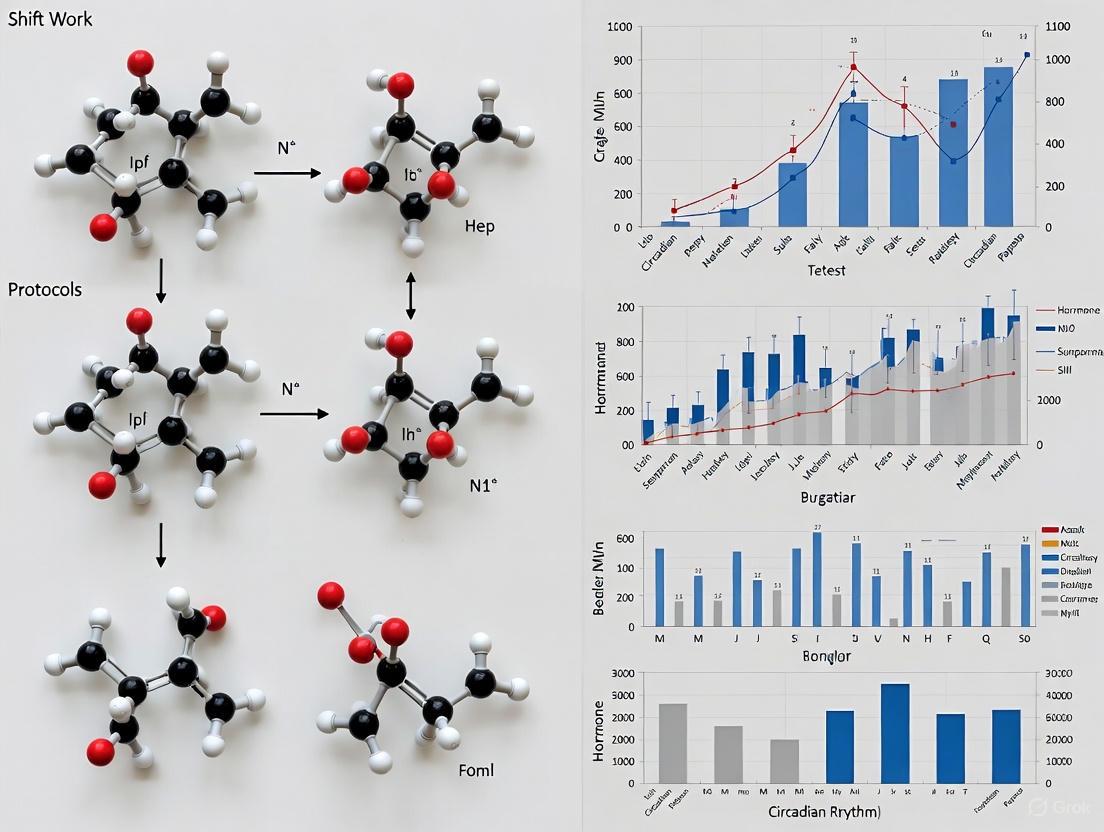
This article synthesizes the latest research on circadian misalignment caused by shift work, with a specific focus on implications for drug development and biomedical research.
Circadian Misalignment in Shift Work: From Mechanisms to Novel Therapeutic Protocols
Abstract
This article synthesizes the latest research on circadian misalignment caused by shift work, with a specific focus on implications for drug development and biomedical research. It explores the molecular foundations of circadian disruption and its wide-ranging health consequences, including cardiovascular, metabolic, and neurological risks. The review details current and emerging assessment methodologies, from wearable technology to at-home biomarker sampling, and evaluates a spectrum of intervention protocols, from light modulation and melatonin supplementation to personalized scheduling. Finally, it provides a critical analysis of validation frameworks and comparative effectiveness of these strategies, highlighting promising avenues for future chronotherapeutic drug discovery and clinical trial design.
Unraveling the Clock: The Molecular and Physiological Impact of Shift Work
The Core Molecular Clock Mechanism
The circadian clock is an endogenous timekeeping system that generates 24-hour rhythms in physiology and behavior. At its heart are Transcriptional-Translational Feedback Loops (TTFLs)—self-regulating cellular mechanisms where clock genes are regulated by their own protein products [1].
The Core Mammalian TTFL
The mammalian TTFL consists of two primary interlocking loops [2] [3]:
Core Negative Feedback Loop:
- Positive Elements: CLOCK and BMAL1 proteins form a heterodimer, bind to E-box (CACGTG) promoter sequences, and activate transcription of target genes, including Period (Per1, Per2, Per3) and Cryptochrome (Cry1, Cry2) [2] [3] [1].
- Negative Elements: PER and CRY proteins accumulate in the cytoplasm, form complexes, and translocate to the nucleus to inhibit CLOCK-BMAL1 transcriptional activity, closing the feedback loop [2] [3].
Stabilizing Interlocking Loop:
- CLOCK-BMAL1 also activates transcription of nuclear receptors Rev-erbα and Rorα [2] [3].
- REV-ERBα and RORα compete for ROR Response Elements (RREs) in the Bmal1 promoter. RORα activates Bmal1 transcription, while REV-ERBα represses it, creating a second rhythmic loop that stabilizes the core oscillator [2] [3] [4].
Figure 1: The Mammalian Transcriptional-Translational Feedback Loop (TTFL). The core negative feedback loop (blue/red/yellow) and the stabilizing interlocking loop (green) work together to generate ~24-hour rhythmicity.
Key Molecular Components of the Mammalian TTFL
Table 1: Core molecular components of the mammalian circadian TTFL and their functions [2] [3] [1].
| Component | Type | Function in TTFL | Role in Rhythm |
|---|---|---|---|
| CLOCK | Transcription Factor | Forms heterodimer with BMAL1; binds E-box | Positive element; initiates transcription |
| BMAL1 | Transcription Factor | Forms heterodimer with CLOCK; binds E-box | Positive element; initiates transcription |
| PER1/2/3 | Transcriptional Repressor | Forms complex with CRY; inhibits CLOCK-BMAL1 | Negative element; closes feedback loop |
| CRY1/2 | Transcriptional Repressor | Forms complex with PER; inhibits CLOCK-BMAL1 | Negative element; closes feedback loop |
| REV-ERBα/β | Nuclear Receptor | Represses Bmal1 transcription via RRE | Negative element; stabilizes oscillation |
| RORα/β/γ | Nuclear Receptor | Activates Bmal1 transcription via RRE | Positive element; stabilizes oscillation |
| CK1δ/ε | Kinase | Phosphorylates PER/CRY; regulates stability/degradation | Post-translational regulator; controls period length |
Troubleshooting Guides & FAQs for Circadian Research
This section addresses common experimental challenges in shift work and circadian misalignment research.
Frequently Asked Questions
Q1: Our shift work mouse model shows inconsistent phase shifting. What are the critical factors for inducing robust circadian misalignment?
A: Consistent circadian misalignment requires strict control of several environmental and experimental factors [5]:
- Light Control: The light-dark cycle is the primary zeitgeber (synchronizer). For night shift simulations, ensure complete darkness during active phases and controlled light exposure during rest phases. Use dim red light for necessary animal care.
- Feeding Schedule: In nocturnal rodents, restrict feeding to the daytime (inactive phase) to simulate night worker eating patterns, which reinforces metabolic circadian misalignment.
- Experiment Duration: Short-term shifts (3-5 days) reveal acute effects, but chronic misalignment studies (>1 week) are needed for modeling long-term shift work health consequences.
Q2: We observe dampened amplitude in Bmal1 reporter rhythms under constant conditions. Is the TTFL breaking down?
A: Not necessarily. Dampening in vitro is common, but the TTFL is likely still functional. Key checks and solutions [4]:
- Confirm System Health: Check cell confluency, serum shock synchronization efficiency, and luciferase substrate concentration/degradation.
- Investigate Feedback Loop Integrity: Consider generating RRE-deficient cells (Bmal1 ΔRRE). Research shows that while Bmal1 mRNA rhythm is abrogated in these mutants, the core oscillator can still function with constitutive Bmal1 expression, but with reduced robustness [4].
- Assess Multiple Clock Genes: Monitor Per2 luciferase reporters simultaneously. Persistent Per2 rhythms despite Bmal1 dampening suggest a functioning, albeit compromised, TTFL.
Q3: How can we distinguish between the effects of sleep loss and circadian misalignment in our human shift work protocol?
A: This requires a carefully controlled forced desynchrony protocol [5] [6]:
- Design: Schedule participants to a 28-hour day in dim light, which pushes the endogenous circadian pacemaker out of sync with the imposed sleep-wake cycle.
- Measurements: Continuously monitor core body temperature and melatonin rhythms (circadian markers) and polysomnographic sleep (sleep marker).
- Analysis: Compare cognitive performance and physiological measures across different combinations of circadian phase and sleep-wake states. This design allows you to statistically isolate the independent contribution of circadian misalignment from sleep loss.
Q4: Our data shows peripheral tissue clocks (e.g., liver) are not shifting at the same rate as the SCN. Is this expected?
A: Yes, this is a hallmark of internal desynchronization. Peripheral clocks in the liver, adipose tissue, and other organs rely on secondary signals like feeding time, body temperature, and hormones (e.g., glucocorticoids) for entrainment, unlike the light-driven SCN [5] [3]. This differential shifting rate is a key pathophysiological mechanism in shift work. To assess this, take serial biopsies or blood samples to measure phase markers like Per2 expression in peripheral blood mononuclear cells (PBMCs) relative to the melatonin rhythm (SCN marker) [5].
Quantifying Circadian Disruption in Shift Work Research
Table 2: Key metrics for quantifying circadian disruption in human shift work studies, based on findings from Chellappa et al. (2019) and others [5] [6].
| Metric | Assessment Method | Typical Finding in Circadian Misalignment | Experimental Significance |
|---|---|---|---|
| Cognitive Performance | Psychomotor Vigilance Task (PVT), Digit Symbol Substitution Task (DSST) | Significant impairment in sustained attention & processing speed [6] | Directly links misalignment to operational errors; most vulnerable after >10h wakefulness. |
| Sleep Efficiency | Polysomnography (PSG) or Actigraphy | Decreased sleep efficiency during daytime sleep [6] | Objective measure of sleep disruption; correlates with impaired performance. |
| Subjective Sleepiness | Karolinska Sleepiness Scale (KSS) | Significantly increased sleepiness, especially after 7h of wakefulness [6] | Subjective correlate of performance deficits. |
| Melatonin Rhythm | Plasma or Salivary Melatonin (Dim Light Melatonin Onset, DLMO) | Peak secretion occurs during daytime sleep instead of night [5] | Gold standard for assessing phase of the central SCN clock. |
| Peripheral Clock Gene Rhythm | qPCR from PBMCs or hair follicle cells | Rhythms remain diurnal, misaligned with the inverted behavioral cycle [5] | Demonstrates internal desynchronization between central and peripheral clocks. |
Experimental Protocol: Assessing TTFL Resilience in RRE-Deficient Models
Aim: To investigate the role of the Bmal1 RRE-mediated feedback loop in maintaining robust circadian rhythms.
Background: The Bmal1 gene's rhythmic transcription is driven by RRE elements in its promoter. Deleting these elements disrupts this rhythm, allowing researchers to test the stability of the core clockwork in the absence of this stabilizing loop [4].
Figure 2: Experimental workflow for assessing TTFL resilience using RRE-deficient models.
Key Steps [4]:
- Mutant Generation: Use CRISPR-Cas9 to delete the conserved dual RREs in the 5'UTR of the Bmal1 gene in NIH3T3 cells or mice.
- Phenotypic Validation: Confirm the loss of Bmal1 mRNA rhythm via qPCR time-course under constant conditions, while other clock genes (e.g., Per2, Rev-erbα) may remain rhythmic.
- Functional Assays:
- Bioluminescence Imaging: Use PER2::LUC reporters to track circadian rhythms in mutant vs. wild-type cells/tissues.
- Perturbation Tests: Challenge the system (e.g., by modulating CRY1 levels) and measure the change in period and amplitude. The ΔRRE model shows greater susceptibility to such perturbations.
- Mathematical Modeling: Simulate the mutant system using established models (e.g., Kim-Forger model) to predict and verify the decreased robustness of the oscillator.
Interpretation: This protocol demonstrates that the RRE-mediated loop is not strictly necessary for rhythm generation but is critical for oscillator robustness, conferring resistance to molecular noise and perturbation [4].
The Scientist's Toolkit: Key Research Reagents & Models
Table 3: Essential reagents, models, and assays for studying TTFL disruption in circadian research.
| Tool / Reagent | Function / Purpose | Key Application in TTFL Research |
|---|---|---|
| PER2::LUC Reporter Cells/Mice | Real-time monitoring of circadian phase and period via bioluminescence. | Gold standard for non-invasively tracking clock function in living cells and tissues [4]. |
| Bmal1-ΔRRE Mutants | Model with constitutive Bmal1 expression due to deleted RRE promoter elements. | Studying robustness of TTFL; demonstrates role of Bmal1 rhythm in stabilizing the clock [4]. |
| Cry1/Cry2 DKO Mice | Double knockout mice lacking core negative limb components. | Validating absolute necessity of CRY proteins for TTFL function; models complete clock disruption [1]. |
| Serum Shock Protocol | Synchronizes clocks in cultured cells by exposing them to high-concentration serum. | Establishing synchronous rhythmicity in cell culture for in vitro TTFL studies [4]. |
| Casein Kinase 1δ/ε Inhibitors | Pharmacologically inhibits kinase that phosphorylates PER proteins. | Probing the role of post-translational regulation in TTFL timing and period length [2] [3]. |
| Forced Desynchrony Protocol | Human protocol that separates circadian effects from sleep/wake effects. | Isolating the pure impact of circadian misalignment on physiology and cognition [5] [6]. |
Troubleshooting Guide: Common Experimental Challenges
Problem: Inconsistent Melatonin Measurements in Shift Work Studies
- Potential Cause: Inadequate control for light exposure prior to or during sample collection. Melatonin is exquisitely sensitive to light, particularly blue light [7].
- Solution: Implement strict Dim Light Melatonin Onset (DLMO) protocols. Collect samples in dim light conditions (<10 lux) and instruct participants to avoid screens and bright lights for at least one hour prior to sampling [8].
Problem: High Variability in Cortisol Awakening Response (CAR) Data
- Potential Cause: Non-compliance with sampling timing or inaccurate self-reporting of wake time. A recent high-resolution microdialysis study found the rate of cortisol increase does not change at awakening, challenging the concept of CAR as a distinct response and highlighting vast individual variability [9].
- Solution: Use objective monitoring. Verify wake times with actigraphy or automated time-stamping devices. For precise phase mapping, consider the cortisol rhythm's nadir in the evening or its peak in the morning as more robust markers than the CAR alone [9] [10].
Problem: Confounding Effects from Lifestyle Factors
- Potential Cause: Uncontrolled caffeine, alcohol, or meal timing, all of which can phase-shift circadian rhythms [11] [12].
- Solution: Standardize participant instructions. Mandate a fixed period of fasting prior to blood draws and restrict caffeine and alcohol intake for at least 24 hours before laboratory assessments [10].
Problem: Blunted Physiological Rhythms in Chronically Misaligned Subjects
- Potential Cause: Long-term circadian misalignment can suppress cortisol levels and amplify inflammatory markers, fundamentally altering the endocrine baseline [10].
- Solution: Include adequate washout periods and baseline monitoring. In interventional studies, characterize participants' circadian phase (e.g., using Morningness-Eveningness questionnaires) at screening, as individual circadian type (flexible-rigid) moderates tolerance to shift work [13].
Frequently Asked Questions (FAQs)
Q1: What is the mechanistic link between circadian misalignment and the observed endocrine disruption? A: Misalignment occurs when sleep/wake and fasting/eating behaviors are out-of-sync with the central circadian clock in the suprachiasmatic nucleus (SCN) [10]. The SCN directly regulates the pineal gland's release of melatonin and provides polysynaptic innervation to the hypothalamus to regulate the HPA axis [10]. Night shift work forces wakefulness during the biological night, suppressing melatonin secretion and distorting the cortisol rhythm, leading to a state of internal desynchrony [8] [7].
Q2: Beyond shift work protocols, what other factors can disrupt these hormonal rhythms in a research context? A: Key disruptors include:
- Light Exposure: Evening blue light from screens delays melatonin onset [11] [7].
- Meal Timing: Eating at unusual circadian times can shift peripheral clocks and alter cortisol rhythms [11].
- Sleep Irregularity: Inconsistent sleep schedules, even without shift work, lead to social jet lag and rhythm disruption [8].
- Genetics: Individual circadian type (e.g., "languid" vs. "vigorous") influences vulnerability to shift work demands [13].
Q3: Our study found suppressed CAR in burnout patients. Is this a cause or a consequence? A: The relationship is likely bidirectional. Chronic stress and burnout can dysregulate the HPA axis, leading to altered cortisol patterns [8]. Concurrently, a suppressed CAR may impair an individual's capacity to mobilize resources for daily demands, potentially increasing vulnerability to stress. A recent pharmaco-fMRI study demonstrated that suppressing CAR led to impaired negative emotion processing and altered fronto-limbic connectivity in the afternoon, suggesting a causal role in brain preparedness [14].
Q4: What are the most promising intervention strategies to mitigate this endocrine disruption? A: Systematic reviews point to several evidence-based strategies [15]:
- Timed Light Exposure: Strategic bright light exposure during night shifts and light avoidance before daytime sleep.
- Melatonin Supplementation: Administering melatonin prior to daytime sleep to improve sleep quality and adapt circadian phase [8] [7].
- Shift Schedule Optimization: Designing schedules that consider circadian type and rotate forward (morning-afternoon-night) [13].
- Behavioral Education: Sleep hygiene, strategic napping, and managed meal timing [15] [11].
Table 1: Documented Hormonal and Inflammatory Changes in Circadian Disruption
| Biomarker | Change in Circadian Misalignment | Supporting Evidence |
|---|---|---|
| Nocturnal Melatonin | Significantly suppressed | Night-shift nurses showed significantly lower melatonin levels than day-shift colleagues [8]. |
| 24-hour Cortisol | Significantly reduced (chronic misalignment) | A 25-day lab study of forced desynchrony showed significantly reduced cortisol levels [10]. |
| Acute Cortisol (Sleep Dep) | Significantly increased | 40 hours of total sleep deprivation significantly increased cortisol levels [10]. |
| Inflammatory Markers | Increased TNF-α, IL-10, and CRP | Chronic circadian misalignment increased pro- and anti-inflammatory proteins [10]. |
| Sleep Quality (PSQI) | Poorer quality (>7 score) | Over 40% of shift nurses experience poor sleep; >24 shift hours in 4 weeks is a key risk factor [13]. |
Table 2: Efficacy of Mitigation Strategies in Shift Workers
| Intervention Strategy | Quantified Improvement | Supporting Evidence |
|---|---|---|
| Optimized Shift Planning | 15-40% improvement in sleep quality scores | Systematic review of 43 articles showed significant benefits [15]. |
| Strategic Napping | 20-35% reduction in fatigue scores | Systematic review of intervention studies [15]. |
| Physical Activity/Relaxation | 10-25% improvement in subjective well-being | Associated with improved indices in shift workers [15]. |
| Meal Timing Interventions | Up to 18% reduction in GI symptoms | Managed eating schedules reduced gastrointestinal issues [15]. |
Detailed Experimental Protocols
Protocol 1: Assessing Circadian Rhythms in Shift Work Studies
Objective: To comprehensively evaluate the phase and amplitude of melatonin and cortisol rhythms in humans undergoing a shift work protocol.
Methodology:
- Participant Screening: Recruit subjects based on specific circadian types (e.g., using the Circadian Type Inventory) to examine effect modification [13].
- Pre-Study Stabilization: Require participants to maintain a stable sleep-wake schedule for 1-3 weeks prior to the lab study, verified by actigraphy and sleep logs [10].
- Laboratory Baseline: Admit participants to the lab for 2-3 baseline days with fixed sleep opportunities (e.g., 22:00-06:00) and controlled light conditions.
- Constant Routine (CR) Protocol: Following baseline, keep participants awake in a semi-recumbent position for at least 24-40 hours under dim light conditions (<10 lux) with equicaloric snacks and fluid intake distributed evenly across the cycle. This unmasks the endogenous circadian rhythm [10].
- Sample Collection:
- Melatonin: Collect blood or saliva samples every 30-60 minutes during the CR. Calculate DLMO as the time when melatonin levels continuously exceed a threshold (e.g., 3 pg/mL in saliva) [8].
- Cortisol: Collect samples on the same schedule. The timing of the cortisol rhythm peak or nadir can be used as a phase marker [10].
- Shift Work Intervention: Implement the experimental shift schedule (e.g., 7 consecutive night shifts).
- Post-Intervention Assessment: Repeat the Constant Routine protocol on the final day of the intervention to reassess circadian phase.
Protocol 2: Pharmacological Manipulation of CAR and fMRI Assessment
Objective: To investigate the causal, proactive effects of the Cortisol Awakening Response on emotional brain processing.
Methodology:
- Design: Randomized, double-blind, placebo-controlled trial [14].
- Participants: Healthy adult males, grouped to control for sex hormones.
- Pharmacological Manipulation: Administer a low dose of dexamethasone (DXM) (1.5 mg) orally at 23:00 the night before the testing day to suppress the next morning's CAR. The control group receives a placebo [14].
- CAR Verification: On the testing day, collect saliva samples immediately upon waking (0 min) and at 15, 30, and 45 minutes post-awakening to confirm CAR suppression in the DXM group.
- fMRI Task: In the afternoon, participants undergo functional MRI scanning while performing an Emotional Face Matching Task (EFMT) to probe emotional processing networks [14].
- Data Analysis:
- Compare task performance (accuracy, reaction time) between groups.
- Analyze brain activation and functional connectivity, particularly within the amygdala-prefrontal cortex circuit, using psychophysiological interaction (PPI) analysis [14].
Signaling Pathways and Experimental Workflows
Diagram 1: Signaling Pathways in Shift Work Endocrine Disruption
Diagram 2: Circadian Rhythm Assessment Workflow
The Scientist's Toolkit: Research Reagent Solutions
Table 3: Essential Materials for Circadian Endocrine Research
| Item | Function/Application | Key Considerations |
|---|---|---|
| Actigraphy Device | Objective, long-term measurement of sleep-wake cycles and rest-activity rhythms in free-living participants. | Essential for verifying compliance with pre-study schedules and measuring sleep efficiency during interventions [7]. |
| Salivary Melatonin/Cortisol Kits | Non-invasive collection of hormones for phase analysis (e.g., DLMO) and dynamic response (e.g., CAR). | Must use validated immunoassays or LC-MS/MS. Requires strict dim light protocols for melatonin [8] [9]. |
| Dim Light Melatonin Onset (DLMO) Protocol | The gold-standard method for assessing the timing of the central circadian clock. | Requires controlled dim light conditions (<10-15 lux) and serial sampling in the evening [8]. |
| Constant Routine Protocol | A laboratory procedure to unmask endogenous circadian rhythms by eliminating external cues (zeitgebers). | Controls for posture, sleep, food intake, and light exposure to reveal true circadian phase and amplitude [10]. |
| Circadian Type Inventory (CTI) | A questionnaire to assess individual traits like flexibility to shift work and languidness (vulnerability to sleep loss). | Useful for stratifying participants, as these traits moderate the impact of shift work [13]. |
| Dexamethasone (Low Dose) | A synthetic glucocorticoid used to pharmacologically suppress the HPA axis and the Cortisol Awakening Response (CAR). | Allows for causal investigation of CAR's role in behavioral and brain functions [14]. |
| Validated Sleep/Psychometric Scales | Standardized tools like PSQI (sleep quality) and PHQ-9 (depressive symptoms) to correlate endocrine changes with health outcomes. | Provides critical subjective data on functional impacts of circadian disruption [13]. |
Troubleshooting Guide: Circadian Misalignment Research Protocols
Common Experimental Challenges & Solutions
Problem: Unexpected variability in rest/activity patterns in mouse models during shiftwork simulation.
- Symptoms: Inconsistent wheel-running activity data; inability to detect clear circadian rhythm disruption; high variability between subjects in the same intervention group [16].
- Root Cause: Standard laboratory light levels (e.g., ~25 lx) during active (dark) phases are sufficient to activate the mouse circadian system, causing behavioral disruption [16].
- Resolution:
- Implement a Circadian Blind, Vision-Permissive (CBVP) light condition during the night-shift phase. This uses dim light (e.g., 12 lx or lower) that allows for vision but falls below the threshold for circadian phototransduction in mice [16].
- Alternatively, maintain subjects in total darkness during the night-shift phase, combined with a modulated 30-minute evening light pulse to prevent free-running rhythms [16].
- Validate the intervention using phasor analysis of actigraphy data to confirm the strength of association between light-dark and rest-activity patterns is maintained [16].
Problem: Inconsistent physiological or metabolic readouts (e.g., glucose intolerance, adipose hypertrophy) following circadian disruption protocols.
- Symptoms: Failure to replicate previously documented acceleration of atherosclerosis or metabolic syndrome in model organisms [16].
- Root Cause: Inadequate duration or consistency of the circadian misalignment protocol; health impacts may develop after long-term exposure [16].
- Resolution:
- Ensure the shiftwork simulation is applied for a sufficient duration. Studies show significant decreases in total activity and circadian rhythm disruption can be observed by the 4th week of intervention [16].
- Utilize a stable, rotating shift paradigm: expose animals to a conventional 12 L:12D day shift schedule for 3 days, followed by a 12-hour inverted schedule (12D:12 L) for 4 days, repeating this cycle weekly [16].
- Confirm the success of the circadian disruption paradigm by monitoring the dark/light activity ratio, which should show a significant reduction compared to day-shift control conditions [16].
Problem: Confounding effects of individual variability in resilience to shift work schedules in human or animal subjects.
- Symptoms: Some subjects show minimal health impairments despite the circadian disruption protocol [13].
- Root Cause: Intrinsic differences in circadian rhythm types (e.g., flexibility-rigidity and languidness-vigorousness), which moderate tolerance to shift work [13].
- Resolution:
- For human studies, administer the Circadian Type Inventory (CTI) to assess participants on flexibility-rigidity (FR) and languidness-vigorousness (LV) dimensions [13].
- Stratify subject groups based on circadian type for analysis.
- In study design, account for the fact that individuals with higher languidness (LV) and lower flexibility (FR) are more vulnerable to the negative effects of shift work demands on sleep and depressive symptoms [13].
Frequently Asked Questions (FAQs)
Q1: What is the mechanistic link between circadian misalignment and the development of hypertension and atherosclerosis? Chronic circadian misalignment acts as a physiological stressor and a prominent risk factor that accelerates the development of atherosclerotic cardiovascular disease (ASCVD) [17]. Shift work disruption has been linked to adipose hypertrophy, insulin resistance, and glucose intolerance, which are key drivers of metabolic syndrome and contribute to hypertensive pathology and unstable atherosclerotic plaque phenotypes [16] [17].
Q2: How can I quantitatively assess the degree of circadian misalignment in my animal models? Beyond measuring total activity, use phasor analysis of locomotor activity (e.g., from running wheel data). Phasor analysis quantifies the strength of association (magnitude) and temporal relationship (angle) between the light-dark cycle and rest-activity patterns. A significant reduction in phasor magnitude indicates successful induction of circadian misalignment [16].
Q3: Are there specific blood pressure targets for managing hypertension in patients with existing atherosclerosis? Yes, the management of hypertension is a central tenet of treating ASCVD. However, it is important to note that significant arterial stenoses, such as in peripheral artery disease, may necessitate a multidisciplinary approach and careful consideration of blood pressure targets to avoid unintended consequences of therapy [17].
Q4: What is a key individual difference factor that predicts poor outcomes in shift workers? Research on shift-working nurses identifies circadian rhythm type as a critical factor. Specifically, higher scores on languidness (LV), which reflects greater vulnerability to drowsiness and sleep loss, significantly predict both poorer sleep quality and more severe depressive symptoms in response to shift work demands [13].
Title: Modulating Light Level Patterns to Mitigate Shiftwork-Induced Rest/Activity Disruption and Cardiovascular Pathologies [16].
Objective: To test whether performing simulated shiftwork under circadian blind, vision-permissive (CBVP) light conditions prevents circadian misalignment and associated health consequences in a mouse model.
| Protocol Component | Description |
|---|---|
| Subject Model | Male C57BL/6 J mice, individually housed in cages with running wheels for activity monitoring [16]. |
| Baseline Condition | Conventional 12-hour light:12-hour dark (12 L:12D) "day shift" schedule [16]. |
| Shiftwork Intervention | 12 L:12D for 3 days (Mon-Wed), followed by an inverted 12D:12 L schedule for 4 days (Thu-Sun). This weekly cycle is repeated [16]. |
| Experimental Groups | 1. SW+highL: Inverted schedule with high light levels.2. SW+lowL: Inverted schedule with low light levels.3. SW+CBVP: Inverted schedule with circadian blind, vision-permissive dim light.4. SWD: Inverted schedule in total darkness.5. SWD+PMpulse: Inverted schedule in darkness with a 30-min evening light pulse.6. SWD+AMpulse: Inverted schedule in darkness with a 30-min morning light pulse [16]. |
| Primary Outcome Measure | Rest/activity rhythm analyzed via running wheel activity and phasor analysis [16]. |
| Secondary Outcome Measures | Weekly total activity, dark/light activity ratio, and physiological markers of cardiovascular/metabolic health (e.g., glucose intolerance, atherosclerotic plaque analysis) [16]. |
| Key Assessment Tool | Phasor Analysis: A mathematical method applied to activity data to calculate the magnitude (strength of correlation) and angle (temporal relationship) between the light/dark cycle and rest/activity patterns [16]. |
Key Quantitative Findings Table
| Experimental Group | Weekly Total Activity (Change vs. Baseline) | Dark/Light Activity Ratio | Phasor Magnitude (Circadian Alignment) |
|---|---|---|---|
| Day Shift (Control) | Baseline level | High | Large magnitude (strong alignment) [16] |
| SW+highL | ~45% decrease* | Significantly reduced* | Substantial reduction* [16] |
| SW+lowL | No significant difference | Significantly reduced | Substantial reduction [16] |
| SW+CBVP | No significant difference | Not significantly different | Not significantly different [16] |
| SWD+PMpulse | No significant difference | Not significantly different | Not significantly different [16] |
*Statistically significant change (p < 0.05)
Visualizing the Research Workflow
The Scientist's Toolkit: Key Research Reagents & Materials
| Item Name | Function / Application |
|---|---|
| C57BL/6 J Mouse Model | A standard inbred strain widely used in circadian rhythm and cardiovascular research for its well-characterized genetics and physiology [16]. |
| Running Wheel & Activity Monitoring System | Equipment to continuously monitor and quantify locomotor activity, the primary behavioral readout for circadian rhythm analysis in rodents [16]. |
| Circadian Type Inventory (CTI) | A validated self-report questionnaire used in human studies to assess individual differences in adaptability to shift work across two dimensions: Flexibility-Rigidity (FR) and Languidness-Vigorousness (LV) [13]. |
| Pittsburgh Sleep Quality Index (PSQI) | A standardized self-report questionnaire that assesses sleep quality and disturbances over a one-month interval, used to evaluate sleep outcomes in human studies [13]. |
| Patient Health Questionnaire-9 (PHQ-9) | A multi-purpose instrument for screening, diagnosing, monitoring, and measuring the severity of depression, commonly used as an outcome measure in shift work research [13]. |
| Phasor Analysis Software | Computational tool for analyzing circadian data. It transforms 24-hour activity rhythms into a vector (phasor) where the magnitude represents rhythm strength and the angle represents its phase relative to the light/dark cycle [16]. |
The study of metabolic syndrome (MetS) and immune dysfunction represents a critical frontier in understanding the systemic health consequences of shift work and circadian misalignment. MetS is a cluster of conditions—including central obesity, dyslipidemia, hypertension, and insulin resistance—that significantly increases cardiovascular disease risk [18]. Emerging evidence reveals that circadian disruption from shift work creates a pathological bridge between metabolic deterioration and immune impairment through shared molecular pathways [19]. This technical support document provides troubleshooting guidance and methodological frameworks for researchers investigating these complex interactions within experimental models of shift work.
Technical FAQs: Troubleshooting Experimental Challenges
FAQ 1: How can I differentiate between circadian disruption effects and sleep deprivation effects in my shift work model?
- Challenge: Observed metabolic and immune abnormalities could stem from either circadian misalignment or simple sleep loss.
- Solution: Implement a controlled forced desynchrony protocol with identical sleep opportunities across conditions. Measure phase markers like melatonin rhythm alongside metabolic parameters. True circadian misalignment will show abnormal phase relationships between internal rhythms and the external environment, independent of sleep duration [16].
- Technical Tip: Monitor core body temperature and melatonin continuously for 48-hour periods to establish circadian phase positioning relative to the light-dark cycle in animal models or work-rest cycles in human studies.
FAQ 2: Why are my biomarker results for neurodegenerative parameters inconsistent across shift work cohorts?
- Challenge: Inconsistent detection of neurodegenerative biomarkers (S100B, NSE) in shift workers.
- Solution: Standardize sampling timing relative to the circadian phase and shift schedule. Research shows melatonin levels and neurodegenerative markers like S100B and neuron-specific enolase (NSE) exhibit circadian fluctuations that are disrupted in shift workers [20].
- Technical Tip: Collect blood samples at consistent circadian times (e.g., 2 hours after wake time) rather than fixed clock times. For night shift workers, sample at the same point in their routine (e.g., end of shift). Document sampling time relative to individual sleep-wake patterns in metadata.
FAQ 3: My animal model fails to recapitulate the accelerated aging phenotype observed in human shift workers. What might be missing?
- Challenge: Rodent models of shift work not demonstrating expected cellular aging markers.
- Solution: Extend the intervention period and verify the degree of circadian disruption. Human research shows telomere shortening is more pronounced with cumulative exposure and may be partially reversible after shift work cessation [21].
- Technical Tip: Implement long-term shift schedules (≥4 weeks in rodents) and measure telomere length longitudinally. For accelerated aging assessment, combine telomere length analysis with DNA methylation age estimation to capture different aspects of biological aging [21].
FAQ 4: How can I account for individual variability in circadian typology when studying immune-metabolic outcomes?
- Challenge: High inter-individual variability in metabolic and immune responses to shift work protocols.
- Solution: Stratify subjects by circadian rhythm type using the Circadian Type Inventory (CTI), which assesses flexibility-rigidity and languidness-vigorousness dimensions. Studies confirm these traits moderate how shift work demands affect health outcomes [13].
- Technical Tip: Administer the CTI at baseline. Individuals with rigid (low flexibility) and languid (high languidness) circadian types typically show more severe metabolic and immune consequences from shift work and may require separate analysis cohorts [13].
Experimental Protocols & Methodologies
Shift Work Light Intervention Protocol (Mouse Model)
This protocol tests whether modulating light patterns during shiftwork reduces circadian disruption of rest/activity patterns and metabolic parameters [16].
- Experimental Animals: 30 male C57BL/6 J mice individually housed in cages outfitted with running wheels.
- Baseline Phase: 2 weeks of standard 12-hour light:12-hour dark (12 L:12D) cycle.
- Intervention Phase: 6 weeks of simulated shiftwork light interventions:
- SW+highL: 12D:12 L inverted pattern with high light levels (≥25 lx)
- SW+lowL: 12D:12 L inverted pattern with low light levels (12 lx)
- SW+CBVP: 12D:12 L inverted pattern with circadian blind, vision-permissive dim light
- SWD: Complete darkness during "shiftwork" periods
- SWD+AMpulse: Darkness with 30-minute morning light pulse
- SWD+PMpulse: Darkness with 30-minute evening light pulse
- Data Collection:
- Continuous locomotor activity monitoring via running wheels
- Phasor analysis of rest/activity patterns
- Weekly measurements of body weight, glucose tolerance, and tissue collection for immune markers
- Key Outcome Measures:
- Weekly total activity levels
- Dark/light activity ratio
- Phasor magnitude and angle (circadian alignment metrics)
- Adipose tissue inflammation markers
- Insulin sensitivity
Biomarker Assessment in Human Shift Workers
This protocol examines the relationship between circadian rhythm/sleep disturbances and neurodegenerative/immune markers in shift-working healthcare professionals [20].
- Study Population: 30 night-shift healthcare workers vs. 29 daytime workers (controls)
- Assessment Tools:
- Pittsburgh Sleep Quality Index (PSQI)
- Morningness-Eveningness Questionnaire (MEQ)
- Circadian Type Inventory (CTI)
- Biological Sampling:
- Pre-shift and post-shift blood samples
- Morning plasma collection for melatonin assessment
- Serum analysis for neurodegenerative biomarkers (S100B, NSE)
- Inflammatory markers (CRP, cytokines)
- Statistical Analysis:
- Between-group comparisons (t-tests, ANOVA)
- Correlation analysis between sleep quality and biomarker levels
- Regression models adjusting for covariates (age, sex, shift work duration)
Data Presentation: Quantitative Findings
Table 1: Biomarker Alterations in Shift Workers vs. Day Workers
| Biomarker | Shift Workers | Day Workers | P-value | Effect Size | Clinical Significance |
|---|---|---|---|---|---|
| PSQI Score | Significantly Higher | Lower baseline | 0.002 | Large | Poor sleep quality |
| MEQ Score | Significantly Lower | Higher baseline | 0.003 | Medium | Evening chronotype preference |
| S100B | Elevated | Normal range | 0.003 | Medium | Potential neuroglial damage |
| NSE (post-shift) | Significantly Increased | Stable | 0.010 | Medium | Neuronal stress/injury |
| Melatonin | Reduced | Normal levels | 0.037 | Medium | Circadian rhythm disruption |
Source: Adapted from Özkan et al. study on neurodegenerative parameters in shift-working healthcare workers [20]
Table 2: Effects of Different Lighting Conditions During Simulated Shift Work
| Light Intervention | Weekly Total Activity | Dark/Light Activity Ratio | Circadian Alignment (Phasor Magnitude) | Metabolic Parameters |
|---|---|---|---|---|
| SW+highL | ↓ ~45% (significant decrease) | Significantly reduced | Substantially reduced | Severe disruption (insulin resistance, adipose hypertrophy) |
| SW+lowL | No significant difference from control | Moderately reduced | Reduced but less than highL | Moderate disruption |
| SW+CBVP | No significant difference from control | Maintained | Not significantly different from control | Minimal disruption |
| SWD+PMpulse | Similar to control | Higher than control | Maintained | Minimal disruption |
Source: Adapted from mouse study on modulating light level patterns during shiftwork [16]
Signaling Pathways: Visualizing Immune-Metabolic Crosstalk
Immune-Metabolic Crosstalk in Shift Work: This diagram illustrates the key molecular pathways connecting circadian disruption to both immune dysfunction and metabolic syndrome, highlighting potential therapeutic targets.
Experimental Workflow: Assessing Immune-Metabolic Parameters
Experimental Workflow for Shift Work Studies: This diagram outlines a comprehensive methodology for investigating immune-metabolic ramifications in shift work research, from subject recruitment through data analysis.
The Scientist's Toolkit: Research Reagent Solutions
Table 3: Essential Reagents for Immune-Metabolic Shift Work Research
| Research Tool | Specific Application | Function in Research | Example Products/Assays |
|---|---|---|---|
| Circadian Type Inventory (CTI) | Human subject characterization | Assesses individual flexibility-rigidity and languidness-vigorousness dimensions | Folkard et al. original scale; Di Milia revised version [13] |
| Pittsburgh Sleep Quality Index (PSQI) | Sleep quality assessment | Validated measure of subjective sleep quality and disturbances over 1-month recall | Buysse et al. original PSQI; validated translations [20] [13] |
| Morningness-Eveningness Questionnaire (MEQ) | Chronotype classification | Determines individual circadian preference for morning or evening activities | Horne & Östberg MEQ; reduced versions [20] |
| S100B & NSE ELISA Kits | Neurodegenerative biomarker quantification | Measures astroglial (S100B) and neuronal (NSE) damage markers in serum/plasma | Commercial ELISA kits from R&D Systems, Abcam, etc. [20] |
| Melatonin Assay | Circadian phase assessment | Quantifies melatonin levels to establish circadian phase position | Radioimmunoassay (RIA); ELISA; LC-MS/MS for precise detection [20] |
| Phasor Analysis Software | Circadian rhythm analysis | Calculates magnitude and angle of circadian rest/activity patterns | Custom MATLAB scripts; ImageJ plug-ins; Circadianware [16] |
| Telomere Length Assay | Cellular aging measurement | Quantifies telomere length as biomarker of biological aging | Quantitative PCR (qPCR) T/S ratio method; Flow-FISH; TRF assay [21] |
| Inflammasome Activation Assays | Innate immune function assessment | Measures NLRP3 inflammasome activity and IL-1β/IL-18 production | Caspase-1 activity kits; IL-1β ELISA; Western blot for ASC speck formation [19] |
Advanced Technical Considerations
Gut Microbiota-Immunity-Metabolism Axis
The gut microbiota serves as a crucial interface between circadian disruption and systemic immune-metabolic consequences. Shift work-induced feeding pattern alterations cause dysbiosis, disrupting microbial metabolites including short-chain fatty acids (SCFAs) that normally maintain gut barrier integrity and regulate inflammation [22]. Technical recommendations include:
- Conduct 16S rRNA sequencing at multiple timepoints to capture circadian rhythmicity in microbial communities
- Measure SCFA levels (butyrate, acetate, propionate) via GC-MS in fecal samples
- Assess intestinal permeability through plasma zonulin or lipopolysaccharide (LPS) levels
- Implement fecal microbiota transplantation to establish causal relationships in animal models
Mitochondrial Dysfunction Assessment
Mitochondria integrate circadian and metabolic signals while regulating immune cell function. Mutations in mitochondrial-related genes (LRBA, FOXP3) cause both immune dysfunction and metabolic problems through defective energy production and fatty acid oxidation [19]. Methodological approaches include:
- Measure mitochondrial respiration in immune cells using Seahorse XF Analyzer
- Assess ROS production via fluorescent probes (DCFDA, MitoSOX)
- Analyze mitochondrial membrane potential using JC-1 or TMRM staining
- Examine mitochondrial morphology via electron microscopy
The investigation of metabolic syndrome and immune dysfunction in shift work contexts requires sophisticated integration of circadian biology, immunometabolism, and systems physiology approaches. The technical support framework provided here addresses common experimental challenges while offering standardized protocols for generating comparable data across research groups. By implementing these troubleshooting guides, methodological frameworks, and analytical approaches, researchers can advance our understanding of the precise mechanisms linking circadian disruption to the intertwined pathologies of metabolic and immune dysfunction.
Frequently Asked Questions (FAQs)
Q1: What are the primary cognitive domains most affected by circadian misalignment during night shifts? Circadian misalignment significantly impairs several key cognitive domains. Experimental studies using simulated shift work protocols show pronounced deficits in sustained attention (increased lapses and slow reaction times on Psychomotor Vigilance Tasks), information processing speed (measured by tasks like the Digit Symbol Substitution Task), and visual-motor performance [6]. These impairments become more severe after more than 10 hours of scheduled wakefulness [6]. In contrast, domains like declarative memory may remain relatively unaffected in the short term [6].
Q2: How does long-term shift work influence the risk of cognitive decline and dementia? Longitudinal observational studies indicate that chronic sleep disturbances, common in shift workers, are a risk factor for cognitive decline and dementia, including Alzheimer's disease (AD) [23]. This is evidenced by associations between poor sleep and lower cognitive scores, as well as a greater likelihood of incident AD diagnosis years later [23]. Potential mechanisms include sleep disruption leading to increased Alzheimer's-related pathology, such as the accumulation of amyloid-beta protein in the brain [23].
Q3: What is the relationship between total sleep duration and cognitive health? Research consistently shows a U-shaped relationship, where both insufficient and excessive sleep are linked to cognitive impairment. Short sleep (typically defined as ≤6 hours) is associated with memory problems and increased amyloid-beta buildup [24]. Long sleep (≥9 hours) is linked to poorer global cognition, including deficits in memory, visuospatial skills, and executive function [24] [25]. The association between long sleep duration and worse cognitive performance is particularly strong in individuals with depressive symptoms [25]. For optimal brain health, 7 to 8 hours of nightly sleep is recommended [24].
Q4: Why does the human circadian system resist adaptation to night shift work? The central circadian pacemaker, located in the suprachiasmatic nucleus (SCN), is powerfully synchronized by the light-dark cycle and is inherently diurnal [5]. Studies show that even in chronic shift workers, the circadian system shows a lack of substantial phase shifting to a night-oriented schedule over multiple days [5]. This results in a state of internal desynchronization, where the central clock remains day-oriented while some peripheral rhythms, like certain metabolites, shift partially, creating internal misalignment [5].
Q5: How can researchers mitigate the cognitive effects of circadian misalignment in study participants? Key strategies involve managing light exposure and sleep:
- Controlled Light Exposure: As light is the primary circadian synchronizer, controlling its timing, intensity, and spectral composition can help manage phase shifts. Morning light causes phase advances, while evening light causes phase delays [5].
- Sleep Hygiene: Improving sleep efficiency is critical, as misalignment-induced reductions in daytime sleep efficiency are significantly correlated with impaired sustained attention [6]. Ensuring a dark, quiet sleep environment is essential.
- Monitoring Wakefulness: Cognitive vulnerability is highest after extended wakefulness (>10 hours), so scheduling demanding tasks earlier in the shift may be beneficial [6].
Troubleshooting Guides for Common Experimental Challenges
Problem: High Cognitive Error Rates in Participants During Simulated Night Shifts
Description: Participants in a simulated night shift protocol show significantly increased errors on cognitive tasks, particularly those requiring sustained attention and visual-motor skills, compared to a day shift condition.
Symptoms:
- Increased lapses of attention and slow reaction times on the Psychomotor Vigilance Task (PVT).
- Decline in performance on the Digit Symbol Substitution Task (DSST).
- Worsening performance on unstable tracking tasks.
- Elevated subjective sleepiness ratings, especially beyond 7 hours of scheduled wakefulness [6].
Investigation & Resolution:
| Investigation Step | Root Cause Analysis | Recommended Solution & Protocol Adjustment |
|---|---|---|
| Measure subjective sleepiness (e.g., with Karolinska Sleepiness Scale) at multiple time points. | High sleepiness scores confirm a state of elevated sleep pressure and circadian misalignment. | Implement controlled bright light exposure during the night shift protocol. This is a powerful countermeasure that can enhance alertness and promote circadian adaptation [5]. |
| Analyze cognitive performance relative to time since wake. | Performance deficits may cluster after >10 hours of wakefulness, indicating an interaction of circadian phase and homeostatic sleep drive [6]. | Restructure the testing schedule to place the most cognitively demanding tasks earlier in the simulated shift, before cumulative wakefulness exacerbates impairments [6]. |
| Objectively assess prior sleep with actigraphy or polysomnography. | Poor sleep efficiency (<85%) in the daytime sleep episode preceding the night shift indicates insufficient recovery sleep [6]. | Provide sleep hygiene support for daytime sleeping: blackout curtains, white noise machines, and education on avoiding light exposure before sleep. |
Problem: Inconsistent Biomarker Results in Shift Work Studies
Description: Molecular data collected from shift work participants (e.g., from blood cells, transcriptomic, or metabolomic analyses) shows high variability and inconsistent patterns of rhythmicity, making interpretation difficult.
Symptoms:
- Dampened rhythmic amplitude in core clock gene expression in peripheral blood mononuclear cells (PBMCs).
- Desynchronization between transcriptional rhythms and metabolite rhythms [5].
- Failure of most rhythmic transcripts in the genome to adapt to a night-oriented schedule after several days of night work [5].
Investigation & Resolution:
| Investigation Step | Root Cause Analysis | Recommended Solution & Protocol Adjustment |
|---|---|---|
| Stratify participants based on circadian phase markers (e.g., dim-light melatonin onset). | The study cohort likely contains both "non-adapters" and "partial adapters," diluting the group-level signal. This is a common state of internal desynchronization [5]. | Phase-grouping: Use DLMO or other robust phase markers to classify participants into circadian phenotype groups (e.g., maladapted, partially adapted) for separate analysis. |
| Review sample timing relative to the participant's biological time, not clock time. | Samples taken at the same clock time are from different biological phases for different participants, creating noise. | Time-lock sampling to circadian phase. For example, collect samples at specific phases relative to each participant's DLMO, rather than at fixed hours during the shift [5]. |
| Audit laboratory protocols for sample processing. | Delays in processing temperature-sensitive samples (like PBMCs) can degrade RNA and alter results. | Standardize and accelerate sample processing. Implement a standard operating procedure (SOP) that defines a strict, short maximum time from sample draw to stabilization/freezing. |
Table 1: Association Between Sleep Duration and Cognitive Outcomes in Observational Studies
| Sleep Duration | Associated Cognitive Effects | Associated Biomarker Changes | Key References |
|---|---|---|---|
| Short Sleep (≤6 hours) | Impaired cognition, mostly in memory. | Increase in amyloid-beta, the protein that forms Alzheimer's-related brain plaques [24]. | [23] [24] |
| Recommended Sleep (7-8 hours) | Preserved brain health and optimal cognitive function. | Associated with normal levels of AD biomarkers. | [24] |
| Long Sleep (≥9 hours) | Cognitive problems, especially in decision-making; reduced global cognition, memory, and visuospatial skills. The association is strongest in individuals with depressive symptoms [25]. | Not specified in search results. | [24] [25] |
Table 2: Cognitive Performance Deficits During Circadian Misalignment (Simulated Night Shift) vs. Alignment (Day Shift) [6]
| Cognitive Domain | Task Used | Key Performance Metric | Effect of Misalignment |
|---|---|---|---|
| Sustained Attention | Psychomotor Vigilance Task (PVT) | Slowest Reaction Times & Number of Lapses | Significant increase, particularly after 11h of wakefulness. |
| Information Processing | Digit Symbol Substitution Task (DSST) | Correct Responses per Minute | Prevents the improvement in performance seen over time in the aligned condition. |
| Visual-Motor Performance | Unstable Tracking Task | Number of Losses | Progressively increases (worsens) beyond 7h of scheduled wakefulness. |
| Declarative Memory | Probed Recall Memory Task | Percentage of Correct Responses | No significant variation. |
Experimental Protocols & Methodologies
Detailed Protocol: Assessing Cognitive Performance in a Simulated Shift Work Study
This protocol is adapted from a study published in Scientific Reports that investigated the effects of circadian misalignment on chronic shift workers [6].
1. Study Design:
- A randomized, cross-over design is recommended, where each participant undergoes both a simulated day shift condition (circadian alignment) and a simulated night shift condition (circadian misalignment) in a controlled laboratory setting.
2. Participant Profile:
- Recruit healthy, chronic shift workers to understand the effects in a relevant population.
3. Cognitive Test Battery (to be administered multiple times during scheduled wakefulness):
- Psychomotor Vigilance Task (PVT): A 10-minute test to measure sustained attention. Record the number of lapses (reaction times >500 ms) and the slowest 10% of reaction times.
- Digit Symbol Substitution Task (DSST): A 2-minute test from the Wechsler Adult Intelligence Scale to assess cognitive throughput and information processing speed. Score as the number of correct symbols substituted.
- Unstable Tracking Task: A measure of visual-motor performance. Participants use a joystick to keep a moving cursor centered on a target. The number of losses (cursor leaving the target area) is the primary metric.
- Subjective Sleepiness: Administer the Karolinska Sleepiness Scale (KSS) to track participants' self-reported alertness.
4. Data Analysis:
- Use repeated-measures ANOVA to analyze the main effects of "condition" (alignment vs. misalignment) and "time since scheduled wake," as well as their interaction.
- Perform post-hoc tests with corrections (e.g., Bonferroni) to identify specific time points where performance differs significantly.
Workflow Diagram: Simulated Shift Work Cognitive Testing Protocol
Signaling Pathway: Core Molecular Clockwork
The core circadian clock operates via a transcriptional-translational feedback loop (TTFL). This molecular mechanism is intrinsic to cells in the central clock (SCN) and most peripheral tissues [5].
The Scientist's Toolkit: Research Reagent Solutions
Table 3: Key Materials and Methods for Circadian and Cognitive Research
| Item / Reagent | Function / Application in Research |
|---|---|
| Actigraphy | An objective, non-invasive method to estimate sleep-wake patterns over multiple days using a wrist-worn movement sensor. Correlates with cognitive outcomes [23]. |
| Dim-Light Melatonin Onset (DLMO) | The gold-standard biomarker for assessing the phase of the central circadian clock. Measured from saliva or plasma samples collected in dim light [5]. |
| Psychomotor Vigilance Task (PVT) | A highly sensitive, reaction-time-based test to measure sustained attention and vigilance. It is a critical tool for quantifying state-related sleepiness and cognitive impairment [6]. |
| Peripheral Blood Mononuclear Cells (PBMCs) | A readily accessible source of human peripheral tissue used to study the rhythmic expression of circadian clock genes and assess internal synchronization/desynchronization [5]. |
| Polysomnography (PSG) | The gold standard for objective sleep assessment, measuring brain waves, eye movements, and muscle activity. Used to quantify sleep architecture and efficiency in lab studies [23] [6]. |
| Positron Emission Tomography (PiB-PET) | A neuroimaging technique used to quantify the burden of amyloid-beta plaques in the brain, a key pathology of Alzheimer's disease, in studies linking sleep to long-term cognitive risk [23]. |
Assessment and Intervention: Tools and Protocols for Real-World Application
Troubleshooting Guides
Device and Data Collection Issues
Q: What are the most common causes of invalid or missing sleep data in actigraphy studies?
A: Invalid sleep data often stems from three main issues: device placement, battery failure, or user non-compliance.
- Device Fit and Placement: An inadequate fit can lead to poor data capture. This is a particular consideration for over/underweight and pediatric populations. Ensure the device is snug but comfortable on the wrist [26].
- Battery Life: Interruptions for required charging during monitoring can create data gaps. Choose a device with a battery life that exceeds your minimum monitoring period to mitigate this risk [26].
- "Blocky" or Unrealistic Actigraphy: This pattern can indicate that the device was removed for a significant period or experienced a malfunction. Always check device condition and battery level before deployment and instruct participants to record any device removals in a log [27].
Q: How can I resolve Bluetooth syncing problems with wearable devices in a research setting?
A: Follow a systematic verification process.
- Verify Device Pairing: Confirm the wearable device is correctly paired with the host computer or smartphone application. The device should appear in the list of paired devices [27].
- Check Device Condition: Ensure the device is charged and fully functional. A low battery can impair Bluetooth connectivity [27].
- Environmental Interference: Identify and remove potential sources of signal interference. Sync the device in a different location to rule out local environmental factors [27].
Q: Why might my actigraphy data overestimate sleep time in shift work populations?
A: This is a common algorithmic challenge, particularly in populations with irregular schedules.
- Sedentary Wakefulness: A fundamental issue with accelerometry-based algorithms is the overestimation of sleep if the user is sedentary or lays still in bed. Shift workers trying to sleep during the day may remain motionless for long periods even if they are not asleep [26].
- Daytime Sleep Detection: Algorithms are predominantly validated for nighttime sleep and are less reliable for detecting daytime sleep, leading to inaccuracies in shift work studies [26].
- Algorithm Validation: Not all devices are validated against polysomnography (PSG) in shift work populations. Always check the published performance studies for the specific device model and software version you are using [26].
Predictive Modeling and Protocol Issues
Q: Our DLMO predictions are inaccurate for shift workers. Should we prioritize measuring light or activity?
A: Evidence suggests that in highly disrupted populations, activity data may be superior.
- Superior Performance of Activity Data: Analysis of data from 27 shift workers showed that activity, recorded by almost every wearable device, was better at predicting circadian phase than measured light levels from wrist-worn devices when processed by mathematical models [28].
- Performance in Normal Conditions: For individuals living under normal conditions, circadian phase can be predicted to within 1 hour using activity data alone from a widely available commercial device like an Apple Watch, with comparable accuracy to light-based methods [28].
Q: What is the typical accuracy we can expect from non-invasive DLMO prediction models?
A: Accuracy varies based on the model and population, but performance is promising for a non-invasive tool.
The table below summarizes the performance of two different models tested in a population with Delayed Sleep-Wake Phase Disorder (DSWPD) [29].
| Prediction Model | Root Mean Square Error (RMSE) | Percentage Predicted within ±1 hour of DLMO |
|---|---|---|
| Dynamic Model | 68 minutes | 58% |
| Statistical Model | 57 minutes | 75% |
Experimental Protocol Reference
Protocol: Predicting Circadian Phase from Consumer Wearable Data
Objective: To passively estimate the dim light melatonin onset (DLMO) in shift workers using activity data from a consumer-grade wearable device.
Materials:
- Consumer wearable device with triaxial accelerometer (e.g., Apple Watch Series 2/3 or later, Fitbit, Garmin) [28].
- Data integration platform or custom script to access raw activity data.
- Validated mathematical model for circadian phase prediction (e.g., Jewett-Kronauer model, Forger model, or Hannay model) [28].
Methodology:
- Data Collection: Participants wear the device continuously for 7-14 days during their regular schedule, including work and free days. Activity data is collected in the device's native units [28].
- Data Preprocessing: Handle missing data intervals. In studies with Apple Watches, approximately 6-8 hours of data were typically lost every 1-2 days for charging; during these periods, activity data can be assumed to be zero [28].
- Model Application: Process the activity data using the selected mathematical model. Research shows no significant difference in performance between several major models when using the same input data [28].
- Validation: Compare the predicted DLMO time against the ground truth measurement from in-lab salivary melatonin assessment [28] [29].
Protocol: Mitigating Circadian Misalignment in Shift Work Simulations (Animal Model)
Objective: To test whether modulating light patterns during simulated shift work reduces rest/activity disruptions in a mouse model.
Materials:
- C57BL/6 J mice individually housed in cages with running wheels [16].
- Programmable light cabinets capable of delivering precise light levels (e.g., high light: 25 lx, low light: 12 lx, Circadian Blind Vision-Permissive (CBVP) dim light) [16].
Methodology:
- Baseline: House mice under a conventional 12-hour light:12-hour dark (12 L:12D) "day shift" schedule for acclimation [16].
- Intervention: For the last 4 days of the week (simulating a rotating shift), expose mice to one of several light conditions during their "night shift":
- SW+highL: Inverted 12D:12 L schedule with high light.
- SW+lowL: Inverted 12D:12 L schedule with low light.
- SW+CBVP: Inverted 12D:12 L schedule with dim, vision-permissive light.
- SWD: Complete darkness during the shift.
- SWD+PMpulse: Darkness with a 30-minute evening light pulse [16].
- Data Analysis:
- Total Activity: Measure weekly total activity and compare to baseline.
- Phasor Analysis: Calculate phasor magnitude and angle to quantify the strength of association between the light-dark cycle and rest-activity patterns. A higher magnitude indicates better alignment [16].
The Scientist's Toolkit: Research Reagent Solutions
This table details key devices and technologies used in advanced circadian research, as identified in the literature.
| Device / Technology | Primary Function | Key Considerations for Researchers |
|---|---|---|
| Research Actigraphs (e.g., Actigraph Leap, Ambulatory Monitoring Inc. Motionlogger) [26] | Long-term, objective monitoring of sleep/wake patterns and physical activity. | Look for FDA-clearance, published validation studies against PSG, and battery life suitable for your study duration [26] [30]. |
| Consumer Wearables (e.g., Apple Watch, Fitbit, Garmin, Oura Ring) [26] [28] | Passive collection of activity and other physiological (e.g., heart rate) data in free-living conditions. | Be aware of model/software-specific performance, proprietary algorithms, and battery life constraints that create data gaps [26] [28]. |
| Mathematical Models (e.g., Jewett-Kronauer, Forger, Hannay) [28] | Predicting circadian phase (e.g., DLMO) from ambulatory data (light, activity). | Different models show similar accuracy; the choice of input data (activity vs. light) can be more critical than the model itself in disrupted populations [28]. |
| Circadian-Blind Vision-Permissive (CBVP) Light [16] | An experimental light intervention that maintains visibility for work while minimizing circadian disruption. | In mouse models, this intervention prevented the rest-activity disruption typically caused by shiftwork with higher light levels [16]. |
Frequently Asked Questions (FAQs)
Q: Are consumer-grade wearables like the Apple Watch accurate enough for clinical circadian research?
A: Evidence is growing. Studies show that with the right models, activity data from consumer devices can predict DLMO to within about 1 hour in healthy, non-shift working populations [28]. However, caution is warranted. Consumer devices fall under a "wellness" category, not requiring FDA oversight, and their algorithms are often proprietary and updated without notice, which can alter accuracy [26]. They are best used for group-level analysis or large-scale observational studies rather than for individual clinical diagnosis.
Q: What are the key differences between clinical actigraphy and consumer sleep trackers?
A: The differences are significant and impact their application in research.
| Feature | Clinical Actigraphy | Consumer Wearables |
|---|---|---|
| Regulation | Often FDA-cleared as a medical device [26]. | Regulated as a wellness product, not a medical device [26]. |
| Data Access | Typically provides access to raw data and uses open-source or validated algorithms [26]. | Algorithms are usually proprietary; access to raw data and population datasets is often limited [26]. |
| Validation | Validated against PSG in specific populations, with performance data published in peer-reviewed literature [26] [30]. | Limited public validation; accuracy can vary significantly by model and manufacturer [26]. |
| Primary Use | Diagnosis and monitoring of sleep disorders in clinical practice and research [30]. | Personal health and wellness tracking by consumers [26]. |
Q: How does shift work lead to internal circadian desynchronization?
A: Shift work forces an abrupt change in the timing of sleep and light exposure. The central circadian pacemaker in the suprachiasmatic nucleus (SCN) is resistant to rapid adaptation to a night-oriented schedule. This results in a state where the central clock remains aligned with a day-oriented schedule, while peripheral clocks in tissues like blood cells and fat, as well as metabolic rhythms, may try to shift to the new schedule. This creates a state of internal desynchronization between different levels of the circadian system [5].
Q: What is the role of actigraphy in diagnosing circadian rhythm sleep-wake disorders (CRSWDs)?
A: Actigraphy is an essential tool for characterizing sleep across multiple 24-hour periods, which is crucial for diagnosing CRSWDs. The graphical raster plots generated by actigraphy software visually depict the changing sleep-wake periodicities associated with circadian misalignment, facilitating an accurate diagnosis. This is critical because treatment (e.g., the timing of light or melatonin) must be tailored to the specific type of CRSWD [30].
Technical Support Center: FAQs and Troubleshooting Guides
FAQ: General Principles and Application
1. Why are salivary melatonin and cortisol particularly useful biomarkers for studying shift work circadian misalignment?
Salivary measurement of melatonin and cortisol is valuable because it provides a non-invasive method for at-home collection, allowing researchers to track the diurnal (24-hour) patterns of these key circadian hormones in a participant's natural environment [31] [32]. Cortisol exhibits a robust circadian rhythm, peaking in the early morning and declining throughout the day, while melatonin rises in the evening and peaks during the night [31]. In shift work research, these rhythms are often disrupted. Saliva reflects the biologically active, free fraction of these hormones, making it a more relevant indicator of physiological status than total hormone levels measured in blood [31]. This is crucial for detecting the internal desynchronization that occurs when the central circadian pacemaker becomes misaligned with peripheral rhythms and the external environment due to atypical work schedules [5].
2. What is the primary advantage of using saliva over blood for circadian rhythm studies?
The primary advantages are non-invasiveness, safety, and feasibility for frequent at-home sampling [32]. This enables longitudinal studies with high participant compliance, as individuals can collect samples themselves at multiple time points across the 24-hour cycle without the need for clinical visits or phlebotomy. This is especially important for shift work protocols that aim to mimic real-world conditions [33].
FAQ: Pre-Analytical Procedures and Sample Collection
3. What are the critical pre-collection instructions for participants to ensure accurate salivary hormone measurement?
Proper participant preparation is essential to avoid sample contamination and pre-analytical errors. Key instructions include [34] [32]:
- Avoid eating, drinking (except water), smoking, or brushing teeth for at least 60 minutes before sample collection.
- Refrain from using mouthwash shortly before collection.
- For melatonin sampling, ensure the participant is in dim light conditions prior to and during collection, as light exposure suppresses melatonin secretion [31].
- Document the exact time of sample collection and the participant's waking time, as cortisol levels are highly dependent on time since awakening [31].
4. What is the "passive drool" method, and why is it often recommended?
The passive drool method involves allowing saliva to pool in the mouth and then channeling it directly into a collection vial via a straw or funnel [34]. This method is often recommended for biomarker research because it minimizes the potential for analyte interference that can be introduced by absorbent materials like cotton swabs [34]. It helps ensure that the composition of the saliva sample is not altered by the collection device itself, leading to more reliable and reproducible results for hormones like cortisol and melatonin.
5. How should saliva samples be handled and stored after collection?
Samples should be immediately refrigerated or frozen after collection [34]. For longer-term storage, they are typically centrifuged to separate the clear supernatant from mucins and cellular debris, and the supernatant is stored at -20°C or -80°C until analysis [34]. Consistent handling and processing protocols are critical for maintaining sample integrity, especially in multi-site studies.
FAQ: Analytical and Data Interpretation Challenges
6. What are common confounding factors that can alter salivary composition and how can they be managed?
Several patient-specific and behavioral factors can confound salivary biomarker measurements. Key confounders and management strategies include [34]:
- Blood Contamination (Gingivitis/Periodontal Disease): Can inflate biomarker levels. Visually inspect samples for discoloration and consider quantifying transferrin as a marker for blood contamination [34].
- Nicotine Use: Alters salivary composition. Measure cotinine levels in saliva to control for this variable statistically [34].
- Variable Flow Rate and pH: Can affect analyte concentration. Measure and record pH and flow rate (total volume divided by collection time) to use as covariates in data analysis [34].
- Oral Health Status: Populations with high rates of periodontal disease (e.g., individuals with alcohol use disorder) require special consideration, as oral inflammation can impact systemic biomarkers measured in saliva [34].
7. My data shows high variability in cortisol levels between participants. Is this normal?
Yes, there is substantial inter-individual variability in absolute hormone levels [35]. For circadian analysis, the timing of the rhythm (phase) is often more informative than the absolute concentration. Key rhythmic parameters to analyze include the acrophase (time of peak concentration), nadir (time of lowest concentration), and the diurnal slope (rate of decline across the day) [31]. The cortisol awakening response (CAR) is also a key, stable feature for many individuals [31].
Troubleshooting Guide: Common Experimental Issues
| Problem | Potential Cause | Solution |
|---|---|---|
| Undetectable or low melatonin levels in evening samples. | Inadvertent light exposure before/during collection; sample degradation. | Reinforce dim-light protocol; ensure samples are protected from light and frozen promptly [31]. |
| Unusually high cortisol levels across all samples. | Blood contamination from poor oral health; recent food intake or smoking. | Inspect samples visually; screen for blood via transferrin; verify adherence to pre-collection restrictions [34]. |
| Loss of expected diurnal rhythm (flat profile). | Poor protocol adherence (mistimed samples); assay sensitivity issues; severe circadian misalignment in participant. | Use actigraphy to verify sampling times; validate assay performance; check participant's sleep-wake log [33]. |
| High intra-assay variability. | Inconsistent sample processing or thawing/refreezing cycles. | Standardize all processing steps (centrifugation time, temperature) and freeze aliquots to avoid repeated thawing [34]. |
| Low participant adherence to sampling schedule. | Protocol is too burdensome or confusing. | Simplify kit design, use clear pictorial instructions, and implement reminder systems (text/phone alerts). |
Experimental Protocols and Methodologies
Detailed Protocol: At-Home Saliva Collection for Circadian Phase Assessment
This protocol is designed for studies requiring the assessment of dim-light melatonin onset (DLMO) and cortisol diurnal rhythm in shift workers.
1. Materials and Reagents
- Saliva Collection Kit: Contains cryovials, straws or funnels for passive drool, and a pre-labeled storage bag for each participant [34].
- Portable Cold Storage: Insulated cooler with ice packs or a dedicated freezer for participants.
- Actigraph Watch: To objectively monitor sleep-wake patterns and light exposure around sampling times [33].
- Participant Log Sheet: For recording exact sample collection time, wake time, food intake, and medication use.
- Dim-Red Light Source: For participants to use during evening/melatonin sampling.
2. Step-by-Step Procedure
- Participant Training: Conduct a hands-on training session to demonstrate the passive drool method and the use of all equipment.
- Sampling Schedule: Design a schedule that captures the rhythm. A typical DLMO protocol might involve sampling every 30-60 minutes in the 4-6 hours before habitual sleep onset. Cortisol sampling often targets waking, 30 minutes post-waking, afternoon, and evening [33].
- At-Home Collection:
- Prior to evening sampling, the participant should transition to dim-light conditions.
- For each sample, the participant rinses their mouth with water, waits a few minutes, and then uses the passive drool method to fill the vial to the marked line [34].
- The participant immediately records the time on the vial and log sheet, and places the vial in their portable cooler.
- Sample Storage and Transport: Participants store samples frozen until they can be transported to the lab on ice. Upon receipt, the lab centrifuges samples (e.g., 1500-3000 x g for 15 minutes), aliquots the supernatant, and stores it at -80°C [34].
Research Reagent Solutions and Essential Materials
| Item | Function/Explanation |
|---|---|
| Passive Drool Collection Kit | The standard for hormone analysis; includes inert tubes and funnels to collect pure saliva without stimulants or absorbent materials that can interfere with assays [34]. |
| RNAprotect Reagent | For studies integrating gene expression analysis (e.g., clock genes from oral mucosa cells), this reagent stabilizes RNA at the point of collection, preventing degradation during transport [35]. |
| Enzyme-Linked Immunosorbent Assay (ELISA) | A widely used, sensitive laboratory technique for quantifying specific proteins and hormones (e.g., cortisol, melatonin) in saliva supernatants [31]. |
| Cotinine / Transferrin Assays | Used to quantify potential confounders in saliva: cotinine for nicotine exposure and transferrin for blood contamination. Data is used for statistical covariate analysis [34]. |
| Actigraphy Device | A wrist-worn sensor that objectively measures motion and light to estimate sleep-wake patterns and verify participant adherence to sampling protocols [33]. |
Data Presentation and Visualization
Table 1: Comparison of Key Circadian Hormones in Saliva
| Factor | Cortisol | Melatonin |
|---|---|---|
| Circadian Pattern | Peaks in the early morning (around 7–9 AM), declines throughout the day [31]. | Rises in the evening, peaks during the night (2–4 AM), decreases in the early morning [31]. |
| Primary Role | "Activation hormone"; regulates energy, metabolism, and alertness [31]. | "Darkness hormone"; promotes sleep and regulates the sleep-wake cycle [31]. |
| Stability | Highly stable and reproducible circadian pattern over time [31]. | More sensitive to immediate environmental factors, especially light exposure [31]. |
| Key Influencing Factors | Stress, sleep quality, physical activity, time since awakening [31]. | Light exposure, age, timing of food intake [31]. |
Table 2: Advantages and Challenges of Salivary Biomarker Sampling
| Advantages | Challenges & Mitigation Strategies |
|---|---|
| Non-invasive & safe [32] | Variable composition: Control for flow rate, pH, and blood contamination [34]. |
| Ideal for longitudinal/at-home studies [33] [32] | Lower analyte concentration: Use highly sensitive and validated assays [34]. |
| Reflects biologically active hormone fraction [31] | Requires strict participant adherence: Comprehensive training and simplified kits are essential [34] [33]. |
| Cost-effective compared to phlebotomy [32] | Lack of full standardization: Implement and report detailed, study-specific SOPs [34]. |
Signaling Pathways and Experimental Workflows
Hormone Regulation and Measurement Pathway
Experimental Workflow for At-Home Biomarker Sampling
Troubleshooting Guides
Guide 1: Addressing Common Issues in CBVP Light Interventions
Problem: Inconsistent entrainment results during shiftwork simulation.
- Potential Cause 1: Light intensity is above the circadian threshold.
- Solution: Verify that illuminance levels are strictly below the established activation threshold for the circadian system of your model organism. For mice, this was a key factor in the success of the CBVP intervention [16].
- Potential Cause 2: Uncontrolled light exposure during rest periods.
- Solution: Ensure that the shiftwork-in-darkness (SWD) periods are in complete darkness. Use a light meter to confirm the absence of light leaks in housing or experimental setups [16].
- Potential Cause 3: Incorrect timing of stabilizing light pulses.
- Solution: If using light pulses to prevent free-running in constant darkness, an evening pulse was more effective than a morning pulse at maintaining alignment without causing disruption [16].
Problem: High variability in actigraphy-based rest/activity rhythm data.
- Potential Cause 1: Inconsistent placement or use of actigraphy devices.
- Solution: Standardize the placement of devices (e.g., on the dominant wrist for humans) and use locking mechanisms to deter removal, as done in studies with Alzheimer's patients [36].
- Potential Cause 2: Improper definition of "nighttime" and "daytime" for analysis.
- Solution: For human studies in controlled environments, define intervals based on actual bed and rise times. If those are unavailable, use standardized intervals (e.g., 8 PM to 8 AM) consistently across all subjects, acknowledging this as a limitation [36].
Guide 2: Addressing Common Issues in Timed Bright Light Therapy
Problem: Bright light therapy fails to induce a phase shift in human subjects.
- Potential Cause 1: Light exposure is timed incorrectly relative to the subject's circadian phase.
- Solution: Determine the individual's dim light melatonin onset (DLMO) for precise timing. Without DLMO, use the Morningness-Eveningness Questionnaire (MEQ) to estimate chronotype and tailor timing accordingly. For a phase advance, light should be administered in the morning upon or shortly after waking [37] [38].
- Potential Cause 2: Insufficient light intensity or duration.
- Potential Cause 3: Confounding light exposure at counter-productive times.
Problem: Subject non-compliance or inability to tolerate bright light sessions.
- Potential Cause 1: Discomfort from bright light or scheduling difficulties.
Frequently Asked Questions (FAQs)
FAQ 1: What is the mechanistic basis for "Circadian-Blind, Vision-Permissive (CBVP)" light? The concept leverages a crucial functional separation in the visual system. The melanopsin-containing intrinsically photosensitive Retinal Ganglion Cells (ipRGCs) are primarily responsible for circadian photoentrainment via the retinohypothalamic tract to the Suprachiasmatic Nucleus (SCN). The classic photoreceptors (rods and cones) are primarily for image-forming vision. CBVP light uses a light level and spectrum that is sufficient for vision (mediated by rods/cones) but below the activation threshold for the melanopsin-driven circadian responses of the ipRGCs, thereby allowing for visual performance without shifting the central circadian clock [16] [37].
FAQ 2: How do I determine the appropriate timing for bright light therapy in a research protocol? Timing is critical and depends on the desired phase shift and the subject's endogenous circadian phase.
- For Phase Advances (e.g., for Delayed Sleep-Wake Phase Disorder or adaptation to an earlier schedule): Administer bright light in the morning, immediately or shortly after desired wake time [38].
- For Phase Delays (e.g., for Advanced Sleep-Wake Phase Disorder or adaptation to a later schedule): Administer bright light in the evening, before desired bedtime [38]. The most precise method is to time light exposure relative to the individual's Dim Light Melatonin Onset (DLMO). Light before the DLMO causes phase delays, and light after the DLMO causes phase advances [39].
FAQ 3: Can prior light history influence the outcome of a timed bright light intervention? Yes, recent studies confirm that light history is a significant confounding variable. Exposure to bright light in the afternoon and early evening can alter circadian photosensitivity and reduce melatonin production later in the evening [39]. This means the same evening light stimulus can have different effects depending on the subject's light exposure during the preceding day. For rigorous protocols, it is essential to monitor and, if possible, control for light history in the 24-32 hours prior to an experimental session [39].
FAQ 4: What are the key analytical tools for assessing circadian rest-activity rhythms in intervention studies?
- Actigraphy: The primary tool for non-invasive, long-term monitoring of rest-activity patterns. Devices are worn on the wrist and data is analyzed with specialized software [36].
- Phasor Analysis: A vector-based approach that quantifies the strength of association (magnitude) and the temporal relationship (angle) between the light-dark cycle and rest-activity rhythms. A reduction in phasor magnitude indicates circadian misalignment [16].
- Sleep Diaries & Logs: Subjective reports to complement actigraphy data, providing context for sleep and wake times [38].
- Computational Tools: A range of open-source software is available for rhythm analysis, including
ActogramJ[40],CircaComparefor comparing rhythm parameters between groups, andMetaCyclefor detecting rhythms in large-scale data [40].
Data Presentation
Table 1: Key Parameters from CBVP Light Intervention Study in Mice
| Intervention Condition | Weekly Total Activity vs. Control | Dark/Light Activity Ratio | Phasor Magnitude (Rhythm Strength) | Key Finding |
|---|---|---|---|---|
| Shiftwork + High Light | Significant decrease (~45%) [16] | Significantly reduced [16] | Substantial reduction [16] | Induces severe circadian misalignment |
| Shiftwork + Low Light | No significant difference [16] | Significantly reduced [16] | Substantial reduction [16] | Induces circadian misalignment |
| Shiftwork in Darkness (SWD) | No significant difference [16] | Not significantly different [16] | Not significantly different [16] | Prevents misalignment but not vision-permissive |
| SWD + Evening Pulse | No significant difference [16] | Not significantly different [16] | Not significantly different [16] | Prevents misalignment, adds entrainment cue |
| Shiftwork + CBVP | No significant difference [16] | Not significantly different [16] | Not significantly different [16] | Optimal: Prevents misalignment while permitting vision |
Table 2: Key Parameters from Human Timed Bright Light Studies
| Study Population | Intervention | Light Intensity & Timing | Primary Outcome | Key Finding |
|---|---|---|---|---|
| Alzheimer's Disease Patients [36] | Bright Light vs. Usual Light | ≥2500 lux, 1 hour, either 9:30-10:30 AM or 3:30-4:30 PM, 10 weeks | Actigraphy-based rest-activity rhythm | Significantly improved rest-activity rhythm stability vs. control (150-200 lux). No significant improvement in nighttime sleep. |
| Adolescents [39] | Afternoon-Early Evening Light | 2500 lx (bright) vs. 130 lx (moderate) vs. 6.5 lx (dim), 4.5 hours | Evening melatonin levels (AUC) | Contrary to hypothesis, bright AEE light decreased later evening melatonin levels, suggesting a complex interaction of timing and prior light history. |
| General Protocol Guidance [38] | Phase-Advancing Therapy | 10,000 lux for 20-30 minutes, within 30 mins of desired wake time | Subjective and objective sleep timing | Used for Delayed Sleep-Wake Phase Disorder to shift circadian phase earlier. |
Experimental Protocols
Protocol 1: Murine Model of CBVP Light During Simulated Shiftwork
Objective: To test whether performing shiftwork under CBVP light conditions prevents circadian misalignment [16].
Methodology:
- Subjects & Housing: House mice individually in cages equipped with running wheels for continuous activity monitoring.
- Baseline: Maintain all mice on a conventional 12-hour Light:12-hour Dark (12L:12D) cycle for a set period to establish baseline rest-activity rhythms.
- Intervention:
- For the first 3 days of the week (simulating a day shift), maintain a 12L:12D cycle.
- For the subsequent 4 days (simulating a rotating night shift), invert the light cycle to one of several experimental conditions:
- SW+highL / SW+lowL: 12D:12L with high or low light levels during the new "day" (active period for mice).
- SWD / SWD+PMpulse: 12D:12D (complete darkness) with or without a 30-minute evening light pulse.
- SW+CBVP: 12D:12L with light levels set to be vision-permissive but below the circadian threshold.
- Data Collection & Analysis:
- Continuously record wheel-running activity.
- Analyze total activity, dark/light activity ratio, and use phasor analysis to quantify the alignment between the light-dark cycle and rest-activity rhythms.
Protocol 2: Timed Bright Light Therapy in Humans with Circadian Rhythm Disorders
Objective: To realign the circadian phase to a desired sleep-wake schedule using bright light [36] [38].
Methodology:
- Screening & Consent: Recruit subjects meeting diagnostic criteria for a circadian rhythm sleep-wake disorder (e.g., Delayed Sleep-Wake Phase Disorder). Obtain informed consent.
- Baseline Assessment: Over 1-2 weeks, assess baseline circadian phase using:
- Sleep Diaries: Self-reported sleep and wake times.
- Actigraphy: Worn 24/7 to objectively monitor rest-activity cycles.
- Morningness-Eveningness Questionnaire (MEQ): To determine chronotype.
- Dim Light Melatonin Onset (DLMO) (if available): The gold standard for assessing circadian phase.
- Intervention:
- Apparatus: Use a commercial light box providing 10,000 lux at a specified distance [38].
- Timing: Based on the desired phase shift and baseline assessment.
- For phase advance (e.g., DSWPD): Schedule light exposure for 20-30 minutes upon waking or in the early morning [38].
- Duration: Conduct sessions daily for several weeks.
- Compliance & Control: Monitor compliance with session logs. Instruct subjects to avoid confounding bright light in the evening.
- Post-Intervention Assessment: Repeat baseline assessments to measure changes in sleep timing, phase (e.g., DLMO), and daytime functioning.
Signaling Pathways and Experimental Workflows
The Scientist's Toolkit: Research Reagent Solutions
| Item / Reagent | Function in Experiment | Example Use Case |
|---|---|---|
| Actigraphy Device | Non-invasive, long-term monitoring of rest-activity rhythms via movement detection [36]. | Worn on the wrist of human subjects or attached to cages/running wheels for animals to quantify sleep-wake cycles and rhythm stability [36] [16]. |
| Calibrated Light Meter | Precisely measures illuminance (lux) and/or melanopic equivalent daylight illuminance (EDI) at the subject's eye level or cage location [36] [39]. | Critical for verifying the intensity of light therapy interventions (e.g., 2500 lux, 10,000 lux) and ensuring CBVP light levels are below the circadian threshold [36] [16]. |
| Bright Light Therapy Box | Device that emits high-intensity, full-spectrum or tuned-wavelength light at a specified lux level from a defined distance [36] [38]. | Used in human trials for timed bright light exposure, typically providing 10,000 lux for phase-shifting protocols [38]. |
| Salivary Melatonin Kits | Enzyme immunoassay (EIA) or radioimmunoassay (RIA) kits for quantifying melatonin concentrations in saliva samples [39]. | Used to determine the Dim Light Melatonin Onset (DLMO), the gold-standard marker for central circadian phase in humans [39] [38]. |
| Phasor Analysis Software | Computational tool that transforms time-series data (e.g., actigraphy) into a vector to quantify rhythm strength (magnitude) and timing (angle) [16]. | Analyzes the strength of association between the light-dark cycle and rest-activity patterns; a reduction in magnitude indicates misalignment [16]. |
| Open-Source Circadian Analysis Tools (e.g., ActogramJ, CircaCompare) | Software packages for visualizing and analyzing circadian data, including period estimation, phase shifts, and differential rhythm analysis [40]. | ActogramJ is used to create double-plotted actograms from activity data. CircaCompare statistically compares rhythm parameters (MESOR, amplitude, phase) between experimental groups [40]. |
FAQs: Understanding Circadian Pharmacology
Q1: What is the fundamental difference between a chronobiotic and chronotherapy?
A1: A chronobiotic is a substance, like melatonin or its agonists, that directly resets, stabilizes, or strengthens the internal circadian clock. Its goal is to correct the underlying rhythm disturbance itself [41]. In contrast, chronotherapy does not attempt to fix the clock but instead aligns the timing of conventional drug administration with the body's existing circadian rhythms to maximize efficacy and minimize side effects [41]. For example, administering a chemotherapy drug at the time of day when cancer cells are most vulnerable is a form of chronotherapy.
Q2: In a simulated shift work protocol, what are the key objective markers for assessing the efficacy of a chronobiotic like a melatonin agonist?
A2: Key objective markers for assessing chronobiotic efficacy in a shift work protocol include [42]:
- Core Body Temperature Rhythm: Tracking the movement of its peak (acrophase) towards the new target time.
- Hormonal Rhythms: Monitoring the phase shift of cortisol and melatonin secretion patterns.
- Actigraphy: Using wrist-worn devices to measure rest-activity cycles.
- Performance Tests: Using computerized cognitive tests to measure alertness and reaction time, which typically deteriorate after a phase shift.
- Urinary Excretion: Measuring rhythms in cortisol and electrolyte excretion.
Q3: What are the primary challenges associated with using high-dose melatonin for cytoprotection in cardiovascular models?
A3: While melatonin shows promise for cytoprotection (e.g., antioxidant, anti-inflammatory effects) in cardiovascular diseases, a major challenge is the dose requirement. Allometric calculations from animal studies suggest that the cytoprotective benefits in cardiovascular diseases may require high doses in the range of 100–200 mg/day, which far exceeds the low doses (2–10 mg) typically used in clinical trials for sleep and which are likely insufficient for full cytoprotective manifestation [43].
Q4: How can nanotechnology address the limitations of traditional drug delivery for circadian rhythm disorders?
A4: Nanotechnology offers solutions to several key limitations [41] [44]:
- Targeted Delivery: Nanomaterials (e.g., liposomes, polymeric nanoparticles) can be engineered to deliver chronobiotics to specific tissues, like the suprachiasmatic nucleus (SCN) or peripheral organs.
- Sustained Release: They enable controlled, sustained release of drugs over time, which is crucial for mimicking natural hormonal rhythms.
- Temporal Control: "Smart" drug delivery systems can be designed to release their payload in response to specific physiological cues (e.g., temperature, pH changes), allowing for precise temporal control essential for chronotherapy.
- Combination Therapy: Nanosystems can deliver multiple drugs simultaneously, potentially combining a chronobiotic with other therapeutic agents to address complex disorders.
Troubleshooting Guides for Experimental Protocols
Guide 1: Troubleshooting Low Efficacy in a Melatonin Agonist Phase-Shift Experiment
Problem: The test compound (e.g., a melatonin agonist like LY 156735) shows insufficient phase-shifting effects in a simulated jet-lag or shift-work model.
| Symptom | Possible Cause | Solution |
|---|---|---|
| No significant acrophase shift in core body temperature. | Incorrect timing of administration. | Administer the compound during the phase-advance or phase-delay window according to the species' phase-response curve (typically before the core body temperature minimum for phase advances) [42]. |
| Poor adaptation of peripheral clock gene expression. | The central SCN pacemaker may be resistant to shifting. | Combine the agonist with carefully timed light exposure, the primary zeitgeber for the SCN, to create a synergistic effect [5]. |
| Mixed results: some rhythms shift, others do not. | Internal desynchronization between central and peripheral clocks. | Consider the timing of food intake, a potent zeitgeber for peripheral clocks, and control it as part of the protocol [41]. |
| High inter-subject variability in phase shift. | Individual differences in intrinsic circadian period. | Pre-screen subjects for circadian chronotype (e.g., morningness-eveningness) and account for sex differences, as women often have a shorter intrinsic period [5]. |
Guide 2: Troubleshooting Nanomaterial-Based Drug Delivery for Chronotherapy
Problem: The nanoparticle formulation fails to provide the desired organ-specific, time-scheduled drug release.
| Symptom | Possible Cause | Solution |
|---|---|---|
| Burst release instead of sustained release. | Poorly engineered nanoparticle matrix or incorrect polymer molecular weight. | Optimize the polymer composition and cross-linking density of your nanoparticles (e.g., PLGA) to slow degradation and drug diffusion [41]. |
| No response from "smart" system to physiological cues. | The trigger threshold (e.g., pH, enzyme) is not met in the target tissue. | Characterize the local microenvironment (e.g., pH gradient) more precisely and re-design the responsive element (e.g., use a different pH-labile linker) [44]. |
| Low drug loading capacity. | Drug and carrier material are incompatible. | Switch to a nanocarrier with high loading capacity for your drug, such as mesoporous silica nanoparticles, or use a drug-carrier conjugate [41]. |
| Lack of organ-specific targeting. | Missing or ineffective surface targeting ligands. | Functionalize the nanoparticle surface with specific antibodies, peptides, or other ligands that bind to receptors abundant in your target organ [41]. |
Detailed Experimental Protocols
Protocol 1: Assessing a Chronobiotic in a Simulated 9-Hour Phase-Advance Shift Model
This protocol is adapted from a clinical trial investigating the melatonin agonist LY 156735 [42].
1. Objective: To evaluate the efficacy of a chronobiotic compound in accelerating the resynchronization of circadian rhythms following an abrupt 9-hour advance of the sleep-wake schedule.
2. Experimental Design:
- Design: Randomized, double-blind, placebo-controlled, three-period crossover study.
- Subjects: 8 healthy male volunteers (ages 25-35). Note: Modern protocols should include both sexes and account for sex differences in circadian physiology [5].
- Setting: Temporal isolation unit to control for external time cues.
- Washout: A sufficient washout interval (e.g., several weeks) must separate each trial period.
3. Protocol Timeline:
- Days 1-5: Adaptation and pre-shift baseline measurements in the isolation unit.
- Day 6 (Pre-shift): At 23:00, laboratory time is abruptly advanced to 08:00 on Day 7, simulating a 9-hour phase advance.
- Day 6 (Post-shift): Administer the first dose of the study compound (e.g., 0.5 mg low dose, 5.0 mg high dose, or placebo) at 14:30.
- Days 7-10: Administer subsequent doses daily at 22:30.
- Days 7-13: Post-shift follow-up for data collection.
4. Key Data Collection Points:
- Subjective Measures: Use visual analog scales (VAS) for jet lag, alertness, tenseness, and daytime fatigue [42].
- Objective Markers:
- Core Body Temperature: Continuously monitored to calculate acrophase.
- Actigraphy: Worn continuously to assess rest-activity cycles.
- Hormonal Rhythms: Measure cortisol and melatonin levels in saliva or plasma.
- Performance: Administer a battery of computerized performance tests (e.g., reaction time, vigilance) sensitive to shift lag.
- Urinary Metabolites: Collect to assess cortisol and electrolyte excretion rhythms.
5. Data Analysis:
- The primary endpoint is the rate of re-adaptation, measured by the speed at which the acrophases of core body temperature and other rhythms move towards the new post-shift target time.
- Compare the change in performance metrics and subjective well-being between the active compound and placebo groups.
Protocol 2: Evaluating a Nano-Enabled Drug Delivery System for Circadian Release
1. Objective: To characterize the in vitro and in vivo release profile of a chronobiotic drug from a temperature-sensitive polymeric nanoparticle and assess its ability to realign circadian rhythms in an animal model of shift work.
2. Materials Synthesis:
- Synthesize thermosensitive nanoparticles (e.g., from Poly(N-isopropylacrylamide)) using an emulsion-solvent evaporation method.
- Load the nanoparticles with the model chronobiotic (e.g., melatonin or agonist).
- Characterize the nanoparticles for size, zeta potential, drug loading capacity, and encapsulation efficiency.
3. In Vitro Release Kinetics:
- Place a known amount of drug-loaded nanoparticles in a release medium (e.g., phosphate-buffered saline) at different temperatures (e.g., 32°C, 37°C, and 39°C) to simulate physiological and mild fever-like conditions.
- Use a dialysis method and sample the release medium at predetermined time points. Analyze drug concentration using HPLC or UV-Vis spectroscopy.
- Plot the cumulative drug release over time to confirm temperature-dependent "on-off" release behavior [44].
4. In Vivo Efficacy in a Shift Work Animal Model:
- Phase Shift Induction: Use a rodent model and subject them to a simulated jet-lag protocol by advancing the light-dark cycle by 6-8 hours.
- Treatment Groups: Include groups for: (1) saline control, (2) free drug, (3) blank nanoparticles, and (4) drug-loaded nanoparticles.
- Dosing: Administer a single injection at a specific time point after the phase shift.
- Readouts:
- Wheel-Running Activity: The gold-standard for assessing circadian phase in rodents. Monitor the daily onset of activity (circadian time) to calculate the rate of re-entrainment to the new LD cycle.
- Tissue Collection: Sacrifice animals at different time points post-injection to measure drug concentration in target tissues (e.g., SCN, liver) and analyze clock gene expression (e.g., Per2, Bmal1) using qPCR [41].
Signaling Pathways and Experimental Workflows
Diagram 1: Core Mammalian Circadian Clockwork
Title: Core Circadian Feedback Loops
Diagram 2: Chronobiotic Testing Workflow
Title: Simulated Shift Work Protocol
The Scientist's Toolkit: Research Reagent Solutions
Table: Essential Reagents for Circadian Rhythm Research
| Reagent / Material | Function / Application | Example & Notes |
|---|---|---|
| Melatonin Agonists (e.g., LY 156735, Ramelteon, Tasimelteon) | Pharmacological tools to phase-shift and reset the circadian clock. Used in models of jet lag and shift work disorder. | LY 156735: Used in controlled phase-shift trials; shown to enhance readaptation speed of physiological rhythms at a 5 mg dose [42]. |
| Polymeric Nanoparticles (PNPs) (e.g., PLGA, PLA) | Biocompatible and biodegradable nanocarriers for sustained and controlled release of chronobiotics. | PLGA NPs: Allow tunable release kinetics based on polymer molecular weight and ratio of lactic to glycolic acid [41]. |
| Mesoporous Silica Nanoparticles (MSNs) | High-surface-area nanocarriers with large pore volumes for high drug loading. Can be capped for stimulus-responsive release. | Useful for delivering poorly soluble chronobiotics. Surface can be functionalized with targeting ligands [41]. |
| Liposomes | Spherical vesicles with phospholipid bilayers for encapsulating both hydrophilic and hydrophobic drugs. | Can be engineered for long circulation (PEGylated) or fused with cell membranes for enhanced delivery [41]. |
| qPCR Assays for Clock Genes | Quantifying rhythmic expression of core clock genes (e.g., Bmal1, Per1/2, Cry1/2, Rev-Erbα) in tissues. | Essential for evaluating the molecular effects of chronobiotics or chronotherapy on the peripheral clock machinery [41] [5]. |
| Actigraphy Systems | Non-invasive, long-term monitoring of rest-activity cycles in humans and animals. A key output rhythm of the circadian system. | Provides objective data on sleep-wake patterns and rhythm stability in shift work studies [42] [5]. |
| Core Body Temperature Telemetry | Gold-standard method for determining the phase of the central circadian pacemaker in animal models. | Involves surgically implanting a telemetry probe for continuous, high-fidelity data collection. |
FAQs and Troubleshooting Guides
Q1: What is the mechanistic basis for using forward- over backward-rotating shifts in an experimental protocol?
Answer: Forward rotation (Morning → Evening → Night) is superior because it aligns with the natural phase-delay tendency of the human circadian pacemaker. The endogenous circadian period (tau) is slightly longer than 24 hours in most individuals, making it easier to delay the sleep-wake cycle than to advance it [5] [45]. Backward rotation forces a phase advance, which is in direct opposition to this natural inclination, resulting in greater circadian misalignment, reduced sleep quality, and impaired alertness in study participants [46]. The primary mechanism involves a reduced resetting response to the light-dark cycle when shifts rotate backwards, leading to a greater mismatch between the central SCN pacemaker and peripheral tissue clocks [5].
Troubleshooting: If a backward rotation schedule must be used for operational reasons, consider enhancing circadian adaptation by incorporating controlled bright light exposure during the night shift and strict light avoidance (e.g., with blue-blocking sunglasses) during the morning commute [46] [47].
Q2: How can strategic napping be implemented in a laboratory shift work study without causing significant sleep inertia?
Answer: Strategic napping is a critical countermeasure to sleepiness during night shifts. The key is to protocolize nap timing and duration to minimize sleep inertia—the grogginess experienced upon waking.
- Timing: Schedule naps during the circadian nadir (typically 2:00 AM to 6:00 AM) when sleep propensity and fatigue are highest [48] [47].
- Duration: Limit naps to 30 minutes to primarily capitalize on Stage 2 sleep, which boosts alertness while reducing the likelihood of awakening from deep slow-wave sleep, which is a major contributor to inertia. For more restorative effects, a 2-hour nap may be used if sufficient time is allocated for inertia dissipation before resuming critical tasks [46].
Troubleshooting:
- Problem: Subjects report severe grogginess post-nap.
- Solution: Shorten nap duration to 20-30 minutes. If long naps are necessary, include a 30-minute buffer period post-nap for subjects to become fully alert before performing demanding cognitive tasks. Caffeine (e.g., 200mg) consumed immediately before a short nap can help counteract inertia upon waking, as its effects coincide with wake time [46].
Q3: Which sleep hygiene components are most critical to control for in a shift work study to ensure reliable baseline measures?
Answer: Controlling sleep hygiene is essential for minimizing confounding variables. The highest-priority components are:
- Light Exposure Control: This is the most potent circadian synchronizer. Instruct subjects to maximize light exposure during their scheduled waking period and minimize it during their scheduled sleep period. For night workers, this means wearing blue-light blocking sunglasses on the commute home and using blackout curtains or sleep masks for daytime sleep [5] [47].
- Stimulant Control: Standardize caffeine cessation for at least 6-8 hours prior to the scheduled daytime sleep episode. Unregulated caffeine intake is a major confounder for sleep latency and architecture measures [47].
- Sleep Environment Optimization: Instruct subjects to create a cool, quiet, and dark environment. Recommend the use of white noise machines to mask daytime environmental sounds that can disrupt sleep [47].
Troubleshooting:
- Problem: High variability in actigraphy-measured sleep onset latency among subjects.
- Solution: Verify compliance with sleep hygiene protocols through daily diaries and light exposure monitoring. Provide subjects with a standardized "sleep hygiene kit" containing a sleep mask, earplugs, and a checklist to ensure consistency [48].
Q4: What are the key cognitive domains and specific assays most sensitive to circadian misalignment in a chronic shift worker cohort?
Answer: Research indicates that sustained attention and processing speed are the domains most vulnerable to circadian misalignment and sleep loss [6].
The table below summarizes the key cognitive assays and their sensitivity:
Table 1: Cognitive Assays Sensitive to Circadian Misalignment
| Cognitive Domain | Recommended Assay | Key Outcome Metrics | Sensitivity Notes |
|---|---|---|---|
| Sustained Attention | Psychomotor Vigilance Task (PVT) | Reaction time (ms), Number of lapses (RT > 500ms) | Shows significant degradation under misalignment, particularly after >10 hours of wakefulness [6]. |
| Information Processing | Digit Symbol Substitution Task (DSST) | Number of correct responses per minute | Performance fails to improve over a testing session during misalignment, unlike during aligned conditions [6]. |
| Visual-Motor Performance | Unstable Tracking Task | Number of tracking losses | Performance progressively worsens (increased losses) under misalignment beyond 7 hours of scheduled wakefulness [6]. |
Troubleshooting:
- Problem: Declarative memory tasks show no significant change between aligned and misaligned conditions.
- Solution: Focus resources on the more sensitive domains of attention and processing speed. Declarative memory, as measured by a Probed Recall Memory Task, has been shown to be less affected by acute circadian misalignment in chronic shift workers [6].
Experimental Protocols
Detailed Protocol 1: Behavioral Therapy for Shift Work Disorder (BT-SWD)
This protocol is adapted from a randomized controlled trial demonstrating efficacy in improving sleep and mental health in healthcare night shift workers [49].
1. Objective: To evaluate the efficacy of a multi-component behavioral intervention on insomnia severity, total sleep time, and mental health in participants with Shift Work Disorder.
2. Subjects: Night shift workers (e.g., healthcare staff) meeting diagnostic criteria for SWD. A sample size of ~20-30 per group (intervention vs. control) is recommended.
3. Methodology:
- Design: Randomized controlled trial, with a waiting-list control group.
- Intervention Arm (BT-SWD):
- Sleep Restriction Therapy: Tailor time in bed to match actual sleep duration to improve sleep efficiency.
- Stimulus Control: Use the bed only for sleep, establish a fixed pre-sleep routine, and get out of bed if unable to sleep.
- Fixed Sleep Periods: Encourage sleeping during the same hours (e.g., 9:00 AM - 3:00 PM) after night shifts, even on days off, to promote circadian anchoring. Sleep should occur in a fully darkened environment.
- Duration: The intervention is typically delivered over several weeks with pre-, post-, and follow-up assessments.
4. Key Outcome Measures:
- Primary: Insomnia Severity Index (ISI) score, analyzed separately for daytime and nighttime sleep.
- Secondary: Actigraphy-derived Total Sleep Time (TST), Epworth Sleepiness Scale (ESS), Hospital Anxiety and Depression Scale (HADS) scores.
Detailed Protocol 2: Assessing Glucose Tolerance Under Circadian Misalignment
This protocol isolates the effects of the circadian system and behavioral cycles on metabolism in shift workers [50].
1. Objective: To determine the separate effects of the endogenous circadian phase and circadian misalignment on glucose tolerance in healthy chronic shift workers.
2. Subjects: Healthy, medication-free chronic shift workers (>1 year of shift work, ≥5 night shifts/month).
3. Methodology:
- Design: Randomized, crossover study with two 3-day laboratory protocols:
- Circadian Alignment (Simulated Day Work): Sleep opportunity from 11:00 PM - 7:00 AM.
- Circadian Misalignment (Simulated Night Work): 12-hour inversion of the sleep-wake cycle via an 8-hour wake episode + 4-hour nap, followed by a sleep opportunity from 11:00 AM - 7:00 PM.
- Diet: Isocaloric, identical meals in both protocols.
- Test Meals: Identical mixed meals are given at 1 hour and 13 hours after scheduled wake time in both protocols (e.g., corresponding to 8:00 AM and 8:00 PM in the alignment protocol).
4. Key Outcome Measures:
- Primary: Postprandial glucose and insulin responses (area under the curve) to the identical test meals.
- Analysis: Separate the effects of behavioral cycle, circadian phase (biological morning vs. evening), and circadian misalignment on glucose metabolism.
Data Presentation
Table 2: Quantitative Impact of Scheduling Interventions on Key Outcomes
| Intervention | Measurable Outcome | Effect Size / Key Finding | Source |
|---|---|---|---|
| Forward vs. Backward Rotation | Sleep Quality & Alertness | Superior in forward rotation; improves adaptation and reduces social jetlag. | [46] |
| Limiting Consecutive Night Shifts | Fatigue Accumulation | Limiting to ≤ 3 consecutive nights mitigates cumulative fatigue and health risks. | [45] |
| BT-SWD | Daytime Insomnia Severity | Significant reduction post-treatment with large effect size (Cohen's d ≈ -1.25). | [49] |
| BT-SWD | Daytime Total Sleep Time | Significant increase post-treatment with large effect size (Cohen's d ≈ 0.89). | [49] |
| Circadian Misalignment | Postprandial Glucose | 5.6% increase due to misalignment alone, independent of circadian phase. | [50] |
| Circadian Phase (Evening vs. Morning) | Postprandial Glucose | 6.5% higher in the biological evening (8:00 PM circadian phase). | [50] |
Experimental Visualizations
Circadian Misalignment Impact on Physiology
Circadian Misalignment Impact
Behavioral Therapy for SWD Workflow
BT-SWD Trial Workflow
The Scientist's Toolkit: Research Reagent Solutions
Table 3: Essential Reagents and Materials for Shift Work Research
| Item / Reagent | Function / Application in Research |
|---|---|
| Actigraphy Device | Objective, non-invasive measurement of sleep-wake patterns and rest-activity cycles in free-living subjects over extended periods. |
| Salivary Melatonin ELISA Kit | Gold-standard assay for determining dim-light melatonin onset (DLMO), a precise marker of central circadian phase. |
| Polysomnography (PSG) | Comprehensive recording of brain waves (EEG), blood oxygen levels, heart rate, breathing, and eye/leg movements during sleep to diagnose sleep disorders and assess sleep architecture. |
| Bright Light Therapy Box | Controlled, high-intensity light exposure (~5000 lux) used as a synchronizer to phase-shift the circadian clock during simulated night shifts. |
| Psychomotor Vigilance Task | Standardized assay for measuring sustained attention and reaction time, highly sensitive to sleep loss and circadian misalignment. |
| Cortisol ELISA Kit | Quantifies cortisol levels in saliva or serum; used as a secondary circadian phase marker and a measure of stress response. |
| Validated Questionnaires | Includes Insomnia Severity Index, Epworth Sleepiness Scale, and Hospital Anxiety/Depression Scale for subjective assessment of key outcomes. |
Precision and Personalization: Optimizing Protocols for Individual and Workplace Factors
FAQs: Circadian Phenotypes in Research
Q1: What are the core circadian phenotypes used to predict intervention response? The two primary, well-validated dimensions are Flexibility-Rigidity (FR) and Languidness-Vigorousness (LV) [51]. These are assessed using the revised Circadian Type Inventory (rCTI).
- Flexibility-Rigidity (FR) measures the stability of an individual's circadian rhythm. More flexible types can more easily adjust their sleep-wake patterns to unconventional schedules [51].
- Languidness-Vigorousness (LV) measures rhythm amplitude. More vigorous types have lower amplitude rhythms and find it easier to overcome tiredness after sleep loss, while languid types experience greater lethargy and drowsiness [51].
Q2: What is the prevalence of different circadian phenotype profiles in shift-work populations? Research on nursing populations has identified distinct latent profiles. A study of 452 nursing interns found the following distribution [52] [53]: Table: Prevalence of Circadian Rhythm Subtypes in Nursing Interns
| Subtype Name | Prevalence | Key Characteristics |
|---|---|---|
| Flexibility | 41.1% | Characterized by higher scores on the FR scale. |
| Vigorousness | 40.1% | Characterized by higher scores on the LV scale. |
| Inadaptability | 18.6% | Combines rigidity and languidness. |
Q3: How do circadian phenotypes moderate the relationship between stress and health outcomes? Circadian phenotypes act as effect modifiers. For instance, in nursing interns, the relationship between perceived stress and poor sleep quality is significantly moderated by circadian rhythm subtype [52] [53]. Individuals with an "Inadaptability" profile (rigid and languid) are likely to experience a stronger negative impact from stress on their sleep compared to those with "Flexibility" or "Vigorousness" profiles.
Q4: What are the molecular correlates of circadian misalignment that can be measured in human studies? Beyond behavioral metrics, molecular markers provide objective measures of misalignment. Studies in chronic shift workers show that circadian misalignment directly affects [54]:
- Peripheral Clock Gene Expression: Misalignment causes dysregulation of CLOCK gene expression in peripheral blood mononuclear cells (PBMCs).
- Endoplasmic Reticulum Stress (ERS): Upregulation of ERS-related genes (e.g., GRP78, EIF2AK3, eIF2α, ATF4) is observed, providing a direct link to metabolic dysfunction.
- Metabolic Hormones: Circadian misalignment increases 24-hour levels of acylated ghrelin (a hunger hormone), independent of dietary intake [55].
Troubleshooting Guide: Common Experimental Challenges
Problem: Low Participant Adherence to a Forced Desynchrony Protocol
- Potential Cause: The protocol is too demanding for individuals with rigid and/or languid circadian phenotypes, who are less able to tolerate sleep schedule changes.
- Solution:
- Pre-Screen Participants: Use the rCTI during recruitment to identify and potentially exclude individuals with a "Languid-Rigid" profile, as they are most vulnerable to sleep loss and schedule changes [51].
- Implement Gradual Adaptation: For studies requiring night shift work, design a run-in period with gradually shifting sleep times to aid adaptation, especially for less flexible types.
- Monitor Actigraphy: Use wrist actigraphy throughout the study to objectively monitor sleep-wake cycles and identify non-adherence early.
Problem: High Variability in Cognitive Performance Data During Night Shifts
- Potential Cause: Uncontrolled for individual differences in circadian phenotype, which significantly influence cognitive vulnerability to misalignment.
- Solution:
- Stratify Analysis by Phenotype: Use the rCTI to stratify subjects into groups (e.g., Flexible-Vigorous vs. Languid-Rigid) during data analysis.
- Control for Time-on-Duty: Performance impairments, particularly in sustained attention and visual-motor performance, worsen significantly after more than 10 hours of scheduled wakefulness during misalignment [6]. Standardize testing times relative to shift start.
- Use Objective Cognitive Batteries: Employ sensitive, objective measures like the Psychomotor Vigilance Task (PVT) for sustained attention and the Digit Symbol Substitution Task (DSST) for cognitive throughput, which are known to be impaired by misalignment [6].
Problem: Inconsistent Metabolic Responses to a Simulated Night Shift Intervention
- Potential Cause: Differences in the degree of internal desynchrony between the central circadian pacemaker and peripheral metabolic rhythms.
- Solution:
- Measure Multiple Rhythms: Don't rely on a single marker. Assess central circadian phase (e.g., via dim-light melatonin onset) alongside peripheral markers (e.g., PBMC clock gene expression, metabolomics) to quantify internal desynchrony [5].
- Control for Pre-Existing Metabolic Risk: Collect detailed baseline data on metabolic parameters (fasting glucose, HbA1c, lipids) as night shift work is known to adversely affect these measures [54].
- Standardize Meal Timing and Composition: Control nutritional intake in the lab, as circadian misalignment can alter appetite hormones like ghrelin independently of diet [55].
Detailed Experimental Protocols
Protocol 1: Assessing Circadian Phenotypes with the rCTI
Objective: To reliably characterize research participants' circadian phenotypes using the revised Circadian Type Inventory (rCTI). Background: The rCTI is a self-report questionnaire designed to predict adjustment to shift work by measuring two key traits: Flexibility-Rigidity (FR) and Languidness-Vigorousness (LV) [51]. Materials:
- rCTI questionnaire (FR scale: 5 items; LV scale: 6 items)
- 5-point Likert scale (1="almost never" to 5="almost always")
Procedure:
- Administration: Administer the rCTI in a quiet environment, either on paper or digitally, at the study's baseline.
- Scoring:
- FR Scale: Sum the scores for the 5 items. A higher score indicates a more flexible circadian rhythm (greater ability to adapt sleep-wake patterns).
- LV Scale: Sum the scores for the 6 items. A higher score indicates a more languid circadian rhythm (greater vulnerability to sleepiness and sleep loss).
- Classification: Participants can be classified into groups based on their scores. A common approach is to use a median split or to create a composite categorical variable (e.g., "Flexible-Vigorous," "Languid-Rigid") for analysis [51].
Interpretation: Individuals with a composite profile of low amplitude and flexible rhythms (Flexible-Vigorous) report significantly better resilience, coping, and require less daily sleep, making them more tolerant of shift work demands [51].
Protocol 2: Randomized Crossover Study of Circadian Misalignment in Chronic Shift Workers
Objective: To isolate the independent effects of circadian misalignment on cognitive performance and metabolic outcomes in a controlled laboratory setting [6] [55]. Background: This protocol uses a forced desynchrony paradigm to disentangle the effects of the circadian system from those of sleep-wake cycles. Materials:
- Controlled laboratory environment with light, temperature, and sound regulation
- Polysomnography (PSG) or actigraphy for sleep monitoring
- Cognitive test battery (e.g., PVT, DSST, Unstable Tracking Task)
- Visual Analog Scales (VAS) for subjective sleepiness and hunger
- Blood collection equipment for hormone (e.g., ghrelin, melatonin) and metabolic analysis
Procedure:
- Participant Screening: Recruit healthy chronic shift workers. Exclude for major medical, psychiatric, or sleep disorders.
- Randomized Crossover Design: Each participant completes two 3-day laboratory protocols in random order:
- Circadian Alignment (Day Work): Participants' behavioral cycles (sleep/wake, meals) are synchronized with their endogenous circadian clock.
- Circadian Misalignment (Night Work): Participants' behavioral cycles are inverted by 12 hours, creating a misaligned state.
- In-Lab Controls: Strictly control light exposure (dim light during scheduled sleep), posture, and nutritional intake (identical meals at matched circadian and wake times).
- Data Collection:
- Cognitive Performance: Administer a battery of cognitive tests during scheduled wakefulness at multiple time points.
- Metabolic and Hormonal Measures: Perform frequent blood sampling to assess 24-hour profiles of hormones like acylated ghrelin and metabolites [55].
- Subjective Measures: Collect ratings of sleepiness, hunger, and mood.
- Sleep Architecture: Record all sleep episodes using PSG to assess sleep efficiency and architecture [6].
Signaling Pathways in Circadian Misalignment
The following diagram illustrates the key molecular pathway linking chronic night shift work to metabolic syndrome, based on findings from human shift workers [54].
The Scientist's Toolkit: Research Reagent Solutions
Table: Essential Materials for Circadian Misalignment Research
| Item / Reagent | Function / Application | Example Use Case |
|---|---|---|
| Revised Circadian Type Inventory (rCTI) | A validated 11-item self-report questionnaire to assess Flexibility-Rigidity and Languidness-Vigorousness phenotypes [51]. | Pre-screening study participants to stratify by shift work tolerance or to use as a moderating variable in analysis [52] [56]. |
| Pittsburgh Sleep Quality Index (PSQI) | A standardized self-report measure to assess subjective sleep quality and disturbances over a one-month interval [52] [53]. | Used as a primary outcome measure to investigate the relationship between circadian phenotype and sleep quality. |
| Psychomotor Vigilance Task (PVT) | A objective, computer-based reaction-time test to measure sustained attention and alertness [6]. | Quantifying cognitive performance impairment during simulated night shift conditions in the lab. |
| Peripheral Blood Mononuclear Cells (PBMCs) | A source of human cells for molecular analysis of peripheral circadian clock gene expression [5] [54]. | Tracking the phase and amplitude of peripheral circadian rhythms in shift workers via gene expression analysis of CLOCK, BMAL1, PER, CRY. |
| ELISA/Kits for Metabolic Hormones | To quantitatively measure plasma/serum levels of hormones involved in metabolism and appetite regulation. | Assessing 24-hour profiles of acylated ghrelin, leptin, melatonin, and cortisol in response to circadian misalignment [55]. |
| Primers for Circadian Clock & ERS Genes | For quantitative PCR (qPCR) analysis of gene expression. Targets include CLOCK, BMAL1, PER, CRY, and ERS markers (GRP78, EIF2AK3, ATF4) [54]. | Molecular phenotyping to confirm misalignment at the transcriptional level and link it to metabolic stress pathways. |
Troubleshooting Guide: Common Experimental Challenges in Shift Work Research
Q1: In our rodent model, the rest/activity rhythm disruption during simulated shiftwork is less pronounced than expected. What could be the cause?
A1: The light intensity during simulated "night shifts" is likely above the circadian activation threshold, preventing true misalignment. To resolve this:
- Verify Light Levels: Implement a "circadian blind, vision-permissive" (CBVP) light condition. Research shows light levels during active periods must be below the threshold for circadian system response but permit vision. In mice, this requires precise calibration, as their circadian system is more sensitive to optical radiation than humans [16].
- Review Intervention Design: Ensure your shiftwork simulation inverts the light/dark cycle for a portion of the week (e.g., 3 days of 12L:12D followed by 4 days of an inverted 12D:12L pattern) to effectively mimic rotating shiftwork [16].
- Confirm Measurements: Use phasor analysis to quantify the strength of association between light/dark and rest/activity patterns. A substantial reduction in phasor magnitude indicates disrupted circadian locomotor activity [16].
Q2: Our human subject biometric data (actigraphy, PSQI) shows high variability, obscuring the relationship between shift intensity and sleep quality. How can we improve data clarity?
A2: High variability often stems from unaccounted individual differences in circadian rhythm type and imprecise shift demand metrics.
- Stratify by Circadian Type: Administer the Circadian Type Inventory (CTI) to participants. Stratify analyses based on the flexibility-rigidity (FR) and languidness-vigorousness (LV) dimensions. Individuals with rigid and languid circadian types are more vulnerable to shift demands [13].
- Utilize Objective Workload Metrics: Move beyond self-reports. Extract objective, high-granularity data from workplace records:
- Number of night shifts per month
- Total shift hours over a defined period
- Consecutive night shifts worked [13]
- Conduct Nonlinear Analysis: Apply nonlinear curve fitting to your data. This can identify potential threshold effects. For example, one study found that exceeding 24 shift work hours in a 4-week period was linked to significantly poorer sleep quality [13].
Q3: When implementing a field intervention to improve shift schedules, how can we control for confounding variables in a real-world setting?
A3: True RCTs are often impractical. Employ robust quasi-experimental designs:
- Adopt a "Difference-in-Difference" Design: Identify a group undergoing a schedule change (intervention group) and a comparable group maintaining existing schedules (control group). Compare changes in outcomes from baseline to follow-up between both groups [57].
- Use a Case-Crossover Design: For outcomes like occupational errors or injuries, compare each participant's exposure prior to the event to their exposure during control periods. This method controls for time-invariant confounders [57].
- Leverage Registry Data: Where possible, use objective payroll and occupational health registry data for exposure and outcome assessment to reduce reporting bias and misclassification [57].
Q4: How can we accurately diagnose Shift Work Sleep Disorder (SWSD) in study participants to ensure a homogeneous cohort?
A4: Follow the International Classification of Sleep Disorders – Third Edition (ICSD-3) criteria [58]:
- Symptom Documentation: The participant must report insomnia and/or excessive sleepiness, accompanied by a reduction in total sleep time. This must be associated with a work schedule that overlaps with their usual sleep time.
- Duration and Impact: These symptoms must persist for at least three months and interfere with work performance, social functioning, or cause significant distress.
- Objective Confirmation: Maintain a sleep log and use actigraphy monitoring for at least 14 days (covering both work days and days off) to document disturbances in sleep-wake patterns.
- Rule Out Confounders: Ensure symptoms are not better explained by another sleep disorder, mental health condition, substance use, or poor sleep hygiene [47] [58].
Table 1: Health Risks Associated with Shift Work
| Health Risk | Key Statistic | Relevant Study Population |
|---|---|---|
| Shift Work Sleep Disorder (SWSD) | Affects 10-40% of non-traditional shift workers [47]. | Night and rotating shift workers [58]. |
| Insomnia in Shift Workers | Prevalence between 29% and 38% [58]. | Shift workers compared to ~6% in the general population [58]. |
| Depressive Symptoms | 58.82% prevalence found in a multicenter study [13]. | Shift-working nurses in China [13]. |
| Metabolic Syndrome & Obesity | Higher odds ratio for rotating shift workers; higher risk of obesity in permanent night-shift workers [58]. | Female shift workers at higher risk for metabolic syndrome and diabetes [58]. |
| Cardiovascular Disease | Higher risk of death from CVD in women with ≥5 years of rotating night shifts [59]. | Long-term shift workers [59]. |
| Cancer Risk | 11% increased risk of colorectal cancer for every 5 years of night work exposure [58]. | Nurses with ≥20 years of rotating shifts show increased breast cancer risk [58]. |
Table 2: Experimental Parameters from Preclinical Light Intervention Study
| Experimental Condition | Light Level During "Shiftwork" | Key Outcome: Weekly Total Activity | Key Outcome: Circadian Alignment (Phasor Magnitude) |
|---|---|---|---|
| Day Shift Control (DS) | Standard 12h Light (~250 lux?) | Baseline (100%) | High magnitude (strong alignment) [16] |
| Shiftwork + High Light (SW+highL) | High (e.g., 25 lux) | Significant decrease (~45%) by week 4 [16] | Substantial reduction [16] |
| Shiftwork + Low Light (SW+lowL) | Low (e.g., 12 lux) | No significant difference from DS [16] | Substantial reduction [16] |
| Shiftwork + CBVP (SW+CBVP) | Dim, vision-permissive | No significant difference from DS [16] | Not significantly different from DS [16] |
| Shiftwork in Darkness + Evening Pulse (SWD+PMpulse) | Darkness with 30-min evening pulse | Similar to DS and SWD [16] | Not significantly different from baseline [16] |
Experimental Protocol: Rodent Model of Shiftwork-Induced Circadian Misalignment
Objective: To model the rest/activity disruption associated with human rotating shiftwork and test the efficacy of a "circadian blind, vision-permissive" (CBVP) lighting intervention.
Methodology:
- Subjects: 30 male C57BL/6 J mice, individually housed in cages outfitted with running wheels to monitor locomotor activity [16].
- Habituation: House animals under a conventional 12-hour light/12-hour dark (12 L:12D) cycle for a baseline period.
- Shiftwork Simulation: Expose mice to 6 different light interventions for several weeks. The paradigm involves:
- 3 days (Mon-Wed): Conventional day shift (12 L:12D).
- 4 days (Thu-Sun): Inverted schedule (12D:12 L) or constant darkness (12D:12D) with specific light pulses.
- Interventions include:
- SW+highL: Inverted schedule with high light levels during the active (dark) period.
- SW+lowL: Inverted schedule with low light levels.
- SW+CBVP: Inverted schedule with dim, circadian-blind light.
- SWD: Constant darkness during the "shiftwork" period.
- SWD+AMpulse: Constant darkness with a 30-min morning light pulse.
- SWD+PMpulse: Constant darkness with a 30-min evening light pulse [16].
- Data Collection: Continuously record wheel-running activity. For analysis, focus on:
- Weekly total activity
- Dark/Light activity ratio
- Phasor analysis of rest/activity patterns relative to the light/dark cycle [16].
This workflow is summarized in the following diagram:
The Scientist's Toolkit: Research Reagent Solutions
Table 3: Essential Materials for Shift Work and Circadian Rhythm Research
| Item | Function/Application |
|---|---|
| Actigraphy Device | A wearable sensor that objectively monitors rest/activity cycles and estimates sleep parameters in human subjects over long periods in their natural environment [58]. |
| Running Wheel & Data Acquisition System | The standard apparatus for monitoring locomotor activity, the primary output rhythm of the circadian clock, in rodent models [16]. |
| Circadian Type Inventory (CTI) | A validated self-report questionnaire assessing individual differences in circadian rhythm, including flexibility-rigidity (FR) and languidness-vigorousness (LV), to stratify subject vulnerability [13]. |
| Phasor Analysis Software | A computational method applied to activity data to calculate the strength of association (magnitude) and temporal relationship (angle) between the light/dark cycle and rest/activity patterns [16]. |
| Controlled Light Cabinets | Environmental chambers that allow for precise programming of light intensity, spectrum, and timing during simulated shiftwork interventions in animal studies [16]. |
| Pittsburgh Sleep Quality Index (PSQI) | A standardized self-report questionnaire that assesses sleep quality and disturbances over a one-month period, widely used in clinical and research settings [13]. |
| Bright Light Therapy Box | A device that emits intense, full-spectrum light (typically 10,000 lux) used in human studies and therapy to shift circadian phase and improve alertness during night shifts [47]. |
Frequently Asked Questions (FAQs)
Q1: What is the biological mechanism behind circadian misalignment in shift workers?
A1: Circadian rhythms are generated by the master clock in the suprachiasmatic nucleus (SCN) and are primarily entrained by environmental light. Photic input from the retina synchronizes the SCN with the 24-hour day. Shift work, particularly at night, creates a conflict: light exposure during the biological night (when the body expects darkness) sends conflicting signals to the SCN. This misaligns central circadian rhythms with the external environment and disrupts peripheral clocks in organs, leading to dysregulation of key hormones like melatonin (promoting sleep) and cortisol (promoting wakefulness). This systemic dysregulation underlies the associated health risks [16] [47] [58].
Q2: What are the most critical objective workload metrics to extract from a payroll registry for a robust epidemiological study?
A2: For high-quality exposure assessment, prioritize these metrics:
- Shift Intensity & Timing: Number of night shifts per month, consecutive night shifts worked, and shift start/end times.
- Duration & Accumulation: Total shift hours per week/month/year, and cumulative years of shift work exposure.
- Schedule Regularity: Frequency of schedule changes and length of intervals between shifts (e.g., <11 hours between shifts is a risk factor) [57] [58]. Registry data reduces recall bias and allows for fine-grained analysis of exposure patterns that self-reports often miss [57].
Q3: Beyond light control, what are other validated interventions to mitigate shiftwork health risks?
A3: A multi-faceted approach is most effective:
- Pharmacological: The FDA has approved wake-promoting agents like modafinil and armodafinil for excessive sleepiness in SWSD. Melatonin supplements can also aid daytime sleep [47] [58].
- Behavioral: Strategic napping before or during night shifts improves alertness. Sleep hygiene education is critical, focusing on creating a dark, quiet, and cool sleep environment during daytime hours [47] [60].
- Organizational: Schedule design is paramount. Recommendations include limiting consecutive night shifts to fewer than five, allowing more than 48 hours off after a series of nights, using forward-rotating (morning → evening → night) shifts, and ensuring sufficient rest between shifts [47] [60].
Q4: Our analysis shows a correlation between shift hours and depressive symptoms, but how can we strengthen causal inference?
A4: To move beyond correlation, consider these advanced methodological approaches:
- Non-Randomized Pseudo Trial: Analyze your observational data to mimic an RCT. From baseline, follow participants who changed their shift schedule and compare them to those who did not, ensuring no participants had the outcome (e.g., depression) at the start of the follow-up period. Adjust for healthy worker bias (the tendency for unhealthy individuals to leave shiftwork) [57].
- Cross-Lagged Panel Modeling: This statistical technique uses longitudinal data to test whether prior shift work exposure predicts subsequent changes in depressive symptoms more strongly than the reverse, providing evidence for temporal precedence and strengthening causal claims [13].
Technical Support & Troubleshooting
This technical support center provides targeted guidance for researchers developing and testing combination therapies for shift work circadian misalignment.
Frequently Asked Questions (FAQs)
FAQ 1: What is the recommended sequence for initiating a multi-modal circadian protocol in a research setting?
Answer: Evidence suggests that establishing a consistent sleep-wake schedule via behavioral intervention should be the foundational step. A small study of adults with insomnia demonstrated that Sleep Restriction Therapy (a core component of Cognitive-Behavioral Therapy for Insomnia, or CBT-I) alone can help realign the behavioral timing of sleep with the circadian propensity for sleep by causing patients to attempt sleep at a more appropriate circadian time, even before other interventions are applied [61]. Once a stable sleep window is established, adjunctive circadian interventions like timed light exposure and melatonin can be layered to further refine and entrain circadian phase.
FAQ 2: How can we accurately determine the circadian timing of a shift-work research participant for precise intervention delivery?
Answer: In a controlled lab setting, the gold standard is the measurement of Dim Light Melatonin Onset (DLMO) [61] [62]. For field studies, a combination of tools is recommended:
- Actigraphy: Provides objective data on sleep-wake patterns and light exposure for at least 7-14 days [62].
- Sleep Diaries: Subjective data on sleep timing, latency, and factors affecting sleep [62].
- Chronotype Questionnaires: Such as the Morningness-Eveningness Questionnaire (MEQ), to gauge inherent preference [62]. While DLMO is highly accurate, its cost and burden limit widespread clinical or field use [62].
FAQ 3: Our study participants are experiencing exacerbated insomnia symptoms after starting light therapy. What is the most likely cause?
Answer: This is a classic indicator of incorrectly timed light exposure. The effect of light on circadian phase is described by a Phase Response Curve (PRC) [61].
- For sleep-onset insomnia (a delayed rhythm): Administering bright light in the evening or too late in the morning can cause further phase delay, worsening sleep onset.
- For early morning awakening (an advanced rhythm): Exposure to bright light too early in the morning can cause further phase advance. Solution: Re-evaluate the participant's suspected circadian phase and adjust the timing of light therapy strictly according to the PRC. For a delayed rhythm, light should be scheduled immediately upon waking; for an advanced rhythm, it should be scheduled in the evening [61].
FAQ 4: What are the critical specifications for a light therapy device to be used in a clinical trial?
Answer: Key specifications to standardize across your study include:
- Intensity: 10,000 lux light boxes or equivalent wearable devices are commonly used for phase-shifting [61]. A meta-analysis confirmed that brighter light (higher lux) mediates larger treatment effects [61].
- Wavelength: The circadian system is most sensitive to blue-green light (wavelengths between 470-525 nm) [61]. Ensure devices specify their spectral output.
- Dosage and Timing: Typically 30-60 minutes daily, timed according to the PRC and the study protocol [61].
FAQ 5: How do we control for the confounding effects of ambient light exposure in a shift-work study?
Answer: Implement a control strategy using strategically timed dim light and blue-blocking glasses. For participants with sleep-onset insomnia (common in night workers trying to sleep in the morning), instruct them to wear blue-blocking glasses for 90-120 minutes before their scheduled bedtime to prevent unwanted light exposure from compounding the phase-delaying effects of morning light therapy [61].
FAQ 6: What is the recommended dosing strategy for melatonin to achieve a phase-shifting effect rather than a direct hypnotic effect?
Answer: For circadian phase-shifting, the timing of administration is more critical than the dose. A low dose (e.g., 0.5 mg) administered at a strategic time (e.g., 5 hours before habitual sleep onset for a phase advance) is often effective [61]. This contrasts with higher doses (e.g., 3-5 mg) taken immediately before bed, which are more commonly used for a sleep-promoting effect.
Quantitative Outcomes of Circadian Interventions
The following tables summarize quantitative data from research on interventions relevant to shift work.
Table 1: Quantitative Improvements from Multi-Component Interventions in Shift Workers [15]
| Intervention Category | Specific Strategy | Quantitative Improvement |
|---|---|---|
| Shift Planning & Sleep | Optimized Shift Planning | 15% to 40% improvement in sleep quality scores [15] |
| Strategic Napping | 20% to 35% reduction in fatigue scores [15] | |
| Diet & Metabolism | Meal Timing Interventions | Up to 18% reduction in gastrointestinal symptom prevalence [15] |
| Physical & Psychological | Physical Activity & Relaxation | 10% to 25% improvement in subjective well-being indices [15] |
| Light Therapy | Timed Light Exposure | Moderate effect sizes reported [15] |
Table 2: Circadian-Focused Adjuncts to CBT-I for Insomnia Subtypes [61]
| Insomnia Subtype & Goal | Bright Light Therapy | Adjunctive Melatonin & Light Avoidance |
|---|---|---|
| Sleep-Onset Insomnia(Goal: Phase Advance) | 10,000 lux device for 30-60 min at scheduled wake time [61] | 0.5 mg taken 5 hours before habitual sleep onset time [61] |
| Early Morning Awakening(Goal: Phase Delay) | 2500 lux light box in the evening, ending 0-3 hours before scheduled bedtime [61] | Not a standard indication. Use evening bright light instead [61] |
| Adjunctive for All Types | --- | Dim light/Blue-blocking glasses: Use 90-120 min before bed (for sleep-onset type) or from bedtime through 1 hour after wake time (for early awakening type) [61] |
Detailed Experimental Protocols
Protocol 1: Multi-Modal Phase Shift Protocol for Night Shift Workers
This protocol is designed to adapt the circadian phase of a night-shift worker to their work schedule.
1. Objective: To induce a controlled phase delay of the central circadian pacemaker to align with a night-work, day-sleep schedule.
2. Materials:
- Actigraphs
- Validated sleep diaries
- 10,000 lux light boxes or certified light therapy glasses
- Blue-blocking glasses (e.g., with amber lenses)
- Pharmaceutical-grade, low-dose (0.5 mg) melatonin
3. Methodology:
- Baseline Period (7 days): Participants wear actigraphs and complete sleep diaries without intervention to establish baseline sleep timing and light exposure.
- Stabilization Period (7 days): Implement a fixed sleep-wake schedule, even on days off. Sleep is scheduled for the daytime after the night shift (e.g., 09:00 - 17:00).
- Intervention Phase (4+ weeks):
- Light Therapy: Upon waking from the daytime sleep period (e.g., 17:00), participants are exposed to 30-60 minutes of bright light therapy [61].
- Melatonin Administration: Participants take 0.5 mg of melatonin 5 hours before their scheduled daytime sleep period (e.g., at 04:00) [61].
- Light Avoidance: During the commute home before bedtime, participants wear blue-blocking glasses to prevent phase-advancing light from the morning sun [61].
4. Data Analysis:
- Primary outcome: Change in actigraphically-measured sleep onset time.
- Secondary outcome: Change in subjective sleep quality and daytime alertness (via diaries and questionnaires like the Karolinska Sleepiness Scale).
Protocol 2: Adjunctive Circadian Intervention for Comorbid Insomnia
This protocol outlines the integration of circadian interventions with first-line behavioral therapy.
1. Objective: To enhance the efficacy of Cognitive-Behavioral Therapy for Insomnia (CBT-I) by addressing comorbid circadian misalignment.
2. Materials:
- CBT-I manual
- Morningness-Eveningness Questionnaire (MEQ)
- Actigraphs
- Light therapy device (intensity as per insomnia subtype)
- Blue-blocking glasses
3. Methodology:
- Screening & Assessment: Administer MEQ and analyze sleep diary to classify insomnia as sleep-onset (likely delayed) or early morning awakening (likely advanced) [61].
- CBT-I Core Components: Begin standard CBT-I, including sleep restriction, stimulus control, and cognitive therapy.
- Adjunctive Circadian Intervention:
- For Sleep-Onset Insomnia: Add 30 minutes of 10,000 lux light therapy at a fixed wake time. Add use of blue-blocking glasses 2 hours before attempted bedtime [61].
- For Early Morning Awakening Insomnia: Add 30-60 minutes of 2500 lux light therapy in the early evening (e.g., 19:00-21:00). Avoid bright light in the early morning [61].
4. Data Analysis:
- Compare remission rates and reduction in Insomnia Severity Index scores between CBT-I alone and CBT-I + adjunctive circadian intervention groups.
Signaling Pathways & Experimental Workflows
Circadian Entrainment Pathway
Combination Therapy Workflow
The Scientist's Toolkit: Research Reagent Solutions
Table 3: Essential Materials for Circadian Rhythm Research Protocols
| Item | Function & Rationale |
|---|---|
| Actigraph | A wearable device (typically on the wrist) that records motion and light exposure. Used to objectively estimate sleep-wake patterns and activity-rest cycles over extended periods (7-14 days) in a participant's natural environment [62]. |
| Light Therapy Device | A device that delivers light at a specified intensity (e.g., 10,000 lux) and spectrum. Used as the primary zeitgeber to systematically shift the timing of the central circadian clock (SCN) in a phase-dependent manner [61]. |
| Blue-Blocking Glasses | Glasses with lenses that filter out short-wavelength (blue) light. Used as an experimental control to prevent unintended light exposure from confounding the phase-shifting effects of timed light therapy, especially for participants in ambient light conditions [61]. |
| Pharmaceutical-Grade Melatonin | A synthetically produced form of the endogenous hormone. Used in low doses (e.g., 0.5 mg) for circadian phase-shifting, or in higher doses (3-5 mg) to promote sleep onset, depending on the research objective and timing of administration [61] [63]. |
| Validated Sleep & Chronotype Questionnaires | Standardized tools like the Morningness-Eveningness Questionnaire (MEQ) to assess chronotype, and the Insomnia Severity Index (ISI) to measure treatment efficacy. Provide critical subjective data complementary to objective measures [62]. |
Troubleshooting Guide & FAQ
This technical support center provides evidence-based troubleshooting guides for researchers designing and implementing interventions related to shift work circadian misalignment.
Sleep Inertia Countermeasures
Q: What are the main barriers to implementing sleep inertia countermeasures for on-call personnel, and what strategies can overcome them?
A: Emergency service personnel report sleep inertia as a significant safety concern, with approximately 67% expressing worry about its impact on emergency response performance [64]. The primary barriers and solutions include:
| Barrier | Supporting Evidence | Potential Solution |
|---|---|---|
| Lack of time | Personnel reported insufficient time to implement countermeasures between waking and emergency response [64]. | Implement brief, reactive countermeasures (≤5 minutes) and integrate them into the response procedure itself [64]. |
| Unpredictable waking | Proactive countermeasures (e.g., pre-sleep caffeine) are infeasible when wake times are unpredictable [64]. | Focus on reactive countermeasures applied after waking [64]. |
| Limited effectiveness in first 10-15 minutes | No reactive countermeasures have yet shown significant efficacy within the first 10 minutes post-waking in controlled studies [64]. | Research combination strategies (e.g., caffeine + light exposure) and prioritize safety during initial post-wake period [64]. |
Experimental Protocol for Assessing Sleep Inertia Countermeasures:
- Design: Randomized controlled trials comparing reactive countermeasures (e.g., caffeine upon waking, light exposure, face washing) against a control condition [64].
- Participants: Shift workers or on-call personnel who are woken from sleep to perform tasks.
- Key Metrics: Vigilance performance, cognitive function, and decision-making measured at 5, 15, 30, and 60 minutes post-awakening [64].
- Considerations: Control for prior sleep restriction and time of waking, as both factors influence sleep inertia severity [64].
Meal Timing Interventions
Q: How can researchers control for meal timing in shift work studies, and what is a proven effective protocol?
A: Circadian misalignment caused by shift work can be mitigated by controlling meal timing. A recent randomized trial demonstrated that limiting food intake to daytime hours, even when sleep is mistimed, prevents adverse changes in cardiovascular risk factors [65].
The following diagram illustrates the core experimental design for a meal timing intervention:
Key Outcomes from Daytime Eating Intervention [65]:
| Cardiovascular Risk Factor | Nighttime Meal Control Group (Adverse Change) | Daytime Meal Intervention Group (Change) |
|---|---|---|
| Cardiac Vagal Modulation (pNN50) | ↓ 25.7% | No significant change |
| Cardiac Vagal Modulation (RMSSD) | ↓ 14.3% | No significant change |
| Cardiac Autonomic Modulation (LF/HF) | ↑ 5.5% | No significant change |
| Prothrombotic Factor (PAI-1) | ↑ 23.9% | No significant change |
| Systolic Blood Pressure | No significant change | ↓ 6-8% |
Implementation Challenge & Solution:
- Challenge: Getting night-shift workers to eat only during daytime hours conflicts with natural hunger cues and social norms.
- Solution: In experimental protocols, this is managed by providing all meals and snacks to participants according to the assigned schedule. For real-world application, structured meal plans and education on the metabolic benefits are crucial.
Social Jetlag and Chronotype
Q: How do chronotype and social jetlag interact to affect health outcomes in shift workers, and how should this be measured in field studies?
A: Chronotype (an individual's natural preference for sleep/wake timing) and social jetlag (the misalignment between biological and social clocks) are critical, interacting variables in shift work research.
Summary of Key Quantitative Relationships [13] [66] [67]:
| Relationship | Effect Size / Statistic | Measurement Tool |
|---|---|---|
| Evening Chronotype → Social Jetlag | Strong positive correlation | MEQ / MCTQ |
| Sleep Quality → Depressive Symptoms | β = 0.314 | PSQI → PHQ-9 |
| Languidness → Depressive Symptoms | β = 0.159 | CTI (LV) → PHQ-9 |
| Flexibility → Buffers Depressive Symptoms | β = -0.129 | CTI (FR) → PHQ-9 |
| Shift Work Hours → Poorer Sleep Quality | Threshold effect (>24 hrs/4 weeks) | Objective shift records → PSQI |
FAQ: How should we screen for chronotype and measure social jetlag in our study population?
A: Use these validated questionnaires:
- Chronotype: Morningness-Eveningness Questionnaire (MEQ) or the Circadian Type Inventory (CTI). The CTI is particularly useful as it measures two key dimensions: flexibility-rigidity (ability to adapt sleep patterns) and languidness-vigorousness (vulnerability to sleep loss) [13] [66].
- Social Jetlag: Munich ChronoType Questionnaire (MCTQ). SJL is calculated as the difference between the mid-sleep time on free days (MSF) and the mid-sleep time on workdays (MSW) [67].
Troubleshooting Note: When analyzing data, do not assume social jetlag is the primary mediator between evening chronotype and sleep inertia. Evidence suggests SJL does not significantly mediate this relationship, except for a small effect on behavioral responses to sleep inertia [67]. Always measure both constructs independently.
The Scientist's Toolkit: Research Reagent Solutions
| Item Name | Function / Application in Research | Example from Literature |
|---|---|---|
| Circadian Type Inventory (CTI) | Assesses individual adaptability to shift work across flexibility-rigidity (FR) and languidness-vigorousness (LV) dimensions [13] [66]. | Used to predict sleep quality and depressive symptoms in shift-working nurses; found languidness significantly predicts poorer outcomes [13] [66]. |
| Polysomnography (PSG) with AASM Standards | Objective gold-standard assessment of sleep architecture, respiratory function, and movement disorders during sleep [68]. | Used to determine that cadmium exposure alters sleep architecture, reducing REM sleep and increasing apnea-hypopnea index (AHI) [68]. |
| Sleep Inertia Questionnaire (SIQ) | A 22-item self-report tool measuring four domains of sleep inertia: Physiological, Responses, Cognitive, and Emotional [67]. | Employed to find that social jetlag partially mediates the relationship between chronotype and behavioral responses to sleep inertia [67]. |
| Forced Desynchrony (FD) Protocol | A rigorous laboratory method to disentangle the effects of the endogenous circadian pacemaker from sleep/wake and fasting/eating cycles [65]. | Core protocol in the daytime eating study; used 28-hour "days" to create circadian misalignment while controlling meal timing [65]. |
| Constant Routine (CR) Protocol | Involves at least 32 hours of constant wakefulness, semi-recumbent posture, dim light, and hourly isocaloric snacks to unmask endogenous circadian rhythms [65]. | Used before and after the FD protocol to assess the pure impact of the intervention on cardiovascular outcomes without behavioral confounds [65]. |
| Circadian Blind, Vision-Permissive (CBVP) Light | A lighting intervention designed to provide sufficient light for vision while remaining below the activation threshold for the circadian system [16]. | Tested in mouse models of shift work; shown to prevent the rest/activity disruption associated with standard shiftwork light exposure [16]. |
Troubleshooting Guides & FAQs for Research Implementation
Frequently Asked Questions (FAQs)
Q1: What are the core components of an effective digital Cognitive Behavioral Therapy for insomnia (dCBT-i) platform for shift worker studies? A robust dCBT-i program for shift workers should be multicomponent and evidence-based. Key elements include [69] [70]:
- Sleep Restriction & Stimulus Control: To consolidate sleep, though adaptation for irregular schedules is necessary [46] [70].
- Cognitive Therapy: To address erroneous beliefs about sleep and shift work [69].
- Sleep Psychoeducation: To explain the mechanisms of insomnia and circadian misalignment [69].
- Relaxation Therapy/Mindfulness: To reduce hyperarousal, which is often a factor in insomnia [69].
- Personalization Algorithms: Intelligent adaptation and digital phenotyping are critical for tailoring the intervention to the individual's shifting sleep-wake schedule and progress [69] [71].
Q2: What common technological barriers affect participant adherence in mHealth sleep studies, and how can they be mitigated? Common barriers include internet connectivity issues, device-specific problems, and usability of the platform itself. Mitigation strategies for researchers to recommend to participants include [72]:
- Internet Connectivity: Advise participants to restart their router, move closer to the WiFi source, or check for area-wide outages before scheduled assessments.
- Device Performance: Recommend restarting devices, closing unused applications, ensuring the device is charged, and keeping browsers and apps updated.
- Platform-Specific Issues: Guide participants to restart the app or re-open their browser. Having a backup device (e.g., switching from a tablet to a phone) can also resolve many issues.
Q3: Which dCBT-i platforms are most validated for clinical research, and what are their key characteristics? Only a limited number of dCBT-i platforms have been rigorously validated. The following table summarizes key platforms as identified by the American Academy of Sleep Medicine (AASM) [70]:
| Platform | Operating System | Type | Duration (Weeks) | Validation RCTs | Key CBT-i Components |
|---|---|---|---|---|---|
| Somryst | iOS/Android/Web | Automated, Prescription | 9 | 15 | SH, SC, SR, CT |
| Sleepio | iOS/Android/Web | Automated | 6 | 12 | SH, SC, SR, RT/M, CT, PR |
| CBT-I Coach | iOS/Android | Auxiliary, Self-Guided | N/A | 3 | SH, SC, SR, CT, RT/M, PR |
Table Abbreviations: RCTs (Randomized Controlled Trials), SH (Sleep Hygiene), SC (Stimulus Control), SR (Sleep Restriction), CT (Cognitive Therapy), RT/M (Relaxation Therapy/Mindfulness), PR (Preventing Relapse).
Q4: What quantitative outcomes can be expected from mobile sleep interventions for shift workers? Pilot studies of mHealth apps show promising results. The following table summarizes key outcomes from a feasibility trial of the SleepSync app, demonstrating significant improvements in sleep and mood metrics after a two-week intervention period [71]:
| Outcome Measure | Pre-Trial Mean (SD) | Post-Trial Mean (SD) | P-value |
|---|---|---|---|
| Total Sleep Time (TST) | 6.49 (1.07) hrs | 6.87 (0.90) hrs | 0.04 |
| Ability to Fall Asleep | 5.48 (1.91) | 7.04 (1.59) | < 0.001 |
| Sleep Quality | 5.04 (1.79) | 6.11 (1.65) | 0.001 |
| Insomnia Symptoms | 8.07 (4.47) | 6.48 (4.14) | 0.02 |
| Anxiety | 6.70 (4.66) | 4.67 (3.99) | 0.001 |
| Stress | 8.48 (4... | 6.81 (4.78) | 0.006 |
Experimental Protocols for Digital Health Intervention Studies
Protocol 1: Assessing a Mobile App for Personalized Sleep-Wake Management
This protocol outlines the methodology used in a pilot trial to test the performance, engagement, and usability of the SleepSync app [71].
- Objective: To test the performance, engagement, and usability of a mobile app (SleepSync) for personalized sleep-wake management in shift workers.
- Study Design: Pre-post design without a control group.
- Participants: n = 27 shift workers (20 healthcare, 7 from other industries). Inclusion criteria: aged 25-55, working >30 hours/week in shift work, expressing difficulty managing schedules.
- Intervention: Participants trialed the SleepSync app for two weeks. The app provided:
- Biologically viable sleep timing recommendations based on a user-input calendar of work and personal commitments.
- A daily log for actual sleep/wake times and mood.
- A 'recovery score' based on adherence to recommended sleep times.
- Primary Outcomes: Self-reported total sleep time, ability to fall asleep, sleep quality, and perception of overall recovery on days off.
- Secondary Outcomes: Validated questionnaires for insomnia symptoms, sleep hygiene, sleep-related impairments, anxiety, stress, and depression.
- Engagement & Usability: Assessed via surveys on satisfaction with schedule management, integration into routine, and influence on behavior.
Protocol 2: Implementing a Non-Guided dCBT-i Program in a High-Stress Population
This protocol describes a feasibility study for a fully automated dCBT-i intervention in a war-affected population, relevant for researching shift workers under chronic stress [73].
- Objective: To assess the uptake, feasibility, acceptance, and usability of an unguided, fully automated dCBT-i program ("Sleep2Ukraine").
- Study Design: Single-arm feasibility study.
- Participants: Ukrainian civilians residing in Ukraine during the war. Recruitment was conducted via professional associations, universities, and social media.
- Intervention: Six-week access to the Sleep2Ukraine mobile app. The program was culturally and linguistically adapted and included:
- CBT-i-based sleep treatment.
- Optional heart rate sensor for objective sleep stage inference.
- Measures:
- Feasibility: Participant engagement, app usage, completion of exercises and diary entries.
- Acceptance: Participant satisfaction scores on usability, relevance, and subjective effectiveness.
- Clinical Outcomes: Subjective sleep quality, objective sleep parameters (sleep onset latency, awakenings, sleep efficiency), and mental health symptoms (anxiety, depression, PTSD).
Research Reagent Solutions: Essential Materials for Digital Sleep Studies
The following table details key tools and methodologies used in the featured experimental protocols [71] [73] [70].
| Item / Tool | Function in Research Context |
|---|---|
| Validated dCBT-i Platform (e.g., Somryst) | Provides a standardized, evidence-based core intervention for insomnia, allowing researchers to focus on protocol-specific adaptations and outcomes [70]. |
| Custom mHealth App (e.g., SleepSync) | Enables testing of novel, personalized sleep-wake scheduling algorithms and real-time data collection in an ecologically valid setting [71]. |
| Heart Rate Sensor & Sleep Staging Algorithm | Provides an objective, scalable measure of sleep architecture (e.g., sleep stages) beyond self-report, increasing data robustness [73]. |
| Insomnia Severity Index (ISI) | A standardized validated questionnaire used as a primary metric to quantify the severity of insomnia symptoms and treatment response [69]. |
| Digital Phenotyping Algorithms | Software that uses participant data (e.g., sleep diary entries, interaction logs) to dynamically personalize the intervention and optimize adherence in real-time [69]. |
Experimental Workflow and Biological Mechanism Diagrams
Evaluating Efficacy: Clinical Trials, Biomarkers, and Comparative Outcomes
Troubleshooting Guide: FAQs on Circadian Misalignment and Shift Work Research
Q1: In a rodent shiftwork model, what lighting condition during the "night shift" best prevents circadian disruption of rest/activity patterns?
- A: Recent pre-clinical data indicates that performing shiftwork under Circadian Blind, Vision-Permissive (CBVP) light conditions is most effective. This is a light level that is dim enough to be below the activation threshold for the murine circadian system but still allows for vision. Mice exposed to this condition during their shiftwork schedule showed no significant disruption in weekly total activity, dark/light activity ratio, or alignment between light/dark and rest/activity patterns, unlike groups exposed to higher light levels during their active period [16].
Q2: Our clinical trial yielded statistically non-significant quantitative results, yet qualitative data shows strong perceived benefits. How should we proceed?
- A: This is a common scenario in complex interventions. First, do not dismiss the qualitative findings. Integrate both data types to understand the discrepancy. The qualitative evidence is critical for identifying contextual factors (e.g., concurrent world events like COVID-19, changes in usual care) that may have masked a treatment effect. It can also reveal implementation challenges and strategies to overcome them. A recommended path forward is to conduct a scalability assessment, considering the current trial's evidence within the context of prior research, the broader literature, and the evolving policy landscape [74].
Q3: What are the most critical screening exclusions for recruiting healthy participants in a human circadian study?
- A: To control for confounding variables, the most stringent screening should exclude individuals based on:
- Shift Work: Recent history of shift work [75] [76].
- Substance Use: Use of tobacco, significant alcohol (>2 glasses/day), benzodiazepines, or other sleep-altering medications [75] [76].
- Sleep/Circadian Disorders: A history of treatment for sleep, medical, or psychiatric disorders [76].
- Caffeine: High or poorly timed caffeine consumption, as it antagonizes adenosine receptors involved in circadian regulation [75].
Q4: What quantitative biomarker indicates accelerated brain aging in night-shift workers?
- A: Research using sleep electroencephalography (EEG) has identified the Brain Age Index (BAI). This metric compares a person's brain age predicted from sleep EEG to their chronological age. Night-shift workers show a significantly higher BAI than daytime workers, indicating accelerated brain aging. A longer duration of night-shift work is correlated with increased BAI [76].
Quantitative Outcomes: Efficacy Data from Recent Studies
The following tables summarize key quantitative findings from recent pre-clinical and clinical research on shift work and circadian misalignment.
Table 1: Efficacy of Light Interventions in a Pre-Clinical Shiftwork Model [16]
| Light Intervention During Simulated Shiftwork | Impact on Weekly Total Activity | Impact on Circadian Alignment (Phasor Magnitude) | Interpretation |
|---|---|---|---|
| Shiftwork + High Light (SW+highL) | ↓ ~45% decrease vs. control [16] | ↓ Substantial reduction [16] | Significant circadian misalignment |
| Shiftwork + Low Light (SW+lowL) | No significant difference vs. control [16] | ↓ Substantial reduction [16] | Circadian misalignment present |
| Shiftwork + CBVP Light (SW+CBVP) | No significant difference vs. control [16] | No significant difference vs. control [16] | Prevention of circadian disruption |
| Shiftwork in Darkness + Evening Pulse (SWD+PMpulse) | No significant difference vs. control [16] | No significant difference vs. control [16] | Preservation of circadian patterns |
Table 2: Clinical and Neurophysiological Findings in Human Night-Shift Workers [76]
| Outcome Measure | Finding in Night-Shift Workers vs. Day Workers | Clinical Significance |
|---|---|---|
| Brain Age Index (BAI) | Significantly higher (2.14 ± 6.04 vs. 0 ± 5.35) [76] | Suggests accelerated brain aging |
| Sleep Architecture | ↓ Delta & sigma power; ↑ N1 sleep; ↓ N3 sleep; ↑ Arousal Index [76] | Indicates poorer, more fragmented deep sleep |
| Correlation | Longer duration of night-shift work associated with increased BAI [76] | Dose-effect relationship for brain aging |
Experimental Protocols
Protocol: Pre-Clinical Rodent Model of Rotating Shiftwork
This protocol is adapted from a 2025 study testing light interventions to reduce rest/activity disruption [16].
- Objective: To model human rotating shiftwork in mice and test the efficacy of various lighting conditions in preventing circadian misalignment.
- Subjects: C57BL/6 J mice, individually housed in cages with running wheels to monitor locomotor activity.
- Baseline Phase: Maintain all mice on a conventional 12-hour Light/12-hour Dark (12 L:12D) schedule for a set period to establish baseline rhythms.
- Intervention Phase (6 weeks): For each week, expose mice to a 12 L:12D "day shift" schedule for 3 days (e.g., Monday-Wednesday). For the subsequent 4 days (e.g., Thursday-Sunday), invert the schedule by 12 hours to simulate "night shift" under one of the following conditions:
- SW+highL: Inverted 12D:12 L with high light intensity.
- SW+lowL: Inverted 12D:12 L with low light intensity.
- SW+CBVP: Inverted 12D:12 L with circadian-blind, vision-permissive dim light.
- SWD (Shiftwork in Darkness): Constant darkness (12D:12D).
- SWD+PMpulse: Constant darkness with a 30-minute evening light pulse.
- Data Collection: Continuously record wheel-running activity. Use actigraphy data to calculate:
- Total weekly activity.
- Activity during subjective day vs. night.
- Phasor magnitude and angle to quantify the strength of association between the light/dark cycle and rest/activity patterns.
- Analysis: Compare activity metrics and phasor data across intervention groups and against the baseline phase.
Protocol: Clinical Study on Shift Work and Brain Aging
This protocol is based on a 2024 clinical study investigating brain age in shift workers [76].
- Objective: To assess the relationship between long-term night-shift work and brain aging using sleep EEG-derived biomarkers.
- Study Population:
- Case Group: Healthy female nurses with ≥1 year of rotating shift work, including night shifts.
- Control Group: Healthy female daytime workers with regular nighttime sleep and intermediate chronotype.
- Key Exclusion Criteria: Current use of tobacco, excessive alcohol, sleep-altering medications, or history of sleep, medical, or psychiatric disorders.
- Procedure:
- Recruitment & Screening: Obtain informed consent and confirm eligibility via questionnaires (e.g., morningness-eveningness) and interviews.
- Polysomnography (PSG):
- Shift Workers: Undergo in-lab PSG following their second consecutive night shift. Sleep study aligns with their daytime sleep period (e.g., bed between 9:00-10:00 a.m.).
- Day Workers: Undergo in-lab PSG during their regular nighttime sleep period.
- Data Acquisition: Collect sleep EEG data from multiple channels (F3, F4, C3, C4, O1, O2) along with electrooculogram, electromyogram, and electrocardiogram.
- Data Processing & Analysis:
- Preprocessing: Filter data, remove artifacts, and manually score sleep stages (N1-N3, REM) according to standard guidelines.
- Spectral Analysis: Calculate relative power in frequency bands (delta, theta, alpha, sigma, beta) for non-rapid eye movement (NREM) sleep.
- Brain Age Index (BAI): Input processed sleep EEG data into a validated deep learning model to estimate brain age. Calculate BAI as:
BAI = Predicted Brain Age - Chronological Age.
- Statistical Analysis: Compare BAI and sleep architecture metrics (N3%, arousal index, spectral power) between shift workers and day workers using appropriate statistical tests. Correlate BAI with duration of shift work.
Signaling Pathways and Experimental Workflows
The Scientist's Toolkit: Research Reagent Solutions
Table 3: Essential Materials and Tools for Circadian and Shift Work Research
| Item | Function / Application | Examples / Notes |
|---|---|---|
| Polysomnography (PSG) System | Gold-standard for recording sleep architecture and brain activity (EEG), muscle activity (EMG), eye movements (EOG), and heart rhythm (ECG). Critical for calculating BAI. | Embla N7000 system; multi-channel EEG setup [76]. |
| Actigraphy System | Objective, long-term monitoring of rest/activity cycles in both humans and animals (e.g., via running wheels). | Wrist-worn devices for humans; caging with integrated running wheels for rodents [75] [16]. |
| Validated Sleep/Circadian Questionnaires | Screening participants and assessing subjective sleep quality, chronotype, and circadian phenotype. | Morningness-Eveningness Questionnaire (MEQ); sleep diaries [75] [76]. |
| Controlled Light Environments / Light Boxes | Applying precise light interventions for entrainment studies and light therapy. Allows control of intensity, spectrum, and timing. | Used in protocols for bright light therapy and in pre-clinical models of shiftwork [16] [77]. |
| Melatonin Assays | Measuring melatonin levels in saliva or plasma as a direct phase marker of the central circadian clock. | Requires careful timing and light-controlled collection procedures [75]. |
| Deep Learning Model for BAI | A specialized computational tool to estimate brain age from sleep EEG data, providing a key biomarker of neurological health. | Custom models, as described in recent literature, that are trained on large sleep EEG datasets [76]. |
Comparative Analysis of Monotherapies vs. Multicomponent Programmes
This technical support center provides resources for researchers investigating interventions for shift work circadian misalignment. A monotherapy refers to an intervention that uses a single, specific method to correct circadian rhythm disruption, such as light therapy or melatonin administration alone [78]. In contrast, a multicomponent programme combines two or more distinct therapeutic strategies—such as light therapy, shift schedule modifications, and education—into a coordinated intervention plan [79] [80]. The fundamental research problem is determining whether a targeted, single-mechanism approach or an integrated, multi-faceted strategy produces superior outcomes for specific shift work populations and research objectives.
Troubleshooting Guides and FAQs
FAQ: What is the theoretical basis for choosing a multicomponent programme over a monotherapy?
Multicomponent programmes are theoretically grounded in the complex, multi-system nature of circadian misalignment. Shift work disrupts not only the central circadian pacemaker in the suprachiasmatic nucleus (SCN) but also sleep homeostasis, meal timing, and social behaviors [81]. A single intervention may not address all these disruption pathways simultaneously. For instance, while light therapy can directly phase-shift the SCN, it does not address sleep debt, which may be better targeted with strategic napping protocols [79].
Troubleshooting: My monotherapy intervention (e.g., melatonin) shows high inter-individual variability in response. How can I address this?
High variability is a common challenge in circadian research. Potential solutions include:
- Stratification by Circadian Type: Use the Circadian Type Inventory (CTI) to classify participants as flexible-rigid (FR) or languid-vigorous (LV) before randomization [13]. Individuals with more rigid or languid types may respond poorly to certain monotherapies.
- Personalized Timing: For melatonin, do not assume a standard administration time. Use a phase response curve (PRC). Melatonin administration in the evening elicits phase advance shifts, while administration in the early morning causes phase delays [78]. Determine individual circadian phase (e.g., via DLMO - Dim Light Melatonin Onset) to time the intervention within the sensitive window.
Troubleshooting: I am designing a multicomponent trial. How do I avoid confounding when multiple interventions are delivered concurrently?
To maintain causal inference:
- Use a Factorial Design: If feasible, a 2x2 factorial design (e.g., ± Light Therapy x ± CBT-I) allows you to test the main effect of each component and their interaction statistically [79].
- Stage the Interventions: Implement components sequentially with washout periods, though this extends study duration and may have carryover effects.
- Ensure Blinded Assessment: While participants and interventionists may know the group assignment, ensure that outcome assessors (e.g., those scoring PSQI questionnaires) are blinded to the study condition to reduce measurement bias [80].
FAQ: What are the key methodological pitfalls in comparing these two approaches, and how can I avoid them?
Common pitfalls and solutions are listed in the table below.
Table 1: Common Methodological Pitfalls and Solutions in Circadian Intervention Research
| Pitfall | Description | Solution |
|---|---|---|
| Inadequate Characterization of Population | Failing to account for individual differences in circadian typology that significantly moderate intervention effects [13]. | Administer the Circadian Type Inventory (CTI) at baseline and include it as a covariate or stratification variable in analyses. |
| Poor Intervention Timing | Applying a circadian intervention (light, melatonin) at a biologically inappropriate time, rendering it ineffective or even counter-productive [78]. | Use a Phase Response Curve (PRC) to guide timing. For light therapy, use morning light for phase advances (e.g., DSPD) and evening light for phase delays. |
| Over-reliance on Subjective Measures | Relying solely on self-reported sleep or mood outcomes, which can be biased [80]. | Triangulate data using objective measures (actigraphy, salivary melatonin) and subjective questionnaires (PSQI, PHQ-9). |
| Insufficient Intervention Dose/Duration | Using an intervention that is too short or weak to produce a stable phase shift or behavioral change. | Conduct pilot studies to establish a feasible yet effective dose. Refer to existing systematic reviews for established protocols [79] [80]. |
Experimental Protocols and Methodologies
Protocol 1: Evaluating a Light Therapy Monotherapy
Objective: To assess the efficacy of timed bright light exposure as a monotherapy for improving sleep quality in night-shift workers.
Detailed Methodology:
- Participant Screening: Recruit full-time night-shift workers. Exclude individuals with major psychiatric disorders, other sleep disorders (e.g., sleep apnea), or recent transmeridian travel [13].
- Baseline Assessment (1 week):
- Objective Sleep: Continuously wear an actigraph.
- Subjective Sleep & Mood: Complete the Pittsburgh Sleep Quality Index (PSQI) and Patient Health Questionnaire-9 (PHQ-9) [13].
- Circadian Phase (optional but recommended): Measure Dim Light Melatonin Onset (DLMO) in a subset of participants to establish baseline phase [78].
- Intervention (4 weeks):
- Experimental Group: Use a light box emitting ≥ 10,000 lux. During night shifts, participants will receive intermittent light exposure (e.g., 20 minutes every 2 hours). They should wear blue-light-blocking glasses on the commute home to prevent unintended phase shifts [81].
- Control Group: Use a placebo light box emitting dim, diffuse light (< 500 lux) on a similar schedule.
- Outcome Measurement (Post-Intervention): Repeat all baseline assessments (actigraphy, PSQI, PHQ-9). The primary outcome is the change in PSQI global score.
Protocol 2: Evaluating a Multicomponent Programme (Light + Shift Schedule Modification)
Objective: To determine the synergistic effect of combining environmental and organizational interventions on depressive symptoms in rotating-shift nurses.
Detailed Methodology:
- Participant Screening & Stratification: Recruit nurses working backward-rotating shifts (e.g., night -> evening -> day). Administer the CTI and stratify randomization by LV scores [13].
- Baseline Assessment: Same as Protocol 1 (PSQI, PHQ-9, actigraphy).
- Intervention (8-week trial):
- Organizational Component: Change the unit's shift schedule from backward rotation (nights -> evenings -> days) to forward rotation (days -> evenings -> nights). This is more aligned with the natural human tendency to delay rather than advance sleep phases [79].
- Environmental Component: Implement timed bright light exposure (as in Protocol 1) during night shifts.
- Educational Component: A one-time session on sleep hygiene and the strategic use of caffeine.
- Outcome Measurement: The primary outcome is the change in PHQ-9 score. Secondary outcomes include PSQI scores, actigraphy-derived sleep efficiency, and objective work performance metrics.
Signaling Pathways and Workflow Diagrams
Diagram 1: Conceptual workflow comparing intervention approaches to shift work disruption.
The Scientist's Toolkit: Research Reagent Solutions
Table 2: Essential Materials and Tools for Circadian Rhythm Research in Shift Work
| Tool / Reagent | Function / Explanation | Example Use Case |
|---|---|---|
| Actigraph | A wrist-worn device that measures movement to objectively estimate sleep-wake patterns over extended periods in a naturalistic setting [13] [80]. | Continuously monitoring sleep duration and efficiency in shift-working nurses for 2 weeks before and after an intervention. |
| Dim Light Melatonin Onset (DLMO) | The gold-standard biomarker for assessing the timing of the central circadian clock. Measured by serial saliva or blood sampling in dim light [78]. | Determining the precise circadian phase of a participant to individually time the administration of melatonin or light therapy. |
| Circadian Type Inventory (CTI) | A validated questionnaire that assesses an individual's flexibility (ability to sleep at unusual times) and languidness (ability to overcome drowsiness) [13]. | Stratifying research participants into subgroups to analyze how innate circadian traits moderate the response to a shift schedule change. |
| Validated Questionnaires (PSQI, PHQ-9) | Pittsburgh Sleep Quality Index (PSQI): Assesses subjective sleep quality over one month [13]. Patient Health Questionnaire-9 (PHQ-9): Screens for and measures depression severity [13]. | Serving as primary or secondary outcome measures for interventions targeting sleep quality and mental health. |
| Programmable Light Box | A device that delivers light of a specified intensity (e.g., 10,000 lux) and spectrum, often with adjustable timing [78] [80]. | The core component of a light therapy intervention, used by participants during night shifts to promote alertness and phase-shift circadian rhythms. |
Biomarker Definitions and Regulatory Framework
Frequently Asked Questions
What is the critical difference between a clinical endpoint and a surrogate endpoint? A clinical endpoint is a direct measurement of how a patient feels, functions, or survives. In contrast, a surrogate endpoint is a marker—such as a laboratory measurement, radiographic image, or physical sign—that is not itself a direct measurement of clinical benefit but is used because it predicts clinical benefit [82]. Surrogate endpoints can support either traditional approval (when known to predict clinical benefit) or accelerated approval (when reasonably likely to predict clinical benefit) [82] [83].
How does the "Context of Use" (COU) impact biomarker validation? The Context of Use is a concise description of the biomarker's specified application in drug development [84]. It defines the specific circumstance and purpose for which the biomarker will be employed. The validation requirements are entirely dependent on the COU, following a "fit-for-purpose" approach where the level of evidence needed is tailored to the intended use [84].
What are the main biomarker categories defined by the FDA? The FDA's BEST Resource outlines several biomarker categories [84]:
- Diagnostic: To detect or confirm the presence of a disease (e.g., Hemoglobin A1c for diabetes)
- Monitoring: To assess disease status over time (e.g., HCV RNA viral load for Hepatitis C)
- Predictive: To identify individuals more likely to experience a favorable or unfavorable effect from a specific intervention
- Prognostic: To identify the likelihood of a clinical event, disease recurrence, or disease progression
- Pharmacodynamic/Response: To show a biological response has occurred in an individual who has received an intervention
- Safety: To indicate the likelihood, presence, or extent of toxicity related to an intervention
What regulatory pathways exist for biomarker acceptance? There are several pathways for regulatory acceptance [84]:
- Early Engagement: Through mechanisms like Critical Path Innovation Meetings (CPIM) or pre-IND discussions.
- IND Process: Biomarkers can be reviewed within specific drug development programs.
- Biomarker Qualification Program (BQP): A structured framework for broader regulatory acceptance across multiple drug development programs for a specific COU [85].
Troubleshooting Guide: Common Biomarker Validation Challenges
| Challenge | Potential Root Cause | Recommended Solution |
|---|---|---|
| Inconsistent biomarker measurements | Lack of analytical validation; variable pre-analytical conditions | Implement rigorous analytical validation assessing accuracy, precision, sensitivity, and specificity. Standardize sample collection and handling protocols [84]. |
| Poor correlation with clinical outcome | Weak biological plausibility; incorrect COU | Re-evaluate the mechanistic link between the biomarker and the clinical outcome. Ensure the COU is appropriately defined and supported by existing evidence [84]. |
| Regulatory feedback that biomarker is not sufficiently validated | Insufficient evidence for the proposed COU | Adopt a fit-for-purpose validation strategy, generating data specific to the intended use. Engage with regulators early via Type C meetings or the BQP [84] [86]. |
| High participant burden in circadian studies | Intrusive or frequent measurement protocols | Explore novel biomarkers (e.g., from liquid biopsies) or less burdensome methods to estimate circadian parameters, such as simplified melatonin or core body temperature sampling [87]. |
Validation Pathways and Methodologies
Experimental Protocols for Biomarker Validation
Protocol 1: Analytical Validation for a Novel Circadian Biomarker Objective: To determine the performance characteristics of the assay used to measure the biomarker. Materials: Standard reference materials, appropriate sample collection tubes, validated analytical platform. Procedure:
- Precision: Run at least 20 replicates of low, medium, and high concentration samples across 5 different days. Calculate within-run and between-run coefficients of variation.
- Accuracy: Spike known quantities of the analyte into a biological matrix and measure the recovery.
- Linearity/Range: Prepare and analyze a series of samples with concentrations spanning the expected physiological range.
- Stability: Assess the impact of short-term storage at different temperatures and multiple freeze-thaw cycles on biomarker concentration [84].
Protocol 2: Clinical Validation for a Predictive Biomarker in a Shift Work Study Objective: To establish the relationship between the biomarker and the clinical outcome of interest in the target population. Materials: Validated assay kit, clinical data forms, statistical analysis software. Procedure:
- Study Design: Conduct a prospective observational cohort study or a randomized controlled trial.
- Participant Selection: Recruit shift workers with documented circadian misalignment and matched day workers as controls.
- Sample Collection: Collect biospecimens at multiple time points to account for diurnal variation.
- Data Analysis:
- Determine the strength of the association between the biomarker level and the clinical endpoint.
- Calculate sensitivity, specificity, and positive/negative predictive values.
- Use ROC curves to establish optimal cut-off points [84].
The Scientist's Toolkit: Research Reagent Solutions
| Essential Material | Function in Biomarker Research |
|---|---|
| ELISA Kits | Quantify specific protein biomarkers (e.g., melatonin, cortisol) in serum/plasma; essential for circadian rhythm studies [87]. |
| PAXgene Blood RNA Tubes | Stabilize RNA for gene expression biomarkers from whole blood; critical for transcriptional biomarker discovery. |
| Liquid Biopsy Collection Tubes | Preserve circulating tumor DNA (ctDNA) or other circulating biomarkers; enable non-invasive monitoring [88]. |
| Multiplex Immunoassay Panels | Simultaneously measure multiple analytes from a small sample volume; useful for biomarker signature discovery. |
| DNA/RNA Extraction Kits | Isolate high-quality nucleic acids from various biospecimens for genomic and transcriptomic biomarkers. |
Application in Circadian Misalignment Research
FAQs: Biomarkers in Shift Work Research
What are the key biomarkers for assessing circadian misalignment in shift workers? The core circadian biomarkers include melatonin (particularly the dim-light melatonin onset), core body temperature, and cortisol [87]. These are typically measured during rigorous protocols like constant routine or forced desynchrony to separate endogenous rhythms from masking effects. Novel approaches are being developed to estimate circadian parameters with lower cost and participant burden [87].
How can surrogate endpoints accelerate drug development for shift work disorders? For conditions like shift work sleep disorder, a biomarker that is a validated surrogate endpoint could be used as the primary endpoint in clinical trials. This could significantly shorten trial duration compared to waiting for measurements of how patients feel or function in their daily lives. For example, if a biomarker reliably reflecting circadian realignment is established, it could support accelerated approval of therapies aimed at mitigating the health consequences of shift work [82] [83].
What are the special considerations for measuring biomarkers in shift work studies? Biomarker measurement in shift work research must account for the multidimensional nature of sleep health, which encompasses regularity, satisfaction, alertness, timing, efficiency, and duration [87]. Both subjective and objective measurements are important as they may reflect distinct constructs. The timing of sample collection is critical and should be referenced to the individual's sleep-wake cycle rather than clock time.
Visualization: Biomarker Validation Workflow
Biomarker Qualification Process
Troubleshooting Guide: Circadian Biomarker Specifics
| Challenge | Potential Root Cause | Recommended Solution |
|---|---|---|
| Discrepancy between subjective and objective sleep biomarkers | Different constructs being measured; recall bias; adaptation | Use both types of measurements concurrently and interpret them as complementary data streams. For circadian alignment, prioritize objective biomarkers like DLMO [87]. |
| High variability in circadian biomarker measurements | Improper timing relative to individual's cycle; masking effects | Implement constant routine protocols or mathematical modeling to account for masking effects. Reference collection times to the individual's wake time, not clock time [87]. |
| Translating circadian biomarkers into surrogate endpoints | Insufficient evidence linking biomarker to clinical benefit | Conduct longitudinal studies showing that intervention-induced changes in the circadian biomarker predict meaningful health outcomes (e.g., cardiovascular event reduction) in shift workers [87] [83]. |
Regulatory Considerations and Current Examples
FAQs: Navigating the Regulatory Landscape
What is the difference between biomarker qualification and biomarker use in a specific drug approval? Biomarker qualification through the BQP provides a broader acceptance for use in multiple drug development programs for a specific COU. In contrast, a biomarker can be used and accepted within the context of a single drug's development and approval without going through the formal qualification process [84]. The qualified pathway, while potentially longer, promotes consistency across the industry and reduces duplication of effort [84].
What are some current examples of qualified or accepted surrogate endpoints? The FDA maintains a table of surrogate endpoints that have supported drug approvals [82]. Examples include:
- Reduction in amyloid beta plaques for accelerated approval of Alzheimer's treatments [82]
- Serum Insulin-like growth factor-I (IGF-1) for traditional approval of acromegaly therapies [82]
- Skeletal muscle dystrophin for accelerated approval of Duchenne muscular dystrophy treatments [82]
- GLDH (Glutamate Dehydrogenase) recently qualified as a safety biomarker for detecting drug-induced liver injury in patients with muscle disease [89]
Why is the Biomarker Qualification Program considered slow-moving, and what reforms are suggested? Analysis shows that the BQP has only qualified eight biomarkers since its inception, with most qualified before 2018 [86]. Review timelines regularly exceed FDA targets, and development of qualification plans by sponsors can take years. Reforms suggested include dedicating user fee resources to support the program, increasing FDA-sponsor interactions, and creating more efficient pathways for complex biomarkers like surrogate endpoints [86].
Visualization: From Biomarker to Surrogate Endpoint
Surrogate Endpoint Validation Pathway
FAQs: Navigating Recruitment and Retention in Shift Work Studies
FAQ 1: What are the most significant barriers to recruiting shift workers for clinical trials, and how can we overcome them?
Recruiting shift workers is challenging due to their irregular schedules, mistrust of research, and logistical burdens. Effective strategies include:
- Barrier: Strict Eligibility Criteria. Overly narrow criteria can severely limit the participant pool [90].
- Solution: Critically evaluate every inclusion and exclusion criterion to ensure it is absolutely essential for the primary research question. Loosening just one restriction can significantly expand the eligible population [90].
- Barrier: Logistical and Geographic Burdens. The requirement for frequent travel to a research site is a major hurdle [90].
- Solution: Integrate decentralized trial elements, such as home healthcare visits, local labs for sample collection, and direct-to-patient shipments of study materials. This reduces the travel burden and respects participants' time [90].
- Barrier: Lack of Awareness and Mistrust. Many potential participants are unaware that clinical trials are an option, and historical ethical violations have created lasting skepticism [90].
- Solution: Employ digital outreach and partner with community groups and patient advocacy groups to build trust. Use clear, patient-friendly language in all communications and be transparent about the study process [90].
FAQ 2: How can we improve long-term adherence and prevent dropouts in a population suffering from fatigue and sleep disruption?
Improving adherence requires a patient-centric approach that reduces participant burden.
- Design Patient-Friendly Protocols: Create realistic visit schedules by consolidating procedures and offering flexible scheduling, including evenings or weekends, to accommodate shifting sleep-wake patterns [90].
- Implement Proactive Retention Strategies: Provide clear communication about study progress and use automated reminders for appointments. Offering practical support, such as transportation stipends or compensation for time, can also improve retention [90].
- Leverage Remote Monitoring Technologies: Use wearables and telehealth platforms for data collection and check-ins. This provides patient convenience and can lead to richer, real-world data while minimizing the need for site visits [90].
FAQ 3: Why is standard Cognitive Behavioral Therapy for Insomnia (CBT-I) often ineffective for shift workers, and what are the alternatives?
Standard CBT-I is based on regular sleep and wake rhythms, which are difficult to apply for shift workers. Consequently, studies using classic CBT-I have shown little clinical effect in this population [91].
- Alternative Approach (CBT-I-S): A newly developed therapy for shift workers (CBT-I-S) removes interventions requiring regularity. Instead, it integrates interventions that target factors shown to be relevant for shift workers' sleep, such as depressive mood, anxiety, worry, rumination, and dysfunctional attitudes towards sleep and shift work itself [91].
Troubleshooting Guides for Core Experimental Challenges
Challenge: Participant Recruitment is Too Slow and Inefficient
Problem: Traditional recruitment methods (e.g., flyers, newspaper ads) are failing to meet enrollment targets, delaying the trial and increasing costs [90].
Solution: Implement a modern, digital-first recruitment strategy.
- Action 1: Utilize Targeted Digital Advertising. Use platforms like Google and Meta to reach individuals based on their search history, interests, and demographics. Ensure all ad copy uses patient-friendly language and receives IRB approval [90].
- Action 2: Leverage Online Registries and Communities. List your trial on ClinicalTrials.gov with a complete and easy-to-understand description. Tap into existing pools of motivated individuals through resources like ResearchMatch and disease-specific online forums, while always approaching these communities with respect [90].
- Action 3: Implement Data-Driven Optimization. Use A/B testing for different recruitment messages and track performance with analytics tools like Google Analytics. This allows you to optimize your budget by focusing on the most effective channels and messages [90].
The table below compares the effectiveness of traditional versus digital recruitment methods:
| Feature | Traditional Recruitment Methods | Digital Recruitment Methods |
|---|---|---|
| Cost per Enrollment | $500-$5,000+ [90] | $92-$500 [90] |
| Reach | Limited to local geographic areas [90] | Global reach with precise targeting [90] |
| Speed | Weeks to months for results [90] | Real-time engagement and faster enrollment [90] |
| Targeting | Broad, demographic-based [90] | Precise targeting by condition, interests, behavior [90] |
| Tracking & Flexibility | Difficult to measure; hard to modify [90] | Detailed analytics; easy to adjust campaigns [90] |
Challenge: Calculating a Feasible Yet Statistically Sound Sample Size
Problem: Determining the correct sample size is critical. An under-sized study is statistically inconclusive, while an over-sized one is ethically and financially wasteful [92].
Solution: Conduct a power analysis that accounts for the specific factors of shift work research and expected attrition.
- Action 1: Identify Key Parameters for Calculation. The sample size relies on several factors [92]:
- Alpha (α) Level: The probability of a false-positive finding (typically 0.05 or 0.01).
- Power (1-β): The probability of detecting a true effect (ideally at least 80%).
- Effect Size: The minimum detectable difference between groups, estimated from prior literature or pilot studies.
- Variance: The expected standard deviation of your primary outcome measure.
- Action 2: Account for Attrition and Missing Data. Shift worker studies often face higher dropout rates due to fatigue and schedule changes. Inflate your initial sample size to ensure your final analyzable dataset is sufficient. The formula is:
- N1 = N / (1 - q) where 'N' is the final desired sample size and 'q' is the estimated proportion of attrition (often assumed to be 10% or higher) [92].
The table below summarizes the key factors influencing sample size estimation:
| Factor | Description | Impact on Sample Size |
|---|---|---|
| Alpha (α) Level | Risk of false-positive findings (Type I error) [92] | A lower alpha (e.g., 0.01) requires a larger sample size [92]. |
| Statistical Power | Probability of detecting a true effect (1 - Type II error) [92] | Higher power (e.g., 90% vs 80%) requires a larger sample size [92]. |
| Effect Size | The minimum scientifically meaningful difference to be detected [92] | A smaller effect size requires a larger sample size to detect it [92]. |
| Variance (SD) | Variability of the outcome measure in the population [92] | Greater variability requires a larger sample size [92]. |
| Attrition Rate (q) | Expected proportion of participants who will drop out [92] | A higher attrition rate requires a larger initial sample size to compensate [92]. |
Challenge: High Cognitive Demand of Study Protocols for a Fatigued Population
Problem: Shift workers experiencing circadian misalignment show significant cognitive impairments in sustained attention, information processing, and visual-motor performance, particularly after long hours awake [6]. Complex or lengthy cognitive tasks in a study protocol may lead to poor compliance or unreliable data.
Solution: Adapt cognitive assessments and study schedules to account for circadian and sleep-homeostatic pressures.
- Action 1: Select Robust and Sensitive Cognitive Tests. Choose tasks known to be vulnerable to circadian misalignment and sleep loss. Key domains to assess include [6]:
- Sustained Attention: Measured by tasks like the Psychomotor Vigilance Task (PVT).
- Information Processing: Measured by tasks like the Digit Symbol Substitution Task (DSST).
- Visual-Motor Performance: Measured by tasks like the Unstable Tracking Task.
- Action 2: Standardize and Control for Time-Since-Wake. Cognitive vulnerability increases dramatically with extended wakefulness in misaligned conditions [6]. Schedule assessments at standardized times relative to the start of the participant's wake period and record time-since-wake as a critical covariate in your analysis.
- Action 3: Incorporate Subjective Measures. Use standardized scales like the Karolinska Sleepiness Scale to measure subjective sleepiness, which has been shown to correlate with objective performance deficits in shift workers [6].
Diagram 1: Cognitive assessment schedule showing increased performance vulnerability with extended wakefulness during circadian misalignment, based on findings from simulated night shift studies [6].
The Scientist's Toolkit: Essential Reagents and Materials
This table outlines key materials and methodological solutions for conducting research with shift worker populations.
| Tool / Material | Function / Application | Protocol-Specific Notes |
|---|---|---|
| Actigraphy Watches | Objective, 24/7 measurement of sleep-wake patterns and rest-activity cycles in free-living conditions. | Essential for verifying compliance with sleep/diary logging and calculating objective sleep metrics like total sleep time and sleep efficiency outside the lab [93]. |
| Salivary Melatonin Kits | Non-invasive assessment of circadian phase timing (e.g., dim-light melatonin onset). | Critical for establishing a participant's baseline circadian phase and measuring phase shifts in response to an intervention (e.g., light therapy). Samples must be collected under dim-light conditions [94]. |
| Psychomotor Vigilance Task (PVT) | Gold-standard objective measure of sustained attention and reaction time. | Highly sensitive to sleep loss and circadian misalignment. Use a standardized, 10-minute version to track state-like fluctuations in alertness across shifts and study visits [6]. |
| Controlled Light Exposure Systems | To administer light therapy as a zeitgeber (time cue) to shift the circadian clock. | Used in experimental protocols to facilitate circadian adaptation to night shifts. Timing, intensity, and wavelength are critical parameters [94]. |
| Validated Subjective Sleepiness & Mood Scales | To collect participant-reported outcomes on sleepiness, fatigue, and mood state. | Tools like the Karolinska Sleepiness Scale (KSS) and Profile of Mood States (POMS) are brief, validated, and can be administered repeatedly via ecological momentary assessment to capture dynamic changes [6] [95]. |
Diagram 2: Logical workflow for addressing common recruitment and adherence challenges in shift worker trials.
FAQs: Troubleshooting Experimental Protocols in Shift Work Research
Experimental Design & Methodology
Q1: Our RCT on a nutritional intervention for shift workers failed to show an effect. What are common design flaws we should check?
A thorough review of your RCT should focus on these critical areas where design flaws commonly occur [96]:
- Inadequate Randomization: Ensure allocation was truly random and concealed. Representing non-random methods (e.g., alternation, allocation based on birth date) as random is a fundamental error that invalidates the benefits of randomization [97].
- Unclear Hypothesis: The trial should be built on a single, clear primary hypothesis. Multiple or unclear objectives can muddle the trial design and statistical analysis plan [96].
- Poorly Selected Endpoints: Verify that your endpoints are clinically relevant. Surrogate markers (e.g., cytokine levels) are useful for phase II trials, but phase III studies should use harder, patient-centric outcomes like neurological function or quality of life measures [96].
- Insufficient Sample Size: A study that is underpowered cannot detect a true effect. Ensure an a priori sample size calculation was conducted based on the primary endpoint [96].
Q2: In our longitudinal study of shift workers, we are experiencing high participant attrition. How can we mitigate this and its effects on our data?
Attrition is a major weakness of longitudinal studies and can introduce significant bias if not managed properly [98]. Mitigation involves both proactive and reactive strategies:
- Proactive Strategies: Reduce participant burden through flexible scheduling and shorter contacts. Maintain regular, non-intrusive communication (e.g., newsletters) to keep participants engaged. Implement tracking protocols from the study's start [99].
- Reactive & Analytical Strategies: Document reasons for dropout. Use statistical techniques like data imputation or model-based approaches (e.g., growth curve modeling) that can handle missing data under certain assumptions. Always conduct sensitivity analyses to test how robust your findings are to different missing data handling methods [98].
Q3: We are getting inconsistent results from our circadian biomarker measurements. What could be affecting this?
Inconsistency in longitudinal biomarker measurement can stem from several pitfalls [99]:
- Poorly Chosen Time Points: The timing of sample collection is critical. Measurements must capture the underlying circadian rhythm, which may require frequent sampling during periods of rapid change (e.g., shift transitions). If time points are too sparse or misaligned with the rhythm, the data will be unreliable [99].
- Instrument Reactivity: Repeated testing can influence participant responses or behaviors. Space out contacts to minimize memory of previous tests and use alternative forms of instruments if available [99].
- Measurement Sensitivity: Ensure your assays and instruments are sensitive enough to detect the expected changes within individuals over time. Instruments designed to measure stable traits are not suitable for capturing circadian fluctuations [99].
Data Analysis & Reporting
Q4: When analyzing data from our shift work simulation, is it appropriate to use within-group comparisons (e.g., pre-post within the intervention group) to demonstrate efficacy?
No, relying solely on within-group comparisons is a critical error. The primary analysis for an RCT must be a between-groups comparison (intervention vs. control) [97]. Analyzing only within-group changes does not account for natural fluctuations, placebo effects, or history effects that occur over time. Only a between-groups comparison using the appropriate statistical test (e.g., ANCOVA) can provide a valid estimate of the causal effect attributable to your intervention.
Q5: How should we handle non-independence in data from cluster-randomized trials (e.g., randomizing entire hospital units instead of individuals)?
Failing to account for non-independence is a serious analytical error. Individuals within a cluster (e.g., the same hospital unit) are more similar to each other than to individuals in other clusters, violating the assumption of independence for standard statistical tests [97]. You must use analytical techniques that account for this clustering, such as:
- Mixed-effects models (with a random intercept for cluster)
- Generalized Estimating Equations (GEEs) Ignoring the cluster design inflates the effective sample size and increases the risk of false-positive findings [97].
Troubleshooting Guide: Common Scenarios and Solutions
| Scenario | Potential Problem | Recommended Solution |
|---|---|---|
| An RCT finds a significant effect, but a subsequent longitudinal study fails to replicate it. | The RCT may have limited generalizability (external validity) due to a highly selected sample or an intervention not feasible in real-world settings [100] [96]. | Design RCTs with pragmatic elements and heterogeneous participant samples that reflect the target population of shift workers. |
| A longitudinal study shows a strong association between night shifts and gut dysbiosis, but causality is questioned. | Observational studies cannot fully control for unmeasured confounders (e.g., diet, stress) [101] [98]. | Triangulate evidence using different methods, such as Mendelian randomization, to strengthen causal inference [101]. Plan an RCT based on the longitudinal findings. |
| High variability in continuous glucose monitor (CGM) data makes it hard to detect a pattern. | Data collection points may be too infrequent to capture postprandial spikes and circadian rhythms, or confounding factors like inconsistent meal timing are not controlled [102]. | Standardize meal timing/content in protocols or intensively measure and control for these variables in analysis. Use high-frequency data capture from wearables [102]. |
| A peer reviewer notes that our "randomized" trial had baseline imbalances in a key prognostic factor. | Simple randomization in a small trial can lead to chance imbalances, reducing the credibility of the findings [96]. | For future small trials, use stratified randomization on the key prognostic factor(s) to ensure balance between treatment arms [96]. |
Essential Experimental Protocols
Protocol 1: Real-World Metabolic Phenotyping of Shift Workers
This protocol leverages wearable technology to collect high-frequency, real-world data, bridging the gap between lab studies and large-scale epidemiology [102].
Objective: To assess the impact of consecutive night shifts on glycemic control, cardiovascular parameters, and nutritional intake in a real-world occupational setting.
Methodology Details:
- Study Design: Longitudinal, observational crossover comparison (night shifts vs. day shifts).
- Participants: Shift workers (e.g., healthcare workers). Sample size ~70-100 to account for attrition [102].
- Key Equipment & Reagents: See the "Research Reagent Solutions" table below.
- Procedure:
- Baseline Assessment: Collect demographic data, shift work history, and baseline health metrics.
- Night Shift Cycle: Monitor participants for a series of 3 consecutive night shifts.
- Day Shift Cycle: Monitor participants for a series of 3 consecutive day shifts. The order should be randomized if feasible.
- Data Collection: Activate all wearable devices and mobile health apps for both cycles. Collect 24-hour data on:
- Interstitial Glucose: via CGM.
- Physical Activity & Sleep: via triaxial accelerometry.
- Heart Rate & Heart Rate Variability (HRV): via chest strap or smartwatch.
- Food Intake: via smartphone food diary app with time-stamped entries.
- Light Exposure: via wrist-worn light sensor.
- Biomarker Sampling: Measure morning fasting plasma cortisol and other relevant biomarkers after each shift series [102].
Analysis: Compare glycemic variability (Mean Amplitude of Glycemic Excursions - MAGE), postprandial glucose spikes, 24-hour heart rate, HRV, and cortisol levels between night and day shift cycles. Use paired t-tests or non-parametric equivalents.
Protocol 2: Gut Microbiota Sampling in a Shift Work Cohort
Objective: To characterize shift work-associated alterations in gut microbiota composition and diversity and link them to health outcomes.
Methodology Details:
- Study Design: Cross-sectional or longitudinal observational study.
- Participants: Adult night shift workers and day workers as controls [101].
- Key Equipment & Reagents:
- Stool collection kits (DNA/RNA shield kits)
- DNA extraction kits (e.g., QIAamp PowerFecal Pro DNA Kit)
- ˚16S rRNA gene sequencing primers or shotgun metagenomics kits
- PCR machine and next-generation sequencer
- Procedure:
- Participant Recruitment: Recruit shift workers and matched day-working controls.
- Stool Collection: Provide participants with pre-paid, cold-chain-preserved collection kits. Standardize the timing of collection relative to their shift cycle (e.g., after a series of night shifts).
- Sample Processing: Extract microbial DNA from stool samples following the manufacturer's protocol.
- Sequencing: Perform 16S rRNA gene sequencing (for community profiling) or shotgun metagenomic sequencing (for functional insights) on the extracted DNA.
- Bioinformatic Analysis: Process sequences through a standardized pipeline (e.g., QIIME 2, MOTHUR) to determine microbial α-diversity (within-individual diversity) and β-diversity (between-group compositional differences), and to identify differentially abundant taxa [101].
Analysis: Test for reduced α-diversity in shift workers versus controls. Use PERMANOVA on β-diversity metrics to test for overall compositional differences. Identify specific pro-inflammatory genera (e.g., Escherichia/Shigella, Blautia) that are enriched in shift workers. Correlate microbial signatures with clinical parameters like glycemic data or inflammatory markers.
Research Reagent Solutions
| Item | Function in Shift Work Research |
|---|---|
| Continuous Glucose Monitor (CGM) | Measures interstitial glucose levels every 5-15 minutes, providing data on 24-hour glycemic control, variability, and postprandial responses in free-living shift workers [102]. |
| Triaxial Accelerometer | Objectively measures physical activity levels, sleep-wake cycles, and estimates energy expenditure, which are often disrupted in shift work [102]. |
| Wrist-Worn Light Sensor | Quantifies personal light exposure (intensity and timing), the primary zeitgeber for the central circadian clock, crucial for assessing circadian misalignment [102]. |
| DNA/RNA Shield Collection Kit | Stabilizes microbial genomic material in stool samples at the point of collection, preserving an accurate snapshot of the gut microbiota for later sequencing [101]. |
| 16S rRNA Gene Sequencing Reagents | Allows for the profiling and taxonomic classification of the bacterial community present in a stool sample, used to calculate diversity metrics and identify taxonomic shifts [101]. |
| Melatonin Assay Kit | Measures plasma, saliva, or urine melatonin levels, the "gold standard" biomarker for assessing the phase of the central circadian clock (SCN) in dim light (DLMO) [103]. |
Experimental Workflows and Pathways
Circadian Misalignment in Shift Work: Mechanisms and Health Impacts
This diagram illustrates the proposed pathway through which night shift work leads to adverse health outcomes, highlighting key areas for intervention.
High-Fidelity Phenotyping Protocol for Shift Workers
This diagram outlines the workflow for a comprehensive, real-world study of shift workers using wearable technology and multi-omics approaches.
Conclusion
The growing understanding of circadian biology provides a robust foundation for developing targeted protocols to mitigate the detrimental effects of shift work. Effective management requires a multifaceted approach that integrates precise circadian assessment, personalized interventions based on individual chronotype and job demands, and strategic combination of light, behavioral, and pharmacological strategies. For researchers and drug development professionals, the future lies in advancing chronotherapy through novel drug delivery systems like nanomaterials, validating practical circadian biomarkers for clinical trials, and conducting large-scale, longitudinal studies to establish the long-term efficacy of these interventions on both health and safety outcomes. Bridging the gap between basic circadian research and clinical application will be crucial for safeguarding the well-being of the global shift workforce.
References
- 1. Transcription translation feedback loop [https://en.wikipedia.org/wiki/Transcription_translation_feedback_loop]
- 2. Molecular regulations of circadian rhythm and implications ... [https://www.nature.com/articles/s41392-022-00899-y]
- 3. Molecular Links Between Circadian Rhythm Disruption ... [https://pmc.ncbi.nlm.nih.gov/articles/PMC12073486/]
- 4. Rhythmic transcription of Bmal1 stabilizes the circadian ... [https://www.nature.com/articles/s41467-022-32326-9]
- 5. Disturbance of the Circadian System in Shift Work and Its ... [https://pmc.ncbi.nlm.nih.gov/articles/PMC8832572/]
- 6. Effects of circadian misalignment on cognition in chronic ... [https://www.nature.com/articles/s41598-018-36762-w]
- 7. Circadian Rhythm Disorders: Symptoms, Treatment & Types [https://my.clevelandclinic.org/health/diseases/12115-circadian-rhythm-disorders]
- 8. Melatonin and Cortisol Suppression and Circadian Rhythm ... [https://www.mdpi.com/2039-7283/15/11/199]
- 9. The cortisol awakening response: Fact or fiction? - PMC [https://pmc.ncbi.nlm.nih.gov/articles/PMC12035071/]
- 10. Influence of Sleep Deprivation and Circadian Misalignment on ... [https://pmc.ncbi.nlm.nih.gov/articles/PMC5401766/]
- 11. How to Fix Your Circadian Rhythm: 6 Easy Steps [https://www.sleepfoundation.org/circadian-rhythm/can-you-change-your-circadian-rhythm]
- 12. Circadian Rhythm Disorders - Causes and Risk Factors - NHLBI [https://www.nhlbi.nih.gov/health/circadian-rhythm-disorders/causes]
- 13. Circadian rhythm types and shift work demands shape ... [https://www.frontiersin.org/journals/public-health/articles/10.3389/fpubh.2025.1667778/full]
- 14. Cortisol awakening response proactively modulates fronto- ... [https://www.sciencedirect.com/science/article/pii/S105381192500254X]
- 15. Guidelines for Reducing the Adverse Effects of Shift Work ... [https://pubmed.ncbi.nlm.nih.gov/40941499/]
- 16. Modulating light level patterns reduces rest/activity ... [https://www.nature.com/articles/s44323-025-00043-3]
- 17. Hypertension in atherosclerotic cardiovascular disease [https://pubmed.ncbi.nlm.nih.gov/40305167/]
- 18. Metabolic syndrome: epidemiology, mechanisms, and ... [https://www.frontiersin.org/journals/nutrition/articles/10.3389/fnut.2025.1661603/full]
- 19. Metabolic syndrome and inborn errors of immunity [https://www.sciencedirect.com/science/article/abs/pii/S0165247825001014]
- 20. The association between circadian rhythm and sleep ... [https://pubmed.ncbi.nlm.nih.gov/41178805/]
- 21. Impact of night shift work on telomere length and ... [https://pmc.ncbi.nlm.nih.gov/articles/PMC12487556/]
- 22. Metabolic syndrome: molecular mechanisms and therapeutic ... [https://pmc.ncbi.nlm.nih.gov/articles/PMC12378851/]
- 23. Impact of Sleep on the Risk of Cognitive Decline and Dementia [https://pmc.ncbi.nlm.nih.gov/articles/PMC4323377/]
- 24. How much sleep keeps cognitive decline at bay? [https://www.health.harvard.edu/mind-and-mood/how-much-sleep-keeps-cognitive-decline-at-bay]
- 25. Too much sleep can hurt cognitive performance, especially ... [https://news.uthscsa.edu/too-much-sleep-can-hurt-cognitive-performance-especially-for-those-with-depression-ut-health-san-antonio-study-finds/]
- 26. Staying current with actigraphy devices for sleep-wake ... [https://aasm.org/staying-current-with-actigraphy-devices-for-sleep-wake-monitoring/]
- 27. IT troubleshooting Guide [https://help.fatiguescience.com/en/collections/10311574-it-troubleshooting-guide]
- 28. Predicting circadian phase across populations: a comparison ... [https://pmc.ncbi.nlm.nih.gov/articles/PMC8503830/]
- 29. Light-based methods for predicting circadian phase in ... [https://www.nature.com/articles/s41598-021-89924-8]
- 30. Use of Actigraphy for the Evaluation of Sleep Disorders and ... [https://pmc.ncbi.nlm.nih.gov/articles/PMC6040804/]
- 31. Cortisol Detection Methods and the Hormone's Role in ... [https://pmc.ncbi.nlm.nih.gov/articles/PMC12470794/]
- 32. Frequently Asked Questions About Saliva Testing [https://www.salignostics.com/blog/frequently-asked-questions-about-saliva-testing/]
- 33. Feasibility of an At-Home Experimental Circadian ... [https://www.mdpi.com/2624-5175/7/1/4]
- 34. Methodological Considerations in Saliva‐Based Biomarker ... [https://pmc.ncbi.nlm.nih.gov/articles/PMC12560811/]
- 35. Comprehensive integrative analysis of circadian rhythms in ... [https://www.nature.com/articles/s44323-025-00035-3]
- 36. Effect of timed bright light treatment for rest-activity ... [https://pmc.ncbi.nlm.nih.gov/articles/PMC2387133/]
- 37. Exposure and Light Rhythm - Huberman Lab Circadian [https://www.hubermanlab.com/topics/light-exposure-and-circadian-rhythm]
- 38. Rhythm Sleep-Wake Disorder: Diagnosing... - VitaLibrary Circadian [https://vitalibrary.com/circadian-sleep-wake-disorder-treatment-guide/]
- 39. Afternoon to early evening bright light exposure reduces ... [https://www.nature.com/articles/s44323-025-00040-6]
- 40. Research tools [https://srbr.org/education-outreach/research-tools/]
- 41. Nanomaterial-enabled drug delivery systems for circadian ... [https://pmc.ncbi.nlm.nih.gov/articles/PMC12412127/]
- 42. Chronobiotic effects of the melatonin agonist LY 156735 ... [https://pubmed.ncbi.nlm.nih.gov/12405554/]
- 43. Chronobiotic and cytoprotective activity of melatonin in the ... [https://www.nature.com/articles/s44323-024-00007-z]
- 44. Nanomaterial-enabled drug delivery systems for circadian ... [https://pubs.rsc.org/en/content/articlelanding/2025/ra/d5ra04137f]
- 45. 5 Effective Shift Patterns to Reduce Employee Fatigue in ... [https://fatiguescience.com/blog/shift-patterns-reduce-employee-fatigue]
- 46. Current sleep interventions for shift workers: a mini review ... [https://www.frontiersin.org/journals/sleep/articles/10.3389/frsle.2024.1343393/full]
- 47. Shift Work Sleep Disorder (SWSD): Symptoms & Treatment [https://my.clevelandclinic.org/health/diseases/12146-shift-work-sleep-disorder]
- 48. Sleep and fatigue management strategies: How nurses ... [https://pmc.ncbi.nlm.nih.gov/articles/PMC10803889/]
- 49. Behavioural therapy for shift work disorder improves ... [https://pubmed.ncbi.nlm.nih.gov/38443322/]
- 50. Effects of the Internal Circadian System and ... - PubMed Central [https://pmc.ncbi.nlm.nih.gov/articles/PMC4803172/]
- 51. Frontiers | More Than Morningness: The Effect of Circadian Rhythm ... [https://www.frontiersin.org/articles/10.3389/fpsyg.2021.782349/full]
- 52. Frontiers | Association between circadian rhythm and sleep quality among nursing interns: A latent profile and moderation analysis [https://www.frontiersin.org/journals/neuroscience/articles/10.3389/fnins.2022.995775/full]
- 53. Association between circadian rhythm and sleep quality among nursing interns: A latent profile and moderation analysis - PMC [https://www.ncbi.nlm.nih.gov/pmc/articles/PMC9669491/]
- 54. Circadian Misalignment Induced by Chronic Night Shift ... [https://www.mdpi.com/2079-7737/10/3/197]
- 55. Circadian misalignment increases 24-hour acylated ghrelin in ... [https://pubmed.ncbi.nlm.nih.gov/37537954/]
- 56. Frontiers | Circadian Rhythm Types and Shift Work Demands Shape Sleep Quality and Depressive Symptoms in Shift-Working Nurses [https://www.frontiersin.org/journals/public-health/articles/10.3389/fpubh.2025.1667778/abstract]
- 57. Scientific challenges of studying shift schedule design - PMC [https://pmc.ncbi.nlm.nih.gov/articles/PMC10539107/]
- 58. Shift Work Hazards - StatPearls - NCBI Bookshelf - NIH [https://www.ncbi.nlm.nih.gov/books/NBK589670/]
- 59. 5 long-term health effects of shift work [https://www.uclahealth.org/news/article/5-long-term-health-effects-shift-work]
- 60. How to Balance Shift Schedules and Productivity in Heavy ... [https://fatiguescience.com/blog/shift-schedules-productivity]
- 61. Circadian Interventions as Adjunctive Therapies to Cognitive ... [https://pmc.ncbi.nlm.nih.gov/articles/PMC10015491/]
- 62. Treatment of Circadian Rhythm Sleep–Wake Disorders - PMC [https://pmc.ncbi.nlm.nih.gov/articles/PMC9886819/]
- 63. An Integrative Medicine Approach to Circadian Rhythm ... [https://www.rupahealth.com/post/an-integrative-medicine-approach-to-circadian-rhythm-disorders]
- 64. I Want to Be Safe and Not Still Half Asleep - PMC [https://pmc.ncbi.nlm.nih.gov/articles/PMC9427208/]
- 65. Daytime eating during simulated night work mitigates ... [https://www.nature.com/articles/s41467-025-57846-y]
- 66. Circadian rhythm types and shift work demands shape ... [https://pmc.ncbi.nlm.nih.gov/articles/PMC12500660/]
- 67. The linkage between chronotype, social jetlag, and ... [https://www.nature.com/articles/s41598-025-93057-7]
- 68. The Effect of Cadmium on Sleep Parameters Assessed in ... [https://pmc.ncbi.nlm.nih.gov/articles/PMC10299149/]
- 69. Innovative Digital Cognitive Behavioral Treatment for ... [https://pmc.ncbi.nlm.nih.gov/articles/PMC12152438/]
- 70. Digital cognitive behavioral therapy for insomnia [https://aasm.org/digital-cognitive-behavioral-therapy-for-insomnia-platforms-and-characteristics/]
- 71. Mobile app for personalized sleep–wake management ... [https://pmc.ncbi.nlm.nih.gov/articles/PMC10064476/]
- 72. What if I'm having trouble using telehealth? [https://telehealth.hhs.gov/patients/what-if-im-having-trouble-using-telehealth]
- 73. Non-guided, mobile, CBT-I-based sleep intervention in War ... [https://journals.plos.org/plosone/article?id=10.1371/journal.pone.0310070]
- 74. Transforming healthcare by prioritizing qualitative and quantitative... [https://trialsjournal.biomedcentral.com/articles/10.1186/s13063-025-08839-1]
- 75. Human circadian rhythm studies: Practical guidelines for ... [https://pmc.ncbi.nlm.nih.gov/articles/PMC9382328/]
- 76. Long-term Night-Shift Work is Associated with Accelerates ... [https://pmc.ncbi.nlm.nih.gov/articles/PMC11330713/]
- 77. Circadian Rhythm Disorders - Treatment - NHLBI - NIH [https://www.nhlbi.nih.gov/health/circadian-rhythm-disorders/treatment]
- 78. Therapeutics for Circadian Rhythm Sleep Disorders - PMC [https://pmc.ncbi.nlm.nih.gov/articles/PMC3020104/]
- 79. Sleep health interventions for managing mental health in ... [https://www.medrxiv.org/content/10.1101/2025.07.28.25331984v1.full-text]
- 80. Effects of programs on sleep improvement in shift-work nurses [https://bmcnurs.biomedcentral.com/articles/10.1186/s12912-025-03813-3]
- 81. Circadian rhythm disruption and mental health [https://www.nature.com/articles/s41398-020-0694-0]
- 82. Table of Surrogate Endpoints That Were the Basis of Drug ... [https://www.fda.gov/drugs/development-resources/table-surrogate-endpoints-were-basis-drug-approval-or-licensure]
- 83. The Role of Surrogate Endpoints in Drug Development [https://www.iqvia.com/blogs/2025/05/unlocking-accelerated-approval-pathways-the-role-of-surrogate-endpoints-in-drug-development]
- 84. Use of Biomarkers in Drug Development for Regulatory ... [https://pmc.ncbi.nlm.nih.gov/articles/PMC12489174/]
- 85. Biomarker Qualification Program [https://www.fda.gov/drugs/drug-development-tool-ddt-qualification-programs/biomarker-qualification-program]
- 86. AgencyIQ – Sluggish biomarker program offers FDA ... [https://friendsofcancerresearch.org/news/agencyiq-sluggish-biomarker-program-offers-fda-opportunity-for-reform/]
- 87. Methods for Assessment of Sleep and Circadian Rhythms in ... [https://pubmed.ncbi.nlm.nih.gov/41118090/?utm_source=FeedFetcher&utm_medium=rss&utm_campaign=None&utm_content=1ZSp7ZOQTWbbf6WadgNBQJn_Xo53to4Ur2OwE_PtYNHa9DuYAJ&fc=None&ff=20251106235232&v=2.18.0.post22+67771e2]
- 88. Challenges and Future Trends in Biomarker Analysis for ... [https://blog.crownbio.com/challenges-and-future-trends-in-biomarker-analysis-for-clinical-research-whats-ahead-in-2025]
- 89. FDA Qualifies C-Path Biomarker GLDH to Detect Liver ... [https://c-path.org/fda-qualifies-c-path-biomarker-gldh-to-detect-liver-injury-in-clinical-trials/]
- 90. Clinical Trial Recruitment Strategies: Boost Enrollment 2025 [https://lifebit.ai/blog/clinical-trial-recruitment-strategies/]
- 91. Efficacy study comparing a CBT-I developed for shift workers ... [https://trialsjournal.biomedcentral.com/articles/10.1186/s13063-024-08403-3]
- 92. Sample size estimation and power analysis for clinical ... [https://pmc.ncbi.nlm.nih.gov/articles/PMC3409926/]
- 93. Recovery from shift work - PMC [https://pmc.ncbi.nlm.nih.gov/articles/PMC10651732/]
- 94. The Future of Shift Work: Circadian Biology Meets ... [https://www.frontiersin.org/journals/nutrition/articles/10.3389/fnut.2020.00116/full]
- 95. Promoting Employees' Recovery During Shift Work [https://www.researchprotocols.org/2020/7/e17368]
- 96. Challenging issues in randomised controlled trials [https://www.sciencedirect.com/science/article/abs/pii/S0020138310002330]
- 97. Errors in the implementation, analysis, and reporting of ... [https://www.nature.com/articles/s41366-021-00909-z]
- 98. Weaknesses of longitudinal data [https://learning.closer.ac.uk/learning-modules/introduction/what-can-longitudinal-studies-show-us/weaknesses-of-longitudinal-studies/]
- 99. Potential Pitfalls in Collecting and Analyzing Longitudinal ... [https://pmc.ncbi.nlm.nih.gov/articles/PMC2826814/]
- 100. Understanding and misunderstanding randomized controlled ... [https://pmc.ncbi.nlm.nih.gov/articles/PMC6019115/]
- 101. A Systematic Review of Shift Work and Gut Microbiota ... [https://pmc.ncbi.nlm.nih.gov/articles/PMC12430427/]
- 102. The nutritional and metabolic impact of night shift work in a ... [https://www.medrxiv.org/content/10.1101/2025.10.19.25338338v1.full-text]
- 103. Circadian Rhythm: What It Is, How It Works & What Affects It [https://my.clevelandclinic.org/health/articles/circadian-rhythm]