Beyond the 28-Day Myth: A Research Framework for Precision Menstrual Cycle Phase Accounting in Female Hormone Studies
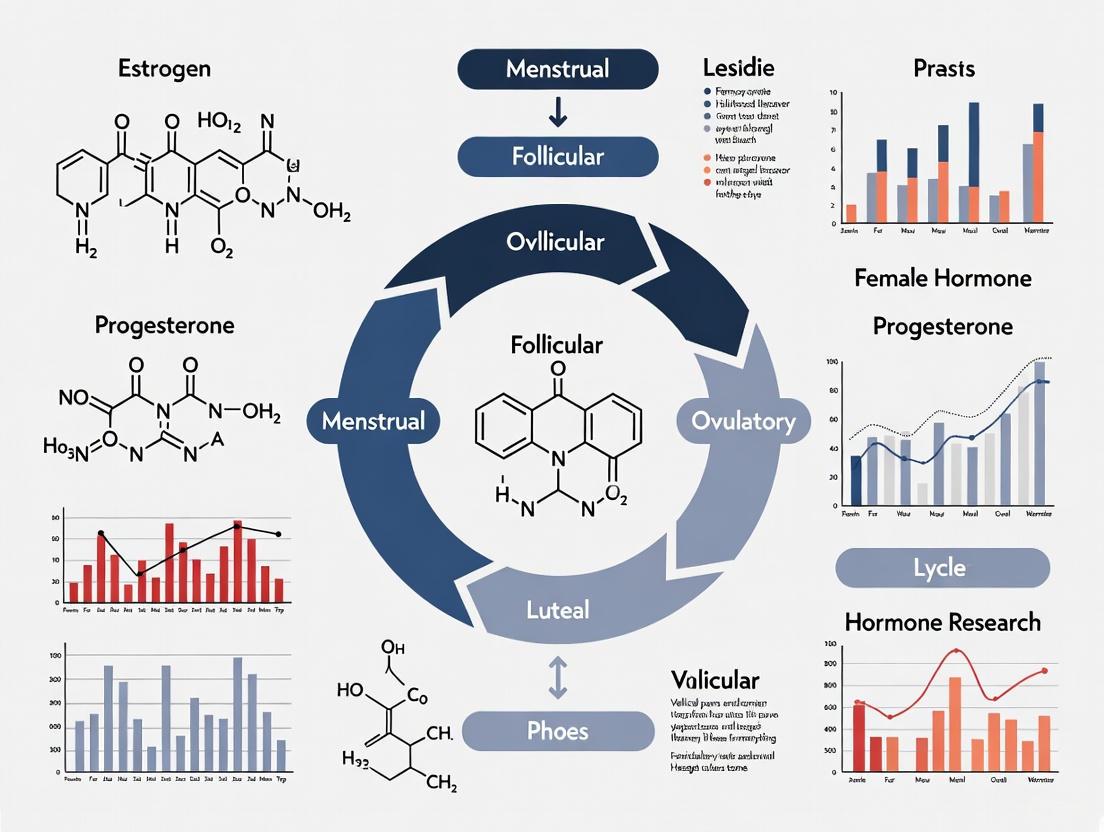
This article provides a comprehensive framework for researchers and drug development professionals to rigorously account for menstrual cycle phase in female hormone research.
Beyond the 28-Day Myth: A Research Framework for Precision Menstrual Cycle Phase Accounting in Female Hormone Studies
Abstract
This article provides a comprehensive framework for researchers and drug development professionals to rigorously account for menstrual cycle phase in female hormone research. It covers the foundational physiology of the cycle and the critical limitations of relying on assumed or estimated phases. The content delivers actionable methodological guidance for study design, data collection, and phase verification using hormonal assays and emerging technologies. It further addresses troubleshooting common pitfalls, optimizing protocols for different research goals, and validating findings through advanced statistical modeling and comparative analysis. The goal is to standardize methodologies, enhance data reliability, and ensure that research accurately reflects the dynamic endocrine environment in cycling females.
The Dynamic Endocrine System: Foundational Physiology of the Menstrual Cycle
Hormonal Signatures and Phase Definitions
Accurately defining menstrual cycle phases is fundamental to research involving female participants. The cycle is driven by predictable fluctuations of ovarian hormones, primarily estradiol (E2) and progesterone (P4) [1]. The table below summarizes the core hormonal signatures and key characteristics of each phase.
Table 1: Hormonal and Physiological Characteristics of Menstrual Cycle Phases
| Phase | Timing (Day of Cycle) | Dominant Hormones | Key Ovarian & Uterine Events | Average Hormone Production/Levels |
|---|---|---|---|---|
| Follicular (Proliferative) | Day 1 (menses onset) to day of ovulation [2] [3]. | Rising Estradiol (E2), low Progesterone (P4) [1] [4]. | Recruitment and selection of a dominant follicle; proliferation and thickening of the endometrial lining [2] [5] [3]. | E2 production rises from ~36 µg/24h (early) to ~380 µg/24h (preovulatory) [3]. |
| Ovulatory | Approximately day 14 in a 28-day cycle; lasts 16-32 hours [4]. | Surge of Luteinizing Hormone (LH), peak Estradiol (E2) [5] [1]. | Release of a mature oocyte from the dominant follicle [5] [4]. | The LH surge triggers ovulation about 10-12 hours after its peak [4]. |
| Luteal (Secretory) | Day after ovulation until day before next menses (typically ~14 days) [6] [1]. | High Progesterone (P4), moderately high Estradiol (E2) [6] [1]. | Transformation of follicle into corpus luteum; secretory changes in endometrium to support implantation [6] [7]. | P4 production peaks at ~25 mg/24h (mid-luteal); E2 ~250 µg/24h [3]. |
Phase Variability and Research Considerations
A critical consideration for research design is the variability in phase length. The luteal phase is relatively consistent, averaging 13.3 days (SD = 2.1), while the follicular phase is more variable, averaging 15.7 days (SD = 3.0) [1]. In fact, 69% of the variance in total cycle length is attributed to variance in the follicular phase [1]. Relying on a fixed 28-day model or counting cycle days without confirming ovulation can lead to significant misclassification of phases.
Essential Experimental Protocols for Phase Determination
To ensure accurate phase classification in research settings, the following methodologies are recommended.
Gold-Standard Protocol: Combined LH Surge Tracking & Luteal Phase Dating
The most reliable method for defining the ovulatory and luteal phases involves identifying the LH surge and the subsequent menstrual onset.
Workflow: Phase Determination via LH Surge
Procedure:
- First Day of Menstrual Bleeding: Participant records the first day of full menstrual flow as Cycle Day 1 [1].
- LH Surge Detection: Starting around cycle day 10, participants use urinary LH test kits daily. The day of the first significant rise in LH is designated as the day of the LH surge [1].
- Ovulation Dating: Ovulation is estimated to occur within 24-48 hours after the onset of the LH surge [5] [1].
- Luteal Phase Calculation: The participant records the first day of their next menstrual period. The luteal phase length is calculated as the number of days from the day after ovulation to the day before the next period [1].
Protocol for Hormonal Phase Verification
For greater precision, particularly when defining specific sub-phases (e.g., mid-luteal), hormone assays are necessary.
Workflow: Hormonal Verification of Cycle Phases
Procedure:
- Schedule Assessments: Schedule laboratory sessions based on either cycle day counting (less precise) or, preferably, days relative to a detected LH surge [1].
- Collect Serum/Plasma Samples: Collect blood samples at the scheduled times.
- Assay Hormones: Analyze samples for E2 and P4 concentrations.
- Verify Phase: Confirm the phase by matching hormone levels to expected ranges [1]:
- Mid-Follicular: Low E2 and P4.
- Peri-Ovulatory: High E2, low P4.
- Mid-Luteal: High P4, moderate E2.
The Scientist's Toolkit: Key Research Reagents & Materials
Table 2: Essential Research Materials for Menstrual Cycle Studies
| Item | Function/Application in Research |
|---|---|
| Urinary Luteinizing Hormone (LH) Test Kits | At-home, participant-administered tests to detect the pre-ovulatory LH surge for accurate dating of ovulation [1]. |
| Enzyme-Linked Immunosorbent Assay (ELISA) | Validated kits for the quantitative measurement of estradiol (E2) and progesterone (P4) in serum, plasma, or saliva to verify cycle phase hormonally [1]. |
| Radioimmunoassay (RIA) | A highly sensitive method for quantifying steroid hormone levels; often used as a gold standard in hormone assay validation [3]. |
| Prospective Menstrual Cycle Diary | Standardized forms for participants to daily record menstrual bleeding, physical symptoms, and sexual behavior. Critical for tracking cycle length and identifying anomalies [1]. |
| Basal Body Temperature (BBT) Thermometer | A highly sensitive thermometer to track the slight rise in resting body temperature (~0.4°F) that occurs after ovulation due to progesterone, providing a secondary marker for the luteal phase [2] [6]. |
Frequently Asked Questions (FAQs)
Q1: Why is it insufficient to define menstrual cycle phases by cycle day count alone? A1: Cycle day counting assumes a standard 28-day cycle with ovulation on day 14, which is often not the case. The follicular phase length is highly variable between and even within individuals [1] [3]. Relying solely on cycle days without confirming ovulation can lead to severe misclassification of hormonal status, potentially confounding research results.
Q2: What is the minimum number of repeated measurements needed per cycle to model within-person hormonal effects? A2: For basic multilevel modeling of within-person effects, a minimum of three observations per person per cycle is required. For more reliable estimation of between-person differences in within-person changes (e.g., comparing hormone-sensitive individuals to controls), three or more observations across two consecutive cycles is recommended [1].
Q3: How can I screen for and control for premenstrual dysphoric disorder (PMDD) in my study sample? A3: PMDD and other hormone-sensitive disorders are a confounding variable. The DSM-5 requires prospective daily symptom monitoring for at least two symptomatic cycles for diagnosis, as retrospective recall is highly unreliable [1]. Tools like the Carolina Premenstrual Assessment Scoring System (C-PASS) can be used to identify participants with PMDD or premenstrual exacerbation (PME) based on daily ratings [1].
Q4: What defines a "short luteal phase" and what are its implications for clinical trials? A4: A luteal phase lasting less than 10 days is considered short and may indicate a luteal phase defect (LPD) [6]. This can cause an inadequately prepared uterine lining, which may impact studies investigating embryo implantation or drug efficacy related to fertility. A short luteal phase does not necessarily prevent pregnancy but may reduce its likelihood [6].
Q5: Can I include participants with irregular cycles in my study? A5: This depends on the research question. For studies where precise hormonal milieus are critical, excluding individuals with irregular cycles (consistently <21 or >35 days) may reduce noise. However, this limits generalizability. If included, it is imperative to use intensive longitudinal designs (e.g., daily hormone sampling) and within-person modeling to account for their heightened variability [1] [3].
Why Variability Matters in Female Hormone Research
Incorporating the menstrual cycle into research design is critical for scientific rigor. The "average" 28-day cycle with ovulation on day 14 is a oversimplification that can introduce significant confounding variables. Real-world data from fertility apps and clinical studies reveals substantial natural variation in cycle and phase length, driven primarily by the follicular phase. Understanding this variability is essential for accurately timing experimental sessions, interpreting data related to hormonal impacts on physiology or behavior, and ensuring reproducible results in studies involving premenopausal women.
Quantitative Data on Cycle Variability
Data from 612,613 ovulatory cycles shows how follicular and luteal phases contribute to overall cycle length variation [8].
| Cycle Length Category | Number of Cycles | Mean Cycle Length (Days) | Mean Follicular Phase Length (Days) | Mean Luteal Phase Length (Days) | Mean Bleed Length (Days) |
|---|---|---|---|---|---|
| Very Short (15-20 days) | 6,814 | 18.2 | 9.1 | 8.0 | 3.8 |
| Normal (21-35 days) | 560,078 | 29.0 | 16.6 | 12.4 | 4.6 |
| 28-day Cycles | 81,605 | 28.0 | 15.4 | 12.6 | 4.6 |
| Very Long (36-50 days) | 45,722 | 39.5 | 27.6 | 11.8 | 4.8 |
Table 2: The Impact of Age on Cycle Characteristics
Cycle length and variability change with age. Data is from a cross-sectional analysis of app users [8].
| Age Cohort | Mean Cycle Length (Days) | Mean Follicular Phase Length (Days) | Mean Luteal Phase Length (Days) | Per-User Cycle Length Variation (Days) |
|---|---|---|---|---|
| 18-24 years | 30.6 | 18.0 | 12.5 | 2.5 |
| 25-29 years | 29.8 | 17.0 | 12.5 | 2.3 |
| 30-34 years | 29.1 | 16.4 | 12.4 | 2.2 |
| 35-39 years | 28.5 | 15.7 | 12.4 | 2.1 |
| 40-45 years | 27.7 | 14.8 | 12.4 | 2.0 |
Key Observations from Data:
- Follicular Phase is Primary Source of Variation: The follicular phase length is highly variable, while the luteal phase is more stable, typically lasting between 10 and 15 days [9] [10]. In one study of regularly cycling women, the follicular phase contributed most to cycle variability [11].
- Age-Related Changes: From age 25 to 45, the mean cycle length decreases by approximately 0.18 days per year, and the mean follicular phase length decreases by 0.19 days per year [8].
- The "Typical" Cycle is Uncommon: In a large dataset, only 13% of cycles were exactly 28 days long. In another study, only 25% of participants had their entire fertile window (the 6 days leading up to and including ovulation) between days 10 and 17 of their cycle [8] [11].
Experimental Protocols for Phase Determination
Accurately determining menstrual cycle phase requires more than calendar counting. The following methodologies are essential for precise phase classification in research settings.
Protocol 1: Determining Ovulation with Urinary LH and Basal Body Temperature (BBT)
This is a common and non-invasive method for pinpointing the day of ovulation (EDO) in real-time [12].
- Objective: To accurately identify the periovulatory and luteal phases for experimental timing.
- Materials: Urinary luteinizing hormone (LH) test kits (e.g., OvuQuick), BBT thermometer, fertility app or chart.
- Procedure:
- Basal Body Temperature Tracking: Participants measure their oral or vaginal temperature immediately upon waking each morning, before any activity.
- LH Surge Testing: Based on self-reported cycle length, participants begin daily urinary LH testing in the days leading up to expected ovulation (e.g., from day 6-12 of a 29-day cycle) [12].
- Ovulation Confirmation: A positive LH surge indicates that ovulation will likely occur within 24-36 hours. The BBT shows a sustained shift of about 0.3-0.5 °C following ovulation.
- Phase Calculation:
- Estimated Day of Ovulation (EDO): The day after a positive LH test.
- Follicular Phase: Day 1 of menses to EDO.
- Luteal Phase: The day after EDO until the day before the next menstrual bleed.
Protocol 2: Multi-Timepoint Serum Hormone Assay for Phase Classification
This method uses direct hormone measurement for high-precision phase classification and is considered the gold standard [13].
- Objective: To definitively classify menstrual cycle phase through direct measurement of serum hormone levels.
- Materials: Phlebotomy supplies, centrifuge, freezer (-80°C), commercial enzyme immunoassay kits for 17β-estradiol and progesterone.
- Procedure:
- Blood Collection: On each test day, a 4–6 mL blood sample is collected in a serum tube by a registered nurse [12].
- Sample Processing: Serum is separated via centrifugation and stored at -80°C until assayed.
- Hormone Assay: 17β-estradiol and progesterone concentrations are determined using commercially available ELISA kits, with each sample run in duplicate and results averaged.
- Phase Classification based on confirmed hormone levels [12] [13]:
- Menses (Day 1-4): Low estradiol and progesterone.
- Mid-Follicular (Day 6-12): Low but rising estradiol; low progesterone.
- Ovulation (24-48hr post-LH surge): High estradiol, positive LH/FSH surge, rising progesterone.
- Mid-Luteal (at least 6 days post-ovulation): High progesterone, moderate estradiol.
The Scientist's Toolkit: Research Reagent Solutions
Table 3: Essential Materials for Menstrual Cycle Phase Determination
| Item | Function in Research | Example Use Case |
|---|---|---|
| Urinary LH Test Kits | Detects the luteinizing hormone surge that triggers ovulation. | At-home testing by participants to schedule ovulation-phase lab sessions [12]. |
| Basal Body Temperature (BBT) Thermometer | A highly sensitive thermometer that detects the slight, sustained rise in resting body temperature post-ovulation. | Used alongside LH tests to confirm that ovulation has occurred [8]. |
| Enzyme Immunoassay Kits (ELISA) | Quantifies serum concentrations of 17β-estradiol and progesterone from blood samples. | Gold-standard method for precise, hormone-based classification of cycle phase in the lab [12] [13]. |
| Electronic Fertility Monitor | An integrated device that tracks multiple biomarkers (e.g., BBT, urinary hormones) to predict and confirm fertility windows. | Can be used as a consistent data collection tool in longitudinal studies [11]. |
Frequently Asked Questions (FAQs)
Q1: My participants are all under 30 with regular cycles. Can I simply use a calendar count to schedule their luteal-phase session for "day 21"?
No. Relying solely on calendar counting is a major source of experimental error. For a participant with a 32-day cycle, ovulation is expected around day 18, making day 21 the early luteal phase, not the mid-luteal phase where progesterone peaks. Similarly, in a 25-day cycle, day 21 may be pre-menstrual. Always use physiological markers (LH, BBT) to define phases relative to ovulation for internal validity [8] [11].
Q2: How does cycle variability affect power and sample size in a longitudinal study?
Substantial variability means you cannot assume all participants will be in the same physiological state on the same cycle day. This intra- and inter-individual variability acts as a source of noise, which can obscure true treatment effects. To maintain power, you may need to increase your sample size or, more effectively, increase the number of observations (cycles) per participant to average out this natural variation [8] [9].
Q3: We are studying a metabolic pathway. Are there known metabolic shifts across the cycle that we should control for?
Yes. Emerging metabolomic data shows significant rhythmicity across the cycle. For example, a study found 71 metabolites, including amino acids, lipids, and vitamin D, reached a threshold for significant change. Many amino acids and lipid species were significantly lower in the luteal phase, possibly indicating an anabolic state. Researchers should account for this metabolic rhythmicity when measuring biomarkers or nutrient utilization [13].
Q4: What is the best way to handle cycle phase in a case-control study if we cannot track all participants' cycles?
For case-control studies where prospective tracking is impractical, stratifying participants by whether they are in the follicular or luteal phase at the time of a single sample collection is a reasonable minimum standard. This can be done with a one-time serum progesterone test to assign phase (e.g., progesterone > 5 ng/mL suggests luteal phase). While not as precise as full-cycle tracking, this is methodologically superior to ignoring the cycle entirely [10] [13].
Hormone Basics & Physiological Context
What are the primary functions of estradiol and progesterone?
Estradiol and progesterone are steroid hormones with distinct but complementary roles in female reproductive physiology and beyond.
- Estradiol: Primarily produced by the developing ovarian follicles, estradiol drives the proliferation and repair of the uterine lining (endometrium) during the first half of the menstrual cycle. It is also a key regulator of the hypothalamic-pituitary-ovarian (HPO) axis and influences a wide range of non-reproductive systems, including bone health, cardiovascular function, and cognition [14].
- Progesterone: Secreted by the corpus luteum after ovulation, progesterone transforms the estrogen-primed endometrium into a secretory state receptive to embryo implantation. It also helps to maintain a potential pregnancy and has thermogenic properties, leading to a slight increase in basal body temperature [15] [16].
How do estradiol and progesterone fluctuate across a typical menstrual cycle?
The levels of estradiol and progesterone undergo predictable and dramatic changes across the menstrual cycle's phases. The table below summarizes these fluctuations, and the diagram illustrates the hormonal dynamics and their relationship to key ovarian and uterine events.
Typical Hormone Ranges Across the Menstrual Cycle [14]
| Cycle Phase | Estradiol (pg/mL) | Progesterone (ng/mL) | Key Hormonal Characteristics |
|---|---|---|---|
| Early-Mid Follicular | 19 - 140 | < 1.5 | Low and rising estradiol, very low progesterone |
| Late Follicular / Pre-Ovulatory | 110 - 410 | < 1.5 | Estradiol peak, very low progesterone |
| Luteal Phase | 19 - 160 | 2.0 - 25.0+ | Moderate estradiol, high progesterone (if ovulation occurred) |
| Post-Menopause | < 35 | Very low | Consistently low levels of both hormones |
Methodological Challenges & Troubleshooting
What are the most common methodological errors in phase determination, and how can I avoid them?
Many common methods for determining menstrual cycle phase are prone to error. The table below outlines these pitfalls and provides evidence-based solutions.
Common Pitfalls and Recommended Solutions in Phase Determination [15]
| Common Methodological Pitfall | Associated Risk / Error | Evidence-Based Recommended Solution |
|---|---|---|
| Relying solely on self-report ("count-back" or "count-forward" methods) | High misclassification due to high inter- and intra-individual variability in cycle length and hormone dynamics. | Use backward calculation from a confirmed subsequent menses start date for retrospective phase assignment. Combine with hormonal verification. |
| Using standardized hormone ranges to "confirm" phase | May exclude eligible participants or misclassify phase due to individual differences in absolute hormone levels. | Use within-subject hormone changes (e.g., a progesterone rise) to define phases rather than absolute, between-subject ranges. |
| Infrequent hormone sampling (e.g., 1-2 time points per cycle) | Misses critical hormonal events (e.g., estradiol surge, ovulation) and dynamic changes, leading to inaccurate phase characterization. | Increase sampling frequency where possible (e.g., weekly or multiple times per week) to better capture hormone variability and identify ovulatory cycles. |
How do I accurately determine the luteal phase in a study participant?
Accurately identifying the luteal phase requires confirming that ovulation has occurred. The most reliable method is a multi-faceted approach:
- Document Menstrual History: Record the first day of the participant's last menstrual period (LMP) and, retrospectively, the first day of their next period.
- Test for Ovulation: Use an at-home urinary luteinizing hormone (LH) kit to detect the LH surge, which typically occurs 24-36 hours before ovulation [17] [16]. Schedule a testing session for approximately 24-48 hours after a positive test result.
- Verify with Serum Progesterone: A single serum progesterone measurement, taken approximately 7 days after a detected LH surge, is a strong indicator of ovulation. A level > 6 ng/mL is consistent with presumed ovulation and confirms the mid-luteal phase [18] [16].
The following diagram outlines this multi-step workflow for luteal phase confirmation.
Experimental Protocols & Data Interpretation
What is a robust protocol for a longitudinal study linking hormone variability to mood?
A robust protocol for investigating the relationship between hormonal dynamics and mood requires frequent, within-person assessments. The following workflow, based on a published study design [18], provides a template for such an investigation.
Core Protocol: 8-Week Observational Study with Weekly Assessments [18]
- Population: Target perimenopausal women with mild-to-moderate depressive symptoms, not using psychotropic or hormonal medications.
- Duration: 8 weeks of continuous monitoring.
- Weekly Assessments:
- Mood: Clinician-rated scale (e.g., Montgomery-Åsberg Depression Rating Scale - MADRS).
- Hormones: Serum estradiol (measured via liquid chromatography-mass spectrometry, LC/MS) and progesterone.
- Vasomotor Symptoms (VMS): Self-report daily diary to calculate weekly average frequency.
- Baseline Covariates: Assess lifetime history of depression, stressful life events, and body mass index (BMI).
- Key Statistical Approach: Use Generalized Estimating Equation (GEE) models to account for multiple within-person observations and link time-varying (weekly VMS) and time-invariant (estradiol variability) predictors to weekly mood scores.
How should I interpret high variability in weekly estradiol measurements?
In the context of perimenopausal research, high within-person estradiol variability is not necessarily a measurement error. It is a core biological feature of the menopausal transition.
- Key Finding: One study found that greater estradiol variability and the absence of ovulatory progesterone peaks were independently associated with higher levels of depressive symptoms in perimenopausal women [18].
- Interpretation: High estradiol variability can be interpreted as a sign of ovarian hormone dysregulation. In your analysis, you should calculate a metric of within-person variability, such as the coefficient of variation (CV) of log-transformed estradiol values for each participant across the study period. This CV can then be used as a predictor variable in statistical models [18].
The Scientist's Toolkit: Essential Research Reagents & Materials
Key Reagents and Materials for Hormone Research [18] [17] [19]
| Item / Reagent | Critical Function & Application Notes |
|---|---|
| LC-MS/MS (Liquid Chromatography-Tandem Mass Spectrometry) | Considered the gold standard for sex steroid hormone measurement, especially at low concentrations. Provides high specificity and sensitivity for estradiol [18] [14]. |
| Automated Immunoassays | Common, automated method for progesterone and FSH measurement. Useful for rapid, high-throughput testing, but may have cross-reactivity issues for estradiol, leading to overestimation [18] [14]. |
| Urinary Luteinizing Hormone (LH) Kits | Essential, non-invasive tool for at-home participant tracking of the LH surge to pinpoint ovulation and schedule luteal-phase lab visits [17] [16]. |
| Validated Mood Assessment Scales | Clinician-rated scales like the Montgomery-Åsberg Depression Rating Scale (MADRS) provide sensitive, quantitative measures of depressive symptomatology for correlating with hormone data [18]. |
| Standardized Reference Materials | Crucial for assay calibration. Note that compounded hormone products have shown high variability in estradiol and progesterone content, so US FDA-approved reference standards are recommended for reliable results [19]. |
FAQs on Special Topics & Advanced Applications
How can I account for the menstrual cycle in non-reproductive research, like cognitive or economic studies?
The menstrual cycle should be treated as a key biological variable in all research involving female participants. Hormonal fluctuations have been demonstrated to influence brain activity and decision-making.
- Economic Decision-Making: One study found that women's economic rationality (adherence to the Generalized Axiom of Revealed Preference) was maintained across all menstrual cycle phases. However, risk and loss aversion fluctuated, with women at ovulation making less loss-averse choices [17].
- Best Practice: For cognitive or behavioral studies, you must determine and report the menstrual cycle phase at the time of testing using validated methods (e.g., backward calculation from menses and/or hormonal verification). Phases should be defined based on your hypothesized mechanism (e.g., low estrogen/low progesterone vs. high progesterone states) [16].
Our drug trial involves premenopausal women. Could the menstrual cycle affect pharmacokinetics?
Yes, physiological changes across the menstrual cycle (e.g., in renal function, cardiovascular activity, and body temperature) could theoretically alter drug pharmacokinetics and pharmacodynamics [20]. However, systematic investigations demonstrating clinically significant changes are sparse. As a precaution, it is considered good practice to:
- Record and report the menstrual cycle phase of participants during drug trials.
- Consider standardizing the timing of drug administration to a specific cycle phase (e.g., early follicular) to minimize a potential source of variability.
What are the key diagnostic hormones to measure if I suspect a participant has PCOS or Primary Ovarian Insufficiency?
Both PCOS and Primary Ovarian Insufficiency (POI) can cause menstrual irregularities, but they have distinct hormonal profiles.
- For Suspected PCOS [21]:
- Test: Testosterone (total or free), Androstenedione, LH, FSH.
- Expected Pattern: Normal or mildly elevated testosterone, elevated LH with a potentially high LH:FSH ratio.
- For Suspected POI [22]:
- Test: FSH, Estradiol.
- Expected Pattern: Persistently elevated FSH (in the menopausal range) with low estradiol.
In both cases, other causes must be ruled out (e.g., thyroid dysfunction, hyperprolactinemia).
FAQs on Core Concepts and Differentiation
Q1: What is the fundamental difference between PMDD and Premenstrual Exacerbation (PME)?
| Feature | Premenstrual Dysphoric Disorder (PMDD) | Premenstrual Exacerbation (PME) |
|---|---|---|
| Core Definition | A distinct diagnostic entity where symptoms emerge de novo in the luteal phase. [23] | The worsening of symptoms of a pre-existing underlying disorder during the luteal phase. [23] [24] |
| Symptom Presence | Symptoms are absent during the follicular phase. [23] [24] | Symptoms of the primary disorder are present throughout the menstrual cycle, but worsen premenstrually. [23] [24] |
| Symptom Pattern | Cyclical emergence and remission of symptoms. [25] | Cyclical amplification of chronic symptoms. [24] |
| Primary Treatment | Targets the cyclical disorder directly (e.g., SSRIs, hormonal interventions). [26] | Focuses on optimizing management of the underlying disorder, with possible luteal-phase support. [24] |
Q2: Why is it critical for clinical researchers to distinguish between PMDD and PME? Accurate differentiation is crucial because the underlying pathophysiology and, therefore, optimal treatment strategies and clinical trial endpoints differ significantly. [24] Misdiagnosis can lead to ineffective treatment plans. PMDD involves a specific abnormal reaction to normal hormonal changes, likely linked to serotonin deficiency and sensitivity to neuroactive steroids like allopregnanolone. [23] [26] In contrast, PME is a manifestation of the primary disorder's vulnerability to hormonal fluctuations. [23] Furthermore, the inclusion criteria for clinical trials, especially for conditions like major depressive disorder or anxiety disorders, must account for this distinction to ensure a homogenous study population and accurate interpretation of drug efficacy. [27]
Q3: What are the common methodological pitfalls in identifying hormone-sensitive participants, and how can they be avoided? A major pitfall is relying on retrospective recall of symptoms, which is highly prone to inaccuracy and bias influenced by beliefs about premenstrual syndrome. [1] [24] Another common error is using imprecise methods to determine menstrual cycle phase, such as "forward calculation" from the last menses based on a assumed 28-day cycle, which does not account for natural variability. [15] To avoid these:
- Use Prospective Daily Ratings: The DSM-5 and experts mandate prospective daily symptom tracking over at least two symptomatic cycles for a reliable PMDD or PME diagnosis. [25] [1] [24]
- Confirm Cycle Phase: Use a combination of methods: track menstruation start dates, and where possible, use ovulation tests (LH kits) or measure basal body temperature to objectively define the luteal phase. [1] [15] Hormone assays can provide retrospective confirmation. [15]
Troubleshooting Common Experimental Challenges
Q4: A participant reports severe premenstrual mood changes in screening, but prospective tracking shows stable symptoms. How should this be handled? This is a common scenario due to the documented low agreement between retrospective and prospective symptom reports. [1] Beliefs about PMS can significantly influence retrospective recall. The participant should be excluded from the hormone-sensitive group based on the objective prospective data. Their data may still be valuable for the study's general cohort, but they should not be classified as having PMDD/PME. This highlights the critical importance of prospective verification for group assignment. [1]
Q5: During a longitudinal study, a participant with a pre-existing disorder shows a pattern of symptom exacerbation that is subtle or inconsistent across cycles. What factors should be considered?
- Confirm Underlying Disorder Stability: Ensure that the baseline symptoms of the primary disorder are not naturally fluctuating, which could obscure the cyclical pattern.
- Review Phase Determination: Verify that the luteal phase was correctly identified using backward calculation from the subsequent menses, as the follicular phase length is highly variable. [1] [15]
- Consider PME Heterogeneity: PME is not an all-or-nothing phenomenon. The degree of exacerbation can vary from subtle to dramatic. [24] The participant may still have subclinical PME, and their data could be analyzed accordingly. Statistical models that account for within-person variance across the cycle are recommended for such cases. [1]
Q6: What should a researcher do if a participant's hormonal assay results do not align with the projected menstrual cycle phase? This frequently occurs when using generic hormone "ranges" to confirm phase, as these ranges often lack sensitivity and specificity for individual cycles. [15] The primary method for defining phase in behavioral research should be based on menstrual bleeding dates and ovulation confirmation (e.g., LH surge), not hormone ranges. [15] If the phase was properly determined prospectively using these methods, trust the cycle timing over a single hormone measurement. Hormone levels should be used to model continuous effects on outcomes, not to "confirm" phase after the fact with rigid ranges. [15]
Experimental Protocols & Methodologies
Protocol 1: Differentiating PMDD from PME using Prospective Daily Ratings
Objective: To reliably identify and distinguish participants with PMDD from those with PME of an underlying disorder.
Materials:
- Gold-Standard Tool: Daily Record of Severity of Problems (DRSP) form or similar validated daily symptom tracker. [24]
- Tracking Duration: Minimum of two (2) complete menstrual cycles. [25] [1] [24]
Workflow:
- Baseline Assessment: Confirm diagnosis of any underlying psychiatric disorder (e.g., MDD, GAD) via clinical interview.
- Daily Tracking: Participant completes the DRSP daily throughout the entire tracking period, noting both mood/physical symptoms and the occurrence of menstruation.
- Data Analysis: Use a validated scoring system (e.g., the Carolina Premenstrual Assessment Scoring System [C-PASS]) to analyze the daily ratings. [1]
- Pattern Identification:
- PMDD Pattern: Symptoms appear exclusively in the luteal phase (from ovulation to menses) and resolve completely within a few days of menstruation onset. Symptoms are absent in the follicular phase post-menstruation. [25] [24]
- PME Pattern: Symptoms of the underlying disorder are present throughout the cycle but show a significant, reproducible increase in severity during the luteal phase. Symptoms do not fully remit post-menstruation. [23] [24]
Protocol 2: Integrating Menstrual Cycle Phase Determination in Study Design
Objective: To accurately account for menstrual cycle phase in clinical or experimental studies.
Materials:
- Menstrual Calendar: For recording first day of menstrual bleeding (day 1). [1]
- Ovulation Tests: Luteinizing hormone (LH) test kits to detect the LH surge. [1] [15]
- Hormone Assays: Saliva or blood collection materials for assaying estradiol and progesterone (optional, for mechanistic studies). [1] [15]
Workflow:
- Record Menstrual Start Dates: Participant records the first day of each menstrual period.
- Define Cycle Phases:
- Identify Ovulation: Use LH test kits to pinpoint the LH surge, which precedes ovulation by ~24-48 hours. This is the most practical method for defining the luteal phase onset. [1] [15]
- Schedule Assessments: Schedule experimental visits or assessments based on the biologically-defined phases (e.g., early follicular, mid-luteal) rather than projected dates from a 28-day model. [1]
The Scientist's Toolkit: Essential Research Reagents & Materials
| Item | Function / Application in Research |
|---|---|
| Validated Daily Symptom Tracker (e.g., DRSP) | The gold-standard tool for prospective daily rating of emotional, behavioral, and physical symptoms to diagnose PMDD/PME. [24] |
| LH (Luteinizing Hormone) Urine Test Kits | To detect the LH surge and objectively pinpoint ovulation, enabling accurate determination of the luteal phase for visit scheduling. [1] [15] |
| Hormone Assay Kits (Saliva/Serum) | To measure absolute levels of estradiol and progesterone for correlational analysis with symptoms or outcomes, or for retrospective phase confirmation. [1] [15] |
| C-PASS (Carolina Premenstrual Assessment Scoring System) | A standardized scoring system (available as worksheets and macros) to objectively analyze daily symptom data and assign a diagnosis of PMDD or PME. [1] |
| Basal Body Temperature (BBT) Thermometer | A traditional method to infer ovulation by tracking the slight rise in resting body temperature that occurs in the luteal phase. [15] |
From Assumption to Measurement: Methodological Best Practices for Phase Determination
Accurately accounting for menstrual cycle phase is a fundamental challenge in female hormone research. Inconsistencies in verification methodologies often explain conflicting results across studies. This technical support center outlines the established gold-standard protocol for direct hormonal verification, providing detailed troubleshooting guides and FAQs to support researchers, scientists, and drug development professionals in implementing robust experimental designs.
Experimental Protocols: The Gold-Standard Methodology
To ensure high-quality menstrual cycle research, a combination of verification methods is recommended to mitigate the risk of including participants with anovulatory or luteal phase-deficient cycles [28]. The following workflow integrates these methods.
Detailed Protocol Steps
- Calendar-Based Counting Method: Initiate participant screening based on self-reported regular menstrual cycles (typically 21-35 days) [29]. Day 1 is defined as the first day of menstrual bleeding.
- Urinary Luteinizing Hormone (LH) Surge Testing: Participants use urinary ovulation predictor kits (OPKs) to detect the LH surge. Testing should begin several days before the expected surge. The day of the LH surge is identified as the test day with the highest color intensity or a clearly positive result, often corroborated by a mobile application (e.g., Premom app) [30].
- Serum Hormone Collection and Verification: Blood draws should be timed for specific cycle phases with verification limits applied [28]:
- Follicular Phase Testing: Schedule within days 2-4 of the cycle (early follicular) or align with the late follicular estrogen peak. Verify with low serum progesterone (< 5 nmol/L or ~1.5 ng/mL).
- Luteal Phase Testing: Schedule 5-9 days after the detected urinary LH surge [30] [31]. Verification requires elevated serum progesterone using a strict limit of >16 nmol/L (~5 ng/mL) to confirm a viable corpus luteum [28].
Troubleshooting Guides
Problem: Inconsistent or Unverifiable Cycle Phases
| Symptom | Possible Cause | Recommended Solution |
|---|---|---|
| Low serum progesterone (<5 ng/mL) in the mid-luteal phase | Anovulatory cycle or Luteal Phase Deficiency (LPD) | Exclude the participant's data from phase-specific analysis for that cycle [28]. |
| Urinary PdG test is negative 7+ days post-LH surge | LPD, diluted urine sample, or methodological issue | Retest with first-morning urine; confirm with serum progesterone assay; consider participant exclusion if low progesterone is confirmed [30] [31]. |
| Participant reports cycle length varies by >9 days | Underlying health condition (e.g., PCOS, thyroid disorder) or lifestyle factors | Screen for conditions like PCOS or thyroid dysfunction; consider exclusion criteria for high cycle irregularity [29]. |
| Discrepancy between urinary LH surge and serum hormone levels | Improper timing of serum sample relative to ovulation | Re-evaluate protocol timing. Serum progesterone peaks about 6-8 days after ovulation [31]. |
Problem: Analytical Interference in Hormone Assays
| Symptom | Possible Cause | Recommended Solution |
|---|---|---|
| Unexplained spikes or drops in serum hormone levels (e.g., FSH, LH, TSH) | Interference from Intravascular Contrast Media (ICM) [32] | Schedule blood collection for hormone assays prior to any radiological imaging involving contrast agents. If already administered, delay testing based on kidney function [32]. |
| Abnormal serum sodium, calcium, or iron levels post-contrast | Spectral interference from ICM in colorimetric assays [32] | Be aware that ICM can cause positive (e.g., calcium) or negative (e.g., iron) biases. Schedule lab tests before imaging. |
| Falsely high or false negative M-protein detection in electrophoresis | ICM interfering with UV spectrophotometric detection [32] | Use alternative detection methods or ensure sufficient time has passed after ICM administration before testing. |
Frequently Asked Questions (FAQs)
Q1: Why is a multi-modal approach (urinary + serum) considered the gold standard? A single method has limitations. Calendar tracking is prone to error, urinary LH only predicts ovulation, and a one-time serum test cannot confirm a normal ovulatory cycle. Combining methods cross-verifies timing and provides a definitive endocrine picture of the cycle, reducing the risk of including anovulatory cycles in your data [28] [30].
Q2: What is the critical difference between progesterone and PdG, and when should each be used? Progesterone is the active hormone measured in blood serum (ng/mL). PdG (pregnanediol glucuronide) is its primary urine metabolite (μg/mL) [31]. Serum progesterone is the clinical gold standard for definitive, quantitative phase verification [28]. Urinary PdG is a valuable non-invasive tool for at-home longitudinal tracking to confirm an ovulation event has occurred, but it should not be considered a direct quantitative replacement for serum assays in rigorous research [30] [31].
Q3: How can contrast media affect my hormone assay results, and how do I mitigate this? Iodine-based and gadolinium-based contrast media can cause significant analytical interference in immunoassays and colorimetric tests, leading to over- or under-estimation of hormones like FSH, LH, and TSH [32]. The most effective mitigation is to perform all phlebotomy for hormone assays before the participant undergoes contrast-enhanced radiological imaging [32].
Q4: What are the minimum serum progesterone levels required to confirm the luteal phase? For a definitive luteal phase, a serum progesterone level of >16 nmol/L or approximately 5 ng/mL is recommended [28]. Some commercial PdG tests use a urinary threshold of 5 μg/mL to indicate a positive result for ovulation, but this should not be conflated with the serum standard [30].
The Scientist's Toolkit: Research Reagent Solutions
| Essential Material | Function in Hormonal Verification | Key Considerations |
|---|---|---|
| Urinary LH Test Strips | Predicts impending ovulation by detecting the Luteinizing Hormone surge in urine. | For home use by participants; helps pinpoint timing for serum sampling [30]. |
| Urinary PdG Test Strips | Confirms ovulation occurred by detecting the metabolite of progesterone in urine. | Used for longitudinal tracking; not a quantitative substitute for serum progesterone [31]. |
| Serum Progesterone Immunoassay | The quantitative gold standard for verifying luteal phase via blood draw. | Must use the strict verification limit of >16 nmol/L (~5 ng/mL) [28]. |
| Serum Estradiol Immunoassay | Quantifies estrogen levels to verify follicular phase or peri-ovulatory peak. | Critical for ensuring hormonal milieu matches the intended research phase [28]. |
| Gel Separator Tubes (for serum) | Used for blood collection and serum separation. | Note: Contrast media can alter blood density, potentially causing improper gel function and sample integrity issues [32]. |
Why is a within-subject repeated measures design considered the "gold standard" for menstrual cycle research?
The menstrual cycle is fundamentally a within-person process [1]. Hormones like estradiol and progesterone do not just differ between people; they fluctuate dynamically within the same individual across the cycle. Studying the cycle as a between-subject variable (e.g., comparing one group of women in their follicular phase with a different group in their luteal phase) conflates variance from two different sources:
- Within-subject variance: Variance caused by the actual change in hormone levels.
- Between-subject variance: Variance caused by each individual's unique baseline or "trait" levels of symptoms or cognitive abilities [1].
A repeated measures design, where the same participant is tested at multiple time points, allows researchers to control for these inherent differences between individuals. Each participant effectively serves as their own control, which makes it easier to detect the specific effect of hormonal changes [33] [34].
What are the key advantages of using this design?
Adopting a within-subject repeated measures approach offers several significant benefits over between-subject designs:
- Greater Statistical Power: By controlling for variability between subjects, the statistical "noise" in the data is reduced. This results in a more sensitive analysis and a higher probability of detecting a true effect of the menstrual cycle if one exists [33] [34].
- Fewer Subjects Required: Thanks to the increased power, a repeated measures design can detect a desired effect size with far fewer participants than a between-subject design. This makes research more efficient and feasible, especially when recruiting specific populations [33] [34].
- Assessment of Change Over Time: This design is the only way to directly track how an outcome (e.g., mood, cognitive performance, or a biomarker) changes within an individual across the different phases of their cycle [33].
- Control for Confounding Variables: It naturally controls for time-invariant confounding factors that differ between people, such as genetics, personality, and long-term health history [34].
What are the essential methodological protocols for rigorous cycle studies?
To ensure valid and replicable results, researchers must follow strict protocols for defining and tracking the menstrual cycle.
Table 1: Essential Methodological Protocols for Menstrual Cycle Research
| Protocol Area | Key Recommendation | Rationale & Implementation |
|---|---|---|
| Cycle Phase Determination | Avoid assumptions and estimations; use direct hormone measurement [35] [15]. | Calendar-based counting is error-prone. Ovulation tests (urinary luteinizing hormone) and assays of salivary or blood serum progesterone/estradiol are necessary to confirm phase and avoid misclassification [1] [36]. |
| Phase Coding | Code phases based on hormonally-defined boundaries [1]. | Phases should be defined by specific hormonal criteria (e.g., low E2/P4 for early follicular; high E2 for peri-ovulatory; high P4 for mid-luteal) rather than fixed calendar days. |
| Sampling Strategy | Collect a minimum of 3 observations per participant, per cycle [1]. | Multilevel modeling requires at least 3 time points to reliably estimate within-person effects. Sampling across two cycles is even better for assessing the reliability of changes [1]. |
| Symptom Measurement | Use prospective daily ratings, not retrospective recall [1]. | Retrospective self-reports of premenstrual symptoms are highly unreliable and show poor convergence with daily ratings. Prospective monitoring is a DSM-5 requirement for diagnosing PMDD [1]. |
What are common pitfalls and how can they be troubleshooted?
Even with a robust design, several common challenges can compromise data quality.
Table 2: Common Troubleshooting Guide for Menstrual Cycle Studies
| Problem | Risk | Solution |
|---|---|---|
| Order Effects | Performance on tasks can be influenced by the order of testing (e.g., learning, fatigue) rather than the cycle phase itself [33] [34]. | Counterbalancing: Randomize or reverse the order of test conditions across participants. Ample Time Between Tests: Allow for sufficient washout periods between experimental sessions [33]. |
| Belief Bias in Symptom Reporting | Retrospective beliefs about PMS can distort actual symptom reports [1] [37]. | Prospective Data Collection: Mandate daily symptom tracking. Use validated tools like the Carolina Premenstrual Assessment Scoring System (C-PASS) for objective diagnosis [1]. |
| Undetected Menstrual Disturbances | Assuming regular menstruation implies normal hormonal cycles can lead to incorrect phase classification [35]. | Confirm Ovulation and Luteal Function: Use urinary LH tests to detect ovulation and mid-luteal progesterone assays to confirm a healthy luteal phase. Refer to participants as "naturally menstruating" unless eumenorrhea is confirmed [35]. |
Which key reagents and tools are essential for this research?
Research Reagent Solutions
- Urinary Luteinizing Hormone (LH) Tests: Essential for pinpointing the LH surge that precedes ovulation by 24-36 hours. This provides a biological anchor for scheduling peri-ovulatory assessments [1] [36].
- Salivary or Serum Progesterone Immunoassays: Critical for confirming ovulation and defining the mid-luteal phase. A sustained elevation in progesterone is a key biomarker of a functional luteal phase [35] [15] [36].
- Salivary or Serum Estradiol Immunoassays: Necessary for identifying the peri-ovulatory estradiol peak and for defining the hormonal profile of each phase alongside progesterone [1] [15].
- Validated Daily Symptom Scales: For prospective tracking of emotional, cognitive, and physical symptoms. These are required for the accurate identification of hormone-sensitive disorders like PMDD and PME [1].
- Standardized Cognitive Test Batteries: Computerized or paper-based tasks designed to measure specific cognitive domains known to be potentially sensitive to hormonal fluctuations, such as visuospatial function, timing anticipation, and error monitoring [38] [37] [39].
How is this design applied in practice? Experimental workflow and examples
The following diagram illustrates a robust experimental workflow for a within-subjects menstrual cycle study, integrating the protocols and tools detailed above.
Examples from Published Research:
- Tracking Cognition: One large online study had participants complete a cognitive battery twice, 14 days apart. The within-subject analysis revealed that regularly menstruating females had faster reaction times and made fewer errors during menstruation compared to their own performance in the luteal phase, despite self-reporting worse mood during menses [37].
- Linking Hormones to Neural Activity: A rigorous laboratory study tested women in both their mid-follicular and mid-luteal phases, confirming phases with hormone assays. They found that the association between a neural error-monitoring signal (the error-related negativity, or ERN) and checking behaviors was specific to the luteal phase. Furthermore, they demonstrated that progesterone levels influenced checking symptoms by modulating this neural response [38].
- Assessing Creativity: A within-subject study that used saliva and urine samples to verify cycle phase found that women generated more original ideas during ovulation compared to non-fertile phases, supporting theories about creativity as a mate-attraction signal [40].
FAQ: Foundational Concepts
What are the primary hormonal transitions I need to capture in a menstrual cycle study? The key transitions are driven by fluctuations in estradiol (E2) and progesterone (P4). The most significant are:
- The late follicular surge in estradiol that precedes ovulation.
- The post-ovulatory rise in progesterone.
- The perimenstrual withdrawal of both estradiol and progesterone if pregnancy does not occur [1] [10]. Capturing these shifts is essential for linking hormonal states to physiological, cognitive, or behavioral outcomes.
Why is a within-person design considered the gold standard? The menstrual cycle is fundamentally a within-person process. Using a between-subjects design (e.g., comparing one group in the follicular phase to another in the luteal phase) conflates within-person hormone variation with between-person trait differences in symptoms or baseline hormone levels. Repeated measures of the same individual across cycles are required to isolate the true effect of hormonal changes [1] [16].
How does age impact cycle characteristics and sampling? Evidence from quantitative hormone monitoring shows that follicular phase length declines with age, while the luteal phase may slightly lengthen [41]. This means that relying on a fixed 28-day model with a 14-day follicular phase becomes less accurate as a population ages. Sampling strategies should account for the participant's age and anticipated phase length variability.
What is the minimal number of sampling points per cycle? For statistical models that estimate random effects, a minimum of three observations per person per cycle is required. However, for more reliable estimation of between-person differences in within-person changes, three or more observations across two cycles is recommended [1].
FAQ: Troubleshooting Experimental Design
My participants have irregular cycles. How can I reliably define their cycle phases? Irregular cycles, often defined by a variation of 8 or more days in cycle length [10], present a challenge. To address this:
- Use Prospective Monitoring: Have participants track their cycles for several months before the study to establish individual baselines [12].
- Incorporate Hormone Verification: Use at-home urine tests for luteinizing hormone (LH) to pinpoint ovulation or measure serum hormones to retrospectively confirm phase [1] [41].
- Apply Robust Coding: Use a combination of forward-counting from menstruation and backward-counting from the next menses to assign cycle days, which helps normalize for cycle length variability [16].
I am seeing inconsistent results in my literature review on cycle effects. What could be a cause? A major source of inconsistency is the lack of standardized methods for defining and operationalizing the menstrual cycle across different laboratories [1] [16]. Studies often use different criteria for phase lengths, may not verify ovulation, and can conflate within- and between-person effects. Adopting the standardized tools and vocabulary from recent guidelines can help make your results more meaningful and replicable [1].
How can I account for individuals with severe premenstrual symptoms like PMDD in my sample? Beliefs about premenstrual syndrome can bias retrospective reports. For rigorous identification of Premenstrual Dysphoric Disorder (PMDD) or Premenstrual Exacerbation (PME), the DSM-5 requires prospective daily symptom monitoring for at least two consecutive cycles [1] [16]. Tools like the Carolina Premenstrual Assessment Scoring System (C-PASS) are available to help researchers screen for and diagnose these conditions based on daily ratings, preventing them from becoming a confounding variable [1].
Experimental Protocols & Sampling Strategies
The optimal sampling frequency is determined by your specific research hypothesis. The table below summarizes recommended strategies for different study goals.
Table 1: Sampling Strategies Aligned with Research Objectives
| Research Objective | Recommended Sampling Phases | Rationale & Hormonal Context |
|---|---|---|
| Test the effect of rising estradiol on cognition | Mid-follicular (low E2/P4) and Peri-ovulatory (peak E2, low P4) [1] | Contrasts low vs. high estradiol states while minimizing the influence of progesterone. |
| Investigate the interactive effect of E2 and P4 | Mid-follicular (low E2/P4), Peri-ovulatory (high E2, low P4), and Mid-luteal (high P4, high E2) [1] | Captures the main effects of each hormone and allows for modeling their statistical interaction. |
| Study perimenstrual symptom exacerbation | Mid-luteal and Perimenstrual (late luteal/early follicular) [1] | Focuses on the period of rapid hormone withdrawal, which is a trigger for symptoms in sensitive individuals. |
| Map detailed hormonal dynamics across a full cycle | Daily or multi-daily (Ecological Momentary Assessment) sampling [1] | Provides high-resolution data to model non-linear hormone changes and individual response trajectories. |
Protocol for a Multi-Phase Laboratory Study
This protocol, adapted from economic and neuroimaging research, details how to schedule laboratory visits for phase-specific testing [12] [42].
Participant Screening & Tracking:
Phase Determination & Scheduling:
- Menses/Early Follicular Phase: Schedule the session within days 1-4 of the cycle (first day of heavy bleeding = Day 1). Hormone levels (E2 and P4) are at their lowest [12] [10].
- Mid-Follicular Phase: Schedule between days 6-12, after menses but before ovulation [12].
- Ovulatory Phase:
- Provide participants with at-home urine luteinizing hormone (LH) test kits (e.g., ovulation predictor kits).
- Instruct them to begin testing based on their shortest cycle length.
- Schedule the laboratory session 24-48 hours after a positive LH surge is detected [12]. This captures the period of peak fertility and high estradiol.
- Luteal Phase: Schedule after ovulation but before the next menses (e.g., at least 6 days after ovulation, approximately days 20-31). This phase is characterized by high progesterone [12].
Hormonal Validation:
- During each lab visit, collect a blood or saliva sample to retrospectively assay estradiol and progesterone levels.
- Use these assay results to biochemically confirm that the participant's hormone levels are consistent with the intended cycle phase [12]. This step is critical for data quality control.
The following workflow diagram visualizes this multi-step protocol for scheduling and verifying lab visits.
The Scientist's Toolkit: Research Reagent Solutions
Table 2: Essential Materials and Assays for Menstrual Cycle Research
| Item / Reagent | Primary Function in Research | Key Considerations |
|---|---|---|
| Luteinizing Hormone (LH) Urine Test Kits | Pinpoint the LH surge to schedule peri-ovulatory visits with high temporal precision [12] [41]. | Cost-effective and user-friendly for at-home use by participants. Allows for prospective scheduling of ovulation visits. |
| Enzyme Immunoassay (EIA) Kits (e.g., for 17β-estradiol, progesterone) | Quantify hormone levels from serum, saliva, or urine samples [12]. | Used for retrospective biochemical confirmation of menstrual cycle phase. Running samples in duplicate increases reliability [12]. |
| The Carolina Premenstrual Assessment Scoring System (C-PASS) | Standardized tool for diagnosing PMDD and PME based on prospective daily ratings [1]. | Critical for screening samples to exclude or stratify hormone-sensitive individuals, reducing confounding. |
| Basal Body Temperature (BBT) Thermometer | Track the biphasic temperature shift that confirms ovulation has occurred [16]. | A lower-cost method for retrospective ovulation confirmation. Less precise for predicting ovulation in real-time compared to LH kits. |
| Ecological Momentary Assessment (EMA) Software | Collect frequent, real-time data on symptoms, behaviors, or cognitions in a participant's natural environment [1]. | Ideal for capturing daily or multi-daily outcomes, aligning data density with the dynamics of the hormonal cycle. |
Visualizing Hormonal Dynamics and Brain Metastability
Understanding the underlying hormonal pattern is crucial for designing sampling protocols. The following diagram illustrates the fluctuating levels of key hormones and connects them to a recent scientific finding on brain network dynamics.
Frequently Asked Questions (FAQs)
Q1: What is the potential accuracy of machine learning models in classifying menstrual cycle phases? Machine learning (ML) models show significant promise for automating cycle phase identification. Performance varies based on the number of phases classified and the data window technique used. For instance, using a fixed window technique to classify three phases (Period, Ovulation, Luteal), a Random Forest model achieved 87% accuracy with an Area Under the Curve (AUC) of 0.96. When the task was made more complex by classifying four phases (Period, Follicular, Ovulation, Luteal) with a daily tracking (sliding window) approach, the same model type maintained a 68% accuracy with an AUC of 0.77 [43].
Q2: How do wearable-based physiology methods compare to traditional calendar methods for ovulation detection? Physiology methods using data from wearables like the Oura Ring significantly outperform traditional calendar methods. A large-scale study demonstrated that the physiology method detected 96.4% of ovulations with an average error of 1.26 days. In contrast, the calendar method had a much larger average error of 3.44 days. This superior accuracy was consistent across different age groups, cycle lengths, and for users with both regular and irregular cycles [44].
Q3: What are the common technical issues encountered when using cycle tracking features in commercial apps? Researchers implementing or studying commercial tracking apps should be aware of common platform-specific issues that could impact data collection:
- Apple Health: Some users report the "Get Started" button for cycle tracking being unresponsive, potentially due to software bugs or regional restrictions [45].
- Samsung Health: Predictions can sometimes be inaccurate. The platform notes that its predictions are based on entered data and can be influenced by natural cycle variations. Inaccurate data input will affect future predictions [46].
- Fitbit: Users have historically reported issues with logged data being deleted, predictions failing to update after manual adjustments, and prediction lines shifting unexpectedly [47].
Q4: Which physiological signals from wearables are most useful for ML-based cycle tracking? Multiple physiological signals can be leveraged for optimal model performance. Key data types include:
- Skin Temperature: A primary signal for detecting the post-ovulatory temperature rise [44].
- Heart Rate (HR) and Interbeat Interval (IBI): Heart rate variability metrics change across the cycle [43].
- Electrodermal Activity (EDA): Can provide additional insights into physiological state [43].
- Combined Parameters: Models using multi-parameter data (e.g., skin temperature, HR, and perfusion) have achieved 90% accuracy in predicting the fertile window [43].
Troubleshooting Guides
Guide 1: Addressing Low Model Accuracy in Phase Classification
Problem: Your machine learning model is underperforming in classifying menstrual cycle phases, showing low accuracy or poor AUC scores.
Solution Steps:
- Re-evaluate Your Class Labels:
- Issue: Overly granular phase definitions (e.g., four phases) are inherently more challenging for a model than broader classifications (e.g., three phases).
- Action: Consider consolidating phases. Research shows that classifying three phases (P, O, L) can yield significantly higher accuracy (87%) compared to classifying four phases (P, F, O, L) which may achieve lower accuracy (68%) [43]. Start with a simpler model before increasing complexity.
Optimize the Data Window Strategy:
- Issue: The method for creating data windows for feature extraction impacts performance.
- Action: Experiment with different windowing techniques. A fixed window (using non-overlapping segments) may provide stronger initial results for phase identification, while a sliding/rolling window is necessary for daily tracking but may introduce noise [43].
Implement a Personalized Modeling Approach:
- Issue: A one-size-fits-all model may not capture inter-individual variability.
- Action: Utilize transfer learning. One study successfully fine-tuned a general model on a single participant's data, boosting accuracy for that individual to 81.8% [43]. Use a "leave-last-cycle-out" or "leave-one-subject-out" validation strategy to test generalizability [43].
Guide 2: Managing Inaccurate Ovulation Date Predictions
Problem: Predictions from your algorithm for estimating ovulation dates are inconsistent with ground-truth measures (e.g., LH tests).
Solution Steps:
- Ensure High-Quality Input Data:
- Issue: The algorithm's performance is highly dependent on clean, continuous physiological data.
- Action: Establish rigorous data inclusion criteria. Exclude cycles with excessive missing data (e.g., >40% missing data in a 60-day window) or where hormone use/self-reported pregnancy could confound results [44].
Incorporate Biological Plausibility Checks:
- Issue: The algorithm produces ovulation dates that result in physiologically impossible follicular or luteal phase lengths.
- Action: Implement post-processing rules to reject algorithm outputs that suggest luteal phases outside 7-17 days or follicular phases outside 10-90 days. This can filter out erroneous detections [44].
Use the Correct Ground Truth Reference:
- Issue: Incorrectly labeling the reference ovulation date leads to misleading performance metrics.
- Action: For urinary LH tests, the standard reference for the ovulation date is the day after the last positive LH test [44]. Ensure your dataset is annotated correctly.
Guide 3: Handling Common Data Collection Issues from Wearables
Problem: Data streams from wearable devices are incomplete, noisy, or show discrepancies with user-reported events.
Solution Steps:
- Plan for Data Imputation:
- Issue: Even high-compliance studies will have missing data points due to device removal for charging or water-based activities.
- Action: Develop a strategy for handling missing data. Common methods in this field include linear interpolation or more complex imputation techniques to fill small gaps in time-series data [44].
Synchronize and Verify User Logs:
- Issue: Asynchrony between sensor data and user-logged events (e.g., period start, LH test results) creates misalignment.
- Action: Implement clear protocols for participants to log events in real-time. Within your data pipeline, use timestamps to align sensor data with these logged events precisely. Treat user logs as a critical data stream, not just auxiliary information [44].
Validate Device Placement and Calibration:
- Issue: Inconsistent wear (e.g., different fingers for a ring, loose wristwear) can introduce signal artifacts.
- Action: Provide participants with standardized instructions (e.g., which finger to wear a ring on, how tight it should be). For temperature sensors, note that distal sensors (like rings) often provide more stable readings during sleep compared to wrist-based sensors [44].
Performance Data of ML Models and Wearables
| Classification Task | Window Technique | Best Performing Model | Accuracy | AUC-ROC | Key Findings |
|---|---|---|---|---|---|
| Three Phases (P, O, L) | Fixed Window | Random Forest | 87% | 0.96 | Highest accuracy in predicting ovulation phase; maintained 87% accuracy in leave-one-subject-out test. |
| Four Phases (P, F, O, L) | Fixed Window | Random Forest | 71% | 0.89 | Logistic regression performed better in a leave-one-subject-out test, with 63% accuracy. |
| Four Phases (P, F, O, L) | Rolling Window | Random Forest | 68% | 0.77 | Demonstrates the challenge of daily phase tracking compared to phase identification. |
| Detection Method | Ovulation Detection Rate | Average Error (Days) | Key Strengths & Limitations |
|---|---|---|---|
| Wearable Physiology Method (Oura Ring) | 96.4% | 1.26 | Superior accuracy across all ages and cycle regularities. Accuracy decreases in abnormally long cycles. |
| Traditional Calendar Method | Not explicitly stated | 3.44 | Performs significantly worse in individuals with irregular cycles. Not recommended as a primary method. |
| Cervical Mucus Tracking | 48-76% (within 1 day) | Not specified | High accuracy but requires significant user knowledge and active participation. |
Experimental Protocols & Workflows
Protocol 1: Building an ML Model for Phase Classification
Objective: To develop a machine learning model that identifies menstrual cycle phases from wearable-derived physiological data.
Materials:
- EmbracePlus or E4 wristband (or similar device recording HR, IBI, EDA, temperature)
- Software: Python with scikit-learn, pandas, numpy
Methodology:
- Data Labeling: Define cycle phases based on a ground truth. Example definition:
- Ovulation (O): The period spanning from 2 days before to 3 days after a positive LH test.
- Menses (P): Days of confirmed menstrual bleeding.
- Luteal (L): The phase after ovulation until the next menses.
- Follicular (F): The phase after menses ending before the LH surge [43].
- Feature Extraction: Extract features (e.g., mean, max, min, standard deviation) from the raw signals (HR, IBI, EDA, temp) over specific windows.
- For general phase identification, use a fixed window (e.g., non-overlapping 3-day windows).
- For daily prediction, use a rolling window (e.g., a 7-day window that slides one day at a time) [43].
- Data Partitioning: Use a leave-last-cycle-out approach for a more realistic validation. Train on a user's first N-1 cycles and test on their last cycle. Alternatively, use leave-one-subject-out to test generalizability across new individuals [43].
- Model Training & Validation: Train multiple classifiers (e.g., Random Forest, Logistic Regression). Validate performance on the held-out test set using accuracy, precision, recall, F1-score, and AUC-ROC [43].
Protocol 2: Validating a Physiology-Based Ovulation Detection Algorithm
Objective: To create and validate an algorithm that estimates ovulation date from wearable temperature data.
Materials:
- Oura Ring (or similar continuous temperature sensor)
- Urinary Luteinizing Hormone (LH) tests for ground truth
Methodology:
- Reference Date Establishment: Participants self-report positive LH test results in the app. The reference ovulation date is defined as the day after the last positive LH test [44].
- Data Preprocessing:
- Normalization: Center the temperature data around zero.
- Outlier Rejection: Remove data points >2 standard deviations from the mean.
- Imputation: Use linear fill to handle missing or rejected data [44].
- Signal Processing & Detection:
- Apply a Butterworth bandpass filter to the temperature signal.
- Use hysteresis thresholding on the processed signal to identify a sustained temperature rise of 0.3-0.7°C, characteristic of the luteal phase.
- Output the estimated ovulation date [44].
- Post-Processing & Validation:
- Reject detections that result in biologically implausible phase lengths (luteal: 7-17 days; follicular: 10-90 days).
- Compare the algorithm's estimated date to the reference date to calculate the mean absolute error (MAE) and detection rate [44].
The Scientist's Toolkit: Research Reagents & Materials
Table 3: Essential Materials for Wearable-Based Cycle Tracking Research
| Item | Specification / Example | Primary Function in Research |
|---|---|---|
| Research-Grade Wearables | EmbracePlus, E4 wristband, Oura Ring | Capture continuous physiological data (Temperature, HR, HRV/IBI, EDA) from participants in a real-world setting [43] [44]. |
| Urinary LH Tests | Commercial ovulation prediction kits (e.g., Clearblue) | Provide a ground truth benchmark for confirming and dating the ovulation event in a cycle [43] [44]. |
| Data Logging Platform | Custom mobile app, Oura Ring app | Allows participants to self-report cycle events (menses start/end, LH test results, symptoms) which are time-synced with sensor data [44]. |
| Signal Processing Library | Python (SciPy, NumPy) | Used for preprocessing raw sensor data: filtering, outlier removal, imputation, and feature extraction [44]. |
| Machine Learning Framework | Python (scikit-learn, LightGBM, TensorFlow/PyTorch) | Enables the development and training of classification and prediction models to identify phases or fertile windows from physiological features [43]. |
| Statistical Analysis Software | R, Python (statsmodels) | Used for performing statistical tests (e.g., Mann-Whitney U, Fisher's exact test) to validate algorithm performance and compare it against other methods [44]. |
FAQs on Standardized Protocols in Menstrual Cycle Research
1. Why is a standardized system like the C-PASS crucial for diagnosing PMDD in research? The diagnosis of Premenstrual Dysphoric Disorder (PMDD) is complex and multifaceted, requiring several conditions to be met across symptoms, cycles, and individuals. Before the Carolina Premenstrual Assessment Scoring System (C-PASS), laboratories used variable diagnostic practices and thresholds when translating daily symptom ratings into a diagnosis. This compromised the construct validity of PMDD and created heterogeneous research samples, obscuring the understanding of its underlying pathophysiology. The C-PASS provides a standardized, computerized procedure for making DSM-5 PMDD diagnoses using prospectively collected daily symptom ratings, ensuring reliable and valid diagnosis across different studies [48].
2. My study involves tracking the menstrual cycle. What is the gold-standard design and minimum data collection requirement? The menstrual cycle is a within-person process, and therefore, repeated measures designs are the gold standard. Relying on between-subject comparisons of cycle phases confuses within-person hormone variance with between-person "trait" symptom levels. The preferred method of data collection is daily or multi-daily (Ecological Momentary Assessment) ratings. For outcomes that are difficult to collect daily (e.g., from complex lab tasks), a minimum of three observations per person across one cycle is required to estimate within-person effects using multilevel modeling. For reliable estimation of between-person differences in within-person changes, three or more observations across two cycles are recommended [1].
3. Why can't I rely on participants' retrospective recall of premenstrual symptoms? Studies consistently show that retrospective self-reports of premenstrual symptoms are a poor predictor of prospectively confirmed symptoms and do not converge better than chance with daily ratings. There is a remarkable bias toward false positive reports in retrospective measures, partly because beliefs about PMS can influence the recall. This is why the DSM-5 requires prospective daily monitoring of symptoms for at least two consecutive menstrual cycles for a formal PMDD diagnosis [1].
4. What are the core diagnostic dimensions the C-PASS evaluates from daily ratings? The C-PASS operationalizes the DSM-5 criteria into four key diagnostic dimensions based on data from the Daily Record of Severity of Problems (DRSP):
- Content: The nature and number of symptoms (≥1 core emotional symptom and ≥5 total symptoms).
- Cyclicity: The relative premenstrual elevation and absolute postmenstrual clearance of symptoms.
- Clinical Significance: The absolute premenstrual severity and duration of symptoms must cause distress or impairment.
- Chronicity: Symptoms must be present in the majority of menstrual cycles (≥2 symptomatic cycles) [48].
Troubleshooting Common Experimental Issues
| Issue | Possible Cause | Solution |
|---|---|---|
| High participant dropout in longitudinal cycle studies. | Burden of daily tracking over multiple months. | Simplify daily tracking tools; use mobile health apps; provide regular reminders and compensation for time [1]. |
| Inability to confirm ovulation in participants. | Use of calendar-based estimates alone, which are unreliable. | Use at-home urine ovulation predictor kits (e.g., detecting the luteinizing hormone (LH) surge) or measure serum progesterone levels to objectively confirm ovulation [1] [17]. |
| "Noisy" data with high variability in symptom reports. | Failure to screen for and exclude underlying psychiatric disorders (PME). | Use structured clinical interviews (e.g., SCID-I/II) to rule out disorders like MDD, anxiety disorders, and Borderline Personality Disorder, which can exacerbate premenstrually [48]. |
| Participants' cycles are of different lengths, making phase alignment difficult. | Naturally occurring variance in follicular phase length. | Code cycle day relative to onset of menses (day 1) and/or confirmed ovulation (day 0). Use statistical models (e.g., multilevel modeling) that can handle unequally spaced time points [1]. |
Quantitative Data on Metabolic and Strength Rhythmicity
Standardized protocols reveal consistent physiological changes across the menstrual cycle. The tables below summarize empirical findings on metabolic and performance markers.
Table 1: Metabolic Changes Across the Menstrual Cycle (LC-MS and GC-MS Analysis) [13]
| Metabolite Class | Direction of Change (Luteal vs. Other Phases) | Key Example Metabolites & Notes |
|---|---|---|
| Amino Acids & Biogenic Amines | Significant decrease in Luteal phase | Ornithine, Arginine, Alanine, Glycine. 37 compounds significantly lower in Luteal vs. Menstrual phase. |
| Phospholipids | Significant decrease in Luteal phase | LPCs, PCs, LPE 22:6. Possibly indicative of an anabolic state during progesterone peak. |
| Vitamins & Clinical Chemistries | Variable | Vitamin D: Higher in Menstrual phase.Glucose: Decreases in Luteal phase.Pyridoxic Acid (B6): Elevated in Menstrual phase. |
| Acylcarnitines | Increase in Periovulatory phase | Trend suggests altered energy metabolism around ovulation. |
Table 2: Maximal Strength Performance Across Menstrual Cycle Phases (Meta-Analysis) [49]
| Strength Type | Optimal Performance Phase | Weighted Standardized Mean Difference (SMD) & Effect Size | Comparative Phase |
|---|---|---|---|
| Isometric Maximal Strength | Late Follicular Phase | SMD = 0.60 (Medium effect) | Early Follicular Phase |
| Isokinetic Maximal Strength | Ovulation Phase | SMD = 0.39 (Small effect) | Early Follicular Phase |
| Dynamic Maximal Strength (1RM) | Late Follicular Phase | SMD = 0.14 (Small effect) | Early Follicular Phase |
Experimental Protocols and Workflows
Detailed Methodology for a Hormone-Based Decision-Making Study [17]
- Subjects: 39 naturally cycling women (no hormonal contraceptives for 4 months prior) and 36 male controls.
- Study Design: A within-subjects, counter-balanced design where female participants were tested four times across one menstrual cycle.
- Phase Determination & Blood Collection:
- Menses: Day 1-4 after self-reported onset.
- Mid-Follicular: Day 6-12, depending on cycle length.
- Ovulation: 24-48 hours after a positive result from an at-home urine LH test kit.
- Luteal: At least 6 days post-ovulation.
- On each test day, a blood sample was collected, centrifuged, and the serum was stored at -80°C until assayed for estradiol and progesterone via immunoassay.
- Behavioral Tasks: In each session, participants completed two computer-based tasks: one to test economic rationality (adherence to the Generalized Axiom of Revealed Preference - GARP) and a gambling task to assess risk preferences and loss aversion.
C-PASS Diagnostic Workflow for PMDD [48] The following diagram illustrates the standardized, multilevel process for diagnosing DSM-5 PMDD using the C-PASS.
Menstrual Cycle Phase Coding and Research Design [1] This diagram outlines the key steps for designing a rigorous study that accounts for the menstrual cycle, from participant screening to data analysis.
The Scientist's Toolkit: Essential Research Reagents & Materials
| Item | Function in Research | Example Use Case |
|---|---|---|
| Daily Record of Severity of Problems (DRSP) | A validated daily symptom scale that measures all 11 DSM-5 PMDD symptoms on a 6-point Likert scale. | The primary tool for prospective symptom tracking. Its items map directly onto DSM-5 criteria for use with the C-PASS [48]. |
| Carolina Premenstrual Assessment Scoring System (C-PASS) | A standardized scoring system (available as worksheet, Excel, R, or SAS macro) that applies DSM-5 thresholds to DRSP data to diagnose PMDD/PME. | Objectively diagnosing PMDD or identifying participants with Premenstrual Exacerbation (PME) of other disorders for study inclusion/exclusion [48] [1]. |
| Urine Ovulation Predictor Kit (e.g., OvuQuick) | Detects the luteinizing hormone (LH) surge in urine, which precedes ovulation by 24-36 hours. | Objectively pinpointing the ovulation phase for precise timing of experimental sessions, moving beyond calendar-based estimates [1] [17]. |
| Structured Clinical Interview (SCID-I/II) | A semi-structured interview for diagnosing DSM-axis I and II disorders. | Ruling out underlying mood, anxiety, or personality disorders that could confound PMDD diagnosis or symptom reporting (Criterion E) [48]. |
| Multilevel Modeling (MLM) Statistical Software | Statistical approach (available in R, SAS, etc.) that models within-person variance across repeated measures and handles uneven time points. | Analyzing longitudinal daily data where observations (symptoms) are nested within individuals and cycles [1]. |
Navigating Methodological Pitfalls: Troubleshooting and Optimizing Cycle Research
Technical Support Center
Troubleshooting Guide
Table 1: Common Problems and Evidence-Based Solutions in Menstrual Cycle Research
| Problem | Root Cause | Impact on Research | Recommended Solution | Key References |
|---|---|---|---|---|
| Inaccurate phase determination | Using self-reported cycle start dates or fixed-day counting to assign menstrual cycle phases. | Data linked to an incorrectly classified hormonal phase compromises validity and reliability of findings [35]. | Implement direct hormonal verification: urine LH surge detection for ovulation; serum/saliva progesterone (>2 ng/mL) for luteal phase confirmation [50] [1]. | [35] [50] |
| Failure to detect anovulation | Relying on regular bleeding patterns and cycle length as a proxy for a normal ovulatory cycle. | Up to 66% of exercising females may experience subtle menstrual disturbances. Anovulatory cycles have a profoundly different hormonal profile [35]. | Confirm ovulation prospectively via urinary LH kits and subsequent progesterone rise. Do not rely on calendar methods or bleeding patterns alone [35] [50]. | [35] [50] |
| Invalid between-subject designs | Treating the menstrual cycle as a between-subject factor (e.g., grouping participants by presumed phase). | Conflates within-subject hormonal variance with between-subject "trait" variance, invalidating comparisons [1]. | Adopt within-subject repeated measures designs. Treat the cycle as a within-person process and sample the same individuals across multiple phases [1]. | [1] |
| Misclassification of "eumenorrhea" | Applying the term "eumenorrheic" based solely on cycle length (21-35 days) without hormonal confirmation. | Populations may include individuals with luteal phase defects or anovulation, introducing unaccounted-for hormonal variability [35]. | Use "naturally menstruating" for cycles of 21-35 days without hormonal data. Reserve "eumenorrheic" for cycles confirmed ovulatory via hormone measurement [35]. | [35] |
| Carry-over effects | Testing participants repeatedly across cycle phases without counterbalancing the order of sessions. | The initial testing phase can influence psychological and physiological responses in subsequent sessions, masking true cycle effects [51]. | Counterbalance the order of test sessions across participants. Account for session order statistically in analyses [51]. | [51] |
Frequently Asked Questions (FAQs)
Q1: Why is the calendar-based method considered a "guess" in research settings? The calendar-based method operates on the assumption that ovulation consistently occurs on days 10-14 of a 28-day cycle and that all women have identical hormonal profiles in each phase. This is not physiologically accurate. The follicular phase is highly variable (95% CI: 10–22 days), and ovulation can shift significantly [1]. Without direct hormone measurement, you are indirectly estimating the cycle phase based on assumptions that are frequently violated, which amounts to guessing [35].
Q2: What is the concrete evidence that calendar methods are inaccurate? A key laboratory study demonstrated that when using the criterion of serum progesterone >2 ng/mL to confirm ovulation, only 18% of participants attained this level when testing was scheduled by counting forward 10-14 days from menses. Counting backwards 12-14 days from the next cycle was better but still only captured 59% of participants. This proves that self-reported history and calendar counting are unreliable for pinpointing key hormonal events [50].
Q3: Our study involves elite athletes, and frequent blood draws are not feasible. What is a scientifically rigorous alternative? In field-based settings with constraints, a validated and pragmatic approach is to use at-home urinary ovulation predictor kits (OPKs) to detect the luteinizing hormone (LH) surge. This can be combined with strategically timed saliva or capillary blood samples to measure progesterone a few days after a positive OPK to confirm ovulation. This method significantly reduces participant burden while providing objective hormonal data far superior to assumptions [50].
Q4: How does poor menstrual cycle methodology affect the broader research landscape? Inconsistent and invalid methods create significant confusion and frustrate attempts to synthesize findings in systematic reviews and meta-analyses [1]. For instance, a recent umbrella review on menstrual cycle effects on strength performance found highly variable findings among published reviews, which was largely attributed to a pattern of poor and inconsistent methodological practices [52]. This prevents the scientific community from drawing meaningful conclusions.
Q5: What is the minimum standard for phase verification in a within-subjects study? The minimal standard for a single cycle is to obtain at least three observations of your outcome variable, timed based on hormonal verification. For reliable estimation of between-person differences in within-person changes, three or more observations across two consecutive cycles is recommended [1]. Two key verification points are: 1) the periovulatory phase (via urinary LH surge), and 2) the mid-luteal phase (via elevated progesterone) [35] [1].
Experimental Protocols & Data
Validated Experimental Protocol for Phase Determination
The following protocol, adapted from contemporary research, provides a robust framework for laboratory studies requiring precise menstrual cycle phase determination [12] [1].
Objective: To accurately schedule experimental sessions during hormonally-distinct menstrual cycle phases.
Participants:
- Naturally cycling women (no hormonal contraceptives for ≥ 4 months).
- Regular self-reported cycles (e.g., 21-35 days).
- Confirm no pregnancy, lactation, or known reproductive disorders.
Materials:
- Urinary Luteinizing Hormone (LH) Ovulation Predictor Kits (e.g., OvuQuick, Mira monitor).
- Serum, saliva, or capillary blood collection supplies for progesterone (P4) and estradiol (E2) assay.
- Menstrual cycle diary or tracking app.
Procedure:
- Initial Screening & Cycle Tracking: Participants track their cycles prospectively for 1-2 months to establish baseline length and regularity.
- Phase 1: Early Follicular Session: Schedule the first session on days 1-5 of the menstrual cycle (first day of full bleeding = day 1). Hormone levels (E2, P4) are expected to be at their lowest. Collect a baseline hormone sample.
- Ovulation Detection: Participants begin daily urinary LH testing on day 8 of their cycle. A positive LH surge indicates that ovulation will likely occur in the next 24-36 hours.
- Phase 2: Ovulatory Session: Schedule the session 24-48 hours after the first positive LH test. Collect a hormone sample to confirm low P4 and peaking/pre-ovulatory E2 levels.
- Phase 3: Mid-Luteal Session: Schedule the session 7-9 days after the detected LH surge (or 7-9 days post-ovulatory session). This targets the peak of the luteal phase. Collect a hormone sample to confirm elevated P4 levels (e.g., >4.5 ng/mL in serum is indicative of mid-luteal phase) [50].
- Hormonal Confirmation: After data collection, all cycle phases must be verified retrospectively by analyzing the hormone samples. Sessions without the expected hormonal profile (e.g., a luteal phase session with low progesterone) should be flagged and potentially excluded from analysis.
Quantitative Evidence
Table 2: Accuracy of Calendar-Based Methods vs. Hormonal Verification for Identifying the Luteal Phase [50]
| Method of Phase Assignment | Progesterone Criterion | Percentage of Participants Meeting Criterion |
|---|---|---|
| Counting forward 10-14 days from menses | > 2 ng/mL | 18% |
| Counting back 12-14 days from cycle end | > 2 ng/mL | 59% |
| Counting 1-3 days after positive urinary ovulation test | > 2 ng/mL | 76% |
| Counting 7-9 days after positive urinary ovulation test | > 4.5 ng/mL (Mid-Luteal) | 67% |
Signaling Pathways & Workflows
The Scientist's Toolkit
Table 3: Essential Reagents and Materials for Rigorous Menstrual Cycle Research
| Item | Function in Research | Example Use Case |
|---|---|---|
| Urinary Luteinizing Hormone (LH) Kits | Detects the pre-ovulatory LH surge to pinpoint ovulation prospectively. | Scheduling ovulatory and subsequent luteal phase testing sessions. The gold-standard field method [12] [50]. |
| Progesterone (P4) Immunoassay | Quantifies progesterone concentration in serum, saliva, or capillary blood to confirm ovulation and luteal phase adequacy. | Verifying that a scheduled "mid-luteal" session has elevated P4 (>2-4.5 ng/mL in serum, lab-dependent) [50]. |
| Estradiol (E2) Immunoassay | Quantifies estradiol concentration to characterize the hormonal milieu of a tested phase. | Confirming low E2 in early follicular phase or high E2 during the periovulatory phase [12] [51]. |
| Quantitative Urinary Hormone Monitor (e.g., Mira) | Measures multiple urinary hormones (e.g., LH, E1G, PDG) to provide a detailed hormonal profile across the cycle. | High-resolution tracking of hormone dynamics for precise phase prediction and confirmation, especially in remote or field settings [53]. |
| Validated Daily Symptom Rating Scale | Tracks subjective symptoms prospectively to avoid retrospective recall bias, and to screen for PMDD/PME. | Differentiating normative cycle changes from clinically significant premenstrual disorders that could confound results (e.g., using C-PASS) [1]. |
FAQs: Core Concepts for Hormone Research
Q1: What are the fundamental physiological differences between anovulation and luteal phase deficiency (LPD) that a researcher must account for?
Anovulation is the complete absence of egg release from the ovary, representing a failure of the ovulatory process itself. It is a common cause of infertility, accounting for nearly 30% of cases [54] [55]. In contrast, Luteal Phase Deficiency (LPD) refers to a condition where ovulation occurs, but the subsequent luteal phase is abnormal, characterized by inadequate progesterone duration, inadequate progesterone levels, or an altered endometrial response to progesterone [56]. Essentially, anovulation is a disorder of the follicular phase and ovulation, while LPD is a disorder of the post-ovulatory luteal phase.
Q2: How does the choice of research participant population (e.g., fertile vs. infertile) impact the observed prevalence of LPD?
The prevalence and clinical significance of LPD can appear vastly different depending on the population studied. Sporadic, single occurrences of LPD are common in the cycles of fertile, normally menstruating women [56] [57]. One prospective study of 259 eumenorrheic women found that approximately 8-9% of individual cycles met the criteria for either a short luteal phase (<10 days) or suboptimal peak progesterone (≤5 ng/mL) [57]. However, when LPD is recurrent (occurring in most cycles), it is more frequently identified in populations experiencing infertility or recurrent pregnancy loss [56] [58]. This necessitates careful cohort definition and repeated cycle measurements in longitudinal study designs.
Q3: What are the primary endocrine pathways whose disruption can lead to anovulation?
Anovulation typically results from an imbalance in the hormones governing the hypothalamic-pituitary-ovarian (HPO) axis [55]. Key disruptions include:
- Hyperandrogenism: Elevated levels of androgens (e.g., in PCOS) prevent follicles from maturing properly [54] [55].
- Pituitary Dysfunction: Inadequate secretion of FSH and LH, often associated with low body weight, excessive exercise, or stress, fails to drive follicular development and ovulation [54] [59].
- Hyperprolactinemia: High prolactin levels suppress the secretion of GnRH, FSH, and LH [60] [55].
- Thyroid Dysfunction: Hypothyroidism can lead to elevated prolactin, indirectly inhibiting gonadotropin release [60] [55].
- Hypothalamic Dysfunction: Low levels of GnRH secretion disrupt the entire cascade necessary for ovulation [59].
Q4: Why is a single serum progesterone measurement an unreliable marker for LPD in a research setting?
Progesterone production by the corpus luteum is pulsatile, secreted in response to LH pulses, and levels can fluctuate significantly—up to eightfold within 90 minutes [56]. A single measurement is therefore highly susceptible to capturing a peak or a trough, not representing the integrated progesterone exposure across the entire luteal phase. This inherent biological variability undermines the reliability and reproducibility of single-point measurements for diagnosing LPD [56].
Troubleshooting Guides & Experimental Protocols
Guide 1: Diagnosing Anovulation in a Cohort
Objective: To accurately identify anovulatory cycles within a study population.
Key Indicators and Protocols:
Table 1: Diagnostic Indicators and Methodologies for Anovulation
| Indicator | Methodology | Protocol Details | Interpretation & Consideration for Researchers |
|---|---|---|---|
| Menstrual History | Participant Interview / Chart Review | Document cycle length and regularity over ≥3 cycles [10]. | Irregular cycles (<24 or >38 days) or amenorrhea suggest anovulation. Cycle length variability is primarily due to follicular phase length changes [3]. |
| Serum Progesterone | Mid-Luteal Phase Blood Draw | Single sample ~7 days post-ovulation (confirmed by LH surge) [54]. | A level <3 ng/mL is often used to suggest anovulation, but pulsatile secretion limits reliability [56]. |
| Urinary LH Surge | At-Home Ovulation Predictor Kits | Daily testing from mid-follicular phase; requires participant adherence [56]. | Identifies the LH surge to confirm ovulation and time luteal phase assessments. Absence of a surge over a cycle is indicative of anovulation. |
| Basal Body Temperature (BBT) | Daily Tracking | Temperature measured immediately upon waking, before any activity [55]. | A sustained temperature shift of ~0.5°F post-ovulation suggests corpus luteum formation. Lack of a biphasic pattern suggests anovulation. Subject to confounding factors like sleep disruption. |
Workflow Diagram: The following chart outlines a logical pathway for assessing anovulation in a research setting.
Guide 2: Evaluating Luteal Phase Deficiency
Objective: To assess luteal phase function and identify LPD in ovulatory cycles.
Key Diagnostic Criteria and Protocols:
Table 2: Diagnostic Criteria and Methods for Luteal Phase Deficiency
| Criterion | Methodology | Protocol Details | Interpretation & Pitfalls |
|---|---|---|---|
| Luteal Phase Length | Urinary LH Surge Tracking | Define ovulation day (Day 0) as day after detected LH surge. Luteal phase = Day 1 to day before next menses [57]. | A length of <10 days ("clinical LPD") is a specific indicator [56] [57]. Requires accurate ovulation and menses tracking. |
| Peak Luteal Progesterone | Serial Serum Sampling | Multiple blood draws in mid-luteal phase (e.g., days 5, 7, and 9 post-ovulation) to capture pulsatile secretion [56]. | A peak level ≤5 ng/mL ("biochemical LPD") suggests deficiency [57]. A single measurement is insufficient due to pulsatility [56]. |
| Integrated Progesterone | Area Under the Curve (AUC) | Frequent serum sampling across the luteal phase to calculate total hormone exposure [56]. | Theoretically superior but often impractical in clinical research due to cost and participant burden. |
Workflow Diagram: The following chart details the process for LPD assessment, which depends on first confirming ovulation.
The Scientist's Toolkit: Research Reagent Solutions
Table 3: Essential Reagents and Kits for Menstrual Cycle Disturbance Research
| Item | Primary Function in Research | Application Context |
|---|---|---|
| Ultrasensitive LH/FSH Immunoassays | Precisely measure low baseline and surging levels of gonadotropins. | Critical for evaluating hypothalamic/pituitary function in anovulation and for pinpointing the LH surge to define the luteal phase [60] [57]. |
| Electrochemiluminescence (ECLIA) Progesterone Assays | Quantify serum progesterone with high sensitivity and low cross-reactivity. | The preferred method for measuring pulsatile progesterone levels in LPD studies. Requires serial measurements for accuracy [56] [57]. |
| Urinary LH Ovulation Predictor Kits | Identify the preovulatory LH surge in a participant's natural environment. | Gold-standard for at-home ovulation timing, essential for defining the start of the luteal phase and calculating its length [56] [57]. |
| Enzyme Immunoassays for Estradiol (E2) | Measure fluctuating estradiol levels across the cycle. | Important for assessing follicular development. Low follicular-phase E2 is associated with subsequent LPD [60] [57]. |
| Prolactin & TSH Immunoassays | Rule out common endocrine causes of ovulatory dysfunction. | Essential screening tools in anovulation workups, as both hyperprolactinemia and thyroid dysfunction can disrupt the HPO axis [60] [54] [55]. |
Troubleshooting Guides and FAQs
Frequently Asked Questions
Q1: What are demand characteristics and why are they a particular problem in menstrual cycle research?
A: Demand characteristics are subtle cues in an experimental setting that make participants aware of the research hypothesis or the experimenter's expectations. This awareness can cause participants to subconsciously alter their behavior [61] [62]. In menstrual cycle research, this is especially critical. If a participant knows the study is investigating, for instance, mood or risk preferences across different cycle phases, they may report or behave in ways they believe align with the expected outcomes for their current phase (e.g., reporting higher irritability during the luteal phase because it is a common stereotype) [12]. This can severely distort the true relationship between hormonal state and the variable being measured.
Q2: What are the different "roles" participants might adopt due to demand characteristics?
A: Participants often adopt specific roles in response to perceiving the study's purpose [61] [62]:
- The Good-Participant Role: The participant tries to discern and confirm the researcher's hypothesis.
- The Negative-Participant Role: The participant actively tries to sabotage the study's results.
- The Apprehensive Subject: The participant responds in a way they believe will make them be viewed favorably by the researcher (social desirability bias) [63] [64].
- The Faithful Subject: The participant follows instructions to the letter, attempting to avoid being influenced by their own suspicions.
Q3: My study uses hormonal assays to confirm cycle phase. Does this eliminate concerns about demand characteristics?
A: No. While physiological confirmation of cycle phase is methodologically superior to self-report alone [15], it does not remove the demand characteristics present during the behavioral or cognitive testing session itself. A participant providing a blood sample is still aware they are in a study about the menstrual cycle, and their subsequent task performance can still be biased by their expectations. Using hormonal assays addresses a different bias (misclassification of cycle phase) but does not mitigate participant bias during data collection.
Q4: How can I design a study to be double-blind when the primary variable is menstrual cycle phase?
A: Creating a fully double-blind design for menstrual cycle research is challenging but possible with careful planning.
- Blinding the Participant: Use a cover story that masks the true aim. For example, frame the study as an investigation of "daily fluctuations in physiology and cognition" over a month, without emphasizing the menstrual cycle as the core variable.
- Blinding the Experimenter: The researcher interacting with the participant should not know the participant's presumed cycle phase. A separate team member, not involved in data collection, should be responsible for scheduling sessions based on cycle data and managing hormone assay results. This prevents the experimenter from unintentionally conveying expectations through verbal or non-verbal cues [61] [65].
Q5: What are some implicit measures I can use to reduce bias in cognitive or economic tasks?
A: Implicit or unobtrusive measures are valuable because they are less transparent to the participant, making it harder for them to adjust their responses strategically [66] [62]. In economic games, analyze process data like response times for decisions involving risk or loss. In cognitive tasks, measure eye-tracking metrics (e.g., pupillary response, gaze duration) which can indicate cognitive load or emotional arousal without relying on self-report [64].
Troubleshooting Guide
| Problem | Primary Risk | Recommended Solution | Considerations for Menstrual Cycle Research |
|---|---|---|---|
| Participants guess the study's focus on menstrual cycle effects. | Good-Participant Role, Apprehensive Subject [62]. | Use deception with a plausible cover story and thorough post-study debriefing [61] [66]. | The cover story must be consistent across multiple testing sessions per participant. |
| The experimenter's expectations influence participant behavior. | Experimenter Bias, Observer Effect [65]. | Implement a double-blind protocol; use standardized scripts for all instructions [61] [66]. | Ensure the person conducting tests is blind to the participant's cycle phase and hormone levels. |
| Participants respond based on stereotypes about their cycle. | Social Desirability Bias, Confirmation Bias [63]. | Employ implicit measures and between-subjects designs where feasible [66] [62]. | A between-subjects design (testing different women in different phases) is less prone to bias than a within-subject design, but requires a larger sample size [61]. |
| Questionnaires lead participants toward expected answers. | Acquiescence Bias, Yea-saying [63] [64]. | Design questions to be neutral and balanced; use filler tasks to obscure the main goal [61] [62]. | When measuring cycle-related symptoms, embed them among a larger set of unrelated distractor questions. |
| Accurate determination of menstrual cycle phase is difficult. | Misclassification Bias, flawed phase assignment [15]. | Use objective confirmation like urinary LH tests and serum hormone assays, not just self-report [12] [15]. | Self-report "count-back" methods are highly error-prone. Back-calculation from next menses onset is more reliable than forward-calculation [15]. |
Experimental Protocols & Methodologies
Detailed Protocol: A Bias-Aware Study on Economic Choice Across the Menstrual Cycle
This protocol is adapted from a published study on economic decision-making [12] and integrates key strategies for mitigating demand characteristics.
1. Objective: To investigate changes in economic rationality, risk preferences, and loss aversion across the menstrual cycle phases while minimizing participant and experimenter bias.
2. Participant Screening and Recruitment:
- Recruit premenopausal, naturally cycling women not using hormonal contraceptives.
- Cover Story: Advertise the study as "Investigating Daily Decision-Making Patterns." Do not mention the menstrual cycle as the primary variable in recruitment materials.
- Screen for regular cycles (e.g., 23-39 day cycles with less than 3 days of variation).
3. Cycle Phase Determination and Scheduling:
- Method: Utilize a hybrid objective method. Track cycles for several months prior. Schedule four sessions: Menses, Mid-Follicular, Ovulation, Luteal.
- Ovulation Confirmation: Use at-home urinary Luteinizing Hormone (LH) kits. Schedule the ovulation session 24-48 hours after a positive test [12].
- Hormonal Assay: Collect a blood sample at each session to assay for estradiol and progesterone levels to biochemically confirm phase [12] [15].
- Blinding: The researcher scheduling visits and managing hormone data should not be the same person conducting the experimental sessions.
4. Experimental Session Workflow:
- The experimenter is blind to the participant's cycle phase.
- Standardized Script: All instructions are delivered via a pre-recorded audio or video file or read from a strict script to avoid implicit communication [61].
- Tasks:
- Generalized Axiom of Revealed Preference (GARP) Task: Measures economic rationality (transitivity of choices) [12].
- Gambling Tasks: Choices between safe monetary gains and risky options (measuring risk aversion), and choices involving equal chances of gains and losses (measuring loss aversion) [12].
- Filler Task: Include a short, engaging filler task (e.g., a simple pattern recognition game) between the main economic tasks to reduce the salience of the study's focus.
- Post-Experimental Questionnaire: Administer the Perceived Awareness of the Research Hypothesis (PARH) scale [61]. This 4-item questionnaire assesses the extent to which participants believed they were aware of the hypothesis. Correlate PARH scores with key outcomes; significant correlations indicate demand characteristics may have influenced the results.
Visualizing the Experimental Workflow
The following diagram illustrates the core structure and blinding procedures of the protocol.
The Scientist's Toolkit: Essential Reagents & Materials
The following table details key materials and methodological tools essential for conducting rigorous menstrual cycle research while controlling for bias.
| Research Tool | Function & Application | Key Considerations |
|---|---|---|
| Urinary LH Kits (e.g., OvuQuick) | Pinpoints the LH surge, allowing for precise scheduling of the ovulation session [12]. | At-home use reduces burden. Critical for objective phase identification instead of relying on self-reported cycle day alone [15]. |
| Hormone Assay Kits (e.g., ELISA for Estradiol, Progesterone) | Provides objective, biochemical confirmation of menstrual cycle phase via blood, saliva, or urine samples [12] [15]. | Cost and participant burden are factors. Serum levels are the gold standard. Used to validate phase assignment against hormone ranges [15]. |
| Perceived Awareness of the Research Hypothesis (PARH) Scale | A 4-item questionnaire administered post-session to quantify participants' awareness of the study hypothesis [61]. | A significant correlation between PARH scores and primary outcomes suggests demand characteristics may be influencing results. |
| Behavioral Task Software (e.g., E-Prime, PsychoPy) | Presents standardized economic or cognitive tasks (GARP, gambling tasks) and collects response time data [12]. | Allows for precise control of stimuli and timing, reducing experimenter influence. Enables collection of implicit measures like reaction times. |
| Wearable Devices (e.g., Oura Ring, EmbracePlus) | Continuously collects physiological data (skin temperature, heart rate, HRV) for potential machine learning-based phase prediction [43]. | An emerging tool that may reduce self-report burden and provide objective, longitudinal data. Requires further validation for phase classification [43]. |
Why is accurate menstrual cycle data alignment a major challenge in female hormone research?
The menstrual cycle is a dynamic biological process with significant variability both between individuals and between cycles for the same individual [43]. Traditional methods of aligning data, such as counting days from the start of menstruation, often misalign the key hormonal events of the cycle because they do not account for differences in when ovulation occurs [67] [68]. This misclassification can obscure true phase-specific effects, reducing the statistical power of your research [67].
What are the established protocols for scheduling visits and collecting phase data?
Accurate data collection requires scheduling visits around biologically-defined events, not just calendar days. The following table summarizes the protocol used in the BioCycle Study, a model for menstrual cycle research [68].
Table: BioCycle Study Clinic Visit Schedule Based on Fertility Monitor Data
| Visit Number | Target Menstrual Cycle Phase | Scheduling Cue |
|---|---|---|
| Visit 1 | Menses | First day of bleeding (Cycle Day 1) |
| Visit 2 | Mid-Follicular | Scheduled based on self-reported cycle length |
| Visits 3, 4, 5 | Peri-Ovulatory | Timed around the detected Luteinizing Hormone (LH) surge |
| Visit 6 | Early Luteal | Scheduled post-ovulation |
| Visit 7 | Mid-Luteal | Scheduled post-ovulation |
| Visit 8 | Late Luteal | Scheduled post-ovulation |
Experimental Protocol Details [68]:
- Ovulation Detection: Participants used at-home fertility monitors (Clearblue Easy) starting on cycle day 6. These monitors measure urinary estrone-3-glucuronide and LH to identify the "peak fertility" window.
- Visit Trigger: If a monitor indicated "peak fertility" on a non-scheduled visit day, participants were called in for a visit that morning and the following two mornings.
- Hormone Assays: Fasting serum samples were collected at each visit. Estradiol was measured by radioimmunoassay, while progesterone, LH, and FSH were measured using solid-phase competitive chemiluminescent enzymatic immunoassays.
What computational method can improve the alignment of my existing cycle data?
For data already collected, you can implement Phase-Aligned Cycle Time Scaling (PACTS). This method realigns cycle data using two biological anchors—the first day of menses and the day of ovulation—to create a continuous timeline [67] [69].
The diagram below illustrates the workflow for implementing PACTS to correct phase misalignment in your datasets.
Implementation with the menstrualcycleR package [67]:
- Inputs: The PACTS method can incorporate various ovulation detection methods (e.g., LH tests, basal body temperature) or use norm-based estimation when biomarker data is unavailable.
- Outputs: It generates continuous time variables suitable for advanced statistical models, such as Generalized Additive Mixed Models (GAMMs), allowing for high-resolution analysis of cyclical outcomes.
How do I handle missing data after realigning cycles to their correct phases?
Realigning data often creates missing data points if a measurement was not taken during the newly defined phase window. The BioCycle Study successfully employed longitudinal multiple imputation to address this [68].
- Process: This statistical technique creates multiple complete datasets by estimating the missing hormone values based on the observed data patterns from other participants and other cycles. The statistical analysis is then run on each dataset, and the results are pooled.
- Benefit: This approach allows you to retain statistical power and produce unbiased estimates of phase-specific hormone levels, rather than discarding valuable data.
Can machine learning automate menstrual phase identification from wearable device data?
Yes, recent studies show that machine learning (ML) can classify menstrual cycle phases using physiological data from wearables, offering a passive and continuous measurement method [43].
Table: Performance of a Random Forest Model in Classifying Menstrual Phases from Wearable Data [43]
| Classification Task | Window Technique | Number of Phases | Reported Accuracy | AUC-ROC |
|---|---|---|---|---|
| Phase Identification | Fixed Window | 3 (Period, Ovulation, Luteal) | 87% | 0.96 |
| Daily Phase Tracking | Rolling Window | 4 (Period, Follicular, Ovulation, Luteal) | 68% | 0.77 |
Experimental Protocol [43]:
- Data Collection: 65 ovulatory cycles from 18 subjects were analyzed. Participants wore E4 and EmbracePlus wristbands recording skin temperature, electrodermal activity (EDA), heart rate (HR), and interbeat interval (IBI).
- Feature Engineering: Two approaches were used: fixed-size non-overlapping windows and a daily sliding window for tracking.
- Model Training: A Leave-Last-Cycle-Out cross-validation method was used, where data from initial cycles trained the model, which was tested on the final cycle from each subject.
The Scientist's Toolkit: Essential Reagents & Materials
Table: Key Resources for Menstrual Cycle Phase Alignment Research
| Item | Function / Application |
|---|---|
| Clearblue Easy Fertility Monitor | At-home urinary detection of the estrone-3-glucuronide rise and LH surge to pinpoint ovulation for visit scheduling [68]. |
| E4/EmbracePlus Wristband | Research-grade wearable sensors to collect physiological signals (skin temperature, HR, EDA) for machine learning-based phase prediction [43]. |
menstrualcycleR R Package |
Implements the PACTS method to transform cycle day into a continuous, phase-aligned variable for improved statistical modeling [67]. |
| DPC Immulite 2000 Analyzer | Automated platform for performing chemiluminescent immunoassays to measure serum levels of progesterone, LH, and FSH [68]. |
Ensuring Robust Findings: Validation, Statistical Modeling, and Comparative Analysis
Frequently Asked Questions (FAQs) for Hormone Research
Q1: Why is a standard regression model insufficient for analyzing menstrual cycle data? Standard regression models, like linear regression, assume that all data points are independent of each other. However, in menstrual cycle research, multiple observations are nested within each study participant. This creates a hierarchical data structure where observations from the same individual are more alike than observations from different individuals. Using standard regression on this type of data violates the independence assumption and can lead to incorrect conclusions. Multilevel modeling (MLM) is specifically designed to handle this nested structure by simultaneously modeling variation within a person (across their different cycle phases) and variation between different people [1] [70].
Q2: My model fails to converge. What are the most common causes? Model non-convergence often indicates a problem with the model specification or the data. Common causes include:
- Insufficient Data: MLM requires a sufficient number of observations at each level of the hierarchy. For menstrual cycle studies, a minimum of three observations per person is often required to estimate random effects reliably [1].
- Overly Complex Model: Including too many random effects, especially if they are correlated, can make the model too complex for the data. Try simplifying the model by removing random effects that may not be theoretically essential.
- Inaccurate Phase Determination: If menstrual cycle phases are misclassified due to reliance on error-prone projection methods, it introduces noise that can prevent the model from finding a stable solution [15].
Q3: What is the difference between fixed and random effects? In the context of menstrual cycle research:
- Fixed Effects represent factors whose levels are of specific interest and are repeatable. You want to make direct inferences about these levels. Examples include the average effect of a specific cycle phase (e.g., follicular vs. luteal) or the average concentration of a hormone like estradiol [71].
- Random Effects account for the natural variation between individuals. They model how the effect of a fixed factor (like cycle phase) might vary from person to person. For instance, the change in a cognitive score from the follicular to luteal phase might be more pronounced in some individuals than in others. Random effects capture this subject-specific variability [1] [72].
Q4: How can I visually check if my MLM is appropriate for the data? Before running complex models, it is crucial to visualize your data. Create spaghetti plots for each participant to observe individual trajectories of the outcome variable across the cycle [1]. Then, plot the group-level average trend. This helps you see if there is meaningful within-person variation for the MLM to model and can help identify outliers or non-linear patterns that should be accounted for in your model.
Troubleshooting Common Experimental Issues
Problem: Inconsistent findings in the literature regarding cycle effects on a psychological task.
- Potential Cause: Many studies use inconsistent methods for defining menstrual cycle phases, such as counting forward from menses without hormonal confirmation. This methodological inconsistency leads to misclassification of cycle phases and makes results across studies non-comparable [1] [16] [15].
- Solution: Adopt a standardized, biologically-verified method for phase determination. The gold standard is to use a combination of luteinizing hormone (LH) surge tests to pinpoint ovulation and assay estradiol and progesterone levels to hormonally confirm phases [1] [16]. This ensures all participants in a given phase grouping are truly experiencing similar hormonal milieus.
Problem: Unable to detect a statistically significant effect of cycle phase.
- Potential Cause 1: The study may be underpowered. Treating the menstrual cycle as a within-person process requires a sufficient number of repeated measurements per participant. A between-subjects design, where each person is measured only once in a single phase, conflates within-person and between-person variance and lacks validity [1].
- Solution: Use a repeated-measures, within-subject design. Collect at least three data points per individual across one cycle, though collecting data across two cycles provides more reliable estimates of between-person differences in within-person changes [1] [72].
- Potential Cause 2: Individual differences in hormone sensitivity are not being modeled. The effect of hormonal fluctuations is not uniform across all individuals [1].
- Solution: Include random effects in your MLM to allow the effect of cycle phase or hormone levels to vary by individual. Furthermore, screen for and account for hormone-sensitive conditions like Premenstrual Dysphoric Disorder (PMDD), which can be a confounding variable [1].
Experimental Protocols & Data Collection
Standardized Protocol for a Multilevel Menstrual Cycle Study
The following protocol outlines best practices for designing a study investigating a behavioral outcome across the menstrual cycle [1] [16].
1. Participant Screening & Characterization:
- Recruit naturally-cycling individuals who are not using hormonal contraception.
- Report detailed sample characteristics including age, average cycle length, and cycle regularity.
- Screen for and report on gynecological and psychiatric disorders (e.g., PMDD, PCOS, endometriosis), as these can confound results [1] [73]. Use prospective daily symptom monitoring (e.g., the Carolina Premenstrual Assessment Scoring System (C-PASS)) for accurate PMDD diagnosis [1].
2. Phase Determination & Hormonal Assessment:
- Track Cycle: Have participants track their menses start dates for at least two consecutive cycles.
- Determine Ovulation: Use at-home urine test kits to detect the luteinizing hormone (LH) surge to identify ovulation. This is critical for accurately defining the luteal phase [1].
- Assay Hormones: Collect saliva or blood samples at each testing session to assay for estradiol (E2) and progesterone (P4) levels. This provides a continuous measure of hormonal exposure and allows for retrospective confirmation of cycle phase [1] [71] [42].
3. Outcome Measurement & Study Design:
- Design: Employ a repeated-measures, within-subject design.
- Sampling: Schedule testing sessions in key hormonally-distinct phases. A common approach is three sessions: early follicular (low E2, low P4), peri-ovulatory (high E2, low P4), and mid-luteal (high P4, moderate E2) [72] [42].
- Outcomes: Measure your outcome of interest (e.g., neural activity, cognitive task performance, emotion recognition) at each session [72] [71] [42].
Quantitative Hormone Ranges by Cycle Phase
The table below provides example hormone levels from a study that utilized hormonal verification. Note: Ranges can vary based on assay type and laboratory. Always use internally consistent methods and report standards from your own lab. [42]
| Cycle Phase | Estradiol (pg/mL) | Progesterone (ng/mL) |
|---|---|---|
| Early Follicular | Low | Low |
| Pre-ovulatory | High | Low |
| Mid-Luteal | Moderate | High |
Workflow Diagram for Menstrual Cycle Research
The Scientist's Toolkit: Essential Research Reagents & Materials
| Tool / Reagent | Primary Function in Research |
|---|---|
| Urine LH Test Kits | Detects the luteinizing hormone surge to pinpoint ovulation objectively, crucial for defining the start of the luteal phase [1]. |
| Salivary Hormone Immunoassay Kits | Provides a non-invasive method to quantify concentrations of estradiol and progesterone at each study visit for phase confirmation and continuous analysis [1] [71]. |
| Prospective Daily Symptom Diaries | Allows for the prospective identification of hormone-sensitive disorders like PMDD, which is a critical confounding variable to screen for [1]. |
| R or Python with MLM libraries (e.g., lme4, nlme) | Statistical software environments capable of fitting multilevel models to handle nested, repeated-measures data [1] [72]. |
| Basal Body Temperature (BBT) Thermometer | Tracks the slight rise in resting body temperature that occurs after ovulation, used as a secondary method to confirm ovulation [16] [73]. |
Data Coding and Modeling Workflow
Technical Support Center
Troubleshooting Guides
Guide 1: Resolving Inconsistent Findings in Hormonal Research
Problem: Experimental results examining hormonal influences on cognition are inconsistent across studies.
- Potential Cause 1: Inconsistent Phase Determination
Potential Cause 2: Underpowered Designs
- Diagnosis: Small sample sizes insufficient to detect subtle cognitive effects, leading to type II errors or unreliable findings [74].
- Solution: Conduct power analysis using the effect sizes from the comprehensive meta-analysis (N=3,943 participants across 102 studies) to determine appropriate sample size [74].
Potential Cause 3: Task Selection Issues
- Diagnosis: Over-reliance on tasks previously claimed to show cycle effects despite lack of robust evidence [74].
- Solution: Utilize cognitive tasks with strong psychometric properties validated across multiple domains (attention, executive function, spatial ability) rather than focusing on historically emphasized domains [74].
Guide 2: Addressing Conflicting Scientific Literature
Problem: Researchers encounter contradictory findings when reviewing scientific literature on hormonal influences.
- Potential Cause 1: Misinterpretation of Conflict Types
- Potential Cause 2: Publication Bias
Frequently Asked Questions
Q1: Does the menstrual cycle genuinely impact cognitive performance based on current evidence? A: A comprehensive 2025 meta-analysis encompassing 102 articles and 3,943 participants found no systematic, robust evidence for significant menstrual cycle shifts across multiple cognitive domains including attention, executive functioning, spatial ability, and verbal ability [74]. Two seemingly significant results for spatial ability did not hold when examining only studies that used robust hormonal verification methods [74].
Q2: How should we handle revisions to established scientific guidelines in our research protocols? A: Research indicates that conflict within the same expert source (e.g., when public health organizations update recommendations) can be particularly challenging for public understanding but is an inherent part of scientific progress [75]. Protocol revisions should transparently acknowledge changes, explain the accumulating evidence driving revisions, and anticipate potential participant confusion or backlash against changing recommendations [75].
Q3: What methodologies best account for menstrual cycle phase in female cognitive research? A: The highest-quality studies use:
- Hormonal indicators (assays) rather than self-report alone to confirm cycle phase [74]
- Multiple testing sessions across carefully verified phases [74]
- Adequate sample sizes based on power analyses from previous null findings [74]
- Broad cognitive test batteries rather than focusing on historically emphasized domains [74]
Q4: How can we maintain participant trust when explaining conflicting scientific evidence? A: Studies show that exposure to conflicting health information can reduce trust in scientists and intentions to follow recommendations [75]. Effective communication should:
- Acknowledge the iterative nature of science explicitly [75]
- Distinguish between different types of conflict (evidence ambiguity vs. expert disagreement) [75]
- Explain that scientific refinement represents progress rather than incompetence [75]
Q5: What tools are available for managing evolving evidence in meta-analyses? A: Dynamic meta-analytic tools using platforms like R Shiny apps enable living systematic reviews that can be updated as new evidence emerges, addressing the problem of static meta-analyses that quickly become outdated in active research areas [76].
Quantitative Data Tables
Table 1: Meta-Analytic Findings on Menstrual Cycle and Cognitive Performance
| Cognitive Domain | Number of Comparisons | Effect Size (Hedges' g) | Statistical Significance | Notes |
|---|---|---|---|---|
| Spatial Ability | 730 total across domains | Not robust | Not significant after multiple test correction | Two initially significant results did not replicate with robust methods [74] |
| Verbal Ability | 730 total across domains | Not significant | p > .05 | No systematic fluctuations detected [74] |
| Executive Function | 730 total across domains | Not significant | p > .05 | Includes attention, working memory, inhibition [74] |
| Overall Cognitive Performance | 730 comparisons across domains | Minimal to no effect | Not significant | Comprehensive analysis across all measured domains [74] |
Table 2: Dynamic Meta-Analysis Implementation Framework
| Component | Traditional Approach | Dynamic Approach |
|---|---|---|
| Update Frequency | Static publication | Continuous, real-time updates [76] |
| Study Inclusion | Fixed at publication | Flexible, researcher-controlled inclusion [76] |
| Statistical Philosophy | Primarily frequentist | Bayesian preferred for explicit prior modeling [76] |
| Publication Bias Handling | Limited sensitivity analysis | Ability to incorporate unpublished data [76] |
| Technical Implementation | Standalone publication | Shiny app/web platform [76] |
Experimental Protocols
Protocol 1: Comprehensive Cognitive Testing Across Menstrual Cycle
Objective: To assess potential cognitive fluctuations across verified menstrual cycle phases.
Materials:
- Hormonal assay kits (salivary or serum)
- Cognitive test battery (computerized or paper-based)
- Phase verification checklist
Procedure:
- Participant Screening: Recruit naturally cycling females not using hormonal contraception
- Baseline Assessment: Administer comprehensive cognitive battery covering multiple domains
- Phase Verification:
- Collect salivary/serum samples for estradiol and progesterone assay
- Use hormonal thresholds to confirm follicular, ovulatory, and luteal phases
- Repeated Testing: Schedule sessions during verified phases with counterbalanced order
- Data Analysis: Use multivariate approaches accounting for practice effects
Validation: This protocol aligns with methodological recommendations from the 2025 meta-analysis showing that only studies with hormonal verification provide reliable results [74].
Protocol 2: Implementing Dynamic Meta-Analysis
Objective: To create a living evidence synthesis system for cognitive-hormonal research.
Materials:
- R environment with Shiny package
- Database of existing studies
- Inclusion/exclusion criteria framework
Procedure:
- Initial Setup: Import existing meta-analytic dataset
- Criteria Definition: Establish transparent inclusion/exclusion criteria
- Platform Development: Implement Shiny app with Bayesian and frequentist meta-analytic models
- Continuous Updating: Establish protocol for regular literature searches and data incorporation
- Sensitivity Analysis: Enable real-time exploration of different study inclusion criteria
Validation: This approach addresses the limitation that 23% of meta-analyses require updating within two years of publication in active research areas [76].
Experimental Workflow Visualizations
Research Workflow Integrating Dynamic Synthesis
Conflict Resolution Decision Framework
Research Reagent Solutions
Table 3: Essential Research Materials for Cognitive-Hormonal Studies
| Item | Function | Application Notes |
|---|---|---|
| Salivary Hormone Assay Kits | Verify menstrual cycle phase through estradiol/progesterone measurement | Prefer over self-report methods for phase confirmation [74] |
| Cognitive Test Battery | Assess multiple cognitive domains | Should cover attention, executive function, spatial, and verbal abilities [74] |
| R Statistical Environment with Shiny | Implement dynamic meta-analysis | Enables living evidence synthesis [76] |
| Bayesian Meta-Analysis Software | Statistical modeling of evidence | Explicitly models prior beliefs and updates with new evidence [76] |
| Protocol Documentation Templates | Standardize methodological reporting | Ensures consistent implementation across research teams |
Frequently Asked Questions
How do I accurately define menstrual cycle phases for a research study? The most rigorous method involves a combination of first-day-of-menses tracking and confirmation of ovulation. The cycle is fundamentally a within-person process, and repeated measures designs are the gold standard. At a minimum, three observations per person are needed to estimate within-person effects. Cycle phases should not be treated as between-subject variables [1].
What is the best chart type for showing hormone level trends over time? Line charts are unparalleled for showing trends over a continuous interval. They are the most appropriate choice for visualizing the rise and fall of hormones like estradiol and progesterone across the menstrual cycle, making it easy to spot peaks and nadirs associated with different phases [77] [78].
How can I use color strategically in hormone graphs? Use color to encode information and guide the viewer. Employ a sequential color palette (e.g., light to dark blue) to show magnitude or intensity. Use a diverging palette (e.g., red-white-blue) for data with a meaningful central value. Most importantly, use accessible palettes that are distinguishable to people with color vision deficiencies, and always avoid problematic combinations like red/green [77] [78].
My hormonal data is complex. How do I avoid creating a cluttered graph? Maximize the data-ink ratio by removing any non-essential elements that do not add informational value. This includes heavy gridlines, redundant labels, decorative backgrounds, and 3D effects. A clean, minimalist chart directs the viewer’s attention to the data patterns themselves [77].
What are the common pitfalls in visualizing hormone-outcome correlations? A common pitfall is using a chart type that misrepresents the relationship. For example, using a bar chart for continuous time-series data can obscure the trend. Another pitfall is lacking clear context; always use comprehensive titles, axis labels (with units), and annotations to explain key events like ovulation [77] [78].
Experimental Protocols & Data Presentation
Protocol: Operationalizing the Menstrual Cycle in Research Studies [1]
- Participant Screening: Recruit individuals with regular, naturally-cycling menstrual periods (typically between 21-37 days). Exclude those using hormonal contraceptives, who are pregnant, lactating, or in perimenopause.
- Data Collection:
- Cycle Tracking: Have participants prospectively record the first day of each menstrual bleed (Day 1) for at least one cycle prior to and during the study.
- Ovulation Confirmation: Use urinary luteinizing hormone (LH) test kits to pinpoint the LH surge, which occurs 24-36 hours before ovulation. This is critical for accurately defining the luteal phase.
- Phase Classification: Using the data collected, define the key phases. A common 5-phase model includes:
- Menstrual Phase: First few days of bleeding (Days 1-5).
- Follicular Phase: Post-menstruation up to ovulation (low and rising E2, low P4).
- Periovulatory Phase: The window around the LH surge and ovulation (peaking E2, LH surge).
- Luteal Phase: Post-ovulation until a few days before the next menses (high P4, secondary E2 peak).
- Premenstrual Phase: Final days before menstrual bleeding begins (sharp decline in E2 and P4).
- Statistical Consideration: Analyze data using multilevel modeling (or random effects modeling) to account for the nested structure of repeated observations within individuals.
Summary of Metabolic Changes Across the Menstrual Cycle [13] The following table summarizes significant metabolic changes observed in a study of 34 healthy women, highlighting the luteal phase as a period of substantial physiological change.
| Metabolic Category | Specific Analytes | Direction of Change (Luteal vs. Other Phases) & Statistical Notes |
|---|---|---|
| Amino Acids & Biogenic Amines | Ornithine, Arginine, Alanine, Glycine, Methionine, Proline | Decrease in the luteal phase. 37 of 54 analytes significantly (q < 0.20) lower in Luteal vs. Menstrual contrast [13]. |
| Lipids | LPCs, PCs, LPEs (e.g., LPE 22:6) | Decrease in the luteal phase. 17 lipid species showed a significant decrease (q < 0.20) in Luteal vs. Follicular contrast [13]. |
| Vitamins & Clinical Chemistries | Vitamin D (25-OH vitamin D) | Increase in the menstrual phase. Significantly higher in Menstrual vs. Luteal and Menstrual vs. Periovulatory phases [13]. |
| Glucose | Decrease in the luteal phase compared to menstrual, pre-menstrual, and periovulatory phases [13]. | |
| Pyridoxic Acid (Vitamin B6 metabolite) | Increase in the menstrual phase compared to the periovulatory phase [13]. |
The Scientist's Toolkit: Research Reagent Solutions
| Item | Function & Application in Hormone Research |
|---|---|
| Urinary LH Test Kits | At-home ovulation prediction kits used to detect the luteinizing hormone (LH) surge in urine, which is critical for confirming ovulation and accurately defining the luteal phase for study visit scheduling [1]. |
| Immunoassays | Laboratory kits (e.g., ELISA, RIA) for the quantitative measurement of steroid hormones (estradiol, progesterone) and gonadotropins (LH, FSH) in serum, plasma, or saliva to correlate outcomes with hormone levels [1]. |
| LC-MS / GC-MS | Liquid/Gas Chromatography-Mass Spectrometry platforms for advanced, high-precision metabolomic and lipidomic profiling of biofluids to discover novel hormone-outcome associations [13]. |
| Prospective Daily Symptom Scales | Standardized tools for the daily tracking of symptoms, mood, and behavior across the cycle. Essential for identifying and controlling for confounds like Premenstrual Dysphoric Disorder (PMDD) using systems like the Carolina Premenstrual Assessment Scoring System (C-PASS) [1]. |
Data Visualization Workflows
Research Visualization Workflow
Menstrual Cycle Phases
FAQs: Addressing Key Methodological Challenges
FAQ 1: What is the core difference between reliability and validity in the context of menstrual cycle phase determination?
- Reliability refers to the consistency and reproducibility of a phase determination method. For example, if a method classifies the same underlying physiological state into the same phase across multiple cycles or users, it is considered reliable [79] [80].
- Validity refers to the accuracy of the method—whether it correctly measures what it is intended to measure (i.e., the true hormonally-defined phase) [79].
- A method can be reliable (consistent) without being valid (accurate). However, a valid method must be reliable. Relying on assumptions or estimations, rather than direct measurements, often results in methods that are neither valid nor reliable for research purposes [35].
FAQ 2: Why is the "calendar-based" or "count" method considered unreliable for phase determination in research?
Using self-reported cycle history to assume phase timing (e.g., forward calculation from menses or backward calculation from expected next menses) is highly error-prone [15]. This is because:
- Cycle Variability: The follicular phase length is highly variable, accounting for most of the differences in total cycle length [1].
- Undetected Anovulation: Calendar methods cannot detect anovulatory cycles or cycles with luteal phase defects, which are common in exercising females [35].
- Low Agreement with Hormonal Measures: Studies comparing count methods to gold-standard hormone measurements show only low to moderate agreement (Cohen’s kappa: -0.13 to 0.53), indicating they often misclassify phases [15].
FAQ 3: What are the minimum recommended practices for confirming menstrual cycle phase in a research setting?
The gold standard involves a combination of methods for high validity and reliability [1]:
- Track Menstrual Bleeding: Prospectively record the first day of menses and subsequent bleeding.
- Confirm Ovulation: Use urinary luteinizing hormone (LH) kits to detect the LH surge, which precedes ovulation [17].
- Measure Ovarian Hormones: Assay serum or salivary estradiol (E2) and progesterone (P4) at key time points to verify the expected hormonal profile for a presumed phase [35] [1].
FAQ 4: Can I use standardized hormone value ranges from an assay manufacturer or another lab to confirm a participant's cycle phase?
This method is not recommended as a primary confirmation tool [15]. While sometimes used, it is error-prone because:
- Individual Variability: Absolute hormone levels vary significantly between individuals. A value that is "low" for one person might be "mid-range" for another [15].
- Context Dependence: Hormone values must be interpreted in the context of the individual's own cycle dynamics and the specific assay used [36].
FAQ 5: What are common pitfalls that threaten the reliability and validity of phase determination, and how can I avoid them?
| Pitfall | Consequence | Recommended Solution |
|---|---|---|
| Assuming a 28-day prototypical cycle [15] | Misalignment of testing days with actual hormonal phases. | Use participant's personal cycle history as a guide only, and confirm phases with hormonal measures [1]. |
| Using a between-subjects design [1] | Inability to disambiguate within-person hormone effects from between-person trait differences. | Use a repeated-measures (within-subject) design, with at least 3 observations per cycle [1]. |
| Relying on retrospective symptom reports [1] | High rate of false positives for premenstrual disorders due to recall bias. | Use prospective daily symptom monitoring (e.g., with the Carolina Premenstrual Assessment Scoring System, C-PASS) [1]. |
| Correlated measurement errors [81] | Overestimation of reliability in reinterview studies due to memory effects. | Ensure measurements are independent, or use models that account for potential memory effects. |
Troubleshooting Guides
Problem: Inconsistent or ambiguous phase classification results.
- Check 1: Verify you have directly measured the key physiological events (LH surge for ovulation; progesterone rise for luteal phase) rather than relying solely on counting days [35].
- Check 2: For hormonal confirmation, ensure you have multiple measurements across the cycle to establish within-person change rather than relying on a single value compared to a population range [15].
- Check 3: If using salivary or urinary hormone assays, confirm the validity (sensitivity, specificity) and precision (intra- and inter-assay coefficients of variation) of the specific assay you are using, as these can vary [36].
Problem: High participant burden in longitudinal cycle studies.
- Solution 1: Explore the use of validated wearable technology. Newer research shows machine learning models applied to data from wrist-worn devices (measuring skin temperature, heart rate) can classify phases with promising accuracy (e.g., random forest models achieving 87% accuracy for 3-phase classification), reducing the need for daily user input [43] [82].
- Solution 2: Strategically schedule lab visits based on a hybrid approach. Use urinary LH kits at home to identify the fertile window and then schedule in-person assessments for key phases (e.g., mid-follicular, ovulation, mid-luteal) based on this biological marker [17] [1].
Experimental Protocols for Key Phase Determination Methods
Protocol 1: Multi-Method Gold Standard for Phase Determination
This protocol integrates several methods for the highest level of validity and reliability [17] [1].
Participant Screening & Tracking:
- Inclusion: Recruit naturally cycling women with regular cycles (21-35 days). Document any history of menstrual disorders.
- Prospective Tracking: Participants prospectively track their menstrual bleeding start and end dates for at least two full cycles prior to testing.
Ovulation Detection:
- Tool: At-home urinary luteinizing hormone (LH) test kits.
- Procedure: Participants begin testing daily based on their shortest cycle length. The day of a positive LH test is considered the LH surge day (Day 0). Ovulation occurs approximately 24-36 hours later [17].
Hormonal Confirmation:
- Sample Collection: Collect blood (serum) or saliva samples on predetermined days (e.g., menses day 2-4, late follicular, ovulation, mid-luteal).
- Assays: Analyze samples for estradiol (E2) and progesterone (P4) concentrations.
- Phase Verification:
- Ovulation/Mid-Luteal: Confirm with elevated P4 in the mid-luteal phase compared to the follicular phase [1].
- Follicular: Confirm with low P4 and variable E2.
Protocol 2: Machine Learning Model for Phase Identification Using Wearables
This protocol outlines a data-driven approach based on recent research [43].
Data Collection:
- Device: Participants wear a wrist-worn device (e.g., Empatica E4, Oura Ring) that continuously collects physiological signals including skin temperature, heart rate (HR), interbeat interval (IBI), and heart rate variability (HRV).
- Duration: Data is collected over multiple complete menstrual cycles.
Ground Truth Labeling:
- Cycle phases are defined using a reference method (e.g., urinary LH kits) to create a labeled dataset for model training. Common phase definitions are:
- Menses (P): Days of menstrual bleeding.
- Ovulation (O): Period spanning 2 days before to 3 days after a positive LH test.
- Luteal (L): Post-ovulation phase until the next menses.
- Cycle phases are defined using a reference method (e.g., urinary LH kits) to create a labeled dataset for model training. Common phase definitions are:
Feature Engineering & Model Training:
- Feature Extraction: Extract features (e.g., mean nocturnal skin temperature, resting HR) from the physiological signals over fixed or rolling time windows.
- Algorithm: Train a machine learning classifier (e.g., Random Forest) on the extracted features to predict the menstrual cycle phase.
Research Reagent Solutions
| Reagent / Tool | Function in Phase Determination | Key Considerations |
|---|---|---|
| Urinary LH Test Kits | Detects the luteinizing hormone surge to pinpoint ovulation within a 24-36 hour window [17] [1]. | Critical for defining the ovulation phase. A practical and accessible field method. |
| Serum Hormone Assays | Quantifies concentrations of estradiol (E2) and progesterone (P4) in blood. Considered a gold-standard biochemical measurement [15] [1]. | High validity but involves venipuncture, cost, and lab processing. |
| Salivary Hormone Assays | Measures the bioavailable fraction of E2 and P4 in saliva. A non-invasive alternative to serum testing [36]. | Requires validation of the specific assay for sensitivity and precision in detecting menstrual cycle fluctuations [36]. |
| Prospective Symptom Logs | Tracks daily symptoms and menses onset to provide a behavioral anchor for the cycle and screen for premenstrual disorders [1]. | Essential for avoiding recall bias. Can be paper-based or digital. |
| Wearable Sensors | Continuously collects physiological data (e.g., skin temperature, HR) for input into machine learning models to classify phases [82] [43]. | An emerging technology that can reduce participant burden. Requires validation against hormonal gold standards. |
Workflow Diagrams
Diagram 1: Gold-Standard Menstrual Cycle Phase Determination Workflow
Diagram 2: Data-Driven Phase Identification with Machine Learning
Conclusion
Accounting for the menstrual cycle with precision is not a logistical hurdle but a scientific necessity for valid and reproducible research in female populations. Moving beyond the outdated 28-day assumption to direct hormonal measurement is fundamental. By adopting the standardized methodologies, rigorous study designs, and advanced statistical techniques outlined here, researchers can significantly enhance the quality of their data. This paradigm shift is crucial for developing a true understanding of female physiology, accurately assessing drug efficacy and safety, and ensuring that healthcare interventions are tailored to the dynamic reality of the female body. Future directions must include the wider adoption and validation of digital health technologies, the establishment of consensus guidelines for phase definition, and the intentional design of studies powerful enough to investigate critical individual differences in hormonal sensitivity.
References
- 1. How to study the menstrual cycle - PubMed Central - NIH [https://pmc.ncbi.nlm.nih.gov/articles/PMC8363181/]
- 2. Follicular Phase Of Menstrual Cycle [https://my.clevelandclinic.org/health/body/23953-follicular-phase]
- 3. The Normal Menstrual Cycle and the Control of Ovulation [https://www.ncbi.nlm.nih.gov/books/NBK279054/]
- 4. What are the phases of the menstrual cycle, and how do ... [https://www.nebraskamed.com/health/healthy-lifestyle/womens-health/what-are-the-phases-of-the-menstrual-cycle-and-how-do-they]
- 5. Ovulation Made Simple A Four Phase Review [https://intermountainhealthcare.org/blogs/ovulation-made-simple-a-four-phase-review]
- 6. Luteal Phase Of The Menstrual Cycle: Symptoms & Length [https://my.clevelandclinic.org/health/articles/24417-luteal-phase]
- 7. Luteal phase [https://en.wikipedia.org/wiki/Luteal_phase]
- 8. Real-world menstrual cycle characteristics of more than ... [https://www.nature.com/articles/s41746-019-0152-7]
- 9. What determines cycle characteristics? [https://awhs-updates.hsph.harvard.edu/cycle-length-variability/part-4/]
- 10. Physiology, Menstrual Cycle - StatPearls - NCBI Bookshelf [https://www.ncbi.nlm.nih.gov/books/NBK500020/]
- 11. Variability in the phases of the menstrual cycle [https://pubmed.ncbi.nlm.nih.gov/16700687/]
- 12. The Impact of Menstrual Cycle Phase on Economic Choice ... [https://pmc.ncbi.nlm.nih.gov/articles/PMC4732761/]
- 13. Menstrual cycle rhythmicity: metabolic patterns in healthy ... [https://www.nature.com/articles/s41598-018-32647-0]
- 14. Estradiol Measurement [https://www.news-medical.net/health/Estradiol-Measurement.aspx]
- 15. Determining Menstrual Cycle Phase - PubMed Central - NIH [https://pmc.ncbi.nlm.nih.gov/articles/PMC10714354/]
- 16. How to study the menstrual cycle: Practical tools and ... [https://www.sciencedirect.com/science/article/abs/pii/S0306453020303188]
- 17. The Impact of Menstrual Cycle Phase on Economic Choice ... [https://journals.plos.org/plosone/article?id=10.1371/journal.pone.0144080]
- 18. Impact of Estradiol Variability and Progesterone on Mood in ... [https://pmc.ncbi.nlm.nih.gov/articles/PMC7075107/]
- 19. Determination of estradiol and progesterone content in ... [https://pmc.ncbi.nlm.nih.gov/articles/PMC6738624/]
- 20. Physiological changes during the menstrual cycle and their ... [https://pubmed.ncbi.nlm.nih.gov/9533982/]
- 21. Diagnosis and management of polycystic ovarian syndrome [https://pmc.ncbi.nlm.nih.gov/articles/PMC10833093/]
- 22. Primary ovarian insufficiency - Diagnosis and treatment [https://www.mayoclinic.org/diseases-conditions/premature-ovarian-failure/diagnosis-treatment/drc-20354688]
- 23. Understanding premenstrual exacerbation [https://pmc.ncbi.nlm.nih.gov/articles/PMC11338788/]
- 24. What is PME? [https://www.iapmd.org/pme]
- 25. Table 1, Diagnostic Criteria for Premenstrual Dysphoric ... - NCBI [https://www.ncbi.nlm.nih.gov/books/NBK279045/table/premenstrual-syndrom.table1diag/]
- 26. Premenstrual Dysphoric Disorder (PMDD) [https://www.hopkinsmedicine.org/health/conditions-and-diseases/premenstrual-dysphoric-disorder-pmdd]
- 27. Evaluation of Sex Differences in Clinical Investigations [https://www.fda.gov/regulatory-information/search-fda-guidance-documents/evaluation-sex-differences-clinical-investigations]
- 28. Methodological Recommendations for Menstrual Cycle ... [https://pubmed.ncbi.nlm.nih.gov/31246715/]
- 29. Irregular Periods (Abnormal Menstruation): Causes & ... [https://my.clevelandclinic.org/health/diseases/14633-abnormal-menstruation-periods]
- 30. How to Read an Easy@Home PdG Test [https://premom.com/how-to-read-an-easyhome-pdg-test/]
- 31. Want to Test Your Progesterone? Here's What a PdG Test ... [https://shop.miracare.com/blogs/resources/understanding-progesterone-pdg-tests?srsltid=AfmBOorjwnQurT3-cCuAXwoi7SNS64mIWg5jUdZtfrf_AkCFISL282-j]
- 32. Analytical interference of intravascular contrast agents with ... [https://pmc.ncbi.nlm.nih.gov/articles/PMC11213772/]
- 33. Repeated Measures Designs: Benefits, Challenges, and ... [https://blog.minitab.com/en/blog/adventures-in-statistics-2/repeated-measures-designs-benefits-challenges-and-an-anova-example]
- 34. Repeated Measures Designs: Benefits and an ANOVA ... [https://statisticsbyjim.com/anova/repeated-measures-designs-benefits-anova-example/]
- 35. Why We Must Stop Assuming and Estimating Menstrual ... [https://pmc.ncbi.nlm.nih.gov/articles/PMC12152053/]
- 36. Complexities in salivary and urinary methodology for ... [https://gremjournal.com/journal/01-2025/complexities-in-salivary-and-urinary-methodology-for-ovulation-and-menstrual-cycle-hormone-detection-a-scoping-review/]
- 37. Attentional, anticipatory and spatial cognition fluctuate ... [https://www.sciencedirect.com/science/article/pii/S0028393224001246]
- 38. of Effects phase on associations between the... menstrual cycle [https://pmc.ncbi.nlm.nih.gov/articles/PMC6450738/]
- 39. Reproducible stability of verbal and spatial functions along ... [https://www.nature.com/articles/s41386-023-01789-9]
- 40. Frontiers | Enhanced Originality of Ideas in Women During Ovulation... [https://www.frontiersin.org/journals/psychology/articles/10.3389/fpsyg.2022.859108/full]
- 41. Using Hormone Data and Age to Pinpoint Cycle Day within ... [https://www.mdpi.com/1648-9144/59/7/1348]
- 42. Whole-brain dynamics across the menstrual cycle [https://www.nature.com/articles/s44294-024-00012-4]
- 43. Machine learning-based menstrual phase identification ... [https://www.nature.com/articles/s44294-025-00078-8]
- 44. Oura Ring as a Tool for Ovulation Detection [https://www.jmir.org/2025/1/e60667/]
- 45. Cannot start cycle tracking in Health [https://discussions.apple.com/thread/254951968]
- 46. Cycle tracking predictions are inaccurate in Samsung Health [https://www.samsung.com/us/support/troubleshoot/TSG10004564/]
- 47. Menstrual tracking issues - Fitbit Community [https://community.fitbit.com/t5/Menstrual-Health-Tracking/Menstrual-tracking-issues/td-p/4747978]
- 48. Toward the Reliable Diagnosis of DSM-5 Premenstrual ... [https://pmc.ncbi.nlm.nih.gov/articles/PMC5205545/]
- 49. The Influence of Menstrual Cycle Phases on Maximal ... [https://www.mdpi.com/2075-4663/12/1/31]
- 50. Accuracy of Calendar-Based Methods for Assigning ... [https://pmc.ncbi.nlm.nih.gov/articles/PMC3658377/]
- 51. Menstrual cycle phase predicts women's hormonal ... [https://www.sciencedirect.com/science/article/abs/pii/S0018506X17305639]
- 52. Current evidence shows no influence of women's ... [https://www.frontiersin.org/journals/sports-and-active-living/articles/10.3389/fspor.2023.1054542/full]
- 53. Establishing a Gold Standard for Quantitative Menstrual ... [https://www.mdpi.com/1648-9144/59/9/1513]
- 54. Understanding Anovulation: Causes, Diagnosis, and ... [https://fertility.womenandinfants.org/services/women/anovulation]
- 55. Anovulation: Signs, Symptoms, Causes & Treatment [https://my.clevelandclinic.org/health/diseases/21698-anovulation]
- 56. Diagnosis and treatment of luteal phase deficiency: a ... [https://www.asrm.org/practice-guidance/practice-committee-documents/diagnosis-and-treatment-of-luteal-phase-deciency-a-committee-opinion-2021/]
- 57. Luteal Phase Deficiency in Regularly Menstruating Women [https://pmc.ncbi.nlm.nih.gov/articles/PMC4037737/]
- 58. Luteal Phase Deficiency: Pathophysiology, Diagnosis, and ... [https://www.glowm.com/section-view/heading/luteal-phase-deficiency-pathophysiology-diagnosis-and-treatment/item/326]
- 59. A Literature Review and a Proposed Classification of the ... [https://pmc.ncbi.nlm.nih.gov/articles/PMC10573907/]
- 60. Anovulation Workup: Laboratory Studies, Imaging ... [https://emedicine.medscape.com/article/253190-workup]
- 61. Demand characteristics - Wikipedia [https://en.wikipedia.org/wiki/Demand_characteristics]
- 62. Demand Characteristics In Psychology [https://www.simplypsychology.org/demand-characteristics.html]
- 63. Participant Bias: What it is, Types & How to Remove it? [https://www.questionpro.com/blog/participant-bias/]
- 64. Understanding and Overcoming Participant Bias in Research - iMotions [https://imotions.com/blog/learning/best-practice/participant-bias/]
- 65. Different Types of Bias in Research - CASP [https://casp-uk.net/news/different-types-of-research-bias/]
- 66. How do I prevent demand characteristics? [https://www.scribbr.com/frequently-asked-questions/prevent-demand-characteristics/]
- 67. How to study the menstrual cycle as a continuous variable [https://pubmed.ncbi.nlm.nih.gov/40902518/]
- 68. Realignment and multiple imputation of longitudinal data [https://pmc.ncbi.nlm.nih.gov/articles/PMC4059763/]
- 69. Studying the Menstrual Cycle as a Continuous Variable [https://www.sciencedirect.com/science/article/abs/pii/S0306453025003075]
- 70. Multilevel Modeling: A Complete Guide for Data Scientists [https://www.datacamp.com/tutorial/multilevel-modeling]
- 71. Estrogen predicts multimodal emotion recognition accuracy ... [https://journals.plos.org/plosone/article?id=10.1371/journal.pone.0312404]
- 72. Menstrual Cycle Modulation of Neural Reward ... [https://www.sciencedirect.com/science/article/abs/pii/S0306453023001142]
- 73. Survey Analysis of Quantitative and Qualitative Menstrual ... [https://pmc.ncbi.nlm.nih.gov/articles/PMC10534579/]
- 74. Menstrual cycle effects on cognitive performance: A meta ... [https://journals.plos.org/plosone/article?id=10.1371/journal.pone.0318576]
- 75. Understanding responses to different types of conflicting ... [https://www.sciencedirect.com/science/article/abs/pii/S0277953622005986]
- 76. Breathing Life Into Meta-Analytic Methods [https://journalofcognition.org/articles/10.5334/joc.389]
- 77. 10 Essential Data Visualization Best Practices for 2025 [https://www.timetackle.com/data-visualization-best-practices/]
- 78. Top Data Visualization Best Practices for 2025 [https://www.resolution.de/post/data-visualization-best-practices/]
- 79. Reliability vs. Validity in Research | Difference, Types and ... [https://www.scribbr.com/methodology/reliability-vs-validity/]
- 80. Chapter 7 Scale Reliability and Validity [https://courses.lumenlearning.com/suny-hccc-research-methods/chapter/chapter-7-scale-reliability-and-validity/]
- 81. Comparing Methods for Assessing Reliability [https://pmc.ncbi.nlm.nih.gov/articles/PMC8519302/]
- 82. Machine learning model for menstrual cycle phase ... [https://www.sciencedirect.com/science/article/pii/S0010482525000551]