A Researcher's Guide: Developing and Validating Reproductive Health Behavior Questionnaires for Endocrine-Disrupting Chemical Exposure
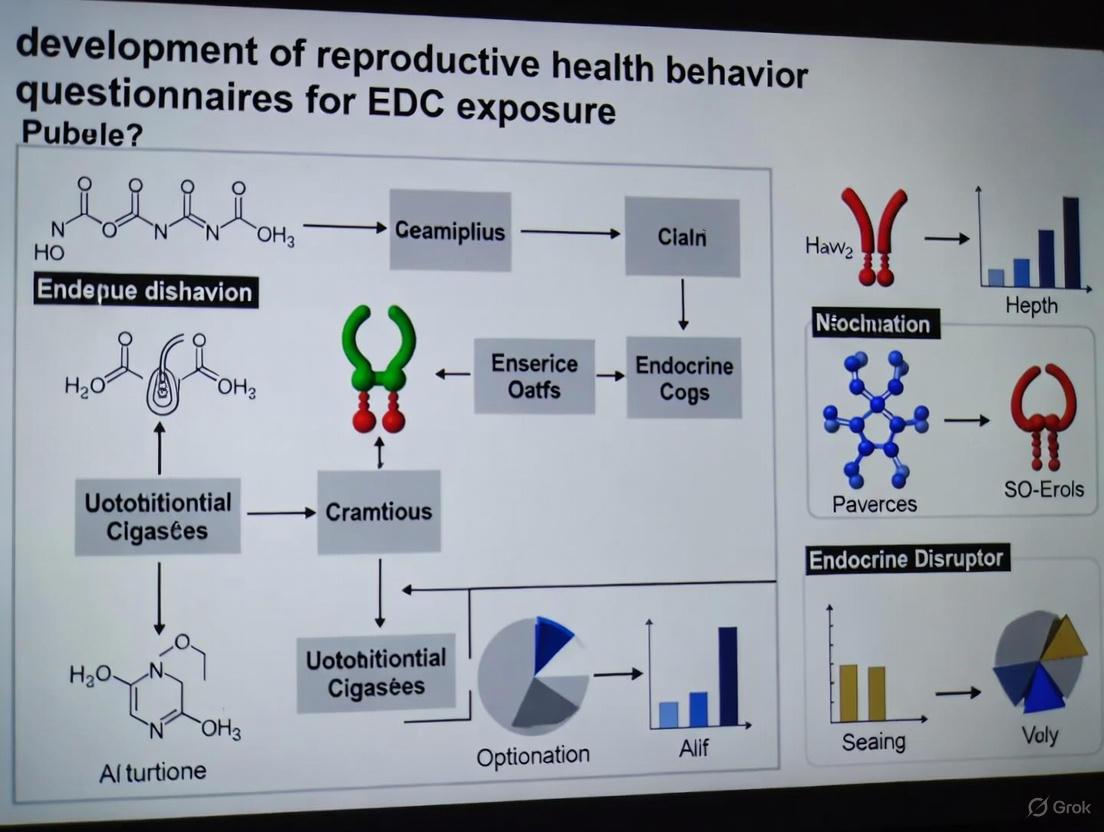
This article provides a comprehensive framework for researchers and drug development professionals on the methodology for creating and validating robust questionnaires that assess health behaviors aimed at reducing exposure to...
A Researcher's Guide: Developing and Validating Reproductive Health Behavior Questionnaires for Endocrine-Disrupting Chemical Exposure
Abstract
This article provides a comprehensive framework for researchers and drug development professionals on the methodology for creating and validating robust questionnaires that assess health behaviors aimed at reducing exposure to Endocrine-Disrupting Chemicals (EDCs). Covering the entire process from foundational theory to real-world application, it details how to establish content validity, employ rigorous psychometric testing (including Exploratory and Confirmatory Factor Analysis), and optimize tools for diverse populations and digital platforms. It further addresses critical troubleshooting strategies for common pitfalls like participant engagement and usability, and synthesizes best practices for ensuring the reliability, validity, and cross-cultural applicability of these essential research instruments in biomedical and clinical contexts.
Laying the Groundwork: Understanding EDC Exposure and Defining Core Constructs for Questionnaire Development
Application Note: Quantifying EDC Impacts on Reproductive Health
Endocrine-disrupting chemicals (EDCs) represent a class of environmental compounds that interfere with hormonal signaling, with profound implications for reproductive health across the lifespan. The reproductive system is particularly vulnerable to EDC exposure due to the high expression of steroid hormone receptors in reproductive tract tissues and gonads [1]. Understanding the precise mechanisms and magnitude of these effects is crucial for developing effective intervention strategies and risk assessments. This application note synthesizes current evidence on EDCs' reproductive impacts and provides standardized protocols for assessing exposure and outcomes in research settings.
Research indicates that EDCs can disrupt reproductive health through multiple pathways, including receptor binding interference, disruption of hormone synthesis, and alteration of metabolic pathways [2] [3]. These disruptions can occur at various critical windows of development—from in utero exposure through adulthood—with effects sometimes manifesting transgenerationally [4] [1]. The complexity of EDC actions necessitates sophisticated research approaches that can capture non-monotonic dose responses, mixture effects, and sex-specific outcomes.
Pathophysiological Effects of EDCs on Male Reproduction
Evidence from both epidemiological and animal studies demonstrates that EDCs adversely affect multiple parameters of male reproductive health. The table below summarizes key quantitative findings from experimental studies:
Table 1: Documented Effects of Selected EDCs on Male Reproductive Parameters in Animal Studies
| EDC | Species | Exposure Parameters | Observed Effects | Proposed Mechanisms |
|---|---|---|---|---|
| Bisphenol A (BPA) | Mouse | Not specified | - Decline in daily sperm production- Reduced sperm motility- Reduced DNA and acrosome integrity | - Mitochondrial disruption reducing ATP production- Increased spermatocyte apoptosis- Sertoli cell damage [2] |
| Bisphenol A (BPA) | Rat | Not specified | - Reduced daily sperm production- Persistence of DNA strand breaks- Increased spermatocyte apoptosis | - Transient inhibition of CatSper channels- Up-regulation of apoptotic proteins (Bcl2, caspase-9) [2] |
| Glyphosate | Mouse | Maternal exposure | - Decreased sperm production in offspring- Testosterone decrease at puberty- Seminiferous tubule degeneration | - Altered steroidogenesis- Reduced elongated spermatids [2] |
| Deltamethrin | Rat | Daily exposure | - Decreased sperm quantity, motility, and vitality- Reduced testosterone and inhibin B | - Primary testicular dysfunction- Altered seminiferous tubules- Vacuolization of Sertoli cells [2] |
| Vinclozolin | Rat | Not specified | - Reduced testosterone production- Decreased spermatozoa after hCG stimulation | - Androgen receptor disruption- Compensated when combined with genistein [2] |
Human studies have correlated EDC exposure with clinical conditions including poor semen quality, testicular cancer, cryptorchidism, and hypospadias—collectively part of the testicular dysgenesis syndrome hypothesis [2]. However, inconsistencies between studies highlight the challenges in establishing direct causal relationships in human populations, where exposure mixtures, genetic variability, and lifestyle factors introduce substantial complexity.
Pathophysiological Effects of EDCs on Female Reproduction
Female reproductive health is equally susceptible to EDC exposure, with particular vulnerability during critical developmental windows. The established and suspected effects span the reproductive lifespan:
Table 2: Documented Effects of EDCs on Female Reproductive Health Parameters
| Health Outcome | Associated EDCs | Key Evidence | Proposed Mechanisms |
|---|---|---|---|
| Early Puberty | Phthalates, PFAS | Secular trends toward earlier pubertal onset; cohort studies showing exposure-puberty associations [4] | Disruption of hypothalamic-pituitary-ovarian axis; altered hormonal signaling during development [4] |
| Diminished Ovarian Reserve | BPA, Phthalates | Epidemiological links to premature menopause; animal studies showing reduced follicle counts [4] | Direct effects on folliculogenesis; accelerated follicle depletion; epigenetic programming alterations [4] |
| Polycystic Ovary Syndrome | Various EDCs | Increasing global prevalence correlated with environmental factors [4] | Disruption of steroid hormone pathways; insulin signaling interference; developmental reprogramming [4] |
| Endometriosis | Phthalates, Dioxins | Systematic reviews and meta-analyses confirming association [4] | Estrogen-like effects on endometrial tissue; immune system modulation; altered inflammatory responses [4] |
| Infertility/Poor IVF Outcomes | Phthalates, BPA, Pesticides | Population studies showing dose-response relationships with conception success [4] | Ovarian dysfunction; impaired follicular development; disrupted ovulation; endometrial receptivity alterations [4] |
The female reproductive system demonstrates particular sensitivity to EDCs during fetal development, puberty, and pregnancy—periods of intense hormonal activity and tissue remodeling [4]. Recent research has highlighted that EDC exposure during fetal development can program the reproductive system for dysfunction that only becomes apparent in adulthood, indicating a latent effect pattern that complicates risk assessment [1].
EDC Exposure Routes and Intervention Strategies
Understanding exposure pathways is essential for developing effective mitigation strategies. The primary routes of EDC exposure include:
Figure 1: EDC Exposure Pathways and Mitigation Framework
The PREVED study demonstrated that targeted environmental health education interventions during pregnancy can effectively reduce EDC exposure [5]. This intervention successfully incorporated behavior change techniques including social support, instruction on how to perform behaviors, and demonstration of the behavior [5].
Experimental Protocols for EDC Research
Protocol: Biomonitoring of EDC Exposure in Cohort Studies
Purpose and Scope
This protocol describes standardized methods for measuring EDC biomarkers in human populations to establish exposure-disease relationships in reproductive health research. The protocol covers sample collection, storage, analysis, and quality control procedures for urine, blood, and breast milk matrices.
Materials and Equipment
Table 3: Research Reagent Solutions for EDC Biomonitoring
| Item | Specifications | Function/Application |
|---|---|---|
| Liquid Chromatography-Mass Spectrometry System | High-resolution or tandem mass spectrometry capability | Gold-standard quantification of EDCs and metabolites in biological samples |
| Enzyme-Lydrolysis Reagents | β-glucuronidase/sulfatase enzymes | Deconjugation of phase II metabolites for total EDC measurement |
| Solid Phase Extraction Cartridges | C18 or mixed-mode sorbents | Sample clean-up and analyte concentration prior to analysis |
| Isotope-Labeled Internal Standards | (^{13})C or (^{2})H-labeled EDCs | Correction for matrix effects and recovery losses during sample preparation |
| Quality Control Materials | Pooled human serum/urine with characterized EDC levels | Method validation and batch-to-bquality control |
Procedure
Sample Collection
- Collect first-morning void urine samples in pre-cleaned polypropylene containers
- Process samples within 2 hours of collection; centrifuge at 3000×g for 10 minutes
- Aliquot supernatant into cryovials and store at -80°C until analysis
- Record specific gravity or creatinine for normalization of urinary concentrations
Sample Preparation
- Thaw samples slowly at 4°C and vortex thoroughly
- Add isotope-labeled internal standards to correct for matrix effects
- Incubate with β-glucuronidase/arylsulfatase enzyme (≥16 hours, 37°C) for deconjugation
- Perform solid-phase extraction using appropriate sorbent chemistry
- Concentrate eluent under gentle nitrogen stream and reconstitute in mobile phase
Instrumental Analysis
- Utilize LC-MS/MS with reverse-phase chromatography (C18 column)
- Employ electrospray ionization in negative mode for most EDCs
- Use scheduled multiple reaction monitoring for optimal sensitivity
- Include calibration standards and quality control samples in each batch
Data Analysis and Reporting
- Quantify against matrix-matched calibration curves
- Apply creatinine or specific gravity correction for urinary measurements
- Report values as ng/mL (uncorrected) or ng/mg creatinine (corrected)
- Flag values below limit of quantification but retain for statistical analysis
Troubleshooting and Quality Assurance
- Monitor instrument sensitivity drift using quality control samples
- Assess extraction efficiency through internal standard recovery (acceptable range: 70-120%)
- Participate in inter-laboratory comparison programs (e.g., HBM4EU quality assurance program)
- Blank samples should be included in each batch to monitor contamination
Protocol: Environmental Health Education Intervention
Purpose and Scope
This protocol outlines the implementation of a perinatal environmental health education intervention to reduce EDC exposure, based on the validated PREVED study model [5]. The intervention targets pregnant individuals during critical windows of developmental susceptibility.
Materials and Equipment
- Educational materials designed with health literacy principles
- Workshop supplies for practical demonstrations (e.g., food preparation, product selection)
- Pre- and post-intervention questionnaires assessing knowledge, attitudes, and behaviors
- Biological sample collection kits for exposure biomarker assessment
- Dedicated space for workshops (neutral or contextualized environments)
Procedure
Participant Recruitment and Randomization
- Recruit participants during first trimester of pregnancy
- Obtain informed consent following institutional guidelines
- Randomize participants into control or intervention groups using 1:1:1 allocation
- Control group: receive information leaflet only
- Intervention group 1: workshops in neutral location (meeting room)
- Intervention group 2: workshops in contextualized location (real apartment)
Intervention Implementation
- Conduct three workshops between second and third trimesters
- Address three key themes:
- Food: Reducing consumption of manufactured/industrial foods
- Personal Care Products: Selecting paraben-free alternatives
- Household Products: Identifying and replacing potential EDC sources
- Employ positive, non-alarmist approach emphasizing practical alternatives
- Facilitate sharing of know-how and experiences among participants
Outcome Assessment
- Administer questionnaires at baseline, 2 months post-intervention, and 14 months post-intervention
- Collect urine samples for EDC biomarker analysis (BPA, parabens)
- Collect colostrum samples postpartum for additional exposure assessment
- Assess psychosocial dimensions including risk perception and self-efficacy
Data Analysis
- Compare manufactured food consumption between groups (primary outcome)
- Analyze urinary EDC concentrations using appropriate statistical methods
- Assess behavior change using frequency of paraben-free product use
- Evaluate intervention effect modifiers (socioeconomic status, baseline knowledge)
Figure 2: EDC Intervention Study Workflow
Quality Assurance and Validation
- Train facilitators using standardized protocols to ensure intervention fidelity
- Use previously validated questionnaires where available
- Pilot test educational materials with target population for comprehensibility
- Maintain treatment allocation concealment during randomization
- Employ blinded outcome assessment where feasible
Establishing the critical link between EDC exposure and reproductive health outcomes requires multidisciplinary approaches that integrate exposure assessment, mechanistic studies, and intervention research. The protocols presented herein provide standardized methodologies for advancing this field, with particular relevance for researchers developing reproductive health behavior questionnaires. Future research should prioritize mixture effects, sensitive exposure windows, and individual susceptibility factors to better characterize risks and develop targeted protection strategies.
The evidence summarized in this application note underscores the urgent need for evidence-based interventions and regulatory policies that reduce EDC exposure, particularly during vulnerable life stages such as prenatal development and puberty. By implementing rigorous, standardized protocols and expanding research on effective exposure reduction strategies, the scientific community can contribute to reversing concerning trends in reproductive disorders linked to environmental chemical exposure.
Endocrine-disrupting chemicals (EDCs) constitute a broad class of synthetic compounds that can interfere with the normal function of the hormonal system, posing significant threats to reproductive health worldwide [6]. The U.S. Environmental Protection Agency (EPA) defines EDCs as "exogenous agents that interfere with synthesis, secretion, transport, metabolism, binding action, or elimination of natural blood-borne hormones" that are responsible for maintaining homeostasis, reproduction, and developmental processes [6]. Understanding human exposure to these chemicals is crucial for developing effective preventive strategies and research tools.
This document provides detailed application notes and protocols for assessing exposure to EDCs through the three primary routes: food, respiratory, and dermal pathways. The content is specifically framed within the context of developing comprehensive reproductive health behavior questionnaires for EDC exposure research, enabling researchers to accurately identify and quantify exposure pathways in study populations.
Scientific Background and Significance
Reproductive Health Implications of EDCs
The reproductive system is particularly vulnerable to EDC exposure, with a substantial body of evidence linking these chemicals to various adverse reproductive outcomes [6]. Many EDCs exert estrogen-like or anti-estrogen effects, leading to reduced sperm count, smaller male reproductive organs, feminization of male reproductive traits, abnormal reproductive behaviors, and decreased fertility rates [7]. Increasing rates of prostate cancer, testicular cancer, breast cancer, infertility, and early puberty are suspected to be linked to cumulative EDC exposure [7].
Emerging evidence suggests that exposure to EDCs is not only detrimental to the exposed generation but may also affect future generations through transgenerational inheritance mechanisms [6]. This underscores the critical importance of developing accurate assessment tools to identify and mitigate exposures.
Mechanistic Actions of EDCs
EDCs employ multiple mechanistic pathways to disrupt endocrine function [6]:
- Direct receptor binding: EDCs can directly bind to hormone receptors (estrogen, androgen, thyroid), either mimicking or blocking their functions
- Enzyme interference: They can alter the function of key enzymes involved in steroidogenesis, including aromatase, 5-α reductase, and various hydroxysteroid dehydrogenases
- Receptor activation/blocking: Single EDCs may alter multiple hormone signaling pathways simultaneously
The hypothalamic-pituitary-gonadal (HPG) axis represents a primary target for many EDCs, leading to disruption of normal reproductive function and development [6].
Quantitative Analysis of Exposure Pathways
Table 1: Comparative Analysis of Primary EDC Exposure Routes
| Exposure Route | Key Sources of EDCs | Absorption Mechanisms | Relative Contribution | High-Risk Activities |
|---|---|---|---|---|
| Food Ingestion | Food containers, canned foods, contaminated produce, food additives | Gastrointestinal absorption; first-pass metabolism | Estimated 80% of total exposure for some EDCs [8] | Frequent canned food consumption, use of plastic food containers, unbalanced diet |
| Respiratory Inhalation | Airborne pesticides, volatile compounds from products, atmospheric pollutants | Alveolar gas exchange; direct absorption into bloodstream | Variable; can be significant in occupational settings [9] | Agricultural spraying, household cleaning, industrial occupations, aerosol product use |
| Dermal Absorption | Personal care products, contaminated water, soil, household dust | Passive diffusion through epidermis; follicular penetration | Most common exposure route for occupational settings [9] | Product application, bathing/swimming, agricultural work, handling contaminated materials |
Table 2: EDC Classes and Their Common Exposure Pathways
| EDC Class | Primary Exposure Routes | Common Sources | Reproductive Health Impacts |
|---|---|---|---|
| Phthalates | Dermal, Food, Respiratory [8] | Personal care products, food packaging, vinyl plastics | Reduced sperm count, ovarian dysfunction, premature ovarian failure [8] |
| Bisphenol A (BPA) | Food, Dermal [8] | Canned foods, thermal paper, dental composites | Prostate cancer, breast cancer, sperm DNA damage [8] |
| Pesticides | Respiratory, Dermal, Food [9] | Agricultural applications, household pest control, residue on foods | Genital malformations, altered anogenital distance, cryptorchidism [10] |
| Parabens | Dermal [8] | Cosmetics, moisturizers, skincare products | Estrogenic activity, potential ovarian damage [8] |
| Heavy Metals | Food, Respiratory [6] | Contaminated food, industrial emissions, water | Multiple endocrine disruptions, binding to hormone receptors [6] |
Experimental Protocols for Exposure Assessment
Protocol 1: Dietary Exposure Assessment
Objective: To quantify and characterize exposure to EDCs through food consumption pathways.
Materials:
- Food frequency questionnaires (FFQ)
- Food sample collection containers (glass, aluminum foil)
- Chemical analysis equipment (GC-MS, HPLC-MS)
- Dietary recall software
Procedure:
- Food Diary Implementation: Study participants complete a 7-day food diary documenting all consumed items, including packaging types and preparation methods.
- Food Sample Collection: Collect duplicate portions of consumed foods for laboratory analysis when feasible.
- Source Identification: Categorize food sources according to:
- Canned vs. fresh foods
- Plastic-packaged vs. unpackaged items
- Conventional vs. organic produce
- Chemical Analysis: Analyze food samples for target EDCs using appropriate analytical methods (e.g., LC-MS/MS for BPA and phthalates).
- Exposure Calculation: Calculate daily intake using the formula: Dietary EDC Intake = Σ (Food Concentration × Consumption Rate) / Body Weight
Quality Control:
- Implement cross-checks between reported consumption and purchasing records
- Use standardized food composition databases
- Include blank samples in chemical analysis to control for contamination
Protocol 2: Respiratory Exposure Assessment
Objective: To measure inhalation exposure to airborne EDCs in both occupational and environmental settings.
Materials:
- Personal air sampling pumps
- Sampling media (filters, sorbent tubes)
- Calibration equipment
- Portable meteorological instruments
Procedure:
- Air Sampling:
- Use personal air samplers worn in the breathing zone of participants
- Collect air samples for 8-hour periods representative of typical exposure scenarios
- Record sampling parameters (flow rate, duration, temperature, humidity)
- Sample Extraction: Extract EDCs from sampling media using appropriate solvents
- Chemical Analysis: Analyze extracts for target EDCs using GC-MS or HPLC-MS
- Inhalation Rate Assessment: Estimate inhalation rates based on activity logs and established metabolic equivalents
- Exposure Calculation: Calculate respiratory intake using the formula: Respiratory EDC Intake = Air Concentration × Inhalation Rate × Exposure Duration / Body Weight
Quality Control:
- Field blanks and duplicates for every 10 samples
- Pump calibration before and after sampling
- Storage stability tests for target analytes
Protocol 3: Dermal Exposure Assessment
Objective: To assess dermal exposure to EDCs from various media including personal care products, water, and soil.
Materials:
- Dermal patches (absorbent paper)
- Hand washes
- Skin wipes
- Permeability testing apparatus
Procedure:
- Dermal Loading Measurement:
- Apply dermal patches to various body regions (hands, forearms, face)
- Use hand wash techniques with appropriate surfactants
- Employ skin wipes for specific body parts
- Product Application Assessment: For personal care products, document:
- Product type and brand
- Application frequency and amount used
- Application surface area
- Water Exposure Assessment: For bathing and swimming exposures:
- Collect water samples
- Document exposure duration and frequency
- Soil/Dust Exposure: Assess adherence factors and contact frequency
- Dermal Absorption Calculation: Calculate absorbed dose using the EPA model:
DAevent = Kp × C × t
Where:
- DAevent = Absorbed dose (mg/cm²-event)
- Kp = Permeability coefficient (cm/hr)
- C = Concentration of chemical vehicle contacting skin (mg/cm³)
- t = Time of contact (hours/event)
Quality Control:
- Standardize patch placement and removal procedures
- Control for environmental contamination during sampling
- Validate extraction efficiencies for different matrices
Pathway Integration and Data Interpretation
Figure 1: Integrated Pathways of EDC Exposure and Reproductive Health Impact
Cumulative Risk Assessment
Objective: To integrate exposure data from all pathways for comprehensive risk characterization.
Procedure:
- Route-Specific Exposure Calculation: Calculate average daily dose (ADD) for each route:
ADDabs = DAevent × SA × EF × ED / (BW × AT)
Where:
- SA = Skin surface area available for contact (cm²)
- EF = Exposure frequency (events/year)
- ED = Exposure duration (years)
- BW = Body weight (kg)
- AT = Averaging time (days)
Cumulative Exposure Estimation: Sum route-specific exposures to obtain total EDC burden
Hazard Index Calculation: Compare cumulative exposure to established reference doses
Susceptibility Factors: Account for life stage, genetic factors, and pre-existing conditions
The Scientist's Toolkit: Research Reagent Solutions
Table 3: Essential Materials for EDC Exposure Assessment Research
| Research Tool | Specific Application | Function in EDC Assessment | Example Products |
|---|---|---|---|
| Chemical Analytical Instruments | Quantification of EDCs in environmental and biological samples | Precise measurement of EDC concentrations at trace levels | GC-MS, HPLC-MS, ICP-MS |
| Personal Air Samplers | Respiratory exposure assessment | Collection of airborne EDCs in personal breathing zone | SKC AirChek XR5000, Casella Apex2 |
| Dermal Patches | Dermal exposure monitoring | Adsorption of EDCs from skin surface for quantitative analysis | Whatman GF/F, Teflon deposition patches |
| Biomonitoring Kits | Internal dose measurement | Detection of EDCs or metabolites in urine, blood, saliva | ELISA kits, SPE extraction cartridges |
| Permeability Testing Apparatus | Dermal absorption studies | Measurement of chemical flux across skin membranes | Franz diffusion cells, Flow-through cells |
| Food Sample Homogenizers | Dietary exposure assessment | Preparation of representative food samples for analysis | Commercial blenders, ultrasonic homogenizers |
| Questionnaire Platforms | Behavioral exposure assessment | Standardized data collection on exposure-related behaviors | REDCap, Qualtrics, custom digital platforms |
Application to Reproductive Health Behavior Assessment
The experimental protocols outlined above provide the methodological foundation for developing validated reproductive health behavior questionnaires. By understanding the precise exposure pathways and their relative contributions to total EDC burden, researchers can design targeted assessment instruments that capture the most relevant exposure-related behaviors.
Recent research has demonstrated the validity of survey instruments that assess reproductive health behaviors across the three main EDC exposure routes (food, respiratory, and dermal), with these instruments showing high reliability (Cronbach's alpha = 0.80) in measuring engagement in health-protective behaviors [7]. This approach enables researchers to:
- Identify high-risk behaviors contributing disproportionately to EDC exposure
- Track changes in exposure patterns over time
- Evaluate the effectiveness of intervention strategies
- Account for cultural and socioeconomic factors in exposure patterns
The integration of quantitative exposure assessment with behavioral questionnaire data creates a powerful tool for advancing understanding of the relationship between EDC exposure and reproductive health outcomes, ultimately supporting the development of evidence-based public health interventions.
A solid theoretical foundation is crucial for research aiming to understand and promote health behaviors related to endocrine-disrupting chemical (EDC) exposure. Theoretical frameworks provide a structured approach for identifying key determinants of behavior and designing effective measurement tools and interventions. This review synthesizes available instruments and protocols for researching reproductive health behaviors, with a specific focus on reducing exposure to EDCs—chemicals known to interfere with hormonal systems and linked to adverse reproductive outcomes, including reduced fertility, earlier puberty, and reproductive cancers [11] [12].
The exposure to EDCs is a significant public health concern, as these chemicals are ubiquitous in daily life, entering the body through food, air, and skin absorption [13]. The period before conception represents a critical window of vulnerability, with research indicating that maternal and paternal exposures can impact gametogenesis, embryogenesis, and fetal development, with potential consequences for perinatal outcomes and long-term health [5] [12]. This protocol focuses on the Health Belief Model (HBM) as a core theoretical framework and reviews complementary tools for constructing robust research instruments in this field.
The Health Belief Model: A Framework for Understanding Health Behaviors
The Health Belief Model (HBM) is a cognitive, value-expectancy theory that views humans as rational decision-makers who weigh the benefits and costs of a given health action. Originally developed in the 1950s, it has been successfully applied to various health behaviors, including family planning and contraceptive use [14]. The model posits that behavior is influenced by an individual's perception of a threat posed by a health problem and the appraisal of a recommended behavior for reducing that threat.
Core Constructs of the Health Belief Model
The HBM is comprised of several core constructs that predict health behavior. The table below defines these constructs and provides their application in the context of EDC exposure and reproductive health.
Table 1: Core Constructs of the Health Belief Model and Their Application to EDC Research
| HBM Construct | Definition | Application to EDC/Reproductive Health Behavior |
|---|---|---|
| Perceived Susceptibility | Belief in the personal risk of developing a health condition. | Belief in one's own risk of experiencing infertility, pregnancy complications, or other reproductive health issues due to EDC exposure [15]. |
| Perceived Severity | Belief in the seriousness of the health condition and its consequences. | Belief that reproductive health issues caused by EDCs would have significant medical, social, or emotional consequences [15]. |
| Perceived Threat | The combined assessment of susceptibility and severity, providing the motivation to act. | The personal feeling of threat from an unwanted pregnancy (in family planning contexts) or from EDC-related reproductive harm [14] [16]. |
| Perceived Benefits | Belief in the positive outcomes of adopting a health behavior. | Belief that adopting specific behaviors (e.g., using paraben-free products, eating organic food) will effectively reduce EDC exposure and lower health risks [14] [13]. |
| Perceived Barriers | Perception of the obstacles and costs of performing the health behavior. | Concerns about the cost, inconvenience, or difficulty of avoiding EDCs in daily life, such as the higher price of organic food or the effort of reading product labels [14] [15]. |
| Cues to Action | Internal or external stimuli that trigger the decision-making process. | A pregnancy scare, advice from a healthcare provider, or educational media that prompts action to reduce EDC exposure [14]. |
| Self-Efficacy | Confidence in one's ability to successfully perform the behavior. | Confidence in one's ability to identify, avoid, and find alternatives to products containing EDCs [15]. |
Visualizing the Health Belief Model Framework
The following diagram illustrates the logical relationships between the HBM constructs and their influence on health behavior, specifically in the context of reducing EDC exposure.
HBM Framework for EDC Exposure Behavior
Validated Research Instruments for Reproductive Health Behaviors
Beyond the theoretical framework, selecting validated measurement instruments is critical for generating reliable and comparable data. The following section details several established tools that can be adapted or incorporated into studies on EDC exposure.
Reproductive Health Behavior Questionnaire for EDC Exposure Reduction
A recently developed and validated survey specifically targets behaviors to reduce EDC exposure. This instrument, developed for a Korean population, measures engagement in health-promoting behaviors across key exposure routes [13].
Table 2: Factors and Items of the Reproductive Health Behavior Questionnaire for EDC Exposure
| Factor | Description | Sample Items | Psychometric Properties |
|---|---|---|---|
| Health Behaviors through Food | Actions to reduce EDC intake via dietary choices. | "I try to eat less canned food." "I avoid plastic water bottles or utensils." | Cronbach's α = 0.80 for the overall scale [13]. |
| Health Behaviors through Breathing | Actions to reduce inhalation of EDCs. | "I ensure good ventilation when cleaning." "I avoid using air fresheners." | 19 items across 4 factors [13]. |
| Health Behaviors through Skin | Actions to reduce dermal absorption of EDCs. | "I use paraben-free personal care products." "I seldom dye or bleach my hair." | 5-point Likert scale (1=Strongly Disagree to 5=Strongly Agree) [13]. |
| Health Promotion Behaviors | Proactive actions to learn about and avoid EDCs. | "I seek information on reducing EDC exposure." "I choose natural alternatives when possible." | Developed and validated with 288 Korean adults [13]. |
The Reproductive Health Literacy Scale
Health literacy—the ability to find, understand, and use health information—is a critical component of health behavior. A recently developed Reproductive Health Literacy Scale is designed for diverse, multi-lingual populations and combines three domains [17]:
- General Health Literacy: Measured using the 6-item European Health Literacy Survey Questionnaire (HLS-EU-Q6). This tool assesses the perceived difficulty of tasks like finding health information and understanding doctor's advice [17].
- Digital Health Literacy: Measured using the eHealth Literacy Scale (eHEALS). This 8-item scale assesses the ability to seek, find, understand, and appraise health information from electronic sources [17].
- Reproductive Health Literacy: A composite domain measured using adapted items from established tools, including the Cervical Cancer Literacy Assessment Tool (C-CLAT) and postpartum literacy scales. It covers topics such as family planning, maternal health, and cervical cancer [17].
This composite scale has demonstrated reliability (Cronbach's α > 0.7) across Dari, Pashto, and Arabic-speaking refugee populations, indicating its cross-cultural applicability [17].
Application Notes and Experimental Protocols
Protocol: Developing and Validating a Context-Specific HBM Questionnaire
This protocol outlines the steps for creating a study-specific questionnaire based on the Health Belief Model, drawing from successful applications in reproductive health research [15].
Objective: To develop a valid and reliable HBM-based questionnaire for measuring psychosocial determinants of EDC avoidance behaviors in a target population.
Procedure:
Item Generation and Domain Mapping:
- Generate a pool of potential items for each HBM construct (Perceived Susceptibility, Severity, Benefits, Barriers, Self-Efficacy, and Cues to Action).
- Ensure items are context-specific. For example, a "perceived barrier" item could be: "It is expensive to buy personal care products that are free of phthalates and parabens" [15].
- A "self-efficacy" item could be: "I am confident that I can identify and avoid the main sources of EDCs in my home."
Content Validity Assessment:
- Assemble a panel of experts (e.g., environmental health scientists, epidemiologists, behavioral theorists, clinicians, and survey methodologists).
- Experts rate each item on its relevance and clarity using a standardized scale (e.g., 4-point scale from "not relevant" to "highly relevant").
- Calculate the Content Validity Index (CVI) for each item (I-CVI) and the entire scale (S-CVI). Retain items with I-CVI > 0.78 [13] [15].
Pilot Testing and Cognitive Debriefing:
- Administer the draft questionnaire to a small sample from the target population.
- Conduct interviews to assess comprehension, clarity, and acceptability of the items and response options. Revise ambiguous or difficult items based on feedback [13].
Survey Administration and Psychometric Testing:
- Administer the revised questionnaire to a larger sample for quantitative validation.
- Reliability: Calculate internal consistency using Cronbach's alpha (α > 0.70 is acceptable for a new tool) [13] [15].
- Construct Validity: Perform Exploratory Factor Analysis (EFA) to check if items load onto the expected theoretical constructs. Follow with Confirmatory Factor Analysis (CFA) to confirm the model structure. Use fit indices like CFI > 0.90 and RMSEA < 0.08 to indicate a good fit [13] [15].
Protocol: Implementing an HBM-Based Educational Intervention (PREVED Model)
The PREVED study is a randomized controlled trial that provides a robust protocol for testing the efficacy of an environmental health education intervention to reduce EDC exposure during pregnancy [5].
Objective: To assess the impact of a perinatal environmental health education intervention on reducing EDC exposure biomarkers and promoting risk-reducing behaviors.
Workflow: The following diagram outlines the experimental workflow of the PREVED study, from participant recruitment to outcome analysis.
PREVED Intervention Study Workflow
Detailed Methodology:
Participants and Recruitment:
- Population: Pregnant women in their first trimester.
- Recruitment: Through maternal health services, community centers, and high-traffic areas in the target community [5].
Intervention Groups:
- Group 1 (Control): Receives an information leaflet on EDCs, developed with health literacy principles [5].
- Group 2 (Intervention - Neutral): Receives the leaflet plus participates in three educational workshops conducted in a neutral meeting room. Workshops cover EDCs in food, personal care products, and the home environment [5].
- Group 3 (Intervention - Contextualized): Receives the leaflet plus the same three workshops conducted in a real apartment, allowing for practical, hands-on learning in a lived environment [5].
Data Collection:
- Primary Outcome: Behavioral change, measured as the "percentage of participants who reported consuming manufactured/industrial food" via a consumption questionnaire at baseline (t0), 2 months post-intervention (t+2m), and 14 months postpartum (t+14m) [5].
- Secondary Outcomes:
- Psycho-social dimensions: Measured via HBM-based questionnaires assessing knowledge, beliefs, and self-efficacy [5].
- Biomarkers of Exposure: EDC concentrations (e.g., BPA, parabens) in urine samples collected during pregnancy and in colostrum post-delivery [5].
- Self-reported product use: Percentage of participants using paraben-free personal care products [5].
Analysis:
- Compare changes in behavioral and biomarker outcomes between the three groups using appropriate statistical tests (e.g., ANOVA, chi-square).
- Use path analysis or structural equation modeling to test how changes in HBM constructs (e.g., increased self-efficacy) mediate the effect of the intervention on behavioral outcomes [15].
The Scientist's Toolkit: Key Reagents and Materials for EDC Behavior Research
Table 3: Essential Materials and Tools for Research on EDC Exposure and Reproductive Health
| Item | Specification/Example | Primary Function in Research |
|---|---|---|
| Validated Surveys | Reproductive Health Behavior Questionnaire [13], Reproductive Health Literacy Scale [17], HBM-based questionnaires [15]. | Measuring self-reported behaviors, health literacy, and psychosocial constructs like perceived benefits and barriers. |
| Biomarker Collection Kits | Urine collection cups, colostrum vials, DNA/RNA preservation tubes. | Collecting biological samples for biomonitoring of EDCs (e.g., BPA, phthalates, parabens) and other biomarkers of effect [5]. |
| Analytical Standards | Certified reference materials for EDCs (e.g., BPA, methylparaben). | Quantifying EDC concentrations in biological and environmental samples via LC-MS/MS or GC-MS, ensuring analytical accuracy. |
| Educational Intervention Materials | Health-literate information leaflets, workshop guides (food, cosmetics, home), cue-to-action prompts. | Implementing standardized intervention components in RCTs, such as in the PREVED study [5]. |
| Data Analysis Software | IBM SPSS Statistics, R, Mplus, SAS. | Conducting statistical analyses, including factor analysis (EFA/CFA), path modeling, and mixture analysis for chemical exposures [13] [15] [12]. |
This review has outlined principal theoretical frameworks, specifically the Health Belief Model, and validated instruments for researching reproductive health behaviors in the context of EDC exposure. The integration of robust psychosocial theories with objective biomarker data and well-designed intervention protocols, as exemplified by the PREVED study, provides a powerful, multi-faceted approach to this critical public health issue.
Future research should prioritize the development and validation of these tools in diverse cultural and socioeconomic contexts, as EDC exposure often disproportionately affects vulnerable populations [18] [12]. Furthermore, expanding research to include the paternal preconception period is crucial, as emerging evidence suggests that paternal exposures to EDCs play a significant role in perinatal outcomes [12]. By employing the structured application notes and detailed protocols provided herein, researchers can contribute to bridging the current knowledge gap and designing effective public health strategies to reduce EDC exposure and its associated reproductive health risks.
The development of a robust, psychometrically sound survey questionnaire is a critical step in environmental health research, particularly in the complex field of endocrine-disrupting chemical (EDC) exposure and reproductive health. This foundational phase transforms theoretical constructs into measurable variables, establishing the validity and reliability of the entire research endeavor [7]. For researchers investigating reproductive health behaviors in the context of EDC exposure, the process of generating an initial item pool through systematic literature synthesis represents a crucial methodological bridge between conceptual frameworks and empirical measurement [5]. This protocol outlines a structured approach for developing comprehensive survey instruments that can accurately capture the multifaceted nature of EDC-related reproductive health behaviors, addressing a significant gap in current public health research [19] [20].
The challenges in this domain are substantial. EDCs encompass a broad range of chemicals that interfere with hormonal systems through diverse mechanisms, while reproductive health behaviors span multiple dimensions including prevention, promotion, and avoidance [11]. Furthermore, public awareness of EDCs remains notably low, complicating the development of items that accurately reflect knowledge, perceptions, and behaviors [20]. By providing a systematic methodology for item generation, this protocol aims to enhance the quality and comparability of questionnaires across studies, ultimately strengthening the evidence base on EDC exposure and reproductive health outcomes.
Methodological Framework for Literature Synthesis
Conceptual Mapping and Domain Identification
The initial phase involves developing a comprehensive conceptual framework that maps the key constructs relevant to EDC exposure and reproductive health behaviors. This framework should delineate the primary domains and subdomains to be addressed in the survey instrument, ensuring comprehensive coverage of the research topic [7] [21].
Table 1: Core Domains for EDC Reproductive Health Behavior Assessment
| Primary Domain | Specific Subdomains | Exposure Routes | Behavioral Focus |
|---|---|---|---|
| Knowledge | EDC sources, health effects, exposure routes | All | Recognition and understanding |
| Risk Perception | Perceived susceptibility, severity, concerns | All | Cognitive appraisal of threat |
| Preventive Behaviors | Food selection, product choice, environmental control | Food, respiratory, dermal | Exposure reduction |
| Promotion Behaviors | Health monitoring, information seeking, advocacy | All | Health enhancement |
| Psychosocial Factors | Self-efficacy, barriers, cues to action | All | Behavioral determinants |
The conceptual framework should be informed by established behavioral theories that help explain the relationship between knowledge, attitudes, and behaviors. The Health Belief Model has demonstrated particular utility in this context, addressing constructs such as perceived susceptibility, severity, benefits, barriers, and self-efficacy [21]. Similarly, the Theory of Planned Behavior can inform items addressing behavioral intentions and perceived behavioral control. Explicit theoretical grounding ensures that the resulting questionnaire captures not only behaviors but also their underlying determinants, providing richer data for intervention development.
Systematic Search Strategy and Literature Identification
A comprehensive, systematic approach to literature identification is essential for generating a representative item pool. The search strategy should employ multiple databases and a structured protocol to capture the breadth of relevant research.
Table 2: Systematic Search Protocol for Item Generation
| Search Component | Specifications | Rationale |
|---|---|---|
| Electronic Databases | PubMed, Ovid Medline, Web of Science, Embase | Comprehensive coverage of biomedical literature |
| Time Frame | 2000-present | Captures evolving EDC research while including seminal works |
| Key Search Terms | "endocrine disrupt*" + "reproductive health" + "questionnaire"/"survey"/"scale" + "behavior" | Balanced sensitivity and specificity |
| Inclusion Criteria | Empirical studies, tool development papers, intervention studies, relevant reviews | Focus on methodological rigor and evidence base |
| Exclusion Criteria | Non-human studies, non-English publications (unless translation available), clinical case reports | Practical constraints while maintaining quality |
The search strategy should employ a balanced approach to sensitivity and specificity, using both broad searches to capture the full scope of relevant literature and targeted searches to identify specific instruments and items. As demonstrated in recent studies, this process should include not only academic databases but also grey literature and existing instrument repositories [22] [21]. The goal is saturation of conceptual domains rather than exhaustive retrieval, continuing until additional searches yield minimal new relevant constructs or items.
Item Generation and Development Protocols
Item Extraction and Categorization
Upon identification of relevant literature, a systematic process of item extraction and categorization ensures comprehensive coverage of all conceptual domains. This process involves both deductive approaches (extracting items directly aligned with predefined domains) and inductive approaches (identifying emergent themes not initially anticipated).
Protocol for Item Extraction:
- Create a standardized extraction template documenting source, original wording, conceptual domain, and theoretical construct
- Extract all relevant items verbatim, preserving original response formats when available
- Code items according to predefined domains and identify gaps in coverage
- Document contextual factors (study population, cultural context, validation metrics) for each extracted item
- Identify item clusters that measure similar constructs across multiple sources
This systematic extraction approach was successfully implemented in the development of a reproductive health literacy scale, where researchers identified items from multiple existing tools including the HLS-EU-Q6 for general health literacy, eHEALS for digital health literacy, and specialized tools for cervical cancer and postpartum health [22]. The process yielded a comprehensive item pool that addressed all target domains while incorporating previously validated measurement approaches.
Item Adaptation and Formulation
Once extracted, items typically require adaptation to ensure consistency in wording, response format, and conceptual clarity across the instrument. This process balances fidelity to original validated items with the need for a coherent, accessible instrument.
Best Practices for Item Formulation:
- Use clear, simple language accessible to diverse educational backgrounds
- Avoid double-barreled items that address multiple concepts simultaneously
- Minimize technical jargon while maintaining scientific accuracy
- Ensure consistent response formats within conceptual domains
- Consider reading level and translation needs for target populations
Recent studies have demonstrated the importance of this adaptation process. In developing a questionnaire on women's perceptions and avoidance of EDCs in personal care products, researchers created items assessing knowledge, health risk perceptions, beliefs, and avoidance behaviors for six specific EDCs, using consistent 5- and 6-point Likert scales across domains [21]. Similarly, the PREVED study emphasized the importance of health literacy principles in item development, ensuring accessibility for populations with varying educational backgrounds [5].
The following diagram illustrates the comprehensive workflow from initial literature search to final item pool:
Content Validity Assessment
Establishing content validity through expert review is a critical step in ensuring that the item pool adequately represents the target constructs. A structured approach to content validity assessment involves multiple reviewers with complementary expertise.
Protocol for Content Validation:
- Assemble a multidisciplinary expert panel including domain specialists, methodological experts, and potential end-users
- Develop a standardized rating form assessing relevance, clarity, and comprehensiveness
- Calculate quantitative metrics such as Content Validity Index (CVI) for individual items and the overall scale
- Solicit qualitative feedback on problematic items, gaps in coverage, and suggested improvements
- Implement revisions based on expert consensus, documenting all changes
In the development of a Korean reproductive health behavior questionnaire, researchers engaged a panel of five experts including chemical/environmental specialists, a physician, a nursing professor, and a language expert [7]. This multidisciplinary approach ensured both scientific accuracy and accessibility. The panel assessed 52 initial items, retaining those with CVI above .80 and revising others based on expert feedback. This rigorous process resulted in a refined item pool with demonstrated content validity.
Cognitive Testing and Piloting
Before proceeding to large-scale validation, cognitive testing and small-scale piloting identify potential problems with item interpretation, response processes, and administrative feasibility.
Cognitive Interview Protocol:
- Utilize verbal probing techniques to understand respondents' thought processes
- Assess comprehension, recall, judgment formation, and response selection
- Include diverse participants representing the target population
- Identify problematic items requiring revision or elimination
- Iterate until no significant interpretation issues remain
The PREVED study exemplified this approach by conducting preliminary qualitative and quantitative studies to describe pregnant women's knowledge, attitudes, and behaviors toward EDC exposure before developing their intervention and assessment tools [5]. Similarly, in developing a reproductive health literacy scale for refugee women, researchers conducted extensive piloting with bilingual volunteers and refugee women to ensure understandability and accuracy across multiple languages [22].
Research Reagent Solutions
Table 3: Essential Methodological Resources for Questionnaire Development
| Resource Category | Specific Tools/Approaches | Application in EDC Research |
|---|---|---|
| Theoretical Frameworks | Health Belief Model [21], Theory of Planned Behavior | Guides construct selection and item development |
| Existing Validated Scales | HLS-EU-Q6 [22], eHEALS [22], C-CLAT [22] | Provides previously validated item modules |
| Content Validity Metrics | Content Validity Index (CVI) [7], Expert Panel Review | Quantifies expert agreement on item relevance |
| Cognitive Testing Methods | Verbal Probing, Think-Aloud Protocols [5] | Identifies item interpretation problems |
| Piloting Approaches | Small-scale administration [21], Bilingual verification [22] | Tests administrative feasibility and comprehension |
| Statistical Software | IBM SPSS Statistics, AMOS [7], R packages | Supports psychometric analysis and validation |
Case Application: EDC Reproductive Health Behavior Questionnaire
A recent methodological study demonstrates the practical application of this protocol in developing a reproductive health behavior questionnaire for Koreans focused on reducing EDC exposure [7]. The researchers conducted a comprehensive literature review of existing surveys and relevant literature from 2000-2021, identifying key exposure routes (food, respiratory pathways, skin absorption) and corresponding behavioral domains.
The initial development phase generated 52 items measuring reproductive health behaviors aimed at reducing EDC exposure in daily life. Examples included "I often eat canned tuna," "I use plastic water bottles or utensils," and "I frequently dye or bleach my hair" [7]. Through rigorous content validation and pilot testing, the item pool was refined to 19 items across four factors: health behaviors through food, health behaviors through breathing, health behaviors through skin, and health promotion behaviors.
The following diagram illustrates the factor structure and key elements of the resulting instrument:
The resulting instrument demonstrated strong psychometric properties, with Cronbach's alpha of .80, meeting verification criteria for newly developed questionnaires [7]. This case example illustrates the successful application of the systematic protocol outlined in this document, resulting in a reliable and valid tool for assessing reproductive health behaviors in the context of EDC exposure.
The systematic generation of survey questions through literature synthesis represents a critical methodological foundation for advancing research on EDC exposure and reproductive health behaviors. By following the structured protocols outlined in this document—from conceptual mapping and systematic literature searching through content validation and cognitive testing—researchers can develop comprehensive, psychometrically sound instruments that capture the complexity of this domain.
The resulting questionnaires enable more precise measurement of knowledge, perceptions, and behaviors related to EDC exposure, facilitating more effective public health interventions and advancing our understanding of the links between environmental exposures and reproductive health outcomes. As research in this field evolves, continued refinement of these methodological approaches will further enhance our ability to accurately assess and address this significant public health challenge.
From Theory to Tool: A Step-by-Step Methodology for Questionnaire Design and Psychometric Validation
The development of a robust, scientifically valid data collection instrument is a cornerstone of reliable research. This is particularly true in specialized fields like environmental reproductive health, where accurately measuring complex behaviors—such as those aimed at reducing exposure to endocrine-disrupting chemicals (EDCs)—is essential for understanding exposure pathways and health impacts [7]. EDCs are exogenous substances that interfere with hormone action and are linked to adverse reproductive and cardiometabolic health outcomes; they enter the body through food, respiratory pathways, and skin absorption, making them nearly unavoidable in daily life [7] [23]. A structured, multi-phase development process ensures that a questionnaire is both reliable (produces consistent results) and valid (measures what it intends to measure). This protocol outlines a phased approach, from initial item generation to pilot testing, specifically contextualized for creating a reproductive health behavior questionnaire in EDC exposure research.
Phase 1: Conceptualization and Initial Item Generation
Defining the Conceptual Framework
The first phase involves establishing a clear theoretical foundation for the instrument.
- Operational Definition: Precisely define the construct to be measured. For a reproductive health questionnaire, this might be "behaviors aimed at reducing exposure to EDCs," which can be operationalized as actions minimizing risks through avoidance or limitation of exposure via major routes: food, respiration, and skin [7].
- Matrix Development: Create a conceptual matrix that outlines the dimensions of the construct. The World Health Organization's (WHO) Maternal Morbidity Working Group (MMWG), for instance, developed a matrix based on the International Statistical Classification of Diseases and Related Health Problems (ICD-10) that included specific conditions, symptoms, signs, and the functional impact on the woman [24]. This ensures comprehensive coverage of the topic.
Generating an Initial Item Pool
Generate a broad and inclusive set of potential items based on the conceptual framework.
- Literature Review: Conduct a systematic review of existing survey questionnaires and relevant literature. For example, one study developed an initial pool of 52 items after reviewing literature from 2000 to 2021 [7].
- Drafting Items: Create items that are clear, concise, and directly map onto the constructs in the conceptual framework. Items should be phrased to be easily understandable by the target population. Example items from EDC research include: “I often eat canned tuna,” “I use plastic water bottles or utensils,” and “I frequently dye or bleach my hair” [7].
Table 1: Example Item Pool Based on EDC Exposure Routes
| Exposure Route | Conceptual Domain | Example Item |
|---|---|---|
| Food | Dietary Choices | I check labels to avoid food packaged in plastics containing BPA. |
| Food | Food Storage | I avoid storing hot food in plastic containers. |
| Respiratory | Air Quality | I ensure good ventilation when using cleaning products. |
| Skin Absorption | Personal Care Products | I use cosmetics labeled as "paraben-free" or "phthalate-free." |
| Health Promotion | Information Seeking | I actively seek information on how to reduce exposure to environmental chemicals. |
Figure 1: Workflow for Phase 1 - Conceptualization and Initial Item Generation.
Phase 2: Content Validity Assessment
This phase ensures the instrument's items are relevant and representative of the construct.
Expert Panel Review
- Panel Composition: Assemble a multidisciplinary panel of 4-6 experts. For EDC and reproductive health research, this should include chemical/environmental specialists, physicians, public health researchers, and a methodological or language expert [7].
- Content Validity Index (CVI): Experts rate each item on its relevance using a scale (e.g., 1 = not relevant to 4 = highly relevant). The Item-level CVI (I-CVI) is calculated as the number of experts giving a rating of 3 or 4, divided by the total number of experts. An I-CVI of 0.78 or higher is typically considered excellent for a panel of 5-6 experts [7]. Items failing to meet this threshold are revised or removed.
Refining the Item Pool
Based on expert feedback, the item pool is refined. This may involve:
- Rewording ambiguous items.
- Removing redundant or irrelevant items.
- Adding new items to cover gaps in content.
Table 2: Protocol for Expert Content Validity Assessment
| Procedure Step | Description | Key Parameters |
|---|---|---|
| Expert Recruitment | Recruit 4-6 experts with relevant backgrounds. | Disciplines: Toxicology, Reproductive Medicine, Epidemiology, Survey Methodology. |
| Rating Process | Experts independently rate each item for relevance. | 4-point scale: 1 (Not relevant) to 4 (Highly relevant). |
| Data Analysis | Calculate the Item-level Content Validity Index (I-CVI). | I-CVI = (Number of experts rating 3 or 4) / (Total number of experts). |
| Decision Rule | Decide on the retention of items based on CVI scores. | I-CVI ≥ 0.78; items below this are revised or discarded. |
Phase 3: Pilot Testing and Validation
The refined questionnaire is tested in a small, representative sample to assess its functionality, reliability, and validity.
Pilot Study Design and Sampling
- Study Design: A cross-sectional design is often used for pilot testing [7] [24].
- Sample Size: The sample should be adequate for initial validation. A sample size of at least 5 to 10 participants per questionnaire item is a common rule of thumb. For stable factor analysis, a sample of 250-300 participants is often sufficient [7]. Recruitment should be based on the target population's distribution to enhance representativeness [7].
- Data Collection: The questionnaire is administered to participants. This can be done at high-traffic areas like health clinics or bus terminals. Researchers should provide clear information about the study and collect data from those who voluntarily agree to participate [7].
Psychometric Validation
The pilot data is analyzed to establish the instrument's statistical properties.
- Item Analysis: Examine the mean, standard deviation, skewness, and kurtosis of each item. Calculate item-total correlations, where values below 0.2-0.3 may indicate a poor item [7].
- Exploratory Factor Analysis (EFA): Used to identify the underlying factor structure of the questionnaire. The Kaiser-Meyer-Olkin (KMO) measure and Bartlett's test of sphericity are used to assess sampling adequacy. Factors are extracted based on eigenvalues greater than 1, and items with factor loadings below 0.40 are typically removed [7]. For example, one study on EDC exposure behaviors derived a final structure of four factors (e.g., health behaviors through food, breathing, skin, and health promotion) with 19 items [7].
- Reliability Analysis: Internal consistency is measured using Cronbach's alpha. A value of at least 0.70 is acceptable for a newly developed instrument, and 0.80 or higher is desirable for established ones [7].
Table 3: Essential Reagents and Tools for Questionnaire Validation
| Research Reagent / Tool | Function / Application in Protocol |
|---|---|
| Statistical Software (e.g., IBM SPSS, AMOS) | Used for comprehensive data analysis, including item analysis, Exploratory Factor Analysis (EFA), Confirmatory Factor Analysis (CFA), and reliability testing [7]. |
| Expert Panel | A multidisciplinary group of content and methodology experts who provide qualitative and quantitative assessments of item relevance to establish content validity [7]. |
| Pilot Participant Sample | A representative sample from the target population used to test the questionnaire's clarity, feasibility, and to perform psychometric validation [7] [24]. |
| Validated Reference Scales (e.g., WHODAS 2.0, GAD-7, PHQ-9) | Previously validated instruments used to measure related constructs (e.g., functioning, anxiety, depression) for establishing convergent validity within a larger questionnaire [24]. |
Figure 2: Workflow for Phase 3 - Pilot Testing and Validation.
Content validity is a fundamental aspect of psychometric evaluation that ensures an instrument adequately measures the construct it intends to assess. In the context of developing reproductive health behavior questionnaires for Environmental Disrupting Chemical (EDC) exposure research, establishing robust content validity is paramount for generating scientifically credible and reproducible data. This process quantitatively examines whether items in a questionnaire sufficiently represent the domain of interest, with expert panels serving as the cornerstone for this validation. The twin metrics of Content Validity Index (CVI) and Content Validity Ratio (CVR) provide standardized, quantitative measures to evaluate how well questionnaire items represent the targeted construct and how essential they are considered by subject matter experts.
The rigorous development of reproductive health questionnaires is particularly crucial in EDC research, where precise measurement tools are needed to detect subtle yet significant effects of environmental exposures on sensitive health outcomes. As demonstrated in reproductive health research, structured mixed-method approaches incorporating expert panels yield instruments with strong psychometric properties, enabling accurate assessment of complex, multi-dimensional health constructs [25] [26]. This article provides detailed application notes and protocols for leveraging expert panels and calculating CVI/CVR to ensure content validity in specialized questionnaire development.
Theoretical Framework: Content Validity Indices (CVI and CVR)
Defining CVI and CVR
The Content Validity Index (CVI) is a standardized metric that evaluates the relevance of individual items and the overall instrument based on expert ratings. It assesses the degree to which an item adequately represents the defined construct, with calculations performed at both the item level (I-CVI) and scale level (S-CVI) [26] [27]. The Content Validity Ratio (CVR) measures the essentiality of each item, determining whether experts consider it indispensable for measuring the construct [26]. Together, these metrics provide complementary quantitative evidence of content validity.
Quantitative Standards and Thresholds
Established psychometric standards provide clear thresholds for acceptable CVI and CVR values, which vary based on the number of experts participating in the validation process:
Table 1: Minimum Acceptable Values for CVR Based on Panel Size
| Number of Panelists | Minimum Acceptable CVR |
|---|---|
| 5 | 0.99 |
| 6 | 0.99 |
| 7 | 0.99 |
| 8 | 0.75 |
| 9 | 0.78 |
| 10 | 0.62 |
| 15 | 0.49 |
| 20 | 0.42 |
For CVI, the widely accepted standard requires a minimum I-CVI of 0.78 for each item, while the S-CVI should exceed 0.90 for the entire instrument to demonstrate excellent content validity [26]. In reproductive health questionnaire development, studies have reported high content validity indices, with CVI reaching 0.93 and CVR reaching 0.89 in the Women's Reproductive Health Needs Assessment Questionnaire, and CVI of 0.91 with CVR of 0.84 in the Sexual Quality of Life-Female questionnaire [25] [27].
Protocol: Establishing and Managing an Expert Panel
Expert Panel Composition and Selection
Forming a diverse, multidisciplinary expert panel is critical for comprehensive content validation. The panel should include 8-12 subject matter experts with complementary expertise relevant to the specific research domain [26]. For reproductive health behavior questionnaires in EDC exposure research, the following composition is recommended:
Table 2: Recommended Expert Panel Composition
| Expertise Domain | Specific Qualifications | Rationale for Inclusion |
|---|---|---|
| Reproductive Epidemiology | PhD or MD with research experience in environmental exposures and reproductive health outcomes | Ensures questionnaire captures appropriate exposure-outcome relationships |
| Toxicology | Expertise in endocrine-disrupting chemicals and mechanisms of action | Validates items related to exposure assessment and biological plausibility |
| Psychometrics & Measurement | Experience in instrument development and validation methodologies | Ensures methodological rigor in item structure and response scaling |
| Clinical Reproductive Medicine | Practicing obstetrician/gynecologist or reproductive endocrinologist | Confirms clinical relevance and appropriateness of health assessment items |
| Behavioral Health Sciences | Research background in health behavior theory and assessment | Validates behavioral constructs and self-report methodologies |
| Community Representation | Lived experience with reproductive health concerns (patient advocate) | Ensures participant comprehension and cultural appropriateness |
Recruitment should prioritize experts with established publication records in their respective fields and specific experience with questionnaire development or validation. The panel should reflect diversity in gender, geographic representation, and professional settings (academia, clinical practice, public health) to minimize specialty bias and enhance content coverage.
Expert Panel Management and Data Collection
Effective panel management requires structured protocols to maximize engagement and data quality:
Initial Engagement:
- Provide a comprehensive orientation package including study objectives, construct definitions, theoretical framework, and intended population
- Establish clear timelines and expectations for participation
- Obtain informed consent for participation, including confidentiality agreements
Data Collection Protocol:
- Utilize standardized rating forms with explicit instructions
- Employ 4-point Likert-type scales for relevance ratings (1 = not relevant, 2 = somewhat relevant, 3 = quite relevant, 4 = highly relevant) to compute CVI
- Use essentiality scales (essential, useful but not essential, not essential) for CVR calculation
- Include open-ended sections for qualitative feedback on item clarity, appropriateness, and potential improvements
- Implement the Delphi technique with multiple rounds to reach consensus on problematic items
Documentation should capture both quantitative ratings and qualitative feedback to inform item revision decisions. The entire process should be conducted blinded, with experts working independently to prevent groupthink and maintain assessment integrity.
Protocol: Calculating and Interpreting CVI and CVR
Computational Methods for CVI
The Content Validity Index is calculated through a systematic process:
Item-Level CVI (I-CVI) Calculation:
- For each item, count the number of experts rating it as quite relevant or highly relevant (ratings of 3 or 4)
- Divide this count by the total number of experts
- The resulting proportion is the I-CVI for that item
- Formula: I-CVI = (Number of experts rating item 3 or 4) / (Total number of experts)
Scale-Level CVI (S-CVI) Calculation: Two approaches are commonly used:
- S-CVI/Ave: Average of all I-CVI values across the instrument
- S-CVI/UA: Proportion of items that achieve a relevance rating of 3 or 4 by all experts
For reproductive health questionnaires, the S-CVI/Ave is typically reported, with excellence benchmark set at ≥0.90 [26]. In practice, the Women Shift Workers' Reproductive Health Questionnaire development demonstrated rigorous application of these standards, achieving excellent content validity through this method [26].
Computational Methods for CVR
The Content Validity Ratio calculation follows these steps:
- For each item, count the number of experts rating it as "essential" (ne)
- Calculate CVR using the formula: CVR = (ne - N/2) / (N/2), where N is the total number of experts
- Compare obtained CVR values against Lawshe's table of minimum values (see Table 1) based on panel size
Items failing to meet minimum CVR thresholds should be critically evaluated for removal or substantial revision. The decision process should incorporate both statistical thresholds and qualitative expert feedback to determine whether problematic items can be improved through modification or should be eliminated.
Decision Rules for Item Retention and Revision
Establishing predetermined decision rules promotes objectivity in the item evaluation process:
Table 3: Decision Rules for Item Evaluation Based on CVI/CVR
| Metric Pattern | Recommended Action | Rationale |
|---|---|---|
| I-CVI ≥ 0.78 AND CVR meets minimum | Retain without revision | Item demonstrates adequate relevance and essentiality |
| I-CVI 0.70-0.77 OR CVR slightly below | Revise based on qualitative feedback, then re-evaluate | Item shows potential but requires refinement to meet standards |
| I-CVI < 0.70 OR CVR substantially below | Eliminate from instrument | Item fails to demonstrate adequate content representation |
| Discrepancy between CVI and CVR | Detailed review considering theoretical importance and qualitative feedback | Item may be relevant but not essential, or vice versa; requires expert deliberation |
The Women's Reproductive Health Needs Assessment Questionnaire development exemplified this approach, achieving CVR of 0.89 and CVI of 0.93 through rigorous application of these methods, resulting in a 19-item instrument with excellent content validity [25].
Workflow Visualization: Content Validation Process
Content Validation Workflow - This diagram illustrates the systematic process for establishing content validity through expert panels and quantitative metrics.
Application in Reproductive Health Questionnaire Development
Special Considerations for EDC Exposure Research
Developing reproductive health behavior questionnaires for environmental disrupting chemical research introduces unique validation challenges that require specialized expert panel composition and item construction approaches. Complex exposure assessment necessitates inclusion of environmental health specialists who can evaluate items related to timing, duration, and routes of exposure. The subtle and latent nature of reproductive effects requires expertise in sensitive endpoint measurement, while behavioral mediators of exposure (e.g., product use, dietary patterns) demand input from behavioral scientists.
Reproductive health questionnaire development benefits from sequential mixed-method approaches, as demonstrated in the Women Shift Workers' Reproductive Health Questionnaire, which combined qualitative exploration with quantitative validation to create a culturally sensitive 34-item instrument across five dimensions: motherhood, general health, sexual relationships, menstruation, and delivery [26]. Similarly, the Women's Reproductive Health Needs Assessment Questionnaire identified two primary themes—reproductive health education needs and reproductive health services features—through qualitative methods before quantitative validation [25].
Addressing Sensitivity and Response Bias
Reproductive health topics often involve sensitive subjects that may introduce response biases. Expert panels should evaluate items for:
- Social desirability bias: Wording that may elicit socially preferred rather than accurate responses
- Recall accuracy: Time frames and reference periods appropriate for the reproductive outcomes
- Cultural sensitivity: Wording that respects diverse values and beliefs around reproduction
- Participant burden: Length and complexity that may affect data quality
Protocols should include expert assessment of these potential biases with specific modifications to minimize threats to validity. The Iranian version of the Sexual Quality of Life-Female questionnaire demonstrated successful addressing of cultural sensitivity while maintaining psychometric integrity, achieving a Cronbach's alpha of 0.73 and test-retest reliability of 0.88 [27].
Essential Research Reagents and Materials
Table 4: Essential Research Reagents for Content Validation Studies
| Item/Category | Specification | Function in Validation Process |
|---|---|---|
| Expert Panel Rating Forms | Standardized digital or paper forms with 4-point relevance scales and essentiality ratings | Collect quantitative ratings for CVI/CVR calculation |
| Delphi Method Protocol | Structured communication technique with multiple rounds of questioning | Facilitate consensus building among experts |
| Qualitative Data Collection Tools | Semi-structured interview guides, open-ended response forms | Capture expert qualitative feedback for item refinement |
| Statistical Analysis Software | SPSS, R, or specialized psychometric packages (e.g., psych package in R) | Compute CVI, CVR, and other psychometric metrics |
| Document Management System | Secure platform for sharing documents and collecting expert feedback | Maintain version control and audit trail throughout validation process |
| Reference Standards | Lawshe's CVR table, CVI threshold guidelines (I-CVI ≥ 0.78, S-CVI ≥ 0.90) | Provide benchmarks for evaluating quantitative metrics |
The rigorous application of expert panel methodology combined with systematic calculation of CVI and CVR provides a robust foundation for establishing content validity in reproductive health behavior questionnaire development. The protocols outlined in this article offer researchers in EDC exposure studies a structured approach to ensure their instruments adequately represent the construct domain and contain essential items for measuring targeted outcomes. As demonstrated in multiple reproductive health questionnaire validations, this methodical approach yields instruments with strong psychometric properties capable of detecting subtle effects and generating reliable scientific evidence [25] [26] [27]. By adhering to these detailed protocols, researchers can enhance the scientific rigor of their measurement tools, ultimately strengthening the validity of findings in environmental reproductive health research.
The development of robust measurement instruments is fundamental to advancing scientific knowledge, particularly in complex public health domains. Exploratory and Confirmatory Factor Analysis represent two powerful statistical methodologies used to establish the structural validity and reliability of these instruments [28]. Within reproductive health research, and more specifically in the study of behaviors affecting exposure to endocrine-disrupting chemicals (EDCs), rigorous scale development is paramount. EDCs represent nearly unavoidable environmental hazards linked to infertility, cancer, and other reproductive health disorders, making accurate assessment of protective behaviors critically important [13]. This protocol details the systematic application of EFA and CFA procedures, contextualized specifically for developing reproductive health behavior questionnaires in EDC exposure research, providing researchers with a comprehensive framework for ensuring psychometric rigor.
Theoretical Foundations and Definitions
Fundamental Concepts
- Exploratory Factor Analysis (EFA): A statistical technique used to uncover the underlying latent structure of a set of variables without imposing a predetermined structure on the outcome [29]. In scale development, EFA helps identify which items cluster together to form potential constructs or factors, essentially exploring the patterns of interrelationships among items.
- Confirmatory Factor Analysis (CFA): A theory-driven approach that tests how well a hypothesized factor structure fits the observed data [29]. Unlike EFA, CFA requires researchers to specify in advance which items load on which factors, allowing for statistical testing of a predefined measurement model.
- Latent Construct: An unobservable variable that is inferred from a set of observed variables or items (e.g., "reproductive health behaviors through food" cannot be directly measured but can be assessed through related behaviors like avoiding canned foods or plastic containers) [13] [29].
Comparative Analysis: EFA vs. CFA
Table 1: Key distinctions between EFA and CFA
| Characteristic | Exploratory Factor Analysis (EFA) | Confirmatory Factor Analysis (CFA) |
|---|---|---|
| Primary Objective | Identify underlying factor structure | Confirm or reject hypothesized factor structure |
| Theoretical Basis | Theory-generating | Theory-testing |
| Researcher Input | Minimal assumptions about structure | Specifies factor-item relationships |
| Model Constraints | No constraints on factor structure | Explicit constraints based on hypothesis |
| Statistical Testing | No formal hypothesis test | Formal goodness-of-fit tests |
| Typical Sequence | Initial scale development | Subsequent validation |
Methodological Protocols for Factor Analysis in Questionnaire Development
Integrated Scale Development Workflow
The following diagram illustrates the comprehensive workflow for scale development integrating both EFA and CFA, as applied to reproductive health behavior instrumentation:
Phase I: Item Generation and Content Validation
Item Generation Protocols
For reproductive health behavior questionnaires targeting EDC exposure reduction, employ a combined deductive-inductive approach [30]:
- Deductive Method: Conduct comprehensive literature reviews of existing EDC exposure routes (food, respiratory pathways, skin absorption) and protective behaviors [13]. Extract and adapt items from validated instruments where appropriate.
- Inductive Method: Conduct qualitative research through focus groups and interviews with the target population. Example: "I often eat canned tuna" and "I use plastic water bottles or utensils" emerged as initial items in Korean reproductive health behavior research [13].
- Item Formulation Guidelines:
- Ensure items are simple, clear, and specific
- Use appropriate response formats (typically 5-point Likert scales)
- Generate comprehensive item pool (typically 1.5-2 times the final desired items)
Content Validation Protocol
- Expert Panel Composition: Assemble 5-7 experts including chemical/environmental specialists, physicians, nursing professors, and language experts [13].
- Validation Metrics: Calculate Item-Level Content Validity Index (I-CVI) and Scale-Level Content Validity Index (S-CVI). Maintain I-CVI > .80 for item retention [13].
- Target Population Review: Conduct cognitive interviews with 10-15 individuals from the target population to assess comprehensibility and relevance [13].
Phase II: Exploratory Factor Analysis Protocol
Sampling and Data Collection
- Sample Size Determination: Recruit 5-10 participants per item, with minimum samples of 300-500 for stable analysis [13] [31]. For the 19-item reproductive health behavior questionnaire, Korean researchers recruited 288 participants after accounting for dropouts [13].
- Sampling Method: Employ stratified sampling based on population characteristics. The Korean study recruited participants from eight metropolitan cities based on population distribution ratios [13].
Analytical Procedures
- Data Screening: Assess missing data (<5% generally acceptable), outliers, and factorability assumptions [32].
- Factorability Assessment:
- Kaiser-Meyer-Olkin (KMO) Measure of Sampling Adequacy: >0.80 considered meritorious
- Bartlett's Test of Sphericity: Significant (p < .05)
- Factor Extraction: Use Principal Component Analysis or Maximum Likelihood estimation. Retain factors with eigenvalues >1.0, supported by scree plot examination [13].
- Factor Rotation: Apply Varimax (orthogonal) or Promax (oblique) rotation. The Korean reproductive health study utilized varimax rotation, deriving four distinct factors [13].
- Item Retention Criteria:
- Primary factor loadings > .40
- Cross-loadings differences > .15
- Communalities > .40
- Theoretical coherence
Table 2: EFA implementation parameters from reproductive health studies
| Parameter | Reproductive Health Behavior Study [13] | Sexual & Reproductive Empowerment Scale [33] | PCOS Quality of Life Questionnaire [32] |
|---|---|---|---|
| Sample Size | 288 participants | 581 nursing students | 350 females with PCOS |
| Initial Items | 52 items | Not specified | 50 items |
| Final Items | 19 items | 21 items | 43 items |
| Factors Identified | 4 factors | 6 dimensions | Not specified |
| KMO Value | Not reported | Not reported | 0.80 |
| Rotation Method | Varimax | Not specified | Not specified |
| Variance Explained | Not reported | Not reported | Not reported |
Phase III: Confirmatory Factor Analysis Protocol
Sampling and Model Specification
- Independent Sample: Collect new data from a separate sample of similar composition. The Kenyan validation of the Sexual and Reproductive Empowerment Scale utilized 500 adolescent girls for CFA [34].
- Model Specification: Define the measurement model based on EFA results, specifying which items load on which latent constructs.
Model Estimation and Fit Assessment
- Estimation Method: Typically Maximum Likelihood, though robust methods may be needed for non-normal data.
- Fit Indices Interpretation:
Table 3: CFA goodness-of-fit indices and interpretation guidelines
| Fit Index | Abbreviation | Excellent Fit | Acceptable Fit | Application Example |
|---|---|---|---|---|
| Comparative Fit Index | CFI | >0.95 | >0.90 | Chinese SRE Scale: 0.91 [33] |
| Tucker-Lewis Index | TLI | >0.95 | >0.90 | Environmental Determinants Questionnaire: 0.938 [35] |
| Root Mean Square Error of Approximation | RMSEA | <0.06 | <0.08 | PCOS Questionnaire: 0.09 [32] |
| Standardized Root Mean Square Residual | SRMR | <0.08 | <0.10 | Environmental Determinants Questionnaire: 0.046 [35] |
| Chi-square/degrees of freedom | χ²/df | <2.0 | <3.0 | PCOS Questionnaire: 2.20 [32] |
The following diagram illustrates the conceptual framework of a CFA model as applied in reproductive health research:
Model Modification and Validation
- Modification Indices: Use modification indices (>10-20) to identify potential model improvements, but only make theoretically justifiable modifications.
- Reliability Assessment:
- Validity Assessment:
- Convergent validity: Average Variance Extracted (AVE > .50)
- Discriminant validity: Square root of AVE greater than inter-construct correlations
Application to EDC Exposure and Reproductive Health Research
Domain-Specific Considerations
The development of reproductive health behavior questionnaires for EDC exposure research presents unique methodological considerations:
- Multidimensional Constructs: EDC exposure reduction behaviors naturally form multiple dimensions corresponding to exposure routes (food, respiratory, dermal) and health promotion activities, as demonstrated in the Korean reproductive health behavior instrument [13].
- Cultural Adaptation: When adapting existing instruments, employ systematic translation and back-translation protocols followed by cultural adaptation, as exemplified by the Chinese adaptation of the Sexual and Reproductive Empowerment Scale [33].
- Socioeconomic Context: Recognize that EDC exposure is linked to socioeconomic status [36], necessitating careful sampling strategies to ensure adequate representation across demographic strata.
Essential Research Reagents and Tools
Table 4: Essential methodological reagents for EFA/CFA in reproductive health research
| Category | Specific Tool/Technique | Application Purpose | Example Implementation |
|---|---|---|---|
| Software Solutions | IBM SPSS Statistics | Data management, descriptive statistics, EFA | Korean reproductive health study [13] |
| IBM AMOS | Structural equation modeling, CFA | Korean reproductive health study [13] | |
| Mplus | Advanced factor analysis with categorical data | Gold standard for EFA with dichotomous items [29] | |
| R (psych package) | Comprehensive factor analysis capabilities | Free alternative for EFA/CFA [29] | |
| Sampling Aids | Population stratification framework | Representative sampling | Eight metropolitan cities in Korean study [13] |
| Sample size calculators | Power analysis for factor analysis | 5-10 participants per item rule [31] | |
| Validation Tools | Expert panel protocols | Content validity assessment | 5 experts including environmental specialists [13] |
| Cognitive interview guides | Target population feedback | Pilot testing with 10 adults [13] | |
| Statistical Metrics | Content Validity Index (CVI) | Quantitative content validation | I-CVI > .80 threshold [13] |
| Fit indices package | Comprehensive model fit assessment | CFI, TLI, RMSEA, SRMR [33] [32] [35] |
Methodological Limitations and Mitigation Strategies
Even well-designed factor analytic studies face limitations that researchers should acknowledge and address:
- Sample Characteristics: Limitations in sample size, diversity, and representativeness are frequently reported [30]. Mitigation: Conduct a priori power analysis and employ stratified sampling techniques.
- Methodological Constraints: Cross-sectional designs and single-setting data collection limit generalizability [30]. Mitigation: Multi-site recruitment and longitudinal validation where possible.
- Psychometric Limitations: Weak factor loadings, low reliability estimates, or poor model fit may emerge [30]. Mitigation: Comprehensive pilot testing and sequential validation approach.
- Social Desirability Bias: Particularly relevant in reproductive health research [30]. Mitigation: Anonymous data collection and careful item wording.
Systematic application of EFA and CFA methodologies, with attention to domain-specific considerations in reproductive health and EDC exposure research, enables development of psychometrically robust instruments that yield valid and reliable measurement of complex health behaviors. This protocol provides researchers with a comprehensive framework for establishing the structural validity essential for advancing this critical public health research domain.
In the development of questionnaires for reproductive health behavior research, particularly in studies concerning exposure to Endocrine-Disrupting Chemicals (EDCs), establishing the reliability of measurement instruments is a critical methodological step. Reliability refers to the consistency, stability, and reproducibility of the measurement tool [37]. In the specific context of a thesis focused on creating a reproductive health behavior questionnaire for EDC exposure, two fundamental types of reliability are paramount: internal consistency, which assesses how well the items on a questionnaire measure the same underlying construct, and test-retest reliability, which evaluates the stability of the instrument over time [37]. This document provides detailed application notes and experimental protocols for assessing these two forms of reliability, framed within the development and validation of EDC-focused reproductive health questionnaires.
Measuring Internal Consistency with Cronbach's Alpha
Theoretical Foundations and Formula
Cronbach's alpha (α) is a statistical coefficient used to estimate the internal consistency reliability of a multi-item scale or questionnaire [38] [39]. It quantifies the extent to which all items in a test or subscale measure the same underlying concept or construct, which is crucial for ensuring that a reproductive health behavior scale is unidimensional and coherent.
The reliability of a test score can be defined as one minus the ratio of error variance to observed score variance. Cronbach's alpha provides a direct estimate of this reliability and is calculated using the formula [38]: $$ \alpha = \frac{k}{k-1} \left(1 - \frac{\sum{i=1}^{k} \sigma{yi}^2}{\sigmaX^2} \right) $$ Where:
- ( k ) = number of items in the questionnaire or scale
- ( \sigma{yi}^2 ) = variance of item ( i )
- ( \sigma_X^2 ) = total variance of the observed total test scores
Alternatively, alpha can be computed using the average inter-item covariance [38]: $$ \alpha = \frac{k \bar{c}}{\bar{v} + (k-1)\bar{c}} $$ Where:
- ( \bar{v} ) = average variance of each item
- ( \bar{c} ) = average inter-item covariance
Table 1: Interpretation Guidelines for Cronbach's Alpha Values
| Alpha Coefficient Range | Interpretation | Contextual Suitability |
|---|---|---|
| α ≥ 0.9 | Excellent Reliability | Suitable for high-stakes decisions (e.g., clinical diagnostics, surgeon certification) |
| 0.8 ≤ α < 0.9 | Good Reliability | Appropriate for research instruments and group-level comparisons |
| 0.7 ≤ α < 0.8 | Acceptable Reliability | Adequate for basic research, especially with new scales |
| 0.6 ≤ α < 0.7 | Questionable Reliability | May require scale refinement or additional items |
| < 0.6 | Poor Reliability | Unacceptable for most research applications; substantial revision needed |
Application in Reproductive Health Research
In reproductive health research, Cronbach's alpha has been successfully employed to validate numerous questionnaires. For instance, in the development of the Belief-Based Reproductive Health Questionnaire (BBRHQ) for female adolescents, the instrument demonstrated excellent internal consistency with a Cronbach's alpha of 0.92 [40]. Similarly, a Korean survey on reproductive health behaviors aimed at reducing EDC exposure reported an acceptable Cronbach's alpha of 0.80, meeting the verification criteria for a newly developed questionnaire [13].
A key advantage of Cronbach's alpha is its sensitivity to the number of items in a scale. Generally, scales with more items tend to yield higher alpha coefficients, even without an actual increase in measurement quality [39]. This is particularly relevant when developing comprehensive reproductive health questionnaires that may encompass multiple domains of EDC exposure (e.g., dietary, respiratory, dermal).
Protocol for Assessing Internal Consistency
Objective: To evaluate the internal consistency reliability of a reproductive health behavior questionnaire designed to assess behaviors reducing exposure to Endocrine-Disrupting Chemicals (EDCs).
Materials and Software:
- Finalized questionnaire with k items
- Statistical software (e.g., SPSS, R, Python)
- Sample dataset of participant responses
Procedure:
Questionnaire Administration:
- Administer the complete questionnaire to a representative sample of the target population. The sample size should be sufficient, typically at least 5-10 participants per item [13].
- For the reproductive health EDC questionnaire, ensure participants include both males and females across relevant age groups.
Data Preparation:
- Code responses appropriately (e.g., 1-5 for Likert scales).
- Reverse-score any negatively phrased items to ensure all items are oriented in the same direction [41].
- Check for and address missing data through appropriate imputation methods or exclusion.
Calculation of Cronbach's Alpha:
- Use statistical software to compute Cronbach's alpha for the entire scale.
- If the questionnaire has subscales (e.g., behaviors related to food, respiratory pathways, and skin absorption as in the Korean EDC study [13]), calculate alpha separately for each subscale.
Item Analysis:
- Examine the "alpha if item deleted" statistic for each item. If removing an item substantially increases the alpha coefficient, consider revising or removing that item [41].
- Calculate item-total correlations. Items with low correlations (typically < 0.3) with the total score may need revision.
Interpretation:
Troubleshooting:
- If alpha is unacceptably low, examine items for clarity, relevance, and possible redundancy.
- Consider whether the scale might be measuring multiple constructs and requires division into subscales.
- Ensure that reverse-coded items have been properly handled in the analysis.
Measuring Test-Retest Reliability
Theoretical Foundations and Statistical Measures
Test-retest reliability assesses the stability of a measurement instrument when administered to the same participants on two different occasions [42] [37]. This is particularly important for reproductive health behavior questionnaires, as it indicates whether the instrument yields consistent results over time, assuming the underlying construct (health behaviors) remains stable.
The foundation of test-retest reliability is the correlation between scores from the two testing occasions. A high correlation indicates that the instrument produces stable measurements over time, which is essential for tracking changes in reproductive health behaviors in longitudinal EDC exposure studies.
The most appropriate statistical measures for test-retest reliability include:
- Intraclass Correlation Coefficient (ICC): Preferred for continuous data, as it accounts for both correlation and agreement between measurements [40] [43]. The ICC can be calculated using various models depending on the study design (e.g., one-way random effects, two-way random effects, or two-way mixed effects).
- Pearson Correlation Coefficient: Suitable for establishing the relationship between two continuous measurements.
- Cohen's Kappa: Appropriate for categorical data, taking into account agreement occurring by chance.
Table 2: Key Considerations for Test-Retest Reliability Studies
| Factor | Consideration | Application in EDC Reproductive Health Research |
|---|---|---|
| Time Interval | Must be short enough that the construct hasn't changed, but long enough to prevent recall bias | 2 weeks was used in the BBRHQ validation [40]; 2-4 weeks generally appropriate |
| Sample Characteristics | Must be representative of the target population | Include both genders, relevant age groups, and varying levels of EDC exposure awareness |
| Stability Assumption | The construct being measured should be stable during the interval | Reproductive health behaviors related to EDC avoidance are relatively stable over short periods |
| Contextual Factors | Minimize external influences that could affect responses | Control for major EDC exposure events or educational interventions between tests |
Application in Reproductive Health Research
In reproductive health research, test-retest reliability has been effectively employed to validate various instruments. The Belief-Based Reproductive Health Questionnaire (BBRHQ) demonstrated excellent temporal stability with ICC values ranging from 0.86 to 0.97 across different subscales when readministered after a two-week interval [40]. This two-week period was likely chosen to minimize actual changes in reproductive health knowledge and behaviors while reducing the potential for recall bias.
The selection of an appropriate time interval is particularly crucial when measuring reproductive health behaviors related to EDC exposure. If the interval is too short, participants may remember and reproduce their previous answers (recall bias). If too long, actual changes in knowledge or behavior may occur, especially if participants are exposed to new information about EDCs between testing sessions [42].
Protocol for Assessing Test-Retest Reliability
Objective: To evaluate the temporal stability of a reproductive health behavior questionnaire for EDC exposure research through test-retest methodology.
Materials and Software:
- Finalized questionnaire
- Statistical software capable of calculating ICC
- Unique participant identifiers to link responses across time points
Procedure:
Initial Administration (Time 1):
- Administer the questionnaire to a representative sample of participants. Document the date and conditions of administration.
- Ensure sufficient sample size, accounting for potential attrition at follow-up. A larger sample is recommended as some participants may drop out in the second session [43].
Time Interval Selection:
- Determine an appropriate retest interval based on the stability of the construct. For reproductive health behaviors related to EDC exposure, a 2-to-4-week interval is generally appropriate [40].
- The interval should be short enough that actual changes in EDC-related knowledge and behaviors are unlikely, but long enough to minimize the effects of recall from the first administration.
Second Administration (Time 2):
- Readminister the exact same questionnaire to the same participants under similar conditions.
- Use identical instructions and setting to minimize contextual influences on responses.
Data Analysis:
- Calculate the Intraclass Correlation Coefficient (ICC) for the total score and subscale scores if applicable. Values above 0.7 are generally considered acceptable, while values above 0.8 indicate good reliability [40].
- For continuous data, the Pearson correlation coefficient can also be computed, with similar interpretation guidelines.
- Analyze individual items for stability, particularly those with low test-retest correlations.
Interpretation:
- High test-retest reliability indicates that the questionnaire produces stable measurements over time and is suitable for tracking changes in reproductive health behaviors in longitudinal EDC studies.
- Low reliability may suggest the instrument is sensitive to temporary fluctuations, items are ambiguous, or the construct itself is unstable over the chosen time interval.
Troubleshooting:
- If reliability is low, examine whether external events (e.g., EDC-related media coverage) may have influenced responses at one time point.
- Consider whether the time interval was appropriate for the construct being measured.
- Analyze individual items to identify potentially problematic questions that show poor stability.
Essential Research Reagent Solutions
Table 3: Essential Research Materials and Software for Reliability Assessment
| Item | Function in Reliability Assessment | Examples/Specifications |
|---|---|---|
| Electronic Data Capture (EDC) System | Facilitates efficient data collection, management, and cleaning for reliability studies | Medidata Rave EDC, AlcedisTRIAL EDC [44] [45] |
| Statistical Analysis Software | Computes reliability coefficients and conducts item analysis | IBM SPSS Statistics (with AMOS for CFA), R with psych package |
| EHR2EDC Integration Tools | Enables automated data transfer from electronic health records to EDC systems, reducing manual entry error | SaniQ software platform, Medidata Health Record Connect [44] [45] |
| Content Validity Assessment Tools | Establishes preliminary instrument quality before reliability testing | Content Validity Index (CVI) forms, expert panel rating sheets |
| Secure Data Storage Platform | Maintains confidentiality of sensitive reproductive health data | HIPAA-compliant cloud storage, encrypted databases |
The rigorous assessment of both internal consistency and test-retest reliability is fundamental to developing valid and reliable instruments for reproductive health behavior research, particularly in the context of EDC exposure studies. Cronbach's alpha provides critical information about the coherence of items measuring the same construct, while test-retest reliability establishes the temporal stability of the instrument. By following the detailed protocols outlined in this document and utilizing the appropriate research tools, researchers can ensure their questionnaires produce consistent and dependable measurements. This methodological rigor forms the foundation for meaningful research into the relationships between EDC exposure and reproductive health outcomes, ultimately contributing to more effective public health interventions and educational strategies.
Enhancing Engagement and Impact: Troubleshooting Common Pitfalls in Tool Design and Deployment
Application Note: Foundational Principles for Accessible Digital Health Tools
Core Accessibility Principles and FAIR Data Guidelines
Enhancing the usability and accessibility of digital health tools, particularly for specialized research applications, requires a structured approach grounded in established principles. True data and tool accessibility extends beyond simple availability to ensure resources are findable, interpretable, interoperable, and reusable [46]. The FAIR principles (Findable, Accessible, Interoperable, Reusable) provide a robust framework for achieving this goal [46].
Adhering to these principles levels the playing field, allowing early-career researchers, underfunded institutions, and diverse disciplines to participate more fully in global research endeavors [46]. For sensitive fields like reproductive health and endocrine-disrupting chemical (EDC) research, these principles enable more robust data sharing and collaboration while maintaining necessary security and ethical protections.
Quantitative Usability Metrics for Health Tools
Effective optimization requires tracking specific, quantitative metrics to assess and improve tool usability. The table below outlines key data usability metrics that are critical for evaluating digital health research tools.
Table 1: Essential Data Usability Metrics for Digital Health Research Tools
| Metric | Definition | Application in Digital Health Research |
|---|---|---|
| Data Accuracy [47] | The correctness and reliability of data, measured as error from a known standard. | Ensures that insights into EDC exposure and reproductive health behaviors truly represent reality; critical for validating research questionnaires. |
| Data Consistency [47] | The uniformity of data values across different sources or systems. | Maintains integrity when merging datasets from multiple clinics or longitudinal studies on reproductive behaviors. |
| Data Completeness [47] | The extent to which all required data is available within a dataset. | Safeguards the validity of research results by ensuring critical variables in EDC exposure surveys are not omitted. |
| Timeliness [47] | The degree to which data is current and reflects the latest information. | Vital for dynamic public health recommendations and for tracking rapidly changing exposure patterns to EDCs. |
| Accessibility [47] | The ease with which authorized users can retrieve and use data. | Enables efficient analysis and rapid decision-making by ensuring researchers can easily access clean, well-documented data. |
These metrics provide a quantifiable framework for researchers to systematically evaluate and enhance the quality of their digital tools and the data they produce.
Protocol: Developing and Validating a Reproductive Health Behavior Questionnaire
Experimental Protocol for Questionnaire Development
This protocol details a methodology for developing and validating a self-administered questionnaire to assess reproductive health behaviors aimed at reducing exposure to Endocrine-Disrupting Chemicals (EDCs). The procedure is adapted from a validated study on creating such a tool for the Korean population [7].
1. Initial Item Generation and Content Validity Verification
- Step 1: Literature Review and Item Drafting: Conduct a comprehensive review of existing survey questionnaires and relevant literature. Based on this review, define the construct (e.g., reproductive health behaviors for reducing EDC exposure via food, respiration, and skin absorption) and draft an initial pool of items (e.g., 52 initial items) [7].
- Step 2: Expert Panel Review: Assemble a multidisciplinary panel of experts (e.g., chemical/environmental specialists, a physician, a nursing professor) to assess content validity. Calculate the Item-level Content Validity Index (I-CVI) for each item and retain only those meeting a predefined threshold (e.g., I-CVI > .80). Revise item wording based on expert feedback [7].
- Step 3: Pilot Study: Conduct a pilot study with a small group from the target population (e.g., 10 adults) to identify items that are unclear or difficult to answer. Adjust the questionnaire based on feedback regarding response time, item clarity, and layout [7].
2. Data Collection and Psychometric Validation
- Step 4: Participant Recruitment and Data Collection: Recruit a sufficient number of participants from the target population based on a sampling strategy (e.g., from multiple metropolitan cities, with sample size determined by rules of thumb for factor analysis, such as 5-10 participants per item). Collect data using the refined questionnaire [7].
- Step 5: Item Analysis and Factor Analysis: Perform item analysis, including calculating mean, standard deviation, skewness, kurtosis, and item-total correlations. Conduct Exploratory Factor Analysis (EFA) to uncover the underlying factor structure. Use Principal Component Analysis with varimax rotation, assessing data adequacy with KMO and Bartlett's test. Retain factors with eigenvalues >1 and items with factor loadings above a threshold (e.g., .40) [7].
- Step 6: Confirmatory Factor Analysis (CFA): Perform CFA on the structure derived from the EFA to verify the model fit. Use absolute fit indices (χ², SRMR, RMSEA) and incremental fit indices (CFI, TLI) to evaluate model fit. Confirm convergent validity by calculating Pearson correlation coefficients for each domain [7].
- Step 7: Reliability Assessment: Measure the internal consistency of the final questionnaire and its subscales using Cronbach's alpha. A value of at least .70 is acceptable for a newly developed instrument [7].
The following workflow diagram illustrates the key stages of this validation protocol:
The Scientist's Toolkit: Research Reagent Solutions
The following reagents and materials are essential for executing the experimental protocol for questionnaire development and validation in EDC research.
Table 2: Essential Research Reagents and Materials for Questionnaire Validation
| Item | Function/Application |
|---|---|
| Initial Item Pool [7] | A comprehensive set of candidate questions (e.g., 50+ items) derived from a literature review, serving as the raw material for survey development. |
| Expert Panel [7] | A multidisciplinary team (e.g., clinical, environmental, methodological experts) that provides qualitative assessment of content validity (I-CVI). |
| Target Population Sample [7] | A statistically adequate number of participants recruited for the pilot and main studies, essential for cognitive testing and psychometric validation. |
| Validated Reference Questionnaires [7] | Existing instruments with proven measurement properties, used for establishing convergent validity and comparing new constructs. |
| Statistical Software (e.g., SPSS, AMOS) [7] | Software platforms required for conducting critical statistical analyses, including Exploratory and Confirmatory Factor Analysis (EFA/CFA). |
| 5-Point Likert Scale [7] | A standardized response format (e.g., 1=Strongly Disagree to 5=Strongly Agree) used to quantify participant attitudes and behaviors. |
Application Note: Implementing Continuous Monitoring for Digital Health Platforms
Strategy for Continuous Monitoring and Improvement
Sustaining the usability and accessibility of a digital health tool requires a strategy of continuous monitoring beyond its initial launch. Continuous monitoring is an automated surveillance method that provides real-time insights into system performance and user interactions, allowing for immediate response to issues [48].
Implementing a continuous monitoring framework involves a structured, five-step approach adapted from cybersecurity and IT governance best practices [48]:
- Identify Objectives: Define clear goals for what you intend to monitor (e.g., user engagement metrics, system uptime, data submission errors) and align them with broader research objectives.
- Establish Policies and Procedures: Develop clear documentation that outlines roles, responsibilities, alerting rules, and incident escalation paths to ensure accountability.
- Select Tools: Choose monitoring tools that are scalable and align with your objectives, such as those capable of risk quantification, transaction monitoring, and configuration change monitoring.
- Integrate with Existing Systems: Ensure the monitoring strategy works seamlessly with existing data management and security frameworks to create a cohesive technology ecosystem.
- Review, Analyze, and Update: Regularly assess the performance of your monitoring strategy and update it to address new challenges and cyber threats, ideally every few years or as required.
This process is visualized in the following cyclical workflow, emphasizing its ongoing nature:
Key Benefits and Challenges of Continuous Monitoring
Continuous monitoring offers significant advantages for maintaining digital health tools but also presents specific challenges that researchers must manage.
Table 3: Benefits and Challenges of Continuous Monitoring for Digital Health Research
| Benefits | Challenges |
|---|---|
| Greater Visibility [48] [49]: Provides a real-time, comprehensive understanding of the IT environment and user activities, enabling proactive issue resolution. | Data Volume and Complexity [49]: Managing vast and diverse data streams from user interactions, system logs, and performance metrics can strain analytical capabilities. |
| Reduced Risk [48] [49]: Enhances the overall security posture through early threat detection, minimizing operational downtime and data breach risks. | False Positives and Negatives [49]: Alert systems may generate inaccurate signals, which can lead to alarm fatigue or, conversely, missed critical events. |
| Faster Response [48]: Enables early detection of performance degradation or usability issues, shortening incident resolution times and improving user experience. | Resource Allocation: Implementing and maintaining an effective continuous monitoring program requires dedicated tools and skilled personnel. |
| Enhanced Trust [48]: Demonstrates a commitment to data security and system reliability, building confidence among research partners and study participants. | Integration Complexity: Connecting monitoring tools with existing data platforms and research workflows requires careful planning and execution. |
Application Note
This document provides a structured framework for recruiting a broad and representative participant base for research involving reproductive health questionnaires, with a specific focus on studies concerning exposure to endocrine-disrupting chemicals (EDCs). Effective recruitment is often hampered by low public awareness of specialized topics like EDCs and the use of technical jargon, which can alienate potential participants. This note outlines validated strategies to overcome these barriers, leveraging modern recruitment channels and methodological best practices to enhance data quality and generalizability.
Table 1: Quantitative Outcomes from Online Recruitment Campaigns for Health Surveys
The following table summarizes key metrics and strategies from recent large-scale health surveys that utilized online recruitment methods.
| Survey Focus / Reference | Recruitment Platform | Key Recruitment Strategy | Sample Size (Completed) | Representativeness Challenges & Adjustments |
|---|---|---|---|---|
| Women's Reproductive Health Tracker (England) [50] | Facebook, Instagram, Twitter, Blog | Initial broad targeting, then targeted under-represented groups (e.g., by education, ethnicity) in week 2. | 11,578 | Initial under-representation of minority ethnic groups and those without degrees. Targeted ads had a modest effect on improving diversity [50]. |
| Reproductive Health Behaviors (Korea) [13] | In-person at high-traffic areas (train/bus terminals) in 8 cities. | Sample distribution based on 2022 Korean population distribution ratios across major cities. | 288 | The methodological design aimed for a sample size of 330 to ensure stability for factor analysis, achieving 288 after exclusions [13]. |
| Belief-based Reproductive Health (Iran) [51] | Schools in Tehran | Multi-stage random cluster sampling among female students. | 289 | Utilized a probability-based sampling method within a specific educational setting to ensure a representative sample of the target adolescent population [51]. |
A critical finding from online recruitment is the necessity for proactive, adaptive strategies. One reproductive health survey in England achieved over 11,500 completions rapidly but initially under-represented minority ethnic groups and individuals without a degree. The researchers adapted by altering their advertisement settings in the campaign's second week to target users based on educational attainment (e.g., "high school leaver") and geographic locations with higher ethnic minority populations. This intervention, while modest, demonstrates the importance of continuous monitoring and adjustment to move toward proportional representation [50].
For specialized fields such as EDC research, where public awareness is low, the clarity of the survey instrument itself is a key recruitment tool. Jargon-heavy materials can deter participation. The development of a Korean questionnaire on reproductive health behaviors for reducing EDC exposure highlights the importance of a rigorous validation process, including pilot studies with the target population to identify and revise unclear or difficult items. This process ensures the final questionnaire is accessible and can be completed in a reasonable time (e.g., 15-20 minutes), reducing participant dropout [13].
Experimental Protocols
Protocol 1: Multi-Phase Social Media Recruitment for Proportional Representation
This protocol details a phased approach for using social media to recruit a large and diverse sample for a reproductive health survey.
I. Materials and Reagent Solutions
| Item / Solution | Function in Protocol |
|---|---|
| Social Media Ad Platforms (e.g., Facebook/Instagram Ad Manager) | Enables targeted and broad dissemination of survey recruitment materials. |
| Online Survey Platform (e.g., REDCap, Snap Surveys) | Hosts the survey, manages data collection, and implements routing logic [50] [52]. |
| Stock Images for Advertisements | Visual assets that represent diverse ages and ethnicities to appeal to a broad audience [50]. |
| Data Monitoring Dashboard (e.g., with SQL, R, Python) | Tracks daily respondent numbers and key demographics (age, ethnicity, education, region) in near real-time. |
II. Procedure
- Phase 1: Initial Broad Recruitment (Week 1)
- Advertisement Setup: Launch paid advertisements on platforms like Facebook and Instagram. Set the initial target audience to all users within the required geographic region (e.g., England), gender, and age range (e.g., 16-55 years) [50].
- Ad Content: Use visually inclusive stock images and clear, jargon-free language. Example: "Share your experiences on women's health" instead of "Participate in a study on reproductive morbidity."
- Data Collection: Collect basic demographic data (postcode, age, ethnicity, education) at the start of the survey.
- Monitoring: Monitor daily initiation and completion rates. At the end of the first week, compare the cumulative sample's demographic spread with the target population (e.g., national census data).
- Phase 2: Adaptive Targeted Recruitment (Week 2 Onward)
- Analysis: Identify specific under-represented demographic groups based on the Week 1 analysis.
- Ad Adjustment: Create new advertisement sets with targeting parameters designed to reach under-represented groups. For instance:
- For education-level diversity: Target users with "up to some high school" or "high school leaver" in their profile, or those working in industries not typically requiring a degree [50].
- For ethnic diversity: As direct targeting by ethnicity is often prohibited, target users in local authorities or postal codes known to have high proportions of ethnic minority residents [50].
- Ongoing Monitoring: Continue to track the demographic makeup of new respondents to assess the impact of the targeted campaigns and adjust as necessary.
Protocol 2: Development and Plain-Language Validation of a Specialized Questionnaire
This protocol ensures a research questionnaire on a complex topic like EDC exposure is comprehensible and accessible to a lay audience, thereby maximizing completion rates and data quality.
I. Materials and Reagent Solutions
| Item / Solution | Function in Protocol |
|---|---|
| Initial Item Pool (from literature review) | Forms the foundational, technically accurate content of the survey [13]. |
| Expert Panel (e.g., domain specialists, methodologists, language experts) | Assesses content validity and identifies technical jargon. |
| Target Population Participants (for pilot) | Provide feedback on clarity, comprehension, and burden from a non-expert perspective. |
| Content Validity Index (CVI) | A quantitative measure (≥0.80) for assessing expert agreement on item relevance and clarity [13]. |
II. Procedure
- Item Generation and Jargon Identification
- Develop an initial pool of survey items based on a comprehensive literature review [13].
- Systematically highlight all technical terms (e.g., "endocrine-disrupting chemicals," "transdermal absorption") for mandatory review and simplification.
Expert Content Validity Review
- Engage a panel of 5+ experts, including domain specialists (e.g., environmental health, reproductive medicine) and a language or plain-language specialist [13].
- Experts rate each item for relevance and clarity. Calculate the Item-level Content Validity Index (I-CVI). Remove or revise items failing to meet the threshold (typically CVI < 0.80) [13].
- The language expert should specifically propose plain-language alternatives for the pre-identified jargon.
Cognitive Interviewing and Pilot Testing
- Conduct one-on-one interviews or a pilot study with 5-10 individuals from the target population [13].
- Participants complete the draft survey while "thinking aloud" – verbalizing their thought process as they answer each question.
- Probe specifically on simplified terms to ensure they are correctly understood and do not lose scientific accuracy.
- Collect feedback on overall length, layout, and perceived burden. The Korean EDC behavior survey, for example, was refined to take 15-20 minutes to complete [13].
Final Revision and Validation
- Analyze feedback from the pilot study. Revise items that were consistently misunderstood or identified as problematic.
- Finalize the questionnaire and administer it to the full sample for psychometric validation (e.g., factor analysis, reliability testing).
Within the specific context of developing reproductive health behavior questionnaires for Endocrine-Disrupting Chemical (EDC) exposure research, the refinement of survey items through end-user feedback and pilot studies is a critical methodological step. This process ensures that the final instrument is both scientifically valid and practically relevant to the target population. In specialized fields like EDC research, where concepts can be complex and exposure routes diverse (e.g., through food, respiration, and skin absorption), a rigorous and iterative refinement protocol is indispensable for generating high-quality, reliable data [13]. This document outlines detailed application notes and experimental protocols to guide researchers through this essential process.
Application Notes: Core Principles for Item Refinement
The following principles underpin an effective item refinement process for reproductive health questionnaires.
- Principle of Iterative Feedback: Refinement is not a single event but a cyclical process of testing, gathering feedback, and revising. Multiple rounds of piloting may be necessary to achieve optimal item clarity and relevance [53].
- Principle of Cognitive Fidelity: Questions must be interpreted by respondents in the way researchers intend. Techniques like cognitive interviewing are crucial to uncover discrepancies in item comprehension, recall, and judgment processes [54].
- Principle of Contextual Relevance: Items must be adapted to the specific cultural, social, and linguistic context of the target population. This is particularly important for multi-country studies or research involving migrant populations [53] [55].
- Principle of Psychometric Validation: Qualitative refinement must be paired with quantitative psychometric analysis to statistically verify that items perform as intended and contribute meaningfully to the overall construct [13].
Experimental Protocols
This section provides a step-by-step protocol for conducting end-user feedback and pilot studies.
Protocol 1: Conducting a Pilot Study for Feasibility and Face Validity
Aim: To assess the practical aspects of survey administration and the initial clarity of items from the participant's perspective.
Methodology:
- Participant Recruitment: Recruit a small, representative sample from the target population. Sample sizes can vary; for example, a pilot study for a reproductive health intervention recruited 20 participants, while a questionnaire validation study enrolled 90 students [56] [53].
- Survey Administration: Administer the draft questionnaire under conditions identical to those planned for the main study (e.g., online, in-person, self-administered).
- Data Collection: Following survey completion, gather structured feedback on:
- Overall comprehensibility: Were the instructions and questions easy to understand?
- Item-specific clarity: Were any words, phrases, or concepts confusing or ambiguous?
- Burden and length: Was the time required to complete the survey acceptable?
- Sensitivity and comfort: Were any questions upsetting, intrusive, or difficult to answer?
- Data Analysis: Analyze feedback thematically. Calculate descriptive statistics for time-to-completion and completion rates. Identify frequently cited problematic items for revision.
Protocol 2: Establishing Content Validity via Expert Panels
Aim: To ensure the questionnaire's items adequately cover the domain of interest and are relevant.
Methodology:
- Expert Recruitment: Assemble a multi-disciplinary panel of 3-5 experts. For an EDC exposure questionnaire, this should include chemical/environmental specialists, physicians, epidemiologists, and subject-matter experts (e.g., nursing professors) [13].
- Rating Process: Provide experts with the operational definitions of the constructs and a list of all draft items. Experts rate each item on its relevance to the construct using a 4-point scale (e.g., 1 = not relevant, 4 = highly relevant).
- Quantitative Analysis: Calculate the Item-level Content Validity Index (I-CVI) for each item (number of experts giving a rating of 3 or 4, divided by the total number of experts). The Scale-level Content Validity Index (S-CVI) is the average of all I-CVIs. An I-CVI of ≥ 0.78 and an S-CVI of ≥ 0.90 are considered excellent [13].
- Qualitative Analysis: Review and incorporate experts' written suggestions for rewording, adding, or deleting items.
Protocol 3: Cognitive Interviewing for Deeper Item Refinement
Aim: To understand the cognitive processes respondents use to answer questions and to identify hidden sources of response error.
Methodology:
- Interview Guide Development: Prepare a script that includes "think-aloud" prompts and targeted probes for specific questions.
- Participant Recruitment: Select 5-10 participants representing the diversity of the target population. The World Health Organization's SHAPE questionnaire development involved cognitive testing across 19 countries to ensure global relevance [54].
- Interview Process:
- Think-Aloud: Ask participants to verbalize their thoughts as they read and answer each question.
- Verbal Probing: Use follow-up questions such as, "Can you repeat that question in your own words?" or "What does the term 'endocrine disruptor' mean to you?"
- Data Analysis: Transcribe interviews and analyze for common themes, including: misinterpretation of terms, difficulty with recall, sensitivity, and problems with response options. Use these insights to revise items.
Protocol 4: Psychometric Validation and Item Analysis
Aim: To statistically evaluate the performance of individual items and the overall scale's reliability and validity.
Methodology:
- Data Collection: Administer the revised questionnaire to a larger sample. One study on EDC reproductive health behaviors used a sample of 288 adults for validation [13].
- Item Analysis:
- Calculate item means, standard deviations, skewness, and kurtosis to check for normal distribution.
- Calculate item-total correlations; items with low correlations (e.g., < 0.30) with the total scale score may be candidates for removal [13].
- Reliability Analysis: Calculate Cronbach's alpha to assess internal consistency. A value of ≥ 0.70 is acceptable for new scales, and ≥ 0.80 is preferred for established instruments [13] [53].
- Construct Validity Analysis:
- Exploratory Factor Analysis (EFA): Use Principal Component Analysis with varimax rotation to uncover the underlying factor structure. Assess sampling adequacy with the Kaiser-Meyer-Olkin (KMO) measure and Bartlett's Test of Sphericity. Retain factors with eigenvalues > 1 and items with factor loadings > 0.40 [13] [53].
- Confirmatory Factor Analysis (CFA): Test the model derived from the EFA using absolute fit indices (χ2, SRMR, RMSEA) and incremental fit indices (CFI, TLI) [13].
Table 1: Key Psychometric Parameters and Their Acceptability Thresholds
| Parameter | Calculation/Method | Acceptability Threshold | Application Example |
|---|---|---|---|
| Content Validity (I-CVI) | Proportion of experts rating item as relevant | ≥ 0.78 | Five experts assessed 52 initial items; four were removed for low CVI [13]. |
| Item-Total Correlation | Correlation between an item and the total scale score | ≥ 0.30 | Used in item analysis to identify poorly performing questions [13]. |
| Internal Consistency (Cronbach's α) | Measure of inter-relatedness among items | ≥ 0.70 (new), ≥ 0.80 (established) | The developed 19-item EDC behavior questionnaire achieved an α of .80 [13]. |
| Factor Loading | Strength of an item's association with a factor in EFA/CFA | ≥ 0.40 | Items below this threshold were considered for removal during EFA [13]. |
| Sampling Adequacy (KMO) | Measure of suitability for factor analysis | > 0.60 (adequate), > 0.80 (good) | Used to verify the dataset was appropriate for EFA [13] [53]. |
Table 2: Summary of a Validated Reproductive Health Questionnaire's Refinement Process [13]
| Stage | Initial Item Pool | Methodology | Outcome | Key Quantitative Results |
|---|---|---|---|---|
| Content Validity | 52 items | Expert panel (5 experts) review | 4 items removed; others revised | CVI > .80 for all retained items |
| Pilot Study | 48 items | Tested with 10 adults | Feedback on clarity and layout | Completion time: 15-20 minutes |
| Psychometric Validation | 48 items | Survey of 288 adults; EFA & CFA | Final 4-factor, 19-item scale | KMO & Bartlett's test confirmed suitability for EFA; Cronbach's α = .80 |
Workflow Visualization
The following diagram illustrates the integrated, iterative workflow for refining questionnaire items, synthesizing the protocols described above.
The Scientist's Toolkit: Research Reagent Solutions
The following table details essential "research reagents"—the methodological tools and resources—required to execute the refinement protocols effectively.
Table 3: Essential Reagents for Questionnaire Refinement and Validation
| Tool / Resource | Function in Protocol | Specific Application Example |
|---|---|---|
| Expert Panel | Provides qualitative and quantitative assessment of content validity (Protocol 2). | A panel of 5 experts including environmental specialists and clinicians validated EDC questionnaire content [13]. |
| Cognitive Interview Guide | Structured script to facilitate "think-aloud" and verbal probing during interviews (Protocol 3). | The WHO SHAPE questionnaire used cognitive interviewing across 19 countries to refine sexual practice questions [54]. |
| Statistical Software (e.g., R, IBM SPSS) | Performs item analysis, reliability testing, and factor analysis (Protocol 4). | Studies used R, IBM SPSS, and AMOS for EFA, CFA, and calculating Cronbach's alpha [13] [53]. |
| Psychometric Validation Metrics | Quantitative benchmarks (e.g., I-CVI, Cronbach's α, factor loadings) to guide item retention/rejection (Protocol 4). | Items were retained based on factor loadings > .40 and a final scale Cronbach's α of .80 [13]. |
| Pilot Participant Cohort | A small, representative sample to test feasibility, clarity, and burden (Protocol 1). | A pilot study with 10 adults provided feedback on unclear items and survey length before wider deployment [13]. |
The integration of the Health Belief Model (HBM) and the Theory of Planned Behavior (TPB) represents a significant advancement in health behavior research, offering a more comprehensive framework for understanding and predicting complex health behaviors. While individually these models provide valuable insights, their integration addresses limitations inherent in each standalone approach, creating a more robust theoretical foundation for investigating health decision-making processes. This integration is particularly valuable in reproductive health research, where behaviors are influenced by multifaceted perceptual, social, and environmental factors.
The complementary nature of HBM and TPB stems from their shared foundation in value-expectancy theory while addressing different aspects of the health decision-making process [57]. HBM primarily focuses on threat perception and health evaluations, including perceived susceptibility, severity, benefits, and barriers [58]. TPB emphasizes psychosocial determinants of behavior, including attitudes, subjective norms, and perceived behavioral control [58]. When combined, these models provide a more complete characterization of the cognitive, social, and environmental factors driving health behaviors.
Theoretical Foundations and Complementary Constructs
Core Constructs of HBM and TPB
The integration of HBM and TPB requires a thorough understanding of each model's core constructs and their theoretical relationships. The table below summarizes these key elements and their operational definitions:
Table 1: Core Constructs of HBM and TPB
| Model | Construct | Definition | Role in Behavior Prediction |
|---|---|---|---|
| HBM | Perceived Susceptibility | Belief about the risk of developing a health problem | Threat appraisal component |
| Perceived Severity | Belief about the seriousness of a health condition | Threat appraisal component | |
| Perceived Benefits | Belief in the efficacy of advised action to reduce risk | Behavioral evaluation component | |
| Perceived Barriers | Evaluation of obstacles to performing recommended behavior | Behavioral evaluation component | |
| Self-efficacy | Confidence in one's ability to perform the behavior | Added later to original HBM | |
| TPB | Attitude | Positive or negative evaluation of performing the behavior | Direct predictor of behavioral intention |
| Subjective Norm | Perception of social pressure from significant others | Direct predictor of behavioral intention | |
| Perceived Behavioral Control | Perception of control over behavioral performance | Direct predictor of intention and behavior | |
| Behavioral Intention | Readiness and commitment to perform the behavior | Proximal determinant of actual behavior |
Theoretical Integration Framework
The integration of HBM and TPB creates a synergistic framework where constructs from both models interact to provide a more comprehensive explanation of health behavior. Research across diverse health domains has demonstrated that the integrated model accounts for significantly more variance in behavioral outcomes than either model alone [59] [60] [61].
The logical relationships between constructs in the integrated HBM-TPB framework can be visualized through the following conceptual diagram:
Quantitative Evidence for Enhanced Predictive Power
Empirical studies across diverse health domains consistently demonstrate the superior predictive power of integrated HBM-TPB models compared to either model alone. The following table summarizes key findings from intervention studies and validation research:
Table 2: Predictive Power of Integrated HBM-TPB Models Across Health Domains
| Health Domain | Sample Population | Variance Explained (R²) | Reference |
|---|---|---|---|
| Breast Cancer Screening | 422 women, China | HBM alone: 4.7%TPB alone: 8.3%Integrated: 39.0% | [61] |
| Immunosuppressive Medication Adherence | 1,357 renal transplant patients | Integrated model increased prediction by 19% compared to TPB alone | [59] |
| Dietary Diversity in Pregnancy | 447 pregnant women, Ethiopia | Intervention group: 45.09% adequate diversityControl: 30.94% adequate diversity | [62] |
| Iron-Fortified Soy Sauce Consumption | Women in rural/urban Beijing | Integrated model successfully validated in follow-up survey | [60] |
| COVID-19 Prevention Behaviors | Literature review | Identified research gap in integrated model application | [63] |
The integrated model's enhanced predictive capability stems from its comprehensive coverage of behavioral determinants. As demonstrated in a study of renal transplant recipients, adding HBM variables to the TPB framework increased the prediction of medication nonadherence by 19%, with the combined model explaining 52% of variance in adherence behavior [59]. Similarly, in breast cancer screening research, the integrated model accounted for 39% of variance in screening intentions compared to 4.7% for HBM alone and 8.3% for TPB alone [61].
Application Notes for Reproductive Health Questionnaire Development
Protocol for Integrated Questionnaire Development
Developing reproductive health behavior questionnaires for environmental contaminant (EDC) exposure research requires systematic integration of HBM and TPB constructs. The following protocol provides a step-by-step methodology:
Table 3: Protocol for Developing Integrated HBM-TPB Questionnaires
| Stage | Procedure | Key Considerations | Output |
|---|---|---|---|
| 1. Construct Mapping | Map HBM and TPB constructs to specific reproductive health behaviors related to EDC exposure | Identify overlapping constructs (e.g., self-efficacy and perceived behavioral control) | Conceptual framework with operational definitions |
| 2. Item Generation | Develop 5-7 items per construct using Likert scales | Ensure cultural appropriateness for target population | Preliminary item pool with face validity |
| 3. Content Validation | Expert review (n=5-7) for relevance, clarity, and comprehensiveness | Include reproductive health specialists and psychometric experts | Content validity index (CVI > 0.78) |
| 4. Cognitive Testing | Conduct think-aloud interviews with target population (n=15-20) | Assess interpretation, recall, and response processes | Refined items with improved comprehensibility |
| 5. Pilot Testing | Administer to representative sample (n=50-100) | Evaluate internal consistency and preliminary factor structure | Cronbach's alpha > 0.70 for all scales |
| 6. Validation Study | Full administration to target population (n=300+) | Conduct confirmatory factor analysis and test structural relationships | Final validated questionnaire with psychometric properties |
Specific Adaptations for EDC Exposure Research
When applying the integrated HBM-TPB framework to reproductive health and EDC exposure research, specific adaptations are necessary:
Threat Appraisal Constructs:
- Perceived susceptibility: Items should assess beliefs about personal vulnerability to EDC exposure effects on reproductive health
- Perceived severity: Items should evaluate concerns about potential consequences of EDC exposure on fertility, pregnancy outcomes, and offspring health
Behavioral Evaluation:
- Perceived benefits: Focus on beliefs about effectiveness of protective behaviors (e.g., avoiding certain plastics, dietary changes)
- Perceived barriers: Address obstacles to reducing EDC exposure (cost, convenience, social acceptance)
Psychosocial Constructs:
- Attitudes: Measure evaluations of engaging in EDC-avoidance behaviors
- Subjective norms: Assess perceptions of social expectations regarding reproductive health protection
- Perceived behavioral control: Gauge confidence in performing EDC-avoidance behaviors across different contexts
Experimental Protocols for Model Testing
Protocol for Cross-Sectional Validation Studies
Objective: To validate the integrated HBM-TPB model for predicting reproductive health behaviors related to EDC exposure.
Sample Size Calculation:
- Based on structural equation modeling requirements: 10-20 participants per estimated parameter
- Minimum sample of 200 participants, with 300+ recommended for complex models
- Account for potential attrition (10-15%) in longitudinal designs
Data Collection Procedures:
- Recruitment: Utilize multiple channels (clinical settings, community organizations, online platforms) to ensure diverse representation
- Administration: Employ secure online platforms or in-person data collection with trained research staff
- Measures: Include validated scales for all HBM and TPB constructs, plus behavioral intentions and self-reported behaviors
- Covariates: Collect demographic, clinical, and environmental exposure data
Analytical Approach:
- Confirmatory Factor Analysis: Test measurement model for construct validity
- Structural Equation Modeling: Evaluate hypothesized relationships between constructs
- Model Comparison: Test integrated model against HBM-only and TPB-only alternatives
- Mediation Analysis: Examine indirect effects through behavioral intentions
The experimental workflow for validating the integrated model is systematically outlined below:
Protocol for Intervention Development and Testing
Objective: To design and evaluate interventions based on the integrated HBM-TPB model for promoting protective reproductive health behaviors.
Intervention Mapping:
- Needs Assessment: Identify key HBM and TPB constructs most strongly associated with target behaviors in specific populations
- Objective Setting: Define specific changes in construct scores (e.g., increase perceived susceptibility by 20%, strengthen attitudes by 15%)
- Method Selection: Choose intervention strategies matched to specific constructs:
- Threat appraisal: Risk communication, personalized feedback
- Behavioral evaluation: Cost-benefit analysis, barrier problem-solving
- Psychosocial factors: Social norms marketing, attitude inoculation
Implementation Framework:
- Duration: Minimum 12-week intervention with pre-post assessment
- Components: Mixed methods approach (education, skills training, social support)
- Fidelity Monitoring: Regular assessment of intervention delivery quality
Evaluation Strategy:
- Process Evaluation: Assess reach, engagement, and satisfaction
- Outcome Evaluation: Measure changes in HBM/TPB constructs and behavioral intentions
- Impact Evaluation: Assess behavior change and clinical outcomes where feasible
The Scientist's Toolkit: Research Reagent Solutions
Table 4: Essential Research Materials for Integrated HBM-TPB Studies
| Research Component | Essential Tools/Measures | Application Notes | Validation References |
|---|---|---|---|
| HBM Construct Measurement | Champion's HBM Scales (adapted for reproductive health) | Requires cultural adaptation and context-specific modifications | [57] [61] |
| TPB Construct Measurement | Ajzen's TPB Questionnaire (adapted for reproductive health) | Must include all direct and indirect measures for completeness | [59] [58] |
| Integrated Scale Development | Combined HBM-TPB instrument (38-45 items) | Ensure balanced representation of all theoretical constructs | [57] [60] |
| Statistical Analysis | Mplus, R lavaan, or AMOS for SEM | Required for testing complex integrated models with latent variables | [59] [61] |
| Behavioral Assessment | Self-report diaries, ecological momentary assessment, clinical measures | Multi-method assessment reduces measurement bias | [62] [59] |
| Intervention Fidelity | Implementation checklists, adherence measures | Essential for establishing causal mechanisms in intervention studies | [62] [64] |
Interpretation Guidelines for Integrated Models
Analytical Considerations
When interpreting results from integrated HBM-TPB studies, several analytical considerations are essential:
Construct Overlap: Acknowledge and account for conceptual overlap between similar constructs (e.g., HBM's self-efficacy and TPB's perceived behavioral control) through appropriate statistical controls [57].
Mediation Pathways: Test whether TPB constructs (attitudes, norms, perceived control) mediate the relationship between HBM threat appraisals and behavioral outcomes [58] [61].
Moderating Factors: Examine how demographic, cultural, or clinical factors moderate relationships between constructs and behavior [62] [59].
Applied Interpretation Framework
For applied researchers and interventionists, the following interpretation framework facilitates practical application:
- Diagnostic Assessment: Use baseline construct scores to identify key determinants requiring intervention focus
- Mechanism Evaluation: Track changes in theoretical constructs to verify intervention mechanisms of action
- Tailoring Guidance: Utilize subgroup analyses to inform population-specific intervention approaches
The integrated HBM-TPB framework provides a comprehensive theoretical foundation for understanding and promoting reproductive health behaviors in the context of EDC exposure research. By systematically combining threat appraisal, behavioral evaluation, and psychosocial determinants, researchers can develop more effective interventions and advance theoretical understanding of health decision-making processes.
Establishing Robustness and Applicability: Validation Techniques and Cross-Population Comparisons
The validation of research instruments is a critical foundation for generating reliable and actionable scientific data, particularly in the nuanced field of endocrine-disrupting chemical (EDC) exposure research. A properly validated questionnaire ensures that the data collected accurately reflects the constructs being measured, thereby upholding the integrity of study findings. Within reproductive health research, where EDC exposure has been linked to declining sperm counts, earlier puberty, and increased risks of conditions like endometriosis and fibroids [11], the stakes for precise measurement are exceptionally high. This application note synthesizes protocols and case studies to provide researchers with a structured framework for developing and validating robust data collection tools tailored to investigate reproductive health behaviors concerning EDC exposure.
Case Studies in Reproductive Health Questionnaire Validation
The following case studies exemplify the successful application of instrument validation methodologies within reproductive public health. The summarized quantitative outcomes of their validation processes are presented in the table below.
Table 1: Validation Metrics from Reproductive Health Questionnaire Case Studies
| Case Study Focus | Sample Size | Final Item Count | Reliability (Cronbach's α) | Content Validity (CVI) | Key Validated Factors/Constructs |
|---|---|---|---|---|---|
| Reproductive Health Behaviors (EDC Exposure Reduction) [7] | 288 | 19 | 0.80 | >0.80 | Health behaviors through food, breathing, and skin; Health promotion behaviors |
| Fertility Experiences [65] | 63 | N/A (Mixed-mode) | N/A | N/A | Use of IUI and ART; Pregnancy and live birth histories; Time at risk for pregnancy |
| Women's Reproductive Health Needs [66] | N/A | 19 | 0.881 | 0.93 (CVI) | Reproductive Health Education Needs; Reproductive Health Services Features |
| Sexual & Reproductive Health (Migrant Students) [53] | 88 | N/A | >0.70 (KR-20) | Qualified Expert Assessment | Perceptions of sexual rights; Contraceptive knowledge |
Case Study 1: Reproductive Health Behaviors for Reducing EDC Exposure
This study developed a survey to assess behaviors aimed at mitigating exposure to endocrine-disrupting chemicals among a Korean adult population [7].
- Methodology and Instrument Development: The initial item pool was generated through a comprehensive review of existing literature and questionnaires published between 2000 and 2021. This process yielded 52 initial items covering exposure routes through food, respiration, and skin.
- Content Validation: A panel of five experts, including chemical/environmental specialists, a physician, a nursing professor, and a language expert, assessed content validity. The Content Validity Index (CVI) for items was above .80, leading to the removal of four items that failed to meet this threshold [7].
- Psychometric Validation: The researchers recruited 288 participants from eight metropolitan cities in South Korea. Exploratory Factor Analysis (EFA) using principal component analysis with varimax rotation was employed to uncover the underlying factor structure. This was followed by Confirmatory Factor Analysis (CFA) to verify the model fit derived from the EFA. The final structure consisted of four distinct factors with 19 items, demonstrating a stable and interpretable construct [7].
- Outcome: The resulting questionnaire is a 5-point Likert scale instrument with demonstrated reliability and validity, specifically designed to measure engagement in health-protective behaviors against EDCs.
Case Study 2: Fertility Experiences Questionnaire (FEQ)
This research focused on developing a mixed-mode instrument to retrospectively capture detailed histories of subfertility, treatments, and outcomes [65].
- Methodology and Instrument Development: The FEQ was constructed through a literature review and adaptation of items from existing instruments. A unique aspect of its development was an iterative pilot testing process across four sequential phases to optimize the mode of administration.
- Pilot Testing for Optimization: The phases included entirely self-administered (paper), entirely face-to-face interview, entirely telephone interview, and a final mixed-mode of self-administration (online) followed by a telephone interview. The mixed-mode approach was found to yield the most complete and internally consistent data, particularly for complex temporal elements like "attempts to conceive" [65].
- Criterion Validation: A key strength of this study was its validation against medical records. For 63 patients, self-reported data from the FEQ was compared to their clinical records from a fertility treatment center. The validation showed high correlation for the use of intrauterine insemination (IUI), assisted reproductive technology (ART), pregnancy, and live birth histories. This demonstrates the FEQ's strong criterion validity for these specific elements [65].
- Outcome: The FEQ is a validated mixed-mode instrument capable of accurately capturing complex fertility treatment histories and time-to-pregnancy data several years after the initial clinical visit.
Experimental Protocols for Questionnaire Validation
Protocol for Content and Face Validity Assessment
Objective: To ensure questionnaire items are relevant, comprehensive, and clearly understood by the target population.
Materials: Draft questionnaire, content validity assessment form (e.g., for rating relevance and clarity), recording device for interviews.
Procedure:
- Expert Panel Assembly: Convene a multidisciplinary panel of 3-5 experts. For EDC research, this should include subject matter experts (e.g., environmental health scientists, reproductive endocrinologists) and methodological experts (e.g., psychometricians, epidemiologists) [7].
- Content Validity Rating: Experts independently rate each item on relevance and clarity using a scale (e.g., 1=not relevant, 4=highly relevant). Calculate the Item-level Content Validity Index (I-CVI) and Scale-level Content Validity Index (S-CVI). A common acceptable threshold is an I-CVI of 0.78 or higher for a panel of 5 experts [7] [66].
- Face Validity Testing: Administer the draft questionnaire to a small, representative sample from the target population (e.g., 5-10 individuals). Use the "method of spoken reflection," where participants verbalize their thought process while answering questions [53].
- Qualitative Debriefing: Conduct semi-structured interviews to identify items that are confusing, difficult, or objectionable. Inquire about overall comprehension and the perceived sensitivity of items.
- Iterative Refinement: Analyze feedback from experts and the target population. Revise, remove, or add items to improve relevance, comprehensiveness, and clarity.
Protocol for Psychometric Validation with Factor Analysis
Objective: To evaluate the internal structure (construct validity) and reliability of the questionnaire.
Materials: Finalized questionnaire from Protocol 3.1, statistical software capable of factor analysis (e.g., IBM SPSS, R).
Procedure:
- Sample Size Determination: Recruit a sample size sufficient for factor analysis. A common rule of thumb is 10 participants per item or a minimum of 200-300 participants for stable results [7].
- Data Collection: Distribute the questionnaire to the recruited sample. Ensure data quality checks during collection.
- Data Suitability Checks: Prior to EFA, check data suitability using the Kaiser-Meyer-Olkin (KMO) measure (should be >0.6) and Bartlett's Test of Sphericity (should be significant, p<.05) [7] [53].
- Exploratory Factor Analysis (EFA):
- Perform EFA using principal component analysis.
- Use varimax rotation to achieve a simpler, more interpretable factor structure.
- Determine the number of factors to retain based on eigenvalues greater than 1 and examination of the scree plot.
- Remove items with factor loadings below 0.40 or those that cross-load on multiple factors [7].
- Confirmatory Factor Analysis (CFA):
- On a separate sample or by splitting the initial sample, conduct CFA to test the model derived from EFA.
- Assess model fit using absolute fit indices (e.g., RMSEA < 0.08, SRMR < 0.08) and incremental fit indices (e.g., CFI > 0.90, TLI > 0.90) [7].
- Reliability Analysis: Calculate internal consistency for the entire scale and for each subscale using Cronbach's alpha. A value of 0.70 or higher is acceptable for newly developed scales, and 0.80 or higher for established instruments [7] [66].
Figure 1: Psychometric questionnaire validation workflow.
The Scientist's Toolkit: Essential Reagents & Materials
Table 2: Key Materials and Solutions for Questionnaire Validation Research
| Item | Function/Application | Exemplar Tools / Methods |
|---|---|---|
| Expert Panel | Provides qualitative assessment of content validity, relevance, and comprehensiveness. | Multidisciplinary panel (clinical, methodological, and subject matter experts) [7]. |
| Statistical Software | Conducts quantitative validation analyses, including factor analysis and reliability testing. | IBM SPSS Statistics, IBM SPSS AMOS, R Studio [7] [53]. |
| Electronic Data Capture (EDC) System | Hosts and administers digital questionnaires; ensures data security and facilitates management. | Research Electronic Data Capture (REDCap), ConnEDCt, Open Data Kit (ODK) [67]. |
| Content Validity Indices (CVI) | Quantifies the degree of expert consensus on an item's relevance and clarity. | Item-level CVI (I-CVI), Scale-level CVI (S-CVI) [7] [66]. |
| Pilot Sample | A small representative group from the target population for face validity testing. | 5-10 participants for cognitive interviews; larger samples (e.g., n=30) for pilot psychometrics [7] [65]. |
Validation in Electronic Data Capture (EDC) Systems
When questionnaires are deployed electronically, EDC system validation becomes paramount to ensure data integrity and regulatory compliance.
- Principles of EDC System Validation: Validation is defined as the culmination of evidence that a system does what it claims to do consistently and reliably. For clinical research, this often means adherence to standards like 21 CFR Part 11, which outlines requirements for electronic records and signatures [68] [69]. The core principle is to prove that the configured EDC system accurately captures, stores, and exports data as per the study protocol.
- Key Validation Documentation: A validated EDC system is supported by a suite of documents, including a Validation Plan, User Requirement Specification (URS), Test Plans and Reports, and a Validation Summary Report [68] [69]. These documents provide auditable evidence that every system function, from user access controls to data export, has been tested and performs as intended.
- Post-Configuration Validation: A critical consideration is that while an EDC software platform may be pre-validated by a vendor, any configuration or customization for a specific study invalidates it. Therefore, study-specific validation must be performed on the fully configured system before live data collection begins [69]. This process tests study-specific components like the visit matrix, eCRF design, automatic checks, and randomization modules.
Figure 2: EDC system validation lifecycle.
Within the broader objective of developing valid reproductive health behavior questionnaires for endocrine-disrupting chemical (EDC) exposure research, the challenge of ensuring these tools are appropriate across diverse cultural and population contexts is paramount. Research instruments developed for one population often demonstrate limited applicability when directly translated and administered to groups with different cultural backgrounds, languages, and life experiences [70]. This is particularly critical for reproductive health, which encompasses concepts, behaviors, and norms that are deeply culturally embedded. The cross-cultural adaptation process ensures that questionnaires are not merely linguistically accurate, but also conceptually equivalent, culturally appropriate, and psychometrically sound for the target population [70].
This article outlines application notes and detailed protocols for the cross-cultural adaptation of reproductive health questionnaires, drawing critical lessons from refugee and international cohort studies. We focus specifically on the application of these methods within a research program developing instruments to assess health behaviors aimed at reducing exposure to EDCs—chemicals known to threaten reproductive health through routes including food, respiration, and skin absorption [13]. By integrating these adaptation methodologies, researchers can enhance the validity and utility of their data across diverse global contexts, thereby strengthening the evidence base for public health interventions and policy decisions.
Application Notes: Core Principles and Challenges
Foundational Concepts and Relevance to EDC Research
Cross-cultural adaptation moves beyond simple translation to achieve conceptual equivalence, ensuring that a questionnaire measures the same underlying construct in the same way across different cultural groups [70]. For reproductive health behavior questionnaires, this means that items addressing topics such as dietary habits to reduce EDC exposure (e.g., "I often eat canned tuna" or "I use plastic water bottles") must be framed in a way that is both understandable and relevant within the target culture's culinary practices and material environment [13]. The goal is to avoid measurement bias that can arise from non-equivalent items, which in turn compromises data quality and the validity of cross-cultural comparisons.
Key challenges identified in adapting instruments for vulnerable populations like refugees include addressing conceptual non-equivalence, adapting the structure of response scales (e.g., Likert-type scales), and ensuring the overall acceptability of the measure within the specific context [70]. These challenges are directly transferable to EDC research, where concepts of "environmental chemicals," "reproductive risk," and "preventive behavior" may be understood differently across cultures. Furthermore, when collecting sensitive data on topics like reproductive health or exposure to gender-based violence, methodological and ethical considerations around participant safety and confidentiality are magnified, especially in fragile settings or when using remote data collection methods [71].
Quantitative Evidence and Methodological Gaps
Table 1: Summary of Reviewed Studies Informing Adaptation Frameworks
| Study Context / Population | Key Adaptation Insights | Reported Outcomes / Gaps |
|---|---|---|
| Eritrean Refugees in Israel [70] | Necessity of moving beyond semantic translation to adapt items and Likert-scale response formats; Integration of idioms of distress. | Improved detection of mental health symptoms; Compromises in adaptation process introduce potential bias. |
| Women Shift Workers, Iran [26] | Use of mixed-methods (qualitative interviews + literature) for item generation; Expert panels (CVR, CVI) and pilot testing for validity. | Development of a 34-item, 5-factor valid/reliable questionnaire (Cronbach's alpha >0.7). |
| Korean Adults (EDC Exposure) [13] | Item generation via literature review; Expert validation (CVI >0.80); Factor analysis (EFA, CFA) for construct validity. | Development of a 19-item, 4-factor valid/reliable questionnaire (Cronbach's alpha = 0.80). |
| SRH/GBV in Fragile Settings [71] | Remote data collection (phone, online surveys) introduces bias if eligibility is contingent on technology access; limits qualitative probing. | Highlights ethical concerns (safety, digital divide) and methodological limitations (sampling). |
The scoping review on reproductive health indicators found that a majority of studies aimed at monitoring population policies were systematic reviews or used data from international-level databases [72]. This underscores a relative lack of primary research focused on developing and validating culturally adapted instruments for local contexts. The most frequently identified indicator was total fertility rate, which, while valuable for macro-level policy, is insufficient for capturing the nuanced health behaviors and exposure pathways relevant to EDC research [72]. This gap highlights the need for the detailed, methodologically rigorous adaptation protocols outlined in the following section.
Experimental Protocols
This section provides a detailed, step-by-step protocol for the cross-cultural adaptation of a reproductive health behavior questionnaire, synthesizing methodologies from multiple validated studies [13] [26] [70].
Protocol for Cross-Cultural Adaptation and Validation
Phase 1: Preparation and Forward Translation
- Step 1: Secure Permissions and Form Team. Obtain permission from the original authors. Assemble a multidisciplinary adaptation team including translators, experts in the construct (e.g., reproductive health, environmental health), methodologies, and cultural brokers from the target population.
- Step 2: Forward Translation. Translate the original questionnaire from the source language to the target language by at least two independent, qualified translators who are native speakers of the target language. One translator should be aware of the study's concepts and objectives, while the other should be naive to them to capture unintended connotations.
Phase 2: Synthesis and Back-Translation
- Step 3: Synthesis of Translations. The adaptation team reconciles the two forward translations into a single version (T1), resolving discrepancies to achieve conceptual and linguistic equivalence.
- Step 4: Back-Translation. Two independent translators, native in the source language and blinded to the original questionnaire, translate the synthesized version (T1) back into the source language. This step is crucial for identifying potential misunderstandings or conceptual deviations in the forward translation.
Phase 3: Expert Review and Content Validity
- Step 5: Expert Panel Review. A panel of 5-12 experts (e.g., in reproductive health, gynecology, environmental science, language, and cultural experts) assesses the pre-final version for content validity [13] [26].
- Content Validity Index (CVI): Experts rate the relevance of each item on a 4-point scale (e.g., 1=not relevant, 4=highly relevant). The Item-level CVI (I-CVI) is calculated as the number of experts giving a rating of 3 or 4, divided by the total number of experts. An I-CVI of ≥0.78 is acceptable [13] [26].
- Content Validity Ratio (CVR): Experts rate the essentiality of each item. CVR is calculated, with a value above a threshold (e.g., 0.64 for 10 experts) indicating the item is essential [26].
- Step 6: Revision. The adaptation team revises the questionnaire based on the expert panel's feedback regarding grammar, wording, item allocation, and scoring.
Phase 4: Cognitive Interviewing and Pilot Testing
- Step 7: Cognitive Interviews. Conduct in-depth interviews with 10-15 individuals from the target population. Use techniques like "think-aloud" and verbal probing to assess comprehension, retrieval, judgment, and response processes for each item. This is critical for identifying issues with conceptual non-equivalence and item acceptability [70].
- Step 8: Pilot Testing. Administer the revised questionnaire to a small, convenience sample (e.g., n=50) from the target population [26]. Assess:
- Item Analysis: Calculate mean, standard deviation, skewness, and item-total correlations. Items with low correlations (<0.3) should be considered for removal.
- Preliminary Reliability: Calculate Cronbach's alpha to assess internal consistency. A value >0.7 is acceptable for a new instrument [13] [26].
- Step 9: Final Revision. Incorporate findings from cognitive interviews and pilot testing to produce the final adapted version of the questionnaire.
Phase 5: Psychometric Validation (Full-Scale Study)
- Step 10: Data Collection. Administer the final questionnaire to a larger sample (e.g., n=300-600) that is representative of the target population. The sample size should be at least 5-10 times the number of items [13].
- Step 11: Construct Validity Assessment.
- Exploratory Factor Analysis (EFA): Assess sampling adequacy with KMO measure (>0.8) and Bartlett's test of sphericity (p<0.05). Use principal component analysis with varimax rotation to extract factors. Retain factors with eigenvalues >1 and items with factor loadings >0.4 [13] [26].
- Confirmatory Factor Analysis (CFA): Test the model fit of the factor structure derived from EFA. Use absolute fit indices (SRMR, RMSEA <0.08) and incremental fit indices (CFI, TLI >0.90) [13].
- Step 12: Reliability and Final Validity Assessment.
- Internal Consistency: Calculate Cronbach's alpha for the entire questionnaire and each subscale.
- Composite Reliability (CR): Calculate CR during CFA; a value >0.7 indicates good reliability.
- Convergent/Discriminant Validity: Calculate Average Variance Extracted (AVE). Convergent validity is supported if AVE >0.5, and discriminant validity if AVE is greater than the Maximum Shared Variance (MSV) [26].
Figure 1: Cross-Cultural Adaptation and Validation Workflow
The Scientist's Toolkit: Key Reagents and Materials
Table 2: Essential Research Reagent Solutions for Adaptation and Validation
| Item / Tool Category | Specific Function in the Protocol | Exemplars / Notes |
|---|---|---|
| Expert Panel | To establish content validity (CVI/CVR) and cultural appropriateness. | Panel of 5-12 experts in reproductive health, environmental science, linguistics, and cultural studies [13] [26]. |
| Statistical Software Packages | To perform psychometric statistical analyses for reliability and validity. | IBM SPSS Statistics (for item analysis, EFA, reliability); IBM SPSS AMOS or R (for CFA) [13]. |
| Digital Data Collection Tools | To administer surveys remotely, especially in hard-to-reach or fragile settings. | Telephone interview software, online survey platforms (e.g., Qualtrics), mobile applications [71]. Use with caution regarding digital divide. |
| Cognitive Interview Guide | To probe participant understanding and cognitive processing of questionnaire items. | Semi-structured guide with "think-aloud" and verbal probing techniques to assess comprehension and response processes [70]. |
| Psychometric Validity Metrics | Quantitative benchmarks to statistically validate the adapted instrument's structure and reliability. | CVI (>0.78), CVR (>0.64), Cronbach's alpha (>0.7), Factor Loadings (>0.4), CFI/TLI (>0.90), RMSEA (<0.08) [13] [26]. |
The rigorous application of cross-cultural adaptation protocols is not a supplementary activity but a fundamental requirement for generating valid and reliable data in reproductive health research, particularly in the context of global EDC exposure studies. The methodologies outlined here, derived from experiences with refugee, international, and specific population cohorts, provide a robust framework for researchers. By systematically addressing translation, content validity, cognitive equivalence, and psychometric properties, we can develop assessment tools that accurately capture reproductive health behaviors across diverse cultural contexts. This, in turn, strengthens the scientific foundation for designing effective, culturally resonant public health interventions and policies aimed at mitigating the risks posed by endocrine-disrupting chemicals worldwide.
Endocrine-disrupting chemicals (EDCs) present a significant threat to reproductive health, with exposure linked to adverse outcomes including infertility, developmental disorders, and cancer [73]. Research indicates that women are disproportionately affected, encountering an estimated 168 different chemicals daily through personal care and household products (PCHPs) [73]. Understanding the disparities in knowledge and preventive behaviors across different demographic groups is therefore crucial for developing targeted public health interventions. This protocol outlines a comprehensive approach for assessing these gaps, with particular focus on educational attainment, socioeconomic status, gender, and geographic location, framed within the development of validated reproductive health behavior questionnaires.
Theoretical Framework and Background
The Health Belief Model in EDC Research
The Health Belief Model (HBM) provides a robust theoretical framework for investigating how perceptions influence health-protective behaviors against EDC exposure [73]. This model posits that individuals are more likely to engage in preventive behaviors if they:
- Perceive themselves as susceptible to a threat (EDC exposure)
- Believe the threat has serious consequences (reproductive health impacts)
- Recognize benefits to recommended actions (using EDC-free products)
- Feel confident in overcoming barriers to action (cost, accessibility)
Research on Canadian women in the preconception and conception periods demonstrates that those who perceived parabens and phthalates as higher risk showed significantly greater avoidance of products containing these chemicals [73]. This theoretical foundation should guide both questionnaire design and the interpretation of resultant data on knowledge-behavior relationships.
EDCs of Primary Concern for Reproductive Health
The following table summarizes the most prevalent EDCs, their common sources, and established reproductive health impacts, which form the core content areas for knowledge assessment in demographic comparisons.
Table 1: Key Endocrine-Disrupting Chemicals and Health Impacts
| EDC | Common Sources | Primary Health Impacts |
|---|---|---|
| Lead | Cosmetics (lipsticks, eyeliner), household cleaners [73] | Infertility, menstrual disorders, fetal development disturbances [73] |
| Parabens | Shampoos, lotions, cosmetics, antiperspirants, disinfectants [73] | Estrogen mimicking, hormonal imbalances, impaired fertility, carcinogenic potential [73] |
| Phthalates | Scented PCHPs, hair care products, lotions, air fresheners [73] | Estrogen mimicking, hormonal imbalances, reproductive effects [73] |
| Bisphenol A (BPA) | Plastic packaging, antiperspirants, detergents, conditioners [73] | Fetal disruptions, placental abnormalities, reproductive effects [73] |
| Triclosan | Toothpaste, body washes, dish soaps, bathroom cleaners [73] | Miscarriage, impaired fertility, fetal developmental effects [73] |
| Perchloroethylene (PERC) | Spot removers, floor cleaners, dry cleaning [73] | Probable carcinogen, reproductive effects, impaired fertility [73] |
Application Notes: Key Demographic Gaps from Current Research
Documented Disparities in Knowledge and Behavior
Current research reveals significant demographic variations in both awareness of EDCs and the adoption of avoidance behaviors:
Educational Attainment: Women with higher education levels demonstrate significantly greater likelihood of avoiding lead and other EDCs in products, indicating a strong knowledge-behavior relationship [73]. Those with higher education were also more likely to actively read product labels, a key behavior for mitigating exposure [73].
Gender Differences: While women are disproportionately exposed to EDCs through PCHPs, research shows varying awareness levels between genders. A Korean study developing a reproductive health behavior questionnaire specifically included both adult men and women to capture these differential exposure pathways and behavioral responses [13] [7].
Geographic and Cultural Contexts: Research conducted in South Korea identified unique exposure pathways and behavioral patterns compared to Western studies, highlighting the necessity of culturally adapted assessment tools [13]. This suggests that geographic location and cultural context significantly influence both knowledge and behavioral outcomes.
Awareness-Action Gap: Among reproductive-aged women aware of EDC risks, only 29% adopt avoidance behaviors, highlighting a significant gap between knowledge and protective actions that may vary across demographic groups [73].
Emerging Research Technologies for Demographic Studies
Contemporary quantitative research trends offer new opportunities for capturing nuanced demographic data:
AI-Powered Survey Design: Artificial intelligence enables the creation of adaptive questionnaires that modify question pathways based on participant responses, potentially capturing more granular demographic data [74].
Mobile-First Research: With over 80% of quantitative surveys expected to be completed via mobile devices, this approach is particularly effective for reaching younger, digitally-native audiences and capturing real-time behavioral data [74].
Behavioral Data Integration: Combining traditional survey responses with first-party behavioral data (purchase history, website interactions) provides a more comprehensive view of actual consumer behavior across demographic segments [74].
Experimental Protocol: Survey Development and Validation
Phase 1: Instrument Development
This protocol adapts methodologies from established reproductive health behavior questionnaire development studies [13] [7].
Table 2: Research Reagent Solutions for EDC Behavioral Studies
| Research Tool | Function/Application | Key Features |
|---|---|---|
| Health Belief Model Framework | Theoretical foundation for questionnaire design | Measures perceived susceptibility, severity, benefits, and barriers [73] |
| 5-Point Likert Scale | Quantifies agreement with behavioral statements | Standardized response format (1=Strongly Disagree to 5=Strongly Agree) [13] |
| Content Validity Index (CVI) | Assesses expert consensus on item relevance | Requires panel of 5+ experts; target I-CVI > .80 [13] [7] |
| IBM SPSS Statistics | Statistical analysis for item reduction and validation | Performs item analysis, descriptive statistics, reliability testing [13] |
| IBM SPSS AMOS | Confirmatory Factor Analysis (CFA) | Verifies structural validity of the measurement model [13] |
Step 1: Initial Item Generation
- Conduct comprehensive literature review of EDC exposure pathways and reproductive health behaviors (2000-present)
- Generate initial item pool (approximately 50 items) covering three primary exposure routes: food, respiratory pathways, and skin absorption [13]
- Formulate items based on HBM constructs (perceived susceptibility, severity, benefits, barriers)
- Example items: "I read product labels for chemical ingredients before purchase," "I choose fragrance-free products to reduce chemical exposure" [13]
Step 2: Content Validation
- Convene multidisciplinary expert panel (5-7 members) including chemical/environmental specialists, physicians, nursing professors, and language experts [13]
- Calculate Item-Content Validity Index (I-CVI) for each questionnaire item
- Retain items with I-CVI ≥ .80, revising or eliminating items below this threshold
- Address semantic clarity, conceptual appropriateness, and cultural relevance
Step 3: Cognitive Pretesting
- Conduct pilot testing with 10-15 participants representing target demographics
- Assess comprehension, retrieval, judgment, and response processes
- Measure completion time (target: 15-20 minutes)
- Refine wording and format based on feedback [13]
Phase 2: Psychometric Validation
Step 4: Sampling and Data Collection
- Recruit participants from multiple geographic locations to ensure demographic diversity
- Target sample size: 300-500 participants (at least 10 participants per questionnaire item) [13]
- Employ stratified sampling to ensure representation across key demographic variables (age, gender, education, socioeconomic status)
- Collect data at high-traffic locations (train stations, bus terminals) or through online platforms with demographic quotas
Step 5: Statistical Validation
- Perform item analysis (mean, standard deviation, skewness, item-total correlations)
- Conduct Exploratory Factor Analysis (EFA) with principal component analysis and varimax rotation
- Retain factors with eigenvalues >1 and items with factor loadings ≥ .40
- Execute Confirmatory Factor Analysis (CFA) to verify model fit
- Assess reliability using Cronbach's alpha (target ≥ .70 for new instruments) [13]
The following workflow diagram illustrates the complete survey development and validation process:
Diagram 1: Survey Development and Validation Workflow
Experimental Protocol: Comparative Analysis Across Demographics
Data Collection and Sampling Strategy
Step 1: Stratified Sampling Design
- Define key demographic strata: education level, income bracket, geographic region, age, gender
- Employ disproportionate sampling to ensure adequate representation of minority subgroups
- Calculate sample sizes to achieve statistical power of 0.80 for detecting moderate effect sizes
Step 2: Data Collection Modalities
- Implement mixed-mode administration (online, mobile, in-person) to reduce selection bias
- Utilize mobile-first design to enhance participation among younger demographics [74]
- Collect complementary behavioral data through product purchase histories where ethically permissible
Statistical Analysis Plan
Step 3: Knowledge and Behavior Gap Analysis
- Calculate knowledge scores for each EDC and overall knowledge index
- Compute behavior scores for avoidance behaviors and protective practices
- Employ multivariate analysis of covariance (MANCOVA) to examine demographic differences while controlling for covariates
- Conduct post-hoc tests with Bonferroni correction for specific group comparisons
Step 4: Predictive Modeling
- Perform multiple regression analysis to identify demographic predictors of knowledge and behavior
- Test interaction effects between demographic variables (e.g., education × income)
- Utilize structural equation modeling to examine pathways between demographics, knowledge, and behavior
The following diagram illustrates the analytical approach for identifying demographic predictors:
Diagram 2: Analytical Model for Demographic Predictors
Anticipated Results and Application
Expected Demographic Variations
Based on previous research, the proposed methodology is expected to reveal significant disparities:
Table 3: Anticipated Knowledge and Behavior Patterns by Demographic
| Demographic Factor | Expected Knowledge Level | Expected Preventive Behaviors | Potential Moderating Variables |
|---|---|---|---|
| Education Level | Higher education → Greater knowledge of EDCs [73] | Higher education → More label reading & product avoidance [73] | Health literacy, media exposure |
| Socioeconomic Status | Higher SES → Greater awareness of chemical risks | Higher SES → More purchasing of EDC-free alternatives | Store access, product availability |
| Geographic Region | Urban > Rural awareness [13] | Varied by local regulations & cultural practices | Environmental policy, marketing |
| Age | Middle age > Young adult awareness | Young adults more likely to adopt new alternatives | Digital literacy, social media use |
| Gender | Women > Men on PCHP risks [73] | Women > Men on product avoidance behaviors | Primary shopping responsibility |
Application to Public Health and Regulatory Policy
The findings from this comparative analysis protocol have direct applications for:
- Targeted Educational Campaigns: Developing demographic-specific messaging about EDC risks and exposure reduction strategies
- Regulatory Improvements: Informing policies requiring clearer product labeling, particularly for terms like "fragrance" that can mask EDCs [73]
- Clinical Interventions: Equipping healthcare providers with knowledge about which patient demographics may need additional guidance on reducing EDC exposure
- Future Research: Establishing baseline measurements for longitudinal studies tracking temporal changes in knowledge and behaviors
This protocol provides a comprehensive framework for assessing demographic disparities in EDC knowledge and protective behaviors, with particular utility for researchers developing reproductive health questionnaires. The standardized methodology enables valid cross-cultural and temporal comparisons, supporting the development of more effective, targeted public health interventions to reduce EDC exposure and protect reproductive health across diverse populations.
Within public health and clinical research, robust evaluation of training and intervention programs is paramount. For researchers investigating complex exposure-health relationships, such as the effects of endocrine-disrupting chemicals (EDCs) on reproductive outcomes, employing validated tools to measure pre- and post-training efficacy is a critical methodological step. This protocol details the application of established evaluation frameworks and specific, validated instruments to assess changes in knowledge, behavior, and health literacy following targeted interventions. Framed within the context of developing reproductive health behavior questionnaires for EDC exposure research, these application notes provide a structured approach for scientists and drug development professionals to generate reliable, quantifiable data on intervention impact.
Theoretical Framework for Evaluation
A structured evaluation framework ensures that assessment moves beyond simple participant satisfaction to measure genuine learning, application, and impact. The most widely recognized model for this purpose is the Kirkpatrick Model, which provides a four-level approach to evaluation [75] [76] [77].
- Level 1: Reaction: Measures how participants responded to the training, including whether they found it engaging, relevant, and useful.
- Level 2: Learning: Assesses the extent to which participants acquired the intended knowledge, skills, or attitudes.
- Level 3: Behavior: Evaluates the degree to which participants apply what they learned in their workplace or daily life.
- Level 4: Results: Measures the ultimate impact of the training on organizational or health outcomes, such as improved health indicators or reduced risk exposure [75] [76].
This framework can be further extended by the Phillips ROI Model, which adds a fifth level focusing on calculating the Return on Investment (ROI) by comparing the monetary value of the results with the program costs [76].
The following workflow diagram outlines the sequential process of applying this framework, from initial planning to the analysis of results related to behavior change and ROI.
Validated Tools for Reproductive Health and EDC Research
Selecting appropriate, validated tools is essential for generating reliable data. The table below summarizes key instruments relevant to reproductive health and EDC exposure research.
Table 1: Validated Tools for Health Literacy and Behavior Assessment
| Tool Name | Construct Measured | Key Features & Validity | Application Context |
|---|---|---|---|
| Reproductive Health Literacy Scale [17] | Comprehensive reproductive health literacy | Integrates HLS-EU-Q6, eHEALS, and reproductive health items; validated in Arabic, Dari, and Pashto (α > 0.7). | Measuring effectiveness of health literacy training, particularly in refugee/migrant populations. |
| Reproductive Health Behavior Questionnaire [13] | Behaviors to reduce EDC exposure | 19-item, 5-point Likert scale; four factors (food, respiration, skin, health promotion); validated in Korean adults (Cronbach's α = 0.80). | Assessing engagement in health-promoting behaviors to mitigate EDC exposure in daily life. |
| Rheuma Reproductive Behavior Questionnaire [78] | Reproductive health knowledge & behavior | 41-item tool across 10 dimensions; validated for patients with autoimmune rheumatic diseases; shows good reliability and consistency. | Assessing reproductive knowledge and decision-making in patients with chronic diseases. |
| HLS-EU-Q6 [17] | General health literacy | 6-item short form of HLS-EU-Q47; strong correlation with full version (0.896), reliable (α = 0.803). | Quick assessment of general health literacy as part of a broader evaluation. |
| eHEALS (e-Health Literacy Scale) [17] | Digital health literacy | 8-item scale; assesses ability to find, understand, and use electronic health information; strong parametric (α = 0.88-0.92). | Evaluating proficiency in navigating digital health information post-training. |
Application Notes & Experimental Protocols
Core Protocol: Pre- and Post-Training Assessment
Pre- and post-training assessments are a foundational method for quantifying the learning (Level 2) directly attributable to an intervention [79] [75].
Objective: To measure the change in knowledge, skills, or health literacy from baseline to immediately after the training.
Materials:
- Validated questionnaire or knowledge test (e.g., from Table 1)
- Data collection platform (e.g., survey software, LMS)
Procedure:
- Pre-Test Administration: Distribute and collect the baseline assessment immediately before the intervention begins. This establishes the participants' existing knowledge level [79].
- Intervention Delivery: Conduct the training program or intervention as designed.
- Post-Test Administration: Distribute and collect the same assessment (or a parallel form) immediately after the intervention concludes [79].
- Data Analysis: Compare pre- and post-test scores using appropriate statistical tests (e.g., paired t-tests) to determine significant knowledge gains.
Advanced Protocol: Evaluating Behavior Change
Measuring behavior change (Level 3) requires a more longitudinal approach and often a mix of quantitative and qualitative methods.
Objective: To determine if participants have applied learned knowledge and skills to their daily behaviors, specifically in reducing EDC exposure.
Materials:
- Behavioral checklist or self-reported behavior scale (e.g., the Reproductive Health Behavior Questionnaire [13])
- Platforms for survey deployment and data collection
Procedure:
- Baseline Behavior Assessment: Prior to the intervention, administer the behavioral scale to establish baseline practices.
- Intervention Delivery: Execute the training program.
- Follow-Up Assessment: Wait a period of 2-3 months to allow for the integration of new behaviors [77]. Re-administer the same behavioral scale.
- Data Analysis: Analyze the data for statistically significant shifts in behavior scores. This can be supplemented with qualitative feedback from participants on how they applied the training [79].
Workflow for a Comprehensive Evaluation
Integrating these protocols into a single study provides a comprehensive picture of intervention efficacy. The following diagram illustrates a multi-phase workflow that combines the assessment of learning, behavior, and results, tailored for an EDC research context.
The Scientist's Toolkit: Research Reagent Solutions
Beyond questionnaires, a full methodological approach may require other key materials and tools.
Table 2: Essential Research Materials and Tools
| Item/Tool | Function in Evaluation Research |
|---|---|
| Validated Questionnaires (e.g., from Table 1) | The primary "reagent" for measuring psychological and behavioral constructs; ensures reliability and validity. |
| Digital Survey Platform (e.g., KodoSurvey, Qualtrics) | Enables efficient deployment, data collection, and initial analysis of pre/post assessments and feedback surveys [76] [77]. |
| Learning Management System (LMS) | Facilitates the delivery of online training modules and provides built-in analytics for tracking completion rates and quiz scores [75]. |
| Data Analytics Software (e.g., SPSS, R) | Essential for conducting advanced statistical analyses, including paired t-tests, factor analysis, and reliability testing (e.g., Cronbach's alpha) [13]. |
| Biomonitoring Kits (e.g., for urine BPA analysis) | Provides objective, physiological data on EDC exposure levels to correlate with self-reported behavior changes and validate intervention impact [80] [13]. |
Conclusion
The development of a psychometrically sound questionnaire for assessing EDC-avoidant reproductive health behaviors is a multifaceted process that requires a rigorous, theory-informed methodology. Success hinges on a clear definition of constructs rooted in exposure science, a systematic development process with robust validity and reliability testing, and proactive strategies to optimize user engagement and cross-cultural applicability. The resulting validated tools are indispensable for advancing public health research. Future directions should focus on creating brief, scalable versions for clinical settings, employing these tools in longitudinal studies to establish causal links between behavior change and health outcomes, and adapting them for global use to understand and mitigate the burden of EDC exposure across diverse populations.
References
- 1. Easy Targets: How Endocrine - Disrupting ... Chemicals Affect [https://endocrinenews.endocrine.org/easy-targets-how-endocrine-disrupting-chemicals-affect-reproductive-endocrinology/]
- 2. ‐ Endocrine and male disrupting - PMC chemicals reproductive health [https://pmc.ncbi.nlm.nih.gov/articles/PMC7360961/]
- 3. and the Development of EDC ... | SpringerLink Exposures Reproductive [https://link.springer.com/chapter/10.1007/978-1-60761-561-3_9]
- 4. - Endocrine and female disrupting ... chemicals reproductive health [https://www.nature.com/articles/s41574-025-01131-x?error=cookies_not_supported&code=23ff0b2e-980d-477b-a2aa-72a067d1d791]
- 5. Impact of perinatal environmental health education intervention on... [https://trialsjournal.biomedcentral.com/articles/10.1186/s13063-021-05813-5]
- 6. Impact of Endocrine Disrupting Chemicals ( EDCs ) on Reproductive ... [https://link.springer.com/article/10.1007/s12595-021-00412-3]
- 7. Development and validation of a survey on reproductive ... health [https://pmc.ncbi.nlm.nih.gov/articles/PMC11949970/]
- 8. Impacts of endocrine disruptors on reproductive in the era of... health [https://bnrc.springeropen.com/articles/10.1186/s42269-022-00732-0]
- 9. and Health Risks Associated with Pesticide... Exposure Routes [https://pmc.ncbi.nlm.nih.gov/articles/PMC9231402/]
- 10. Endocrine Disrupting Chemicals and Reproductive in Boys and... Health [https://www.semanticscholar.org/paper/Endocrine-Disrupting-Chemicals-and-Reproductive-in-Rodprasert-Toppari/aa75d8a6353f930cb99a729ceff6bb027393759e]
- 11. Impact of EDCs on Reproductive Systems | Endocrine Society [https://www.endocrine.org/topics/edc/what-edcs-are/common-edcs/reproduction]
- 12. Preconception Matters, Too: EDC Impacts on Reproductive ... Health [https://www.healthandenvironment.org/che-webinars/96555]
- 13. Frontiers | Development and validation of a survey on reproductive ... [https://www.frontiersin.org/journals/reproductive-health/articles/10.3389/frph.2025.1519896/full]
- 14. The Health Can Guide Modern Contraceptive Behavior... Belief Model [https://pmc.ncbi.nlm.nih.gov/articles/PMC3790325/]
- 15. of the Application to explain pre-conception care... health belief model [https://bmcpregnancychildbirth.biomedcentral.com/articles/10.1186/s12884-025-08070-5]
- 16. Of Application Towards Visual Inspection... Health Belief Model [https://ejournal.medistra.ac.id/index.php/JKK/article/view/2324]
- 17. Reproductive health literacy scale: a tool to measure the effectiveness of health literacy training | Reproductive Health | Full Text [https://reproductive-health-journal.biomedcentral.com/articles/10.1186/s12978-025-01959-6]
- 18. Critical maternal health knowledge gaps in low- and middle-income countries for the post-2015 era | Reproductive Health | Full Text [https://reproductive-health-journal.biomedcentral.com/articles/10.1186/s12978-015-0044-5]
- 19. Toward a multi-country monitoring system of reproductive health in the context of endocrine disrupting chemical exposure - PubMed [https://pubmed.ncbi.nlm.nih.gov/26330492/?dopt=Abstract]
- 20. Public Awareness and Risk Perceptions of Endocrine Disrupting ... [https://ncbi.nlm.nih.gov/pmc/articles/PMC7660691]
- 21. The Development and Reliability Testing of a Tool to Assess... [https://www.mdpi.com/2076-3298/12/5/138]
- 22. literacy scale: a tool to measure the... Reproductive health [https://link.springer.com/article/10.1186/s12978-025-01959-6]
- 23. Endocrine-disrupting chemicals exposure: cardiometabolic health risk in humans - Cardiovascular Diabetology [https://cardiab.biomedcentral.com/articles/10.1186/s12933-025-02938-8]
- 24. Maternal morbidity measurement tool pilot: study protocol | Reproductive Health | Full Text [https://reproductive-health-journal.biomedcentral.com/articles/10.1186/s12978-016-0164-6]
- 25. Women's reproductive needs assessment health ... questionnaire [https://pubmed.ncbi.nlm.nih.gov/31085746/]
- 26. Development and psychometric evaluation of the women shift workers... [https://reproductive-health-journal.biomedcentral.com/articles/10.1186/s12978-020-00994-9]
- 27. The sexual quality of life-female (SQOL-F) questionnaire : translation... [https://link.springer.com/article/10.1186/1742-4755-10-25]
- 28. [Exploratory and confirmatory factor analysis] - PubMed [https://pubmed.ncbi.nlm.nih.gov/16874581/]
- 29. Exploratory Factor Analysis | Columbia University Mailman School of Public Health [https://www.publichealth.columbia.edu/research/population-health-methods/exploratory-factor-analysis]
- 30. Scale development: ten main limitations and recommendations to... [https://prc.springeropen.com/articles/10.1186/s41155-016-0057-1]
- 31. Applied Psychometrics: Sample Size and Sample Power... [https://www.scirp.org/journal/paperinformation?paperid=86856]
- 32. The Polycystic Ovary Syndrome Health-Related Quality-of-Life Questionnaire: Confirmatory Factor Analysis - PMC [https://www.ncbi.nlm.nih.gov/pmc/articles/PMC6035331/]
- 33. Sexual and reproductive empowerment scale for adolescents and... [https://bmcpublichealth.biomedcentral.com/articles/10.1186/s12889-025-25359-4]
- 34. Confirmatory Factor Analysis and Validation of the Sexual and Reproductive Empowerment Scale for Adolescents and Young Adults in Kenya - PubMed [https://pubmed.ncbi.nlm.nih.gov/38604945/]
- 35. properties of the newly developed... | Psychometric Square Research [https://www.researchsquare.com/article/rs-3882037/v1]
- 36. for EDC -aged women tied to socioeconomic... exposures reproductive [https://www.healio.com/news/endocrinology/20240610/edc-exposures-for-reproductiveaged-women-tied-to-socioeconomic-status]
- 37. The 4 Types of Reliability in Research | Definitions & Examples [https://www.scribbr.com/methodology/types-of-reliability/]
- 38. ' Cronbach - Wikipedia s alpha [https://en.wikipedia.org/wiki/Cronbach%27s_alpha]
- 39. ' Cronbach Coefficient s Index- Assessment Systems... Alpha Reliability [https://assess.com/coefficient-alpha-reliability/]
- 40. and Psychometric Properties of a Belief-based... Developmental [https://pmc.ncbi.nlm.nih.gov/articles/PMC6123591/]
- 41. ' Cronbach Concepts | Real Statistics Using Excel s Alpha [https://real-statistics.com/reliability/internal-consistency-reliability/cronbachs-alpha/cronbachs-alpha-basic-concepts/]
- 42. - Test - Simple Retest Reliability Reliability Testing [https://explorable.com/test-retest-reliability]
- 43. sciencedirect.com/topics/nursing-and-health-professions/ test - retest ... [https://www.sciencedirect.com/topics/nursing-and-health-professions/test-retest-reliability]
- 44. Automated Electronic Health Record to Electronic Data Capture Transfer in Clinical Studies in the German Health Care System: Feasibility Study and Gap Analysis - PMC [https://pmc.ncbi.nlm.nih.gov/articles/PMC10439471/]
- 45. Rave Electronic Data Capture (EDC) System | Medidata Solutions [https://www.medidata.com/en/clinical-trial-products/clinical-data-management/edc-systems/]
- 46. How Data Enables Global Research... | IEEE DataPort Accessibility [https://ieee-dataport.org/news/how-data-accessibility-enables-global-research-contributions]
- 47. 9 Data Metrics Every Market Researcher Must Know Usability [https://www.numberanalytics.com/blog/9-data-usability-metrics-every-market-researcher-must-know]
- 48. Continuous Monitoring: What You Need to Know and How to Start in 5 Steps [https://pathlock.com/learn/continuous-monitoring-4/]
- 49. Continuous Monitoring: What is, Benefits, Challenges, Best Practices [https://www.motadata.com/blog/continuous-monitoring/]
- 50. Achieving proportional representation in a reproductive survey... health [https://bmcpublichealth.biomedcentral.com/articles/10.1186/s12889-022-13774-w]
- 51. Developmental and Psychometric Properties of a Belief-based... [https://ijph.tums.ac.ir/index.php/ijph/article/view/14298]
- 52. Online Electronic Data Capture and Research Data Repository System for Clinical and Translational Research - PMC [https://pmc.ncbi.nlm.nih.gov/articles/PMC6170092/]
- 53. Validation of a Questionnaire on Sexual and Reproductive ... Health [https://link.springer.com/article/10.1007/s10900-023-01230-8]
- 54. Sexual and Reproductive and Research (SRH) Health [https://www.who.int/teams/sexual-and-reproductive-health-and-research-(srh)/areas-of-work/sexual-health/asking-about-sexual-practices-and-experiences]
- 55. Validation of a Questionnaire on Sexual and Reproductive Health Among Immigrant Vocational Education Students in Portugal from São Tomé and Príncipe - PMC [https://pmc.ncbi.nlm.nih.gov/articles/PMC10469261/]
- 56. Acceptance and commitment therapy adapted for women with infertility... [https://reproductive-health-journal.biomedcentral.com/articles/10.1186/s12978-024-01766-5]
- 57. Development and validation of an instrument to measure beliefs in physical activity among (pre)frail older adults: An integration of the Health Belief Model and the Theory of Planned Behavior - ScienceDirect [https://www.sciencedirect.com/science/article/abs/pii/S0738399121001798]
- 58. Integration of Five Health Behaviour Models: Common Strengths and Unique Contributions to Understanding Condom Use - PMC [https://pmc.ncbi.nlm.nih.gov/articles/PMC3175333/]
- 59. Frontiers | Identification of Immunosuppressive Medication... [https://www.frontiersin.org/journals/pharmacology/articles/10.3389/fphar.2021.655836/full]
- 60. [Validation of the integration of health belief model and planned behavior theory] - PubMed [https://pubmed.ncbi.nlm.nih.gov/19377616/]
- 61. Predicting women's intentions to screen for breast cancer based on the... [https://pubmed.ncbi.nlm.nih.gov/31475426/]
- 62. Effect of nutrition education integrating belief model and... the health [https://nutritionj.biomedcentral.com/articles/10.1186/s12937-023-00907-z]
- 63. (PDF) Application of Theory Planned Behavior (TPB) and Health Belief Model (HBM) in COVID-19 Prevention: A Literature Review [https://www.academia.edu/102055822/Application_of_Theory_Planned_Behavior_TPB_and_Health_Belief_Model_HBM_in_COVID_19_Prevention_A_Literature_Review]
- 64. of Health Behaviour Integration in Dentistry: A Systematic... Theories [https://opendentistryjournal.com/VOLUME/19/ELOCATOR/e18742106375727/]
- 65. Development and initial validation of a fertility experiences... [https://reproductive-health-journal.biomedcentral.com/articles/10.1186/s12978-015-0054-3]
- 66. Women’s reproductive needs assessment questionnair... health [https://www.degruyterbrill.com/document/doi/10.1515/ijamh-2018-0200/html]
- 67. An Electronic Framework (ConnEDCt) for Global and... Data Capture [https://pmc.ncbi.nlm.nih.gov/articles/PMC7453324/]
- 68. Case Study: Electronic Data Capture System Validation at an Academic Institution - PMC [https://pmc.ncbi.nlm.nih.gov/articles/PMC8032204/]
- 69. EDC system validation in 2020. Description and list of core documents. [https://onlinecrf.com/validated-edc.html]
- 70. - Cross the GHQ-12 for use with culturally ... adapting refugee [https://pubmed.ncbi.nlm.nih.gov/38233737/]
- 71. and Ethical Implications of Using Remote Methodological ... Data [https://pmc.ncbi.nlm.nih.gov/articles/PMC10486180/]
- 72. Identifying the reproductive indicators for health policies... population [https://pmc.ncbi.nlm.nih.gov/articles/PMC12178009/]
- 73. Analysis of Women’s Knowledge , Health Risk Perceptions, Beliefs... [https://pmc.ncbi.nlm.nih.gov/articles/PMC12116110/]
- 74. Trends to Watch in Quantitative Research 2025 [https://www.linkedin.com/pulse/quantitative-research-trends-watch-2025-teamvisory-consultancy-ltd-pc9tc]
- 75. 7 Ways for Measuring Effectiveness in 2025 | iMocha Training [https://www.imocha.io/blog/measuring-training-effectiveness]
- 76. 11 Innovative Ways To Measure Effectiveness Training [https://whatfix.com/blog/measure-training-effectiveness/]
- 77. How to Measure Effectiveness in 4 Simple Steps Training [https://kodosurvey.com/blog/how-measure-training-effectiveness-4-simple-steps]
- 78. Construction and validation of a reproductive ... behavior [https://pubmed.ncbi.nlm.nih.gov/37335407/]
- 79. A Guide To Evaluating Training Success [https://trainingindustry.com/articles/measurement-and-analytics/a-guide-to-evaluating-training-success-with-pre-and-post-training-assessments/]
- 80. Exposure, toxicological mechanism of endocrine disrupting compounds and future direction of identification using nano-architectonics - ScienceDirect [https://www.sciencedirect.com/science/article/abs/pii/S0013935123003699]