Endocrine-Disrupting Chemicals: Mechanisms, Methodologies, and Impacts on Reproductive Health
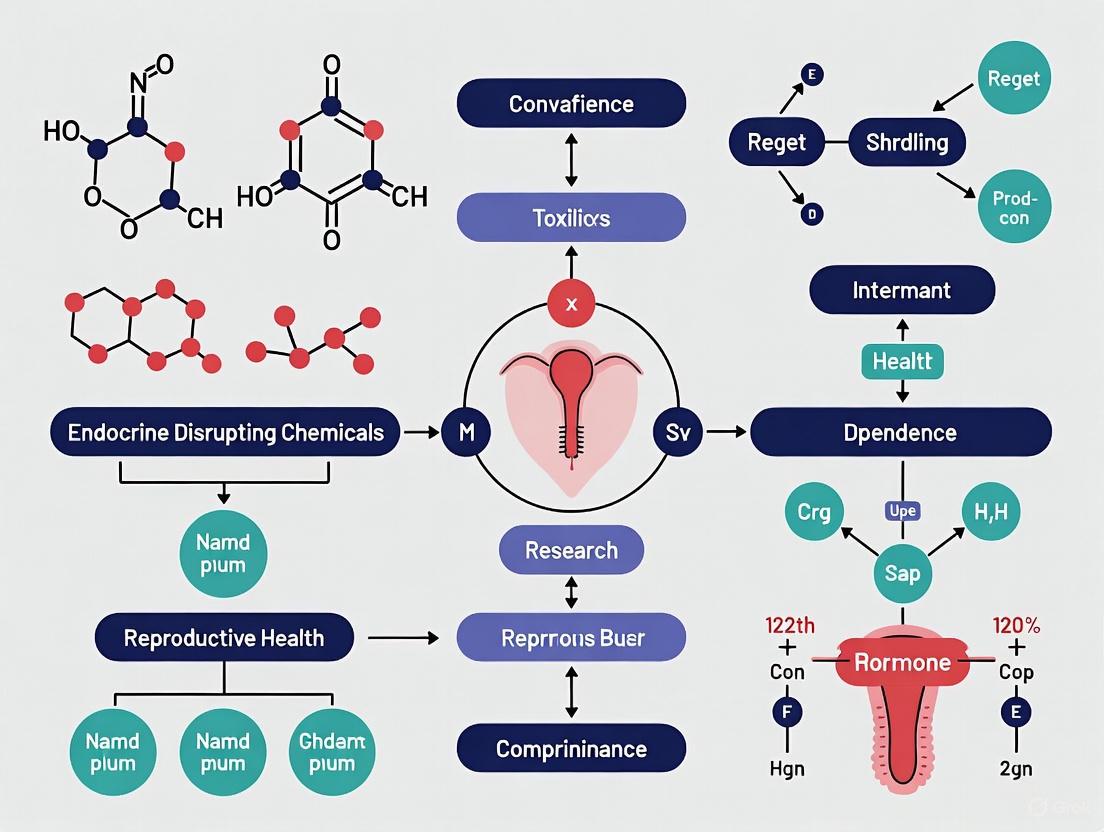
This article provides a comprehensive analysis of endocrine-disrupting chemicals (EDCs) and their multifaceted impact on reproductive health, tailored for researchers, scientists, and drug development professionals.
Endocrine-Disrupting Chemicals: Mechanisms, Methodologies, and Impacts on Reproductive Health
Abstract
This article provides a comprehensive analysis of endocrine-disrupting chemicals (EDCs) and their multifaceted impact on reproductive health, tailored for researchers, scientists, and drug development professionals. It synthesizes foundational definitions and mechanisms of action with advanced methodological approaches for EDC identification and testing. The content further explores current challenges in risk assessment and regulatory frameworks, while evaluating emerging validation techniques and comparative chemical analyses. By integrating the latest scientific evidence, this review aims to inform future biomedical research and the development of targeted therapeutic and regulatory interventions.
Defining Endocrine Disruption: Core Concepts and Mechanistic Pathways in Reproductive Toxicology
Endocrine-disrupting chemicals (EDCs) represent a class of environmental contaminants with the potential to interfere with the hormonal systems of humans and wildlife. The scientific and regulatory understanding of EDCs has evolved significantly, with leading organizations like the Endocrine Society and the U.S. Environmental Protection Agency (EPA) providing critical definitions and frameworks to guide research and public health policy. Within the context of reproductive health research, these definitions are not merely semantic; they establish the foundational principles for identifying hazard mechanisms, assessing exposure risks, and understanding the etiology of a growing burden of chronic diseases [1]. This whitepaper provides an in-depth technical analysis of the official definitions, juxtaposing the nuanced, mechanism-focused perspective of the Endocrine Society with the regulatory-oriented framework of the US EPA. It further delves into the experimental methodologies that operationalize these definitions, visualizes the core concepts, and outlines essential research tools, offering a comprehensive resource for scientists and drug development professionals working at the intersection of environmental health and reproductive biology.
Official Definitions: A Comparative Analysis
The definitions provided by the Endocrine Society and the US EPA originate from distinct but complementary missions: one to advance the science of endocrinology, and the other to regulate chemical substances for public and environmental protection. Table 1 provides a structured comparison of these two definitions, highlighting their unique emphases.
Table 1: Comparative Analysis of Official EDC Definitions
| Feature | The Endocrine Society | U.S. Environmental Protection Agency (EPA) |
|---|---|---|
| Core Definition | "An exogenous chemical, or mixture of chemicals, that can interfere with any aspect of hormone action." [1] | "Chemicals that may mimic or interfere with the body’s hormones, known as the endocrine system." [2] |
| Definitional Scope | Broad and inclusive, encompassing the entire continuum of hormone action (synthesis, secretion, transport, etc.) [1]. | Focused on the overarching outcome of interference with the endocrine system [2]. |
| Primary Emphasis | Biological Mechanism of Action. Highlights the diverse pathways through which disruption can occur [1]. | Functional Adverse Outcome. Often linked to the potential for adverse health or environmental effects [2]. |
| Regulatory Context | Informs scientific consensus and advocates for the incorporation of endocrinological principles into regulatory testing [1]. | Forms the basis for mandated regulatory testing and screening programs, such as the Endocrine Disruptor Screening Program [2]. |
| Key Implication for Research | Drives mechanistic studies to elucidate specific pathways of disruption (e.g., receptor binding, epigenetic changes) [1]. | Supports hazard identification and risk assessment paradigms to establish safe exposure levels [2]. |
The Endocrine Society's Definition and Its Nuances
The Endocrine Society's definition is intentionally expansive, reflecting the complex and multi-faceted nature of hormone action. The phrase "any aspect of hormone action" is critical, as it moves beyond a narrow focus on hormone receptors to include a wider array of mechanistic targets. The Society's position statements, which are informed by systematic reviews of thousands of scientific publications, establish several foundational principles that are essential for reproductive health research [1]:
- Low-Dose Effects: EDCs can exert biological effects at low concentrations that are relevant to real-world human exposure. These low-dose effects challenge traditional toxicological paradigms that assume "the dose makes the poison" and rely on high-dose testing to establish safe levels [1].
- Non-Monotonic Dose Responses (NMDRs): The relationship between EDC dose and effect is not always linear or threshold-based. NMDRs, where effects may be more pronounced at low doses than at high doses, are common and complicate the prediction of risk based on standard toxicological models [1].
- Critical Windows of Development: The effects of EDC exposure depend profoundly on the timing of exposure. Fetal development, infancy, and puberty represent critical windows of susceptibility during which EDC exposure can reprogram developing tissues and lead to latent, lifelong, or even transgenerational reproductive health consequences [1].
The US EPA's Regulatory Framework
The US EPA's definition underpins its regulatory mandate. The agency notes that EDCs "may mimic or interfere with the body's hormones" and can lead to "developmental malformations; interference with reproduction; increased cancer risk; and disturbances in the immune and nervous system function" [2]. The EPA's approach involves understanding how chemicals can disrupt the endocrine system through various means, such as mimicking natural hormones, blocking hormone receptors, or altering hormone production and metabolism [2]. A significant outcome of this framework is the Endocrine Disruptor Screening Program (EDSP), which Congress mandated to test environmental chemicals for their potential to interact with the estrogen, androgen, and thyroid hormone systems [2]. The EPA also acknowledges scientific uncertainties, particularly the challenge of linking environmental-level EDC exposures to specific population-level health effects in humans, and emphasizes the need for advanced testing methodologies [2].
Mechanisms of Endocrine Disruption in Reproductive Health
EDCs interfere with the reproductive endocrine system through a diverse set of molecular mechanisms. Understanding these pathways is crucial for designing targeted experiments and interpreting findings. The core mechanisms, as detailed by the Endocrine Society and the National Institute of Environmental Health Sciences (NIEHS), are summarized in Table 2 and form the basis for the experimental protocols in the subsequent section [3] [1] [4].
Table 2: Key Mechanisms of Endocrine Disruption in Reproductive Health
| Mechanism of Action | Biological Process Disrupted | Example EDCs |
|---|---|---|
| Receptor Binding | Mimicking (agonism) or blocking (antagonism) of hormone receptors (Estrogen Receptor - ER, Androgen Receptor - AR, Thyroid Receptor - TR) [3] [4]. | BPA, Phthalates, DDT [3] |
| Altered Hormone Synthesis & Metabolism | Interference with enzymes critical for steroidogenesis (e.g., aromatase, 5α-reductase), altering the production or clearance of hormones [4]. | Phthalates, PBDEs [3] [4] |
| Epigenetic Modifications | Heritable changes in gene expression without altering DNA sequence (e.g., DNA methylation, histone modification), potentially affecting multiple generations [1] [4]. | DES, BPA [3] [1] |
| Immune and Microbiome Modulation | Disruption of immune cell signaling, cytokine production, and mucosal barrier function, leading to inflammation and dysbiosis in reproductive tissues [4]. | BPA, Phthalates, Parabens [4] |
The following diagram illustrates the primary molecular pathways through which EDCs exert their effects on the reproductive endocrine system.
Experimental Protocols for EDC Research
Translating the official definitions into actionable science requires robust and detailed experimental methodologies. The following protocols are representative of core approaches in the field, incorporating insights from bibliometric analysis of trends and validation studies [5] [6].
In Vitro Receptor Binding and Transactivation Assays
This protocol assesses the ability of a test chemical to bind to hormone receptors and activate or repress gene transcription.
- 1. Objective: To determine if a test chemical acts as an agonist or antagonist for a specific nuclear hormone receptor (e.g., ERα, ERβ, AR).
- 2. Materials:
- Cell Line: Recombinant cell lines (e.g., HEK293, HeLa) stably transfected with a plasmid expressing the receptor of interest and a reporter gene (e.g., Luciferase) under the control of a hormone-responsive promoter.
- Reagents:
- Test chemicals (e.g., BPA, BPS, phthalates)
- Reference agonist (e.g., 17β-Estradiol for ER)
- Reference antagonist (e.g., Hydroxyflutamide for AR)
- Luciferase assay kit
- Cell culture media and supplements
- Dimethyl sulfoxide (DMSO) as vehicle
- 3. Procedure:
- Cell Seeding: Seed cells in 96-well plates at a density optimized for linear luciferase activity.
- Chemical Exposure: After 24 hours, expose cells to a concentration range of the test chemical, reference agonist, or antagonist, both alone and in co-exposure (test chemical + reference agonist). Include vehicle control (DMSO) and blank wells. Each condition should have a minimum of n=6 replicates.
- Incubation: Incubate for a predetermined period (typically 16-24 hours).
- Reporter Gene Measurement: Lyse cells and measure luciferase activity using a luminometer.
- 4. Data Analysis:
- Calculate fold-induction over vehicle control.
- Generate dose-response curves to determine the potency (EC50/IC50) and efficacy (maximal response) of the test chemical relative to the reference agonist.
- Statistical analysis (e.g., one-way ANOVA with post-hoc test) to compare treatment groups to controls.
Protocol for Human Biomonitoring and Survey Validation
This methodology, adapted from Kim et al. (2025), links internal EDC exposure to self-reported behavioral data, crucial for epidemiological studies [6].
- 1. Objective: To develop and validate a survey instrument for assessing reproductive health behaviors aimed at reducing EDC exposure and to correlate these scores with biomonitoring data.
- 2. Materials:
- Participants: A representative cohort (e.g., n=288 adults, men and women) recruited based on demographic distribution.
- Reagents/Bio-specimens: Urine or blood collection kits for biomonitoring of specific EDCs (e.g., BPA, phthalate metabolites).
- Survey Instrument: Initial item pool derived from literature review (e.g., 52 items on exposure via food, respiration, skin) [6].
- 3. Procedure:
- Survey Development:
- Content Validity: Expert panel (e.g., environmental scientists, physicians) assesses items using a Content Validity Index (CVI); retain items with I-CVI > 0.80 [6].
- Pilot Testing: Administer draft survey to a small group (n=10) to assess clarity and completion time.
- Data Collection:
- Collect survey data and biological samples concurrently from participants.
- Survey is administered using a 5-point Likert scale.
- Biomonitoring Analysis: Process urine/blood samples using techniques like liquid chromatography-tandem mass spectrometry (LC-MS/MS) to quantify EDC concentrations.
- Survey Development:
- 4. Data Analysis:
- Psychometric Validation:
- Exploratory Factor Analysis (EFA): Use Principal Component Analysis with Varimax rotation to identify factor structure (e.g., 4 factors: food, breathing, skin, health promotion). Retain items with factor loadings > 0.4 [6].
- Confirmatory Factor Analysis (CFA): Test the model fit from EFA using indices like RMSEA (< 0.08) and SRMR (< 0.08) [6].
- Reliability: Calculate Cronbach's alpha (> 0.7 acceptable for new tool, > 0.8 for established) [6].
- Association Analysis: Use multivariate regression to correlate survey factor scores with log-transformed EDC metabolite concentrations in urine, adjusting for confounders (e.g., age, BMI).
- Psychometric Validation:
The workflow for this integrated protocol is visualized below.
The Scientist's Toolkit: Essential Reagents and Materials
The following table details key reagents, models, and tools essential for conducting research on endocrine-disrupting chemicals, based on methodologies cited in the literature [7] [5] [3].
Table 3: Essential Research Reagents and Materials for EDC Investigation
| Tool/Reagent | Function/Application in EDC Research |
|---|---|
| Recombinant Cell Lines (e.g., ERα/ERβ, AR-transfected) | Engineered for receptor-specific transactivation assays (e.g., YES, ER-CALUX) to screen for agonist/antagonist activity [4]. |
| In Vivo Models (e.g., CD-1 mice, Sprague-Dawley rats) | Used in guideline studies (e.g., OECD TG 443) to assess EDC effects on reproductive development, organ weights, and histopathology across critical life stages [3]. |
| Chemical Standards (e.g., Bisphenol A, Di-(2-ethylhexyl) phthalate, MXC) | High-purity analytical standards for use as positive controls in bioassays or for creating calibrated exposure regimens in in vivo and in vitro studies [3] [4]. |
| LC-MS/MS Kits | For sensitive and specific quantification of EDCs and their metabolites in biological matrices (e.g., urine, serum) for human biomonitoring and exposure assessment [5] [6]. |
| Validated Survey Instruments | Psychometrically tested questionnaires to assess self-reported behaviors related to EDC exposure routes (food, consumer products) and correlate with biomonitoring data [6]. |
| DNA Methylation & Histone Modification Kits | To investigate epigenetic mechanisms of EDC action, such as changes in global or gene-specific DNA methylation patterns in exposed tissues or cell lines [4]. |
| 16S rRNA Sequencing Reagents | For microbiome analysis to assess the impact of EDCs on the composition and diversity of microbial communities in the female genital or gastrointestinal tracts [4]. |
| Cohort Biobanks (e.g., NHANES, LIFE Study) | Collections of human biological specimens with linked demographic/health data, enabling epidemiological studies on EDC exposure and reproductive health outcomes [5]. |
The endocrine system is a complex network of glands and hormones that regulates virtually every biological process in the human body, from conception through adulthood and into old age [8]. This intricate system works through hormones acting as chemical messengers that are released into the bloodstream to act on target cells with compatible receptors, following a lock-and-key mechanism [8]. The endocrine system controls fundamental processes including homeostasis, metabolic demand, development, and reproduction [9], making it essential for maintaining physiological balance. Understanding this system is particularly crucial within the context of endocrine-disrupting chemicals (EDCs), which can interfere with normal hormonal signaling and have been linked to diverse health issues, especially in reproductive function [3] [10].
The system's importance is underscored by its sensitivity; hormones act in extremely small amounts, and minor disruptions in their levels may cause significant developmental and biological effects [3]. This sensitivity creates vulnerability to EDCs, which are natural or human-made chemicals that may mimic, block, or interfere with the body's hormones [3]. Nearly 85,000 human-made chemicals exist in the world, with 1,000 or more potentially acting as endocrine disruptors based on their unique properties [3].
Core Components of the Endocrine System
Major Endocrine Glands and Their Hormones
The endocrine system consists of glands distributed throughout the body that produce hormones released into the circulatory system to act on distant target organs [3]. These hormones regulate numerous biological processes including normal growth, fertility, and reproduction [3].
Table 1: Major Endocrine Glands, Their Hormones, and Primary Functions
| Endocrine Gland | Key Hormones Produced | Primary Functions Regulated |
|---|---|---|
| Hypothalamus | Corticotropin-releasing hormone (CRH), Thyrotropin-releasing hormone (TRH), Gonadotropin-releasing hormone (GnRH), Growth hormone-releasing hormone (GHRH), Somatostatin, Dopamine [9] | Links endocrine and nervous systems; drives endocrine system; regulates anterior pituitary function [9] [8] |
| Pituitary (Anterior) | Follicle-stimulating hormone (FSH), Luteinizing hormone (LH), Prolactin, Adrenocorticotrophic hormone (ACTH), Growth Hormone (GH), Thyroid-stimulating hormone (TSH) [9] | Controls other endocrine glands; regulates growth, reproduction, metabolism, and stress response [9] [8] |
| Pituitary (Posterior) | Oxytocin, Anti-diuretic hormone (ADH/Vasopressin) [9] | Stores and releases hormones made by hypothalamus; regulates water balance, blood pressure, childbirth, and lactation [9] |
| Thyroid | Thyroxine (T4), Triiodothyronine (T3) [8] | Stimulates all body cells; regulates metabolism, growth, reproduction, and development [8] |
| Adrenal Glands | Cortisol, Aldosterone, Adrenaline | Regulates stress response, blood pressure, glucose metabolism, salt and water balance [8] |
| Pancreas | Insulin, Glucagon [8] | Regulates blood glucose concentration and metabolism [8] |
| Gonads (Ovaries) | Estrogens, Progestins [8] | Responsible for female sexual development, reproductive cycles, and behaviors [8] |
| Gonads (Testes) | Testosterone, Androgens [8] | Responsible for male sex characteristics, growth, and development [8] |
Key Hormonal Signaling Pathways
The hypothalamic-pituitary-adrenal (HPA) axis represents a critical blood portal system connecting the hypothalamus and anterior pituitary, allowing precise control of several hormones [9]. Within this axis, the hypothalamus releases specific hormones that circulate directly into the anterior pituitary gland via portal veins, never entering the general circulation [9]. This precise regulation enables sophisticated feedback mechanisms essential for maintaining hormonal balance.
Diagram 1: Hypothalamic-Pituitary-End Organ Axis Regulation. This diagram illustrates the hierarchical control of endocrine function through releasing and inhibiting hormones from the hypothalamus that stimulate or inhibit pituitary hormone production, which in turn act on target glands. Critical negative feedback loops maintain hormonal balance.
Endocrine Disruption: Mechanisms and Research Methodologies
Mechanisms of Endocrine Disruption
Endocrine-disrupting chemicals (EDCs) are exogenous substances that interfere with the normal functioning of the endocrine system by mimicking, blocking, or altering the synthesis, transport, metabolism, or elimination of endogenous hormones such as estrogens, androgens, and thyroid hormones [11]. These hormonal perturbations can have profound effects on numerous physiological systems, particularly those governing reproductive health and development [11]. The endocrine system is especially sensitive during critical windows of vulnerability, such as fetal development, puberty, and early adulthood, rendering individuals exposed during these periods particularly susceptible to long-term consequences [11].
EDCs comprise a structurally diverse group of compounds, including both naturally occurring and synthetic agents [11]. Natural EDCs include phytoestrogens, whereas synthetic variants encompass industrial and consumer product-related substances such as polychlorinated biphenyls (PCBs), phthalates, bisphenol A (BPA), dioxins, organochlorine pesticides like dichlorodiphenyltrichloroethane (DDT), and per- and polyfluoroalkyl substances (PFAS) [11] [3]. These chemicals are prevalent in everyday materials and consumer products, including plastics, food packaging, household dust, detergents, cosmetics, personal care products, and children's toys [11].
Diagram 2: Molecular Mechanisms of Endocrine Disruption. EDCs can interfere with hormonal signaling through multiple pathways including receptor agonism/antagonism, altered hormone synthesis, and modified hormone metabolism, ultimately leading to adverse physiological outcomes.
Quantitative Evidence of EDC Impacts on Reproductive Health
Recent epidemiological studies have increasingly shown statistically significant associations between EDC exposure and various adverse reproductive outcomes in both sexes [11]. A 2025 systematic review evaluating current epidemiological evidence linking EDC exposure with adverse reproductive outcomes identified consistent associations across multiple reproductive endpoints [11].
Table 2: Documented Reproductive Health Impacts of EDC Exposure from Epidemiological Studies
| Reproductive Endpoint | Associated EDCs | Documented Effects | Study Population/Type |
|---|---|---|---|
| Female Infertility & Ovarian Function | BPA, phthalates, PFAS, POPs [11] | Decreased ovarian reserve, reduced IVF success, infertility [11] | Cohort studies (n=7), Case-control studies (n=6) [11] |
| Polycystic Ovary Syndrome (PCOS) | Organochlorine pesticides, PFAS, phthalates [12] [11] | Increased prevalence (up to 20% in some regions), hormonal imbalances [12] | Epidemiological studies, animal experiments [12] |
| Male Infertility | BPA, phthalates, parabens [11] | Impaired semen quality, reduced sperm count/motility [11] | Observational studies (2014-2024) [11] |
| Pubertal Timing | PFAS, phthalates, pesticides [12] [3] | Earlier breast development, premature puberty onset [12] | Epidemiological studies, mechanistic investigations [12] |
| Reproductive Lifespan | Pesticides, phthalates [12] | Menopause 1.9-3.8 years earlier in high-exposure groups [12] | Literature review, mixed methods [12] |
| Hormonal Balance | BPA, phthalates, PFAS, POPs [11] | Altered estradiol (E2), LH, and FSH levels [11] | 14 observational studies (2014-2024) [11] |
Experimental Protocols for EDC Research
Systematic Review Methodology for EDC Epidemiological Evidence
The following protocol outlines the rigorous methodology employed in recent systematic reviews of EDC impacts on reproductive health [11]:
Search Strategy: Comprehensive searches conducted across multiple databases (PubMed, Scopus, Google Scholar) using Boolean strings incorporating Medical Subject Headings (MeSH) terms and keywords including "Endocrine Disrupting Chemicals," "EDCs," "Persistent Organic Pollutants," "Hormone Mimic," "Bisphenol A," "Phthalates," "Dioxins," and "Pesticides" combined with fertility-related terms [11].
Inclusion/Exclusion Criteria:
- Inclusion: Peer-reviewed clinical trials, cohort studies, and case-control studies investigating effects of hormone-mimicking EDCs on fertility outcomes in reproductive-aged males or females reporting specific reproductive health metrics with direct measures of EDC exposure [11].
- Exclusion: Animal or in vitro models, non-peer-reviewed literature (except relevant gray literature), studies without explicit reproductive outcomes or EDC exposure assessment [11].
PRISMA Process:
- Initial identification of 9,578 records through database searches
- Removal of duplicates (n=18) and exclusion of ineligible records (n=9,428) using automation tools
- Screening of 132 records by title/abstract, with 121 full-text articles assessed for eligibility
- Final inclusion of 14 studies meeting all criteria after exclusion of 107 records for specified reasons [11]
Risk of Bias Assessment: Evaluation using the Caldwell framework for observational research examining research question clarity, study design appropriateness, population comparability, measurement precision, confounding control, and reporting transparency by two independent reviewers with consensus resolution [11].
Data Extraction: Standardized extraction using predefined forms capturing author, publication year, country, study design, sample size, exposure/outcome measurement methods, comparison groups, reproductive outcomes, principal findings, and limitations [11].
Hybrid Mathematical Modeling of Endocrine-EEG Interactions
Advanced computational approaches have emerged to model the complex interactions between endocrine systems and neurological function:
Framework Overview: Novel frameworks integrate Hormone Interaction Dynamics Networks (HIDN) and Adaptive Hormonal Regulation Strategies (AHRS) to model endocrine-EEG interactions [13]. HIDN integrates graph-based neural architectures with recurrent dynamics to capture spatiotemporal interdependencies among endocrine glands, hormones, and EEG signal fluctuations [13].
Model Specifications:
- Combines physiological modeling with deep learning to address neuroendocrine complexities
- Employs biologically informed differential equations with machine learning algorithms
- Leverages deep learning for complex pattern recognition in time-series data
- Balances interpretability and accuracy in capturing bidirectional feedback [13]
Validation Approach: Utilizes emotion recognition as experimental setting given established links between emotional states and hormonal fluctuations, leveraging annotated datasets and performance metrics to ground methodological contributions in physiologically meaningful applications [13].
Diagram 3: Computational Framework for Endocrine-Neurological Interaction Research. This experimental workflow illustrates the integration of clinical data with advanced computational models (HIDN and AHRS) to predict endocrine-EEG relationships and validate outcomes through emotion recognition tasks.
The Scientist's Toolkit: Research Reagent Solutions
Table 3: Essential Research Materials for Endocrine Disruption Studies
| Research Reagent/Material | Function in Experimental Protocols | Example Applications |
|---|---|---|
| Bisphenol A (BPA) and Analogs | Model EDC exposure; study estrogenic activity [11] [3] | Investigating hormone mimicry, receptor binding assays, developmental exposure studies [11] |
| Phthalates (DEHP, DBP, BBP) | Study anti-androgenic effects; metabolic disruption [11] [3] | Male reproductive development studies, semen quality assessment, steroidogenesis assays [11] |
| Per- and Polyfluoroalkyl Substances (PFAS) | Investigate persistent organic pollutants; thyroid disruption [12] [3] | Long-term bioaccumulation studies, transgenerational effects, immune response evaluation [12] |
| Organochlorine Pesticides (DDT, metabolites) | Study estrogenic and anti-androgenic properties [12] [11] | Ovarian function studies, puberty timing research, breast cancer risk assessment [12] |
| Biomarker Assay Kits | Quantify hormone levels (LH, FSH, estradiol, testosterone) [11] | Epidemiological studies, clinical trials, exposure assessment correlations [11] |
| Molecular Biology Reagents | Analyze gene expression, receptor binding, epigenetic changes [3] [10] | Mechanism of action studies, transcriptional activation assays, DNA methylation analysis [10] |
| Cell Line Models | In vitro screening of endocrine activity [11] [3] | High-throughput chemical screening, receptor-specific activity assessment [3] |
The human endocrine system represents a exquisitely balanced regulatory network that is vulnerable to disruption by synthetic chemicals in our environment. Understanding the core principles of hormonal regulation provides the essential foundation for investigating how endocrine-disrupting chemicals interfere with reproductive health and other physiological processes. The documented associations between EDC exposure and adverse reproductive outcomes—including impaired semen quality, decreased ovarian reserve, infertility, polycystic ovary syndrome, and altered hormone levels—underscore the urgent need for continued research in this field [11].
Future research directions should address critical knowledge gaps, including the effects of chronic low-dose exposure over time, the synergistic or antagonistic interactions between multiple EDCs (the "cocktail effect"), and the establishment of consensus threshold levels for human health protection [11]. Additionally, advancing computational approaches that integrate physiological modeling with machine learning will enhance our ability to predict endocrine disruption outcomes and develop targeted interventions [13]. From a regulatory perspective, there is growing consensus that current frameworks must evolve to account for cumulative effects and real-world exposure scenarios, particularly during developmentally sensitive periods [12] [14].
Endocrine-disrupting chemicals (EDCs) are exogenous compounds that interfere with the normal function of the endocrine system, leading to adverse health effects in intact organisms, its progeny, or (sub)populations [15]. These chemicals can mimic or block the actions of natural hormones, disrupt their synthesis, metabolism, or transport, and alter hormone receptor expression [16] [15]. The molecular mechanisms through which EDCs exert their effects are diverse and complex, involving multiple pathways and targets within the endocrine system. This technical guide focuses on two primary mechanisms: receptor agonism/antagonism and hormone synthesis interference, providing a comprehensive overview for researchers, scientists, and drug development professionals working in this critical field.
Understanding these mechanisms is particularly crucial given the increasing evidence linking EDC exposure to various reproductive health issues, including declining sperm counts, earlier puberty, genital malformations, impaired fertility, and increased incidence of hormone-dependent cancers [17] [18]. The developmental, circadian, or pulsatile pattern of hormone secretion can be an important component of their signaling mechanism, and EDCs can interfere with this pattern, with the risk of lifelong adverse health effects enhanced when exposure coincides with critical developmental windows [15].
Receptor-Mediated Mechanisms: Agonism and Antagonism
Fundamental Principles of Receptor Interaction
EDCs primarily exert their effects through interactions with hormone receptors, including nuclear receptors (e.g., estrogen receptors, androgen receptors, progesterone receptors, thyroid receptors) and membrane receptors (e.g., G protein-coupled receptors, receptor kinases) [16] [15]. These interactions can result in either activation (agonism) or inhibition (antagonism) of the receptor's normal function, disrupting endocrine signaling pathways.
The key characteristics of EDCs related to receptor interactions include: interacting with or activating hormone receptors (KC1), antagonizing hormone receptors (KC2), and altering hormone receptor expression (KC3) [15]. These characteristics provide a systematic framework for identifying and evaluating potential EDCs based on their mechanistic actions.
Receptor Agonism
Receptor agonism occurs when an EDC binds to a hormone receptor and mimics the action of the natural hormone, leading to inappropriate activation of the receptor and subsequent signaling pathways. This mechanism is particularly significant for estrogenic EDCs, which represent the most extensively studied class of endocrine disruptors [17].
Diethylstilbestrol (DES), a synthetic estrogen, serves as a classic example of a receptor agonist. DES was prescribed to pregnant women from the 1940s to the 1970s to prevent miscarriages, but was later found to cause serious reproductive abnormalities and rare vaginal cancers in their daughters [16] [19]. Mechanistic studies using estrogen receptor knockout (ERKO) mouse models have demonstrated that DES elicits its toxic effects primarily through an ERα-mediated signaling pathway [19]. Neonatal exposure to DES in wild-type female mice produces characteristic reproductive tract lesions including uterine atrophy, smooth muscle disorganization, hyalinization, squamous metaplasia, and endometrial hyperplasia, while these effects are completely absent in αERKO mice [19].
Other well-characterized estrogenic EDCs include bisphenol A (BPA), octyl-phenol (OP), nonyl-phenol (NP), and the pesticide methoxychlor (MXC) [16]. These compounds bind to estrogen receptors with an affinity approximately 1000-fold lower than that of endogenous estradiol, yet still induce tissue-specific estrogenic responses [16]. The structural similarity of these synthetic chemicals to natural steroid hormones enables them to interact with hormone receptors despite their diverse chemical origins.
Table 1: Characterized Receptor Agonists among EDCs
| EDC | Primary Receptor Target | Affinity Relative to Natural Hormone | Key Documented Effects |
|---|---|---|---|
| Diethylstilbestrol (DES) | ERα, ERβ | High (synthetic estrogen) | Reproductive tract abnormalities, clear cell adenocarcinoma, teratogenic effects [16] [19] |
| Bisphenol A (BPA) | ERα, ERβ, GPER | ~1000-fold lower than E2 | Alters brain hormone receptor expression, induces morphological changes in fibroblasts via GPER [16] [20] |
| DDT/DDE | ERα, ERβ | Lower than E2 | ER-dependent transcriptional activation, proliferation, impaired reproductive function [16] [15] |
| Genistein | ERβ | Moderate (phytoestrogen) | Estrogenic and anti-estrogenic effects depending on context [19] |
| G-1 | GPER | Selective agonist | Induces cell shape changes in MRC5 fibroblasts [20] |
Receptor Antagonism
Receptor antagonism occurs when an EDC binds to a hormone receptor without activating it, thereby blocking the natural hormone from binding and initiating its normal signaling cascade. This mechanism is particularly significant for anti-androgenic EDCs, which can interfere with male reproductive development and function.
The metabolite of the pesticide vinclozolin, dichlorodiphenyldichloroethylene (DDE), exemplifies receptor antagonism by inhibiting androgen binding to the androgen receptor (AR) and preventing androgen-dependent transactivation in human and rat prostate cells [15]. Other organochlorine pesticides such as lindane and dieldrin also demonstrate AR antagonism by inhibiting dihydrotestosterone binding to the AR [15]. Since androgens are crucial regulators of male sexual differentiation during fetal development, disruption of androgen action through AR antagonism during this critical period can permanently demasculinize male fetuses and lead to malformations of the genital tract [15].
The effects of receptor antagonism can be tissue-specific and dependent on the developmental stage at exposure. For instance, selective estrogen receptor modulators (SERMs) like tamoxifen can act as antagonists in breast tissue while functioning as agonists in bone or uterine tissue, highlighting the complexity of EDC-receptor interactions [16].
Table 2: Characterized Receptor Antagonists among EDCs
| EDC | Primary Receptor Target | Mechanism of Antagonism | Key Documented Effects |
|---|---|---|---|
| DDE (vinclozolin metabolite) | Androgen Receptor (AR) | Inhibits androgen binding and AR transactivation | Demasculinization, genital tract malformations [15] |
| Lindane | Androgen Receptor (AR) | Inhibits DHT binding to AR | Anti-androgenic effects, reproductive dysfunction [15] |
| Dieldrin | Androgen Receptor (AR) | Inhibits DHT binding to AR | Anti-androgenic effects, reproductive dysfunction [15] |
| G-15, G-36 | GPER | Selective antagonists | Block E2- and G-1-induced morphological changes in fibroblasts [20] |
| Tolylfluanid | Insulin Receptor | Impairs insulin action by reducing IRS1 phosphorylation | Metabolic disruption [15] |
Alteration of Receptor Expression
Beyond direct receptor binding, EDCs can modulate endocrine signaling by altering hormone receptor expression levels. For example, di(2‐ethylhexyl) phthalate decreases the expression of the mineralocorticoid receptor (MR) in the testis of adult mice, where MR normally acts as a positive modulator of testosterone biosynthesis [15]. Similarly, BPA alters the expression of estrogen, oxytocin, and vasopressin receptors in specific brain nuclei and reduces the proteasome-mediated degradation of ERβ, potentially prolonging estrogenic signaling [15].
Some EDCs can also interfere with receptor internalization and degradation processes. DDT has been shown to prevent the internalization of the TSH receptor, potentially disrupting normal thyroid hormone regulation [15]. These findings highlight that EDCs can influence receptor availability and function through multiple mechanisms beyond direct binding.
Interference with Hormone Synthesis
Disruption of Steroidogenesis
EDCs can interfere with the synthesis, secretion, and metabolism of hormones, particularly through disruption of steroidogenesis - the biosynthesis of steroid hormones from cholesterol. This represents a key characteristic (KC5) of endocrine disruptors as defined by international expert consensus [15].
The pesticide methoxychlor and its metabolite HPTE (bis-hydroxy methoxychlor) have been shown to significantly inhibit progesterone production and luteinizing hormone (LH) receptor expression in rat granulosa cells [21]. Similarly, dioxins such as 2,3,7,8-tetrachlorodibenzo-p-dioxin (TCDD) negatively affect the expression and stability of LH receptor transcripts in cultured rat granulosa cells, disrupting normal ovarian function [21].
Perchlorate, a component of rocket fuel and fireworks, provides a clear example of hormone synthesis interference through its action on the sodium-iodide symporter (NIS) in the thyroid gland. Perchlorate competitively inhibits iodide uptake by the thyroid, thereby disrupting the synthesis of thyroid hormones T3 and T4, which are essential for normal metabolism, growth, and development [15].
Enzymatic Interference in Hormone Pathways
Many EDCs exert their effects by interfering with specific enzymes involved in hormone synthesis or metabolism. For instance, certain polychlorinated biphenyl (PCB) congeners can activate human thyroid hormone receptor-β-mediated transcription while others interfere with thyroid hormone synthesis enzymes [16] [15].
The steroidogenic pathway involves multiple enzymes, including cytochrome P450 enzymes and hydroxysteroid dehydrogenases, that convert cholesterol into active steroid hormones. EDCs such as phthalates, BPA, and various pesticides have been shown to alter the expression and activity of these enzymes, leading to imbalances in hormone production [18] [21]. For example, exposure to phthalates during critical developmental windows can reduce testosterone synthesis by inhibiting the expression of genes involved in cholesterol transport and steroidogenic enzymes [18].
Table 3: EDCs That Interfere with Hormone Synthesis and Metabolism
| EDC | Target Pathway/Enzyme | Mechanism of Interference | Biological Consequences |
|---|---|---|---|
| Perchlorate | Thyroid hormone synthesis | Competitively inhibits iodide uptake via NIS | Reduced T3/T4 production, developmental neurotoxicity [15] |
| Phthalates | Testicular steroidogenesis | Alters expression of steroidogenic enzymes | Reduced testosterone production, reproductive malformations [18] [21] |
| HPTE (methoxychlor metabolite) | Ovarian steroidogenesis | Inhibits progesterone production and LH receptor expression | Impaired follicular development, ovarian dysfunction [21] |
| TCDD (dioxin) | Multiple steroidogenic pathways | Alters LH receptor expression and stability | Reproductive dysfunction, endometriosis [21] |
| PCBs | Thyroid hormone synthesis | Multiple enzymatic interferences | Altered thyroid function, metabolic and developmental effects [15] [21] |
Experimental Approaches and Methodologies
Cell-Based Assays for Receptor Activity Screening
Cell-based assays provide valuable tools for screening the agonist/antagonist potential of EDCs on specific receptors. A method developed to screen compounds specifically on the G protein-coupled estrogen receptor (GPER) utilizes the MRC5 human fibroblast cell line, which expresses GPER but not the classical estrogen receptor α [20].
Experimental Protocol for GPER Screening Assay:
- Cell Culture: Maintain MRC5 cells in DMEM supplemented with 10% FCS, 10 U/ml penicillin, and 10 μg/ml streptomycin.
- Cell Seeding for Morphological Analysis: Seed 10,000 MRC5 cells in 400 μl of complete medium in 4-chamber culture dishes.
- Serum Starvation: After 24 hours, change medium to 600 μl phenol red-free DMEM without serum and incubate for 48 hours.
- Compound Treatment: Add 10 μl phenol red-free medium containing the test compound and immediately analyze cell cultures.
- Image Analysis: Use lens-free cell imaging (e.g., Cytonote system) to monitor cell morphology changes over 3-4 hours. Analyze reconstituted images at time points 0, 60, 120, 180, and 240 minutes after compound addition.
- Morphometric Measurement: Individually track 30 cells per experiment and measure the ratio of long axis to short axis (L/s ratio) as an indicator of morphological change.
- Antagonist Testing: For suspected antagonists, add compounds 15 minutes before agonists.
- Data Analysis: Summarize L/s ratio by median over cells for each condition. Use non-parametric statistical tests (Friedman test for multiple time points, Wilcoxon signed-rank test for two time points) due to non-normal distribution of L/s ratios.
This assay successfully identified six GPER agonists and six antagonists among 23 candidate EDCs from different chemical families, demonstrating its utility for screening EDCs that target this membrane estrogen receptor [20].
Receptor-Specific Mechanistic Studies
For nuclear receptors such as ERα and ERβ, receptor-specific mechanistic studies often utilize receptor knockout models or selective ligands to elucidate the role of specific receptors in mediating EDC effects.
Experimental Protocol for ERα-Dependent Mechanisms:
- Animal Models: Utilize wild-type (WT), ERα knockout (αERKO), and ERβ knockout (βERKO) mice.
- Neonatal Exposure Model: Treat female and male pups with DES (2μg/day) or other EDCs for the first five days of life.
- Long-Term Monitoring: Age animals up to 18 months to observe developmental and long-term effects.
- Tissue Analysis: Collect reproductive tract tissues (uterus, vagina, oviduct, prostate, seminal vesicles) for histological examination and gene expression analysis.
- Gene Expression Studies: Measure expression of developmentally critical genes (e.g., Hoxa9, Hoxa10, Hoxa11, Wnt7a) using RT-PCR or other molecular techniques.
- Data Interpretation: Compare effects in WT versus knockout animals to determine ERα-dependence.
Application of this approach demonstrated that DES-induced reductions in Hoxa10, Hoxa11, and Wnt7a gene expression in the mouse uterus are mediated exclusively through ERα, as these effects were absent in αERKO mice [19].
The Scientist's Toolkit: Essential Research Reagents
Table 4: Key Research Reagent Solutions for EDC Mechanistic Studies
| Reagent/Cell Line | Specific Application | Key Features and Functions |
|---|---|---|
| MRC5 Human Fibroblast Cell Line | GPER-specific screening | Expresses GPER but not ERα; shows quantifiable morphological changes upon GPER activation [20] |
| MCF-7 Human Mammary Cell Line | Estrogen receptor studies | Expresses both ERα and GPER; useful for comparative studies of nuclear vs. membrane ER signaling [20] |
| αERKO and βERKO Mice | Receptor-specific mechanistic studies | Allow determination of ER subtype-specific effects of EDCs in vivo [19] |
| G-1 (GPER Agonist) | Positive control for GPER activation | Selective GPER agonist that induces cell shape changes in MRC5 fibroblasts [20] |
| G-15/G-36 (GPER Antagonists) | Negative controls for GPER studies | Selective GPER antagonists that block E2- and G-1-induced effects [20] |
| DES (Diethylstilbestrol) | Reference EDC for estrogenic effects | Potent synthetic estrogen; positive control for ER-mediated effects [19] |
| siRNA against GPER | Gene knockdown studies | Validates GPER-specific effects in cell-based assays [20] |
Signaling Pathways and Molecular Mechanisms
The following diagrams illustrate key signaling pathways and experimental workflows relevant to studying EDC mechanisms of action.
Receptor Agonism/Antagonism Pathways
Hormone Synthesis Interference Mechanisms
Experimental Workflow for EDC Screening
The major mechanisms of endocrine disruption - receptor agonism/antagonism and hormone synthesis interference - represent fundamental pathways through which EDCs exert their adverse health effects. Understanding these mechanisms at a molecular level is crucial for identifying potential EDCs, assessing their hazards, and developing strategies to mitigate exposures, particularly during critical developmental windows when the endocrine system is most vulnerable.
The experimental approaches and methodologies outlined in this guide provide researchers with robust tools for screening and characterizing EDCs, while the key characteristics framework offers a systematic approach for evaluating mechanistic evidence. As research in this field continues to evolve, integrating knowledge of these fundamental mechanisms with emerging technologies will enhance our ability to protect human health and the environment from the adverse effects of endocrine disruption.
Future directions in EDC research should focus on understanding the effects of mixtures, non-monotonic dose responses, epigenetic modifications, and transgenerational effects, all of which present additional complexities in evaluating the full impact of these chemicals on endocrine health. The continued development and refinement of sensitive, specific, and high-throughput screening methods will be essential for addressing these challenges and advancing our understanding of endocrine disruption mechanisms.
Endocrine-disrupting chemicals (EDCs) are natural or human-made substances that can mimic, block, or interfere with the body's hormones, which are part of the endocrine system [3]. These chemicals are linked with a wide array of health issues, with particular concern for reproductive health across the lifespan [22]. The endocrine system operates with hormones acting in extremely small amounts, meaning even minor disruptions at low exposure levels can cause significant developmental and biological effects [3]. This whitepaper provides an in-depth technical review of four major classes of EDCs—bisphenols, phthalates, pesticides, and per- and polyfluoroalkyl substances (PFAS)—focusing on their reproductive health impacts, molecular mechanisms, and relevant experimental methodologies for researchers and drug development professionals.
Bisphenols
Exposure and Reproductive Health Effects
Bisphenol A (BPA) is a synthetic plasticizer used to produce polycarbonate plastics and epoxy resins found in food containers, beverage cans, and various consumer products [23] [24]. Human exposure occurs when BPA migrates from containers into food and beverages, leading to detectable levels in urine, blood, saliva, and breast milk [24]. Emerging substitutes like Bisphenol S (BPS) and Bisphenol F (BPF) demonstrate similar endocrine-disrupting properties [25].
Table 1: Reproductive Health Effects of Bisphenol Exposure
| System | Health Endpoint | Effect Size/Association | Evidence Source |
|---|---|---|---|
| Female Reproductive Health | Hormonal Imbalances | Altered E2, Pg, and TT levels; increased E2 trend in MIXL group females [25] | Animal study (mouse) |
| Reduced Ovarian Reserve | Increased number of atretic follicles [25] | Animal study (mouse) | |
| Reproductive Disorders | Increased risk of PCOS, endometriosis, infertility, fibroids [23] | Human review | |
| Ovarian Cancer | Increased susceptibility to tumorigenesis [24] | In vitro & review | |
| Male Reproductive Health | Sperm Quality | Decline in sperm quality in MIXH group males [25] | Animal study (mouse) |
| Sperm Alterations | Increased sperm DNA damage and altered parameters [23] | Human review | |
| Testicular Morphology | Disruption of testicular structure [25] | Animal study (mouse) | |
| Prostate Cancer | Increased risk and potential therapy resistance [24] | In vitro & review | |
| General Carcinogenesis | Breast Cancer | Associated with increased risk and chemoresistance [24] | In vitro, animal & review |
| Colorectal Cancer | Associated with increased risk [24] | In vitro & review |
Key Mechanistic Pathways
BPA exerts its effects primarily through genomic and non-genomic signaling pathways. It acts as a xenoestrogen due to its structural similarity to estradiol, enabling it to bind to estrogen receptors (ERα and ERβ) [24]. However, it also activates membrane-bound receptors like GPER (GPR30) and estrogen-related receptors (ERRs), triggering alternative signaling cascades [24]. A critical emerging aspect of BPA toxicity is its role in inducing chemoresistance in various cancers, worsening prognostic outcomes [24].
Detailed Experimental Protocol: Bisphenol Mixture Exposure In Vivo
Objective: To assess the endocrine-disrupting effects of single and mixed bisphenols on steroid hormone homeostasis and reproductive function in a mammalian model [25].
Materials and Reagents:
- Chemicals: BPA (purity ≥ 99.0%), BPF (purity 98.0%), BPS (purity ≥ 97.5%) from Tokyo Chemical Corporation.
- Vehicle: Pure corn oil for dissolution.
- Animals: CD-1 (ICR) mice, female and male, aged 7–8 weeks.
- Equipment: Standard animal housing facility, gavage needles, centrifuge, hormone assay kits (e.g., for E2, Pg, TT), histological materials, sperm quality analyzer.
Methodology:
- Preparation: Dissolve individual BPs (BPA, BPF, BPS) and their mixtures in pure corn oil. Store in clear glass bottles to avoid contamination.
- Experimental Groups: Assign mice to groups: Control (corn oil), BPA (333 µg/kg), BPF (333 µg/kg), BPS (333 µg/kg), MIXL (333 µg/kg total), MIXH (1 mg/kg total).
- Exposure Regimen: Administer treatment via oral gavage daily for four weeks.
- Sample Collection: At endpoint, collect blood via cardiac puncture under anesthesia. Centrifuge to isolate serum. Collect reproductive organs (ovaries, testes) and weigh.
- Hormone Analysis: Quantify serum Estradiol (E2), Progesterone (Pg), and Testosterone (TT) levels using commercial ELISA or RIA kits according to manufacturer protocols.
- Tissue Analysis: Process ovaries and testes for histology (H&E staining). Count follicle stages and assess atretic follicles in ovaries. Evaluate testicular morphology and spermatogenesis.
- Sperm Analysis: Isolate sperm from cauda epididymis. Assess count, motility, and morphology using computer-assisted sperm analysis (CASA) or manual methods.
- Data Analysis: Use one-way ANOVA with post-hoc tests to compare groups. Significance is set at p < 0.05.
Phthalates
Exposure and Reproductive Health Effects
Phthalates are a class of chemicals used as plasticizers in numerous products, including food packaging, cosmetics, fragrances, and medical devices [3]. Di-(2-ethylhexyl) phthalate (DEHP) is one of the most common phthalates, and its metabolites, such as mono (2-ethyl-5-oxohexyl) phthalate (MEOHP), are measured in urine to assess exposure [26]. These compounds are known to leach from products and enter the body via ingestion, inhalation, and dermal absorption [26].
Table 2: Reproductive Health Effects of Phthalate Exposure
| System | Health Endpoint | Effect Size/Association | Evidence Source |
|---|---|---|---|
| Female Reproductive Health | Infertility | Adjusted OR = 1.66 (95% CI: 1.14, 2.40) for MEOHP [26] | Human study (Jordanian women) |
| Reduced Ovarian Reserve | Association with diminished ovarian reserve [26] | Human study (citing Messerlian et al., 2016) | |
| Altered Puberty Timing | Linked to earlier breast development and puberty [12] | Review | |
| Pregnancy Loss | Association with pregnancy loss around conception [26] | Human study (citing Toft et al., 2012) | |
| Preterm Birth | Association with decreased gestational age [3] | Human study | |
| Male Reproductive Health | Semen Quality | Altered sperm parameters and quality [26] | Human review |
| Altered Hormone Levels | Disruption of reproductive hormone levels [26] | Human review |
Detailed Experimental Protocol: Human Biomonitoring for Phthalates and Infertility
Objective: To assess phthalate exposure levels in a population and investigate their association with infertility outcomes [26].
Materials and Reagents:
- Study Participants: Recruit cases (women with fertility problems) and controls (fertile women) from gynecology clinics.
- Questionnaire: Standardized instrument to gather data on demographics, lifestyle, and use of personal care products (e.g., nail polish, makeup) and habits (e.g., heating plastic in microwaves).
- Sample Collection: Single-use, sterile polypropylene urine containers.
- Chemical Analysis: HPLC/MS/MS system, analytical standards for MEHHP and MEOHP, internal standards, solvents (HPLC-grade).
- Statistical Software: e.g., R, SPSS, or SAS.
Methodology:
- Participant Recruitment: Obtain ethical approval and informed consent. Enroll a defined number of participants (e.g., 325 women).
- Data and Biospecimen Collection: Administer the questionnaire. Collect a spot urine sample from each participant.
- Sample Preparation: Thaw urine samples. Aliquot and add internal standards. Enzymatically deconjugate metabolites. Solid-phase extraction (SPE) is often used for cleanup.
- Instrumental Analysis: Analyze samples using HPLC/MS/MS. Separate metabolites on a C18 column. Use multiple reaction monitoring (MRM) for detection and quantification.
- Quality Control: Include blank samples and quality control materials (spiked urine pools) in each batch to ensure accuracy and precision. Correct metabolite concentrations for urinary creatinine to account for dilution.
- Data Analysis: Compare questionnaire responses between cases and controls (Chi-square, t-tests). Calculate geometric means of phthalate metabolites. Use multivariate logistic regression to model the association between phthalate levels (log-transformed) and infertility status, adjusting for confounders (e.g., age, BMI, smoking). An odds ratio (OR) and 95% confidence interval (CI) are reported.
Pesticides
Exposure and Reproductive Health Effects
Many pesticides are established EDCs, including organochlorines, organophosphates, and carbamates [27]. Exposure occurs occupationally and through diet, water, and air [27]. Notably, many pesticides are fluorinated and classified as PFAS, creating overlap between these categories [12]. These chemicals can persist in the environment and bioaccumulate in human tissues, including adipose tissue, blood, and breast milk [27] [12].
Table 3: Reproductive Health Effects of Endocrine-Disrupting Pesticides
| System | Health Endpoint | Example Pesticides | Evidence Source |
|---|---|---|---|
| Female Reproductive Health | Polycystic Ovary Syndrome (PCOS) | Organochlorines, PFAS [12] | Review |
| Early Puberty | Organochlorines, PFAS [12] | Review | |
| Early Menopause | Associated with combined pesticide & phthalate exposure (1.9-3.8 years sooner) [12] | Review | |
| Hormonal Imbalances | Atrazine, DDT metabolites [27] | Animal & in vitro studies | |
| Endometriosis | Organochlorines [27] | Human study | |
| Male Reproductive Health | Sperm Quality & Fertility | Organophosphates [27] | Human & animal studies |
| Altered Hormone Levels | Atrazine [27] | Animal studies |
Per- and Polyfluoroalkyl Substances (PFAS)
Exposure and Reproductive Health Effects
PFAS are a family of synthetic, persistent chemicals used in non-stick cookware, food packaging, waterproof textiles, and fire-fighting foams [3] [28]. Ingestion of contaminated water and food is a primary exposure route for the general population [28]. These chemicals are ubiquitous and have long half-lives, leading to bioaccumulation [28].
Table 4: Reproductive Health Effects of PFAS Exposure
| System | Health Endpoint | Effect Size/Association | Evidence Source |
|---|---|---|---|
| Female Reproductive Health | Reduced Fertility | Up to 40% reduction in likelihood of pregnancy and live birth [29] | Human study (Singaporean women) |
| Delayed Puberty Onset | Association with altered timing [29] | Review | |
| PCOS & Endometriosis | Increased risk [29] | Review | |
| Early Menopause | Associated with shorter reproductive lifespan [12] | Review | |
| Male Reproductive Health | Semen Quality | Reduced semen quality [28] | Human epidemiological studies |
| Altered Sperm Epigenome | Marked alterations to sncRNA profiles [28] | Animal study (mouse) | |
| Testicular Cancer | Elevated instances [28] | Human epidemiological studies | |
| Hormonal Changes | Reduced circulating testosterone and DHT [28] | Animal study (mouse) | |
| Daily Sperm Production | Significant reduction [28] | Animal study (mouse) |
Key Mechanistic Pathways
PFAS exposure can compromise male reproductive function through hormonal disruption and epigenetic alterations in sperm. The following diagram synthesizes key findings from a recent mouse study on an environmentally relevant PFAS mixture [28].
Detailed Experimental Protocol: Environmentally Relevant PFAS Exposure In Vivo
Objective: To investigate the pathophysiological impact of an environmentally relevant PFAS mixture on male reproductive health, including hormone levels, sperm function, and the sperm epigenome [28].
Materials and Reagents:
- PFAS Cocktail: A mixture of nine PFAS (including PFOS, PFOA, PFHxS) formulated to mimic environmental contamination profiles.
- Animals: Adult male Swiss CD1 mice.
- Equipment: Standard animal housing with drinking water system, HPLC-MS/MS system for PFAS quantification, equipment for hormone ELISA/RIA, histology setup, CASA system, sncRNA-sequencing platform.
Methodology:
- Exposure Regimen: Administer PFAS cocktail via drinking water for 12 consecutive weeks. Include control (no PFAS), low-dose, and high-dose groups. Monitor water consumption.
- Tissue Collection and PFAS Quantification: Euthanize animals. Collect blood (for plasma) and testes. Quantify PFAS levels in plasma and testicular homogenates using HPLC-MS/MS. Calculate bioaccumulation factors (BAF).
- Tissue Weights and Histology: Record body and reproductive organ weights (testes, epididymides, seminal vesicles). Process testes for histology (H&E staining) to assess morphology and daily sperm production (DSP).
- Hormone Measurement: Measure plasma testosterone and dihydrotestosterone (DHT) levels using commercial assay kits.
- Sperm Functional Analysis: Collect sperm from cauda epididymis. Assess viability, motility, and capacitation status using standard methods.
- Sperm sncRNA Sequencing: Isolate total RNA from purified sperm. Prepare sncRNA libraries and perform next-generation sequencing. Conduct bioinformatic analysis to identify differentially expressed sncRNAs.
- Embryonic Gene Expression Analysis: Use sperm from control and exposed males for in vitro fertilization. Analyze gene expression in resulting embryos (e.g., at the 4-cell stage) via RT-qPCR or RNA-seq to link paternal sncRNA changes to offspring phenotypes.
- Statistical Analysis: Use t-tests or ANOVA to compare groups. Correlate PFAS levels, hormone changes, and molecular endpoints.
The Scientist's Toolkit: Key Research Reagents and Models
Table 5: Essential Reagents and Models for EDC Research on Reproductive Health
| Reagent/Model | Function/Application | Example Use Case |
|---|---|---|
| CD-1 (ICR) Mice | A robust, outbred mouse strain commonly used for toxicological and reproductive studies. | Assessing the effects of bisphenol mixtures on serum hormone levels and follicular development [25]. |
| Swiss CD1 Mice | General-purpose outbred strain used in safety and efficacy testing. | Evaluating the impact of PFAS on the male sperm epigenome and daily sperm production [28]. |
| HPLC-MS/MS | High-performance liquid chromatography coupled with tandem mass spectrometry for sensitive and specific quantification of analytes. | Measuring urinary concentrations of phthalate metabolites (MEOHP, MEHHP) [26] and PFAS in blood/plasma [28]. |
| UHPLC-MS/MS | Ultra-high performance LC-MS/MS for faster, higher-resolution separation and detection. | Rapid determination of BPA analogues and phthalate metabolites in human urine [26]. |
| ELISA/RIA Kits | Enzyme-linked immunosorbent assay or radioimmunoassay kits for quantifying hormone levels. | Measuring serum Estradiol (E2), Progesterone (Pg), and Testosterone (TT) in exposed mice [25]. |
| sncRNA-Seq | Small non-coding RNA sequencing to profile microRNAs, piRNAs, etc. | Discovering altered sncRNA profiles in sperm from PFAS-exposed males [28]. |
| Bayesian Kernel Machine Regression (BKMR) | A statistical model for analyzing complex mixtures and their health effects. | Investigating the association between combined exposure to multiple chemicals (e.g., BPA, BPS) and sex hormone levels in epidemiological data [25]. |
| Weighted Quantile Sum (WQS) Regression | A statistical method to identify key chemicals in a mixture associated with a health outcome. | Identifying the most influential chemicals in a mixture related to hormonal changes in a population [25]. |
The Developmental Origins of Health and Disease (DOHaD) framework posits that environmental exposures during critical developmental periods can program an individual's susceptibility to disease later in life [30]. This concept, originally termed the "fetal basis of adult disease" (FeBAD), has been extended to include the entire early postnatal developmental period, recognizing that organs continue to undergo substantial development after birth [30]. Within this paradigm, endocrine-disrupting chemicals (EDCs) represent a significant class of environmental toxicants that can interfere with the body's endocrine system during these vulnerable windows, producing adverse developmental, reproductive, neurological, cardiovascular, metabolic, and immune effects in humans [30].
EDCs include a wide range of both natural and man-made substances, including pharmaceuticals, dioxin and dioxin-like compounds, polychlorinated biphenyls, DDT and other pesticides, and plastic components such as bisphenol A (BPA) and phthalates [30]. These chemicals are found in many everyday products—including plastic bottles, metal food cans, detergents, flame retardants, food additives, toys, cosmetics, and pesticides [30]. The mechanisms by which EDCs alter hormone signaling are diverse, extending beyond originally recognized nuclear hormone receptor pathways to include non-steroid receptors, transcriptional coactivators, enzymatic pathways involved in steroid biosynthesis and/or metabolism, and direct effects on genes and their epigenetic regulation [30].
Critical Windows of Susceptibility in Development
Defining Windows of Susceptibility
Windows of susceptibility (WoS) refer to specific time frames across the lifespan when individuals are particularly vulnerable to increased disease risk related to environmental exposures due to rapid changes in tissue proliferation and differentiation [31]. During these critical periods, cells undergo substantial development and are more susceptible to damage from environmental toxicants [31]. The concept is particularly relevant to breast cancer research, where seven distinct breast cancer windows of susceptibility have been identified: in-utero, neonatal, pre-pubertal, pubertal, pregnancy, lactation, and menopause [31].
Adolescent women are especially vulnerable during puberty as the associated volume of breast tissue proliferation increases the chance that breast cells will be adversely affected by endocrine-disrupting chemicals [31]. Similarly, sexual differentiation is highly dependent on the fetal hormonal environment, guiding sexual development and establishing the foundation for lifelong reproductive health [10]. EDCs can disrupt these tightly regulated pathways, leading to developmental disturbances that manifest as reproductive disorders at birth or later in life [10].
Key Developmental Windows and Associated Health Outcomes
Table 1: Developmental Windows of Susceptibility and Associated Health Outcomes
| Developmental Window | Key Biological Processes | Potential Health Outcomes from EDC Exposure |
|---|---|---|
| In Utero | Sexual differentiation, organogenesis | Hypospadias, cryptorchidism, reduced fertility, testicular cancer, altered ovarian function [10] |
| Neonatal | Continued organ maturation, immune system development | Altered metabolic programming, immune dysfunction [31] |
| Pre-pubertal | Tissue growth, hormonal preparation | Early puberty, polycystic ovary syndrome (PCOS) [31] |
| Pubertal | Rapid tissue proliferation, hormonal changes | Breast cancer susceptibility, infertility [31] |
| Pregnancy | Mammary tissue remodeling | Altered breast cancer risk profile [31] |
| Lactation | Mammary gland function | Potential transfer of EDCs to offspring [31] |
| Menopause | Hormonal shifts, tissue changes | Altered breast cancer risk [31] |
In males, disrupted androgen signaling during fetal development is linked to hypospadias, cryptorchidism, reduced fertility, and testicular cancer, while in females, EDC exposure may contribute to altered ovarian function, early puberty, polycystic ovary syndrome (PCOS), and infertility [10]. These effects are particularly troubling since alterations in genetic programming during early stages of development may have profound effects years later and may also lead to transgenerational inheritance of disease [30].
Molecular Mechanisms of Endocrine Disruption
Nuclear Receptor Signaling
EDCs are structurally similar to many hormones, function at extremely low concentrations, and many have lipophilic properties, making them particularly well suited for activating or antagonizing nuclear hormone receptors [30]. The nuclear hormone receptors are a superfamily of transcription factors that play important roles in both physiology and disease, and there is virtually no endocrine system immune to these substances because of the shared properties and similarities of receptors and enzymes involved in the synthesis, release, and degradation of hormones [30].
Table 2: Nuclear Receptors Targeted by Endocrine-Disrupting Chemicals
| Receptor | Abbreviation | Physiological Function | Examples of Endocrine Disrupting Chemicals |
|---|---|---|---|
| Estrogen | ER α, β, GPR30 | Female sexual development | Alklyphenols, BPA, Dioxins, Furans, Halogenated hydrocarbons, Heavy metals [30] |
| Androgen | AR | Male sexual development | Pesticides, Phthalates, Plasticisers, Polyhalogenated compounds [30] |
| Thyroid Hormone | TR α, β | Metabolism, Heart rate | BPA, Dioxins, Furans, PBDEs, PCBs, Perchlorates, Pesticides, Phalates, Phytoestrogens [30] |
| Progesterone | PR | Female sexual development | BPA, Fungicides, Herbicides, Insecticides [30] |
| Arylhydrocarbon | AhR | Circadian rhythm, Metabolism, Neurogenesis | Dioxins, Flavonoids, Herbicides, Indoles, PCBs, Pesticides [30] |
| Peroxisome Proliferator-Activated | PPAR α, β, λ | Lipid homeostasis | BPA, Organotins [30] |
| Glucocordicoid | GR α, β | Development, Metabolism, Stress response | Arsenic, BPA, Phthalates [30] |
The primary means by which estrogenic compounds disrupt normal development is via interaction with one of the estrogen receptors. There are three types of receptors for estrogens: the nuclear estrogen receptors (ERs), the membrane-bound estrogen receptors (which are variants of the nuclear ERs), and the estrogen G protein-coupled receptor (GPR30), which is a membrane-bound protein with a high affinity toward estrogen [30]. The main function of the ER is as a DNA-binding transcription factor that regulates gene expression and subsequent downstream responses.
Non-Nuclear Receptor Mechanisms
While some EDCs act through traditional nuclear receptor pathways, others have been shown to act through non-traditional mechanisms. For example, BPA was designed as a synthetic estrogen and has been shown to bind to the estrogen receptors (ERα, ERβ, and to the membrane ER), resulting in a cellular signal transduction cascade that is indicative of an estrogenic response [30]. However, detailed examination of its effects on gene expression in a variety of tissues indicates that, while there is significant overlap, it does not stimulate the same suite of genes as estradiol [30].
Studies have also shown that BPA binds to the ubiquitous aryl hydrocarbon receptor (AhR), which is not surprising because AhR is thought to be activated by many chemicals and likely mediates toxicity through several signaling pathways [30]. Another nuclear hormone receptor targeted by EDCs is the peroxisome proliferator-activated receptor gamma (PPARγ), which functions as a heterodimer with the retinoid 'X' receptor, RXR [30]. The RXR-PPARγ heterodimer is a ligand-modulated transcription factor that directly regulates the expression of its target genes and is considered the master regulator of adipogenesis because it plays an important role in nearly all aspects of adipocyte biology [30].
Methodologies for Identifying Windows of Susceptibility
Temporal Gene Expression Analysis
Identifying periods of susceptibility to insult by external factors requires careful experimentation and specialized methodologies. One computational approach to predict windows of susceptibility utilizes human pluripotent stem cell (hPSC) temporal gene expression databases with a semantic infrastructure that links transcriptomics data with disease-gene, pathway, gene ontology, and protein-interaction databases [32]. This method applies statistical analysis and visualizations to predict windows of susceptibility for developmental diseases and suggest potential mechanisms [32].
The analysis begins with RNA-seq data from an in vitro human pluripotent stem cell model of cortical development (CORTECON). Let X be the m × n matrix of normalized RNA expression data, where each row corresponds to a differentially expressed gene in the CORTECON dataset [32]. Each column corresponds to a time-point, with xij representing the standardized expression level of the ith gene in the jth time-point [32]. Computing the singular value decomposition of the data yields X = USVT, where U is an m × n matrix, S is an n × n matrix, and VT is an n × n matrix [32]. The transcriptomic clock is formed by projecting the genes on the first two right singular vectors, [xi. v1. v2], which explain the most variance in the data [32].
Clustering and Enrichment Analysis
The normalized counts are clustered using the Fuzzy C-Means algorithm, and then each gene is assigned to its highest probability cluster [32]. To obtain the clusters, researchers minimize the objective function: ∑ i=1N ∑ j=1C uij^m ||xi - cj||^2, where 1 ≤ m < ∞, xi is the ith gene, cj is the jth cluster center, and 0 ≤ uij ≤ 1 is the degree of membership of xi in the cluster j [32]. The optimal number of clusters is determined using the Silhouette function, with six clusters typically showing high silhouette values while describing the data sufficiently [32].
After determining cluster membership for each gene, enrichment analysis using the CORTECON dataset as the background is performed for each disease studied [32]. Using a contingency table, the Log Odds Ratio (LOR) is computed for each cluster and disease, as well as the p-values using Fisher's Exact Test corresponding to the disease and cluster [32]. A negative LOR indicates that the cluster is likely depleted for that certain disease, while a positive LOR indicates enrichment [32]. Statistically significant enrichment suggests that development during that stage is likely linked to the formation of that disease, indicating a potential window of susceptibility [32].
Distributed Lag Nonlinear Models for Environmental Exposures
For studying windows of susceptibility to environmental exposures such as air pollution and temperature, distributed lag nonlinear models (DLNMs) are used to identify susceptible windows for prenatal weekly-specific and postnatal monthly-specific associations with health outcomes [33]. These models analyze data from birth cohorts, generating daily residential levels of pollutants and temperature from conception through early childhood, with health outcomes collected at multiple follow-up periods [33].
DLNMs are particularly valuable for identifying critical exposure windows during gestation and early postnatal life. For example, research has identified mid-gestation as a critical window for both PM2.5 (weeks 20-28) and NO2 (weeks 18-25) exposure, associated with higher odds of wheeze in children [33]. Postnatal exposure to PM2.5 and NO2 during the first year of life has also been linked to higher odds of wheeze, with synergistic interactions observed between high PM2.5 and high temperature exposure during the first year of life [33]. These associations often show sex-specific patterns, frequently more pronounced in males than females [33].
Experimental Approaches and Research Reagents
Essential Research Reagent Solutions
Table 3: Key Research Reagents for Studying Windows of Susceptibility
| Research Reagent | Application/Function | Experimental Utility |
|---|---|---|
| Human Pluripotent Stem Cells (hPSCs) | In vitro modeling of human development | Provides ethical and inexpensive method to investigate factors contributing to developmental disorders; enables simulation of developmental processes [32] |
| CORTECON Dataset | Transcriptomic reference for cortical development | RNA-seq data from in vitro hPSC model of cortical development; serves as background for enrichment analysis (GEO: GSE56796) [32] |
| Fuzzy C-Means Algorithm | Clustering of temporal gene expression data | Assigns genes to clusters based on expression patterns over time; identifies co-expressed genes during specific developmental windows [32] |
| Singular Value Decomposition (SVD) | Dimensionality reduction of expression data | Identifies patterns in time-course gene expression data; forms transcriptomic clock by projecting genes on first two right singular vectors [32] |
| Distributed Lag Nonlinear Models (DLNMs) | Statistical modeling of exposure-time-response relationships | Identifies susceptible windows for prenatal and postnatal environmental exposures; models nonlinear exposure-response relationships [33] |
| RNA-seq Libraries | Transcriptome profiling | Measures gene expression across developmental time points; identifies differentially expressed genes during critical windows [32] |
| StringDB | Protein-protein interaction database | Provides measure of connectedness (Combined Score) between gene products; helps establish functional networks during development [32] |
Protocol for Identifying Windows of Susceptibility Using Temporal Gene Analysis
Data Collection and Normalization: Obtain RNA-seq data from an in vitro human pluripotent stem cell model of cortical development (CORTECON dataset). Create a matrix of normalized counts using DESeq2 and EdgeR methods. Standardize the data to have mean 0 and standard deviation 1 over the time course to account for different expression amplitudes between genes [32].
Singular Value Decomposition: Compute the singular value decomposition of the standardized data matrix X, resulting in X = USVT. The columns of U form an orthonormal basis of the day expression profiles, while the rows of VT form an orthonormal basis for the gene transcriptional profiles. The transcriptomic clock is formed by projecting the genes on the first two right singular vectors, which explain the most variance in the data [32].
Clustering Analysis: Cluster the normalized counts using the Fuzzy C-Means algorithm, assigning each gene to its highest probability cluster. Determine the optimal number of clusters using the Silhouette function, typically selecting 6 clusters that show high silhouette values while sufficiently describing the data. Perform stability analysis with 30 trials of the algorithm using different random starting points to ensure cluster robustness [32].
Enrichment Analysis and Semantic Integration: Conduct enrichment analysis using the CORTECON dataset as the background for each disease studied. Compute the Log Odds Ratio (LOR) for each cluster and disease, with p-values determined using Fisher's Exact Test. Model the cluster memberships as observations using the Data Cube Vocabulary and create semantic links to established, curated datasets including UMLS, Ensembl, Uniprot, StringDB, OMIM, iRefIndex, DrugBank, DISEASES, and CORTECON [32].
SWOT Clock Visualization: Generate interactive Susceptibility Windows Ontological Transcriptome (SWOT) Clocks to illustrate disease susceptibility over developmental time. These visualizations display heat maps of gene transcription in CORTECON and protein-protein interactions between genes related to specific diseases, with the thickness of chords between genes indicating their measure of connectedness as determined by StringDB [32].
Implications for Research and Public Health
The recognition of windows of susceptibility has profound implications for both research design and public health policy. From a research perspective, it emphasizes the importance of timing in exposure assessment and underscores the need for developmental stage-specific toxicological testing [30]. The characteristics of the endocrine system must be accounted for to fully understand the mechanisms of actions and consequences of exposure to EDCs, including the fact that EDCs can function at very low doses in a tissue-specific manner and may exert non-traditional dose-responses due to the complicated dynamics of hormone receptor occupancy and saturation [30].
From a public health perspective, the DOHaD framework suggests that protecting developing organisms from EDC exposure during critical windows may be more effective than attempting to reverse adverse effects later in life. This approach requires targeted communication strategies, particularly for caregivers of children in early windows of susceptibility such as pre-puberty and puberty [31]. The Endocrine Society has indicated that endocrine disruptors pose a "significant concern for public health" due to their wide commercial use and direct link to adverse human health outcomes [30].
Future research directions should focus on further elucidating the specific molecular mechanisms by which EDCs disrupt developmental programming, identifying additional windows of susceptibility across the lifespan, developing more sensitive methods for detecting EDC effects, and translating these findings into effective regulatory policies and public health interventions. The integration of temporal gene expression analysis with environmental exposure data represents a promising approach for advancing our understanding of these critical periods of vulnerability.
Epigenetic Modifications and Transgenerational Health Effects
Epigenetic modifications are heritable changes in gene expression that do not alter the underlying DNA sequence. These mechanisms, including DNA methylation, histone modifications, and non-coding RNAs, serve as critical regulators of cellular memory during development and differentiation [34]. In the context of endocrine-disrupting chemicals (EDCs), epigenetic modifications provide a plausible mechanism through which environmental exposures can have lasting health impacts across generations. The term transgenerational inheritance specifically refers to the transmission of epigenetic information through the germline to unexposed generations [35] [34]. For exposure affecting a pregnant female (F0), the F3 generation represents the first truly transgenerational offspring who were never directly exposed. When exposure occurs through the male line, transgenerational effects are observed in the F2 generation [35].
The significance of this field has grown alongside evidence linking EDC exposure to increasing rates of various non-communicable diseases, including reproductive disorders, metabolic conditions, neurodevelopmental disorders, and certain cancers [36] [1] [18]. This technical guide examines the mechanistic basis, experimental evidence, and methodological approaches for studying epigenetic modifications and their role in transgenerational health effects, with particular focus on EDCs within reproductive health research.
Molecular Mechanisms of Epigenetic Regulation
Epigenetic regulation operates through several interconnected systems that respond to environmental cues, including EDC exposure. The following core mechanisms work in concert to maintain stable gene expression patterns:
DNA Methylation
DNA methylation involves the addition of a methyl group to the cytosine base within CpG dinucleotides, catalyzed by DNA methyltransferase (DNMT) enzymes [35]. This modification typically leads to transcriptional repression when occurring in gene promoter regions. The ten-eleven translucase (TET) enzymes catalyze the conversion of methylcytosine to hydroxymethyl-, carboxyl-, and formylcytosine as part of DNA demethylation processes [35]. During germ cell development and early embryogenesis, mammalian genomes undergo two major waves of epigenetic reprogramming where most DNA methylation marks are erased and reestablished, though some loci escape this reprogramming and provide a potential mechanism for transgenerational inheritance [37] [34].
Histone Modifications
Histone post-translational modifications include acetylation, methylation, phosphorylation, and ubiquitination of histone tails, which alter chromatin structure and DNA accessibility [38] [35]. These modifications create a "histone code" that determines whether chromatin exists in a transcriptionally permissive (euchromatin) or repressive (heterochromatin) state. EDCs can disrupt the enzymes responsible for adding or removing these modifications, leading to stable changes in gene expression patterns that can be propagated through cell divisions [38].
Non-coding RNAs
Non-coding RNAs, including microRNAs (miRNAs), piwi-interacting RNAs (piRNAs), and long non-coding RNAs (lncRNAs), regulate gene expression at transcriptional and post-transcriptional levels [39] [35]. Sperm-borne RNAs have emerged as particularly important mediators of transgenerational inheritance, as they can directly influence embryonic development and potentially transmit paternal environmental information to offspring [37] [34].
Table 1: Core Epigenetic Mechanisms and Their Characteristics in Transgenerational Inheritance
| Mechanism | Molecular Players | Primary Functions | Stability | Role in Transgenerational Inheritance |
|---|---|---|---|---|
| DNA Methylation | DNMT1, DNMT3A/B, TET enzymes | Transcriptional repression, genomic imprinting, X-chromosome inactivation | High | Imprinted genes and loci escaping reprogramming may transmit information |
| Histone Modifications | HATs, HDACs, HMTs, HKMTs | Chromatin compaction, transcription factor access | Moderate | Limited evidence due to extensive reprogramming |
| Non-coding RNAs | miRNAs, piRNAs, lncRNAs | mRNA degradation, translation inhibition, chromatin remodeling | Variable | Sperm RNAs can directly influence embryonic development |
Endocrine-Disrupting Chemicals and Epigenetic Dysregulation
Endocrine-disrupting chemicals are natural or synthetic compounds that interfere with hormone action, with approximately 1,000 of 85,000 human-made chemicals suspected of having endocrine-disrupting properties [3]. EDCs can mimic, block, or interfere with the biosynthesis, storage, release, transport, and receptor binding of endogenous hormones [1] [35]. The developing fetus and neonate represent particularly vulnerable populations due to their developing endocrine systems, immature detoxification systems, and the extensive epigenetic reprogramming occurring during these periods [35] [18].
The molecular mechanisms through which EDCs influence the epigenome often involve interaction with nuclear hormone receptors. Ligand-activated transcription factors such as estrogen receptors (ERs), androgen receptors (ARs), and aryl hydrocarbon receptors (AhR) can recruit epigenetic modifiers to specific genomic loci, leading to lasting changes in chromatin states [35]. For instance, phosphorylation of histone H3 at serine 10 depends on AhR signaling, providing a direct link between environmental sensing and chromatin modification [35].
Table 2: Common Endocrine-Disrupting Chemicals and Their Documented Epigenetic Effects
| EDC Class | Specific Compounds | Common Sources | Documented Epigenetic Effects | Associated Health Outcomes |
|---|---|---|---|---|
| Plasticizers | BPA, Phthalates (DEHP, DBP) | Food packaging, toys, medical devices, cosmetics | Altered DNA methylation of imprinted genes, histone modifications in sperm | Reproductive disorders, metabolic syndrome, neurodevelopmental issues [37] [35] [18] |
| Flame Retardants | PBDEs | Furniture foam, carpet, electronics | Changes in sperm DNA methylation patterns | Attention deficit disorders, altered neurodevelopment [36] [3] |
| Perfluorinated Compounds | PFAS | Non-stick cookware, food packaging, firefighting foam | DNA methylation changes in genes related to immunity and development | Diminished immune response to vaccines, metabolic disorders [36] [3] |
| Pesticides | Atrazine, Vinclozin, DDT, Methoxychlor | Agricultural applications, water contamination | Transgenerational DNA methylation changes in sperm | Testicular and prostate abnormalities, kidney disease [3] [37] |
| Dioxins and PAHs | TCDD, Benzo(a)pyrene | Industrial byproducts, waste burning, wildfires | Altered DNA methylation in germ cells | Tumor development, reproductive abnormalities [37] |
Figure 1: EDC Mechanisms and Epigenetic Disruption. This diagram illustrates the primary molecular pathways through which endocrine-disrupting chemicals (EDCs) cause epigenetic alterations that can lead to transgenerational health effects.
Experimental Models and Methodological Approaches
Animal Models and Exposure Protocols
The majority of evidence for EDC-induced transgenerational epigenetic inheritance comes from rodent models, which allow controlled exposures and multigenerational tracking [37] [35]. Standardized protocols involve exposing pregnant females (F0 generation) during critical windows of germ cell development and tracking phenotypes through subsequent unexposed generations (F1-F3) [35]. For paternal lineage studies, males are exposed prior to mating, with effects examined in F1 and F2 offspring [37].
Critical methodological considerations include:
- Exposure timing: Gestational days 8-14 in mice and rats correspond to primordial germ cell development and epigenetic reprogramming [35]
- Dose selection: Environmentally relevant low doses often show non-monotonic responses, contradicting traditional toxicology assumptions [1]
- Route of administration: Oral (diet or gavage), inhalational, or dermal exposure routes mimic human exposure scenarios [35]
Germ Cell Isolation and Analysis
Analyzing epigenetic marks in germ cells presents technical challenges due to their limited numbers and contamination risks. Sperm purification techniques include:
- Swim-up assays for motile sperm selection [34]
- Density gradient centrifugation for somatic cell removal [37]
- Flow cytometry with germ cell-specific markers for high-purity isolation [35]
For female germ cells, which are significantly more limited, micromanipulation techniques are required to collect oocytes with minimal somatic cell contamination [34].
Epigenomic Profiling Techniques
Comprehensive epigenomic analysis requires multiple complementary approaches:
- DNA methylation analysis: Whole-genome bisulfite sequencing, reduced representation bisulfite sequencing, and array-based platforms (e.g., Illumina EPIC array)
- Histone modification mapping: Chromatin immunoprecipitation followed by sequencing (ChIP-seq), with adaptations for low cell numbers (ChIP-seq-low cell) [35]
- Non-coding RNA profiling: Small RNA sequencing, with special attention to tRNA fragments, piRNAs, and miRNAs in sperm [37] [34]
- Integrated multi-omics: Simultaneous analysis of multiple epigenetic layers from the same biological sample
Figure 2: Experimental Workflow for Transgenerational Studies. This diagram outlines the standard research approach for investigating transgenerational epigenetic inheritance, including critical generations and analytical steps.
Research Reagent Solutions and Technical Tools
Table 3: Essential Research Reagents and Tools for Epigenetic Transgenerational Studies
| Category | Specific Tools/Reagents | Application | Technical Considerations |
|---|---|---|---|
| EDC Exposure | Bisphenol A (BPA), Di(2-ethylhexyl) phthalate (DEHP), Vinclozin, Atrazine | Controlled exposure studies | Use environmentally relevant doses; consider mixture effects; verify purity |
| Epigenetic Inhibitors | 5-azacytidine (DNMT inhibitor), Trichostatin A (HDAC inhibitor) | Mechanistic studies of epigenetic inheritance | High toxicity requires careful dosing; limited utility in transgenerational designs |
| Molecular Biology Kits | Bisulfite conversion kits, ChIP-seq kits optimized for low input, Small RNA library prep kits | Epigenomic profiling from limited samples | Validate performance with germ cell DNA/RNA; use spike-in controls for quantification |
| Antibodies | Anti-5-methylcytosine, Anti-histone modifications (H3K4me3, H3K27me3), Germ cell markers | Immunodetection and ChIP experiments | Verify specificity for species; test with appropriate positive/negative controls |
| CRISPR Tools | Catalytically dead Cas9 fused to epigenetic modifiers (CRISPR-dCas9) | Targeted epigenome editing | Optimize delivery to germ cells; control for off-target effects |
| Animal Models | Inbred strains (C57BL/6), Outbred strains, Humanized models | Controlled genetic background | Inbred strains reduce genetic variability; may not capture human-relevant genetic diversity |
Evidence for Transgenerational Epigenetic Inheritance
Animal Studies
Substantial evidence from animal models demonstrates that EDC exposure can cause transgenerational disease phenotypes through epigenetic mechanisms. A systematic review of 43 studies found that commonly used EDCs, including plasticizers, pesticides, dioxins, and polycyclic aromatic hydrocarbons, can induce transgenerational effects often linked to puberty- or adult-onset diseases [37]. These include:
- Testicular and prostate abnormalities following vinclozin exposure [37] [35]
- Metabolic disorders including obesity and glucose intolerance after BPA exposure [35]
- Behavioral anomalies and increased anxiety-related behaviors following ancestral EDC exposure [37]
- Tumor development in reproductive organs and other tissues [37]
The epigenetic mechanisms identified in these studies include persistent changes in DNA methylation patterns, altered transcriptomes, and dysregulated expression of DNA methyltransferases in germ cells [37].
Human Evidence and Challenges
Human evidence for transgenerational epigenetic inheritance remains limited but suggestive. Epidemiological studies have linked:
- Grandmaternal DES exposure to increased hypospadias risk in grandsons [18]
- Paternal phthalate exposure to poor blastocyst quality in couples attending fertility clinics [37]
- Early-life paternal exposures to obesity and metabolic disorders in offspring [37]
However, proving true transgenerational epigenetic inheritance in humans faces significant challenges, including the difficulty of ruling out genetic, ecological, and cultural inheritance [34]. Most reported cases of multigenerational epigenetic inheritance in human families have subsequently been explained by secondary epimutations caused by genetic variants that affect epigenetic regulation, rather than primary epimutations transmitted independently of DNA sequence changes [34].
Methodological Challenges and Future Directions
The study of transgenerational epigenetic inheritance faces several methodological challenges that require careful consideration in experimental design and data interpretation:
Establishing Causality
Proving true transgenerational epigenetic inheritance requires:
- Ruling out genetic inheritance: Use of inbred animal strains, whole-genome sequencing to exclude causative genetic variants [34]
- Controlling for ecological and cultural inheritance: Cross-fostering, in vitro fertilization, and embryo transfer to isolated foster mothers [34]
- Demonstrating germline transmission: Direct manipulation of putative epigenetic factors in germ cells and transfer to naive embryos [34]
Technical Limitations
Current technical limitations include:
- Low cell numbers in germ cell populations, particularly for female gametes
- Incomplete epigenomic coverage with current technologies
- Difficulty distinguishing cause from consequence in epigenetic changes
- Limited tools for targeted epigenetic manipulation in germ cells
Emerging Technologies
Promising technological advances include:
- Single-cell multi-omics allowing simultaneous profiling of multiple epigenetic layers in individual germ cells
- CRISPR-based epigenome editing tools for targeted modification of specific epigenetic marks [38] [34]
- High-throughput screening platforms for identifying EDCs with transgenerational epigenetic potential [3] [38]
- Improved in vitro models of human germ cell development for mechanistic studies
The evidence linking EDC exposure to transgenerational health effects through epigenetic mechanisms has grown substantially, though important questions remain. Animal studies clearly demonstrate that EDCs can cause epigenetic changes in germ cells that persist across generations and are associated with various disease phenotypes. However, conclusive evidence in humans remains limited due to methodological challenges and the complex interplay between genetic, epigenetic, and environmental factors.
Future research directions should focus on elucidating the precise mechanisms by which epigenetic information is encoded, maintained, and interpreted across generations; developing improved models for human transgenerational studies; and translating this knowledge into effective regulatory and therapeutic strategies. As the field advances, incorporating epigenetic endpoints into chemical safety assessment and developing interventions to prevent or reverse detrimental transgenerational epigenetic effects will be critical for protecting reproductive health across generations.
Advanced Screening and Testing: From High-Throughput Assays to Epidemiological Models
The Endocrine Disruptor Knowledge Base (EDKB) is a critical resource developed by the U.S. Food and Drug Administration (FDA) to address the public health concerns posed by endocrine-disrupting chemicals (EDCs). EDCs are defined as exogenous chemicals that can interfere with any aspect of hormone action, potentially leading to adverse effects on reproduction, development, and metabolic function [1]. The EDKB project was initiated in the mid-1990s to serve as a centralized repository of biological activity data and to foster the development of computational predictive toxicology models [40] [41]. For researchers focused on reproductive health, understanding the mechanisms of EDCs is paramount, as these chemicals can disrupt the tightly regulated pathways of sexual development, leading to conditions such as hypospadias, cryptorchidism, altered ovarian function, polycystic ovary syndrome (PCOS), and infertility [10]. The EDKB provides an essential infrastructure for identifying and prioritizing EDCs, particularly those relevant to reproductive health, by aggregating experimental results from diverse assays into one accessible location [41].
EDKB Architecture and Data Composition
The EDKB is a client-server application consisting of a Java front-end and an Oracle database serving as the data repository. This architecture allows researchers to conduct Boolean queries of the relational database and view results through a user-friendly interface that enables rapid navigation, Boolean searches, and both spreadsheet and graphical displays [41].
Data Inventory and Assay Systems
The database contains over 3,257 records for more than 1,800 chemical compounds spanning a wide range of FDA-regulated products, including drugs, food, cosmetics, and EPA-regulated products such as pesticides [41]. The data encompasses results from multiple assay types, each designed to measure different aspects of endocrine activity. The distribution of data across primary assay systems is summarized in Table 1.
Table 1: EDKB Assay Systems and Data Distribution
| Assay Type | Number of Records | Standard Reference Chemical | Endpoint Measured | Activity Range (Log) |
|---|---|---|---|---|
| Estrogen Receptor Binding | 616 | Estradiol (2.0) | Relative Binding Affinity (RBA) | 2.94 to -4.5 |
| Androgen Receptor Binding | 230 | R1881 (2.0) | Relative Binding Affinity (RBA) | 3.18 to -3.56 |
| Uterotropic Activity | 1,707 | Estradiol (2.0) | Relative Potency (RP) | 3.93 to -3.44 |
| Cell Proliferation | 160 | Estradiol (2.0) | Relative Proliferation Potency (RPP) | 3.0 to -4.22 |
| Reporter Gene Assay | 544 | Estradiol (2.0) | Relative Potency (RP) | 2.18 to -5.38 |
The endpoints are typically measured as relative activity compared to a reference chemical, such as 17β-Estradiol for estrogenic activity. The activity values cover a range of up to 7 orders of magnitude, allowing for the categorization of chemicals from highly active to inactive [41]. The database also contains curated data hyperlinked to corresponding literature sources, enabling researchers to trace results back to original studies [41].
Chemical Structure Diversity
The chemicals within the EDKB encompass a broad structural diversity, which is essential for developing robust predictive models. The data has been categorized based on chemical structure, with certain categories containing more active records than inactive ones, such as phytoestrogens, diethylstilbestrol (DES)-like chemicals, and steroidal chemicals [41]. This diversity ensures that predictive models trained on EDKB data are applicable across a wide chemical space.
EDKB System Architecture and Data Flow
Experimental Methodologies and Data Generation Protocols
The value of the EDKB for reproductive health research lies in the rigorous and validated experimental protocols used to generate its underlying data. Understanding these methodologies is essential for proper interpretation and application of the data.
Receptor Binding Assays
Estrogen Receptor (ER) Binding Assay: The EDKB estrogen receptor binding dataset was specifically produced as a training set for predictive model development. The data is based on a validated competitive binding assay using uterine cytosol from immature female rats [42]. The protocol involves incubating the test chemical with the uterine cytosol preparation and a fixed concentration of a radiolabeled reference ligand (³H-estradiol). After incubation to equilibrium, bound and free ligands are separated, typically using a dextran-coated charcoal method. The relative binding affinity (RBA) is calculated as the ratio of the concentration of reference ligand to the test chemical required to reduce specific binding by 50%, multiplied by 100. The RBA of the reference compound (17β-Estradiol) is set at 100 [42]. This dataset contains 131 ER binders and 101 non-ER binders selected for both chemical-structure diversity and range of activity [42].
Androgen Receptor (AR) Binding Assay: Similarly, the androgen receptor binding dataset was developed using a validated assay with recombinant AR. The assay follows a similar competitive binding approach but uses a synthetic androgen (R1881) as the reference compound. This dataset contains 146 AR binders and 56 non-AR binders, again selected for structural diversity and activity range [42].
Uterotropic Assay
The uterotropic assay is a short-term in vivo screen for estrogenic activity. The standardized protocol involves administering the test chemical to ovariectomized or immature female rats or mice for a defined period (typically 3 days). The animals are then euthanized, and the uteri are removed and weighed. A statistically significant increase in uterine weight compared to the control group indicates estrogenic activity. The relative potency (RP) is calculated by comparing the dose-response curve of the test chemical to that of 17β-Estradiol [41].
Cell Proliferation and Reporter Gene Assays
Cell Proliferation Assays: These assays measure the ability of a test chemical to stimulate the proliferation of estrogen-responsive cells, such as the MCF-7 human breast cancer cell line. The cells are exposed to the test chemical for a defined period, and proliferation is measured by counting cell numbers or using colorimetric assays like MTT. The relative proliferation potency (RPP) is calculated by comparing the concentration-response curve of the test chemical to that of 17β-Estradiol [41].
Reporter Gene Assays: These assays utilize cells transfected with a receptor (e.g., ER or AR) and a reporter gene (e.g., luciferase) under the control of a hormone-responsive promoter. When an active chemical binds to the receptor, it activates transcription of the reporter gene, producing a measurable signal. The relative potency (RP) is again determined by comparison to a reference compound [41].
Predictive Modeling and Computational Tools
A major element of the EDKB program has been the development of computer-based predictive models to estimate the binding affinity of compounds to hormone receptors, enabling the prioritization of chemicals for more definitive testing [40].
Quantitative Structure-Activity Relationship (QSAR) Models
The EDKB provides several QSAR models trained on its high-quality datasets:
- Comparative Molecular Field Analysis (CoMFA) for ER Binding: This 3D-QSAR model is based on the EDKB estrogen receptor binding dataset and has a cross-validated r² = 0.66 [42].
- Comparative Molecular Field Analysis (CoMFA) for AR Binding: This model for androgen receptor binding has a cross-validated r² = 0.57 [42].
These models help establish relationships between chemical structure features and biological activity, allowing for the prediction of activities for untested chemicals.
Decision Forest and Classification Models
More recent EDKB research has focused on developing predictive models that provide predictions with quantified confidence. The Decision Forest model, developed by Tong et al., is a classification approach that also quantifies confidence in predictions [42]. This model has been applied to a dataset of 6,573 industrial and environmental chemicals, and an integrated model has been used to predict ER binding for approximately 58,000 potential EDCs [42]. This approach is particularly valuable for prioritizing chemicals for entry into more expensive assays, especially since most chemicals have no biologic data.
Mold2 Software for Chemical Descriptors
Mold2 is publicly available, free software developed at the FDA's National Center for Toxicological Research (NCTR) that generates chemical descriptors from a two-dimensional chemical structure. These descriptors are suitable for developing QSAR models for both small and large datasets and facilitate the characterization of chemicals for biological activity prediction [42].
Predictive Modeling Workflow Using EDKB Data
Research Applications in Reproductive Health
The data and tools provided by the EDKB are particularly relevant for research on endocrine disruptors and reproductive health. The platform enables several critical applications:
Chemical Prioritization and Risk Assessment
The EDKB enables scientists and regulatory reviewers to quickly access endocrine activity data for specific or structurally similar compounds. The data can be used to categorize chemicals according to potential risks for endocrine activity, providing a basis for prioritizing chemicals for more definitive but expensive testing [41]. This is especially important for reproductive health, as EDCs have been associated with a growing incidence of reproductive disorders. Table 2 summarizes key EDCs relevant to reproductive health that can be studied using the EDKB.
Table 2: Key Endocrine-Disrupting Chemicals in Reproductive Health Research
| EDC | Common Sources of Exposure | Primary Mechanism of Action | Reproductive Health Implications |
|---|---|---|---|
| Bisphenol A (BPA) | Plastics, food containers, receipts | Estrogen receptor agonist/antagonist [43] | Lower ovarian reserve, PCOS, implantation failure [43] |
| Phthalates | Personal care products, food packaging, plastics | Estrogen signaling disruption, HPG axis interference [43] | Endometriosis, early puberty, HPG axis dysregulation [43] |
| Polychlorinated Biphenyls (PCBs) | Industrial lubricants, hydraulic fluids | Anti-androgenic, estrogen receptor modulation [43] | Endometriosis, breast cancer, infertility [43] |
| Dioxins | Industrial processes, waste incineration | Aryl hydrocarbon receptor activation [43] | Endometriosis, premature thelarche, breast cancer [43] |
| Pesticides/Herbicides | Agricultural applications, contaminated food | Various receptor-mediated pathways [44] | Altered pubertal timing, reduced fertility, reproductive tract abnormalities [12] |
Elucidation of Structure-Activity Relationships
By providing data across multiple assay types for structurally diverse chemicals, the EDKB enables researchers to identify chemical features associated with endocrine activity. Recent research has utilized machine learning approaches with EDKB data to identify specific substructures (e.g., thiophosphate, sulfamate, anilide, carbamate) that serve as "toxic alerts" for endocrine disruption potential across multiple receptor targets (AR, ER, AhR, ARO, PPAR) [45]. This understanding is crucial for designing safer chemicals and for identifying structural classes that may pose the greatest risk to reproductive health.
Integration with Epidemiological Findings
The experimental data in the EDKB provides mechanistic support for epidemiological observations linking EDC exposure to reproductive health outcomes. For instance, the detection of EDCs in biological samples such as breast milk, follicular fluid, and urine confirms exposure routes relevant to reproductive health [12]. The EDKB's binding and activity data help establish biological plausibility for associations observed in human studies, such as the link between pesticide exposure and earlier menopause [12] or the relationship between BPA exposure and polycystic ovary syndrome [43].
Table 3: Key Research Reagent Solutions and Computational Tools
| Resource/Tool | Type | Function and Research Application |
|---|---|---|
| EDKB Database with Structure Search | Database | Core repository with biological activity data, QSAR training sets, and chemical-structure search capabilities [40] [42] |
| Estrogen Receptor Binding Dataset | Curated Dataset | Specially designed training set with 131 binders and 101 non-binders for developing predictive models of ER binding [42] |
| Androgen Receptor Binding Dataset | Curated Dataset | Training set with 146 binders and 56 non-binders for developing predictive models of AR binding [42] |
| Mold2 Software | Descriptor Generator | Generates molecular descriptors from 2D chemical structures for use in QSAR model development [42] |
| Decision Forest Model | Predictive Model | Classification model that predicts receptor binding activity with quantified confidence measures [42] |
| Comparative Molecular Field Analysis (CoMFA) | QSAR Model | 3D-QSAR models for predicting ER and AR binding affinities based on molecular field properties [42] |
The FDA's Endocrine Disruptor Knowledge Base represents a comprehensive resource for understanding and assessing endocrine-disrupting chemicals, with particular relevance to reproductive health research. By integrating curated experimental data across multiple assay systems with advanced computational modeling tools, the EDKB provides researchers with the means to identify potential EDCs, understand structure-activity relationships, and prioritize chemicals for further testing. As research continues to elucidate the complex relationships between EDC exposure and reproductive outcomes, the EDKB's role as a centralized knowledge base and predictive tool becomes increasingly vital for both scientific advancement and regulatory decision-making aimed at protecting public health.
Endocrine-disrupting chemicals (EDCs) are natural or human-made substances that can mimic, block, or interfere with the body's hormones, which are part of the endocrine system [3]. These chemicals are linked with a wide array of health issues, particularly concerning reproductive health. The endocrine system controls many biological processes including normal growth, fertility, and reproduction, with hormones acting in extremely small amounts where even minor disruptions may cause significant developmental and biological effects [3]. Sexual differentiation is highly dependent on the fetal hormonal environment, guiding sexual development and establishing the foundation for lifelong reproductive health [10]. Growing evidence suggests that EDCs can disrupt these tightly regulated pathways, leading to developmental disturbances that manifest as reproductive disorders at birth or later in life [10].
In males, disrupted androgen signaling during fetal development is linked to hypospadias, cryptorchidism, reduced fertility, and testicular cancer, while in females, EDC exposure may contribute to altered ovarian function, early puberty, polycystic ovary syndrome (PCOS), and infertility [10]. The rising incidence of reproductive disorders in both men and women over the past few decades presents a significant global challenge, with environmental chemical exposure recognized as a contributing factor to this increasing disease burden [46]. Understanding how to identify and assess these chemicals through robust testing strategies is therefore crucial for protecting public health.
The assessment of endocrine-disrupting potential involves a combination of in vitro (test tube) and in vivo (living organism) approaches, each with distinct advantages and limitations. Traditionally, animal studies such as the Hershberger (for androgenic effects) and Allen-Doisy tests (for estrogenic effects) have been used for assessing androgenic and estrogenic potencies [47]. To allow faster analysis of new chemicals, food additives, and pharmaceutical compounds, high-throughput screening strategies have been developed, including various in vitro models [47].
A comprehensive testing strategy typically follows a tiered approach, beginning with in silico (computational) predictions and in vitro assays to inform mode of action and form hypotheses, which are then investigated using targeted testing with in vitro bioassays, potentially followed by in vivo confirmation [48]. This mechanistic approach aligns with next-generation risk assessment (NGRA) frameworks described for the assessment of cosmetic ingredients and other chemicals [48]. Regulatory agencies such as the OECD, European Food Safety Authority (EFSA), the European Chemicals Agency (ECHA) have developed guidelines and testing strategies to evaluate the ED potential of chemicals, typically including a range of in vitro and in vivo assays to assess effects on hormone signaling pathways [48].
Table 1: Comparison of Major Testing Approaches for Endocrine Disruption
| Approach Type | Examples | Key Advantages | Primary Limitations |
|---|---|---|---|
| In Silico | Derek, Vega, Danish (Q)SAR, ADMETLab, Opera, ProToxII, Endocrine Disruptome | High throughput, low cost, no animals required; good for initial screening | Variable predictive accuracy; limited by chemical space in applicability domains |
| In Vitro | YES/YAS, receptor binding, CALUX, H295R steroidogenesis, aromatase activity | Mechanism-specific; medium throughput; controlled conditions | May lack metabolic competence; limited complexity of entire endocrine system |
| In Vivo | Hershberger assay, Uterotrophic assay, Modified One-Generation studies | Whole-organism complexity; accounts for metabolism and exposure | Low throughput; high cost; ethical concerns; species differences |
In Vitro Testing Methodologies
Receptor Binding Assays
Receptor binding assays determine whether a test chemical can bind to either estrogen receptors (ERα and ERβ) or the androgen receptor (AR). These competitive binding assays measure the ability of a test compound to displace a potent, radiolabeled natural hormone (e.g., estradiol for ER, dihydrotestosterone for AR) from the ligand-binding domain of the receptor [48]. The assays are typically conducted using recombinant human receptors. For example, in studies evaluating cyclic siloxanes, D4 was shown to bind to ERα but not to ERβ, while D5 did not bind to either receptor [49]. The results are expressed as relative binding affinity (RBA) compared to the natural ligand, providing quantitative data on binding potency.
Transcriptional Activation Assays (Reporter Gene Assays)
Transcriptional activation assays measure a chemical's ability to not only bind to a receptor but also initiate downstream gene expression. The CALUX (Chemically Activated LUciferase eXpression) system is a widely used reporter gene assay where cell lines (e.g., human U2-OS cells) are engineered to contain receptor-responsive elements linked to a luciferase reporter gene [47] [48]. When an agonist binds to the receptor, it activates transcription of the luciferase gene, producing measurable light. The AR CALUX and ERα CALUX assays have shown good correlation with both other in vitro assays and in vivo data (correlation coefficients r² = 0.46 for AR CALUX vs. Hershberger assay and r² = 0.87 for ERα CALUX vs. Allen-Doisy assay) [47].
The Yeast Estrogen Screen (YES) and Yeast Androgen Screen (YAS) are other reporter gene systems that use genetically modified yeast cells expressing human ER or AR along with a reporter construct [48]. These assays exhibit high sensitivity for ER effects and, despite some challenges in predicting AR effects, serve as good initial screening assays [48]. A comparative study found that the YES/YAS assays demonstrated a high sensitivity for detecting ER-active compounds [48].
Steroidogenesis Assays
The H295R steroidogenesis assay uses a human adrenocortical carcinoma cell line that maintains the ability to produce all steroid hormones in the sex steroid pathway [48]. This assay detects chemicals that affect the production of steroid hormones, including estradiol and testosterone, by measuring hormone levels in the cell culture medium after exposure to test chemicals. The assay is particularly valuable for identifying chemicals that disrupt endocrine function through non-receptor-mediated mechanisms by interfering with enzyme systems involved in steroid synthesis or metabolism.
The aromatase activity inhibition assay specifically measures the inhibition of the aromatase enzyme (CYP19), which converts androgens to estrogens [48]. This recombinant enzyme assay uses human aromatase and measures the conversion of radiolabeled androstenedione to estrone. Inhibition of aromatase can lead to hormonal imbalances, making this assay critical for comprehensive endocrine disruption assessment.
In Vivo Testing Methodologies
Uterotrophic Assay
The rat uterotrophic assay (RUA) detects estrogenic activity based on the ability of a test compound to stimulate uterine growth in immature or ovariectomized females [49]. The primary endpoints measured include increases in both wet and blotted uterine weight, as well as histological examination of uterine tissues (e.g., increases in both luminal and glandular epithelial cell height) [49]. The assay is typically conducted using administration routes that ensure systemic exposure, including oral gavage, subcutaneous injection, or whole-body inhalation [49]. In studies of cyclic siloxanes, D4 resulted in a small but significant increase in both wet and blotted uterine weight in both Sprague Dawley and Fischer 344 rats, while D5 was negative in both strains, indicating that D5 does not possess estrogenic activity [49].
Hershberger Assay
The Hershberger assay identifies androgenic or anti-androgenic activity by measuring changes in the weights of androgen-responsive tissues in castrated male rats [47] [49]. The tissues examined typically include the ventral prostate, seminal vesicles, Levator ani and bulbocavernosus muscles, Cowper's glands, and glans penis [49]. Test substances are administered daily for 5-10 days, after which the animals are euthanized and the target tissues are weighed. Anti-androgens will cause a reduction in the weights of these tissues when co-administered with a reference androgen like testosterone propionate. In the cyclic siloxanes study, both D4 and D5 were negative in the Hershberger assay, indicating neither material possesses significant androgenic activity [49].
Modified One-Generation Studies
The Modified One-Generation (MOG) study design represents a comprehensive approach for evaluating reproductive and developmental toxicity using fewer animals than traditional multi-generational studies [50]. This design employs pregnant animals with dosing beginning at implantation and continuing throughout gestation and lactation. At weaning, the offspring are administered the test substance at the same dose level as their respective mother and are subsequently assigned to different cohorts:
- A subchronic toxicity cohort to evaluate target organ toxicity, pathology, and clinical pathology
- A teratology cohort to evaluate prenatal development
- A littering cohort to evaluate breeding and littering to assess potential effects in the subsequent generation
- A developmental neurotoxicity (DNT) cohort to evaluate neurobehavioral endpoints and neurohistopathology [50]
This comprehensive design allows for the assessment of effects on prenatal development, postnatal development, and reproduction within a single generation.
Quantitative Comparison of Assay Performance
Table 2: Performance Characteristics of Selected In Vitro Assays for Endocrine Disruption Assessment
| Assay Type | Mechanism Assessed | Sensitivity | Specificity | Correlation with In Vivo Data | Key Applications |
|---|---|---|---|---|---|
| YES/YAS | ER/AR binding and activation | High for ER | Moderate | Moderate to good | Initial screening; potency ranking |
| Receptor Binding | Direct receptor interaction | High | High (for binding only) | Variable (binding ≠ activity) | Mechanism confirmation; binding affinity |
| CALUX | ER/AR transcriptional activity | High | High | Good (r² = 0.46-0.87) [47] | Definitive in vitro testing; potency assessment |
| H295R Steroidogenesis | Steroid hormone production | Moderate | Moderate | Moderate | Identification of non-receptor mediated effects |
| Aromatase Inhibition | CYP19 enzyme activity | High | High | Good for specific mechanism | Targeted assessment of estrogen synthesis disruption |
Incorporating Metabolic Activation
Metabolism can significantly impact the results of endocrine disruption assays by forming metabolites that may have lower or greater ED potential than the parent compound [48]. To address this, some in vitro assays can be conducted with metabolic activation systems such as liver S9 fractions supplemented with cofactors for Phase I (NADPH) and Phase II (UDPGA, PAPS, glutathione) metabolism [48]. For example, in studies of benzyl butyl phthalate (BBP), ER agonism and AR antagonism observed in standard CALUX assays were abolished when the assays included liver S9 fractions, demonstrating the importance of considering metabolic conversion when evaluating potential endocrine disruptors [48]. This approach increases the physiological relevance of in vitro screening systems and helps bridge the gap between in vitro and in vivo findings.
Emerging Technologies and Future Directions
New Approach Methodologies (NAMs) for developmental toxicity testing are increasingly being used by pharmaceutical companies for de-risking or for exploring mechanisms, though regulatory adoption has been challenging [51]. The revised ICH S5 guideline provides a path to qualify Dev Tox NAMs for regulatory decision making, representing a significant advancement in the field [51]. However, pharmaceutical companies rarely submit Dev Tox NAMs to Health Authorities for qualification, due in part to the need for greater understanding of the biological relationship between currently available Dev Tox NAMs and in vivo outcomes, applicability domain, translatability, and predictivity [51].
Zebrafish embryos are emerging as a useful vertebrate model for assessing potential effects of substances on development in a mid- to high-throughput manner [50]. The small size and rapid development of zebrafish make them particularly attractive for screening applications. However, broader adoption faces challenges including consistency of experimental protocols, understanding of substance absorption, distribution, metabolism, and excretion in zebrafish, and consistency of informatics approaches [50]. The NTP established the Systematic Evaluation of the Application of Zebrafish in Toxicology (SEAZIT) program to enable broader adoption of zebrafish for toxicological screening [50].
In silico prediction models continue to evolve, with tools like Danish (Q)SAR, Opera, ADMET Lab LBD and ProToxII demonstrating the best overall performance for predicting ER and AR effects [48]. The efficiency of these in silico models (reflecting applicability domains or inconclusive results) ranges from 43-100%, while the percentage of correct calls for ER (50-100%), AR (57-100%) and aromatase (33-100%) effects compared to final ToxCast calls covers a wide range from highly reliable to less reliable models [48].
Experimental Design and Workflows
Testing Strategy Workflow
Key Signaling Pathways in Endocrine Disruption
EDC Mechanisms of Action
The Scientist's Toolkit: Essential Research Reagents
Table 3: Key Research Reagents for Endocrine Disruption Assays
| Reagent/Assay System | Key Components | Primary Function | Application Examples |
|---|---|---|---|
| CALUX Cell Lines | U2-OS cells with ER/AR-responsive luciferase construct | Detection of receptor-mediated transcriptional activation | ERα CALUX, AR CALUX for agonist/antagonist screening [47] [48] |
| YES/YAS Systems | Genetically modified yeast with human ER/AR and reporter | Cost-effective initial screening of receptor activity | YES for estrogenicity, YAS for androgenicity screening [48] |
| H295R Cell Line | Human adrenocortical carcinoma cells | Assessment of effects on steroid hormone production | H295R steroidogenesis assay for comprehensive steroid profiling [48] |
| Recombinant Enzymes | Human aromatase (CYP19) and cofactors | Specific detection of aromatase inhibition | Aromatase activity inhibition assay [48] |
| Liver S9 Fractions | Hepatic microsomal fractions with metabolic cofactors | Incorporation of metabolic capacity into in vitro assays | Metabolic competence studies in CALUX assays [48] |
| Reference Compounds | 17β-estradiol, dihydrotestosterone, tamoxifen, flutamide | Assay validation and quality control | Positive and negative controls in all assay types [49] [48] |
The comprehensive assessment of estrogenic and androgenic activity requires a strategic combination of in vitro and in vivo testing methodologies. While traditional animal studies like the uterotrophic and Hershberger assays remain important for in vivo confirmation, robust in vitro systems such as CALUX, YES/YAS, and steroidogenesis assays provide valuable screening tools with good predictive capacity [47] [48]. The emerging emphasis on incorporating metabolic activation into in vitro systems and the continued development of sophisticated in silico models and New Approach Methodologies promises to enhance our ability to efficiently identify endocrine-disrupting chemicals while reducing reliance on animal testing [48] [51]. As research continues to elucidate the complex mechanisms by which EDCs impact reproductive health, testing strategies will continue to evolve, requiring ongoing validation and refinement of these tools to effectively protect human health and the environment.
Computational predictive toxicology has become an indispensable tool in modern biomedical research and regulatory science, offering a pathway to rapid, cost-effective, and ethical chemical safety assessment. This is particularly critical for evaluating endocrine-disrupting chemicals (EDCs) and their impact on reproductive health. EDCs can interfere with hormonal pathways, leading to adverse effects including impaired fertility, embryonic lethality, teratogenic effects, and neurodevelopmental disorders [52] [12]. The U.S. Food and Drug Administration has announced plans to assess toxicity with artificial intelligence-based computational models instead of animal studies, reflecting a significant regulatory shift toward in silico approaches [53].
This technical guide provides an in-depth examination of two foundational computational approaches: Quantitative Structure-Activity Relationship (QSAR) modeling and Decision Forest methods. We frame this discussion within the context of reproductive toxicology, where accurately predicting the effects of chemicals on complex biological systems—such as sexual development, gametogenesis, and pregnancy outcomes—remains a paramount challenge [52].
QSAR Modeling in Predictive Toxicology
Fundamental Principles and Evolution
QSAR models are founded on the principle that chemical structure quantitatively determines biological activity, establishing correlations between molecular descriptors and experimentally measured toxicological endpoints [52]. The field has evolved substantially from simple linear regression models using 1-D descriptors to contemporary approaches incorporating machine learning (ML) algorithms with 2-D and 3-D descriptors that more accurately capture molecular properties and non-linear relationships [53].
The core assumption remains that structurally similar compounds exhibit similar biological properties, enabling prediction of toxicity for novel chemicals before conducting formal experiments [52]. This provides a more ethical, cost-effective, and efficient alternative to traditional in vitro and in vivo tests, with particular relevance for screening potential EDCs [53].
Classical Machine Learning Approaches
Classical ML algorithms dominate practical QSAR applications, holding an estimated 56.1% share of the AI in predictive toxicology market in 2025 [54]. These methods are favored for their interpretability, versatility, and proven effectiveness with structured toxicology datasets [54].
Table 1: Performance Comparison of Classical ML Algorithms for Toxicity Prediction
| Algorithm | Application Context | Key Performance Metrics | Advantages |
|---|---|---|---|
| Random Forest (RF) | Androgen receptor agonist prediction [55] | Cross-validation accuracy: >80% | Handles non-linear relationships; robust to outliers |
| Extreme Gradient Boosting (XGBoost) | Reproductive toxicity prediction [53] | Accuracy: ~80% (varies by dataset) | High predictive accuracy; handles mixed data types |
| Support Vector Machine (SVM) | Androgen receptor agonist prediction [55] | Cross-validation accuracy: >80% | Effective in high-dimensional spaces; memory efficient |
| Soft Voting Ensemble | Androgen receptor agonist prediction [55] | Higher accuracy than individual models | Combines strengths of multiple algorithms; improved robustness |
These algorithms excel at identifying patterns and correlations within large volumes of historical toxicological data, enabling accurate prediction of chemical toxicity profiles without relying solely on laboratory experiments [54]. Their comparatively lower computational requirements versus deep learning methods make them accessible for organizations with limited infrastructure [54].
Advanced Deep Learning Architectures
Deep learning methods have recently demonstrated superior performance in capturing complex structure-activity relationships, particularly for reproductive toxicity endpoints.
Communicative Message Passing Neural Network (CMPNN) The ReproTox-CMPNN model incorporates a communicative kernel and message booster module to deeply capture multi-level molecular relationships [53]. It uses Simplified Molecular Input Line Entry Specifications (SMILES) to represent chemical structures and employs a repeated nested cross-validation procedure for robust evaluation [53].
Performance Metrics: In independent test sets, ReproTox-CMPNN achieved a mean AUC of 0.946, accuracy of 0.857, and F1 score of 0.846, surpassing traditional algorithms to establish itself as a new state-of-the-art model in reproductive toxicity prediction [53].
Graph Convolutional Networks (GCNs) with Multi-Head Attention GCNs process molecular graphs as undirected graphs with atoms as nodes and bonds as edges, dynamically capturing atomic interactions without predefined descriptors [52]. Recent advancements integrate multi-head attention mechanisms and gated skip-connections to overcome limitations in representing atomic environments [52].
Architecture Details: The message passing phase captures dynamic interactions between atoms and bonds; aggregated messages representing whole molecules then predict bioactivities through readout functions [53]. Gated skip-connections preserve information flow through deep networks, updating atomic states at each graph convolution layer without information loss [52].
Performance Metrics: A descriptor-free GCN model for reproductive and developmental toxicity achieved test set accuracy of 81.19% on a diverse dataset of 4,514 compounds [52].
Consensus and Conservative QSAR Modeling
Consensus approaches combine predictions from multiple individual models to improve reliability and accuracy. The conservative consensus model (CCM) applies a "health-protective" principle by selecting the most conservative prediction across multiple models [56].
Table 2: Performance Comparison of Conservative Consensus Modeling for Acute Oral Toxicity
| Model | Under-prediction Rate | Over-prediction Rate | Application Context |
|---|---|---|---|
| Conservative Consensus Model (CCM) | 2% | 37% | Rat acute oral GHS classification |
| TEST | 20% | 24% | Rat acute oral GHS classification |
| CATMoS | 10% | 25% | Rat acute oral GHS classification |
| VEGA | 5% | 8% | Rat acute oral GHS classification |
In one evaluation across 6,229 organic compounds, CCM demonstrated the lowest under-prediction rate (2%) despite a higher over-prediction rate (37%), making it particularly valuable for prioritizing chemicals with potential toxicity concerns under conditions of uncertainty [56]. Structural analysis demonstrated that no specific chemical classes or functional groups were consistently underpredicted using this approach [56].
Decision Forest Methods
Theoretical Foundations
Decision forests aim to improve the predictive performance of a single decision tree by training multiple trees and combining their predictions [57]. This ensemble methodology imitates the human tendency to seek several opinions before making crucial decisions, with the core principle being to weigh several individual opinions and combine them to reach a superior decision [57].
A decision tree is a predictive model that recursively partitions the covariate space into subspaces that constitute a basis for prediction [57]. The tree consists of nodes, with the root node corresponding to the first split, children nodes continuing to divide data, and leaves representing final predictions [58]. While offering high interpretability, single trees suffer from instability—small changes in training data can result in different trees [57].
Table 3: Decision Forest Performance in Machine Vision Applications (2025)
| Metric | Optimized Decision Tree | SVM | CNN | XGBoost |
|---|---|---|---|---|
| Accuracy (%) | 94.9 | 87.0 | 92.0 | 94.6 |
| Model Size (MB) | 50 | 45 | 200 | N/A |
| Memory Usage (MB) | 300 | N/A | 800 | N/A |
Recent benchmarking demonstrates that optimized decision forests can achieve up to 94.9% accuracy in machine vision tasks with minimal prediction latency, outperforming many alternative approaches [58].
Implementation Framework
Creating an effective decision forest requires addressing three critical aspects: growing diverse trees, thinning redundant trees, and combining predictions effectively [57].
Growing Principles
- Diversity: Individual trees should be sufficiently different through techniques like varying training data subsets, feature subsets, or learning parameters [57]
- Predictive Performance: Base trees must maintain reasonable individual accuracy while being diverse [57]
- Representativeness: The forest should comprehensively cover the feature space [57]
Fusion Methods
- Weighted Majority Vote: Predictions combined with weights based on individual tree performance [57]
- Stacking: Using a meta-learner to combine predictions from base trees [57]
- Behavior Knowledge Space: Mapping each instance to the most probable class based on historical performance [57]
Thinning Strategies Forest thinning identifies subsets of trees that perform at least as well as the original forest, reducing storage requirements, prediction time, and potential overfitting [57]. Methods include:
- Tree Selection: Choosing representative subsets using clustering or optimization [57]
- Tree Trimming: Removing trees that contribute negatively to ensemble accuracy [57]
Experimental Protocols and Methodologies
Dataset Curation for Reproductive Toxicity Modeling
Data Sources and Integration
- Collect classifications from authoritative databases: European Chemicals Agency (ECHA), National Institute of Technology and Evaluation (NITE) of Japan, Hazardous Chemical Information System (HCIS) of Australia, and National Institute of Environmental Research (NIER) of Korea [52]
- Apply Globally Harmonized System (GHS) classifications: Categories 1A, 1B, and 2 categorized as positive for binary classification [52]
- Resolve conflicting classifications by removing compounds with contradictory labels across databases [52]
- Address data scarcity by incorporating additional curated sources: Shengde Wu et al. classifications (D, DTer, D(MT), etc.) for positive data and CompTox Dashboard's Safety Chemical list for negative data [52]
- Verify negative data reliability through cross-referencing with PubChem's database to confirm absence of reproductive or developmental toxicity labels [52]
Preprocessing Pipeline
- Structure Standardization: Convert structures to standardized representation (e.g., SMILES)
- Descriptor Calculation: Compute molecular descriptors or graph representations
- Data Partitioning: Implement stratified k-fold cross-validation to maintain class distribution
- Applicability Domain Definition: Establish structural or physicochemical boundaries for reliable predictions
Model Validation Frameworks
Nested Cross-Validation for Robust Assessment The nested cross-validation procedure involves:
- Outer Loop: Dataset randomly partitioned into five distinct folds, with one fold serving as the test set each time [53]
- Inner Loop: Repeated five times with 12.5% of data serving as validation set for hyperparameter tuning [53]
- Performance Metrics: Accuracy, AUC-ROC, F1 score, precision, and recall calculated across folds [53]
Validation Against Regulatory Standards
- Adhere to OECD principles for QSAR validation: defined endpoint, unambiguous algorithm, defined domain of applicability, appropriate goodness-of-fit measures, and mechanistic interpretability [52]
- Implement applicability domain assessment to identify compounds outside model's reliable prediction space
- Conduct external validation with completely independent test sets not used in model development
Research Reagent Solutions
Table 4: Essential Research Reagents and Computational Tools for Predictive Toxicology
| Reagent/Tool | Function | Application Example |
|---|---|---|
| Tox21 Database | Curated database of chemical toxicity profiles | Screening known AR agonists from indoor dust extracts [55] |
| ADMET Predictor | Machine learning platform for molecular design and optimization | Prediction of absorption, distribution, metabolism, excretion, and toxicity properties [54] |
| Derek Nexus | Expert-knowledge decision-support tool | Evidence-based safety assessments using expert rules and structural alerts [54] |
| Vitic Excipients Database | Pre-competitive excipient toxicity data sharing | Establishing safe limits for pharmaceutical excipients [54] |
| GC-QTOF/MS | Gas chromatography/quadrupole time-of-flight mass spectrometry | Non-targeted analysis of chemicals in indoor dust [55] |
Visualizing Computational Workflows
QSAR Model Development Pipeline
Decision Forest Architecture for Toxicity Prediction
QSAR models and decision forest methods represent powerful computational approaches for predicting chemical toxicity, particularly for endocrine-disrupting chemicals with reproductive health implications. While classical machine learning algorithms continue to dominate practical applications due to their interpretability and proven effectiveness, advanced deep learning architectures are establishing new performance benchmarks.
The integration of these computational tools into regulatory frameworks and industrial practice requires ongoing attention to model validation, interpretability, and applicability domain characterization. As the field advances, the combination of diverse modeling approaches through consensus methods and ensemble strategies offers the most promising path forward for reliable toxicity prediction, ultimately supporting the development of safer chemicals and pharmaceuticals while reducing reliance on animal testing.
Epidemiological Study Designs for Assessing EDC Exposure and Reproductive Outcomes
The endocrine system is a complex network of glands and hormones that regulates critical biological processes, including growth, metabolism, and reproduction. Endocrine-disrupting chemicals (EDCs) represent a diverse class of exogenous compounds that can interfere with this delicate hormonal balance, leading to potential adverse health outcomes. These chemicals may mimic, block, or alter the synthesis, transport, metabolism, or elimination of natural hormones such as estrogens, androgens, and thyroid hormones [11] [15] [3]. The reproductive system is particularly vulnerable to EDC exposure, with growing epidemiological evidence linking these chemicals to impaired fertility, reduced semen quality, ovarian dysfunction, and other reproductive disorders [11] [3]. Understanding the epidemiological study designs used to investigate these associations is crucial for researchers, clinicians, and public health professionals working to mitigate the risks posed by EDCs to human reproductive health across the lifespan.
Fundamental Epidemiological Approaches
Epidemiological research on EDCs and reproductive outcomes employs several established study designs, each with distinct advantages and limitations for examining exposure-outcome relationships. These methodologies form the foundation for gathering evidence on the potential reproductive hazards associated with EDC exposure.
Observational Study Designs
Observational studies form the backbone of environmental epidemiology, as researchers cannot ethically assign participants to receive potentially harmful exposures. These designs include cohort, case-control, and cross-sectional approaches, each with specific applications for studying EDCs and reproductive health [59].
Cohort Studies: These studies follow groups of individuals over time based on their exposure status. For example, the Health Outcomes and Measures of the Environment (HOME) Study follows children to examine associations between EDC biomarkers and various health parameters, including vitamin D metabolism [60]. Pregnancy cohorts are particularly valuable for assessing how prenatal EDC exposure affects fetal development and later reproductive function. These studies allow for temporal sequence assessment between exposure and outcome but can be costly and time-consuming for rare outcomes.
Case-Control Studies: This design identifies participants based on their outcome status (e.g., infertile vs. fertile) and compares their previous EDC exposures. This approach is efficient for studying rare reproductive outcomes such as specific congenital malformations or infertility diagnoses. Their retrospective nature, however, makes them susceptible to recall bias if exposure data are collected through self-report after outcome occurrence [59].
Cross-Sectional Studies: These studies assess both exposure and outcome at a single time point, providing prevalence data and initial associations. For instance, the Reducing Exposures to Endocrine Disruptors (REED) study protocol includes cross-sectional assessments of EDC exposures and related knowledge and behaviors [61]. While efficient for establishing initial associations, the lack of temporal sequence limits causal inference.
Key Methodological Considerations
Several methodological challenges require careful attention in EDC reproductive epidemiology:
Exposure Assessment: Accurate exposure measurement is complicated by the ubiquitous nature of EDCs in the environment and their typically short biological half-lives (ranging from 6 hours to 3 days for many common EDCs like bisphenols and phthalates) [61]. This necessitates repeated measures or sophisticated modeling to characterize exposure patterns accurately. Common assessment methods include direct biomonitoring (measuring chemicals or metabolites in blood, urine, or other tissues) and environmental monitoring (assessing chemicals in air, water, dust, or consumer products) [11] [60].
Outcome Assessment: Reproductive outcomes span a spectrum from subclinical changes (e.g., hormonal fluctuations) to clinical endpoints (e.g., infertility diagnosis). The outcome-specific criteria for study evaluation emphasize that methodological quality must be assessed separately for different reproductive endpoints due to variations in measurement precision, etiologically relevant exposure windows, and confounding structures [62].
Critical Windows of Vulnerability: The endocrine system exhibits heightened sensitivity during specific developmental stages, including fetal development, puberty, and early adulthood. Exposures during these critical windows can have permanent effects on reproductive tract development and function, even at low exposure levels [11] [15].
Table 1: Common EDC Classes and Their Primary Exposure Routes
| EDC Class | Common Sources | Primary Exposure Routes | Key Reproductive Concerns |
|---|---|---|---|
| Bisphenols (e.g., BPA, BPS) | Food packaging, plastics, thermal receipts | Ingestion, dermal absorption | Reduced semen quality, ovarian dysfunction, altered hormone levels [11] [61] |
| Phthalates | PVC plastics, personal care products, food packaging | Ingestion, inhalation, dermal absorption | Impaired sperm parameters, female infertility, preterm birth [11] [3] [61] |
| Per- and polyfluoroalkyl substances (PFAS) | Non-stick cookware, stain-resistant fabrics, firefighting foam | Ingestion, inhalation | Altered thyroid function, reduced fertility, pregnancy-induced hypertension [11] [60] |
| Parabens | Cosmetics, pharmaceuticals, food preservatives | Dermal absorption, ingestion | Estrogenic activity, reduced fertility, potential breast cancer risk [11] [61] |
Advanced Methodological Frameworks
Contemporary epidemiological research on EDCs has evolved to address the complexity of these exposures and their potential health effects through more sophisticated methodological approaches.
Systematic Evidence Evaluation
Systematic reviews represent a rigorous approach to synthesizing the scientific evidence on EDCs and reproductive health. These reviews employ structured methodologies for literature search, study evaluation, data extraction, and evidence synthesis. The Preferred Reporting Items for Systematic Reviews and Meta-Analyses (PRISMA) guidelines provide a standardized framework for conducting and reporting these reviews [11].
A critical advancement in this area is the development of outcome-specific evaluation criteria. Unlike generic quality assessment tools, these criteria recognize that methodological considerations vary substantially across different reproductive endpoints. For example, studying preterm birth requires particular attention to gestational age assessment methods, while research on male reproductive hormones must address issues of sample collection timing and quality control [62].
Table 2: Outcome-Specific Methodological Considerations for Reproductive Endpoints
| Reproductive Outcome | Key Methodological Considerations | Etiologically Relevant Exposure Windows |
|---|---|---|
| Semen Quality Parameters | Standardized semen analysis protocols, abstinence time, laboratory quality control | Prenatal development, puberty, recent exposure (60-90 days) [62] |
| Time to Pregnancy | Recall accuracy, adjustment for contraceptive practices, inclusion of pregnancies | Preconception period for both partners [59] [62] |
| Preterm Birth | Accurate gestational dating, distinction between spontaneous and indicated preterm birth | Early pregnancy, late pregnancy [62] |
| Pubertal Development | Standardized assessment methods (e.g., Tanner staging), age-adjusted analysis | Prenatal, early childhood, peripubertal period [62] |
| Spontaneous Abortion | Sensitivity of ascertainment methods, gestational age at loss | Periconception and early pregnancy [59] [62] |
Mixture Analysis and Novel Biomarkers
Traditional environmental epidemiology often focused on single chemicals, but humans are invariably exposed to complex mixtures of EDCs. Advanced statistical methods such as g-computation and weighted quantile sum (WQS) regression are increasingly employed to evaluate the combined effects of multiple EDCs [60]. These approaches acknowledge the "cocktail effect" whereby chemicals with similar mechanisms may exert additive or synergistic effects even at low individual concentrations.
The development of gene expression biomarkers represents another methodological advancement. Using high-throughput transcriptomic technologies, researchers can identify signatures of gene expression associated with specific endocrine pathways. For instance, biomarkers have been developed for estrogen receptor α (ERα) and androgen receptor (AR) activity that accurately identify both agonists and antagonists in human cell lines [63]. These tools facilitate rapid screening of chemicals for endocrine-disrupting potential and provide insights into their mechanisms of action.
Experimental Protocols and Assessment Tools
Standardized Epidemiological Protocols
Well-defined protocols ensure methodological consistency and enhance the comparability of findings across studies of EDCs and reproductive health.
Protocol 1: Systematic Review Methodology for EDC Studies This protocol follows the PRISMA guidelines as exemplified in recent systematic reviews on EDCs and reproductive outcomes [11]:
Search Strategy: Develop comprehensive search strings using Boolean operators and Medical Subject Headings (MeSH) terms tailored to specific databases (PubMed, Scopus, Google Scholar). Search terms should encompass EDC categories (e.g., "endocrine disrupting chemicals," "bisphenol A," "phthalates," "persistent organic pollutants") and reproductive outcomes (e.g., "fertility," "infertility," "sperm quality," "ovarian function").
Inclusion/Exclusion Criteria: Define explicit criteria for study selection. Typical inclusion criteria may encompass peer-reviewed observational studies (cohort, case-control, cross-sectional) in humans of reproductive age that report specific reproductive outcomes and direct measures of EDC exposure. Exclusion criteria often include animal or in vitro studies, non-peer-reviewed publications, and studies lacking primary data on exposure-outcome relationships.
Quality Assessment: Employ structured tools for evaluating study quality and risk of bias. The Caldwell framework, specifically designed for observational studies, assesses domains including research question clarity, study design appropriateness, exposure and outcome measurement validity, confounding control, and statistical analysis adequacy [11].
Data Extraction: Use standardized forms to systematically extract information on study characteristics (author, year, location, design), participant demographics, exposure assessment methods, outcome definitions, effect estimates, and adjustment factors.
Evidence Synthesis: Qualitatively or quantitatively (via meta-analysis) summarize the strength, consistency, and pattern of associations across studies.
Protocol 2: Biomarker-Based Exposure Assessment in Cohort Studies This protocol outlines approaches for measuring EDC exposures in epidemiological studies, as implemented in research such as the HOME Study [60]:
Biological Sample Collection: Collect appropriate biological matrices based on the pharmacokinetics of target EDCs. For non-persistent chemicals with short half-lives (e.g., bisphenols, phthalates), collect multiple urine samples over time to account within-person variability. For persistent chemicals (e.g., PFAS, PCBs), serum or plasma samples are typically used.
Chemical Analysis: Utilize highly sensitive and specific analytical methods, typically liquid chromatography-tandem mass spectrometry (LC-MS/MS) or gas chromatography-mass spectrometry (GC-MS), to quantify EDCs or their metabolites in biological samples. Implement rigorous quality assurance/quality control procedures including blanks, spikes, and duplicate analyses.
Covariate Data Collection: Gather information on potential covariates and confounders, including age, body mass index, socioeconomic status, smoking, alcohol consumption, and for reproductive outcomes, gynecological/urological history, parity, and menstrual cycle characteristics.
Statistical Analysis: Account for complex exposure data features including values below limits of detection (e.g., via imputation methods), highly skewed distributions (requiring log-transformation), and correlation between multiple EDCs (e.g., through mixture analysis approaches).
Key Characteristics of EDCs for Hazard Identification
An international consensus has identified ten key characteristics (KCs) of EDCs that provide a systematic framework for evaluating their potential hazards [15]. These KCs reflect the fundamental properties of hormone systems that can be disrupted by chemical exposures:
Key Characteristics of Endocrine Disrupting Chemicals
These KCs provide a structured approach for evaluating mechanistic evidence of endocrine disruption and have been applied to well-studied EDCs like diethylstilbestrol (DES), bisphenol A (BPA), and perchlorate [15]. The framework helps standardize hazard identification across different regulatory jurisdictions and research settings.
The Researcher's Toolkit
Research Reagent Solutions
Table 3: Essential Research Materials for EDC Reproductive Epidemiology
| Research Tool | Specific Application | Technical Considerations |
|---|---|---|
| LC-MS/MS Systems | Quantification of EDCs and metabolites in biological samples | High sensitivity required for trace-level detection; needs isotope-labeled internal standards for accuracy [60] |
| Biomarker Panels (e.g., ERα, AR gene expression biomarkers) | High-throughput screening of chemicals for endocrine activity | Validated in relevant cell lines; accurately predicts agonist/antagonist activity (94-98% accuracy) [63] |
| Standardized Reproductive Health Questionnaires | Assessment of reproductive outcomes, behaviors, and potential confounders | Should be validated for population of interest; examples include time-to-pregnancy instruments, menstrual cycle characteristic assessments [6] |
| High-Throughput Transcriptomic Platforms (e.g., TempO-Seq, DRUG-Seq) | Genome-wide gene expression analysis for mechanism identification | Enables screening of thousands of chemicals; cost-effective compared to traditional microarrays [63] |
| Biomonitoring Kits (e.g., Million Marker testing kits) | At-home exposure assessment for intervention studies | Enables crowdsourced data collection; useful for pre/post-intervention exposure measurement [61] |
Emerging Assessment Tools
Novel approaches are continually being developed to enhance the assessment of EDC exposures and their effects on reproductive health:
Reproductive Health Behavior Surveys: Validated instruments, such as the 19-item questionnaire developed by Kim et al., assess behaviors related to reducing EDC exposure through food, respiratory pathways, and skin absorption [6]. These tools evaluate factors like use of plastic food containers, consumption of canned foods, and personal care product choices.
Integrated Testing Strategies: Combining high-throughput transcriptomic screening with targeted in vitro assays provides a tiered approach for identifying potential EDCs. This strategy allows efficient prioritization of chemicals for more comprehensive evaluation [63].
Intervention Frameworks: The Reducing Exposures to Endocrine Disruptors (REED) study exemplifies a structured approach to reducing EDC exposures through personalized report-back, education, and support. This randomized controlled trial design tests the efficacy of intervention strategies in reducing internal EDC concentrations [61].
Epidemiological study designs provide essential tools for investigating the complex relationships between EDC exposures and reproductive health outcomes. The field has evolved from basic observational approaches to sophisticated frameworks that address mixture effects, incorporate mechanistic data through key characteristics, and employ outcome-specific evaluation criteria. Continuing methodological innovations in exposure assessment, outcome measurement, and data analysis will further strengthen the evidence base needed to inform clinical practice and public health policies aimed at reducing the reproductive health risks associated with EDC exposures.
Biomonitoring, the direct measurement of environmental chemicals or their metabolites in human tissues and fluids, is a cornerstone of public health research for assessing internal exposure to endocrine disrupting chemicals (EDCs). In the specific context of reproductive health, biomarker development is crucial for establishing a quantifiable link between exposure to EDCs and adverse biological effects. EDCs, such as phthalates and bisphenol-A (BPA), interfere with the body's natural hormones and are ubiquitously found in everyday environments and consumer products, leading to widespread human exposure through dietary intake, inhalation of dust, and dermal contact [64] [14]. A growing body of evidence links EDCs to significant adverse reproductive health outcomes, including impaired fertility, cancers, and neurodevelopmental effects [14]. This guide details the technical methodologies for biomonitoring of EDCs and the development of biomarkers, providing a framework for researchers and drug development professionals to precisely assess internal dose and biological response.
Quantitative Analysis of Human Exposure
Human biomonitoring studies provide critical quantitative data on the real-world body burden of EDCs. A recent 2025 study in Central India analyzed serum samples from 173 individuals for six phthalates and BPA [64]. The findings, summarized in Table 1, highlight the prevalence of specific compounds and reveal differences in detection frequencies between genders and residential areas, shaped by environmental exposure variability, lifestyle variations, and gender-specific metabolic disparities [64].
Table 1: Serum Concentrations of Target EDCs in a Human Biomonitoring Study [64]
| Target Analyte | Mean Concentration (ng/mL) ± Standard Deviation | Primary Exposure Routes | Associated Health Concerns |
|---|---|---|---|
| Diethyl phthalate (DEP) | 13.74 ± 6.2 | Personal care products, cosmetics | Endocrine disruption, reproductive abnormalities |
| Di(2-ethylhexyl) phthalate (DEHP) | 13.69 ± 99.82 | Food packaging, PVC plastics | Endocrine disruption, reproductive abnormalities |
| Bisphenol-A (BPA) | Analyzed, but specific concentration not reported in excerpt | Food can linings, receipts | Altered reproductive development, cancer, metabolic disorders |
Beyond measuring concentrations, understanding public knowledge is key to risk mitigation. A 2025 survey of U.S. adults revealed that while most are aware that EDCs can affect fertility, cancer, and child brain development (84–90%), significant knowledge gaps remain regarding exposure pathways and, most critically, the inadequacy of U.S. chemicals regulations [14]. For instance, 82% of respondents wrongly believed that chemicals must be safety-tested before being used in products, and 73% wrongly believed that product ingredients must be fully disclosed [14]. These gaps represent targets for future communication and intervention strategies.
Experimental Protocols for EDC Biomonitoring
Protocol: Biomonitoring of Phthalates and BPA in Human Serum
This protocol is adapted from methodologies used in contemporary studies to analyze EDCs in serum [64].
1. Sample Collection and Preparation:
- Collection: Collect blood samples from participants using approved venipuncture procedures. Use pre-screened collection tubes to avoid sample contamination with target analytes.
- Processing: Allow blood samples to clot and then centrifuge to separate serum. Aliquot the serum into cryovials and store at -80°C until analysis.
2. Sample Extraction and Clean-up:
- Liquid-Liquid Extraction: Thaw serum samples and subject them to liquid-liquid extraction using an organic solvent such as hexane or methyl tert-butyl ether (MTBE) to isolate the target EDCs from the serum matrix.
- Solid-Phase Extraction (SPE): For a higher degree of purification, pass the extract through a solid-phase extraction cartridge. This step removes interfering lipids and proteins, improving analytical accuracy.
3. Instrumental Analysis:
- Technique: Analyze the purified extracts using Gas Chromatography coupled with Mass Spectrometry (GC-MS).
- Chromatography: Separate the individual phthalates and BPA on a capillary GC column with a temperature program optimized for these compounds.
- Detection and Quantification: Use the mass spectrometer in Selected Ion Monitoring (SIM) mode for high sensitivity. Identify compounds by their unique retention times and mass-to-charge (m/z) ratios. Quantify concentrations by comparing the peak areas of samples to those of a calibration curve prepared with known standards.
4. Quality Assurance/Quality Control (QA/QC):
- Include procedural blanks (solvent processed without serum) to monitor for background contamination.
- Analyze matrix spikes (serum samples with known amounts of standards added) to determine method accuracy and recovery efficiency.
- Use internal standards (e.g., isotopically labeled phthalates and BPA) to correct for matrix effects and variations in sample preparation.
Protocol: Quantitative Imaging Biomarker Development
The development of quantitative imaging biomarkers, as demonstrated in PET/CT for cancer, provides a model for assessing structural and functional responses to EDCs [65]. The following workflow, implemented with DICOM-standard tools and open-source software, ensures interoperability and reproducible data analysis [65].
1. Image Acquisition and Normalization:
- Acquire PET/CT images following standardized clinical protocols. For FDG-PET, normalize the image data using the Standardized Uptake Value (SUV) body weight factor to allow for quantitative comparison between subjects and time points [65].
2. Image Segmentation:
- Tumor/Region of Interest (ROI) Segmentation: Define the volumetric ROI using both manual contouring by an expert and semi-automatic segmentation algorithms to ensure accuracy and reproducibility [65].
- Reference Region Segmentation: Use automated segmentation tools to define reference regions (e.g., normal tissue) for comparative analysis.
3. Data Extraction and Standardization:
- Extract volumetric segmentation-based measurements from the ROIs, such as mean SUV, maximum SUV, and metabolic tumor volume.
- Encode the analysis results, including segmentations and clinical data, using DICOM standards (Real World Value Mapping, Segmentation, and Structured Reporting objects) to support data sharing, mining, and interoperability between research and clinical systems [65].
4. Data Analysis and Sharing:
- Utilize free open-source software (FOSS) tools for data analysis and DICOM conversion.
- Deposit the resulting standardized dataset in public repositories like The Cancer Imaging Archive (TCIA) to facilitate validation and secondary analysis by other research groups [65].
Visualization of Workflows and Signaling
The following diagrams, created using Graphviz DOT language, illustrate the core experimental and conceptual frameworks in biomonitoring and biomarker development. The color palette and contrast adhere to the specified guidelines to ensure clarity (#4285F4, #EA4335, #FBBC05, #34A853, #FFFFFF, #F1F3F4, #202124, #5F6368).
EDC Biomonitoring and Health Impact Pathway
This diagram outlines the logical pathway from EDC exposure to the potential health outcomes, highlighting the role of biomonitoring and biomarker development.
Serum Biomonitoring Experimental Workflow
This diagram details the sequential steps in the laboratory protocol for analyzing EDCs in human serum.
Quantitative Imaging Biomarker Development
This flowchart visualizes the process of developing standardized, quantitative biomarkers from medical images.
The Scientist's Toolkit: Research Reagent Solutions
Successful execution of biomonitoring and biomarker development studies relies on a suite of essential materials and reagents. Table 2 details key research reagent solutions and their specific functions in the featured experiments.
Table 2: Essential Research Reagents and Materials for EDC Biomonitoring and Biomarker Development
| Item | Function/Application |
|---|---|
| Gas Chromatography-Mass Spectrometry (GC-MS) | High-sensitivity identification and quantification of volatile EDCs like phthalates and BPA in biological extracts [64]. |
| Isotopically Labeled Internal Standards (e.g., d4-DEHP, 13C-BPA) | Added to samples prior to extraction to correct for matrix effects and quantify analyte recovery with high precision [64]. |
| Solid-Phase Extraction (SPE) Cartridges | Purify complex biological samples (e.g., serum, urine) by selectively binding target analytes and removing interfering compounds like proteins and lipids. |
| DICOM Standardized Tools & PACS | Enable interoperable storage, communication, and handling of medical imaging data and quantitative analysis results, facilitating multi-site research [65]. |
| Free and Open-Source Software (FOSS) | Tools for image analysis (e.g., segmentation), DICOM conversion, and data visualization that support reproducible research without proprietary constraints [65]. |
| Stable Cell Lines & Reporter Assays | Used for in vitro screening of EDCs for specific endocrine activities (e.g., estrogenicity, anti-androgenicity) in a controlled biological system. |
| Certified Reference Materials (e.g., NIST SRM) | Standardized materials with known analyte concentrations used to validate and calibrate analytical methods to ensure accuracy. |
Studying the impact of environmental chemicals on human health presents significant methodological challenges. Randomized controlled trials to establish the harms of specific chemicals would be unethical, forcing researchers to rely on animal studies, basic science models, and epidemiologic data. Environmental exposures and their outcomes are particularly difficult to assess due to typically undocumented exposures outside industrial settings, variable individual sensitivity based on nutritional status, life stage, metabolism, or genetics, frequently unidentified specific chemicals, and unclear timing of exposure that may have occurred in the distant past [18].
In response to these challenges, the Navigation Guide methodology was developed as a systematic approach to synthesizing data from in vitro, experimental animal, and available human studies [18]. This methodology represents a significant advancement in environmental health research by applying the rigorous standards of clinical medicine to the assessment of environmental exposures. Its key elements are modeled after the Cochrane and Grading of Recommendations, Assessment, Development, and Evaluation (GRADE) methodologies, incorporating a pre-specified protocol for selecting and rating evidence strength, standardized transparent documentation including expert judgment, comprehensive search strategy, and assessment of "risk of bias" with the goal of minimizing subjectivity and bias while maximizing transparency and consistency [18].
The application of the Navigation Guide is particularly crucial for understanding the effects of endocrine-disrupting chemicals (EDCs) on reproductive health. EDCs are substances that interfere with normal hormonal activity, including industrial chemicals such as plasticizers (phthalates and phenols), flame retardants, perfluorinated compounds, and pesticides [18]. These chemicals can act through multiple mechanisms—binding to hormone receptors as agonists or antagonists, interacting with hormonal pathways bypassing receptors, activating or inactivating second messenger systems, interfering with gene activation, or changing levels of hormone-binding proteins [18]. The timing of exposure is critical, with windows of varying susceptibility including embryogenesis, fetal life, infancy, childhood, and adolescence, and emerging evidence suggests some EDCs may have transgenerational effects through epigenetic mechanisms [18].
Core Methodology of the Navigation Guide
Foundational Principles and Protocol Development
The Navigation Guide methodology builds upon established evidence-based medicine frameworks while addressing the unique challenges of environmental health research. As with any systematic review, developing a detailed research protocol is essential early in the process [66]. This protocol serves as a plan of action that the research team will follow, describing the scope and rationale of the review, how the team will execute and document the search for research publications, what inclusion/exclusion criteria will be used to screen and select final research publications, and how the collected data will be analyzed [66].
Protocol development should follow systematic review reporting standards or guidelines such as PRISMA (Preferred Reporting Items for Systematic Reviews and Meta-Analyses), which provides an evidence-based minimum set of items for reporting systematic reviews [66]. The distinction between reporting guidelines and the protocol itself is critical: reporting guidelines tell researchers what needs to be reported, while the protocol describes how those standards will be met [66]. Creating a protocol not only provides the team with a plan of action but also minimizes the risk of introducing subjectivity and inconsistency into the review process [66].
Table 1: Key Components of a Navigation Guide Protocol
| Component | Description | Application to EDC Research |
|---|---|---|
| Scope and Rationale | Defines research question and context | Framed within endocrine disruptors and reproductive health |
| Search Strategy | Comprehensive, multi-database approach | Includes specialized sources for environmental chemicals |
| Inclusion/Exclusion Criteria | Pre-defined study selection parameters | Considers exposure levels, timing, and population sensitivity |
| Data Extraction | Standardized forms for consistent information capture | Captures chemical dosages, exposure windows, health endpoints |
| Quality Assessment | Tool for evaluating methodological rigor | Adapted for non-randomized studies common in environmental health |
| Evidence Synthesis | Approach for integrating evidence | Combines human, animal, and in vitro findings |
Formulating the Research Question Using Appropriate Frameworks
Every systematic review using the Navigation Guide methodology begins with establishing a well-defined research question to ensure a structured approach and analysis [67]. Framework tools are essential for formulating organized research questions, with different frameworks suited to different types of reviews [67]. For research on endocrine-disrupting chemicals and reproductive health, the PECO framework (Population, Exposure, Comparator, Outcome) is particularly appropriate, though PICO (Population, Intervention, Comparison, Outcome) is the most frequently used framework due to its adaptability [67].
A well-defined research question provides clear guidance on each stage of the systematic review process by helping identify relevant studies, establishing inclusion and exclusion criteria in the literature search, determining relevant data information during extraction, and guiding the integration of data from different studies during synthesis [67]. When researching EDCs, the population might include specific vulnerable groups (pregnant women, developing fetuses), exposure would specify the chemical(s) of interest, comparator would define the reference group (unexposed or differently exposed), and outcomes would detail the specific reproductive health endpoints being measured [18].
Table 2: Research Question Frameworks for Evidence Synthesis
| Framework | Components | Best Suited For |
|---|---|---|
| PICO | Population, Intervention, Comparator, Outcome | Therapy questions, adaptable for diagnosis and prognosis |
| PECO | Population, Exposure, Comparator, Outcome | Environmental and occupational health questions |
| SPICE | Setting, Perspective, Intervention/Exposure/Interest, Comparison, Evaluation | Quality improvement and project evaluation |
| ECLIPSE | Expectation, Client, Location, Impact, Professionals, Service | Healthcare policy and service outcomes |
| SPIDER | Sample, Phenomenon of Interest, Design, Evaluation, Research Type | Qualitative and mixed-methods research |
Comprehensive Literature Search and Study Selection
The Navigation Guide methodology requires a comprehensive literature search across multiple bibliographic databases to ensure inclusion of diverse studies [67]. Multiple online databases should be used in the literature search, with the choice based on the research topic to obtain the largest possible amount of relevant studies [67]. At least two databases should be used in the search, with inclusion of both published and unpublished studies (gray literature) to reduce the risk of publication bias [67].
For research on endocrine-disrupting chemicals, specialized databases beyond the standard biomedical sources may be necessary, including environmental science databases and regulatory agency resources. Reference managers such as Zotero, Mendeley, or EndNote can be used to collect searched literature, remove duplicates, and manage the initial list of publications [67]. Tools like Rayyan and Covidence can assist in the screening process by suggesting inclusion and exclusion criteria and allowing collaboration among team members [67].
Table 3: Essential Databases for Navigation Guide Reviews on EDCs
| Database | Main Characteristics | Relevance to EDC Research |
|---|---|---|
| PubMed/MEDLINE | Life sciences and biomedical database maintained by NLM | Core source for human health studies |
| EMBASE | Biomedical and pharmacological database by Elsevier | Comprehensive coverage of pharmacological literature |
| Cochrane Library | Database of systematic reviews and meta-analyses | Source of high-quality evidence syntheses |
| TOXLINE | Toxicological literature database | Specialized for toxicology and chemical effects |
| Web of Science | Multidisciplinary database with citation tracking | Broad coverage including environmental sciences |
Implementation of the Navigation Guide for EDC Research
Quality Assessment and Risk of Bias Evaluation
The Navigation Guide methodology emphasizes rigorous quality assessment using appropriate tools for evaluating methodological rigor [67]. For human studies, this might include the Cochrane Risk of Bias Tool for randomized trials and specialized tools for observational studies, while for animal studies, tools like SYRCLE's risk of bias tool might be employed. The methodology recognizes that evidence syntheses are complicated and time-consuming undertakings prone to bias and errors, and production of a good evidence synthesis requires careful preparation and high levels of organization to limit potential pitfalls [68].
Quality assessment in the context of EDC research must address several methodological challenges: the predominance of observational studies in environmental health, the complex exposure assessment methods, the potential for confounding, and the need to evaluate both human and animal evidence. The Navigation Guide approach to quality assessment is structured to be transparent and reproducible, with explicit criteria for judging study quality and risk of bias.
Data Synthesis and Integration of Evidence Streams
A distinctive feature of the Navigation Guide is its systematic approach to synthesizing data from multiple evidence streams—human, animal, and mechanistic studies [18]. This integration is particularly important for EDC research, where human evidence may be limited but animal and mechanistic data provide biological plausibility. The methodology employs a structured framework for assessing the overall strength and quality of the evidence, drawing on principles from the GRADE approach but adapted to address the specific challenges of environmental health evidence.
The integration process involves several key steps: assessing the quality of individual studies, rating the overall quality of evidence for each outcome, evaluating the consistency and coherence across evidence streams, assessing the magnitude of effects, and considering other relevant factors such as dose-response relationships and residual confounding. For EDCs with reproductive effects, this might involve integrating human epidemiological studies showing associations between exposure and outcomes with experimental animal data demonstrating biological effects and in vitro studies elucidating mechanisms of action.
The final critical step in the Navigation Guide methodology is assessing the overall certainty of the evidence and drawing conclusions. This involves integrating the assessments from individual evidence streams to reach an overall conclusion about the strength of evidence for a particular association, such as between specific EDCs and adverse reproductive outcomes. The process is systematic and explicit, minimizing subjectivity while acknowledging uncertainties and research gaps.
For EDC research, this assessment must consider the Bradford Hill considerations or similar frameworks for evaluating evidence of causality, while recognizing that environmental health decisions often must be made without definitive evidence of harm in human studies. The Navigation Guide provides a structured approach to weighing the available evidence and reaching transparent conclusions about the potential for EDCs to cause reproductive harm, informing both clinical counseling and public health policy.
Visualizing the Navigation Guide Workflow
Navigation Guide Evidence Synthesis Workflow
The diagram above illustrates the systematic workflow of the Navigation Guide methodology, highlighting its key stages from question formulation through evidence integration and conclusion drawing. This structured approach ensures transparency and rigor throughout the evidence synthesis process.
Research Reagent Solutions for EDC Investigation
Table 4: Essential Research Materials for Endocrine Disruptor Research
| Reagent/Material | Function | Application in EDC Research |
|---|---|---|
| LC-MS/MS Systems | High-sensitivity chemical detection | Quantifying EDC concentrations in biological samples |
| ELISA Kits | Biomarker measurement | Assessing hormone levels and reproductive endpoints |
| Cell Culture Models | In vitro toxicity screening | Evaluating mechanistic pathways of endocrine disruption |
| Animal Models | In vivo effect assessment | Studying developmental and reproductive effects |
| DNA Methylation Kits | Epigenetic analysis | Investigating transgenerational inheritance mechanisms |
| Hormone Receptor Assays | Molecular interaction studies | Determining binding affinity and receptor activation |
| CRISPR-Cas9 Systems | Gene editing | Validating molecular targets and pathways |
Application to Endocrine-Disrupting Chemicals and Reproductive Health
The Navigation Guide methodology has been applied to several important questions regarding EDCs and reproductive health. Evidence compiled using this approach shows strong evidence for negative effects of exposure to phenols, phthalates, pesticides, and perfluoroalkyl and polyfluoroalkyl substances on male reproductive health, with strong negative associations in humans particularly for phthalates and pesticides [69]. In female reproduction, EDCs have been associated with conditions including low birth weight, gestational diabetes, obesity, certain cancers, birth defects, and neurodevelopmental disorders such as attention deficit disorder and autism [18].
The methodology is particularly valuable for understanding the transgenerational effects of EDCs, which were first established with pharmaceutical estrogens like diethylstilbestrol (DES) and are now being investigated for industrial chemicals through animal models and some human studies [18]. The windows of susceptibility concept is critical in this context, with specific periods during development showing enhanced sensitivity to endocrine disruption, resulting from rapid cell growth, differentiation, or enhanced hormonal responsivity [18].
Professional organizations including the American College of Obstetricians and Gynecologists, American Society for Reproductive Medicine, and International Federation of Gynecology & Obstetrics have endorsed approaches consistent with the Navigation Guide, advocating for policies to prevent exposure to toxic environmental chemicals and incorporating environmental health into clinical care [18]. The methodology provides the rigorous evidence foundation needed to support these clinical and policy recommendations, particularly for protecting reproductive-aged women from toxins that might impact their future health or fertility, as well as that of a future fetus, current fetus, or breast-feeding child [18].
Advantages and Implementation Considerations
The Navigation Guide methodology offers several significant advantages for evidence synthesis in environmental health. It provides a systematic transparent framework for integrating different types of evidence, explicitly addresses the challenges of environmental health research, incorporates principles from well-established evidence-based medicine approaches, facilitates comparison and consistency across different chemical assessments, and supports evidence-based decision-making in clinical and policy contexts [18].
However, implementation requires careful consideration of several factors: the methodology is time-intensive and requires multidisciplinary expertise, there are relatively few published examples as the method is new, consistent application of methodological standards by authors, peer reviewers, and journal editors is not yet universal, and many evidence syntheses continue to be methodologically flawed, biased, redundant, or uninformative despite available guidance [68]. Successful implementation requires commitment to methodological rigor, transparency, and adherence to established standards throughout the evidence synthesis process.
Challenges and Solutions in EDC Risk Assessment and Clinical Translation
The Low-Dose Dilemma and Non-Monotonic Dose Responses
The "low-dose dilemma" represents a fundamental challenge in modern toxicology, particularly in the assessment of endocrine-disrupting chemicals (EDCs). Traditional toxicology operates on the Paracelsus principle that "the dose makes the poison," which assumes monotonic dose-response relationships where effects increase consistently with dose [70]. However, endocrine-disrupting chemicals frequently defy this centuries-old principle through non-monotonic dose responses (NMDRs), where effects may occur at low doses but not at higher doses, or may even reverse direction across different dose ranges [1]. This phenomenon has profound implications for how we establish safety thresholds for environmental chemicals and protect reproductive health.
The endocrine system itself operates on exquisitely sensitive hormonal signaling mechanisms where hormones act in extremely small amounts, and minor disruptions in those levels may cause significant developmental and biological effects [3]. When synthetic chemicals interfere with these systems at low, environmentally relevant exposure levels, they can disrupt delicate hormonal balances that regulate reproduction, development, and metabolism. The Endocrine Society notes that "non-linear and non-monotonic dose responses (NMDR) to EDCs are common and impair the assessment and management of risk when based on classical concepts of regulatory toxicology testing, such as potency, threshold, and the establishment of 'safe' doses of exposure" [1].
Defining Non-Monotonic Dose Responses (NMDRs)
Conceptual Framework and Mechanisms
Non-monotonic dose responses describe complex relationships where the slope of the dose-response curve changes sign within the tested range, resulting in U-shaped, inverted U-shaped, or other multiphasic patterns. These responses challenge the fundamental assumptions of traditional toxicology and require a paradigm shift in how we evaluate chemical safety. Several biological mechanisms can give rise to NMDRs, including:
- Receptor competition: At low doses, EDCs may compete with endogenous hormones for receptor binding sites, while at higher doses, different mechanisms may dominate or receptor saturation may occur.
- Differential receptor affinity: EDCs may bind with different affinities to multiple receptor subtypes that mediate opposing effects.
- Hormone feedback loops: Disruption of complex hypothalamic-pituitary-gonadal axis feedback mechanisms can produce unexpected dose-response patterns.
- Crosstalk between signaling pathways: Simultaneous modulation of multiple signaling pathways that interact can create non-monotonic response patterns.
- Paracrine and autocrine signaling: Interference with local tissue hormone signaling systems that operate independently of systemic hormone regulation.
A key challenge in NMDR research lies in the dose selection for toxicity studies. Traditional regulatory toxicology often tests high doses and extrapolates downward, potentially missing low-dose effects that occur through different mechanisms. As noted in research on bisphenol A (BPA), "this极低水平的暴露可能影响我们的健康吗?" (can this very low level exposure affect our health?) [70], highlighting the concern that standard testing paradigms may be insufficient to detect NMDRs.
Regulatory and Scientific Controversy
The existence and implications of NMDRs remain subjects of active scientific debate and regulatory challenges. The CLARITY-BPA study, a comprehensive investigation designed to resolve uncertainties about BPA's toxicity, illustrated this controversy. While some analyses of the CLARITY-BPA core study data concluded that "evidence for NMDR is very limited" [70], the Endocrine Society maintains that NMDRs are well-established for many EDCs [1]. This disconnect highlights the tension between different methodological approaches and interpretation frameworks in identifying NMDRs.
Regulatory agencies worldwide struggle to incorporate NMDRs into risk assessment paradigms designed for monotonic responses. The European Food Safety Authority (EFSA) has developed systematic checkpoints for NMDR analysis [70], but consistent application across diverse chemical classes and biological endpoints remains challenging. The fundamental problem is that "regulatory hazard evaluation of EDCs is limited by the inability of standard good laboratory practice (GLP) toxicology testing and OECD/EU guideline studies to identify EDCs" [1], leading to potential underestimation of risks at environmentally relevant exposure levels.
Methodologies for NMDR Research
In Vivo Models for Reproductive Toxicity Assessment
Table 1: In Vivo Models for NMDR Research on Reproductive Health
| Model System | Key Applications | Advantages | Limitations |
|---|---|---|---|
| Rodent models (rats/mice) | Developmental exposure studies, transgenerational effects, full organism physiology | Complete endocrine system, established protocols, susceptible developmental windows | Species differences in metabolism, sensitivity, and life history |
| Pregnancy models | Placental transfer efficiency (TTE), fetal programming, prenatal exposures | Assess maternal-fetal distribution, developmental origins of health and disease | Complex maternal-fetal interactions, ethical constraints for human studies |
| Multigenerational studies | Transgenerational inheritance of EDC effects, germline epigenetics | Captures permanent genetic/epigenetic changes across generations | Time-consuming, expensive, complex data interpretation |
In vivo models remain essential for NMDR research because they preserve the integrated physiology of intact endocrine systems. The CLARITY-BPA study utilized a rodent model to investigate potential NMDRs for bisphenol A, employing "a two-year toxicology study of bisphenol A (BPA) in Sprague-Dawley rats" with comprehensive pathological and endocrine assessments [70]. Such chronic, low-dose exposure studies are critical for identifying NMDRs that may only manifest after prolonged exposure or during specific developmental windows.
For reproductive health research, pregnancy models are particularly valuable for assessing transplacental transfer of EDCs. Researchers use various methodologies including "体外实验、动物实验、流行病学研究和模型计算等 (in vitro experiments, animal experiments, epidemiological studies, and model calculations)" [71] to determine transplacental transfer efficiency (TTE), which measures the ratio of chemical concentrations in umbilical cord blood versus maternal blood. These approaches help identify which EDCs readily cross the placental barrier and may directly affect fetal development at critical periods of vulnerability.
In Vitro and Alternative Testing Methodologies
Table 2: In Vitro and Alternative Testing Methods for NMDR Identification
| Method Category | Specific Protocols | Endpoint Measurements | Utility for NMDR Detection |
|---|---|---|---|
| Cell-based assays | Reporter gene assays, steroidogenesis assays, receptor binding assays | Gene expression, hormone production, receptor activation | High-throughput screening, mechanism identification |
| Placental models | Placental perfusion models, placental explants, trophoblast cell cultures | Transporter activity, barrier function, hormone production | Specific assessment of placental transfer and toxicity |
| Stem cell-derived systems | Human iPSC-derived germ cells, organoids, tissue constructs | Developmental processes, cell differentiation, tissue morphogenesis | Human-relevant development, genetic diversity representation |
In vitro systems provide essential tools for mechanistic understanding of NMDRs while addressing ethical concerns about animal use. The placental perfusion model "使用自然分娩或剖宫产获得的健康、完整且足月的人类胎盘, 在体外模拟子宫内的环境条件" (uses healthy, intact, full-term human placenta obtained from natural childbirth or cesarean section to simulate intrauterine environmental conditions in vitro) [71]. This approach allows direct investigation of EDC transfer across the human placental barrier while controlling for confounding factors present in whole organisms.
Advanced in vitro systems now include stem cell-derived models that better recapitulate human development. For reproductive toxicity testing, researchers utilize "human iPSC心肌细胞" (human iPSC cardiomyocytes) [72] and similar stem cell-derived germ cells, trophoblasts, and other reproductive tissues to assess EDC effects on specialized cell types. These human-derived systems may be particularly sensitive to low-dose EDC effects that might be missed in traditional animal models due to species differences in endocrine signaling.
Emerging Technologies and Computational Approaches
High-throughput screening (HTS) platforms have revolutionized EDC testing by enabling rapid assessment of thousands of chemicals across multiple biological targets. The Tox21 program "开发和应用新的模型和工具使用机器人来预测环境物质的内分泌干扰活性" (develops and applies new models and tools using robotics to predict endocrine disrupting activity of environmental substances) [3]. These approaches generate massive datasets that can reveal NMDR patterns across diverse chemical structures and biological pathways.
Computational and omics technologies provide powerful complementary approaches. "网络毒理学" (network toxicology) approaches integrate multiple data streams to identify novel mechanisms of EDC action [72]. Similarly, physiologically based pharmacokinetic (PBPK) modeling "使用生理学基础药代动力学模型和分子动力学模拟来研究污染物在胎盘细胞膜中的穿透和转运机制" (uses physiologically based pharmacokinetic models and molecular dynamics simulations to study the penetration and transport mechanisms of pollutants in placental cell membranes) [71]. These computational methods help predict NMDRs by modeling the complex kinetics and dynamics of EDCs in biological systems.
Key Signaling Pathways Affected by EDCs
Sex Hormone Signaling Pathways
EDCs frequently target nuclear receptors involved in reproductive development and function, including estrogen receptors (ERα and ERβ), androgen receptor (AR), progesterone receptor (PR), and related signaling components. The molecular initiating events in these pathways include receptor binding, receptor dimerization, co-regulator recruitment, and transcriptional activation or repression. NMDRs often arise in these systems due to the complex feedback regulation inherent in hypothalamic-pituitary-gonadal axis function.
Diagram 1: Sex Hormone Signaling Disruption
Research has demonstrated that "破坏E和A途径的化学物质" (chemicals that disrupt estrogen and androgen pathways) can produce NMDRs through multiple mechanisms, including receptor downregulation at high doses, opposing effects through different receptor subtypes, and crosstalk with other signaling systems [73]. For example, bisphenols A and F have been shown to "诱导颗粒细胞凋亡" (induce granulosa cell apoptosis) in ovarian follicles through mitochondrial pathways, potentially at low but not high doses [46].
Oxidative Stress and Mitochondrial Pathways
Low-dose ionizing radiation research provides insight into how EDCs might trigger NMDRs through oxidative stress pathways. Studies show that "低剂量电离辐射条件下, 水分子经辐射分解产生活性氧" (under low-dose ionizing radiation conditions, water molecules undergo radiolysis to produce reactive oxygen species) [74]. Similarly, many EDCs can induce oxidative stress through mitochondrial dysfunction or activation of NADPH oxidases, creating U-shaped dose responses due to compensatory antioxidant mechanisms that are overwhelmed at higher doses.
Diagram 2: Oxidative Stress Pathways
The Rac1 signaling pathway illustrates how oxidative stress can mediate NMDRs. Research shows that "细胞内小鸟嘌呤核苷酸三磷酸水解酶(GTPase)Ras相关的C3肉毒菌毒素底物1(Rac 1)分子是还原型烟酰胺腺嘌呤二核苷酸磷酸(NADPH)氧化酶的亚基, 参与到ROS的生成" (the intracellular small GTPase RAS-related C3 botulinum toxin substrate 1 (Rac1) molecule is a subunit of NADPH oxidase involved in ROS generation) [74]. At low EDC concentrations, Rac1-mediated ROS production may activate adaptive signaling pathways, while at higher concentrations, the same pathway may trigger apoptosis or other adverse outcomes.
Novel Cell Death Modalities
Emerging research indicates that EDCs may induce non-traditional cell death pathways that exhibit NMDRs. Ferroptosis, "一种近年来被识别的新型程序性细胞死亡方式" (a novel form of programmed cell death recently recognized), is characterized by iron accumulation and lipid peroxidation [74]. Similarly, pyroptosis, "一种由炎症小体的激活所驱动的程序性细胞坏死" (a form of programmed necrotic cell death driven by inflammasome activation), may contribute to NMDRs in EDC toxicity. These alternative cell death pathways often have distinct dose-response relationships compared to classical apoptosis.
Research on the testicular Sertoli cells reveals that they represent "a key somatic cell type of the testis that is central for early gonad differentiation" and are sensitive to EDCs through multiple mechanisms [46]. The complex interplay between different cell death pathways in these specialized cells may produce NMDRs that depend on the balance between adaptive and maladaptive responses across dose ranges.
Research Reagent Solutions for NMDR Studies
Essential Research Tools and Their Applications
Table 3: Key Research Reagents for NMDR Studies in Reproductive Toxicology
| Reagent Category | Specific Examples | Research Applications | Considerations for NMDR Studies |
|---|---|---|---|
| EDC Reference Standards | BPA, phthalates, PFAS, PBDEs, PCBs | Dose-response testing, mixture studies, mechanistic work | Purity critical, metabolite standards needed, stability considerations |
| Cell Line Models | MCF-7, T47D (breast cancer); MLTC-1, TM3 (Leydig cells); JEG-3, BeWo (placental) | High-throughput screening, mechanism studies | Species origin, relevance to human physiology, metabolic capability |
| Primary Cells | Human trophoblasts, granulosa cells, Sertoli cells, hepatocytes | Human-relevant responses, tissue-specific effects | Donor variability, limited lifespan, ethical considerations |
| Molecular Biology Tools | Reporter constructs (ERE, ARE), siRNA/shRNA libraries, CRISPR-Cas9 systems | Pathway identification, gene function studies, mechanistic validation | Specificity controls, off-target effects, verification essential |
| Antibodies | pH2AX (DNA damage), receptors (ER, AR, PR), signaling phospho-proteins | Pathway activation, target engagement, histological assessment | Validation critical, species cross-reactivity, lot-to-lot variation |
High-quality reference standards are fundamental for NMDR research, as impurities can create false non-monotonic response patterns. For bisphenol A studies, researchers must use "high-purity BPA" with careful attention to storage conditions and potential contamination [70]. Similarly, for phthalate research, both parent compounds and their bioactive metabolites must be available in purified forms to establish authentic dose-response relationships.
Cell line models with specific endocrine capabilities enable efficient screening for NMDR patterns. The "SH-SY5Y神经细胞" (SH-SY5Y neural cells) have been used to assess neurodevelopmental toxicity of TiO2 nanoparticles [72], while granulosa cell models reveal ovarian toxicity mechanisms. However, researchers must recognize that immortalized cell lines may have altered receptor expression and signaling pathways compared to primary cells, potentially affecting NMDR patterns.
Specialized Assay Systems
Advanced reporter gene assays provide sensitive detection of endocrine disruption across wide concentration ranges. These systems typically incorporate hormone response elements (such as estrogen response elements or androgen response elements) upstream of luciferase or other easily quantifiable reporters. For NMDR studies, these assays must be validated against multiple reference compounds and include appropriate controls for non-specific cytotoxicity that might confound interpretation of multiphasic responses.
Placental transfer models require specialized reagents including "human placental tissue" from appropriate gestational ages, perfusion media that maintains tissue viability, and reference compounds with known transfer characteristics [71]. These systems allow direct measurement of transplacental transfer efficiency (TTE), a critical parameter for understanding developmental exposure to EDCs. The methodology involves "使用自然分娩或剖宫产获得的健康、完整且足月的人类胎盘" (using healthy, intact, full-term human placenta obtained from natural childbirth or cesarean section) in controlled perfusion systems that maintain physiological function.
Experimental Workflow for NMDR Detection
Comprehensive Testing Strategy
A robust workflow for NMDR detection requires multiple complementary approaches to overcome limitations of individual test systems. The following diagram illustrates an integrated strategy for identifying and characterizing NMDRs for EDCs:
Diagram 3: NMDR Testing Workflow
This workflow begins with high-throughput screening using in vitro systems that cover multiple potential targets, including nuclear receptors, steroidogenic enzymes, and transporter proteins. Promising hits then advance to in vitro mechanistic studies using more complex models such as primary cells, co-culture systems, and microphysiological systems that better recapitulate tissue-level responses. Compounds showing NMDRs in these systems progress to targeted in vivo studies that examine specific endpoints of concern while controlling for confounding factors.
Dose Selection and Statistical Considerations
Appropriate dose selection is arguably the most critical factor in NMDR detection. Studies must include sufficient doses at environmentally relevant concentrations while also spanning the full range from no-effect to overtly toxic levels. The CLARITY-BPA study exemplified this approach by including "doses from very low (environmentally relevant) to high (clearly toxic)" to comprehensively characterize potential NMDRs [70]. This extensive dose range allowed examination of responses across multiple orders of magnitude.
Statistical approaches for NMDR detection must move beyond traditional monotonic trend tests. Methods such as bootstrap-based model selection, kernel regression, and multimodel inference can better capture complex dose-response shapes. Researchers must also address multiple testing concerns when evaluating numerous endpoints across many doses, while avoiding oversimplification that might miss biologically significant but statistically subtle NMDR patterns.
The low-dose dilemma and non-monotonic dose responses represent a fundamental challenge to traditional toxicology paradigms, particularly for endocrine-disrupting chemicals that affect reproductive health. The scientific consensus as articulated by the Endocrine Society states unequivocally that "non-linear and non-monotonic dose responses (NMDR) to EDCs are common and impair the assessment and management of risk" [1]. This recognition necessitates transformation of chemical testing strategies and regulatory frameworks to adequately protect vulnerable populations, particularly during critical windows of reproductive development.
Future research must prioritize mechanistic understanding of NMDRs using human-relevant test systems that capture the complexity of endocrine signaling. Integrated approaches combining "网络毒理学与分子对接" (network toxicology and molecular docking) [72] with sophisticated experimental models will elucidate how NMDRs emerge from biological system properties. Additionally, research must address the pressing challenge of chemical mixtures, as real-world exposures rarely involve single compounds, and mixture effects may produce NMDRs even when individual components exhibit monotonic responses.
The field is rapidly evolving toward "化学混合物联合效应评估" (chemical mixture combined effect assessment) [75], incorporating advanced technologies such as metabolomics and multi-omics approaches to capture system-level responses. As testing strategies advance, they must incorporate NMDR assessment as a fundamental component of chemical safety evaluation, particularly for chemicals with potential endocrine-disrupting properties that may impact reproductive health across generations.
Assessing Mixture Effects and Cumulative Risk
Within endocrine disruptor research, a critical challenge is assessing the real-world health risks posed by simultaneous exposure to multiple chemicals. Endocrine-disrupting chemicals (EDCs) are exogenous substances that interfere with the synthesis, secretion, transport, binding, action, or clearance of natural hormones, thereby disrupting hormonal homeostasis and reproductive physiology [76]. Humans are exposed to a complex mixture of EDCs throughout their lifespan from sources including pesticides, plasticizers, heavy metals, and personal care products [12] [76]. Current regulatory strategies predominantly evaluate chemicals in isolation, failing to fully account for combined lifetime exposure effects, especially during developmentally sensitive periods such as fetal development [12]. This significant gap in risk assessment underscores the urgent need for methodological frameworks capable of evaluating mixture effects and cumulative risk to better protect reproductive health across the lifespan.
Key Concepts and Challenges
Defining Mixture Effects and Cumulative Risk
- Mixture Effects: The biological changes resulting from combined exposures to multiple chemicals, which may interact through additive, synergistic, or antagonistic mechanisms.
- Cumulative Risk: The combined risks from aggregate exposures to multiple chemicals that cause a common toxic effect via the same or similar mechanism of action.
Methodological Challenges in Assessment
Research in this field confronts several complex challenges that complicate risk assessment and regulation:
- Non-Monotonic Dose Responses: Some EDCs exhibit effects at low doses that are not predicted by effects at higher doses, challenging traditional toxicological paradigms [76].
- Critical Windows of Exposure: The developing fetus, infant, and child are particularly vulnerable to EDCs, with exposures during these sensitive periods potentially causing lifelong and even transgenerational reproductive impairments [12] [76].
- Biomarker Limitations: Current biomonitoring methods struggle to characterize the full spectrum of EDC exposures and their internal concentrations, particularly during critical developmental windows.
Quantitative Methodologies for Mixture Assessment
Advanced statistical approaches are essential for untangling the complex effects of EDC mixtures. The following methodologies represent the current state-of-the-art in mixture analysis.
Epidemiological Mixture Modeling Approaches
Table 1: Advanced Statistical Models for EDC Mixture Analysis
| Method | Key Application | Advantages | Study Example |
|---|---|---|---|
| Weighted Quantile Sum (WQS) Regression | Identifies overall mixture effect & key contributors | Provides an overall mixture effect estimate and identifies chemicals of concern | PRISm study: OR=1.63 per quartile increase in mixture [77] |
| Quantile g-computation (Qgcomp) | Estimates joint effects of chemical mixtures | Allows for non-linearities and interactions between mixture components | PRISm study: OR=1.41 per quartile increase in mixture [77] |
| Bayesian Kernel Machine Regression (BKMR) | Models complex exposure-response relationships | Flexible modeling of complex interactions and non-additive effects | PRISm study: Confirmed positive overall mixture effect [77] |
| Monte Carlo Simulation | Quantifies uncertainty in risk estimates | Propagates uncertainty through model to provide probability distributions of risk | Used in business risk analysis; applicable to EDC uncertainty [78] |
Mechanistic and In Vitro Assays
Mechanistic investigations provide biological plausibility for epidemiological findings by elucidating how EDC mixtures disrupt reproductive function:
- Hormone Receptor Interaction Assays: Measure binding affinity (Ki, IC50 values) of chemical mixtures to estrogen receptors (ERα/ERβ), androgen receptors (AR), and thyroid receptors [76].
- Cellular Stress Assays: Quantify reactive oxygen species (ROS) generation, mitochondrial dysfunction, and apoptosis in testicular cells (Leydig and Sertoli cells) and ovarian follicles after mixture exposure [12] [76].
- Epigenetic Modification Screening: Assess DNA methylation changes, histone modifications, and non-coding RNA expression in germ cells and reproductive tissues following developmental EDC exposure [76].
Experimental Workflows and Protocols
Integrated Assessment Workflow
The following diagram illustrates a comprehensive workflow for assessing EDC mixture effects, combining epidemiological and mechanistic approaches:
Molecular Pathways in Reproductive Health
EDC mixtures disrupt male and female reproduction through multiple interconnected molecular pathways, as illustrated below:
Detailed Experimental Protocols
Epidemiological Cohort Study Protocol
Study Population and Recruitment
- Recruit participants through population-based sampling (e.g., NHANES methodology) or clinical settings (infertility clinics, prenatal care)
- Target sample size ≥1000 participants for adequate statistical power to detect mixture effects
- Collect comprehensive demographic, lifestyle, and medical history data
Exposure Biomarker Assessment
- Collect biological samples (urine, blood, serum, breast milk) using standardized protocols
- Analyze EDCs using LC-MS/MS or GC-MS for:
- Phthalate metabolites (MEHP, MIBP, MEP)
- Phenols (BPA, triclosan, benzophenones)
- Organochlorine pesticides (DDT, vinclozolin)
- PFAS compounds (PFOA, PFOS)
- Quality control: Include blank samples, duplicates, and standard reference materials
Health Outcome Assessment
- Female endpoints: Pubertal timing, PCOS diagnosis, menopausal age, ovarian reserve (AMH, antral follicle count), infertility diagnosis
- Male endpoints: Semen analysis (concentration, motility, morphology), sperm DNA fragmentation, reproductive hormones (testosterone, LH, FSH, inhibin B)
Statistical Analysis Protocol
- Preprocess exposure data: Natural log-transform, correct for urinary dilution using creatinine or specific gravity
- Apply mixture modeling approaches (WQS, Qgcomp, BKMR) with code validated through simulation studies
- Adjust for key covariates: age, BMI, socioeconomic status, smoking, alcohol consumption
- Conduct sensitivity analyses to assess robustness of findings
In Vitro Mechanism Testing Protocol
Cell Culture Models
- Human primary cells: Sertoli cells, Leydig cells, granulosa cells, or appropriate cell lines (e.g., TM4, KGN)
- Culture conditions: Maintain in appropriate media with serum, antibiotics at 37°C with 5% CO₂
Mixture Preparation and Dosing
- Prepare stock solutions of individual EDCs in DMSO or ethanol
- Create mixture based on environmental relevance (human biomonitoring data)
- Include concentration ranges spanning environmental exposure levels (nM to μM)
- Include vehicle controls and positive controls for each endpoint
Endpoint Assessments
- Receptor activation: Luciferase reporter assays (ER, AR, TR)
- Gene expression: RNA extraction, cDNA synthesis, qRT-PCR for steroidogenic enzymes (CYP19A1, CYP17A1, HSD3B1)
- Oxidative stress: DCFDA assay for ROS, measurement of antioxidant enzymes (SOD, CAT)
- Apoptosis: Flow cytometry with Annexin V/PI staining, caspase activity assays
- Hormone production: ELISA for testosterone, estradiol, progesterone, inhibin B
Data Analysis
- Dose-response modeling with 4-parameter logistic curves
- Statistical comparison to vehicle control using ANOVA with post-hoc tests
- Assessment of additive vs. synergistic effects using response addition or concentration addition models
Quantitative Data on Mixture Health Effects
Reproductive Health Outcomes
Table 2: Documented Health Effects of EDC Mixtures on Reproduction
| Health Outcome | Key EDCs Implicated | Effect Size/Association | Study Population/Model |
|---|---|---|---|
| Earlier Menopause | Pesticides, phthalates | 1.9–3.8 years earlier with highest exposure [12] | Women in epidemiological studies |
| Reduced Sperm Quality | BPA, phthalates | 12–15% lower serum testosterone; decreased sperm motility [76] | Highest vs. lowest exposure quartile |
| Earlier Puberty | Organochlorines, PFAS, phthalates | 6–12 month earlier onset [12] | Longitudinal cohorts with prenatal exposure |
| Polycystic Ovary Syndrome | Multiple pesticide classes | Up to 20% prevalence in high-exposure regions [12] | Regional epidemiological studies |
| Preserved Ratio Impaired Spirometry | Phthalates (MIBP), BPA | OR=2.29 for MIBP single chemical; OR=1.63 for mixture [77] | NHANES participants (n=1,363) |
Biomarker Concentrations and Body Burden
Table 3: EDC Biomarkers in Human Populations
| EDC Class | Specific Compounds | Detection in Human Matrices | Reported Concentrations |
|---|---|---|---|
| Organochlorine Pesticides | DDT, vinclozolin | Adipose tissue, blood, breast milk | Detected in >90% of breast milk samples [12] |
| Phthalates | DEHP, MiBP, DBP | Urine, follicular fluid, semen | Urinary MEP associated with PRISm (OR=2.29) [77] |
| Perfluoroalkyl Substances | PFOA, PFOS | Serum, ovarian follicular fluid | Detected in follicular fluid; linked to ovarian dysfunction [12] |
| Bisphenols | BPA, BPS | Urine, serum, placental tissue | Nanomolar binding affinity (Ki ≈ 5–10 nM) for ERα/ERβ [76] |
The Scientist's Toolkit: Essential Research Materials
Table 4: Key Research Reagents and Platforms for EDC Mixture Studies
| Research Tool | Specific Product Examples | Application in EDC Research |
|---|---|---|
| Chromatography-Mass Spectrometry | LC-MS/MS, GC-MS systems | Quantification of EDCs and metabolites in biological samples with high sensitivity |
| Cell Culture Models | Primary Sertoli/granulosa cells, TM4, KGN cell lines | In vitro assessment of mixture effects on reproductive cell function |
| Reporter Assay Systems | ERα/ERβ, AR luciferase reporter cell lines | Screening for receptor-mediated endocrine disruption |
| Epigenetic Analysis Kits | Bisulfite conversion kits, methylated DNA quantification | Assessment of DNA methylation changes in response to EDC mixtures |
| Oxidative Stress Assays | DCFDA, lipid peroxidation, antioxidant enzyme activity kits | Measurement of oxidative damage in reproductive tissues and cells |
| Statistical Software Packages | R (gWQS, bkrmc packages), SAS, Python | Implementation of mixture statistical models and risk estimation |
| Animal Models | Rodent pregnancy/lactation exposure models | Assessment of developmental programming and transgenerational effects |
The assessment of mixture effects and cumulative risk represents a critical frontier in endocrine disruptor research, particularly concerning reproductive health. The methodological frameworks outlined in this review—including advanced statistical models for epidemiological data and mechanistic in vitro protocols—provide researchers with robust tools to address the complexities of real-world EDC exposures. The consistent findings of adverse reproductive outcomes at environmentally relevant exposure levels, coupled with the identification of key biological pathways disrupted by EDC mixtures, underscore the urgent need for regulatory frameworks that incorporate cumulative risk assessment. Future research priorities should include the development of optimized biomonitoring strategies for complex mixtures, elucidation of transgenerational epigenetic effects, and validation of these methodological approaches for regulatory decision-making to better protect reproductive health across the lifespan.
Regulatory Gaps and the Need for Updated Safety Testing Paradigms
The current regulatory frameworks for assessing Endocrine-Drupting Chemicals (EDCs) contain significant scientific and methodological gaps that impede effective protection of human reproductive health. Despite decades of research demonstrating the severe impacts of EDCs on fetal development, fertility, and lifelong health, testing paradigms have failed to keep pace with the evolving science. This whitepaper examines the critical disconnects between academic research and regulatory practice, highlighting how traditional toxicology methods overlook developmental windows of susceptibility, non-monotonic dose responses, and mixture effects. Recent advances in New Approach Methodologies (NAMs) offer promising alternatives to animal testing and may address some current limitations, though implementation barriers remain. For researchers and drug development professionals, understanding these gaps is essential for developing more robust safety assessment strategies and contributing to evidence-based regulatory reform.
Endocrine-disrupting chemicals are defined as exogenous substances that interfere with any aspect of hormone action, contributing to a growing burden of reproductive disorders worldwide [1]. The endocrine system operates at extremely low physiological concentrations, making it particularly vulnerable to disruption by environmental chemicals even at minimal exposure levels [3]. Sexual differentiation is highly dependent on the fetal hormonal environment, establishing the foundation for lifelong reproductive health [10]. Critical developmental windows during early life represent periods of exceptional susceptibility to EDC exposure, with disturbances potentially manifesting as reproductive disorders only much later in life [10] [1].
The traditional risk assessment paradigm used in regulatory toxicology faces fundamental challenges in addressing EDCs due to several unique properties:
- Non-monotonic dose responses where effects may occur at low but not high doses
- Organizational effects during development that are permanent and irreversible
- Sensitive exposure windows that may be brief but have lifelong consequences
- Mixture effects where chemicals with similar mechanisms act additively [1]
These characteristics complicate the establishment of traditional "safe" threshold levels and challenge the fundamental principles of classical toxicology.
Current Regulatory Frameworks and Their Limitations
International Testing Guidelines and Recent Updates
The Organisation for Economic Co-operation and Development (OECD) provides standardized test guidelines for chemical safety assessment, which are periodically updated to incorporate new scientific knowledge. Significant updates to Test Guideline 443: Extended One-Generation Reproductive Toxicity Study (EOGRTS) published in June 2025 include enhanced specifications for endocrine-sensitive endpoints [79].
Table 1: Key Updates to OECD Test Guideline 443 (2025 Revision)
| Endpoint Category | Specific Updates | Measurement Specifications |
|---|---|---|
| Anogenital Distance (AGD) | Precision specified to "at least two significant digit numbers and reported in mm" | Measurement between PND 0-4; normalization to cube root of body weight required |
| Nipple Retention (NR) | Assessment window expanded to PND 12, 13, and 14 | Requires qualitative comment on female littermates having visible nipples at same age |
| Sexual Maturation | Initiation of daily evaluations: females PND 24, males PND 35 | Assessment of up to 3 pups/sex/litter (minimum 50 pups/sex/group) |
| Sperm Parameters | Addition of spermatid counts and explicit epididymal weight measurements | Total and cauda epididymal weights required |
| Developmental Immunotoxicity | Mandatory use of Keyhole Limpet Hemocyanin (KLH) instead of sRBC | Assessment of primary and secondary (IgG) antibody response required |
These methodological refinements represent incremental improvements in detecting endocrine-sensitive endpoints but maintain fundamental limitations in addressing non-traditional EDC effects [79].
The U.S. Regulatory Experience: A Case of Systemic Failure
The Endocrine Disruptor Screening Program (EDSP) was established by the U.S. Environmental Protection Agency (EPA) in 1998 following mandates in the Food Quality Protection Act of 1996 [80]. A quarter-century later, the program has failed to fulfill its congressional mandate. Critical limitations include:
- Limited Chemical Assessment: Of the tens of thousands of chemicals in commerce, fewer than 75 have been screened through the EDSP Tier 1 assays [80].
- Absence of Regulatory Findings: Not a single pesticide chemical has been determined to be an endocrine disruptor through the EDSP, and no regulatory actions have been taken based on EDSP findings [80].
- Methodological Inflexibility: Overreliance on traditional animal testing protocols that are costly (approximately $1 million per chemical) and time-consuming (up to six years per chemical) [81].
- Inadequate Mixture Assessment: Despite EDSTAC recommendations to prioritize chemical mixtures, the EDSP continues to focus predominantly on single-chemical evaluation [80].
Two reports by the EPA's Office of Inspector General (2011 and 2021) identified the lack of a strategic management plan and misplaced expectations about testing assays as primary causes of these failures [80].
The European Union's Evolving Approach
The European Union has implemented more progressive policies regarding EDCs, particularly under the EC Regulation 1107/2009, which requires investigation of endocrine-disrupting properties for active substances, safeners, and synergists used in plant protection products [82]. The European Chemicals Agency (ECHA) has identified endocrine disruption as a key area of regulatory challenge, emphasizing the need to:
- Develop non-animal testing methods for identifying endocrine disruptors
- Establish scientific consensus on critical windows for immune system development
- Create frameworks for assessing chemicals through adverse outcome pathways (AOPs) [83]
Despite these advances, the EU system still struggles with translating academic research into regulatory practice, particularly regarding the implementation of new approach methodologies [1].
Critical Scientific Gaps in Current Testing Paradigms
Developmental Windows of Susceptibility
Current testing guidelines fail to adequately address the concept of developmental origins of health and disease, whereby exposures during sensitive developmental windows program lifelong health trajectories. The endocrine system exhibits particular vulnerability during specific periods:
- In utero development: Sexual differentiation is highly dependent on the fetal hormonal environment, and EDC exposure during this period is linked to hypospadias, cryptorchidism, and testicular cancer in males, and altered ovarian function, early puberty, and PCOS in females [10].
- Early postnatal development: Assessment of preweaning landmarks like anogenital distance and nipple retention provide critical information about organizational effects of hormones during mini-puberty [79].
- Peripubertal development: The onset of puberty represents another sensitive window, with EDCs linked to earlier breast development and menarche in girls [12].
The lifelong impact of EDC exposure is evidenced by studies showing women with the highest combined exposure to pesticides and phthalates experience menopause 1.9-3.8 years earlier, indicating shortened reproductive lifespans [12].
Non-Monotonic Dose Responses and Low-Dose Effects
A fundamental challenge in EDC risk assessment is the phenomenon of non-monotonic dose responses (NMDRs), where dose-response curves are not linear and may show effects at low doses that are not observed at higher doses [1]. This pattern contradicts fundamental assumptions of traditional toxicology, where "the dose makes the poison" and effects are expected to increase monotonically with dose. The implications for testing are profound:
- Current testing strategies that focus on high doses may completely miss low-dose effects biologically relevant to human exposure [1].
- The establishment of "safe" threshold levels based on high-dose testing becomes scientifically questionable when NMDRs occur [1].
- Regulatory testing that relies on determining No Observed Adverse Effect Levels (NOAELs) from high-dose studies provides false assurance of safety for EDCs exhibiting NMDRs [1].
Mixture Effects and Cumulative Risk Assessment
Humans are exposed to complex mixtures of EDCs throughout life, yet regulatory frameworks continue to evaluate chemicals predominantly in isolation [12]. The limitations of this single-chemical approach include:
- Inadequate Real-World Relevance: Humans are exposed to multiple EDCs simultaneously through diet, air, water, and consumer products [3] [12].
- Missed Additive Effects: Chemicals with similar mechanisms of action can produce additive effects even when individual components are below effect thresholds [12].
- Complex Interactions: EDCs may interact through multiple hormonal pathways simultaneously, creating complex response patterns not predictable from single-chemical studies [46].
The European Union has begun addressing mixture effects through frameworks like the Drinking Water Directive and Water Framework Directive, but methodological challenges remain [83].
Advancements in Testing Methodologies and Approaches
New Approach Methodologies (NAMs)
Recent years have seen significant progress in developing New Approach Methodologies that offer faster, more efficient, and human-relevant testing approaches for EDCs [81]. These include:
- In vitro assays using cell lines to evaluate endocrine activity
- High-throughput screening approaches that can rapidly test thousands of chemicals
- Computational models that predict endocrine activity based on chemical structure
- Transcriptomics and proteomics to identify gene and protein expression changes indicative of endocrine disruption
The EPA has validated several NAMs for endocrine disruptor screening that demonstrate 95% accuracy compared to animal studies for estrogen pathways, offering a transformative approach to chemical prioritization and assessment [81].
Adverse Outcome Pathways (AOPs) and Integrated Testing Strategies
The Adverse Outcome Pathway framework provides a structured approach to organizing knowledge about mechanistic events leading from molecular initiation to adverse outcomes at organismal and population levels [83]. For EDCs, AOPs are particularly valuable for:
- Identifying Key Events in endocrine disruption pathways that can serve as biomarkers or testing endpoints
- Linking in vitro assays to in vivo outcomes through defined mechanistic pathways
- Supporting regulatory acceptance of NAMs by establishing their biological relevance to adverse outcomes
- Guiding test strategy development by identifying critical gaps in current testing approaches
ECHA has specifically highlighted the need to develop AOPs for neurotoxicity, immunotoxicity, and endocrine disruption to facilitate the use of NAMs in regulatory decision-making [83].
The Scientist's Toolkit: Essential Research Reagents and Methods
Table 2: Key Research Reagents and Methods for EDC Reproductive Health Research
| Reagent/Method | Application in EDC Research | Key Endpoints Measured |
|---|---|---|
| Anogenital Distance (AGD) Measurement | Developmental masculinization/feminization indicator in rodent studies | Reproductive tract development; androgen disruption [79] |
| Nipple Retention Assessment | Peripubertal androgen disruption marker in male rodents | Anti-androgenic effects during critical developmental windows [79] |
| Preputial Separation/Vaginal Opening | Pubertal timing indicators in rodent models | Altered pubertal development; estrogenic or anti-estrogenic effects [79] |
| Granulosa Cell Apoptosis Assays | Ovarian follicle health assessment | Ovarian toxicity; female reproductive impacts of bisphenols [46] |
| Sperm Parameter Analysis | Male reproductive function assessment | Spermatid counts; epididymal sperm morphology and motility [79] |
| Ovarian Follicle Counting | Female reproductive capacity evaluation | Primary and small growing follicle quantification; ovarian reserve [79] |
| T-cell Dependent Antibody Response (TDAR) | Developmental immunotoxicity screening | Primary and secondary IgG response to KLH antigen [79] |
| Steroid Hormone Analysis | Endocrine function assessment | Circulating levels of estradiol, testosterone, gonadotropins [46] |
Experimental Protocols for Enhanced EDC Assessment
Updated EOGRTS Protocol with Enhanced Endocrine Endpoints
The Extended One-Generation Reproductive Toxicity Study represents the current state-of-the-art in regulatory reproductive toxicity testing. Recent protocol enhancements specifically address endocrine-sensitive endpoints:
Animal Model and Dosing:
- Use of sexually mature rats (e.g., Sprague-Dawley, Wistar)
- Pre-mating exposure period of at least 10 weeks for males and 2 weeks for females
- Continued dosing through gestation and lactation for F0 generation
- Direct dosing of F1 generation from weaning through adulthood
Critical Endocrine Endpoints and Timing:
- Anogenital Distance: Measure in all F1 pups at least once between postnatal day (PND) 0-4 using precision calipers (report in mm with at least two significant digits)
- Nipple Retention: Assess in all male F1 pups on PND 12, 13, or 14 (consistent within study) with qualitative assessment of female littermates
- Preputial Separation: Initiate daily examination of F1 males beginning PND 35
- Vaginal Opening: Initiate daily examination of F1 females beginning PND 24
- Sperm Analysis: Collect epididymal sperm at necropsy for counts, morphology, and motility; include total and cauda epididymal weights
- Ovarian Histology: Quantitative counts of primary and small growing follicles; corpora lutea counts [79]
In Vitro Screening Battery for Endocrine Disruption
A comprehensive in vitro screening approach should incorporate multiple mechanisms of endocrine action:
Estrogen Receptor (ER) Pathway:
- ER binding assays using human recombinant receptors
- ER transcriptional activation assays in mammalian cell lines
- Aromatase inhibition assays to detect altered steroidogenesis
- Estradiol production assays in ovarian granulosa cell cultures
Androgen Receptor (AR) Pathway:
- AR binding assays using human recombinant receptors
- AR transcriptional activation assays
- Steroidogenic enzyme inhibition assays (CYP17, 5α-reductase)
- Tests for anti-androgenic effects in androgen-responsive cell lines
Additional Endocrine Targets:
- Thyroid hormone receptor binding and transcriptional activation
- Steroidogenic pathway profiling in H295R adrenocortical carcinoma cells
- Peroxisome proliferator-activated receptor (PPAR) activation assays
- Retinoid X receptor (RXR) pathway assays [81]
Mixture Assessment Protocol
Given the reality of human exposure to multiple EDCs, mixture assessment represents a critical advancement in testing paradigms:
Mixture Selection Strategy:
- Prioritize chemicals with common mechanisms of action (e.g., multiple anti-androgens)
- Include chemicals from different classes (pesticides, plasticizers, flame retardants) that target the same endocrine pathway
- Use proportioned mixtures based on human exposure data when available
- Consider life stage-specific exposures (e.g., fetal, pubertal, adult)
Experimental Design:
- Fixed-ratio mixture designs for initial screening
- Full factorial designs for complex mixtures with limited components
- Dose-addition modeling to predict and test mixture effects
- Response-surface methodology for characterizing interactions [12]
The scientific understanding of endocrine disruption has advanced dramatically over the past three decades, revealing significant gaps between current regulatory testing paradigms and the biological realities of EDC effects on reproductive health. Addressing these gaps requires:
Fundamental Shifts in Testing Philosophy: Moving away from high-dose animal studies toward mechanistically informed, human-relevant testing strategies that account for sensitive life stages, non-monotonic dose responses, and real-world mixture exposures.
Strategic Implementation of NAMs: Accelerating the validation and regulatory acceptance of New Approach Methodologies that can rapidly and cost-effectively prioritize chemicals for further evaluation while reducing animal testing.
Enhanced Endocrine-Specific Endpoints: Incorporating more sensitive functional endpoints into guideline studies that capture subtle but toxicologically significant endocrine alterations, particularly during development.
Integrated Testing Strategies: Combining in silico, in vitro, and targeted in vivo approaches through Adverse Outcome Pathway frameworks to provide comprehensive safety assessment while maximizing efficiency and biological relevance.
For researchers and drug development professionals, engagement in this evolving regulatory landscape is essential. By developing more sensitive and predictive testing methods, generating mechanistic data on emerging EDCs, and contributing to the scientific basis of regulatory decision-making, the scientific community can drive much-needed modernization of chemical safety assessment to better protect reproductive health across the lifespan.
The pervasive threat of endocrine-disrupting chemicals (EDCs) is traditionally associated with environmental contamination from industrial and consumer products. However, a significant and underappreciated exposure route exists within medical care settings themselves [84]. Healthcare providers unknowingly mediate patient exposure to EDCs through prescribed medications, medical equipment, and devices, creating a profound ethical and clinical challenge for modern medicine [85] [84]. This iatrogenic exposure is particularly consequential during critical developmental windows and for vulnerable populations, potentially antagonizing treatment efficacy and contributing to long-term disease risk [84]. This review synthesizes evidence of EDCs in medical products, details exposure assessment methodologies, and elucidates the molecular mechanisms involved, aiming to equip researchers and drug development professionals with the knowledge to identify and eliminate these hidden hazards.
Endocrine-Disrupting Chemicals in Medical Products
Medications as a Source of EDCs
Exposure often occurs via "inactive" ingredients in pharmaceutical formulations, which can possess endocrine-disrupting properties despite being classified as generally recognized as safe (GRAS) by regulatory agencies [84].
- Phthalates in Drug Delivery Systems: Phthalates are incorporated into medications to control the release of active ingredients in the gastrointestinal tract [84]. Specific phthalates like dibutyl phthalate (DBP) and diethyl phthalate (DEP) are used in various prescription and over-the-counter drugs.
- Parabens as Antimicrobial Preservatives: Parabens are added to drug formulations for their broad-spectrum antimicrobial activity. Medications such as fluoxetine, ibuprofen, and alendronate have been associated with elevated urinary paraben levels in patients [84].
Table 1: Documented EDCs in Medications and Associated Exposure Data
| EDC Class | Example Chemicals | Function in Medication | Example Medications Identified | Reported Exposure Level Increase |
|---|---|---|---|---|
| Phthalates | Dibutyl Phthalate (DBP), Diethyl Phthalate (DEP) | Controlled release in GI tract, coating | Mesalamine, Omeprazole, Lithium, Bisacodyl, Pancreatic enzymes [84] | Urinary phthalate levels in mesalamine users were 50 times higher than non-users [84]. |
| Parabens | Methylparaben, Ethylparaben, Propylparaben | Antimicrobial preservative | Fluoxetine, Ibuprofen, Alendronate, Diphenhydramine [84] | Use of certain medications associated with elevated urinary propylparaben; specific cases of very high ethylparaben in alendronate users [84]. |
| Bisphenols | Bisphenol A (BPA) | Coating for aluminum tubes | Various topical ointments stored in BPA-coated tubes [84] | Over 90% of extractable BPA migrated into ointments during storage [84]. |
Medical devices and supplies represent another significant source of exposure, particularly for hospitalized patients who may have multiple points of contact.
- Plasticized Medical Devices: Medical-use plastics can contain up to 30-40% phthalates by weight (e.g., DEHP) to confer flexibility [84]. These chemicals are non-covalently bound and can leach into solutions, especially lipophilic ones like parenteral nutrition and blood products [84].
- Leaching from Medical Supplies: Analytical studies have documented the release of EDCs from common supplies [84]:
- Syringes: Release DEP, butylparaben, and BPA.
- Microcapillary blood tubes: Release methylparaben, ethylparaben, and propylparaben.
- Venous catheters: Release multiple parabens, bisphenol S, DBP, and DEP.
- Specialized Medical Procedures: Patients undergoing hemodialysis are exposed to BPA leached from dialyzers, potentially encountering substantial volumes of contaminated water weekly [84].
Table 2: Documented EDCs in Medical Equipment and Supplies
| Medical Equipment/Supply | EDCs Identified | Vulnerable Patient Population | Documented Health Associations |
|---|---|---|---|
| Intravenous (IV) bags, extension lines, infusion sets | Phthalates (e.g., DEHP) [84] | All hospitalized patients, particularly those receiving TPN [84] | Parenteral nutrition-associated cholestasis [84] |
| Cardiopulmonary bypass machines, ECMO circuits | Phthalates (e.g., DEHP) [84] | Patients undergoing cardiac surgery or life support | Not specified in search results |
| Endotracheal tubes | Phthalates (e.g., DEHP) [84] | Critically ill neonates and adults | Bronchopulmonary dysplasia in NICU patients [84] |
| Dialyzers | Bisphenol A (BPA) [84] | Patients with renal failure | Not specified in search results |
| Blood bags and transfusion sets | Phthalates (e.g., DEHP) [84] | Patients receiving blood transfusions | Not specified in search results |
| Heparin lock solutions | Parabens [84] | Pediatric cancer patients, patients with IV catheters | Catheter-related bloodstream infections (when removed) [84] |
| Ultrasound Gels | Parabens [84] | Pregnant women, patients undergoing ultrasound | Not specified in search results |
The Neonatal Intensive Care Unit (NICU): A High-Risk Environment
The Neonatal Intensive Care Unit (NICU) represents a critical case of heightened vulnerability. Premature and critically ill infants are exposed to multiple phthalate-containing devices during a period of exquisitely sensitive development [84]. Studies suggest that exposure levels in the NICU can markedly exceed those estimated to be safe for avoiding adverse toxicity [84]. Early-life exposures in the NICU have been associated with adverse outcomes such as bronchopulmonary dysplasia, necrotizing enterocolitis, and neurodevelopmental disorders [84].
Analytical Methodologies for Exposure Assessment
Accurately quantifying patient exposure to EDCs from medical products requires robust and sensitive analytical techniques. The following protocols represent key methodologies cited in the literature.
Protocol 1: Biomonitoring of Phthalate Metabolites in Urine
This methodology is foundational for establishing links between medication use and internal exposure, as demonstrated in studies analyzing data from the National Health and Nutrition Examination Survey (NHANES) [84].
- Sample Collection: Collect spot urine samples from study participants. For patients on medications of interest (e.g., mesalamine, omeprazole), record the time of last dose relative to collection.
- Sample Preparation:
- Enzymatically deconjugate phthalate metabolites using β-glucuronidase/sulfatase.
- Dilute urine samples and purify using solid-phase extraction (SPE) cartridges.
- Analysis via Liquid Chromatography-Tandem Mass Spectrometry (LC-MS/MS):
- Chromatography: Separate metabolites using a reverse-phase C18 column with a gradient of methanol and water with ammonium acetate.
- Mass Spectrometry: Operate in negative electrospray ionization (ESI) mode. Use multiple reaction monitoring (MRM) for specific metabolite transitions (e.g., for monoethyl phthalate, MEP).
- Quantification: Use isotope-labeled internal standards (e.g., D4-MEP) for each metabolite to correct for matrix effects and instrument variability. Calculate concentrations against a calibration curve.
Protocol 2: In Vitro Leaching Assay for Medical Plastics
This protocol assesses the potential for EDCs to migrate from medical devices into solutions, as adapted from studies on syringes, catheters, and blood tubes [84].
- Extract Preparation:
- Cut the medical device (e.g., a section of intravenous tubing) into small pieces.
- Incubate the pieces in a simulating solvent (e.g., normal saline, 10% ethanol, or a serum substitute) at 37°C for 24 hours. Use a surface-area-to-volume ratio relevant to clinical use.
- Include controls of the solvent alone.
- Analysis of Leachate:
- Extract chemicals from the leachate using liquid-liquid extraction with hexane and methyl tert-butyl ether (MTBE) or via solid-phase extraction.
- Concentrate the extract under a gentle stream of nitrogen.
- Targeted Analysis:
- Reconstitute the extract and analyze for specific EDCs (phthalates, parabens, BPA) using GC-MS (for phthalates) or LC-MS/MS (for parabens and BPA).
- Quantify against external standards and report the mass of EDC leached per unit surface area or volume of device.
Mechanisms of Endocrine Disruption
EDCs interfere with the hormonal system through diverse and complex mechanisms. Understanding these pathways is crucial for predicting toxicity and designing safer alternatives.
The diagram above summarizes the key mechanistic pathways. A detailed breakdown is provided below:
- Nuclear Receptor Binding: Many EDCs found in medical products, such as BPA and certain phthalates, exert their effects by directly binding to hormone receptors [18] [22].
- Estrogen Receptor (ER) Agonism/Antagonism: BPA can bind to the estrogen receptor, acting as an agonist and mimicking natural estrogen, or as an antagonist, blocking its action [18]. This can disrupt normal sexual development and function.
- Androgen Receptor (AR) Antagonism: Some phthalate metabolites can bind to and block the androgen receptor, disrupting normal male reproductive tract development and function, potentially leading to conditions like hypospadias and cryptorchidism [86].
- Interference with Hormone Synthesis, Metabolism, and Transport: EDCs can disrupt endocrine function without directly binding to nuclear receptors.
- Steroidogenesis Interference: Phthalates like DEHP can inhibit the expression of enzymes critical for sex steroid hormone production (e.g., in Leydig cells), leading to reduced testosterone levels [86].
- Thyroid Hormone Disruption: Exposure to medication-associated DBP has been shown to alter levels of thyroid hormones and antithyroid antibodies [84].
- Carrier Protein Binding: EDCs can compete with natural hormones for binding to transport proteins in the bloodstream, altering the free, biologically active fraction of the hormone.
- Epigenetic Modifications: Exposure to EDCs during sensitive developmental windows can cause epigenetic changes, such as DNA methylation and histone modifications, which can alter gene expression patterns and lead to disease later in life or even in subsequent generations [3] [87]. This mechanism is a primary hypothesis for the multi-generational effects observed with EDCs like DES [18].
The Scientist's Toolkit: Key Research Reagents and Materials
Table 3: Essential Research Reagents for Studying EDCs in Medical Products
| Reagent / Material | Function / Application | Example Use Case |
|---|---|---|
| Isotope-Labeled Internal Standards | Quantification of EDCs and metabolites via mass spectrometry; corrects for matrix effects and loss. | d4-Monoethyl phthalate (d4-MEP) for accurate biomonitoring of DEP exposure in patients [84]. |
| Solid-Phase Extraction (SPE) Cartridges | Sample clean-up and pre-concentration of EDCs from complex matrices like urine and leachates. | Extracting phthalate metabolites from patient urine prior to LC-MS/MS analysis [84]. |
| In Vitro Cell-Based Assays | High-throughput screening for endocrine activity (e.g., estrogenic, androgenic). | MCF-7 cell proliferation assay to test estrogenic activity of leachates from medical plastics. |
| Specific Hormone Receptor Agonists/Antagonists | Controls for mechanistic studies on receptor-mediated pathways. | Diethylstilbestrol (DES) as a positive control for estrogenic activity in experimental models [18] [87]. |
| Animal Models | Investigating health outcomes and transgenerational effects of developmental EDC exposure. | Rodent models to study the impact of neonatal phthalate exposure on reproductive tract development [84] [86]. |
The evidence is clear that medications and medical supplies are a significant, yet preventable, source of exposure to endocrine-disrupting chemicals. This presents an urgent ethical imperative for the research, medical, and regulatory communities [85] [84]. Future efforts must focus on:
- Comprehensive Screening: Systematically screening all inactive ingredients and medical device materials for endocrine-disrupting activity using standardized, mechanism-based assays.
- Safer Alternatives: Prioritizing the development and use of safer alternative materials that do not possess endocrine-disrupting properties.
- Improved Labeling and Transparency: Mandating clear labeling of EDCs in all medical products to empower clinicians and patients to make informed decisions.
- Advanced Analytical Methods: Developing more sensitive and high-throughput methods to identify novel EDCs and their mixtures.
By acknowledging and addressing this iatrogenic exposure route, the scientific community can play a pivotal role in safeguarding vulnerable patients and fulfilling the fundamental medical principle of primum non nocere—first, do no harm.
Nutritional Interventions to Mitigate EDC Effects
Endocrine-disrupting chemicals (EDCs) represent a significant environmental health threat, with dietary exposure being a primary pathway for human contamination. These chemicals, which include bisphenols, phthalates, pesticides, and persistent organic pollutants, can interfere with hormonal signaling and disrupt critical developmental processes, particularly during sensitive windows like pregnancy and early life. Growing evidence suggests that targeted nutritional interventions offer a promising strategy to reduce both exposure to EDCs and their adverse health effects. This whitepaper synthesizes current scientific evidence on dietary approaches to mitigate EDC impacts, providing researchers and drug development professionals with structured data, mechanistic insights, and experimental protocols to advance this critical field of study.
Endocrine-disrupting chemicals are exogenous substances that interfere with the synthesis, secretion, transport, metabolism, binding action, or elimination of natural blood-borne hormones responsible for homeostasis, reproduction, and developmental processes [21]. The Developmental Origins of Health and Disease (DOHaD) paradigm provides a critical framework for understanding how environmental exposures during sensitive developmental windows can program long-term health outcomes, including increased susceptibility to reproductive disorders, metabolic diseases, and neurodevelopmental impairments [88].
Diet represents a dominant exposure pathway for EDCs globally, with ingestion accounting for significant human exposure [89]. These chemicals readily cross the placental barrier, exposing the developing fetus directly during crucial developmental times [88]. The lipophilic nature of many EDCs enables them to accumulate in adipose tissue, leading to bioaccumulation and persistent exposure risks [90]. Understanding the mechanisms of EDC toxicity and identifying effective nutritional countermeasures represents an urgent priority in environmental health research.
Mechanisms of EDC Action and Epigenetic Regulation
Primary Mechanisms of Endocrine Disruption
EDCs exert their effects through multiple molecular pathways, including:
- Nuclear receptor interactions (estrogen, androgen, thyroid, and steroidogenesis pathways)
- Non-nuclear steroid hormone receptors (e.g., membrane estrogen receptors)
- Non-steroid receptors (e.g., neurotransmitter receptors including serotonin, dopamine, and norepinephrine receptors)
- Enzymatic pathways involved in steroid biosynthesis and metabolism [90] [21]
Unlike traditional toxicants, EDCs often exhibit non-monotonic dose responses, with low-dose effects that differ from high-dose responses, creating challenges for risk assessment and regulatory policy [90].
Epigenetic Programming Effects
Emerging research highlights that EDCs can cause transgenerational epigenetic effects through mechanisms including:
- DNA methylation changes that alter gene expression patterns
- Histone modifications that affect chromatin structure and accessibility
- Non-coding RNA expression that regulates post-transcriptional gene silencing [91] [38]
These epigenetic modifications can persist across generations, even in the absence of continued exposure, suggesting that EDCs can cause permanent reprogramming of developmental pathways [88] [38]. The epigenome appears particularly vulnerable to EDC exposure during critical windows of development, including embryonic and fetal stages [92].
Nutritional Intervention Strategies
Dietary Exposure Reduction Strategies
Systematic reviews of intervention studies have identified several effective dietary approaches for reducing EDC exposure:
Table 1: Dietary Interventions for EDC Exposure Reduction
| Intervention Strategy | Evidence Level | Proposed Mechanism | Effect Size/Outcome |
|---|---|---|---|
| Avoid plastic containers, bottles, and packaging | Strong | Reduces leaching of bisphenols and phthalates into food/beverages | Significant reduction in urinary BPA and DEHP metabolites |
| Consumption of fresh and organic food | Strong | Avoids pesticide residues and agrochemical EDCs | 30-60% reduction in organophosphate pesticide metabolites |
| Avoidance of canned foods/beverages | Strong | Prevents BPA/BPS migration from epoxy linings | 1.4-fold reduction in urinary bisphenol concentrations |
| Avoidance of fast/processed foods | Moderate to Strong | Reduces phthalate exposure from processing equipment and packaging | 1.9-fold lower DEHP metabolite levels |
| Supplementation with Vitamin C | Moderate | Antioxidant protection against EDC-induced oxidative stress | Reduced DNA damage biomarkers |
| Iodine supplementation | Moderate | Competes with EDCs for thyroid hormone receptors | Improved thyroid function parameters |
| Folic acid supplementation | Moderate | Supports DNA methylation and epigenetic stability | Counteracts EDC-induced hypomethylation |
Evidence supporting these interventions comes from human studies demonstrating that dietary modifications can significantly reduce urinary concentrations of EDC metabolites within days to weeks of implementation [89]. The effectiveness varies based on baseline exposure levels, compliance with interventions, and individual metabolic factors.
Mechanistic-Targeted Nutritional Approaches
Beyond exposure reduction, specific nutrients may directly counteract EDC toxicity through multiple mechanisms:
Antioxidant Protection: EDCs including bisphenols, phthalates, and pesticides can induce oxidative stress through generation of reactive oxygen species (ROS). Antioxidant nutrients such as vitamin C, vitamin E, and selenium can scavenge ROS and enhance cellular antioxidant defenses [89] [21].
Epigenetic Modulation: Nutrients involved in methylation pathways (folate, vitamin B12, choline) and histone modifications may counter EDC-induced epigenetic alterations. Experimental models demonstrate that maternal supplementation with methyl donors can prevent EDC-induced epigenetic changes in offspring [38].
Receptor Competition: Specific nutrients can compete with EDCs for receptor binding sites. Iodine supplementation, for instance, competes with perchlorate and thiocyanate EDCs for sodium-iodide symporter uptake in the thyroid gland [89].
Anti-inflammatory Effects: Omega-3 polyunsaturated fatty acids (EPA/DHA) and polyphenols can mitigate EDC-induced inflammation through modulation of NF-κB and other inflammatory pathways [93].
Quantitative Analysis of EDC Exposure and Intervention Efficacy
Table 2: Quantitative Data on Dietary EDC Exposure and Intervention Outcomes
| EDC Class | Common Dietary Sources | Detection Rates in Human Matrices | Reported Health Effects (Odds Ratios) | Intervention Efficacy (% Reduction) |
|---|---|---|---|---|
| Bisphenol A (BPA) | Canned foods, plastic containers, beverage bottles | >90% in urine samples (US population) | Neurobehavioral changes: OR=1.6 (95% CI: 1.1-1.9); Reduced birth weight: OR=1.4 | Canned food avoidance: 66-76% reduction in urinary BPA |
| Phthalates | Fatty foods, dairy products, oils, processed foods | >75% in maternal urine samples | Impaired male genital development: OR=1.87 (95% CI: 1.12-3.12); Childhood wheeze: OR=2.03 (95% CI: 1.15-3.57) | Fresh food diet: 53% reduction in DEHP metabolites |
| Organophosphate Pesticides | Conventionally grown fruits, vegetables, grains | 60-80% in child urine samples | Neurodevelopmental deficits: 1.5-2.0x increased risk; Metabolic dysregulation | Organic diet: 30-95% reduction in urinary metabolites (varies by specific pesticide) |
| Persistent Organic Pollutants (POPs) | Animal fats, fish, dairy products | 95-100% in adipose tissue and breast milk | Immune disruption: 1.3-1.8x increased infection risk; Impaired neurodevelopment | Reduced animal fat consumption: 20-40% reduction in serum levels over 6 months |
The quantitative data presented in Table 2 demonstrates that dietary interventions can significantly reduce EDC exposure biomarkers, with reduction percentages varying by chemical class, intervention intensity, and compliance [88] [89] [94]. The health effect odds ratios highlight the substantial potential impact of successful intervention strategies.
Experimental Models and Methodological Approaches
In Vivo Experimental Protocol for Nutritional Intervention Studies
Objective: To evaluate the efficacy of nutritional interventions in mitigating EDC-induced reproductive toxicity in a mammalian model.
Materials:
- Experimental animals (e.g., Sprague-Dawley rats, C57BL/6 mice)
- EDC exposure mixture (representative bisphenols, phthalates, and pesticides)
- Nutritional interventions (specific diets/supplements under investigation)
- Metabolic cages for housing and monitoring
- Tissue collection and preservation supplies
Methodology:
- Experimental Design: Randomize animals into control, EDC-only, and EDC+intervention groups (n=10-12/group)
- Exposure Paradigm: Administer EDC mixture during critical developmental windows (e.g., gestational days 8-18, or perinatal period)
- Intervention Timing: Implement nutritional interventions pre-conception, during gestation, and/or postnatally based on specific research questions
- Endpoint Measurements:
- EDC biomarker analysis in urine, serum, and tissues (LC-MS/MS)
- Reproductive organ histopathology and morphometrics
- Hormone profiling (ELISA or RIA)
- Epigenetic analyses (bisulfite sequencing, ChIP-PCR, RNA-seq)
- Behavioral assessments in offspring
Statistical Analysis: Power analysis should guide sample sizes. Data analyzed using ANOVA with post-hoc tests, with p<0.05 considered significant. Covariate adjustment for litter effects in developmental studies [88] [38].
In Vitro Assays for Screening Nutritional Compounds
Cell Culture Models:
- MCF-7 breast cancer cells for estrogenic activity screening
- TM4 Sertoli cells for male reproductive toxicity assessment
- Primary granulosa cells for ovarian function studies
- Placental cell lines (BeWo, JEG-3) for gestational exposure modeling
Endpoint Assessments:
- Receptor activation assays (transactivation, competitive binding)
- Gene expression profiling (qRT-PCR, RNA sequencing)
- Epigenetic modifications (DNA methylation arrays, histone modification panels)
- High-content screening for morphological changes
- Oxidative stress biomarkers (ROS detection, lipid peroxidation assays)
Data Interpretation: Dose-response relationships should be established for both EDCs and protective nutrients. Combination indices can determine synergistic, additive, or antagonistic interactions [95] [92].
The Scientist's Toolkit: Research Reagent Solutions
Table 3: Essential Research Reagents for EDC-Nutrition Studies
| Reagent/Category | Specific Examples | Research Application | Key Considerations |
|---|---|---|---|
| EDC Reference Standards | BPA, DEHP, Vinclozolin, PCB-153, TCDD | Exposure mixture preparation, analytical quantification | Purity verification, stability testing, metabolite standards |
| Nutritional Compounds | Synthetic vs. natural forms of folate, vitamin C, selenium | Intervention studies, dose-response characterization | Bioavailability differences, stability in formulations |
| Cell Line Models | MCF-7, MDA-MB-231, TM4, MLTC-1, primary cultures | Mechanism screening, receptor activity assays | Authentication, mycoplasma testing, passage number documentation |
| Analytical Standards | Isotope-labeled internal standards for LC-MS/MS | Biomarker quantification in biological matrices | Deuterated vs. 13C-labeled, purity certification |
| Epigenetic Tools | DNMT inhibitors, HDAC inhibitors, methyl donor supplements | Mechanistic studies of nutritional modulation | Off-target effects, specificity validation |
| Antibody Panels | Hormone receptors, histone modifications, oxidative stress markers | Western blot, immunohistochemistry, ChIP assays | Validation for specific species, batch-to-batch consistency |
| Animal Models | CD-1 mice, Sprague-Dawley rats, zebrafish embryos | In vivo toxicity and intervention studies | Strain-specific sensitivities, transgenerational designs |
This toolkit provides essential resources for designing comprehensive studies on nutritional mitigation of EDC effects. Selection of appropriate reagents and models should align with specific research questions and available analytical capabilities [38] [95] [92].
Nutritional interventions represent a promising, clinically translatable approach to mitigate the adverse health effects of EDCs. Current evidence supports the efficacy of dietary strategies that reduce EDC exposure and potentially counteract their molecular mechanisms of action. However, significant research gaps remain, particularly regarding the optimal timing, duration, and composition of nutritional interventions for maximum protective effects.
Priority research directions include:
- Dose-response characterization of nutritional countermeasures against EDC mixtures
- Critical window identification for nutritional interventions across the lifespan
- Biomarker validation for monitoring intervention efficacy in human populations
- Mechanistic studies of nutrient-EDC interactions at epigenetic and molecular levels
- Clinical translation of promising preclinical findings through randomized controlled trials
Advancing research in these areas will provide the scientific foundation for evidence-based dietary recommendations to protect vulnerable populations from EDC exposures. The integration of nutritional science with endocrine disruption research offers a powerful approach to address this significant environmental health challenge.
Optimizing Study Design to Account for Critical Exposure Windows
The concept of critical exposure windows is paramount in environmental health research, particularly when investigating the effects of endocrine-disrupting chemicals (EDCs) on reproductive health. Exposure to EDCs during specific susceptibility windows, such as prenatal or perinatal development, can cause more pronounced health effects than exposure during other life stages [96]. The Developmental Origins of Health and Disease (DOHaD) theory underscores the importance of intrauterine environmental exposure in offspring health [96]. EDCs are exogenous substances that alter the function of the endocrine system and consequently cause adverse health effects [97]. A wide variety of EDCs, including bisphenol A (BPA), phthalates, and parabens, are ubiquitously found in common household items, leading to widespread human exposure [97] [98]. This guide details the methodologies for identifying these critical windows and optimizing study design to account for the time-varying nature of EDC exposure as complex chemical mixtures.
Conceptual Framework: Defining Critical Windows
Key Susceptibility Periods
Critical windows of susceptibility are specific developmental stages during which an organism is particularly vulnerable to the effects of environmental exposures. For reproductive health outcomes, the most significant windows include [99] [96]:
- In utero period: An important period that conditions health in adult life [96]
- Fetal, perinatal, and prepubertal periods [99]
- Puberty: A period of rapid hormonal changes and development [96]
Exposure during these sensitive windows has been linked to a spectrum of reproductive disorders, metabolic diseases, and hormone-dependent cancers [97] [96]. The European Commission's strategic approach emphasizes prevention interventions, particularly during these "critical windows" [96].
Biological Plausibility and Mechanisms
EDCs exert their pathophysiological effects through multiple mechanisms, which can be particularly disruptive during critical developmental periods:
- Hormone Mimicry/Antagonism: EDCs can mimic endogenous hormones via an agonistic effect or block their action via an antagonistic effect [97].
- Receptor Interaction: They may inhibit endocrine action at a receptor or cellular level [97].
- Metabolic Interference: BPA has been shown to inhibit ATP production, potentially by disrupting mitochondria, thereby impairing sperm motility [97].
- Cellular Damage: Some EDCs induce Sertoli cell damage or up-regulate apoptotic proteins, leading to increased spermatocyte apoptosis [97].
Table 1: Primary Mechanisms of Endocrine Disruption During Critical Windows
| Mechanistic Category | Biological Process Affected | Example EDCs |
|---|---|---|
| Hormone Receptor Interaction | Estrogen/Androgen signaling | Bisphenol A, Vinclozolin [97] |
| Steroidogenesis Disruption | Testosterone production | Phthalates, Methoxychlor [97] |
| Cellular Function Impairment | Mitochondrial activity, Apoptosis | Bisphenol A [97] |
| Epigenetic Modification | Gene expression programming | Diethylstilbestrol [96] |
Methodological Approaches for Identifying Critical Windows
Longitudinal Study Designs with Repeated Biomarker Measurements
Identifying windows of susceptibility requires a study design with repeated assessment of environmental exposures over time [98]. The EARTH Study exemplifies this approach by collecting spot urine samples during each trimester of pregnancy (median: 7, 21, and 27 gestation weeks) [98]. This design enables researchers to:
- Characterize variations in EDC metabolism and exposure across pregnancy
- Account for the non-persistent nature of EDCs that are rapidly metabolized [98]
- Capture episodic exposures that might be missed with single time-point measurements [98]
Advanced Statistical Methods for Time-Varying Mixtures
Traditional statistical methods often fail to adequately address the complex nature of EDC exposures as time-varying mixtures. Advanced methods include:
- Bayesian Kernel Machine Regression (BKMR): Models the joint effects of multiple chemicals while allowing for non-linear relationships and interactions [98].
- Hierarchical BKMR (hBKMR): An extension that incorporates the time-varying nature of chemical mixtures, identifying the most important exposure window and the most influential EDC within each window [98].
- Multiple Regression with Categorized Exposures: Provides a comparison of outcomes across exposure quartiles for individual EDCs [98].
Figure 1: Longitudinal Study Workflow for Identifying Critical Windows
Experimental Protocols for Critical Window Research
Protocol: The EARTH Study Model for Gestational Weight Gain
The Environment and Reproductive Health (EARTH) Study provides a robust protocol for examining trimester-specific EDC mixtures in relation to gestational weight gain (GWG) [98] [100].
Population and Recruitment:
- Recruit pregnant women (age 18-45 years) attending fertility clinics [98]
- Obtain informed consent and collect comprehensive baseline data including sociodemographics, lifestyle factors, and medical history [98]
- Target sample size: approximately 240-250 participants to ensure adequate power for mixture analyses [98]
Exposure Assessment:
- Collect spot urine samples in sterile polypropylene cups during each trimester [98]
- Measure specific gravity using a handheld refractometer for urine dilution correction [98]
- Quantify phthalate metabolites, parabens, and BPA using online solid-phase extraction coupled with high-performance liquid chromatography isotope dilution-tandem mass spectrometry [98]
- Calculate molar sums of highly correlated metabolites (e.g., ΣDEHP) to reduce multicollinearity [98]
Outcome Assessment:
- Extract gestational weight from medical records at first and last obstetrics visits [98]
- Calculate GWG as the difference between these measurements [98]
Statistical Analysis Plan:
- Preliminary Analyses: Calculate geometric means and correlation matrices for EDCs within and across trimesters [98]
- Multiple Regression Models: Categorize exposures into quartiles and assess associations with GWG [98]
- BKMR Analysis: Model the joint effects of the EDC mixture within each trimester [98]
- hBKMR Analysis: Identify the most important trimester and key EDCs within that trimester [98]
Table 2: Key EDCs Measured in the EARTH Study and Their Sources
| Chemical Class | Specific Biomarkers | Common Sources |
|---|---|---|
| Phthalates | Mono-n-butyl phthalate (MBP), Mono-isobutyl phthalate (MiBP), ΣDEHP metabolites | Plasticizers, packaging, personal care products, medical devices [97] [98] |
| Phenols | Bisphenol A (BPA) | Plastics, food packaging, water containers [97] |
| Parabens | Methylparaben, Propylparaben | Preservatives in food, cosmetics, toiletries, medications [97] [98] |
Protocol: The PREVED Study Intervention Model
The PREVED (Pregnancy, PreVention, Endocrine Disruptors) study is a randomized controlled trial assessing the impact of environmental health education on reducing EDC exposure during pregnancy [96].
Study Design:
- Open-label, monocentric, randomized (1:1:1) controlled superiority trial [96]
- Three arms: control group, intervention in neutral location, intervention in contextualized location [96]
- Recruitment from April 2017 to April 2019 in Poitiers, France [96]
Intervention Components:
- Control Group: Receive information leaflet on EDCs [96]
- Intervention Groups: Receive leaflet plus three workshops between second and third trimesters [96]
- Workshop Themes: Focus on identifying pollutant sources in daily life and offering accessible alternative solutions [96]
Outcome Measures:
- Primary: Percentage of participants consuming manufactured/industrial food [96]
- Secondary: Psycho-social dimensions; EDC concentrations in urine and colostrum; use of paraben-free personal care products [96]
Methodological Considerations:
- Precede intervention development with qualitative and quantitative studies of target population knowledge and attitudes [96]
- Incorporate behavior change techniques into intervention design [96]
- Use health literacy principles for educational materials [96]
The Scientist's Toolkit: Essential Research Reagents and Materials
Table 3: Essential Research Materials for Critical Window EDC Studies
| Item | Function/Application | Technical Specifications |
|---|---|---|
| Sterile Polypropylene Urine Collection Cups | Biological sample collection without contamination [98] | Polypropylene material to prevent leaching of chemicals [98] |
| Handheld Refractometer | Measure urine specific gravity for dilution correction [98] | Measure at room temperature within 1 hour of collection [98] |
| Online Solid Phase Extraction System | Extract and concentrate EDCs from urine samples [98] | Coupled with HPLC isotope dilution-tandem mass spectrometry [98] |
| High-Performance Liquid Chromatograph | Separate complex biological mixtures prior to detection [98] | Compatible with tandem mass spectrometry detection [98] |
| Tandem Mass Spectrometer | Quantify EDC metabolites with high sensitivity and specificity [98] | LOD: 0.1-1.2 μg/L depending on analyte [98] |
| Health Literacy-Adjusted Educational Materials | Intervention component for reducing EDC exposure [96] | Designed according to health literacy principles for accessibility [96] |
Figure 2: Conceptual Framework of Critical Windows in EDC Research
Data Analysis and Interpretation
Implementing Hierarchical Bayesian Kernel Machine Regression
The hBKMR approach is particularly powerful for identifying critical windows because it:
- Accounts for the complex correlation structure of EDCs measured repeatedly over time [98]
- Identifies the specific contribution of different chemicals at different time points [98]
- Allows for non-linear and non-additive effects of mixture components [98]
In the EARTH Study application, hBKMR identified the first trimester as the most important exposure window for the association between EDC mixtures and gestational weight gain, with ΣDEHP, mono-isobutyl phthalate, and propylparaben making the highest contributions [98].
Interpretation of Findings
When interpreting results from critical window studies, consider:
- Biological Plausibility: Align findings with known developmental processes occurring during identified windows [99]
- Exposure Timing: The first trimester findings for GWG align with early pregnancy as a period of metabolic programming [98]
- Mixture Effects: The effects of EDC mixtures may differ from the effects of individual chemicals [98] [100]
- Public Health Implications: Identification of specific critical windows informs targeted interventions and prevention strategies [98] [96]
Optimizing study design to account for critical exposure windows requires longitudinal assessment of EDCs as time-varying mixtures and the application of advanced statistical methods capable of identifying susceptible periods and key chemicals within those periods. The protocols and methodologies detailed in this guide provide a framework for generating robust evidence on the timing-specific effects of EDCs, ultimately informing targeted public health interventions to reduce exposure during the most vulnerable life stages. Future research should continue to refine these methods and explore applications to other health outcomes and exposure windows across the lifespan.
Validating EDC Effects and Comparative Analysis of Chemical Classes
Weight-of-Evidence Approaches for Causal Determination
Weight-of-evidence (WoE) approaches represent a systematic methodology for integrating diverse lines of scientific evidence to support causal determination, particularly in complex fields such as endocrine disrupting chemical (EDC) research. In the context of endocrine disruption, WoE methodologies provide a transparent framework for evaluating whether a chemical meets the established definition of an EDC: an exogenous chemical that (1) causes an adverse effect and (2) does so through an endocrine mode of action [101]. The fundamental challenge in EDC identification lies in integrating heterogeneous data types—including epidemiological studies, in vivo toxicological research, and in vitro mechanistic assays—to form a coherent conclusion about a chemical's endocrine-disrupting properties.
Regulatory agencies worldwide, including the U.S. Environmental Protection Agency (EPA) and the Organisation for Economic Co-operation and Development (OECD), utilize WoE evaluations to make informed decisions about chemical safety [101] [102]. For more than a decade, WoE evaluations have served as the standard method for determining whether a chemical meets the definition of an EDC, requiring assessment of all pertinent data with respect to relevance, reliability, strength, and coherence with established endocrine physiology [101]. This technical guide examines the principles, methodologies, and applications of WoE approaches specifically for causal determination of endocrine disruption, with particular emphasis on reproductive health implications.
Theoretical Foundations and Methodological Frameworks
Historical Development and Key Principles
The conceptual foundation of WoE dates to I.J. Good's work in the 1960s, which established WoE as an inherently Bayesian statistical approach [103]. This framework operates on the principle of updating "prior" beliefs about a hypothesis after evaluating new evidence to achieve a "posterior" belief. The Bayes factor (the ratio of posterior odds to prior odds) provides a mathematical foundation, with WoE defined as the logarithm of this factor, creating an additive property desirable for scoring rules [103]. This quantitative foundation has since evolved into various applications across regulatory toxicology.
WoE approaches are particularly valuable when facing scientific uncertainty and the need to integrate different types of evidence that may point in conflicting directions [103]. In EDC research, this manifests when reconciling data from human epidemiological studies, whole-animal toxicological tests, and high-throughput in vitro screening assays. A well-structured WoE approach systematically organizes this evidence to evaluate specific hypotheses regarding potential endocrine modes of action, appropriately contextualizing assay results while evaluating data quality and relevance for each hypothesis [101].
Quantitative versus Qualitative WoE Methodologies
WoE approaches can be categorized along a spectrum of methodological rigor, from largely qualitative to fully quantitative methods. Linkov et al. (2009) developed a taxonomy classifying WoE approaches based on their degree of quantitation [103]:
Table: Classification of Weight-of-Evidence Approaches
| Category | Description | Common Applications |
|---|---|---|
| Listing Evidence | Presenting evidence without integration | Preliminary assessments; data organization |
| Best Professional Judgment | Qualitative integration by experts | Initial screening assessments |
| Criteria-based Methods | Semi-quantitative scoring using defined criteria | Structured literature evaluations |
| Quantitative Methods | Statistical integration using Bayesian analysis or MCDA | Regulatory decision-making; chemical prioritization |
The National Research Council has criticized the more qualitative WoE applications as "too vague and detractive to the practice of evaluating human health risks of chemicals," advocating instead for more quantitative, transparent methods for managing diverse lines of evidence [103]. This has prompted increased development of Bayesian WoE methods and multi-criteria decision analysis (MCDA) approaches that maintain mathematical rigor while accommodating diverse data types.
Application to Endocrine Disrupting Chemicals
WoE Framework for EDC Identification
The application of WoE methodologies to EDC identification requires systematic evaluation against two fundamental criteria: (1) evidence of adverse health effects, and (2) evidence that these effects occur through an endocrine mode of action [101]. A robust WoE evaluation for EDCs involves transparent steps to establish causality, linking adverse effects to specific endocrine mechanisms through objective reasoning applied to relevant data. This process includes comparisons to known positive and negative controls for established endocrine modes of action to resolve conflicts in available data [101].
The U.S. EPA's Endocrine Disruptor Screening Program employs a two-tiered testing approach that embodies WoE principles [102]. Tier 1 uses screening assays to identify chemicals with potential to interact with estrogen, androgen, or thyroid systems. Chemicals flagged in Tier 1 progress to Tier 2, which conducts more in-depth tests to characterize endocrine-related effects and establish dose-response relationships. This systematic approach ensures efficient resource allocation while comprehensively evaluating endocrine disruption potential.
Key Characteristics Framework as a Complementary Approach
A more recent development in EDC assessment is the Key Characteristics (KCs) framework, which identifies ten common features of EDCs based on fundamental principles of hormone action [15]. This approach organizes mechanistic evidence into categories that reflect the properties of all hormone systems, providing a systematic method for identifying and evaluating EDCs.
Table: Key Characteristics of Endocrine Disrupting Chemicals
| Characteristic | Description | Example Assays |
|---|---|---|
| KC1 | Interacts with or activates hormone receptors | ER/AR binding assays; transcriptional activation |
| KC2 | Antagonizes hormone receptors | Receptor competition assays |
| KC3 | Alters hormone receptor expression | qPCR; western blotting; immunohistochemistry |
| KC4 | Alters signal transduction in hormone-responsive cells | Calcium signaling; kinase activity assays |
| KC5 | Induces epigenetic modifications | DNA methylation analysis; histone modification |
| KC6 | Alters hormone synthesis | Steroidogenesis assays; HPLC/MS |
| KC7 | Alters hormone transport across cell membranes | Transporter inhibition assays |
| KC8 | Alters hormone distribution or circulation | Serum binding protein assays |
| KC9 | Alters hormone metabolism or clearance | Metabolic enzyme activity; pharmacokinetics |
| KC10 | Alters the fate of hormone-producing or responsive cells | Apoptosis assays; cell proliferation |
The KC approach aims to provide a "systematic means of organizing the data regarding the EDC properties of a chemical" [15]. However, critics argue that it fails to apply the consensus EDC definition and lacks means to distinguish endocrine-mediated from non-endocrine mediated mechanisms [101]. Despite these limitations, the KC framework offers utility for organizing mechanistic data when applied as part of a broader WoE evaluation.
The following diagram illustrates the relationship between WoE and KC frameworks in EDC assessment:
Experimental Design and Methodological Considerations
WoE Validation Principles and Procedures
The validation of test methods and testing strategies using WoE approaches follows established principles to ensure scientific rigor. According to the European Centre for the Validation of Alternative Methods (ECVAM), WoE validation assessments involve the "collection, analysis and weighing of evidence, without any additional dedicated practical studies" [104]. This retrospective evaluation of validation status requires true independence, transparency, and adherence to the highest standards of design and management.
Five primary types of WoE validation assessments have been identified [104]:
- Re-evaluation of previous practical validation studies
- Analysis of data from the same protocol across different laboratories at different times
- Assessment of data from minor protocol variations of previously validated tests
- Evaluation of testing strategies combining multiple validated methods
- Comprehensive review of all existing data from validation and routine use
The WoE validation process shares similarities with systematic reviews in evidence-based medicine, comprising six key phases: preparation of the review, systematic literature search, study selection, quality assessment, data analysis and synthesis, and data interpretation [104]. Each phase requires careful consideration to minimize bias and ensure comprehensive evidence evaluation.
Research Reagents and Experimental Tools
EDC research utilizes a diverse array of reagents and experimental systems to evaluate endocrine activity. The following table summarizes essential research tools used in WoE assessments for endocrine disruption:
Table: Essential Research Reagents for EDC Investigation
| Reagent Category | Specific Examples | Research Application | Endpoint Measurement |
|---|---|---|---|
| Cell-Based Reporter Assays | ER-CALUX; AR-CALUX | Receptor activation screening | Luciferase activity; fluorescence |
| Receptor Binding Assays | Radiolabeled E2; DHT | Receptor affinity determination | Competitive binding curves |
| Hormone Measurement | ELISA; LC-MS/MS | Endogenous hormone quantification | Concentration in serum/tissue |
| Gene Expression Analysis | qPCR; RNA-seq | Transcriptional regulation | mRNA expression levels |
| Protein Detection | Western blot; IHC | Protein expression and localization | Band intensity; staining |
| Silencing Tools | siRNA; CRISPR-Cas9 | Gene function validation | Phenotypic change post-knockdown |
These research tools generate complementary data streams that, when integrated through WoE approaches, provide comprehensive insights into a chemical's endocrine-disrupting potential. The relevance and reliability of each assay must be considered within the context of the overall assessment, with particular attention to biological plausibility and consistency across test systems.
Quantitative WoE Integration Methods
Bayesian Approaches for Evidence Integration
Bayesian methods offer a mathematically rigorous framework for WoE integration, explicitly accounting for uncertainty while updating beliefs based on accumulating evidence. The fundamental Bayesian formula applied to WoE is:
Pr(H|E) = [Pr(E|H) × Pr(H)] / Pr(E)
Where:
- Pr(H|E) represents the posterior probability of hypothesis H given evidence E
- Pr(E|H) is the likelihood of observing evidence E if hypothesis H is true
- Pr(H) indicates the prior probability of hypothesis H before considering evidence E
- Pr(E) represents the total probability of evidence E [103]
This approach allows for continuous refinement of causal determinations as new evidence emerges, making it particularly valuable for EDC assessment where scientific understanding evolves rapidly. The Bayesian framework accommodates diverse data types—from high-throughput screening results to epidemiological findings—while explicitly quantifying uncertainty in the overall assessment.
Multi-Criteria Decision Analysis (MCDA)
MCDA provides a structured methodology for integrating multiple lines of evidence, particularly when dealing with conflicting data or competing hypotheses. This approach involves:
- Identifying relevant criteria for decision-making (e.g., strength of association, consistency, specificity)
- Weighting each criterion based on its importance to the causal determination
- Scoring evidence for each criterion
- Aggregating scores to support transparent decision-making [103]
MCDA is especially valuable when addressing complex questions such as whether a chemical meets the definition of an EDC, as it allows explicit consideration of both adverse effects and endocrine mode of action while accounting for data quality and relevance.
The following workflow illustrates the application of quantitative WoE methods in EDC assessment:
Weight-of-evidence approaches provide an essential methodology for causal determination of endocrine disruption, particularly given the complexity of endocrine systems and the diverse mechanisms through which chemicals can interfere with hormone action. The continued refinement of WoE methodologies—moving from qualitative toward more quantitative, transparent approaches—represents a critical evolution in chemical safety assessment [103]. As scientific understanding of endocrine disruption advances, WoE frameworks must adapt to incorporate new knowledge while maintaining methodological rigor.
The ongoing scientific debate regarding the relative merits of WoE versus Key Characteristics approaches highlights the dynamic nature of this field [101] [15]. Rather than representing competing methodologies, these frameworks may ultimately converge into more comprehensive assessment strategies that leverage the strengths of each approach. Future developments will likely focus on enhancing the objectivity, transparency, and predictive value of WoE methodologies while addressing emerging challenges such as mixture effects, non-monotonic dose responses, and sensitive windows of exposure. For researchers and regulators, mastering WoE approaches remains essential for accurate identification of EDCs and protection of public health from these pervasive environmental contaminants.
Comparative Potency of Different EDC Classes on Reproductive Endpoints
Endocrine-disrupting chemicals (EDCs) represent a broad class of exogenous substances that can interfere with the synthesis, secretion, transport, metabolism, binding action, or elimination of natural hormones in the body. Within the context of reproductive health research, understanding the comparative potency of different EDC classes is paramount for risk assessment and prioritization of regulatory actions. This technical guide provides a systematic analysis of the relative potency of major EDC classes based on their documented effects on male and female reproductive endpoints, drawing upon evidence from human epidemiological studies, animal models, and in vitro experimental systems. The framework for identifying and characterizing EDCs is anchored in the key characteristics of endocrine disruptors, which provide a structured approach for evaluating mechanistic data [15].
Reproductive function constitutes a primary target for EDC action, with exposure periods coinciding with organogenesis and reproductive tract differentiation carrying particular susceptibility windows. As stated by Gore et al. (2015), exposures to pharmaceuticals, chemicals in consumer goods, industrial practices, pesticides, and herbicides can have immediate impacts on fertility and potentially affect future generations [87]. This review systematically evaluates the evidence across EDC classes to inform research priorities and hazard assessment frameworks.
Key Characteristics of Endocrine-Disrupting Chemicals
The key characteristics (KCs) of EDCs provide a systematic framework for identifying, organizing, and utilizing mechanistic data when evaluating chemicals as endocrine disruptors. Developed through expert consensus, these ten KCs reflect common features of hormone regulation and action that are vulnerable to disruption by exogenous chemicals [15].
The Ten Key Characteristics
The following diagram illustrates the ten key characteristics that define endocrine-disrupting chemicals, providing a conceptual framework for understanding their mechanisms of action:
Figure 1: Key Characteristics of Endocrine-Disrupting Chemicals
These KCs encompass the major mechanisms through which EDCs can interfere with hormone systems. For reproductive toxicity, particularly relevant characteristics include the ability to interact with sex steroid receptors (KC1, KC2), alter hormone synthesis (KC6), and affect the fate of hormone-responsive cells (KC9) [15]. The potency of different EDC classes varies significantly based on their specific mechanisms of action, receptor binding affinity, and persistence in biological systems.
Comparative Potency of EDC Classes on Reproductive Endpoints
Female Reproductive Endpoints
The female reproductive system demonstrates particular vulnerability to EDCs, with exposures during critical developmental windows potentially causing permanent effects on reproductive function. The finite number of oocytes present at birth further increases susceptibility, as damage to this non-renewable pool can directly impact future fertility [87].
Table 1: Comparative Potency of EDC Classes on Female Reproductive Endpoints
| EDC Class | Specific Chemicals | Key Reproductive Endpoints Affected | Human Evidence Strength | Animal Evidence Strength | Proposed Mechanisms |
|---|---|---|---|---|---|
| Plasticizers | Bisphenol A (BPA), Phthalates (DEHP, DBP, BBP) | Female infertility/subfertility, irregular reproductive cycles, reduced oocyte quality, embryo implantation failure, premature ovarian insufficiency | Strong (epidemiological studies show association with longer time to pregnancy, reduced IVF success) [87] | Strong (multigenerational effects on fertility, reduced follicular pool, ovarian abnormalities) [87] | Estrogen receptor activation/antagonism, altered steroidogenesis, oxidative stress in oocytes, epigenetic modifications [87] [15] |
| Personal Care Product Chemicals | Parabens (methyl, ethyl, propyl), Glycol ethers | Increased time to pregnancy, reduced ovarian antral follicle counts, decreased estradiol levels | Moderate (associations with longer TTP, reduced follicle counts; inconsistent findings for IVF outcomes) [87] | Limited (developmental exposure reduces fertility in rats) [87] | Weak estrogenic activity, binding to estrogen receptors ERα and ERβ [105] [15] |
| Persistent Organic Pollutants | PCBs, Dioxins (TCDD), PFCs (PFOA, PFOS) | Longer time to pregnancy, endometriosis, early menopause, reduced fertility | Strong (TCDD associated with longer TTP; PCBs with endometriosis; PFCs with reduced fertility) [87] | Strong (in utero TCDD exposure reduces fertility across multiple generations) [87] | Aryl hydrocarbon receptor activation, altered steroid hormone metabolism, epigenetic transgenerational effects [87] |
| Pesticides/ Herbicides | DDT/DDE, Methoxychlor, Vinclozolin | Infertility, implantation failure, ovarian dysfunction, premature ovarian failure | Moderate (DDT associated with implantation failure in IVF; in utero exposure reduces fertility) [87] | Strong (ovarian follicle toxicity, implantation failure, anti-androgenic effects) [87] | ER binding, AR antagonism, impaired steroidogenesis, metabolic disruption [87] [15] |
| Phytoestrogens | Genistein, Daidzein, Coumarins, Quercetin | Altered menstrual cycles, hormonal imbalances, potential protective or disruptive effects | Emerging (detected in human populations; epidemiological evidence limited) | Moderate (uterotrophic effects, altered estrous cycles, developmental reproductive tract effects) [106] | ER activation, aromatase modulation, altered steroid synthesis, thyroid disruption [106] |
| Metalloestrogens | Cadmium, Mercury, Lead, Arsenic | Spontaneous abortion, stillbirth, infertility, reduced IVF success | Strong (lead with spontaneous abortion; cadmium/mercury with reduced pregnancy rates; arsenic with stillbirth) [87] | Moderate (ovarian toxicity, follicular atresia, hormonal imbalances) | Estrogen receptor activation, oxidative stress, impaired placental function [87] |
Male Reproductive Endpoints
Male reproductive development and function demonstrate particular vulnerability to EDCs with anti-androgenic or estrogenic activity, especially during fetal development when masculinization of reproductive structures occurs.
Table 2: Comparative Potency of EDC Classes on Male Reproductive Endpoints
| EDC Class | Specific Chemicals | Key Reproductive Endpoints Affected | Human Evidence Strength | Animal Evidence Strength | Proposed Mechanisms |
|---|---|---|---|---|---|
| Plasticizers | Phthalates (DEHP, DBP, BBP), BPA | Male infertility/subfertility, reduced sperm quality, cryptorchidism, hypospadias, reduced anogenital distance | Strong (associations with poor semen quality, increased time to pregnancy) | Strong (phthalate syndrome: malformations of reproductive tract, reduced sperm production) [87] | Anti-androgenic activity, suppression of fetal testosterone production, altered steroidogenesis, oxidative stress in testes [87] [15] |
| Persistent Organic Pollutants | PCBs, Dioxins, PFCs | Reduced semen quality, altered testosterone levels, male infertility | Moderate (associations with reduced semen parameters, hormonal alterations) | Strong (altered reproductive development, impaired spermatogenesis) | AhR-mediated toxicity, altered steroid hormone metabolism, epigenetic modifications [87] |
| Pesticides | DDT/DDE, Vinclozolin, Prochloraz | Cryptorchidism, hypospadias, reduced semen quality, male infertility | Moderate (DDT associated with reproductive malformations) | Strong (malformations of reproductive tract, impaired masculinization) | AR antagonism, impaired testosterone synthesis, altered sexual differentiation [87] [15] |
| Phytoestrogens | Genistein, Daidzein, Biochanin A | Altered testosterone levels, impaired spermatogenesis, modifications to reproductive development | Limited (human evidence suggestive but inconsistent) | Moderate (developmental exposure induces reproductive tract alterations, reduced fertility) | ER activation, altered steroidogenesis, aromatase induction [106] |
Relative Potency Ranking Based on Experimental Evidence
The relative potency of EDC classes can be ranked according to the strength of evidence from human and animal studies, considering effect size, consistency across studies, and severity of outcomes:
- Diethylstilbestrol (DES) - Extreme potency (human and animal evidence)
- Dioxins (TCDD) - Very high potency (strong human and animal evidence)
- PCBs - High potency (strong human and animal evidence)
- Phthalates - High potency (strong human and animal evidence)
- Bisphenol A - Moderate to high potency (strong animal evidence, moderate human evidence)
- Organochlorine Pesticides (DDT) - Moderate potency (moderate human evidence, strong animal evidence)
- Parabens - Low to moderate potency (limited human evidence, emerging animal evidence)
- Phytoestrogens - Variable potency (high receptor affinity but typically lower exposure concerns) [87] [106]
Experimental Models and Methodologies for EDC Assessment
In Vitro Models for Ovarian Toxicity Assessment
Advanced in vitro models using human tissues provide biologically relevant systems for evaluating EDC effects on ovarian function while overcoming species-specific limitations. The following diagram illustrates an experimental workflow for assessing EDC effects on human ovarian cortex:
Figure 2: Experimental Workflow for Human Ovarian Tissue EDC Testing
This experimental approach, as described in the study identifying biomarkers of endocrine disruption in human ovarian cortex, enables direct assessment of EDC effects on human tissue while controlling for confounding variables [107]. The methodology allows for:
- Dose-response characterization across physiologically relevant concentrations
- Multiple endpoint assessment including folliculogenesis and steroidogenesis
- Transcriptomic profiling to identify novel mechanisms and biomarkers
- Cross-species comparison when combined with animal model data
Key Molecular Pathways Affected by EDCs
EDCs can disrupt reproductive function through multiple interconnected signaling pathways. The following diagram illustrates the major pathways and their interactions in the context of ovarian function:
Figure 3: Major Signaling Pathways in Ovary Affected by EDCs
This pathway analysis illustrates how EDCs can disrupt reproductive function through multiple interconnected mechanisms, consistent with the key characteristics framework. The identification of stearoyl-CoA desaturase (SCD) as a novel biomarker of EDC exposure highlights the connection between lipid metabolism and endocrine disruption in ovarian tissue [107].
The Scientist's Toolkit: Research Reagent Solutions
Table 3: Essential Research Reagents for EDC Reproductive Toxicology Studies
| Reagent/Cell Line | Application in EDC Research | Key Features | Example Use Case |
|---|---|---|---|
| Primary human ovarian cortical tissue | Ex vivo assessment of EDC effects on human follicle development and steroidogenesis | Maintains native tissue architecture and cell-cell interactions; species-specific relevance | Testing effects of DES and KTZ on follicle survival and growth [107] |
| KGN cell line | In vitro model for human ovarian granulosa cell function | Derived from human ovarian granulosa cell tumor; expresses functional FSH receptors and steroidogenic enzymes | Transcriptomic analysis of EDC effects on steroidogenic pathways [107] |
| COV434 cell line | Human granulosa cell model for reproductive toxicology | Derived from human ovarian granulosa cell tumor; suitable for high-throughput screening | RNA-sequencing to identify EDC-responsive genes [107] |
| LC-MS/MS systems | Steroid hormone quantification in biological samples | High sensitivity and specificity for multiple steroid analytes simultaneously | Measurement of pregnenolone and progesterone in cultured ovarian tissue [107] |
| RNA-sequencing platforms | Transcriptomic profiling of EDC-exposed tissues and cells | Unbiased discovery of differentially expressed genes and pathways | Identification of SCD and DHCR7 as novel EDC biomarkers [107] |
| qPCR assays | Targeted gene expression validation | High sensitivity and reproducibility for candidate genes | Confirmation of SCD and DHCR7 upregulation after KTZ exposure [107] |
| In situ RNA hybridization | Spatial localization of gene expression in tissue context | Preservation of tissue morphology with gene expression data | Validation of SCD expression patterns in ovarian follicles [107] |
| Immunofluorescence microscopy | Protein-level validation and cellular localization | High-resolution visualization of protein expression | Confirmation of SCD protein expression in growing follicles [107] |
The comparative potency of EDC classes on reproductive endpoints varies significantly based on chemical properties, mechanisms of action, exposure timing, and biological persistence. Plasticizers (bisphenols and phthalates) and persistent organic pollutants (dioxins, PCBs) demonstrate particularly high potency for both female and male reproductive disorders, with strong evidence from human epidemiological studies and experimental models. The key characteristics of EDCs provide a robust framework for identifying and prioritizing chemicals based on their potential to disrupt endocrine function, with particular concern for those capable of multiple mechanisms of action and those that produce effects at low exposure levels.
Future research directions should focus on improving chemical testing strategies to capture the full range of endocrine disrupting properties, particularly for understudied EDC classes such as plant-derived metabolites and emerging replacement chemicals. The development of novel human-relevant biomarkers, such as SCD identified in ovarian tissue, will enhance our ability to detect early effects of EDC exposure and inform more protective public health policies.
Cross-species extrapolation forms the critical but challenging foundation for assessing human health risks from endocrine-disrupting chemicals (EDCs). For reproductive health research, validating animal models is paramount, as even subtle, chemically-induced perturbations during development can lead to permanent consequences. The fundamental thesis of this guide is that effective validation requires a multifaceted strategy, moving beyond simple one-to-one species comparisons to embrace New Approach Methodologies (NAMs) that provide human-relevant mechanistic data. This paradigm shift is actively supported by regulatory agencies; the U.S. Food and Drug Administration (FDA), for instance, now advocates for methods that can replace or reduce animal testing, emphasizing human relevance in safety assessments [108] [109]. The European Partnership for Alternative Approaches to Animal Testing (EPAA) similarly highlights the need for a new paradigm in environmental safety assessment, one that maps protection goals and ensures connectivity between chemical legislation and environmental protection policies [110]. This is particularly crucial for EDCs, which represent a significant challenge and an opportunity for implementing mechanistic non-animal methods, thereby integrating human health and environmental safety assessments [110].
Current Frameworks for Animal Model Validation
Regulatory and Scientific Foundations
The validation of animal models for EDC risk assessment rests on a structured framework designed to establish biological plausibility and quantitative relationships. This process is integral to regulations like the European Union's REACH (Registration, Evaluation, Authorisation and Restriction of Chemicals) and CLP (Classification, Labelling and Packaging) regulations, which provide standardized hazard classification and exposure assessment criteria [111]. The core components of this framework include:
- Hazard Characterization: This involves identifying adverse effects and determining reference values such as the No Observed Adverse Effect Level (NOAEL), Lowest Observed Adverse Effect Level (LOAEL), and Benchmark Dose (BMD) [111].
- Exposure Assessment: This evaluates human and environmental exposure routes, durations, and magnitudes, often leading to the setting of standards like the Acceptable Daily Intake (ADI) and Maximum Residue Limits (MRLs) in food [111].
- Toxicokinetic and Toxicodynamic (TK/TD) Modeling: This quantitative element compares Absorption, Distribution, Metabolism, and Excretion (ADME) parameters and tissue dosimetry between species. For EDCs, a key focus is on receptor binding affinity (e.g., for estrogen or androgen receptors) and the resulting downstream effects [110] [111].
Key Assays and Species Used in EDC Testing
Standardized test guidelines, such as those from the Organisation for Economic Co-operation and Development (OECD), are central to generating reproducible data. The following table summarizes the primary in vivo models and their applications in EDC testing for reproductive health.
Table 1: Standard Animal Models and Assays for Endocrine Disruption Research
| Species/Life Stage | OECD Test Guideline | Key Endpoints Measured | Utility in Human Extrapolation |
|---|---|---|---|
| Rat (Pubertal) | TG 440 (Uterotrophic Assay) | Uterine weight, proliferation; detects estrogen agonists/antagonists. | Conserved estrogen receptor pathway; quantitative differences in metabolism and sensitivity. |
| Rat (Adult) | TG 441 (Hershberger Assay) | Weights of androgen-dependent tissues (e.g., seminal vesicles); detects androgen agonists/antagonists. | Conserved androgen pathway; critical for identifying anti-androgens. |
| Frog (Amphibian) | TG 231 (Amphibian Metamorphosis Assay - AMA) | Thyroid-mediated development and metamorphosis. | Model for thyroid axis disruption, a key pathway in mammalian brain development. |
| Fish (Fish Sexual Development) | TG 234 | Sex ratio, vitellogenin (egg yolk protein) induction, gonadal histopathology. | Models population-relevant effects and complex endocrine feedback loops. |
The selection of a second species for testing, as noted in regulatory guidance for biologics, is often waived when the first species shows a positive effect, underscoring a weight-of-evidence approach [108]. Furthermore, for pharmaceuticals targeting severely debilitating diseases, some standard reproductive toxicity studies may not be warranted if a weight-of-evidence assessment suggests a significant risk, demonstrating a case-specific application of these models [108].
Emerging Approaches and Non-Animal Methodologies (NAMs)
The limitations of traditional animal models have accelerated the development and integration of NAMs. These approaches aim to provide more human-relevant data and reduce animal use, aligning with the 3Rs (Replacement, Reduction, and Refinement) principles [110] [108].
Integrated Approaches to Testing and Assessment (IATA)
IATA represents a pragmatic framework that combines different types of data and evidence to inform regulatory decisions. As highlighted by the EPAA, case studies under the OECD IATA program are vital for building confidence and facilitating global regulatory uptake of these alternative approaches [110]. An IATA for EDC assessment might follow a workflow that prioritizes human biology and mechanistic insight.
Figure 1: IATA Workflow for EDC Evaluation. This diagram outlines a sequential testing strategy that prioritizes non-animal methods, using targeted animal studies only to fill critical data gaps.
Key Non-Animal Methodologies
A suite of sophisticated tools is now available to researchers, which can be used in a tiered strategy as part of an IATA.
Table 2: Key New Approach Methodologies (NAMs) for EDC Risk Assessment
| Methodology Category | Specific Examples | Function in Validation & Extrapolation |
|---|---|---|
| In Vitro Bioassays | ER/AR transcriptional activation assays; Steroidogenesis assays (H295R). | Identifies mechanism of action (MoA) and relative potency compared to reference chemicals. |
| In Silico Models | Quantitative Structure-Activity Relationship [(Q)SAR]; Physiologically Based Kinetic (PBK) modeling. | Predicts hazard based on chemical structure; extrapolates in vitro effective concentrations to in vivo human doses. |
| Organ-on-a-Chip & 3D Models | Human testis organoids; Mammary gland microphysiological systems. | Models human-specific organ morphology and function for assessing tissue-specific effects of EDCs. |
| Omics Technologies | Transcriptomics, Proteomics, Metabolomics. | Provides unbiased data on pathway-level effects, identifying conserved vs. species-specific responses. |
The regulatory acceptance of NAMs is growing. The FDA acknowledges that appropriately qualified models, such as a proarrhythmia risk prediction model, can be used according to their context of use to assess human risk [108]. Similarly, for drug-induced liver injury, in vitro liver models have been developed to predict human hepatotoxicity [108]. The use of alternative assays for embryofetal development studies is encouraged, with the understanding that a tiered or battery approach should provide a level of confidence equivalent to current testing paradigms [108].
Experimental Protocols for Critical Pathways
Protocol: In Vitro to In Vivo Extrapolation (IVIVE) for Dose Setting
Objective: To translate an in vitro bioactivity concentration of an EDC to a human equivalent dose (HED) for risk assessment.
- In Vitro Concentration-Response: Expose a human cell line (e.g., ERα-positive MCF-7) to the EDC in a concentration series. Measure a relevant endpoint, such as ER-dependent proliferation or gene expression (e.g., TFF1 mRNA). Calculate the Benchmark Concentration (BMC) that produces a 10% response (BMC10).
- Plasma Protein Binding: Determine the fraction of chemical unbound (Fub) in human plasma in vitro to estimate the freely available, bioactive concentration.
- Physiologically Based Kinetic (PBK) Modeling:
- Model Parameterization: Develop a PBK model for humans using parameters for the specific chemical (e.g., partition coefficients, metabolic rate constants) from in vitro assays or in silico predictions.
- Reverse Dosimetry: Input the in vitro BMC10 value (adjusted for Fub) as the target concentration in plasma or a specific tissue. Run the PBK model in reverse to calculate the daily external HED required to achieve this internal concentration.
- Application of Uncertainty Factors: Apply appropriate uncertainty factors to the HED to account for inter-human variability, intra-species differences, and the severity of the effect, establishing a "Point of Departure" for risk characterization.
Protocol: Enhanced Pre- and Postnatal Development (ePPND) Study in Non-Human Primates
Objective: To evaluate the effects of an EDC on pregnancy, fetal/embryonic development, and postnatal offspring health when no other pharmacologically relevant species exists [108].
- Animal Model and Grouping: Use sexually mature female cynomolgus monkeys. Assign to vehicle control and at least two dose groups (low and high), ensuring group sizes are sufficient for statistical power (typically 12-16 pregnant females per group).
- Dosing Regimen: Administer the test substance daily via a clinically relevant route (e.g., oral gavage, subcutaneous injection) from gestation day (GD) 20 until term (approx. GD 165). The high dose should be selected to induce minimal maternal toxicity.
- Maternal Endpoints: Monitor body weight, food consumption, clinical signs, and toxicokinetics (TK) throughout gestation.
- Fetal/Neonatal Endpoints:
- Cesarean Section: Perform a C-section on GD 100±1 on a subset of females (e.g., 6/group). Conduct a detailed fetal external, visceral, and skeletal examination.
- Natural Delivery: Allow the remaining females to deliver naturally. Conduct detailed physical, functional (e.g., neurological reflexes), and cognitive assessments of the infants at specified intervals during a 6-12 month postnatal period.
- Postmortem Analysis: At the end of the postnatal period, perform a necropsy on all infants, including organ weights, histopathology of reproductive organs, brain, and thyroid, and bioanalytical analysis of hormone levels.
The Scientist's Toolkit: Essential Research Reagents and Platforms
Successful validation of EDC effects requires a carefully selected toolkit of reagents, assays, and data platforms. The following table details key solutions for a modern laboratory.
Table 3: Essential Research Reagents and Platforms for EDC Studies
| Item/Solution | Function | Example Use Case |
|---|---|---|
| IUCLID Software | International Uniform Chemical Information Database; standardizes data collection and dossier preparation for regulatory submission [111]. | Compiling all toxicological and ecotoxicological data for a REACH registration in a format assessable by ECHA and other agencies. |
| BMD Modeling Software | (e.g., EPA BMDS, PROAST) Fits mathematical models to dose-response data to determine a Benchmark Dose (BMD) and its lower confidence limit (BMDL) [111]. | Providing a more robust Point of Departure for risk assessment than the NOAEL from an animal study. |
| Human Reporter Gene Assays | Cell lines engineered with a specific nuclear receptor and a responsive luciferase reporter gene. | Quantifying the agonistic/antagonistic potency of a chemical on the human estrogen receptor alpha (ERα) in a high-throughput format. |
| Defined Media & Charcoal-Stripped Serum | Cell culture media formulations that are hormone-free to eliminate background interference. | Ensuring that the measured effects in an in vitro steroidogenesis assay are solely due to the test chemical. |
| LC-MS/MS Systems | Liquid Chromatography with Tandem Mass Spectrometry for highly sensitive and specific quantification of analytes. | Measuring low levels of EDCs and their metabolites in biological matrices (e.g., serum, urine) or in vitro media for TK analysis. |
| Multiplex Immunoassay Kits | Kits to simultaneously measure multiple hormones or protein biomarkers from a single small-volume sample. | Profiling changes in LH, FSH, Testosterone, and Progesterone in serum from a rodent toxicity study to pinpoint endocrine MoA. |
Validation of New Approach Methodologies (NAMs) in Regulatory Contexts
The validation of New Approach Methodologies (NAMs) represents a paradigm shift in regulatory toxicology, offering human-relevant tools to assess the safety of chemicals, including endocrine-disrupting chemicals (EDCs). EDCs are natural or human-made chemicals that may mimic, block, or interfere with the body's hormones, which are part of the endocrine system [3]. These chemicals are linked with many health problems in both wildlife and people, particularly affecting reproductive health [3] [112]. The traditional reliance on animal testing for regulatory decision-making has created significant bottlenecks, with some animal tests for endocrine disruption taking up to six years to complete at a cost of approximately $1 million per chemical [81]. This approach has struggled to keep pace with the vast number of chemicals in commerce—nearly 85,000 human-made chemicals exist, with 1,000 or more potentially acting as endocrine disruptors [3].
NAMs encompass innovative in vitro (cell-based) systems, ex vivo models, in silico (computer-based) approaches, and novel in vivo models that can replace, reduce, or refine (the 3Rs) animal use in testing [113]. For EDC research specifically, NAMs provide mechanistically based tools to understand how chemicals interfere with hormonal pathways critical for reproductive development and function. Sexual differentiation is highly dependent on the fetal hormonal environment, guiding sexual development and establishing the foundation for lifelong reproductive health [10]. EDCs can disrupt these tightly regulated pathways, leading to developmental disturbances that manifest as reproductive disorders at birth or later in life, including hypospadias, cryptorchidism, reduced fertility, testicular cancer in males, and altered ovarian function, early puberty, polycystic ovary syndrome (PCOS), and infertility in females [10]. The transition to NAMs for evaluating such effects addresses not only ethical concerns but also scientific limitations of animal model predictivity for human health outcomes.
Validation Frameworks and Principles for Regulatory Acceptance
Core Principles for Regulatory Validation
The validation of NAMs for regulatory use follows established principles to ensure scientific rigor and reliability. According to regulatory agencies like the European Medicines Agency (EMA), the principles for regulatory acceptance of 3Rs testing approaches include: availability of a defined test methodology (protocol, endpoints), description of the proposed NAM context of use, establishment of the relevance within that particular context of use, and demonstration of NAM reliability and robustness [113]. The context of use is particularly critical, as it describes the circumstances under which the NAM is applied in the development and assessment of human or veterinary medicinal products [113]. This careful definition of context allows regulatory agencies to provide focused advice at an early stage of method development.
The U.S. Food and Drug Administration (FDA) emphasizes a qualification process that allows for an alternative method to be evaluated in advance for a specific context of use [114]. The qualified context of use defines the boundaries within which the available data adequately justify use of the tool—a concept similar to a drug or medical device's indications for use [114]. This process involves extensive evaluation of the method's performance characteristics, including its accuracy, precision, sensitivity, and specificity for the intended purpose. The FDA's qualification programs include the Drug Development Tool (DDT) Qualification Programs, the Animal Model Qualification Program, the Biomarker Qualification Program, and the Innovative Science and Technology Approaches for New Drugs (ISTAND) Program [114].
Unified Framework for NAM Validation
A unified, cross-industry framework for NAMs validation has been proposed to accelerate integration into regulatory decision-making. This framework is grounded in clearly defined standards, standardized protocols, and transparent data sharing [115]. The framework addresses the significant challenge of transitioning from traditional animal testing to human-relevant NAMs in regulatory toxicology, where a lack of standardized validation and acceptance criteria has historically impeded progress.
The validation process typically progresses through several stages, from initial development to regulatory acceptance, as illustrated below:
Diagram 1: NAM Validation Pathway from Development to Regulatory Acceptance
Experimental Protocols and Methodologies for EDC Assessment
High-Throughput Screening Assays for Endocrine Activity
The U.S. Environmental Protection Agency (EPA), in collaboration with the National Toxicology Program (NICEATM) and other agencies, has validated several NAMs for faster, more efficient, and less expensive testing of endocrine disruptors compared to animal models alone [81]. The validation process for these assays involved creating a comprehensive reference database of chemicals known to interfere with the endocrine system based on more than 700 peer-reviewed animal studies [81]. Researchers then evaluated tests conducted in the lab to determine how chemicals affected estrogen and androgen pathways and compared the results to the database.
The results demonstrated remarkable accuracy, with lab tests showing 95% accuracy when matched against animal studies for estrogen pathways, and significant accuracy for androgen pathways as well [81]. This approach forms the basis for the EPA's Endocrine Disruptor Screening Program (EDSP), which now utilizes these validated NAMs to prioritize chemicals for further testing based on their comparison to known endocrine disruptors [81]. The following workflow illustrates the integrated testing approach for endocrine activity assessment:
Diagram 2: Integrated Testing Strategy for Endocrine Disruptor Screening
Developmental and Reproductive Toxicity (DART) Assessment
For developmental and reproductive toxicity assessment, several innovative NAMs have been developed and are progressing through regulatory qualification. The devTOX quickPredict assay is an example that uses human stem cells to predict developmental toxicity based on metabolic profiling [116]. This assay has undergone the FDA's biomarker qualification process, outlining the detailed studies and tests required for regulatory approval [116].
Zebrafish models have emerged as powerful tools for DART assessment, particularly for female reproductive toxicity studies [116]. Zebrafish straddle the space between in vitro systems and mammalian in vivo models, as their larval stages are not considered vertebrates [116]. A key advantage for endocrine disruption research is their sensitive response to hormonal signals—zebrafish have an organ that determines final sex around 20 days post-fertilization, with sufficient signaling from oocytes leading to female development [116]. This creates a malleable relationship between sex and environmental exposure that serves as a sensitive readout for endocrine disruption.
In silico approaches like the DeTox database provide computational tools for predicting developmental toxicity based on chemical structure [116]. This tool uses quantitative structure-activity relationship (QSAR) models built and validated against data from the FDA, the Teratogen Information System (TERIS), and other datasets to estimate the developmental toxicity of new compounds [116]. Users can input chemical structures and receive probability assessments for developmental toxicity, including trimester-specific exposure risks.
Next Generation Risk Assessment (NGRA) Framework
A tiered next generation risk assessment (NGRA) framework represents an advanced approach for integrating NAMs into safety decisions without defaulting to animal studies [116]. This framework incorporates in silico, in vitro, in vivo, and human experiments to create comprehensive risk assessment guidelines. In one implementation, researchers assessed 37 compounds with known outcomes using in vitro and in silico assays as the first tier to determine DART risk [116]. The approach correctly identified 16 out of 17 compounds that had a high DART risk, demonstrating its protective capability for flagging potentially problematic compounds [116].
Regulatory Acceptance and Implementation
Accepted NAMs for Regulatory Use
Numerous NAMs have achieved regulatory acceptance in the U.S. and internationally, as tracked by organizations including the National Toxicology Program's Interagency Center for the Evaluation of Alternative Toxicological Methods (NICEATM) [117]. The following table summarizes key validated and accepted methods specifically relevant to endocrine disruption and reproductive toxicity testing:
Table 1: Accepted Alternative Methods for Endocrine Disruption and Reproductive Toxicity
| Toxicity Area | Method | Key Endocrine/Reproductive Application | Regulatory Acceptance |
|---|---|---|---|
| Endocrine Disruptors | Rapid Androgen Disruption Activity Reporter Assay | Detection of androgen receptor pathway interference | OECD Test Guideline 251 (2022) [117] |
| Endocrine Disruptors | EASZY Assay - Detection of endocrine active substances using zebrafish embryos | Reduces/replaces animal use for endocrine activity screening | OECD Test Guideline 250 (2021) [117] |
| Developmental & Reproductive Toxicity | Guidance on reproductive and developmental toxicity studies for human pharmaceuticals | Includes provisions for reducing animal use | ICH Guidance Document S5(R3) (2021) [117] |
| Developmental & Reproductive Toxicity | Guidance on evaluation of data from developmental neurotoxicity testing battery | Accepted for neurodevelopmental assessment | OECD Guidance Document 377 (2023) [117] |
| Reproductive Toxicity | Guidance on reproductive toxicity testing for oncology pharmaceuticals | Includes provisions for using alternative assays | FDA Guidance Document (2019) [114] [117] |
The Collection of Alternative Methods for Regulatory Application (CAMERA) is a new interactive, web-based user interface and database currently in development to help users find validated and qualified NAMs for regulatory contexts, with a publicly available Beta version planned for Q3 2025 [117].
Pathways for Regulatory Interaction
Regulatory agencies have established formal pathways for NAM developers to seek regulatory acceptance. The EMA offers multiple interaction types, including briefing meetings through its Innovation Task Force (ITF), scientific advice procedures for specific regulatory questions, CHMP qualification procedures for methods with sufficient robust data, and voluntary data submission (safe harbour approach) for preliminary data evaluation [113].
Similarly, the FDA provides multiple qualification programs through its centers, including the Drug Development Tool (DDT) Qualification Programs, the ISTAND Program, and Medical Device Development Tools (MDDT) [114]. These pathways enable method developers to engage with regulators at appropriate stages of method maturity, from early conceptual discussions to formal qualification submissions.
The Scientist's Toolkit: Essential Reagents and Models
Table 2: Key Research Reagent Solutions for EDC Research Using NAMs
| Reagent/Model | Function in EDC Research | Example Applications |
|---|---|---|
| Stem Cell Lines (Human pluripotent stem cells) | Developmental toxicity prediction through differentiation into target tissues | devTOX quickPredict assay for metabolic-based toxicity screening [116] |
| Zebrafish Embryos | Vertebrate model for endocrine disruption screening and developmental effects | EASZY assay for detecting endocrine active substances (OECD TG 250) [117] |
| Reconstructed Human Tissues (3D models) | Organ-specific toxicity assessment without species extrapolation | Reconstructed human cornea-like epithelium (OECD TG 437) for ocular irritation [114] |
| RTgill-W1 Cell Line | Fish cell line for ecotoxicity assessment replacing fish tests | Acute toxicity testing (OECD TG 249) [117] |
| Luciferase Reporter Cell Lines | Specific pathway activation detection (estrogen, androgen, thyroid) | Rapid androgen disruption activity reporter assay (OECD TG 251) [117] |
| QSAR Models | In silico prediction of toxicity based on chemical structure | DeTox database for developmental toxicity probability assessment [116] |
| Microphysiological Systems (Organ-chips) | Human-relevant organ-level functionality for mechanistic studies | Liver-chip for chemical metabolism and toxicity evaluation [114] |
Quantitative Performance Data and Validation Metrics
The validation of NAMs requires comprehensive assessment of their performance against existing data. The following table summarizes key quantitative performance metrics for selected NAMs relevant to endocrine disruption research:
Table 3: Quantitative Performance Metrics of Validated NAMs
| NAM Platform | Endpoint | Performance Metric | Reference Standard |
|---|---|---|---|
| Estrogen Pathway Assays | Estrogen receptor activity | 95% accuracy | Animal study database (700+ studies) [81] |
| Androgen Pathway Assays | Androgen receptor activity | Significant accuracy (specific value not reported) | Animal study database (700+ studies) [81] |
| NGRA Tiered Framework | DART risk identification | 94% sensitivity (16/17 correct identifications) | Known compound outcomes [116] |
| devTOX quickPredict | Developmental toxicity | Under qualification | Historical developmental toxicity data [116] |
| Zebrafish EASZY Assay | Endocrine activity | Accepted as OECD TG 250 | Traditional animal tests [117] |
These performance metrics demonstrate the evolving maturity of NAMs for regulatory application. The high accuracy of estrogen pathway assays (95%) is particularly significant given that these assays can be completed in a fraction of the time and cost of traditional animal studies for endocrine disruption [81].
The validation of New Approach Methodologies for regulatory use represents a transformative advancement in the assessment of endocrine-disrupting chemicals and their impacts on reproductive health. Through standardized validation frameworks, clearly defined contexts of use, and rigorous performance assessment, NAMs are increasingly being integrated into regulatory decision-making processes. The successful validation and implementation of these methods—from high-throughput screening assays to sophisticated computational models—demonstrate their capability to provide human-relevant, mechanistically based safety assessments while reducing reliance on traditional animal testing. As regulatory agencies continue to refine acceptance pathways and qualification processes, the scientific community is poised to accelerate the adoption of these innovative tools, ultimately enhancing the protection of public health from the adverse effects of endocrine-disrupting chemicals.
Comparative Analysis of EDC Effects on Male vs. Female Reproductive Health
Endocrine-disrupting chemicals (EDCs) are exogenous substances that interfere with the synthesis, secretion, transport, metabolism, binding action, or elimination of natural blood-borne hormones responsible for homeostasis, reproduction, and developmental processes [18]. The pervasive presence of EDCs in everyday products—including plastics, pesticides, personal care items, and food packaging—has raised significant concerns within the scientific and medical communities regarding their impact on reproductive health [118] [21]. Over the past 50 years, concurrent with the increase in global plastic production from 50 million to 300 million tons since the 1970s, researchers have observed declining sperm counts, earlier puberty in girls, and increased incidence of genital malformations in humans and animals [17]. This review provides a comprehensive comparative analysis of the effects of EDCs on male and female reproductive health, examining the pathophysiological mechanisms, quantitative health impacts, and molecular pathways involved.
Mechanisms of Endocrine Disruption
EDCs employ multiple mechanisms to disrupt hormonal homeostasis, with varying implications for male and female reproductive systems.
Common Molecular Mechanisms
- Receptor Binding and Activation: Many EDCs, particularly those with estrogenic properties such as bisphenol A (BPA) and diethylstilbestrol (DES), mimic natural hormones by binding to estrogen receptors (ER) [17] [119]. These chemicals can act as receptor agonists, initiating abnormal cellular responses, or as antagonists, blocking natural hormonal actions [18].
- Receptor Downregulation and Desensitization: Chronic exposure to EDCs can lead to decreased receptor expression and sensitivity. For instance, BPA exposure has been shown to inhibit ERα-induced activation of kisspeptin neurons in the hypothalamus, disrupting normal reproductive cycles [119].
- Epigenetic Modifications: EDCs can induce heritable changes in gene expression without altering DNA sequence. Prenatal BPA exposure has been associated with altered methylation status of hypothalamic Kiss1 gene, potentially affecting puberty timing across generations [119].
- Oxidative Stress Induction: Many EDCs, including phthalates and pesticides, promote the production of reactive oxygen species (ROS), leading to cellular damage. This mechanism is particularly significant in male reproductive toxicity, where oxidative stress can impair spermatogenesis and sperm function [120] [121].
Sex-Specific Mechanistic Variations
The impact of EDCs exhibits significant sexual dimorphism due to differential hormone dependencies and developmental trajectories between male and female reproductive systems. In males, EDCs frequently target androgen signaling pathways, disrupting testosterone synthesis and action [118] [120]. Phthalates, for instance, reduce testicular testosterone production by downregulating genes involved in steroidogenesis and disrupting cholesterol transport in Leydig cells [118]. In females, EDCs predominantly interfere with estrogen and progesterone signaling, affecting folliculogenesis, menstrual/estrous cyclicity, and endometrial function [122] [21]. Methoxychlor, an organochlorine pesticide, inhibits estradiol and progesterone production in antral follicles, disrupting normal follicular development [122].
Quantitative Health Impacts
The effects of EDC exposure manifest as quantifiable declines in reproductive health parameters across both sexes, though the specific outcomes differ significantly.
Male Reproductive Health Indicators
Table 1: Documented Declines in Semen Parameters Attributed to EDC Exposure
| Parameter | Documented Decline | Key Associated EDCs |
|---|---|---|
| Sperm Concentration | 50% decline over the last half-century in some regions [17]; 1.5% per year decrease in the U.S. (1938-1988) [118] | Phthalates, BPA, pesticides, PCBs [118] |
| Sperm Motility | 0.6% per year decrease (1973-1992) [118]; Association with phthalate and pesticide exposure [118] [120] | Phthalates, organophosphate pesticides [118] |
| Normal Sperm Morphology | 33.4% decrease (1989-2005) [118]; Reduced normal forms associated with BPA exposure [118] | BPA, PCBs, pesticides [118] |
| Seminal Volume | 25% reduction in reference values from WHO 1999 to WHO 2010 guidelines [118] | Organophosphate pesticides [118] |
Additionally, EDC exposure in males has been linked to increased incidence of testicular dysgenesis syndrome (TDS), which encompasses cryptorchidism, hypospadias, testicular cancer, and reduced semen quality [118]. Prenatal exposure to phthalates like di-(2-ethylhexyl) phthalate (DEHP) is associated with shortened anogenital distance (AGD) and impaired testicular descent, indicating disrupted androgen action during critical developmental windows [118].
Female Reproductive Health Indicators
Table 2: Female Reproductive Disorders Associated with EDC Exposure
| Disorder/Condition | Documented Association with EDCs | Key Associated EDCs |
|---|---|---|
| Polycystic Ovary Syndrome (PCOS) | Significantly higher serum BPA levels in PCOS patients (167.04 ± 9.44 vs. 31.94 ± 3.57 IU/mL in controls) [119] | BPA [21] [119] |
| Endometriosis | Associated with BPA exposure through influence on epigenetics [119] | BPA, dioxins, PCBs [21] |
| Uterine Fibroids | Linked to EDC exposure in multiple epidemiological studies [21] | Phthalates, pesticides [21] |
| Premature Ovarian Failure | Associated with prenatal exposure to EDCs used in fracking in animal models [17] | BPA, pesticides [17] [119] |
| Earlier Puberty Onset | Observed in girls with early life exposure to DDT [17] and perinatal BPA exposure in animals [119] | DDT, BPA [17] [119] |
| Menstrual Cycle Irregularities | Lengthened menstrual cycles with DDT exposure; shortened luteal phase with DDT/DDE exposure (1.5 days shorter at highest quartile) [17] [122] | DDT, DDE [17] [122] |
Female reproductive toxicity also manifests in diminished ovarian reserve and function. Women undergoing assisted reproductive technology (ART) treatments show significant correlations between elevated urinary BPA levels and reduced antral follicle count, decreased oocyte yield, lower fertilization rates, and impaired embryo implantation [119]. Occupational exposure studies revealed that women under 40 working in the plastics industry were more likely to require fertility assistance than unexposed counterparts [17].
Experimental Models and Methodologies
In Vivo Animal Models
Rodent models represent the cornerstone of experimental research on EDC reproductive toxicity, providing insights into physiological pathways and multigenerational effects.
Typical Experimental Protocol for Assessing Male Reproductive Toxicity:
- Animal Models and Exposure: Adult or developing male rodents (typically rats or mice) are administered EDCs via oral gavage, subcutaneous injection, or through diet.
- Exposure Duration: Varies from acute (days) to chronic (multiple weeks) exposures, with critical developmental windows (prenatal, perinatal, pubertal) often targeted.
- Endpoints Analyzed:
- Sperm Analysis: Cauda epididymal sperm count, motility (computer-assisted sperm analysis), and morphology (eosin-nigrosin staining) [121].
- Tissue Collection and Histology: Testes weighed and processed for histopathology (H&E staining) to assess seminiferous tubule morphology, germ cell layers, and presence of aberrant structures [121].
- Hormonal Assays: Serum collected for testosterone, luteinizing hormone (LH), and follicle-stimulating hormone (FSH) measurement via ELISA or radioimmunoassay [121].
- Molecular Analyses: Testicular tissue homogenized for RNA/protein extraction to assess expression of steroidogenic genes (StAR, CYP11A1, etc.) and oxidative stress markers [121].
Typical Experimental Protocol for Assessing Female Reproductive Toxicity:
- Animal Models and Exposure: Female rodents exposed to EDCs during critical developmental windows (prenatal, neonatal) or during adulthood.
- Estrous Cycle Monitoring: Daily vaginal cytology to track cycle regularity and duration throughout exposure period.
- Ovarian Follicle Quantification: Ovaries collected, serially sectioned, and stained (H&E) for classification and counting of primordial, primary, secondary, and antral follicles [122].
- Hormonal Measurements: Serum collected at euthanasia for estradiol, progesterone, LH, and FSH quantification [122].
- Molecular Analyses in Ovarian Tissue: Follicles or granulosa cells cultured to assess steroid production (estradiol, progesterone) and gene expression of steroidogenic enzymes (aromatase, STAR) and hormone receptors [122].
In Vitro Models
In vitro systems provide mechanistic insights into EDC actions at the cellular level:
Granulosa Cell Cultures: Isolated granulosa cells from rodent or human ovaries exposed to EDCs to assess steroid hormone production, gene expression changes, and apoptotic markers [122] [119].
Testicular Cell Cultures: Leydig cell models (e.g., MA-10, MLTC-1 cells) used to investigate EDC effects on testosterone production and steroidogenic pathway disruptions [118].
GT1-7 Cell Line: Hypothalamic GnRH-secreting neuronal cells used to study EDC effects on neuroendocrine regulation, including GnRH mRNA expression and pulsatile secretion patterns [122].
Key Signaling Pathways
EDCs disrupt reproductive function through interference with critical signaling pathways in both male and female reproductive systems.
Diagram 1: Key Signaling Pathways Disrupted by EDCs in Male and Female Reproductive Systems
The hypothalamic-pituitary-gonadal (HPG) axis serves as the primary regulatory system for reproductive function in both sexes, and represents a key target for EDC disruption [122] [120]. In males, EDCs interfere with testosterone synthesis by reducing expression of steroidogenic acute regulatory (StAR) protein and key enzymes in the androgen biosynthesis pathway [118] [121]. Simultaneously, they induce oxidative stress through generation of reactive oxygen species (ROS), leading to sperm DNA damage and impaired spermatogenesis [120] [121]. In females, EDCs disrupt the precise hormonal regulation of the menstrual/estrous cycle by altering hypothalamic Kiss1 methylation, inhibiting pituitary hormone release, and directly interfering with ovarian steroidogenesis through inhibition of aromatase and other steroidogenic enzymes [122] [119]. These disruptions manifest as impaired folliculogenesis, increased follicle atresia, and eventual reproductive dysfunction.
The Scientist's Toolkit: Essential Research Reagents
Table 3: Key Research Reagents for Investigating EDC Effects on Reproduction
| Reagent/Chemical | Function/Application | Example Usage |
|---|---|---|
| Bisphenol A (BPA) | Estrogenic EDC used to model hormone disruption | In vitro studies on granulosa cells to assess estradiol production; in vivo exposure to study ovarian follicle dynamics [119] |
| Di-(2-ethylhexyl) phthalate (DEHP) | Plasticizer EDC that disrupts androgen signaling | Male reproductive toxicity studies focusing on testicular testosterone production and spermatogenesis [118] |
| Methoxychlor | Organochlorine pesticide with estrogenic activity | Ovarian toxicity studies examining follicle growth inhibition and atresia in rodent models [122] |
| Atrazine | Triazine herbicide that alters neuroendocrine function | Studies on LH surge disruption and delayed ovulation in female rodents [122] |
| GT1-7 Cell Line | Immortalized hypothalamic GnRH neuronal cells | Investigation of EDC effects on GnRH pulsatility and gene expression [122] |
| Antibodies for Steroidogenic Enzymes | Protein detection in testicular and ovarian tissues | Western blot analysis of StAR, CYP11A1, CYP17A1, and HSD3B expression following EDC exposure [121] |
| ELISA Kits for Hormone Measurement | Quantification of reproductive hormones | Testosterone, estradiol, progesterone, LH, and FSH measurement in serum and tissue culture media [122] [121] |
| Oxidative Stress Assay Kits | Detection of ROS and antioxidant status | Measurement of MDA, GSH-Px, SOD, and LDH activity in testicular and ovarian tissues [121] |
Research Gaps and Future Directions
Despite significant advances in understanding EDC effects on reproductive health, critical knowledge gaps remain. Most studies have focused on individual chemicals, while human populations are exposed to complex mixtures of EDCs that may interact through additive, synergistic, or antagonistic effects [118] [18]. The concept of "low-dose" effects and non-monotonic dose responses warrants further investigation, particularly for chemicals like BPA that may exert significant effects at environmentally relevant concentrations below traditional toxicological thresholds [119] [18]. Additionally, the transgenerational epigenetic effects of EDCs observed in animal models require validation in human populations [18]. Future research should prioritize the development of improved in vitro models that recapitulate human-specific reproductive physiology, implementation of systematic mixture toxicity assessment, and longitudinal cohort studies to establish causality between EDC exposure and long-term reproductive outcomes. The application of novel methodologies such as the Navigation Guide systematic review framework promises to enhance the translation of research findings into evidence-based public health policies [18].
Benchmarking EDC Impacts Against Other Environmental Stressors
Endocrine-disrupting chemicals (EDCs) are recognized as a significant class of environmental stressors with unique mechanisms of action that distinguish them from conventional toxicants. EDCs are defined as exogenous substances or mixtures that alter function(s) of the endocrine system and consequently cause adverse health effects in an intact organism, its progeny, or (sub)populations [123]. The endocrine system operates through hormones acting at extremely low concentrations, making it particularly vulnerable to disruption by synthetic chemicals even at minimal exposure levels [3]. This technical guide provides a systematic framework for benchmarking EDC impacts against other environmental stressors through standardized assessment methodologies, quantitative effect comparisons, and advanced experimental approaches essential for researchers and drug development professionals.
The distinctive challenge posed by EDCs lies in their ability to produce adverse effects at low doses, exhibit non-monotonic dose responses, and induce delayed effects that may not manifest until later in life or subsequent generations [124] [125]. Understanding these unique properties is crucial for developing accurate risk assessment paradigms and regulatory strategies that effectively protect human health and ecosystems from EDC impacts relative to other environmental stressors.
Quantitative Benchmarking of EDC Impacts
Global Research Trends and Geographic Distribution
Table 1: Global Research Output on EDCs (1993-2022)
| Parameter | 1993-2002 | 2003-2012 | 2013-2022 | Overall Trend |
|---|---|---|---|---|
| Publications | 254 | 792 | 2,905 | 10-fold increase |
| Dominant Regions | Developed countries | Developed countries | China, Brazil, USA | Shift to global involvement |
| Key Research Focus | Basic mechanisms | Ecological impacts | Human health effects | Expanded scope |
| Citation Impact | Emerging | Growing | Established | Increasing influence |
Bibliometric analysis reveals a substantial increase in EDC research, with the number of publications growing from 254 in the first decade (1993-2002) to 2,905 in the most recent decade (2013-2022) [124]. This represents more than a tenfold increase, strongly associated with growing understanding of the real environmental impacts of these compounds. The geographical distribution of research has evolved from dominance by developed nations to increased participation by developing countries, particularly China and Brazil, in the last decade [124]. Analysis of 19,099 articles on EDCs from 1994-2022 shows this research field has grown faster than the average of all scientific articles in the Science Citation Index Expanded, indicating its increasing importance [126].
Health Impact Comparisons Across Environmental Stressors
Table 2: Comparative Health Impact Assessment of EDCs Versus Other Stressors
| Stress Category | Key Chemicals/Conditions | Primary Health Endpoints | Effect Magnitude (OR/RR) | Susceptible Populations |
|---|---|---|---|---|
| EDCs | BPA, Phthalates, PCBs, PBDEs | Impaired reproduction, metabolic disorders, neurodevelopmental deficits | 1.4-2.3 [77] [125] | Fetus, children, reproductive age |
| Air Pollutants | PM2.5, NO2, Ozone | Respiratory disease, cardiovascular events, mortality | 1.1-1.8 | Elderly, pre-existing conditions |
| Heavy Metals | Lead, Mercury, Arsenic | Neurological impairment, renal dysfunction, cancer | 1.5-3.0 | Children, occupational |
| Climate Stressors | Heat, Extreme weather | Cardiovascular stress, mental health impacts, mortality | 1.2-2.1 | Elderly, outdoor workers |
The health impact benchmarking demonstrates that EDCs produce effect magnitudes comparable to other significant environmental stressors, with odds ratios (OR) and relative risks (RR) ranging from 1.4 to 2.3 for various endpoints including impaired spirometry (PRISm), obesity, and metabolic disorders [77] [125]. Unique to EDCs is their ability to produce effects at exceptionally low exposure levels and their heightened impact during critical developmental windows, which distinguishes them from many conventional toxicants [3].
Disparities in EDC exposure represent a significant environmental justice issue. Multiple studies have documented significantly higher exposures to diabetogenic EDCs in African American, Latino, and low-income populations in the United States [127]. These populations show elevated body burdens of polychlorinated biphenyls (PCBs), organochlorine pesticides, bisphenol A (BPA), phthalates, and chemical constituents of air pollution, creating disproportionate metabolic disease risk that must be considered in public health interventions [127].
Experimental Methodologies for EDC Assessment
Integrated Testing Strategies
The complexity of endocrine disruption mechanisms necessitates a weight-of-evidence approach using multiple complementary assays, as no single test can detect all relevant endocrine-disrupting activities [123]. Standardized testing frameworks have been established by international organizations including the OECD and EPA, incorporating both tiered testing strategies and comprehensive assessment methodologies.
Table 3: Standardized Testing Guidelines for EDC Assessment
| Assessment Level | Test Guideline | Endpoint Measured | Regulatory Application |
|---|---|---|---|
| In vitro receptor binding | OECD 493 (hrER) | ER binding affinity | Screening priority setting |
| In vitro transcriptional activation | OECD 455 | Estrogen receptor transactivation | Mechanism of action |
| In vivo mammalian | OECD 443 (Extended One-Generation) | Systemic endocrine effects | Hazard identification |
| In vivo amphibian | OECD 231 (Amphibian Metamorphosis) | Thyroid disruption | Ecological risk assessment |
| Fish lifecycle | OECD 240 (Medaka) | Multi-generational effects | Chronic hazard assessment |
The OECD guidance document 150 provides a standardized framework for interpreting individual test outcomes and compiling evidence to determine whether a substance may be an endocrine disruptor [123]. This Conceptual Framework for Testing and Assessment of Endocrine Disruptors organizes available test methods across different levels of biological organization to guide additional testing needs or conclusions about potential endocrine disruption.
Mixture Effect Assessment Protocols
Advanced methodological approaches are required to address the real-world complexity of EDC exposures, which typically occur as mixtures rather than individual compounds. Three established mixture analysis models provide complementary insights:
Weighted Quantile Sum (WQS) Regression Protocol:
- Prepare exposure data by transforming EDC concentrations into quartiles or deciles
- Generate a weighted index representing the mixed effect
- Apply a nonlinear transformation using a logistic function for binary outcomes
- Estimate the overall mixture effect through bootstrap validation
- Identify chemical drivers through examination of component weights [77]
Quantile g-Computation (Qgcomp) Workflow:
- Categorize exposures into quantiles to reduce skewness
- Fit a linear model incorporating all exposure quantiles simultaneously
- Estimate the change in outcome per quantile increase in all exposures
- Derive both positive and negative weights for mixture components
- Calculate the overall effect estimate and confidence intervals [77]
Bayesian Kernel Machine Regression (BKMR) Methodology:
- Specify a kernel function to capture complex exposure-response relationships
- Implement a Markov chain Monte Carlo (MCMC) algorithm for estimation
- Estimate the overall mixture response and component-specific profiles
- Assess interactions between mixture components
- Visualize the exposure-response function for individual chemicals [77]
Application of these mixture methods in recent studies has demonstrated that each quartile increase in the EDC-mixture index increased odds of preserved ratio impaired spirometry (PRISm) by 41-63%, with mono-isobutyl phthalate (MIBP) identified as a primary driver [77].
Mechanistic Pathway Evaluation
EDCs exert their effects through multiple mechanistic pathways that can be categorized by their specific modes of action:
Nuclear Receptor Signaling Protocol:
- Receptor Binding Assay (OECD 493): Measure competitive binding of test chemicals to human recombinant estrogen receptor alpha (hrERα) against radiolabeled 17β-estradiol ([3H]-E2)
- Transcriptional Activation Assay (OECD 455): Transfert ER-responsive reporter gene construct into mammalian cells, expose to test chemical, and measure luciferase activity
- Dose-Response Characterization: Test multiple concentrations to identify low-dose effects and non-monotonic responses [123]
Steroidogenesis Assessment Protocol:
- H295R Cell Assay (OECD 456): Culture human adrenocortical carcinoma cells, expose to test chemical for 48 hours, and measure production of multiple steroid hormones (estradiol, testosterone, progesterone) via LC-MS/MS
- Gene Expression Analysis: Quantify mRNA levels of key steroidogenic enzymes (CYP17, CYP19, CYP11B, HSD3B2)
- Enzyme Activity Inhibition: Measure direct inhibition of aromatase activity using tritiated-androstenedione conversion assay [123]
Perinatal Programming Assessment:
- Critical Window Exposure: Administer EDCs during gestation and lactation at environmentally relevant doses
- Multigenerational Tracking: Monitor F1-F3 generations for delayed onset phenotypes without additional exposure
- Epigenetic Analysis: Examine DNA methylation patterns in germ cells and somatic tissues via bisulfite sequencing
- Functional Endpoints: Assess metabolic parameters, reproductive function, and behavior across lifespan [125]
The Scientist's Toolkit: Essential Research Reagents
Table 4: Key Research Reagent Solutions for EDC Investigation
| Reagent/Category | Specific Examples | Research Application | Regulatory Status |
|---|---|---|---|
| Reference EDCs | Diethylstilbestrol (DES), Bisphenol A (BPA), Vinclozolin | Positive controls, mechanistic studies | Classified, restricted use |
| Cell-Based Systems | MCF-7 (ER+), MDA-MB-231 (ER-), H295R (steroidogenic) | High-throughput screening, mechanism identification | OECD validated (BG1Luc, H295R) |
| Receptor Preparations | Human recombinant ERα, AR, TR | Receptor binding affinity (OECD 493) | Standardized protocols |
| Animal Models | Zebrafish, Xenopus, Rodent (SD rats, CD-1 mice) | In vivo endocrine disruption assessment | OECD guidelines 229, 231, 443 |
| Analytical Standards | Isotope-labeled EDCs (13C-BPA, d4-EE2) | Exposure quantification, method validation | QA/QC protocols |
The selection of appropriate research reagents is critical for generating reliable, reproducible data on EDC effects. Reference EDCs with well-characterized mechanisms, such as diethylstilbestrol (DES) for estrogenic activity, provide essential positive controls for assay validation [123]. Cell-based systems expressing specific hormone receptors enable high-throughput screening of potential endocrine activities, while standardized animal models permit assessment of complex in vivo responses that cannot be captured in reduced systems [123] [3].
Advanced analytical methods are required for accurate EDC quantification in environmental and biological samples. Liquid chromatography coupled with tandem mass spectrometry (LC-MS/MS) provides the sensitivity and specificity needed to detect EDCs at environmentally relevant concentrations (ng/L to μg/L) [124]. Isotope dilution methods using 13C- or deuterium-labeled internal standards improve quantification accuracy by accounting for matrix effects and analytical variability.
EDC-Specific Signaling Pathways and Mechanisms
EDCs disrupt endocrine function through multiple interconnected mechanisms that can be broadly categorized into three primary pathways: nuclear receptor signaling, enzyme activity modulation, and epigenetic programming. The nuclear receptor signaling pathway involves EDCs binding to hormone receptors (estrogen, androgen, thyroid receptors) as agonists or antagonists, leading to altered gene expression patterns [123] [22]. Enzyme activity modulation affects hormone synthesis, metabolism, and clearance, ultimately changing circulating hormone levels and disrupting homeostasis [3] [125]. Epigenetic programming mechanisms include DNA methylation changes, histone modifications, and non-coding RNA expression that can produce transgenerational effects even without continued exposure [125] [126].
The unique characteristics of EDC action include the ability to produce effects at extremely low doses due to the high sensitivity of hormonal systems, non-monotonic dose responses where effects may not follow traditional linear dose-response relationships, and critical windows of susceptibility during developmental periods that can lead to delayed onset of diseases in adulthood [3] [125]. These properties distinguish EDCs from many conventional toxicants and necessitate specialized testing approaches for accurate risk assessment.
Benchmarking EDC impacts against other environmental stressors reveals both shared and distinctive characteristics that inform risk assessment and regulatory decision-making. While EDCs produce health effect magnitudes comparable to other significant environmental stressors, their unique properties—including low-dose effects, non-monotonic dose responses, and sensitivity during critical developmental windows—necessitate specialized testing approaches and regulatory considerations.
The evolving landscape of EDC research demonstrates increasing global attention to these compounds, with substantial growth in publication output and geographical distribution of research activities. Advanced methodological approaches, including mixture effect assessment and mechanistic pathway evaluation, provide powerful tools for elucidating the complex relationships between EDC exposure and adverse health outcomes. Integration of these approaches within a weight-of-evidence framework enables robust hazard identification and characterization essential for protecting human health and the environment from EDC impacts.
Future directions in EDC research should focus on elucidating the full spectrum of obesogens and other metabolic disruptors, understanding transgenerational inheritance mechanisms, developing improved high-throughput screening methods, and addressing environmental justice dimensions of disproportionate exposure among vulnerable populations. This knowledge will inform evidence-based preventive strategies and public health interventions aimed at mitigating the impacts of EDCs as significant environmental stressors.
Conclusion
The evidence unequivocally establishes endocrine-disrupting chemicals as a significant threat to reproductive health, with implications spanning from fetal development to adult fertility. Key takeaways include the recognition of non-traditional dose-response relationships, the critical importance of exposure timing, and the pervasive nature of EDC mixtures in the environment. Future research must prioritize the development of innovative testing strategies that better predict human health outcomes, particularly for sensitive populations. For biomedical and clinical research, this necessitates a shift toward mechanism-based risk assessment and the exploration of therapeutic interventions that can counteract or reverse EDC-induced epigenetic and functional disruptions. Advancing this field is crucial for informing evidence-based policies and developing protective strategies to safeguard reproductive health across generations.
References
- 1. Endocrine-Disrupting Chemicals [https://www.endocrine.org/advocacy/position-statements/endocrine-disrupting-chemicals]
- 2. Overview of Endocrine Disruption | US EPA [https://www.epa.gov/endocrine-disruption/overview-endocrine-disruption]
- 3. Endocrine Disruptors [https://www.niehs.nih.gov/health/topics/agents/endocrine]
- 4. The Impact of Endocrine Disruptors on the Female Genital ... [https://www.mdpi.com/2075-1729/15/8/1177]
- 5. Bibliometric and visual analysis of global research on ... [https://pmc.ncbi.nlm.nih.gov/articles/PMC12532360/]
- 6. Development and validation of a survey on reproductive ... [https://www.frontiersin.org/journals/reproductive-health/articles/10.3389/frph.2025.1519896/full]
- 7. Reproductive Hormones [https://www.endocrine.org/patient-engagement/endocrine-library/hormones-and-endocrine-function/reproductive-hormones]
- 8. Overview of the Endocrine System [https://www.epa.gov/endocrine-disruption/overview-endocrine-system]
- 9. Physiology, Endocrine Hormones - StatPearls - NCBI Bookshelf [https://www.ncbi.nlm.nih.gov/books/NBK538498/]
- 10. Endocrine-disrupting chemicals and reproductive health [https://www.sciencedirect.com/science/article/pii/S0003426625001064]
- 11. Associations Between Endocrine-Disrupting Chemical ... [https://pmc.ncbi.nlm.nih.gov/articles/PMC12299029/]
- 12. Endocrine Disrupting Chemicals' Effects on Reproductive ... [https://beyondpesticides.org/dailynewsblog/2025/07/endocrine-disruptors-effects-on-reproductive-health/]
- 13. Mathematical modeling of the interaction between ... [https://www.frontiersin.org/journals/endocrinology/articles/10.3389/fendo.2025.1543185/full]
- 14. What do people need to know about endocrine disrupting ... [https://bmcpublichealth.biomedcentral.com/articles/10.1186/s12889-025-25561-4]
- 15. Consensus on the key characteristics of endocrine ... [https://www.nature.com/articles/s41574-019-0273-8]
- 16. Molecular mechanism(s) of endocrine-disrupting chemicals ... [https://pmc.ncbi.nlm.nih.gov/articles/PMC3823132/]
- 17. Impact of EDCs on Reproductive Systems [https://www.endocrine.org/topics/edc/what-edcs-are/common-edcs/reproduction]
- 18. Endocrine-Disrupting Chemicals & Reproductive Health [https://pmc.ncbi.nlm.nih.gov/articles/PMC6701840/]
- 19. Physiological effects and mechanisms of action of endocrine ... [https://pmc.ncbi.nlm.nih.gov/articles/PMC4782146/]
- 20. A Cell-Based Method to Detect Agonist and Antagonist ... [https://www.frontiersin.org/journals/endocrinology/articles/10.3389/fendo.2020.00547/full]
- 21. Endocrine disruptors: Unravelling the link between ... [https://www.sciencedirect.com/science/article/abs/pii/S0013935123021898]
- 22. Endocrine-Disrupting Chemicals (EDCs) [https://www.endocrine.org/patient-engagement/endocrine-library/edcs]
- 23. The impact of Bisphenol-A on human reproductive health - ScienceDirect [https://www.sciencedirect.com/science/article/pii/S2214750024001562]
- 24. The Endocrine Disruptor Bisphenol A (BPA) Exerts a Wide Range of Effects in Carcinogenesis and Response to Therapy - PMC [https://pmc.ncbi.nlm.nih.gov/articles/PMC6864600/]
- 25. The effects of bisphenol compounds on endocrine disruption and reproductive function from epidemiological analysis to animal exposure: a mixture analysis - ScienceDirect [https://www.sciencedirect.com/science/article/abs/pii/S1001074225002256]
- 26. Screening for phthalates biomarkers and its potential role ... [https://www.nature.com/articles/s41370-022-00517-7]
- 27. Effect of Endocrine Disruptor Pesticides: A Review - PMC [https://pmc.ncbi.nlm.nih.gov/articles/PMC3138025/]
- 28. Exposure of mice to environmentally relevant per [https://www.nature.com/articles/s42003-025-08865-4]
- 29. PFAS Exposure Linked to Reduced Fertility in Women [https://www.niehs.nih.gov/research/supported/centers/core/spotlight/fertility]
- 30. Endocrine Disrupting Chemicals and Disease Susceptibility [https://pmc.ncbi.nlm.nih.gov/articles/PMC3220783/]
- 31. Women's Understanding of Windows of Susceptibility and ... [https://pmc.ncbi.nlm.nih.gov/articles/PMC8907316/]
- 32. Identifying Windows of Susceptibility by Temporal Gene ... [https://www.nature.com/articles/s41598-019-39318-8]
- 33. Windows of susceptibility and joint effects of prenatal and ... [https://www.sciencedirect.com/science/article/pii/S0160412024007086]
- 34. A critical view on transgenerational epigenetic inheritance ... [https://www.nature.com/articles/s41467-018-05445-5]
- 35. Multigenerational and transgenerational effects of endocrine ... [https://pmc.ncbi.nlm.nih.gov/articles/PMC4662893/]
- 36. Endocrine-Disrupting Chemicals and Reproductive Health [https://pubmed.ncbi.nlm.nih.gov/27391253/]
- 37. Transgenerational epigenetic effects from male exposure to ... [https://pmc.ncbi.nlm.nih.gov/articles/PMC7218615/]
- 38. Endocrine-disrupting chemicals (EDCs) and epigenetic ... [https://www.sciencedirect.com/science/article/pii/S2214750024002713]
- 39. Transgenerational impacts of early life adversity [https://www.sciencedirect.com/science/article/pii/S0149763424002549]
- 40. (EDKB) | Endocrine Disruptor Knowledge Base FDA [https://www.fda.gov/science-research/bioinformatics-tools/endocrine-disruptor-knowledge-base-edkb]
- 41. The EDKB: an established knowledge for base disrupting... endocrine [https://pmc.ncbi.nlm.nih.gov/articles/PMC3026379/]
- 42. EDKB Resources [https://www.fda.gov/science-research/endocrine-disruptor-knowledge-base-edkb/edkb-resources]
- 43. Role of personal care products as endocrine disruptors ... [https://pmc.ncbi.nlm.nih.gov/articles/PMC12289576/]
- 44. Endocrine-disrupting chemicals: economic, regulatory, and ... [https://pmc.ncbi.nlm.nih.gov/articles/PMC7437819/]
- 45. Toxic Alerts of Endocrine Disruption Revealed by ... [https://pmc.ncbi.nlm.nih.gov/articles/PMC11934200/]
- 46. Editorial: Endocrine disrupting chemicals in reproductive ... [https://www.frontiersin.org/journals/endocrinology/articles/10.3389/fendo.2024.1478655/full]
- 47. Comparison of in vitro and in vivo screening models for androgenic and estrogenic activities - PubMed [https://pubmed.ncbi.nlm.nih.gov/16221957/]
- 48. Evaluation of new alternative methods for the identification of estrogenic, androgenic and steroidogenic effects: a comparative in vitro/in silico study | Archives of Toxicology [https://link.springer.com/article/10.1007/s00204-023-03616-y]
- 49. In vitro and in vivo evaluation of the estrogenic, androgenic, and progestagenic potential of two cyclic siloxanes - PubMed [https://pubmed.ncbi.nlm.nih.gov/17175556/]
- 50. Developmental & Reproductive Toxicity [https://ntp.niehs.nih.gov/research/apptoxres/devrepro]
- 51. New approach methodologies for assessing ... [https://www.sciencedirect.com/science/article/pii/S0890623825002060]
- 52. Prediction of reproductive and developmental toxicity using ... [https://www.nature.com/articles/s41598-025-02590-y]
- 53. A deep-learning approach to predict reproductive toxicity of ... [https://pmc.ncbi.nlm.nih.gov/articles/PMC12321834/]
- 54. AI in Predictive Toxicology Market Forecast, 2025-2032 [https://www.coherentmarketinsights.com/industry-reports/ai-in-predictive-toxicology-market]
- 55. Screening and prediction of potential androgen receptor ... [https://www.sciencedirect.com/science/article/abs/pii/S0269749125011637]
- 56. Conservative consensus QSAR approach for the prediction ... [https://www.sciencedirect.com/science/article/pii/S2468111325000349]
- 57. Decision forest: Twenty years of research [https://www.sciencedirect.com/science/article/abs/pii/S1566253515000561]
- 58. Exploring Decision Tree Machine Vision Systems in 2025 [https://www.unitxlabs.com/resources/decision-tree-machine-vision-system-2025-accuracy-speed/]
- 59. Epidemiological studies in monitoring reproductive effects [https://pmc.ncbi.nlm.nih.gov/articles/PMC1521155/]
- 60. Associations of endocrine disrupting chemical biomarkers ... [https://www.sciencedirect.com/science/article/pii/S0013935125025691]
- 61. Reducing Exposures to Endocrine Disruptors (REED) study, a ... [https://trialsjournal.biomedcentral.com/articles/10.1186/s13063-024-08627-3]
- 62. Development of outcome-specific criteria for study ... [https://www.sciencedirect.com/science/article/pii/S0160412018327302]
- 63. Identification of potential endocrine disrupting chemicals ... [https://www.sciencedirect.com/science/article/abs/pii/S0041008X19302911]
- 64. Bio-monitoring of endocrine disrupting chemicals in human ... [https://pubmed.ncbi.nlm.nih.gov/40337983/]
- 65. DICOM for quantitative imaging biomarker development [https://pmc.ncbi.nlm.nih.gov/articles/PMC4888317/]
- 66. Develop a Protocol - Evidence Synthesis, Systematic Review ... [https://researchguides.library.wisc.edu/literature_review/develop_protocol]
- 67. A comprehensive guide to conduct a systematic review and ... [https://pmc.ncbi.nlm.nih.gov/articles/PMC12366998/]
- 68. Guidance to best tools and practices for systematic reviews [https://systematicreviewsjournal.biomedcentral.com/articles/10.1186/s13643-023-02255-9]
- 69. Endocrine-disrupting chemicals and male reproductive ... [https://www.sciencedirect.com/science/article/pii/S001502822301926X]
- 70. 20年后看争议:BPA仍然是单调剂量反应 [https://pcbpachina.net/news/66.html]
- 71. 环境污染物的跨胎盘转移效率研究进展- PMC [https://pmc.ncbi.nlm.nih.gov/articles/PMC11686480/]
- 72. 第202卷论文目录 [https://www.chntox.org/home/xhqk/xhqk_detail/id/967.html]
- 73. 淺談美國環保署對環境內分泌干擾物和人類健康的觀點(上篇) [http://www.srataiwan.org/r/journalpage?id=62]
- 74. 低剂量电离辐射对精子发生的损伤机制及防护研究进展 [http://www.cjrmp.net/html/2025/8/20250815.htm]
- 75. 孕期环境化学物质暴露与后代健康结局的文献计量 ... [https://www.hjwsxzz.com/article/doi/10.13421/j.cnki.hjwsxzz.2025.07.013]
- 76. Endocrine-Disrupting Chemicals and Male Infertility [https://pmc.ncbi.nlm.nih.gov/articles/PMC12565704/]
- 77. Potential effects of endocrine-disrupting chemicals on ... [https://www.sciencedirect.com/science/article/pii/S0147651325010462]
- 78. Quantitative risk analysis setup guide – master the process ... [https://www.trustcloud.ai/risk-management/master-quantitative-risk-analysis-a-step-by-step-guide-for-better-business-decisions/]
- 79. New Changes to Chemical Safety Testing | Eureka blog [https://www.criver.com/eureka/new-changes-chemical-safety-testing]
- 80. Failure to Launch: The Endocrine Disruptor Screening ... [https://pmc.ncbi.nlm.nih.gov/articles/PMC9189695/]
- 81. New tests of endocrine-disrupting chemicals emerge from ... [https://www.niehs.nih.gov/news/factor/2023/3/science-highlights/endocrine-disruptors]
- 82. Endocrine-disrupting chemicals – pesticide regulatory ... [https://www.sciencedirect.com/science/article/pii/S0273230024001764]
- 83. ECHA Releases 2025 Edition of "Key Areas of Regulatory ... [https://www.cirs-group.com/en/chemicals/echa-releases-2025-edition-of-key-areas-of-regulatory-challenge-report]
- 84. Unwitting Accomplices: Endocrine Disruptors Confounding ... [https://pmc.ncbi.nlm.nih.gov/articles/PMC7442273/]
- 85. Patients may be exposed to hormone-disrupting chemicals ... [https://www.endocrine.org/news-and-advocacy/news-room/2020/patients-may-be-exposed-to-hormone-disrupting-chemicals-in-medication-medical-supplies]
- 86. Endocrine disrupting chemicals and their effects on the ... [https://www.sciencedirect.com/science/article/abs/pii/S0013935123016298]
- 87. Endocrine disrupting chemicals and reproductive disorders ... [https://pmc.ncbi.nlm.nih.gov/articles/PMC9743013/]
- 88. Prenatal Dietary Exposure to Endocrine Disruptors and Its ... [https://pmc.ncbi.nlm.nih.gov/articles/PMC12568251/]
- 89. Nutritional interventions to ameliorate the effect of ... [https://pmc.ncbi.nlm.nih.gov/articles/PMC9305939/]
- 90. Endocrine Disruptors–'Food' for Thought - PMC [https://pmc.ncbi.nlm.nih.gov/articles/PMC8632730/]
- 91. Epigenetic Mechanisms of Endocrine-Disrupting ... [https://pubmed.ncbi.nlm.nih.gov/39846533]
- 92. Epigenetic Mechanisms of Endocrine-Disrupting ... [https://www.mdpi.com/2039-4713/15/1/1]
- 93. Nutritional interventions to counteract the detrimental ... [https://www.nature.com/articles/s41380-025-03020-1]
- 94. Exposure and potential risks of thirteen endocrine ... [https://www.sciencedirect.com/science/article/pii/S0160412024006184]
- 95. Emerging concepts and opportunities for endocrine ... [https://www.sciencedirect.com/science/article/pii/S0013935121011993]
- 96. Impact of perinatal environmental health education ... - Trials [https://trialsjournal.biomedcentral.com/articles/10.1186/s13063-021-05813-5]
- 97. ‐ Endocrine and male disrupting - PMC chemicals reproductive health [https://pmc.ncbi.nlm.nih.gov/articles/PMC7360961/]
- 98. Identifying windows of susceptibility to endocrine disrupting ... [https://pmc.ncbi.nlm.nih.gov/articles/PMC7946748/]
- 99. in Endocrine , Fertility... Disrupting Chemicals Reproductive Health [https://www.frontiersin.org/research-topics/34921/endocrine-disrupting-chemicals-in-reproductive-health-fertility-and-early-development/articles]
- 100. Identifying windows of susceptibility to endocrine disrupting ... [https://www.sciencedirect.com/science/article/abs/pii/S0013935120315358]
- 101. Issue analysis: key characteristics approach for identifying ... [https://pmc.ncbi.nlm.nih.gov/articles/PMC10474976/]
- 102. Research on Endocrine Disruptors [https://www.epa.gov/chemical-research/research-endocrine-disruptors]
- 103. From "Weight of Evidence" to Quantitative Data Integration ... [https://pmc.ncbi.nlm.nih.gov/articles/PMC5317204/]
- 104. The Principles of Weight of Evidence Validation of Test ... [https://pmc.ncbi.nlm.nih.gov/articles/PMC2709979/]
- 105. Racial/ethnic disparities in environmental endocrine ... [https://pmc.ncbi.nlm.nih.gov/articles/PMC5423735/]
- 106. Unveiling the Endocrine-Disrupting Potential of Plant ... [https://pmc.ncbi.nlm.nih.gov/articles/PMC12389926/]
- 107. Identification of biomarkers and outcomes of endocrine ... [https://www.sciencedirect.com/science/article/pii/S0300483X23000100]
- 108. Replacing and Reducing Animal Testing at CDER [https://www.fda.gov/about-fda/center-drug-evaluation-and-research-cder/replacing-and-reducing-animal-testing-cder]
- 109. The FDA's historic move beyond animal testing mandates [https://www.sciopen.com/article/10.26599/CO.2025.9410013]
- 110. Use of alternatives to animal testing for Environmental ... [https://www.sciencedirect.com/science/article/pii/S0273230025000042]
- 111. Scientific and Regulatory Perspectives on Chemical Risk ... [https://pmc.ncbi.nlm.nih.gov/articles/PMC12565433/]
- 112. Endocrine-Disrupting Chemicals [https://www.endocrine.org/advocacy/priorities-and-positions/edc]
- 113. Regulatory acceptance of new approach methodologies ... [https://www.ema.europa.eu/en/human-regulatory-overview/research-development/ethical-use-animals-medicine-testing/regulatory-acceptance-new-approach-methodologies-nams-reduce-animal-use-testing]
- 114. Implementing Alternative Methods [https://www.fda.gov/science-research/advancing-alternative-methods-fda/implementing-alternative-methods]
- 115. A call to action: Advancing new approach methodologies ... [https://www.sciencedirect.com/science/article/pii/S0273230025001345]
- 116. 2025 Annual Meeting Report: NAMs Hit the Bullseye in ... [https://toxchange.toxicology.org/blogs/rebecca-somach/2025/05/15/2025-annual-meeting-report-nams-hit-the-bullseye-i]
- 117. Alternative Methods Accepted by US Agencies [https://ntp.niehs.nih.gov/whatwestudy/niceatm/accept-methods]
- 118. Endocrine disrupting chemicals and impact on male ... [https://pmc.ncbi.nlm.nih.gov/articles/PMC6043754/]
- 119. Advances in understanding the reproductive toxicity of ... [https://www.frontiersin.org/journals/cell-and-developmental-biology/articles/10.3389/fcell.2024.1390247/full]
- 120. Endocrine disrupting chemicals and male fertility [https://www.frontiersin.org/journals/public-health/articles/10.3389/fpubh.2023.1232646/full]
- 121. Protective effects of 20(R) ginsenoside Rg3 on DBP ... [https://www.nature.com/articles/s41598-025-25606-z]
- 122. Exposure to endocrine disruptors during adulthood [https://pmc.ncbi.nlm.nih.gov/articles/PMC5479690/]
- 123. Advancing Endocrine Disruptors via In Vitro Evaluation [https://pmc.ncbi.nlm.nih.gov/articles/PMC10974109/]
- 124. Review The evolution of endocrine disruptor chemical ... [https://www.sciencedirect.com/science/article/abs/pii/S0025326X23011621]
- 125. Understanding the role of endocrine disrupting chemicals ... [https://www.sciencedirect.com/science/article/pii/S0147651325007377]
- 126. Global research on endocrine disruptors as emerging hazards ... [https://pmc.ncbi.nlm.nih.gov/articles/PMC12240779/]
- 127. Disparities in Environmental Exposures to Endocrine ... [https://pmc.ncbi.nlm.nih.gov/articles/PMC5741159/]